Author: Michael Klein

  • A South Jersey food anchor folds amid a staffing crisis and rising costs

    A South Jersey food anchor folds amid a staffing crisis and rising costs

    Ashley Coyne had dealt with plenty of staffing problems in nearly 11 years of running Goodbeet, her health-focused restaurant in Haddon Township’s Westmont section. But nothing could top one week in September.

    One kitchen employee was out for surgery. Another broke his wrist and fingers. The kitchen manager landed in the emergency room with a badly sliced thumb. Then a front-of-house employee was injured playing volleyball.
    Goodbeet owner Ashley Coyne in the restaurant kitchen in Haddon Township. Allie Ippolito / For The Inquirer

    Coyne had to shut down her kitchen for two consecutive days because she had nobody to cook.

    “I was like, ‘I’m done,’” she said.

    And she was.

    Goodbeet ended full kitchen and dine-in service last Friday. The storefront at 29 Haddon Ave. will continue selling coffee, smoothies, baked goods, and prepared foods through Oct. 31. Coyne plans to continue Goodbeet as a wholesale and online business, offering sauces, dressings, plant-based meatballs, prepared meals, salads, and desserts for pickup and delivery.

    A shifting climate

    For Goodbeet, an anchor on Haddon Avenue’s commercial strip, the competitive landscape has changed dramatically.

    “We used to be a destination,” Coyne, 39, said. “People would travel serious distances to come here. Now, they don’t have to.”

    When Coyne opened in 2015 as Heart Beet Kitchen, restaurants devoted to plant-based, gluten-free, and health-conscious food were relatively uncommon in South Jersey. Today, plant-based dishes are fixtures at chains such as Sweetgreen, Cava, and Chopt, while supermarkets and convenience stores have expanded their prepared-food offerings.
    A quinoa Caesar salad from Goodbeet.Allie Ippolito / For The Inquirer

    Coyne, who rebranded the restaurant in 2021, responded by broadening the menu. After a decade of serving no animal products, she began allowing customers to add chicken and salmon to bowls in 2025. In September, she introduced a salmon bowl and fried chicken sandwich.

    The decision drew angry responses from some longtime vegan customers, including criticism directed at employees. But Coyne said the additions increased sales and attracted families whose members wanted different kinds of food.

    “We sell so much chicken,” she said. “It brought in new customers.”

    The changes came as the plant-based restaurant business faced competing trends. While 60% of American households purchased plant-based foods in 2025, according to the Plant Based Foods Association, U.S. food-service sales of plant-based proteins fell 7% that year, according to an analysis by Good Food Institute. Vegan food has entered the mainstream, but it’s apparently come at the expense of vegan restaurants.
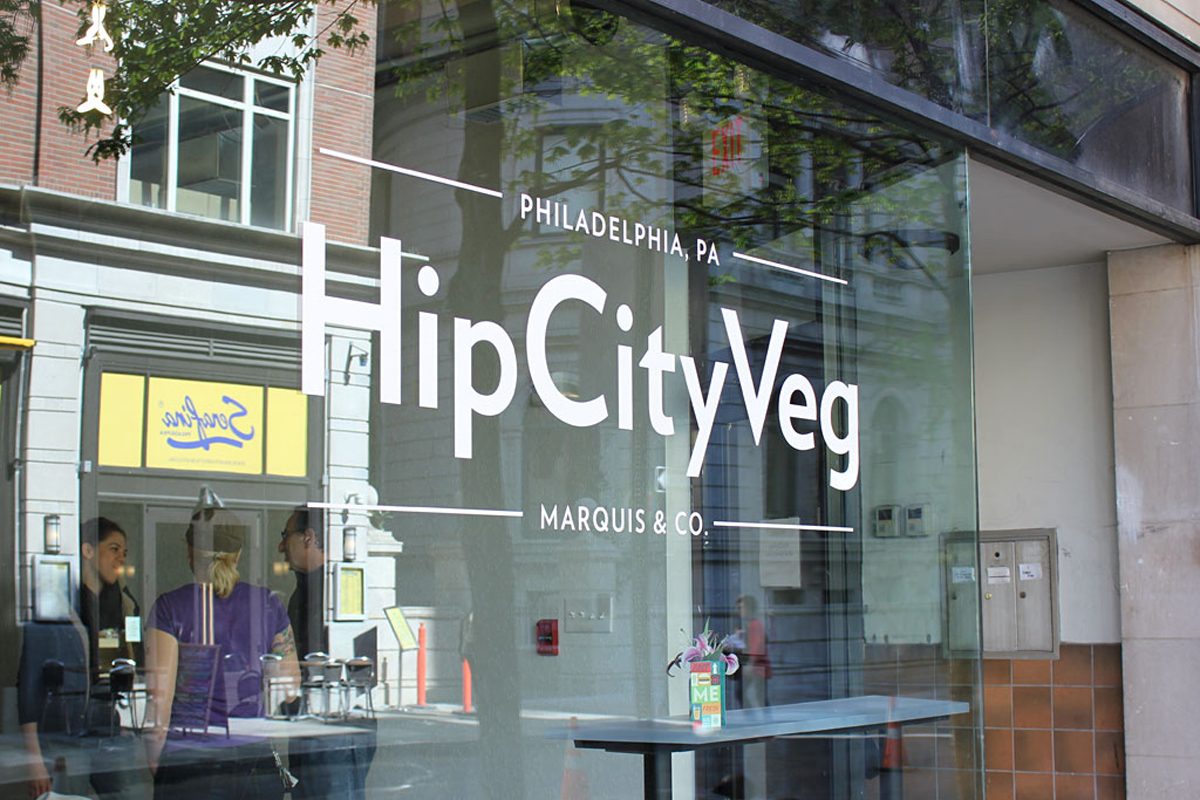
    HipCityVeg, which had expanded to New York and Washington, now has one location: Its original storefront near Rittenhouse Square.Michael Klein / Staff

    In the Philadelphia region, several vegan fast-casual operators have contracted. HipCityVeg opened in 2012 and grew to a chain in Philadelphia, its suburbs, D.C., and New York; today, it’s down to its original Rittenhouse location. Goldie, the vegan falafel chain that restaurateurs Steve Cook and Michael Solomonov opened in 2017, reduced its footprint from four Philadelphia shops to one over the summer, citing slower weekday lunch business and changing consumer-spending habits.

    The pressures extend beyond vegan restaurants. Sweetgreen, the national salad-and-bowl chain, reported a 6.2% decline in same-store sales in the second quarter of 2026.

    The broadened menu did not eliminate Goodbeet’s financial constraints. Coyne said she could not raise prices enough to fully offset rising food and labor costs without risking the loss of customers.
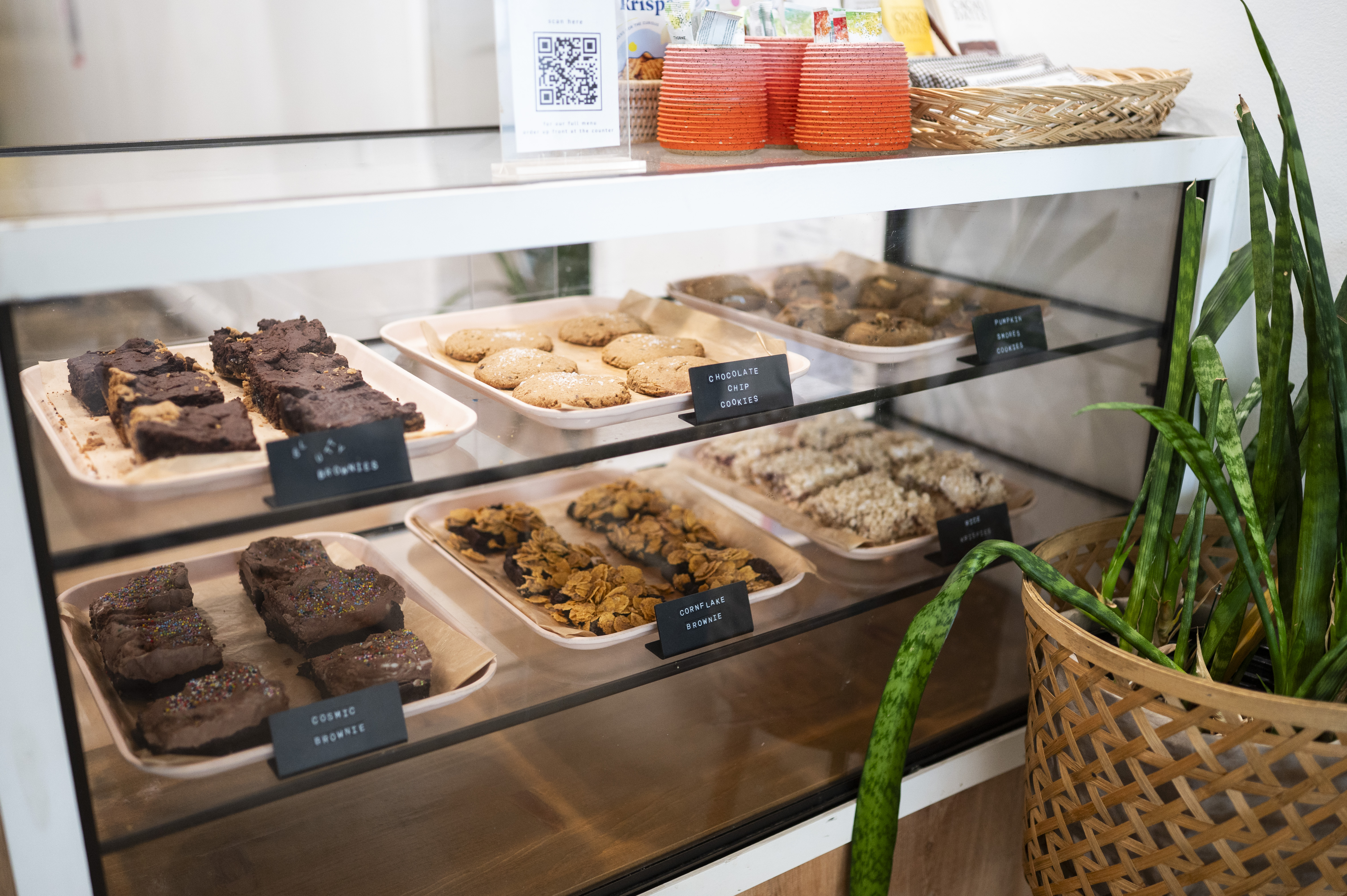
    The pastry case at Goodbeet on Oct. 7.Allie Ippolito / For The Inquirer

    Staffing issues

    Yet the problem that ultimately closed the kitchen was not the cost of ingredients. It was keeping the kitchen staffed.

    Before the pandemic, Coyne employed several full-time kitchen workers. More recently, she said, nearly everyone on her staff had another job. One employee teaches and works at Goodbeet nights and weekends. Another works only Fridays. Her cook also works at Wonder, the prepared-food and delivery chain.

    Coyne generally pays $18 to $20 an hour, while some applicants seek $25. She understands why workers need more money, but said Goodbeet cannot necessarily offer enough hours to support full-time employment.

    “People just aren’t as invested or committed to one place anymore, because they can’t be,” she said.
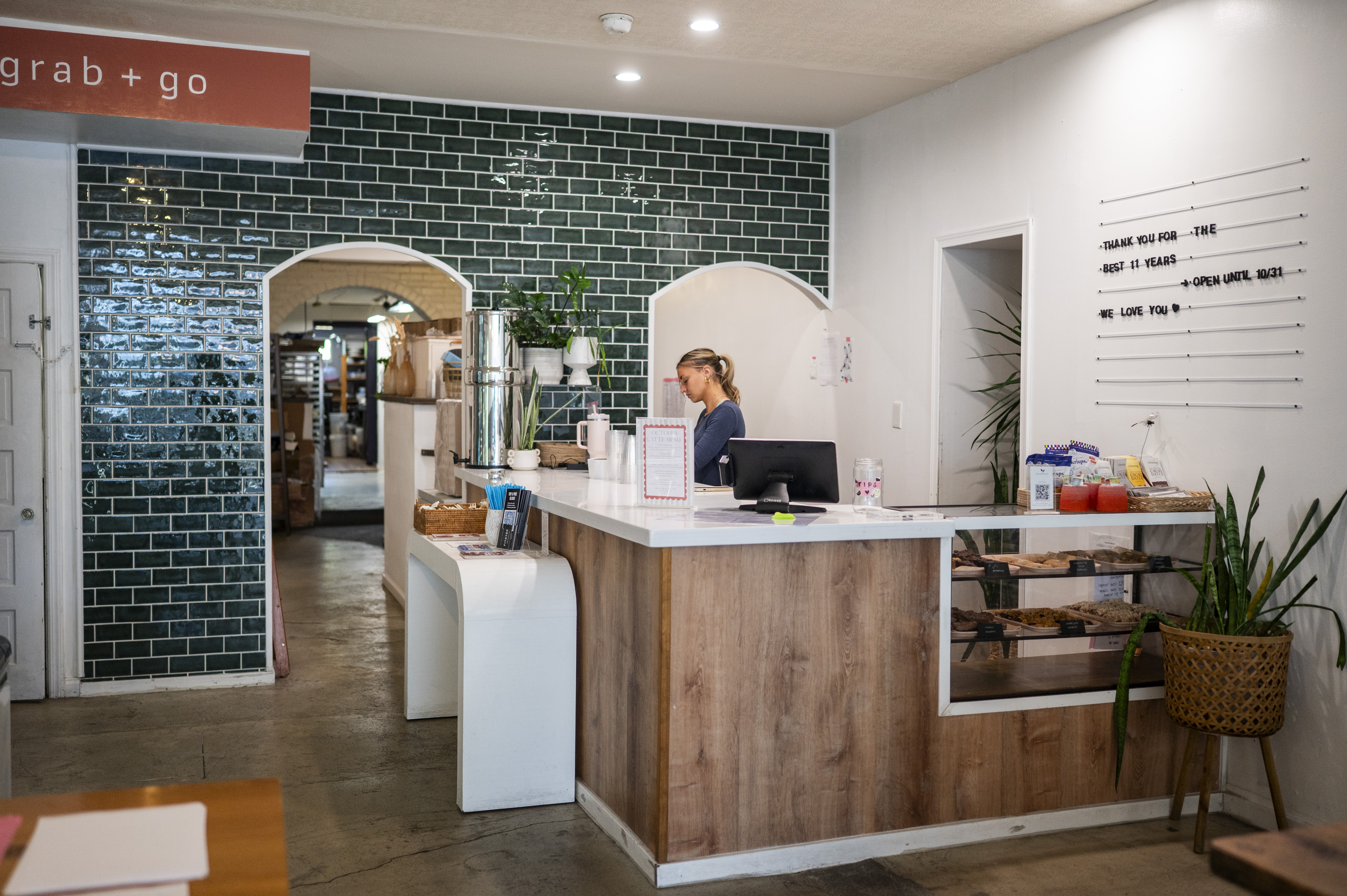
    Goodbeet’s counter on Oct. 7, as the walk-in business winds down.Allie Ippolito / For The Inquirer

    For a single-location restaurant with a small staff, even a few absences could disrupt operations. Unlike chains that can shift employees between stores, Coyne had no backup kitchen crew.

    The early days

    Coyne was 26 when she began developing Goodbeet after losing her marketing job with the Philadelphia Wings. Her family had restaurant-industry experience, but she had never run a restaurant herself.

    Her prospective landlord initially turned her down. She returned several months later, convinced him to give her a chance, and opened with a lease she remembers as barely more than a page.

    Customers lined up on the opening day in 2015. Within months, she signed a lease for an Ocean City location. She later expanded into Bordentown and operated a separate concept, Poppy Taco, inside nearby Reunion Hall. All eventually closed, leaving Westmont as Goodbeet’s sole storefront.
    The exterior of Goodbeet, a plant-forward restaurant, is closing at the end of this month in Westmont, N.J. on Wednesday, Oct. 7, 2026.Allie Ippolito / For The Inquirer

    The pandemic initially brought a surge in business. Coyne kept the restaurant operating, set up an outdoor pickup table, and found customers eager for food they considered healthy.

    The longer-term strain emerged around 2023. As operating costs increased and staffing became more difficult, Coyne began expanding meal preparation, grab-and-go offerings, and wholesale accounts, packaging products such as plant-based burgers and meatballs for other businesses.

    She was gradually building a business less dependent on daily restaurant service. But the intensity of September’s staffing crisis prompted her to close the kitchen.

    “Five years ago, I would have handled it,” Coyne said. “I’ve worked every single job in this restaurant. I’ve cooked, I’ve done the front of the house, I’ve done everything.”

    This time, she couldn’t bring herself to fill the shifts.

    Next steps for Goodbeet

    Coyne owns the building and is discussing a possible lease with an experienced restaurateur who wants to open a small café there, potentially in January.

    Meanwhile, she and Glenda Navas, a cook who has worked for her for nearly a decade, plan to retain Goodbeet’s wholesale accounts and launch an online store.

    Coyne hopes to concentrate on the parts of the business she believes can continue to grow.

    “We’re not disappearing,” she said.

    Still, the end of storefront service means losing more than a place to buy a meal.
    Goodbye messages from customers are laid out on a table at Goodbeet.Allie Ippolito / For The Inquirer

    Since announcing the closing, Coyne has watched customers return to tell her what Goodbeet meant to them. Some recall picking up desserts during the pandemic, when a restaurant visit was one of their few outings. Others describe a welcoming place where employees knew their families and their lives.

    Jay Lassiter, 54, of Cherry Hill, isn’t vegan. He visits once or twice a week, usually after going to the gym next door.

    Last week before the dine-in closing, he said Goodbeet offered something he had difficulty finding elsewhere: food he felt good about eating in a place where he felt comfortable.
    A goodbye message is on the wall at Goodbeet.Allie Ippolito / For The Inquirer

    Since the announcement, he has watched customers coming in more often, hugging Coyne and sharing their memories.

    “It’s almost like a shiva,” he said. “People are coming to pay their respects because we all know what’s coming.”

    Lassiter knows he will still be able to buy some of Goodbeet’s food. But that isn’t quite the same.

    “There are a hundred things about this place that I’m going to miss,” he said. “But I think a safe, hospitable place to make healthy choices and be surrounded by good people is the thing that I’m going to miss the most.”
  • The hottest ‘new’ thing on menus is an ancient ingredient | Let’s Eat

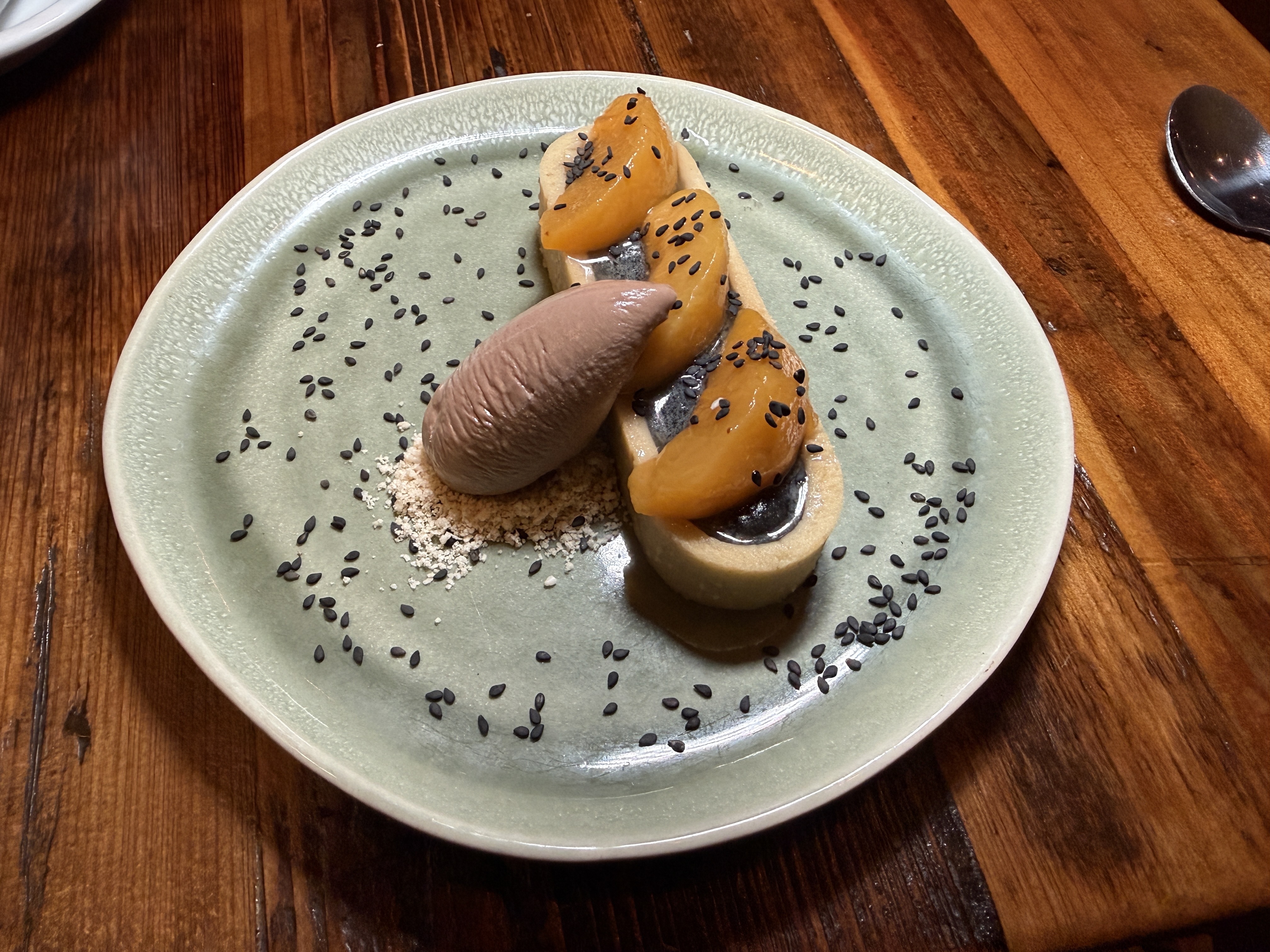
    Black sesame has been around for centuries. Now it’s finding its way into all kinds of foods.

    Also in this edition:

    • Skin in the game: A look at chefs and their tattoos.
    • Something is not kosher: A Jewish deli has run afoul of New Jersey’s consumer regulations.
    • Ice cream, behind the scenes: We visit Milk Jawn’s R&D lab.
    • News: Read on for first word of Sagami’s new branch in University City (the former Pod!) and DePaul’s Table’s casual offshoot on its way with steaks and chops to go. Also, a new restaurant is coming to Cherry Hill Mall.

    — Mike Klein

    If someone forwarded you this email, sign up for free here.

    Why black sesame is hot

    Move over, matcha: Black sesame is the hot new flavor on Philly’s cafe, dessert, and cocktail menus, Kiki Aranita writes. There’s nothing new about it, but it’s trending.

    Càphê Roasters is expanding

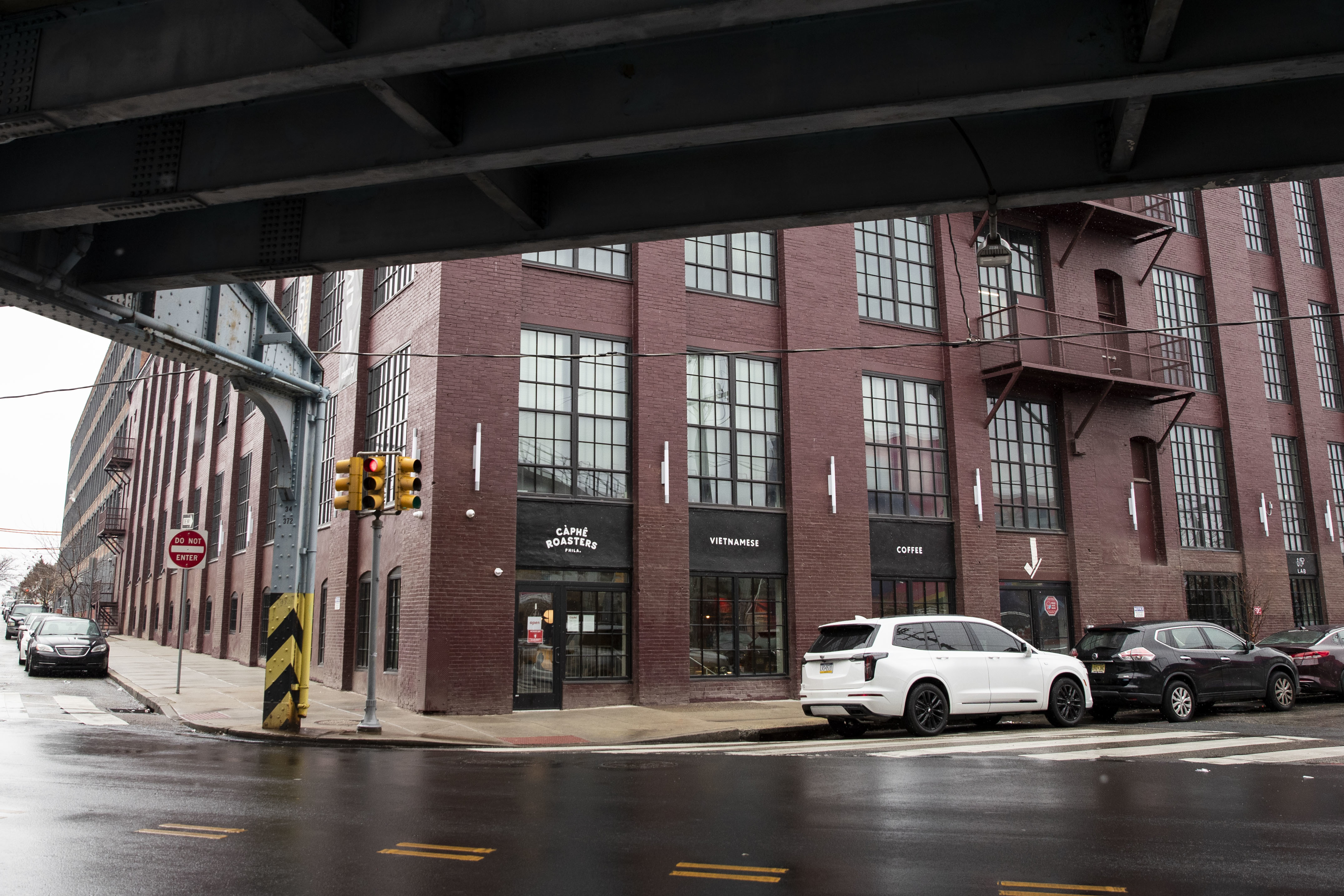
    Càphê Roasters, the Vietnamese coffee shop whose crowds have outgrown its Kensington cafe, is planning a substantially larger outpost in South Philly. And there’s even more on the horizon.

    ☕ Fun fact: Càphê cofounder Thu Pham’s daughter, born in June, is named Autumn — the English translation of Thu’s first name. “I gave her that because I don’t have an English name myself,” Pham says.

    Chefs and their tatts

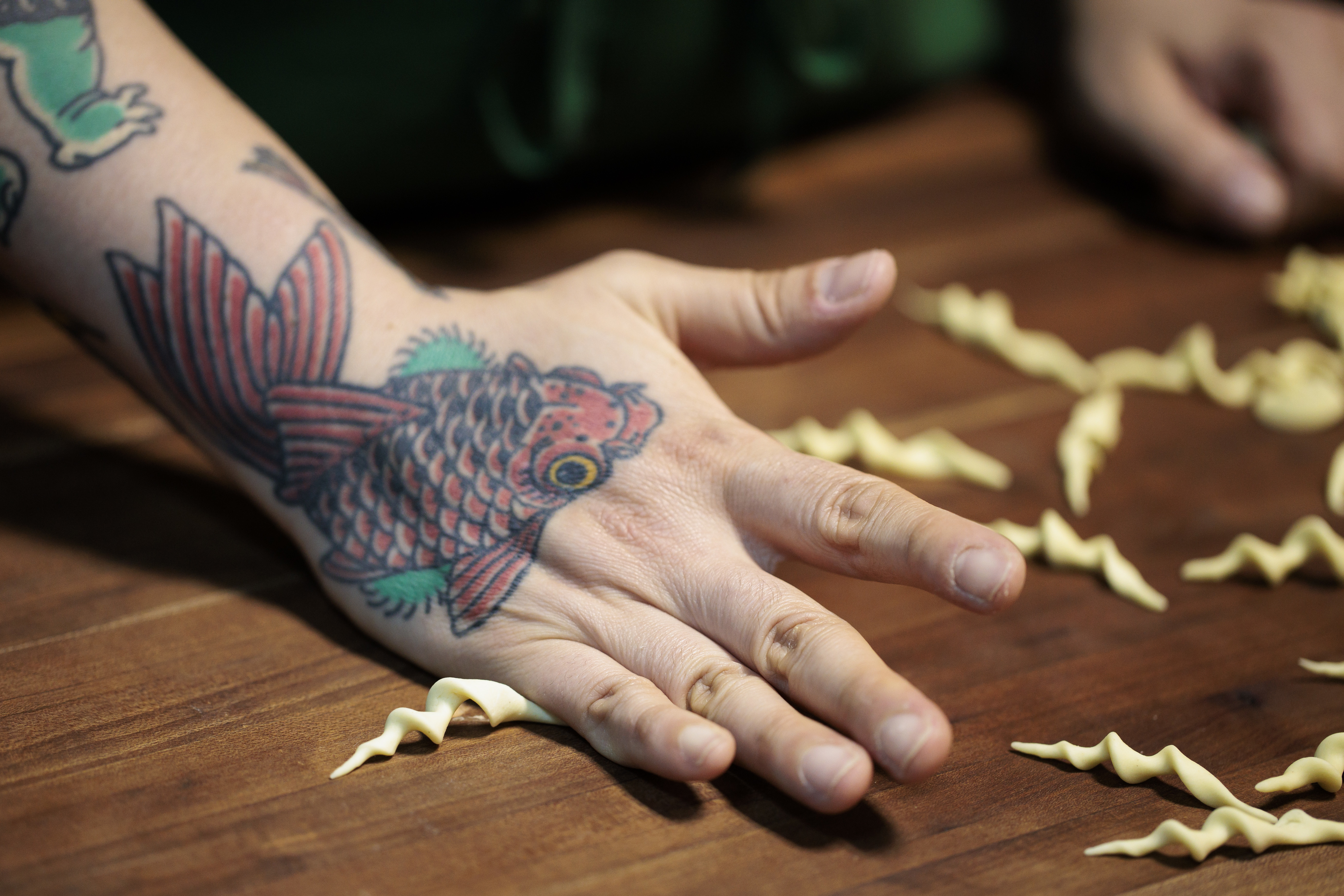
    Tattoos go hand in hand with the food and hospitality industry — and they often come with fun stories. Emily Bloch spoke with more than a dozen baristas, bartenders, chefs, and owners about their favorite pieces.

    ✒️ Try out some ink of your own at the temporary tattoo booth at The Inquirer Food Festival on Nov. 14. Ticket info is here.

    Cold comforts

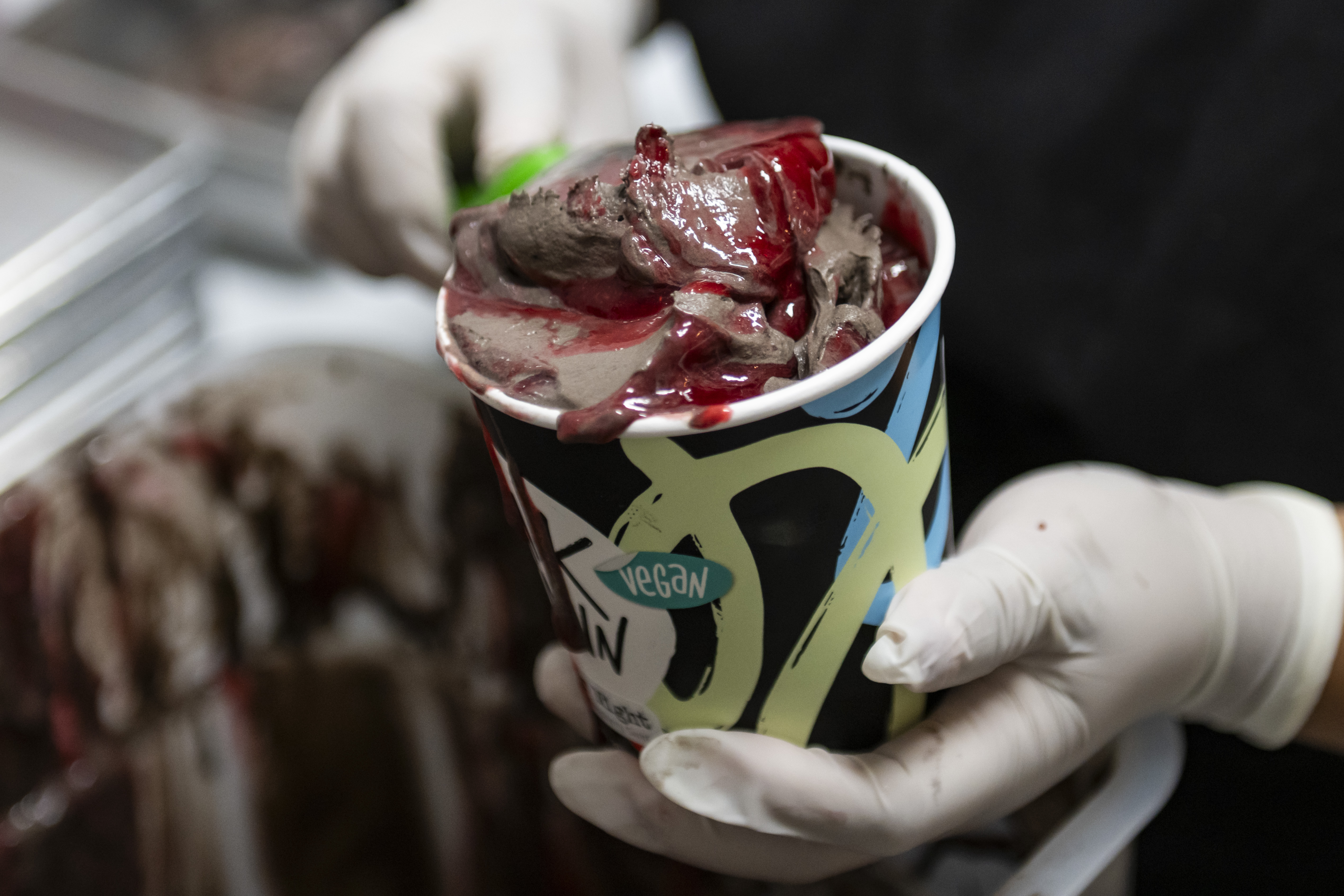
    🍦 At the R&D lab of Milk Jawn, Amy Wilson creates new flavors for her popular ice cream shop. Zoe Greenberg paid a behind-the-scenes visit.

    🍧 We answer this question: Can you have too much water ice in your freezer?

    ‘A schmear campaign’

    The Kibitz Room in Cherry Hill is pushing back on a claim by the State of New Jersey that it has not properly stated that its food is not kosher. Management wryly calls it a “schmear campaign.”

    The best things we ate last week

    One of Center City’s best cooked-to-order pasta destinations is DaMò Pasta Lab, where mostly everything is imported, including the flour, the cheese, and the owners.

    Scoops

    Sagami, the much-honored South Jersey Japanese restaurant, will take over the longtime location of Stephen Starr’s now-shuttered Pod on the Penn campus. Expect a massive sushi bar and house-made noodles, but no omakase experiences, owner Alan Su told me.

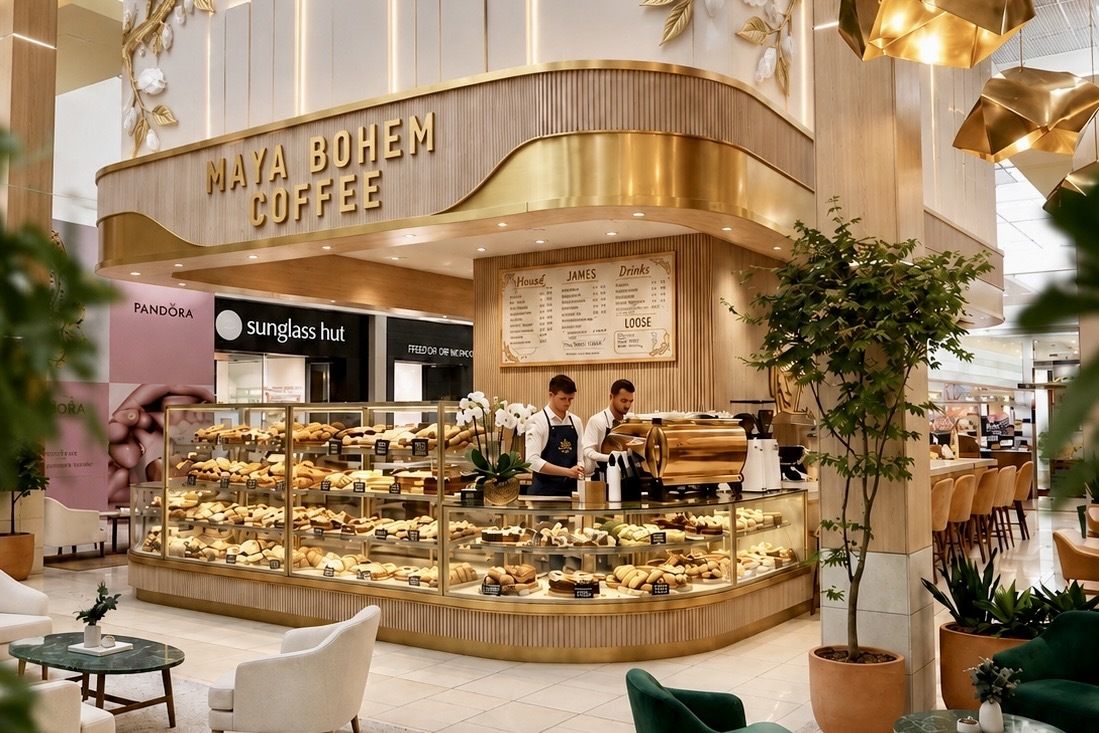
    Maya Bohem Coffee, with roots in Turkey, will fill the vacant spot at Cherry Hill Mall previously occupied by the Bistro at Cherry Hill. The owners also run Blue Fig Garden in the mall.

    DePaul’s Table, the luxe Ardmore steakhouse, is bringing its filet mignon and lamb chops to Philadelphia — without the white tablecloths. Owner Anthony DePaul has taken over the former Southside Pizza at 917 S. 20th St., at Carpenter Street in Graduate Hospital, for a takeout-and-delivery offshoot called DePaul’s Pronto. Targeting late November, DePaul plans to offer steakhouse fare alongside pizza, cheesesteaks, chicken and veal Marsala, and chicken Parm. DePaul envisions a few tables for customers who want to eat in, though there will be no table service. Ordering will be handled by counter staff and self-service kiosks. DePaul said he is seeing growing demand for delivery at his downtown Ardmore restaurant, including big orders through third-party platforms. Rather than invest in another full-service restaurant with substantial rent and overhead, he decided to try a smaller format.

    Bar Nostra is due to open later this month in the space previously occupied by Mix Bar & Grill, which closed recently at the River West Condos at 21st and Chestnut Streets. Nostra’s owners include Aakash Patel of Bar1010. Opening menu will include 12-inch brick oven pizzas, pastas, salads, and a craft cocktail program featuring clarified cocktails.

    Messina Social Club will open up for new memberships. As Kiki Aranita reports, 100 will be free for applicants who work in the restaurant business.

    Restaurant report

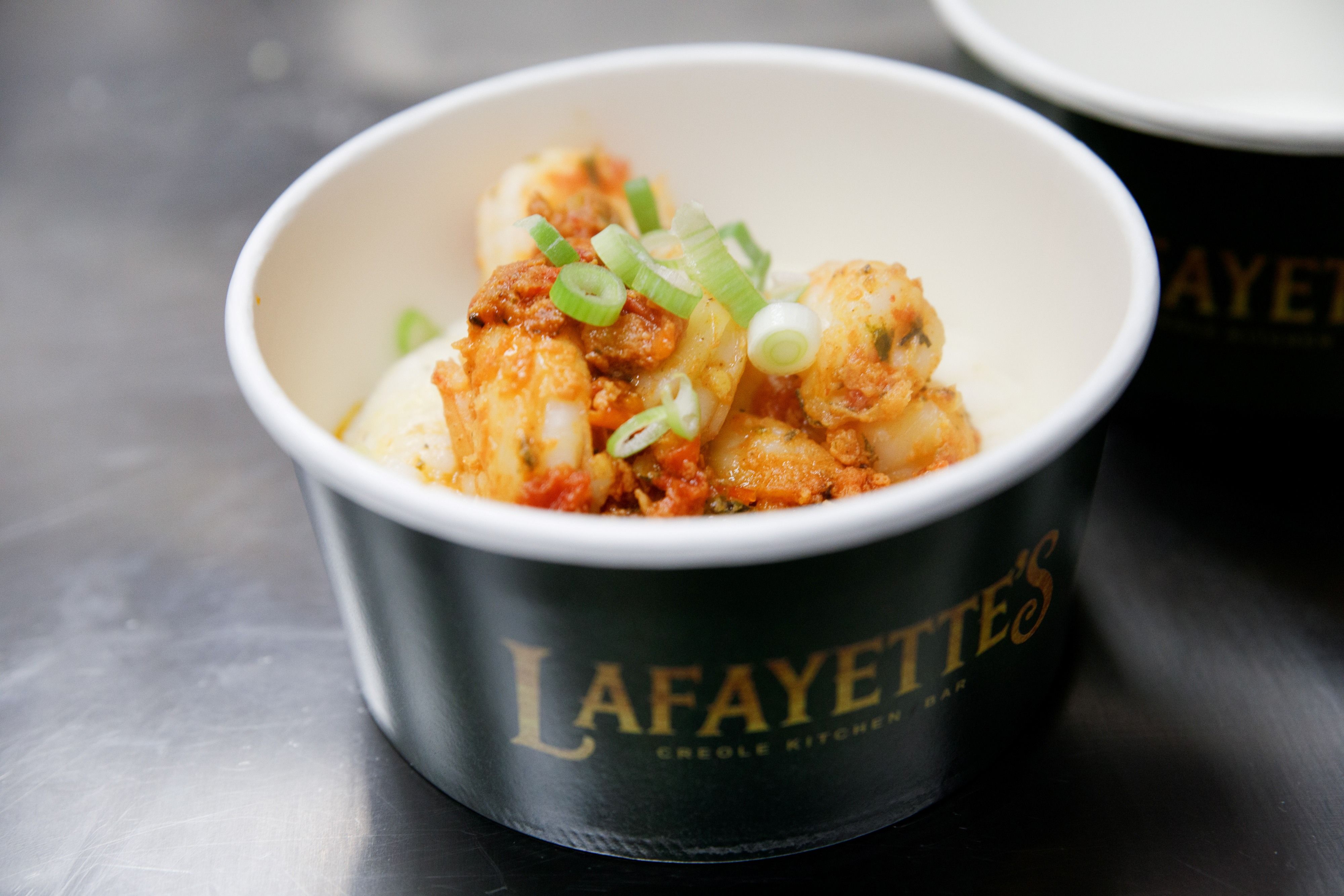
    Lafayette’s Creole Kitchen & Bar has opened in Philadelphia International Airport’s B/C Connector. Shrimp and grits are on the menu, along with gumbo, shrimp étouffée, red beans and rice, po’boys, and chicken and waffles.

    The Ardmore restaurant space that has housed Mikado Thai Pepper for 27 years is being split again. Win Hospitality plans to open Blue Elephant Ardmore next month at 64 Lancaster Ave. Win owners Pearl and Paul Somboonsong’s parents, Sutida and Win, opened Thai Pepper in 1991, followed by Mikado next door. The restaurants merged in 1999. The new Blue Elephant, whose other locations are in Wayne and Pottstown, will operate as a BYOB with a nonalcoholic beverage program on the former Thai Pepper side of the restaurant, seating 70 to 80 people. Its Asian fusion menu will include Hokkaido milk bread with miso butter and strawberry-yuzu jam, tuna bruschetta, and seafood green curry linguine. Mikado Thai Pepper will continue operating next door in the original Mikado space. The restaurants will have separate identities and menus, though Pearl Somboonsong said staff would accommodate requests from customers seated on the other side. “They’re supposed to function as two separate restaurants, but I like to say they’re friends,” she said.

    Briefly noted

    Pastry Pants, a Swarthmore bakery, has closed. The owner, who founded the business in his driveway, told Denali Sagner that a constellation of factors pushed him to shut down.

    Reading Terminal Market’s Scrapple Sculpting Contest returns for a third year at 11 a.m. Thursday as 12 contestants are given six pounds of scrapple, sculpting tools, and 90 minutes to create market-themed artworks. Can’t make it? The sculptures will be displayed during the market’s Scrapple & Apple Festival from 10 a.m.-5 p.m. Saturday, when visitors can vote for their favorite.

    Mobile dessert vendor Joey Cannoli will hand out free cannoli at Recipe Philly (1401 Arch St.) from 6-8 p.m. Friday, or while supplies last. He has two dishes on Recipe Philly’s menu, plus a pizza steak he calls the Italian Stallion. Ten percent of Friday’s restaurant proceeds will go to the Breast Cancer Research Foundation.

    Goodness Bowls (5 Paoli Plaza, Paoli) will mark the grand opening of its Paoli cafe from 9 a.m.-noon Saturday with a DJ and family activities. The first 50 people in line who enroll in the rewards program will receive a free Avalon Bowl. A portion of proceeds will benefit the Greater Delaware Valley Chapter of Breakthrough T1D.

    Philly Coffee Festival will draw specialty roasters and coffee shops to the 23rd Street Armory (22 S. 23rd St.) this weekend. General admission sessions run from 10 a.m.-1 p.m. and 1:30-4:30 p.m. each day; early admission begins at 9 a.m. Coffee tastings and live entertainment are included; food will be sold separately. Tickets start at $21⁠.

    The Manayunk Mac and Cheese Crawl will draw 18 restaurants serving spins on mac and cheese during a ticketed crawl from noon-4 p.m. Saturday as part of Manayunk Fall Fest. Admission includes one sample from each restaurant while supplies last, plus a wristband and crawl map. Check-in begins at 11:30 a.m. outside the Manayunk Welcome Center (106 Grape St.). Tickets start at $21.⁠

    Uchi and Ogawa Sushi & Kappo will team up as Ogawa executive chef Carlos Wills joins Uchi head sushi chef Josephine Fry and chef de cuisine Ford Sonnenberg for a 10-course dinner Monday at Uchi (1620 Sansom St.). Seatings ($175pp at the sushi bar or $150 at surrounding tables, plus tax and tip) are at 6 and 8:30 p.m.

    ❓Pop quiz

    Which Philadelphia sports star’s name was attached to a Chinatown wonton soup order that went viral?

    A) Bryce Harper

    B) Jalen Hurts

    C) LeBron James

    D) Cam York

    Find out if you know the answer.

    Ask Mike anything

    What happened to Walnut Street Cafe at Cira Centre South? — Charles K.

    Walnut Street Cafe opened in 2017 to great promise (and a glowing review from The Inquirer’s Craig LaBan). It closed unceremoniously two weeks ago at Cira Centre South at 30th and Walnut Streets. A rep for landlord Brandywine Realty Trust tells me that Brandywine has “new and exciting concepts” on the way not only to the cafe’s ground-floor space at 30th and Walnut but also to the Post, the now-shuttered sports bar around the corner on 30th Street, and Sunset Social, the 1.2-acre seasonal rooftop on the 12th floor.

    📮 Have a question about food in Philly? Email your questions to me at mklein@inquirer.com for a chance to be featured in my newsletter.

    By submitting your written, visual, and/or audio contributions, you agree to The Inquirer’s Terms of Use, including the grant of rights in Section 10.

  • Turkish coffee, custom croissants, and Italian gelato are coming to the Cherry Hill Mall

    Turkish coffee, custom croissants, and Italian gelato are coming to the Cherry Hill Mall

    A Turkish coffeehouse brand is preparing to make its U.S. debut at the Cherry Hill Mall, taking over the kiosk occupied for 27 years by the Bistro at Cherry Hill, which closed last year amid bankruptcy proceedings.

    Maya Bohem Coffee, which has three locations in Turkey, is targeting a Dec. 1 opening in the mall’s main corridor, said Osama “Sam” Jadalla, a co-owner of Blue Fig Garden, the Turkish-Eastern Mediterranean restaurant that opened in 2022 on the mall’s perimeter, near the Apple store.

    Unlike the Maya Bohem cafés in Turkey, which emphasize coffee, pastries, and desserts, the Cherry Hill location will offer a broader food menu, including Neapolitan-style pizza made with 48-hour-fermented dough, gluten-free pizza, pasta, salads, burgers, chicken tenders, and sandwiches, Jadalla said.

    The cafe also will serve hot and cold coffees, lattes, matcha, and other drinks using Maya-brand coffee imported from Turkey. Croissants will be filled to order with customers’ choice of pistachio, Biscoff, Nutella, raspberry, and other fillings.

    The setup will be similar to the Bistro at Cherry Hill’s. Customers will order at a counter or kiosk, with seating for those who want to linger. Jadalla compared the service model to Starbucks, though with a more extensive food menu. He expects takeout to account for much of the business.

    Maya Bohem’s website lists locations in Gaziantep, Tekirdağ, and Adıyaman, Turkey.

    The cafe will replace one of the mall’s longest-running independent restaurants. The Bistro, which opened in 1998 and was known for its wraparound counter and Italian American menu, closed July 10, 2025, after a bankruptcy judge converted its Chapter 11 reorganization proceeding to a Chapter 7 liquidation.

    Its owner, Andrew Cosenza Jr., said at the time that a breakdown in communication during health problems had contributed to the shutdown, and he hoped to reopen. Mall owner PREIT had won a nearly $1.6 million judgment in a rent dispute that March.

    Cosenza also faces criminal charges. A New Jersey grand jury indicted him in October 2025 on 17 counts including theft, filing fraudulent tax returns, and failing to remit collected taxes. State prosecutors allege that he collected $271,621 in sales tax from Bistro customers in 2021 and 2022 but failed to turn it over to the state. The New Jersey Attorney General’s Office did not immediately respond to an inquiry Tuesday about the status of the case.

    Maya Bohem will be the latest venture for Jadalla, who opened the original Blue Fig Cafe in Moorestown in 2011 with partners and sold it two years ago. (The Young Avenue location is still open daily.) Jadalla’s partners include Fatih Karatas and Muhammet Geyikgolu, who also are involved in Blue Fig Garden locations in Wayne, N.J., and Southbury, Conn. Mahmoud Nashmi and Loai Habib, among the partners in the newer Connecticut restaurant, also are involved in Maya Bohem, which the group hopes to franchise.

    Jadalla emphasized that Maya Bohem is a separate concept from Blue Fig Garden, intended for customers seeking anything from a cup of coffee to a casual meal.

    Jadalla said display cases, branded cups, plates, and takeout packaging are being shipped from Turkey. Their arrival, along with installation and health inspections, could affect the opening date.

    The menu also will feature Italian gelato. Jadalla said the partners have already purchased two specialized machines at $22,000 apiece.

    “Forty-four thousand dollars — just for ice cream,” he said.

  • Sagami is taking over the former Pod space in University City

    Sagami is taking over the former Pod space in University City

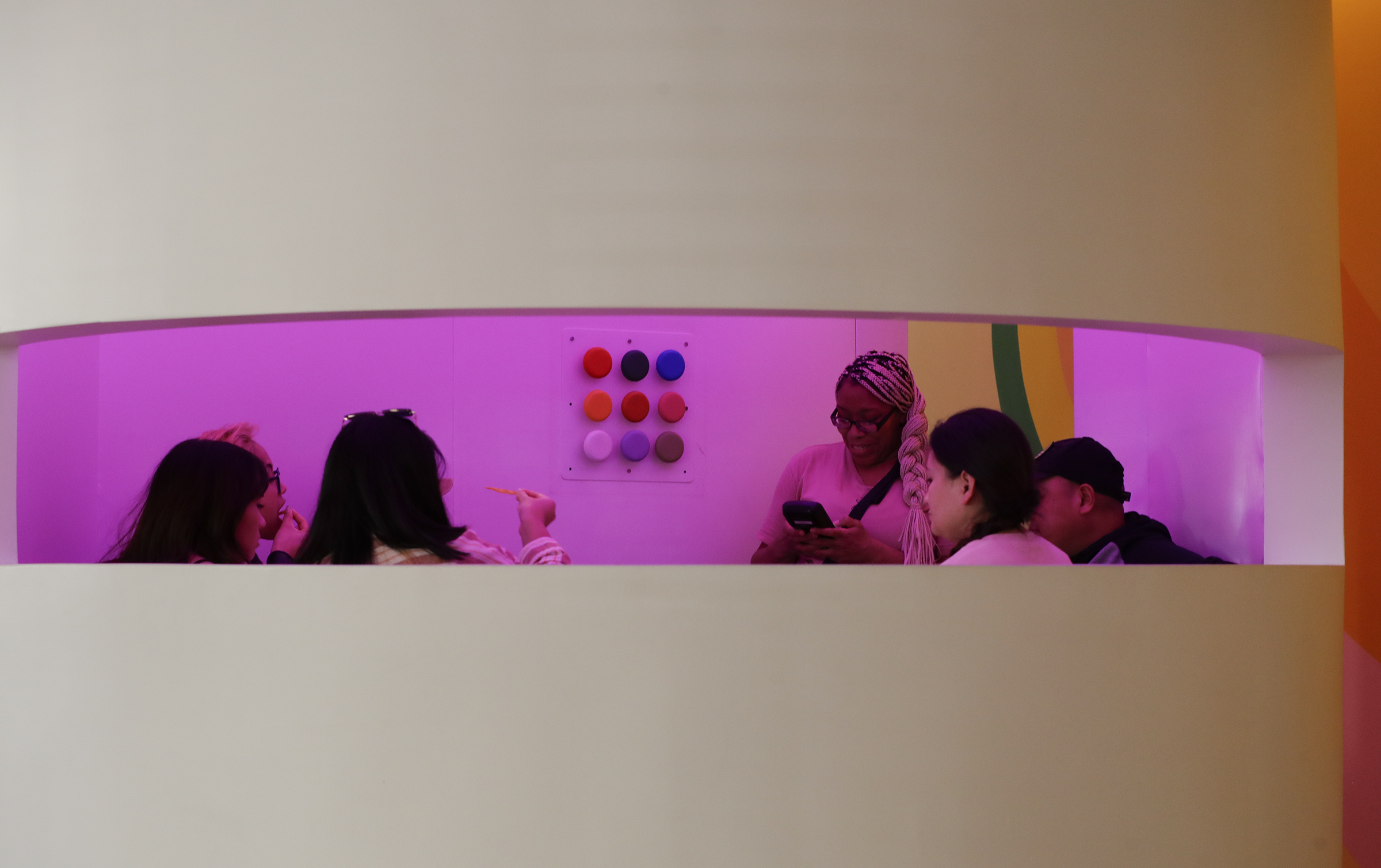
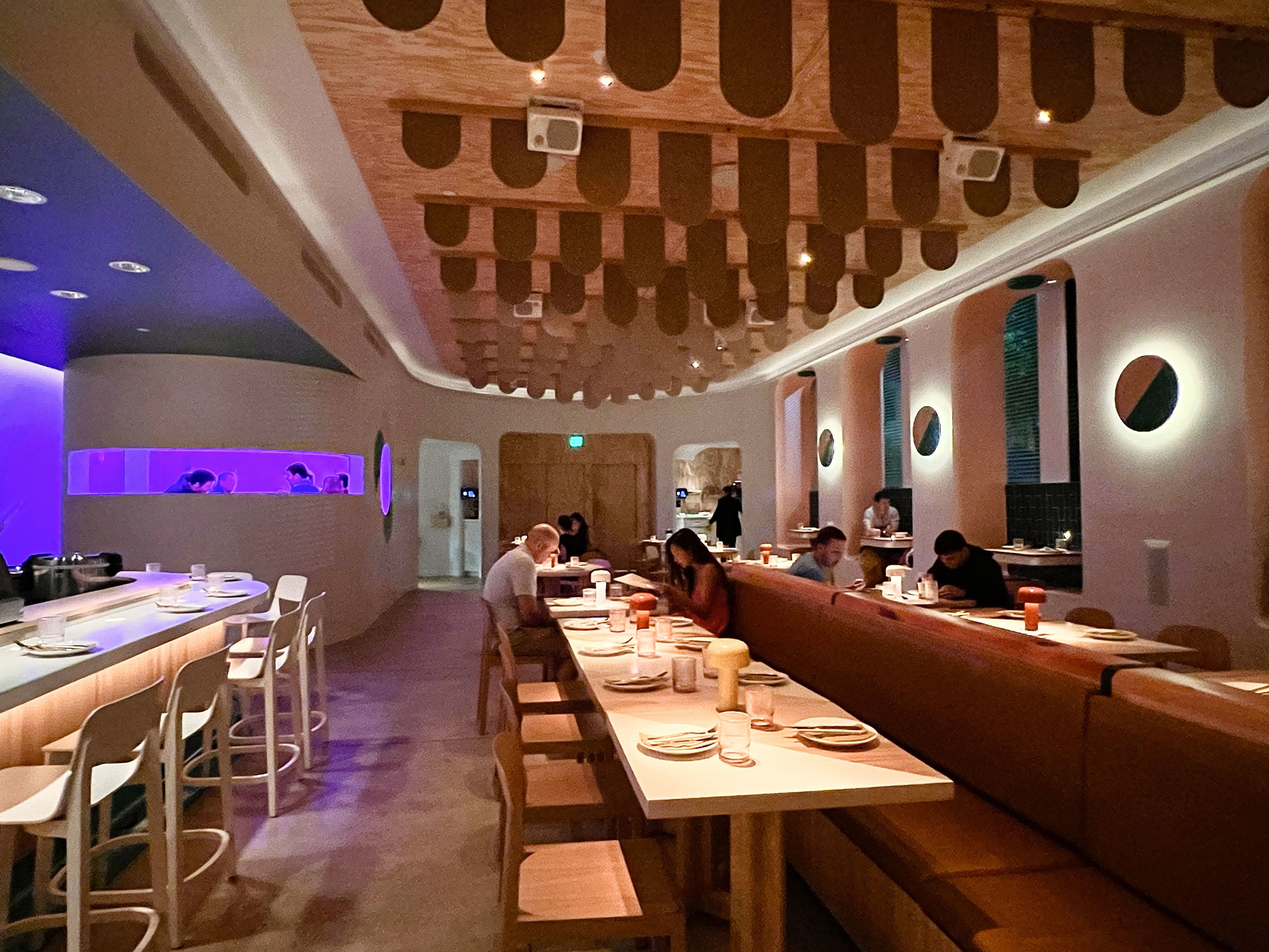
    The three futuristic dining pods at Stephen Starr’s former Pod restaurant in University City are staying. Almost everything around them is changing.

    Alan Su, who took over the landmark Sagami Japanese restaurant in Collingswood last year, plans to open a second location of Sagami at the Inn at Penn, 3636 Sansom St., replacing Pod, which closed in February 2025 after nearly 25 years.

    Patrons sitting inside a dining “pod” at what was Kpod in University City in 2022.Yong Kim / Staff Photographer

    The new restaurant, which Su hopes to open next summer, will be a sharp contrast to Pod, whose David Rockwell-designed space evoked a science-fiction set.

    Su plans to bring in traditional Japanese finishes while retaining the three semiprivate dining pods — one large and two smaller — with updated upholstery.

    The beverage bar will stay in place. The former conveyor-belt sushi area, removed during Pod’s temporary incarnation as the Korean-themed KPod, will become a large sushi counter.

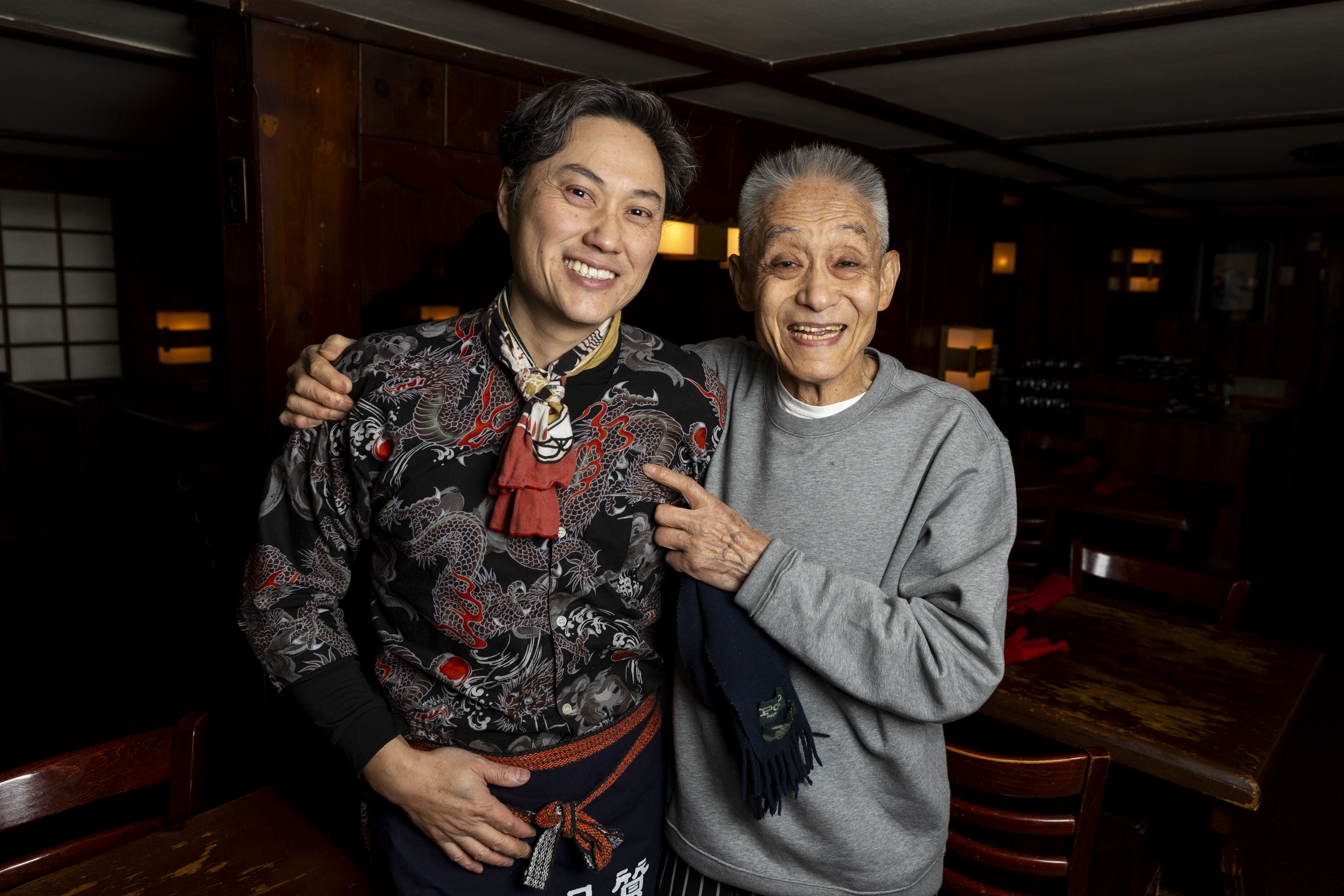
    Shigeru Fukuyoshi (right), chef and founder of Sagami in Collingswood, with Alan Su in 2024, shortly before Su’s purchase.Tyger Williams / Staff Photographer

    Su said it could be among the largest in Philadelphia, with as many as eight sushi chefs working on busy nights.

    Sagami has its own history to carry forward. Shigeru and Chizuko Fukuyoshi opened the modest restaurant on Route 130 in 1974, when sushi was still a rarity in the Philadelphia area.

    Over five decades, their traditional Japanese cooking earned a devoted following. Sagami was a James Beard Award semifinalist for Outstanding Restaurant in 2017 and 2019, while Shigeru was an Outstanding Chef semifinalist in 2023. It was named to The Inquirer’s 76, a compendium of the region’s most influential restaurants, in 2024.

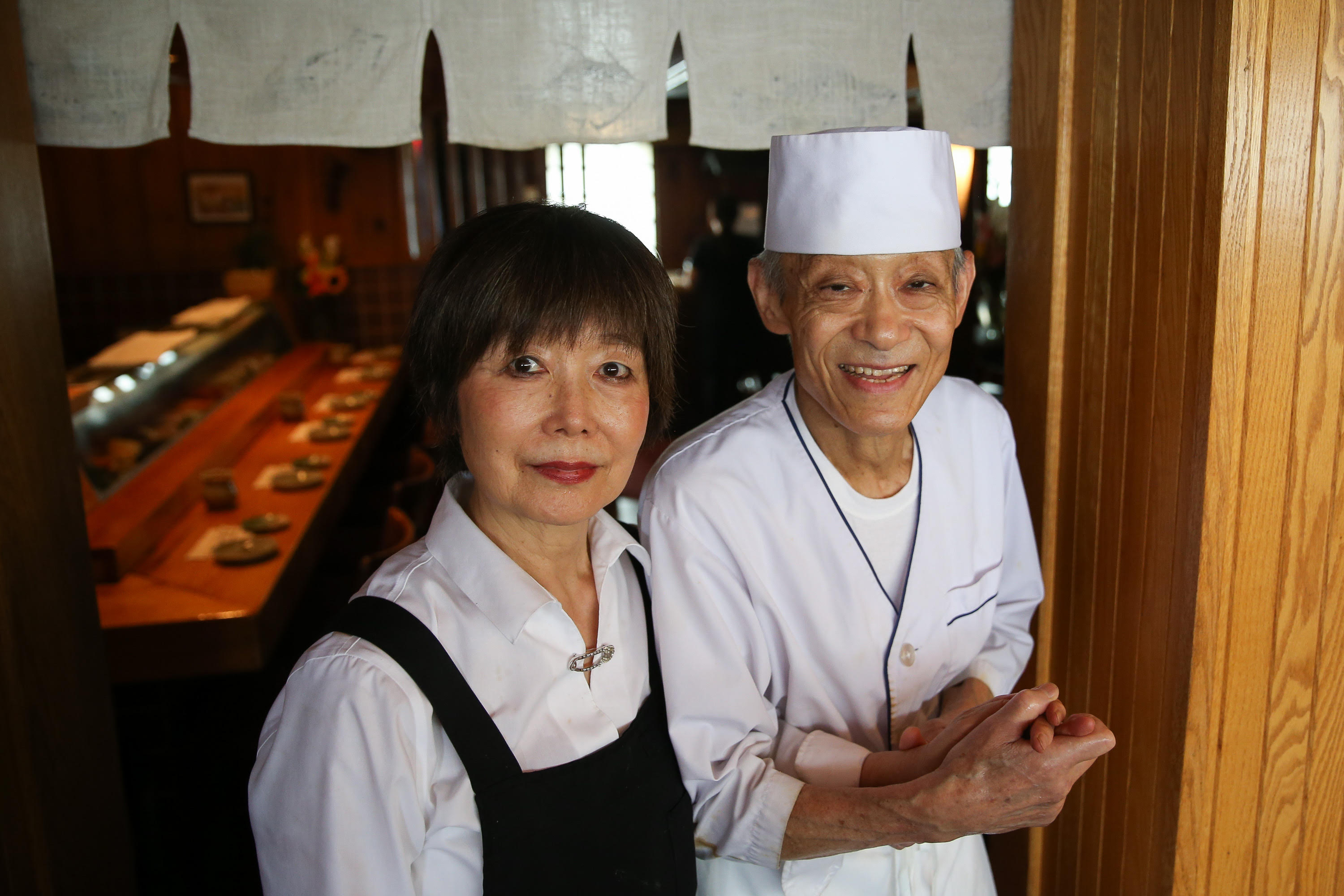
    Chizuko Fukuyoshi and her husband, Shigeru, at Sagami in Collingswood in 2018.Tim Tai / Staff Photographer

    Chizuko Fukuyoshi, who ran the dining room and business operations, died in July 2024 at 79. Her husband initially continued operating Sagami, then decided to retire. Su, a longtime family friend and customer for about 30 years, acquired the restaurant effective Jan. 1, 2025.

    The Fukuyoshis had considered turning the business over to Su several years earlier but postponed the decision. At the time of the sale, Shigeru Fukuyoshi said he regarded Su as a son. Su pledged to preserve the restaurant’s menu and character.

    Now, Su is planning a larger interpretation of Sagami, replicating the entire Collingswood menu plus dishes not available at the original. He wants to make noodles in-house, potentially including soba, using specialized equipment from Japan.

    The dining room at Pod in 2023 after its transition from Kpod.Michael Klein / Staff

    He also plans izakaya-style dishes, including yakitori cooked over Japanese binchotan charcoal rather than gas or electric grills. Unlike Sagami in Collingswood, the new restaurant will serve lunch and lunch specials.

    Su, who also owns Nom Nom Ramen, Umami, and Shiso, said he is not pursuing a high-priced omakase restaurant. He wants family-style dining that accommodates Penn students and neighborhood customers without sacrificing ingredients or preparation.

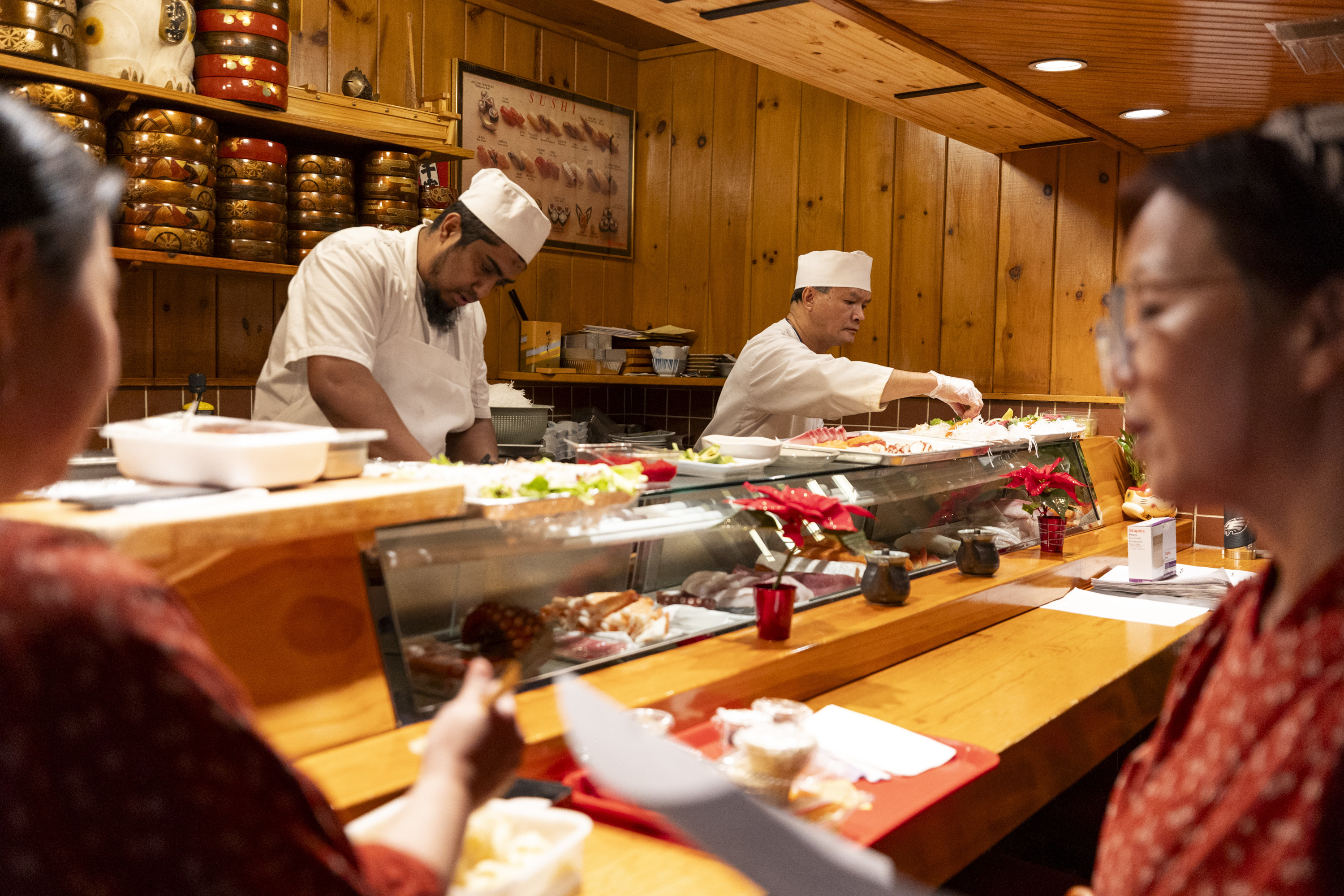
    Chefs and workers at Sagami in Collingswood in 2024.Tyger Williams / Staff Photographer

    Josh Weiss of MSC represented Su in the lease transaction, while Jacob Cooper, also of MSC, represented the University of Pennsylvania, the landlord.

    “Starr created a restaurant where the atmosphere was a big part of the experience,” Su said. “But for us, the emphasis is more on the food and its identity. That’s what I want people to remember.”

  • The Kibitz Room calls itself a Jewish deli. To the State of New Jersey, that’s not quite kosher.

    The Kibitz Room calls itself a Jewish deli. To the State of New Jersey, that’s not quite kosher.

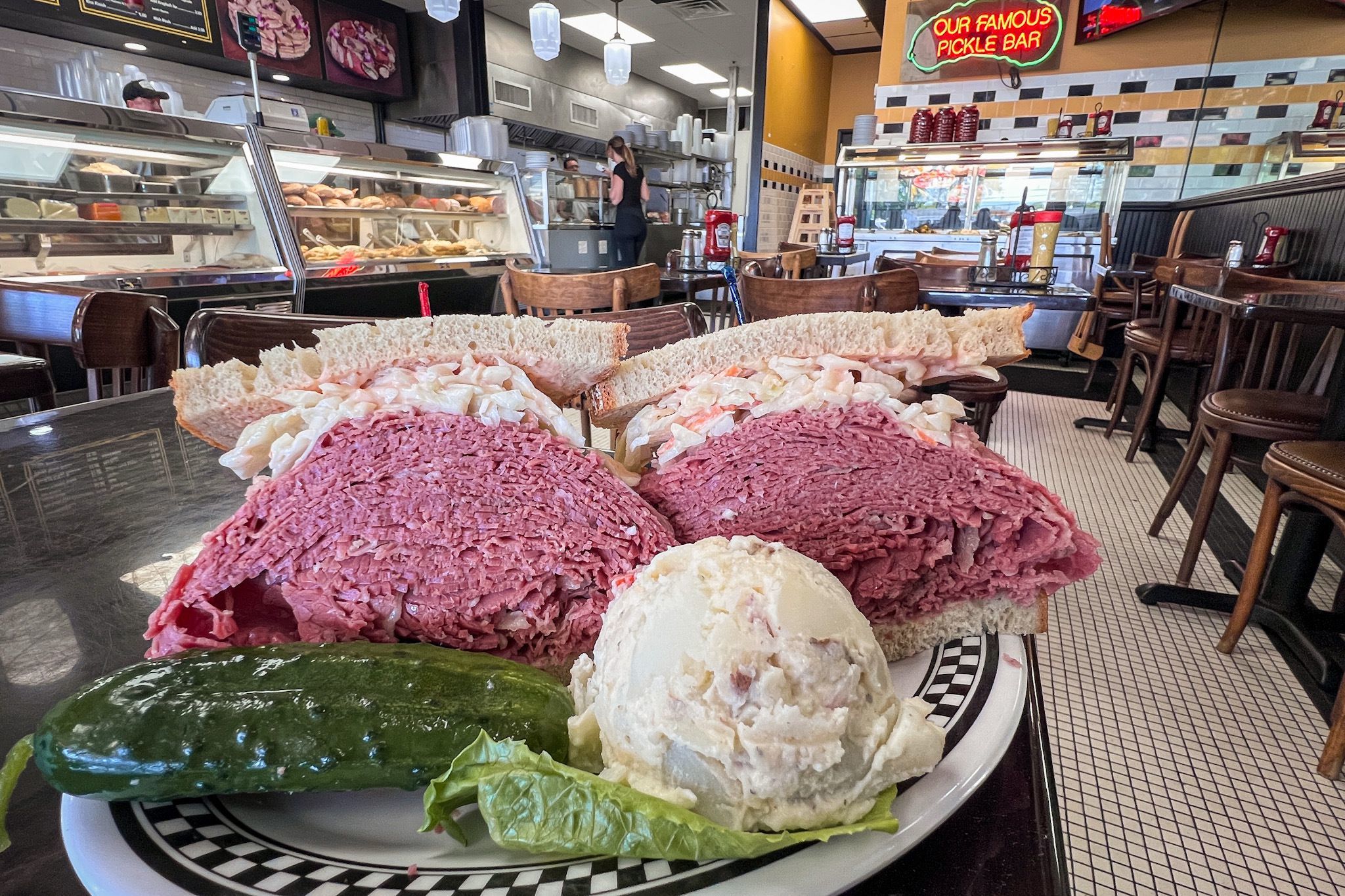
    The Kibitz Room has served Jewish-style deli fare in Cherry Hill for decades. Now, it finds itself in a pickle with New Jersey regulators over one word:

    Jewish.

    The state Division of Consumer Affairs is seeking a $1,000 civil penalty against the restaurant in the Shoppes at Holly Ravine on Springdale Road, alleging that its website and menu describe it as a Jewish deli and advertise a “Jewish cheesesteak” without a disclaimer that explicitly states its food is not represented as kosher.

    The state is not accusing the Kibitz Room of passing off nonkosher food as kosher. The dispute centers on a consumer-protection rule requiring such notice when businesses use terms such as Jewish, Hebrew, or kosher-style to advertise food, even if they make no claim to being kosher.

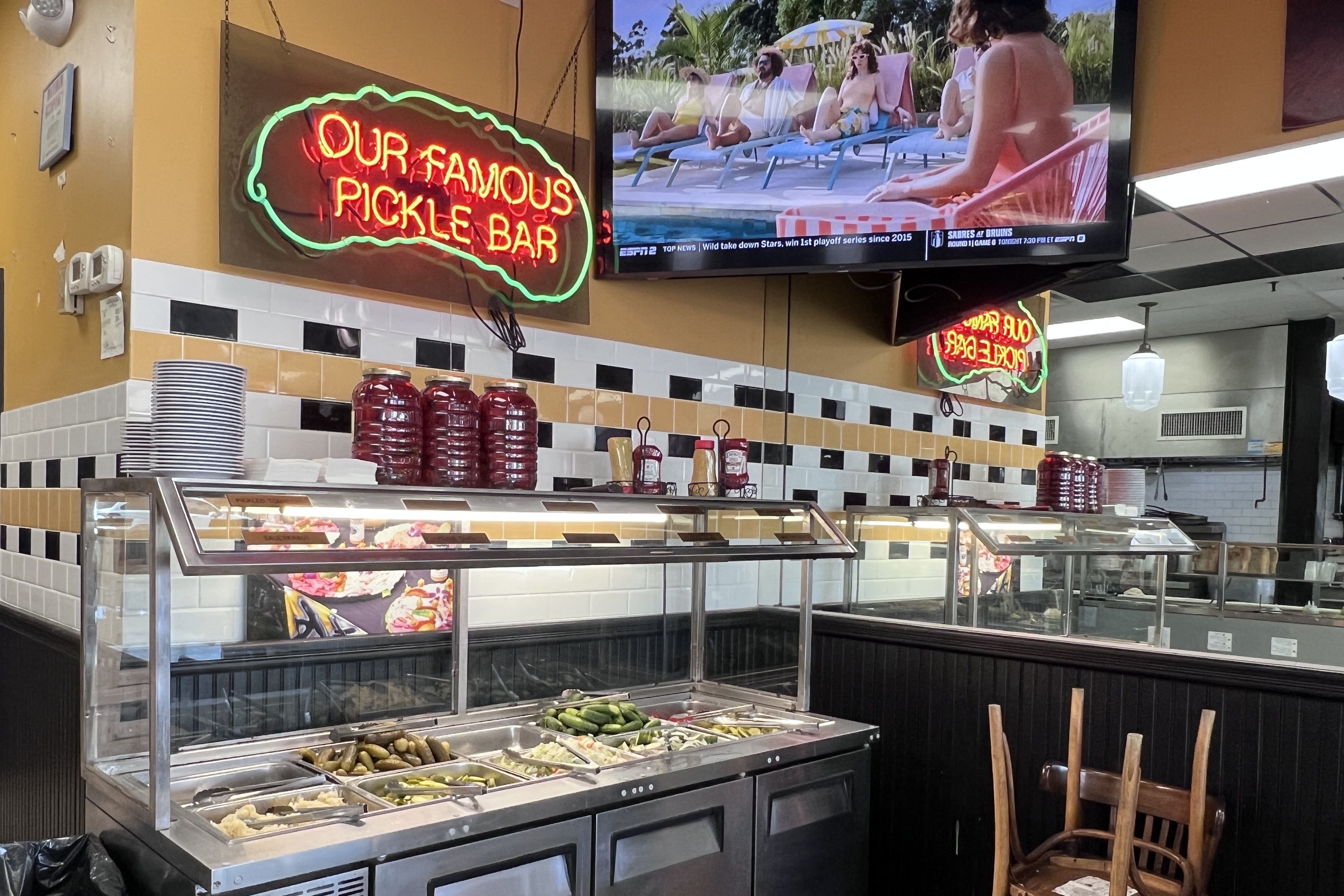
    The pickle bar at the Kibitz Room, 100 Springdale Rd., Cherry Hill.Michael Klein / Staff

    “I think it’s totally ludicrous,” said Brandon Parish, who took over the restaurant earlier this year. “There is a distinction between being Jewish and being kosher. We claim to be a Jewish-style delicatessen. That doesn’t mean we’re kosher.” The proposed sanctions are a “schmear campaign,” Parish said, wryly.

    But the regulation, N.J.A.C. 13:45A-21.7, specifically covers businesses that do not represent their food as kosher. It requires conspicuous disclaimers, with rules governing their size and placement on menus, signs, and advertisements.

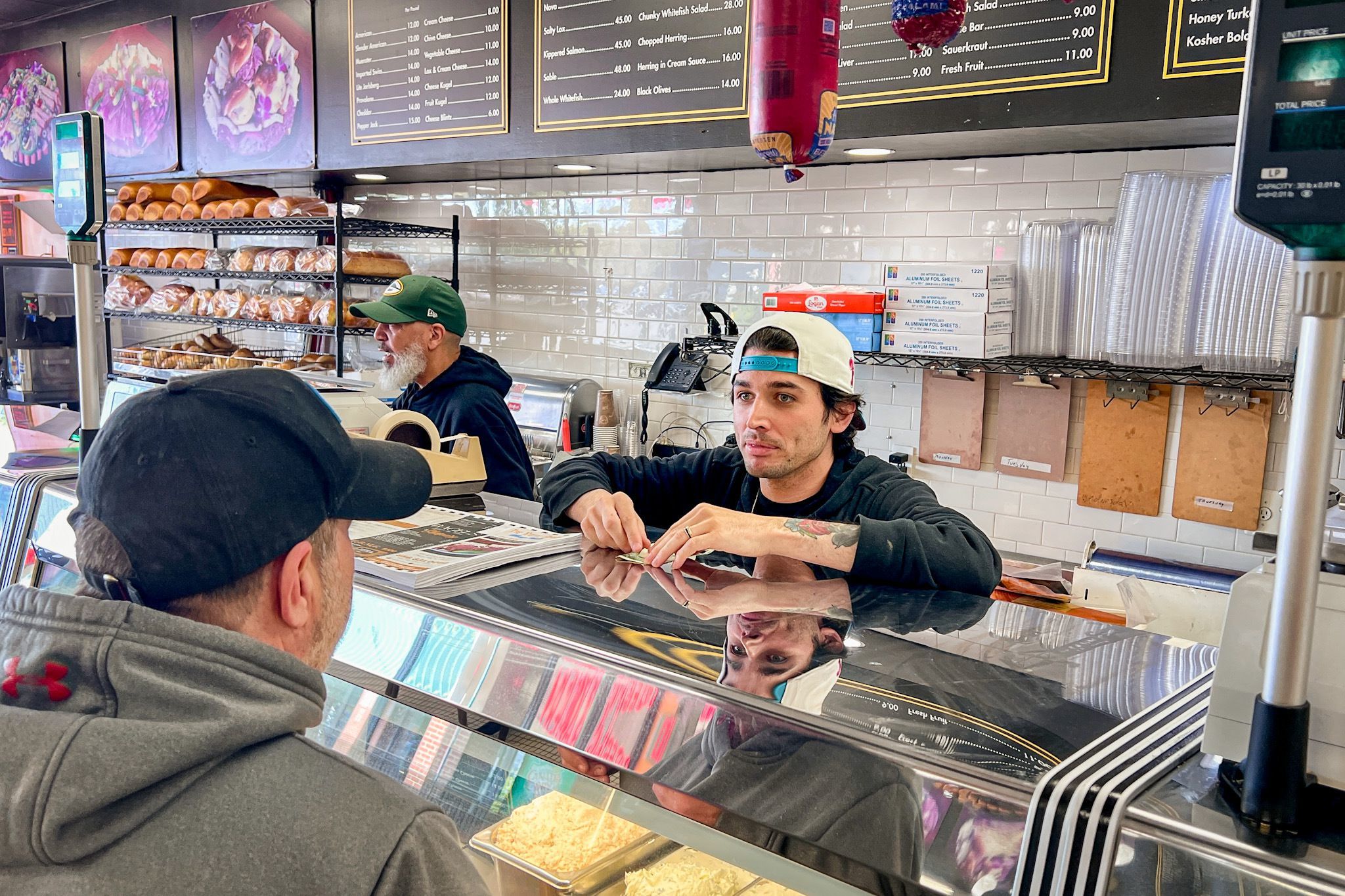
    Brandon Parish (right) waiting on a customer at the Kibitz Room in May.Michael Klein / Staff

    The allegations stem from a Sept. 16 inspection by Division of Consumer Affairs investigator Aaron Leff, according to the citation, which Parish posted in full on the Kibitz Room’s Facebook page.

    In a certification accompanying the Oct. 7 notice of violation, Leff cited the Kibitz Room’s website — which describes the restaurant as a “New York-style Jewish deli serving overstuffed sandwiches, hand-cut pastrami, and traditional favorites since 1996” — as well as its menu, including its Jewish cheesesteak, which contains brisket, coleslaw, Russian dressing, and pepper jack cheese.

    Leff noted in the certification that attempts to resolve the issue during his visit and a phone call the next day were unsuccessful.

    “I was told both times the menu will not change,” Leff wrote.

    Parish acknowledged the visit but said the restaurant was busy during a Jewish holiday and had asked Leff to return.

    “We can’t do this right now,” Parish recalled telling him. “You have to come back.”

    Parish now plans to post a notice on the door or window and add one to the menu stating, “We are not a kosher facility.” He intends to contest the penalty, with his attorney joining him for an Oct. 28 hearing by Zoom.

    “It’s not about the fine,” he said. “It’s merely the principle.”

    What other New Jersey delis do

    There does not seem to be a uniform approach to the disclosure among other New Jersey delis. Goodman’s Deli in Berkeley Heights advertises “kosher-style” and “Jewish-style” food on its website, which also states, “Not Kosher.” Eppes Essen in Livingston calls itself “New Jersey’s Jewish deli” on its homepage, while its About page says it is not kosher-certified. Whether that disclosure satisfies the regulation is unclear.

    Russ Cowan, owner of the nearby Radin’s Delicatessen in Cherry Hill, said New Jersey’s rule is misguided because describing a restaurant as Jewish or kosher-style does not mean it serves kosher food. Cowan said he has deliberately avoided calling Radin’s a Jewish deli or describing its food as kosher. His website mentions “Jewish delicatessens,” but only in recounting his family’s history of operating delis in New York. “I’ve been exposed to this my whole life. And Jewish does not mean kosher. Kosher-style does not mean kosher.”

    The state has offered to settle the Kibitz Room case for $1,000. No finding of liability has been made, and a spokesperson did not immediately reply to a request for comment because of Monday’s holiday.

    Parish said customers who keep kosher generally know the Kibitz Room is not for them. It’s open on Saturdays and serves shrimp, bacon, and Reubens combining meat and cheese.

    “There are so many dead giveaways that somebody who keeps kosher would know, ‘Oh, I can’t go there,’” he said.

  • PHL’s newest restaurant serves gumbo, po’boys, and bread pudding

    PHL’s newest restaurant serves gumbo, po’boys, and bread pudding

    Toyin Alli started selling gumbo and bread pudding at a D.C. farmers market in 2010 while working full-time in Amtrak’s Office of Inspector General. Sixteen years later, she’s bringing those dishes to Philadelphia International Airport.

    Alli and her husband, Reginald Johnson, opened Lafayette’s Creole Kitchen & Bar last week across from the food court in the B/C Connector, replacing Vino Volo wine bar.

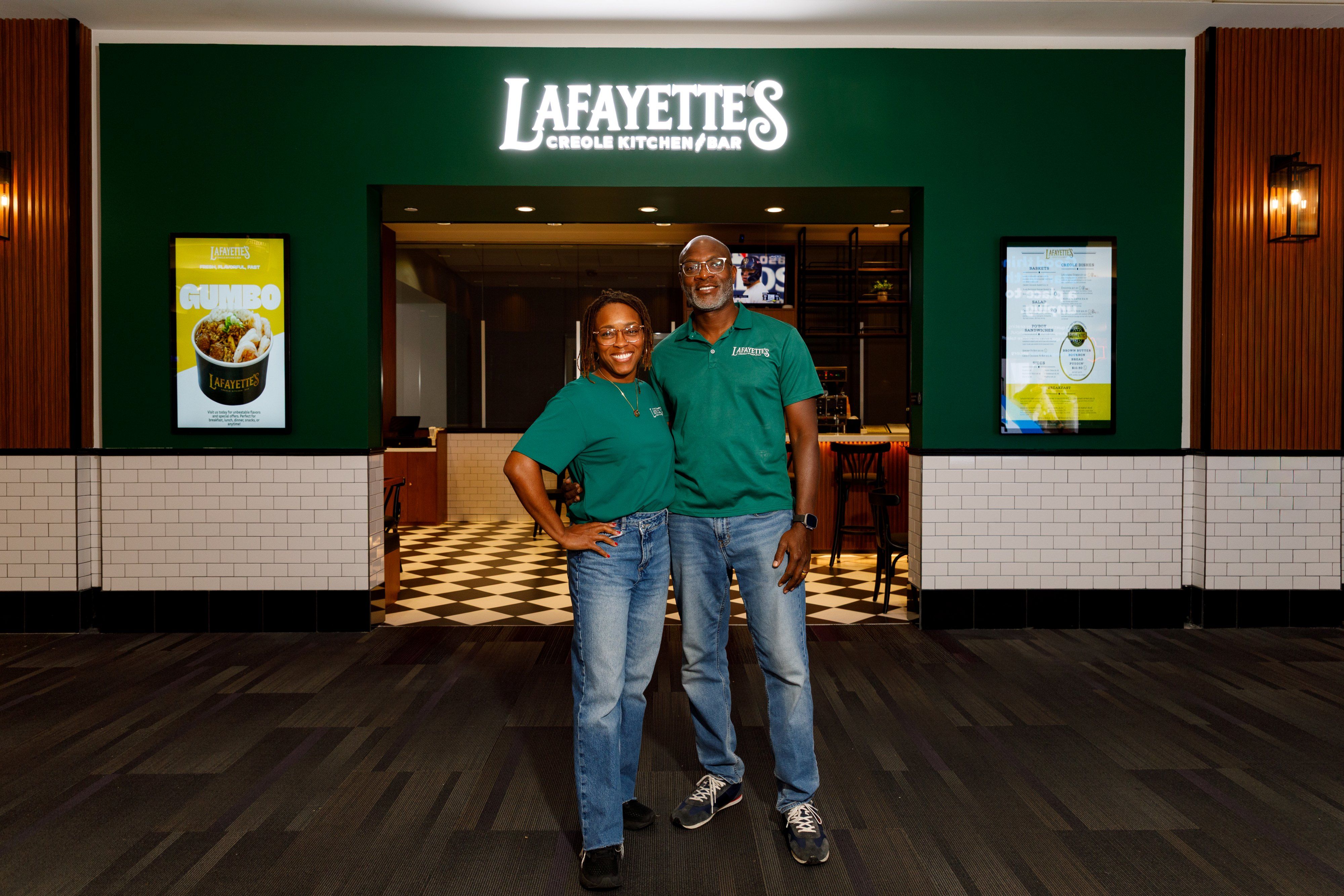
    Toyin Alli and Reginald Johnson at Lafayette’s Creole Kitchen & Bar, in the B/C connector at Philadelphia International Airport.Paul Loftland Photography

    The 44-seat, fast casual restaurant serves Southern and Creole cooking, including gumbo, shrimp étouffée, red beans and rice, shrimp and grits, po’boys, chicken and waffles, and Alli’s signature brown butter bourbon bread pudding. Breakfast options include a breakfast po’boy and shrimp and waffles. There’s also a full bar serving cocktails, beer, wine, and nonalcoholic drinks.

    Lafayette’s is named for Lafayette, La., where Alli’s maternal family has roots. Her father’s family is Nigerian.

    Alli, who earned a master’s degree in public administration from New York University, turned to cooking after asking her mother what she should sell at Eastern Market on Capitol Hill. Her mother suggested bread pudding and gumbo.

    Customers responded. Alli eventually left Amtrak, expanded to more than 14 farmers markets and food trucks, and established Puddin’ at Washington’s Union Market in 2014. She later purchased two warehouses in Capitol Heights, Md., for food production.

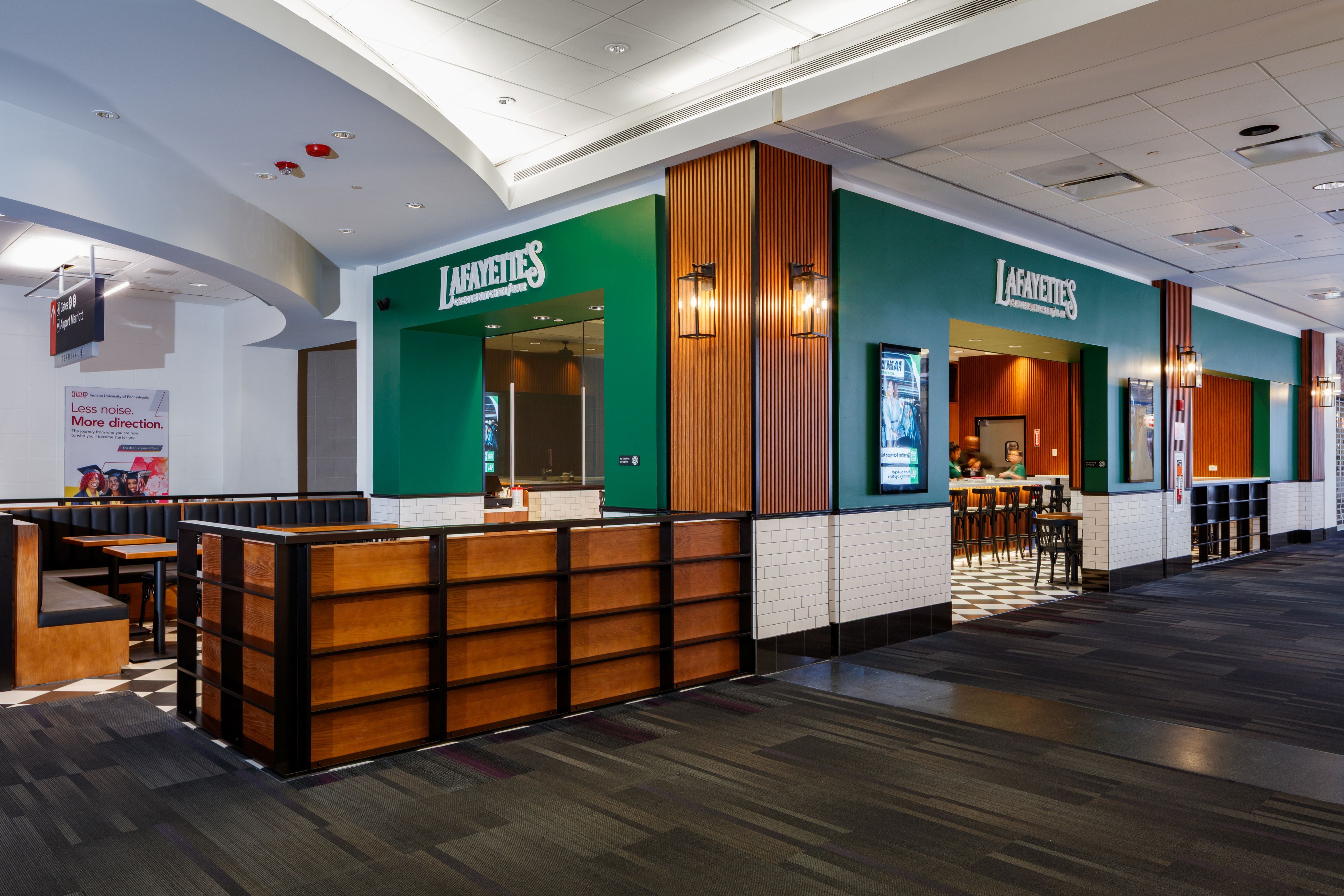
    Lafayette’s Creole Kitchen & Bar, in the B/C connector at Philadelphia International Airport.Paul Loftland Photography

    The airport venture grew out of conversations during the pandemic about finding a more dependable customer base. Johnson, a retired Army Green Beret who served six tours in Afghanistan, suggested airports.

    But entering the airport concessions business was more complicated — and considerably more expensive — than leasing a storefront.

    The couple enrolled in the Philadelphia Airport Concessions Academy, which teaches small businesses about airport operations, financing, and the competitive proposal process.

    Alli said the program began with roughly 40 to 50 participants, but only about nine remained for the final presentations. Soon afterward, when a concession opportunity became available, the couple submitted a proposal and won.

    Alli oversees Lafayette’s operations and culinary direction, while Johnson handles finance, logistics, and business strategy.

    The location combines a bar and indoor seating with tables open to the busy concourse, which Alli likens to Times Square.

    For Alli, the opportunity also represents a vote of confidence in a small, independent operator. “They could have chosen a large company or one of the prime operators, but they chose a very small business and put their faith in us,” she said.

  • Càphê Roasters is opening a new location in South Philadelphia, more than twice the size of the original

    Càphê Roasters is opening a new location in South Philadelphia, more than twice the size of the original

    Càphê Roasters, the Vietnamese coffee shop whose weekend crowds have outgrown its Kensington café, is expanding to South Philadelphia.

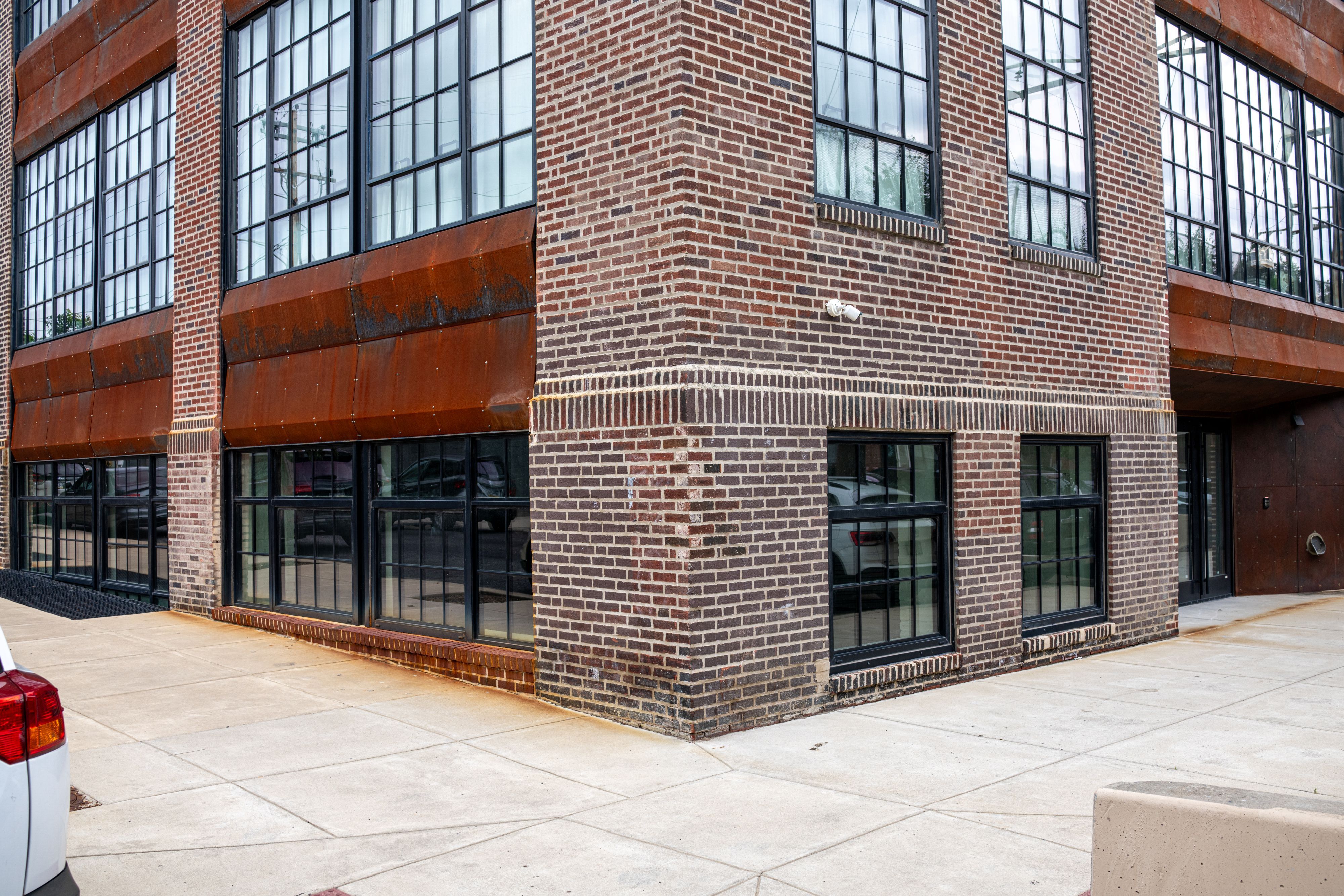
    Cofounders Thu Pham and Raymond John, along with partner Abraham Kwon, plan a second location next spring in the Grays Ferry area, in Herringbone Lofts, a former men’s suit factory, at 2501 Oakford St.

    The cafe will also maintain its expansion plans across the street in Kensington, which have been delayed by a pause in construction.

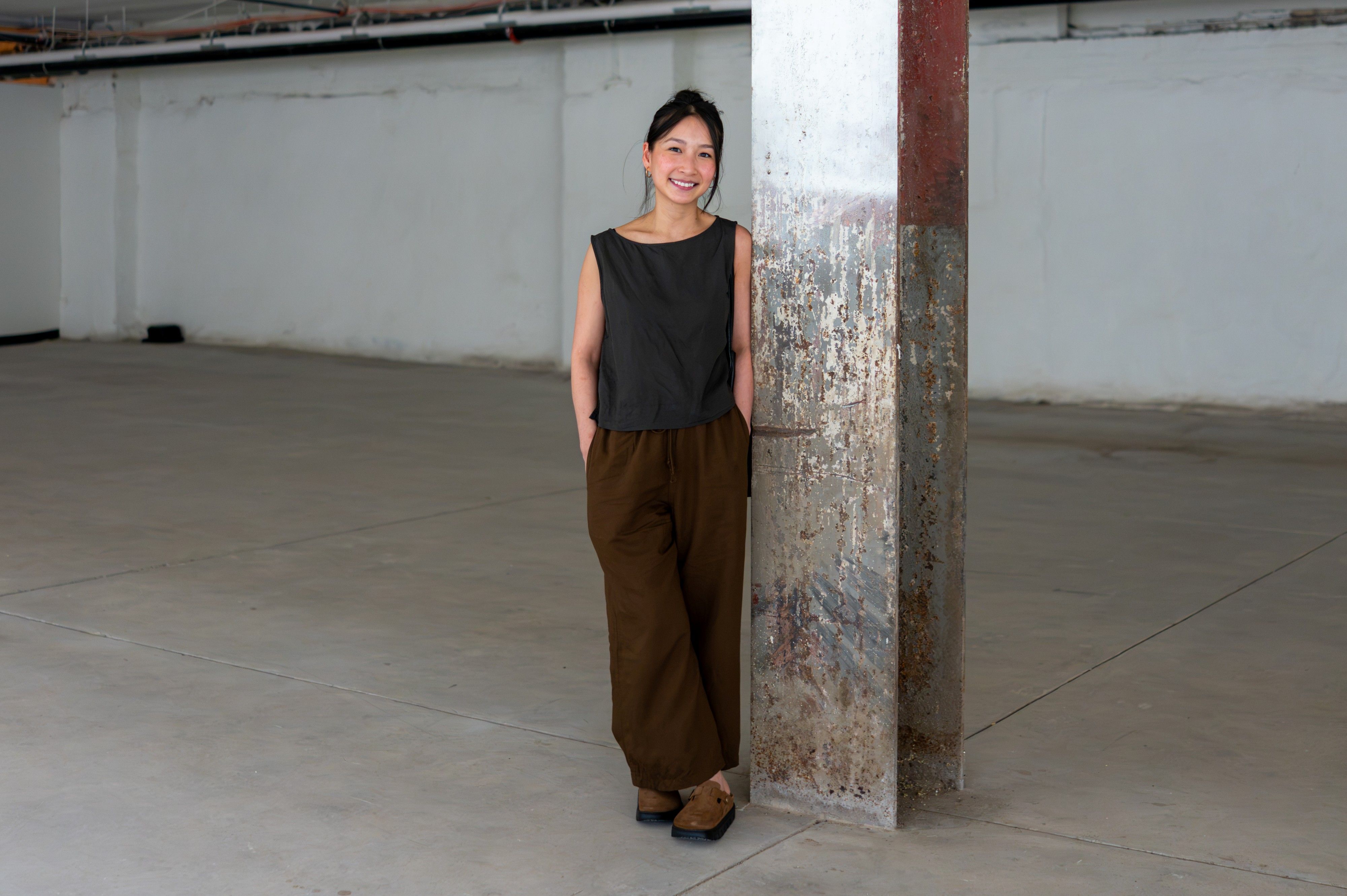
    Thu Pham, a founder of Càphê Roasters, in the raw space that will become Càphê Roasters South.Mike Prince

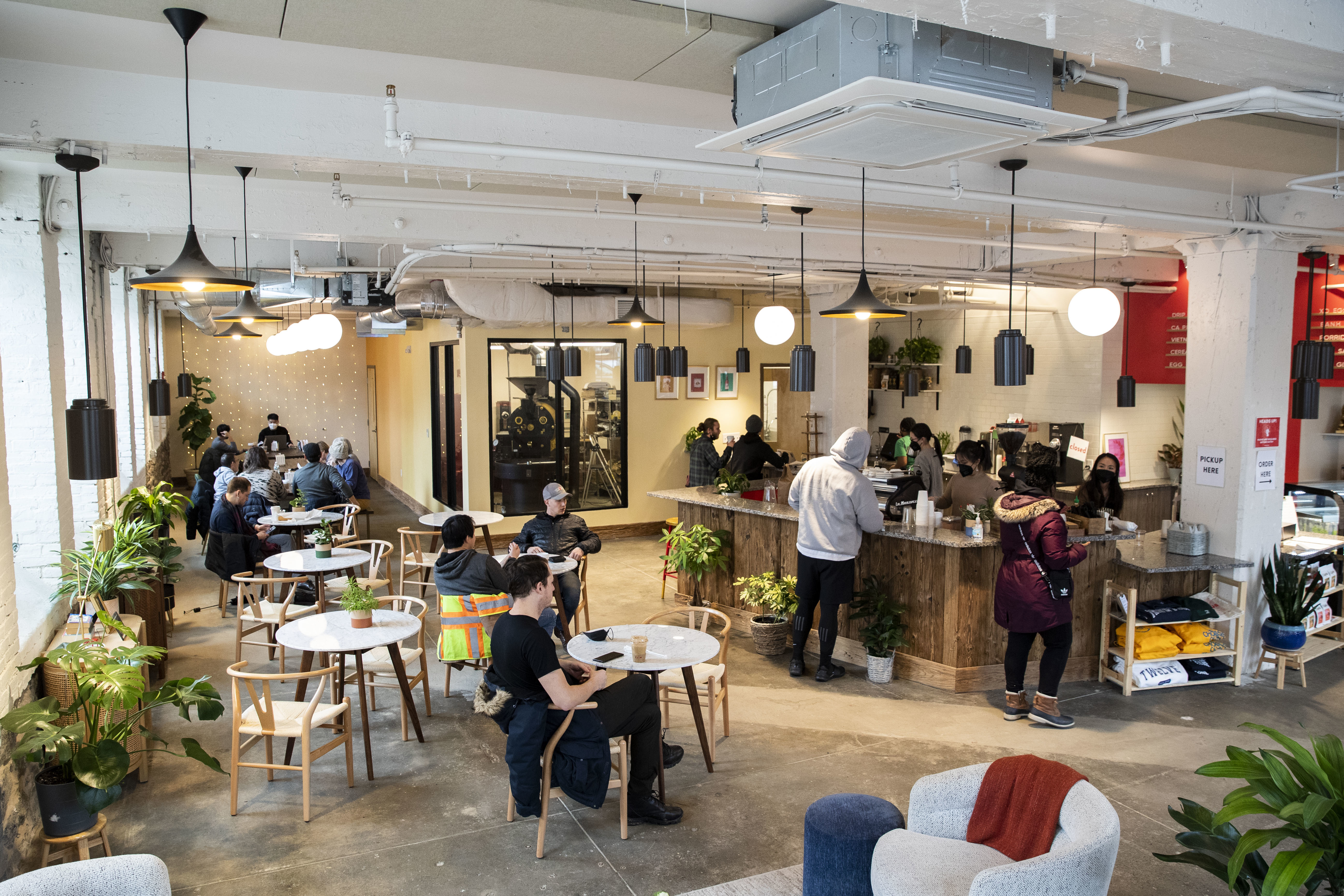
    At 5,685 square feet, Càphê Roasters South will be more than twice the size of the original at 3400 J St., with 80 to 90 seats, a larger kitchen, room for private events, and, for the first time, third-party delivery.

    Pham, whose original café marks its fifth anniversary Friday, said the expansion would be about more than adding tables. It will bring the business closer to South Philadelphia’s Vietnamese American community and give longtime employees opportunities to advance.

    “We’ve always wanted to open more than one location,” Pham said. “But we’ve also wanted to grow into other neighborhoods that have some meaning to us.”

    Two Càphê employees, both South Philadelphia locals, will help launch the café: Five-year veteran Minh Tran will be head chef, and Phat Tang will be general manager.

    Càphê Roasters’ future location at 2501 Oakford St. is on the ground floor of Herringbone Lofts.Mike Prince

    The project has been in the works for nearly two years, since Matt Ryan, Chris Mrozinski, and Ed Glickman of Herringbone Lofts approached Pham about space in the building, which was converted into 54 apartments.

    Càphê began in 2018 as a roasting operation at MaKen Studios in Kensington, supplying beans to cafés and selling coffee online. Pham and John opened the J Street café, on Kensington Avenue under the El, on Oct. 16, 2021, serving Vietnamese specialty coffee, matcha, egg coffee, breakfast sandwiches, congee, and bánh mì on Ba Le Bakery rolls.

    The café was named a 2025 James Beard Award semifinalist for Outstanding Wine and Other Beverages Program.

    Càphê Roasters opened in Kensington in 2021. MONICA HERNDON / Staff Photographer

    Its popularity has created operational challenges that the Grays Ferry addition should help ease. While the Kensington café has hosted baby showers, proposal parties, and weddings, the staff has had to turn down requests for larger gatherings.

    “We’re getting inquiries for events with 100 people,” Pham said.

    The bigger kitchen will be equally important. Kensington lacks even a walk-in refrigerator. South Philadelphia will have both a walk-in refrigerator and freezer, allowing for more catering.

    Capacity has also prevented Càphê from offering delivery through outside apps. Pham said some customers have resorted to hiring couriers to pick up their Kensington orders.

    Càphê Roasters in Kensington in January 2022.Monica Herndon / Staff Photographer

    The new café’s menu will resemble the original’s. Beans will continue to be roasted in Kensington and delivered weekly. Càphê now roasts more than 1,000 pounds weekly, up from roughly 300 pounds in its early years, Pham said.

    Brittany Ewing and Telsa Love of CosciaMoos Architecture are designing the café with a central coffee bar, communal tables, banquettes, lounge seating, and a community bulletin wall. Zoe DeLay, named head pastry chef in May, is developing a standardized pastry program. Initial hours will be 8 a.m. to 5 p.m. six days a week.

    Kensington expansion to resume

    Meanwhile, another Càphê project in Kensington has faced delays. The partners announced plans last year to convert the former Harrowgate Theatre, across from the current café, into a full-service Vietnamese restaurant, expanded roastery, and brewery that will be operated with a Korean brewery.

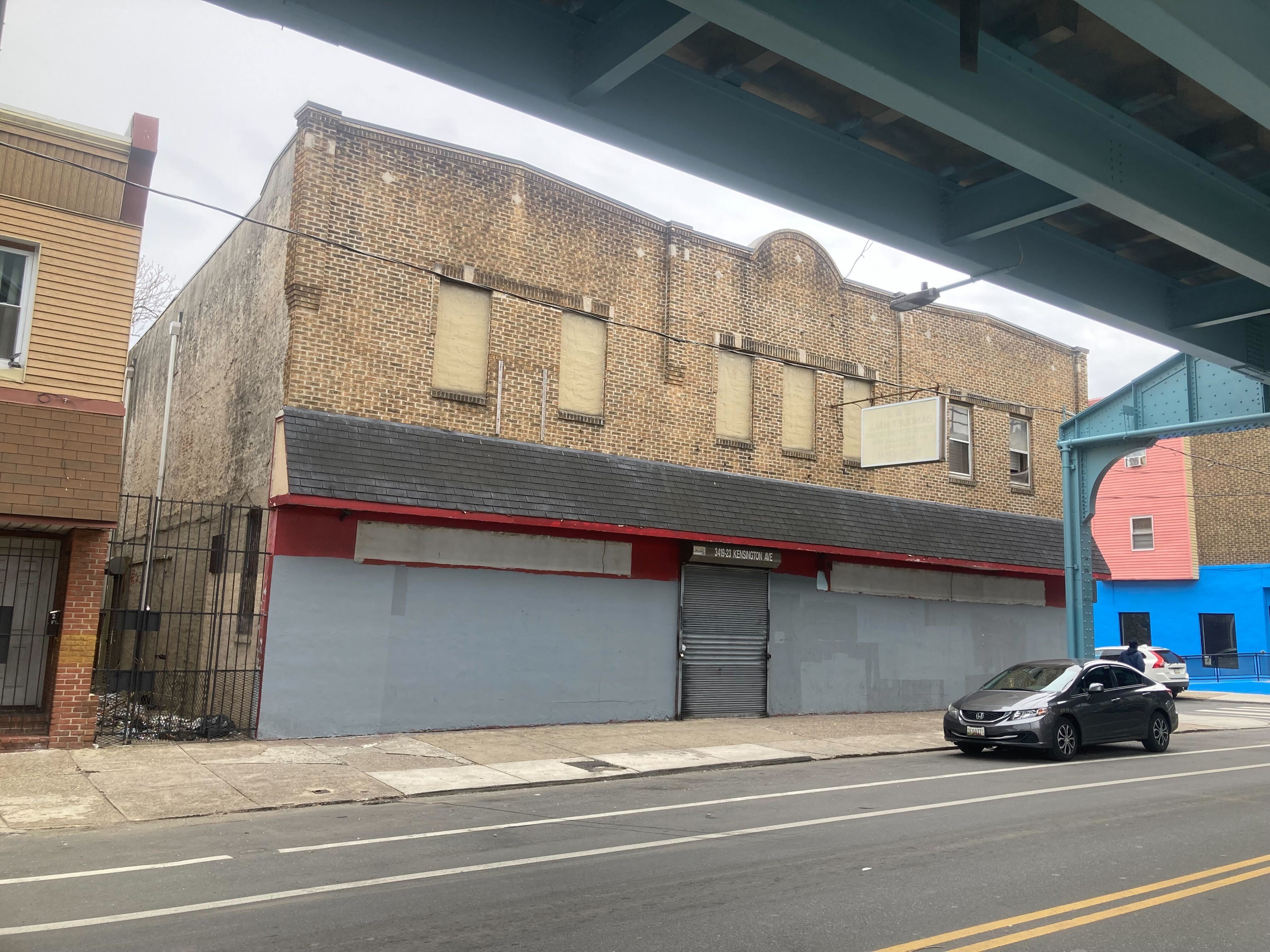
    The former roller rink that Càphê Roasters plans to use for its expansion, at 3419-23 Kensington Ave.Jake Blumgart

    Construction was paused, Pham said, but she was notified last week that it would resume. She now projects an opening in late 2027 or early 2028.

    The expansion also extends a community-oriented model tied to John’s education nonprofit, 12 Plus, whose alumni have worked for Càphê and which receives a portion of the company’s profits.

    Pham said advancement of Càphê employees was the most important part of the expansion.

    “The fact that South Philly has meaning to them is important to me,” she said. “It’s exciting to open a space where they can work in their own neighborhood, or a neighborhood they care deeply about.”
  • The best thing Mike Klein ate last week: Fresh pasta in Rittenhouse — for under $20

    The best thing Mike Klein ate last week: Fresh pasta in Rittenhouse — for under $20

    For fresh pasta without the fuss — or the price tag of a full-service restaurant — DaMò Pasta Lab in Rittenhouse is one of Center City’s best bargains.

    The pasta is made in-house, cooked to order, and served in a sunny, counter-service setting in the lab’s 20-seat dining room. (BYOB is allowed.) The menu is also available to go.

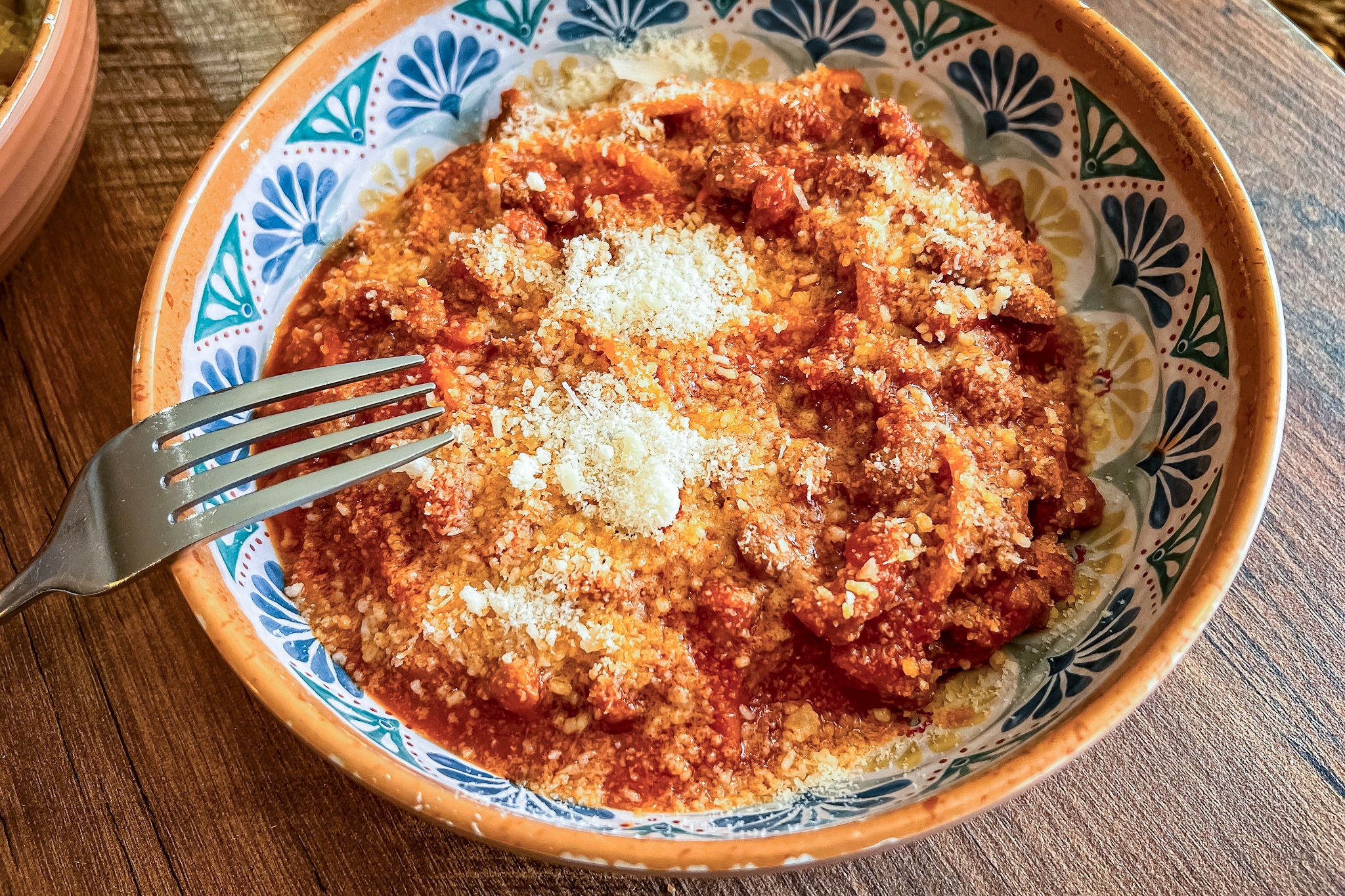
    Chitarra Teramana at DaMo Pasta Lab, 100½ S. 21st St.Michael Klein / Staff

    Much of what’s here is imported — the flour, the cheeses, and even the owners: Danilo D’Eugenio, from Abruzzo, and Monica Fenocchio, from Rome. (He’s the Da; she’s the Mò.) They’ve been in town since 2019, when they opened their first location on 12th Street after falling in love with Philadelphia during a vacation trip. The 12th Street location closed last winter.

    Their mission is to serve pasta as Italians know it, rather than heavier, saucier Italian American versions. Consider chitarra Teramana, an Abruzzese specialty of square-cut spaghetti with a hearty tomato sauce and tiny beef meatballs perfumed by a hint of nutmeg, and topped liberally with Parmigiano Reggiano. It’s spaghetti and meatballs, all right, but probably not the kind you grew up eating.

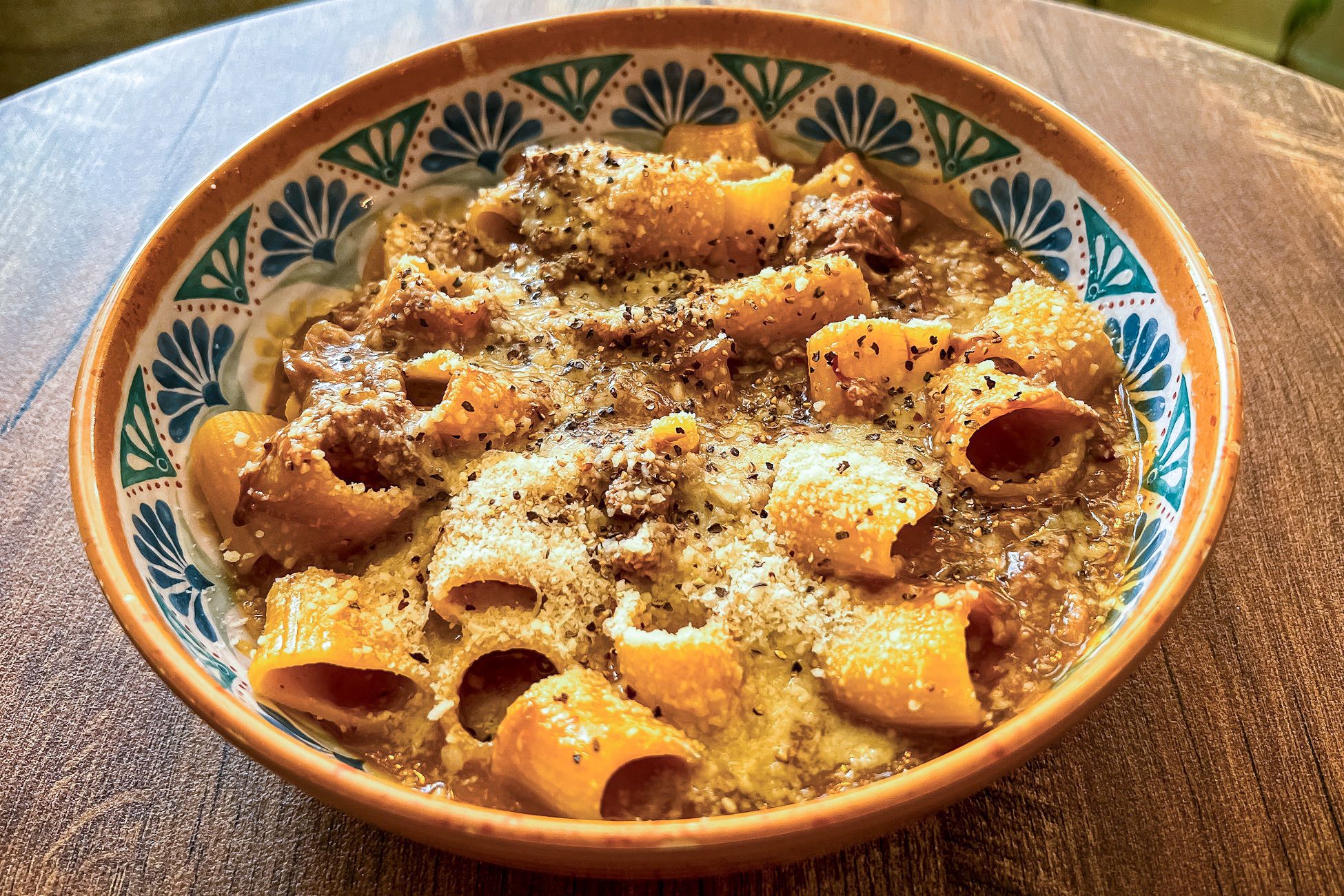
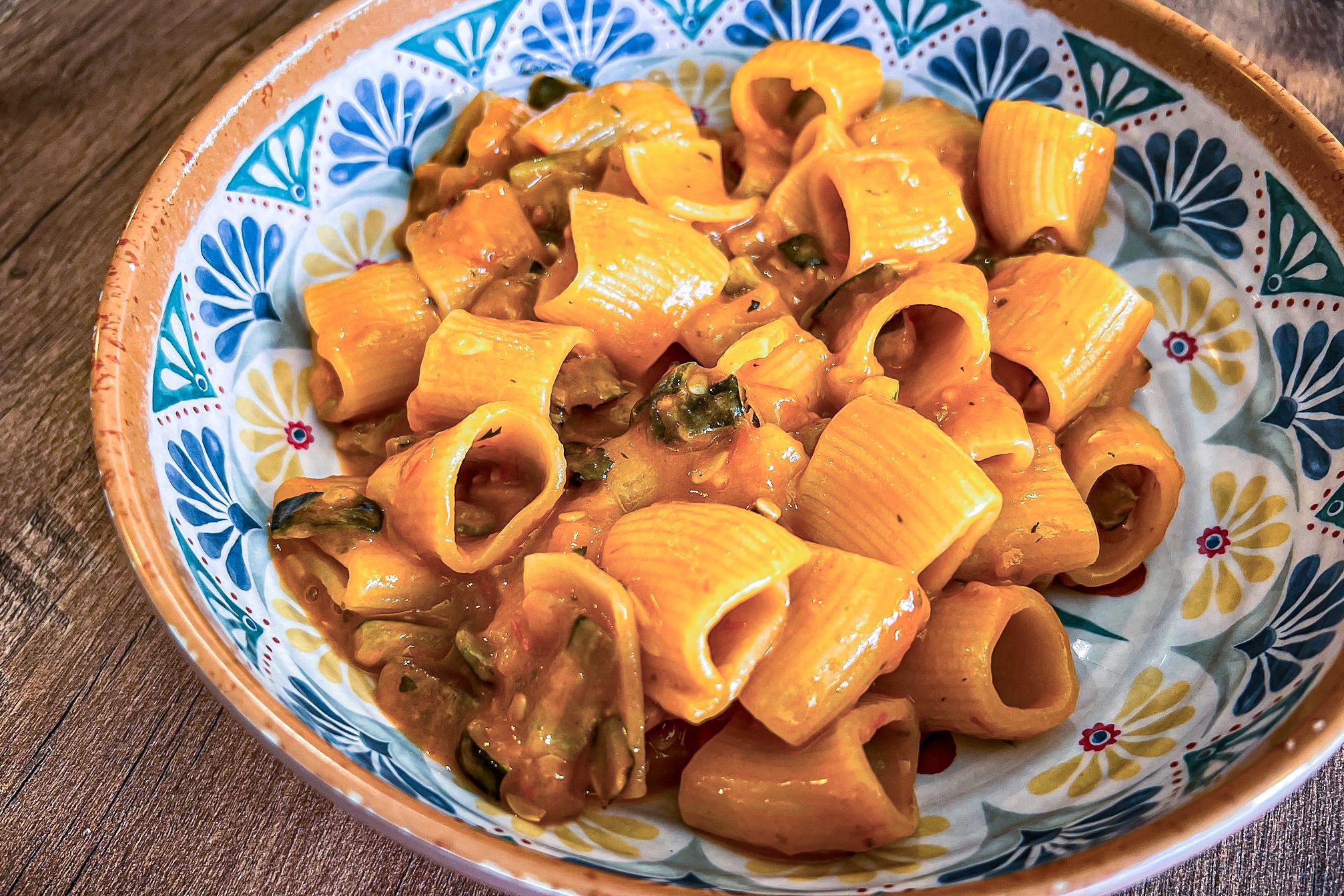
    Mezze maniche alla Genovese at DaMò Pasta Lab, 100½ S. 21st St.Michael Klein / Staff

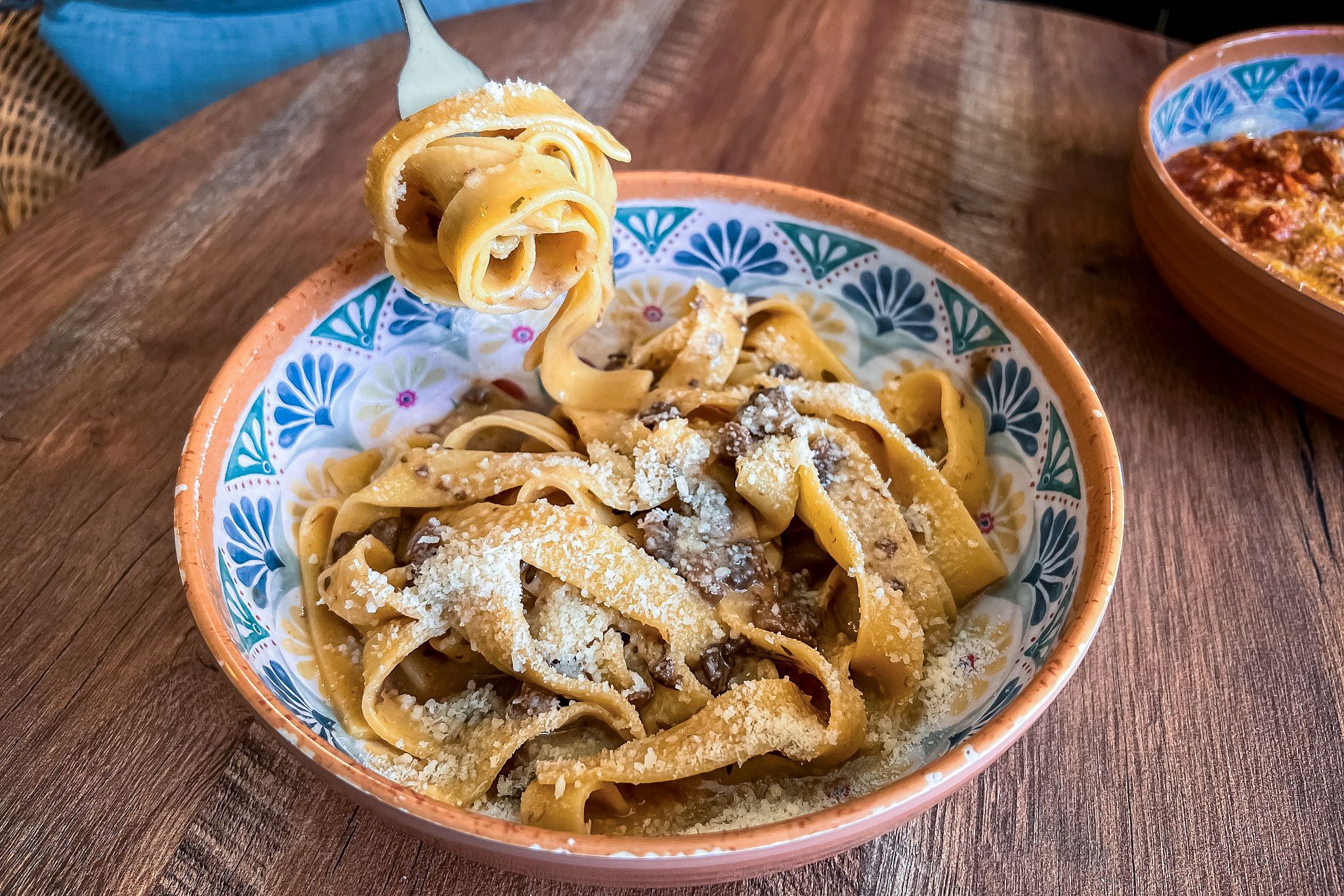
    The pappardelle ai funghi pairs broad ribbons of pasta with a savory sauce of porcini and button mushrooms. There’s a proper cacio e pepe, a rich tagliatelle Bolognese, and several variations of mezze maniche, the short rigatoni whose name translates to “half-sleeves.” Fenocchio’s own creation, pesto DaMò, takes a light, vegan approach, tossing the mezze maniche with grape tomatoes, basil, roasted zucchini, and garlic.
    They’ve made some concessions to American tastes. You can specify your pasta’s firmness and there’s a build-your-own section offering such decidedly un-Italian options as Alfredo sauce, pink sauce, and chicken.

    Pappardelle ai funghi at DaMò Pasta Lab, 100½ S. 21st St.Michael Klein / Staff

    It’s a sensible compromise. Purists can explore regional Italian cooking, while everyone else can have pasta their way, and just about everything is under $20.

    Damò Pasta Lab, 100½ S. 21st St., 267-951-2050, damopastalab.com. Hours: 11:30 a.m. to 9 p.m. Monday to Friday, noon to 9 p.m. Saturday and Sunday.

  • 🦅 Philly’s big food moment in London | Let’s Eat

    🦅 Philly’s big food moment in London | Let’s Eat

    Eagles and fans fly to London for the game this weekend, and the food scene there should make everyone feel right at home. Allow me to explain.

    🧑‍🍳 Twelve Philly chefs are searching for culinary chemistry. Follow our reality-TV-inspired “Love at First Bite” series, a lead-up to this year’s Inquirer Food Fest, hosted by the irrepressible Ariane Datil. Want to attend Food Fest, on Nov. 14 at the Fillmore? Tickets are still available.
    Also in this edition:

    — Mike Klein

    If someone forwarded you this email, sign up for free here.

    Cheesesteaks, Joe Beddia, and the Eagles in London

    When the Eagles and their fans arrive in London this week, they should find Philly food connections. At least, cheesesteaks and pizza. Passyunk Avenue is a five-unit Philly-fied dive bar owned by a guy from New Jersey, and one of Bar Etna’s backers is Joe Beddia of Pizzeria Beddia fame, who has crossed the pond with his dough recipe.

    Wawa wasabi

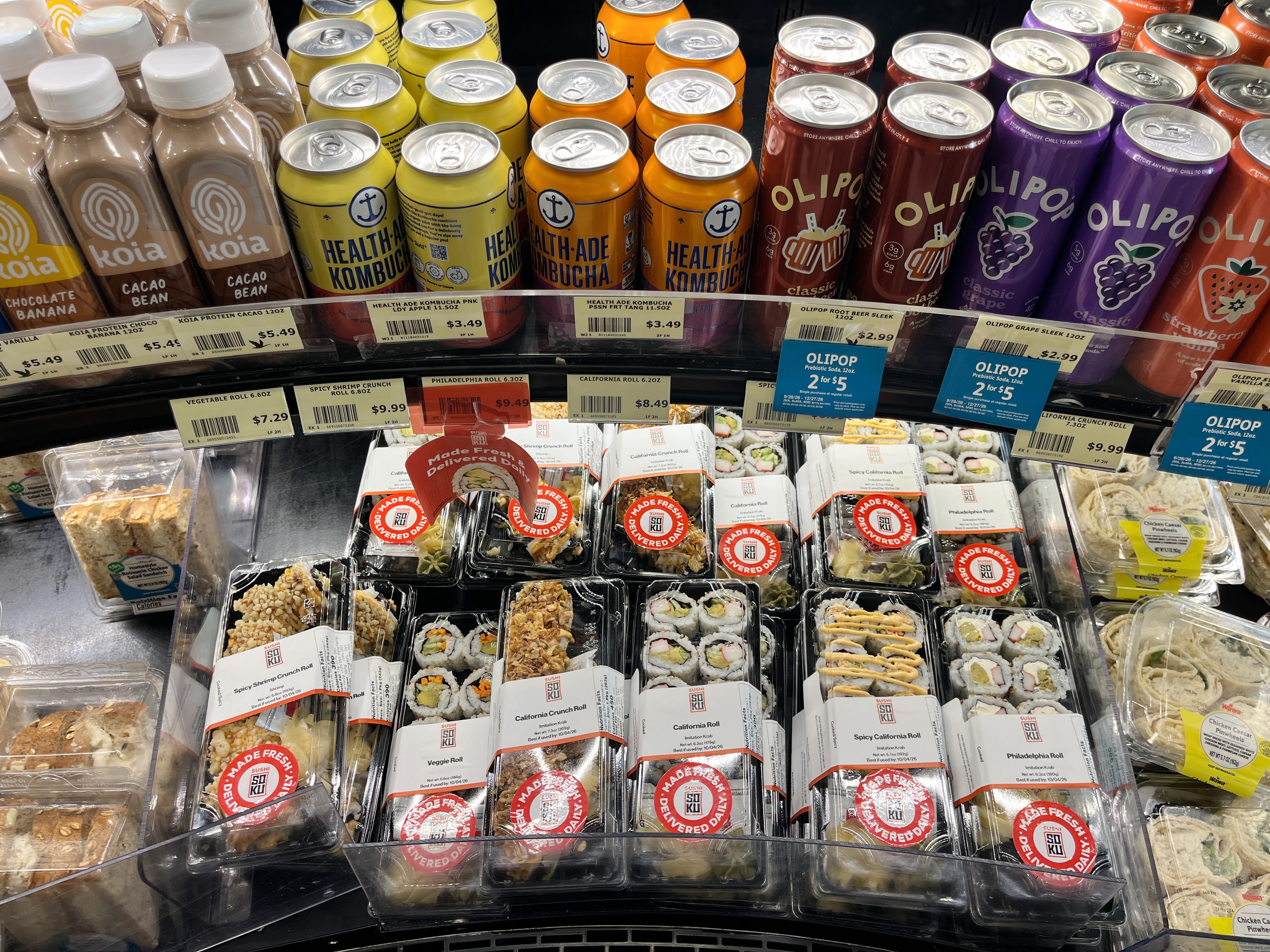
    Wawa has been quietly testing premade sushi rolls at select stores, and Beatrice Forman drove 23 miles to try them. Reaction, as you might imagine, has been mixed.

    Pizza, pizza, pizza

    Apizzeria 888 in Elkins Park, whose ultra-thin crusts and quirky setup have made it a cult favorite over the last year, is closing in less than two weeks. On the plus side, owner Sebastian Besiso has increased hours during the countdown. Read on to see what he’s up to next.

    Lucatelli’s Pizzeria is headed to Jenkintown, where owner David Schiavo — who has locations in Doylestown and Newtown — plans to take over the former Pizza Wheel at 314 Old York Rd. Schiavo also recently took over his family’s Maple Glen Pizza, which he’s planning to renovate and reflag to a Lucatelli’s, a more upscale brand. He expects Jenkintown to open in December.

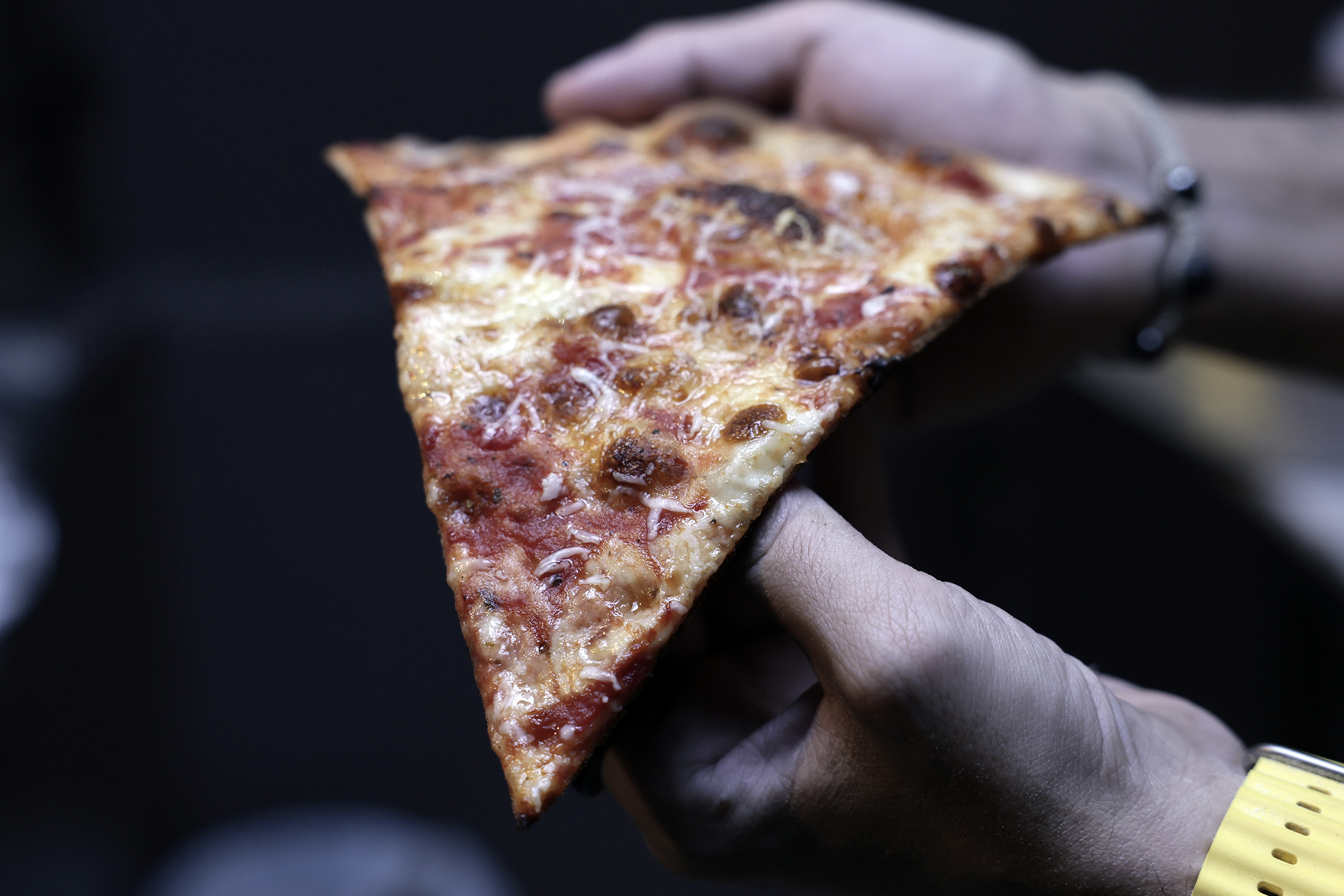
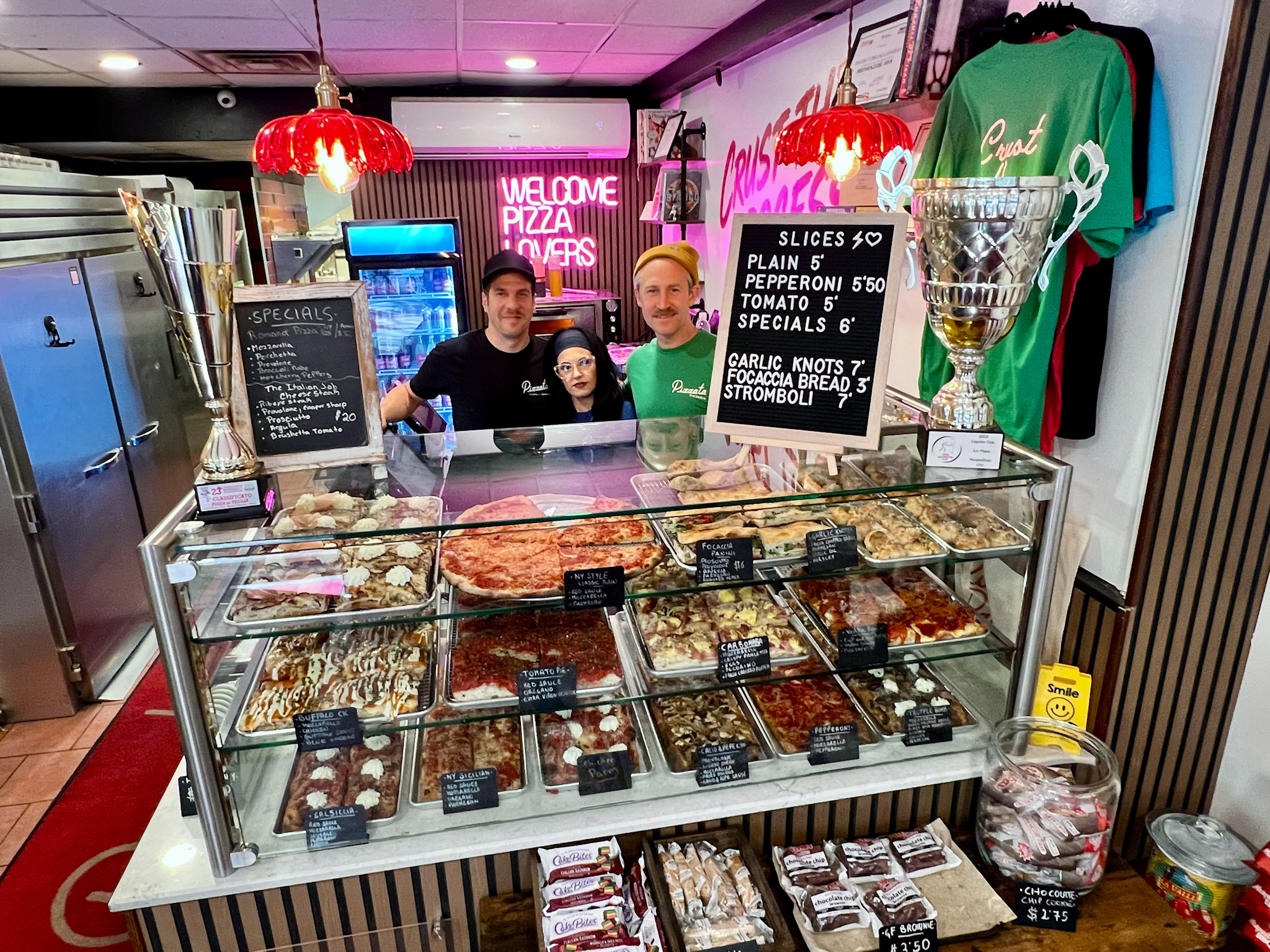
    Pizzata Pizzeria’s original location at 240 S. 22nd St. in Rittenhouse-Fitler Square is sporting a new display case — the better to see everything, as well as show off co-owner Davide Lubrano Lavadera’s pizza-competition trophies. This move also adds a small Italian retail section.

    Oh, sugar!

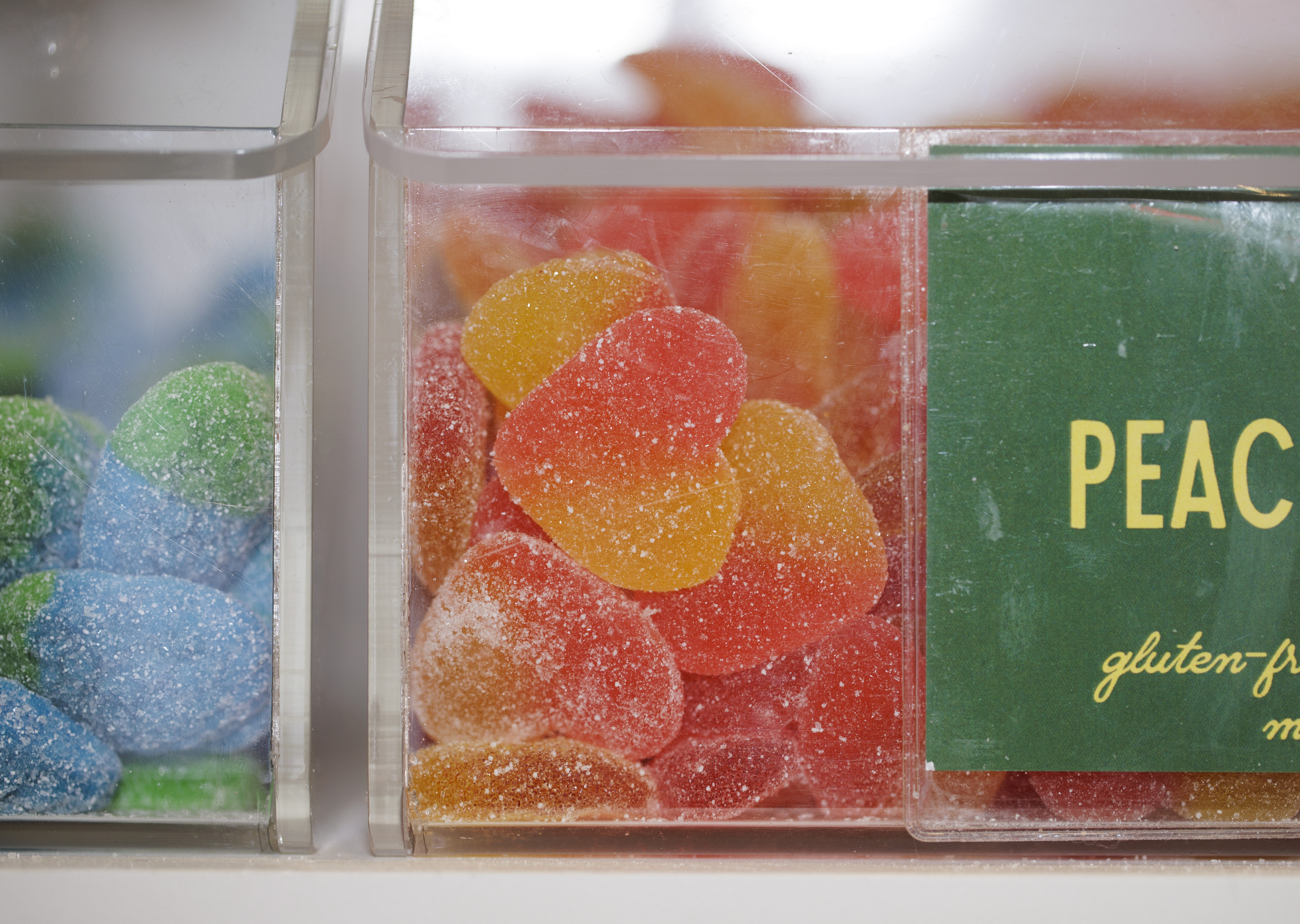
    All Aboard Candy stocks Bubs and other varieties of so-called Swedish candy. As Jenn Ladd relates, the woman-owned business is part of a wave of new-school candy stores that are springing up in cities all over the country.

    The rise of the at-home barista

    Making coffee at home has turned into an elaborate affair with the surge of at-home espresso machines on the market. Now, reports Emily Bloch, coffee shops are leaning in with professional barista training.

    Scoop

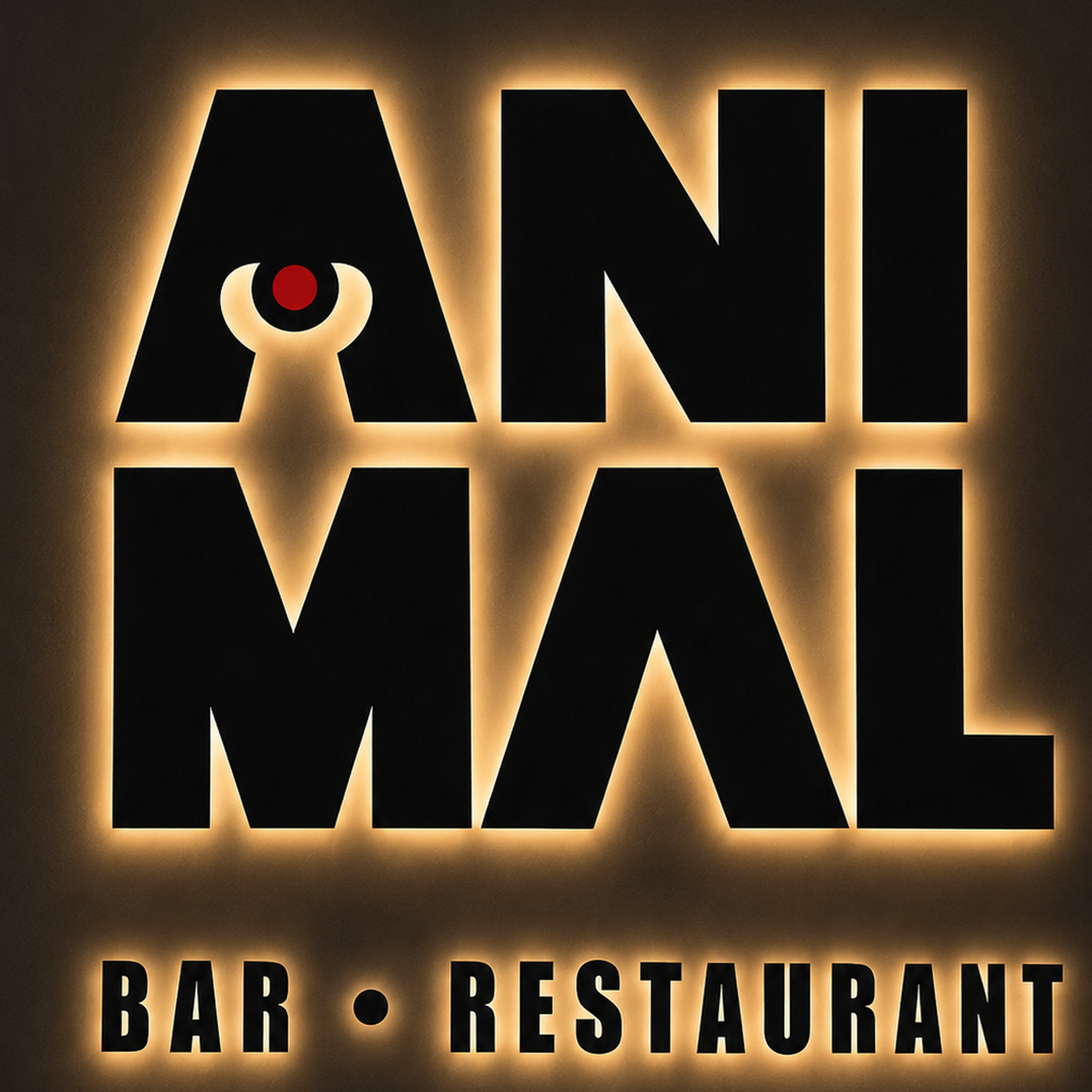
    Animal is a bar-restaurant planned for the 2401 Walnut St., which was last a Human Robot outpost after turns as Spread Bagelry’s “Spreadquarters” and Jose Garces’ 24 Wood Fired Fare. Developer Chuck Block says it will pair a casual public-house menu, with a 70-seat dining room, 36-seat oval bar, and outdoor terrace, under the direction of general manager Dave Champagne (ex-Schulson Collective and Roy-Pitz Brewing). A separate 40-seat fine-dining restaurant in Garces’ former atelier is being developed, as well. Chef is TBA. Opening is targeted for late fall, initially open for dinner Wednesdays through Sundays, with the fine-dining restaurant following.

    Restaurant report

    Can Moroccan-French cooking break the Morris House’s streak of short-lived restaurants? Critic Craig LaBan says he finds promise at Soufiane at the Morris, but service lapses and uneven cooking cloud its potential.

    Briefly noted

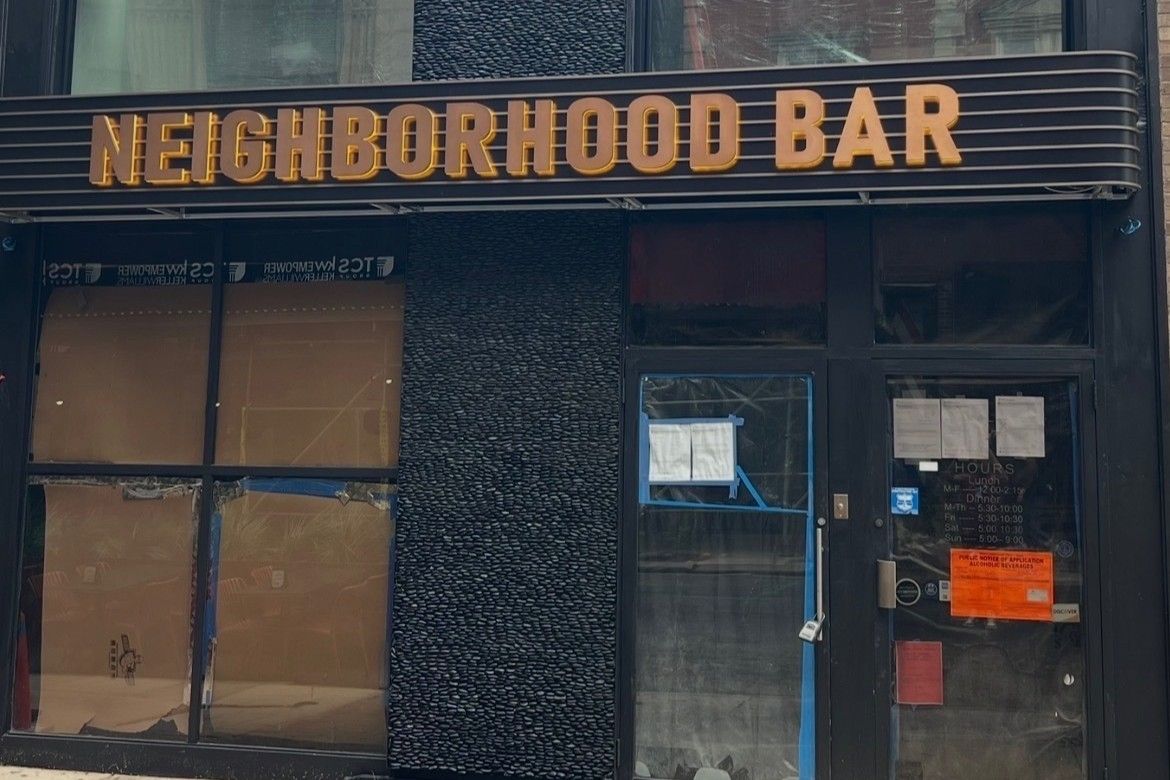
    “Neighborhood Bar” is on the sign and that’s exactly what Simon Atiya, who also owns the nearby Giovani’s Bar & Grill, plans to open at 222 S. 15th St., the former Shiroi Hana. He says the timeline is up in the air.

    Puentes de Salud, which provides healthcare mainly to the Philadelphia Latino community, has rounded up seven notable restaurants for a fundraiser Monday at Bok Bar.

    Pat’s King of Steaks was in the news last week as an influencer threw a cheesesteak through the service window, hitting a manager. He later turned himself in and faces a summary offense.

    Terence O’Reilly’s name may not ring a bell. But if you’ve dined out in the region since 1963, know that he probably made sure your plates were clean. Mr. O’Reilly died Oct. 1, and I recount his immigrant’s story.

    WineDive’s new weekday happy hour is themed to 1990s’ “After School Snax,” with food, music, and cartoons from that era. It launches Monday at 1534 Sansom St. with a party featuring merch giveaways and free kiddie cones, and runs 4-6 p.m. Mondays through Thursdays thereafter, with such drinks as Cereal Milk Punch — a “Froot Loop” milk punch, gin, and fruit — and a PB & Fluff Old Fashioned (peanut butter-washed bonded bourbon, maple syrup, and toasted marshmallow). Food includes Bagel Bites, a brown bag lunch of a mini ham and cheese toasty with a bag of chips, and a house-made PB&J Uncrustable.

    ❓Pop quiz

    Name the Chinatown restaurant that recently reopened its dining room for the first time since the pandemic.

    A) Ting Wong

    B) David’s Mai Lai Wah

    C) China Castle

    D) Emei

    Find out if you know the answer.

    Ask Mike anything

    What happened to Mix, the bar at 21st and Chestnut Streets? — Chris P.

    Mix Bar & Grill, which opened in 2008 at the RiverWest Condos, shut down last weekend, as Victor Fellus sold to Aakash Patel, who also owns Bar1010 in Northern Liberties. Patel says he’s working on what he calls a refresh and hopes to reopen soon with a new menu.

    📮 Have a question about food in Philly? Email your questions to me at mklein@inquirer.com for a chance to be featured in my newsletter.

    By submitting your written, visual, and/or audio contributions, you agree to The Inquirer’s Terms of Use, including the grant of rights in Section 10.

  • Eagles are headed to London, where Philly has a culinary foothold: Cheesesteaks, citywides, and Beddia’s pizza

    Eagles are headed to London, where Philly has a culinary foothold: Cheesesteaks, citywides, and Beddia’s pizza

    When thousands of Eagles fans arrive in London this week, they will find more than a football stadium temporarily dressed in green.

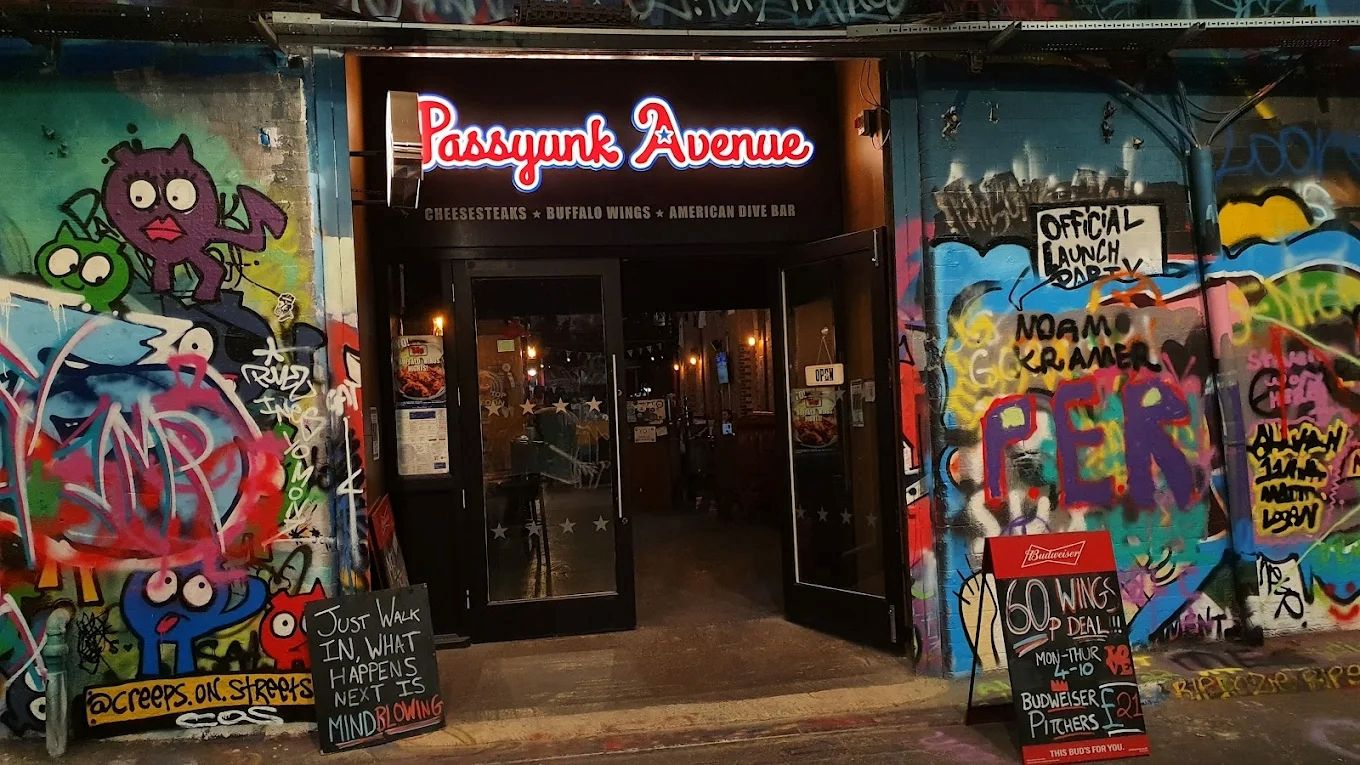
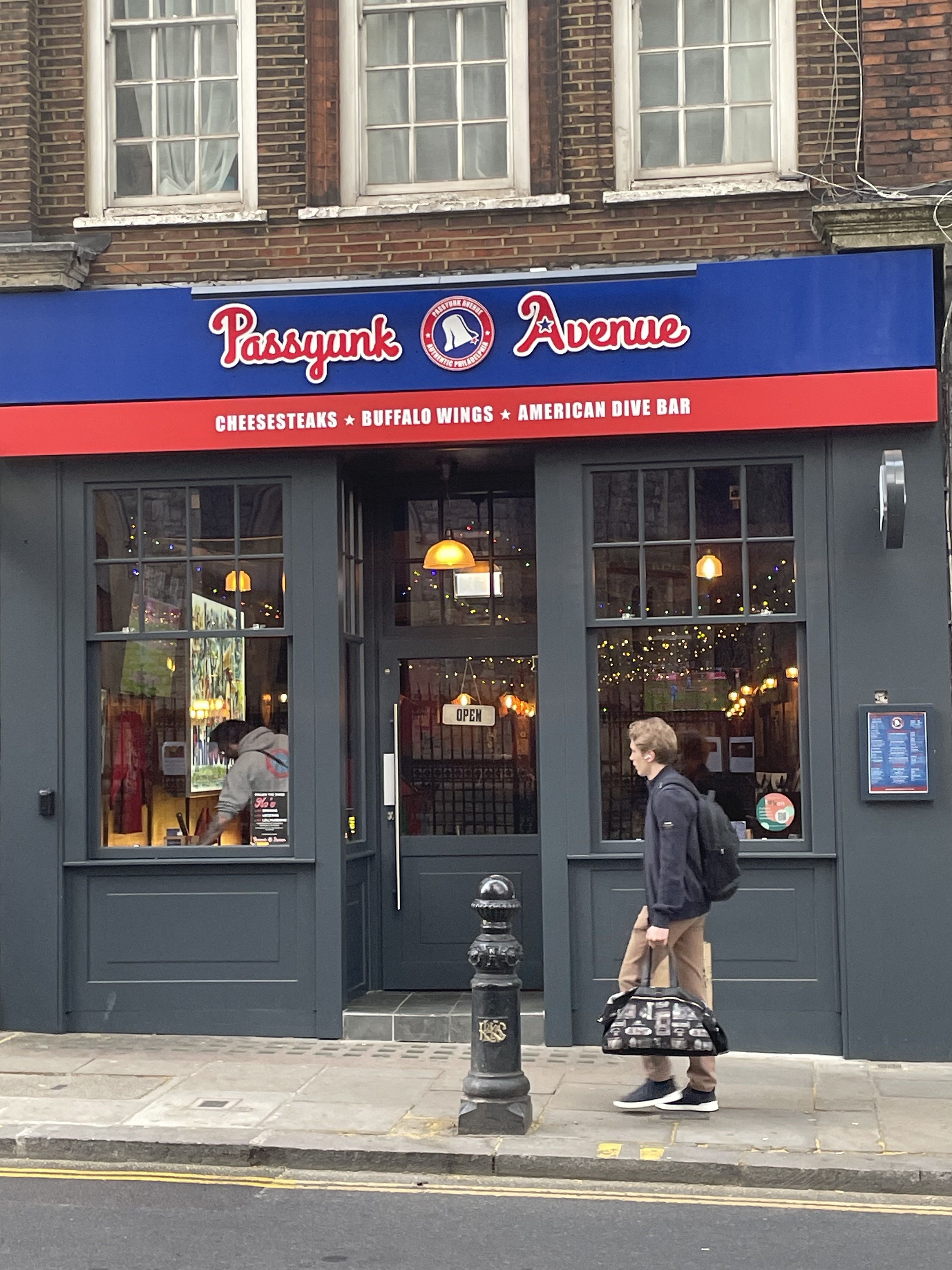
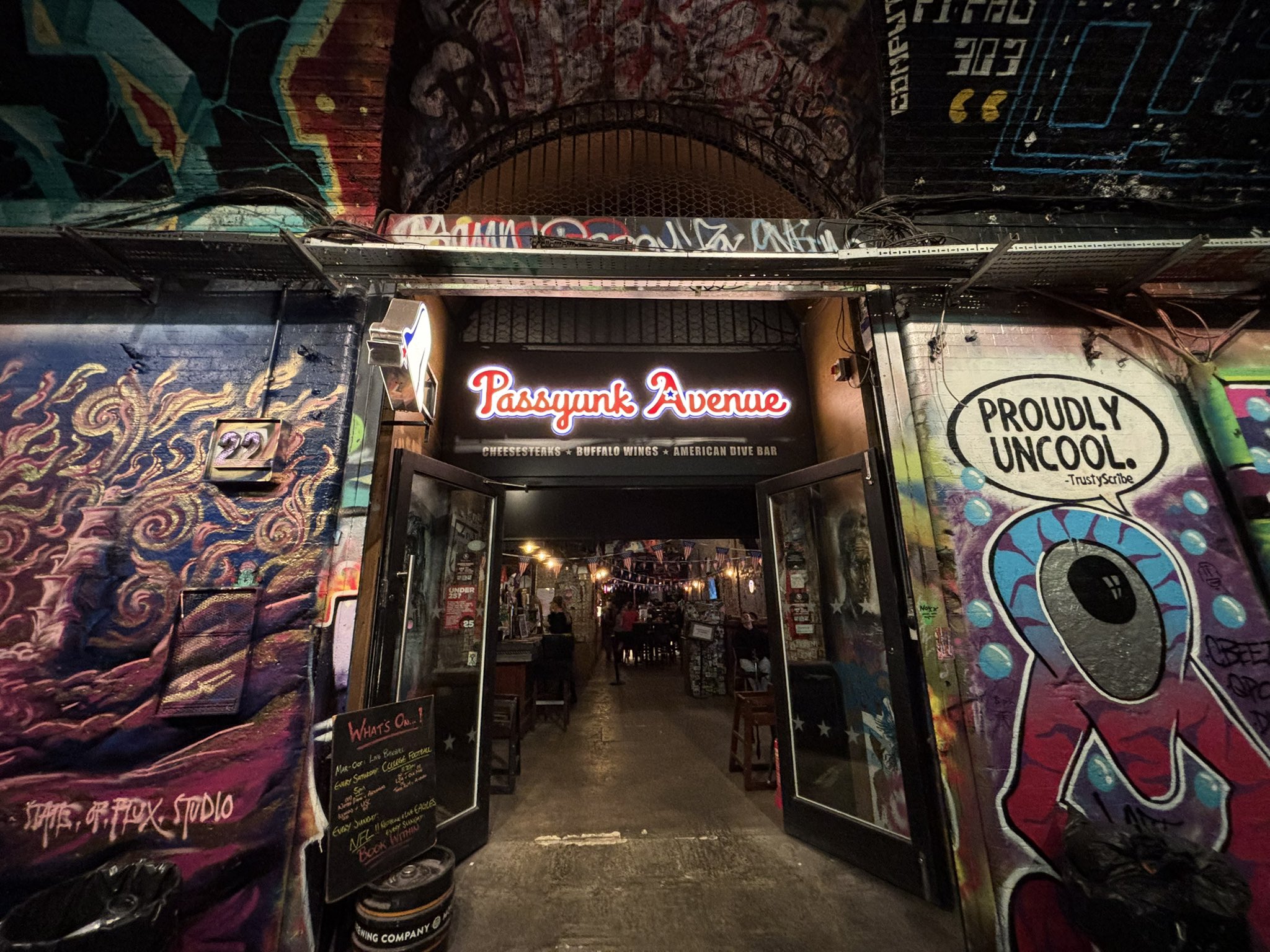
    They will find cheesesteaks made with custom-baked rolls, citywide specials, and a series of Philadelphia-themed dive bars called Passyunk Avenue.

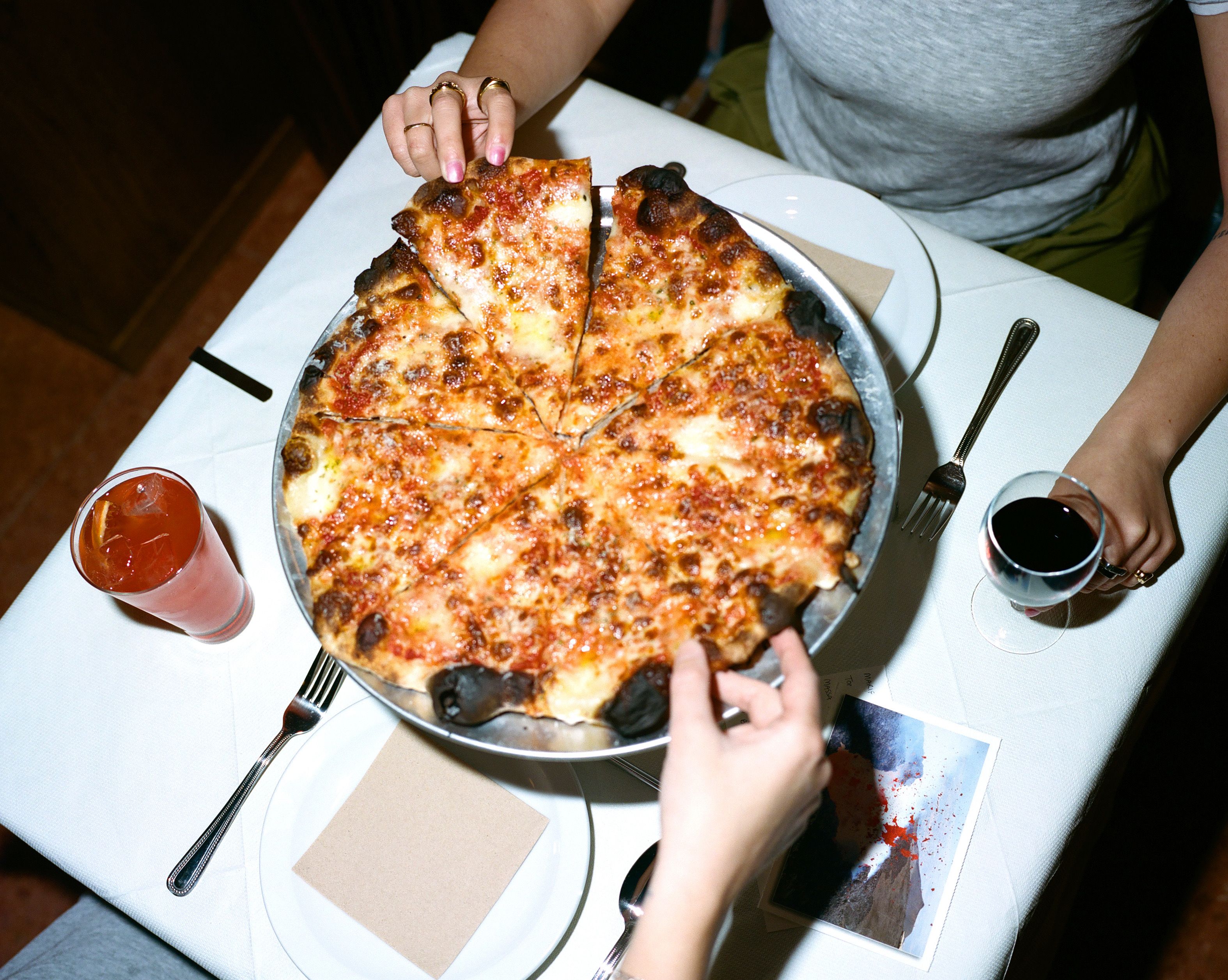
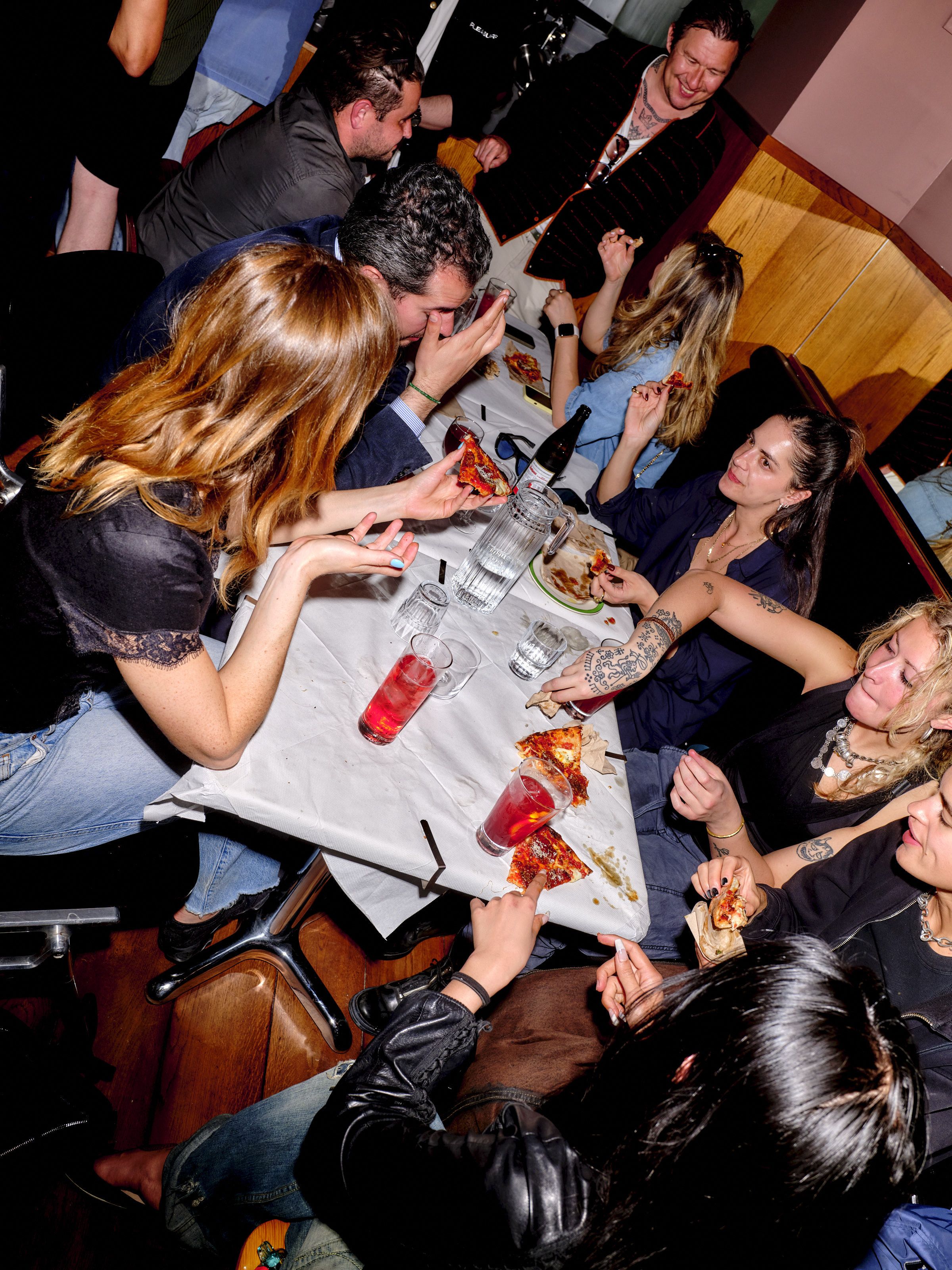
    At the new Bar Etna, they can order pizza created by Joe Beddia, one of Philadelphia’s best-known pizzaioli and a partner in Fishtown’s Michelin-acclaimed Pizzeria Beddia.

    At Bar Etna in London, Joe Beddia is making pizzas that are smaller than those he sells in Fishtown. The tables are smaller, he explains.Joe Hart

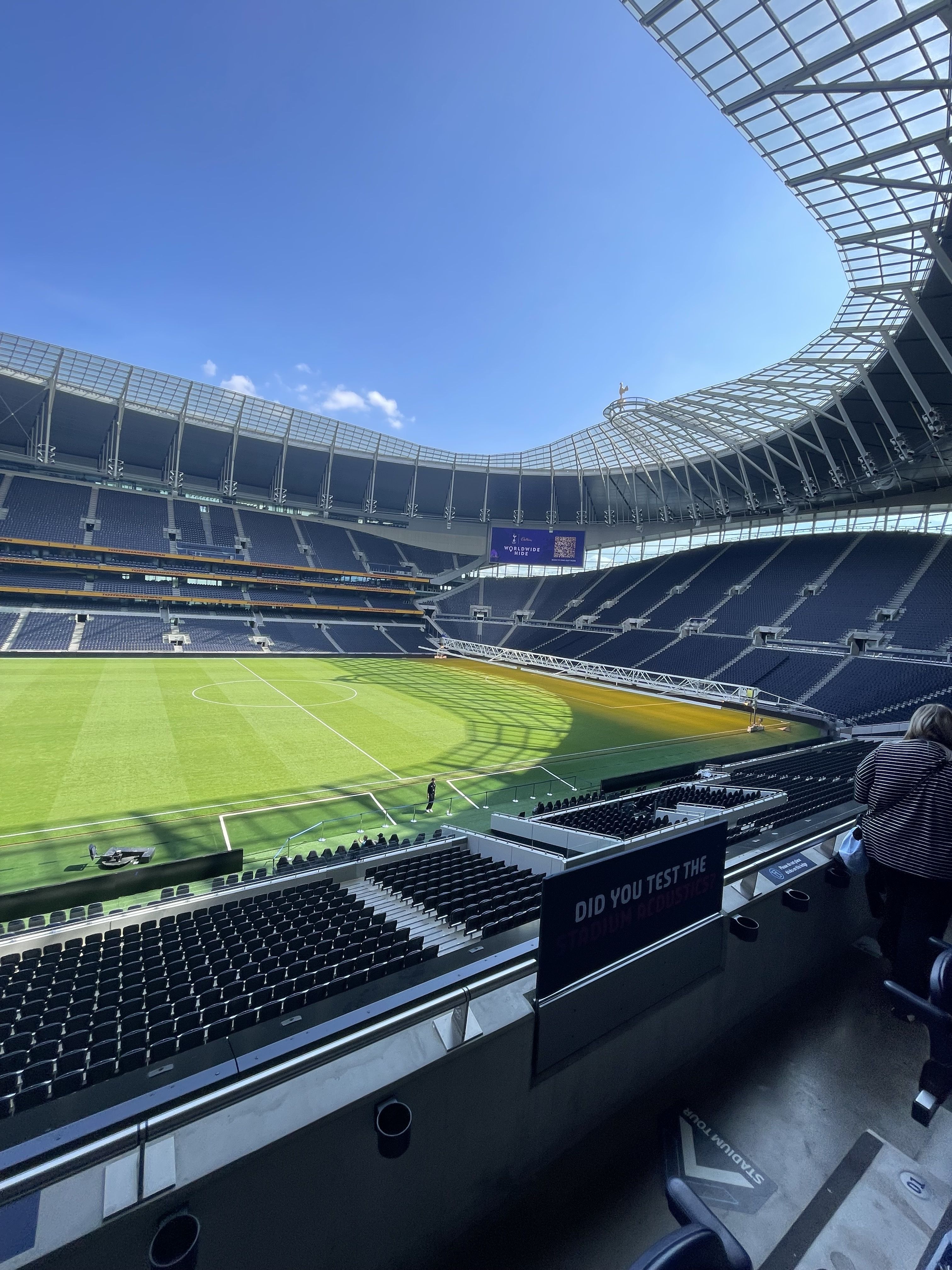
    Sunday’s match, scheduled for 2:30 p.m. at London’s Tottenham Hotspur Stadium (9:30 a.m. in Philadelphia), is officially a home game for the Jacksonville Jaguars. Around it, London will host nearly a week of Philadelphia-themed activity extending well beyond the NFL’s events. It shows a culinary connection between Philadelphia and London that has grown since the Birds last played there in 2018.

    How Philly will this be? Even Wawa is involved.

    Passyunk Avenue plans to party

    The five-bar outfit Passyunk Avenue — founded in 2018 by New Jersey native JP Teti — has organized a three-day Wooderloo Terminal Market in the graffiti-lined tunnels beneath Waterloo Station. Modeled after Reading Terminal Market, the event will feature food vendors, bars, vintage merchandise, and entertainment from Thursday through Saturday.

    Passyunk Avenue’s Battersea location is near the U.S. Embassy in London.Courtesy of Passyunk Avenue

    Passyunk Avenue also will host an Eagles tour of London on a red double-decker bus Saturday, handing out its cheesesteaks near Parliament Square, Trafalgar Square, the Tower of London, and Tower Bridge. The bar will hold a game-day street party Sunday outside its original location in Fitzrovia and a procession through central London on Monday.

    By phone this week, Teti described it as a victory parade, although he said it would proceed regardless of the score.

    Teti, who grew up in Lawrenceville, Mercer County, moved to London in 2008 to oversee Middle Eastern and African operations for Xerox. He had spent a year in England while studying at Cambridge University, an experience that made him determined to build a life outside the United States.

    The restaurant idea began with what he could not find in London.

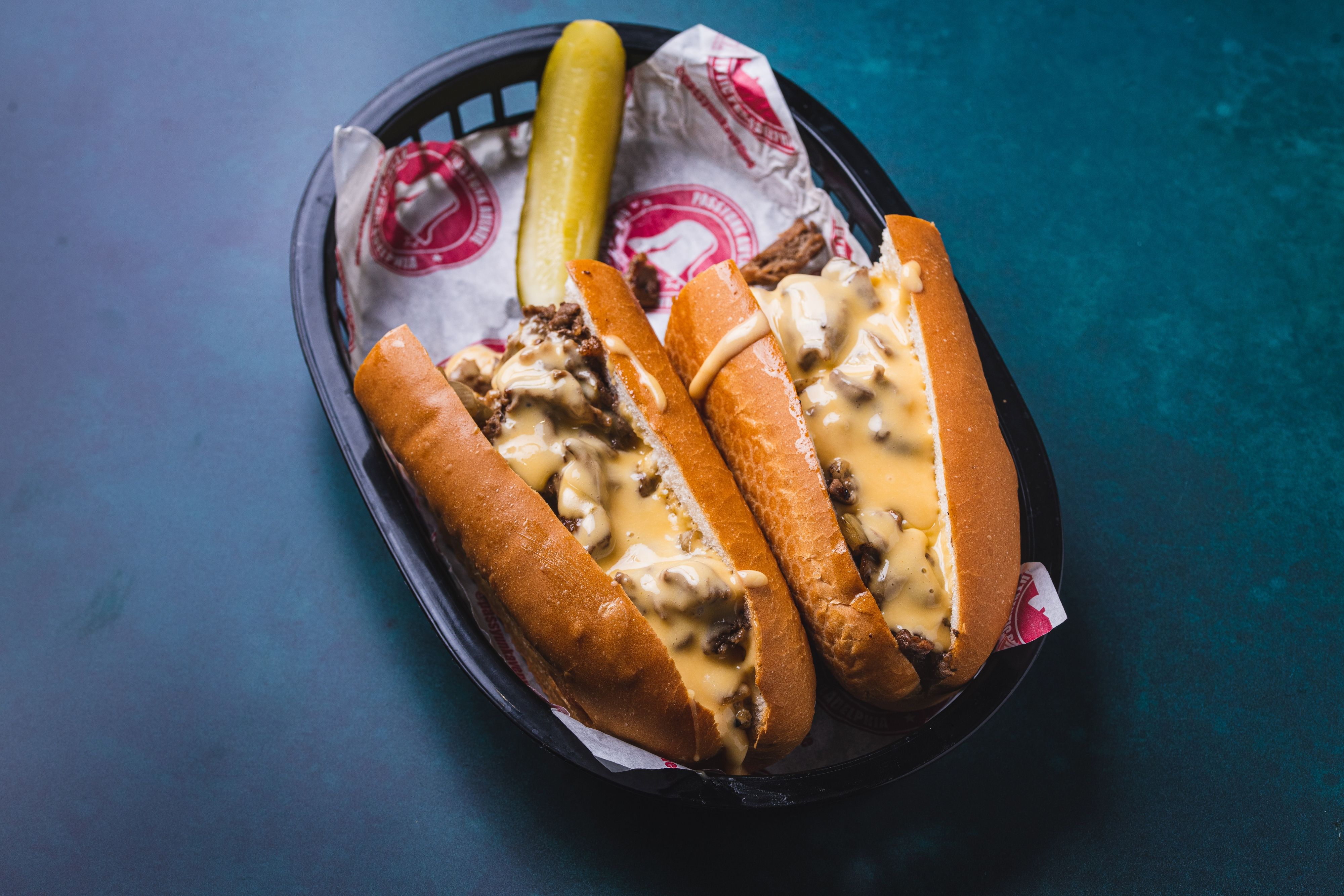
    A cheesesteak on a custom-baked roll at Passyunk Avenue.Courtesy of Passyunk Avenue

    “Coming from a South Philly Italian American ethnic inheritance, I think about food constantly,” Teti said. “I wondered why, in a city as diverse as London, you couldn’t get hoagies, cheesesteaks, chicken Parms, and so on.”

    He also missed Philadelphia’s neighborhood bars. English pubs fill a similar social role, he said, but lack the particular combination of informality, intimacy, and eccentricity that he associated with such places as McCusker’s Tavern, Oscar’s Tavern, and Ray’s Happy Birthday Bar.

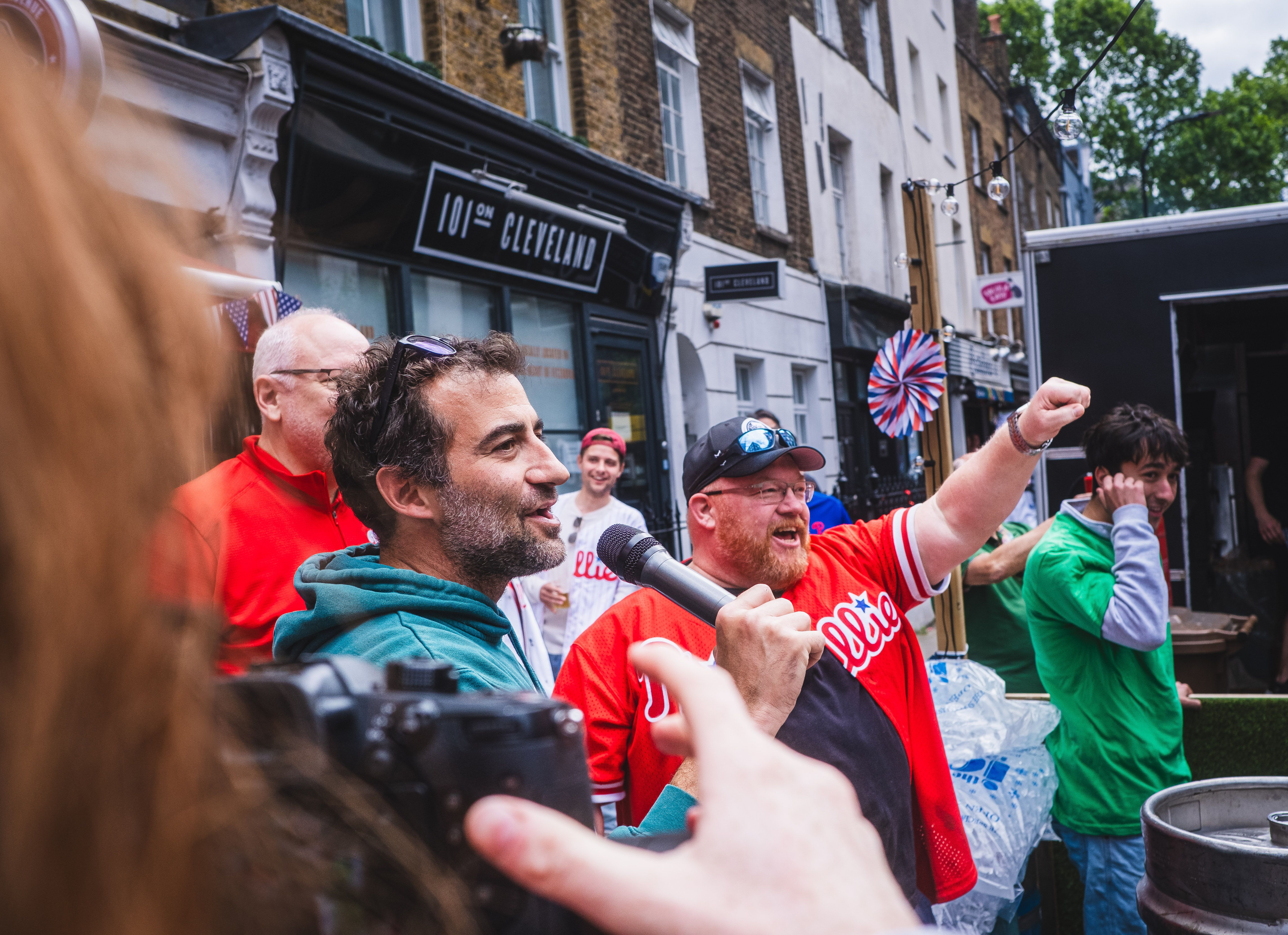
    JP Teti takes the mic outside Passyunk Avenue’s Fitzrovia location during a visit from the Phillies in 2024.Courtesy of Passyunk Avenue

    Teti believed that Europeans were interested in American culture but were usually offered “very general, broad-brush attempts to describe what other people thought Americana was, based on movies and television, rather than what our experience was.”

    Passyunk Avenue, he said, would instead present one specific region, including its food, sports, language, immigrant traditions, and citywide specials.

    The first Passyunk Avenue opened in the Fitzrovia neighborhood in March 2018. Teti now operates bars in Fitzrovia, Waterloo, Battersea, and Kensington, along with Passyunk Play, a game-focused offshoot with batting cages, shuffleboard, pool tables, and a self-serve beer wall. This week, he signed a lease to bring Passyunk Avenue to Amsterdam, where he now lives.

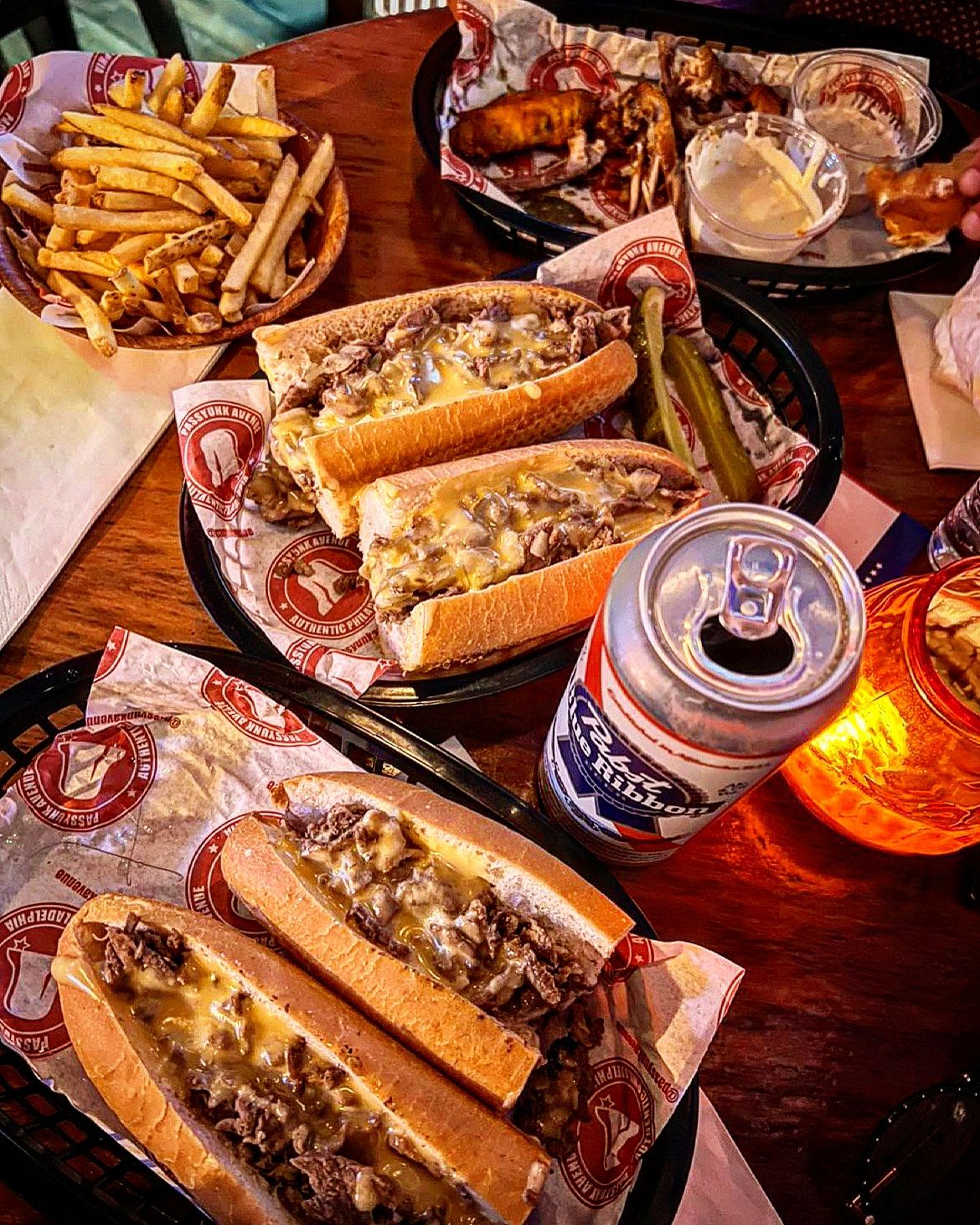
    PBR is the canned beer of choice at the Passyunk Avenue locations in London.Courtesy of Passyunk Avenue

    Although American expatriates became loyal customers, Teti said they were never his primary audience. He built the business for the “Americana-curious Europeans” who might never have visited Philadelphia but were attracted to a detailed, idiosyncratic version of it.

    The Eagles’ 2018 visit, seven months after the first bar opened, heightened the appeal.

    The team asked to hold an event at Passyunk Avenue but could not publicize it because of the NFL’s relationship with another pub operator, he said. Shortly before the event, an NFL security representative arrived and told Teti that the Lombardi Trophy was coming.

    Teti suggested putting it on the backbar. The representative told him that the trophy could not be photographed near alcohol, so Teti cleared the bottles away. “About 25 minutes later, [Eagles tight end] Brent Celek carried the Lombardi Trophy into our first site, put it on the backbar, and became an impromptu bartender,” Teti said. “He served beers for the next 45 minutes.”

    The Kensington location of Passyunk Avenue spells out the dive bar’s name in a familiar font.Michael Klein / Staff

    The restaurant’s growth required Teti to reproduce Philadelphia foods without access to Philadelphia’s supply chain. A London bakery makes the rolls from Passyunk Avenue’s recipe. Its beef once had to be custom-cut by a butcher in the Netherlands because thinly shaved rib eye was not commonly available in Britain. The bars make their own cheese sauce, Buffalo sauce, ranch, and blue cheese dressing.

    Not every Philadelphia staple translated immediately. Roast pork sandwiches, cannoli, and ricotta cheesecake have moved on and off the menu after selling more slowly than cheesesteaks, chicken Parmesan sandwiches, and wings.

    “We don’t give up entirely,” Teti said. “People don’t know what they’re missing.”

    Philly’s Pizzeria Beddia comes to London

    London’s Philadelphia food presence expanded again this spring when Bar Etna opened at 47 Newington Green, a half-hour from Tottenham Stadium. Beddia is a partner with Mike Stampler, a former Philadelphia designer, and British chef and restaurateur Ed McIlroy, whose Four Legs group operates the Plimsoll and Tollington’s fish bar.

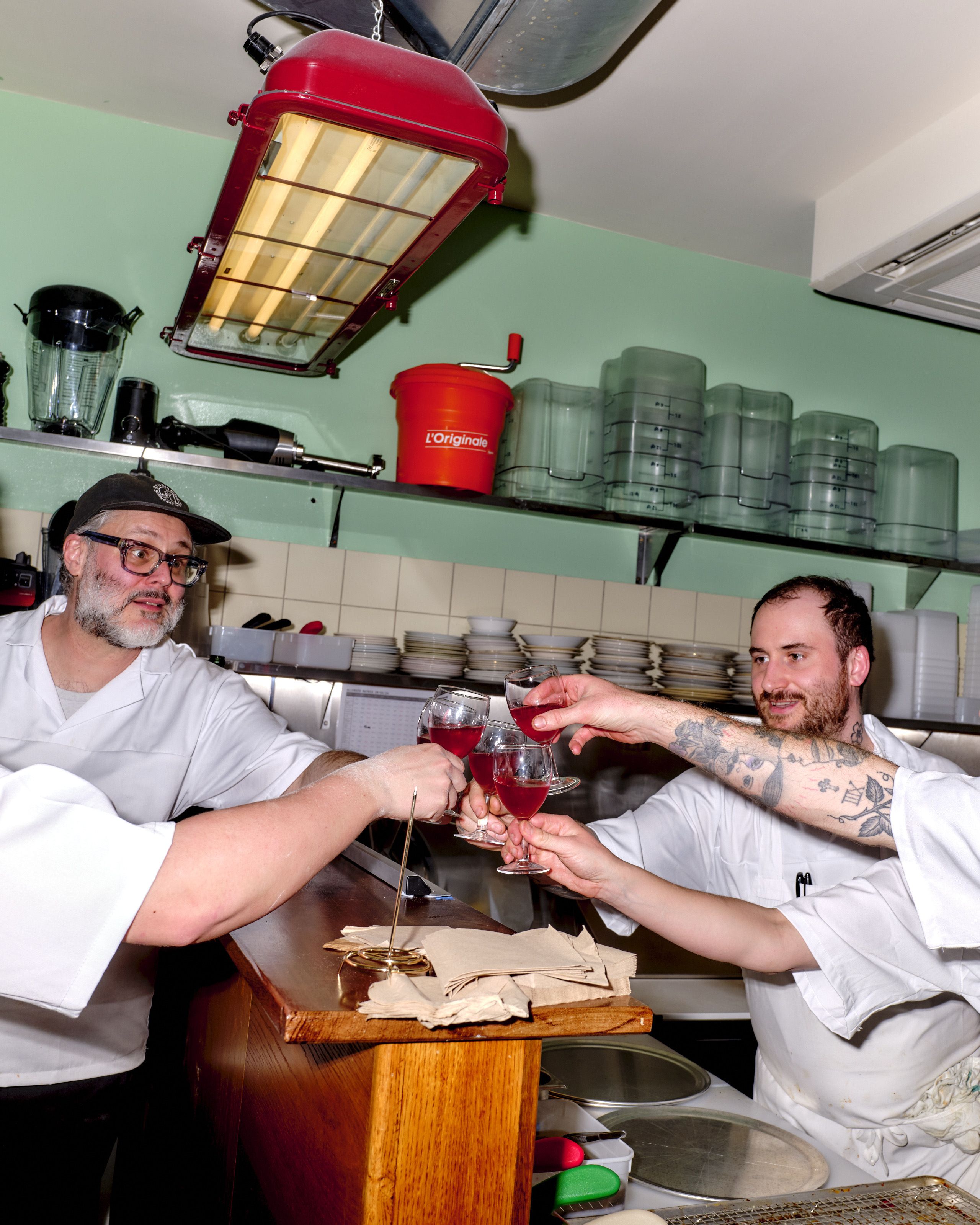
    Joe Beddia (left) with Bar Etna chef Cammy Cochrane in the kitchen.Joe Hart

    Stampler, formerly of the Philadelphia denim company Norman Porter, moved to London about five years ago. He and McIlroy were considering restaurant spaces when they found one in a neighborhood that Beddia said had relatively little pizza.

    “They asked, ‘Do you want to do this with us?’” Beddia said. “I said, ‘Absolutely.’ It was kind of a no-brainer for me.”

    Bar Etna’s pizzas resemble those at Pizzeria Beddia, though they are 14 inches instead of 16 to fit the smaller restaurant and its tables. (Metric apparently is not a thing in the pizza world.) The most popular pizzas have been a plain pie and a cream-based pizza with garlic, Calabrian chilies, and greens. Beddia also specifically developed a spicy curry-flavored pizza inspired by saag paneer.

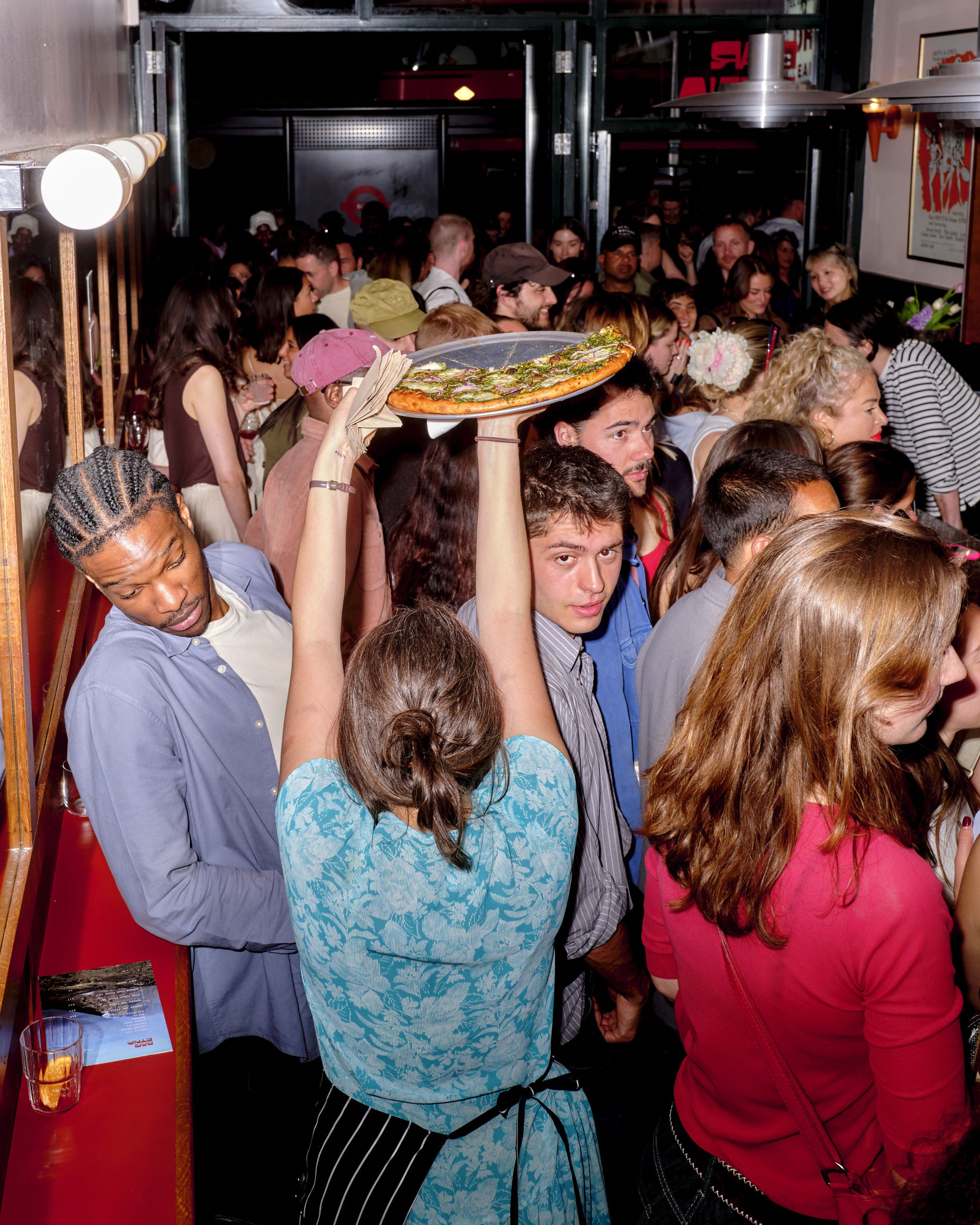
    A pizza is hoisted through the crowd at Bar Etna, which opened in May 2026 in London.Joe Hart

    The dough proved more difficult to transplant. Importing the Utah-made Central Milling flour used in Philadelphia would have been too expensive, so Bar Etna uses British flours from Shipton Mill and Wildfarmed.

    Beddia had less than two weeks between the completion of the kitchen and the restaurant’s opening. He said it took about 12 days of testing to produce dough that met his standards. “It was a nightmare,” Beddia said. “We were down to the last couple of days before we had it.”

    Beddia spent two months in London preparing Bar Etna and plans to return during Eagles week.

    His larger interest is in seeing how the restaurant has settled into a city that he believes is undergoing a pizza revival. London historically offered either mass-market delivery pizza or Neapolitan pies, he said, but has acquired an appetite for the crisper, more structurally firm American style.

    Beddia sees a parallel with Philadelphia, which had deep Italian bakery, pastry, and sandwich traditions but, aside from establishments such as Tacconelli’s, lacked a pizza identity as distinctive as those of New York or New Haven until relatively recently.

    The pizzas are small at Bar Etna because the tables are small, says Joe Beddia, a partner.Joe Hart

    For Passyunk Avenue’s Teti, the goal is not to suggest that Philadelphia, or the United States, can be reduced to cheesesteaks and football. It is to offer Londoners a specific place and culture rather than another generic American theme. Plus, he said he is more about turning Passyunk Avenue into a global brand.

    “We hope Passyunk Avenue’s presentation of this nostalgic form of America — not necessarily what America is, but perhaps the best of what America has been and could be again — can be a bit of a light in the darkness,” he said.

    Tottenham Hotspur Stadium, configured for soccer, in April 2025.Michael Klein / Staff