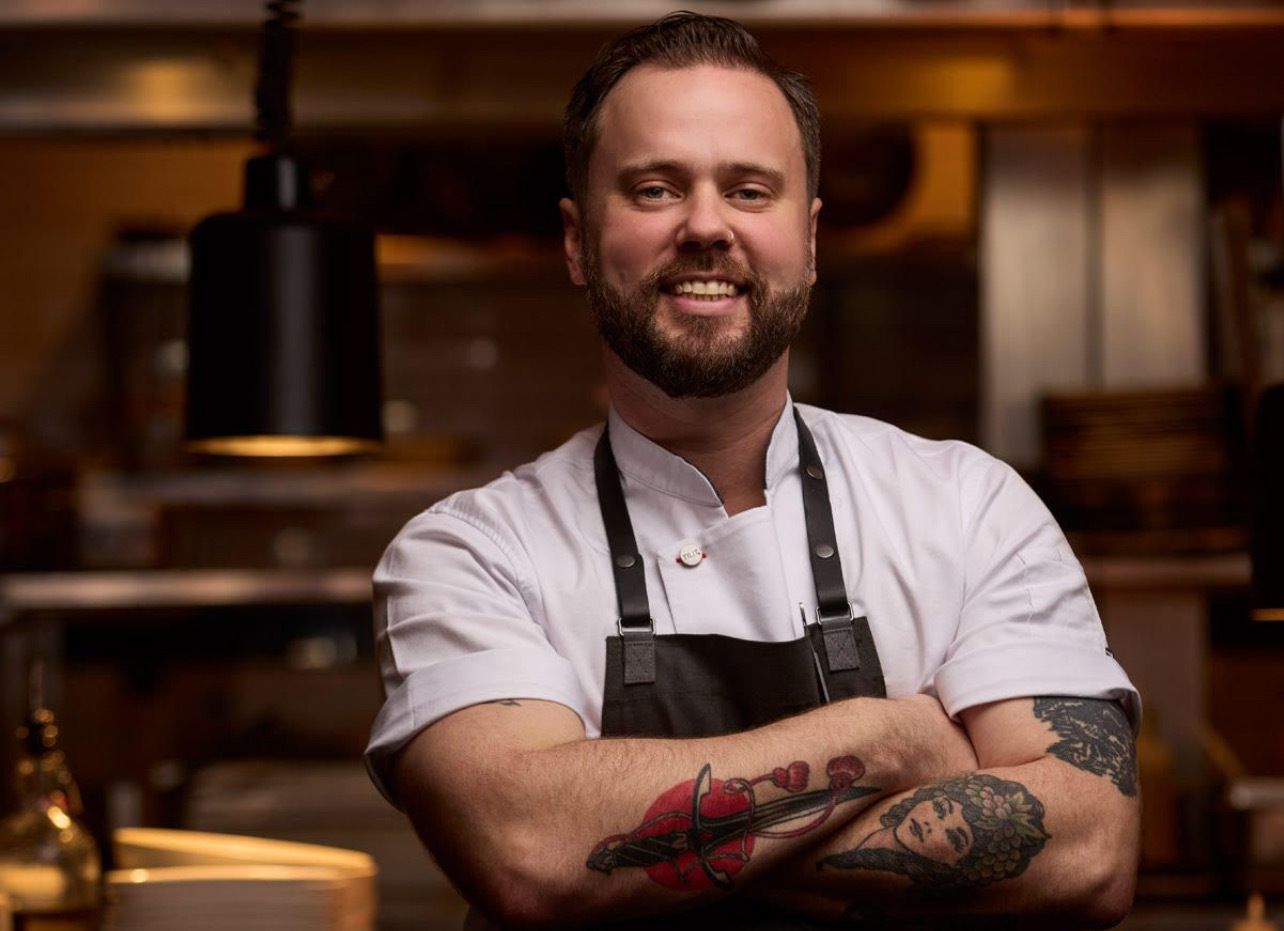
After 20 years of cooking other people’s food around the region, Carolyn Nguyen is finally telling her own story.
Carolyn’s Modern Vietnamese opens Wednesday at 2015 Walnut St. with a menu that draws from Nguyen’s personal history: the Vietnamese and Louisiana foods Nguyen grew up eating, the French techniques she learned in culinary school and restaurant kitchens, and the freewheeling combinations that defined her food trucks and Revolution Taco, the fast-casual restaurant she co-owned in the space for a decade.
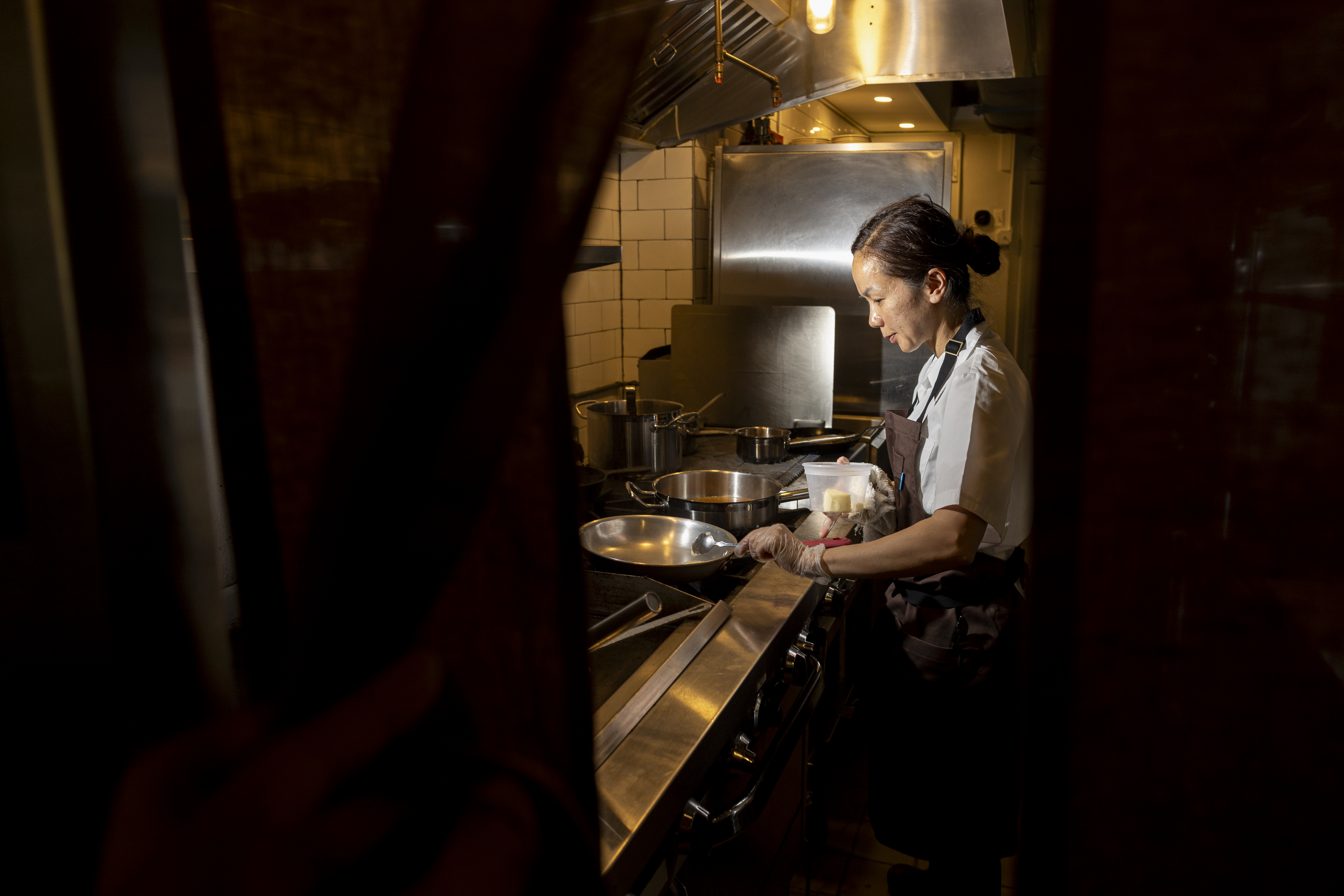
Chef Carolyn Nguyen adds butter to a pan while cooking curry duck potato gnocchi.Aidan T. Gallo / Staff Photographer
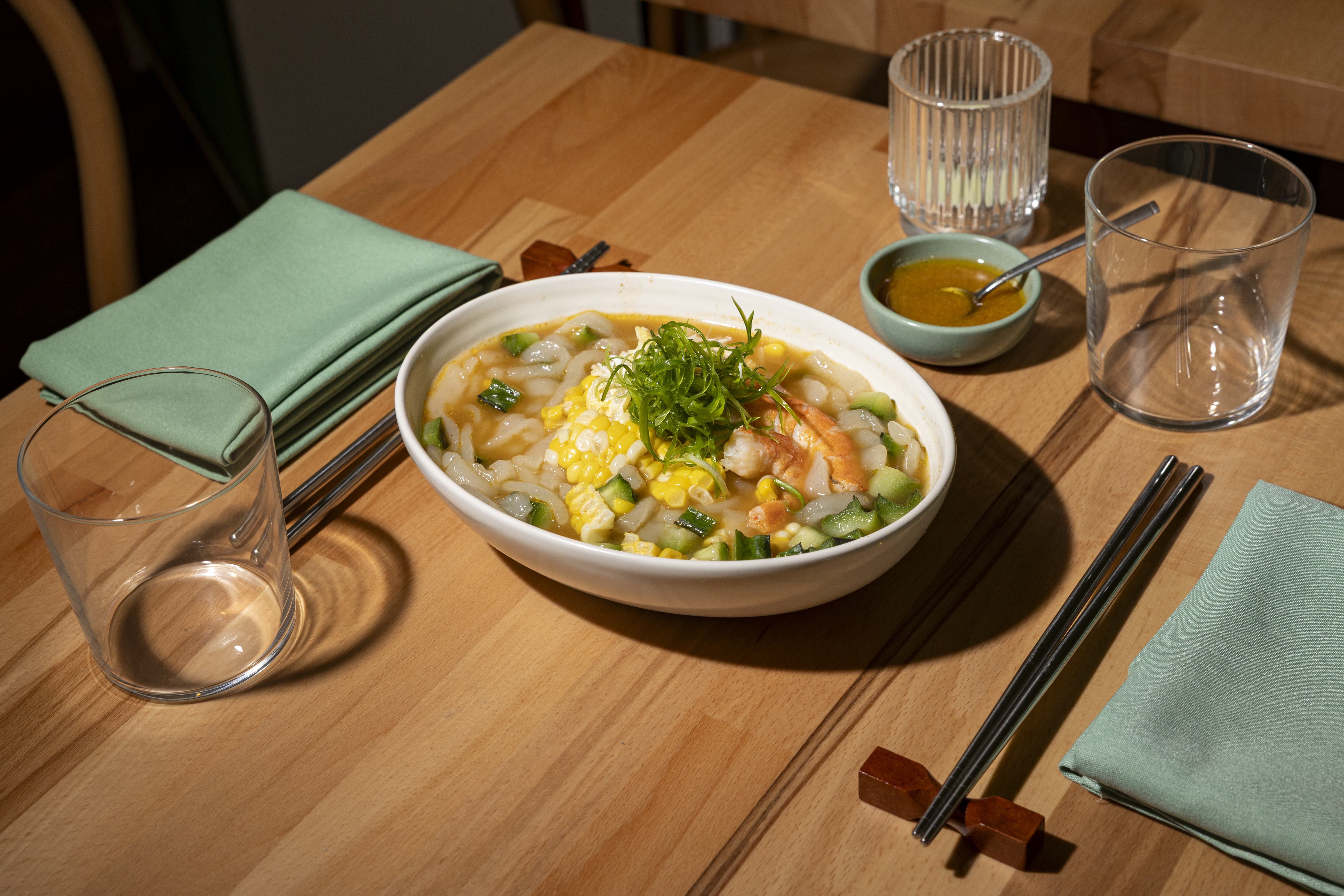
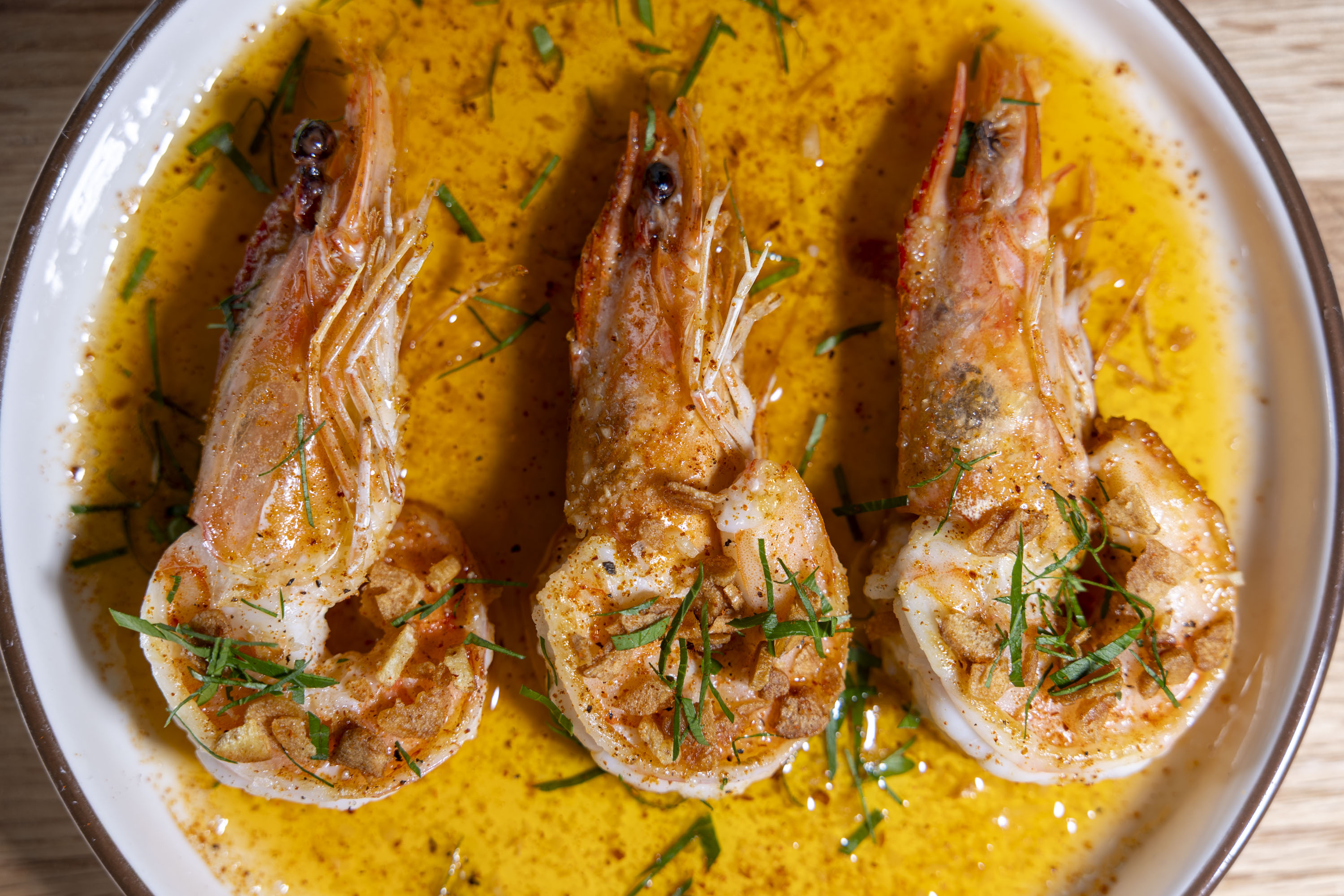
Bánh canh, a thick Vietnamese noodle soup, is presented as a seafood boil with poached shrimp, mussels, fried potatoes, and scallions. Thịt kho tàu, a Vietnamese braised pork dish, becomes slow-cooked grits topped with pork belly, a soft egg, and pickled vegetables. Hoi An chicken comes with ginger dirty rice, braised collards, and herb remoulade.
Other large plates include lemongrass smoked beef short rib with fish sauce-caramel jus, warm potato salad, and cabbage slaw; corn and crab congee with crispy shallots, and herbs; and a salt-and-pepper cornmeal-crusted whole fish with ginger sauce.
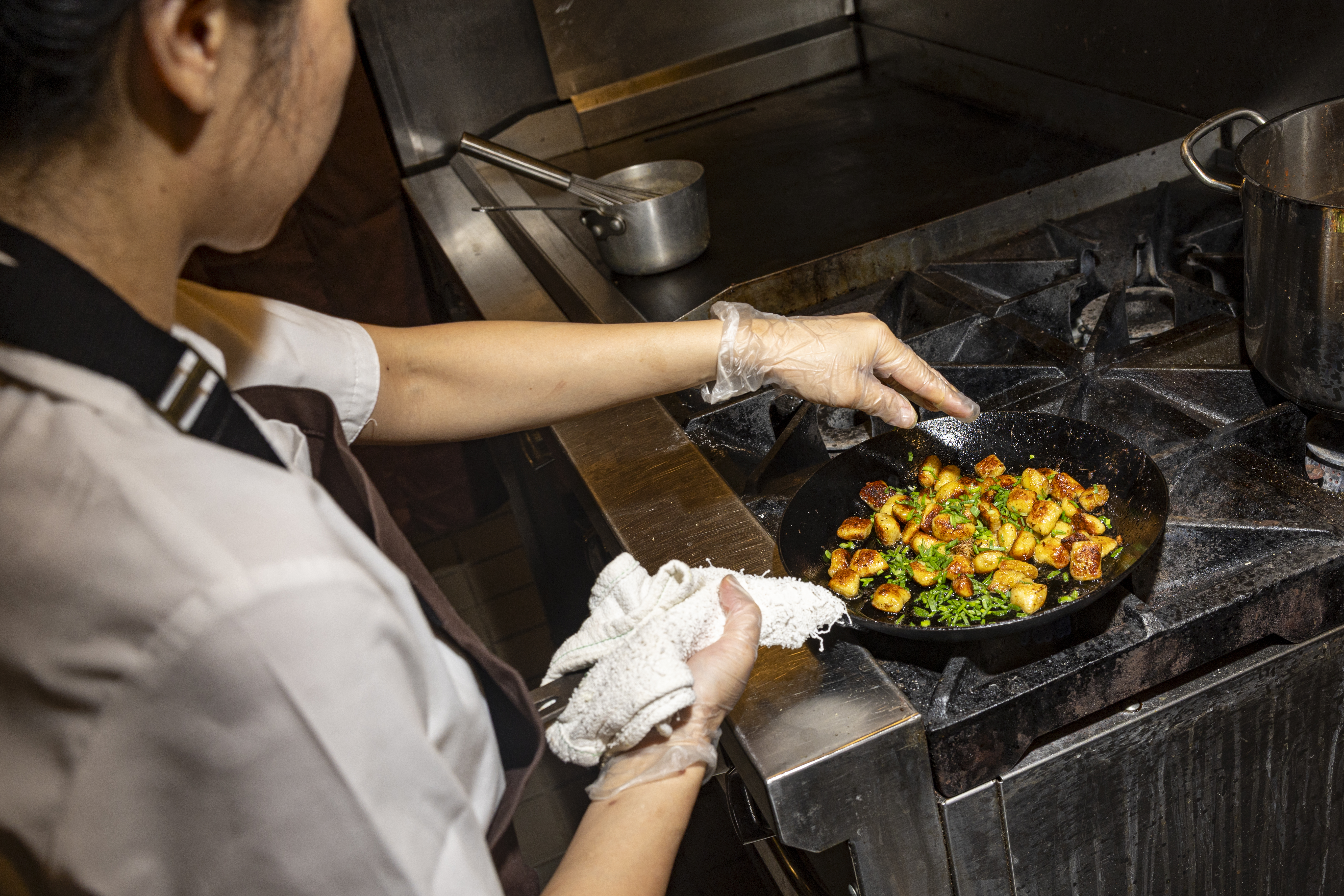
Carolyn Nguyen sprinkles Chinese chives onto her potato gnocchi.Aidan T. Gallo / Staff Photographer
Curry duck potato gnocchi with Thai basil pesto carries a memory from Nguyen’s time at Old City’s Fork, where she worked for chef Terence Feury. At midday, she said, they would stop and make gnocchi together.
The small plates ($12 to $22) include tofu hummus, mushroom and leek dumplings, polenta-daikon fries, dry aged beef in betal leaves, chicken liver mousse, and tasso-crab spring rolls.
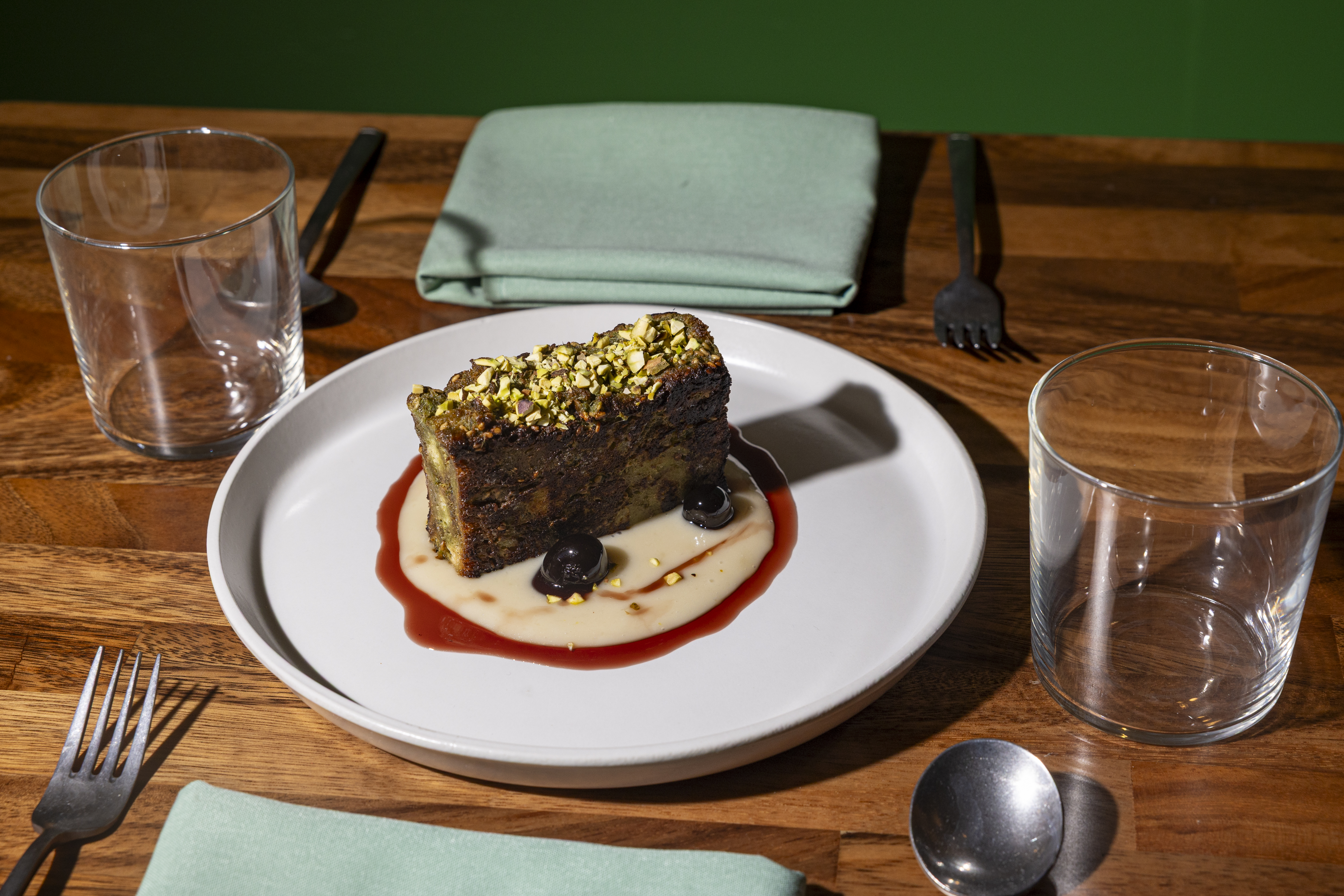
Pandan bread pudding dessert at Carolyn’s Modern Vietnamese.Aidan T. Gallo / Staff Photographer
Large plates are priced from $24 to $46, plus a market-price whole fish. Desserts include coconut rice pudding with bananas Foster sauce and pandan bread pudding with coconut sauce.
“It’s both coming home to the food that I grew up with and then the food that I’ve cooked and learned how to cook,” she said. “It’s food that I love.”
Nguyen was born and raised in Amelia, in Louisiana’s St. Mary Parish. Her parents, Paul and Mai Nguyen, were born in Vietnam but met in the United States. Her father arrived in the late 1960s and later helped Vietnamese refugees settling around New Orleans. He met Nguyen’s mother while driving her to appointments. The family moved to South Carolina when Carolyn was 16.
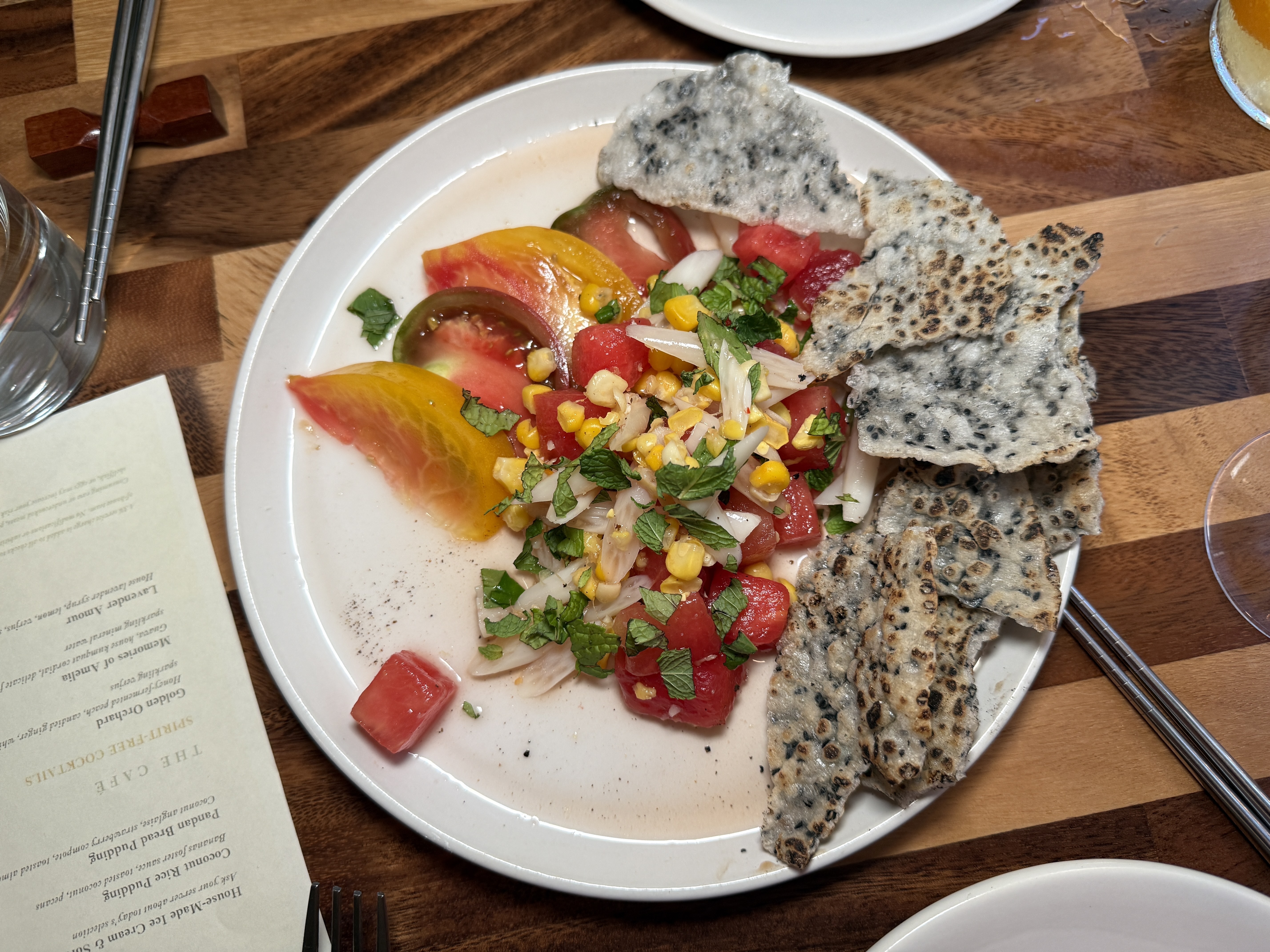
Lotus root salad with watermelon, corn, heirloom tomatoes, and Thai basil as served at a preview for Carolyn’s Modern Vietnamese.Kiki Aranita / Staff
“I always knew I wanted to pursue cooking,” she said. “Unfortunately, in South Carolina, there wasn’t really any fine-dining environment.” When her sister moved to Philadelphia to go to dental school around 2005, Nguyen moved north with her and enrolled in the culinary school at the Art Institute of Philadelphia. The goal was working in New York, “but I fell in love with Philadelphia because of the food environment,” she said.
Her first restaurant job was as a cook at Susanna Foo on Walnut Street. Besides Fork, she later worked at such restaurants as Nectar in Berwyn (also with Feury), Maia in Villanova, and Russet in Center City. At Peachtree & Ward catering, she met her initial business partner, Michael Sultan.
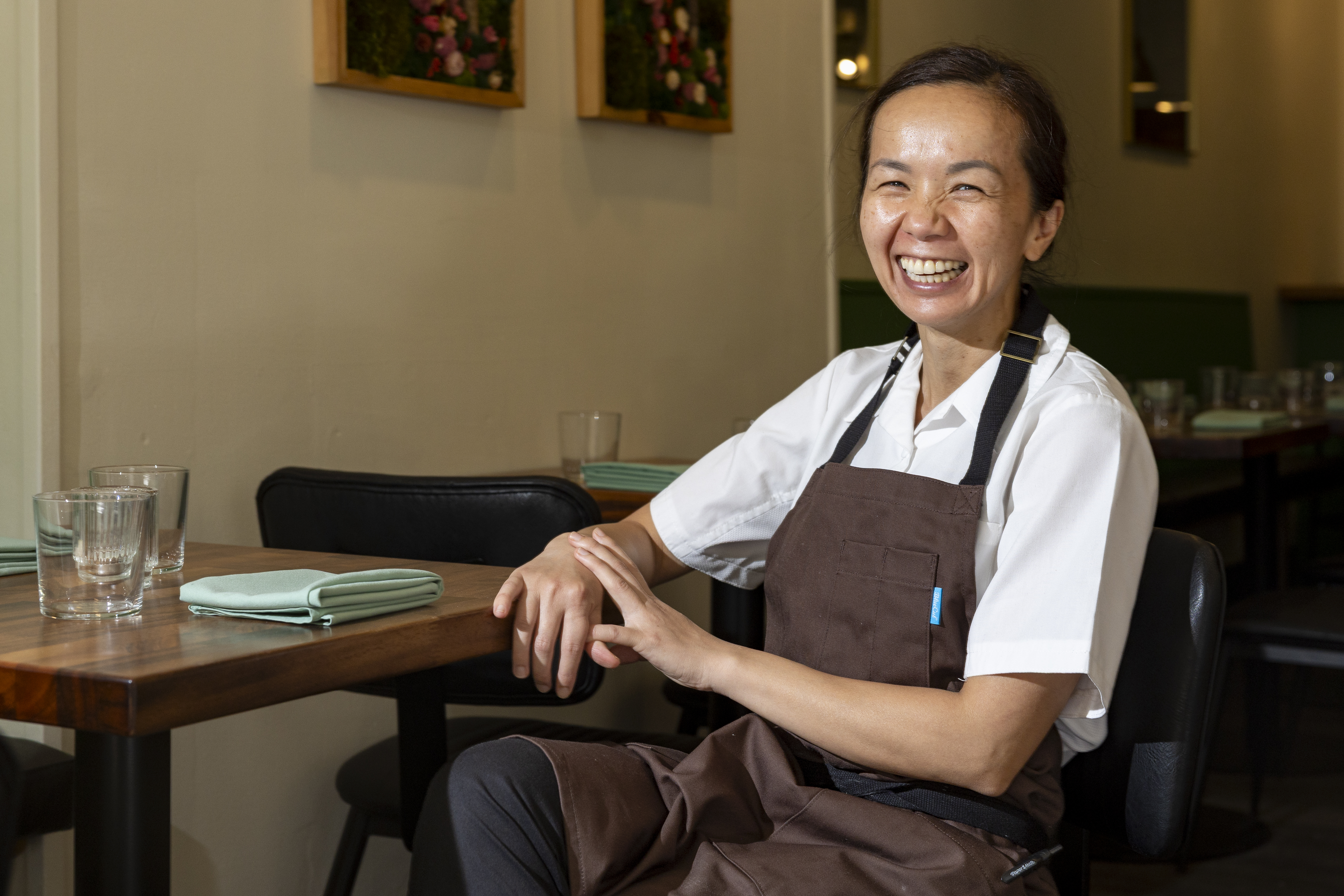
Chef Carolyn Nguyen in her dining room at Carolyn’s Modern Vietnamese.Aidan T. Gallo / Staff Photographer
In 2012, Nguyen and Sultan entered the food-truck business with Street Food Philly. Taco Mondo followed, and in January 2016, Nguyen, Sultan, and Alan Krawitz opened Revolution Taco, whose taco fillings included pork belly, duck, beef tongue, Korean fried chicken, smoked mushrooms, and curried cauliflower.
The other partners moved on, but Nguyen still owns the Revolution location at the Comcast Center’s concourse. Eight months ago, she closed the Walnut Street location but kept the lease, figuring that converting its counter-service format into a full-service experience would be “easy-peasy – maybe a month.”
Instead, the concept and design evolved as Nguyen worked through permitting and paperwork, much of which she handled herself. Carolyn’s has 28 seats at tables and along a banquette, plus five at a counter.
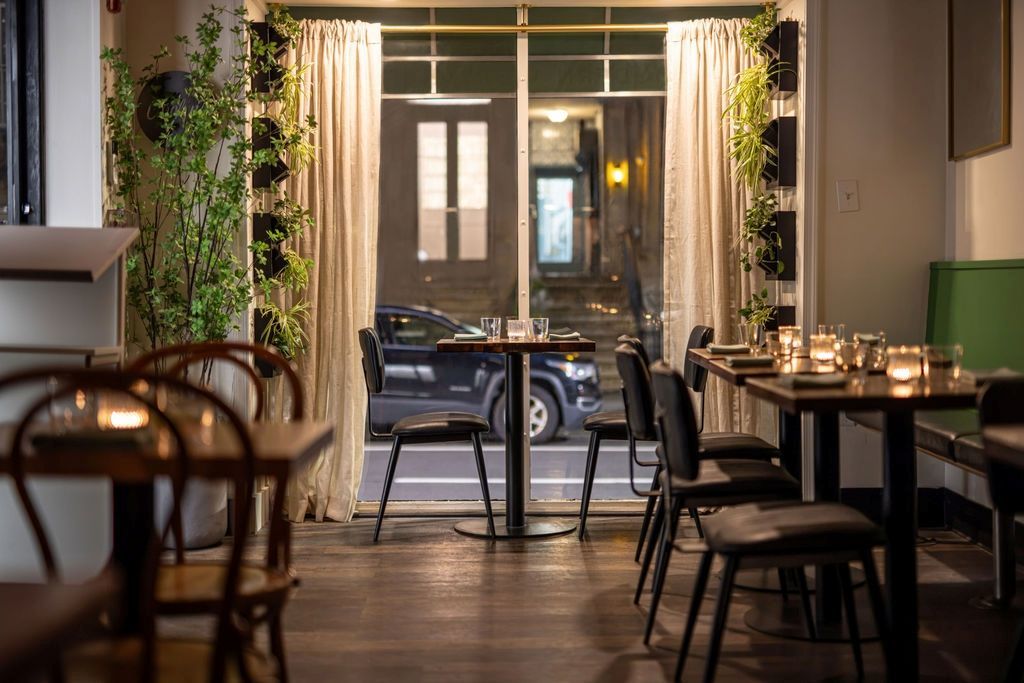
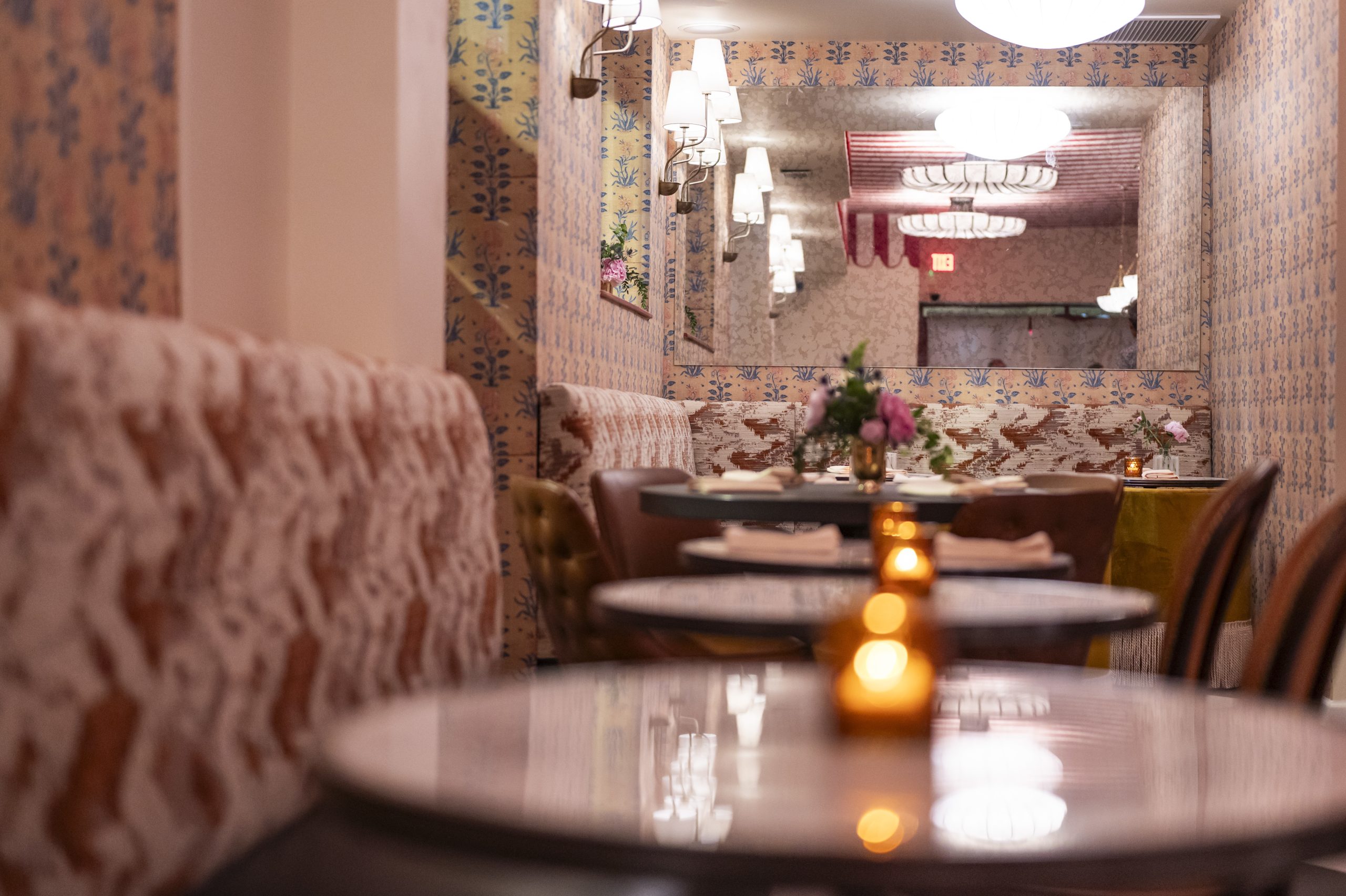
The dining room is spare and contemporary, with cream-colored walls, butcher-block-style tables, black upholstered chairs, and a deep-green banquette. An arched brass-framed mirror and two narrow pieces of preserved-moss botanical art soften the black track lighting.
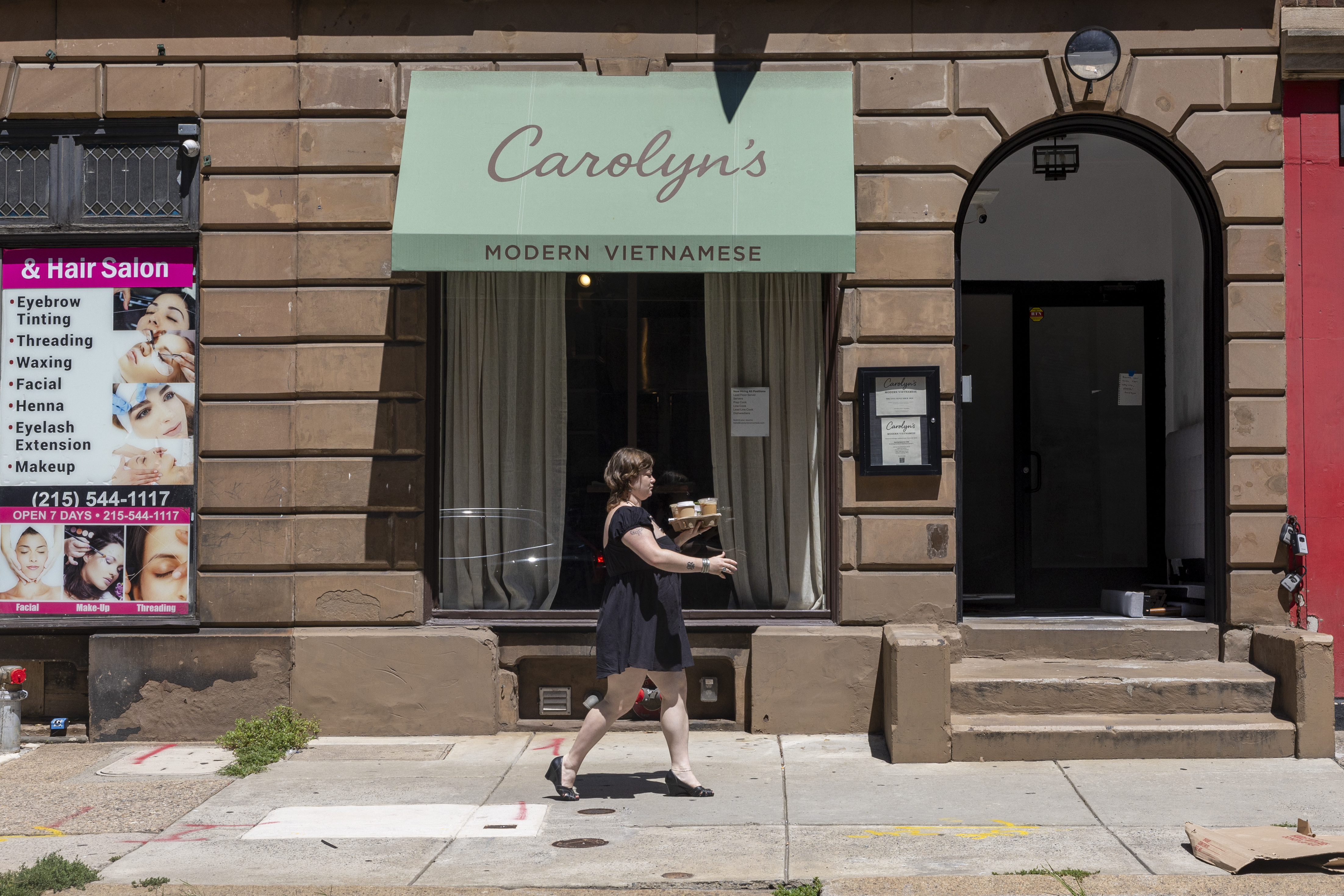
Carolyn’s Modern Vietnamese, 2015 Walnut St., replaces Revolution Taco.Gab Bonghi
Pale-green cloth napkins, metal chopsticks, and wooden rests carry the palette to the tables. The Louisiana connection extends to the soundtrack, with ragtime- and blues-inflected New Orleans jazz by early figures such as King Oliver and Buddy Bolden.
Nguyen wanted the room to feel relaxed and unhurried. Green “represents growth and new beginnings for me,” she said.
The bar will emphasize locally produced wines and spirits. Two cocktails are inspired by Nguyen’s parents: a tropical Mama Mai Tai for her mother and the Ông Xuyên (Mr. Xuyen) for her father, an avid gardener who grows dozens of plant varieties and keeps chickens at the family home.
Her father once returned from a shrimping trip with fish bones and used them to make fish sauce in a barrel. Nguyen plans to put a small amount of house-made fish sauce in his namesake cocktail for a savory undertone.
Carolyn’s Modern Vietnamese, 2015 Walnut St.Aidan T. Gallo / Staff Photographer
Carolyn’s will start with dinner Wednesday to Saturday. Nguyen eventually hopes to add Tuesday dinner and a more casual lunch or brunch, potentially with more traditional Vietnamese dishes.
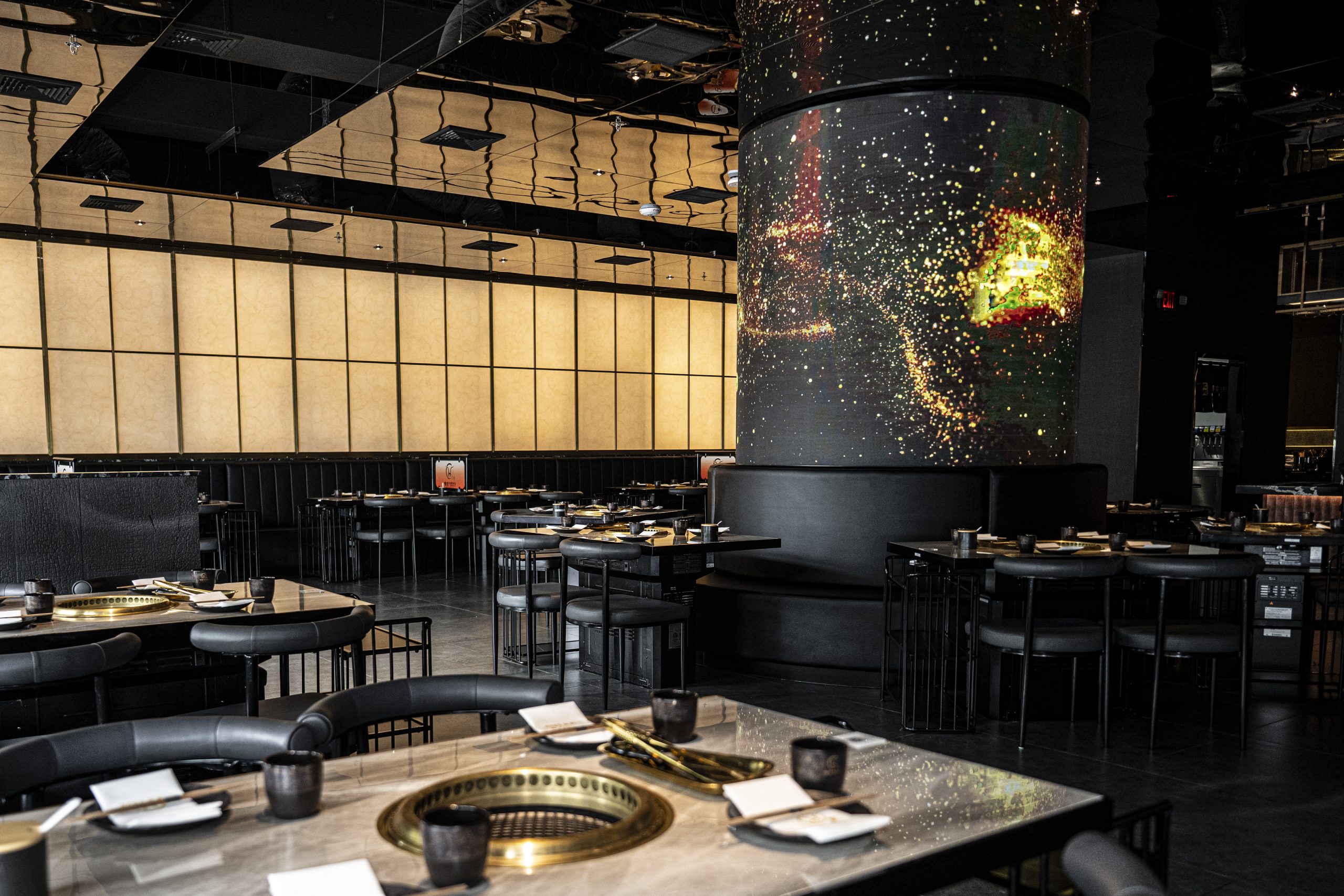
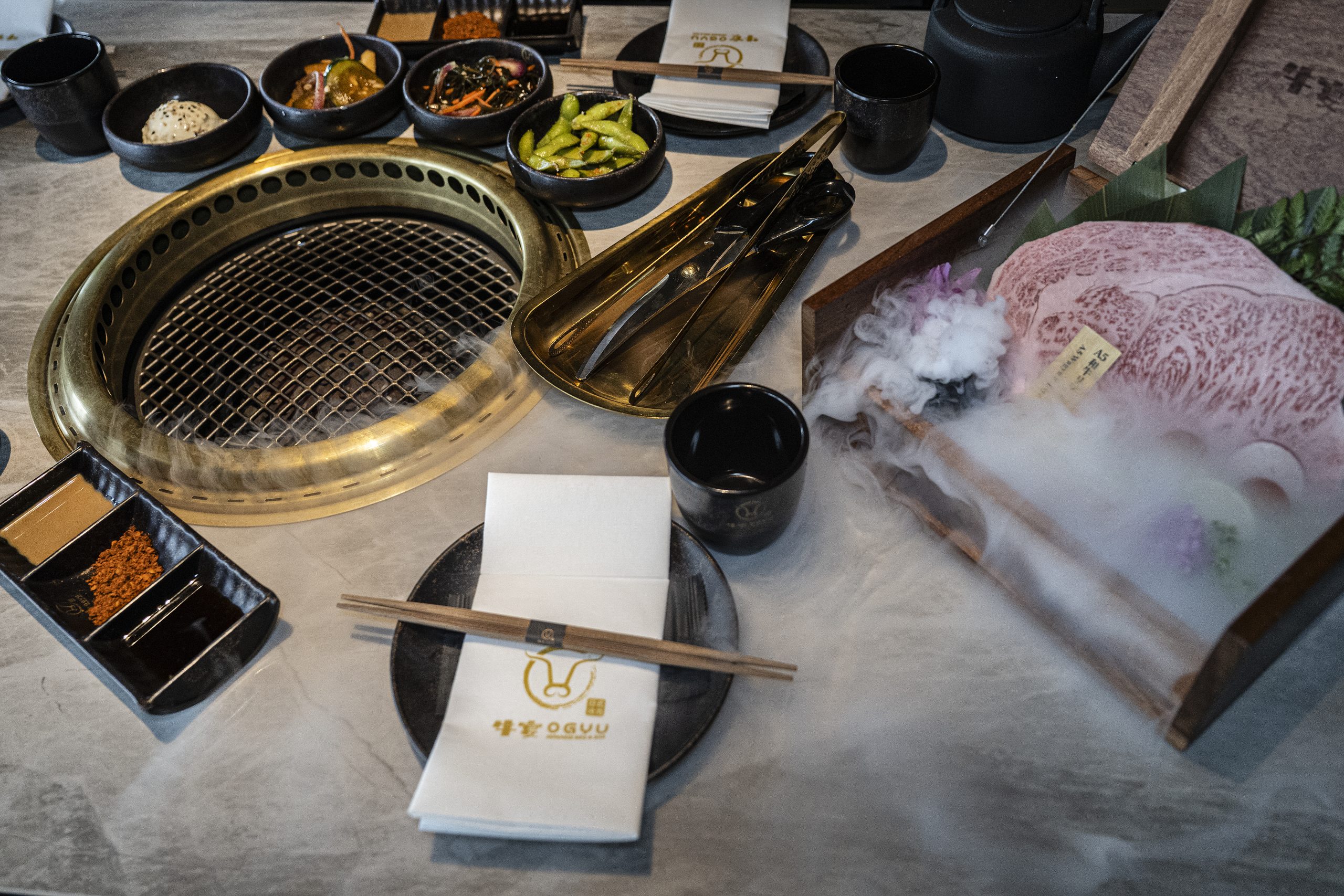
In our quest to keep you up to date on the restaurant scene, here are 12 spots that opened in the last few months. One example is Ogyu (shown above), which took over Ardmore’s former Iron Hill Brewing. It’s a grill-it-yourself Japanese steakhouse from the owner of the nearby Osushi.
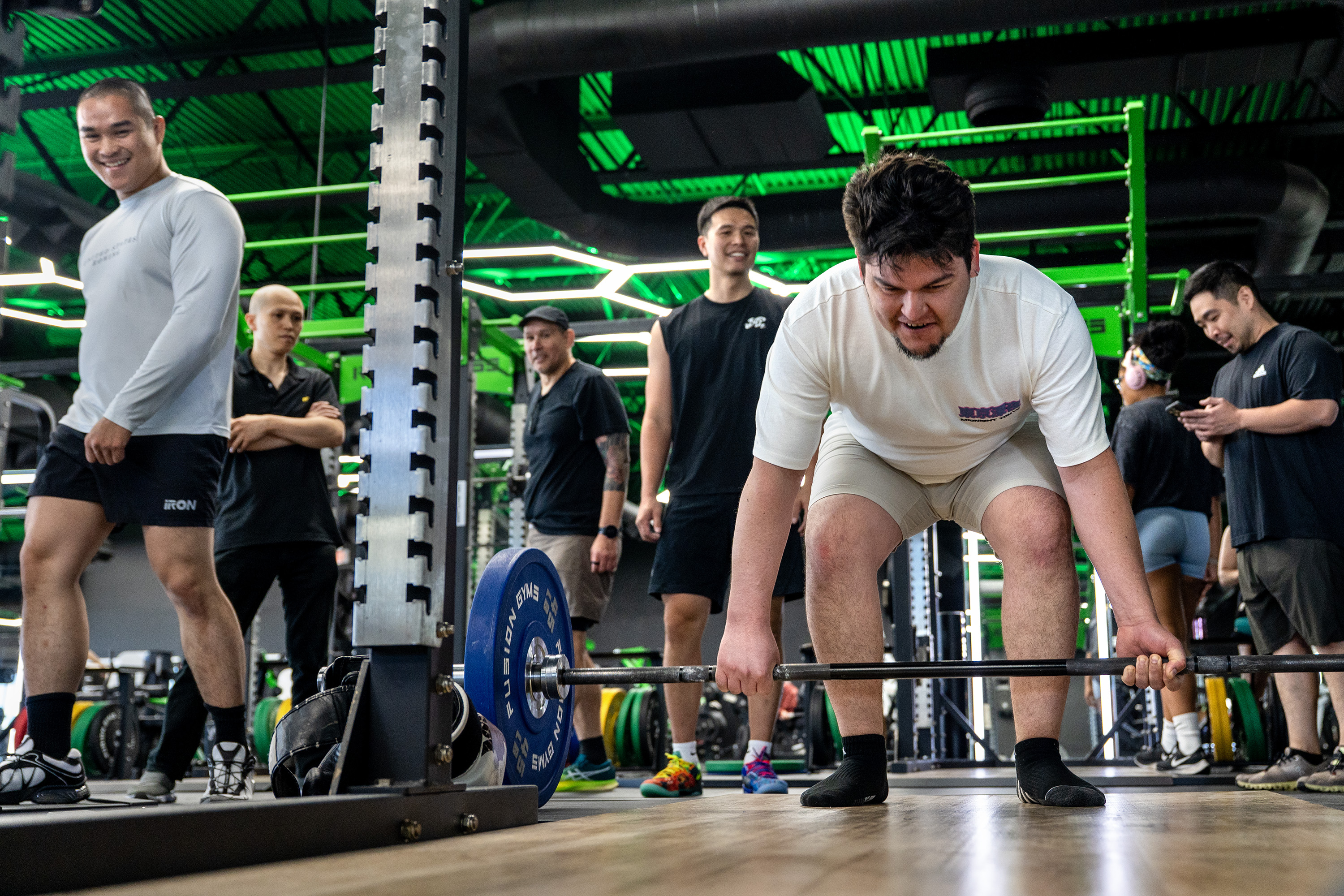
You have to be in shape to lug around 100-pound salmon and tuna. Kiki Aranita found a group of sushi chefs who routinely lift weights. As they say in the maki game: no pain, no grain.
A couple didn’t want their local drinking spot to shut down for good. Sarah Nicell writes that they found a solution: They bought it.
The lines are long, and the branding is adorable. Kiki Aranita visits Kyo Matcha in Chinatown.
Pinot grigio is wildly popular for a good reason, and wine writer Marnie Old explains where the best ones come from.
Poe is expanding
Sandwichmeister N.A. Poe will expand the hours of his kitchen operation at Poison Heart next week while preparing to open a new Poe’s Sandwich Joint location by the end of the year.
Starting Tuesday, Poe’s will operate seven days a week out of Poison Heart, 931 Spring Garden St., where he’s run the cocktail bar’s kitchen since last September. Daytime service will be pickup, takeout, and delivery only; Poison Heart itself will not open for daytime bar or dine-in service.
Poe, the nom de plume of Richard Tamaccio Jr., is not disclosing the new joint’s location or opening date. “We look forward to the freedom to do things our way without interference or apologies,” he said.
The move follows Poe’s split with Human Robot Brewing Co., where he had operated since 2019. His last day at Human Robot’s Kensington location is Thursday. Cantina La Martina will take over Human Robot’s kitchens at both Kensington and Brewerytown. Poe also parted company with the Monto, a new Old City bar.
At Poison Heart, Poe’s will operate from 11 a.m. to 9 p.m. Sunday through Tuesday and 11 a.m. to 6 p.m. Wednesday through Saturday. Poison Heart’s regular Wednesday-through-Saturday evening service will continue, with Poe’s classics and specials added to the menu.
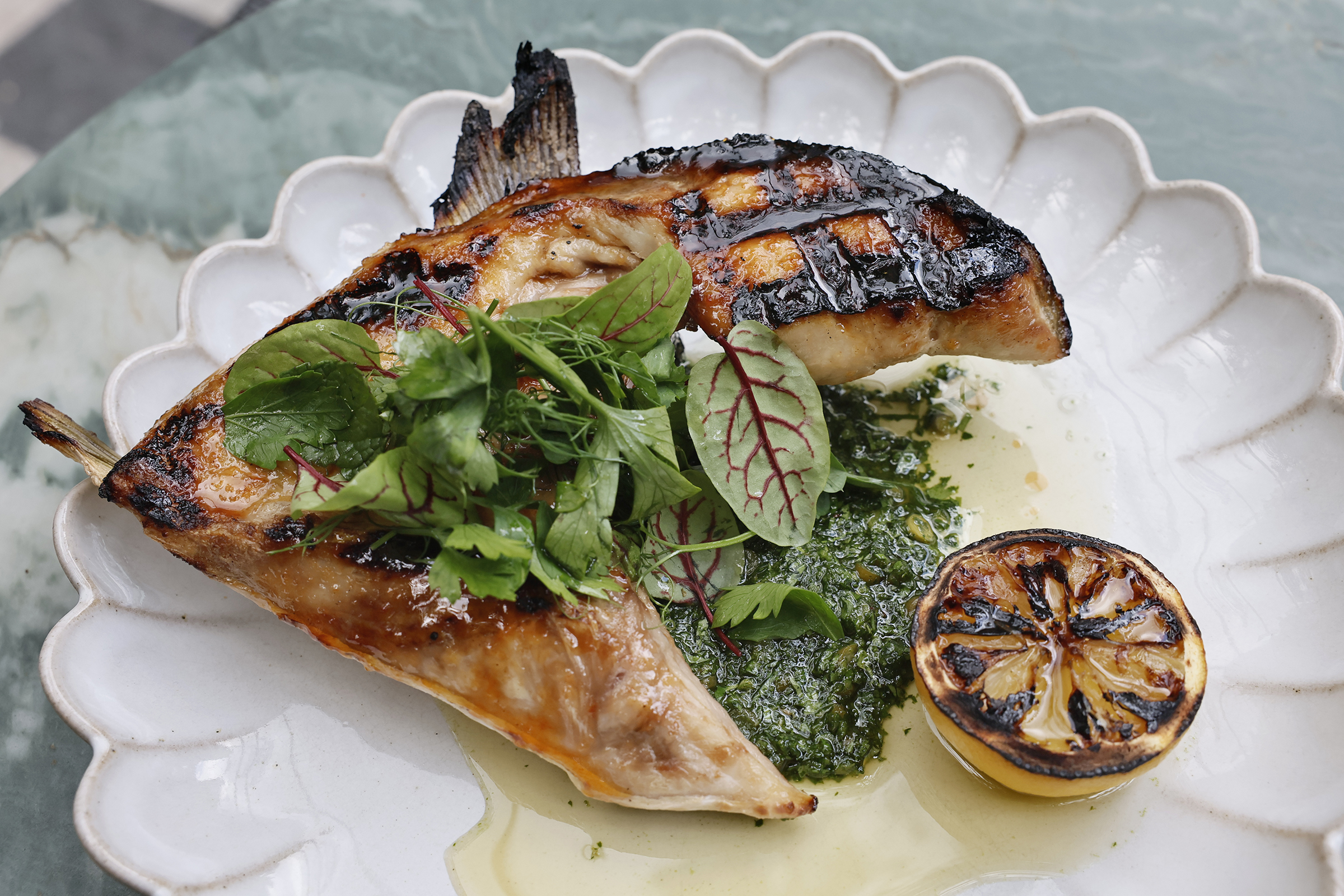
Two tasty bright spots of a staycation for Emily Bloch and her boyfriend included hamachi collar and poolside swordfish skewers. In other words: There’s great fish to be had in Fishtown.
Scoops
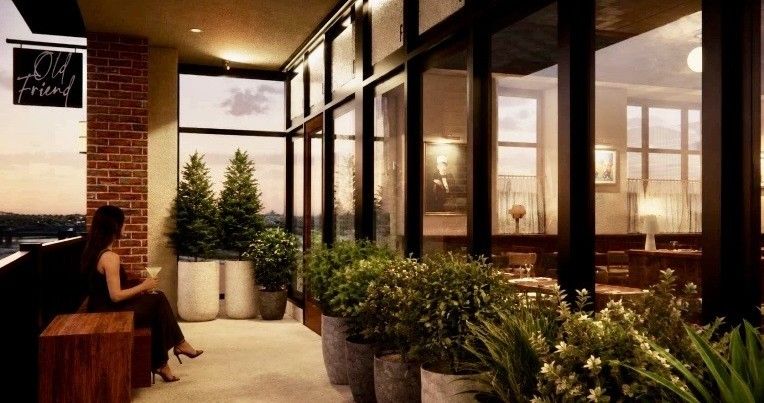
Old Friend, an upscale restaurant with a wood-fired grill and a chef with a Center City pedigree, is coming to the Main Line later this year.
Corte, on its way to the former East Market home of Mulherin’s Pizza, will have an Italian backbone, focusing on handmade pasta and cooking from the wood-fired oven. If that sounds like University City’s Corio, that’s because the same crew is behind it.
Big Charlie’s Saloon, the nationally known Kansas City Chiefs-theme bar in South Philadelphia that closed with the owner’s death last December, is under agreement of sale. The buyers’ plans don’t include NFL memorabilia.
Restaurant report
We’re in a New York state of mind:
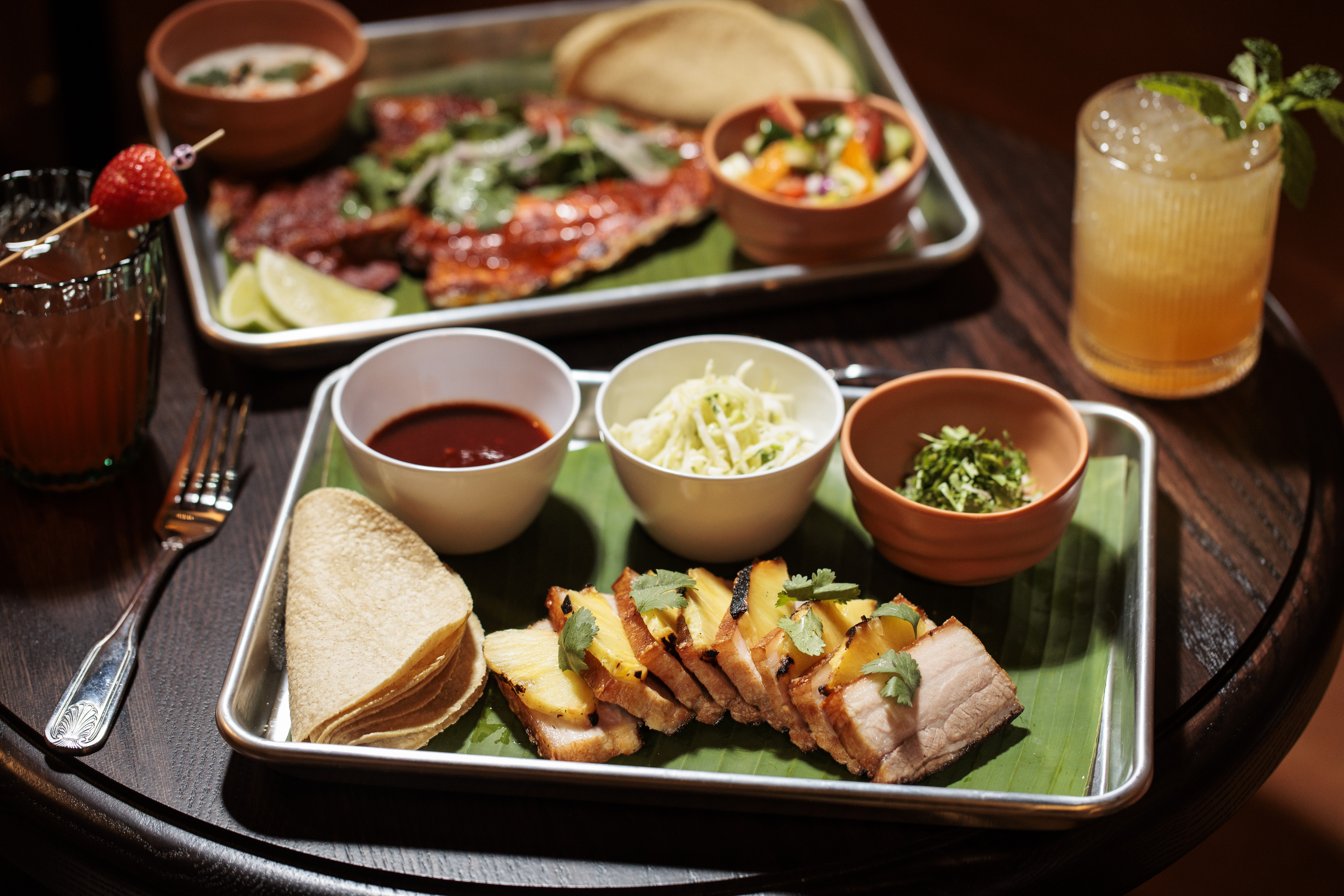
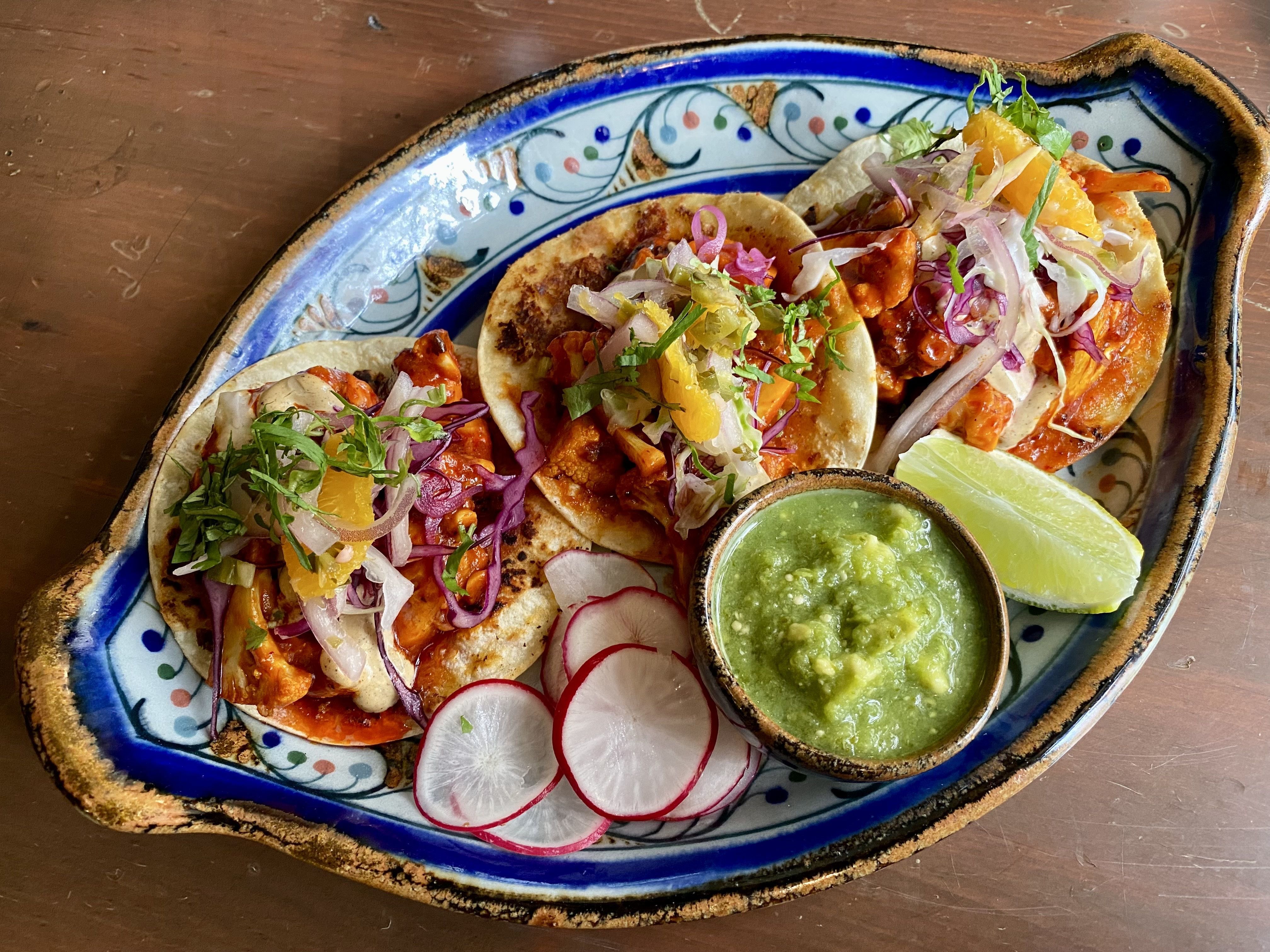
Dorade asado and pork belly al pastor (shown above) are two dishes offered at the new Mixteca, the Kensington offshoot of a Manhattan agave-focused coctelería from two James Beard Award-winning bartenders. Beatrice Forman heads to the former Martha for a look around.
Smash burgers and fries are the hook at 7th Street Burger, a fast-growing Manhattan-based burger chain that just opened the first of four Philadelphia-area locations in Fishtown. Kiki Aranita takes a bite.
Briefly noted
Jose Pistola’s 19-year run in Center City has ended. Its related bars in Fishtown and South Philadelphia are unaffected.
Mount Masala Himalayan Cuisine (300 White Horse Rd., Voorhees) will host a Nepal disaster-relief fundraiser on Thursday, Sept. 10 from 5 p.m. to closing under the auspices of South Jersey Food Scene. It’s a $25 buffet of Nepali-Himalayan dishes for dine-in or takeout, with all sales donated to the Nepalese government for flood relief.
🥂 New Jersey has permanently allowed the sale and delivery of to-go alcoholic beverages in towns that permit it.
Ask Mike anything
Did Philip Korshak ever open his store, Korshak Picnic Provisions? — Joan M.
Back in February, Phil Korshak, the poet-baker who left town in 2023 after closing his cult-favorite Korshak Bagels, thought he’d open his quirky corner store at 13th and Reed Streets by May. However, “you have no idea how many contractors, electricians, and plumbers go to Europe and Japan in the summertime,” he told me in June. This week, Korshak said the store — now called Korshak Parkside Provisions — is in the health department inspections queue and he’s expecting equipment deliveries. “Let’s call it October,” he told me.
📮 Have a question about food in Philly? Email your questions to me at mklein@inquirer.com for a chance to be featured in my newsletter.
By submitting your written, visual, and/or audio contributions, you agree to The Inquirer’s Terms of Use, including the grant of rights in Section 10.
If you spent the summer out of town (or off the grid), you may have missed a busy few months on the restaurant scene. Philadelphia-area newcomers include a Milan-inspired aperitivo bar in Rittenhouse, Japanese barbecue on the Main Line, and two corner bars in Point Breeze.
Here are 12 noteworthy restaurants that opened in the last few months.
Academy Grill (424 S. Bethlehem Pike, Fort Washington): This white-tablecloth restaurant in the former Cantina Feliz near Germantown Academy serves house-made pastas, seafood, steaks, and contemporary American dishes in a polished, decidedly grown-up setting.
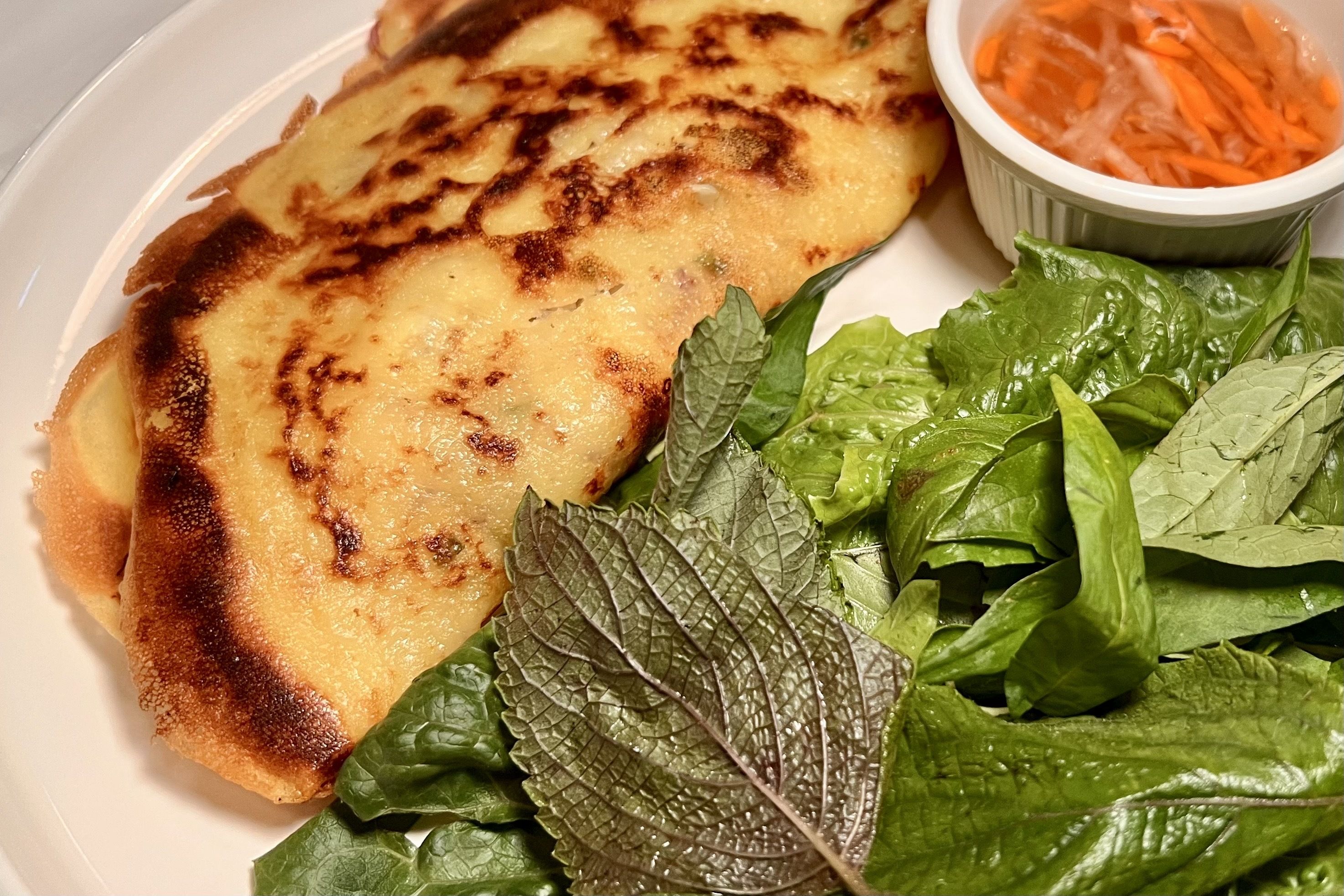
Bánh xèo at Anh Em, 1252 S. 21st St.Michael Klein / Staff
Anh Em (1252 S. 21st St.): Pho, bánh xèo, and 24 local beers meet at Anh Em, a Vietnamese bar-restaurant at 21st and Titan Streets in Point Breeze from Victor Nguyen and Anna Huynh. Nguyen draws on dishes the husband-and-wife team grew up eating, while the 20-seat bar gives the neighborhood spot an unusually deep commitment to locally brewed beer.
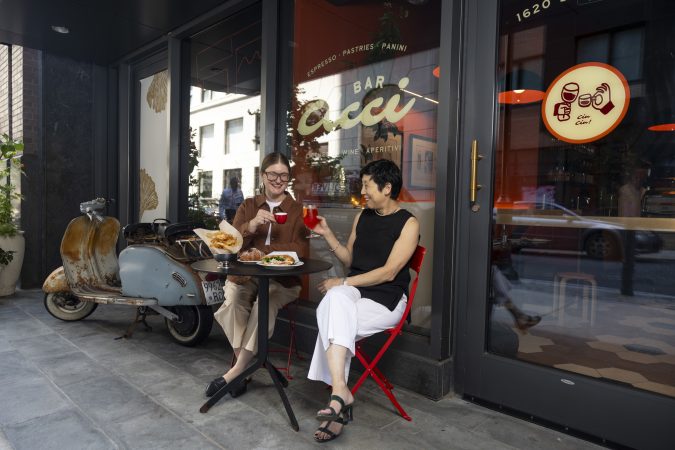
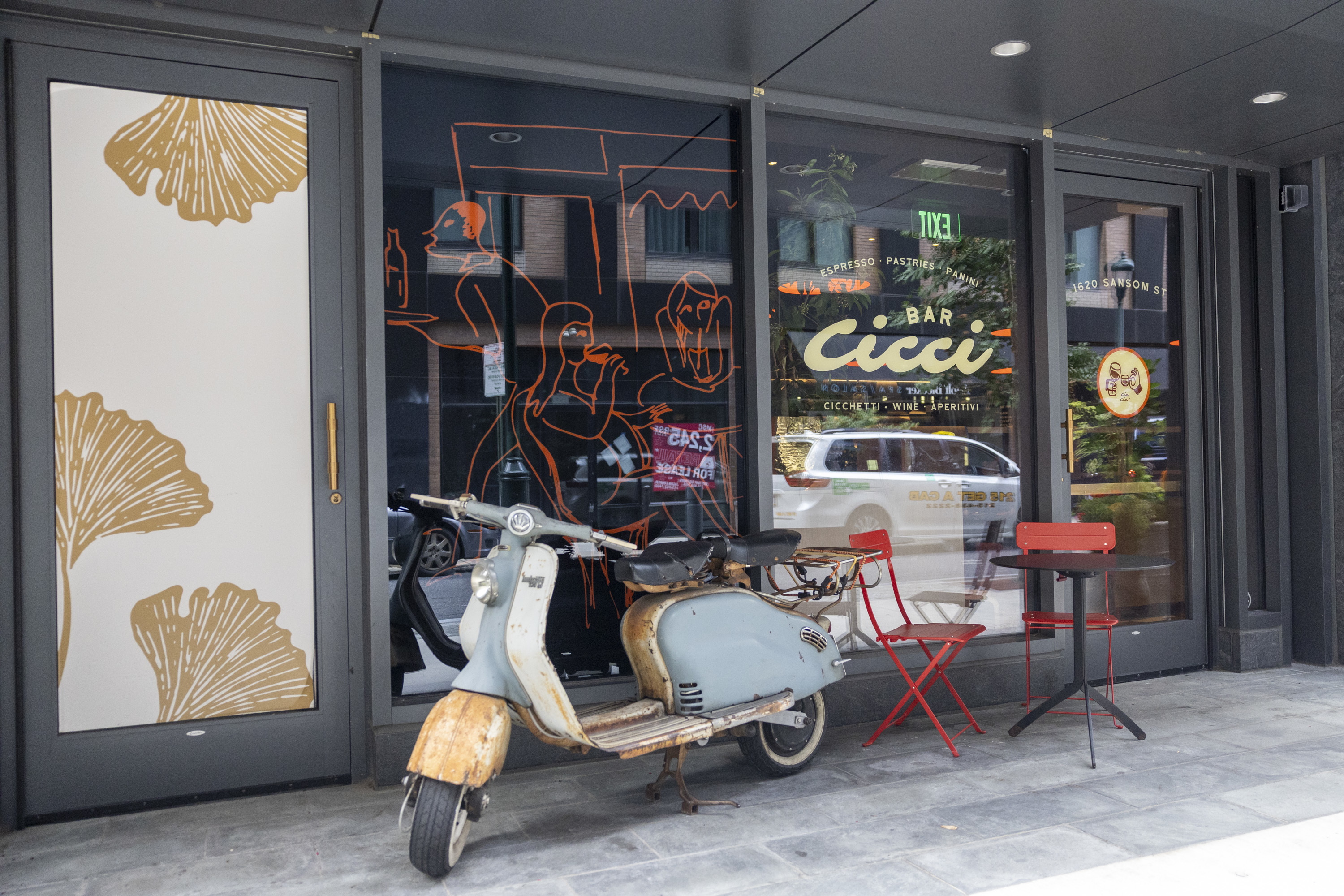
Bar Cicci (1620 Sansom St.): Ellen Yin’s 30-seat, Milan-inspired spot starts with espresso and Italian pastries, moves into sandwiches at lunch, then shifts to spritzes, wine, cicchetti, and small plates at night. The Rittenhouse newcomer is High Street Hospitality’s take on northern Italy’s all-day aperitivo culture.
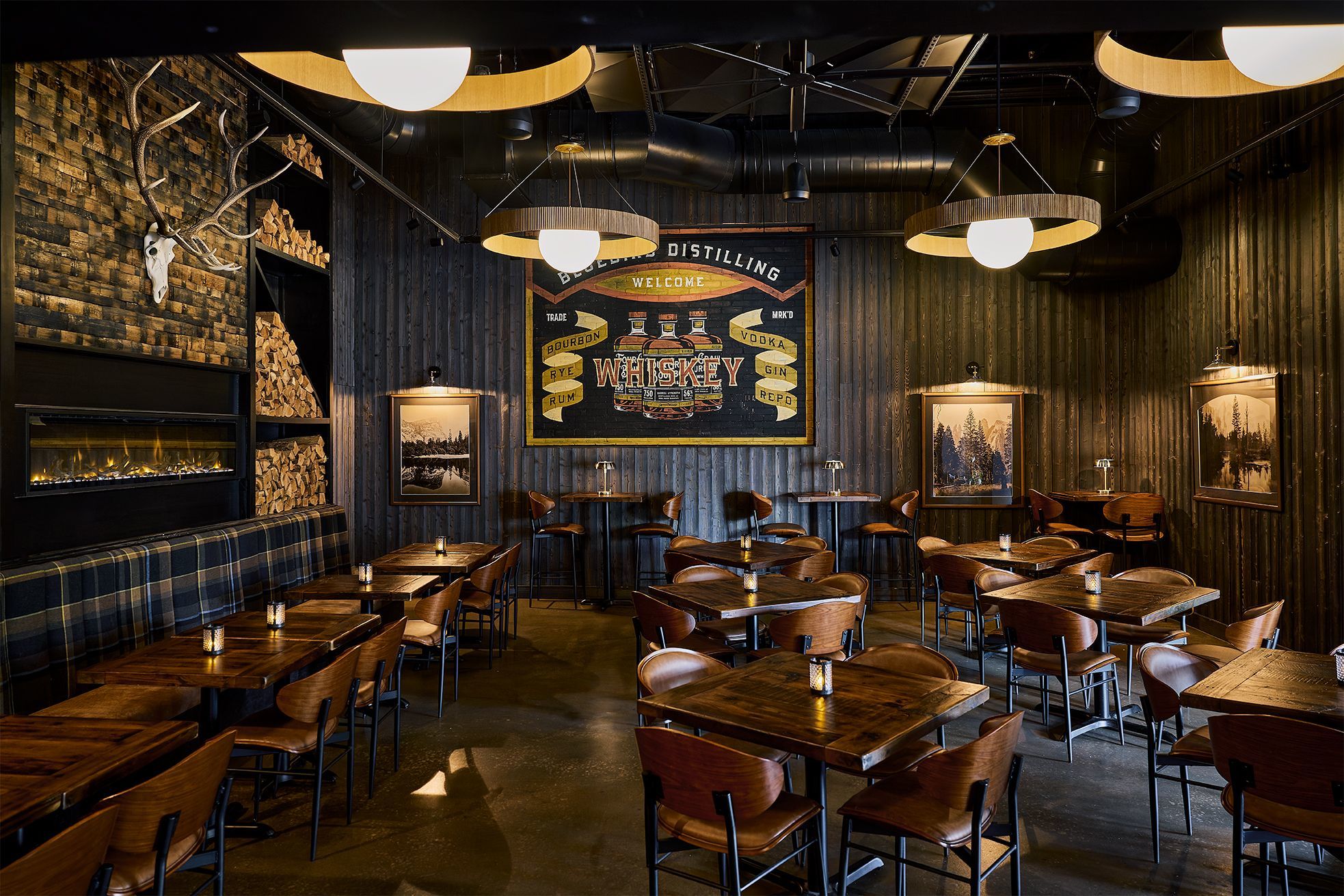
Bluebird Distilling in Phoenixville.Photos courtesy of Ed Newton
Bluebird Distilling & Dough House (100 Bridge St., Phoenixville): A $2.2 million investment turned Bluebird’s Bridge Street distillery into a full-fledged restaurant. Executive chef Devon Migeot, whose resumé includes Zahav and Laser Wolf, centers the expanded food program on naturally fermented neo-Neapolitan pizzas, house-baked breads, shareable plates, and, naturally, Bluebird cocktails.
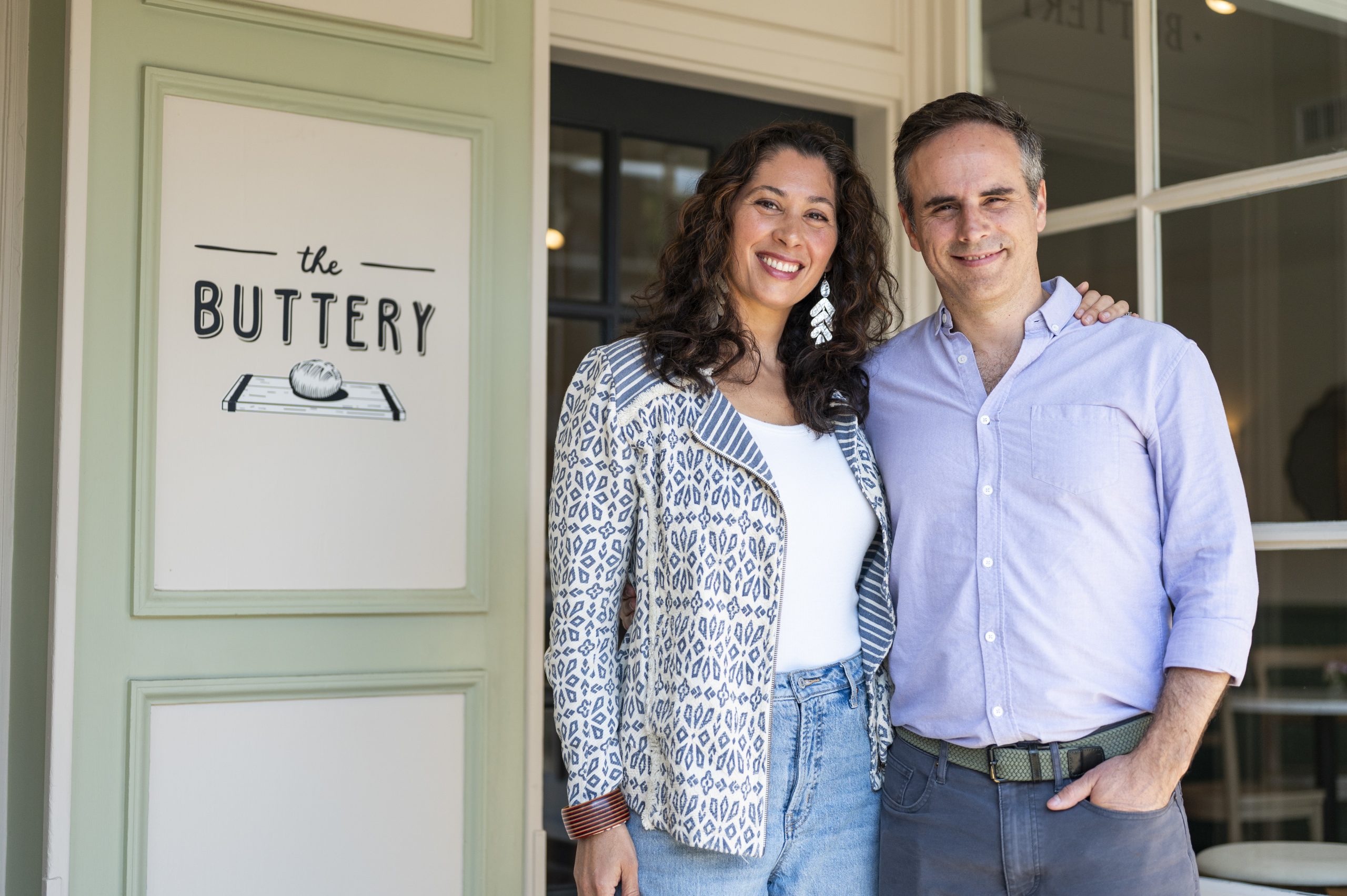
Silenia and John Rhoads, owners of the Buttery in Bryn Mawr.Allie Ippolito / For The Inquirer
The Buttery (836 W. Lancaster Ave., Bryn Mawr): John and Silenia Rhoads’ third location is an 82-seat bakery-cafe on Lancaster Avenue, where the Malvern-incepted operation’s sourdough breads and house-made pastries share the menu with breakfast dishes, sandwiches, and seasonal fare from its all-day scratch kitchen.
Known Associates at 10th and Spruce Streets.Allie Ippolito / For The Inquirer
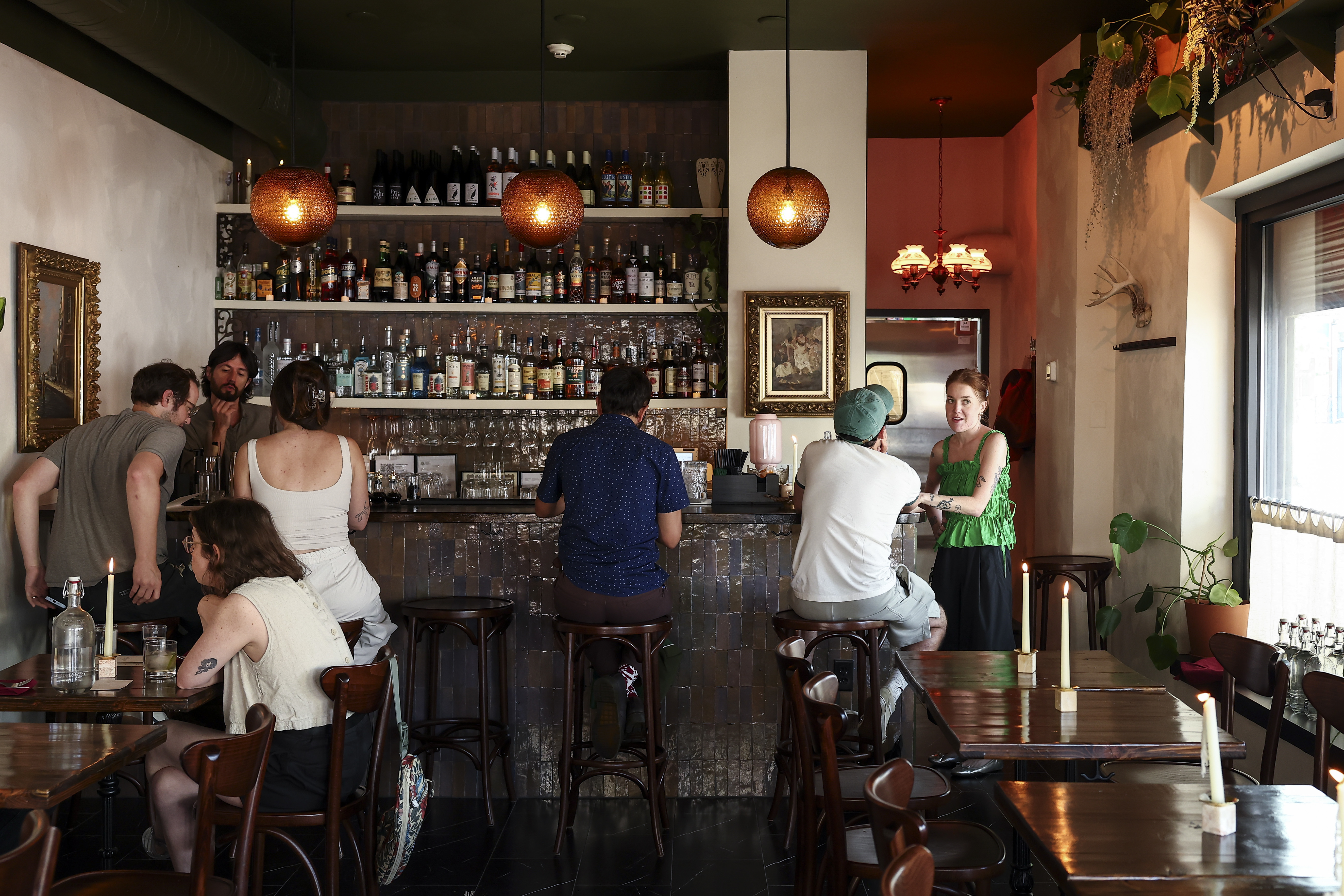
Known Associates ( 941 Spruce St.): Chef Christopher Kearse’s Washington Square West cocktail bar does not treat the food as an afterthought. The former Varga Bar at 10th and Spruce is a 40-seat room where cocktails accompany a concise, European-influenced menu of a dozen savory dishes.
Lillian’s at 19th and Mifflin Streets.Monica Herndon / Staff Photographer
Lillian’s (1900 S. 19th St.): Even the chef isn’t permanent at Sam Ahern’s parlorlike cocktail bar/bistro at 19th and Mifflin Streets, whose kitchen rotates among guest chefs. The residency model gives each cook a temporary restaurant within the restaurant — and gives this Point Breeze newcomer an ever-changing menu.
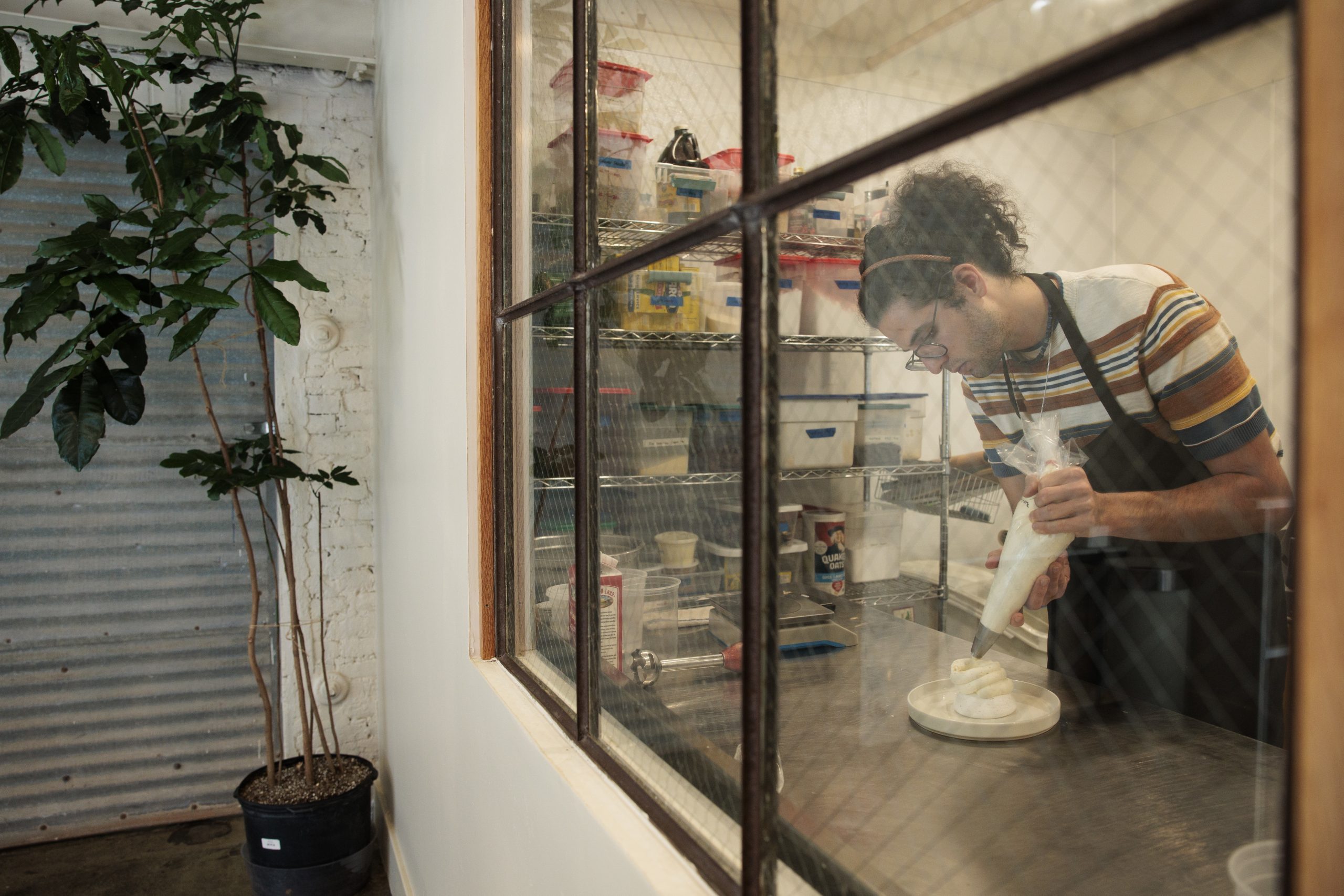
Saif Manna works on a pavlova at Manna Bakery.Monica Herndon / Staff Photographer
Manna Bakery (110 W. Berks St.): Five years and countless farmers market appearances later, Saif Manna’s Temple dorm room project has moved into the former Essen Bakery in Kensington. Manna draws on his Palestinian heritage for Levantine pastries and savory dishes in a comfy cafe setting.
Mr. Edison in the Bellevue Hotel.Monica Herndon / Staff Photographer
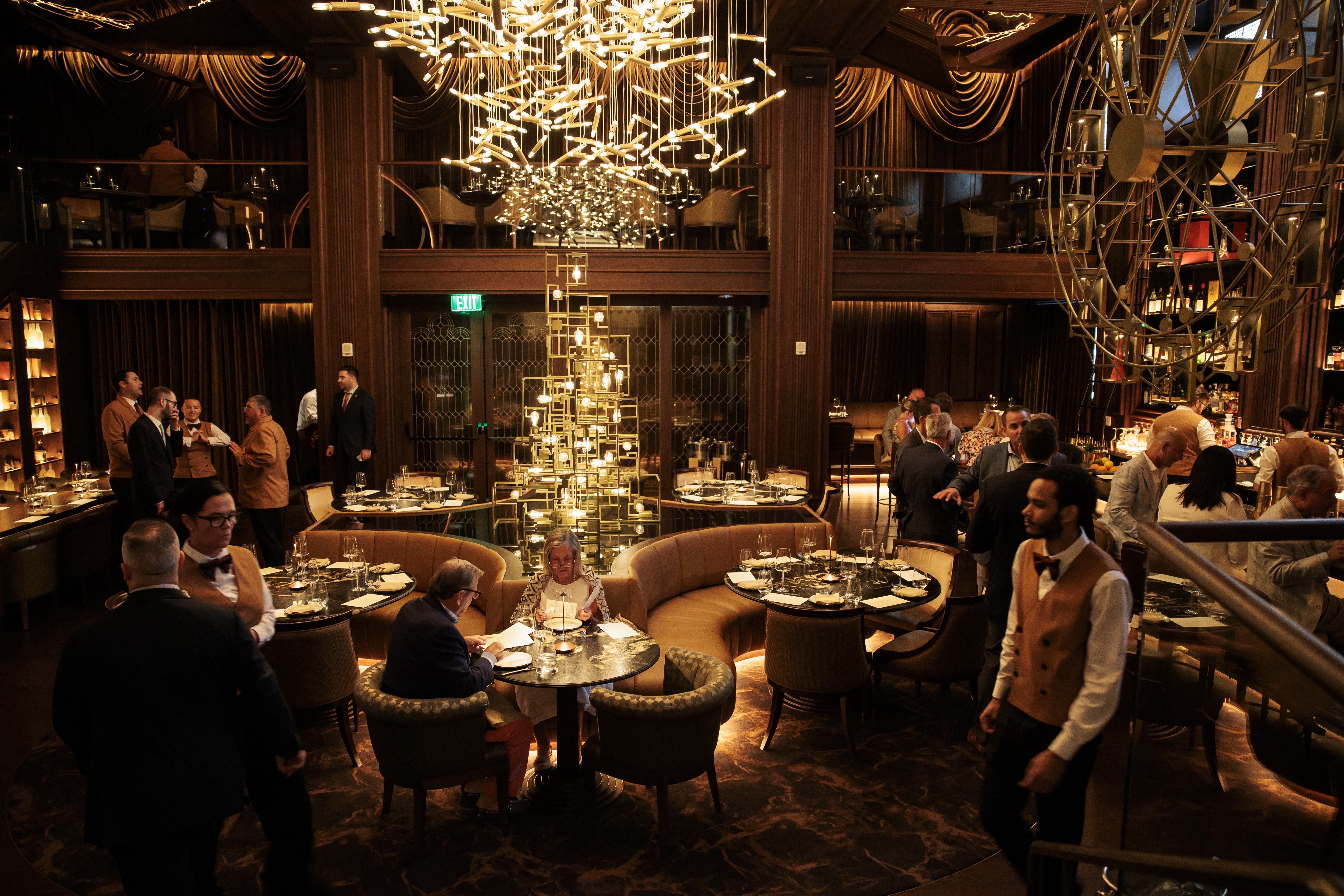
Mr. Edison (1400 Walnut St.): There’s a Ferris wheel carrying liquor behind the bar at Mr. Edison, which gives some idea of the production. Veteran restaurateur Jeffrey Chodorow’s Philadelphia debut is a theatrical Bellevue supper club where chef Matt Levin’s cooking shares a two-story room with live music, dramatic lighting, and plenty of visual spectacle.
Ogyu Japanese BBQ in Ardmore.Jose F. Moreno / Staff Photographer
Ogyu Japanese BBQ (60 Greenfield Ave., Ardmore): Sam Li turned Ardmore’s former Iron Hill Brewery into a sprawling yakiniku restaurant built around the grill at each table. Diners cook wagyu and other meats themselves — or enlist a server — choosing among fixed-price packages and à la carte options in a dramatically remodeled space with private dining rooms and a full bar.
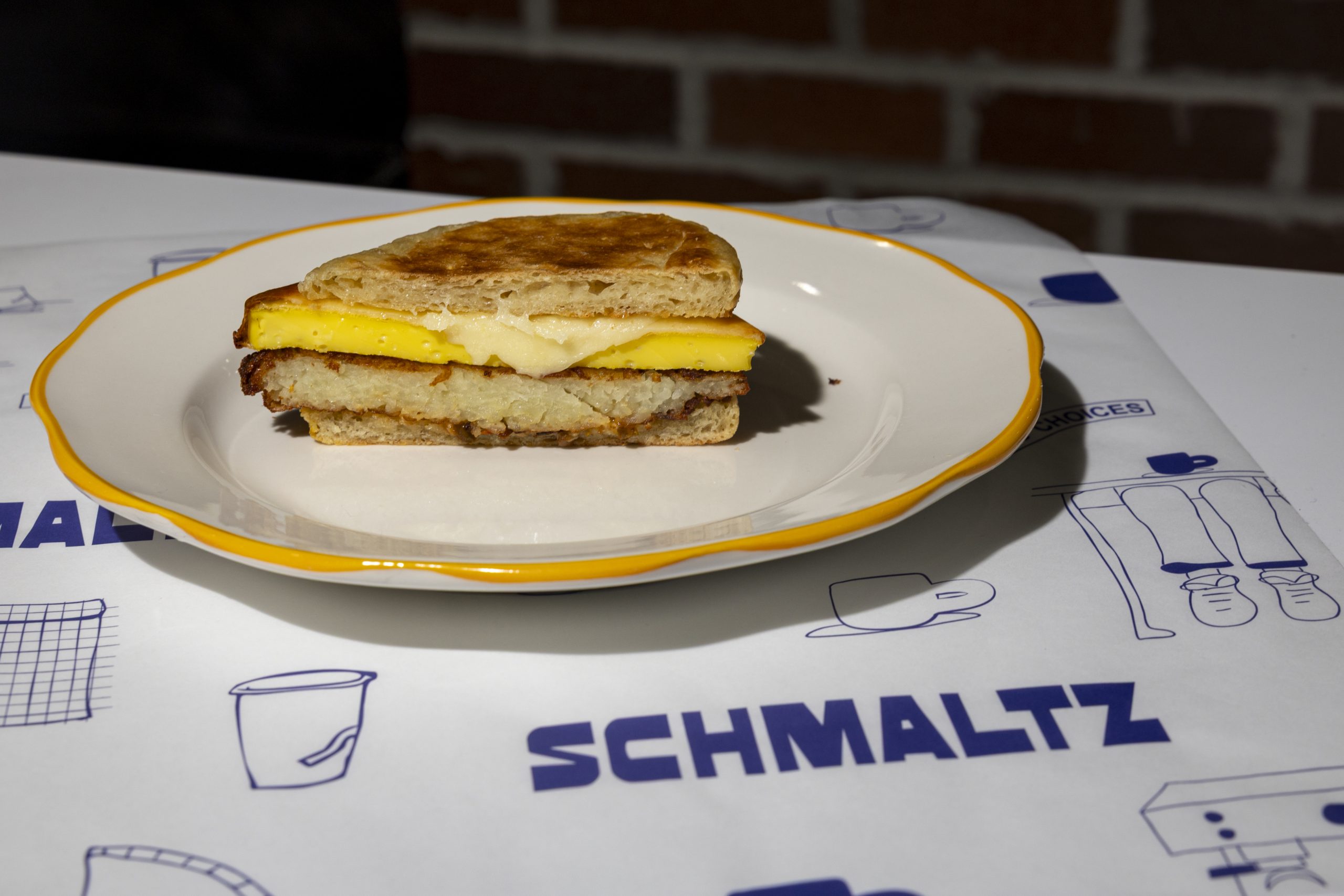
The latke, egg, and cheese sandwich at Schmaltz.Aidan T. Gallo / Staff Photographer
Schmaltz (1300 S. 18th St.): This Jewish-inspired breakfast-and-lunch cafe serves latkes, cheese blintzes, egg sandwiches — and no bagels. Jeremy Asch and Abby Armstrong opened the Point Breeze corner spot with chef Sam Chertock, whose deliberately compact menu includes latke, egg, and cheese sandwiches on house-baked English muffins.
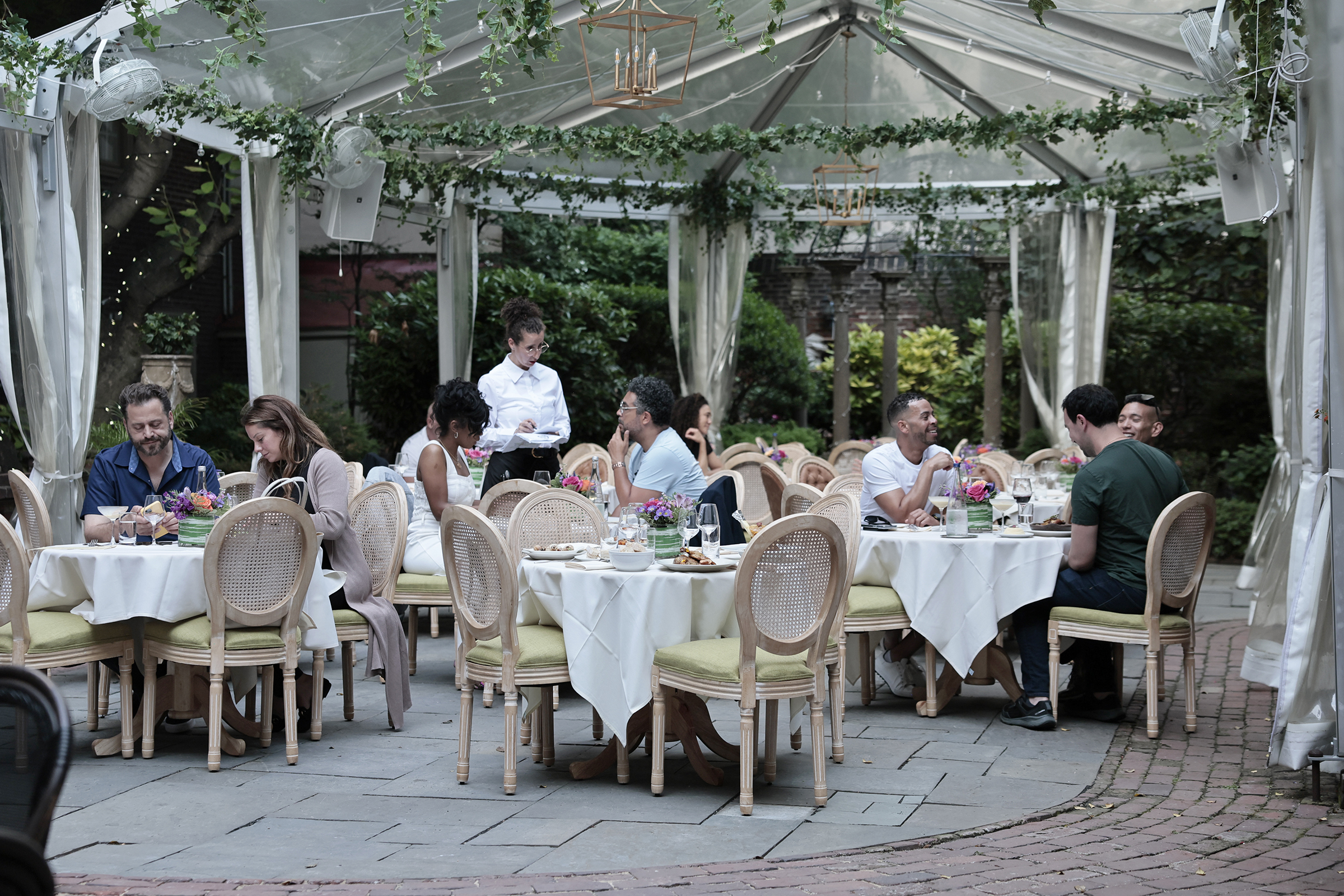
Outdoor dining at Soufiane at the Morris.Elizabeth Robertson / Staff Photographer
Soufiane at the Morris (225 S. Eighth St.): The 1787 Morris House provides a peaceful backdrop for Soufiane Boutliliss’ French-Moroccan cooking, served in a secluded stone courtyard shaded by magnolias and dogwoods in Washington Square West. This is the second restaurant from the Moroccan-raised Boutliliss and husband Christophe Mathon of Sofi Corner Cafe.
After eight years, several production spaces, and many tons of cucumbers, Fishtown Pickle Project is putting down permanent roots.
But it’s still not in Fishtown.
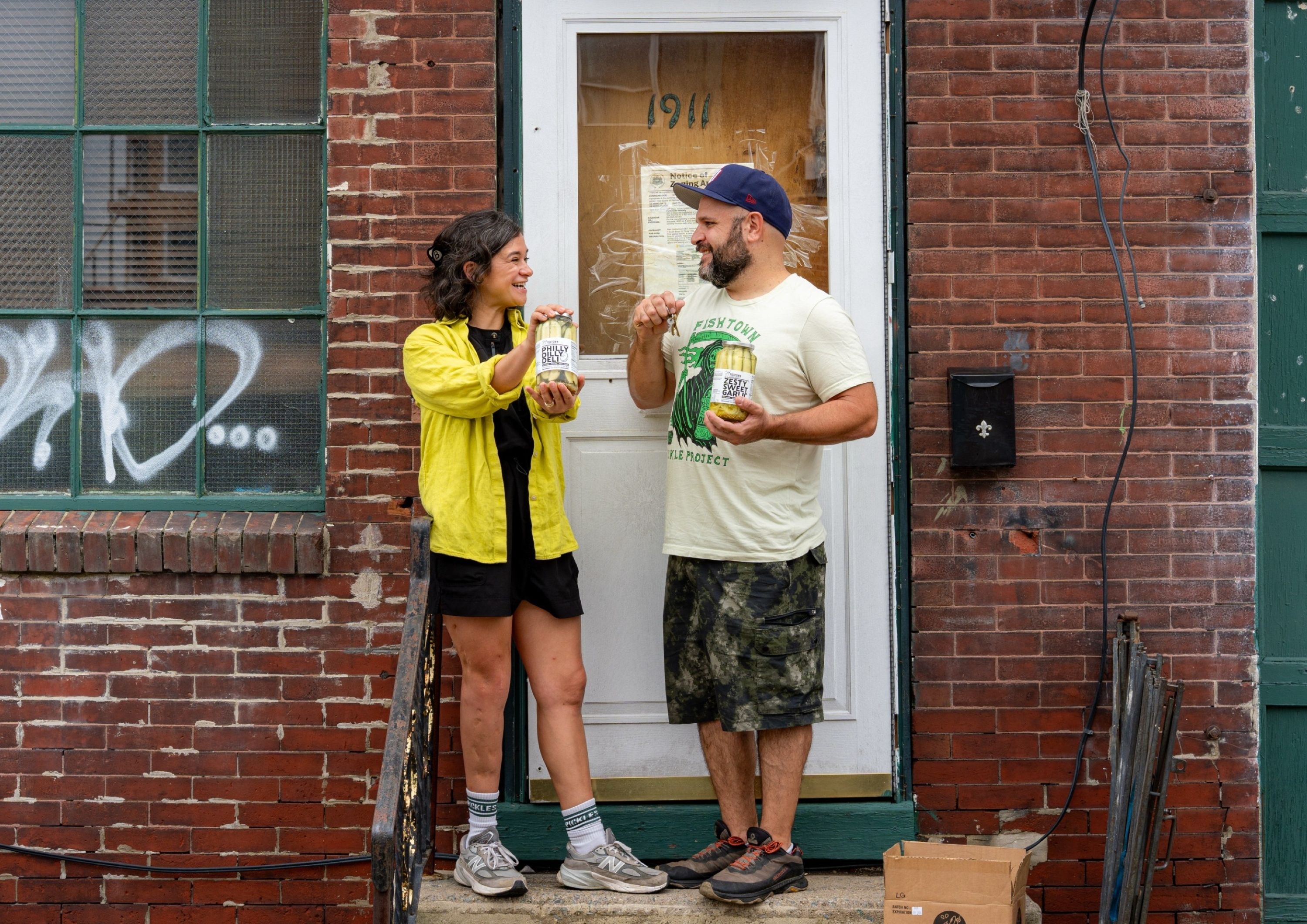
Last month, Niki Toscani and Mike Sicinski, the husband-and-wife team behind the pickle company, bought a 6,200-square-foot building at 1911-13 N. Second St., just north of Berks Street near Norris Square in Kensington. There, they plan to triple production and, for the first time, invite customers into their briny world.
The move from Globe Dye Works in Frankford will allow them to combine production with a storefront.
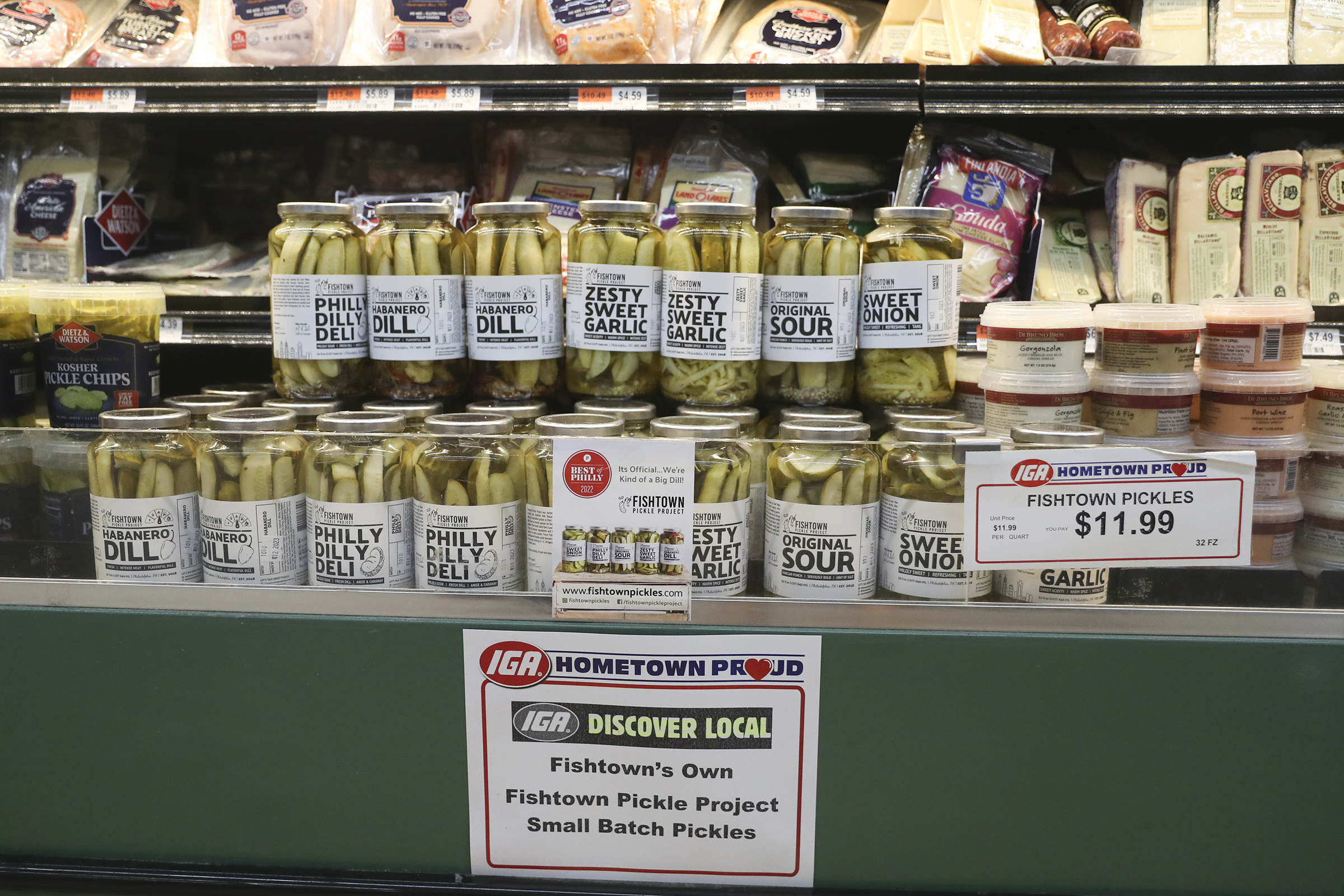
The Richmond Shops IGA grocery store at Fishtown Crossing was an early customer of Fishtown Pickle Project.Heather Khalifa / Staff Photographer
The centerpiece will be a 500-square-foot pickle tasting room, where customers can sample varieties, buy pickles by the pound or jar, shop for pickle-themed merchandise, and eventually take classes and production tours. They are aiming for a summer 2027 opening.
A pickle tasting room? Think brewery, only with cucumbers. Toscani said customers will be able to sample the goods while watching production. She calls the concept a “brinery.”
Most of the building will be devoted to manufacturing, storage, offices, and events. Fishtown Pickle Project now processes about 3,500 pounds of cucumbers a week, a figure Toscani expects to triple by the end of 2028.
The couple said they remained at Globe Dye Works because of its affordable rent and highway access, but eventually ran out of room. Their search for a larger property with manufacturing and retail space, plus a driveway and loading area, led them to Norris Square. Finding that combination in Fishtown was difficult, Toscani said, “especially for a bootstrapped small business.”
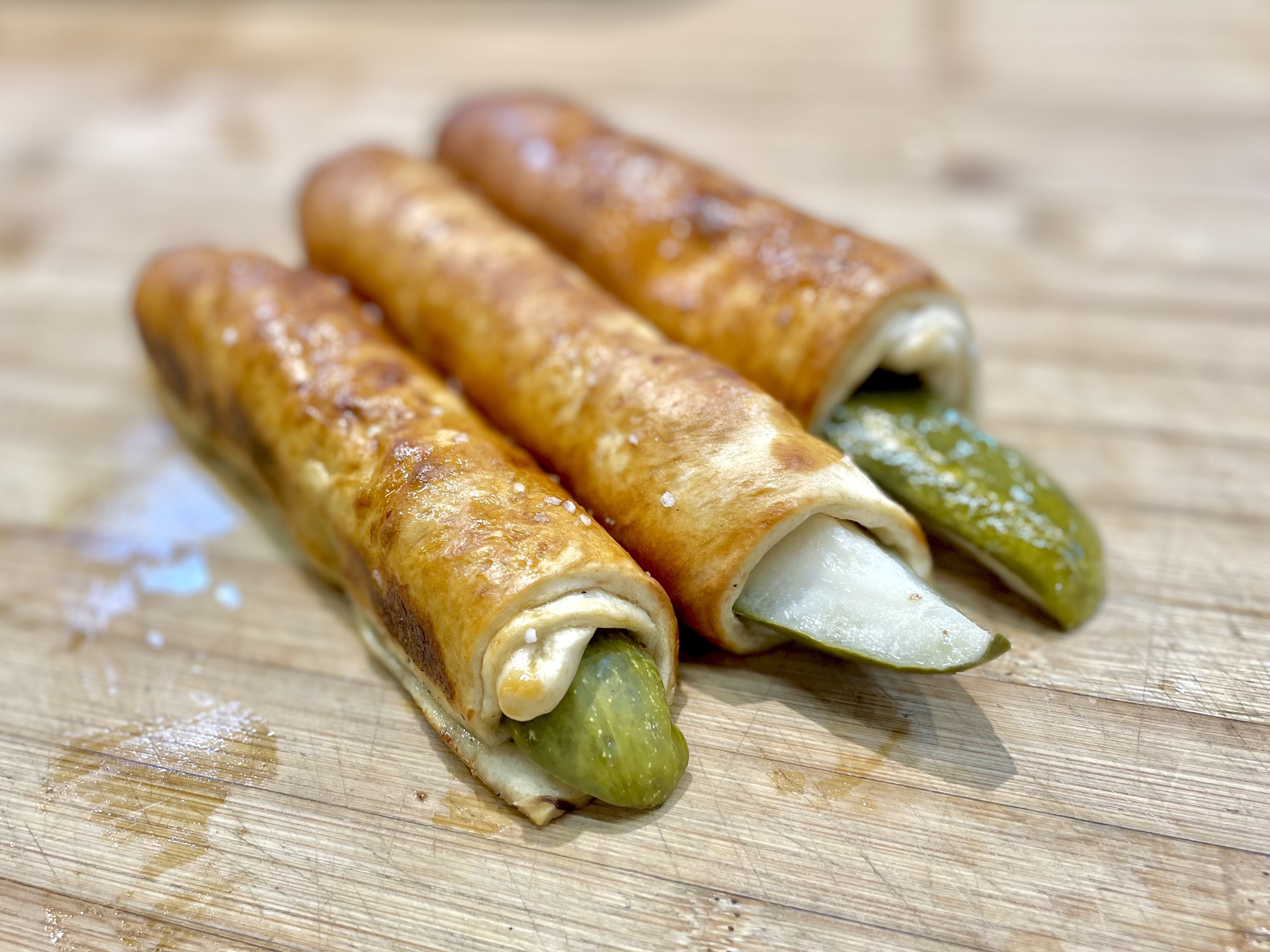
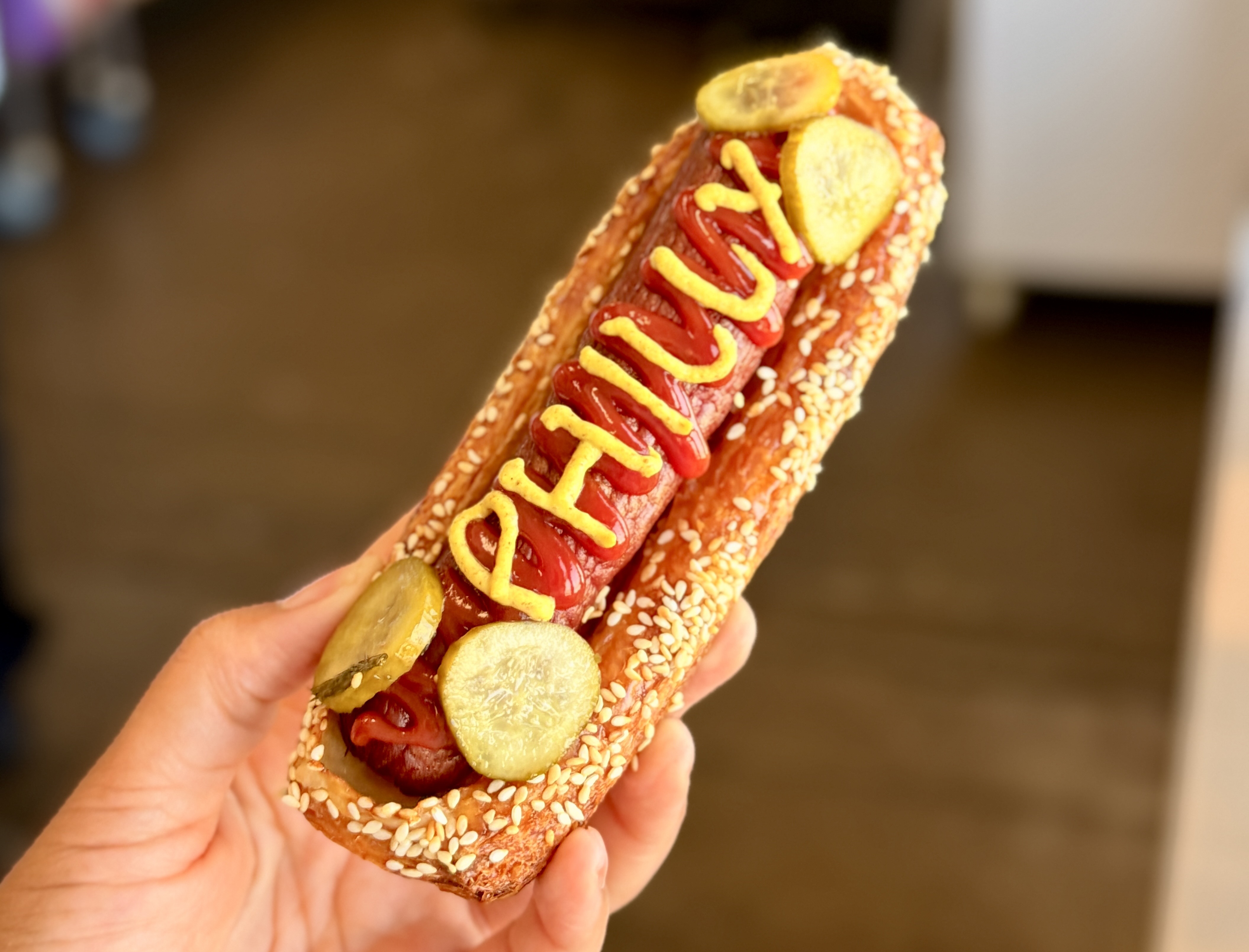
A 2025 collaboration between Fishtown Pickle Project and Miller’s Twist in Reading Terminal Market resulted in Philly Dilly spears wrapped in a soft, sweet pretzel dough.Craig LaBan / Staff
The Second Street property should also make deliveries easier. “When we’re getting trailers delivered with glass jars, it helps to have a garage and a street for them to deliver at without tons of traffic,” Sicinski said.
Wholesale growth is driving much of the expansion. Toscani said revenue from buckets of pickles sold to restaurants, delis, and retailers increased 200% from 2024 to 2025. Some customers use them to stock pickle bars.
The company sells through about 30 ShopRite stores, 11 Wegmans locations, and the Kimberton Whole Foods and McCaffrey’s Market chains. Toscani and Sicinski make their products and handle distribution themselves.
“It allows us to grow responsibly without taking on more business than we can handle,” Toscani said.
The company has the equivalent of about six full-time employees, which Toscani expects to double to about 12 by the end of 2028.
As for the Fishtown in the name, that goes back to the company’s beginnings in 2018. Toscani and Sicinski lived in the neighborhood, and some of their first customers were Fishtown retailers, including Bottle Bar East (now closed), IGA, and Riverwards.
The pickles themselves have always been made elsewhere. Sicinski, a chef who was then a food-service director for a New Jersey school district, first made them in his work kitchen. The couple — Toscani is a dietitian — also made pickles as wedding favors, helping turn the hobby into a business. Production later moved to Bridesburg Commissary (now Culinary Collective) and then to Globe Dye Works, where the company eventually moved into a larger space within the complex.
The passion project became a livelihood after Sicinski was furloughed at the start of the pandemic. The lineup now includes the flagship Philly Dilly Deli, Sweet Onion, and Habanero varieties, and limited releases such as Bloody Mary and Ginger Lemonade pickle chips.
The Norris Square project is their largest investment yet. They paid $550,000 for the building Aug. 6 and said they expect to spend about $700,000 on construction and outfitting. A $1.6 million Small Business Administration loan is helping finance the project, and they are seeking about $250,000 in grants for equipment and hiring. Toscani puts the overall investment at close to $2 million.
The couple have no outside equity investors.
Toscani sees no contradiction in taking the Fishtown name with them to Norris Square.
“We still consider the neighboring neighborhoods our neighbors,” she said. “Despite the fact that we’re not in Fishtown proper, we feel like the opportunity to have roots in Norris Square actually fits our mission quite a bit.”
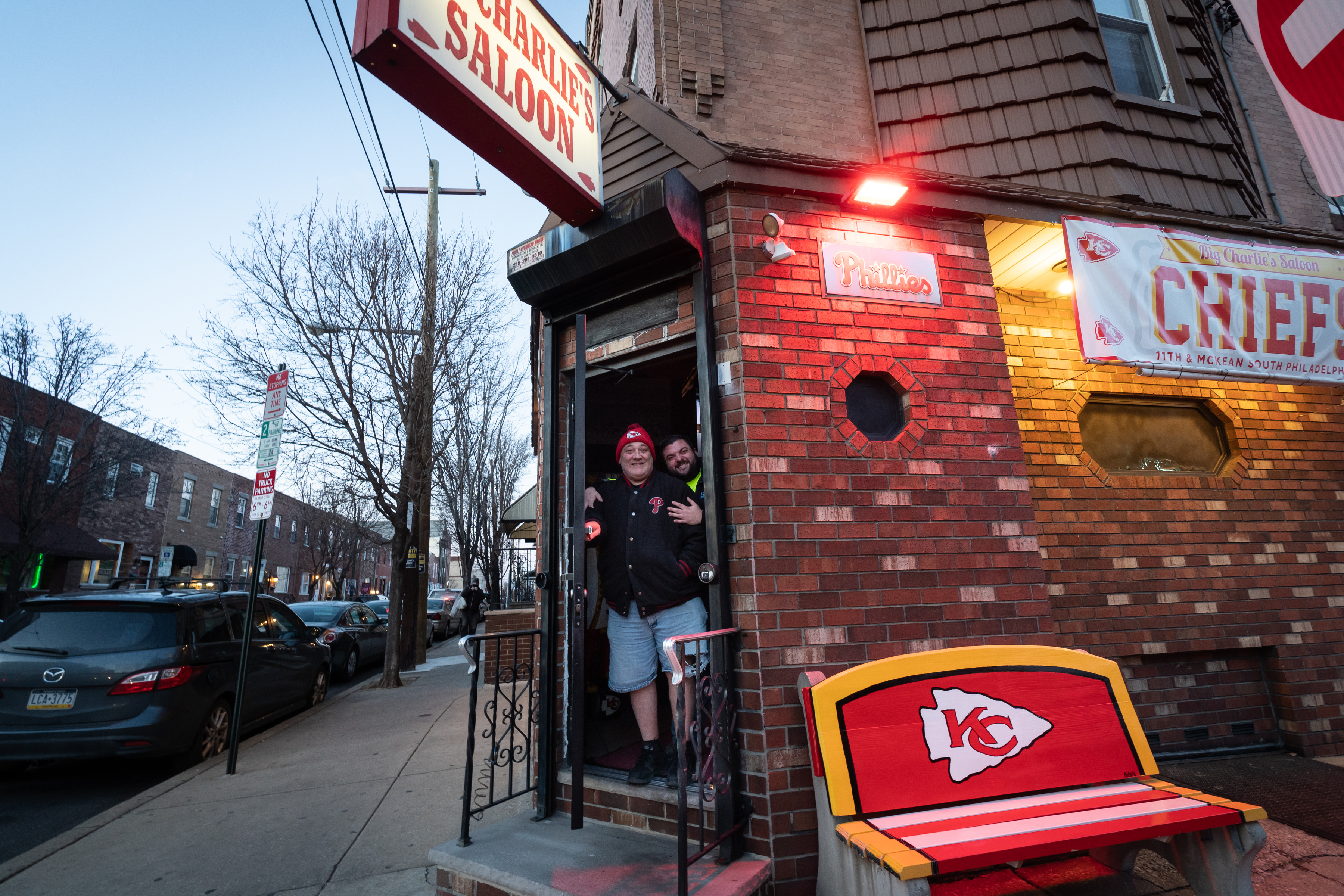
Big Charlie’s Saloon, the South Philadelphia corner bar known nationally for its unlikely devotion to the Kansas City Chiefs, is getting a new playbook.
DiTomo and Jacobsen say they plan to turn it into Sweets, a neighborhood bar. DiTomo said that he would remain at Meetinghouse and that his business partners there have no stake whatsoever in Sweets.
Sweets will have no Chiefs memorabilia — or sports theme of any kind, for that matter. DiTomo said they’re thinking low-key. “I’m not a big concept guy,” he said. “I’m going to stay true to what that neighborhood deserves out of a neighborhood bar, and that’s about it.” The partners started an Instagram account to float photos that inspire them.
DiTomo said he and Jacobsen are working through due diligence for the purchase of the building, which had been listed at $1.1 million and includes apartments upstairs. A liquor license transfer is also pending.
They are aiming for a winter opening, though that timing is tentative. “If we could capture the holiday season, that would be beyond fantastic,” DiTomo said. “But we’re both realists. We’ll see how it goes.”
Its allegiance dated to Super Bowl IV in January 1970, when Staico’s father, Charlie, bet on Kansas City to beat the Minnesota Vikings and promised his young son a bicycle if the Chiefs won. They did, Paul got the bike, and a lifelong allegiance began.
After taking over the bar following his father’s death in 1983, Staico bought a satellite dish in 1986 so he and friends could watch Chiefs games that rarely appeared on Philadelphia television. Over the decades, the bar became known as “Arrowhead East,” its wood-paneled rooms covered with signed helmets, pennants, bobbleheads, street signs, and other Chiefs memorabilia.
But Big Charlie’s was also a neighborhood bar, and that is the aspect of the property that DiTomo intends to preserve — rather than its sports identity. He and Jacobsen both live in South Philadelphia.
“I’ve always admired neighborhood bars,” he said. “I grew up in neighborhood bars, so I want it to be true to form — just the classics, done well.”
That philosophy will extend to the drinks. DiTomo said the bar will pour Meetinghouse beer, along with a straightforward selection of beer, wine, and cocktails built around classics.
Sweet’s food will be simple, he said, because of the tiny kitchen.
DiTomo, a Culinary Institute of America graduate who rose to prominence a decade ago in the Marc Vetri organization at Amis, was a chef consultant on M. Night Shyamalan’s series Servant on Apple TV+ when Meetinghouse opened in 2023.
DiTomo and Jacobsen have been friends for about five years. DiTomo said Jacobsen had long been interested in doing a project together, but nothing had clicked until the Big Charlie’s building became available. “This building spoke to him, so he jumped on it,” DiTomo said.
Stickball, Jacobsen’s shop, specializes in vintage clothing, art, and objects. GQ included it on its 2024 list of 30 notable vintage menswear stores in the United States.
DiTomo said the Sweets name came from a running list he has kept over the years. He associates the word with several of his uncles, who used it as a term of affection. “I always liked the feeling of it,” he said. “It sounds nice, and it’s timeless. It feels good for the neighborhood, too.”
A distinctive stretch of 15th Street in Center City has lost both of its longtime bars within a year.
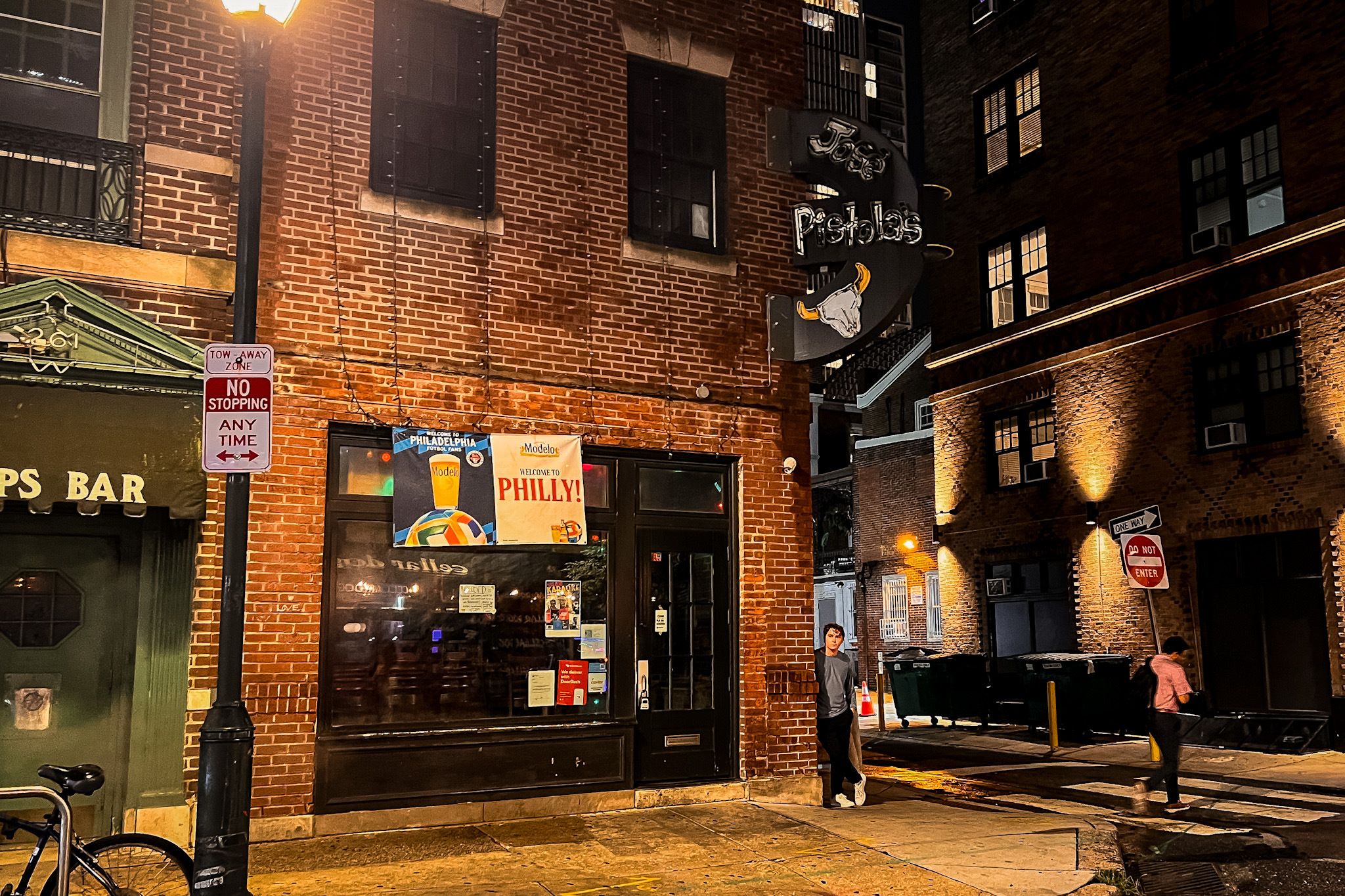
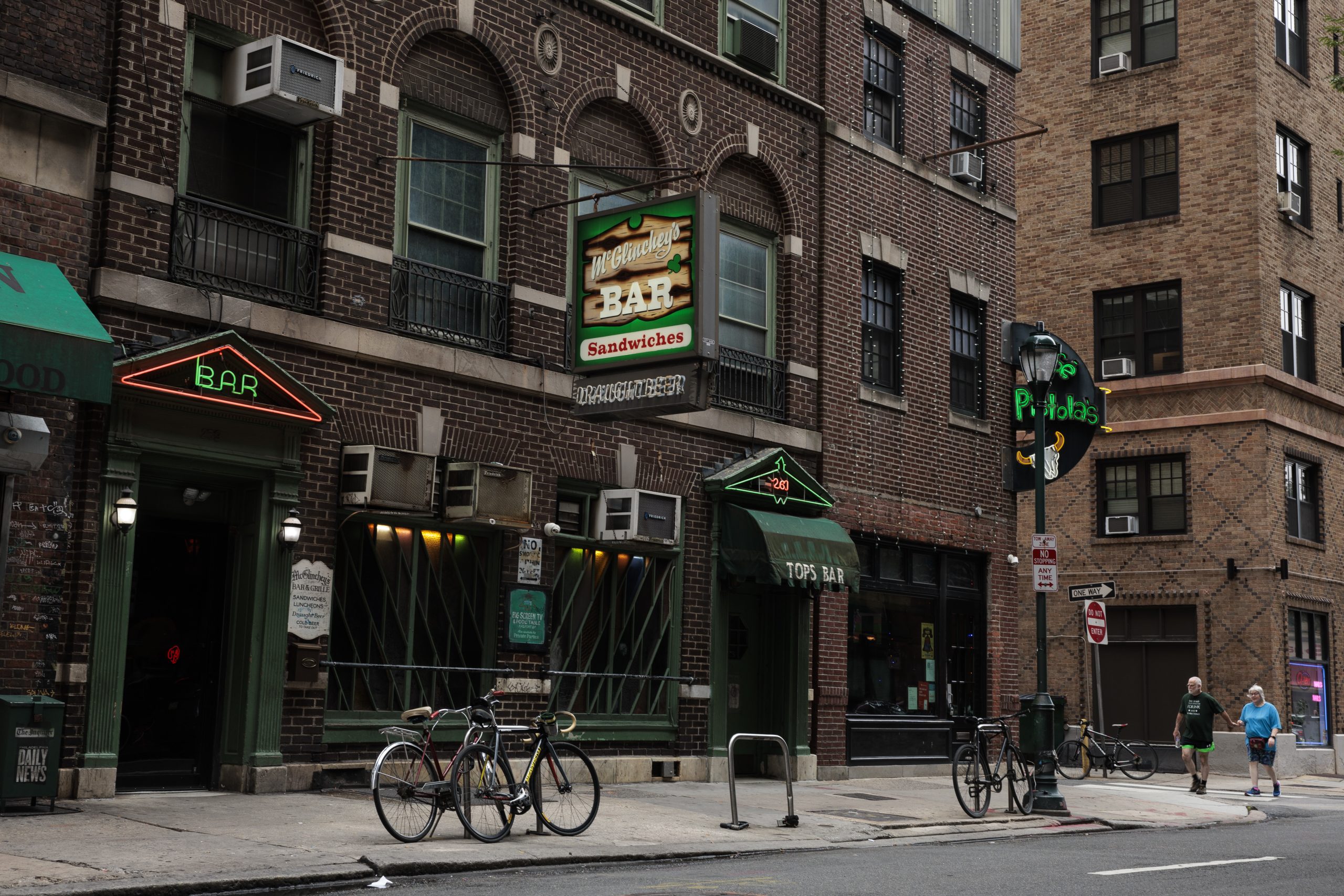
Jose Pistola’s, the Mexican-inspired craft beer bar at 263 S. 15th St., has closed after 19 years, following last August’s closing of its next-door neighbor, McGlinchey’s.
The closing of Jose Pistola’s came abruptly Tuesday amid a number of factors, including the Philadelphia Gas Works’ cutoff of its gas service. Although co-owner Joe Gunn said the business had made payments and was trying to resolve the issue, he said PGW would not restore service for three more days. . “That was the straw that broke the camel’s back,” Gunn said.
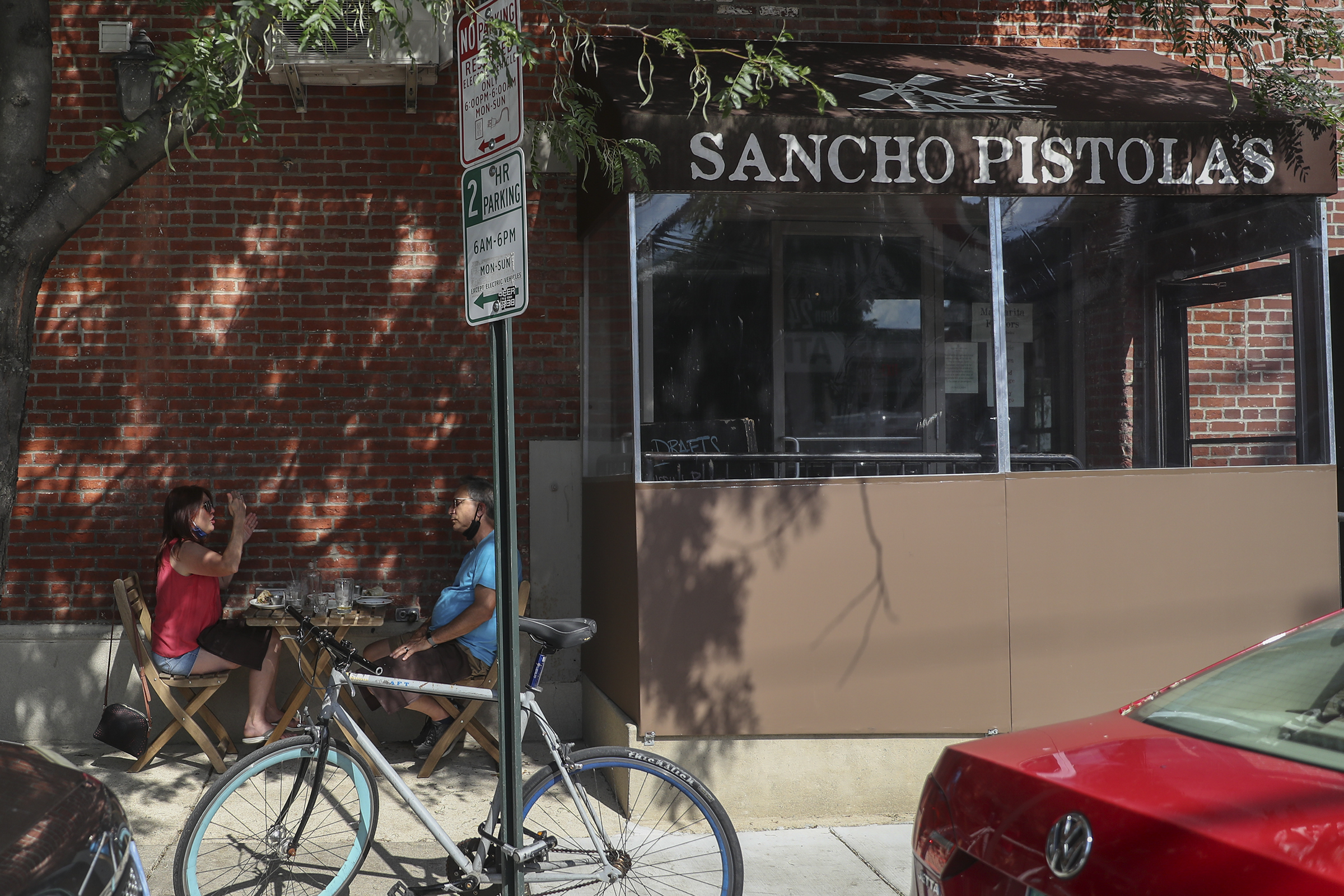
Sancho Pistola’s in Fishtown, which opened in 2014, is not affected by the Center City closing.Heather Khalifa / Staff Photographer
The closing does not affect Sancho Pistola’s on Girard Avenue in Fishtown, which opened in 2014, or Pistola’s Del Sur on East Passyunk Avenue in South Philadelphia, which opened in 2017. They are doing well, Gunn said. “They’re in no danger of going anywhere.”
In 2009, court records show, the City of Philadelphia, which owns PGW, obtained a judgment of nearly $48,000 against Jose Pistola’s. According to a 2025 court docket entry, the judgment was never satisfied. A PGW spokesperson on Friday declined to comment, saying it does not share information about individual accounts.
Gunn, saying that he did not want to blame PGW, said the interruption forced a decision that he and business partner Casey Parker had already been contemplating.
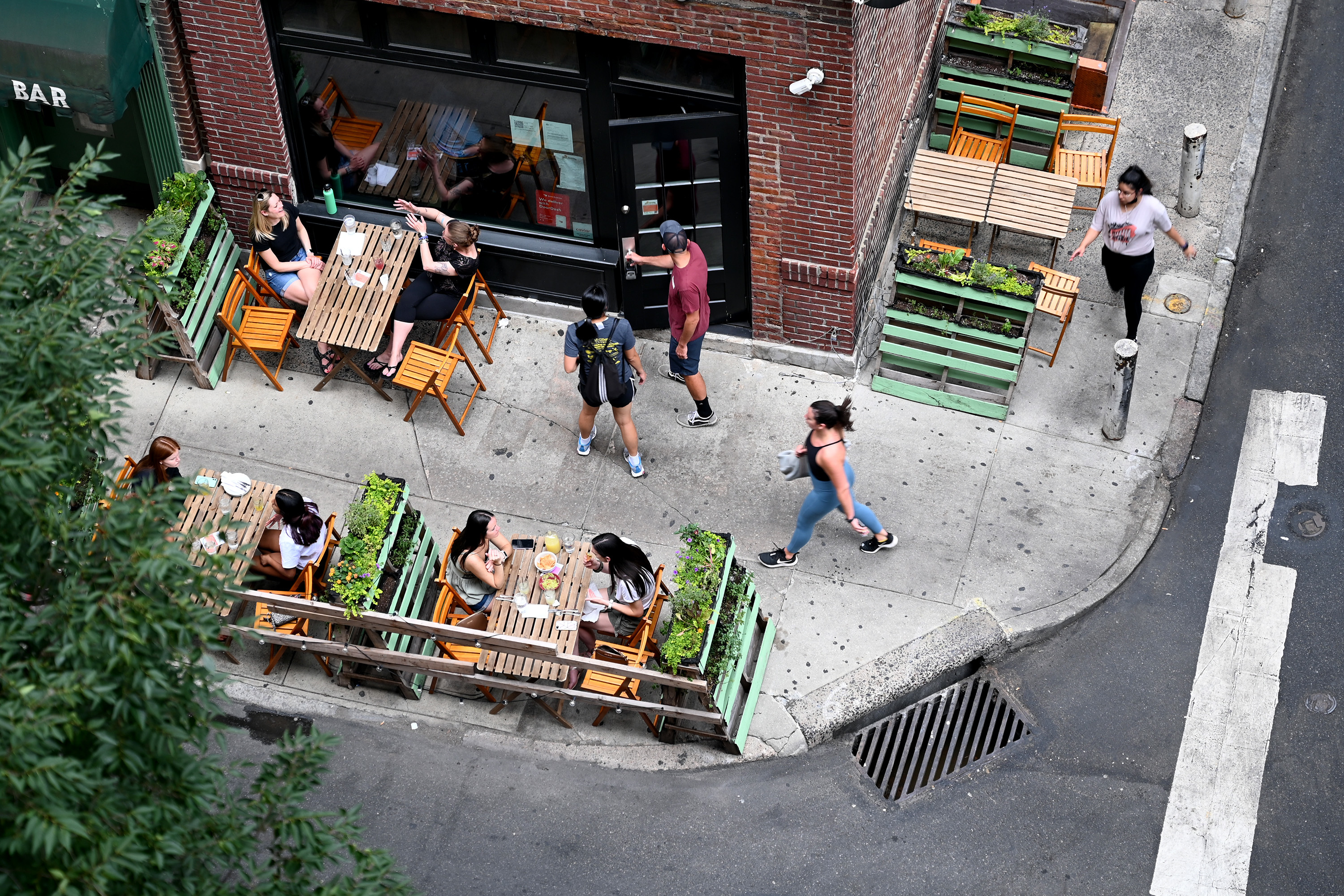
A view of Jose Pistola’s pandemic-era outdoor seating at 15th and Manning Streets in 2021. Tom Gralish / Staff Photographer
Gunn said they had about a year remaining on their lease and had been discussing a five-year renewal with their landlord. But with both Gunn and Parker now 51 and their children getting older, he said another long commitment seemed increasingly daunting. “It takes a lot of energy to play that game,” Gunn said.
The numbers were difficult, too. As other bar and restaurant owners have lamented, higher food and operating costs had squeezed the business, while the late-night trade that once helped sustain bars like Pistola’s has diminished.
“Frankly, [the bar] just never fully recovered from COVID,” Gunn said. “Coming out of COVID, the world was a different place — the price of goods, the cost of everything, and people don’t go out as much late. These younger generations are too smart to drink their life away.”
“It’s always been tight, but everything changed,” Gunn said. “And then people just don’t drink as much.”
About 25 people worked at Jose Pistola’s. Gunn said they had little warning because the owners themselves had not decided to close until the last minute. He said he and Parker are trying to place employees at their other restaurants or with friends in the industry.
“We’ll absorb what we can, obviously, in the other two places,” Gunn said. “We have a lot of friends in the business, so we’re aggressively trying to help them.”
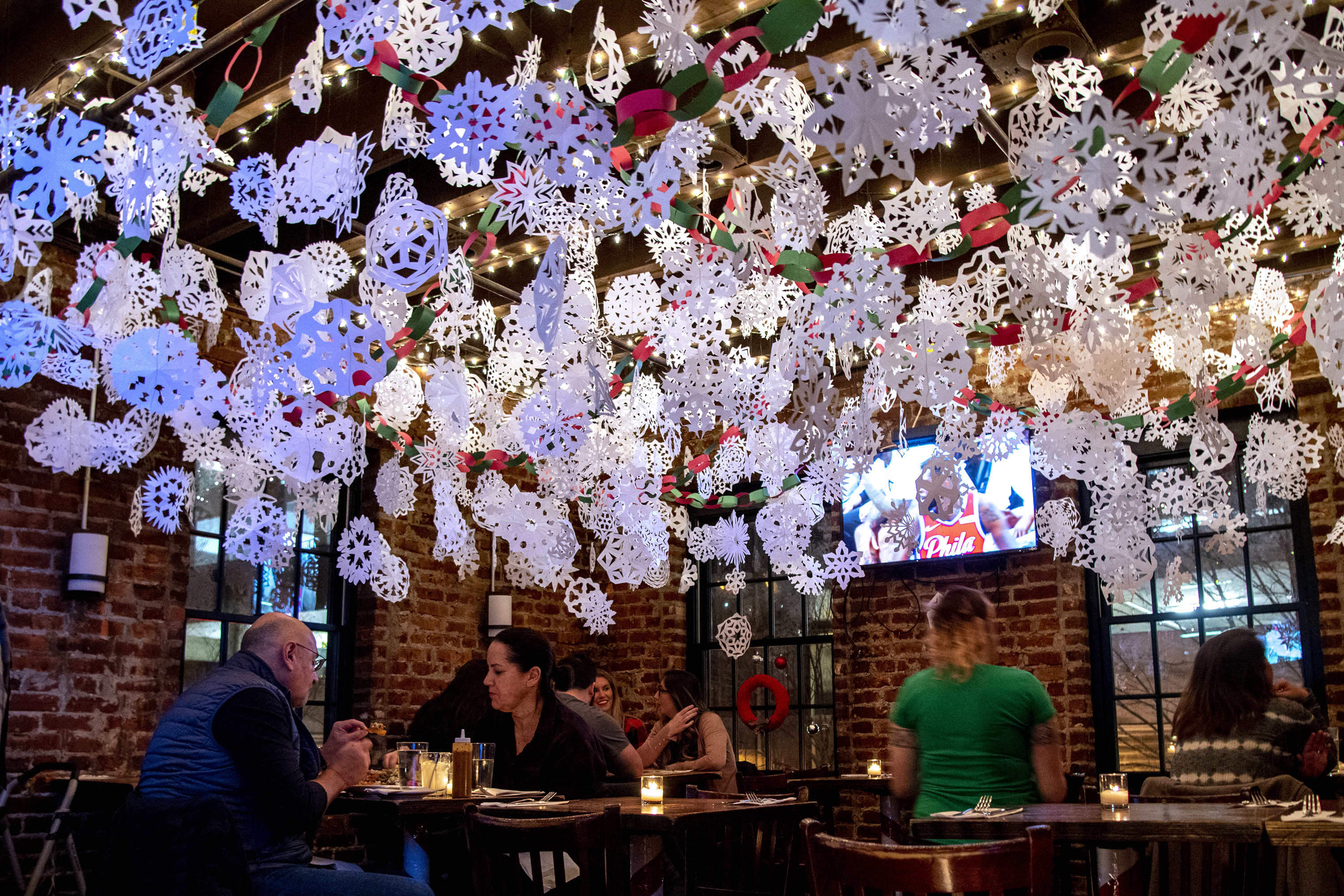
Jose Pistola’s bar, as decorated in 2019 for its annual Jose Pistola’s Christmas Smackdown Bar Crawl.Tom Gralish / Staff Photographer
Jose Pistola’s — its name a loosely licensed Spanish rendering of Gunn’s first and last names — opened Aug. 29, 2007, taking over the longtime Copa, Too! space. Gunn and Parker were both veterans of Fergie’s Pub; Gunn had worked there for about seven years before leaving to open Pistola’s, while Parker had moved on by then.
The bar quickly established itself through its combination of craft beer, Mexican-inspired food, and an irreverent neighborhood-bar atmosphere. It became particularly associated with Philadelphia’s burgeoning craft beer movement and the early years of Philly Beer Week.
Its food grew more ambitious after Puebla-born chef Adán Trinidad joined the operation and eventually became a partner. Trinidad, whose resumé included El Vez and Alma de Cuba, brought to the menu such dishes as tortilla soup, goat sopes, carnitas-filled steamed buns, and Brussels sprout tacos that caught the attention of Inquirer critic Craig LaBan.
The partners later expanded the Pistola’s name to Fishtown and East Passyunk. Trinidad died after a fall in October 2021 at age 39.
Adán Trinidad was chef-partner until his death in an accidental fall in 2021.Rachel Delsurdo / Courtesy of Jose Pistola's
For most of Jose Pistola’s run, its next-door neighbor offered a study in contrasts.
McGlinchey’s — now on the market — was a cash-only dive bar known for low prices, dim lighting, smoke in the air, and an eclectic clientele. It endured by barely changing, while Jose Pistola’s brought craft beer and more ambitious food to an equally unpretentious neighborhood-bar sensibility.
The two businesses were nevertheless close.
“We had a great relationship with them,” Gunn said. “We loved them because of how funny they were. They were just kind of cranky, and they put up with us.”
McGlinchey’s, as seen in August 2025, was next door to Jose Pistola’s.Monica Herndon / Staff Photographer
Gunn said the McGlinchey’s closure was part of a broader change he has watched on this stretch of 15th Street between Locust and Spruce Streets.
“The whole corridor used to be more vibrant,” he said. “I think COVID wiped out a lot of those places. It changed everything for us.” The block is also home to Cellar Dog and Garage Rittenhouse.
As recently as Thursday, Gunn said, he and Parker were “still fighting to figure out a way to [save] it. But it just, I think, ran out of steam.”
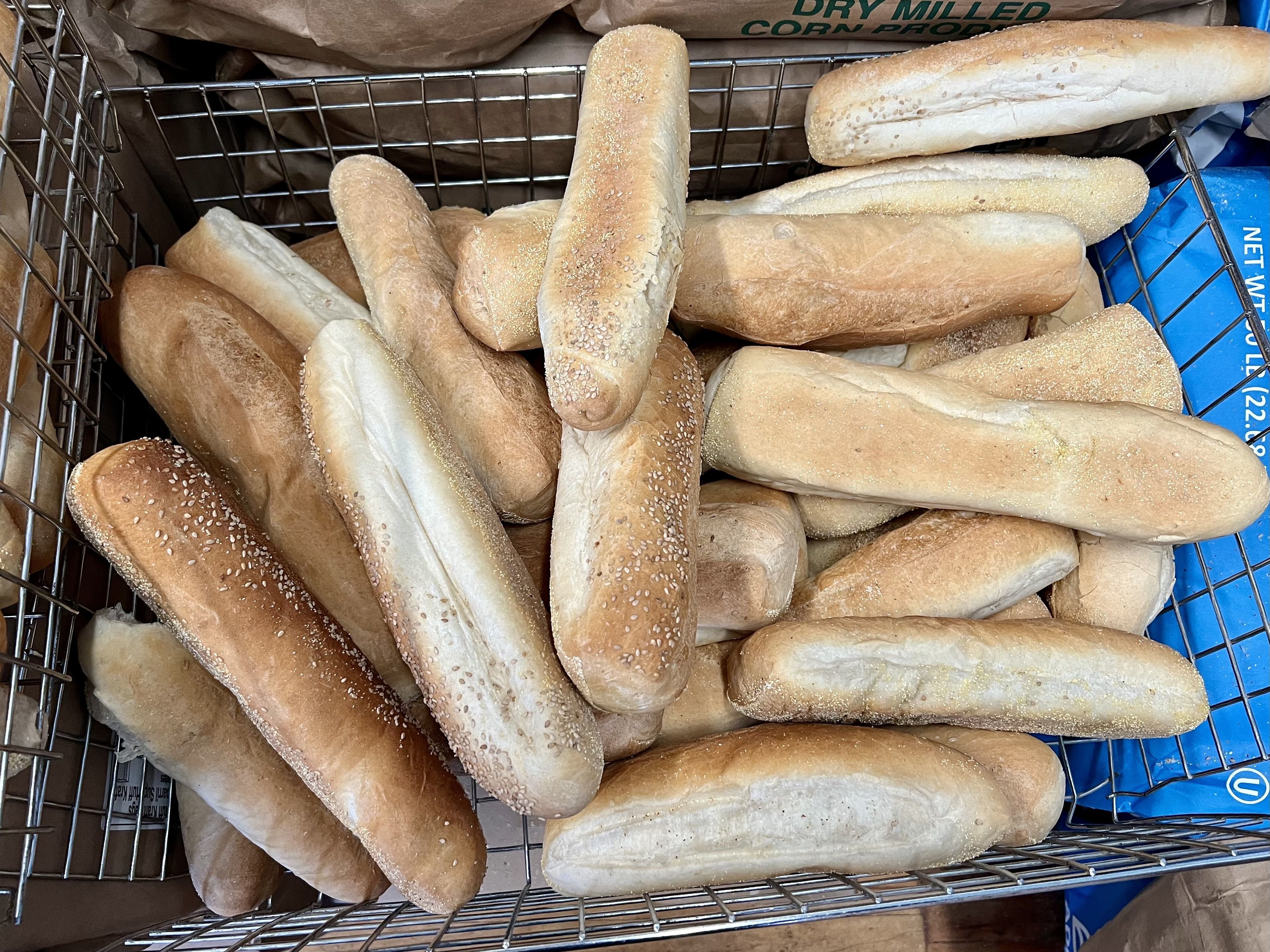
The seeded roll is a staple of Sarcone’s Bakery.Michael Klein / Staff
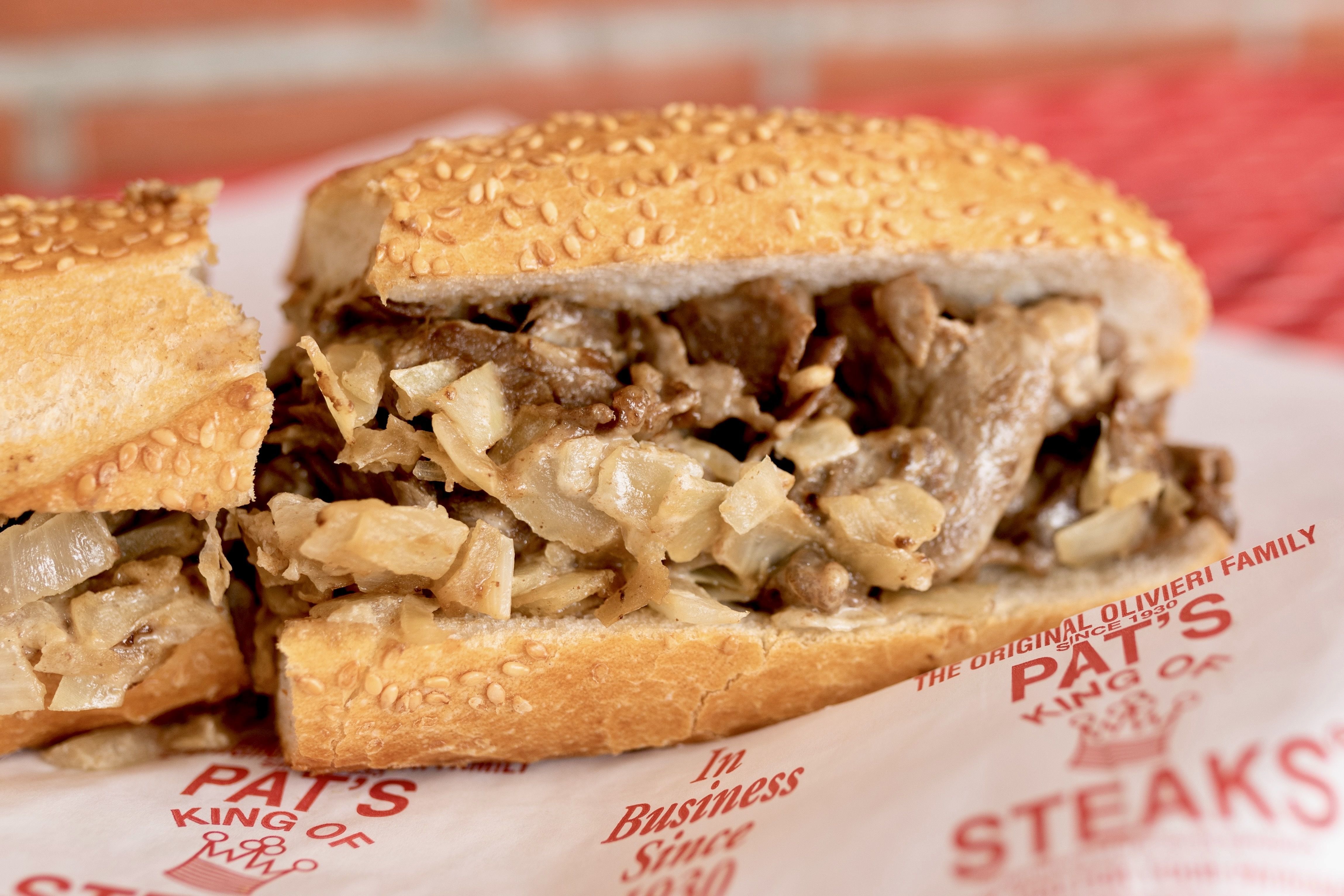
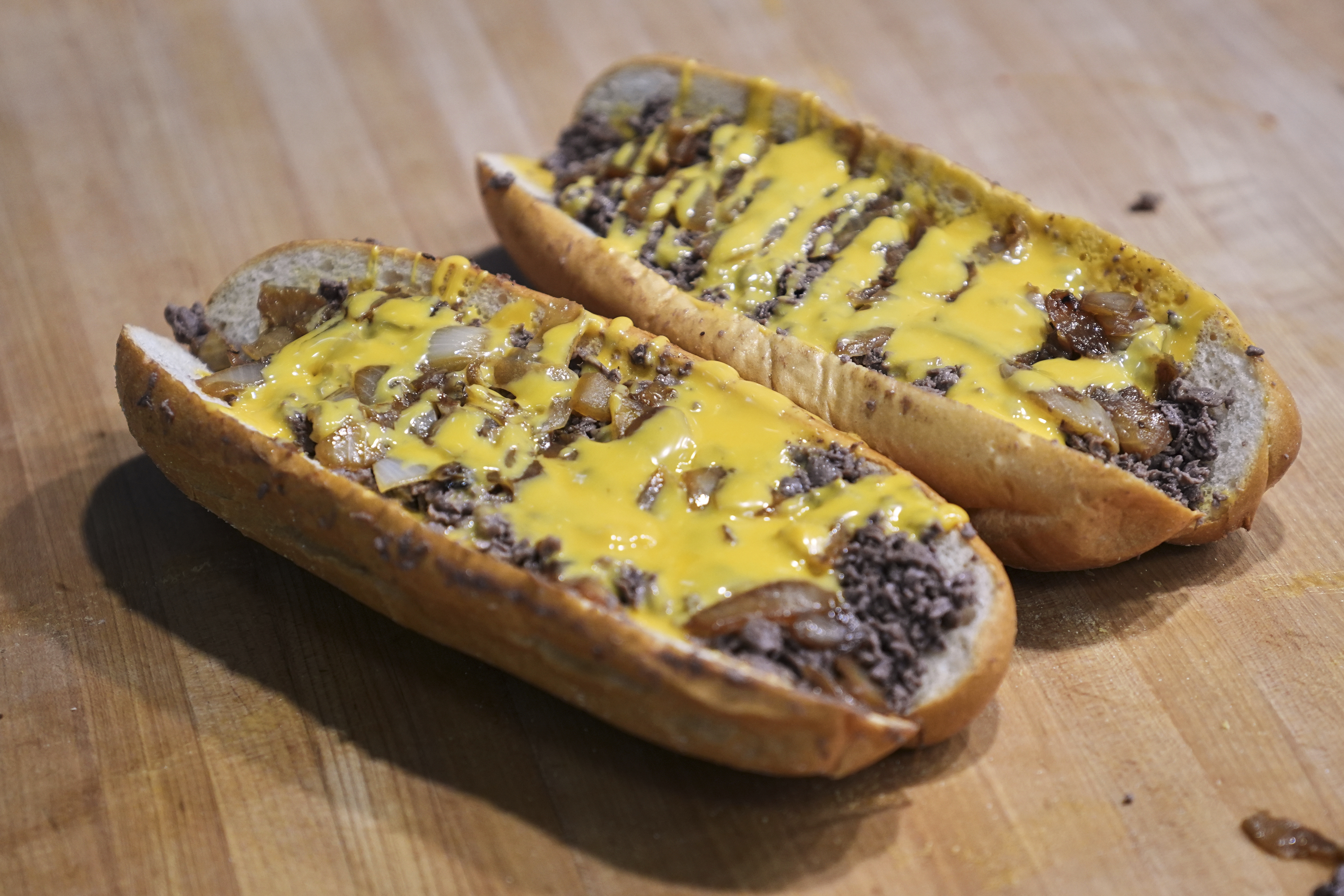
The seeded-roll question is part of the crowded field of never-settled cheesesteak disputes: Which cheese is correct? How finely should the beef be chopped? Should the onions be diced, sliced, or chopped?
Tourists vs. locals
Earlier this month, Jim’s began offering seeded rolls as an option for the first time since it opened in 1976. Pat’s, which made news in February when it began offering them after 96 years of plain rolls, abandoned the experiment after only a few weeks.
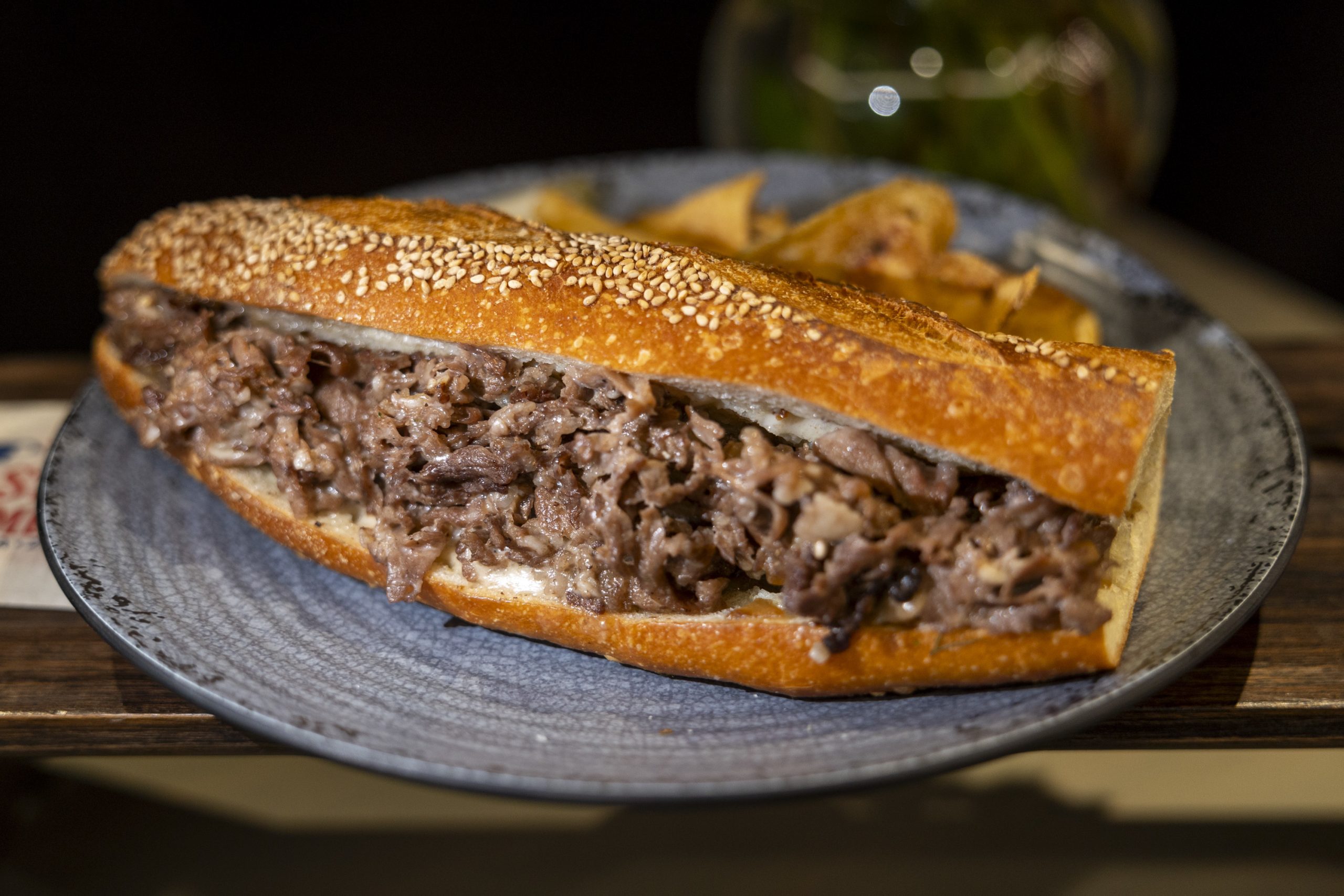
Seeded rolls tend to be crustier, and the toasted sesame adds a faintly nutty flavor. Plain rolls are generally softer and milder, putting more emphasis on the beef and cheese.
At Jim’s, owner Ken Silver said he added seeded rolls to his Liscio’s bread order to give customers a choice. “For the most part, it’s a tourist thing,” Silver said. “Our local base is almost all plain.”
Silver said Jim’s made the change “for the same reason we added chicken and Cooper Sharp [cheese]. People expect it from what they see on social media.” Overall so far, he said, seeded is outselling unseeded, 6 to 1.
At Pat’s, those expectations did not translate into sales.
A cheesesteak on an unseeded roll at Jim’s South Street.Matt Rourke
Owner Frank Olivieri began offering seeded rolls in February, shortly after the death of his father, Frank P. Olivieri, who had resisted changes. The younger Olivieri initially said the limited-time offering would likely be permanent.
It lasted a month.
“If I got in 400 [seeded rolls] a day, by the end of the day, I was throwing out 390 of them,” Olivieri said. “Not that I’m the barometer to judge everybody else by or what influencers think you should eat, [but] not everybody who comes to Pat’s Steaks wants the [seeded] rolls.”
How the old guard rolls
Pat’s recently switched its bread supplier from Aversa to Corropolese, and offers plain rolls only now.
Geno’s Steaks, across Passyunk Avenue, also has been firmly seedless since Joey Vento opened the shop in 1966. “It’s never crossed my mind,” said Geno Vento, who took over after his father’s passing in 2011. “We have our customer base, and I don’t feel that we need to change the roll [baked by Liscio]. I feel like it’s more of a trend right now. And they might put [cheesesteaks] on rye bread next. You never know.”
Geno’s concession to the new generation is Cooper Sharp, which the shop buys in sauce form and heats up — as an option.
At the old-school Dalessandro’s in Roxborough, owner Steve Kotridis said he began offering seeded rolls a few years ago “when it became a fad,” though he estimated that only 3% of customers order them. Dalessandro’s uses a softer Amoroso roll for cheesesteaks and a sturdier, seeded Aversa for hoagies, both with and without seeds.
For newer cheesesteak shops, however, the seeded roll has become all but de rigueur — a style that predates social media but has been amplified by it. Famously, Donkey’s Place in Camden has served its distinctive cheesesteaks on poppy-seeded round rolls for more than 80 years.
Louis Sarcone Jr. at the century-old Sarcone’s Bakery credits Bobby Toner of the now-closed JR’s Deli with helping establish seeded bread as a hoagie standard in the 1980s, after Toner began buying Sarcone’s seeded loaves.
Sarcone said Primo Hoagies, founded in South Philadelphia in 1992, spread the style widely as it expanded into a 120-unit chain. Sarcone supplied Primo for years before it started using parbaked rolls supplied by another bakery.
By 2024, Sarcone said, 90% of the rolls he baked were seeded, up from 75% a decade earlier.
John Bucci Jr. said John’s Roast Pork began serving cheesesteaks on seeded rolls in 1987, after its supplier, Vilotti, went out of business. Bucci’s father, who was terminally ill, left the choice of a new bakery to his son. “JR’s had started making their hoagies on seeded bread, so, I figured, why not try [it] on a cheesesteak?” Bucci said.
John’s initially bought its seeded rolls from Carangi and later switched to Sarcone’s.
Now a cheesesteak roll
The seeded roll’s rise as a defining feature of the modern Philadelphia cheesesteak came later, accelerated by Angelo’s Pizzeria.
Owner Danny DiGiampietro, whose wife is Louis Sarcone’s niece, used Sarcone’s seeded rolls when he opened the first Angelo’s in Haddonfield in 2013. After moving Angelo’s to Ninth and Fitzwater in 2019, DiGiampietro began baking his own bread.
As Angelo’s fame grew, its crusty, sesame-seeded rolls — an image widely broadcast on social media and emulated by other shops — helped define the newer-generation cheesesteak.
Del Rossi’s cheesesteak is served on a house-baked seeded roll.Tyger Williams / Staff Photographer
At Del Rossi’s, owner Nish Patel said cheesesteak orders were roughly split between plain and seeded rolls when he took over in 2020. Since he began baking his own rolls in 2024, virtually all have gone out on seeded bread.
“We barely get any requests for unseeded,” Patel said.
The contrast with Pat’s could hardly be sharper. There, Olivieri said, almost nobody wanted the seeded option.
Jim’s now finds itself somewhere in between — offering the roll that has come to signify a Philadelphia cheesesteak to many, while continuing to sell mostly plain rolls to its longtime clientele.
“People expect it from what they see on social media,” Silver said.
One of the year’s more closely watched Main Line restaurant projects now has a name, a chef, and a clearer identity.
Old Friend, a contemporary American grill built around live-fire cooking, is targeting a late-fall opening in downtown Wayne with former Fork executive chef Sam Henzy leading the kitchen.
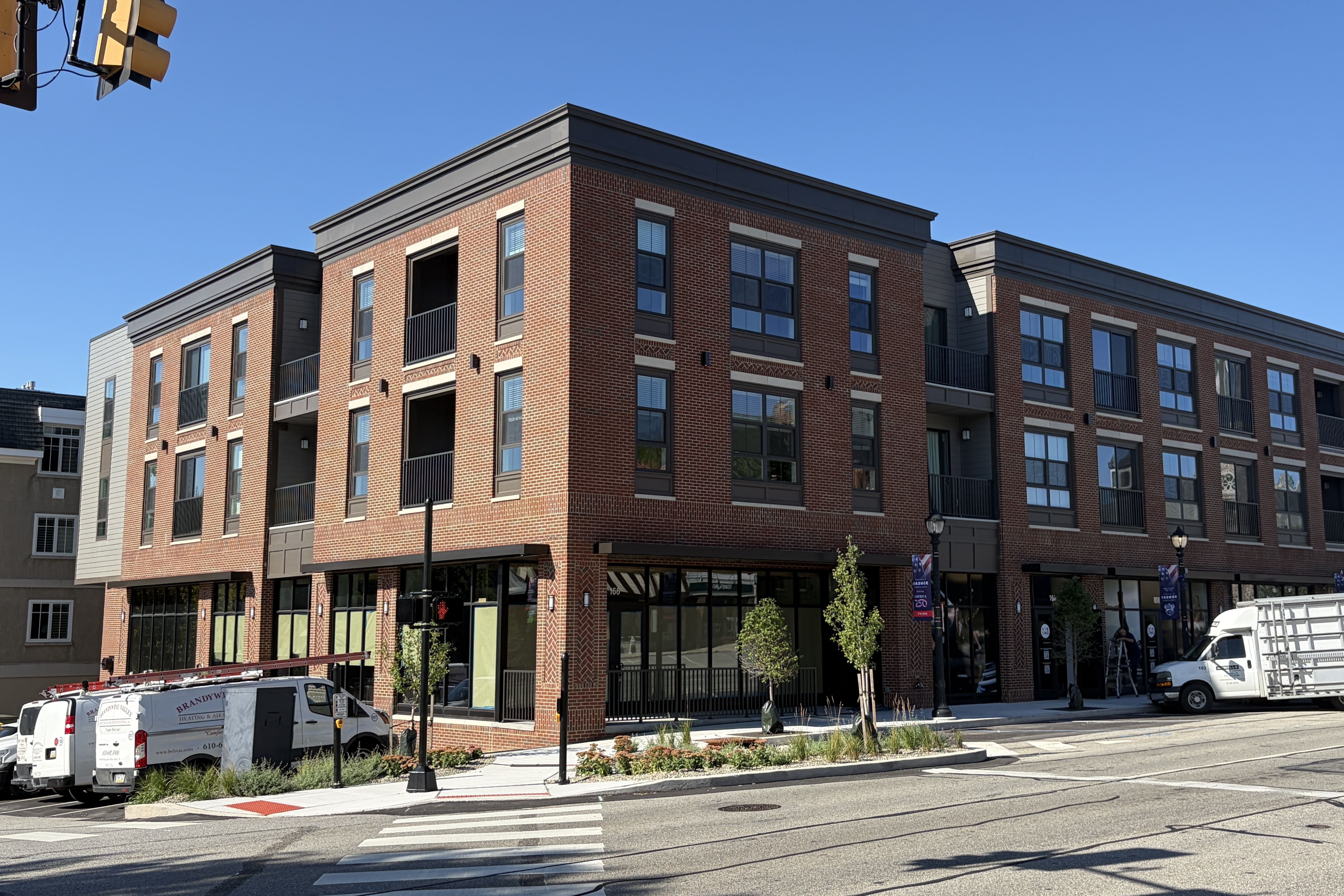
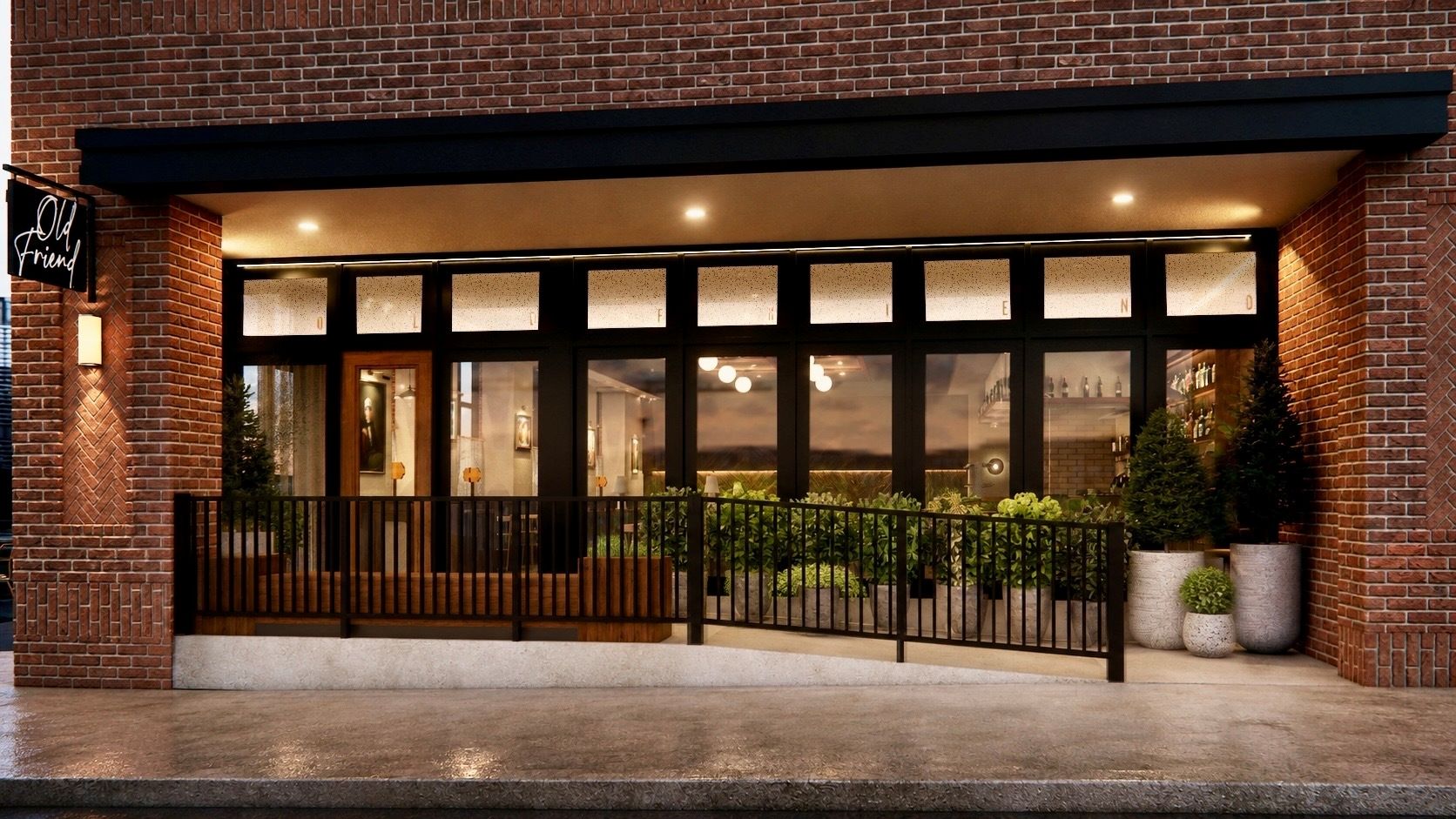
The 86-seat restaurant — 78 in the dining room and eight at the bar — will be at 166 E. Lancaster Ave., in a newly constructed ground-floor retail space at Lancaster and Louella Avenues that is part of the Apartments at Wayne Station. It is amid Wayne’s restaurant row, across from Maison Lotus and Rosalie, and just a few blocks from At the Table, White Dog Cafe, and the North Wayne Avenue dining strip.
Rendering of Old Friend, 166 E. Lancaster Ave., Wayne.Stokes Architecture & DesignArchitectural rendering of the facade of Old Friend, 166 E. Lancaster Ave., Wayne.Stokes Architecture & Design
Old Friend is the creation of Larry Kagan and Chas McFeely, who met in 1984 at Welsh Valley Middle School and later attended Harriton High. McFeely, an advertising copywriter who lives in Alameda, Calif., has family ties to the Main Line and returns frequently.
Kagan, who works in financial services and is a partner in the Campus sports complex in Downingtown, offered the first public outline of the project at a March Radnor Township Board of Commissioners hearing for its liquor-license transfer, describing an unnamed grill restaurant “that’s going to have the soul of a steakhouse.”
Kagan told The Inquirer this week that the name “old friend” describes his relationship with McFeely: “It’s someone between friend and family — someone you can pick up at any time, you can be yourself.” The name, he said, also reflects the sort of relationship they hope to develop with customers.
Kagan acknowledges that neither he nor McFeely is a restaurateur. They brought in Stove & Co. chef-owner Joe Monnich as a consultant to develop the concept and assemble the operating team. Monnich will remain in a leadership role while continuing at Stove & Co., whose holdings include Stove & Tap and Joey Chops.
Sam Henzy in 2025, when he joined Fork as executive chef.Courtesy of Fork
The connection to Henzy came through Monnich. The two met at Morimoto when Henzy was about 20 and, as he puts it, “green as grass.”
“Joe was the first chef who pushed me really hard, but he did that great older-brother thing of pushing somebody while being there to answer questions,” Henzy said. “He really took me under his wing.”
They remained friends as Henzy built his career. He did not know the name of the Wayne restaurant until he recently visited the space with Monnich and the owners.
“When they told me it was going to be called Old Friend, it just made me smile,” Henzy said, “because that’s how I think of Joe.”
Henzy, who grew up in Delaware, is best known locally for his two years as executive chef at Fork in Old City. His resumé also includes Middle Child Clubhouse, Vernick Food & Drink, Noma in Copenhagen, and Quince and Angler in San Francisco.
Henzy’s experience with live-fire cooking began during a six-month internship at Noma. He remembers touring the cutting-edge restaurant and encountering a Josper charcoal grill set up in a makeshift shack out back.
“In that moment, I was like, ‘Oh, I’m taking that station,’” Henzy said.
He eventually did, spending the final three months of his internship on the Josper. Later, he sought out Vernick Food & Drink in part for its wood-burning oven. His most intensive live-fire experience came at Angler, where he was executive sous chef and the cooking line had no conventional stoves.
“It’s just fires,” Henzy said. “It’s fires everywhere you look.”
Old Friend will bring him back to that style of cooking. Its open kitchen will center on a charcoal-fired Josper combination grill and oven, which Kagan calls the restaurant’s “engine.”
Designed by Stokes Architecture & Design, the restaurant will feature reclaimed mushroom wood, an oak bar, and an open, firebrick-lined hearth that will put the Josper in view of the dining room.
Kagan calls Old Friend a contemporary American grill. The developing à la carte menu will move from small and medium plates to larger-format proteins intended for sharing. The wine list will be compact and closely matched to the food.
Fish — including some dry-aged fish — as well as poultry and other proteins will be cooked on the Josper. Henzy gained experience dry-aging fish at Angler and wants to explore the technique further at Old Friend.
“I think dry-aging fish is both an underused and a misunderstood technique,” he said.
Old Friend also represents a move away from what became Henzy’s signature at Fork. Pasta may appear on the menu, but it will not be a focus. At Fork, he said, its popularity “took on a life of its own,” sometimes overshadowing the rest of the menu.
“I’m really big on never resting on my laurels and taking on new challenges,” Henzy said.
After years away froma live fire-fueled kitchen, Henzy said, “I’ve really been itching to get back into the flames.”
Expand your horizons beyond beef franks with mustard: We scoured the city for the best dogs, whether served on a traditional buns or topped with bonito flakes and carrot salad. Check out our map of Philly’s tastiest hot dogs.
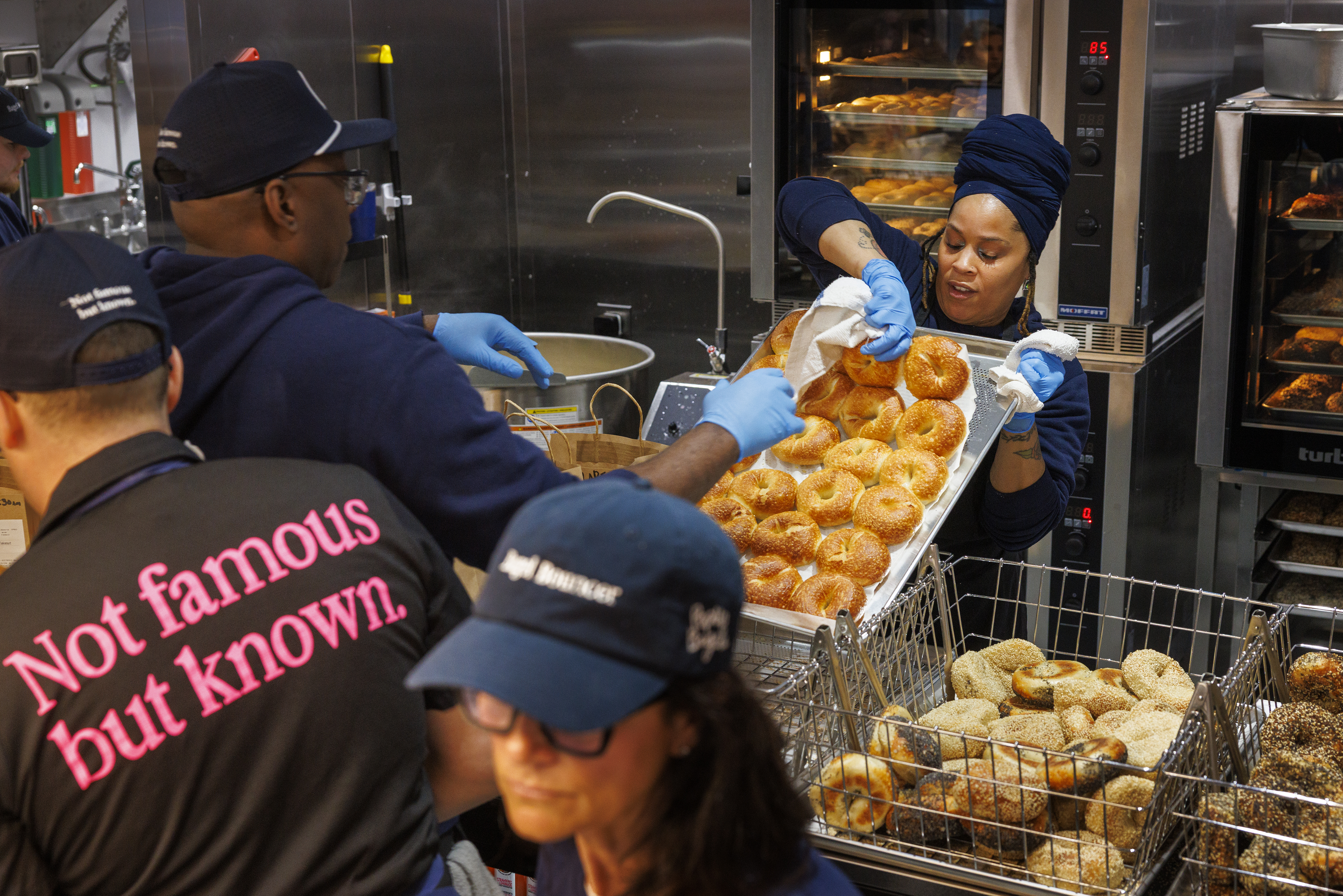
As a bevy of bagel shops — some locally launched, others private equity-backed — makes plan in the region, Mike talked to the experts about an obvious question: How many bagels can Philadelphia eat?
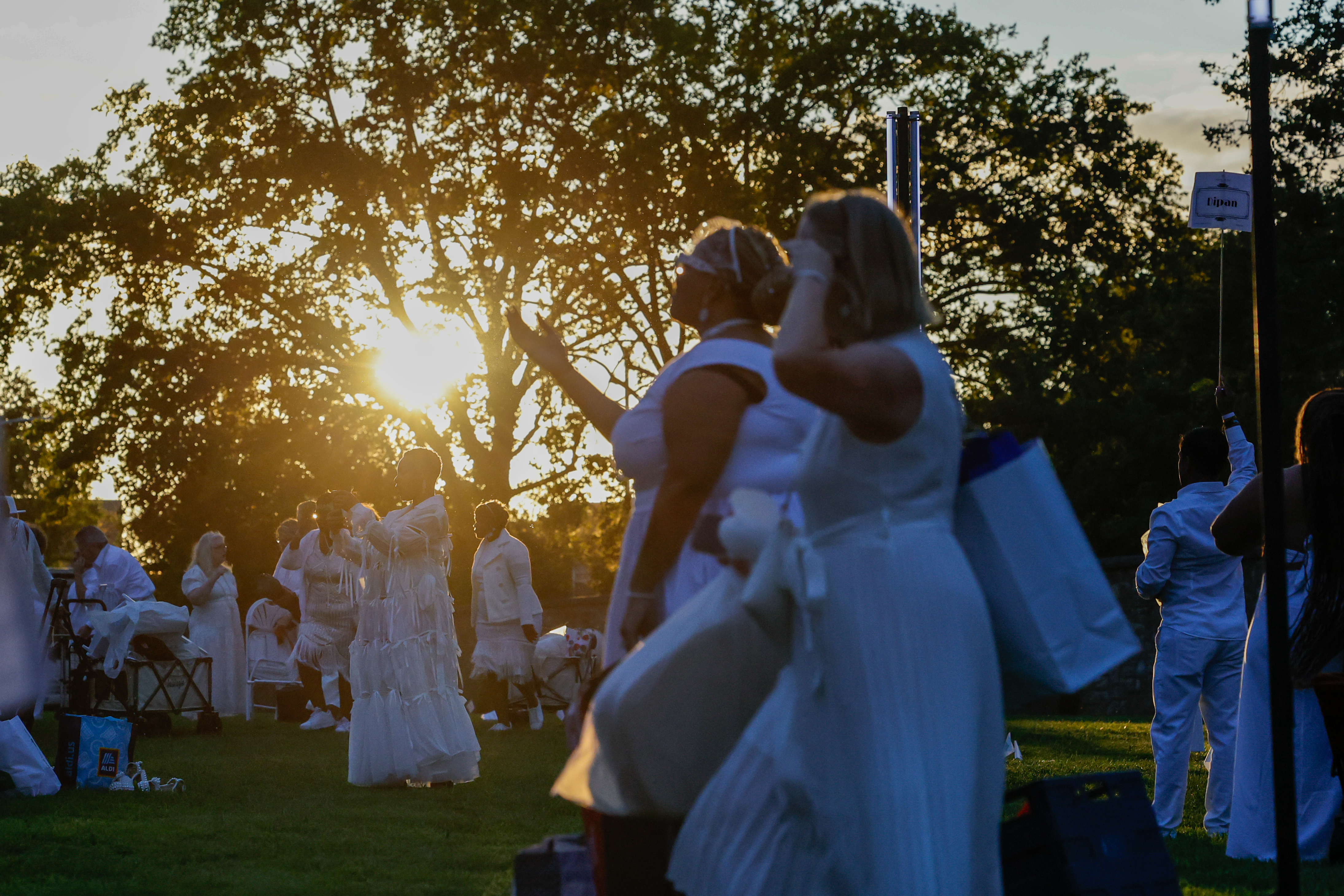
Thousands of would-be Dîner en Blanc participants did not get to haul their tables, chairs, and picnics to a secret location this year as it literally rained on their parade. They made the most of things, dining en blanc at homes, restaurants, and even a cigar bar.
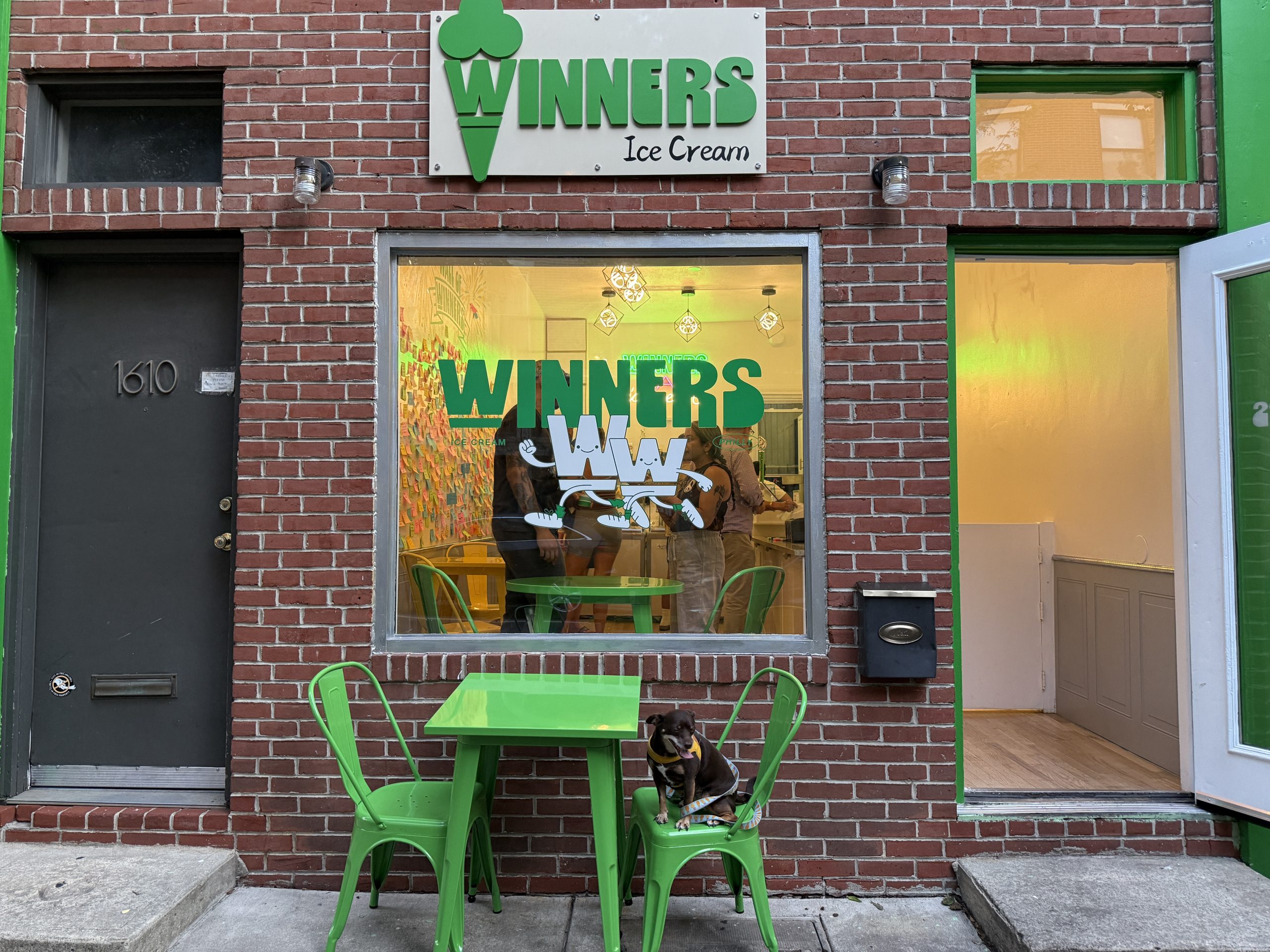
For years, Graduate Hospital residents had to dip into Rittenhouse or head south for treats, but a new wave of neighborhood businesses are selling everything from loaded baked potatoes and ice cream to matcha lattes and mousse cakes.
👩🍳 Graduate Hospital’s first restaurant week runs through Sunday, with participating restaurants offering three-course prix-fixe menus for $30 or $45 while continuing to serve regular menus. The lineup includes Banshee, L’Anima, Say She Ate, Chick’s, Château Rouge, La Sera Italiana, Old Towne & Sanna’s, Saigon Grace Cafe, and Sidecar Bar & Grille. Details/menus are here.
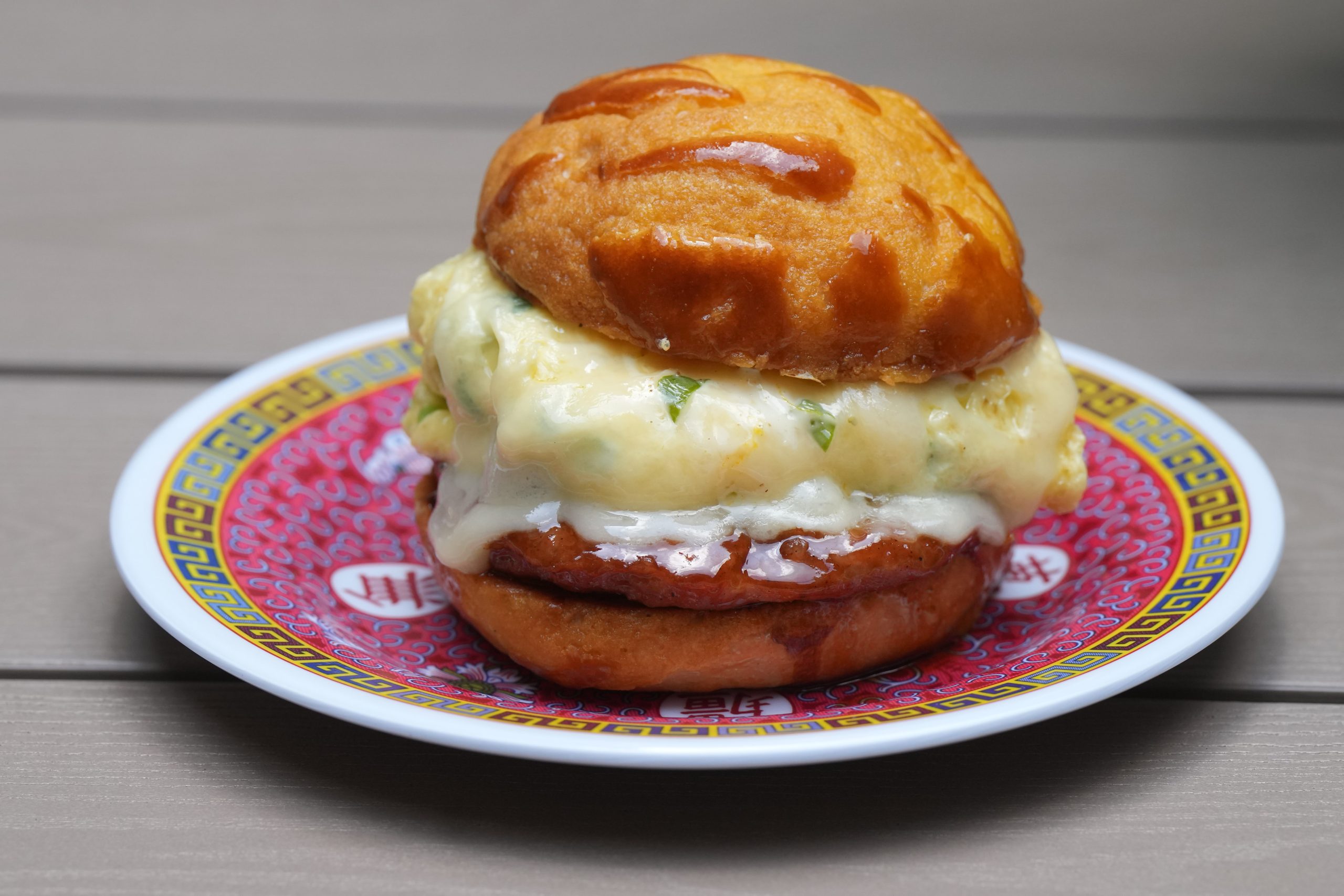
Beatrice Forman, a breakfast sandwich connoisseur, gets the warm and fuzzies from Chibanos’ Chino, which uses a Dodo Bakery bo lo bao as its bun. “It’s funny how a single sandwich can take me to so many places,” she wrote of its fluffy eggs, Swiss cheese, and char siu-style sausage patty.
Cantina La Martina is set to return to Kensington and debut in Brewerytown next month as it doubles down on its relationship with Human Robot Brewery, which is parting ways with sandwich maker N.A. Poe. The vendor shakeup, Beatrice reports, was precipitated in part by some untoward social media posts.
Scoops
Ms. Tootsie’s former building at 1312 South St., shuttered since the 2021 death of restaurateur KeVen Parker, will become the home of Nippy’s on South. Nikia Peterson, a nurse who frequented the swank soul-food destination, has bought the building and is installing what she said will be a polished spot offering an eclectic menu, with seafood towers, steaks, Asian and Caribbean dishes, and a full bar emphasizing happy hour and weekend brunch. “Nippy” was her late grandmother; a late-September opening is planned.
Mezzanine 1909 and the Slider Co. are moving toward spring openings at 2043 Frankford Ave., now that longstanding zoning issues have been settled. Will Johnson, partnered with Anesha Garrett, tells me that they envision a quick-service burger shop on the first floor, and — accessible through a “secret” door — a speakeasy-style, 40-seat cocktail bar upstairs serving nine small plates and nine cocktails with “intentional” service. It also will be a hub for their catering. Slider & Co. had two popups nearby last summer.
Briefly noted
Testa Rossa, the casual Italian-American concept from Fearless Restaurants, closed Sunday after 20 months in the Shoppes at Brinton Lake on Baltimore Pike in Glen Mills. “It never really resonated with the neighborhood,” said Fearless owner Marty Grims, adding that the company has offered Testa Rossa employees jobs at its other restaurants, including the White Dog Cafes and Rosalie. Fearless’ next project, a Southern Italian restaurant called Martini & Roz, is due to open in late fall at 523 W. Lancaster Ave. in Wayne.
❓Pop quiz
Which two restaurants made it onto Bon Appétit’s best new restaurants list?
Since the beginning of 2025, nearly a dozen bagel shops have opened or leased space in Philadelphia and its suburbs, bringing new locations from local operators as well as fast-growing out-of-town brands that see the region as fertile ground for expansion.
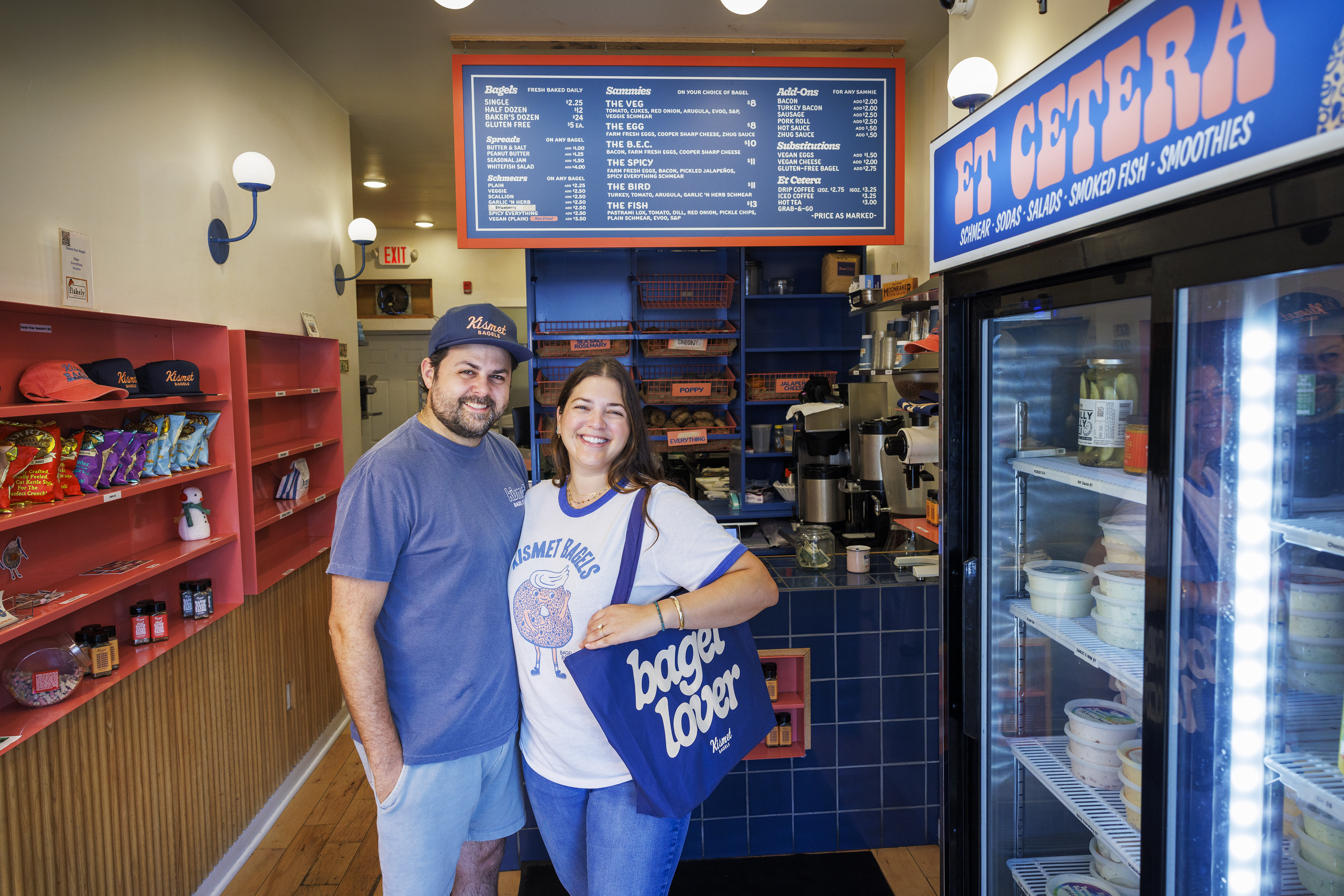
Jacob and Alexandra Cohen, owners of Kismet Bagels, at their location on Girard Avenue in Fishtown in 2024.Alejandro A. Alvarez / Staff Photographer
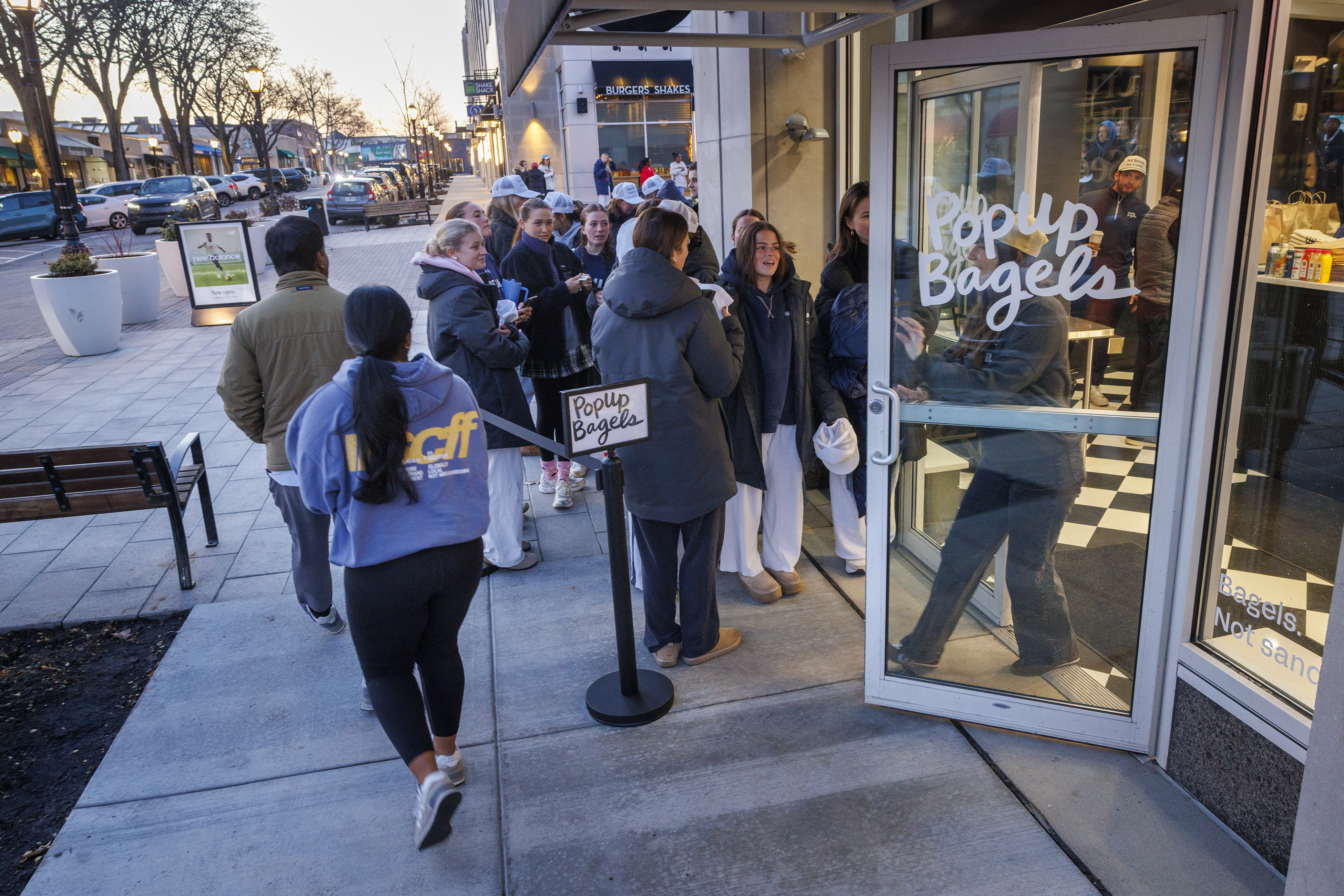
Kismet Bagels has opened its fourth and fifth shops, in Manayunk and Collingswood. Bart’s Bagels, which has shops in West Philadelphia and Bella Vista, recently expanded to the founders’ hometown of Bala Cynwyd. PopUp Bagels, the Connecticut-born chain that built a following on social media, made its local debut in Ardmore this spring and has signed a lease for a Rittenhouse shop as part of a larger regional expansion.
And Washington, D.C.-based Call Your Mother is preparing three soon-to-open Philadelphia locations — in Fishtown (due first), Rittenhouse, and Washington Square West — committing to all three before serving its first Philadelphia bagel.
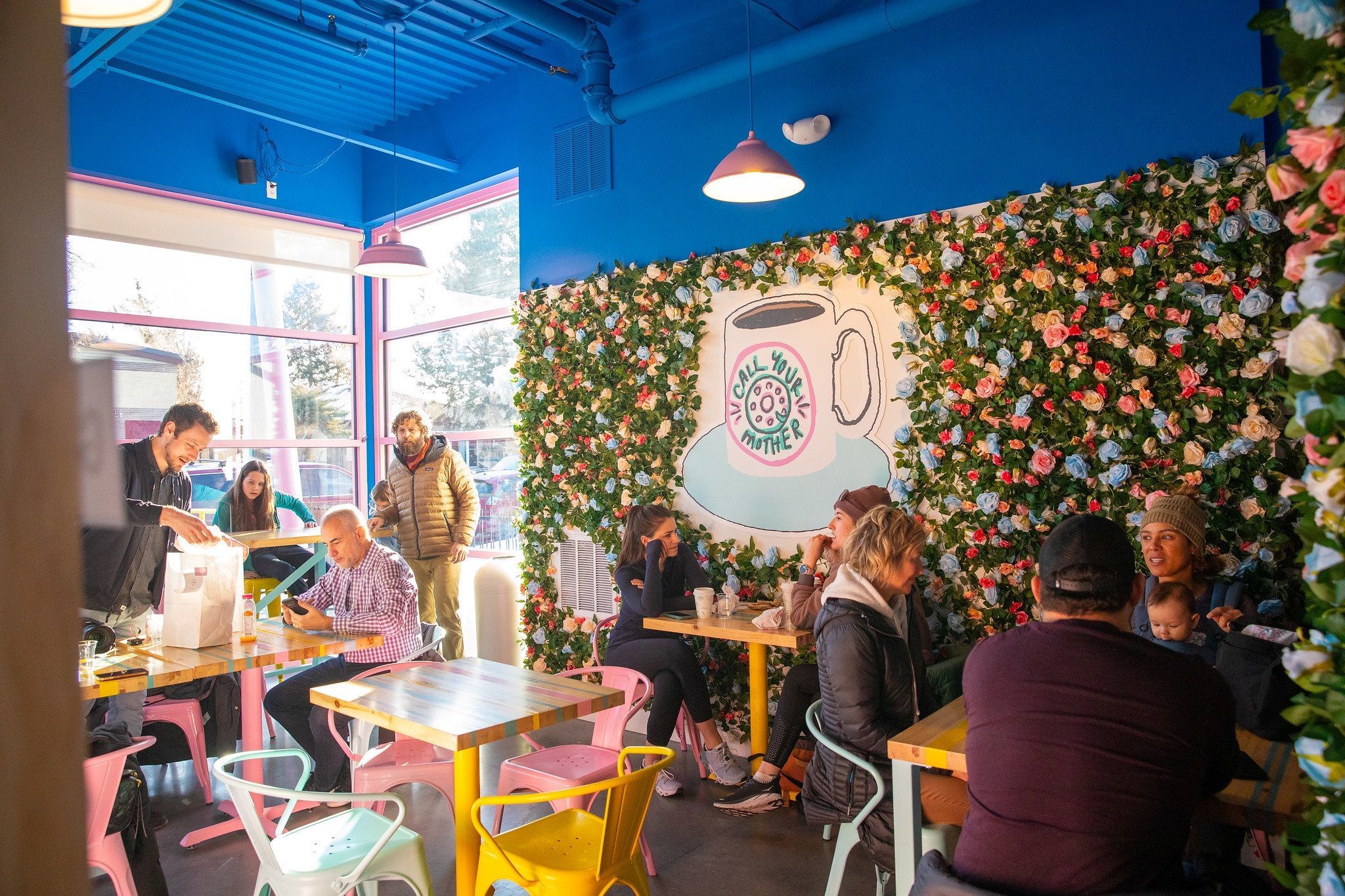
Call Your Mother bagel sandwich shops have a subtropical feel.Courtesy of Call Your Mother
That tally doesn’t include all of the stores that could follow. Florida-based Jeff’s Bagel Run has announced a 10-unit development agreement for Eastern and South Central Pennsylvania, while PopUp franchisee Brian Harrington is scouting additional territory in the Philadelphia suburbs.
All this raises an obvious question: How many bagels can Philadelphia eat?
Plenty, apparently — at least for now.
Jacob Cohen, who started Kismet six years ago with his wife, Alexandra, said the company has seen sales increase even as new bagel shops have entered the market. “I don’t think they’re just dividing the same customer base, because we’ve already had new shops open in Philadelphia and we haven’t seen a decrease in sales,” Cohen said.
But Cohen, who rapidly expanded Kismet before putting thebrakes on growth earlier this year, also sees a limit. “More is not always better,” he said. “I obviously don’t have a crystal ball, but I have a feeling that some of these private-equity bagel companies coming are going to learn that the hard way.”
Bagels are having a moment
Philadelphia is part of a much broader bagel boom. The U.S. bagel market generated an estimated $3.17 billion in revenue in 2025 and is projected to reach $4.51 billion by 2033, according to Grand View Research, a market-research firm. That represents annual growth of about 4.6%. Worldwide, the firm values the bagel market at $5.8 billion in 2025 and projects it will reach $8.6 billion by 2033.
Customers lining up for the grand opening of PopUp Bagels in Ardmore in March.Alejandro A. Alvarez / Staff Photographer
Mike Kostyo, vice president of Menu Matters, a Vermont-based food-industry consulting firm, sees the current surge as the convergence of several trends rather than the sudden discovery of a new food. Artisan baked goods have been rising in popularity for years, he said, after the pandemic produced a generation of home bakers and pop-ups experimenting with sourdough and bagels. At the same time, café culture and the rise of the “little treat” have made consumers more willing to spend on premium versions of everyday foods.
“At its core, the bagel has always been a blank canvas for lots of flavors and toppings,” Kostyo said. “But now, instead of sesame seeds, you see them topped with Flamin’ Hot Cheetos.”
The traditional formula — bagels by the dozen, cream cheese, lox, and coffee — also has evolved into something closer to a breakfast-and-lunch fast-casual restaurant.
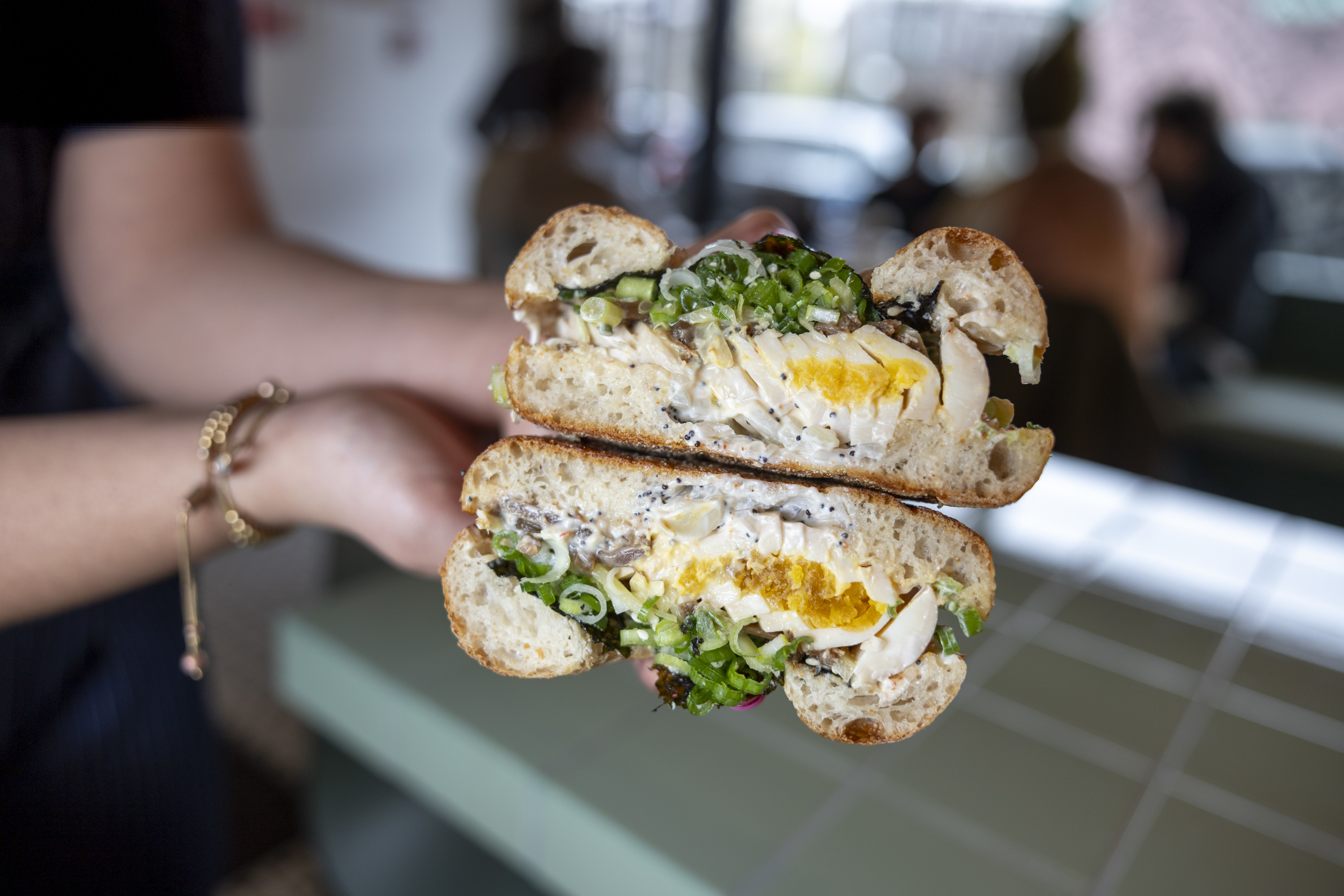
The Ramen Thing bagel sandwich from Cleo Bagels in West Philadelphia.Tyger Williams / Staff Photographer
Bagels become vehicles for egg sandwiches, smoked salmon, avocado, specialty cream cheeses, and elaborate combinations that can command substantially more than a plain bagel and schmear. And operators increasingly are looking beyond breakfast.
“The sandwich factor is so important,” Kostyo said. “You need something that you can sell across multiple occasions, not just to commuters in the morning.”
That versatility helps explain why investors have noticed.
“Investors are always looking for that next category that could blow up,” Kostyo said. “They want Call Your Mother or PopUp Bagels to be the next 7 Brew or Dutch Bros.”
From pandemic project to expansion vehicle
Some of the brands now expanding grew directly out of the pandemic.
The Cohens started Kismet as a pandemic project before turning it into a brick-and-mortar business and eventually growing to five locations — down from seven after the company shuttered a stand at Reading Terminal Market in 2025 and closed a shop in Ventnor earlier this year.
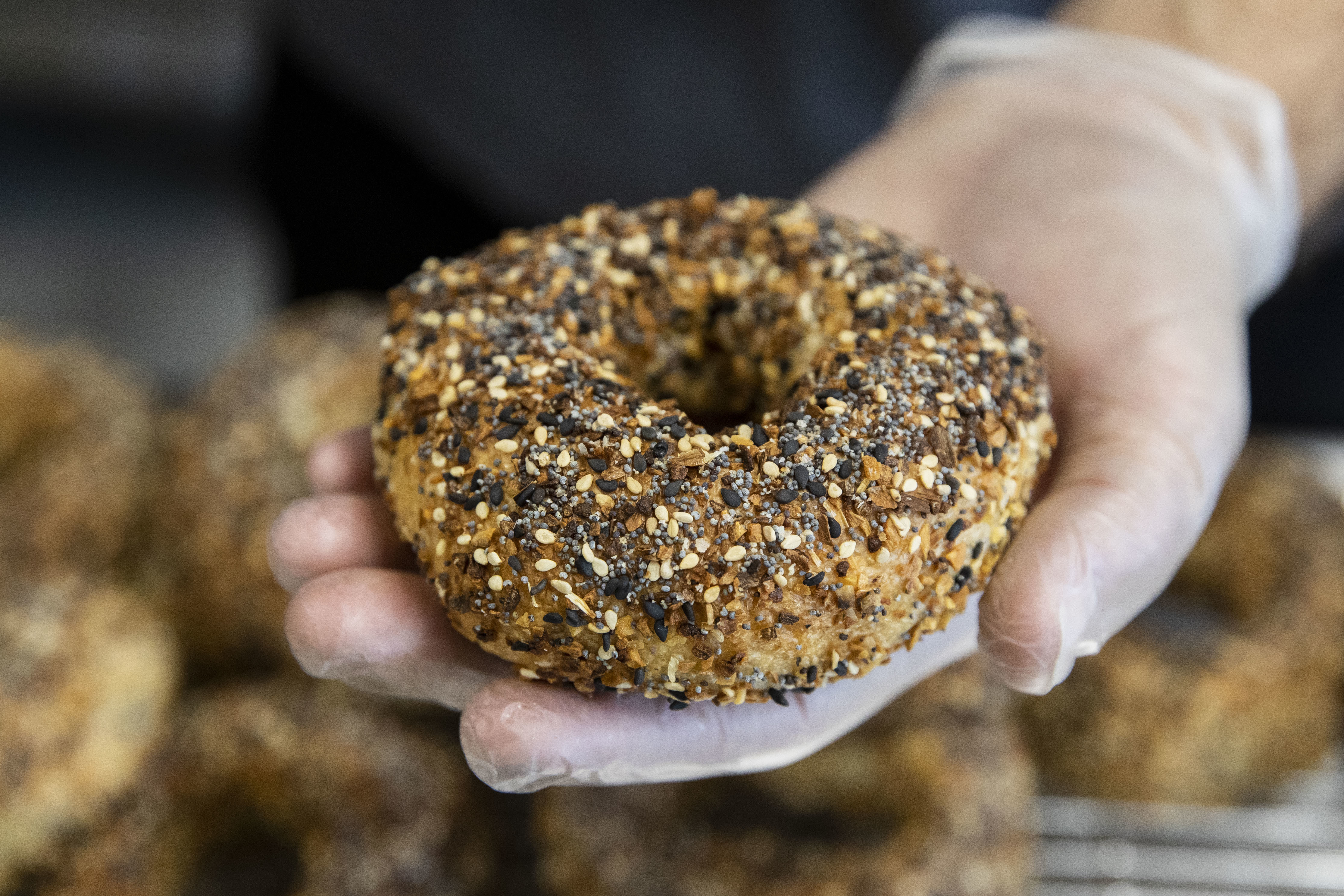
Jacob Cohen of Kismet Bagels holds an everything bagel.MONICA HERNDON / Staff Photographer
PopUp followed a similar trajectory. Founder Adam Goldberg began baking bagels at home during the pandemic and developed the idea into a business built around an unusually stripped-down concept: hot bagels and schmears, rather than the sprawling sandwich menus associated with many modern bagel shops.
Customers are encouraged to “grip, rip, and dip,” tearing apart the bagels and dipping them into containers of cream cheese.
The company’s first Philadelphia-area shop opened in the spring in Suburban Square in Ardmore. Harrington, the franchisee developing PopUp in this region, said sales have remained strong even through the summer.
“We anticipated a little bit of pullback with a lot of our core [teen] clientele getting jobs in Avalon and down the Shore, and with vacations and things like that,” Harrington said. “But it’s been very, very steady.”
In more than 25 years in the restaurant business, Harrington said, he has typically seen sales soften in late June, July, and early August. “We’ve not seen that,” he said.
PopUp has signed for the former Starbucks at 1709 Chestnut St. in Rittenhouse, as reported by the Philadelphia Business Journal. Harrington said he has a deal for a location in Lawrence Township, N.J., near Princeton, that is awaiting its permits. Another South Jersey deal is close, he said, and he sees additional potential in Montgomery County.
Despite the influx of bagel shops, Harrington said he believes PopUp occupies a somewhat different niche.
“We’re not making sandwiches,” he said. “So far, people have found us and enjoyed the way that we do it, and it doesn’t preclude them from going and getting a bacon, egg, and cheese somewhere else.”
Three stores before the first bagel
Call Your Mother is making an even larger initial bet on Philadelphia. Founded in Washington in 2018 by Andrew Dana and his wife, chef Daniela Moreira, the self-described “Jew-ish” deli has expanded beyond the Washington area as New York investment firm Invus acquired a majority stake in the company in January 2025.
Call Your Mother has signed three Philadelphia leases: 1500 Frankford Ave. in Fishtown, the former Metropolitan Bakery at 262 S. 19th St. near Rittenhouse Square, and 12th and Sansom Streets in Washington Square West. Dana said the decision to enter Philadelphia was considerably less scientific than the three-store commitment might suggest.
“My mom grew up there, my grandparents lived there, and I’ve been there so much visiting my friends,” Dana said. “I’ve been in Fishtown on a Sunday when it’s popping, and I’ve been in Rittenhouse Square when it’s super-crowded on the weekend and the market’s going. A lot of it is just gut and feel.”
Dana does not believe Philadelphia lacks good bagels. On a recent trip, he tried Bart’s and came away impressed.
“I think a lot of people are doing a great product in Philadelphia,” he said, “but there’s always room for a different bagel shop. At least I hope so.”
Dana also rejects the idea that taking investment inevitably leads to runaway growth or declining quality.
He described Invus as “patient capital” and said the investment agreement carries no requirement that Call Your Mother open a prescribed number of stores.
“We’re going to do what we can do while still keeping the quality of the food and the service top-notch,” Dana said. “And if that ever slips, we have the ability to hit the pause button.”
Local operators dig in
For some Philadelphia bagel operators, however, the arrival of heavily financed brands is cause for skepticism.
Cohen, at Kismet, is particularly wary.
“I think it’s the rare exception when private equity marries itself to a food brand and they continue to do good things,” he said. “I’d like to keep private equity out of bagels.”
He stressed that Kismet remains owned solely by him and Alexandra, financed through bank loans rather than outside investors.
David Fine, owner of Schmear Bagel Parlor, is also watching the expansion. Fine entered the business in 2013 with his Schmear It food truck and has since acquired the shops owned by Philly Bagels, giving the company eight locations in Philadelphia.
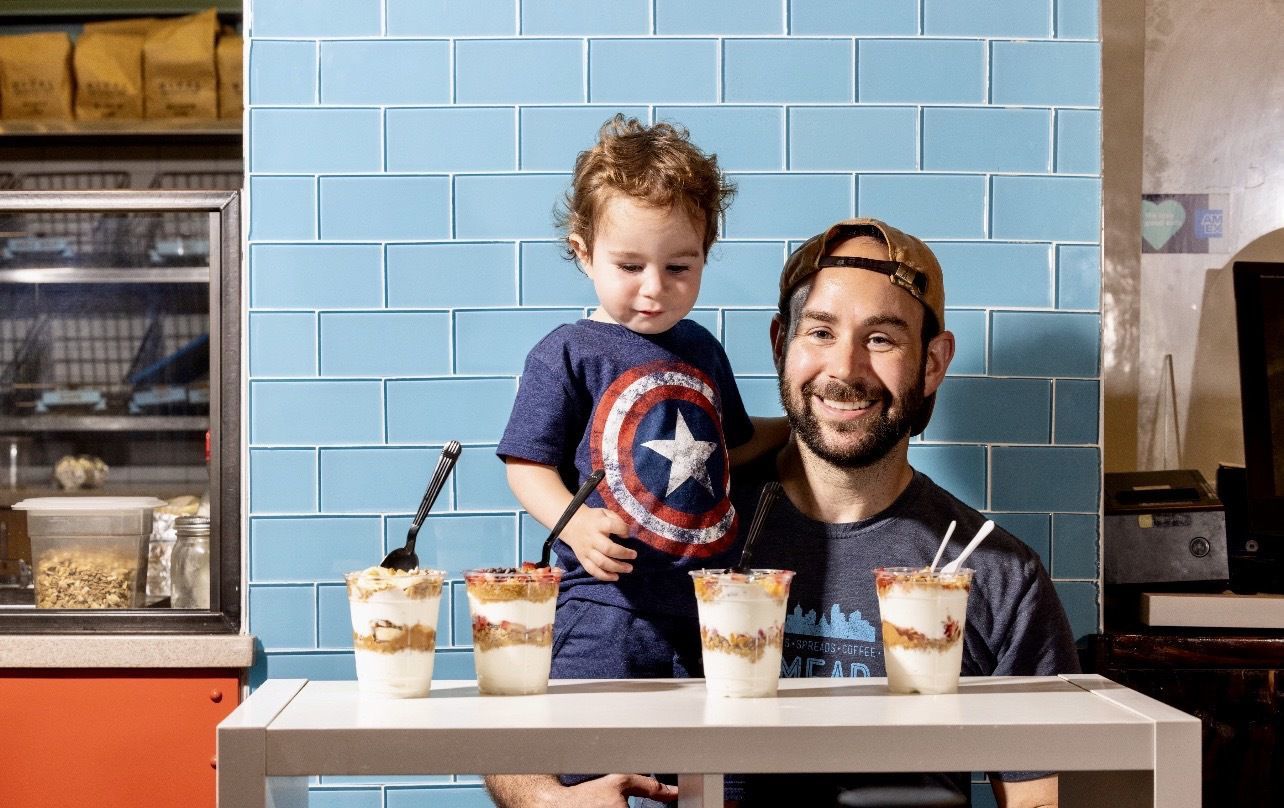
David Fine of Schmear with his son.Courtesy of David Fine
Fine said those stores have not appeared to steal business from one another.
He thinks part of the bagel’s appeal is almost mundane: It is familiar, relatively accessible, portable, and infinitely customizable.
“They’re comfort food at their very core, and they can really appeal to such a wide variety of customers,” he said.
He is less certain about the economics behind the rapid expansion of some competitors.
“The buildouts are expensive,” Fine said. “You have to be quite profitable for quite some time just to recoup that investment.”
Schmear is expanding, too, Fine said, renovating its original brick-and-mortar location at 36th and Market Streets. But he believes that being local gives the company an advantage as more national and regional shops arrive.
“There’s a keen allegiance to local brands,” Fine said.
Built for the feed
Bagels also have another quality particularly suited to the moment: They look good on a phone.
Kostyo points to the now-familiar image of a bagel sandwich sliced in half and held toward the camera, its fillings and schmear exposed.
“The visual factor is also so important in today’s social media age,” he said. “That picture … is the type of indulgent food that people go out of their way for today.”
The lines themselves become part of the marketing. A crowd outside a shop signals that the food is worth leaving home for, he said, while arguments over the proper density, crust, schmear, toppings, and even whether a respectable bagel can be made outside New York keep the category in the conversation.
“In the end, it’s all advertising and marketing,” Kostyo said.
But social media enthusiasm is fickle — witness the rise and fall of cookies and cupcakes — and Kostyo sees the flood of investment and expansion as carrying the seeds of an eventual shakeout.
“This is a pretty classic bubble where some of these brands that are doing a great job and really resonate with people will survive, but a lot will overexpand and shut down in the next few years,” he said.
Cohen, meanwhile, has decided not to test Kismet’s limits.
After years of opening shops, Kismet entered 2026 determined to improve what it already has rather than add more locations. The company is focusing on consistency, profitability, new products, employees, and customers, he said.
He is happy to see Philadelphia’s bagel culture growing and says he does not regard every new shop as a competitor. Years ago, Cohen recalled, Inquirer restaurant critic Craig LaBan told him that Philadelphia did not have enough bagels per capita.
“We might be starting to get there now,” Cohen said.