Author: Lauren Jones

  • Fans gather for Flyers’ Community Caravan in Ocean City with renewed optimism about the team’s future

    Fans gather for Flyers’ Community Caravan in Ocean City with renewed optimism about the team’s future

    On May 27, 1975, Barbara Flank’s father woke his then 4-year-old daughter, carried her downstairs, and sat her in front of the television.

    “You might only see this once in your lifetime,” Flank remembered her father telling her about what was happening on the screen. The Flyers were on the verge of defeating the Buffalo Sabres, 2-0, in Game 6 to claim their second consecutive Stanley Cup.

    Ever since that night, Flank, who grew up in Atlantic City and now lives in Somers Point, has been a diehard Flyers fan.

    On Thursday, Flank joined hundreds of fellow fans at the Ocean City Sport and Civic Center for the Flyers’ 10th annual Community Caravan presented by Xfinity. It was an offseason celebration that showcased the excitement surrounding the team coming off a playoff appearance and a busy summer building momentum for the future.

    Fans showed up dressed head to toe in the Flyers’ signature orange and black, lining up for autographs from former players, exclusive giveaways, and a chance to meet Gritty.

    The event featured Flyers-themed merchandise, including Gritty beach towels, reusable tote bags, visors, slim koozies, and Gritty memo pads. Fans posed for pictures with Gritty and had the chance to shop official Flyers apparel from the merch pop-up — Porter Martone and Trevor Zegras jerseys were the most popular items. There were also obstacle courses, ping-pong tables, and hockey sticks for people to play with.

    The main purpose of the event is to continue to keep fans engaged during the offseason, President of Flyers Charities and Alternate Governor of the Flyers Blair Listino said.

    “This is really to bring our fans together with our alumni and partners and get them involved in the community,” Listino said. “As we know, a lot of people spend their summers down at the Shore, so it is intentional to have these events down here. We want to make it convenient for the fans so we can get a lot of engagement.”

    The caravan made stops in Voorhees, Cape May, Mays Landing, and Ocean City and will end in Exton on Aug. 19.
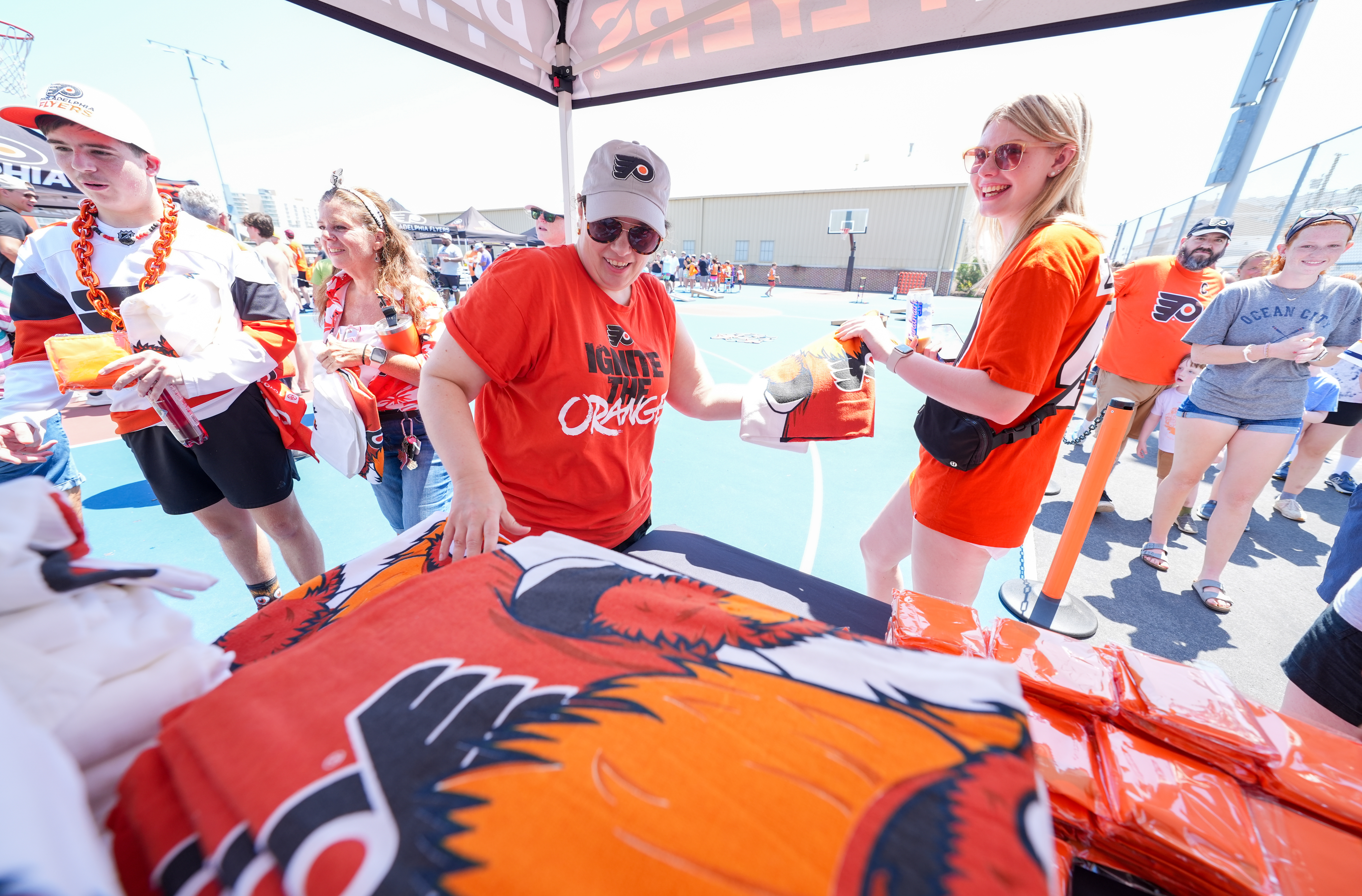
    Lauren McMally hands out a beach towel to a fan during the Flyers’ Community Caravan on Thursday.Tim Hawk / For The Inquirer

    One of the tents at the caravan featured an interactive game from the student wellness app the Flyers developed with Athlon last year. Designed to provide students in Philadelphia and South Jersey school districts with “brain breaks” both in and out of the classroom, the app places users in a virtual Flyers environment where they skate across the ice, jump over obstacles, and duck to avoid Gritty, Listino said. Fans were able to try the game during the event for a chance to win Flyers prizes.

    Engaging with the former players was the highlight of the event for Wallingford native Jason Kilpatrick, who has been a Flyers fan since he was born in 1979. He took off work on Thursday to attend the event with his 7 and 10 year old sons.

    “I went right up to Brian Propp and I was like, ‘You’re one of my childhood heroes. It’s so nice to meet you,’” Kilpatrick said. “It was nice to connect with him. I remember when I was my son’s age watching him play in the Stanley Cup finals, so that was pretty cool.”

    Propp was joined by fellow Flyers alumni Doug Crossman, Riley Cote, Bob Kelly, and Todd Fedoruk. Each spent time signing autographs and interacting with fans.

    Long lines wrapped around the venue throughout the afternoon as fans waited to get in, a sight Fedoruk said reflects the growing enthusiasm surrounding the franchise.

    “It is a lot better when they’re winning,” Fedoruk said. “The caravan is something that grows year after year, and it’s good to get involved in the community. Five years ago, I was doing this event and 150 people showed up. You got the diehard Flyers fans to show up, but when they start winning even more people come out.”
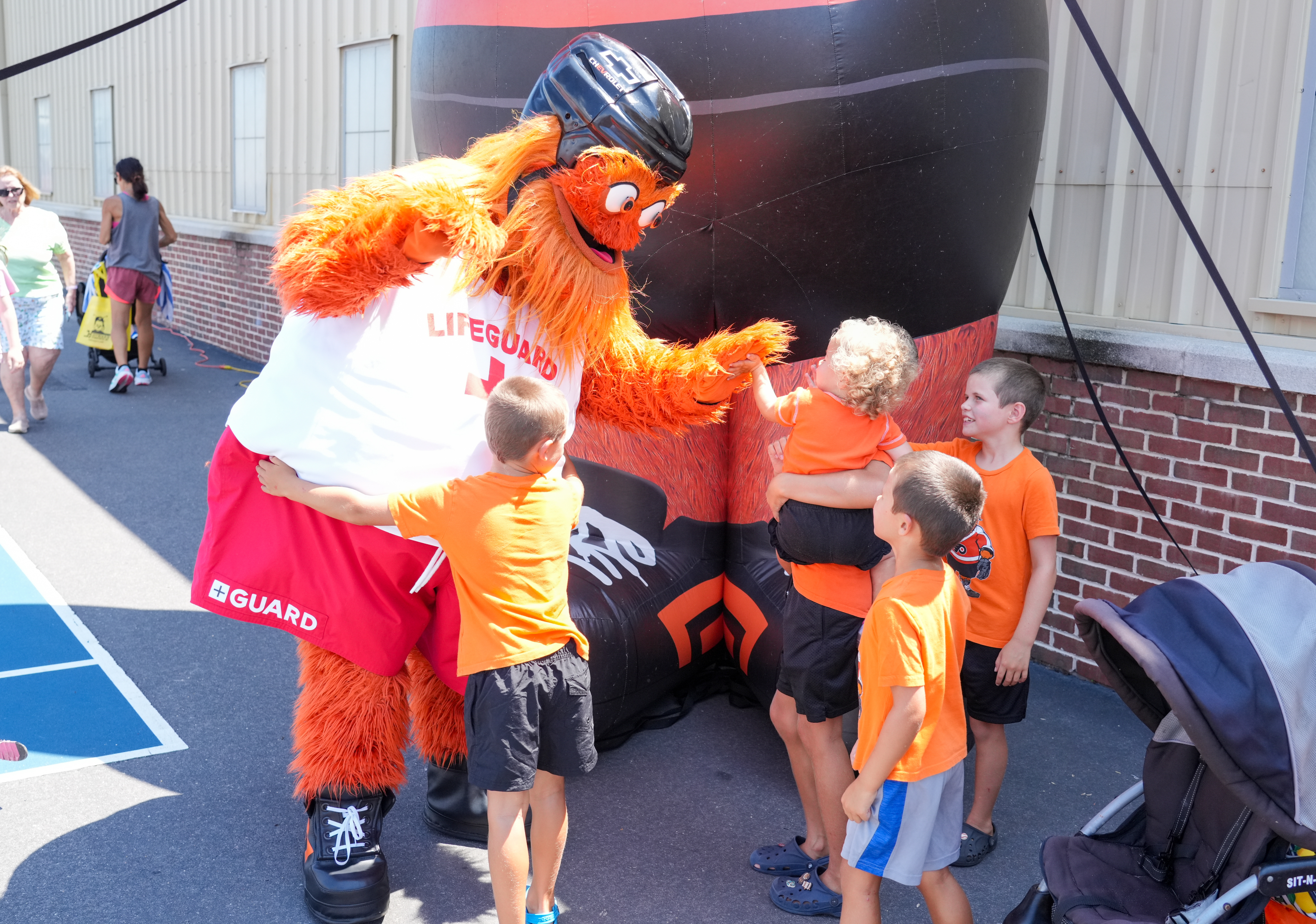
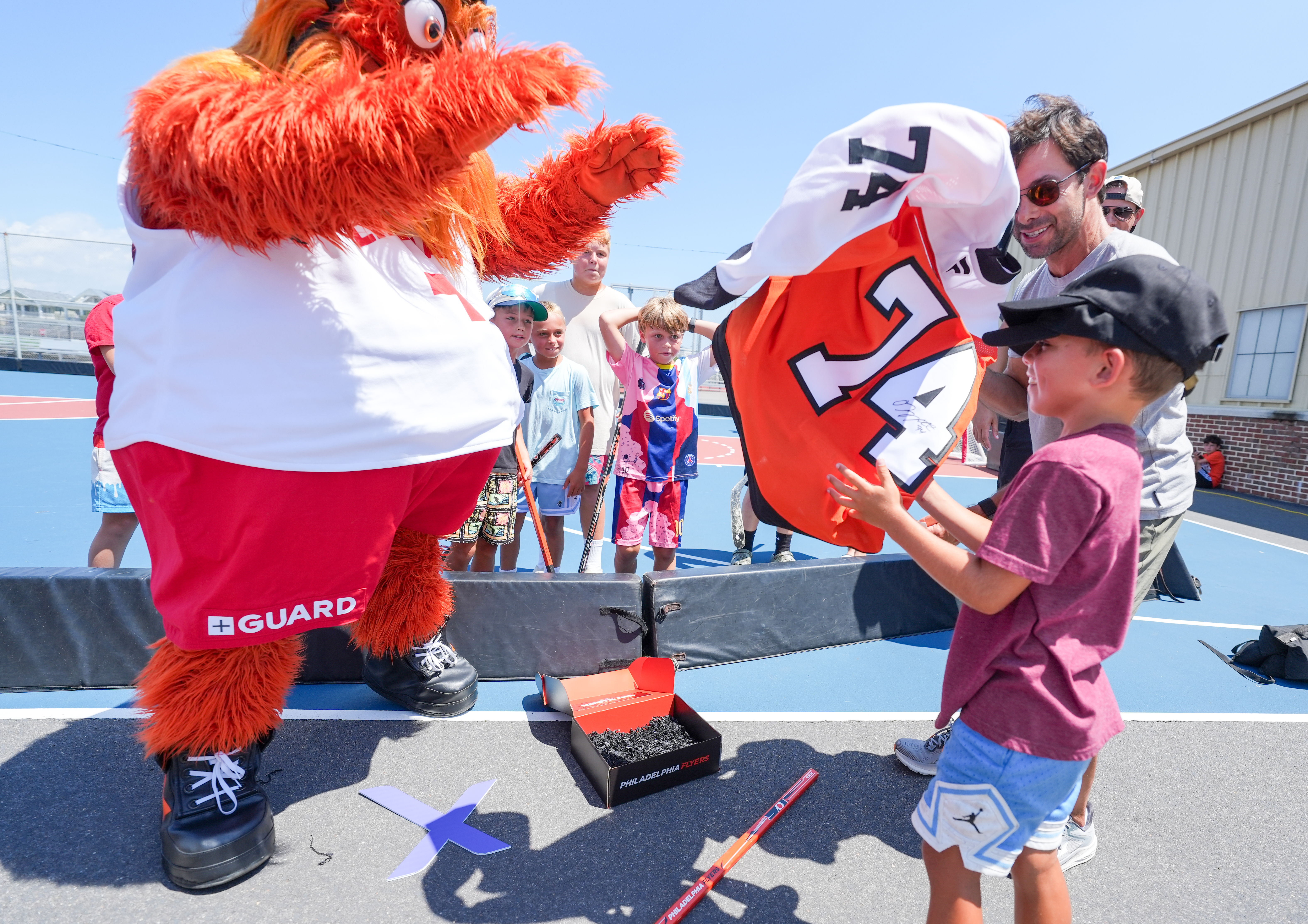
    Gritty greets fans during the Flyers’ Community Caravan on Thursday.Tim Hawk / For The Inquirer

    The buzz around the offseason moves made by management were at the top of conversation for many people attending the event. Fifteen-year-old Tommy Klem, who was in Ocean City for vacation with his family, said the Leo Carlsson pursuit and other deals during the offseason sent a message to the rest of the league.

    “It kind of shows they are progressing through the rebuild and they’re not going for all these 28-, 29-year-old guys, but they’re going for the guys they can build off on in the future,” Tommy said.

    He and his father, Tom Klem, have remained loyal to the Flyers despite living in Granby, Conn., deep in Boston Bruins fan territory, he said.

    Tom was christened on the day the Flyers won their first Stanley Cup in 1974, and has stayed a fan ever since.

    “My mother is from Bensalem, so I grew up a fan of all the Philadelphia teams,” Tom said. “My sons haven’t had the long hard misery that I’ve had as a fan, but we are optimistic about the future of the team.”

    Fedoruk, who spent seven seasons with the Flyers after being drafted 164th overall in 1997, agreed that the offseason only strengthened their chances of making another playoff run.

    “That’s a big message that the organization sent to the entire league this summer with the offer sheet, the dynamics of it, and just the moves that they made,” Fedoruk said. “They’re doing what a team should be doing.

    “I think the other teams are going to be aware of that, but mostly the players are going to know that this is a destination city. You’re going to want to come and play here. And that’s probably due to the fan base and the job the front office has done.”
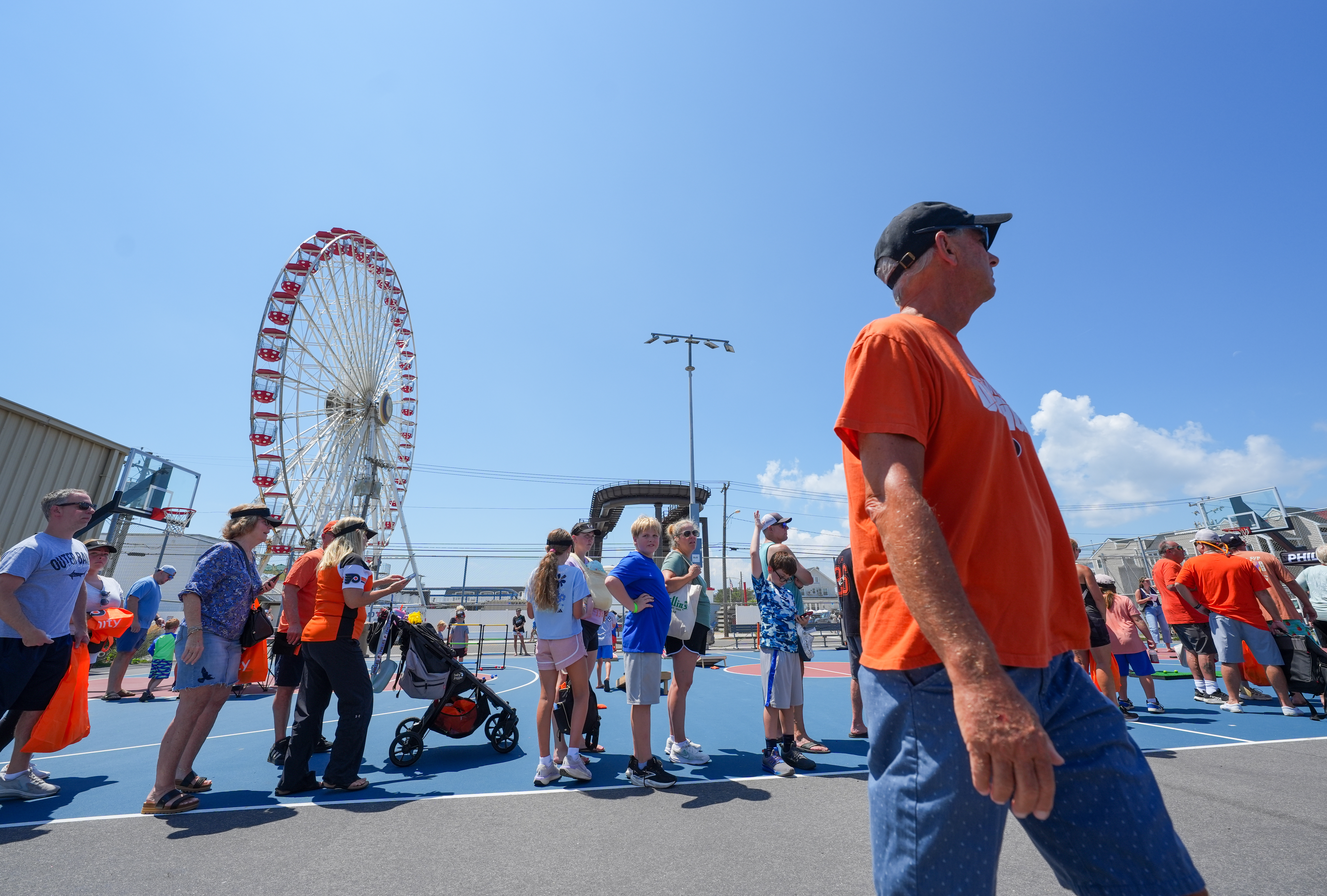
    Fans line up to meet former Flyers players on Thursday.Tim Hawk / For The Inquirer
  • How Bucks County pool player Steve Markle mastered the art of the trick shot

    How Bucks County pool player Steve Markle mastered the art of the trick shot

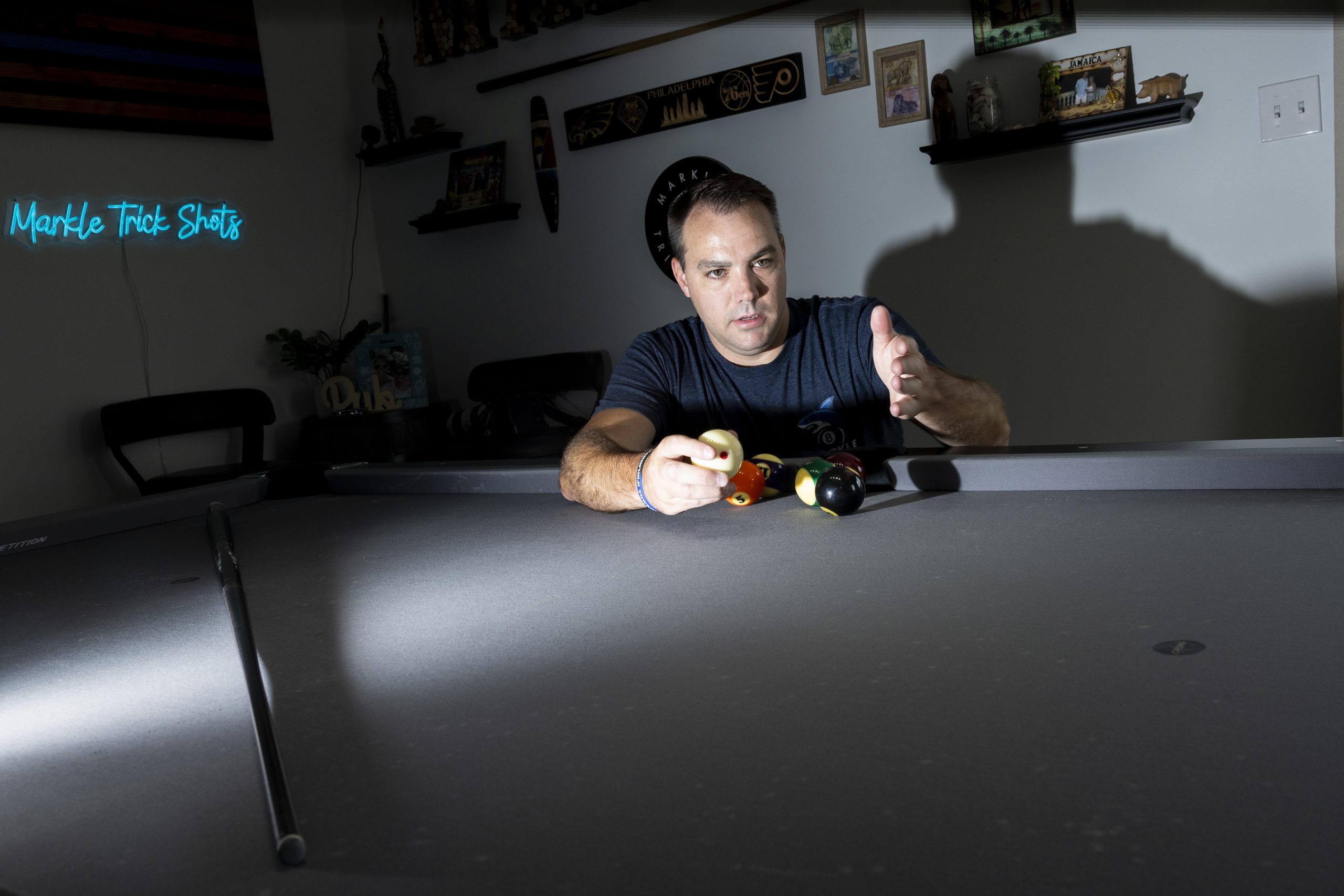
    At 13 years old, Steve Markle asked his parents for a not-so-typical gift for his age — a pool table. Bill Markle, his father, asked his son if he was going to use it, and Steve assured him he would.

    “Pool tables are good for storage and being in the way,” Bill recalled saying to his wife when Steve asked.

    The Bucks County native was first interested in pool after spending long summer mornings playing stickball. One of his friends had a pool table in his basement, and they would play in the afternoons to cool off.

    Steve eventually convinced his father to get him a pool table, so Bill took him to Kmart and bought him a seven-foot wooden table. Steve and his friends started making trick shot videos and posting them on YouTube. One night, Steve showed his parents one of the videos.

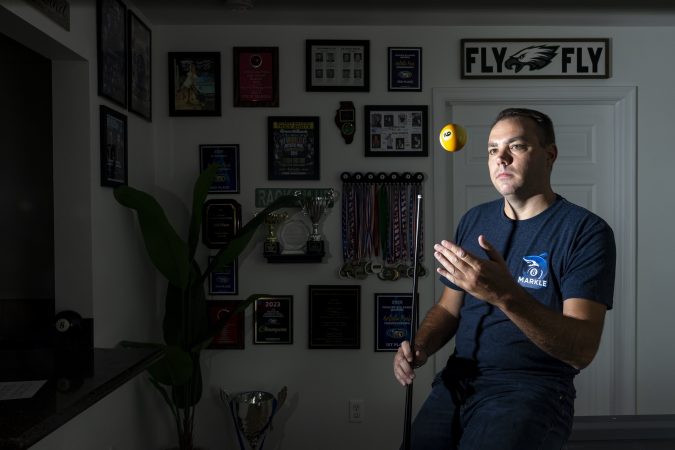
    Steve Markle began practicing trick shots at the age of 13.Aidan T. Gallo / Staff Photographer

    “We were taken aback at what he did,” Bill said. “We were like, ‘Did you really do that?’”

    That shock and surprise continued for the Markles as Steve’s career has taken off in ways they could have never imagined.

    “This game has been able to open up so many doors for me that I never thought would be open,” Steve said.

    Steve Markle, now 34, is Pennsylvania’s only professional artistic pool player and is ranked No. 1 in the United States by the Billiard Congress of America and No. 9 in the world by the World Pool Association. His trick-shot videos on social media have garnered more than 175 million views.

    Starting pool

    The Archbishop Ryan graduate’s introduction to artistic pool was random, he said.

    He was shooting pool with his dad at a restaurant in Penndel when an older gentleman approached him and showed him a trick shot where he made four balls in one shot.

    That same day, he ran over to his friend’s house and showed him the trick.

    “I brought that back to him and was like ‘You’ve got to see this; look what I just learned,’” Markle recalled.

    Before long, he was spending nearly every day practicing on his pool table and filming videos with his friend. By 16, he competed in his first trick-shot tournament in New Jersey.

    Artistic pool is one of the sport’s smallest niches, Markle said. Professional pool players must master 124 designated trick shots, with just three attempts allowed at each shot during competition.

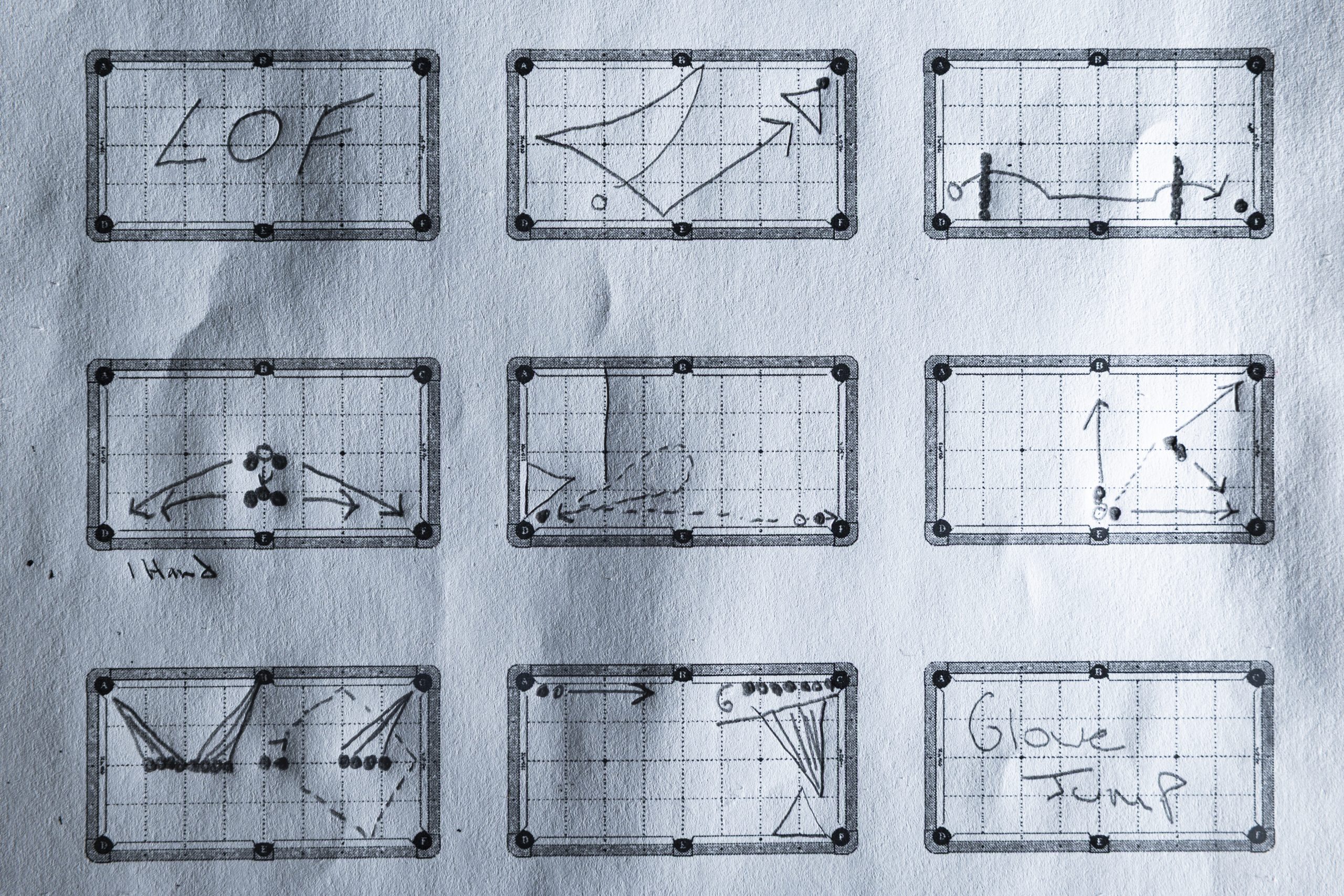
    Markle’s sketches of his new trick shots. He is organizing the 2026 WPA World Artistic Pool this fall.Aidan T. Gallo / Staff Photographer

    “To be good and consistent and give yourself a chance to win these tournaments, you really have to be consistent with all 124 shots because at a tournament you only get three attempts at each,” Markle said.

    The sport features six federations across the world, with the Billiard Congress of America in the U.S. The sport has two smaller events, U.S. Nationals and the Premier Billiards Masters Artistic Pool Championship, which are open tournaments and anyone can compete. Competitors qualify for the World Championship through smaller tournaments before earning a spot in the competition, which Markle compared to the Super Bowl for artistic pool players.

    Taking a break

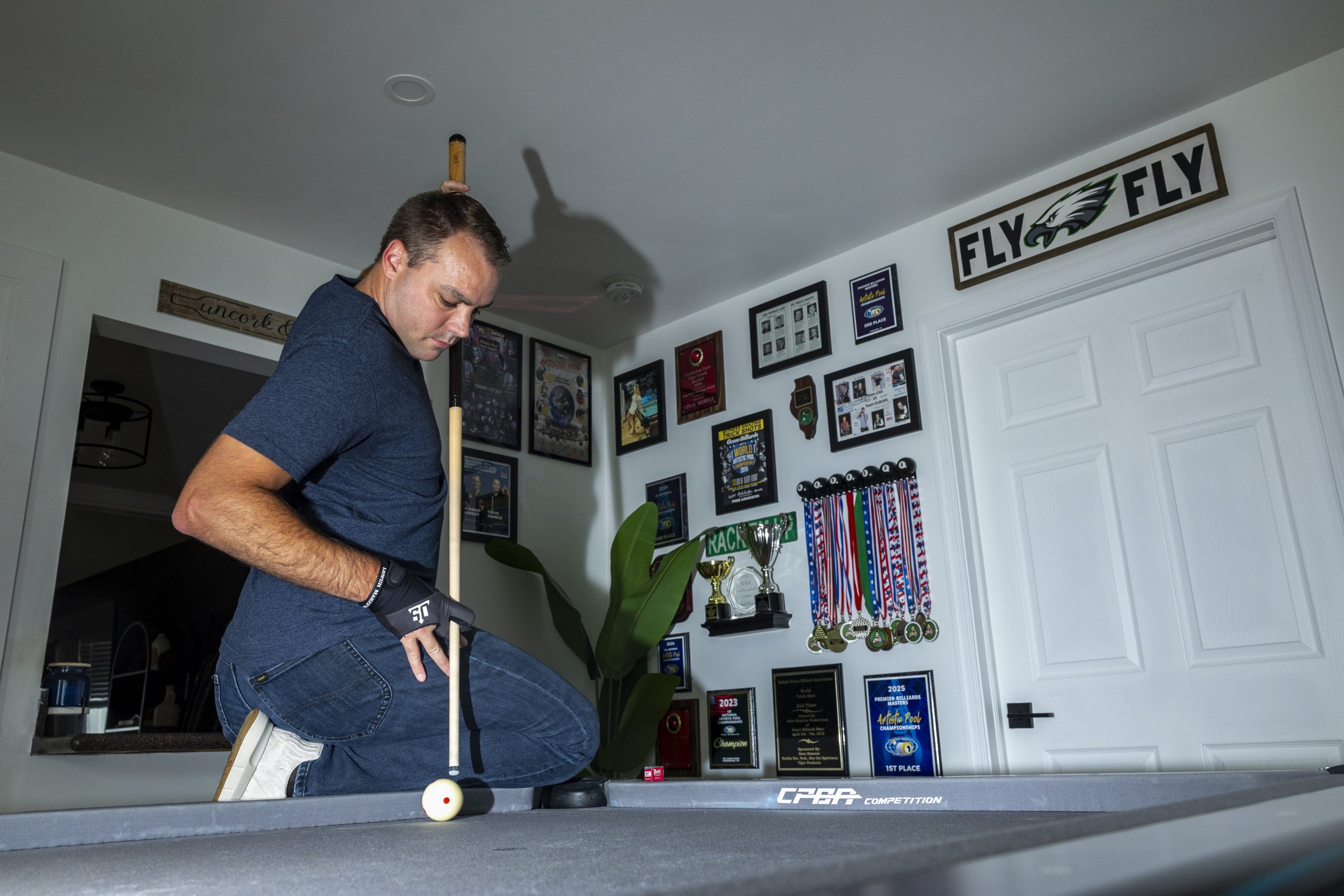
    Markle competed professionally from 2008 to 2016 before deciding to take a break to join the police academy for Temple’s Ambler location.

    “Police academy teaches you a lot about people and life skills,” Steve said. “The physical training you have to go through, it pushes you a lot.”

    Markle worked part-time police jobs in Solebury Township and Bristol Borough before joining the Lower Makefield Township Police Department, where he still actively serves.

    Steve Markle competed professionally from 2008 to 2016 before deciding to take a break.Aidan T. Gallo / Staff Photographer

    Living in a one-bedroom apartment without room for his pool table and working a demanding job made competing professionally nearly impossible, he said.

    In 2023, he and his wife bought a house with enough room for his pool table, so he picked it back up. That break made all the difference in his professional career.

    Getting back into it

    The seven-year break was pivotal for his development, he said. In his second tournament back — the 2023 U.S. National — he ended up winning.

    “I never expected to come back and the same year end up winning a tournament,” Markle said. “That was something I had been trying to do since 2008, and when I won I was like all right, I’m back and definitely stronger.”

    Much of his growth was in the mental side of the game. He credits his time away from the sport and his experience as a police officer in strengthening his composure under pressure.

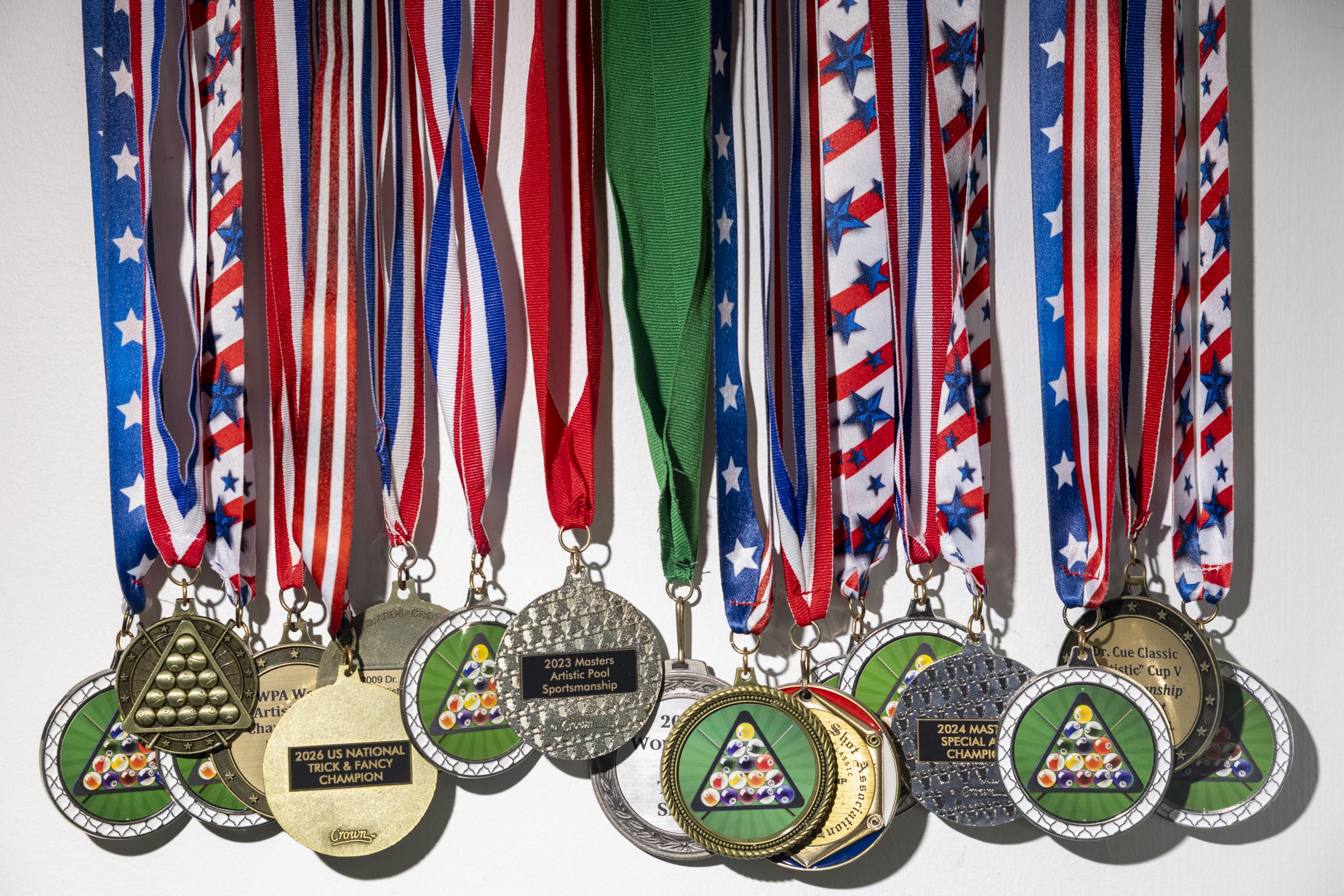
    Steve Markle’s medals from professional trick-shot competitions.Aidan T. Gallo / Staff Photographer

    “Patience and composure are the two things this sport has really taught me,” he said. “That correlates to life as a police officer because we have to stay calm in a lot of situations.”

    During June’s U.S. Nationals in West Virginia, Markle had to make one last shot to force a playoff for a chance to win the tournament. He missed the shot twice, and had one more attempt. He made the third attempt and went on to win the tournament.

    “I’m more calm,” he said. “If I miss a shot, I don’t let it get to me because my mental game is a lot stronger now. I stay more composed. Back in the day if a crucial shot came up, I may have missed it and I would’ve let it get to me, now I just brush it off.”

    Making the game go viral

    For many people, pool is synonymous with smokey dive bars, Markle said, but it has grown into so much more. The sport has continued to expand through amateur organizations, like the American Poolplayers Association, while major networks have begun streaming professional events.

    “If ESPN wants to tag along with pool, that just means that the sport is continuing to grow,” Steve said.

    Part of that growth has come through social media, where Steve has gone viral with over 20,200 followers on Instagram and 34,700 on TikTok.

    He initially posted three-to-four minute trick-shot videos on YouTube, but realized as social media began to evolve, audiences wanted shorter, more engaging content. He adapted by posting individual trick shots and combining multiple shots into fast-paced videos.

    His most popular video, called “Man’s Best Friend Jump,” features his 85-pound golden retriever sitting on the pool table while Markle jumps a ball over the dog. One of his videos, he said, has gained more than 36 million views.

    The popularity on his social media comes from the accessibility and uniqueness of the sport, Markle said.

    “Trick shots are universal,” he said. “You don’t have to know a single thing about pool to understand what I’m doing in these trick shots. It’s entertainment.”

    Coming to Philadelphia

    Markle was supposed to compete in the 2026 world championship in South Africa, but logistical issues involving exporting the tournament’s pool tables forced organizers to find another location.

    “The door was open for me, and I’ve always thought about bringing the world championship to Philadelphia,” Markle said.

    He is organizing the 2026 WPA World Artistic Pool and WPA World Freestyle Artistic Pool championship at Bluegrass Billiards in Northeast Philadelphia from Oct. 1-4. The competition will feature competitors from 10 different countries.

    Hosting the event is significant for Markle because he will have the opportunity to compete for a world championship in his hometown while introducing something new to the Philadelphia sports scene.

    “For people who are pool players that follow me, they’re used to your normal eight or nine ball matches. But this is something different that I’m bringing to the city,” he said. “It’s fun, it’s engaging, and it’s different for them.”

  • Big Ten media day: Matt Campbell explains why Penn State was the right fit, keeping Terry Smith on staff, and more

    Big Ten media day: Matt Campbell explains why Penn State was the right fit, keeping Terry Smith on staff, and more

    Big Ten commissioner Tony Petitti addressed the media Tuesday in Chicago, and emphasized that the conference has never been in a better position.

    Big Ten schools have won the past three national championships in football — Indiana (2025), Ohio State (2024), and Michigan (2023) — and it continues to try to influence the future of college athletics.

    Petitti discussed the proposed Protect College Sports Act and said the Big Ten continues to withhold support until it can review amendments made to the bill’s language.

    “Over the past 10 days, there have been hundreds of phone calls discussing key aspects of the bill,” Petitti said. “It is important to understand that this bill sets forth very specific language on how college sports will operate going forward. After a lot of productive work, it is absolutely imperative that we see the amended language of the bill. We cannot change our position until we see the amended bill and have an opportunity to share it with our leadership. And I will say … we expect to see the amended bill shortly.”

    Petitti said the Big Ten has been in communication with lawmakers about the proposed changes and believes progress has been made.

    “There seems to be alignment in the direction with the senators,” Petitti said. “They understand our issues. I think we’ve been aligned with the SEC in pointing those out, which is really the case on most of the stuff around the bill and even really working together.”

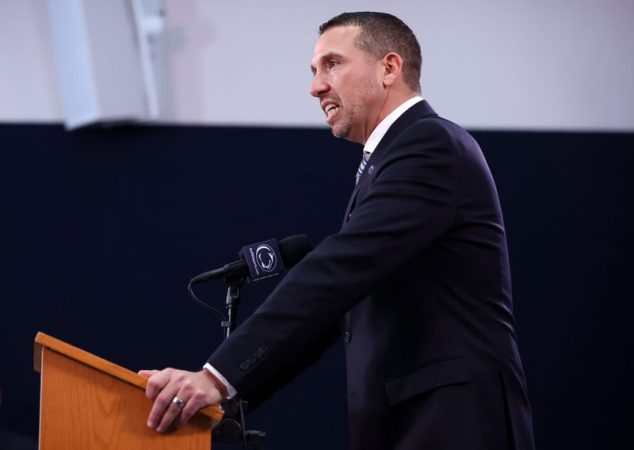
    Later, new Penn State coach Matt Campbell, along with offensive tackle Anthony Donkoh, quarterback Rocco Becht, and linebacker Tony Rojas, took the floor to answer questions. Here were the most notable takeaways:

    Decision to leave Iowa State

    Campbell was hired on Dec. 5, 2025, after James Franklin was fired midway through his 12th season. Campbell was the winningest coach in Iowa State history, recorded more than half of the school’s Big 12 wins, and reached the conference championship in 2024.

    A common question throughout Campbell’s tenure with the Cyclones was whether he would leave for another coaching opportunity. Campbell reportedly was offered an eight-year, $68.5 million contract to be the Detroit Lions’ head coach in 2021 and initially accepted the offer before deciding to remain at Iowa State.

    Campbell was the Cyclones’ head coach from 2016 to 2025 and amassed a 72-55 record while winning Big 12 Coach of the Year three times. So the decision to leave Iowa State was a big one for him.

    “If we were ever going to leave, it had to be for a place that aligned with my beliefs about culture, leadership, and building a football program,” Campbell said. “Over the past six months, we’ve been reminded every day why Penn State was the right fit. The history is special. The tradition is special. But what really resonated with me is how Penn State has always valued integrity, character, and class at its best.”

    Campbell said he is focused on building a program centered on young men who value doing the right thing on and off the field, have a genuine passion for football, and are committed to receiving a meaningful education.

    “While many things surrounding college football continue to change, winning football games has not,” Campbell said. “Neither has my belief in how you build a football program. I still believe it’s my responsibility to help turn young men into great husbands, great fathers, and great leaders. That responsibility hasn’t changed, and it’s one I embrace every day. At Penn State, we’ve chosen a culture that embraces doing what’s hard rather than what’s easy. We want people who are chasing something greater than simply winning football games.”

    Bringing Iowa State with him

    Campbell brought 24 players from Iowa State with him, including Becht, who is the winningest returning quarterback in college football.

    Becht spent much of the spring recovering from surgery on his left, nonthrowing shoulder and was unable to participate in spring practices.

    “I wasn’t able to do a lot in spring football,” Becht said. “So I think that ultimately helped me become a better leader off the field. To lead off the field, I had to make those meetings with the guys, with the running backs, with the receivers, with the tight ends, because all that offense was so new to them that I was probably, when the coaches are gone, the next resource to help them gain that knowledge of the offense. And so that was my mentality of going into the spring ball was how much time can I get with those guys off the field so then ultimately when I got back onto the field, that relationship just clicked.”

    Taylor Mouser, Ryan Clanton, and Deon Broomfield joined Campbell’s coaching staff from Iowa State. Becht said one of the factors that went into following Campbell to Penn State was the type of person he is off the field.

    “[The coaches] are down to earth and people of relationships,” Becht said. “They don’t just care about you as a football player, they care about you as a person as well. And that’s something that I wanted to experience for my last year in college football.”

    Defensive changes

    Campbell also discussed new defensive coordinator D’Anton Lynn. Lynn had spent the past three seasons as a defensive coordinator at Big Ten foes UCLA and Southern Cal.

    “He understands this conference, the style of play, and what it takes to build great defenses,” Campbell said.

    Lynn is a Penn State graduate who was a cornerback from 2008 to 2011. He recorded 162 tackles, including seven tackles for loss, four interceptions, and one fumble recovery in 47 games, while starting 37 of his last 38 games.

    “He understands what it means to play here and what it means to lead here. He and his family have a deep passion for Penn State and the community,” Campbell said. “Beyond that, he’s an outstanding teacher. He’s assembled an excellent staff around him and has already made a tremendous impact on our players. Those qualities made him the right fit.”

    Along with the new defensive coordinator, Campbell is moving away from the 3-3-5 defense he used at Iowa State. During his time at Toledo and throughout his first two seasons at Iowa State, he primarily used a four-down front with multiple variations before evolving into the defense for which they became known.

    “As the Big 12 evolved with more multiple tight-end sets and more pro-style offenses, we found ourselves naturally moving back toward four-down fronts in certain situations, anyway,” Campbell said. “When we got to Penn State, we evaluated who we are, what our personnel looks like, and what gives us the best opportunity to succeed.”

    Variety in their defense is important, Campbell said, but the foundation will begin with a four-down front.

    Keeping Terry Smith

    One of the most important aspects of taking the Penn State job was keeping Terry Smith on the coaching staff, Campbell said.

    “Watching him lead Penn State through a difficult stretch at the end of last season only reinforced my respect for him,” Campbell said. “It wasn’t an easy situation, but Terry steadied the program and gave us a strong foundation moving forward.”

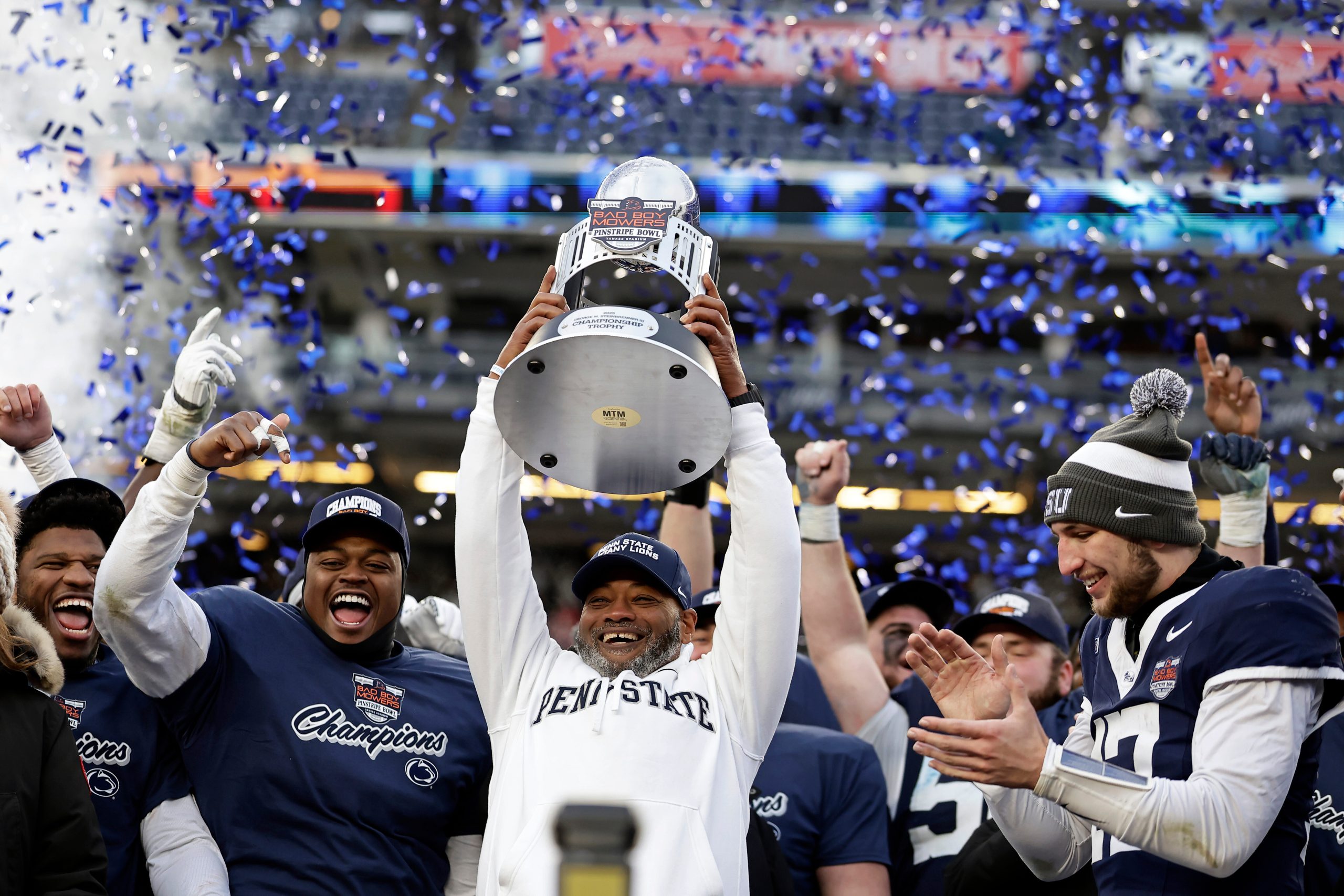
    Last season, Terry Smith led Penn State to a win over Clemson in the Pinstripe Bowl.Adam Hunger

    Smith served as the associate head coach and cornerbacks coach before being named the interim head coach after Franklin was fired. Rojas said Smith taking on the interim role brought life to the locker room.

    “Everyone wanted to play for each other and wanted to play for him,” Rojas said. “Especially the last bowl game, we’re all super excited to get that last one for him. So I think just keeping him on our staff has been a big blessing.”

    Smith was a wide receiver at Penn State from 1987 to 1991.

  • From national champion to pro lacrosse star: Delco’s Andrew McMeekin excels beyond the faceoff

    From national champion to pro lacrosse star: Delco’s Andrew McMeekin excels beyond the faceoff

    At halftime of this year’s NCAA men’s lacrosse championship at Scott Stadium in Charlottesville, Va., the NCAA commemorated the 25th anniversary of Princeton’s national title team.

    As the current Tigers went into the locker room, the players from 2001, which was the last time Princeton won the title, greeted them with cheers and words of encouragement to finish the game strong.

    “It was pretty serendipitous,” said faceoff specialist and Delco native Andrew McMeekin.

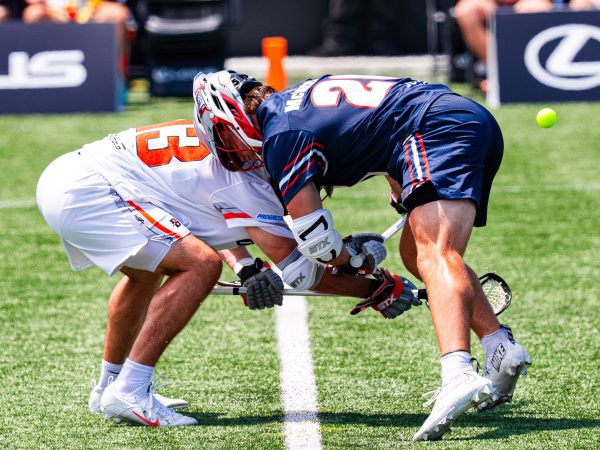
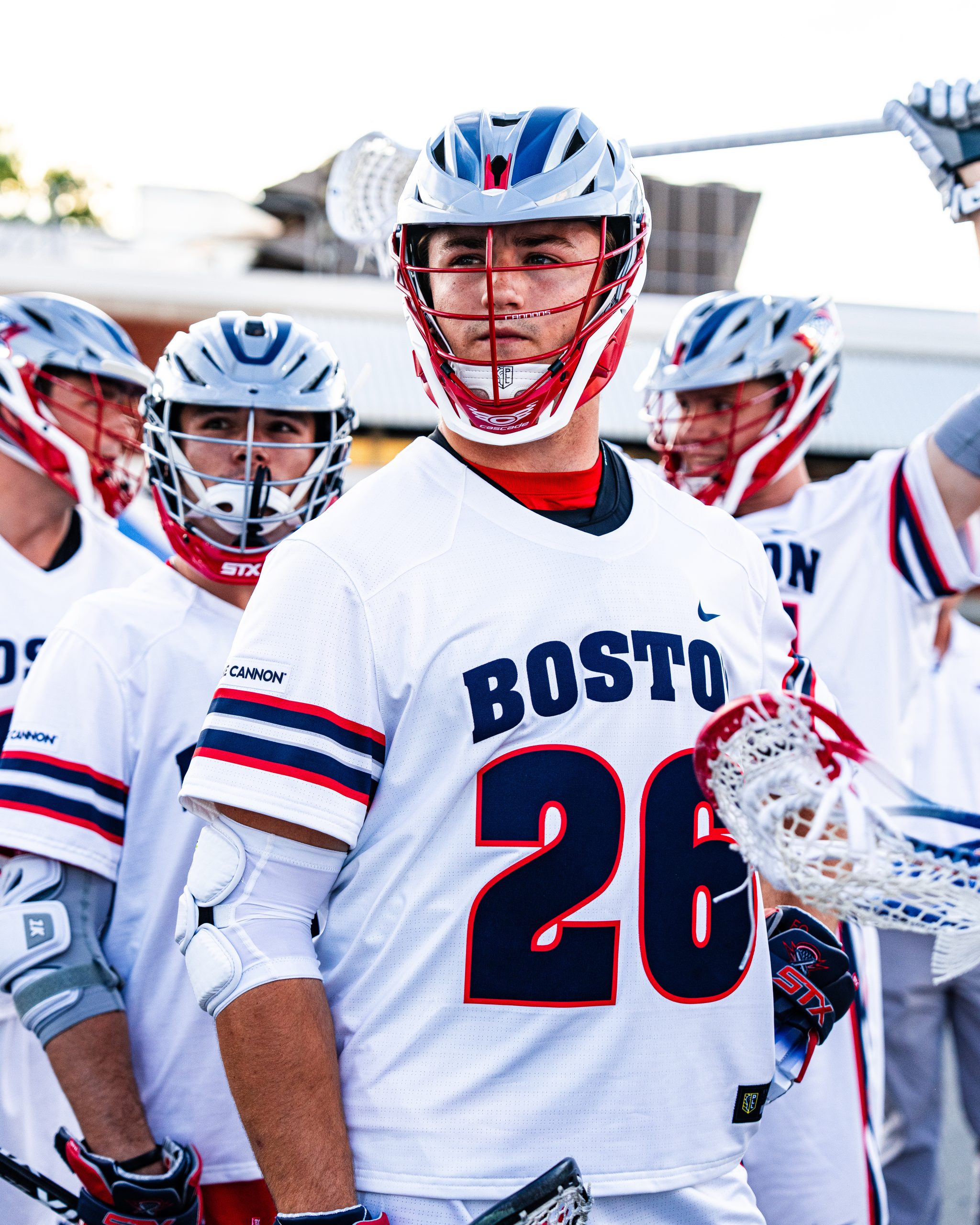
    The Tigers defeated Notre Dame, 16-9, on May 25 to claim the program’s seventh national title. Less than two months later, McMeekin is now making a name for himself in the Premier Lacrosse League with the Boston Cannons.

    McMeekin ranks third in the league in faceoff percentage (56.8%) and scored his first professional goal on July 11 in a 15-13 win over the Denver Outlaws.

    Playing at the next level

    Playing professional lacrosse was always McMeekin’s goal.

    He was coached by Chris Bates at Episcopal Academy. Bates was one of the original coaches during the PLL’s inaugural 2019 season. Once at Princeton, McMeekin watched the upperclassmen continue their careers professionally. Those personal ties with the league sparked a desire to reach the top of the sport.

    When the 2026 PLL college draft was held April 14, McMeekin wasn’t surprised that his name wasn’t called. Specialty players, like goalies and faceoff men, are rarely selected on draft night.

    Still, conversations with the Cannons coaches later that month assured him that his professional opportunity would come.

    Building a winning culture

    Before beginning his professional career, McMeekin had one final goal to accomplish at Princeton: Win a national championship.

    It was the culmination of a four-year journey to get there, McMeekin said.

    “It really did feel like a full four-year build,” he said. “Each year had its own story and our class in general took away the right things that we needed to take away after the seasons ended. It came together at the right time.”

    The group of 10 seniors, who lived together in a house off campus, met once or twice a week outside of practice to discuss how to set the standard, what being a good teammate looked like, and how they could improve as a group.

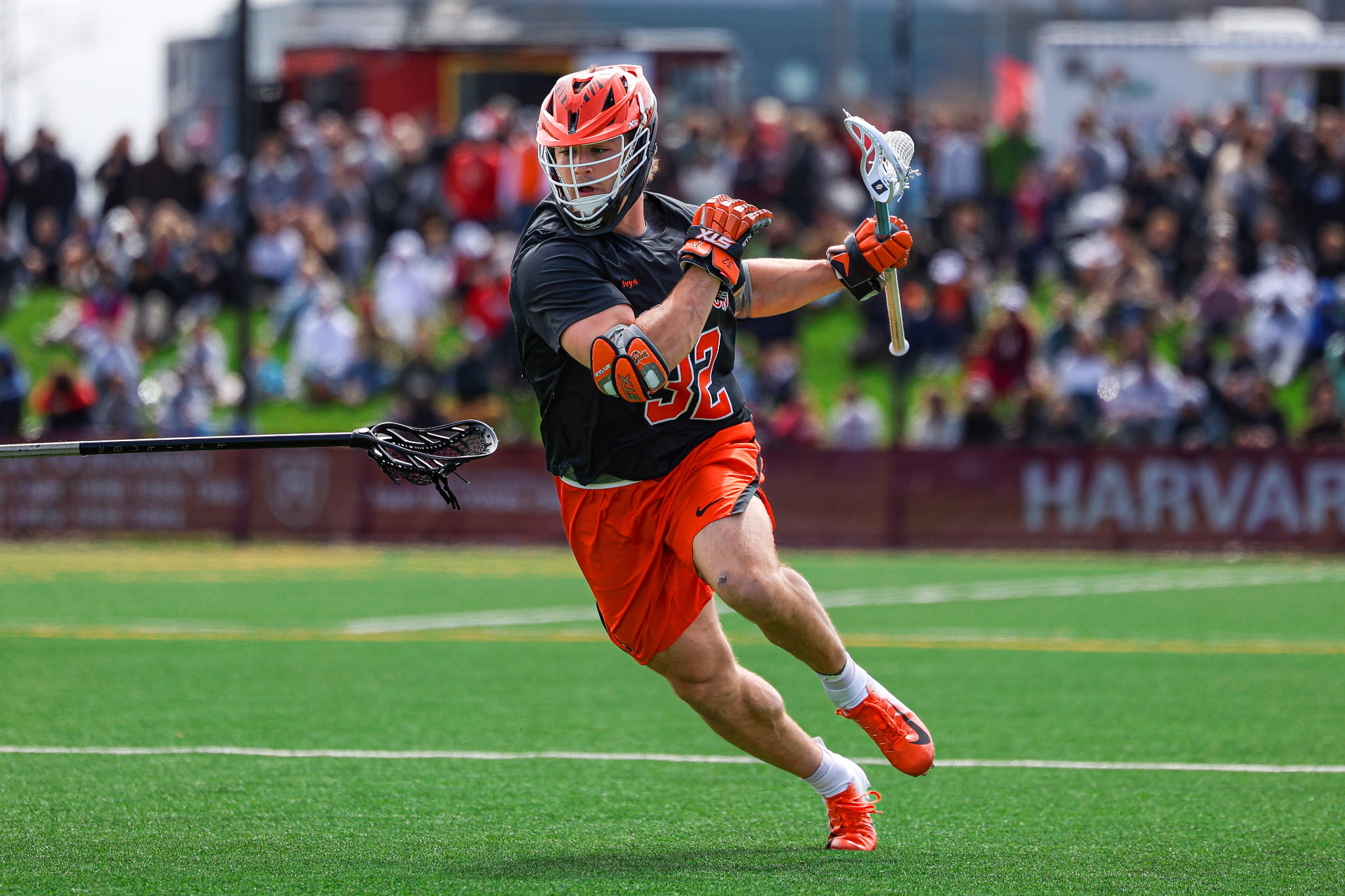
    Andrew McKeekin is Princeton’s career record holder for faceoff wins and groundballs.Courtesy of Camryn Ley

    “We learned to have honest and productive conversations early because we knew that it would benefit the team,” McMeekin said, “and since we, as a senior class, understood that, it trickled down from there.

    “All the guys really cared about was winning as a team, and that’s different from what I’ve seen from a lot of other teams. All the best teams in the country have extremely talented players, obviously, but I think the teams that are willing to sacrifice egos a bit and more just want to win as opposed to one guy having all the best stats — that’s what our team thrived on the most this year.”

    McMeekin left his impact on the Tigers lacrosse team. He’s the program’s career leader in faceoff wins (698) and ground balls (446), and he set the school’s single-season record this year for ground balls (145). He also finished 23rd in the nation in faceoff percentage (57.7%).

    Lacrosse player first

    Part of the success for McMeekin can be traced back to weekly four-hour round-trip drives to Cockeysville, Md.

    Since seventh grade, McMeekin has trained with Jeremy Rualo, founder of Inner Circle Lacrosse. Inner Circle is built around a simple philosophy: players should be lacrosse players first and faceoff specialists second.

    “I coach the position for the play, holistically,” Rualo said. “The play is to provide the ball in a possession to the offense. Two guys face off, yeah, but that isn’t decoupled from the midfield play that is about to happen.”

    Rualo, who works professionally in clinical genomics and next-generation sequencing, said faceoffs were never intended to be separated from midfield play.

    Andrew McMeekin is making a name for himself in the Premier Lacrosse League with the Boston Cannons.Premier Lacrosse League

    When he played lacrosse in high school and college, if a player took faceoffs, they were also expected to contribute as a midfielder. The specialization of the position developed later, eventually leading to the modern-day FOGO – “faceoff, get off.”

    Now, Rualo and McMeekin believe many young players specialize too early without developing the broader skills to become complete lacrosse players.

    “A lot of the time people look at faceoff as a very siloed and individual thing, but holistically it is a three-on-three with the wings and obviously very tied to possessions,” McMeekin said. “I take pride in making sure I have good plans for my wings and have a whole team view of the faceoff as opposed to just making it one-on-one the whole time.”

    Inner Circle emphasizes the entire play that happens after the whistle. Players train in game-like scenarios, learning not only how to win faceoffs, but also how to anticipate where the ball will go, compete for ground balls, and contribute as a midfielder.

    “Because of the way that we train, and the scale at which it is done and the holistic picture, what you get is the Inner Circlers are outstanding at midfield and that becomes this massive separator,” Rualo said. “No one else really does it, because they don’t think that way.”

    Developing complete lacrosse players is non-negotiable, Rualo added.

    “‘Why do you want to [stink] at lacrosse?’” he jokingly asks his players. “You should absolutely be a lacrosse player first.”

    McMeekin has carried this philosophy with him throughout high school and college. Now, he’s taking it to the next level.

    “The coaches are very adamant about me trying to take shots, and pushing transition while still being smart with my risk tolerance,” he said. “I’ve had a long leash in that sense to try and score and push the offense, so we are going to continue with that.”

  • Saucon Valley to host U.S. Junior Amateur, featuring local talent and Tiger Woods’ son

    Saucon Valley to host U.S. Junior Amateur, featuring local talent and Tiger Woods’ son

    Golf’s future stars are coming to Bethlehem, Pa., this week, competing for a chance to lift the Tiger Woods Trophy.

    The 78th U.S. Junior Amateur returns to Saucon Valley Country Club in Lehigh Valley from Monday to Saturday, bringing together 264 of the best junior golfers in the world. The championship has launched careers for some of the game’s biggest names, including Tiger Woods, Jordan Spieth, and Scottie Scheffler.

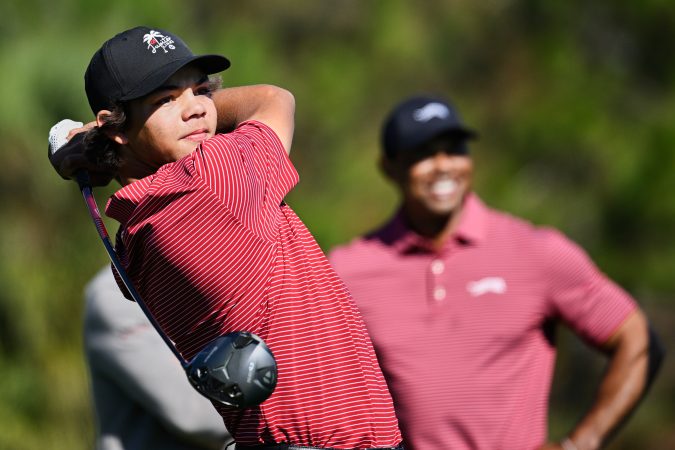
    This year’s field features Woods’ son, Charlie, defending champion Hamilton Coleman, and a pair of locals in Declan Conner, of Swarthmore, and Charlie Barrickman, of Kennett Square.

    What is the U.S. Junior Amateur?

    The U.S. Junior Amateur is the United States Golf Association’s national championship for male amateur golfers who have not reached their 19th birthday by the end of the championship. Players must also have a Handicap Index not exceeding 2.4 to be eligible.

    This year, 3,681 players applied to play in the championship, and 18-hole stroke-play preliminary qualifying rounds were conducted across 42 sites nationwide to determine the field.

    The tournament began in 1948 and has produced some historic moments. Tiger Woods won the championship from 1991 to 1993, Spieth won in 2009 and 2011, and Nick Dunlap won in 2021, joining Woods as the only player to win both the U.S. Amateur and U.S. Junior Amateur titles.

    How does it work?

    The championship begins with 264 players competing in two rounds of stroke play on Monday and Tuesday. One round will be played on Saucon Valley’s Old Course, and the other will take place on the Grace Course.

    After 36 holes, the top 64 players will advance to match play on the Old Course. The round of 64 begins on Wednesday, followed by the round of 32 and round of 16 on Thursday. Players who advance to Friday will have to survive both the quarterfinals and semifinals before Saturday’s 36-hole championship match.

    The championship features competitors from 30 countries and 39 states.

    Local golfers will be competing

    Swarthmore’s Conner will represent Delaware County after earning medalist honors at his qualifier, alongside Roger Rice, of Chatham, N.J., and Daniel Kim, of Franklin Lakes, N.J. The 17-year-old rising senior at Ridley High School shot a 2-under 70 at Saucon Valley’s Weyhill Course to qualify for his first USGA championship.

    Conner is one of five Pennsylvania golfers in the field, joining Barrickman (Unionville High School), Dane Mohap (Nazareth), Nico Ward (Allegheny County), and Chase Yenser (Berks County).

    “Being able to qualify for a national championship in my backyard is truly amazing,” Conner told the Golf Association of Philadelphia after qualifying at Saucon Valley’s Weyhill Course. “In doing so, I will be able to have support from my family and friends. I feel like I can compete, I just need to prepare the right way.”

    Charlie Woods is back

    Charlie Woods will make his third consecutive U.S. Junior Amateur appearance after qualifying in a playoff at Heathrow Country Club in Florida.

    The Florida State pledge has become one of the most recognizable names in amateur golf, and will look to get his name on the trophy named after his father.

    USGA Championships at Saucon Valley

    This marks the second time Saucon Valley has hosted the U.S. Junior Amateur and its ninth USGA championship overall.

    The club hosted the event in 1983 and welcomed championships including the 2009 U.S. Women’s Open and the 2022 U.S. Senior Open.

    The Old Course will serve as the primary championship venue, and the Grace Course will cohost the stroke-play portion of the competition.

    Renaming of the trophy

    The USGA announced in February that the U.S. Junior Amateur trophy would be renamed and redesigned to honor Tiger Woods. The trophy is meant to recognize his competitive career and accomplished resumé in amateur golf.

    Woods won three consecutive U.S. Junior Amateur Championships and three consecutive U.S. Amateur Championships, feats that have not been repeated.

    How To Watch?

    Golf Channel will air Friday’s semifinal match from 4-6 p.m and Saturday’s final from 3-5 p.m.

    The championship is free and open to spectators.

  • Youth academy baseball players take in All-Star week in Philly, with Texas team winning the Commissioner’s Cup

    Youth academy baseball players take in All-Star week in Philly, with Texas team winning the Commissioner’s Cup

    While baseball’s biggest stars prepare to take the field at Citizens Bank Park for the MLB All-Star Game Tuesday, the next generation of baseball talent delivered its own unforgettable moment Monday.

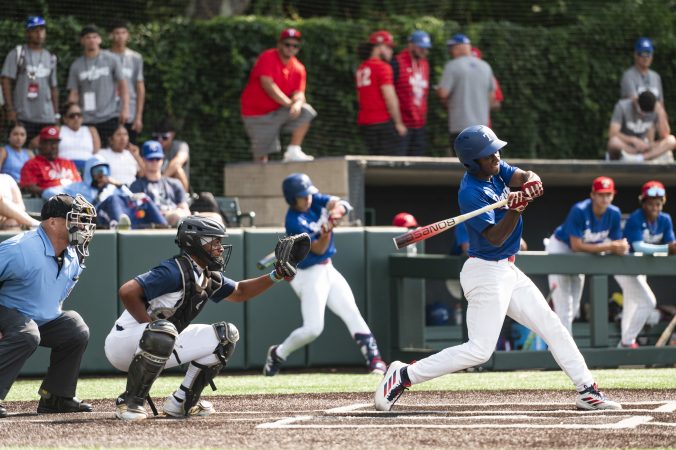
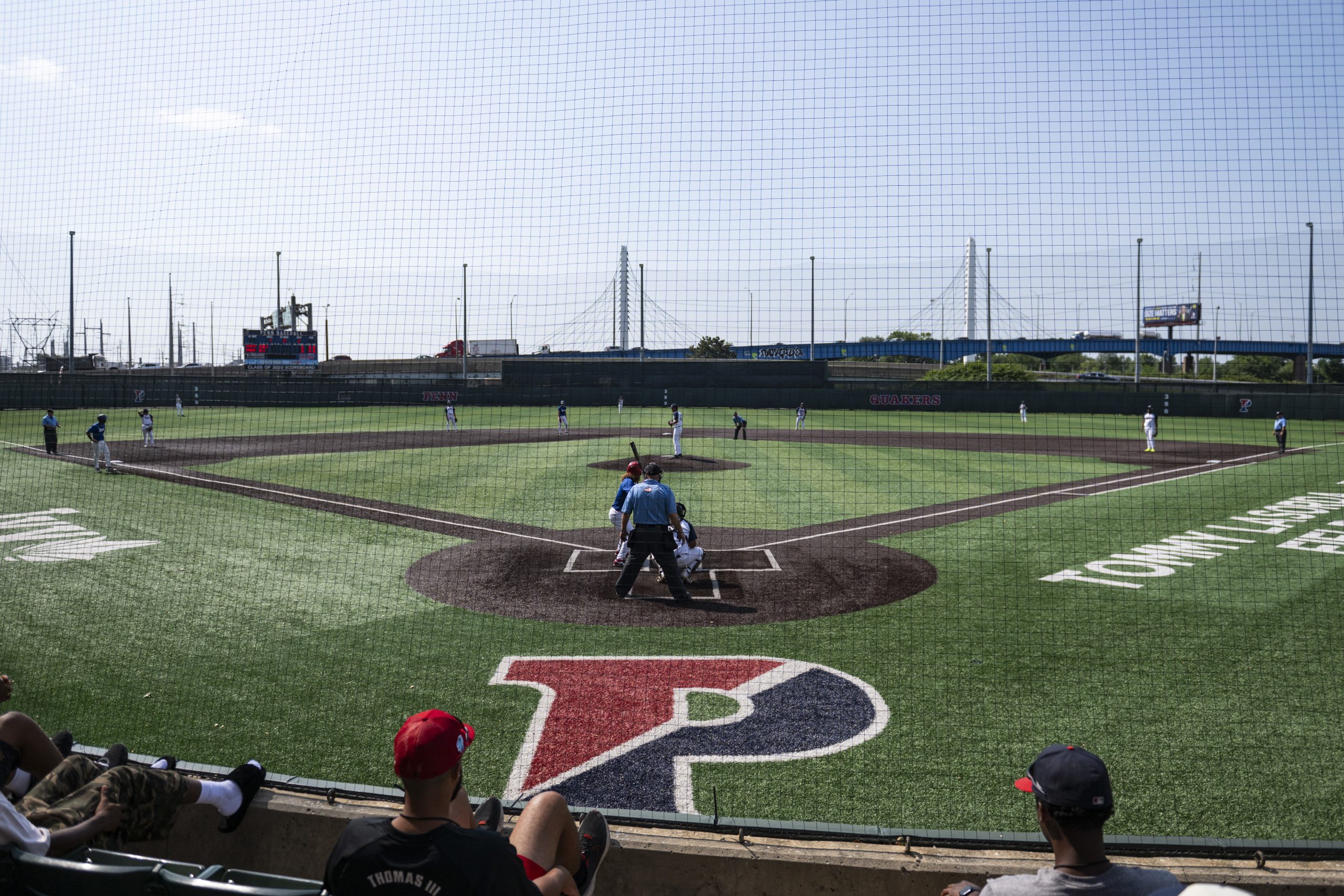
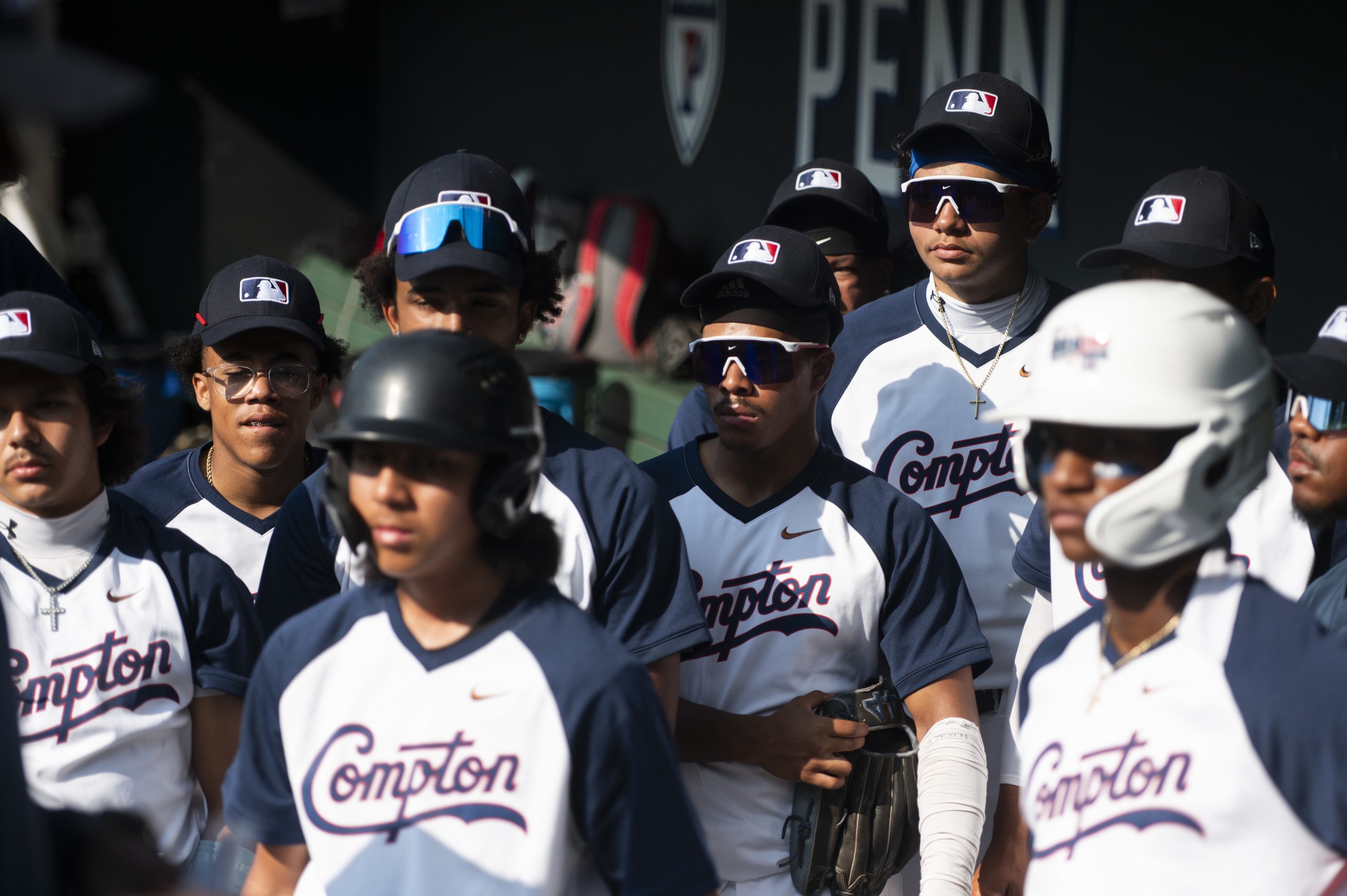
    The Texas Rangers Youth Academy came back from a five-run deficit in the bottom of the seventh inning with Braylon Hubbard’s walk-off hit lifting the Rangers to a 10-9 victory over the Compton Youth Academy in the championship game of the 2026 Commissioner’s Cup at Tommy Lasorda Field at Meiklejohn Stadium at the University of Pennsylvania.

    The Rangers trailed 9-4 entering their last at-bat when senior director Juan Garciga challenged his team to believe a comeback was possible. The energy was low, he said, so he had all the players stand on the top step of the dugout.

    “I told them I was incredibly proud of them, but I also said ‘Man, wouldn’t it be something if we scored six runs here,’ and then I walked away,” Garciga said.

    Players from the Compton Youth Academy and the Texas Rangers Youth Academy play during the Commissioner’s Cup Championship Game at Tommy Lasorda Field on Monday.Allie Ippolito / For The Inquirer

    The Rangers did score six runs. For Garciga, winning the game was special, but giving these athletes the experience of coming to Philadelphia during All-Star Weekend and being guests of MLB was the real success.

    “For us it is about developing major league citizens,” Garciga said. “Our program is at no cost to the families. We have nothing to gain from wins and losses; all we care about is the success and development of these kids. We want to see them become good people and teach them how to overcome adversity.”

    The Commissioner’s Cup brings together 17-and-under teams from the MLB Youth Academies across the country, including Puerto Rico. The academies, which began with the opening of the Compton Youth Academy 20 years ago, are designed to grow baseball and softball while creating opportunities for young athletes in underserved communities. There are now 10 academies across the United States.

    The trip to Philadelphia was just as memorable as the baseball for many of the players. It was the first visit to the city for many of the Rangers players, who took in the skyline, experienced the excitement of All-Star week, and had their first Philly cheesesteak at the ballpark.

    “The MLB took the funds out and took the time to give us this great experience for every single player here,” Hubbard said. “They gave us the opportunity to create new bonds, make new friends and eat great food.”

    Players from the other youth academies who did not advance to the final game filled the stands Monday, cheering for both teams throughout the game.

    “The academies as a whole are for people who don’t get many opportunities like other people,” Rangers player Vincent Hood said. “So to come out here and win, it’s not only a step forward for us, but a step forward for the program and people in our area who might not have many opportunities.”

    The Compton Youth Academy team before the start of the Commissioner’s Cup Championship Game at Tommy Lasorda Field on Monday.Allie Ippolito / For The Inquirer

    The academy has also created lifelong friendships for these players. Arthur Darensburg, who joined the Rangers program last year, said he immediately felt welcomed.

    “My first year was last year, and I didn’t know anybody,” Darensburg said. “For them to bring me in as a brother and create this bond is special.”

    The Rangers will leave Philadelphia with their second trophy, having also won in 2024.

    “Some of these guys have been at the academy since they were 12 years old and have grown there,” Garciga said. “The fact that this group gets to have this big crescendo of a moment in such dramatic fashion is just so special.”

  • Jaylen Brown boxes strangers in Morocco and gets help pitching LeBron James while at the World Cup

    Jaylen Brown boxes strangers in Morocco and gets help pitching LeBron James while at the World Cup

    It’s been a busy summer for new Sixer Jaylen Brown — and not just because he was part of one of the NBA offseason’s biggest moves.

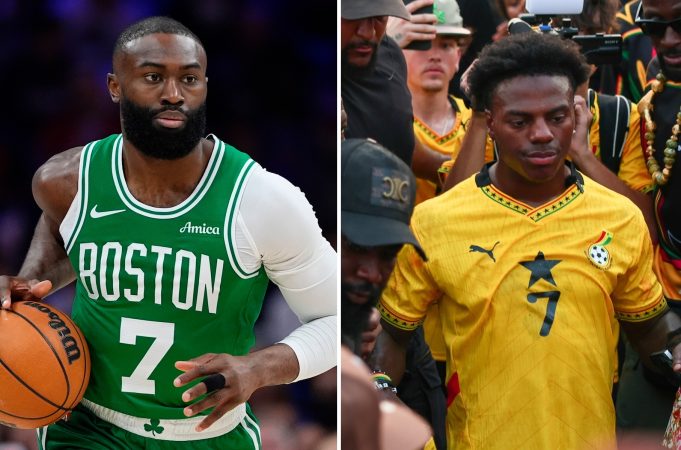
    Brown also boxed on the streets of Morocco and attended the World Cup in Foxborough, Mass., near Boston, where he enlisted the help of YouTube star IShowSpeed to recruit free agent superstar LeBron James to Philly.

    Earlier this summer, Brown traveled to Morocco with former Celtics teammate Tacko Fall and on Thursday posted a video on YouTube documenting their time experiencing the nation’s food, animals, and culture. Brown held a snake around his neck and a monkey on his shoulder, played drums with a group of men, and handed out free smoothies.

    However, the most viral moment came when Brown took part in a friendly boxing session. A crowd quickly formed as Brown squared off in the street with a local, and cheers erupted as the NBA star showed off his skills.

    It’s unclear whether the impromptu boxing match came before or after Brown was traded to the Sixers on July 1, but it appears Brown was in Morocco for the recent PLYRS UNTD Africa Experience.

    During a livestream from inside the Boston Stadium (aka Gillette Stadium) during Morocco’s FIFA World Cup quarterfinal vs. France, Brown enlisted the help of internet personality IShowSpeed, an Ohio native whose real name is Darren Jason Watkins Jr., to send a message to James.

    “You gotta tell LeBron he’s gotta pull up, man. Pull up to Philly,” Brown said in the livestream.

    Watkins happily looked into the camera and told James, who reportedly has the Sixers, Cleveland Cavaliers, and Miami Heat among his top three teams, to join Brown and “PG13” in Philly. The only problem: Paul George isn’t on the team anymore.

    Brown corrected him that George had been traded to the Celtics in the deal that sent Brown to the Sixers. The exchange quickly spread on social media with fans poking fun at the streamer for not realizing George had been traded.

    Brown also seemed frustrated about the trade during the livestream.

    “It’s a crazy business, bro,” he said. “Don’t become a basketball player. There’s no loyalty, there’s no love. … They packed me up, sayonara chat, I’m out of here.”

    Brown hasn’t played a game for Philadelphia yet, but he’s certainly giving fans plenty to talk about.

  • Ryan Daly’s Philly basketball roots brought him to Syracuse — with a chance to revive the Orange

    Ryan Daly’s Philly basketball roots brought him to Syracuse — with a chance to revive the Orange

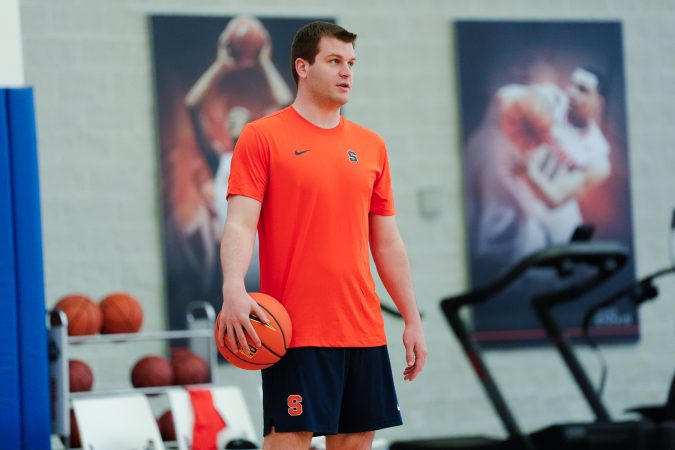
    A sign hangs in Ryan Daly’s office at the John A. Lally Athletics Complex in Syracuse, N.Y., with the total number of fans that can pack the JMA Wireless Dome — 35,446.

    In November, Syracuse fans will fill the historic college sports venue, hoping one of college basketball’s most prominent programs returns to success.

    For Daly, who was hired in April as an assistant under new head coach Gerry McNamara, the number is a reminder of the work that lies ahead.

    The Havertown native has climbed the coaching ranks at 28 years old, arriving at Syracuse after serving as an assistant at Albany, Bryant, and Virginia Commonwealth. Daly said none of that would be possible without his Philadelphia basketball roots and the people he met along the way.

    “A lot of these opportunities that have come my way have been a result of a lot of people pouring into me,” he said.

    A family affair

    Growing up in a family of “basketball junkies” sparked a fire in Daly.

    His grandfather, Jim Boyle, was the longtime coach of St. Joseph’s before coaching in the NBA and overseas. His father, Brian, played at Hawk Hill under Boyle, then coached at Penn State.

    “We are a Philadelphia basketball family,” said his mother, Tracie Daly. “We weren’t on the outside looking in, we were on the inside.”

    Ryan’s earliest basketball memory was at 5 years old, shooting on a Fisher-Price hoop at his grandparents’ house in Overbrook.

    “I don’t remember a time when basketball wasn’t the only thing I thought about or talked about every day,” he said.

    Ryan went to St. Denis School until the seventh grade. Prior to that school year, his family moved to Boston, then State College, Pa., after his dad took a coaching job at Boston University and Penn State, respectively.

    Three years later, Ryan and his younger brother Colin approached their parents with a request.

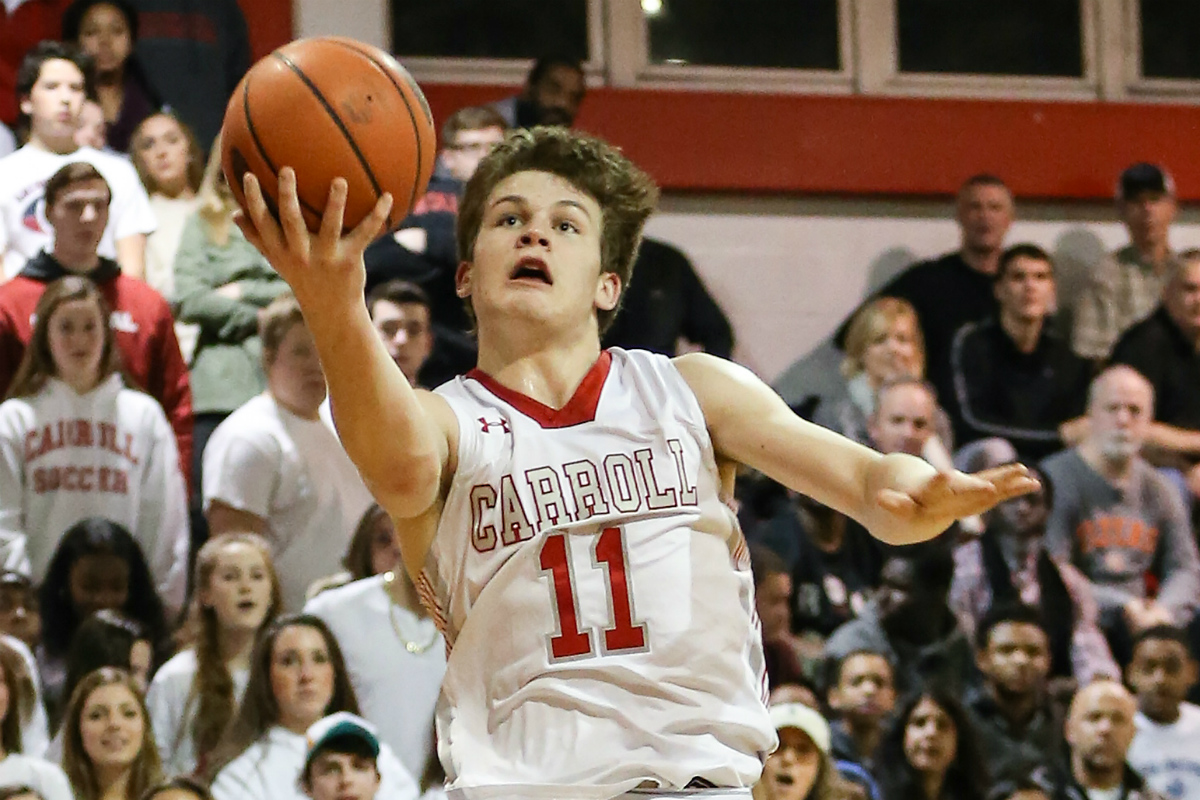
    Ryan Daly joined Archbishop Carroll as sophomore and won Catholic League MVP in 2016.STEVEN M. FALK / Staff Photographer

    “They came up to us and said, ‘We want to play basketball in the Catholic League,’” Tracie said.

    The Philadelphia Catholic League is one of the top high school basketball conferences in the country, and there is a certain type of DNA that those players possess, Ryan said.

    Tracie, Ryan, Colin, and their sister, Keri, moved back to the area before Ryan’s sophomore year, while Brian stayed at Penn State to continue coaching. Ryan and Colin both played for Archbishop Carroll.

    “Neither of my boys would’ve been able to develop to the basketball players they were if we hadn’t moved back,” Brian said.

    ‘Tight-knit community’

    Philadelphia basketball became Ryan Daly’s classroom.

    Daly grew up hearing stories about Sonny Hill, Speedy Morris, John Chaney, Phil Martelli Sr., and Jay Wright — legends of Philadelphia basketball. Jim Lynam — also known as pop — was another mentor. Those relationships gave him an appreciation for the city’s basketball culture.

    “Philadelphia is a special basketball community,” he said. “ … To see so many people coaching and involved with it, it’s one big circle, and it feels like it’s a very small tight-knit community.”

    However, his own college recruiting process wasn’t easy.

    Daly was a star on his nationally ranked AAU team, the Jersey Shore Warriors, and at Carroll — he won PCL MVP in 2016 — but didn’t receive many scholarship offers. It was a stressful time, he said, but his own experience became one of the biggest lessons in his coaching career.

    “It taught me patience with evaluating players,” he said. “You might see them on a really good day, and that’s not really who they are or you might see them on a bad day and they are a lot better than that.”

    He committed to the University of Delaware two days before graduating from high school without visiting the campus.

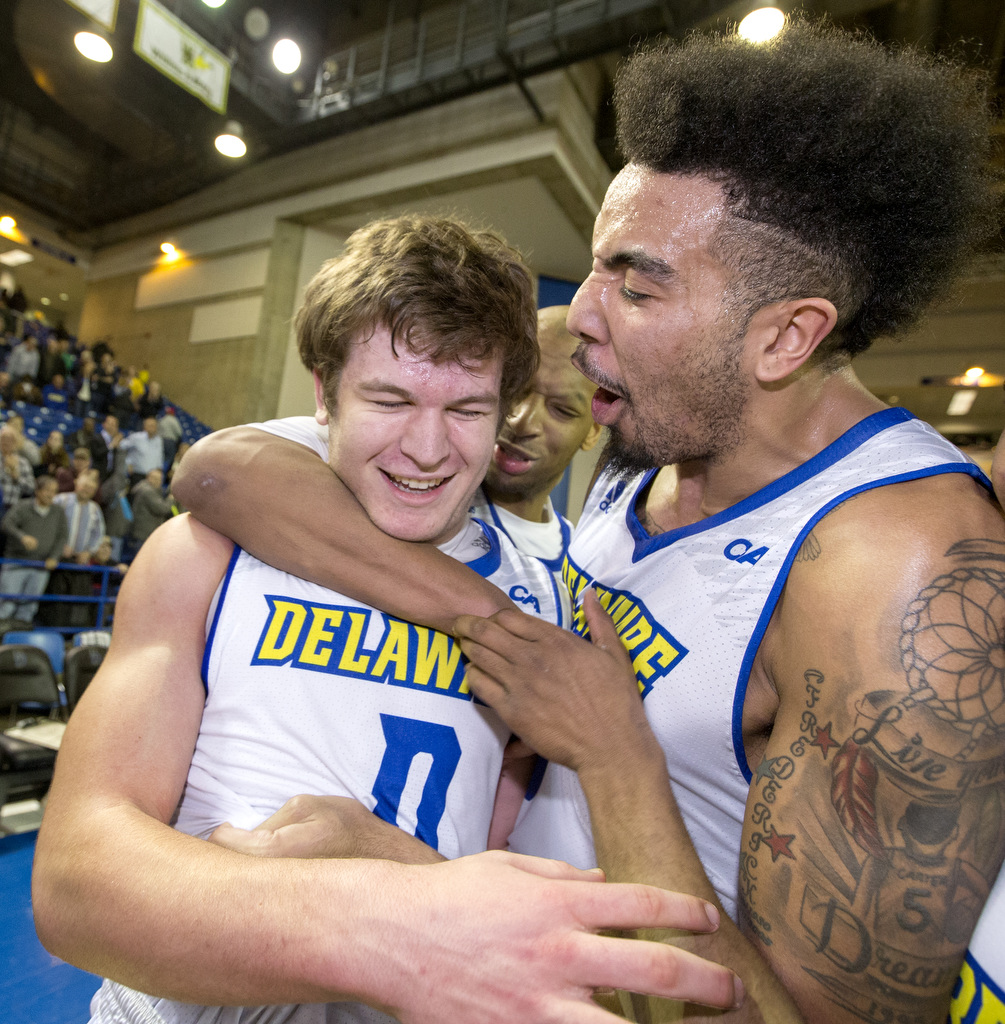
    Ryan Daly spent two seasons at Delaware, where he surpassed 1,000 career points.

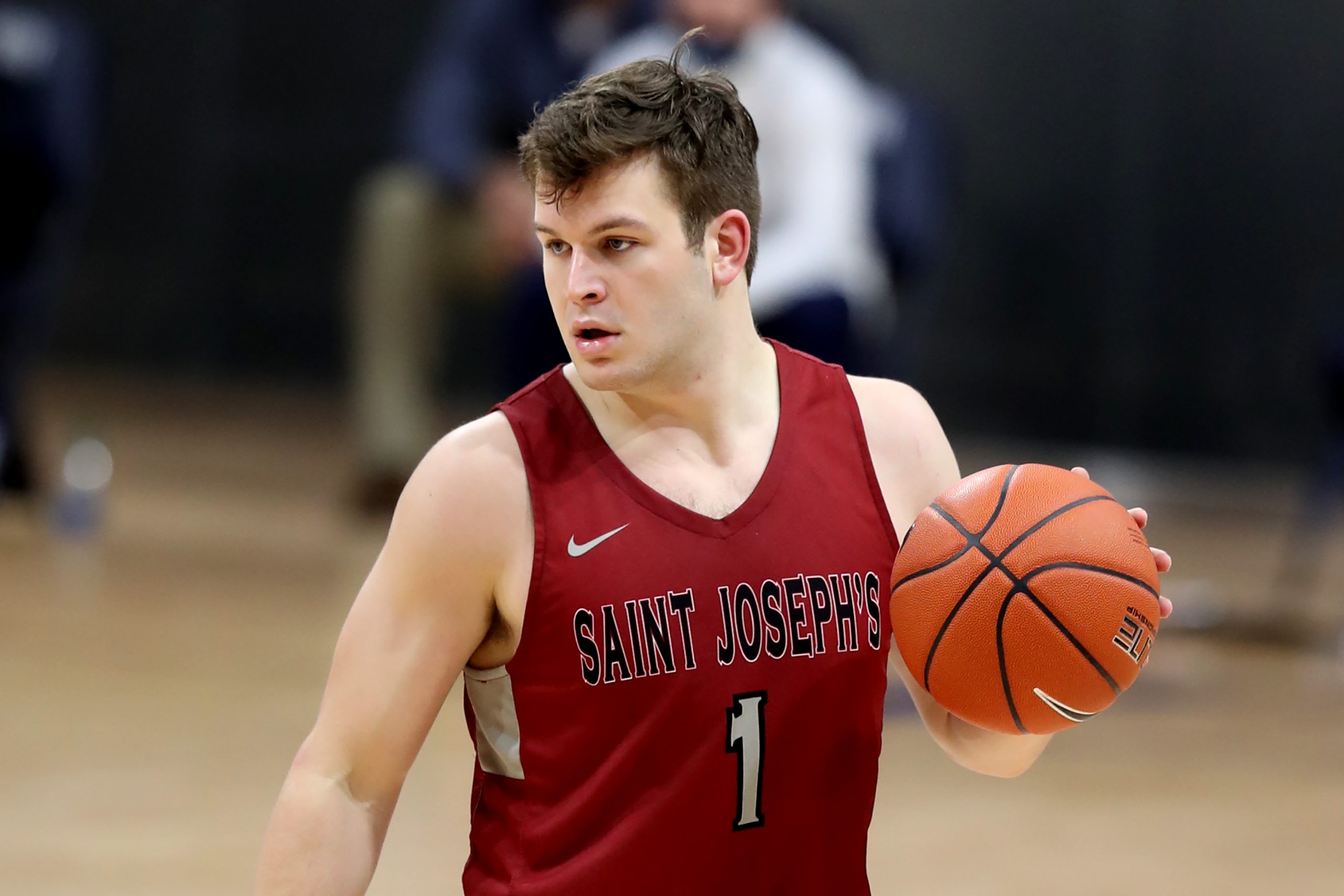
    Daly had two standout seasons at Delaware, surpassing 1,000 career points. He then transferred to St. Joe’s and led the Atlantic-10 and Big 5 in scoring from 2019 to 2021.

    Daly briefly pursued a career in the NBA G League, but living out of hotels and being away from his family was not for him. He quickly realized coaching was where he belonged and accepted his first coaching position at Albany when he was 24.

    Soaking it in

    At Albany, Bryant, and VCU, Daly immersed himself in the coaching profession, working early mornings and late nights and soaking up every piece of information from those he worked with.

    He credits Albany head coach Dwayne Killings for teaching him creativity and VCU head coach Phil Martelli Jr., whom Daly followed from Bryant to the Rams, on how to recruit.

    Each of those schools helped him develop his coaching philosophy.

    One mantra in particular has stayed with him. Martelli Jr. often reminded Daly to “believe further than you can see.”

    “When he said that line to me a year and a half ago, it really stuck out to me,” Daly said. “You never know when opportunities are going to come, you just have to be ready for it.”

    That philosophy carried Daly to two conference championships and two NCAA Tournament appearances in consecutive seasons at Bryant and VCU.

    Relationship-driven sport

    Daly’s relationship with McNamara began long before he got the call to join the Syracuse coaching staff.

    When Daly was a sophomore at Carroll, McNamara was recruiting his teammate, Derrick Jones Jr. McNamara attended open practices twice a week and often spoke to Daly after practice.

    “He took me aside a lot and was like, ‘I don’t understand why coaches aren’t recruiting you; you should have a lot of interest and offers right now,’” Daly said.

    Years later, when Ryan was a coach at Albany, they reconnected at a Coaches vs. Cancer event.

    “I walked up to him and said, ‘I don’t know if you remember me,’” he said.

    McNamara’s response was immediate: “‘Of course I remember you,’” Daly recalled.

    While playing for St. Joe’s, Ryan Daly led the Atlantic 10 and Big 5 in scoring from 2019 to 2021.CHARLES FOX / Staff Photographer

    Since then, Ryan and McNamara have kept in touch, texting each other about wins or recruits, while also seeing each other frequently on the road. When McNamara was announced as Syracuse’s new head coach, Daly texted him, saying congratulations. Two days later, Daly received the call from McNamara asking to join his staff.

    But leaving VCU was not an easy decision.

    “In some sense it was the hardest thing I ever did,” he said. “In some sense, it was a no-brainer.

    “The part that was exciting for me was that growing up I remember seeing Syracuse in the Final Four and Sweet Sixteen. The Orange is synonymous with March, and the challenge of bringing them back to that was exciting.”

    Brian Daly emphasized to Ryan while growing up that building connections was an important part of life, but also in the sports community. And those relationships are exactly how he has advanced in the profession and ended up at Syracuse.

    The last time Syracuse made an NCAA Tournament appearance was in 2021, and it advanced to the Sweet Sixteen. The program won its first and only national championship in 2003, when McNamara was a player on the team.

    Soon, 35,446 fans will be able to fill the Dome to see what McNamara and Daly are building in Syracuse.

    “I know the fans are diehard supporters, and experiencing people who live, eat, sleep, and breathe Syracuse men’s basketball in the Dome every night, you really can’t ask for anything more as a coach and a player,” Ryan said. “It’s a real home court advantage, and we want to bring that back.”

  • David de Garavilla’s rise continues in adaptive golf with third straight trip to the USGA Adaptive Open

    David de Garavilla’s rise continues in adaptive golf with third straight trip to the USGA Adaptive Open

    David de Garavilla has always been a competitor.

    As a child, the Telford native played every sport he could — from soccer, to baseball, basketball, wrestling, and football.

    Even after a life-altering injury during his sophomore year at Downingtown West High School resulted in the amputation of his left leg below the knee, de Garavilla never questioned whether he would compete again.

    “Sports were always something that I had done, so I wanted to continue doing it,” said de Garavilla, 43. “I’m going to do it if I’m able, so I was going to try everything and figure out a way to make it work.”

    With his competitive nature pushing him through, de Garavilla will be teeing off today in the USGA’s U.S. Adaptive Open, which runs through Wednesday at Woodmont Country Club in Rockville, Md. It marks the third consecutive year he has qualified for the championship, and de Garavilla is among 96 players to earn a spot in this year’s field.

    The USGA received 250 entries for the 2026 Adaptive Open and hosted eight 18-hole qualifying events across the country.

    “It’s no easy feat qualifying for a USGA event,” said Matt Hensel, his friend and caddie. “It’s hard to do that once, but three times in a row just shows his passion and love for the game, and his motivation to win.”

    In 1998, de Garavilla was playing in a junior varsity football game for Downington West when he broke his left leg. Doctors tried to fix his leg, but three weeks later, after several complications, his leg was amputated below his knee. Immediately following his surgery, he was fitted for a prosthetic and endured months of strenuous rehab.

    Soon after, he was back competing. He padded his prosthetic and by the start of his junior year in 1999, he returned to the football field, playing offensive line on junior varsity and long snapper for the varsity team.

    After his injury his sophomore year, the Eastern Amputee Golf Association in Bethlehem, Pa., learned of his amputation and reached out to de Garavilla with information about adaptive golf opportunities. The EAGA’s main goal is to organize and host amputee golf events for physically impaired individuals and teach them about the sport. At the time, he had little interest because he had never played golf.

    It wasn’t until after wrestling at Johns Hopkins University that de Garavilla bought his first set of clubs, looking for another opportunity to compete.

    “Sports dried up after college, and I didn’t have anything to do competitively,” de Garavilla said. “At that point I was just working, but there was a nine-hole work golf league, so I went out and tried that.”

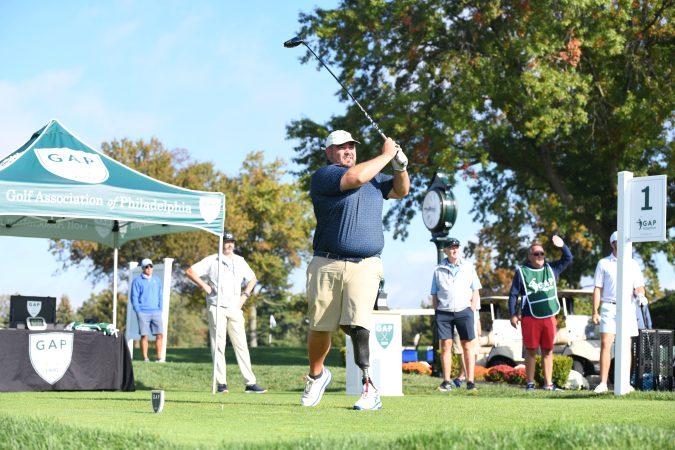
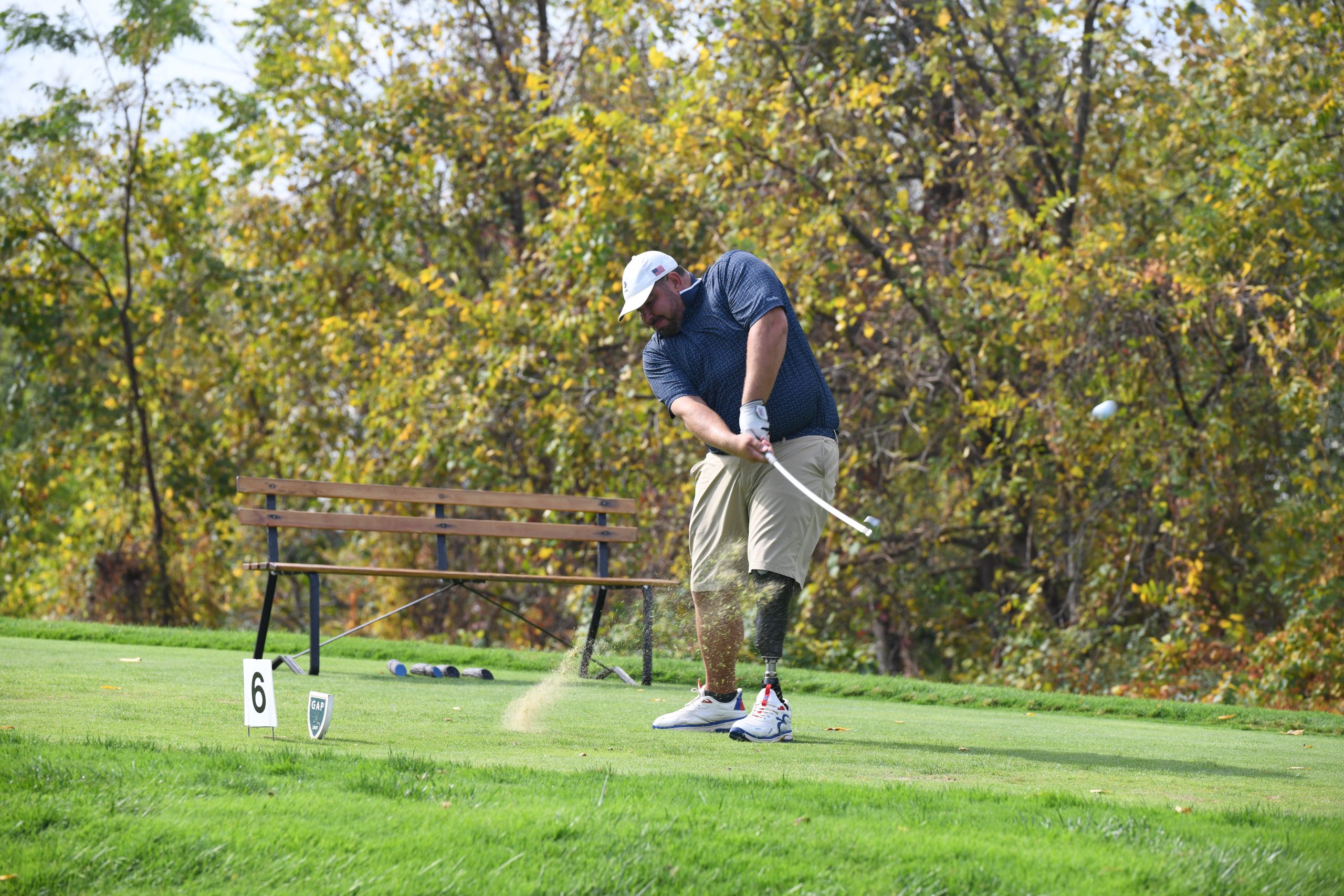
    David de Garavilla has developed into one of the area’s top adaptive golfers.The Golf Association of Philadelphia

    Golf quickly became his primary competitive outlet, he said. He never had any formal lessons, so he taught himself by studying the game.

    “I watch a lot of golf, read about golf, watch videos about people talking about the mechanics of golf,” he said. “I’m a nerd in that sense.”

    Over the past 15 years, he has developed into one of the area’s top adaptive golfers. He won the second Golf Association of Philadelphia Adaptive Open at his home course, Indian Valley Country Club, in 2025, and competes often against able-bodied golfers.

    However, competing in an USGA event is the biggest honor, he said. The growth of adaptive sports de Garavilla has seen since his injury has been significant.

    “It’s really cool that these organizations are creating an event like this,” he said. “It isn’t a charity event to celebrate people with disabilities, it’s really run just like a real U.S. Open. You truly feel like you’re a part of a professional event as a participant.”

    Hensel met de Garavilla at Indian Valley Country Club when they started playing golf around the same time and has caddied for him at the Adaptive Open since 2024. Hensel, who works with people with intellectual disabilities daily, said he’s grateful to be de Garavilla’s caddie and be surrounded by hardworking athletes at a USGA event.

    “Adaptive athletes’ stories are really inspiring, but at the end of the day, they’re competitors and they’re good golfers, and I think that’s the real story behind it,” Hensel said. “They’re out there to win, and David is definitely like that. From my perspective, it’s just cool to see all the different types of folks out there competing and grinding, and it is definitely inspiring to see.”

  • What to know about the proposed Protect College Sports Act and its impact on NCAA athletics

    What to know about the proposed Protect College Sports Act and its impact on NCAA athletics

    A landmark bipartisan bill aimed at stabilizing college sports and protecting student-athletes cleared the U.S. Senate Commerce Committee on June 18 and is expected to receive a Senate floor vote in July. This marks the first time a major college reform bill has advanced this far in the Senate.

    Spearheaded by Sens. Ted Cruz, R-Texas., and Maria Cantwell, D-Wash., the Protect College Sports Act was introduced last month to regulate college sports and provide antitrust protection to the NCAA.

    “We need order and stability now,” Cantwell said in her opening statement on June 18. “The craziness that is happening in this marketplace with cutting of thousands of roster slots, the taxing students’ fees for education to pay for football, the arms race that is basically taking money away from research and development. Our task here is to win the race in innovation.”

    The bill was voted 19-9 and included support from Sen. John Fetterman, D-Pa. It now must pass the 60-vote threshold in the Senate before advancing to the House of Representatives. If approved by both chambers, it would then be sent to President Donald Trump’s desk. The bill can still be challenged and changed throughout this process.

    The history behind the proposed legislation

    The NCAA has sought congressional intervention for years to help regulate college athletics. College sports officials have asked Congress to help them create a national standard for how athletes are paid and for antitrust protections to avoid continuous legal challenges.

    “There have been dozens of attempts at congressional intervention in college athletics for decades, but it certainly has increased the past 10 years because of justified litigation over a broken college sports model and restricting athletes’ rights,” said David Ridpath, a professor of sports business at Ohio University and an expert on NCAA governance.

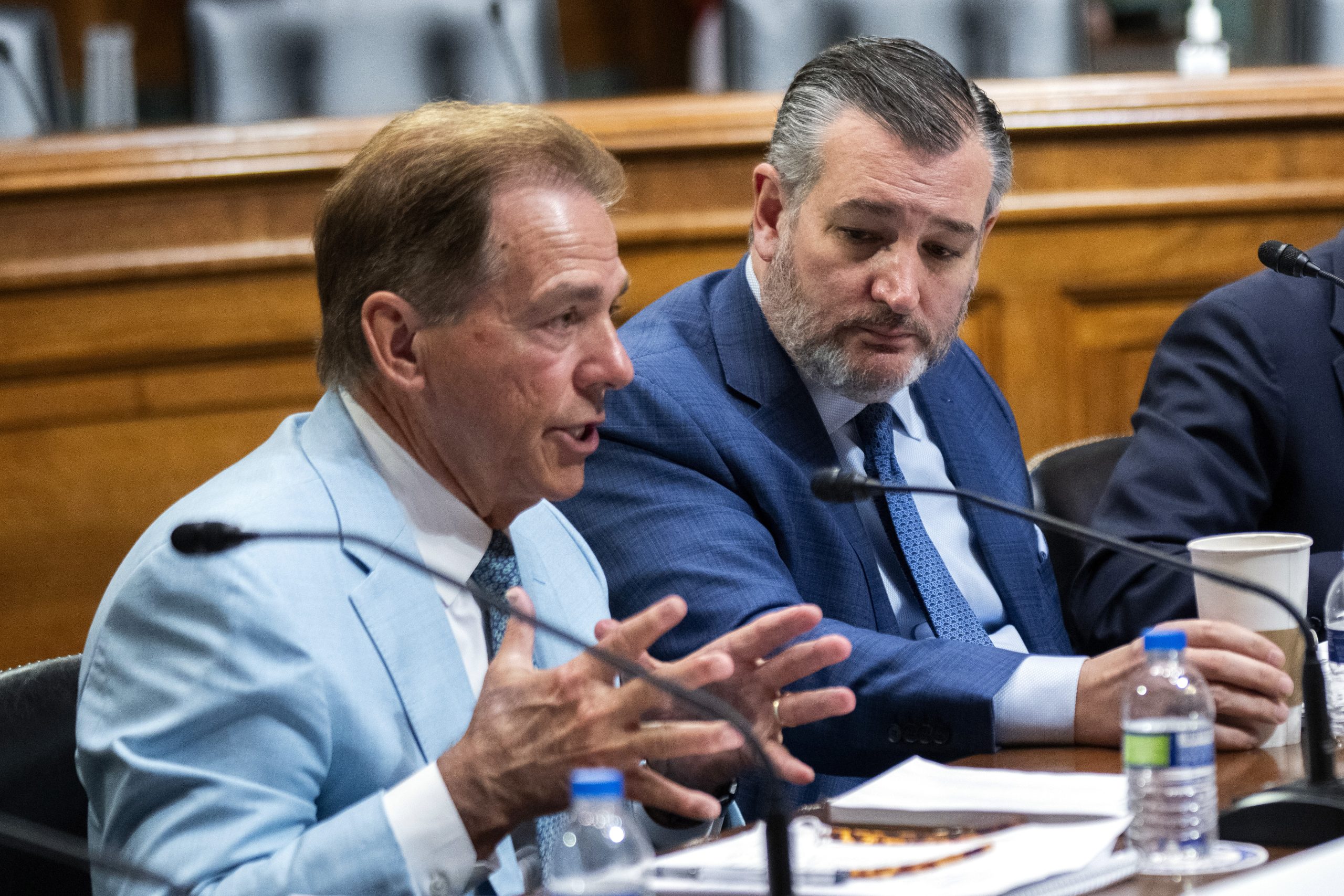
    The Protect College Sports Act has been spearheaded by Senators Ted Cruz (right) and Maria Cantwell.Manuel Balce Ceneta

    Last year, the SCORE Act advanced through two major House committees but did not reach the floor for a vote. That proposed bill was focused on creating a national framework for name, image, and likeness compensation and failed because it did not receive bipartisan support.

    What does the bill say?

    The proposed bill would provide an antitrust exemption, allowing the NCAA to regulate athlete transfers and eligibility within certain guidelines. It would also establish limits on athletes’ compensation and prohibit coaches from leaving before the season ends with their current team. Coaches who violate this rule would be ineligible to coach for the following season.

    The legislation also seeks to protect women’s and Olympic sports programs. Major colleges and universities would not be able to cut the number of women’s and Olympic sports programs, roster spots, or scholarship opportunities below current levels. The U.S. Olympic and Paralympic Committee endorsed the bill.

    “The revised version of the Protect College Sports Act ensures that higher-resourced NCAA Division I athletic departments — those with annual revenues exceeding $80 million — will maintain at least the same number of roster spots as in the 2024-2025 academic year,” wrote the U.S. Olympic and Paralympic Committee in a statement. “We welcome that the agreement provides reasonable flexibility, including traditional protections for mid-sized institutions, while preserving overall participation opportunities.”

    Student-athletes would be allowed only one unrestricted transfer during the NCAA designated windows in their career. Any other transfer would cost the athlete a year of eligibility.

    The bill would also allow colleges and conferences to voluntarily pool their media rights under a single entity rather than negotiate deals solely through individual conferences. The NFL voiced its support for the voluntary pooling of media rights, according to ESPN.

    What are the experts saying?

    Ridpath said pooling media rights could generate more revenue and allow colleges and universities to share that revenue across the entire college athletic ecosystem.

    “That could be used to help expand sports offerings and save current sports,” Ridpath said. “College sports is an incubator for Olympic and national teams, and if we start cutting these sports, we’re going to become less competitive.”

    Ridpath said this bill is a “fair effort” to regulate college athletics, but his biggest issue is the lack of direct negotiation with student-athletes.

    “If the NCAA wants real legal and antitrust protection, if they would sit down and negotiate with the athletes as a collective body, that would give you legal cover because everyone has agreed to the rules,” he said. “Until you speak directly with the athletes, I think we are still going to have litigation.”

    What are people saying?

    College sports stakeholders have voiced mixed opinions on the bill.

    More than 20 conferences, including the American, Big East, and Atlantic 10, have expressed support for the bill. The NFL, MLB, and the National Basketball Players Association sent statements to Congress voicing their support as well.

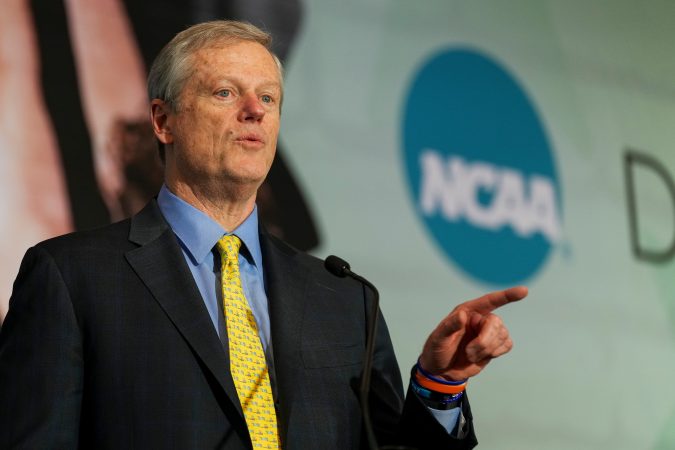
    Charlie Baker, the NCAA president and former governor of Massachusetts, publicly backed the bill on social media.

    “Every sports league needs rules, and there are certain challenges to NCAA rules that only Congress can address,” he wrote. “The bipartisan Protect College Sports Act’s sections bolstering eligibility, transfer and agent policies are needed now to deliver on that obligation. As a former governor, I understand that getting important legislation done requires compromise. While the bill does not address every issue college sports face, the current state of play cannot continue, and we must move the bill forward.”

    However, the Big Ten and SEC, the wealthiest college conferences, oppose the bill as it stands, saying revisions are needed to gain their approval. Part of the bill prevents conferences that declare more than $1 billion in revenue on their 2025 tax returns — the SEC and Big Ten — from forming a “super-league.”

    “From the outset, we identified a set of essential revisions to the PCSA necessary for the long-term sustainability of college athletics,” the two conferences wrote in a joint statement on June 18. “We have worked with both majority and minority staff to advance those revisions, which focus on better supporting student-athletes and stabilizing the college sports environment.”

    Letters obtained by The Inquirer from former Penn State trustee Anthony Lubrano showed Penn State president Neeli Bendapudi writing on June 17 to Sens. Fetterman and David McCormick in opposition to the bill, saying “significant problems remain” in the legislation.

    Lubrano, whose term ended Tuesday, said Bendapudi did not collaborate with the board of trustees on the correspondence with Fetterman and McCormick. He believes it would be in Penn State’s best interest to support the proposed legislation.

    “For Penn State, we’d be best served to embrace the legislation and work to enhance and improve it over time,” Lubrano said. “But in the absence of perfection today, we shouldn’t allow perfection to get in the way of being good, and so we should be behind it.”

    The bill, he said, protects all student-athletes and the non-revenue Olympic sports at Penn State.

    “Listening to the senators on a number of calls I’ve had with them, it’s clear that one of their primary concerns revolves around the Olympic sports,” Lubrano said. “If you do nothing, schools will likely discontinue some of their programs in the non-revenue sports, and a lot of those are Olympic sports. So consequently, you can envision a day where the United States isn’t competitive on a world stage at the Olympics. Is that what we want to see happen?”