Author: Lauren Jones

  • College sports are changing. This Penn professor wrote the guide for university leaders.

    College sports are changing. This Penn professor wrote the guide for university leaders.

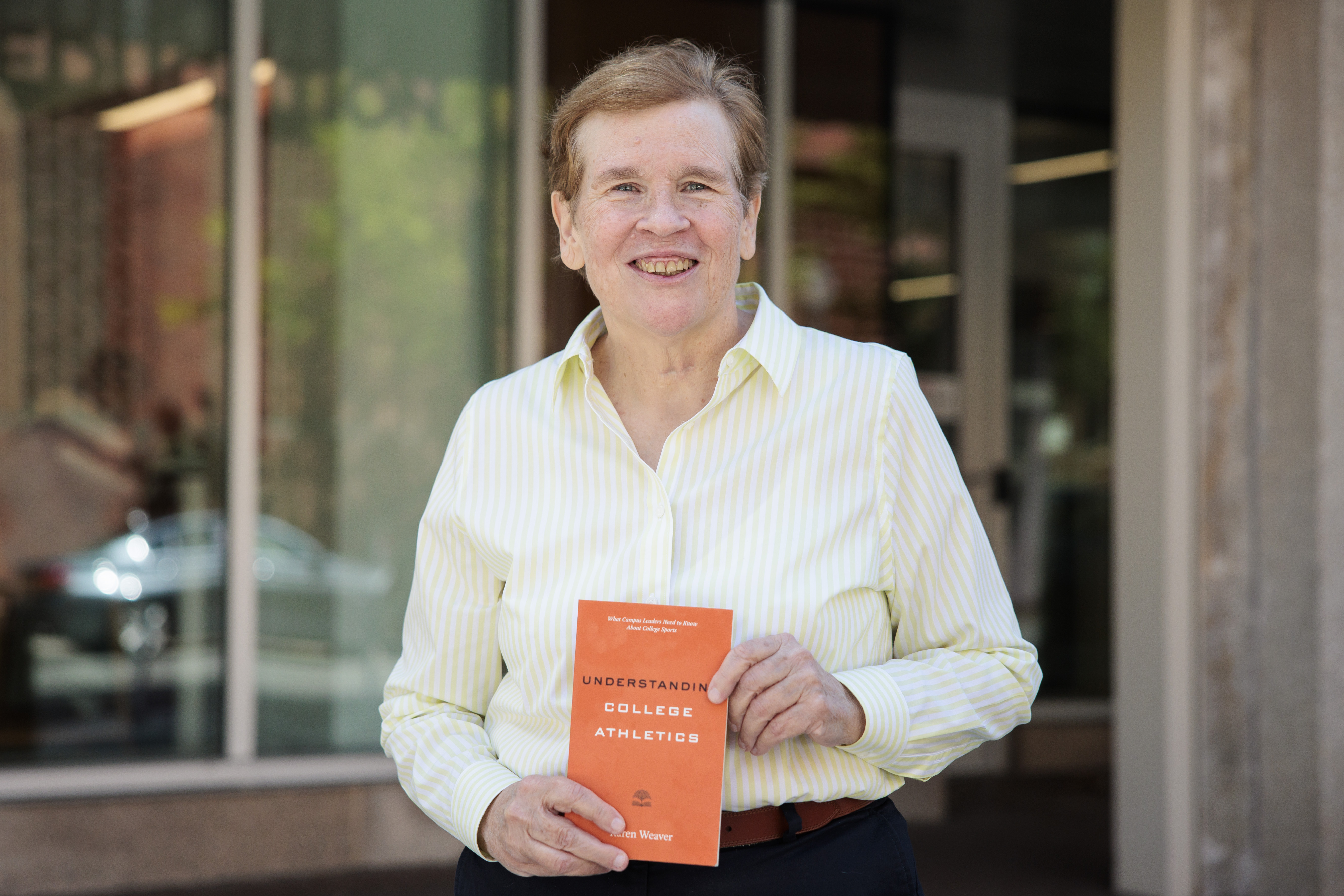
    When Karen Weaver began her executive doctorate in higher education management at Penn in 2007, she noticed many of her classmates didn’t know much about college athletics.

    “We would have fascinating conversations about college athletics and they had a lot of questions,” she said. “And I thought to myself, ‘Where else would they learn this?’”

    Weaver, a Lock Haven Athletics Hall of Fame field hockey player with a coaching background, realized the program didn’t have a class about athletics. So she began teaching as an adjunct assistant professor and academic director of Penn’s new athletics enterprise certificate program in 2012.

    As college athletics continues to evolve with name, image and likeness, the transfer portal, and legislation like the Protect College Sports Act, Weaver believes university presidents need a better understanding of the landscape.

    “As a student-athlete, you do feel very siloed sometimes away from the rest of the campus,” she said. “That separation doesn’t enhance the president’s understanding. So they really don’t get to be exposed to it until they sit in the chair on Day 1.”

    Weaver’s book, Understanding College Athletics: What Campus Leaders Need to Know About College Sports, draws on four years of work to help university presidents navigate the changing landscape of college athletics and make decisions that best reflect the needs of their universities.

    The Inquirer sat down with her to discuss her book, which published in August.

    Q: Who is the book written for, and what are the main questions you aim to answer?

    A: It’s meant for presidents and boards of trustees, and really anybody else who wants to ascend to a senior leadership role. Generally the president has a cabinet of maybe 13-14 people who serve different parts of the institution. And I’m hopeful that this will encourage those folks to have discussions when athletics come up. Villanova is D1 but it is FCS D1. That creates an entirely different set of conversations than what’s happening right now at Florida State, who just fired their AD. So how do we have the right discussion for our level and where we are? That’s the first question.

    The second question is, how do we align athletics with our mission today? Not as it was 20 years ago because things have changed. And same thing with a lot of colleges. They know that their role has changed. The interests of parents and students have changed. So, there’s this whole reinvention thing going on and athletics should be a part of that.

    And No. 3, what if we can’t afford it? Then what are we doing? And so that’s another part of the book, too.
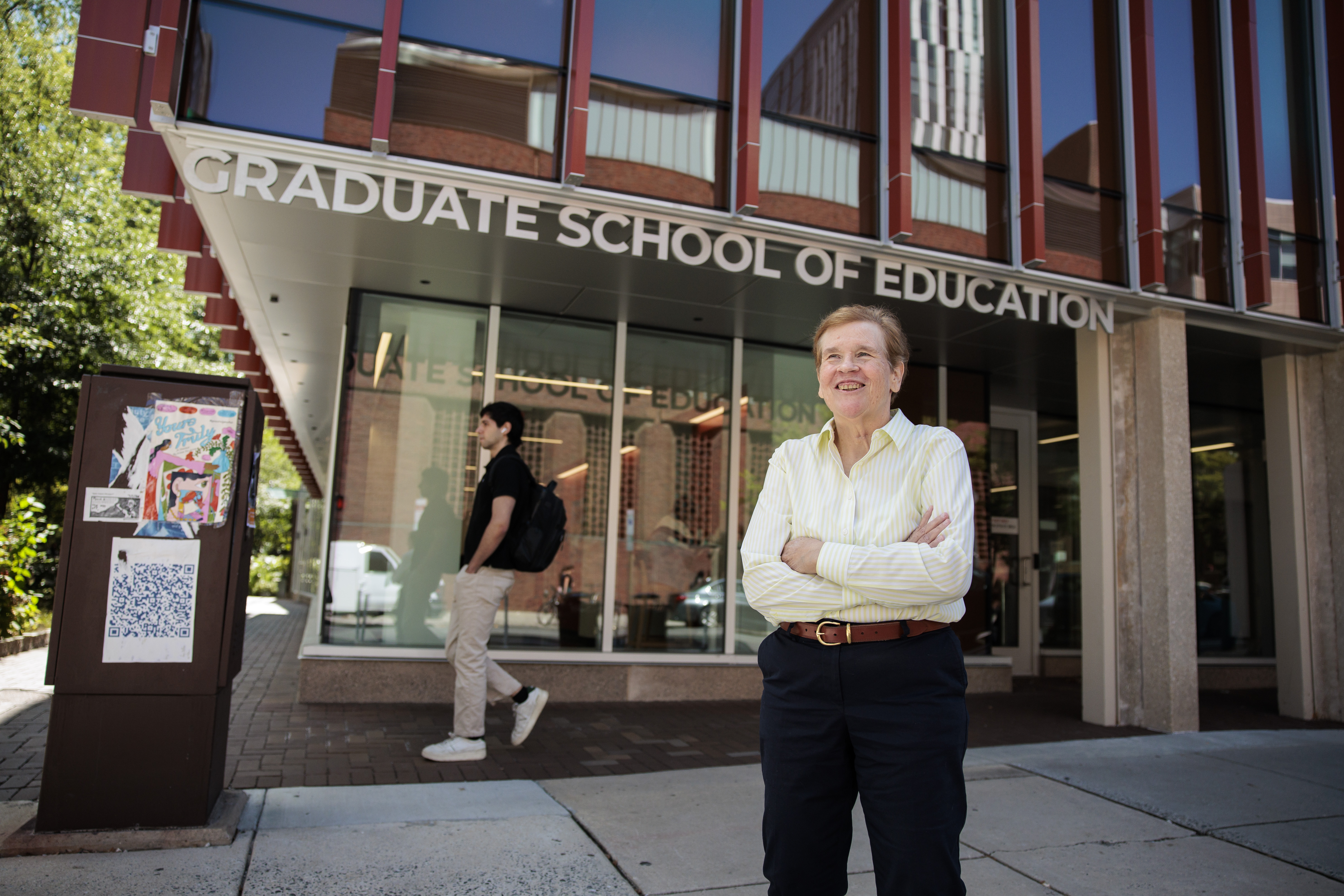
    Karen Weaver has been an adjunct assistant professor at Penn since 2012.Monica Herndon / Staff Photographer
    Q: You discuss how important it is for universities to develop an athletic model that fits their institution. With schools like Spelman College eliminating varsity sports and Saint Francis University moving from Division I to Division III, will more universities begin to rethink the role athletics play on their campuses as college sports continue to change?

    A: I hope so. We’re doing a lot of complaining now about D1 schools. Mostly the group of six like James Madison just moved up to the FBS and some of the others in the Sun Belt Conference. They’re trying to figure out how we can make sure that we get in. But then the next question is once you’re in, how did you get to pay for it? And we haven’t solved that problem yet. So, what are some other alternatives?

    I admire St. Francis’ president immensely. They had more discussions for two and a half years about this because their enrollment and their branding was directly tied to D1. So, to give that up and go from D1 to D3 is huge. This is the university’s first full year in Division III. I talked to him [Malachi Van Tassell] last weekend and he said “weekends are quieter here,” which I thought was interesting.

    Q: According to a 2018 Forbes article, Villanova saw a 21% increase in applicants after Villanova basketball won the 2016 national championship. How much does athletic success vs. the school’s identity contribute to student enrollment?

    A: There’s a certain audience that Villanova is very attractive to. Obviously there’s a religious component and there’s a size component. They’re good at what they’re good at. I honestly can’t tell you what other teams do really well other than track and field perhaps, but basketball does make a difference. Now if they don’t play at the level that they did in the Jay Wright era, then I don’t know what happens.

    You look at the other [private Catholic] schools, Loyola, Boston College, all of them have unique challenges because of demographic shifts. Villanova has managed to catch lightning in a bottle at this moment where people who are outside of Pennsylvania and maybe in Ohio, New York, and New Jersey start to think about, “Where could I go that’s got a real mission that I can identify with?” That’s who they are. That’s the thing that more colleges have to understand is, who are we? How do we differentiate ourselves? That’s what Villanova has done.

    Q: What is changing the most from student-athletes that people may not think about?

    A: The biggest change is the fact that athletes are thinking about the immediacy of what they can get vs. the long-term benefit. All of us chose schools in the past for that long-term benefit. I don’t know that we’re thinking about that right now as athletes. We’re thinking about where we can get the best deal next semester. And we don’t have enough research yet on the athletes who transferred more than twice and what that has done to their academic progress.

    Here’s a question I hear nobody asking: If [a student-athlete gets] injured, who’s responsible for their lifetime medical care? Because the NCAA has assigned that to an institution so they could say, we’re providing lifetime medical care. But our school says he got injured at the past school. So, who makes those decisions? I really don’t think we’re thinking enough about medical care and the transfer of medical information from school to school.

    Q: In your book, you refer to “Cinderella trap” on how we haven’t seen an underdog team make a run in the NCAA Tournament. Why do you think those Cinderella stories have become less common?

    A: We’ve had two years now of no Cinderellas making it beyond the second round, which is sort of the definition of Cinderella. I think Cinderellas are going to be few and far between, and what they’re trying to do with March Madness, at least on the men’s side, is expand it to 74 teams. And you can see why because they want to attract those Cinderellas to get those stories. But again, are they going to go past the second round? Even if they create more rounds. Once you get to that round of 16, that’s when the numbers, the viewers go up. The stories are more interesting. The amount of gambling that goes on in these kinds of situations is frightening. So all this is about trying to extend the media contracts, extend the discussions, the stories, and hopefully catch a moment of glory. That’s what really made March Madness special.
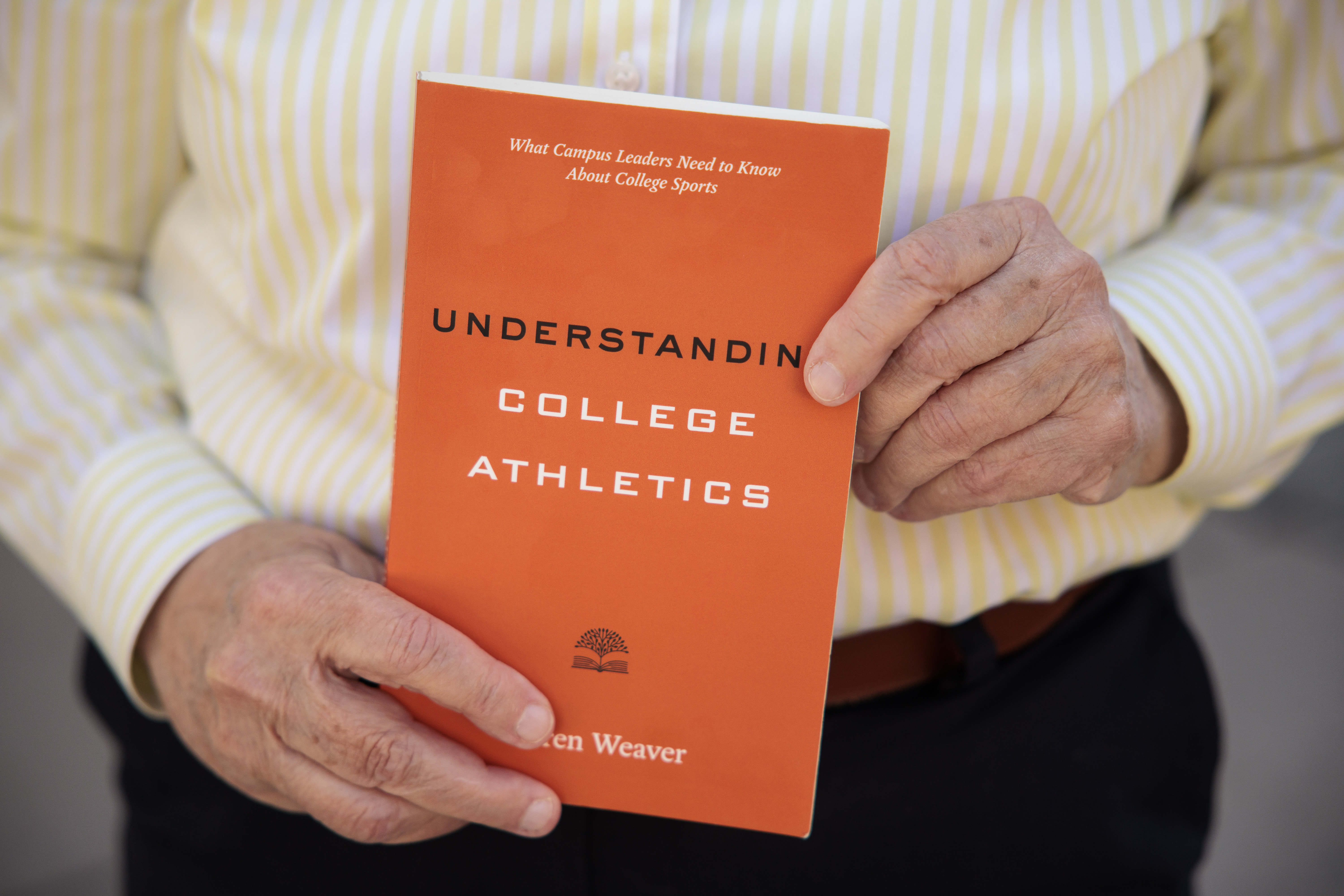
    Karen Weaver’s book, “Understanding College Athletics: What Campus Leaders Need to Know About College Sports,” published in August. Monica Herndon / Staff Photographer
    Q: You discuss the growth of sports gambling among college students. What concerns you most about the rise of betting on college campuses?

    A: It’s scary. You watch a sporting event and every other commercial is gambling. Every ticker line is on there … you can’t avoid it. I really wanted to try to hit at least that in the book because presidents have got to have a better understanding of what’s going on not with their athletes, but with their students.

    There is betting going on Division III games. There’s betting going on on women’s games. They’re not as high profile. But still, if somebody gambles what to them is a lot of money, and there’s some people who believe that student loans are being used to promote this gambling, which is really scary, and they lose and they know that kid or a friend knows that kid and they’re going to get mad at that kid who doesn’t hit 20 points. Those kinds of things are scary. We know that has happened because three years ago at Dayton in the first round of March Madness on the men’s side at the press conference where that particular team lost. The players and the coaches were nearly in tears because of the abuse that they took from the fans sitting right behind them on the bench. The coach was like, “Please, these are 19- and 20-year-olds, please stop yelling at them because they’re not hitting the shot you thought they should hit or the first free throw or second free throw.”

    Q: What do you hope will be the biggest takeaway from your book?

    A: The No. 1 thing is that I want as many schools as possible in this new era to go back to what their mission is. And just to have that basic conversation of who are we today? Not who we were 20 years ago when we decided to move into this division or that division. And who are we in our peer group today? Every school has an institution that they compare themselves to. And does that still work for us? I think that’s the most important question in the book.
  • The Head of the Schuylkill Regatta celebrates women’s rowing. Here’s how the sport has evolved.

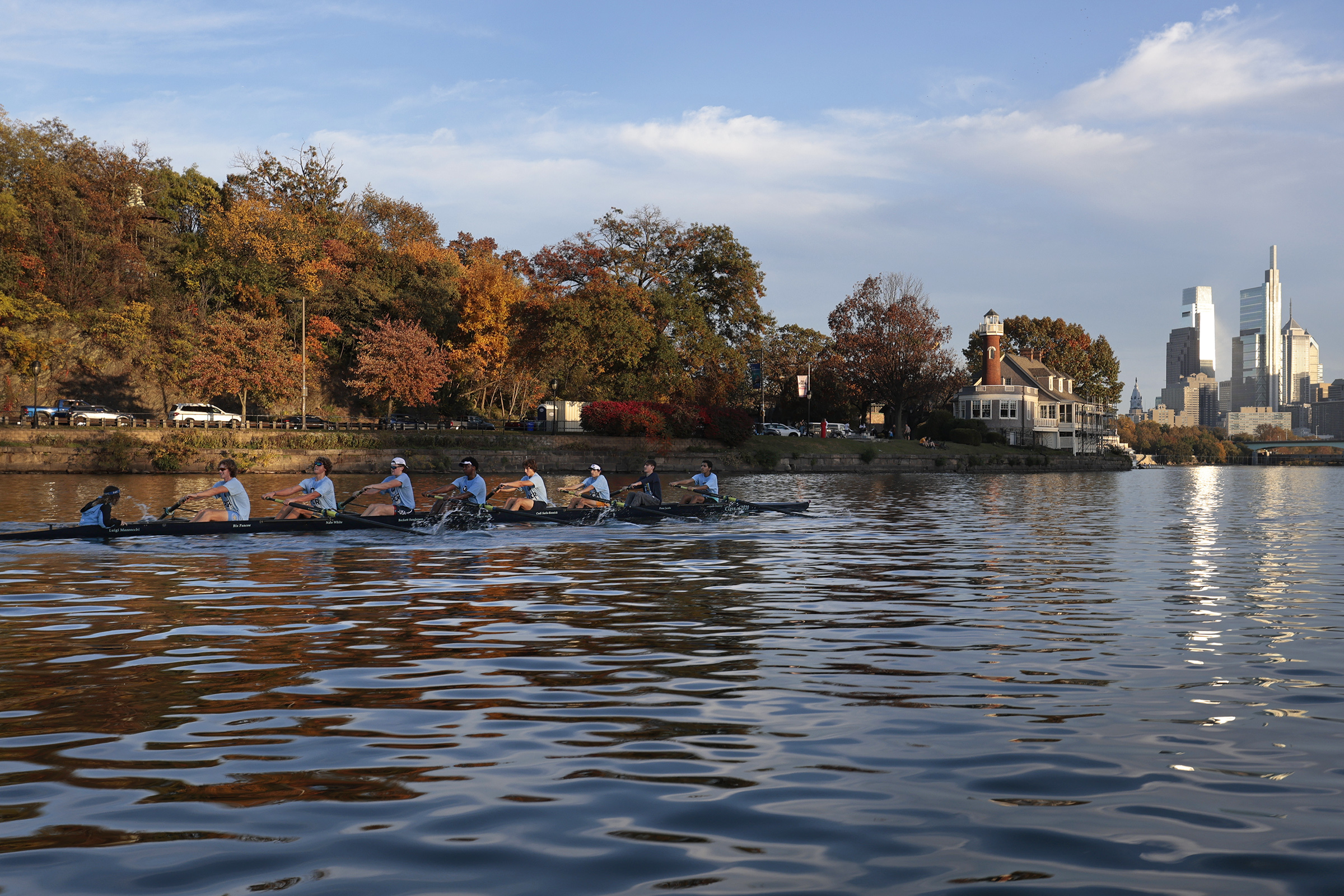
    The Head of the Schuylkill Regatta celebrates women’s rowing. Here’s how the sport has evolved.

    In 1978, Anne Cutler drove from her home in Bethlehem to Boathouse Row and knocked on the doors of the many boathouses, asking if she could row with them for the summer.

    At the time, Cutler finished her freshman year at George Washington. During the school year, she was approached by the crew team about joining the program. She wanted to use her time back home to see if the sport was for her.

    She knocked on the door of the Philadelphia Girls’ Rowing Club, where Sophie Socha, now the club’s president and a U.S. Rowing Hall of Famer, opened the door and welcomed her with open arms.

    “Come on down and row with us this summer,” Cutler recalls Socha telling her.

    Forty-eight years later, Cutler is back rowing on the river where she started. On Saturday and Sunday, Cutler will compete in the single scull at the 56th Head of the Schuylkill Regatta, the city’s largest and most inclusive regatta.

    “I’m at the time of my life where this is my time and this is my celebration of being able to still get in a boat at my age of 67,” Cutler said. “I never stopped rowing because part of my life is always being an athlete and living that lifestyle and having that community of people and staying fit. I moved away from racing but then I moved into coaching and then helping the Schuylkill River. What can women of my age do, right? At this age, as we’re aging, we don’t have to stop. We can keep going.”

    The regatta started in 1970 and welcomed rowers of all ages and experience, from elite rowers to those new to the sport. Twelve women competed in the first regatta at a time when rowing was a male-dominated sport.

    Women were excluded from the Philadelphia rowing scene until the 1960s. Many rowing clubs on the Schuylkill did not allow women to join or compete, so in 1938 four women started the Philadelphia Girls’ Rowing Club. It was founded as a competitive rowing organization, but for almost 30 years the members had to compete against each other.

    The Head of the Schuylkill Regatta is the city’s largest and most inclusive regatta.Elizabeth Robertson / Staff Photographer

    Women’s clubs were not allowed to become members of the Schuylkill Navy, the association of amateur rowing clubs in Philadelphia, but as interest in women’s crew began to grow, they were allowed to join in 1968.

    “When I started rowing, the guys, they didn’t want us there and they were very clear about that,” said Socha, who started rowing in 1961. “What changed was the attitude of men towards women, and women towards women. The women, then and now, see that it is an open sport that they can do and can try.”

    Cutler remembered a time during her rowing career when someone told her she was “too pretty to row.”

    “Do you want to see all the medals I have?” she said. “We couldn’t let any of that get in our way. We wanted the opportunity.”

    At George Washington, Cutler said her team used to struggle to fill an eight-person boat and get money for uniforms. But she noticed an increase in opportunities for women in rowing once colleges started enforcing Title IX. Cutler said she was one of the first recipients of a Title IX scholarship.

    With more women allowed to compete in collegiate sports, that opened more seats for women in boats. Now, girls’ scholastic rowing has started to explode with the increased opportunities at the college level.

    “They come now with their masseuses, sports psychologists, three practice uniforms and you’re like, ‘Yeah this is progress.’ It really is the opportunity for women to take part in a sport that, number one, has deep traditions,” Cutler said. “And to be able to take part in the tradition but also in a lifetime sport where you stay fit and to have the opportunity for friendships and personal growth.”

    This weekend at the regatta, there are as many women entries as men, showcasing the continued interest in women’s crew.

    “This is a celebration,” Cutler said. “This is a celebration of women, all ages that are out there.”

  • Eagles vs. Panthers predictions: Rounding up experts’ picks for the Week 6 matchup at Lincoln Financial Field

    Eagles vs. Panthers predictions: Rounding up experts’ picks for the Week 6 matchup at Lincoln Financial Field

    A three-game losing streak and a growing list of injuries have put the Eagles in a difficult spot entering Sunday’s game against the Carolina Panthers. The Birds will look to get back on track at Lincoln Financial Field (1 p.m., CBS Philadelphia) but will have to do so without quarterback Jalen Hurts.

    The Eagles announced Thursday that Hurts will miss the game because of a superficial blood clot in his calf, which leaves backup Tanner McKee to lead the charge.

    The Panthers (2-2) enter following a bye week and with Wynnewood-born quarterback Bryce Young coming off a strong performance against the Detroit Lions. He threw for 329 yards and two touchdowns, had no interceptions, and completed a season-high 70.7% of his passes (29 of 41).

    The Eagles have home-field advantage, but injuries and the team’s offensive struggles make this a difficult matchup. Let’s take a closer look at who the local and national media are picking.

    Inquirer predictions

    The Inquirer’s beat reporters have little confidence in the Birds this week, with Jeff Neiburg saying he wasn’t sure the Eagles could win, even if Hurts was playing.

    Neiburg has the Panthers winning, 24-16, and said he needs to see an Eagles win before he’ll predict them to win again.

    With McKee’s inconsistent preseason performance, Olivia Reiner writes that “it would take a heroic effort from McKee to prevent the Eagles from extending their losing streak to four games.” She has the Panthers winning, 24-13.

    Read The Inquirer’s full predictions here.

    National media predictions

    NFL.com: All five experts picked the Panthers over the Eagles.

    ESPN.com: Dan Graziano, Seth Wickersham, and Pamela Maldonado are the only ones on ESPN’s 11-person panel who picked the Eagles over the Panthers.

    The Athletic: Before finding out that Hurts was out for Sunday, the picks were 5-3 in the Eagles’ favor. It’s now 6-2 Panthers. Chad Graff, one of the writers who kept their Eagles pick, wrote, “In Tanner McKee I trust. I’m not changing.”

    CBS Sports: Senior writer Pete Prisco is the only expert on a panel of seven picking the Eagles to cover.

    USA Today: Michael Middlehurst-Schwartz picked the Eagles to win, 19-14. He wrote, “… with the Panthers’ secondary hampered by cornerbacks Jaycee Horn and Mike Jackson remaining on injured reserve, this is the opportunity for the unit to start finding its footing.”

    Sports Illustrated: The eight analysts at Sports Illustrated are split down the middle; four are backing the Eagles and four have the Panthers.

    Bleacher Report: Brad Gagnon and Ian Hanford are the only two experts out of seven going with the Eagles when it comes to the 1½-point spread. Wes O’Donnell wrote, “I’m done trying to figure out the Eagles. The Eagles clearly cannot figure out the Eagles. And while the Panthers’ defense is a great opportunity for any offense to get right, Carolina had a bye week and then some to prepare for Philly. This Panthers team has defied the odds and shown up in tough situations since last season.”

    Pro Football Talk: Mike Florio has the Eagles winning, 24-20, and wrote that if the Eagles want a chance in 2026, this is a must-win game.

    Sporting News: Bill Bender has the Panthers taking home a 22-20 win over the Eagles.

    Local media predictions

    Philly Voice: Every staff writer at Philly Voice is backing the Panthers to take home a win at the Linc on Sunday. Geoff Mosher wrote, “I’m delusional enough to think the defense can, and will, be good enough to keep the Eagles in this game from start to finish. I’m not delusional enough to think their piecemeal offense can score enough points to give the Eagles the edge.”

    Bleeding Green Nation: Three experts at Bleeding Green Nation picked the Birds to win on Sunday, and the two others backed the Panthers.

    Delaware Online: Out of the 11 reporters making picks, six chose the Eagles. Brandon Holveck wrote, “This pick is a vote of confidence for the Vic Fangio defense led by a resurgent Jalen Carter, Zack Baun, Quinyon Mitchell and Cooper DeJean. Those are four of the best five or six players on the Eagles, and the organization will lean on them to get through this turbulent patch.”

  • Jeffrey Lurie on Mike Ditka’s legacy and the state of the Eagles.

    Jeffrey Lurie on Mike Ditka’s legacy and the state of the Eagles.

    Eagles owner Jeffrey Lurie remembered Mike Ditka as one of football’s most iconic figures during a CNN interview Friday following the Chicago Bears legend’s death at 86 years old.

    Lurie reflected on the legacy Ditka left behind as a player, coach, and television analyst on The Lead with Jake Tapper.

    “I think he’s one of the iconic figures of the last several decades,” Lurie said. “I remember him as a boy, as a terrific tight end. I admired him as a coach.”

    Ditka’s family announced his death Friday in a statement, saying, “While the world knew Mike as a Hall of Fame football player, legendary coach, and leader of the Chicago Bears’ Super Bowl XX championship team, we knew him as the heart of our family.”

    Ditka became the first tight end ever inducted into the Pro Football Hall of Fame in 1988 and one of the NFL’s most recognizable coaches. He played six seasons for the Chicago Bears, two for the Eagles (1967-68) and four for the Dallas Cowboys during his career. He later coached Chicago to the Super Bowl XX victory in 1985.

    “High integrity, said what he felt, honest, and just an excellent motivator,” Lurie said about Ditka’s character. “I think we’ll all miss Mike Ditka. There aren’t many Mike Ditkas going around every decade or every year. So, sad day to lose Mike Ditka.”

    Lurie also addressed the Eagles’ recent struggles, but said the organization’s expectations are still high. The Birds have lost two consecutive games and enter Week 5 at 2-2, raising concerns for many fans.

    “We are gung-ho to win big and win our division first, and go from there,” Lurie said. “So we couldn’t be more excited.”

  • Eagles vs. Jaguars predictions: Rounding up experts’ picks for the Birds’ Week 5 matchup in London

    Eagles vs. Jaguars predictions: Rounding up experts’ picks for the Birds’ Week 5 matchup in London

    After a hectic week, the Eagles will look to end a two-game losing streak when they face the Jacksonville Jaguars on Sunday in London (9:30 a.m., NFL Network).

    A disappointing 24-20 loss to the Los Angeles Rams, a series of injuries, and massive roster changes leave the Birds (2-2) facing a difficult test against Jacksonville (3-1), which hasn’t allowed more than 20 points in a game through four weeks.

    Can Jalen Hurts and the Eagles get their season back on track across the pond, or will Trevor Lawrence and the Jaguars hand the Birds their third consecutive loss? Let’s take a closer look at who the local and national media are picking:

    Inquirer predictions

    The Inquirer’s beat reporters believe the Birds are heavy underdogs heading into Week 5 against the Jaguars.

    Jeff Neiburg has the Jaguars winning, 23-13, and wonders where the scoring will come from with stars like DeVonta Smith out.

    Ryan Novozinsky told Eagles fans traveling to London to enjoy the first few days of their trip because Sunday is going “to be a messy one.” He has the Jaguars winning, 24-7.

    Read more of our writers’ picks here.

    National media predictions

    NFL.com: All five experts picked the Jaguars over the Eagles. Jeremy Bergman wrote that they are “flying into London battered, bruised and beleaguered.”

    ESPN.com: Seth Wickersham is the lone ESPN expert who picked the Eagles over the Jaguars.

    The Athletic: The eight-person panel backed the Jaguars over the Eagles.

    CBS Sports: Writer Jared Dubin is the only expert picking the Eagles to cover.

    USA Today: All of the USA Today experts picked Jacksonville. The injuries to Nick Sirianni’s squad are “a lot to overcome against a Jacksonville team coming off a road win in Cincinnati,” Adam Kaufman wrote.

    Sports Illustrated: There seemingly was a trend within the national media this week. Once again, all eight analysts at Sports Illustrated picked the Jaguars to beat the Eagles.

    Bleacher Report: The seven experts at B/R are split when it comes to the 6½-point spread: four picks for the Jaguars, and three for the Eagles. Analyst Ian Hanford wrote, “The Jaguars’ defense has been very good and should be able to bottle up the Philadelphia rushing attack with [Saquon] Barkley on the shelf.

    “However, this is still a veteran Eagles group coming off a tough loss to the Rams. I don’t think they’ll do enough to win, but Jalen Hurts comes on strong in the second half and gets the backdoor cover.”

    Pro Football Talk: Mike Florio has the Jaguars winning, 27-12. “The Eagles went from 2-0 with plenty of questions to 2-2 with few answers. Given the injuries and the roster turmoil, it will take all of coach Nick Sirianni’s abilities and then some to engineer a win after a flight to London.”

    Sporting News: Bill Bender also has the Jaguars taking home a win, 24-21.

    Local media predictions

    Philly Voice: Staff writers at Philly Voice are picking the Jaguars to win by a large margin on Sunday in London.

    Bleeding Green Nation: Ben Natan and Alexis Chassen picked the Birds to win on Sunday, with the four others backing the Jaguars.

    Delaware Online: Out of the 11 reporters making picks, nine chose the Jaguars. Bob Jordan wrote, “The Eagles have not been below .500 at any point during a season since 2021 Week 14, so maybe motivation to preserve that streak does the trick for the Birds.”

  • Merion joins Pebble Beach and others as the USGA’s fourth U.S. Open anchor site

    Merion joins Pebble Beach and others as the USGA’s fourth U.S. Open anchor site

    Merion Golf Club will continue to host historic USGA championships for decades to come after the United States Golf Association announced Thursday that the club has been designated as the fourth U.S. Open anchor site.

    The announcement comes just months after Merion hosted the 126th U.S. Amateur, which drew an estimated 20,000-plus fans and marked the most-attended U.S. Amateur on record.

    The new designation is meant to strengthen the long-term partnership between golf’s governing body and one of the sport’s most iconic venues, the USGA said in a news release.

    “Merion has long been one of the defining venues in championship golf,” said John Bodenhamer, chief championships officer of the USGA. “Its history, architecture, and ability to consistently identify the game’s greatest champions make it a place where every player dreams of winning. The anchor site designation is about more than just semantics. It represents a shared commitment between the USGA and Merion to plan further in advance, make strategic investments, and continually elevate the championship experience.”

    The other three U.S. Open anchor sites are: Pebble Beach Golf Links in California, Pinehurst Resort & Country Club in North Carolina, and Western Pa.’s Oakmont Country Club, which is located on the Allegheny River in the Pittsburgh suburbs.

    Fans packed into Merion during the 2013 U.S. Open.

    The purpose of the anchor sites is to create long-term partnerships with historic venues. Knowing that major championships will be regular occurrences at Merion — nearly every five years through 2050 — will allow the USGA and the club to “better invest in infrastructure, improve the player and fan experience, and enhance relationships with local communities and volunteers,” according to the USGA.

    Merion will host the U.S. Open in 2030, 2040, and 2050 and the U.S. Women’s Open in 2034 and 2046. It will be the first time Merion has hosted the U.S. Women’s Open.

    The USGA believes that the game’s most iconic championships should be played at the most respected venues.

    “For more than a century, Merion has been the home for some of the most memorable moments in championship golf,” Merion Golf Club president Topper Ray said.

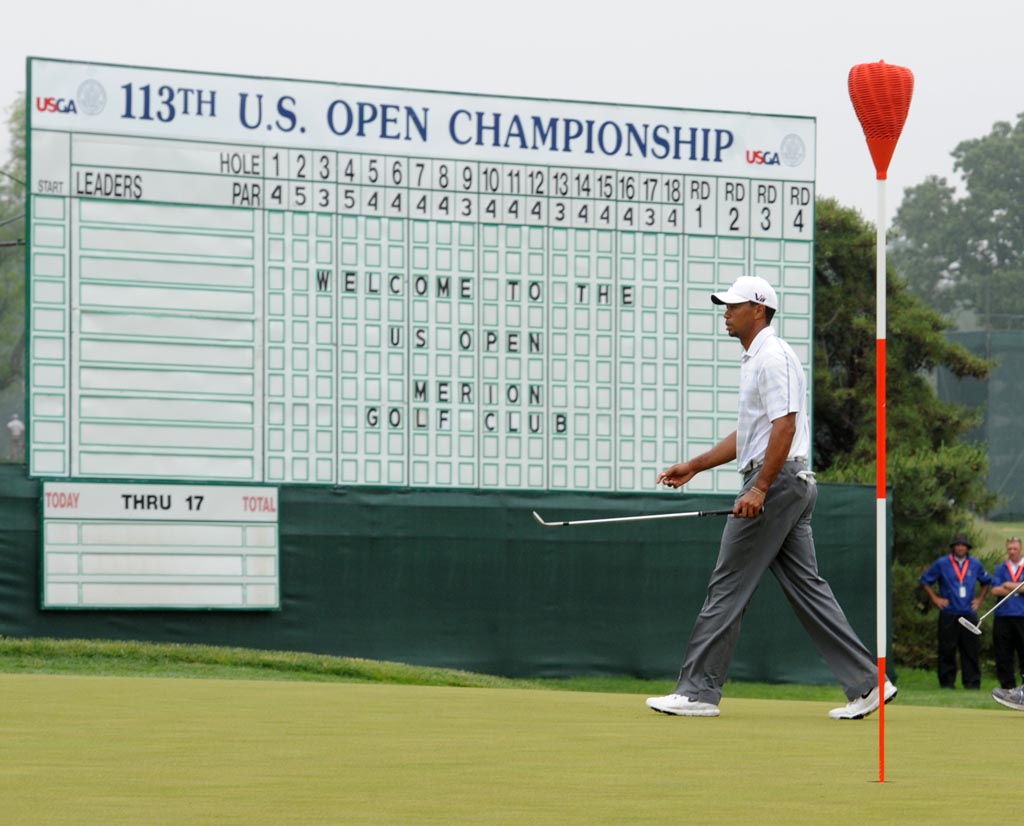
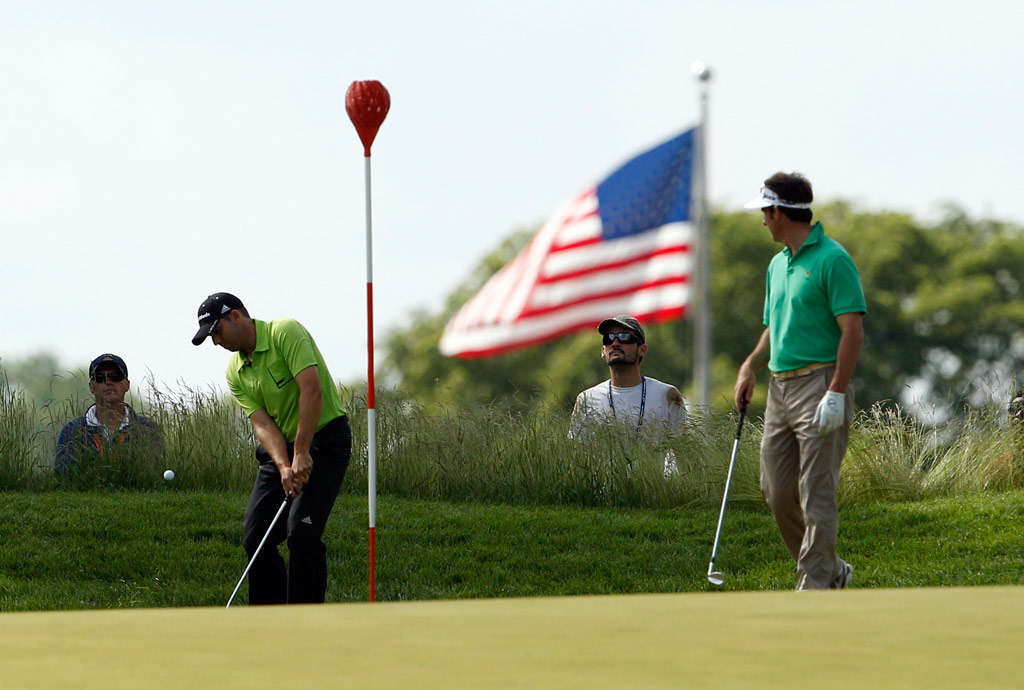
    Merion — with its famous wicker basket flagsticks — last hosted the U.S. Open in 2013.Staff Photographer

    Some of those memorable moments include Bobby Jones completing the Grand Slam in 1930, Ben Hogan sticking his famous 1-iron shot on the final hole of the 1950 U.S. Open, and Lee Trevino beating Jack Nicklaus in a playoff to capture the 1971 U.S. Open. Most recently, the club hosted the 2013 U.S. Open, which didn’t see a single player finish at par or better and was won by Justin Rose.

    “The Anchor Site designation reflects not only that remarkable history, but a shared commitment between Merion and the USGA to the future of the game,” Ray said. “It also recognizes generations of Merion members whose stewardship, volunteerism, and love of the game have made this club one of golf’s great championship venues.

    “As we look ahead, this partnership allows us to continue stewarding Merion for our members, while giving the next generation of champions the opportunity to add to our remarkable championship story.”

  • Penn Charter’s soccer athletes partnered with Unity Sports for inclusive sports program for children with special needs

    Penn Charter’s soccer athletes partnered with Unity Sports for inclusive sports program for children with special needs

    When India Knight’s twin nephews, Major and Mason Lewis, came into her life on Dec. 1, 2022, she put her own on hold to “give the boys a chance in life,” her sister Jhalia Thomas said.

    Both boys have autism and were nonverbal at 1½ years old when Knight and her mother got custody of them. Her nephews needed stability, support and opportunities to learn, she said.

    Knight, who worked in case management for Philadelphia County probationers and state parolees, left the field in 2020 because of the COVID-19 pandemic, but planned to return to work. However, she dedicated hours to speech, behavioral and cognitive therapy and early intervention at Easterseals for her nephews, as well as taking them to all the events in the city, including swim lessons and Halloween events.

    “The more they’re exposed, the more they’ll learn,” Knight said.

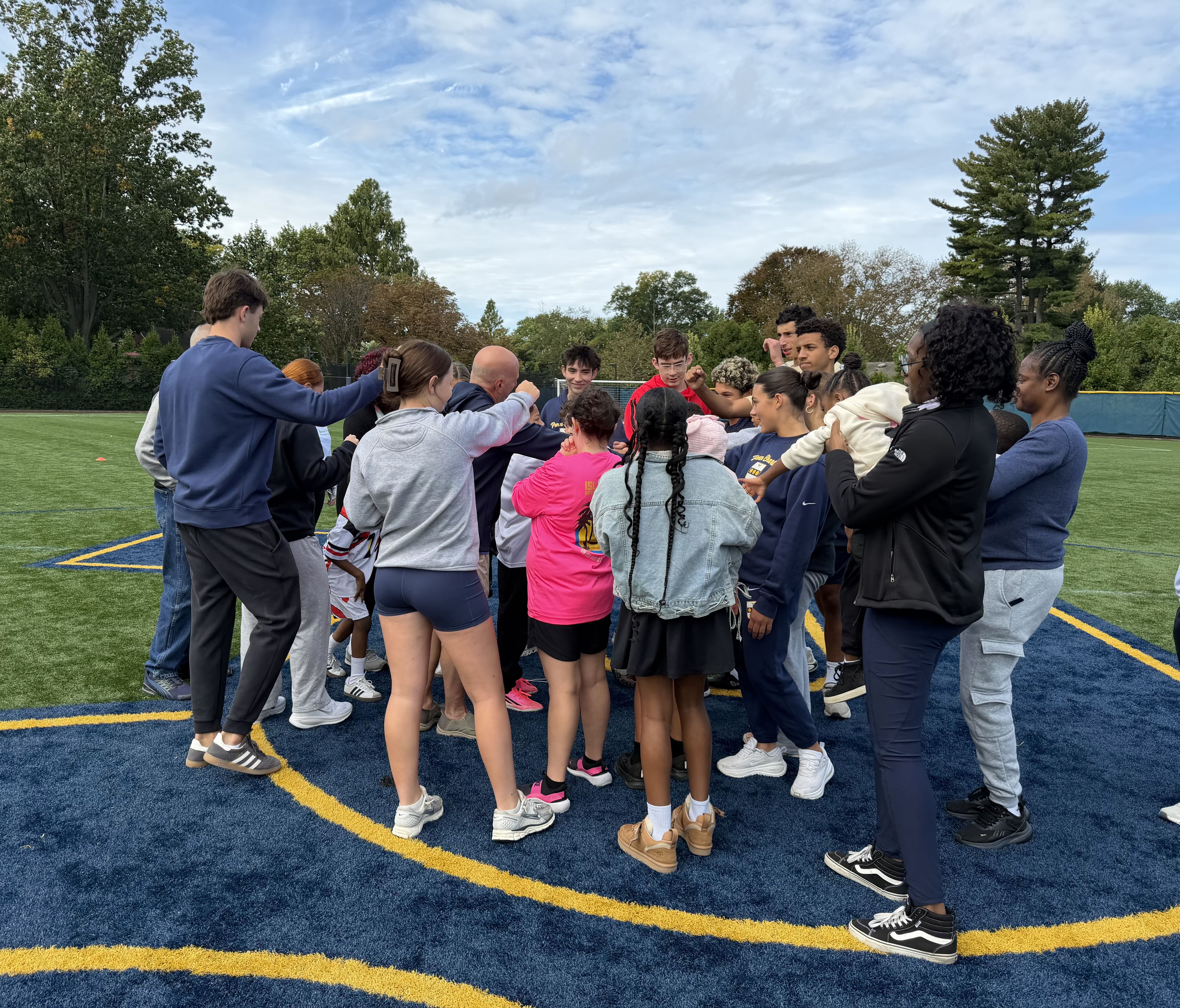
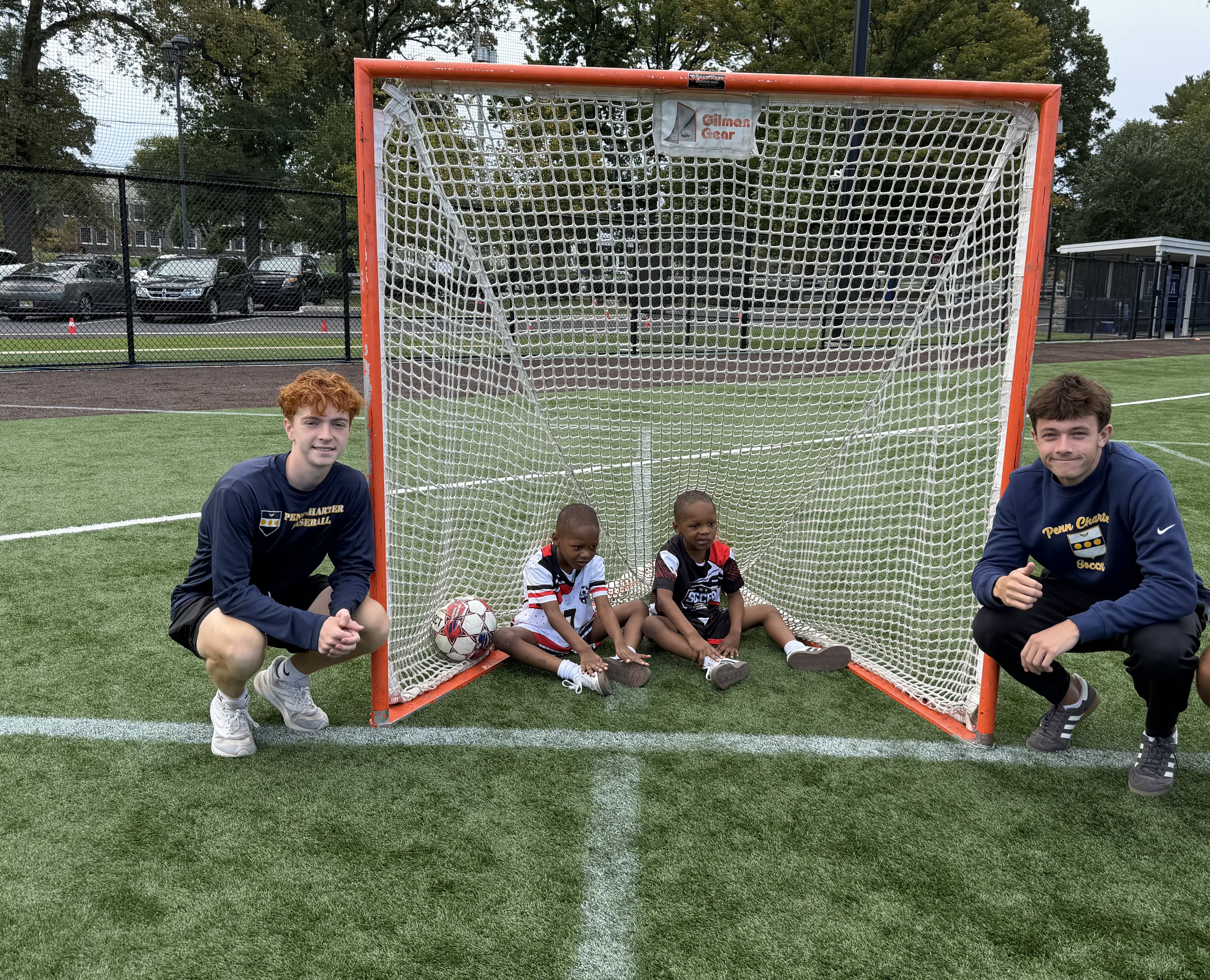
    On Saturday, she brought them to the Unity Sports recreational soccer program, where children with intellectual, emotional and physical disabilities play alongside student-athletes from Penn Charter’s boys and girls soccer teams.

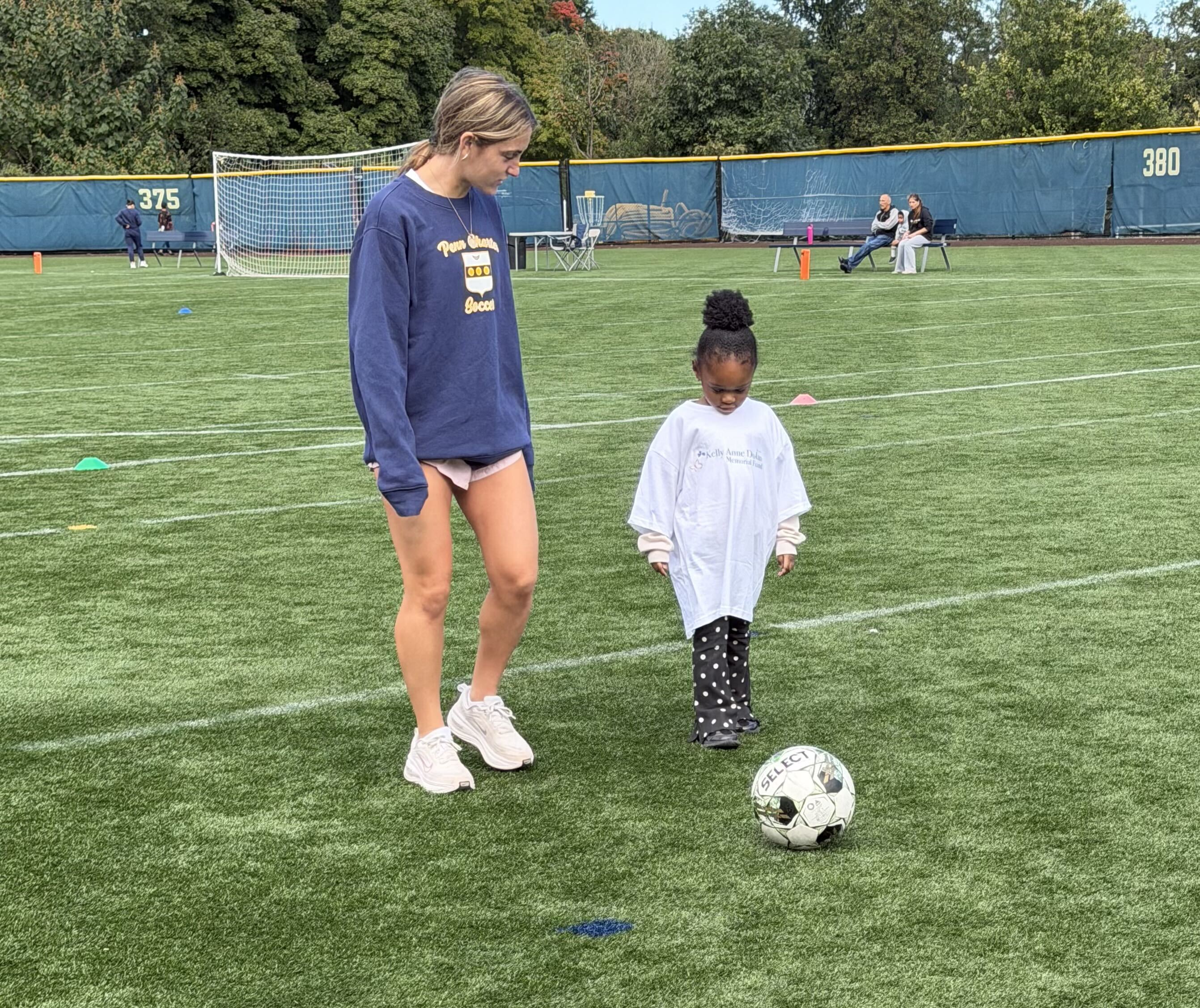
    Penn Charter and the Kelly Anne Dolan Fund partnered to allow student-athletes to bond with children of varying abilities. The Kelly Anne Dolan Fund

    The program, run by the Kelly Anne Dolan Memorial Fund in partnership with Penn Charter, began in September 2025 with the intention of building a community where children and families of varying abilities could run around a soccer field, kick the ball, and spend time with peers.

    “I wanted to create a community within the fund for parents and siblings and caregivers to be together and not separate and to be in a safe space with no judgments,” executive director Danielle Griffith said. “It also gives the parents time to talk to each other because the best resources are other parents.”

    The fund was established 50 years ago by Joe and Peggy Dolan to provide financial assistance to families experiencing difficulties related to their children’s diagnosis, illness or injury. The Dolans noticed during their daughter’s battle with leukemia in 1976 that parents with children in the hospital were losing their jobs, homes, cars and more because of the financial and time-related costs of caring for a seriously ill child.

    Over the past 50 years, the fund has helped more than 50,000 families and paid over $10 million in bills.

    “While we’re small, we are mighty,” Griffith said. “I just think it’s really important that our families get time together to just have fun because they don’t get that often.”

    Griffith wanted to expand the organization’s work beyond financial assistance by creating opportunities for children to experience the benefits of athletics. She says her son, Rowan, who plays baseball at Catholic University and graduated from Penn Charter, learned resilience, teamwork and the ability to overcome adversity through sports, and she wanted the Dolan fund children to learn those same lessons.

    The Kelly Anne Dolan Fund, which sponsors Unity Sports, was founded 50 years ago. The Kelly Anne Dolan Fund

    Katrina Burgess found Unity Sports on a Facebook support group page, at a time when she said her son Toby was anti-social and did not want to play in group sports.

    “Batman works alone,” she remembers him saying, so he did too.

    Toby, 15, was born typical, Burgess said, but he started having seizures at 2½ years old. He was later diagnosed with Lennox-Gastaut syndrome, a rare and severe form of uncontrolled epilepsy, and intellectual disabilities followed. Finding activities where Toby felt comfortable was not always easy, Burgess said, until Unity Sports.

    “We started finding programs like Unity where it takes the older high school and college kids and they work with them and really got Toby into it,” Burgess said. “Now he feels like the cool guy on campus.”

    Toby’s 11-year-old twin brothers also came on Saturday, making it a family event where they all could play.

    “With my kids having such a wide range of abilities, it is really hard to just do family things,” Burgess said. “I can’t describe the happiness you have when all your kids are satisfied in an event like this.”

    Penn Charter’s girls’ and boys’ soccer teams took part in the event at Penn Charter. The Kelly Anne Dolan Fund

    Knight said she has seen firsthand how difficult it can be to find inclusive opportunities for her nephews. Many soccer teams in the area are not open to the idea of children with special needs playing on their teams, she said. Knight said the Eagles use their platform to create unity within the city and in the future, she hopes they could expand sports for children with special needs.

    “I really would love for them to play club soccer, so if Unity Sports and the Eagles could push that forward in some way, that would be great,” Knight said.

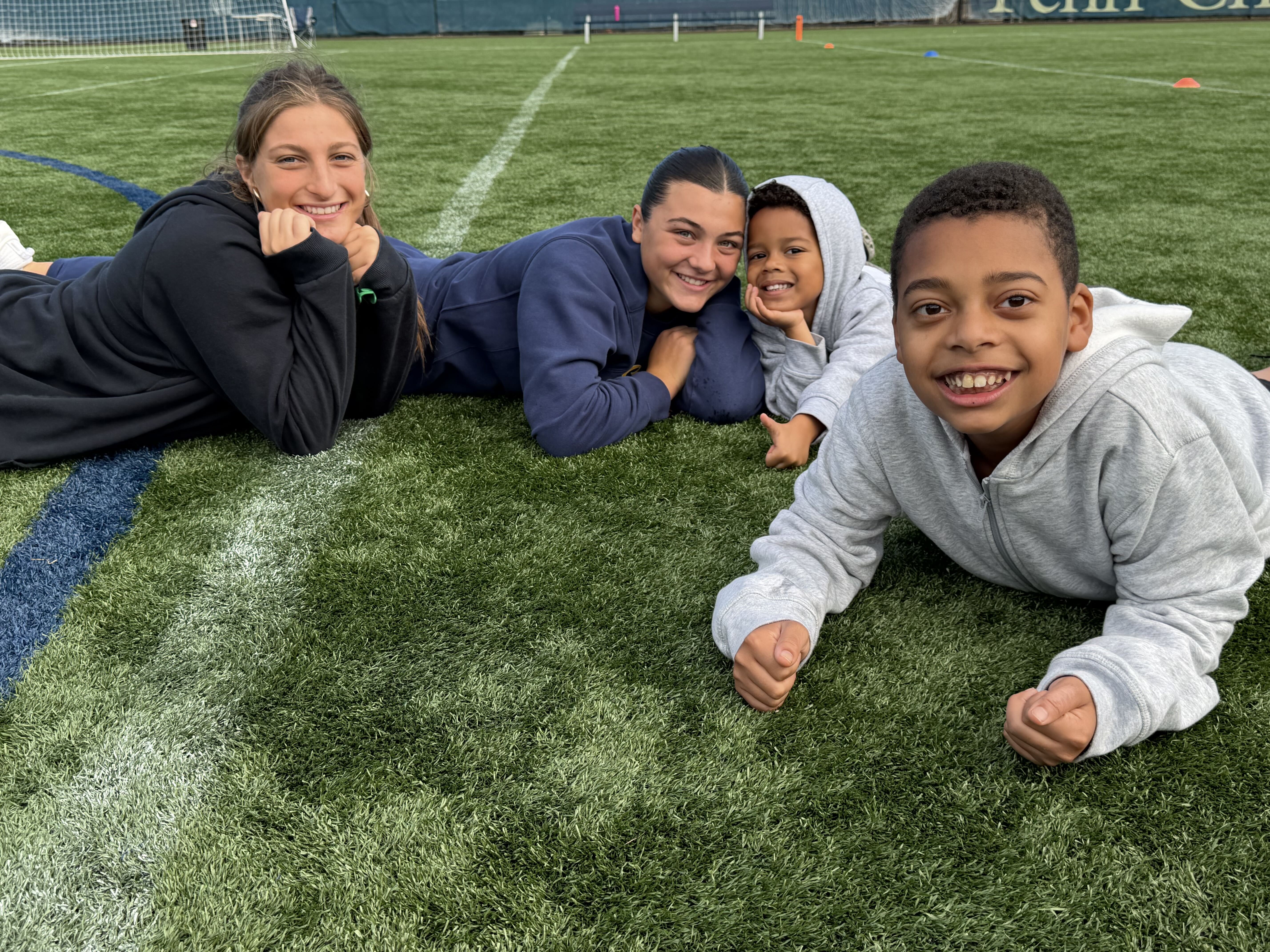
    The Penn Charter student-athletes served as “buddies” to the Dolan fund children on Saturday and kicked the ball together, ran around the field and ate snacks with them.

    “Our [The Dolan Fund] kids look at these athletes like they’re LeBron James,” Griffith said. “It’s such an opportunity for our families to bond with these athletes, to see what’s possible in life, to be on these beautiful fields for parents to be able to just relax and watch and you know really just enjoy all the togetherness, the inclusion.”

  • The Waterdogs want Philadelphians to embrace lacrosse: ‘There’s no better way to do it than winning’

    The Waterdogs want Philadelphians to embrace lacrosse: ‘There’s no better way to do it than winning’

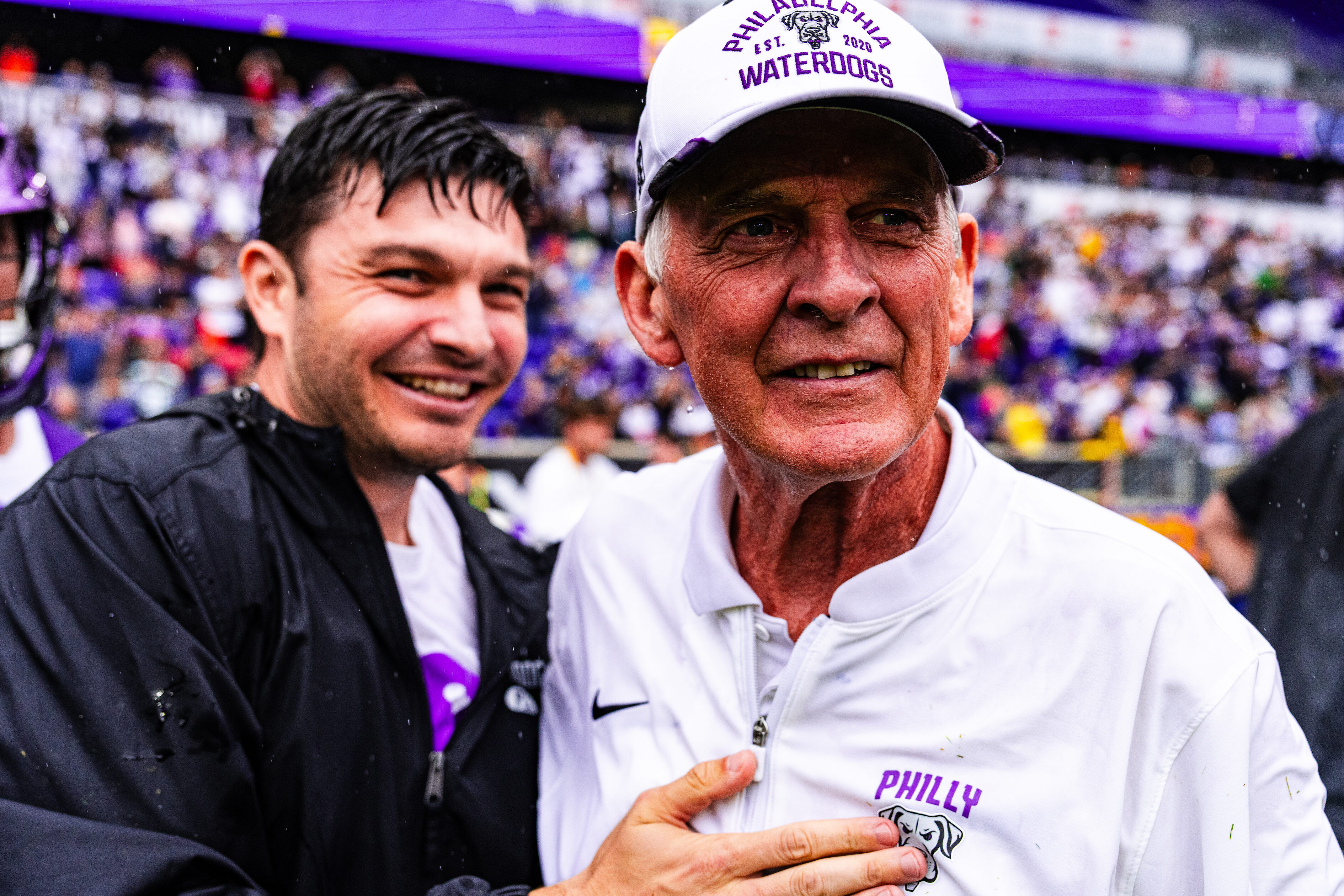
    Bill Tierney knows a thing or two about building a winning lacrosse program.

    In 1988, his first year as Princeton’s head coach, his team finished 2-13. He went on to win six national championships.

    In 2024, the Philadelphia Waterdogs had a 2-8 record. Two years later, Tierney led the Waterdogs to the 2026 Premier Lacrosse League championship with a dominant 14-4 victory over the Denver Outlaws on Sept. 20 in Harrison, N.J.

    This is the Waterdogs’ second league title since the PLL’s inaugural season in 2018. They won their first in 2022. Their success is fueling fan interest in Philadelphia.

    “We’re proud to have brought this championship to Philly so that we can be on board with all those other great franchises and championship programs in the city,” Tierney said.

    In total, Tierney has won seven NCAA championships — six at Princeton and one at Denver — and he became the first lacrosse coach to win a college and professional championship. But his lacrosse career began later than most.

    When Tierney arrived at SUNY Cortland in fall 1969, a friend who lived on his dorm floor was a lacrosse goalie and asked Tierney to shoot on him to help prepare for the season. Tierney, who had never played lacrosse prior to that, eventually tried out for the team, and by his senior year, Cortland won a national championship.

    “By sitting on the bench a lot I was able to listen to coaches and take a lot in,” he said. “So it was the best of both worlds.”

    Tierney retired from coaching in 2023 and spent seven months away from the game before receiving a call about coaching the Waterdogs in the PLL.

    Transitioning to the professional league came with a different challenge for Tierney, he said. Unlike college teams whose players practice together every day, PLL players balance lacrosse with full-time jobs and only practice together on the weekends before a game.

    “The key is the culture,” Tierney said. “What you got to learn at the pro level with the lack of real contact with the guys is to dive in with them on their personal lives and them getting to know you better off the field. It took me a while to do that better than I did at first.”

    Building those relationships off the field helped the Waterdogs create that championship culture.

    Philadelphia had the No. 1 pick in the 2025 PLL College Draft after finishing 2-8 in 2024 and 2-6 in 2025. The Waterdogs selected CJ Kirst, who was the youngest player since 2009 to earn the 2026 PLL MVP award.

    Kirst won a national championship at Cornell in 2025 before receiving the Tewaaraton Award as the nation’s top college lacrosse player. He broke the PLL single-season record with 34 goals in 10 games and earned Championship MVP honors after recording seven points in the championship game.

    “My motivation every weekend is just the excitement that I have when I go and play the game,” Kirst said. “I just love being a part of the locker rooms and showing up and being a part of something that is so much bigger than yourself. I pride myself in playing with a ton of passion and that is the fire inside me where I have so much joy playing the game.”

    Growing the game

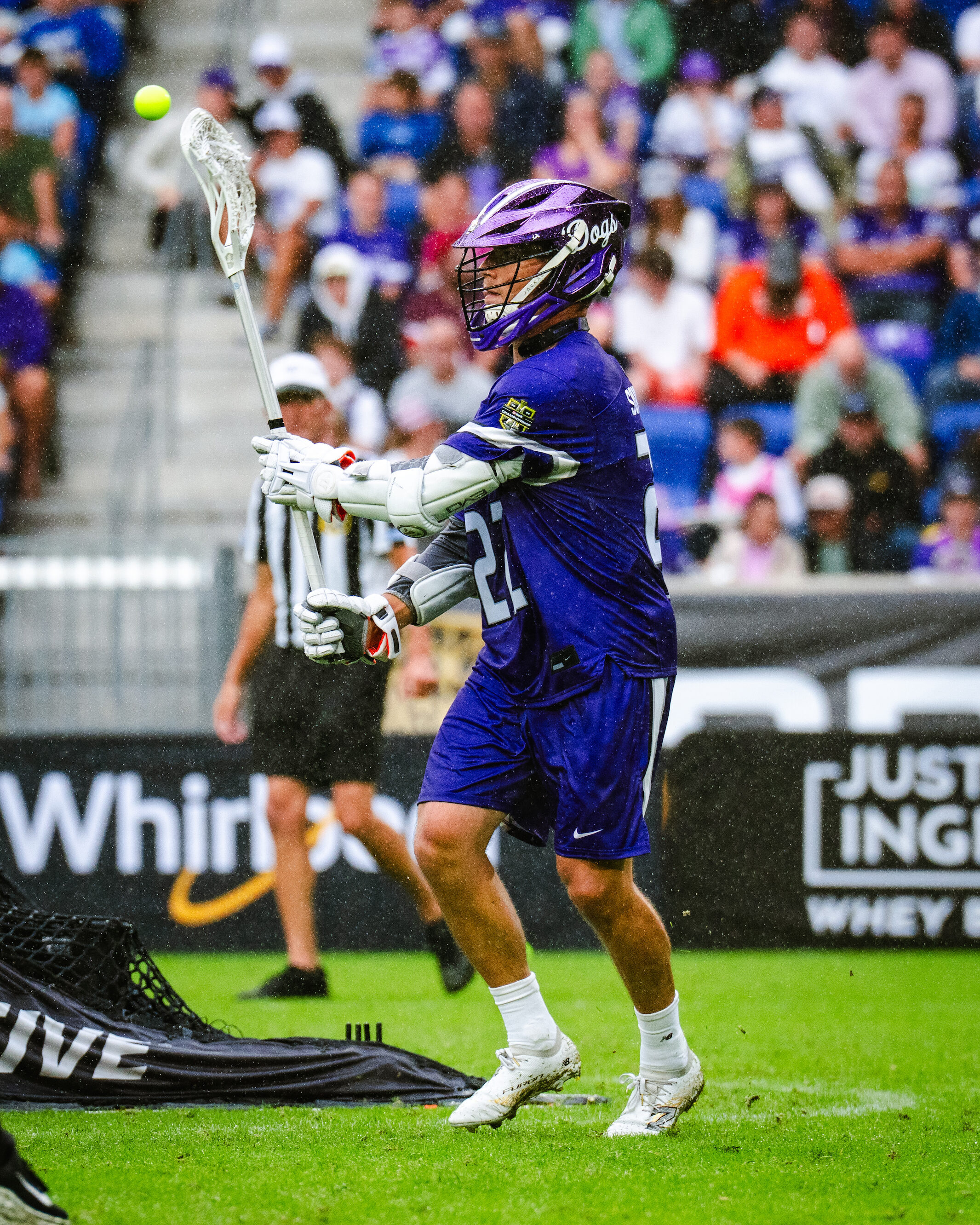
    A Montgomery County native and 2026 PLL Attackman of the Year, Michael Sowers said winning is essential to building a fan base and growing the league in Philadelphia.

    “When you’re trying to break into a new market, there’s no better way to do it than winning and especially in the city of Philadelphia, the city rallies behind winners,” he said.

    In 2024, the PLL announced that each team would be tied to a home market, and the Waterdogs were assigned Philadelphia.

    Its losing record made creating a local following difficult when the Waterdogs first relocated to the city in 2024.

    Michael Sowers, a Montgomery County, says “the city rallies behind winners.”Premier Lacrosse League

    “I remember being embarrassed to tell people I played for the Waterdogs because the first question they would ask is, ‘How’d you guys do this year?’ And it was like, ‘Oh, we’re 2-8, we sucked,’” Sowers said. “So, now to be able say we’re champions for the best team in the world, like that’s pretty cool.”

    The Waterdogs are also trying to establish themselves in a city with a history in lacrosse. Sowers previously played for the Philadelphia Wings, whose National Lacrosse League franchise ceased operations on Sept. 10 after Comcast Spectator withdrew its ownership following the 2025-26 season.

    “It’s as simple as winning,” Sowers said. “And unfortunately for the Wings, we just didn’t really win.”

    The championship game on Sept. 20 showed the team’s and PLL’s growth.

    ESPN announced that the Waterdogs-Outlaws game on ABC was the most-viewed championship game in PLL history, averaging 405,000 viewers.

    Kirst has noticed more local fans supporting the team when they play on the road each weekend from May to September.

    “It’s very visible now when I’m on the field looking into the stands and seeing tons of purple,” Kirst said. “Obviously it’s a great representation of family and friends, but I think now having little kids who are wearing the jerseys and showing support is truly special. Philadelphia is definitely gravitating towards being Waterdogs fans.”

    Winning the PLL title is an opportunity to continue to build something lasting in Philadelphia.

    “We’re in position, hopefully, to really create something special here and be in a position to win for the foreseeable future,” Sowers said.

  • Rain didn’t stop spectators at the Jefferson Lehigh Valley Classic. For golfers, it was a different test.

    Rain didn’t stop spectators at the Jefferson Lehigh Valley Classic. For golfers, it was a different test.

    ALLENTOWN — The weekend before the Jefferson Lehigh Valley Classic at Lehigh Country Club, a nor’easter hit the area, leaving debris, tree limbs, large puddles, and a tree down on the course.

    John Chassard, superintendent of Lehigh Country Club in charge of the course maintenance, said he brought his wife to the course last Saturday and after seeing the damage, she started to cry and said, “I’m so sorry.”

    “None of us wanted to see the rain happen, but that’s one of those things,” Chassard said. “This is what we do, we can’t control the weather.”

    In the weeks leading up to the tournament, his grounds crew of 25 to 30 staff members along with 40 to 45 volunteers from local golf courses in the area worked to prepare the golf course for dry, firm conditions. But with the wind and 2 ½ inches of rain, that wasn’t the case.

    They spent last Sunday cleaning the course and getting it back to playable conditions for the legends of golf.

    “I can’t stress enough how much it is a team effort,” Chassard said. “We had the best-laid plans and that got thrown out the window. That’s the way this business works because weather dictates everything. But if you have the people and the support and everybody working together, you overcome that.”

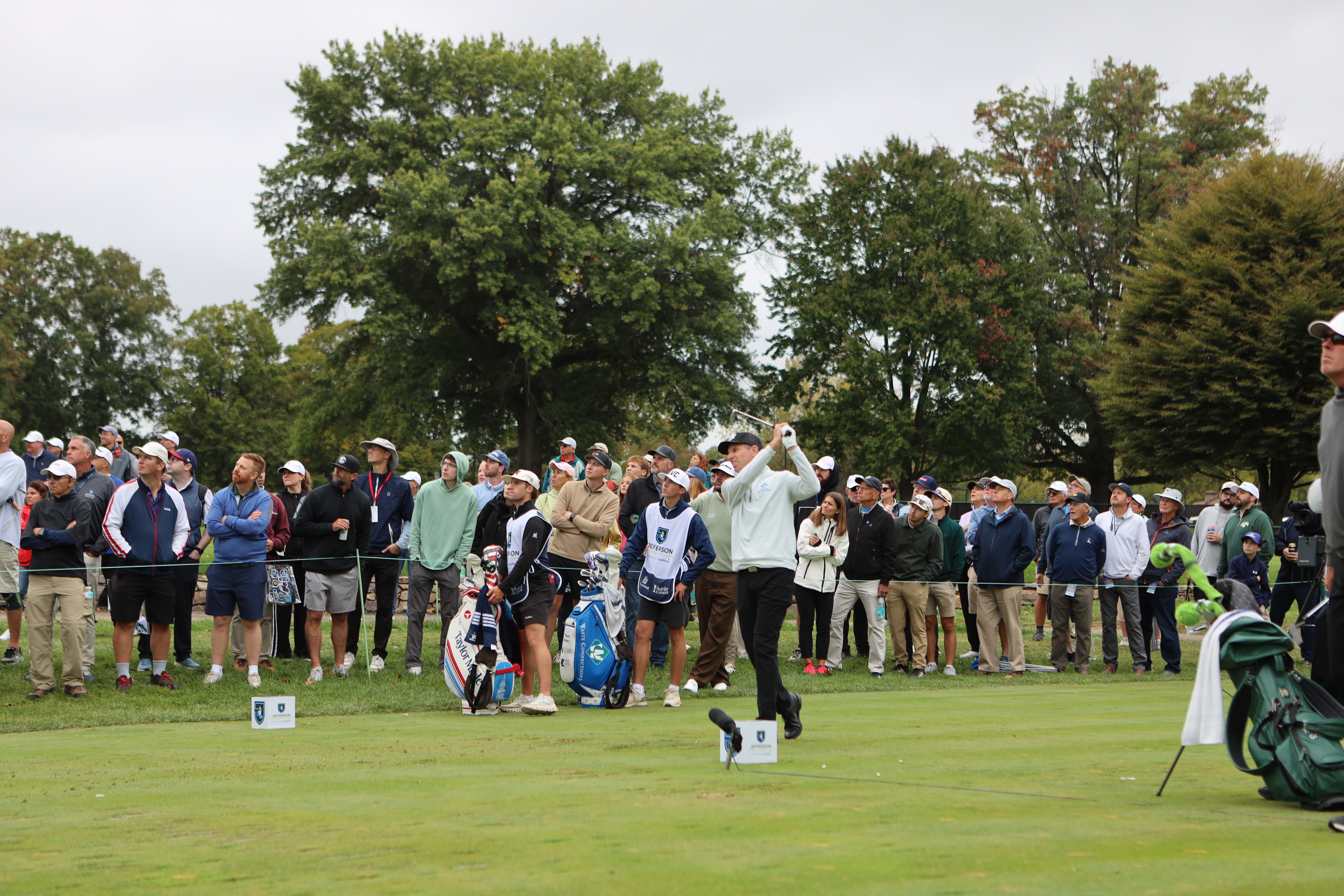
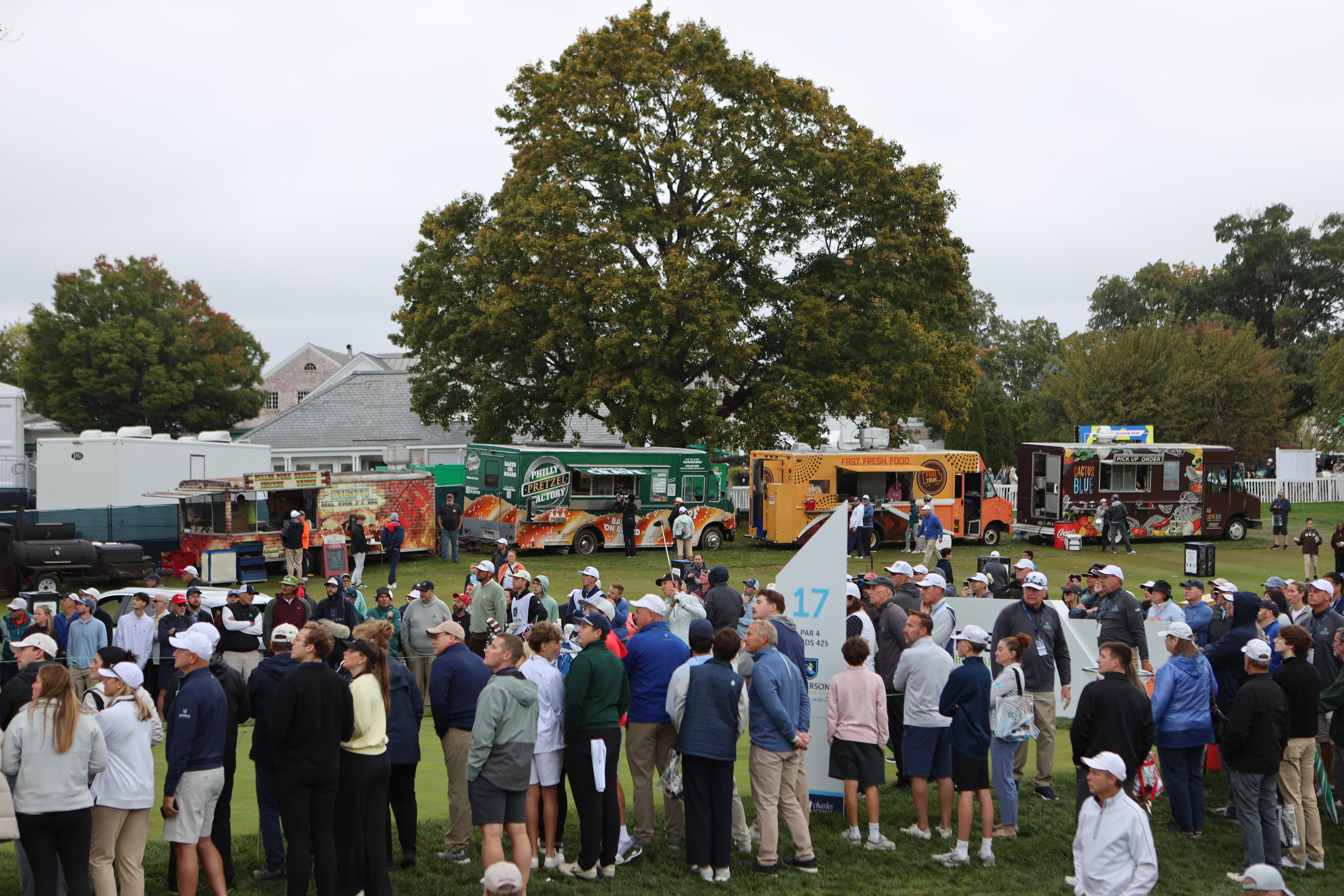
    The wet conditions during the tournament, however, didn’t stop more than 30,000 fans from watching it. It marked the second-highest attendance on PGA Tour Champions schedule this year.

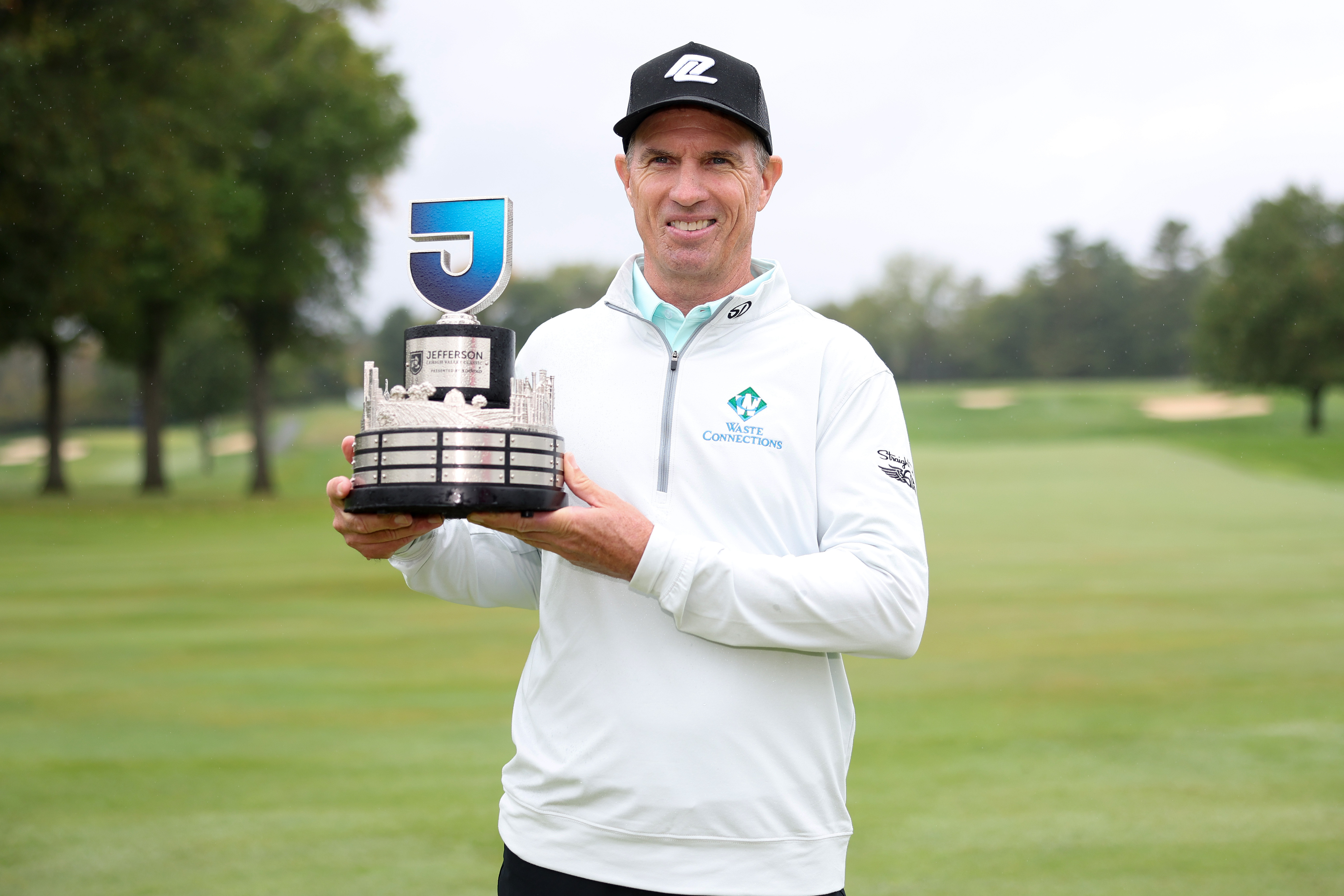
    Steven Alker shot a final round 4-under 66 to capture the inaugural trophy. It was his third victory in his last four starts for the 55-year-old from New Zealand.

    Steven Alker won the Jefferson Lehigh Valley Classic on Sunday.Jefferson Lehigh Valley Classic presented by Sodexo

    Alker said he was unsure earlier in the week whether he would play, which left him without the chance to play a practice round and get familiar with the William S. Flynn-designed course.

    “I was struggling early in the week actually with my body, but big shout-out to my trainer, Tyson Marostica,” Alker said. “He got me going on Friday morning and I was actually kind of lucky to tee it up.”

    Midway through his round on Friday, Alker’s longtime caddie Troy Martin left because of an illness, so 19-year-old local caddie Whyatt O’Rourke filled in.

    “I caught up with him on Thursday,” Alker said. “We met and had a chat and then all of a sudden he’s caddying for me on 9 on Friday. It’s a pretty cool story to have a local boy caddying, and he did a great job.”

    More than 30,000 fans attended the three-day tournament.Jefferson Lehigh Valley Classic presented by Sodexo

    The bent grass on a Northeastern golf course was a different test for the players this week, as they typically play on Bermuda grass in the South.

    “When you get old-school, old-style golf course it’s untouched,” Alker said. “It’s pretty special and it makes you think a little bit more about where you hit it off the tee, where you putt from, where you miss it.”

    The tournament is scheduled to come back to Lehigh Country Club for the next five years.

    “I hope that this tournament’s a huge success and that after five years we’ll want to extend it and Jefferson wants to do this forever,” said tournament director Tommy Sullivan.

  • Organizers hope to make Jefferson Lehigh Valley Classic more inclusive with a sensory center

    Organizers hope to make Jefferson Lehigh Valley Classic more inclusive with a sensory center

    ALLENTOWN — When Ernie Els was living in London, his son, Ben, was diagnosed with autism at 3½ years old. The former world No. 1 golfer and Hall of Famer realized that many services his son needed were inaccessible to him in London, so he decided to relocate his family to South Florida

    His son’s diagnosis sparked the idea for Els for Autism, which was founded in 2009. The foundation works to support the growth and learning of individuals with autism, along with their parents and caregivers, so they can live a fulfilling life.

    And EY, one of Els’ sponsors, hopes to make golf more accessible to neurodivergent fans at this weekend’s Jefferson Health Lehigh Valley Classic via the EY Sensory Center by Jefferson Health.

    “There was a day when if you were different, you had to learn to accommodate to the world and now what we’re seeing much more is that the world is seeing that they also have a responsibility to the individual,” said Wendy Ross, the director of the center for autism and neurodiversity at Jefferson Health. “That’s an important statement for golf because it looks like it’s an individual sport, but it really is a team effort.

    “If you just look at it superficially, you’ve got a lone golfer. But in reality, they have a team around them. They have a caddie, they have a coach, they have a place to play. This is a good metaphor for the work we are trying to do.”

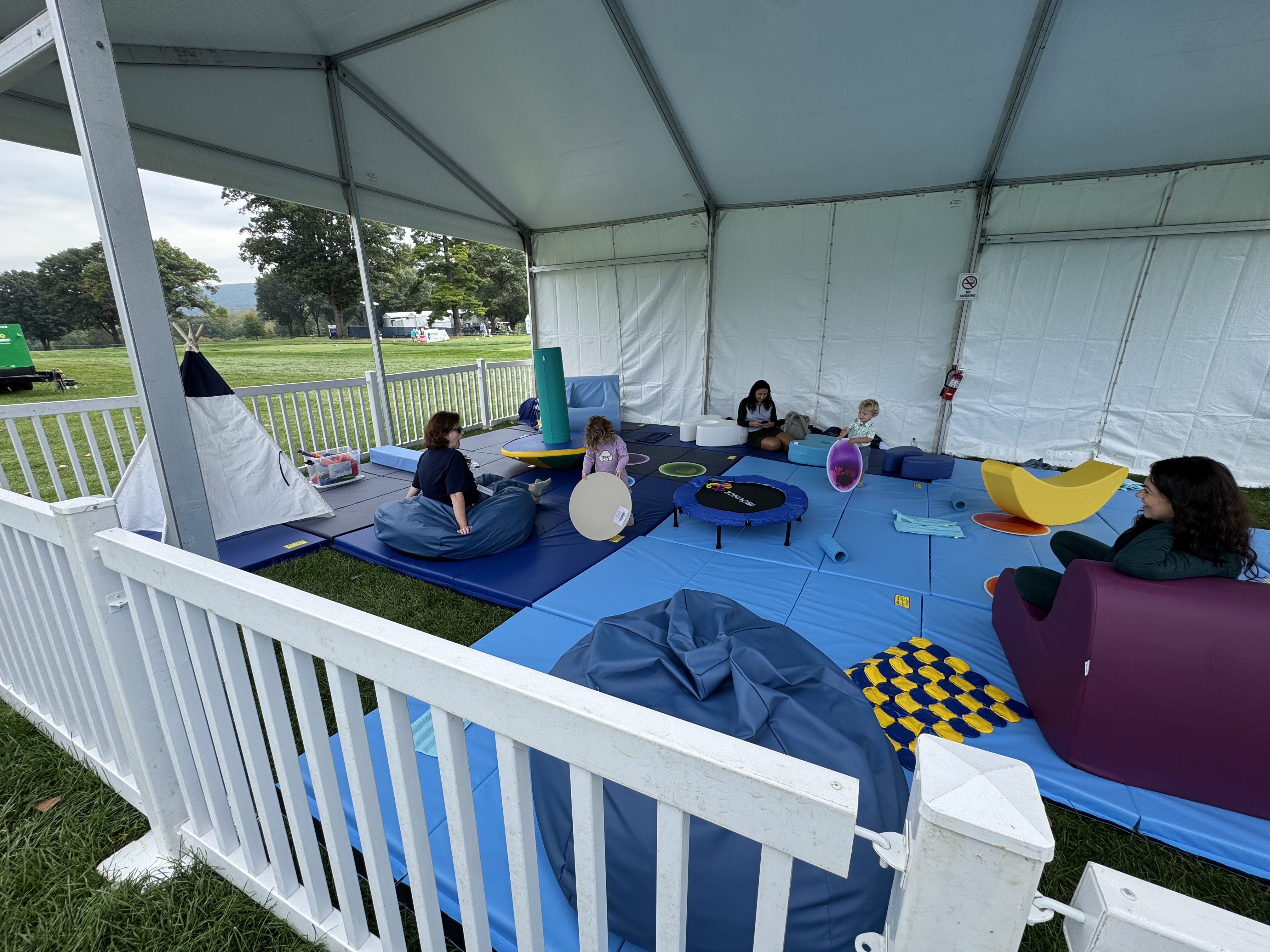
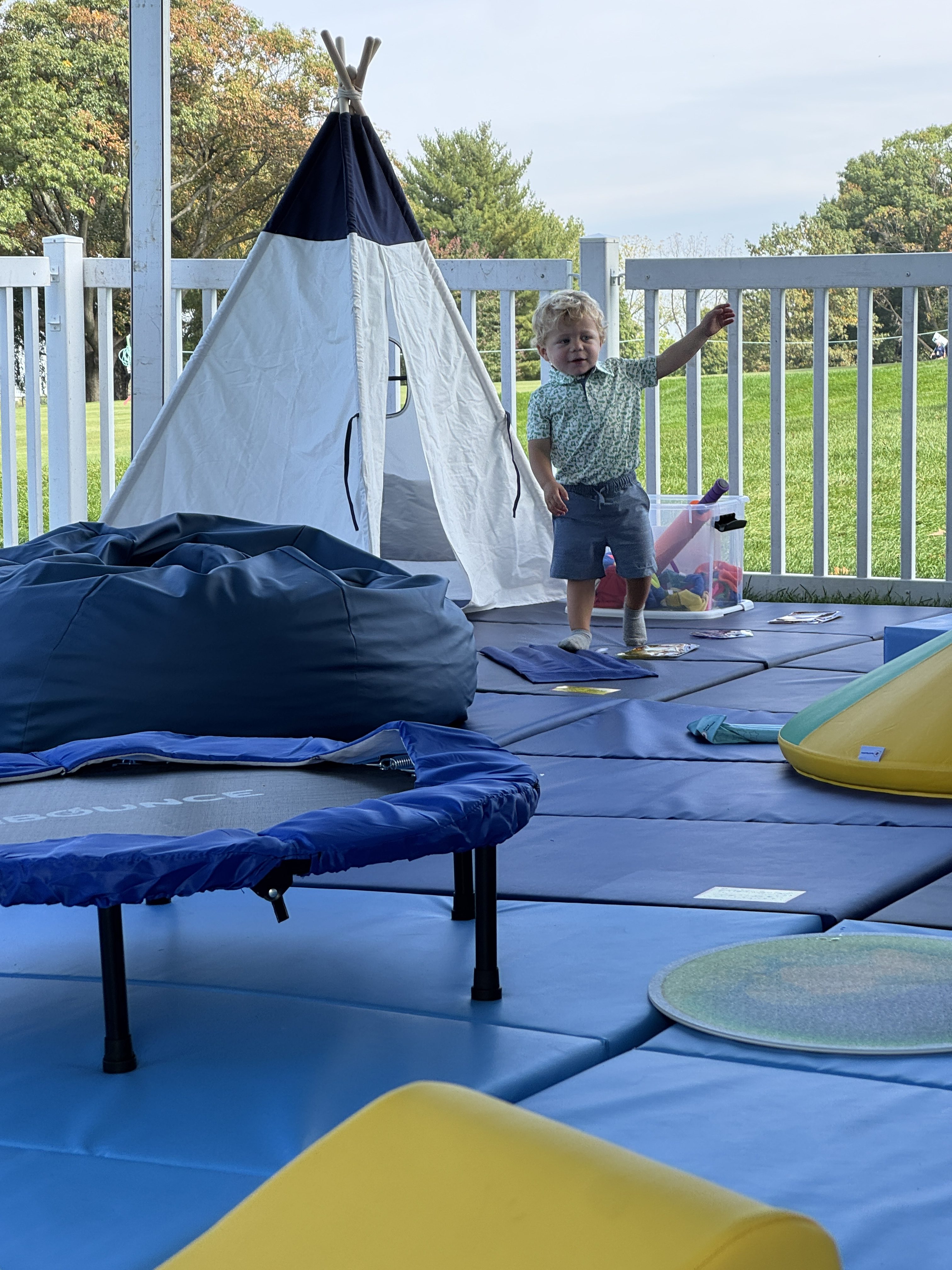
    A boy plays at the EY Sensory Center at the Jefferson Lehigh Valley Classic in Allentown.Courtesy of Wendy Ross

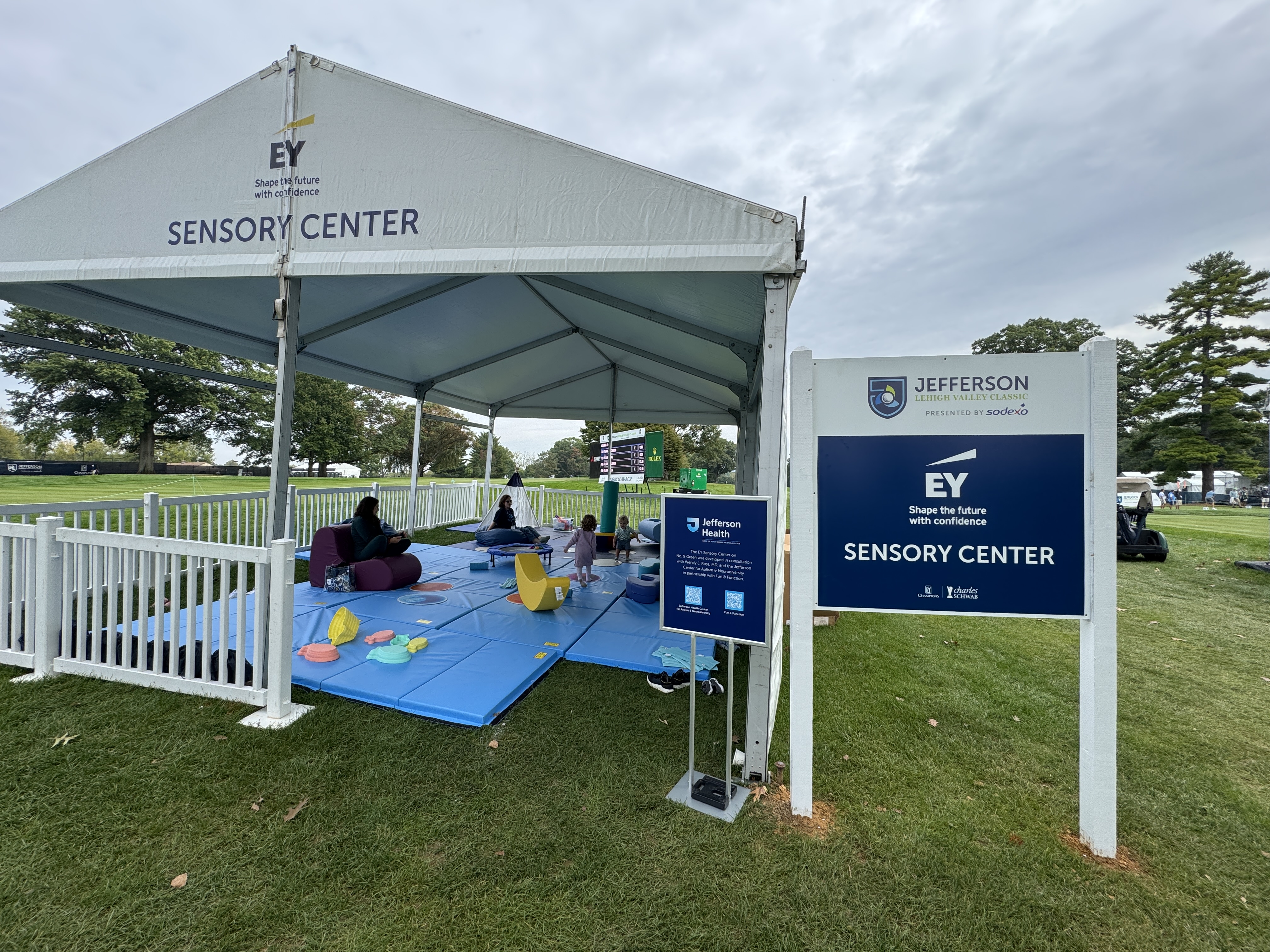
    The center, designed by Ross, is near the ninth green at Lehigh Country Club, where fans can catch some of the action while taking a break from the crowds.

    “Not that the golf course is so loud, but the noises that happen are sudden and unexpected,” Ross said. “Autistic individuals and people with neurodivergence sometimes can get overwhelmed, and so they need a place to kind of cool off and reset. Sometimes they have sensory-seeking desires, and sometimes they are sensory avoidant, so we have a number of items that are both.”

    Ross said that it may be challenging for a neurodivergent individual to experience a golf tournament for the first time because of the etiquette of watching the sport in person.

    There is a sensory room at Lincoln Financial Field where people with autism, PTSD, Down syndrome, and other sensory processing needs can watch the game on a TV. The vibes at the PGA Tour Champions event aren’t quite the same as the Linc on an Eagles game day, and tournament director Tommy Sullivan said organizers intentionally put their sensory center outside, right near the action.

    “You still can watch the golf right there,” Sullivan said. “You’re not taken away from the event. You’re still a part of the event, but it’s a nice, quiet space to decompress, so that was important to us.”

    The EY Sensory Center is near the ninth green at the Jefferson Lehigh Valley Classic.Courtesy of Wendy Ross

    Proceeds from the tournament will go to three charities, one of which is the Eagles Autism Foundation.

    The center is the first on-course sensory zone at a PGA Tour-sanctioned event. It also is providing sensory bags to its visitors that include noise-reducing headphones, a fidget toy, and sunglasses.

    As Els made his birdie putt on the ninth green on Friday during his first-round 1-over 71, he walked past the EY Sensory Center and smiled. Els currently is tied for 49th, while co-leaders Y.E. Yang, Richard Green, and Robert Karlsson are 6-under after each shooting a 64.

    “We’re trying to make this tournament something that the whole community wants to be a part of, not just for the people that take golf seriously,” Sullivan said.