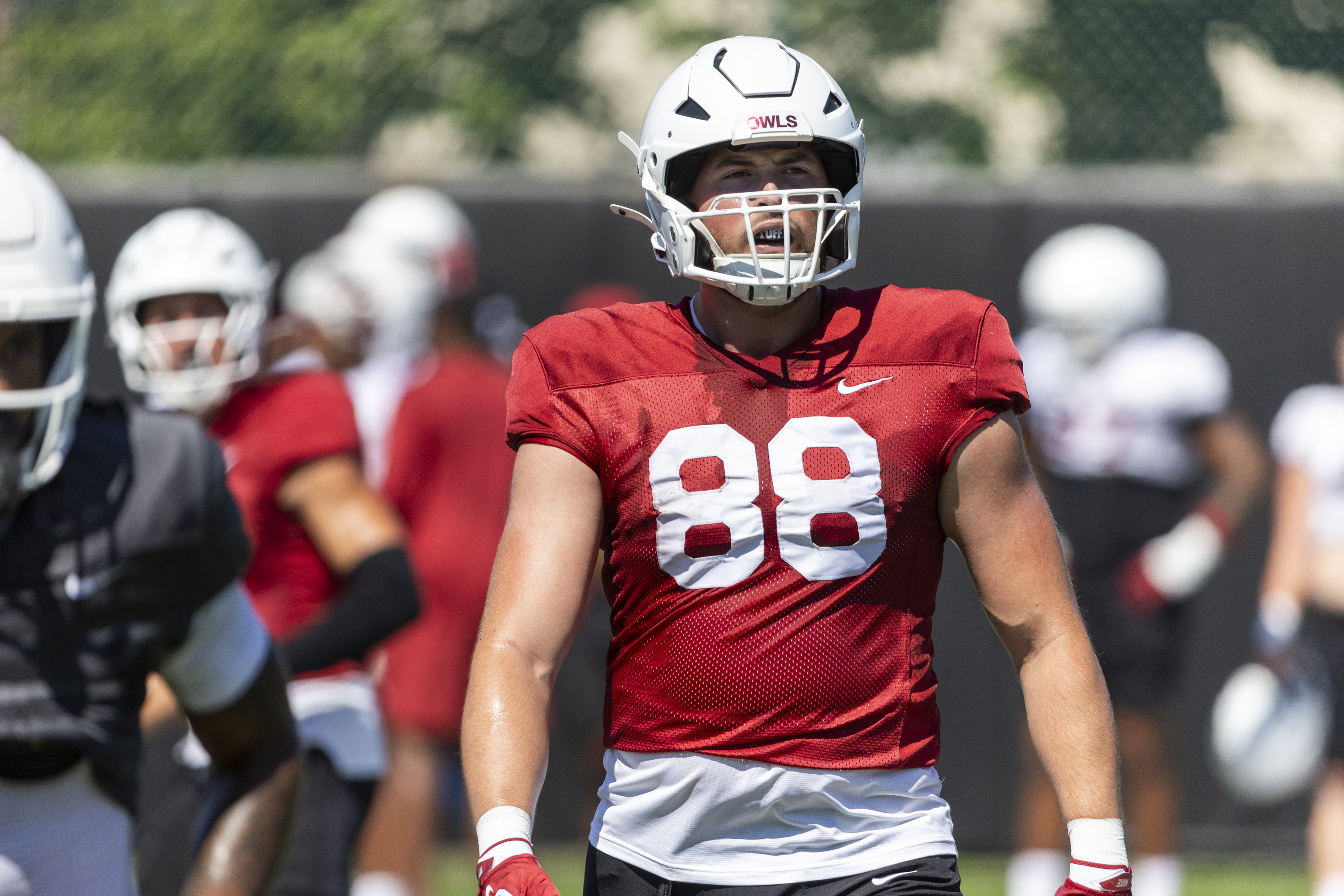
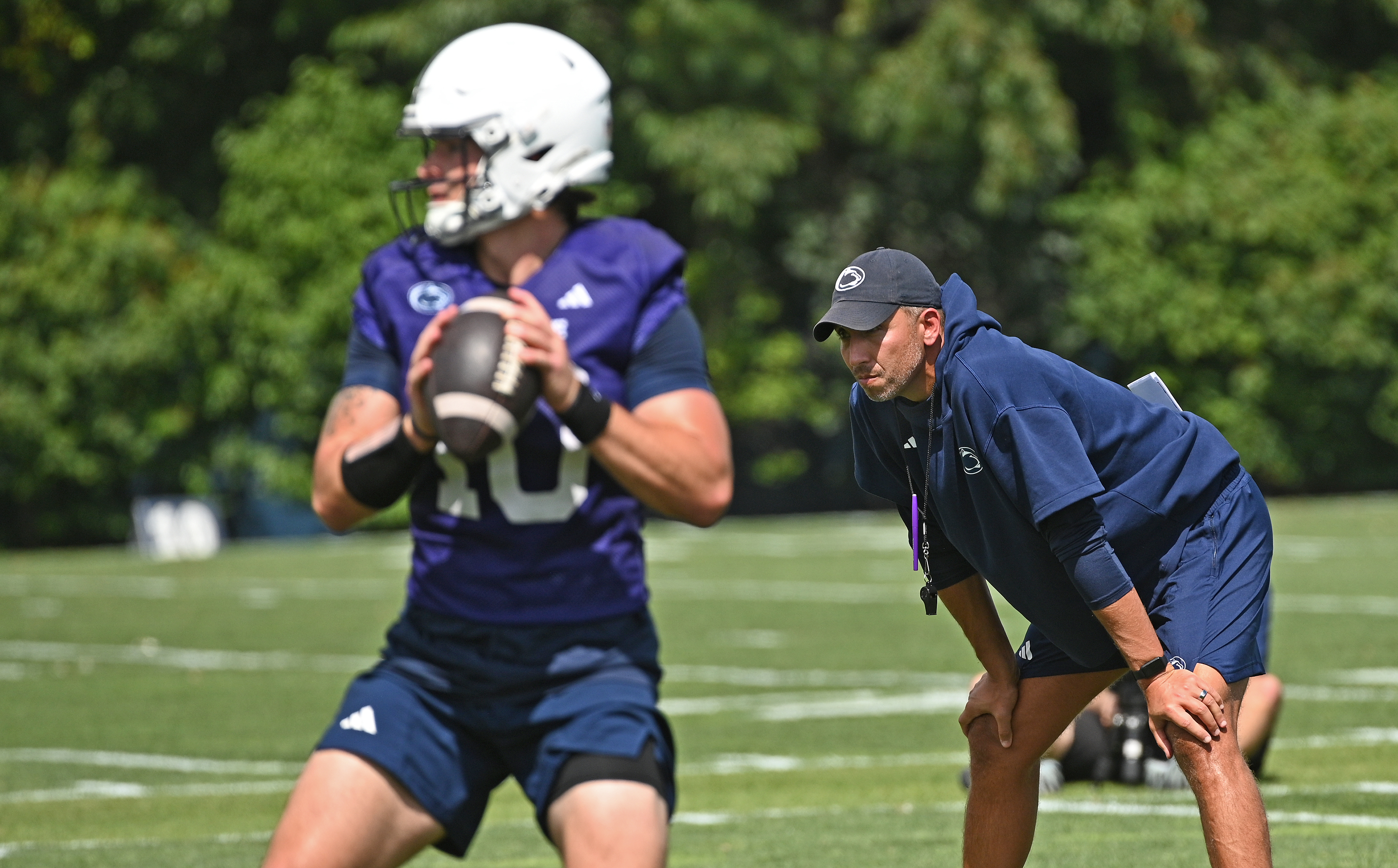
During the spring, as Temple’s football team started to mesh together returning players and newcomers, via the transfer portal and high school recruits, Peter Clarke, the team’s standout tight end, gathered the entire offense together.
The gesture was one example of Clarke, one of the seven players to earn the single-digit demarcation this season, emerging as a vocal leader for a program looking to build on last season’s 5-7 finish.
“When it comes to Peter Clarke, I feel like he’s a natural born leader,” said Temple running back Sam Brown, who transferred to the program this spring. “When I got here, I saw that off the jump. He’s always taking account for things, making sure people are doing the right things, and he’s definitely a leader by example, by what he does on and off the field.”
Clarke is a key returner for Temple, which didn’t lose an eligible starter to the transfer portal earlier this year. The rising senior finished with a career-best 30 catches for 483 yards and six touchdowns last season and is one of the best returning tight ends this season, evidenced by his preseason accolades: the John Mackey Award watchlist, preseason first-team All-American Conference honors from Phil Steele and Athlon Sports, and All-America third team honors at Pro Football Network.
As the Owls prepare for their season opener on Saturday against Rhode Island (2 p.m., ESPN+), there will be a sense of continuity for the offense, even with a new quarterback under center with transfers Ajani Sheppard and Jaxon Smolik competing for the starting spot. Four of the five starting offensive linemen from last season return, along with wide receivers Jojo Bermudez and Colin Chase, in addition to Clarke.
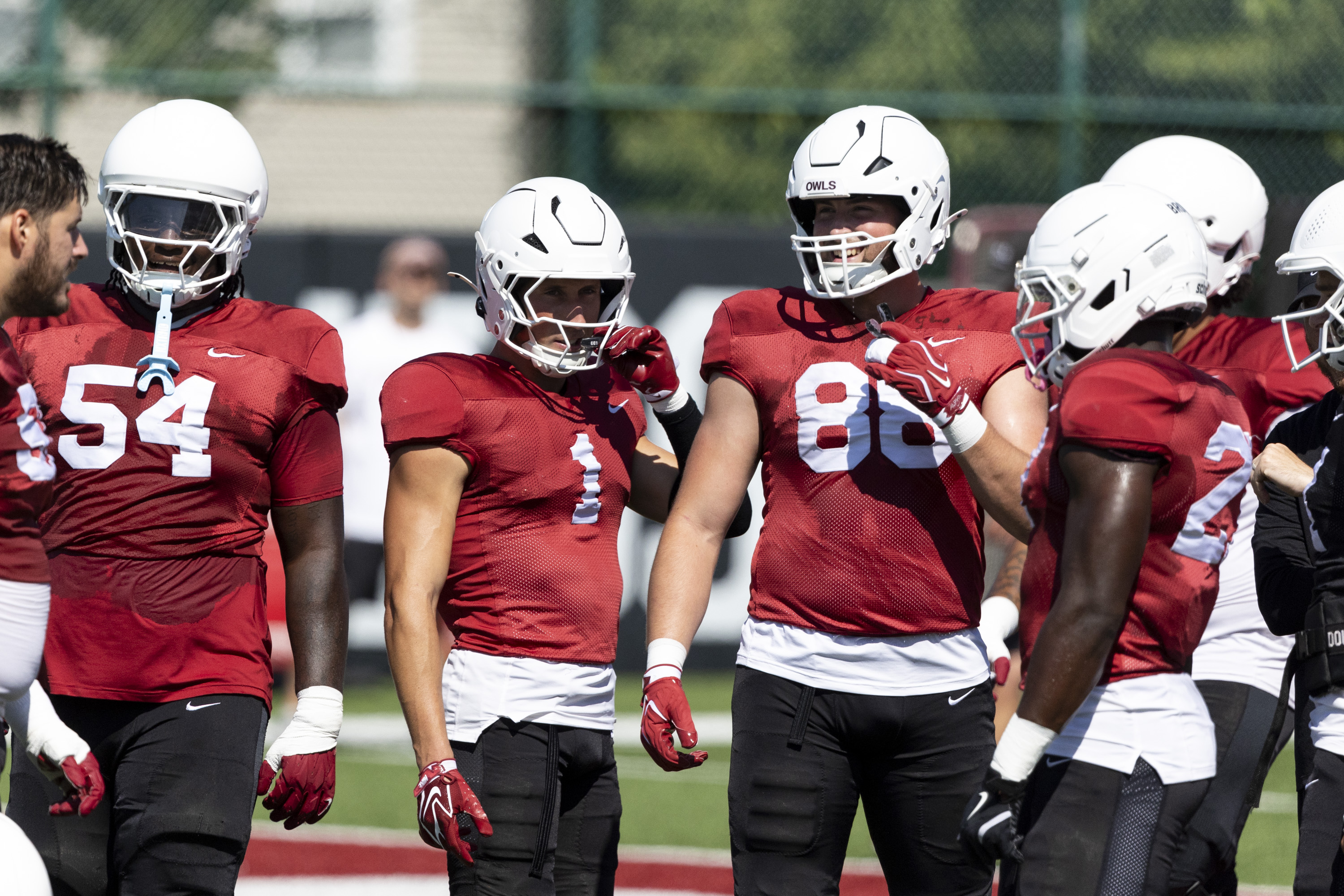
Colin Chase (1) and Peter Clarke (88) are among the returning skill players from last season’s roster.Tyger Williams / Staff Photographer
“When you bring in 50-60 new guys every year, you’re having to reinstall not just the plays, but also the culture, the identity,” Clarke said. “Whereas when you keep everybody, you have position leaders in every group. You have guys who know what it takes and have been in those positions and can guide guys and bring them along a lot quicker. So it means we can [be] more quicker. … We have a big advantage in keeping the position leaders, keeping guys we played [with], and just reinstalling coaches and new guys that not necessarily starting from ground zero.”
Building foundational blocks
When K.C. Keeler took over the program 21 months ago after a 11-year run at Sam Houston State, he emphasized that Temple would not be “living in the transfer portal 100%,” and added that he doesn’t want a locker room full of mercenaries, where “guys [are] just here for a year or two, and there’s no fabric, there’s just no continuity.”
A key part of his plan to help turn the program around was building leadership and advisory board councils among the returning players, as a way to rebuild the team’s culture.
The message appears to be resonating. Clarke, who says leadership “comes natural to me,” is one of 11 seniors or fifth-year players who have remained on the roster since their freshman seasons and endured the coaching change from Stan Drayton to Keeler.
“Being a captain on my high school team and leading guys there and coming here and having an impact like I have, and then when success happens, staying at Temple and continuing to grow, helps me step into that [leadership] role,” Clarke said. “I love this program. I love my teammates, and I want this school and this community to bring the energy for us. … When I see guys doing the wrong things, not being accountable, not doing things the way like ‘Temple tough’ football is. It’s my job to hold them accountable and hold myself to that same high standard.”
Grayson Mains, the team’s starting center for the last two seasons, transferred to Temple from South Carolina before the 2024 season and was also selected by his teammates to be a single-digit player this season.
He too, understands the importance of continuity and team culture, not only for the success of the program, but for the health of the locker room. He says leaders, like Clarke, himself, and other returning upperclassmen who have been around the program, “know what a bad culture on a team is like” and added that this year “we know what we do and don’t want to see, and just how to push guys the right way.”
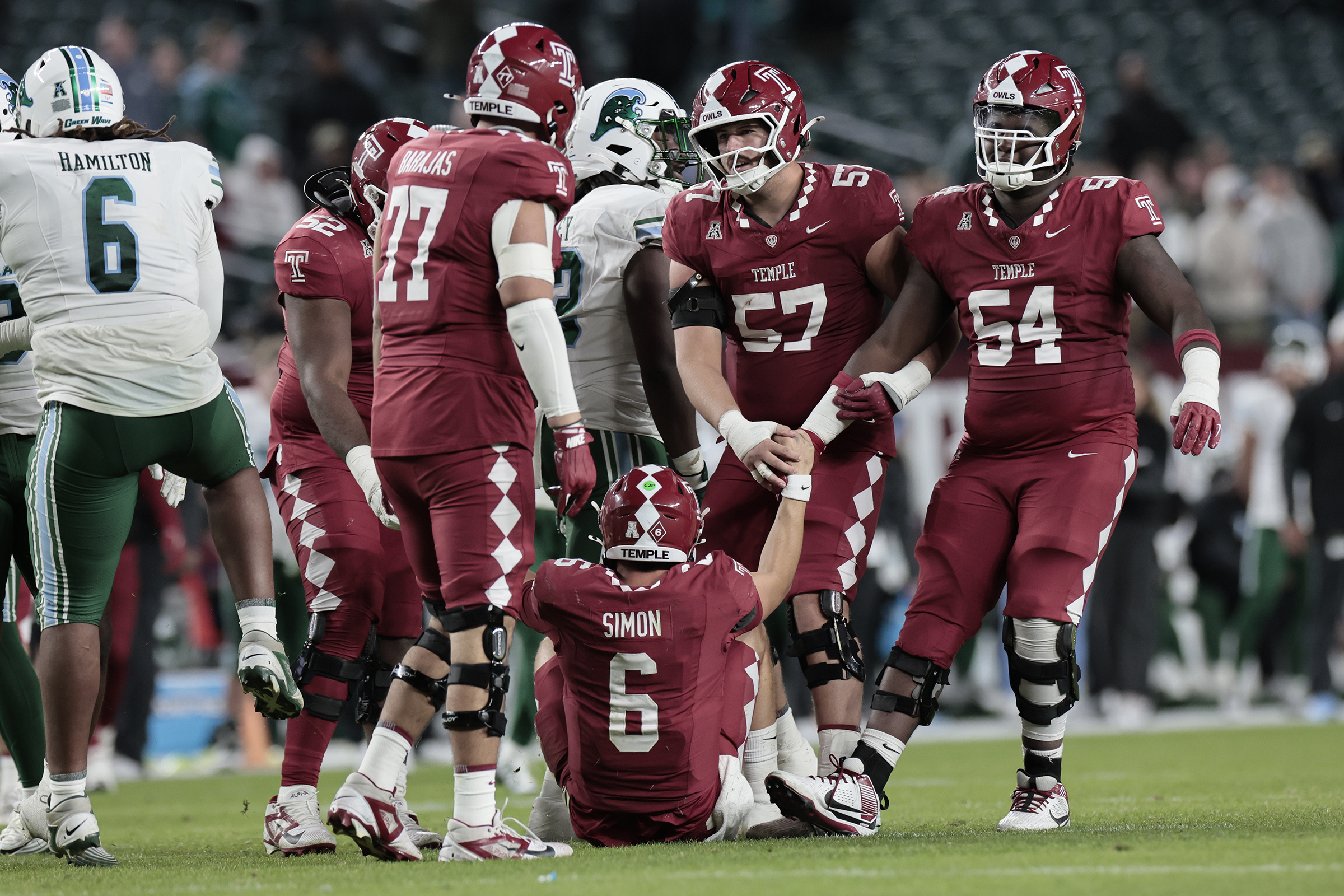
Grayson Mains (center) helps up his quarterback during Temple’s game against Tulane last season.Elizabeth Robertson / Staff Photographer
“Coach Keeler’s big thing has really been about accountability, and I think I’ve seen it a lot from the players,” said Mains. “Players holding players accountable, and being a lot more respectful to each other. … [We’re] not taking everything personal, because we all know that we’re one team and we’re all fighting for the same goal.”
Clarke’s leadership hasn’t been just noticed by his teammates. Offensive coordinator Tyler Walker, part of a coaching staff that was also fully retained from last season, called his tight end “the epitome of a single digit.”
“He’s been in the shoes that a lot of these young guys have been in,” said Walker. “He’s been [at Temple] through the ups and downs, and he’s been through coaching transitions. He’s been a backup. He’s been a freshman, and now he’s also been the guy. … He’s super humble. He wants to be great. He wants to be coached. He wants to be coached hard.
“He sets expectations for himself, and he brings other guys around him, with him. And that’s the sign of a good leader.”
‘Captain’s practices’
During the summer, coaches are not allowed to administer nor watch practices, according to NCAA rules. But that didn’t stop players from getting work in, led by Clarke and others.
Clarke and Mains each credit the player-run practices for bonding the team together, and it ultimately set the tone for their expectations this season on North Broad.
“The biggest emphasis to the transfers that weren’t here [last year] was, ‘Hey, this team’s been through a lot and experienced a lot, and we’re so close to turning this thing around.’ We’re all pushing the same direction and [we told them], ‘It’s time to get in and help us,’” said Clarke. “So [we were] getting those extra captain’s practices in with Army and Navy looks and [their] triple option offense, so that our defense understands what the read keys look like and can develop those habits early, so when we get to the game weeks, it’s not a complete surprise.
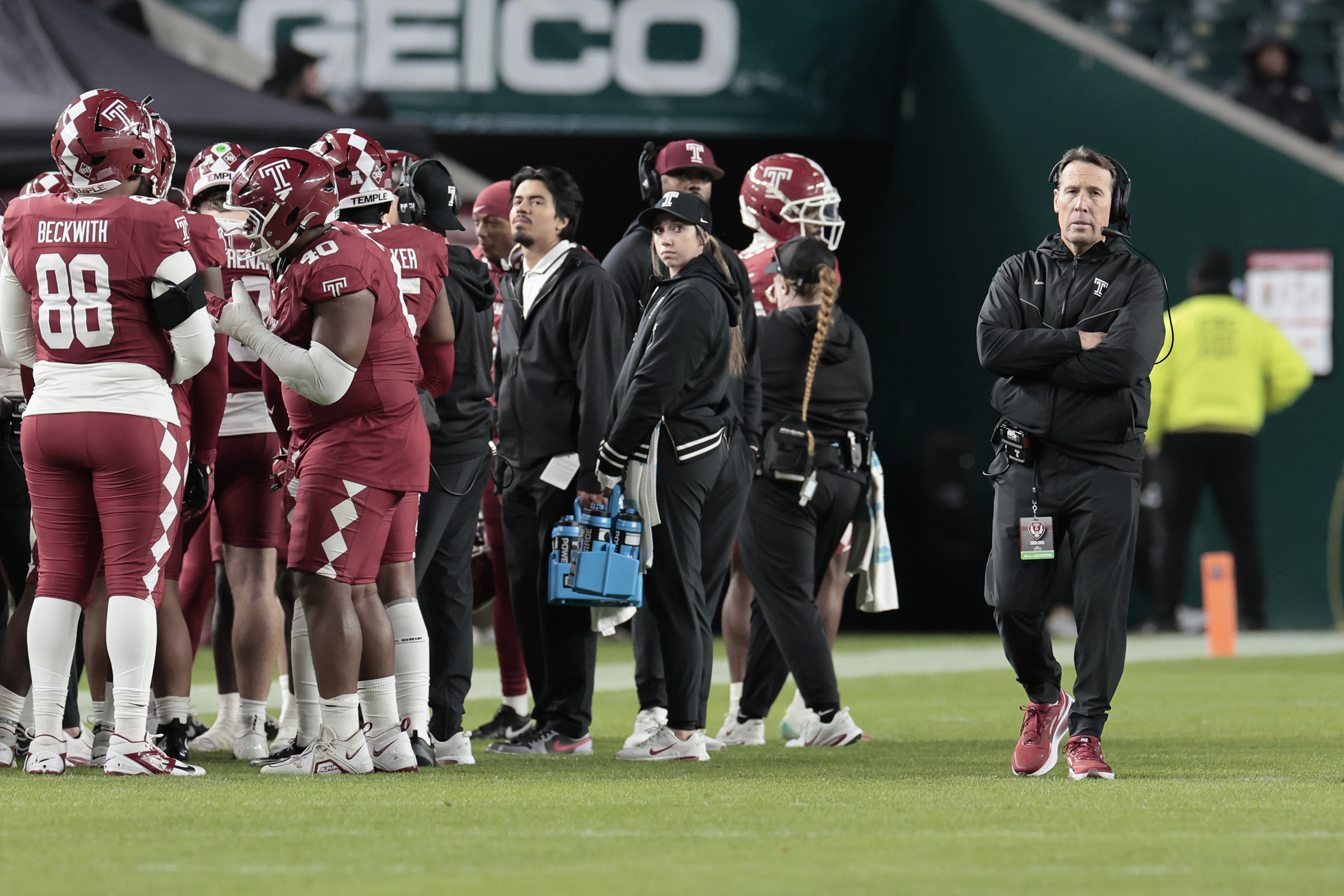
K.C. Keeler has had winning records in the second season of previous stops at Rowan, Delaware, and Sam Houston State.Elizabeth Robertson / Staff Photographer
“It’s just about, ‘Hey, what’s going to get us over the edge?’ It’s going to be efficient football from the offense. It’s going to be able to stop the run from the defense and just play one complete football game between special teams, offense, and defense.”
Added Mains: “Over the summer we pushed each other [so much harder]. … We were just able to do so much more, and then especially those summer days, like our OTA days, when coaches weren’t in the building, everybody respects [the leaders] enough to lead those player-run practices on the field and truly get really good work done.”
At his previous three stops, second seasons for Keeler have been notably fruitful. At Division III Rowan in 1994, the team finished 6-3; in 2003, Delaware won the Football Championship Subdivision championship; and at Sam Houston State in 2015, Keeler led his team to the FCS semifinal.
After two one-point losses last fall that prevented the Owls from making a bowl game, their players are ready to turn the page.
“We talk every day about winning championships,” said Mains. “This team hasn’t been to a bowl game in a while and hasn’t seen that American Conference trophy in a while. We’re all striving every single day to be as great as we can to make those goals [happen].”
Added Chase: “I think we got something special here. It speaks about our program. It speaks about coach K.C. Keeler and the vision that everyone truly believes that Temple football is going to be successful.”
On Christmas mornings while growing up in Northeast Ohio, Matt and Scott Campbell were excited to fulfill what became a yearly tradition. Most kids raced toward the Christmas tree to open presents and celebrate the holiday, but not the two brothers, who were born four years apart. They raced out the door to get a football game in, even when snow covered the ground.
Those games were one-on-one, mano a mano. Matt “had quite an impressive [size] advantage on me,” Scott said. The memory proved instructive of his older brother’s competitiveness, as Matt steps into his third college football head coaching job.
“It was not uncommon to get your favorite football jersey for a Christmas present. And then Riddell was giving out all those football uniforms that came with shoulder pads, leg pants, and helmets,” Scott Campbell told The Inquirer of his earliest football memories with Matt. “Then you go outside [to play against Matt].
“I never won these games.”
Football runs deep for the Campbells. Rick Campbell, Matt and Scott’s father, was a high school coach at Jackson High School in Massillon, Ohio, and later went into administration.
The sport quickly became the center of Matt’s life, too.
He would attend two-a-days with his dad before his school day started.
“My greatest childhood memories are being in the locker room and being on the football field with my dad, watching him lead and coach a football team,” Matt Campbell told The Inquirer in July. “I wanted to help give back and make a difference [as a coach] because so many people had done that for me.”
(function() {
var l2 = function() {
new pym.Parent(‘campbell2’,
‘https://media.inquirer.com/storage/inquirer/projects/innovation/arcgis_iframe/campbell2.html’);
};
if (typeof(pym) === ‘undefined’) {
var h = document.getElementsByTagName(‘head’)[0],
s = document.createElement(‘script’);
s.type = ‘text/javascript’;
s.src = ‘https://pym.nprapps.org/pym.v1.min.js’;
s.onload = l2;
h.appendChild(s);
} else {
l2();
}
})();
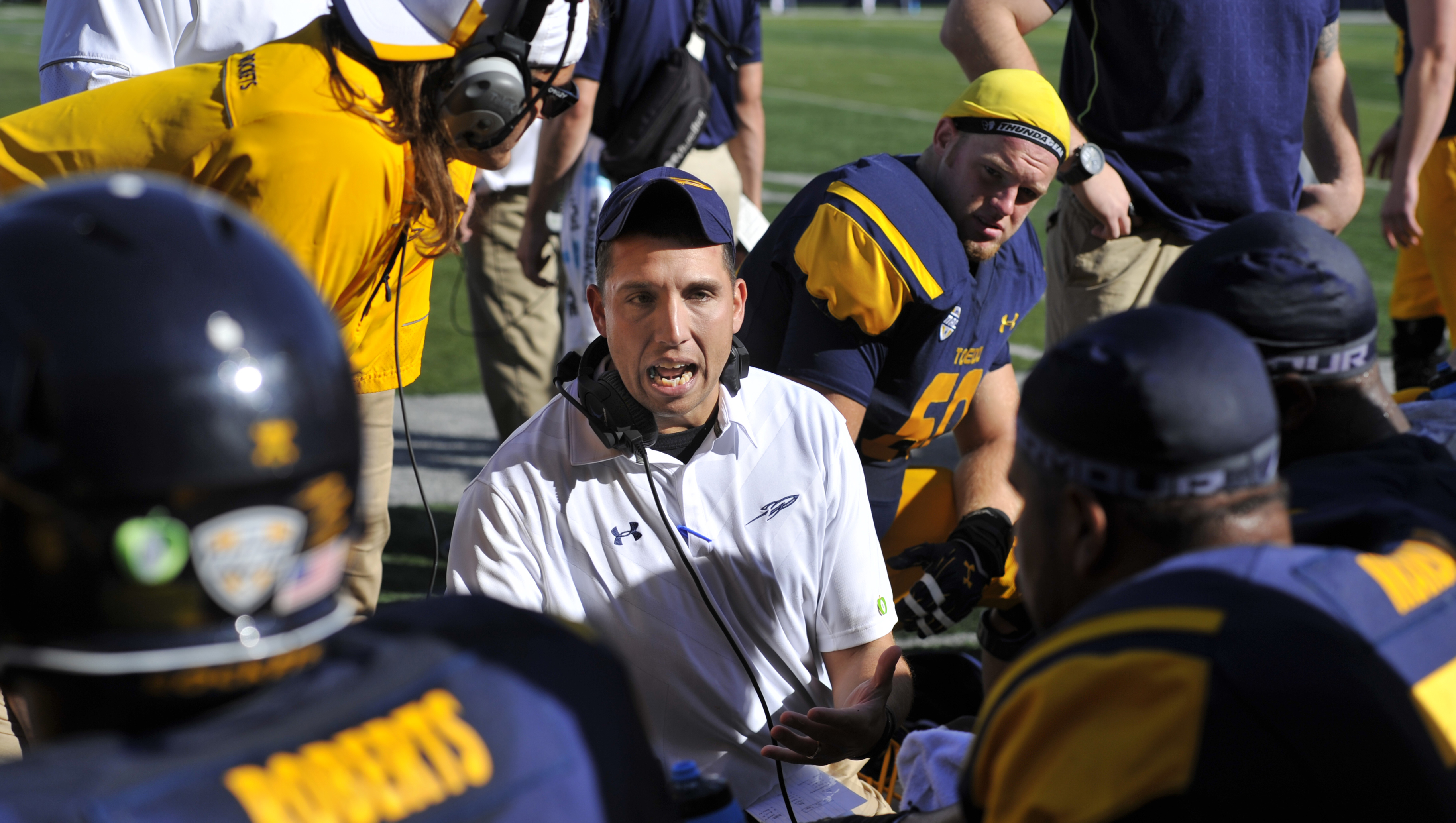
From those early days in their backyard, to stops at Pittsburgh and Mount Union as a player, then coach, and several other stops before landing his highest-profile opportunity yet at Penn State, Campbell has remained the same, his former teammates, players, and coaches across his 24-year coaching career say.
“Anybody that knew younger Matt or played with him or crossed paths with him, I don’t think anybody is surprised [by] the success he’s had,” Indianapolis Colts tight end coach Tom Manning said by phone shortly after Campbell was hired at Penn State. “Obviously, he’s a very good football guy in terms of X’s and O’s, but I think the thing that makes Matt dynamic is his ability to inspire others, certainly a great teacher, but he has this ability to have a relationship with everybody that is authentic and real.
“He creates this culture of unification, of toughness, of having a chip on your shoulder. And I think that every person that’s ever played [in] his football program or coached for him, they just feel like they’re part of something a little bit bigger than themselves.”
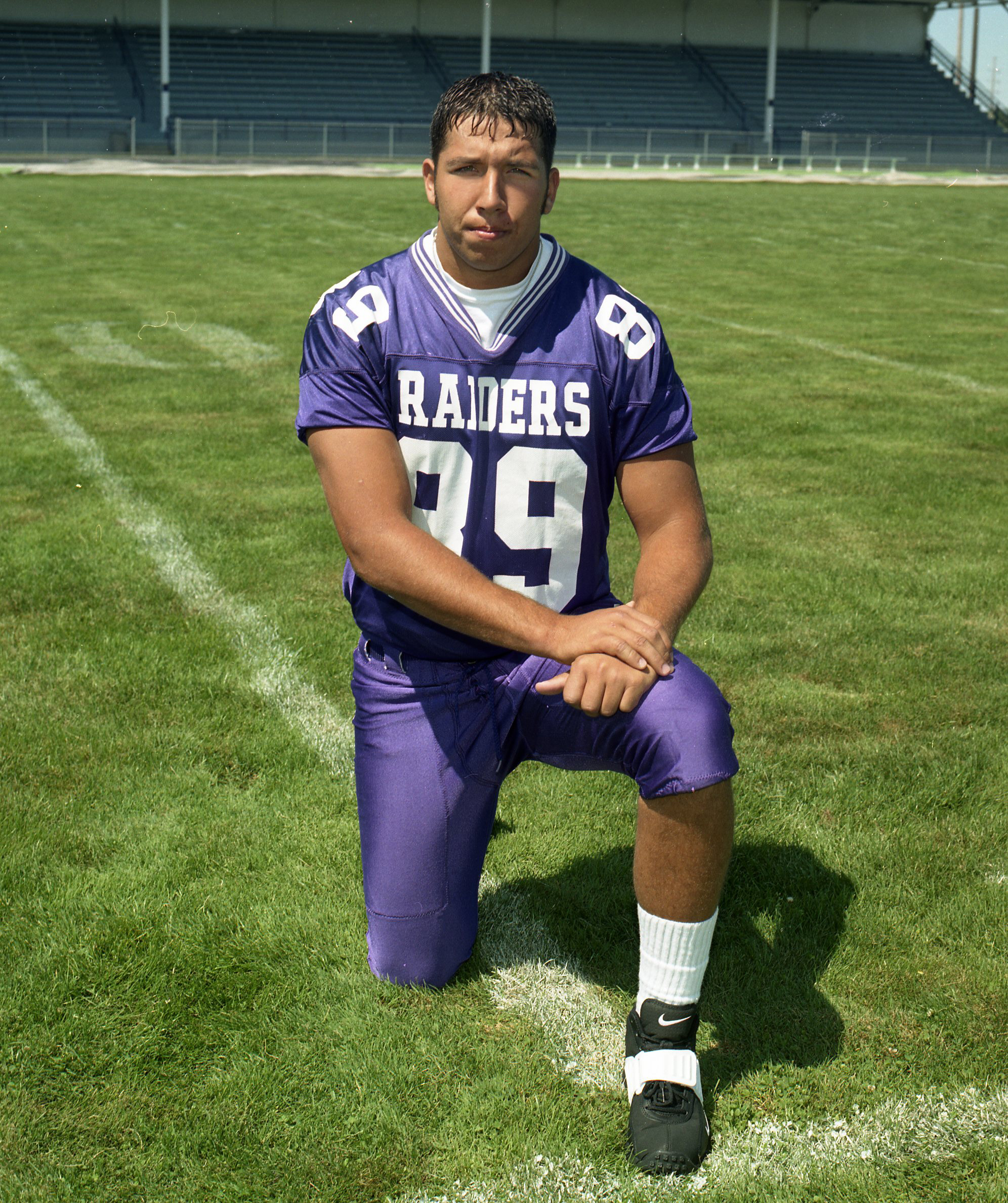
Matt Campbell (center) makes a tackle during a game for Mount Union during his playing days.Courtesy of Cockrill’s Studio
Embracing the ‘abnormal’
Campbell, now 46, developed into a standout defensive end at Perry High School in the 1990s. Matt was coached there by Keith Wakefield, who is “as inspirational as anybody in his life,” Scott said.
Out of high school, he accepted a scholarship from Pitt, but after the team went 2-9 his freshman season in 1998, he transferred to Division III Mount Union — a move that not only defined his playing and coaching career, but moved him closer to home.
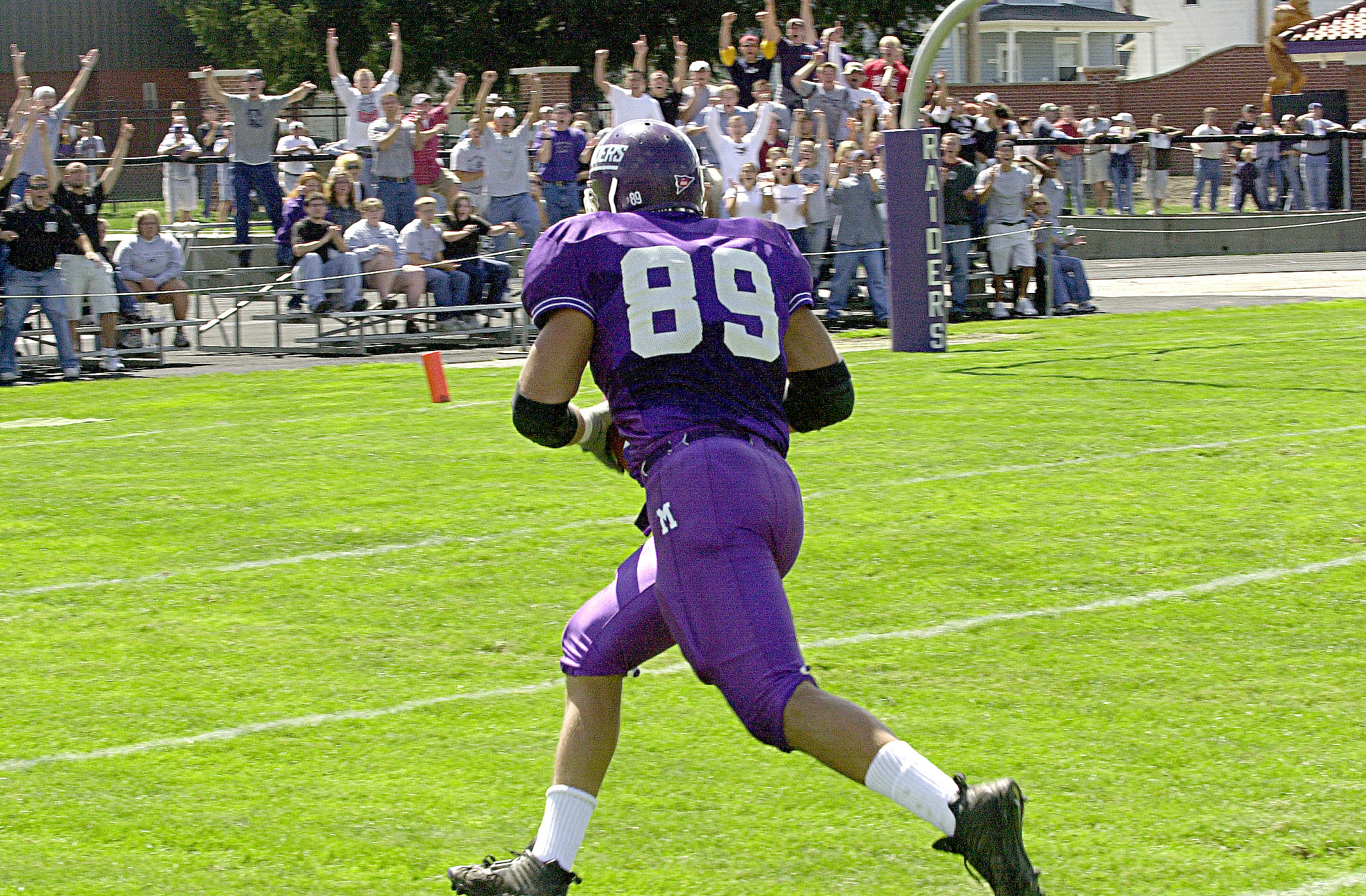
Campbell won three D-III titles from 1999 to 2002 at Mount Union, was named an All-American twice, and was the Ohio Athletic Conference defensive lineman of the year in back-to-back years in 2001 and 2002. But it was during his playing days there, under legendary coach Larry Kehres and alongside lifelong friends and coaching contemporaries, where Campbell first showed an inkling toward his future career.
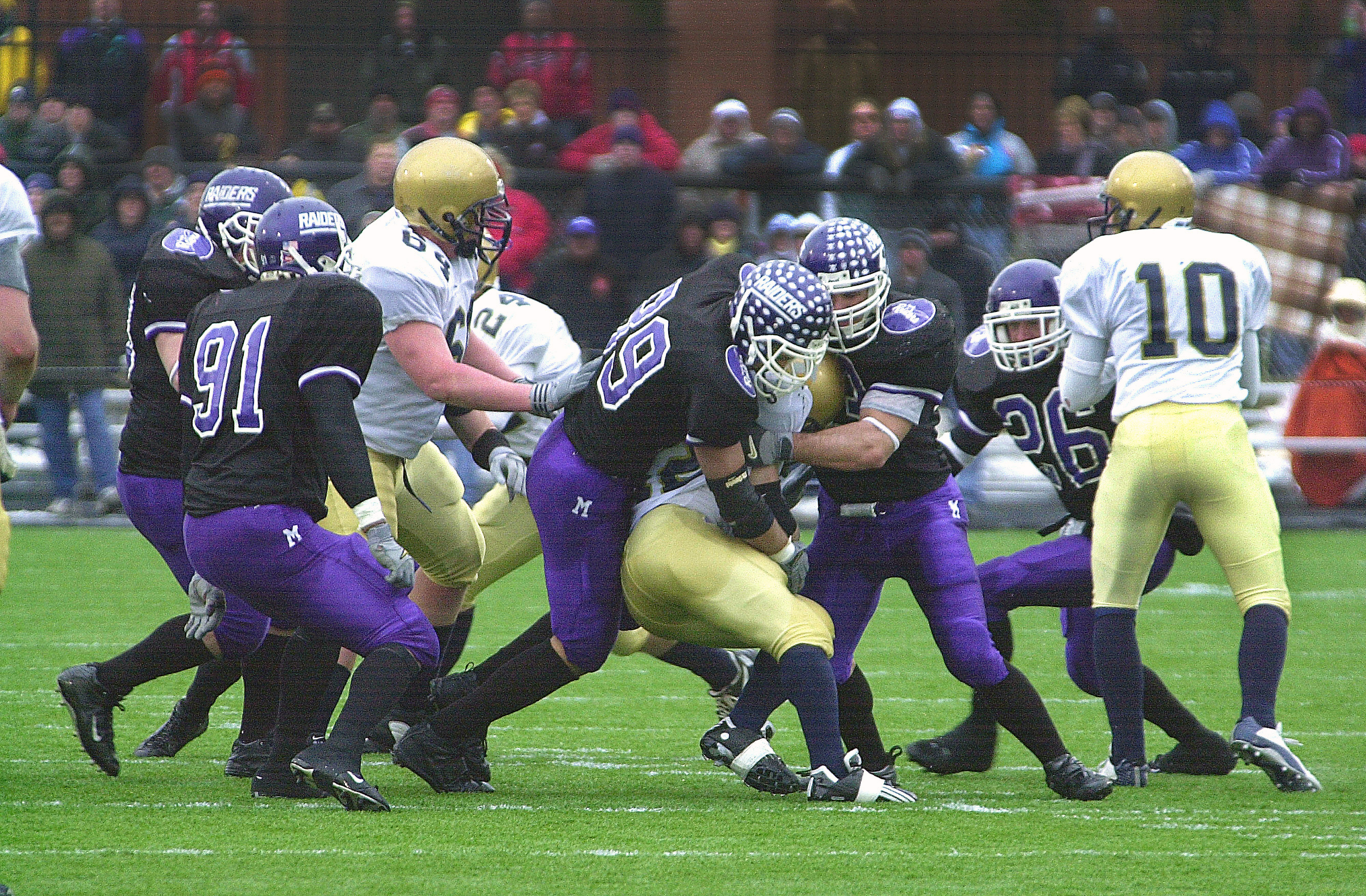
Matt Campbell played defensive line at Division III school Mount Union after spending his freshman season at Pitt.Courtesy of Cockrill’s Studio
“The connection of understanding the value of ‘People don’t care how much you know until they know how much you care,’ and you go back and you say, ‘Man, why? What made the great coaches that you had impactful in your life?’” Campbell said. “It was a transformational experience rather than a transactional journey. And you’re talking about two of the winningest coaches in the history of Ohio high school football, and certainly in all of college football [in Wakefield and Kehres].
“I think their greatest gift was their gift to connect … and find a way to help make their players better, because their belief [of], ‘Man, they cared about them and they wanted to have a real relationship with them.’ So I think that foundation has been huge.”
Often understated about Campbell’s background is how impactful he was on the field for the perennial title contender. His 182 assisted tackles and 55 tackles for loss rank fourth in school history, his 26 career sacks are seventh, and he is 19th in total tackles (256).
Matt Campbell played and coached at Division III Mount Union.Courtesy of Cockrill’s Studio
His on-field success, though, was anchored by film study. Campbell would know “the play that was coming by whether it was the formation or certain motions that they do into the boundaries, and he was calling the plays out,” said Scott, who joined his older brother on Mount Union’s football team in 2002. Campbell’s teammates also took notice.
“All of them knew the way that Matt prepared for football games was abnormal,” Scott said.
But what made what Matt was doing abnormal?
“I don’t think it’s uncommon for a player to be obsessed at watching film,” Scott said. “Some people get really good at honing their skills and they want to do it. It’s abnormal when they bring people along with them. So when you might get a kid, like a very talented defensive tackle … and some of these guys that he played with, they’re meeting on a Sunday night and doing hard core [film study] because they want to be ready for the next week.
“When you have gravitational pull to bring the people that either you’re leading, which we are seeing it with him as a coach, or the ones that you’re going to war with as a football player … for them to match your intensity, they were buying into that and they saw, ‘Well, Campbell’s doing that. We have to do it.’”
Added Manning, Matt’s teammate for two years at Mount Union: “He was always in the film room. He was always trying to find an edge, in terms of being a player, and he was a guy that was probably more talented than most of the people that he played, and he still had the work ethic and the attention to detail as a player that I think helped him separate himself even further.”
Matt Campbell was twice named to the College Football All-America team and named Ohio Athletic Conference’s defensive lineman of the year at Mount Union.Courtesy of Cockrill’s Studio
‘Just as authentic’
When Campbell finished his playing career at Mount Union in 2002, he went to Bowling Green to work as a graduate assistant, but returned to Mount Union in 2005 and was its offensive coordinator and offensive line coach for the next two seasons.
The program won back-to-back titles, with a staff that included Eagles coach Nick Sirianni (2004 to 2005), Campbell’s college teammate and former roommate, as defensive backs coach in that first year. Connecticut coach Jason Candle (2003 to 2008), another former teammate, and Syracuse defensive coordinator Vince Kehres (2000 to 2019), Larry Kehres’ son, were on the staff both seasons.
Campbell returned to Bowling Green for two more seasons before landing at Toledo in 2009, first as an offensive line coach and run game coordinator. By 2012, he was the program’s head coach at 32 years old, making him the FBS’s youngest coach at the time.
Colts tight ends coach Tom Manning was teammates with Matt Campbell for two years at Mount Union.Phelan M. Ebenhack
What impressed Manning, who also worked at Toledo as a graduate assistant (2009) and later as its director of football operations and offensive line coach, was how quickly Campbell connected with players and recruits.
“What I really recognized the most was that he was different in recruiting, [he had a] dynamic personality, but I was always impressed, and probably what stuck out the most was that when he had recruits, whether up on campus or visiting him, he had a real relationship with a ton of kids,” Manning said. “I was like, ‘Man, I don’t understand how this guy after just a couple brief contacts, has the ability to know so much about him, have real conversations with him.’ … I knew Matt as a younger guy, and now I knew him in the professional world. I was like, ‘Man, the biggest thing about Matt is he’s just as authentic as he was the day that I met him.’”
And that started with his own teammates. Mount Union was “a player-led program,” and Campbell — along with other leaders like Sirianni, Candle, and Kehres — would open their house and “nurture the young kids because that’s the next generation of leaders in that program.”
Jason Candle followed Matt Campbell to Toledo in 2009 as slot receivers/tight ends coach.Carlos Osorio
“That’s what that whole program was,” Scott said. “It was a program that was giving way before we even knew it was giving to us.”
Matt Campbell worked closely with Candle, who followed him to Toledo in 2009 as slot receivers/tight ends coach, especially when the former assumed play-calling duties under Tim Beckman.
Candle, who considers Campbell a “true friend” and a “great mentor,” recalled the early “camaraderie of the young assistant coaches that we had at the time.”
“Lots of times you don’t get to work with or alongside with or for your college teammates,” Candle said. “And we’ve been through a lot of battles together as players and certainly as young assistant coaches. [Matt’s] been a guy that I’ve learned a lot of football from and a guy that has certainly earned the right to lead one of the top programs in the country.”
Campbell went 9-4 in his first season leading Toledo, and he compiled a 35-15 overall record before moving on to Iowa State at 36 years old.
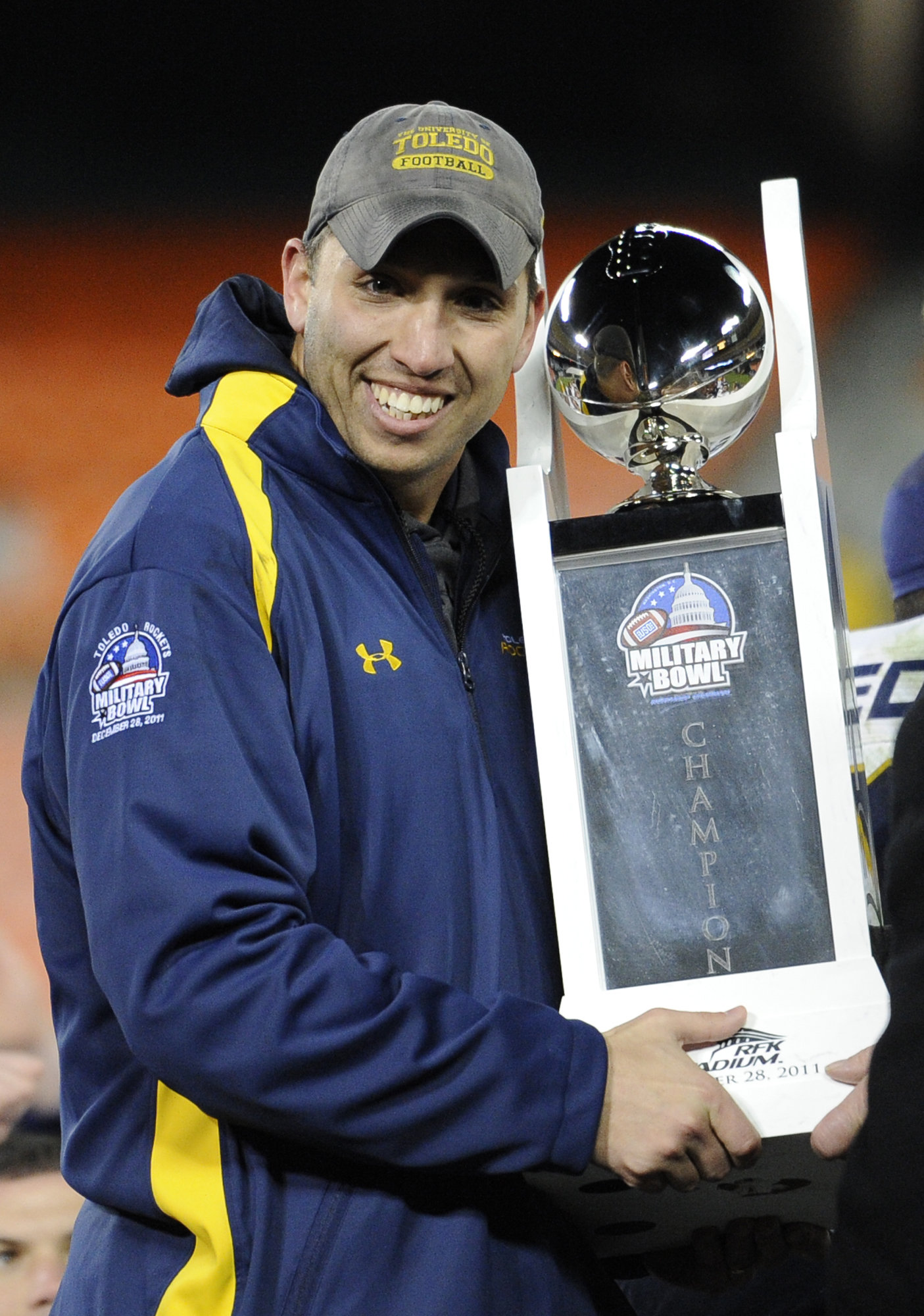
Matt Campbell compiled a 35-15 overall record while at Toledo.Nick Wass
Campbell “surrounded himself with young and hungry people,” Manning said, particularly on his offensive staffs at Toledo — which featured future Cincinnati coach Scott Satterfield, future Auburn coach Alex Golesh, and Candle. But it was Campbell “doing things the right way” and never being “anybody that he’s not” that stood out.
“Working for him is was one of the greatest experiences of my life,” said Manning, who worked with Campbell for a total of 12 years between Toledo and Iowa State. “You felt like you were doing something. … You were coaching the whole player. It was about character. It was about teaching kids attitude and effort, the ability to be consistent, and to give a little bit more themselves and to play in a unified front — that’s what he does so well.”
Matt Campbell was the head coach at Toledo from 2012 to 2015.David Richard
‘Dog mentality’
In the 10 years before Campbell took over Iowa State, the program had just one winning season and had finished with more than seven wins once since 2000.
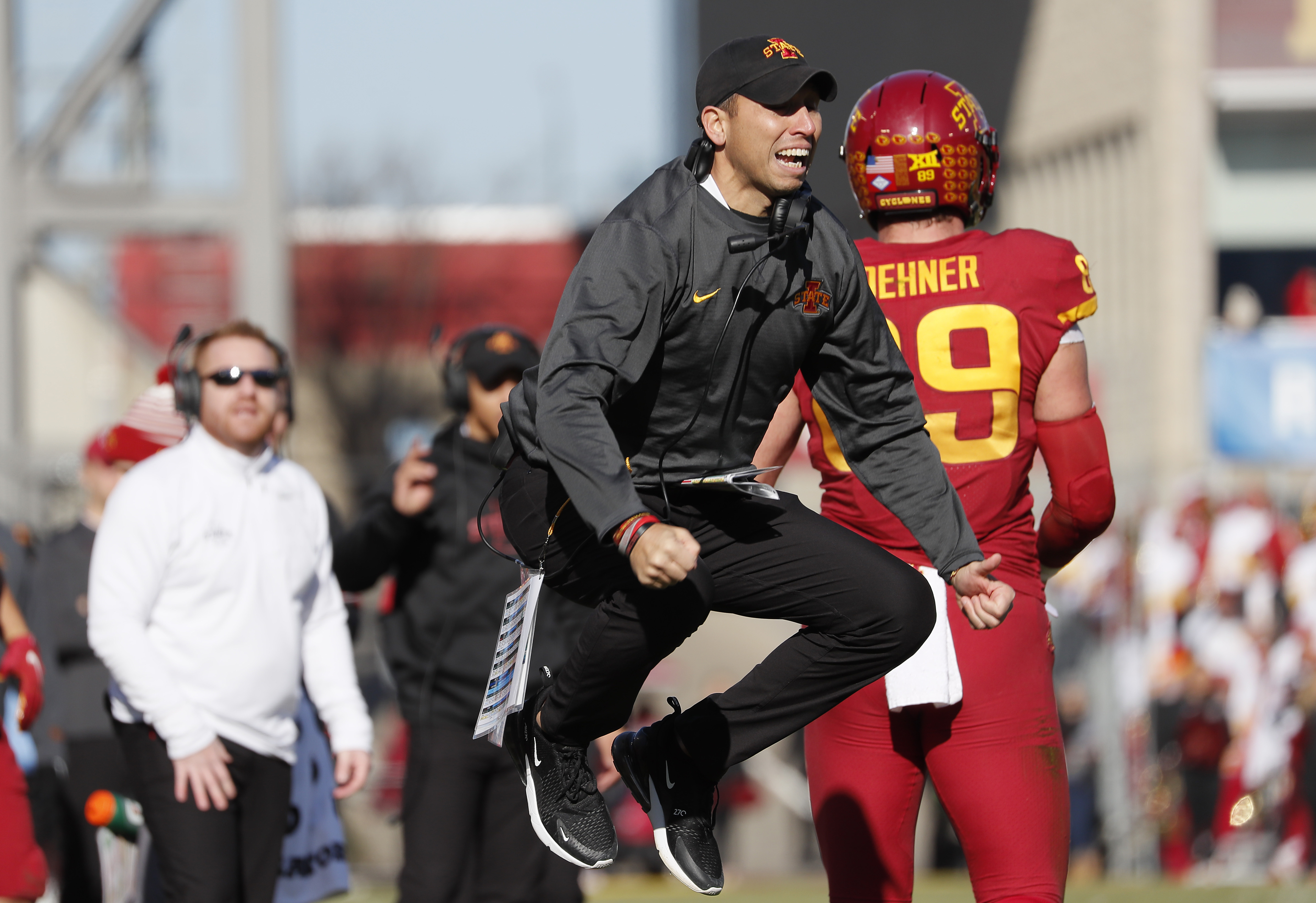
He accomplished those milestones by Year 2. In 2017, the Cyclones went 8-5, their best record in 16 years, and upset No. 3 Oklahoma, 38-31, a memory that is forever etched in the mind of Manning, who was the team’s offensive coordinator and offensive line coach.
“That week, we kind of put in a whole new defense,” Manning said. “We had our middle linebacker who [also] was a quarterback. He played about 40% of the snaps at quarterback. He’s playing both ways. We got a walk-on quarterback who essentially ends up winning us the game, and [Matt’s] belief the whole week, his belief during the game, never wavered. A lot of guys tell themselves like, ‘Hey, we’re going to win this game.’ My man thought we’re going to win the game the entire week, and then we end up winning the game.
Matt Campbell became the Iowa State’s all-time winningest coach.Matthew Putney
“… And to me, it was culture over scheme. Maybe our players collectively weren’t as talented and as good, but, ‘Hey, if we’re united, we have this culture of winning, we do things the right way.’”
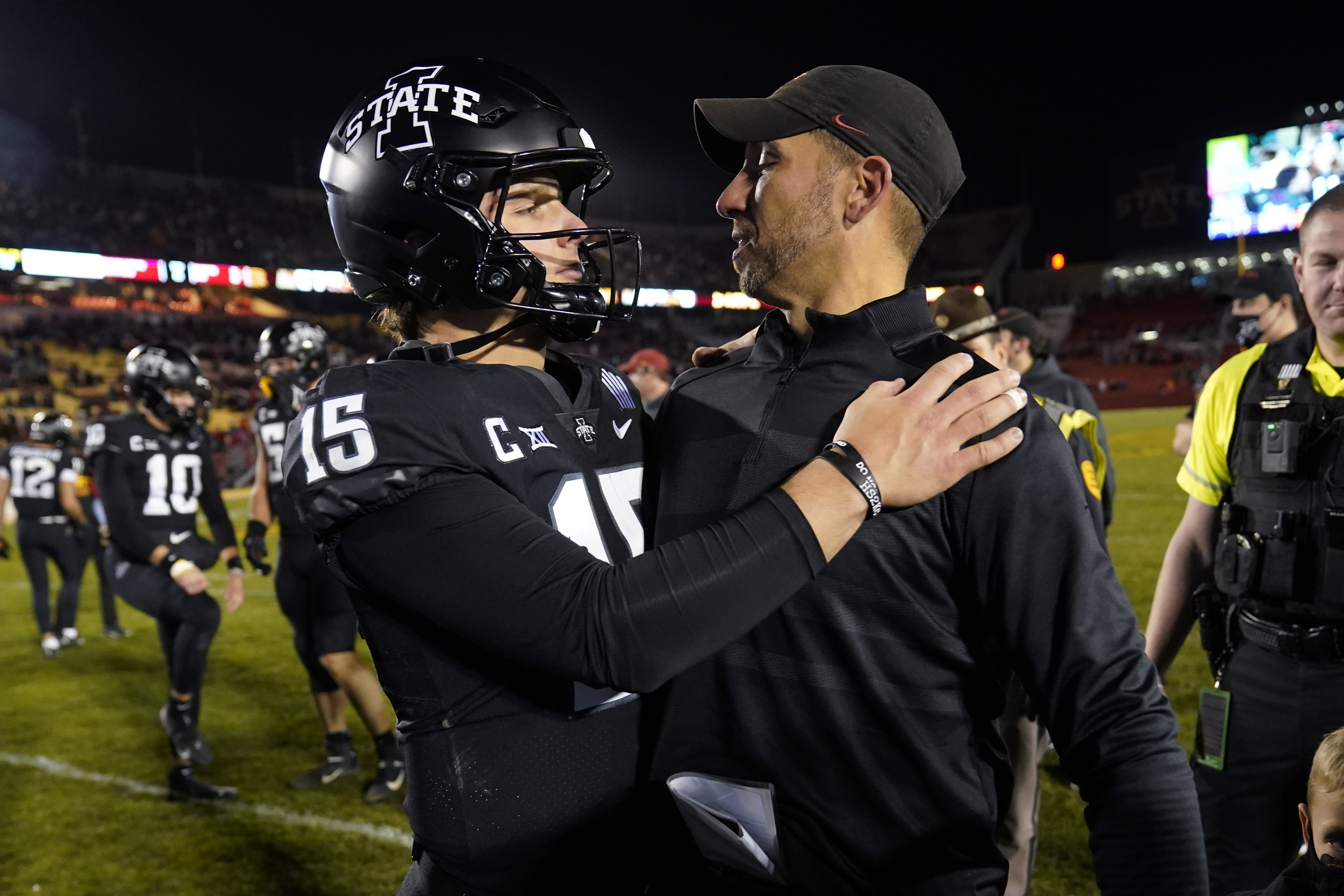
That unwavering belief was reflected by his players, too. Among them was former Iowa State quarterback Brock Purdy, a four-year starter who could sense Campbell’s “loyalty” and praised his former coach “who had a vision for [him in] place.”
“Coach Campbell’s coaching style is huge on culture. It’s important because he sets up an organization that is able to withstand adversity, the good, the bad,” said Purdy, who’s now the San Francisco 49ers starting quarterback. “And it’s all about being a real team that trusts in each other, goes through things with each other. And then at the end of the day, he is going to prepare us better than anybody in the country in terms of scheme and making sure our bodies are right for a long season.”
Former Iowa State quarterback Brock Purdy gets a hug from Matt Campbell against TCU on Nov. 26, 2021.Charlie Neibergall
Those Iowa State teams often punched above their weight. Campbell’s highest-ranked recruiting class with the Cyclones was the Class of 2026, which was 48th before he departed for Penn State, taking much of that class with him.
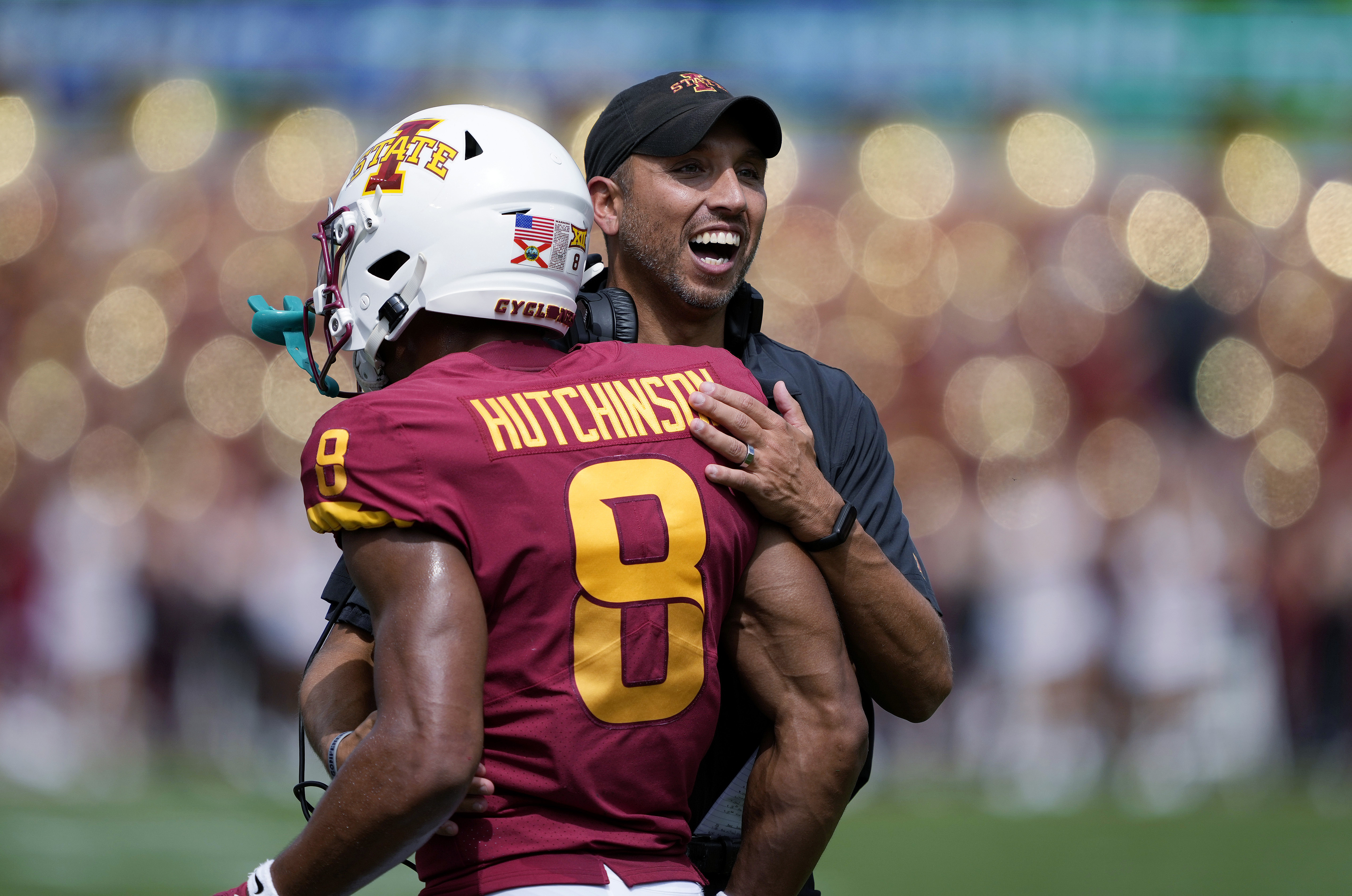
Wide receiver Xavier Hutchinson, who played three seasons at Iowa State from 2020 to 22, said Campbell recruited players that were “like-minded.”
“Everybody went to Iowa State either because you were underlooked, you weren’t valued, or just people thought [other players] were better,” said Hutchinson, who’s now on the Houston Texans with four other former Cyclones who played for Campbell. “We all had like a dog mentality — and I felt like that’s Coach Campbell’s mentality. It’s like the rough side of the mountain. … He wanted guys who have something to prove and had a chip on their shoulder.”
Matt Campbell congratulates former Iowa State wide receiver Xavier Hutchinson on his touchdown against Southeast Missouri State on Sept. 3, 2022.Matthew Putney
There were plenty of highs in his 10-year run at Iowa State: Two Big 12 championship appearances (2020, 2024), the most wins in a two-year stretch (19 wins across 2024 and 2025) and double-digit wins for the first time in program history. Twelve of his 17 Associated Press Top 25 wins came in that time frame, and he became the program’s winningest coach.
Even in the down years — Campbell and Iowa State missed bowl games just twice in 10 years, once in his debut season (2016) and another in 2022 — Hutchinson says his former coach “never let the success or the failures define him as a coach.”
“He’s taken them all on the chin,” Hutchinson said. “When we’ve had the greatest success, he was there. He still had the same motto even when we started [struggling] a little bit. He was still the same guy every day. And I think when your head coach is the same guy, and he doesn’t get frazzled by the success or the failures — it’s going to bleed into the into the team.”
Matt Campbell led Iowa State to two Big 12 championship appearances.Charlie Neibergall
‘The best version of me’
Campbell will emerge from the Beaver Stadium tunnel for the first time this weekend, marking the next chapter for him and the program. His team has 24 former Iowa State players who followed him to Happy Valley.
At the root of his confidence in leading Toledo, Iowa State, and now Penn State is what he learned from his father, Wakefield, and Kehres, his coaching mentors: “Not trying to be somebody else.”
“I love learning. I love being humble and growing, but I’m just trying to be me, the best version of me,” Campbell said. “What I found is we’ve been able to build trust, loyalty, togetherness in our football program, whether it was at Toledo, whether it’s at Iowa State, and obviously that’ll be a great challenge as we build this Penn State program.
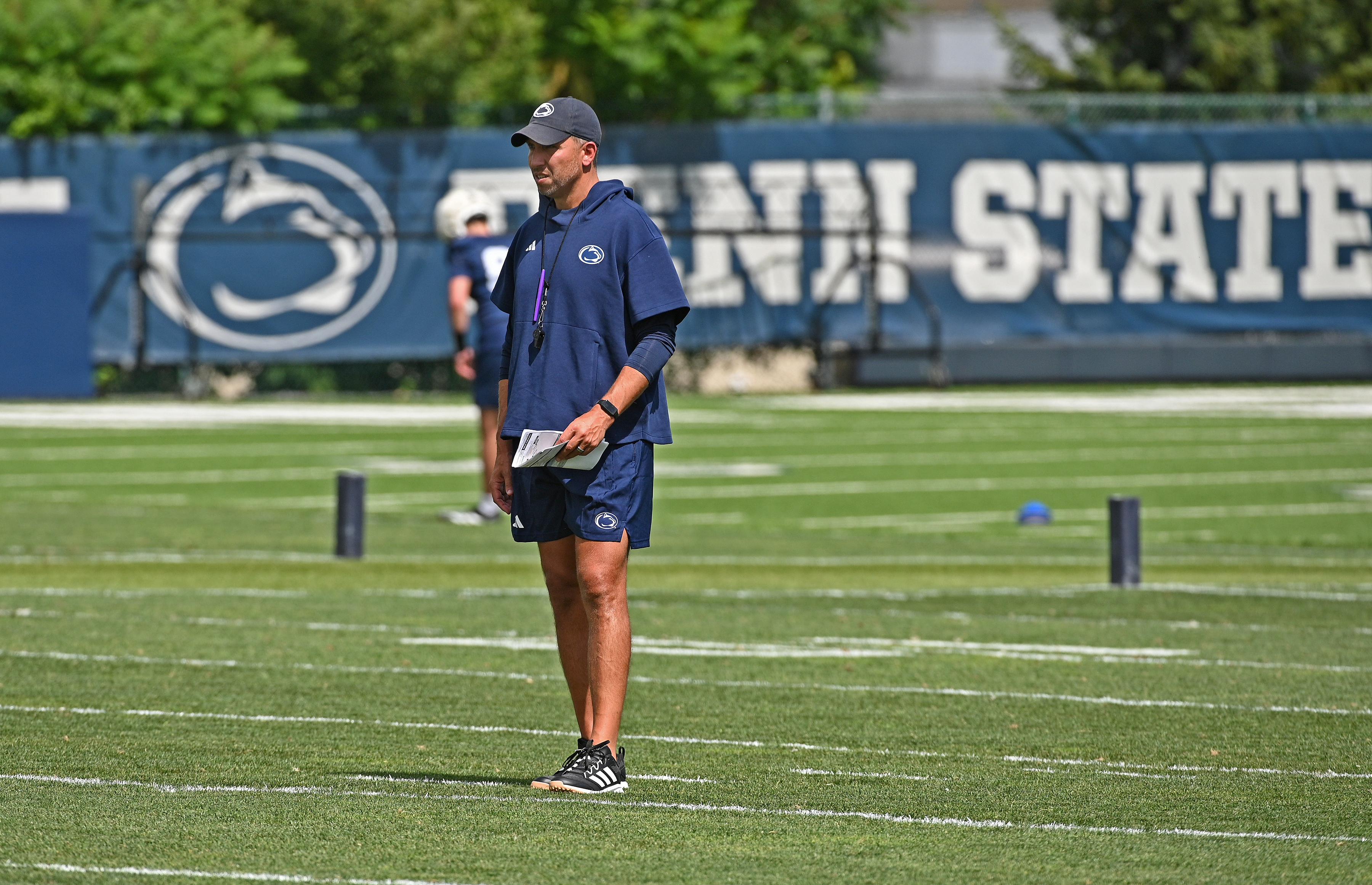
Matt Campbell during Penn State’s first practice of training camp on Aug. 5.Craig Houtz / For The Inquirer
“The attitude and the effort and the consistency to show up every day, and be able to be the same person every day, and allowing your staff and the players on the team to know exactly what they’re going to get … I think those are what I learned and took as a player and a coach from [Kehres and Wakefield], and it’s what I’ve tried to emulate everywhere I’ve been as a football coach.”
His former players, Purdy, Hutchinson, and offensive lineman James Neal III, have no doubts Campbell is ”going to give [Penn State] everything he has” to help it reach new heights. It begins with Marshall on Saturday (3:30 p.m., FS1).
Scott, who joined Wakefield at a Penn State practice on Aug. 13, says his older brother is doing “what he loves.” And it’s why he believes Campbell has sustained success throughout his career.
“If somehow you’re able to get, say, the 400, 500 people that at some point came across Matt Campbell at Mount Union College that played with him or whatever, I would probably say in the high 95 percentile range, every one of them would have told you he was going to be a head coach and a successful head coach at some point,” Scott said. “Matt’s elite trait that he has is that he is beyond competitive.
“He just doesn’t say, ‘We’re going to do this’ because why else would you do it? No. Matt envisions this and believes it. He’s not going to tell you if he doesn’t [believe it.].”
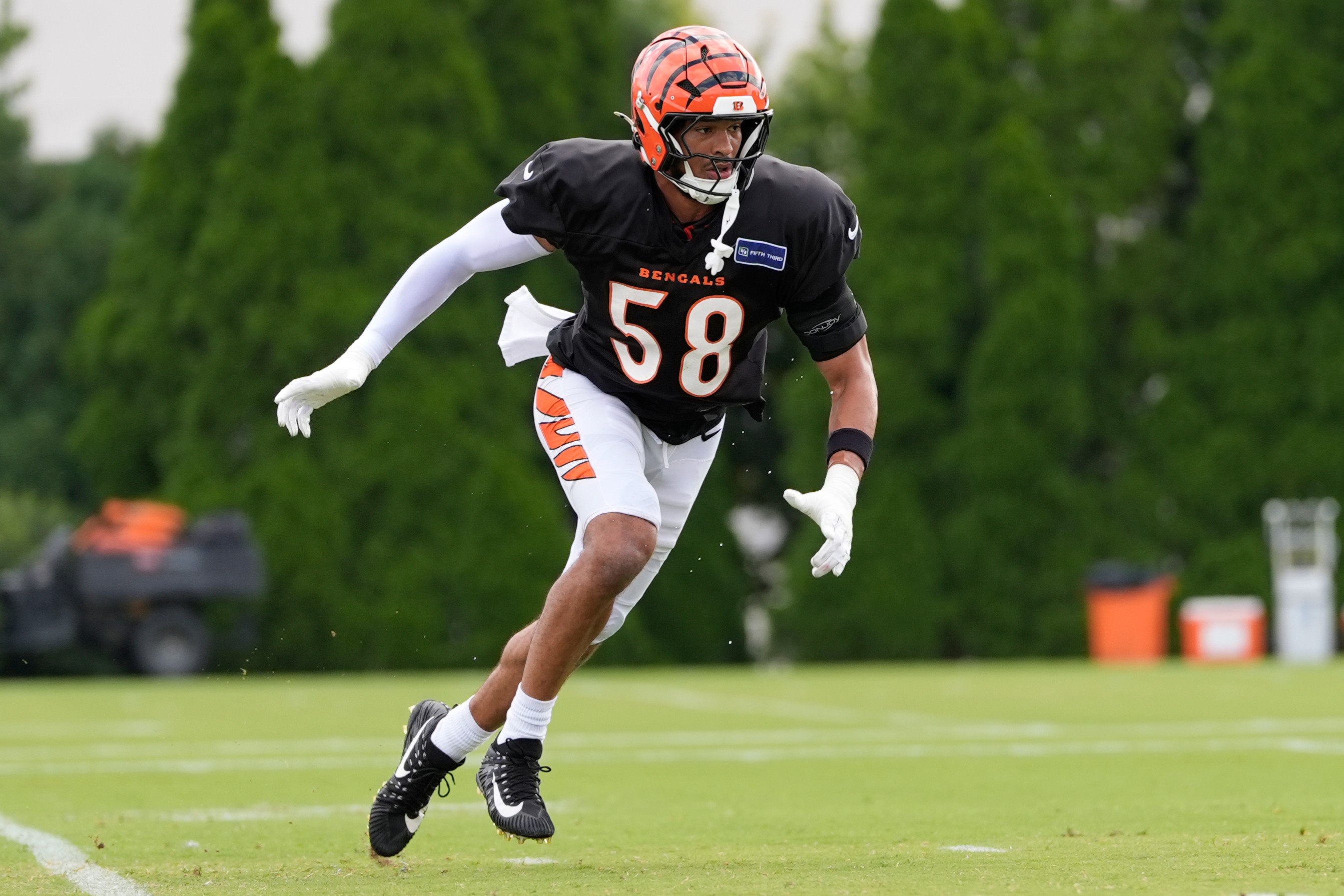
When the Eagles host the Cincinnati Bengals on Friday night for the preseason finale, neither team will likely send out its starters. But Philly fans will get a glimpse of two of their own on the opposite sideline.
Wide receiver Ke’Shawn Williams and linebacker Eric Gentry, both of whom grew up and played their high school ball in Philadelphia, will return to the city that helped mold them into professional football players.
Gentry, who starred at Neumann Goretti and then Southern Cal, says returning “feels very much like a full circle moment” after being signed by the Bengals as a free agent following the 2026 NFL draft.
“I’m really happy for this opportunity to be able to showcase my talent, especially in front of my hometown. Most importantly, in front of my hometown,” Gentry told The Inquirer by phone. “Being able to be in the city and have family be able to come out there and see me, and I think more importantly, this being the last preseason game, so being able to get more opportunities than I may have gotten before. I just want to make myself be prepared and work as much as I can this week, just to put in the time and effort.”
Williams and Gentry, beyond both being from the Philly area, share another commonality: They played for the North Philly Blackhawks Pop Warner team together, with the 6-foot-7 Gentry noting that “our coach always said [Williams] was the best player on the field.”
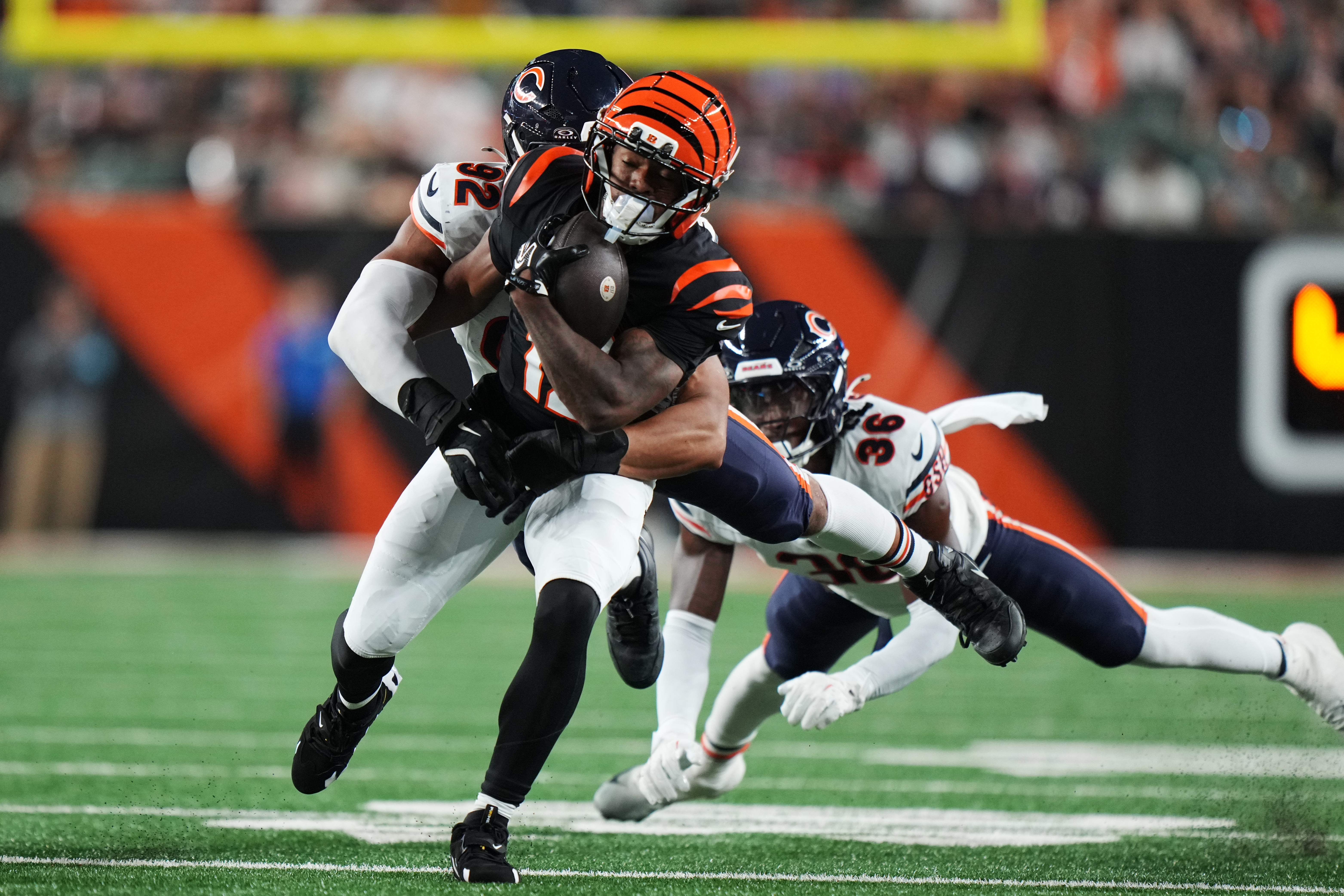
Bengals wide receiver Ke’Shawn Williams (12), who played locally at Chestnut Hill Academy, was on Cincinnati’s active roster at the end of last season. Jeff Dean
“It shows that other guys you’re competing with — all the work that they put in was worth it. You got to that end result,” said Williams, a former Springside Chestnut Hill Academy standout. “[Gentry’s] still fighting, of course. He’s not satisfied just getting here, but it’s cool to see a guy from the same background, from a similar background and similar upbringing, to also make it here and see him compete at this level as well.”
While Gentry is experiencing his first training camp and preseason, Williams is in his second season after initially signing with the Pittsburgh Steelers as an undrafted free agent last year. Williams didn’t make the initial 53-man roster, but ended up on the practice squad.
He was elevated to the active roster in October, playing eight games in Pittsburgh primarily as a return specialist. He returned 11 punts for 112 yards, and 18 kickoffs for 425 yards, before being claimed off waivers by Cincinnati last December.
He appeared in three games for Cincinnati to close the season, also primarily in a returner role, but caught his first NFL pass in a Dec. 28 win over the Arizona Cardinals. Now, he’s trying to make the Bengals’ roster out of training camp. He racked up 95 yards on nine punt returns with the Bengals and another 203 yards on eight kick returns.
“When you go out there and compete in the preseason, you’re not only competing for the team that you’re currently on, but also all other 31 teams in the league that are watching, and it’s just a reminder to go out there and you know not to add any extra pressure on yourself, but to go out there and put your best stuff on tape because that becomes your resume,” Williams said. “Coming into this training camp, coming into this preseason, understanding that the opportunities may be limited, but you know when they come around, it’s like ‘What do you do with them?’
“And if you have a couple of splash days, a couple of teams around the league are also watching.”
Cincinnati Bengals linebacker Eric Gentry runs a drill during training camp earlier this month. Carolyn Kaster
Gentry, who added that he’s been “grinding and learning” this summer, noted that the biggest difference between college and the NFL is “understanding a lot of the stuff that goes outside of football that helps with on-the-field [matters].” A conversation last week with Chicago Bears running back D’Andre Swift, a fellow Philadelphian , helped put in perspective the importance of “keeping a routine and keeping your head on right.”
Leaning on Williams has also been part of Gentry’s education to the NFL.
“He don’t talk too much. He just puts his work in. Never complain. Never gets too up. Never gets too down or anything. Just stays mellow and just worry about himself,” Gentry said.
Williams, meanwhile, has soaked in the opportunity to work alongside Ja’Marr Chase and Tee Higgins, one of the top wideout duos in the NFL. The second-year player says he’s been observing “their IQ for route running and savviness of playing the ball in the air,” and noting the “tips and tricks” he can apply to his game.
Ke’Shawn Williams (12) is trying to stick as a return man and make inroads into a talented wide receiver depth chart headed by Ja’Marr Chase and Tee Higgins. Joshua A. Bickel
They will be put to the test Friday night with Williams and Gentry expected to get extended playing time. Gentry, who has mainly played special teams in preseason, will likely play more defensive snaps, specifically at weakside linebacker.
While there may not be many Bengals fans in the crowd, expect a large presence representing Gentry and Williams. Beyond their families, many who knew them growing up will be in the stands, watching them play in the city for the first time since high school.
“I don’t know nobody who isn’t trying to see what’s up for this week,” Gentry said with a laugh. ”I’ve been happy though because it shows a lot of support from the city, and it was so many people — even at [my draft party] that you know said they couldn’t make it, but wanted to be there, and was texting me before the draft. … Just always having people who always supported me, who is going to be there.”
Added Williams: “It’s a special occasion. I don’t want to make it bigger than it is … but in the back of my mind, you could never get over the full fact that you get to come home and play in front of your loved ones. I’m hoping I get out there and make a couple of plays. That is something worthwhile seeing.”
Optimism is generally high this time of year, especially for an Eagles offense that struggled throughout the 2025 season with consistency and continuity. New offensive coordinator Sean Mannion’s offense has shown flashes of encouraging play along with concerning stretches during training camp, but most fans are excited to watch the offense in full when the season kicks off in a few weeks.
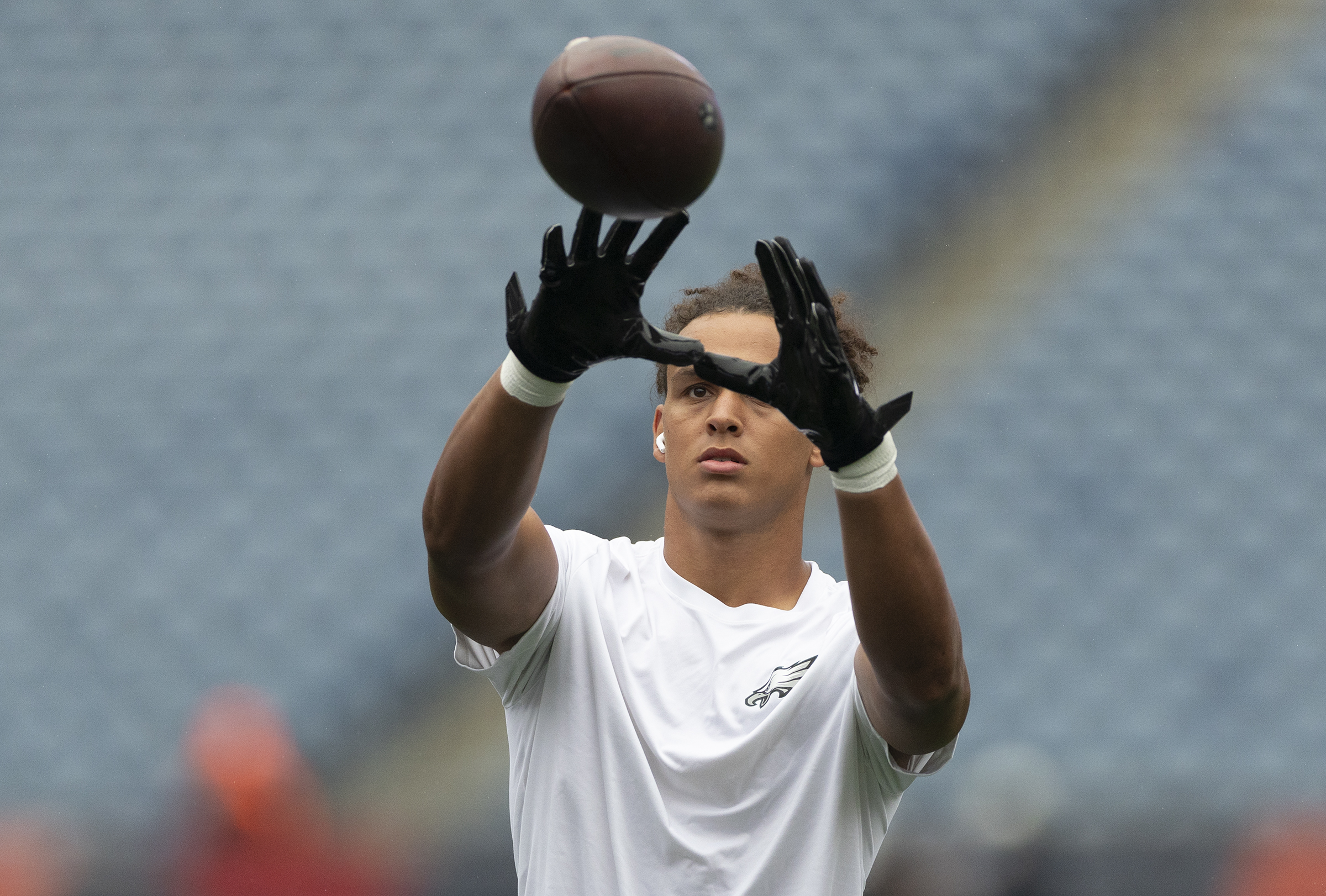
For second-round rookie tight end Eli Stowers, the confidence in his potential role this season seems to be far less positive. He hasn’t been a standout player much this preseason, which has caused some angst among fans.
As history has shown with mid-round tight end prospects, the range of outcomes is wide, and most have the same thing in common: They required patience and time to adjust to the NFL game. Very rarely over the last five drafts has a tight end taken after the first round made an immediate impact. Those who have, like the Lions’ Sam LaPorta, Cardinals’ Trey McBride, and Packers’ Tucker Kraft, quickly ascended to become major receiving weapons with in-line blocking ability.
To provide some perspective on what Stowers can ultimately become, here are three buckets the Eagles tight end could fall under at a position that typically requires patience to see the player’s finished product.
Improved in a key area
Dawson Knox, Buffalo Bills
Though Knox and Stowers are different styles of players — Knox was a more rugged run blocker and not quite as explosive of an athlete — they share a similar background. Both were high school quarterbacks who had to learn a new position in college.
Knox walked on at Ole Miss after missing most of his senior high school season, and didn’t get true tight end reps until his junior season. Stowers switched to tight end just three years ago and is still relatively new to the position.
What helped Knox see the field early on in Buffalo was the blocking ability he displayed in college, but his key area of improvement has been his reliability in a passing game where he’s averaged 50 targets across his seven-year career.
Knox’s two highest receiving success rates have come in the last two years, even though his numbers aren’t eye-popping. In Knox, Stowers can see a player that has adapted to the NFL game, and by the Buffalo tight end’s third year — his best statistical season — he became a much more prevalent receiving threat.
Dawson Knox made an impressive catch vs Lions on a ‘gotta have it’ concept from the past. Rather than running the play in short yardage or a ‘gotta have it’ down and distance, Brady busted it out on 2nd down late in the game. The Dart variation & salesmanship were $$ pic.twitter.com/d9xpUnu7ty
We added LaPorta here because since his rookie season, when he exploded for 889 yards on 86 catches and 10 touchdowns, he has continued to add more to his game — including becoming a more reliable in-line blocker, which was a weakness in college. It even showed up early on in his NFL career, especially with one-on-one blocks against defensive ends.
LaPorta was limited to nine games last season because of injury — he missed the last eight games with a herniated disk in his back — but showed some progression as a blocker for the Lions.
Though Brock Wright handled more of the blocking duties, LaPorta, when healthy, has been a dynamic field stretcher and creator after the catch. What Stowers can learn from LaPorta — who also entered the league at sub-250 pounds — is that blocking can be improved, even in the NFL. Stowers likely will not reach the same level of involvement in the Eagles offense as LaPorta had in Detroit as a rookie, though.
Struggled to block, contributed as part of a rotation
Mike Gesicki, Cincinnati Bengals
Among current players, there may not be a closer comparable to Stowers than Gesicki. Both were dynamic receiving tight ends who did their damage in college when split out wide, in the slot, or as off-the-ball tight ends.
They share another commonality too: struggling to block in one-on-one scenarios against defensive linemen and generating displacement at the line of scrimmage. Gesicki’s best years of production — from 2019-21 — are likely behind him. Since leaving the Miami Dolphins in 2022, Gesicki has averaged about 45% of snaps across his time with the New England Patriots and Cincinnati Bengals.
The former 2018 second-rounder has been relatively healthy throughout his career, but never improved even marginally as a blocker, which limits how much he can be on the field in the modern NFL.
Jonnu Smith
The Philadelphia native, currently a free agent, was best known for his ability to create explosive plays with the ball in his hands, though he has surpassed 600 receiving yards in a season just once. His usage in Arthur Smith’s offenses, first in Tennessee and then in Atlanta, made him a threat to turn a routine play into a big gain after the catch.
NE debuted a fun wrinkle vs NYJ with a "full house" backfield using Hunter Henry + Jonnu Smith as split fullbacks.
5/6 of these snaps featured inside zone with two lead blockers or Henry sift-blocking and Jonnu releasing to the flat to remove a defender from the box pic.twitter.com/QcGtXV8odX
But across his five NFL stops, the one inconsistency of his game has been his blocking. He showed much more promise than Gesicki as a blocker, but Smith has never consistently been able to block as an in-line player, and it’s a big reason he likely has not drawn a ton of interest entering Year 10.
His last stop, in Pittsburgh last season, produced career-worst numbers in a loaded tight end room: 38 catches, 222 yards for a 5.8 yards per catch average.
The Bills dominated the trenches on both sides of the ball
Smith, a former third-round pick, never assumed the top tight end role at any of his stops but has played nearly a decade in the league. He has carved out a niche role as an undersized tight end that is a run-after-catch threat , but he isn’t a fit for every offense as he ages.
Receiving skills kept them on the field regardless of blocking struggles
Jared Cook
When you look up Stowers on Mockdraftable, which draws comparisons to previous players at a position, Cook’s name is his third-highest match at 73.9%, and for good reason. Cook was a nonfactor as a blocker and just not valuable when asked to handle defensive ends and linebackers in those blocking situations.
Rarely see Jared Cook in for run plays and usually Richard Rodgers in during early downs. Hard to find EX of Cook blocking. Effort = 👎🏼 pic.twitter.com/p2Bl2pULrJ
When you look back at the receiving numbers, though, he was a matchup problem for linebackers, safeties, and even some cornerbacks. But his success took a while as he struggled early with the Tennessee Titans, but by his third year, he was consistently contributing as a receiver. In the last 10 years of his 13-season NFL career, Cook averaged just over 600 receiving yards and four touchdowns, including a career-best 896 receiving yards in Year 10 with Oakland.
The Chargers were 20th in RZ efficiency The Saints were 5th in RZ efficiency
I don't know about what happens from touchback to 20, but within that final 20 you find your reason to sign Jared Cook. pic.twitter.com/HhzLIHDQmH
If Stowers never truly develops as a reliable blocker, a career similar to Cook’s, who was a second-round pick in 2009, would be an ideal outcome.
Isaiah Likely, New York Giants
Like Stowers, former fourth-rounder Likely walked into a veteran-laden tight end room as a rookie, and though there was excitement around the Baltimore Ravens tight end early on, his development took time, as did the production. Likely didn’t truly get going until the back half of his rookie season, with 26 of his 36 total catches and 279 of his 373 total receiving yards coming from Week 8 through the rest of the season.
Monken loves crack toss in the redzone – did it a lot at Georgia too.
Here you get great inside work by Zay Flowers to disrupt and Morgan Moses to finish on the pull.
but Isaiah Likely deserves flowers – hell of a kickout block.
Blocking in space was a strength for Likely at Coastal Carolina, but translating it to the NFL game as a full-time in-line player has never materialized. It didn’t in Baltimore, with Mark Andrews and later Charlie Kolar taking more of those responsibilities.
Likely, who signed with the New York Giants in the offseason (three years, $40 million), is best known for his receiving ability, specifically stretching the field vertically. Despite a down season last year, Likely’s greatest abilities are finding soft spots in zone coverage and winning his one-on-one matchups downfield.
If Stowers can be serviceable as a blocker, similar to how Likely was in Baltimore, that can help the Eagles rookie earn more snaps early in his career.
Patience, patience, patience
It’s too early to write off Stowers, even if he isn’t productive in Year 1 in Philly. As we wrote on the night the Vanderbilt tight end was drafted, his true impact could come three or four years down the line. And leaning on previous examples, those breakouts for non-first-round tight ends often happened in Year 3 or 4.
With Dallas Goedert and Johnny Mundt likely filling the top two roles for the Eagles tight end room, there should be no rush to force Stowers onto the field. The season is long, and should he make an impact in 2026, it’ll likely come deep into the season.
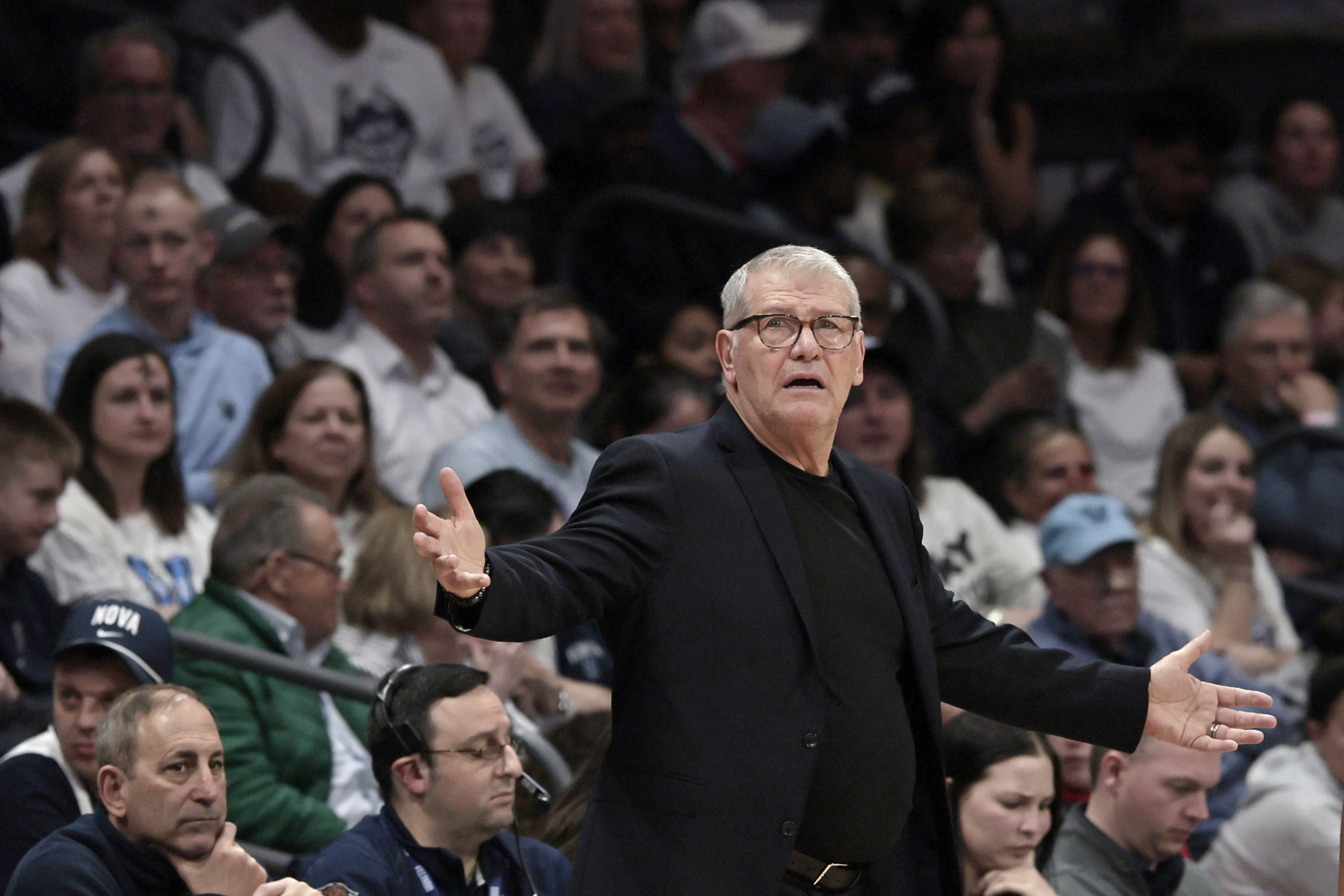
Connecticut women’s basketball in the 21st century has been synonymous with dominance, and the central figure to it all has been Norristown native Geno Auriemma.
The 72-year-old coach, who took his current job ahead of the 1985 season, has spent more than four decades on the sideline and built the Huskies into one of the most dominant and storied programs in college basketball history.
On Aug. 21, a three-episode documentary called The Dynasty: UConn Huskies aired on Apple TV, giving insight into Auriemma’s brash coaching style that has often received criticism but was a driving force to his 12 national titles.
And while it featured many players past and present, from Swin Cash and Sue Bird to Diana Taurasi, Breanna Stewart, and even Paige Bueckers, Auriemma’s Philly roots were another theme of the coach’s historic run in women’s college basketball.
Here were some ways Philly was involved in Auriemma’s journey:
Auriemma’s motivation to coach girls’ basketball
The documentary tells the story of Auriemma and UConn chronologically, but stopped in both the first and second episodes to detail some of his backstory. Auriemma described how he first got involved with women’s basketball.
“When I was in school and playing basketball, coaching women would have been last on my list,” Auriemma says. “But my buddy, he comes up to me one day and he says, ‘Hey, I started coaching girls’ high school basketball. I need an assistant coach.’ I said, ‘Who the hell would coach girls?’”
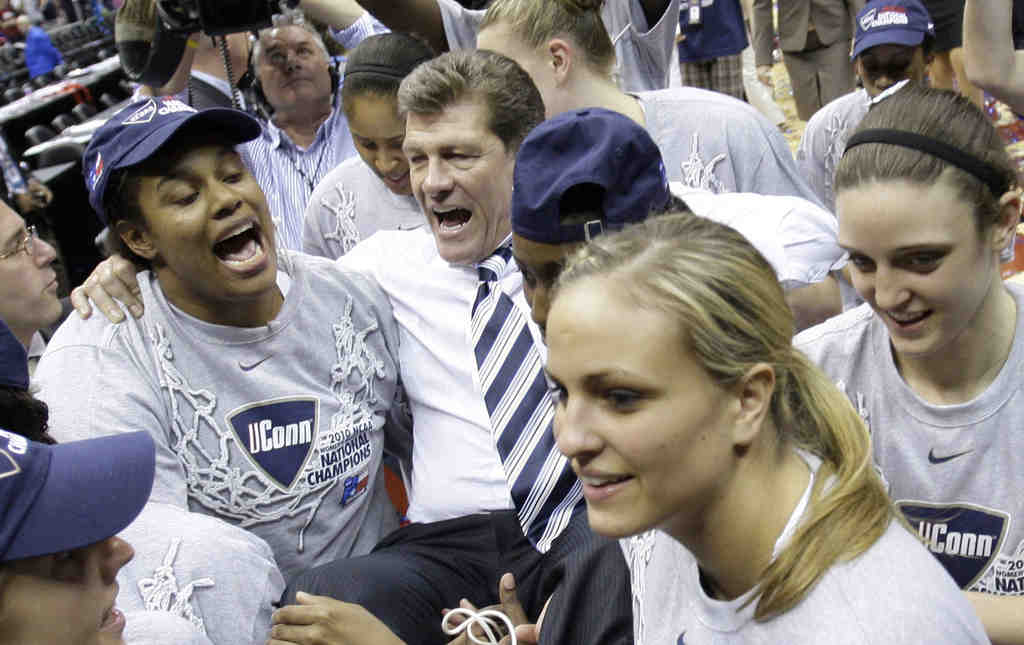
Geno Auriemma is carried off the floor by his players after UConn won the 2010 NCAA championship, defeating Stanford.ERIC GAY, Filoe / Associated Press
Auriemma later obliged, and while he didn’t say it on camera, that start came at Bishop McDevitt High School as the girls’ basketball junior varsity coach and assistant varsity coach. When he went to practice, he noted his own reluctance to provide hard coaching.
“It kind of dawned on me. They’re not going to crack. They’re not fragile,” said Auriemma. “That you can demand a lot from them. … But everything [in my career] just took off from there.”
He later took assistant coaching jobs at St. Joseph’s and Virginia, with Norristown’s Kennedy Kenrick Catholic High School (which closed in 1993) sandwiched in between. Auriemma took the UConn job in 1985 and has been there since.
Auriemma discussed his family moving from Montella, a small village in southern Italy, to Norristown when he was 7 years old. He recalled that his “mother can’t read or write, my father barely went to school,” and cited the challenges of not being able to “speak any English.”
The differences in the clothes he wore and food he ate, compared to other kids, Auriemma said, made him “desperately wanting to be like an American kid.” It ultimately informed his approach as a coach.
“As I got older, I always felt like, ‘I’m not that guy.’ … You get reminded, but there was this part of me where if I can be really, really, really good and be better than you, then I can, I can prove that I belong in your group,” said Auriemma. “It’s just a little kid’s mentality, and unfortunately, it stayed with me 40 years into coaching that I have to prove that I’m better than anybody else at doing what I do, but I need to be better than you.”
UConn-Tennessee rivalry
Auriemma’s breakthrough as a coach was beating Pat Summitt and her Tennessee squad in the national championship game in 1995. But afterward, Summitt won three national titles in a row and reclaimed the Lady Vols’ status as women’s basketball’s elite program.
That all changed in the 2000 NCAA Tournament championship game, though. After a disappointing Sweet 16 loss with their hyped freshman recruiting class that included Bird, Cash, Asjha Jones, and Tamika Williams, UConn came roaring back and was set to face Tennessee in Philadelphia at the First Union Center (now called Xfinity Mobile Arena).
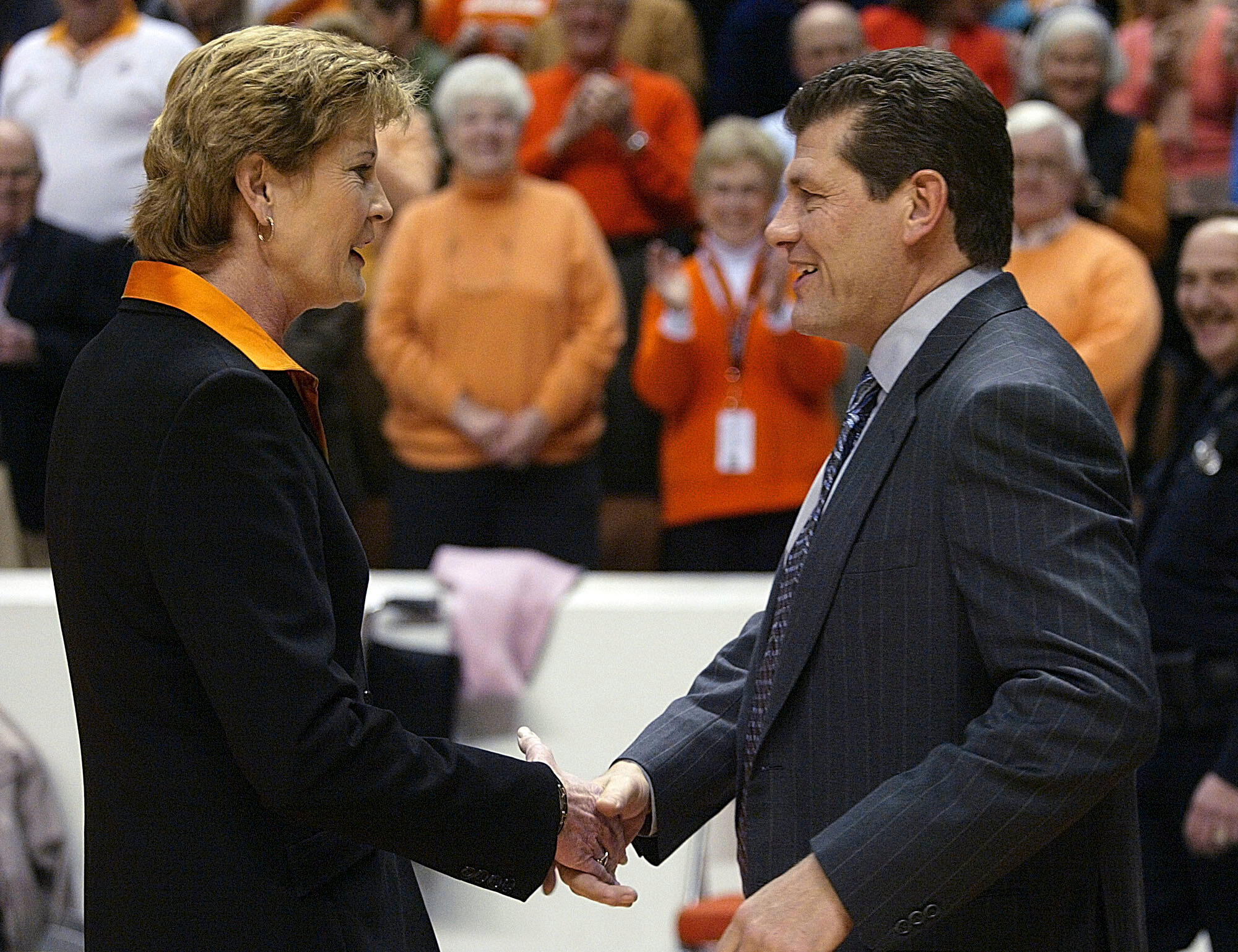
Tennessee coach Pat Summitt (left) shakes hands with Connecticut coach Geno Auriemma before a 2006 game.Wade Payne
Auriemma also further ignited his rivalry with Summitt with some of his pregame comments about cheesesteaks.
“Geno was doing an interview about cheesesteak, obviously Geno’s, and one is Pat’s across the street in Philly, and he made a comparison. Geno’s was new and forthcoming. Pat’s was old and dilapidated,” recalled Mickie DeMoss, a longtime assistant under Summit at Tennessee. “I mean, at that point we had won six, and he’d won one. So I’m not sure where he got Pat was old and dilapidated.”
The interaction underscored the heated and competitive relationship between Summit and Auriemma, and the rivalry that had been brewing for five years. Auriemma wanted to ensure his team came out on top in his hometown that season.
“Lots of people are great. But that night in Philly, I wanted to make sure that everybody knew we’re the best in the country. I mean, everyone,” said Auriemma. “They’re all people I grew up with. They’re all kids I grew up with. So being surrounded by all that and family, yeah, the desire to win, I want that so bad. I’ll do anything to get it.”
And he did, emphatically. UConn rolled Tennessee, 71-52, for Auriemma’s second title and what set off a dominant 17-year stretch in which the Huskies won 10 national titles before Philly’s Dawn Staley and South Carolina took center stage in the current era of women’s college basketball.
Auriemma’s latest title in 2025 was featured to close the documentary, with Bueckers’ difficult journey and rocky relationship with the longtime coach culminating in a win over Staley’s South Carolina.
This season, which will be the 41st for Auriemma, UConn will face Staley’s Gamecocks on Nov. 24 at Mohegan Sun Arena, home of the Connecticut Sun, for the first time since Auriemma’s outburst in the final seconds of their Final Four matchup last season. The game is part of a doubleheader for the Hall of Fame Women’s Showcase. St. John’s will face UCLA in the other game.
One of college football’s best atmospheres has an official date.
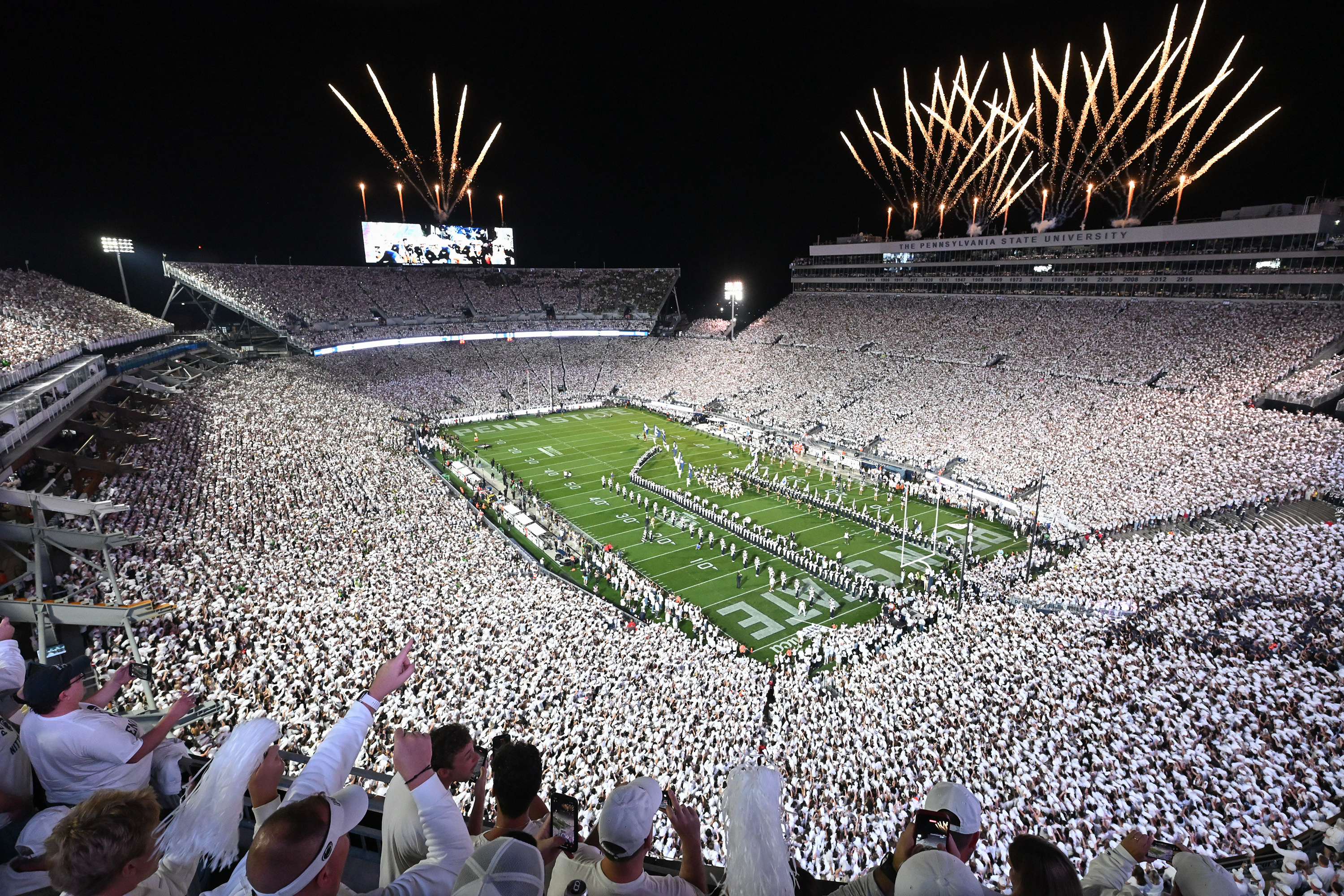
Led by new head coach Matt Campbell, Penn State will host its iconic “White Out” game against Southern California on Oct. 10, the program announced on Tuesday. Kickoff is set for 7:30 p.m. (NBC10, Peacock).
The tradition started in 2004 with just the Penn State student section and expanded to the entire stadium in 2007. This will be the 19th year with a full “White Out” in Happy Valley.
Last season, the Nittany Lions lost to Oregon during the “White Out” game in overtime, which set off a string of six straight losses and included the firing of longtime head coach James Franklin. Last year’s loss also ended a six-game winning streak in the annual game, dating back to 2019.
This matchup will also mark the first time Penn State will host USC in Beaver Stadium since the Trojans joined the Big Ten ahead of the 2024 season. Their only meeting as conference foes came in 2024, when the Nittany Lions overcame a 14-point halftime deficit to win in overtime, 33-30. Overall, USC holds a 6-5 advantage in all-time meetings between the two programs.
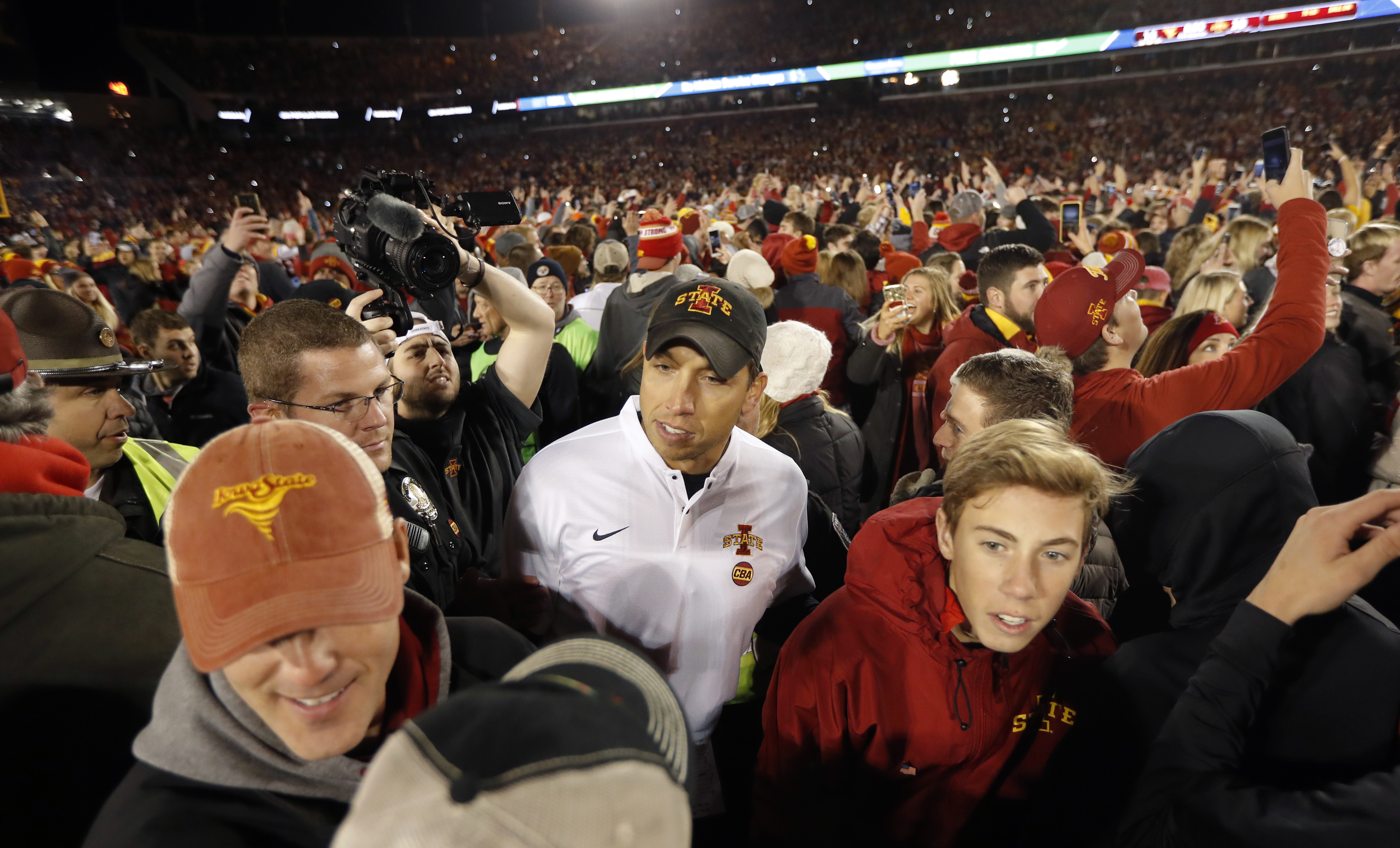
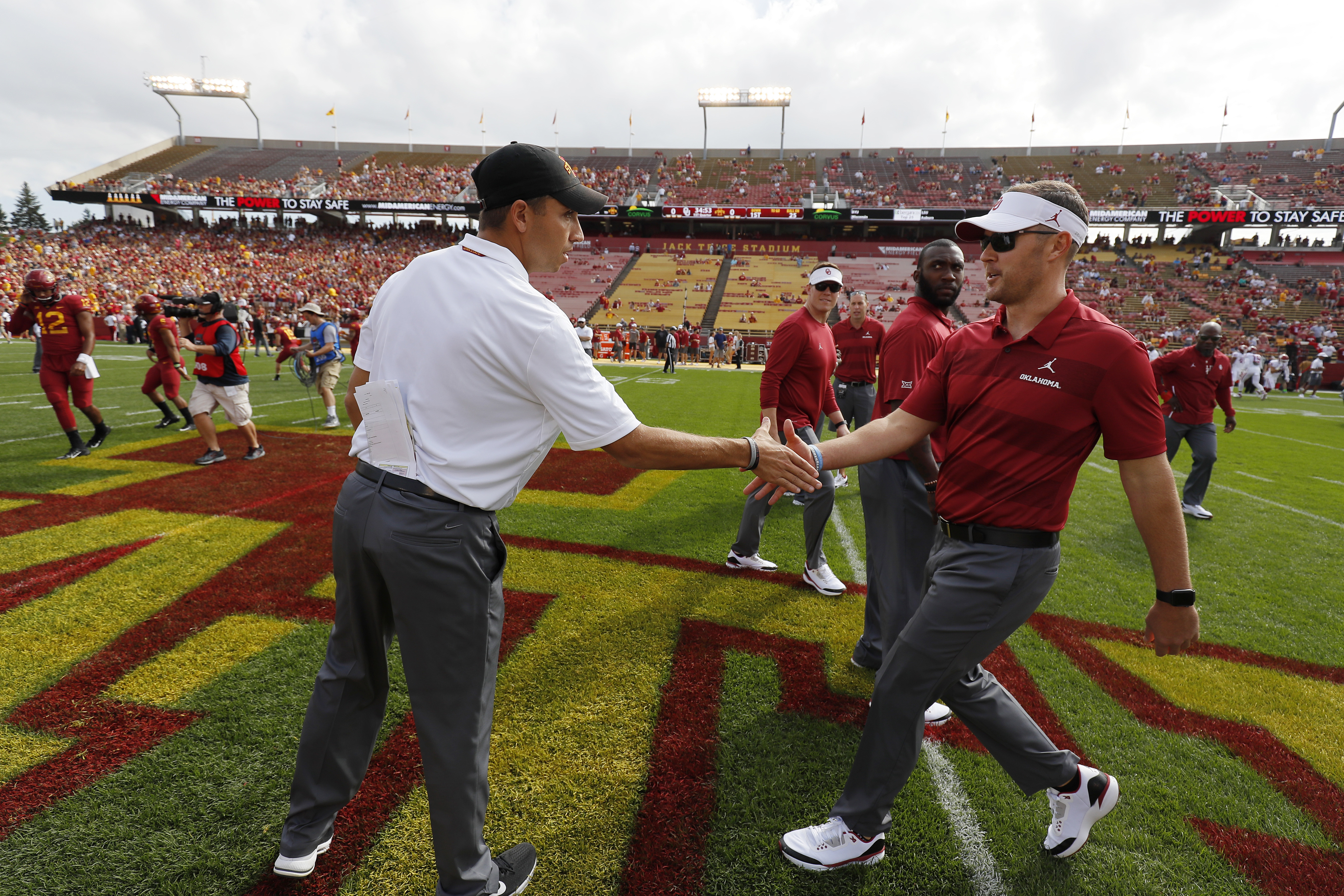
Iowa State head coach Matt Campbell, left, meets with Oklahoma head coach Lincoln Riley, right, before an NCAA college football game, Saturday, Sept. 15, 2018, in Ames, Iowa. (AP Photo/Matthew Putney)Matthew Putney
Campbell and Lincoln Riley will face off as head coaches for the first time since 2021, when the former was at Iowa State and the latter was with Oklahoma. Riley’s Sooners held a 4-2 advantage over Campbell’s Cyclones, including a Big 12 championship game win in 2020.
Before Penn State hosts USC for the White Out game, it will face Marshall (Sept. 5) at home, travel to Lincoln Financial Field for a noon kickoff against Temple (Sept. 12), and host Buffalo (Sept. 19). Then, Big Ten Conference play begins with the opener against Wisconsin (Sept. 26) before traveling to Northwestern’s new Ryan Field for a Friday night in Evanston, Ill. (Oct. 2).
Now, his cleats have a new colorway that has already hit retailers — for $140.
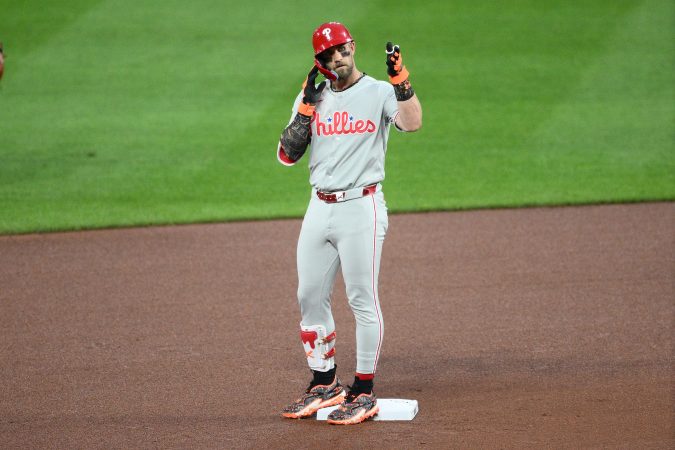
The low-top cleats have a camouflage base with highlighter-orange lining on the sock collar, along the top and bottom outlines of the cleat, and outlining his “BH” initials, black shoelaces, and with a cream-colored midsole to separate the camouflage base from the bright orange soleplate.
To pair with his new cleats, which Harper wore on July 20 against the Los Angeles Dodgers and Aug. 1 against the Baltimore Orioles, he wore black-and-orange Under Armour gloves and a camouflage sleeve on his right arm.
Bryce Harper’s new cleats have touches of orange and a camo design.Mitchell Leff
In a release, Under Armour says Harper’s new cleats are “inspired by Bryce’s tunnel-fit fashion as he’s often been seen rocking camo on the way to the ballpark, combined with his support for the University of Tennessee.”
Harper’s “All Lines Lead Home” cleats he released last month was part of a Yard Icon collection at Under Armour and released in five colorways representing Philly’s transit lines.
But he’s not the only Phillie with new cleats as Players’ Weekend gets underway.
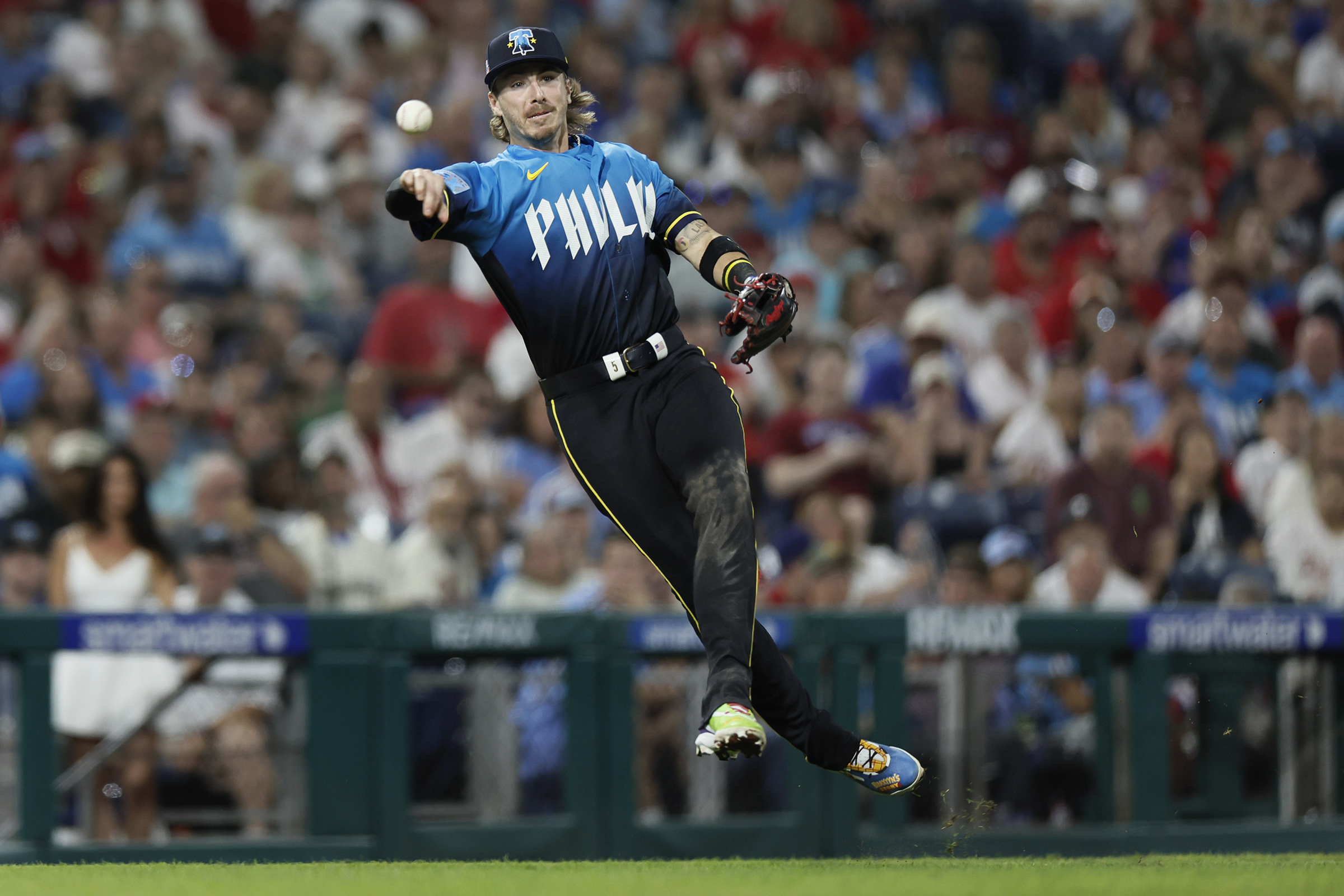
Bryson Stott wore custom made “Toy Story” cleats on Friday night.Elizabeth Robertson / Staff Photographer
Animated kids movies come to life
Ahead of the Phillies’ Field of Dreams game against the Minnesota Twins in Dyersville, Iowa, Downingtown-based NXT LVL Customs produced an iconic design for Bryson Stott that featured late Phillies legends Harry Kalas, Tug McGraw, Roy Halladay, Darren Daulton, Robin Roberts, and Richie Ashburn emerging from a cornfield. After the game, Stott donated the cleats to the Baseball Hall of Fame.
Now, NXT LVL Customs, which is run by father and son Ron and Ryan Stevens, has created custom cleats for more Phillies, including Stott, for Players’ Weekend, which allows players to wear custom gear, share personal stories, or otherwise express themselves.
Stott, for the second straight year, honored his daughter, Braxtyn, after last year’s Elmo-inspired Sesame Street footwear. This time, Stott will sport Nike Toy Story-themed cleats, with the left one rocking a Buzz Lightyear theme, and the right a Woody theme with “Braxtyn’s Story” written on it. He wore the cleats during Friday night’s game.
Stott also will have Toy Story-themed bats from King of Prussia-based Victus Sports. One of them features Jessie the cowgirl, and the other has a green alien from the movie.
The third baseman also had cleats made to honor his son, Jaxson. They’re royal blue, light blue, and white with star designs on the upper part; tiny illustrations of bears, trucks, and dinosaurs; and his son’s name on the back of the left cleat along with his birth date on back of the right cleat.
Cristopher Sánchez, Orion Kerkering, and Edmundo Sosa also received custom cleats from NXT LVL Customs.
Sánchez, who will pitch Sunday afternoon’s series finale against the St. Louis Cardinals, will be wearing Adidas cleats in the Phillies’ colors with the team’s pinstripe design on the heel counter, the numbers of his teammates across both cleats, a white Phillies bell logo near the midsole, and blue shoelaces.
Kerkering will be sporting Lilo and Stitch-inspired Adidas cleats, with the left cleat representing Lilo’s red dress with cream-colored flowers white laces, and a pink heel counter. The right cleat mimics Stitch with two-toned blue, Stitch’s face on the toe, and fuzzy light blue shoelaces.
And Sosa, like Stott, payed homage to his daughter, who loves tennis. The base of his New Balance cleat is colored fluorescent yellow with images of tennis balls, a white strap and heel counter, and his daughter’s name, “Naya,” written on the back of the left cleat.
Plenty of other custom bats are being unveiled this weekend. These include Brandon Marsh’s Victus bat that honors his sister, Erin, who won a gold medal in the heptathlon at this year’s USATF national championship, and Harper’s camouflage custom bat that’s also by Victus.
Pocono Raceway in Long Pond, Pa., has been a popular NASCAR destination in the Northeast for more than a half-century, and it’ll again have a three-day weekend of races next year.
After taking a year off from hosting the Craftsman Truck Series, the trucks will race again at the “Tricky Triangle” on June 11, 2027, with the O’Reilly Auto Parts Series race a day later on June 12. The weekend will culminate with the NASCAR Cup Series on June 13.
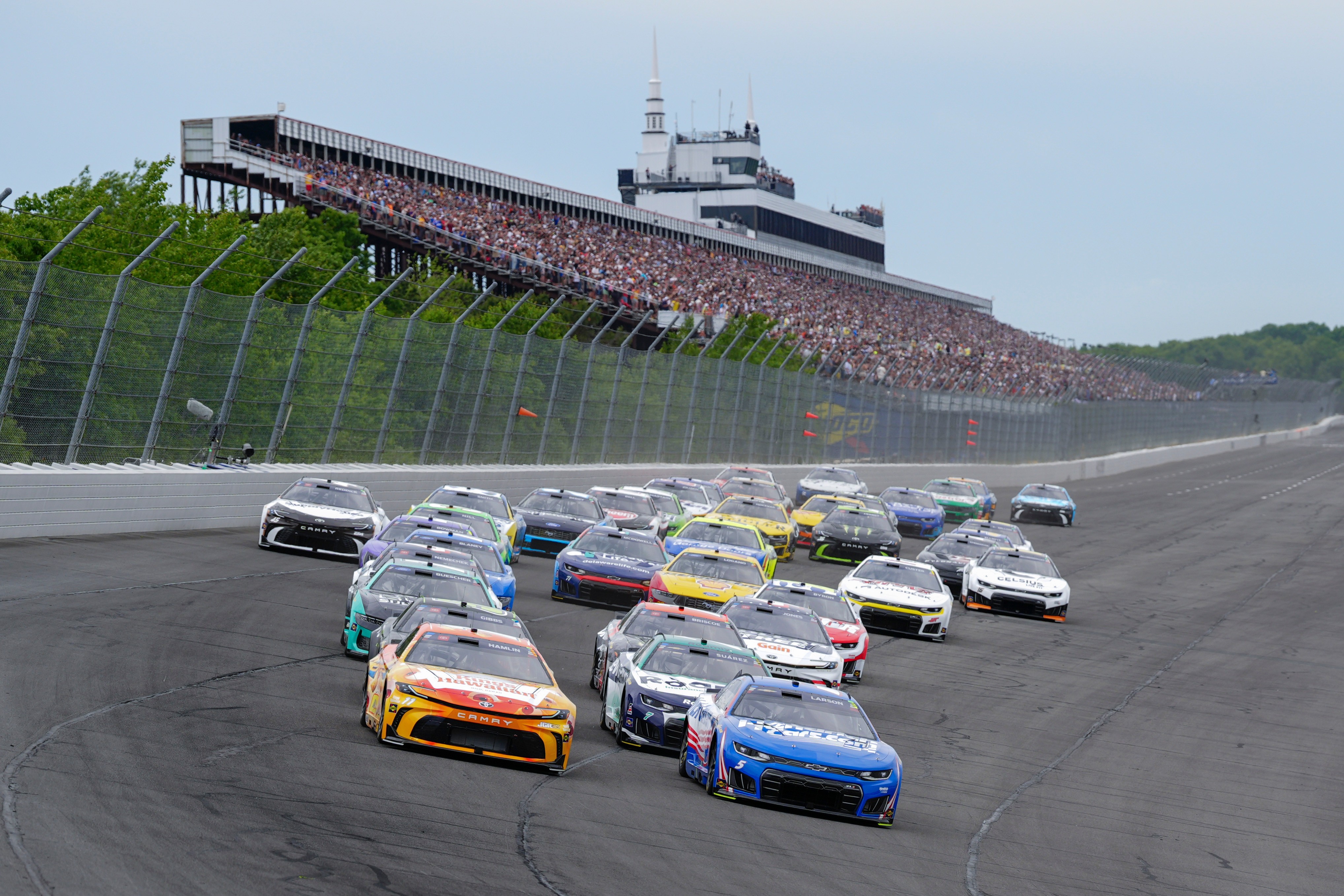
Pocono Raceway has sold out the NASCAR Cup Series race for four straight years and had a record of roughly 115,000 people in the stands for its races this past June. But instead of having the Truck Series on Friday, the ARCA Menards Series took its place.
Ben May, Pocono Raceway’s president, cited the absence of NASCAR’s Truck Series this year as an agreement between NASCAR and the racetrack to not host that series because this year “there was conflicts with production on the World Cup side.”
“That’s an important piece of our business. To have the [Craftsman] Truck Series, the O’Reilly [Auto Parts] Series, and the Cup Series three days in a row is massive for us,” said May, who has been Pocono Raceway’s president since 2017. “The discussion was, ‘OK, we understand that the trucks won’t be here.’ The World Cup’s maybe a once- or twice-in-a-lifetime thing for a lot of folks, so we’ll step out of the way and not get in the way of that conflict, knowing that the trucks would be back here in 2027.
“To have [the trucks] back, the fans love the trucks. They’re a cool machine.”
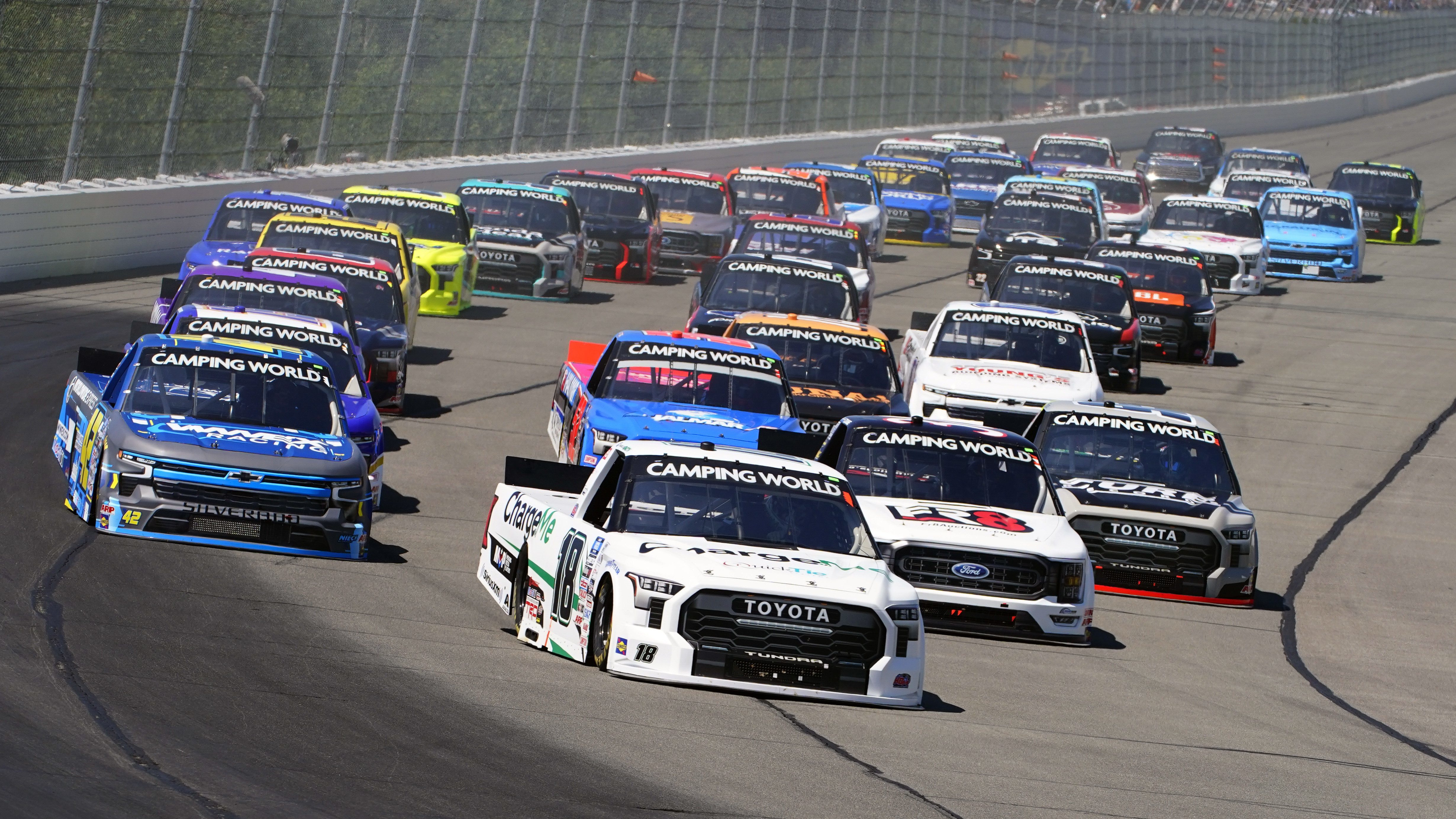
Chandler Smith (18) leads the pack down the front straight on a restart at the 2022 NASCAR Truck Series race at Pocono Raceway in Long Pond, Pa. Matt Slocum / AP
Pocono was a biannual racetrack for NASCAR for 40 years until 2022, when NASCAR added other courses to its yearly schedule. Similarly, Dover Speedway in Delaware and New Hampshire Speedway, two other premier tracks in the Northeast, also went from two races to one in the last nine years.
Despite having just one race each summer for the last five years, May believes “treating people like family” keeps fans coming back.
“I think that’s a little bit of the secret sauce that some tracks and other sports in general or arenas or stadiums can’t really replicate,” May said. “And a lot of the folks that worked here knew our founders. They know the family. It’s just a little bit of our magic. Outside of that, we don’t try to over engineer our experience. … The best example has always been, for me, the infield, where we have a dog park and a playground.
“We created this massive $30 million fan zone, and it’s all things that our fans want that we’ve talked to them about. And we make them come to life, and the whole little magical mix starts to work.”
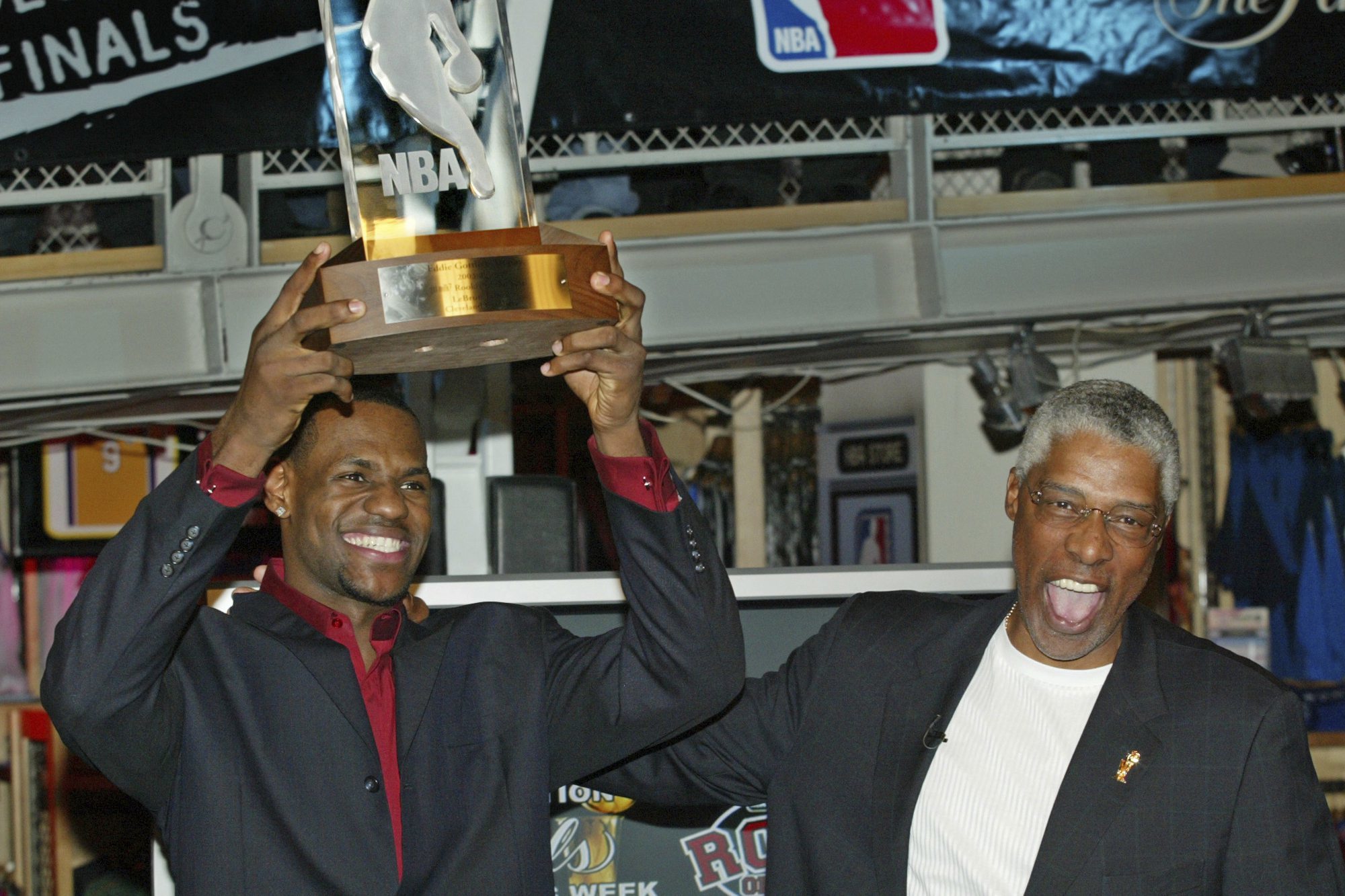
LeBron James, in the midst of his rookie season with the Cleveland Cavaliers, already had his All-Star sneakers from Nike designed and created 22 years ago.
Though James averaged 20.9 points, 5.5 rebounds, and 5.9 assists during the 2003-04 season and was named Rookie of the Year, he was snubbed by NBA coaches because of the Cavs’ losing record.
James, who signed a two-year, $8 million deal with the 76ers this offseason, will drop the shoes he was supposed to wear at the 2004 All-Star Game in Los Angeles during next year’s All-Star Weekend.
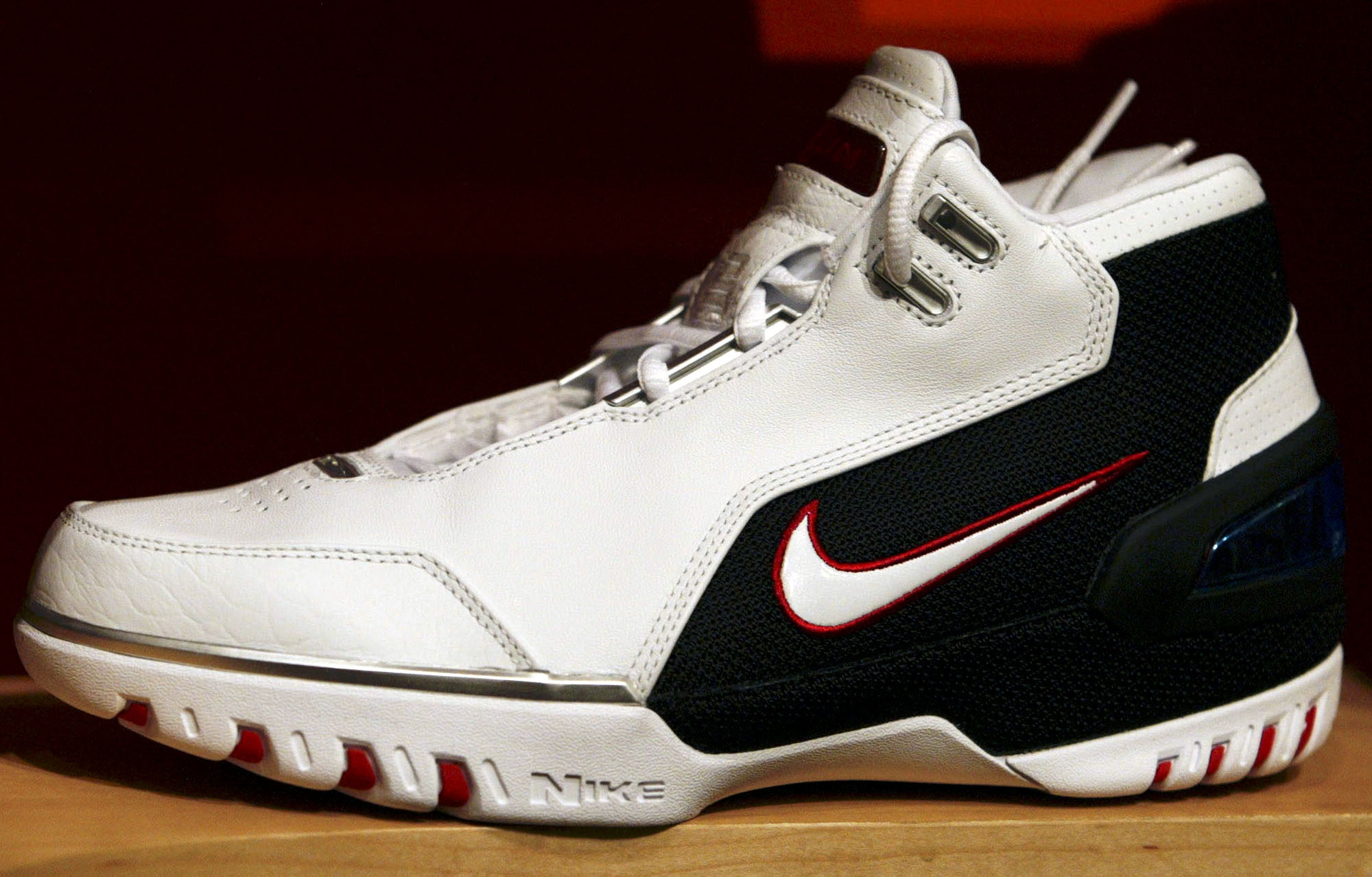
The Nike Air Zoom Generation “L.A. All-Star” player-edition shoes, which features a white base color with blue and red trimmings near the toe, on the Nike check, the accents of the shoelaces, an “LA” logo with the Nike check on it, and the date “2-15-2004″ in the tongue of the shoe outlined with red trimming and blue lettering.
The shoes were designed to match the East All-Star’s jerseys that year, which were blue with white letters and numbers and red trimmings, including down the sides of the jerseys.
They also happen to match the Sixers’ home jerseys perfectly.
The sneakers are set to drop on Feb. 19, 2027, at $190 retail price, according to Just Fresh Kicks. That is the weekend for the 2027 NBA All-Star festivities, which will be held in Phoenix and would be James’ 23rd All-Star selection should he make it on what will be a loaded Eastern Conference team.
LeBron James’ Nike Air Zoom Generation shoes, which he debuted in 2003, appear to be making a comeback next year.RICK BOWMER
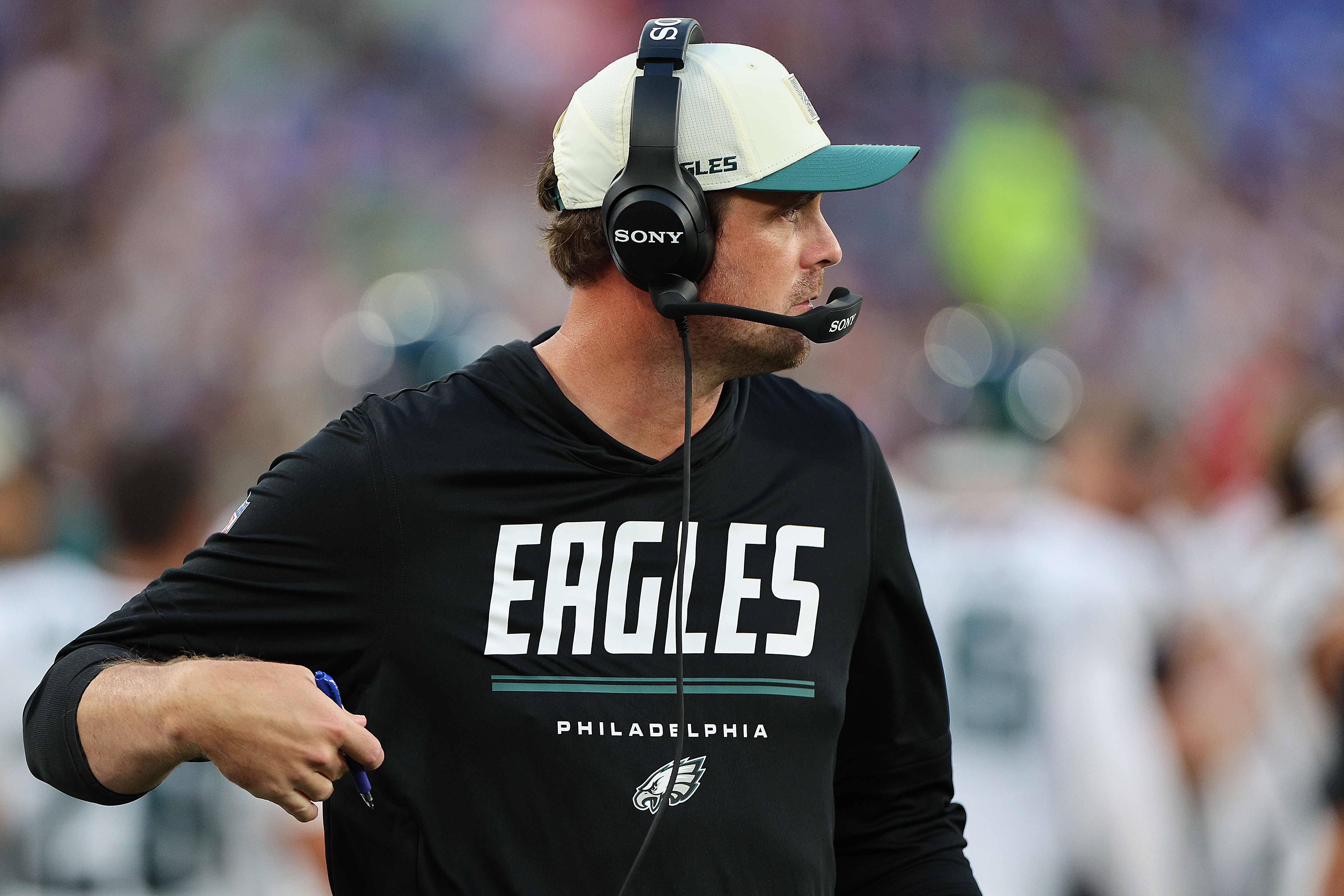
Much like Sean Mannion’s first-ever play-calling experience in an exhibition atmosphere at the East-West Shrine Bowl earlier this year, the first-year Eagles offensive coordinator’s debut on Saturday night didn’t offer detailed play designs nor gaudy production.
The Eagles’ 24-7 loss to the Ravens did, however, give the 34-year-old an opportunity to call and sequence plays at the NFL level and provided a glimpse into the many influences that could ultimately shape what the offense, in full, will look like during the 2026 regular season.
And there were encouraging signs that the offense has been modernized this offseason to keep pace with some of the league’s potent attacks.
Here’s what the film showed in Mannion’s first stab at calling plays for the Eagles:
Outside zone leads the way in run game
All spring and summer, there was an expectation that the Eagles would move toward running the Sean McVay/Kyle Shanahan outside zone run scheme as a key tenet of the run game, and the results from the preseason opener backed that up.
Six of the 12 called run plays (including those that included post-snap penalties) were of the outside run variety. Four of them gained 8 yards (and two were called back for holding), and one went backward for a 3-yard loss because of a missed block.
There will be growing pains implementing the new blocking style, which requires the offensive linemen and tight ends to create vertical seams to allow the running back to find a lane and go while stretching the defense horizontally.
Counted 6 reps (including penalties) of the #Eagles running outside zone runs in their preseason opener, 4 to the right side of the formation, 2 to the left. No surprise most productive drive in first half came when two runs popped to the right side. Missed blocks by WRs and at… pic.twitter.com/auUyj3qL1F
With the Rams, McVay paired the duo run to his patented outside zone run scheme, thriving when implementing it from under center.
The Eagles ran duo three times from under center on Saturday, and it was the second-most called run scheme on a night where the ground game was hardly present in the second half. The run scheme allows the back to get downhill quicker and opens up play-action passing opportunities.
Can see some Sean McVay influence on the #Eagles run game, they called under center duo three times in the preseason opener. Will be a nice complement to the OZ runs if they choose to implement it moving forward into the regular season. pic.twitter.com/xLfQKdOv22
For the other three runs, the Eagles sprinkled in under-center split zone with tight end Eli Stowers coming from the back side of the formation to block the play side edge rusher, inside zone from shotgun, and a zone-read keep from Cole Payton with a tight end leading the way on the edge.
That last run should be particularly noteworthy should Jalen Hurts reemerge as a key part of the running game.
Pre-snap motion limited, but effective
Across the entire game, there weren’t many pre-snap motions or shifts as Andy Dalton and Tanner McKee got the offense set on their respective drives. In fact, of the six pre-snap motions that occurred, it was McKee who signaled them the most, accounting for five that Mannion dialed up.
There were flashes of success because of how it made the defense react. On McKee’s 13-yard pass to Darius Cooper, he motioned Stowers away from a bunch set on the left side of the formation to align at tight end off the line to the right, and changed Baltimore’s off-ball linebacker from a second-level defender to a standup edge rusher. It opened a lane for Cooper to get hit in stride on a slant route.
Another example of presnap motion syncing up with the snap of the ball and defining the read on quick game. Tanner McKee sends over Darius Cooper, bumps out the field side corner to give Eli Stowers room to catch the out route vs. Cover 2 and set up manageable 3rd down distance. https://t.co/ditHR1NNGDpic.twitter.com/9rIgWOA9Ev
On another occasion, in the quick passing game, Cooper went from McKee’s right to his left on a motion, bumping the corner aligned over Stowers to outside the numbers, creating room for McKee to find the rookie tight end for a short gain.
There was also an example of the offense changing its formation after breaking the huddle. After coming out in 10 personnel (one running back, zero tight ends), Carson Steele motioned to outside receiver, creating an empty backfield for McKee. It forced Baltimore to show its blitz and McKee was able to identify it and get the ball out.
From a presentation perspective, I think it just makes more sense to try and give the defense a completely different formational look. #Eagles go from 10 personnel to empty, run a basic stick concept, but motion Carson Steele out of the backfield. Tanner McKee hits hit hot route… https://t.co/EK7GELCTwypic.twitter.com/cdseYBZB3z
Compared to last year’s offense, there already seems to be a different approach to formation presentation. The more an offense can confuse the defense with motions and shifts, the more answers it can provide to a quarterback and keep defenses guessing.
Generating ‘layup’ throws
Under-center play-action throws have been an element of the offense the Eagles have shown during training camp, and carried over into the preseason opener.
Dalton, McKee, and Payton each had an opportunity to run play-action from under center, with the first two quarterbacks running bootleg actions off it.
On both of the play-action bootleg actions on Saturday night for the #Eagles, they ran a similar concept and hit the flat route coming across the line of scrimmage for easy, 4-5 yard gains (second play had presnap motion, too). As teams take those away, can open up the… https://t.co/cC7AQ7rCBYpic.twitter.com/lOZkB1TmrN
The route combinations off the bootleg action — a deep corner route, a back side crossing route, and short flat route — are part of the McVay/Shanahan style of offense and can stress a defense that must respect the wide zone run threat.
As teams prepare for that threat of play-action, the other route options will open up if the Eagles can generate those types of easy completions that weren’t always available for Hurts last season. Those quick-hitting throws on the move also allow for receivers to generate big plays in space.
One play, from under-center, I kept seeing from that style of offense (and from Ben Johnson, too) is the bootleg with a flat route, deep corner route, and a backside crosser. Easy way to settle in your QB, makes it hard for defenses to cover ground to cover, and a nice way to… pic.twitter.com/NoRj29XsEE
As the Eagles were deciding their next offensive coordinator hire, Josh Grizzard, who previously worked as a the Buccaneers’ pass game specialist, then was promoted to offensive coordinator, was among the candidates.
Mannion has mentioned the offense would be a “blend” of various approaches and Grizzard, who was hired as Eagles pass game specialist, appears to have his fingerprints on the passing game — especially in third-down situations.
Last one (for now) but this one is exclusive to Josh Grizzard under Liam Coen in 2024 (from the McVay tree) but I love the concept of having bunch sets and having an in-breaker and out-breaker clearing the way for an option route on third downs, to sit at the sticks or convert it… pic.twitter.com/tVCic0vR1x
A play Tampa commonly ran in 2024, when Grizzard presided over the third-down offense, featured a bunch formation that had two receivers clear out and created space for an option route for the third receiver to sit in a vacant area in zone coverage, or take advantage of a defender’s leverage in man coverage.
On a couple of third downs in the preseason opener, the Eagles showed a similar type of play design: The two receivers ran in- or out-breaking routes and the tight ends got close to the first down line or found vacant space to turn and prepare for a pass to come their way, which was often a tight end.
Can see some of Josh Grizzard's fingerprints on the #Eagles passing game, especially in third-and-medium situations. During the preseason game, the Eagles dialed up bunch set with 2 routes clearing out and an option route (which was mostly settling in space ahead of the sticks). https://t.co/ScWE72RIy7pic.twitter.com/vsv6XUXApI
Another play Grizzard has seemingly brought from Tampa is mesh rail, which features two inside receiver shallow crossing routes, a route sitting over the middle of the field behind the mesh action, an outside receiver running a deep route, and a running back running a wheel route out of the backfield.
The Bucs would catch teams off guard by quickly lining up and running the play while the defense was still getting set. The Eagles utilized this vs. the Ravens as they moved down the field on their lone touchdown drive.
While the Eagles’ offense was vanilla with the objective of not revealing much, Mannion’s scheme change appears to match the expectation of the style of offense the team intends to run. The key will be the execution, and limiting the mistakes that prevented Mannion and the offense to get into a true game flow on Saturday night.
We won’t see the offense in full until the season opener, but Saturday offered a glimpse of what the long-term vision can look like when plays are executed.