Author: Devin Jackson

  • Yale took a chance on Delco’s Abu Kamara. Four years later, he’s catching the NFL’s eye.

    Yale took a chance on Delco’s Abu Kamara. Four years later, he’s catching the NFL’s eye.

    Kevin Cahill slightly leaned back in his chair — which was visible on a Zoom call — as he recollected a play Yale defensive back Abu Kamara made two weeks ago in practice.

    The 47-year-old coach, who took over the program after longtime fixture Tony Reno stepped down in February, said a quarterback tried to fit a pass over Kamara, an Interboro High graduate. What came next is etched into Cahill’s mind.

    “He took one step, jumped up, and caught it one-handed,” Cahill told The Inquirer this week, ”and almost flipped back over. It was one of the more impressive athletic things I’ve seen any athlete do.”

    Kamara, who said he was “one of the last kids that committed” in Yale’s 2023 recruiting class, has thrived in a hybrid nickel/safety role for the Bulldogs’ defense. His team faces Penn at Franklin Field on Friday (7 p.m., ESPNU).

    Last season, after finishing with 76 tackles (6½ for loss), 3½ sacks, three forced fumbles, and two interceptions, Kamara was named the Ivy League defensive player of the year; a finalist for the Buck Buchanan Award, given to the top defensive player in the Football Championship Subdivision; and was named a first-team All-American by Stats Perform, FCS Football Central, and AFCA.

    Cahill loves “how hard [Kamara] plays” and says NFL teams have taken notice. Kamara’s penchant for making plays stems from a mindset that was instilled by his Yale coaches.
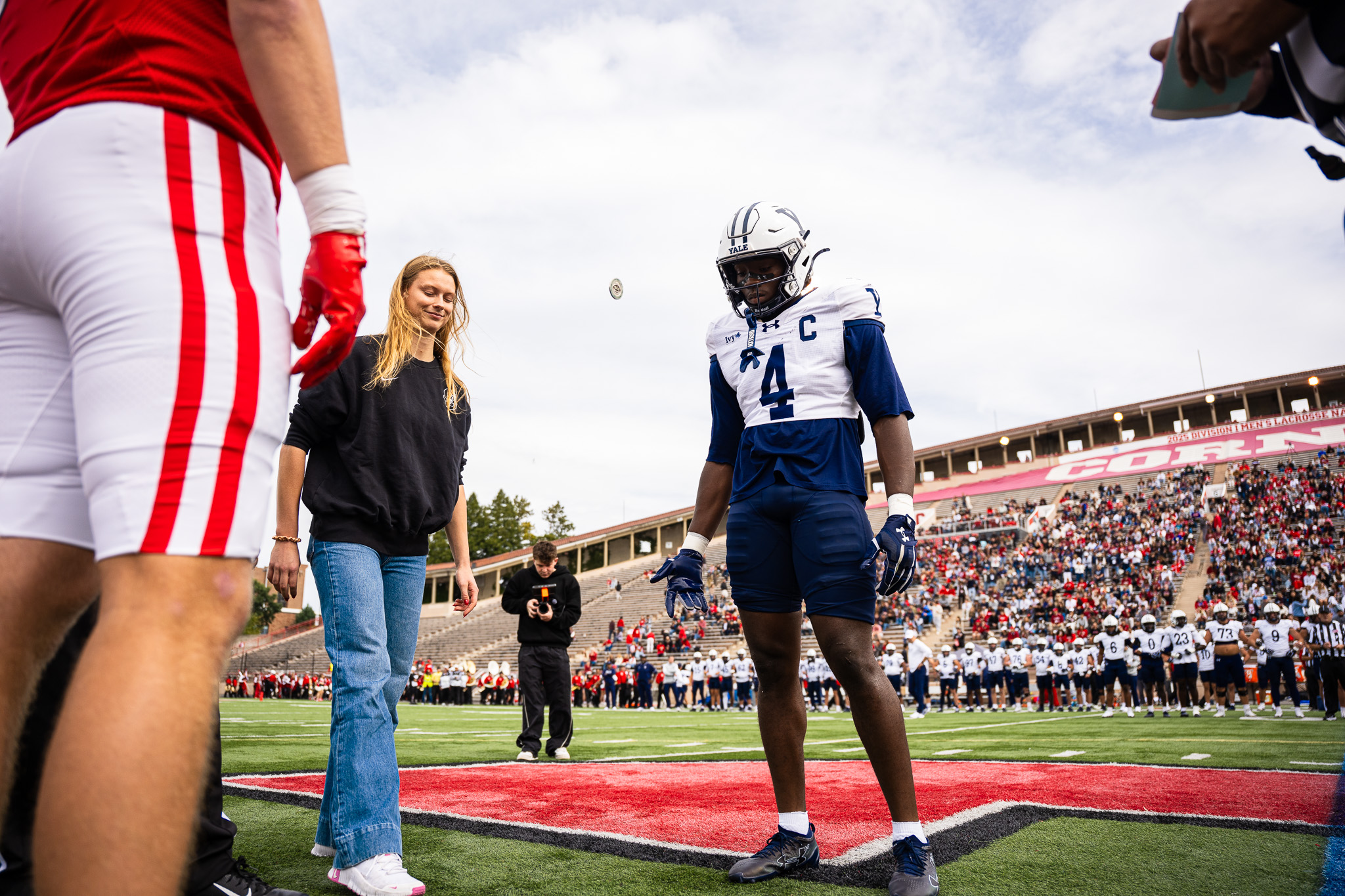
    Abu Kamara shown before the coin toss ahead of Yale’s game against Cornell on Sept. 26.Courtesy of Yale Athletics

    “One of our coaches always says, ‘If you make the plays that come to you, you’ll be an All-American.’ So that’s my mindset with it,” Kamara said. “I don’t try to force myself to make any plays, force myself to do anything outstanding. I just do my job … and obviously, when the ball comes around me, [I] find a way to make a play.

    “That’s the mindset I’ve been carrying [in] my four years here. Just do your job and make the plays that come to you.”

    153rd captain

    Kamara was a two-way star at Interboro, and had a record-setting year at running back as a senior. Interest from top college football programs did not follow.

    Yale was the first school to “take a chance on me,” Kamara said. Back then, Cahill, who was Yale’s offensive coordinator in 2022, said the program initially wanted him at running back. Kamara was given the choice to decide between playing running back or defensive back, and chose the latter because of “the longevity of the position.”

    A connection to an Interboro coach, who played for Cahill at Maine, helped strengthen the relationship between Kamara and Yale.

    “The faith that Coach Reno had in me as a player … and the way my position coach [Jay Anderson] and my defense coordinator [Sean McGowan] cared for me and the way they wanted to see me grow, it really meant a lot to me,” Kamara said. “You go to these other programs and it’s like, if you’re not developed as a freshman, you kind of get shoved under the rug, but here at Yale, it’s, ‘we try to make sure that every player is developed from the moment they walk on campus to when they’re getting their degree.’”

    This season, Kamara is adding another accolade to his personal resume. At Yale, one athlete is selected to be captain per sport and the Bulldogs’ football team has a long history of captains that traces back to 1873. Kamara was named captain of Yale’s 153rd team in December, and each captain of Yale’s varsity sports takes a photo in front of their historic fence.
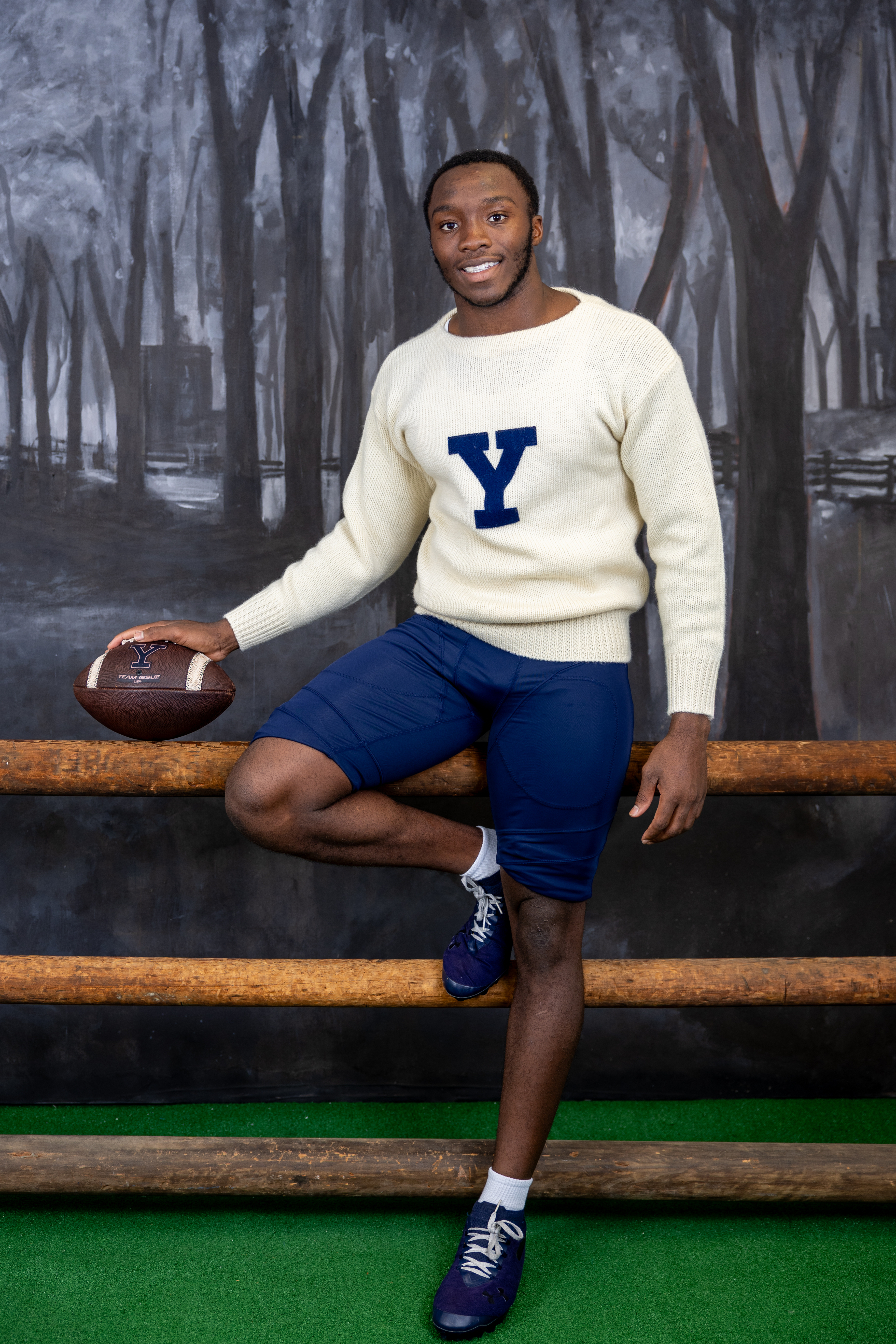
    Each captain of a Yale varsity sport takes photos on this fence every year. There is only one captain elected for each sport, and Abu Kamara was named the football captain of team 153.Courtesy of Yale Athletics

    “That’s the biggest honor you could have as a Yale athlete. Your team votes you as captain. It has nothing to do with the coaching staff. It is all the players,” Cahill said. “They are put in a room. They are the vote, and whatever comes out, that is who the captain will be. … For him to be named captain, you can see why he is, and he’s done a good job. He does a really good job of embracing other ideas and other thoughts from other leaders on the team.”

    The NFL is watching

    Cahill was still Lehigh’s head coach when his team played Yale last season, and as he was scouting Yale’s kickoff team, No. 4 for the Bulldogs crushed the returner. The hit was so loud on film that Cahill made sure to account for Kamara “on everything we do.”

    Kamara says he was always an aggressive kid growing up in Philly, and had the mentality, “if you can’t hit, you can’t play football.” That mentality has followed him to Yale.

    “He is flying around sideline to sideline, no matter where it is. He’s going to track the ball down or find a way to get there. He brings a physicality with him too. Like when he tackles you, you’re going feel it,” Cahill said. “I think his length is really impressive. It’s an attribute that he has that not many have with how long his arms are, and his wingspan is able to do a lot of different things.”

    There has been a noticeable uptick of NFL scouts visiting Yale practice to see Kamara. “Beauty’s in the eye of the beholder,” Cahill said, since Yale plays him anywhere from safety to nickel to linebacker. NFL scouts’ opinions vary on Kamara: “Some love him, some really, really like him, and some are [saying], ‘OK, we’re going to continue to watch as the season goes on,’” the Yale coach noted.

    While Kamara is focused on the season, the Interboro grad concedes that playing in the NFL has been “a dream of mine since I was a kid.” Cahill says Kamara reminds him of Jaguars nine-year veteran linebacker Foyesade Oluokun, who played collegiately at Yale.

    “I mean, there’s been one NFL player out of Interboro, Vince Papale, but that was way back when,” Kamara said, laughing. “To change that narrative and give kids hope in my area that, ‘Hey, you can go play Division I ball. You can go chase whatever.’ Not even just football. Whatever career path you want to chase, don’t limit yourself just because you went to a small school in Delaware County.”
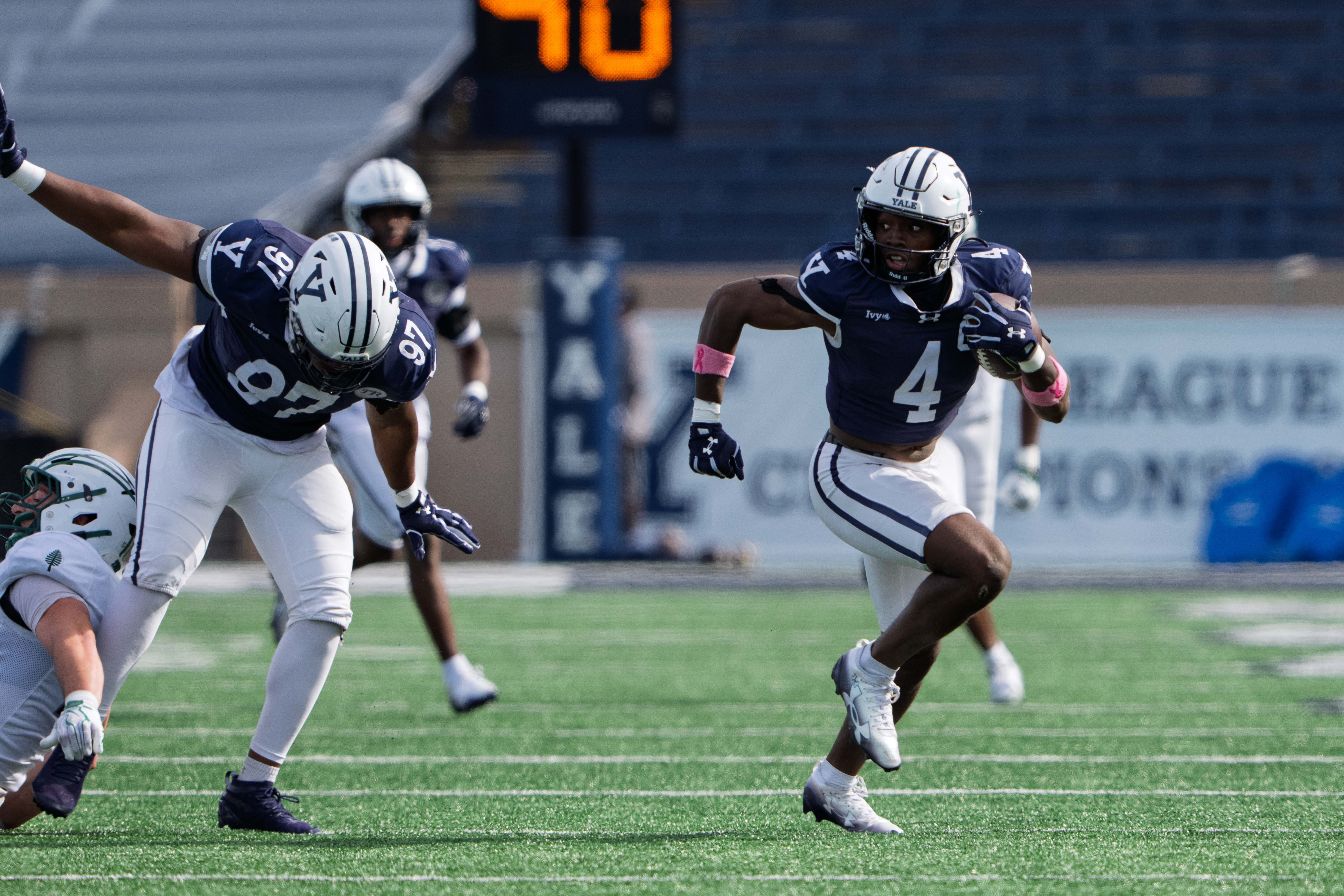
    Abu Kamara recorded an interception in Yale’s Oct. 10 win over Dartmouth.Courtesy of Yale Athletics

    Before he makes a decision about his future, a visit back to Philadelphia on Friday is up next. When Yale last visited Philly two years ago, he put on a show, finishing with seven tackles, one sack, one interception, and one forced fumble.

    There will be plenty of family, friends, old teammates and classmates, and former teammates in attendance. They showed a lot of love to Kamara two years ago, and the defensive back will have a large cheering crowd that he estimates “1,500 to 2,000 Yale fans in Franklin Field on Friday.”

    “I told all the guys, although it’s an away game, it’ll feel like a home game for us,” Kamara said. “A lot of (my former) teachers missed that game (two years ago), so they made it a definite to be at this year’s game against Penn. But I think it’ll be fun. It’ll be a good environment. It’ll feel like you know playing high school ball again. … I’m really excited to see a lot of old friends, old family, everybody.”
  • How did UCLA’s defense get its Philly flavor? Meet defensive coordinator Colin Hitschler

    How did UCLA’s defense get its Philly flavor? Meet defensive coordinator Colin Hitschler

    Colin Hitschler can still envision his earliest memories of wrestling and football, the sports that directly tie him to his father, Charles. He’d sit on his father’s lap in the corner of a wrestling mat, and roam the sidelines as his father coached football, often serving as the ball boy.

    He says “coaching was probably in my blood,” but it wasn’t until he spent time away from football that he actually developed the itch to do it.

    “I spent more time being around coaches than probably players as a little guy,” Hitschler told The Inquirer by phone recently. “The opportunity to chase it — being a wrestler in college probably made me hungrier for losing football, and that obstacle led me to coaching.

    “Wrestling is a mentality, and that, I think, is what I bring from wrestling to the football field and to coaching, and something I try to instill within our guys … the challenges that wrestling presents are very similar to the course of a long season of football.”

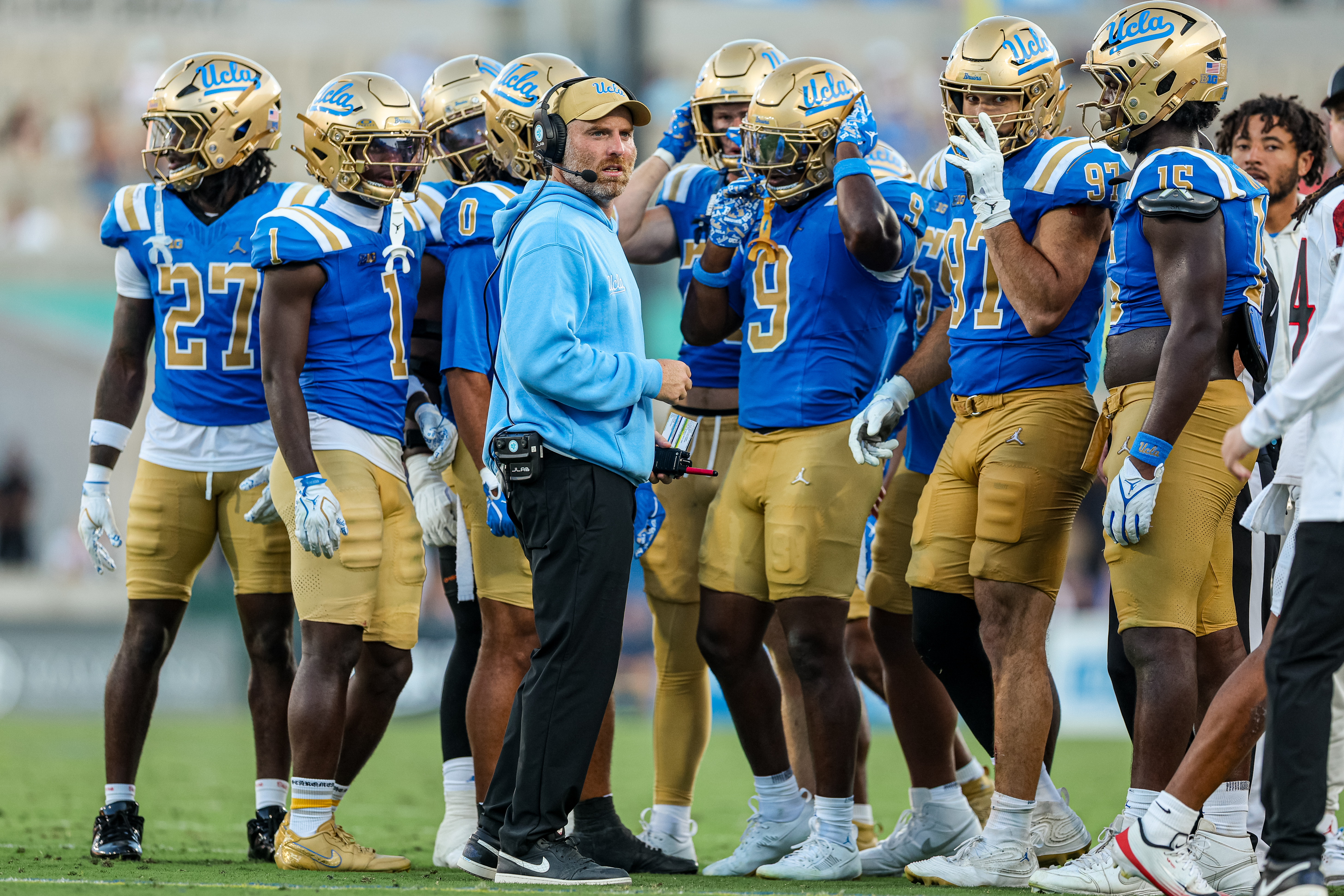
    Hitschler, who played football and wrestled at Penn Charter, then wrestled for four years at Penn, has dedicated his career to coaching. Now at UCLA as the football team’s defensive coordinator in his 16th year of coaching, Hitschler is quickly helping turn around the undefeated Bruins in the program’s first year with Kulpmont, Pa., native Bob Chesney as head coach.

    Hitschler’s first taste of working in football, though, came with the Eagles in 2009. Sean McDermott — the La Salle College High graduate, former Eagles defensive coordinator, and fellow wrestler — invited Hitschler to be an Eagles training camp assistant in 2009.

    “He kind of took me under his wing and gave me my first opportunity to be around it,” Hitschler recalled. “And then I was lucky enough to get to the Chiefs and work in the personnel department. And then I realized that my true passion was coaching.”

    ‘Aggressive mantra’

    Hitschler, 40, didn’t land his first coaching opportunity until two years later, at Division III school Salve Regina in Newport, R.I. It was there that he first worked for Chesney, who took over the program in 2010 after five seasons at Johns Hopkins in Baltimore.

    The pair spent just one season together, with Hitschler serving as the co-special teams coordinator and defensive line coach. There was a 14-year gap between coaching stops together, reuniting at James Madison in 2025, but Chesney’s “energy” and “how much he loved ball” were traits that stuck with Hitschler.

    Bob Chesney (center) and Colin Hitschler (right) first coached together at Division III Salve Regina in 2011.Lydia Ely

    “Some of the late nights, just figuring out little obstacles, and just the way he made his players love the game,” Hitschler said of Chesney, who has one losing season in 16 years as a head coach across three levels of college football. “I was obviously lucky enough to coach a number of other places … but the ability to reunite with him and his energy and the way he makes people feel about the team and the game — that was an opportunity that presented itself that was special.”

    Hitschler himself made a quick ascent up the coaching ranks. He coached at Widener, then spent time as a graduate assistant at Arkansas State and South Alabama, and by the time he left the latter in 2017, he had become a safeties coach.

    From there, he spent five years on Luke Fickell’s staff at Cincinnati, starting as a defensive quality control coach in 2018 and later becoming co-defensive coordinator by 2022. He followed Fickell, whom he considers “a mentor” to Wisconsin in 2023, then spent 2024 at Alabama as co-defensive coordinator on Kalen DeBoer’s staff, before rejoining Chesney at James Madison.

    Every stop he’s been, Hitschler has brought his Philly roots along, even down to his defensive philosophy. He watched Jim Johnson’s Eagles defenses that featured Brian Dawkins and Jeremiah Trotter Sr. and tried to emulate it as a defensive playcaller.

    “I was a diehard Eagles fan watching Dawkins and Trotter and those guys create havoc and stay aggressive, and a lot of the front multiplicity that [Johnson] did back in the day,” Hitschler said, who also noted that Johnson’s grandson, Brandon Rose, is on UCLA’s staff as the director of player personnel. “His aggressive mantra is deep within me. … When you grew up in Philly in that era, you loved the Eagles’ defense.”

    ‘A version of the Bruin Bullies’

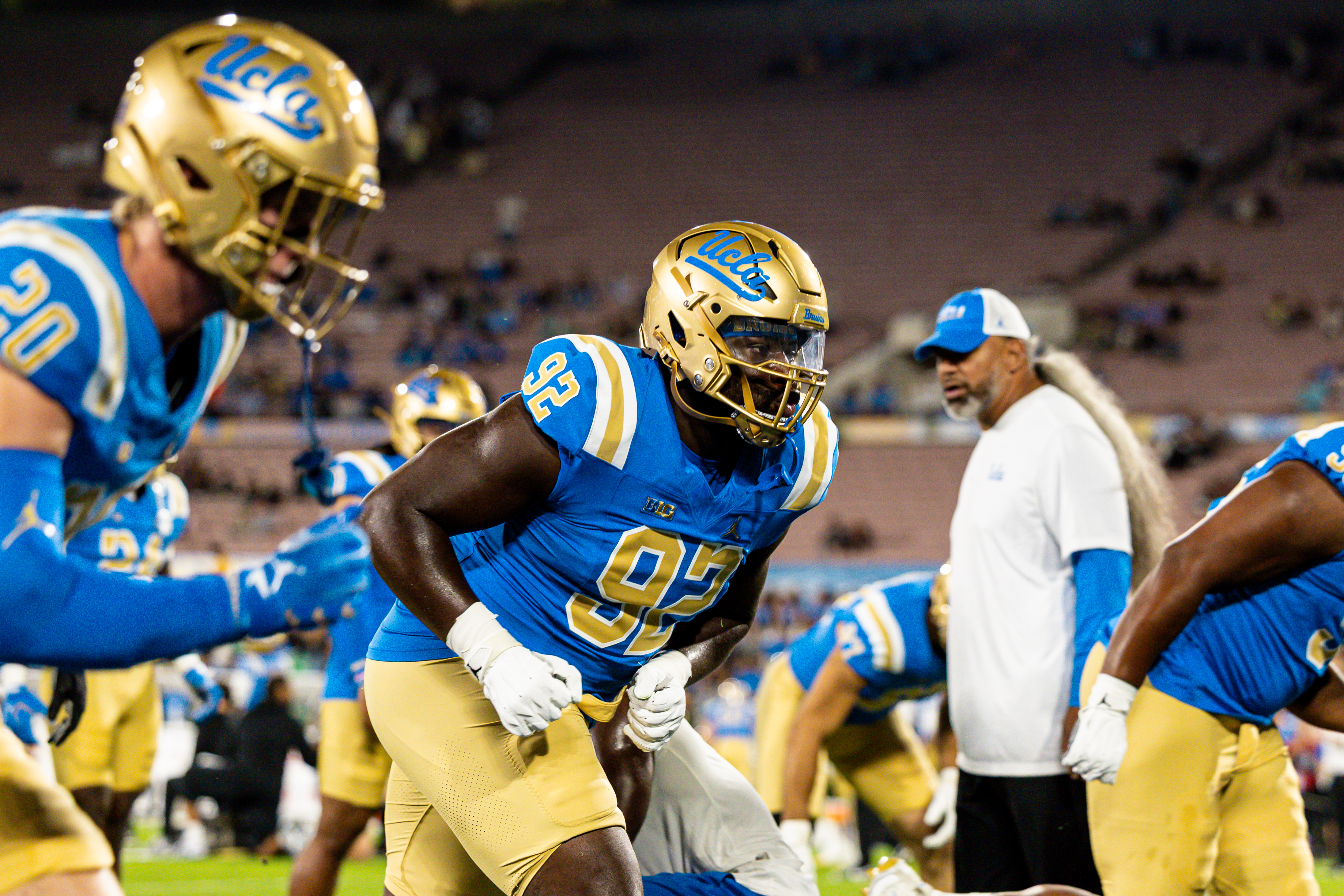
    Building connections on the recruiting trail is an essential part of Hitschler’s duties, and his deep connections to Philly are prevalent on UCLA’s roster. Three locals are playing out west: St. Joseph’s Prep graduates Anthony Sacca and Maxwell Roy, and La Salle College High grad Darold DeNgohe.

    The 6-foot-2, 312-pound DeNgohe had previous ties to Chesney. He was a freshman on the JMU team when Curt Cignetti led it in 2023, then remained with the program in 2024 when Chesney took over. After he spent last season at Rutgers, a relationship that dated back to high school finally came to fruition at UCLA.

    Darold DeNgohe has nine tackles (two for loss) in five games this season.Courtesy of UCLA Athletics

    “Coach Hitsch gave me my first offer in high school when he was at Cincinnati,” said DeNgohe, who emigrated to the United States from Cameroon at age 9. “That was my first offer. He was one of the first college coaches to really believe in me. So it was really cool. I’ve always wanted to play for him. So when we got this opportunity, we were both really excited to like finally accomplish it and just finally play with each other.”

    The combination of Hitschler, Sacca, DeNgohe, and the hodgepodge of other transfers and holdovers from the previous staff has helped UCLA’s defense emerge as a formidable unit.

    It held an Oregon offense that entered last week’s game ranked fifth in points and passing yards, and 11th in total offense, to just 15 points and 272 yards of total offense. The Bruins entered the game ranked second nationally in turnovers per game (3) and forced an outstanding seven more against the Ducks.

    Hitschler says the defense calls themselves “a version of the Bruin Bullies, or what we aspire to be,” as an homage to the Flyers’ Broad Street Bullies era, and the results are showing. UCLA picked up their first win at Oregon since 2004, and face Hitschler’s mentor, Fickell, and his Wisconsin team on Saturday (7:30 p.m., NBC10). UCLA is seeking a 6-0 start for the second time in the last 20 years.

    “I think that combo of brotherly love and ‘Broad Street Bully’ mentality, I think that’s unique about Philadelphia,” said Hitschler, “as somebody that’s kind of lived in a number of different places. I think it’s important that the players feel who I am, and a large part of who I am is the city that I grew up in, and the people that I were around. So bringing that mentality and that personality to our players is really important to me.”

    Added DeNgohe: “We try to bring the physicality and the toughness from the city into the defense, and that’s how we play. We try to have that mindset as the ‘Broad Street Bullies.’”

  • The Eagles will need dominant defense to reach the playoffs. The film says these are their strengths (and shortcomings)

    The Eagles will need dominant defense to reach the playoffs. The film says these are their strengths (and shortcomings)

    There aren’t many silver linings to take from the Eagles’ three-game losing streak, with the last two games slipping away despite late fourth-quarter leads. The offense continues to struggle, particularly in the second half, and the lack of a running game is part of the Eagles’ inability to close out games effectively.

    Like last year, the Eagles continue to ask a lot of their defense, and for the most part — at least since the Monday night debacle against Chicago more than two weeks ago — they have answered the bell. They’re creating more turnovers (three interceptions and two forced fumbles in last two weeks), and have done a much better job of defending the run, especially on early downs.

    With Sean Mannion’s offense sputtering in recent weeks, Vic Fangio’s defense seems to be rounding into form. Here’s where the defense has shined through five weeks, and why the Eagles can once again count on the unit being one of the top groups in football:

    Clamping down on the run game

    The underlying metrics through five weeks show a much better run defense on early downs when compared to 2024 and 2025. According to TruMedia, offenses have a 34.2% success rate on first- and second-down runs this year. That number was 41.3% last year through five weeks, and 37.5% in 2024. On early-down runs, the Eagles have 16 tackles for loss; that number was 11 last year, and 13 in 2024 (with one less game).

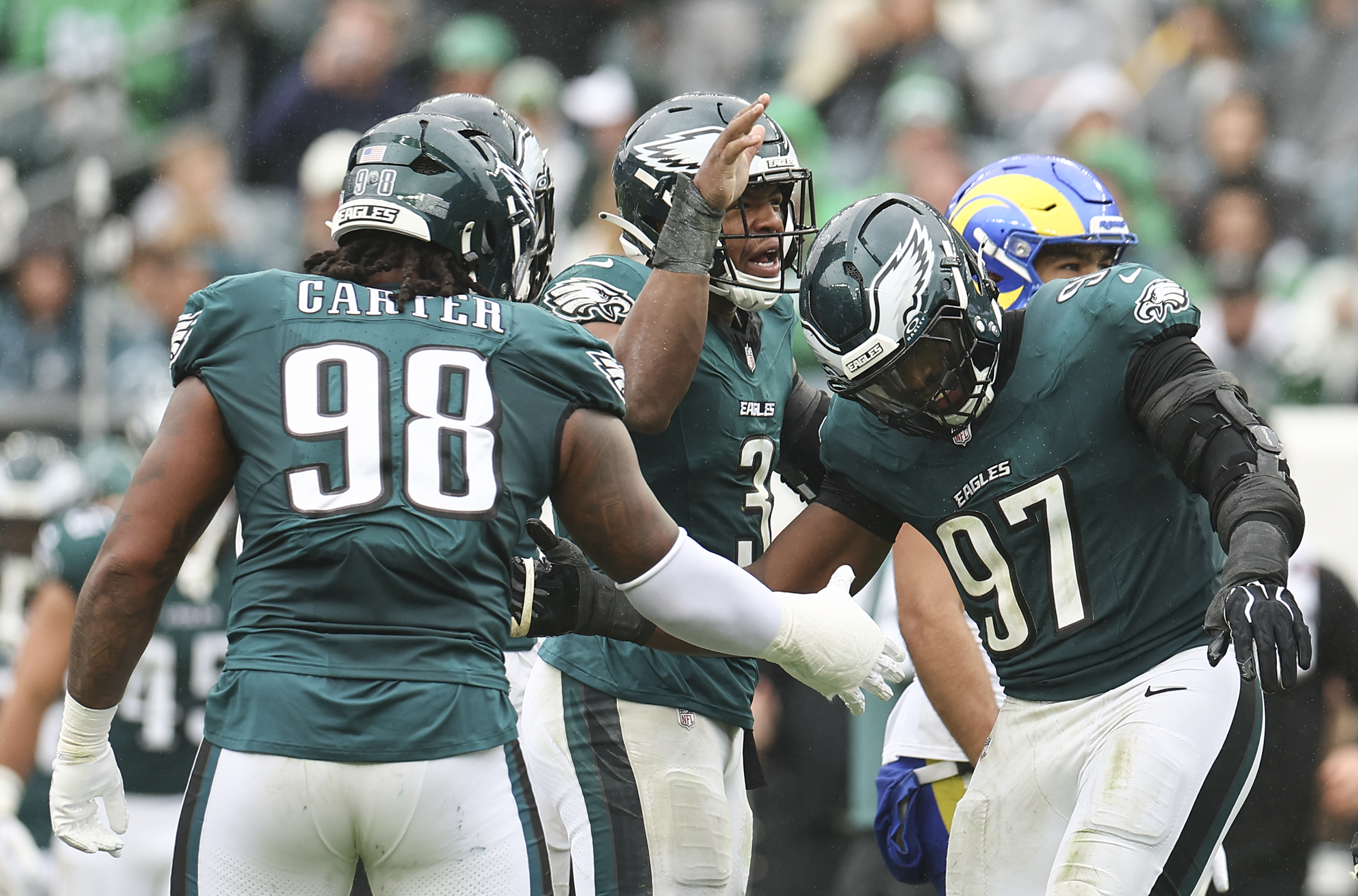
    A big part of the Eagles’ early-down success against the run, specifically against Jacksonville, was Jalen Carter’s activity along the defensive line. Much of the discussion after the game has focused on his pass-rushing prowess after he strip-sacked Trevor Lawrence twice, but Carter disrupting run plays in the backfield helped the defense create negative plays. He also played a big role in their two goal-line stops on Sunday.

    On non-scramble runs outside the tackles, the Eagles have allowed eight runs of 10 or more yards, and five came in the first two games according to Next Gen Stats. They’ve allowed just three over the past three games.

    Edge rushers and defensive linemen are stringing out runs on the perimeter better, while linebackers and secondary players are flying downhill and taking away cutback lanes.

    Overall, the run defense can still improve. It wasn’t perfect against the Rams, allowing 4.2 yards per carry, but against Jacksonville, it allowed 3.8 yards and the lowest net run total of the season (102 yards).

    The unit still leads the NFL in the number of light boxes (six or fewer players between the tackles) it plays (65.5%), so conceding yards between the tackles will happen if the defensive front can’t generate negative plays. The run defense will be key, too, as long as the Eagles’ offense continues to struggle in the second half.

    Struggles with big plays on play-action

    An area of concern this season for the Eagles has been the rate at which opponents have been successful on play-action passes. Teams are averaging 76.6 yards against the Eagles, which ranks 26th in the NFL, according to Next Gen Stats. They are generating pressure on just 33.3% of those throws, tied for 22nd in the NFL.

    According to TruMedia, the defense is allowing a 23.3% explosive-play rate on play-action passing, nearly 6 percentage points higher than last year and 9 points higher than 2024 through five weeks.

    Many of those big gains have come in the second half of games, notably when the defense is on the field much longer because of the offense’s ineffectiveness. The safeties also seem to be getting caught out of position as they are rotating coverage responsibilities at the snap.

    The pass defense, in general, seems to be getting picked on in the intermediate areas of the field. According to Next Gen Stats, on throws that travel 10 to 19 air yards, the Eagles allow the second-most passing yards per game (106.2) and are giving up a league-high 170 yards after the catch on such throws.

    The areas between the linebackers and safeties seem to be targeted most often. With young safety Andrew Mukuba on the back end alongside a rotating cast of players (Marcus Epps, Michael Carter II, Kenny Moore), teams seem to be more willing to test those players rather than cornerbacks Quinyon Mitchell, Riq Woolen, and Cooper DeJean. The linebackers, too, have been challenged more in coverage situations.

    Bringing more pressure

    The Eagles’ pass rush has not been consistent to start the year, but turned up the pressure in Weeks 4 and 5. The Eagles generated 31 pressures over the last two weeks, efforts that ranked in the league’s top half for those weeks, according to Next Gen Stats. They had a season-low nine pressures against the Titans and 10 against the Bears.

    Their 15 pressures against Lawrence on Sunday came from a variety of players, with Arnold Ebiketie leading the way with four. Zack Baun, Jordan Davis, Moro Ojomo and Carter were tied for second with three apiece.

    Baun’s number is particularly interesting, because he was brought on delayed blitzes right before the snap to try to speed up Lawrence’s process as a passer. According to TruMedia, the blitz percentage this year (21.5%) has not been as high through five weeks compared to 2024 (27.6%) and 2025 (24.9%). Blitzes this year have generated a 46.2% pressure rate, compared to last year’s 45.8% rate.

    Because the Eagles can’t generate quick pressure with four pass rushers (only six quick pressures this season, tied for 26th), Fangio has gotten creative to assist an area in which the Eagles have struggled the past two seasons.

    Ebiketie getting more playing time and generating more pressures is a welcome development, especially with Jalyx Hunt’s injury. Ebiketie pushed the pocket a handful of times in London and it was his most productive game so far this season.

    Jonathan Greenard’s addition was expected to help the pass rush improve, but his pectoral and ankle injuries have limited him to two games and just 23.3% of the defensive snaps. Getting Greenard back in the fold will be helpful if Hunt, who leads the team in pressures (16), misses significant time.

    Fangio’s unit previously turned the corner in Weeks 5 and 6 over the last two years. Doing so again in 2026 could be critical in this Eagles team’s ability to turn its season around.

  • Jalen Hurts’ redemption arc, DeVonta Smith’s social justice, and more Eagles moments from the ‘Saban’ docuseries

    Jalen Hurts’ redemption arc, DeVonta Smith’s social justice, and more Eagles moments from the ‘Saban’ docuseries

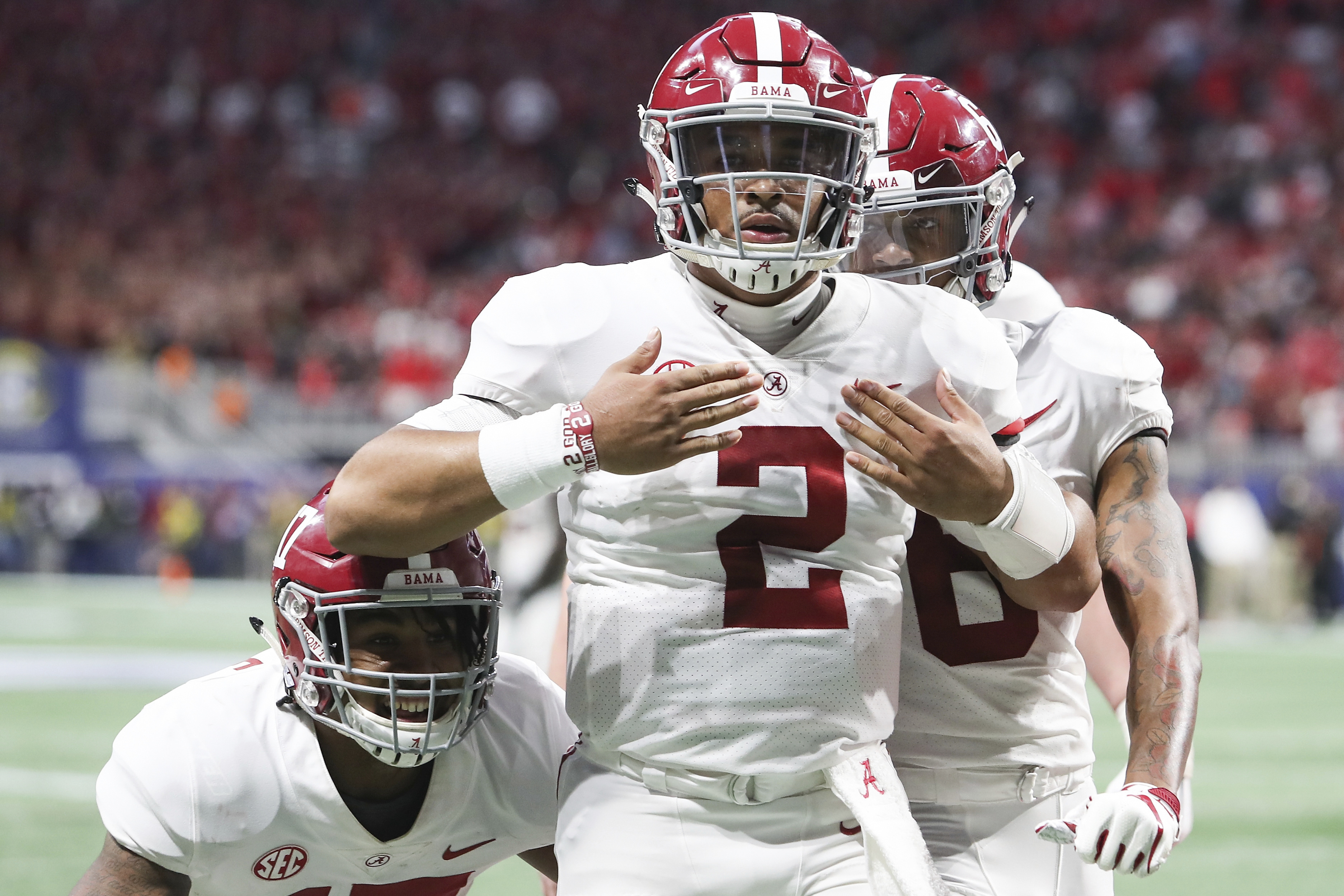
    By now, you’ve likely seen the clip of then-Alabama football coach Nick Saban deciding to replace Jalen Hurts in favor of Tua Tagovailoa during halftime of the 2018 College Football Playoff national championship.

    That clip, which featured previously unseen footage of Hurts’ benching, went viral late last week after it emerged on social media following the release of ESPN’s Saban documentary series, which began airing Thursday on the network’s app.

    It wasn’t the first time that Saban made a controversial move he felt was in his team’s best interest. He took play-calling duties away from then-offensive coordinator Lane Kiffin for Alabama’s national championship rematch against Clemson in 2017 because of Kiffin’s inability to balance building a staff at Florida Atlantic, where he recently had been hired as head coach, and his remaining role at Alabama.

    Hurts was not thrilled about Kiffin’s departure, saying: “Coach Saban did a great job of trying to steady the boat and reassure everyone that everything is going to be OK. We’re not going to lose a beat. That just wasn’t reality.”

    The Eagles quarterback felt similarly about being benched in the national title game, and it’s something he holds onto even now.

    “Everybody has their own story,” Hurts said during the fifth episode the docuseries. “Tom Brady was drafted, what, 199 [overall]? [Michael Jordan] holds on to this little grudge of not making a JV basketball team. Mine is getting benched in the national championship game.”

    ‘Remove all doubt’

    With Hurts watching from the sideline, Tagovailoa connected with DeVonta Smith for the game-winning touchdown to beat Georgia for Saban’s sixth national title — the Eagles’ current No. 1 receiver recalled that he “just blanked out” and “started running everywhere.” Hurts’ future at Alabama was in doubt following his benching, and he wasn’t sure what to do with Tagovailoa seemingly taking the mantle.

    “In the end, I’m in my dad’s arms, and I’m in tears,” Hurts said. “I’m like, ‘You ever seen something like this happen before? I mean, what are we going to do?’”

    Many predicted that Hurts would transfer before the 2018 season, and his father, Averion, even advised him to do so. Instead, Hurts chose to stay — even after losing the quarterback battle to Tagovailoa.

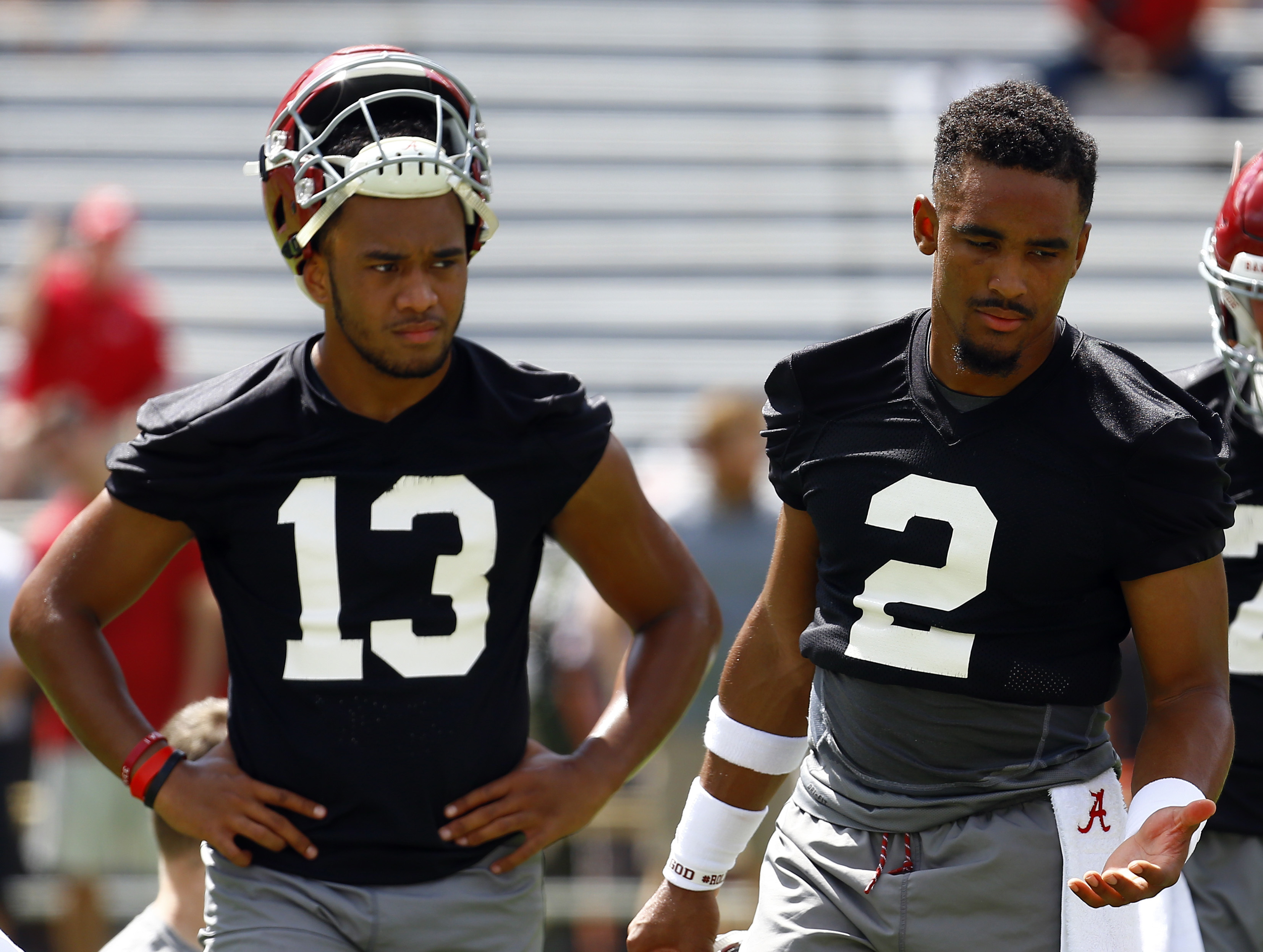
    Former Alabama quarterbacks Jalen Hurts (right) and Tua Tagovailoa (left) battled for the starting job at camp in 2018.Butch Dill

    Alabama’s passing offense had struggled under Hurts down the stretch of the 2017 season. Saban noted that “people were loading the box, stopping the run, forcing us to throw, and we were not doing it very effectively.” It was part of the reason Tagovailoa was the starter, but Saban also offered a piece of advice to Hurts.

    “I told Jalen, ‘I know your goal is to play in the NFL someday,’” said Saban, who coached Alabama from 2007 to 2023. “‘You need to improve as a passer — not your arm talent, necessarily, but just your ability to read, get rid of the ball on time, understand coverages and concepts — and you have an opportunity to do that every day in practice here as a backup quarterback.’”

    When Alabama went up big during that 2018 season, Hurts would get opportunities for meaningful reps that proved beneficial that season and beyond.

    Hurts got his redemption story with Alabama. When Tagovailoa left the 2018 SEC championship game in the fourth quarter with an ankle injury, Hurts stepped in with Alabama trailing Georgia by seven points.

    “I had to remove all doubt,” Hurts said. “You either go into it all in, or you’re not. And I was all in.”

    He led Alabama on two touchdown drives, completing 7-of-9 passes for 82 yards and a touchdown pass, and ran in the decisive touchdown in the 35-28 victory. Hurts later said that the moment was something ”so rewarding and emotionally moving.”

    “The fact that he used a whole season to improve helped him have more success the next year at Oklahoma, and that’s what got him to be a second-round draft pick and get him an opportunity to win the Super Bowl with Philadelphia,” Saban said. “It wasn’t necessarily the way he played in the moment, in the game, but the way he handled that season in this day and age, in the world that we live in, and the character that it takes, the selflessness that it takes — it was phenomenal.”

    DeVonta Smith won two national titles and a Heisman Trophy at Alabama.Wilfredo Lee

    ‘Something powerful’

    The docuseries’ final episode examines Saban’s seventh and final national championship season, 2020.

    While the COVID-19 pandemic affected everyday life, there also was rising tension following the murder of George Floyd by a Minneapolis police officer and subsequent demonstrations nationwide.

    Many players — including Smith and Bryce Young, the Wynnewood-born Carolina Panthers quarterback — voiced their concerns and disappointment about the country’s direction. Saban asked former U.S. Secretary of State Condoleezza Rice to speak to the team on Zoom that summer. The Alabama native encouraged the players to take action based on how they felt.

    Rice also shared some lessons with the players and told the story of how former Alabama Gov. George Wallace stood in the doorway of Foster Auditorium on Alabama’s campus to prevent Black students from registering for classes.

    Saban hoped players would take action to “help people in your community.” In late August 2020, the players, according to Smith, “had a conversation with [Saban] about having a march to Foster. Coach Saban, he was like, ‘OK, I’m with it. Just tell me what y’all need, and we can do it.’”

    “[It] felt like I was doing the right thing,” Smith said. “It felt like I was doing something to make a change, to lead something powerful.”

    Added Young: “Going to Alabama was about football. That was my mission. That was what brought me there. But to march on campus, and that being one of the strongest memories I have, that being one of the biggest things that we had done, it made me really want to give more.”

  • The Eagles offense starts the post-Lane Johnson era on Sunday. The film points the way to where they must adjust.

    The Eagles offense starts the post-Lane Johnson era on Sunday. The film points the way to where they must adjust.

    Adjusting to Sean Mannion’s scheme was always going to take time, but the Eagles offense hit a new low on Sunday. From going 0-for-12 on third downs to being shut out in the second half of the 24-20 loss to the Rams, the offense has not worked as designed and has resulted in an ugly six quarters, dating back to the Bears loss Sept. 28.

    Injuries have started to mount on offense, too. The Eagles were without four starters entering Sunday, lost running backs Saquon Barkley and Tank Bigsby during the game, and will also be without Cam Jurgens in London after he was traded to Baltimore on Wednesday. Star right tackle Lane Johnson’s surprising in-season retirement on Tuesday will further hamstring the group, to say the least.

    The offense is well below average in most metrics, and by the eye test. With the Jaguars up next across the pond, we evaluate what has gone wrong thus far for the unit, and where it can improve as it begins the post-Johnson era,

    Here‘s what the film says about Mannion’s scheme, about one-quarter through the season:

    Under center ineffectiveness

    A staple of the Kyle Shanahan/Sean McVay offense is the ability to operate under center in some capacity. Whether running or throwing from under center, the Eagles haven’t produced enough consistent positive plays in those formations.

    Since hitting a 64-yard pass to Dontayvion Wicks in Week 1, the Eagles have created minimal explosive passes off play-action. On under-center play-action passes, Jalen Hurts is 5-for-16 for 93 yards across 18 dropbacks, according to Sumer Sports.

    Over the last two weeks, the Eagles have hardly gotten a pass off before Hurts faces pressure. When turning his back to play-action and running bootleg concepts, backside defensive ends have not been fooled by the play fake, causing Hurts to quickly throw the ball away.

    A big reason that the play-action passing game has been ineffective is the overall struggles of the run game, particularly under-center runs with condensed formations and heavier tight end personnel.

    According to Sumer Sports, on under-center runs from “12″ personnel (one running back, two tight ends), the Eagles have a minus-0.81 expected points added (EPA), which measures the value of individual plays. That ranks 29th in the NFL.

    Early-down, under-center runs in general have not been successful either: The Eagles have a 33.3% success rate on first- and second-down runs from under center, which ranks 23rd in the NFL, according to Sumer Sports, and that number drops to 21.1% in the second half of games.

    One counter teams have employed to stop under-center runs, specifically outside zone, and play-action, is blitzing a linebacker or corner. Every week since facing the Commanders in Week 1, teams facing the Eagles have dialed up the pressure, especially to combat early-down runs and play-action.

    On play-action fakes when Hurts doesn’t turn his back to the defense, teams have blitzed a linebacker through the middle of the offensive line, which either causes confusion up front or forces the running back to quickly pick up the blitzer and flushes Hurts from the pocket.

    That tactic also proved effective for Chicago the previous week. Barkley was held to just 9 yards on four rushes in the second half after he rattled off 11 carries for 73 yards in the first two quarters.

    According to Sumer Sports, the Eagles rank 23rd in the NFL in EPA on under-center runs, and 25th in success rate. Because the Eagles are either running the ball or throwing off play-action, defenses are dialed in to what is coming and sending extra bodies toward Hurts and the running backs. The Eagles have just two passing attempts this season with no play-action calls from under center.

    Dropback passing woes

    The Eagles’ struggles handling the blitz and inconsistencies in route spacing, timing, and pass protection have contributed to an up-and-down passing game. Against the Rams on Sunday, Hurts completed 5 of 15 passes for 46 yards against the blitz, according to Sumer Sports. On third downs specifically, Hurts completed 1 of 7 passes for 5 yards and was pressured seven times and sacked twice.

    Like in 2023, when Hurts particularly struggled against the blitz, the Eagles have struggled identifying where pressure is coming from and having quick answers for it. In 2023, Hurts finished 22nd in the NFL in EPA (minus-21.3) against the blitz; through four games this season, he ranks 26th (minus-17.8).

    The Eagles’ struggles on early downs lead to third-and-long situations, and force longer-developing plays downfield that require pass protection to hold up. But the Eagles’ O-line has struggled in that area as well this season.

    According to Next Gen Stats, Hurts has been pressured on 43.5% of his dropbacks, which is tied for the third highest in the NFL among qualified quarterbacks. He has also been blitzed on 39.1% of his dropbacks, which ranks third-most among NFL starting quarterbacks.

    Hurts and the passing offense, when DeVonta Smith was still in the lineup, showed promise attacking the middle of the field and hitting explosive plays against Washington and Tennessee.

    The script has flipped the past two weeks, with Chicago and Los Angeles playing more man coverage vs. the Eagles and forcing Wicks, Makai Lemon, and others to win their one-on-one matchups.

    A big part of the Eagles’ quick passing game has been throwing screens and swing passes to the perimeter. Mannion often sends Lemon in motion behind or parallel to Hurts and that particular swing pass has had issues with blocking from wide receivers in space, along with the screen passes to running backs and receivers.

    There are passing situations when Hurts seems to hesitate or turn down quick-hitting throws, which could also prevent opportunities for his receivers to create after the catch. Hurts seemed more sure of such throws through the first two games.

    On throws under 2.5 seconds, Hurts had an EPA of minus-14.1 (second-lowest) and was pressured on 20.5% (seventh-highest) of his dropbacks, according to Next Gen Stats.

    How Markel Bell fits

    Part of the Eagles’ protection woes on Sunday against the Rams was rookie tackle Markel Bell being thrust into action, with Johnson out with a personal matter that would be followed by his retirement two days later. Now that Johnson is officially retired, the right tackle spot becomes Bell’s for the foreseeable future.

    The 6-foot-9, 346-pound Bell is a massive target for edge rushers to work around and through in pass protection, and his athleticism out of his stance pops in the run game. He showed some of that ability on a double team up to the linebacker, and getting two defensive lineman knockdowns in the process.

    That said, Bell has big shoes to fill with Johnson gone and is not ready for a full workload of one-on-one situations against pass rushers. He allowed four pressures and two sacks on Sunday over 32 pass-blocking attempts, according to Sumer Sports.

    He has the tools and size to develop into a solid starter, but it will take time. He started just 21 games in two seasons at the University of Miami and needs more reps. Johnson’s retirement paves the way for it.

    More shotgun and pistol runs

    The Eagles had their most success on under-center runs in their Week 3 loss, but the run game seems to operate better from the shotgun.

    According to Sumer Sports, the Eagles have a 42.9% success rate on early-down shotgun runs, which is tied for 12th-best in the league. Against the Rams, the Eagles were relying on zone runs, and even threw in some misdirection to free up Bigsby for a 19-yard gain.

    The Eagles do not have the personnel to run the multiple-tight end sets that are a league trend. Dallas Goedert’s injury and the lack of true in-line blocking options has contributed to some of the Eagles’ run game struggles.

    Because of that, they should continue to lean into “11″ personnel (one running back, one tight end), and the numbers back that up: The Eagles rank eighth in EPA per rush in that grouping (plus-0.05) and 17th in success rate (43.3%). Those numbers changed drastically in “12″ personnel, which is minus-0.3 in EPA per rush (26th) and has a 27.3% run success rate (26th).

    Pistol formations, with a running back aligning behind Hurts, should be in the plans as well. The Eagles ran just four plays from the formation, but had a 66.7% run success rate, according to Sumer Sports.

    Hurts continuing to be a threat as a runner will help. Twice in the Rams-Eagles game, Hurts had a designed quarterback run, and it has been sprinkled into the game plan more frequently in recent weeks.

    The offense will face another tough test against a stingy Jacksonville run defense, and the Jaguars have allowed the league’s second-fewest passing touchdowns this season.

    It may be a while before the Eagles offense is back at full strength with its litany of injuries and Johnson’s sudden retirement, but determining its identity will be the key to how successful this season can be.

  • Pope John Paul II grad Kevin Heywood overcame an ACL tear to become Wisconsin’s starting OT

    Pope John Paul II grad Kevin Heywood overcame an ACL tear to become Wisconsin’s starting OT

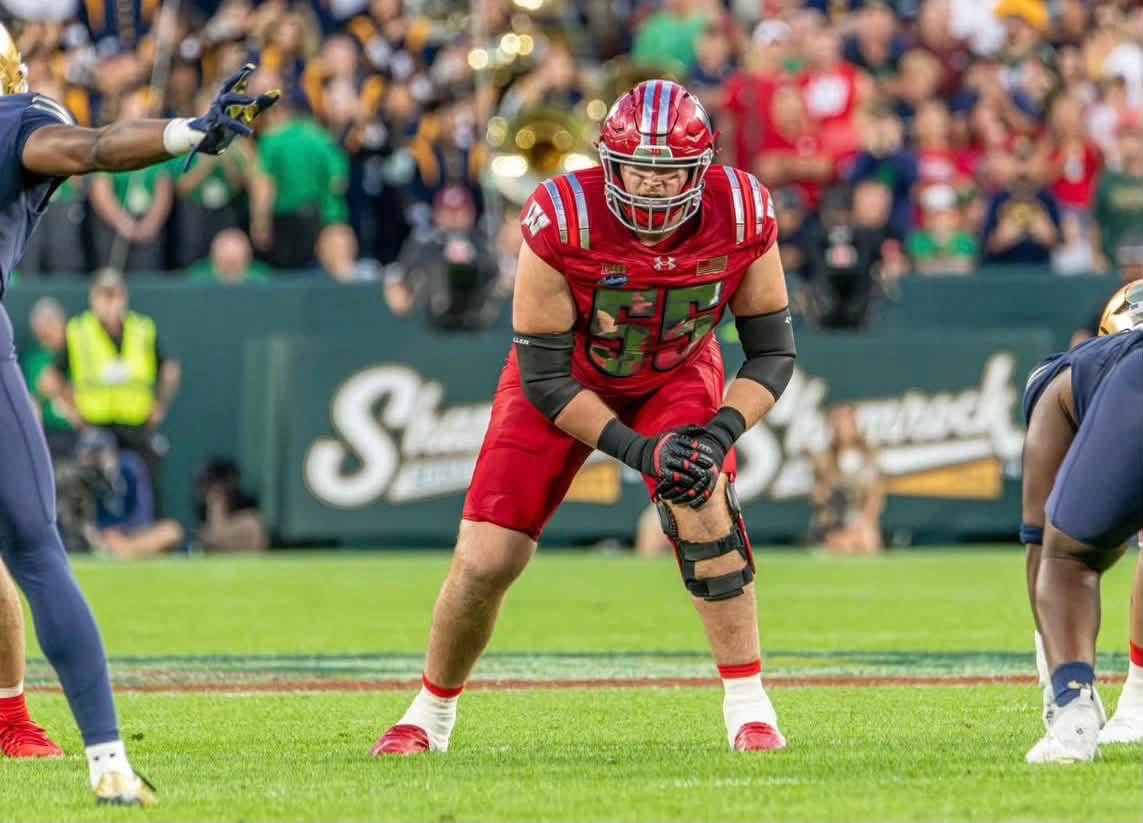
    MADISON, Wis. — Kevin Heywood ran onto the field, in a stadium filled with fans donning the blue and green of Notre Dame and the white and red of Wisconsin. For the second time in school history, the Wisconsin Badgers made the two-plus hour trip to face Notre Dame on Sept. 6 at Lambeau Field, home of the Green Bay Packers for the last 69 years.

    Nearly three weeks since the junior made his first collegiate start at right tackle for Wisconsin, the Pope John Paul II graduate, who stands at 6-foot-9, 320 pounds, looked beyond the Camp Randall Stadium stands after Tuesday’s practice with the vivid memory he’ll keep with him for a while.

    “It was crazy,” Heywood told The Inquirer, as he shook his head in disbelief of the experience. “It was really cool. Just running out, look up. It’s just like 50/50 [between the two fan bases] in the stands. … Wish [we] came out with the dub, but learned a lot from that game, [grew] from that game, and just got to keep rolling.”

    Rolling from Lambeau Field to now Beaver Stadium, in fact. Wisconsin (2-1) opens Big Ten play three hours west of his hometown Royersford, in a place he knows well. Penn State runs in the family.

    His older sister, Claire, graduated from Penn State in May, and Heywood had deeps ties with the program when James Franklin was still the head coach. Deion Barnes, the North Philly native who was the D-line coach at Penn State and now coaches at South Carolina, was Heywood’s former trainer and developed a close relationship with the lineman.

    But Heywood ultimately chose Wisconsin, and his journey will come full circle for Saturday’s game at Beaver Stadium (5 p.m., Peacock).

    “Just being a kid from Pa., going on a bunch of visits [at Penn State] in high school, it was cool,” Heywood said. “I think it’s a really cool atmosphere for us to play in and [it’ll] be a fun environment for sure.”

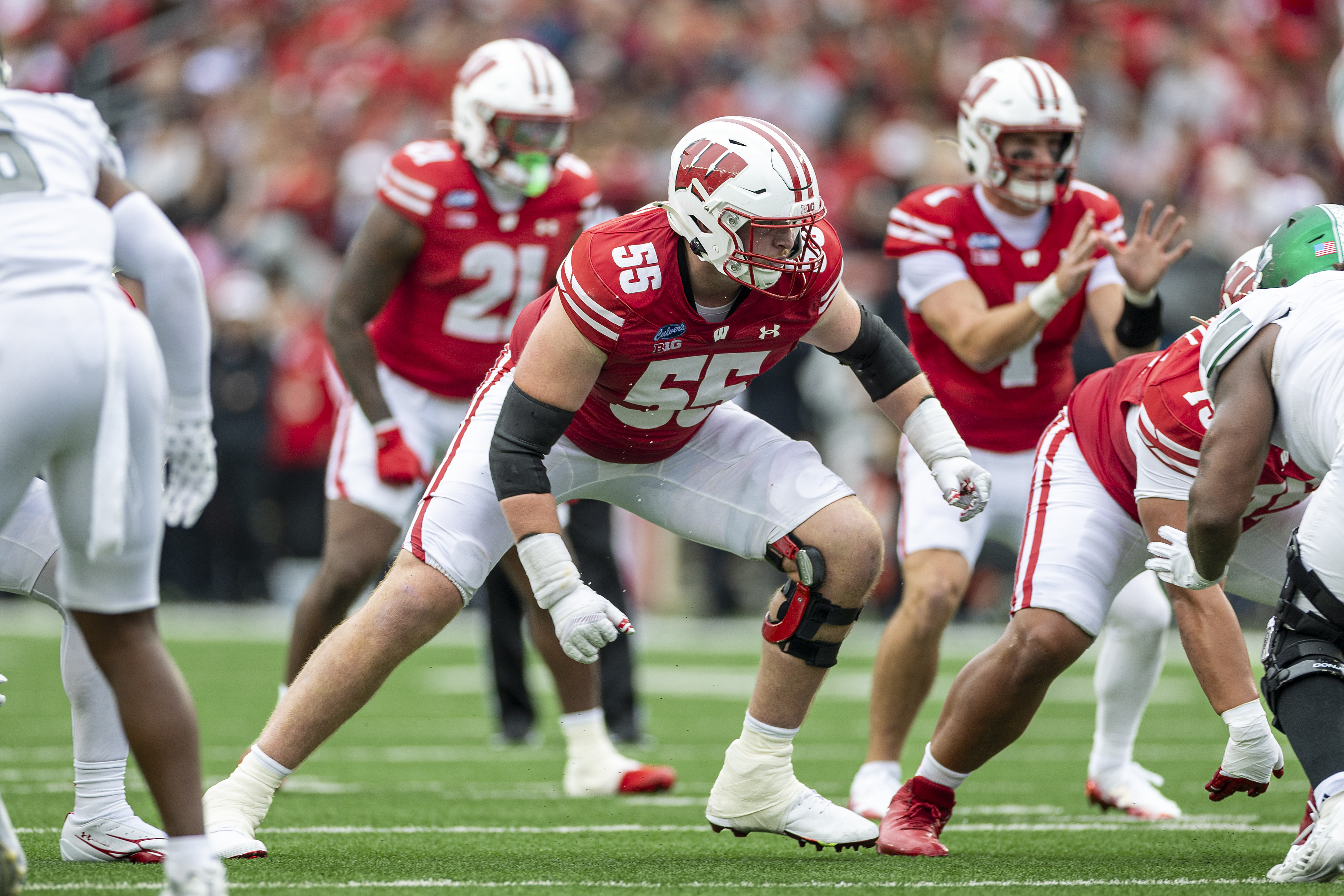
    Wisconsin offensive lineman Kevin Heywood blocks against Eastern Michigan on Sept. 19.Courtesy of Wisconsin Athletics

    Bouncing back from injuries

    Getting to this point wasn’t always as clear-cut. Heywood early enrolled at Wisconsin in 2024 and mostly played on special teams as a freshman.

    Last year, heading into his sophomore season as a projected starter at left tackle, Heywood tore the anterior cruciate ligament in his knee during spring practice, ending his 2025 season.

    Heywood returned this spring and once again went into this season as a projected starter, but the setbacks continued when he got injured on the second day of fall camp. His starting debut against Notre Dame seemed in doubt, but he was cleared to play a few days before the season opener.

    “I’m so proud of how he’s buckled down and fought through the adversity of all the injuries,” said his father Erik Dougherty. “He’s taking everything and [running] with it. We put a lot of stuff in front of him, had him with a lot of people to get him to where he’s at now, but he utilized all those people — and it’s just awesome.”

    Added Heywood: “I think the trainers and the strength staff made it very easy. If you’re motivated to come back, you got every tool, every resource to do to get healthy. And I feel better than I did before.”

    As he battled his ailments, Heywood also had to endure a coaching change at offensive line. Eric Mateos, who previously coached at Arkansas, was hired last winter to be the new Wisconsin offensive line coach.

    The Royersford native says Mateos has taught him to “never be satisfied” and appreciates how “hard he is on us.”

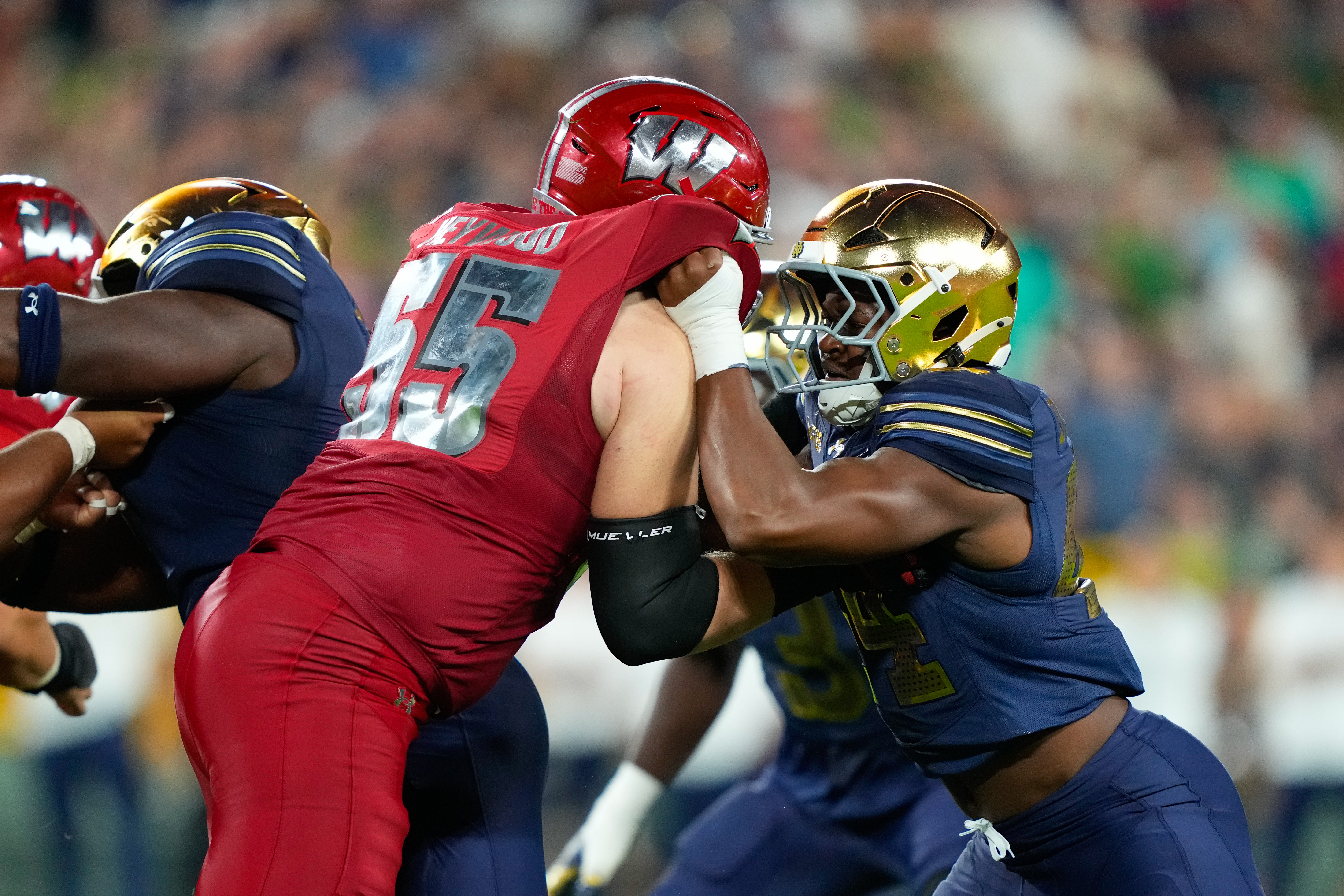
    Notre Dame defensive lineman Rodney Dunham (44) against Wisconsin offensive lineman Kevin Heywood (55) on Sept. 6.Kayla Wolf

    “He’s pushing everyone in a different way every day,” Heywood said. “There’s always time to clean up on a rep. It’s never going to be perfect. Even when you win a game, you still have to correct yourself and be better and be very hard on yourself.”

    Facing the wall

    Every time Heywood walks into the team meeting room, he sees the faces of the past Wisconsin All-American linemen. From Joe Thomas to Ryan Ramczyk to Tyler Biadasz, Heywood is reminded of the standard set before him to play on the offensive line.

    Thomas and former Rams tackle Rob Havenstein are among the former Badgers linemen who come through to visit, Heywood says.

    “Starting is the start of all of it, so I got that down,” Heywood said. “Just got to keep working on my fundamentals and techniques. I have that nastiness. I just need to clean up everything around it, and I’ll be right there with them.”

    Heywood learned from other professionals, too, this summer. Heywood and four offensive linemen attended the OL Masterminds summit, which Eagles right tackle Lane Johnson is the cofounder of. Wisconsin’s starting center, Austin Kawecki, grew up in Frisco, Texas, where the summit is held, and hosted Heywood and his teammates after the sessions.

    “I’d say the biggest thing I took away is just at the end of the day, it’s still a nasty game up front,” Heywood said, while noting he learned some techniques specifically from Johnson as a fellow right tackle. “You can be taught all the techniques in the world, but if you don’t have that edge to you, if you don’t have that nastiness, like, you’re never going to go where you want to go. And I think that’s the main thing I took from it.”

    Kevin Heywood played at Lambeau Field for his first career start.Courtesy of Wisconsin Athletics

    Doughtery and his wife, Amy, have attended every Wisconsin game so far this season, and will be in the stands on Saturday, along with Claire, and a few of Heywood’s friends from high school.

    It is “nerve-racking” watching Heywood play at this level, Doughtery admits, but seeing his son’s dream come to fruition has “filled our hearts.”

    “We just have to trust in everything that we instilled in him as a young kid, and he’s taken that and run with it,” Doughtery said. “It’s all him. We just sit back and watch how hard he’s worked and the things that he’s endured.

    “He’s got his mind right and he’s focused on what his goals are, and we’re just extremely proud of him.”

  • Does Zach Ertz still have the juice to contribute to the Eagles? Here’s what the film — and history — says

    Does Zach Ertz still have the juice to contribute to the Eagles? Here’s what the film — and history — says

    The Eagles’ depth at tight end was tested early when Eli Stowers and Grant Calcaterra both landed on the injured list before the season began. Two weeks in, the Eagles now are also down starting tight end Dallas Goedert, who suffered a sprained medial collateral ligament in his right knee during Sunday’s win over the Titans.

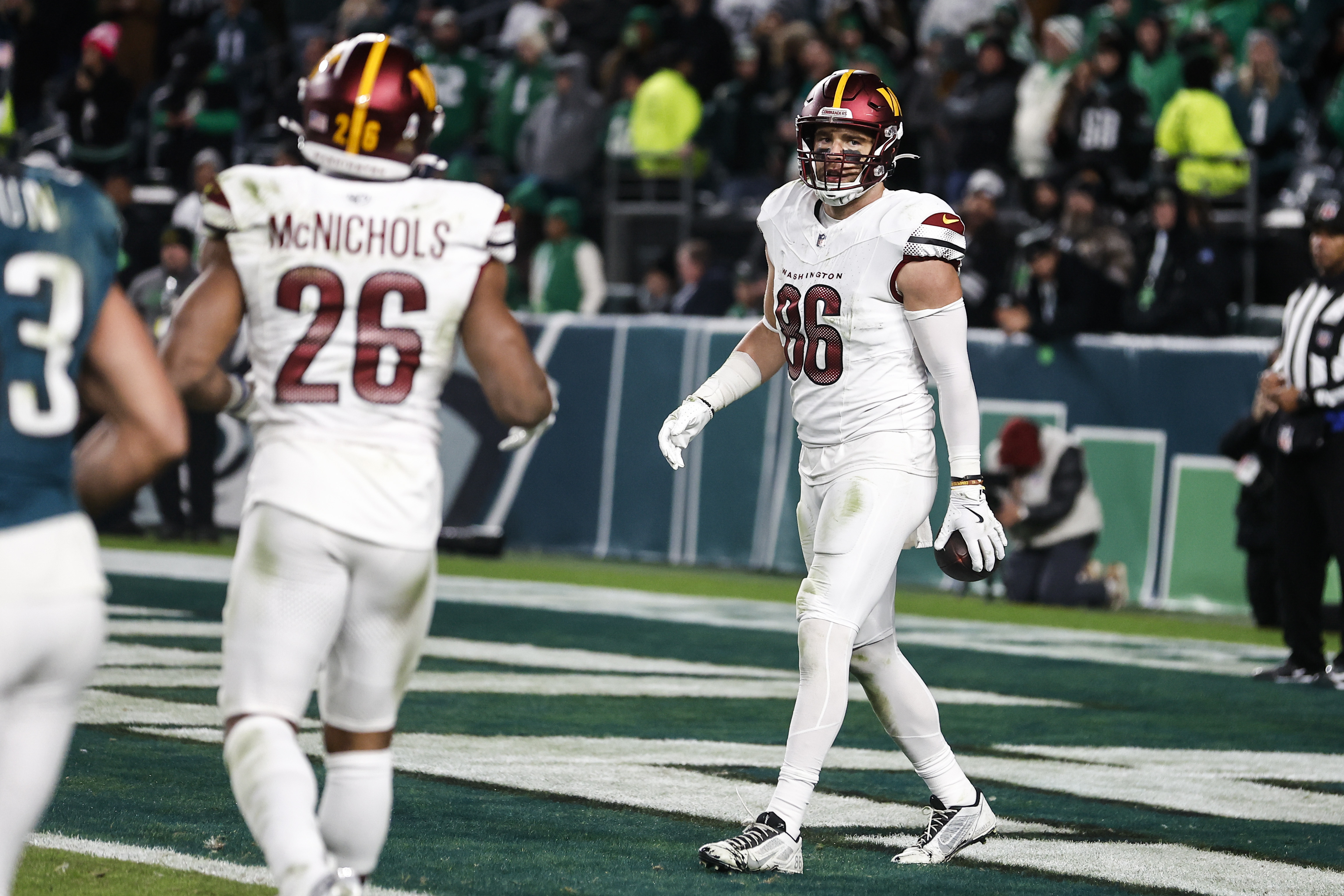
    An old friend, Zach Ertz, reunited with the Eagles on Monday, signing with the team’s practice squad. Before suffering a season-ending injury last year, Ertz, in his age-35 season, finished with 50 catches for 504 yards and four touchdowns in 13 games for the Washington Commanders.

    Ertz has spent the last nine months rehabbing from tearing both the anterior cruciate ligament and lateral collateral ligament in his right knee, and with the Eagles in need of a receiving tight end, the reunion makes sense on paper.

    But does Ertz, who turns 36 in November, still have the skills to contribute in an offense that needs production from its tight ends? Here’s what his film over the last two years with the Commanders — and NFL history — says about Ertz, who is 11 receptions away from becoming the Eagles’ all-time leader.

    Manning the middle

    For the past 13 seasons, Ertz has thrived on targets over the middle of the field, including his last two seasons with the Commanders. According to Next Gen Stats, 90 of his 116 receptions and 919 of his 1,158 receiving yards over the last two years have come between the numbers.

    A route the Eagles are familiar with is his in-breaking route that is somewhere between a slant and dig route, and often mirrors a running back angle route out of the backfield. Ertz sets up the route by widening his route to the outside and sharply cutting upfield at an angle, allowing him to break open vs. both man and zone coverage.

    The route was especially effective in the red zone, where he scored all 11 of his receiving touchdowns with Washington. On this specific angle route, he scored five of those touchdowns, including against the Eagles in their Week 11 matchup in 2024.

    The big-bodied tight end (6-foot-5, 250 pounds) also thrived on traditional in-breaking routes, where he occupied the middle of the field, finding soft spots in zone coverage.

    About a third of his production in Washington came from in-breaking routes: According to Next Gen Stats, Ertz finished with 385 yards on 37 catches on those routes over the last two seasons, including eight of his 11 touchdowns.

    Though his speed to stretch the field vertically and athleticism to create after the catch are not what they were when he was last in an Eagles jersey in 2021, there is some route-running savvy he brings to his old team. Specifically, Ertz still showed the ability to break open on corner routes downfield, when matched up with safeties or linebackers.

    He uses his size to outmuscle smaller defenders and creates bigger target areas to throw the football. He takes his corner routes a few steps toward the middle of the field and breaks out toward the sideline at a sharp angle to allow the quarterback to throw him open. When he generated big gains over the last two years, they specifically came on those corner routes.

    While Ertz still can thrive as a receiver, he does not bring much as a blocker, an area where the Eagles have struggled through two weeks. Much of his time in Washington was spent as a detached slot receiver on run-pass option plays or as a lead blocker on the perimeter for zone-read runs with Jayden Daniels.

    He has not had an in-line blocking role for the majority of his career, and that is unlikely to change in this reunion. But with Goedert missing time, Ertz’s contributions as a pass catcher seemed to be what the Eagles are seeking in the franchise legend.

    Aging like fine wine?

    According to StatMuse, which has NFL data that goes back to 1932, only three tight ends eclipsed 500 yards in their aged-36 season: Tony Gonzalez (930), Travis Kelce (851), and Antonio Gates (548). Gonzalez repeated the feat at 37 and 38, Kelce appears on track to do so in 2026 at 37, and Gates failed to reach that marker again over his last two NFL seasons.

    If you widen the scope, two other players reached 500 receiving yards after their age-35 seasons, and one of those circumstances relates directly to Ertz. Jason Witten, who finished with more than 500 receiving yards in 2017 at 35 years old (560), retired in 2018, returned to Dallas in 2019 at 37, and finished with 529 yards in 2019. He did not reach 500 yards with Las Vegas in 2020.

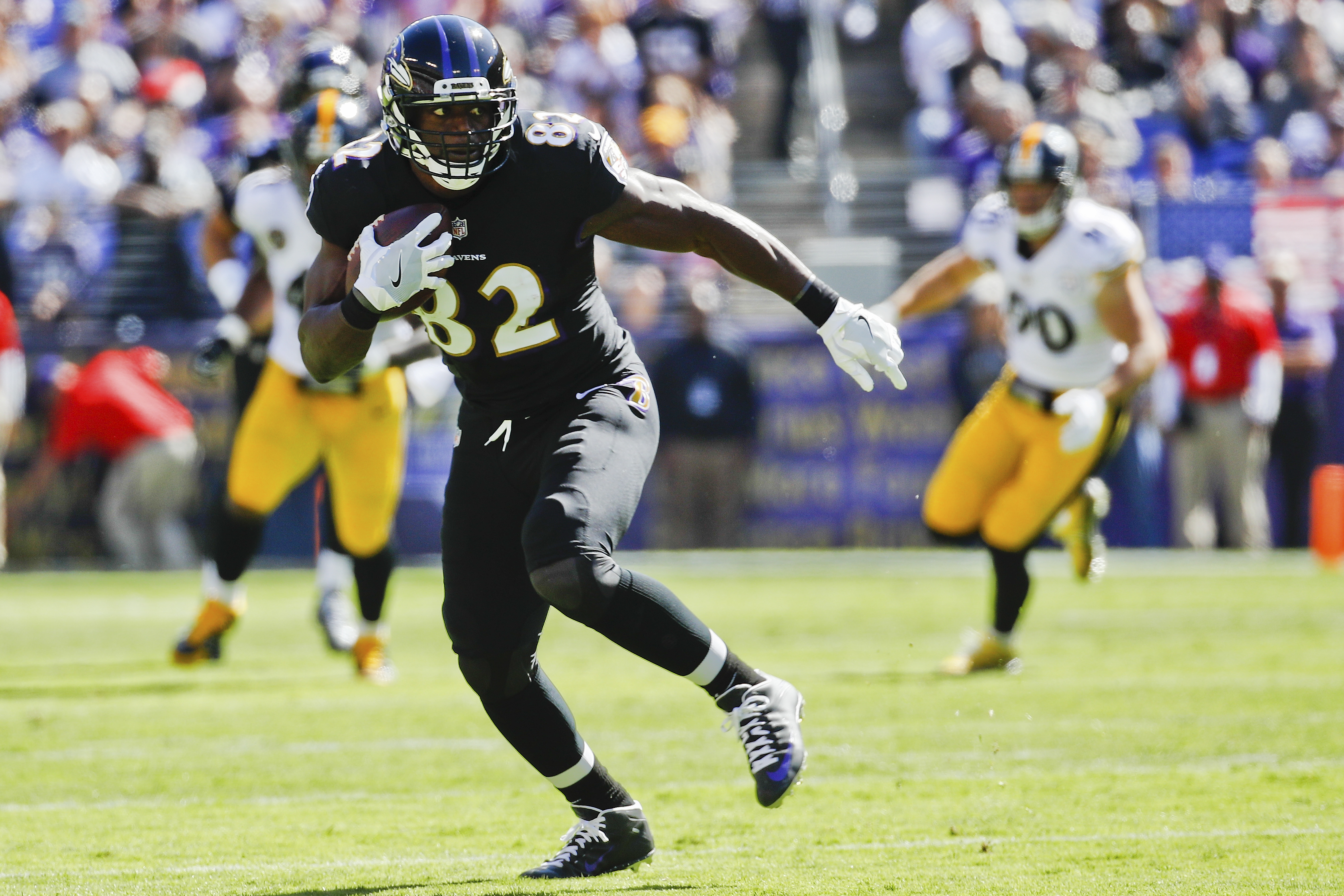
    Benjamin Watson (82) had a late-career renaissance but like Zach Ertz, battled injuries in the twilight of his career. Patrick Semansky

    The other player in that category was Benjamin Watson, who had a career-best 825 yards at age 35 in 2015 with the Saints, but missed all of 2016. After returning at age 37, Watson finished 2017 with 522 yards on 61 catches, but he did not cross that threshold with the Saints in 2018 or Patriots in 2019.

    Injuries in 2022 and 2023 with the Cardinals prevented Ertz from reaching that marker, but Ertz played 17 and 13 games over his last two years, his most games in a two-year span since 2020 with the Eagles and 2021 split between Philly and Arizona.

    Gonzalez, Kelce, Gates, Witten, and Watson stayed remarkably healthy, though the latter faced injuries late in his career. With the exception of Kelce, they were two-way players as blockers and receivers. Ertz has missed time with injury in nine of his 13 seasons, suffering season-ending injuries in three of them, and does not offer much in the blocking department beyond doing so in space.

    Previous Goedert replacements

    When Goedert has been out of the lineup over the last four seasons, the Eagles have traditionally not relied on the backups for heavy receiving workloads. In 2022, when Goedert missed Weeks 10 through 14 with an injury, Jack Stoll caught seven passes for 74 yards in that time frame, while Calcaterra caught four passes for 41 yards.

    In 2023, when Goedert missed Weeks 10 through 12, Stoll had two receptions for 17 yards, and Calcaterra was inactive for two of those three games.

    In 2024, when Goedert missed Weeks 6 through 8, then 13 through 16 with injuries, Calcaterra had an increased role, catching 14 passes for 165 yards and one touchdown

    And last season, when Goedert missed only one meaningful game, Calcaterra had one catch for 6 yards in a Week 2 game in Kansas City.

    This offense under Sean Mannion requires more from tight ends than previous iterations of Eagles offenses, which made Ertz’s signing necessary, though learning the scheme could take time for the 13-year veteran to make a significant impact on the passing game.

    Expectations should be set low for Ertz, considering his age and return from a significant injury. But if the tight end can look somewhat like he did as a receiver last season, when he contributed a throwback performance against the Broncos one game before his injury (10 catches, 106 yards) the Eagles may get more than a feel-good story.

  • Temple’s ‘FPC’ mantra has fueled the defense’s big leap in Year 2 under DC Brian L. Smith

    Temple’s ‘FPC’ mantra has fueled the defense’s big leap in Year 2 under DC Brian L. Smith

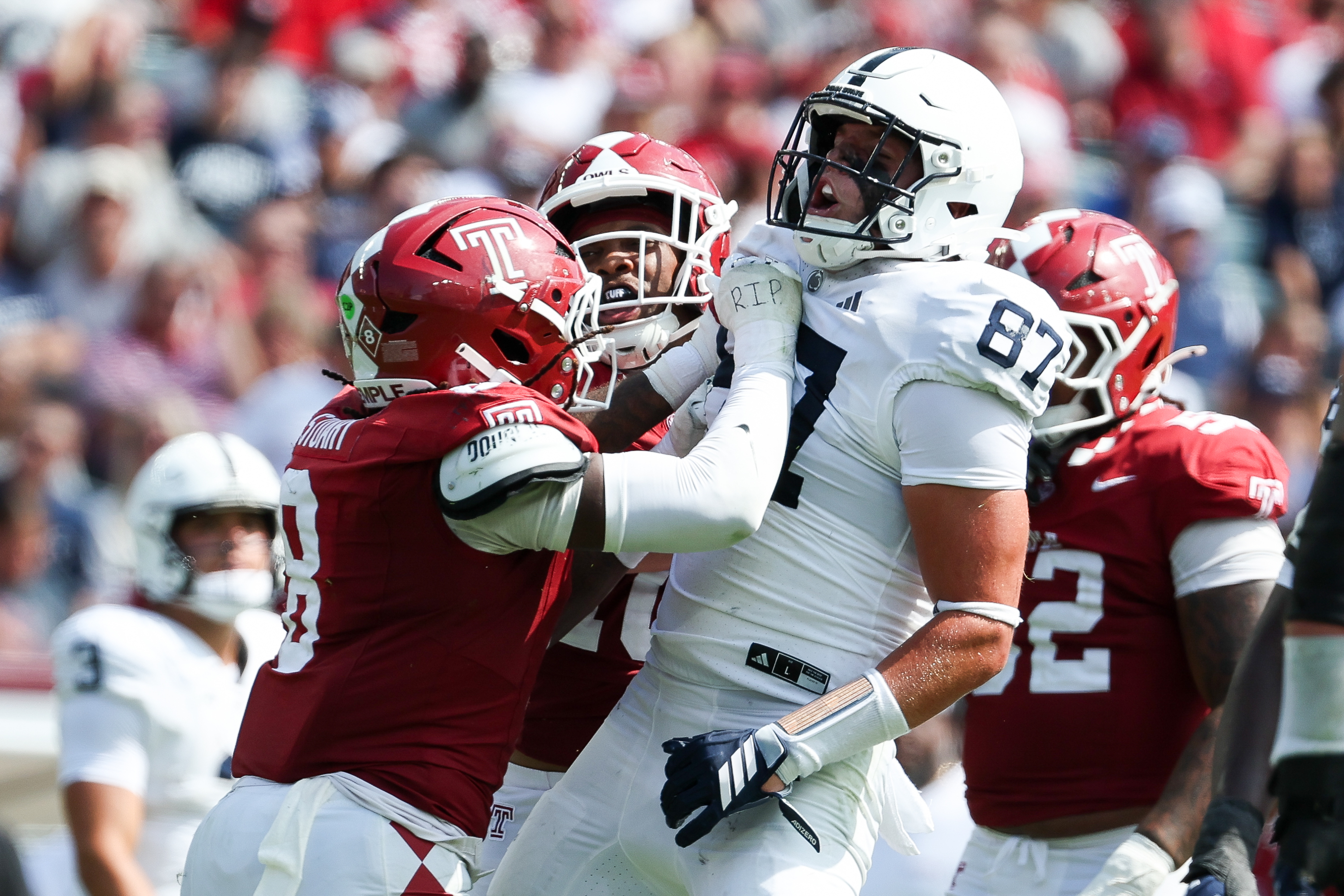
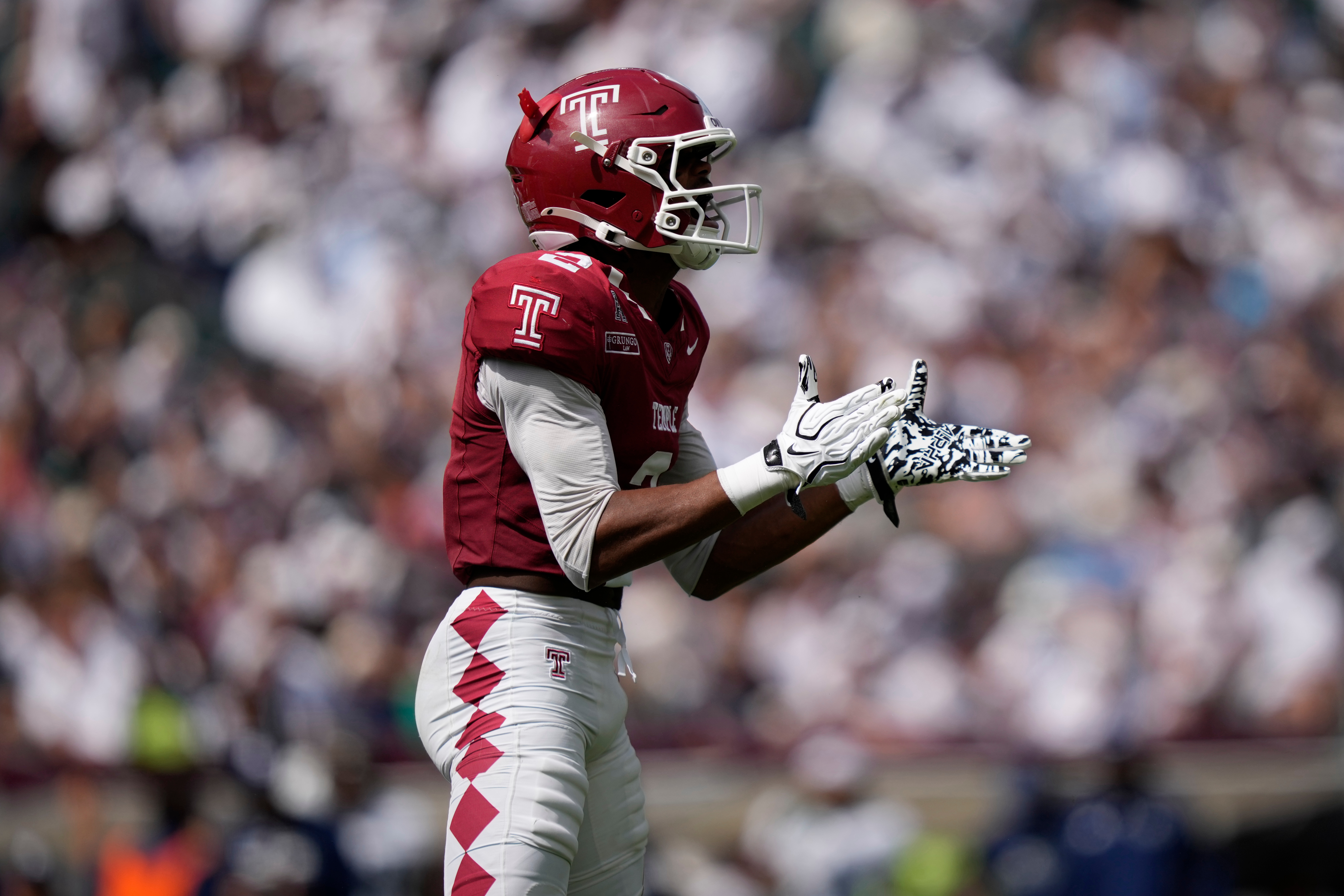
    After Penn State quarterback Rocco Becht’s pass whizzed past Andrew Rappleyea’s head and incomplete on fourth and goal from Temple’s 2-yard-line in the first quarter last Saturday, Owls safety Saboor Karriem pointed at the Nittany Lions tight end and gave him a piece of his mind on the way back to the sideline.

    Temple’s defense withstood a turnover deep in its own territory and forced a goal-line stand, adding yet another highlight to a strong start for a unit that ranked toward the bottom of Football Subdivision in points allowed, rushing yards, and total defense last season.

    Karriem, one of Temple’s single-digit players, awarded to the team’s toughest players on and off the field, is one of several new faces helping the Owls’ defense look much improved in Year 2 under coordinator Brian L. Smith. And it starts with Karriem’s energy on the field.

    “I like the mentality that we play with,” said Karriem, an Illinois transfer who grew up in North Jersey. “It’s different than what I had played [in] previously. I had played a lot more zone coverage, eyes on the quarterback when they drop back, catch and rally type of defense. But we [at Temple] are more aggressive in our mindset.

    “I really get more excited if my teammates make plays, but at the same time, energy is contagious. Guys feed off that, and when we make plays, we celebrate, but we got to focus. And I think that’s something that I tried to preach to them.”

    Temple’s Saboor Karriem against Penn State on Saturday.Matt Slocum

    Though the Owls could not keep pace with Penn State in the second half last weekend, Temple has another tough test, this time a road matchup against Toledo on Saturday (3 p.m., CBS Sports Network).

    With the quarterback battle continuing for another week, the defense will be relied on for another strong showing and is tasked with slowing down a Toledo offense that is averaging 41.5 points through two games.

    And it starts with a mentality Smith has instilled in the unit since he joined K.C. Keeler’s staff 20 months ago.

    “Our mantra is FPC: We want to play fast, physical, and clean, and not beat ourselves,” Smith said this week. “We want to eliminate the mental errors and try to prevent the big plays, but also get after the quarterback, stop the run, and create turnovers. And the guys are bought in to that philosophy.

    “We’re playing a lot of guys. We’re rotating a lot of guys in, and trying to keep guys fresh in the fourth quarter. The guys have done a good job buying in to the system.”

    Simplifying the defense

    Smith, a Wilmington native whose father taught in Chester, brought his NFL roots to the college level, first at Michigan from 2015-16, then at Rice for seven years before joining the Owls. His time in the New York Jets organization from 2007 to 2014 in various roles primarily under Rex Ryan, he said, helped shape his defensive philosophy.

    He also credits Don Brown, for whom he worked at Massachusetts, his alma mater, and Michigan, for developing a defensive system that he calls “multiple.”

    Temple defensive coordinator Brian L. Smith at practice in 2025.Isaiah Vazquez / For The Inquirer

    “We’re going to be aggressive. We’re going to attack as much as possible,” Smith said. “We can pressure blitz up front. We can have movement stunts up front, and again changing up the looks. … [We’re] trying to attack and be aggressive. We want to stop the run, try to make a team one-dimensional, and get them in the passing situations. And then on third down, we’re going to do multiple [things] and try to get after the quarterback.

    “[During] my time at Michigan and UMass, Don Brown … played a lot more man-to-man, so we adopted a little bit of that philosophy. We don’t play probably as much man in hand as he played, but we try to mix it in.”

    Last season, in his first year at Temple, Smith’s unit ranked 91st in total defense (396.8), 100th in points allowed (29.7), and 123rd in rushing yards allowed (197.3), but that rushing total was still down from the Owls’ 226.1 yards per game allowed in 2024.

    Through two games this year, Temple has improved in each category. It ranks 65th in points allowed (20.5), 76th in rushing yards allowed (122.5), and 86th in total defense (354 yards).

    Smith points to one key change he and his staff made this offseason.

    Quarterback Rocco Becht and Penn State beat Temple, 27-9, on Saturday.Matt Slocum

    “I think we simplified things this year for the players as much as possible,” Smith said. “That’s something that we do every year. You go back and evaluate what things work, what things didn’t work, and just with the players that we have, the amount of players that we’ve gotten from the transfer portal. … You’re better off trying to simplify things rather than trying to add a lot more because we’ve got the talent to play with a lot of people, and so we don’t want to beat ourselves.”

    ‘Grittiness’

    One of the few returning contributors to the defense is Curly Ordonez, who transferred to Temple before the 2025 season from Independence Community College. The linebacker, who leads the team with 20 tackles, has noticed fewer miscommunications with the unit this season.

    The reason? Ordonez said the defense made key strides in the spring and at captain’s practices this summer that is now showing up on the field.

    “We switched up a couple things [on defense], but really new guys coming into the new system, and actually get all those mistakes out, the misunderstandings, and really understand [the system] throughout the spring,” Ordonez said. “We just came out of [the] summer, and it was like, ‘Oh, everybody playing fast.’ … then we just continued to build from there. Summer was a great [starting] point where we just knew what our defense was [at] and we just had to show it.”

    Temple’s defensive improvement starts with the front four on the defensive line, Ordonez said. His reads from his linebacker spot have been cleaned up because “those guys up front are dominating, eating up two [blockers], taking on blocks.”

    On Saturday, it’ll be a homecoming for one of those defensive tackles. Kevin Hornbeak Jr. is a Toledo native who transferred to Temple from Division II Tiffin. One of his first varsity games at Whitmer High School in Toledo, Ohio, was at the Glass Bowl, and several family members will be in attendance, Hornbeak said.

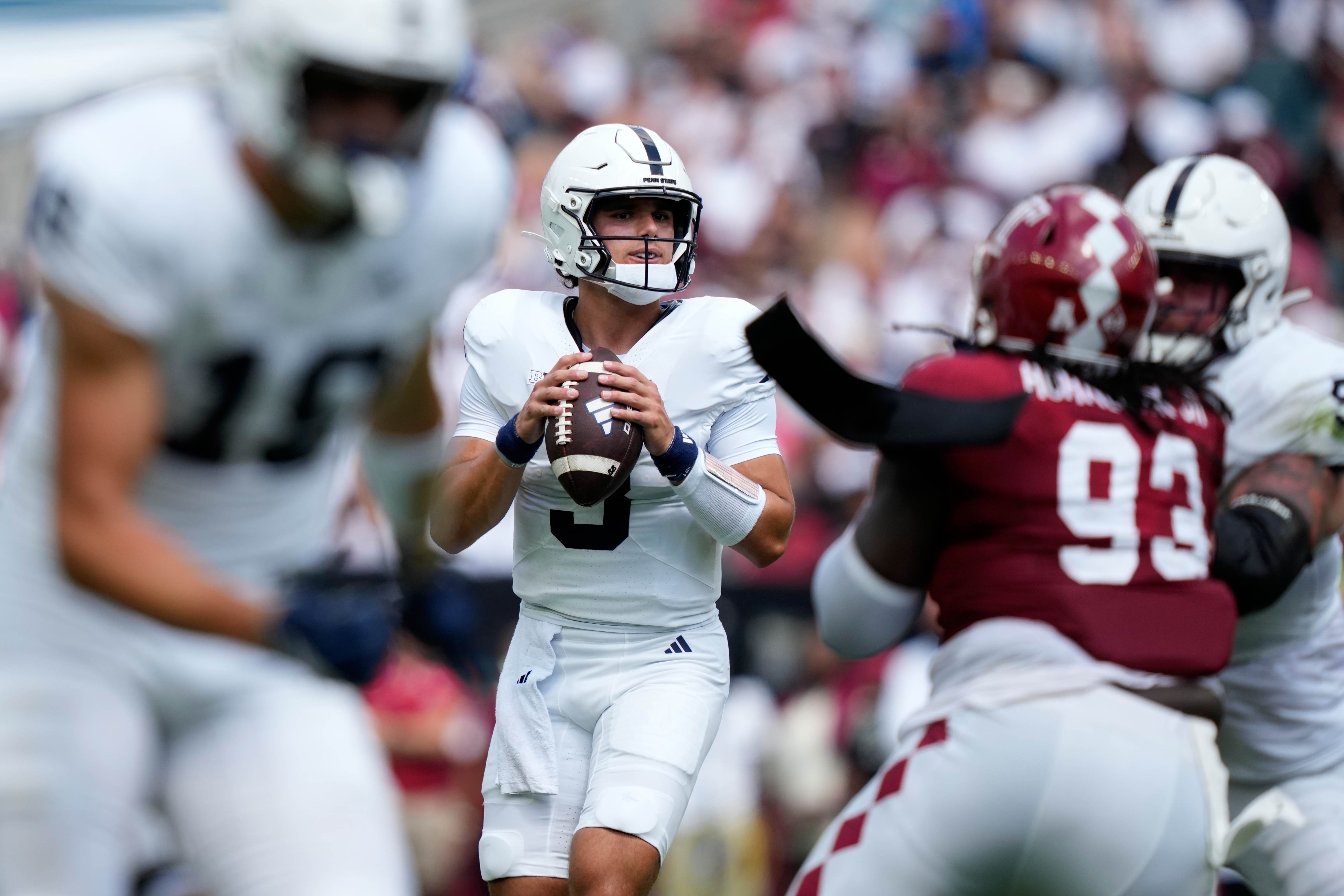
    Rocco Becht looks to pass against Temple on Saturday.Matt Slocum

    Like Ordonez, Hornbeak said he appreciates Smith’s approach to “attacking the offense.”

    “I love the four down [front alignment]. Love how much we blitz. It’s [an] amazing defense,” said Hornbeak, who had a sack in Temple’s season-opening win over Rhode Island. “When you got a coach that believes in you and wanting us to go attack the offense, you can’t ask for nothing better.”

    While Smith acknowledges there is still a long way to go the rest of the season, he’s pleased with how his defense has “handled adversity well,” and agreed with Keeler’s sentiment earlier this week of the defense having a “more talented group.”

    The defense is playing with more confidence and an edge compared to last season. The defensive coordinator credits the “tough-minded” makeup of Temple’s players, especially on defense for the improvement year over year. They’ll need it to carry over once American Conference play opens up in a few weeks in the program’s quest for bowl eligibility for the first time in seven seasons.

    “This is home for me,” Smith said. “We got a different group of kids here. It was a lot of Texas kids and West Coast kids that I had at Rice. Here, we’re a little more gritty … [with players from] Philadelphia, New Jersey, Maryland. So I love the grittiness that our team has.”

    Added Karriem: “I was in just a different mental space being away for so long, and coming home and just allowed me to enjoy the game again. … I don’t feel like I’m coming to work every day. I know I’m going to work, but I’m having fun at work.”

  • Matt Campbell and K.C. Keeler meet for the first time as head coaches. They once took part in a historic playoff game.

    Matt Campbell and K.C. Keeler meet for the first time as head coaches. They once took part in a historic playoff game.

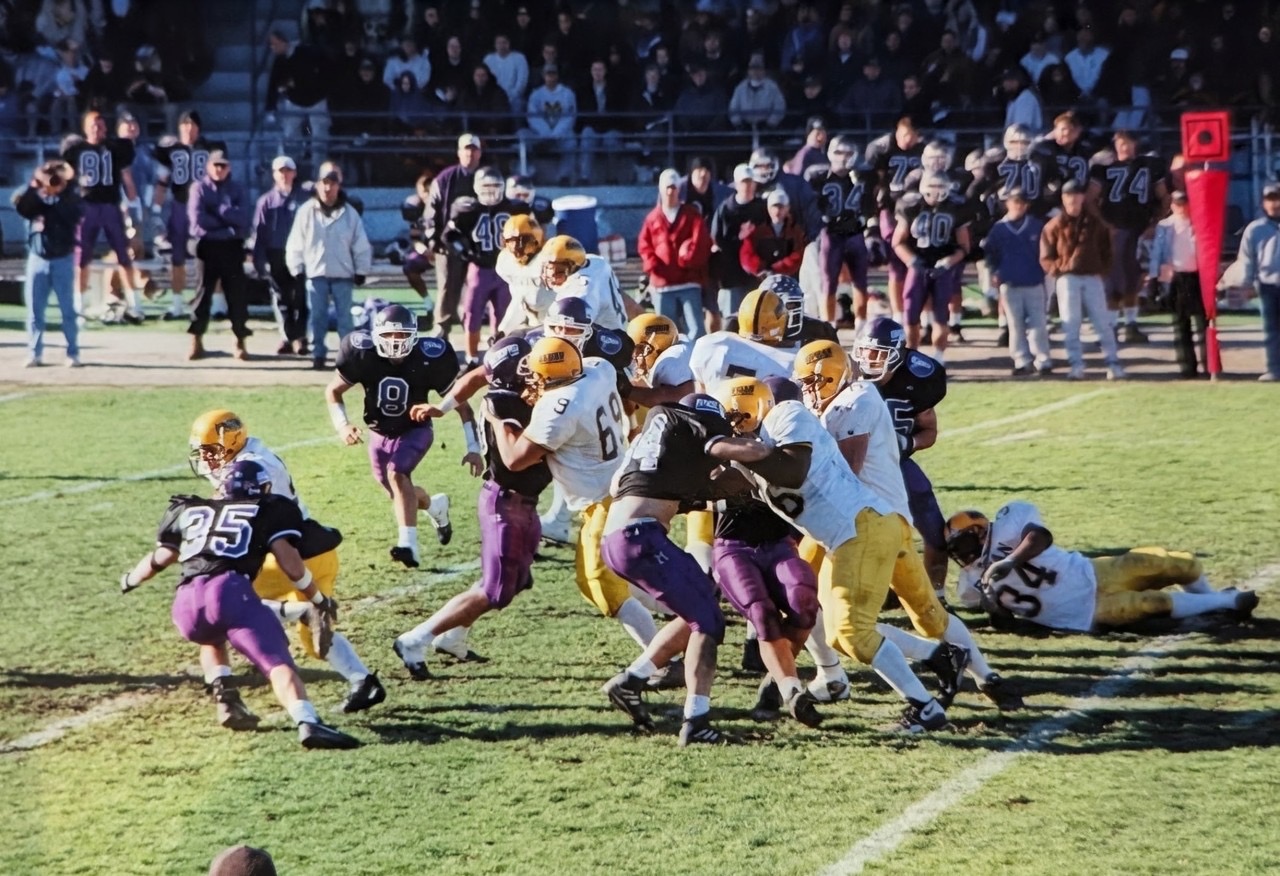
    Mount Union was facing a fourth-and-5 in overtime, trailing 24-17 in a Division III playoff semifinal on Dec. 11, 1999. The Purple Raiders, down to their last play, held a 54-game winning streak, then the longest in any division of football, and sought a fourth straight trip to the D-III title game, named the Stagg Bowl.

    Twenty-seven years later, K.C. Keeler still can see the play crystal-clear. Back then, he was Rowan’s head football coach, seeking his fourth title game appearance since becoming a 32-year-old head coach in 1993. And on this day, after losing to Mount Union in the championship game twice in the previous three years, something special was about to unfold for the Profs.

    “I remember the last play of the game, [Mount Union was] going to try to tie it up on fourth down, and they had a tight end, I believe it was, over the middle of the field, in the end zone, and the ball’s thrown,” Keeler, now Temple’s coach, recalled to The Inquirer. “I see the tight end go up in the air, and it looks like he’s going to come down with it. And Mark Hendricks, my middle linebacker, who was a two-time captain for me, he turns and runs and actually hits the tight end so hard he broke his ribs. And the ball comes squirting out, and he’s laying there, and we’re celebrating over top of him.

    “My 398th game [is] coming up here. … That was definitely one of those where you remember for a lifetime.”

    On the surface, Penn State head coach Matt Campbell, from Massillon, Ohio, and Keeler, from Emmaus, Pa., don’t share many commonalities beyond coaching in the same state ahead of their matchup on Saturday (noon, ESPN2). As it turns out, though, the 46-year-old Campbell, a former standout college defensive end turned coach, was not only on that Mount Union team in 1999, but on the field toward the end of the game.

    At a coaching clinic this winter, not long after Campbell became Penn State’s 17th football coach, Keeler says his counterpart had one thing on his mind to bring up after formally meeting.

    “First thing that comes out of [Campbell’s mouth], he goes, ‘I’m 1-1 against you.’ I’m like, ‘What do you mean you’re 1-1? You’re 0-1,’” Keeler says. “He goes, ‘No, I was a [graduate assistant] on the team that beat you then a couple years later.’

    “It’s like, ‘OK, we’ll give you that one.’ So he and Nick Sirianni were both on that team [in 1999], and I’ve had some fun with them on having that one up on them, for sure.”

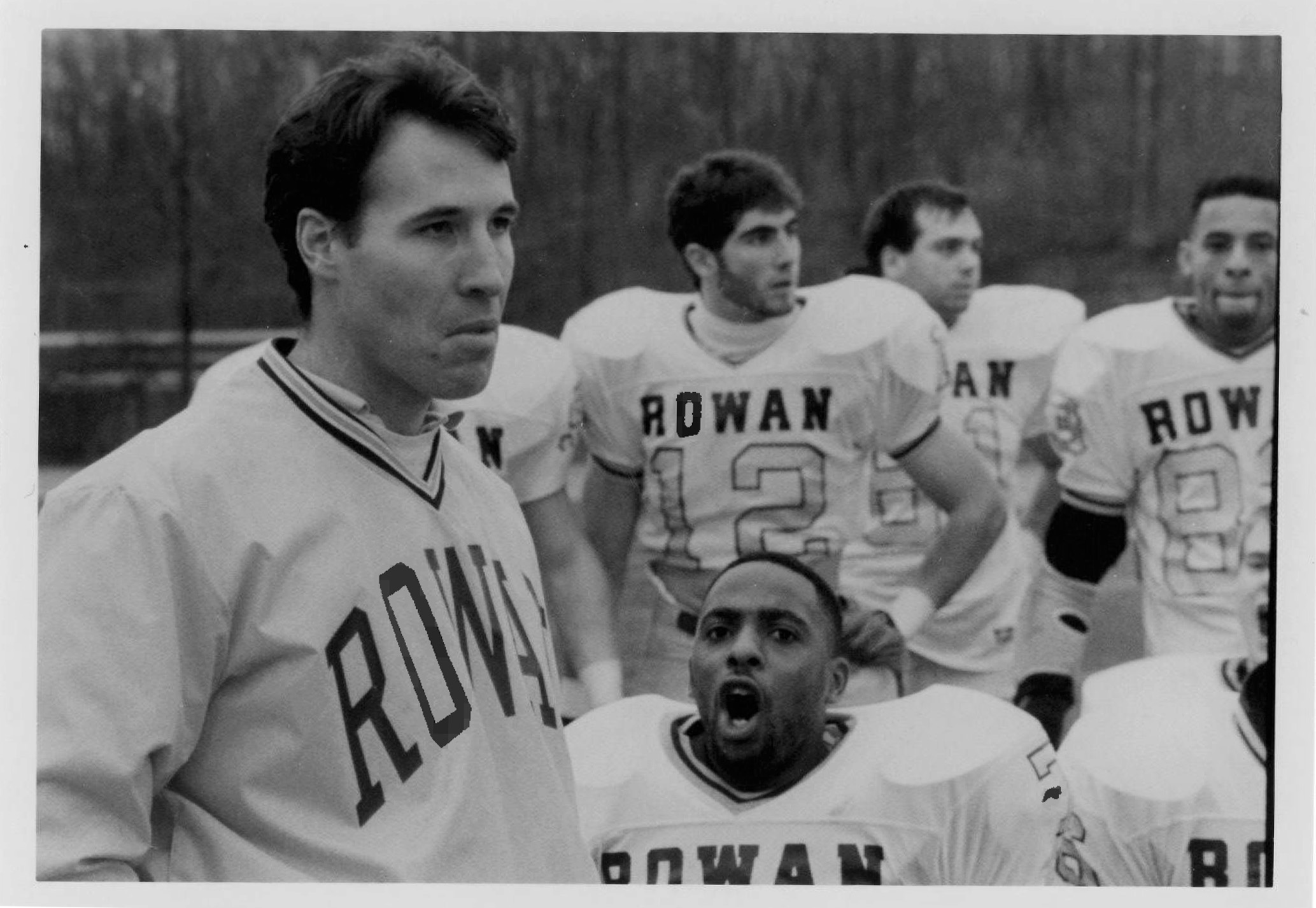
    K.C. Keeler was Rowan’s football coach from 1993 to 2001.Rowan University Athletics

    Campbell, who quipped, “You’re kind of coming at me, huh?” when The Inquirer asked about that 1999 game against Rowan earlier this week, still harbors feelings over the only loss in his college career at Mount Union.

    “In that game, as a football player [who] won three national championships, and at that time, that was almost the spark for our program, to be quite honest with you,” Campbell said from his podium on Tuesday. “I was in on the last play, as the game ended, and that was tough.

    “I think for me, that was a great opportunity for me to learn what the standard of excellence was in the program at Mount Union losing that football game, and what it meant to never have that feeling again.”

    ‘Got over the hump’

    That 1999 game comes into focus as Keeler, now in his 33rd season as a head coach, will host in-state rival Penn State this weekend. It will mark the 46th meeting all-time between the programs.

    And the significance of Rowan’s win still reverberates with some of Keeler’s former players almost three decades later.

    Bobby Acosta, who played for Keeler at Rowan as a safety, lost his father as a freshman and left school without telling his coach. He later changed his mind, but the only way back on the football team, Keeler told him, was if Acosta “got a 4.0 [GPA] and passed 18 credit hours in the summer.”

    “I said to myself, ‘There’s no way I can do that,’ and I did it. And that’s where my life changed,” said Acosta, who now coaches high school football in Texas. “I was a young man. K.C. was like my dad. Ever since that point, I played for him. Then I worked for him at Rowan. Then I worked for him at Delaware with Joe Flacco.

    “He’s been a mentor to me for a lot of years. It was to the point I was babysitting his kids when I was in college. K.C. Keeler to me was someone that I looked up to.”

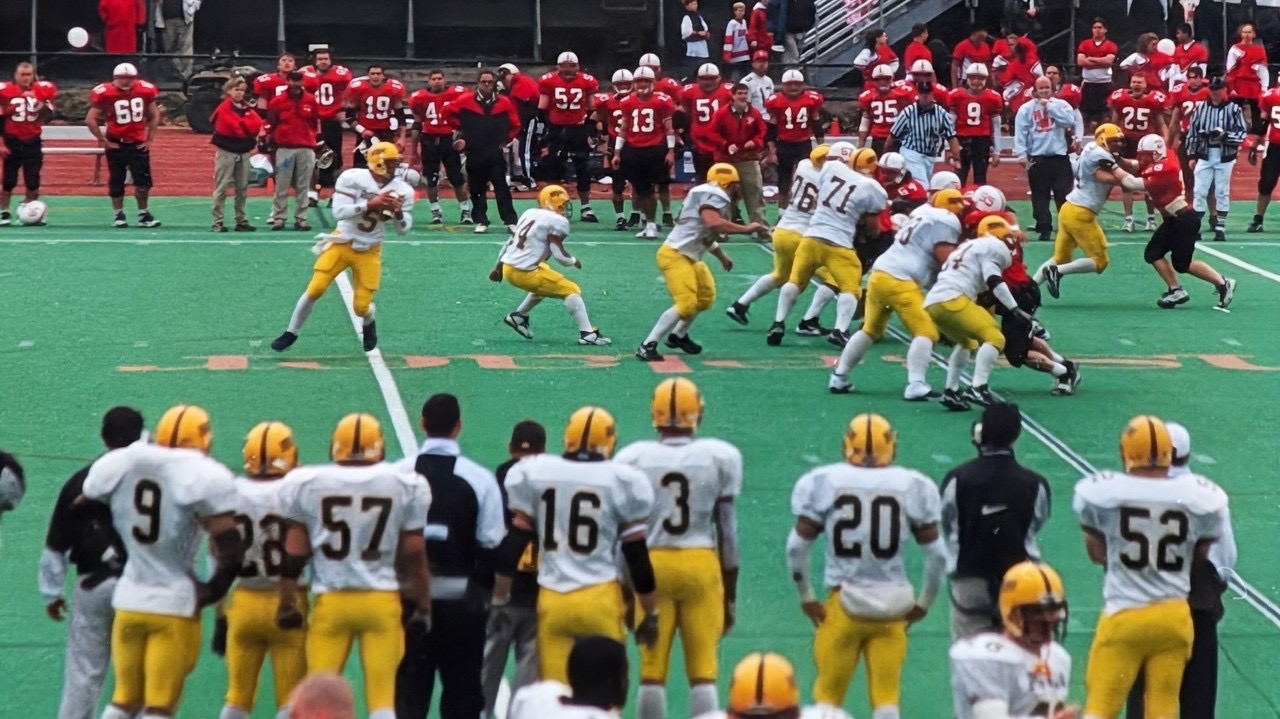
    Rowan faces Rensselaer Polytechnic Institute during a playoff game in 1999.Courtesy of Greg Gudis

    Greg Gudis, who was the starting left guard for Rowan during the 1999 season, took a different route to the program. He initially chose Gettysburg College out of Pennsauken High School, started as a freshman, but noticed the program “didn’t really prioritize” football.

    So Gudis transferred to Rowan, formerly named Glassboro State, in 1998, located “right in my backyard,” he said. The former offensive lineman appreciated that Keeler was honest and did not guarantee him a starting spot.

    “When I got to Rowan, the level of talent was so much higher than where I just come from,” said Gudis, who now resides in Arizona. “Some of the guys I played against that maybe should have been [playing at the Division I level]. It was a much different level of play, and Coach Keeler was a much different level of coach than where I had just come from.”

    Two things remained elusive for Keeler heading into Rowan’s 1999 season: Beating Mount Union and winning a Stagg Bowl, both of which he went winless three times prior.

    The 67-year-old coach, leading up to Rowan’s playoff matchup with Mount Union, made sure to keep newspaper clippings out of the locker room, Gudis said. Acosta added that the more than six-hour trip to Alliance, Ohio, where Mount Union was located, had the team “already down 20 points mentally,” but their mindset was “we have everything to gain and nothing to lose at their home place.”

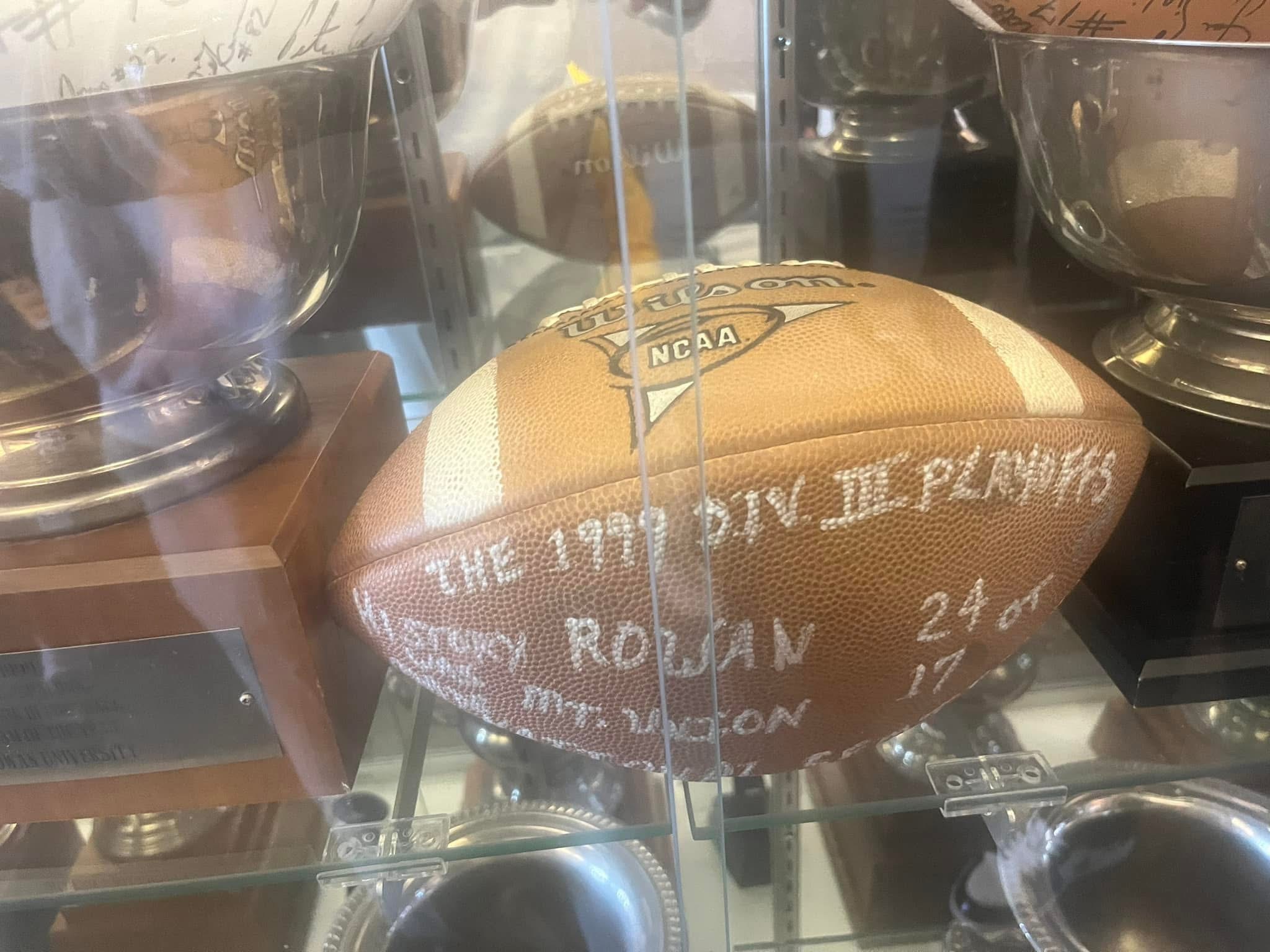
    A football in Rowan’s trophy case from their win over Mount Union in 1999.Courtesy of Bobby Acosta

    And it worked. Though Rowan lost to Pacific Lutheran the following week in the Stagg Bowl, that win over Mount Union was “our national championship that day,” Acosta said.

    “You almost wanted to win for Coach Keeler because number one, you respect him as a great coach, but number two, it’s like this guy knows nothing but losing [to] Mount Union,” Gudis said. ”And it was like, ‘Wow, I’m sure we probably finally brought some closure to that book for him to say I got over the hump.’”

    Added Keeler: “My wife always says that life’s about the moments, and one of my messages is always be in the moment, and that very much was the message when we played Mount Union. … Just keep on playing to the very end, and when you have really good teams, that’s what they do.”

    ‘A special place’

    When Penn State and Temple play at the Linc for the first time since 2015, which ended in a historic win for the Owls that springboarded an unbelievable two-year run, Keeler will be thinking of the teams that came before him. There’s a reminder every day of that 2015 game in the program’s facilities. The four team captains from the 2016 American Conference champion team will be recognized on Saturday.

    He also recognizes the challenge that lies ahead. Penn State, Keeler believes, has a chance to be a top 10 team, similar to Oklahoma last year, another Power Four team who came to the Linc to play Temple. Keeler added that Campbell will “do amazing things” during his time at Penn State.

    The respect is reciprocal.

    Matt Campbell (left) has a long history with K.C. Keeler, and Penn State athletic director Pat Kraft was previously Temple’s AD.Barry Reeger

    “[I have] a lot of respect for Coach Keeler, what he did [at Rowan], what that team was about,” Campbell said. “It was a physical football game [in 1999], and similar to what you expect to see on Saturday, a physical, well-coached football team that has done a great job putting any program he’s been at in a position to play great football.”

    While Campbell tips his cap to Keeler’s career success, including winning FCS national championships at Delaware and Sam Houston State, the Temple coach credits his first head coaching gig being at the core of it all.

    “Those years formed who I am now as a coach,” Keeler said. “[We] had a team meeting to go to before I left [for Delaware in 2002] and I walked into that team meeting, I get a standing ovation and at that point I realized because I had talked about my Delaware experiences so much that those guys knew that they got me that job and they were proud that they got me that job and then I realized for the first time, ‘Oh my God!’ I’m leaving a group of kids that were OK with me leaving because it was my dream job.

    “Rowan was a special place. They gave me an opportunity, they took a chance on me … obviously things worked out pretty well there.”

  • Sixers’ Jaylen Brown channels outer space with his new signature shoes that are ‘NOT from HERE’

    Sixers’ Jaylen Brown channels outer space with his new signature shoes that are ‘NOT from HERE’

    About a year ago, Jaylen Brown and Que Gaskins were searching for creative teams to help Brown’s brand, 741 Performance, launch what they called its “second album” — a sneaker rollout named “NOT from HERE.”

    Longtime sneaker designers Sean O’Shea and Geoff Deas, whose resumés include brands like Nike, Adidas, Puma, Converse, and Anta Sports, were among the candidates. O’Shea and Deas were Anta’s general manager and creative director, respectively, and key figures in launching the China-based brand in the U.S. They offered their expertise to Brown’s brand.

    “That’s our major goal: How do we get [Brown] off the ground because there aren’t that many players who have had their own brand,” O’Shea recently told The Inquirer. “So I think that’s where we came in. That’s our biggest focus. … Not that we don’t want to get paid, but it’s way more important, from our point of view, that it gets off the ground and becomes successful and is a competitor with some of the big guys.”

    New world order

    As Brown, who was traded to the Sixers in July, and Gaskins, the CEO of 741 Performance, approached the brand’s second sneaker rollout, they wanted to push “the status quo and challenge different traditions and standards and boundaries” of the sneaker industry.

    The shoe will come in three colorways, which Gaskins calls “worlds”: black, gray, and red.

    The “NOT from HERE” collection will also include clothing, a “performance recovery shoe” that can serve as a lifestyle sneaker, and a “recovery slide” to wear after workouts. The brand plans to add more colorways and potentially a running shoe next spring.

    Brown already has immersed himself in Philly, but the “NOT from HERE” collection has taken on a new meaning after his decade-long run in Boston.

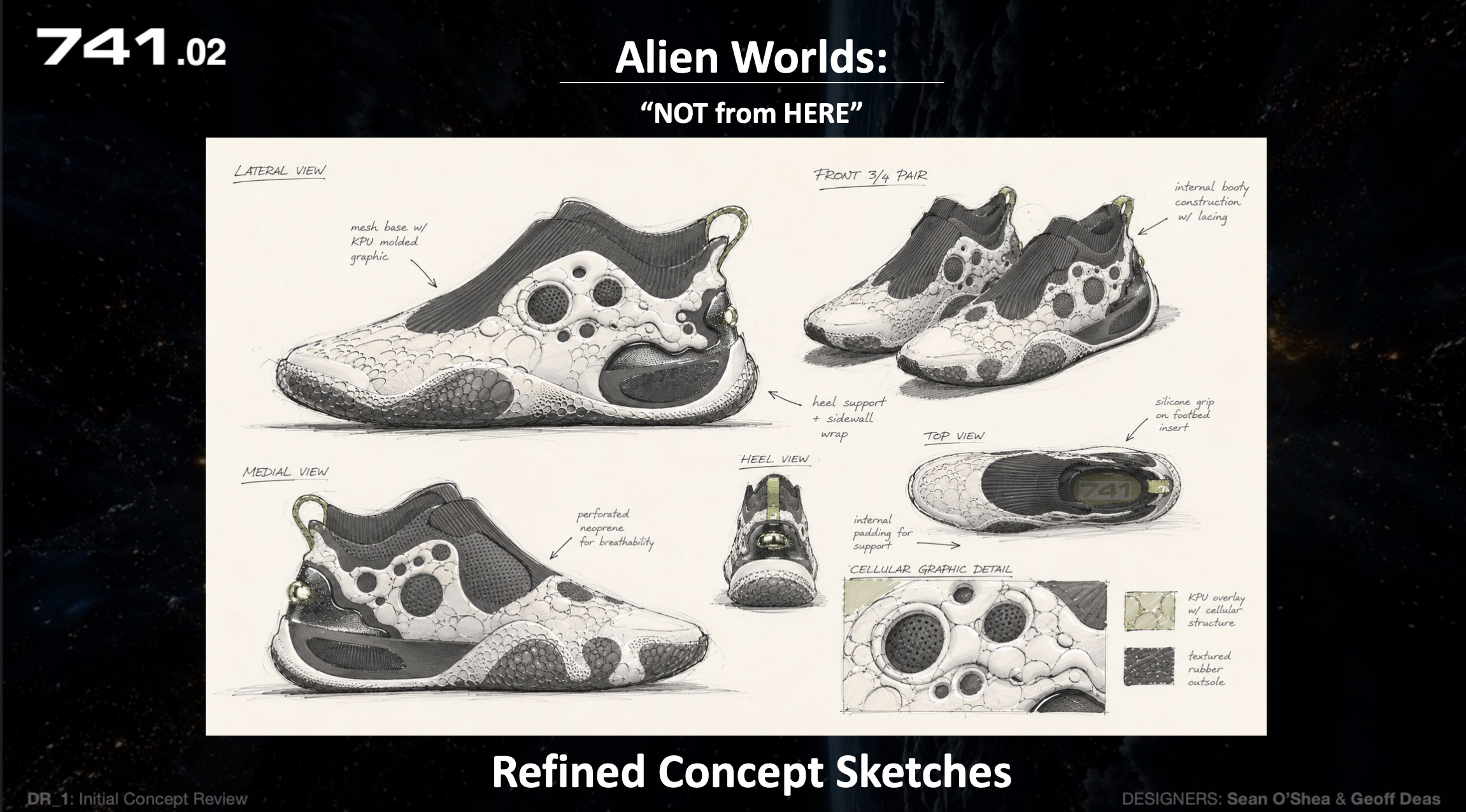
    Detailed look of Jaylen Brown’s new shoes via his 741 Performance brand.Courtesy of Geoff Deas and Sean O'Shea

    “I think him understanding, ‘I want to be able to open up young people’s minds and have them think about even places that they’re not even aware of.’ I think all of that symbolism, all of that energy, all of that frequency is a part of what we’ve been trying to build,” Gaskins said. “Even the idea of this album being called ‘NOT from HERE’ and how it’s played out now because he’s even playing on the [Sixers] when this product will launch in Philly, where he’s not from.

    “Now, being in a new market … and being able to tell that story is ultimately what we were trying to do with this project and with this collection.”

    Gaskins will have a large hand in helping Brown’s brand compete in the industry. He is no stranger to the sneaker business or Philadelphia athletes. He played a key role in Allen Iverson landing at Reebok 30 years ago. Gaskins was responsible for the “Iverson business,” and the RBK division of the brand, he says. He also served in several leadership roles in the National Basketball Players Association, where he met Brown in 2017. He helped advise Brown when he was weighing sneaker deal options before creating his own in 2024 and has been the CEO of 741 Performance since March 2025.

    “I really think [Brown’s] trying to build something bigger that’s really representative of the work I’ve always done,” Gaskins said. “Even with the work I did with Allen and the cultural impact that he was having on the world — I’ve always felt like these guys had great power, great influence, and I think someone like Jaylen understands that.

    “What Jaylen is building, I think it’s bigger than just a shoe company. If I’m being honest, I think he’s really trying to create a new reference standard for how athletes can take ownership.”

    Jaylen Brown (left) wearing his 741 Rover signature shoes during the playoffs last season for Boston.Charles Krupa

    Brown released his debut sneaker, the Rover 741, in 2024. But Gaskins, who calls himself Brown’s “sous chef,” didn’t want to “stall or hurt or hinder” the progress of the brand by sticking with the same designers on every new project. Gaskins noted that Brown “had this ability to connect with a lot of types of different people, a lot of types of creators.”

    That’s where O’Shea and Deas come in. They have taken over production of Brown’s debut shoe along with “all the design, apparel, footwear, everything for the second [shoe rollout].”

    “If this was the music industry, we weren’t just making music. We were doing everything that like a Capitol Records or somebody [like that] was trying to do also,” O’Shea said. “So it’s like we were printing albums. We’re trying to do all of it. That’s the cool thing about Jaylen and what he’s trying to do is he wants to make sure he owns, or at least understands, all of it.”

    Deas estimates the newest shoe is “about 90% there right now,” with some adjustments still to come, including a drop-in footbed to account for basketball players who use orthotics in their shoes.

    The planned initial release of the shoe to retailers is late November, but O’Shea says Brown “will be ready to go to play in it” by Sixers media day on Sept. 28. The shoe will make its regular-season debut in the team’s opener against the Knicks on Oct. 20 (7 p.m., NBC10).

    Inside the shoe details

    The design and model for the “NOT from HERE” shoe is based on Brown’s love for outer space, says Gaskins. After getting acclimated to Brown’s vision, O’Shea and Deas worked on creating and executing a design “with the limited innovations and materials and technologies we have here.”

    A sketch rendering of Jaylen Brown’s new shoes, “NOT from HERE,” shoes, designed by Geoff Deas and Sean O’Shea.Courtesy of Geoff Deas and Sean O'Shea

    “We’re trying to mirror, I think, the vision of the growth of his brand. So the [741 Rover], the first shoe … it’s like from Earth to the journey to getting out there and just like his brand, the exploration of it,” O’Shea said. “The design language is very human design language, the way it’s engineered. And then we took that and we said, ‘Hey, from there, let’s do it as if you’re out there and now you’re in this open space.’

    “It’s more about what’s out there [in space]. Even the design language is as if it was made in space and organically. There’s no human lines on it. It’s like it almost the technology grew symbiotically. It’s technology meets something that’s really not from here.”

    Added Deas: “[We were] just building out the inspiration boards and trying to see what kind of organic shapes can mash together — like if a spaceship went through space and it was catching some sort of creature.”

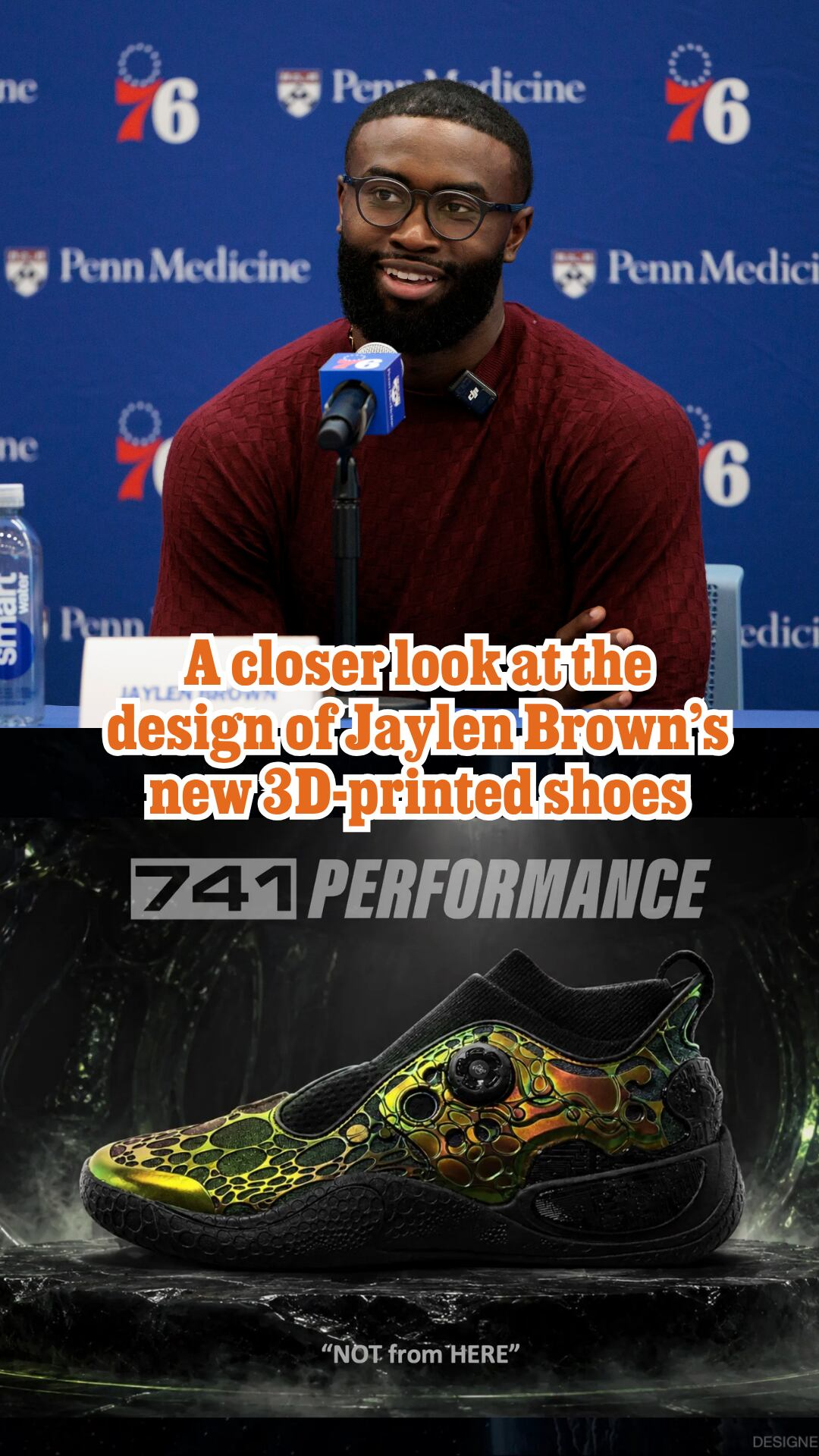
    The low top shoe’s design in the black colorway mimics “technology circuit boards” on the upper part with a green underlay to “lean into that metallic, iridescent finish” of the prototype to lean into the space theme with a midsole “popping out and [that] locks [the shoe] in place” to ensure Brown’s feet don’t slide while he’s playing.

    A closer look at the design of Jaylen Brown's new 3D-printed shoes
    Video: A closer look at the design of Jaylen Brown’s new 3D-printed shoes

    The laces are hidden because the pair are hoping to add a boa system for the shoe, which is an adjustable dial to make the shoe tighter around an ankle. Gaskins said the boa system, which is uncommon in basketball sneakers, likely won’t be in the first wave of the shoe’s release — but hopes to provide it “later in the year, maybe for a playoff run.”

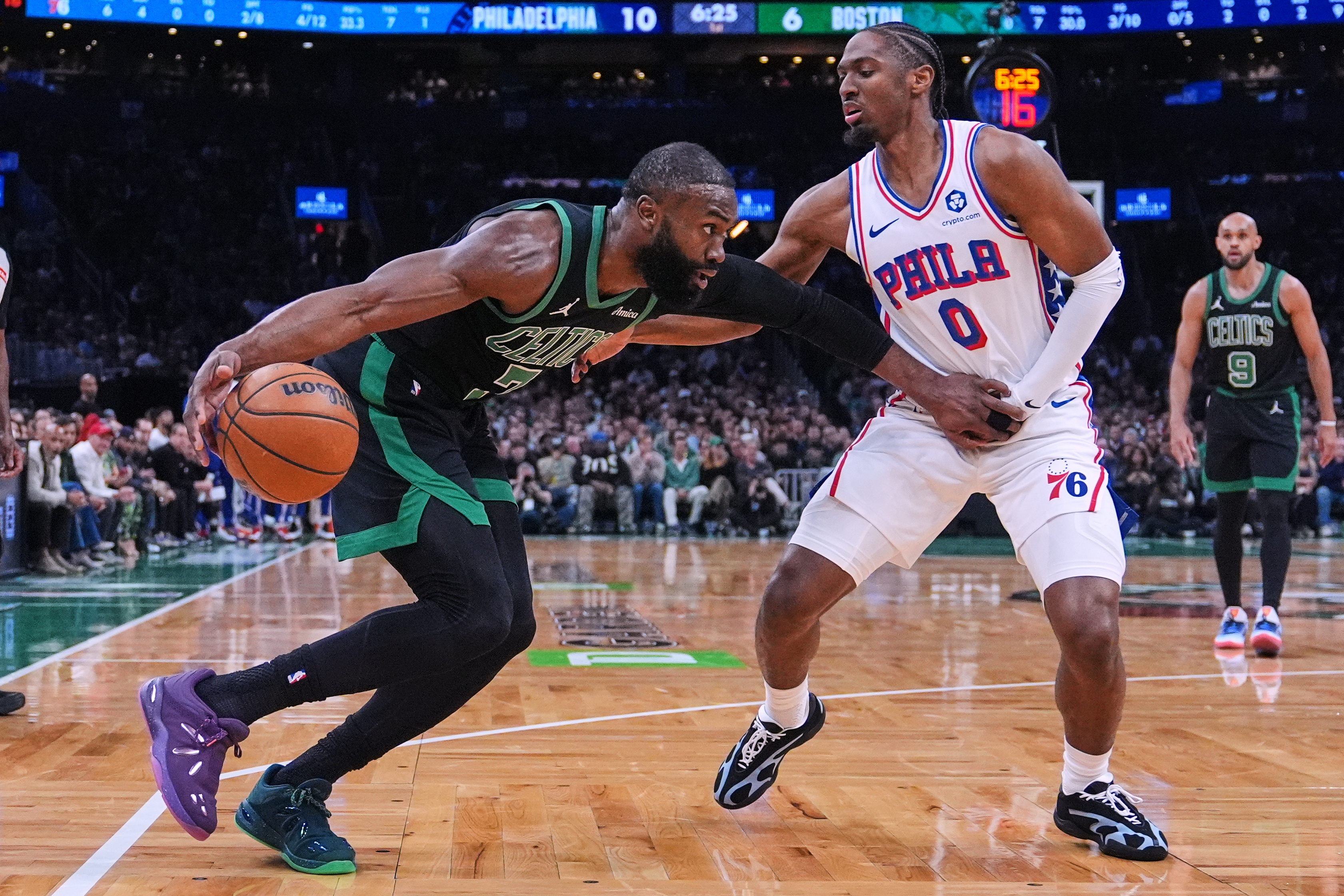
    Brown has played in the new sneakers and posted them on Instagram, including during the viral workout video with new teammates LeBron James and Tyrese Maxey. Because the shoe is a prototype, Brown is using this time to test it during workouts and other events he’s participated in this summer. The feedback, said Deas and O’Shea, “was pretty immediate,” and O’Shea added that Brown is “very, very involved.”

    “We really wanted to get in there and think for him almost so that creatively,” O’Shea said, “we could produce stuff that really encompasses his vision and where he wants to go with the brand and creatively, how he connects to the kids.”