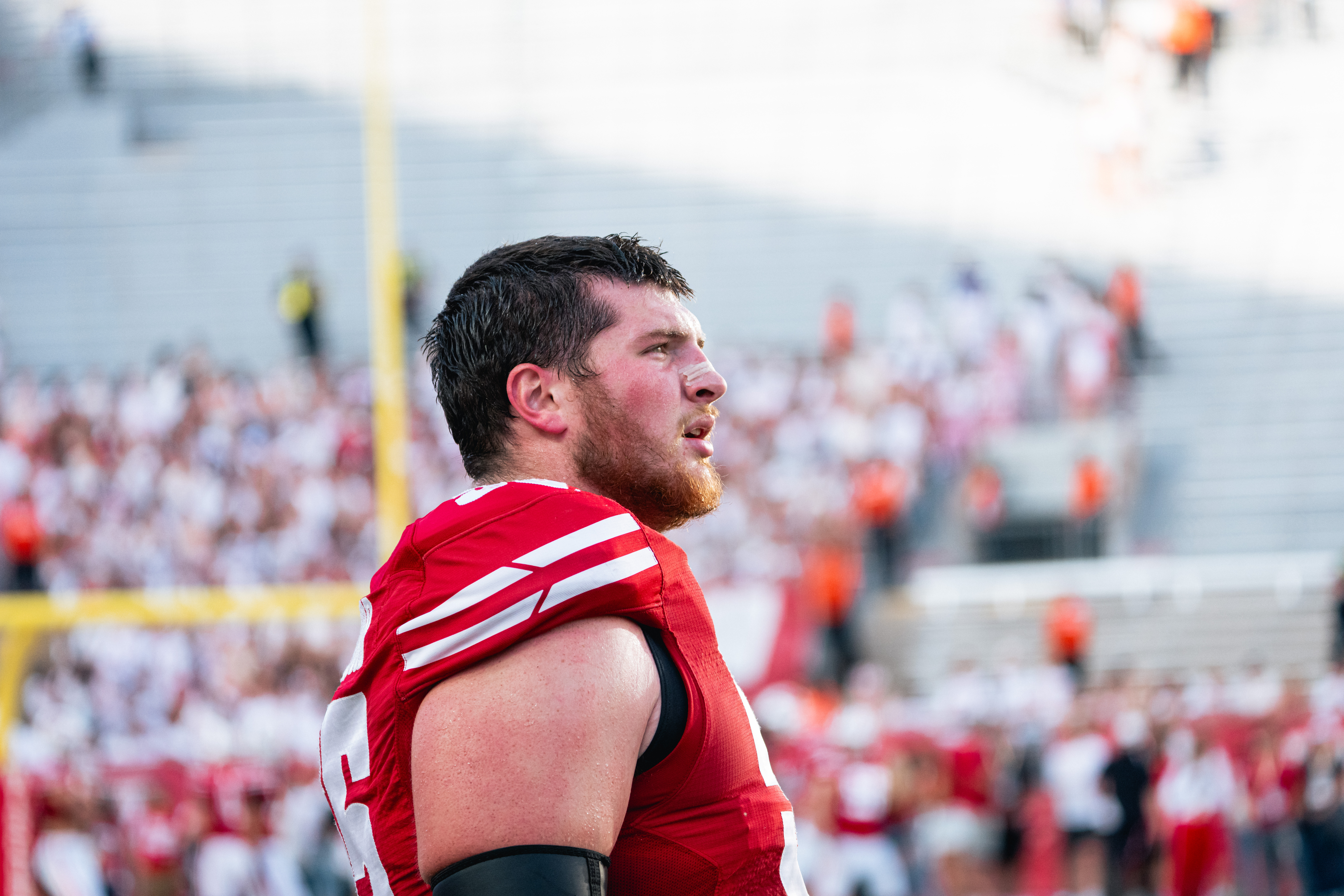
MADISON, Wis. — Kevin Heywood ran onto the field, in a stadium filled with fans donning the blue and green of Notre Dame and the white and red of Wisconsin. For the second time in school history, the Wisconsin Badgers made the two-plus hour trip to face Notre Dame on Sept. 6 at Lambeau Field, home of the Green Bay Packers for the last 69 years.
Nearly three weeks since the junior made his first collegiate start at right tackle for Wisconsin, the Pope John Paul II graduate, who stands at 6-foot-9, 320 pounds, looked beyond the Camp Randall Stadium stands after Tuesday’s practice with the vivid memory he’ll keep with him for a while.
“It was crazy,” Heywood told The Inquirer, as he shook his head in disbelief of the experience. “It was really cool. Just running out, look up. It’s just like 50/50 [between the two fan bases] in the stands. … Wish [we] came out with the dub, but learned a lot from that game, [grew] from that game, and just got to keep rolling.”
Rolling from Lambeau Field to now Beaver Stadium, in fact. Wisconsin (2-1) opens Big Ten play three hours west of his hometown Royersford, in a place he knows well. Penn State runs in the family.
His older sister, Claire, graduated from Penn State in May, and Heywood had deeps ties with the program when James Franklin was still the head coach. Deion Barnes, the North Philly native who was the D-line coach at Penn State and now coaches at South Carolina, was Heywood’s former trainer and developed a close relationship with the lineman.
But Heywood ultimately chose Wisconsin, and his journey will come full circle for Saturday’s game at Beaver Stadium (5 p.m., Peacock).
“Just being a kid from Pa., going on a bunch of visits [at Penn State] in high school, it was cool,” Heywood said. “I think it’s a really cool atmosphere for us to play in and [it’ll] be a fun environment for sure.”
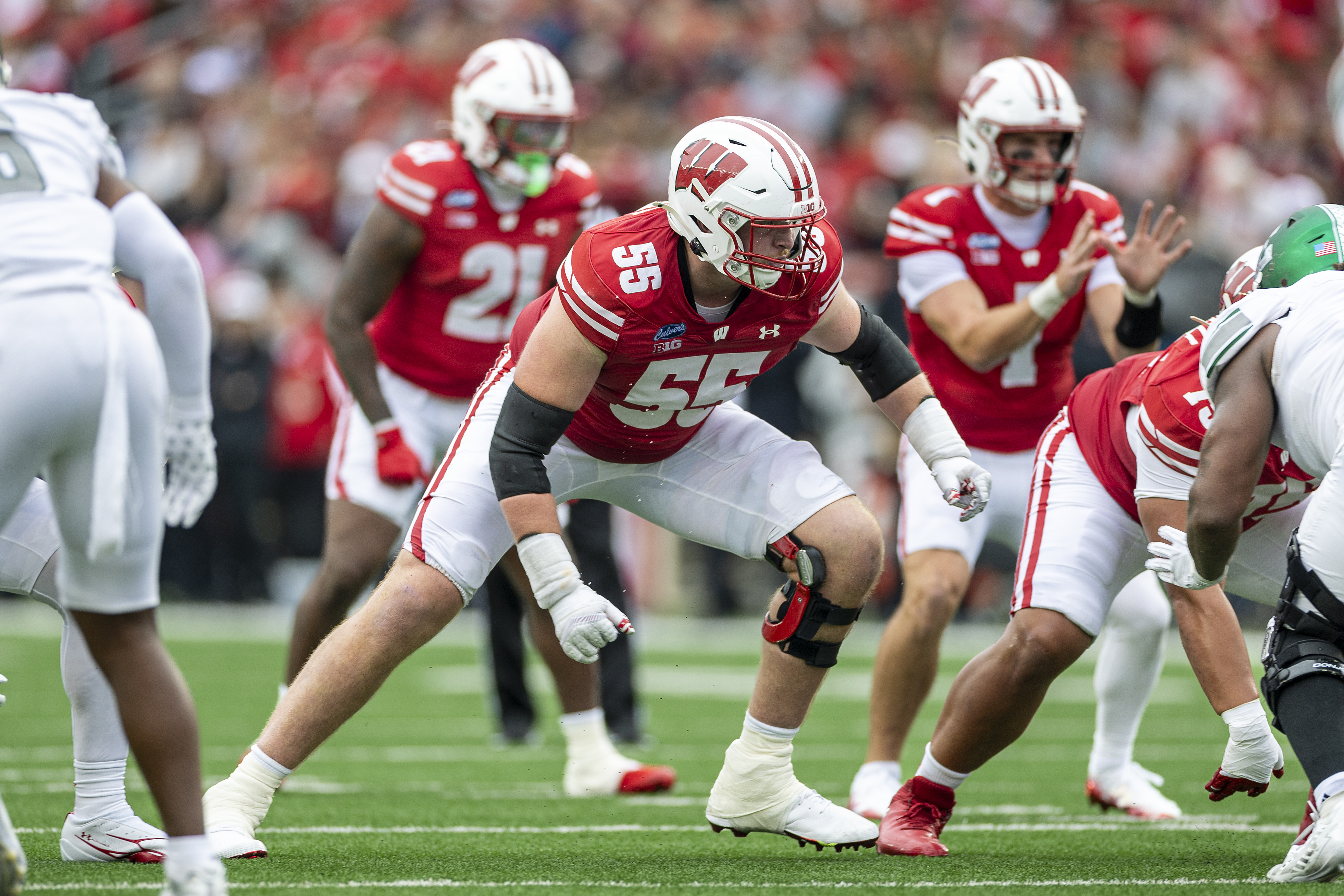
Wisconsin offensive lineman Kevin Heywood blocks against Eastern Michigan on Sept. 19.Courtesy of Wisconsin Athletics
Bouncing back from injuries
Getting to this point wasn’t always as clear-cut. Heywood early enrolled at Wisconsin in 2024 and mostly played on special teams as a freshman.
Last year, heading into his sophomore season as a projected starter at left tackle, Heywood tore the anterior cruciate ligament in his knee during spring practice, ending his 2025 season.
Heywood returned this spring and once again went into this season as a projected starter, but the setbacks continued when he got injured on the second day of fall camp. His starting debut against Notre Dame seemed in doubt, but he was cleared to play a few days before the season opener.
“I’m so proud of how he’s buckled down and fought through the adversity of all the injuries,” said his father Erik Dougherty. “He’s taking everything and [running] with it. We put a lot of stuff in front of him, had him with a lot of people to get him to where he’s at now, but he utilized all those people — and it’s just awesome.”
Added Heywood: “I think the trainers and the strength staff made it very easy. If you’re motivated to come back, you got every tool, every resource to do to get healthy. And I feel better than I did before.”
As he battled his ailments, Heywood also had to endure a coaching change at offensive line. Eric Mateos, who previously coached at Arkansas, was hired last winter to be the new Wisconsin offensive line coach.
The Royersford native says Mateos has taught him to “never be satisfied” and appreciates how “hard he is on us.”
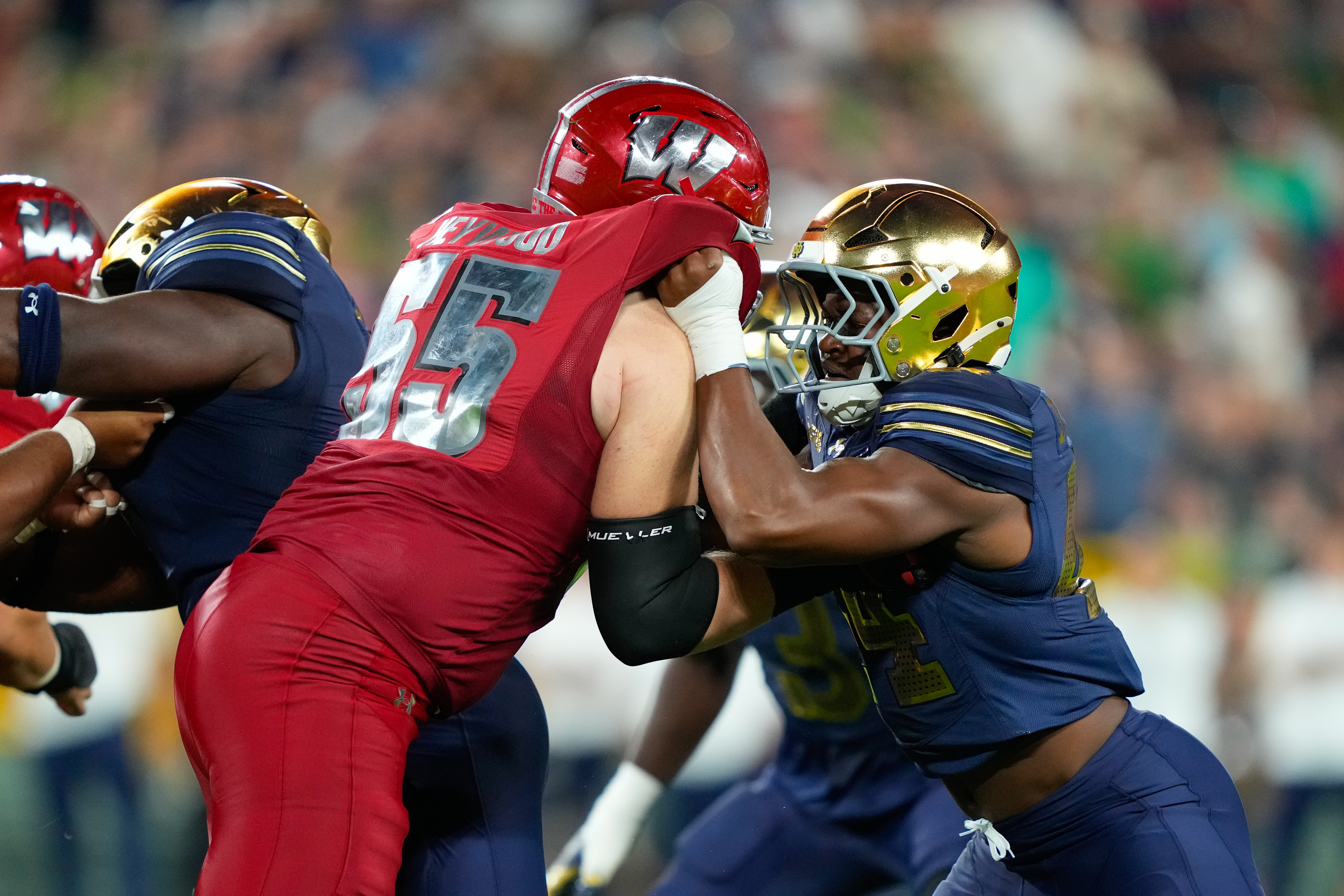
Notre Dame defensive lineman Rodney Dunham (44) against Wisconsin offensive lineman Kevin Heywood (55) on Sept. 6.Kayla Wolf
“He’s pushing everyone in a different way every day,” Heywood said. “There’s always time to clean up on a rep. It’s never going to be perfect. Even when you win a game, you still have to correct yourself and be better and be very hard on yourself.”
Facing the wall
Every time Heywood walks into the team meeting room, he sees the faces of the past Wisconsin All-American linemen. From Joe Thomas to Ryan Ramczyk to Tyler Biadasz, Heywood is reminded of the standard set before him to play on the offensive line.
Thomas and former Rams tackle Rob Havenstein are among the former Badgers linemen who come through to visit, Heywood says.
“Starting is the start of all of it, so I got that down,” Heywood said. “Just got to keep working on my fundamentals and techniques. I have that nastiness. I just need to clean up everything around it, and I’ll be right there with them.”
Wisconsin offensive linemen:
PJ Wilkins, Colin Cubberly, Austin Kawecki, Emerson Mandell and Kevin Heywood taking part in the prestigious OL Masterminds this week #Badgerspic.twitter.com/BuUpKmdXCB
Heywood learned from other professionals, too, this summer. Heywood and four offensive linemen attended the OL Masterminds summit, which Eagles right tackle Lane Johnson is the cofounder of. Wisconsin’s starting center, Austin Kawecki, grew up in Frisco, Texas, where the summit is held, and hosted Heywood and his teammates after the sessions.
“I’d say the biggest thing I took away is just at the end of the day, it’s still a nasty game up front,” Heywood said, while noting he learned some techniques specifically from Johnson as a fellow right tackle. “You can be taught all the techniques in the world, but if you don’t have that edge to you, if you don’t have that nastiness, like, you’re never going to go where you want to go. And I think that’s the main thing I took from it.”
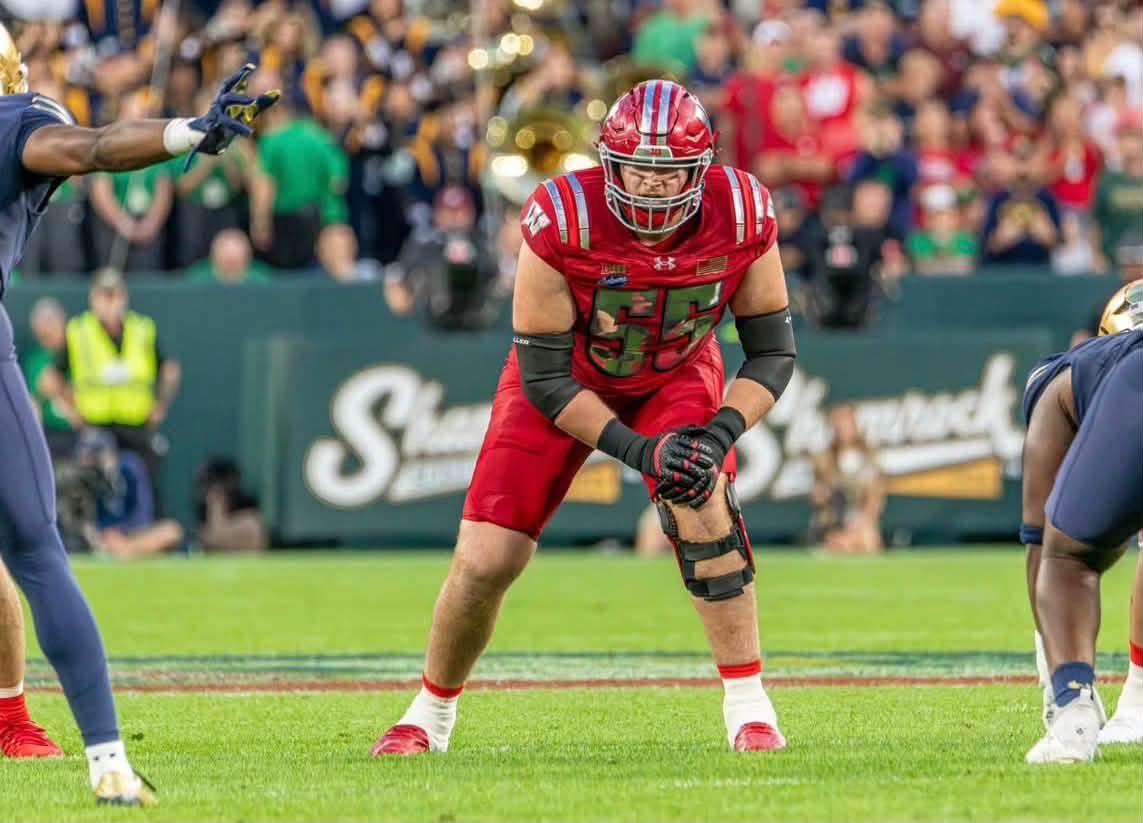
Kevin Heywood played at Lambeau Field for his first career start.Courtesy of Wisconsin Athletics
Doughtery and his wife, Amy, have attended every Wisconsin game so far this season, and will be in the stands on Saturday, along with Claire, and a few of Heywood’s friends from high school.
It is “nerve-racking” watching Heywood play at this level, Doughtery admits, but seeing his son’s dream come to fruition has “filled our hearts.”
“We just have to trust in everything that we instilled in him as a young kid, and he’s taken that and run with it,” Doughtery said. “It’s all him. We just sit back and watch how hard he’s worked and the things that he’s endured.
“He’s got his mind right and he’s focused on what his goals are, and we’re just extremely proud of him.”
The Eagles’ depth at tight end was tested early when Eli Stowers and Grant Calcaterra both landed on the injured list before the season began. Two weeks in, the Eagles now are also down starting tight end Dallas Goedert, who suffered a sprained medial collateral ligament in his right knee during Sunday’s win over the Titans.
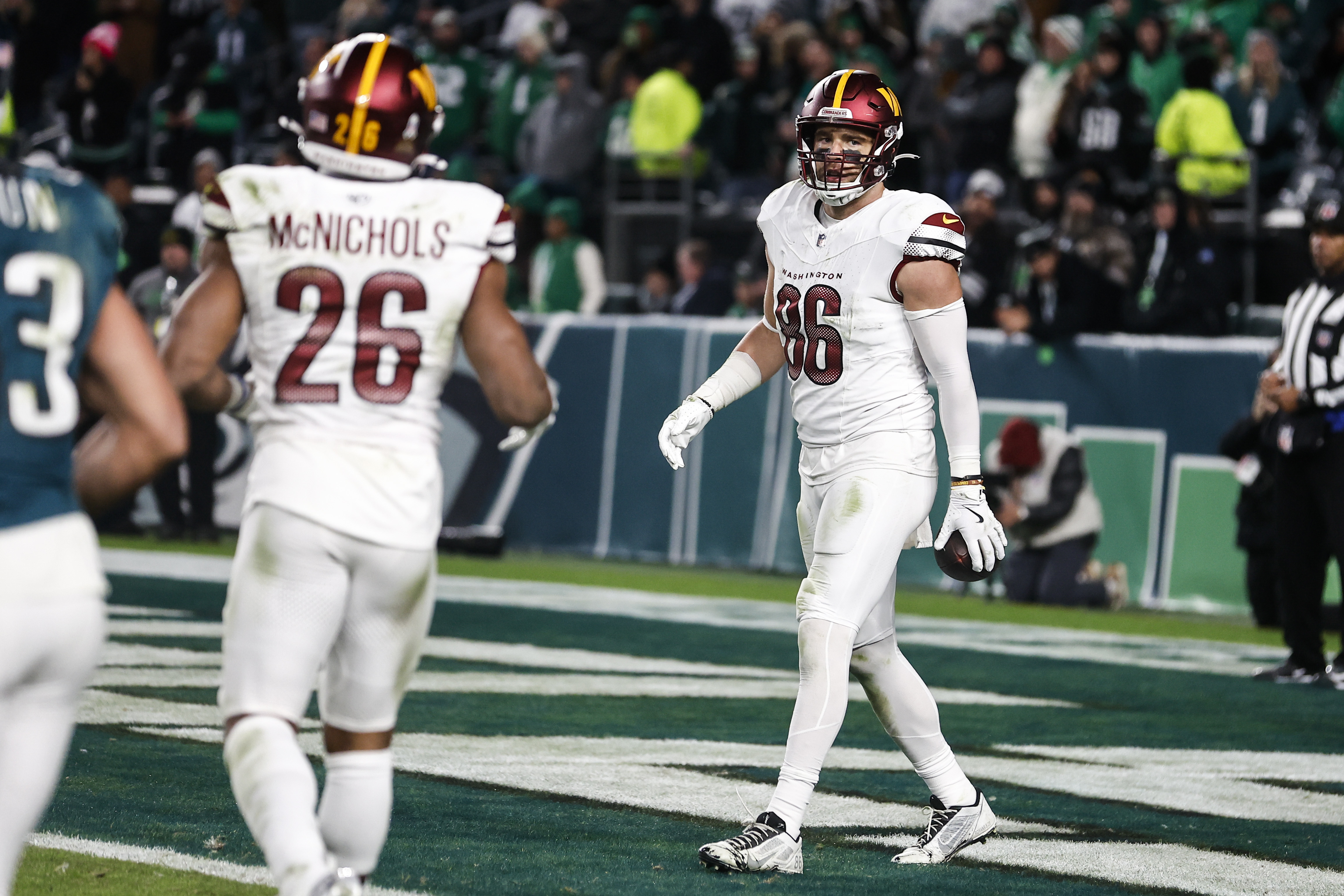
An old friend, Zach Ertz, reunited with the Eagles on Monday, signing with the team’s practice squad. Before suffering a season-ending injury last year, Ertz, in his age-35 season, finished with 50 catches for 504 yards and four touchdowns in 13 games for the Washington Commanders.
But does Ertz, who turns 36 in November, still have the skills to contribute in an offense that needs production from its tight ends? Here’s what his film over the last two years with the Commanders — and NFL history — says about Ertz, who is 11 receptions away from becoming the Eagles’ all-time leader.
Manning the middle
For the past 13 seasons, Ertz has thrived on targets over the middle of the field, including his last two seasons with the Commanders. According to Next Gen Stats, 90 of his 116 receptions and 919 of his 1,158 receiving yards over the last two years have come between the numbers.
A route the Eagles are familiar with is his in-breaking route that is somewhere between a slant and dig route, and often mirrors a running back angle route out of the backfield. Ertz sets up the route by widening his route to the outside and sharply cutting upfield at an angle, allowing him to break open vs. both man and zone coverage.
The route was especially effective in the red zone, where he scored all 11 of his receiving touchdowns with Washington. On this specific angle route, he scored five of those touchdowns, including against the Eagles in their Week 11 matchup in 2024.
Most common route I saw from Zach Ertz's film the last 2 years is this TE angle/in-breaking route that's in between a dig and slant route. Often when he's isolated on a linebacker or safety, and uses his body to shield off defenders. pic.twitter.com/N2Cp6h2kcc
The big-bodied tight end (6-foot-5, 250 pounds) also thrived on traditional in-breaking routes, where he occupied the middle of the field, finding soft spots in zone coverage.
About a third of his production in Washington came from in-breaking routes: According to Next Gen Stats, Ertz finished with 385 yards on 37 catches on those routes over the last two seasons, including eight of his 11 touchdowns.
Over the last two years, Zach Ertz has had 385 of his receiving yards and 37 catches on in-breaking routes, per @NextGenStats. Was often relied on in such scenarios on third and fourth downs. Uses stair step technique in man coverage to create subtle separation at the top of… pic.twitter.com/OFM1wf0RTe
Though his speed to stretch the field vertically and athleticism to create after the catch are not what they were when he was last in an Eagles jersey in 2021, there is some route-running savvy he brings to his old team. Specifically, Ertz still showed the ability to break open on corner routes downfield, when matched up with safeties or linebackers.
He uses his size to outmuscle smaller defenders and creates bigger target areas to throw the football. He takes his corner routes a few steps toward the middle of the field and breaks out toward the sideline at a sharp angle to allow the quarterback to throw him open. When he generated big gains over the last two years, they specifically came on those corner routes.
Zach Ertz still showed some really good tempo on corner routes with the Commanders. Not going to be a substantial vertical or seam threat for the #Eagles but knows how to create more space with how he stems and sticks these routes. pic.twitter.com/l0GHNASx7O
While Ertz still can thrive as a receiver, he does not bring much as a blocker, an area where the Eagles have struggled through two weeks. Much of his time in Washington was spent as a detached slot receiver on run-pass option plays or as a lead blocker on the perimeter for zone-read runs with Jayden Daniels.
He has not had an in-line blocking role for the majority of his career, and that is unlikely to change in this reunion. But with Goedert missing time, Ertz’s contributions as a pass catcher seemed to be what the Eagles are seeking in the franchise legend.
Aging like fine wine?
According to StatMuse, which has NFL data that goes back to 1932, only three tight ends eclipsed 500 yards in their aged-36 season: Tony Gonzalez (930), Travis Kelce (851), and Antonio Gates (548). Gonzalez repeated the feat at 37 and 38, Kelce appears on track to do so in 2026 at 37, and Gates failed to reach that marker again over his last two NFL seasons.
If you widen the scope, two other players reached 500 receiving yards after their age-35 seasons, and one of those circumstances relates directly to Ertz. Jason Witten, who finished with more than 500 receiving yards in 2017 at 35 years old (560), retired in 2018, returned to Dallas in 2019 at 37, and finished with 529 yards in 2019. He did not reach 500 yards with Las Vegas in 2020.
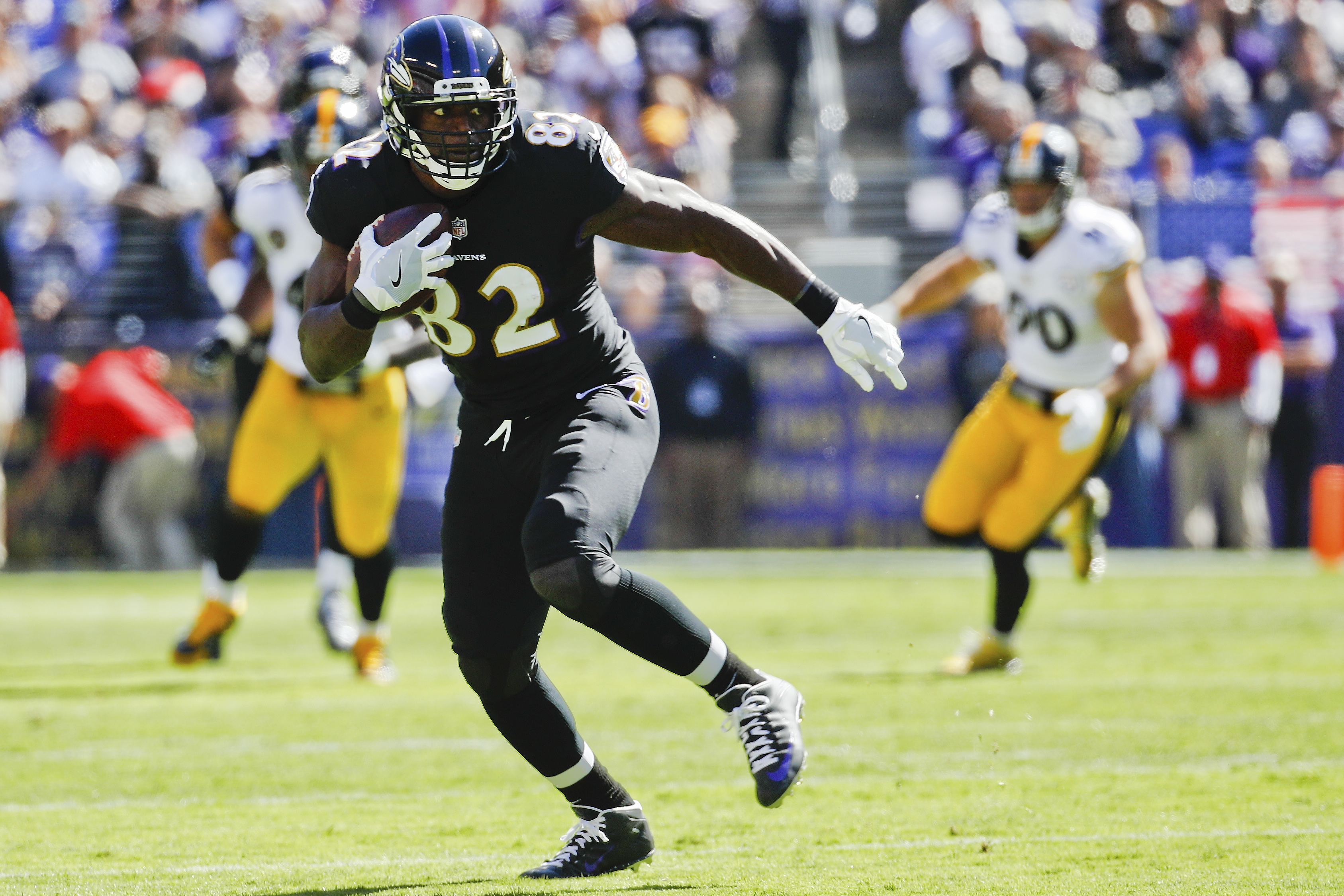
Benjamin Watson (82) had a late-career renaissance but like Zach Ertz, battled injuries in the twilight of his career. Patrick Semansky
The other player in that category was Benjamin Watson, who had a career-best 825 yards at age 35 in 2015 with the Saints, but missed all of 2016. After returning at age 37, Watson finished 2017 with 522 yards on 61 catches, but he did not cross that threshold with the Saints in 2018 or Patriots in 2019.
Injuries in 2022 and 2023 with the Cardinals prevented Ertz from reaching that marker, but Ertz played 17 and 13 games over his last two years, his most games in a two-year span since 2020 with the Eagles and 2021 split between Philly and Arizona.
Gonzalez, Kelce, Gates, Witten, and Watson stayed remarkably healthy, though the latter faced injuries late in his career. With the exception of Kelce, they were two-way players as blockers and receivers. Ertz has missed time with injury in nine of his 13 seasons, suffering season-ending injuries in three of them, and does not offer much in the blocking department beyond doing so in space.
Previous Goedert replacements
When Goedert has been out of the lineup over the last four seasons, the Eagles have traditionally not relied on the backups for heavy receiving workloads. In 2022, when Goedert missed Weeks 10 through 14 with an injury, Jack Stoll caught seven passes for 74 yards in that time frame, while Calcaterra caught four passes for 41 yards.
In 2023, when Goedert missed Weeks 10 through 12, Stoll had two receptions for 17 yards, and Calcaterra was inactive for two of those three games.
In 2024, when Goedert missed Weeks 6 through 8, then 13 through 16 with injuries, Calcaterra had an increased role, catching 14 passes for 165 yards and one touchdown
And last season, when Goedert missed only one meaningful game, Calcaterra had one catch for 6 yards in a Week 2 game in Kansas City.
Some stats from Zach Ertz as his return to the #Eagles becomes a reality:
— All 11 TDs with the Commanders over the last 2 years have come in the red zone. — Has caught 71% of his targets in the last 2 years. — His +25.0 receiving EPA in 2024 ranked ninth among all TEs (per…
This offense under Sean Mannion requires more from tight ends than previous iterations of Eagles offenses, which made Ertz’s signing necessary, though learning the scheme could take time for the 13-year veteran to make a significant impact on the passing game.
Expectations should be set low for Ertz, considering his age and return from a significant injury. But if the tight end can look somewhat like he did as a receiver last season, when he contributed a throwback performance against the Broncos one game before his injury (10 catches, 106 yards) the Eagles may get more than a feel-good story.
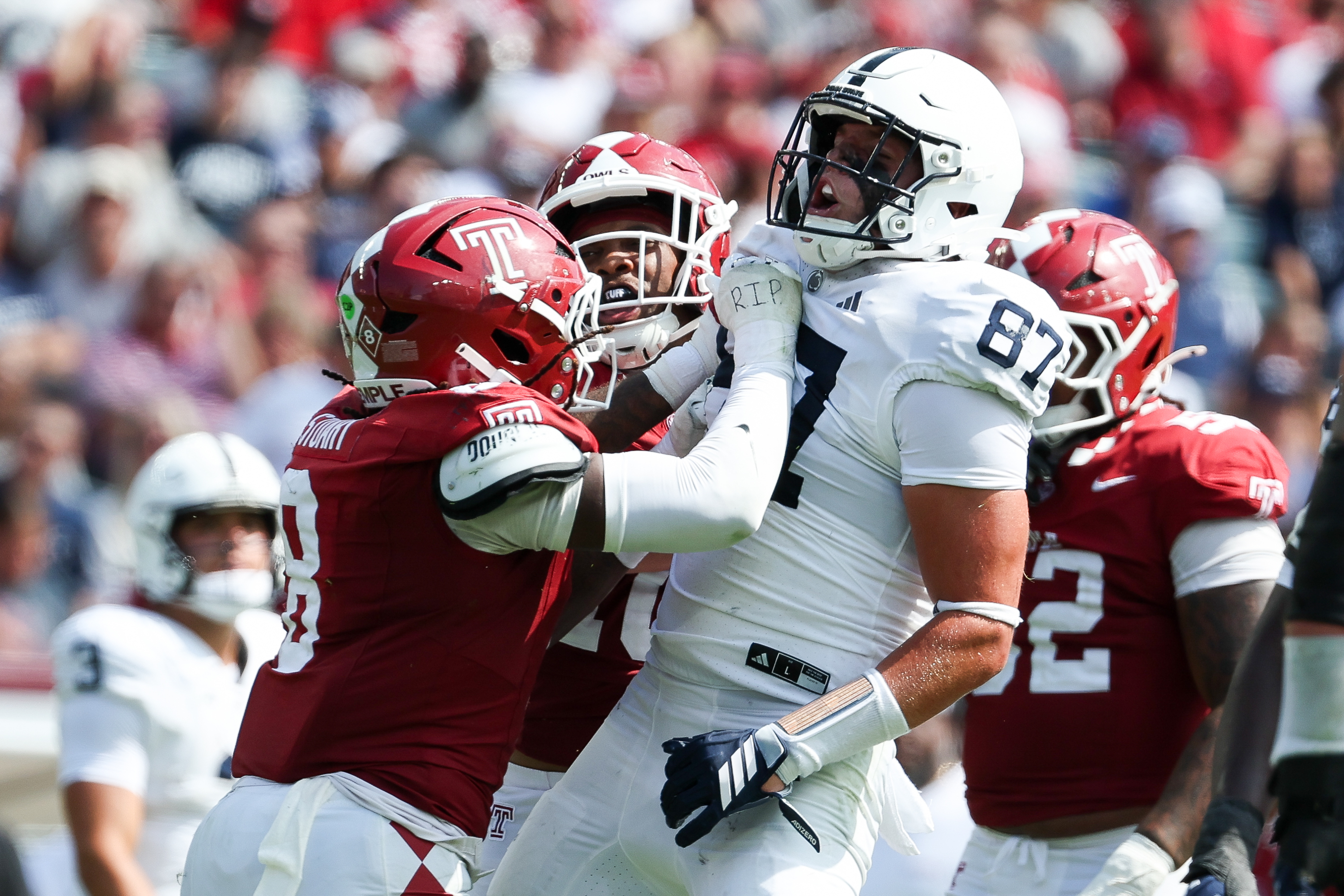
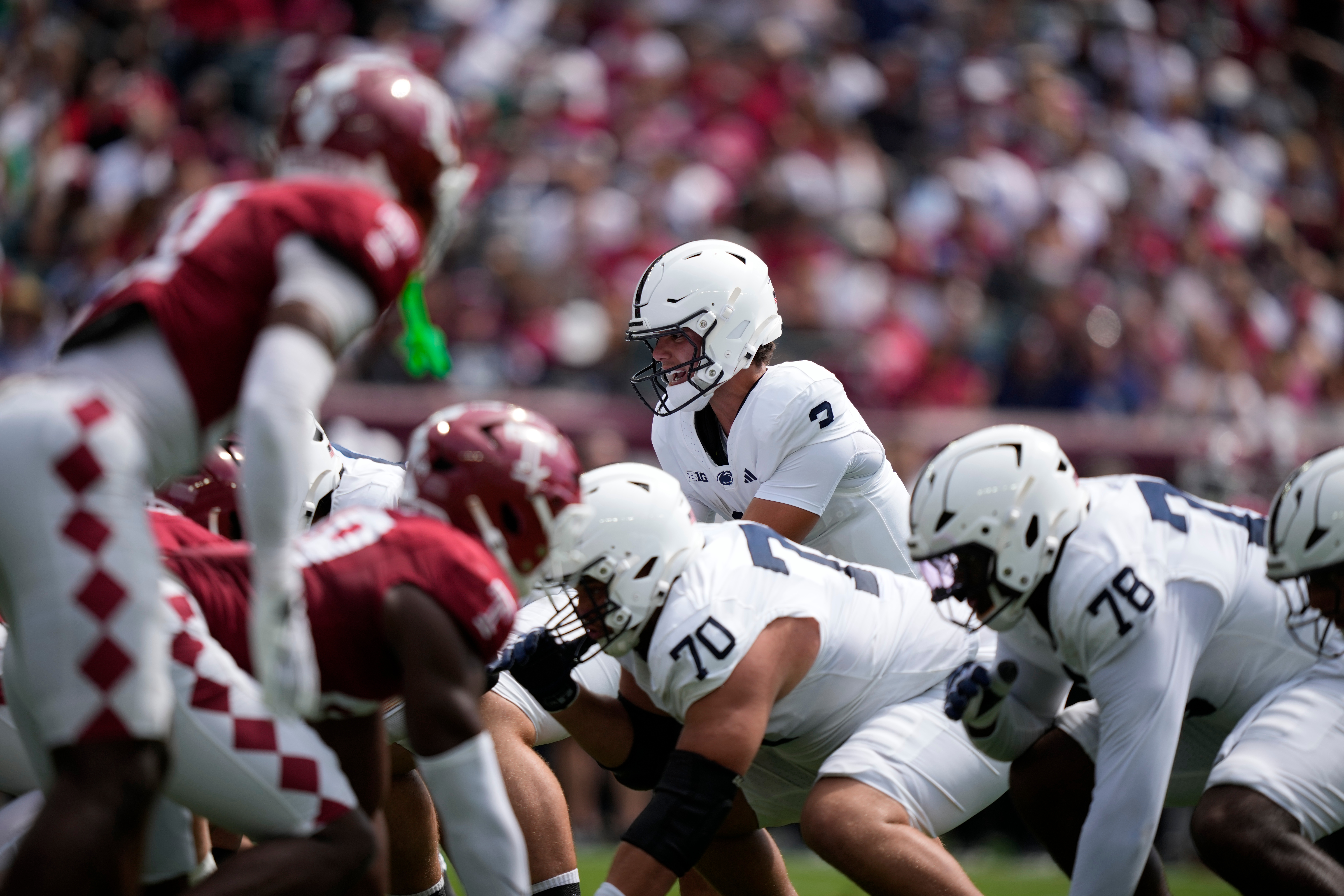
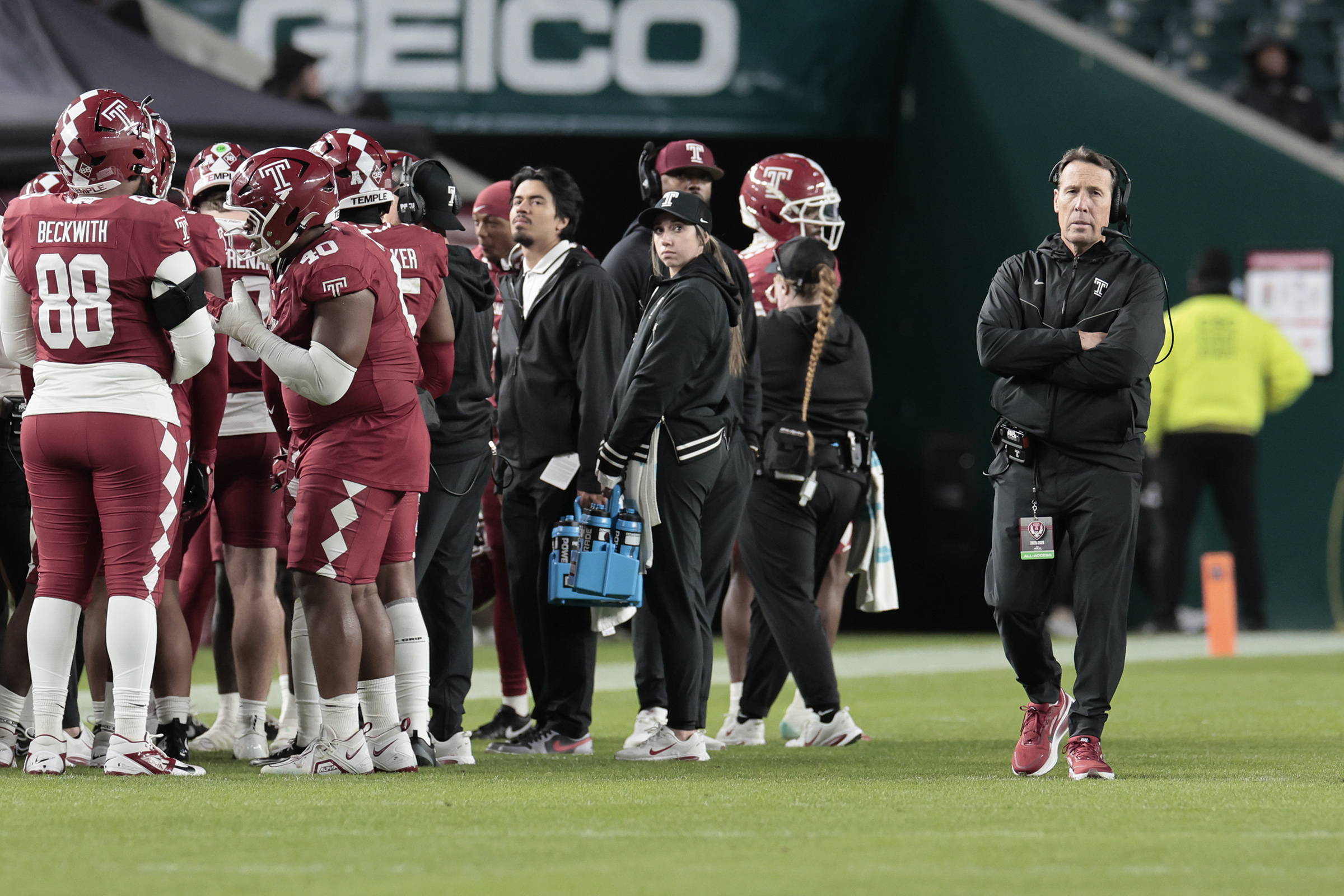
After Penn State quarterback Rocco Becht’s pass whizzed past Andrew Rappleyea’s head and incomplete on fourth and goal from Temple’s 2-yard-line in the first quarter last Saturday, Owls safety Saboor Karriem pointed at the Nittany Lions tight end and gave him a piece of his mind on the way back to the sideline.
Temple’s defense withstood a turnover deep in its own territory and forced a goal-line stand, adding yet another highlight to a strong start for a unit that ranked toward the bottom of Football Subdivision in points allowed, rushing yards, and total defense last season.
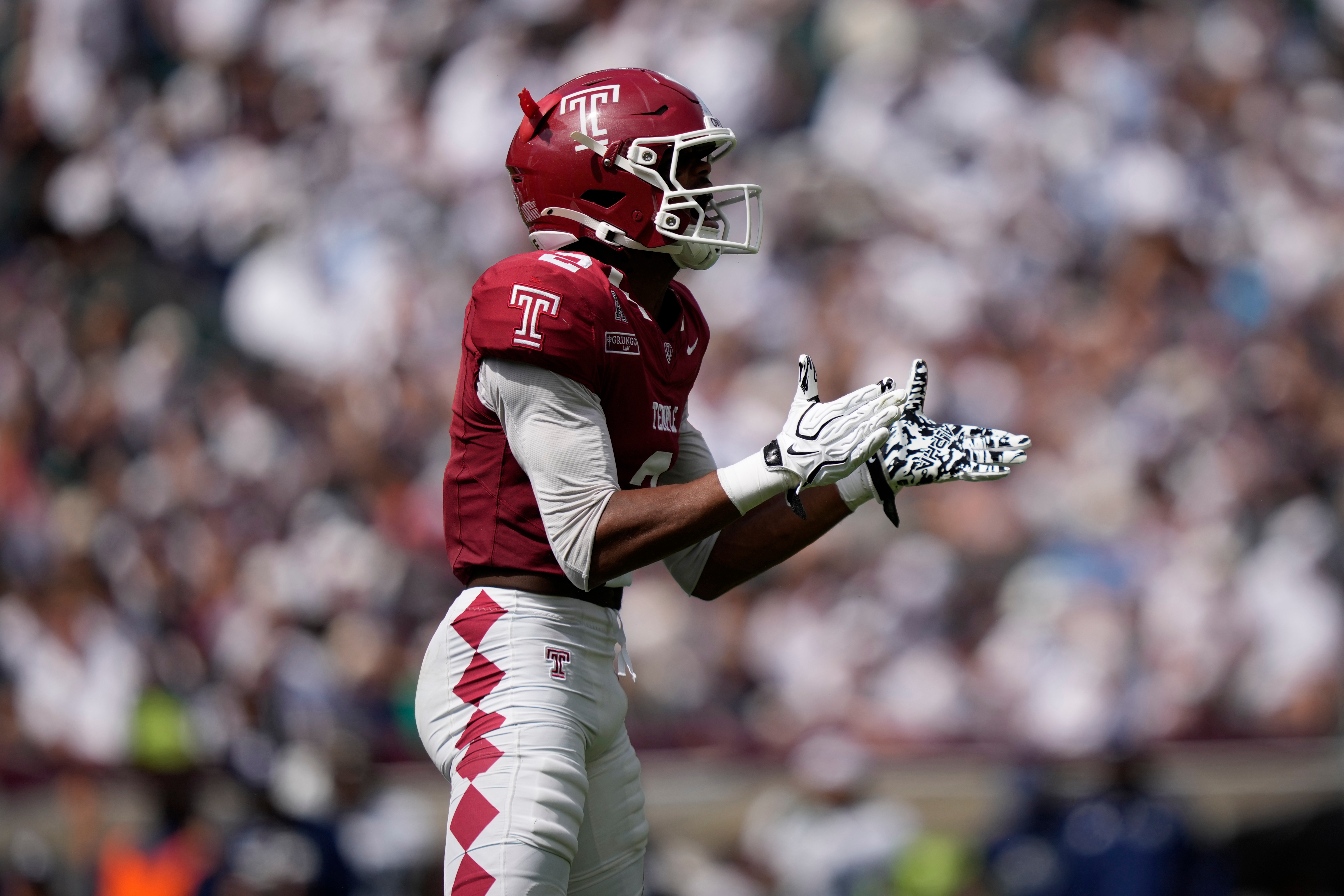
Karriem, one of Temple’s single-digit players, awarded to the team’s toughest players on and off the field, is one of several new faces helping the Owls’ defense look much improved in Year 2 under coordinator Brian L. Smith. And it starts with Karriem’s energy on the field.
“I like the mentality that we play with,” said Karriem, an Illinois transfer who grew up in North Jersey. “It’s different than what I had played [in] previously. I had played a lot more zone coverage, eyes on the quarterback when they drop back, catch and rally type of defense. But we [at Temple] are more aggressive in our mindset.
“I really get more excited if my teammates make plays, but at the same time, energy is contagious. Guys feed off that, and when we make plays, we celebrate, but we got to focus. And I think that’s something that I tried to preach to them.”
Temple’s Saboor Karriem against Penn State on Saturday.Matt Slocum
Though the Owls could not keep pace with Penn State in the second half last weekend, Temple has another tough test, this time a road matchup against Toledo on Saturday (3 p.m., CBS Sports Network).
With the quarterback battle continuing for another week, the defense will be relied on for another strong showing and is tasked with slowing down a Toledo offense that is averaging 41.5 points through two games.
And it starts with a mentality Smith has instilled in the unit since he joined K.C. Keeler’s staff 20 months ago.
“Our mantra is FPC: We want to play fast, physical, and clean, and not beat ourselves,” Smith said this week. “We want to eliminate the mental errors and try to prevent the big plays, but also get after the quarterback, stop the run, and create turnovers. And the guys are bought in to that philosophy.
“We’re playing a lot of guys. We’re rotating a lot of guys in, and trying to keep guys fresh in the fourth quarter. The guys have done a good job buying in to the system.”
Simplifying the defense
Smith, a Wilmington native whose father taught in Chester, brought his NFL roots to the college level, first at Michigan from 2015-16, then at Rice for seven years before joining the Owls. His time in the New York Jets organization from 2007 to 2014 in various roles primarily under Rex Ryan, he said, helped shape his defensive philosophy.
He also credits Don Brown, for whom he worked at Massachusetts, his alma mater, and Michigan, for developing a defensive system that he calls “multiple.”
Temple defensive coordinator Brian L. Smith at practice in 2025.Isaiah Vazquez / For The Inquirer
“We’re going to be aggressive. We’re going to attack as much as possible,” Smith said. “We can pressure blitz up front. We can have movement stunts up front, and again changing up the looks. … [We’re] trying to attack and be aggressive. We want to stop the run, try to make a team one-dimensional, and get them in the passing situations. And then on third down, we’re going to do multiple [things] and try to get after the quarterback.
“[During] my time at Michigan and UMass, Don Brown … played a lot more man-to-man, so we adopted a little bit of that philosophy. We don’t play probably as much man in hand as he played, but we try to mix it in.”
Last season, in his first year at Temple, Smith’s unit ranked 91st in total defense (396.8), 100th in points allowed (29.7), and 123rd in rushing yards allowed (197.3), but that rushing total was still down from the Owls’ 226.1 yards per game allowed in 2024.
Through two games this year, Temple has improved in each category. It ranks 65th in points allowed (20.5), 76th in rushing yards allowed (122.5), and 86th in total defense (354 yards).
Smith points to one key change he and his staff made this offseason.
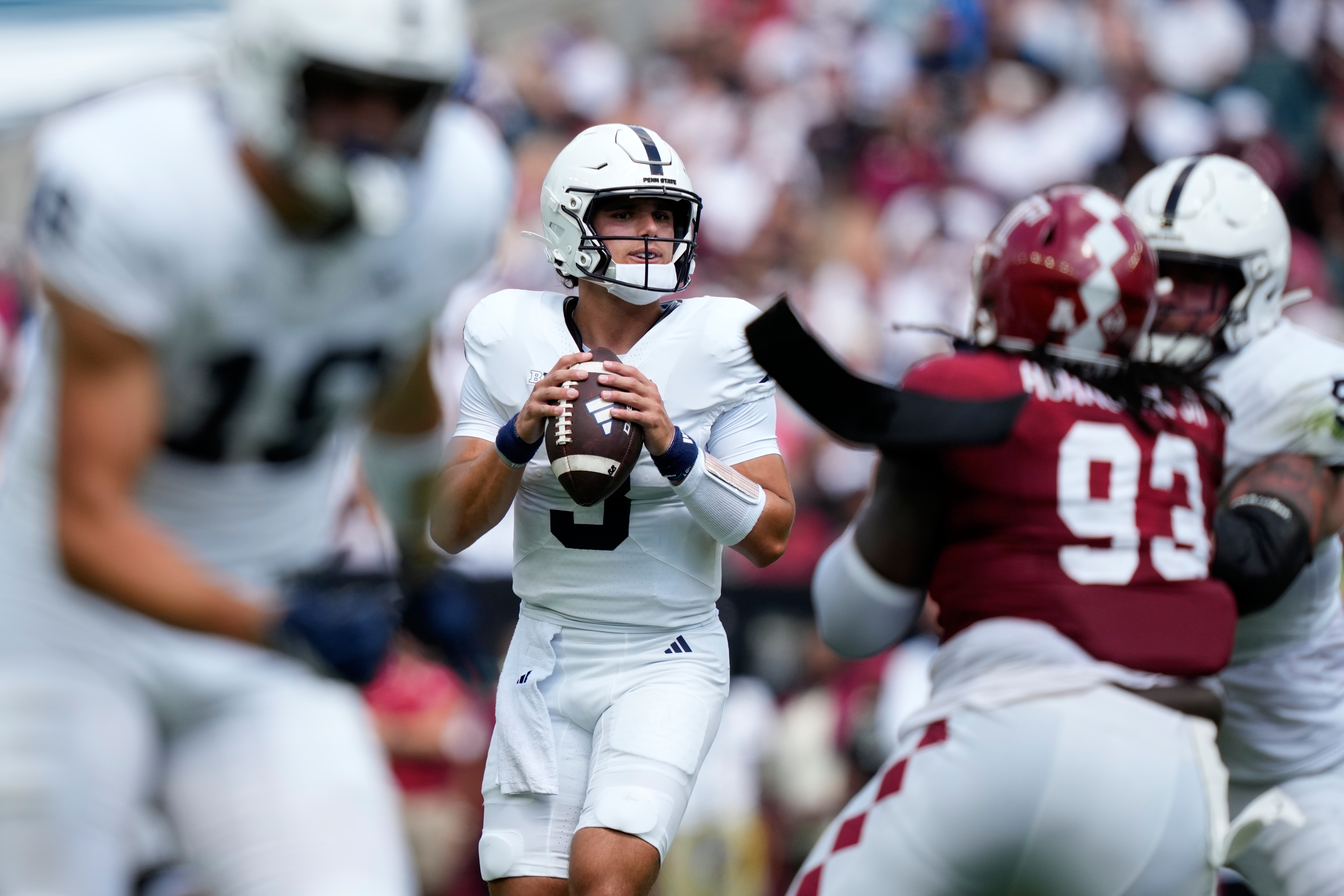
Quarterback Rocco Becht and Penn State beat Temple, 27-9, on Saturday.Matt Slocum
“I think we simplified things this year for the players as much as possible,” Smith said. “That’s something that we do every year. You go back and evaluate what things work, what things didn’t work, and just with the players that we have, the amount of players that we’ve gotten from the transfer portal. … You’re better off trying to simplify things rather than trying to add a lot more because we’ve got the talent to play with a lot of people, and so we don’t want to beat ourselves.”
‘Grittiness’
One of the few returning contributors to the defense is Curly Ordonez, who transferred to Temple before the 2025 season from Independence Community College. The linebacker, who leads the team with 20 tackles, has noticed fewer miscommunications with the unit this season.
The reason? Ordonez said the defense made key strides in the spring and at captain’s practices this summer that is now showing up on the field.
“We switched up a couple things [on defense], but really new guys coming into the new system, and actually get all those mistakes out, the misunderstandings, and really understand [the system] throughout the spring,” Ordonez said. “We just came out of [the] summer, and it was like, ‘Oh, everybody playing fast.’ … then we just continued to build from there. Summer was a great [starting] point where we just knew what our defense was [at] and we just had to show it.”
Temple’s defensive improvement starts with the front four on the defensive line, Ordonez said. His reads from his linebacker spot have been cleaned up because “those guys up front are dominating, eating up two [blockers], taking on blocks.”
On Saturday, it’ll be a homecoming for one of those defensive tackles. Kevin Hornbeak Jr. is a Toledo native who transferred to Temple from Division II Tiffin. One of his first varsity games at Whitmer High School in Toledo, Ohio, was at the Glass Bowl, and several family members will be in attendance, Hornbeak said.
Rocco Becht looks to pass against Temple on Saturday.Matt Slocum
Like Ordonez, Hornbeak said he appreciates Smith’s approach to “attacking the offense.”
“I love the four down [front alignment]. Love how much we blitz. It’s [an] amazing defense,” said Hornbeak, who had a sack in Temple’s season-opening win over Rhode Island. “When you got a coach that believes in you and wanting us to go attack the offense, you can’t ask for nothing better.”
While Smith acknowledges there is still a long way to go the rest of the season, he’s pleased with how his defense has “handled adversity well,” and agreed with Keeler’s sentiment earlier this week of the defense having a “more talented group.”
The defense is playing with more confidence and an edge compared to last season. The defensive coordinator credits the “tough-minded” makeup of Temple’s players, especially on defense for the improvement year over year. They’ll need it to carry over once American Conference play opens up in a few weeks in the program’s quest for bowl eligibility for the first time in seven seasons.
“This is home for me,” Smith said. “We got a different group of kids here. It was a lot of Texas kids and West Coast kids that I had at Rice. Here, we’re a little more gritty … [with players from] Philadelphia, New Jersey, Maryland. So I love the grittiness that our team has.”
Added Karriem: “I was in just a different mental space being away for so long, and coming home and just allowed me to enjoy the game again. … I don’t feel like I’m coming to work every day. I know I’m going to work, but I’m having fun at work.”
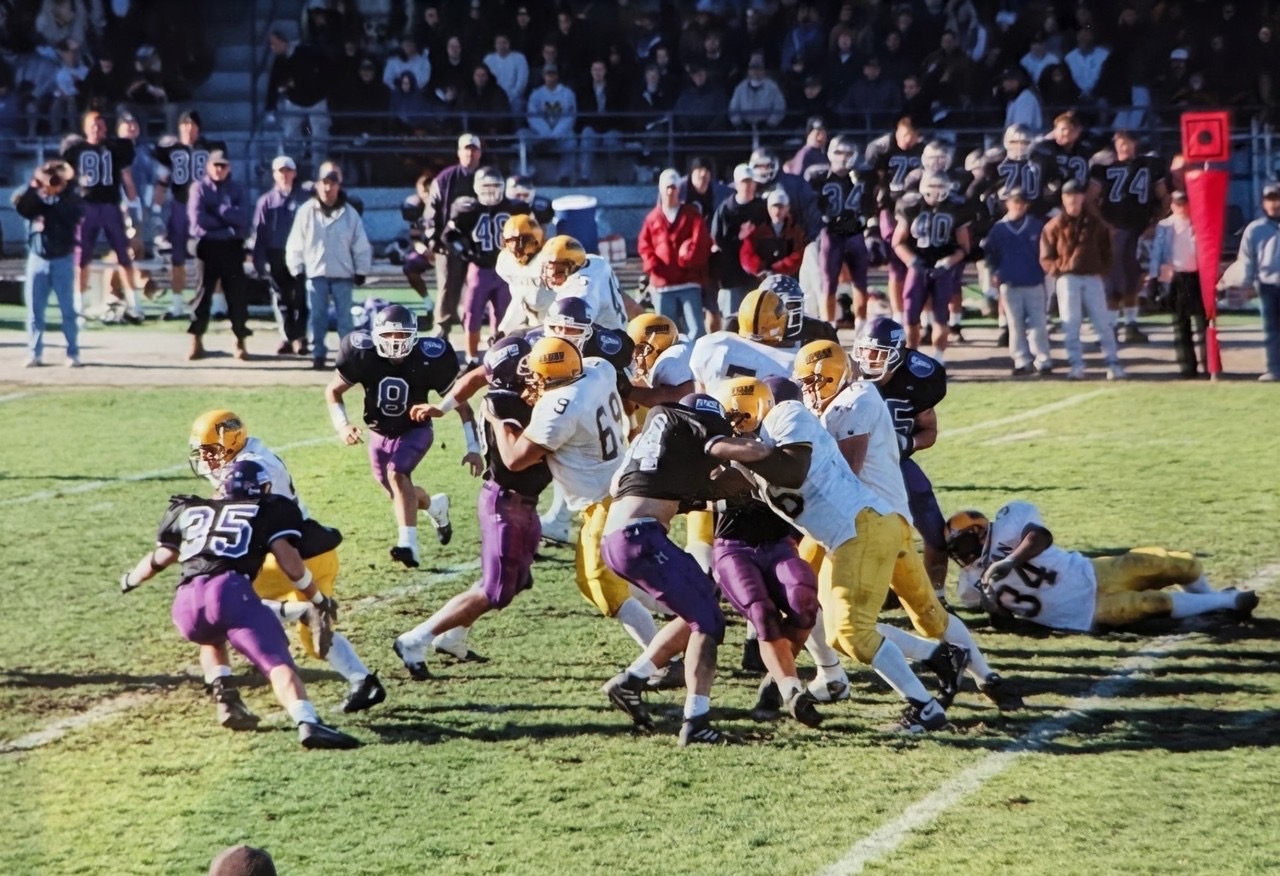
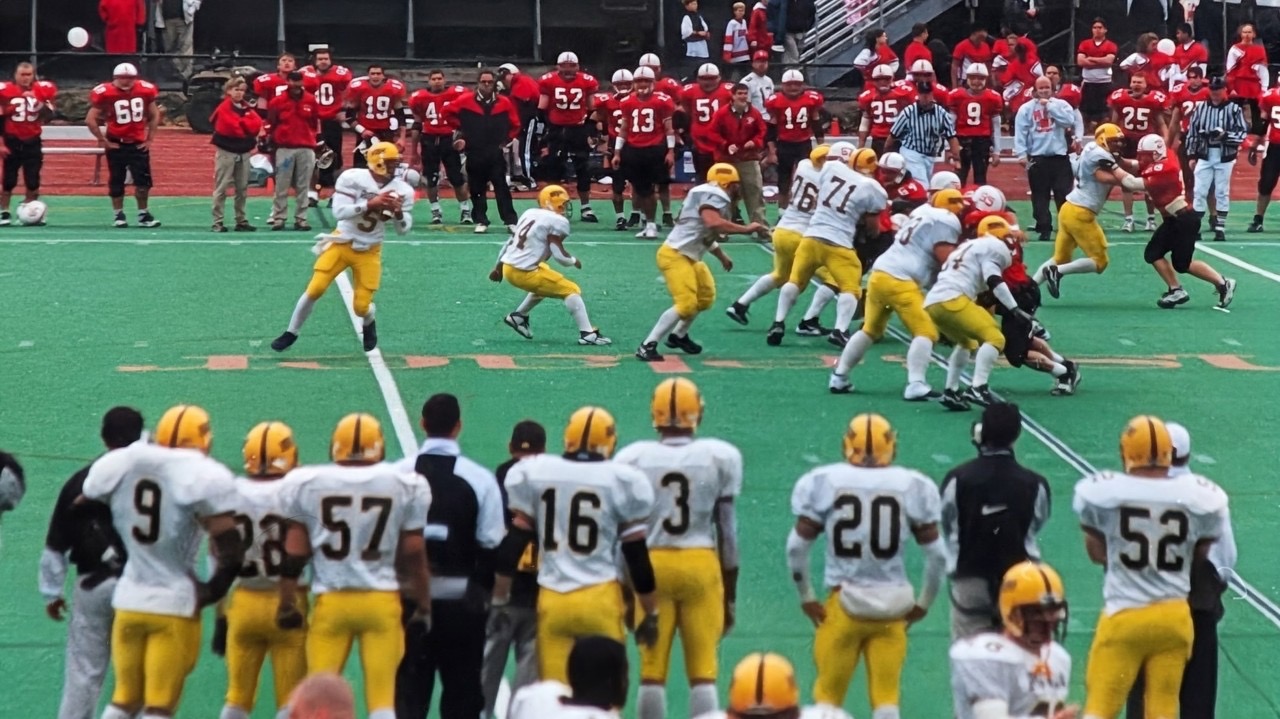
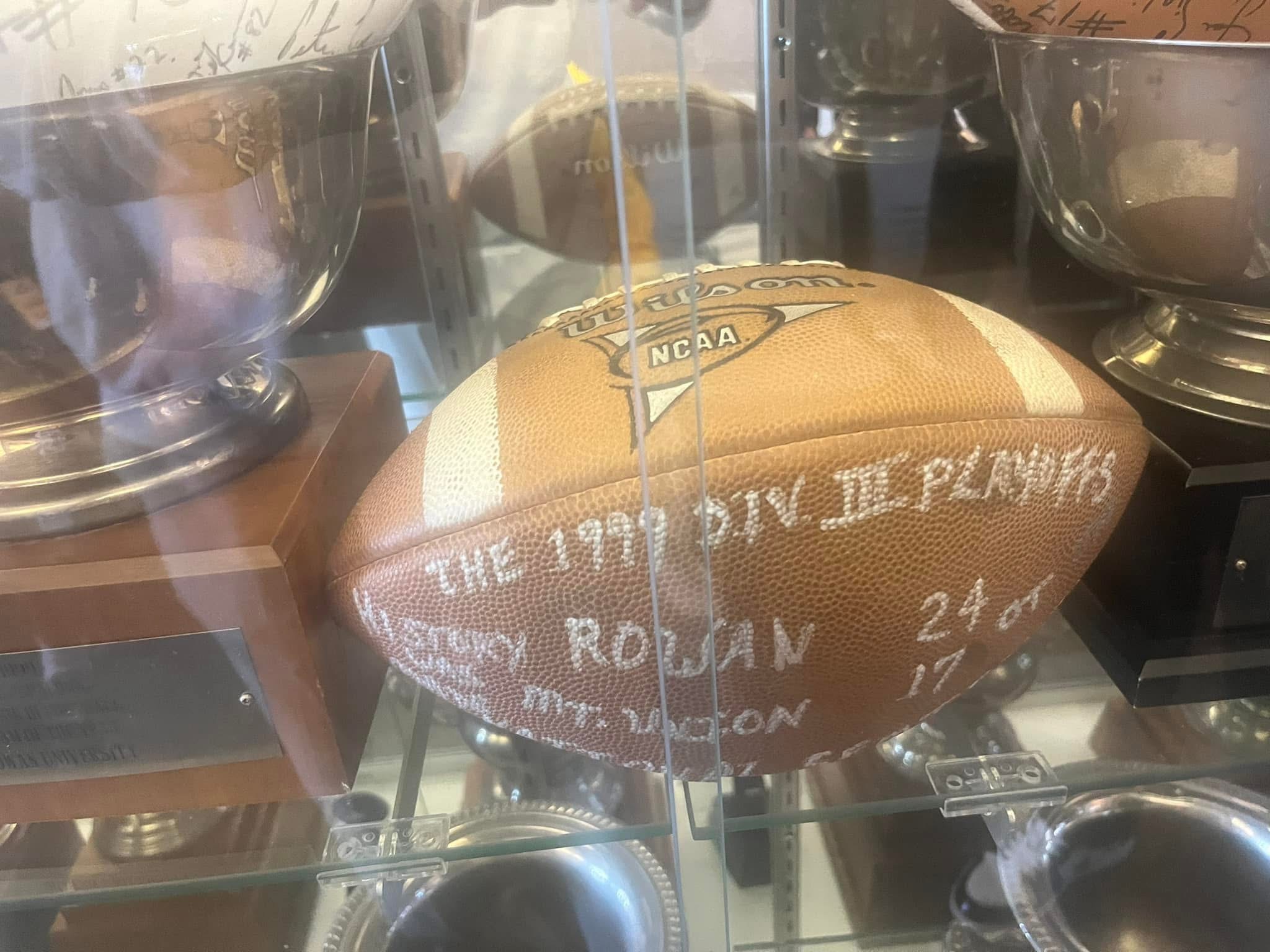
Mount Union was facing a fourth-and-5 in overtime, trailing 24-17 in a Division III playoff semifinal on Dec. 11, 1999. The Purple Raiders, down to their last play, held a 54-game winning streak, then the longest in any division of football, and sought a fourth straight trip to the D-III title game, named the Stagg Bowl.
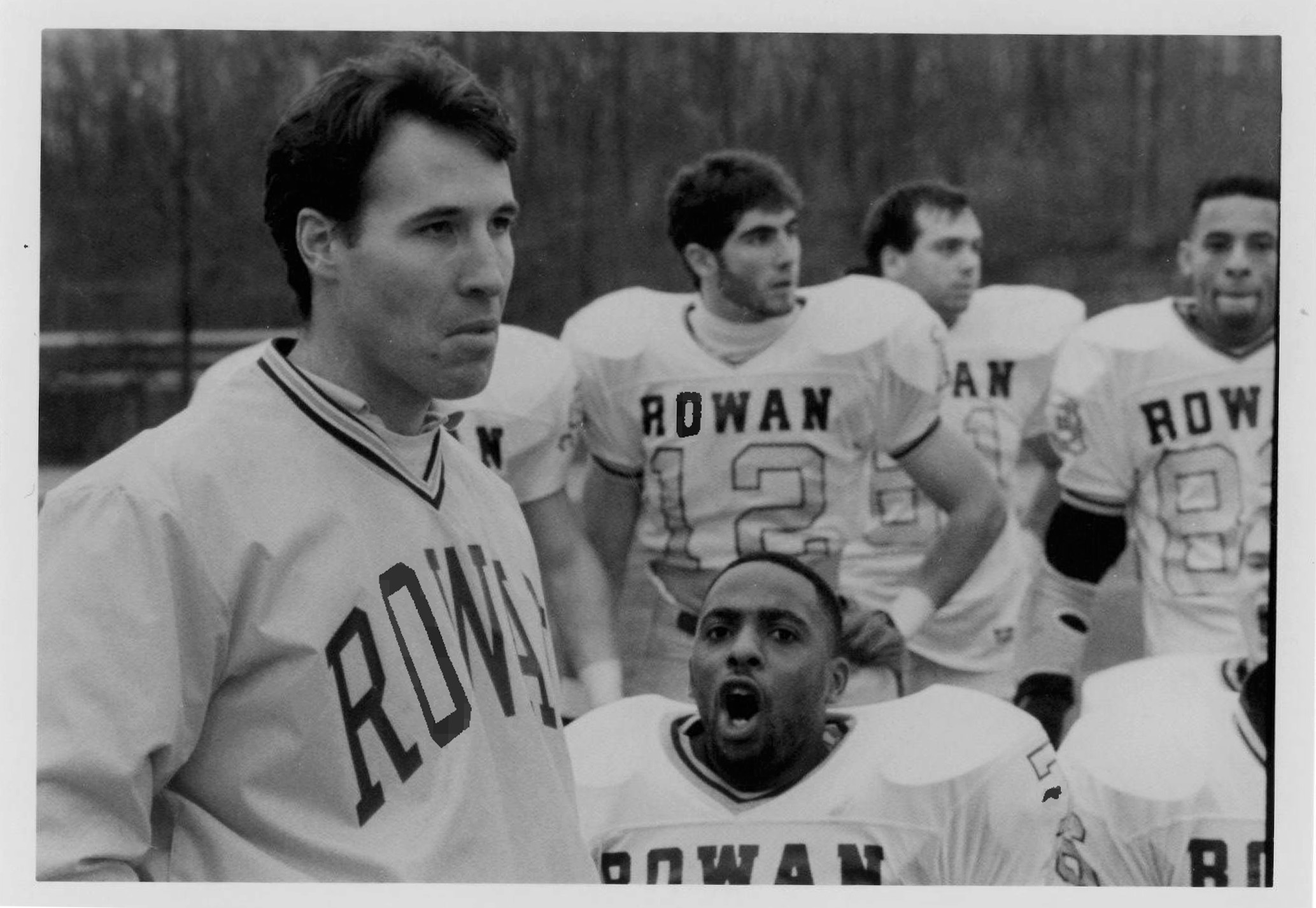
Twenty-seven years later, K.C. Keeler still can see the play crystal-clear. Back then, he was Rowan’s head football coach, seeking his fourth title game appearance since becoming a 32-year-old head coach in 1993. And on this day, after losing to Mount Union in the championship game twice in the previous three years, something special was about to unfold for the Profs.
“I remember the last play of the game, [Mount Union was] going to try to tie it up on fourth down, and they had a tight end, I believe it was, over the middle of the field, in the end zone, and the ball’s thrown,” Keeler, now Temple’s coach, recalled to The Inquirer. “I see the tight end go up in the air, and it looks like he’s going to come down with it. And Mark Hendricks, my middle linebacker, who was a two-time captain for me, he turns and runs and actually hits the tight end so hard he broke his ribs. And the ball comes squirting out, and he’s laying there, and we’re celebrating over top of him.
“My 398th game [is] coming up here. … That was definitely one of those where you remember for a lifetime.”
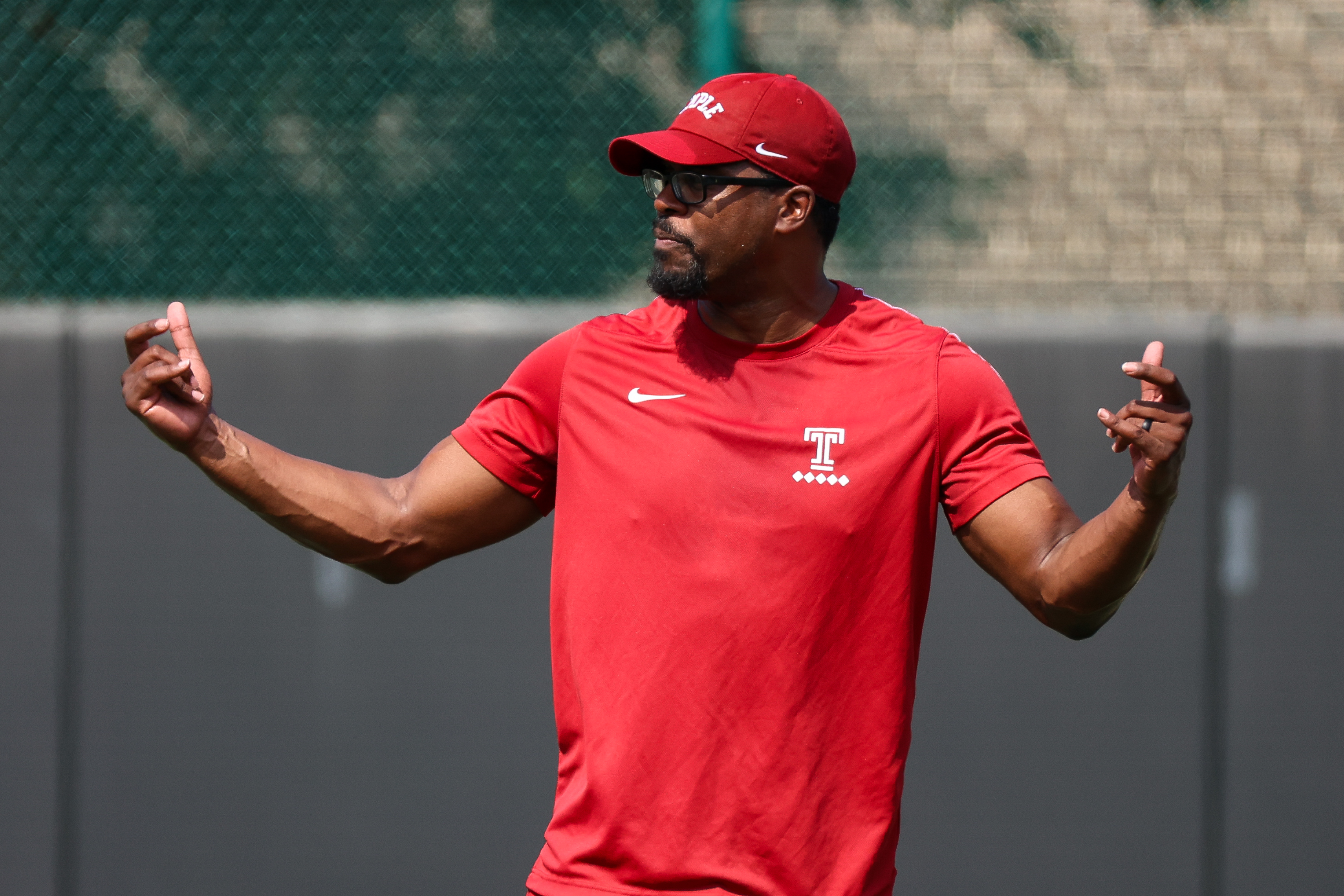
On the surface, Penn State head coach Matt Campbell, from Massillon, Ohio, and Keeler, from Emmaus, Pa., don’t share many commonalities beyond coaching in the same state ahead of their matchup on Saturday (noon, ESPN2). As it turns out, though, the 46-year-old Campbell, a former standout college defensive end turned coach, was not only on that Mount Union team in 1999, but on the field toward the end of the game.
At a coaching clinic this winter, not long after Campbell became Penn State’s 17th football coach, Keeler says his counterpart had one thing on his mind to bring up after formally meeting.
“First thing that comes out of [Campbell’s mouth], he goes, ‘I’m 1-1 against you.’ I’m like, ‘What do you mean you’re 1-1? You’re 0-1,’” Keeler says. “He goes, ‘No, I was a [graduate assistant] on the team that beat you then a couple years later.’
“It’s like, ‘OK, we’ll give you that one.’ So he and Nick Sirianni were both on that team [in 1999], and I’ve had some fun with them on having that one up on them, for sure.”
K.C. Keeler was Rowan’s football coach from 1993 to 2001.Rowan University Athletics
Campbell, who quipped, “You’re kind of coming at me, huh?” when The Inquirer asked about that 1999 game against Rowan earlier this week, still harbors feelings over the only loss in his college career at Mount Union.
“In that game, as a football player [who] won three national championships, and at that time, that was almost the spark for our program, to be quite honest with you,” Campbell said from his podium on Tuesday. “I was in on the last play, as the game ended, and that was tough.
“I think for me, that was a great opportunity for me to learn what the standard of excellence was in the program at Mount Union losing that football game, and what it meant to never have that feeling again.”
That 1999 game comes into focus as Keeler, now in his 33rd season as a head coach, will host in-state rival Penn State this weekend. It will mark the 46th meeting all-time between the programs.
And the significance of Rowan’s win still reverberates with some of Keeler’s former players almost three decades later.
Bobby Acosta, who played for Keeler at Rowan as a safety, lost his father as a freshman and left school without telling his coach. He later changed his mind, but the only way back on the football team, Keeler told him, was if Acosta “got a 4.0 [GPA] and passed 18 credit hours in the summer.”
“I said to myself, ‘There’s no way I can do that,’ and I did it. And that’s where my life changed,” said Acosta, who now coaches high school football in Texas. “I was a young man. K.C. was like my dad. Ever since that point, I played for him. Then I worked for him at Rowan. Then I worked for him at Delaware with Joe Flacco.
“He’s been a mentor to me for a lot of years. It was to the point I was babysitting his kids when I was in college. K.C. Keeler to me was someone that I looked up to.”
Rowan faces Rensselaer Polytechnic Institute during a playoff game in 1999.Courtesy of Greg Gudis
Greg Gudis, who was the starting left guard for Rowan during the 1999 season, took a different route to the program. He initially chose Gettysburg College out of Pennsauken High School, started as a freshman, but noticed the program “didn’t really prioritize” football.
So Gudis transferred to Rowan, formerly named Glassboro State, in 1998, located “right in my backyard,” he said. The former offensive lineman appreciated that Keeler was honest and did not guarantee him a starting spot.
“When I got to Rowan, the level of talent was so much higher than where I just come from,” said Gudis, who now resides in Arizona. “Some of the guys I played against that maybe should have been [playing at the Division I level]. It was a much different level of play, and Coach Keeler was a much different level of coach than where I had just come from.”
Two things remained elusive for Keeler heading into Rowan’s 1999 season: Beating Mount Union and winning a Stagg Bowl, both of which he went winless three times prior.
The 67-year-old coach, leading up to Rowan’s playoff matchup with Mount Union, made sure to keep newspaper clippings out of the locker room, Gudis said. Acosta added that the more than six-hour trip to Alliance, Ohio, where Mount Union was located, had the team “already down 20 points mentally,” but their mindset was “we have everything to gain and nothing to lose at their home place.”
A football in Rowan’s trophy case from their win over Mount Union in 1999.Courtesy of Bobby Acosta
And it worked. Though Rowan lost to Pacific Lutheran the following week in the Stagg Bowl, that win over Mount Union was “our national championship that day,” Acosta said.
“You almost wanted to win for Coach Keeler because number one, you respect him as a great coach, but number two, it’s like this guy knows nothing but losing [to] Mount Union,” Gudis said. ”And it was like, ‘Wow, I’m sure we probably finally brought some closure to that book for him to say I got over the hump.’”
Added Keeler: “My wife always says that life’s about the moments, and one of my messages is always be in the moment, and that very much was the message when we played Mount Union. … Just keep on playing to the very end, and when you have really good teams, that’s what they do.”
‘A special place’
When Penn State and Temple play at the Linc for the first time since 2015, which ended in a historic win for the Owls that springboarded an unbelievable two-year run, Keeler will be thinking of the teams that came before him. There’s a reminder every day of that 2015 game in the program’s facilities. The four team captains from the 2016 American Conference champion team will be recognized on Saturday.
He also recognizes the challenge that lies ahead. Penn State, Keeler believes, has a chance to be a top 10 team, similar to Oklahoma last year, another Power Four team who came to the Linc to play Temple. Keeler added that Campbell will “do amazing things” during his time at Penn State.
The respect is reciprocal.
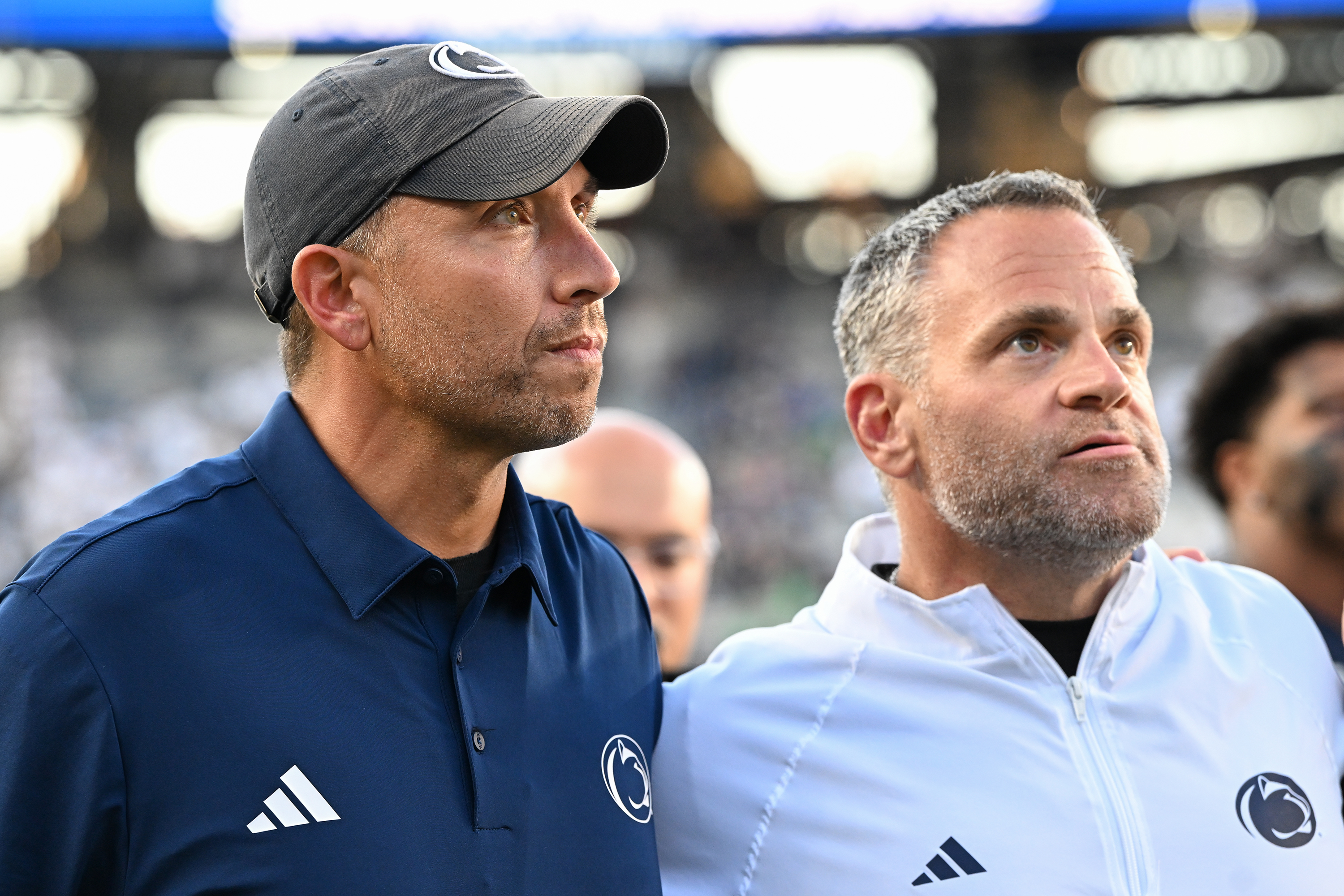
Matt Campbell (left) has a long history with K.C. Keeler, and Penn State athletic director Pat Kraft was previously Temple’s AD.Barry Reeger
“[I have] a lot of respect for Coach Keeler, what he did [at Rowan], what that team was about,” Campbell said. “It was a physical football game [in 1999], and similar to what you expect to see on Saturday, a physical, well-coached football team that has done a great job putting any program he’s been at in a position to play great football.”
While Campbell tips his cap to Keeler’s career success, including winning FCS national championships at Delaware and Sam Houston State, the Temple coach credits his first head coaching gig being at the core of it all.
“Those years formed who I am now as a coach,” Keeler said. “[We] had a team meeting to go to before I left [for Delaware in 2002] and I walked into that team meeting, I get a standing ovation and at that point I realized because I had talked about my Delaware experiences so much that those guys knew that they got me that job and they were proud that they got me that job and then I realized for the first time, ‘Oh my God!’ I’m leaving a group of kids that were OK with me leaving because it was my dream job.
“Rowan was a special place. They gave me an opportunity, they took a chance on me … obviously things worked out pretty well there.”
About a year ago, Jaylen Brown and Que Gaskins were searching for creative teams to help Brown’s brand, 741 Performance, launch what they called its “second album” — a sneaker rollout named “NOT from HERE.”
Longtime sneaker designers Sean O’Shea and Geoff Deas, whose resumés include brands like Nike, Adidas, Puma, Converse, and Anta Sports, were among the candidates. O’Shea and Deas were Anta’s general manager and creative director, respectively, and key figures in launching the China-based brand in the U.S. They offered their expertise to Brown’s brand.
“That’s our major goal: How do we get [Brown] off the ground because there aren’t that many players who have had their own brand,” O’Shea recently told The Inquirer. “So I think that’s where we came in. That’s our biggest focus. … Not that we don’t want to get paid, but it’s way more important, from our point of view, that it gets off the ground and becomes successful and is a competitor with some of the big guys.”
New world order
As Brown, who was traded to the Sixers in July, and Gaskins, the CEO of 741 Performance, approached the brand’s second sneaker rollout, they wanted to push “the status quo and challenge different traditions and standards and boundaries” of the sneaker industry.
The shoe will come in three colorways, which Gaskins calls “worlds”: black, gray, and red.
The “NOT from HERE” collection will also include clothing, a “performance recovery shoe” that can serve as a lifestyle sneaker, and a “recovery slide” to wear after workouts. The brand plans to add more colorways and potentially a running shoe next spring.
Brown already has immersed himself in Philly, but the “NOT from HERE” collection has taken on a new meaning after his decade-long run in Boston.
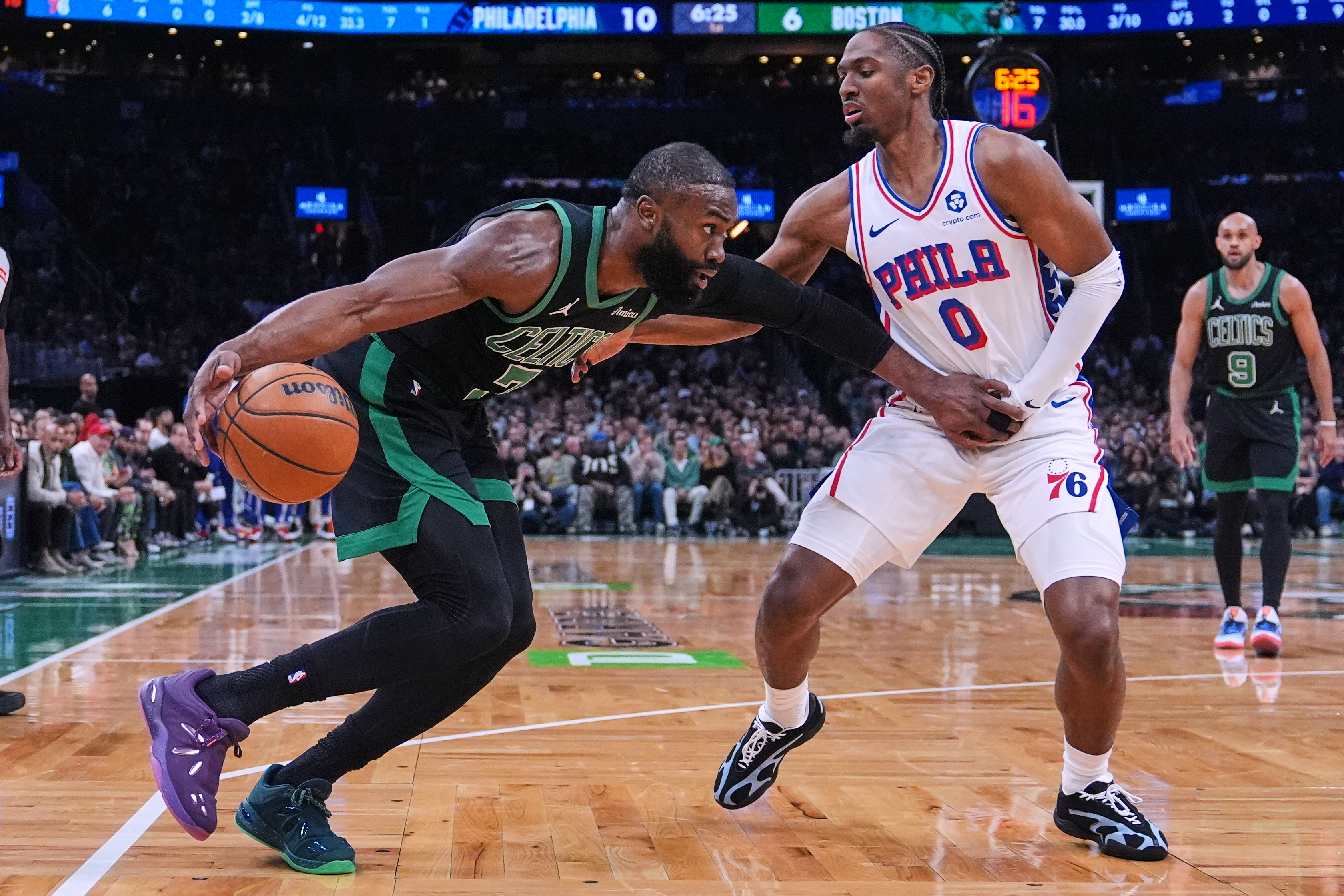
Detailed look of Jaylen Brown’s new shoes via his 741 Performance brand.Courtesy of Geoff Deas and Sean O'Shea
“I think him understanding, ‘I want to be able to open up young people’s minds and have them think about even places that they’re not even aware of.’ I think all of that symbolism, all of that energy, all of that frequency is a part of what we’ve been trying to build,” Gaskins said. “Even the idea of this album being called ‘NOT from HERE’ and how it’s played out now because he’s even playing on the [Sixers] when this product will launch in Philly, where he’s not from.
“Now, being in a new market … and being able to tell that story is ultimately what we were trying to do with this project and with this collection.”
Gaskins will have a large hand in helping Brown’s brand compete in the industry. He is no stranger to the sneaker business or Philadelphia athletes. He played a key role in Allen Iverson landing at Reebok 30 years ago. Gaskins was responsible for the “Iverson business,” and the RBK division of the brand, he says. He also served in several leadership roles in the National Basketball Players Association, where he met Brown in 2017. He helped advise Brown when he was weighing sneaker deal options before creating his own in 2024 and has been the CEO of 741 Performance since March 2025.
“I really think [Brown’s] trying to build something bigger that’s really representative of the work I’ve always done,” Gaskins said. “Even with the work I did with Allen and the cultural impact that he was having on the world — I’ve always felt like these guys had great power, great influence, and I think someone like Jaylen understands that.
“What Jaylen is building, I think it’s bigger than just a shoe company. If I’m being honest, I think he’s really trying to create a new reference standard for how athletes can take ownership.”
Jaylen Brown (left) wearing his 741 Rover signature shoes during the playoffs last season for Boston.Charles Krupa
Brown released his debut sneaker, the Rover 741, in 2024. But Gaskins, who calls himself Brown’s “sous chef,” didn’t want to “stall or hurt or hinder” the progress of the brand by sticking with the same designers on every new project. Gaskins noted that Brown “had this ability to connect with a lot of types of different people, a lot of types of creators.”
That’s where O’Shea and Deas come in. They have taken over production of Brown’s debut shoe along with “all the design, apparel, footwear, everything for the second [shoe rollout].”
“If this was the music industry, we weren’t just making music. We were doing everything that like a Capitol Records or somebody [like that] was trying to do also,” O’Shea said. “So it’s like we were printing albums. We’re trying to do all of it. That’s the cool thing about Jaylen and what he’s trying to do is he wants to make sure he owns, or at least understands, all of it.”
Deas estimates the newest shoe is “about 90% there right now,” with some adjustments still to come, including a drop-in footbed to account for basketball players who use orthotics in their shoes.
The planned initial release of the shoe to retailers is late November, but O’Shea says Brown “will be ready to go to play in it” by Sixers media day on Sept. 28. The shoe will make its regular-season debut in the team’s opener against the Knicks on Oct. 20 (7 p.m., NBC10).
The design and model for the “NOT from HERE” shoe is based on Brown’s love for outer space, says Gaskins. After getting acclimated to Brown’s vision, O’Shea and Deas worked on creating and executing a design “with the limited innovations and materials and technologies we have here.”
A sketch rendering of Jaylen Brown’s new shoes, “NOT from HERE,” shoes, designed by Geoff Deas and Sean O’Shea.Courtesy of Geoff Deas and Sean O'Shea
“We’re trying to mirror, I think, the vision of the growth of his brand. So the [741 Rover], the first shoe … it’s like from Earth to the journey to getting out there and just like his brand, the exploration of it,” O’Shea said. “The design language is very human design language, the way it’s engineered. And then we took that and we said, ‘Hey, from there, let’s do it as if you’re out there and now you’re in this open space.’
“It’s more about what’s out there [in space]. Even the design language is as if it was made in space and organically. There’s no human lines on it. It’s like it almost the technology grew symbiotically. It’s technology meets something that’s really not from here.”
Added Deas: “[We were] just building out the inspiration boards and trying to see what kind of organic shapes can mash together — like if a spaceship went through space and it was catching some sort of creature.”
The low top shoe’s design in the black colorway mimics “technology circuit boards” on the upper part with a green underlay to “lean into that metallic, iridescent finish” of the prototype to lean into the space theme with a midsole “popping out and [that] locks [the shoe] in place” to ensure Brown’s feet don’t slide while he’s playing.
Video: A closer look at the design of Jaylen Brown’s new 3D-printed shoes
The laces are hidden because the pair are hoping to add a boa system for the shoe, which is an adjustable dial to make the shoe tighter around an ankle. Gaskins said the boa system, which is uncommon in basketball sneakers, likely won’t be in the first wave of the shoe’s release — but hopes to provide it “later in the year, maybe for a playoff run.”
Brown has played in the new sneakers and posted them on Instagram, including during the viral workout video with new teammates LeBron James and Tyrese Maxey. Because the shoe is a prototype, Brown is using this time to test it during workouts and other events he’s participated in this summer. The feedback, said Deas and O’Shea, “was pretty immediate,” and O’Shea added that Brown is “very, very involved.”
“We really wanted to get in there and think for him almost so that creatively,” O’Shea said, “we could produce stuff that really encompasses his vision and where he wants to go with the brand and creatively, how he connects to the kids.”
During the spring, as Temple’s football team started to mesh together returning players and newcomers, via the transfer portal and high school recruits, Peter Clarke, the team’s standout tight end, gathered the entire offense together.
The gesture was one example of Clarke, one of the seven players to earn the single-digit demarcation this season, emerging as a vocal leader for a program looking to build on last season’s 5-7 finish.
“When it comes to Peter Clarke, I feel like he’s a natural born leader,” said Temple running back Sam Brown, who transferred to the program this spring. “When I got here, I saw that off the jump. He’s always taking account for things, making sure people are doing the right things, and he’s definitely a leader by example, by what he does on and off the field.”
Clarke is a key returner for Temple, which didn’t lose an eligible starter to the transfer portal earlier this year. The rising senior finished with a career-best 30 catches for 483 yards and six touchdowns last season and is one of the best returning tight ends this season, evidenced by his preseason accolades: the John Mackey Award watchlist, preseason first-team All-American Conference honors from Phil Steele and Athlon Sports, and All-America third team honors at Pro Football Network.
As the Owls prepare for their season opener on Saturday against Rhode Island (2 p.m., ESPN+), there will be a sense of continuity for the offense, even with a new quarterback under center with transfers Ajani Sheppard and Jaxon Smolik competing for the starting spot. Four of the five starting offensive linemen from last season return, along with wide receivers Jojo Bermudez and Colin Chase, in addition to Clarke.
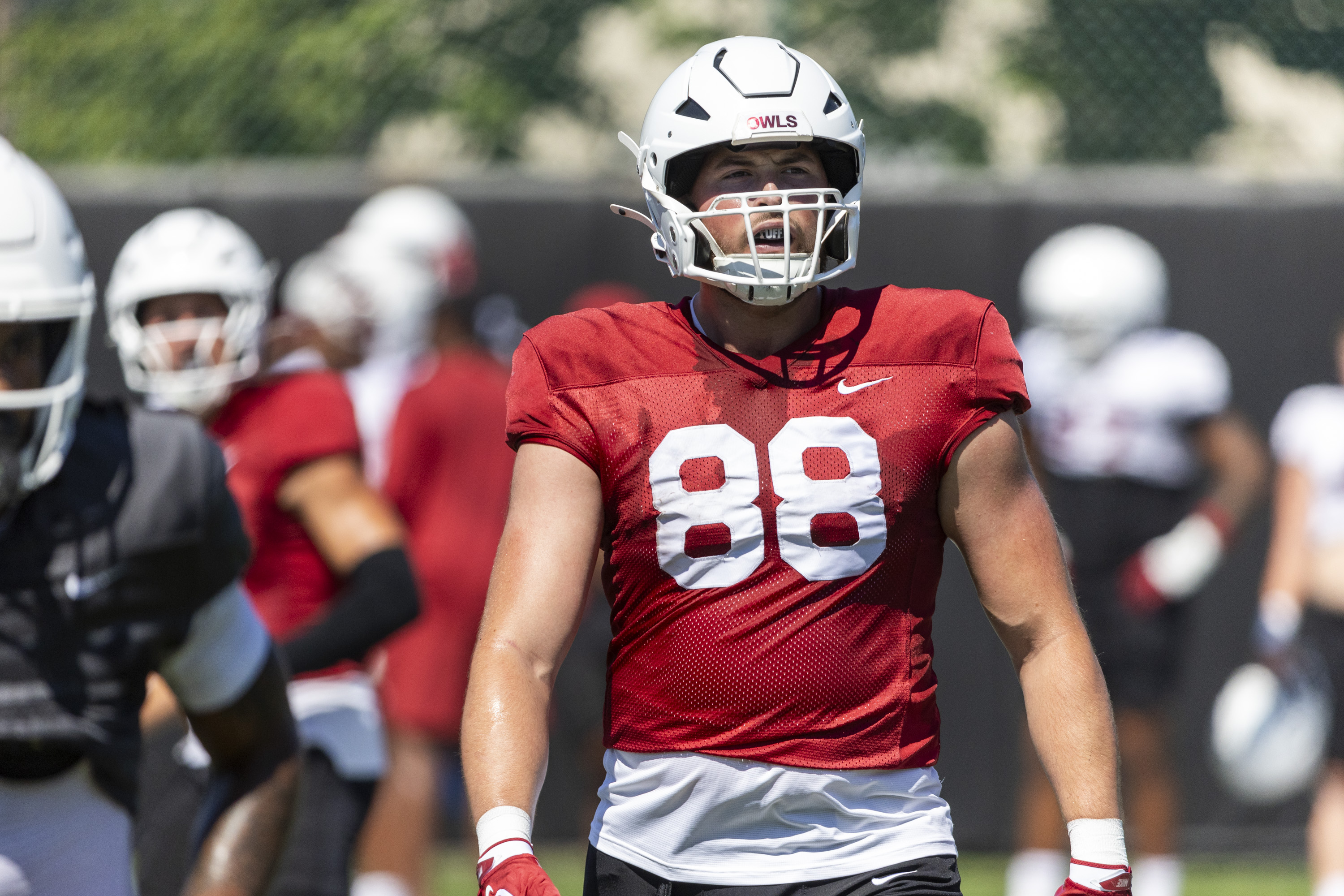
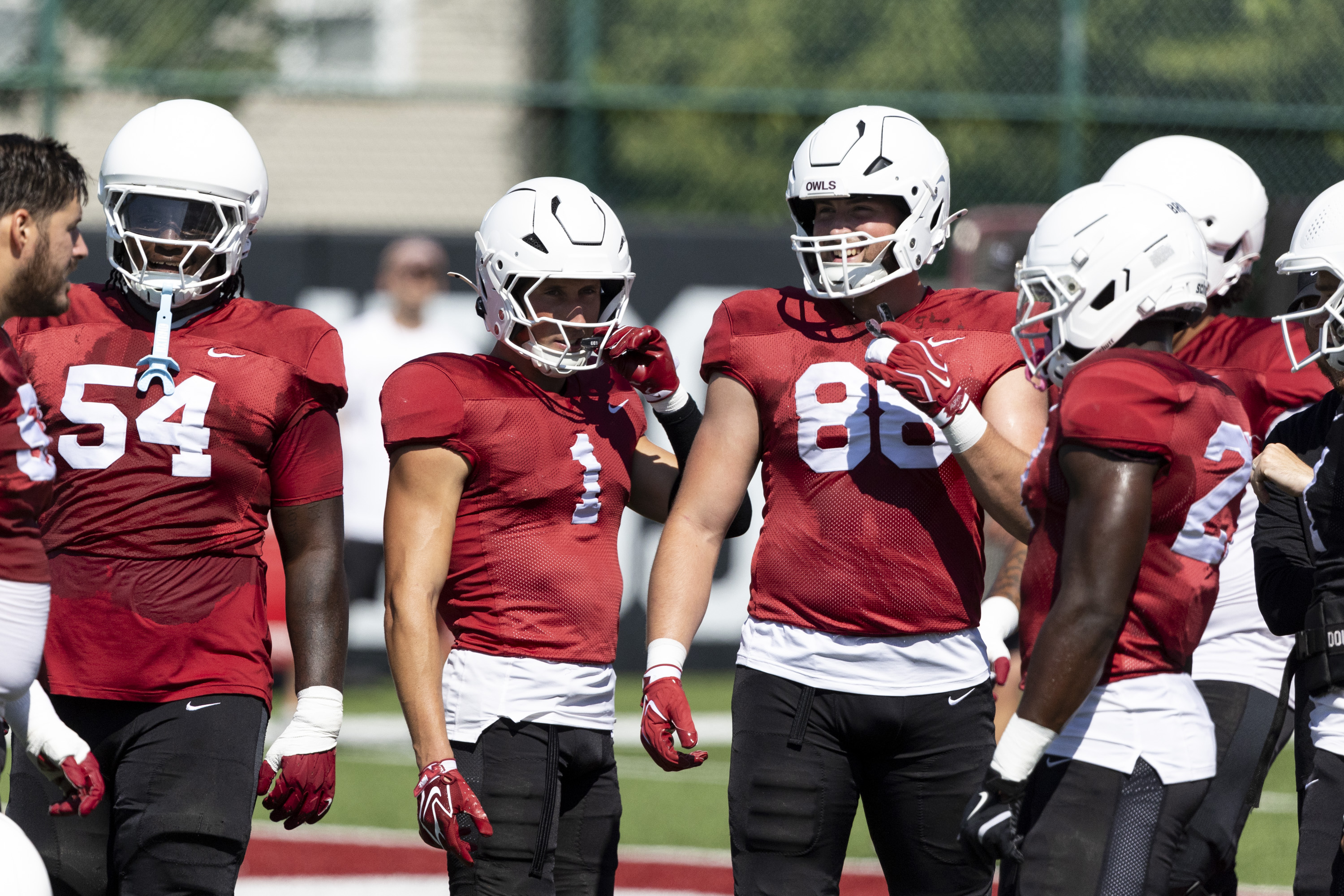
Colin Chase (1) and Peter Clarke (88) are among the returning skill players from last season’s roster.Tyger Williams / Staff Photographer
“When you bring in 50-60 new guys every year, you’re having to reinstall not just the plays, but also the culture, the identity,” Clarke said. “Whereas when you keep everybody, you have position leaders in every group. You have guys who know what it takes and have been in those positions and can guide guys and bring them along a lot quicker. So it means we can [be] more quicker. … We have a big advantage in keeping the position leaders, keeping guys we played [with], and just reinstalling coaches and new guys that not necessarily starting from ground zero.”
Building foundational blocks
When K.C. Keeler took over the program 21 months ago after a 11-year run at Sam Houston State, he emphasized that Temple would not be “living in the transfer portal 100%,” and added that he doesn’t want a locker room full of mercenaries, where “guys [are] just here for a year or two, and there’s no fabric, there’s just no continuity.”
A key part of his plan to help turn the program around was building leadership and advisory board councils among the returning players, as a way to rebuild the team’s culture.
The message appears to be resonating. Clarke, who says leadership “comes natural to me,” is one of 11 seniors or fifth-year players who have remained on the roster since their freshman seasons and endured the coaching change from Stan Drayton to Keeler.
“Being a captain on my high school team and leading guys there and coming here and having an impact like I have, and then when success happens, staying at Temple and continuing to grow, helps me step into that [leadership] role,” Clarke said. “I love this program. I love my teammates, and I want this school and this community to bring the energy for us. … When I see guys doing the wrong things, not being accountable, not doing things the way like ‘Temple tough’ football is. It’s my job to hold them accountable and hold myself to that same high standard.”
Grayson Mains, the team’s starting center for the last two seasons, transferred to Temple from South Carolina before the 2024 season and was also selected by his teammates to be a single-digit player this season.
He too, understands the importance of continuity and team culture, not only for the success of the program, but for the health of the locker room. He says leaders, like Clarke, himself, and other returning upperclassmen who have been around the program, “know what a bad culture on a team is like” and added that this year “we know what we do and don’t want to see, and just how to push guys the right way.”
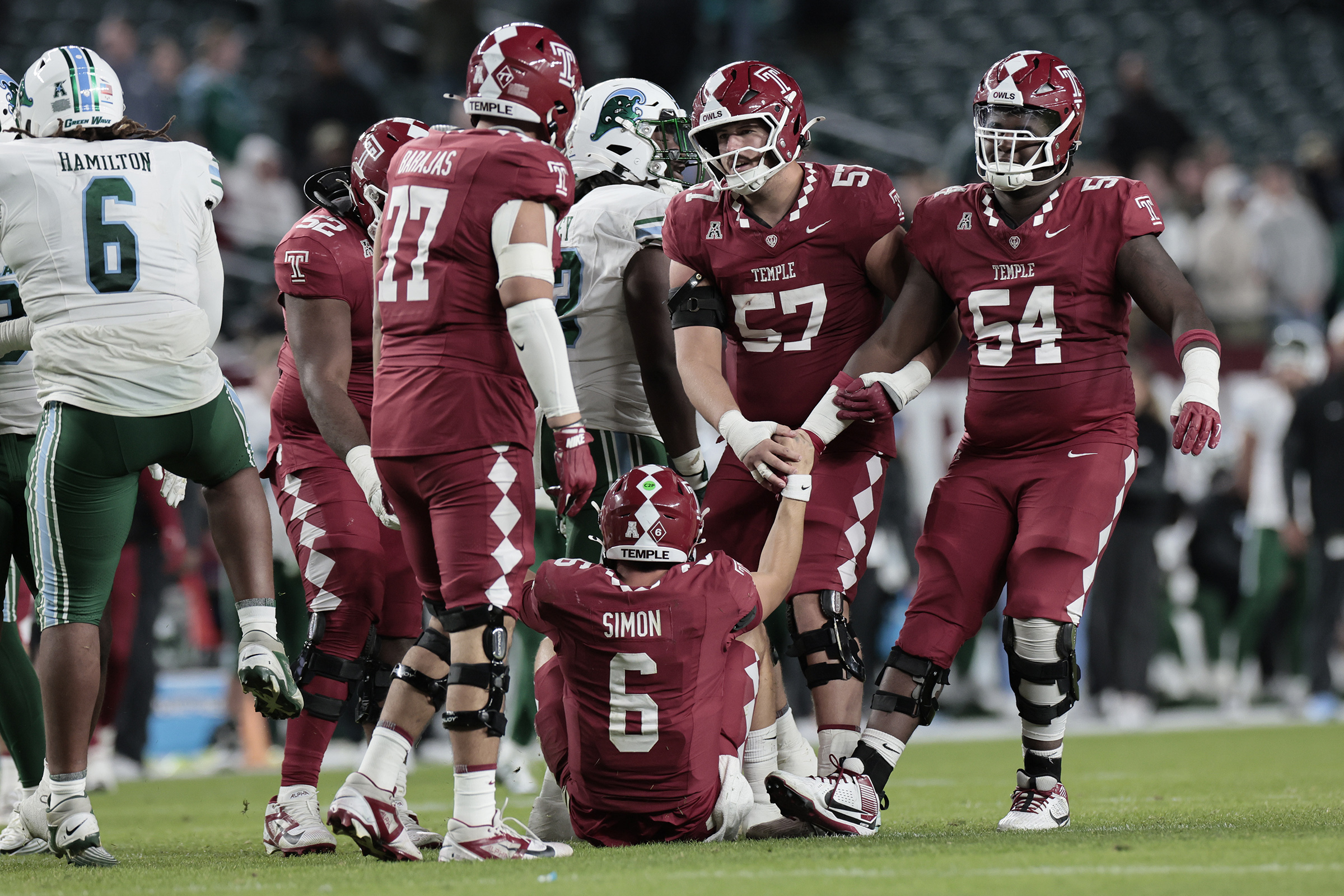
Grayson Mains (center) helps up his quarterback during Temple’s game against Tulane last season.Elizabeth Robertson / Staff Photographer
“Coach Keeler’s big thing has really been about accountability, and I think I’ve seen it a lot from the players,” said Mains. “Players holding players accountable, and being a lot more respectful to each other. … [We’re] not taking everything personal, because we all know that we’re one team and we’re all fighting for the same goal.”
Clarke’s leadership hasn’t been just noticed by his teammates. Offensive coordinator Tyler Walker, part of a coaching staff that was also fully retained from last season, called his tight end “the epitome of a single digit.”
“He’s been in the shoes that a lot of these young guys have been in,” said Walker. “He’s been [at Temple] through the ups and downs, and he’s been through coaching transitions. He’s been a backup. He’s been a freshman, and now he’s also been the guy. … He’s super humble. He wants to be great. He wants to be coached. He wants to be coached hard.
“He sets expectations for himself, and he brings other guys around him, with him. And that’s the sign of a good leader.”
‘Captain’s practices’
During the summer, coaches are not allowed to administer nor watch practices, according to NCAA rules. But that didn’t stop players from getting work in, led by Clarke and others.
Clarke and Mains each credit the player-run practices for bonding the team together, and it ultimately set the tone for their expectations this season on North Broad.
“The biggest emphasis to the transfers that weren’t here [last year] was, ‘Hey, this team’s been through a lot and experienced a lot, and we’re so close to turning this thing around.’ We’re all pushing the same direction and [we told them], ‘It’s time to get in and help us,’” said Clarke. “So [we were] getting those extra captain’s practices in with Army and Navy looks and [their] triple option offense, so that our defense understands what the read keys look like and can develop those habits early, so when we get to the game weeks, it’s not a complete surprise.
K.C. Keeler has had winning records in the second season of previous stops at Rowan, Delaware, and Sam Houston State.Elizabeth Robertson / Staff Photographer
“It’s just about, ‘Hey, what’s going to get us over the edge?’ It’s going to be efficient football from the offense. It’s going to be able to stop the run from the defense and just play one complete football game between special teams, offense, and defense.”
Added Mains: “Over the summer we pushed each other [so much harder]. … We were just able to do so much more, and then especially those summer days, like our OTA days, when coaches weren’t in the building, everybody respects [the leaders] enough to lead those player-run practices on the field and truly get really good work done.”
At his previous three stops, second seasons for Keeler have been notably fruitful. At Division III Rowan in 1994, the team finished 6-3; in 2003, Delaware won the Football Championship Subdivision championship; and at Sam Houston State in 2015, Keeler led his team to the FCS semifinal.
After two one-point losses last fall that prevented the Owls from making a bowl game, their players are ready to turn the page.
“We talk every day about winning championships,” said Mains. “This team hasn’t been to a bowl game in a while and hasn’t seen that American Conference trophy in a while. We’re all striving every single day to be as great as we can to make those goals [happen].”
Added Chase: “I think we got something special here. It speaks about our program. It speaks about coach K.C. Keeler and the vision that everyone truly believes that Temple football is going to be successful.”
On Christmas mornings while growing up in Northeast Ohio, Matt and Scott Campbell were excited to fulfill what became a yearly tradition. Most kids raced toward the Christmas tree to open presents and celebrate the holiday, but not the two brothers, who were born four years apart. They raced out the door to get a football game in, even when snow covered the ground.
Those games were one-on-one, mano a mano. Matt “had quite an impressive [size] advantage on me,” Scott said. The memory proved instructive of his older brother’s competitiveness, as Matt steps into his third college football head coaching job.
“It was not uncommon to get your favorite football jersey for a Christmas present. And then Riddell was giving out all those football uniforms that came with shoulder pads, leg pants, and helmets,” Scott Campbell told The Inquirer of his earliest football memories with Matt. “Then you go outside [to play against Matt].
“I never won these games.”
Football runs deep for the Campbells. Rick Campbell, Matt and Scott’s father, was a high school coach at Jackson High School in Massillon, Ohio, and later went into administration.
The sport quickly became the center of Matt’s life, too.
He would attend two-a-days with his dad before his school day started.
“My greatest childhood memories are being in the locker room and being on the football field with my dad, watching him lead and coach a football team,” Matt Campbell told The Inquirer in July. “I wanted to help give back and make a difference [as a coach] because so many people had done that for me.”
(function() {
var l2 = function() {
new pym.Parent(‘campbell2’,
‘https://media.inquirer.com/storage/inquirer/projects/innovation/arcgis_iframe/campbell2.html’);
};
if (typeof(pym) === ‘undefined’) {
var h = document.getElementsByTagName(‘head’)[0],
s = document.createElement(‘script’);
s.type = ‘text/javascript’;
s.src = ‘https://pym.nprapps.org/pym.v1.min.js’;
s.onload = l2;
h.appendChild(s);
} else {
l2();
}
})();
From those early days in their backyard, to stops at Pittsburgh and Mount Union as a player, then coach, and several other stops before landing his highest-profile opportunity yet at Penn State, Campbell has remained the same, his former teammates, players, and coaches across his 24-year coaching career say.
“Anybody that knew younger Matt or played with him or crossed paths with him, I don’t think anybody is surprised [by] the success he’s had,” Indianapolis Colts tight end coach Tom Manning said by phone shortly after Campbell was hired at Penn State. “Obviously, he’s a very good football guy in terms of X’s and O’s, but I think the thing that makes Matt dynamic is his ability to inspire others, certainly a great teacher, but he has this ability to have a relationship with everybody that is authentic and real.
“He creates this culture of unification, of toughness, of having a chip on your shoulder. And I think that every person that’s ever played [in] his football program or coached for him, they just feel like they’re part of something a little bit bigger than themselves.”
Matt Campbell (center) makes a tackle during a game for Mount Union during his playing days.Courtesy of Cockrill’s Studio
Embracing the ‘abnormal’
Campbell, now 46, developed into a standout defensive end at Perry High School in the 1990s. Matt was coached there by Keith Wakefield, who is “as inspirational as anybody in his life,” Scott said.
Out of high school, he accepted a scholarship from Pitt, but after the team went 2-9 his freshman season in 1998, he transferred to Division III Mount Union — a move that not only defined his playing and coaching career, but moved him closer to home.
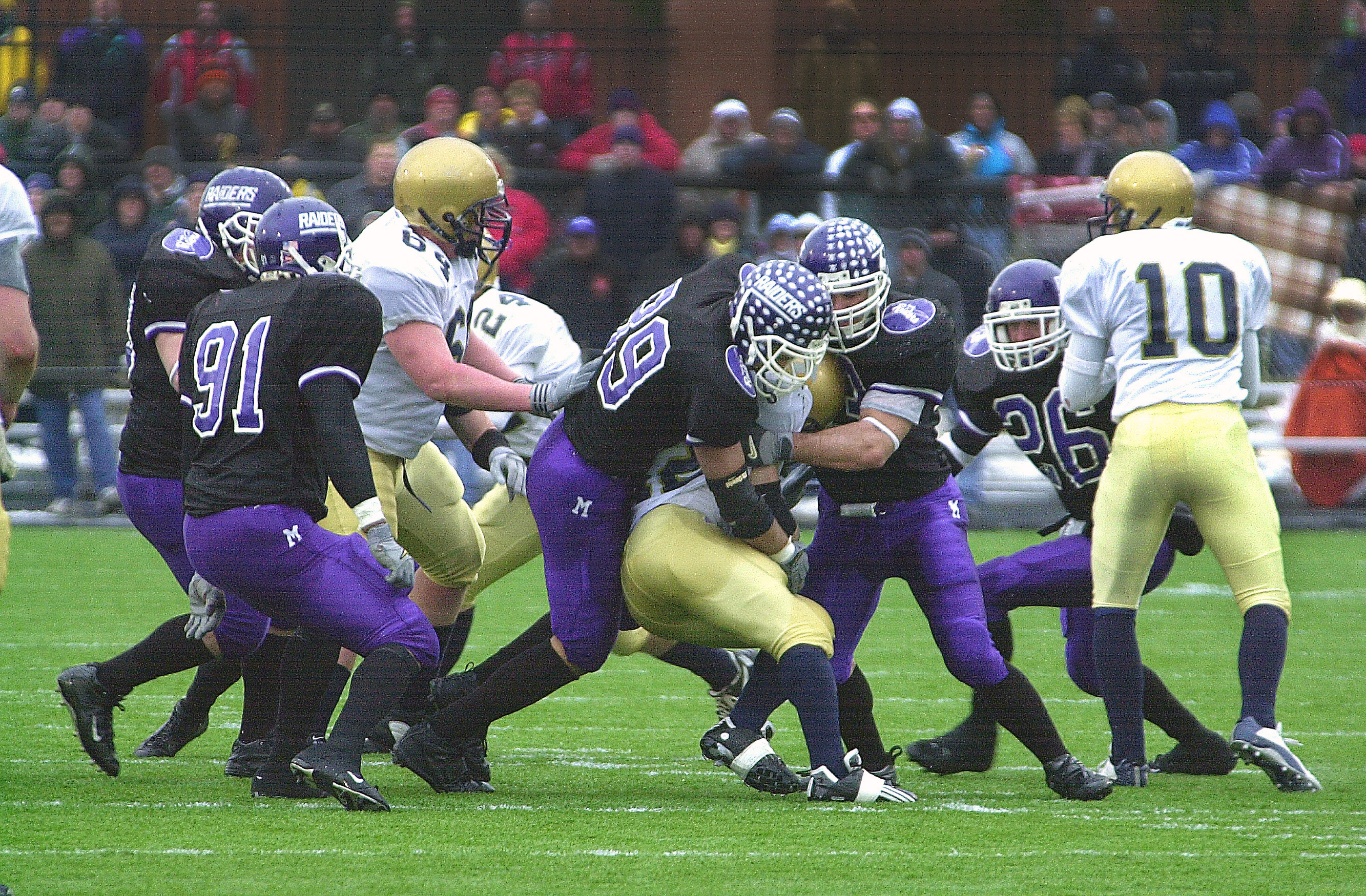
Campbell won three D-III titles from 1999 to 2002 at Mount Union, was named an All-American twice, and was the Ohio Athletic Conference defensive lineman of the year in back-to-back years in 2001 and 2002. But it was during his playing days there, under legendary coach Larry Kehres and alongside lifelong friends and coaching contemporaries, where Campbell first showed an inkling toward his future career.
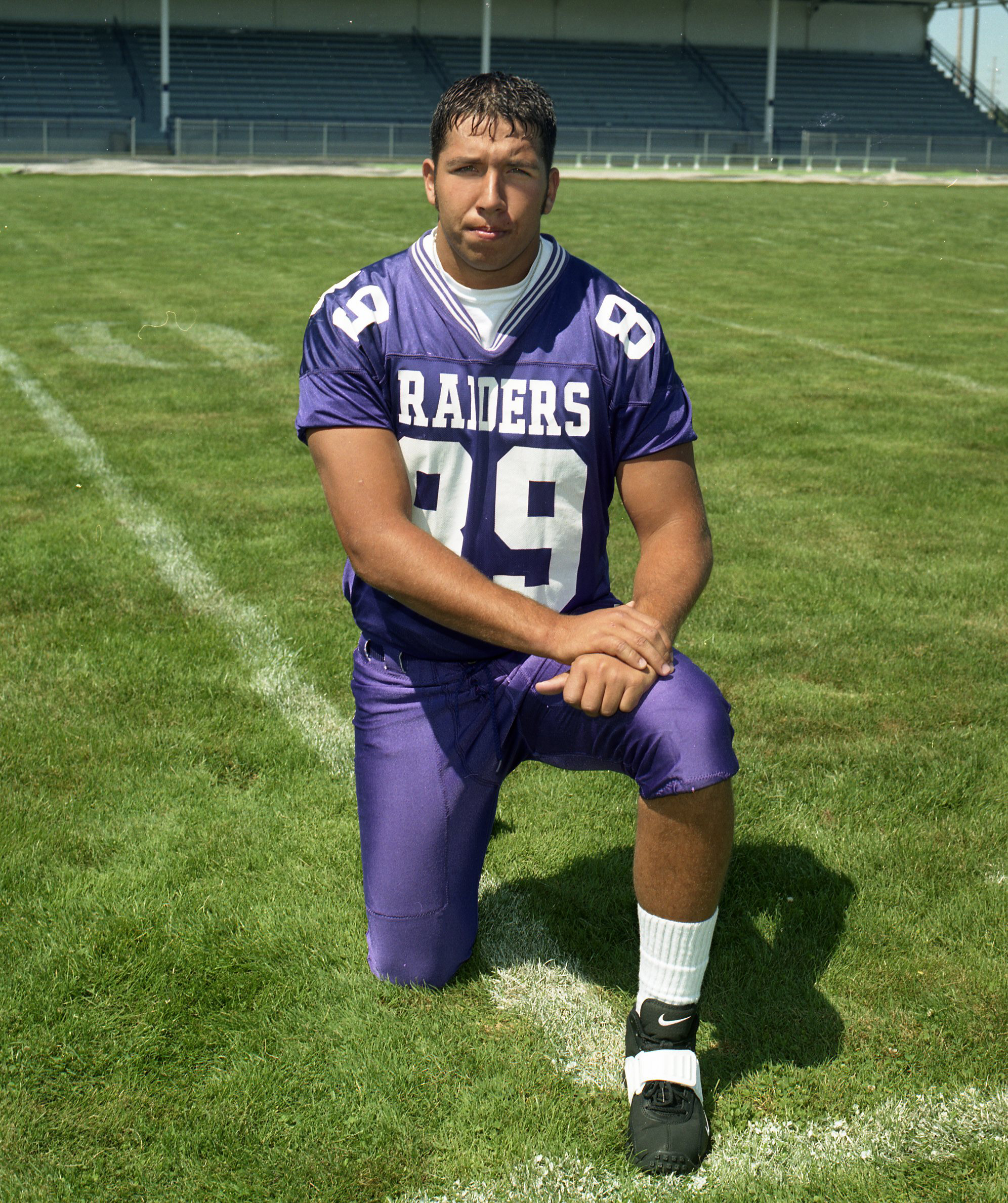
Matt Campbell played defensive line at Division III school Mount Union after spending his freshman season at Pitt.Courtesy of Cockrill’s Studio
“The connection of understanding the value of ‘People don’t care how much you know until they know how much you care,’ and you go back and you say, ‘Man, why? What made the great coaches that you had impactful in your life?’” Campbell said. “It was a transformational experience rather than a transactional journey. And you’re talking about two of the winningest coaches in the history of Ohio high school football, and certainly in all of college football [in Wakefield and Kehres].
“I think their greatest gift was their gift to connect … and find a way to help make their players better, because their belief [of], ‘Man, they cared about them and they wanted to have a real relationship with them.’ So I think that foundation has been huge.”
Often understated about Campbell’s background is how impactful he was on the field for the perennial title contender. His 182 assisted tackles and 55 tackles for loss rank fourth in school history, his 26 career sacks are seventh, and he is 19th in total tackles (256).
Matt Campbell played and coached at Division III Mount Union.Courtesy of Cockrill’s Studio
His on-field success, though, was anchored by film study. Campbell would know “the play that was coming by whether it was the formation or certain motions that they do into the boundaries, and he was calling the plays out,” said Scott, who joined his older brother on Mount Union’s football team in 2002. Campbell’s teammates also took notice.
“All of them knew the way that Matt prepared for football games was abnormal,” Scott said.
But what made what Matt was doing abnormal?
“I don’t think it’s uncommon for a player to be obsessed at watching film,” Scott said. “Some people get really good at honing their skills and they want to do it. It’s abnormal when they bring people along with them. So when you might get a kid, like a very talented defensive tackle … and some of these guys that he played with, they’re meeting on a Sunday night and doing hard core [film study] because they want to be ready for the next week.
“When you have gravitational pull to bring the people that either you’re leading, which we are seeing it with him as a coach, or the ones that you’re going to war with as a football player … for them to match your intensity, they were buying into that and they saw, ‘Well, Campbell’s doing that. We have to do it.’”
Added Manning, Matt’s teammate for two years at Mount Union: “He was always in the film room. He was always trying to find an edge, in terms of being a player, and he was a guy that was probably more talented than most of the people that he played, and he still had the work ethic and the attention to detail as a player that I think helped him separate himself even further.”
Matt Campbell was twice named to the College Football All-America team and named Ohio Athletic Conference’s defensive lineman of the year at Mount Union.Courtesy of Cockrill’s Studio
‘Just as authentic’
When Campbell finished his playing career at Mount Union in 2002, he went to Bowling Green to work as a graduate assistant, but returned to Mount Union in 2005 and was its offensive coordinator and offensive line coach for the next two seasons.
The program won back-to-back titles, with a staff that included Eagles coach Nick Sirianni (2004 to 2005), Campbell’s college teammate and former roommate, as defensive backs coach in that first year. Connecticut coach Jason Candle (2003 to 2008), another former teammate, and Syracuse defensive coordinator Vince Kehres (2000 to 2019), Larry Kehres’ son, were on the staff both seasons.
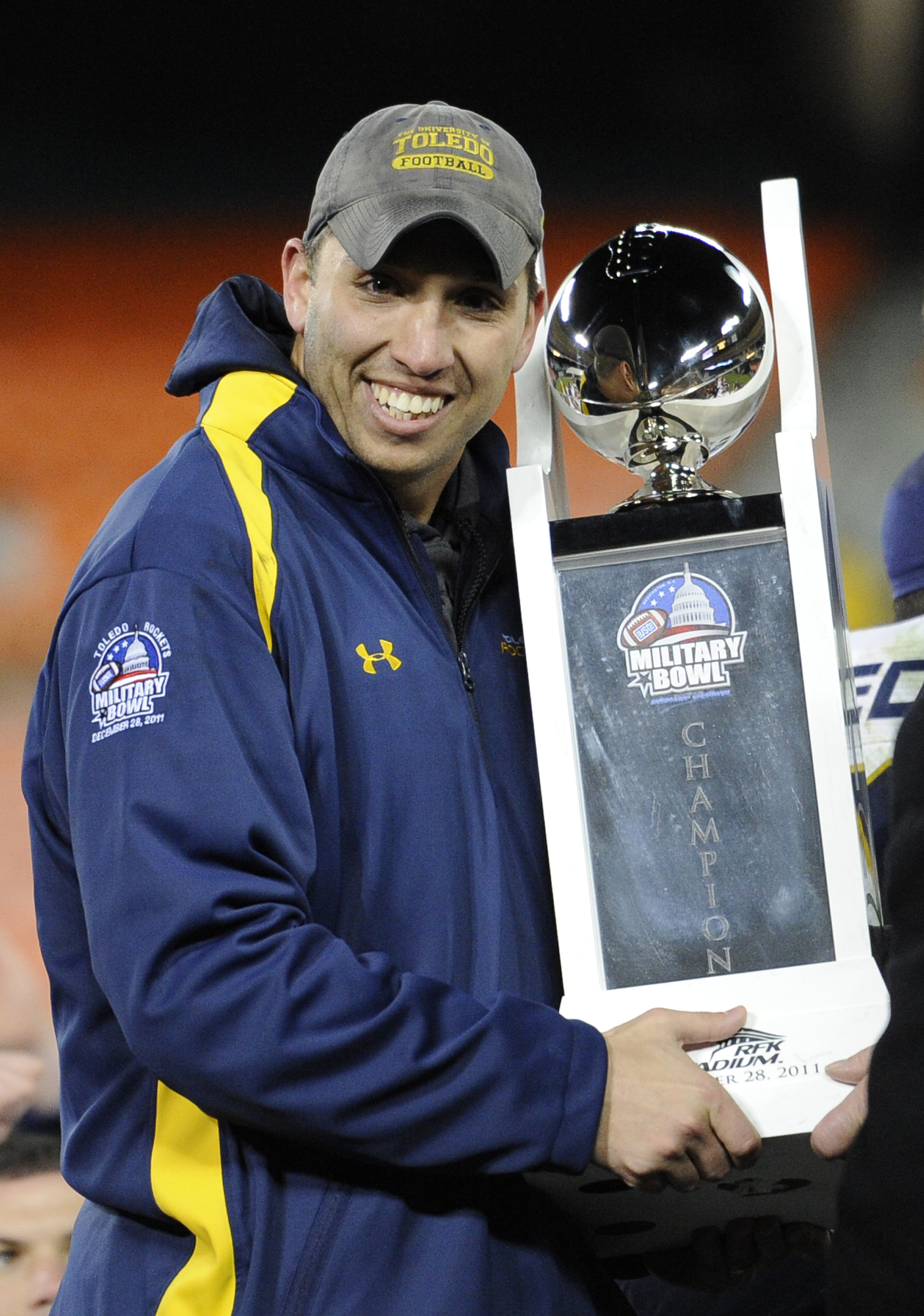
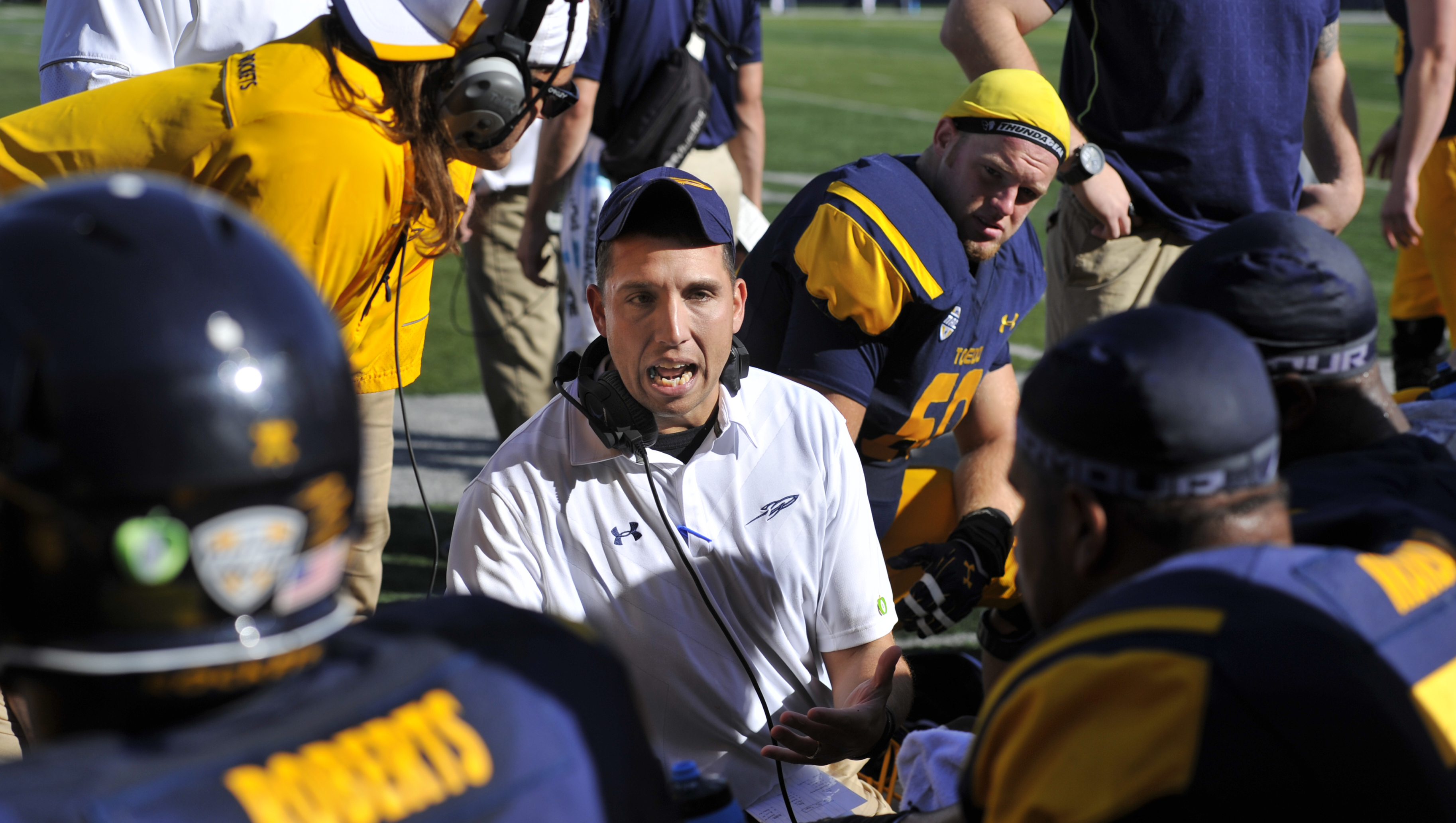
Campbell returned to Bowling Green for two more seasons before landing at Toledo in 2009, first as an offensive line coach and run game coordinator. By 2012, he was the program’s head coach at 32 years old, making him the FBS’s youngest coach at the time.
Colts tight ends coach Tom Manning was teammates with Matt Campbell for two years at Mount Union.Phelan M. Ebenhack
What impressed Manning, who also worked at Toledo as a graduate assistant (2009) and later as its director of football operations and offensive line coach, was how quickly Campbell connected with players and recruits.
“What I really recognized the most was that he was different in recruiting, [he had a] dynamic personality, but I was always impressed, and probably what stuck out the most was that when he had recruits, whether up on campus or visiting him, he had a real relationship with a ton of kids,” Manning said. “I was like, ‘Man, I don’t understand how this guy after just a couple brief contacts, has the ability to know so much about him, have real conversations with him.’ … I knew Matt as a younger guy, and now I knew him in the professional world. I was like, ‘Man, the biggest thing about Matt is he’s just as authentic as he was the day that I met him.’”
And that started with his own teammates. Mount Union was “a player-led program,” and Campbell — along with other leaders like Sirianni, Candle, and Kehres — would open their house and “nurture the young kids because that’s the next generation of leaders in that program.”
Jason Candle followed Matt Campbell to Toledo in 2009 as slot receivers/tight ends coach.Carlos Osorio
“That’s what that whole program was,” Scott said. “It was a program that was giving way before we even knew it was giving to us.”
Matt Campbell worked closely with Candle, who followed him to Toledo in 2009 as slot receivers/tight ends coach, especially when the former assumed play-calling duties under Tim Beckman.
Candle, who considers Campbell a “true friend” and a “great mentor,” recalled the early “camaraderie of the young assistant coaches that we had at the time.”
“Lots of times you don’t get to work with or alongside with or for your college teammates,” Candle said. “And we’ve been through a lot of battles together as players and certainly as young assistant coaches. [Matt’s] been a guy that I’ve learned a lot of football from and a guy that has certainly earned the right to lead one of the top programs in the country.”
Campbell went 9-4 in his first season leading Toledo, and he compiled a 35-15 overall record before moving on to Iowa State at 36 years old.
Matt Campbell compiled a 35-15 overall record while at Toledo.Nick Wass
Campbell “surrounded himself with young and hungry people,” Manning said, particularly on his offensive staffs at Toledo — which featured future Cincinnati coach Scott Satterfield, future Auburn coach Alex Golesh, and Candle. But it was Campbell “doing things the right way” and never being “anybody that he’s not” that stood out.
“Working for him is was one of the greatest experiences of my life,” said Manning, who worked with Campbell for a total of 12 years between Toledo and Iowa State. “You felt like you were doing something. … You were coaching the whole player. It was about character. It was about teaching kids attitude and effort, the ability to be consistent, and to give a little bit more themselves and to play in a unified front — that’s what he does so well.”
Matt Campbell was the head coach at Toledo from 2012 to 2015.David Richard
‘Dog mentality’
In the 10 years before Campbell took over Iowa State, the program had just one winning season and had finished with more than seven wins once since 2000.
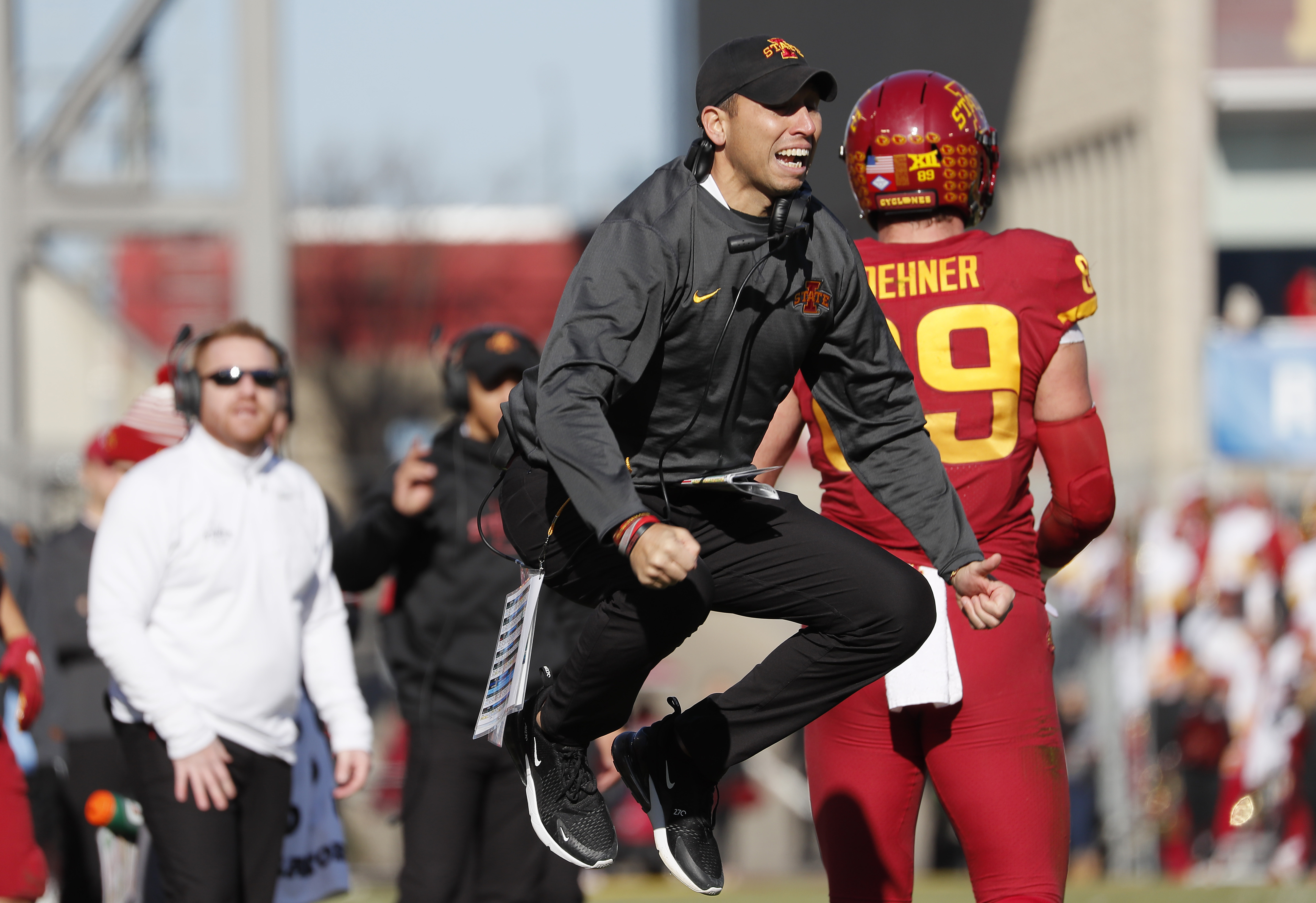
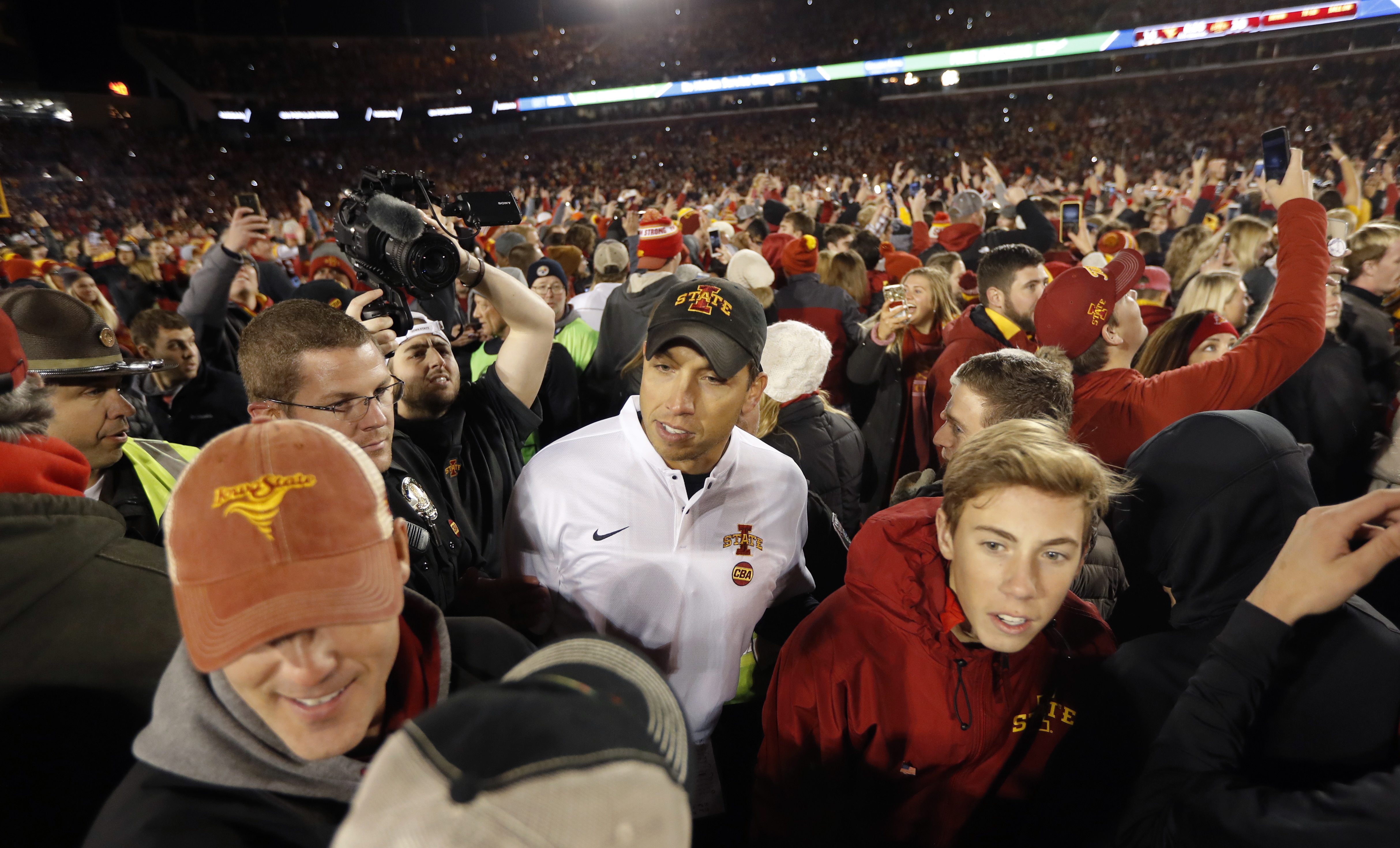
He accomplished those milestones by Year 2. In 2017, the Cyclones went 8-5, their best record in 16 years, and upset No. 3 Oklahoma, 38-31, a memory that is forever etched in the mind of Manning, who was the team’s offensive coordinator and offensive line coach.
“That week, we kind of put in a whole new defense,” Manning said. “We had our middle linebacker who [also] was a quarterback. He played about 40% of the snaps at quarterback. He’s playing both ways. We got a walk-on quarterback who essentially ends up winning us the game, and [Matt’s] belief the whole week, his belief during the game, never wavered. A lot of guys tell themselves like, ‘Hey, we’re going to win this game.’ My man thought we’re going to win the game the entire week, and then we end up winning the game.
Matt Campbell became the Iowa State’s all-time winningest coach.Matthew Putney
“… And to me, it was culture over scheme. Maybe our players collectively weren’t as talented and as good, but, ‘Hey, if we’re united, we have this culture of winning, we do things the right way.’”
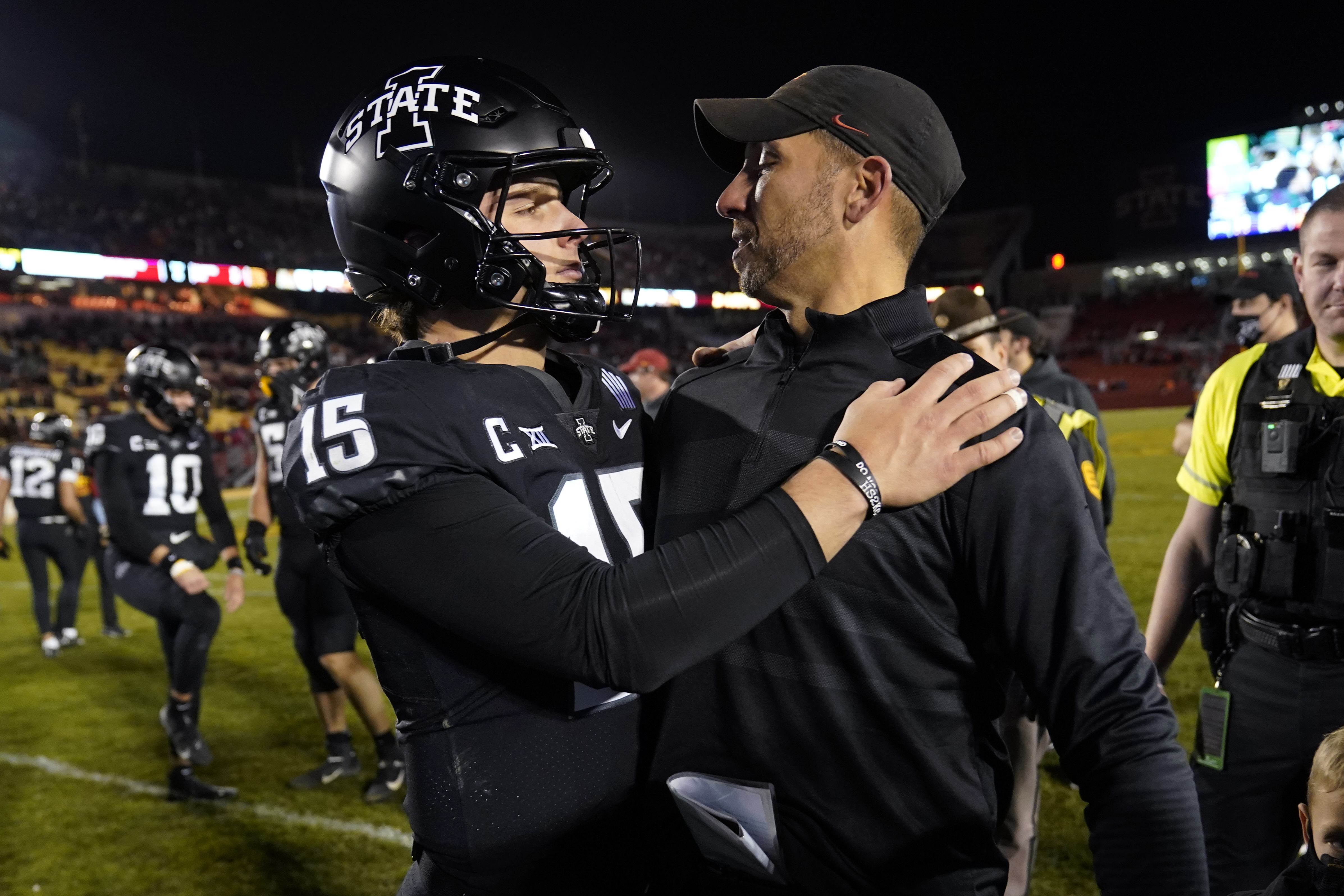
That unwavering belief was reflected by his players, too. Among them was former Iowa State quarterback Brock Purdy, a four-year starter who could sense Campbell’s “loyalty” and praised his former coach “who had a vision for [him in] place.”
“Coach Campbell’s coaching style is huge on culture. It’s important because he sets up an organization that is able to withstand adversity, the good, the bad,” said Purdy, who’s now the San Francisco 49ers starting quarterback. “And it’s all about being a real team that trusts in each other, goes through things with each other. And then at the end of the day, he is going to prepare us better than anybody in the country in terms of scheme and making sure our bodies are right for a long season.”
Former Iowa State quarterback Brock Purdy gets a hug from Matt Campbell against TCU on Nov. 26, 2021.Charlie Neibergall
Those Iowa State teams often punched above their weight. Campbell’s highest-ranked recruiting class with the Cyclones was the Class of 2026, which was 48th before he departed for Penn State, taking much of that class with him.
Wide receiver Xavier Hutchinson, who played three seasons at Iowa State from 2020 to 22, said Campbell recruited players that were “like-minded.”
“Everybody went to Iowa State either because you were underlooked, you weren’t valued, or just people thought [other players] were better,” said Hutchinson, who’s now on the Houston Texans with four other former Cyclones who played for Campbell. “We all had like a dog mentality — and I felt like that’s Coach Campbell’s mentality. It’s like the rough side of the mountain. … He wanted guys who have something to prove and had a chip on their shoulder.”
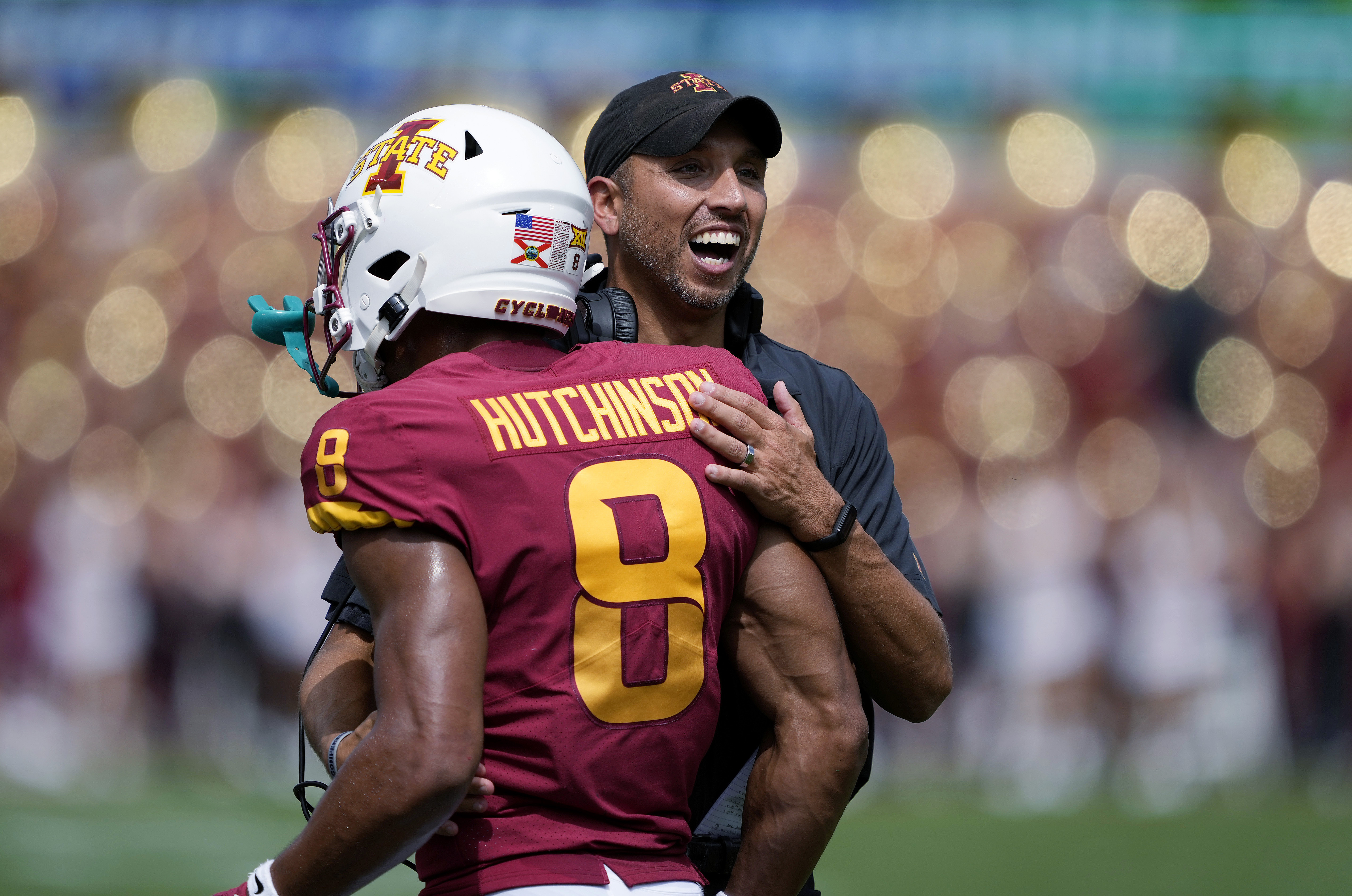
Matt Campbell congratulates former Iowa State wide receiver Xavier Hutchinson on his touchdown against Southeast Missouri State on Sept. 3, 2022.Matthew Putney
There were plenty of highs in his 10-year run at Iowa State: Two Big 12 championship appearances (2020, 2024), the most wins in a two-year stretch (19 wins across 2024 and 2025) and double-digit wins for the first time in program history. Twelve of his 17 Associated Press Top 25 wins came in that time frame, and he became the program’s winningest coach.
Even in the down years — Campbell and Iowa State missed bowl games just twice in 10 years, once in his debut season (2016) and another in 2022 — Hutchinson says his former coach “never let the success or the failures define him as a coach.”
“He’s taken them all on the chin,” Hutchinson said. “When we’ve had the greatest success, he was there. He still had the same motto even when we started [struggling] a little bit. He was still the same guy every day. And I think when your head coach is the same guy, and he doesn’t get frazzled by the success or the failures — it’s going to bleed into the into the team.”
Matt Campbell led Iowa State to two Big 12 championship appearances.Charlie Neibergall
‘The best version of me’
Campbell will emerge from the Beaver Stadium tunnel for the first time this weekend, marking the next chapter for him and the program. His team has 24 former Iowa State players who followed him to Happy Valley.
At the root of his confidence in leading Toledo, Iowa State, and now Penn State is what he learned from his father, Wakefield, and Kehres, his coaching mentors: “Not trying to be somebody else.”
“I love learning. I love being humble and growing, but I’m just trying to be me, the best version of me,” Campbell said. “What I found is we’ve been able to build trust, loyalty, togetherness in our football program, whether it was at Toledo, whether it’s at Iowa State, and obviously that’ll be a great challenge as we build this Penn State program.
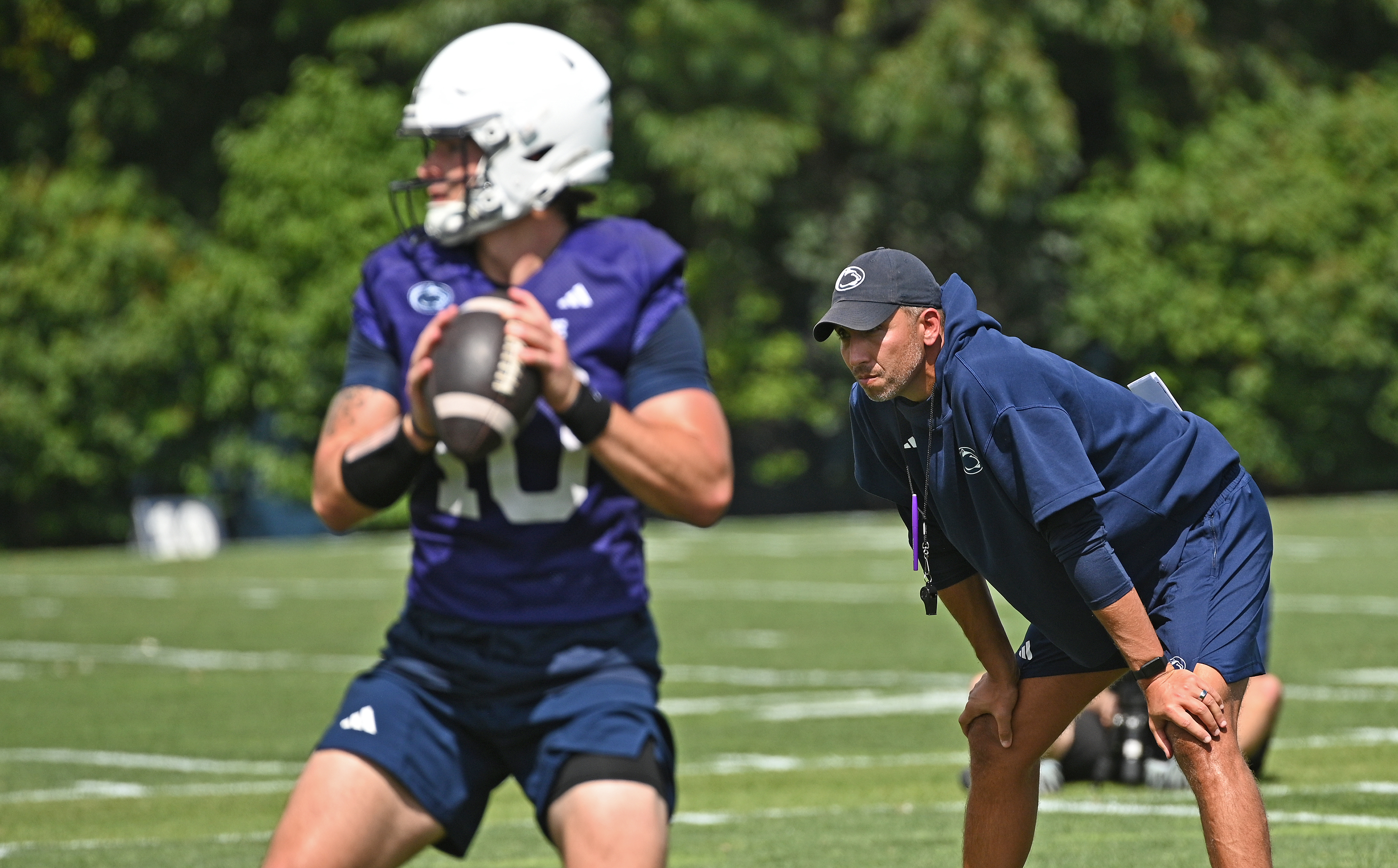
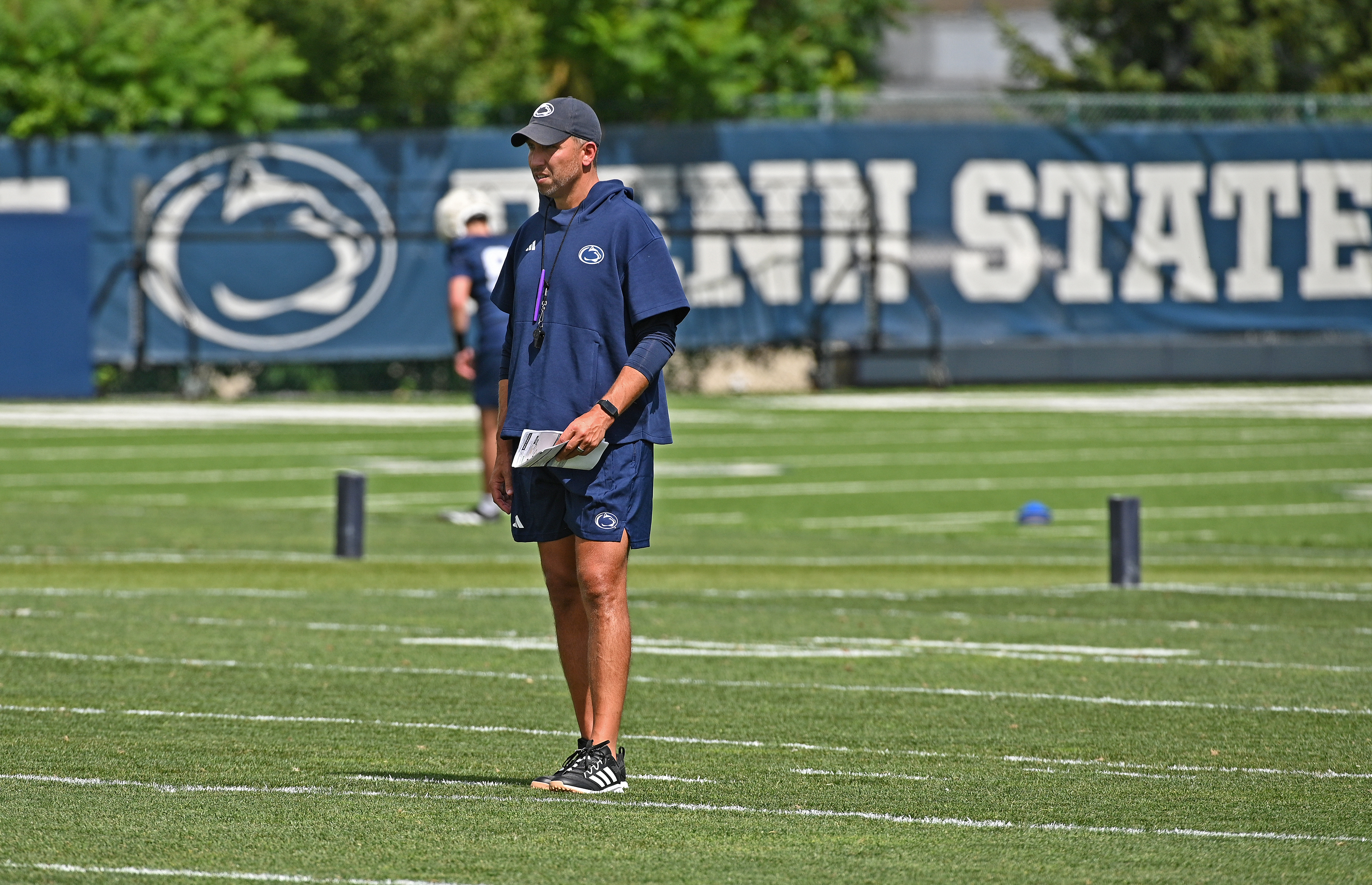
Matt Campbell during Penn State’s first practice of training camp on Aug. 5.Craig Houtz / For The Inquirer
“The attitude and the effort and the consistency to show up every day, and be able to be the same person every day, and allowing your staff and the players on the team to know exactly what they’re going to get … I think those are what I learned and took as a player and a coach from [Kehres and Wakefield], and it’s what I’ve tried to emulate everywhere I’ve been as a football coach.”
His former players, Purdy, Hutchinson, and offensive lineman James Neal III, have no doubts Campbell is ”going to give [Penn State] everything he has” to help it reach new heights. It begins with Marshall on Saturday (3:30 p.m., FS1).
Scott, who joined Wakefield at a Penn State practice on Aug. 13, says his older brother is doing “what he loves.” And it’s why he believes Campbell has sustained success throughout his career.
“If somehow you’re able to get, say, the 400, 500 people that at some point came across Matt Campbell at Mount Union College that played with him or whatever, I would probably say in the high 95 percentile range, every one of them would have told you he was going to be a head coach and a successful head coach at some point,” Scott said. “Matt’s elite trait that he has is that he is beyond competitive.
“He just doesn’t say, ‘We’re going to do this’ because why else would you do it? No. Matt envisions this and believes it. He’s not going to tell you if he doesn’t [believe it.].”
When the Eagles host the Cincinnati Bengals on Friday night for the preseason finale, neither team will likely send out its starters. But Philly fans will get a glimpse of two of their own on the opposite sideline.
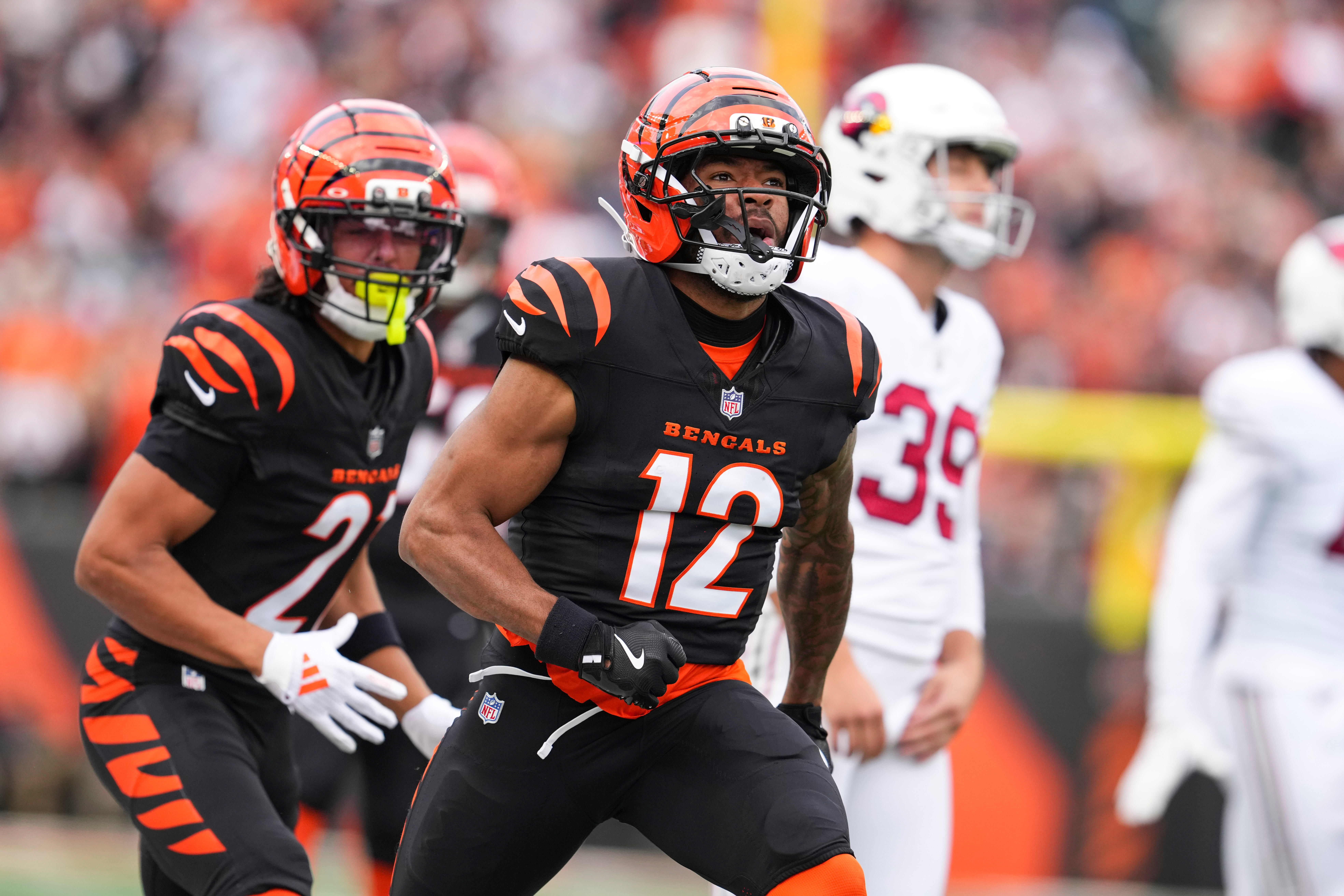
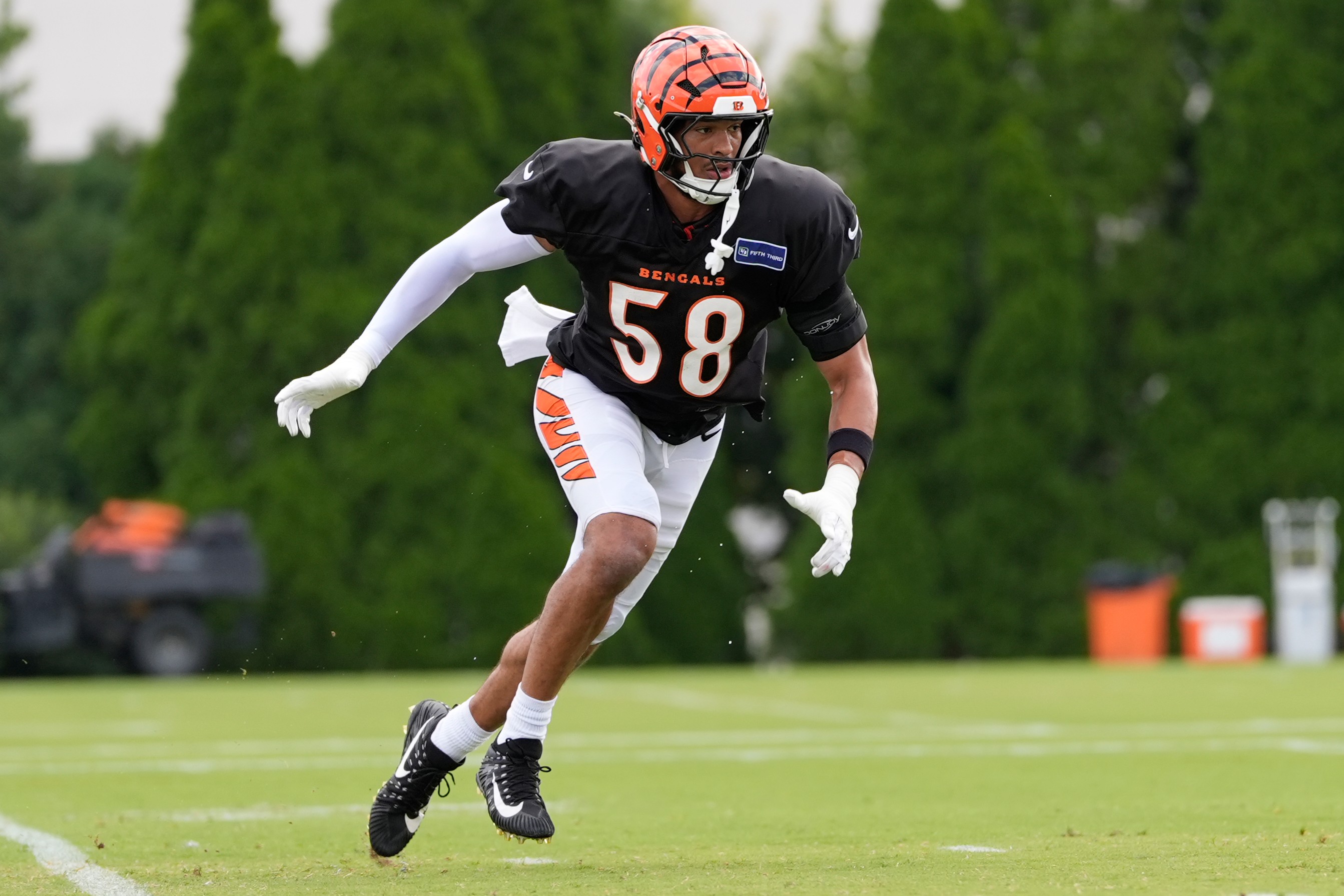
Wide receiver Ke’Shawn Williams and linebacker Eric Gentry, both of whom grew up and played their high school ball in Philadelphia, will return to the city that helped mold them into professional football players.
Gentry, who starred at Neumann Goretti and then Southern Cal, says returning “feels very much like a full circle moment” after being signed by the Bengals as a free agent following the 2026 NFL draft.
“I’m really happy for this opportunity to be able to showcase my talent, especially in front of my hometown. Most importantly, in front of my hometown,” Gentry told The Inquirer by phone. “Being able to be in the city and have family be able to come out there and see me, and I think more importantly, this being the last preseason game, so being able to get more opportunities than I may have gotten before. I just want to make myself be prepared and work as much as I can this week, just to put in the time and effort.”
Williams and Gentry, beyond both being from the Philly area, share another commonality: They played for the North Philly Blackhawks Pop Warner team together, with the 6-foot-7 Gentry noting that “our coach always said [Williams] was the best player on the field.”
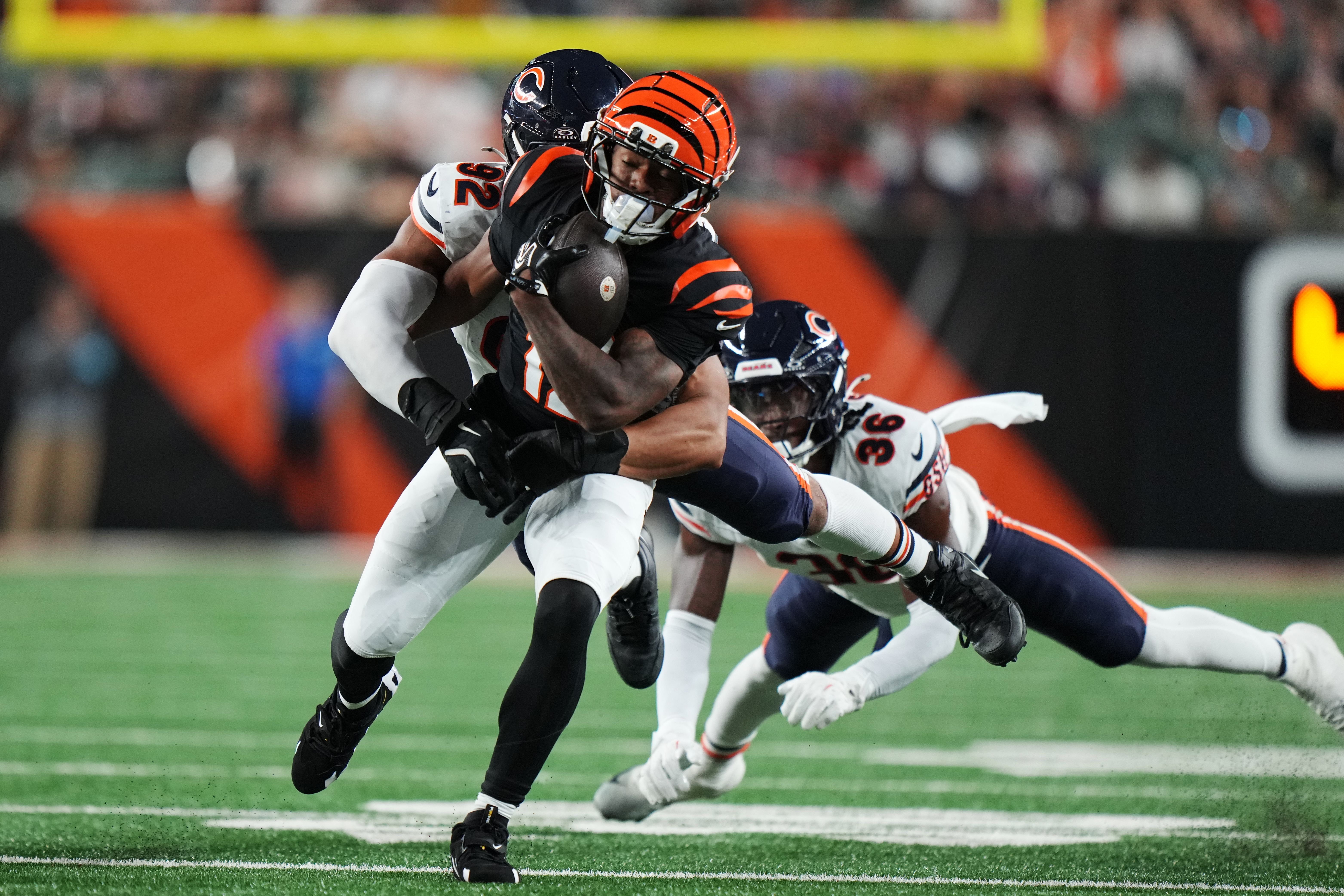
Bengals wide receiver Ke’Shawn Williams (12), who played locally at Chestnut Hill Academy, was on Cincinnati’s active roster at the end of last season. Jeff Dean
“It shows that other guys you’re competing with — all the work that they put in was worth it. You got to that end result,” said Williams, a former Springside Chestnut Hill Academy standout. “[Gentry’s] still fighting, of course. He’s not satisfied just getting here, but it’s cool to see a guy from the same background, from a similar background and similar upbringing, to also make it here and see him compete at this level as well.”
While Gentry is experiencing his first training camp and preseason, Williams is in his second season after initially signing with the Pittsburgh Steelers as an undrafted free agent last year. Williams didn’t make the initial 53-man roster, but ended up on the practice squad.
He was elevated to the active roster in October, playing eight games in Pittsburgh primarily as a return specialist. He returned 11 punts for 112 yards, and 18 kickoffs for 425 yards, before being claimed off waivers by Cincinnati last December.
He appeared in three games for Cincinnati to close the season, also primarily in a returner role, but caught his first NFL pass in a Dec. 28 win over the Arizona Cardinals. Now, he’s trying to make the Bengals’ roster out of training camp. He racked up 95 yards on nine punt returns with the Bengals and another 203 yards on eight kick returns.
“When you go out there and compete in the preseason, you’re not only competing for the team that you’re currently on, but also all other 31 teams in the league that are watching, and it’s just a reminder to go out there and you know not to add any extra pressure on yourself, but to go out there and put your best stuff on tape because that becomes your resume,” Williams said. “Coming into this training camp, coming into this preseason, understanding that the opportunities may be limited, but you know when they come around, it’s like ‘What do you do with them?’
“And if you have a couple of splash days, a couple of teams around the league are also watching.”
Cincinnati Bengals linebacker Eric Gentry runs a drill during training camp earlier this month. Carolyn Kaster
Gentry, who added that he’s been “grinding and learning” this summer, noted that the biggest difference between college and the NFL is “understanding a lot of the stuff that goes outside of football that helps with on-the-field [matters].” A conversation last week with Chicago Bears running back D’Andre Swift, a fellow Philadelphian , helped put in perspective the importance of “keeping a routine and keeping your head on right.”
Leaning on Williams has also been part of Gentry’s education to the NFL.
“He don’t talk too much. He just puts his work in. Never complain. Never gets too up. Never gets too down or anything. Just stays mellow and just worry about himself,” Gentry said.
Williams, meanwhile, has soaked in the opportunity to work alongside Ja’Marr Chase and Tee Higgins, one of the top wideout duos in the NFL. The second-year player says he’s been observing “their IQ for route running and savviness of playing the ball in the air,” and noting the “tips and tricks” he can apply to his game.
Ke’Shawn Williams (12) is trying to stick as a return man and make inroads into a talented wide receiver depth chart headed by Ja’Marr Chase and Tee Higgins. Joshua A. Bickel
They will be put to the test Friday night with Williams and Gentry expected to get extended playing time. Gentry, who has mainly played special teams in preseason, will likely play more defensive snaps, specifically at weakside linebacker.
While there may not be many Bengals fans in the crowd, expect a large presence representing Gentry and Williams. Beyond their families, many who knew them growing up will be in the stands, watching them play in the city for the first time since high school.
“I don’t know nobody who isn’t trying to see what’s up for this week,” Gentry said with a laugh. ”I’ve been happy though because it shows a lot of support from the city, and it was so many people — even at [my draft party] that you know said they couldn’t make it, but wanted to be there, and was texting me before the draft. … Just always having people who always supported me, who is going to be there.”
Added Williams: “It’s a special occasion. I don’t want to make it bigger than it is … but in the back of my mind, you could never get over the full fact that you get to come home and play in front of your loved ones. I’m hoping I get out there and make a couple of plays. That is something worthwhile seeing.”
Optimism is generally high this time of year, especially for an Eagles offense that struggled throughout the 2025 season with consistency and continuity. New offensive coordinator Sean Mannion’s offense has shown flashes of encouraging play along with concerning stretches during training camp, but most fans are excited to watch the offense in full when the season kicks off in a few weeks.
For second-round rookie tight end Eli Stowers, the confidence in his potential role this season seems to be far less positive. He hasn’t been a standout player much this preseason, which has caused some angst among fans.
As history has shown with mid-round tight end prospects, the range of outcomes is wide, and most have the same thing in common: They required patience and time to adjust to the NFL game. Very rarely over the last five drafts has a tight end taken after the first round made an immediate impact. Those who have, like the Lions’ Sam LaPorta, Cardinals’ Trey McBride, and Packers’ Tucker Kraft, quickly ascended to become major receiving weapons with in-line blocking ability.
To provide some perspective on what Stowers can ultimately become, here are three buckets the Eagles tight end could fall under at a position that typically requires patience to see the player’s finished product.
Improved in a key area
Dawson Knox, Buffalo Bills
Though Knox and Stowers are different styles of players — Knox was a more rugged run blocker and not quite as explosive of an athlete — they share a similar background. Both were high school quarterbacks who had to learn a new position in college.
Knox walked on at Ole Miss after missing most of his senior high school season, and didn’t get true tight end reps until his junior season. Stowers switched to tight end just three years ago and is still relatively new to the position.
What helped Knox see the field early on in Buffalo was the blocking ability he displayed in college, but his key area of improvement has been his reliability in a passing game where he’s averaged 50 targets across his seven-year career.
Knox’s two highest receiving success rates have come in the last two years, even though his numbers aren’t eye-popping. In Knox, Stowers can see a player that has adapted to the NFL game, and by the Buffalo tight end’s third year — his best statistical season — he became a much more prevalent receiving threat.
Dawson Knox made an impressive catch vs Lions on a ‘gotta have it’ concept from the past. Rather than running the play in short yardage or a ‘gotta have it’ down and distance, Brady busted it out on 2nd down late in the game. The Dart variation & salesmanship were $$ pic.twitter.com/d9xpUnu7ty
We added LaPorta here because since his rookie season, when he exploded for 889 yards on 86 catches and 10 touchdowns, he has continued to add more to his game — including becoming a more reliable in-line blocker, which was a weakness in college. It even showed up early on in his NFL career, especially with one-on-one blocks against defensive ends.
LaPorta was limited to nine games last season because of injury — he missed the last eight games with a herniated disk in his back — but showed some progression as a blocker for the Lions.
Though Brock Wright handled more of the blocking duties, LaPorta, when healthy, has been a dynamic field stretcher and creator after the catch. What Stowers can learn from LaPorta — who also entered the league at sub-250 pounds — is that blocking can be improved, even in the NFL. Stowers likely will not reach the same level of involvement in the Eagles offense as LaPorta had in Detroit as a rookie, though.
Struggled to block, contributed as part of a rotation
Mike Gesicki, Cincinnati Bengals
Among current players, there may not be a closer comparable to Stowers than Gesicki. Both were dynamic receiving tight ends who did their damage in college when split out wide, in the slot, or as off-the-ball tight ends.
They share another commonality too: struggling to block in one-on-one scenarios against defensive linemen and generating displacement at the line of scrimmage. Gesicki’s best years of production — from 2019-21 — are likely behind him. Since leaving the Miami Dolphins in 2022, Gesicki has averaged about 45% of snaps across his time with the New England Patriots and Cincinnati Bengals.
The former 2018 second-rounder has been relatively healthy throughout his career, but never improved even marginally as a blocker, which limits how much he can be on the field in the modern NFL.
Jonnu Smith
The Philadelphia native, currently a free agent, was best known for his ability to create explosive plays with the ball in his hands, though he has surpassed 600 receiving yards in a season just once. His usage in Arthur Smith’s offenses, first in Tennessee and then in Atlanta, made him a threat to turn a routine play into a big gain after the catch.
NE debuted a fun wrinkle vs NYJ with a "full house" backfield using Hunter Henry + Jonnu Smith as split fullbacks.
5/6 of these snaps featured inside zone with two lead blockers or Henry sift-blocking and Jonnu releasing to the flat to remove a defender from the box pic.twitter.com/QcGtXV8odX
But across his five NFL stops, the one inconsistency of his game has been his blocking. He showed much more promise than Gesicki as a blocker, but Smith has never consistently been able to block as an in-line player, and it’s a big reason he likely has not drawn a ton of interest entering Year 10.
His last stop, in Pittsburgh last season, produced career-worst numbers in a loaded tight end room: 38 catches, 222 yards for a 5.8 yards per catch average.
The Bills dominated the trenches on both sides of the ball
Smith, a former third-round pick, never assumed the top tight end role at any of his stops but has played nearly a decade in the league. He has carved out a niche role as an undersized tight end that is a run-after-catch threat , but he isn’t a fit for every offense as he ages.
Receiving skills kept them on the field regardless of blocking struggles
Jared Cook
When you look up Stowers on Mockdraftable, which draws comparisons to previous players at a position, Cook’s name is his third-highest match at 73.9%, and for good reason. Cook was a nonfactor as a blocker and just not valuable when asked to handle defensive ends and linebackers in those blocking situations.
Rarely see Jared Cook in for run plays and usually Richard Rodgers in during early downs. Hard to find EX of Cook blocking. Effort = 👎🏼 pic.twitter.com/p2Bl2pULrJ
When you look back at the receiving numbers, though, he was a matchup problem for linebackers, safeties, and even some cornerbacks. But his success took a while as he struggled early with the Tennessee Titans, but by his third year, he was consistently contributing as a receiver. In the last 10 years of his 13-season NFL career, Cook averaged just over 600 receiving yards and four touchdowns, including a career-best 896 receiving yards in Year 10 with Oakland.
The Chargers were 20th in RZ efficiency The Saints were 5th in RZ efficiency
I don't know about what happens from touchback to 20, but within that final 20 you find your reason to sign Jared Cook. pic.twitter.com/HhzLIHDQmH
If Stowers never truly develops as a reliable blocker, a career similar to Cook’s, who was a second-round pick in 2009, would be an ideal outcome.
Isaiah Likely, New York Giants
Like Stowers, former fourth-rounder Likely walked into a veteran-laden tight end room as a rookie, and though there was excitement around the Baltimore Ravens tight end early on, his development took time, as did the production. Likely didn’t truly get going until the back half of his rookie season, with 26 of his 36 total catches and 279 of his 373 total receiving yards coming from Week 8 through the rest of the season.
Monken loves crack toss in the redzone – did it a lot at Georgia too.
Here you get great inside work by Zay Flowers to disrupt and Morgan Moses to finish on the pull.
but Isaiah Likely deserves flowers – hell of a kickout block.
Blocking in space was a strength for Likely at Coastal Carolina, but translating it to the NFL game as a full-time in-line player has never materialized. It didn’t in Baltimore, with Mark Andrews and later Charlie Kolar taking more of those responsibilities.
Likely, who signed with the New York Giants in the offseason (three years, $40 million), is best known for his receiving ability, specifically stretching the field vertically. Despite a down season last year, Likely’s greatest abilities are finding soft spots in zone coverage and winning his one-on-one matchups downfield.
If Stowers can be serviceable as a blocker, similar to how Likely was in Baltimore, that can help the Eagles rookie earn more snaps early in his career.
Patience, patience, patience
It’s too early to write off Stowers, even if he isn’t productive in Year 1 in Philly. As we wrote on the night the Vanderbilt tight end was drafted, his true impact could come three or four years down the line. And leaning on previous examples, those breakouts for non-first-round tight ends often happened in Year 3 or 4.
With Dallas Goedert and Johnny Mundt likely filling the top two roles for the Eagles tight end room, there should be no rush to force Stowers onto the field. The season is long, and should he make an impact in 2026, it’ll likely come deep into the season.
Connecticut women’s basketball in the 21st century has been synonymous with dominance, and the central figure to it all has been Norristown native Geno Auriemma.
The 72-year-old coach, who took his current job ahead of the 1985 season, has spent more than four decades on the sideline and built the Huskies into one of the most dominant and storied programs in college basketball history.
On Aug. 21, a three-episode documentary called The Dynasty: UConn Huskies aired on Apple TV, giving insight into Auriemma’s brash coaching style that has often received criticism but was a driving force to his 12 national titles.
And while it featured many players past and present, from Swin Cash and Sue Bird to Diana Taurasi, Breanna Stewart, and even Paige Bueckers, Auriemma’s Philly roots were another theme of the coach’s historic run in women’s college basketball.
Here were some ways Philly was involved in Auriemma’s journey:
Auriemma’s motivation to coach girls’ basketball
The documentary tells the story of Auriemma and UConn chronologically, but stopped in both the first and second episodes to detail some of his backstory. Auriemma described how he first got involved with women’s basketball.
“When I was in school and playing basketball, coaching women would have been last on my list,” Auriemma says. “But my buddy, he comes up to me one day and he says, ‘Hey, I started coaching girls’ high school basketball. I need an assistant coach.’ I said, ‘Who the hell would coach girls?’”
Geno Auriemma is carried off the floor by his players after UConn won the 2010 NCAA championship, defeating Stanford.ERIC GAY, Filoe / Associated Press
Auriemma later obliged, and while he didn’t say it on camera, that start came at Bishop McDevitt High School as the girls’ basketball junior varsity coach and assistant varsity coach. When he went to practice, he noted his own reluctance to provide hard coaching.
“It kind of dawned on me. They’re not going to crack. They’re not fragile,” said Auriemma. “That you can demand a lot from them. … But everything [in my career] just took off from there.”
He later took assistant coaching jobs at St. Joseph’s and Virginia, with Norristown’s Kennedy Kenrick Catholic High School (which closed in 1993) sandwiched in between. Auriemma took the UConn job in 1985 and has been there since.
Auriemma discussed his family moving from Montella, a small village in southern Italy, to Norristown when he was 7 years old. He recalled that his “mother can’t read or write, my father barely went to school,” and cited the challenges of not being able to “speak any English.”
The differences in the clothes he wore and food he ate, compared to other kids, Auriemma said, made him “desperately wanting to be like an American kid.” It ultimately informed his approach as a coach.
“As I got older, I always felt like, ‘I’m not that guy.’ … You get reminded, but there was this part of me where if I can be really, really, really good and be better than you, then I can, I can prove that I belong in your group,” said Auriemma. “It’s just a little kid’s mentality, and unfortunately, it stayed with me 40 years into coaching that I have to prove that I’m better than anybody else at doing what I do, but I need to be better than you.”
UConn-Tennessee rivalry
Auriemma’s breakthrough as a coach was beating Pat Summitt and her Tennessee squad in the national championship game in 1995. But afterward, Summitt won three national titles in a row and reclaimed the Lady Vols’ status as women’s basketball’s elite program.
That all changed in the 2000 NCAA Tournament championship game, though. After a disappointing Sweet 16 loss with their hyped freshman recruiting class that included Bird, Cash, Asjha Jones, and Tamika Williams, UConn came roaring back and was set to face Tennessee in Philadelphia at the First Union Center (now called Xfinity Mobile Arena).
Tennessee coach Pat Summitt (left) shakes hands with Connecticut coach Geno Auriemma before a 2006 game.Wade Payne
Auriemma also further ignited his rivalry with Summitt with some of his pregame comments about cheesesteaks.
“Geno was doing an interview about cheesesteak, obviously Geno’s, and one is Pat’s across the street in Philly, and he made a comparison. Geno’s was new and forthcoming. Pat’s was old and dilapidated,” recalled Mickie DeMoss, a longtime assistant under Summit at Tennessee. “I mean, at that point we had won six, and he’d won one. So I’m not sure where he got Pat was old and dilapidated.”
The interaction underscored the heated and competitive relationship between Summit and Auriemma, and the rivalry that had been brewing for five years. Auriemma wanted to ensure his team came out on top in his hometown that season.
“Lots of people are great. But that night in Philly, I wanted to make sure that everybody knew we’re the best in the country. I mean, everyone,” said Auriemma. “They’re all people I grew up with. They’re all kids I grew up with. So being surrounded by all that and family, yeah, the desire to win, I want that so bad. I’ll do anything to get it.”
And he did, emphatically. UConn rolled Tennessee, 71-52, for Auriemma’s second title and what set off a dominant 17-year stretch in which the Huskies won 10 national titles before Philly’s Dawn Staley and South Carolina took center stage in the current era of women’s college basketball.
Auriemma’s latest title in 2025 was featured to close the documentary, with Bueckers’ difficult journey and rocky relationship with the longtime coach culminating in a win over Staley’s South Carolina.
This season, which will be the 41st for Auriemma, UConn will face Staley’s Gamecocks on Nov. 24 at Mohegan Sun Arena, home of the Connecticut Sun, for the first time since Auriemma’s outburst in the final seconds of their Final Four matchup last season. The game is part of a doubleheader for the Hall of Fame Women’s Showcase. St. John’s will face UCLA in the other game.