Author: Abraham Gutman

  • Pa. Supreme Court says SEPTA special prosecutor is constitutional, another blow to Krasner

    Pa. Supreme Court says SEPTA special prosecutor is constitutional, another blow to Krasner

    A 2023 Pennsylvania law creating a special prosecutor to pursue crimes on SEPTA is constitutional, a unanimous state Supreme Court ruled Thursday.

    All seven justices rejected District Attorney Larry Krasner’s argument that the law unconstitutionally strips the authority of an elected district attorney by granting jurisdictions to crime “within” SEPTA to a special prosecutor appointed by the Pennsylvania attorney general. But they did not unanimously agree on the reason.

    The special prosecutor can investigate crimes in all counties in which SEPTA operates, but can take over cases unilaterally only in Philadelphia.

    Chief Justice Debra Todd wrote in the majority opinion that the part of the special prosecutor law specific to Philadelphia serves a “legitimate state interest: promoting public safety through the protection of SEPTA employees and riders by supporting the prosecution of crimes within SEPTA, and specifically, SEPTA-related crimes in Philadelphia.”

    The law responds to “public safety concerns regarding increased SEPTA-related crime in Philadelphia, and the belief that such crimes were not being sufficiently prosecuted,” Todd wrote.

    State Attorney General Dave Sunday, who is authorized to appoint the special prosecutor, said the law “has paid great dividends in holding violent offenders accountable” for crimes on SEPTA.

    “Our mass transit prosecutor will continue to prosecute criminals who have killed and assaulted other individuals, perpetrated acts of gun violence, and stolen SEPTA property,” Sunday said in a statement.

    A spokesperson for the district attorney’s office did not return a request for comment.

    The special prosecutor’s office has become more active in the last year after a slow start. The office initially hired a sole attorney and did not prosecute a case until 2025, two years after its creation. The office has since taken on a portfolio of around two dozen cases, a spokesperson for the attorney general said. Serious crime on SEPTA has trended downward, according to the agency, falling around 20% in mid-2026 compared with the same period the previous year.

    Earlier this year, the special prosecutor, Michael Untermeyer, took on an assault case involving a woman accused of pepper-spraying and punching a conservative influencer during a viral confrontation on a SEPTA bus. And a representative for Sunday’s office said the prosecutor was preparing for a homicide trial in November, and the office was recently referred a case involving an assault on a SEPTA bus driver.

    The ruling is the latest in which the Supreme Court has shown willingness to take away from Krasner functions that county prosecutors traditionally have had sole discretion over. The justices in June found that Philadelphia prosecutors had engaged in a pattern of misleading judges when seeking to overturn murder convictions, and instructed judges to notify the state attorney general’s office so it can review cases when Krasner’s office makes such requests going forward.

    But the ruling on the SEPTA special prosecutor might be short-lived.

    The law that authorized the role is set to expire at the end of the year, and while Harrisburg lawmakers set aside $1.2 million for the special prosecutor’s operations next year, they have not yet agreed on extending the measure.

    Krasner filed a lawsuit in January 2024 attempting to quash the Republican-sponsored state law that gives a special prosecutor authority over crimes around SEPTA properties in Philadelphia. Gov. Josh Shapiro had signed the bill into law as part of a state budget deal in December 2023.

    Krasner’s lawsuit called the law an “unconstitutional, radical, and unprecedented measure” amounting to a “shocking usurpation of power.”

    In June, Commonwealth Court issued a 4-3 decision against Krasner, finding the law constitutional. In the majority opinion, Judge Anne E. Covey said the act “does not clearly, palpably, and plainly violate the Pennsylvania Constitution.”

    In a Thursday concurring opinion, Justice David Wecht emphasized the ways the special prosecutor law was tailored to Krasner specifically.

    The law disqualifies anyone who worked at the Philadelphia district attorney’s office as of roughly the beginning of Krasner’s tenure from serving as special prosecutor, the justice noted. And the measure was set to expire a year after Krasner’s second term ended (he has since won a third, which began in January).

    The special prosecutor law is “tailored to hamstring Philadelphia’s thrice-elected and sitting District Attorney’s customary prerogatives relative to crime within the jurisdiction that office serves,” Wecht wrote.

    “But none of that matters,” he said, because since 1951 the Pennsylvania Constitution has allowed for laws ”regulating the affairs of the City of Philadelphia.”

  • Central Bucks engaged in a ‘concerted cover-up’ of abuse at elementary school, lawsuit says

    Central Bucks engaged in a ‘concerted cover-up’ of abuse at elementary school, lawsuit says

    The parents of a nonverbal autistic 10-year-old who was among the students the Central Bucks School District has said were abused in an elementary school classroom in 2024 have filed a lawsuit against the district and nearly a dozen former and current employees.

    James Pepper, a former school board member, and his wife, Lisa Pepper, say their son’s “horrific abuses” at Jamison Elementary School amounted to a “calculated pattern of debasement” that district and school leadership failed to report as part of a “concerted cover-up.”

    The bulk of the 92-page complaint, filed Tuesday in federal court in Philadelphia, outlines events that began in fall 2024, when a special education aide reported the abuse. Her allegations rocked Pennsylvania’s third-largest district, spurring an investigation by a disability rights watchdog, a public outcry, and a series of terminations that included the district’s superintendent.

    Now, the Peppers are suing Central Bucks, as well as former Superintendent Steven Yanni, former Jamison principal David Heineman, other former district administrators, the special education teacher and educational assistant accused of misconduct, and teachers union representatives.

    The district continued to endanger the child after learning about the abuse, and the alleged “cover-up” was motivated by James Pepper’s position as a board member and history of advocacy, the suit says.

    “This case involves an extraordinary betrayal of a child who depended entirely on the adults around him for his safety, education, and care,” M. Stewart Ryan, the attorney representing the parents, said in a statement.

    Central Bucks spokesperson Michael Petitti said in a statement that the district “has acknowledged what occurred” in that classroom.

    Petitti said the district “took the actions within its power” to discipline employees, including firing Yanni, Heineman, and the former special education director, Alyssa Wright. It also “fully litigated” terminations of the teacher and educational assistant, Petitti said, and “implemented significant changes at Jamison Elementary School to make sure that nothing like this ever happens again.”

    “The district understands that none of these actions can change what happened,” Petitti said.

    The allegations

    District officials learned about the allegations in November 2024 from Alyssa Kline, who was assigned as the one-on-one aide for the Peppers’ child.

    Kline said special education teacher Gabrielle McDaniel and educational assistant Rachel Aussprung had improperly restrained and punished the Peppers’ child, among other forms of abuse.

    The abuse included “nearly 3,000 illegal restraints … water restriction, corporal punishment, forced exposure to nudity and sexual self-stimulation, screaming, mocking, belittling, and concealment of a head injury in a series of events that were intended to, and indeed did, dehumanize” the boy, the lawsuit says.

    The nonverbal child could not share his experience in school, and his parents were not initially informed of the accusations, the suit says. The district reassigned Kline days after she made the allegations, telling the Peppers the reason for the change was a “personal conflict” between the aide and classroom staff, according to the complaint.

    The Peppers learned about the allegations of abuse only in December, when Kline reached out to share what she had reported with the parents, the suit says. But in an official letter that month, the district said its investigation found “no evidence of abuse.”

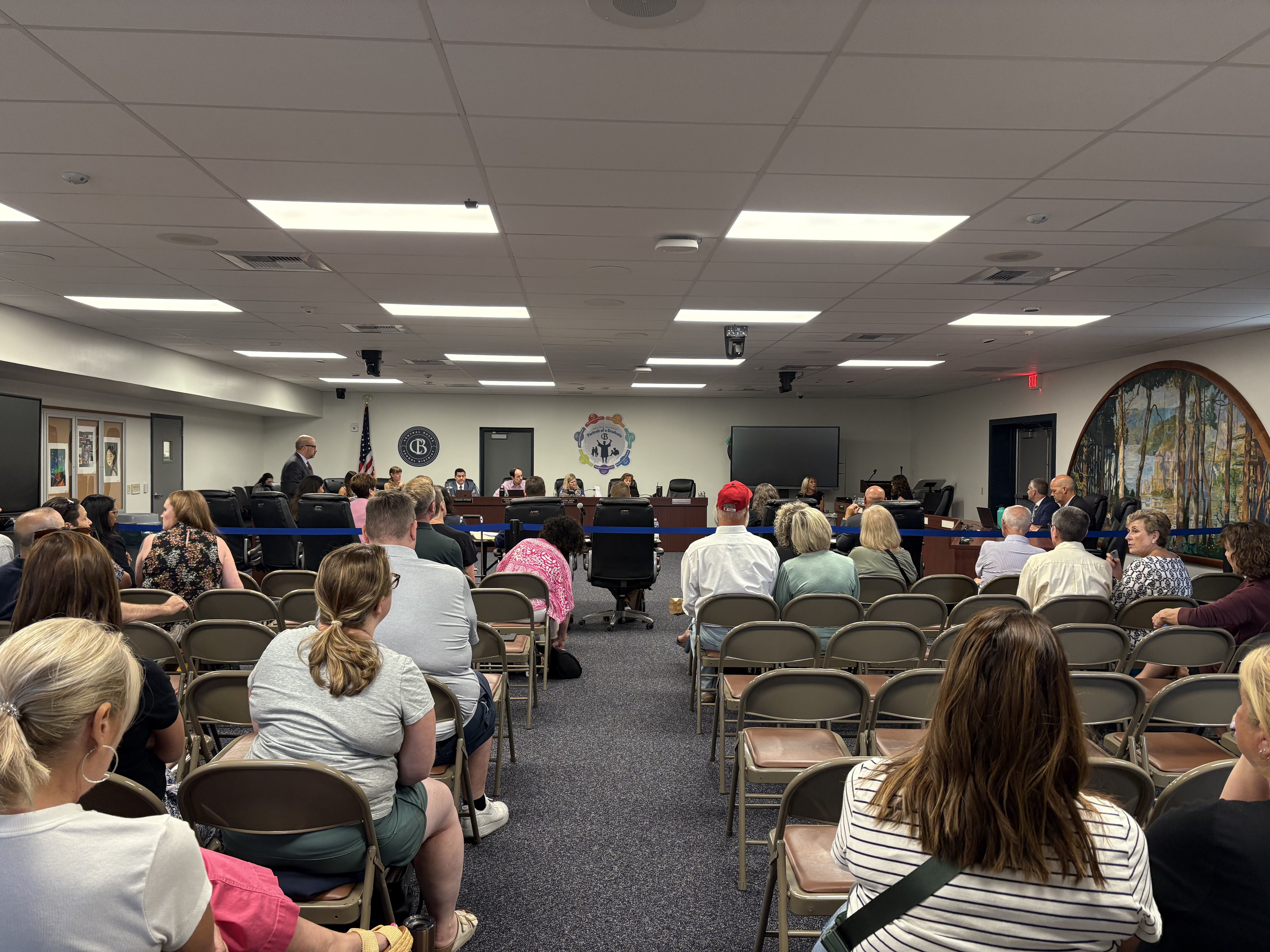
    Members of the public watch the joint termination hearing of Central Bucks Superintendent Steven Yanni and Jamison Elementary School Principal David Heineman in August 2025.Fallon Roth / Staff

    School board members initially stood by district officials, who noted police had not found any abuse. But that changed in April 2025, when a report from the watchdog group Disability Rights Pennsylvania found that the teacher and assistant had illegally restrained students, creating a “reasonable likelihood of bodily injury” and likely interfering with their breathing, among other abusive behaviors.

    It also faulted Yanni and other administrators for failing to adequately investigate the allegations, and accused Yanni of withholding information from police.

    The school board terminated Yanni and Heineman in October. Pepper recused himself from the vote and the termination hearings that preceded it.

    Yanni, now the CEO of Northwood Charter School in Philadelphia, did not respond to a request for comment.

    A lawyer for Heineman did not return a request for comment. Neither did a lawyer for McDaniel and Aussprung, who have sued the district since their terminations. Wright, whose lawyer did not return a request for comment, has also sued the district, saying she was scapegoated.

    The Peppers’ lawsuit says district and teachers union officials, whom Kline also informed, failed to report the abuse.

    Cara Alderfer, the union president, declined to comment Tuesday.

    The ‘cover-up’

    The Peppers’ lawsuit alleges a sprawling cover-up that started the moment Kline made the allegations.

    The accused teacher and assistant were not removed from the classroom, and the district recommended that McDaniel or Aussprung take the Peppers’ child to therapy sessions after Kline was reassigned, according to the complaint.

    The district did not turn over an email outlining Kline’s allegations to Disability Rights Pennsylvania, the suit says.

    Yanni and other officials “were actively engaged in a conspiracy to bury the reports of child abuse they had received,” the complaint says.

    The complaint blames a few factors as motivating the alleged “cover-up.”

    Yanni, who took over the deeply divided district after a bitter and highly publicized school board election won by Democrats, said one of his goals was to keep the school system “out of the newspaper,” the suit says.

    And the district was motivated to retaliate against Pepper — then the only Republican on the board — for stances he had previously taken against the district, the suit says.

    The actions of the school district and its employees deprived the Peppers’ son of “safety, liberty, and bodily integrity,” the complaint says.

    “It is devastating to learn that our son was treated this way by the very people we trusted to care for and protect him,” the Pepper family said in a statement. “Our son and entire family have been changed forever. This can never happen again to another child.”

  • Attorneys botched a case against Amtrak over the deaths of two young boys, lawsuit says

    Attorneys botched a case against Amtrak over the deaths of two young boys, lawsuit says

    The mothers of two Chester kids who were struck and killed by a train in 2023 are accusing their former attorneys of botching their wrongful death lawsuit against Amtrak.

    Jahaad Atkinson, 9, and Ah’Yir Womack, 12, were walking on the railroad tracks and hit by a southbound Acela train. Amtrak operators knew people had been on the tracks at least 20 minutes prior, but the Acela proceeded as scheduled, according to the legal malpractice complaint.

    That information shows Amtrak acted “wantonly and recklessly,” the suit says, but the attorneys who initially represented the mothers failed to include it in their case until it was too late.

    Emeka Igwe (second from left) discusses the lawsuit he filed on behalf of Siani Gordon (third from right) and Wydeia Kimble (fourth from right). The two mothers both lost their sons when they were struck and killed by an Amtrak train in Chester in April.Vinny Vella / Staff

    Atkinson’s mother, Siani Gordon, and Womack’s mother, Wydeia Kimble, say lawyers Emeka Igwe and Daniel Purtell, as well as their respective firms and colleagues, were professionally negligent when pursuing their case against Amtrak.

    “This was an avoidable result,” says the suit, which was filed last month in Common Pleas Court in Philadelphia. “Defendants failed to present necessary evidence in their possession to pursue valid legal theories that would have led to a successful recovery.”

    Aaron Freiwald, the mothers’ current attorney, declined to comment.

    Igwe said in a statement he disagreed “in the strongest terms possible” with the notion he did not represent his clients “competently and diligently.”

    “The case is in active litigation and we are unable to substantively comment outside of the fact that we continue to support our former clients’ best interests,” Purtell said in a statement.

    The wrong theory

    Atkinson loved to play Roblox, the color red, and dressing up as Spider-Man to get his siblings to laugh. Womack had an infectious smile, a similar proclivity for a funny bit, and couldn’t dance to save his life.

    That’s how family members and other community mourners remember the children who on April 29, 2023, took a fateful shortcut on the way to a park in Chester’s West End.

    Atkinson, Womack, and other children passed through a hole in the fencing and walked along the tracks of Amtrak’s ultra-busy Northeast Corridor. It was a popular route for neighborhood children.

    Mothers Gordon and Kimble sued the National Railroad Passenger Corp., the entity that operates Amtrak, in Philadelphia federal court in July 2023. Igwe hitched the case to the hole in the fence, and sought $20 million in damages.

    “Amtrak knew this was a danger, which is why they erected this fence in the first place,” Igwe said in August 2023.

    Jahaad Atkinson, 9, and Ah’Yir Womack, 12, used this hole in a fence to climb onto the Amtrak tracks in Chester, according to their families’ attorney.Courtesy Emeka Igwe

    Amtrak argued Pennsylvania law does not require railroads to erect or maintain fencing around tracks. And because the boys were trespassing, Amtrak cannot be held liable for injuries caused by negligence, the rail company asserted.

    A federal judge sided with Amtrak in March 2024, dismissing the mothers’ complaints but saying they could file an amended pleading.

    Roughly two weeks later, Igwe filed an updated complaint that argued the tracks heading to the collision area were straight and provided “unrestricted visibility,” so the train operators “should have observed” the children.

    In March 2025, Igwe was deployed to Kuwait as part of his service as an attorney with the Delaware National Guard. He turned the case over to Purtell and his firm.

    The McEldrew Purtell attorneys blamed Igwe for deficiencies in the case, according to the malpractice lawsuit.

    Igwe did not follow up on deposition requests, the attorneys said in one court filing. In another, they attributed the case’s “general malaise” in part to Igwe’s “lack of diligence.”

    Locator map of the site where two children were fatally struck by an Amtrak train while on the tracks in Chester.John Duchneskie

    The malpractice suit also claims Igwe and Purtell declined an offer by the railroad to mediate, without informing the mothers.

    In a May 2025 hearing, U.S. District Judge Mary K. Costello asked a McEldrew Purtell attorney directly: “Is there willful and wanton conduct?”

    “On this record, no,” the attorney said, according to a recording of the hearing.

    “I think that kind of seals it up,” Costello responded.

    Two months later, the judge sided with Amtrak and ended the case.

    Family of Jahaad Atkinson and Ahyir Womack gather for a vigil for the two boys at Martin Luther King Park in Chester, Pa. on Friday, May 5, 2023. The boys, who were 9 and 12-years-old, were killed after being struck by an Amtrak train.Heather Khalifa / Staff Photographer

    Doomed case or legal malpractice?

    But according to the legal malpractice complaint, the attorneys did have evidence to allege willful or wanton conduct by Amtrak: the Amtrak Police incident report, which notes over-the-radio discussions of someone on the tracks.

    McEldrew Purtell neglected to raise that “vital record” at the hearing, the malpractice suit says, and the firm’s lawyers filed a separate lawsuit in April 2025, which relied on the Amtrak Police investigation findings.

    Costello earlier this year dismissed the case for the final time.

    The malpractice lawsuit says Igwe’s and McEldrew Purtell’s representation of the mothers amounted to professional negligence.

    Igwe has asked a Philadelphia judge to dismiss the malpractice lawsuit.

    The dismissal happened because of Pennsylvania law and the facts of the case, Igwe said in a statement, not any issue with the representation.

    “No amount of additional discovery could have altered the Court’s determination that a railroad has no duty to fence its property, that moving trains are not hidden dangers to children, and that longitudinal walkers along tracks are not licensees,” Igwe said.

  • A whistleblower suit claims ‘waste and wrongdoing’ by Shapiro administration over mansion renovations

    A whistleblower suit claims ‘waste and wrongdoing’ by Shapiro administration over mansion renovations

    A whistleblower lawsuit accuses Gov. Josh Shapiro’s administration of bypassing procurement requirements meant to safeguard the use of taxpayer dollars, including during renovations to the governor’s mansion, and firing a staffer who had raised concerns.

    The administration waived competitive bid requirements after purchases were made, split transactions to bypass the threshold requiring a bidding process, and kept paying a security contractor who no longer provided service, the suit says — claims that a spokesperson for Shapiro rejected.

    The federal lawsuit is the latest in the controversy surrounding the security upgrades and renovations to the state-owned governor’s residence in Harrisburg and Shapiro’s personal home in Abington Township, after a man firebombed the mansion on the first night of Passover in 2025 while the governor and his extended family were asleep inside.

    The attack prompted more than $33 million in security upgrades to the mansion, in addition to $1 million in upgrades and landscaping to Shapiro’s Montgomery County home, where he and his family live part-time.

    This work was largely done through the state’s emergency procurement process that allows agencies to the skip lengthy bid protocols, as officials took quick action to strengthen security.

    But the overall cost and questions over whether the correct processes were followed led to scrutiny by Republican lawmakers. The project at Shapiro’s Abington residence also led to a property dispute with his neighbors, who filed a federal suit against him that led the Shapiros to sue in return. Those lawsuits are ongoing.

    Nicole Moyer, a procurement specialist with the Pennsylvania Department of General Services, claims in the federal lawsuit filed last week that after she repeatedly raised concerns about the “waste and wrongdoing” by the agency, she was fired.

    Moyer, 49, has been working in procurement since 1995, first in the Army and later at the Pennsylvania State Police and various state agencies, according to the complaint. She joined the Pennsylvania Department of General Services in 2023.

    Rosie Lapowsky, Shapiro’s press secretary, said in a statement that the allegations “by a disgruntled former employee who was dismissed from her position” are “totally and completely false.”

    The suit, filed in the Middle District of Pennsylvania against the state, also names the Pennsylvania Department of General Services and former General Services Secretary Reggie McNeil, along with other officials from the agency that oversees the state’s purchasing, construction, and facilities. Shapiro is not a named defendant.

    Mark Schwartz, a Delaware County attorney representing Moyer, said he hoped Shapiro will be deposed as part of the litigation.

    “The question is how involved, if at all, was the governor in terms of the residence procurement process,” Schwarz said.

    In her role as a procurement specialist, Moyer would not have been aware of details about the emergency procurements for the governor’s residence project, Lapowsky added. Shapiro’s administration complied with “all relevant procurement policies,” she said.

    “PSP identified necessary security improvements based on its assessment and issued an emergency declaration consistent with the procurement code in the fastest, most efficient, and most cost-effective way to complete the work and ensure the safety of the governor and his family,” Lapowsky said.

    The whistleblower lawsuit claims the administration flouted bidding requirements and made purchases outside of existing contracts, often to meet specifications provided by Shapiro’s interior designer, de la Torre Design Studio.

    The firm had been quietly hired to renovate the official residence by Team Pennsylvania, a Harrisburg-based nonprofit that operates the public-private partnership between the state and private businesses. Shapiro has come under scrutiny previously for utilizing the group to watch the Philadelphia Eagles lose to the Kansas City Chiefs in the 2023 Super Bowl and for other trips, Spotlight PA reported.

    Josh Shapiro, governor of Pennsylvania, waves before meeting with Mike Parson, governor of Missouri, at the NFL Experience to make a friendly wager on the Super Bowl outcome. The governors met at the Lombardi Trophy on Saturday, Feb. 11, 2023, in Phoenix, Ariz. .David Maialetti / Staff Photographer

    De la Torre had been working on the governor’s mansion before the fire, and asked for a specific brand of lighting fixture for the design.

    The Pennsylvania Department of General Services deemed the $456,000 purchase too expensive, the suit says, and did not budge when the supplier revised the cost to $380,000.

    But after the fire, the costly lighting fixtures were installed without any competitive bid or paper trail that would allow the purchase to be audited, according to the complaint.

    Similarly, a $17,000 carpet was purchased and partially installed before procurement’s approval and outside existing contracts for carpets and floorings, the suit says.

    Time and again, through other examples detailed in the lawsuit between the April 2025 fire and her March termination, the general services department had to issue waivers after the fact to “clean things up,” the suit says.

    Moyer also questioned overlapping payments for the security monitoring companies for Shapiro’s residences, the home of Lt. Gov. Austin Davis, and regional offices, with one company not providing services for months, the suit says.

    “Nonetheless, the proposed emergency job order contract that included provision for private residences was processed under the same umbrella as state facilities without bidding,” the complaint says.

    The residences are not the only place Moyer says the administration fell short of the procurement requirement.

    Earlier this year, the suit says, general services approved a $20,000 lactation pod for the Capitol even though a $4,950 option was available under an existing contract. The only difference between the pods was “outer fake ‘woodgrain’ decal,” according to the complaint.

    “Plaintiff questioned the rationale for paying substantially more for a minimal aesthetic modification,” the suit says. “Plaintiff was overruled.”

    Moyer was terminated in March after repeatedly reporting concerns, including on whether the department could legally make purchases for private residencies, the suit says.

    Moyer, a registered Republican from York County, filed her suit just weeks ahead of the forthcoming midterm elections, in which Shapiro, a Democrat, is seeking a second term.

    Lapowsky said the suit was “clearly timed” to hurt Shapiro politically.

    McNeil left his post as secretary of the general services department in August. Shapiro appointed executive deputy secretary Sandra Aguilera to serve as acting secretary.

  • Philly tells federal court the Trump administration can’t force it to collaborate with ICE

    Philly tells federal court the Trump administration can’t force it to collaborate with ICE

    President Donald Trump’s administration cannot demand that Philadelphia officials assist his deportation agenda and enforce federal immigration law, the city told a judge Tuesday.

    Attorneys for the city and local officials asked U.S. District Judge Chad F. Kenney to toss out the Department of Justice’s challenge to an ordinance that prohibits Philadelphia agencies and employees from honoring immigration detainers.

    “The federal government cannot conscript City employees as its agents, including by ordering them to keep an individual in custody, solely to assist with federal immigration enforcement,” the city’s motion said.

    The Trump administration’s position in the case runs afoul of the Tenth Amendment to the U.S. Constitution, which prevents the federal government from commandeering state and local governments to enforce federal laws, the city said.

    And the Justice Department cannot point to any federal law “mandating” state and local officials assist with immigration enforcement, said the filing on behalf of Mayor Cherelle L. Parker, former City Solicitor Renee Garcia, and District Attorney Larry Krasner.

    The city declined to comment on the ongoing litigation. Krasner and the Justice Department did not immediately respond to requests for comment.

    The city lost an earlier federal challenge to an ordinance that prohibited law enforcement agents from concealing their identity or using an unmarked vehicle, with some exceptions. Kenney, a Trump appointee, ruled in July that the unmasking bill was an unconstitutional attempt by a city to regulate how federal agencies operate.

    That decision should have come as no surprise to Parker’s administration. Parker allowed the bill to become law without her signature, following Garcia’s advice that signing the measure “would send an inaccurate signal to the public that the Administration can legally and practically enforce” its provisions.

    Garcia has since stepped down from her City Hall position.

    The Justice Department expanded its lawsuit in August to include a challenge to the bill that prohibits honoring immigration detainers, requests by U.S. Immigration and Customs Enforcement that a local law enforcement agency keep a person in custody long enough to be handed over to federal agents.

    Parker did sign that legislation, which codified a long-standing city practice, along with five other “ICE Out” bills.

    The ordinance makes it illegal for a city agency or employee to comply with a detainer by keeping people otherwise eligible for release in custody because of an immigration detainer, an administrative warrant, or suspicion that they violated immigration law.

    The amended complaint does not mention Philadelphia’s history of not cooperating with ICE detainers. But with the local law, the city “foreclosed” the prospect of using the mechanism to deport people who were arrested, the suit says.

  • What’s the deal with the surveillance camera on Washington Square? It’s in response to vandalism.

    What’s the deal with the surveillance camera on Washington Square? It’s in response to vandalism.

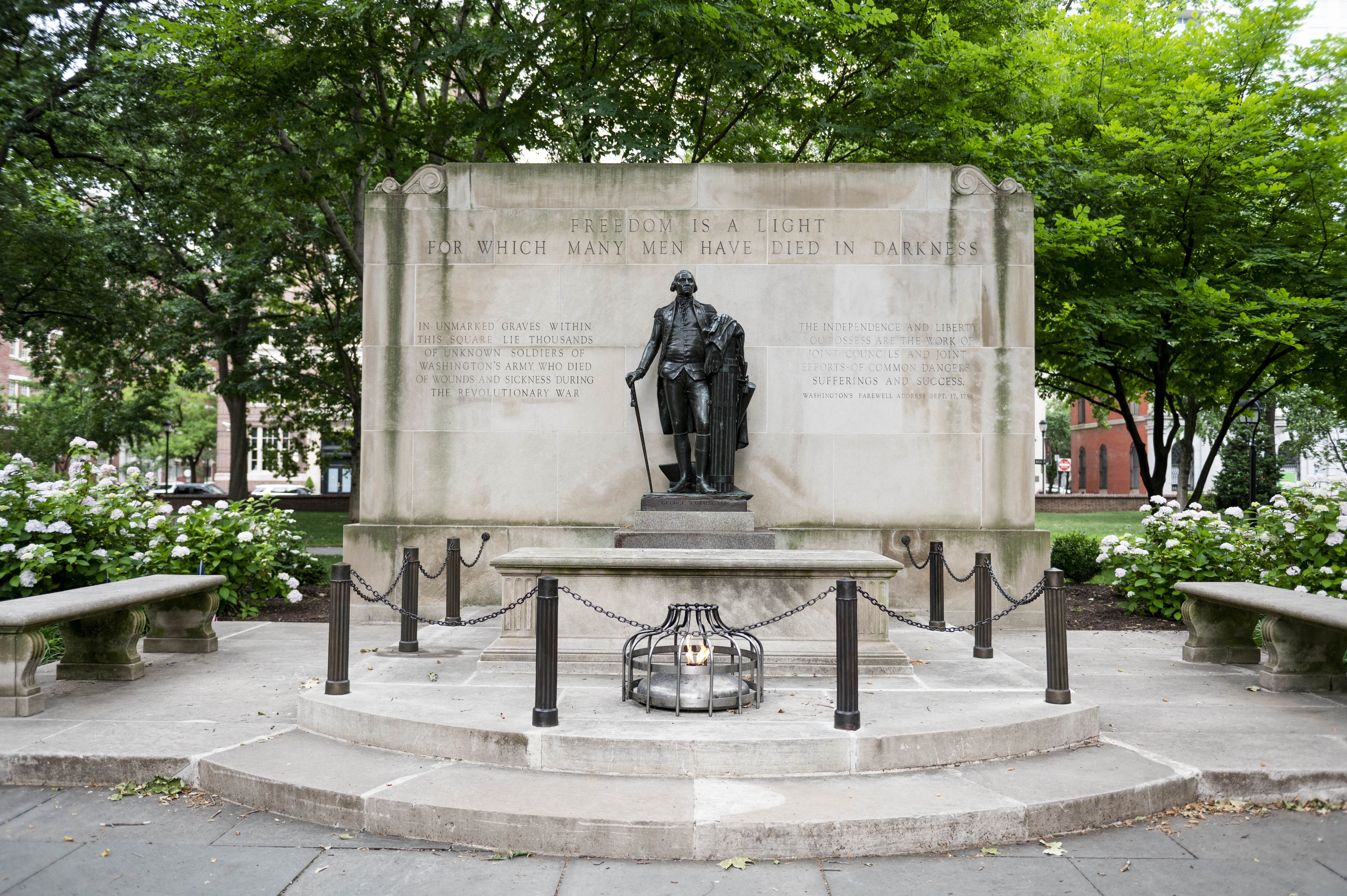
    A new fixture is on Washington Square next to the Tomb of the Unknown Revolutionary War Soldier and the flags of the 13 original colonies — a fenced-off, solar-powered security camera.

    The camera led some online to wonder whether it is a Flock camera, a type of surveillance device that automatically captures and stores license plate numbers and has generated privacy concerns.

    Here is what you need to know about the new camera, which is not a Flock device.

    Who installed the security camera?

    Washington Square is part of Independence National Historical Park, and the federal government has jurisdiction over the park.

    The camera was installed in July by the National Park Service in response to vandalism, according to City Councilmember Mark Squilla.

    “The National Park Service has the responsibility to keep America’s most cherished places safe and free from damage for the enjoyment of the American people,” a spokesperson for the park service said. “In the past year, vandals have damaged the Tomb of the Unknown Revolutionary War Soldier.”

    What do we know about vandalism in the park?

    A handful of vandalism incidents in the Washington Square area have been reported this year, according to Philadelphia Police Department data.

    One of the vandalism cases was in the early morning of July Fourth and was followed hours later by a separate incident.

    Later that day, five people who participated in a protest were arrested. During the event outside Washington Square, an unidentified woman attempted to burn an American flag.

    While the U.S. Supreme Court ruled burning an American flag is protected speech, it is a violation of city safety codes for public spaces.

    The arrests followed police orders to the crowd to disperse, and the five people allegedly did not comply.

    It is unclear if any specific incident led the National Park Service to install the additional surveillance measure.

    The Tomb of the Unknown Revolutionary War Soldier, which includes a statue of George Washington, was defaced with spray paint in 2020. Vandals wrote “committed genocide” on the memorial’s granite wall.

    Tomb of the Unknown Soldier monument in Washington Square on Wednesday, June 14, 2023.Allie Ippolito / Staff Photographer

    Is it a Flock camera?

    The new surveillance equipment is not a Flock camera, the park service spokesperson said.

    “Independence National Historical Park does not use Flock cameras. The park’s camera network is operated solely by the National Park Service on a standalone network with no connections to local or other federal agencies,” the spokesperson said.

    The markings on the equipment suggest the park service installed a Verkada camera, the brand the federal government purchased in July for cameras surrounding the nearby President’s House Site. Three mobile surveillance trailers were installed at the site after President Donald Trump’s administration replaced the long-standing slavery exhibit with new and controversial panels.

  • Philly attorney and TikTok influencer ‘Tommy the Lawyer’ charged with assaulting his girlfriend

    Philly attorney and TikTok influencer ‘Tommy the Lawyer’ charged with assaulting his girlfriend

    A prominent Center City personal injury lawyer, known for his active TikTok account, choked his girlfriend and threw her to the ground during a dispute on a walking path in Lower Merion, according to police.

    Thomas Bosworth, 37, has been charged with simple assault and harassment in connection with the Sept. 3 incident. He was released on $15,000 unsecured bail.

    Bosworth, a resident of Gladwyne, did not respond to a request for comment. His attorney, Michael van der Veen, said in a statement that Bosworth “is presumed innocent, maintains his innocence and has full confidence in the courts.”

    Bosworth, known to his 327,000 followers on TikTok as “Tommy The Lawyer,” gained prominence in 2022, when he won a $19.7 million verdict in a medical malpractice case as a 33-year-old attorney at Kline & Specter.

    In the years since, he has opened his own law firm amid accusations from his former employer that he poached its clients and sanctions for his behavior from a federal judge.

    Meanwhile, he has expanded his social media following through videos that give advice on everyday goods from his vantage point as a personal injury lawyer and the context for high-profile lawsuits he litigates.

    On the day of the Lower Merion assault, four people told police they saw Bosworth attacking a woman on a section of the Cynwyd Heritage Trail behind Union Avenue in Bala Cynwyd, according to the affidavit of probable cause for his arrest. After choking the woman, the witnesses said, he threw her into bushes along the path, then walked away as she screamed.

    The witnesses also said the woman slapped Bosworth and threw rocks at him while on the ground next to the trail, according to the affidavit.

    Officers responding to the call found the woman with “redness on her cheeks and discoloration of the skin around her neck,” the document said. She told the officers she had fallen, and declined to speak with them further, as did Bosworth.

    Witnesses later told police they overheard the couple arguing about Bosworth’s alleged infidelity, and the dispute escalated when the woman mentioned a text thread from his secretary he had deleted.

    The assault took place in front of the couple’s newborn daughter, who was with them in a stroller, the affidavit said.

    A judge ruled that attorney Tom Bosworth could keep displaying two TikTok videos critical of Penn Medicine, including the one from which this image is taken, in which he alleges that the health system’s radiology department is understaffed.

    Bosworth’s arrest was not the first time in recent years that he has been the subject of scrutiny.

    His separation from Kline & Specter in 2022 led to an ugly court dispute between the prestigious firm’s partners and their former young associate.

    Tom Kline and Shanin Specter accused Bosworth of poaching clients, which he denied, and in return accused his former bosses of defamation. The parties reached a settlement in 2024 but have returned to court multiple times since, accusing each other of violating the agreement.

    Kline and Specter are not the only ones who took issue with Bosworth’s conduct in the courtroom or online.

    In 2023, Penn Medicine asked a Philadelphia judge to order Bosworth to stop posting on social media about a medical malpractice case he filed against the health system, saying he misrepresented facts and “poisoned” the potential jury pool. The judge sided with Bosworth.

    That same year, a federal judge sanctioned Bosworth for “misconduct” during four expert depositions in a product liability case, saying the lawyer was “rude, demeaning, and obnoxious” to a female defense attorney.

    And last week, the Pennsylvania Superior Court called Bosworth’s conduct in the courtroom “deplorable” even as it upheld the $19.7 million verdict he won while at Kline & Specter.

    Bosworth had been accused of repeatedly ignoring the instructions of a Philadelphia Common Pleas Court judge during a medical malpractice trial in an attempt to inflame the jury.

    On LinkedIn, less than two weeks after the alleged assault, Bosworth wrote about the decision to uphold the verdict without noting the admonishment.

    “The courtroom is one of the only places left in our democracy where the everyday person can hold to task wrongdoers, no matter how rich powerful,” he said.

    Bosworth is scheduled to appear for a preliminary hearing in the assault case Oct. 6.

  • New Jersey can block ICE from entering state property, a federal judge ruled

    New Jersey can block ICE from entering state property, a federal judge ruled

    An executive order signed by New Jersey Gov. Mikie Sherrill blocking federal immigration agents from using nonpublic state property does not violate the constitution, a federal judge ruled Friday.

    U.S. District Judge Georgette Castner dismissed the lawsuit by President Donald Trump’s administration against Sherrill over her executive order banning Immigration and Customs Enforcement agents from “entering accessing, or using nonpublic areas” of state-owned property without a court order.

    The February order also prohibits New Jersey agencies from allowing ICE to use state property as a “staging area, processing location, or operation base” for immigration operations.

    The Department of Justice sued New Jersey and Sherrill days after she signed the order, accusing the governor of “blatant disregard for federal laws” and taking a “deliberate action that jeopardizes the public safety of All Americans.”

    “Gov. Mikie Sherrill aims to intentionally obstruct federal law enforcement and celebrates thwarting the constitutional obligation of the President of the United States to take care that federal immigration law be faithfully executed,” the suit says.

    But the Garden State is not required to assist the federal government in immigration enforcement, Castner wrote while dismissing the case.

    “Congress contemplated state assistance in federal immigration enforcement, but it contemplated that assistance on a voluntary basis. The fact that New Jersey has decided not to volunteer — in the limited context of [the executive order] — is in accordance, not in conflict, with Congress’s design,” the Joe Biden-appointed judge wrote.

    And the Justice Department did not prove its claim that ICE would need to “entirely transform” its operations as a result of the order, Castner said.

    The Justice Department did not respond to a request for comment.

    ICE’s “untrained agents” are not making New Jersey safer, Sherrill said in a statement.

    “Once again, Trump tried to stop us, and once again we won,” the governor said.

    Civil rights and immigration advocacy organizations also celebrated Castner’s decision.

    The ruling assures that immigrants in New Jersey can use state resources, according to a statement by Jeanne LoCicero, legal director for the ACLU of New Jersey.

    “All New Jerseyans deserve to feel safe when they enter state-owned property, and New Jersey has the authority to ensure that safety,” LoCicero said.

    The Trump administration has sued cities and states that enacted restrictions on ICE, and so far it has achieved mixed results.

    Judges dismissed suits challenging provisions that prohibit local cooperation with ICE agents under the constitutional principal rooted in the Tenth Amendment that the federal government can’t force states to enforce federal laws.

    But judges also blocked state and local laws that more directly dictate what ICE agents can or can’t do, such as Philadelphia’s ordinance prohibiting law enforcement officers from concealing their identity.

    A Philly-based district judge ruled in July that the city did not have the authority to unmask ICE and other law enforcement agents.

    A DOJ lawsuit against New Jersey’s mask ban for law enforcement, which Sherrill signed into law in March, is pending.

  • Philadelphia Family Court judge who faced domestic violence charges earlier this year has resigned, source says

    Philadelphia Family Court judge who faced domestic violence charges earlier this year has resigned, source says

    Michael Fanning, the Philadelphia Family Court judge who faced domestic violence charges earlier this year on allegations he assaulted his wife and adult daughter, resigned from the bench, a person with direct knowledge said.

    Prosecutors withdrew all charges against Fanning in July, saying the women did not wish to proceed with the case and the judge had shown proof of “extensive mitigation” in the months since the March incident.

    The Inquirer was unable to reach Fanning based on publicly available contact information.

    The 60-year-old judge was charged with aggravated assault, strangulation, and related crimes after prosecutors said he repeatedly punched his wife in the face, choked her, and dragged his 30-year-old daughter to the ground by her hair, causing her to cut her face, during a fight at their East Torresdale home.

    During the July hearing, Assistant District Attorney Brian Collins did not detail the forms of mitigation Fanning presented.

    But at a hearing in March, Fanning’s wife said he had voluntarily entered a 30-day inpatient recovery program to treat his alcoholism, an issue the family had worked to address in the past.

    The Pennsylvania Court of Discipline suspended Fanning without pay after his arrest, but lifted the suspension after the charges were withdrawn.

    “With no charges and no other reason cited for the suspension of Judge Fanning, no reason exists for that suspension to continue,” the order said.

    A court spokesperson declined to comment on Fanning’s resignation.

    Fanning had been a Family Court judge since then-Gov. Tom Corbett appointed him to the bench in 2014. He won a 10-year term in 2015, and was retained for another term in November.

    Gov. Josh Shapiro’s office could not immediately comment on whether the governor received Fanning’s resignation letter.

    The resignation gives Shapiro an opportunity to nominate a judge for Fanning’s seat until the 2027 judicial election. The appointment requires state Senate confirmation.

    Staff writer Ellie Rushing contributed to this article.

  • Daughter of prominent Philadelphia family sues billionaire ex-boyfriend for $400 million

    Daughter of prominent Philadelphia family sues billionaire ex-boyfriend for $400 million

    Some romantic rendezvous end in heartbreak, others in a $400 million lawsuit.

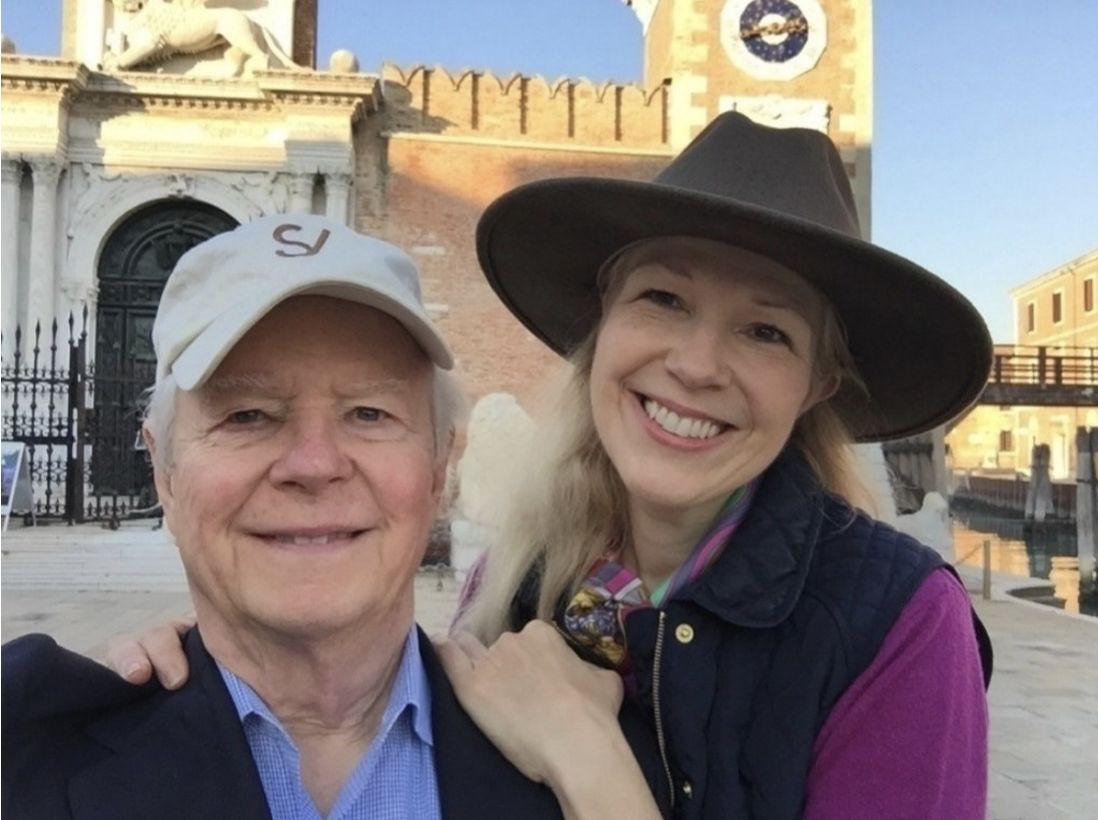
    But that’s the fall out from the breakup between Oona Sperr, the daughter of the Please Touch Museum founder and a prominent Philadelphia architect, and an oil-tycoon from Texas.

    In a tell-all lawsuit, Sperr, 64, accused billionaire Sid Bass of breaking financial promises he made to her throughout their relationship.

    The New York City-based interior designer and Bass “lived together in a loving, committed relationship” since 2014 and “were very happy as a couple,” the suit says. The oil scion, has a net worth of $4.4 billion, promised Sperr that she would always be cared for financially and would receive ownership interest in his properties, according to the complaint.

    The 84-year-old began declining physically and cognitively in 2023, the suit says. He previously suffered three mini-strokes, signs of Parkinson’s disease appeared in a brain scan, and his excessive drinking worsened his tremors, the complaint says.

    Around that time, Althea Viafora Kress entered the picture.

    Viafora Kress pursued Bass since late 2022 under the pretext that she needed advice on how to invest money she inherited, the suit says.

    “Unbeknownst to Oona, Viafora Kress began grooming Sid and, at some point, achieved her goal of a coercive relationship with him, with devastating consequences for Oona and Sid’s partnership,” the complaint says.

    After breakfast in September 2024, the suit says, Bass broke up with Sperr with two sentences: “I want a separation. You are to pack and leave.”

    Sperr suspected that there was another woman, and in the following weeks she came to learn about Bass’ relationship with Viafora Kress.

    Immediately after the breakup, the suit says, Bass promised his former paramour a lump-sum payment of $50 million, the smallest of their New York homes, another property of her choosing, continued staff support, and care for her mother, the 96-year-old founder of the Please Touch Museum, Portia Sperr.

    These terms were less than Bass originally promised her, the complaint says. But in the following months, the commitment narrowed further.

    Sperr received a “maintenance agreement” via email from Bass’ lawyer in January 2025 that included a commitment for annual payments of $5 million for 10 years, denied her ownership of any home, and declined to pay for her mother’s care, among other things, the suit says. The agreement was also accompanied with a nondisclosure agreement.

    “In other words, what Sid was now proposing was that Oona … should be forced to depend entirely on Sid’s increasingly unpredictable whims, or, even more troubling, on the preferences of Viafora Kress,” the lawsuit says.

    The Inquirer was unable to reach Bass and Viafora Kress, who are both named defendants in the lawsuit, which was filed in the Southern District of New York.

    While a $400 million breakup is more than most could wrap their head around, it’s par for the course for Bass, the suit says.

    The billionaire previously had two extremely expensive divorces.

    Bass divorced his first wife, Anne Hendricks Bass, in 1988, leading to settlement that cost him $200 million to $500 million, the suit says. And in 2011 he divorced Mercedes Bass in an agreement that would allow her to sustain an “ultraluxury lifestyle,” according to the complaint.

    “This is a case about broken promises,” Roberta Kaplan, Sperr’s attorney, said in a statement. “Oona is the woman who spent a decade making Sid’s life convenient — abandoning her career, managing their shared homes and affairs, caring for him through his serious illnesses — all because Sid agreed that he would take care of her and her 96-year-old mother no matter what.”

    While Sperr comes from a more modest upbringing relative to the son of an oil dynasty, her family has a legacy of its own in Philadelphia.

    Her father, Otto Sperr, was a prominent Rittenhouse Square architect. He died in 1998.

    Portia Sperr was a Montessori educator who still lives in Philadelphia, the suit says.

    Oona Sperr moved to Philadelphia when she was 2, and went on to graduate from the Baldwin School in Bryn Mawr. She then moved to New York to study architecture and embarked on a career as an interior designer.

    But she abandoned that career after meeting Bass, opting to take care of him, their homes, and daily obligations because of a promise that she would never need to support herself or her mother independently.

    “Sid has breached his promises by refusing to provide Oona with the property interests and financial support he agreed she would receive,” the suit says, “in exchange for her years of devotion to their partnership and her enormous contributions to the life they built together.”