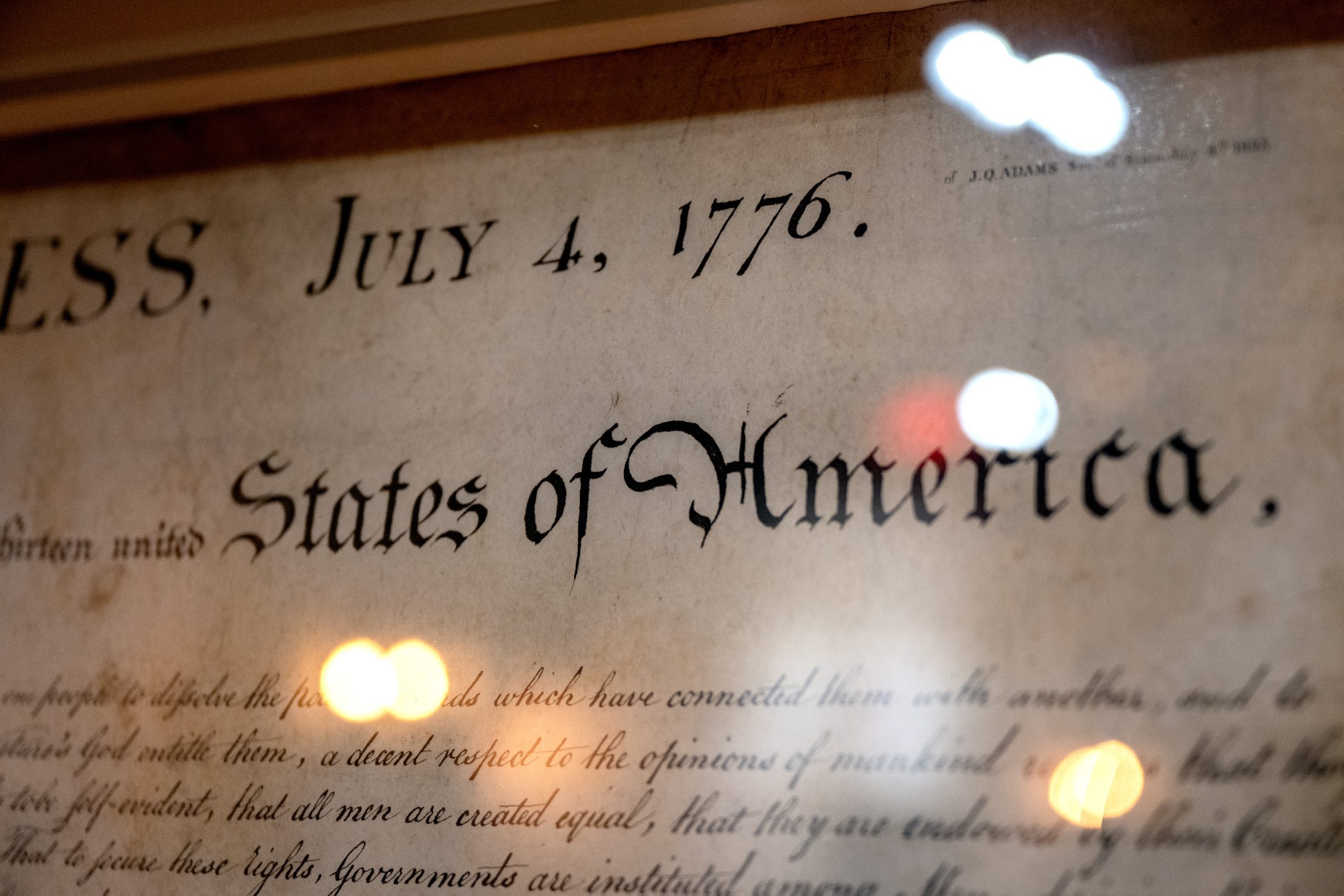
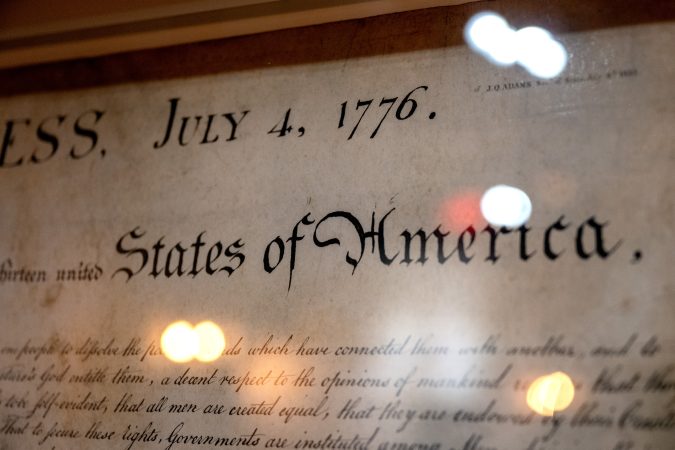
In late July when I covered Montgomery County’s District Attorney announcing charges in connection with two assaults in a Cheltenham High School football locker room, I knew the story was something we would be writing about for some time.
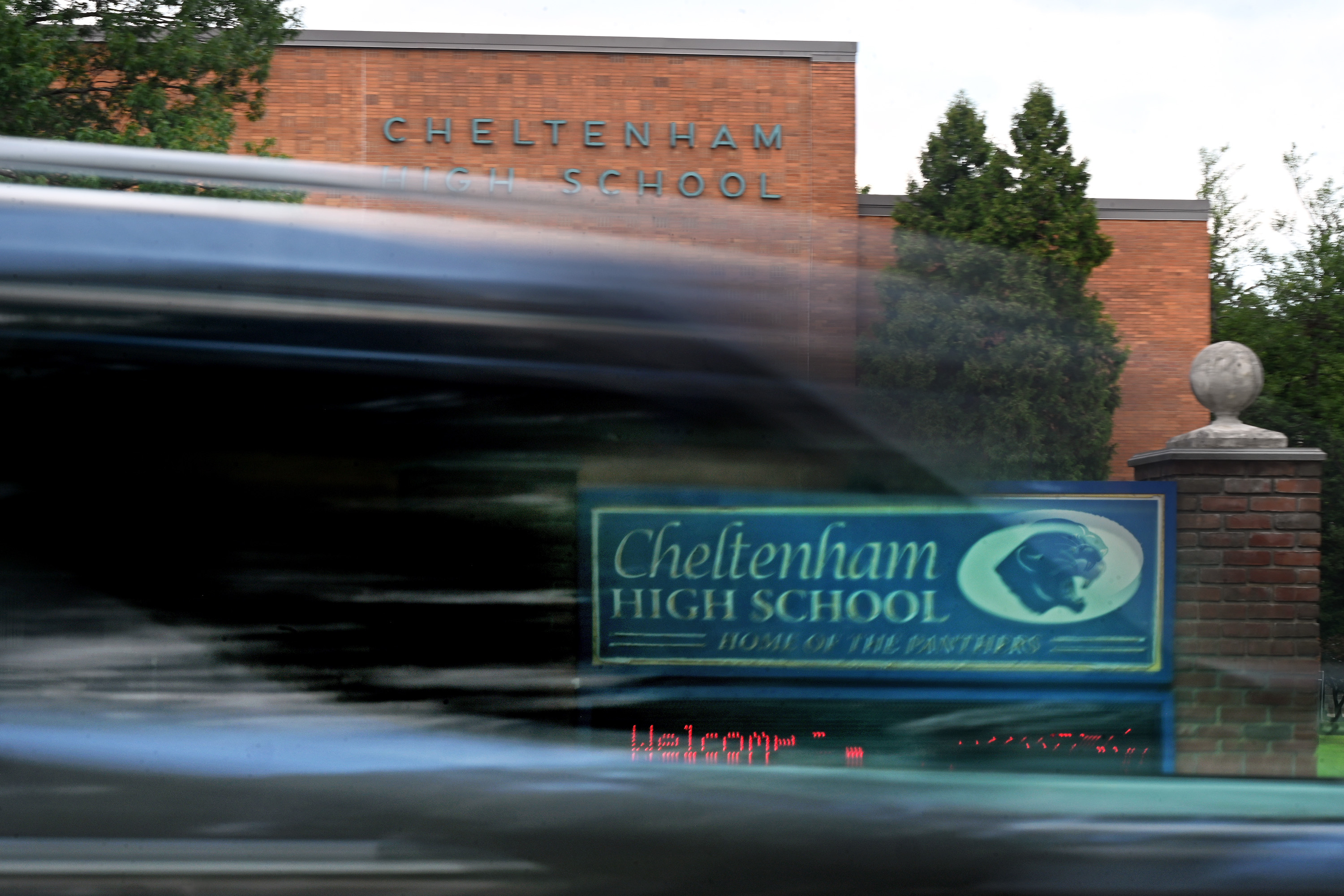
Aware that we used the same photo, taken in 2018, with stories about the high school hazing leading up to the indictments, I left from the DA’s office across the street from the Courthouse in Norristown and drove to the school in Wyncote to take “fresh” ones.
I wrote last week about the web’s appetite for photos. But there’s another kind of photo: the thumbnails that are attached to every story, whether or not they are “live” photos.
Most of those little horizontal photos — none are verticals — of flashing police lights or yellow tape; headshots of politicians; city street scenes and skyline, or many, many photos of signs and buildings are file photos.
Like the 2018 one of Cheltenham High School. And the July 2026 version — in a variety for views — that I made last week, that already have and will be used again and again.
The frame at the top was made with a aperture of f/22 so I could get both signs in focus, at shutter speed of 1/15 second to blur the passing cars. Getting the window was just good luck.
I thought of file photos this week when another one of mine was used in a story about N.J. Gov. Mikie Sherrill declaring a steak place in Camden has better cheesesteaks than the “millions” she has tried in Philly.
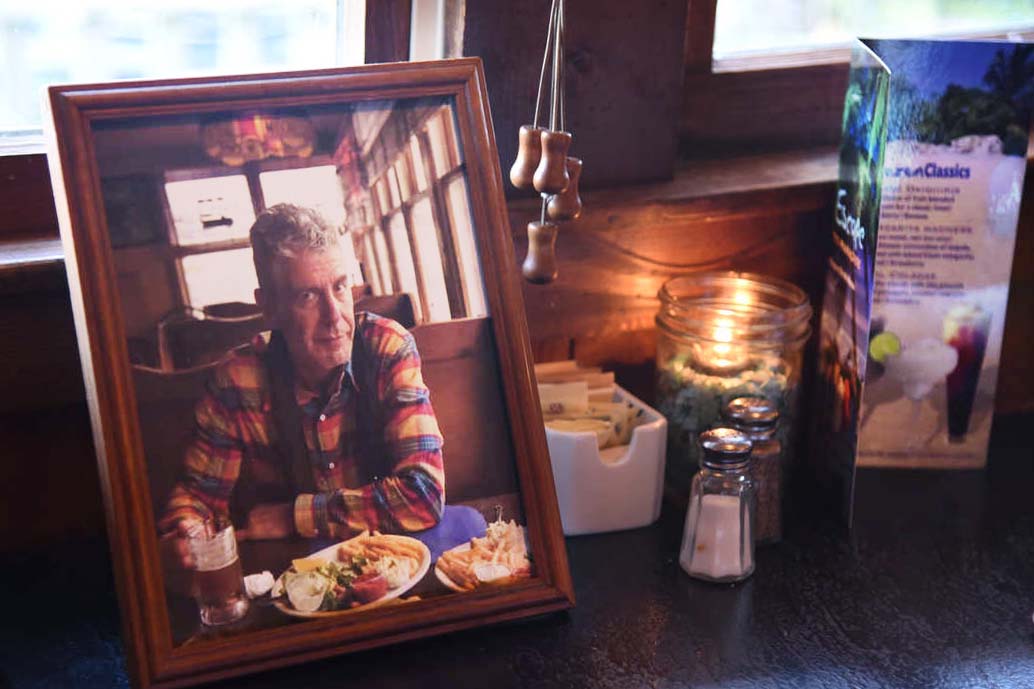
After celebrity chef Anthony Bourdain died in 2018 I set out to photograph — and eat — at some of the food destinations he visited on his Emmy Award-winning CNN show Parts Unknown.
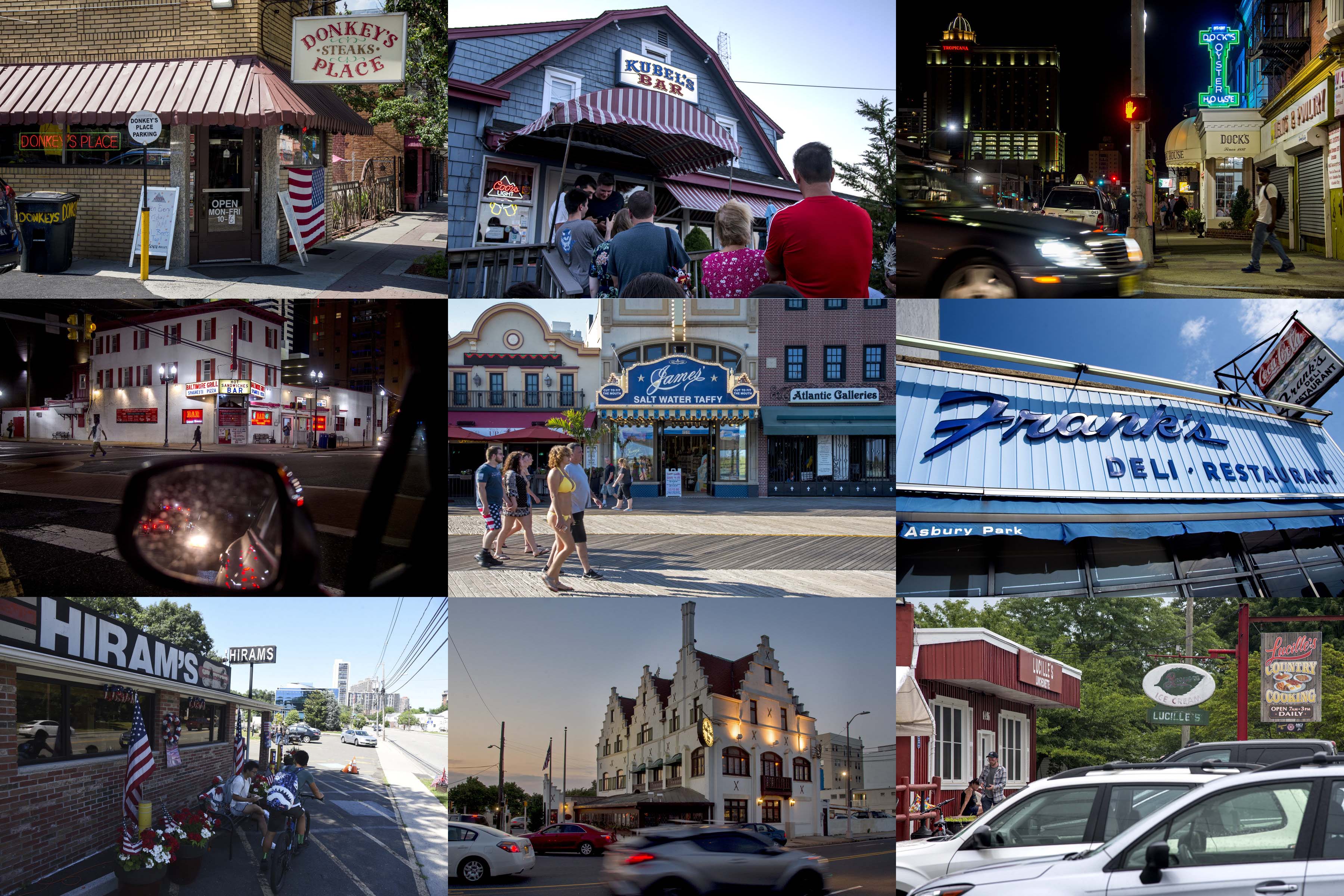
The booth at Kubel’s in Barnegat Light, where Bourdain ate clams with his brother, Chris.TOM GRALISH / Staff Photographer
Following in the footsteps of the globe-trotting adventurer, I flew not to some far-flung place with exotic cuisine but drove instead to all 10 spots he featured in an episode on the food and culture of his home state, New Jersey.
It was one of my top 10 favorite stories of my career. Foodstagrammers had visited many of the places featured in the episode but I couldn’t find any foodies who had been to all of them.
Each one had its own history, personality, and flavor, but together all captured exactly what Bourdain loved about New Jersey: community and authenticity, and incredible food without the pretense.
Donkey’s Place in Camden was one of the most memorable. I made three trips there for the story, and took hundreds of photos while sitting at the bar with cheesesteak aficionados and talking with third generation owner Rob Lucas (his grandfather, Olympic boxer Leon Lucas, had a punch they said was like the kick of a mule).
I could go on about the memories served at each of the places Bourdain was drawn to, but getting back on the file photos track, of all the photos I made that summer, the one image that gets reused the most often is one from Donkey’s, made as I was walking to my car after my last visit.
I paused, waiting for anyone to walk in or out. I’d just spend a couple hours there, and it was slow by then, mid-afternoon, and the light wasn’t that great anyway, so I took a quick picture and left, figuring it’s close by (compared to the other places) and I could come back at lunchtime later.
Of course that never happened before the story published, and the straightforward photo of the outside of the restaurant was used. I had lots of other really good photos (if you haven’t already, click through the embedded gallery). So, no big deal. Except that exterior view ends up being the only photo in our photo library with the Donkey’s sign so it gets used every time we write about the place! And the only picture among the dozens from all the other nine places that ever gets republished (I really need to go back and update).
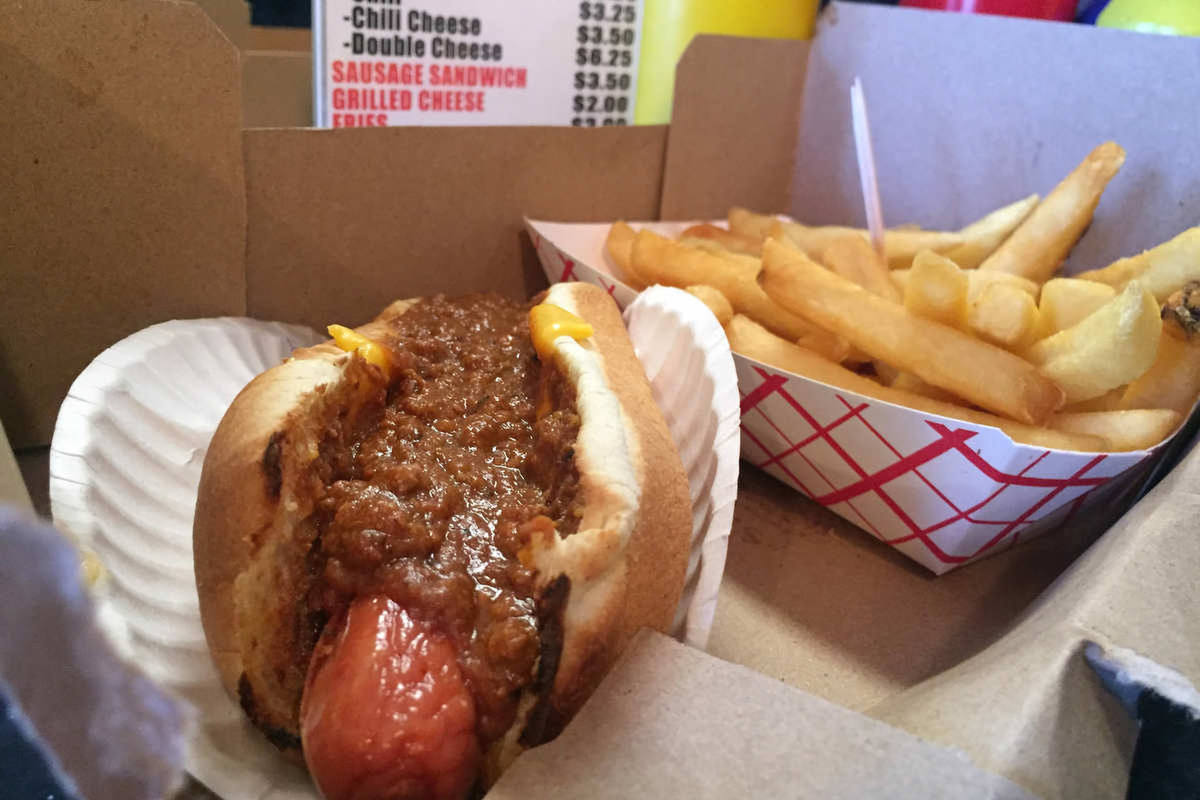
The “ripper” fried hot dog and French fries (with wooden toothpick) at Hiram’s Roadstand, in Fort Lee, one of ten eateries Anthony Bourdain visited in a 2015 episode of his ‘Parts Unknown” TV show in New Jersey.TOM GRALISH / Staff Photographer
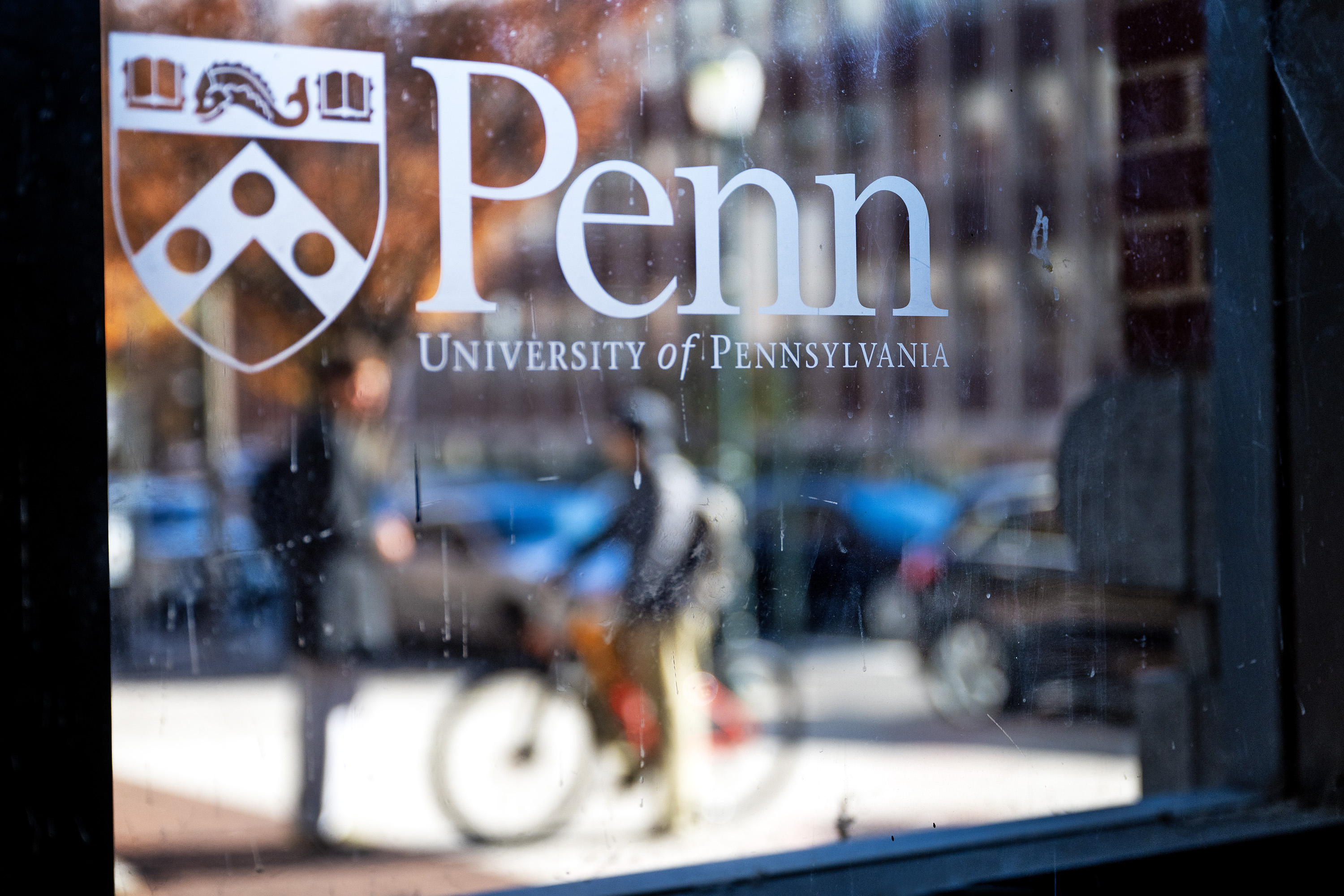
Another file photo I have updated, among my most-published, is a photo I first took at the University of Pennsylvania. We do lots of stories there, and once while leaving a parking garage, I noticed a logo on the window of the elevator.
I rode it up and down, over and over, looking for the cleanest spot on the glass, trying different camera exposures — just like with the Cheltenham signs — and getting different angles in the background.
I have also photographed sculptures, signs, and scenes around campus when on other assignments, but the parking garage image seems a favorite whenever a generic Penn file photo is needed.
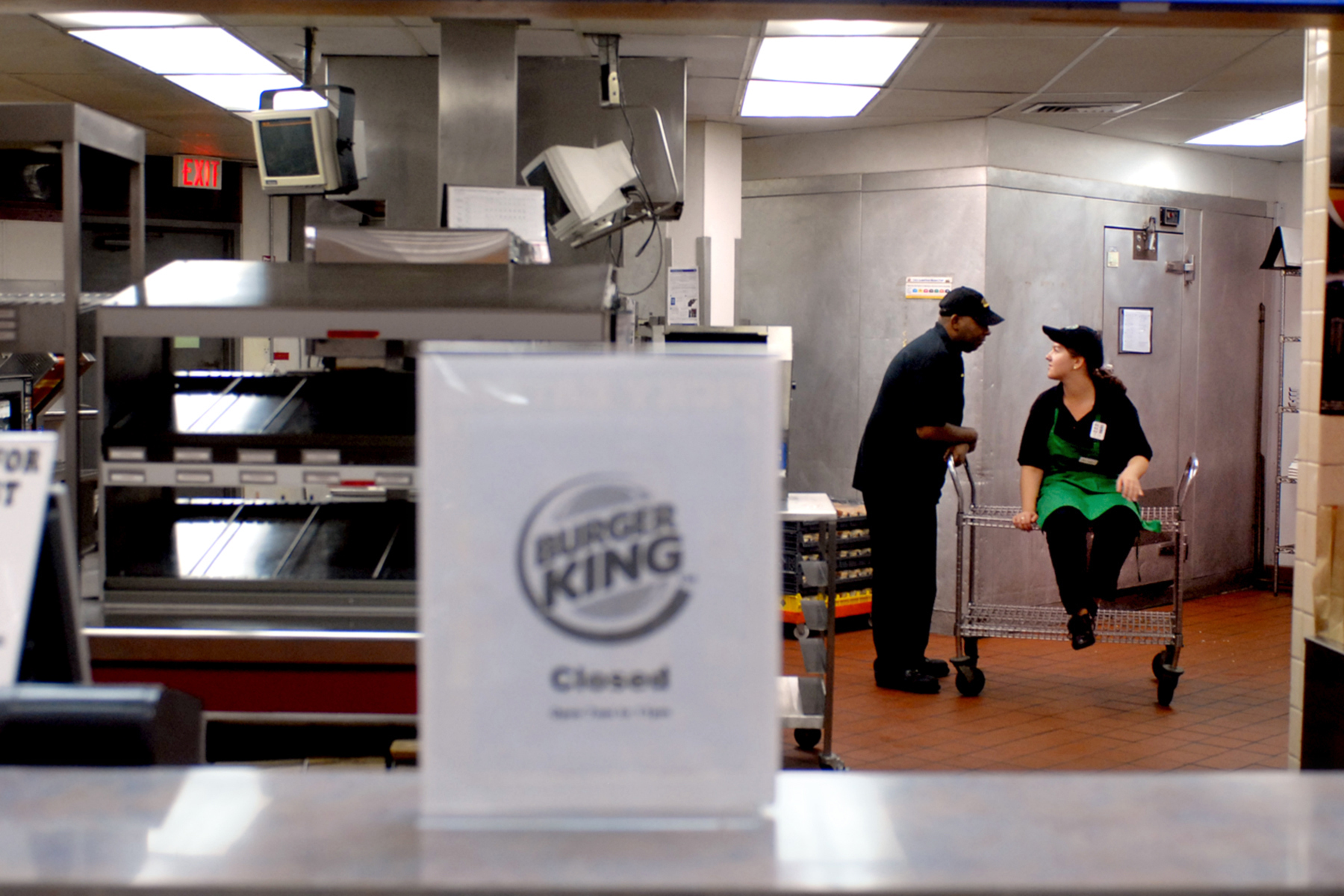
Finally, in the early days of the web, my most-used file photo was one I made during this column’s first summer (then, in 2007, called a blog). While making weekly roadtrips and posting every day or two about the places and pictures I went, I spent one late night that faded into early morning.
Rahsan Allen (left) and Tanya Krekmanova talk in the closed Burger King during a break at 4:45 a.m. July 19, 2007, on their night-shift jobs at the North Neshaminy Service Plaza, Westbound on the Pennsylvania Turnpike. They make up two thirds of the overnight shift at the rest stop. Allen works at the Travel Mart and Krekmanova is a Starbucks barista. She is a university student in Sofia, Bulgaria, one of twenty-four International students working at the rest stop. The others come from Russia, Turkey and the Ukraine, for four months with the U.S. State Department’s Summer Work and Travel Program.Tom Gralish / Staff Photographer
I stopped at service plazas along the Pennsylvania Turnpike. The story is here — but with only one photo (a future column will lament how even when stories get archived by newspapers the pictures that accompanied them are often not saved).
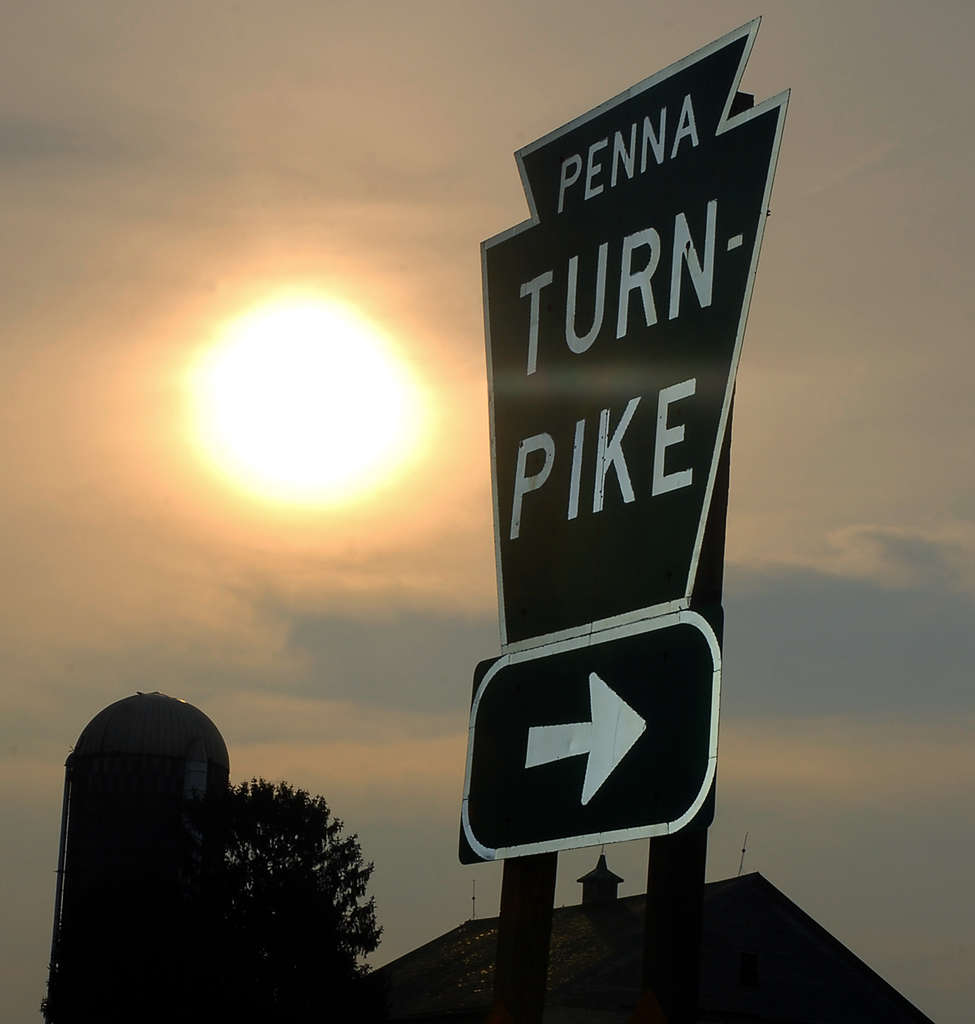
While getting on and off the turnpike at different exits to backtrack, I photographed the sun rising behind a turnpike sign. It was a vertical, but has been recropped many times to fit the web’s 3:2 thumbnail ratio.
I guess you could call it one of my “greatest hits.” My legacy.
Since 1998 a black-and-white photo has appeared every Monday in staff photographer Tom Gralish’s “Scene Through the Lens” photo column in the print editions of The Inquirer’s local news section. Here are the most recent, in color:
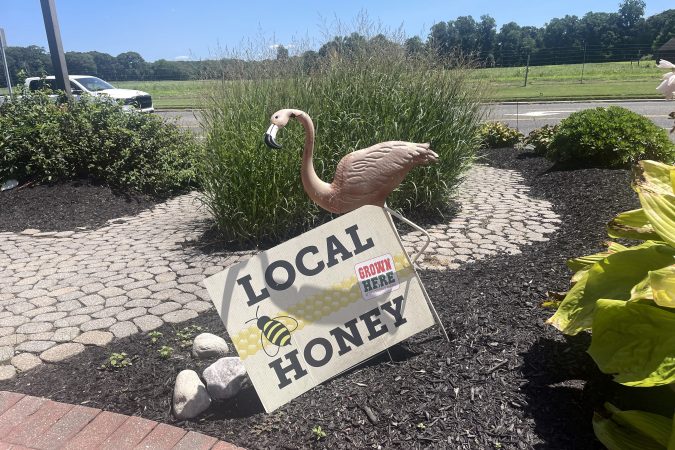
The juxtaposition of a flamingo and a honey bee may not have doubled you over in laughter, but it had me pause while walking into a South Jersey farm market. And it made me smile.
Then I started to overthink it. Am I missing a joke here? “Q: What’s the difference between a flamingo and a honey bee?” Or, “a bee and a flamingo walk into a bar.”
Nope. That doesn’t work either. Nor does a meme about having “the” birds and the bees “talk.”
All this to justify picking that picture to feature with this column. Some weeks it’s an easier choice, and this week’s got me thinking about what in the newspaper business is called a standalone photo.
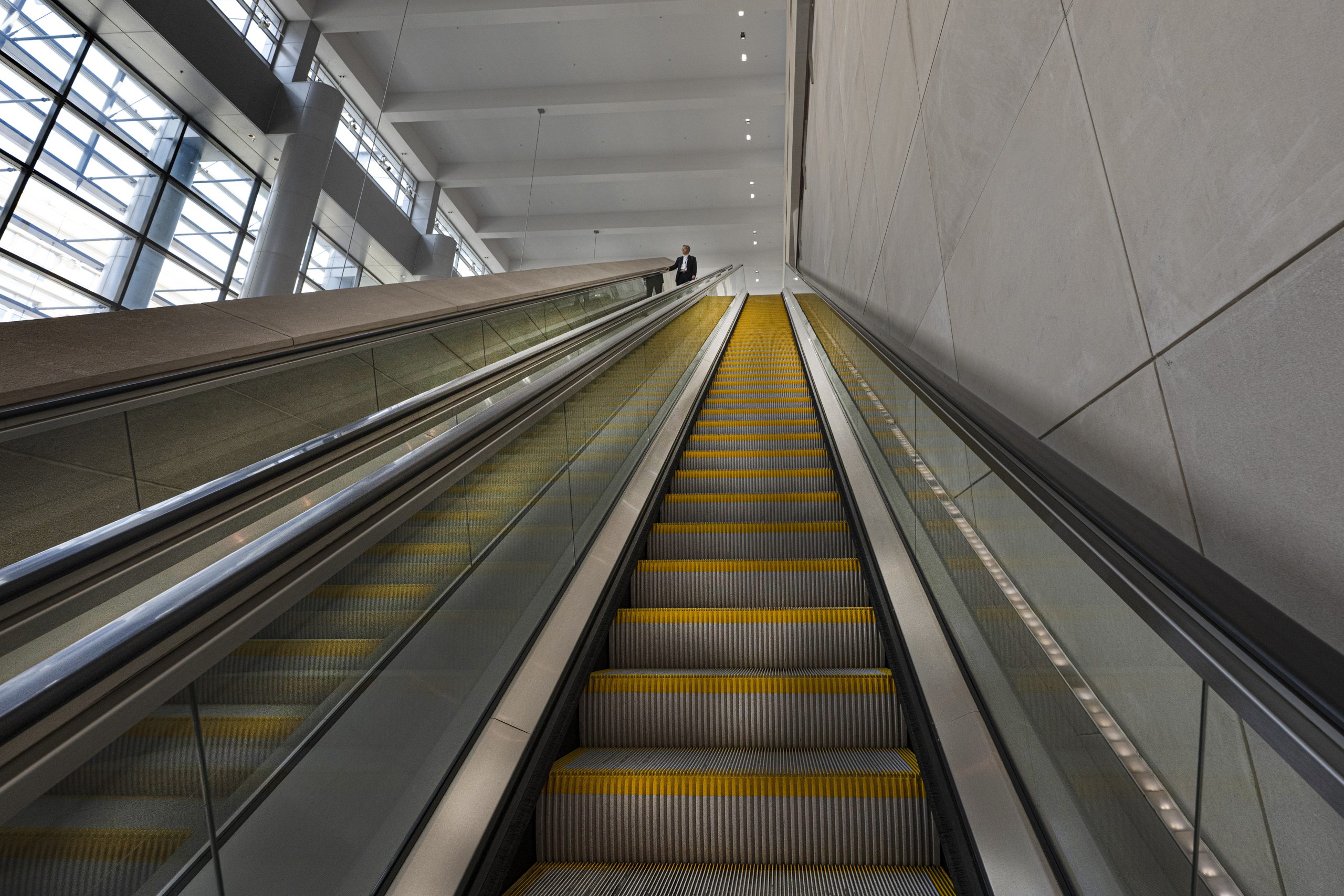
A standalone photo made while my colleague was taking the escalator to his assignment at the International Congress of Mathematicians at the Convention Center on Monday.Jose F. Moreno / Staff Photographer
Aka, a photo feature or wild art, a standalone is a picture published without an accompanying article. I talked about it in a previous column (click bonus: the photos there are from a cold, snowy January day. Maybe refreshing to look at now, as we’re here in the dog days of summer).
In the heyday of dead-tree, printed ink-on-paper analog versions of newspapers not every story had a picture, so standalones were used when editors wanted to add some visual variety to a page that was all gray. That is precisely the 1998 origin of this column: it broke up a text-heavy page containing community news, calendars, traffic reports, school information, and volunteer listings.
Online publishing changed everything, and digital design evolved toward image-heavy layouts. Since our brains process pictures much faster than words, photos make a story more likely to grab a reader’s attention while scrolling.
Suddenly every story on news websites had an image attached. Pictures became plentiful.
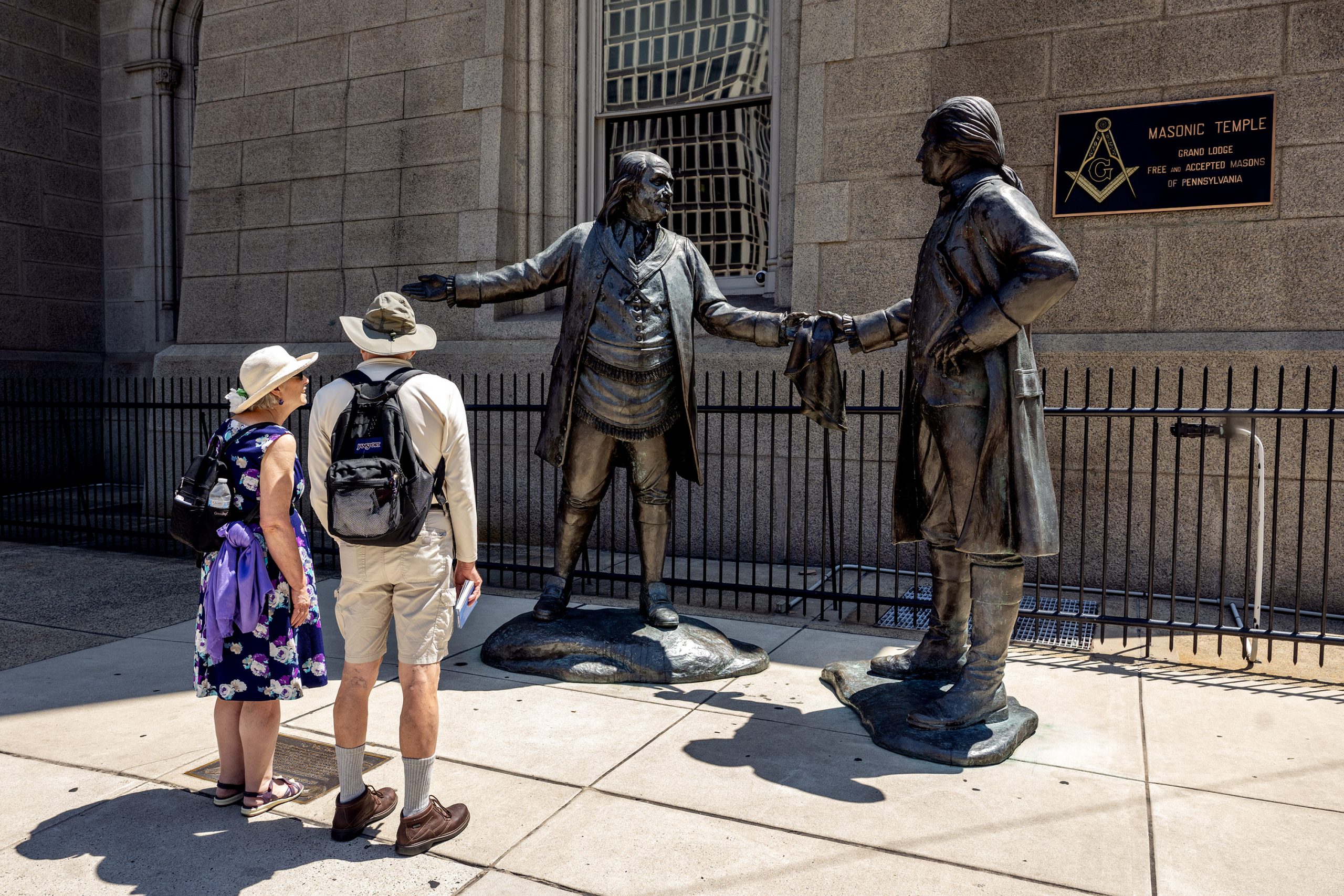
A standalone of two prominent Freemasons – Benjamin Franklin and George Washington – standing in bronze outside the Grand Lodge Masonic Library and Museum across the street from City Hall. (“The Bond” was created by sculptor Jim West in 2018.)Tom Gralish / Staff Photographer
And that’s the paradox. Even though the internet is highly visual, it favors rapid consumption rather than contemplation. Lost in the mishmash array of thumbnails on a website, it is harder to appreciate a storytelling standalone photo, or enjoy the much slower experience of pacing through a dozen images and captions in lengthy photo essays.
And that brings me around to a photo I saw this week. A reader submitted a picture they’d snapped of a young man outside Reading Terminal Market dressed in a solid-color button-down shirt with trousers held up by suspenders instead of a belt and wearing a broad-brimmed straw hat closely examining a parked Uber Eats’ delivery bot.
I reacted to it just as I did with the flamingo/honey bee, with a smile.
For decades the old weekly LIFE magazine had a standing feature on the last page called Miscellany. It was mostly pictures of people and animals in unexpected or humorous situations. A standalone.
Even with an abundant canvas there really isn’t a place on our website for a standalone photo — like the bot — without an attached story.
Or maybe there is. I have this column where my unattached images are displayed every Saturday and I’m happy to share some of the space (means less writing for me). So readers, if you see and take a picture like those on LIFE’s back-of-the-book page, email it to me.
(By the way, even though it was taken in a public place we wouldn’t have used the Amish/bot photo anyway. The subject may belong to a community that doesn’t enjoy being photographed, and he was minor. The photographer needed to talk to him — and a parent — to provide more context. But then it would no longer be a standalone.)
And remember, if a bee lands on you, freeze. Let it investigate and it will leave without stinging as long as it doesn’t detect a threat. If a flamingo lands on you, well, you’ve got a different problem.
Since 1998 a black-and-white photo has appeared every Monday in staff photographer Tom Gralish’s “Scene Through the Lens” photo column in the print editions of The Inquirer’s local news section. Here are the most recent, in color:
There was one especially pleasant weekend back in June, as summer was officially arriving and Philly was in the middle of hosting three Group Stage matches for the World Cup. It was breezy with sunshine and low humidity and temperatures in the mid-80s; nothing like two weekends later as America turned 250 and temperatures hit 101 degrees or higher for three days in a row, the first time that happened in over 150 years of record keeping.
Between covering some news that weekend, I walked around Center City just soaking up the street scene. It wasn’t just the wonderful weather, but an international vibe that was welcoming and friendly. I watched visitors speaking multiple languages rolling suitcases in and out of hotels and ride share cars, and saw sidewalk cafes overflowing with different colored jerseys and scarves.
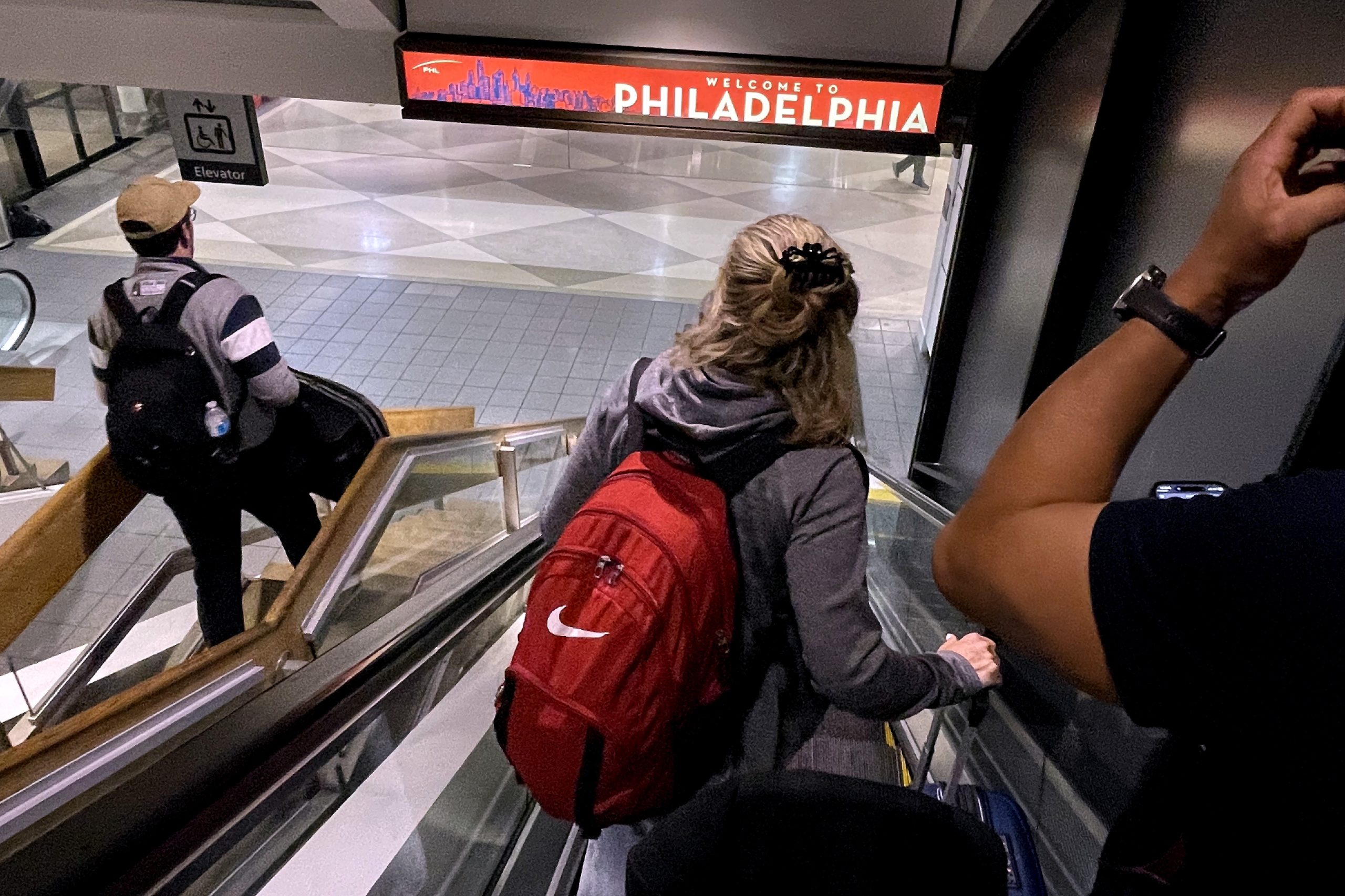
Philadephia International Airport arrivals June 21, 2026.Tom Gralish / Staff Photographer
It reminded me of the energy I feel almost every time I walk around the city, going back to my first night here and the weeks spent in my early days at the newspaper with unhoused men.
We’ve long known we have one of the most walkable downtowns in the country, but USA Today told everyone else again this summer, naming Philadelphia number one — for the fourth year in a row. Center City is compact and easy to explore on foot, with many stores, restaurants, museums, attractions, and parks all within a short walk.
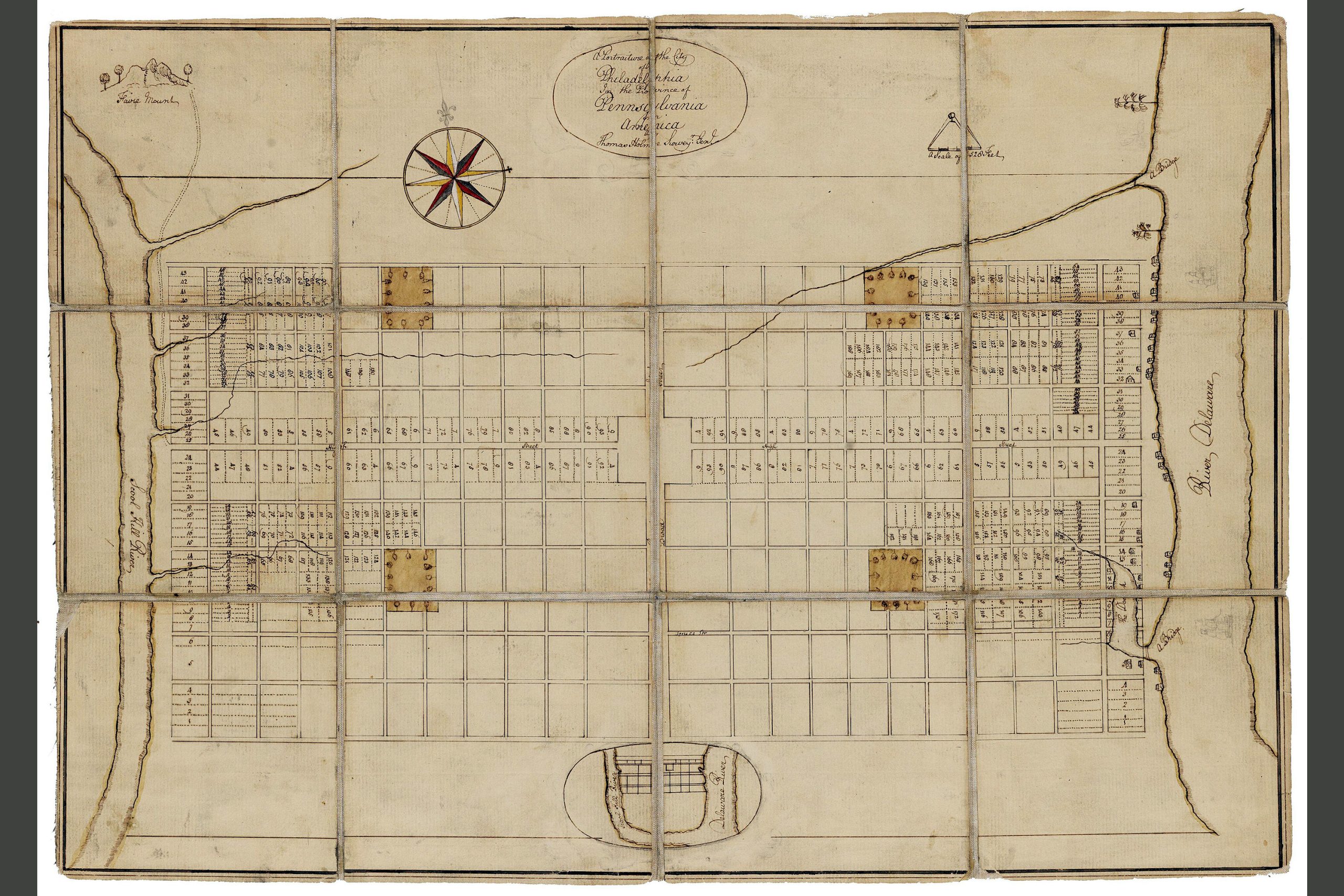
“A Portraiture of the City of Philadelphia, In the province of Pennsylvania in America” by Thomas Holme. In 1682, William Penn appointed Holme surveyor-general of Pennsylvania and charged him with the task of laying out the “greene country towne” that Penn envisioned. This map, printed in London, was used for both reference and promotional purposes to show the unique layout of Penn’s emerging city.Historical Society of Pennsylvania
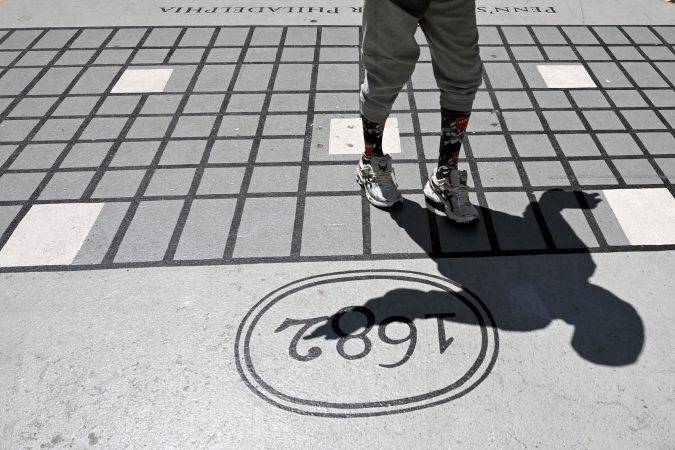
Credit William Penn’s 1682 street plan that created small rectangular blocks with straight, predictable streets. I was thinking about that as I looked down at the grid on the ground in the courtyard of City Hall, when Lyn-el “The Torch” Wright paused right in front of me: “take a picture of my sneaks.” That’s his shadow above.
I did, and asked if they were special, wondering if they had something to do with Adidas, the official World Cup sponsor and match ball provider. No, not really, he said, but then educated me on what the kids today were wearing: Asics and Saucony. And Salomon.
So, being a history nerd, I had to enlighten him on the design he was standing on. Titled “Compass Rose,” it was commissioned by Edmund Bacon in 1994 as a gift to the city to mark Penn’s 350th birthday. It was painted by David Salama and Pat Sprott and updated by Mural Arts Philadelphia in 2004, 2015 and 2022. It marks the exact center of the middle of Penn’s five squares (Franklin, Logan, Rittenhouse, and Washington being the others).
I didn’t actually say all of that (unlike similar “TED Talks” my grandson is subjected to), but our conversation is the other thing I like most about walking around Philadelphia. Meeting and talking to people.
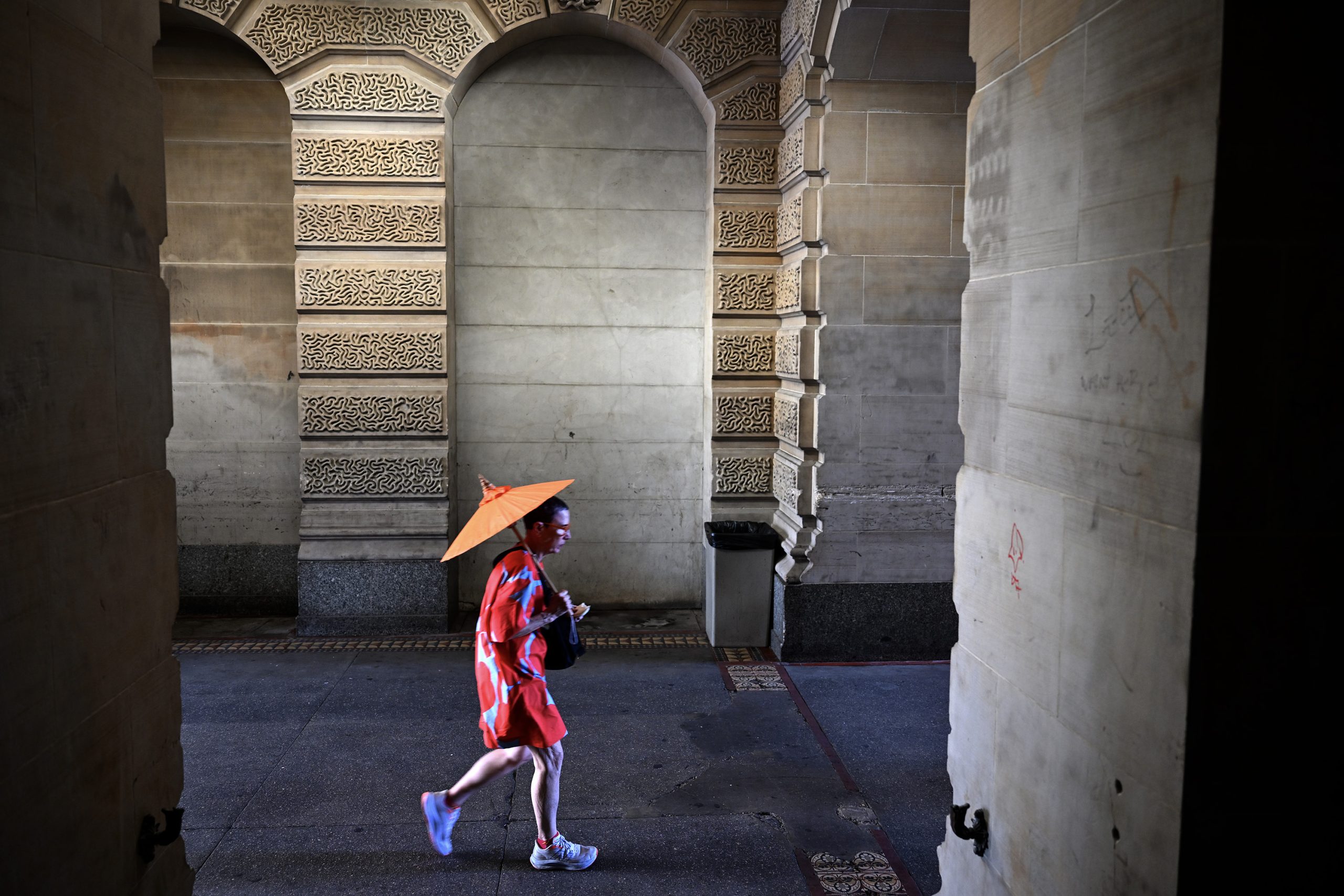
Passing through the south portal of City Hall on Monday, July 20, 2026. She said the umbrella was a recent purchase. “Anything to keep cool in the heat.”Tom Gralish / Staff Photographer
The day was a remarkable one in Center City, similar to the summer solstice back in June. And it was coming off the week of heavy rains, microbursts, and then, the Canadian and Great Lakes wildfire smoke that moved into the region.
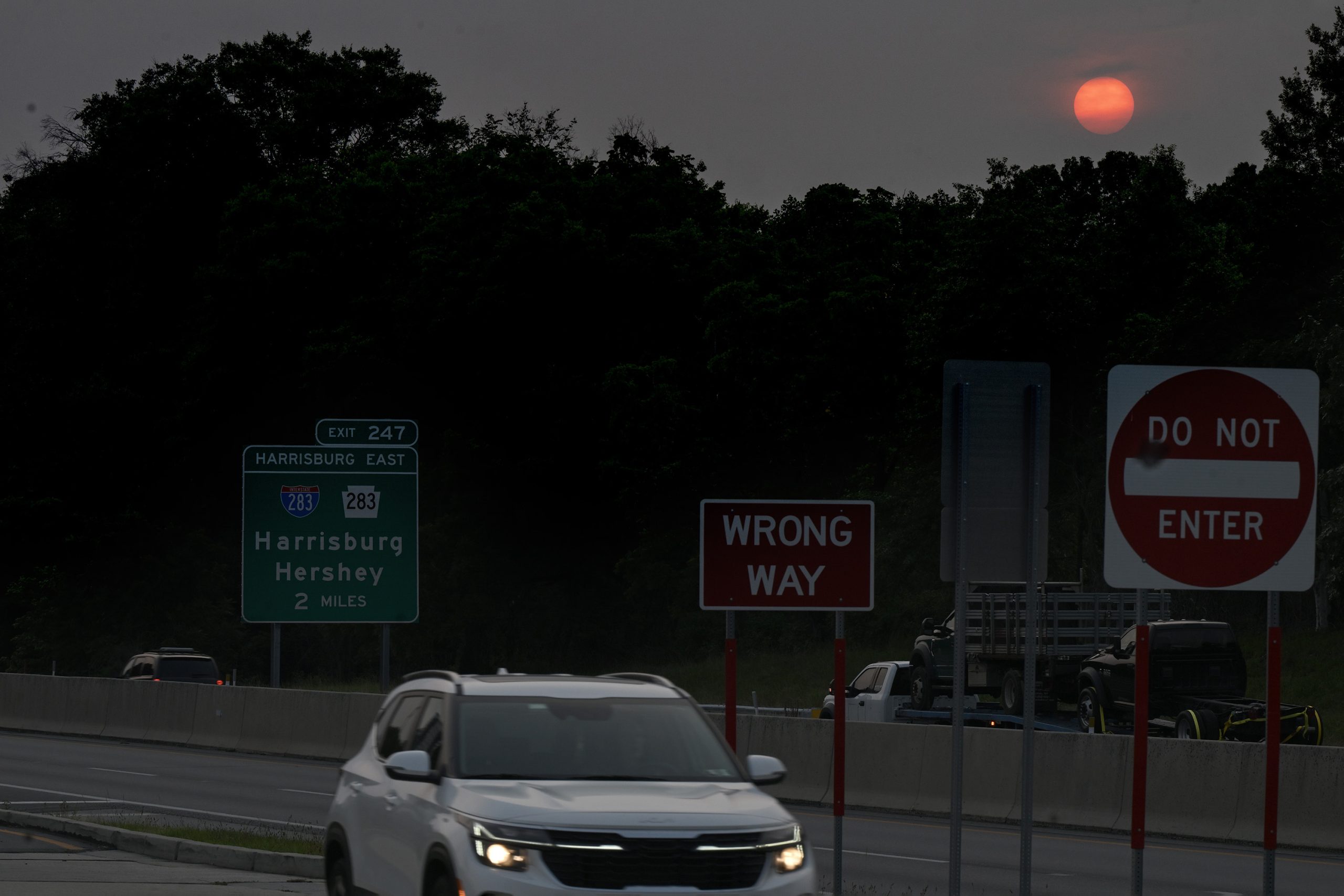
The sun sets in a hazy sky over the Pennsylvania Turnpike Wednesday, July 15, 2026.Tom Gralish / Staff Photographer
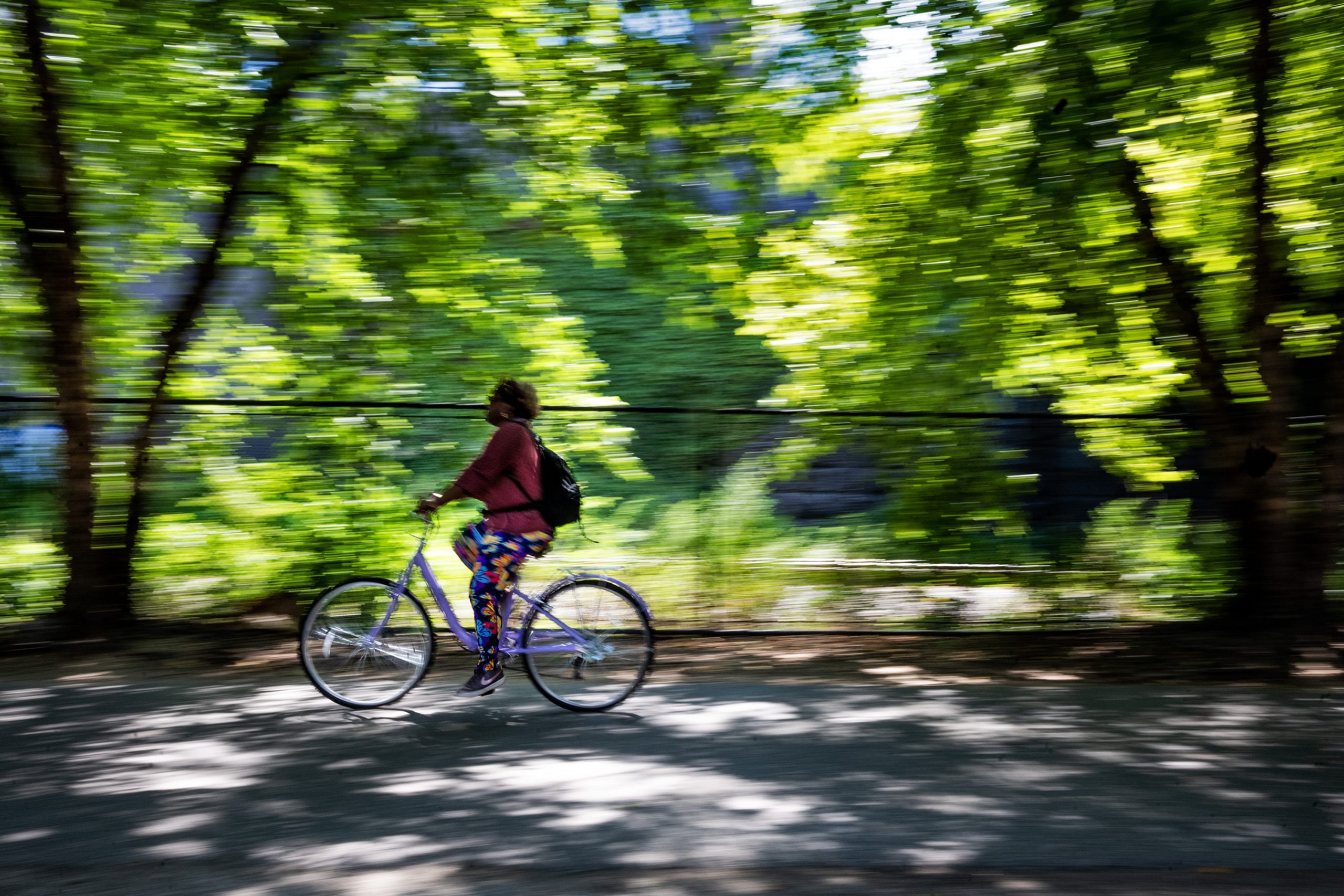
When the skies finally cleared last Sunday, I joined hundreds of outdoor enthusiasts taking advantage the improved air quality and photographed along the Schuylkill River Trail.
I scouted angles to get as many people — and a variety of runners and walkers — in the same frame. But, perhaps because I covered a memorial for Barbara Friedes, a 30-year-old CHOP doctor who was killed on her bike by a drunk driver in July 2024, my attention drifted toward the bicycles.
When I saw a patch of backlit trees I knew if I panned with my camera and a slow shutter speed the highlights would turn into nice blurs — while the biker would be (somewhat) sharp and in focus.
One of the advantages of digital photography is that you can get immediate feedback and adjust your camera settings for the effect you desire. I wanted to get a colorfully outfitted biker, and by the time the “right” one passed in from of me, I was set (1/20th second at f/22, with an ISO of 640 on my Nikon Z8 with a 24-70mm lens).
Finally, here’s one more “nice day” photo I made after talking with “The Torch.”
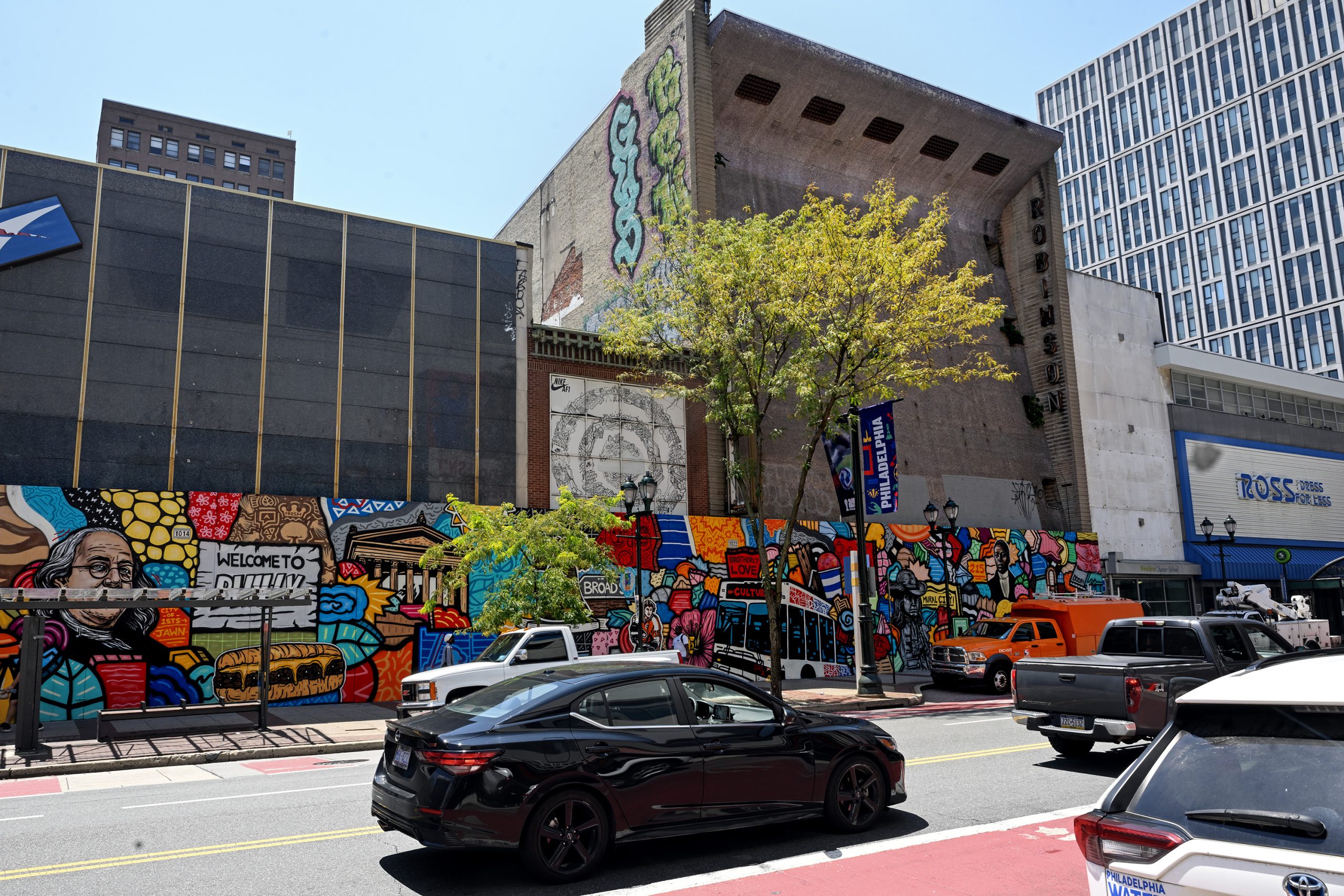
I spent a good part of the winter and early spring of 2024 along an eight block stretch of Market East while the city was dreaming and debating its potential driven by later-scraped plan by the Sixers to build a $1.55 billion downtown arena.
It was a tattered corridor, especially the south side of the 1000 block that was mostly boarded up storefronts. The city started trying to freshen it up before our summer of celebrations.
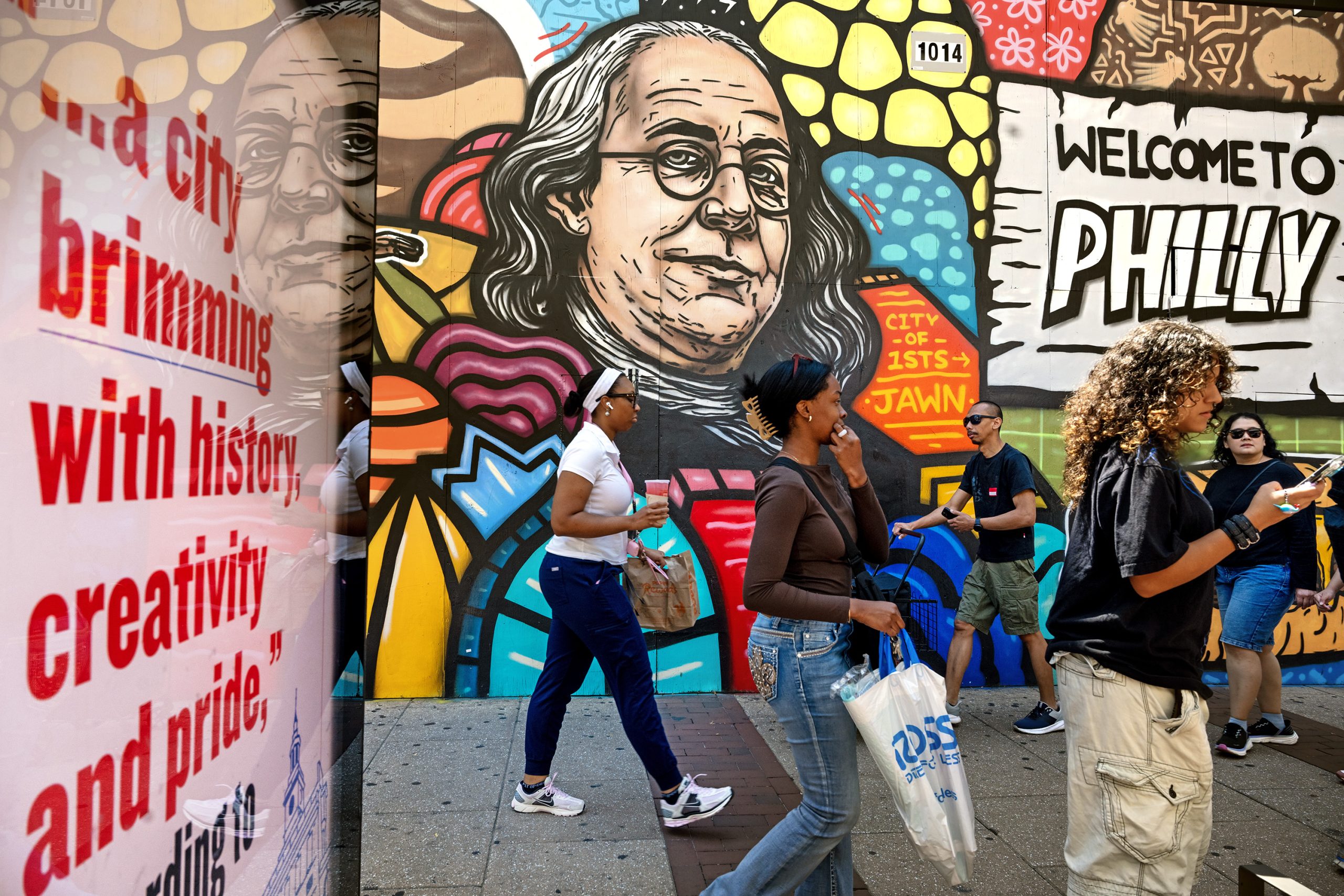
Walking there on Monday I admired the 150-foot mural “Welcome to Philly” artist Alloyius McIlwaine was commissioned to paint there before the big summer. I didn’t want to merely record his month-old work, but as I stepped into a bus shelter to get out of the flow of pedestrian traffic, I was immediately stuck by Ben’s reflection in the shelter’s glass — and the words of an unrelated advertisement.
I didn’t want a photo that called too much attention to a single fellow walker, so I waited patiently for that magic moment when my frame was filled with a half-dozen people.
Since 1998 a black-and-white photo has appeared every Monday in staff photographer Tom Gralish’s “Scene Through the Lens” photo column in the print editions of The Inquirer’s local news section. Here are the most recent, in color:
Birthdays are a funny thing. When you’re young, they are all about getting older. You can hardly wait for the next one.
Then, somewhere along the way, they’re not. Suddenly, big league baseball players, your doctors, and bosses are all younger than you.
Eventually, getting older becomes key again. You want to see more birthdays.
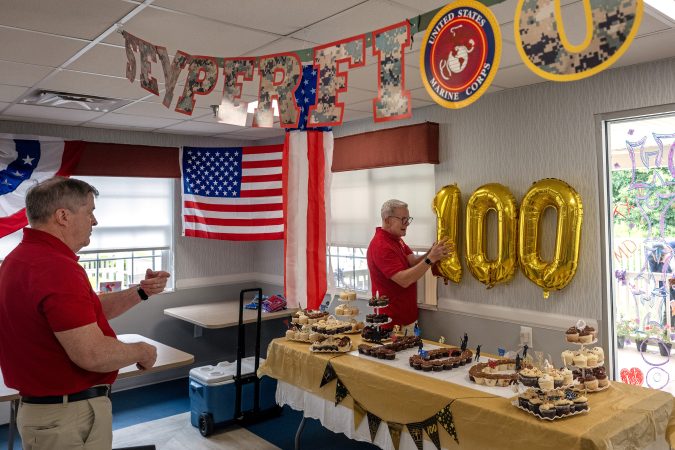
This week I celebrated a birthday of my own, and also photographed a World War II veteran celebrating his 100th. I also photographed church services for an upcoming story on a South Jersey town a century after it was incorporated as the first Black self-governing municipality north of the Mason-Dixon Line.
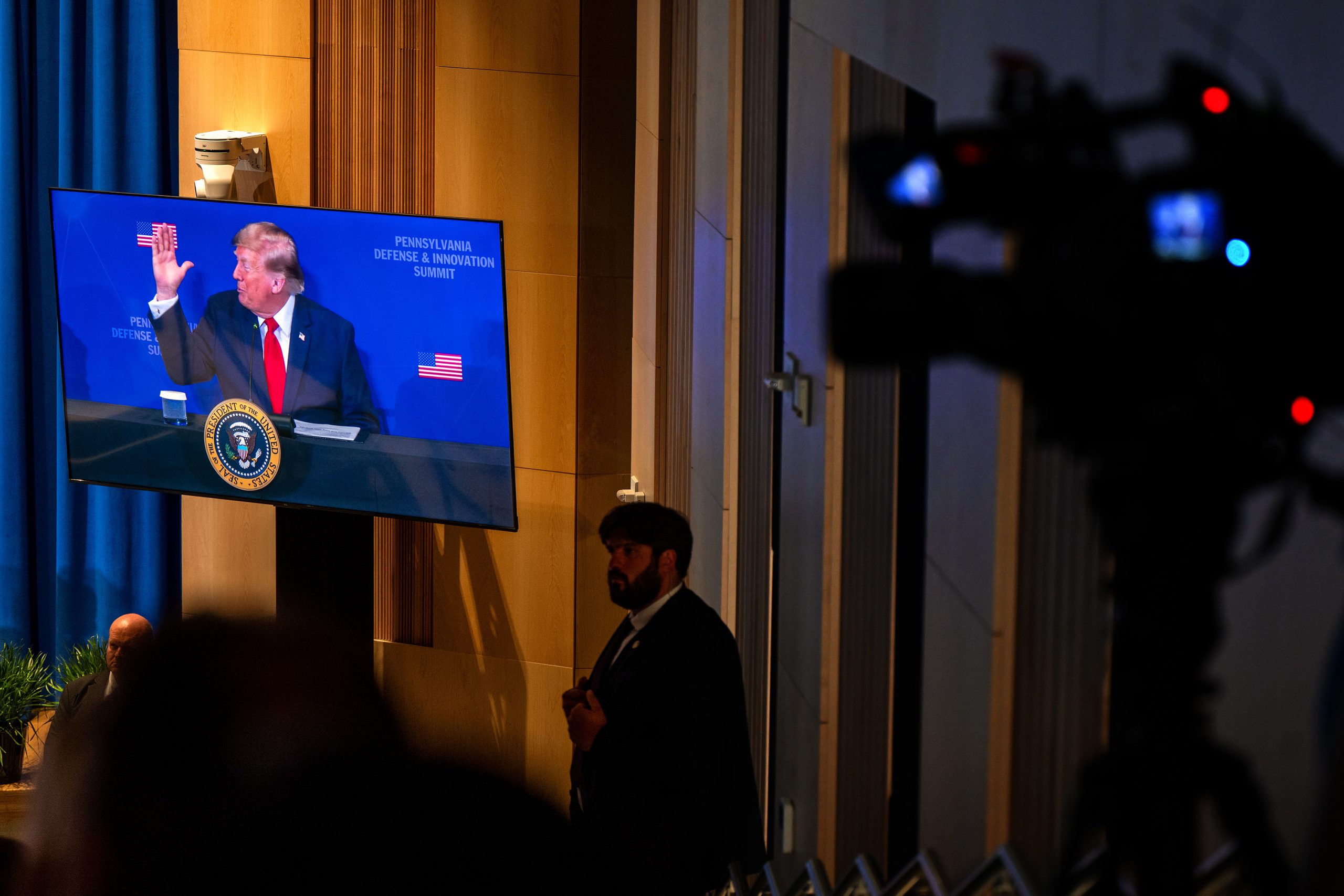
President Donald Trump is seen on a monitor as he appears at a Defense and Innovation Summit hosted by U.S. Sen. Dave McCormick at the US Army War College in Carlisle Wednesday, July 15, 2026.Tom Gralish / Staff Photographer
And I photographed a president, who unlike most of my coworkers and the folks I usually photograph, grew up before the internet and listened to music as it transitioned from Tony Bennett and Perry Como to Bill Haley & His Comets and Elvis.
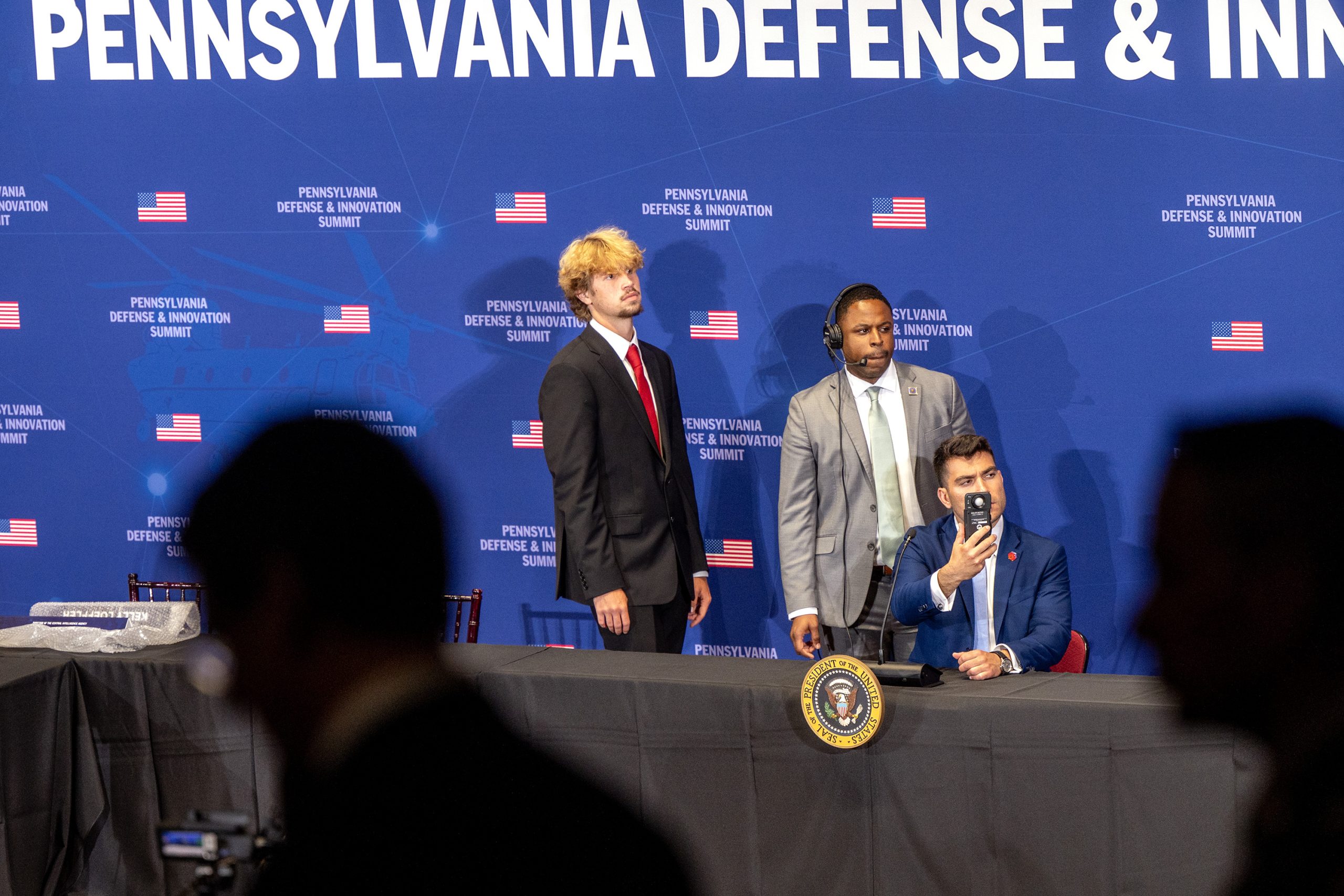
Technicans prepare the lighting and microphones before President Trump appears at the Summit.Tom Gralish / Staff Photographer
One of the ways I marked by birthday was by visiting the Main Line Camera Club as their guest speaker. Meeting people who appreciate photography is one of the things that keeps me young. That along with the joy I get from making and sharing photos.
They had many good images but one that stood out for a “different” photo that Jeffrey Benne took during the recent visit by Union Pacific’s famed Big Boy No. 4014, the world’s largest operating steam locomotive. My colleague Monica Herndon also photographed the big engine that could, but until I saw she was headed to Reading, I had no knowledge of it.
After Googling, my social feed exploded with videos and photos of the train along its historic coast-to-coast tour to celebrate America’s 250th. I even heard traffic reports on KYW radio as it approached Philadelphia that weekend begging drivers to quit being foolish by stopping on the Schuylkill Expressway and getting out of their cars to photograph it passing by, being a bunch of train “foamers” (a term I just learned this week).
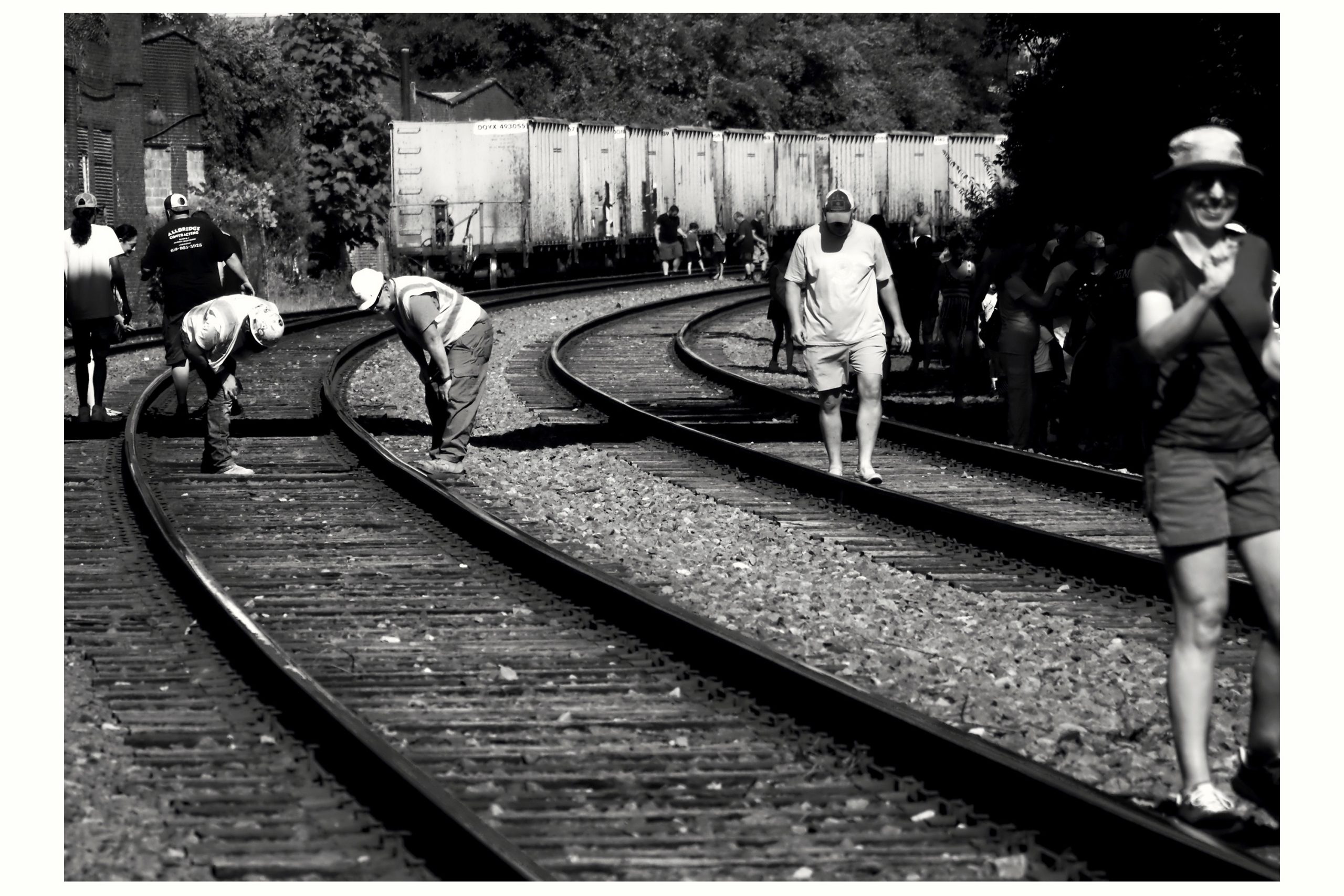
Benne arrived in Bridgeport, Pa. 45 minutes before Big Boy’s arrival, staking his claim “on a piece of ground then played with the settings on my gear to get a good shot,” with just about 45 seconds to get it passing by.
Afterward, he said he noticed the crowd searching the tracks and realized they were looking for smooshed coins, having set regular coins on the track minutes before. “I should have done that myself,” he said.
Growing up, my friends and I did that, and usually had little luck finding our own “smooshed” pennies.
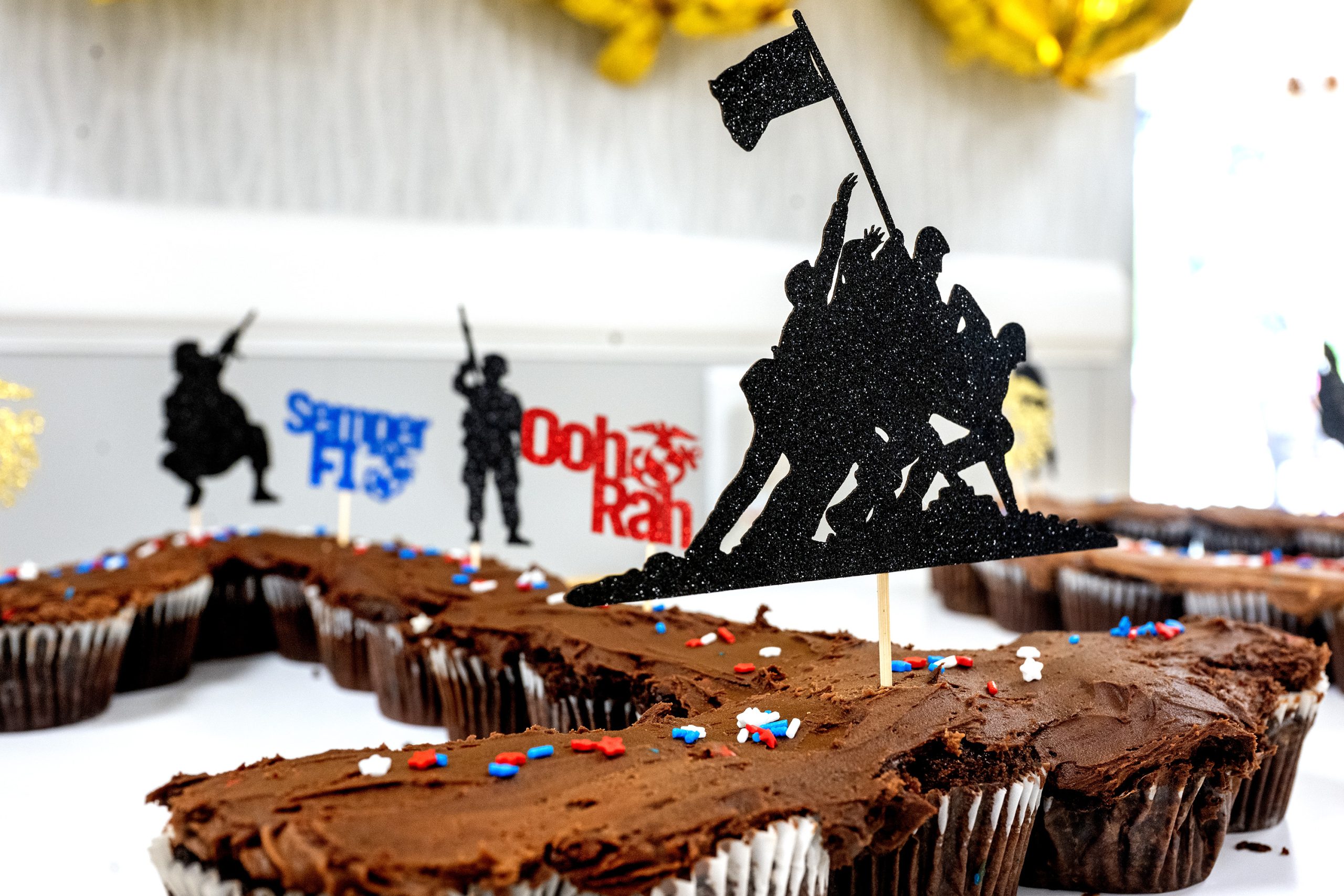
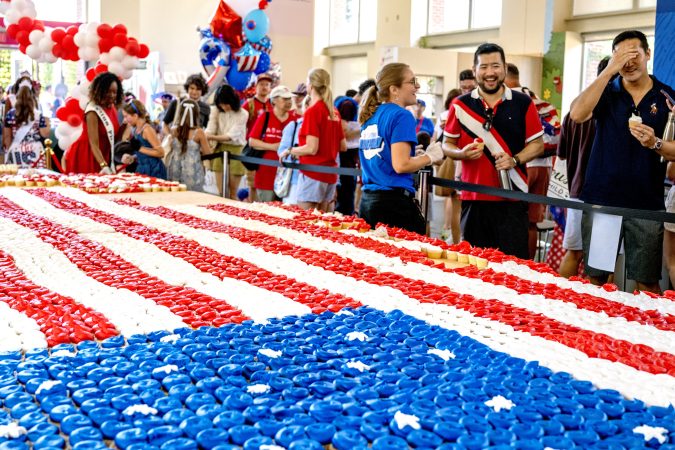
Cupcakes – including one with a topping depicting the iconic Joe Rosenthal photo of U.S. Marines raising the flag at Iwo Jima – at a 100th birthday party for WWII Marine veteran Stephen Anderson.Tom Gralish / Staff Photographer
Pat Dailey, setting up the birthday party in the photo at the top, founded the Tun Legacy Foundation, a nonprofit that supports veteran causes, Masonic charities, and educational scholarships. They are also rebuilding and reestablishing an authentic reproduction of the original Tun Tavern building in Philadelphia. The Tun, constructed in 1693, was the first documented lodge in North America and the birthplace of the U.S. Marine Corps in (1775).
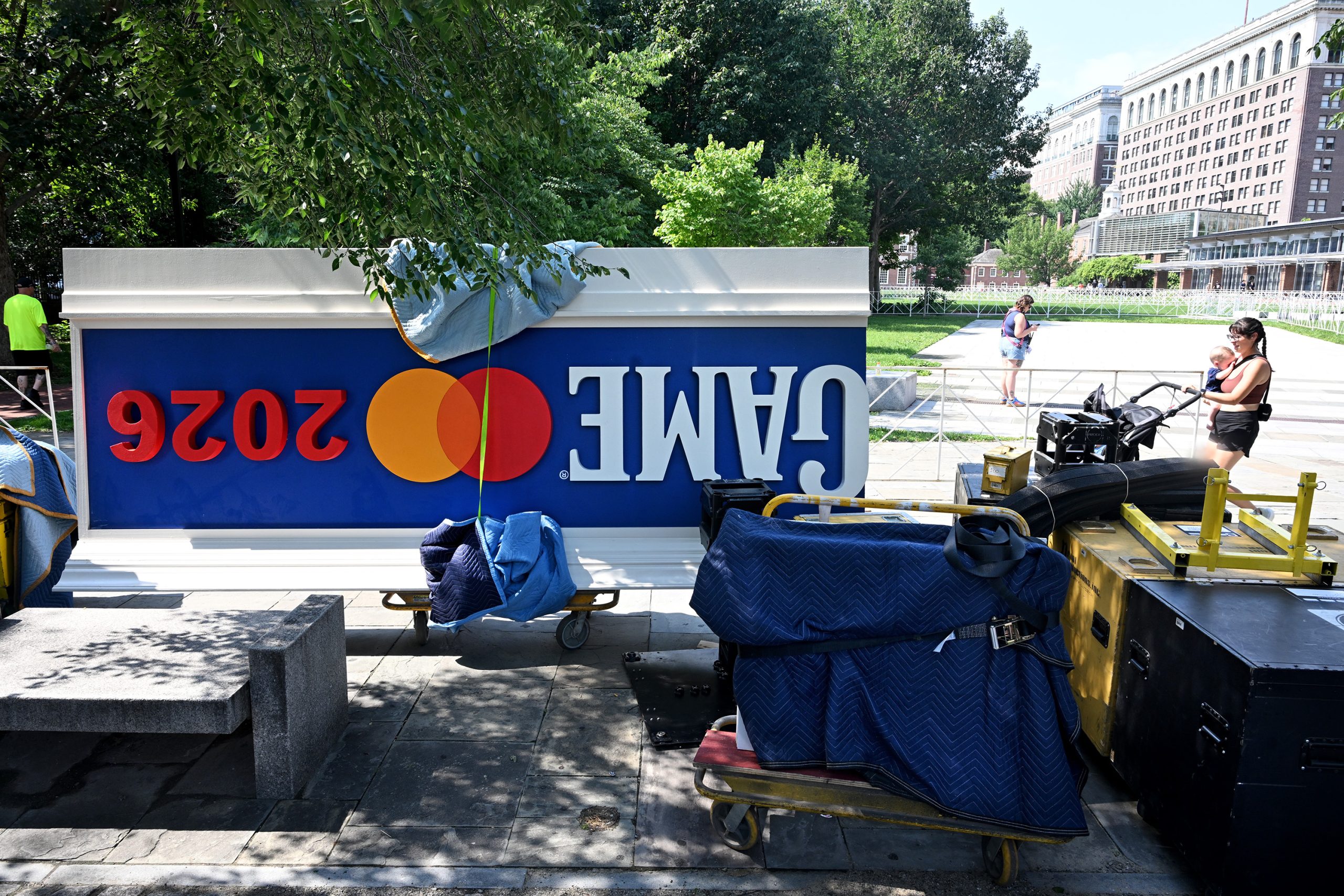
Photographing workers setting up for the Red Carpet on Independence Hall was my only contribution to our coverage of Philly’s hosting the MLB All-Star Game for the first time in 30 years (I did cover THAT game).
Preparations are underway on the Mall at Independence National Historical Park Monday, for the All-Star Red Carpet Show on Tuesday.Tom Gralish / Staff Photographer
I made the Independence Mall prep photo during an early morning check-in on the President’s House site, something I have been doing for months.
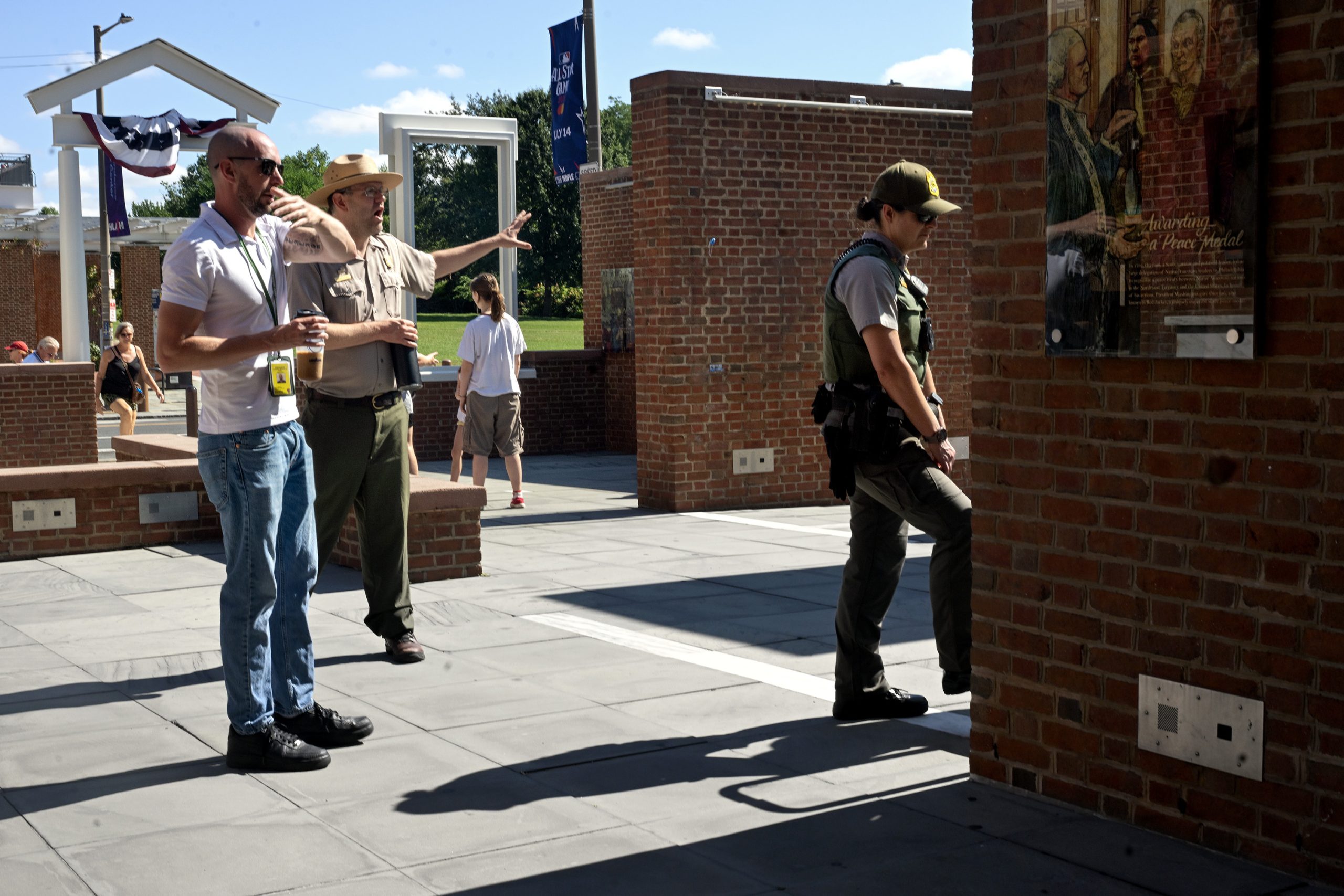
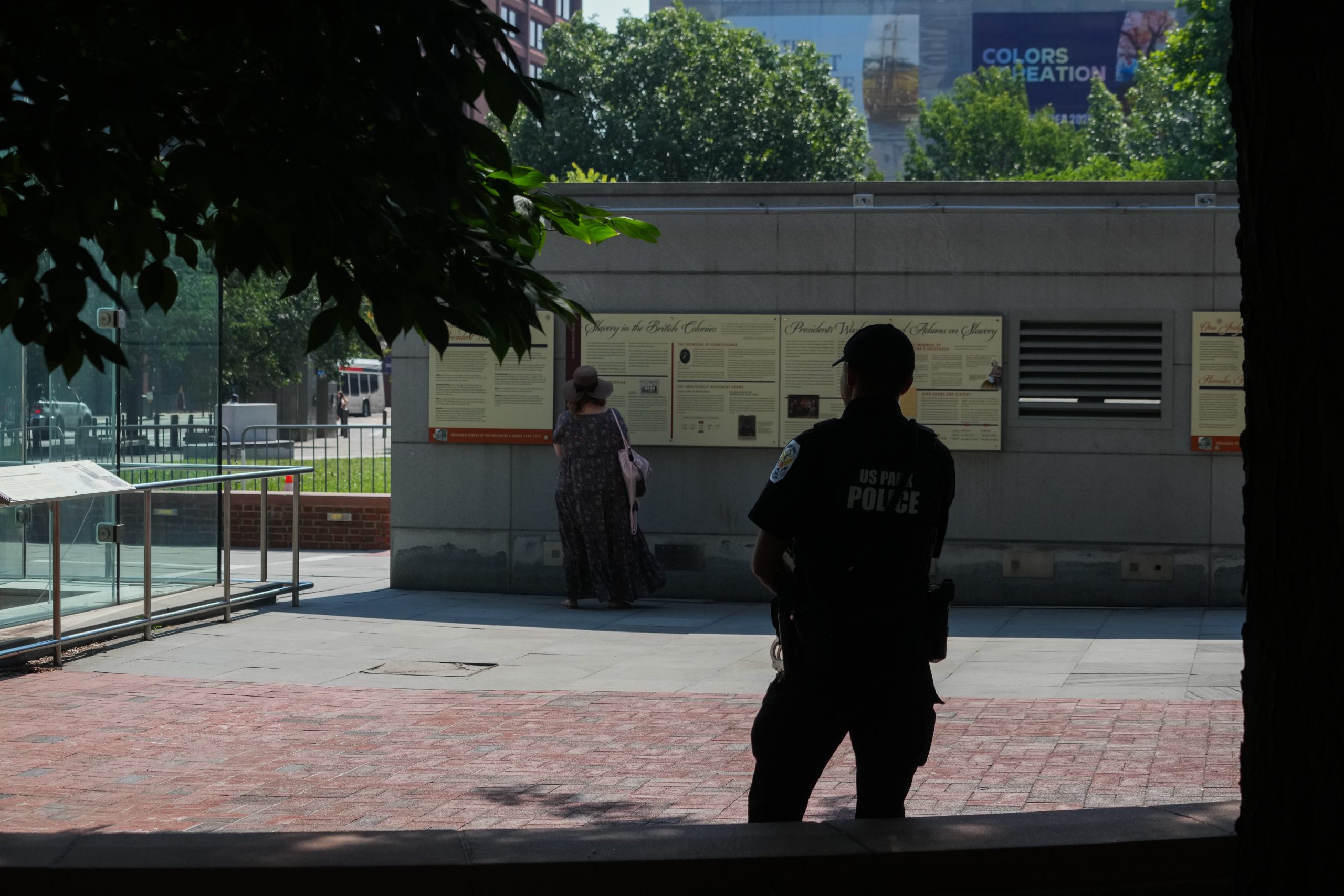
There was nothing new on the site that morning, since I had found National Park Service employees a week earlier taking photos and measurements, and looking under, behind, and above the panels. They told me they were “just looking around” and not there to install the new Trump administration panels after a federal appeals court gave the go-ahead just before the Fourth of July weekend.
A National Park Service employee along with a NPS ranger and NPS police officer visit the President’s House site Wednesday, July 8, 2026. Tom Gralish / Staff Photographer
But unlike the original January removal and the subsequent court-ordered return months later, they did it in the middle of the night, avoiding public scrutiny.
A U.S. Parks police officer and a visitor at the President’s House site Wednesday, July 15, 2026 after new panels were installed.Jessica Griffin / Staff Photographer
Since 1998 a black-and-white photo has appeared every Monday in staff photographer Tom Gralish’s “Scene Through the Lens” photo column in the print editions of The Inquirer’s local news section. Here are the most recent, in color:
Some weekends are just dates on the calendar. Others become part of history.
America’s 250th anniversary was one of those weekends.
Philadelphia, where the nation began, became the center of the celebration. Across days marked by extreme heat, thunderstorms, fireworks, a canceled parade, and a World Cup match, The Inquirer’s photographers captured the defining moments — and the quieter ones in between — creating a portrait of the country at 250.
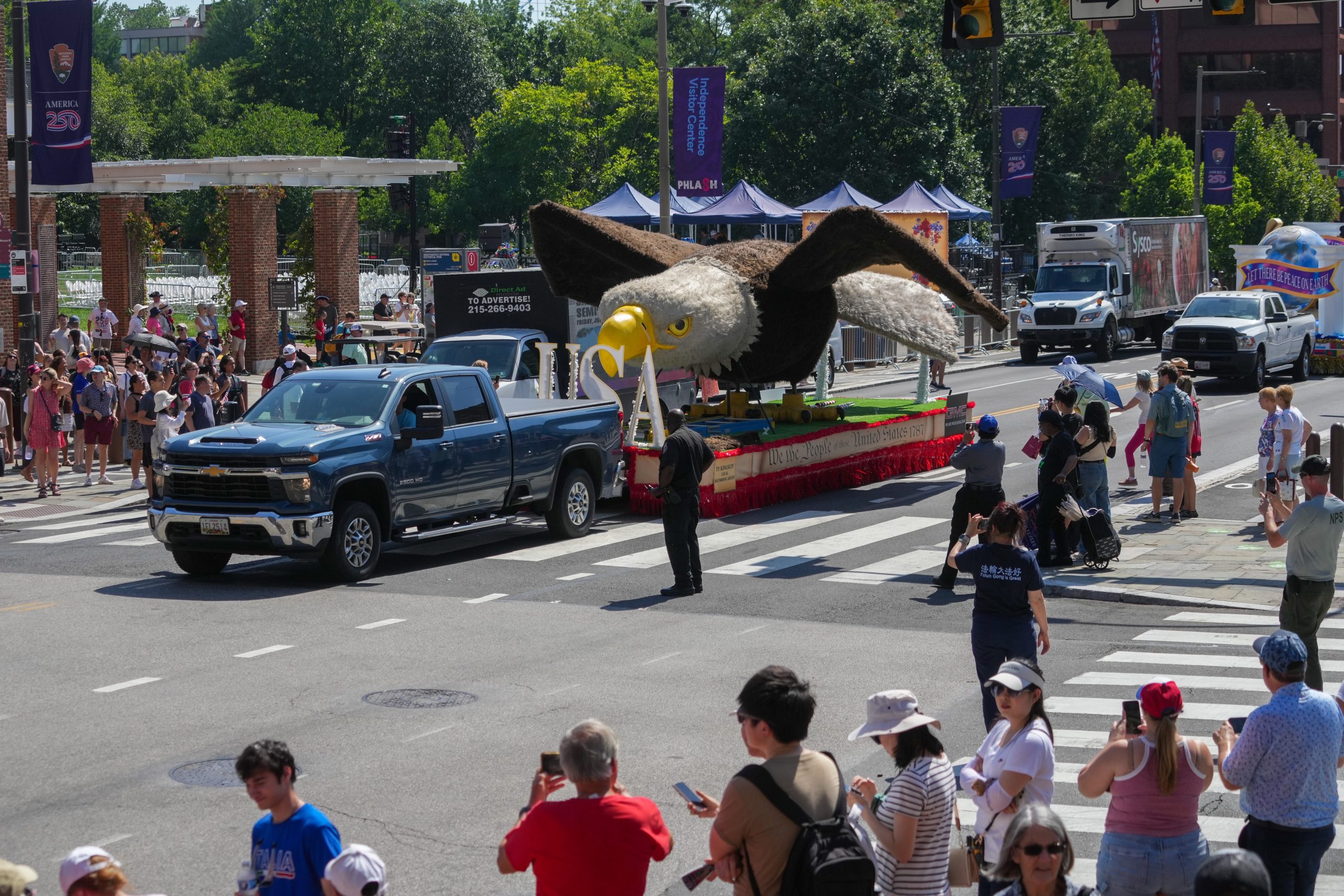
After days of closed streets, parking restrictions, and traffic backups leading up to the weekend, Jessica Griffin planned to ride to cover the Wawa Salute to Independence Semiquincentennial Parade. But it was canceled amid a declared heat emergency with 100-degree temperatures before she even left her house.
Instead, she found all the floats — moved overnight from the Pennsylvania Convention Center to Independence Mall in preparation for the parade — in an unofficial parade away from the Historic District.
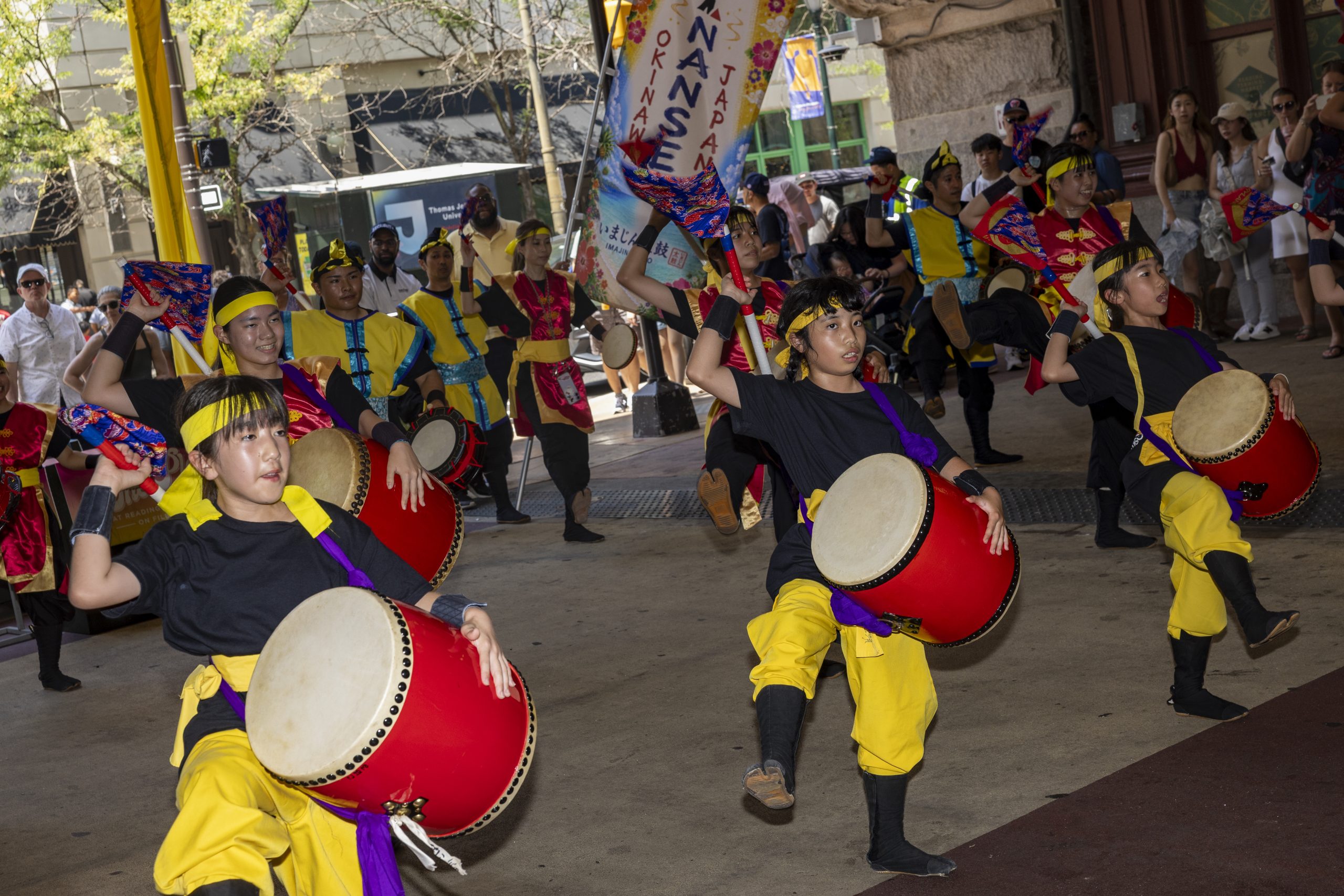
The cancellation gave the many would-be paraders the opportunity to perform around Center City. Summer intern Aidan T. Gallo photographed Imajin Taiko, a lively dance group from Nakijin, Okinawa, Japan, performing outside Reading Terminal Market.
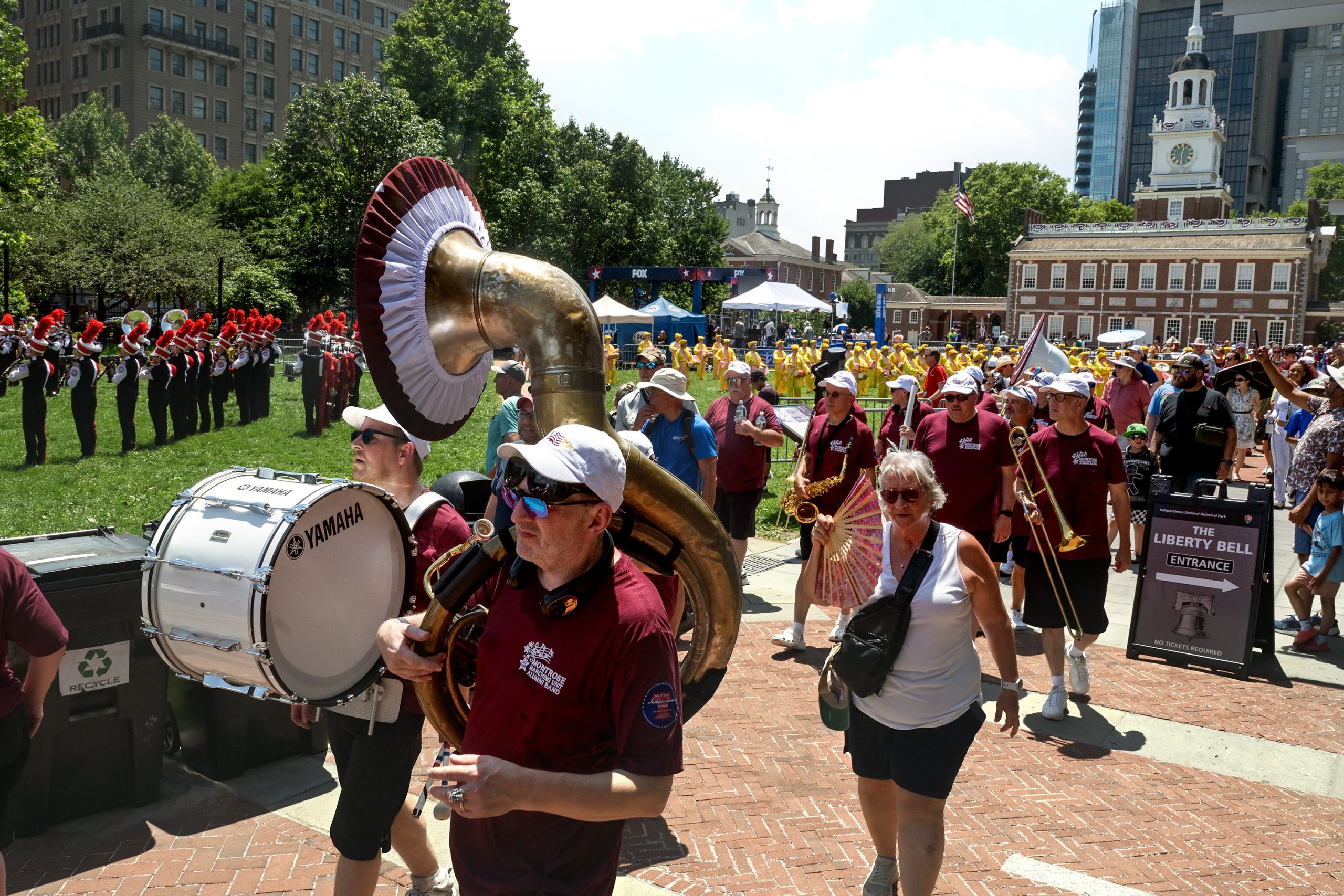
Musicians, Colonial reenactors in sweat-soaked wool, and visitors (also sweaty) wandered the Historic District looking for something to do. It led to impromptu pageantry around Independence Hall. Marching bands did their (stationary) thing, taking turns performing on the grassy mall.
Working the scene, I was able to frame three different bands at once. The Montrose Marching Unit Alumni Band from Susquehanna County was leaving as the Triuggio Marching Band, a community group from the northern Italian city of Triuggio, and a Falun Gong drum band from New York prepared to perform.
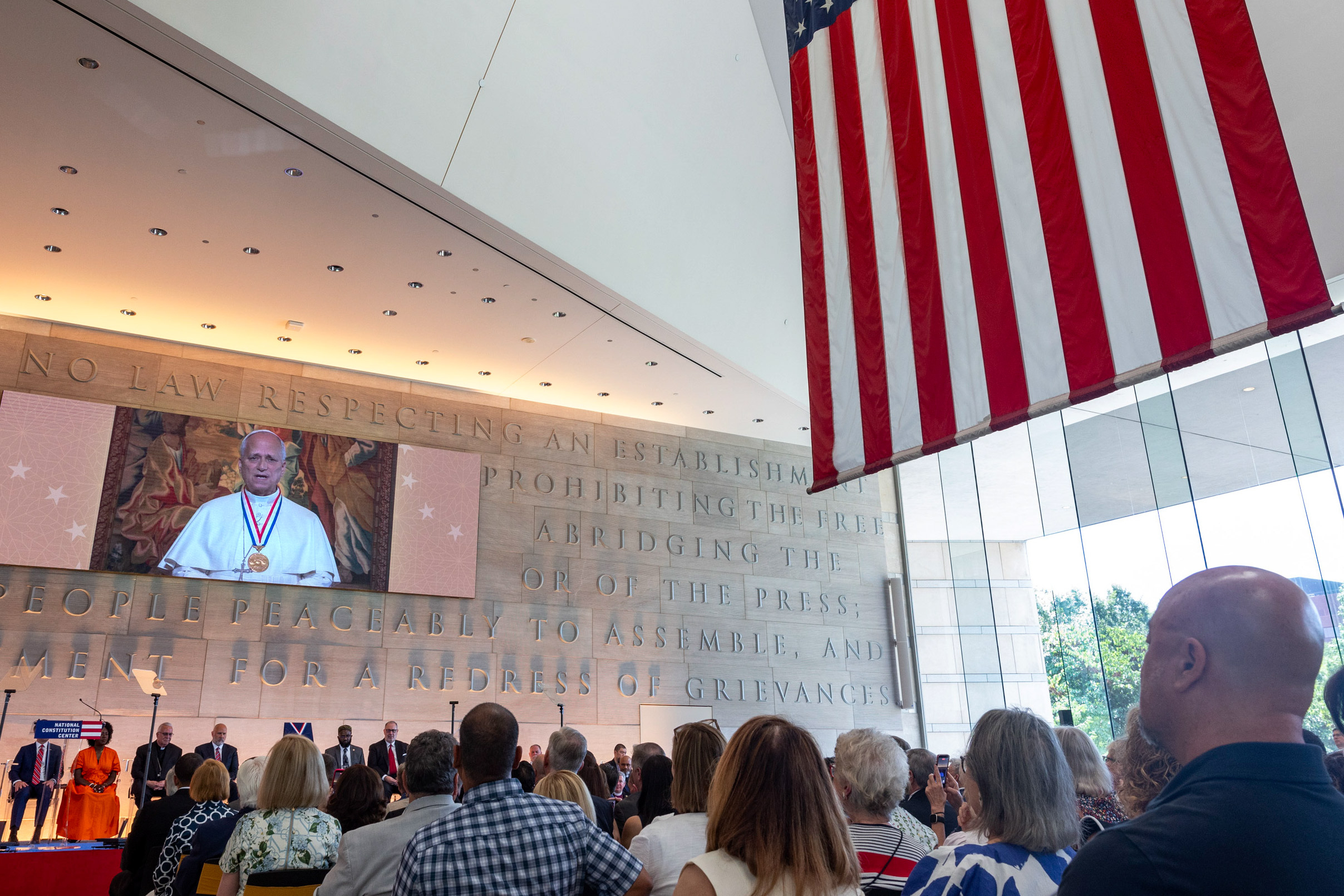
On the Fourth, Tyger Williams found photographing the National Constitution’s Liberty Medal presentation an interesting experience even though the honoree, the U.S.-born pope and Villanova alum, Pope Leo XIV, wasn’t physically there.
Finding a compelling way to photograph someone appearing only on a screen wasn’t easy, he said. “I wanted to be able to show the atmosphere when the Pope was speaking and show the impact he has to those listening to him.”
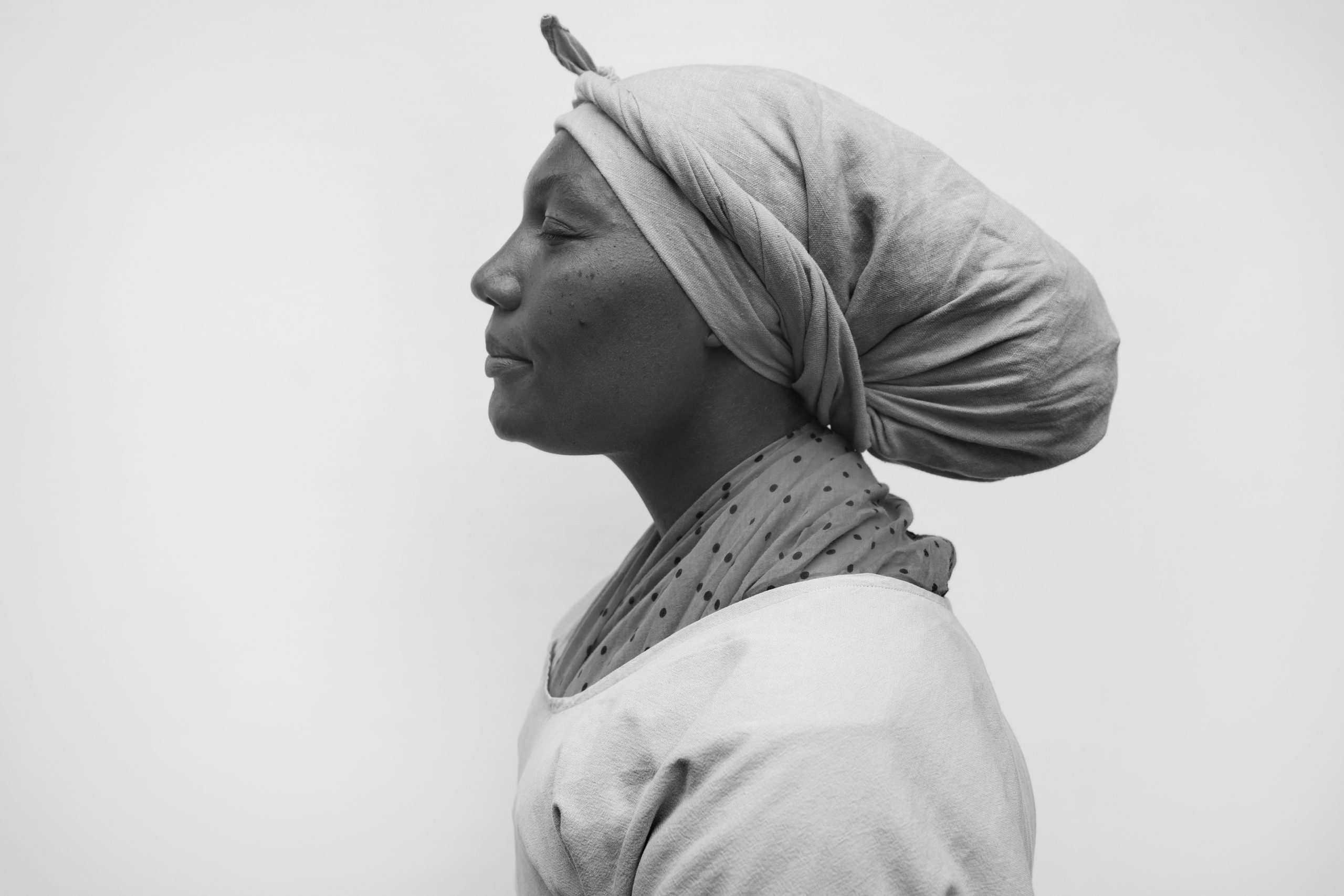
Jose F. Moreno wanted to create a simple, straightforward portrait essay on the people we often see in costume walking through the Historic District to recognize the people “whose passion, knowledge, and dedication help tell Philadelphia’s story as the city celebrates this historic milestone.”
By using a plain white background and removing all distractions, the focus remained entirely on the individuals and the history they represent. He photographed each History Maker one after another, asking them to “do nothing more than be themselves.” He only made two or three frames of each person against a plain white background.
Courtney Mitchell, who portrays Margaret Woodby, a free Black woman who owned a cake-baking business, smiled during her full-length portrait before turning slightly to the side.
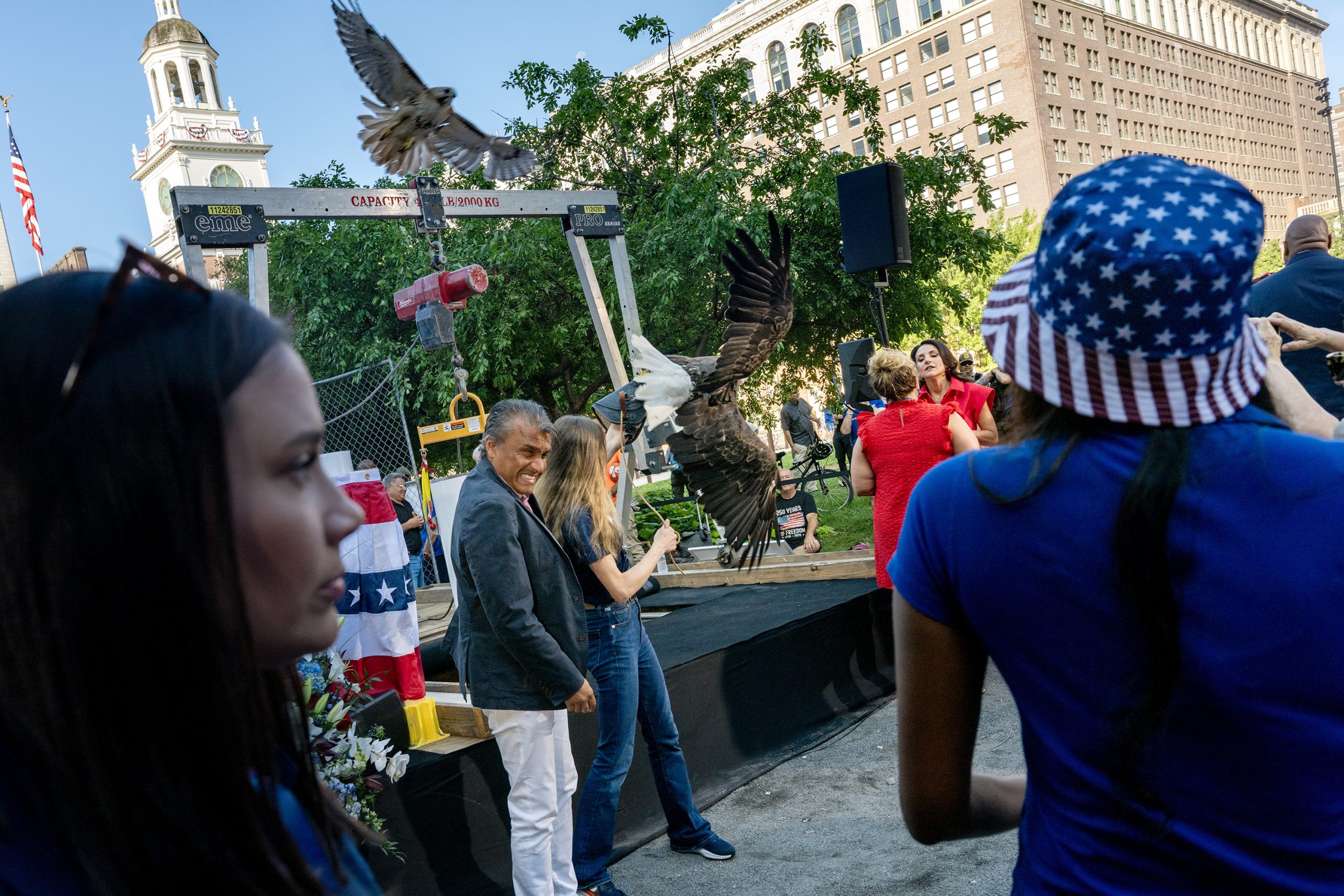
On the morning of the Fourth, I covered the burial of “America’s Time Capsule” in Independence National Historical Park. Before the ceremony, dignitaries posed with Indy, a bald eagle from the Auburn University Raptor Center. Suddenly, another bird of prey swooped down asserting its territory.
I wasn’t actively photographing the scene, but luckily my camera settings were already dialed in. I managed to capture a frame just as the hawk came within striking distance. Indy — who made her first appearance at a Philadelphia Eagles game in 2023 — and her handler spent the rest of the photo opportunity watching the skies overhead.
Also on Saturday, Gallo was back covering neighborhood block parties. In Point Breeze, he heard kids sliding down an inflatable bounce water slide — a block party staple. What he didn’t expect was to see multiple children sliding all at once, including a little girl holding onto her popsicle.
By the time she got to the bottom, the popsicle was knocked out of her hands into the pool. “Luckily, I pressed the shutter at the right times to capture the popsicle and its flying pieces mid-air.”
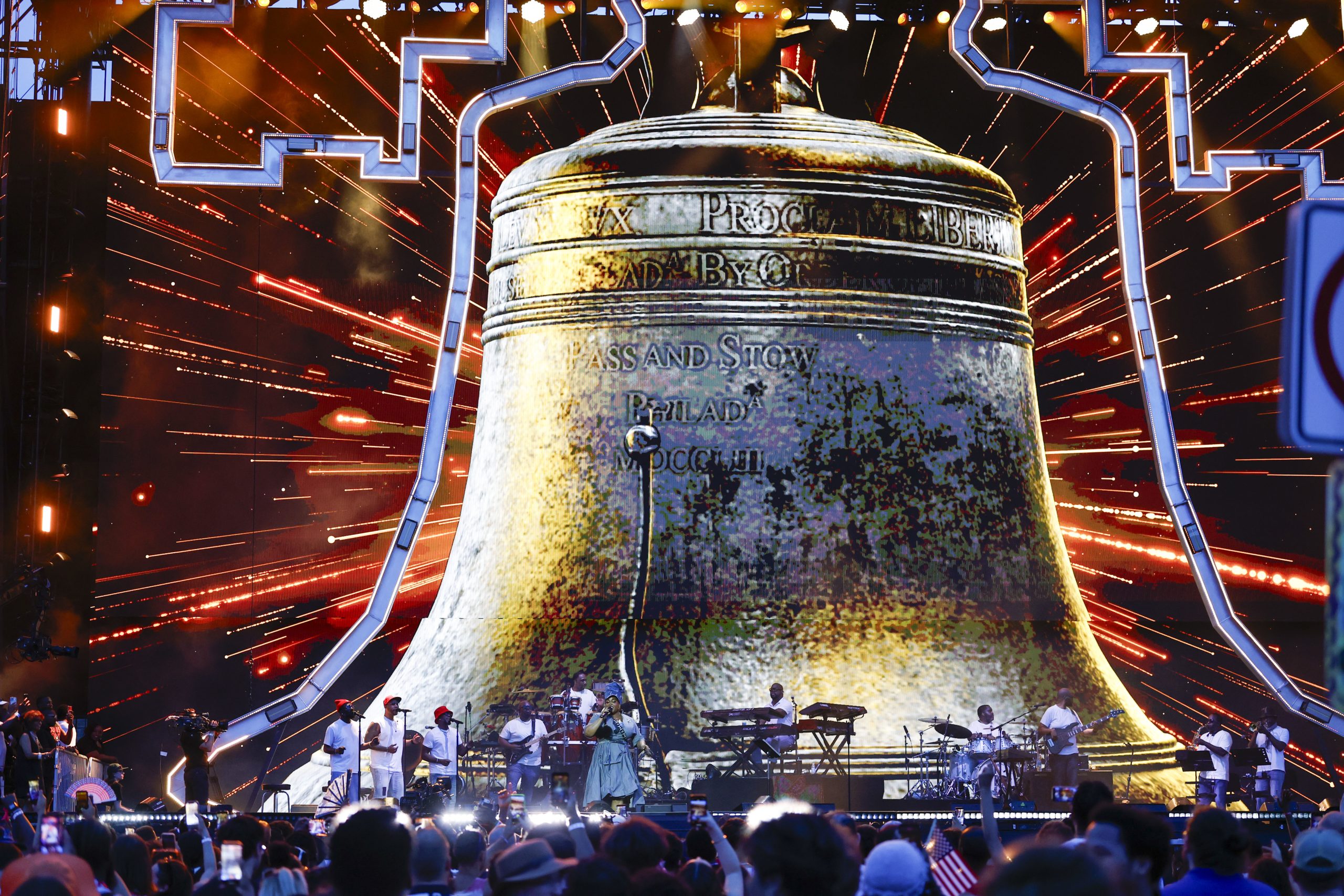
Jill Scott takes to the stage for One Philly: Unity Concert for America on the Benjamin Franklin Parkway on Saturday, July 4, 2026, in Philadelphia.Yong Kim / Staff Photographer
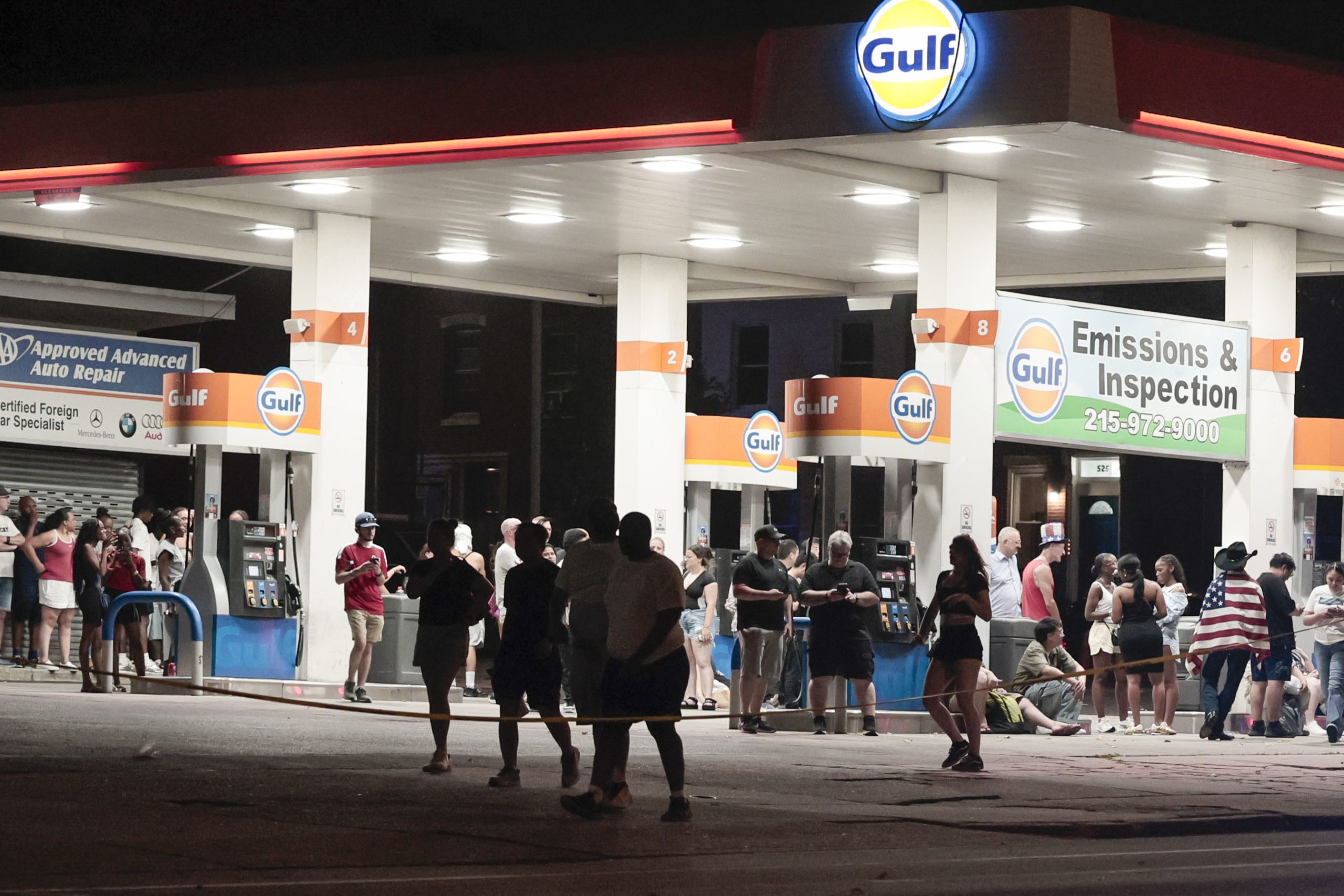
Kim and Elizabeth Robertson evacuated the area during the more than three-hour rain and lightning display, eventually taking shelter beneath the canopy of a gas station along Spring Garden Street.
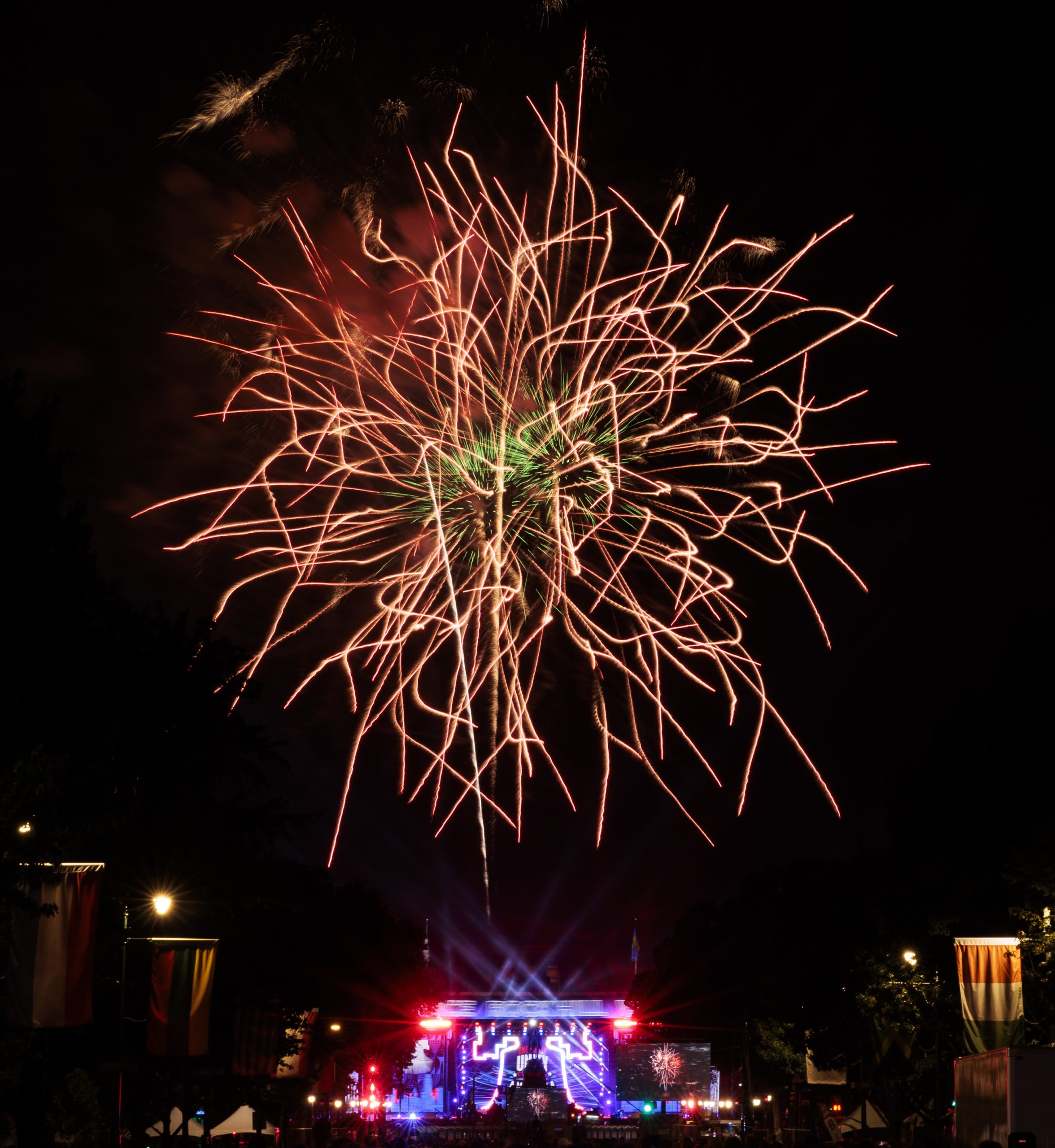
Monica Herndon had been at The Inquirer for more than six years, but this was her first time covering the Parkway concert and fireworks. She “definitely did not expect to still be out there at 2:30 a.m.”
As the storm soaked the area, she waited it out in her car, “eating snacks and singing along to Christina Aguilera hits.” Once the concert resumed, she grabbed her tripod and headed down the Parkway deciding to “set up farther back than usual, hoping to make an image that felt a little different from the fireworks photos I’d seen in years past.”
Herndon used a slow shutter speed, alternating between one and two seconds, “to let the fireworks expand across the frame.” She made lots of images but liked the one with streaks of light that felt “organic and almost painterly…I also love the small starbursts created by the stage lights, a result of shooting at a narrow aperture [f/18].”
A few days before Sunday’s World Cup Round of 16 match, David Maialetti began preparing by cleaning his gear and checking his cameras. He knew the extreme heat was going to be a challenge so kept himself extra hydrated leading up to the match, dressed in loose-fitting, sweat-wicking clothing, and topped it off with a bucket hat.
“The last thing I wanted,” he said, “was to pass out during a key goal and end up a highlight on SportsCenter.”
David Maialetti / Staff Photographer
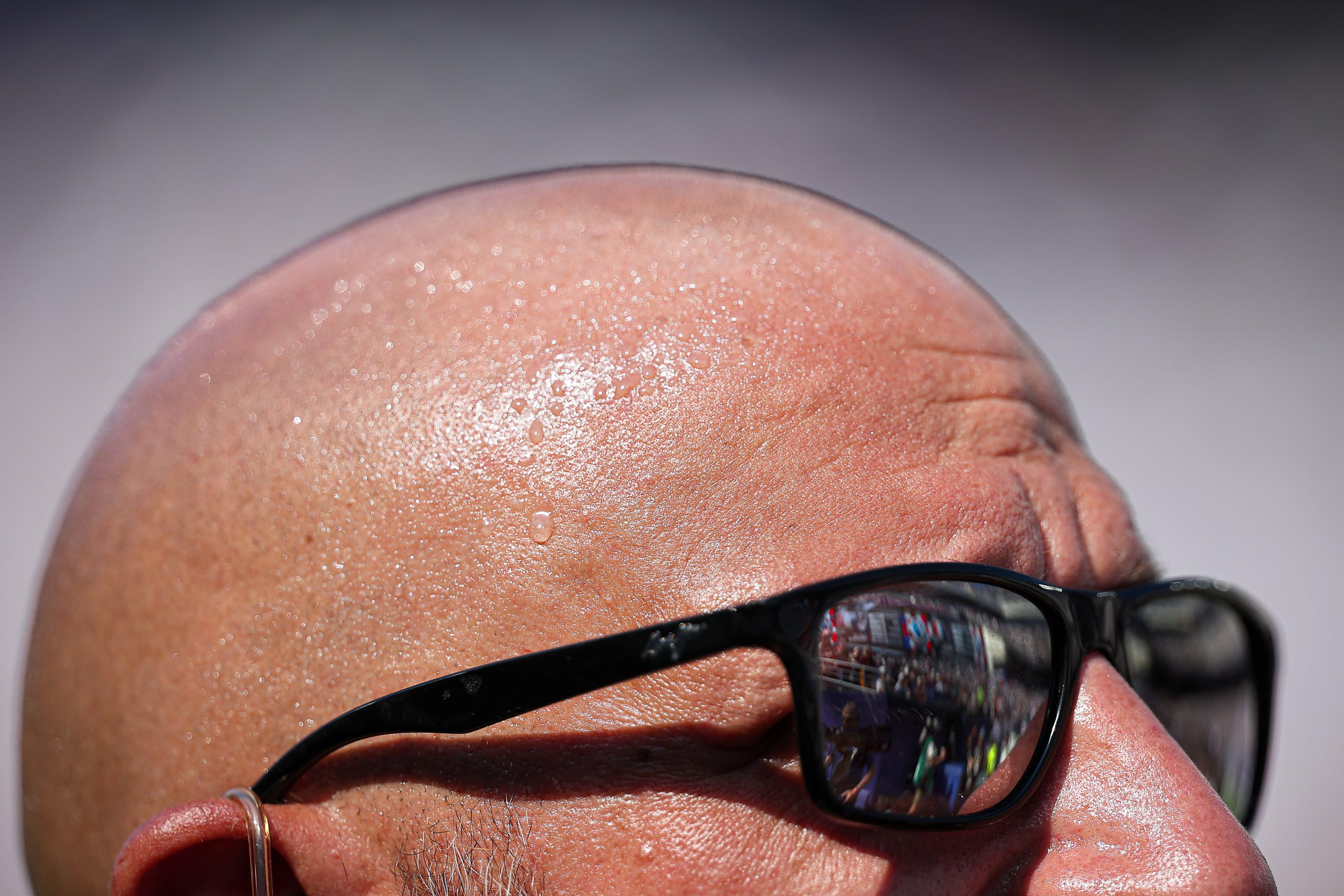
Before kickoff, he photographed fans and the sweltering conditions, including a security guard dripping with sweat before France faced Paraguay.
His game plan sounded solid on paper until he realized the top of his cameras would “feel like a sizzling frying pan.” He knew the electronics could malfunction if they overheated and “gripping a hunk of hot metal for a few hours,” would not be the most comfortable way to work. His “brilliant hack in the moment,” was to turn his camera upside down so the controls weren’t exposed to the blazing sun. “It was totally awkward like trying to ride a bicycle backwards.”
Fortunately, newer cameras automatically reorient the electronic viewfinder, so after a few minutes it began to feel natural.
His plan kept the cameras cool enough to capture France’s lone goal by superstar Kylian Mbappé. The only downside: every image had to be rotated before he could file on deadline.
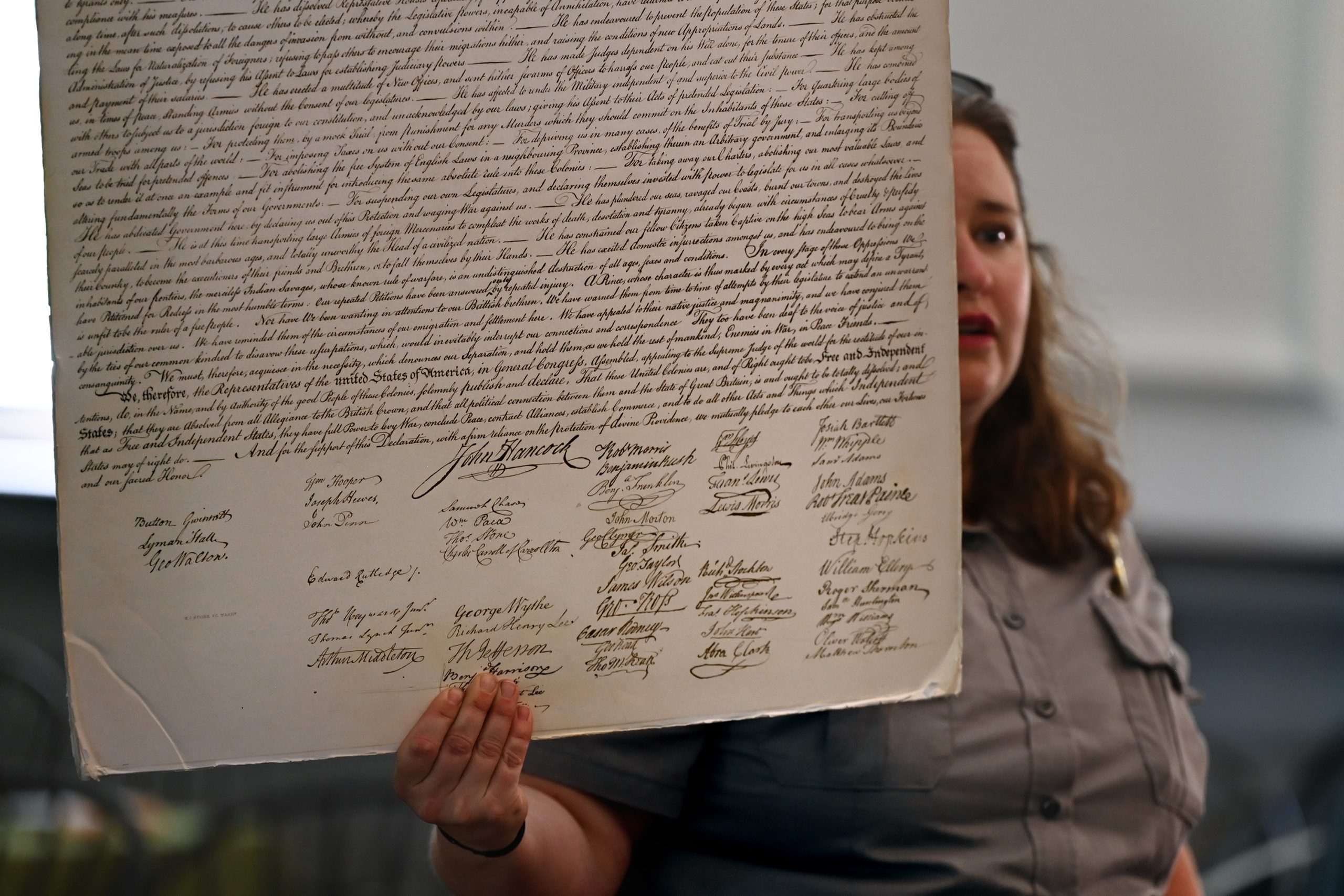
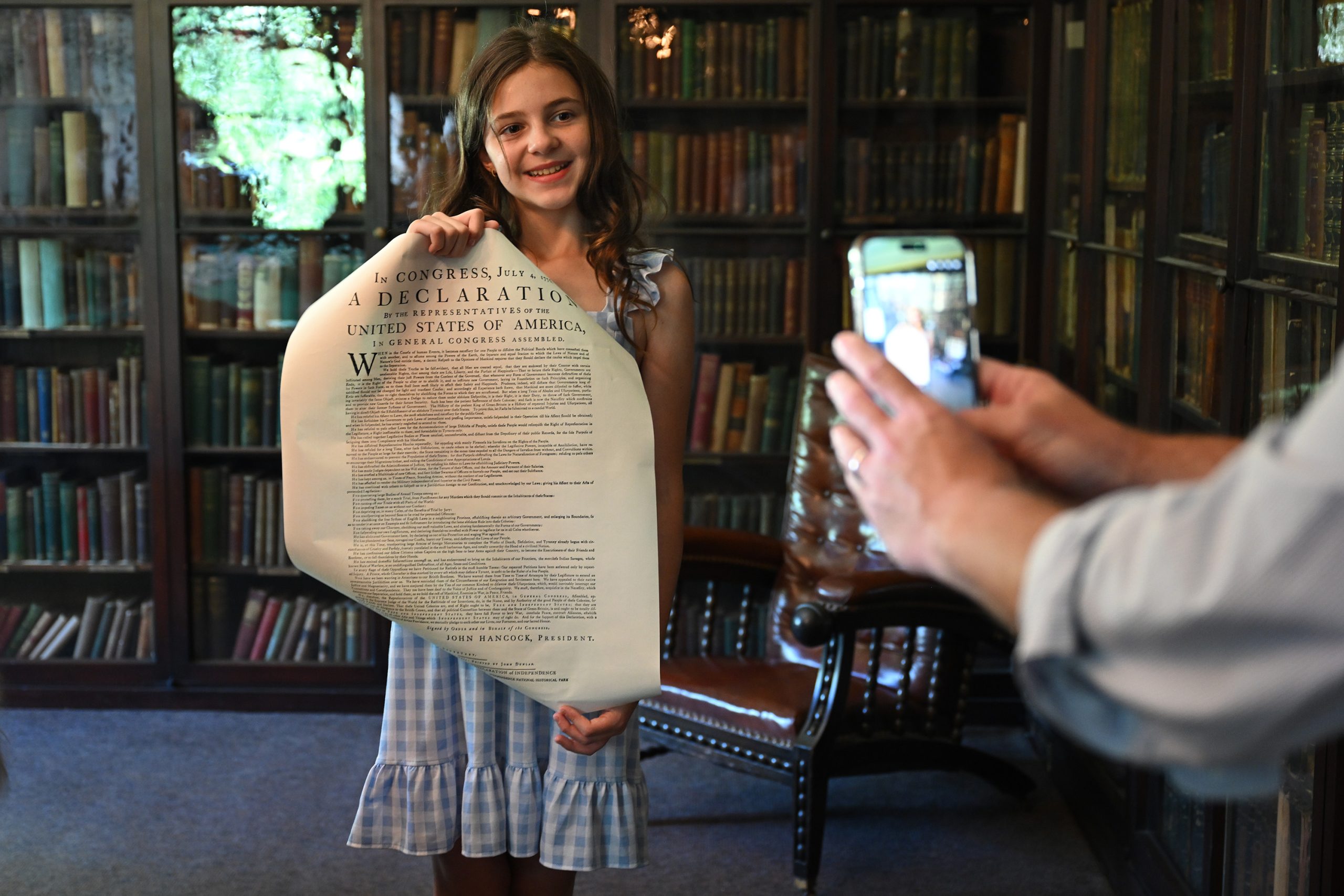
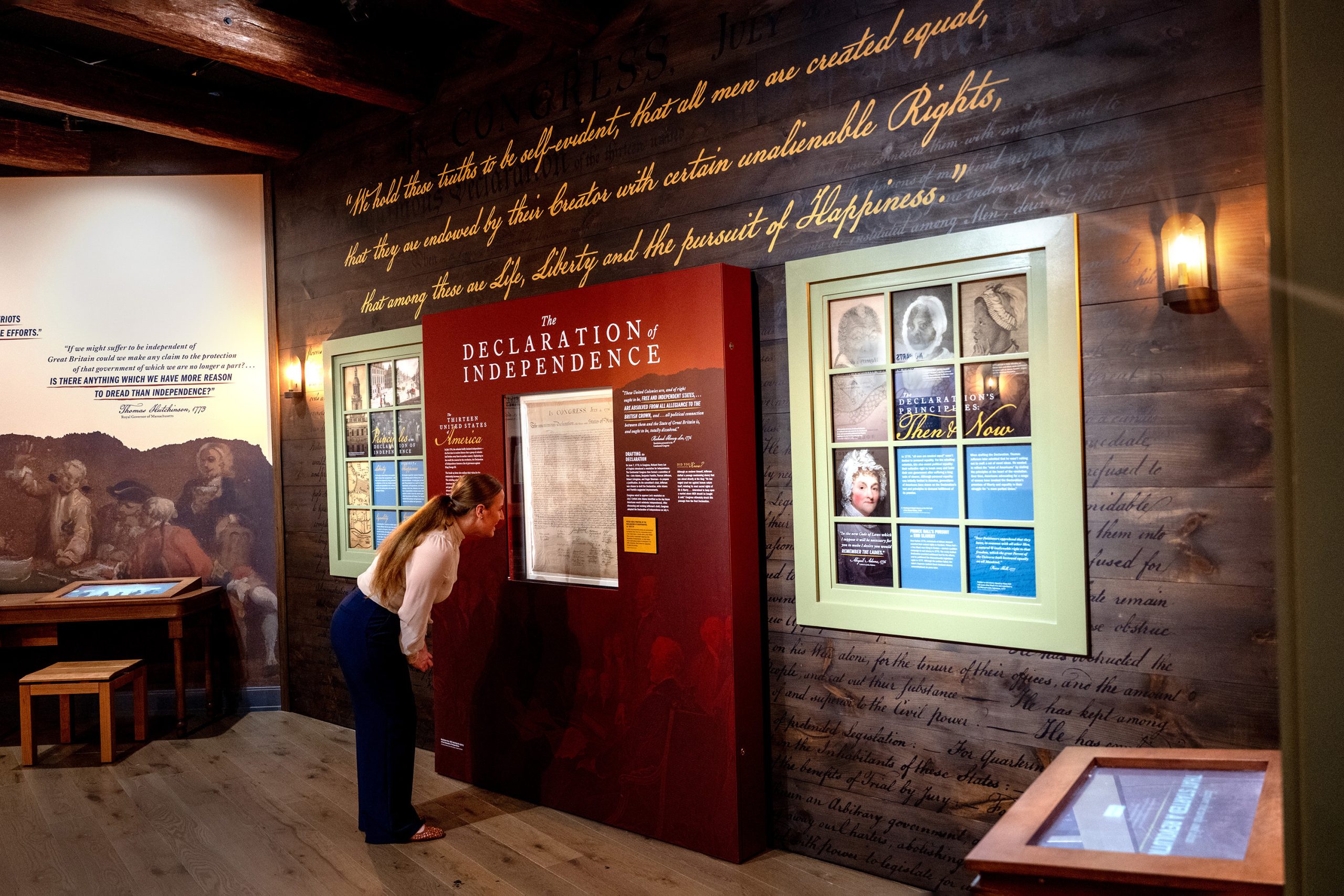
National Park Ranger Maggie Burkett holds an oversized replica of the Declaration of Independence while guiding visitors on a tour of the Assembly Room in Independence Hall (then called the Pennsylvania State House) where the Second Continental Congress met and the Declaration of Independence was adopted. Tom Gralish / Staff Photographer
In the month leading up to the weekend, I worked on a photo essay on the local Delaware, New Jersey, and Pennsylvania Founders who signed the Declaration of Independence. With help from their lineage organization, I met and photographed direct descendants of the often overlooked men who were here with the Second Continental Congress as America was born.
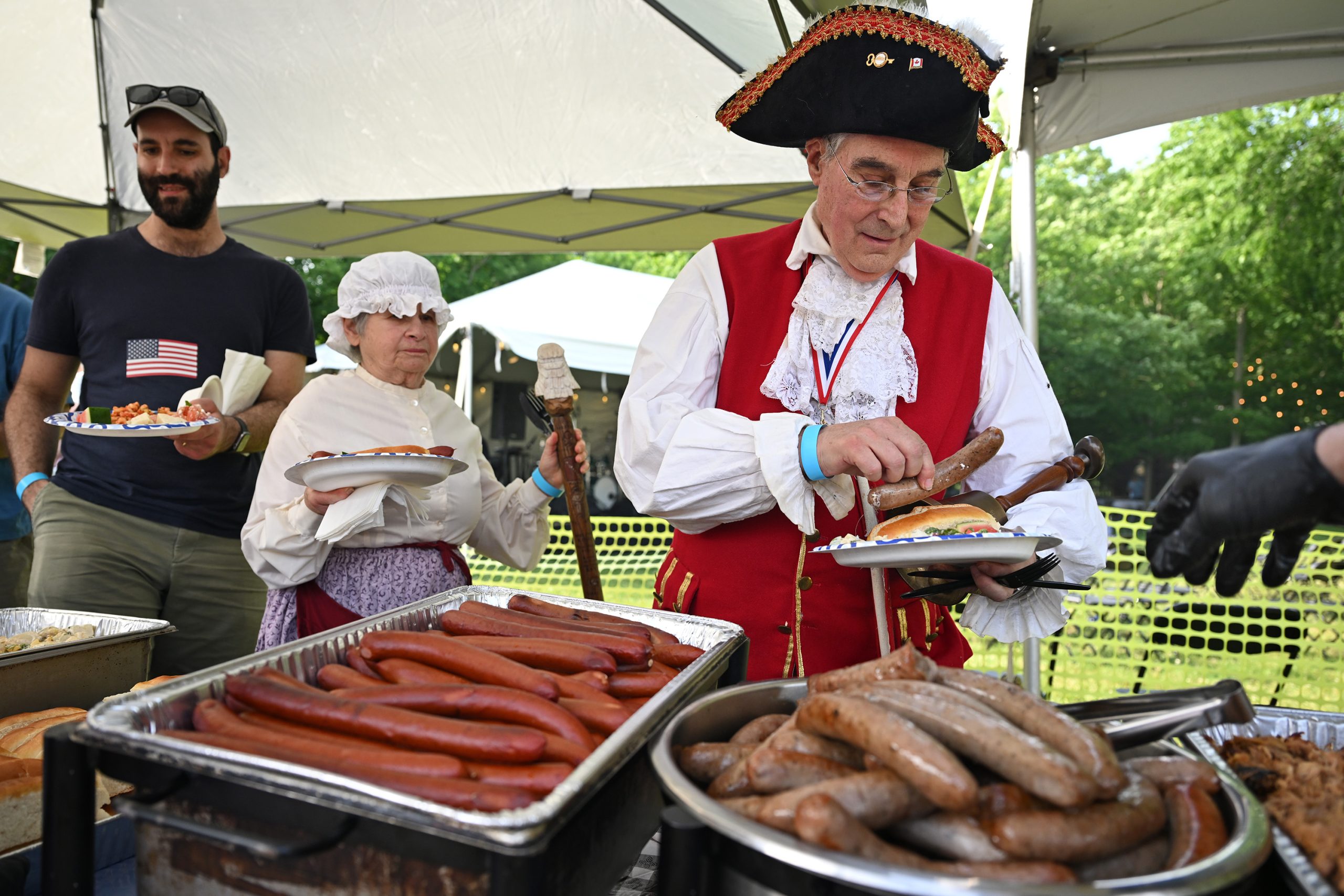
The Town Crier of Hopewell, N.J., and his wife, Stanley and Cindy Saperstein, attend Hopewell’s USA 250th Town-Wide Block Party in June. John Hart, a signer of the Declaration of Independence, is buried at the Old School Baptist Church there.Tom Gralish / Staff Photographer
Since 1998 a black-and-white photo has appeared every Monday in staff photographer Tom Gralish’s “Scene Through the Lens” photo column in the print editions of The Inquirer’s local news section. Here are the most recent, in color:
This weekend, the Descendants of the Signers of the Declaration of Independence (DSDI) gathered in Philadelphia as they do every July Fourth. This year’s Semiquincentennial events kept them from meeting in the room in Independence Hall where their direct ancestors met as America was born. But their children still participated in the annual symbolic tapping of the Liberty Bell ceremony.
National Park Service ranger Maggie Burkett gives a tour of Independence Hall in June. Fifty-six delegates to the Second Continental Congress signed the Declaration of Independence. Tom Gralish / Staff Photographer
Everyone knows about Thomas Jefferson, John Hancock, and the Adams cousins. But few know much about the other 52 delegates to the Second Continental Congress. These men all had interesting lives, and we hardly know them — especially our signers from Delaware, New Jersey, and Pennsylvania (well, except for Ben).
GEORGE ROSS, PENNSYLVANIA
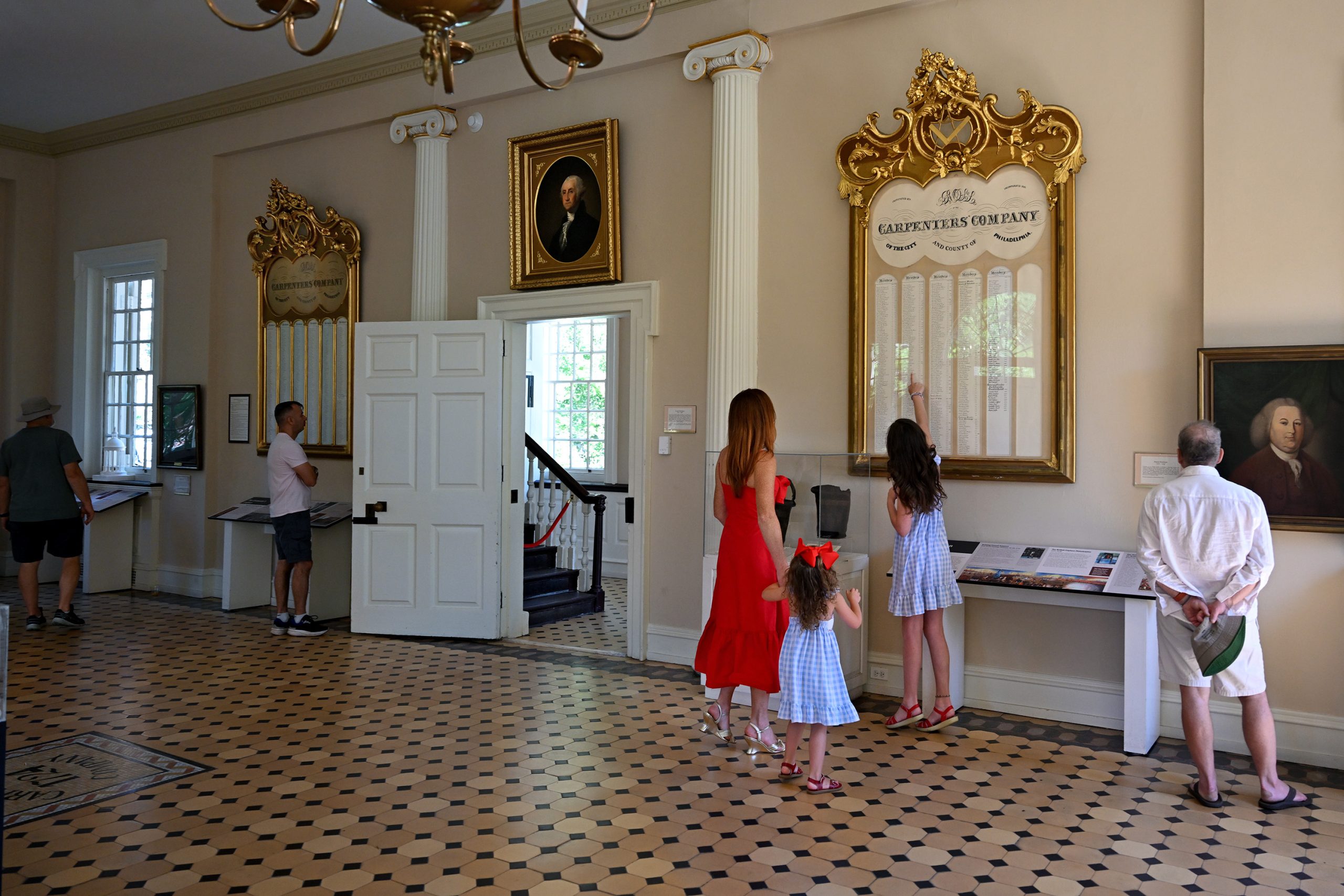
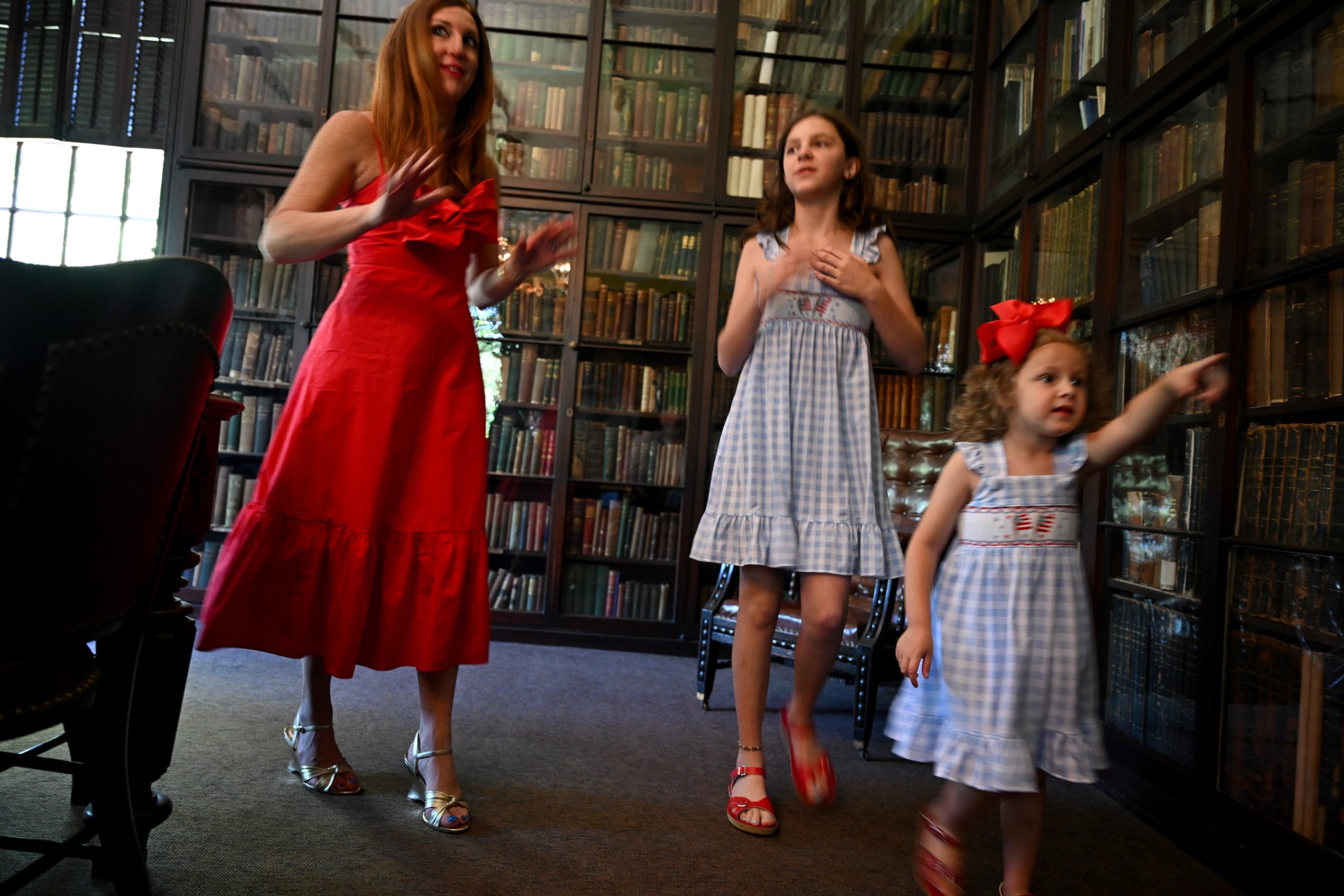
Stacie Pagano and her children, direct descendants of Declaration of Independence signer George Ross of Pennsylvania, at Carpenters Hall.Tom Gralish / Staff PhotographerHelena, 3, and Theodora, 11, look for their father Richard’s name of the Carpenters Company list of members.Tom Gralish / Staff Photographer
George Ross studied law with his half brother John and was admitted to the Pennsylvania Bar when he was 20, establishing his own practice in Lancaster.
Like several founders, he started out as a Tory, representing the British Crown as a prosecutor before gradually concluding that colonial rights could not be protected within the existing system. The brother later married Elizabeth Griscom, known to us as seamstress Betsy Ross.
Stacie Pagano grew up in Lancaster County, where her grandmother told her she was descended from Ross. She rode on a float dressed as Betsy Ross in a 1988 parade celebrating the 200th anniversary of the town of Columbia, but never gave it much thought.
It was while she was in her 20s and met her husband Richard, who is a member of the Carpenters Company — where the First Continental Congress met — that they started to explore her ancestry.
As a DSDI member, she coordinates the annual ceremonial tapping of the Liberty Bell by junior descendants. Her 11-year-old daughter Theodora was one of the kids who tapped the bell 13 times on July Fourth for the 13 original colonies.
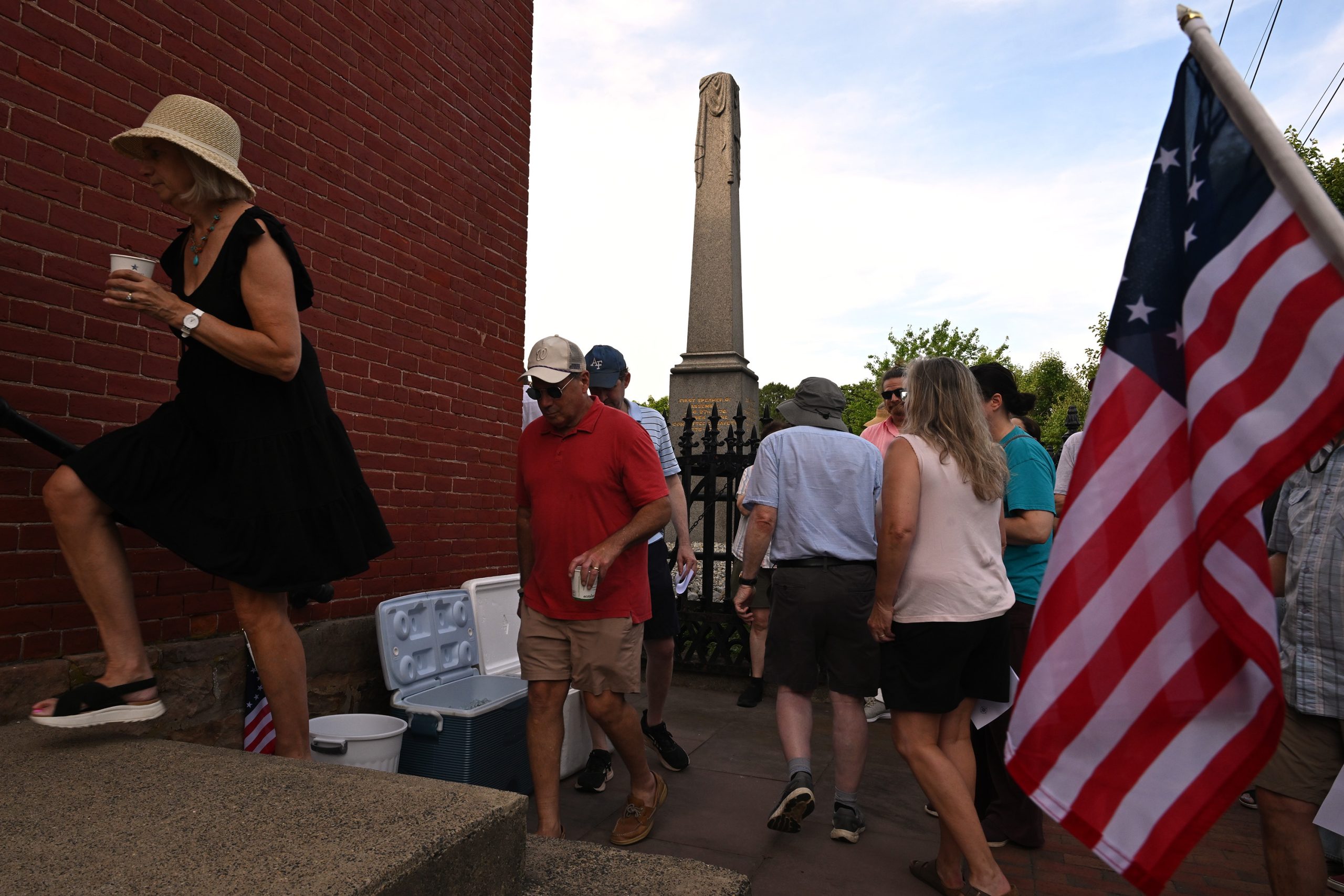
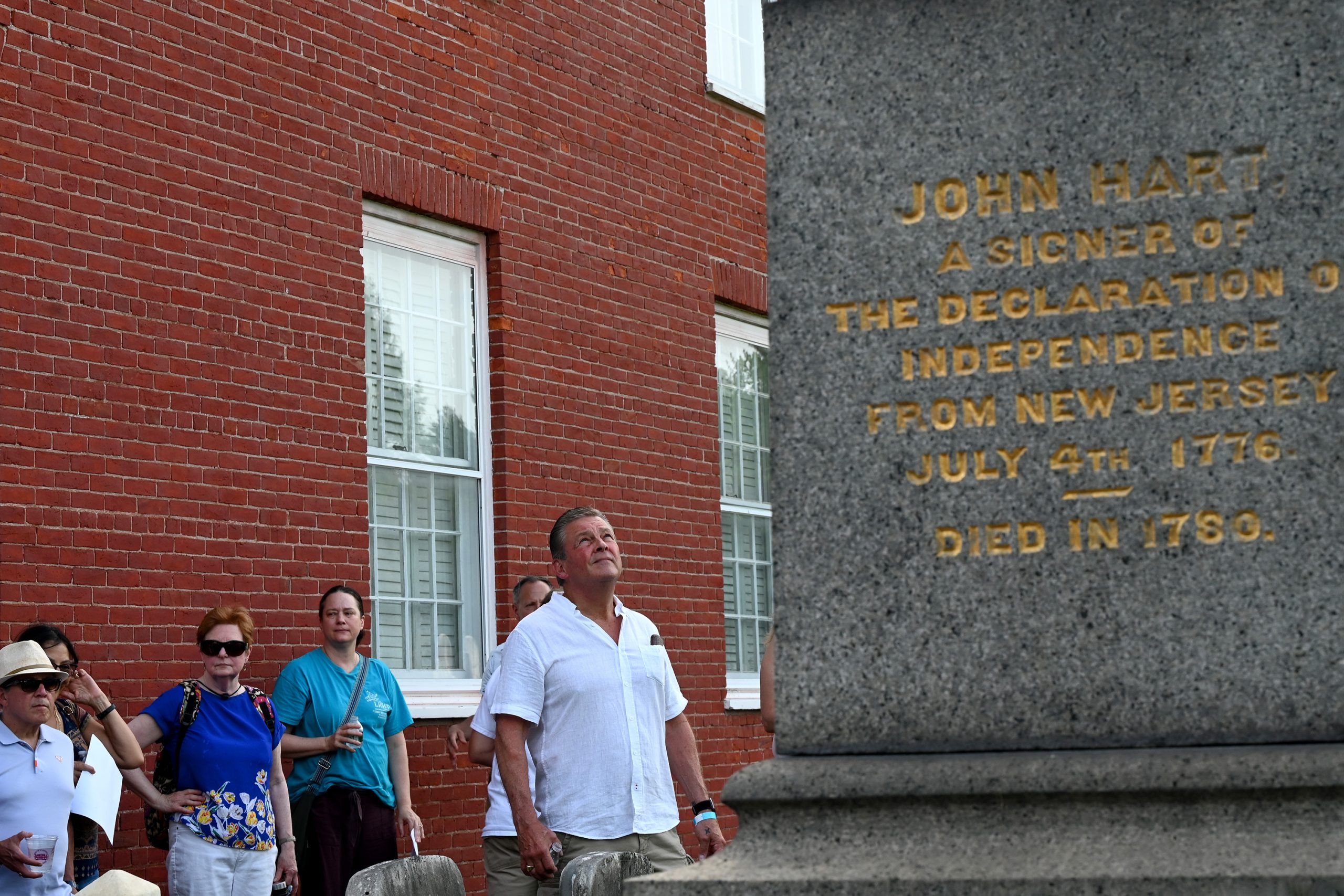
The gravesite of signer John Hart. His remains were moved there in 1864 and a granite draped obelisk erected as a memorial monument.Tom Gralish / Staff Photographer
JOHN HART, NEW JERSEY
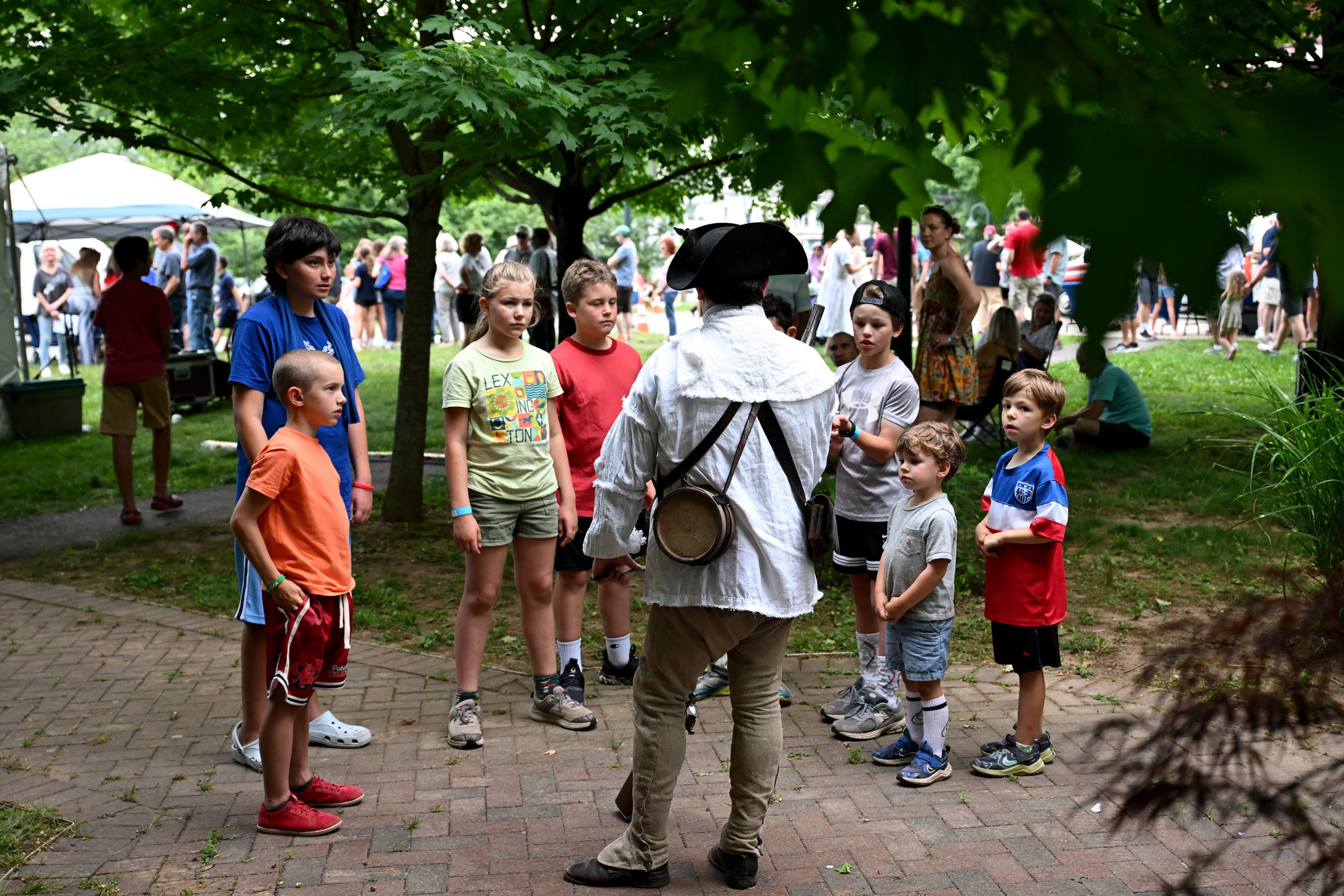
Greg Munro, a direct descendant of signer John Hart, at the cemetery of Old School Baptist Church in Hopewell, N.J. He was there to read the Declaration of Independence at the town’s USA 250th Town-Wide Block Party. Tom Gralish / Staff PhotographerHopewell Museum executive director Asher Lurie portrays a Continental soldier during the Town-Wide Block Party.Tom Gralish / Staff Photographer
John Hart was a farmer, unlike most signers, who were lawyers, merchants, or wealthy intellectuals, but he earned a reputation for integrity rather than brilliance or eloquence. Fellow signer Benjamin Rush described him as having no formal education but possessing exceptional judgment and virtue.
Descendant Greg Munro’s sister in-law was into genealogy, and she was tracking her husband’s family. When he was in his 30s, she said, ”You know what, Greg, you’re related to John Hart.” Munro said, “Who was John Hart?“
Decades later when he retired, it gave him something to do. Munro’s first step was joining the Descendants of the Signers of the Declaration of Independence, something he thought would be easy. His brother’s wife had already documented his family tree, and the organization told him he had to document every step back to maybe three, four generations. From there, the DSDI had records that go back to Hart, who had 13 children.
But Munro’s birth certificate did not have his father’s name on it. Once he got all the right papers together, he was admitted and is now spreading the word.
He recently wrote and helped produce a documentary on his ancestor’s life, and worked to reprint a Hart biography originally published for the Bicentennial.
After Hart signed the Declaration, he became a wanted rebel leader. When British troops occupied parts of New Jersey in late 1776, he fled his home while it was looted, spending months separated from his family and sleeping wherever he could.
In June 1778, Hart invited George Washington and roughly 12,000 Continental soldiers to camp on his New Jersey farm — right at the height of growing season. When the troops left, they fought and won the Battle of Monmouth.
FRANCIS HOPKINSON, NEW JERSEY
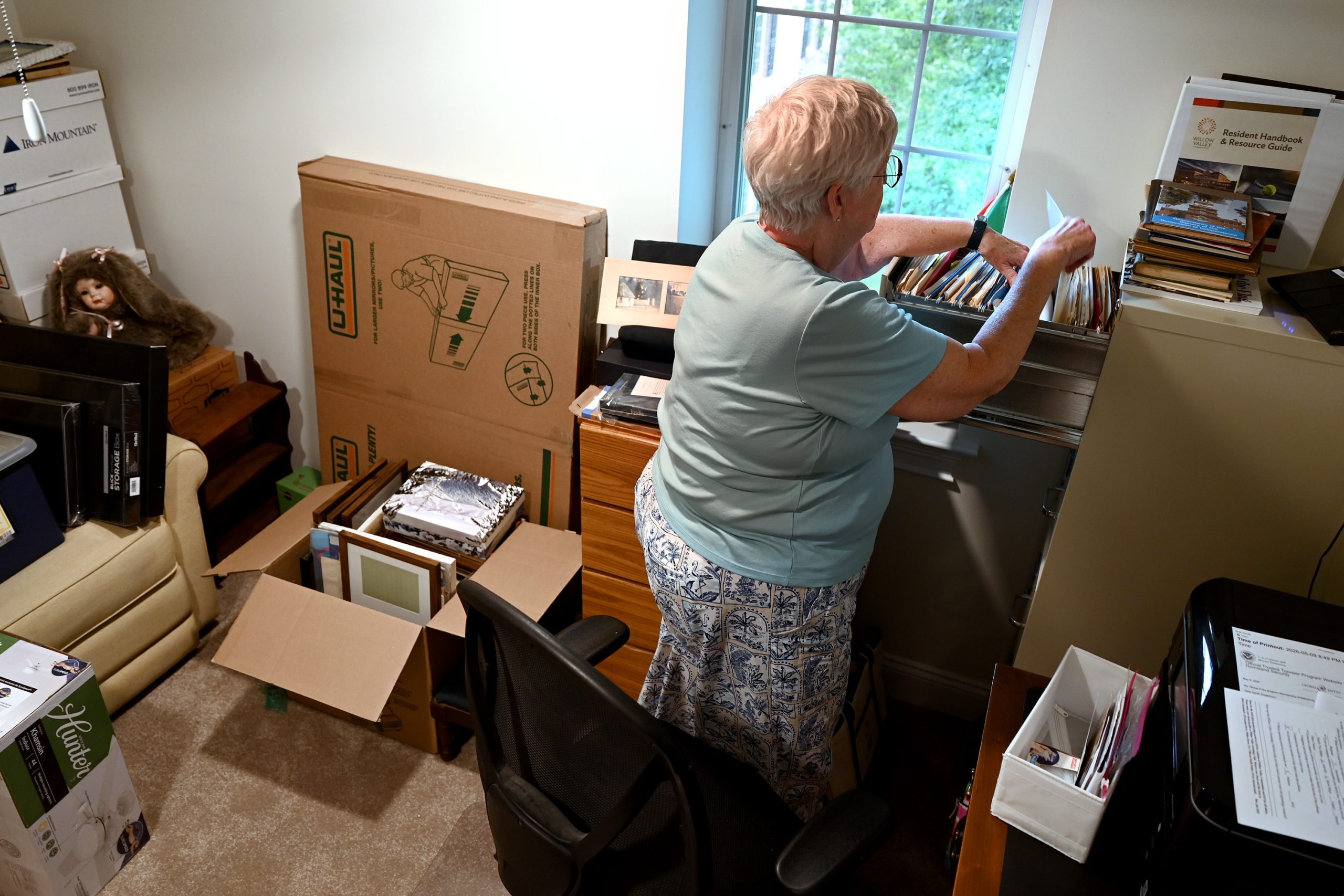
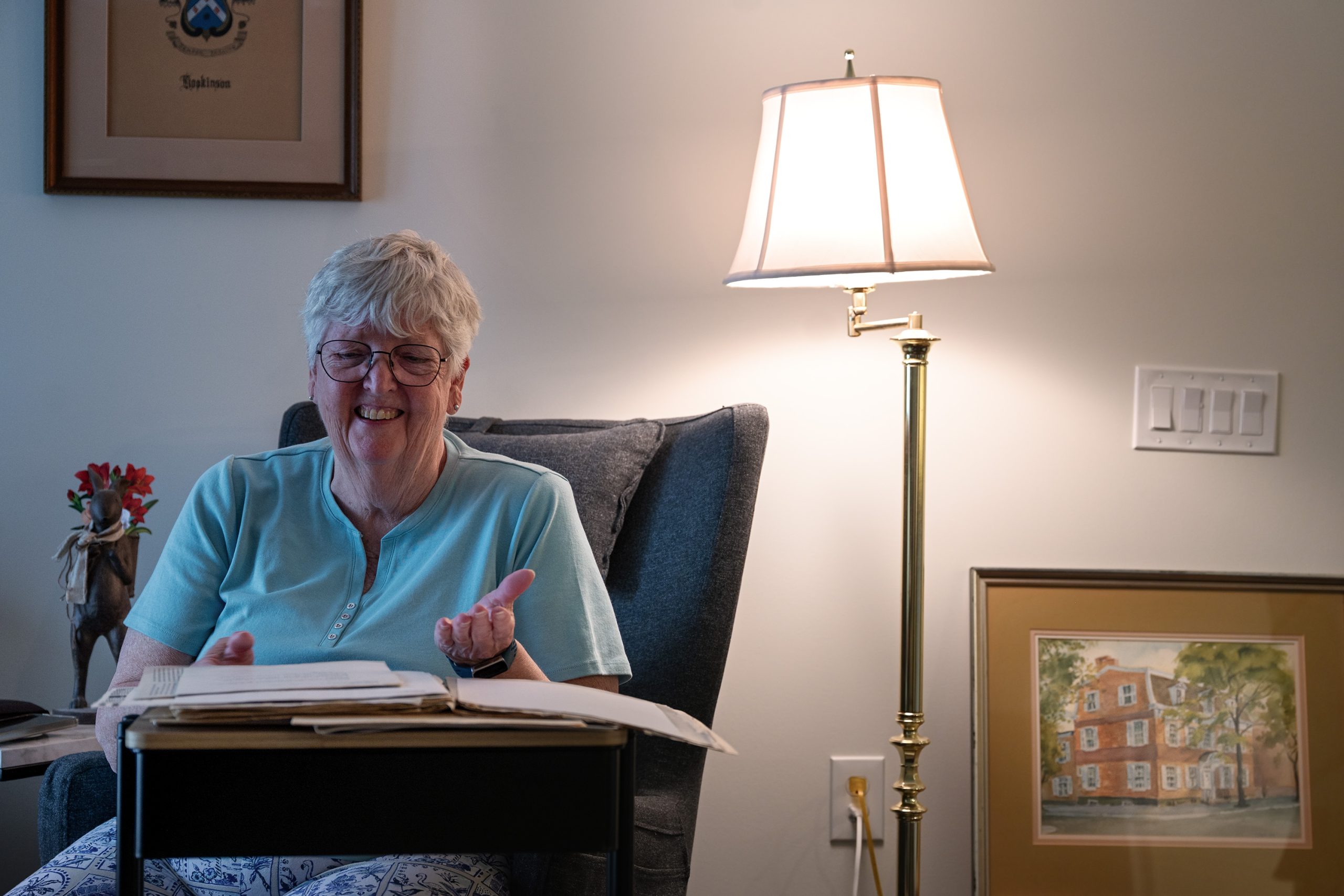
Sally Hopkinson, a direct descendant of signer Francis Hopkinson of New Jersey, sorts through her father’s old filing cabinet. She is still unpacking from her recent move.Tom Gralish / Staff PhotographerThe home in the painting at right is the 1750 Georgian style mansion of Francis Hopkinson, a National Historic Landmark in Bordentown, N.J. Tom Gralish / Staff Photographer
Sally Hopkinson is a descendant of Francis Hopkinson, something she learned when she was in the fifth grade. “My name appeared in a history book, and I was like, why is my name here?”
Her father was actually the DSDI’s treasurer for years, until he died. “I had no idea back then. I didn’t know anything about this.”
Later on, though, she really got into genealogy and started questioning her grandmother. “And then I found all this stuff when finally it came on line after 2000.” But the most information came from her dad’s papers. “I found he had this treasure trove in his filing cabinet. Wow. Everything I was trying to figure out.”
Francis Hopkinson’s father died when he was 14, but his mother, determined to ensure that her son had a good education. enrolled him in the brand new College of Philadelphia (later the University of Pennsylvania) when he was 16, making him a member of UPenn’s first class of students.
Many historians now believe Hopkinson — not Betsy Ross — was the principal designer of the original Stars and Stripes. He submitted a bill to Congress seeking payment — “a Quarter Cask of the public Wine” — rather than cash as compensation. He never received it.
He also was an accomplished organist and a harpsichordist, and, as early as 1759, he had composed the song “My Days Have Been So Wondrous Free,” considered the earliest surviving American secular composition.
On Sunday, July 5, Hopkinson and descendants of New Jersey’s four other signers are scheduled to throw out the ceremonial first pitches and participate in an on-field reading of the Declaration at TD Bank Ballpark in Bridgewater. The New York Yankees’ Double-A affiliate there — the Somerset Patriots — is temporarily rebranding as the Somerset Semiquincentennials to commemorate America’s 250th anniversary. The players will wear red-and-blue pinstriped jerseys with the original signers’ signatures written in gold on the sleeves.
GEORGE READ, DELAWARE
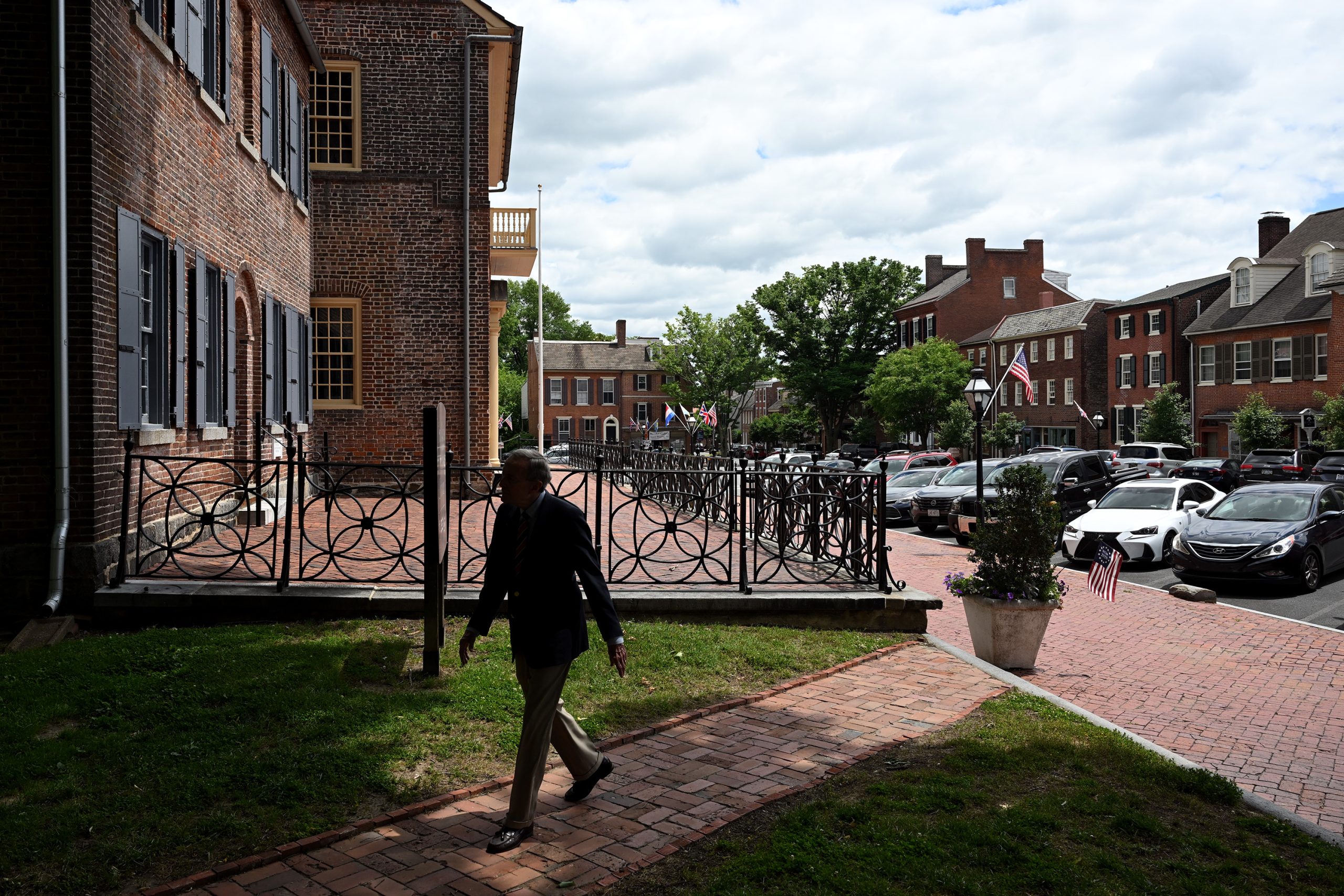
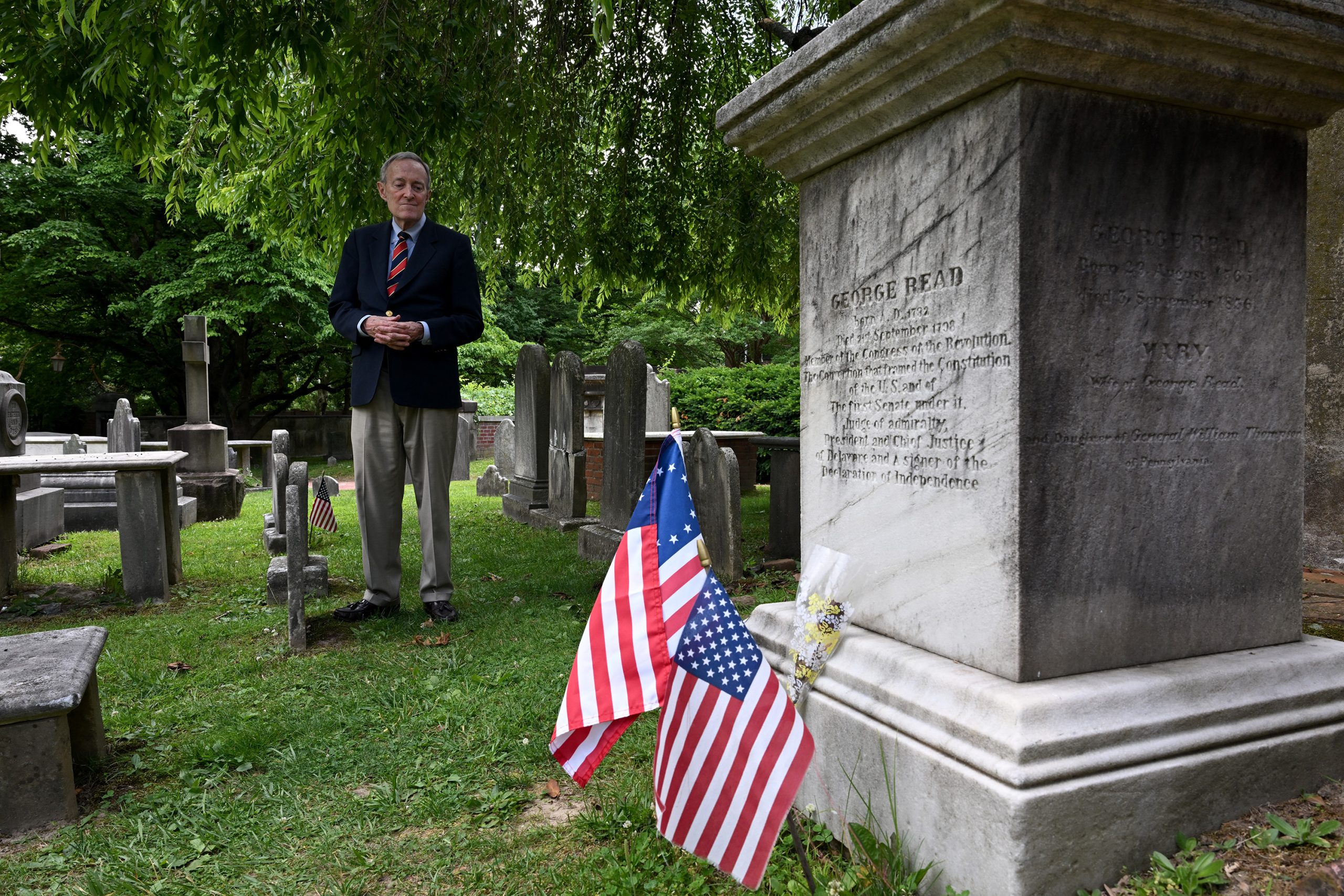
Richard Rodney Cooch, a direct descendant of signer George Read of Delaware, in New Castle. He, like Read, lives and works right in town.Tom Gralish / Staff Photographer
Richard Rodney Cooch, a retired Delaware Superior Court judge and direct descendant of signer George Read, lives across the street from Immanuel Episcopal Church on the Green in New Castle, his ancestor’s final resting place.
His mother’s family has lived in New Castle since the church’s first rector, Rev. George Ross, came from Scotland in 1703. His son, George Ross, later moved to Philadelphia and signed the Declaration as a delegate from Pennsylvania. Read and Ross were brothers-in-law. Cooch is also related to Delaware’s two another signers; through marriage to Thomas McKean, and through a cousin, to Caesar Rodney.
He is the eighth and final generation of his family to have lived at the family’s namesake property south of Newark. It was the site of the state’s only Revolutionary War battlefield — Cooch’s Bridge — a week before the Battle of Brandywine in September, 1777.
George Read initially thought independence was a mistake and hoped reconciliation with Britain was still possible. He voted against independence but after the measure passed, he signed, supporting the new nation. He was also one of only six men who signed both the Declaration and the U.S. Constitution. At the Constitutional Convention, Read wanted a stronger national government and even suggested eliminating state boundaries altogether.
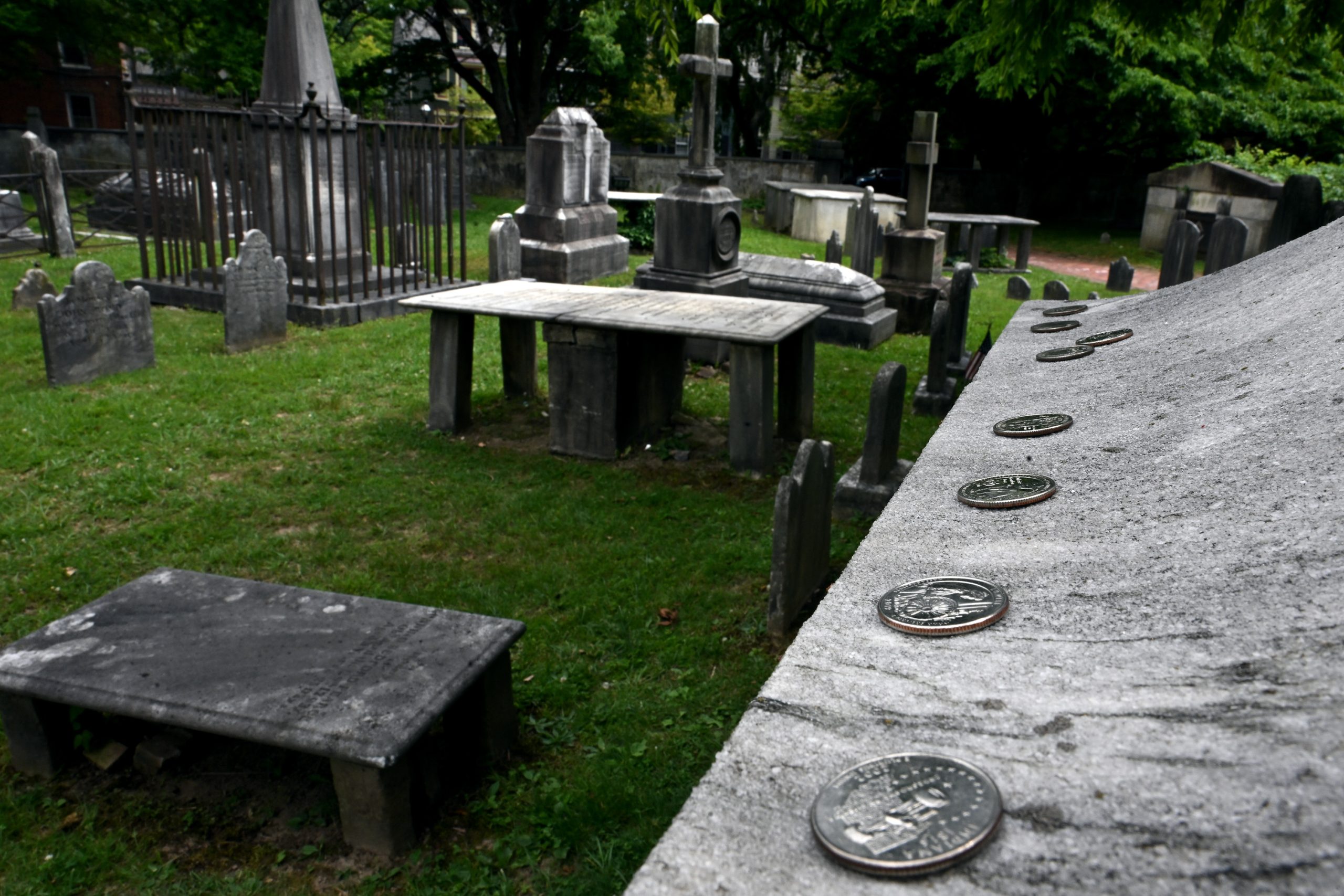
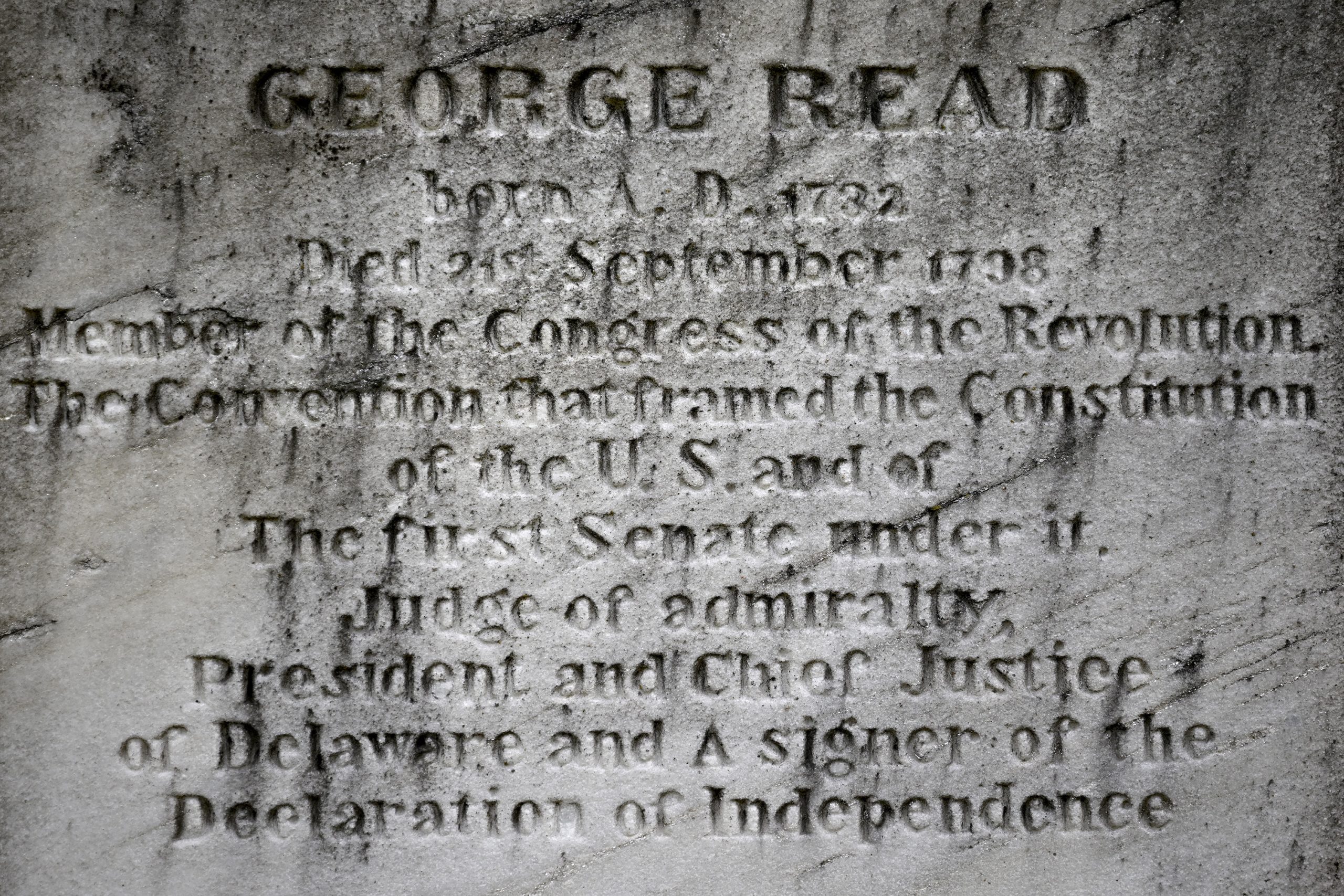
Coins placed on the gravesite of signer George Read at the Immanuel Episcopal Church on the Green Cemetery in New Castle, Del.Tom Gralish / Staff PhotographerRead was also president of Delaware and served the state as a U.S. Senator and chief justice.Tom Gralish / Staff PhotographerCooch is also related to both of Delaware’s two other signers and to Pennsylvania’s George Ross.Tom Gralish / Staff Photographer
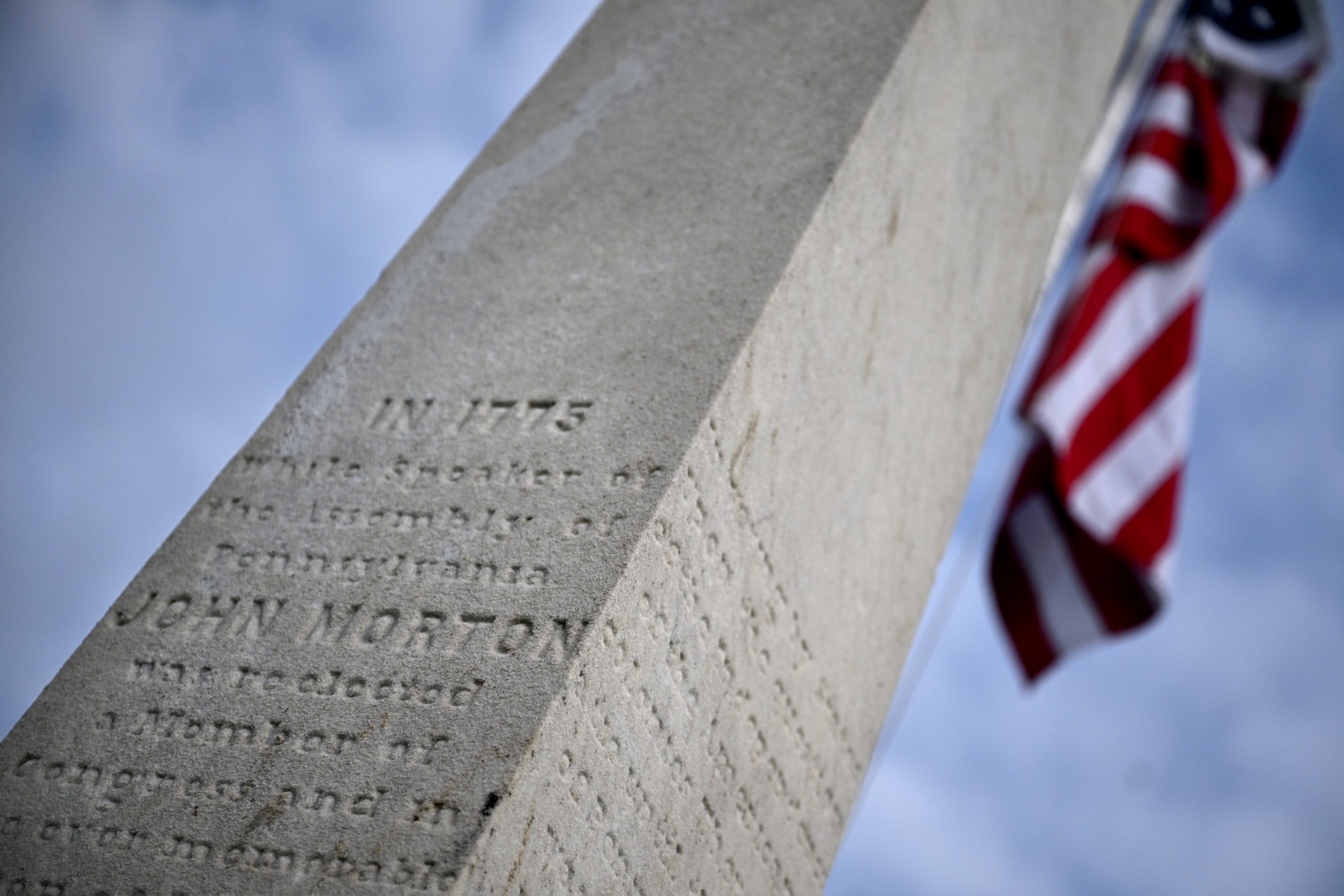
JOHN MORTON, PENNSYLVANIA
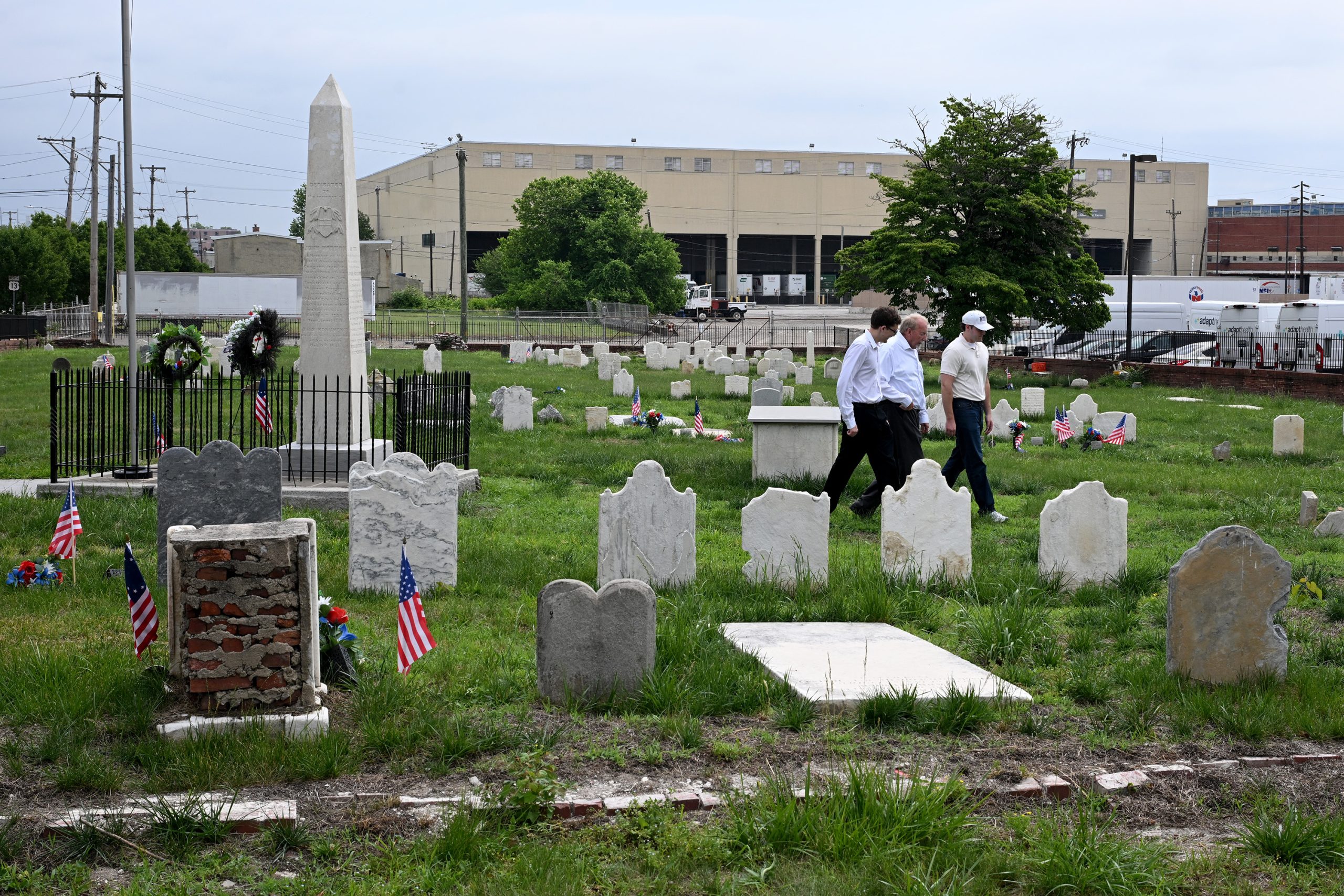
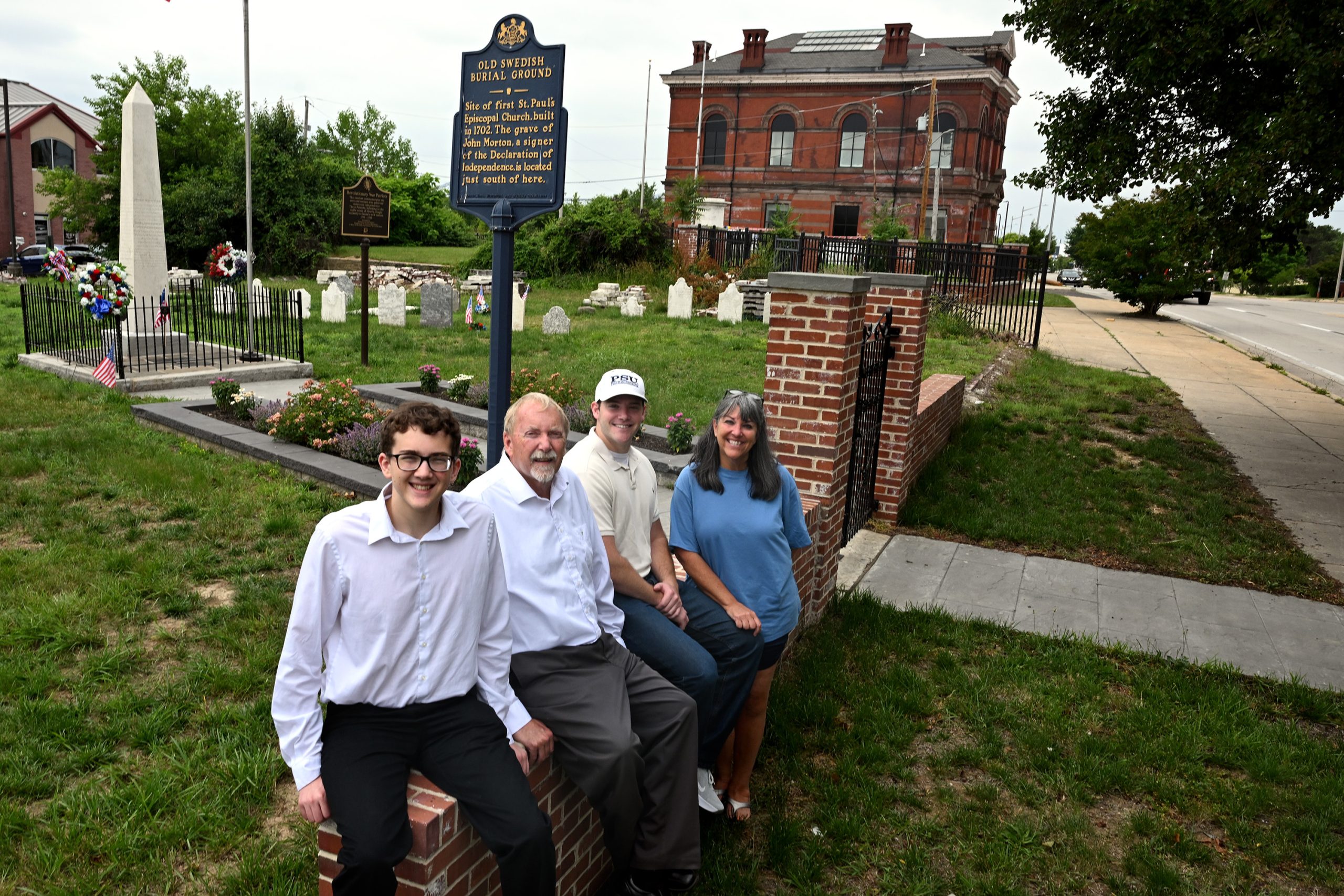
The memorial for signer John Morton of Pennsylvania at the Old Swedish Burial Ground (also known as the Old St. Paul’s Episcopal Churchyard) in Chester, Delaware County.Tom Gralish / Staff PhotographerRick Morton and his sons, all direct descendants of signer John Morton of Pennsylvania, at his gravesite.Tom Gralish / Staff PhotographerRick and Nealla Morton with their sons Josh (left), 21; and Sketch, 24, at Chester’s Old Swedish Burial Ground.Tom Gralish / Staff Photographer
John Morton is also an important figure in Finnish American history, as his family roots go back to the Finns who lived in New Sweden, the colony of the Swedish Empire settled in the mid-1600s along the lower Delaware River.
Generations of Mortons have lived in Delaware and Chester Counties since, including descendant Rick Morton, who says of his lineage: “It was so well known in the family that it’s almost like I came out of the womb with the knowledge.”
He remembers as a kid placing wreaths with his sister at the Old Swedish Burial Ground in Chester and getting their picture in the Delaware County Daily Times.
Both of his sons have participated in the annual DSDI ceremonial tapping of the Liberty Bell by young descendants on Independence Day. His oldest son, Sketch, was named after John Morton’s son Sketchley.
The Pennsylvania delegation in the Second Continental Congress was deeply divided and Morton was the “swing vote” for independence.
It is said his deciding vote is why the Commonwealth is nicknamed the “Keystone State” as without Pennsylvania, the Declaration might not have been adopted.
Morton died before the Revolutionary War ended — the first signer to die — even before the new nation was fully established. As a result, he left fewer writings and had less opportunity to shape the country’s early growth.
GEORGE CLYMER, PENNSYLVANIA
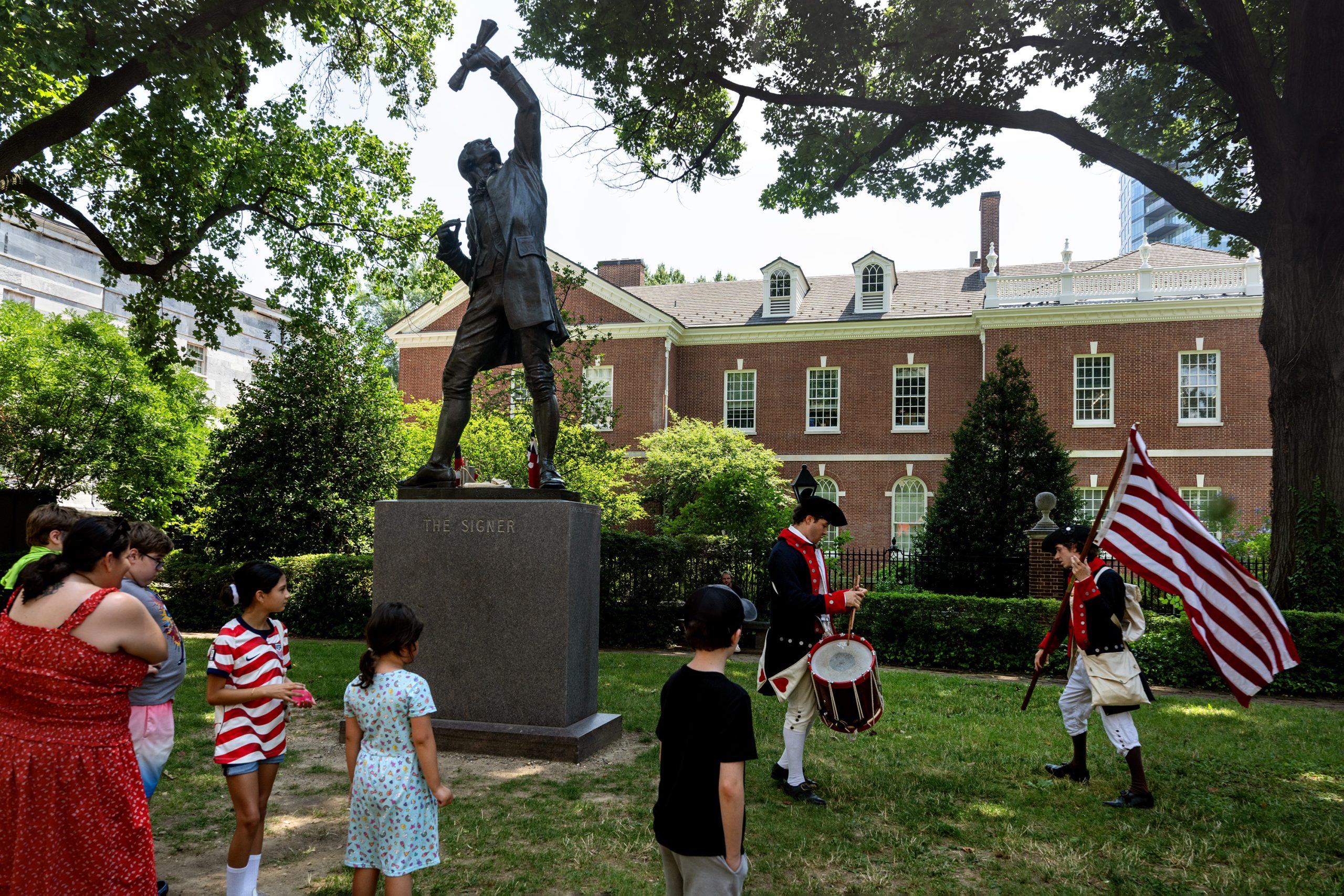
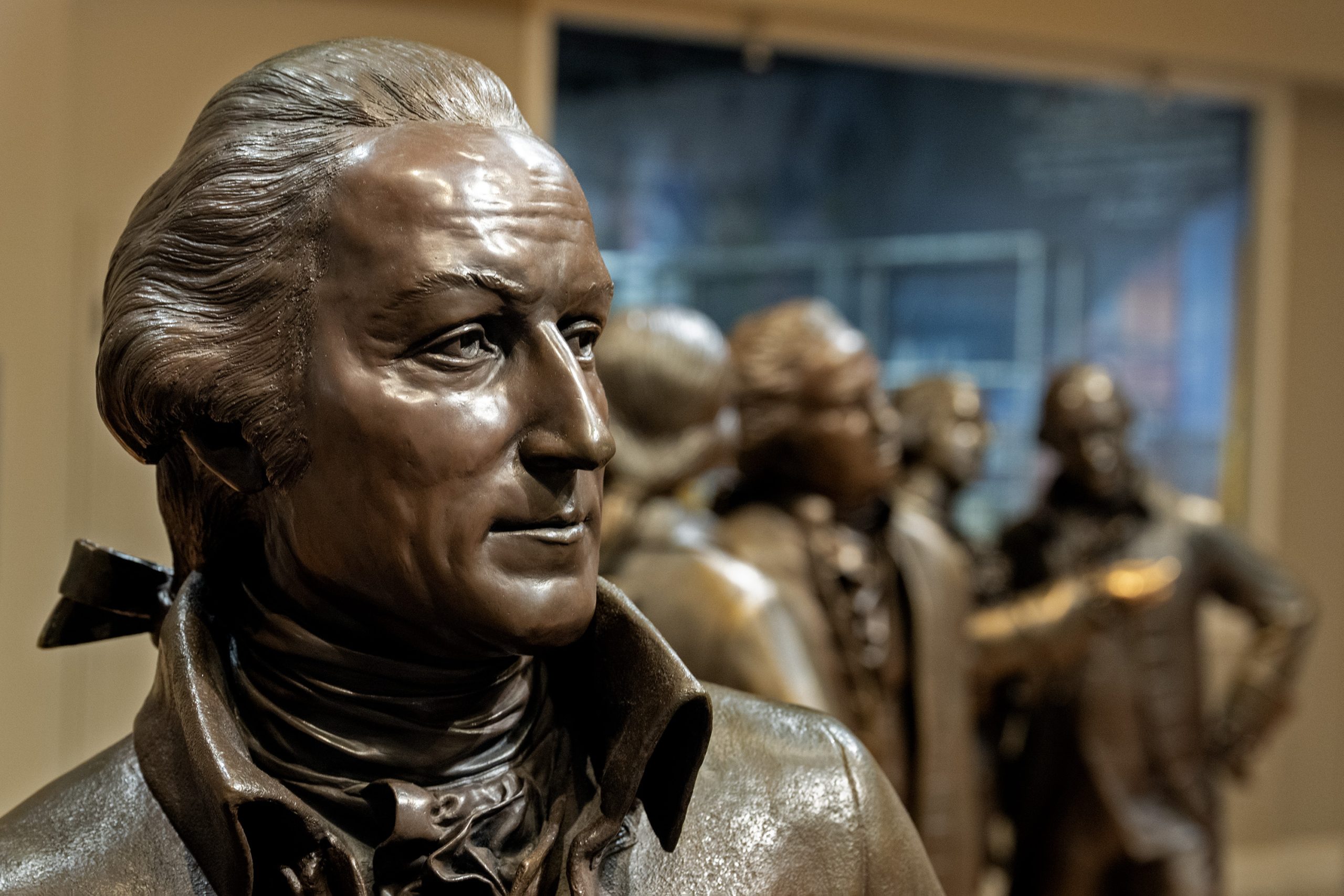
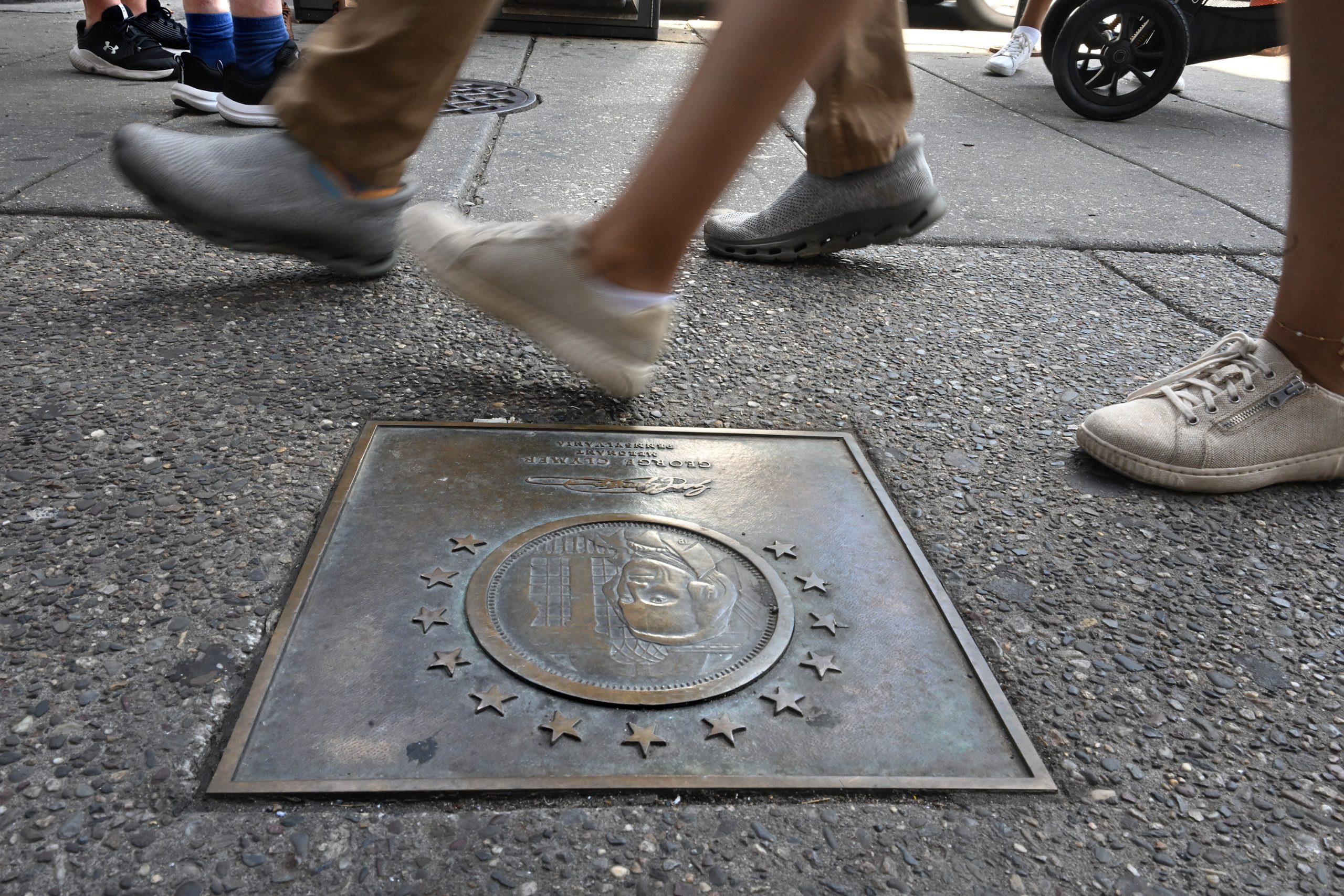
“The Signer” statue in a garden across the street from Independence Hall is modeled on George Clymer of Pennsylvania, one of six delegates who signed both the Declaration and the U.S. Constitution.Tom Gralish / Staff PhotographerLife-size bronze stature of signer George Clymer of Pennsylvania in Signers’ Hall at the National Constitution Center. Tom Gralish / Staff PhotographerPlaque for George Clymer of Pennsylvania, one of 56 memorials for the signers of the Declaration of Independence in the sidewalk along the 600 block of Chestnut Street. Most of the plaques have been stolen over the years.Tom Gralish / Staff Photographer
George Clymer, orphaned before his first birthday, was raised by a wealthy uncle. Although that uncle helped found Philadelphia College, which later became the University of Pennsylvania, Clymer received little formal schooling and was largely self-educated. Through reading and his uncle’s training for a career in business and commerce, he became a successful merchant and statesman.
In 1773, George Clymer led efforts that pressured British-appointed tea agents in Philadelphia to resign. As a result, Philadelphia avoided the kind of confrontation that later erupted at the Boston Tea Party.
Before independence became mainstream, Clymer was already arguing that the colonies should separate completely from Britain. His views put him in frequent conflict with the more cautious Quaker-led powers of Pennsylvania who initially hoped for reconciliation.
Brett Clayton Johnson grew up not knowing he was a descendant. When he found out from his grandparents, he wondered why there was nothing about Clymer in any of his history books in school.
Johnson visited Philadelphia once with those grandparents, but he was too young to really appreciate what those men did. “It was brave,” he says. “Every freedom we have is because of those guys in the room,” adding “I now know and it is the proudest thing of my life.”
BEN FRANKLIN, PENNSYLVANIA
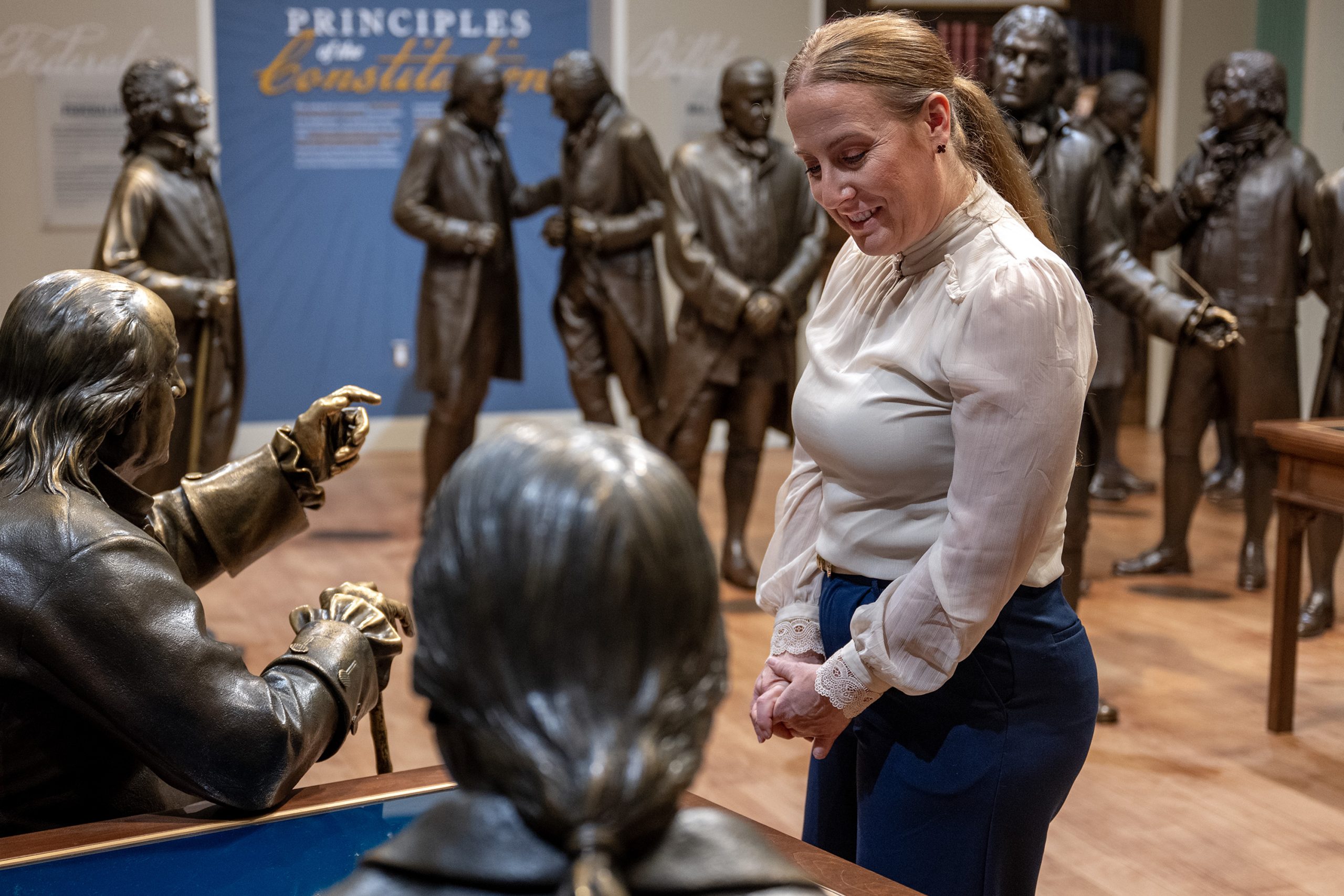
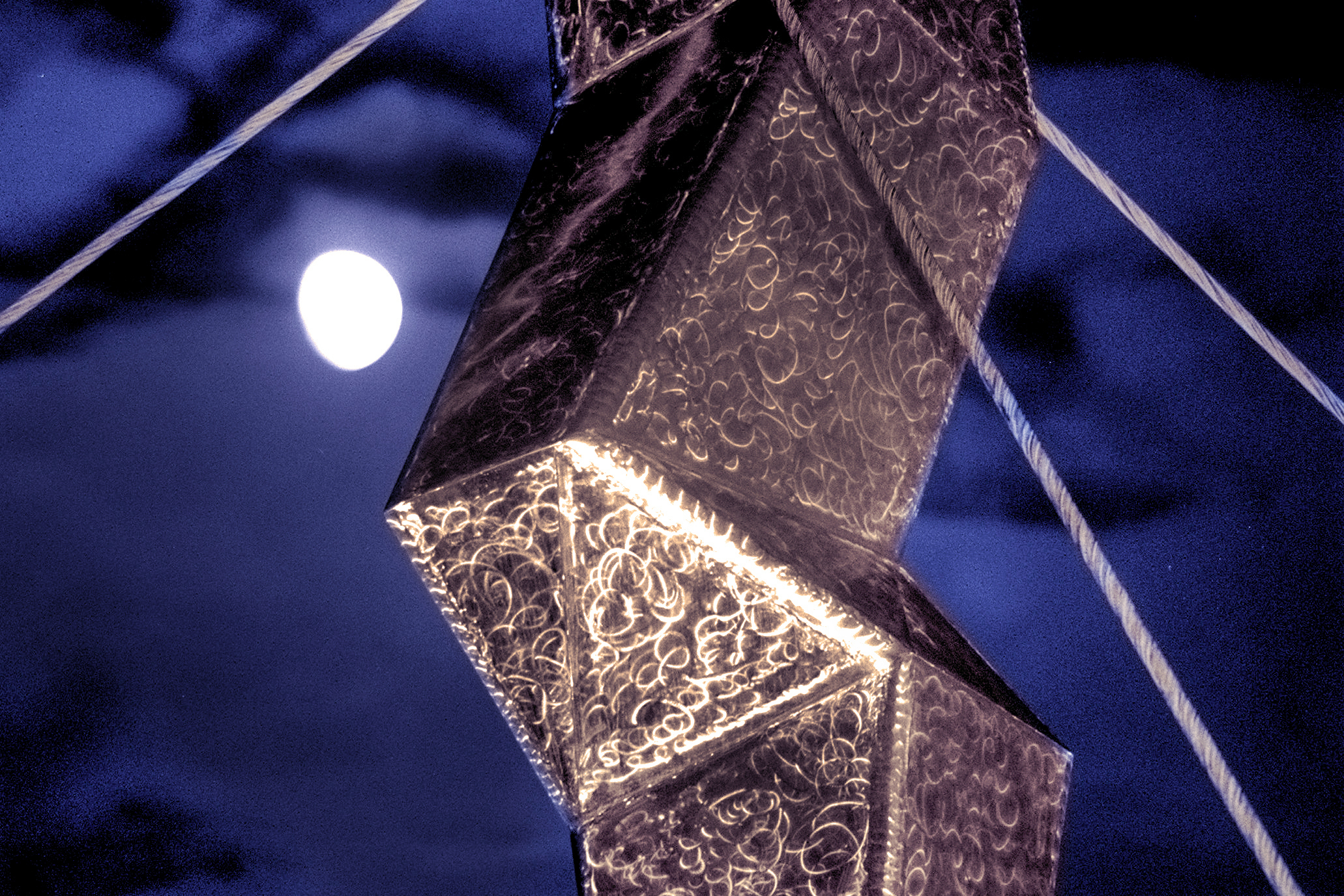
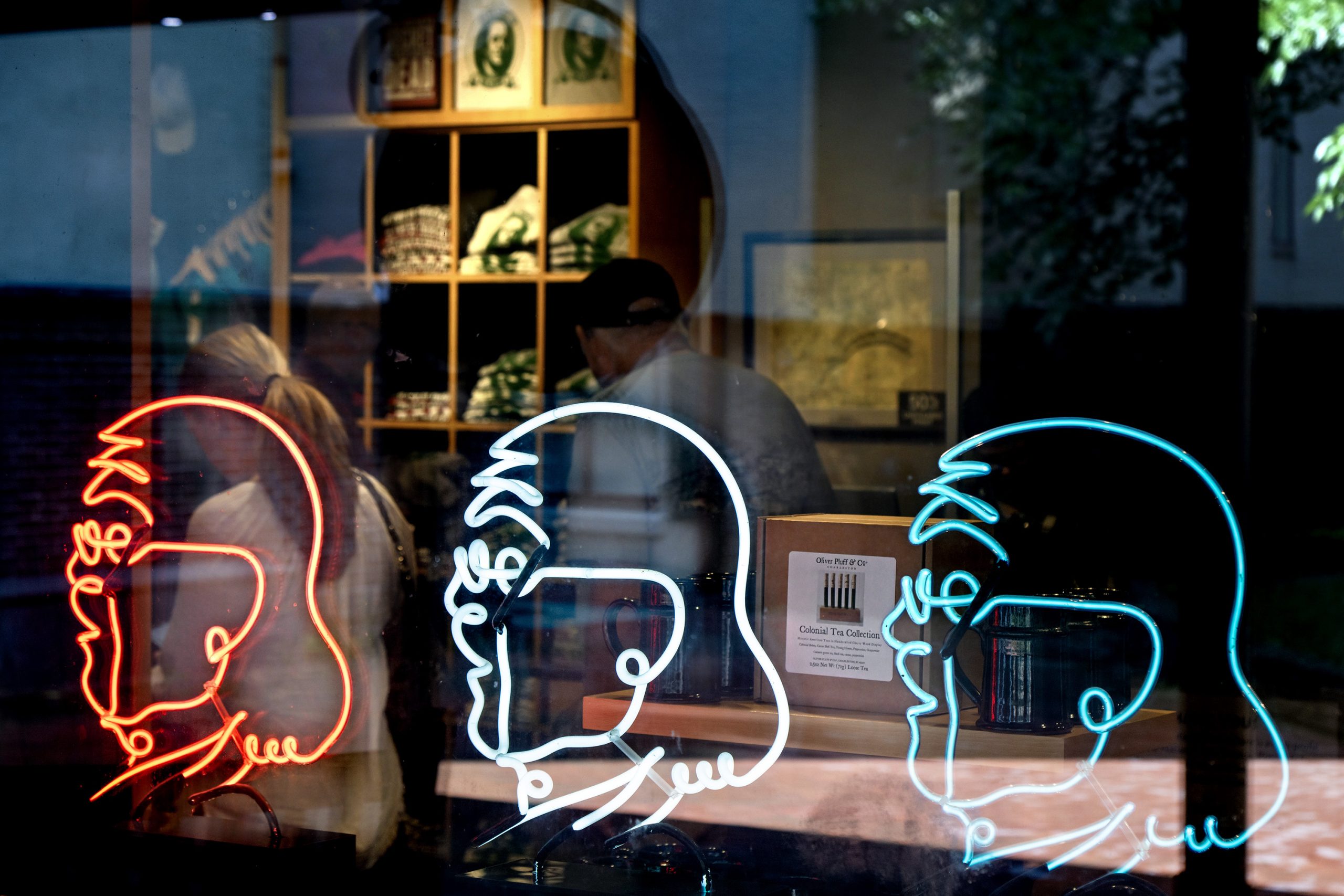
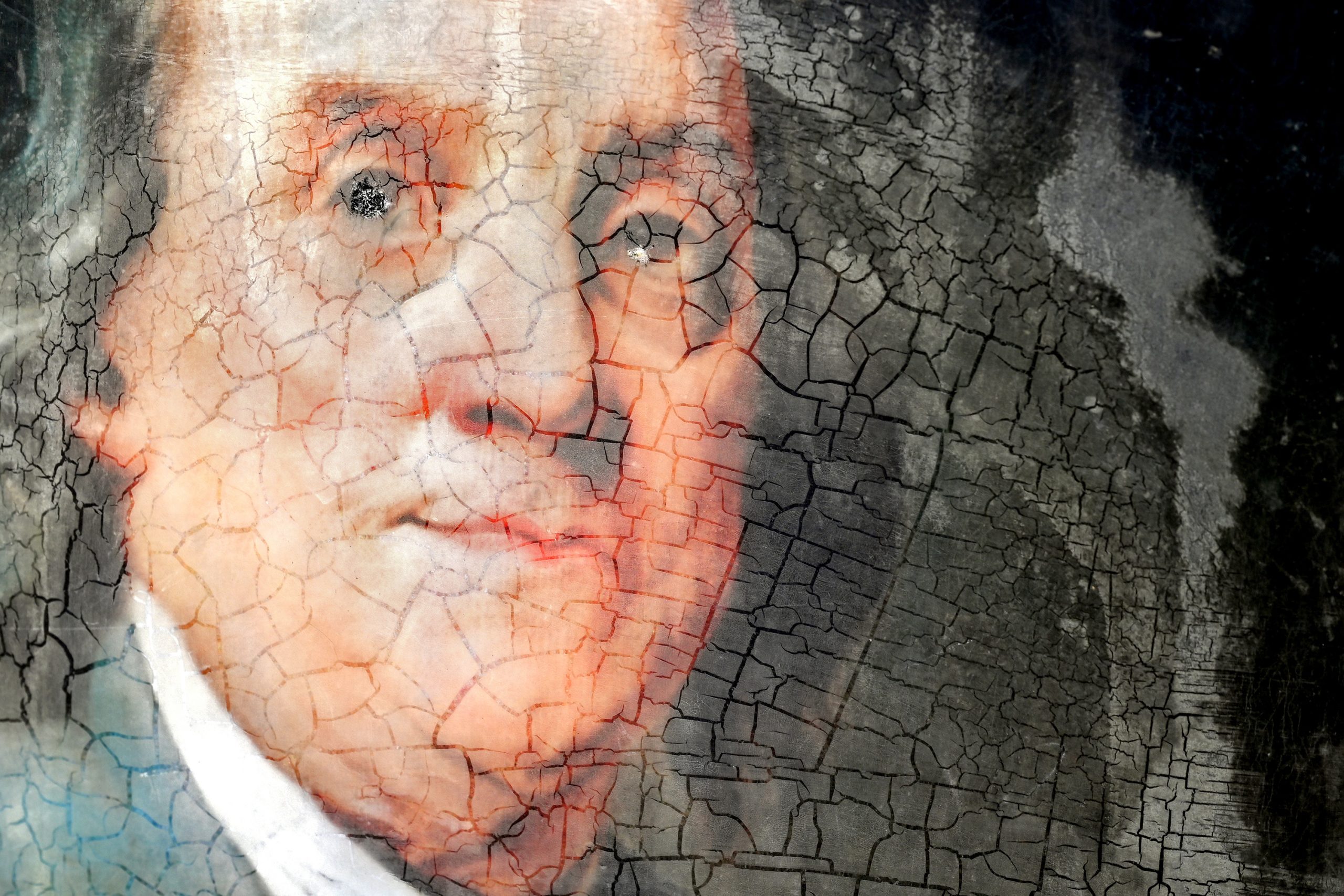
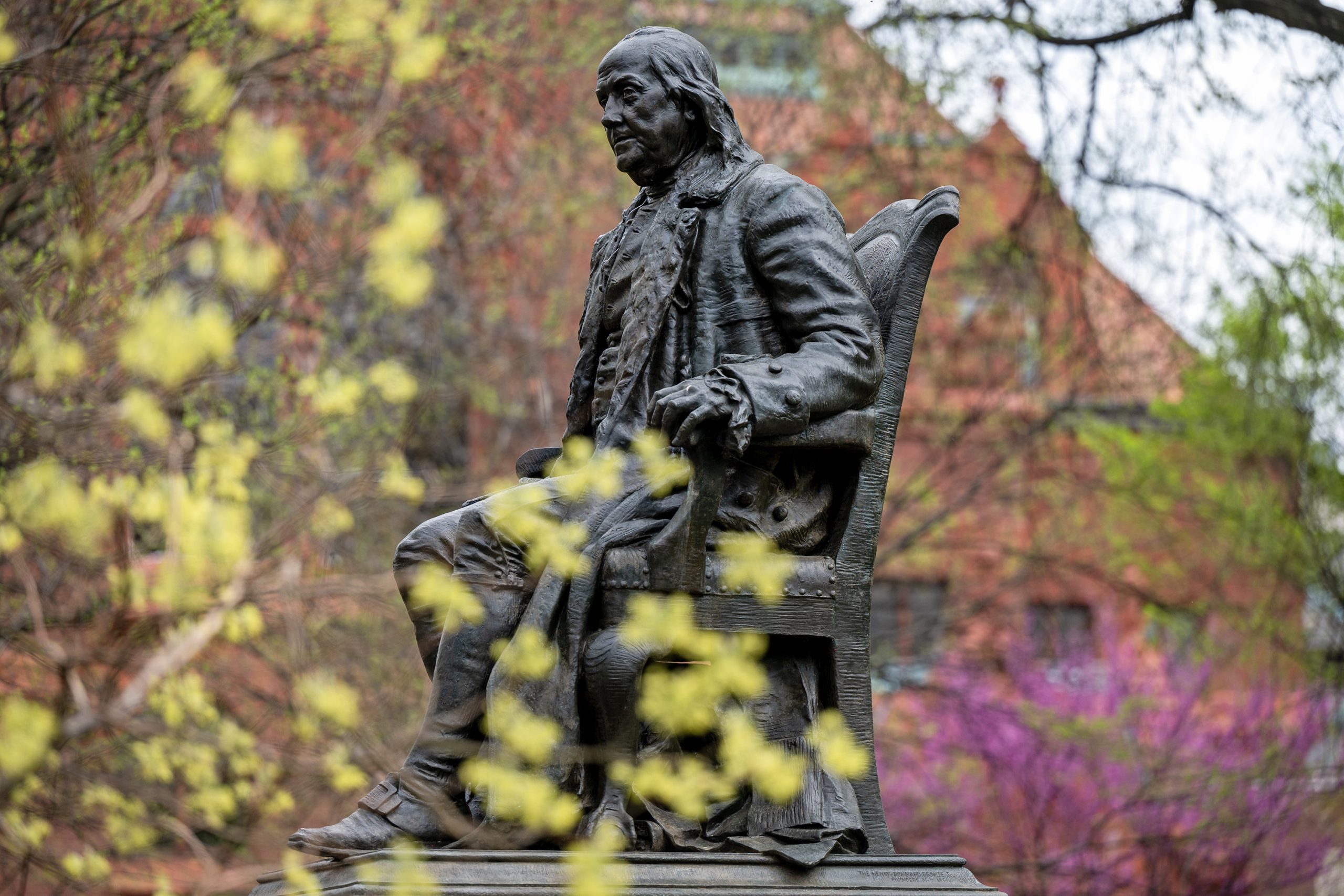
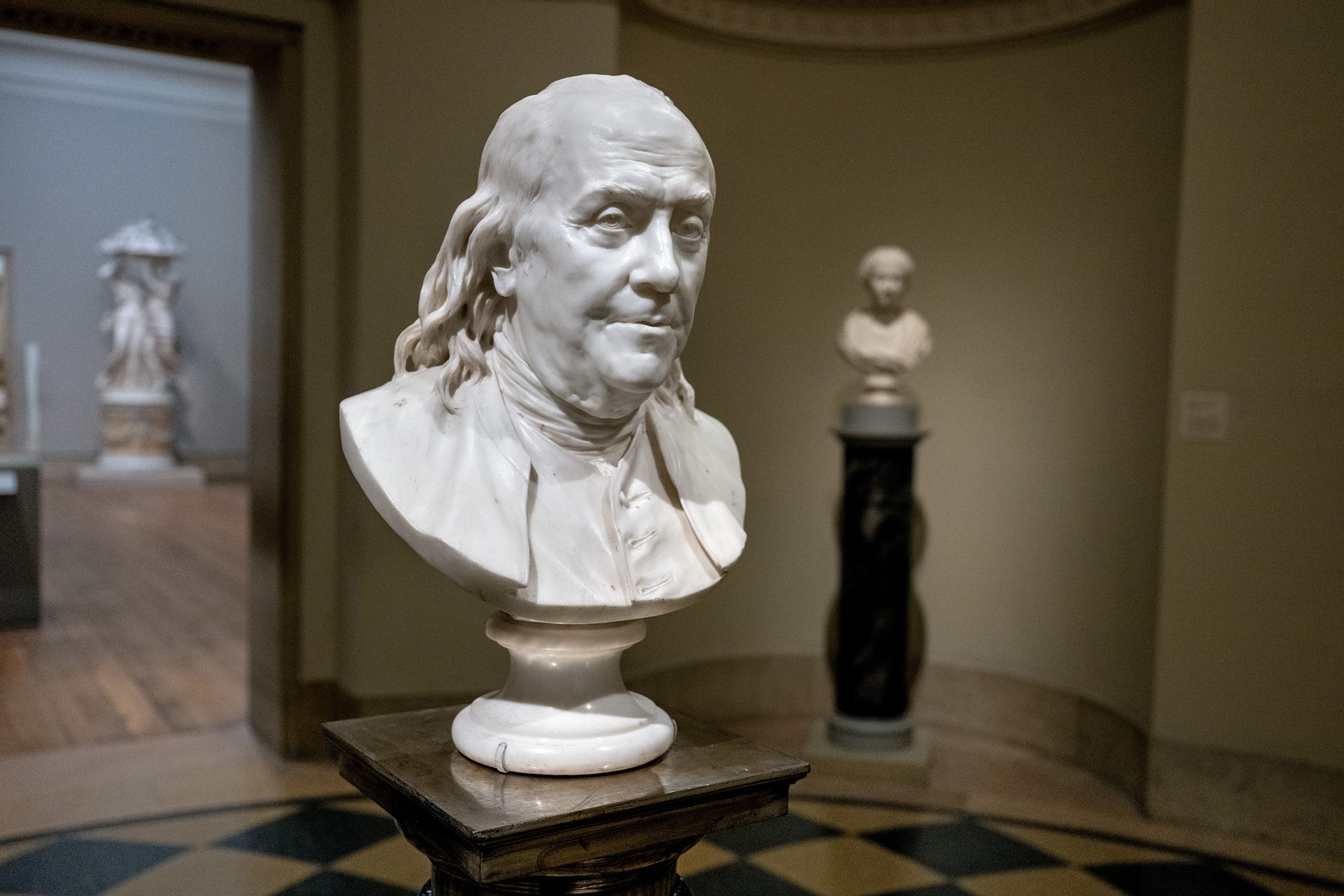
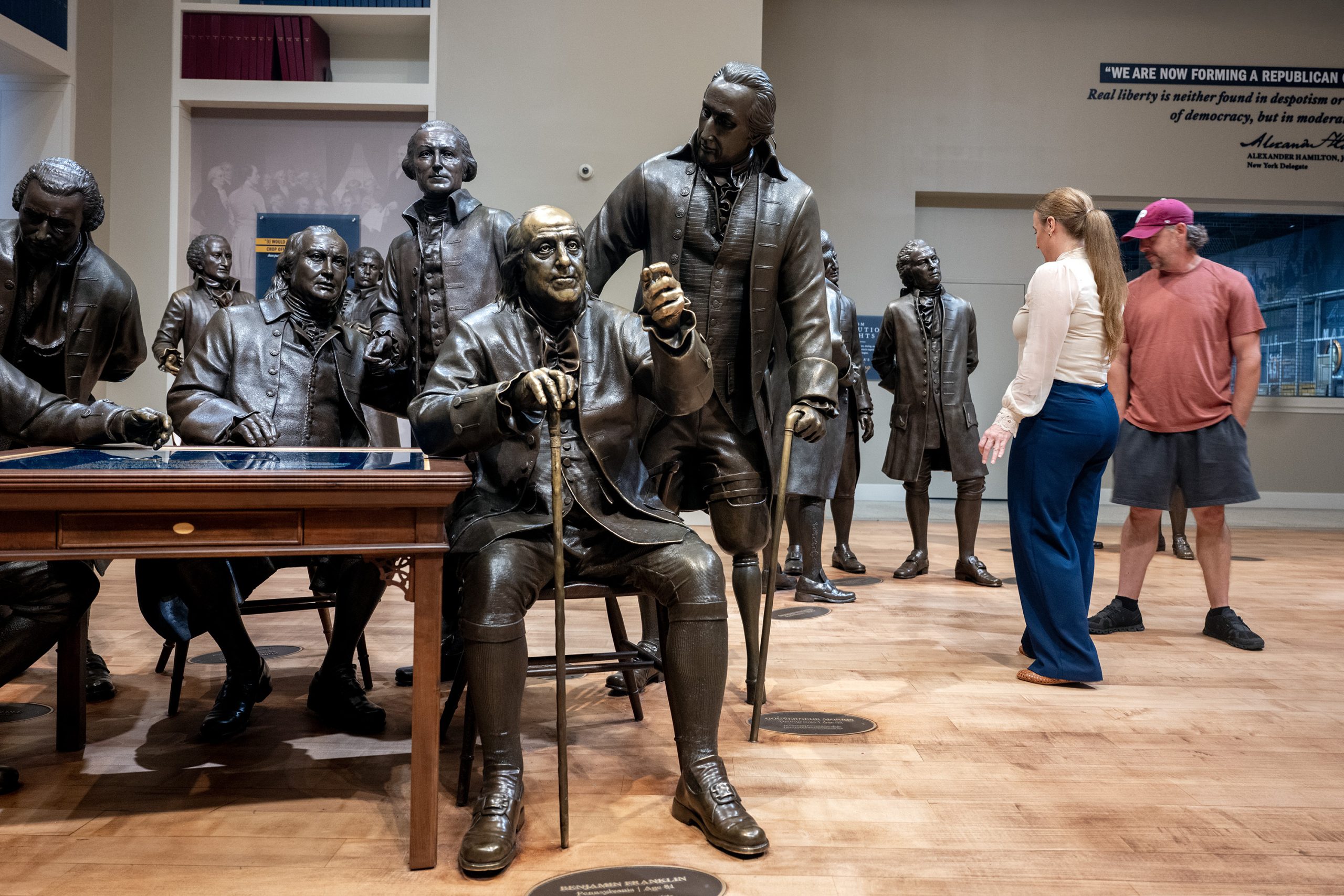
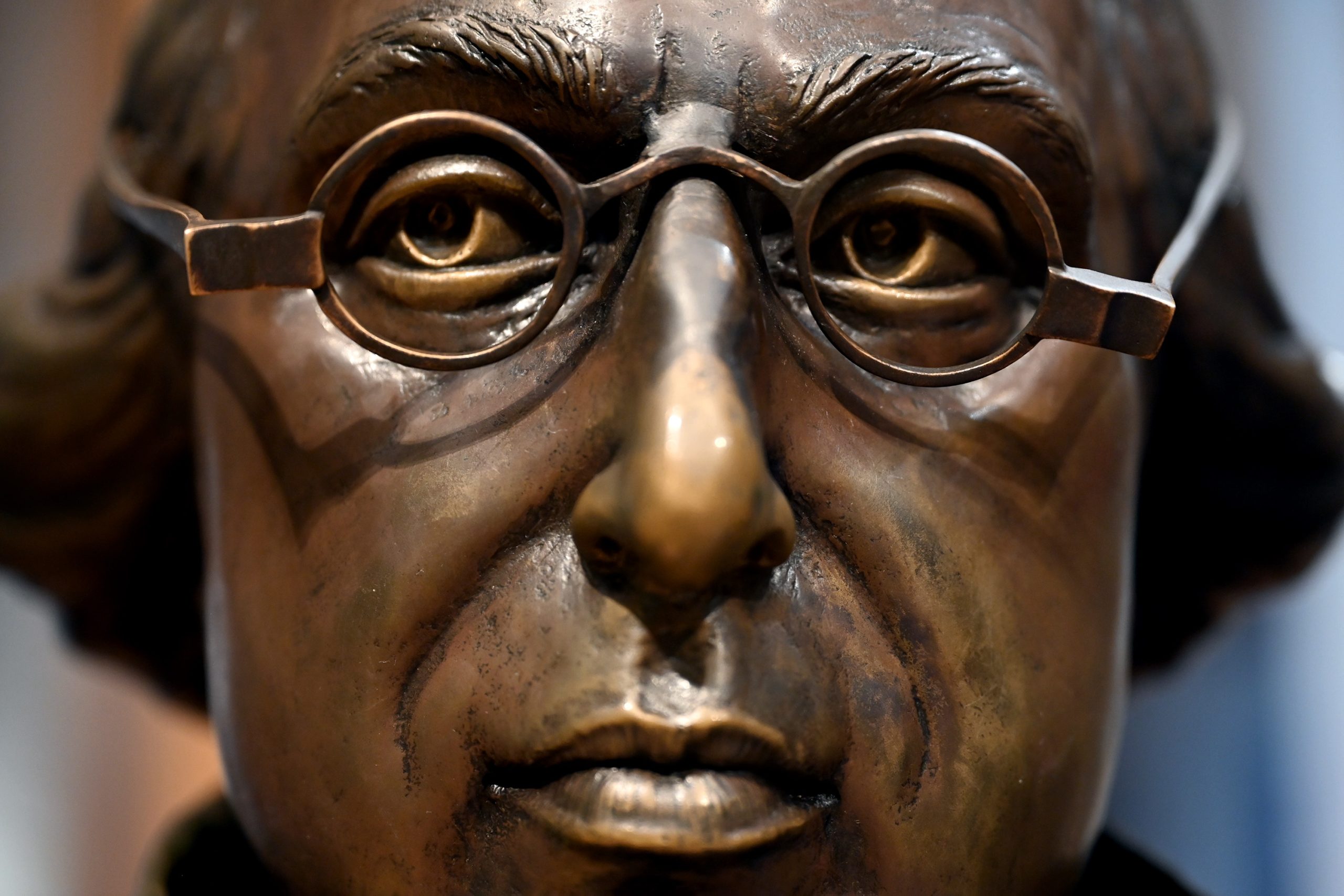
Sarah Miller, a direct descendant of signer Benjamin Franklin of Pennsylvania, visits Signers’ Hall at the National Constitution Center. Six men, including Franklin, signed both the Declaration of Independence and the U.S. Constitution. Tom Gralish / Staff Photographer“Bolt of Lightning,” a 1984 memorial to Franklin, is a 102-foot-tall stainless steel lightning bolt, kite, and key by sculptor Isamu Noguchi at the base of the Ben Franklin Bridge.Tom Gralish / Staff PhotographerNeon art in the Benjamin Franklin Museum gift shop in Independence National Historical Park. Tom Gralish / Staff PhotographerA faded Franklin portrait on an interpretive panel in Independence National Historical Park.Tom Gralish / Staff PhotographerThe Franklin statue on the campus of the University of Pennsylvania in front of College Hall. It was commissioned in 1896 by Justus Clayton Strawbridge, of Strawbridge’s department stores, and created by sculptor John J. Boyle as a gift to the City of Philadelphia. Tom Gralish / Staff PhotographerA 1779 bust of Franklin by Jean-Antoine Houdon at the Philadelphia Museum of Art. It was made while he was minister from the American colonies to France.Tom Gralish / Staff PhotographerA display of an original 1833 printing of the Declaration of Independence.Tom Gralish / Staff PhotographerMiller and her husband, Michael DiMarzio, in Signers’ Hall. Six men, including Franklin, signed both the Declaration and the Constitution.Tom Gralish / Staff Photographer
Benjamin Franklin is one of the most recognizable figures in American history, and much is known about him because he left behind such a detailed record of his life.
Even before he arrived in Philadelphia as a teenager, Franklin was already a “best-selling” humor writer, known for the witty and satirical letters he secretly submitted to his older brother’s Boston newspaper, the New-England Courant under the pseudonym Silence Dogood, pretending to be a middle-aged widow.
Growing up in South Philadelphia, Sarah Miller heard the stories passed down for generations. “All the parents would tell the kids we were related to Benjamin Franklin,” she says, “but then no one really looked into it. It was kind of like, Is that true? Is it just a story?”
It was her mother, who was not a direct descendant but was really into ancestry, who started looking into it. “She used to drag me to the National Archives [then in the Robert N.C. Nix Federal Building — the old U.S. Post Office at Ninth and Market Streets] when I was in high school to search through their microfiche,” she recalls.
During a recent visit to Constitution Center’s Signers’ Hall — Franklin was one of six who signed both documents — and seeing his life-size statue, Miller said it seems like it was a long time ago, “but it really wasn’t. We all still live in the same area.” It really puts the Declaration of Independence in perspective she says. “It’s really only a few generations back. America is still very young.”
CAESAR RODNEY, DELAWARE
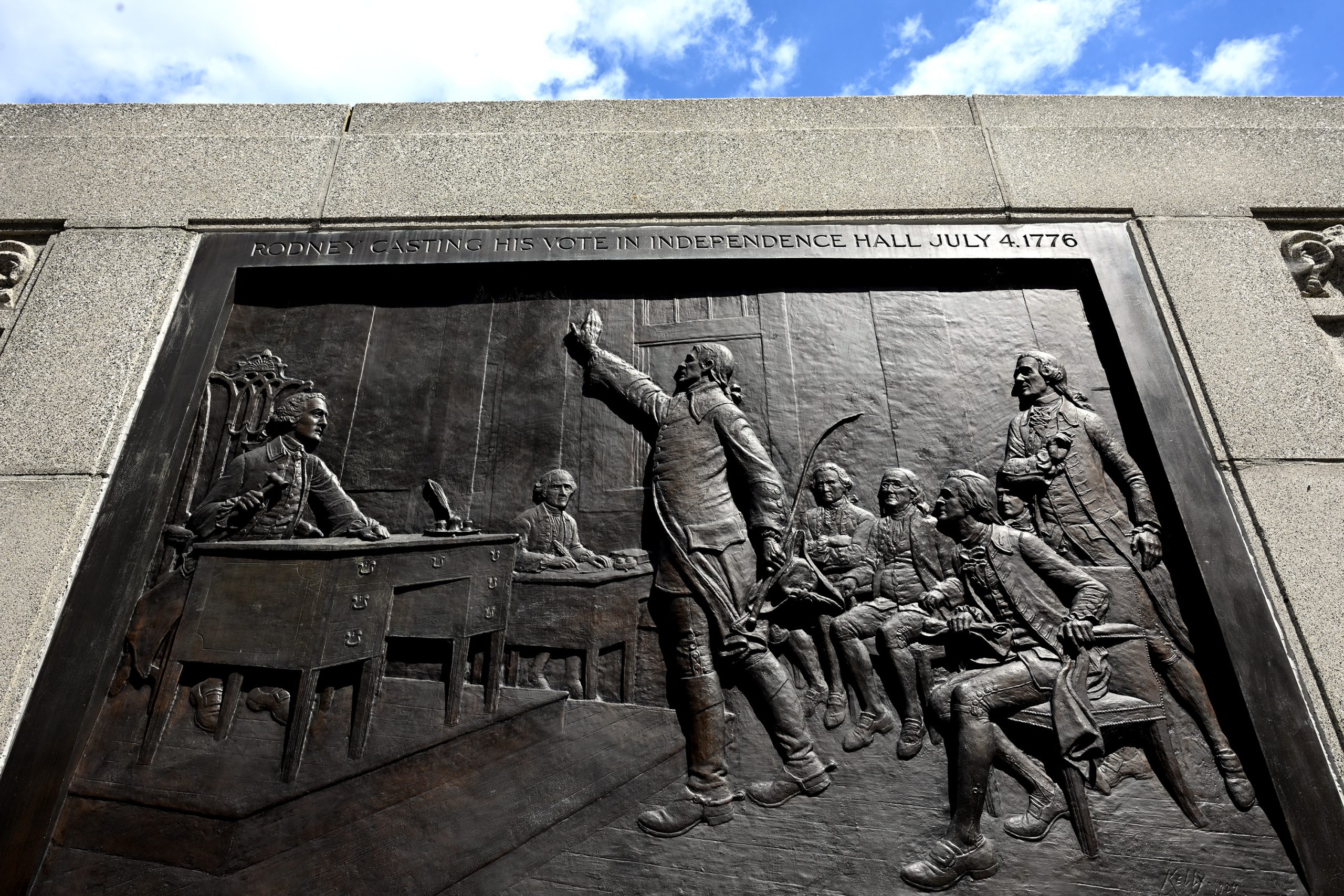
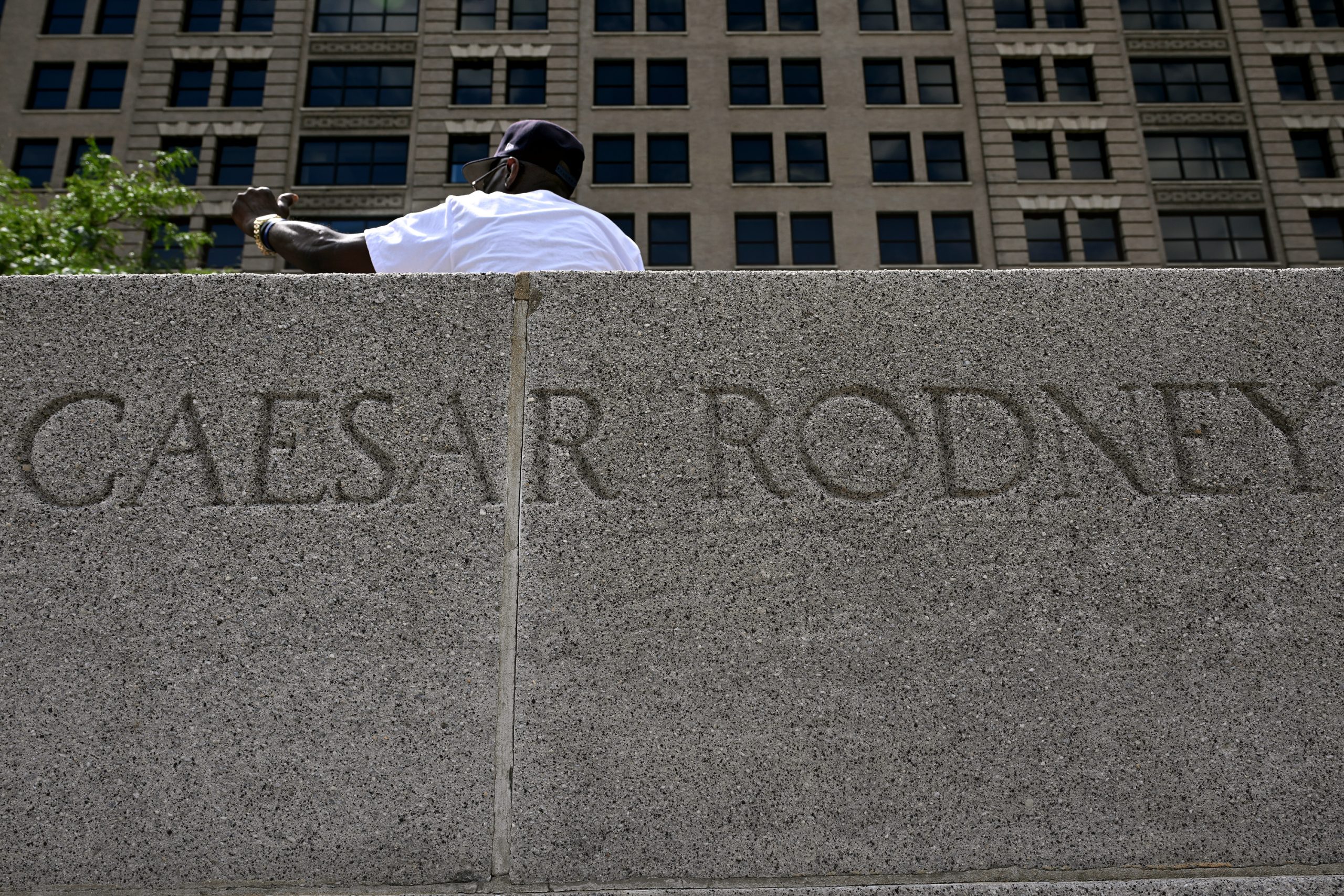
The base of a monument in Wilmington’s downtown Rodney Square features a low-relief sculpture showing him casting his vote for independence.Tom Gralish / Staff PhotographerThe base of a monument for signer Caesar Rodney, an enslaver, remains in Wilmington after the statue it held was removed in June 2020, amid nationwide Black Lives Matter protests.Tom Gralish / Staff Photographer
When the U.S. Mint produced the statehood quarters from 1999 through 2008, it issued the coins in the order that the states ratified the U.S. Constitution or joined the Union. Delaware was honored on the first coin, and it shows a man on a galloping horse. People assumed it was Paul Revere, as he is the most famous Revolutionary War horseman.
That man was Caesar Rodney.
At home in Delaware recuperating from painful facial cancer, Rodney left on a stormy night, riding the 80 miles from Dover to Philadelphia on horseback to cast Delaware’s tiebreaking vote for independence on July 2, 1776.
Rodney served Delaware as a judge, sheriff, military officer, legislator, and governor but was also a plantation owner who relied on enslaved labor. In 2020, amid nationwide Black Lives Matter protests, his equestrian statue was removed from the park that is named for him in downtown Wilmington. It remained in storage until President Donald Trump had it installed in May 2026 in Freedom Plaza in Washington.
GEORGE TAYLOR,PENNSYLVANIA
Independence Hall (Pennsylvania State House).Tom Gralish / Staff Photographer
George Taylor arrived in America as an indentured servant to an ironmaster near Philadelphia. Working off the debt involved manual labor in iron production, making him one of the most working-class signers.
He worked his way up into management and when the forge’s owner died he married the widow and took over running the ironworks.
His furnaces produced castings, and stoves, including Franklin stoves. In August 1775, Taylor secured a contract from Pennsylvania for cannonballs and later made grape shot, bar shot and cannons for the Continental Army.
When several Pennsylvania delegates chose not to vote in favor of the Independence on July 4, the Assembly chose five replacements: George Taylor, George Ross, George Clymer, Benjamin Rush, and James Smith, all of whom signed the Declaration of Independence when the engrossed copy of the document was ready on August 2, 1776.
GEORGE WILSON, PENNSYLVANIA
Life-size bronze statue of George Wilson of Pennsylvania in Signers’ Hall at the National Constitution Center. He was one of six men who signed both the Declaration and U.S. Constitution. Tom Gralish / Staff Photographer
As a young man in Scotland James Wilson was studying for a life in the church. But as it was the time of the Scottish Enlightenment, he entertained much broader interests, including classical governments and philosophy, and in 1765 sailed to America for more opportunities.
He arrived in New York during the Stamp Tax dispute, and ended up in Philadelphia where he found employment teaching Latin at the College of Philadelphia, the school that later became the University of Pennsylvania. He also prepared to be a lawyer and passed the Bar a few years later.
His writings – while still in his 20s – on the legal relationship between the British Parliament, the Colonies, and the King foreshadowed the content of the Declaration of Independence two years later. Constitutional scholars often rank him among the most influential thinkers at the Constitutional Convention.
ABRAHAM CLARK, NEW JERSEY
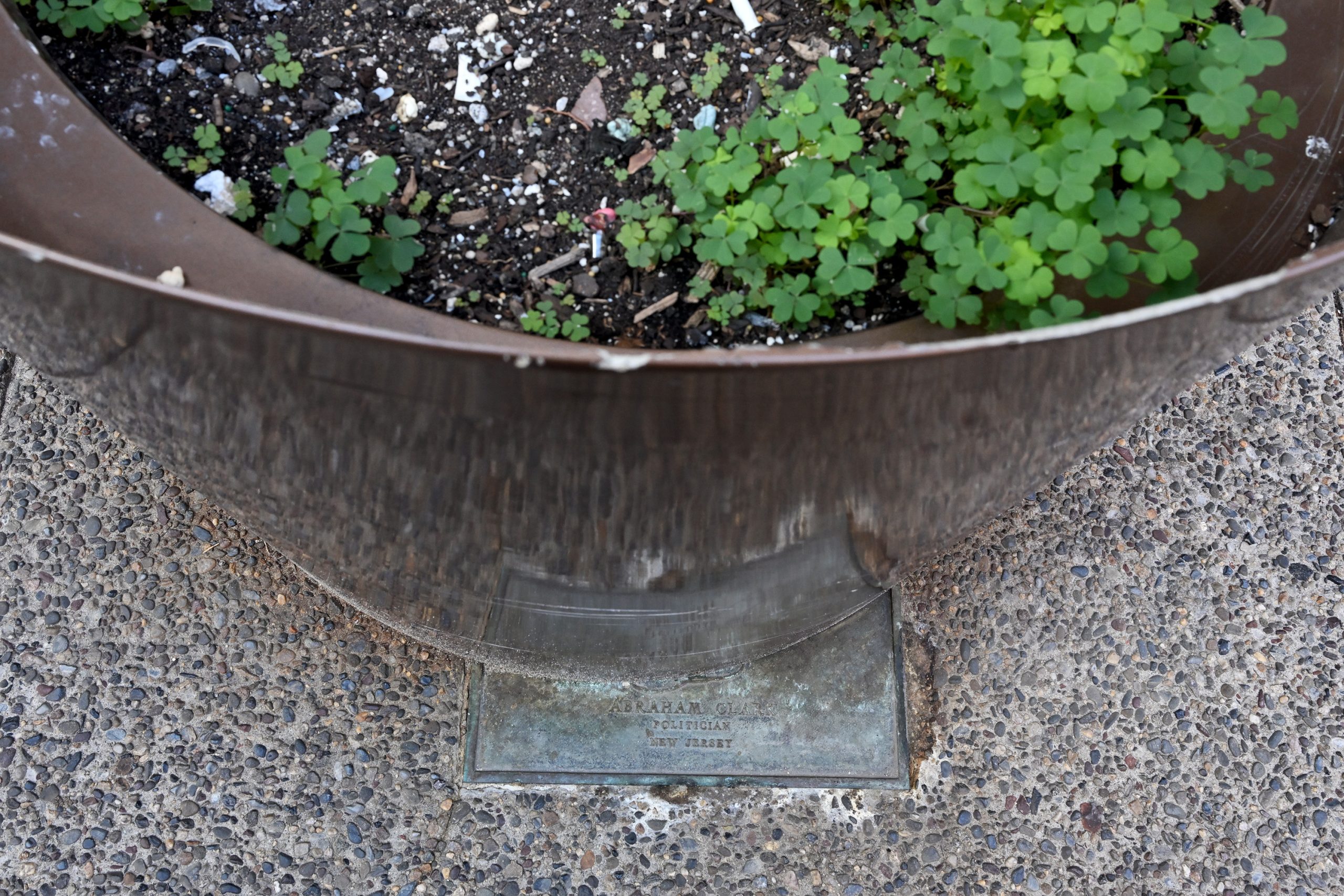
Plaque for Abraham Clark of New Jersey, one of 56 for the signers of the Declaration of Independence in the sidewalk along the 600 block of Chestnut Street near Independence Hall. Most of the plaques have been stolen over the years. His has survived by being under a planter.Tom Gralish / Staff Photographer
Abraham Clark was born into a farming family, but his father considered him not made for manual labor, so he had his son trained in surveying, Not content, Clark taught himself law and set up a practice, earning a reputation as “the poor man’s councilor” because of his willingness to defend those who could not afford a lawyer’s fee. His contemporaries said he was “limited in his circumstances, moderate in his desires, and unambitious of wealth.” He refused to wear a wig or ruffles on his shirts.
He consistently argued that the new nation should protect ordinary farmers and working people.
THOMAS MCKEAN, DELAWARE
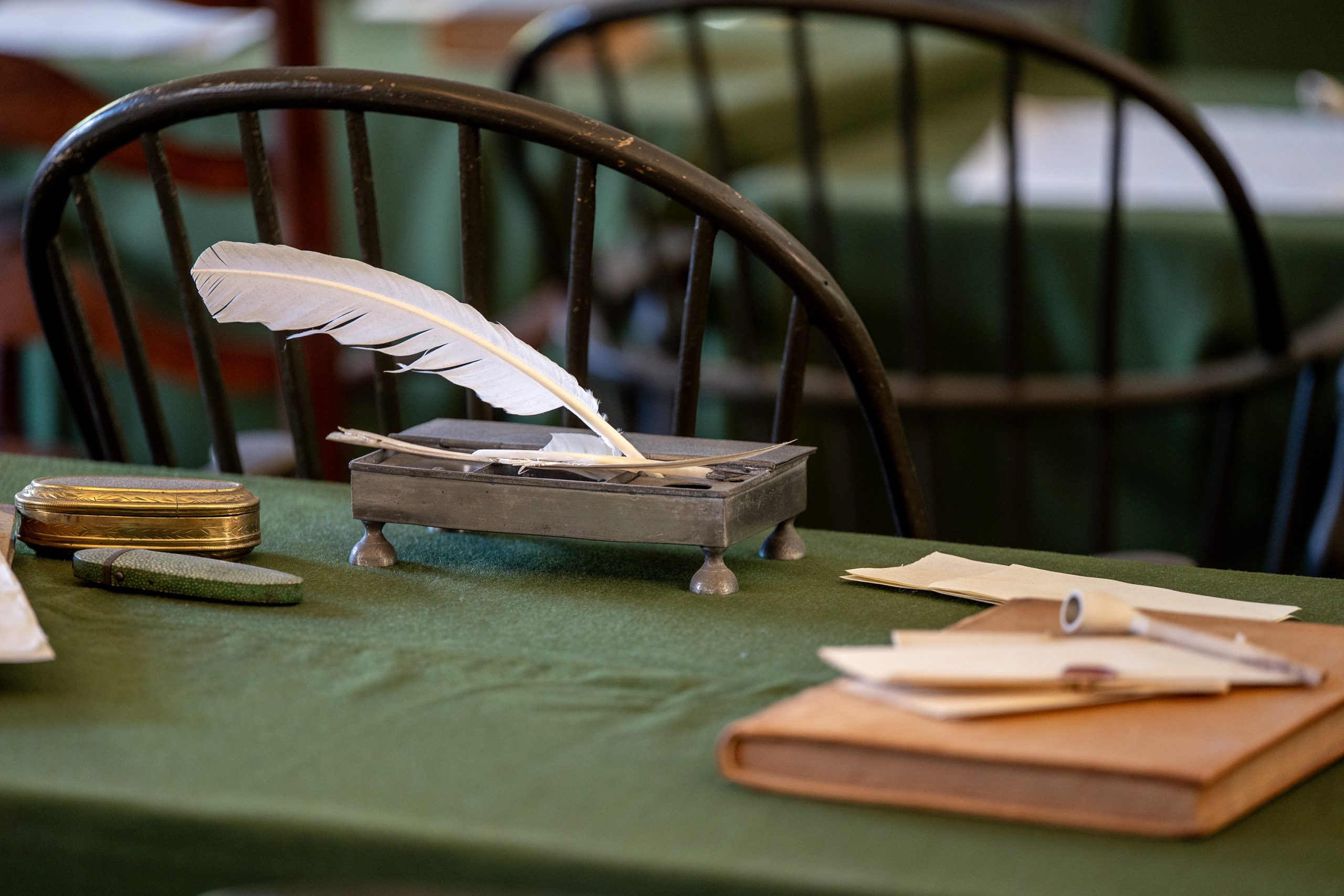
A replica desk in the Assembly Room in Independence Hall (Pennsylvania State House) where the Second Continental Congress met and the Declaration of Independence was adopted.Tom Gralish / Staff Photographer
McKean voted to approve the Declaration of Independence in July 1776, but he left Philadelphia before the document was signed, to rejoin the fight against the British.
Historians believe he was the last person to sign the Declaration, either in early 1777 or as late as 1781.
One of his daughters married a prominent Spanish diplomat and her descendant — a great-grandson — was born in Europe, growing up to serve as the prime minister of Spain in 1847.
BENJAMIN RUSH, PENNSYVANIA
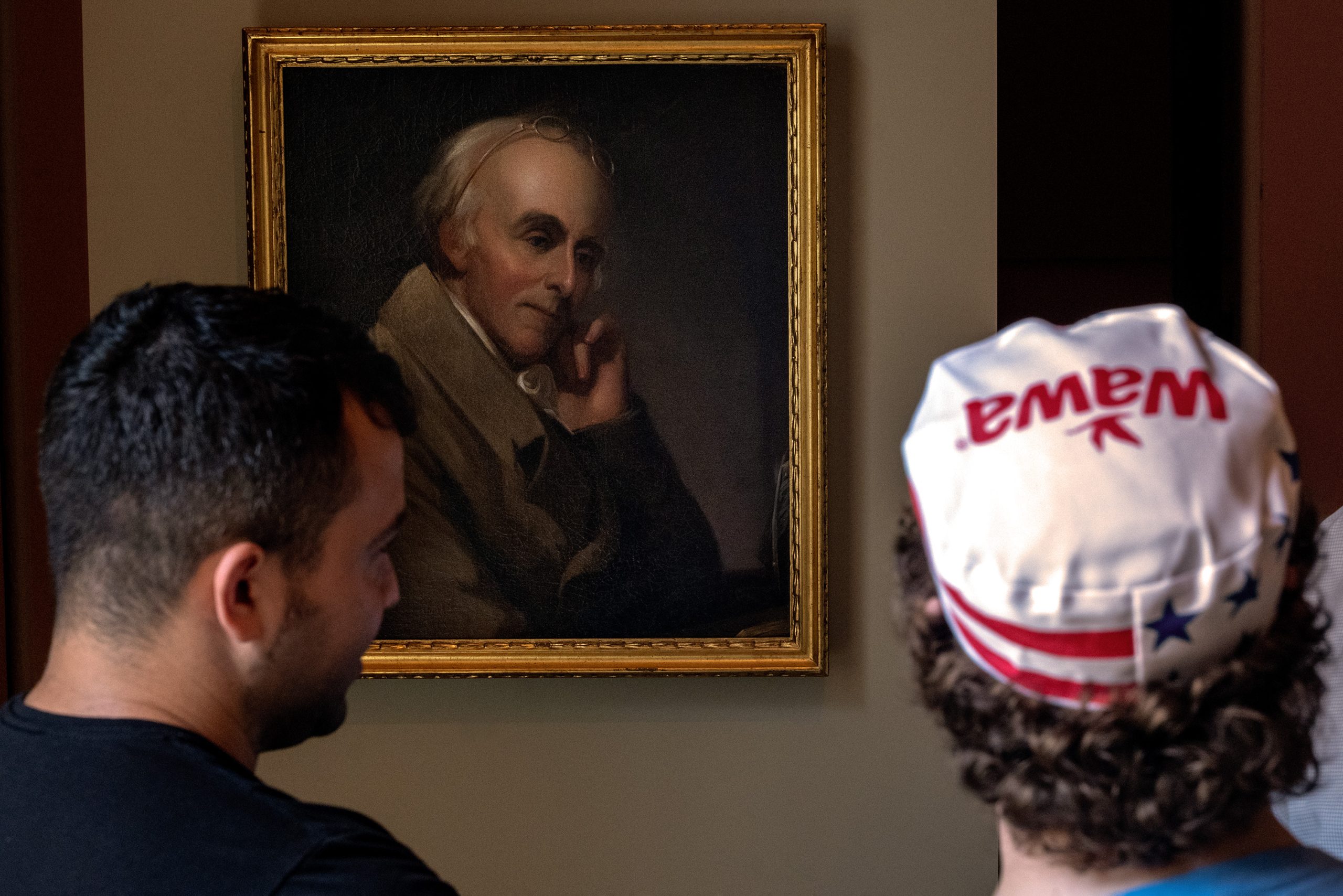
Portrait of signer Benjamin Rush of Pennsylvania in the Second Bank of the United States in Independence National Historical Park.Tom Gralish / Staff Photographer
Benjamin Rush opened a medical practice in Philadelphia in 1769 and was appointed professor of chemistry at the College of Philadelphia (now the University of Pennsylvania). He wrote the first American textbook on chemistry. He supported the patriot cause and recommended the title “Common Sense” to his friend Thomas Paine.
On January, 1776, Rush married the daughter of his good friend Richard Stockton of Princeton. The minister that married them was John Witherspoon whom he had helped bring to America ten years earlier. Six months later they would all sign the Declaration of Independence.
JOHN WITHERSPOON, NEW JERSEY
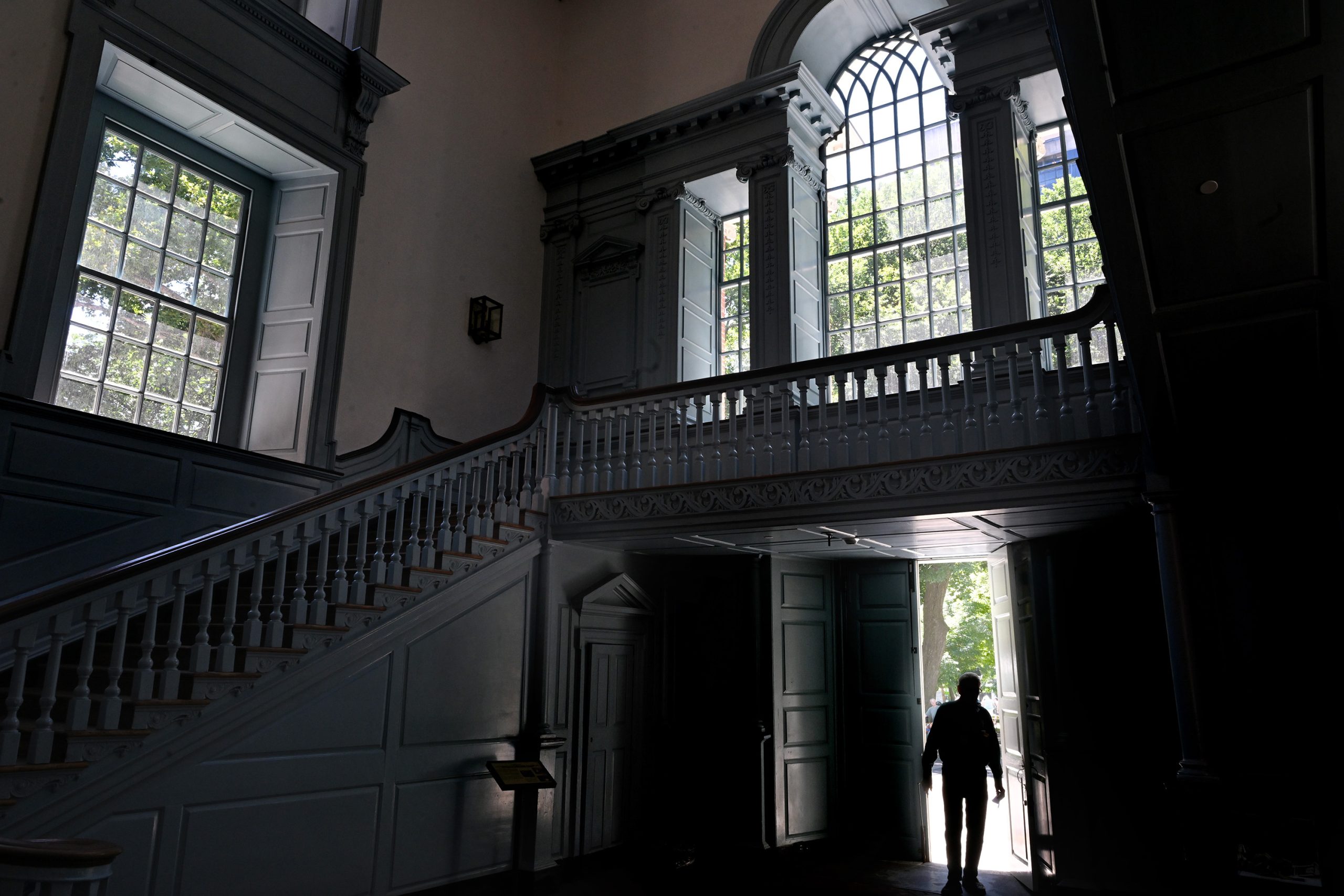
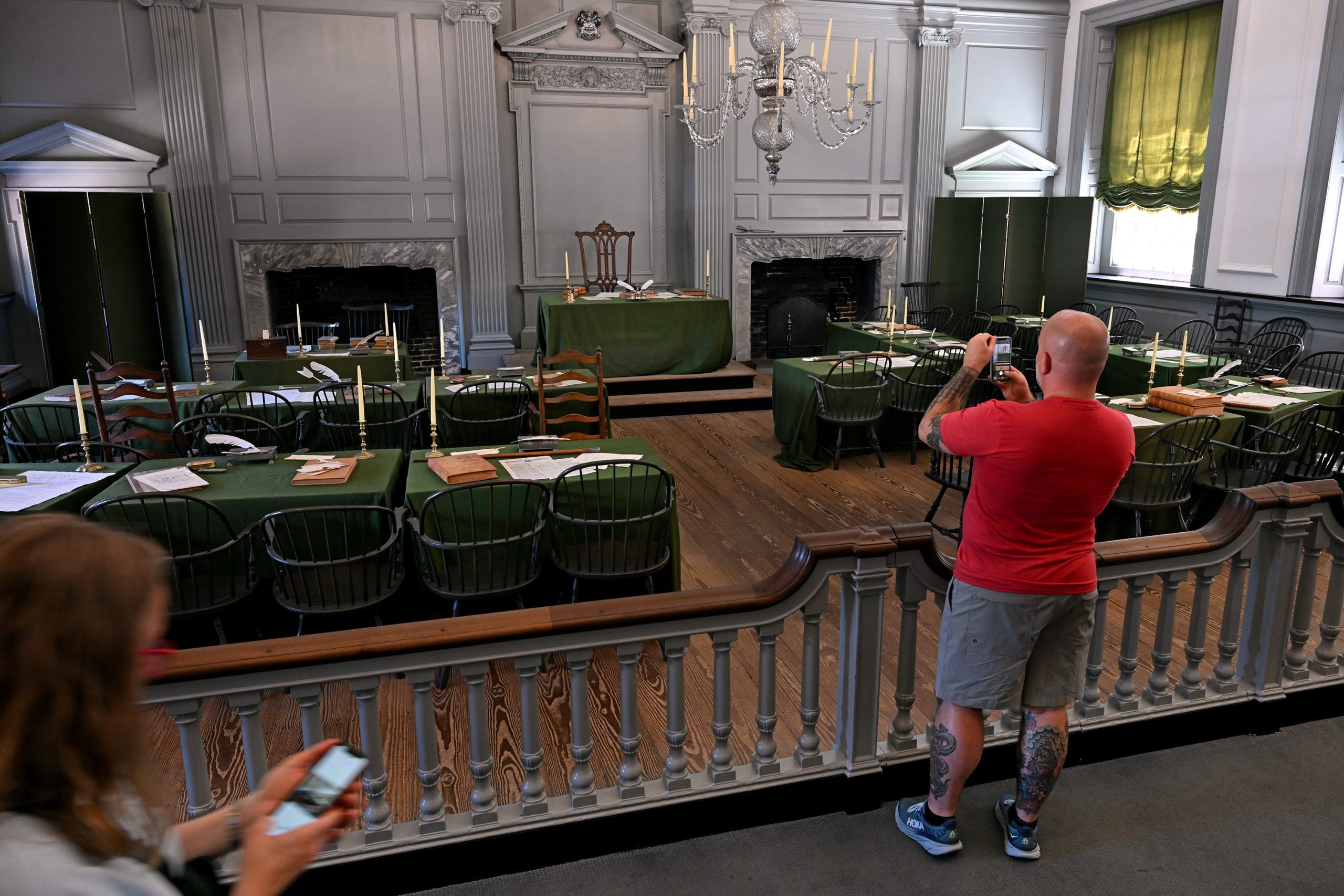
Assembly Room in Independence Hall (Pennsylvania State House) Monday, June 15, 2026. This is the exact space where the Second Continental Congress met and the Declaration of Independence was adopted. Tom Gralish / Staff Photographer
Before becoming an American patriot, John Witherspoon was a well-known Presbyterian minister in Scotland. He didn’t move to America until he was 45 years old, when he accepted the presidency of the College of New Jersey (now Princeton University).
The college sent Benjamin Rush and Richard Stockton (also later signers of the Declaration of Independence) to Scotland to recruit Witherspoon for the position.
One of his students was James Madison, often called the “Father of the Constitution.” Historians generally agree that Witherspoon’s teachings on moral philosophy, liberty, and government had a major influence on Madison’s political thinking.
ROBERT MORRIS, PENNSYLVANIA
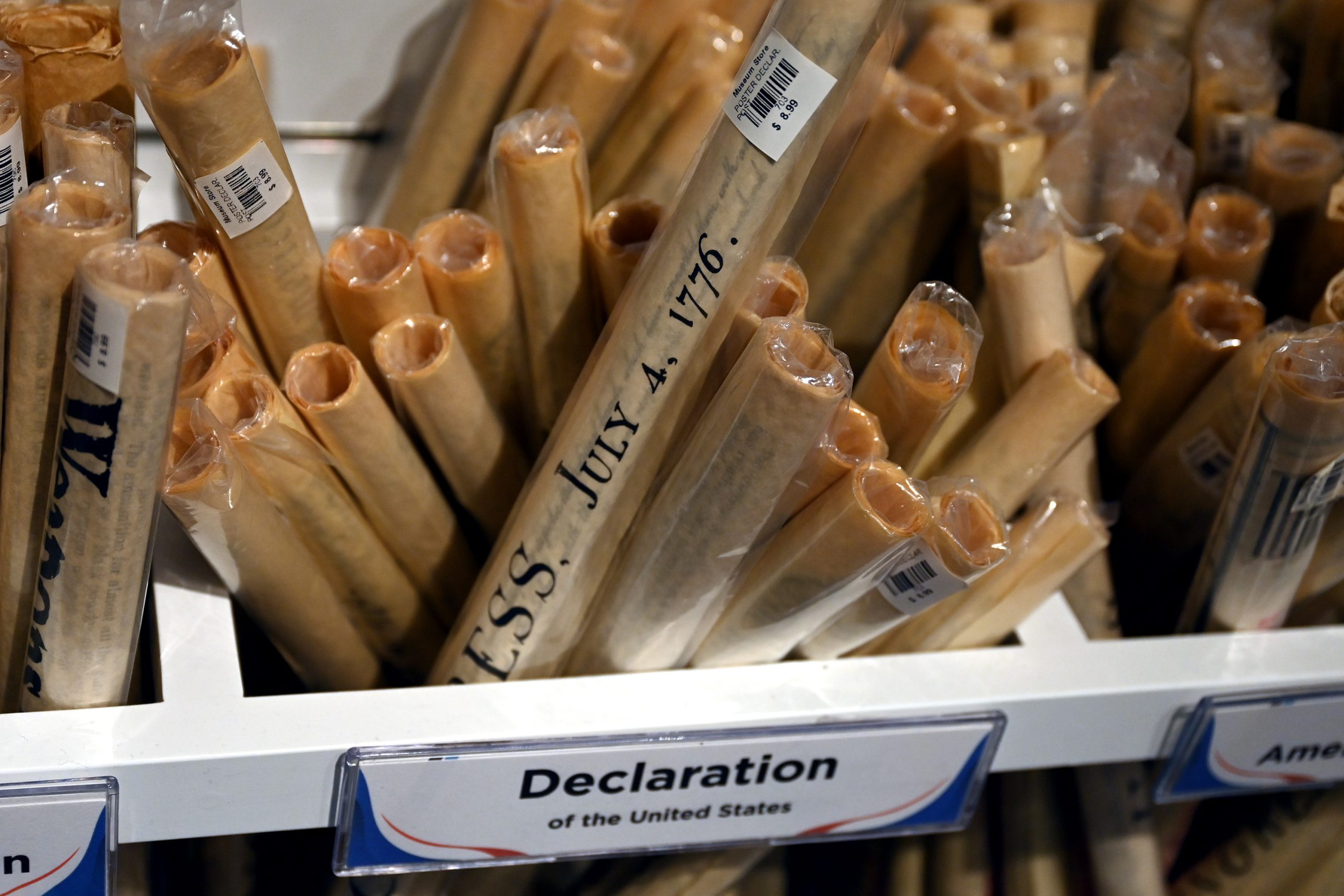
Copies of the Declaration of Independence for sale ($8.99) in the gift ship at the National Constitution Center.Tom Gralish / Staff Photographer
Historians often call Robert Morris the “Financier of the Revolution” because he used his business connections and personal credit to obtain supplies and loans for the war effort.
During the war he purchased the house at 6th and Market Streets in Philadelphia and later volunteered it to serve as the presidential residence while Philadelphia was temporarily the nation’s capital. George Washington lived there on the site now known as the Presidents’ House, a memorial to the nine enslaved Africans who also lived there.
After the Revolution, Morris speculated heavily in land in New York and the nation’s new capital, Washington, D.C. During the financial panic of the 1790s, he couldn’t pay his debts and was taken to Prune Street debtors’ prison where he remained for over three years. His friend Senator John Marshall helped pass a bankruptcy law and Morris was released, but he was never able to restart his career.
JAMES SMITH, PENNSYLVANIA
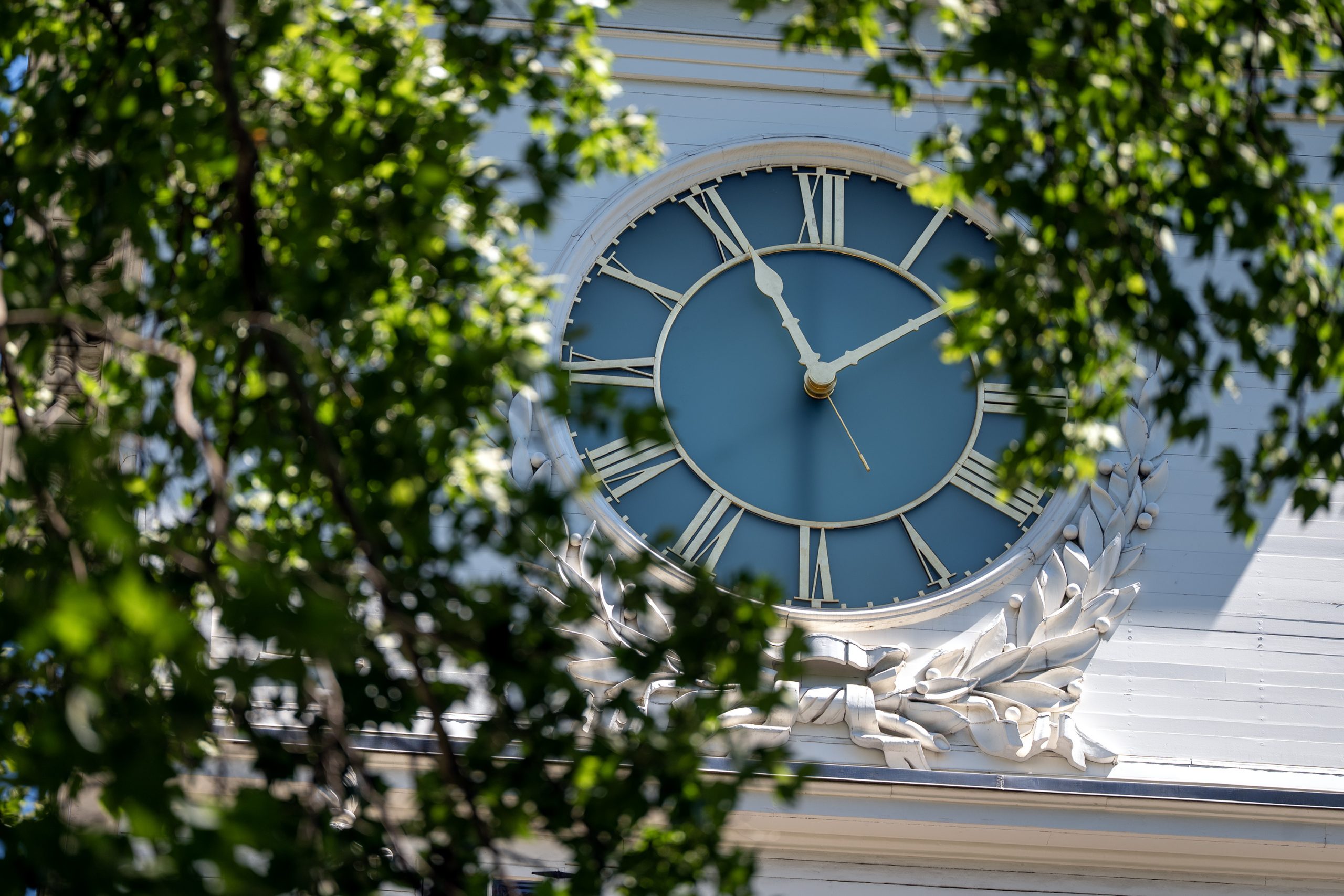
Clock tower at Independence Hall (Pennsylvania State House) Tom Gralish / Staff Photographer
Smith was elected to the Continental Congress on July 20, 1776 – more than two weeks after the Declaration was adopted. Like many other delegates who were serving in their state governments or in the military he later signed the engrossed copy in August.
A fire destroyed his office and his personal and professional records simply disappeared. That is one reason he is much less well known than figures such as Thomas Jefferson or Benjamin Franklin.
RICHARD STOCKTON, NEW JERSEY
An original 1833 printing of the Declaration of Independence, by Peter Force currently on display at the National Constitution Center. It was created from the plate engraved ten years earlier by W. J. Stone that was commissioned by Congress for the 50th anniversary of the Declaration of Independence, as by the 1820s the original engrossed version of the document was becoming fragile and faded.Tom Gralish / Staff Photographer
On July 1, 1776, Richard Stockton and fellow New Jersey delegate John Witherspoon traveled to Philadelphia from Princeton during a storm. They were late and caught only the end of a speech John Adams was giving. They asked Adams to repeat what they had missed. He at first refused, but then rose to the occasion and gave a stirring speech in favor of independence. Stockton later declared Adams “the Atlas of the hour, the man to whom the country is most indebted for the great measure of independency.”
After signing the Declaration, Stockton was captured on a trip for Congress to Fort Ticonderoga. He was dragged from his bed, put in irons, and sent to New York’s notorious Provost Jail, where reports describe starvation, freezing conditions, and severe mistreatment. He was released after five weeks, his health ruined. When he returned to his home he found it plundered of its books and furniture by the British army and his horses, cattle, hogs, sheep, and grain had all been taken.
His wife, Annis Boudinot Stockton, was apublished poet and one of the more influential female voices in revolutionary New Jersey. She corresponded with leading figures of the time including George Washington.
It’s a common sound in Philadelphia’s historic district during the summer. I was photographing tourists in front of Independence Hall on Wednesday when the beat of a single snare drum a block away achieved its intended purpose.
Just like when the fife and drum corps would relay tactical commands over the noise of the battlefield, or regulate a soldier’s daily routine, I stopped what I was going and headed in the direction of the beating pulse.
It was coming from the normally quiet Signer’s Garden pocket park, across 5th Street.
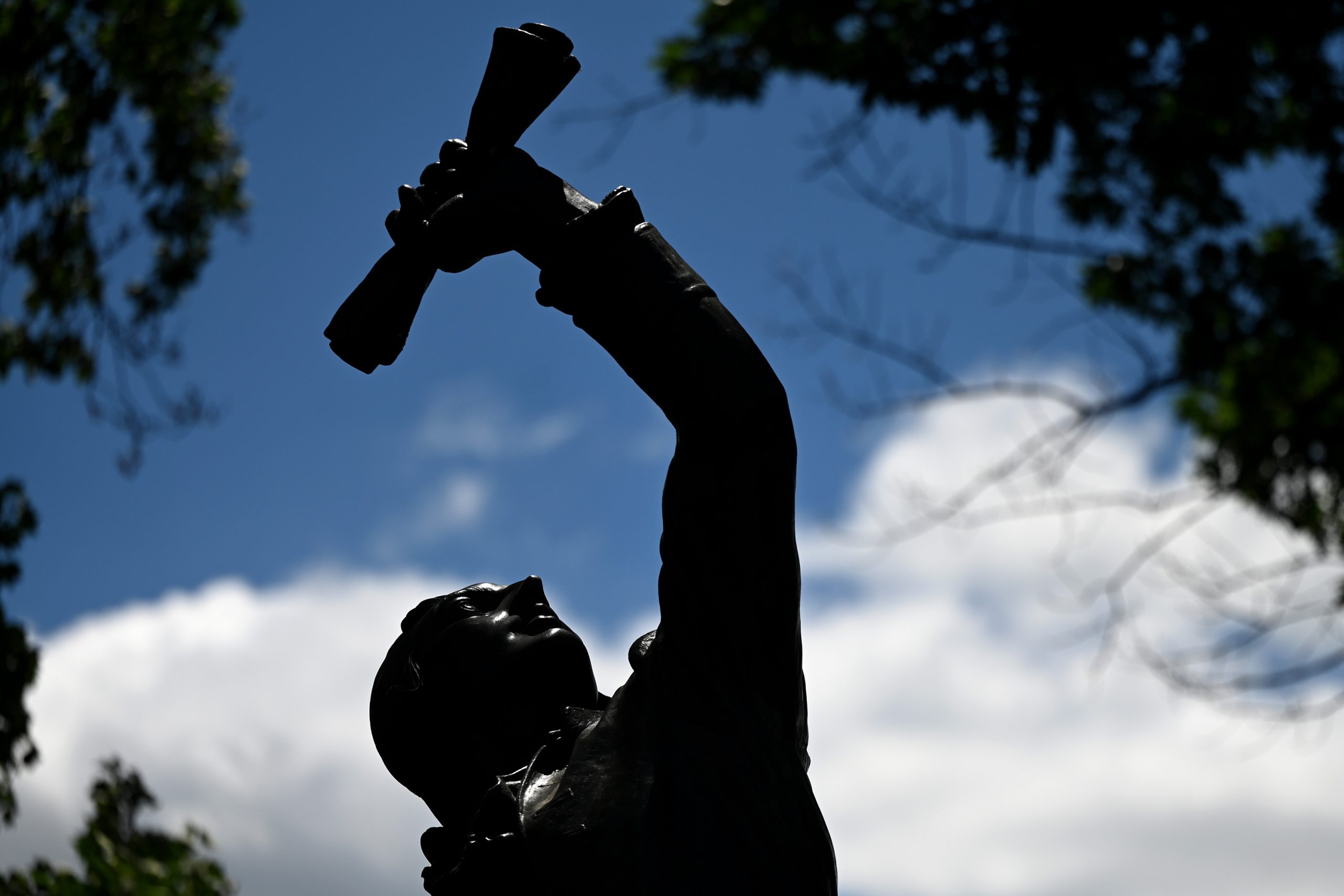
I had intended to go there anyway to photograph the statue — “The Signer” — as I am working with present-day descendants of the signers of the Declaration of Independence on a photo essay that will be posted online this Fourth of July weekend.
The statue was inspired by George Clymer, a Philadelphia merchant, statesman, and signer of both the Declaration of Independence and the U.S. Constitution. A National Park Service plaque at the entrance reads “it commemorates the courage of those who altered their lives, and ours, by affixing their names to these documents.”
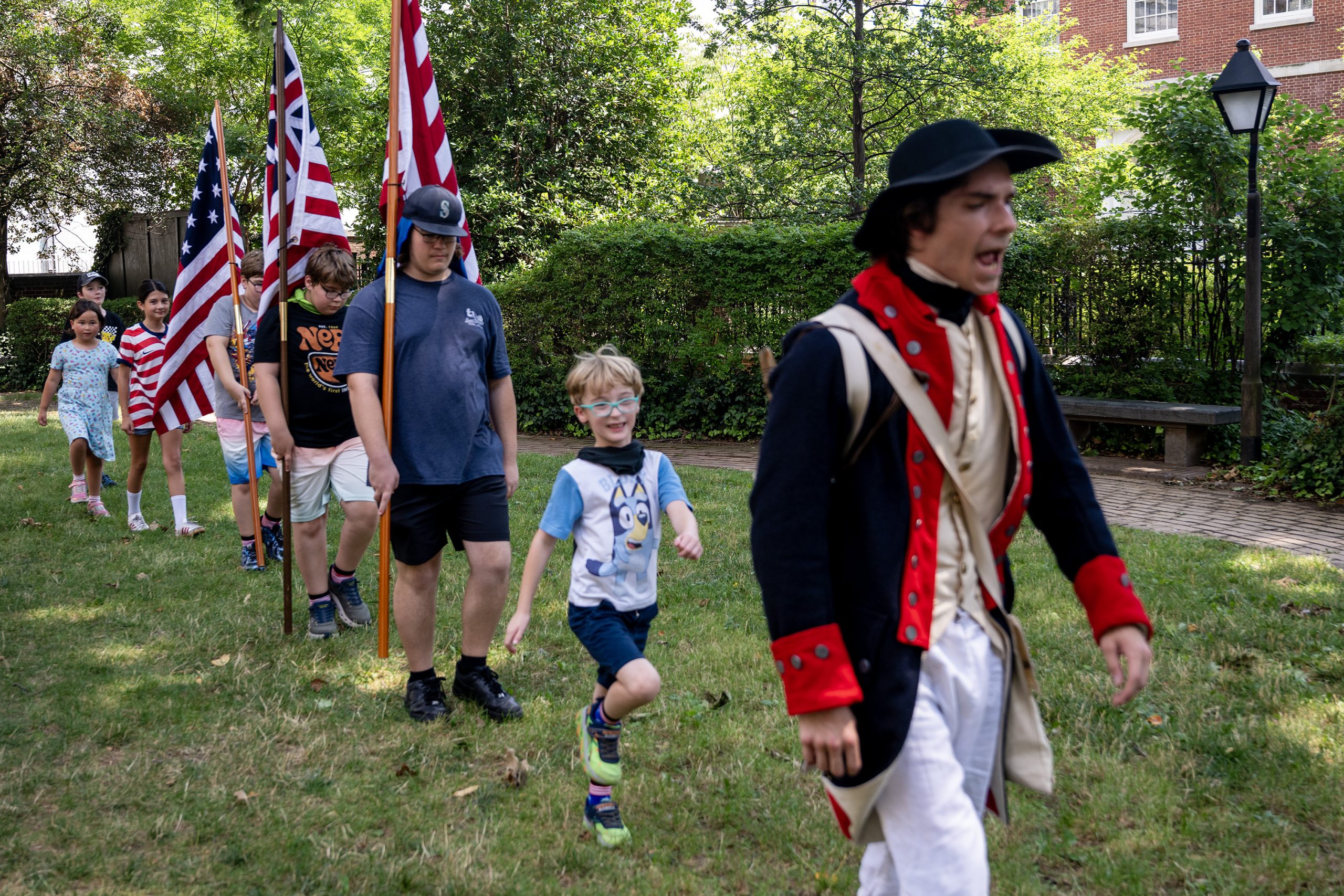
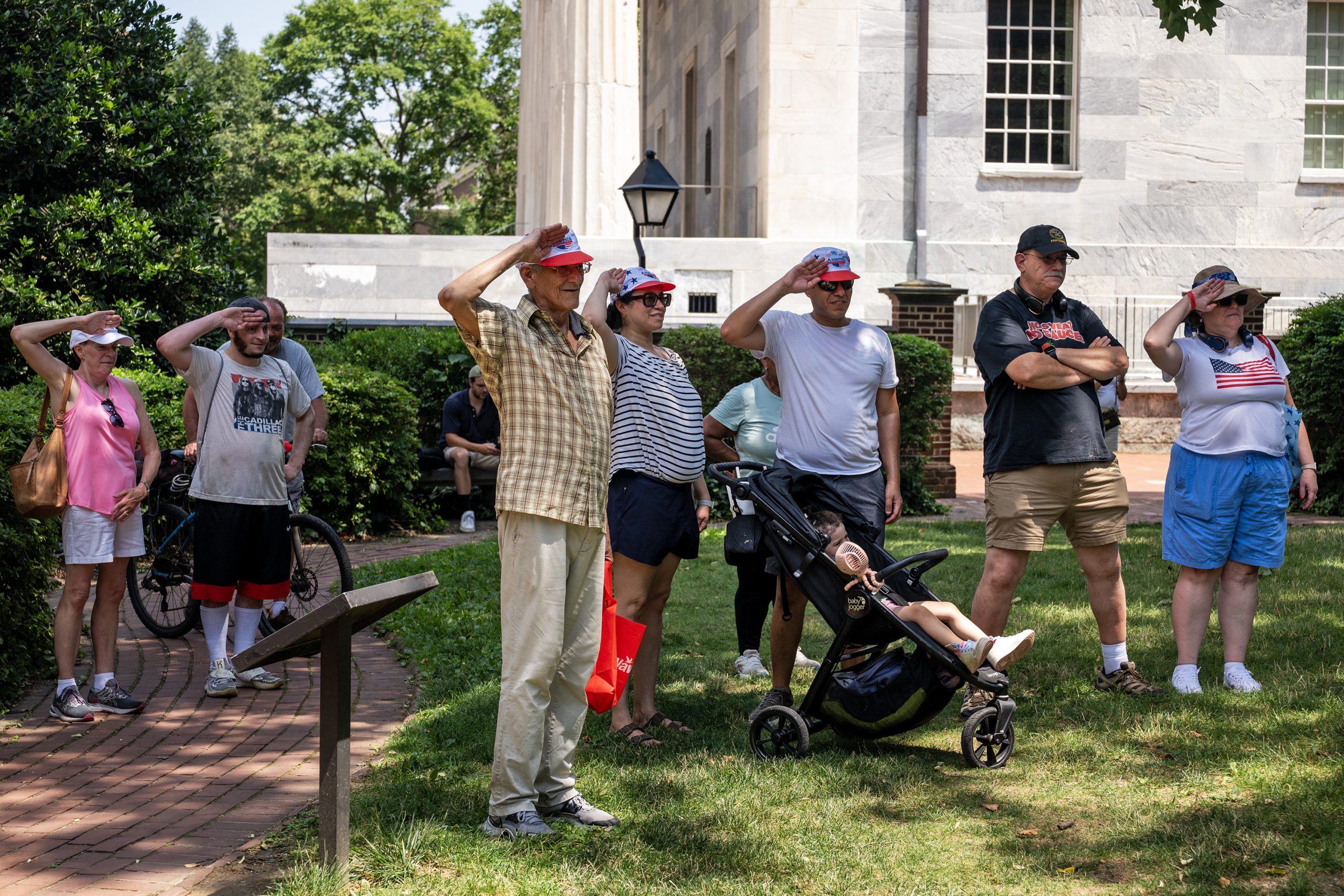
The drum was mustering holiday week visitors for a presentation by two costumed actors from Historic Philadelphia portraying continental soldiers. I watched as the tourists watched them “draft” youngsters into their performance and found myself smiling more than once at how they engaged the kids — and the rest of us in the crowd — with some of their one-liners.
Historic Philadelphia actor Lane Norris portraying Continental soldier Conrad Frye leads a contingent of young tourists in Independence National Historical Park Wednesday, July 1, 2026.Tom Gralish / Staff Photographer
Did I say, smile? I might have had a slightly more sentimental reaction. I have written before that Independence Day has always been my favorite holiday. My dad, who passed away a few years ago, was born on the Fourth of July.
As I looked around at the crowd I could tell everyone else was also getting into the interactive and engaging program. I photographed saluting adults who I assumed were parents, mirroring the actions of their kids doing the marching drills.
Afterward, I learned they weren’t. They had a toddler still in a stroller. They were immigrants from Venezuela, and just happy to be here. Like me.
We’re still in the middle of Philly’s celebration of America’s 250th birthday (with canceled events in a declared heat emergency with 100-plus degree temperatures!). Here are more of my Fourth of July photos and those of my colleagues:
Since 1998 a black-and-white photo has appeared every Monday in staff photographer Tom Gralish’s “Scene Through the Lens” photo column in the print editions of The Inquirer’s local news section. Here are the most recent, in color:
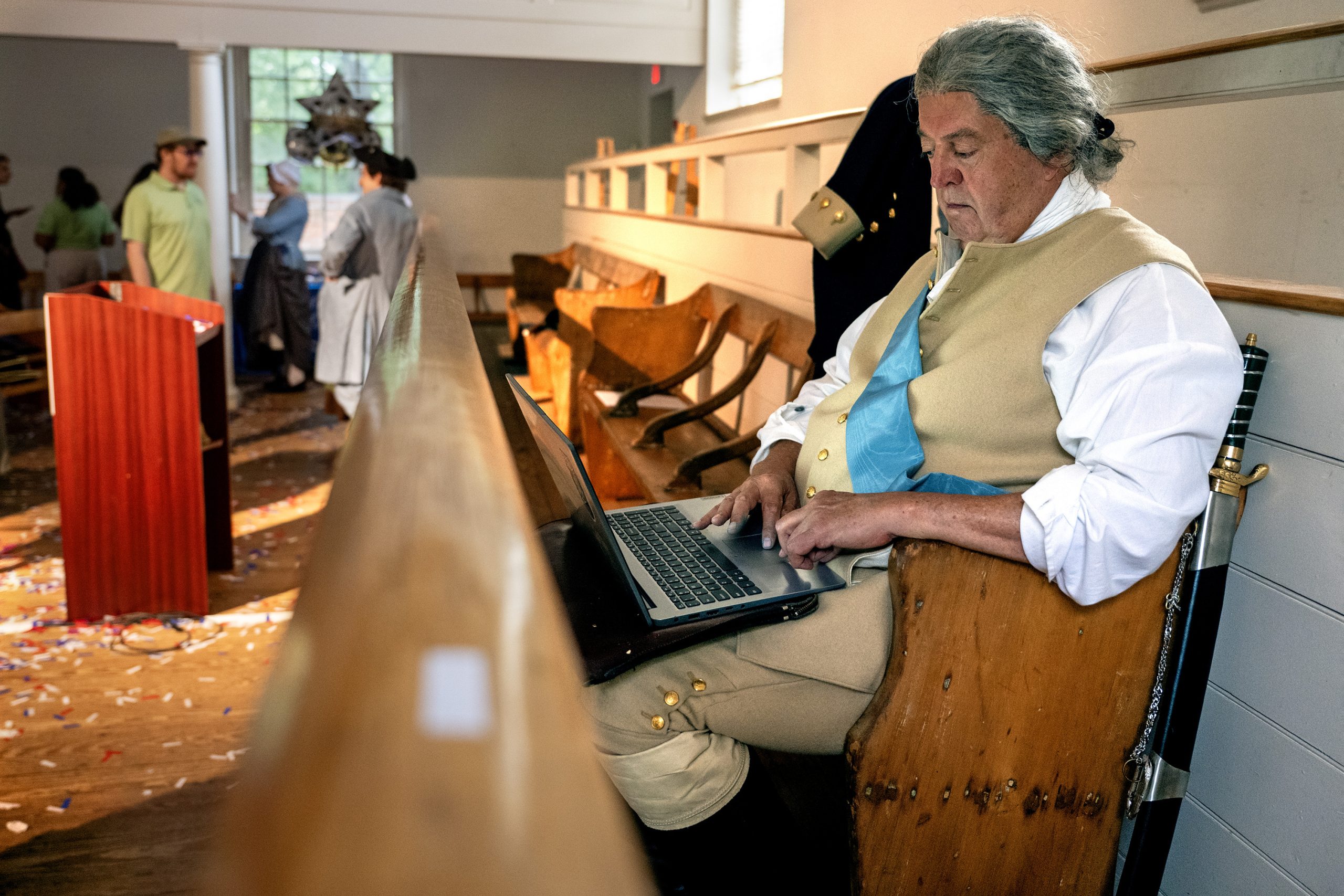
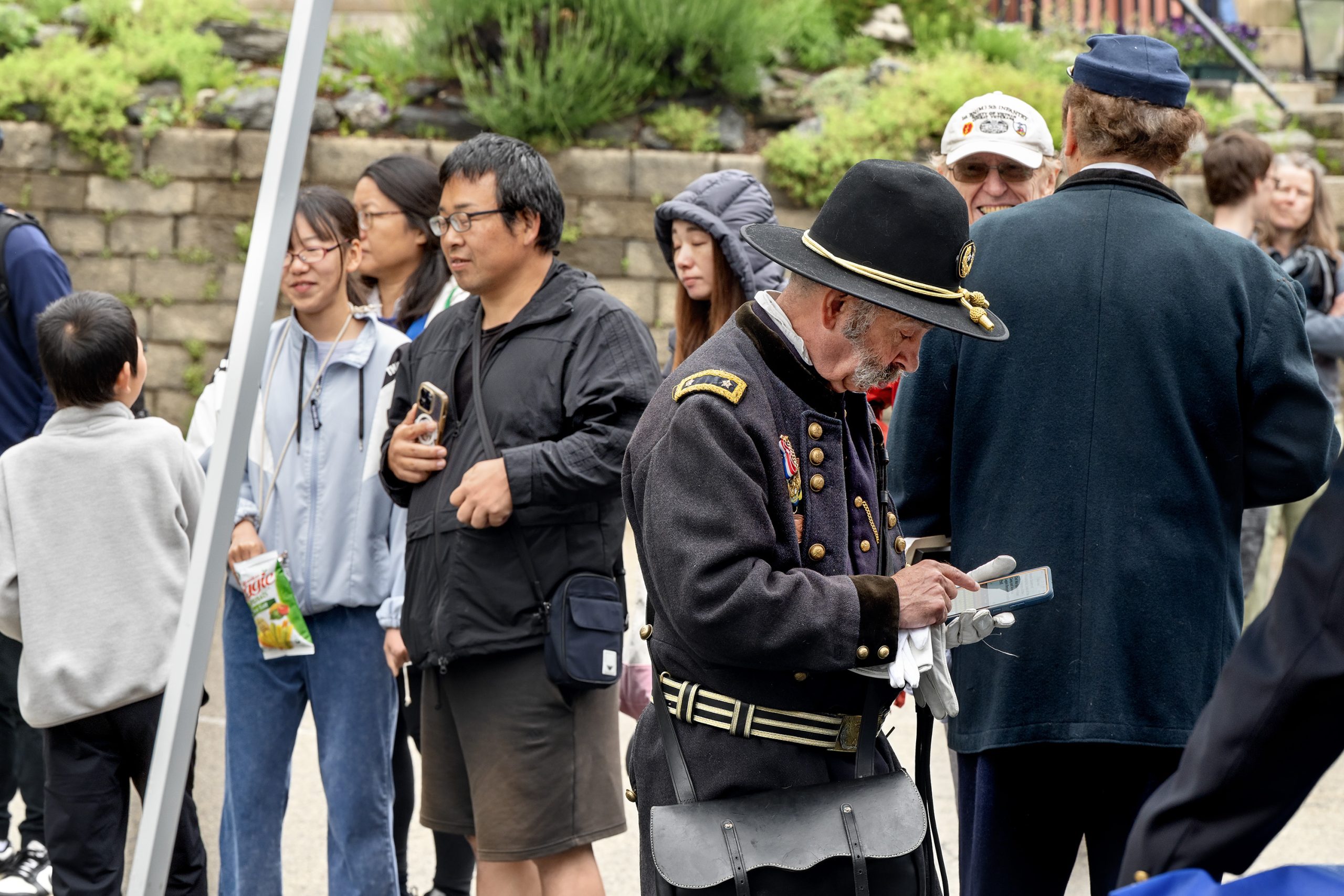
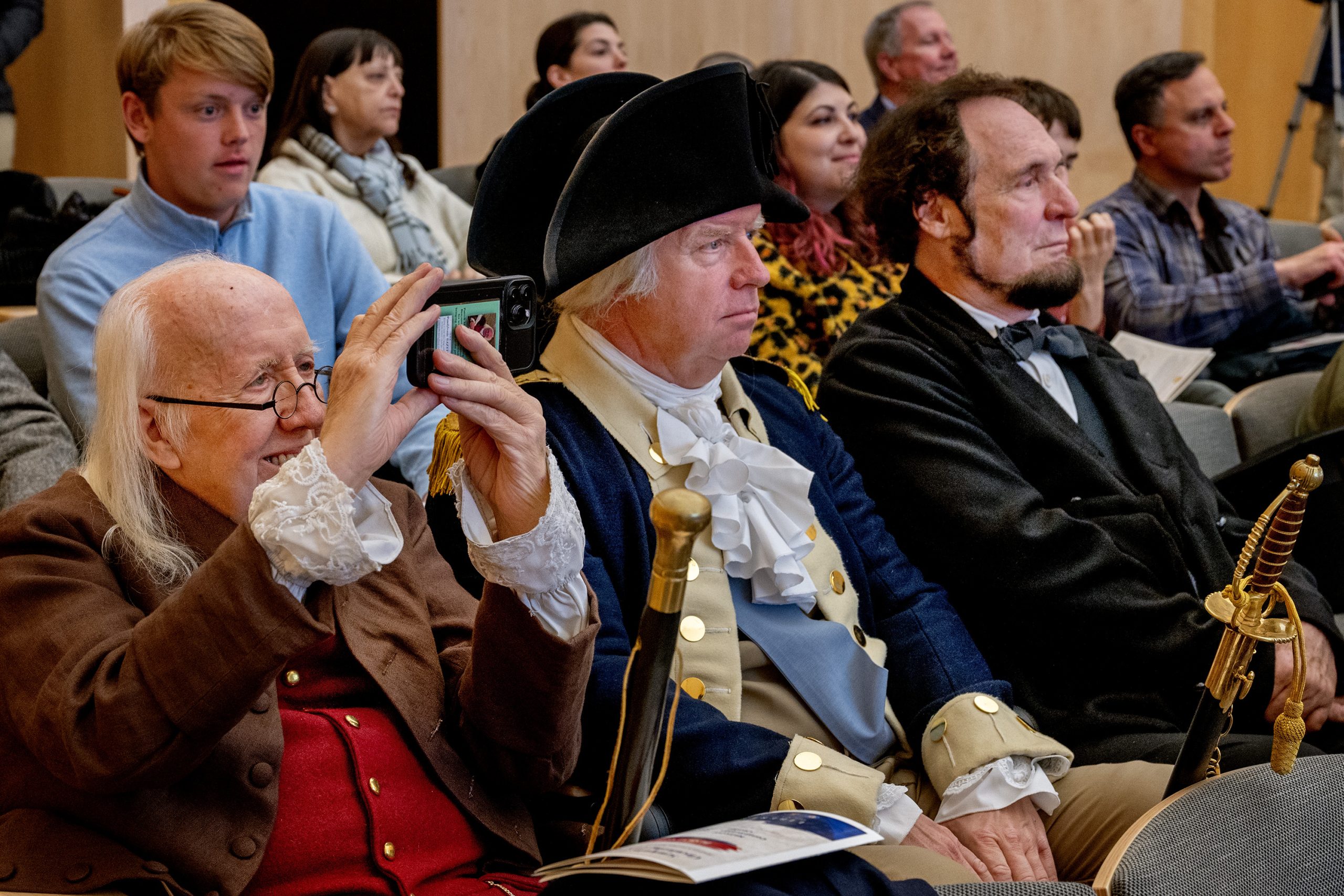
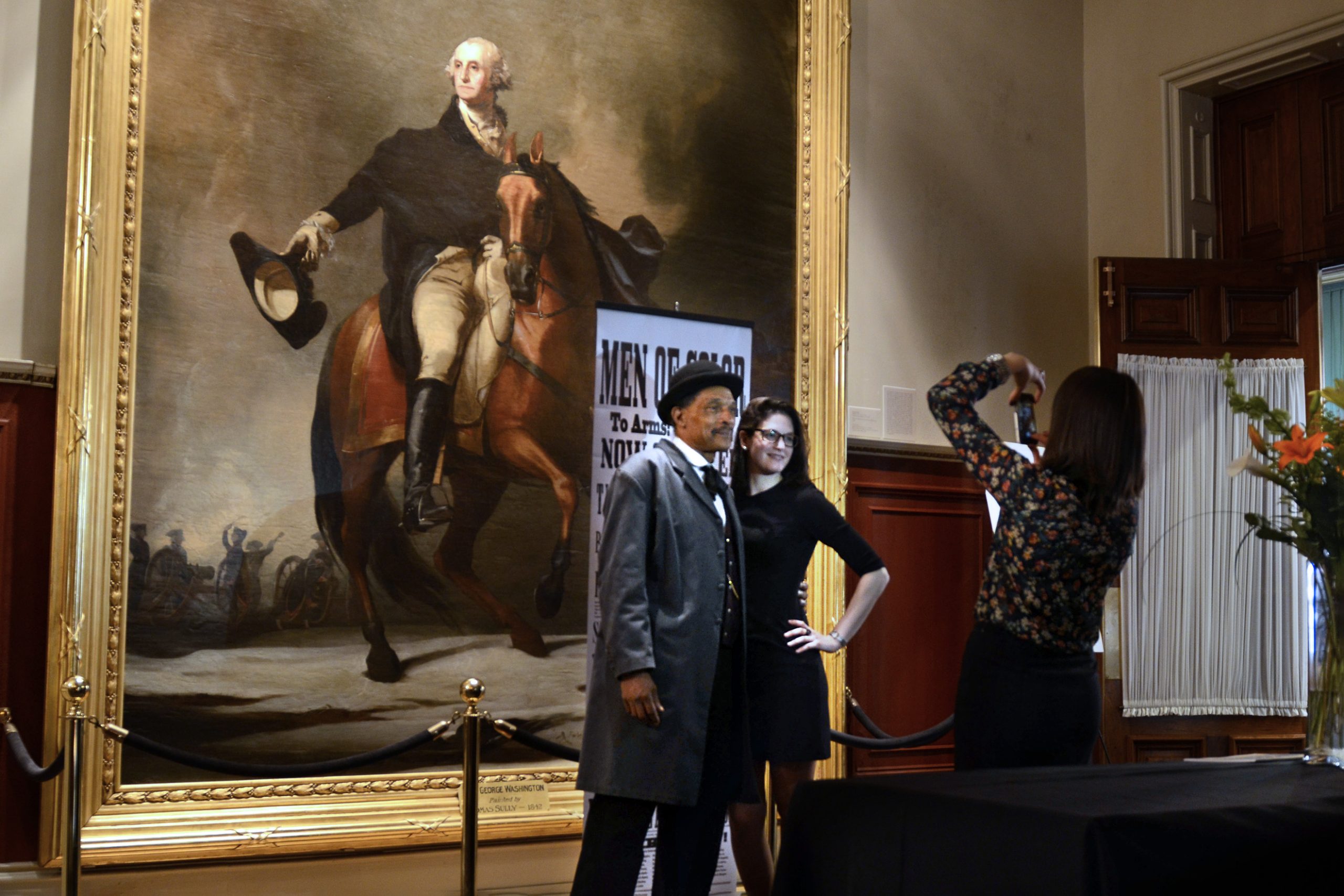
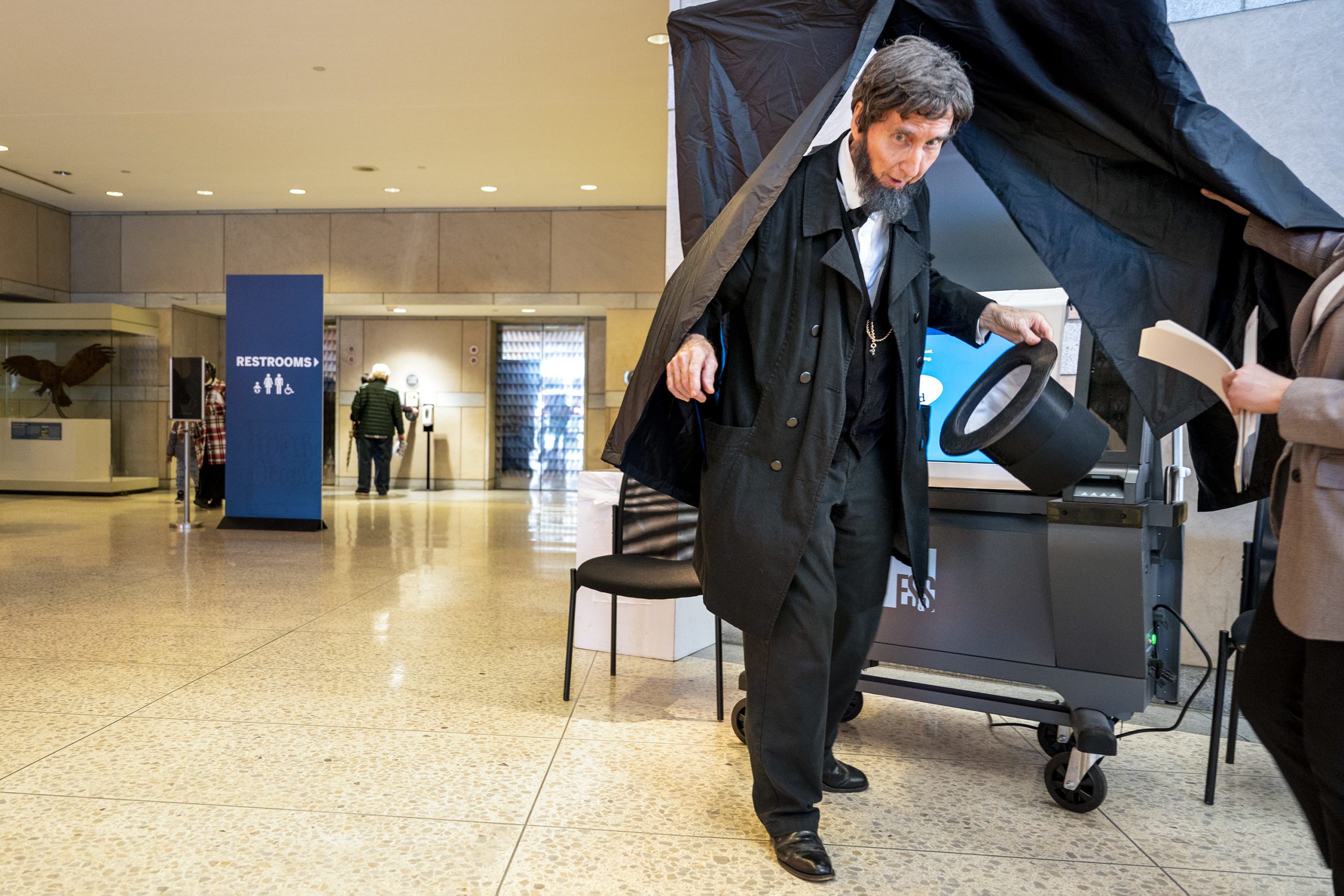
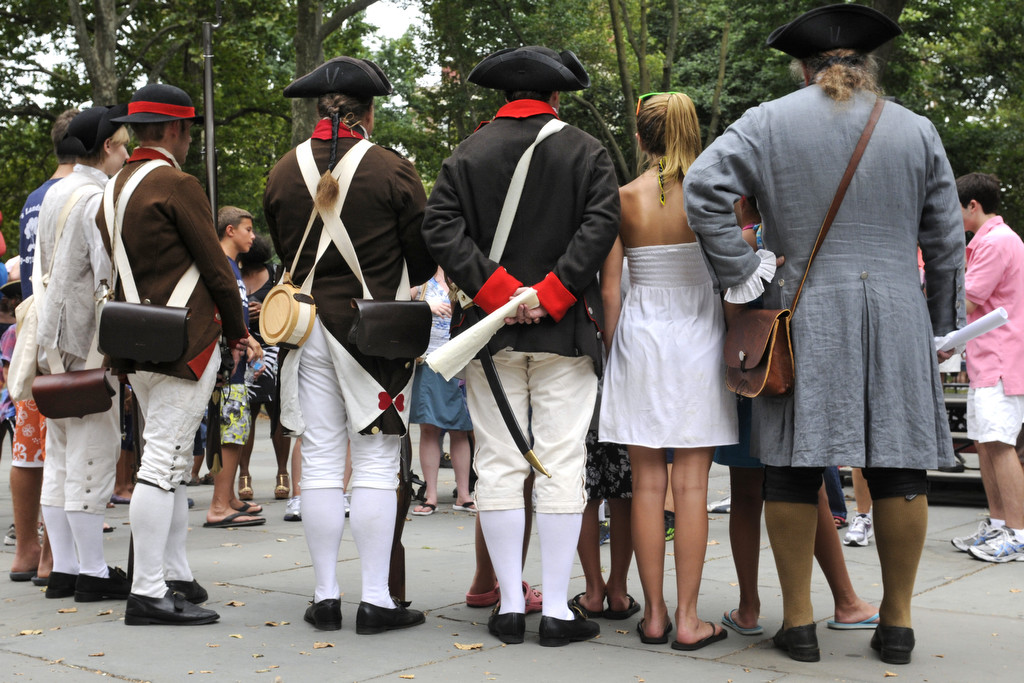
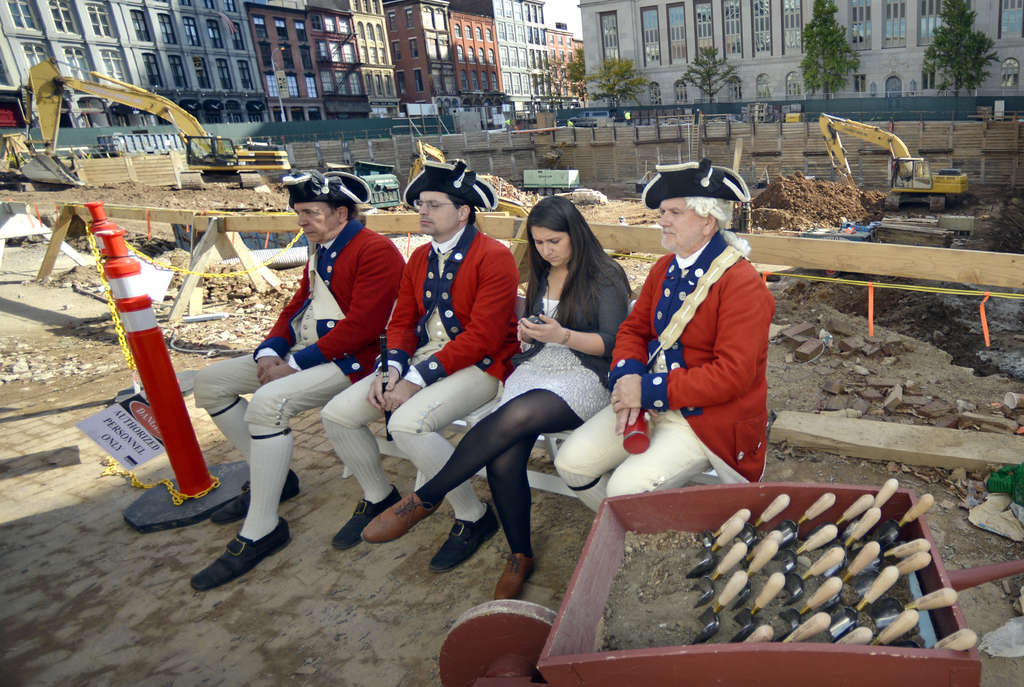
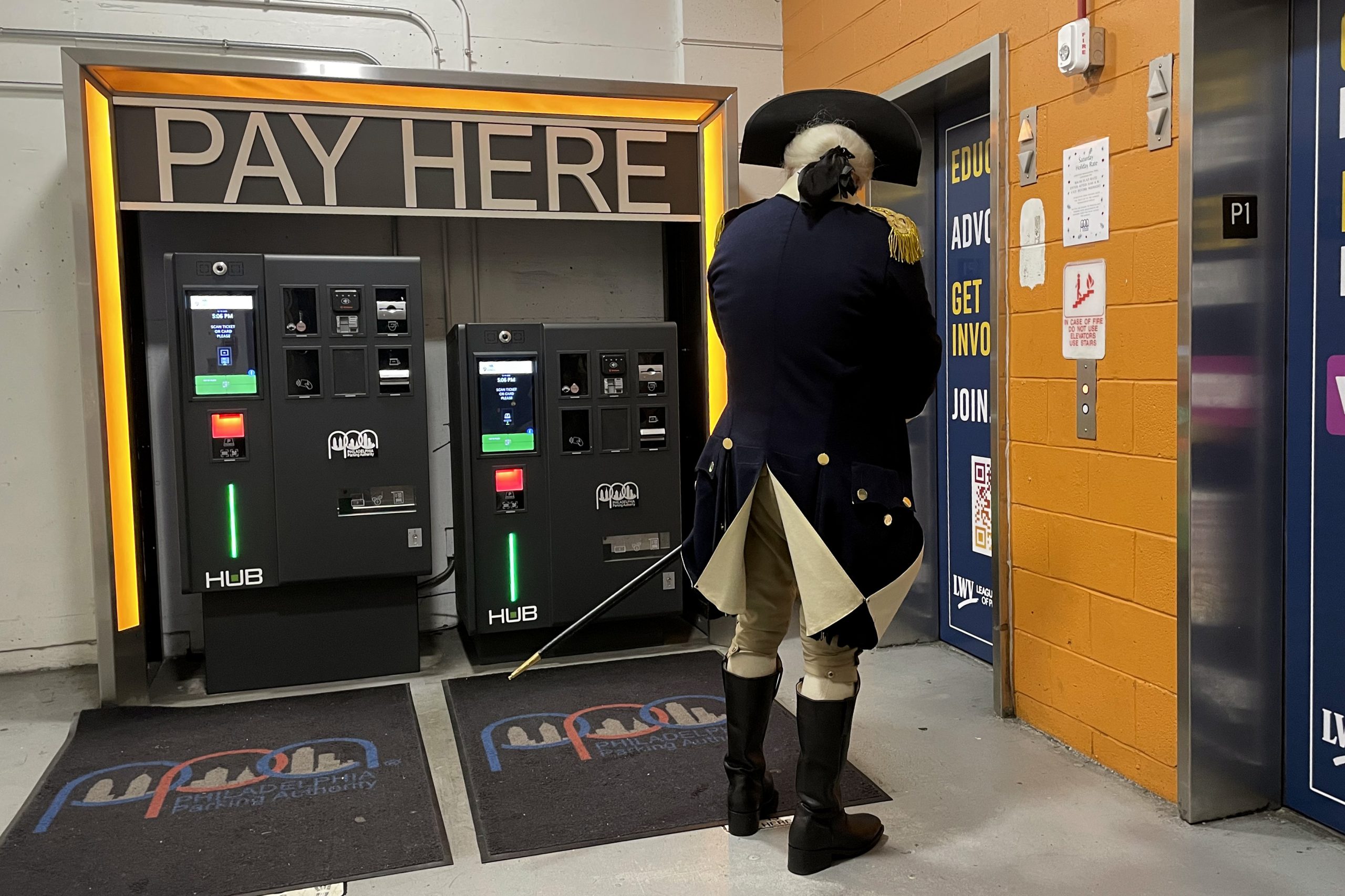
Besides shadows, reflections, silhouettes, pigeons, umbrellas, or hats one of my favorite photo gimmick-clichés is finding juxtapositions. Like catching historic reenactors in moments of chronological inconsistency.
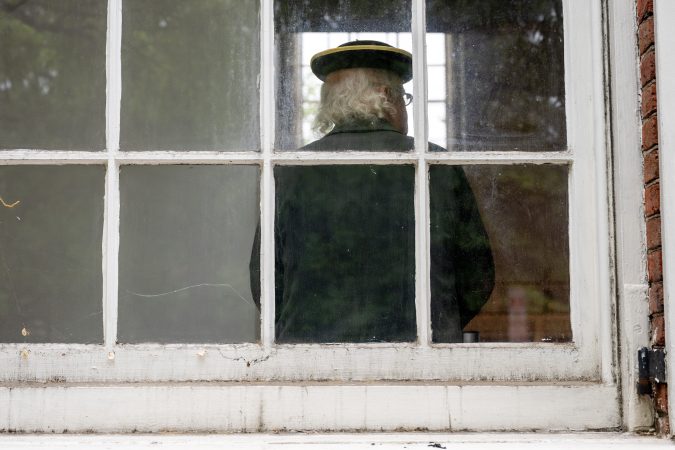
The image of Ben above and George below was made on assignment for an upcoming story on the 21st season of Historic Philadelphia’s Once Upon a Nation program — where costumed actors perform first-person interpretations of real 18th-century Philadelphians in the Historic District and at Valley Forge National Historical Park.
May 21, 2026: Jim Fryer as George Washington.Tom Gralish / Staff Photographer
The photo of the actor portraying Franklin was made from outside the Free Quaker Meeting House at 5th and Arch Streets. It was established during the Revolution when a rift occurred among the Society of Friends. As pacifists they would not take up arms, pay war taxes, or take an oath of allegiance. A group calling themselves “Free” Quakers supported the American cause and were expelled or “read out of meeting” by the mainstream Friends.
Among those Free Quakers was Timothy Matlack, a clerk in the Pennsylvania Statehouse known for his excellent penmanship. He was chosen by the Continental Congress to produce the handwritten copy of the Declaration of Independence — the engrossed parchment version that we all recognize as the “original” — that was signed by the 56 delegates in August 1776. (Matlack, who was born in Haddonfield, N.J. was also one of the earliest opponents of slavery in America, and he felt that the Quakers were not moving quickly enough to abolish it.)
I only mention the Declaration as, along with many other stories, I have been photographing for in the Historic District and at the President’s House, I’ve been working on a photo essay on some of the direct descendants of the men who were in the room in Independence Hall (then the Pennsylvania State House) as America was born. Their photos, along with interesting and little known facts about the 17 local Signers from Pennsylvania, New Jersey, and Delaware will be published later this week as part of The Inquirer’s coverage of the 250th.
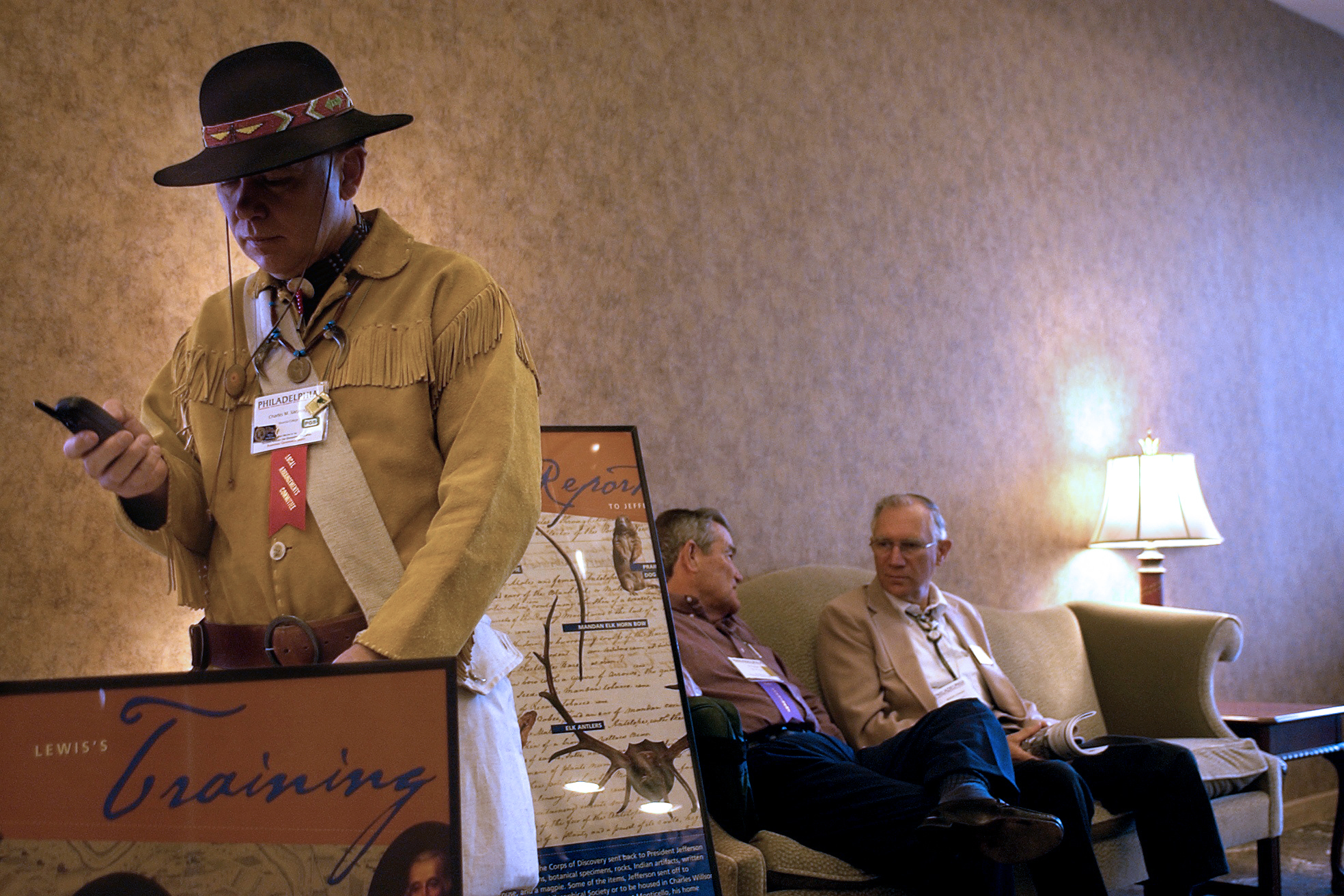
As promised in a previous column, I’ve collected a bunch of my Philly photo-anachronisms from over the years.
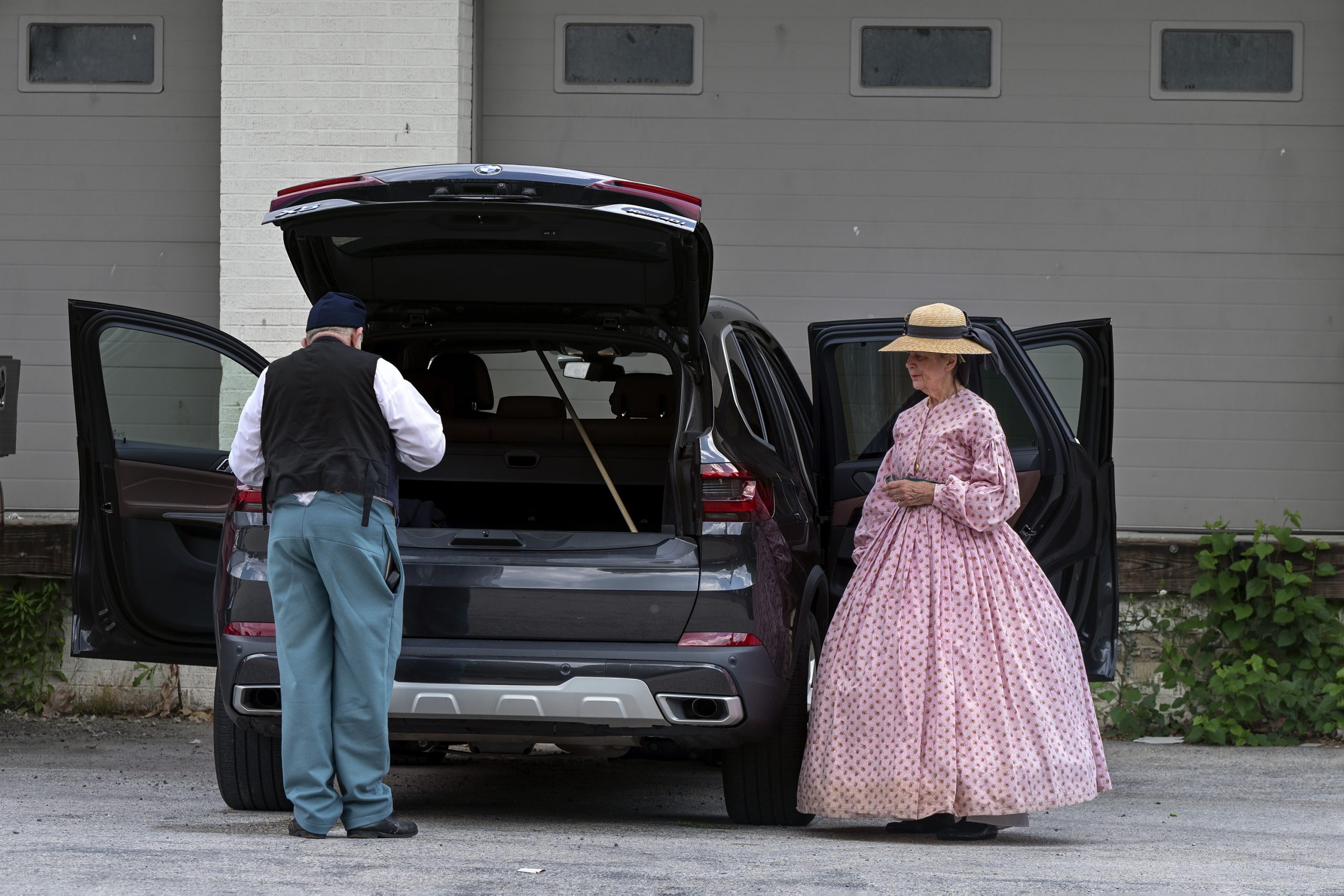
October 17, 2002: Charles Sacavage as Meriwether Lewis (of the Lewis & Clark Expedition).Tom Gralish / Staff PhotographerMay 24, 2026: Mike Gabriele as Civil War General Ambrose E. Burnside.Tom Gralish / Staff PhotographerDecember 10, 2025: Benjamin Franklin (from left) Gen. George Washington and President Abraham Lincoln.Tom Gralish / Staff PhotographerJanuary 15, 2014: Robert Branch (left) as 19th Century educator, intellectual, and civil rights activist Octavius V. Catto.Tom Gralish / Staff PhotographerFebruary. 20, 2023: President Abraham Lincoln votes.Tom Gralish / Staff PhotographerMay 26, 2024: Civil War reenactors Kathy and Ed Berna.Tom Gralish / Staff PhotographerJuly 8, 2012: After the annual reenactment of the first public reading of the Declaration of Independence.Tom Gralish / Staff PhotographerOctober 9, 2014: Ceremonial groundbreaking for the Museum of the American Revolution.TOM GRALISH / Staff PhotographerDecember 10, 2025: George Washington. Tom Gralish / Staff Photographer
Since 1998 a black-and-white photo has appeared every Monday in staff photographer Tom Gralish’s “Scene Through the Lens” photo column in the print editions of The Inquirer’s local news section. Here are the most recent, in color:
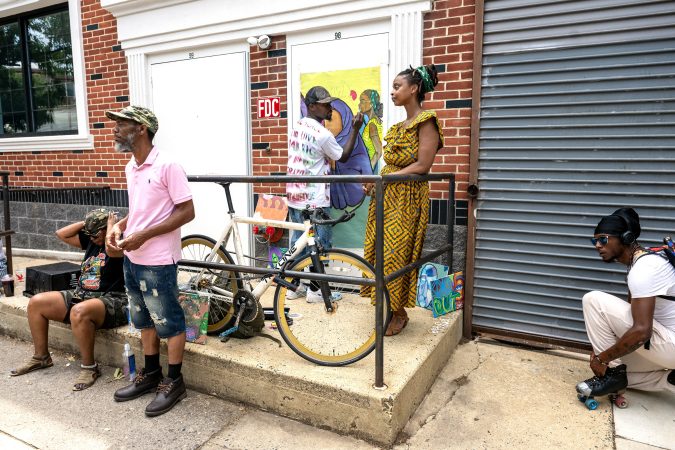
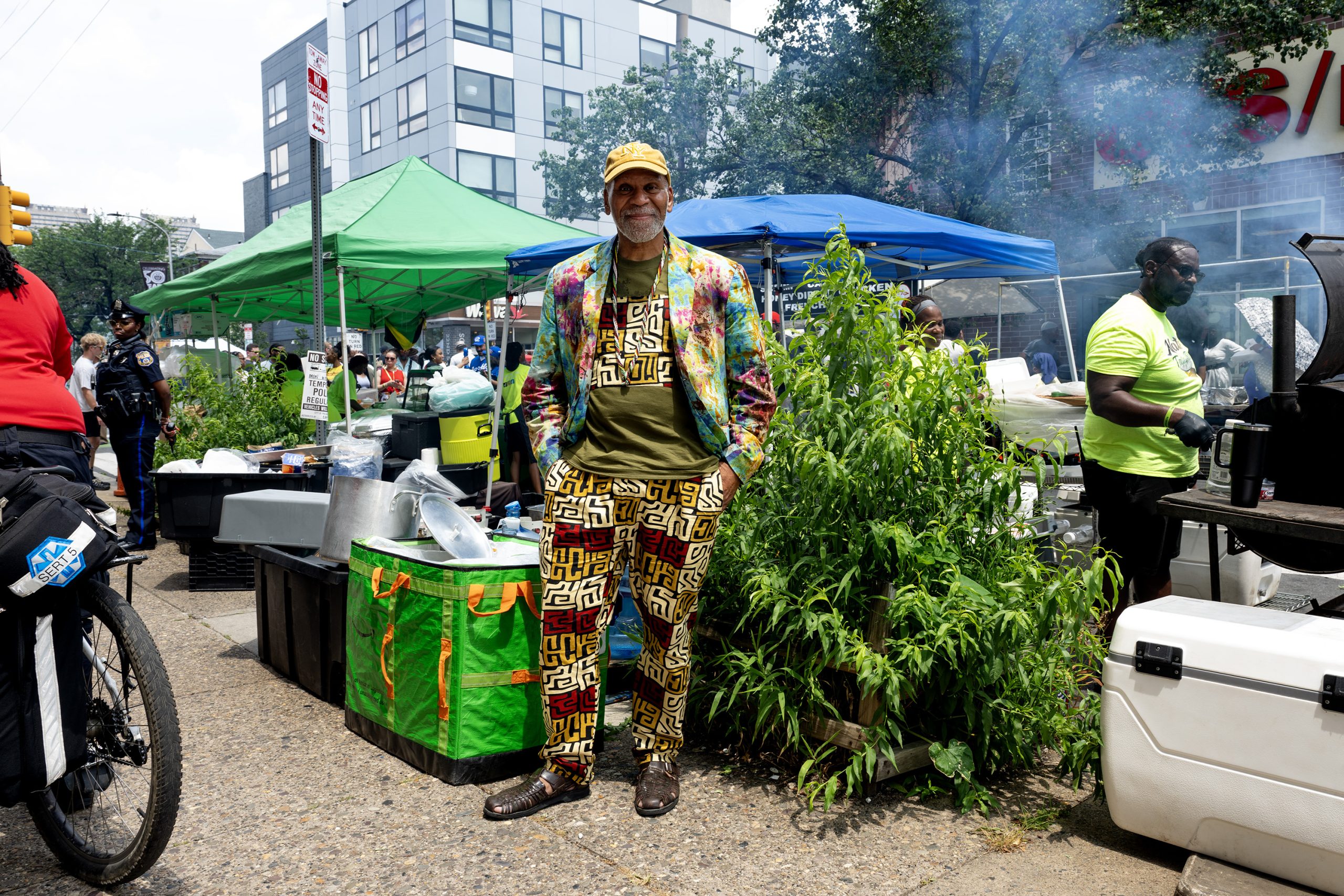
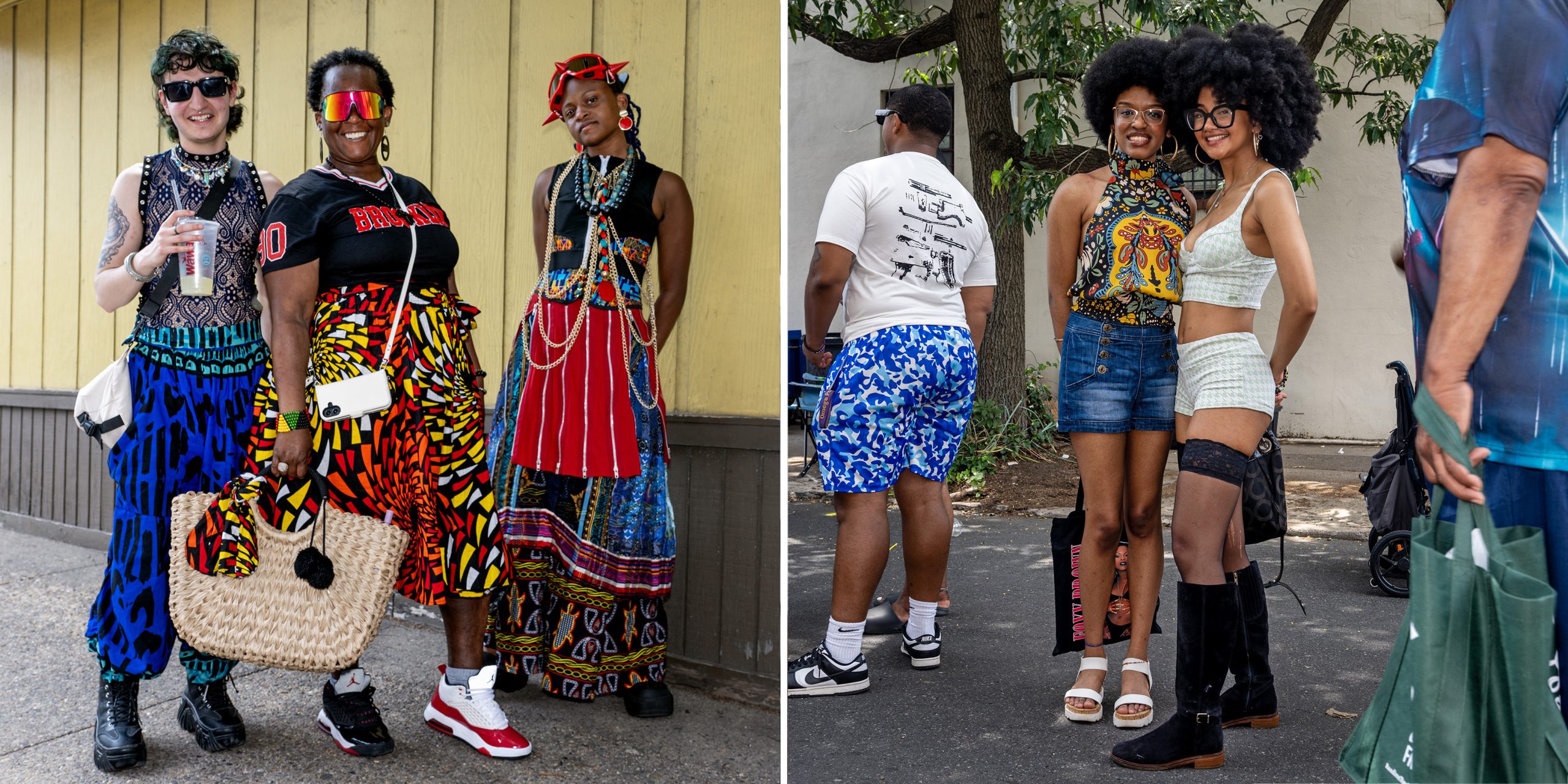
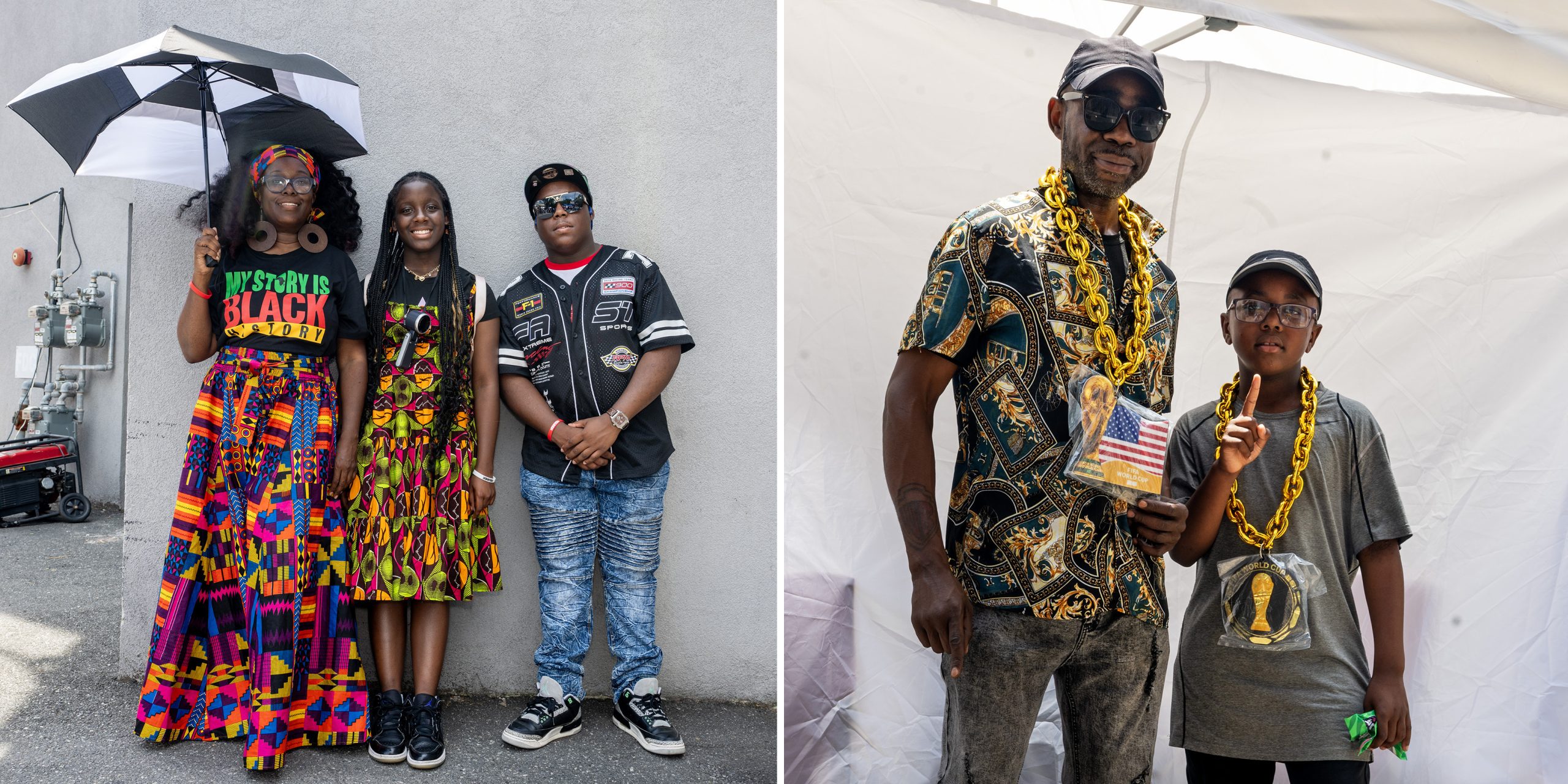
The Odunde Festival began in 1975 as a community event in South Philadelphia inspired by Yoruba traditions from Nigeria. It has since grown into one of the largest Black cultural festivals in North America.
“Odunde”is often translated as “the celebration has arrived.” The festival is rooted in the Yoruba New Year celebration and honors African heritage, history, and spirituality.
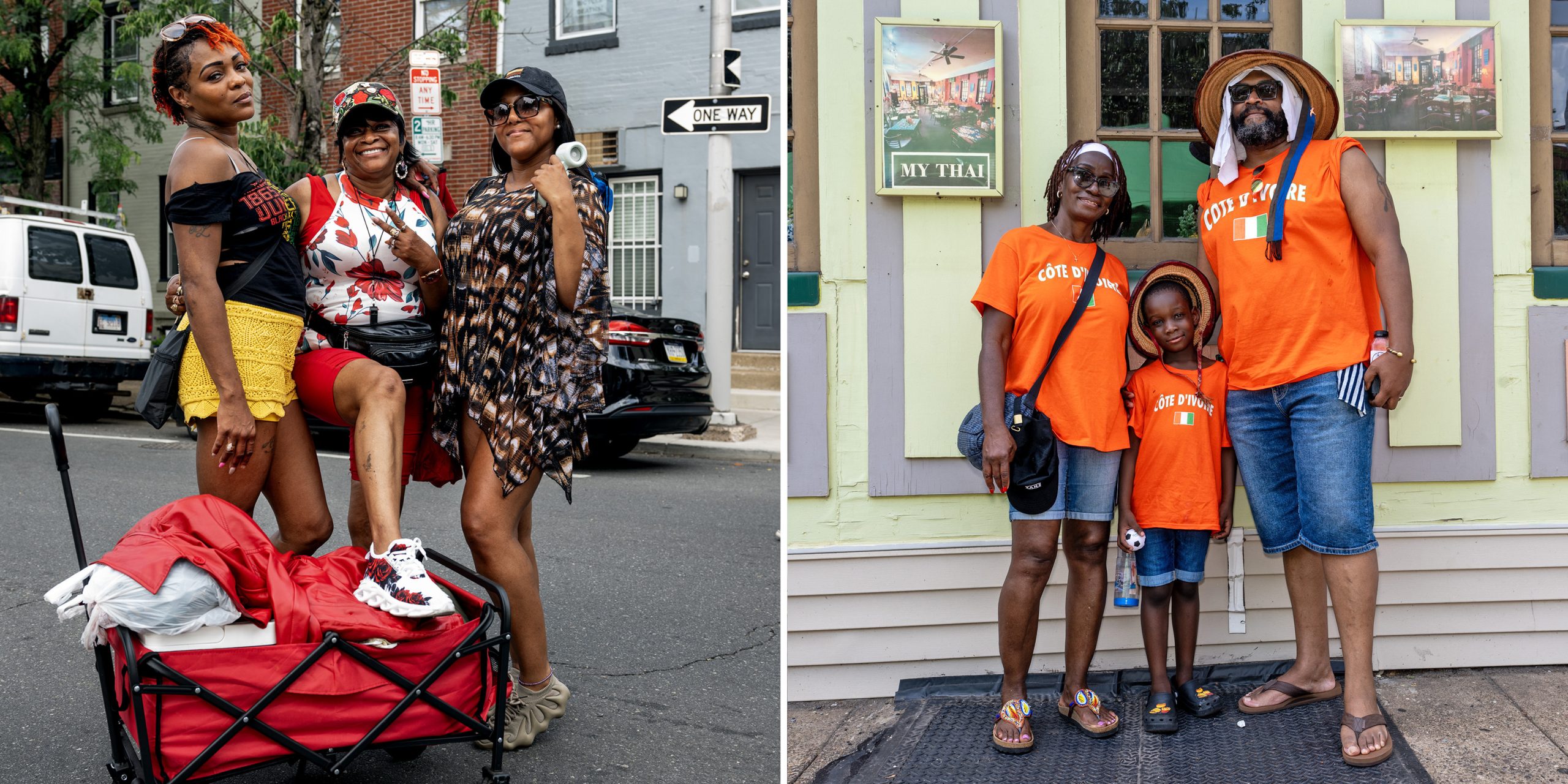
LEFT: Vonetta Jones, (from left), Cynthia Johnson and Alexis Murray. RIGHT: Lea and Damon Cunningham and their grandson, Noah, 6.Tom Gralish / Staff Photographer
As a photographer working a Sunday-to-Thursday shift for decades, I’ve covered this and many other Sunday ethnic, religious, historic, and cultural festivals — always with a street-photographer vibe.
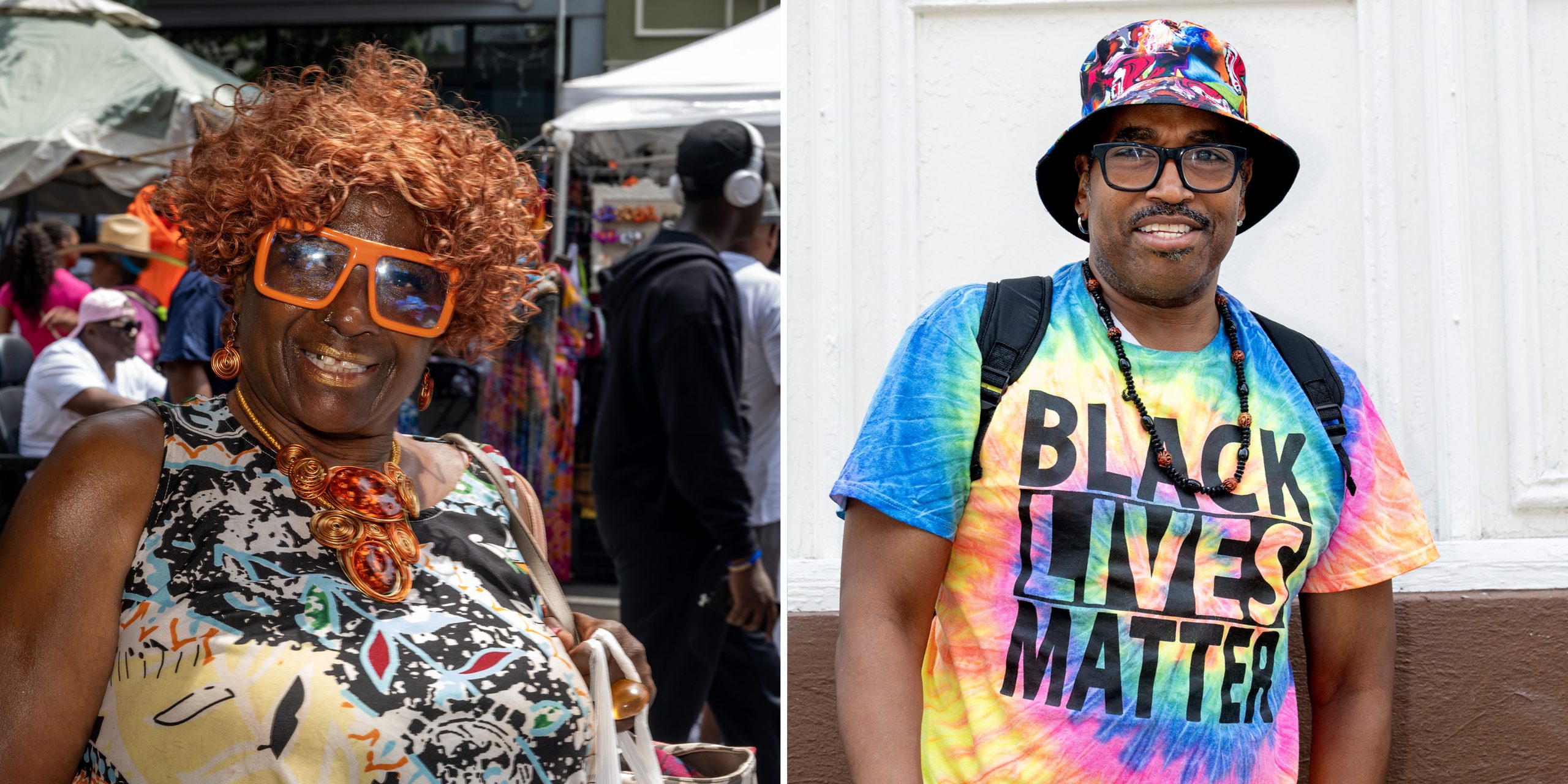
When I was assigned to photograph stylish clothing last Sunday — festivalgoers are known for expressing their cultural identity, heritage, and pride through fashion — I saw it as fun challenge to work outside my comfort zone and channel a bit of Philly influencer Big Rube or Humans of New York creator Brandon Stanton.
Something I am always asked when speaking to camera clubs or groups of amateurs photographers is: “Do you have to ask people permission to take their picture?” Others ask, “Do you need to get their names?” The most consistent question, though, is: “How do you approach people you don’t even know?”
Joe Quinones.Tom Gralish / Staff Photographer
I am not an extrovert, but early on I realized that “hiding” behind my camera gave me the confidence to meet and build rapport with strangers.
LEFT: Partners Julian Livingston (left) and Nyobi Nashedeem-Murphy (right) and Nyobi’s mother, Stacey Daniels. RIGHT: Tyanna Man and Bella Reina (right).Tom Gralish / Staff Photographer
After years of doing it, talking to people has never been a concern. But using a flash outdoors to fill in shadows while also worrying about visual variety — different ages, genders, couples, individuals, and backgrounds — was not the way I usually work.
LEFT: Angelina Fletcher (left) and her niece and nephew, Leah Fletcher and TJ Fletcher. RIGHT: Jamar Williams and Jamar, Jr., 9.Tom Gralish / Staff Photographer
I think it turned out OK, and I look forward to trying something similar with my visual coverage of the many events ahead this summer. Bring on the World Cup, America 250, the All-Star Game, and everything else.
Since 1998 a black-and-white photo has appeared every Monday in staff photographer Tom Gralish’s “Scene Through the Lens” photo column in the print editions of The Inquirer’s local news section. Here are the most recent, in color:
I won’t be photographing any of the FIFA World Cup games here, but I did make The Inquirer’s sports photos Big Picture gallery for the second week in a row.
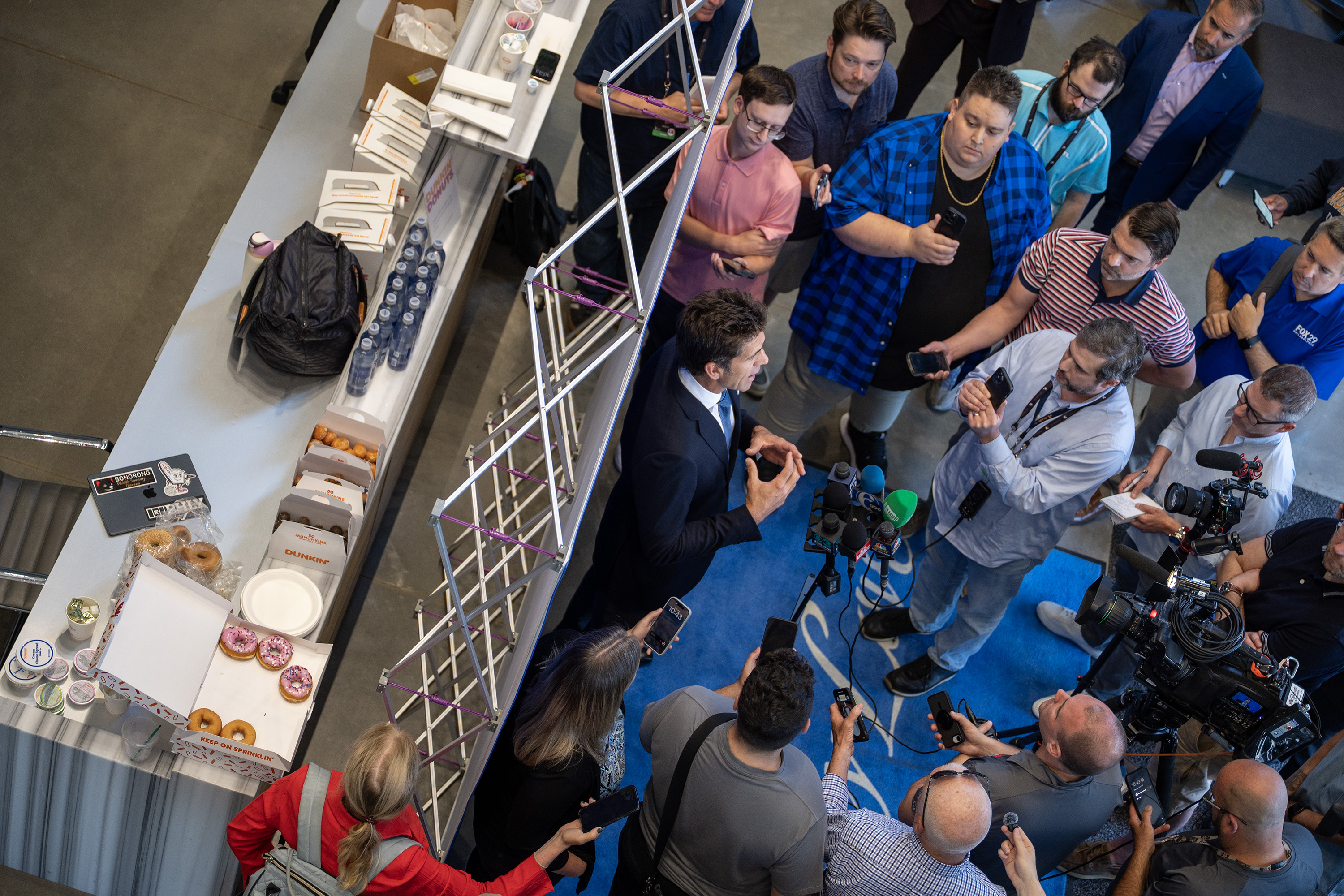
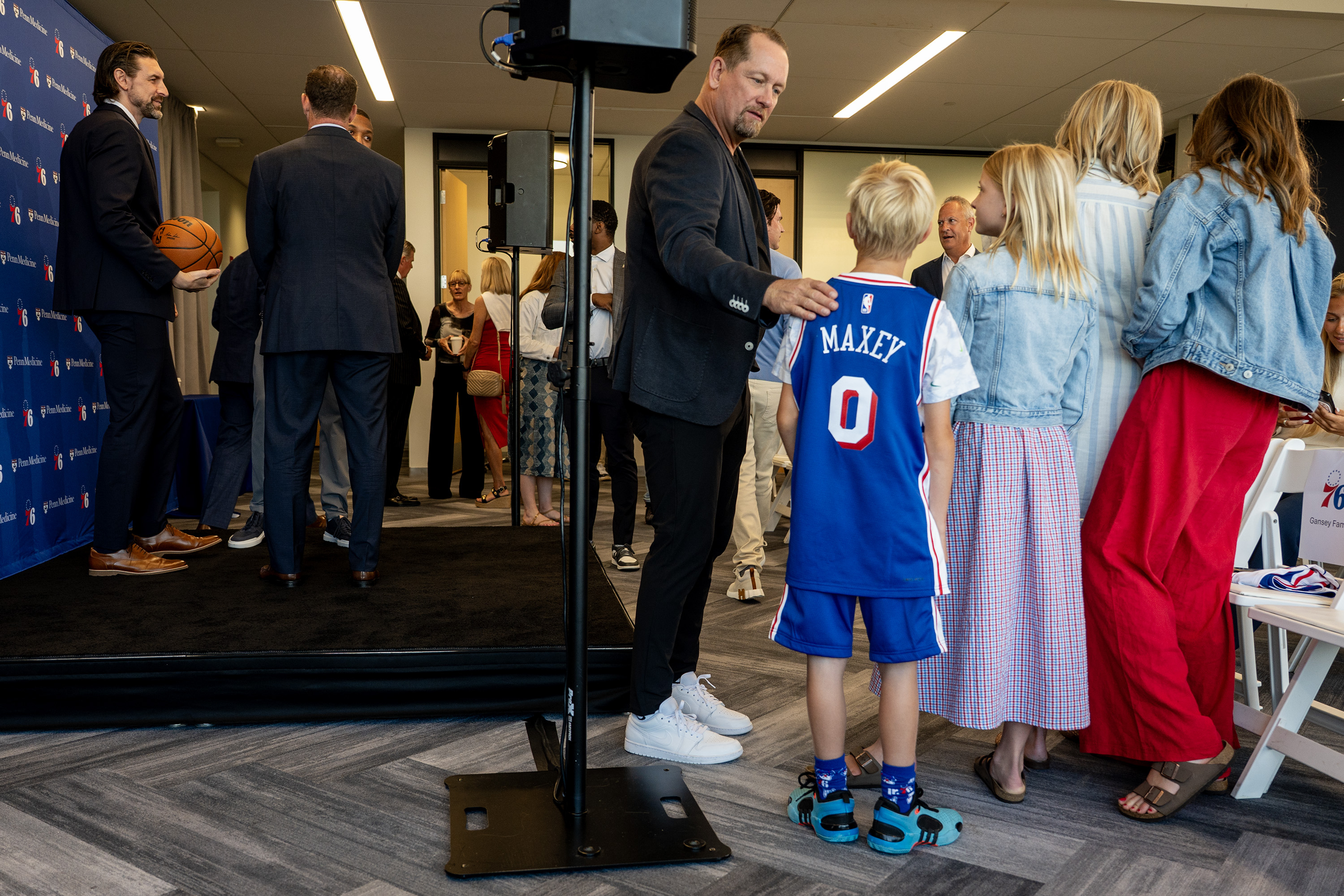
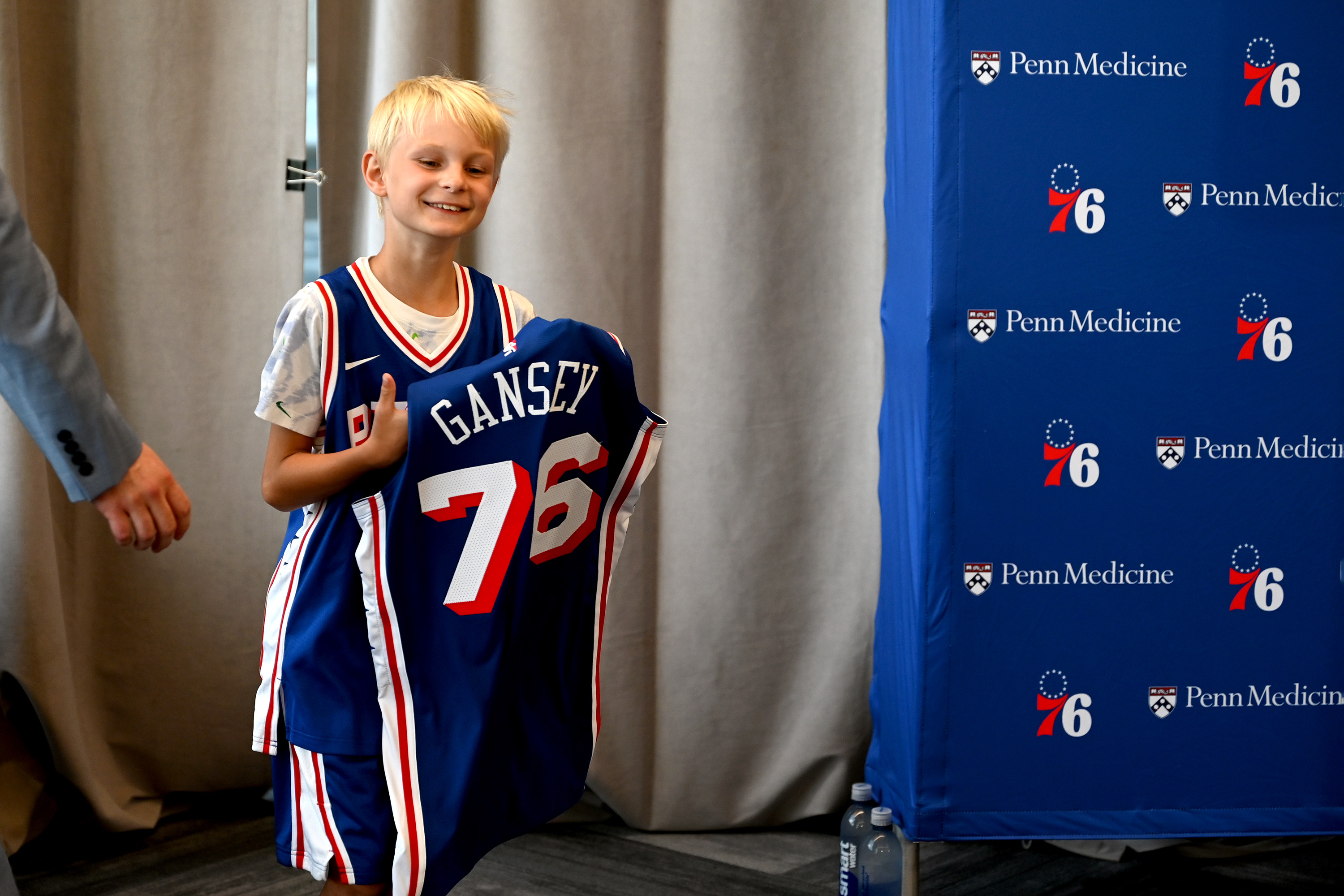
And again, my inclusion is not a traditional action photo. It’s from a press conference and the subject — Sixers new president of basketball operations Mike Gansey — isn’t even the focus of the image.
Sixers head coach Nick Nurse talks to Griffin Gansey, 8. wearing a Tyrese Maxey jersey after his father Mike Gansey (rear, far left) finished up his first press conference as the Sixers new president of basketball operations. Nurse was greeting Amy Gansey, and their other three children after the event.Tom Gralish / Staff Photographer
I also photographed him posing with team executives, holding a basketball, then a Sixers jersey, followed by his comments and Q & A with reporters, but I was more interested in the periphery, and stayed around after it was over — and most of the media left for more comments downstairs by the other executives (the featured image at the top).
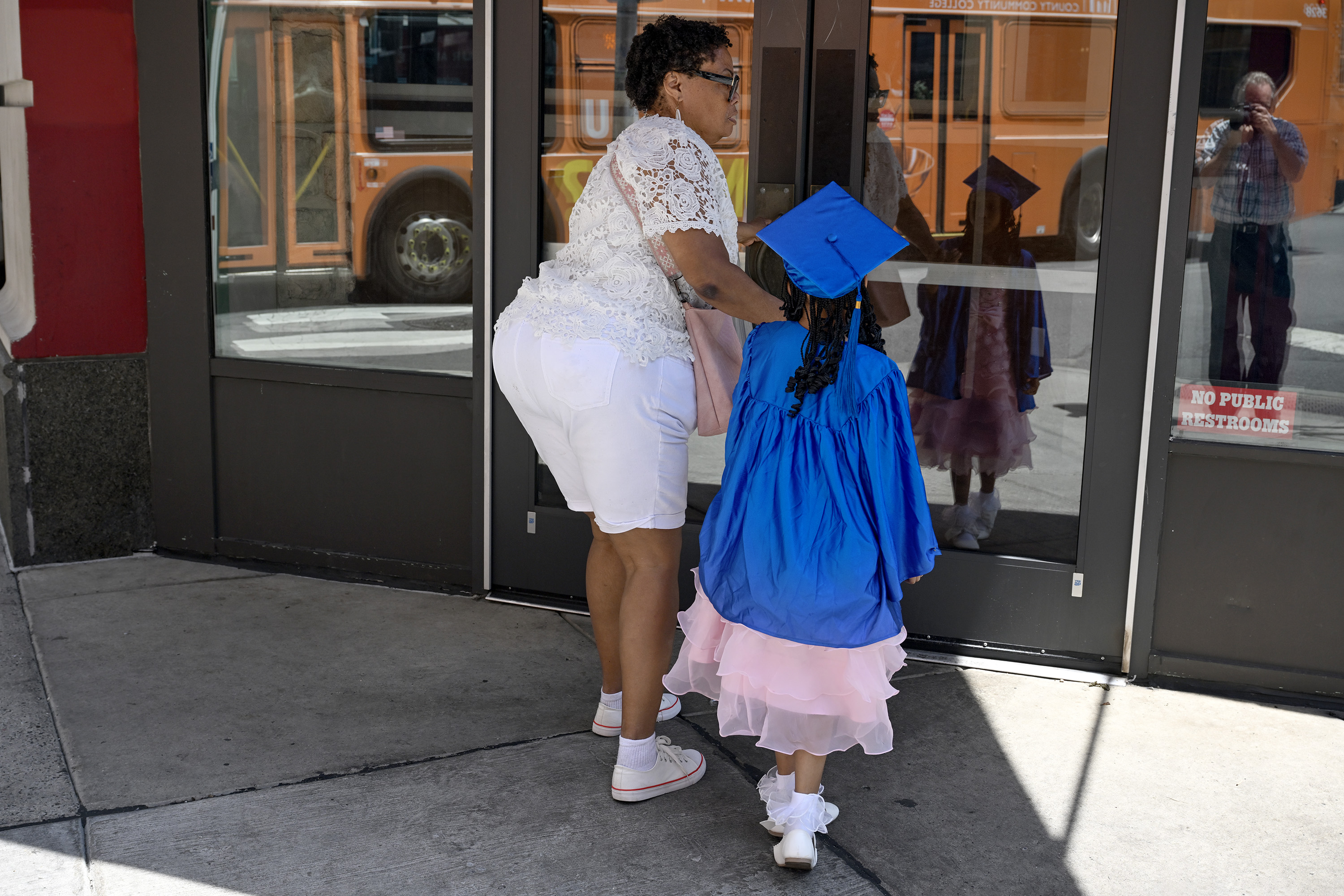
Later in the week in Center City, I passed a youngster in full graduation cap and gown. I often play the role of street photographer so I walked behind them for a block.
The photographer is reflected in front window of the restaurant as he arrives with Lynnette Lucas and her granddaughter.Tom Gralish / Staff Photographer
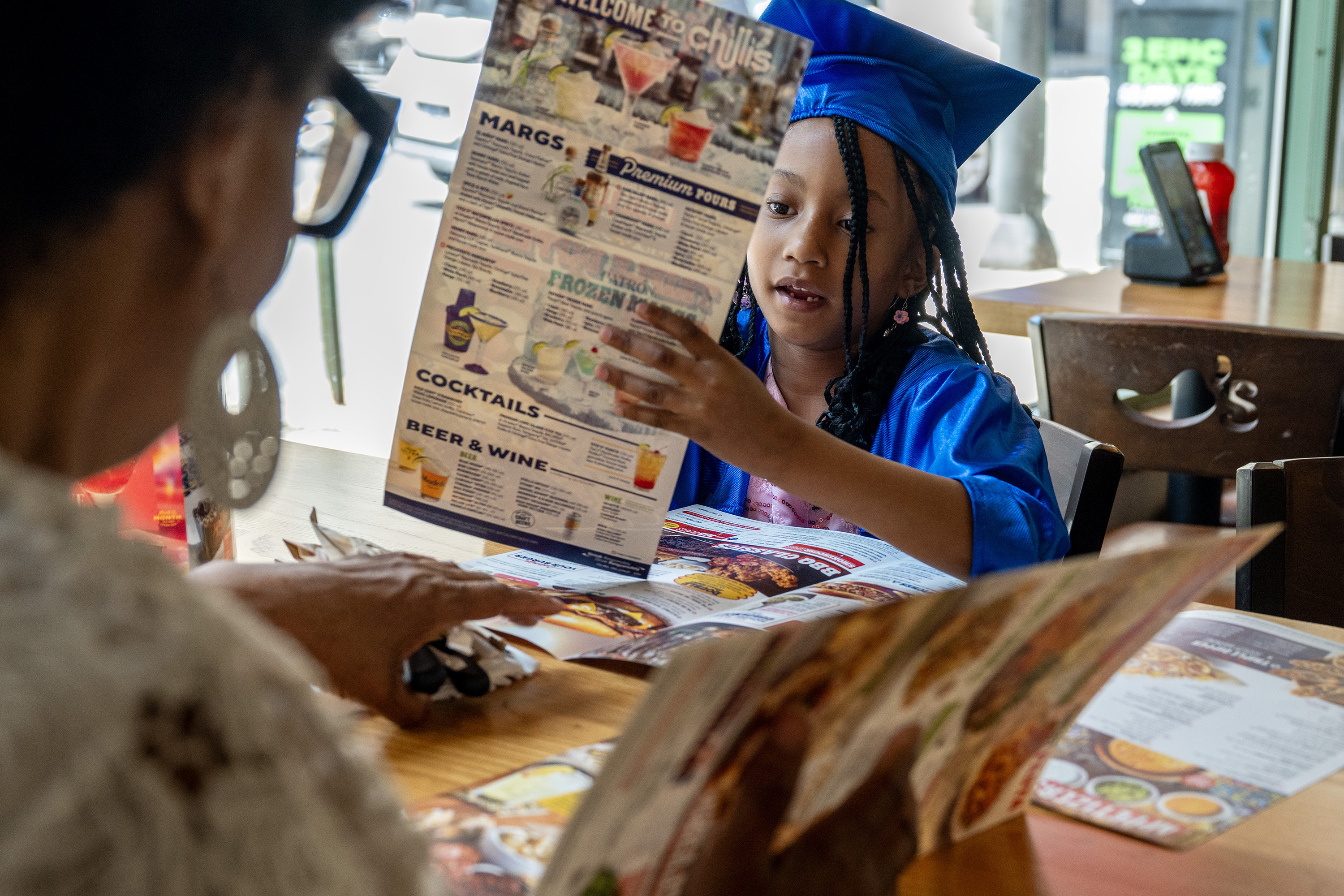
If I were not a curious journalist I would’ve moved on, but I said hello and introduced myself as we walked together. Lynnette Lucas was taking her granddaughter Faith Green, 6, for a special lunch after her kindergarten graduation at Mastery Charter School. Lucas takes all her grandchildren to the Chili’s near the Convention Center for celebratory meals where the staff treats them well, especially server Tevin Jones. Faith was headed to a party with the rest of her family, with cake and ice cream later in the day. I switched from street photographer back to visual journalist and headed to my next assignment.
There are different definitions for street photography, but I always like what William Eggleston said: “Often people ask what I’m photographing, which is a hard question to answer. And the best what I’ve come up with is I just say: life today.”
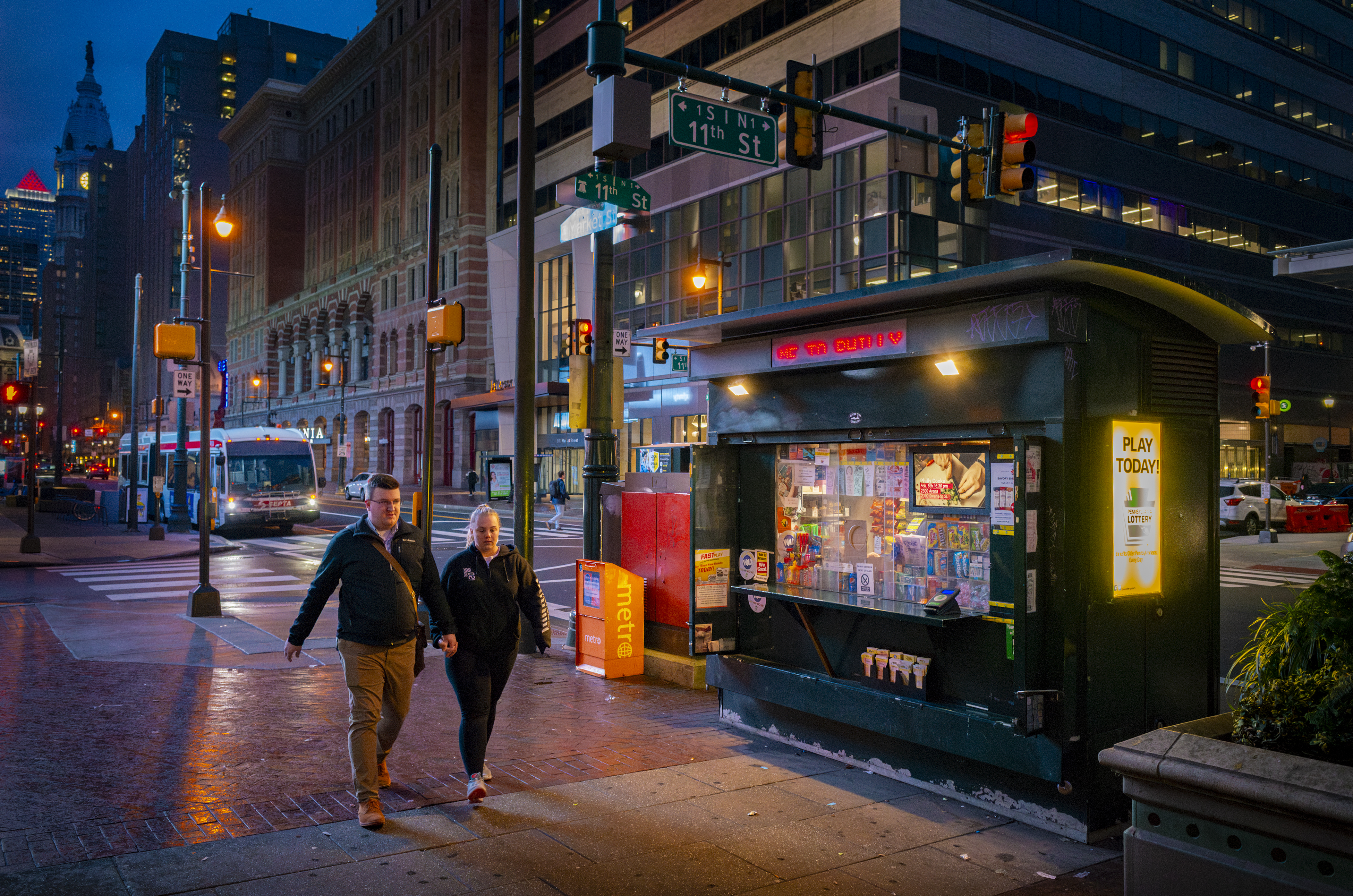
Which brings me to my good friend and Inquirer photo colleague Alejandro A. Alvarez. Starting today Philadelphia will wake up differently. For decades, before the coffee shops unlocked their doors and the metal roll-up shutters were opened on newsstands Alex was already there. A street photographer who chases the morning light, Alex retired from the newspaper yesterday, almost exactly 38 years — Monday, June 13, 1988 — after he first stepped into a newsroom as a full-time newspaper staff photographer, at the Wilkes-Barre Times Leader.
Jan. 10, 2019, 6:50 a.m. Along Market East at 11th Street.Alejandro A. Alvarez / Staff Photographer
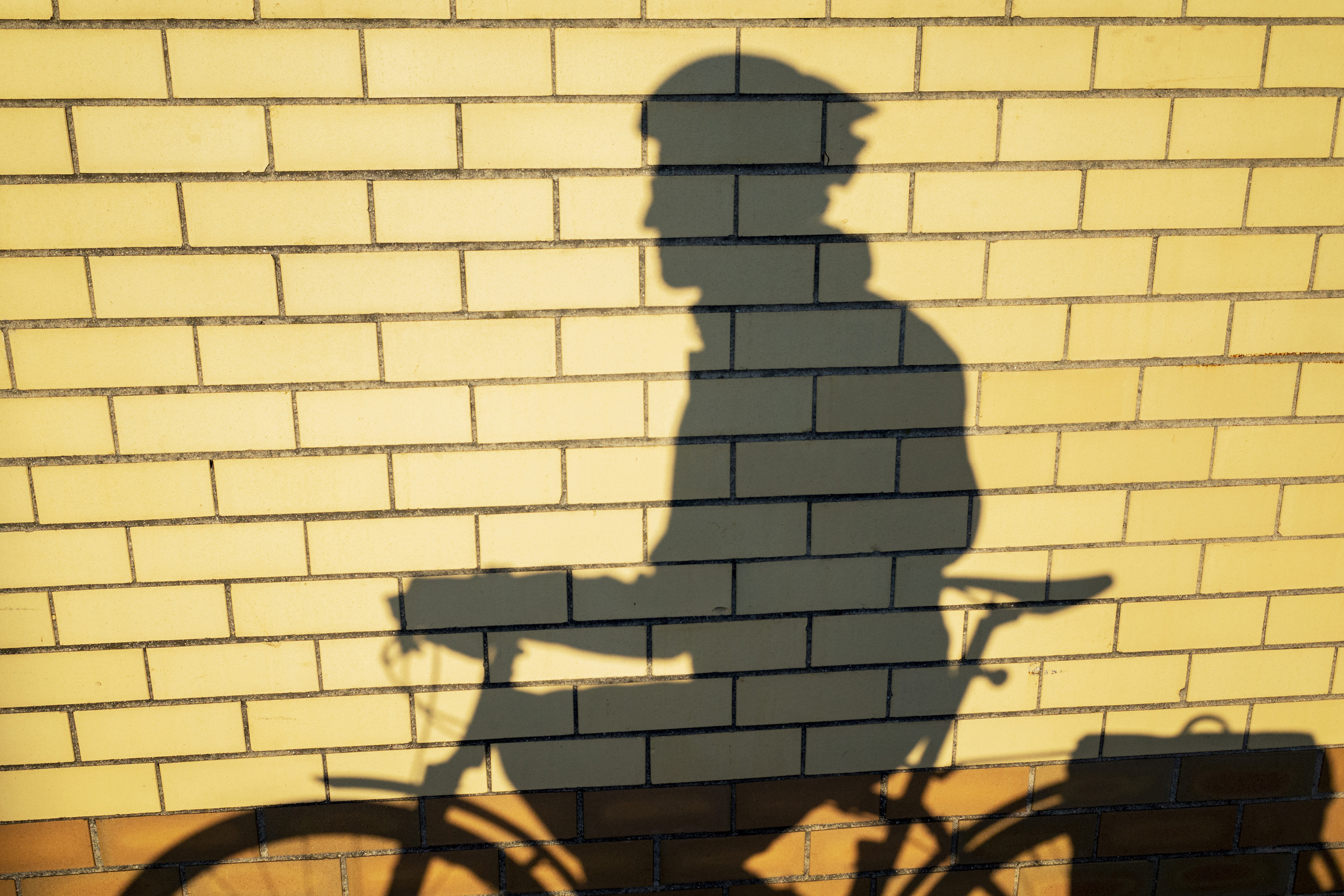
That is not to say he won’t still be there with his camera, waiting for the sun to rise and bathe the sidewalks and neighborhoods with the day’s first warm light. He describes himself as a “professional wanderer about town, documenting the people and places I see.”
And I will probably see a lot more of him now as he will have more time for the street photography he most enjoys.
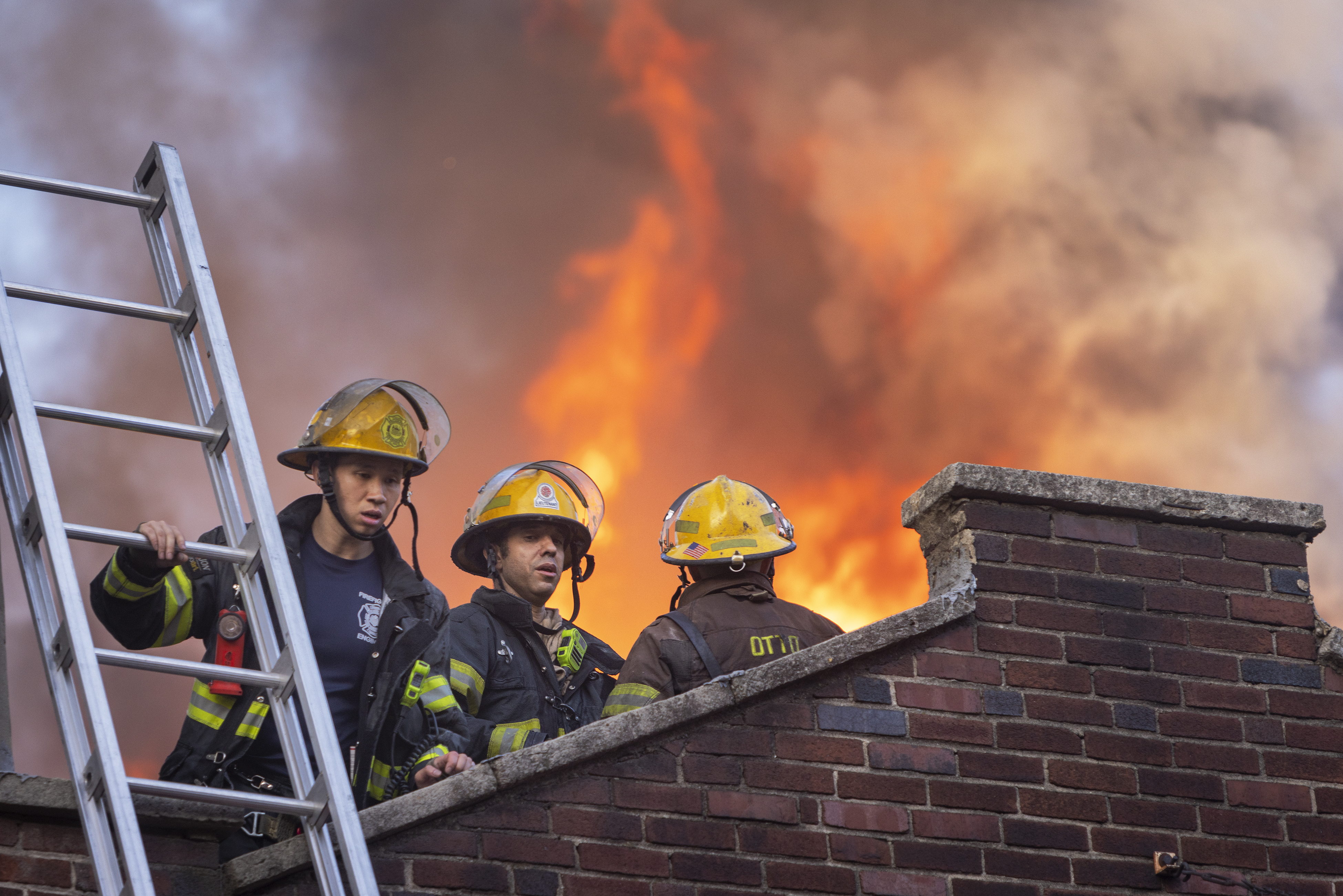
Readers — and his editors — will miss his breaking news coverage, as he will no longer be checking the news websites, apps, and tips from sources before heading out pre-dawn to visually report on the aftermath of overnight shootings, fires, or accidents. He usually filed his news photos before the reporters even turned on their computers.
June 21, 2022, 5:54 a.m. Firefighters in the 900 block of Race Street moments before extinguishing a flare up.ALEJANDRO A. ALVAREZ / Staff Photographer
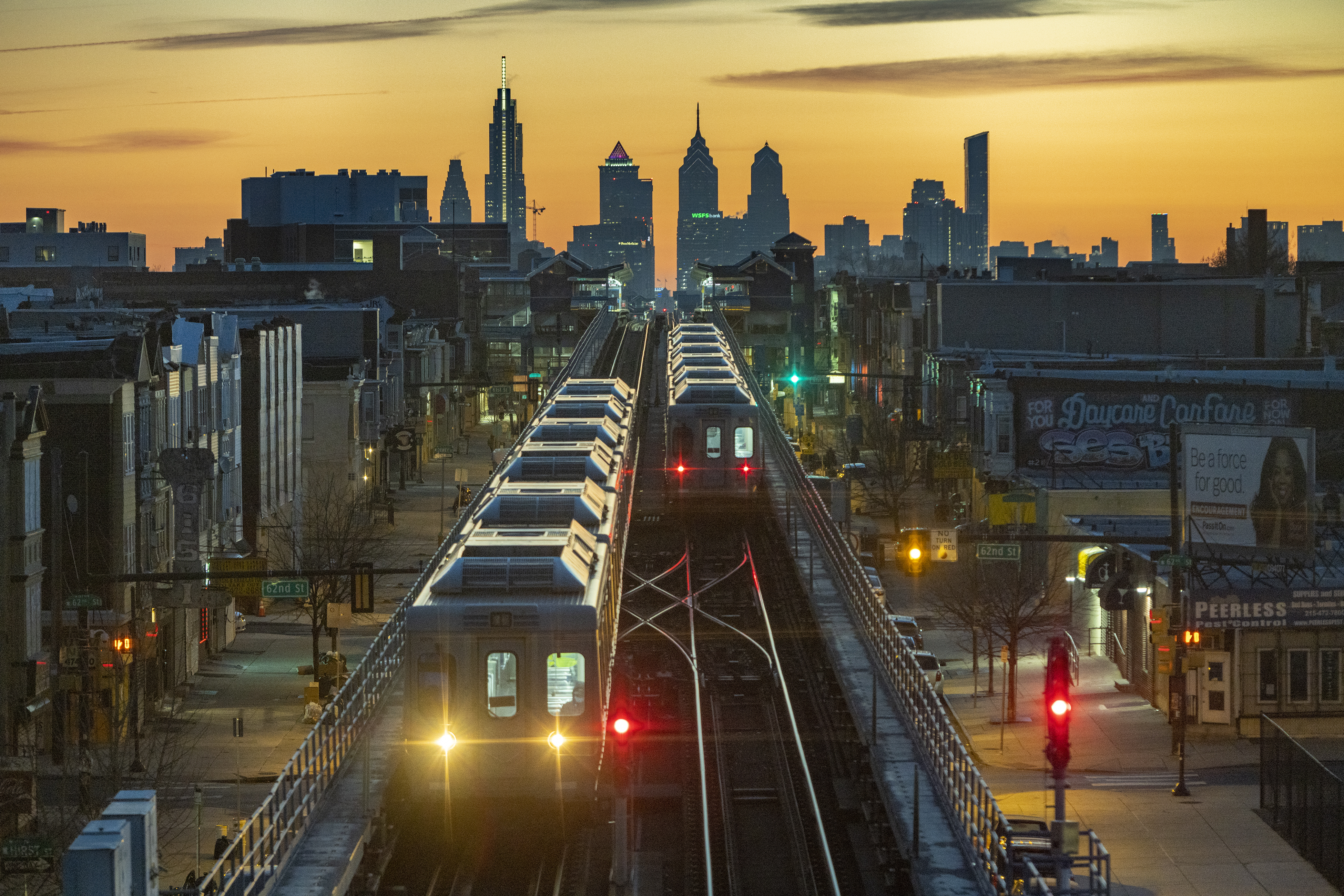
The way he sees the city however, will endure and readers will still see his work, whenever Inquirer.com or the Inquirer or Daily News needs a photo to illustrate a story about SEPTA, or pedestrians and city workers, bikers and joggers and dog walkers — in all kinds of weather, they will tap into the admirable archive of his images in our digital library.
Dec. 21, 2022, 6:55 a.m. Market-Frankford SEPTA trains come and go from the 63rd Street station.Alejandro A. Alvarez / Staff Photographer
At The Inquirer, Alex photographed protests and elections; changes in the seasons and weather; parades, celebrations and memorial; kings and criminals. Yet his most memorable images came from those seemingly unremarkable mornings.
April 2, 2020, 7:30 a.m. The shadow of the photographer on a wall at N. 6th and Callowhill Streets as he chases morning light.Alejandro A. Alvarez / Staff Photographer
Since 1998 a black-and-white photo has appeared every Monday in staff photographer Tom Gralish’s “Scene Through the Lens” photo column in the print editions of The Inquirer’s local news section. Here are the most recent, in color: