Author: Sarah Gantz

  • Pennsylvania parents will soon have easy access to school-level vaccination data to see measles risk

    Pennsylvania families will gain access to detailed information about vaccination rates in their schools before the new academic year, when the state health department launches a new online database to better inform the public.

    More than 200 Philadelphia-area schools with kindergarten classrooms — roughly one in three — have measles vaccination rates insufficient to protect against an outbreak, The Inquirer found earlier this year in an analysis that identified pockets of vulnerability hiding in plain sight at schools across the Philadelphia region.

    The Pennsylvania Department of Health routinely releases county-level data about childhood immunizations, which for the Philadelphia region shows only overall higher rates of measles protection.

    The highly contagious disease, which can linger in the air for two hours and infect nine in 10 unvaccinated people exposed to it, was once considered nearly eradicated after years of vaccination.

    But as more families opt out of vaccines required for school attendance through religious and philosophical exemptions, cases are on the rise. Pennsylvania has reported a total of 66 measles cases so far this year — the highest number in three decades and more than four times the total cases in 2025.

    The new data initiative follows a drumbeat of reporting by The Inquirer and the Pittsburgh Post-Gazette revealing the declining vaccination rates within communities across the state. Families are often in the dark about the risk because local data are not readily available.

    The joint effort between the state’s health and education departments stems from Gov. Josh Shapiro’s executive order last fall to improve access to vaccines, and from intense media scrutiny of vaccination efforts locally and nationally, said Debra Bogen, Pennsylvania’s health secretary.

    “We’re following the same instincts that you all were following,” Bogen said. “There is a huge interest among the public in this information.”

    The new initiative will offer a closer look at childhood vaccination rates, similar to an interactive school lookup tool published by The Inquirer with the latest available data from last school year.

    With the new online tool, the state wants to make people more aware of risks within their community and encourage schools to do more to improve access to vaccines.

    (function () {window.addEventListener(‘message’, function (e) { var message = e.data; var els = document.querySelectorAll(‘iframe[src*=”‘ + message.id + ‘”]’); els.forEach(function(el) { el.style.height = message.height + ‘px’; }); }, false); })();

    Better access to local vaccine data

    Pennsylvania law requires schools to report vaccination data for students in kindergarten, seventh grade, and 12th grade. Kindergarten rates, in particular, are seen as a bellwether for a community’s attitudes toward vaccination, as parents are deciding whether to get the shots required to attend school.

    Families will be able to use the database to find vaccine information by school, county, and grade. It will allow people to search by vaccine and exemption type, and determine what portion of students in a school are attending unvaccinated without an approved exemption.

    The database will not include schools with fewer than 20 students in kindergarten, a privacy protection.

    In a joint letter to school administrators and nurses last week, state officials said the move was aimed at increasing transparency around vaccination rates. “We want to help ensure that parents, guardians, students, and community members have accurate, science-backed information to make immunization decisions for their family,” the letter read.

    As of Tuesday, the department had not received feedback from schools. Bogen hopes that schools will become more aware of potential vaccination challenges and work closely with local health providers to coordinate clinics.

    “We don’t want lack of access to be the barrier,” Bogen said. “That’s what public health does best — bring access to the resources.”

    Joshua Good, the head of a Lancaster County school where two students developed measles earlier this year, said he has no issues with the state’s new initiative, but does not expect it will negatively affect enrollment at schools like his.

    Fewer than half of the 27 students in the kindergarten class at Good’s Ephrata Mennonite School are vaccinated against the measles, and many people in his community have opted against vaccination in the last decade.

    He thinks parents at Ephrata Mennonite and other private Anabaptist (part of a Christian denomination that includes Amish and Mennonite churches) schools are already aware of vaccination rates there.

    “Information is always good, so that folks can make their best decisions,” he wrote in an email.

    More informed vaccine decisions

    In Delaware County, which has some of the Philadelphia region’s lowest kindergarten measles vaccination rates, public health leaders see an opportunity to help families make decisions about vaccinating their children.

    “Making this transparent at the school level helps parents, helps schools, helps all of us,” said Lora Siegmann Werner, director of Delaware County’s health department.

    At Chester Community Charter School, for instance, 66% of kindergartners were vaccinated against measles in 2024 — well below the 95% vaccination rate scientists say is necessary to prevent the disease from spreading.

    A majority of those students did not have a signed exemption form or a plan for getting vaccinated, according to The Inquirer’s analysis.

    Public health experts say that high rates of so-called noncompliant but attending students can indicate that the community struggles with access to healthcare.

    The county health department launched a mobile health clinic earlier this month to improve healthcare access and provide vaccine education in a region where the leading hospital, Crozer-Chester Medical Center, closed last year.
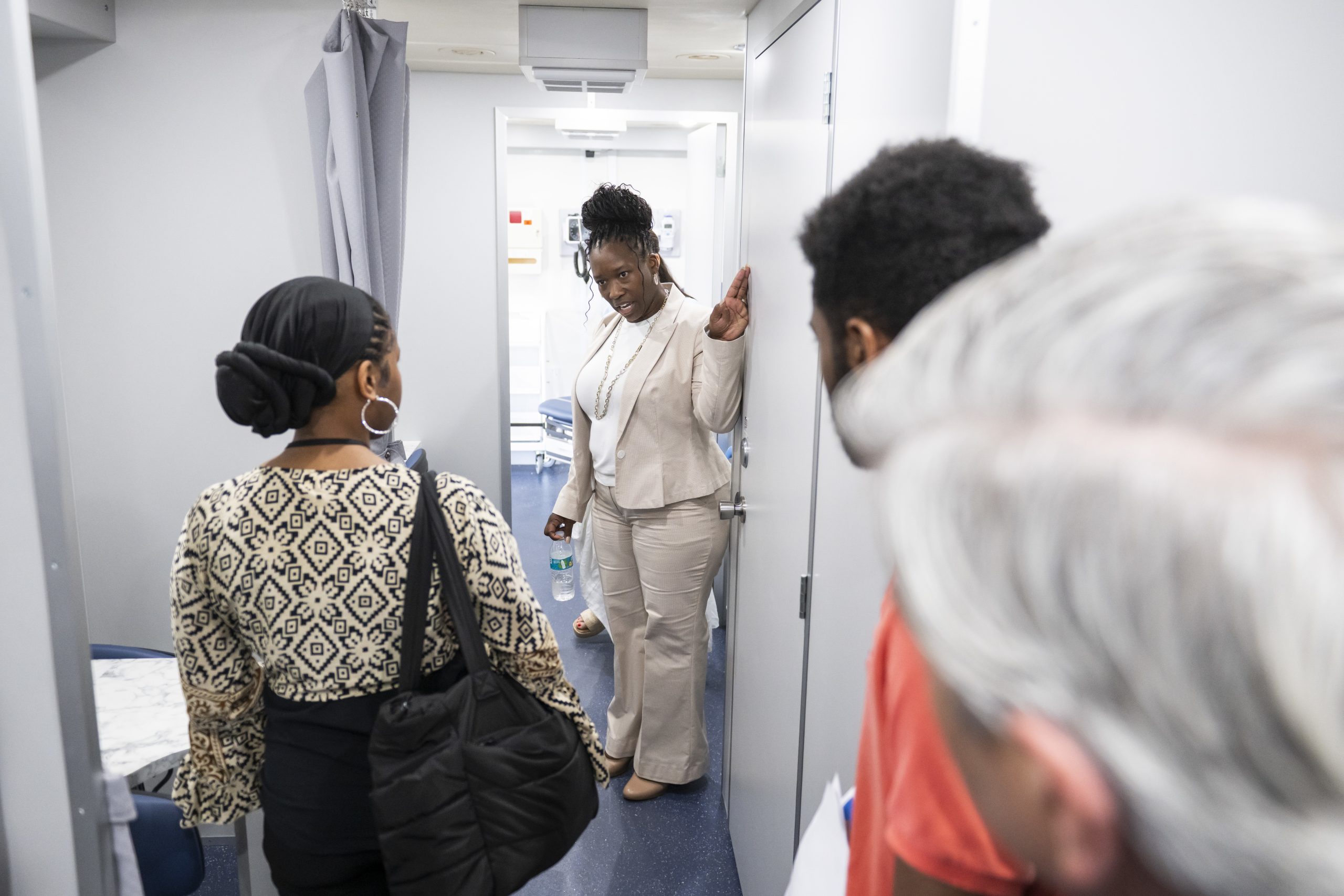
    Dr. Gifty Key, administrator for the Delaware County Health Department, gives a tour this month of the new mobile health clinic, meant to help with public health education, vaccinations, and health services.Allie Ippolito / For The Inquirer

    Werner said she hopes the new state database will help her staff show families why it is important to get vaccinated, and encourage more schools to host vaccine clinics.

    Pennsylvania’s lax rules

    Pennsylvania’s vaccine exemption rules are among the loosest in the country, with the state among 15 that allow families to opt out for medical, religious, or philosophical reasons.

    With the resurgence of measles, some states, including New York and California, have updated their rules to allow only medical exemptions. Many more states allow medical or religious exemptions.

    Any future legislation proposing to tighten Pennsylvania’s rules would likely meet resistance in its split legislature, where Democrats narrowly control the House and Republicans control the Senate.

    Many GOP members broadly believe that parents should be free to decide whether their children are vaccinated.

    “Parents know what’s best for their kids,” State Rep. Robert Leadbeter (R., Columbia), chair of the House Freedom Caucus, told The Inquirer earlier this month. He did not respond to a request for comment for this story.

    Nearly a decade ago, State Rep. Michael Schlossberg (D., Lehigh), the majority whip, introduced unsuccessful legislation to tighten Pennsylvania’s rules.

    Now the state’s greater data transparency will “allow the public to hold school leaders accountable for enforcing Pennsylvania’s important vaccination requirements,” Schlossberg said in a statement.

    Improving access to information could help families make more informed decisions, he said.

    “Parents, students, and teachers deserve to know whether public health is at risk in our classrooms,” Schlossberg said.

  • 160,000 people drop Pennie health plans following price hikes

    160,000 people drop Pennie health plans following price hikes

    One in three Pennsylvania residents who bought an Affordable Care Act health plan last year has dropped coverage for 2026, after costs more than doubled on average when a critical financial incentive program expired.

    A total of 160,000 people who bought a health plan through Pennie, the state’s ACA marketplace, last year had canceled their coverage as of the end of May. That includes just under 55,000 people in the five-county Philadelphia region, figures released Tuesday show.

    Many of those 160,000 will become uninsured, marketplace leaders expect, though some may enroll in private health insurance through a new job, or transition to government coverage through Medicaid or Medicare.

    Cost was the most common reason people cited for dropping their plans, said Devon Trolley, Pennie’s executive director.

    “People want to have coverage, they see the value and the protection it provides,” Trolley said. “And when they can afford it, they enroll.”

    Pennie leaders were bracing for dropouts on this scale after Congress failed to renew for this year a financial incentive program that ensured no one paid more than 8.5% of their salary for health coverage.

    The so-called enhanced premium tax credits became a major sticking point in federal budget discussions last fall that led to a Democrat-forced government shutdown. Republicans had refused to include the tax credits without significant restrictions.

    The tax credits introduced in 2021 had helped to drive Pennie enrollment to a record 497,000 enrollees last year. Just over 443,000 people were enrolled in Pennie as of June, with new enrollees partially offsetting the losses.

    In New Jersey, nearly 69,000 people dropped out of their ACA plans between the end of January and April, according to the state’s Department of Banking and Insurance. The figures it released tracked drops only since the end of the state’s open enrollment Jan. 31.

    (function(){function e(){window.addEventListener(`message`,function(e){if(e.data[`datawrapper-height`]!==void 0){var t=document.querySelectorAll(`iframe`);for(var n in e.data[`datawrapper-height`])for(var r=0,i;i=t[r];r++)if(i.contentWindow===e.source){var a=e.data[`datawrapper-height`][n]+`px`;i.style.height=a}}})}e()})();

    Dropping coverage over high cost

    Many people were able to keep health coverage by switching to a less expensive plan.

    In New Jersey, thousands of people opted for less expensive plans, instead of canceling their coverage entirely.

    The most popular mid-level Silver plans accounted for 68% of New Jersey marketplace enrollments, down from 83% the year before. Many switched to Bronze plans, which have cheaper monthly premiums but higher out-of-pocket expenses and deductibles.

    In Pennsylvania, Trolley said that marketplace leaders have “heard from people who tried to make it work” but a few months into the new year, decided they couldn’t afford to keep their plan.

    Even less-expensive plans have become unaffordable, said Antoinette Kraus, executive director of Pennsylvania Health Access Network, which helps people enroll in coverage.

    “It means that people are going to go uninsured,” Kraus said. “They’ll delay getting care, get sicker, and end up in the emergency department with conditions that could have been prevented.”

    In Pennsylvania, dropouts have been highest among people age 55 and older, who are nearing Medicare eligibility and who pay more for coverage than younger people.

    By income level, dropouts have been greatest among people with incomes between 150-200% of the federal poverty rate. That’s an annual income of between $23,475 and $31,300 for an individual. For a family of four, the equivalent income range would be $48,225 to $64,300.

    Income-based tax credits for lower-income individuals and families are still available because they were written into law under the ACA.

    Ongoing ACA challenges

    Marketplace leaders predicted that people would continue to drop plans through the spring, when the grace period for overdue premiums passed. People who qualify for a tax credit have 90 days to pay their premium before losing coverage; everyone else has 30 days.

    Dropouts may now level off, but new challenges are looming for the ACA marketplaces. Last year’s federal spending package included new rules that would save billions of dollars through cuts to the ACA marketplaces and Medicaid, the publicly funded health program for low-income families and people with disabilities.

    Beginning this fall, open enrollment will start earlier and be cut short by about two weeks, running Oct. 15 through Dec. 15. In the past, people have had until at least mid-January to sign up.

    Also beginning this fall, certain groups of people who legally immigrated to the United States will not be able to enroll in marketplace plans, Medicaid, or Medicare.

    In 2027, new enrollment rules will prevent marketplaces from automatically renewing plans, requiring individuals to resubmit and verify their eligibility annually.

  • FIFA World Cup players who hit their heads too hard will see this Temple neurologist

    FIFA World Cup players who hit their heads too hard will see this Temple neurologist

    Daniel Feinberg can’t recall ever holding a soccer ball, but he’s ready to aid the pros playing this month at the FIFA World Cup games in Philadelphia — should one take a hard hit to the head.

    Feinberg, a neurologist and concussion specialist at Temple University Hospital, is part of a team of doctors on call to help injured players, coaches, and others in town for the games.

    The Inquirer spoke to Feinberg, who also serves as chief medical officer for Temple University Hospital Inc., in an interview lightly edited for length and clarity about his upcoming role, and what people should know about concussions.

    How did you get involved with FIFA?

    When the World Cup [medical team] was being put together, it was done under the guidance of Dr. PJ Brennan, the chief medical officer of University of Pennsylvania Health System. I was the chief medical officer of Pennsylvania Hospital until mid-March, and then I transitioned to Temple on April 1. PJ, who is my mentor and friend, said we’d still like you to be part of the medical consultative group for the World Cup coverage.

    What is your background in neurology for athletes?

    When I came to Philadelphia, I practiced at Pennsylvania Hospital for many years, and they had a large sports medicine presence. I was on the medical staff of the Flyers and the Eagles for many years. I was never on the sidelines watching all the games, but I was the one seeing them the day after. In very rare situations, I would have to meet them in an emergency room setting. I also took care of players’ families and friends, if someone had another neurological problem.

    What will your role be during the World Cup?

    I will be available to consult with trainers on the field, team physicians who are accompanying the groups, and I will see patients as necessary. Dr. Brennan will call me and say, “Dan, I need you to see player X for this problem.“ It will likely be a concussion or concussion-type symptoms, but it could be other neurological symptoms. I would see them at Temple University Hospital.

    What happens when you get a concussion?

    The brain is inside of the skull, and it’s floating in the skull — it’s not actually packed into the skull. Around the brain is fluid that communicates from around the brain all the way down the spine to the tailbone. It serves as a buffer for the brain and the spinal cord to make sure that they don’t literally push up against the bone.

    What happens when someone has a concussion is the brain actually shifts — whether it’s a neck movement, like whiplash, or a direct head hit — and the brain literally will push up against the bone or smack up against the bone.

    The severity of that impact will dictate how severe the concussion is. If there’s not much movement of the brain in the skull, it’ll produce mild symptoms, headaches, nausea, light sensitivity, sound sensitivity, maybe some balance trouble.

    If it smacks up against the skull harder, that’s when people have word-finding difficulty, memory trouble, concentration trouble, along with those other things that happen with the milder concussions.

    What do you want people to know about concussion treatment?

    People are very nervous — the parents of the high school athletes, particularly, and maybe even the college athletes — when they come in with their kids to these visits.

    They ask questions like, is my kid going to get Alzheimer’s disease earlier? Is my kid going to get a neurodegenerative disease earlier? And there’s no real proof that’s the case. A lot of what I do in these visits, especially when I’m seeing someone for the first time, is alleviating anxiety and putting to rest some of the myths.

    The vast majority of concussions only have symptoms for a few hours to a few weeks with proper guidance — which is usually rest, avoiding screen time, and staying really well hydrated. When kids or adult athletes are less symptomatic or asymptomatic, they can resume physical activity slowly.

    Is it bad to fall asleep after a concussion, or is that a myth?

    That concern comes from the idea that if someone falls asleep, they could be unconscious. And that could be a sign that a bad thing is happening, that there is bleeding in the brain, or pressure in the brain — and you wouldn’t want to miss something like that.

    The other danger signs that would go along [with risk of unconsciousness] are things you would go to an emergency room for — a bad headache, sick to their stomach, a lot of light or sound sensitivity. Those things would make me say get evaluated at an emergency room.

    When bad things happen, they’re going to happen in the first few hours. When I talk about getting a good night’s sleep, I’m talking about after they’ve been cleared.

  • The Foundation for Delaware County’s Family Village aims to close health gaps in Delaware County

    The Foundation for Delaware County’s Family Village aims to close health gaps in Delaware County

    Tonya Robertson was working one of her three jobs at a charter school in Chester when she broke down crying to a colleague: She was homeless, living in a domestic violence shelter with three children, and pregnant with twins.

    Her co-workers suggested she talk to the school’s counselor, who gave her a stack of applications to apply for federally funded food support, at-home prenatal nurse visits, and maternal health resources, all coordinated through The Foundation for Delaware County.

    The nonprofit has for almost a decade provided access to safety net programs such as Women, Infants, and Children, the nutrition program known as WIC; Healthy Start; and the Supplemental Nutrition Assistance Program (SNAP), the food program for low-income families. It also offers a menu of other support services for families, such as a program that provides at-home prenatal visits, housing assistance, legal aid, doulas, mental health resources for new mothers, and a fathers’ support group.

    “They had so many resources — things I was scared to open up my mouth about, things I didn’t want to say I needed,” said Robertson, 39, of Marcus Hook.

    She said she wishes she’d known about the organization sooner, during the years she struggled to raise her three older children as a single mother.

    Now the foundation is rebranding its offerings as the Family Village, in an effort to raise awareness about the nonprofit’s full range of services. Foundation leaders said that in the past, people may have connected with the organization for a specific resource, such as WIC or SNAP, without learning about other programs they could benefit from. The idea of the Family Village is to make the foundation’s services more cohesive, wrapping around those in need.

    The initiative has been years in the making, but is especially timely after the county’s largest health provider, Crozer Health, closed earlier this year when its for-profit owner filed for bankruptcy. The health system had long been an anchor for Chester and the surrounding communities, providing critical access to maternity, pediatric, and mental health services.

    “Children don’t come with instructions. We all need a helping hand at some point,” said Joanne Craig, the foundation’s chief impact officer. “We have this great continuum of resources for families, but from the outside looking in, it wasn’t always easy to see and understand.”

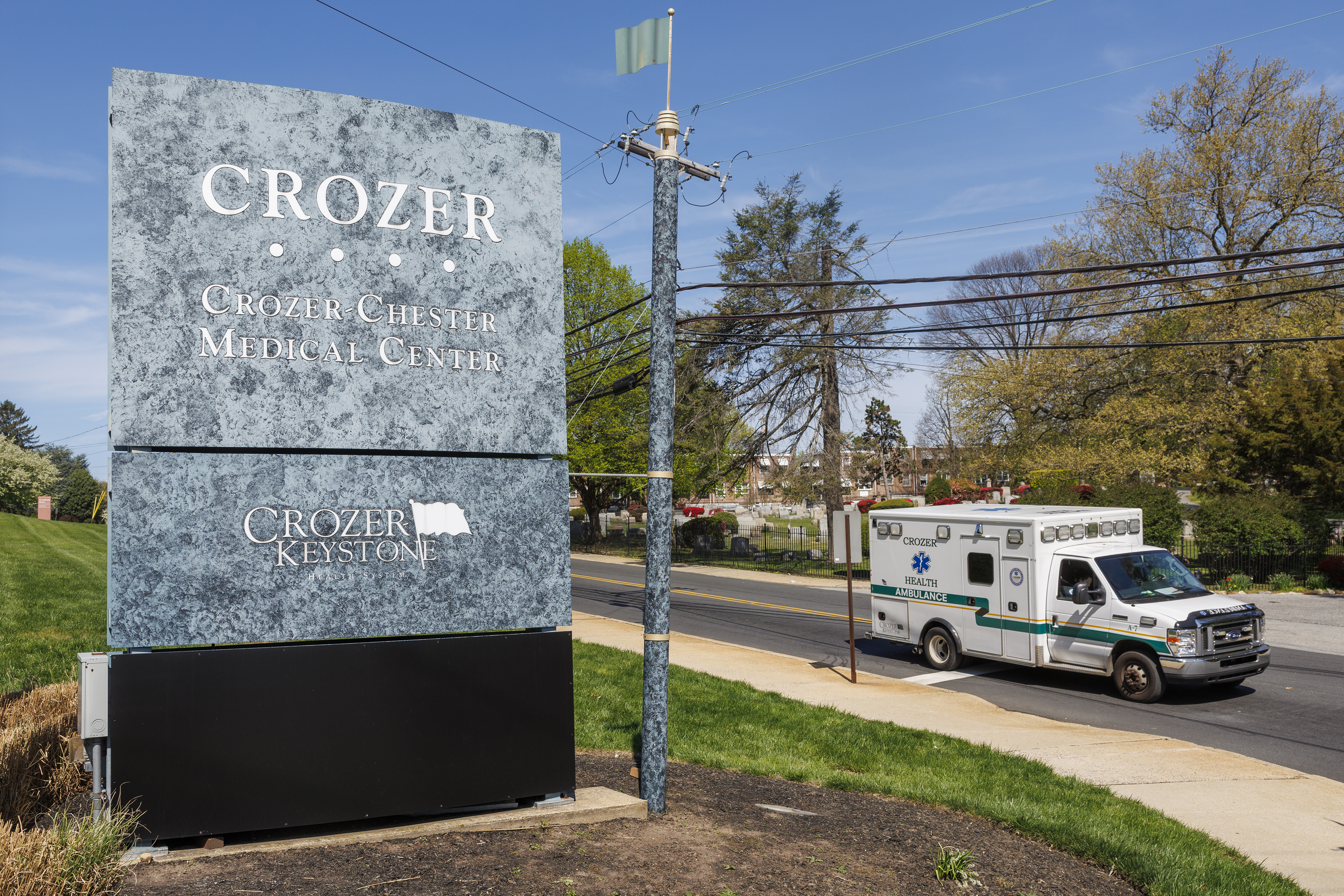
    An ambulance drove by the entrance to Crozer-Chester Medical Center, in Upland. This hospital closed earlier this year. Alejandro A. Alvarez / Staff Photographer

    Filling gaps in Delaware County

    The Foundation for Delaware County was formed in 2016, when the nonprofit Crozer-Keystone Health System was sold to Prospect Medical Holdings. When for-profit companies acquire nonprofit health systems, Pennsylvania law requires the nonprofit assets be set aside in an independent charity. Crozer’s nonprofit assets became the Foundation for Delaware County.

    The foundation’s overarching mission is to support the health and welfare of Delaware County residents by coordinating government safety-net programs and creating its own offerings to help families in need. The foundation also provides millions of dollars in grants to nonprofits and charities to support public health, housing, and youth development.

    With $53.9 million in net assets as of October, the foundation is the largest philanthropic organization in Delaware County, serving some 8,000 people a year.

    Many of the foundation’s most used programs, such as Healthy Start, a federally funded prenatal and early childhood initiative, began before the foundation was spun out of Crozer, in response to the high infant mortality rate in Chester.

    Other programs — such as one that provides cribs and safe-sleep education, and a support group for new fathers — were created in response to needs raised by families the foundation was already working with.

    “We found ourselves filling gaps,” Craig said.

    When Prospect said it would close the remaining Crozer hospitals, The Foundation for Delaware County was pressured by the case’s bankruptcy judge to take on part of the company’s debt to keep the hospital open until a new operator was found. The foundation shelled out $20 million to extend operations temporarily and later contributed $3 million to help former patients obtain their medical records.

    The foundation’s new Family Village initiative can’t close all the gaps Crozer’s closure left — the area lost its largest emergency department and maternity ward, the only 24-7 mental health crisis center, and critical pediatric care.

    ChristianaCare won an auction to take over five former Crozer outpatient locations in Broomall, Media, Glen Mills, and Havertown, and has plans to open two new micro hospitals in Aston and Springfield.

    Delaware County in August selected Belmont Behavioral Health to establish a new crisis response center and expand mental health services.

    But Craig said she hopes the foundation’s new approach will help families better access resources that remain available — and that they may not have known about.

    Help without judgment

    Before connecting with the foundation, Robertson was skeptical of organizations and programs that offered help.

    Her grandfather, for instance, berated her for enrolling in SNAP and the at-home nurse program, warning her that she could end up losing her children, if coordinators decided her home and parenting weren’t good enough.

    “I’m so scared to let someone in, let them come in my house and see that my house is not up to par, see that I’m struggling with this, or that I can’t feed them,” Robertson said.

    “If I can’t feed them, they’re going to take my kids, and I’m going to go to jail,” she added.

    Research has found that these fears are often justified, with social service workers deeming parents of color unfit at higher rates than white parents, and equating poverty with neglect.

    Healthcare workers, social workers, and teachers are among so-called mandated reporters, who are required to report to Child Protective Services any suspicion of abuse. Only a fraction of reports are substantiated after being investigated, but they stoke fear and can dissuade families from seeking help.

    But Robertson was working three jobs and still couldn’t feed her family, so she filled out the forms the school counselor had given her.

    Her first prenatal visits through the Nurse-Family Partnership were at the domestic violence shelter where she was living.

    Robertson was proud when she was able to afford to move her family into an apartment in Chester. But her nurse told her the gaping hole in the ceiling and mold growing in the corners were unsafe. She connected Robertson with the foundation’s Housing Opportunities Program for Equity, which helps people secure safe housing and navigate problems with landlords.

    After her twins were born, the foundation’s Moving Beyond Depression program helped Robertson work through postpartum depression, which may have otherwise affected her ability to work and care for her children.

    Two years later, Robertson said she still faces challenges. The recent government shutdown cut off the family’s food stamps, making for tough budgeting decisions earlier this month.

    But now she knows where to turn for help, if the load ever becomes too heavy again.

    Editor’s note: This story was updated with additional information on the foundation’s mission.