Author: Sarah Gantz

  • Burnout among psychiatric nurses is high. What can hospitals do to improve?

    Burnout among psychiatric nurses is high. What can hospitals do to improve?

    As a former psychiatric hospital nurse, Justinna Dixon knows what it’s like to feel passionate for a job and overwhelmed by it at the same time.

    Dixon graduated from nursing school at the height of the COVID-19 pandemic, and threw herself into her work, caring for people struggling with mental health and addiction issues. But her new-nurse shine quickly dulled under the burden of long hours, high caseloads, and insufficient support.

    Now a postdoctoral fellow at Penn Nursing’s Center for Health Outcomes and Policy Research, Dixon is studying the burnout she experienced. She hopes her work will help hospital systems better understand what contributes to burnout and what they can do to improve.

    Two out of five inpatient psychiatric mental health registered nurses experience high burnout, according to Dixon’s latest study, published in July in the Journal of Psychiatric and Mental Health Nursing. The study, based on data from 740 registered nurses across 10 states, found that workplace improvements — such as increasing staffing — can help nurses feel more supported and provide better care.

    Dixon spoke to The Inquirer about her research and experience as a nurse in an interview lightly edited for length and clarity.

    What in your experience as a nurse made you want to study burnout?

    I’m a Ph.D.-prepared registered nurse. After I finished my bachelor’s degree in nursing in 2020 from Rutgers University, I worked as an inpatient psychiatric registered nurse for two years. I worked within the same types of units that I talk about in this study. I have personally seen and even felt myself how, when we didn’t have enough leadership support and adequate staffing, it made the job much harder. It made me and my other fellow colleagues give worse care to our patients and made our patients suffer even more than they already were.

    What were the study’s most significant findings?

    One of the main takeaways is that 40% of current inpatient psychiatric nurses right now are burned out. One of the other takeaways: Staffing was a huge driver of these outcomes, the impact of the work environment on the poor job outcomes of the nurses.

    Were you surprised by what you learned?

    To be honest, I’m actually not struck by any of my findings, because I have lived it. Normally, on medical-surgical units in a general acute hospital, nurses are assigned around four to five patients to take care of for their shift.

    I worked on a substance-abuse detox unit in a psychiatric hospital. In this unit, one of the most medically complex units in the psychiatric hospital, I was typically assigned around 10 to 12 patients. One time, we were very short-staffed and had a full house or an almost full house, and we had one patient who was just so sick from actively withdrawing. We were so overwhelmed with all the other patients on the unit, taking admissions on top of caring for our other patients, being short a nurse.

    To be honest, we just couldn’t take care of him the way we wanted to, we couldn’t get him the medication he really needed to quell his uncomfortable symptoms. He was in a lot of distress, and he ended up getting so overwhelmed he threw a chair into our nursing station. It was terrifying for the nurses, but imagine how the other patients felt. It made us delay their care because now we have to deal with this situation, and they’re all sick, too.

    What could hospitals do to reduce nurse burnout?

    Nurse staffing is a very complex issue. But there are some things I think could move the needle. In the current system, hospitals are not financially incentivized to improve their staffing. Hospitals are typically able to bill individually for physicians or other prescribing provider services. But for registered nurses, there’s really no financial structure that allows hospitals to bill insurance companies to pay for a nurse’s contributions to patient care. Nurses are actually lumped in with hospitals’ overhead costs.

    I think that a potential solution to incentivize hospitals to improve hiring is giving them a financial incentive to do so. Another thing that I think could really help is enlisting the public. As nurses, we try to advocate so much for our patients. But maybe we could let our patients advocate for us, too.

  • Ten months of inspections at Roxborough Memorial Hospital: July 2025 — April 2026

    Ten months of inspections at Roxborough Memorial Hospital: July 2025 — April 2026

    Roxborough Memorial Hospital was cited by the Pennsylvania Department of Health for failing to properly dispose of medical waste and document patient treatment plans earlier this year.

    The incidents were among 11 times inspectors visited the hospital, which is part of California-based Prime Healthcare Foundation, to investigate potential safety problems.

    Here’s a look at the publicly available details:

    • July 17, 2025: Inspectors came to investigate a complaint but found the hospital was in compliance. Complaint details are not made public when inspectors determine it was unfounded.
    • July 22: Inspectors followed up on an April 2025 citation regarding failure to report suspected elder abuse and found the hospital was not in compliance. The hospital had been cited for failing to report suspected abuse of a patient at the behavioral health facility where they had been staying before arriving at Roxborough. In April, the hospital said it would update its policies to make clear suspected abuse should be reported as soon as possible and retrain staff. In July, inspectors found the hospital had reported the suspected abuse to the behavioral health facility, but not to the Pennsylvania Department of Health, as required. The hospital said it would clarify in its policies that all cases of suspected abuse should be reported to the health department.
    • Aug. 4: The hospital was cited for failing to properly transfer patients under federal EMTALA (Emergency Medical Treatment and Labor Act) protocol. In one of 11 patient records inspectors reviewed, staff transferred a patient to another facility without sending along their emergency records. The hospital was also cited for a staff member who had not completed mandatory annual EMTALA training since 2022. The hospital retrained staff on documenting patient transfers and agreed to hold monthly meetings on EMTALA compliance. Staff members who are not up-to-date on their EMTALA training will be removed from the schedule until they complete the required training.
    • Oct. 15: Inspectors followed up on the August EMTALA transfer complaint and found the hospital was in compliance.
    • Feb. 2, 2026: Inspectors followed up again on the April abuse reporting citation and found the hospital was in compliance.
    • Feb. 12: Inspectors came to investigate a complaint but found the hospital was in compliance.
    • March 4: Inspectors cited the hospital for improper medical waste disposal and unsafe equipment in behavioral health rooms. Inspectors found that a pharmaceutical disposal box was unlocked and lined with a black trash bag, which is not approved for pharmaceutical waste disposal containers. The hospital was also cited for cords attached to call bells on beds in the geriatric psychiatric unit, which could be dangerous for people at risk of self-harm. The hospital retrained staff on pharmaceutical waste disposal and replaced the corded call bells with wireless systems.
    • March 4: Inspectors visited for a mental health survey and cited the hospital for failing to complete written treatment plans for one of 12 patient files they reviewed. The hospital retrained staff on documentation and the importance of scanning any written documentation into patients’ electronic files.
    • March 25: Inspectors came to investigate a complaint but found the hospital was in compliance.
    • March 31: Inspectors visited for a mental health survey and found the hospital was in compliance.
  • Inspira Medical Center Mullica Hill doubles the size of its maternity unit

    Inspira Medical Center Mullica Hill doubles the size of its maternity unit

    Inspira Medical Center Mullica Hill has doubled the size of its maternity unit to meet rising demand.

    The updated maternity unit, which opened this week, is part of Inspira’s $257 million expansion project at the Mullica Hill hospital that includes a new five-story tower for surgery, intensive care, education and residency programs, and additional parking.

    The maternity unit doubled its size, to a total of 36,000 square feet, and increased the number of beds to 38, up from 20. The extra space is intended to give families more privacy and improve patient flow from delivery to recovery.

    “Opening this expanded maternity unit is an important step forward for families across South Jersey and for the future of Inspira Medical Center Mullica Hill,” Lydia Stockman, executive vice president and chief clinical officer at Inspira Health, said in a statement.

    Inspira opened the Mullica Hill hospital in late 2019, and it has quickly become one of the system’s busiest hospitals in a growing South Jersey community.

    The hospital had 1,374 births last year.

    The new patient tower, expected to open in 2027, will add more beds and an observation unit to ease strain on the emergency department. It will also include a surgery unit, intensive care beds, and a neuro ICU.

  • Hospital staff aren’t explaining medication side effects to one in three Philly patients, survey says

    Hospital staff aren’t explaining medication side effects to one in three Philly patients, survey says

    Philadelphia-area patients say they are often being left in the dark about side effects that could result from new medications given during hospitalizations, even though hospitals are required to explain the potential risks.

    One in three patients at Philadelphia-area hospitals claimed that staff did not consistently explain possible side effects of medication, according to a leading patient satisfaction survey conducted annually by the Centers for Medicare and Medicaid Services.

    To gauge the patient experience, the Hospital Consumer Assessment of Healthcare Providers and Systems (HCAHPS) survey asks questions about the hospital environment and how staff treated them during their stay. These quality indicators are less tangible than closely watched rates of infections or falls but still can offer meaningful insight into hospital culture and help administrators identify gaps in care.

    The regional hospitals where large portions of patients surveyed reported not being told about medication side effects included three operated by the Virtua health system in New Jersey. About 40% of patients at Our Lady of Lourdes, Mount Holly, and Willingboro said staff had “never” or only “sometimes” explained side effects.

    “These survey results reinforce that it is not enough for patients to receive clear information most of the time,” Jen Khelil, executive vice president and chief clinical officer at Virtua, said in a statement.

    (function(){function e(){window.addEventListener(`message`,function(e){if(e.data[`datawrapper-height`]!==void 0){var t=document.querySelectorAll(`iframe`);for(var n in e.data[`datawrapper-height`])for(var r=0,i;i=t[r];r++)if(i.contentWindow===e.source){var a=e.data[`datawrapper-height`][n]+`px`;i.style.height=a}}})}e()})();

    “Our goal is for every patient to feel fully informed about new medications, including their potential side effects, every time,” Khelil said.

    Medication safety

    The most recent HCAHPS report, released in June, includes responses from about 2.3 million patients across the country, including nearly 32,000 from Philadelphia-area hospitals, between July 2024 and June 2025.

    The survey covers topics such as noise levels, room cleanliness, staff friendliness, and whether they would overall recommend the hospital.

    Among the questions: Before giving you any new medicine, how often did hospital staff tell you what the medicine was for?

    Patients can answer “never,” “sometimes,” “usually,” or “always.” The survey results published by CMS combine “never” and “sometimes” answers.

    These multiple-choice answers are subjective. But generally speaking, doctors and nurses should strive to always explain side effects, said Jeffrey Millstein, an internist and regional medical director for Penn Primary Care who regularly writes about the doctor-patient relationship as an Inquirer contributor.

    Patients who do not fully understand potential side effects may disregard a dangerous complication as “normal.” Alternatively, a common, harmless side effect could be alarming to a patient who wasn’t educated about what to expect when taking a new medication, he said.

    “They need to know the real red flags, and to not discontinue their medicine for the wrong reason,” he said.

    In busy medical settings, staff may focus on other aspects of medication adherence, such as explaining what the medication does, instructions for when and how to take it, and whether it will negatively mix with a patient’s other medications. Side effects may be mentioned last, quickly, or by telling patients to refer to a manufacturer’s pamphlet with warnings.

    “That’s really useless,” Millstein said. “It doesn’t put anything in context.”

    Doctors and nurses should open a conversation about side effects by asking patients what they know about a drug, or what concerns they have, which can allow staff to dispel inaccurate information, he said.

    Philadelphia-area hospitals respond

    Across the Philadelphia region, three Penn Medicine hospitals scored the highest marks for explaining medication side effects.

    More than half of survey respondents who stayed at Chester County Hospital, Penn Presbyterian Medical Center, and Hospital of the University of Pennsylvania said staff “always” explained side effects. About a quarter of respondents said they had received such information “sometimes” or “never” during their stay at the Penn hospitals.

    (function(){function e(){window.addEventListener(`message`,function(e){if(e.data[`datawrapper-height`]!==void 0){var t=document.querySelectorAll(`iframe`);for(var n in e.data[`datawrapper-height`])for(var r=0,i;i=t[r];r++)if(i.contentWindow===e.source){var a=e.data[`datawrapper-height`][n]+`px`;i.style.height=a}}})}e()})();

    Lower Bucks Hospital and Roxborough Memorial Hospital — both owned by California-based Prime Healthcare Foundation — received the region’s lowest marks for explaining side effects.

    Forty-five percent of survey respondents said Lower Bucks staff had “never” or only “sometimes” explained side effects, while 34% said they had “always” received such information during their stay.

    Michelle Aliprantis, a spokesperson for Prime, said the 2024-2025 data in the CMS survey does not reflect more recent efforts at the hospitals to improve bedside medication education and postdischarge follow-up. The health system has also expanded pharmacy consultation to ensure patients understand medications.

    “We are always focused on continued improvement,” Aliprantis said in a statement.

    Virtua’s chief medical officer said the health system closely monitors results from the CMS survey, which includes responses from about 2,000 patients across the New Jersey hospital system.

    Administrators review feedback from a total of some 300,000 consumers a year from satisfaction surveys, Google ratings, and other ratings systems.

    Virtua has been working to improve consistency and patient communication.

    “We remain committed to listening, learning, and improving so that every patient receives clear, compassionate, and consistent communication,” she said.

    (function(){function e(){window.addEventListener(`message`,function(e){if(e.data[`datawrapper-height`]!==void 0){var t=document.querySelectorAll(`iframe`);for(var n in e.data[`datawrapper-height`])for(var r=0,i;i=t[r];r++)if(i.contentWindow===e.source){var a=e.data[`datawrapper-height`][n]+`px`;i.style.height=a}}})}e()})();

  • CHOP ER behavioral health screening identifies teens in need of support

    CHOP ER behavioral health screening identifies teens in need of support

    This story contains references to suicide. If you or someone you know is thinking of suicide, call or text 988.

    Whether they’re seeking treatment for a sprained ankle, stomach pain, or a panic attack, teenagers who come to the Children’s Hospital of Philadelphia emergency department are handed a 10-minute health survey with questions about depression and self harm.

    About one in three reports symptoms of depression or suicidal thoughts that may otherwise have gone unnoticed.

    Asking all patients aged 12 to 19 about mental health challenges has improved CHOP’s early detection of needs, especially among teens and adolescents being treated for physical ailments.

    “There’s this tension of we don’t want to ask a 12-year-old these questions, these are grown-up questions,” said Polina Krass, a pediatric emergency medicine attending physician at CHOP, who helped develop the survey. “But then we miss the mark and are getting kids the help they need only when they’re already in crisis.”

    CHOP’s screening initiative, launched in 2011, targets a problem hospitals across the region and country are facing: Mental health issues account for about one out of every eight emergency department visits, according to the Centers for Disease Control and Prevention. Yet hospitals are often ill-prepared to respond to these patients’ complex needs, which can put patient and staff safety at risk.

    Safety experts say that one of the most meaningful solutions is for hospitals to treat suicide risk and mental health issues as a core patient safety issue that all staff are trained to recognize, akin to postpartum hemorrhage, heart attack, or stroke.

    “This isn’t just a behavioral health issue — this is a system-wide patient safety priority,” said Shannon Kooker, vice president of clinical excellence and patient safety at ECRI, a patient safety organization in Fort Washington.

    Suicide risk in emergency departments

    Patients at risk of suicide often turn to emergency departments for care, according to a new ECRI report.

    ECRI analyzed patient safety incident reports from hospitals, outpatient clinics, and behavioral health programs between 2021 and 2025, looking specifically at suicide deaths and attempts, and instances in which patients expressed having thoughts of killing themselves.

    Nearly three-quarters of the 406 incidents ECRI analyzed occurred in emergency departments. That’s partly because hospitals have established protocols for reporting incidents, whereas urgent care and ambulatory centers may be less likely to self-report, Kooker said.

    People experiencing a mental health crisis may also be more likely to seek care at hospitals, which typically have specialized behavioral health workers on staff, she said.

    Deaths were rare, accounting for just 2.7% of cases analyzed by ECRI. Much more common were cases in which a patient tried to kill themselves or expressed a desire to — a sign that providers have an opportunity to intervene before harm occurs, if they can identify risks quickly, ECRI analysts found.

    A system-wide approach to mental health safety

    Improving safety for patients at risk of self harm should be a hospital-wide effort, Kooker said.

    That can mean changing the emergency room environment, such as installing breakaway doors that open upon impact to reduce the risk of patients harming themselves and using paper scrubs that can’t be knotted into ropes.

    More importantly, hospitals should make suicide prevention part of their safety culture, emphasized at the highest leadership levels, she said.

    She urged hospitals to standardize policies for responding to mental health emergencies.

    That starts with training all staff to recognize warning signs, such as being extremely agitated or anxious, acting erratically or withdrawn, or expressing feelings of being a nuisance or burden to others.

    Not every patient needs to be screened for suicide risk, but staff should quickly call for help when they recognize troubling behaviors, Kooker said.

    “It shouldn’t be a question mark to the staff — it should be standardized and tested,” she said.

    CHOP targets youth mental health

    At CHOP, about 10% of emergency department visits involve patients whose primary concern is a mental health issue.

    Krass worries about the many more teens and adolescents whose mental health needs may go unnoticed in emergency departments because no one thought to ask.

    The optional behavioral health screening survey — now taken by some 600 patients a month at CHOP’s Philadelphia and King of Prussia emergency departments — is designed to better identify those individuals, said Krass, a research scholar at CHOP’s Center for Violence Prevention.

    When a patient’s survey answers indicate anxiety, depression, or other mental health concerns, doctors connect them with a behavioral health specialist or social worker for follow-up care.

    Patients can complete the 37-question survey on their phone or on a tablet provided by the hospital. Krass and her colleagues have found that youth are more likely to share details about their mental health through this quasi-private format than if doctors ask questions directly.

    One of the survey’s final questions is whether it’s a good idea for CHOP to probe so deeply into their young patients’ mental health.

    Almost all answer yes.

    Editor’s note: This story has been updated to correct the year CHOP began its behavioral health screening initiative.

  • Ten months of inspections at St. Luke’s Hospital — Upper Bucks Campus: July 2025 — April 2026

    Ten months of inspections at St. Luke’s Hospital — Upper Bucks Campus: July 2025 — April 2026

    St. Luke’s Hospital — Upper Bucks Campus was not cited by the Pennsylvania Department of Health for any safety problems between July 2025 and May of this year.

    The Quakertown hospital is part of St. Luke’s University Health Network.

    Here’s a look at the publicly available details:

    • Dec. 4, 2025: Inspectors visited for a monitoring survey and found the hospital was in compliance.
    • Dec. 18: Inspectors came to investigate a complaint but found the hospital was in compliance. Complaint details are not made public when inspectors determine it was unfounded.
    • Jan. 21, 2026: Inspectors visited for a mental health survey and found the hospital was in compliance.
  • Ten months of inspections at Nazareth Hospital: July 2025 – April 2026

    Ten months of inspections at Nazareth Hospital: July 2025 – April 2026

    Violations between July 2025 and April of this year.

    The hospital is located in Northeast Philadelphia and is part of Trinity Health Mid-Atlantic.

    Here’s a look at the publicly available details:

    • July 1, 2025: Inspectors came to investigate a complaint but found the hospital was in compliance. Complaint details are not made public when inspectors determine it was unfounded.
    • Feb. 18, 2026: Inspectors came to investigate a complaint but found the hospital was in compliance.
    • April 13: Inspectors visited for a special monitoring survey and found the hospital was in compliance.
  • Insurers propose 17% average rate increase for Pennie health plans in 2027

    Insurers propose 17% average rate increase for Pennie health plans in 2027

    Insurers are asking for double-digit increases to health plans sold on Pennsylvania’s Affordable Care Act marketplace, Pennie, in 2027.

    Insurers have requested an average increase of 17% for plans sold to individuals and families through Pennie. They are asking to raise the premium price of plans sold to small businesses by an average of 11.5%, according to rate requests released last week by the Pennsylvania Insurance Department.

    The proposed rates are not final. A public comment period is open through Aug. 22, and insurance administrators expect to release final rates this fall.

    Pennsylvania Insurance Commissioner Michael Humphreys said in a statement that the rates were “higher than we’d hoped.”

    New Jersey has not released 2027 rate requests for its ACA marketplace, Get Covered NJ.

    In their rate proposals, Pennsylvania insurers said they needed to charge more to account for the rising cost of medical services and prescription drugs, and a shift in who is buying health insurance and how sick they are. Insurers are required by law to spend 80% of the money they collect through premiums on healthcare for members.

    “Addressing rising healthcare costs requires a shared commitment across the healthcare system, and we will continue working with providers and other partners to help keep quality care within reach for the people we serve,” Independence Blue Cross, which has proposed a 14% average premium increase, said in a statement.

    The proposed increases for 2027 come on top of massive price hikes in ACA marketplaces this year, when a critical financial incentive program was eliminated. The cost of a Pennie health plan more than doubled for many in 2026 and 177,000 people have dropped coverage as a result.

    Advocates worry that another price increase will cause even more people to drop coverage, which could further raise costs.

    “If these proposed rates take effect, even more Pennsylvanians are likely to be priced out of coverage,” Antoinette Kraus, executive director of the Pennsylvania Health Access Network, which helps people enroll in coverage, said in a statement.

    Rising costs and premium prices

    A major factor that affects the cost of insurance is who the plan will cover — how healthy or sick they are, and how much the plan will need to spend on their care.

    Healthy young adults who have few healthcare expenses typically help balance the higher cost of insuring older adults who may have multiple chronic conditions.

    But young adults — many buying insurance on their own for the first time — can be highly sensitive to cost. They have been among those dropping out of ACA plans at the greatest rates after Congress failed to renew a financial incentive program that ensured no one paid more than 8.5% of their income on insurance.

    About a third of adults who dropped out of Pennie health plans so far this year were under age 34, according to state data.

    “They’re the ones looking at the cost and saying, ‘Well I’m pretty healthy right now, I’m going to take the gamble,’” said Devon Trolley, Pennie’s executive director.

    People with ongoing medical needs are more likely to stick with their plan, despite cost increases.

    Pennie’s 2027 enrollment period will run Nov. 1 through Jan. 15.

    Lawmakers have not shown signs of bringing back the enhanced tax credits, which were introduced in 2021 and had been renewed annually since.

    Income-based tax credits that are part of the ACA are still available. People remain eligible for these tax credits if they earn up to 400% of the federal poverty level — about $62,600 a year for an individual or $128,600 for a family of four.

  • Delaware County launches vaccine campaign as Pa. measles cases reach highest level in more than 30 years

    Delaware County launches vaccine campaign as Pa. measles cases reach highest level in more than 30 years

    When Robert Barclay’s two daughters moved from Africa to live with him in Delaware County, getting them up-to-date on their vaccines was at the top of his list.

    His daughters, 14-year-old Albertine and 20-year-old Ruth, were among the first clients at the Delaware County Health Department’s new mobile clinic, which launched earlier this summer. The sisters did not bring their vaccination paperwork when they moved here from Africa earlier this year.

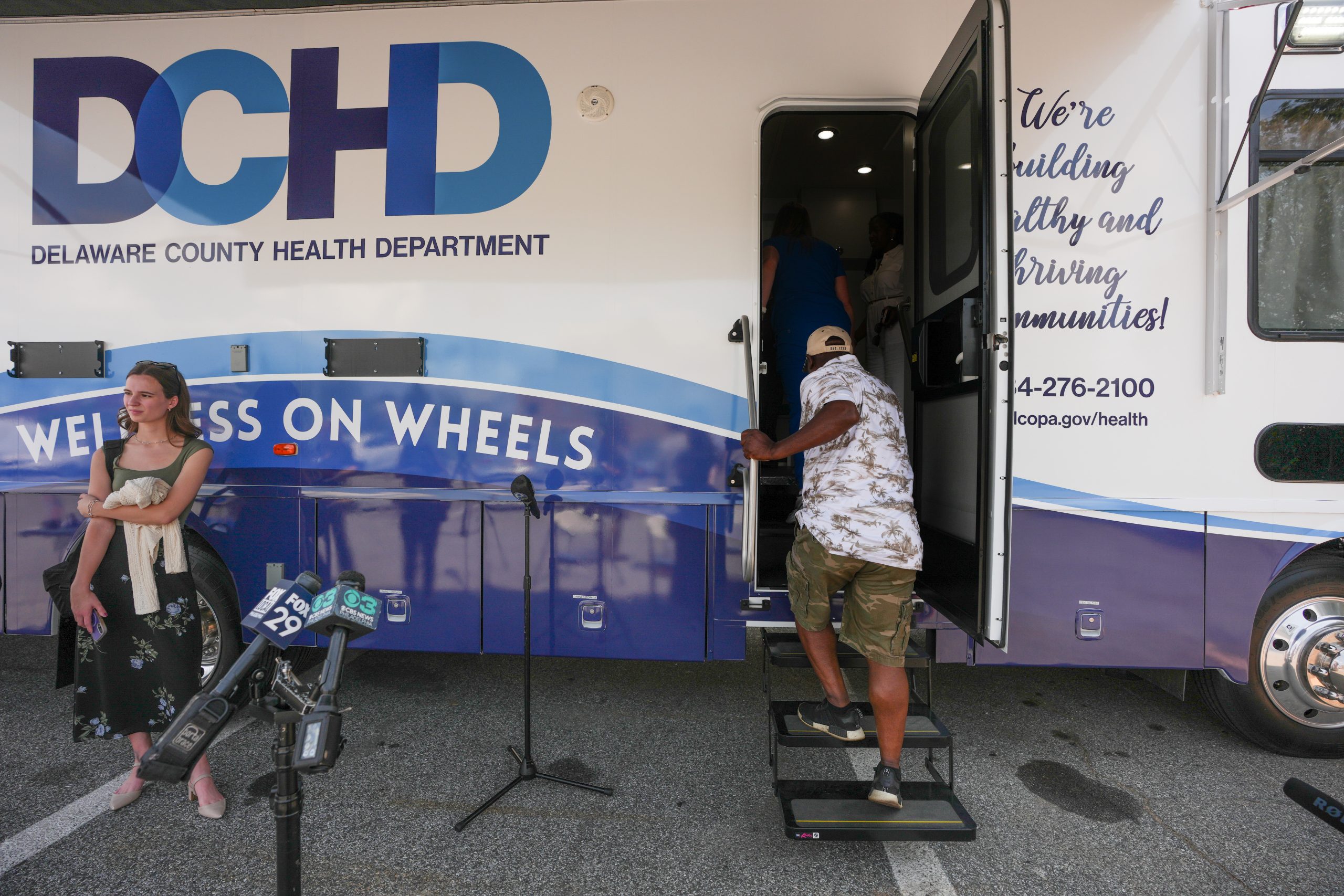
    On Monday, the 33-foot-long RV trailer was set up at Observatory Park in Upper Darby to mark the beginning of the county’s back-to-school vaccination campaign. As part of the campaign, the mobile clinic will make stops across the county to provide vaccines, physicals, and STI testing.

    Encouraging families to vaccinate and hosting clinics in advance of a new school year is a time-honored tradition for health departments. But vaccination efforts have extra urgency this year: Measles cases have reached their highest rate in more than 30 years in Pennsylvania, with a total of 142 cases reported as of Monday.

    The highly contagious virus has not yet been reported in Delaware County, but cases are mounting in Chester and Lancaster Counties, as well as in the state of Delaware.

    At the same time, vaccination rates across the state are declining. And parts of Delaware County have among the lowest measles vaccination rates in Pennsylvania.

    “We don’t have to have measles here,” said Lora Siegmann Werner, director of the Delaware County Health Department.

    The key, she said, is boosting vaccination rates before the virus begins to spread locally.

    “This is really only a matter of time,” Werner said Monday of the possibility that the current measles outbreak reaches Delaware County. “This is our window to prevent it.”

    Measles vaccination challenges

    In Delaware County, 94.3% of kindergarten students had received the measles, mumps, and rubella vaccine in the 2024-25 school year — just below the “herd immunity” rate that scientists say is required to prevent the spread of the disease. But the Philadelphia region is dotted with schools with lower vaccination rates, pockets of vulnerability that put communities at higher risk for an outbreak.

    Getting more children vaccinated is a complex and evolving public health challenge. In many cases families have access to vaccines, but do not want them.

    About 740 families in the five-county Philadelphia region opted out of vaccination for religious reasons in 2024, a 76% increase over five years. An additional 568 families claimed philosophical exemptions in 2024, a 49% jump from 2019, according to an Inquirer analysis.

    The measles vaccine is typically given in two doses: when children are 1 year old and before they enter kindergarten. Pennsylvania requires students be vaccinated to attend school, but also allows medical, religious, or philosophical exemptions, making it among the easiest places to opt out. Recently, state health officials have recommended parents vaccinate children early if they live in or plan to travel to counties where measles is circulating.

    Public health leaders across the region are beginning to rethink the way they reach vaccine-hesitant families. But in Delaware County, access remains a primary barrier.

    The county lost its leading healthcare provider when Crozer Health shuttered its two remaining hospitals last year.

    Initiatives like the county’s new mobile clinic, called Wellness on Wheels, are designed to bring care where it is needed.

    Vaccine outreach in Delaware County

    On Monday, the clinic vaccinated just three people, including 9-year-old Kayle. Her mother, Pearl, a nurse who declined to give her last name for privacy reasons, said she had heard about the mobile clinic from Delaware County’s health center, and had brought her daughter to get up-to-date on shots before starting fifth grade in the fall.

    Robert Barclay heads into the mobile clinic behind his two daughters, who received follow-up vaccine doses during the clinic’s stop in Upper Darby on July 27. Jessica Griffin / Staff Photographer

    Aside from directly providing shots, Werner hopes the clinic’s presence will put vaccination top of mind for families who see the RV parked in their neighborhood.

    “We don’t need to be the ones doing it — we just want people to get vaccinated,” Werner said.

    Barclay, who works in corrections in Delaware County, said the clinic’s spot at Observatory Park was a convenient place for his daughters to get their second doses of needed vaccines on Monday.

    The sisters moved from Africa in the spring and did not have the paperwork needed to prove to their school that they had been vaccinated as younger children.

    Barclay did not hesitate to get them scheduled for the necessary vaccines.

    “I care about my children,” he said.

  • Philadelphia dental clinic reopens two months after patients were urged to get tested for HIV

    Philadelphia dental clinic reopens two months after patients were urged to get tested for HIV

    A Center City dentist is reopening her practice this week after correcting infection-control lapses that health inspectors say put patients at risk of HIV and other communicable diseases.

    Kirti Chopra’s license was temporarily suspended in May after an inspection by the Philadelphia Department of Public Health found she was not following sterilization protocol.

    She was ordered to temporarily close her practice, Smiles at Rittenhouse Square, located at 255 S. 17th St., Suite 2507. The practice is also known as Smiles on the Square.

    The Pennsylvania Board of Dentistry reinstated her license under probation earlier this month after she agreed to four years’ probation and a $10,000 civil fine, plus about $4,400 in fees to cover the cost of the investigation.

    Chopra told The Inquirer she resumed seeing patients on Thursday.

    Chopra also hired a consultant to oversee infection-control improvements, including new policies for storing sterile supplies and staff training on sanitation protocol.

    “I will work tirelessly to rebuild trust with my patients and demonstrate accountability,” Chopra said in a statement.

    She said she was “deeply sorry” to her patients and grateful to the health department for working with her to reopen.

    Sterilization problems lead to shutdown

    The Philadelphia health department said Thursday its recommendations had been “satisfactorily implemented.”

    “We are not opposed to the practice reopening, subject to continued compliance with their agreement with the state,” James Garrow, deputy health commissioner, said in a statement.

    In March, the health department had cited the clinic for reusing saline bags and a vial of septocaine, a local anesthetic, that were supposed to be thrown out after having been used on a patient.

    During its investigation, the Pennsylvania Board of Dentistry did not find evidence the partially used vial of septocaine had been reused with another patient.

    Reusing these types of single-use medical supplies can expose patients to HIV, hepatitis C, hepatitis B, and other diseases that are transmitted through blood or saliva.

    She was ordered to shut down the practice in May, when the Pennsylvania Department of State temporarily suspended her license pending an investigation by the dentistry board.

    The Philadelphia health department in May issued a public notice urging Chopra’s patients to get tested for HIV, hepatitis C, and hepatitis B.

    Reopening with safety improvements

    In an interview with The Inquirer, Chopra said she began addressing the health department’s concerns immediately after the March citation.

    She overhauled sanitation policies, set up new procedures to ensure used dental tools are kept separate from sterile instruments, and purchased a new ultrasonic cleaner. The independent consultant she hired to oversee that work will conduct quarterly inspections, she said.

    “The goal is to not look at the past but outlook at the future, and the future is to provide quality care to my patients,” Chopra said. “This is the most humbling experience of my life, and I’ve learned my lesson the hard way.”

    Chopra has been licensed to practice dentistry in Pennsylvania since 2021 and purchased her Rittenhouse Square practice in April 2025.

    Staff were trained on the new protocols and equipment, and Chopra plans to work with Learn2Prevent, a dental compliance and education company, to provide annual infection-control training.

    Under her agreement with the Pennsylvania Board of Dentistry, Chopra’s practice will be monitored for infection-control safety and is subject to unannounced inspections.