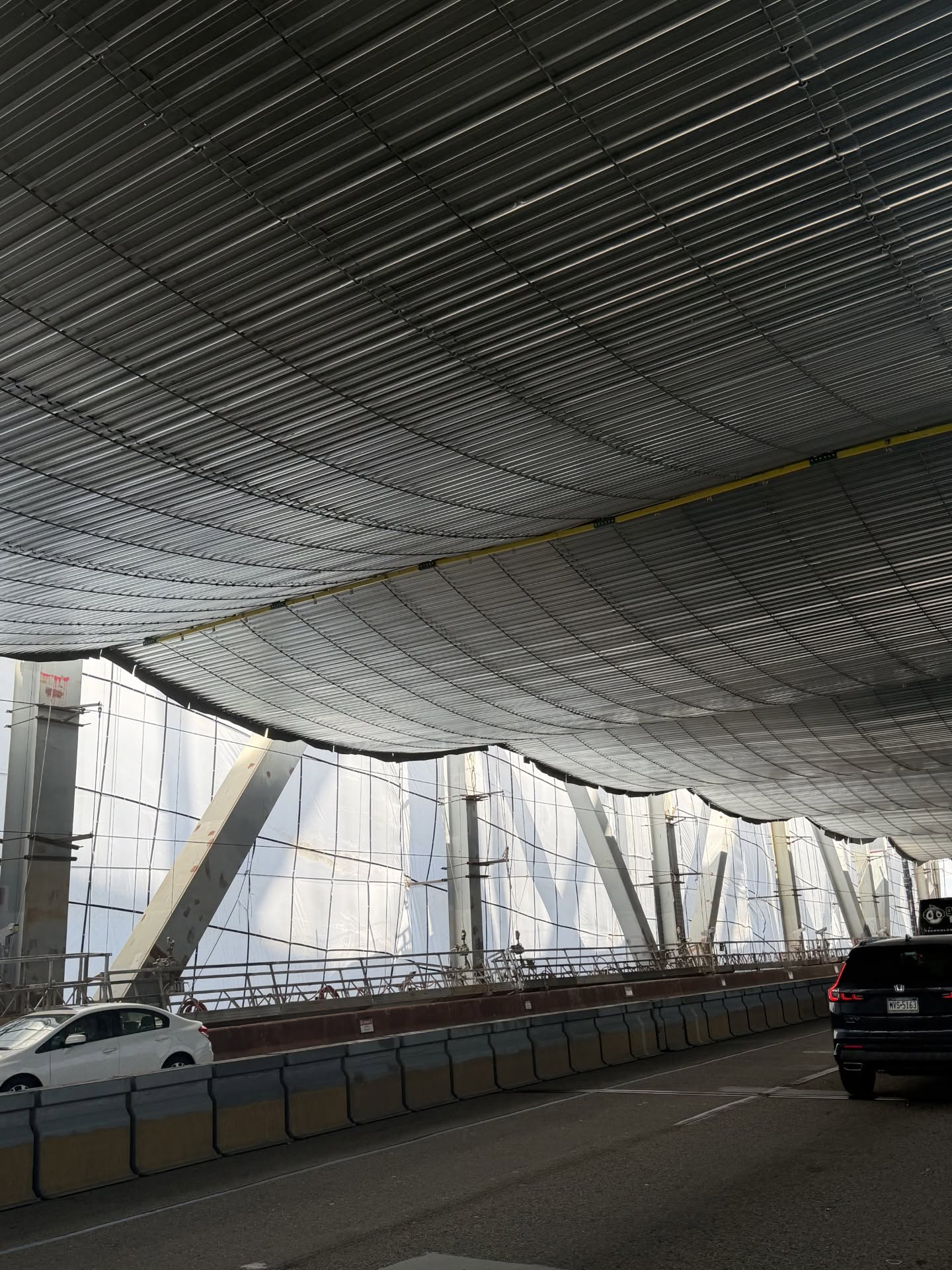
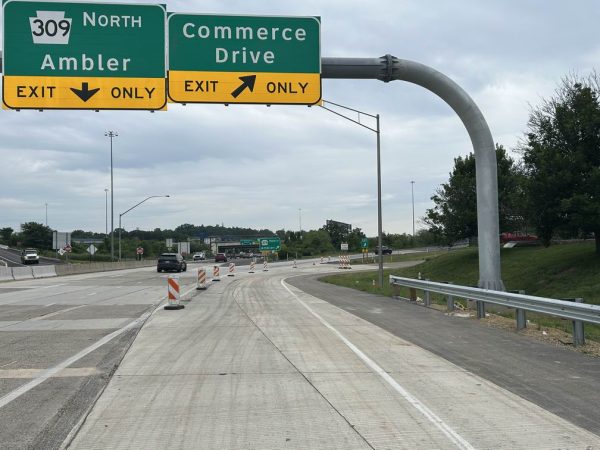
Traffic is squeezed into one lane in each direction from 7 p.m. to 5 a.m., and residual morning delays have been reported. Crews sometimes also have to close lanes or temporarily stop all traffic during daytime to move equipment and materials.
It is a major undertaking for the Delaware River Port Authority, the bistate agency that owns and runs the Commodore Barry, as well as the Walt Whitman, Ben Franklin, and Betsy Ross Bridges.
As they move along the 13,912 feet of the bridge, industrial painting crews first sandblast layers of old paint and protective coatings that have built up over the years.
They work from suspended platforms in enclosed spaces of canvas, with containment systems that capture the gritty material used to clean the steel, lead-based paint, and other grime.
Although that up-in-the-air work is most visible to motorists, massive repairs are going on underneath, on the deck, and in the support structures below that, including the piers in the river.
Crews are removing crumbling concrete and replacing it, repairing the drainage system, and installing 14,000 feet of new electrical conduits and wire, DRPA officials say.
The rehab began in spring 2025, with replacement of the movable “zipper” barrier that separates lanes of bridge traffic. It was finished last summer.
The bridge opened in 1974 after five years of construction.
Earlier, people relied on ferries to cross from one state to another.
In 1930, the Chester-Bridgeport Ferry began running, with a capacity of 60 cars per trip. Six years later, the ferry’s boats were added to the federal highway system, as moveable parts of U.S. Route 332.
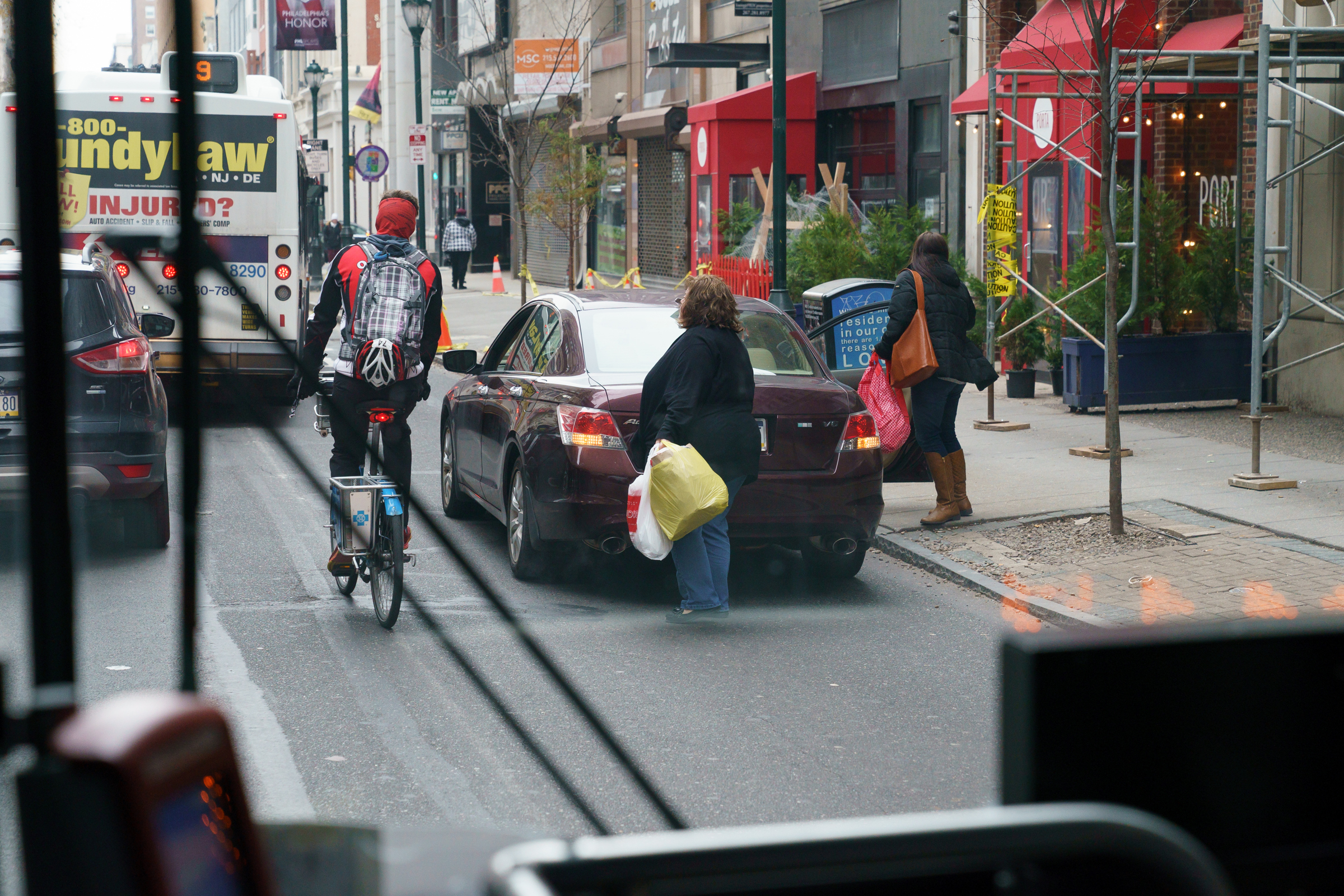
AI-powered cameras on SEPTA buses and trolleys have captured about 212,000 parking and stopping violations that delay trips since automated enforcement began last year, according to the Philadelphia Parking Authority.
The median travel time of buses in the enforcement areas dropped 41 seconds in March compared with the same month last year before the cameras, SEPTA said.
“It’s not massive, but it is appreciable,” said Matthew Zapson, manager of planning programs for SEPTA.
The parking authority has issued $14.5 million in fines from May 2025 through June 30.
But violations have trended down from the high numbers recorded in May 2025, when enforcement began.
That means hefty fines seem to be nudging more drivers to avoid adding to congestion, particularly in Center City.
In just over a year, no-stopping violations in bus-camera enforcement areas were cut in half, said Gabriel Roberts, interim executive director of the PPA, while violations for blocking bus stops decreased by 27%.
“Drivers are learning, in large numbers, to not park illegally in no-stopping zones, bus lanes, and bus stops,” Roberts said.
(function(){function e(){window.addEventListener(`message`,function(e){if(e.data[`datawrapper-height`]!==void 0){var t=document.querySelectorAll(`iframe`);for(var n in e.data[`datawrapper-height`])for(var r=0,i;i=t[r];r++)if(i.contentWindow===e.source){var a=e.data[`datawrapper-height`][n]+`px`;i.style.height=a}}})}e()})();
Violations fell from 1.8 to 0.75 per camera per hour,Zapson said.
Windshield-mounted cameras, powered by artificial intelligence, on buses in Center City and West Philadelphia are scanning for violations for about 14,000 hours per month — a rate that has stayed steady, Zapson said.
“I think that is perhaps the most telling point about the success of the program,” he said.
Measuring violations per camera hour avoids the possibility that violations appear to be down only because of lower camera use.
The penalty for parking and stopping violations is $76 in Center City and $51 elsewhere.
Tickets are sent to the owners of vehicles based on evidence gathered by windshield-mounted cameras on 152 buses on 16 routes. But human parking enforcement officers have to verify violations first.
PPA, SEPTA, and the city have partnered on the program.
Buses navigating Philadelphia traffic averaged 8 mph in Center City, slower than the national average of about 14 mph. Every year, congestion in Center City causes 1.7 million hours of passenger delays and adds $15.4 million to the transit agency’s operating costs, according to a 2019 Econsult Solutions study commissioned by SEPTA.
On April 1, cameras were added to 38 trolleys in Philadelphia, making SEPTA the first transit system to use them on streetcars. Early PPA numbers show 30,856 violations for cars and trucks blocking trolley lanes and stops.
City ordinance authorizes the camera program in Center City from river to river from the northern edge of Spring Garden Street to the southern edge of South Street. Violations also can be camera-enforced on Chestnut, Walnut, and Market Streets westward to 63rd Street. The law also covers any roadway in Philadelphia that conveys trolleys.
Zapson cautioned that a variety of factors influence bus speeds, including continued growth in ridership since the pandemic, which increases the amount of time the vehicles spend at stops to load and unload people.
So, more work is needed.
“Parking on trolley tracks or in bus lanes is a recurring issue, despite having these cameras,” Zapson said. SEPTA is working with the city and PPA “to see what other policies might be available to us,” he said.
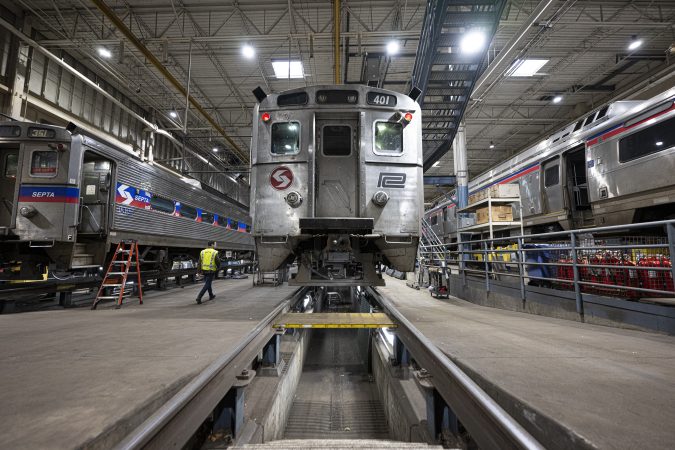
Federal prosecutors have charged a Montgomery County rail parts supplier and its owner with participating for eight years in a bid-rigging conspiracy involving SEPTA contracts.
Hatfield-based Qual-Tran Products Co. LLCand owner Cathleen Shive colluded with competitors and others, including a former SEPTA employee, to manipulate the transit agency’s competitive bidding process, according to a charging document filed July 23 in theU.S. District Court for Eastern Pennsylvania.
Invoices show SEPTA did $20.3 million worth of business with Qual-Tran from 2007 to 2025, authority spokesperson Andrew Busch said. The transit agency says it bought a variety of train and railway parts from the company, many of them for Regional Rail.
A person answering the phone at Qual-Tran’s listed telephone number declined to comment. Lawyer Fortunato Perri is representing the company according to court records and declined to comment Friday.
“SEPTA’s Office of Inspector General has been working closely with the Department of Justice on this matter and will continue to do so as the investigation moves forward,” Busch said.
Qual-Tran distributes after-market parts to transit systems and freight railroads across the country.
The company specializes in overhead catenary wires, which transfer power to passenger trains, as well as other equipment such as current sensors and third-rail contacts, according to its website and coverage in trade publications.
SEPTA won’t have a complete picture of how much money was involved in the alleged scheme until the government reveals more details as the case progresses, Busch said.
Qual-Tran was able to reverse-engineer replacement parts no longer made for older rail cars in SEPTA fleets, he said.
The U.S. Attorney’s Office for Eastern Pennsylvania declined to comment on the case beyond court records.
Qual-Tran and Shive,prosecutors allege,conspired with five people and two corporations, noneidentified by name in court records. They created the appearance of competition for SEPTA work while deciding among them which company would win some contracts, the charging document says.
The alleged scheme ran from 2016 to 2024, according to the charges. Shive, the documents say, joined Qual-Tran in 2011 and became the president and owner of the company in 2024.
They face antitrust charges of unlawful restraint of trade in interstate commerce.
Prosecutors described five transactions.
In one September 2023 instance, the government said, Shive asked a senior resource controller with SEPTA to arrange for a second corporation to deliberately submit a higher bid of $3,310 each for “30 manhole frames and lids.” Qual-Tran won the contract by quoting a lower price.
SEPTA confirmed that the senior resource controller mentioned in the charging documents is no longer employed by the agency.
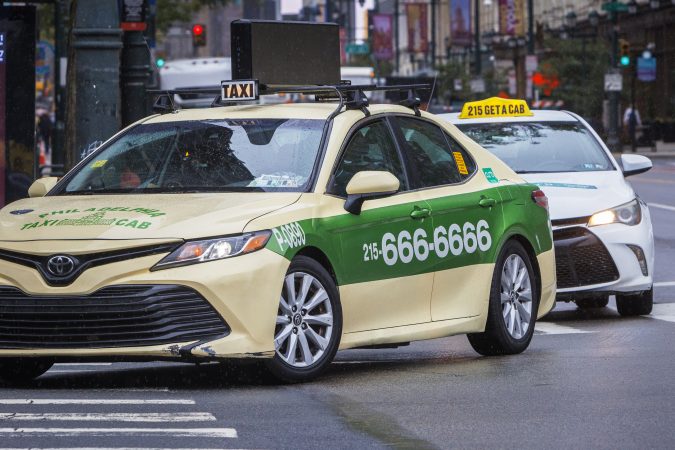
Uber and Lyft helped flatten the taxicab industry. Now they are joining forces.
Last month, Boston became the latest city where drivers of licensed taxicabs can respond to rideshare trip requests, using apps that are integrated with the Uber and Lyft platforms.
But don’t expect to see this change in Philadelphia, even as the city’s taxi business continues its free fall.
Curb, the leading app company for cabs, and Uber petitioned the Philadelphia Parking Authority, which regulates taxis in the city, to allow coordination of rides on a pilot basis but eventually withdrew the proposal.
Pennsylvania law strictly separates licensed cabs and transportation network companies like Uber, said Christine Kirlin, deputy general counsel for the PPA and former head of its Taxi and Limo Division.
“It was a handful of regulations that just couldn’t be integrated,” Kirlin said, adding that state law would need changes for it to work.
For instance, she said, taxi fares in the city are set by the PPA and cab operators are not allowed to flex prices, as rideshare companies do during periods of high demand. Drivers also need a commercial license, and taxi vehicles are subject to safety inspections — and regulatory fees — that rideshare is not.
In other cities, referrals from rideshare companies account for 30% to 60% of total taxi trips, said Dorel Tamam, vice president for mobile business at Curb.
He is in charge of Curb Flow, an open API platform that aggregates available rides from multiple sources, including Uber and Lyft, direct hails from taxi apps, fleet dispatches, and taxi ranks.
“This program is helping actually reduce idle time, increase the overall trips, giving drivers the add-on opportunity to earn more,” Tamam said.
Curb Flow is being used in 17 U.S.cities, including Newark, N.J.; Seattle; Los Angeles; New York; Reno, Nev.; and Charlotte, N.C.
Taxi rides dropped 88% from 2015 to 2025, PPA data show.
(function(){function e(){window.addEventListener(`message`,function(e){if(e.data[`datawrapper-height`]!==void 0){var t=document.querySelectorAll(`iframe`);for(var n in e.data[`datawrapper-height`])for(var r=0,i;i=t[r];r++)if(i.contentWindow===e.source){var a=e.data[`datawrapper-height`][n]+`px`;i.style.height=a}}})}e()})();
Fewer cabs are available. In 2010, a monthly average of 1,600 taxis were on the road. In 2025, there were 674, reflecting a 58% drop.
As of June, 633 taxis were active in the city, suggesting a continued decline.
“Things have not really improved. There’s less people out there driving,” said Ron Blount, president of the Taxi Workers Alliance, who believes the number could be even smaller.
“A lot of drivers do both taxis and [rideshare] switching back and forth, trying to make it work,” Blount said.
He said that Curb Flow would lead to more trips for drivers here, but that it was unclear how much their net incomes would improve.
And the average sales price for a taxi medallion, a license required for each cab to operate in the city, fell to an average of $12,857 last year.
The average price was just over $500,000 during several months of 2014, according to PPA numbers.
“We really hope one day to bring it to Philadelphia,” said Tamam, the company vice president in charge of Curb Flow. ”We’re open to further collaboration with the regulators.”
Amtrak and the Schuylkill River Passenger Rail Authority agreed Wednesday to work together to revive passenger train service between Philadelphia and Reading after an absence of 45 years.
Federal Railroad Administration officials designated the route as one of 60 intercity rail corridors to be developed in part with start-up funds from the 2021 bipartisan infrastructure law.
Intermediate stops are planned for Pottstown and Phoenixville.
The agreement is a step forward, committing Amtrak to complete formal ridership forecasts and revenue estimates and to determine likely costs to operate and maintain the route.
“We’ll rocket through Step 2,” said Thomas Frawley, executive director of the Schuylkill River Passenger Rail Authority, because of Amtrak’s commitment to the project. “We’re excited and optimistic.”
Amtrak will handle the next stage of work, estimated at $4.8 million. Federal officials have approved the budget, but the money needs to be obligated before the bipartisan infrastructure bill expires Sept. 30, Frawley said.
Congress is discussing reauthorization of a new surface transportation law, and future funding of the rail corridor program is uncertain despite bipartisan support.
After the business plan in Step 2, the Philadelphia-Reading line would require preliminary engineering, final design and engineering, and some construction.
Ever since rail service along the route ended in 1981, people have been trying to figure out a way to bring back the trains.
Other proposals fell by the wayside, including the state’s 1990s Schuylkill Valley Metro plan to build an electric-powered commuter service on the route. It was estimated at $2 billion. In 2003, Gov. Ed Rendell canceled the effort amid funding concerns.
By contrast, the SRPRA plan is projected to cost about $100 million.
Backers say the SRPRA plan has advantages that could pay off. For one, the partnership with Amtrak and the national passenger railroad’s interest in running the line.
“We look forward to the opportunity to reconnect communities like Reading to the Northeast Corridor and beyond, to support their economic and community development,” Nicole Bucich, Amtrak’s vice president of planning and state partnerships, said in a statement.
Another: Norfolk Southern owns and hauls freight on existing rails with diesel locomotives — no need for a massive project to build tracks or a system of overhead wires to power passenger trains.
“They’re running trains today on the railroad, and it’s in very good condition,” Frawley said. “We’re not talking about a greenfield project.”
The Northeast Corridor itself is an advantage, too, Frawley said, giving more people access to Philadelphia’s 30th Street Station to Boston, New York, Washington, and points between.
“It can have a powerful synergistic effect” on the regional economy, he said.
The ribbon was snipped Tuesday, and the first car, a green Audi S5 convertible, rolled down the new “zip ramp” providing direct access from the Pennsylvania Turnpike’s Fort Washington interchange to a 536-acre office park redevelopment in Upper Dublin.
“This is a milestone day for Upper Dublin,” said Kurt Ferguson, executive director of the township’s municipal authority, which for 10 years has managed the ongoing transformation of the underused office buildings of the former Fort Washington Industrial Park into the multiuse Greater Fort Washington District.
The authority has invested about $45 million in infrastructure to support the revitalization project, about 70% from state and county transportation and development grants, Ferguson said. That includes the 2,100-foot ramp, designed and built for about $3 million.
A Lifetime Fitness complex, new retail outlets, and TruMark Credit Union headquarters have been built in the district.
Three former office properties have been converted to apartment buildings, with a fourth turned into a storage facility, Ferguson said. Upper Dublin moved the township library to Virginia Drive in the district, which includes a segment of the Cross County Trail operated by Montgomery County.
The new ramp was made possible by the turnpike’s move to open-road tolling, in which motorists pay tolls by E-ZPass or by plate while passing under gantries. Toll booths are being torn down, leaving more room at interchanges for direct-connect projects like the zip ramp.
“Open-road tolling enables us to be a better neighbor,” turnpike CEO Mark Compton said. “In terms of today’s transportation dollars, this project is not large money … [but] it opens up economic opportunity for this community.”
The Pennsylvania Turnpike Commission is designing a roundabout off the Mahoning Valley Interchange (Exit 74) on the Northeast Extension and plans a park-and-ride lot there.
It is also looking to develop truck parking at the Gateway interchange (Exit 2),near the Ohio state line in Western Pennsylvania, spokesperson Marissa Orbanek said.
It was the first weekend of summer break. Abigail Gillon, an honor student, had just finished sixth grade. She was free.
“My last text to her was at 2:14” on June 14 last year, said Abby’s mom, Lori Kralle.
An hour later, Kralle received a call from an emergency room nurse about her 12-year-old daughter.
Abby had been riding an electric scooter with her best friend, Isabelle, in Aston Township. The girls were sharing the scooter when they drove off the curb and fell into the street. They were struck by an oncoming car at 2:22 p.m. Emergency responders found them holding each other in fetal position, Kralle said. Abigail died two days later. Her friend was severely injured.
“It didn’t just tear away and take away Abigail’s life, it took apart everybody’s life, her friends and family,” Kralle said.
Lori Kralle with her daughter, Abby Gillon.Lori Kralle
Last year, more traffic crashes causing injury and death in Philadelphia involved electric bikes and scooters than manual ones, according to Pennsylvania Department of Transportation data. The finding highlights a new reality in which e-bikes and e-scooters present a major safety problem, the state confirmed.
The high numbers of injuries and deaths point to the need for legal clarity, statewide safety regulations, and new infrastructure to protect users of e-bikes, e-scooters, and bicycle riders from cars and trucks, traffic safety advocates contend.
(function(){function e(){window.addEventListener(`message`,function(e){if(e.data[`datawrapper-height`]!==void 0){var t=document.querySelectorAll(`iframe`);for(var n in e.data[`datawrapper-height`])for(var r=0,i;i=t[r];r++)if(i.contentWindow===e.source){var a=e.data[`datawrapper-height`][n]+`px`;i.style.height=a}}})}e()})();
“There’s a lot of technology out there and there is no real enforcement and regulation,” said Nicole Brunet, president of PA Safe Roads PAC. “It’s causing devices to be on the road that are unsafe.”
In 2025, e-bikes and e-scooters were involved in 197 crashes on city streets, excluding interstates — a 40% increase over 2024. Four riders were killed and 193 were injured in those collisions, PennDot figures show.
Meanwhile, 193 reported crashes involved standard bikes, more numerous in the city than their electric cousins, as well as traditional foot-propelled scooters, the state figures indicate.
E-bikes and scooters are poorly defined in Pennsylvania law. The ambiguity makes it hard for governments to identify problems; PennDot did not analyze separate crash data for the electric devices until 2024, for instance, due in part to uneven reporting.
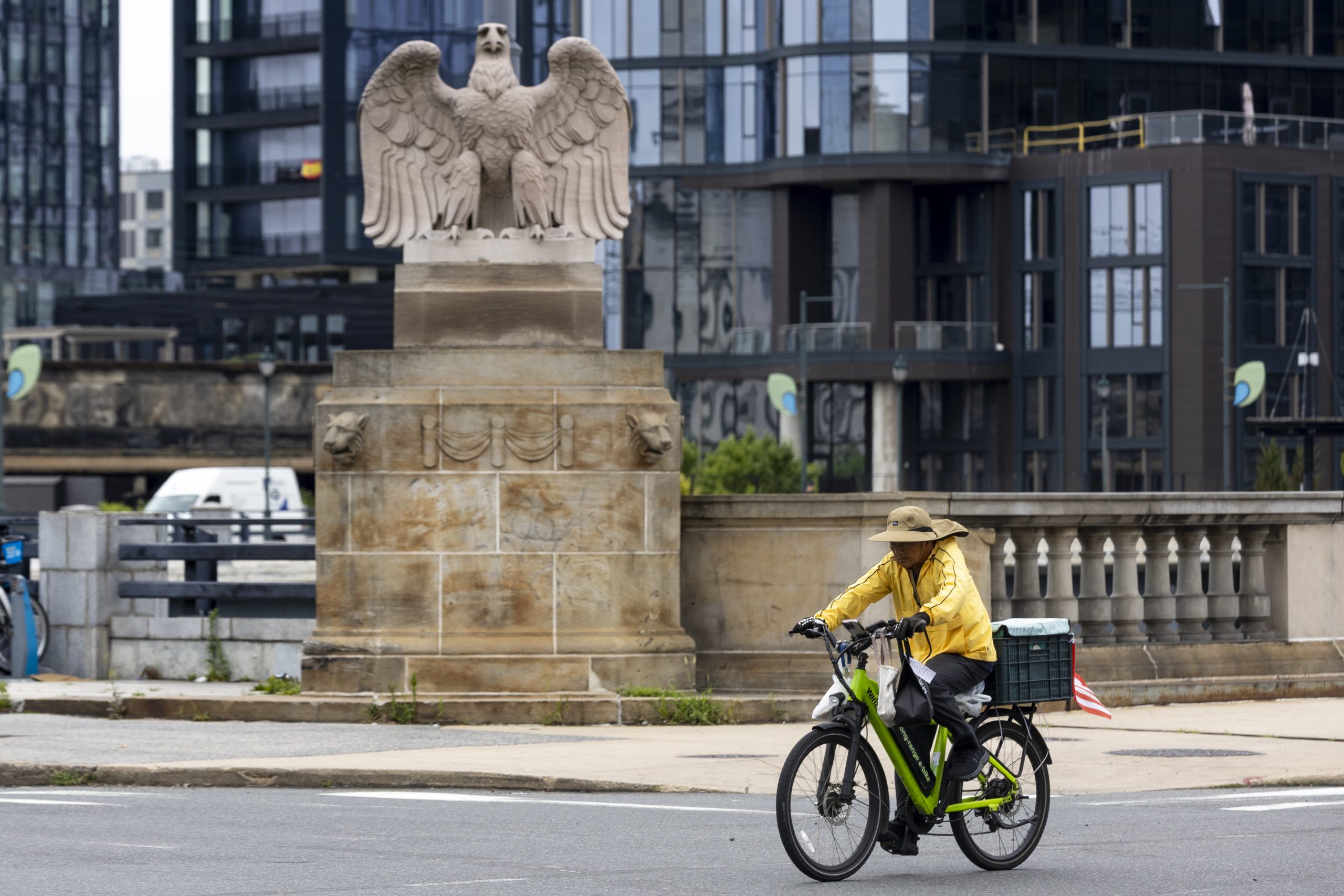
A delivery driver riding an e-bike drives past an intersection on Walnut Street in West Philadelphia on Tuesday, July 7, 2026.Aidan T. Gallo / Staff Photographer
State law authorizes the use of low-speed electric bikes — those that weigh less than 100 pounds, have engines that generate no more than 750 watts, and travel below 20 mph — on public roadways. E-scooters are not street legal in Pennsylvania.
This narrow definition, however, does notdifferentiate among the many new types of electric bikes or e-scooters for sale, which can reach speeds of 60 mph or even 100 mph.
(function() { var l = function() { new pym.Parent( ‘crash-types3__graphic’, ‘https://media.inquirer.com/storage/inquirer/ai2html/crash-types3/index.html’); }; if(typeof(pym) === ‘undefined’) { var h = document.getElementsByTagName(‘head’)[0], s = document.createElement(‘script’); s.type = ‘text/javascript’; s.src = ‘https://pym.nprapps.org/pym.v1.min.js’; s.onload = l; h.appendChild(s); } else { l(); } })();
Two states, two speeds
Governmental response has been uneven, with neighboring states moving in opposite directions and local jurisdictions sometimes banning e-bikes and e-scooters or enacting bespoke rules.
“What we’re seeing right now is sort of a wild, wild west,” said State Sen. Tim Kearney, a Delaware County Democrat.
Kearney wrote and introduced “Abby’s Law” — SB 1008 — in September last year.
The bill says no person under 16 could operate a privately owned “low-speed electric scooter” on public roads; a helmet would be required until age 18. The bill would set a uniform 20 mph speed limit and prohibit tandem riding on e-scooters.
Local police would issue summonses for those and other traffic violations by riders. Municipalities could increase penalties for second and third violations, as long as the fine is no more than $250.
(function() { var l = function() { new pym.Parent( ‘crash-types3__graphic’, ‘https://media.inquirer.com/storage/inquirer/ai2html/crash-types3/index.html’); }; if(typeof(pym) === ‘undefined’) { var h = document.getElementsByTagName(‘head’)[0], s = document.createElement(‘script’); s.type = ‘text/javascript’; s.src = ‘https://pym.nprapps.org/pym.v1.min.js’; s.onload = l; h.appendChild(s); } else { l(); } })();
In New Jersey, former Gov. Phil Murphy, a Democrat, signed the most restrictive electric cycling law in the nation on his last day in officeearlier this year. The law, which takes effect later this month,requires all e-bike users to obtain a license and register their devices with the New Jersey Motor Vehicle Commission, even if they do not go over 20 mph.
Models that can travel between 21 and 28 mph or have a throttle are classified as “motorized bicycles” and must also have liability insurance. The lower-powered e-bikes provide “pedal assist,” which cuts off at 20 mph.
Enforcement could be tricky, especiallyat the Shore. The MVC says out-of-state visitors can ride legally, but language in the law appears to grant the exemption just to people who have registered devices in their home states. That is not an option in Pennsylvania.
The MVC is now taking reservations for appointments; officials have acknowledged the deadline might need to be extended.
E-scooters with a top speed of 19 mph are legal.
In Pennsylvania, more than a year after Abby Gillon’s death, Kearney’s bill has not had a public hearing or a vote in the Senate.
“We need to get people to acknowledge what’s actually happening on the road, and then stop sticking our heads in the sand about the various bureaucratic reasons not to move forward with it,” Kearney said.
Wide use, thin information
Government officials face challenges identifying and classifying the many varieties of electricbikes and scooters — also known as micromobility vehicles — transportation activists and state officials said. That makes information, including about crashes, hard to come by.
PennDot, for instance, began counting electric bikes and scooters separately from pedal cycles, unmotorized scooters, and pedestrians for its annual tally of crashes only in 2024.
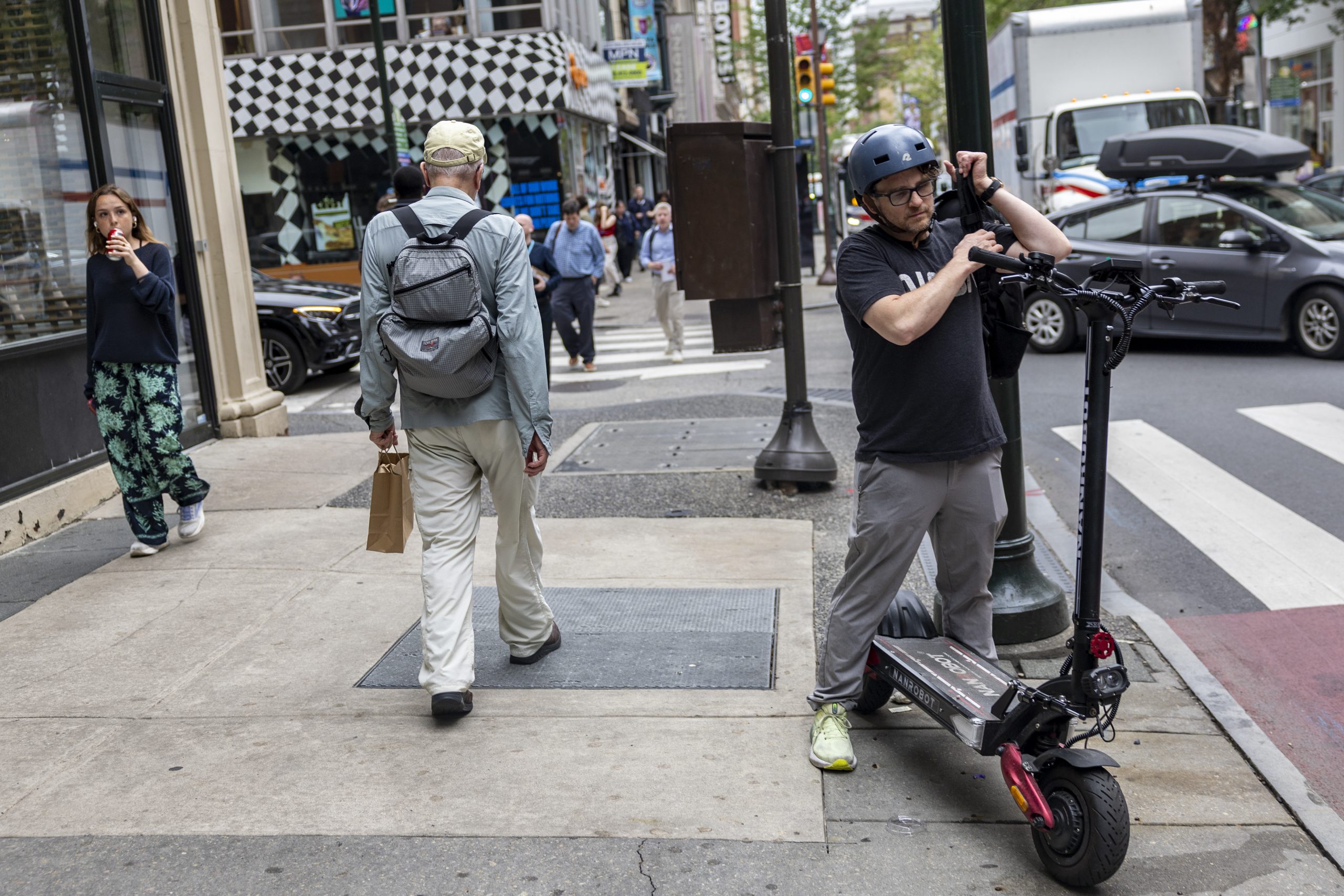
A man gets ready to leave on his electric shooter in Center City.Aidan T. Gallo / Staff Photographer
After a vehicular crash, law enforcement is required to report to PennDot details of crashes that involve injuries, fatalities, or significant damage to vehicles.
Regarding the data prior to 2024, Robert A. Ranieri, crash-analysis manager at PennDot, said via email: “I don’t find that fully reliable since we didn’t look at all the narratives and the police may not have reported them properly at the time.”
While his office works to verify the data, “not all reports are touched by my staff,” Ranieri said.
Similarly, the crash data on electric bikes likely include vehicles known as e-motos, which look like pedal bikes but go faster than 20 mph, said John Boyle, research director at the Bicycle Coalition of Greater Philadelphia.
In general, e-motos being lumped in with e-bikes is causing a lot of issues as communities and states try to regulate the higher-speed micromobility devices, Brunet said.
E-scooter law is ‘basically ignored’
The recently released PennDot data include at least 92 crashes in Philly involving e-scooters, which are technically illegal to ride on public streets in Pennsylvania.
Last year, there were four reported fatalities involving e-scooters, though they made up only 14% of micromobility devices, according to the Bicycle Coalition’s 2025 bike count data.
Standard bikes, in comparison, resulted in the same number, a total of four deaths, last year.
“Some of the e-scooters have a top speed of 60 mph, which is crazy fast,” Boyle said, but “the law is basically ignored.”
There is a gray market of electric scooters and bikes available for purchase, transportation experts told The Inquirer.
“You can purchase electric bikes or scooters for $800 on Amazon and they have 1,000 to 2,000 watts,” Boyle said.
The bikes are sometimes marketed as “Class 2,” meaning their motor tops out at 20 mph, but with a few basic adjustments can easily go faster, Boyle said.
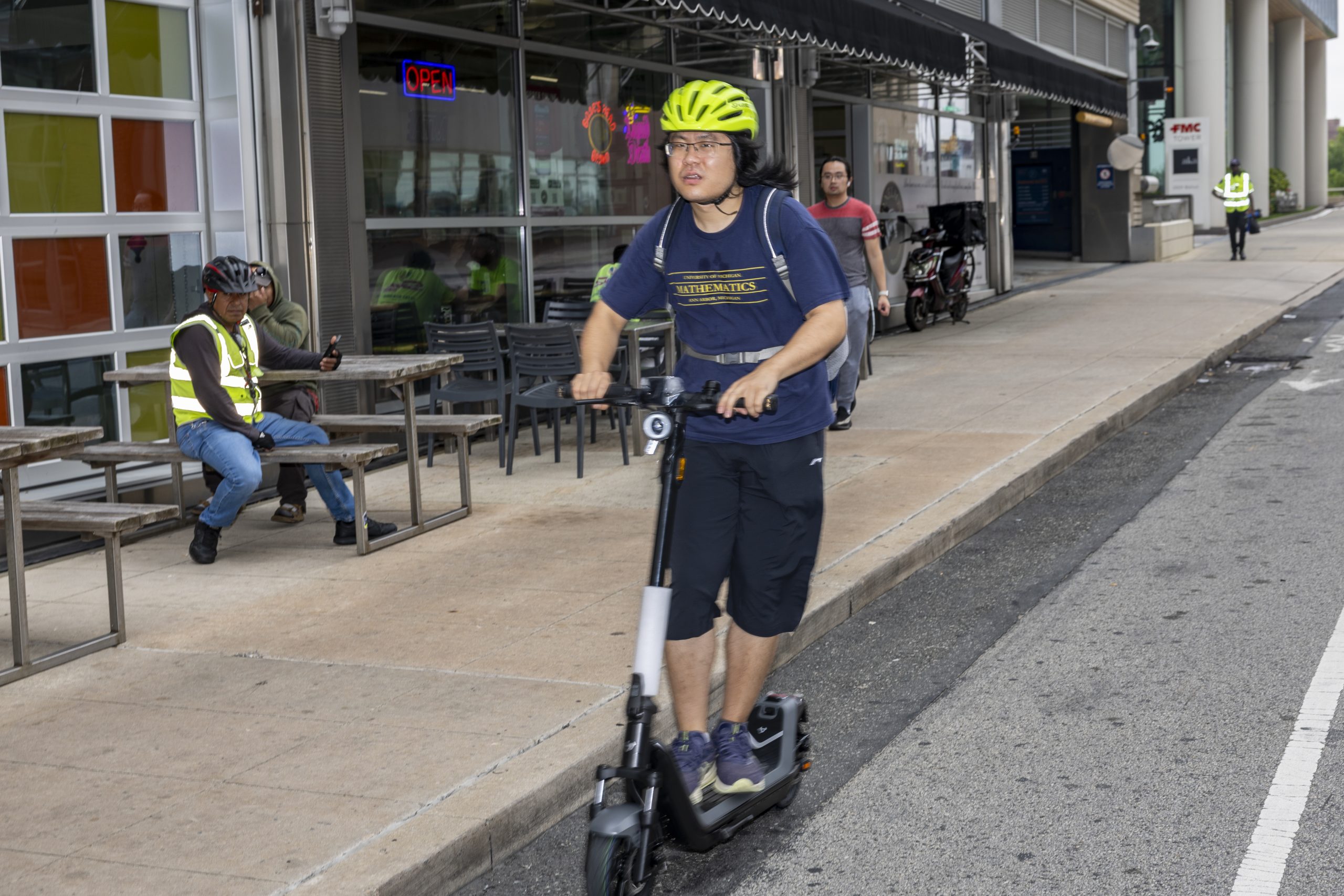
A man rides an electric scooter down a bike lane near Drexel University’s campus.Aidan T. Gallo / Staff Photographer
Motorcycles, unlike e-motos, have quality standards and regulations. When it comes to selling a motorcycle in Pennsylvania, dealerships are required to handle legal requirements, title transfers, and state registrations.
Reiningin the manufacturers and dealers of electric bikes, motos, and scooters is an important step, Boyle said, but the state first needs to better define in the law what electric bikes and scooters are.
Brunet, president of PA Safe Roads PAC, said her organization supports the Safe System approach to transportation safety, which involves education, enforcement, and infrastructure.
“Philly just needs to keep building better bike infrastructure. … There is definitely a lot to do to make roads safer so that the people choosing these devices get home safe,” Brunet said.
Several bills to regulate e-scooters have been proposed in the state legislature, but none have been passed.
Special legislation gave Pittsburgh the right to test a shared e-scooter rental program in partnership with Spin, a private company, from 2021 to 2023, when the trial expired.
Kinkead called it a success, noting her north Pittsburgh district has steep hills and limited transit links.
“What I saw … was not college kids goofing around, it was people who were trying to get around the North Side with grocery bags,” Kinkead said at a recent public hearing on the bill.
The city had 230,000 unique e-scooter users during the test, said Ryan Seiferet, who managed the program for the Pittsburgh Department of Mobility and Infrastructure.
A survey of about 1,000 participants showed 44% of e-scooter riders used them to get to work and one-third to travel between transit stops and home. Regular users tended to have low incomes.
While rules are needed in the state, especially for privately owned scooters, “We want to make sure we aren’t penalizing or disincentivizing a valuable micromobility travel option” for people, said Jessie Amadio, an organizer for Philly Bike Action.
The electric scooter program was relatively safe, with one reported injury per 17,000 rides, according to a DOMI report.
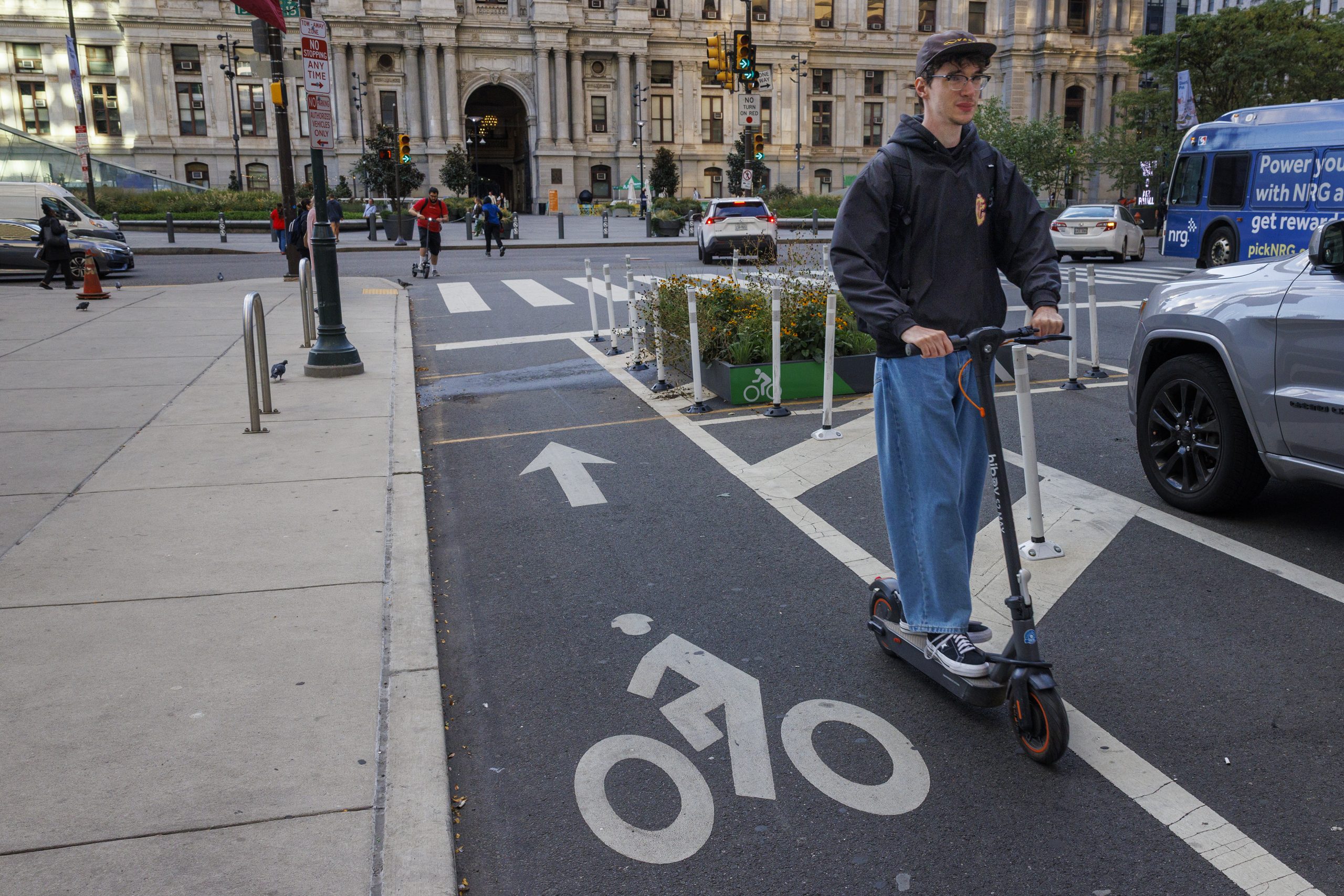
Electric scooters going against directed traffic flow at Market Street at 15th in Center City.Alejandro A. Alvarez / Staff Photographer
News site Next Pittsburgh found, however, that a handful of the injuries were serious and, in some cases, life-threatening. Spin planned to deploy scooters with larger tires for stability, the site reported.
Kinkead said shared e-scooters can be tightly controlled in agreements between a city and an e-scooter firm; in Pittsburgh, the scooters could not exceed 15 mph, enforced by software. E-scooters stopped working if the rider strayed into a town that did not allow them.
Philadelphia, however, is opting out. Mayor Cherelle L. Parker’s administration asked that the city not be included in the shared e-scooter bill, said State Rep. Ed Neilson, a Democrat who represents a Northeast district and chairs the House Transportation Committee.
“Because of the historic nature of the city and the millions of people that come every year, we just don’t want to block or impede that,” Neilson told colleagues in the hearing.
Most agree that the state needs to take some sort of legislative action soon.
“Getting as far as we have gotten [with Abby’s Law] on the Senate’s desk and to still not have anything signed or put into order is very frustrating,” Lori Kralle said.
“What does it take? For another mother to get that phone call?” she added. “I don’t wish that on anybody.”
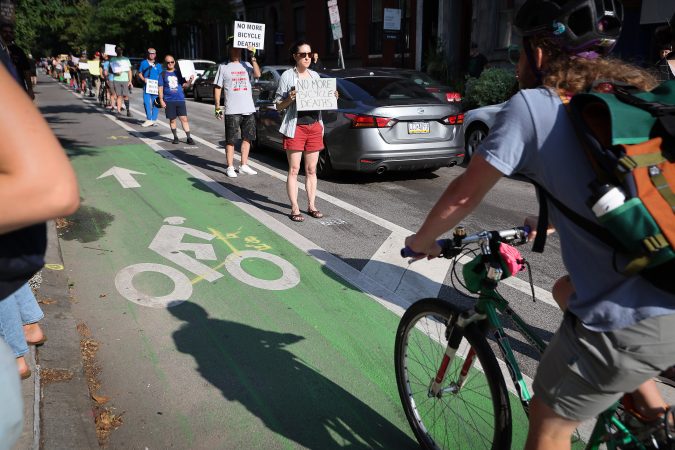
A Philadelphia judge has blocked the city from resuming work to upgrade protections for the bike lanes along Pine and Spruce Streets in Center City, the latest turn in a high-profile legal battle.
In an order dated July 6, Common Pleas Judge Damaris L. Garcia denied the city’s motion to dissolve an August 2025 injunction that had stopped the Streets Department from making certain changes.
“This is a very significant ruling in this case,” said George Bochetto, the lawyer for FOP.
The Streets Department intended the zones to give residents, delivery trucks, and contractors places to stop without parking in the bike lanes.
A ban on stopping in bike lanes was enacted in 2024 after a physician, Barbara Friedes, was killed by a drunk driver while cycling on Spruce Street. The crash helped galvanize support for a a parking ban in the bike lanes, and a planned upgrade, including with curb-styleconcrete barriers between traffic and the bike lanes.
“It’s a disappointment,” Jessie Amadio, an organizer with Philly Bike Action, said of the latest ruling. “There has been a tremendous amount of grassroots support, keeping the civic pressure on for two years.”
City Council passed an ordinance last year empowering the Streets Department to make any parking changes it deemed necessary. That cleared up any ambiguity, city lawyers argued in a hearing last month.
The judge’s decision dealt a blow to the loading zones, but did not address the bigger question of whether the city has the right to improve bike-lane protections.
FOPS amended its lawsuit to include a new complaint that the ordinance violated Sunshine Law requirements that lawmakers conduct business in the open. In addition, it alleges that Council violated the separation of powers in the city charter by delegating lawmaking to the executive branch.
That challengeis pending and set for trial next year.
“I’ll also say this: There are a lot more dangerous things happening in those bike lanes, with e-bikes and e-scooters,” Bochetto said. He said a girl on an e-scooter crashed into a light pole near his house, captured by security cameras.
Garcia did not write an opinion explaining the order.
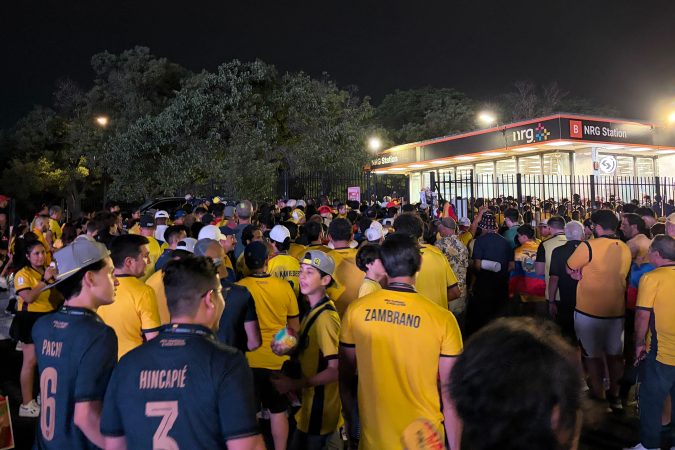
After Brazil beat Haiti in a World Cup match last month, 29,162 fans swarmed NRG Station to catch the subway.It was SEPTA’s second-highest reported crowd for a single stadium-complex event.
And the largest? The 31,087 people rode the B line after the Eagles won the NFC Championship in January 2025.
For three summer weeks, Philadelphia visitors leaned on transit — 155,333 passengers rode the subway also known as the Broad Street Line alone, SEPTA said.
From June 14 through July 4, the city hosted six World Cup matches, FIFA’s Fan Fest, and celebrations of the 250th anniversary of Independence Day.
“This was a unique opportunity for SEPTA — possibly one we will not get again for many years,“ spokesperson Andrew Busch said. ”We think there is a lot we can learn that will help improve special event service and everyday operations.”
Regional Rail also saw bumps in ridership, as did transit, primarily bus routes, serving the Fan Fest at Lemon Hill in Fairmount Park, SEPTA said. Bus routes 32 and 48 provided direct service, while Routes 7 and 49 had stops within walking distance of the festival entrance.
It helped that Brazil and Haiti’s June 19 game fell on the federal holiday of Juneteenth … and that sponsor Airbnb paid SEPTA to provide free rides home for people using the Broad Street Line on match days between halftime and the final whistle.
On July 4, when Paraguay and France met in an elimination round game and people were coming to Independence Day events, ridership on the overall system was up 15% compared to the previous year. Broad Street Line ridership was 62%; Regional Rail was up 48% and the lines serving FanFest were up 21%.
Transit agency analysts focused on post-match boardings on northbound trains at NRG Station because it was the most straightforward way to identify fans who attended the game and traveled on SEPTA, officials said.
Some riders headed to the stadium area were going to Stateside Live or checking out pregame festivities.
Customer service lessons learned, according to SEPTA:
Using megaphones to communicate with riders in crowded stations broke through the noise, helping people unfamiliar with SEPTA navigate.
Bringing a DJ to NRG Station soothed post-match crowds waiting for outbound trains. “More than a couple of dance parties broke out, and we think it helped keep the atmosphere festive,” Busch said.
SEPTA moved its start and end point for the B Line for the Sports Express trips from Fern Rock to Girard, easing crowds in Center City and shortening turnaround time.
Ridership on the Airport Regional Rail line typically increased 20% or more on the day before and day after a match.
Regional Rail’s Trenton line on the Northeast Corridor also carried more passengers than usual, as people took NJ Transit from New York City and northern New Jersey and connected to SEPTA.
While there were complaints about crowding, few major incidents were reported.
SEPTA gets another test next week with the MLB All-Star Game July 14 and related events, though they are expected to have a smaller impact.
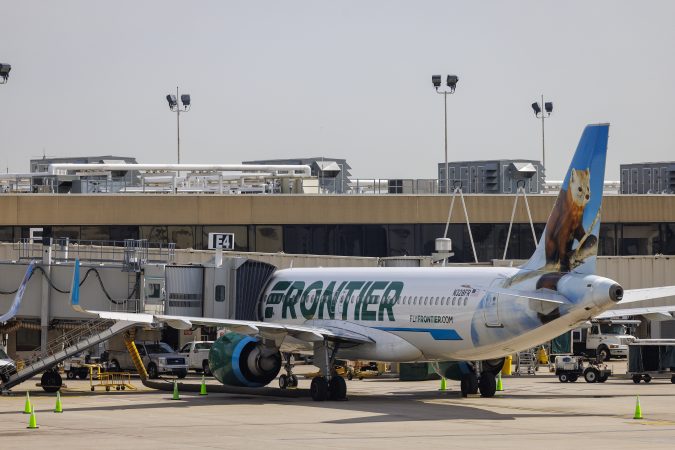
Frontier Airlines has begun new nonstop daily service between Philadelphia International Airport and Detroit, taking over a route formerly operated by discount carrier Spirit Airlines.
The service began Sunday, the airline said, adding that it is offering a special introductory one-way fare of $79 between the two cities.
“We are pleased to grow our service at PHL, ensuring low-cost travel options remain available for consumers,” Josh Flyr, vice president of network and operations design at Frontier, said in a statement.
The airline is touting othernew products, including UpFront Plus seating, an option with extra leg and elbow room in the first two rows of the aircraft, the airline said. UpFront Plus customers are guaranteed an empty middle seat.
Frontier carried about 3.1 million passengers into and out of PHL during 2025, ranking second after American, the airport’s dominant carrier, with over 20 million passengers last year.
It operates primarily from 17 gates in Terminal E.
The promotional $79 tickets must be bought before 11:59 p.m. July 12. They apply to select nonstop flights for travel between Aug. 3 and Sept. 2, according to Frontier.
Spirit Airlines had been in chapter 11 bankruptcy and was seeking a $500 million federal bailout to keep going. No deal was reached, so it closed and liquidated its fleet of planes. Spirit had high debt and was struggling under the weight of rising costs, especially of fuel.