Author: The Inquirer Editorial Board

  • Trump’s Supreme Court is still helping him try to steal elections | Editorial

    Trump’s Supreme Court is still helping him try to steal elections | Editorial

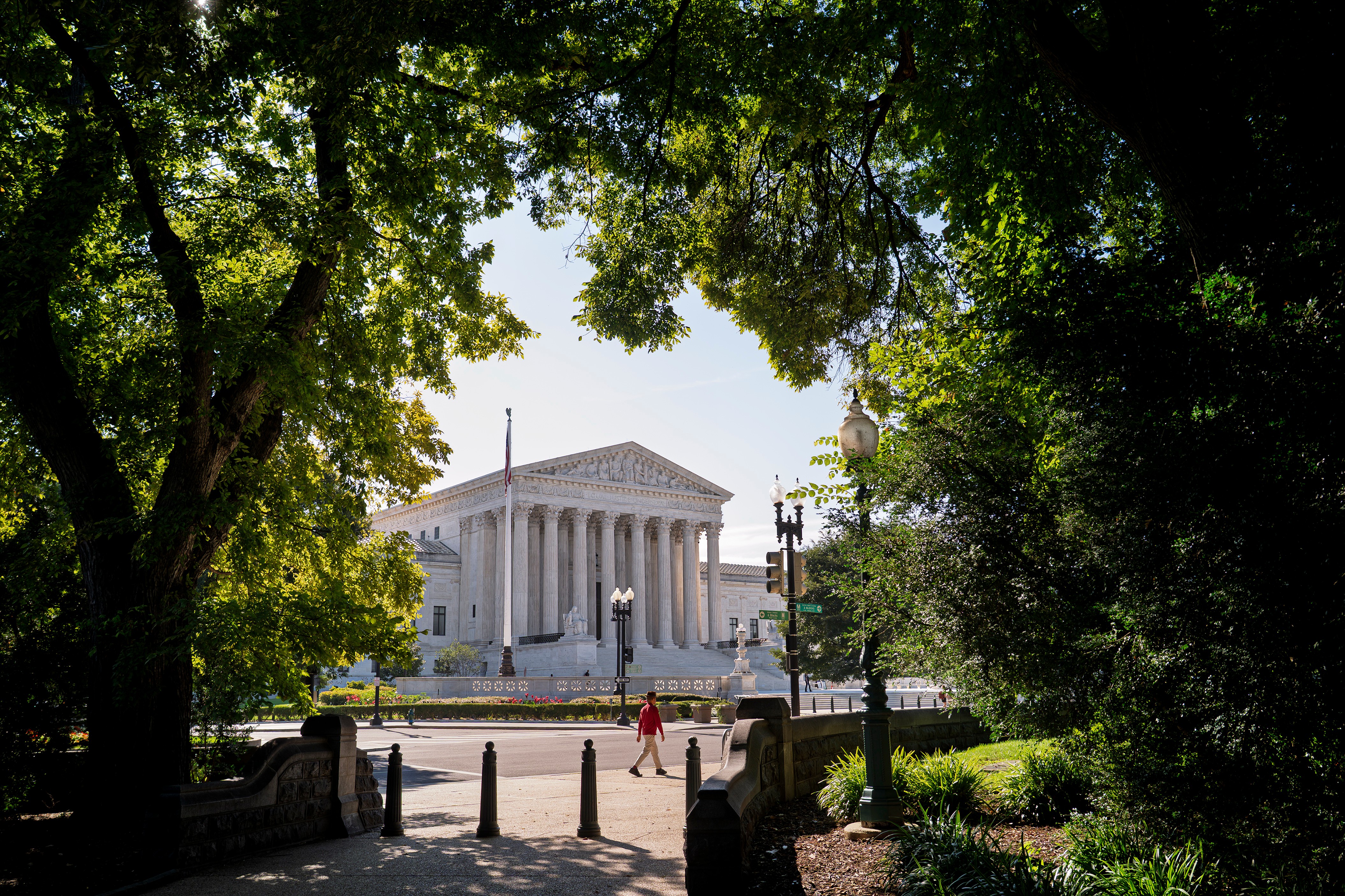
    The U.S. Supreme Court, as one of its members recently noted, has held that judges “are not required to exhibit a naiveté from which ordinary citizens are free.” And yet, that is precisely what its conservative justices just did.

    Considering one of Donald Trump’s latest attempts to illegally suppress votes, the court’s Republican-appointed majority was — or pretended to be — so naive as to fail to notice the president’s plain intent.

    At issue was Trump’s March order directing the U.S. Postal Service to restrict mailed ballots by delivering only those sent by “confirmed” citizens listed by the U.S. Department of Homeland Security.

    The court allowed the government to proceed with this plot on the grounds that it wasn’t fully hatched. Because postal and other officials hadn’t yet developed a full-fledged plan to meddle with the election, the justices reasoned, it was too soon for Gov. Josh Shapiro and 22 other state officials to sue to stop them.

    The ruling came, by the way, with just over two months left until the midterm elections, and some mail-in ballots expected to be sent to voters in less than a week.

    It doesn’t take half a dozen elite jurists poring over this set of facts to understand what’s going on.

    It isn’t genuine presidential concern about a means of voting that Americans have practiced since the Civil War and even beforehand — Pennsylvania pioneered military absentee ballots in the War of 1812 — and which Trump used as recently as this month, when he cast his ballot by mail in Florida.

    Rather, the president is trying to head off a well-earned midterm shellacking of his fellow Republicans in Congress any way he can other than by actually persuading Americans to vote for them. He has already pushed unprecedented partisan gerrymandering, lobbied for legislation to make voting harder, and after his 2020 defeat, attempted to overturn results with fraud and violence. The Supreme Court helped him get away with that, too.

    But it’s not impossible for a federal judge to dispense with a state-sponsored attack on democracy swiftly, decisively, and appropriately. We know that because it’s what happened when U.S. District Judge Indira Talwani ruled on Trump’s mail heist in June.

    The Boston-based judge blocked the president’s executive order until after the midterms in light of the elections’ imminence and because, as she succinctly put it, “The Constitution does not grant the President any specific powers over elections.” As Talwani pointed out, the founding document delegates authority over elections to Congress and the states, neither of which ever asked a post office to take over for them.

    The judge is not an outlier here: The First U.S. Circuit Court of Appeals upheld her decision in July, noting that the administration hadn’t even argued that Trump’s order was legal, only that it was too soon to consider it. The appellate court added that the states, given the approach of elections they play a substantial role in running, had “no practical choice but to respond” to the executive order when they did.

    It’s not impossible for a member of the Supreme Court to recognize reality when she sees it, either. In dissenting from the majority, Justice Ketanji Brown Jackson wrote that “what makes today’s ruling so off-base is the Court’s lack of situational awareness.” She added that her colleagues overlooked the administration’s “actual objective: to secure our imprimatur for its effort to foment chaos ahead of the November elections.”

    As unstinting as Jackson’s dissent is, her attribution of the majority’s decision to obliviousness is charitable. The problem is less likely that the Republican appointees don’t know what Trump is up to than that they don’t care.

    While the court’s ruling isn’t close to the end of the legal challenges to Trump’s scheme — another lawsuit was filed Wednesday in response to the Postal Service’s newly finished plan to lose our votes in the mail — it does perpetuate unnecessary confusion over a popular means of participating in a crucial election. Even if the president is never permitted to block ballots outright, bewildering the people who cast them will serve his purposes just fine.

    In an age of official disinformation and artificial intelligence, the country could use some clarity. Fortunately, we have a Constitution that provides a crystalline degree thereof on the subject of authority over elections. Unfortunately, we have a Supreme Court that refuses to acknowledge the obvious.
  • Trump’s tariffs prove even Canada can’t afford to be nice to the United States anymore | Editorial

    Trump’s tariffs prove even Canada can’t afford to be nice to the United States anymore | Editorial

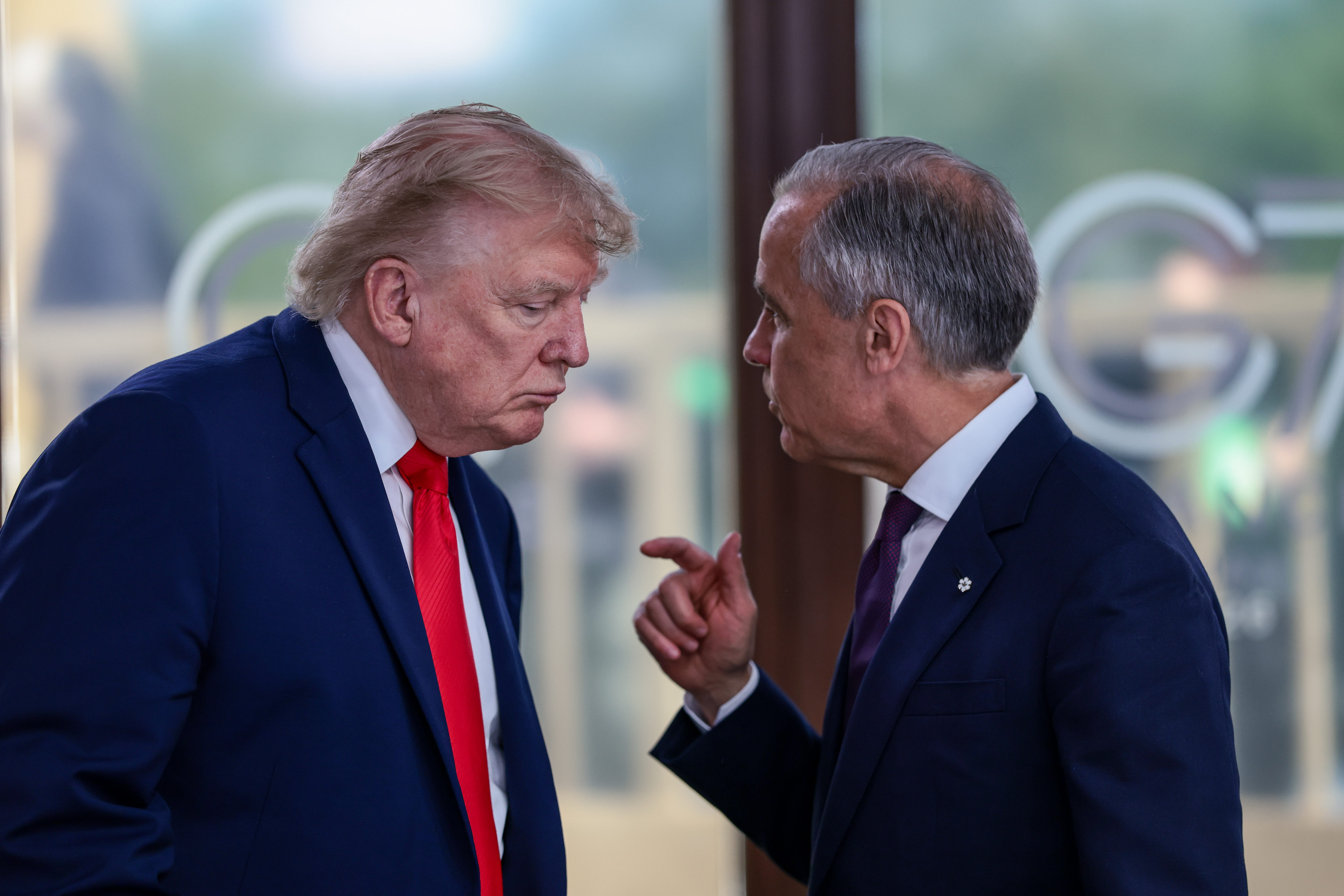
    It fell to Canada, a country famous for friendliness, to demonstrate the limits of an age-old friendship with the United States. After a decade of dealing politely with President Donald Trump’s manic ricocheting between trade agreements and trade warfare, supplies of northern niceness are sorely depleted, and rightly so.

    Prime Minister Mark Carney’s defiance in the face of his neighbor’s unprovoked bullying should inspire other traditional American allies to abandon appeasement and stand up for their values, the only response to Trump that has ever been effective.

    Negotiations to avert the president’s latest threat to impose punishing tariffs against one of our largest trading partners broke down last week after Canadian officials withdrew from the talks. Already contending with an untrustworthy U.S. government whose “signature is written in pencil,” as Carney put it, Canada appears to have been pushed too far by inconsistency within the Trump administration and demands that infringed on its sovereignty and identity.

    American officials reportedly tried to dictate restrictions on Ottawa’s trade relations with other countries and limit requirements to comply with Canada’s official recognition of French as well as English, one of its most sensitive domestic political issues. Carney instead opted to “hit back” against Trump’s 50% taxes on Canadian whiskey, plywood, and other goods with levies on American dairy, steel, and appliances, among other exports.

    So has Trump managed to end more than a century and a half of peaceful trade relations in favor of costly and counterproductive trade hostilities? “You’re at war when you’re attacked,” Carney said last weekend, “and we got attacked.”

    It’s a preposterous turn of events by any rational analysis.

    Having endlessly demagogued the North American Free Trade Agreement (NAFTA), Trump renegotiated and rebranded it in his first administration as the United States-Mexico-Canada Agreement, which he declared “the largest, fairest trade agreement ever achieved.” Having never been particularly hung up on consistency or coherence, he proceeded to violate his own NAFTA 2.0 soon after returning to the White House, threatening Canada with tariffs over fentanyl smuggling, wildfire smoke, and other nonsensical grievances. He imposed the latest import taxes after Canada had the temerity to retaliate against U.S. tariffs levied last year.

    Trump’s repeat economic assaults on the Great White North are at least partly a manifestation of his antiquated authoritarian obsession with territorial expansion. He has menaced Canada with annexation, griping during the latest standoff that it can’t enjoy the free trade benefits a U.S. state does while refusing American dominion. As is typical of his blinkered ideology, this completely misses the reality that the two countries’ more than $700 billion trade relationship is by definition mutually beneficial, a basic economic principle he seems incapable of grasping.

    Carney, by contrast, has been more perceptive than most world leaders. While other longtime allies have tried to preserve good relations through submission, the Canadian prime minister understood that those alliances have effectively ended.

    In January, he noted that the world is “in the midst of a rupture, not a transition,” one that his and other less powerful countries must recognize and adapt to. His insight was probably informed by the circumstances of his own election, which Trump inadvertently assured by angering Canadian voters, causing a surge of support for a liberal expected to be less friendly to the president. Carney continues to give his outraged public what it wants.

    The ensuing standoff could make Canadians’ lives more difficult, but it will also hurt Americans already weary of tariff-fueled inflation, which is the opposite of what Trump’s campaign promised. Given the potential repercussions for the midterm elections, the president could soon face more opposition not just from Canada’s government, but also from ours.

  • Shapiro deserves kudos for data center regulation efforts. But he can’t do it alone. | Editorial

    Shapiro deserves kudos for data center regulation efforts. But he can’t do it alone. | Editorial

    Gov. Josh Shapiro’s sweeping executive order to slow the burgeoning data center development boom in Pennsylvania is a good first step, but it does not go far enough in curbing looming challenges to the state’s energy and water supply.

    Shapiro’s directive is a sharp reversal from just a year ago, when he embraced high-tech investment in the commonwealth. Since then, bipartisan public sentiment has turned against data centers as reports about the downsides have come to light.

    Even if Shapiro is following the polls instead of his gut, he deserves credit for listening to his constituents. Too many elected officials these days ignore voters once they get into office. (We’re looking at you, Sen. John Fetterman.)

    Shapiro’s executive order certifies standards that he initially pitched as voluntary. Under the measure, all data center projects will be required to follow environmental, economic, and transparency requirements that are outlined in Shapiro’s so-called Governor’s Responsible Infrastructure Development benchmarks.

    The governor’s mandate includes several other requirements for data centers regarding water conservation and the need to provide their own electricity generation or pay the costs associated with increased usage. The order also demands data centers provide community benefit agreements that include promises to hire and train local employees along with investments in schools or infrastructure.

    Those are major improvements over the state’s initial efforts to essentially bend over backward for Big Tech. Yet, more must be done to protect Pennsylvanians and the environment.

    For starters, it makes no sense to offer lucrative tax breaks to data centers, which are largely being built by deep-pocketed companies controlled by mega-billionaires, including Sam Altman (OpenAI), Elon Musk (xAI), and Mark Zuckerberg (Meta).

    The state House voted to repeal the tax breaks in June, but the measure stalled in the Republican-controlled Senate.

    While Shapiro’s order gives local governments more control over data centers, it also creates the potential for a patchwork system in which one town opposes a center while a neighboring town approves its construction — with everyone in the region left to deal with the consequences. It may also leave poorer towns at the mercy of data center developers dangling economic development.

    To be sure, data centers are not all bad. They offer billions of dollars in construction investment, tax revenue, and job creation.

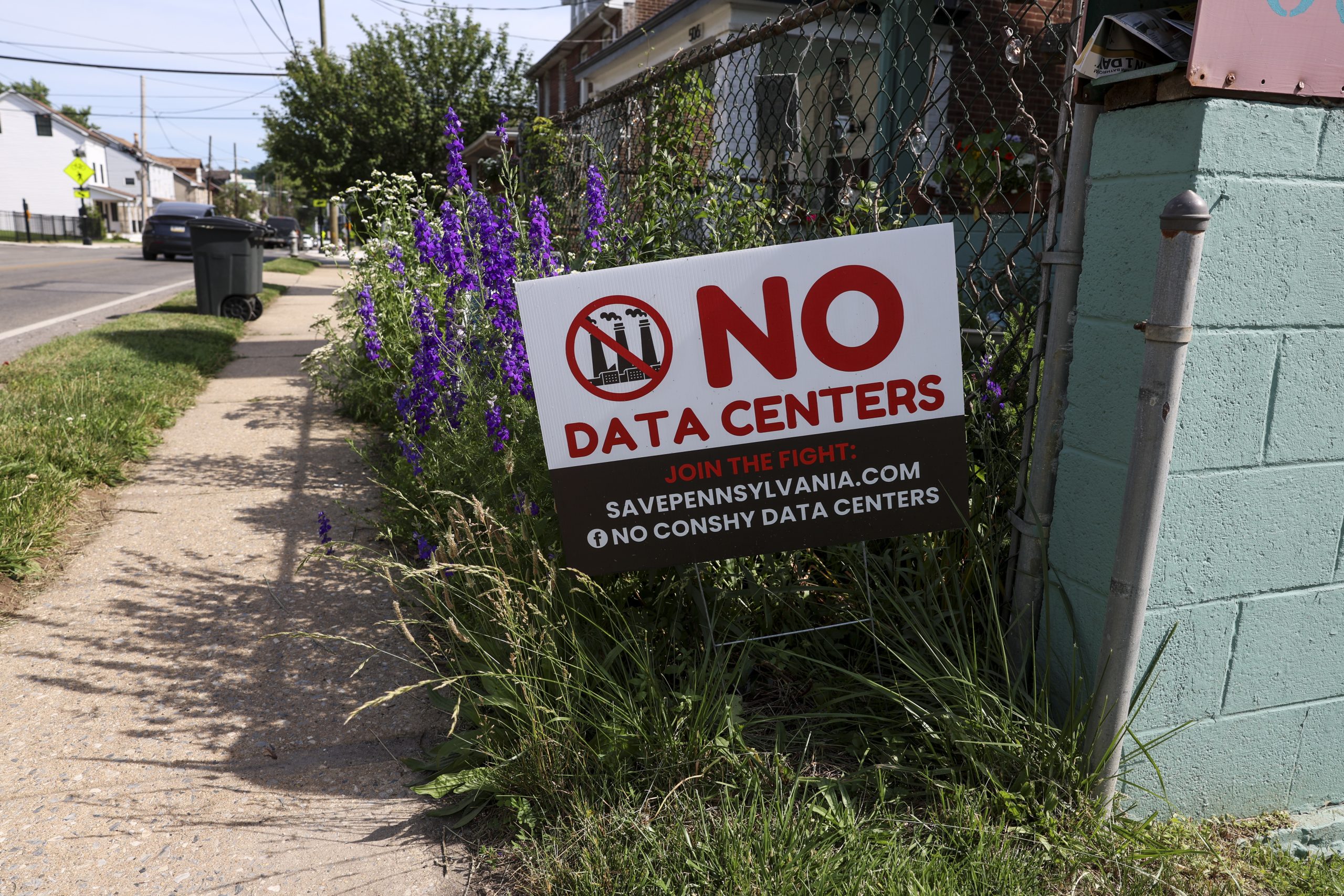
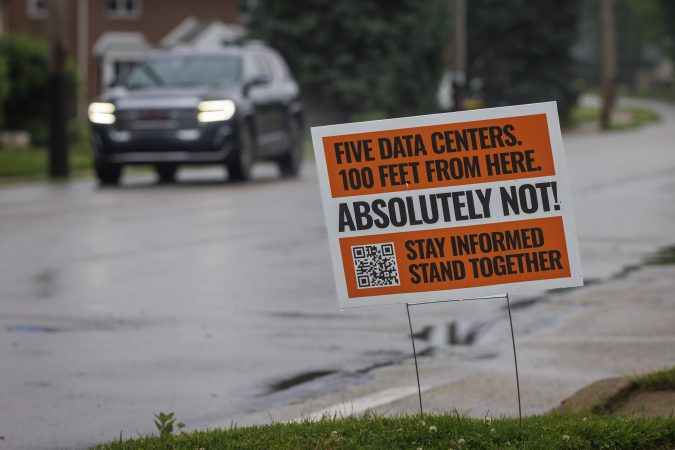
    A yard sign protests the proposed data center on New Elm Street near the closed Cleveland-Cliffs steel mill in Conshohocken.Monica Herndon / Staff Photographer

    But there are real concerns about the impact they will have — and are having — on the power grid and water supply. Residents have experienced sharp increases in electric bills, including a 20% increase in Pennsylvania since 2024.

    Some said data centers caused their water wells to run dry, while others have complained about noise pollution at the facilities, including one in Vineland, N.J.

    Electric executives across the country have warned of blackouts because of the surging demand for power from data centers.

    Then there are the real safety and environmental concerns about plans to restart the nuclear reactor at Three Mile Island in order to provide power exclusively for Microsoft’s artificial intelligence data centers. The nuclear plant near Harrisburg was the site of a partial meltdown in 1979.

    Pennsylvania lawmakers need to develop a comprehensive plan to address those concerns before the data centers get built and not after, when the bills literally come due to homeowners who will be left to shoulder higher utility costs.

    Data centers present both a major opportunity and a challenge not just for Pennsylvania, but for the country and the rest of the world. So it should not just be on Shapiro to try to find a fair balance.

    The most logical plan should include an all-out effort to expand the growth in clean energy to offset the power demands of data centers. Unfortunately, the political divide undercuts the viability of any such proposals.

    Donald Trump is a climate change denier who has worked relentlessly to undermine clean energy initiatives, while cozying up to oil executives. Meanwhile, Trump and recalcitrant Republican lawmakers in Harrisburg and Washington remain largely in the pocket of the billionaires behind data centers.

    One of the biggest data center cheerleaders is Pennsylvania’s billionaire Sen. Dave McCormick, whose wife landed a big job earlier this year at Meta to help lead their global business and artificial intelligence expansion. Meta is a major developer of data centers.

    Trump continues to champion policies that boost data centers and AI, which directly benefit his family’s lucrative cryptocurrency ventures that led to a windfall of more than $1 billion last year.

    Pennsylvania’s constitution guarantees residents the right to clean air, pure water, and environmental preservation. Shapiro and other state lawmakers should focus on how to ensure that constitutional guarantee before moving ahead with more data centers.

    Until a plan is in place, pausing data center development makes the most sense.

  • Trump’s war of choice in Iran is straining the armed forces for nothing | Editorial

    Trump’s war of choice in Iran is straining the armed forces for nothing | Editorial

    Donald Trump has authored a whole anthology of aphorisms demonstrating his deep disdain for the military he commands. He derided those killed in action as “suckers and losers,” said in reference to former prisoner of war John McCain that he prefers troops who weren’t captured, and said his “own personal Vietnam” was avoiding sexually transmitted infections while dating in New York City.

    The president’s latest entry arrived when he was asked about reports of miserable conditions and attempted suicides aboard the aircraft carrier USS Abraham Lincoln, which has almost nine consecutive months at sea and remains in the Middle East in support of his losing war. Trump replied that the deployment had been “not nearly long enough.” He and his defense secretary, Pete Hegseth, also denied the accuracy of the stories, which originated in military-focused publications hearing directly from the families of the ship’s sailors.

    Whatever happened to “We’re redoubling our efforts to get our troops everything they need,” “The American people appreciate their selfless service,” or “Here’s why these sacrifices are necessary”?

    Trump isn’t just congenitally unable to respond with proper respect and humility to the hardships he is requiring of the armed forces. He is also presiding over a war that is glaringly bereft of a clear mission, identifiable accomplishment, congressional authorization, or public support. The Lincoln’s increasingly grueling service symbolizes those failures as the hostilities drag on beyond Trump’s own deadline for a durable settlement.

    The Abraham Lincoln left San Diego with some 5,000 sailors and Marines aboard in November, and has made only two brief stops in port since. Its total deployment has now lasted more than 270 days, longer than almost any in the last half century. Since the actual Vietnam War — the one Trump skipped with the reported assistance of a sympathetic Queens podiatrist — the only more extensive deployment was of the USS Gerald R. Ford, which spent 326 days at sea, also under the Trump administration.

    During that time, the Ford suffered a fire that injured several sailors as well as serious plumbing problems, especially while it was supporting another of Trump’s unauthorized military engagements, in Venezuela. The Lincoln has also endured malfunctioning plumbing along with inadequate supplies of food and toiletries, strenuous consecutive weeks of combat operations, and mail disruptions — its logistical challenges magnified by Iranian attacks on U.S. bases in the region.

    The Lincoln’s low morale has been exacerbated by repeated extensions of its scheduled deployment with no end in sight until recently, when officials began promising relief in the wake of the damning reports of the crew’s struggles. The Military Times reported that two sailors had attempted to jump overboard out of despair. Adm. Brad Cooper, the leader of U.S. Central Command, who recently visited the Lincoln on a damage control mission, defended conditions aboard by noting that the ship has seen fewer mental health cases than other carriers, which isn’t the most reassuring commentary on the state of the fleet.

    The admiral also noted that deployments at sea are inherently challenging, which is surely true. The inevitable stresses of service are compounded, however, by the commander in chief’s inability to forthrightly acknowledge and honor the military’s sacrifices, let alone coherently explain why they’re being made or when they might end.

  • Trump is selling early access to his Truth Social posts — and, of course, there are no investigators in sight | Editorial

    Trump is selling early access to his Truth Social posts — and, of course, there are no investigators in sight | Editorial

    Donald Trump continues to enrich himself through rampant self-dealing while everyone else pays the cost of his failed policies — including the war in Iran, tariffs, and mass deportations.

    Now comes the latest pocket-lining scheme that reeks of insider trading.

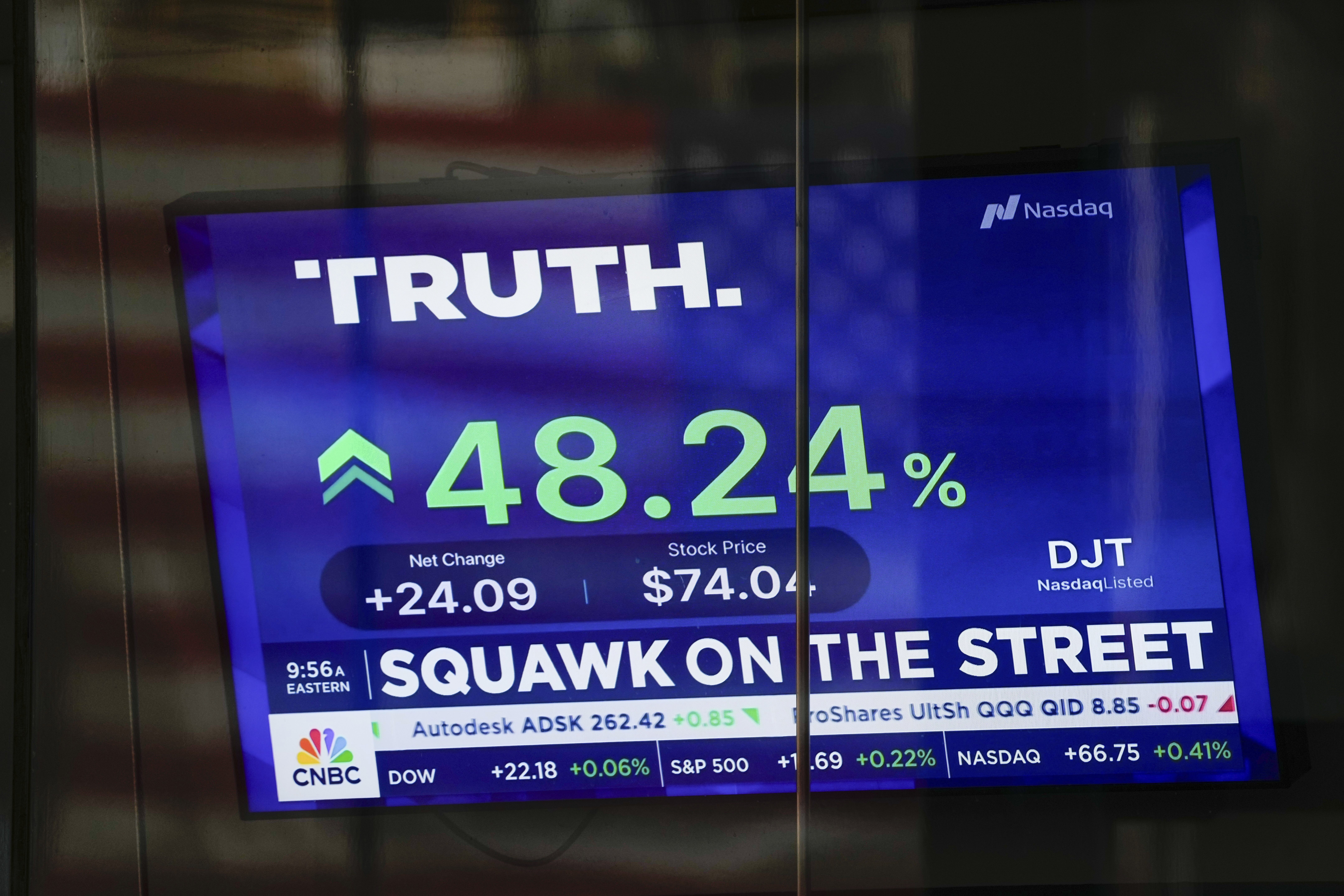
    Trump’s media company has begun selling investors advanced access to his often market-moving Truth Social posts. More than 10 customers are paying up to $100,000 a month to get an early peek at the president’s social media posts.

    The CEO of Trump Media and Technology Group (TMTG) told investors he expects more buyers to sign on, and that selling early access to the posts could “grow into a meaningful, durable contributor.”

    Joe Rogan, the podcaster and Trump supporter, asked the obvious question: “How is that legal?”

    Two media organizations sued Trump over the service, arguing it is unconstitutional, and Rep. Jamie Raskin (D., Md.) said it represents “the depraved essence of insider trading.”

    Trump is the majority owner of TMTG, which owns Truth Social, the main platform he uses to communicate to his followers and the world, sometimes going on unhinged rants and posting more than 100 times a day.

    But major announcements from Trump about issues such as tariffs, the erratic peace negotiations with Iran, and attacks on Federal Reserve interest rate policy often cause stock, oil, and bond markets to rise and fall.

    Advanced knowledge of such information will enable insiders who buy early access to profit from Trump’s posts. Indeed, suspicious trading ahead of some of Trump’s previous market-moving announcements has raised red flags of insider trading.

    Trump knows how to manipulate financial markets.

    Last April, he wrote on his social media platform: “THIS IS A GREAT TIME TO BUY!!! DJT.” Hours later, the president detailed a 90-day pause on nearly all his tariffs, causing the stock market to gain back about $4 trillion that had been lost in the previous days of trading.

    Trump has also used his presidential bully pulpit to bolster individual stocks.

    He touted Dell stock after founder Michael Dell and his wife, Susan, pledged to donate more than $6 billion to the “Trump Accounts” program. Shares of Dell jumped 7% after Trump urged investors to “go out and buy a Dell computer.”

    After shares of Tesla sank following Elon Musk’s disastrous tenure dismantling the government as the DOGE figurehead, Trump held an embarrassing promotional event outside the White House praising the cars.

    Commerce Secretary Howard Lutnick followed Trump’s Tesla promo by going on Fox News and urging viewers to buy the stock — an apparent violation of federal ethics rules that prohibit officials from endorsing products or businesses.

    The White House push boosted Tesla’s stock price.

    But don’t look for the U.S. Department of Justice or the Securities and Exchange Commission (SEC) to investigate Trump’s plan to sell access to his Truth Social posts.

    Todd Blanche, the newly confirmed attorney general who enriched himself as Trump’s defense attorney, refused to pledge that he will always act independently of the White House.

    SEC enforcement cases hit a record low during Trump’s first year back in office. The agency just dropped insider trading charges against a healthcare executive the president pardoned.

    Several Democratic lawmakers called on the SEC to investigate the Truth Social deal. But any real investigations of Trump’s moneymaking are unlikely until Democrats win control of the House or Senate.

    Trump made an estimated $2.2 billion last year on side hustles involving cryptocurrency, branding deals, real estate ventures, and legal settlements with media companies that blur the power of the presidency with profiteering.

    The Truth Social scheme will add to Trump’s pocket lining.

  • Trump would escape his endless war with Iran in a food truck if he could | Editorial

    Trump would escape his endless war with Iran in a food truck if he could | Editorial

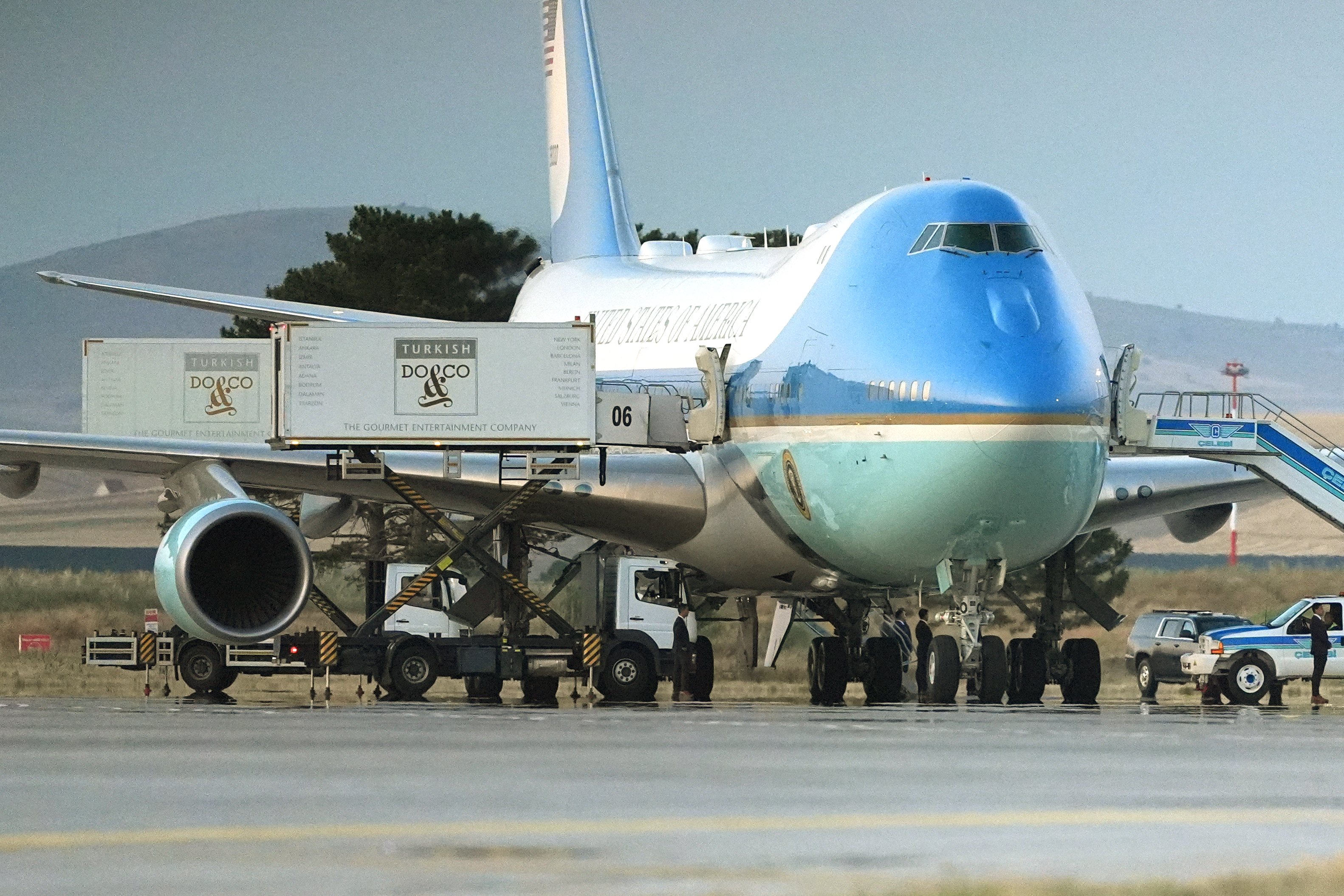
    The nation just learned that last month, when we thought President Donald Trump had fled his Qatari-donated luxury plane for the relative safety of a proper Air Force One, he was actually on a third plane out of Turkey. Fearing an Iranian assassination attempt, military and security officials had secreted him off the official aircraft and onto an Air Force C-32A inside a catering container.

    That left a plane full of staff and press to fly to England — and potentially into the ayatollah’s crosshairs — as his unwitting sacrificial stand-ins.

    Trump’s non-daring escape is an apt analogy for his self-defeating war with Iran. The president has reached a point of desperation to retreat from the conflict and save what little is left of his political hide. The rest of us, meanwhile, will be the unwilling targets of whatever consequences may come.

    Trump’s frenetic ricocheting among ordering air attacks, leveling idle threats, and engaging in half-hearted diplomacy with the Islamic Republic has increasingly given way to a palpable apathy about the whole losing endeavor. A week after his latest empty vow to unleash more shock and awe, he told Axios that the administration is “low-keying” the conflict and “only semi-negotiating” with Iran, whatever that means.

    His gambit in this “chess game,” he added, is to bide his time while the economic pressure on Iran does the work for him — never mind that the extremist regime has weathered such stresses for decades.

    In reality, as Trump has essentially acknowledged in confessing his fear of becoming the next Herbert Hoover, it’s he who has been economically checkmated. Tehran underscored the strength of its position last weekend by demanding Washington meet a series of additional conditions before it loosens its choke hold on the crucial Strait of Hormuz, sending oil prices upward.

    Handing Iran this powerful weapon is the chief achievement of Trump’s war — and the main reason he hasn’t given up despite his fervent desire to do so. Bereft of international allies and domestic support, he has no solution to a problem he created.

    A ground invasion to secure the strait, which could dramatically compound the cost of a war that has already wasted tens of billions of dollars and thousands of lives, is politically untenable, and the only alternative in the short term is continued Iranian control of the strait. The region’s fossil fuel producers have recognized as much by accelerating spending on pipelines and other means of circumventing the route, with further consequences for the price of oil and everything that relies on it.

    It’s a dramatic deterioration from the international order that allowed about a fifth of the global oil supply to routinely transit the waterway before Trump undertook his second unauthorized war with Iran.

    He has also exacerbated the threat of an Iranian nuclear bomb, the weapon that most worried the world before the regime could hold the global economy hostage.

    While Trump’s twin wars have degraded Iran’s nuclear sites, it still has substantial supplies of enriched uranium and no foreseeable international restrictions like those in place before the president dismantled them. And while Trump has continued to insist that preventing nuclear proliferation was the war’s primary purpose (among several other proposed rationales), he seems to be “low-keying” that mission, too, lately. The Wall Street Journal reported that he has told aides he is prepared to end the war without any agreement on the nuclear issue.

    Another oft-stated goal of the war, degrading Iran’s capacity to wage war and sponsor terrorism, looks similarly unrealized given the recently demonstrated ability of the regime and its proxies to endanger ships in the strait, U.S. bases and allies in the region, and even Trump himself.

    The image of the president of the United States being smuggled out of a NATO country in the back of a snack truck hardly suggests it’s the Iranian regime that has been humiliated.

    We should hope the administration gets our troops, as well as Trump, out of harm’s way by ending this war soon. The security and economic repercussions for America and the world, however, are bound to be far-reaching and long-lasting.

  • Trump’s vibes-based vaccine order promises to kill more kids | Editorial

    Trump’s vibes-based vaccine order promises to kill more kids | Editorial

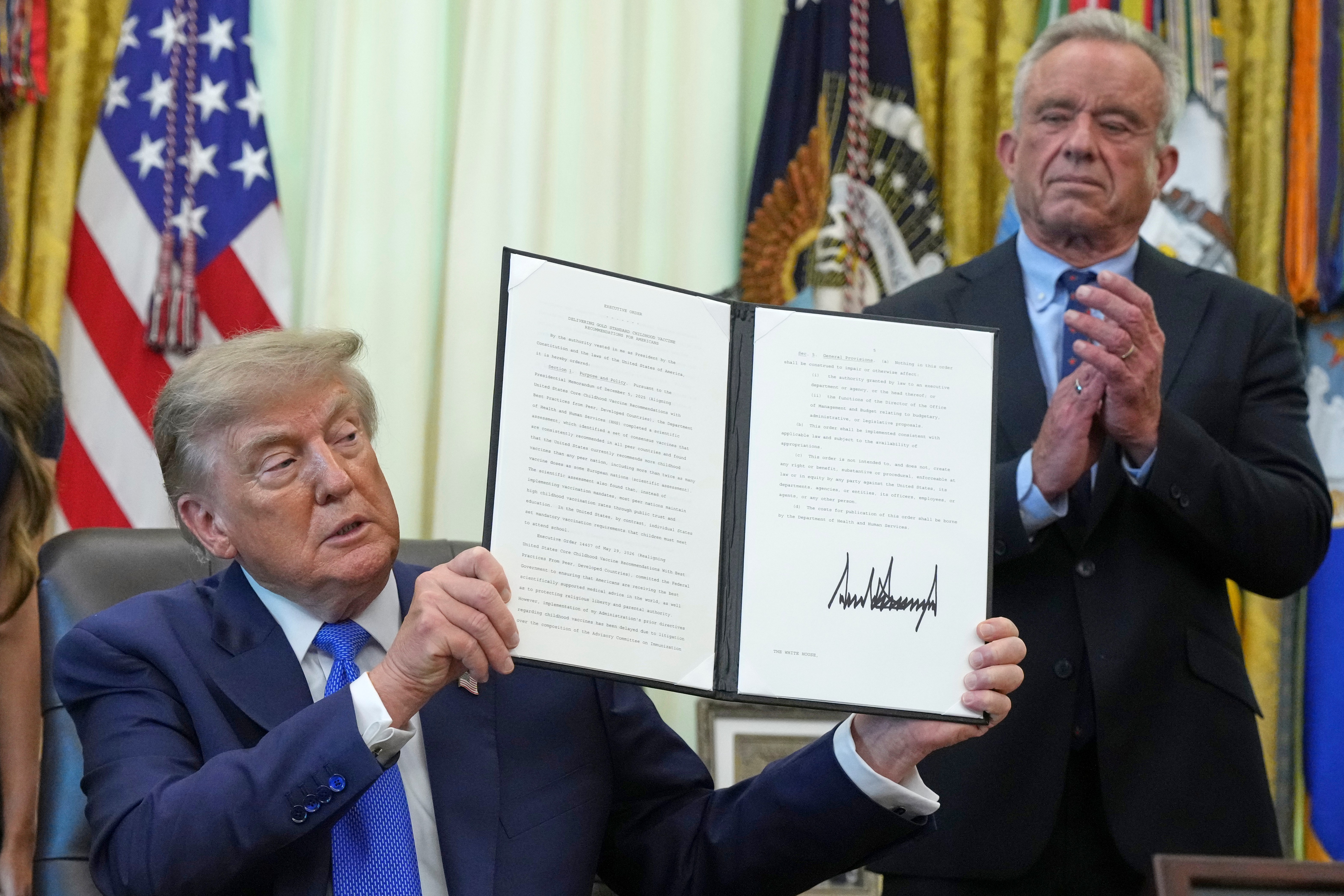
    The American Academy of Pediatrics noted this week that Donald Trump’s new “Gold Standard Childhood Vaccine Recommendations” are “not based on gold-standard science.” This is accurate but understated: They’re not based on science at all.

    The executive order, like the rest of the anti-vaccination crusade led by the president and Health and Human Services Secretary Robert F. Kennedy Jr., rests on vibes, superstitions, and folklore. It would be tempting to compare it to witchcraft if not for the risk of defaming witches.

    Trump’s directive seeks to reduce the number of vaccines recommended for children by more than a third, from 18 to 11, exposing many more to the worst outcomes of hepatitis B, influenza, and COVID-19. It also recommends that each vaccination be administered in a separate appointment, and that the measles, mumps, and rubella (MMR) shot be split into immunizations for each of the three diseases, which are not available as such in the United States.

    Reprising an earlier Health and Human Services policy that was blocked by a federal judge, Trump’s order is on dubious legal as well as scientific footing. But even if it doesn’t survive judicial scrutiny, the administration’s continued muddling of vaccination messages has obvious risks.

    Likewise, making child immunizations that much harder for working parents by requiring more appointments can only bolster the president’s remarkable success in making America measly again. More people have already contracted measles under this administration than in all the preceding years of this century combined.

    Cases of pertussis, also known as whooping cough and commonly prevented by a combination vaccine, hit a 13-year high in 2025. This year, a flu outbreak sickened hundreds of Air Force trainees and killed one after Defense Secretary Pete Hegseth made vaccinations optional. It’s all too foreseeable given Trump’s disastrous mismanagement of the pandemic, which killed more than a million Americans.

    Childhood vaccinations, meanwhile, saved more than a million lives over the past three decades. A federal study found that they also prevented 32 million hospitalizations, half a billion illnesses, and $2.7 trillion in direct and indirect costs.

    So why is the White House so determined to undermine what the Centers for Disease Control and Prevention called “one of the greatest achievements of biomedical science and public health”?

    Apart from the endlessly debunked myth that vaccines cause autism, Trump, Kennedy, and Co. seem strangely preoccupied with the number and volume of shots. This week, they claimed that the previous schedule subjected children to a total of 57 shots — or 72 or 94. The president said that entails “large amounts of, like, vats” of fluid “pumped into your child’s body.”

    That is about as medically sound as his infamous Clorox cure for COVID. The most expansive understanding of the shots required to attend school yields about 35 doses over the first five years of a child’s life. At about half a milliliter each, that amounts to a bit more than a tablespoon.

    Trump has acknowledged that his objection to the measles, mumps, and rubella shot is “based on what I feel.” Asked this week to explain his contention that the injection could be “quite lethal,” contradicting half a century of use and study of the vaccine, he replied, “What I’ve heard is that there are some people that say it is that way.”

    But no one has to believe what the president heard some people say when it comes to the lethality of measles itself: The disease has already killed two unvaccinated children on his watch. How many more will follow?

  • Pennsylvania’s data center boom needs a pause | Editorial

    Pennsylvania’s data center boom needs a pause | Editorial

    What does it say about Pennsylvania’s political leadership when U.S. Rep. Ro Khanna, a progressive Democrat from California, seems more in tune with where voters stand on data centers than many top elected leaders in the Keystone State?

    Khanna, a native of Bucks County, said Pennsylvania should do more to safeguard communities from the proliferation of data centers across the nation. He’s proposed a Data Center Bill of Rights to protect residents from the environmental and financial harms caused by the energy-sucking centers needed to fuel the artificial intelligence boom.

    If Congress approved Khanna’s measure — which is unlikely as long as Republicans control both chambers in Washington — it would pause the current runaway development of data centers.

    Pennsylvania is among the fastest-growing states for data centers. More than 50 of them have been proposed, planned, or are under construction in the state. So far, six are being built and 10 have received at least one state-level permit approval, according to Shapiro’s office.

    Opposition to data centers may be the only issue that unites voters from all sides of the otherwise divided political landscape. In Pennsylvania, a whopping 74% of voters are against building an AI data center in their community, according to a recent Quinnipiac University poll.

    Residents fiercely oppose a two million-square-foot data center proposed outside Conshohocken. Tempers flared at a public meeting in King of Prussia where the same developer, Brian O’Neill, wants to build five other data centers totaling 4.6 million square feet.

    Several have already been built in the Philadelphia region, while two are under construction: one for Amazon in Bucks County, and another for Microsoft in Cumberland County in New Jersey.

    Across the country, residents have complained about sharp increases in electric bills — including a 20% increase in Pennsylvania since 2024 — caused, in part, by the growing power demands of data centers.

    Others said their once-quiet communities have been ruined by the constant noise coming from the facilities, including one in Vineland, N.J.

    Gov. Josh Shapiro announces a $20 billion investment by Amazon in Pennsylvania data centers in Salem and Falls Townships in 2025.Commonwealth Media Services

    Still others said data centers caused their water wells to run dry, while many fear increased water bills from the need to cool large data centers that use an estimated five million gallons of water each day, equal to the usage of a town of up to 50,000 residents.

    Sen. Dave McCormick (R., Pa.) has championed the development of data centers along with President Donald Trump. (Conflict of interest alert: McCormick’s wife is an executive at Meta, one of the leading developers of AI data centers.)

    Gov. Josh Shapiro (D., Pa.) initially trumpeted efforts to bring data centers to the state. Just over a year ago, Shapiro said his administration was “all in” on AI, but his position has shifted somewhat in the face of the growing public backlash.

    In May, Shapiro, who is up for reelection in November, unveiled standards designed to place guardrails on the energy usage of data centers and give local communities more input.

    In recent months, Shapiro has met with some residents about data centers and acknowledged concerns about the impact on utility bills and the environment.

    However, the governor still supports $2 billion in tax breaks for data centers if they meet his proposed standards, even after the state House voted 197-5 to repeal the sweetheart deal.

    Shapiro’s opponent in November, Treasurer Stacy Garrity, initially supported data centers, but now favors a pause. The shifting positions of both gubernatorial candidates underscore how data centers are roiling politics and animating voters.

    Supporters argue the data centers will bring investment and construction jobs to the state, and position the country to compete in the global AI race.

    But at what cost to consumers left to shoulder the rising electric and water bills, not to mention the environmental harm?

    Lawmakers have been slow to consider that part of the equation, as no one can say if the hyped benefits outweigh the real costs.

    Elected officials are supposed to represent the interests of the people, and not the deep pockets of big businesses. Until lawmakers find ways to protect residents from the true impact of AI data centers, a pause makes the most sense.

  • Trump struggles to tell the truth about the economy as Americans struggle to make ends meet | Editorial

    Trump struggles to tell the truth about the economy as Americans struggle to make ends meet | Editorial

    With his approval ratings hovering at near record lows, President Donald Trump took a rare trip to the West Coast to convince voters not to trust their own wallets, because the economy is better than ever.

    Never mind that since he took office last year, Americans have been forced to spend more on food and rent. That utility prices are soaring while Trump slashed renewable energy alternatives. Or that thanks to his tariffs, the average price of a new car jumped 10%, while his failed war in Iran boosted gas prices by more than 30%.

    To borrow a phrase from the last inept White House occupant who tried to buck up the masses amid a calamity: “Trumpie, you’re doing a heck of a job.”

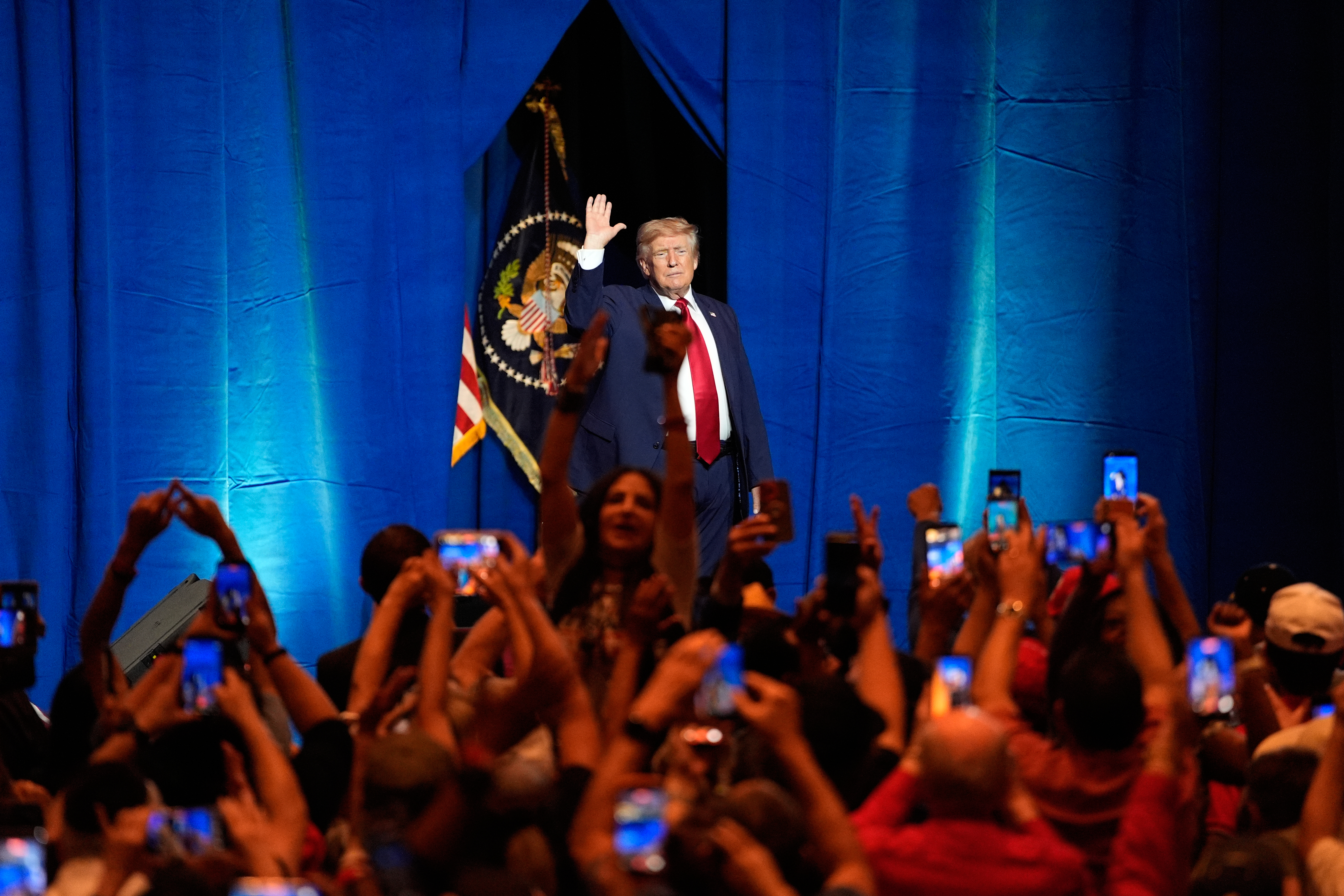
    To show hardworking Americans that the billionaire president feels their pain, Trump first attended a GOP fundraiser at a golf resort he owns in Rancho Palos Verdes, an affluent coastal city near Los Angeles, where a round of golf on the weekends can cost $800 or more. Tickets to the fundraiser ranged from $15,000 to $150,000.

    From there, Trump headed to a casino in Las Vegas, where he gave a speech on the economy aimed at working families.

    Nothing signals economic prosperity like the backdrop of folks mindlessly pumping money into a slot machine, or hoping to dig out of debt with the next roll of the dice — especially coming from a guy who made millions while bankrupting his now-defunct casinos in Atlantic City.

    Trump’s Vegas speech was a yawning rehash of rhetoric touting the stock market (when only about half the country owns equities) and tax cuts in his costly Big Beautiful Bill, while mixing in the usual mistruths and dismissing the high prices squeezing many Americans struggling to make ends meet.

    “We’re having some fake inflation because of the fuel,” he told the casino crowd.

    But it was in between the two stops where Trump provided a more revealing window into how he really thinks and talks, previewing his economic message in a friendly Fox News interview rife with non sequiturs, sentence fragments, and illeisms.

    “In the economy, Trump is at 42%, I shouldn’t be at, we have the greatest economy maybe in the history of the world for any country,” he said.

    Fox News personality Trace Gallagher pointed out that gas prices were up 30%, and that he recently paid $6.27 for a gallon of gas in California.

    Even amid the muddle, Trump had a ready response for that: shift the blame. “It’s a little different thing — because they charge taxes on gas. Every time, every time it goes down, they take taxes. I mean, they’ve done a terrible job in California.”

    Trump then promised gas prices would soon be under $3 a gallon once the three major oil companies — which have been making roughly $400 million a day since the Iran war began — lowered prices.

    “I think we’re going to have it coming down,” he said. “The oil companies have to start going. You know, they’re making too much money, and they’ve got to start lowering it. But we’re going to be down into the threes and maybe the twos pretty soon, per gallon.”

    Gallagher then teed up a softball question so Trump could address the reason he schlepped across the country in the first place: “You’re here to talk about the economy. What’s your big message?”

    “So, tariffs have been incredible. We’ve taken in hundreds of billions of dollars,” Trump said, ignoring the fact the government has had to refund most of the duties, which the U.S. Supreme Court determined were improperly collected. “I think if there’s anything, I’d say our country is rocking and rolling. We’ve never been this successful.”

    Well, one person in America has definitely never been this successful. As a public servant, Trump made more than $2 billion last year on a lot of murky deals.

    No wonder then that by the president’s grading curve, the economy is fine. Just ask him.

    “The food, groceries, it’s all coming down. We’ve done a great job,” he said. “I think we should be given an A+ on the economy.”

    Voters can submit their own midterm grades on Election Day.

  • Cheltenham High’s hazing case exposes a loophole in Pennsylvania law. Harrisburg should close it. | Editorial

    Cheltenham High’s hazing case exposes a loophole in Pennsylvania law. Harrisburg should close it. | Editorial

    As they prepared a list of charges in connection with a pair of hazing incidents involving Cheltenham High School’s football team, the members of a Montgomery County grand jury closely scrutinized the figures and institutions that often place vulnerable young people in positions where they can be victimized in the first place.

    There were the players themselves — as many as 19 of them took part in one of the assaults — who, on two separate occasions last summer, the grand jury found, beat a 15-year-old teammate and attempted to insert a broomstick into his anus.

    There were the coaches, whom the jurors said allowed a hazing culture to flourish, discouraged the victim from reporting his injuries, and engaged in a cover-up that was remarkable both for its clumsy execution and brazen audacity.

    Finally, there were school administrators, who, despite conducting three separate inquiries, were so inept that they were still unclear about how many times the student was attacked, and took no steps to exclude the head football coach (who would eventually be charged with leading the cover-up) from taking part in their investigations.

    “This level of incompetence didn’t just fail one child,” the jury wrote. “It put every young man on the football team at risk.”

    Notably, though, the jury found, the victim may not have been helped by another factor: the law itself.

    In Pennsylvania and practically every other state, the so-called mandatory reporting guidelines — rules that require teachers, coaches, school administrators, and others who work with youths to inform the authorities of suspected harm — do not include hazing in their definition of what constitutes child abuse.

    As horrifically illustrated by the case in Cheltenham — and so many other high-profile hazing incidents involving adolescents — this must change.

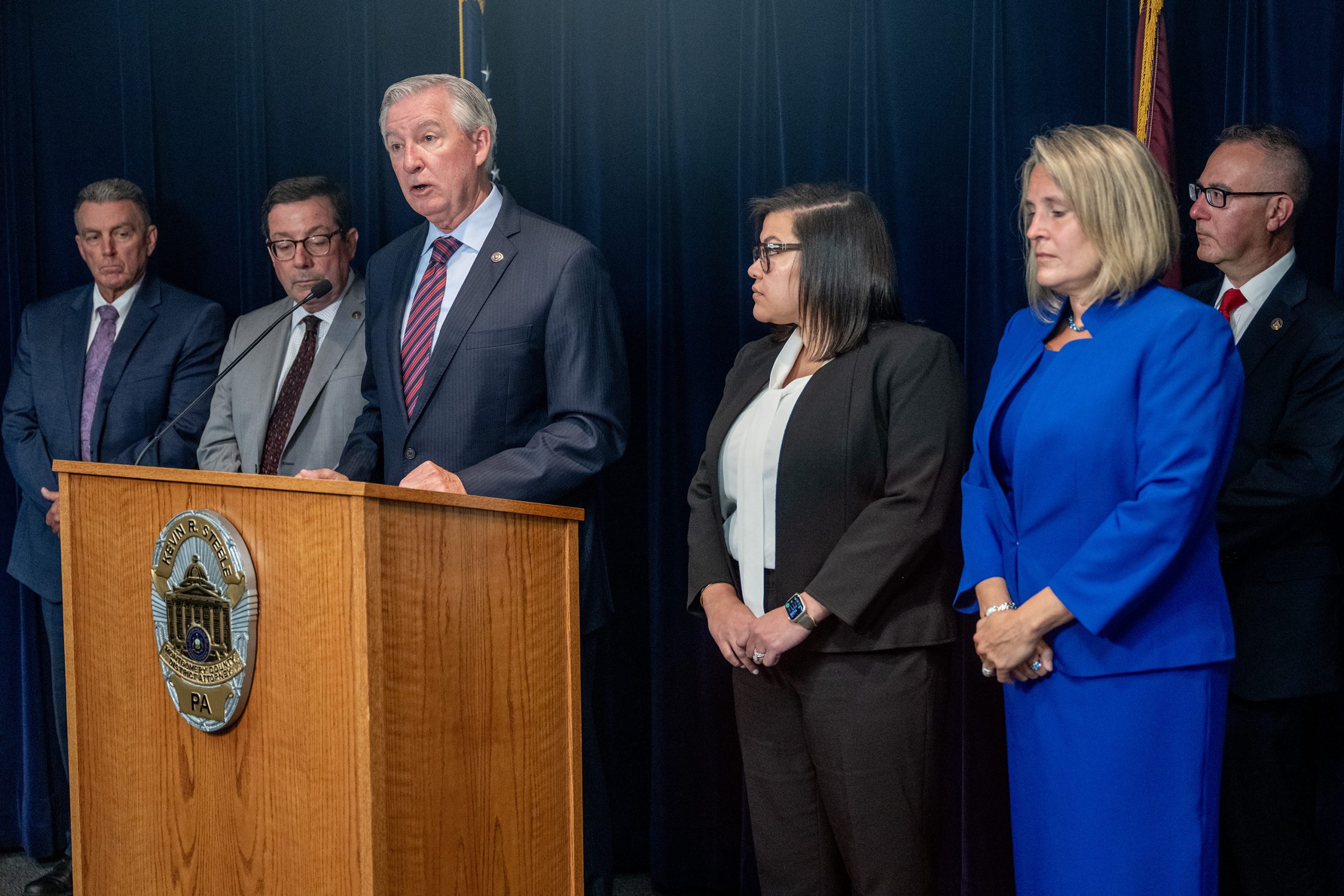
    Montgomery County District Attorney Kevin Steele addresses reporters at a July 29 news conference to announce multiple charges in connection with a pair of hazing incidents at Cheltenham High School.Tom Gralish / Staff Photographer

    As the grand jury noted, allegations of child abuse generally must be reported when the accused are adults or “certain juveniles” — such as caregivers, family members, and those living in the same household — or when the accusation involves crimes such as rape, sexual assault, or indecent exposure.

    “Hazing should be considered a form of reportable child abuse to protect children,” the grand jury wrote. “If hazing was a reportable offense, the Cheltenham High School administration would not have had the opportunity to mishandle the juvenile victim’s disclosure and the ensuing investigation as poorly as they did.”

    The failures at Cheltenham High School come less than a decade after legislators in Harrisburg enacted a sweeping overhaul of the commonwealth’s anti-hazing laws. That change was largely prompted by the alcohol-related fraternity hazing death of Timothy J. Piazza, a 19-year-old sophomore at Penn State, in 2017.

    The measure, known as the Timothy J. Piazza Antihazing Law, was signed by Gov. Tom Wolf in 2018. It increased the range of penalties for hazing and required both secondary schools and higher education institutions to adopt anti-hazing policies and publicly report violations. (Lawmakers in Trenton — Piazza was a native of Hunterdon County, N.J. — authored their own version of the legislation in the Garden State; it took effect in 2021.)

    Despite the adoption of new laws, the cycle of hazing persists.

    Set against the painful legacy of Piazza’s death in University Park, hazing continues to be a problem at Penn State. In May, administrators suspended a chapter of the Lambda Chi Alpha fraternity; it is the ninth Greek organization currently serving a suspension for hazing violations on the university’s flagship campus.

    Earlier this month, prosecutors filed felony hazing charges against a strength coach at Bucknell University in connection with the death of a player in 2024. And in April, former Eagles player DeSean Jackson, now the head football coach at Delaware State University, was sued by a player after a hazing incident.

    While some of the most high-profile hazing cases involve colleges and universities, researchers say that the seeds of mistreatment are often planted in high school — or earlier. (A 17-year-old Cheltenham student, who witnessed last summer’s locker room attacks, told the Montgomery County grand jurors that he had seen that kind of child-on-child violence on other teams “multiple times”; he’s been playing since he was 5.)

    According to one study, 47% of college students said they experienced hazing before they ever set foot on a college campus. “There’s a bit of a normalization that happens when they’re already experiencing — and perhaps expecting — that type of behavior, if they’ve already gone through that in high school,” Meredith Stewart, of the advocacy group Stop Hazing, said in an interview with members of this board.

    To end the grim experience and bleak expectations of adolescents being harmed in sports teams, youth clubs, and other organizations, lawmakers should craft legislation to reclassify hazing as a form of reportable child abuse.

    Unless Harrisburg takes action to close this perilous gap in the state’s anti-hazing protections, the cycle of violence will keep churning — and more of Pennsylvania’s young people will continue to be placed at risk.