Author: The Inquirer Editorial Board

  • Trump struggles to tell the truth about the economy as Americans struggle to make ends meet | Editorial

    Trump struggles to tell the truth about the economy as Americans struggle to make ends meet | Editorial

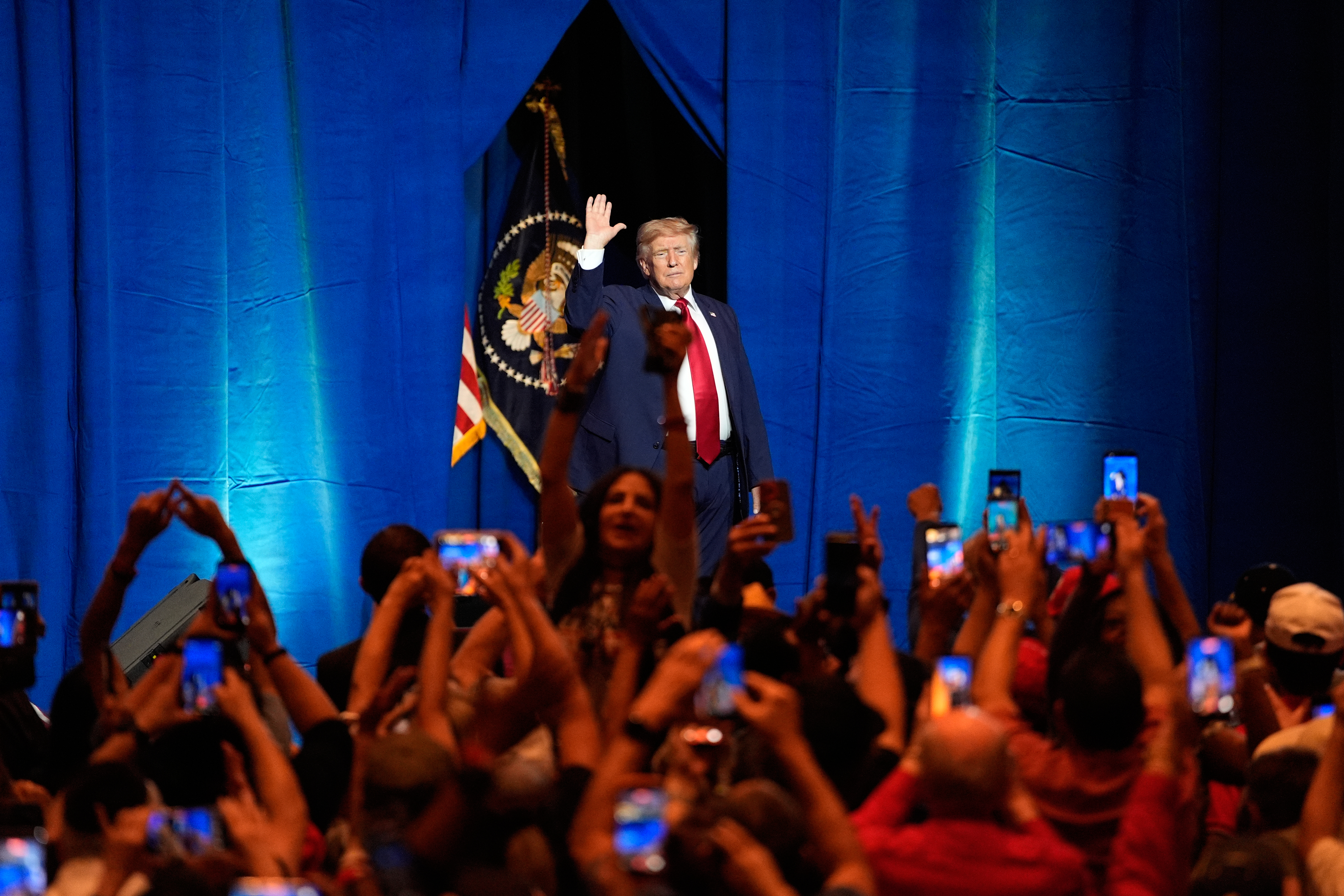
    With his approval ratings hovering at near record lows, President Donald Trump took a rare trip to the West Coast to convince voters not to trust their own wallets, because the economy is better than ever.

    Never mind that since he took office last year, Americans have been forced to spend more on food and rent. That utility prices are soaring while Trump slashed renewable energy alternatives. Or that thanks to his tariffs, the average price of a new car jumped 10%, while his failed war in Iran boosted gas prices by more than 30%.

    To borrow a phrase from the last inept White House occupant who tried to buck up the masses amid a calamity: “Trumpie, you’re doing a heck of a job.”

    To show hardworking Americans that the billionaire president feels their pain, Trump first attended a GOP fundraiser at a golf resort he owns in Rancho Palos Verdes, an affluent coastal city near Los Angeles, where a round of golf on the weekends can cost $800 or more. Tickets to the fundraiser ranged from $15,000 to $150,000.

    From there, Trump headed to a casino in Las Vegas, where he gave a speech on the economy aimed at working families.

    Nothing signals economic prosperity like the backdrop of folks mindlessly pumping money into a slot machine, or hoping to dig out of debt with the next roll of the dice — especially coming from a guy who made millions while bankrupting his now-defunct casinos in Atlantic City.

    Trump’s Vegas speech was a yawning rehash of rhetoric touting the stock market (when only about half the country owns equities) and tax cuts in his costly Big Beautiful Bill, while mixing in the usual mistruths and dismissing the high prices squeezing many Americans struggling to make ends meet.

    “We’re having some fake inflation because of the fuel,” he told the casino crowd.

    But it was in between the two stops where Trump provided a more revealing window into how he really thinks and talks, previewing his economic message in a friendly Fox News interview rife with non sequiturs, sentence fragments, and illeisms.

    “In the economy, Trump is at 42%, I shouldn’t be at, we have the greatest economy maybe in the history of the world for any country,” he said.

    Fox News personality Trace Gallagher pointed out that gas prices were up 30%, and that he recently paid $6.27 for a gallon of gas in California.

    Even amid the muddle, Trump had a ready response for that: shift the blame. “It’s a little different thing — because they charge taxes on gas. Every time, every time it goes down, they take taxes. I mean, they’ve done a terrible job in California.”

    Trump then promised gas prices would soon be under $3 a gallon once the three major oil companies — which have been making roughly $400 million a day since the Iran war began — lowered prices.

    “I think we’re going to have it coming down,” he said. “The oil companies have to start going. You know, they’re making too much money, and they’ve got to start lowering it. But we’re going to be down into the threes and maybe the twos pretty soon, per gallon.”

    Gallagher then teed up a softball question so Trump could address the reason he schlepped across the country in the first place: “You’re here to talk about the economy. What’s your big message?”

    “So, tariffs have been incredible. We’ve taken in hundreds of billions of dollars,” Trump said, ignoring the fact the government has had to refund most of the duties, which the U.S. Supreme Court determined were improperly collected. “I think if there’s anything, I’d say our country is rocking and rolling. We’ve never been this successful.”

    Well, one person in America has definitely never been this successful. As a public servant, Trump made more than $2 billion last year on a lot of murky deals.

    No wonder then that by the president’s grading curve, the economy is fine. Just ask him.

    “The food, groceries, it’s all coming down. We’ve done a great job,” he said. “I think we should be given an A+ on the economy.”

    Voters can submit their own midterm grades on Election Day.
  • Cheltenham High’s hazing case exposes a loophole in Pennsylvania law. Harrisburg should close it. | Editorial

    Cheltenham High’s hazing case exposes a loophole in Pennsylvania law. Harrisburg should close it. | Editorial

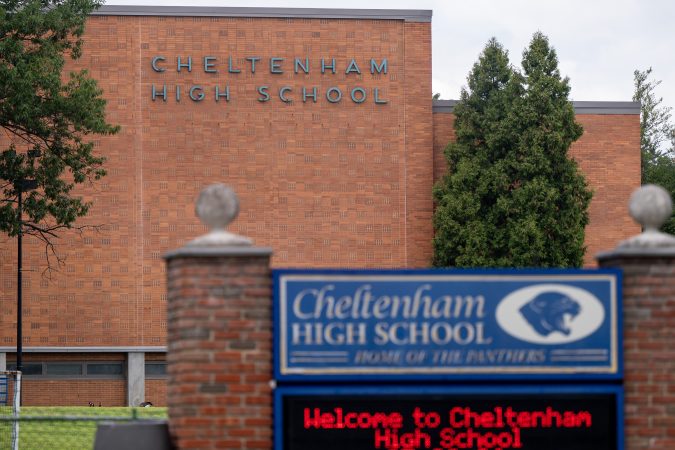
    As they prepared a list of charges in connection with a pair of hazing incidents involving Cheltenham High School’s football team, the members of a Montgomery County grand jury closely scrutinized the figures and institutions that often place vulnerable young people in positions where they can be victimized in the first place.

    There were the players themselves — as many as 19 of them took part in one of the assaults — who, on two separate occasions last summer, the grand jury found, beat a 15-year-old teammate and attempted to insert a broomstick into his anus.

    There were the coaches, whom the jurors said allowed a hazing culture to flourish, discouraged the victim from reporting his injuries, and engaged in a cover-up that was remarkable both for its clumsy execution and brazen audacity.

    Finally, there were school administrators, who, despite conducting three separate inquiries, were so inept that they were still unclear about how many times the student was attacked, and took no steps to exclude the head football coach (who would eventually be charged with leading the cover-up) from taking part in their investigations.

    “This level of incompetence didn’t just fail one child,” the jury wrote. “It put every young man on the football team at risk.”

    Notably, though, the jury found, the victim may not have been helped by another factor: the law itself.

    In Pennsylvania and practically every other state, the so-called mandatory reporting guidelines — rules that require teachers, coaches, school administrators, and others who work with youths to inform the authorities of suspected harm — do not include hazing in their definition of what constitutes child abuse.

    As horrifically illustrated by the case in Cheltenham — and so many other high-profile hazing incidents involving adolescents — this must change.

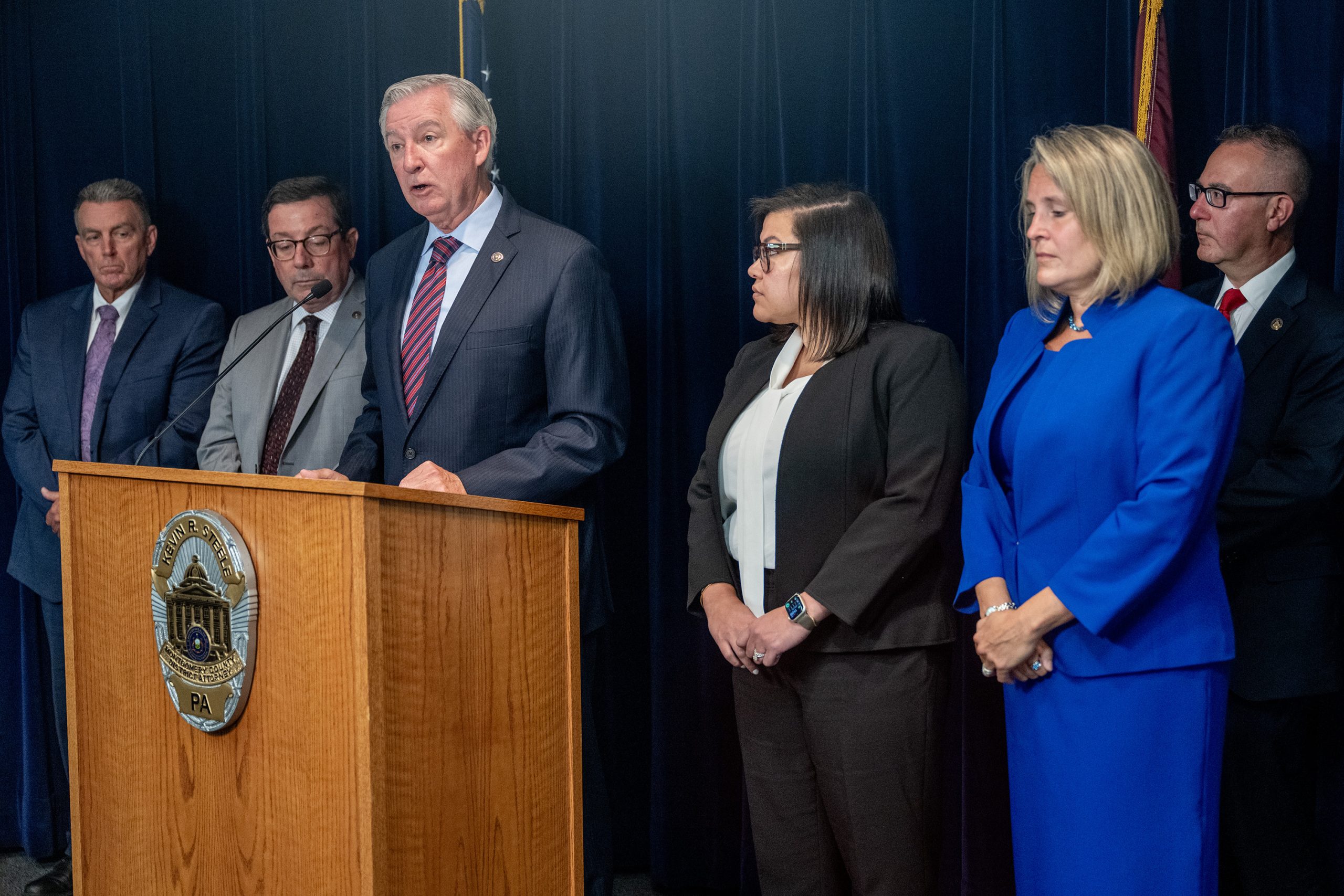
    Montgomery County District Attorney Kevin Steele addresses reporters at a July 29 news conference to announce multiple charges in connection with a pair of hazing incidents at Cheltenham High School.Tom Gralish / Staff Photographer

    As the grand jury noted, allegations of child abuse generally must be reported when the accused are adults or “certain juveniles” — such as caregivers, family members, and those living in the same household — or when the accusation involves crimes such as rape, sexual assault, or indecent exposure.

    “Hazing should be considered a form of reportable child abuse to protect children,” the grand jury wrote. “If hazing was a reportable offense, the Cheltenham High School administration would not have had the opportunity to mishandle the juvenile victim’s disclosure and the ensuing investigation as poorly as they did.”

    The failures at Cheltenham High School come less than a decade after legislators in Harrisburg enacted a sweeping overhaul of the commonwealth’s anti-hazing laws. That change was largely prompted by the alcohol-related fraternity hazing death of Timothy J. Piazza, a 19-year-old sophomore at Penn State, in 2017.

    The measure, known as the Timothy J. Piazza Antihazing Law, was signed by Gov. Tom Wolf in 2018. It increased the range of penalties for hazing and required both secondary schools and higher education institutions to adopt anti-hazing policies and publicly report violations. (Lawmakers in Trenton — Piazza was a native of Hunterdon County, N.J. — authored their own version of the legislation in the Garden State; it took effect in 2021.)

    Despite the adoption of new laws, the cycle of hazing persists.

    Set against the painful legacy of Piazza’s death in University Park, hazing continues to be a problem at Penn State. In May, administrators suspended a chapter of the Lambda Chi Alpha fraternity; it is the ninth Greek organization currently serving a suspension for hazing violations on the university’s flagship campus.

    Earlier this month, prosecutors filed felony hazing charges against a strength coach at Bucknell University in connection with the death of a player in 2024. And in April, former Eagles player DeSean Jackson, now the head football coach at Delaware State University, was sued by a player after a hazing incident.

    While some of the most high-profile hazing cases involve colleges and universities, researchers say that the seeds of mistreatment are often planted in high school — or earlier. (A 17-year-old Cheltenham student, who witnessed last summer’s locker room attacks, told the Montgomery County grand jurors that he had seen that kind of child-on-child violence on other teams “multiple times”; he’s been playing since he was 5.)

    According to one study, 47% of college students said they experienced hazing before they ever set foot on a college campus. “There’s a bit of a normalization that happens when they’re already experiencing — and perhaps expecting — that type of behavior, if they’ve already gone through that in high school,” Meredith Stewart, of the advocacy group Stop Hazing, said in an interview with members of this board.

    To end the grim experience and bleak expectations of adolescents being harmed in sports teams, youth clubs, and other organizations, lawmakers should craft legislation to reclassify hazing as a form of reportable child abuse.

    Unless Harrisburg takes action to close this perilous gap in the state’s anti-hazing protections, the cycle of violence will keep churning — and more of Pennsylvania’s young people will continue to be placed at risk.

  • Todd Blanche is a Trump enforcer. He has no business being attorney general. | Editorial

    Todd Blanche is a Trump enforcer. He has no business being attorney general. | Editorial

    It appears acting U.S. Attorney General Todd Blanche may have done his squirrelly best to secure enough Senate votes to make his position permanent.

    But any way you slice it, Blanche remains wholly unfit to serve as the People’s Lawyer.

    It is particularly alarming that only two Republican senators on their way out of the door even questioned Blanche’s nomination. That says more about the sorry state of the GOP that continues to place Donald Trump above the rule of law, and the need for voters to stop the madness.

    Outgoing Sens. John Cornyn of Texas and Thom Tillis of North Carolina had threatened to block Blanche’s confirmation, but both now appear ready to fall in line after he confirmed in writing that the U.S. Department of Justice would abandon “parts” of a sweetheart deal it gave to Trump to avoid IRS audits and create a $1.8 billion slush fund to reward lawbreakers.

    The rest of the Republican senators apparently are poised to just ignore the corrupt actions of the Justice Department during Blanche’s tenure in exchange for avoiding any unhinged social media posts from the president.

    After initially refusing to do so, Blanche finally put in writing two documents that appeased the slush fund and tax deal concerns raised by Cornyn and Tillis.

    Blanche signed one memo that said the $1.8 billion fund “is rescinded and shall have no force or effect.”

    However, he didn’t have the nerve to sign the second memo that made clear that — unlike every other American — Trump, two of his sons, and the Trump Organization are immune from past tax audits. (The only concession here is that future tax returns could still be audited.)

    Even still, as the acting attorney general, Blanche negotiated the deal that frees Trump and his family from past audits — an unprecedented and potentially illegal perk that may be worth $100 million in unpaid back taxes and penalties.

    Apparently, Cornyn, Tillis, and every other Republican senator, including Pennsylvania’s Dave McCormick, are fine with that Trump tax dodge.

    Voters should remember these embarrassing words from McCormick: “I think Todd Blanche would be a fine attorney general.” Particularly because the record says otherwise.

    There is no trusting that Blanche’s Justice Department won’t find ways to reward Trump supporters. The president promised over the weekend to restore the slush fund.

    Indeed, a man who was convicted and later pardoned by Trump after conspiring to block access to an abortion clinic already received a $1 million taxpayer-funded payout from the Justice Department.

    As for the tax deal Blanche secured for his boss, seeing how Trump has avoided paying taxes for years, there is little reason to believe he will do so going forward.

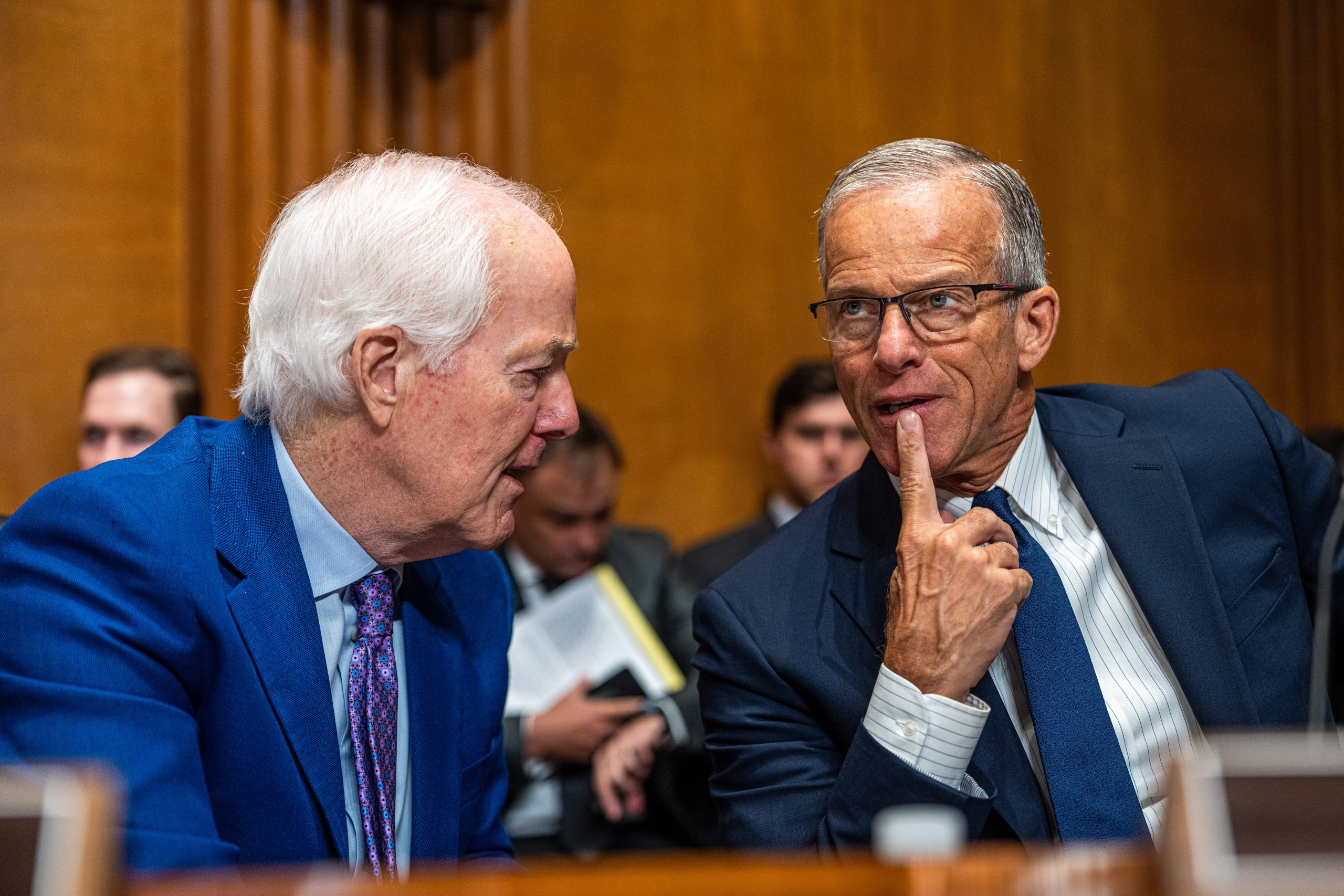
    Sen. John Cornyn (R., Texas) (left) and Senate Majority Leader John Thune (R., S.D.) have dropped their objections to Todd Blanche becoming attorney general.ALEX KENT

    Even beyond the outrageous tax scheme and the slush fund, Blanche has never truly stopped serving as Trump’s personal attorney — a role that has enriched and empowered the once obscure federal prosecutor.

    Blanche’s supreme loyalty to Trump and willingness to abuse the rule of law to please his boss has tarnished the independence and trust in the Justice Department.

    Federal judges have repeatedly rebuked Justice Department lawyers for lying, ignoring orders, and skipping deadlines — actions that were extremely rare before Trump.

    As the Justice Department’s No. 2 official, Blanche played the lead role in protecting Trump from the fallout from the release of the Jeffrey Epstein files. Nearly half the files involving the accused sex offender and close friend of Trump’s still have not been released, and many that have been made public are redacted.

    As the political fallout for Trump grew, Blanche, in a highly unusual move, personally interviewed Ghislaine Maxwell, who was sentenced to 20 years in prison for her role in helping Epstein recruit, groom, and abuse underage girls.

    Shortly after the meeting, Maxwell was transferred to a minimum-security prison camp, despite the Bureau of Prisons policy that prohibits housing sex offenders in lenient lockups. Will her silence about Trump’s dealings with Epstein lead to an eventual pardon?

    Blanche has also abused his power at the Justice Department by presiding over efforts to indict, investigate, and harass Trump’s perceived political enemies, including bogus legal attacks aimed at former FBI Director James Comey, New York Attorney General Letitia James, former Federal Reserve Chairman Jerome Powell, and others.

    Federal prosecutors just dropped charges against a former Olympian who was accused of damaging the Lincoln Memorial Reflecting Pool, a ridiculous case that was ginned up to protect Trump after a crony contractor botched the repairs.

    Grand juries have rejected other pathetic cases brought by the Justice Department to punish critics of Trump, including one attempt to indict a man for throwing a sandwich at an immigration enforcement agent.

    The cases echo what occurs under authoritarian regimes, and underscore that private citizens are not safe from the legal abuses by the Trump-Blanche Justice Department.

    Blanche has demonstrated he has no business pursuing justice. Voters should hold to account any elected officials who green-light such legal abuses.

  • Trump isn’t done interfering with elections | Editorial

    Trump isn’t done interfering with elections | Editorial

    A casual observer might believe Donald Trump when he says he doesn’t care about the coming midterm elections. Based on the historical record, the president’s basement-dwelling approval rating alone should dismay Republicans on Capitol Hill, and yet he is taking none of the usual steps to shore up his party’s prospects.

    On the contrary, he has persisted in an unpopular and unsuccessful war, reinstituted inflationary tariffs, obsessed over a $600 million ballroom, and refused to sign one of the few substantive bills passed by the GOP-controlled Congress.

    But Trump’s midterm strategy, like his broader political philosophy, is one of subtraction, not addition. Rather than persuade Americans to vote for his fellow Republicans, he prefers to stop people from voting against them. In terms of the effort to suppress rather than win votes, his campaign looks downright frenetic.

    A key chokepoint of this block-the-vote strategy is the mail, controlled as it is by the federal government. Despite taking advantage of the convenience himself as recently as last spring, Trump has been menacing mailed ballots since his botched COVID-19 response helped dramatically boost remote voting. He continued to do so Monday, when his administration petitioned the Supreme Court to let the U.S. Postal Service assume the novel duty of not delivering mail, namely ballots that tend to favor Democrats.

    At issue is his executive order directing the U.S. Department of Homeland Security to compile lists of citizens eligible to vote in each state, to be used by postal officials to interfere with the election. The Justice Department has demanded voter data from all the states under the order, leading to continuing legal disputes with many of them. Ruling on a lawsuit by Pennsylvania, New Jersey, and 20 other states in June, a federal court in Massachusetts blocked the order; recently, an appellate court agreed. As U.S. District Judge Indira Talwani noted persuasively, “the Constitution does not grant the president any specific powers over elections.”

    Administration lawyers nevertheless filed an emergency appeal with the Supreme Court, and who can blame them for trying? The high court’s conservative majority has rescued Trump from accountability for the plot against the 2020 election, taken a jackhammer to the political independence of agencies such as the Postal Service, and enabled states to eliminate districts that are mostly made up of people of color, which tend to lean Democratic.

    Last month, however, the court surprised many observers by narrowly upholding laws in Mississippi and many other states allowing ballots postmarked by Election Day to be counted even if they are delivered subsequently. Should a majority of the justices make another relatively rare decision to side with the Constitution over the president in the latest mail-in ballot case, the administration has other antidemocratic endeavors in the works.

    Even if the Postal Service is prevented from actively targeting ballots, underfunding and consolidation of services could slow their postmarking and delivery to the point of ineligibility. Officials in California believe the agency’s glacial processing may have contributed to the disenfranchisement of nearly 150,000 voters in last spring’s primary election.

    Trump has also been browbeating Republican senators for months over legislation known as the SAVE America Act, which would require a passport or birth certificate to vote — documents that tens of millions of Americans don’t have at hand. Trump has held up reauthorization of intelligence authorities, refused to sign bipartisan housing legislation, and demanded that the Senate kill the filibuster and cancel its August recess to pass the bill. Majority Leader John Thune’s consistent answer has been that Senate Republicans don’t — ironically enough — have the votes.

    The administration can likely be counted on to resort to more jackbooted tactics as the election approaches. Trump has suggested he would be willing to send federal troops and agents to the polls to intimidate voters in violation of federal law. His record of using federal forces against Democratic-leaning states and cities is already extensive.

    Even the successful completion of a free and fair election won’t necessarily be the end of Trump’s efforts to undermine it, as we learned when he tried to reverse a result at the expense of millions of voters in Pennsylvania and other battleground states six years ago. In his recent primetime address, the president was still harping on his 2020 loss — which his new national intelligence director just refused to acknowledge — while laying the groundwork for future interference.

    These tactics failed then, however, and robust public participation and vigilance can ensure that they do so again. The administration’s conspiracy against the election shows Trump still fears the will of the people. He should.

  • The way out of Trump’s failed Iran war | Editorial

    The way out of Trump’s failed Iran war | Editorial

    Much like the rest of President Donald Trump’s war with Iran, the latest outbreak of hostilities has produced nothing but death, destruction, and disorder. The current flow of traffic through the Strait of Hormuz makes the Schuylkill Expressway look fast, Tehran retains its capacity to terrorize its neighbors with cheap drones, and more American service members and civilians in the region have been killed or wounded.

    Last week, the Trump administration brain trust devised a horribly creative means of adjusting this abysmal cost-benefit ratio: blaming the latest U.S. losses on some other war. The Pentagon now categorizes four of the service members killed in the region and more than 200 of those injured as casualties not of the Iran conflict, but of unspecified “overseas operations.” This is based on the notion that the U.S.-Iranian ceasefire and memorandum of understanding ended the war, which it obviously didn’t.

    This accounting trick is an insult to the troops and their families. But the impulse behind it is correct in one sense: It’s time to actually cut American losses and end this misbegotten war for good.

    Five months after the United States joined Israel in waging war on Iran for the second time in as many years, the effort has achieved none of the administration’s various stated aims. Iran continues to be ruled by an oppressive theocratic regime with nuclear ambitions and proxy forces that menace its neighbors.

    The Islamic Republic is, in some respects, stronger than before, having shown it can fight the most powerful militaries in the region and the world to a standoff. At the same time, it now wields a weapon that may be more effective than a nuke: its ability to rattle the global economy by strangling oil and gas shipments through the strait.

    Trump, meanwhile, is under pressure from his vulnerable allies (and business partners) in the Gulf, congressional Republicans staring down a midterm shellacking, and dwindling supplies of munitions. Sure, he can keep threatening to resume the American onslaught to the extent of committing war crimes. But the president has already done more than his share to prove the ultimate inefficacy of both the rhetoric and the bombs.

    Rather than risk the lives of more Americans and others, and spend more billions to no avail, the administration must accept the necessity of a tactic it has largely avoided: multilateral diplomacy.

    Trump himself has shown intermittent glimmers of understanding this, having periodically groused about the refusal of NATO and other allies to come to America’s aid in the war. Such complaints also revealed the president’s fundamental misunderstanding of the transatlantic alliance, which exists to deter rather than further military aggression, and the nature of international relationships, which rely on the sort of mutual respect to which Trump has laid waste.

    It was the hard work of diplomacy that forged the Obama-era agreement among the world’s major powers to prevent an Iranian nuclear bomb, subject to verification by United Nations inspectors, until Trump unilaterally withdrew from the pact during his first administration. The peaceful transit through the Strait of Hormuz that prevailed before Trump’s war likewise rested on broad compliance with international maritime law.

    A lasting peace and resolution of the U.S.-Iranian standoff over the strait and the nuclear question may not be possible even with the benefit of broader international cooperation. But they will be impossible without it.

  • Trump’s war on the media is really a war on the truth | Editorial

    Trump’s war on the media is really a war on the truth | Editorial

    Donald Trump’s attacks on the media are really a war on the public’s right to know.

    His goal is to delegitimize critical reporting that exposes the chaos, corruption, and incompetence within his administration, distract from reality, energize his base, and establish himself as the sole arbiter of the truth.

    The problem is the president is a habitual liar. He has told tens of thousands of mistruths during his time in public office, and bends the facts to fit his skewed version of events.

    In his second term, this warped version of reality is virtually guaranteed. Trump has surrounded himself with pathetic yes-men who do whatever he demands and tell him what he wants to hear. The absurd theater of fawning bureaucrats praising the president during cabinet meetings resembles a spoof of a George Orwell novel.

    Trump declared the U.S. won the war in Iran in March, and again in April, May, and June, but the fighting continues. He claims the economy is great, but nearly half of all Americans said they are worse off financially. He continues to falsely claim the 2020 election was stolen, and spread repeated lies about the upcoming midterm election.

    But facts are stubborn. So rather than confront the truth, Trump tries to discredit the media. He labels stories that portray him in a negative light as “fake news.”

    The president has long called the media the “enemy of the people” — a phrase used by dictators, including Josef Stalin and Adolf Hitler.

    Trump’s response to stories that expose his misdeeds — like dodging taxes — is to file a lawsuit. He has sued the New York Times, the Wall Street Journal, the Washington Post, and other media companies.

    Most of Trump’s suits get thrown out. But some media companies have capitulated. Paramount paid Trump $16 million to settle a lawsuit against 60 Minutes that legal observers said was frivolous. ABC paid $15 million to settle a defamation suit that was also considered weak.

    After constant complaints by Trump, Paramount-owned CBS canceled Stephen Colbert’s comedy show, which frequently poked fun at the president.

    More recently, Trump threatened to revoke the broadcast licenses of ABC and NBC over petty issues, such as not showing his embarrassing speech claiming election fraud.

    At the president’s urging, the Federal Communications Commission is reviewing the license held by the Philadelphia ABC affiliate known as WPVI, or 6abc. The public has until Wednesday to express comments about the effort, which appears to be a clear attack on the First Amendment.

    The Times has been a frequent target of Trump’s. After the paper reported on security problems involving the $400 million airplane the Qatari government gifted to Trump, the U.S. Department of Justice subpoenaed the journalists who broke the story to intimidate the free press and chill leaks within the administration.

    The subpoenas were withdrawn just before Trump was set to speak at the White House Correspondents’ Association dinner — where he continued his attacks on the news media.

    Of course, the media is as imperfect as the men and women who work in it. But the founders understood that the free press plays a vital role in democracy by informing the public, holding leaders accountable, and providing a forum for debate.

    That is why the First Amendment — which guarantees freedom of speech, freedom to protest, and freedom of religion — remains a cornerstone of our democracy and civil society.

    But Trump’s attacks on the media have helped erode public trust in journalism, accelerated partisan divides, and reduced faith in democratic institutions.

    Amid all the confusion, Trump has enriched himself while the country has become divided and weakened.

    The independent press will do its best to report the truth, but it is up to voters to hold those in power accountable.

  • A court was right to stop the sale of its water system, but Chester still needs help | Editorial

    A court was right to stop the sale of its water system, but Chester still needs help | Editorial

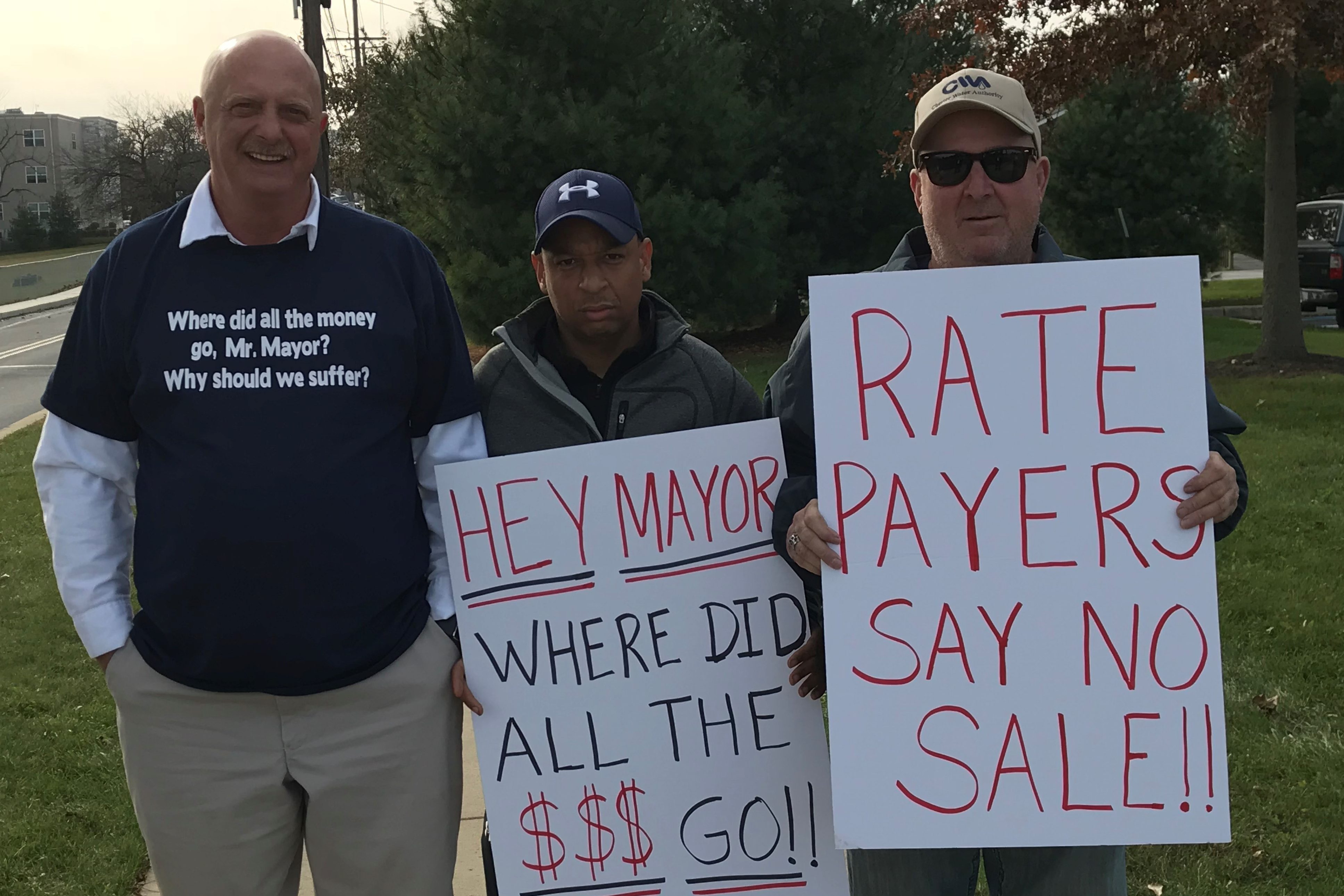
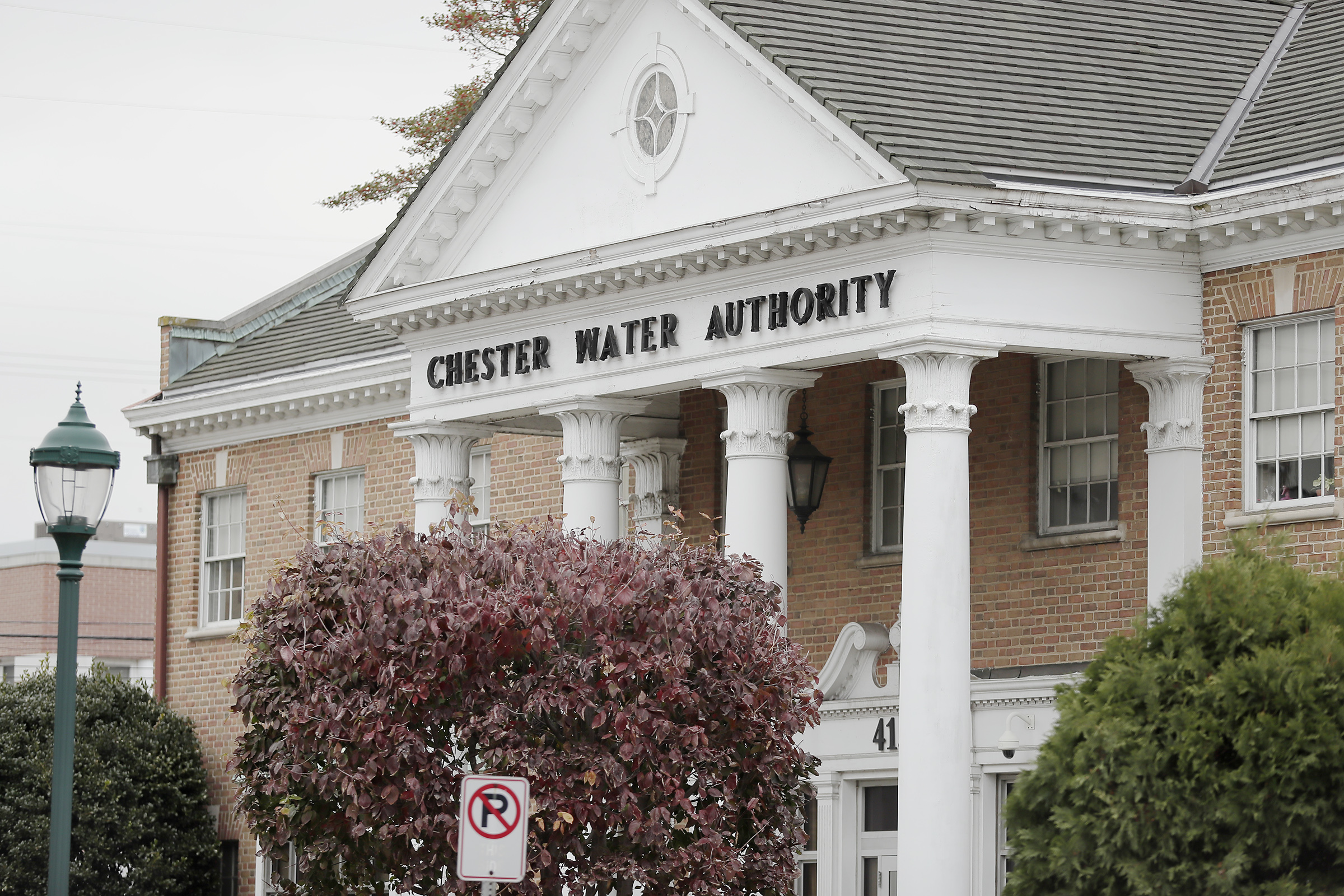
    The recent state Supreme Court ruling that a receiver can’t unilaterally sell the Chester Water Authority to a for-profit company was a big win for its customers. But it complicated a plan to use the sale to bail out the city of Chester.

    While the court ruling is the final word on the sale, there is more to be done to safeguard utility customers across the commonwealth and help the residents of Chester.

    The best way to protect all utility customers in Pennsylvania would be for the General Assembly to repeal Act 12. The misguided legislation, spearheaded by lobbyists, opened the door in 2016 for the sale of municipal water and sewer systems.

    The law was supposed to help distressed utility systems. Instead, for-profit companies have largely purchased well-run systems and massively and routinely increased the rates that customers pay.

    Since Aqua Pennsylvania purchased the sewer system in New Garden Township in Chester County in 2020, for example, residents have seen their rates increase 200%, according to a consumer group fighting the sales. Other cities and towns have seen their bills go up by 100% or more.

    In short, Act 12 has failed to accomplish what it was allegedly designed to do.

    To his credit, State Sen. John Kane, a Democrat who represents parts of Chester and Delaware Counties, has proposed repealing Act 12, but few lawmakers in Harrisburg are brave enough to stand up to the influential for-profit water companies.

    Short of a repeal, lawmakers must reform Act 12. At the very least, the law should be amended to require that the sale of any public utility be put to a vote. The residents who pay for the utility should decide whether to sell it, not the local politicians. If residents approve a sale, the utility should be put out to a public bid and not negotiated in private.

    Such reforms, while not perfect, would give residents some protection from local elected officials selling off public utilities for short-term gains without their input.

    The Chester City Council voted in 2021 to sell the Chester Water Authority to Aqua Pennsylvania for $410 million. In January, the state Supreme Court ruled the sale could not go through.Elizabeth Robertson / Staff Photographer

    The court was right to rule that the city of Chester could not sell the water authority. After all, the authority serves roughly 200,000 people in more than 30 municipalities across Chester and Delaware Counties.

    It is understandable that the city wanted to sell the water authority. The City of Chester, which has about 34,000 residents, filed for Chapter 9 bankruptcy in 2022.

    Aqua offered to buy the water authority in 2017 for $320 million. Two years later, the for-profit company increased its offer to $410 million.

    The board that oversees the water authority unanimously rejected the offer, but the city council in Chester viewed the sale as a way out of its financial problems.

    But any short-term gain for the city would likely have resulted in a sharp increase in water bills for customers. This would have put more financial stress on residents in Chester, which has a poverty rate of 30%, making it one of the poorest municipalities in the state.

    Residents in Chester and Delaware Counties would have also seen steep increases in their water bills. The water authority is already well run, so there is little to be gained by a sale.

    However, the court’s ruling leaves the city of Chester in a bind. There is a vehicle in place to help Chester. Act 47, known as the Municipalities Financial Recovery Act, supplies funding to help municipalities in financial distress.

    The city of Harrisburg, the city of Chester, and the borough of Newville are already part of the Act 47 program. State lawmakers should increase funding for Act 47 to help the commonwealth’s distressed municipalities.

    That is the best solution to a thorny problem. It also avoids the sale of public utilities that will only result in bigger bills coming due for ratepayers.

    Just ask the residents in New Garden and other towns whose local elected officials sold them out to for-profit companies.