The University Avenue Bridge will soon receive structural repairs, and some of its architectural details will be secured from further vandalism, but a full-scale restoration of the historic span isn’t happening anytime soon.
PennDot is slated to begin work on the drawbridge Aug. 17, the agency announced Monday. Pedestrian and vehicular traffic will be partially impeded for the duration of the job.
A routine inspection in March of the Paul Philippe Cret-designed structure turned up deterioration in some of the steel members, said PennDot assistant district executive for assets Kerri Cutright, “and we were a little concerned, and so that’s why we’ve initiated these repairs.”
The goal is to move the drawbridge from “poor” to “fair” condition, said Cutright.
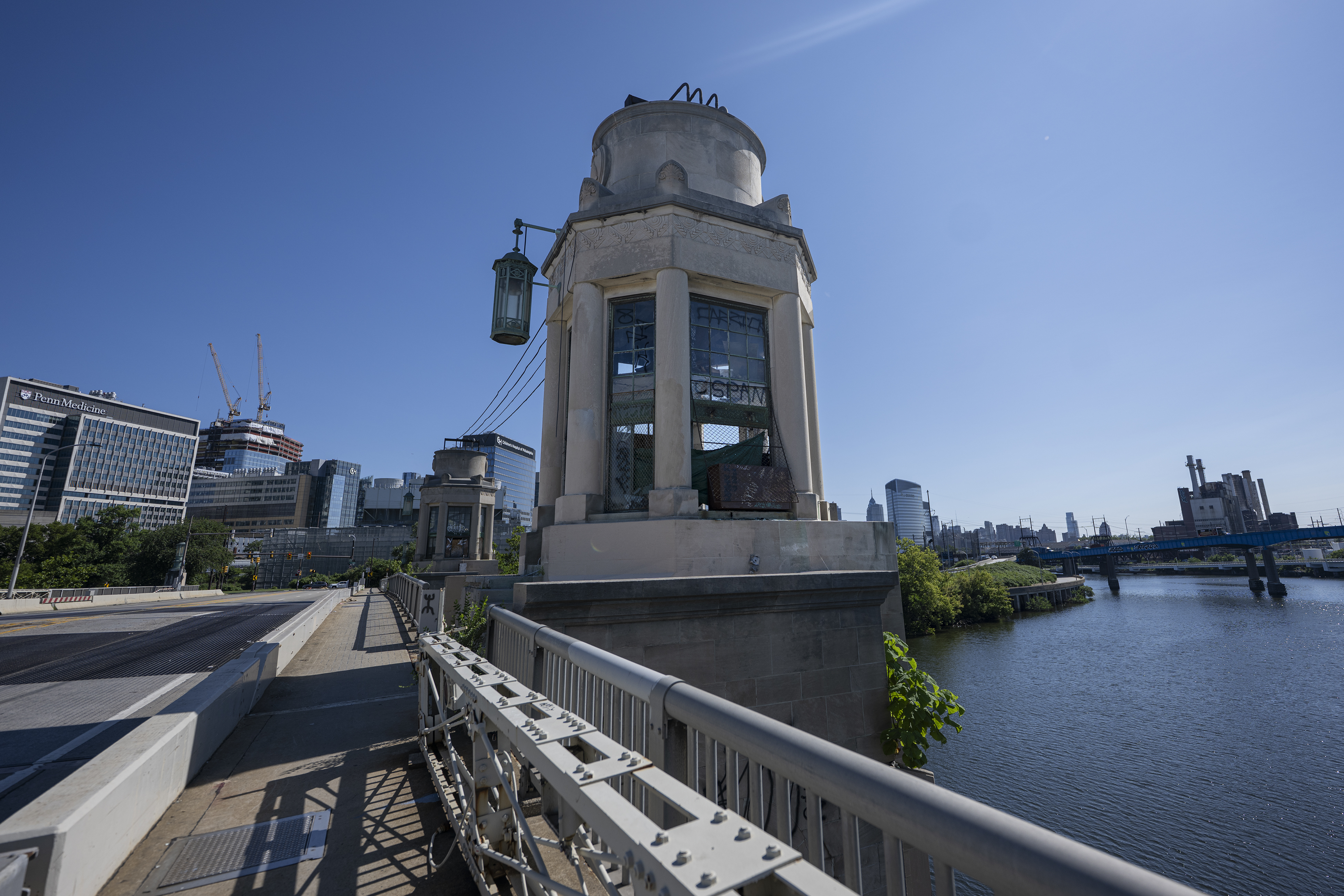
In addition, plans call for the installation of 8-foot-tall chain-link fencing in front of the two operator’s houses on the east side of the bridge to deter vandals.
Work is expected to continue through Dec. 15.
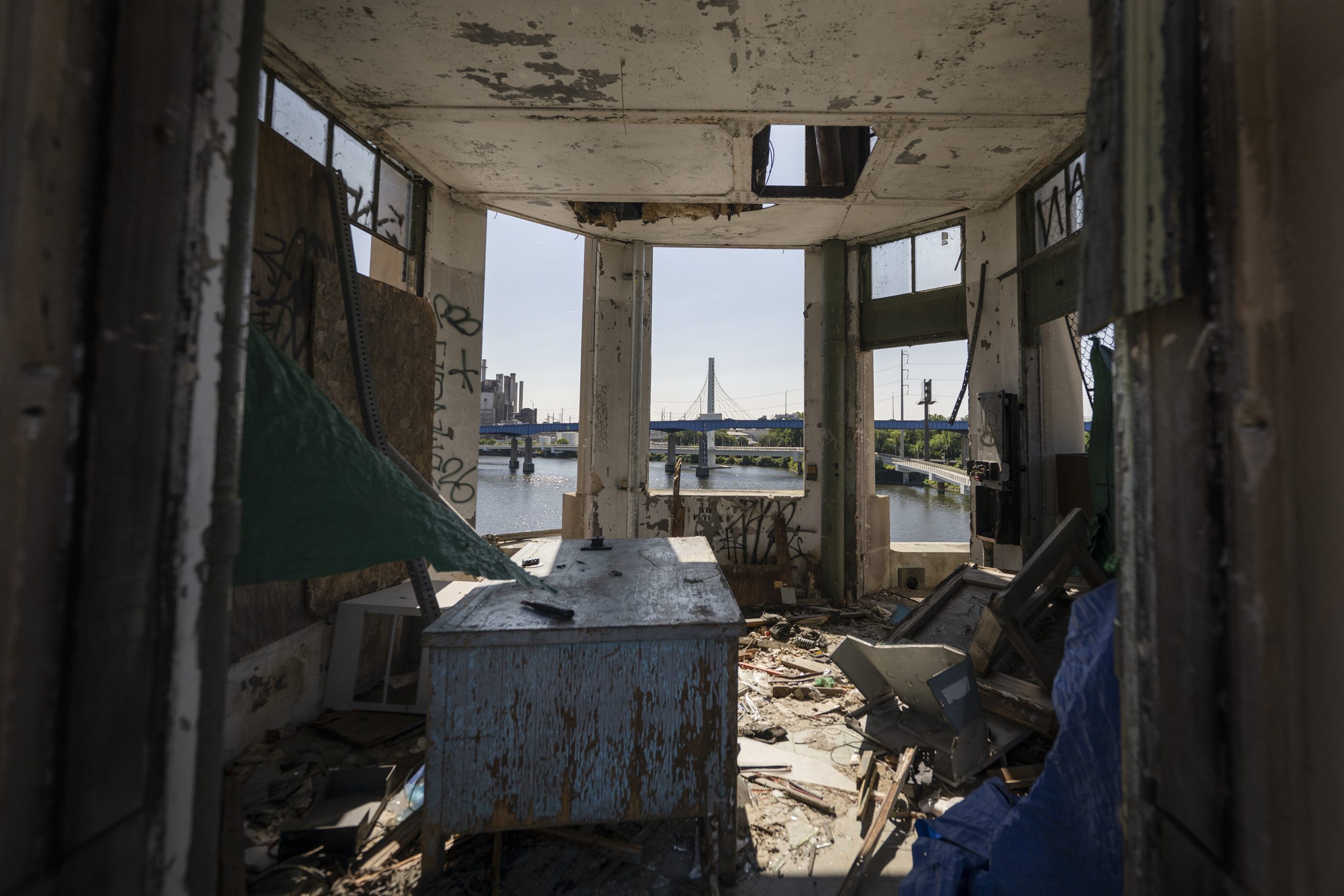
Broken windows and vandalism are visible inside one of the operator’s houses on the University Avenue Bridge on July 23.
The project, estimated to cost about $2 million, leaves unaddressed the needs of some major features of the bridge, which was built around 1930. It will not bring back the bridge’s ability to raise its leaves, though the work won’t prevent restoration of that function in the future. The 10 elaborately detailed lighting fixtures will not be returned to working order as part of the job.
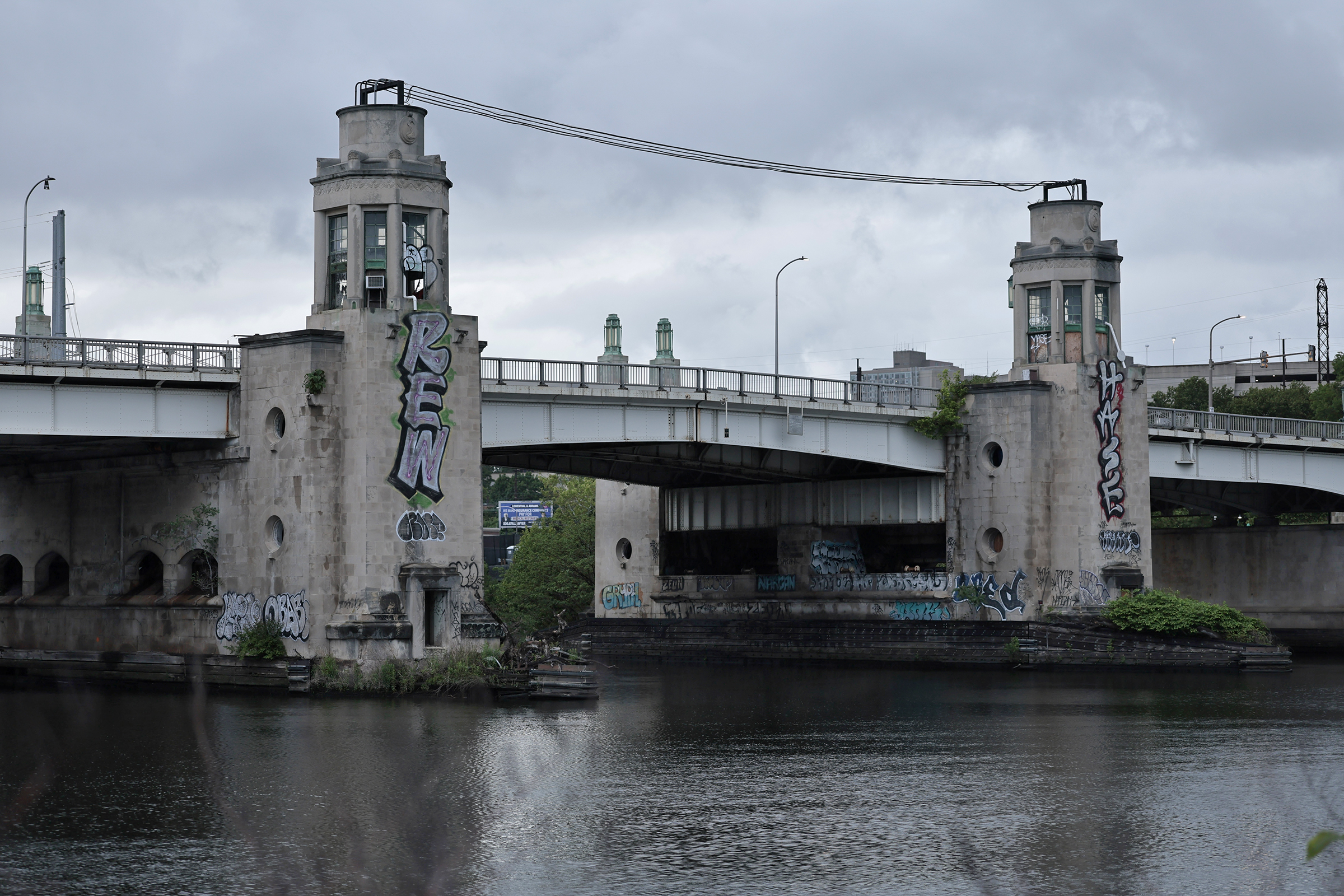
Graffiti has marred the bridge in several places, most noticeably on the Center City-facing sides of the operator’s houses, but there is no immediate plan to clean up the scrawls.
“At this time, graffiti removal is not in the scope, but it is being explored in the near future,” said PennDot spokesperson Brad Rudolph.
Graffiti on the University Avenue Bridge, seen from the Schuylkill River Trail, on May 21.Elizabeth Robertson / Staff Photographer
Vandalism and deterioration on the bridge linking West Philadelphia and Grays Ferry have attracted sporadic public attention for decades. The Inquirer highlighted the conditions last September, with another article in June, and other news outlets have called for the bridge’s stabilization and restoration. A recent change.org petition advocating that it be protected from further damage collected hundreds of signatures.
“Without intervention, these unique design elements risk permanent loss,” the Preservation Alliance for Greater Philadelphia wrote in its magazine, which lists the bridge as one of the city’s places to save.
“We welcome PennDot’s attention to the University Avenue Bridge and the planned work to address some of its most urgent deficiencies. This is a positive first step, especially after years of visible deterioration, but it should not be the end of the effort,” said Paul Steinke, executive director of the Preservation Alliance for Greater Philadelphia. “The bridge is one of Philadelphia’s most distinctive historic spans, and it deserves a broader rehabilitation plan that addresses its historic features, long-term condition and role as a public gateway between neighborhoods.”
The repairs at hand will address the structural elements beneath the bridge’s deck. The bridge uses a girder floor beam stringer system to carry the load, said Cutright, and the deterioration will be addressed with plating, cleaning, and repainting, and some steel members may be replaced.
Vandalism and the elements have damaged the two operator’s houses on the Center City-facing side of the bridge. They will be cleaned out and sealed, and a chain-link fence will be installed in front of the two structures to deter trespassers.
Lane closures will reduce vehicular access to one lane in each direction during construction. Two of the bridge’s four lanes will be closed all day every day, with two lanes left open (one in each direction) through mid-December. The work will begin with closing the two lanes closest to the operator’s houses, and moving all traffic to the other side. Then, in a couple of months, the closure pattern will flip.
The bridge carries more than 36,000 vehicles per day, according to PennDot, and the agency expects significant backups during construction. Pedestrian access will be permitted on the side of the bridge opposite from where work is being conducted.
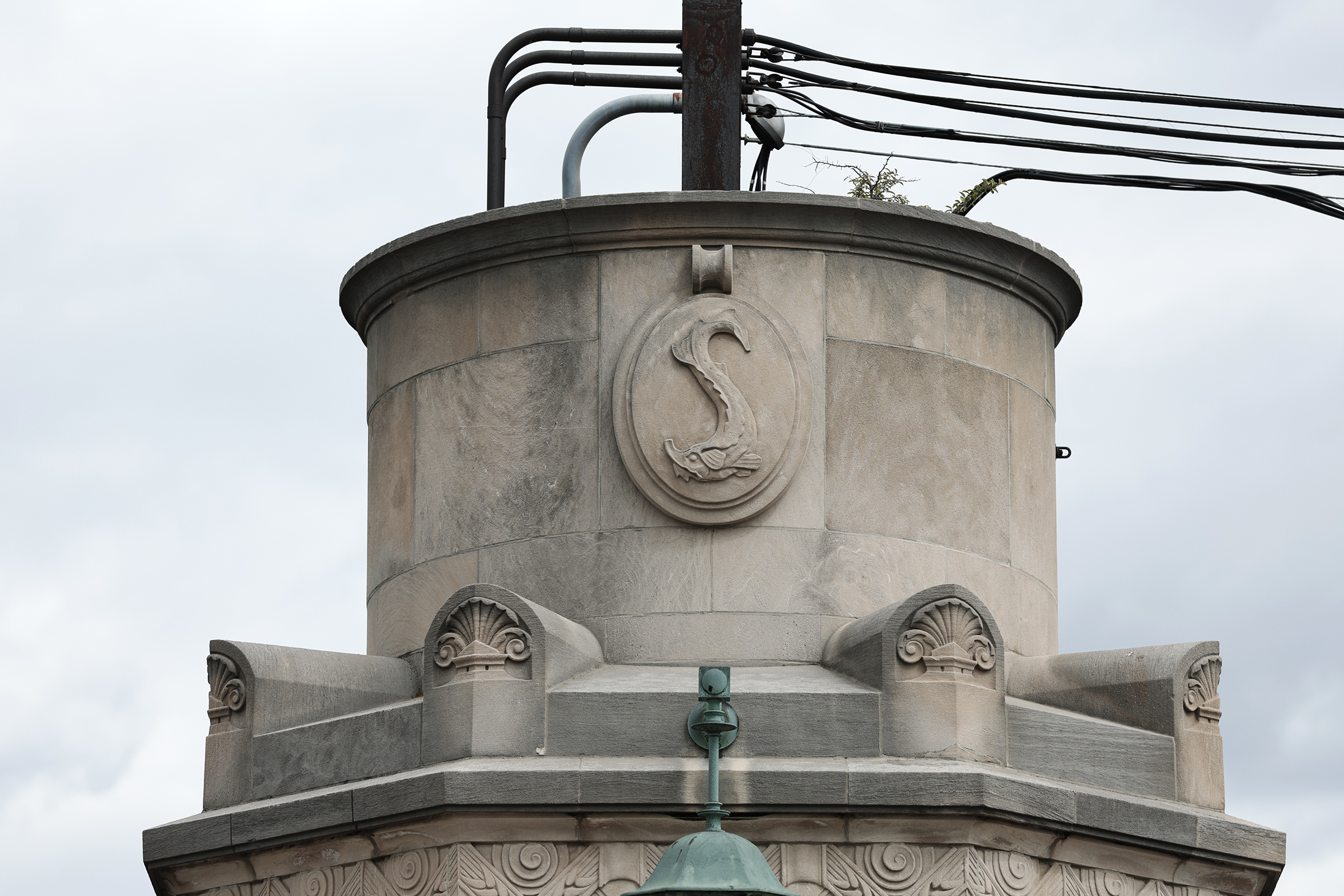
A fish and other details adorn the operator’s houses on the University Avenue Bridge.Elizabeth Robertson / Staff Photographer
Cutright said that while PennDot would like to restore the bridge, the cost is estimated around $50 million, and no funding is currently lined up for an effort on that scale.
Even if funding were in place now, a major rehabilitation would be a long way off. Planning and construction would take five years or more, she said.
“It’s a beautiful bridge, and I would imagine that if we were to do a major project that we would want to restore it to its former glory.”
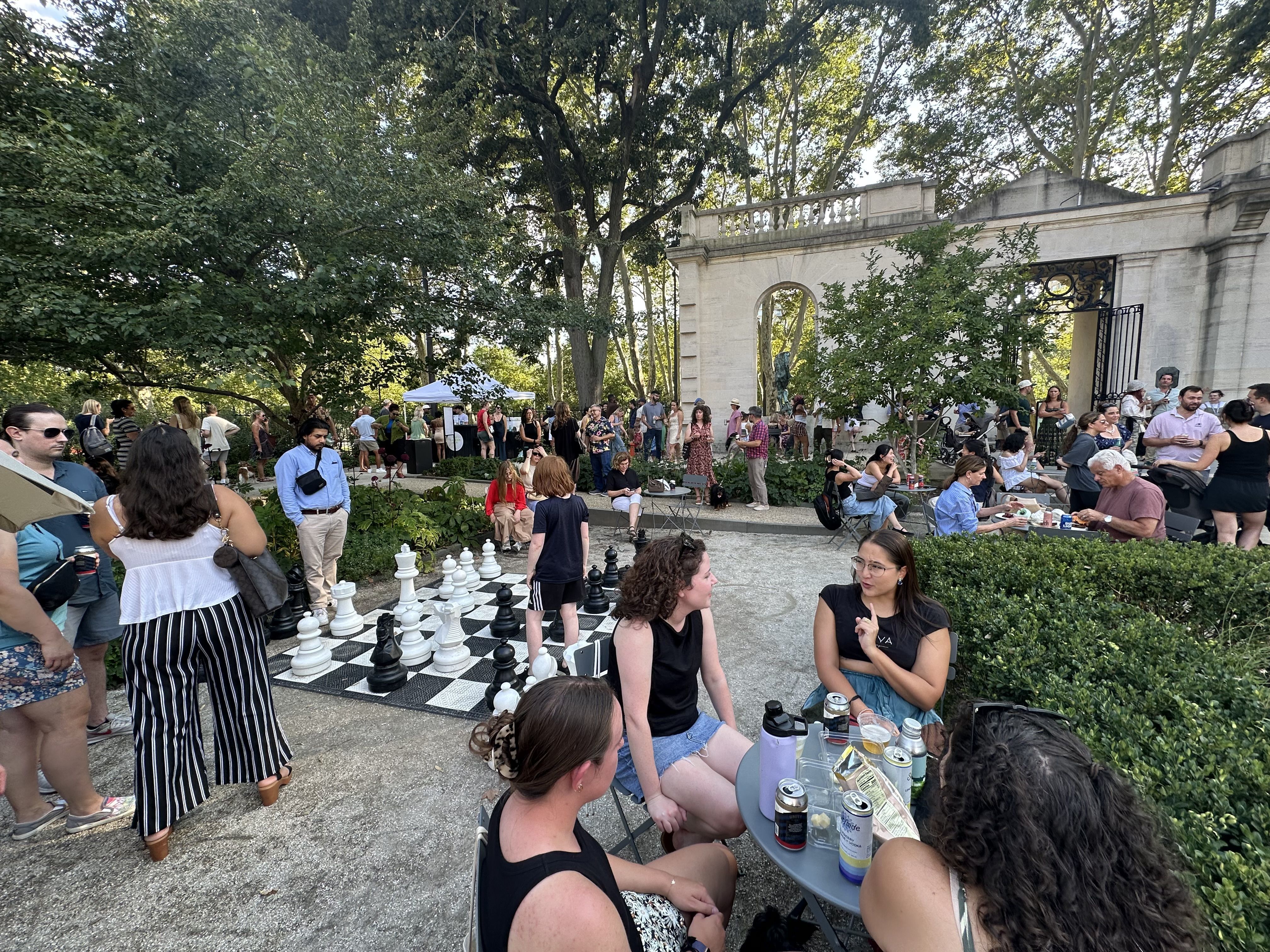
In Rodin Museum’s courtyard last Friday evening, you could run into old friends, play a game of gigantic chess, or try to keep up with your toddler toddling through the garden.
Or you could just sit back, sipping white wine and taking in the scene.
This weekly urban oasis at the Rodin has often featured live music to accompany drinks and snacks in the gorgeously landscaped courtyard. The event is now in its seasonal homestretch, continuing each Friday evening with recorded music through the end of August.
A Friday evening gathering at the Rodin Museum on the Ben Franklin Parkway, July 31, 2026.Glenn Holsten
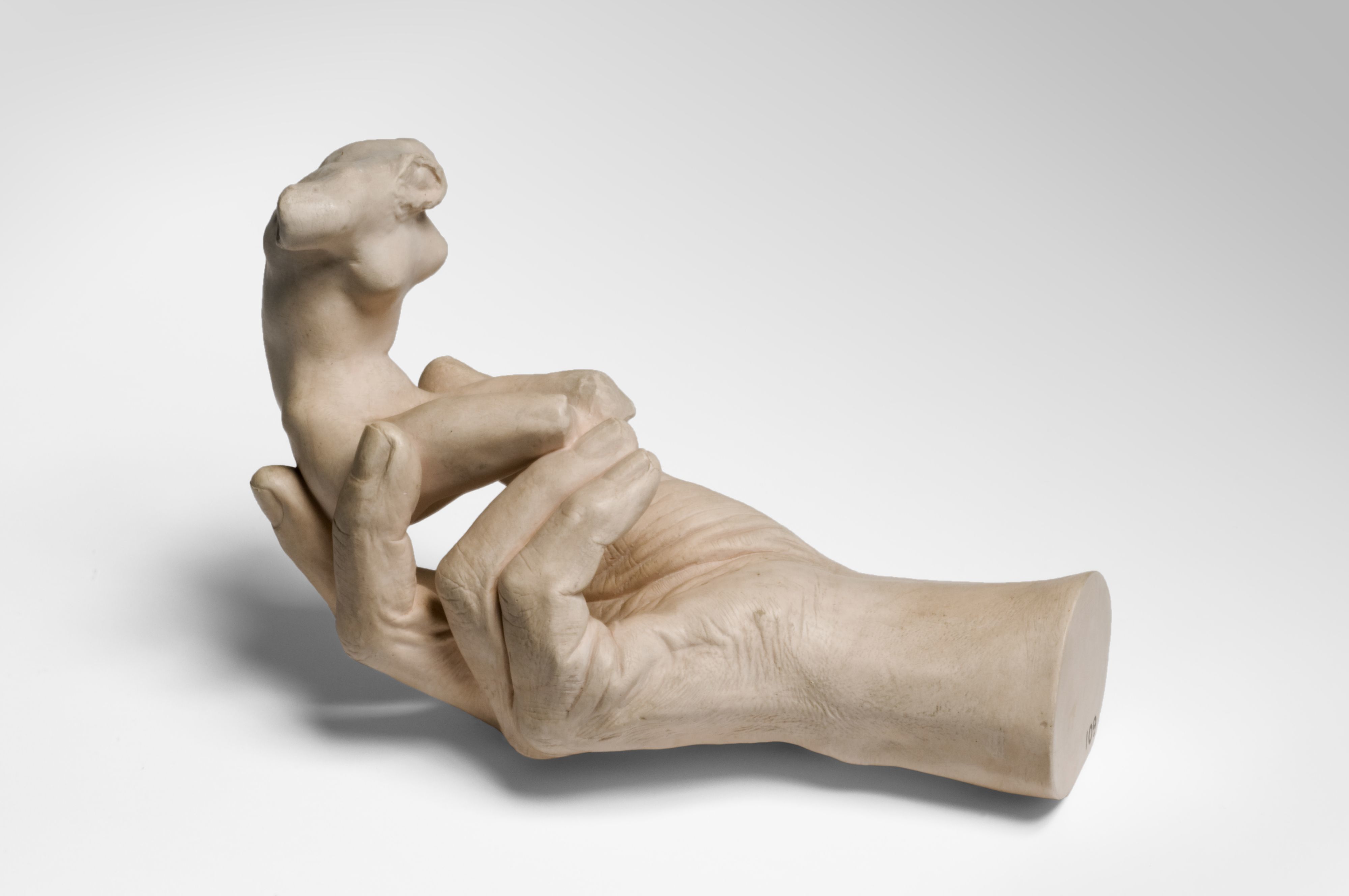
Oh, and while you’re there, you could also take in the jewel-box of a museum, which offers a choice selection of works by the French sculptor. The current show, “Rodin’s Hands,” features 15 bronzes and plasters, some of which relate to Auguste Rodin’s famous The Burghers of Calais.
The Rodin Museum, 2151 Benjamin Franklin Parkway, Friday-Monday, 10 a.m. to 5 p.m., and on Fridays until 8:30 p.m. through Aug. 28. Friday evenings are pay-what-you-wish. philamuseum.org.
— Peter Dobrin
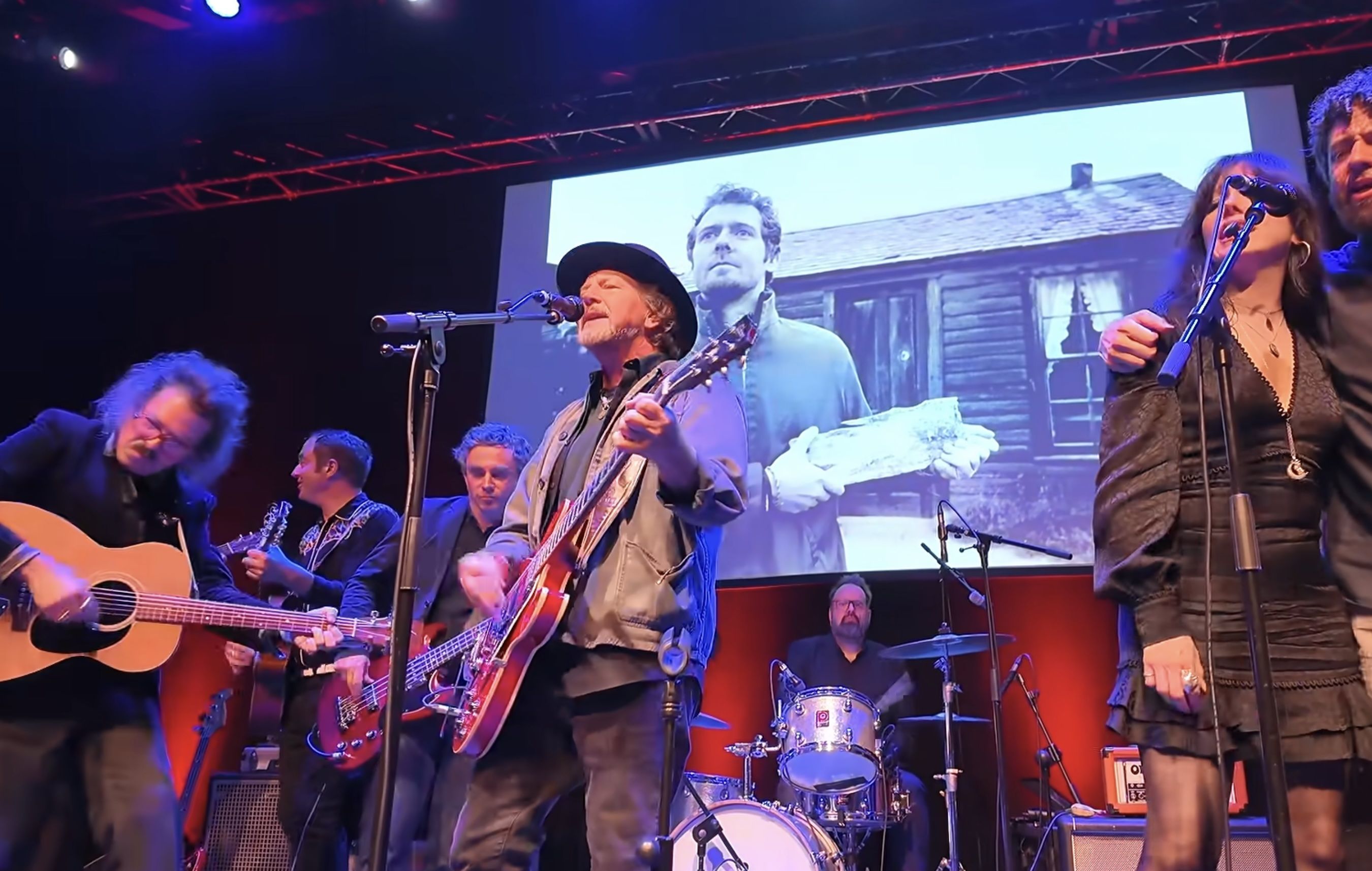
Eddie Veddie with Charlie Hall to his right and Imelda Mae to his left in a tribute to the late Glen Hansard at the Dublin concert hall Vicar Street.Screenshot from YouTube
A devastating Glen Hansard tribute
The last Irish funeral I watched on YouTube was Shane MacGowan’s.
The musical peak of that celebration of the Pogues songwriter, who had been beset by health problems before his death in 2023 at 65, came on a thrilling duet between Glen Hansard and Lisa O’Neill on the whiskey-soaked holiday classic “Fairytale of New York.”
The funeral mass, which was livestreamed Aug. 4 from St. Patrick’s Cathedral in Dublin, — and is archived online — had a feeling of unwanted deja vu. Less than three years after MacGowan had been laid to rest, many of the same musician mourners again gathered to pay tribute to one of their own, in this case a life brought to an unexpected tragic end.
Mourners included U2’s Bono, who led the congregation in an a cappella “Beautiful Day,” and played a voice note recording of Patti Smith singing a lullaby she wrote for Hansard. Eddie Vedder of Pearl Jam, whom Hansard opened for in Philadelphia in 2024, sang “A Song of Good Hope” with the Swell Season’s Marketa Irglova.
The service is a beautiful, devastating watch. Eulogies were given by Hansard’s wife, Maire Saaritsa, and his brothers Richard and Gary, the latter of whom sang the heartbreaking ballad “I Can See God,” written by the Hansards’ uncle Paul Cahill.
O’Neill, who was among the Dublin musicians who played with an expanded Pogues at Franklin Music Hall in Philly last September, was particularly moving on “Old Note,” a song she wrote in a Dublin apartment that Hansard lent her so she could work on her music.
The Philadelphia crew who worked with Hansard at Elm Street Studios in Conshohocken in 2025, and this year, was represented by producer Charlie Hall of the War on Drugs. He can be spotted in the church choir as the service came to a close with a fevered rendition of Bob Dylan’s “Forever Young,” mashed up with George Harrison’s “My Sweet Lord” and led by Hot House Flowers singer Liam Ó Maonlaí.
The night of the funeral, Hansard was further celebrated at Dublin’s Vicar Street concert hall. Vedder led the way on Neil Young’s “Rockin’ in the Free World,” with Hall on guitar on his right, and Asbury Park repped by Jake Clemons of the E Street Band, and photographer/musician Danny Clinch.
Philly musicians who worked with Hansard, including Hall, Luke Carlos O’Reilly, Ben Arnold, and Kevin Hanson, shared their remembrances of him on the Craic Radio Hour on WPPM-FM (106.5). The show can be heard on Mixcloud.
— Dan DeLuca
The fabric of a person
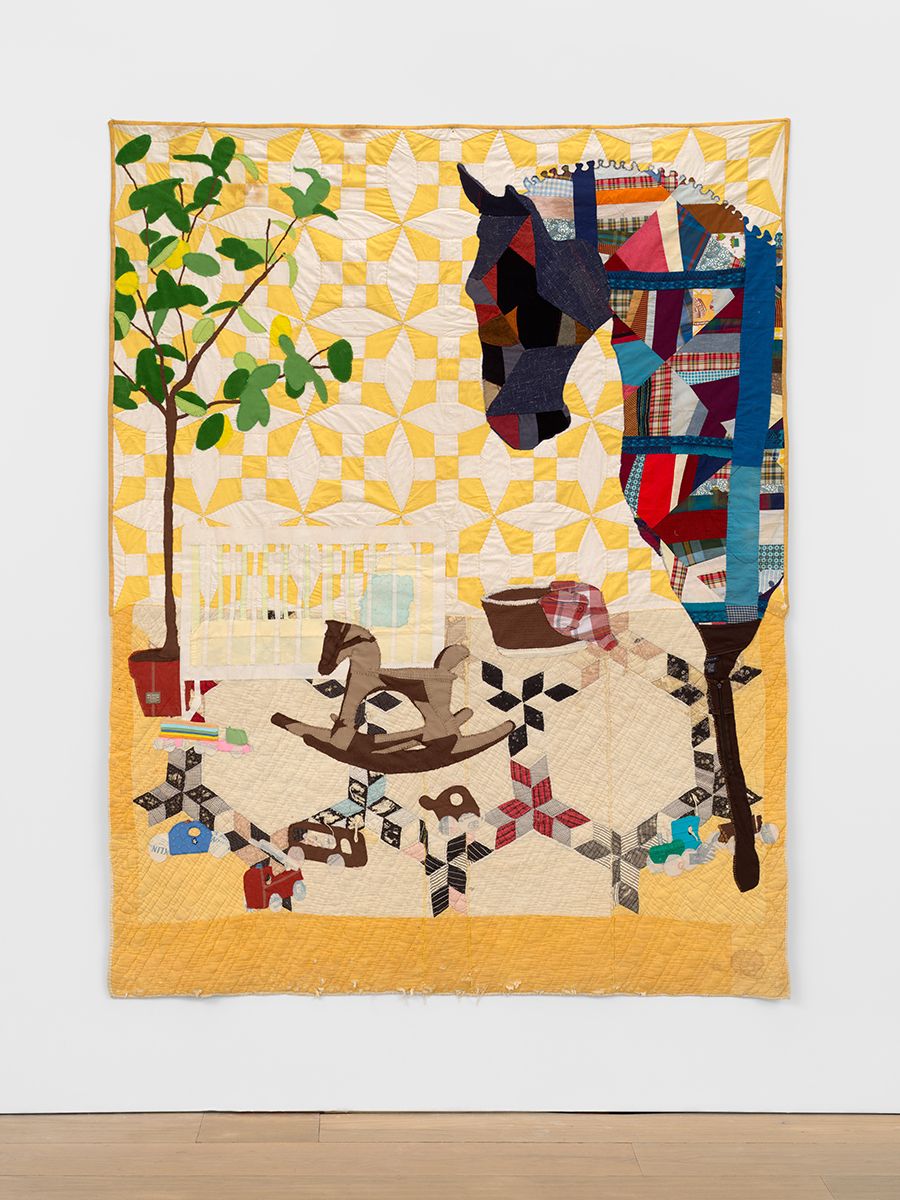
For incarcerated individuals with long-term or life sentences, life outside of prison may seem unimaginable. Artist Jesse Krimes brings those future visions to life through his Elegy Quilts.
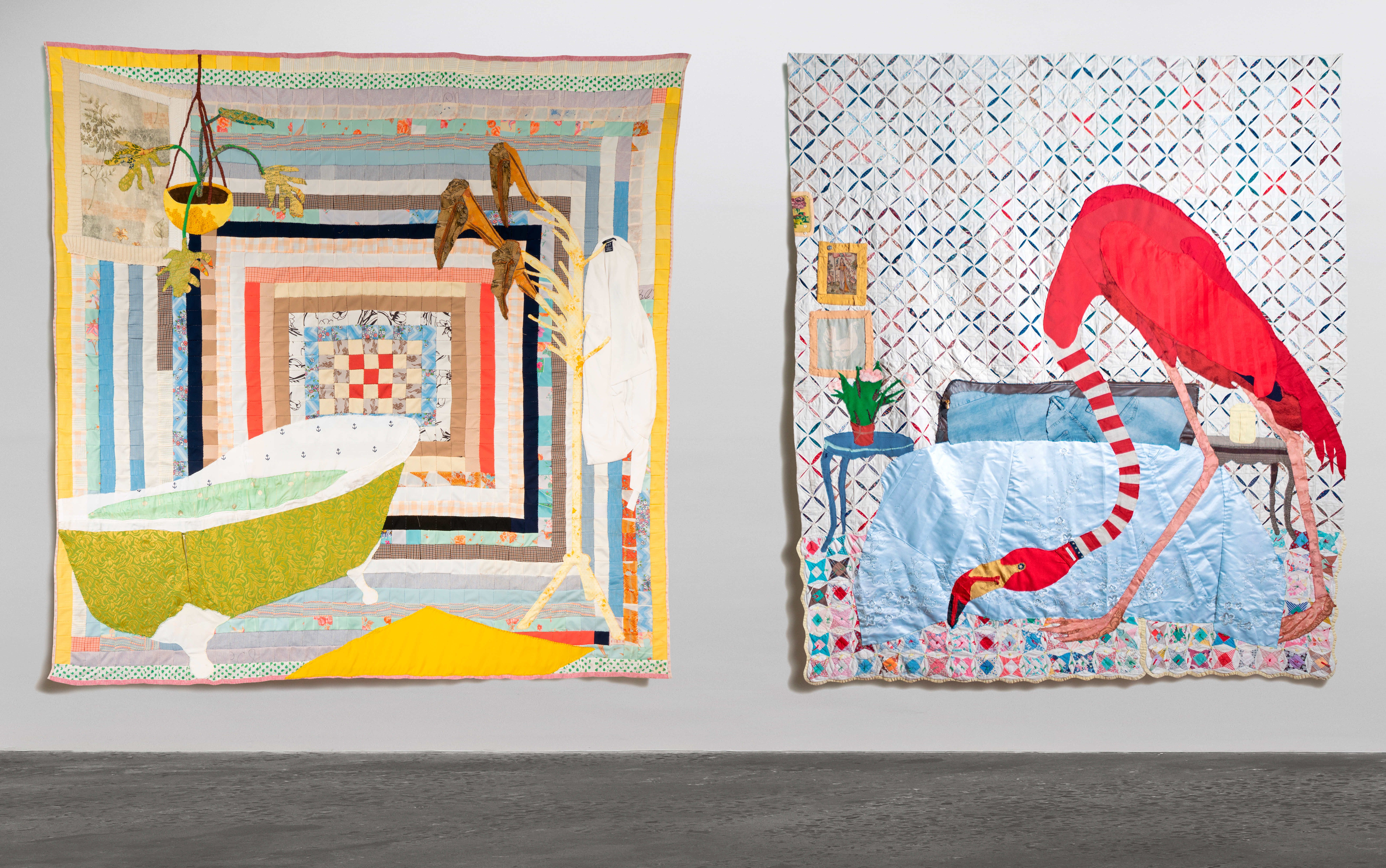
The quilts, currently on display at the Fabric Workshop and Museum, are made up of pieces of clothing from incarcerated individuals. Krimes then asks the subjects of these quilts to name three elements: a piece of furniture, an animal, and an object, all meant to represent the person’s identity.
Some commonalities are present, with multiple individuals selecting a bird or a bathroom setting. However, each quilt feels like its own distinct insight into this person’s life, whether that’s a memory they cherish or the life they wish to return to.
Krimes himself was incarcerated for five years, and used art as a creative outlet during his sentence. All of the pieces in the show are named after prisons.
Jesse Krimes’ 2026 quilt “Riverside” will become a mural in Spring Garden that will be unveiled on June 3. Description: Jesse Krimes, “Riverside,” 2026. Antique quilt, used clothing collected from incarcerated people, assorted textiles, 87 1/2 x 54 inches.Courtesy of Jesse Krimes and Jack Shainman Gallery, New York
The quilts feel incredibly personal, thanks to the elements that Krimes requested of the subjects. Particularly in pieces like Florence, where I could almost see the sadness of the quilt horse as he looks at this childhood playroom scene.
At the same time, as deep as the pieces feel, their ultimate message or theme can’t be known without knowing the subject’s intention. It creates this emotional reaction while also raising questions about these people’s identities and how they perceive themselves: What makes someone feel like they’re an owl? Or a flamingo?
The quilts are striking, and all I want to see besides a million more are the actual stories behind them. That being said, the mystery is heartbreakingly beautiful, too.
“Elegy Quilts by Jesse Krimes” is on display until Nov. 1, 2026, at the Fabric Museum and Workshop, 1214 Arch St., Phila. fabricworkshopandmuseum.org
— Morgan Ritter
Wonders in wood
Inside the quiet, well-air-conditioned Museum of Art in Wood, visitors can explore dozens of wondrous artworks that will leave them asking, “How did the artist make this?” Two floors in Old City are packed with treasures primarily inside humidity-controlled glass cases, though I’d encourage you to check every corner — and make sure to look up! — so you don’t miss a thing.
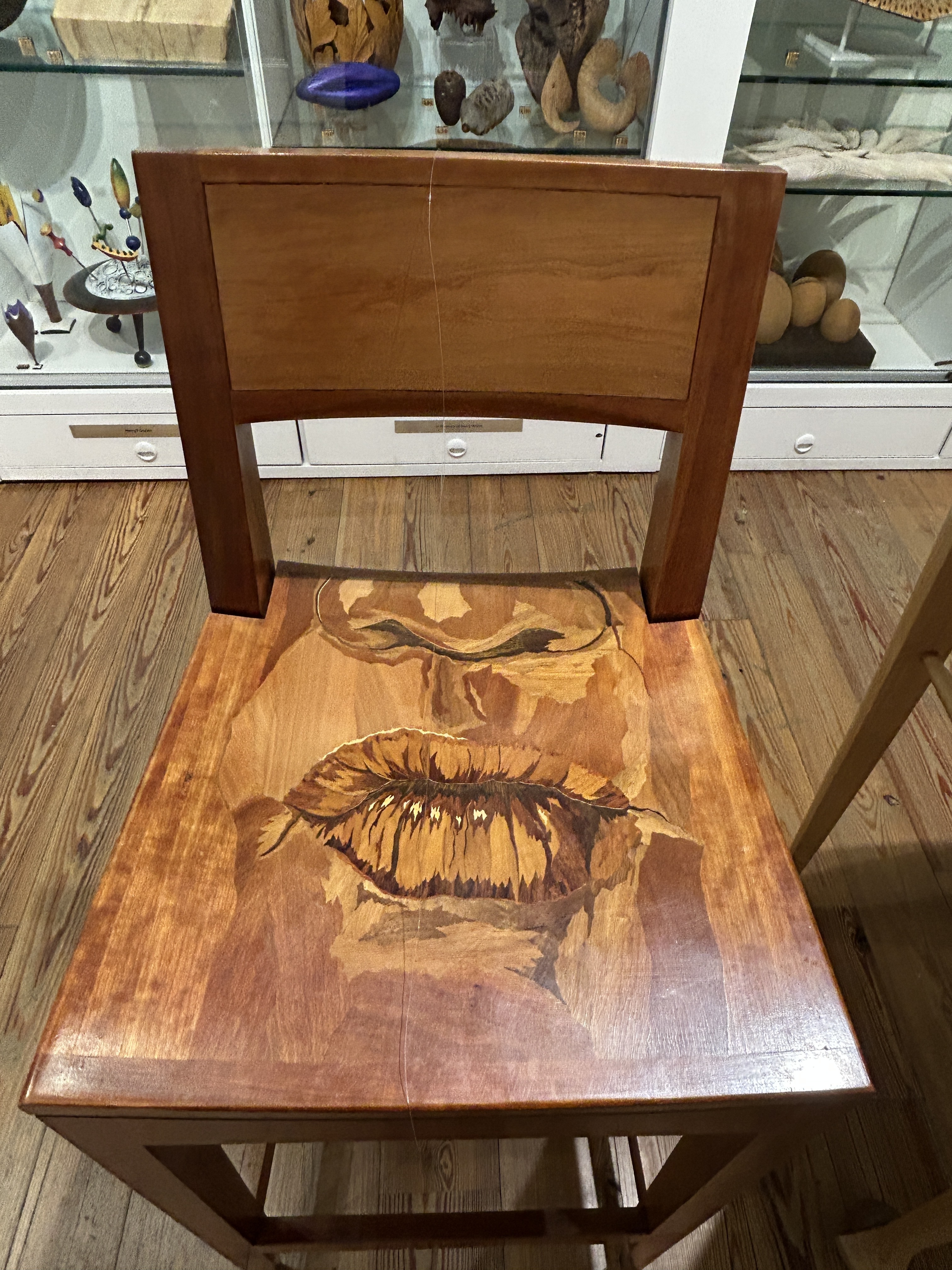
One disarmingly funny work that I loved was a pair of tall bar chairs made of cherry wood with a special design on the seat: meticulously crafted luscious lips. Artists Silas Kopf and Thomas Coughlin fittingly called them Kiss My Ass Chairs, but I was fascinated even before I learned the cheeky title. The lips (and nose) are multicolored to indicate texture, light, and shading with such impressive skill.
Kopf is particularly renowned for his expertise in marquetry, a style of woodworking that incorporates thin pieces of material (in this case, assorted types of wood) to create a design.
One of the “Kiss My Ass Chairs” by Silas Kopf and Thomas Coughlin, on view at the Museum of Art in Wood in Old City.Rosa Cartagena
See also: Louise Hibbert’s stunningly shiny seashells, Daniel Forest Hoffman’s unbelievably realistic Ram, Jason Marlow’s enigmatic helmet, and John H. Williams’ Solar Storm, a deep orange vessel with fingerprint-like swirls.
Those picks are from the permanent collection — the museum also hosts rotating exhibits, with the latest spotlighting their artists-in-residence. (The gift shop is another must-see.)
Plus, if you’re looking to enjoy the air-conditioning a bit longer, enter the museum’s wooden games library and try your hand at various puzzles or the ancient Egyptian board game senet.
Museum for Art in Wood, Wednesday-Sunday, 11:30 a.m.-5 p.m., 141 N. Third St., Phila. museumforartinwood.org
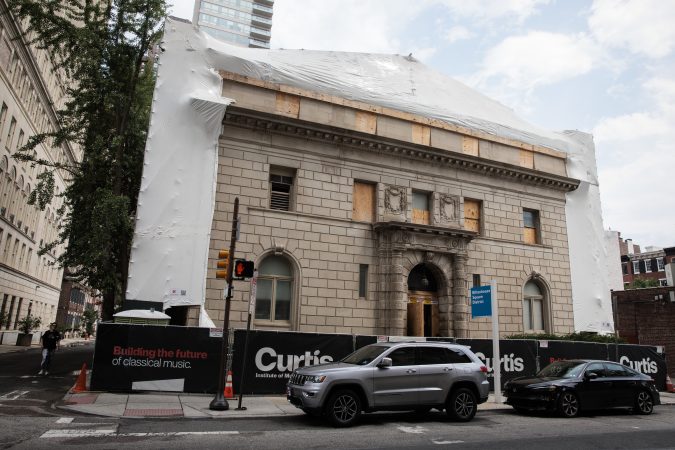
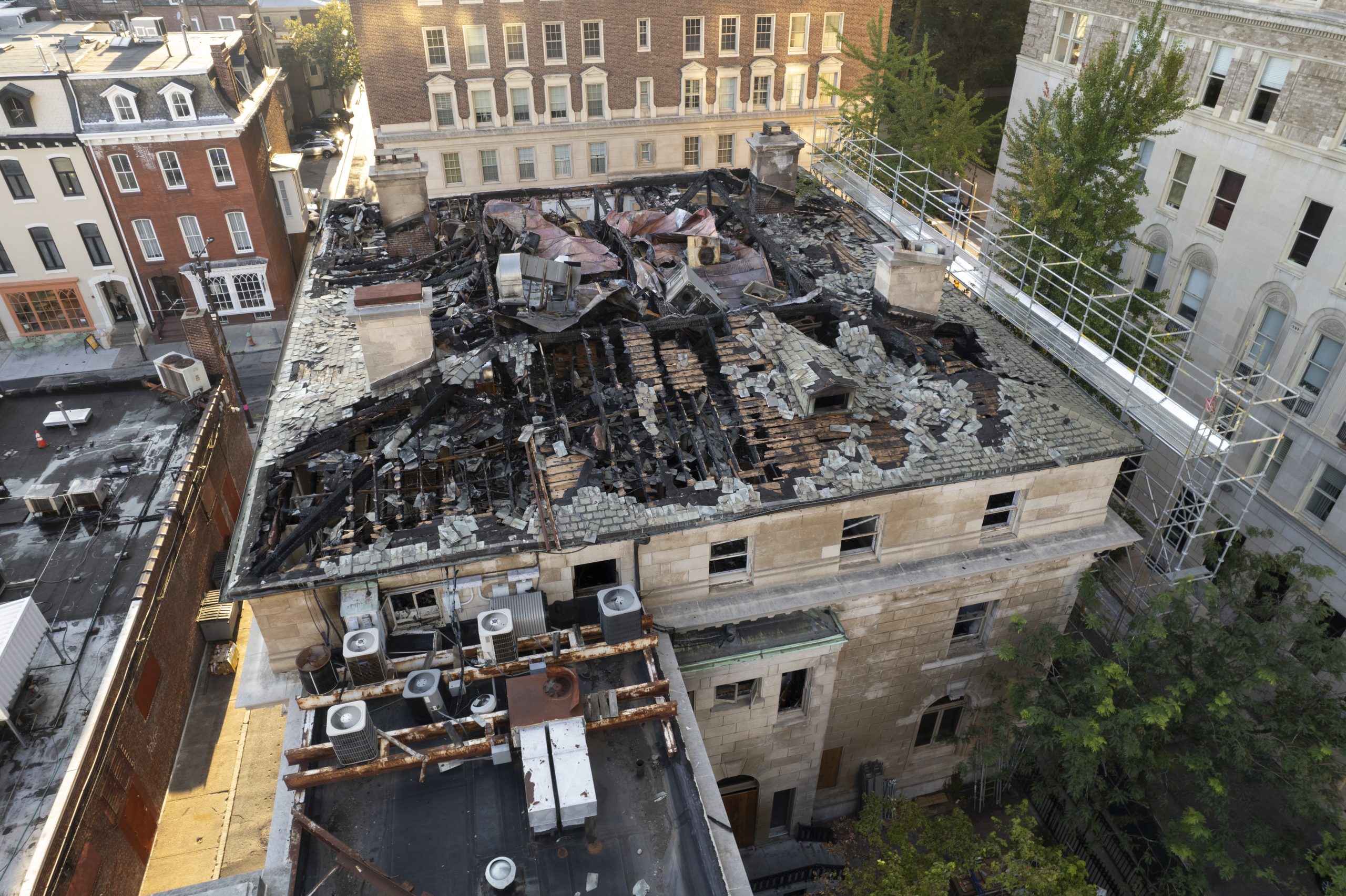
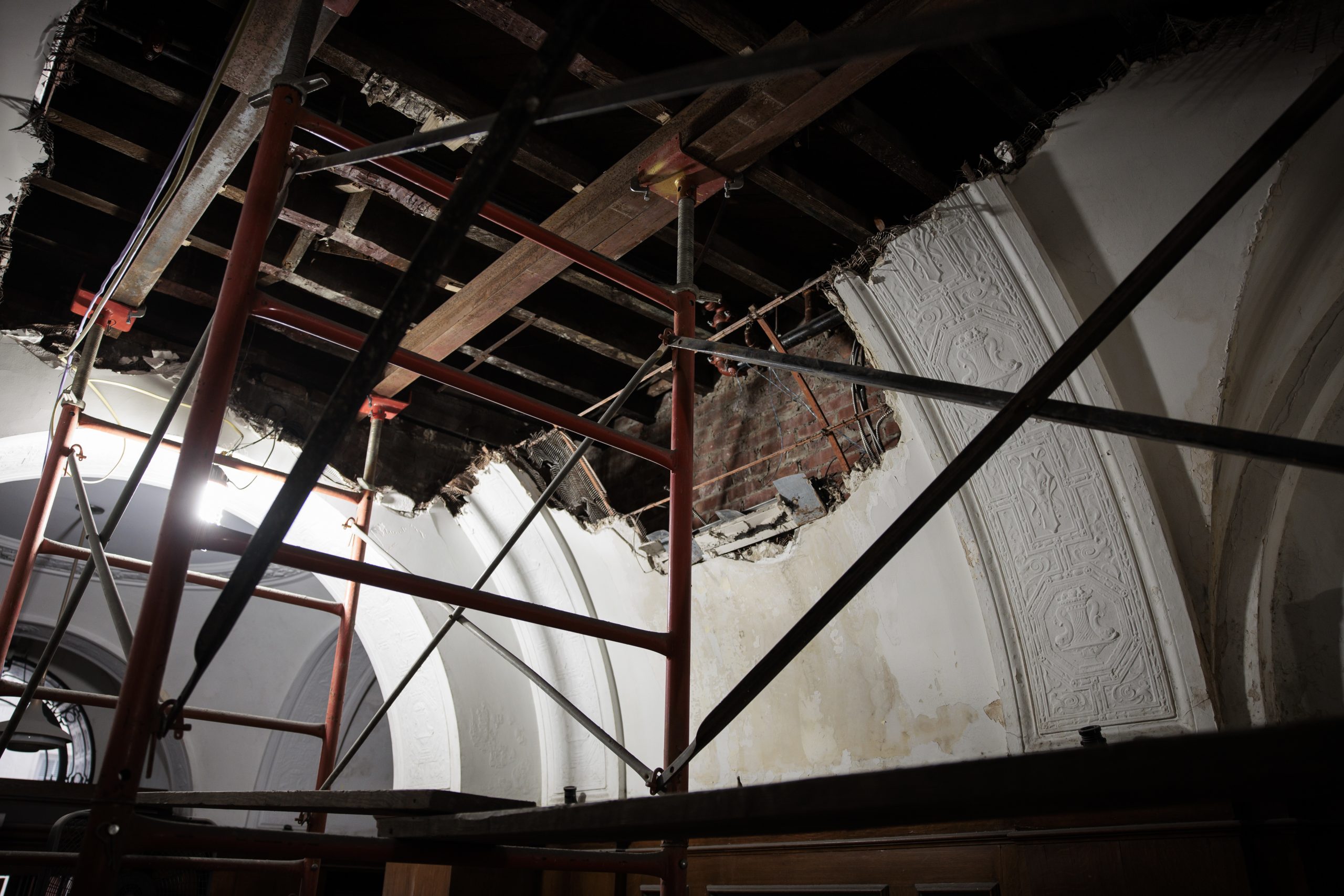
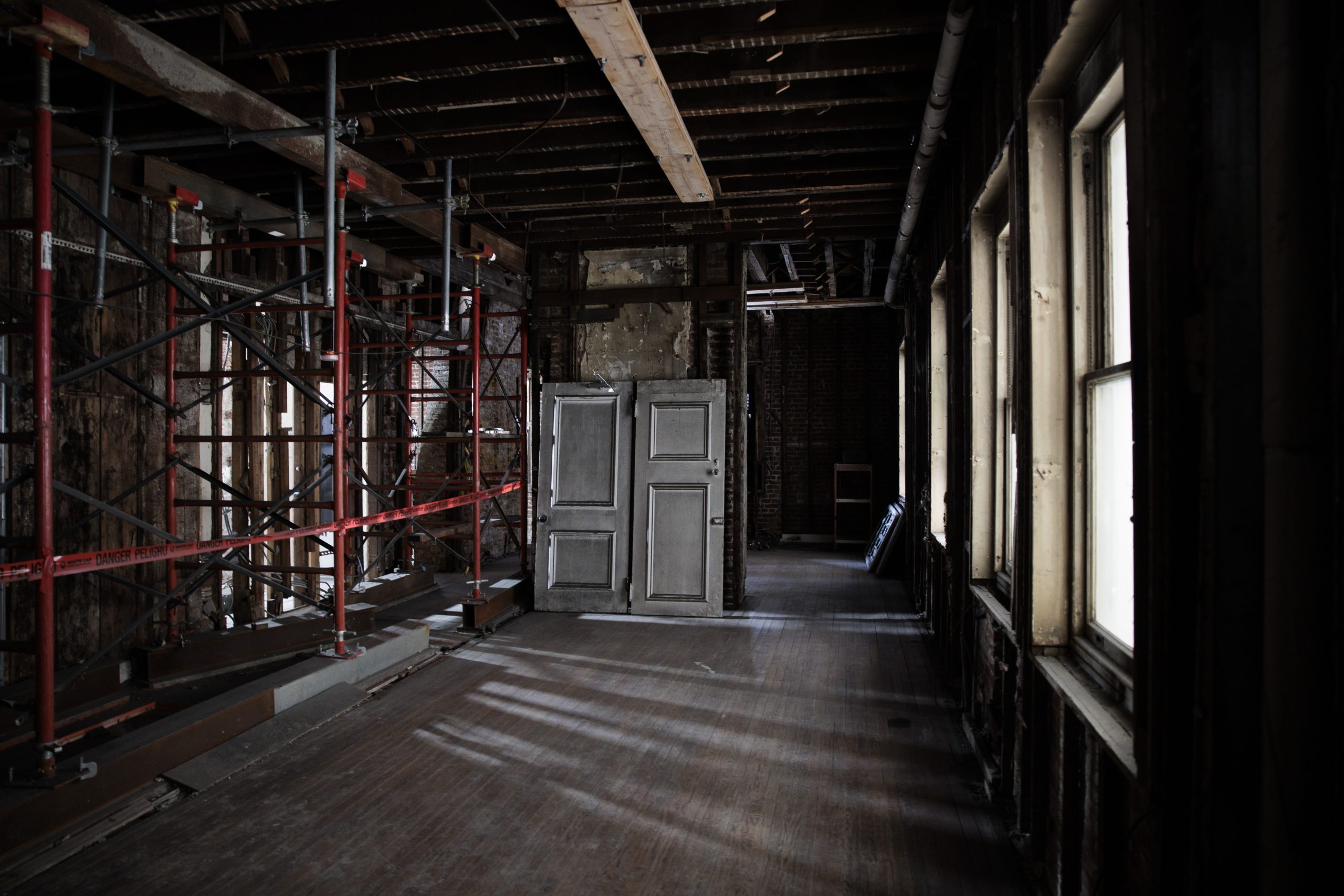
It is hard to imagine, given the charred smell, wrecked plaster, and thick web of scaffolding and structural supports evident these days inside the Art Alliance on Rittenhouse Square. But a year after a devastating fire, the Curtis Institute of Music is closing in on a vision for the historic building’s next act as the new home of the music conservatory’s vocal and opera department.
“My hope has always been that we could use this space to do for the vocal department what we did for the rest of the school or the orchestral program, certainly, with Lenfest,” says Curtis president and CEO Roberto Díaz.
Lenfest Hall, on the 1600 block of Locust Street, opened in 2011, providing the school with 105,000 square feet of dorms, rehearsal studios, a dining hall, a light-filled rehearsal hall large enough to accommodate a full orchestra, and other spaces.
The fire-damaged Art Alliance building at 251 S. 18th St. as it appeared in Aug., 2025.Monica Herndon / Staff Photographer
The Art Alliance was gutted by fire and water damage in July 2025, and plans for its restoration are now being worked out by the school with Philadelphia firm VSBA Architects & Planners.
The first floor is envisioned as having two 1,000-square-foot event spaces for master classes or lectures. The second floor will feature six teaching/coaching rooms and a student lounge. In the basement will be a catering kitchen, a costume shop/dressing room, and storage.
The major new space in the Art Alliance building will be a rehearsal room on the third floor whose 2,900 square feet roughly equal the size of the orchestra rehearsal hall in Lenfest.
“We could open it up for the neighborhood to come in and participate,” Díaz says, “but it gives the vocal department something that they just don’t have anything even remotely like.”
The vocal and opera department currently occupies a series of spaces in Curtis’ main historic building on the 1700 block of Locust Street.
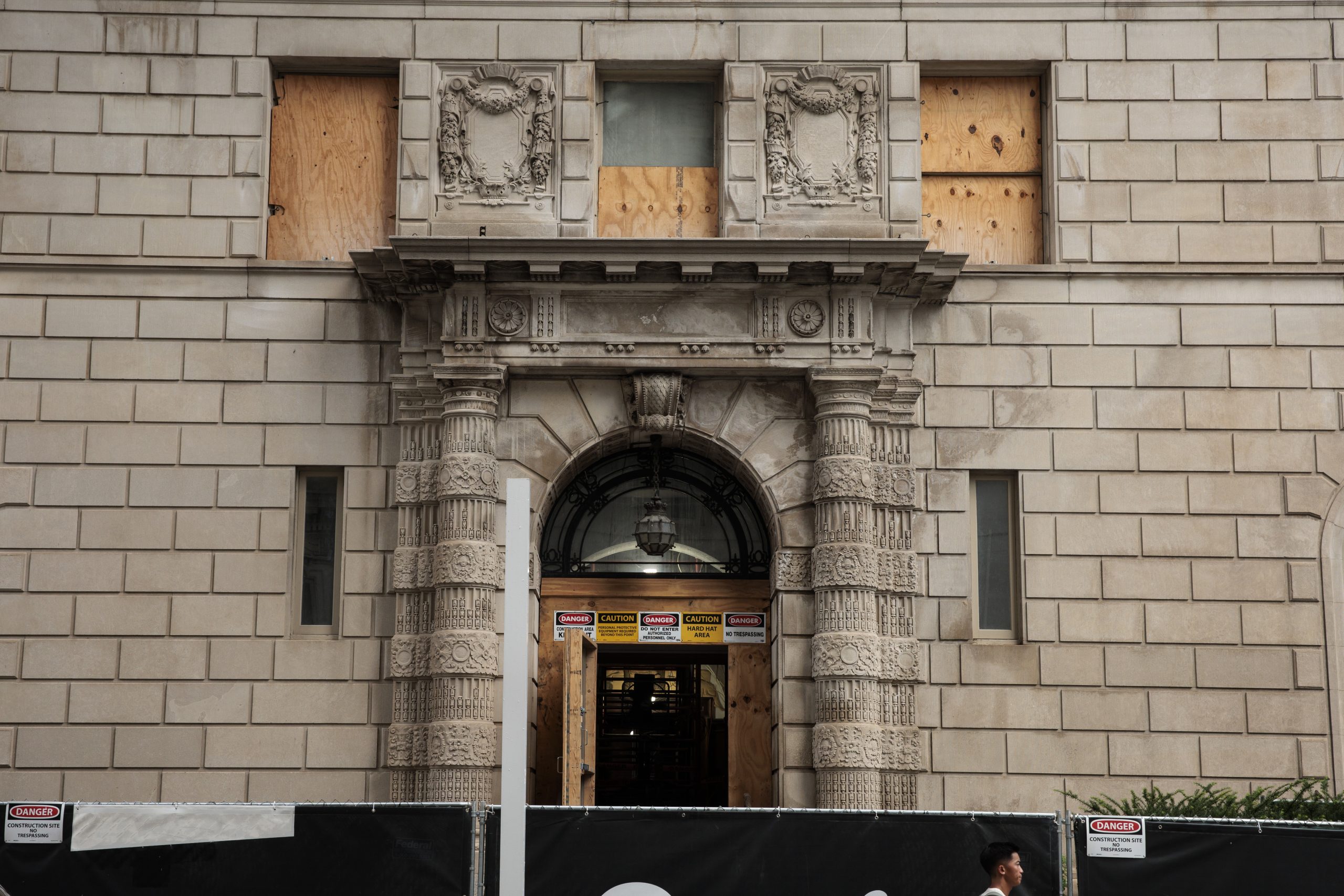
The exterior of the Curtis Institute’s Art Alliance building, July 27, 2026.Monica Herndon / Staff Photographer
While the restored and reconfigured Art Alliance building is primarily intended as the home of opera and vocal music, it will also likely host instrumentalists as space and scheduling allow. The school — with a student body of about 160, all on full scholarships — expects to open up events like master classes, informal workshop performances, and lectures to the public, but the frequency of public events has not been determined.
“In addition to supporting the work of our students and faculty, we look forward to ensuring that the Art Alliance is a welcoming place for our neighbors, communities, and partners,” Curtis spokesperson Patricia Johnson said. “At this stage, we’re exploring ways this could take shape.”
The building could open in about three years, Johnson said.
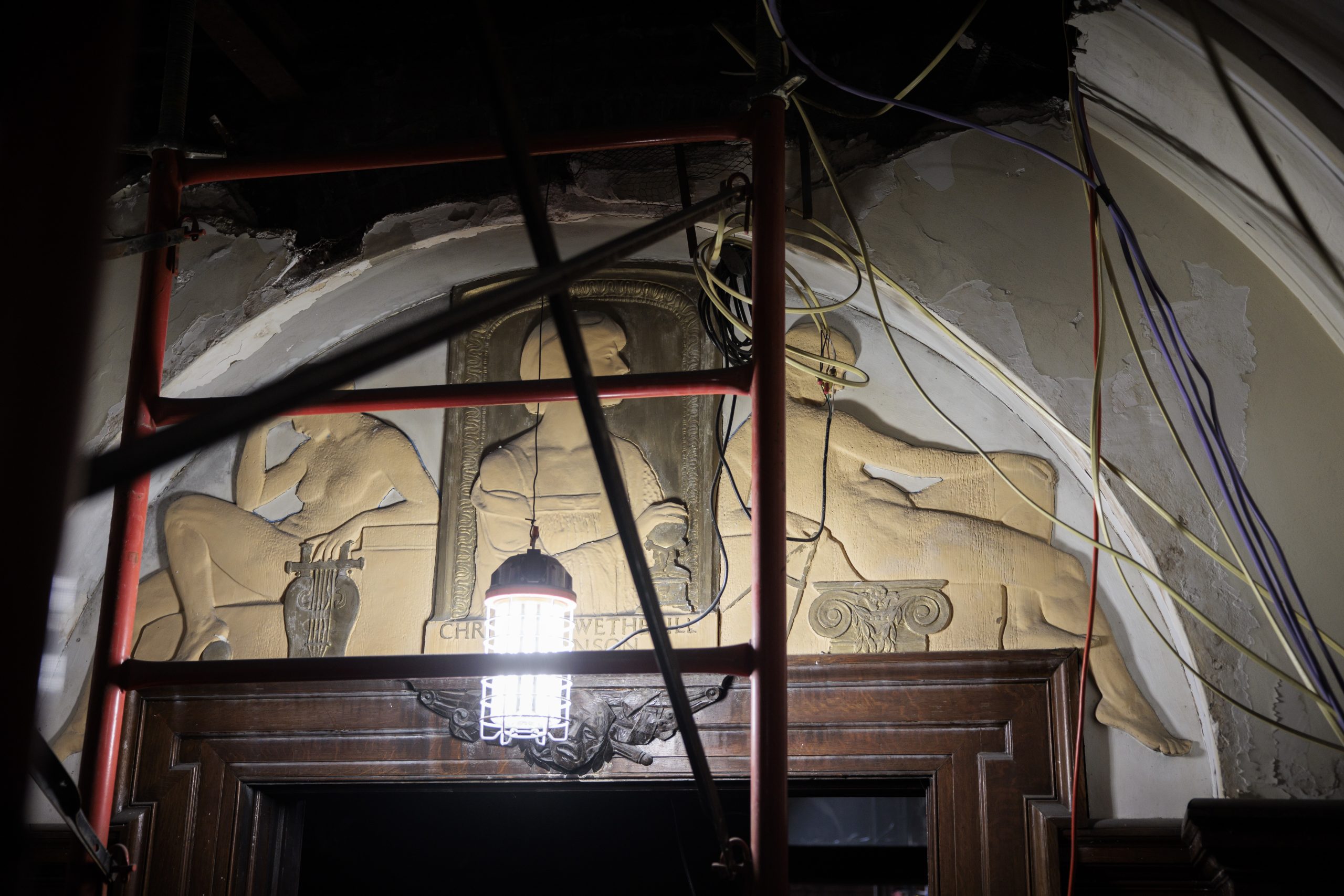
A frieze honoring Art Alliance founder Christine Wetherill Stevenson in the building, July 27, 2026.Monica Herndon / Staff Photographer
Among the issues still to be resolved is the eventual height of the Italian Renaissance Revival building, the onetime Wetherill mansion dating from 1906. Curtis would like to make the ceiling height on the third floor high, the better for acoustics in spaces like the large rehearsal room.
“That’s a work in progress,” Díaz said. “When we were in the design stages of Lenfest Hall, we had to get a lot of permissions from the architectural folks and the [Philadelphia] Historical Commission and so forth. So that would be part of the process here. Obviously the more volume we have in this room, the more things we can do in it.”
The building’s attic was destroyed in the fire, and a new one will not be built.
Some of the plaster detail lost in Art Alliance fire.Monica Herndon / Staff Photographer
A number of historic elements of the building have, however, been saved — the stained glass windows on the landing between the first and second floors, and a frieze honoring Art Alliance founder Christine Wetherill Stevenson, among them.
Most of the demolition planned for the building’s interior has been completed, said Scott Kahan, senior project manager with construction management and general contracting firm C. Erickson & Sons.
As the exact programmatic elements of the building are developed, Díaz said, a total project cost will emerge. A rough estimate is around $25 million.
And then there is the matter of paying for it all.
The school’s insurance claim is still unresolved, Díaz said, and philanthropy will be a part of the funding mix.
Curtis has “lots of angels interested in opera and vocal music,” and while none has stepped forward yet, Díaz suggests the building will have naming opportunities.
“The idea is very much like what we did with Lenfest, where Gould Rehearsal Hall has its name and we have the Locks Board Room and we have the teaching studios and rehearsal spaces that are named and so forth.”
Most of the demolition of the Art Alliance building’s fire- and water-damaged interior is complete.Monica Herndon / Staff Photographer
Curtis bid for the Art Alliance building in January 2025, acquiring it for $7.6 million from the bankruptcy estate of the University of the Arts, and was in the process of cleaning it out when the blaze struck. A report from the city’s fire marshal categorized the cause as “undetermined.”
The school was exploring potential uses for the facility at the time.
In its days as an arts institution and restaurant location, the Art Alliance lodged itself in the memories of many for its exhibitions, as well as weddings, parties, and other events.
One element of the building that went unscathed in the fire now seems elegiac. It is a floor mosaic just inside the entrance with the University of the Arts logo rendered in red-and-white tile.
Historic as the logo has become, that detail, Curtis leaders say, will go.
He likes his cookies chocolate chip, and his wine Oregon pinot noir.
And when it comes to music, LeBron James has a thing for Beethoven.
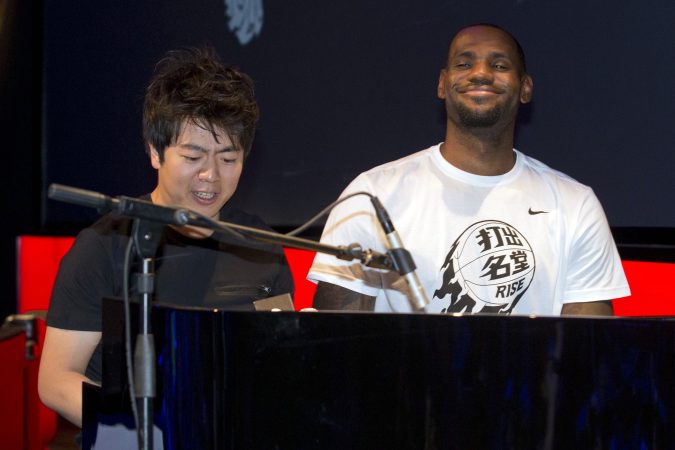
In fact, the Sixers’ new No. 23 has had a bit of a first-hand experience with classical music. He once took some quick instruction from Curtis Institute of Music alum Lang Lang before the two broke into a four-hand duet — brief, random, and (intentionally) atonal.
Lang Lang called the light-hearted 2014 collaboration a “piano dunk.”
Beethoven has a particular role in Jame’s routine, he explained in an interview with The Shop. He gets to games hours early and goes to the weight room, where he listens to hip-hop.
“And then when I leave the weight room, I gotta calm down and that’s why I’m listening to, like, more like old school jazz or I listen to a lot of, like, Beethoven,” he said on the talk show in 2022. “I like classical music, too.”
Taking its cue from James’ classical leanings, WRTI-FM (90.1) has quickly assembled some music especially for him.
“We thought we would create something Philadelphia-specific that we could put out as his new pregame playlist as the jazz and classical station here,” said WRTI classical program director Zev Kane.
Jazz cuts to make the list include “Smilin’ Billy Suite: Part II” by South Philadelphia’s Heath Brothers and Philadelphia organist Shirley Scott in “Soul Shoutin’.”
On the classical side: Rachmaninoff’s Symphonic Dances, because of its place as “a dazzling showcase of energy, elegance, and the unmistakable Philadelphia Sound,” the playlist text says.
The Barber Violin Concerto is on the list, since the third movement’s “breathless finale takes off with the speed of a full-court chase-down block.”
Kane says he believes there are characteristics shared by music and sports that could act as an on-ramp into music for classical newbies.
“I think playing music at an extremely high level and playing sports at that level — I think there are parallels: the need to train mind and body, the practice, the repetition, the heat of the moment, the debate over greatness, and the thrill of convening to see that spectacle together.”
When art world veteran Daniel H. Weiss took over the Philadelphia Museum of Art in December, he quickly recruited a new team, including a chief financial officer and chief fundraiser. That team has begun to assess the museum’s financial condition and what can be done about it.
The picture that is emerging is not a pretty one.
Preliminary figures seen by The Inquirer show that the museum ran a deficit of about $10 million on a budget of $76.5 million for the fiscal year that ended June 30.
That is on top of a deficit of $5.4 million for the year before, and leaders say the outlook does not promise to improve soon. For the fiscal year that has just begun, the museum anticipates the deficit will be comparable to last year’s $10 million, but in planning the budget the museum has outlined the possibility that it could be as high as $15.9 million.
The shortfalls are the museum’s largest in recent history, leaders say.
Weiss said the museum’s financial situation is “substantial, but solvable.”
“I have no doubt that we will have a balanced budget in about three years,” he said, “but we have real work to do to get there.”
Financial pressures are not threatening the museum’s ability to remain open, but the run of red ink cannot continue. The museum is covering the deficits by drawing on a pool of money that includes cash and reserves — sometimes referred to as quasi-endowment — whose use was not restricted by donors for any specific purpose.
“The way I would describe it is, we have a savings account for rainy days. We’re spending it,” Weiss said. “We need to stop doing that.”
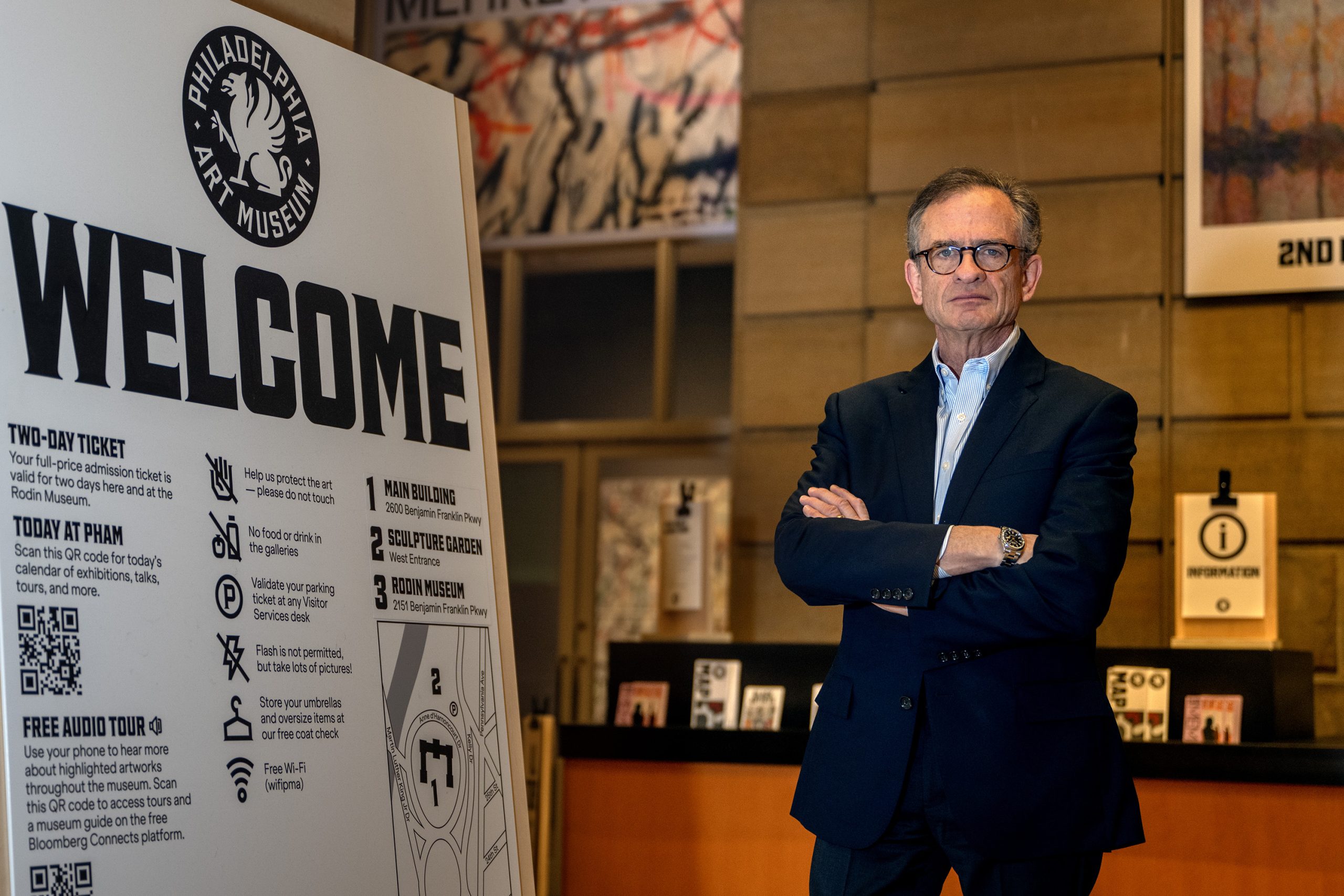
Daniel H. Weiss, director and CEO of the Philadelphia Museum of Art, at the museum in January.Tom Gralish / Staff Photographer
The museum’s struggle to right its finances comes as it faces some urgent needs and considers the fate of key projects. Among the unsettled questions is how to pay for deferred maintenance to both the main building and the Perelman building, the annex to the north that was closed to the public during the pandemic and never reopened.
The combined cost of work on the two buildings has a preliminary price tag of around $300 million.
As for a much sexier project, the museum’s much-trumpeted expansion envisioned by architect Frank Gehry: That will have to wait. Given the current challenges, the ambitious idea of carving out new spaces beneath the east terrace continues to be on hold; the timeline is uncertain.
“It is not, at this time, appropriate for us to be evaluating the feasibility of a very substantial new capital project which would be required to implement the Gehry plan,” Weiss said. “We need to determine the priorities and sequencing of capital work that needs to be done. And over the long term, we need to figure out what this institution can afford in a sustainable way.”
The famed architect died late last year.
The priority now is ringing the alarm that all is not well at one of the city’s two largest arts groups (the other being the Philadelphia Orchestra and Ensemble Arts) and rallying support around a rescue plan.
Weiss said:
“We want to be transparent and we want to be accessible to people, and they have a right to know — it’s their institution. But we don’t want to do it in a way that turns people away. It’s just an institution that needs repair. So how to tell that story is part of what we have to work on.”
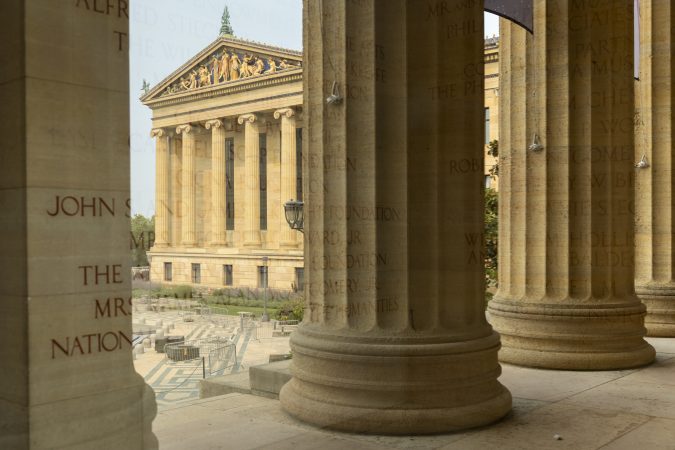
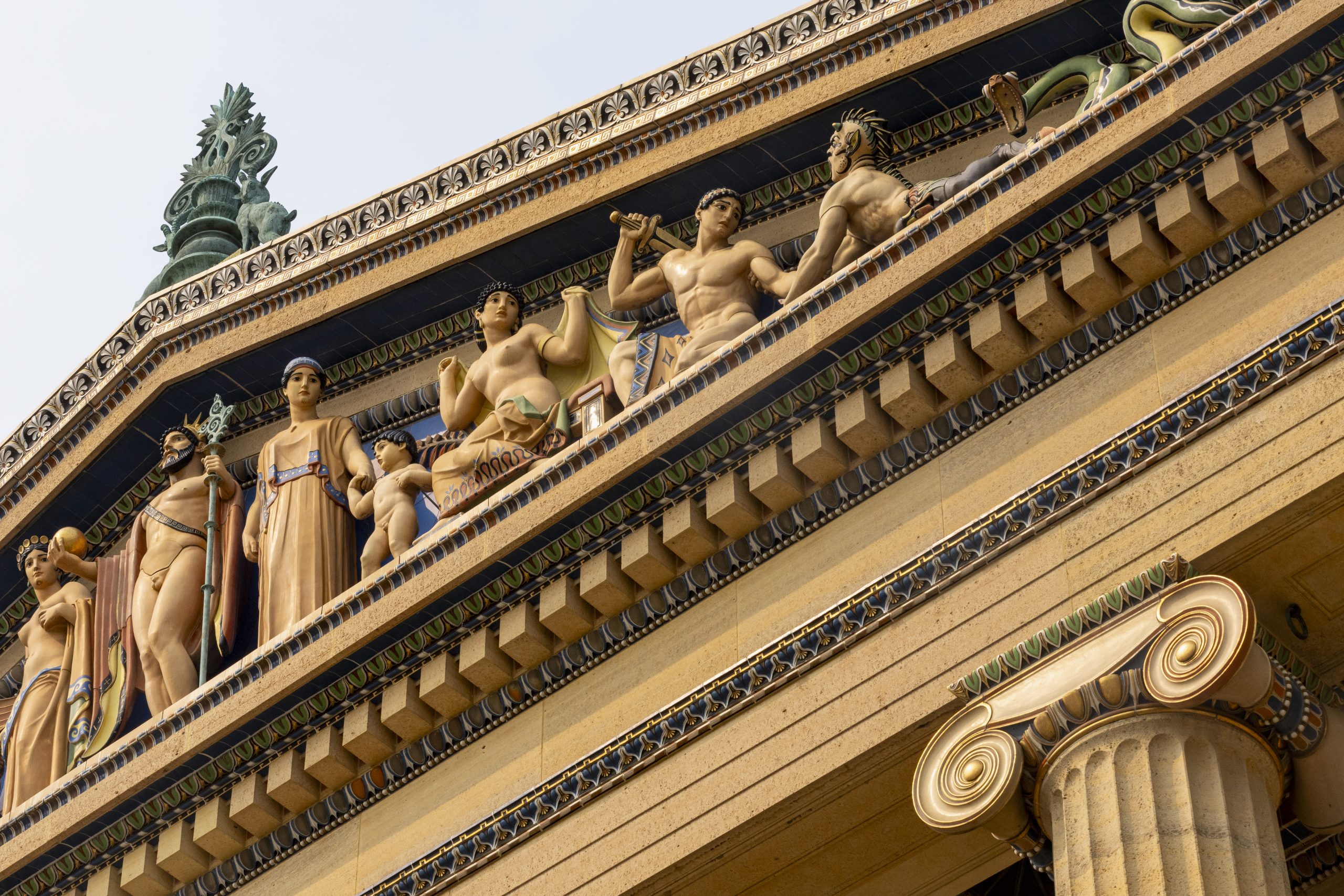
The polychrome high-relief sculpture on the north pediment of the Philadelphia Museum of Art. The high-relief sculpture depicts 13 figures from classical mythology.Aidan T. Gallo / Staff Photographer
Ambitions despite deficit
The pool of money is finite, and the museum would like to stop tapping its reserves as quickly as possible. Instead of funding the deficit, it could be helping grow the nest egg.
Referring to what is being spent this year alone to cover the deficit, Weiss said:
“That’s $10 million of assets earning at least 5% a year till the end of time we’re foregoing. We’ll never get that back.”
And yet the museum does not expect to balance its budget this year or next.
“We anticipate getting within shouting distance of a balanced budget within three years. We don’t have the luxury of taking longer,” Weiss said.
Even as it struggles, the museum has not shelved ambitious projects. The idea of creating a new learning and engagement center on the north side of the museum is still very much in play, Weiss said. Design development for the facility could begin within a year.
Blockbuster exhibitions like the 1982 show of Nigerian art seen by 197,000 visitors or the Cézanne retrospective in 1996 that drew 548,741 are hard to come by, but the museum is working on a number of shows that it believes would draw 100,000-plus visitors each.
“We will have exhibitions that will be of very significant public interest that will draw large numbers that will be exciting and powerful,” said Weiss, who declined to give specifics on the exhibits.
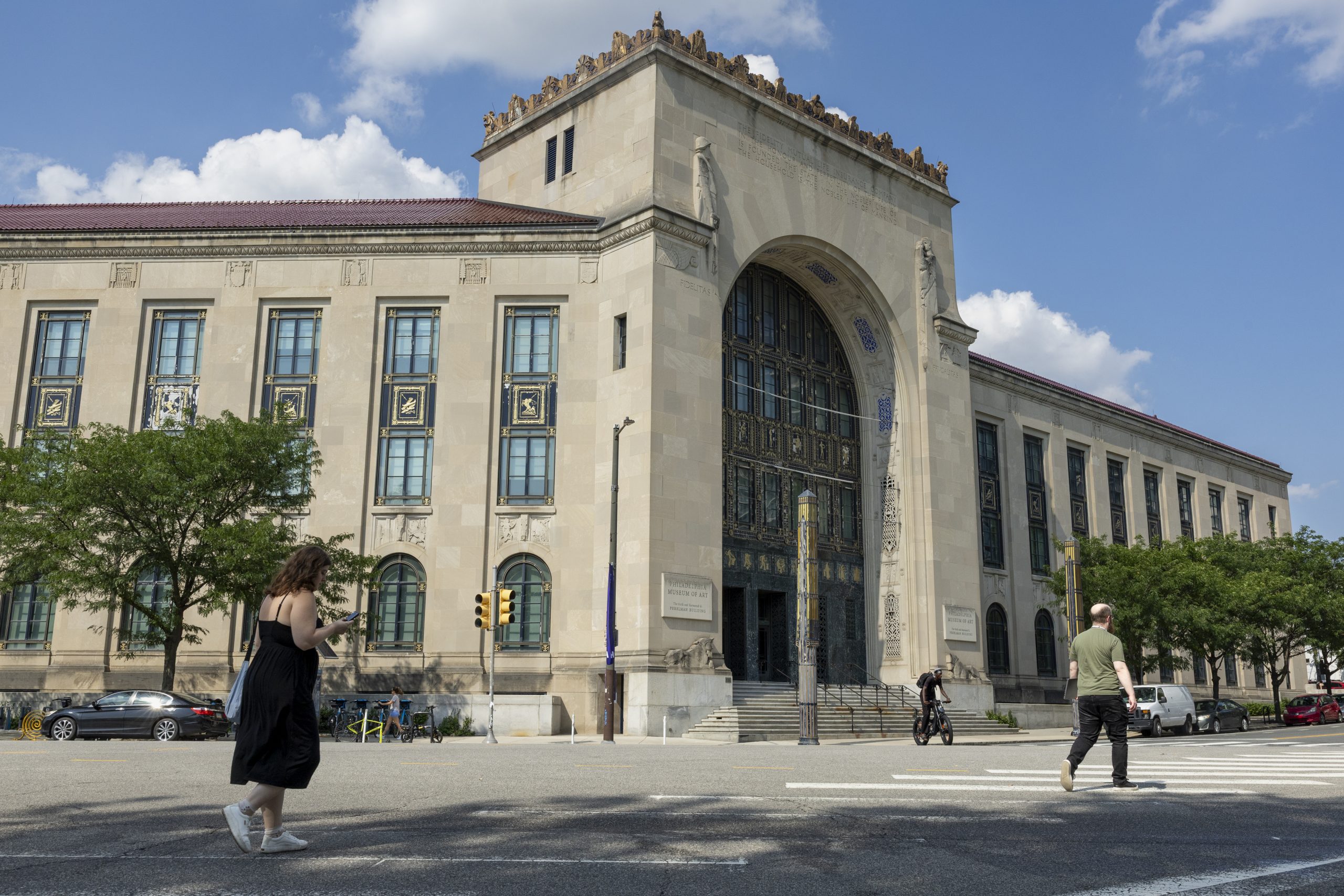
The Perelman building, an annex to the Philadelphia Museum of Art containing exhibition galleries, offices, conservation labs, and the museum library.Aidan T. Gallo / Staff Photographer
About the future of the nearby Perelman building, Weiss said the museum is searching for ideas.
On the one hand, the highly decorated art deco structure contains the library, art conservation studios, and administrative offices for which there is no space in the main building. On the other, the costs of operating and maintaining it are high. It is more building than is needed, and the location across two busy streets limits the number of visitors who will make the trip to reach it.
A revenue stream that’s been flat
The museum’s new leadership has analyzed finances from the last 10 to 12 years — a period that includes the pandemic, plus the periods before and after — and determined that the deficit is the result of a revenue stream that has not grown much, while expenses have.
“Functional revenue — contributions, admissions, membership, and earned revenue — has grown by only 0.3%, effectively flat,” said Mitchell Wein, the museum’s executive vice president and chief financial and operating officer.
The museum has not fully yet developed a plan for reversing the trend, but is “modeling lots of scenarios and coming up with the best approach on how to do that,” Wein said.
“Part of this process is evaluating everything. Everything is on the table,” Weiss said.
Reducing expenses in some areas will be considered, but that cannot be the only answer.
“We also know we need to focus on revenue generation and supporting the museum for the long term,” Wein said.
But revenue from where?
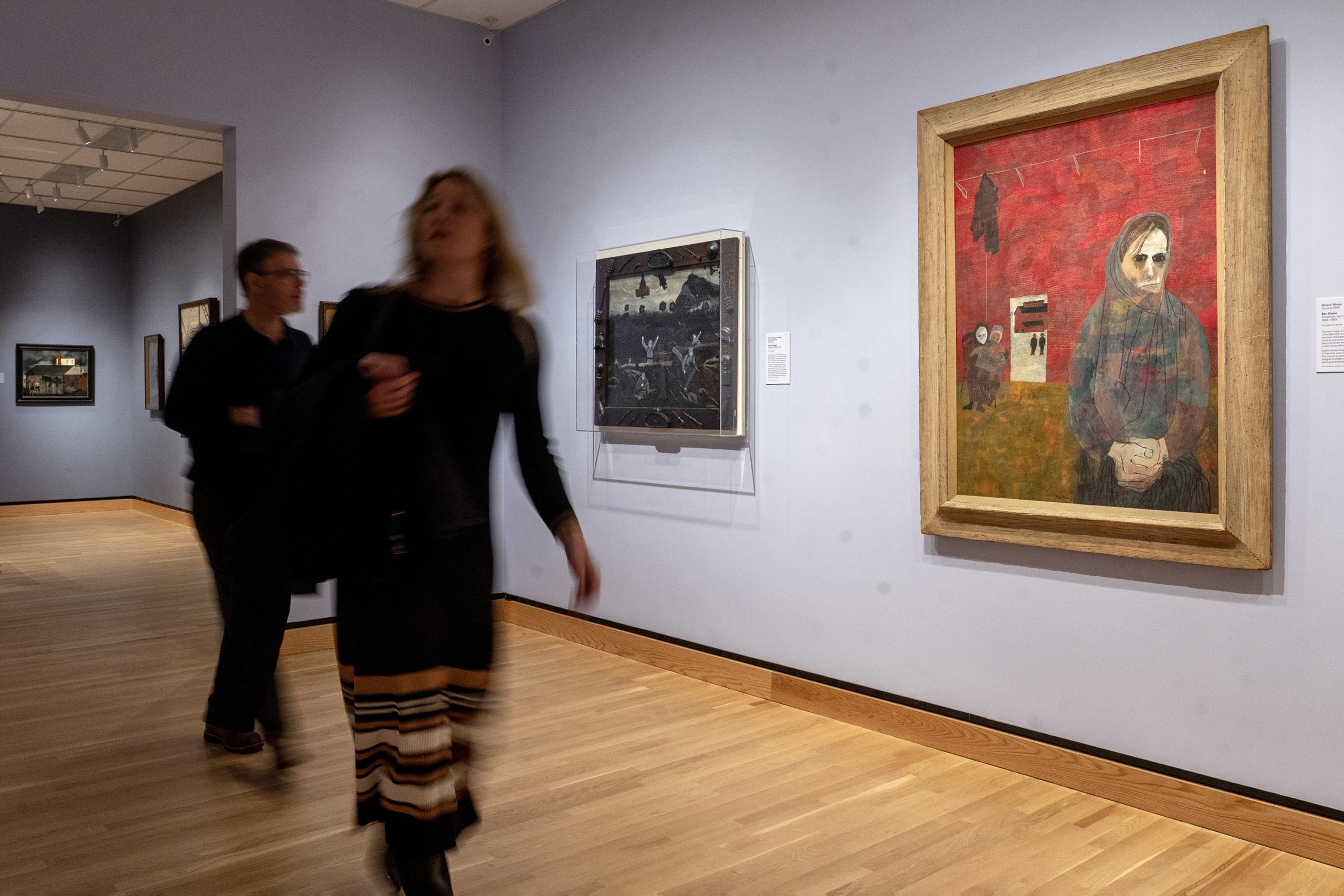
‘Miners’ Wives’ (right) by Ben Shahn and ‘The End of the War, Starting Home’ by Horace Pippin in the ‘A Nation of Artists’ show at the Philadelphia Museum of Art.Tom Gralish / Staff Photographer
Six keys to securing solvency
Ticket sales is one obvious place to look, but a big boost from admission is probably not in the cards. The museum once aspired to attract a million visitors a year, but that goal was floated before the pandemic, and the museum has not yet recovered its pre-COVID numbers.
This past fiscal year, the forecast called for 731,000 visitors; 672,753 showed up.
So the goal for next year has been adjusted down to 705,000, which the museum feels is more realistic. Attendance was 773,511 in the last full year before the pandemic.
The museum’s difficulty in coming back from the pandemic is not unusual. Over half (55%) of U.S. museums of all kinds were reporting lower attendance in 2025 than in 2019, according to a report from the American Alliance of Museums.
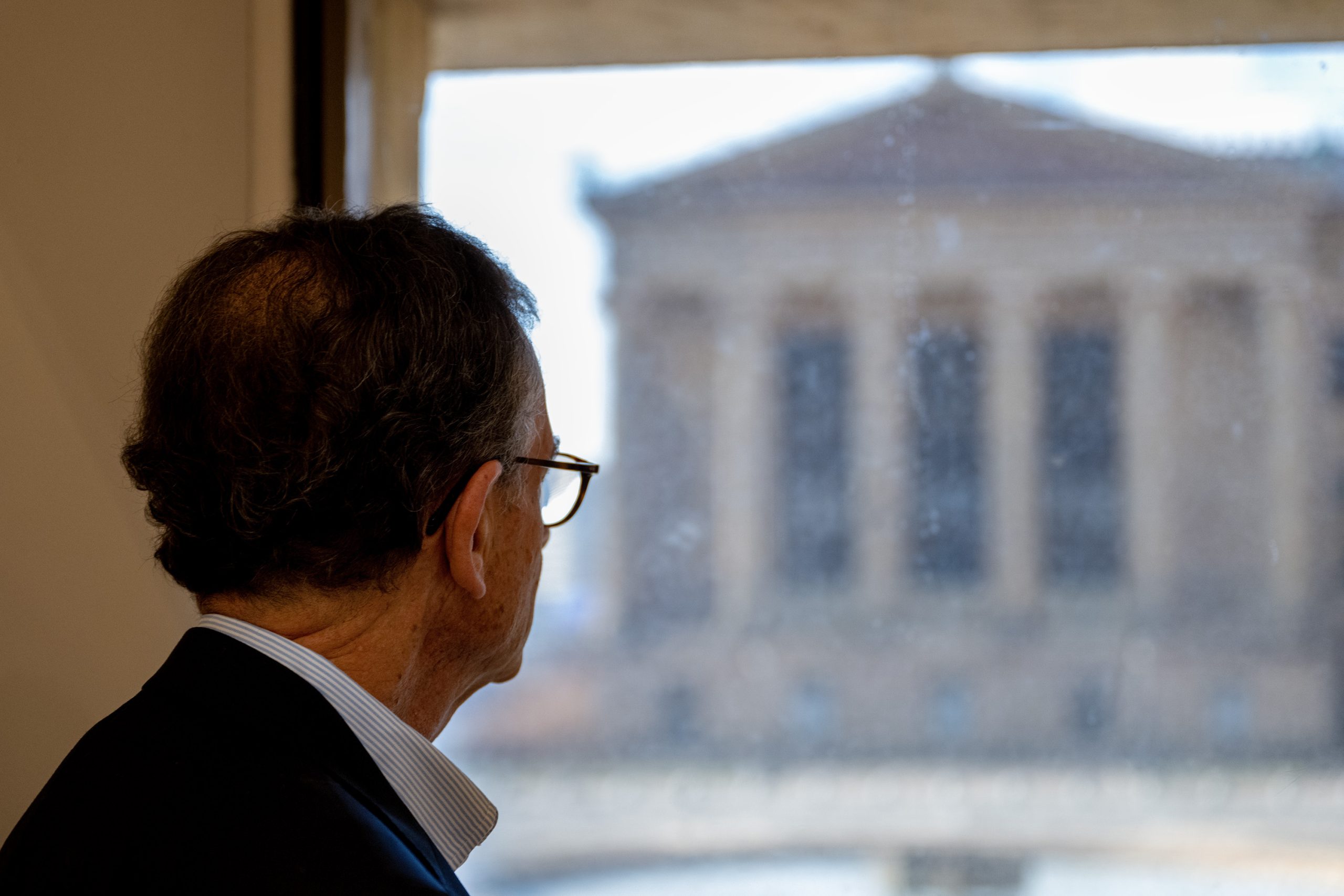
Daniel H. Weiss, director and CEO of the Philadelphia Museum of Art, looking out onto the museum’s east terrace.Tom Gralish / Staff Photographer
Weiss says the museum needs to focus on six key areas to achieve solvency:
Optimizing endowment income.
Boosting earned revenue, including income from retail, restaurants, special events and membership, and admissions. “Each of those needs to be examined to determine what’s possible,” he said.
Evaluating how much can be brought in through philanthropy.
Working toward more city and state government support. “We want to try to make the case to them that a larger investment in these facilities is in everybody’s best interests, and that’s a work in progress.”
Reviewing the operating budget. “The operating budget can be improved, but there’s not a ton of opportunity for us, for example, to lay people off. Our staffing levels are already down. We don’t think that’s the answer. But there are certain things we can cut and manage better or maybe outsource or streamline to improve the operating budget.”
Assessing programs, such as making better and more economical use of the Perelman building.
“If you add all of those things up and we do all of those things — even if we don’t also find a private equity guy who falls in love with us who’s going to give us $100 million — we’re going to balance our budget,” Weiss said.
Hundred million-dollar gifts may or may not be in the future, but the suggestion raises a salient question being pondered by leaders: What is the fundraising capacity of the museum?
“How much can that be, how much can we raise? I don’t know,” Weiss said. “What is this city set up to do? Most of the people who give money to an institution like this are local. So what is the philanthropic opportunity for one of the leading cultural institutions in this city?”
What Weiss is sure of is that fundraising depends on resetting the profile of an institution known more recently for organizational turmoil than for success.
“People who invest in an organization at lower levels as members, at higher levels as donors or major philanthropists, they always invest in winning organizations, and they rarely invest money to remediate problems. And one legacy I would like to leave is that we become an organization that’s known for being really good at what we do.
“The positive is a world-class institution with a great collection. If we can’t figure this out, then we’re the wrong people. It’s just not that hard.”