Jon Batiste’s show at the Highmark Mann this Friday has been canceled, the popular singer, songwriter, TV personality, and bandleader wrote in a note posted on the arts center’s website Tuesday.
As he navigates “some personal circumstances,” Batiste said he needed to cancel some upcoming concert dates, including the one at the Highmark Mann.
He is “finding new ways and opportunities to share live music with you,” and “truly can’t wait to come back and perform for you soon,” he wrote in the message.
Batiste — Louisiana-born and -raised, Juilliard-trained — has forged a multifaceted career, often blending classical and jazz. He has been nominated for 25 Grammy Awards, winning eight, and was bandleader and musical director of the Late Show with Stephen Colbert from 2015 to 2022.
Last summer, he performed with the Philadelphia Orchestra at its summer home in Saratoga Springs, N.Y. His new release, Black Mozart, is due out Friday.
Batiste is beloved for the sense of joy he brings to music-making and for being an “incandescent spirit,” as Inquirer music critic Dan DeLuca has written. At his show at the Met Philly in October, DeLuca wrote, Batiste ended by “tooting on his melodica, leading a Crescent City-style parade through the lobby onto Poplar Street, making it a mission to weave the multifarious strains of American music into one exuberant tapestry.”
Refunds for the Aug. 14 show are available at point of purchase. For tickets purchased via Ticketmaster, no action is required and refunds will be processed within 14-21 days, according to the cancellation notice. For more information visit highmarkmann.org.
The University Avenue Bridge will soon receive structural repairs, and some of its architectural details will be secured from further vandalism, but a full-scale restoration of the historic span isn’t happening anytime soon.
PennDot is slated to begin work on the drawbridge Aug. 17, the agency announced Monday. Pedestrian and vehicular traffic will be partially impeded for the duration of the job.
A routine inspection in March of the Paul Philippe Cret-designed structure turned up deterioration in some of the steel members, said PennDot assistant district executive for assets Kerri Cutright, “and we were a little concerned, and so that’s why we’ve initiated these repairs.”
The goal is to move the drawbridge from “poor” to “fair” condition, said Cutright.
In addition, plans call for the installation of 8-foot-tall chain-link fencing in front of the two operator’s houses on the east side of the bridge to deter vandals.
Work is expected to continue through Dec. 15.
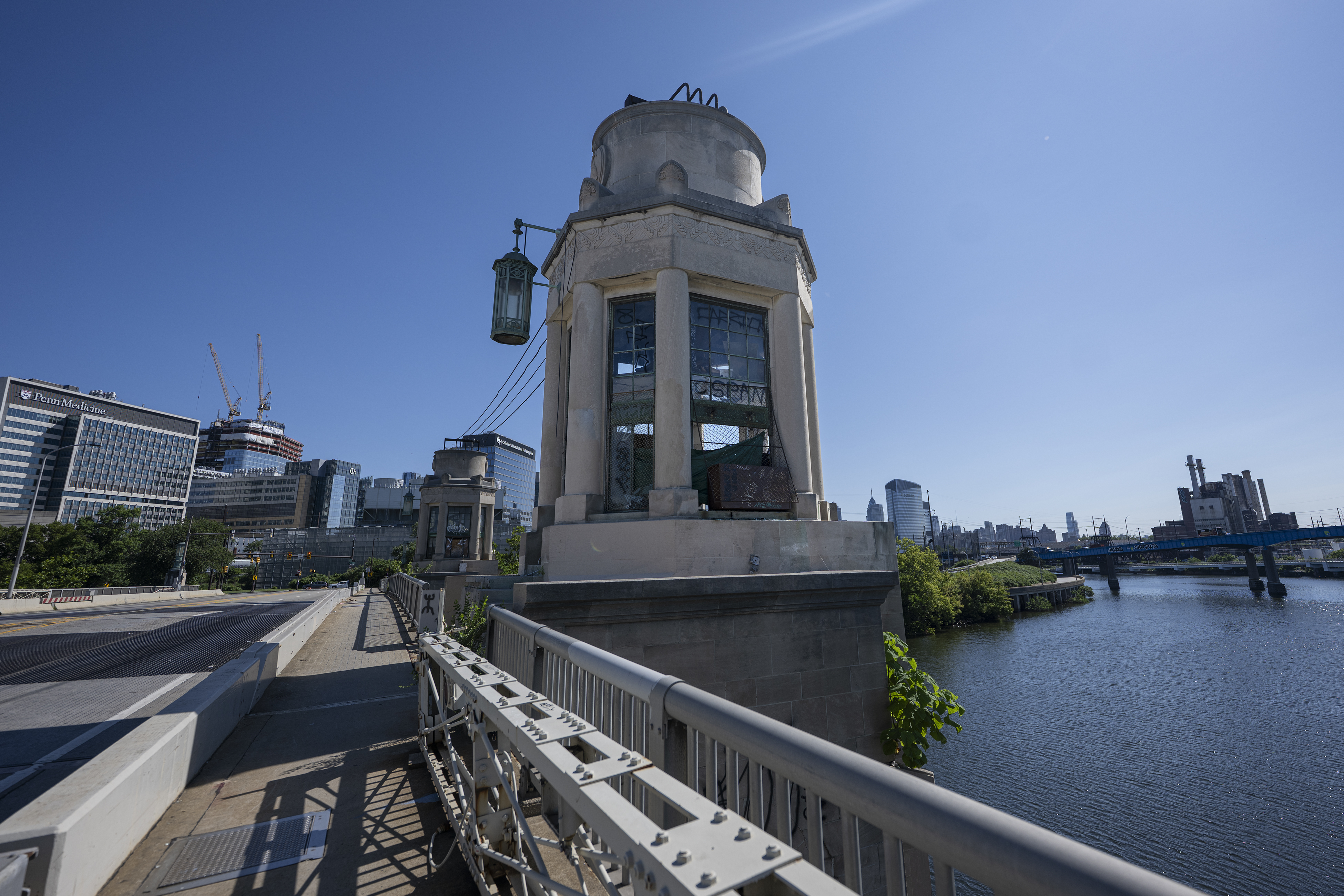
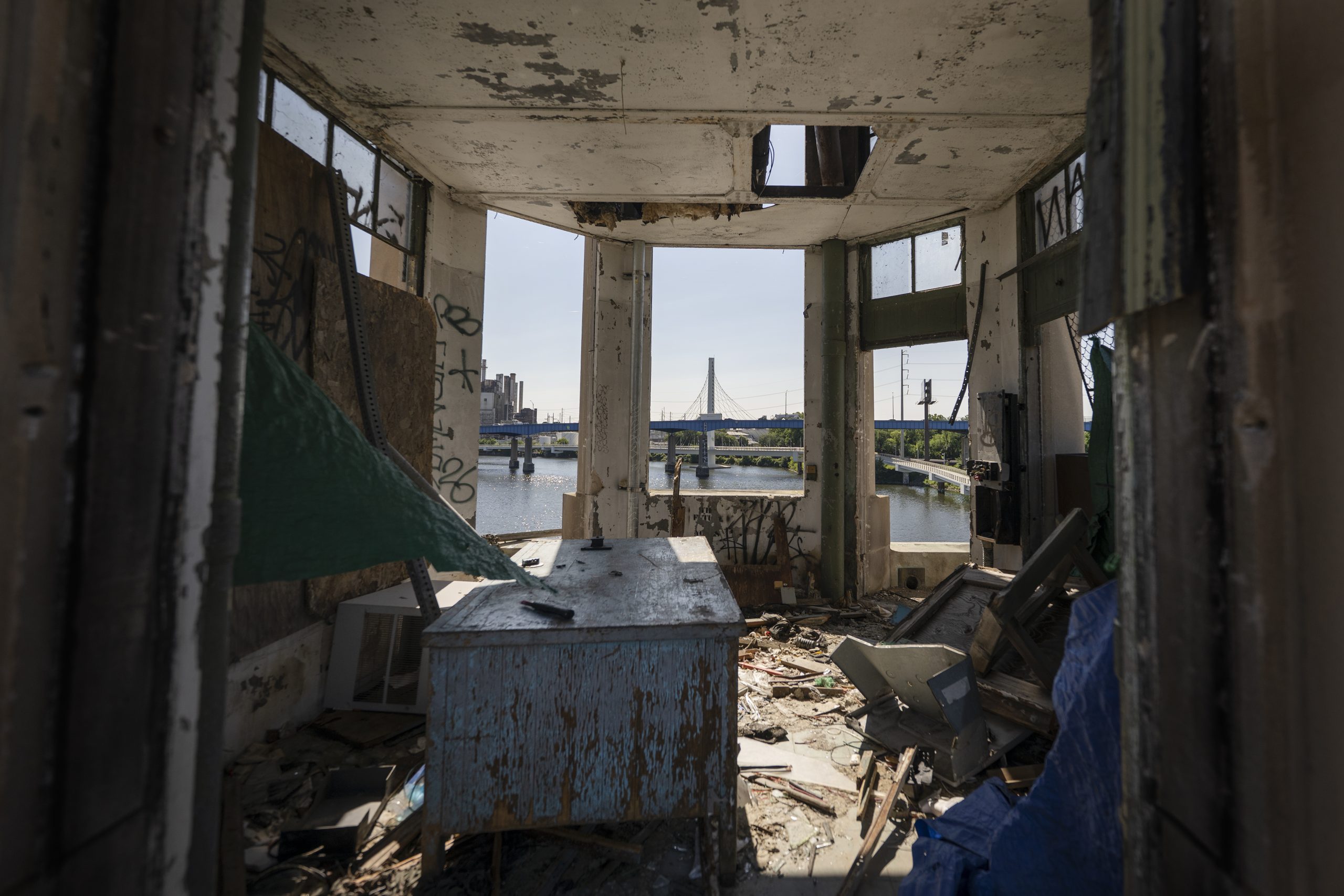
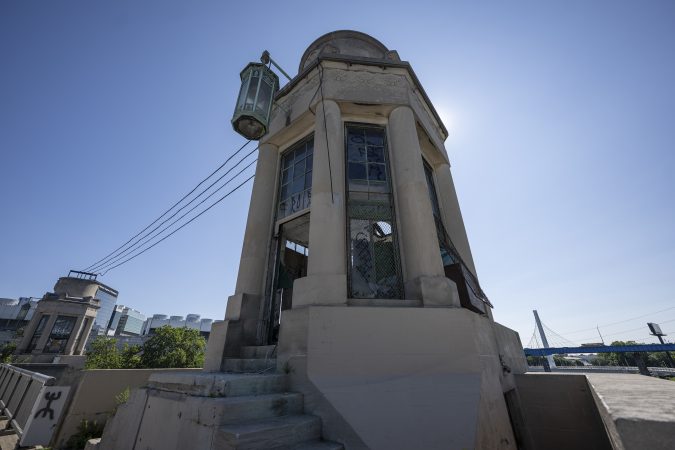
Broken windows and vandalism are visible inside one of the operator’s houses on the University Avenue Bridge on July 23.Jose F. Moreno / Staff Photographer
The project, estimated to cost about $2 million, leaves unaddressed the needs of some major features of the bridge, which was built around 1930. It will not bring back the bridge’s ability to raise its leaves, though the work won’t prevent restoration of that function in the future. The 10 elaborately detailed lighting fixtures will not be returned to working order as part of the job.
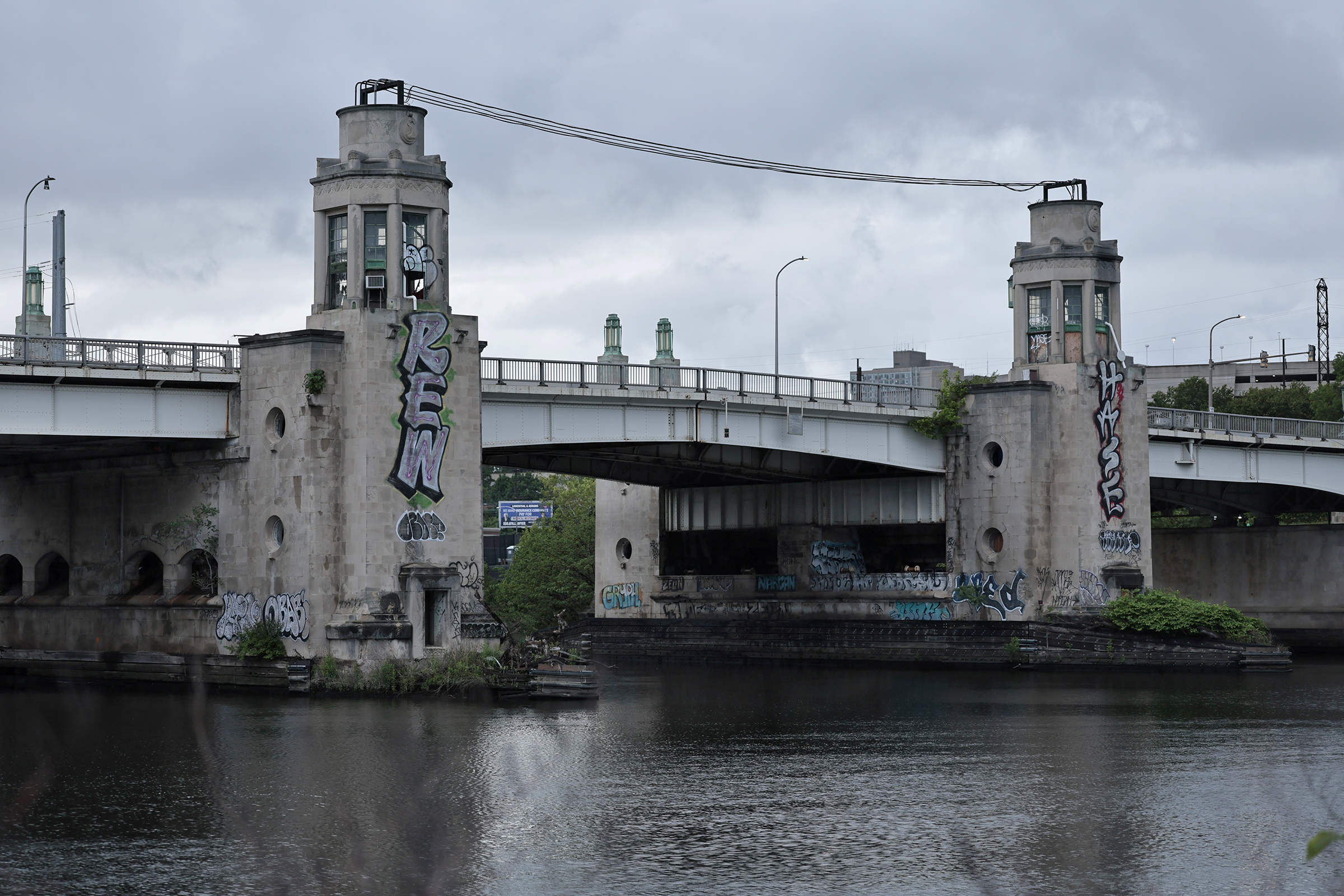
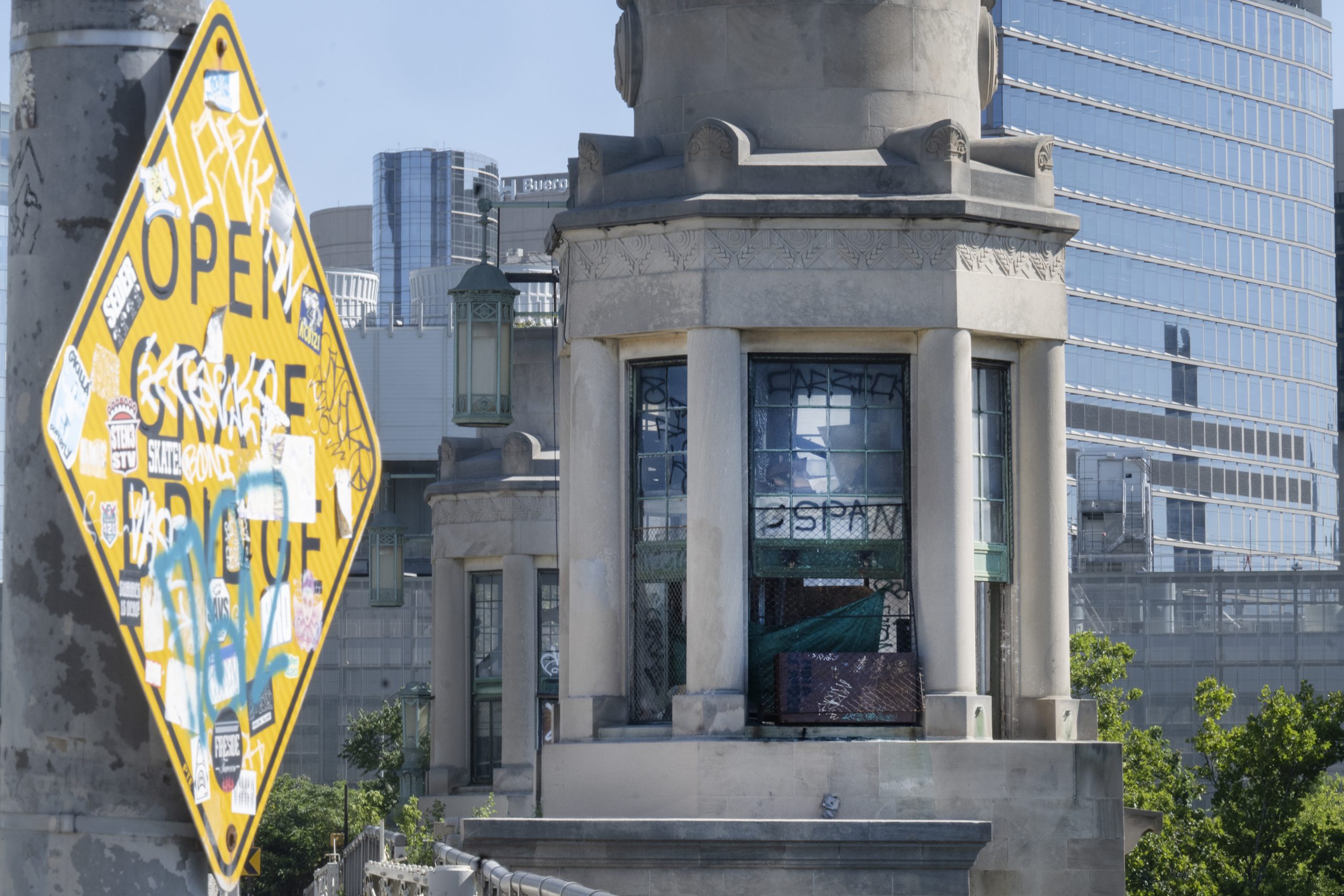
Graffiti has marred the bridge in several places, most noticeably on the Center City-facing sides of the operator’s houses, but there is no immediate plan to clean up the scrawls.
“At this time, graffiti removal is not in the scope, but it is being explored in the near future,” said PennDot spokesperson Brad Rudolph.
Graffiti on the University Avenue Bridge, seen from the Schuylkill River Trail, on May 21.Elizabeth Robertson / Staff Photographer
Vandalism and deterioration on the bridge linking West Philadelphia and Grays Ferry have attracted sporadic public attention for decades. The Inquirer highlighted the conditions last September, with another article in June, and other news outlets have called for the bridge’s stabilization and restoration. A recent change.org petition advocating that it be protected from further damage collected hundreds of signatures.
“Without intervention, these unique design elements risk permanent loss,” the Preservation Alliance for Greater Philadelphia wrote in its magazine, which lists the bridge as one of the city’s places to save.
“We welcome PennDot’s attention to the University Avenue Bridge and the planned work to address some of its most urgent deficiencies. This is a positive first step, especially after years of visible deterioration, but it should not be the end of the effort,” said Paul Steinke, executive director of the Preservation Alliance for Greater Philadelphia. “The bridge is one of Philadelphia’s most distinctive historic spans, and it deserves a broader rehabilitation plan that addresses its historic features, long-term condition and role as a public gateway between neighborhoods.”
The repairs at hand will address the structural elements beneath the bridge’s deck. The bridge uses a girder floor beam stringer system to carry the load, said Cutright, and the deterioration will be addressed with plating, cleaning, and repainting, and some steel members may be replaced.
Vandalism and the elements have damaged the two operator’s houses on the Center City-facing side of the bridge. They will be cleaned out and sealed, and a chain-link fence will be installed in front of the two structures to deter trespassers.
Lane closures will reduce vehicular access to one lane in each direction during construction. Two of the bridge’s four lanes will be closed all day every day, with two lanes left open (one in each direction) through mid-December. The work will begin with closing the two lanes closest to the operator’s houses, and moving all traffic to the other side. Then, in a couple of months, the closure pattern will flip.
The bridge carries more than 36,000 vehicles per day, according to PennDot, and the agency expects significant backups during construction. Pedestrian access will be permitted on the side of the bridge opposite from where work is being conducted.
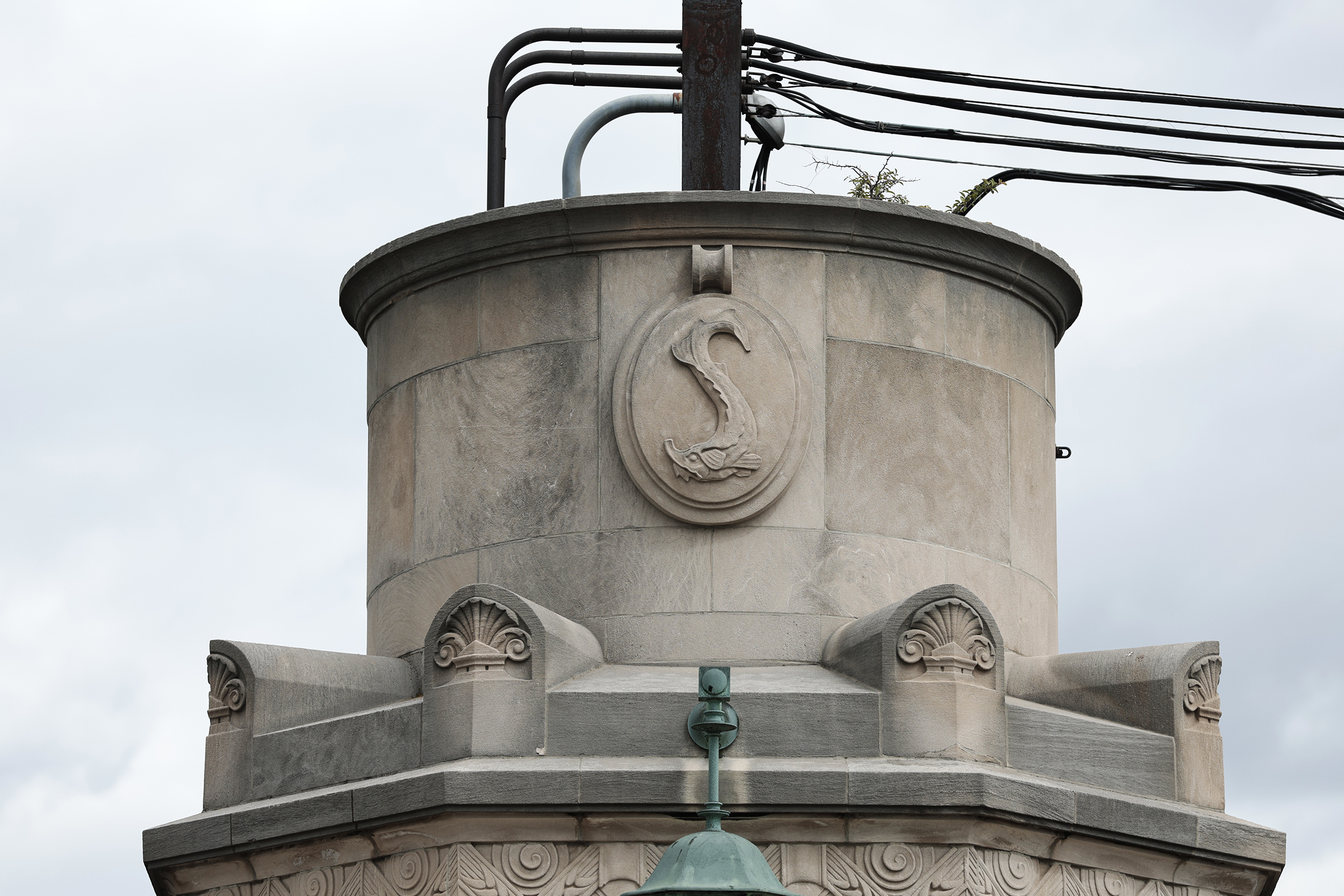
A fish and other details adorn the operator’s houses on the University Avenue Bridge.Elizabeth Robertson / Staff Photographer
Cutright said that while PennDot would like to restore the bridge, the cost is estimated around $50 million, and no funding is currently lined up for an effort on that scale.
Even if funding were in place now, a major rehabilitation would be a long way off. Planning and construction would take five years or more, she said.
“It’s a beautiful bridge, and I would imagine that if we were to do a major project that we would want to restore it to its former glory.”
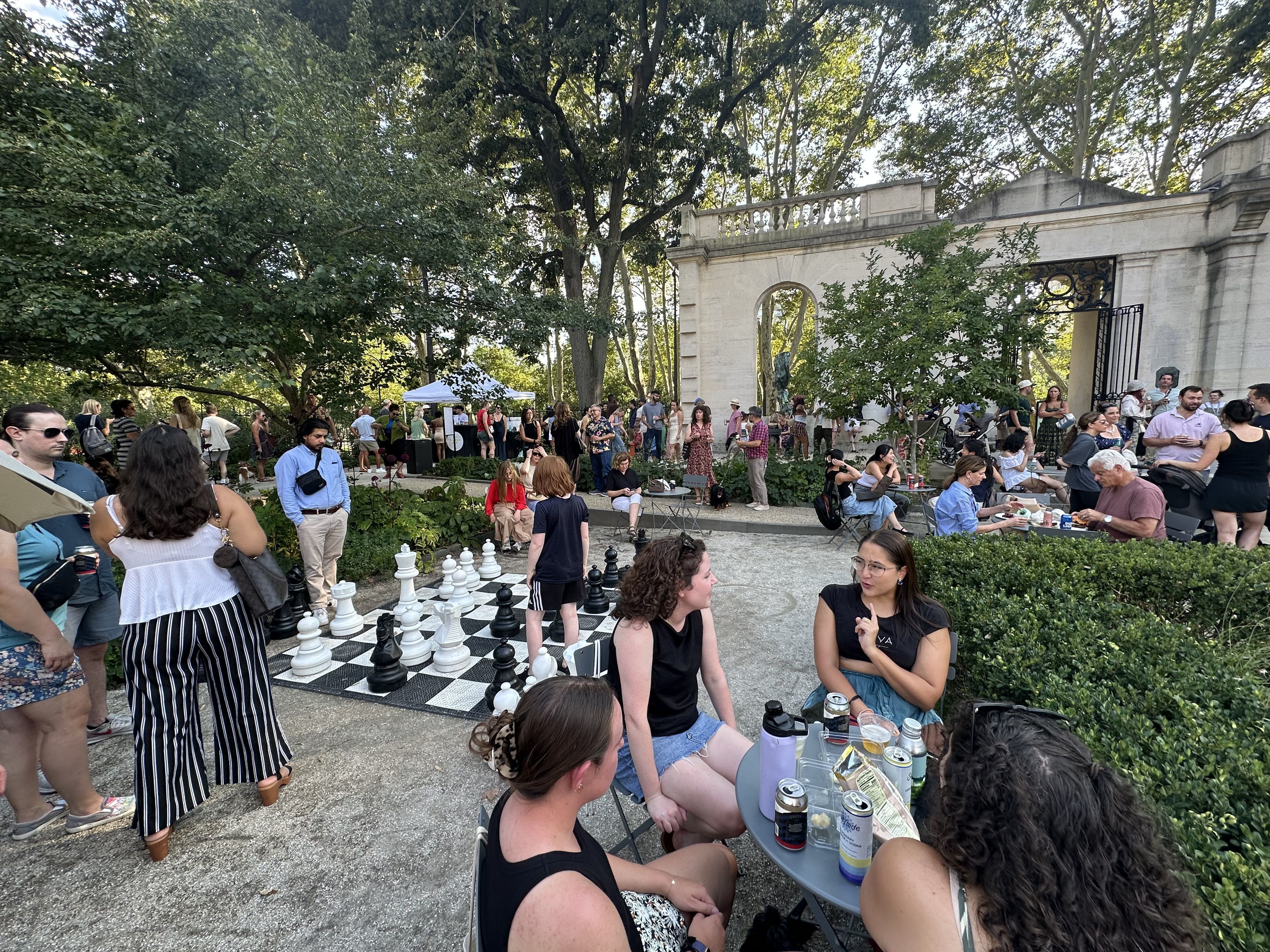
In Rodin Museum’s courtyard last Friday evening, you could run into old friends, play a game of gigantic chess, or try to keep up with your toddler toddling through the garden.
Or you could just sit back, sipping white wine and taking in the scene.
This weekly urban oasis at the Rodin has often featured live music to accompany drinks and snacks in the gorgeously landscaped courtyard. The event is now in its seasonal homestretch, continuing each Friday evening with recorded music through the end of August.
A Friday evening gathering at the Rodin Museum on the Ben Franklin Parkway, July 31, 2026.Glenn Holsten
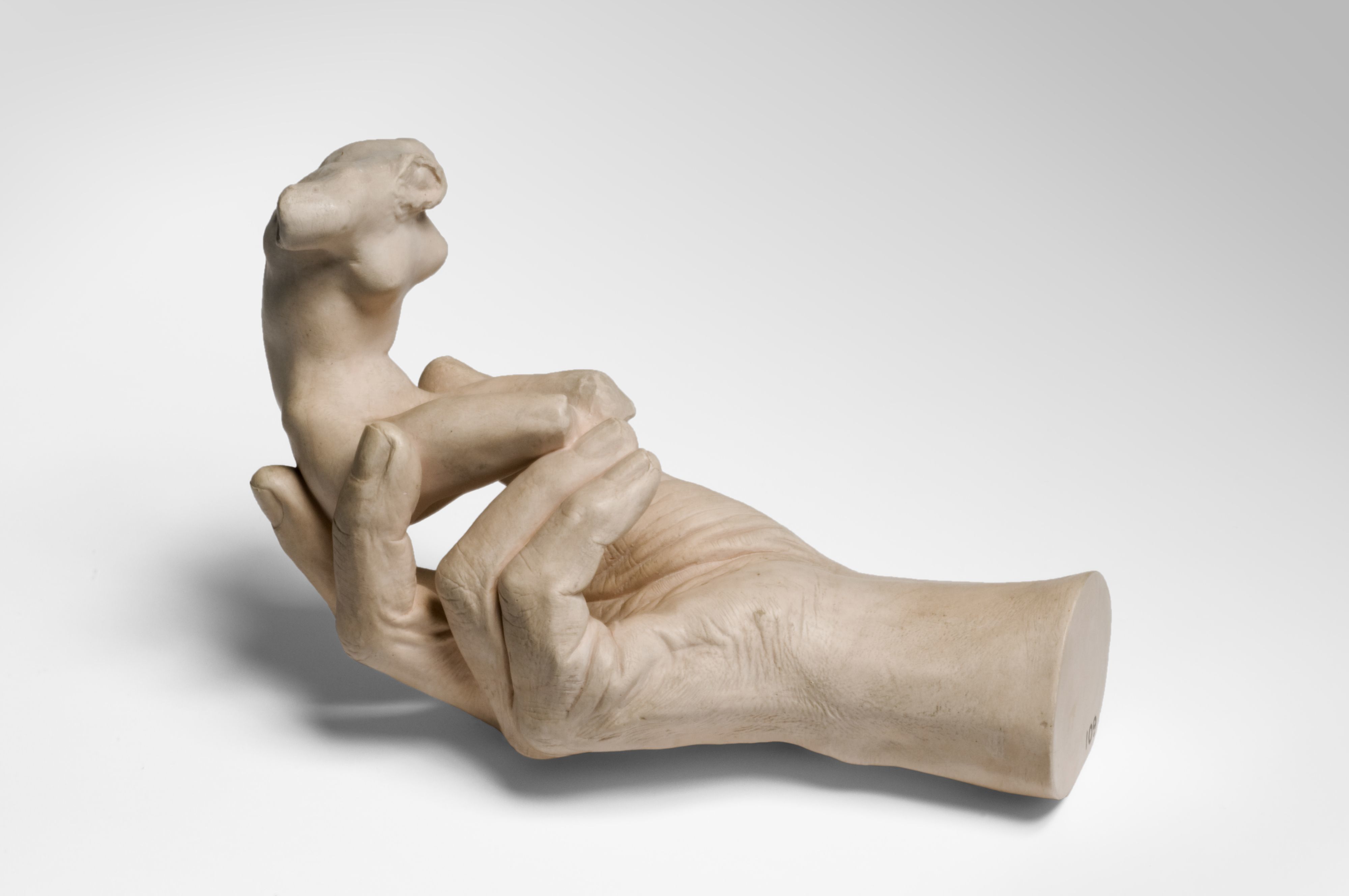
Oh, and while you’re there, you could also take in the jewel-box of a museum, which offers a choice selection of works by the French sculptor. The current show, “Rodin’s Hands,” features 15 bronzes and plasters, some of which relate to Auguste Rodin’s famous The Burghers of Calais.
The Rodin Museum, 2151 Benjamin Franklin Parkway, Friday-Monday, 10 a.m. to 5 p.m., and on Fridays until 8:30 p.m. through Aug. 28. Friday evenings are pay-what-you-wish. philamuseum.org.
— Peter Dobrin
Eddie Veddie with Charlie Hall to his right and Imelda Mae to his left in a tribute to the late Glen Hansard at the Dublin concert hall Vicar Street.Screenshot from YouTube
A devastating Glen Hansard tribute
The last Irish funeral I watched on YouTube was Shane MacGowan’s.
The musical peak of that celebration of the Pogues songwriter, who had been beset by health problems before his death in 2023 at 65, came on a thrilling duet between Glen Hansard and Lisa O’Neill on the whiskey-soaked holiday classic “Fairytale of New York.”
The funeral mass, which was livestreamed Aug. 4 from St. Patrick’s Cathedral in Dublin, — and is archived online — had a feeling of unwanted deja vu. Less than three years after MacGowan had been laid to rest, many of the same musician mourners again gathered to pay tribute to one of their own, in this case a life brought to an unexpected tragic end.
Mourners included U2’s Bono, who led the congregation in an a cappella “Beautiful Day,” and played a voice note recording of Patti Smith singing a lullaby she wrote for Hansard. Eddie Vedder of Pearl Jam, whom Hansard opened for in Philadelphia in 2024, sang “A Song of Good Hope” with the Swell Season’s Marketa Irglova.
The service is a beautiful, devastating watch. Eulogies were given by Hansard’s wife, Maire Saaritsa, and his brothers Richard and Gary, the latter of whom sang the heartbreaking ballad “I Can See God,” written by the Hansards’ uncle Paul Cahill.
O’Neill, who was among the Dublin musicians who played with an expanded Pogues at Franklin Music Hall in Philly last September, was particularly moving on “Old Note,” a song she wrote in a Dublin apartment that Hansard lent her so she could work on her music.
The Philadelphia crew who worked with Hansard at Elm Street Studios in Conshohocken in 2025, and this year, was represented by producer Charlie Hall of the War on Drugs. He can be spotted in the church choir as the service came to a close with a fevered rendition of Bob Dylan’s “Forever Young,” mashed up with George Harrison’s “My Sweet Lord” and led by Hot House Flowers singer Liam Ó Maonlaí.
The night of the funeral, Hansard was further celebrated at Dublin’s Vicar Street concert hall. Vedder led the way on Neil Young’s “Rockin’ in the Free World,” with Hall on guitar on his right, and Asbury Park repped by Jake Clemons of the E Street Band, and photographer/musician Danny Clinch.
Philly musicians who worked with Hansard, including Hall, Luke Carlos O’Reilly, Ben Arnold, and Kevin Hanson, shared their remembrances of him on the Craic Radio Hour on WPPM-FM (106.5). The show can be heard on Mixcloud.
— Dan DeLuca
The fabric of a person
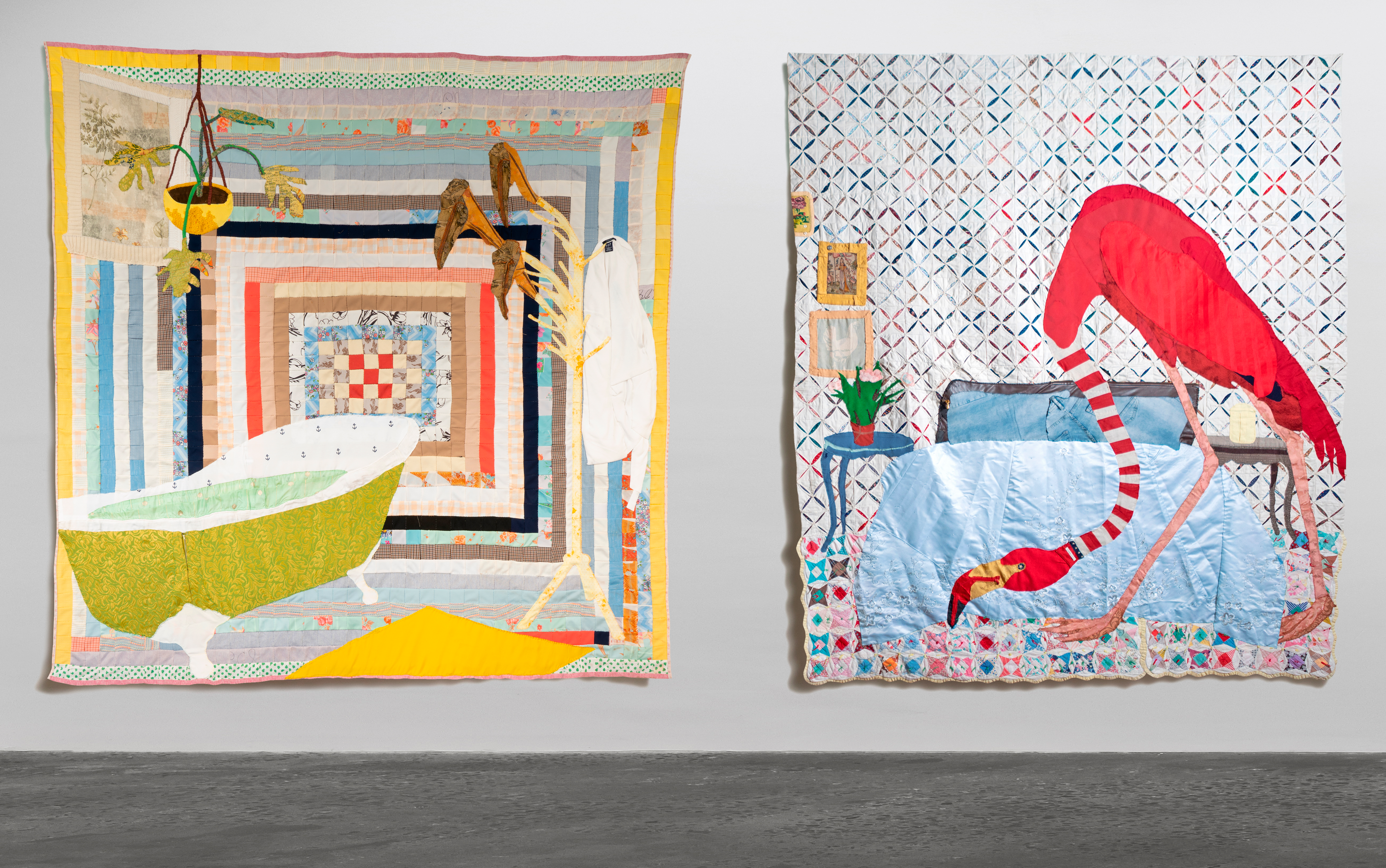
For incarcerated individuals with long-term or life sentences, life outside of prison may seem unimaginable. Artist Jesse Krimes brings those future visions to life through his Elegy Quilts.
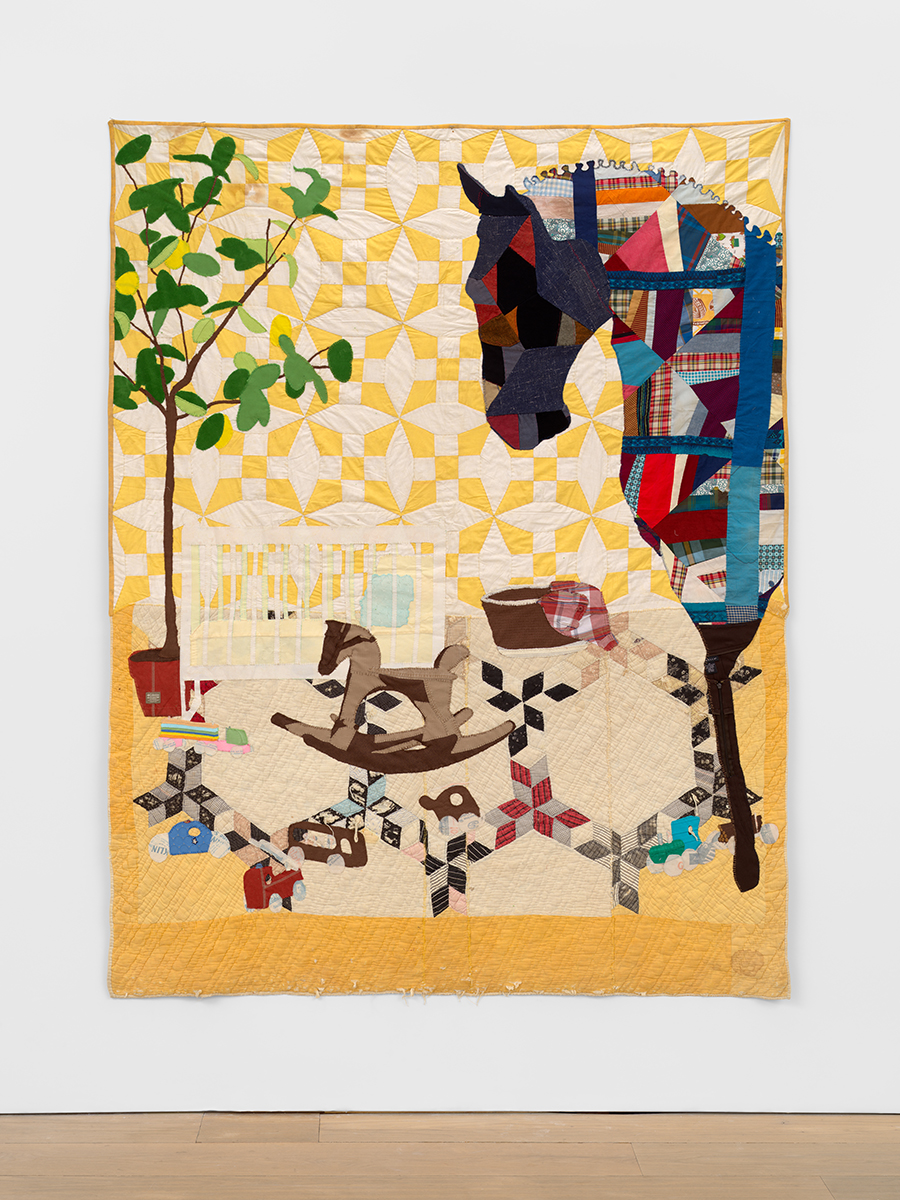
The quilts, currently on display at the Fabric Workshop and Museum, are made up of pieces of clothing from incarcerated individuals. Krimes then asks the subjects of these quilts to name three elements: a piece of furniture, an animal, and an object, all meant to represent the person’s identity.
Some commonalities are present, with multiple individuals selecting a bird or a bathroom setting. However, each quilt feels like its own distinct insight into this person’s life, whether that’s a memory they cherish or the life they wish to return to.
Krimes himself was incarcerated for five years, and used art as a creative outlet during his sentence. All of the pieces in the show are named after prisons.
Jesse Krimes’ 2026 quilt “Riverside” will become a mural in Spring Garden that will be unveiled on June 3. Description: Jesse Krimes, “Riverside,” 2026. Antique quilt, used clothing collected from incarcerated people, assorted textiles, 87 1/2 x 54 inches.Courtesy of Jesse Krimes and Jack Shainman Gallery, New York
The quilts feel incredibly personal, thanks to the elements that Krimes requested of the subjects. Particularly in pieces like Florence, where I could almost see the sadness of the quilt horse as he looks at this childhood playroom scene.
At the same time, as deep as the pieces feel, their ultimate message or theme can’t be known without knowing the subject’s intention. It creates this emotional reaction while also raising questions about these people’s identities and how they perceive themselves: What makes someone feel like they’re an owl? Or a flamingo?
The quilts are striking, and all I want to see besides a million more are the actual stories behind them. That being said, the mystery is heartbreakingly beautiful, too.
“Elegy Quilts by Jesse Krimes” is on display until Nov. 1, 2026, at the Fabric Museum and Workshop, 1214 Arch St., Phila. fabricworkshopandmuseum.org
— Morgan Ritter
Wonders in wood
Inside the quiet, well-air-conditioned Museum of Art in Wood, visitors can explore dozens of wondrous artworks that will leave them asking, “How did the artist make this?” Two floors in Old City are packed with treasures primarily inside humidity-controlled glass cases, though I’d encourage you to check every corner — and make sure to look up! — so you don’t miss a thing.
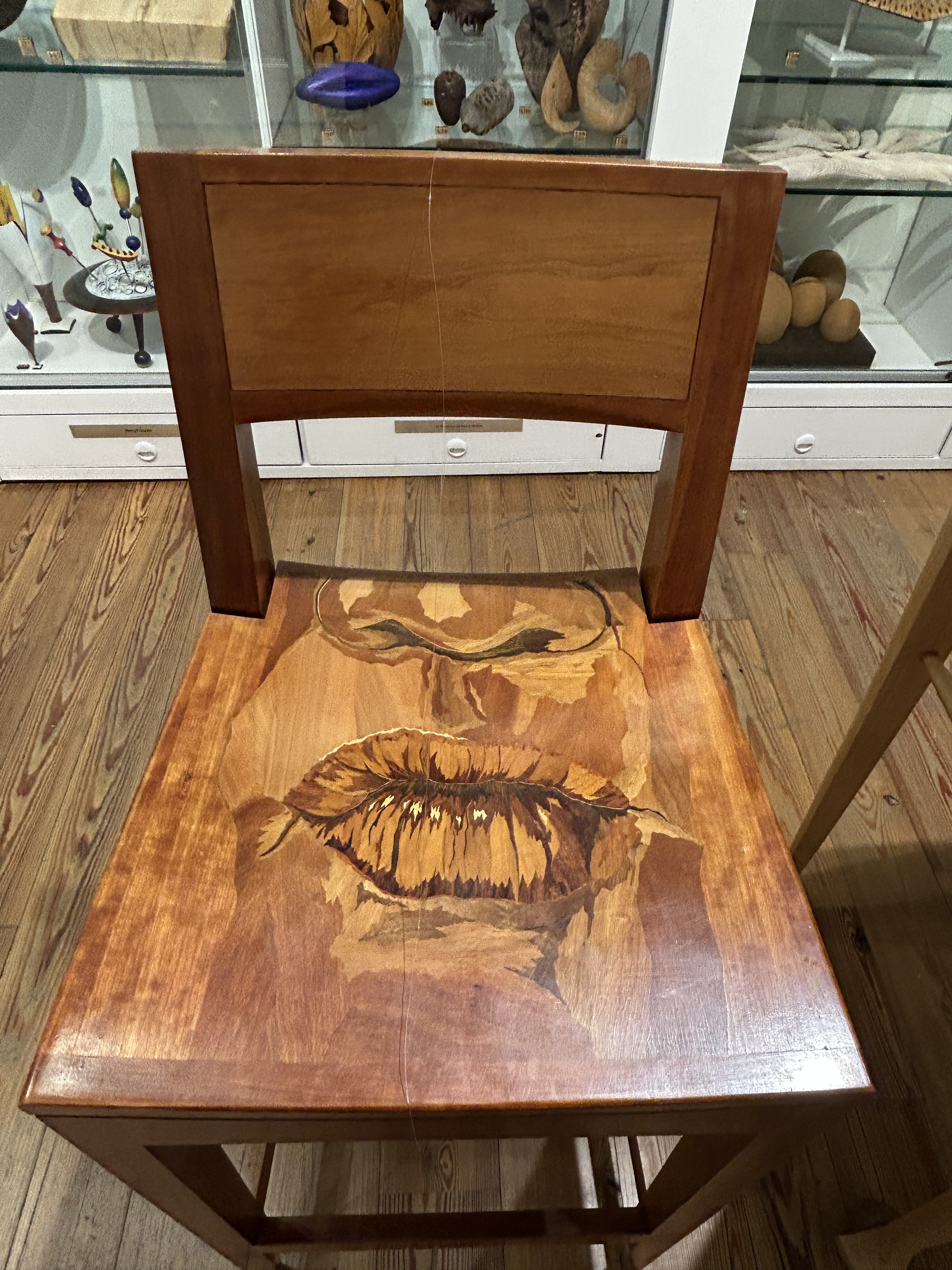
One disarmingly funny work that I loved was a pair of tall bar chairs made of cherry wood with a special design on the seat: meticulously crafted luscious lips. Artists Silas Kopf and Thomas Coughlin fittingly called them Kiss My Ass Chairs, but I was fascinated even before I learned the cheeky title. The lips (and nose) are multicolored to indicate texture, light, and shading with such impressive skill.
Kopf is particularly renowned for his expertise in marquetry, a style of woodworking that incorporates thin pieces of material (in this case, assorted types of wood) to create a design.
One of the “Kiss My Ass Chairs” by Silas Kopf and Thomas Coughlin, on view at the Museum of Art in Wood in Old City.Rosa Cartagena
See also: Louise Hibbert’s stunningly shiny seashells, Daniel Forest Hoffman’s unbelievably realistic Ram, Jason Marlow’s enigmatic helmet, and John H. Williams’ Solar Storm, a deep orange vessel with fingerprint-like swirls.
Those picks are from the permanent collection — the museum also hosts rotating exhibits, with the latest spotlighting their artists-in-residence. (The gift shop is another must-see.)
Plus, if you’re looking to enjoy the air-conditioning a bit longer, enter the museum’s wooden games library and try your hand at various puzzles or the ancient Egyptian board game senet.
Museum for Art in Wood, Wednesday-Sunday, 11:30 a.m.-5 p.m., 141 N. Third St., Phila. museumforartinwood.org
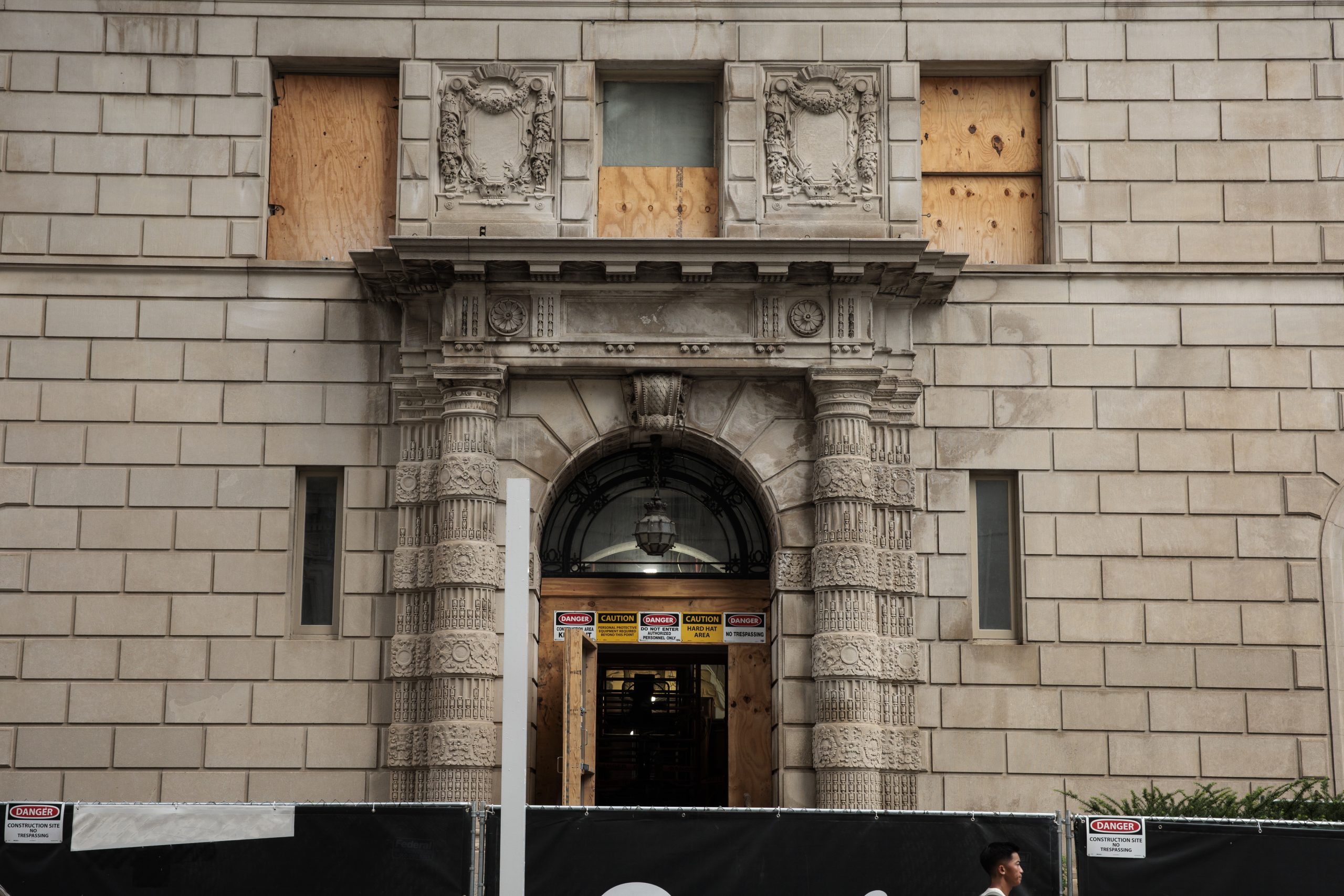
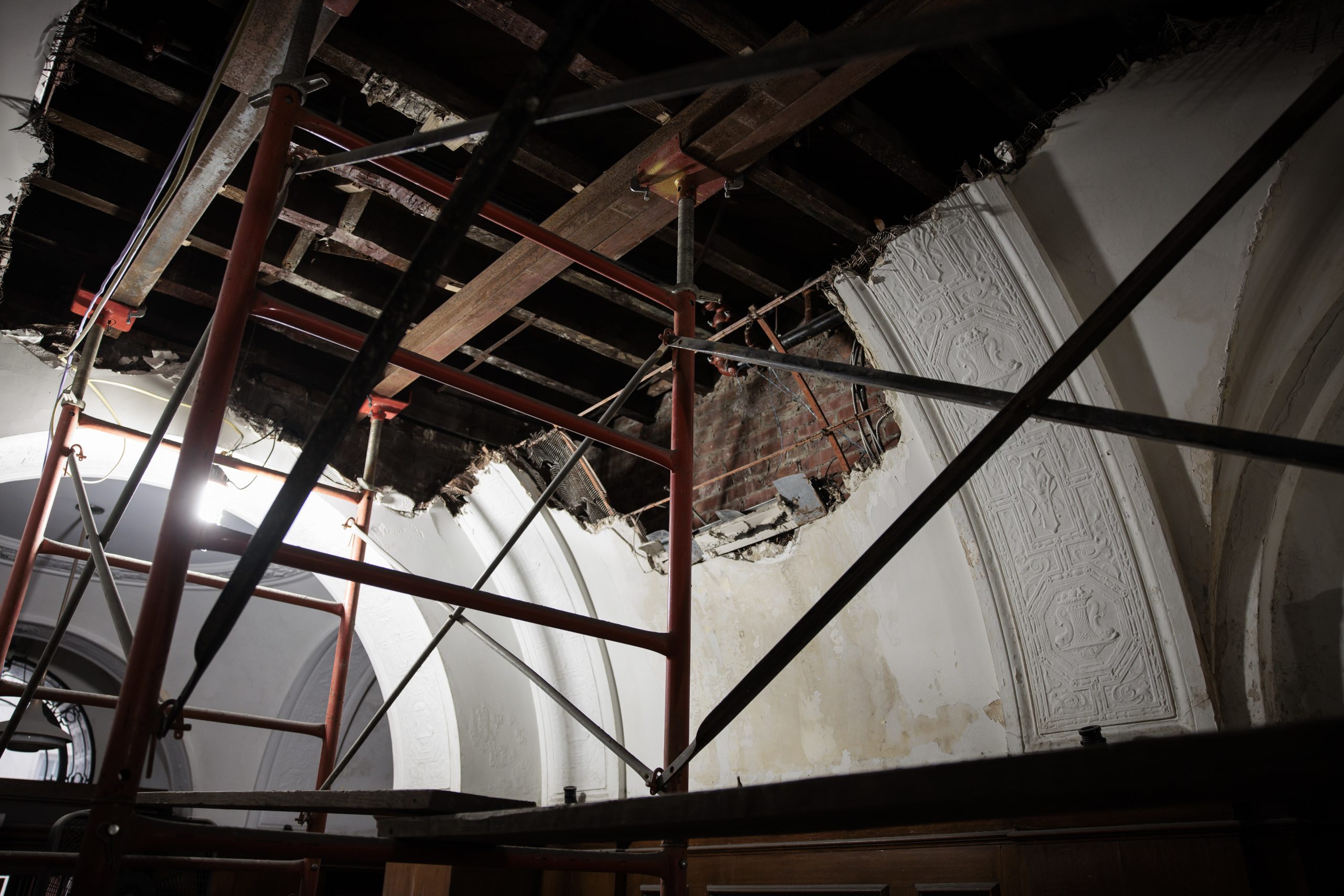
It is hard to imagine, given the charred smell, wrecked plaster, and thick web of scaffolding and structural supports evident these days inside the Art Alliance on Rittenhouse Square. But a year after a devastating fire, the Curtis Institute of Music is closing in on a vision for the historic building’s next act as the new home of the music conservatory’s vocal and opera department.
“My hope has always been that we could use this space to do for the vocal department what we did for the rest of the school or the orchestral program, certainly, with Lenfest,” says Curtis president and CEO Roberto Díaz.
Lenfest Hall, on the 1600 block of Locust Street, opened in 2011, providing the school with 105,000 square feet of dorms, rehearsal studios, a dining hall, a light-filled rehearsal hall large enough to accommodate a full orchestra, and other spaces.
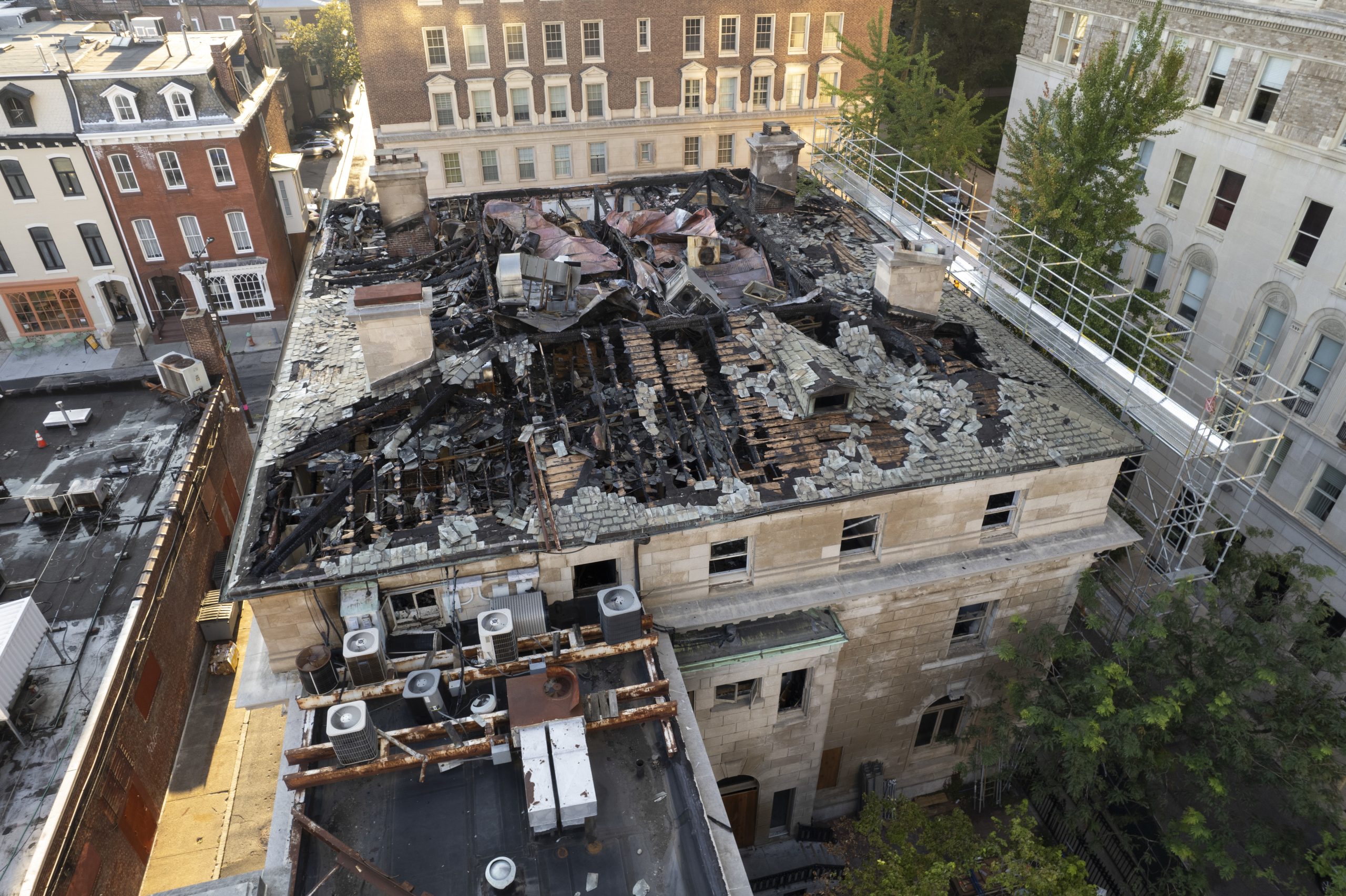
The fire-damaged Art Alliance building at 251 S. 18th St. as it appeared in Aug., 2025.Monica Herndon / Staff Photographer
The Art Alliance was gutted by fire and water damage in July 2025, and plans for its restoration are now being worked out by the school with Philadelphia firm VSBA Architects & Planners.
The first floor is envisioned as having two 1,000-square-foot event spaces for master classes or lectures. The second floor will feature six teaching/coaching rooms and a student lounge. In the basement will be a catering kitchen, a costume shop/dressing room, and storage.
The major new space in the Art Alliance building will be a rehearsal room on the third floor whose 2,900 square feet roughly equal the size of the orchestra rehearsal hall in Lenfest.
“We could open it up for the neighborhood to come in and participate,” Díaz says, “but it gives the vocal department something that they just don’t have anything even remotely like.”
The vocal and opera department currently occupies a series of spaces in Curtis’ main historic building on the 1700 block of Locust Street.
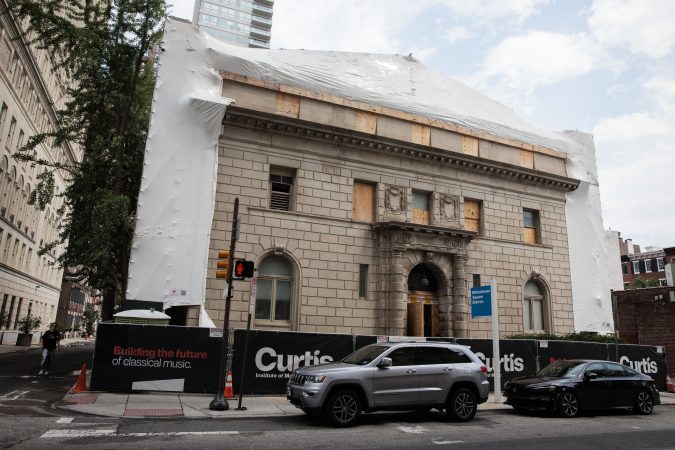
The exterior of the Curtis Institute’s Art Alliance building, July 27, 2026.Monica Herndon / Staff Photographer
While the restored and reconfigured Art Alliance building is primarily intended as the home of opera and vocal music, it will also likely host instrumentalists as space and scheduling allow. The school — with a student body of about 160, all on full scholarships — expects to open up events like master classes, informal workshop performances, and lectures to the public, but the frequency of public events has not been determined.
“In addition to supporting the work of our students and faculty, we look forward to ensuring that the Art Alliance is a welcoming place for our neighbors, communities, and partners,” Curtis spokesperson Patricia Johnson said. “At this stage, we’re exploring ways this could take shape.”
The building could open in about three years, Johnson said.
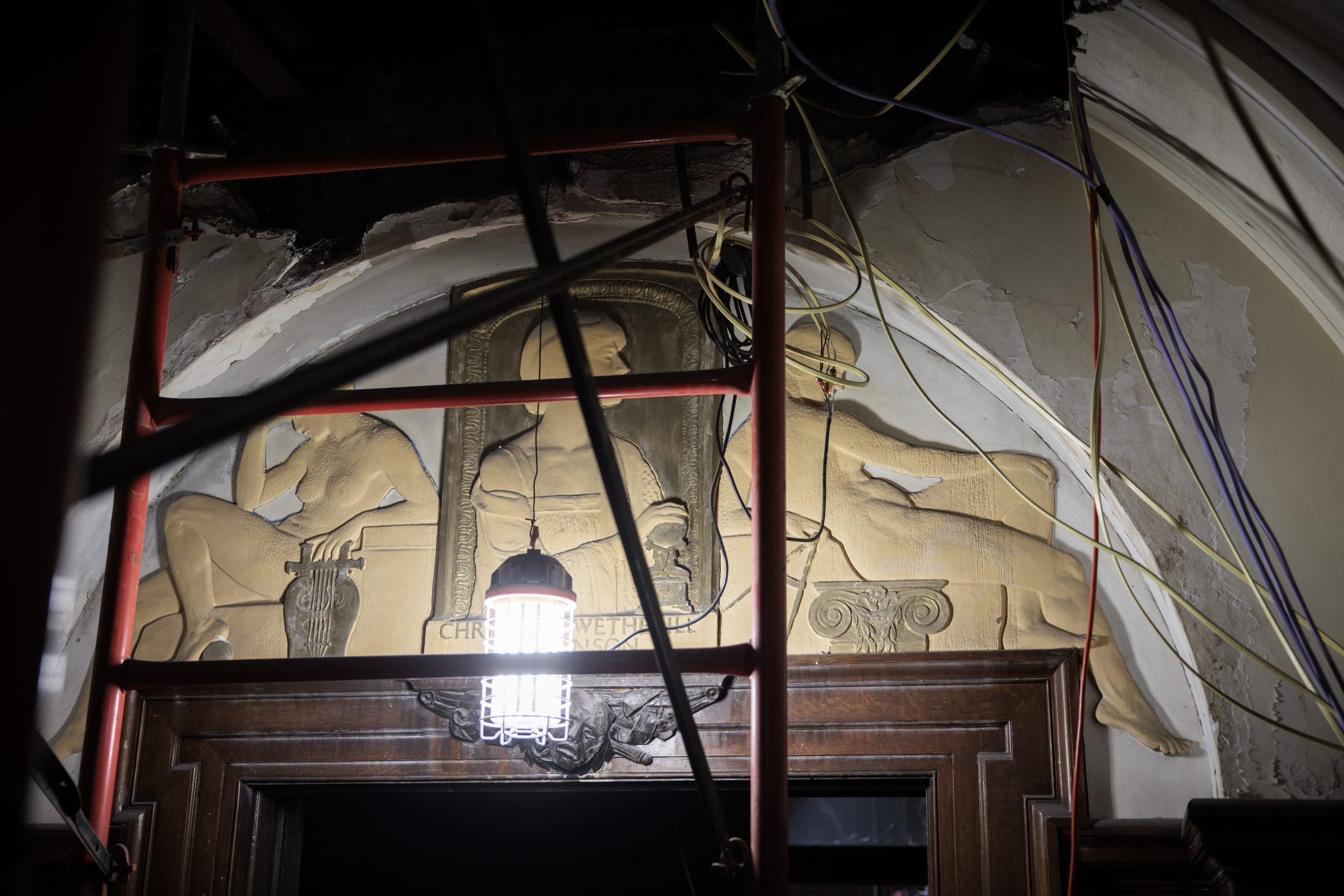
A frieze honoring Art Alliance founder Christine Wetherill Stevenson in the building, July 27, 2026.Monica Herndon / Staff Photographer
Among the issues still to be resolved is the eventual height of the Italian Renaissance Revival building, the onetime Wetherill mansion dating from 1906. Curtis would like to make the ceiling height on the third floor high, the better for acoustics in spaces like the large rehearsal room.
“That’s a work in progress,” Díaz said. “When we were in the design stages of Lenfest Hall, we had to get a lot of permissions from the architectural folks and the [Philadelphia] Historical Commission and so forth. So that would be part of the process here. Obviously the more volume we have in this room, the more things we can do in it.”
The building’s attic was destroyed in the fire, and a new one will not be built.
Some of the plaster detail lost in Art Alliance fire.Monica Herndon / Staff Photographer
A number of historic elements of the building have, however, been saved — the stained glass windows on the landing between the first and second floors, and a frieze honoring Art Alliance founder Christine Wetherill Stevenson, among them.
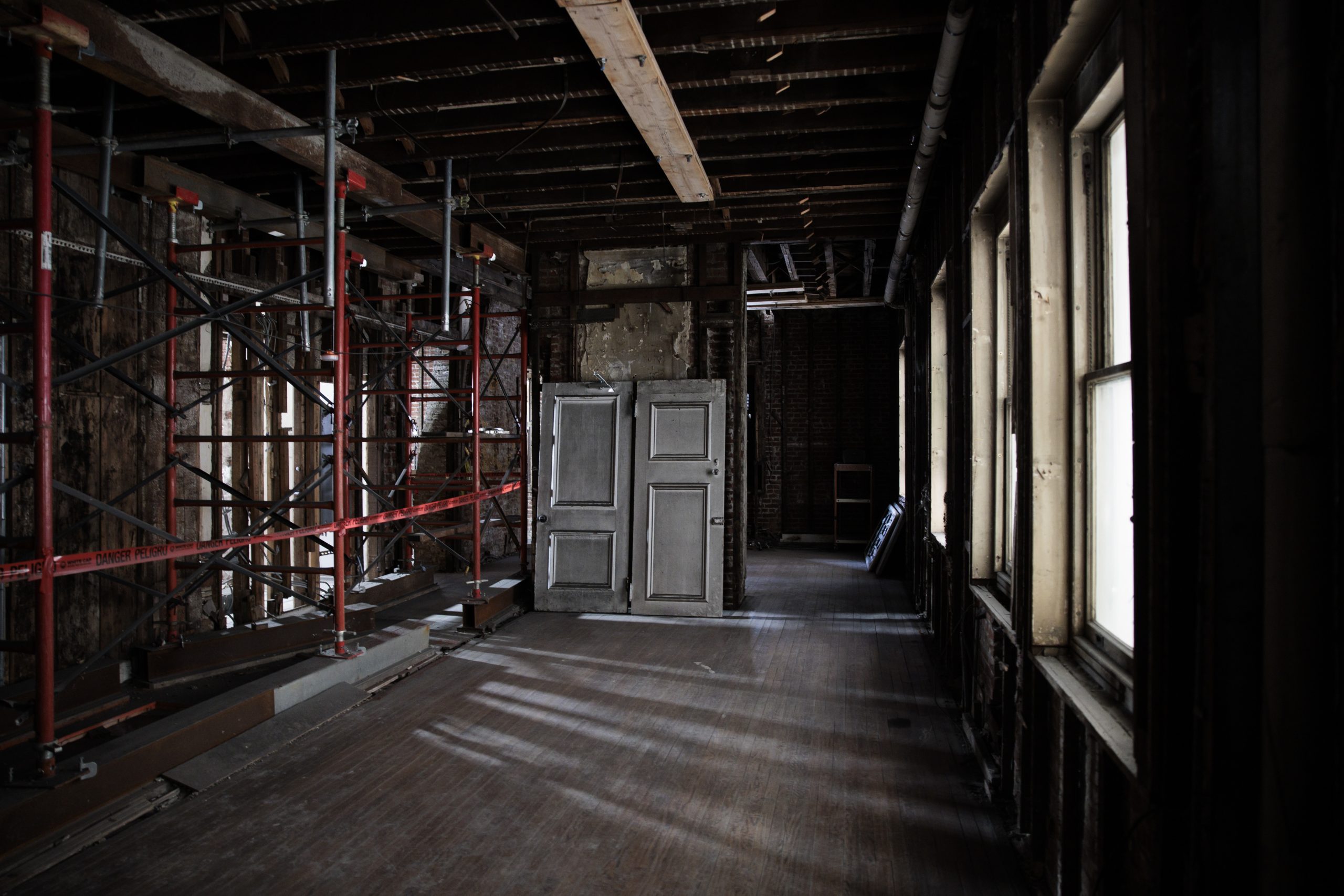
Most of the demolition planned for the building’s interior has been completed, said Scott Kahan, senior project manager with construction management and general contracting firm C. Erickson & Sons.
As the exact programmatic elements of the building are developed, Díaz said, a total project cost will emerge. A rough estimate is around $25 million.
And then there is the matter of paying for it all.
The school’s insurance claim is still unresolved, Díaz said, and philanthropy will be a part of the funding mix.
Curtis has “lots of angels interested in opera and vocal music,” and while none has stepped forward yet, Díaz suggests the building will have naming opportunities.
“The idea is very much like what we did with Lenfest, where Gould Rehearsal Hall has its name and we have the Locks Board Room and we have the teaching studios and rehearsal spaces that are named and so forth.”
Most of the demolition of the Art Alliance building’s fire- and water-damaged interior is complete.Monica Herndon / Staff Photographer
Curtis bid for the Art Alliance building in January 2025, acquiring it for $7.6 million from the bankruptcy estate of the University of the Arts, and was in the process of cleaning it out when the blaze struck. A report from the city’s fire marshal categorized the cause as “undetermined.”
The school was exploring potential uses for the facility at the time.
In its days as an arts institution and restaurant location, the Art Alliance lodged itself in the memories of many for its exhibitions, as well as weddings, parties, and other events.
One element of the building that went unscathed in the fire now seems elegiac. It is a floor mosaic just inside the entrance with the University of the Arts logo rendered in red-and-white tile.
Historic as the logo has become, that detail, Curtis leaders say, will go.
He likes his cookies chocolate chip, and his wine Oregon pinot noir.
And when it comes to music, LeBron James has a thing for Beethoven.
In fact, the Sixers’ new No. 23 has had a bit of a first-hand experience with classical music. He once took some quick instruction from Curtis Institute of Music alum Lang Lang before the two broke into a four-hand duet — brief, random, and (intentionally) atonal.
Lang Lang called the light-hearted 2014 collaboration a “piano dunk.”
Beethoven has a particular role in Jame’s routine, he explained in an interview with The Shop. He gets to games hours early and goes to the weight room, where he listens to hip-hop.
“And then when I leave the weight room, I gotta calm down and that’s why I’m listening to, like, more like old school jazz or I listen to a lot of, like, Beethoven,” he said on the talk show in 2022. “I like classical music, too.”
Taking its cue from James’ classical leanings, WRTI-FM (90.1) has quickly assembled some music especially for him.
“We thought we would create something Philadelphia-specific that we could put out as his new pregame playlist as the jazz and classical station here,” said WRTI classical program director Zev Kane.
Jazz cuts to make the list include “Smilin’ Billy Suite: Part II” by South Philadelphia’s Heath Brothers and Philadelphia organist Shirley Scott in “Soul Shoutin’.”
On the classical side: Rachmaninoff’s Symphonic Dances, because of its place as “a dazzling showcase of energy, elegance, and the unmistakable Philadelphia Sound,” the playlist text says.
The Barber Violin Concerto is on the list, since the third movement’s “breathless finale takes off with the speed of a full-court chase-down block.”
Kane says he believes there are characteristics shared by music and sports that could act as an on-ramp into music for classical newbies.
“I think playing music at an extremely high level and playing sports at that level — I think there are parallels: the need to train mind and body, the practice, the repetition, the heat of the moment, the debate over greatness, and the thrill of convening to see that spectacle together.”
When art world veteran Daniel H. Weiss took over the Philadelphia Museum of Art in December, he quickly recruited a new team, including a chief financial officer and chief fundraiser. That team has begun to assess the museum’s financial condition and what can be done about it.
The picture that is emerging is not a pretty one.
Preliminary figures seen by The Inquirer show that the museum ran a deficit of about $10 million on a budget of $76.5 million for the fiscal year that ended June 30.
That is on top of a deficit of $5.4 million for the year before, and leaders say the outlook does not promise to improve soon. For the fiscal year that has just begun, the museum anticipates the deficit will be comparable to last year’s $10 million, but in planning the budget the museum has outlined the possibility that it could be as high as $15.9 million.
The shortfalls are the museum’s largest in recent history, leaders say.
Weiss said the museum’s financial situation is “substantial, but solvable.”
“I have no doubt that we will have a balanced budget in about three years,” he said, “but we have real work to do to get there.”
Financial pressures are not threatening the museum’s ability to remain open, but the run of red ink cannot continue. The museum is covering the deficits by drawing on a pool of money that includes cash and reserves — sometimes referred to as quasi-endowment — whose use was not restricted by donors for any specific purpose.
“The way I would describe it is, we have a savings account for rainy days. We’re spending it,” Weiss said. “We need to stop doing that.”
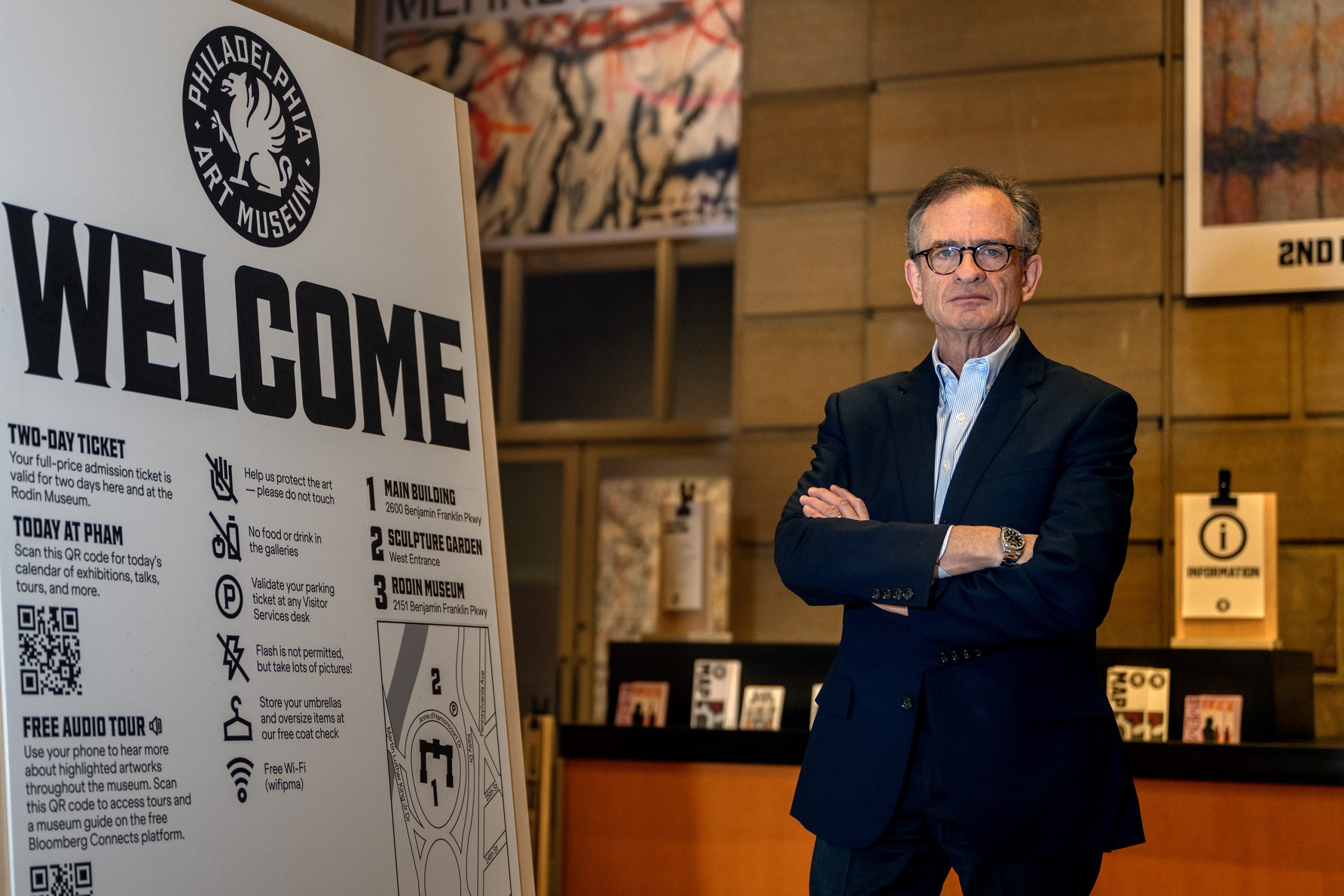
Daniel H. Weiss, director and CEO of the Philadelphia Museum of Art, at the museum in January.Tom Gralish / Staff Photographer
The museum’s struggle to right its finances comes as it faces some urgent needs and considers the fate of key projects. Among the unsettled questions is how to pay for deferred maintenance to both the main building and the Perelman building, the annex to the north that was closed to the public during the pandemic and never reopened.
The combined cost of work on the two buildings has a preliminary price tag of around $300 million.
As for a much sexier project, the museum’s much-trumpeted expansion envisioned by architect Frank Gehry: That will have to wait. Given the current challenges, the ambitious idea of carving out new spaces beneath the east terrace continues to be on hold; the timeline is uncertain.
“It is not, at this time, appropriate for us to be evaluating the feasibility of a very substantial new capital project which would be required to implement the Gehry plan,” Weiss said. “We need to determine the priorities and sequencing of capital work that needs to be done. And over the long term, we need to figure out what this institution can afford in a sustainable way.”
The famed architect died late last year.
The priority now is ringing the alarm that all is not well at one of the city’s two largest arts groups (the other being the Philadelphia Orchestra and Ensemble Arts) and rallying support around a rescue plan.
Weiss said:
“We want to be transparent and we want to be accessible to people, and they have a right to know — it’s their institution. But we don’t want to do it in a way that turns people away. It’s just an institution that needs repair. So how to tell that story is part of what we have to work on.”
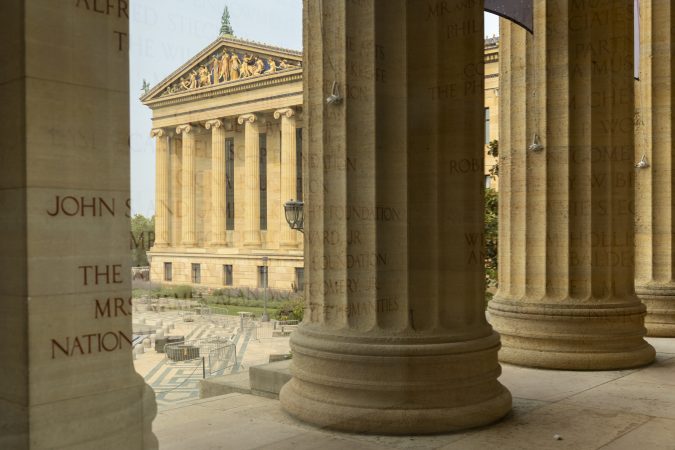
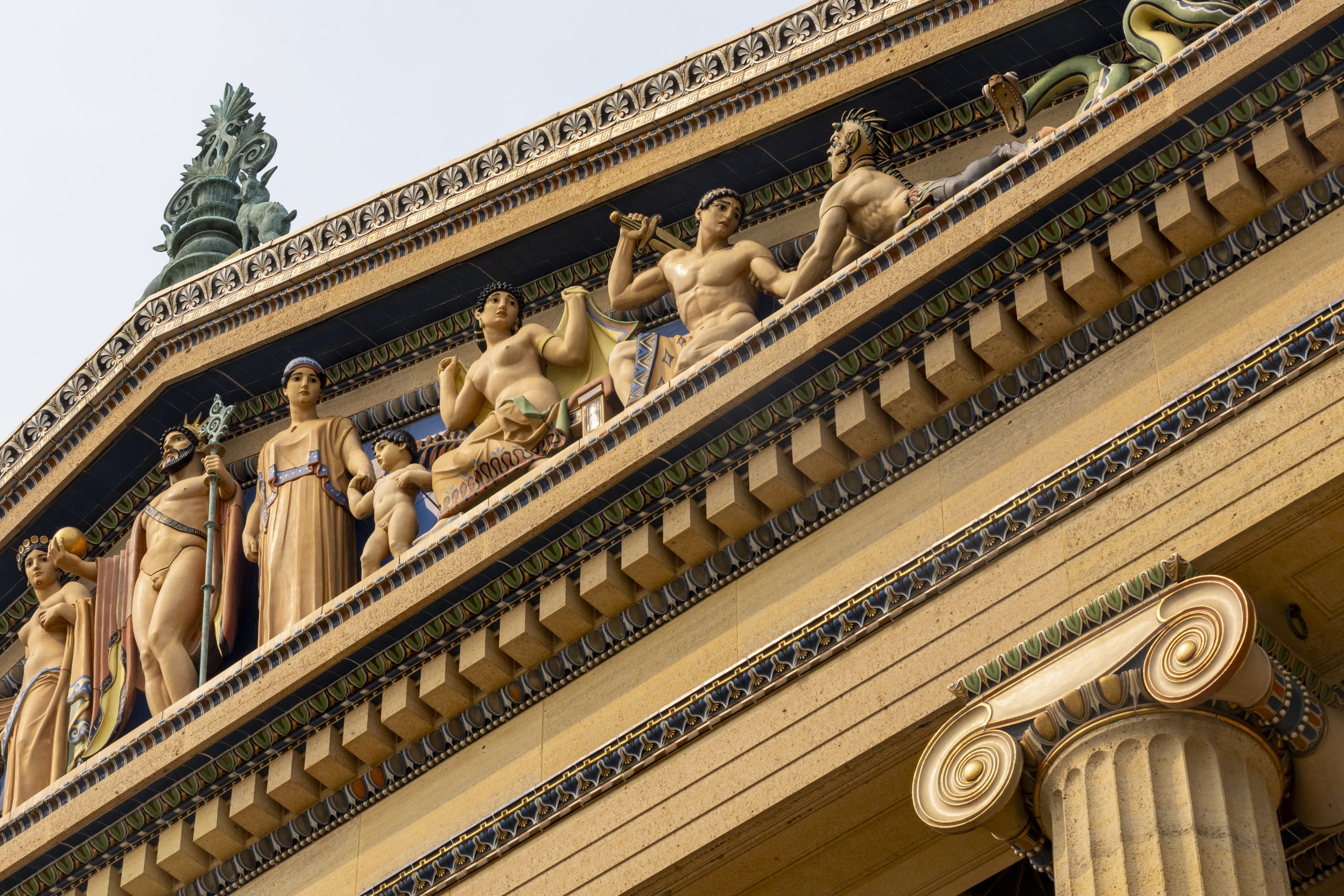
The polychrome high-relief sculpture on the north pediment of the Philadelphia Museum of Art. The high-relief sculpture depicts 13 figures from classical mythology.Aidan T. Gallo / Staff Photographer
Ambitions despite deficit
The pool of money is finite, and the museum would like to stop tapping its reserves as quickly as possible. Instead of funding the deficit, it could be helping grow the nest egg.
Referring to what is being spent this year alone to cover the deficit, Weiss said:
“That’s $10 million of assets earning at least 5% a year till the end of time we’re foregoing. We’ll never get that back.”
And yet the museum does not expect to balance its budget this year or next.
“We anticipate getting within shouting distance of a balanced budget within three years. We don’t have the luxury of taking longer,” Weiss said.
Even as it struggles, the museum has not shelved ambitious projects. The idea of creating a new learning and engagement center on the north side of the museum is still very much in play, Weiss said. Design development for the facility could begin within a year.
Blockbuster exhibitions like the 1982 show of Nigerian art seen by 197,000 visitors or the Cézanne retrospective in 1996 that drew 548,741 are hard to come by, but the museum is working on a number of shows that it believes would draw 100,000-plus visitors each.
“We will have exhibitions that will be of very significant public interest that will draw large numbers that will be exciting and powerful,” said Weiss, who declined to give specifics on the exhibits.
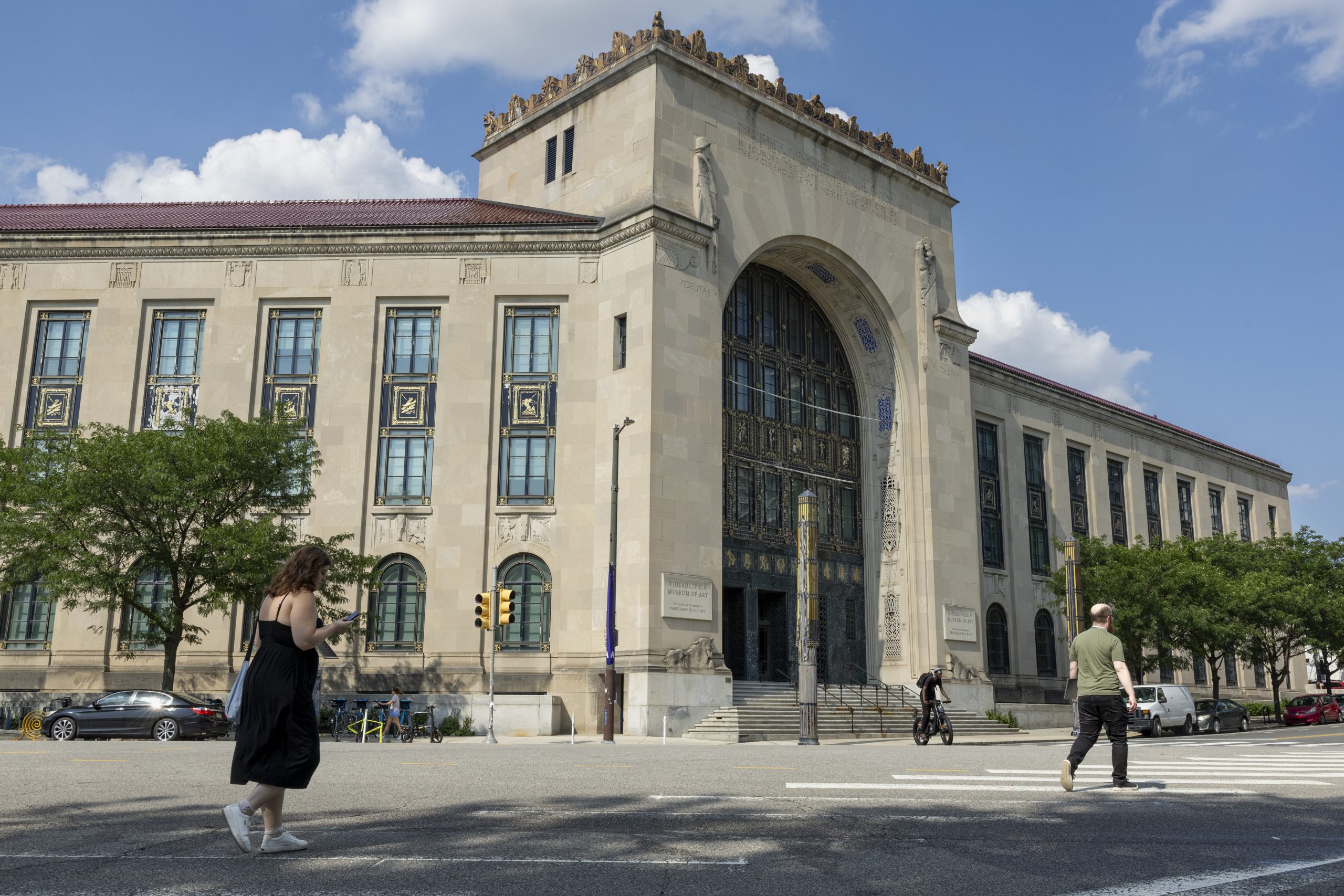
The Perelman building, an annex to the Philadelphia Museum of Art containing exhibition galleries, offices, conservation labs, and the museum library.Aidan T. Gallo / Staff Photographer
About the future of the nearby Perelman building, Weiss said the museum is searching for ideas.
On the one hand, the highly decorated art deco structure contains the library, art conservation studios, and administrative offices for which there is no space in the main building. On the other, the costs of operating and maintaining it are high. It is more building than is needed, and the location across two busy streets limits the number of visitors who will make the trip to reach it.
A revenue stream that’s been flat
The museum’s new leadership has analyzed finances from the last 10 to 12 years — a period that includes the pandemic, plus the periods before and after — and determined that the deficit is the result of a revenue stream that has not grown much, while expenses have.
“Functional revenue — contributions, admissions, membership, and earned revenue — has grown by only 0.3%, effectively flat,” said Mitchell Wein, the museum’s executive vice president and chief financial and operating officer.
The museum has not fully yet developed a plan for reversing the trend, but is “modeling lots of scenarios and coming up with the best approach on how to do that,” Wein said.
“Part of this process is evaluating everything. Everything is on the table,” Weiss said.
Reducing expenses in some areas will be considered, but that cannot be the only answer.
“We also know we need to focus on revenue generation and supporting the museum for the long term,” Wein said.
But revenue from where?
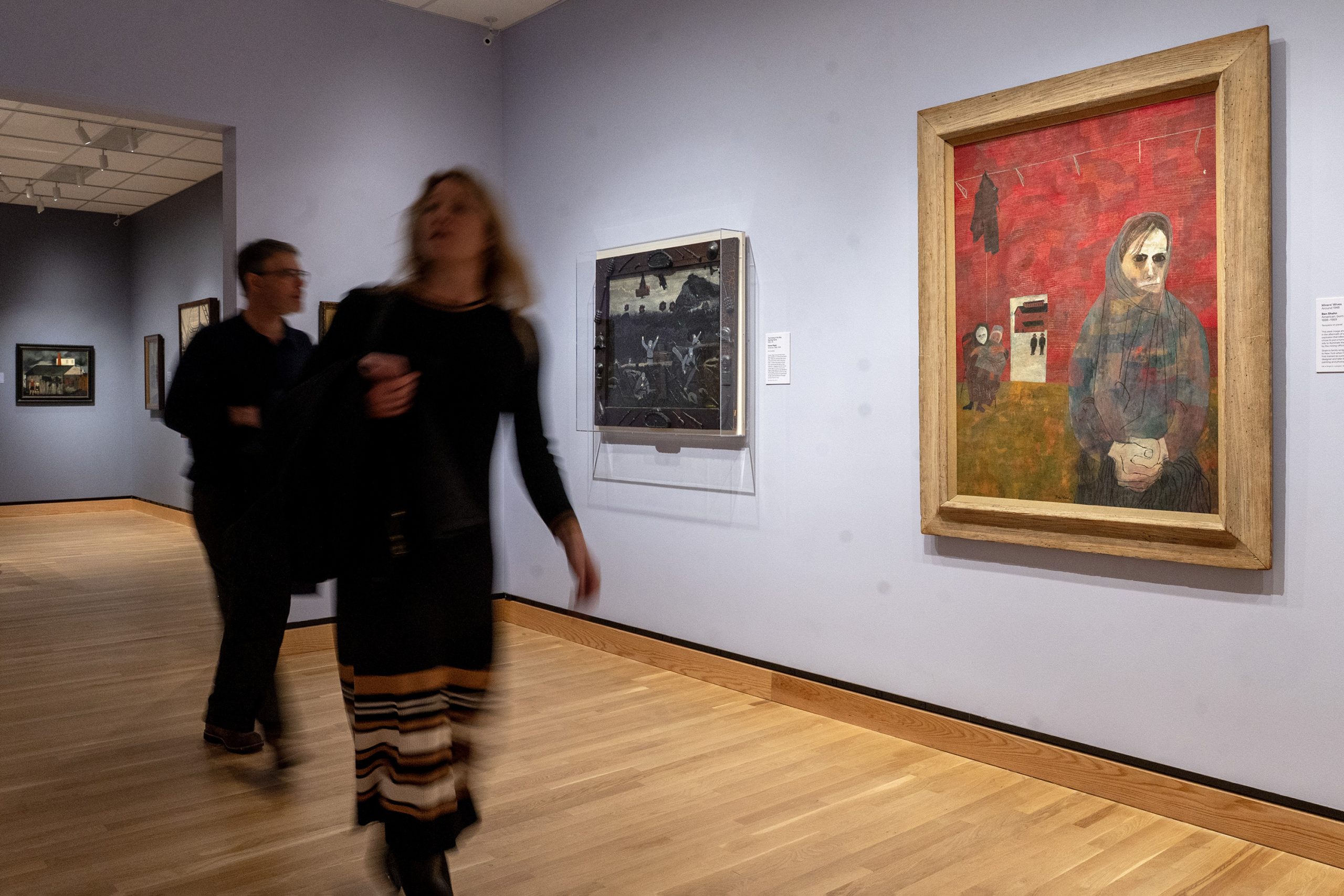
‘Miners’ Wives’ (right) by Ben Shahn and ‘The End of the War, Starting Home’ by Horace Pippin in the ‘A Nation of Artists’ show at the Philadelphia Museum of Art.Tom Gralish / Staff Photographer
Six keys to securing solvency
Ticket sales is one obvious place to look, but a big boost from admission is probably not in the cards. The museum once aspired to attract a million visitors a year, but that goal was floated before the pandemic, and the museum has not yet recovered its pre-COVID numbers.
This past fiscal year, the forecast called for 731,000 visitors; 672,753 showed up.
So the goal for next year has been adjusted down to 705,000, which the museum feels is more realistic. Attendance was 773,511 in the last full year before the pandemic.
The museum’s difficulty in coming back from the pandemic is not unusual. Over half (55%) of U.S. museums of all kinds were reporting lower attendance in 2025 than in 2019, according to a report from the American Alliance of Museums.
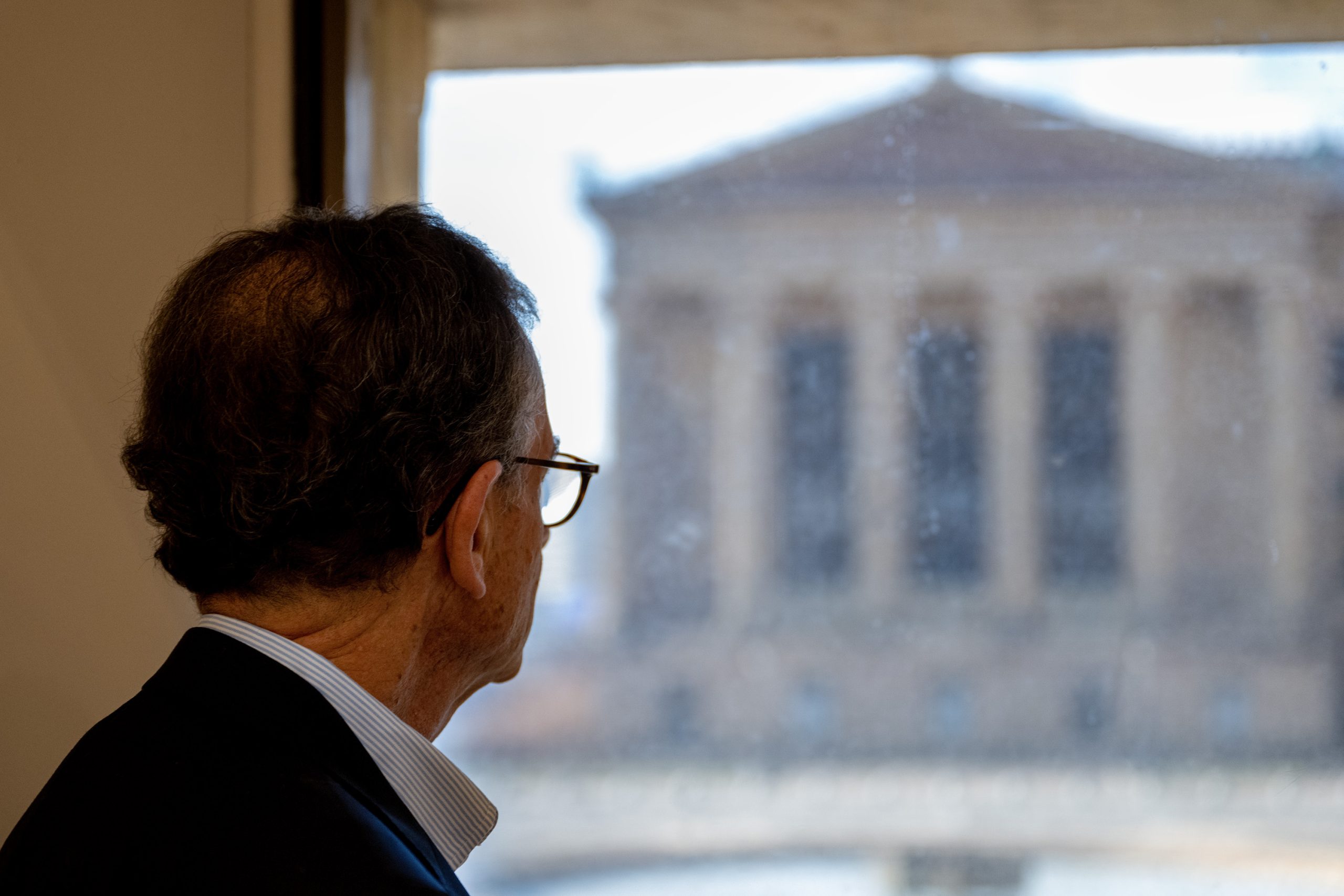
Daniel H. Weiss, director and CEO of the Philadelphia Museum of Art, looking out onto the museum’s east terrace.Tom Gralish / Staff Photographer
Weiss says the museum needs to focus on six key areas to achieve solvency:
Optimizing endowment income.
Boosting earned revenue, including income from retail, restaurants, special events and membership, and admissions. “Each of those needs to be examined to determine what’s possible,” he said.
Evaluating how much can be brought in through philanthropy.
Working toward more city and state government support. “We want to try to make the case to them that a larger investment in these facilities is in everybody’s best interests, and that’s a work in progress.”
Reviewing the operating budget. “The operating budget can be improved, but there’s not a ton of opportunity for us, for example, to lay people off. Our staffing levels are already down. We don’t think that’s the answer. But there are certain things we can cut and manage better or maybe outsource or streamline to improve the operating budget.”
Assessing programs, such as making better and more economical use of the Perelman building.
“If you add all of those things up and we do all of those things — even if we don’t also find a private equity guy who falls in love with us who’s going to give us $100 million — we’re going to balance our budget,” Weiss said.
Hundred million-dollar gifts may or may not be in the future, but the suggestion raises a salient question being pondered by leaders: What is the fundraising capacity of the museum?
“How much can that be, how much can we raise? I don’t know,” Weiss said. “What is this city set up to do? Most of the people who give money to an institution like this are local. So what is the philanthropic opportunity for one of the leading cultural institutions in this city?”
What Weiss is sure of is that fundraising depends on resetting the profile of an institution known more recently for organizational turmoil than for success.
“People who invest in an organization at lower levels as members, at higher levels as donors or major philanthropists, they always invest in winning organizations, and they rarely invest money to remediate problems. And one legacy I would like to leave is that we become an organization that’s known for being really good at what we do.
“The positive is a world-class institution with a great collection. If we can’t figure this out, then we’re the wrong people. It’s just not that hard.”
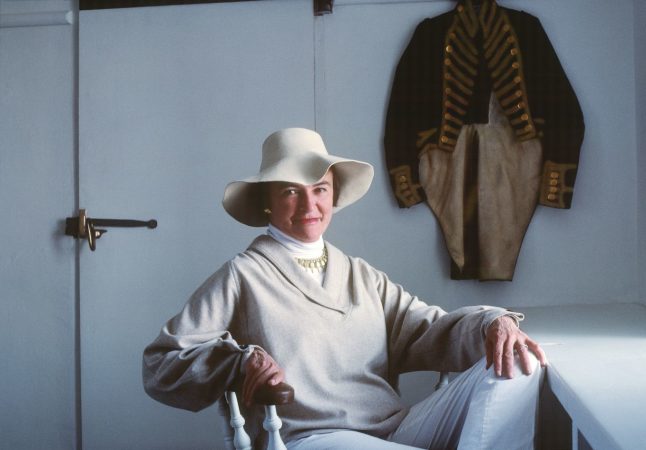
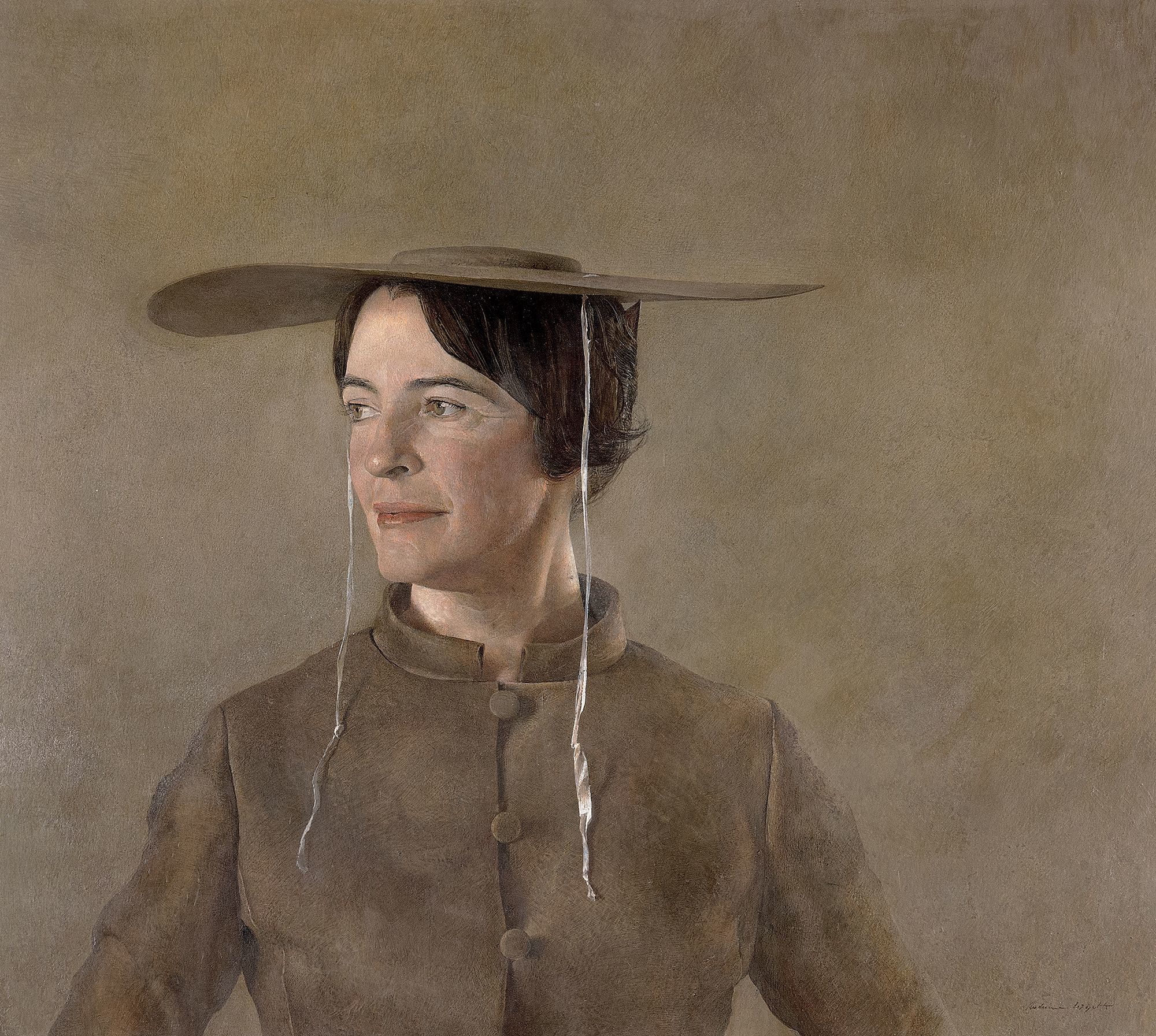
There’s plenty of and about Betsy Wyeth’s potent aesthetic in “By Design: The Worlds of Betsy James Wyeth,” currently on view at the Brandywine Museum of Art. In her adaptive reuse of early American buildings in Maine and the Brandywine — in everything she touched, really — Wyeth’s design sense is specific and immediately recognizable: a cool, austere echo of Shaker and other American vernacular styles.
The show’s star is Brinton’s Mill, the Chadds Ford complex of 18th-century (and later) structures that, with Betsy’s extensive renovations, became the distinctive place where she and her husband, the artist Andrew Wyeth, lived and worked. The shrine is now open to visitors for the first time.
But to take the full measure of Betsy Wyeth, you will want to read the show catalog of the same name (Rizzoli Electa, $65). Here, in a series of essays and reminiscences, Wyeth emerges as a shrewd businesswoman and impresaria — mastermind of a “generally understood, unified Andrew Wyeth brand,” as Wyeth curator and administrator William L. Coleman puts it in the opening essay.
As you’d expect, the book is filled with illustrations: Andrew Wyeth paintings, striking photos of the craggy Brandywine and Maine landscapes, and structures that make up the familial Wyeth visual language, as well as images of Betsy, always formidable.
Perhaps the sharpest image, though, comes in written form, from author David Michaelis on the partnership between Betsy and Andrew.
We already knew that she handled just about everything that needed doing in order to free her husband to paint. But what Michaelis beautifully details is how deeply involved she was in the art itself — giving titles to his work and exerting influence over the color, composition, and subject matter.
In many ways, Betsy spent her life creating the aesthetic for which Andrew is known.
She urged him to simplify, to take things out of paintings he wanted to include.
“You’re going to ruin it,” he would protest.
Then, Michaelis wrote, he would go off and do exactly as she said.
“By Design: The Worlds of Betsy James Wyeth” is on view at the Brandywine Museum of Art, 1 Hoffman’s Mill Road in Chadds Ford, through Jan. 10. Related exhibitions are running at the Farnsworth Art Museum in Rockland, Maine, through Dec. 31; and at Colby College Museum of Art in Waterville, Maine, through Nov. 2. brandywine.org/museum
— Peter Dobrin
A portal to Black girlhood in a Library Company artifact
Nearly every Friday night when I was a child, my mother washed my hair, conditioned it, sectioned it into four parts, and let it dry overnight.
The next morning, we’d take our places next to the kitchen stove and turn the channel to Soul Train on our small black-and-white TV. Mommy oiled my scalp again then, with a fiery iron comb that had the tiniest teeth, she straightened each section of my hair; making my tresses sizzle. Sometimes the comb would kiss my ear. When she was done, I had shiny shoulder-length hair with a flip on the bottom.
I don’t remember when she first told me about Sarah Breedlove, also known as Madam C.J. Walker. But by the time I was 10, I knew, without a shadow of a doubt, that because of her, Black women everywhere knew how to press hair. Her haircare business made her the first Black woman millionaire during the early 1900s at the dawn of the Harlem Renaissance.
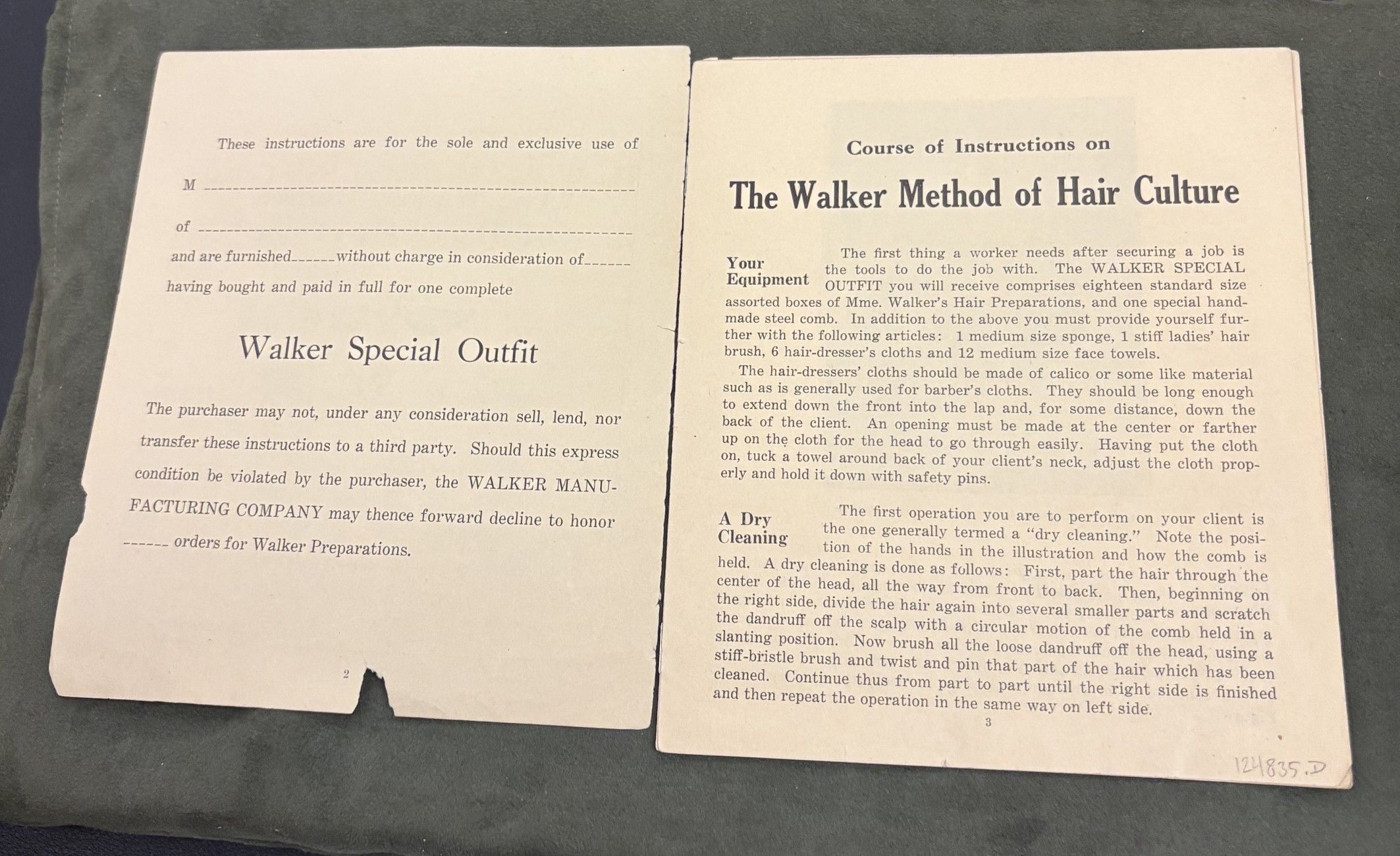
The first page of this early 1900s pamphlet explaining Madam CJ Walker’s Walker Method to salon owners.The Library Company of Philadelphia
Walker trained hundreds, possibly thousands, of Black women on how to use the hot comb in a technique she called the Walker Method. Black salons practicing the method became staples in Black neighborhoods and raised many Black women entrepreneurs.
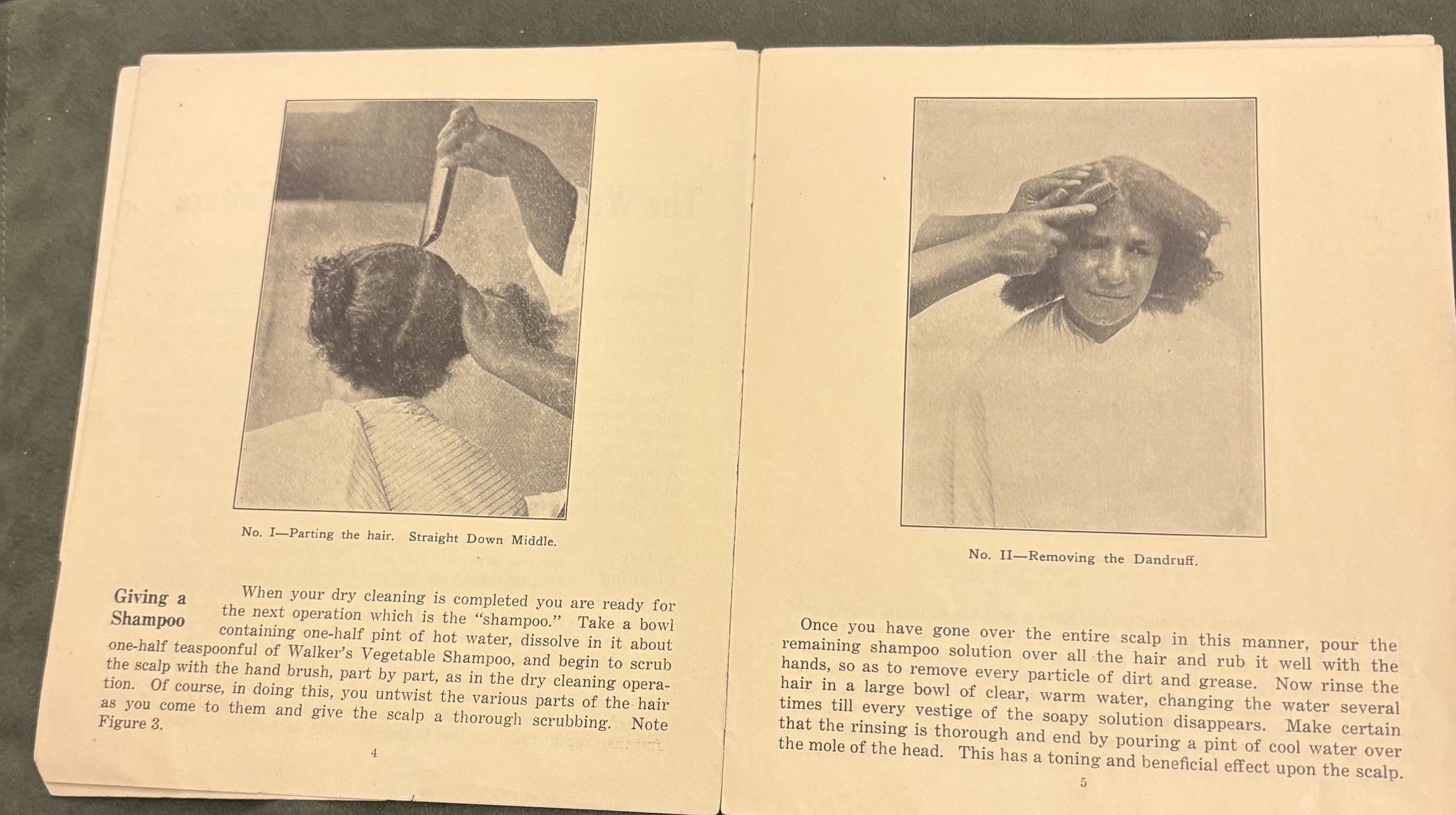
The Library Company of Philadelphia recently purchased one of the original pamphlets describing the Walker Method, step-by-step, and what was included in the Walker Special Outfit, the all-inclusive entrepreneurial kit. That included a stiff hair brush, face towels, Walker’s specially formulated conditioning concoction, a smock — that Walker refers to as a hairdresser’s cloth — and, of course, a handmade steel comb.
After a thorough shampoo and conditioning, the hairdressing is applied and each section of the hair is methodically straightened.
Just reading these instructions brought me back to my girlhood, before chemical relaxers, weaves, and extensions became the norm.
Step-by-step instructions of how to do Madam CJ Walker’s Walker Method to salon owners. The pamphlet was given to Black salon owners in the early 1900s.The Library Company of Philadelphia
Wynn Eakins, the Library Company of Philadelphia’s African Americana subject specialist, acquired the pamphlet earlier this year, paying a few thousand dollars for it.
Like her, I believe it was worth every penny.
Getting my hair pressed every week wasn’t just my introduction to a beauty regimen, it was how I bonded with my mother and other Black women.
Funny thing is, I took for granted that Black women always knew how to do press hair. For better or worse, this skill is in our DNA. The Walker Method pamphlet reminded me of a time when pressing hair was new technology and it’s a reminder that every American experience has a history that’s worth saving and remembering.
The Library Company of Philadelphia is located at 1314 Locust St., librarycompany.org
— Elizabeth Wellington
A Bicentennial logo makes a nostalgic comeback during the Semiquincentennial
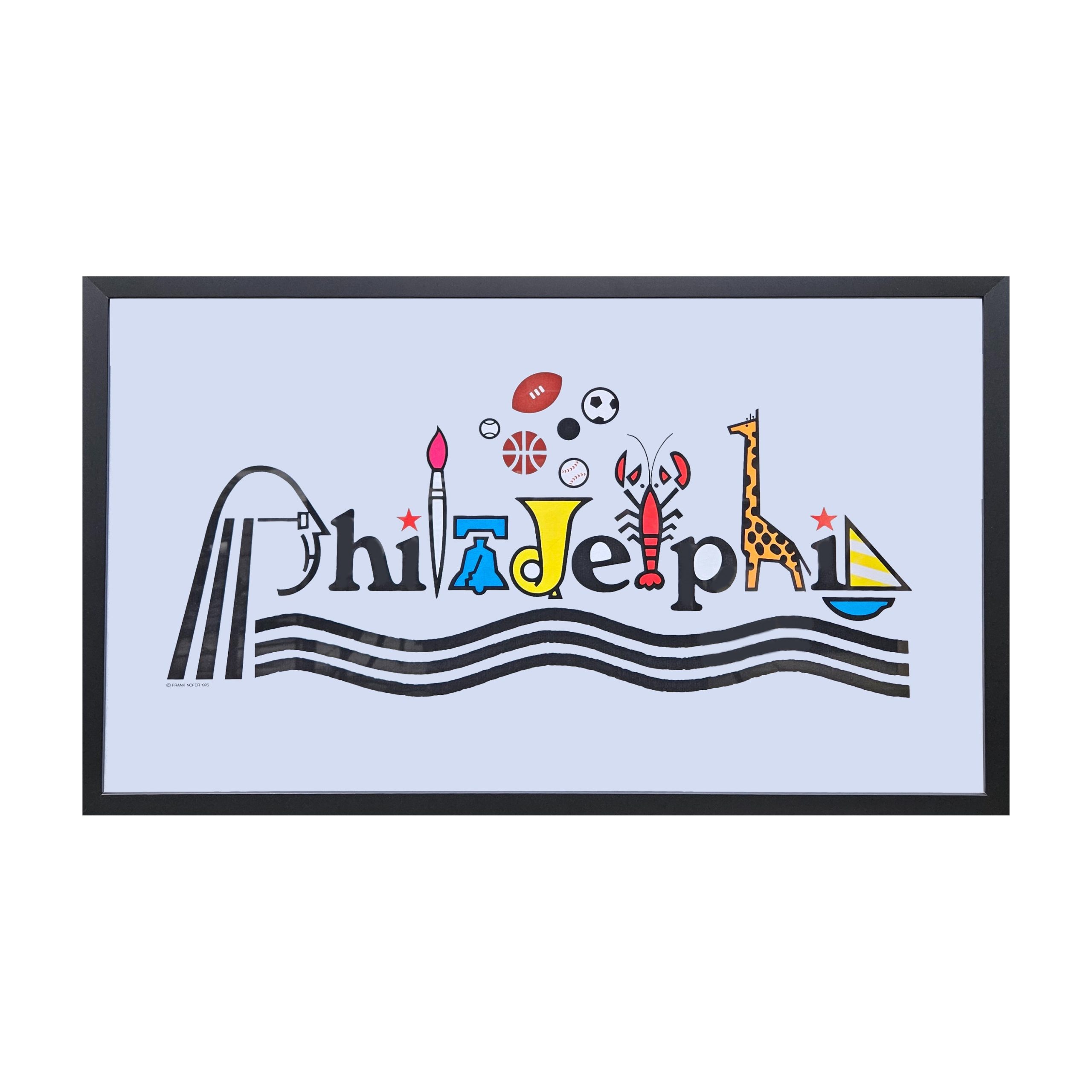
A vintage print of the logo that was sold by Sales by Helen in 2023.Courtesy of Sales by Helen
How much has Philly changed from the Bicentennial to the Semiquincentennial? Not much, by the looks of the 1976 Bicentennial logo.
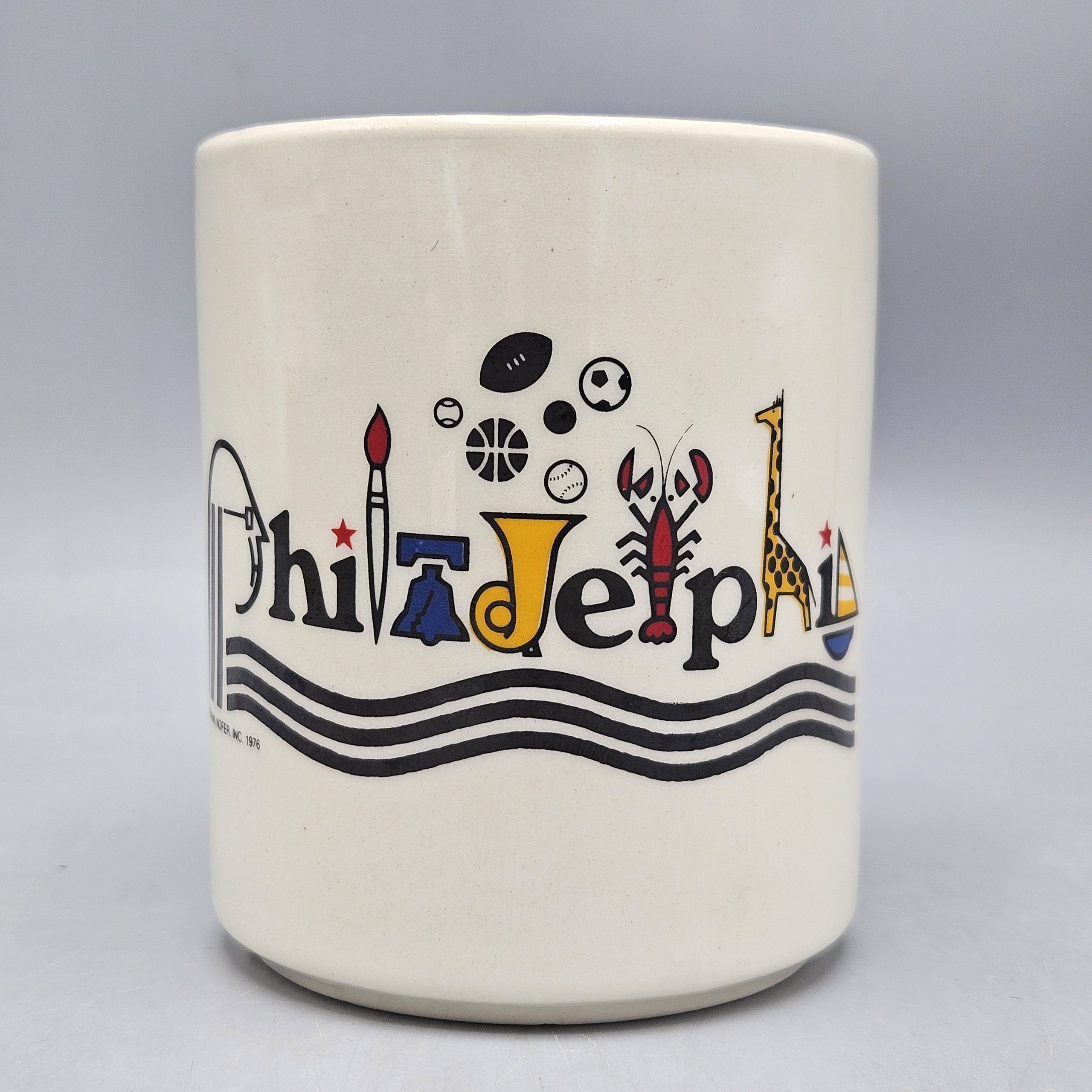
Created by Philadelphia graphic designer and watercolor painter Frank Nofer, the logo features several iconic symbols of Philadelphia standing in for the letters in the city’s name. After copyrighting, Nofer’s logo was printed on seemingly infinite pieces of merchandise, from T-shirts to mugs to ashtrays.
There are historic references, like Benjamin Franklin and the Liberty Bell. The logo also features a paintbrush and tuba to represent the city’s arts scene, sports balls for our athletic passion, a giraffe for the zoo, and a sailboat for the rivers on either side of Philly.
There is one outdated reference: a lobster as the second “l,” a reference to the now-closed seafood restaurant Bookbinder’s. The Old City spot, which shut down in 2009, was world famous for its oysters and lobster. Though it may not be relevant to 2026 Philadelphia, that little lobster is sure to spark nostalgia for anyone who lived in the area before the 2010s.
Frank Nofer’s “Philadelphia” logo featured on a mug, one of many pieces of merchandise.Courtesy of Sales by Helen
Now, 50 years later, merchandise featuring the logo is no longer sold anew. But vintage pieces have been popping up on eBay (which is where I saw it). Per the comments on a Facebook post from someone who purchased a Nofer “Philadelphia” T-shirt on eBay, several people have held onto their merchandise, praising the design.
The logo feels timeless, while also maintaining the funky nature of the 1970s. If you have a piece from 50 years ago, I say hold onto it — whether to admire it, or to make a pretty penny from it online.
— Morgan Ritter
Ben Vaughn. His new song with Deer Tick is “Imitation Wood Grain.” Vaughn’s just-announced album “Magnetic East: The Deer Tick Sessions” is due on Yep Roc Records in October.Shana Cassidy
A vintage Ben Vaughn brings back the romance of “the South Jersey pines”
Now, Vaughn is getting the elder statesman treatment himself. Back in 2019, Providence, R.I., rock band Deer Tick did a cover version of Vaughn’s 1990 song “Too Sensitive for This World,” featuring John Hiatt whistling in the background.
The band’s fandom has resulted in a friendship and playing shows together, and now a forthcoming Ben Vaughn album called Magnetic East: The Deer Tick Sessionsdue out Oct. 30 on Yep Roc Records.
This week, “Imitation Wood Grain,” the first track from the album was released.
“Inspired by a visit to the thrift store, it’s probably [the] most nostalgic song I’ve ever written,” Vaughn wrote in a Facebook post. It’s also vintage Vaughn; a clever, well-crafted ironic-yet-not-ironic song that meshes with Deer Tick’s own bemused sensibility (and features Vanessa Carlton on backing vocals).
Kitschy details in the lyrics — the sight of an old clock radio or a fake wood-paneled hotel hallway — do the Proustian job of bringing back memories of the romance of cruising through “the South Jersey pines” in the good old days, “when you were mine.”
The state of the University Avenue Bridge, long neglected and subject to vandalism, is attracting a wave of public scrutiny. An online petition that has collected hundreds of signatures calls for the historically significant span to be secured before further damage is done.
“We demand that PennDOT and the City of Philadelphia treat this historic structure with the same respect shown to the Ben Franklin Bridge,” wrote the author of the change.org petition. “Officials must act now to secure the site from further destruction so that this beautiful bridge survives to celebrate its own 100-year anniversary in 2030.”
The Ben Franklin Bridge was feted this month with a special centenary event closing it to vehicles that drew an estimated 50,000 pedestrians, cyclists, and others.
The publication, Hidden City, also published a cri de coeur this week.
“As the Benjamin Franklin Bridge receives accolades this year for its 100-year anniversary and receives regular maintenance by its owner, DRPA, the University Avenue Bridge continues to decay, seemingly ignored by PennDOT,” wrote Kimberly Haas in an article posted Tuesday.
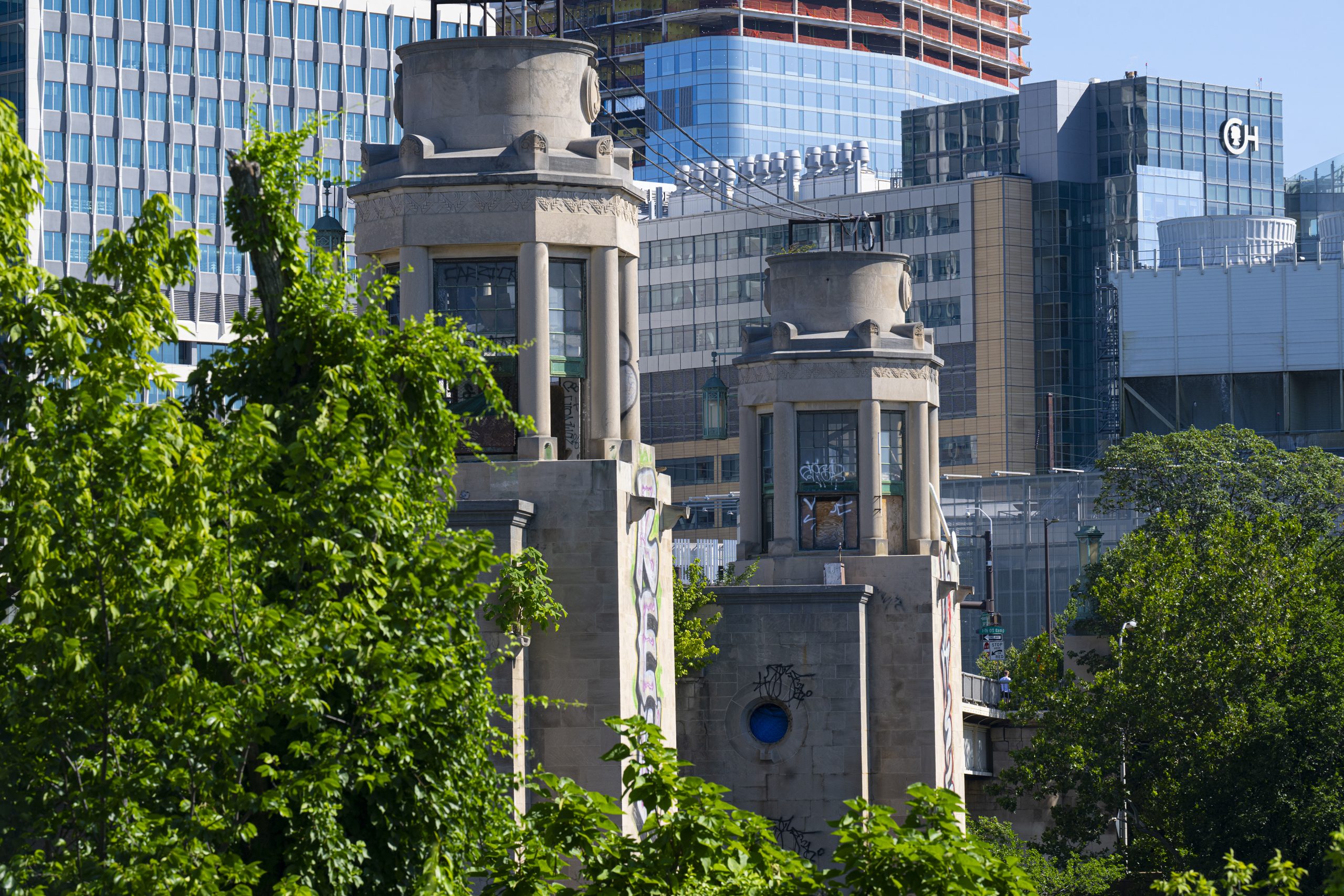
Broken windows and graffiti at the University Avenue Bridge, with the medical buildings of West Philadelphia in the background, July 23, 2026.Jose F. Moreno / Staff Photographer
A PennDOT spokesperson said that, in fact, it is in the process of finalizing a contract for work on the bridge, and that the work is expected to start “within a few weeks,” though the exact scope of the job is as-yet undetermined.
The two bridges share an architect in widely admired French-born Penn professor Paul Philippe Cret. Today, the windows on the University Avenue Bridge’s richly detailed operator houses are broken or gone, mortar is missing, stone is marred by graffiti, and some architectural elements have been stolen, the petition notes.
“The bridge must be made secure IMMEDIATELY to prevent further damage,” it states.
The Preservation Alliance for Greater Philadelphia, which characterizes the bridge as threatened by neglect and has urged its restoration, applauded the petition.
“We hope it will put pressure on PennDOT to take action to prevent further decay of the bridge and its operator houses,” said preservation alliance director of policy and communications Hanna Stark.
On the University Avenue Bridge: The condition of the operator’s house closer to Grays Ferry has continued to deteriorate in recent weeks.Jose F. Moreno / Staff Photographer
An Inquirer column in June highlighted the drawbridge’s condition, as did an article in September.
The bridge, which links West Philadelphia and Grays Ferry, is owned by PennDOT, though responsibility for its upkeep is split between the state agency and the city’s Streets Department. The city agency oversees operations, including the mechanical components that lift the bridge, which currently do not work. Graffiti removal may also fall under Philadelphia’s jurisdiction.
PennDOT handles the bridge’s aesthetic and structural components. It is responsible for cleaning up debris, and does routine maintenance on the other aspects of the bridge except for the mechanical components.
The state agency would also oversee any full major rehabilitation project, whose price tag PennDOT estimates at about $50 million. No such project is planned at the moment. The last major rehabilitation was in 1985.
The operator’s house closer to Grays Ferry on the University Avenue Bridge.Jose F. Moreno / Staff Photographer
The complete scope of PennDOT’s work expected to start in the next few weeks is still to be determined, the agency’s spokesperson said, but it will include steel repairs and fortification to prevent vandalism. Completion is expected in late 2026 or early 2027.
Damage to the bridge has continued in the past month or so at the operator’s house closer to Grays Ferry.
“It just feels like it’s getting so much worse,” said Heather Calvert, the West Philadelphia resident and regular bridge visitor who started the petition. “It’s not a big ask to secure it to keep more of the historic elements from getting lost for everyone.”
To have the bridge in this condition, Calvert said, “just makes the city look bad.”
Even as it grapples with having less money to award next year, the Philadelphia Cultural Fund on Wednesday announced this year’s grants to arts and culture groups across the city. The fund is dispersing $5.6 million to 322 organizations representing arts and culture of all types, said Cultural Fund executive director Gabriela Sanchez.
“We have theater, we have dance, we have visual arts, poetry open mics, historic sites, sculpture gardens — it truly ranges across all genres,” Sanchez said.
The 2026 grants also reach beyond Philadelphia’s downtown marquee groups into all sections of the city.
“We are funding Districts 1 through 10, and that is exciting,” she said, referring to the city council districts into which the city is divided.
The Philadelphia Cultural Fund is an important source of money for arts groups, but especially for smaller ones. It is drawing more attention this year after the city’s budget process for fiscal year 2027 left the agency with a cut in funding. Instead of the $5 million it received from the city in FY26, it will now see only $3.5 million.
As a result, it will have to cut the number of grants it gives out in 2027. Although there is currently no specific target for how large that reduction will be, it could mean grants going to 100 fewer groups.
“When you look at 100 organizations that could be funded, that’s terrible, a painful thing to navigate,” said Sanchez. “We have to get creative to find other pathways to meet the need.”
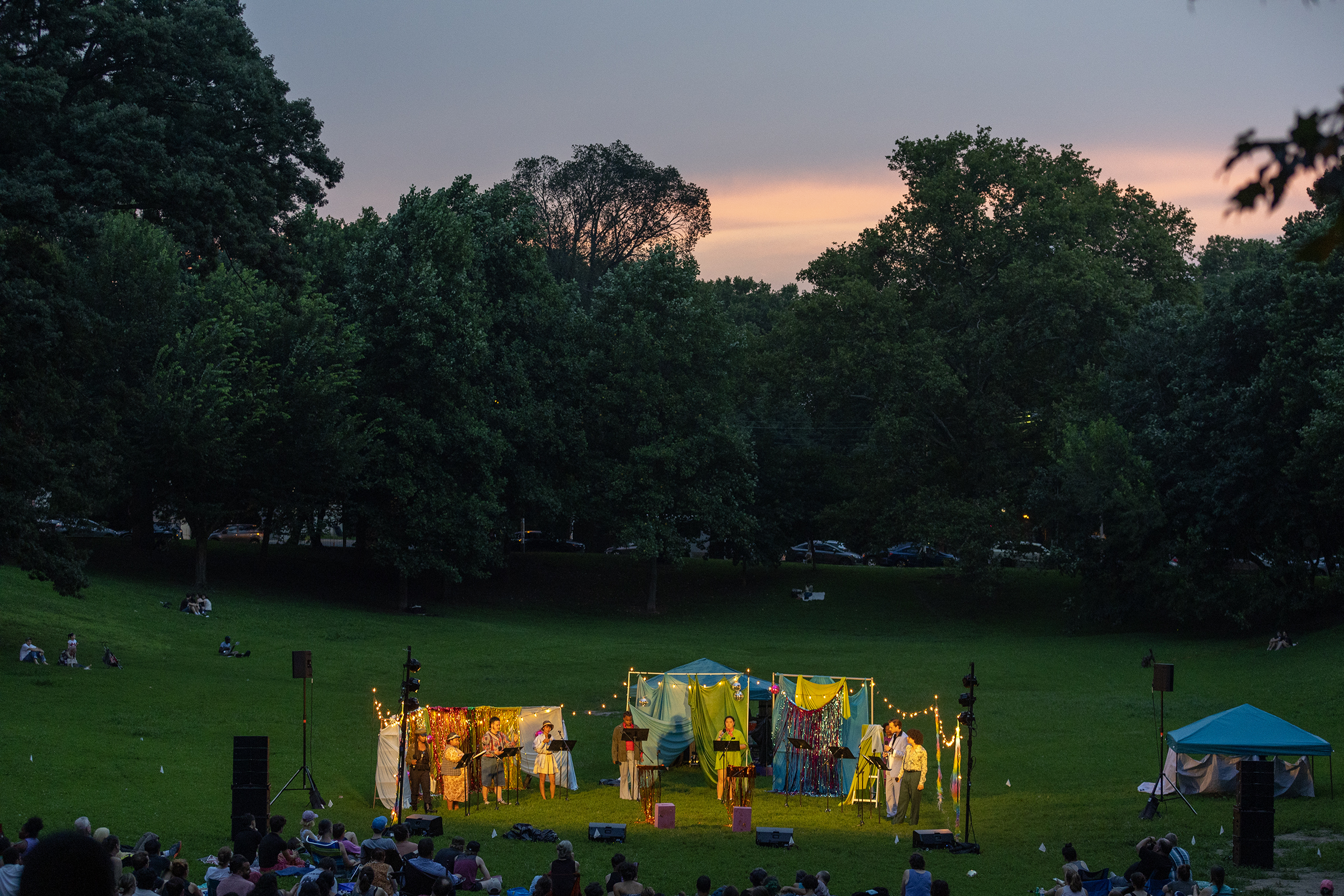
Shakespeare in Clark Park in 2023 performing “Two Gentlemen of Verona” in its rock musical adaptation by composer Galt MacDermot and lyricist John Guare.Charles Fox / Staff Photographer
In the wider world of arts funding, the grant amounts are relatively modest — either $12,875 or $23,375 — but they are critical to many groups, and the funding can have a compound effect.
Artcinia, for instance, is a small nonprofit with a Center City business address, but the organization brings concerts into a wide swath of neighborhoods — 200 performances in a five-year period, reaching 9,000 audience members in Fox Chase, Nicetown, Hunting Park, Manayunk, and elsewhere, according to a recent summary prepared by the group.
Its largest chunk of revenue comes from foundations, of which the money from the Cultural Fund is a part.
That grant is “significant, about 12% to 15% of our operating budget this year,” said Jake Kelberman, Artcinia’s artistic co-director and director of operations. The group presents music in various genres and has engaged hundreds of professional musicians, and, if the funding disappears, “it’s sad that it’s going to affect the volume of programming we can do,” he said.
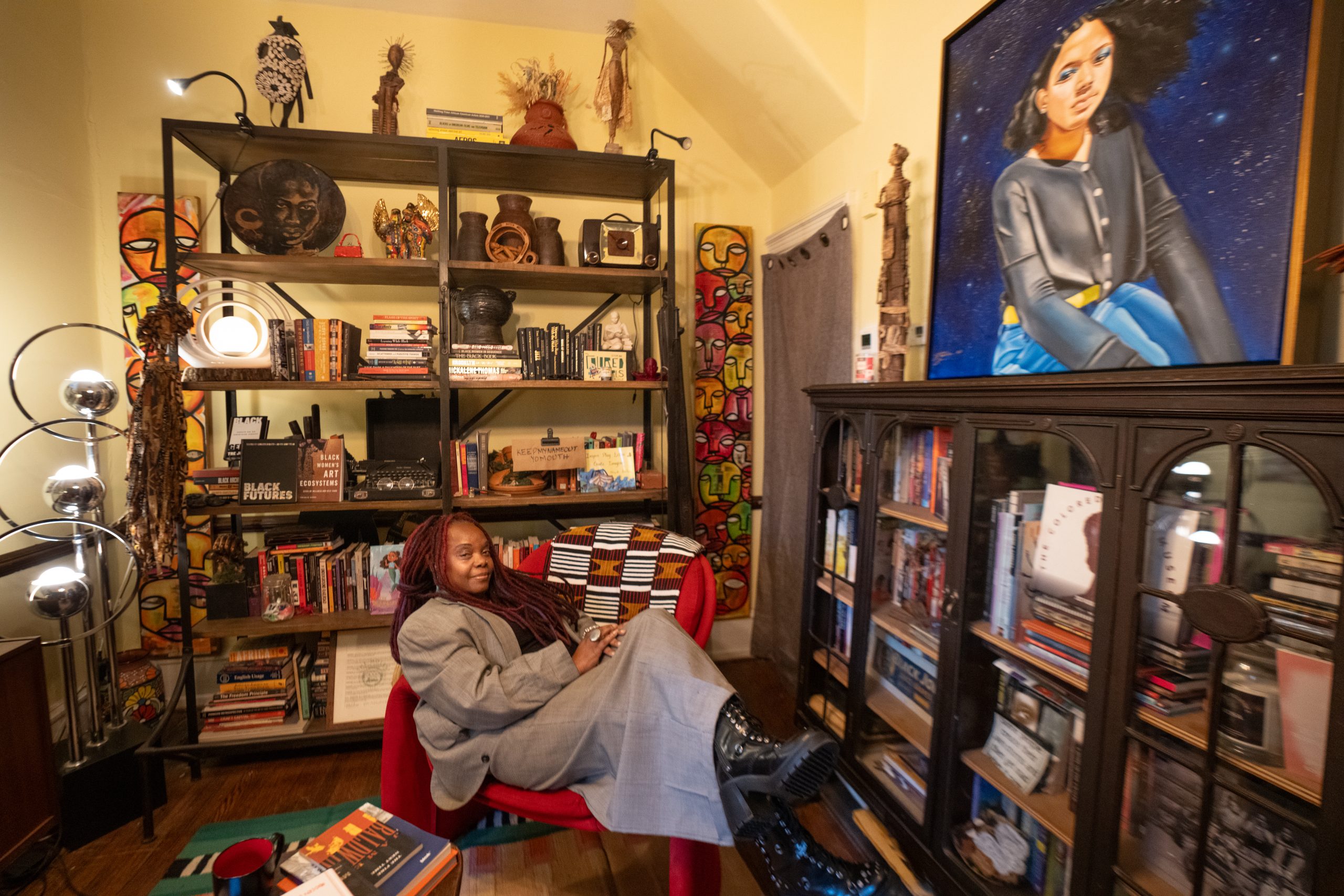
Colored Girls Museum founder and executive director Vashti DuBois at the museum in Germantown.Jessica Griffin / Staff Photographer
Two notable aspects of the Philadelphia Cultural Fund are the fact that it’s money that can be used for general operations (as opposed to being restricted to a specific project, which often requires raising additional money); and that there is no requirement that the money be matched with money from other sources.
These factors makes the kind of funding available from the fund increasingly rare, says Eric César Morales, development director of Movimiento Administradores de Arte en Pensilvania.
“This money from the Cultural Fund is what stabilizes the sector as a whole, because it allows grassroots organizations to become competitive and grow,” said Morales.
Movement of Arts Administrators in Pennsylvania, or MAAP, has often received money from the fund since its inception during the pandemic, Morales said, including $23,375 in this latest round. The money has a salutary effect on the local arts ecosystem; MAAP aims to increase arts access for BIPOC individuals and communities in Pennsylvania by giving Spanish-speaking artists training and resources in navigating the often tricky process of applying for funding.
Morales says that the $1.5 million reduction to the Cultural Fund may not sound like a lot, but with other sources of funding decreasing or threatened, “it’s evidence of a shrinking sector.”
Of the impending city cuts to the fund for FY27, Sanchez said:
“It’s obviously the worst-case scenario that we have to plan for, and I think that it’s also the reality. I hope that people take note of this change and become engaged in the way that they see fit — to talk to their council members around the importance of arts and culture in their neighborhood. That is a form of resilience and also action.”
Whatever brutally hot designs the weather gods had in store Friday for Philadelphia’s Independence Day celebrations, by 8 p.m. the temperature fell below 90 degrees, and the music on Independence Mall arrived like a balm.
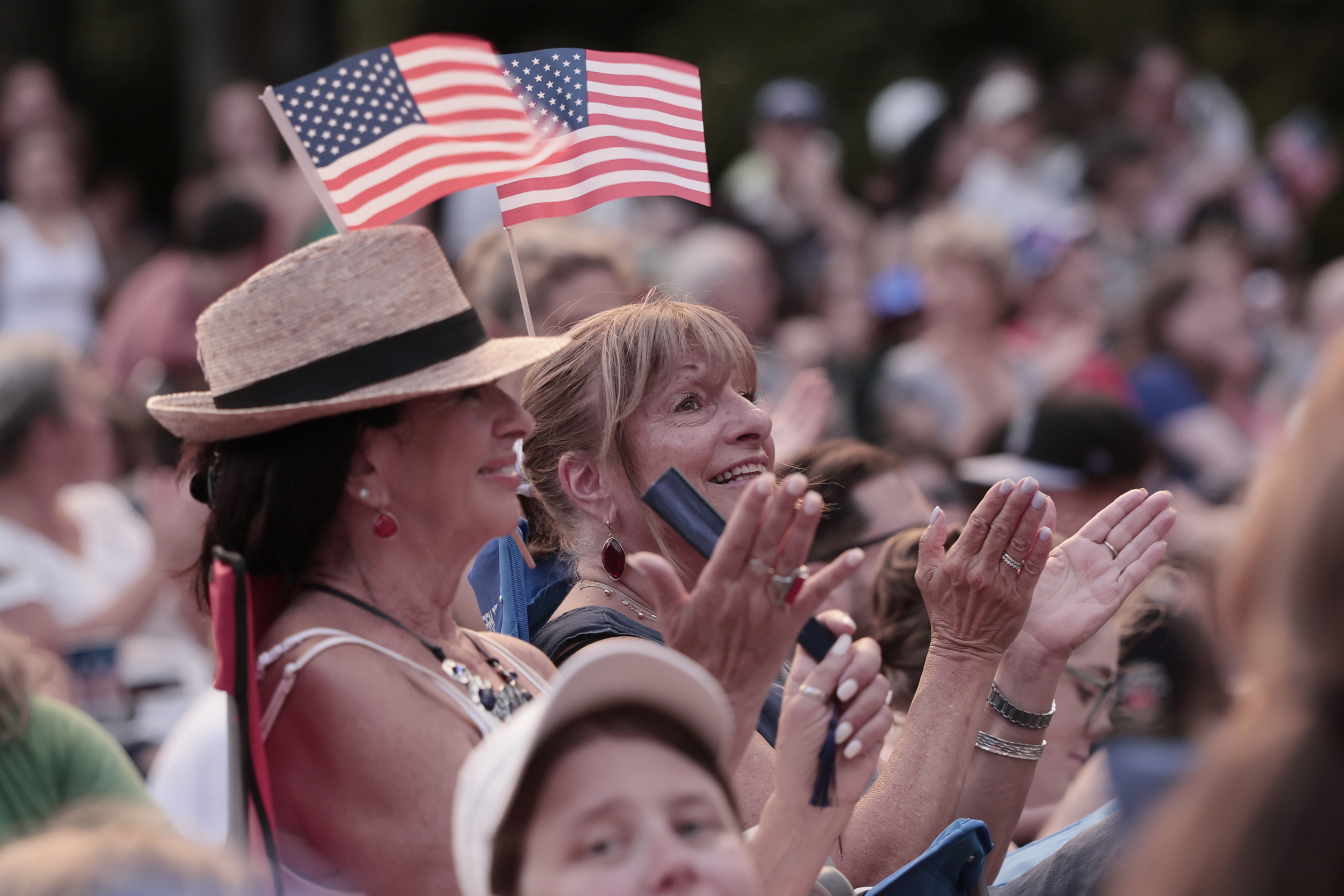
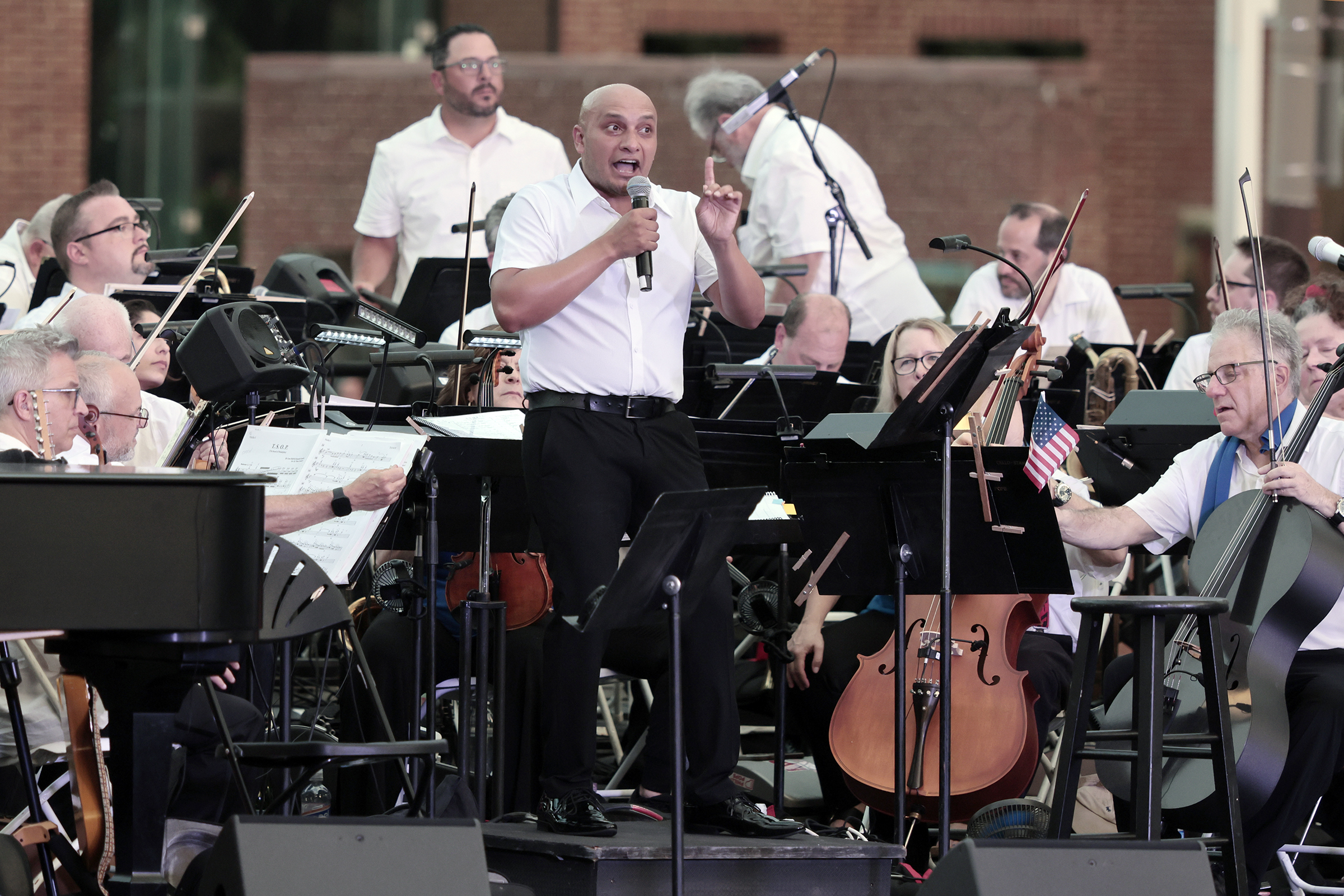
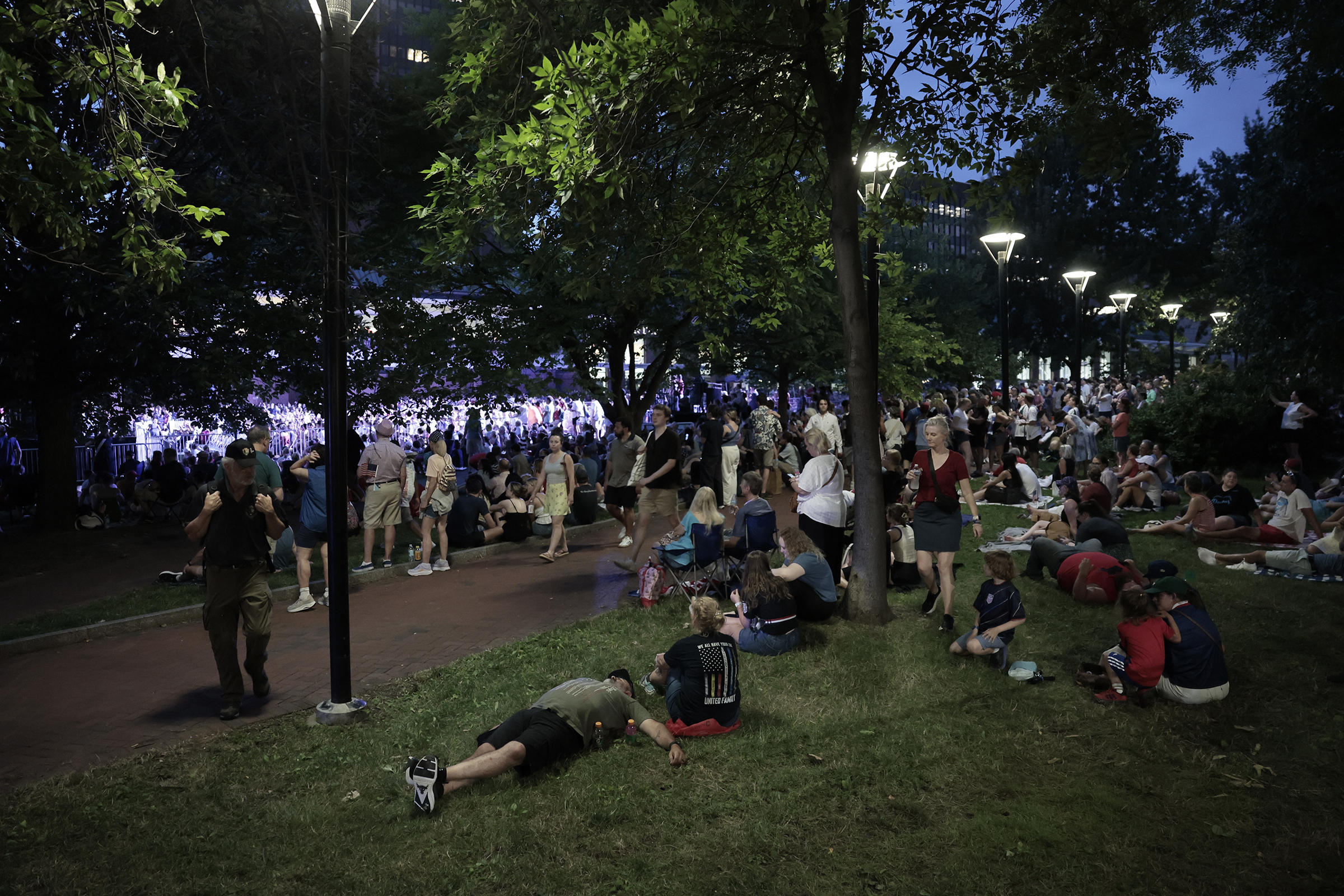
Listeners were stretched across the lawn of the mall fairly solidly from Independence Hall to Arch Street — an estimated 12,000 attendees, according to a Wawa Welcome America spokesperson. Whether drawn by the Philly Pops with tunes patriotic or stirring, or by popular actress-singer Idina Menzel, the crowd was in a mood at once celebratory and relaxed.
The weather posed no threat, at least for the first hour or so.
At Friday night’s Philly Pops concert on Independence Mall.Elizabeth Robertson / Staff Photographer
This annual tradition of “Pops on Independence,” a free Philly Pops concert on the mall, has become a way of taking the national temperature. Last year, a few months into the new presidential administration, there were subtle references to the political moment, with the acting superintendent of Independence National Historical Park speaking to the audience about equal rights of all kinds, including marriage rights, and referencing a nation “built on the struggle for freedom from tyranny, and the principle of liberty for all under the just rule of law.”
Friday night, park superintendent Steven Sims struck a more anodyne note, speaking of the historic setting, the city’s events this week commemorating the 250th anniversary of the nation, and of celebrating with “one of our most universal languages — music.”
The audience seemed only too happy to live inside of this bubble for a while, though to the woman holding up a “Striving for Democracy” sign, you were seen.
Philly Pops music director Chris Dragon speaking to the crowd during Friday’s “Pops on Independence” concert on Independence Mall.Elizabeth Robertson / Staff Photographer
No one should take for granted the fact that this concert endures. The group performing Friday under the Philly Pops name is a band of survivors, emerging after the demise of the original Philly Pops and much organizational and legal drama. Had the orchestra not reorganized, a 4 ½-decade tradition of hearing music with no less a backdrop than Independence Hall might be gone.
Listening and strolling on Independence Mall Friday night at the Philly Pops concert.Elizabeth Robertson / Staff Photographer
How many other cities can boast as powerful and authentic a resonance between art and setting? When the Pops performed its Armed Forces Salute — having audience members stand as the respective song of the military branch in which they served was played — it made real and human the idea of such service to the nation.
A section has been added to the medley to recognize the U.S. Space Force, established during the first Trump administration; I could be mistaken, but no service member from that branch who might have been in Friday’s audience appears to have stood for this song, called “Semper Supra.”
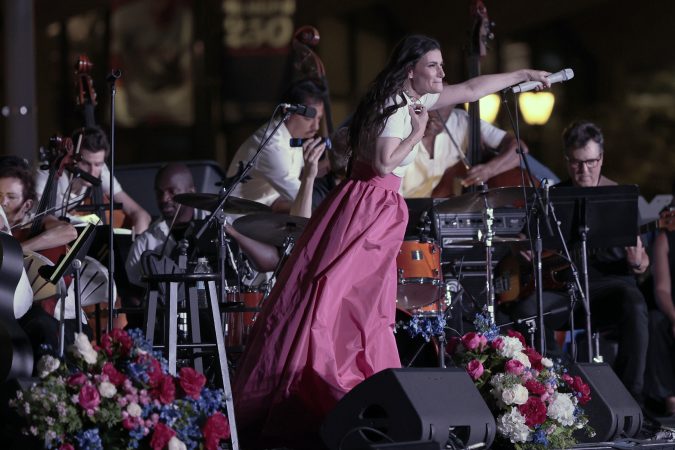
Idina Menzel performing with the Philly Pops Friday night.Elizabeth Robertson / Staff Photographer
Judging by the number of families with young children in attendance, the main attraction was Menzel, and if they came to hear “Let It Go” from Frozen, they were not disappointed. Menzel was a canny choice for this occasion; she is a singer who knows how to send sound and charisma back to the farthest reaches of the audience.
It was not necessarily the best night to appreciate the talents of the Pops and conductor Chris Dragon. The sound system near me, fairly far back from the stage, cut in and out. No sound check had been possible because of the heat, a Pops spokesperson said. And the concert ended earlier than planned after organizers grew concerned by gathering dark clouds and flashes of lightning. The last few pieces that might have showcased the ensemble weren’t played. A loss, for sure.
But the event succeeded on so many other levels, that it didn’t matter.
As the crowd headed off with the music fresh in their ears, downtown buildings were aglow red, white, and blue; young families lingered and took selfies; and Market Street on a Friday night seemed like the lively urban stretch it once was and could be again.