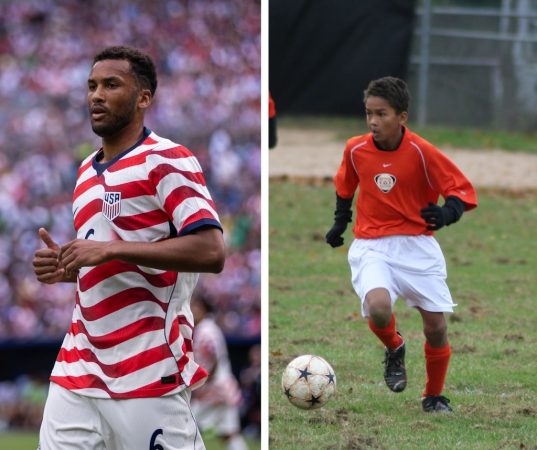
Auston Trusty plays centerback for the U.S. men’s national team, a position that doesn’t lend itself to scoring. But when he fired a goal against Turkey in the group stage finale of the World Cup, William Hall wasn’t surprised.
The University of Richmond junior was well-acquainted with Trusty’s shot. He’d seen it dozens, if not hundreds, of times, standing in the net at Chester Park in Wallingford, Pa.
It was the spring of2020. Hall was 14 years old, an incoming freshman at Strath Haven High School, and Trusty was 21, a starting defender on the Colorado Rapids. COVID-19 had, pushed back the MLS season, and Trusty was at home in his native Media, Pa.
He still needed to train, but there were few options available. So, the professional athlete decided to return to where it all began: Chester Park, home of youth soccer club Nether United, now 1776 United FC.
Trusty had played under coach John Waraksa for six seasons, two years above his age group, before going to the Philadelphia Union Academy in 2013. Hall was on Nether United’s U-15 team when the pandemic hit.
The teenager would often train with his teammates at Chester Park, and one day in late April or early May, Trusty showed up. They ran through warm-ups, then L-shape passing drills, then finishing drills, then shooting drills.
Hall was the only goaltender present, which put him in the unenviable spot of having to defend against a world-class athlete. It didn’t go well for the teenager.
Unlike players Hall’s his age, Trusty moved with a quicker pace and a harder strike. The ball would curl into the corner rather than launching straight ahead.
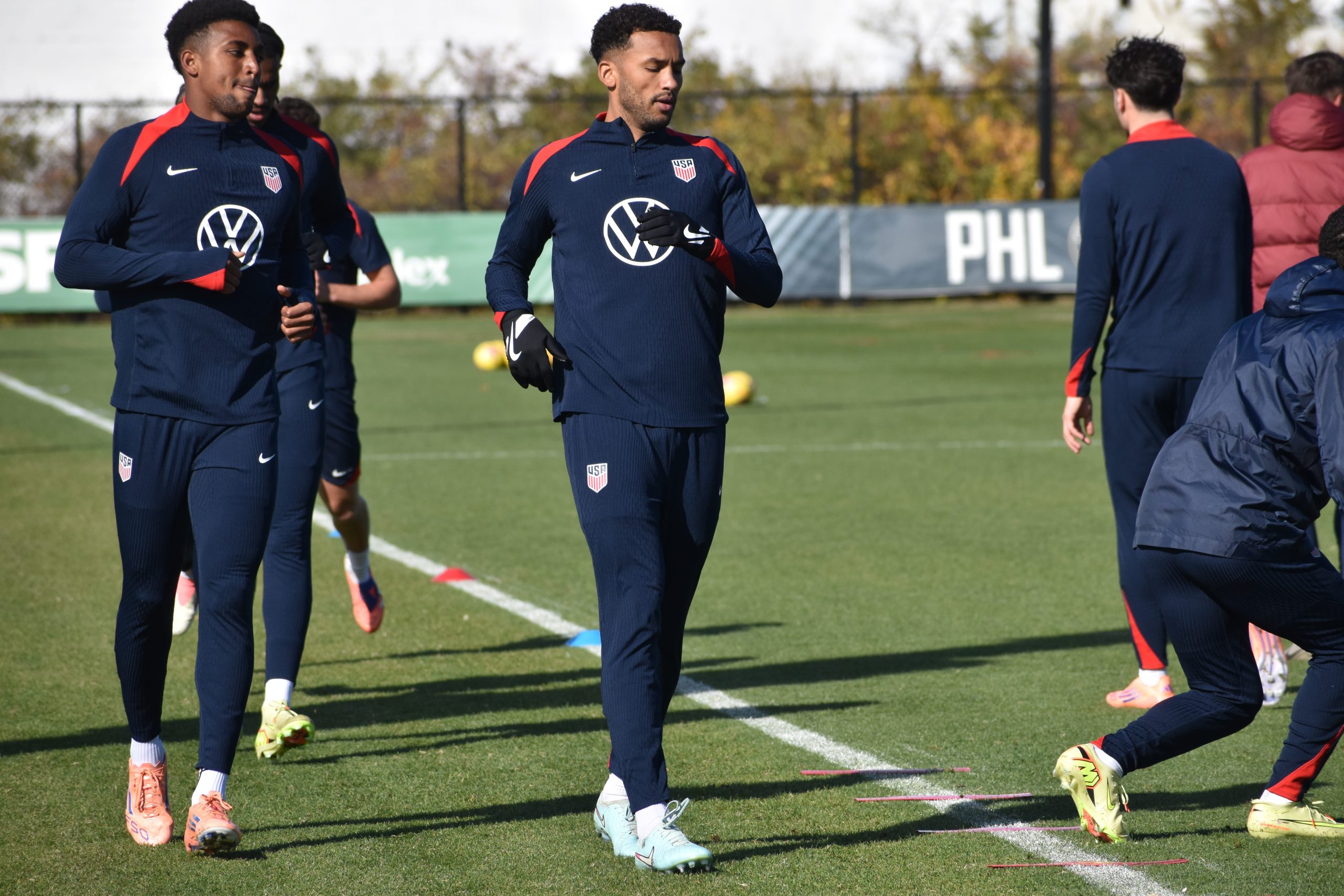
Auston Trusty (center) made his return to the Philly area in November as part of the U.S. men’s national team group that faced Paraguay at Subaru Park. Jonathan Tannenwald
“He would just pound them into the net, over and over,” Hall said. “I would say if he shot 20 shots, he’d probably make 18. Maybe hit the post on one of them. And I could scrape a hand on the last one.”
Trusty continued coming back to Chester Park, training with Hall and a group of local players five or six times that spring. It was a thrill for the teenager then, but now, those moments mean even more.
The “Delco-head,” as national team goalie and Wayne, Pa. native Matt Freese calls him, has made an imprint on the sport’s biggest stage. His goal against Turkey on June 25, which came in the third minute, was the second fastest in U.S. World Cup history.
It was not only Trusty’s first international goal, but the first men’s World Cup goal scored by a player born in the Philadelphia region.
“The group chats were going crazy,” said Hall. “But I think my first thought was, ‘I played with a player who just scored in the World Cup. That is insane. I saved his shot as a young kid.’”
Others throughout the Delaware Valley soccer community felt similarly. Paul Norris, who coached Trusty as a freshman at Penncrest High School, said he became emotional just hearing his name and hometown during the roster reveal.
As was the case with Nether United, Trusty was playing far above his weight at Penncrest. Even as a 14-year-old, he was starting alongside players who were much older and bigger than he was.
“What people laugh at now is he plays professionally as a defender,” Norris said. “But at the time, he had obviously a lot of skill, and we had him as a striker. And he was our second leading goal scorer that year.”
For the last 25 years, Norris has worked both at Penncrest and at Springton Lake Middle School, where he taught Trusty physical education. He still sees that lanky kid when he’s roaming the defensive line for Team USA (even though that kid now stands at 6-foot-3, 172 pounds).
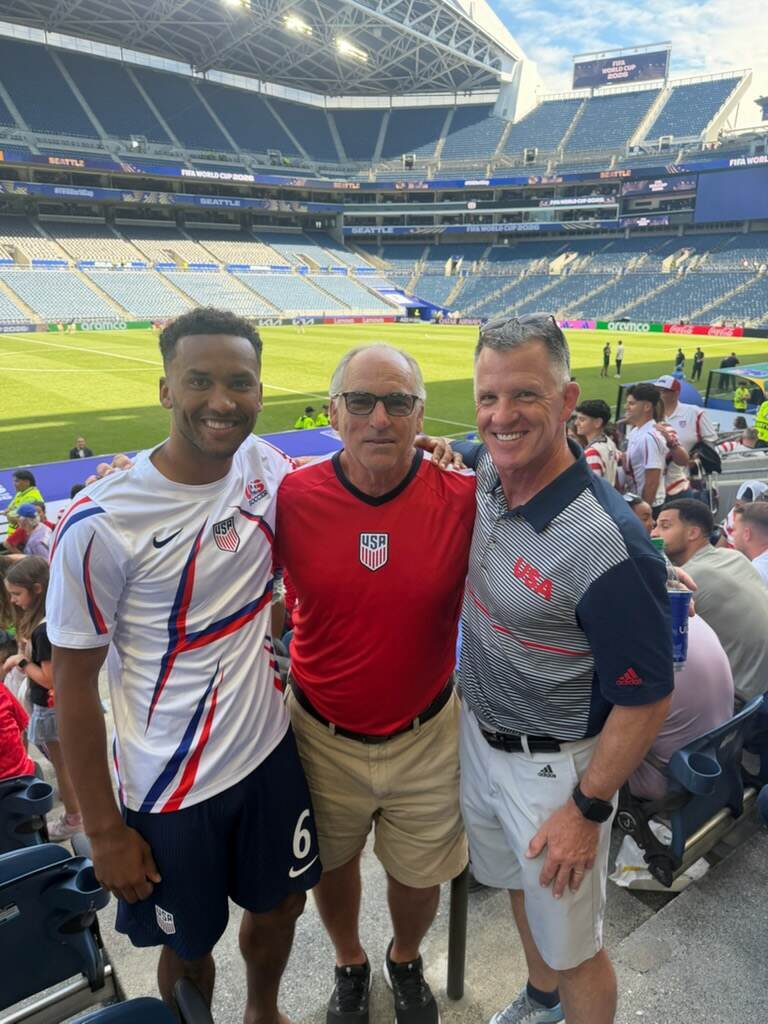
So does Waraksa. The 1776 United coach has known Trusty since he was 8 and was at his World Cup debut in Seattle against Australia on June 19. He was down the shore, in Ocean City, N.J., watching with friends and family when the Media native scored his first goal.
U.S. men’s soccer defender and Media native Auston Trusty (left), poses for an image with his former youth soccer coaches and his former club head coach John Waraksa (center).Courtesy / John Waraksa
It brought Waraksa back to 2013, when Trusty scored in Nether United’s state cup final against Lehigh Valley.
“Lehigh had won the last five state championships at our age group,” the coach said, “so he stepped up, even two years young, in a state cup final. I mean, who does that?”
Trusty found himself in some challenging situations with Nether United. Waraksa put him on a high back line, but even from an early age, he took to it. Once the centerback realized he could compete amid a more advanced style of play, his confidence only grew.
And as he continues to represent his country, that confidence is as high as ever. Norris is still coaching varsity soccer at Penncrest, and for the past few years, he’s shown his players clips of Trusty back when he was playing for the Philadelphia Union.
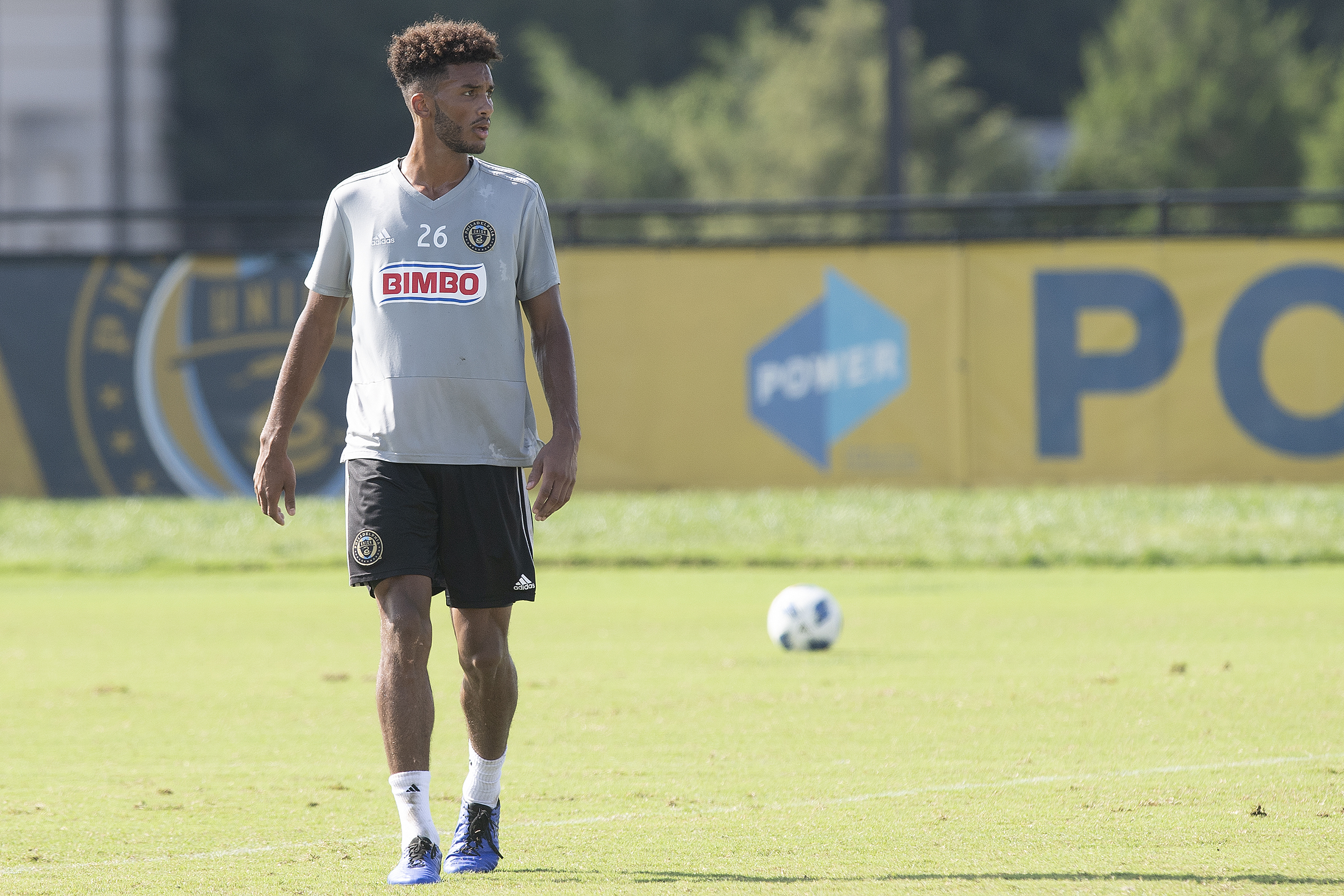
In addition to his time with Nether United, Trusty was also groomed in the Philadelphia Union’s academy and played for its first team. JOSE F. MORENO / Staff Photographer
A lot has happened since then. In 2022, Trusty signed with Arsenal. He returned to Europe in 2023, signing with Sheffield United, and in 2024, he penned a five-year-deal with Celtic.
But Norris now has the best Auston Trusty highlight reel of all, one that is “slightly updated” from his Union days. And with Penncrest’s preseason rapidly approaching, the coach can’t wait to show it off.
“We try to remind the kids that this was somebody who was local,” Norris said. “This was not that many years ago. These are things that somebody who was in this school, and in the seat that you may be sitting in, has done.
“You’re all capable of it. It’s just a matter of, do you want to put the work in for it?”
Lastweekend, K.C. Peterson was sitting at a bar with his friends in western Nebraska, talking about Fourth of July celebrations, when he shared an unexpected tale.
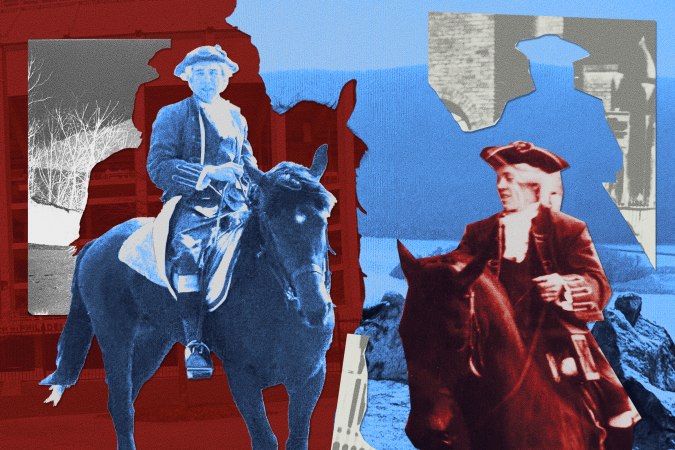
It all started with a marketing gimmick, one so unique only Phillies executive Bill Giles could’ve conceived it. The year was 1976, and Philadelphia was buzzing with excitement around the Bicentennial.
Giles, who described himself as a “pseudo historian” according to newspaper accounts, had been reading up on Paul Revere. Everyone was familiar with the blacksmith’s midnight ride, but the executive was far more interested in a lesser-known journey.
In 1774, Revere traveled by horseback from Boston to Philadelphia to deliver the Suffolk Resolves — a document that would serve as a harbinger of the revolution to come — to the First Continental Congress.
Citizens in Suffolk County, Mass., would refuse to pay British taxes. They’d organize militias to defend themselves. They’d boycott British goods.
Giles began to brainstorm. What if the Phillies could recreate such a ride for opening day? With a Paul Revere re-enactor, dressed in colonial garb? Carrying a game ball in a lantern, instead of a blueprint for civil resistance?
K.C. Peterson and his brother were hired by Phillies executive Bill Giles for an ambitious two-week stunt.Russell F. Salmon
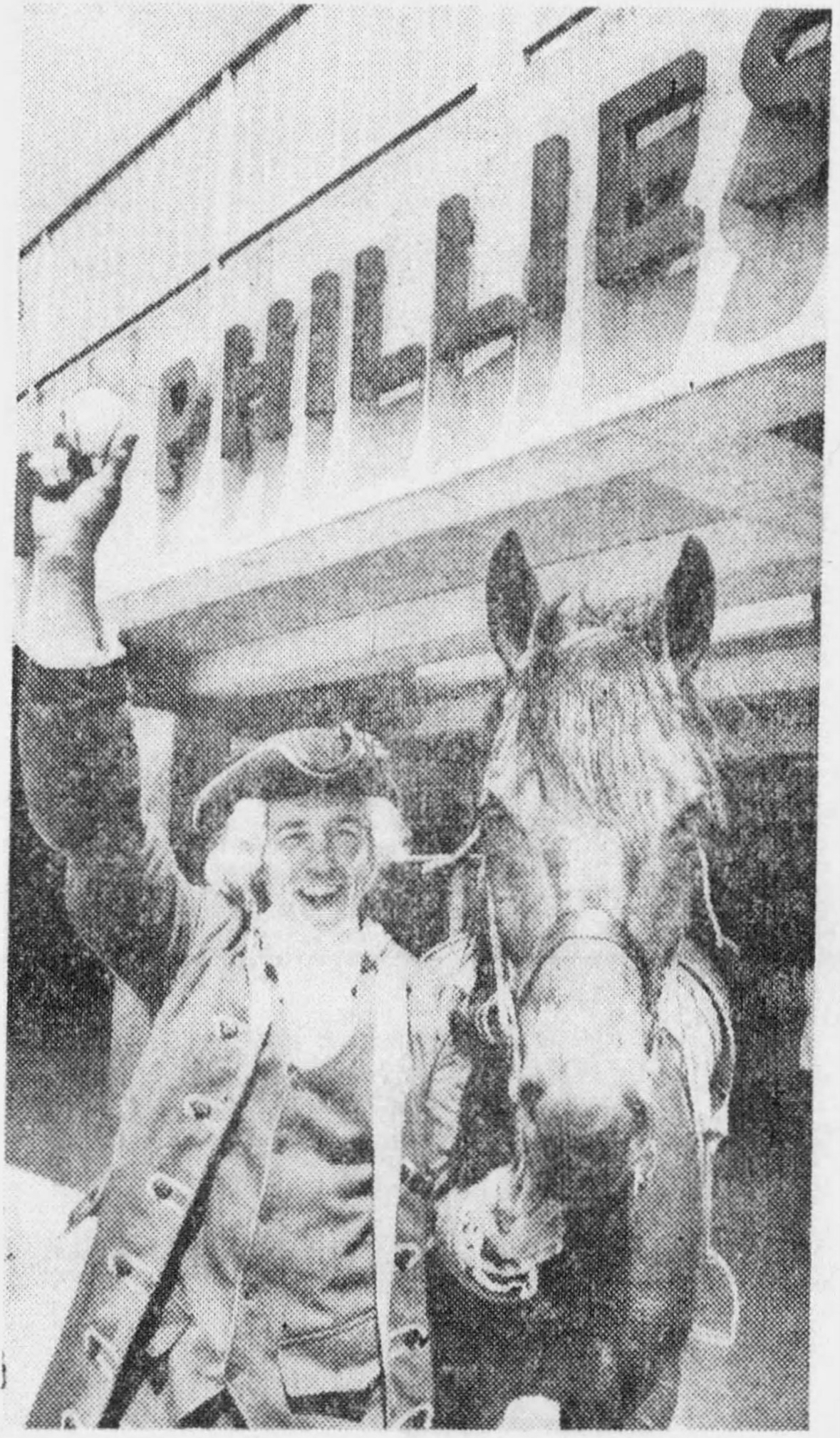
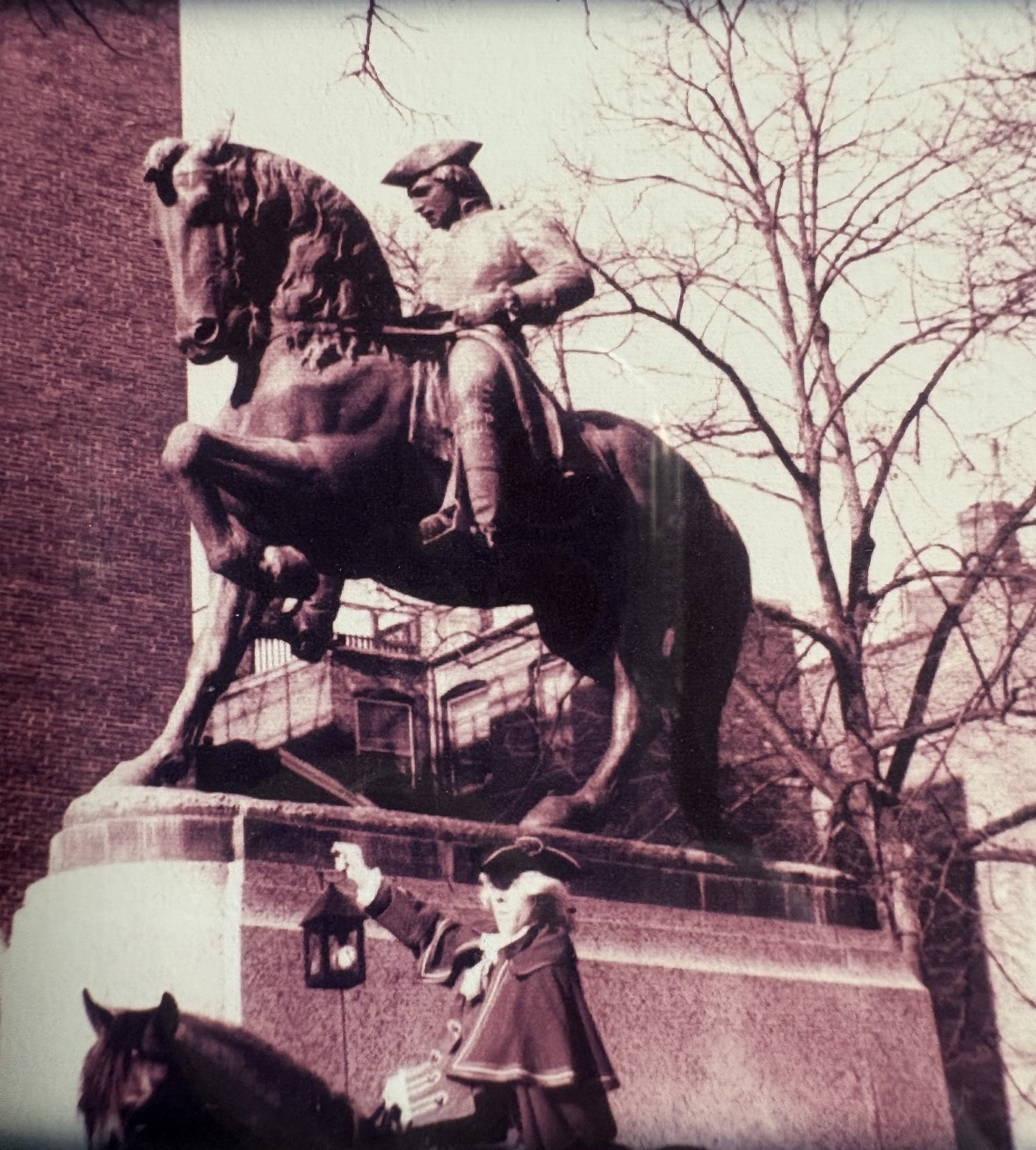
The plan was set into motion. In March of 1976, Giles hired K.C. and his brother, Russ, to trek 318 miles over two weeks from Old North Church to Veterans Stadium on horseback.
They arrived on April 10, a few hours before first pitch. Russ handed the ball to a man with a jet pack — “Rocket Man” — who soared 150 feet into the air, landing on the mound to deliver it to former Phillies pitcher and newly elected Hall of Famer Robin Roberts.
Peterson’s friends were skeptical. He and his brother had lived a wild life, as rodeo trick riders in Nebraska, but even by their standards, this seemed outlandish.
But the tale was all true — from the wigs to the tricornered hats to the tall black boots.
“They said, ‘Oh, bulls—,’” K.C. recalled. “I said, ‘I’m not bulls— you, we did!’
“One rode in the morning, one rode in the afternoon. And it rained almost every day. For two weeks.”
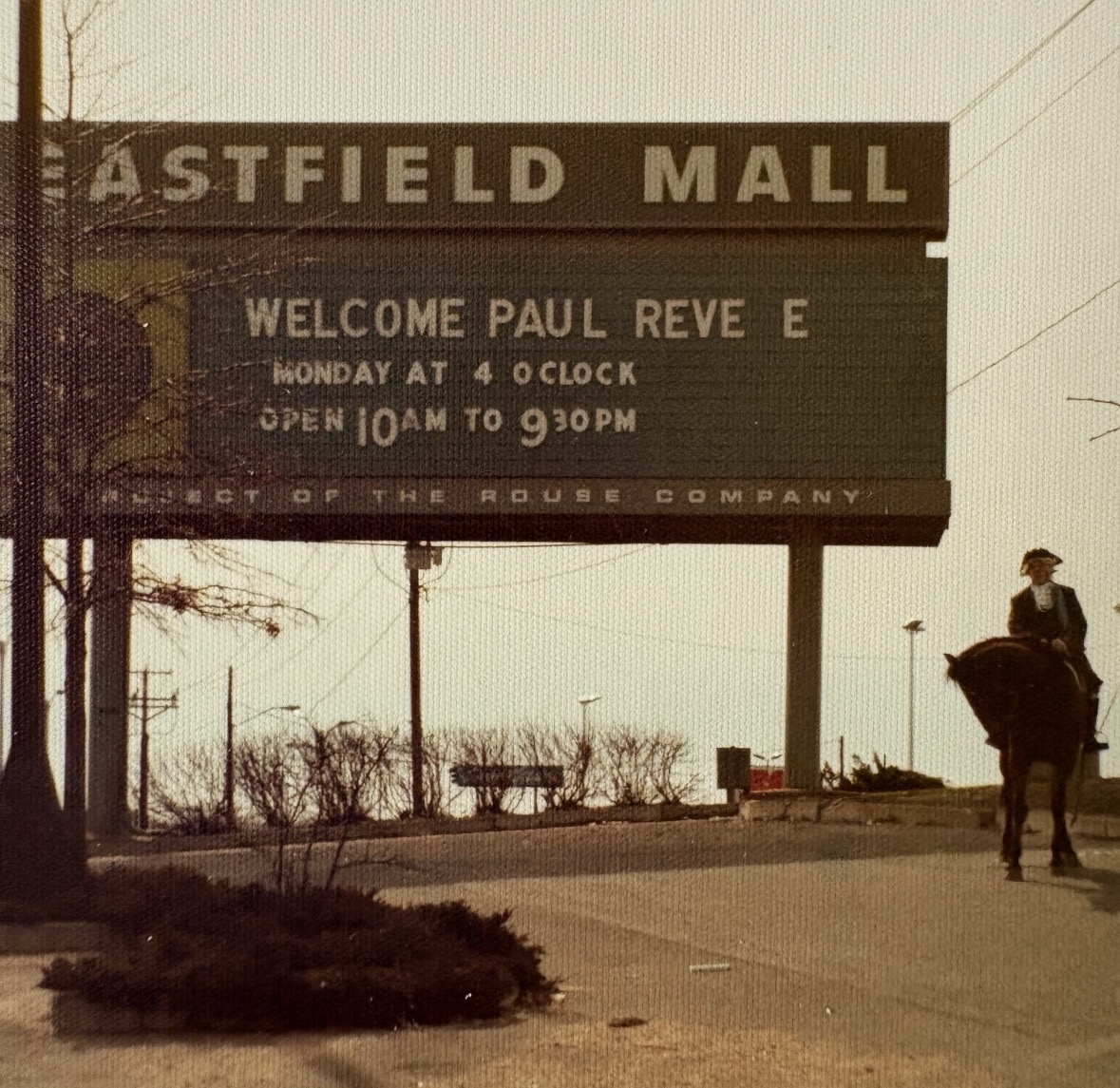
Russ Peterson (pictured) and his brother K.C. were mistaken for George Washington in some of the stops on their 318-mile ride.Photo courtesy of ReNee Peterson
$5,000 for 318 miles
K.C. and Russ Peterson knew close to nothing about Revere when they accepted Giles’ job. They had never been to a baseball game either, and didn’t consider themselves fans of any team.
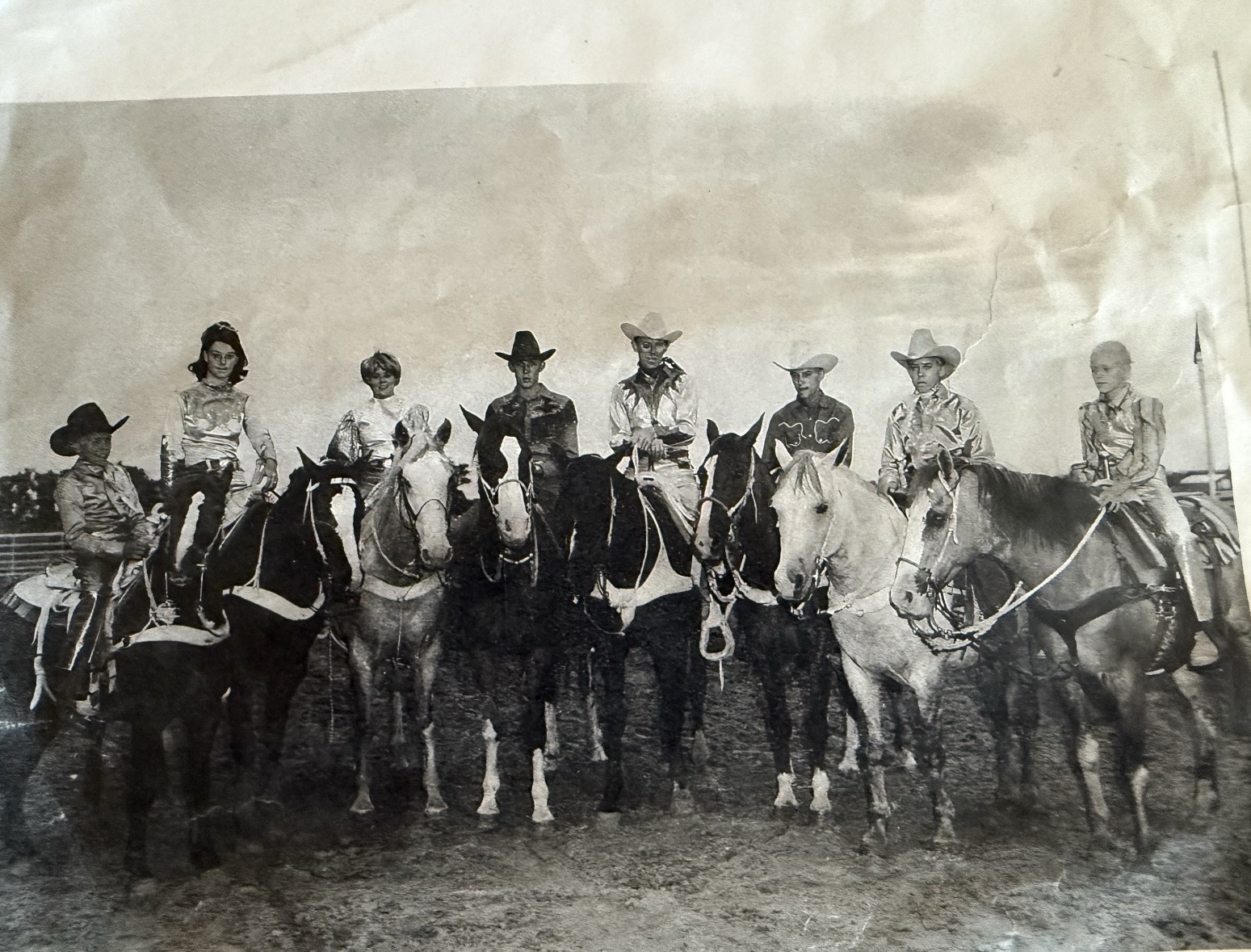
But they were expert horsemen, and that was enough. The eight Peterson siblings grew up on a ranch in Ogallala, nicknamed the “Cowboy Capital” of Nebraska. Their brother, Denny, taught them trick riding at an early age; before long, they could do shoulder stands and vaults on the back of a galloping steed.
It was a unique skillset that led to some interesting experiences. During the summer, K.C. and Russ would perform halftime shows at Ogallala’s local rodeo. In 1973, the family traveled to Japan on tour with celebrity cowboy Casey Tibbs.
K.C. (far left) and Russ Peterson (second from right at a 1971 Buffalo Bill Wild West show) had honed their horseman skills in the years leading up to their Phillies stunt.provided by
What Giles proposed in 1976 was an entirely different commitment. For the past few years, the brothers had been working four shows a day, seven days a week, over the summer at Great Adventure Theme Park in Jackson Township, N.J.
Now, their boss was saying that the Phillies wanted them to embark on a 318-mile trek.
“I was like, ‘What the hell are you talking about?’” K.C. recalled. “And they said, ‘Well, it’s gonna take two of you, because it’s a long ways, and you’ve got to do it at a trot in an English saddle.’
“And hell, I’ve never rode an English saddle in my life. We’re just trick riders. Grew up on a ranch. Rode Western saddle, and trick riding saddle, but never an English saddle. It’s an itty bitty saddle. There ain’t much to sit on.”
“I was 17 years old, and Russ was 21, and we got paid $2,500 apiece,” he said. “For a broke kid, it’s a hell of a lot of money.”
The brothers accepted the team’s offer on the spot. Russ’ girlfriend at the time, ReNee Dancer, was not happy. She and Peterson had planned to get married before they left Nebraska for New Jersey in May.
That idea was no longer feasible. The Phillies needed K.C. and Russ to be in Boston by late March to start their trip. They’d have to postpone the wedding until after it was done.
“He was so excited that they asked him to do that,” ReNee said. “And all I was worried about was getting married.”
K.C. and Russ departed from the Old North Church on March 27 at 9 a.m. The Phillies gave them a route with different stops along the East Coast. Unlike Revere’s, this journey was not entirely on dirt, grass and cobblestone.
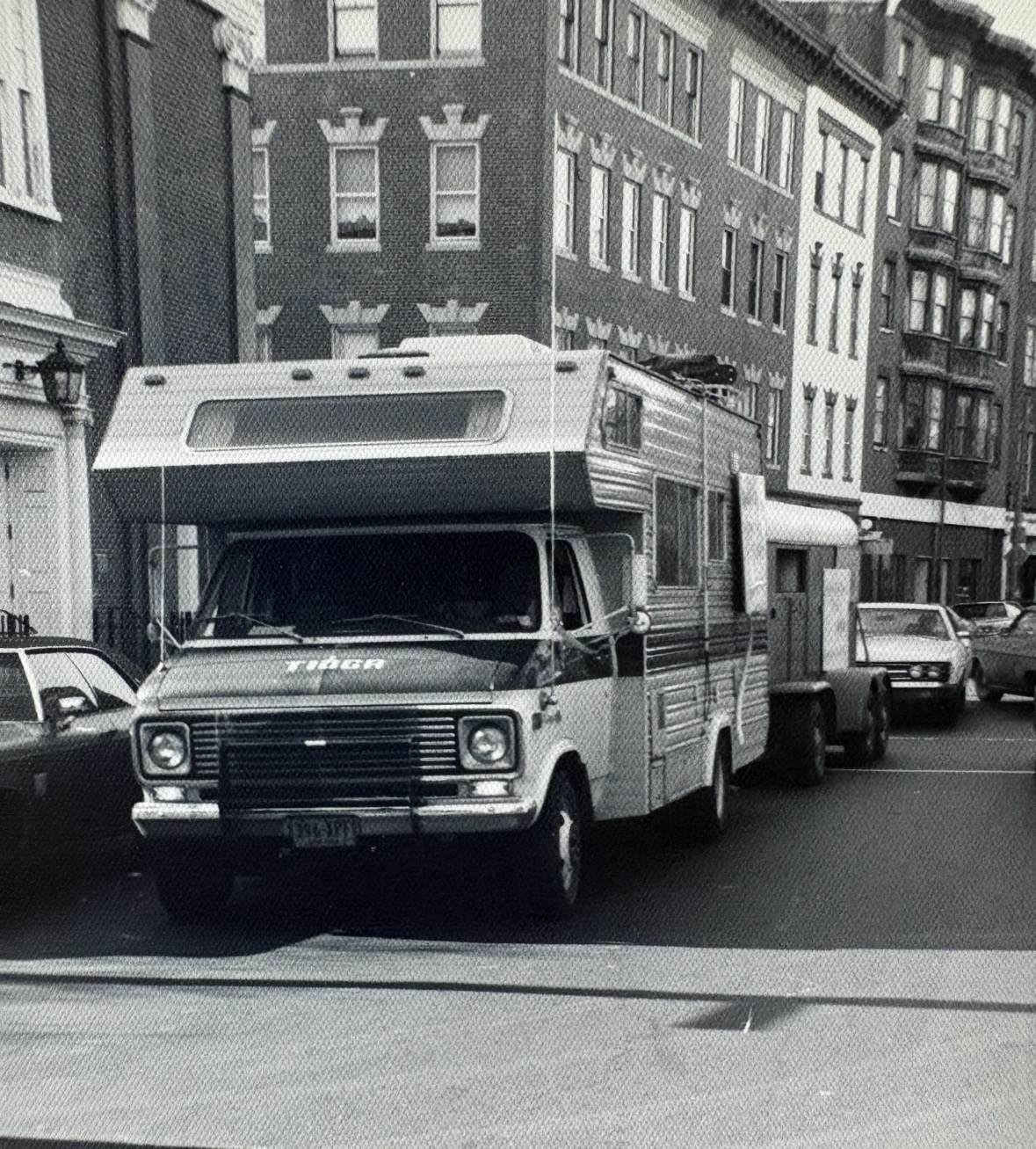
The Peterson brothers were trailed by a motor home that had its own issues in surviving the two-week trek.Photo courtesy of ReNee Peterson
The younger Peterson said there were times when one brother would be riding on the side of a small highway, with a motor home behind him — flashers on — and a horse trailer hitched to the back.
Local drivers were not enthused; honking loudly, while telling the colonial horsemen to “get the hell out of the road.”
The weather, which K.C. described as a “downpour,” only made things worse. Their wigs were soaked and their tricornered hats were slipping. A dry, wool coat would’ve been helpful amid the 40 to 50 degree temperatures, but drenched, it was essentially useless.
On their hardest days, K.C. and Russ contemplated tossing their lanterns and costumes aside. The routine was quickly getting old. But in the spirit of Revere, they continued on.
“Here we were, 200 years later, doing [his ride] on a paved road,” K.C. said.
The brothers would often depart by 7 a.m. to reach the day’s destination by early afternoon. There, they would take part in a ceremony welcoming them to town, usually held by a local chamber of commerce.
“Kids would start coming out of school, yelling, ‘George Washington!’” K.C. recalled. “With our little hat on, with our little wig on, with the curls in it. But it wasn’t no raincoats, I’ll tell you that. We had to stay in costume.”
The Peterson brothers had daily, non-Phillies-related stops on their Paul Revere-style tour.Photo courtesy of ReNee Peterson
They’d have a quick meal, put the horses in a barn, spend the night in a motel, and do it all over again the next morning. Together, the brothers averaged about 20-30 miles a day, visiting 14 cities along their route.
By April 9, everyone had had enough. The “up-down” motion of riding 318 miles on a trot was uncomfortable; K.C. compared it to “calisthenics.”
Horseshoes were falling offhooves, clothes were dirty, the motor home was damaged (because its driver, another Great Adventure employee, accidentally crashed it) and the brothers were physically exhausted.
But they were only one stop away from Philadelphia. Their concrete promised land was near.
A baseball delivered, a promise kept
Unsurprisingly, Giles planned a 45-minute pregame affair around America’s founding.
The Mummers put on a Revolutionary War-themed show. Plymouth Whitemarsh High School’s marching band performed a song, and the Philadelphia Boys Choir sang the national anthem.
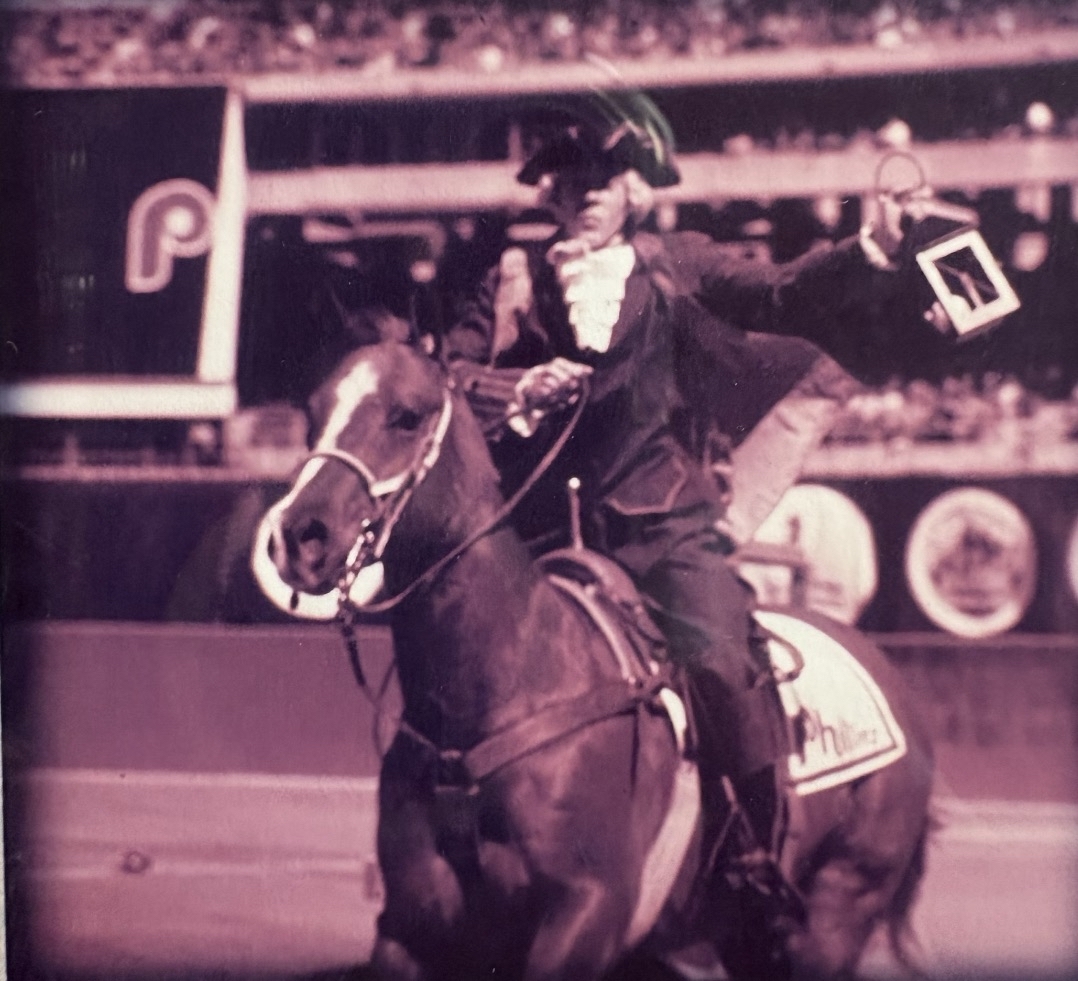
Russ Peterson (pictured) and brother K.C. finally reached their destination at The Vet after an arduous 318-mile journey.provided by ReNee Peterson
Then came Revere. Just before first pitch, Russ brought his horse up to the right field corner. A stadium worker opened the gate, as the re-enactor trotted onto the AstroTurf, doing a lap — with some trick riding — around the entire field.
He handed the ball to “Rocket Man,” who took off for the mound, where Roberts was waiting. The Phillies offered the brothers tickets to that day’s game against the Pirates, but after the ceremony was done, they packed their horses, changed out of their costumes, and left.
Russ arrived to his trailer in Jackson Township not long after, with bags of memorabilia in hand. He was a quiet man by nature, but on this night, he couldn’t stop talking.
“You could hear the excitement in his voice, about that rocket man flying through there,” ReNee said. “That was probably the thing that he enjoyed the most. He thought it was pretty amazing.”
Peterson continued to live an eventful life. He and ReNee moved back to Nebraska later that year and started a construction business in 1993. They raised cattle of their own, and shoed horses, and did some projects for Habitat for Humanity.
But the trick rider always took pride in his two-week, 318-mile trip. So much so, that when Russ died in a work-related accident in 2015, it got a mention in his obituary.
His family noted how honored he was to be a part of the Bicentennial, in the very city where the Declaration of Independence was signed. Yet nothing compared to the events of the following day.
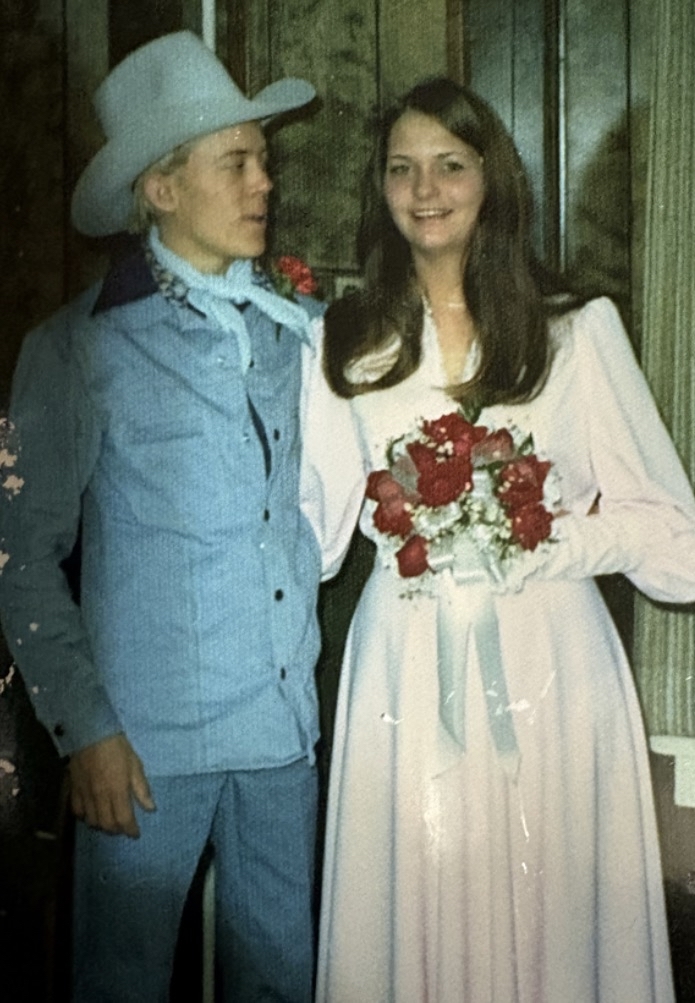
“Perhaps the most important of his activities while in the area,” the notice read, “involved marrying the love of his life, ReNee A. Dancer, in Howell Township, New Jersey, on April 11th.”
Russ Peterson and his wife, ReNee, on their wedding day in 1976.Photo courtesy of ReNee Peterson
The night before Roy Halladay died, he was with his team. It was Nov. 6, 2017, and Calvary Christian High School was playing an exhibition game in Clearwater, Fla.
Halladay, a pitching coach, showed up in baseball pants and a batting practice jacket, with a clipboard beneath his arm. This would not have been unusual for March or April, but fall ball was much more relaxed.
The rest of the staff, which was dressed in shorts and T-shirts, erupted in laughter. Halladay didn’t hesitate to fire back. “Thanks for the heads up,” he said with a grin.
As the Warriors jogged onto the field, just past 7 p.m., the future Hall of Famer sat on the bench. After a few innings, infielder Christian Cairo joined him.
He liked watching games with Halladay. The former Phillie and Blue Jay brought the same intensity to coaching that he did to his 16-year MLB playing career, but with a newfound lightness.
He’d routinely crack jokes from the dugout. Months earlier, a hitter from a local high school walked up to the plate. He had straight, long hair, all the way down to his back. Halladay turned to the mound.
“Hey!” he yelled. “Look out for the bunt! This chick can run!”
The high schoolers loved it.
“Ridiculous stuff like that,” said Halladay’s 25-year-old son, Braden. “It was funny because he’s saying this to, like, 14-year-old kids.”
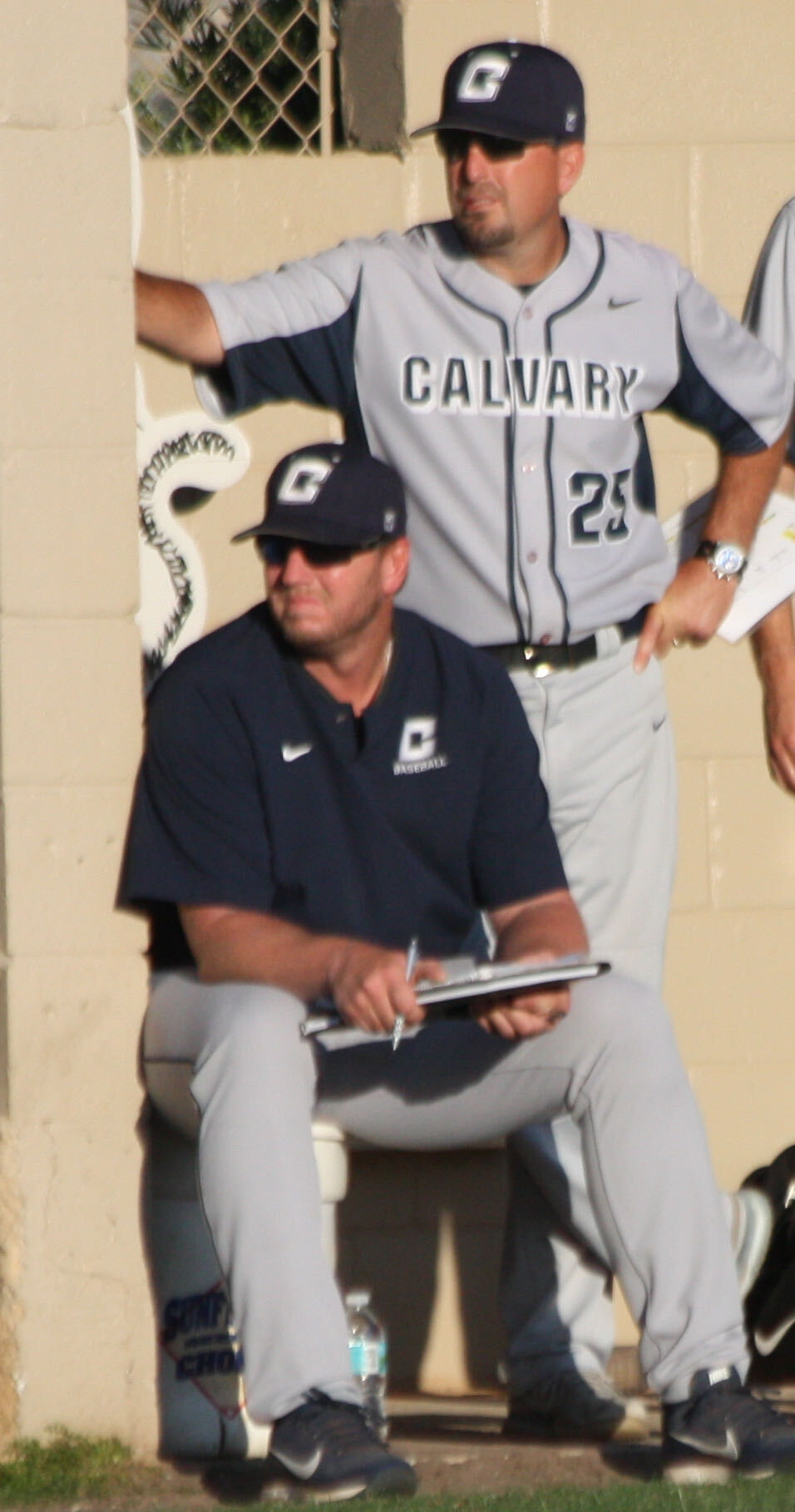
Coach Greg Olsen (seated) and pitching coach Roy Halladay during a Calvary Christian game in spring of 2017.Greg Olsen
Halladay was in prime form on Nov. 6. The game wouldn’t count toward Calvary Christian’s record, but he was still taking notes and videos on his iPad.
He was also razzing everyone in sight: his players, their players, umpires.
“We were talking crap with each other,” Cairo said. “It was a lot of fun.”
At 9:30 p.m., the two teams left the field. By the next afternoon, ominous rumors had started to spread. Braden, then 17, got a call from his mother. She told him to pick up his 13-year-old brother, Ryan, and drive them to their house.
Pitcher Nolan Hudi texted Braden while he was in the car. He sent a link to a Twitter post: a selfie of him and Roy in the cockpit of his plane, taken three days prior.
The photo had gone viral. People were commenting “RIP.”
Hudi asked if people on social media had ever tweeted such morbid things about his father.
“No,” Braden said.
That morning, at 11:47 a.m., Halladay had flown his Icon A5 out of Brooksville-Tampa Bay Regional Airport. A few minutes after taking off, he crashed into the Gulf of Mexico.
The boys he coached are now men. Braden works in data analytics for the Texas Rangers. Cairo, 25, is a minor leaguer in the Phillies system. Some have played for other affiliates; Hudi spent a couple of years pitching at the University of South Florida.
They all cherish that 2017 season. Not just for what they learned (which was plenty) but for what they saw. As a big leaguer, Halladay was fierce and, at times, intimidating.
But as a coach, he was more laid back. He’d play pranks. He’d chirp. He’d try goofy things to help his team win, like flying a drone over a rival’s batting practice.
It was all refreshingly fun. What the players didn’t realize, though, was that they were giving Halladay something too.
“A way for him to enjoy baseball,” Braden said, “in a very pure form again.”
Roy Halladay won two Cy Young awards in his 16-year career, including in 2010 with the Phillies.Steven Falk
Roy being Roy
Halladay never liked the spectacle his success could bring. And it was difficult for him to escape.
His sons started playing travel ball in the early 2010s, at the height of his career. The Phillie would frequently be stopped for autographs at games and tournaments.
This attention got so bad that he started keeping a Groucho Marx-style disguise — black-rimmed glasses and a fake nose and mustache — in the back of his car.
“He thought it was hilarious,” Braden said, “because it’s the stupidest disguise you can come up with.”
But while Halladay didn’t enjoy the chaos, he did enjoy teaching. In 2011, Hudi played alongside Braden on a Florida team called the West Coast Warriors. Halladay, fresh off his second Cy Young Award, would stop by to help out.
One day, he approached Hudi during a bullpen session in Tarpon Springs. Halladay asked what pitches he threw. The 11-year-old’s answer was essentially “nothing.” He asked if he’d ever tried a cutter. Hudi shook his head.
Halladay grabbed a baseball and showed him a grip. Then he reached for a pen, and traced around Hudi’s hand, so the middle schooler could practice at home.
“He outlined where my fingers were,” Hudi said. “I thought that was so cool.”
Parents would ask Halladay if he’d be willing to coach, but he always demurred. The big leaguer wanted his son to carve out his own identity in the sport. Having a world-class athlete around would make that challenging.
But in 2014, he had a change of heart. Halladay had recently retired. Braden was only a year and a half removed from high school, and had experienced a few seasons on his own.
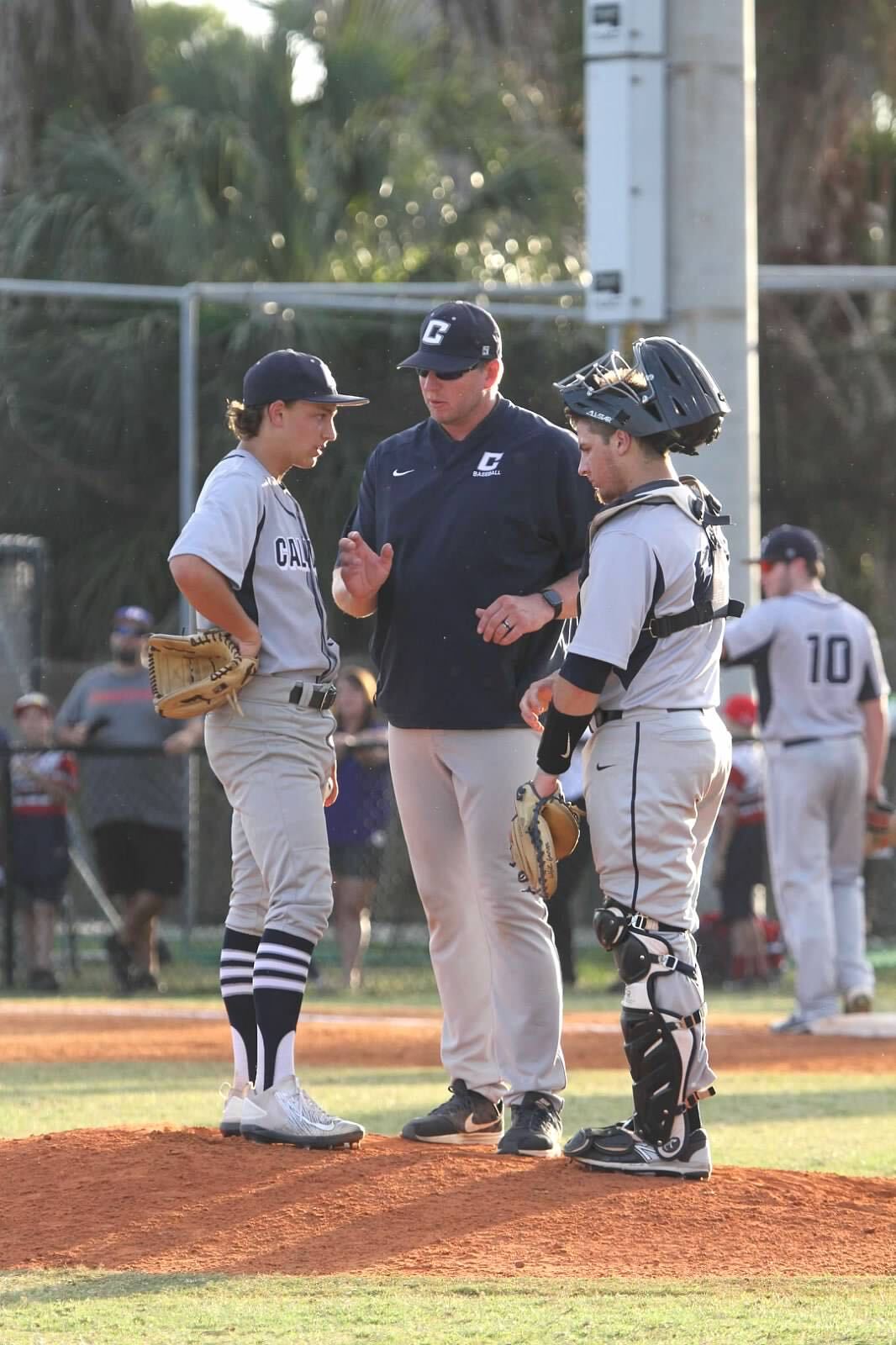
Roy Halladay talking to pitcher Nolan Hudi during a game in 2017.Nolan Hudi
The son encouraged his father to join the coaching staff of his travel ball team, the Dunedin Panthers. Halladay stayed through 2015, serving as pitching coach and later head coach.
He did not take this role lightly. Once, a baserunner bowled over Dunedin’s catcher at home plate. The league’s rules stated this should be an automatic out, but the umpires didn’t call it.
Halladay was furious. He explained to the crew that they’d made a mistake. One umpire, who didn’t recognize the eight-time All-Star, told him that he didn’t “know the rules of baseball.”
This set off Halladay even more. He was ejected. Braden, who wasn’t standing far away, overheard a conversation between the officials not long after.
“He goes, ‘Hey, dude, you know you just ejected Roy Halladay, right?’” Braden recalled. “And the umpire goes, ‘Oh my God.’”
Halladay decided to have himself a day. He went to the concession stand and bought three cheeseburgers. He filled his big Yeti tumbler with Diet Coke, got in his truck, and pulled it behind the left field fence.
He sat there for the rest of the game, scrutinizing the umpire’s every call. If he missed one, Halladay would let him know it, loudly proclaiming that the official didn’t “know the rules of baseball.”
Braden enrolled at Calvary Christian in 2016. He spent his freshman year playing junior varsity, without his father, and was promoted to varsity as a sophomore.
Halladay joined head coach Greg Olsen’s staff that year. Hudi transferred in from East Lake High School in Clearwater not long after. He and Braden were close friends; Hudi would sleep over at the Halladays’ house fairly often.
To Hudi, the 6-foot-6 Halladay was not a star pitcher. He was an eccentric parent. One time, when the boys were older, Hudi made the mistake of drinking Halladay’s last Dr Pepper.
Halladay barged into the game room, where Hudi and Braden were watching TV.
“Who drank the last [expletive] Dr Pepper?” he asked.
Hudi, holding the can with trepidation, said he didn’t know.
The pitcher stormed out. He returned 30 minutes later with two six-packs.
“He’s like, ‘This six-pack is yours,’” Hudi recalled. “And then he holds up another case, and he’s like, ‘Don’t [expletive] touch this. This is mine.’”
Roy Halladay had a 3.25 ERA in four seasons with the Phillies and tossed a perfect game in 2010.
Halladay brought the same attitude to the Warriors in 2017. Braden wasn’t used to seeing his father act this way on a baseball field.
“Whenever he was home, he was kind of a funny, not-take-things-too-serious kind of person,” he said. “It was more so that you’d notice at the field that he wasn’t doing that. And he actually was kind of a little bit scary.”
But at Calvary Christian, there was no pressure to uphold a persona.
“I think he just got to be himself,” Braden said.
A method to his madness
Olsen had been around a lot of coaches at this point, some of them former big leaguers. But he quickly learned that reaching the pinnacle of the sport didn’t necessarily translate to on-field instruction.
This was especially true when it came to resonating with kids. They could easily discern coaches who were sincere from those who were not. And if they deemed a coach insincere, it was over.
Halladay didn’t have this problem. He could explain grips and mechanical adjustments with ease (and without condescension).
Roy Halladay with his son Braden in 2017.Braden Halladay
He would go beyond telling a player what to do. He’d help them find their feel. That way, when the high schoolers were alone on the mound, they could throw a curveball or a splitter, or any other pitch, and make corrections in the moment.
The coach showed no favoritism, not even to his son. He studied like he was still in the big leagues, sitting on a bucket with his enormous iPad, scribbling notes during games and practices.
“It was like a 55-inch flat-screen TV,” Hudi said. “And he’s a big guy, so him holding that giant thing made it look even crazier. Nobody knew what he was writing down.”
He didn’t need to show them. Halladay routinely proved he’d done his homework. In 2017, he helped Hudi redesign his entire windup, from stepping sideways to stepping behind the rubber, with his hands overhead.
Halladay wanted the pitcher’s momentum going toward the plate; otherwise, his stride would be inconsistent.
“The wealth of knowledge was crazy,” Hudi said. “And it went so much further than pitch grips.”
Halladay helped his team with mental skills, too. Olsen would often see him talking to players between innings, to strategize for upcoming at-bats or guide them through a tough moment.
He’d tailor his mound visits to whatever was needed, no matter how unorthodox it looked.
Braden remembered one game when he was losing his command. Halladay walked out to the mound but didn’t say a word. He just stared.
After the inning was over, the pitcher approached his father.
“Hey man, what was that?” Braden said.
“Were you thinking about throwing strikes?” Halladay asked.
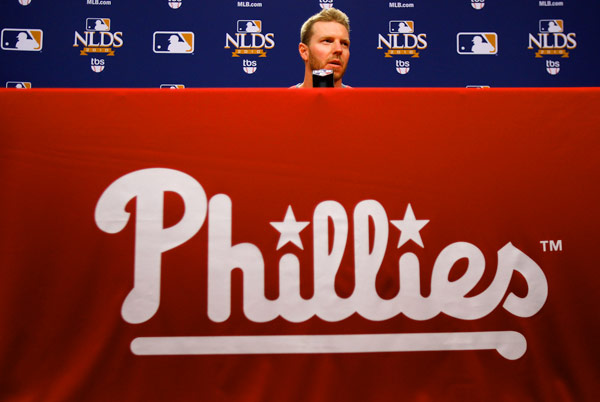
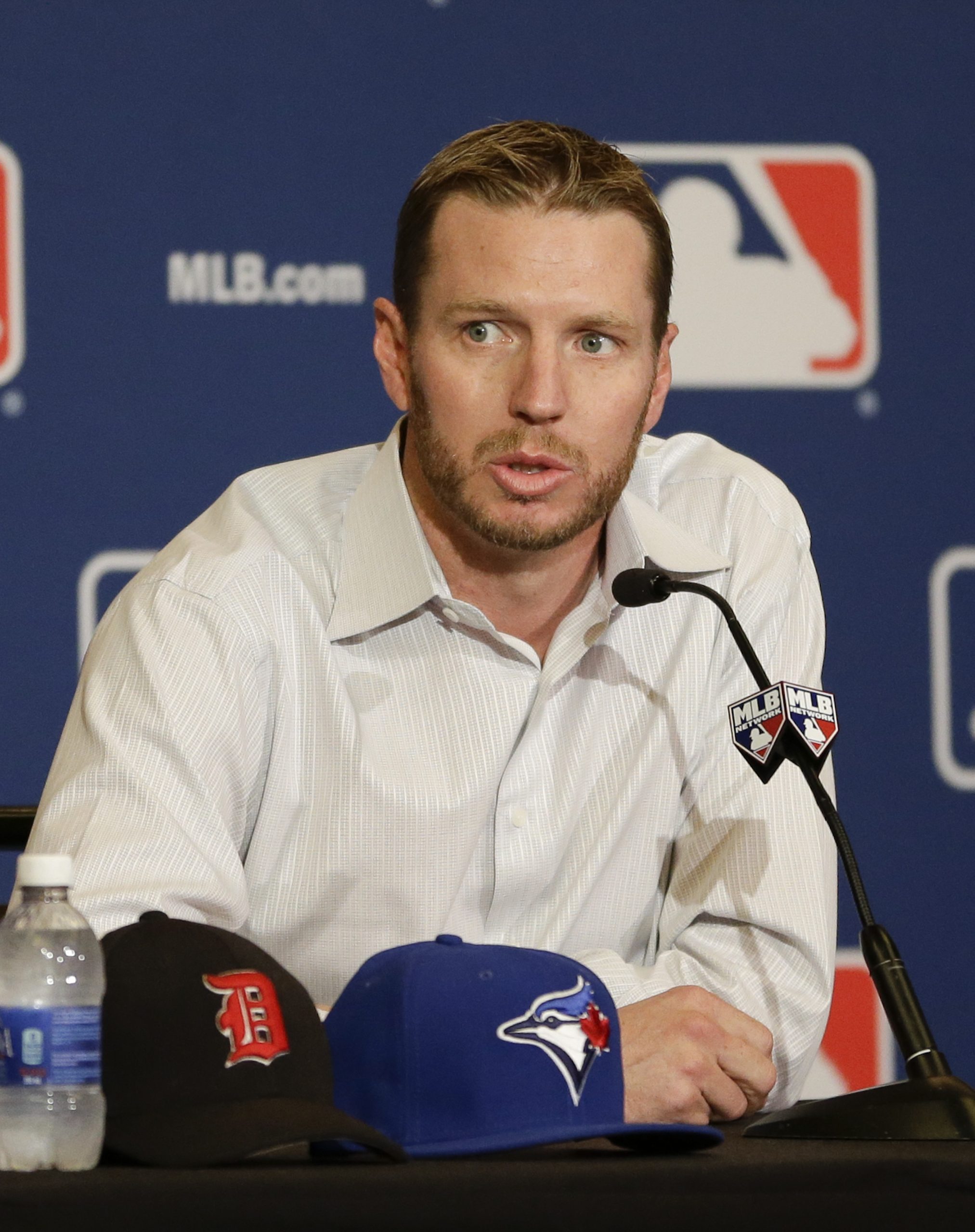
At his retirement news conference in 2013, Roy Halladay had a Dunedin Panthers hat among the caps for the teams he played for. John Raoux
“No,” Braden said. “I was thinking about how weird that was.”
His father smiled.
“Exactly!” he said.
This was just one of many instances when Halladay was validated for his quirky ideas. He and Olsen would stand next to each other in the dugout, signaling pitches to Calvary’s catcher.
They usually agreed. But every once in a while, Halladay would propose something unusual. In the district semifinal, a formidable Tampa Catholic hitter took his final at-bat. He’d struck out twice earlier in the game on sliders.
Halladay wanted a fastball down the middle.
“He was like, ‘Look, we gotta go off script at some point,’” Olsen recalled. “And he was right. We threw a ball right down the middle, and the hitter froze. That was his genius of pitch calling.”
Two weeks later, in the regional final, Halladay called for a splitter in the ninth inning with a runner on first and a one-run lead.
There was one problem: The pitcher had never thrown a splitter in a game before.
“In that moment, I felt like this is either going to work, or our season could be over,” Olsen said. “Because the kid’s gonna hit it out. But he made the right call. We jammed him, he grounded out, and we won the game.”
Cairo, who was sidelined with a hand injury, had a front-row seat to all of this. Sometimes, the infielder would sit next to Halladay on the bench and go through pitch sequencing.
Other times, they’d just talk crap.
“I remember this one pitcher was talking a lot after we scored like six runs on him,” Cairo said. “Roy told him to go sit in his truck or something like that. That was fun.”
Calvary Christian didn’t lose a game that year. The Warriors were perfect in the regular season — despite enduring injuries to multiple players — and made it to the state championship in Fort Myers in late May.
By now, everyone knew of Halladay’s idiosyncrasies. So no one was surprised when he was caught flying a drone over Pensacola Catholic’s practice.
The opposing coaches saw a metal device whizzing through the air. They told a security guard, who spotted Halladay in the dugout with a remote control and a grin.
The security guard was not as amused. Had anyone else pulled this stunt, they would’ve been kicked out of the game. But Halladay knew the tournament officials wouldn’t do that.
He got a slap on the wrist.
“The official was like, ‘Hey, dude, like, you can’t spy on the other team with aerial equipment,’” Braden said. “And he was like, ‘Ahhhh … sorry, sorry.’”
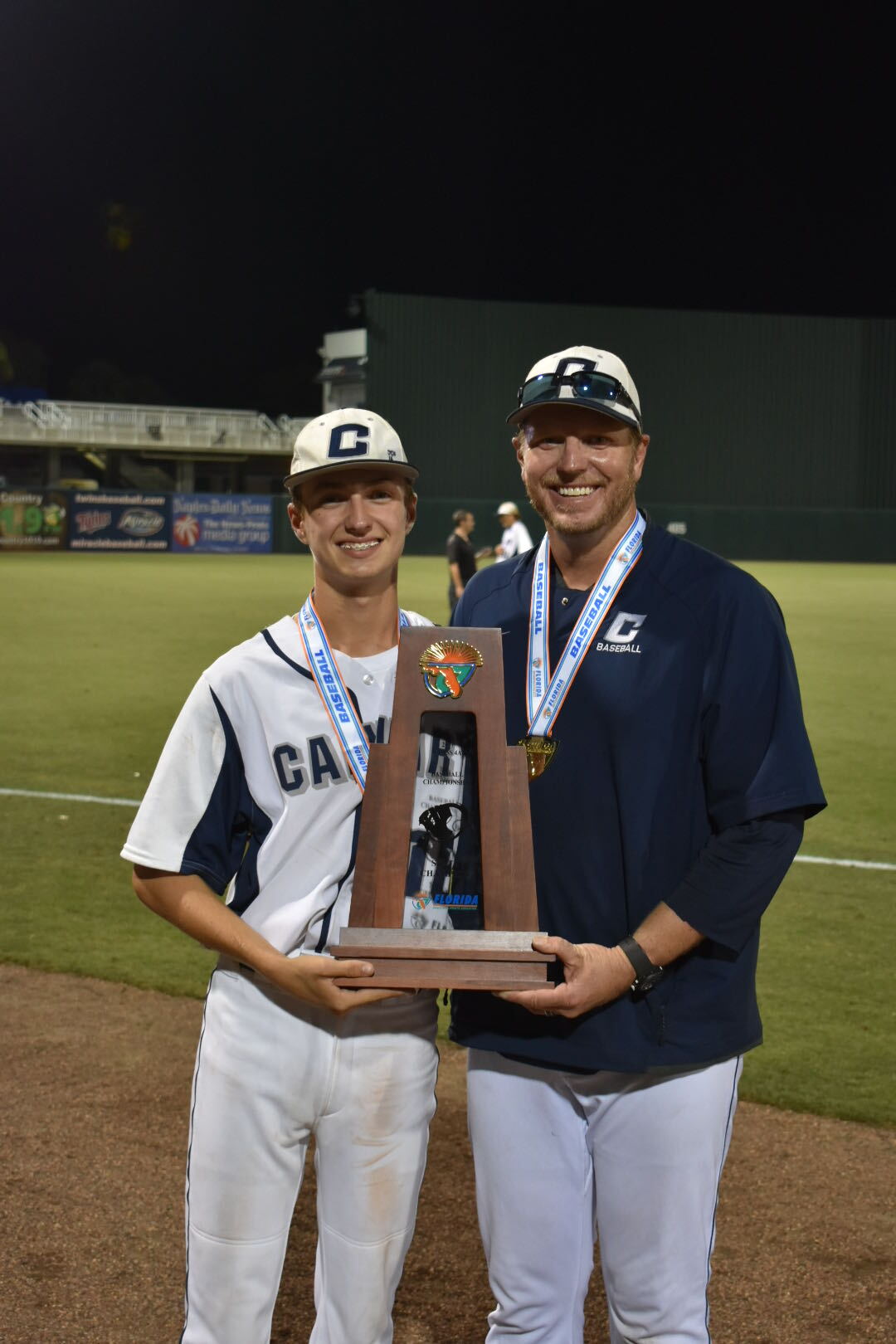
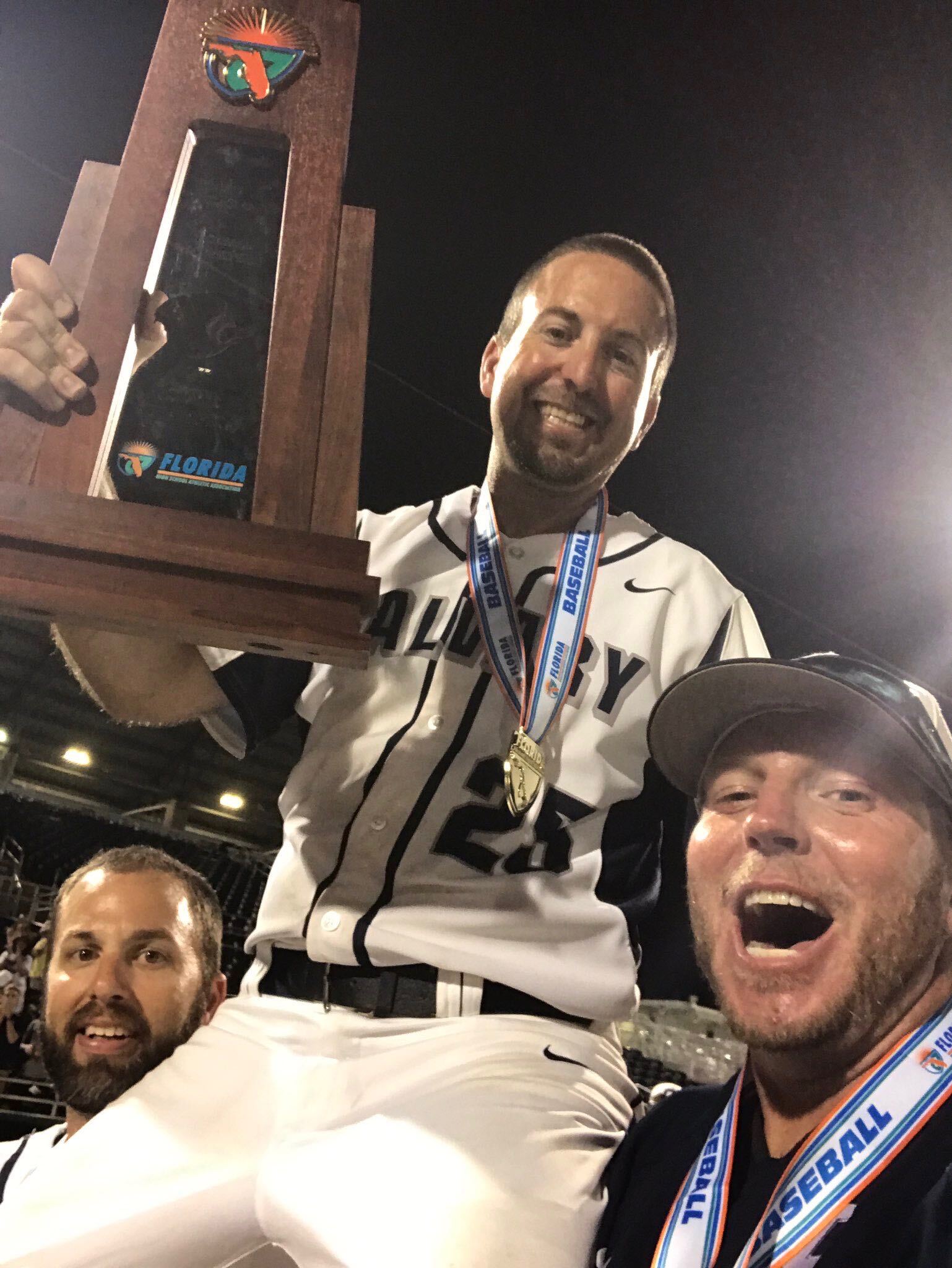
Roy Halladay and coach Greg Olsen after winning the state championship in 2017.Greg Olsen
‘I really felt him there’
The drone surveillance didn’t end up being necessary. Calvary Christian won the Class 4A state baseball title handily. By the sixth inning, they’d amassed an 11-1 lead over Pensacola Catholic. The game ended by mercy rule.
The high schoolers sprinted from the dugout, jumping into a dogpile. Halladay flitted around the group, giving bear hugs big enough to lift players off the ground.
He and assistant coach Mike White hoisted Olsen on their shoulders, as he carried a wooden trophy. The former Phillie beamed from ear to ear. This wasn’t a World Series. But it was sweet all the same.
Halladay couldn’t wait to do it again next season, which is why he arrived to an exhibition game in full baseball garb in early November. But that would be the last time he’d see his team.
Yes here are the HS kids and me with my son! Proud dad, Proud coach, Proud member of a coaching staff! #familypic.twitter.com/3WgoW0kwC6
Braden described the days after his father’s death as a blur. Teammates and coaches came by the house to express condolences. Cairo and Hudi barely left his side.
On Nov. 8, Olsen gave the younger Halladay a call. Calvary Christian had another exhibition game scheduled for Nov. 9, against East Lake.
Braden was supposed to start, but Olsen said they could cancel it altogether if he wanted. He told his coach he would think about it.
Less than 24 hours later, Braden was in his car, driving to the ballpark. As he warmed up in the bullpen, he heard a loud noise.
The high schooler looked toward the sky to find a small airplane flying overhead.
“It looked exactly like my dad’s,” he said. “That brought me closer to him in that moment.”
At 7 p.m., Braden stepped onto the mound, with his father’s Calvary jersey hanging in the dugout. A typical November game would draw about 30 to 40 people; on this night, there were four to five hundred.
Braden insisted that he’d take it one inning at a time, but once he started, he couldn’t stop. Four frames later — a long outing by fall ball standards — he’d allowed one hit and no runs.
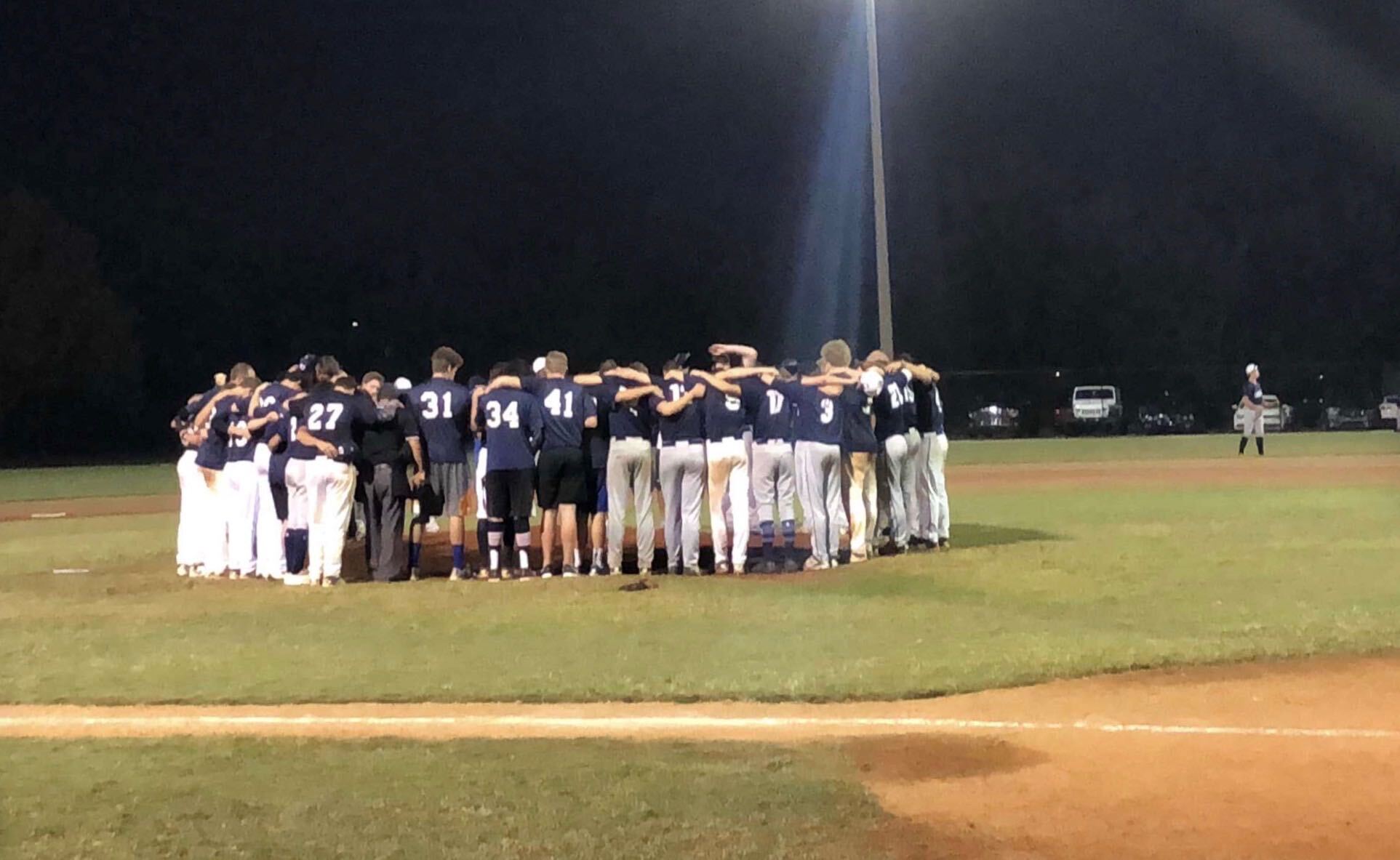
The Calvary team gathers on the mound to say a prayer following Braden’s first start after his father’s passing in 2017.Braden Halladay
Braden told Olsen he was done. He walked off the mound, grabbed his father’s jersey, and began to cry.
“Obviously when he passed away, my thought was, ‘I lost my father,’” he said. “But that was my first moment of … he’s still with me. I still have him. I really felt him there.”
The players circled around the mound and said a prayer. Someone took a photo and sent it to Braden. Through the darkness, a ray of light shined down on his head.
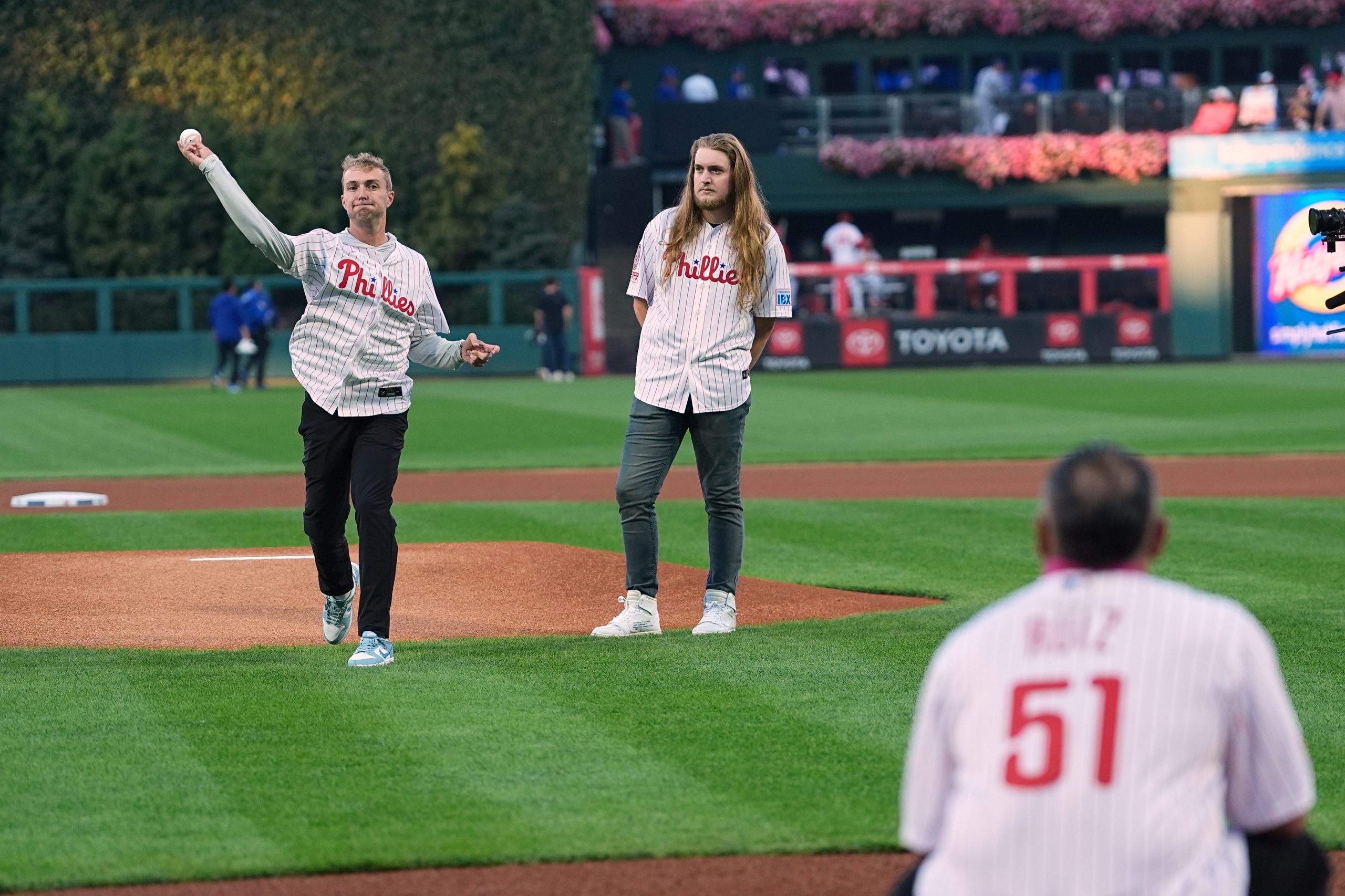
Braden Halladay (left) accompanied by his brother Ryan, throws the first pitch to former Phillies catcher Carlos Ruiz, marking the 15th anniversary of their father Roy Halladay’s postseason no-hitter, ahead of an NLDS game against the Dodgers in 2025.Matt Rourke
A different side of Halladay
On Nov. 14, 2017, the Phillies held a celebration of life at their spring training complex. It was open to the public; thousands of people attended.
After the ceremony, Halladay’s friends and family moved to the batting cages beneath the stadium. Standing on bright green turf, with the nets pulled back, they grieved.
This was the first time many of his players had met his Phillies and Blue Jays teammates. And as the high schoolers traded stories with Chase Utley and Ryan Howard and Cliff Lee, it dawned on them that they’d seen a completely different person.
The former big leaguers painted a picture of a cutthroat competitor; a titan of the sport whose intensity seeped out. To the boys of Calvary Christian, he just was a goofy dad.
This is how they will remember him. They’ll never forget the perfect game, or the postseason no-hitter, or the countless shutouts. But for those 17 high schoolers, who are now 17 men, the coach they knew meant so much more.
Eight years ago, when FIFA announced that the World Cup would be coming to the United States in 2026, a student in France felt a rush of excitement. He and his friends had been watching the international soccer tournament on television since they were kids.
They’d never seen it in person. The last time their native country hosted the competition was in 1998, before all four Frenchmen were born. In the years since, they’d tried to make it to a game, but to no avail.
Russia hosted in 2018, but the four friends were unable to get visas. Qatar hosted in 2022, but this time, they were attending different colleges, which made traveling logistically complicated. So, they looked ahead to 2026 and started saving money.
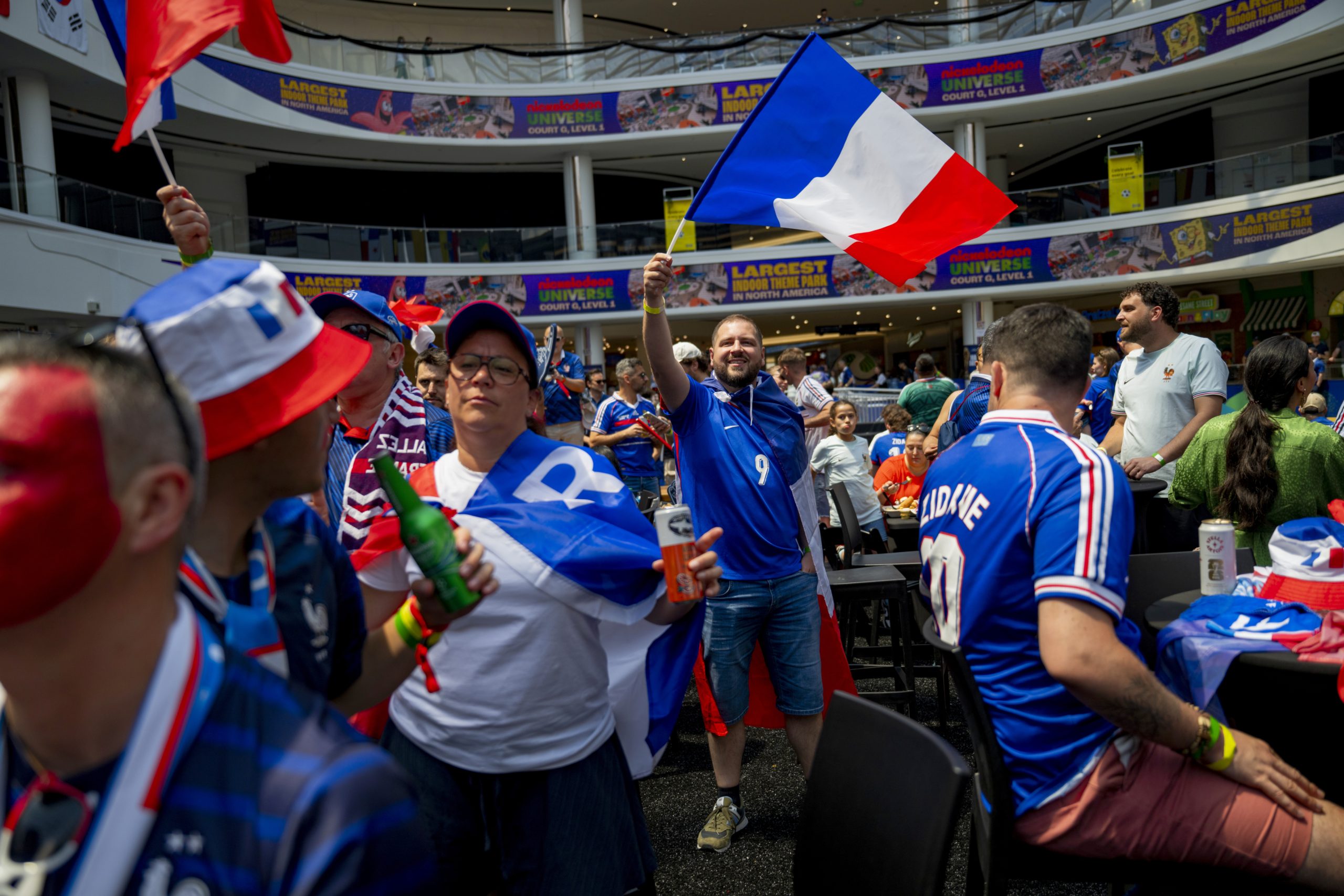
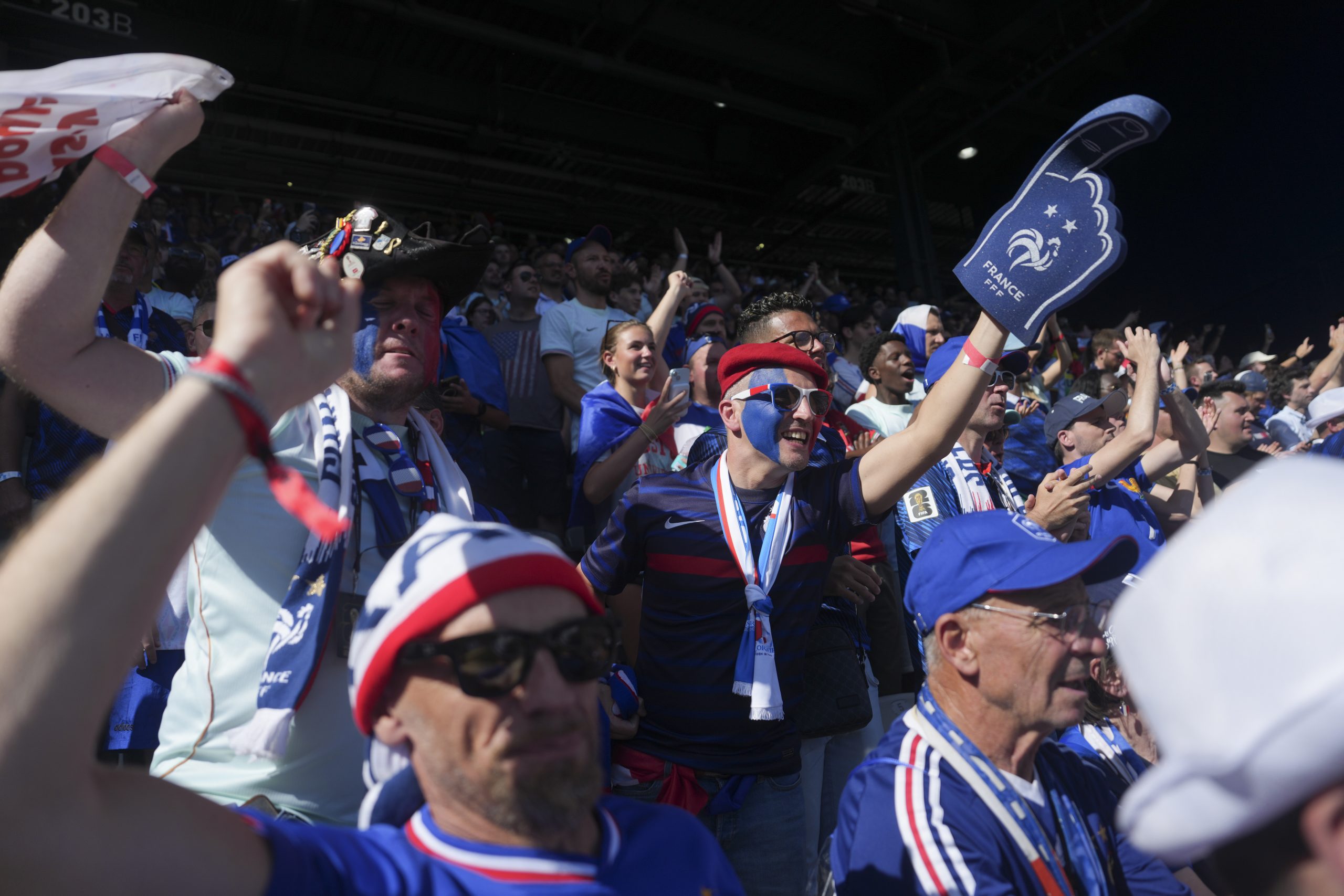
A heavy France contingent was part of an announced attendance of 68,274 at New York/New Jersey Stadium for their first game of the World Cup. Vincent Alban
One man picked up extra work shifts at his Parisian brasserie. Another taught English lessons on the side. All four made a conscious effort to cut back on drinking and eating out.
There was one problem. The men worked in upscale restaurants, and summers were extremely busy. The Parisians knew that they wouldn’t be able to get a few days off, let alone a few weeks.
In the spirit of Ferris Bueller, the 20-something-year-olds decided to tell a white lie. And now, three years and $12,000 in savings later, they are in Philadelphia, enjoying everything it has to offer (unbeknownst to their employers).
“Momo,” the Parisian waiter who organized this trip, participated on the condition that he and his friends’ last names would be omitted (out of fear of losing their jobs).
It was a risk traveling here but one he says has been “absolutely” worth it. For more than a week, the Frenchmen have been exploring the city, rating each experience on a 1-to-3 scale.
Eating through Philadelphia
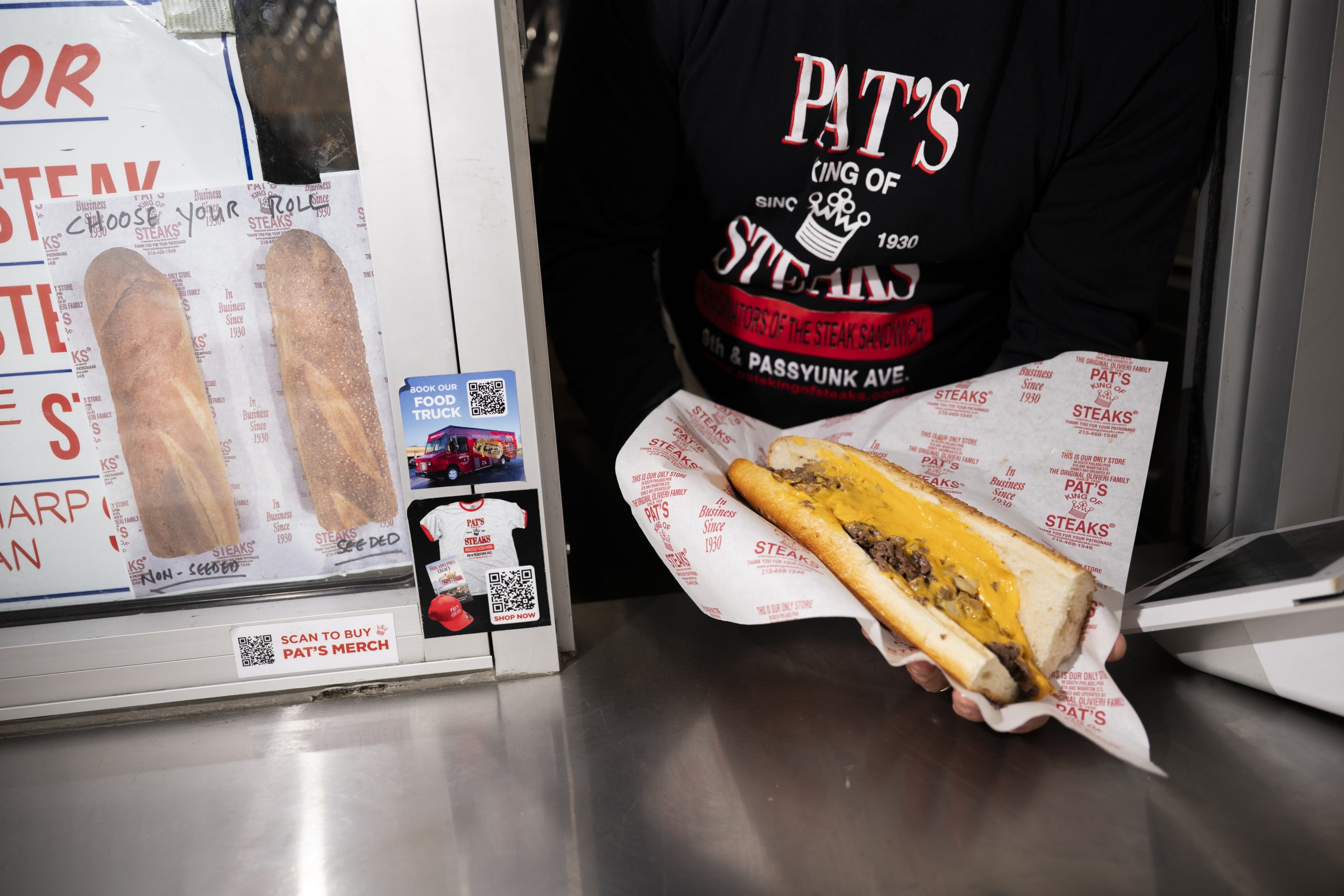
Their first stop was Pat’s. Momo and his friends — Micha, Anto, and Titi — accidentally ended up at Geno’s. They asked customers where they could find Pat’s, to which he said they responded, “What the [expletive].”
“We turned around and there’s the building,” Momo said. “And we’re like ‘Ohhhh.’”
They each bought two cheesesteaks, with a soda and fries, to compare the difference. It was negligible. Pat’s edged out Geno’s in their rating system, just because they thought the “crown on the cup was cooler.”
What did stand out were the condiments.
For these four Frenchmen, a trip to Pat’s Steaks was on the menu which they gave the edge to over Geno’s. Joe Lamberti
“We had what you call Cheez Whiz,” Momo said. “I’ve never had something like this. It was good. Interesting flavor. It’s not cheese, but it was good anyway.”
He added: “Micha wanted me to mention that we enjoy ranch sauce. It is very good. We had this brand, Hidden Valley.”
They’ve since gone to Ricci’s for hoagies. Grandma’s Pizza, Del Rossi’s, and Parc are also on the agenda (that is, if they can get a table at Parc).
“Somebody told me what the hoagie was yesterday,” Momo said. “I had never heard hoagie. So, I got the hoagie today. It was good hoagie, I think it was Italian hoagie.
“We gave Ricci’s a 3 [rating]. It was unique. There’s nothing Italian about it. But it was so good. The sandwich itself, you’d never find it in Italy, but it was so unique that we just enjoyed it. So we gave it three stars.”
This is a substantial amount of food — and the portions are much bigger than they are in France — but the Frenchmen are quickly burning off the calories. They say they are walking approximately “five miles a day” to see the sights (and save some money).
Exploring the city by foot
The four friends are partially doing this out of necessity. They are staying at an Airbnb in South Philadelphia. SEPTA isn’t as comprehensive as the train system in Paris. But exploring the city by foot has led to some enlightening experiences.
One of the first things they saw were “Philadelphia 250″ signs on buildings and billboards. After conversing among themselves, and coming up with no answers, Momo decided to ask a passerby.
“We said, ‘What is 250?’ ” he said. “‘What are these numbers?’ I asked the man on the street, ‘Sir, what is 250?’ He was like, ‘Our anniversary this year, 250.’
“And I was like, ‘Oh, OK, yes, yes, yes. I understand.’ Because then I remember the whole Revolutionary War stuff. They were telling me fireworks and baseball and all of this other American stuff that we’ve never seen before. So, we said we’ll stick around and we’ll go to it.”
Fans of France were in full force during the team’s World Cup match against Senegal. They head to Philly to face Iraq at 5 p.m. Monday.Hiroko Masuike
Other areas of confusion have included Uber delivery robots (“in Paris, we just have guys on mopeds”) and knowing where you can and cannot smoke a cigarette.
The smoking alone has led to some interesting encounters. Last Sunday night, while at dinner in Fishtown, the Frenchmen tried to take a smoke break outside a restaurant.
They were promptly told to relocate, and met another local who had been told the same. They started talking about the Eagles — Momo and Micha want to buy a jersey — and he gave them some recommendations.
A few minutes later, they said goodbye, and the man signed off with a “Go Birds.”
“And I was like, ‘Go Birds?’” Momo said. “And he’s like, ‘Go Birds.’ I thought he meant pigeons or seagulls. I didn’t know he meant Eagles.
“He’s like, ‘People say Go Birds all the time here.’ I was like, ‘Even when the Eagles are not playing?’ He said, ‘Yeah.’ That’s interesting. That would be like saying, ‘Allez Paris Saint-Germain’ when Paris Saint-Germain are not playing. Why would you say it now? Just say it later, when they are playing.”
A ‘devastating’ encounter with Rocky
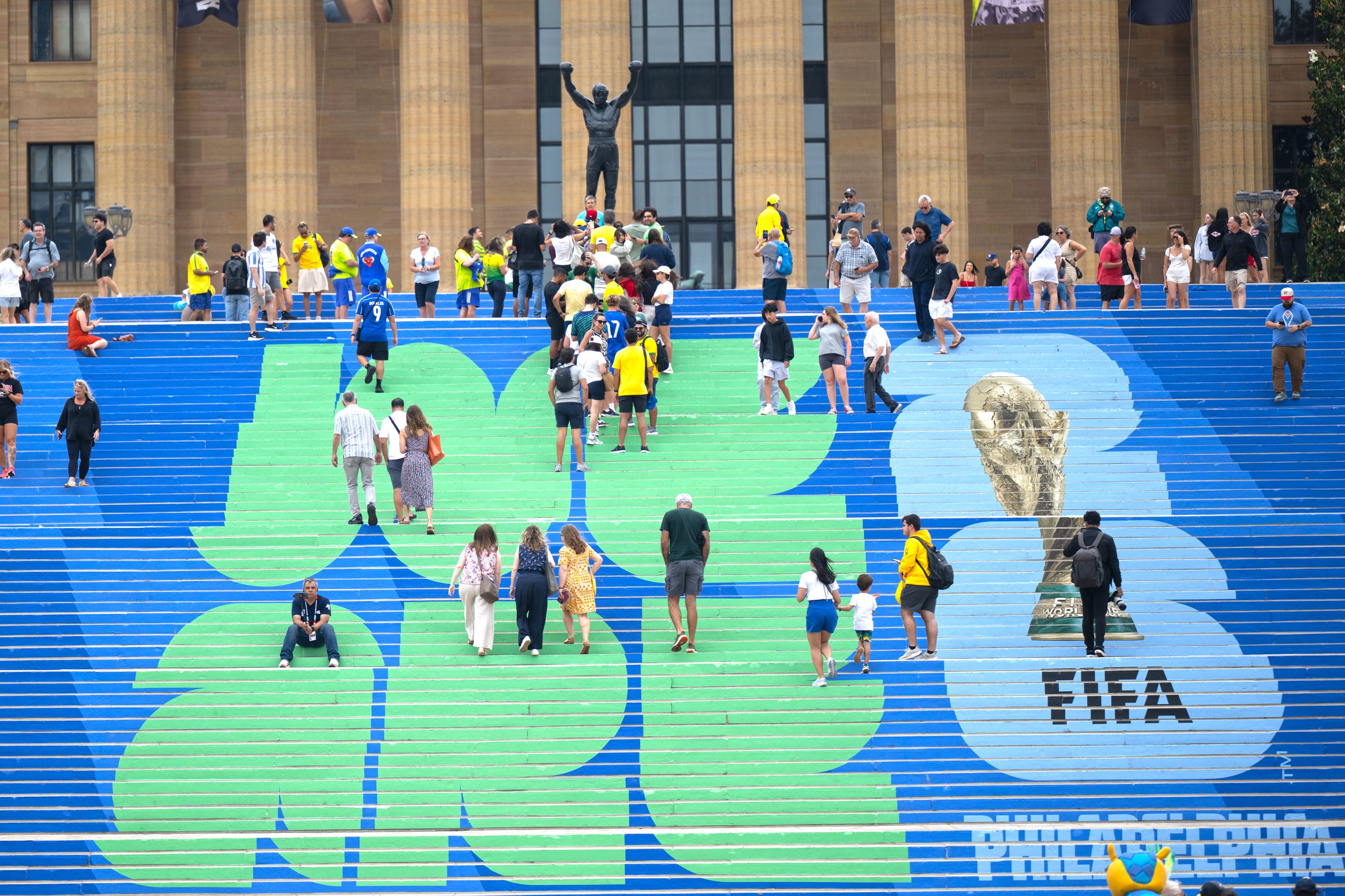
While on another five-mile walk on Wednesday, the Frenchmen decided to see Rocky. They were very excited; Micha and Momo had both watched the film for the first time on their flight over. They weren’t expecting a statue, though.
The four friends said that they thought Rocky was a real person, and assumed they were en route to meet a world-class boxer.
Finding out he was fictional was “devastating,” in Momo’s words. But the visit still earned high marks.
“Me and Micha gave Rocky statue a 10, even though 3 is the highest rating,” he said. “Because we just watched the movie, so we think, ‘Oh this is a 10 rating.’”
Brazilian and soccer fans climb the steps of the Rocky statue, marked with a FIFA World Cup logo, on Thursday, June 18, 2026, in Philadelphia, ahead of Friday’s FIFA World Cup Group C match between Brazil and Haiti.Jose F. Moreno / Staff Photographer
While they were there, the Parisians heard about the Rocky curse. Unlike Ecuador’s fans, they will not be falling victim to it.
“I said, ‘Sir, we’ve paid too many American dollars to come this far now to watch France lose to Iraq in Philadelphia, so that will not be happening,’” Momo said. “If people come here and I see it happen, I’ll take [the jersey] off myself. I’m not watching France lose here.”
The four friends, who are staying through the Fourth of July when Philly will host its final World Cup game, have a lot of sights to see until then. On Saturday, they headed to Citizens Bank Park. This week, they’ll try to visit the Philadelphia Museum of Art.
But the main attraction, of course, is Les Bleus, who will play Iraq at Lincoln Financial Field at 5 p.m. Monday (Fox 29). Anto found himself getting emotional about this earlier in the week.
His friend asked what was wrong; Anto said he was in disbelief that the Frenchmen were finally on the precipice of their first World Cup.
“Then I thought about it,” Momo said. “We’ve sacrificed going out with our friends to save up for this. We said on the plane ride, even if something goes wrong we’re going to try to enjoy, because we’ve been saving forever.
“Even seeing France play one game at the World Cup … I’ll be telling my kids about that for the rest of my life. It’s something that I’ll never forget.”
The four friends could’ve gone to other American cities. France has also played in New Jersey, and will play in Boston next Friday. But they chose Philadelphia, and are glad they did.
“It’s funny,” Momo said. “If New York were a little cheaper, we would have gone to New York, and never gotten any of the experiences here. But I’m happy that we picked a city that I feel like most Europeans don’t think about.
— Equipe de France ⭐⭐ (@equipedefrance) June 19, 2026
“They think about New York and Miami and LA. But now I can go home and tell people, ‘Yo, go to Philadelphia. It’s interesting.’”
He added: “They say that people in Philadelphia are mean and rude. They say the same thing about Paris. It’s not true; the people are very helpful. I feel like people here would help you if you need help, just in the way that people in Paris would do the same. If you need help, people would help you.
“I have not met one mean person. Super helpful and accommodating and hospitable to me and my friends.”
The Frenchmen have enjoyed it so much that they are already planning their next trip, to the Linc in the fall.
It’ll be tricky because the Eagles’ season overlaps with Paris Saint-Germain’s (and the four friends are season-ticket holders). But they’re determined to find a way to make it work.
“We’ve heard of Eagles before,” Momo said. “I’ve heard of Jalen Hurts and Saquon Barkley, when he jumped over that football player. We will definitely come back. And if not for Eagles, just to explore the city.”
Seth Friedman was watching the NBA Finals on Saturday night in Graduate Hospital when he heard a familiar refrain.
It came from Leon Rose, the mild-mannered architect of the New York Knicks. His team had just won its first title since 1973.
Rose, 65, was asked how he felt knowing he’d built a roster that had ended a 53-year-drought. The Knicks president shook his head, shrugged his shoulders, and pivoted to his players.
He praised their brotherhood, their grit, their empathy. He talked about their care for one another, and their selflessness, and how it allowed them to reach new heights.
Friedman, sitting on his couch next to his wife, began to tear up.
“It sounded like he was talking to us,” he said, “back when we were 13 or 14 years old.”
The setting was vastly different. Instead of holding two-a-days for high schoolers, Rose was standing on a platform in San Antonio, Texas, with a sparkling trophy beside him.
But the message was nearly identical. Friedman listened to it himself when he played for Rose in the mid-2000s at his local Jewish community center.
“He literally preached that same mentality,” Friedman said. “That family mentality.”
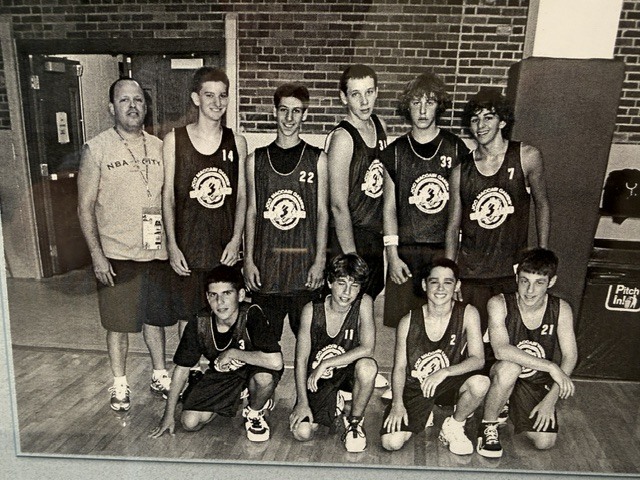
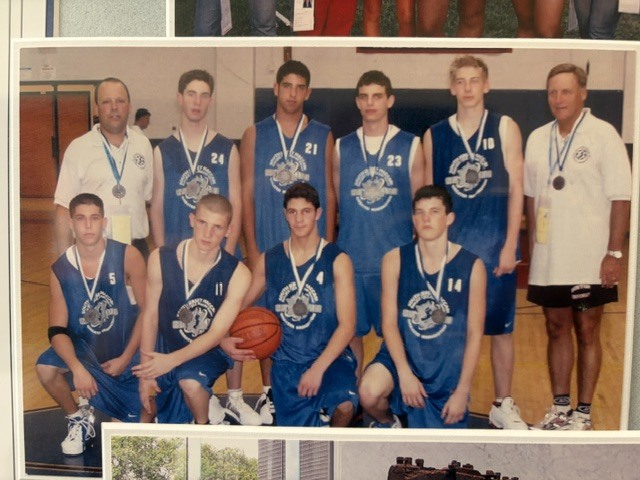
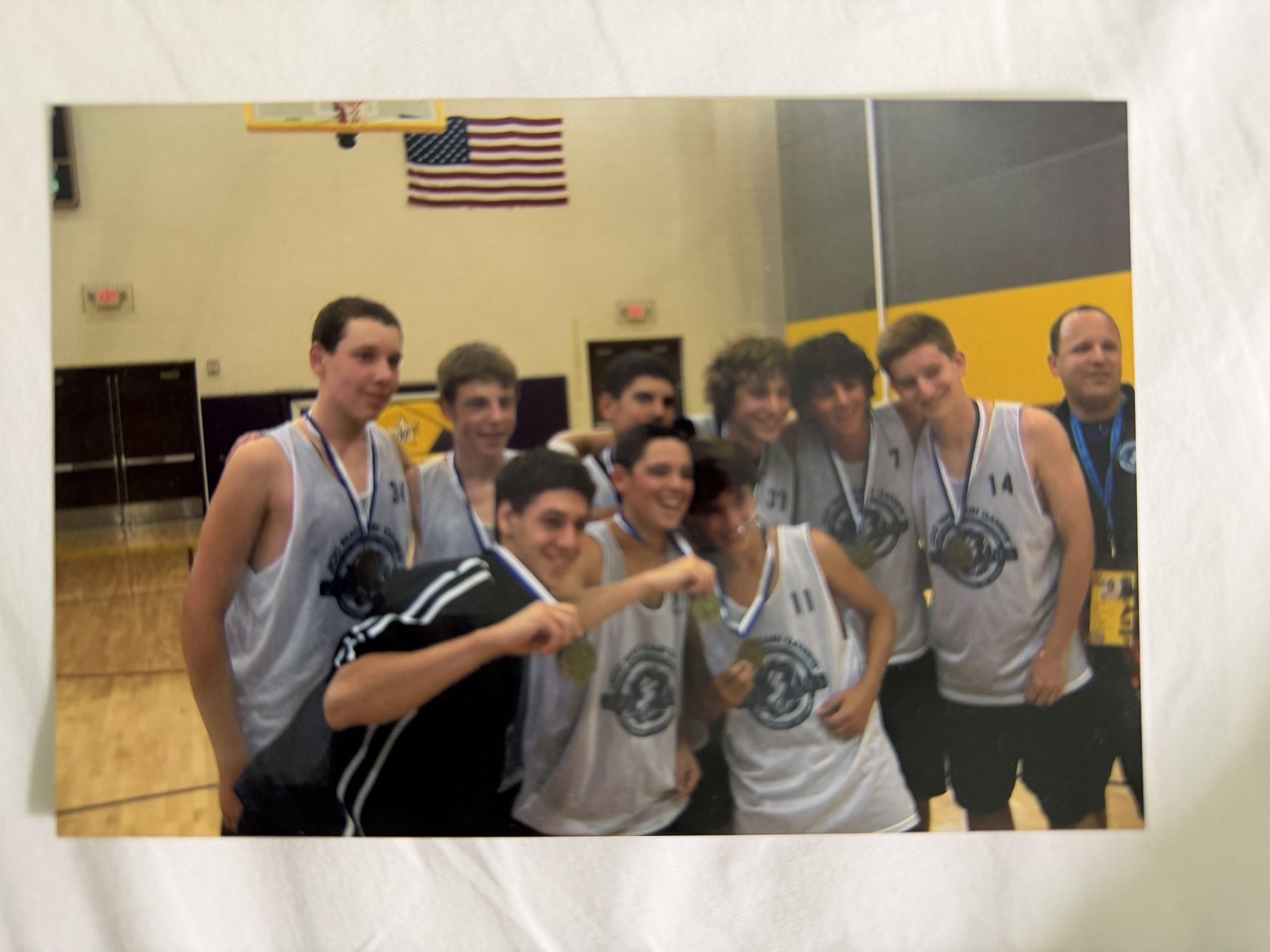
Leon Rose coaching at the Katz JCC in 2005. Seth Friedman is pictured in the bottom row, second from the right.Photo courtesy of Katz JCC
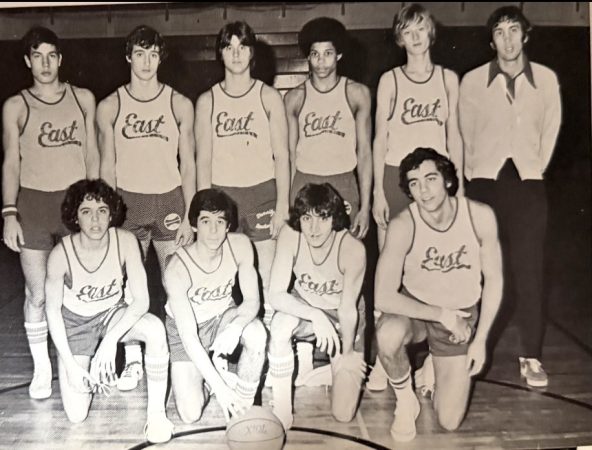
For decades, the future Knicks president was a mainstay in his Cherry Hill basketball community. He played under head coach John Valore at Cherry Hill East from 1975 to 1979 and joined Valore’s staff in the early 1980s while studying atTemple’s law school.
He moved on to work as an assistant coach through the late 1980s at Rutgers-Camden, a short commute from his day job at the Camden County prosecutor’s office.
He’d leave collegiate coaching in 1988, but Rose would always find time for the sport, even as he ascended the ranks of the NBA. In the 1990s, while he transitioned to sports management, Rose often could be found playing pickup hoops at the Katz JCC in Cherry Hill.
By the mid 2000s, he’d assembled a Rolodex of star-studded clients, including Allen Iverson and LeBron James. But that didn’t keep him away from the gym. For the better part of a decade, Rose served as a volunteer coach at the Katz JCC, preparing teams to compete in the Maccabi Games.
The Knicks executive has achieved a lot since then. But those who know him best say he is the same understated guy who’d wear baggy sweatshirts and run his team through tap drills and sprints.
“He was Coach Leon,” Friedman said. “He was one of us. Even now, you see him down the Shore, and you’d never know that he’s the person that he is.”
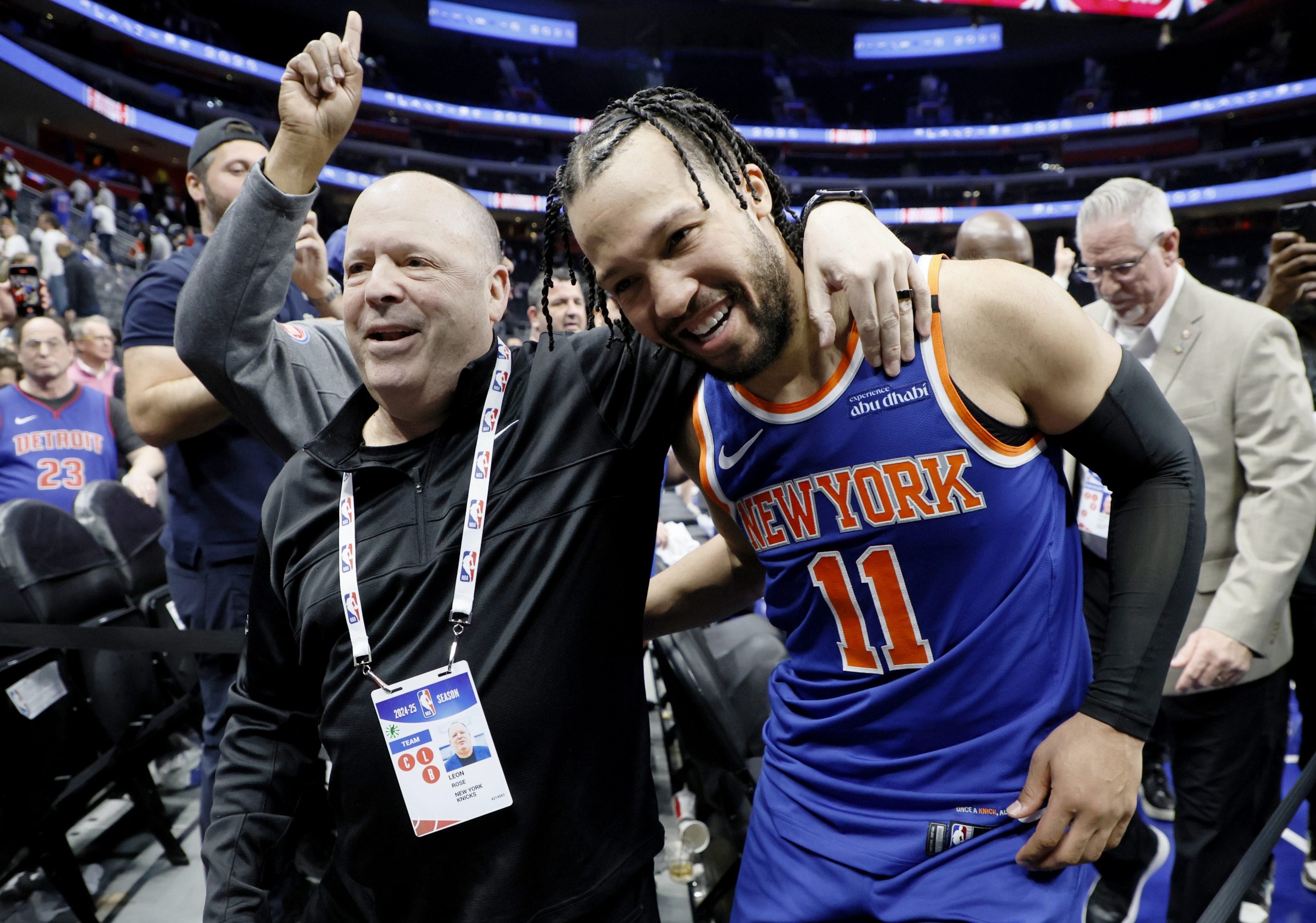
New York Knicks Leon Rose (left) hugs guard Jalen Brunson (11) as they leave the court following a Game 6 win against the Pistons in the 2025 playoffs. Duane Burleson
‘A gym rat’
Valore met Rose in 1975 when he was coaching junior varsity at Cherry Hill East. The freshman was undersized compared to his teammates, but he played above his stature.
If there was a loose ball, the point guard would dive for it. If there was a charge, he would take it. Valore admired his toughness. So when he got the varsity job in 1976-77, he decided to bring Rose with him.
The sophomore made the most of his opportunity. Cherry Hill East was a relatively new program at the time and largely was viewed as a “doormat,” in Valore’s words. Rose helped change that, building an unselfish culture from the ground up.
He wasn’t a vocal leader, but he showed interpersonal skills that would serve him later on. The future NBA executive was direct and honest. He could have difficult conversations with teammates if he needed to about roles and behavior on and off the court.
Rose also set a standard through his style of play. Cherry Hill East was up against stiff competition in South Jersey from teams like Camden and Haddon Heights, which boasted players who were 6-foot-2, 6-3.
The point guard was unafraid to battle them.
“He was a player that had to compete harder and tougher than the person he competed against,” Valore said, “because he was 5-7, 5-8, 5-9. That shows you the toughness he had within him.”
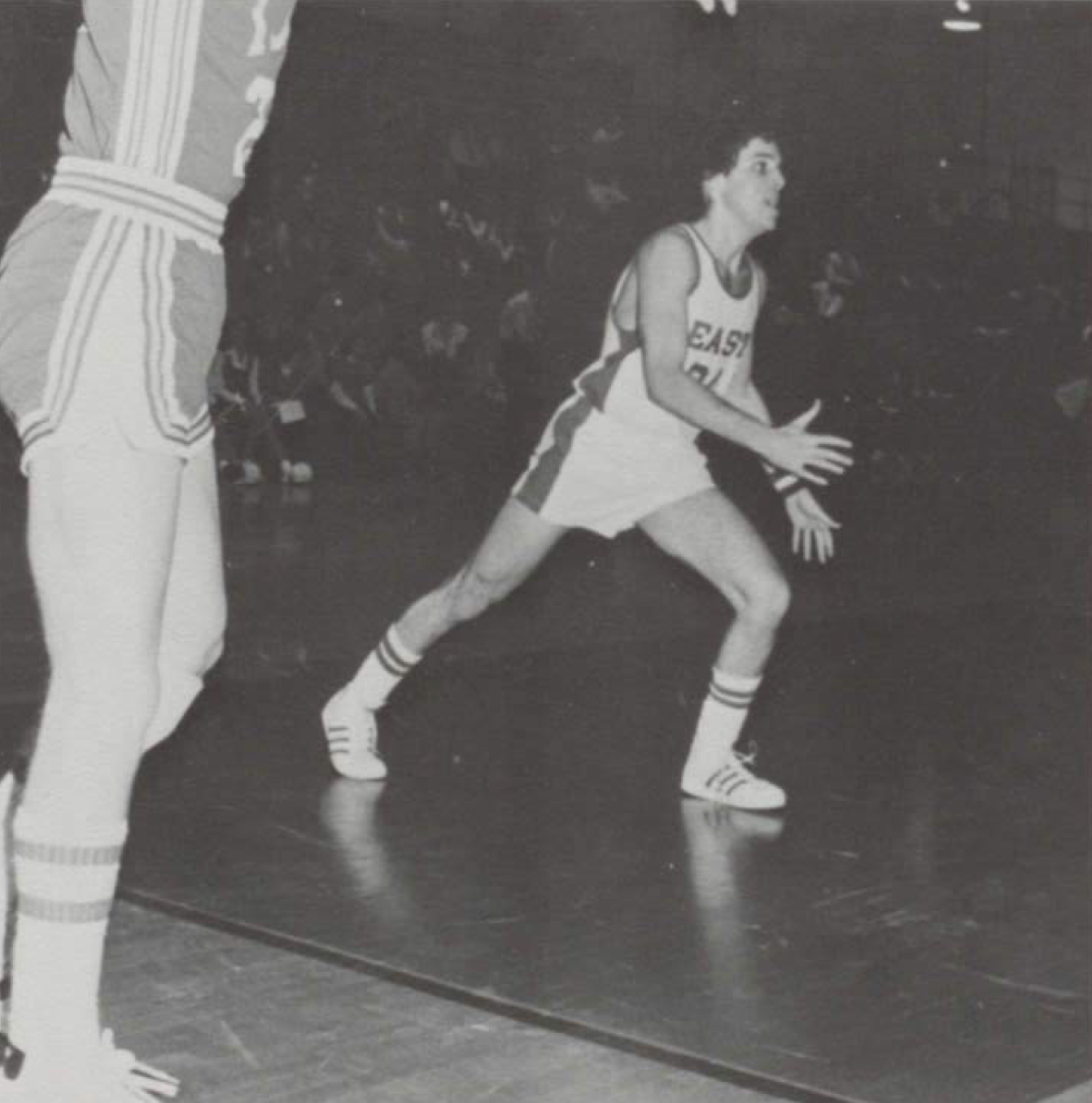
Leon Rose at Cherry Hill East.Courtesy of John Valore
Cherry Hill East’s culture quickly translated into wins. When Rose arrived, the varsity team finished just above .500. By the time he graduated, it was one of the best teams in its conference.
But above all, Valore was most impressed by his pupil’s character. During a practice in 1979, the coach called his co-captain over. Valore’s wife, Joyce, had just given birth to their first child, J.C.
The coach wanted Rose to be the boy’s godfather.
“[Leon] was 17 years old,” he said, “and I saw everything I wanted to see. He was an exceptional person with relating to other people. He was something special.
“He went back to his dad and explained the situation, and his dad gave the thumbs-up. And the rest is history.”
After a few years studying and playing basketball at Dickinson College, Rose rejoined his high school team as an assistant coach in 1983. The 22-year-old was just as impactful on the bench as he’d been as a point guard.
Over Rose’s three seasons with Cherry Hill East, the program produced four Division I players. One of those four, Nick Katsikis, ended up contributing to Seton Hall’s run to the 1989 NCAA championship game.
Valore can see similarities in what Rose accomplished with the Knicks. When the agent was hired by James Dolan in 2020, the team was en route to its seventh straight losing season; “a doormat,” just like Cherry Hill East.
Then Rose came along, and everything changed.
“He was a gym rat,” Valore said. “He just loved the game.”
Leon Rose coaching for the Katz JCC in 2004. Ed Vernick is pictured on the far right.Photo courtesy of Katz JCC
From Maccabi gold to an NBA title
Ed Vernick moved from Philadelphia to South Jersey in the early 1980s, the same time Rose was coaching with Valore.
Unsurprisingly, the men became friends at the gym. Vernick was about to go on a trip to Ocean City and wanted a good place to work out. Rose overheard him talking, ripped off a piece of paper, and scribbled down an address.
Vernick had no idea who the young lawyer was, but he took him up on his suggestion. A few days later, while he was running on a treadmill in that Ocean City gym, he saw Rose walking by.
“He goes, ‘I just wanted to make sure you got here,’” Vernick said. “What a nice guy. I’m thinking, ‘Who does that?’ It was just one of those things that caught me.”
About two decades later, when Rose was starting to coach basketball at the Katz JCC, he asked Vernick to be his assistant. Together, they spent the summer of 2004 preparing Cherry Hill-area kids for the Maccabi Games, a youth athletic competition for Jewish athletes from all over the world.
Parents and players said Rose took this as seriously as the NBA Finals. He’d carefully craft his rosters, thinking hard about how each piece would fit.
Once the team was constructed, he’d spend July running them into the ground with many of the methods Valore used at Cherry Hill East: switch drills, sprints, tap drills.
Leon Rose coaching at the Katz JCC in 2005.Photo courtesy of Katz JCC
The week before the Games was by far the toughest. Players would be required to train twice a day and would arrive at the gym at 6:30 a.m. and return at 2 p.m.
“He got into us,” Friedman said. “But it got us ready. It got us prepared. It got us in shape. I hated it during it, but, looking back, those were memories I’ll never forget.”
This was a major time investment for one of the most high-powered agents in the NBA, but Rose was deeply involved. He continued to coach before and after his son, Sam, and daughter, Brooke, were eligible to play.
And he went far beyond what was expected of a volunteer. One year, Friedman said Rose took the team up to the Poconos for an exhibition game at Pine Forest Camp, which was known for its basketball program.
“He’s driving us up to play an exhibition game like it’s an NBA team,” Friedman said. “He didn’t have to do that as a coach. But he did whatever he could to get us prepped and ready to win a gold medal.”
About “80% of the team” came from Cherry Hill East, in Vernick’s estimation, and Rose often would be on the phone with Valore, asking about certain players.
Like his former coach, Rose gravitated toward toughness, and that style emanated from the teams he built. In 2004, South Jersey’s 16-and-under Maccabi team faced Washington, D.C., for the gold medal.
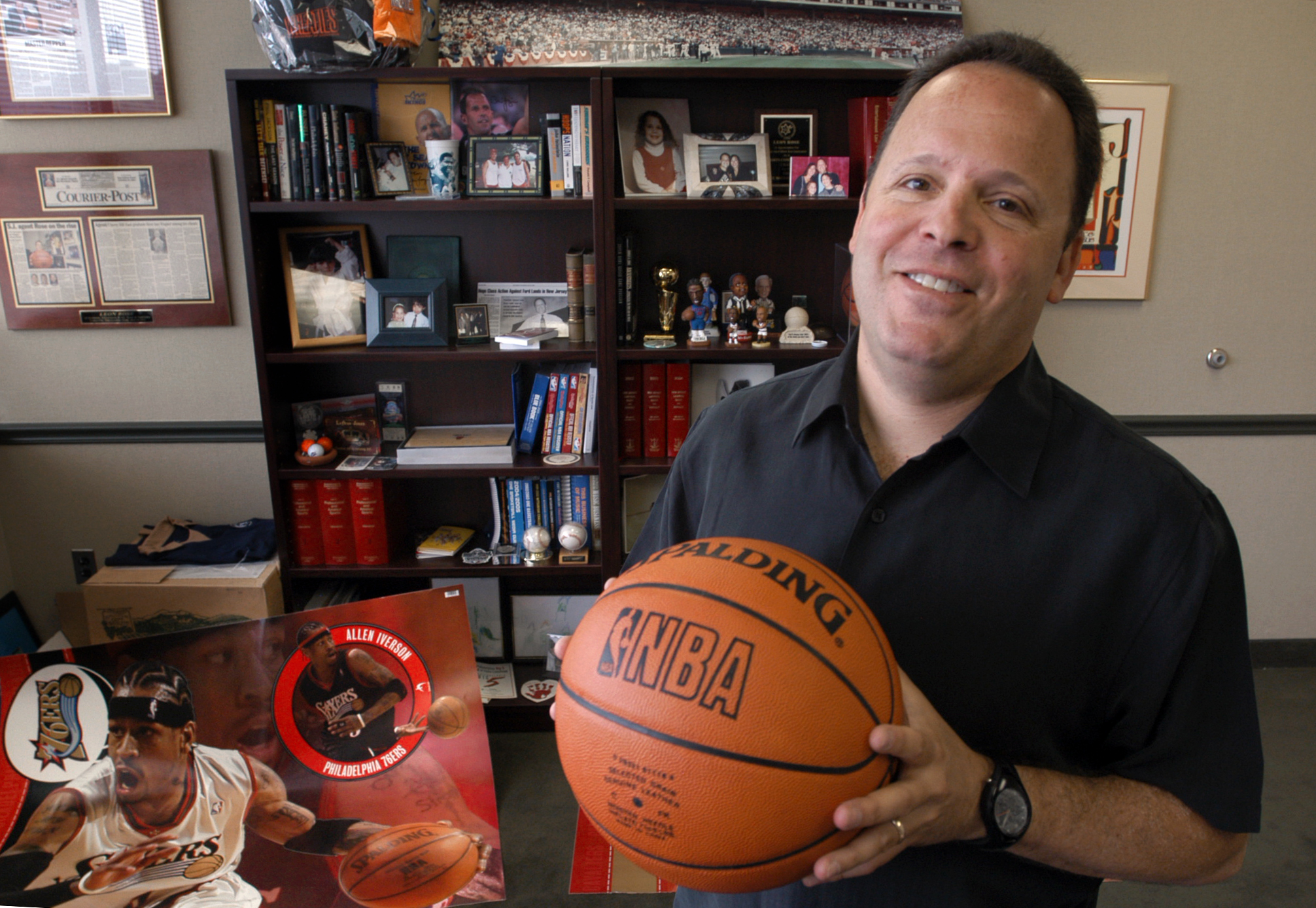
Leon Rose (in 2006) made his name as a superagent to the likes of Allen Iverson and LeBron James, but he did not flaunt that status to his young players. APRIL SAUL
It was a low-scoring game, one that came down to the buzzer. Washington was bigger and more talented, but Rose’s group challenged every bucket.
“I remember I could hear sneakers squeaking the whole game,” Vernick said, “and I just smiled. And I thought, ‘This is the way you play defense.’”
South Jersey fell, 42-40, but it won gold the following year in Minneapolis.
Rose spent six summers coaching at the JCC throughout the 2000s, winning two gold and two silver medals. He looked and acted like any other coach, donning Cherry Hill East basketball gear and sweatpants.
He rarely — if ever — talked about who he represented, or what he did for work, but the players occasionally got a glimpse.
When Friedman was a senior at Cherry Hill East, Rose arranged a surprise for his alma mater.
It was March 2010. The Cleveland Cavaliers were in town. After practice, their coach swung by to talk to the high school basketball team and answer any questions they might have.
It ended up being the coach who would lead the Knicks to a championship 16 years later.
“He had Mike Brown come over,” Valore said. “He was fantastic. Off the cuff, not scripted. He gave a wonderful speech to the kids.”
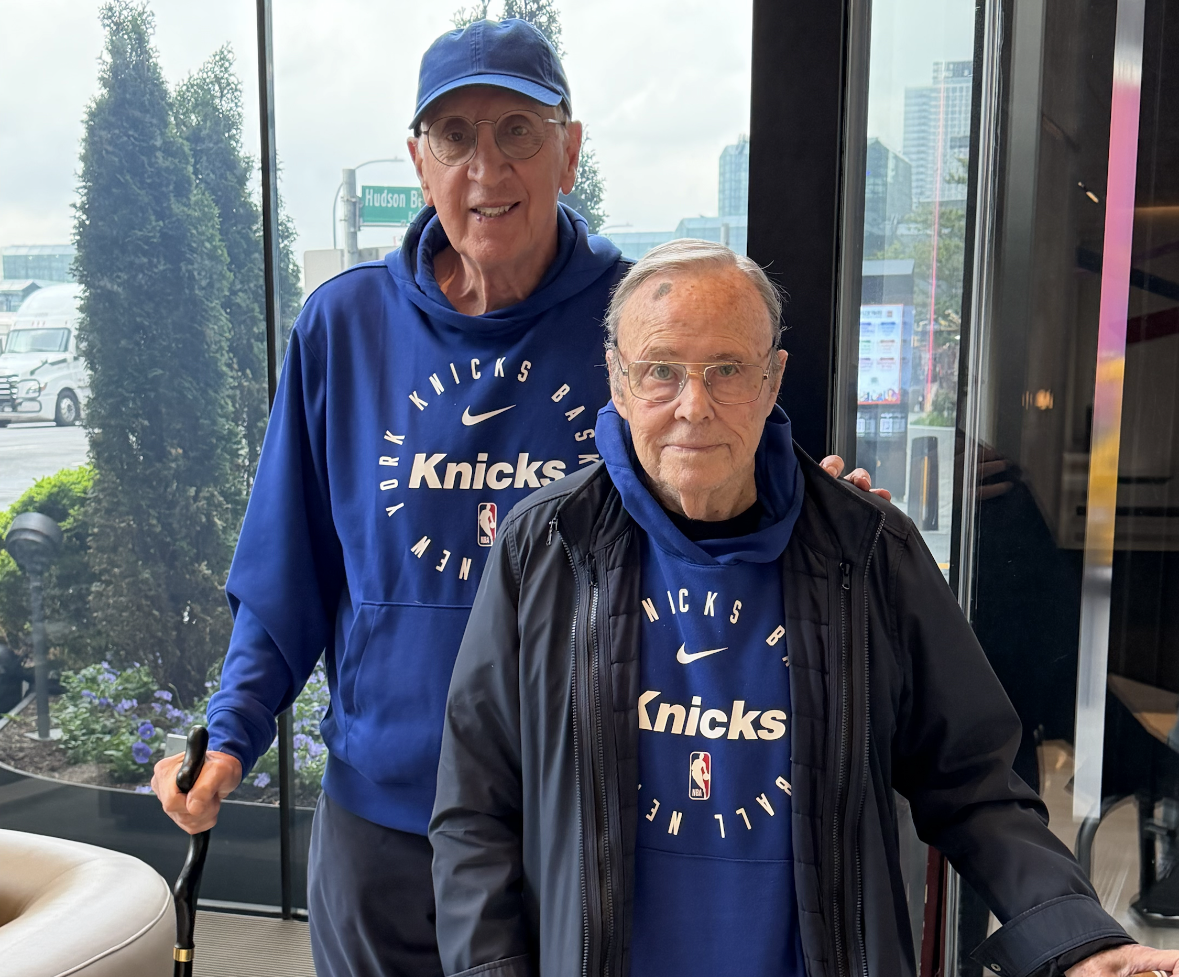
John Valore (left) and Zev Rose before a Knicks game in the early part of their 2026 playoff run.Photo courtesy of John Valore
Cherry Hill at the Garden
Rose and his family now live in New York, but they’re never too far from Cherry Hill. His 88-year-old father, Zev, still resides in the area, and is a regular at the Katz JCC.
Every once in a while, his son will send a limo to drive him and the 81-year-old Valore to Madison Square Garden. They were in the building for Game 4, sitting near the team president.
At first, it looked bleak for New York. The Knicks fell behind early and trailed by 29 points in the third quarter. But they came storming back in the fourth and completed the comeback on an OG Anunoby tip-in.
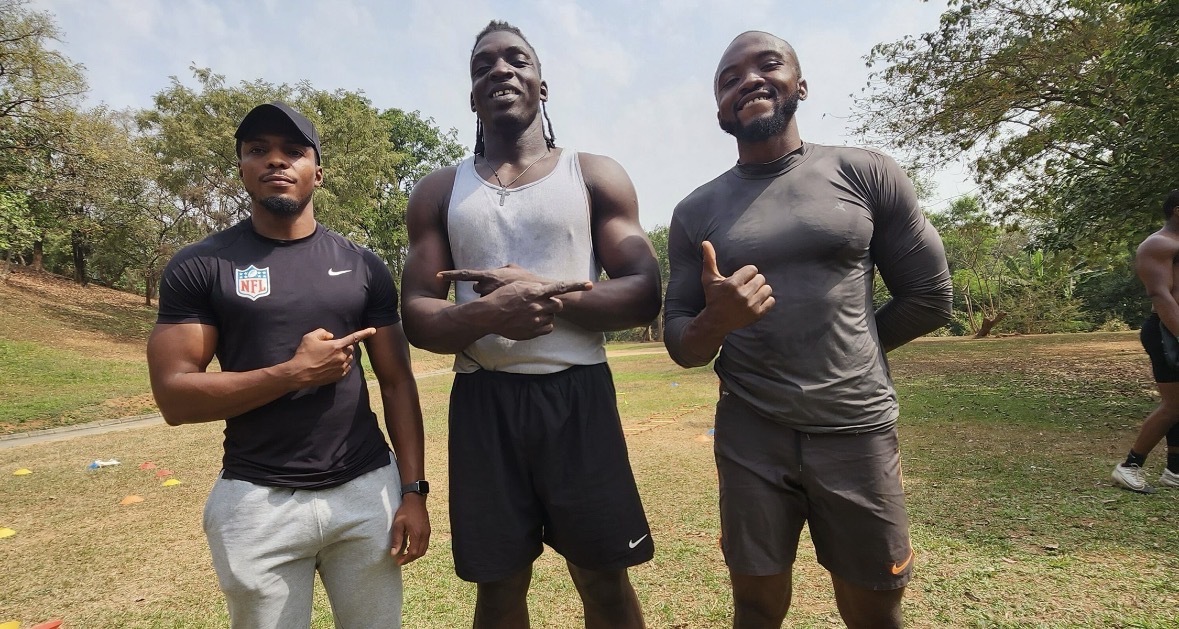
In the summer of 2022, a sheepish teenager with a backpack walked into Moshood Abiola National Stadium in Abuja, Nigeria. He was there for a basketball camp, but his physique looked like that of an edge rusher; lean and athletic with sculpted calves.
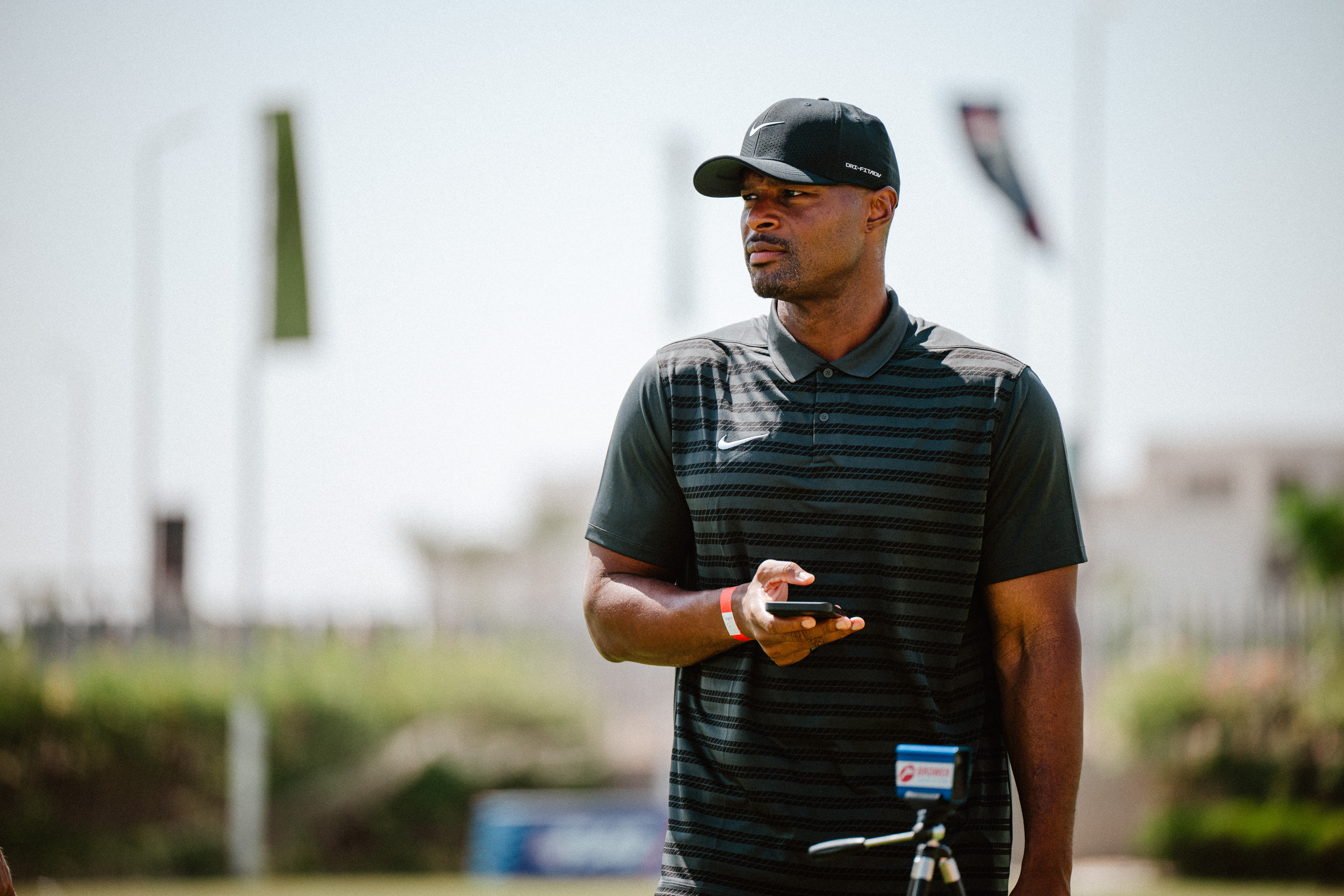
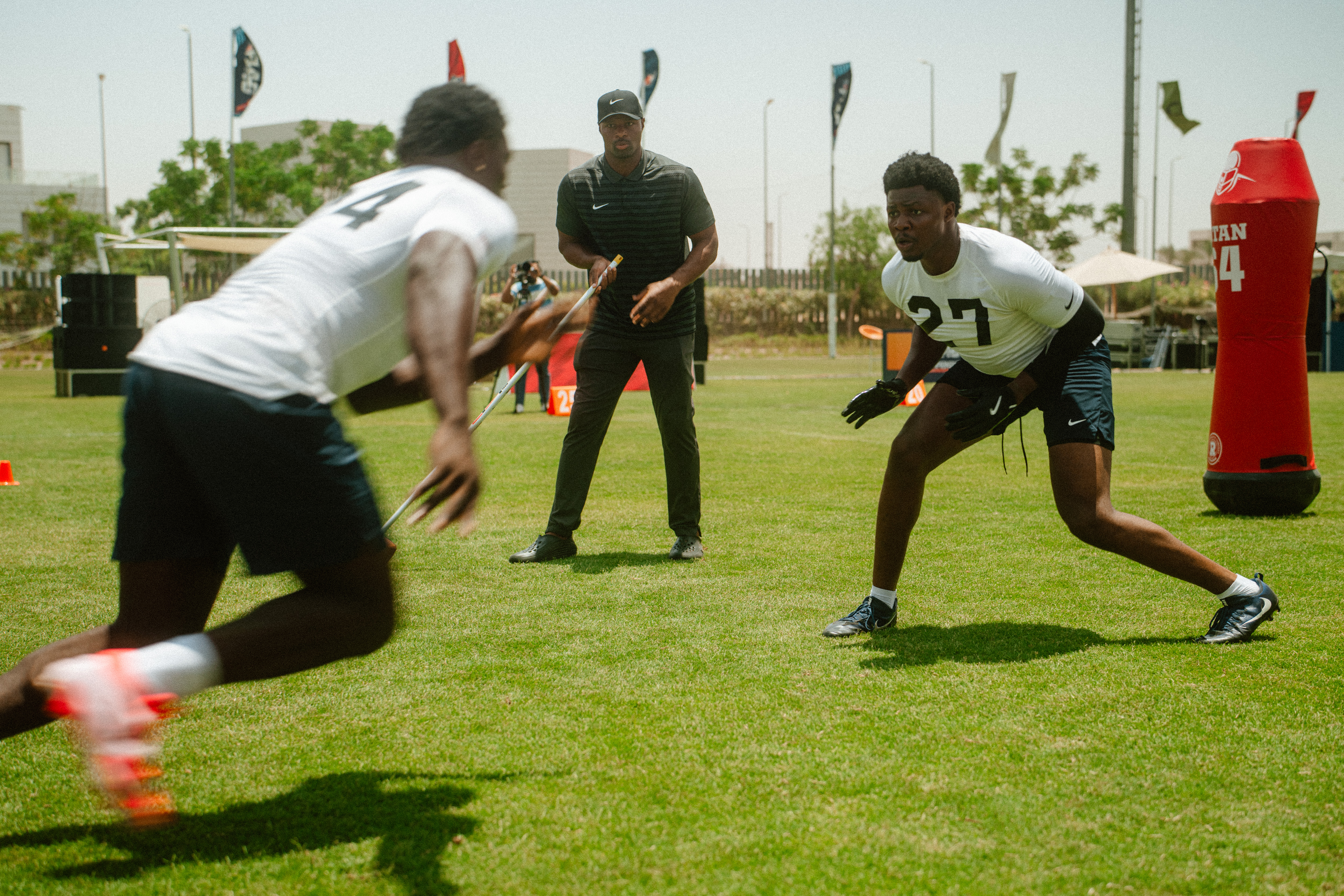
Two coaches told him as much. Mustapha Musa and Dike Christian of Pro Prospects Program were in the same building for a flag football event coordinated by former New York Giants defensive end Osi Umenyiora’s agency, The Uprise. Musa and Christian approached the teenager and asked if he’d ever played American football.
The teenager said no. They asked if he would give it a try. He explained that this would be logistically difficult; he had traveled six hours from Unguwa Uku, a suburb of Kano, in the northern part of the country.
But the coaches were insistent. They asked if the teenager would consider extending his trip.
“You know,” Musa said, “you look like a footballer, not a basketballer.”
The teenager let out a laugh. He decided to stay, and underwent a workout the following day. Ejike Ugboaja, a co-founder of The Uprise, sent Umenyiora some video.
Former Giants star Osi Umenyiora has played a role in the discovery of players, including Uar Bernard, in Africa.provided by NFL Africa
He didn’t know the teenager’s name, but quickly came up with a moniker.
“[Ejike] just called him Bigfoot,” Umenyiora said. “And he was a freak athlete. I saw him running and moving around, and I was like, ‘OK, this kid, he’s got something.’”
By the time he showed up tothe next flag football event, everyone knew him as Uar Bernard. But “Bigfoot” stuck, in part because the coaches couldn’t find cleats that fit him.
“He had like a size 18,” Umenyiora said. “It was ridiculous.”
At 17 years old, Bernard was too young to qualify for the NFL’s International Player Pathway (IPP) program but too old for the NFL Academy. He would have to wait until he was three years removed from high school to try again.
Over those three years, Bernard trained with Musa and Christian in Abuja. In 2024, he attended another NFL Africa Camp in Lagos, but failed again to make the IPP, this time because he was not considered mobile enough.
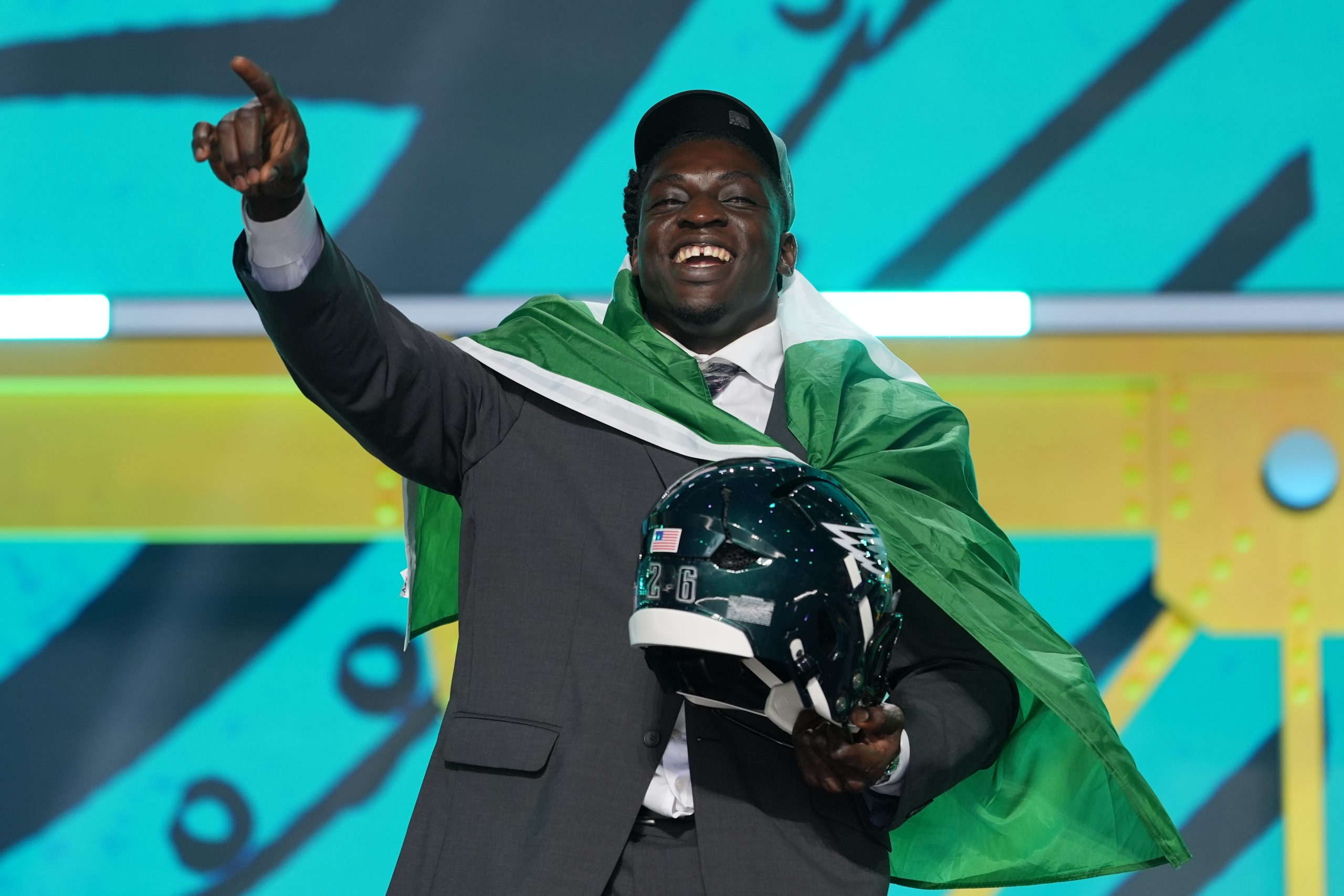
The Nigerian finally qualified in 2025. He entered a 12-week training program in Florida in January, and in April, he was drafted by the Eagles in the seventh round.
Bernard has never played a down of organized football. He didn’t spend his childhood on a Pop Warner team. But Musa and Christian have helped him prepare for this moment.
And Umenyiora is confident it is all going to work.
“I think one of the GMs for the Giants used to call it ‘planet theory,’” he said. “There are only so many people walking around the planet that have that type of physique and ability. And so whenever you get that, you have to take a chance on them, and give them an opportunity to develop.
“And hopefully, Philadelphia — who have been absolutely tremendous — will give him that opportunity.”
Training in ‘The Trenches’
Of the tens of thousands of players who have ever competed in the NFL, only 40 were born in Nigeria.
Twenty-one of those 40 hailed from Lagos, the country’s largest city; Umenyiora says most come from the southern and eastern regions.
Osi Umenyiora (center) has discovered players in Nigeria previously, but never from the impoverished community that Uar Bernard calls home.provided by NFL Africa
None have come from Kano. According to the World Bank Group, the state has a poverty rate of 53.75%, more than double that of Abuja, and more than six times that of Lagos.
“It’s a dangerous place,” Musa said. “You only see a few kids that will grow up in that area, and be like, ‘I want to do sports.’ It’s very hard and very rare in that kind of environment.”
When Bernard moved to Abuja, Musa already hada handful ofaspiring football players living with him. So Christian took the teenager in. Together, they’d work every day, from 8 a.m. to 11 a.m., at a local public park they called “The Trenches.”
This wasn’t an NFL training facility, but Musa and Christian saw potential. The park had a sand pit. Its hills were steep, perfect for mid-morning sprints, and its trees were as sturdy as a blocking sled.
The coaches purchased small pieces of equipment, like cones, ladders and mini hurdles, and set them up on the grass, sharpening the players’ skills under the blistering sun.
They’d also use the natural resources around them. Bamboo sticks were repurposed for cross-chop drills and honing inside shoulder drops. Bernard and his fellow athletes had occasional access to a gym, but due to limited funds, everyone had to get creative.
This was especially true for Bernard. One of his biggest early obstacles was mobility, and he didn’t have access to a physical therapist in Nigeria.
So, Musa and Christian came up with an idea.
“We had to push him into a dance class,” Musa said. “We’re like, ‘Yo, you need to go to a dance class.’ It was to help his flexibility. More aerobics than Afro dance.”
“He laughed about it,” Christian said, “but even if he laughs, he will never say no. He will do it. He’s humble.”
Bernard knew virtually nothing about American football when he started working with the coaches. But even from West Africa, Musa and Christian had learned quite a bit.
In 2011, a former University of Maryland linebacker, Ricardo Dickerson, co-founded the American Football Association of Nigeria, an organization focused on youth development. He started going on visits to high schools around the country, which is how Musa was introduced to the sport.
He and his classmates stayed in touch with Dickerson, who sent them YouTube tutorials and documentaries. Musa had hoped to attend an American university on a football scholarship, but the pandemic — and a lack of financial support — made that a nonstarter.
The coach wasn’t getting any younger, and as months turned into years, he conceded that his dream had passed him by. But he and Christian still felt a passion for the sport, and continued to follow it religiously.
They’d seek advice from high-profile coaches on Instagram, like defensive line trainer Javon Gopie. They’d study film of pass rushers including Umenyiora and Myles Garrett.
Before long, Musa and Christian could recite defensive drills and plays by heart. And the two coaches would break them down for the future Eagle, bit-by-bit.
If a move required three steps, Musa, Christian and Bernard would spend a week working on each one. Their pupil had many God-given gifts — explosiveness, quickness, strength — but the coaches wanted to refine the basics.
Bernard would know exactly where his size-18 feet would need to be planted before and after the snap. He’d know exactly how to get off for a cross chop play, and which direction to break in the following moments.
He would know the difference between bull rush and speed rush, and when to use each move.
“Small details,” Musa said, “that will make him outstanding.”
Like his coaches, Bernard was a voracious learner. After spending three hours at The Trenches, he’d put in extra work, calling Musa or Christian with follow-up questions.
At night, over the West African dish soup and swallow, Bernard and Christian would study more video, usually of Uar’s favorite player, Aaron Donald.
“He would show me tape, and then say, ‘What’s my take?’” Christian recalled. “And then we’d try to dissect and talk about it.”
Unlike other athletes his age, Bernard wasn’t prone to distraction. When he wasn’t at the gym, he was at The Trenches. When he wasn’t at The Trenches, he was often in prayer.
“The boy only goes to church, gym, training,” Musa said. “That is his life. Because he came with the hunger that nobody believes in him. Sometimes we even needed to tell him, ‘You need to slow down before you break down.’
“He would go to the church and do overnight prayer, and early morning he would come to the field and keep working. And I’m like, ‘Yo, I know your eyes. You haven’t slept.’”
‘Our boy has been drafted’
Musa and Christian were 5,166 miles away from Pittsburgh on Day 3 of the NFL draft, but that didn’t help calm their nerves. In an homage to Bernard, Musa watched the broadcast at home, on his prayer mat.
He was concerned after the Kano native hadn’t been picked in the earlier rounds.
“I was like, ‘Oh God, please let this happen to us,’” Musa said. “It wasn’t just happening to him. It was happening to the whole of Africa.”
When Bernard was finally selected, with the 251st pick, the coach called Christian, who had dozed off. It was just past midnight in Nigeria.
“He woke me up,” Christian said. “He was like, ‘Yo, are you sleeping? Our boy has been drafted!’”
Uar Bernard’s seventh-round selection was one of the feel-good stories of the 2026 NFL draft. AP Photo/Jeff Roberson
Musa and Christian were overcome with excitement. So was Umenyiora. The longtime Giant may have hated the Eagles as a player, but as an ambassador for NFL Africa, he looked at the organization through a different light.
In his mind, Philadelphia was a perfect fit for “Bigfoot.”
“[The Eagles] have this mentality that they’re going to be patient with these guys,” Umenyiora said. “A lot of times, teams will get a guy who’s never played football before, and after maybe a month or two, they’ll cut him and get rid of him.
“And you’re like, ‘Well, what were you thinking was going to happen in a month or two?’ But with Philly, when they get them, they stick with the process. It’s like they’ve done so much homework, that when they get them, they are stuck in their belief system that they can turn this guy into a player.
“And they have the right coaches, and they believe in their coaches. So, when I found out he was going there, quite frankly, I was really happy. Because they get it. A lot of teams don’t get it. But they do.”
The work is far from over. Going from the basics to Vic Fangio’s defense will be challenging. The Nigerian is still getting used to wearing a helmet; soon, he’ll be facing the best players in the world.
But no matter what happens, Bernard has already proved something.
Back in Abuja, at The Trenches, a handful of football players are waking up each morning to run grueling sprints.
It wasn’t so long ago that locals used to mock them. They’d compare their drills to kung fu, as if their sport was a novelty.
Not anymore.
“The athletes here are super proud,” Christian said. “He’s the motivation to all of them who are working so hard. And we keep preaching that.
“‘Bernard was here with you guys. He’s not a stranger. He’s not a ghost. He’s someone you all know. So, if he can do it, you can do it.’”
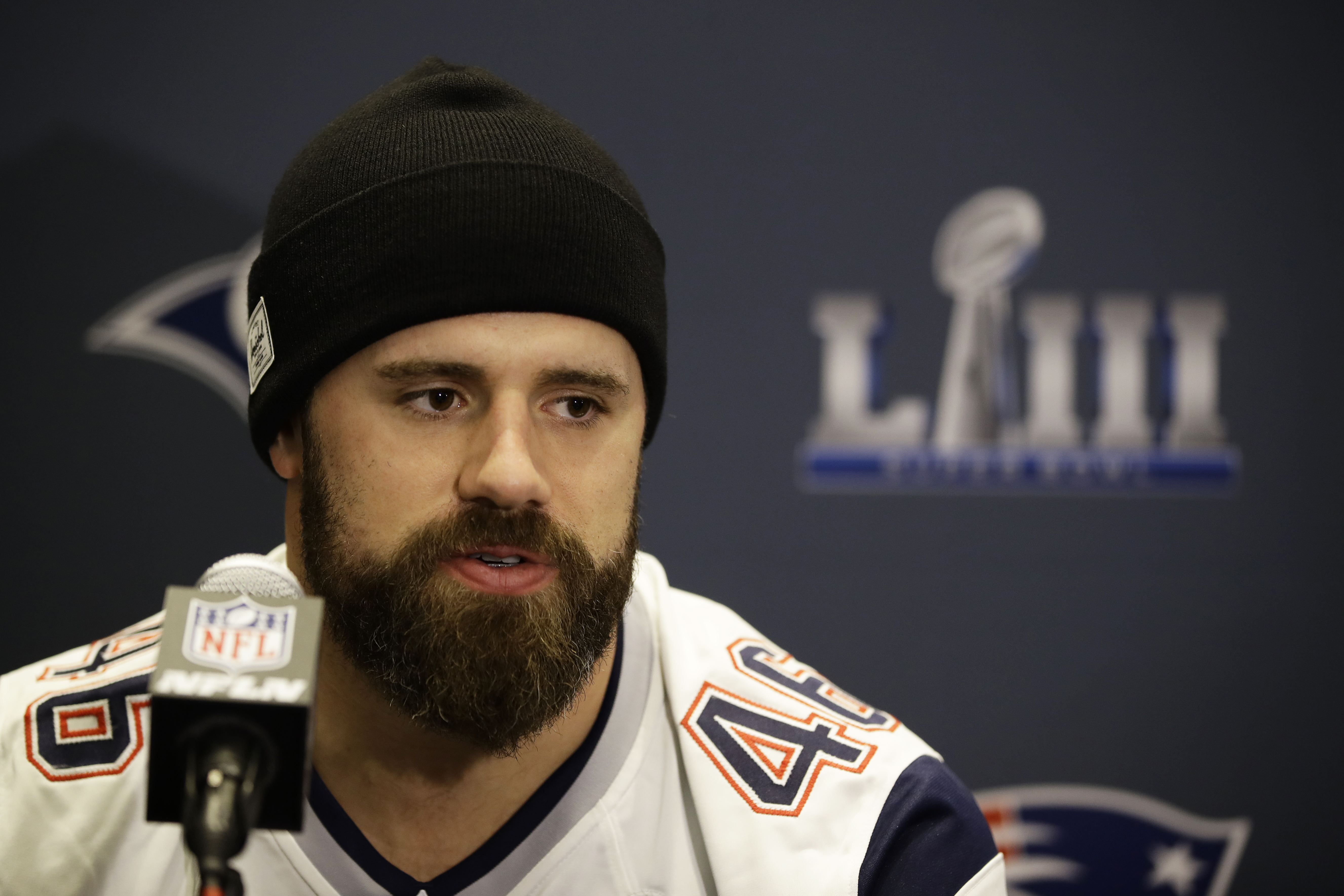
James Develin was raised in Gilbertsville, Pa., on the voice of Merrill Reese and the mystique of Brian Dawkins, “Weapon X.” But in the wake of Super Bowl LII on Feb. 4, 2018, he felt sad.
There was good reason for this. The fullback was in his sixth season with the New England Patriots. He’d won two Lombardi trophies, in the 2014 and 2016 seasons, and was eager to add a third.
But the Eagles were a team possessed. They were dominant in the trenches. Bursts of offense came from unlikely contributors. Backup quarterback Nick Foles had the game of his life.
Develin returned home a few days later to a barrage of clips from the Super Bowl parade. Hoagie shops started selling sandwiches called “Philly Special” and “Philly Philly.”
Every Wawa had championship T-shirts on display. Develin couldn’t even get his coffee without being reminded of the worst loss of his career.
“Losing that one … you were so close, and now you know exactly what the Eagles are enjoying,” Develin said. “And you’re home, watching them doing it, right outside your front door. Man, that was tough.”
Life has gotten easier since then. Develin retired in 2020, but won a third Super Bowl with New England before that. He began to pursue a career in business.
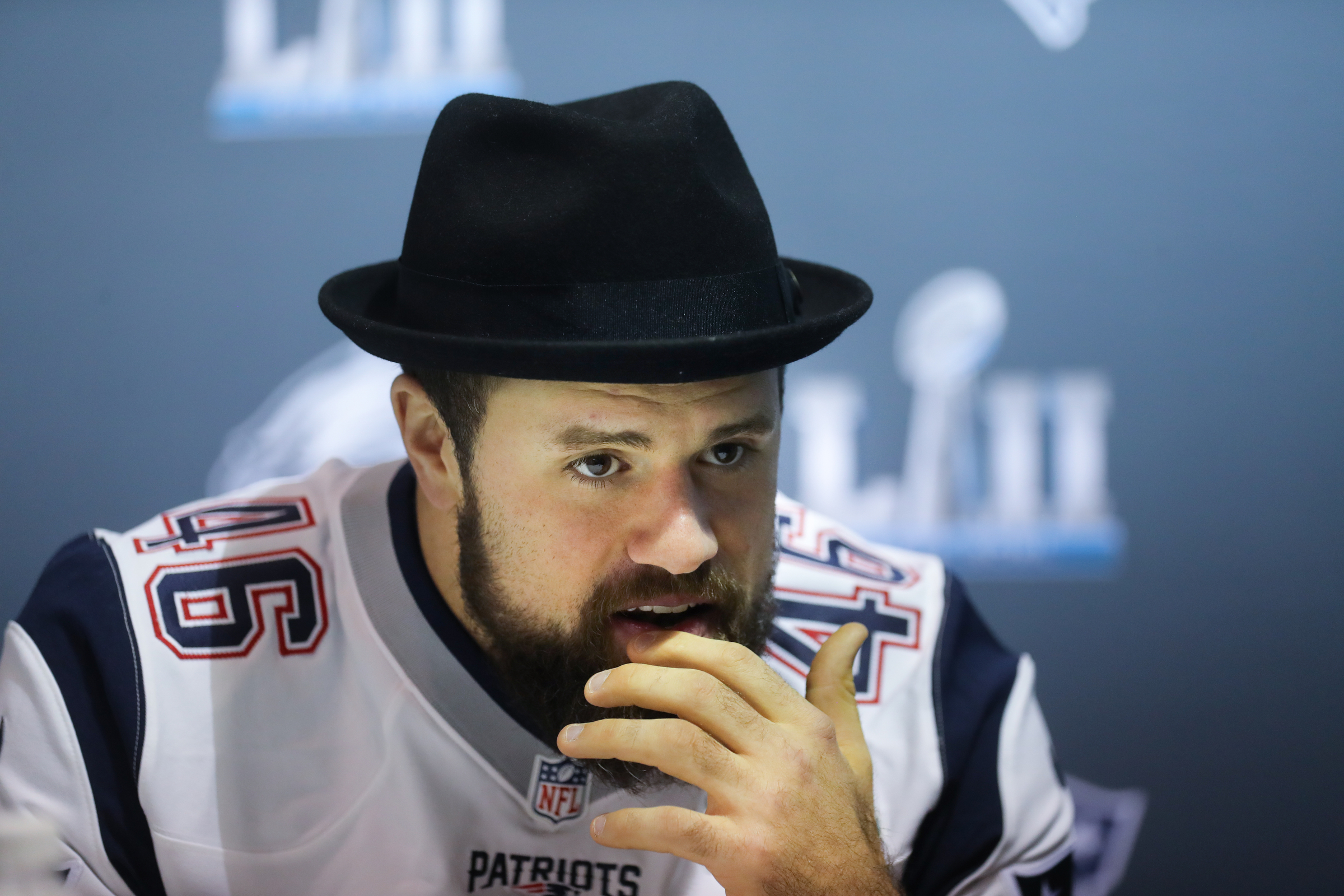
James Develin, pictured at a news conference days before his Patriots’ Super Bowl LII loss to the Eagles. David Swanson / Staff Photographer
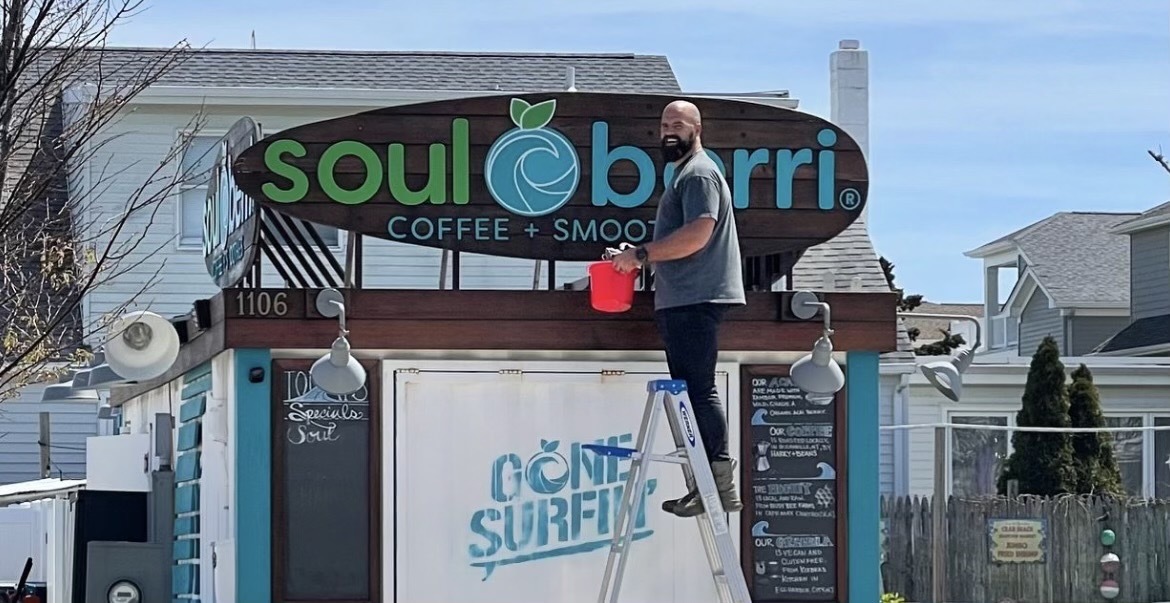
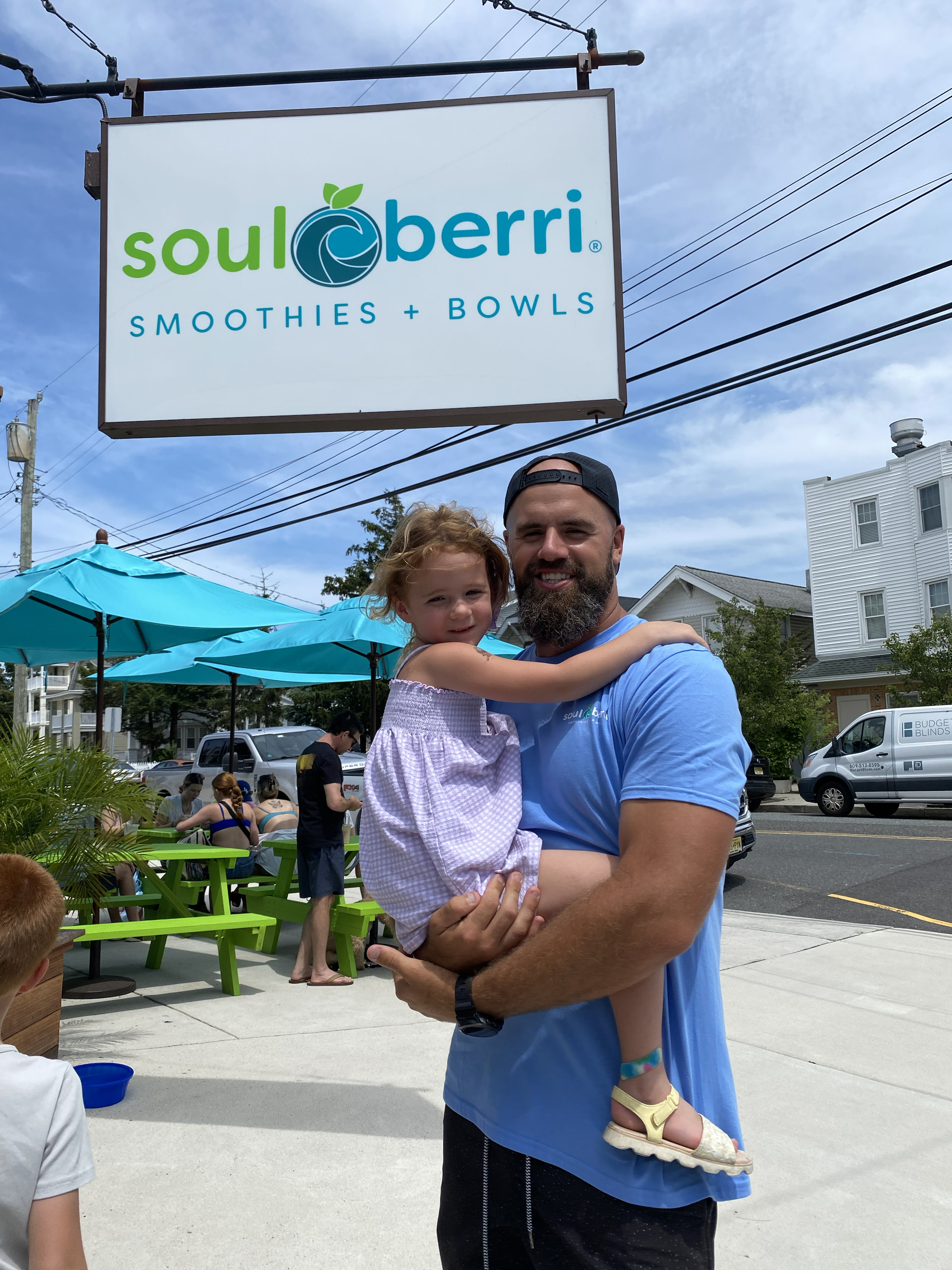
He and his wife, Jenny, grew up together and decided to stay in the area. They moved to Collegeville and got a place down the Shore. In 2021, Develin purchased Soulberri, a smoothie shop in Brigantine where he was a frequent customer.
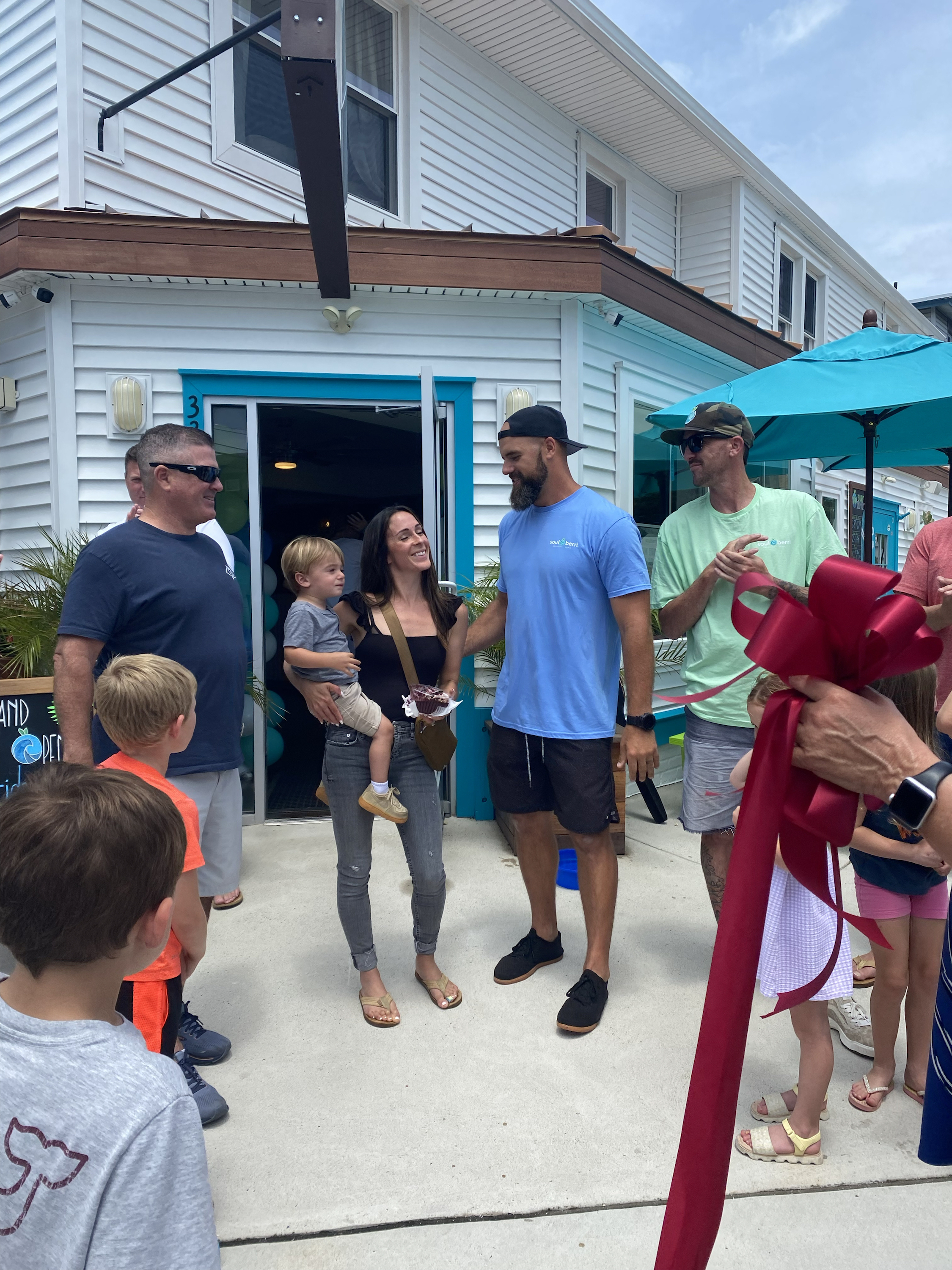
The longtime Patriot is not your typical athlete-turned-entrepreneur. During the summer, he’s at Soulberri every day. When Develin added a location in Ocean City in 2023, it was he and general manager Ryan Bonanni who built it from the ground up.
Develin handles payroll. He sands and stains mahogany wood benches. He plants flowers and paintswalls.There is no task too small for the former fullback.
“He doesn’t like to sit around,” said Bonanni. “He’s hands on.”
It has been an interesting and atypical career path, one that is not short on irony.Eight years after Super Bowl LII,Develin is selling açai bowls and dairy-free ice cream to people who actively rooted against him.
But the former Patriot has embraced this.
“Every once in a while, someone driving yells, ‘Go Birds,’ or something,” he said. “And it could be anybody. Because 90% of the area is Eagles fans.
“And I have no qualms with that. I understand what it’s like being an Eagles fan. So I am all for it.”
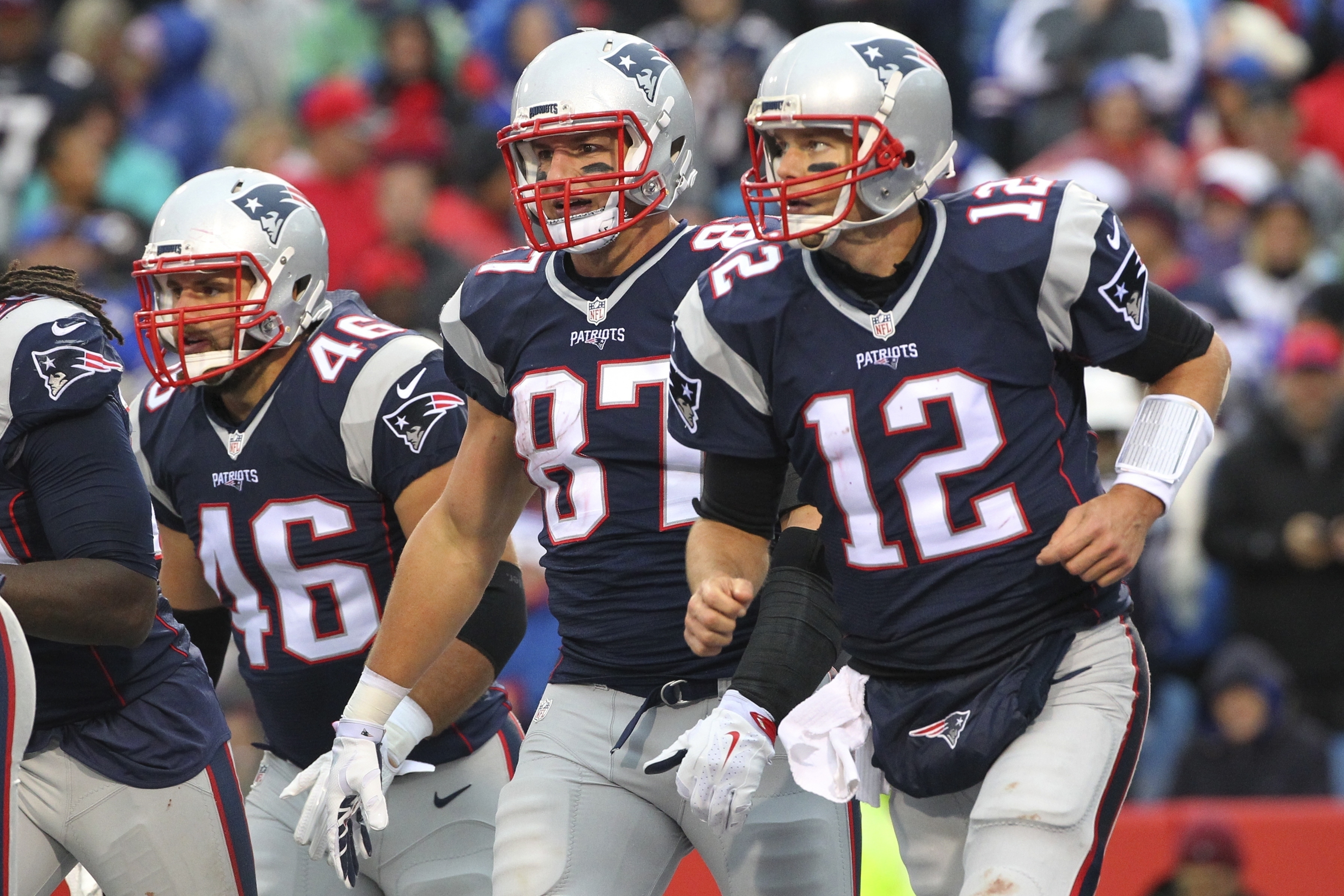
James Develin (46) played alongside some of the biggest NFL stars of his era including Rob Gronkowski (87) and Tom Brady (12). Bill Wippert
From ‘hating’ Tom Brady to becoming teammates
It was not long ago that Develin was one of those fans.
He says he can still remember picking up hoagies on Sunday afternoons as 94.1 WIP hummed in the background. Develin’s father, Jim, lived and died with every snap, and passed his unbridled enthusiasm on to his kids.
James Jr. started following the team in the early 2000s, a successful era of Eagles football. He gravitated to the ruthlessness of Jeremiah Trotter, the dynamism of Brian Westbrook, the passion of Dawkins.
He also experienced the heartbreak. Develin was 16 years old when the Eagles made it to their second Super Bowl during the 2004 season, against none other than the Patriots. He was in his friend’s basement in Gilbertsville, watching it on a big-screen TV with some neighbors.
Develin described the aftermath as a “somber scene.”
“That game was a tough one, because it was somewhat close, and in the end, in typical Eagles fashion, they would just kind of break your heart,” Develin said. “McNabb’s throwing up. T.O comes back on the broken leg. You just wanted them to do it, but they didn’t quite have enough ammo in the gun.”
He added: “I was hating on Tom Brady and the Patriots so bad.”
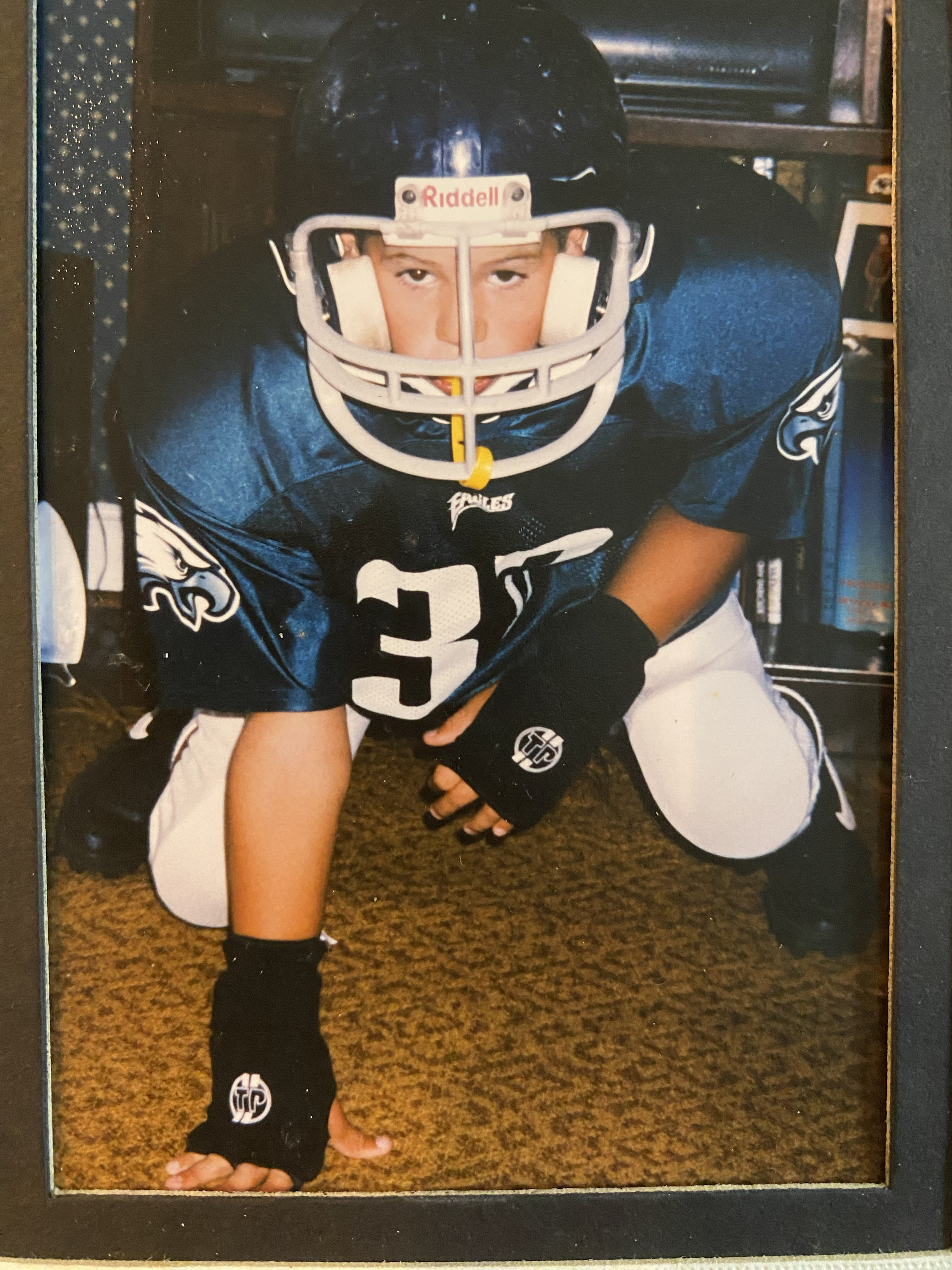
James Develin rooted for the Eagles as a youth in Gilbertsville. courtesy of James Develin
After graduating from Boyertown High School in 2006, Develin attended Brown University, where he studied mechanical engineering. He played football all four years, primarily as a defensive lineman, and had success — but not enough to attract NFL attention.
Nevertheless, Develin was itching to stay in the game. The Ivy League alum had few resources to do so. No teams or agents reached out initially; Jim Ulrich of Enter-Sports Management eventually did, in late 2009, and brought Develin on as a client.
The Cleveland Browns invited him to a tryout ahead of rookie minicamp in the spring of 2010, but he was quickly cut.
Not long after that, Ulrich reached out to longtime former Cowboys scout Jim Garrett, who lived in Monmouth County, N.J., and was the father of then-Cowboys assistant Jason Garrett. Ulrich asked if Develin could have a workout.
The Eagles-loving Develin family had mixed feelings about this.
“I remember my dad making a comment, like, ‘Man, I want you to succeed, I want you to get in the NFL, but if it’s the Cowboys … man, that might be a tough sell,’” Develin recalled.
But Develin’s first gig in professional football would come not with Dallas but the Yard Dogs of the Arena Football League, a team that paid $200 per week ($400 for active players).
Develin lasted just over a month, playing in only one game in 2010. Later that year, he tried out for the Florida Tuskers of the United Football League, and earned a spot as a backup fullback, a position he’d never played with regularity.
The team’s starting fullback developed vertigo, and all of a sudden, the rookie found himself playing every week. NFL teams began to call.
He bounced around practice squads, from the Cincinnati Bengals in 2010 and 2011, to the Patriots in 2012, before finding a permanent home in New England.
James Develin would develop into an NFL veteran and win multiple Super Bowls at a position he had never played before becoming a pro. Matt Rourke / AP
By 2013, Develin was appearing in every game. He was now teammates with the quarterback he derided from a Gilbertsville basement in 2004, and realized that Brady wasn’t a “cry baby,” like he’d originally thought.
“When I got there in 2012, I was a practice squad guy,” Develin said. “I had a tumultuous journey, playing in two different leagues, changing my position, and doing the whole thing. He didn’t know me from anybody.
“I could have been there one day, and gone the next. But he gave me the time of day, introduced himself, and said, ‘Hey, we’re happy to have you.’”
The Patriots re-signed him in the summer of 2015. By 2018, Develin had a Pro Bowl appearance, 81 regular-season games and 10 playoff games behind him.
When it became apparent that Philadelphia would be his opponent in the Super Bowl, his heart sank.
“I was like, ‘Are you kidding me?’” Develin said. “Do I have to play the team I grew up idolizing?’”
The Develins had about 30 family members in attendance at U.S. Bank Stadium in Minneapolis. James was able to get tickets, but so was Jenny, who had a cousin who worked for the Eagles at the time.
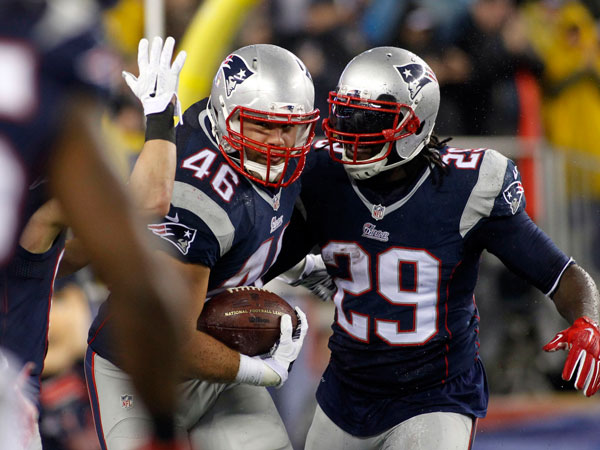
James Develin (46, with future Eagle LeGarrette Blount) played in 97 NFL games (regular season and playoffs) across seven seasons.
They were not all donning Patriots gear. The fullback estimated that of the group of 30, about 25 people were in green and white. Some tried to be diplomatic.
“There were a couple cousins who wouldn’t wear Pats stuff, but they didn’t want to wear Eagles stuff to disrespect me, so they’d wear my college jersey,” he said. “The only person to ever wear a Brown University jersey to an NFL game.”
In the first quarter, after the Eagles went up 3-0, the Patriots started driving down the field. They had second-and-4 from the Eagles’ 8-yard line, and Develin was tasked with blocking Nigel Bradham.
He’d blocked Bradham before, when Bradham was with the Buffalo Bills, and felt confident he’d be able to do it again. But on this night, the linebacker was more explosive than ever.
Bradham beat Develin across his face and tackled running back James White for no gain. It’s a moment the Gilbertsville native thinks about often. If he’d made that block, perhaps the Patriots wouldn’t have had to settle for a field goal.
“Man, if I had just made that block, would it all have been different?” he mused. “Would I have had to sit around and watch Jason Kelce’s Mummers speech for the next two months?
“It is such a such an Eagles fan thing to happen. I had a front-row seat to them winning their first one, but I’ll never be able to really enjoy it, because it was at my expense.”
James Develin and his family became business owners in Brigantine and expanded the operation to Ocean City. courtesy of James Develin
A ‘little haven’ in Brigantine
After Develin retired in early 2020, he decided to take a year off. He enrolled in business classes through the NFLPA, and eventually ended up working for the players’ trust, as a liaison between the union and its members.
He and Jenny and their four kids spent the pandemic at their Shore house in Brigantine. They fell in love with the quiet beach town. It wasn’t too congested, even during summer holidays.
Life was simpler, almost by necessity; Develin said there was “pretty much one of everything” on the island.
“It became our little haven,” he said. “I just fell in love with the speed of life down there. Even in the winter, going down there, and just the small-town feel.”
A mutual friend introduced Develin to the owner of Soulberri, Will White, who was looking to sell the business. Develin bought it in October of 2021, and dove right in.
The cadence was completely different from what Develin was used to. Instead of getting ready for minicamp in the spring, and training camp in the summer, he was now on Soulberri time, figuring out when to apply for a mercantile license, and pay for insurance.
James Develin (second from right) has rekindled his Eagles fandom despite his Patriots connection. courtesy of James Develin
But he was a quick study, and made it clear that he was willing to learn. Even before Develin became owner, he had one of Soulberri’s long-tenured employees give him a tutorial.
She walked him through every station, from washing the dishes, to filling the blender, to topping off the açai bowls. It was a busy weekend, but the former fullback wanted to try a shift himself.
So he got behind the counter, and worked for a few hours.
“It was chaotic,” he said. “I didn’t know the recipes, so I felt like I was holding everything up. But I started to get the hang of it.”
Every now and then, locals will ask if he’s the “football player,” but it doesn’t come up often. And now that Develin is back in the area, he has rekindled his Eagles fandom.
His kids wear their father’s jersey, but also Dawkins’ and Reggie White’s. They’ve watched “Weapon X” highlights over bowls of cereal.
Now that Develin has more free time, he is teaching them the unabridged history of the franchise, including “deep cuts” like former quarterbacks Ty and Koy Detmer.
“So they understand that it wasn’t always the Eagles going to Super Bowls,” he said. “There were a lot of lean years, too. But we’ve had good players, so respect the team and understand what your fanhood means.
“I loved growing up here. That’s why I came back here. That’s why I want to raise my kids around here. Even though I won a lot of games as a Patriot, I still have a lot of respect and loyalty to this area.”
Diane McGraw was never a sports person. As a young girl in Ridley Park, she dreamed of being an actress, and paid far more attention to the film industry than she ever did to the Phillies or Eagles.
This ethos applied to her day-to-day life, as well. In the late 1960s, McGraw slipped and fell while playing field hockey forNotre Dame High School in Moylan, Pa.
It would be the end of her short-lived athletic career, but she was unbothered and quickly found a way to occupy her time.
“I was the athletic rep for my class,” she said, “that helped organize the intramurals.”
Little did McGraw know, the role would become a precursor to her future profession.
Over the coming decades, she’d organize celebrity tennis tournaments and national and international sporting events, from NCAA volleyball championships to the Ryder Cup to the MLB All-Star Game.
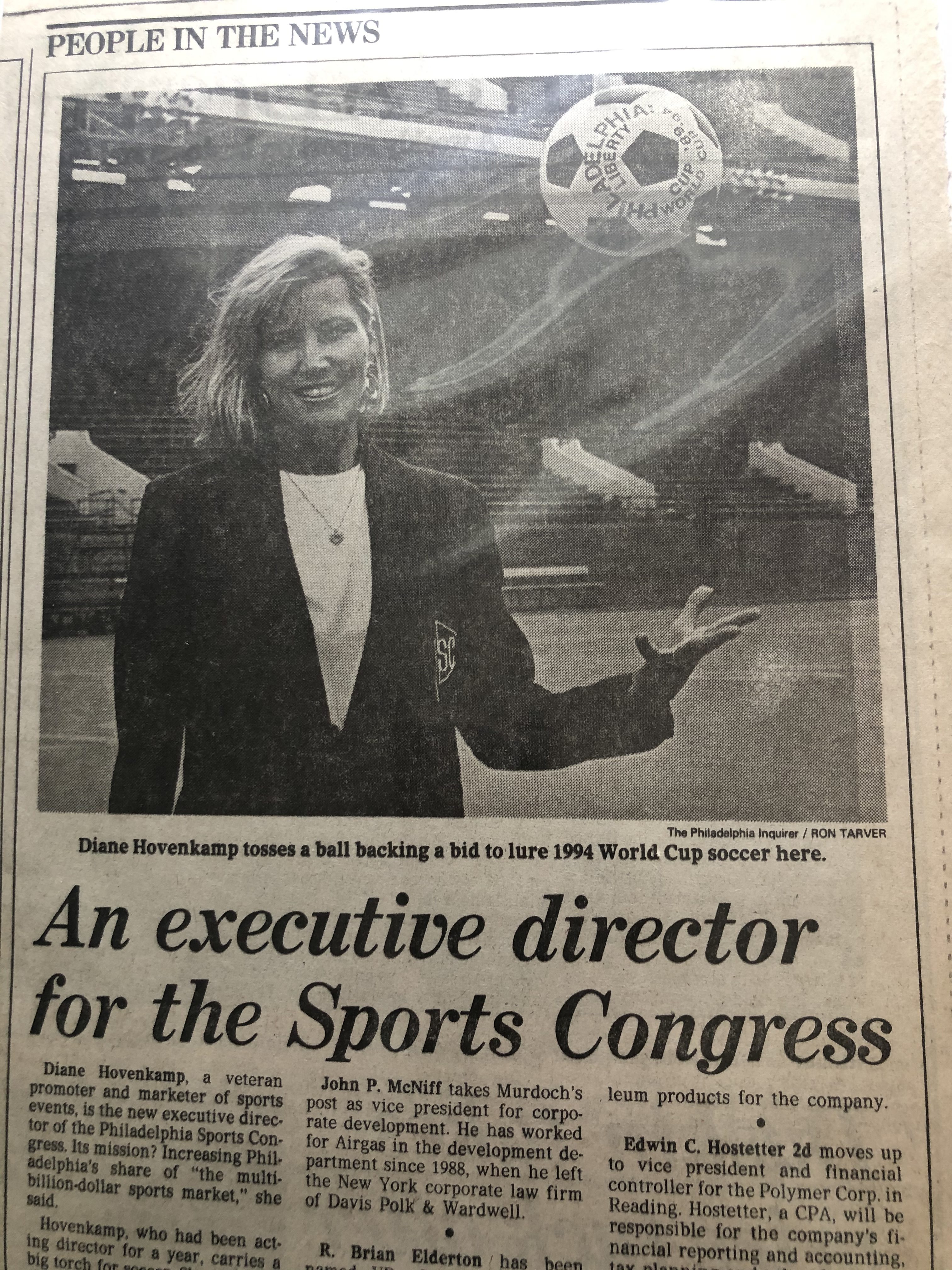
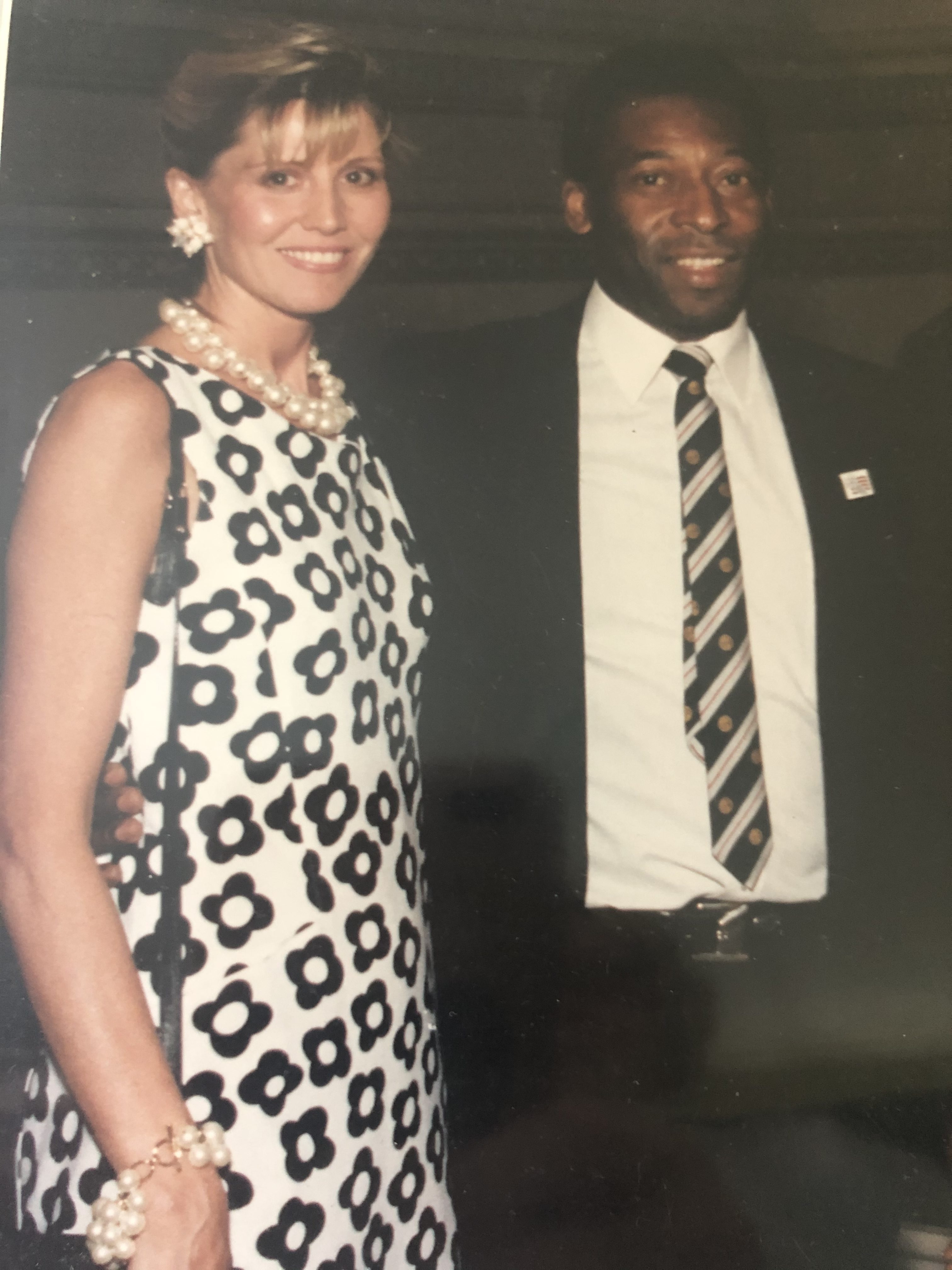
As executive director of the Philadelphia Sports Congress, Diane McGraw (née Hovenkamp-Robertson) was instrumental in trying to bring the 1994 FIFA World Cup to Philadelphia.Courtesy / Diane McGraw
McGraw would find herself atop sports and entertainment commissions in four U.S. cities — Philadelphia, Los Angeles, Louisville, and Orlando — and in 1995 married longtime Phillies reliever Tug McGraw.
The aspiring actress went from having no casual interest in sports to living a life full of them. And among her most fulfilling projects was one that never came to be.
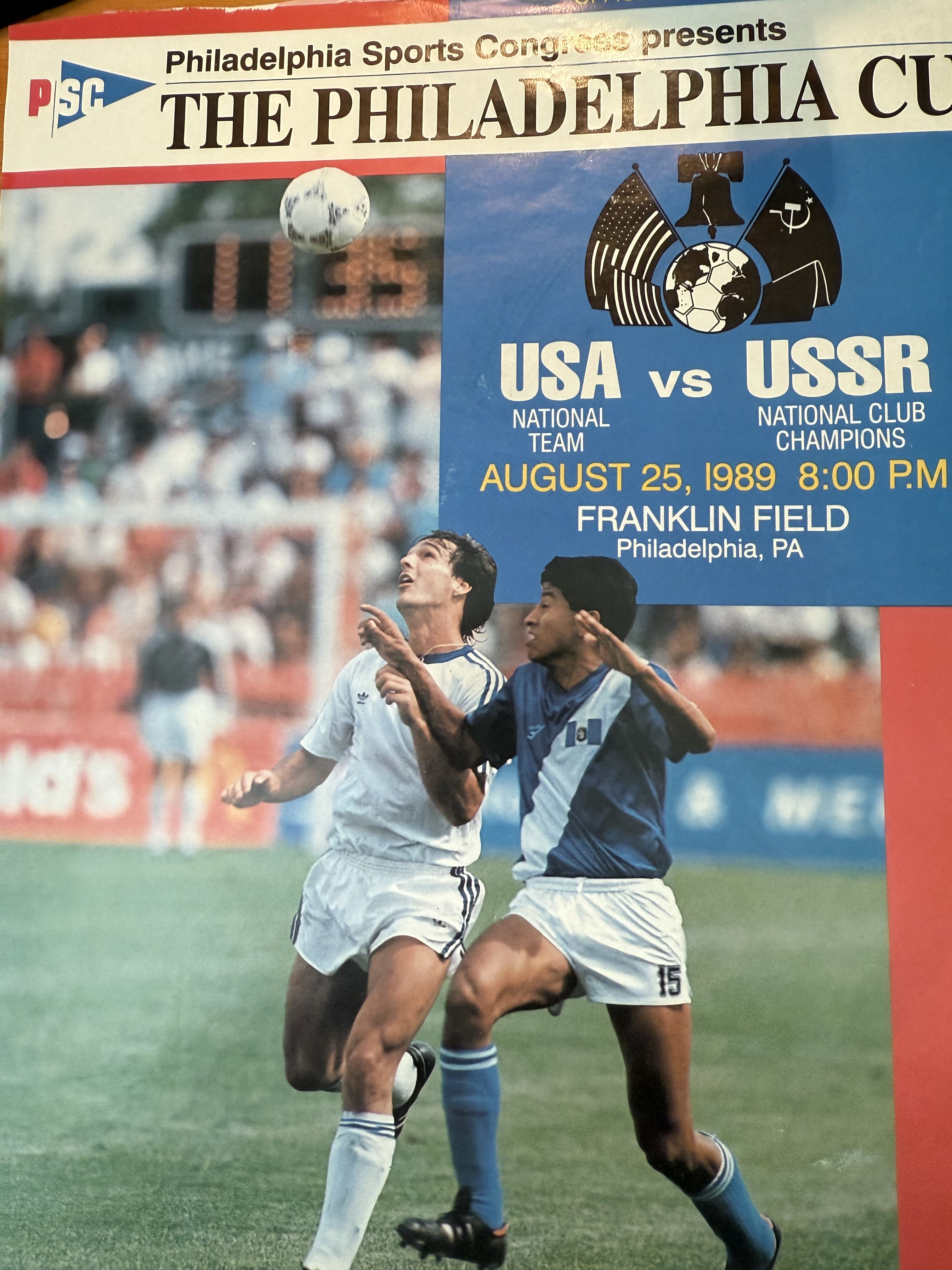
Under McGraw’s leadership, Philadelphia became one of the first major U.S. cities to host international soccer matches throughout the late 1980s and 1990s. They drew well, often with attendance numbers as high as 45,000.
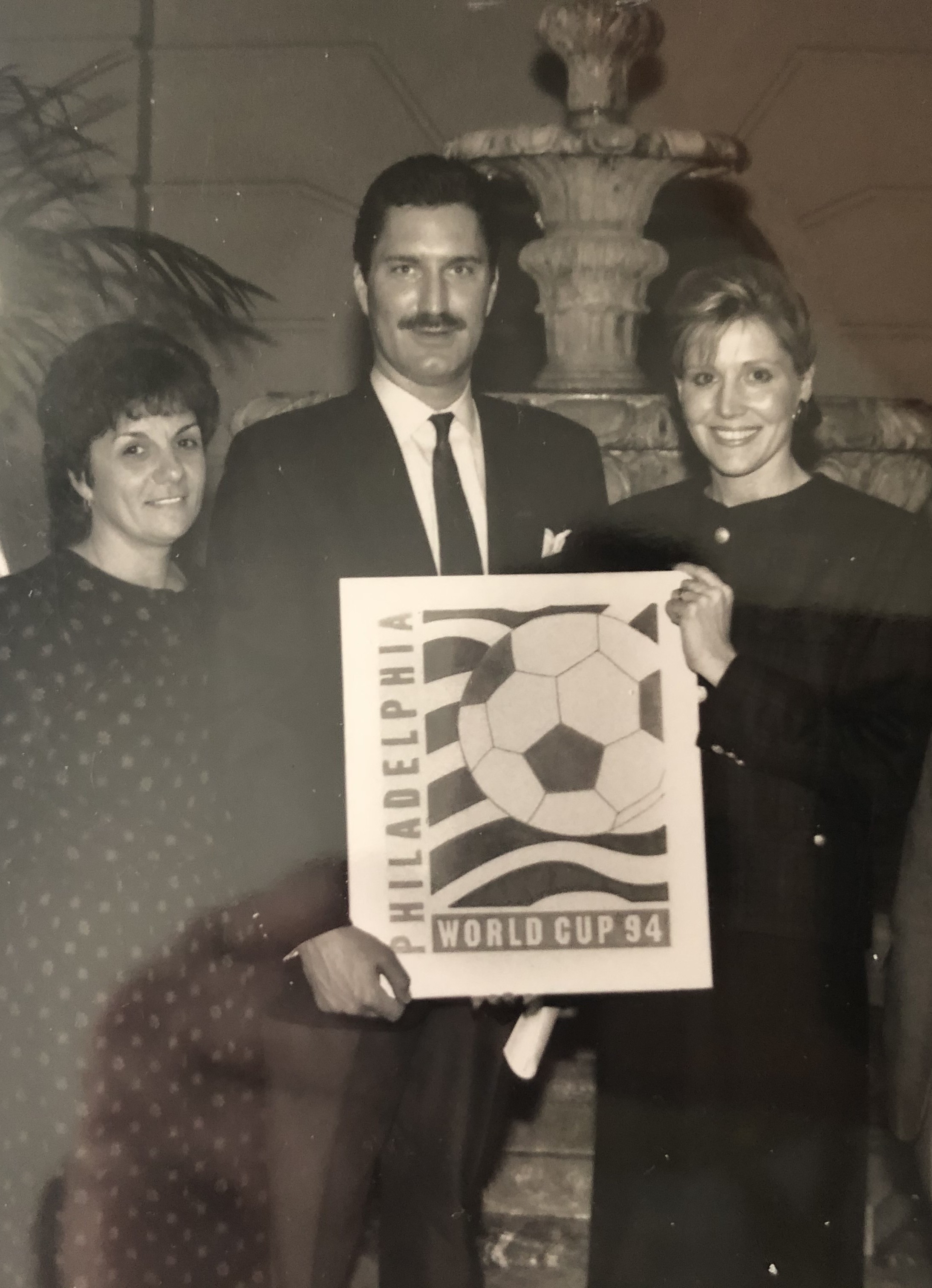
In the early 1990s, she was put in charge of Philadelphia’s bid to host the 1994 World Cup. The bid was unsuccessful, but McGraw did prove something in the process.
Major corporate sponsors like Aramark and Blue Cross helped fund the bid. It was clear that there was local interest in the sport. The timing just wasn’t right.
Now, it is. As Philadelphia hosts its first World Cup this month, McGraw is grateful to have played a small part.
“I was thrilled [to hear] that it was coming here,” she said. “Finally. We deserve to have it here. And I’m just sorry we missed out on it back then.”
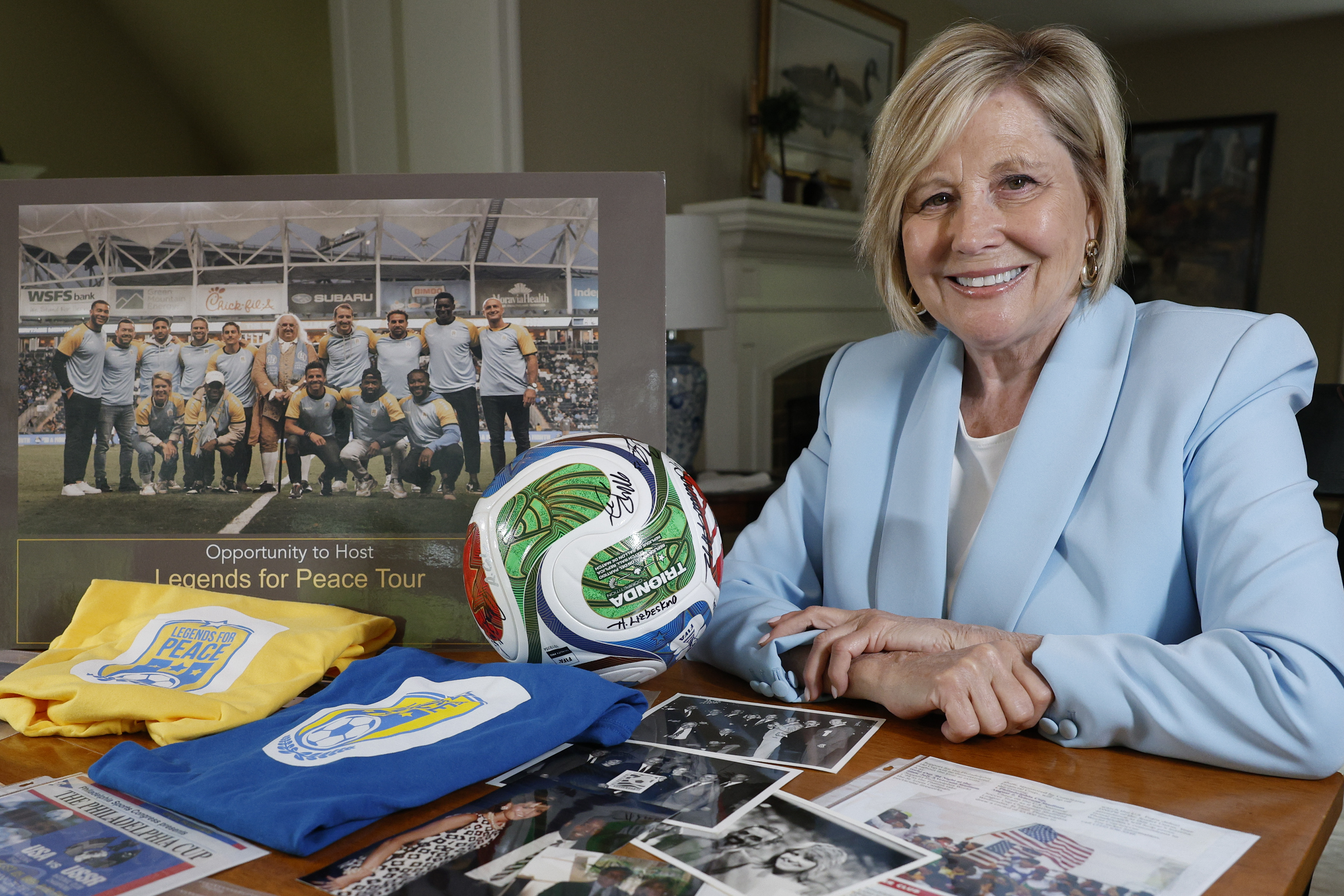
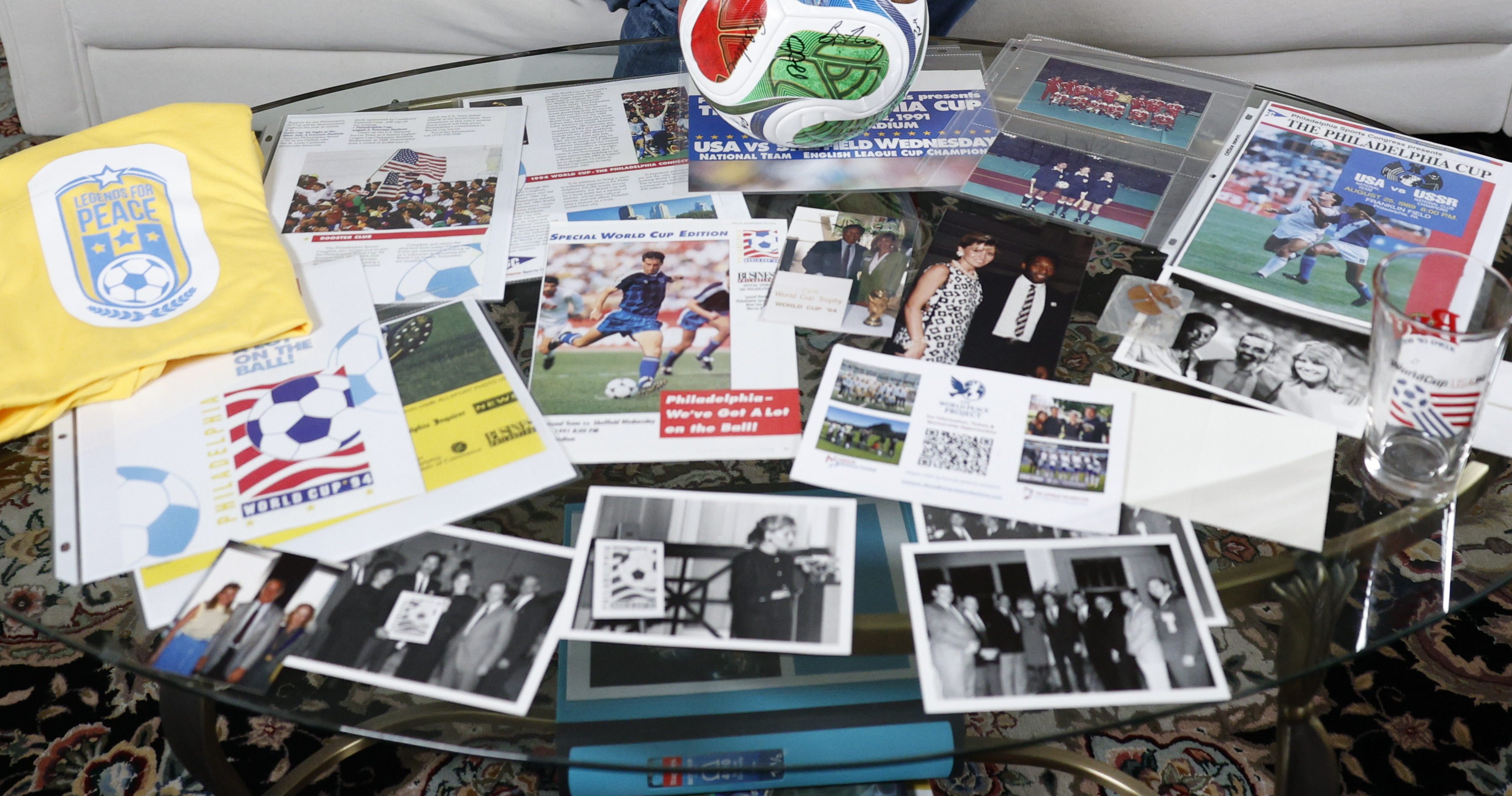
A look at materials that became Diane McGraw’s memorabilia from Philly’s 1994 World Cup bid.Steven M. Falk / For The Inquirer
From acting aspirations to a life in sports
McGraw’s entry into sports was unconventional. After graduating from high school, she worked part-time as a model, which landed her a few appearances on local daytime talk shows.
In1977, she moved to New York, determined to fulfill her acting aspirations. McGraw had no job and only a little money, but continued picking up modeling gigs here and there and was eventually hired as a personal assistant to the president of Sassoon Jeans.
Diane McGraw (right) shows the graphic for Philly’s 1994 bid for the World Cup at Veterans Stadium. Courtesy / Diane McGraw
Two years later, she left for a position at the Screen Actors Guild, thinking she could parlay it into a career in entertainment. That did not pan out, but the role did open some doors.
Not long after McGraw began her new job, she attended a networking event at East River Tennis Club. The pros, well aware that the SAG assistant had contacts, asked if she’d be open to organizing a pro-celebrity tennis tournament.
It was the first of many sporting events to come. McGraw started her own business, under her maiden name, Robertson Productions — of which she was the only employee — and taught herself everything she could about the industry.
She began with tennis, but quickly broadened her scope to other sports. This meant spending a lot of time with sponsors, and one day, while on the sidelines of a New York Cosmos game, McGraw had an encounter she’d never forget.
A small, athletically built man with a warm smile approached her and asked for an autograph. English wasn’t his first language, and McGraw realized that what he actually wanted was her phone number.
She demurred, giving him the business card for Gaylord’s Restaurant, one of the sponsors of the Cosmos game. The man walked away.
A few minutes later, Gaylord’s owner, Jati Hoon, returned with the same suitor.
Diane McGraw with soccer legend Pelé.Courtesy / Diane McGraw
“He says, ‘Diane, I want you to meet Pelé,’” she recalled. “I had no idea who he was.”
By that point, McGraw was fairly used to meeting world-class athletes. Through the tennis community, she’d gotten to know John McEnroe and Björn Borg, among other stars of the game.
But her run-in with the soccer phenom was different, in that it would come to a serendipitous conclusion decades later.
After a few more years of star-studded galas and tournaments, McGraw married her first husband, Jan Hovenkamp. He was a native of Holland, and the young couple moved to the Netherlands in1983.
She continued to plan celebrity tennis events, and at one of them, she met the president of AFC Ajax, a professional football club in Amsterdam. He suggested that McGraw bring “real football” to the United States and offered to help provide a team from Holland and Brazil.
When McGraw returned to Philadelphia in 1986, she kept this in mind and reached out to the general manager of Veterans Stadium about renting it.
It was a short conversation.
“He said, ‘Diane, we don’t like soccer here,’” McGraw said. “‘We’re the Philadelphia Eagles. We’re only football.’”
He directed her to the group that ran Franklin Field, which directed her to the Philadelphia Sports Congress. They agreed to support the project, if McGraw could find the sponsors.
She did, and in 1989, McGraw brought the first international soccer match to the Delaware Valley. Dubbed the Philadelphia Cup, thegame between the U.S. and the U.S.S.R. drew 43,000 people and was broadcast on WIP (94.1-FM), which at the time was on AM radio as SportsRadio WIP. (Holland and Brazil were unavailable due to scheduling conflicts).
The program for the 1989 Philadelphia Cup, which at the time was the first soccer match between the two nations. Courtesy / Diane McGraw
A year later, in 1990, McGraw organized another match, this time between Sheffield Wednesday and the USMNT. Forty-five thousand fans showed up.
The two matches netted over $500,000 and earned McGraw a job as executive director of the Philadelphia Sports Congress — as well as a new unofficial title.
“I ended up becoming the World Cup person,” she said.
A fortuitous encounter with Pelé
Because McGraw had successfully convinced two European soccer teams to travel to the City of Brotherly Love, the Sports Congress decided to have her lead their efforts to bid for the 1994 World Cup.
This was a daunting task, as Philadelphia had never hosted an international soccer tournament. But McGraw felt strongly that they had a case, and not just because of the attendance numbers from the 1989 and 1990 matches.
The congress had collected data from the Eastern Pennsylvania Youth Soccer Association, which showed that more than 100,000 local families were actively engaged in the sport.
McGraw couldn’t offer state-of-the-art facilities. But she did have an audience: a city full of passionate fans, who had shown they’d pack a stadium for events beyond American football.
It was a grueling process. The Sports Congress had to dole out $250,000 just to submit a bid. Once Philadelphia was approved, McGraw spent the next three years finding sponsors, mapping out hotels and security, as well as transportation and venue options.
As fate would have it, this role reunited her with a familiar face. In 1991, a group of soccer supporters testified in front of Congress.
Their goal was to convince the federal government to mint a commemorative coin as a means of fundraising for the World Cup.
Among those who testified? Pelé.
Pele, then with the New York Cosmos, waves to the crowd at Veterans Stadium in June 1975.Bill Ingraham
McGraw reintroduced herself and explained what she was trying to achieve. The three-time World Cup winner was on his way to a dinner, but before he left, he reached for his wallet and gave McGraw a gift.
It was a four-leaf clover.
“He said, ‘Diane, I’m going to help you get the World Cup to Philadelphia,’” she said with a laugh. “And then we got out of the car and I never saw him again.”
For a while, McGraw was optimistic — and not just because she had Pelé on her side.
The event organizer seemingly had an answer for every problem, even those as granular as the surface the athletes would play on.
(Astroturf wasn’t going to cut it.)
“We came up with a formula from a company here in Pennsylvania,” McGraw said. “They were going to grow the grass outside the stadium in trays, and bring it in, and let them fit it together. We had it all planned out.”
But there was one quandary she couldn’t solve. FIFA wanted control of the local stadiums for roughly two months. That ruled out the Vet; Major League Baseball was not about to send the Phillies on a road trip for six to eight weeks.
The congress didn’t have any other location to offer. The bid failed.
“I’ll never forget sitting in the boardroom of the convention and visitors bureau, with FIFA on the phone, saying, ‘These are our host cities,’” McGraw recalled. “‘We’d like to thank Boston. We’d like to thank so and so.’ They never mentioned Philadelphia.”
Diane met former Phillies reliever Tug McGraw in 1992. They were married three years later.
A full-circle moment
Diane met Tug in 1992. She was in the Sports Congress office, and the former Phillies reliever was picking up tickets for an ice skating event at The Spectrum.
He invited her to the opening of Oriole Park at Camden Yards in Baltimore. A day before they were supposed to leave, McGraw gave her a call.
“He goes, ‘I want to take you out to dinner first so we can have a predate, before our regular date,’” she said. “We went to some restaurant on South Street, just to get to know each other.”
They were married three years later. Diane’s job took her all over the country — from Florida to California — but Tug accompanied her every step of the way.
In 2003, their lives took a devastating turn, when Tug was diagnosed with a brain tumor. He died 10 months later at his son’s home in Tennessee. With two teenagers from her previous marriage and a 7-year-old to raise, it was an extremely challenging time.
But the widow saw it through. She immersed herself in motherhood and work, moving to Kentucky to lead the Louisville Sports Commission before returning to Philadelphia in2009.
Now, McGraw plans on enjoying the soccer tournament she almost brought here all those years ago. She isn’t on the host committee, but has found a way to take part in the festivities.
The organizer will be holding a watch party in South Philly on June 12 to stream the U.S. vs. Paraguay match. All proceeds will go toward the World Peace Project (an initiative McGraw started last year) to fund a youth sports summitin a few months.
It’s McGraw’s way of giving back. Her life has taken some difficult, unexpected turns, but she is grateful for the journey and will continue to savor it — four-leaf clovers and all.
“I want to thank Pelé,” McGraw said with a laugh. “Even though it all came [true] 30 years later.”
John Linehan and Kobe Bryant used to talk. A lot. This would not have been unusual for other AAU teammates, but these two were fierce high school rivals.
Linehan was a scrappy point guard for Chester. Bryant was a relentless shooting guard for Lower Merion. Both were competitive, almost to a fault, and in the days leading up to big games, they’d get chippy.
The week before the 1996 PIAA Class AAAA District 1 title game, for example, the players talked every day on bulky landline phones, with Bryant often calling Linehan at his home in Chester.
“I just said, ‘You know, John, I haven’t won a championship yet, and you have,’” Bryant told The Inquirer in 1996.
Linehan knew what his friend was doing. The future NBA star did the same thing a few weeks later, on March 19, a day before the teams met again in the state semifinal.
“He was trying to get me to trash talk,” Linehan said. “I think he needed a little edge. I didn’t want to give him too much. I was like, ‘Man, you crazy.’”
The late Kobe Bryant, a former Lower Merion basketball star, announcing he will go directly into the NBA draft out of high school.ALEJANDRO A. ALVAREZ / Staff Photographer
Lower Merion wasn’t a basketball school when Bryant arrived in the fallof 1992. It paled in comparison to the local powerhouses like Simon Gratz, Coatesville, and Chester.
But Bryant changed that. Even in his freshman year, a season in which the Aces went 4-20, he brought a new standard, working out before class and introducing a level of toughness that was foreign to his teammates.
Bythe mid-1990s, Lower Merion was among the best high school teams in the Philadelphia area. Its players were more confident, celebrating after big shots, and talking loud on the court.
The Aces didn’t play as many games against Coatesville, a rising power led by Rip Hamilton. They couldn’t consistently measure themselves against Gratz, which didn’t participate in the PIAA playoffs untilthe 2004-05 season.
But they could against Chester. And so, a decades-long rivalry was born.
From 1996 through the mid-2010s, Chester and Lower Merion put on some of the greatest high school basketball games in the area. They’d often sell out venues like the Palestra and Villanova’s Pavilion. Some fans would even scalp tickets.
Their communities were almost diametrically opposed. Chester was predominantly Black; Lower Merion was predominantly white. Chester was plaguedby poverty; Lower Merion was considered affluent.
Chester, with its Biddy League, had a legacy of basketball greatness, and a steady pipeline of talent. Lower Merion had nothing comparable. But these differences melted away on the court.
And while the rivalry is not what it once was, it lives on today.
“The pride and the intensity and the history will never fade,” said Lower Merion coach Gregg Downer. “I mean, if we played them tomorrow night, that would be an intense game.”
The Bryant-Linehan era
When Downer was named head coach in 1990, he already was well-aware of Chester’s tradition. He’d played youth basketball growing up in Media and had heard about the stars who’d come out of the Biddy League.
It was obvious that his team would have to go through the Clippers to win any sort of accolade. But it wasn’t until Bryant’s arrival that Downer’s aspirations became a real possibility.
The shooting guard, who was the son of former 76er Joe “Jelly Bean” Bryant, was mature for his age. He’d demand more, mentally and physically, of older teammates. Doug Young, a former Lower Merion forward, remembered seeing Bryant leaving the locker room at 7 o’clock one September morning in 1993.
He’d been at the high school gym since 5 a.m., working out by himself. To the Lower Merion basketball team, this was a “crazy” concept, so Young and his cohorts decided to join him.
In the District 1 championship game against Chester, Kobe Bryant goes to the hoop over the Clippers’ John Linehan.Jay Gorodetzer / Staff Photographer
They arrived the next day at 5:06 a.m. The players knocked on the door. Bryant didn’t answer.
“He wouldn’t open it,” said Young, who graduated in 1995. “You’re either there or you’re not. We were six minutes late.”
His teammates waited outside until 6:30 a.m., when the school opened. They made sure to show up before 5 a.m. from that day on.
Downer was wired the same way. The coach — and his NBA-bound pupil — would push the team in practice. Losses were particularly tough. The players would go through endless sprints and rebounding drills that sent them running to the trash can.
It wasn’t fun. But over time, the method created a newfound tenacity.
“No one walked into high school saying, ‘Oh, yeah, I want to win a state championship,’” Young said. “But [Kobe] knew what that was. He was like, ‘I don’t know any other way. If we’re not going to win a championship, what the heck are we playing for?’”
Chester was always going to be an obstacle, so Downer tried to play into the battle. He’d use analogies for the tough, hard-nosed team, comparing it to an animal stalking its prey.
The coach began to screen movies to underscore this point. Together, in a Lower Merion classroom, Downer’s players watched Jaws and other tales of survival, like The Edge, a 1997 thriller about a plane that crashes in the Alaskan wilderness.
“This bear is stalking them, and the couple is saying, ’What are we going to do about this bear?’” Downer said. “And one of them says, ‘The only thing we can do is kill the bear.’
“And I remember being like, ‘We can do this.’ But the only solution is to — not to be overly graphic — but to kill them.”
(The bear in this analogy was Chester.)
He added: “We tried everything humanly possible to get through to this team.”
The first few games were ugly. In 1995, Lower Merion met the Clippers in the District 1 championship, only to lose by 27 points. But they came back with a renewed focus the following year, in 1995-96, going 25-3 in the regular season to earn a district final rematch against Chester.
The Aces showed up at the arena with “27″ printed on their warmup shirts. Bryant, armed with fresh bulletin board material from Linehan, dropped 34 points against the Clippers en route to a 60-53 Aces win.
The shooting guard scored 39 points later that month — with a broken nose — in a 77-69 state semifinal win over Chester. Lower Merion went on to beat Erie Cathedral Prep, 48-43, to win its first state championship since 1943.
Kobe Bryant celebrates after defeating Chester at the Palestra in 1996 to advance to the state final.Ron Cortes / Staff Photographer
To Linehan, the difference Bryant made was obvious. He joked that he’d “never heard of Lower Merion” before his friend arrived. But once he did, Chester realized it would have to go to great lengths to prepare for the phenom.
Ahead of a big game against Lower Merion in the mid-1990s, the coaching staff reached out to Clippers alumnus Zain Shaw. He played at West Virginia and in Europe and possessed some of the same characteristics as Bryant — a tall frame and an athletic build with strong ballhandling skills.
The Clippers invited Shaw to practice, where he played the role of Bryant (to the best of his ability).
“Kobe was so special, we had to bring in a pro to help us prepare,” said Linehan, who later starred at Providence.
But there was another impact the future Lakers star had, one that had nothing to do with his own prowess. Linehan noticed that Bryant’s Lower Merion teammates started to take on some of his qualities. Suddenly, they were playing brash, confident basketball.
“We didn’t have reason to believe, until Kobe got there, that we belonged on the court with Chester,” Young said. “The fear was real. Teams were afraid of Chester because they’d run you out of the building.
“The idea of Lower Merion being on the court in a meaningful game against [them] was such a crazy thought. But then, you started to believe.”
The buzzer-beater heard ’round Chester
Bryant never got over the rivalry, even after he embarked on his Hall of Fame NBA career in 1996. Sometimes, he’d call the coaching staff before big games against Chester, leaving expletive-laden voicemails to use as motivation.
The Lakers shooting guard also created an incentive structure for his former team.
“You couldn’t get a pair of Nike sneakers unless you qualified for the playoffs,” Young said. “If you don’t earn it, you don’t get it.”
He became especially involved in 2005-06. After a lull in the early 2000s, Chester and Lower Merion found themselves neck-and-neck again. The Aces were led by the duo of Ryan Brooks and Garrett Williamson, and the Clippers boasted a deep roster, headlined by Darrin Govens. All of them eventually played in the Big 5.
(Chester was so stacked that it brought a 1,000-point scorer off the bench in Noel Wilmore.)
Students from the class of 2005 show their support as Chester and Lower Merion play in the state final. Hinda Schuman / Staff Photographer
The rivals met in the state championship on March 19, 2005. Despite strong performances from Williamson and Brooks, the Clippers pulled away in the second half thanks to a dominant third quarter from Govens. Chester won, 74-61.
The teams reconvened the following season with their competitive spark fully reignited. They faced each other three times that year. Chester took Round 1, a one-point regular-season victory on Dec. 27.
Round 2 was in the district final on March 3. Before the game, in front of a packed crowd at the Pavilion, Chester sophomore Karon Burton walked up to the layup line.
Lower Merion’s student section caught his ear with a chant about coach Fred Pickett’s stout stature.
The dig didn’t intimidate Burton. If anything, it fueled him. He grew up playing street ball in Chester and always loved trash talk.
Instead of cowering, like the crowd hoped, the sophomore delivered an unforgettable outing. The game went into overtime, and was tied at 80 with only a few seconds remaining.During a timeout, assistant coach Keith Taylor pulled Burton aside.
“He was like, ‘Hey, listen,’” Burton said. “They’re going to double Darrin. If you get that ball, do your thing.’”
Taylor’s words proved prescient. As Lower Merion’s defenders swarmed Govens, the Clippers inbounded the ball to Burton.
He took a pull-up jumper from beyond the arc and drilled it for an 83-80 win. The Chester fans stormed the court. Burton, who later joined Wilmore in the 1,000-point club, said he felt like a celebrity in his hometown.
“It was like watching a buzzer-beater in the NBA,” he said. “I just ran to my teammates, they picked me up. It was a crazy feeling.
“I’m a big Kobe fan, too. Kobe’s my favorite player ever. So when I came and I hit the game-winner on that team …”
Round 3 took place a few weeks later, in a state semifinal rematch at the Palestra on March 22. Bryant called Lower Merion’s coaches before the game.
“I don’t remember specifically what he said, but I’m sure there were a lot of [expletives] dropped,” said Young. “Like, ‘Don’t call me back if you don’t beat those [expletives].’ That was a line we heard from him a couple times.”
This one didn’t go Chester’s way. After trailing the Clippers, 47-37, at the end of the third quarter, the Aces came roaring back in the fourth and put up 33 points to eke out a 70-65 win.
The celebration in the locker room was cathartic. Water sprayed into the air. Players sat atop each other’s shoulders and turned the showers into a slip ‘n slide. Bryant called in, again, as other members of the 1996 team filtered through.
Darrin Govens scored his 1,000th point for Chester against Lower Merion in the state championship in 2005.Hinda Schuman / Staff Photographer
This was not how Govens wanted to end his high school career. And a few months later, when he arrived at St. Joseph’s on a basketball scholarship, he saw a familiar foe.
It was Williamson, his new Hawks teammate.
“We were sitting on the opposite side of the bench,” Govens said. “I didn’t want to sit next to him; he didn’t want to sit next to me. We’d kind of avoid each other and just head nod.
“Even in running drills, it was a competition. He looked to the left. I looked to the right. We tried to beat each other in sprints. But then we realized, ‘All right bro, we’re teammates now.’”
‘Hero status’
Chester had always rallied around its high school basketball team. Linehan said it was akin to playing for the Sixers. The teenagers were treated like professional athletes — especially those who had been a part of big wins.
The Clippers’ public address announcer, James Howard, called this “hero status.”
“All of a sudden, your money’s no good,” he said. “Barbers take care of you, make sure your hair looks nice before games. Free food. Little kids look up to you and ask for your autograph. That’s how it is.”
In Chester, there were plenty of heroes to draw from. There was Linehan, but also Jameer Nelson, who met a young Burton in the late 1990s. Nelson, a friend of Burton’s cousin, gave the aspiring basketball player a gift before he left for St. Joe’s: his MVP medal from the Chester summer league.
“He was one of the biggest guys in our city,” Burton said, “so it’s definitely something that I’ll always remember.”
By the early 2010s, when the rivalry was reignited for a third time, Lower Merion had built more of a basketball tradition. Aces guard Justin McFadden said he’d get stopped in Wawa before big games against the Clippers.
Chester celebrates its win over Lower Merion for the state championship in 2012. Steven M. Falk / Staff Photographer
“It became a community thing,” he said. “People would be asking, ‘What do you guys think about Chester? Do you think we can get it done?’”
In 2012, the schools met in the state championship for the first time since 2005. Junior forward and future NBA starter Rondae Hollis-Jefferson put up a double-double to lead the Clippers to a resounding 59-33 win over the Aces. It was their second straight title and their 58th straight victory.
A year later, after going 17-0 in the Central League, the Aces met the Clippers in the state final again. Chester had won 78 straight games against in-state opponents. Snapping that streak would be daunting, but Downer had a plethora of motivational tactics at his disposal.
Just as they had in the 1990s, The Aces again spent pockets of the season watching Jaws, The Edge, as well as an addition: Al Pacino’s “Inch by Inch” speech in Any Given Sunday.
“He would have that fired up on YouTube, ready to go,” McFadden said. “Looking back, [your reaction] is a chuckle, but in the moment, it worked. We knew that this was the hill that needed to be climbed.
“And every time they played that speech, we got goose bumps. We were ready to fire.”
Chester got out to an early lead, but Lower Merion rallied behind a 22-point, 11-rebound performance from B.J. Johnson, who later starred at La Salle. The Aces snapped the streak and won their seventh state title with a 63-47 victory.
Lower Merion’s Jaquan Johnson goes to the net as Diamonte Reason guards him in the Chester-Lower Merion state championship game in 2013.Elizabeth Robertson / Staff Photographer
The Clippers then were coached by Larry Yarbray. Pickett, who was diagnosed with cancer in2010, was in declining health. Just before he died in 2014, Downer decided to say goodbye.
He and his former assistant coach Jeremy Treatman drove out to Pickett’s home in Chester. They went to his bedside.
“And we talked,” Downer said. “And we held hands. It was a really touching moment for me. This is a man that carried Chester on his back. That tried to carry Lower Merion on his back. And I knew it was the last time I was going to see Fred.
“We walked out the door, and we told each other that we loved each other. And I never thought he would say that to me, or vice versa. But it was just kind of like, ‘You know what? We’ve had some amazing battles, and there’s a lot of respect there.’”
Keeping the tradition alive
In recent years, the Chester-Lower Merion rivalry has diminished.
There was a brief period when the teams were in different classifications. Both programs have lost players to private schools that can recruit, and the addition of the Philadelphia Catholic League to the PIAA has made the state playoffs more competitive.
One place the Aces and Clippers could meet is in the district tournament, where they reunited in 2024. But they haven’t played each other since. And Howard says the contests don’t have the same feel.
“Both teams have lost D-I talent,” he said. “It’s not as high-flying, above the rim, as it was in the past. But still a great game. Sold out at Lower Merion, and at Chester, same thing.”
The history will always be there, though, and Burton is doing his best to keep it alive. His 8-year-old son, Karon Burton Jr., is playing in the Biddy League. His father is his coach.
Sometimes, they go on YouTube and watch old Clippers games. Junior’s favorite, of course, is the 2006 district final.
Burton believes that his son has a promising future, but isn’t sure of where he’ll go to high school yet. He doesn’t want Karon Jr. to feel obligated to follow his father’s path.
But if it worked out that way, what a story that would be.
“I’d love to be the first father and son to have 1,000 points,” Burton said. “With the same name? That would be crazy.”