The island of St. Thomas and the city of Cornelia, Ga., seem different in almost every conceivable way. One is surrounded by the turquoise waters of the Caribbean Sea; the other, tucked into the foothills of the Blue Ridge Mountains.
One has yearlong heat and humidity; the other has four seasons. But the two communities, roughly 1,600 miles apart, share an unlikely similarity. Both played a role in Alex McFarlane’s journey to the Phillies.
McFarlane was born and raised on the eastern side of St. Thomas. It was hardly a baseball hotbed; only 16 of the sport’s 23,804 big leaguers have come from the Virgin Islands. Nevertheless, word of his athleticism — and arm — spread quickly.
There were early signs. As a boy, the future Phillies reliever would spend his days with a milk carton full of tennis balls, fooling around with different grips, and throwing them against the side of his garage.
His mother, Tami Noel, had to get the siding replaced because of the dents imprinted by her hard-throwing son. “He beat the crap out of it,” said McFarlane’s former math teacher, Liz Elger.
In the seventh grade, during a dodge ball game, McFarlane accidentally beaned a classmate in the head. Of course, he was not the only culprit. Plenty of other middle schoolers were slinging red projectiles across the gym.
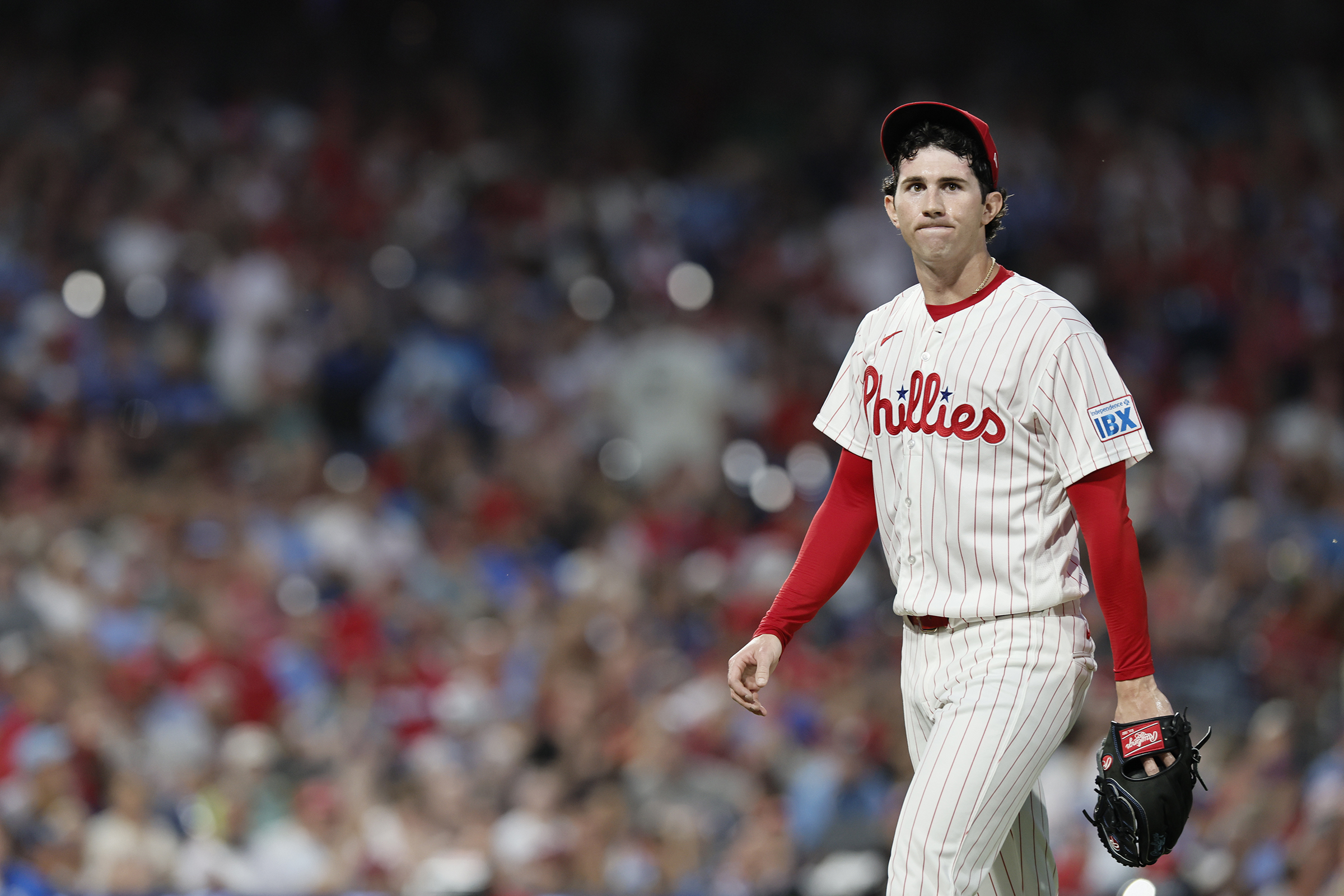
Phillies rookie reliever Alex McFarlane had a 2.84 ERA in 19 games during the regular season.Elizabeth Robertson / Staff Photographer
But none were slinging with the force McFarlane was. And the kid who got hit looked “dazed,” according to Elger’s husband, Joey, who taught the future big leaguer P.E. and history.
“It wasn’t like a concussion,” he said, “but we had to go to softer balls.”
When he was 15, one of McFarlane’s coaches in St. Thomas connected him with Team Elite, a travel team out of Georgia. Up until that point, he’d only played recreational baseball; high school baseball didn’t exist at his academy.
Team Elite provided plenty of exposure (he committed to the University of Miami his junior year) but also had its limitations. McFarlane couldn’t experience the ups and downs of a full season. Their program was more about development and garnering scouts’ attention than winning a championship.
High school baseball was where most players learned this side of the game. But it was never an option for McFarlane, until tragedy struck his hometown. In September of 2017, two Category 5 storms, Hurricane Irma and Hurricane Maria, hit the Caribbean.
St. Thomas was destroyed. It took over 100 days to fully restore power. The island was crowded with trucks, helicopters and military equipment. The already-limited athletic facilities were being used as staging grounds for FEMA.
Liz Elger moved back to her hometown of Cornelia, Ga., with her young daughters, while her husband helped with relief efforts. McFarlane stayed with his family, making sure they were settled.
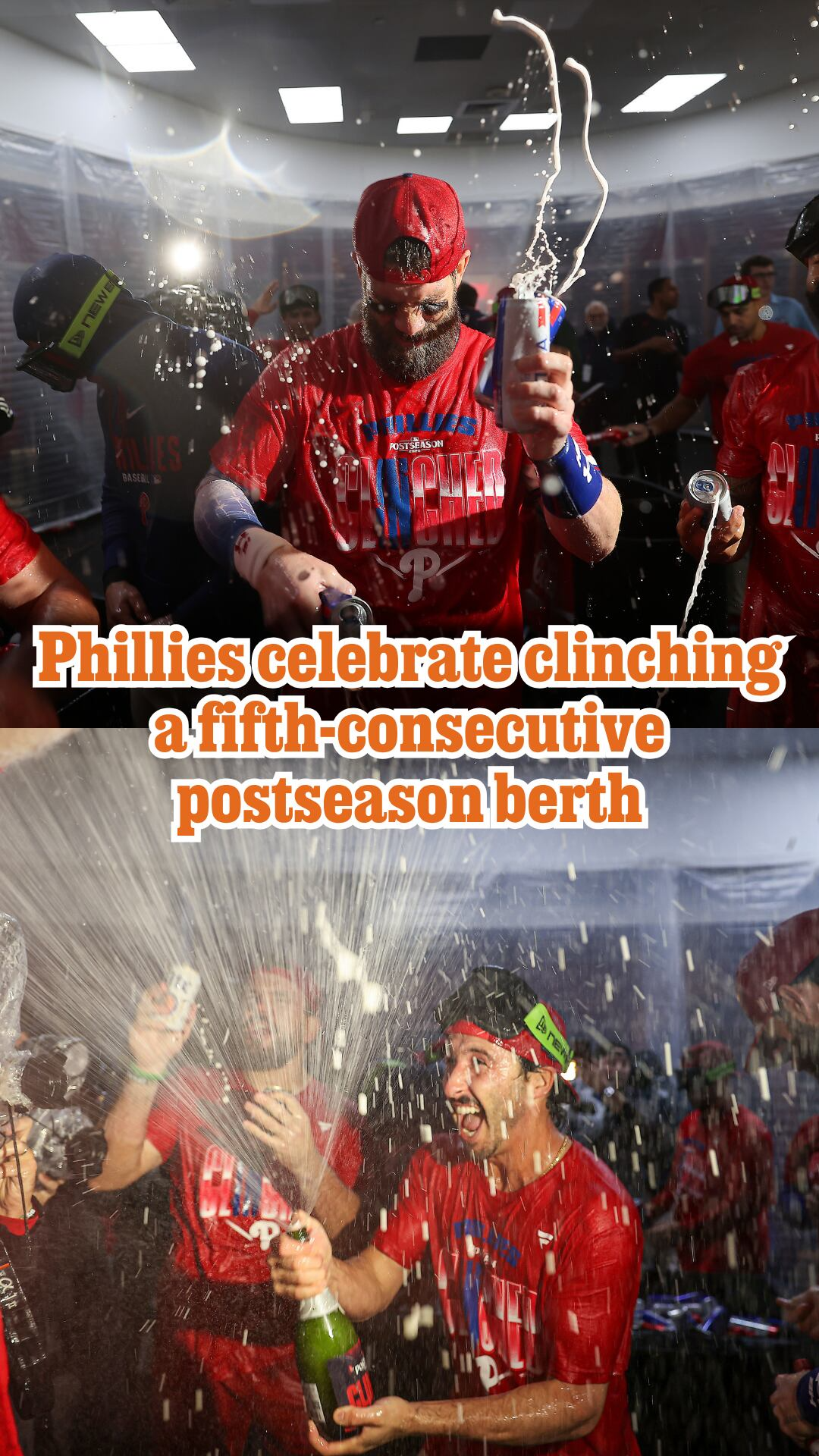
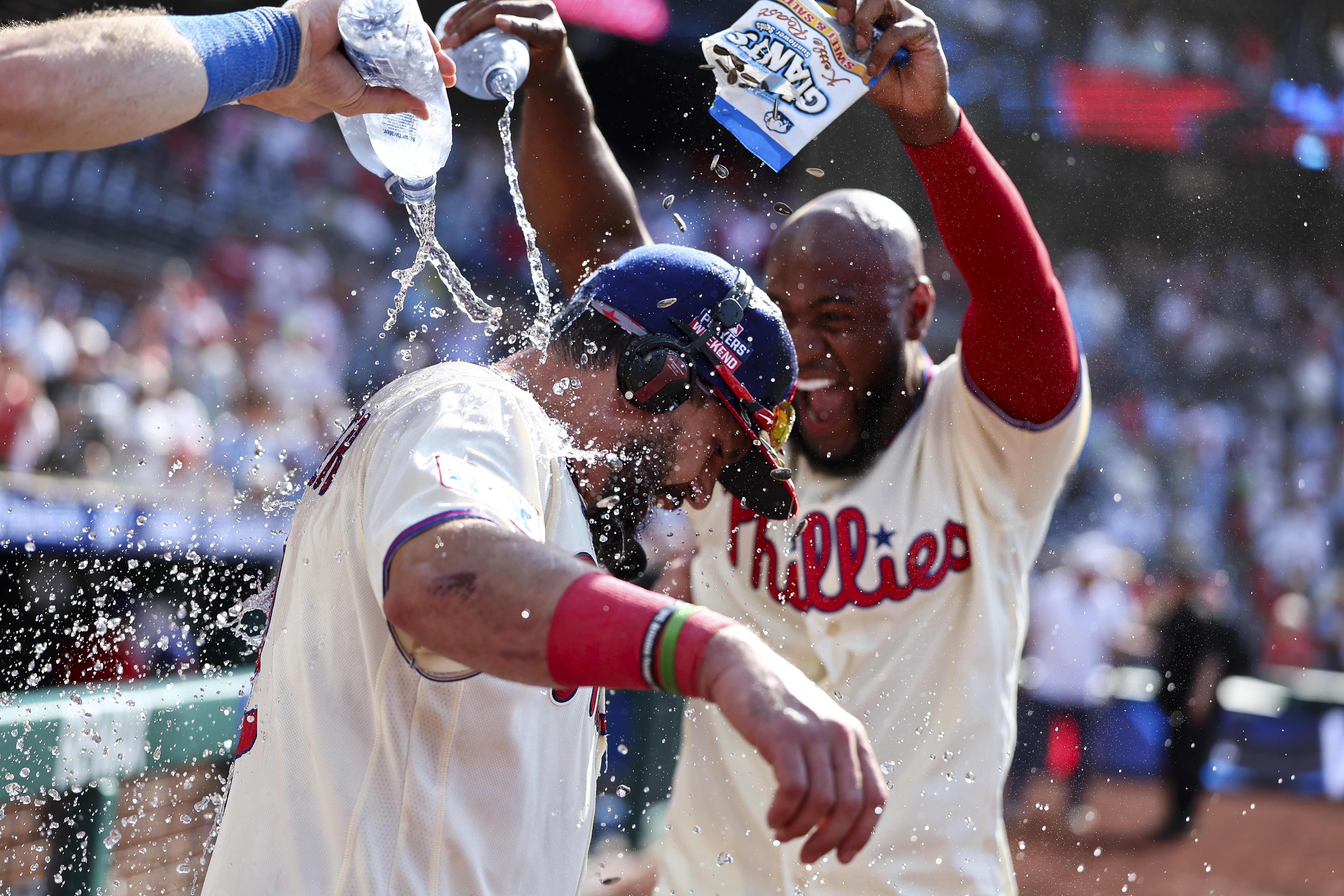
Video: Phillies celebrate clinching a fifth-consecutive postseason berth
In 2018, the pitcher decided to take a risk. He was about to embark on his senior year, but would have little access to baseball or physical training on the island, due to disaster recovery efforts.
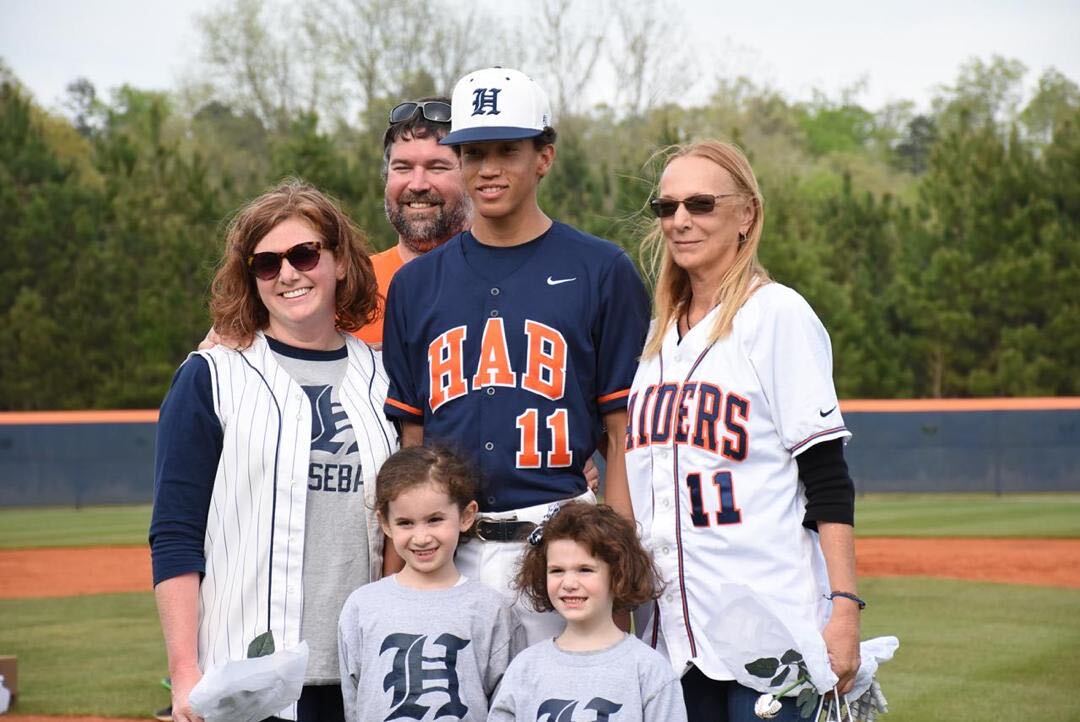
So, his mom reached out to the Elgers and asked if her son could stay with them. McFarlane moved to northeast Georgia that fall, living with Atlanta Braves fans, while playing for Habersham Central High School.
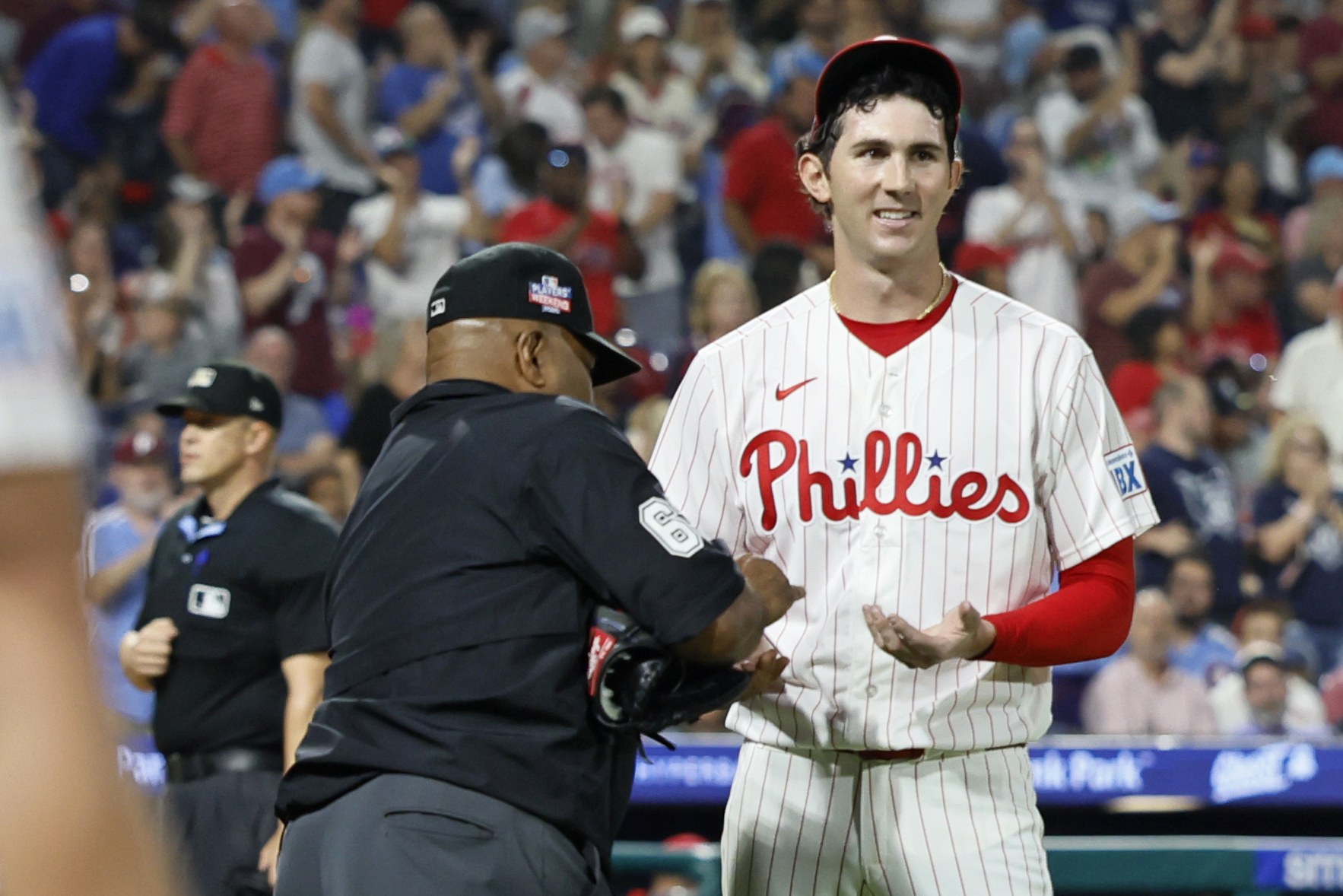
And this week, McFarlane, a 25-year-old rookie who has emerged as a trusted reliever for the Phillies, will face their favorite team in the National League wild-card series, 80 miles south of the mountain town he once called home.
“A huge credit to them for taking me in, and helping me out,” McFarlane said. “It’s something that I’m forever grateful for.”
Alex McFarlane and the Elger family in the summer of 2025.Liz Elger
A ballplayer who could do it all
The Elgers have worked as international educators for the past 16 years. They’ve taught everywhere from Saipan to Lithuania to Tanzania, where they’re based now.
But before they traversed the globe, Liz and Joey were two Habersham students who loved the Braves. This was especially true for Joey, a bat boy for the team in the 1980s.
He was a baseball broadcaster for Stanford throughout college, and an intern at the Baseball Hall of Fame after graduating, but eventually returned to Habersham with Liz in 2005 to accept their first teaching jobs.
When the couple moved to St. Thomas in 2012 to work at the VI Montessori School & Peter Gruber International Academy, they found a community that was just as tight-knit as Cornelia.
The school’s principal called it a “three-legged stool.” Because the academy was small, with only 400 students from pre-K to 12th grade, it had a strong sense of cohesion. Parents and teachers would often see each other socially.
This is how the couple got to know Noel, a small-business owner on the island.
McFarlane was not the first St. Thomas athlete the Elgers took in. In 2017, Liz was contacted by the mother of two aspiring soccer players, Quinn and Grant Farrell, who asked if they could stay with her in Georgia.
Grant spent his senior year playing for Habersham, and soon secured an athletic scholarship at Division II Emmanuel University, in nearby Franklin Springs, Ga. The high school’s baseball coach, Chris Akridge, took notice.
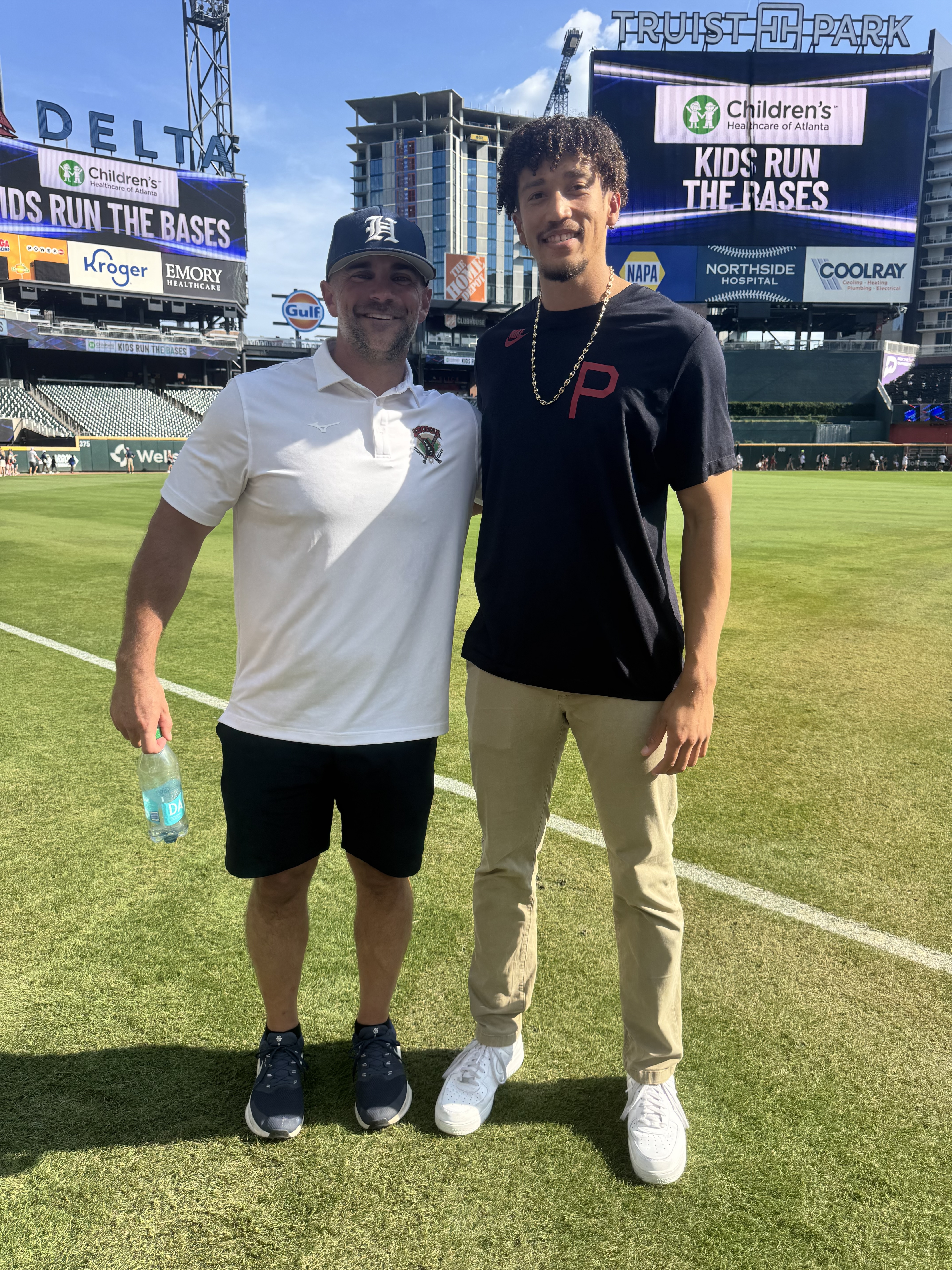
Alex McFarlane with his high school baseball coach at Habersham Central, Chris Akridge, in Atlanta earlier this month.Chris Akridge
“Chris was kind of teasing us,” Joey said. “‘Do you know any baseball players?’”
As it turns out, they did. By the fall of 2018, McFarlane was at Habersham’s workouts. To Akridge, the timing was almost too good to be true.
The Raiders had only secured one playoff berth in their last 50 years. They’d recorded only one winning season in their last six. All of a sudden, Habersham had a player who could do it all: hit leadoff, roam center field, and start every seven days.
McFarlane led his team in all offensive categories, batting .480 with a .570 on-base percentage, and a 1.270 OPS. He led (or tied) his team in all pitching categories as well, posting a 1.80 ERA with 68 strikeouts and a 1.074 WHIP across 10 starts.
Even as a teenager, he emanated the toughness he’d later show as a Phillie. Akridge remembers one outing, against Appalachee High School, when McFarlane gave up a cheap home run to an eight-hole hitter in the third.
At first, he looked rattled. Then he settled in, and threw a complete game in a comeback victory. The next day, McFarlane approached his coach at school.
“He said, ‘You know, coach, that was awesome,’” Akridge recalled. “‘I’ve never experienced anything like that.’”
Joey and Liz and their daughters, Grady and Niall, attended every game, often FaceTiming Noel so she could see her son pitch. They quickly realized that they were not alone.
Joey Elger grew up a big Braves fan, and even served as a bat boy for the team in the 1980s.Joey Elger
When McFarlane took the mound, scouts flocked to Habersham; usually 20 to 25 of them, leaning against the fence and crowding the stands. They began to visit the Elgers’ home, talking to the prospect at their living room table.
Because Noel was back in St. Thomas, Joey and Liz supervised these visits. This led to some interesting encounters. One afternoon, former Braves infielder Keith Lockhart showed up to their door.
He was scouting for the Chicago Cubs. Liz asked the former big leaguer if he wanted any water, and went to the kitchen to grab a cup. The one she chose happened to be a giveaway from the 2001 NLDS, when Lockhart was on the Braves’ roster.
“It was a plastic cup, and he was on there,” she said, laughing. “It was a picture of their celebration after they won.”
Scouts would often ask McFarlane who his favorite player was growing up. The young pitcher didn’t hesitate, and as a Braves fan, Joey never forgot his answer.
“Chris Sale,” he recalled. “And I remember him mentioning his approach as much as anything. He said that he just had such an even keel out there. Watching him, he never felt like he was out of control.”
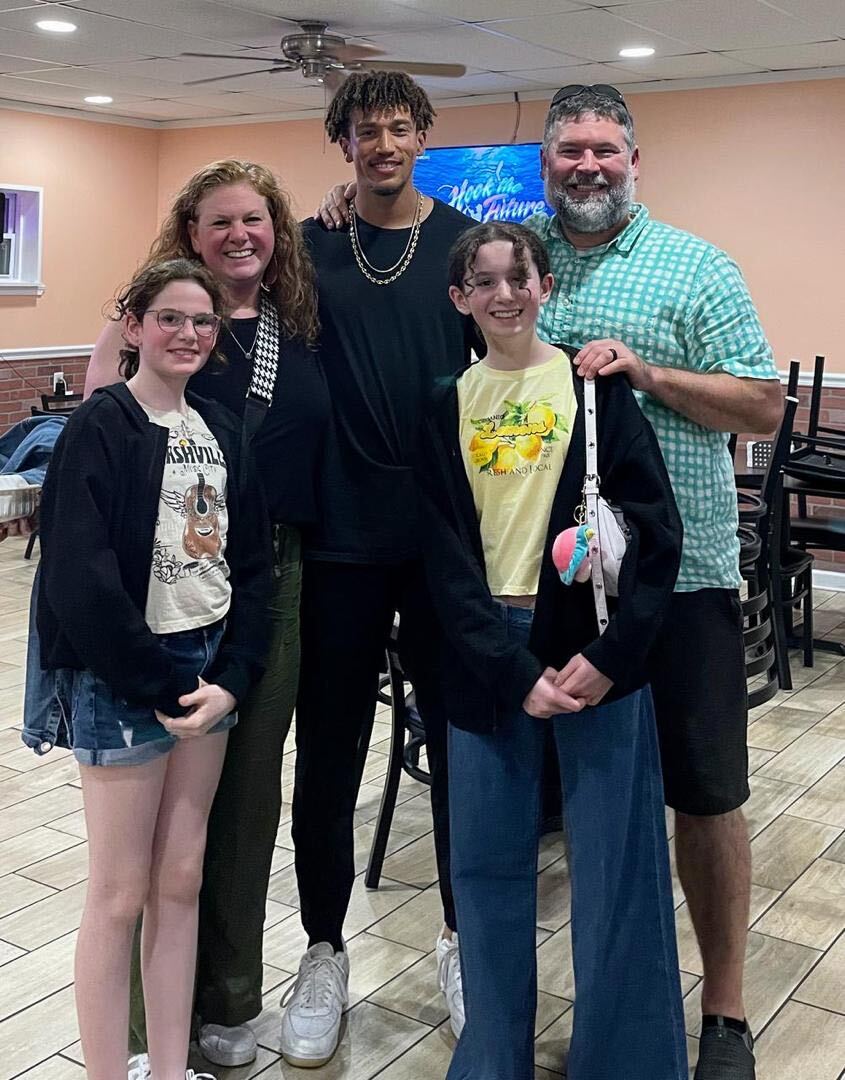
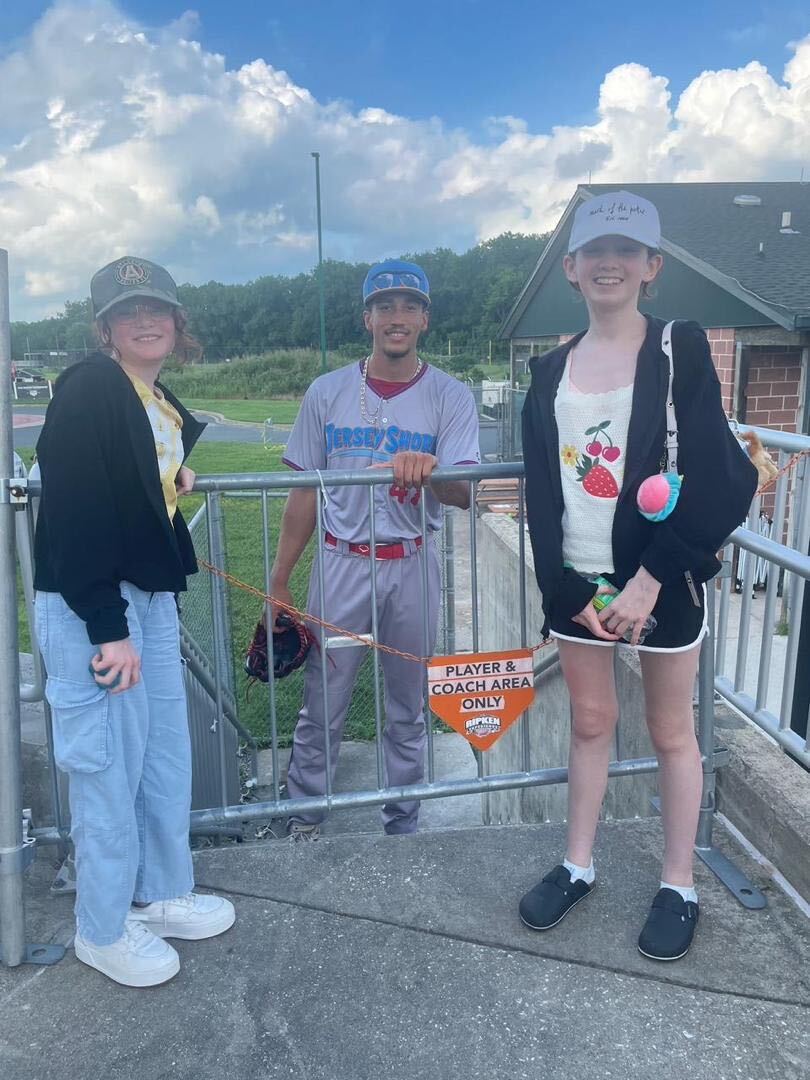
Grady Elger (left), Alex McFarlane, and Niall Elger at a Jersey Shore BlueClaws game in 2025.Liz Elger
From Braves fans to Phillies fans
After McFarlane graduated from Habersham in 2019, and attended Miami, the Elgers moved to Lithuania for another teaching assignment.
They still managed to keep track of their favorite pitcher though, sending texts after his outings, and catching the occasional minor league game whenever they were back in the United States.
In the summer of 2025, they drove 10 hours from Georgia to Aberdeen, Md., to watch McFarlane pitch for single-A Jersey Shore. His game was rained out, so they found a Caribbean restaurant nearby and reminisced over dinner.
The family stayed for his game the following night, before flying to Tanzania, where they now live. They have become somewhat accustomed to seeing McFarlane in a baseball uniform, but what he’s done for the Phillies has been surreal to them.
And the Elgers have seen real growth in his demeanor. Joey pointed to the home run McFarlane gave up to the Braves’ Ronald Acuña on Sept. 6 as an example.
“When he started pitching in the Phillies organization, we noticed that the stuff that had just happened [in the game] was gone,” Elger said. “And he really was able to reset himself. I think probably three or four years before, if that Acuña home run had happened, we would have tensed up, ourselves.”
Rookie Alex McFarlane has quickly emerged as a crucial part of the Phillies’ bullpen.Elizabeth Robertson / Staff Photographer
Now, not so much. McFarlane had one of his best outings of the season just over a week later, when he struck out the Mets’ Juan Soto on three fastballs. Elger woke up in East Africa to a slew of text messages from family and friends.
He had to watch the video twice to believe it. So did Akridge, who sent the clip to his entire coaching staff.
“It’s crazy that seven years later, here he is, blowing the ball by Juan Soto,” Akridge said. “It’s amazing.”
The Elger and the Akridge families will be following closely on Tuesday night, from opposite corners of the world, as McFarlane goes up against their favorite team (and his favorite pitcher).
But they won’t waver in their support. Even if it comes at the expense of the Braves.
“We will be rooting for the Phillies with all of our hearts,” Liz said.
Joe Mihalich loves coffee. Dunkin’, specifically. For years, it has been part of his morning routine: picking up a large decaf, hot, with cream, en route to a basketball arena.
Employees at his home Dunkin’, in Mt. Airy, call him by name (“Mr. Joe”). One server, in Flourtown, gave him a black beanie hat with the company’s logo stitched in, as a modest token of appreciation.
Mihalich would usually order ahead on the app, but sometimes, he’d go to the counter, and stick around for refills. He’d often do this before heading to the gym at Hofstra, where he once worked as a head coach.
It was a simple task that gave him joy. Until it wasn’t.
On Aug. 15,2020, the former La Salle point guard was standing in his Long Island driveway, when he suffered a hemorrhagic stroke in his brain.
He underwent an emergency craniectomy; a surgery in which part of the skull is removed to relieve pressure. He came home in a wheelchair, wearing a helmet, unable to say anything but “yes” or “no.”
Mihalich was 64 years old and leading a Hofstra team that had won back-to-back CAA titles. He was on pace for 600 career wins, with likely a decade of basketball ahead. In an instant, that trajectory ceased. How can you coach if you can’t talk? If your right hand is no longer able to draw up plays?
Joe Mihalich was robbed of his voice while coaching at Hofstra… if only temporarily. Nick Wass
Every routine, big and small, was disrupted. Instead of going to practice, Mihalich went to speech, physical, and occupational therapy. Those daily trips to Dunkin’ became infrequent; he couldn’t drive himself, or dictate what he wanted to drink.
Compounding this was the fact that the stroke didn’t affect his cognition. Mihalich was as sharp as he was before. He could still draw up schemes in his mind. He still preferred zone defense over man, and a four-out, one-in offense over three-out, two-in.
He just couldn’t say it. Doctors expressed skepticism that the coach would ever walk or talk at length again. The likelihood of him returning to even a modicum of independence was slim.
But Mihalich decided to throw himself into the challenge, as if he were preparing for a big game. He started working with a speech language pathologist twice a week.
He took his physical therapy seriously, so much so that he was able to go from a wheelchair to a walker, and from a walker to unassisted walking in just over a month.
He gradually began to visit his old haunts. The coach can still remember the day he went back to Dunkin’. It was 2021, in the Garden City location on 7th Street.
Joe Mihalich cries as he recalls his wife and family’s support for his recovery, in a conversation with The Inquirer last month. Isaiah Vazquez / For The Inquirer
Mihalich walked up to the counter with trepidation. What if the attendant couldn’t understand him? What if he was holding up a line? To prepare, he memorized five words that deep down, he knew by heart: “Large decaf, hot, with cream.”
“I had to repeat it twice,” Mihalich said, “but it was OK.”
In 2021, after taking a medical leave, he returned to Hofstra as a special adviser to the athletic director so the basketball program could transition to Mihalich’s assistant, ex-Sixer Speedy Claxton.
In 2022, La Salle offered Fran Dunphy its head coaching job. He said he wouldn’t take it without Mihalich, a lifelong friend and former Explorers player with whom Dunphy had worked when both were assistant coaches in the 1980s.
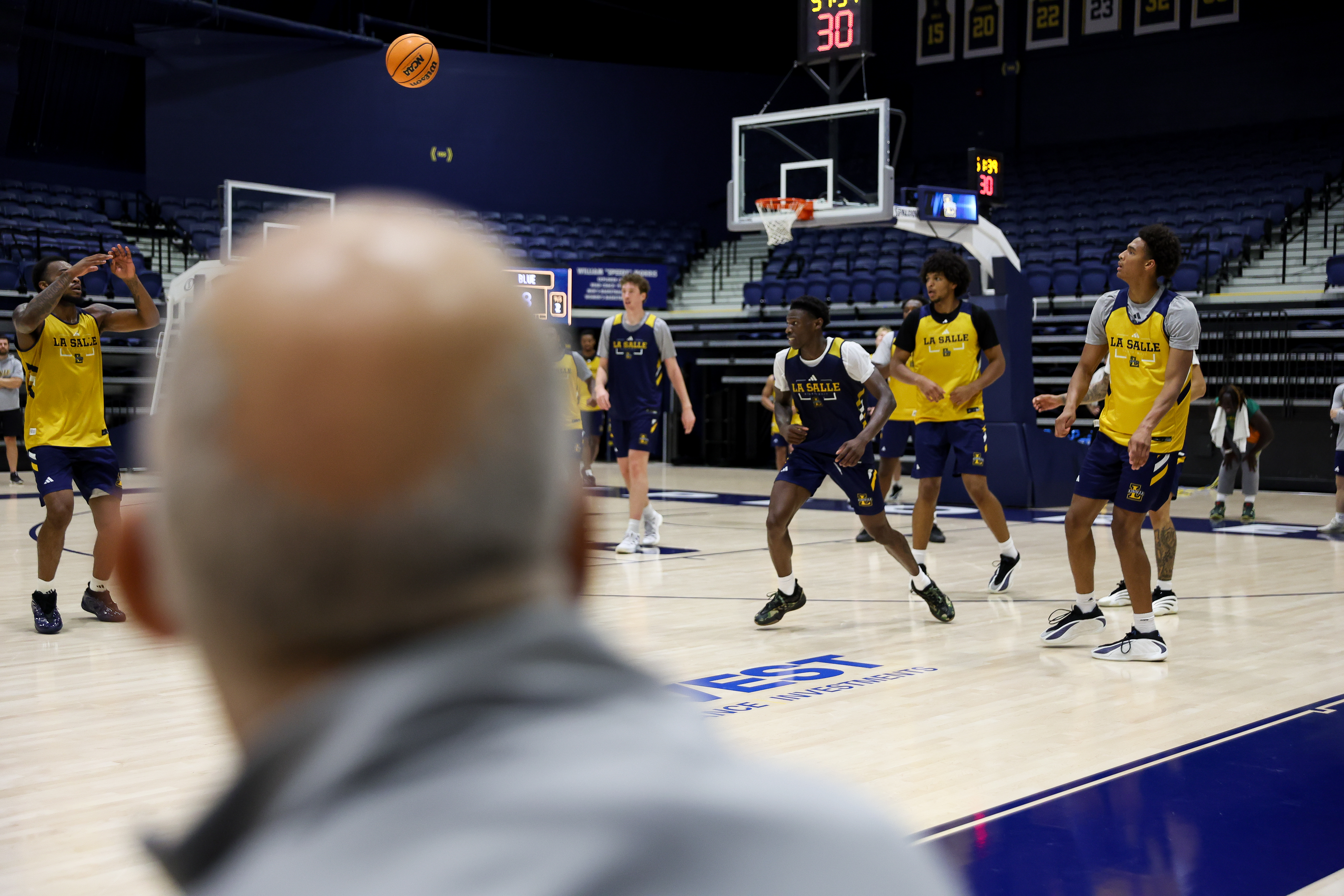
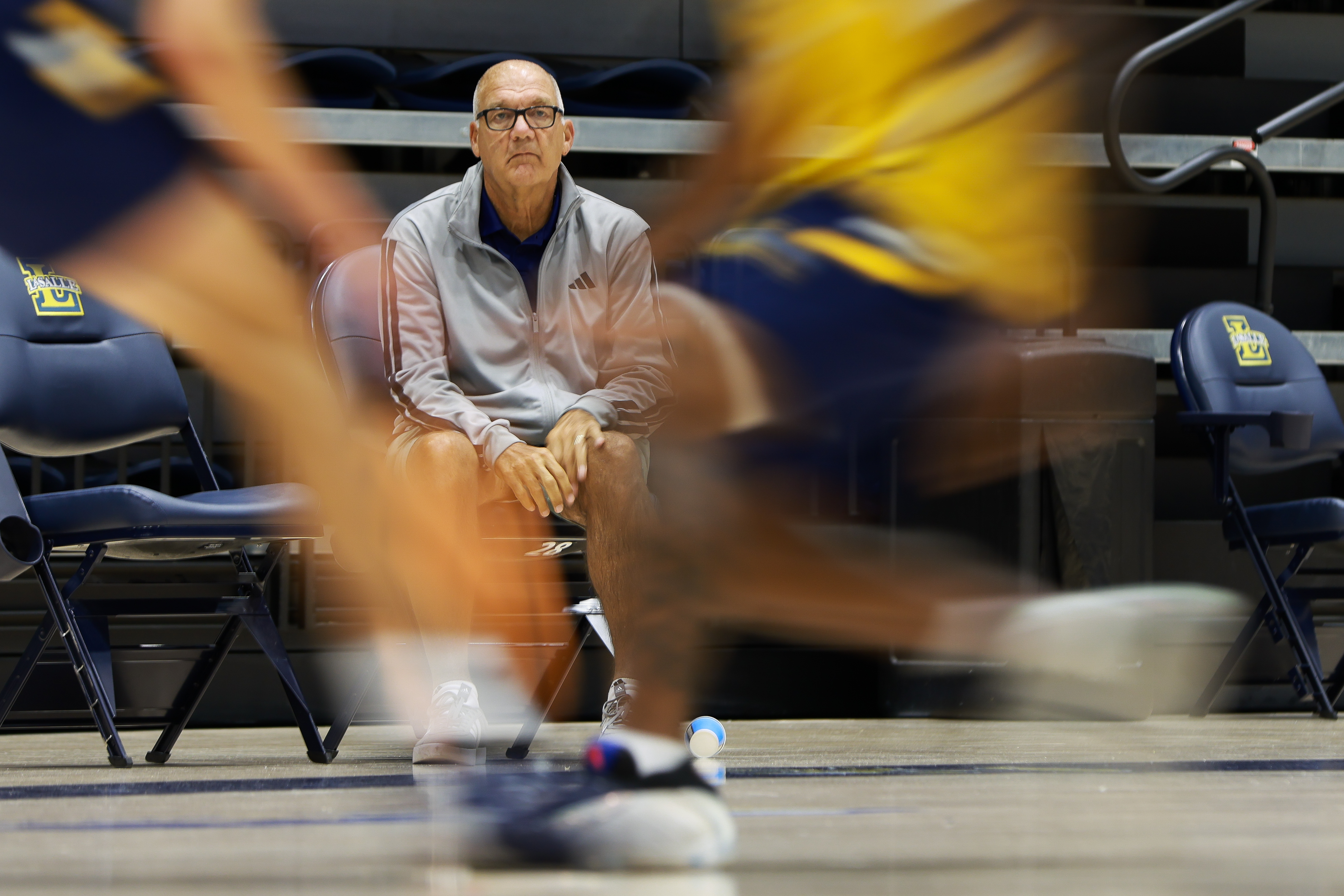
Mihalich has been with the university since Dunphy brought him aboard. He’s at all of La Salle’s home games and practices, doesn’t skip a coaches’ meeting, and is always unafraid to share his thoughts.
After his day is done, typically around 6 p.m., Mihalich heads to theschool’s speech therapy clinic. Those who’ve worked with him say the progress he’s made is rare, given the severity of his brain injury.
Joe Mihalich looks on from the bench during a La Salle practice earlier this month. Isaiah Vazquez / For The Inquirer
And he’s not finished yet.
“It’s kind of like, ‘You can’t do this?’“ Mihalich said. ”Well, watch me. Watch me.”
Born to be an Explorer
Mihalich was introduced to 20th and Olney at 2 weeks old. His father had gotten a job as a philosophy professor, moving the family from Washington, D.C., to Philadelphia.
They lived on Chew Street in Mt. Airy, a short drive from La Salle. As a child, Mihalich spent most of his time on campus. This remained true until he graduated from the university in 1978.
Fourof his six siblings were students at La Salle; so was Mary, who would become Joe’s wife, and worked as a water girl for the men’s basketball team.
Before Mihalich joined that team, he followed it religiously. The La Salle College High School student regularly attended games at the Palestra. His favorite player was Dunphy, a fellow point guard who made smart decisions and played steady defense.
Mihalich joined the Explorers in 1974 as a walk-on, receiving a basketball scholarship the following semester. After graduating, he took a coaching job at DeMatha Catholic High School in Maryland, where he served under future Hall of Famer Morgan Wootten.
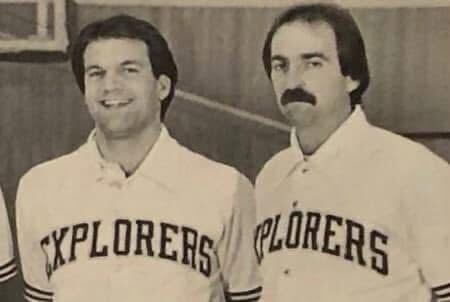
Joe Mihalich (left) and Fran Dunphy were La Salle alums who bonded as members of the Explorers’ coaching staff.provided by La Salle University
In 1981, Mihalich was hired as an assistant for Lefty Ervin at La Salle. Dunphy joined him in 1985, and both men stayed on when Speedy Morris became head coach in 1986.
Together, the two young assistants worked 10- to 12-hour days out of the second floor of Hayman Hall, watching film and meeting with recruits.
They embarked on long road trips to evaluate high school players in Pittsburgh, where the Five-Star Basketball Camp was held. This gave them ample time to get to know the Pennsylvania Turnpike and each other.
Over those 300-plus mile drives, Dunphy and Mihalich mused about someday leading a Division I men’s basketball program.
“I wonder what it’s like,” Dunphy said. “I wonder what kind of pressure the head coach is under, that we’re not seeing. We had great faith in both Lefty and Speedy, when we were together.
“But also knowing that if we ever got that opportunity, we might do it our own way.”
They eventually earned their chance, hundreds of miles apart. Dunphy was named head coach at Penn in 1989, and Mihalich was hired by Niagara University in 1998.
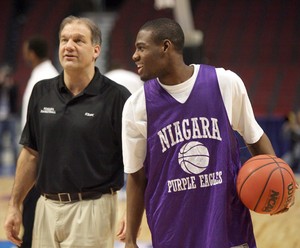
Joe Mihalich (with guard Tyrone Lewis, a product of Truman High in Bucks County) imported an exciting brand of offense when he arrived at Niagara.
The Mt. Airy native immersed himself in the community, going so far as to become a diehard Buffalo Bills fan. He developed a quick-paced, efficient offense, which frequently ranked among the top 75 in the country in offensive rating, according to KenPom.
But even from Western New York, Mihalich never lost touch with his roots. He’d recruit primarily from where he was born (D.C.) and where he was raised (Philadelphia), often targeting kids who were overlooked by the Big 5.
At Niagara, they flourished.
“He would develop them like crazy, from their freshman year to their senior year,” Mihalich’s former assistant Colin Curtin said. “And they would look like totally different players.”
Curtin, a former student manager for Morris at St. Joe’s Prep, has worked with Mihalich for 17 years. When the head coach left Niagara for Hofstra in 2013, he brought Curtin with him, as an assistant.
Mihalich became the second-winningest coach in the school’s history with a record of 154-102. His greatest season there was his last.
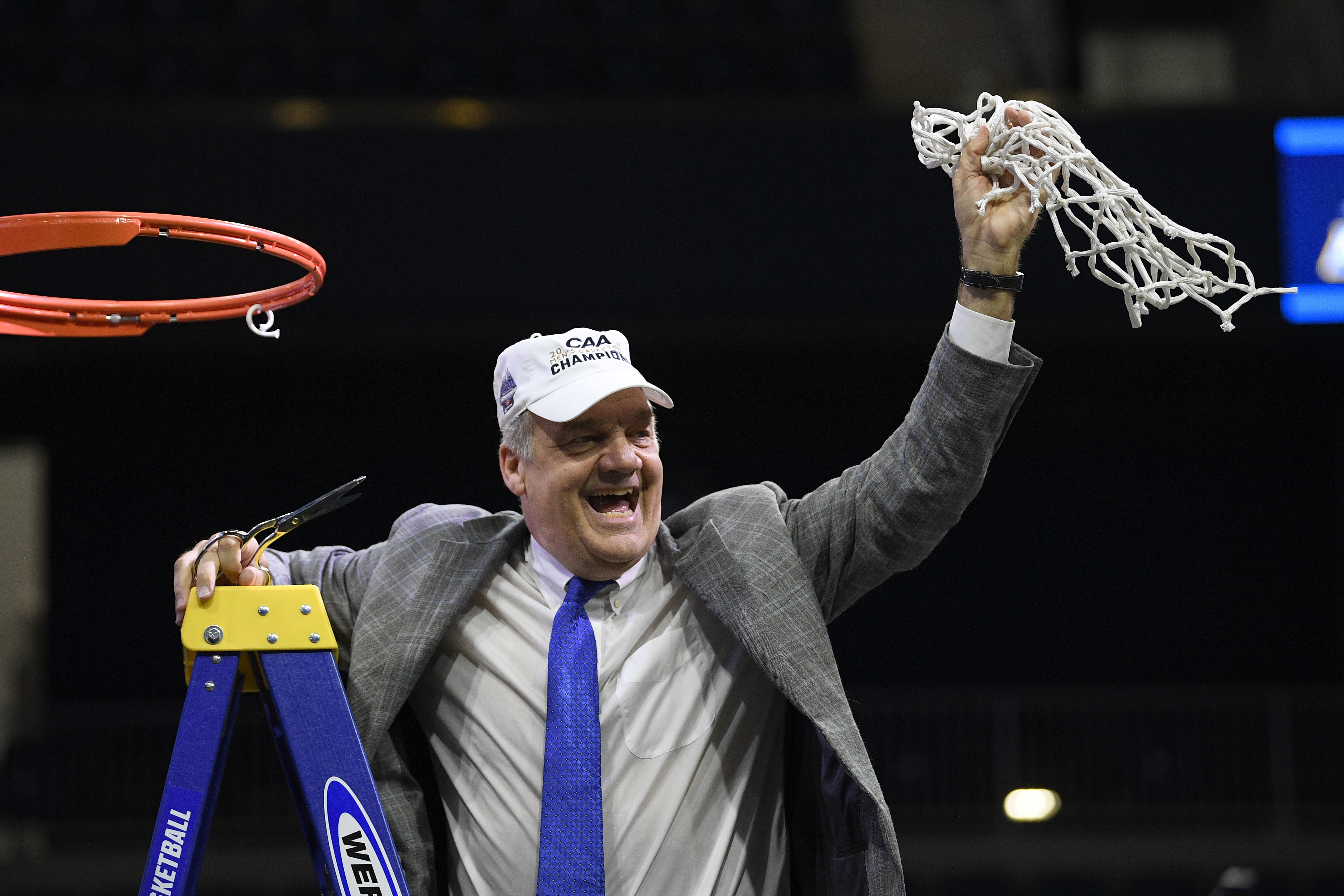
In 2020, Mihalich led Hofstra to its first NCAA Tournament berth since 2001. After winning the CAA title, he climbed high atop a ladderwith a pair of scissors, making the final cut of the net.
Hofstra coach Joe Mihalich holds up the net after cutting it down following the team’s win over Northeastern in the 2020 CAA final. Days later, the world shut down because of the COVID-19 pandemic and the Pride would miss out on a chance to compete in the NCAA tournament. Nick Wass
But Hofstra never got its moment. Two days later, the tournament was canceled due to the pandemic. Five months after that, Mihalich was at home when he got a call from Mary, who was traveling to Ocean City.
He tried to speak but wasn’t able to. The line went dead. She called Curtin, who found the coach standing in his driveway.
He asked if Mihalich was alright.
“I said, ‘Shake your head, yes or no,’” Curtin recalled. “And he shook his head no.”
An unexpected homecoming
While his team embarked on remote summer workouts, Mihalich was placed on a medical leave. He connected with a local speech language pathologist, Alison Durkin, and began to meet with her in the fall.
The coach had been diagnosed with both aphasia, a language disorder, and apraxia, a motor speech disorder. He also lost some mobility on his right side, which prevented him from writing with his right hand.
Alison Durkin (left) with Joe Mihalich and his wife, Mary.Courtesy of Alison Durkin
Mihalich had spent the last four decades amid a symphony of sneakers and basketballs and whistles. In environments that were exciting and fast-paced and energetic.
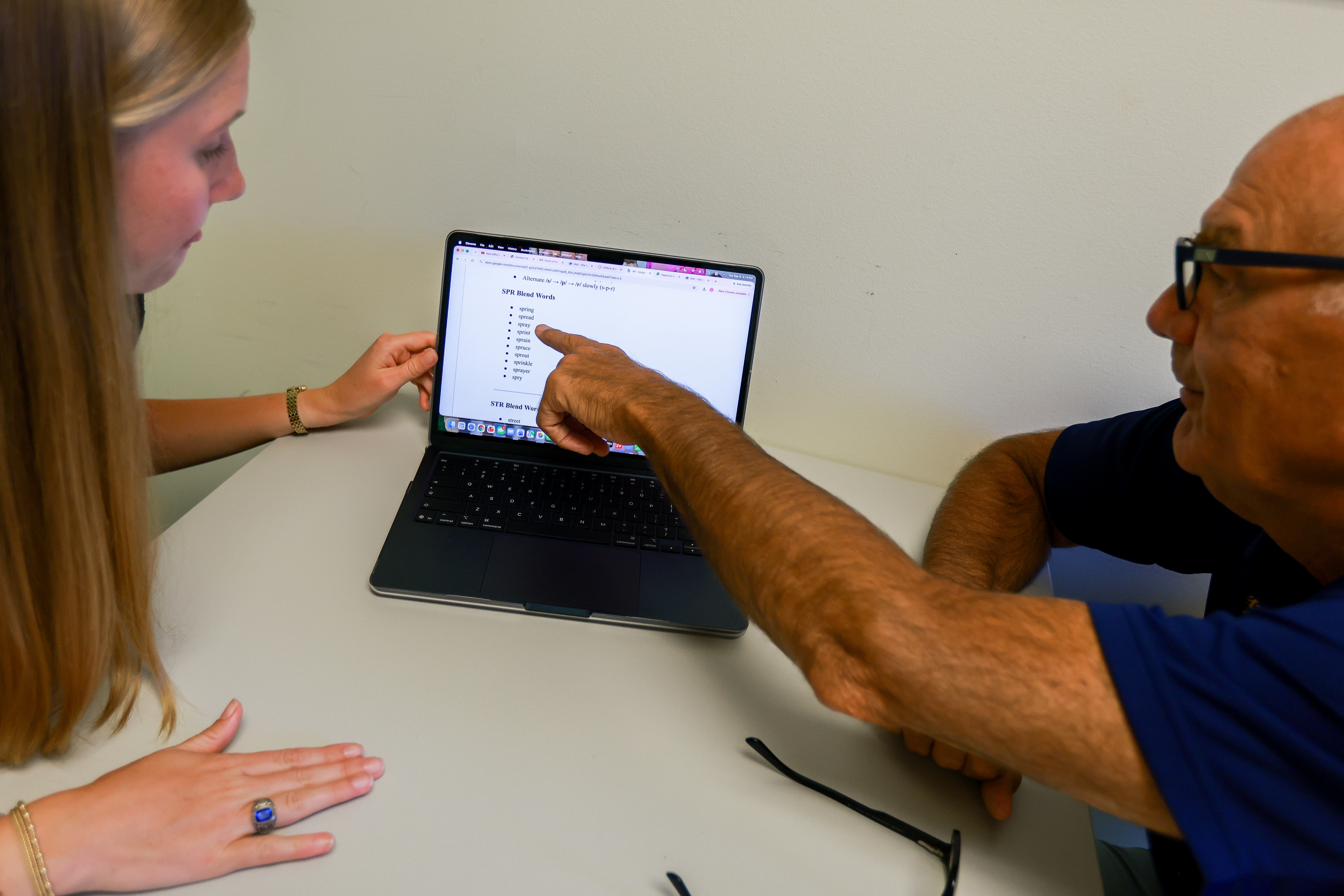
Now, life was quiet and slow, in the most literal sense. He and Durkin started their sessions with simple, binary questions. Then, they’d count numbers, recite days of the week, and months of the year.
When Mihalich did speak, he was encouraged to over-enunciate. Buffalo Bills became “Bu-fa-lo Bills.” Niagara Falls became “Ni-ag-a-ra Falls.”
They had some initial discussions about a return to his previous role at Hofstra, but decided that was not an option.
“Not only was the job itself linguistically demanding, because you’re producing language on a stage,” Durkin said. “You’re yelling at people. You have seconds to speak. I mean — very demanding.
“And then on top of that, there’s really no reasonable accommodations that could be implemented to make that feasible. So it was definitely not an easy thing.”
Mihalich wasn’t involved in the day-to-day in his AD advisory role, and didn’t interact with players and staff; a choice he’d made himself, to ensure he wouldn’t overstep.
Joe Mihalich goes through a speech therapy session with La Salle student and speech-language pathologist Ella Verello earlier this month. Isaiah Vazquez / For The Inquirer
The coach described those years as “horrible.” He sorely missed the rhythms of his previous life. But he and Durkin kept working, unaware of whether he’d ever grace a court again.
The speech language pathologist introduced basketball terminology to keep her pupil engaged. Instead of reciting “three-pointer” or “rebound,” Durkin would have Mihalich describe exactly what those activities were.
“He knows what boxing out is,” she said, “but could he produce the language to explain it to someone who did not know? That’s a hard task.”
The exercise inadvertently set him up for an opportunity to come. In April 2022, Dunphy called Mihalich to ask if he’d be his assistant at La Salle.
Mihalich was limited in what he could say. But one word came through.
“‘Wow,’” Dunphy recalled. “And he repeated it dozens of times.”
Mihalich returned to campus that summer, with an iPad in hand, to jot down thoughts during practice. Dunphy’s staff quickly learned that they wouldn’t need to actually talk to communicate.
Joe Mihalich (right) was by Fran Dunphy’s side when Dunphy coached his 1,000th game in 2025. Charles Fox / Staff Photographer
One of the assistant coach’s first suggestions was to implement a continuity offense, with players starting in the same spots, and flowing to different set plays.
Mihalich couldn’t vocalize this. So, he picked up a marker with his less dominant, left hand, and started scribbling on the white board in the men’s basketball office, using a language any coach could understand: Xs and Os, dotted and zigzagged lines.
Then he directed his cohorts to the gym, to demonstrate.
“And he goes, ‘Come on, upstairs! Upstairs!’” recalled former La Salle assistant coach Mike Doyle. “‘Alright, let me put my basketball shoes on.’”
If there was one aspect of the sport Mihalich emphasized less, it was defense. His teams at Hofstra and Niagara were known to run and gun. The former head coach didn’t want players expending too much of their energy by guarding an opponent.
Dunphy was much more defensive-minded. So, every now and then, Mihalich would yell “Zone!”
“And then, as soon as we’d go zone, somebody would make a three-point shot, immediately,” Dunphy said, “and I’d say, ‘All right, that’s it. That’s enough.’”
Joe Mihalich’s work on his speech continued at La Salle, where speech-language pathologist Ella Verello (left) is among the team assisting the coach’s therapy. Isaiah Vazquez / For The Inquirer
Not long after Mihalich joined the Explorers’ staff, Wendy Silverman, who ran Hofstra’s speech-language hearing clinic, reached out to La Salle on the coach’s behalf.
Mihalich began to take weekly sessions with graduate students at La Salle’s clinic, while working with Durkin remotely, on Zoom. The strategies he learned — speaking slowly, over-enunciating — he’d then bring to the court.
By the end of the 2022-23 season, staff and players could hear a marked difference.
Christine Cahill, the school’s director of academic support for student-athletes, sat next to Mihalich during practice.
“And I told him, it went from like 0 to 70%,” she said, “that first year.”
‘A reason to live’
When Dunphy retired in February 2025, Mihalich was unsure of what he would do next. He initially told Curtin that he wanted to get out of coaching.
But after Darris Nichols was hired at La Salle, his calculus changed. Mihalich had worked with Nichols’ brother, Shane, at Niagara and Hofstra. Curtin would be joining the Explorers’ staff, too.
Joe Mihalich had a connection to coach Darris Nichols and was kept on when Nichols was forming his La Salle staff in 2025. Isaiah Vazquez / For The Inquirer
So, Mihalich decided to give it another go, and Nichols was more than receptive. He saw the former head coach not just as a connector between generations, but someone he could learn from.
“Coming into a new program, he’s helped me navigate it,” Nichols said. “It’s great to have him around.”
Mihalich became an active participant in scouting and recruiting meetings. Just as he had with Dunphy, he started recommending offensive strategies (and of course, more zone).
His speech has progressed to the point where he can now work one-on-one with players. Last year, Mihalich developed a bond with junior guard Rob Dockery, who led La Salle in points, rebounds, and steals.
Dockery’s weakness was his jump shot. His mechanics weren’t consistent, mainly because he wasn’t practicing it enough. Throughout the offseason, the former head coach would routinely text him, reminding the guard to get back in the gym.
“Repeating that same shot, over and over again,” Dockery said. “That’s what he told me. Stick to the same shot.”
Mihalich is still going to speech therapy every week, both at La Salle and with Durkin, and the sessions can be laborious. There are moments when he needs to repeat himself one, or two, or even three times to get his point across.
“But I am here,” he said. And his life is starting to look like it once did. The former head coach wakes up every morning, and drives to the Mt. Airy Dunkin’, where he’s greeted as “Mr. Joe.”
Joe Mihalich has reconnected with basketball and remained a presence at his alma mater for the past four years. Isaiah Vazquez / For The Inquirer
He picks up his coffee — large decaf, hot, with cream — and brings it to the arena, leaving behind a trail of Styrofoam cups.
And for two hours, he sits and watches from his chair, as basketball chaos unfolds around him. A lesser man might see a career cut tragically short. But Mihalich sees something entirely different.
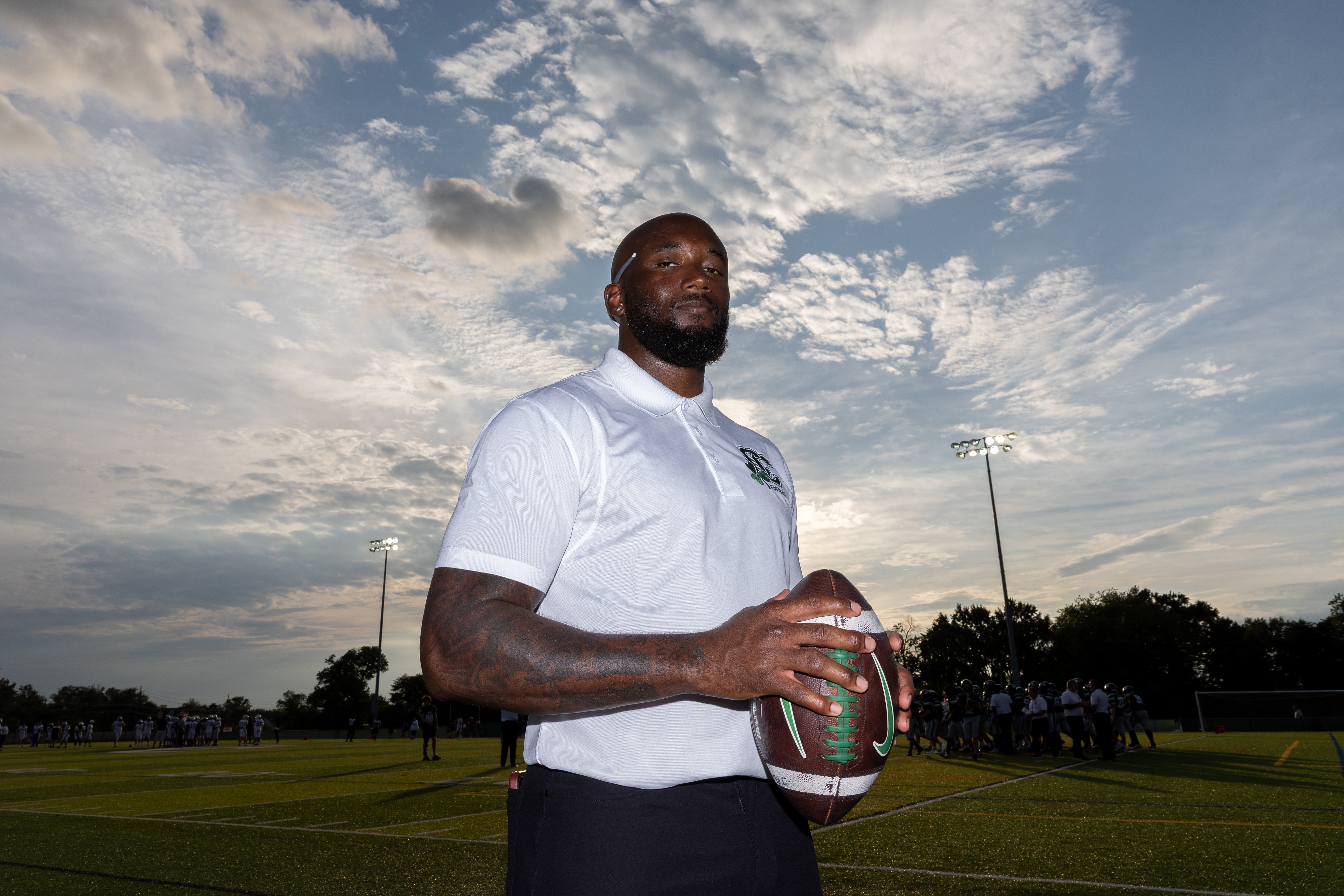
On Sept. 4, at 7 p.m., James Bradberry stood on the sidelines of Dulczak Family Field, beneath a twilight sky.
The scene around him was typical Friday night high school football: packed stands, cheerleaders waving pom-poms, a small pep band performing covers.
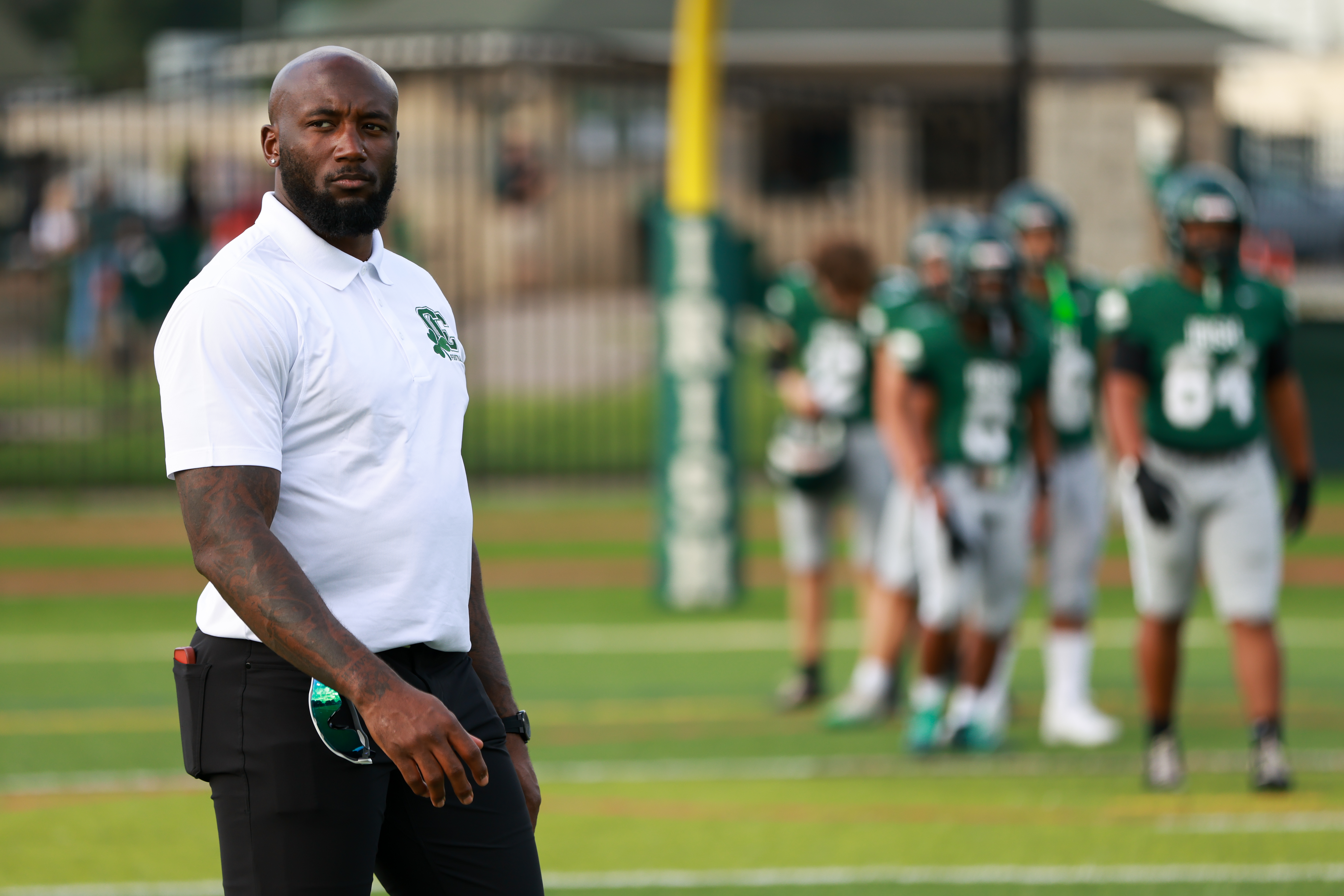
And to an uninformed spectator, it would look like nothing else. The home team lined up on the sidelines for the national anthem, in their Kelly green jerseys, with coaches in white polos and black slacks.
Bradberry was stationed at the very end, next to sophomore lineman Sam Torres. As the game began, he crouched to get a better look. He high-fived players as they jogged past, occasionally pulling them aside.
When one of his cornerbacks, Julian Vasquez-Soto, got dinged up toward the end of the second quarter, it was Bradberry who joined the trainers to check on him, picking his helmet off the ground, and extending a hand.
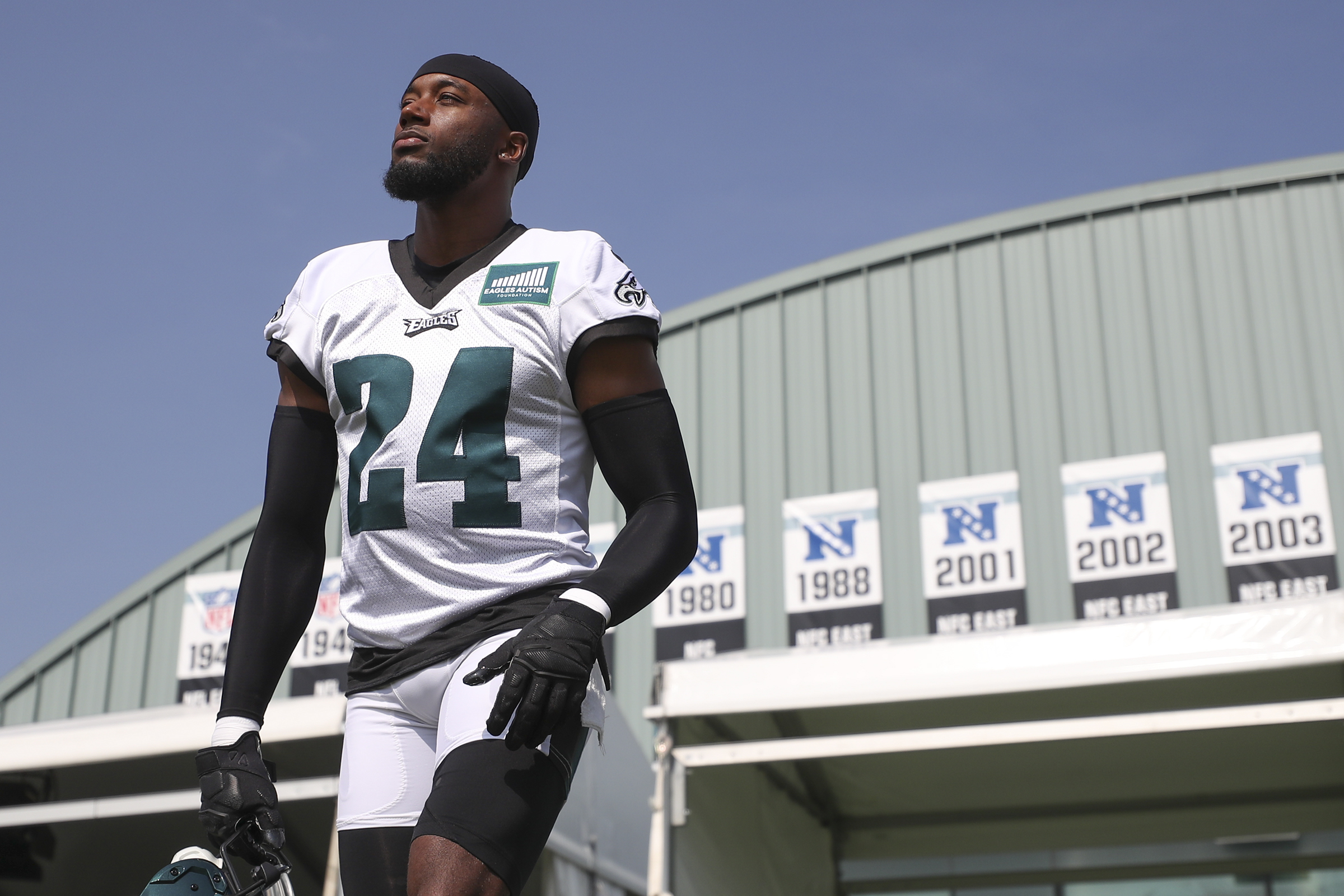
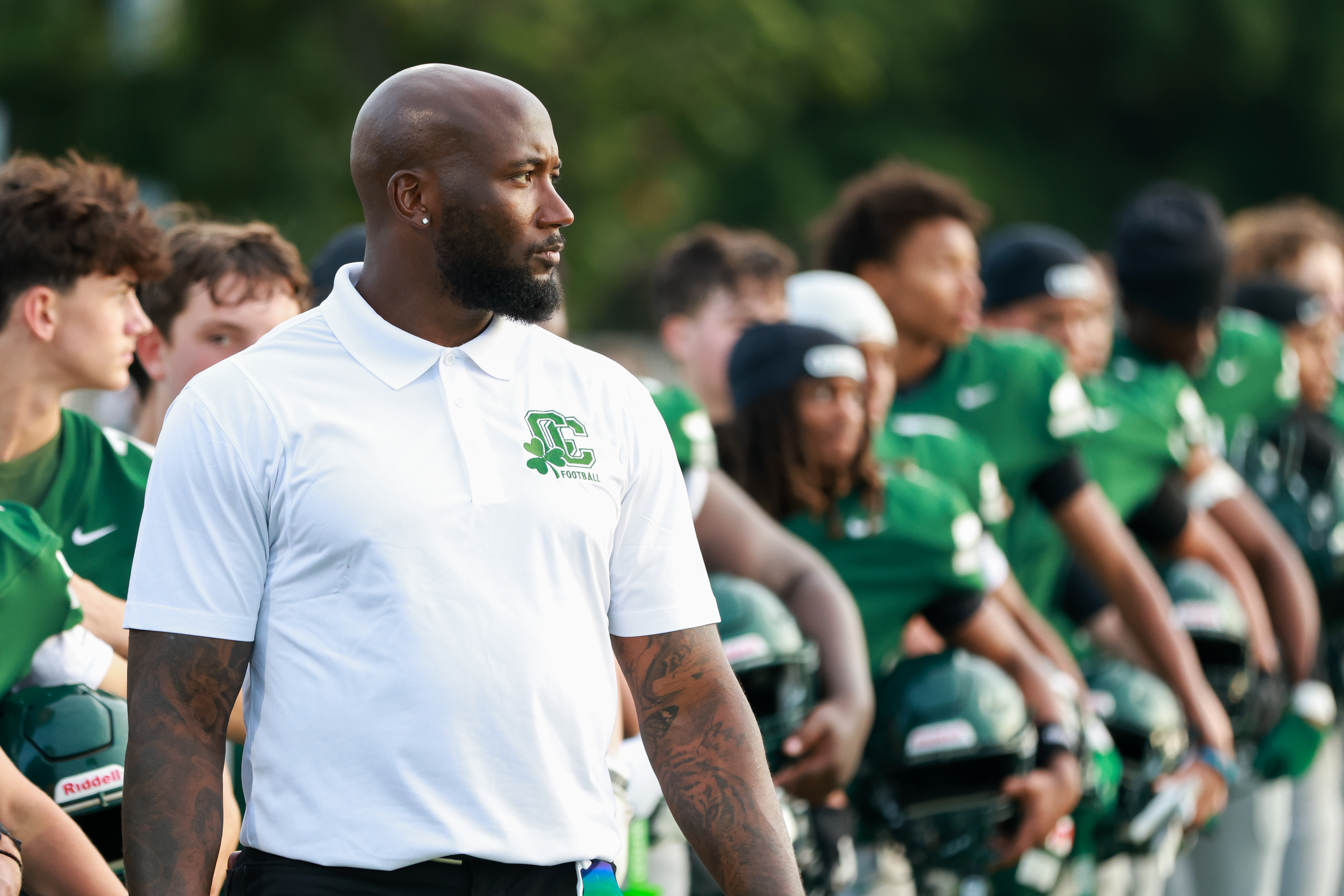
Any other coach would do the same, but of course, Bradberry is not any other coach. At least not at Camden Catholic High School. The former NFL cornerback spent eight years playing for the Panthers, Giants, and Eagles.
James Bradberry played in 33 games as a member of the Eagles in 2022-23 and helped the team win an NFC title. Heather Khalifa / Staff Photographer
During that stretch, he became adept at disrupting offenses, particularly in the air. Bradberry finished his career with 112 passes defended, good for 40th on the NFL all-time list, and 19 interceptions.
He helped Philly to a Super Bowl appearance in 2022 (despite committing a consequential late-game holding penalty against the Chiefs) and finally earned his ring in 2024.
The veteran was on injured reserve that season, but found other ways to contribute, mainly by mentoring two young defenders in Cooper DeJean and Quinyon Mitchell. His position coach at the time, current Cowboys defensive coordinator Christian Parker, told him he should consider coaching.
It was a suggestion Bradberry had heard before, but now, the timing was right. After the Eagles released him in June of 2025, he began to search for high school opportunities near Cherry Hill, where he lives with his family.
This past August, he found one, when a friend mentioned his son’s alma mater, Camden Catholic. “They’re always looking for good coaches,” he told Bradberry.
The former NFL cornerback called up athletic director Jim McHugh, a lifelong Eagles fan. It didn’t take McHugh long to discern that he was talking to a Pro Bowler.
“As soon as he told me he was from Alabama originally, I was like, ‘OK, this is the guy,’” McHugh said. “‘This is an Eagles All-Pro.’”
The athletic director connected Bradberry with head coach John Martino, who invited him to campus. The former Eagle has been at Camden Catholic five days a week ever since; reviewing film, lifting weights, and helping with walk-throughs.
Camden Catholic assistant coach James Bradberry looks on during the game against Riverside on Sept. 4. Isaiah Vazquez / For The Inquirer
He doesn’t miss a game or practice; McHugh said that if anything, Bradberry puts in more time than other coaches. The Super Bowl champion is easygoing by nature, which has helped him assimilate to his new home.
A month later, the Irish still can’t believe their luck.
“I didn’t expect it,” said senior running back Nymir Daily. “You don’t expect an NFL player to come to a 2-9 team … So to see him come here, it was motivation.
“It boosted our confidence that we could really be good. We could really go out here and perform.”
Lunch talk on the sidelines
Bradberry first met the players on Aug. 18. They were about to start a preseason workout, stretching out on the field, when they saw a 6-2, 210-pound man walking toward them.
Martino introduced the former Eagle, explaining that he’d be joining practice for the day. It wasn’t the most productive practice. The head coach joked that the high schoolers — and his staff — were “wide-eyed for two and a half hours.”
After it was done, Bradberry told Martino he’d mull his decision over. Less than 24 hours later, without any advance notice, he was back at Camden Catholic, ready to commit to the program full time.
For the first few weeks, Bradberry stayed in the background, quietly observing other coaches. But eventually, he started to speak up, especially when he noticed something off.
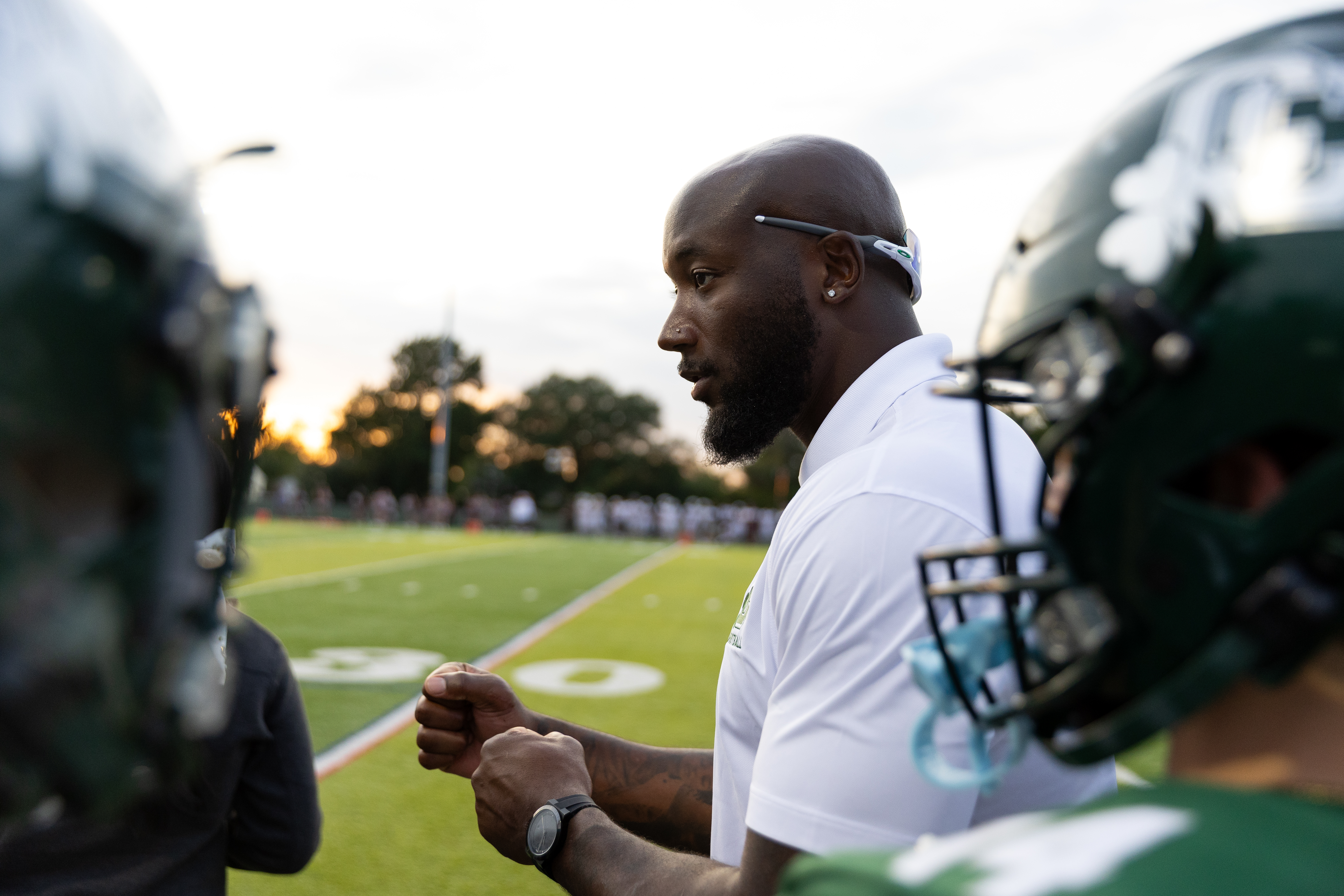
Camden Catholic assistant coach James Bradberry talks to the team on the sidelines during the game against Riverside on Sept. 4. Isaiah Vazquez / For The Inquirer
A few days before Camden Catholic’s home opener, Bradberry was going over his scout team defense. He was standing on the sideline and heard a riveting conversation between sophomore Chase Green and freshman Divine Jackson.
The former Eagle pulled them aside.
“They was talking about tater tots,” Bradberry recalled. “Actual tater tots. They was having a food conversation. You got to remind them to lock in and focus.”
Green and Jackson corroborated this.
“We were talking about school lunch,” Jackson said.
Another adjustment has been in how Bradberry communicates. For the last eight years, the former cornerback has been working in NFL facilities. Now, he’s surrounded by teenagers, many of whom only understand the basics of the sport.
Explaining the curl-flat concept in pass defense, for example, took a few tries. When Bradberry first raised it to his scout-team defense, he told them that it was important to not get “out-leveraged by a number two.”
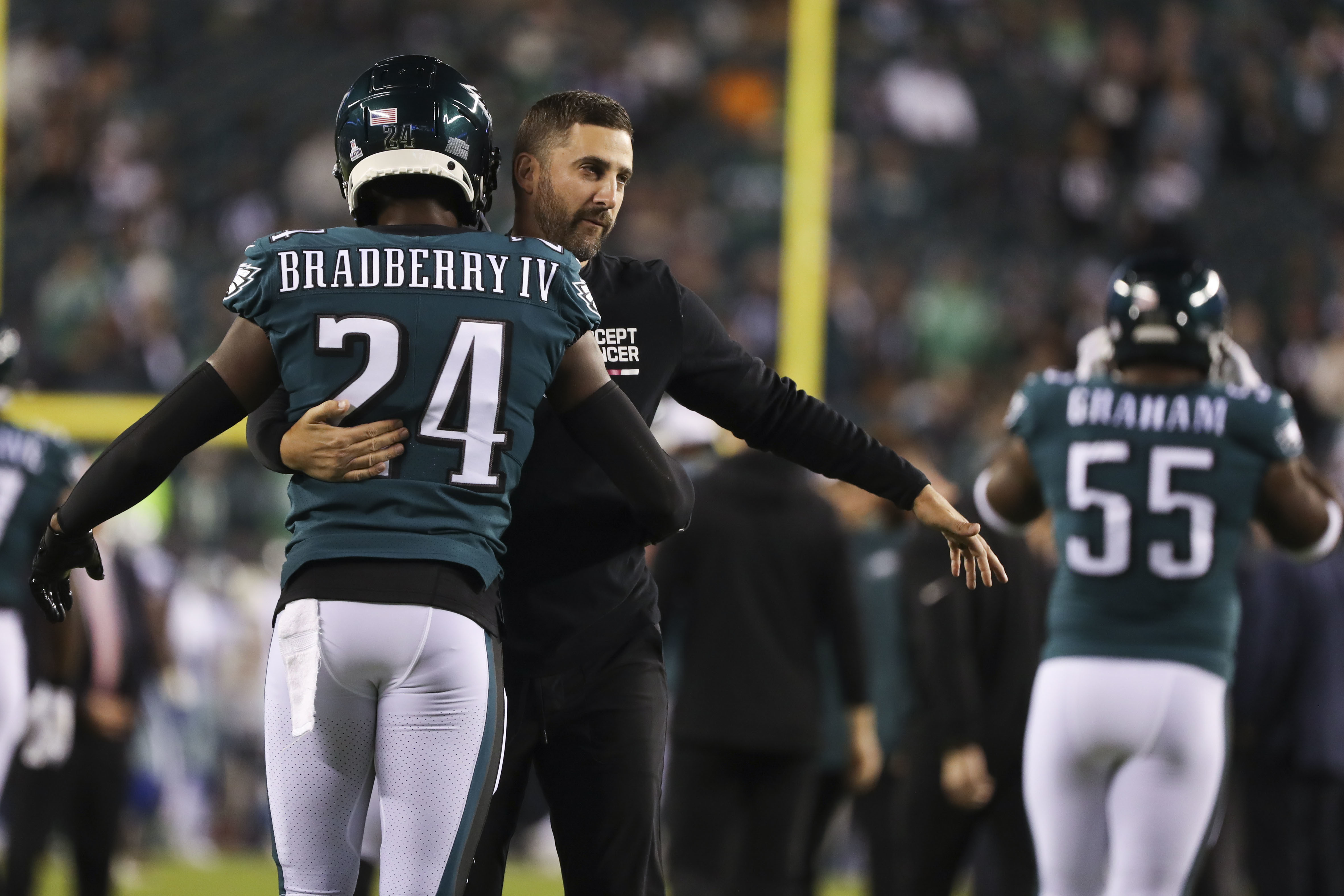
James Bradberry (24) is working on how best to communicate his NFL knowledge to a less experienced group of high schoolers. Heather Khalifa / Staff Photographer
The former Eagle was met with blank stares.
He rephrased, telling the high schoolers that they couldn’t get beat to the flat.
“After I yelled at them a few times — ‘Get to the flat, get to the flat’ — they understood,” Bradberry said.
It is a daily reminder to meet players where they are — even if that level is far from what Bradberry is accustomed to. Football jargon aside, the high schoolers have learned a lot from their new coach: technique advice, footwork, positioning.
But they’ve also used this time to pepper “Coach JB” with questions, like who the toughest receiver he’s ever covered is and whether he’s played against certain guys.
And of course, as any young man would, to ask for fantasy football advice.
“I told them the Rams defense is gonna look good this year,” Bradberry said. “And you know, I’m always an Eagles guy. I’m still in South Jersey, so I’m always an Eagles guy.”
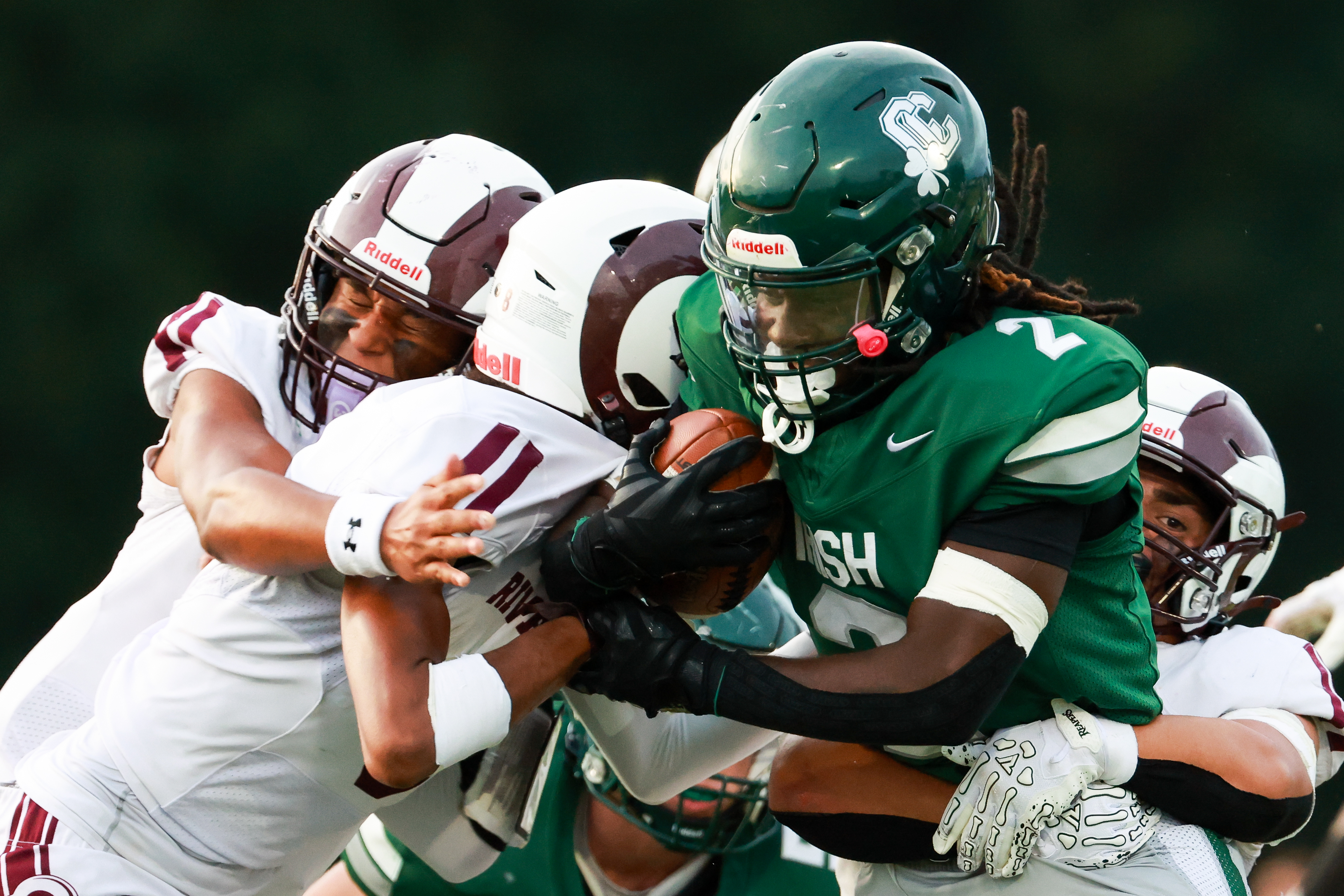
Camden Catholic’s Nymir Daily (2) is among the talented players James Bradberry has been mentoring on and off the field. Isaiah Vazquez / For The Inquirer
‘Like Christmas in July’
Daily plays both defensive back and running back. On Sept. 4, the star senior was omnipresent, accounting for all four of Camden Catholic’s touchdowns, while rushing a whopping total of 305 yards.
His aunt, Nona Daily, danced in the stands as she cheered for her nephew. His name boomed over the static-filled loudspeaker, again and again: “Nymir Daily, on the carry, results in an Irish … first down!”
But with three minutes and 54 seconds remaining in the second quarter, the celebration came to a halt. Daily had just notched yet another first down, and decided to celebrate by raising his arm, mimicking the referee’s signal.
Some officiating crews would let it go; this crew didn’t. Daily was charged with unsportsmanlike conduct. The team was given a 15-yard penalty.Bradberry, who was standing nearby, walked over to the senior.
They talked about keeping composure and the consequences of mistakes in critical moments. The running back returned from the half energized, scoring two more touchdowns to give his team a 26-20 win over Riverside High School.
“James was there to pick up the pieces,” Martino said.
Bradberry thinks Daily has a chance to play at the collegiate level, so he’s been keeping close tabs on him. But their relationship goes far beyond football. Daily said that the former Eagle has become a father figure.
James Bradberry has been trying to impart life lessons to Camden Catholic’s players, as well as football concepts. Isaiah Vazquez / For The Inquirer
In 2021, his mother died in a car accident. Ever since, Daily has been living with Nona in Pennsauken. The high schooler has coped with this loss by staying busy, mainly through sports.
In addition to football, he plays basketball, and runs track. Daily has become close with many of his coaches, particularly his previous head coach at Camden Catholic, Wayne Gilliam.
When Gilliam departed in January of 2025, for Haddon Heights High School, it left a void. But since then, Bradberry has helped fill that role. The former Eagle is not just a teacher on the field, but a confidant off it.
“James helps me with everything,” Daily said. “Everything you can think of. Say I’m having girl problems. He’ll come and talk to me about the girl, tell me what I should do or what I should say. I can [talk] to him about anything.
“I don’t have a perfect life at home,” he added. “Nobody does, but I really don’t have perfect life at home. So, he helps me with stuff.”
Bradberry doesn’t know what will happen next year. He might try to help coach a college team, as he works his way up the ladder.
But even if it’s just one season with Camden Catholic, his impact will last for years to come.
Particularly with the star running back, who has a bright, bright future ahead.
“I think James sees a lot of himself in Nymir, so they kind of gravitated to each other,” said Martino. “And James, to Nymir … I think it was like Christmas in July.”
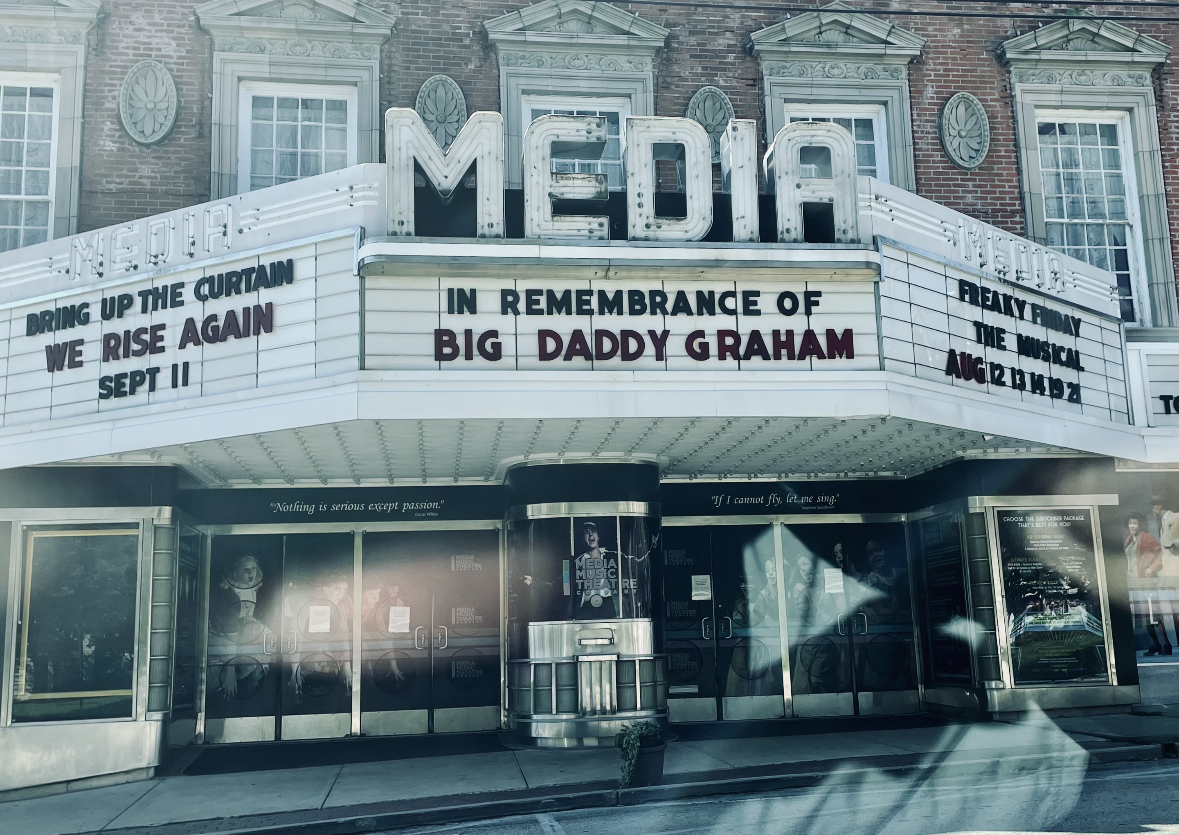
Big Daddy Graham was as multifaceted as he was funny. He was frugal and generous, goofy and poignant, a college dropout who was brilliantly smart.
He didn’t go to church, but had a special reverence for the Blessed Mother. He could tell fantastical tales, like driving from Sea Isle to 94.1 WIP’s studios in under an hour, but could also be searingly honest.
He could recite Monty Python as easily as J.D. Salinger, Rodney Dangerfield as easily as Jack Kerouac. His musical tastes ranged from Frank Sinatra to Weezer.
In anyone else, these might seem like contradictions, but in Graham, they fit perfectly. It was this paradox that made him a great overnight radio host; Graham was never short on topics, even when he was short on callers.
Every weeknight, from around 2 a.m. to 6 a.m., he would guide the Delaware Valley through the expanses of his zany mind. Philadelphia sports was the draw, but the West Catholic grad often took detours, sometimes in the most literal sense.
Why does the exit sign on the Garden State Parkway, for the Atlantic City Expressway, say “Camden,” and not “Philadelphia,” Graham once mused, while other road signs, heading north, say “New York City” and not “Newark”?
“He could never let that one go,” said his longtime producer, Mike Angelina.
Big Daddy Graham’s generosity is often heralded by those who knew him. Courtesy of Big Daddy Graham
The show provided a balm for the late-night workers and the early risers, the drunkards and the restless. But it came at a cost. Graham’s shift was exceptionally hard on his body. As his wife, Debbie, got ready to go to work, her husband would be taking Xanax to go to sleep.
His daughters, Keely and Ava, tiptoed around their Mullica Hill home so as not to wake him. But even with these efforts, Graham still wasn’t getting enough rest.
When he wasn’t working overnights, he was hosting Quizzo, or a comedy show with Joe Conklin, or a one-man show; or writing a play, or a book, or a memoir.
Eventually, this frenetic pace caught up with him. In July of 2019, while vacationing in Sea Isle, Graham suffered a spinal stroke in his back that left him paralyzed from the waist down. He died of heart failure on Sept. 8, 2021. He was 68.
The radio host never appreciated the mark he made on the city that shaped him. But that mark was indelible. In the days after he died, callers flooded WIP with their favorite Big Daddy memories.
And five years later, they still remember. Ava has worked at the station since 2016, and has hosted Quizzo in the region since 2010, and to this day, she gets stopped by people who listened to her father.
“The amount of times I’ve heard, ‘He made me feel real while I was working,’” she said. “Because nobody was there [at that hour], and he was a part of their life.
“That whole thing about him not realizing he was enough … I’m like, ‘Do you know how many people you helped?’”
Big Daddy Graham and wife Debbie.provided by Graham Family
Southwest Philly roots
Long before Big Daddy became Big Daddy, he was Eddie Gudonis, a tall kid with bushy hair who lived in a rowhouse at 70th and Elmwood.
His father, Albert, worked at the Navy Yard, while his mother, Mary, stayed at home before later taking a job at a roofing supply company. Eddie was the third of four children.
He spent most days playing basketball at Finnegan Playground, where friends called him Hedge Head for his thick and unruly brown locks.
The nickname was fitting. Even as a child, a conversation with Eddie could go in virtually any direction: local sports, but also music, movies, literature. By the time he was 11, his sister Janet had brought him to his first concert: James Brown at the Uptown Theater.
His brother, Tony, taught him about up-and-coming artists like Jimi Hendrix and David Bowie. Mary, an avid reader, would go to the library once a week, check out five books, and hand them to her son.
Graham showed an emotional vulnerability at a time when few boys and men did. His best friend growing up was a kid named Rick Ruppert, who lived on Saybrook Avenue, about four blocks away.
They bonded in elementary school over their shared fascination with gas station road maps. But Graham and Ruppert became even closer in the sixth grade, when they started to play basketball together at Finnegan.
After pickup games, the middle schoolers would walk home as slowly as possible, discussing the things they felt they couldn’t discuss anywhere else, like girls, and money, and insecurities. Sometimes these conversations would last hours, with Graham and Ruppert circling their blocks.
“We were just two mongrel kids that grew up in a working-class background, that had wonderful families,” Ruppert said, “but you don’t get to talk about stuff. You don’t even know what to talk about.”
A young Rick Ruppert and Big Daddy Graham.provided by Rick Ruppert
Despite his sensitivity, adolescent Hedge Head was as unruly as his hair. After graduating from West Catholic in 1971, as president of his class, Graham earned a full academic scholarship to La Salle.
College didn’t suit him. For as well-read as he was, Graham hated studying and was not shy about it. His freshman year, a sociology professor assigned an essay about the history of violence in America.
Instead of taking the task seriously, Graham turned it into a joke.
“He wrote about violins in America,” Ruppert said, “He was that arrogant. You can imagine what this assistant professor, or grad assistant [said].
“He told me he did that, and the first thing I said was, ‘You a-hole!’ And he said, ‘Well, I thought it would be funnier!’”
The future radio host dropped out shortly after. His father got him a job at the Navy Yard, which he may have enjoyed even less than La Salle. Graham had a slight phobia of enclosed spaces, and was now spending his days cleaning the inside of a dark, loud tank, with a face mask covering his mouth.
The company he kept wasn’t pleasant, either.
“He had this guy he worked with, and he would chip out the inside of the tank,” said Graham’s friend, Tommy Bristow, a singer-songwriter who goes by the stage name Spins Nitely. ”Cursing in between words. Turn up the air-con-[expletive]-ditioner. One of those guys.
“When Eddie quit, [the chipper] said ‘See ya later, a-hole.’ That was his goodbye to the Navy Yard.”
Big Daddy Graham’s life changed when he met future wife Debbie.provided by Graham Family
He tried other gigs but none matched his creative (or anti-authoritarian) spirit. In 1976, the year Graham met Debbie, he was a drummer in a band called Dewey Street, doing odd jobs to supplement his income.
He had a brief stint as a milkman, one that ended when his truck broke down and he abandoned it in the middle of the road in Delaware County. Soon after, Graham took a job at the local Sheraton, working at reception and as a doorman.
But everything changed in 1980 when Graham saw an ad in the paper for an upcoming show at Society Hill Playhouse, George Bernard Shaw’s Androcles and the Lion. He asked Debbie if he should try out.
“And I said, ‘Yeah, get your butt out of bed and try out,’” she recalled. “And he got the part, as the lion.”
Graham joined the Playhouse for 18 months, performing throughout the community, and a few years later, began writing his own parody songs, like ‘Let’s Call in Sick,’ and ‘Nuns!’
The songs were picked up by WMMR in 1984, but were not recorded under the name “Eddie Gudonis.”
From that point on, the performer was forever known as Big Daddy Graham.
Becoming Big Daddy
Graham’s stage name was bestowed upon him in 1973, hundreds of miles away from Philadelphia. He and Bristow were driving a car on behalf of an auto transport agency to Fort Lauderdale, and had stopped at a gas station in Georgia.
The United States was in the midst of an oil embargo, but the 20-year-olds had a certificate entitling them to a full tank of gas.
The attendant wasn’t convinced of its authenticity. Graham stormed into his office as Bristow sat in the car, watching the quarrel through the rearview mirror.
He could tell his friend was animated; Graham’s hands were flying as he frantically waved the certificate in the air. All of a sudden, the attendant walked out and started filling their tank.
Bristow asked what Graham told him.
“That we worked for the U.S. government,” Graham said. “And we’re going to put the whole weight of the U.S. government down on your little gas station! We’re going to be thoroughly checking your taxes!”
“Woah,” Bristow replied. “That’s not a laddie move. That’s a daddy move!”
Graham concurred, and added some spice.
“That’s a BIG daddy move!” he said.
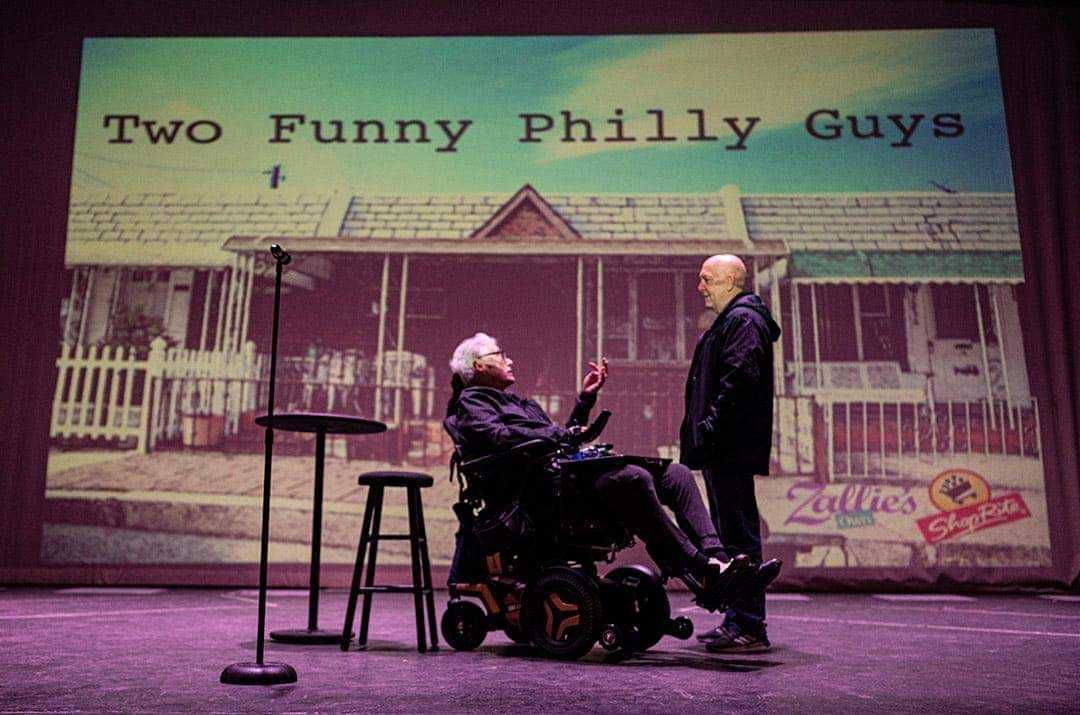
Big Daddy Graham (left) and Joe Conklin perform during a “Two Funny Philly Guys” comedy show.Courtsey of Joe Conklin
Bristow refused to call his friend anything else. By the time he embarked on the comedy circuit in the 1980s, he was Big Daddy Graham, his surname a nod to Graham Chapman of Monty Python.
Graham performed parody songs in rock and comedy clubs all over North America, taking any gig available. He and Debbie married in 1982, and she began to travel with him, and Graham would sing along to cassettes that she played. The young couple continued this even after Debbie gave birth to Keely in 1984, bringing their infant daughter on the road.
But once Ava was born in 1988, this became unsustainable. Graham desperately wanted to be home with his girls. So he found a way, performing only in nearby clubs. In 1995 he accepted a job as a cohost of a new afternoon radio show on 1210 AM, The Sports Attack, with Neil Hartman and Scott Graham.
It was an atypical pairing. Neil and Scott had polished voices and years of broadcasting experience. Big Daddy spoke with the biting accent and unfiltered tongue of his Philadelphia youth.
But their contrasts made for compelling radio, and Hartman and Graham quickly realized that Big Daddy wasn’t just an on-air persona. If anything, it only captured a small fraction of his everyday quirks.
Big Daddy Graham with daughters Keely (right) and Ava.provided by Graham Family
Hartman’s desk was next to his cohost’s, and he’d often see him paying his monthly bills. But Big Daddy liked to include an extra twist, tucking into the envelope a picture of a cat, or maybe a New Yorker cartoon.
“And then those people would send [the bills] back,” Hartman recalled. “‘We’re so sorry, but you accidentally sent this picture.’ And he just did it as a goof.”
Added Bristow: “He used to write notes on the bills. Like, ‘You robbers!’ Or something like that. ‘Thieves!’”
Big Daddy played a similar game with telemarketers.
“He’d tell them to hold on, and walk away from the phone,” Conklin recalled. “Put them on hold.”
Not long after The Sports Attack debuted, the show started hosting remote broadcasts from Veterans Stadium. Big Daddy loved being there, but not for the players. Instead, he gravitated to the everyman types that he grew up with: ushers, vendors, security officers.
One day, Phillies team president David Montgomery walked up to the booth.
“Big Daddy walks directly over to David, and says, ‘You work here, right?’” Graham recalled. “And then he starts to talk about how he can get [his parking] validated.
“And David just starts laughing. He loved Big Daddy from that second on.”
Big Daddy Grahamhandout
A man made for overnights
Rob Charry first heard Graham’s voice on WMMR in the 1980s. He was raised in Fern Rock, far from 70th and Elmwood, but to the then-WIP weekend host, Big Daddy sounded just like the kids he’d grown up with.
A few years later, Charry joined a men’s softball league in Chestnut Hill where he met Tony Vollmer, Graham’s sister’s boyfriend. Every now and then, they’d talk about The Sports Attack cohost, and how much of a fit he’d be at WIP.
Charry began to mention this to his program director, Tom Bigby, long before a job opening even presented itself. In the summer of 1996, The Sports Attack was taken off the air; by 1997, WIP was looking for its new overnight host.
Graham kept his shift for the next 22 years. His show was unlike anything else on radio. He’d always talk about sports — this was sports talk, after all — but couldn’t fill four or five hours with that alone.
So he made magic out of the mundane. Segments included “Snack of the Night” — a play-by-play of what he was eating — and “Ditty of the Night” — a song, usually in honor of a caller’s birthday or anniversary.
There was the “Wrong” segment, in which he corrected himself for a mistake he’d made earlier, and the “Childhood” segment, in which he reflected on his upbringing, and the “Bother” segment, dedicated solely to things that bothered him.
He was not above using this time to unleash a lengthy rant on a stranger — a rude patron at CVS, for example.
“This person quickly sped up to beat him to the pharmacy counter,” Angelina recalled. “And he’s like, ‘Well, I held the door open for you. Why are you trying to beat me to the counter?’”
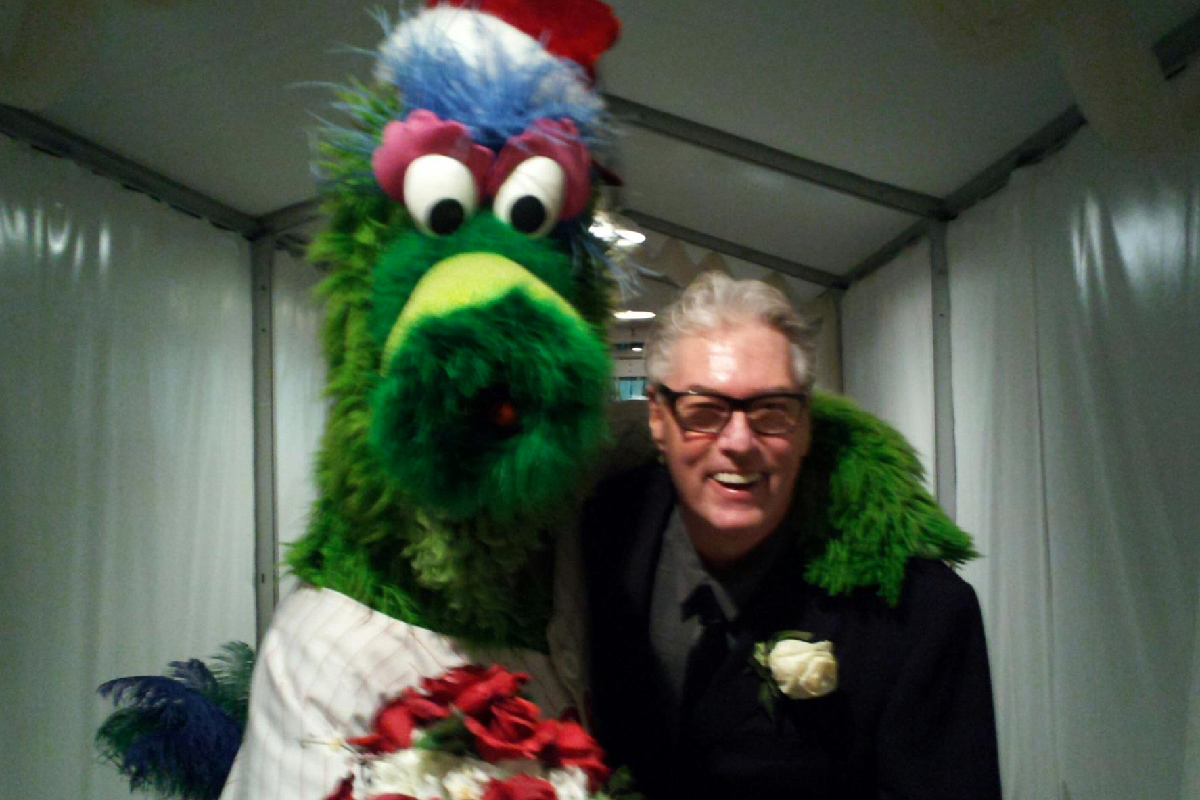
Longtime WIP overnight host Big Daddy Graham, seen here in 2015 alongside the Phillie Phanatic.
Somehow, Graham was able to find regular callers, even early in the morning. There was Joe in the Navy Yard, Mike from South Philly, and Jimmy in Germantown, who, according to Angelina, “always had something crazy going on.”
Comedians would also call in, usually to get a rise out of the Southwest Philly native. One night, minutes after Graham ripped Pat Croce, Conklin rang WIP pretending to be the Sixers executive.
Graham bought it — so much so that when sportscaster Bill Campbell tried calling the next day, the host didn’t believe it was him.
“The real Bill called his show,” said Conklin. “He started giving Bill Campbell a hard time. He wouldn’t let him on. It was great.”
Local law enforcement also got in on the joke. Conklin’s brother-in-law, John McCabe, worked for Cheltenham Township Police Department. Sometimes, when he and his squad were at the station late, they’d call Graham.
“We’d make up a fictitious guy,” McCabe said. “Like, ‘I’m Big Joe from South Philly,’ and say that he played for Notre Dame. ‘I’m gonna try out for the Eagles. You think I can make it?’ That kind of stuff.”
Big Daddy’s WIP coworkers soon learned of the idiosyncrasies Scott Graham and Hartman were long familiar with. Glen Macnow once invited the overnight host to a dinner party at his home.
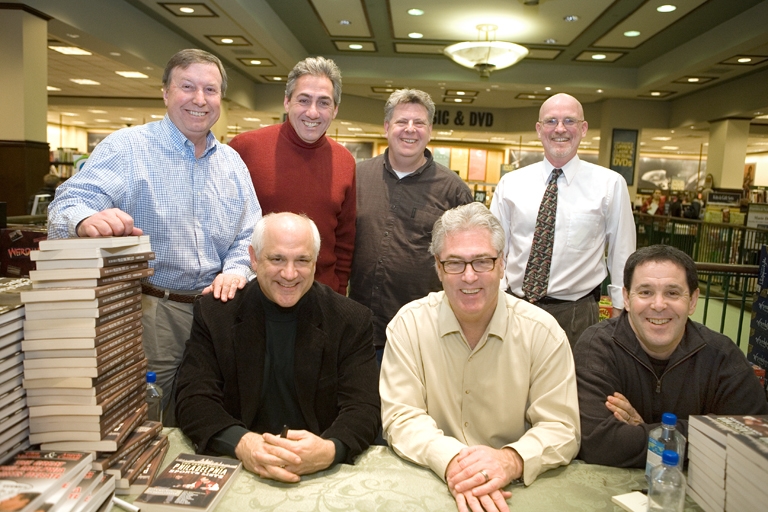
Big Daddy Graham (seated in center) with Philly media friends (from top left) Ray Didinger, Sal Paolantonio, Reuben Frank, Gordie Jones and (seated from left) Glen Macnow and Jayson Stark at a book signing. provided by Glen Macnow
Aside from the pot roast, Graham wouldn’t touch any of the food.
“He raided my refrigerator for ketchup,” Macnow said, “which he used generously on the roast, and raided our bread drawer for like six slices of bread. That’s who he was.”
But these coworkers also learned of his capacity for empathy. When Macnow had double knee replacement surgery in 2006, it was Graham who drove to Havertown to visit him.
Angelina was only 18 when he started to produce Graham’s show. The host would regularly ask if he needed anything, like gas money or food; during the summers, he’d offer Angelina his spare room in Sea Isle.
“On air, people would tease him, and he would play this persona of being cheap, but he wasn’t,” Angelina said. “He never allowed me to pay for anything. He was just very, very generous.”
Lessons from an overnight host
Twenty-five miles south of the studio, Graham’s family saw a side of Big Daddy that few people knew. The radio host was a romantic, taking Debbie to countless shows in Philadelphia and New York.
For Christmas in 2002, he gifted his wife a leather-bound book. Each page contained a favorite memory, handwritten in purple ink. There were meals she cooked, outfits she wore, and the story of when they started dating, full time, in the summer of 1978.
Big Daddy Graham and daughters Keely (left) and Ava.provided by Graham Family
He was just as dedicated to his daughters. Graham never missed one of Ava’s field hockey games or Keely’s tennis matches (even if he watched with a highlighter in hand, prepping for his show).
When Keely gave birth to twins in 2017, doctors discovered that her daughter, Lucy, had a heart defect. Less than 24 hours later, the baby was transferred to CHOP to undergo open heart surgery.
Graham was coming off his overnight shift. He went straight to the hospital and stayed awake for the next seven hours, sitting in the waiting room with the rest of his family.
“I kept saying to him, ‘I want you to go home,’” Keely said. “Because he was up all night. But he wouldn’t leave.”
Life with Graham wasn’t always easy. He was extremely hard on himself, lamenting that he hadn’t achieved more in his career. His daughters would try to remind him of how much he had to be grateful for: a beautiful house, a loving family, an audience that adored him.
But nothing seemed good enough. And Graham’s spinal stroke in 2019 only deepened this sentiment. A man who had spent his entire life on the go was suddenly unable to walk. No amount of hustle would change that.
And yet, Graham hustled anyway. He hosted a classic rock podcast from his living room. He attended a book signing with Macnow in 2019, worked a private event a few months later, and another show with Conklin in February of 2020.
Big Daddy Graham (right) with Glen Macnow during The Great Book of Philadelphia Sports Lists (Completely Revised and Updated Edition) sold-out event at P.J. Whelihan’s in Cherry Hill on Nov. 21, 2019. YONG KIM / Staff Photographer
He even started writing a book, Ravings of a Mad Man from a Wheelchair, which Debbie keeps at home. It didn’t bring the spontaneity of overnight radio, or the thrill of performing in front of a live audience. But to Graham, this work was still worth doing.
After 12 weeks at Magee Rehabilitation Hospital, Debbie became her husband’s primary caretaker. She’d clean his wounds, lift him out of bed, and manage his 26 pills a day, among other previously basic tasks.
The stroke changed both of their lives in an instant. Debbie, who had gone to nursing school decades ago, was now a full-time nurse again. She sold the Shore house, in part because she couldn’t take care of it, but also due to the emotional scarring.
“It was hell,” she said. “It was really hell. I mean, believe me, I miss my husband. I cry every day. I’ve cried every single day since his accident happened. I see therapists. I’ve gone to bereavement groups.
“But there is something where I can actually say that God did answer my prayers. I did not want him like that. He didn’t want to be like that. He did not want to live like that.”
Graham would often tell his wife that he’d wished he’d gone back to school to become a teacher. She’d gently remind him that he already was, that his lessons were there for anyone who cared to look.
And they still are today. Big Daddy Graham taught people to work hard and thoughtfully. To love unconditionally. To embrace their quirks, no matter how eccentric, and to share their vulnerabilities, no matter how daunting.
And of course, to remember that every call matters — even the ones that arrive at 3 a.m.
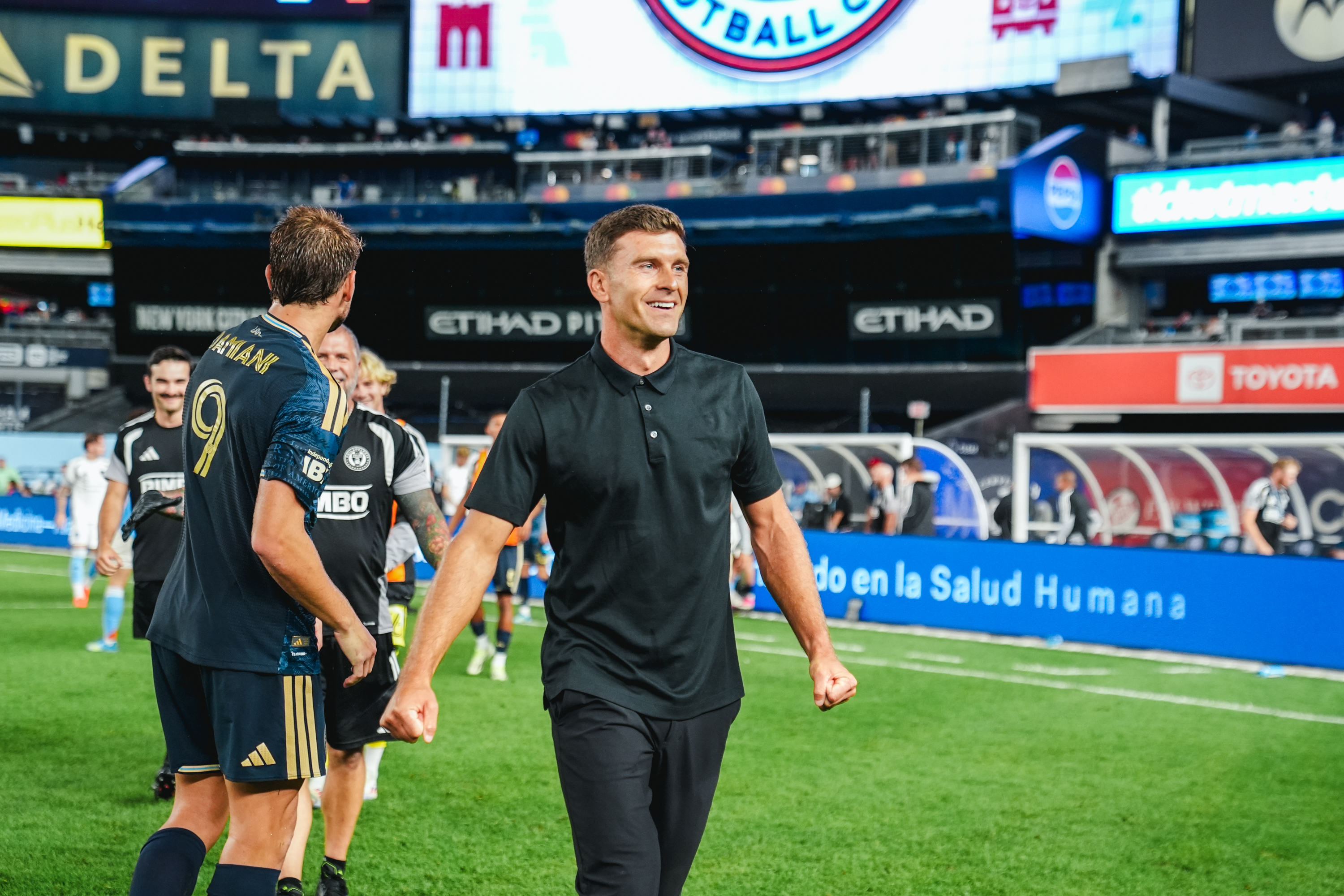
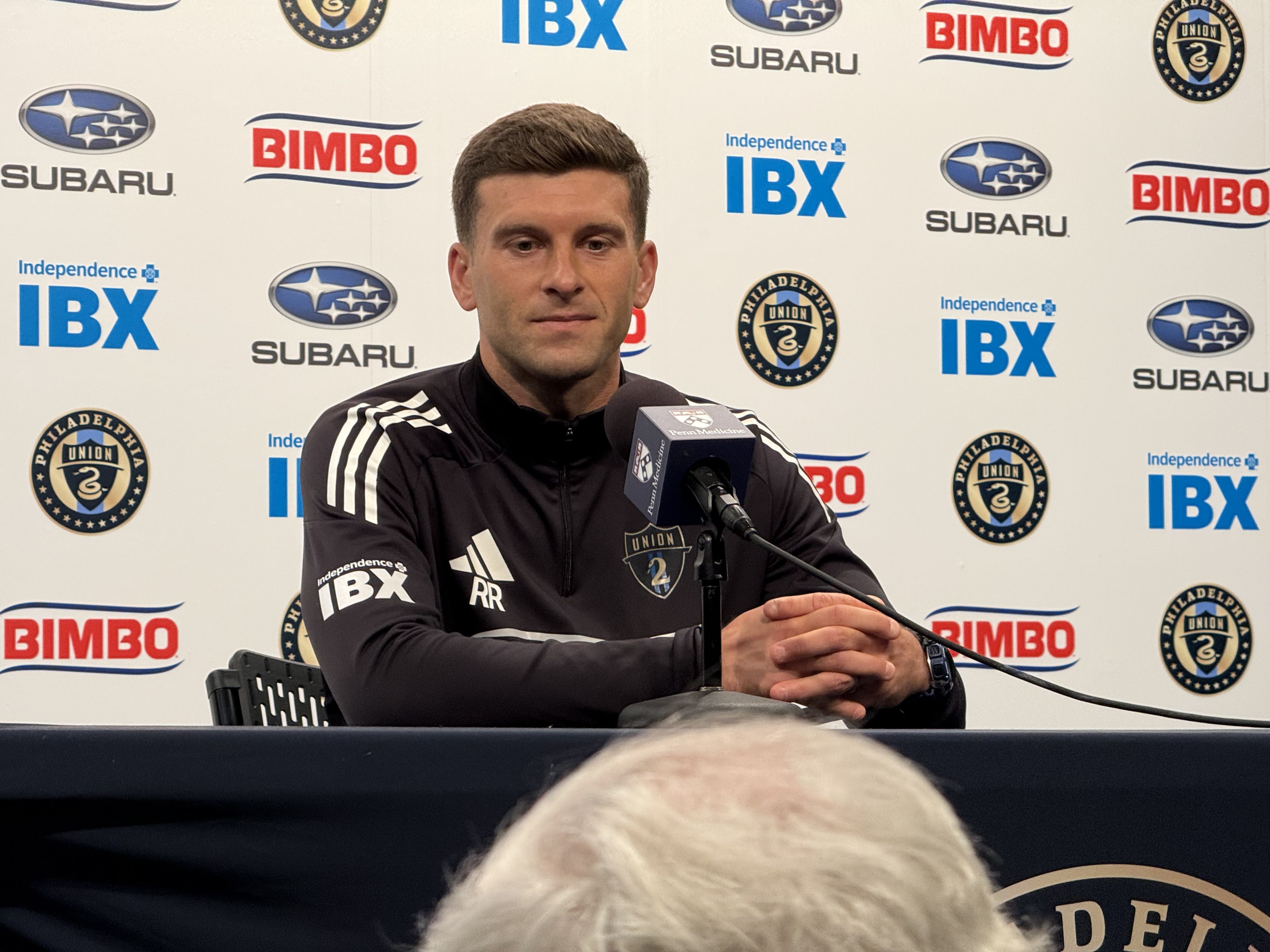
About two to three times a week, Ryan Richter will sit in front of reporters in the bowels of Subaru Park. His hair will be neatly combed to the side, his hands folded in front of him, with his shirt buttoned to the very top.
The Union’s interim head coach will calmly discuss the game ahead, or the game just played, answering questions as anyone else in his position would. But every now and then, those watching from his hometown of Southampton, Bucks County, have to laugh.
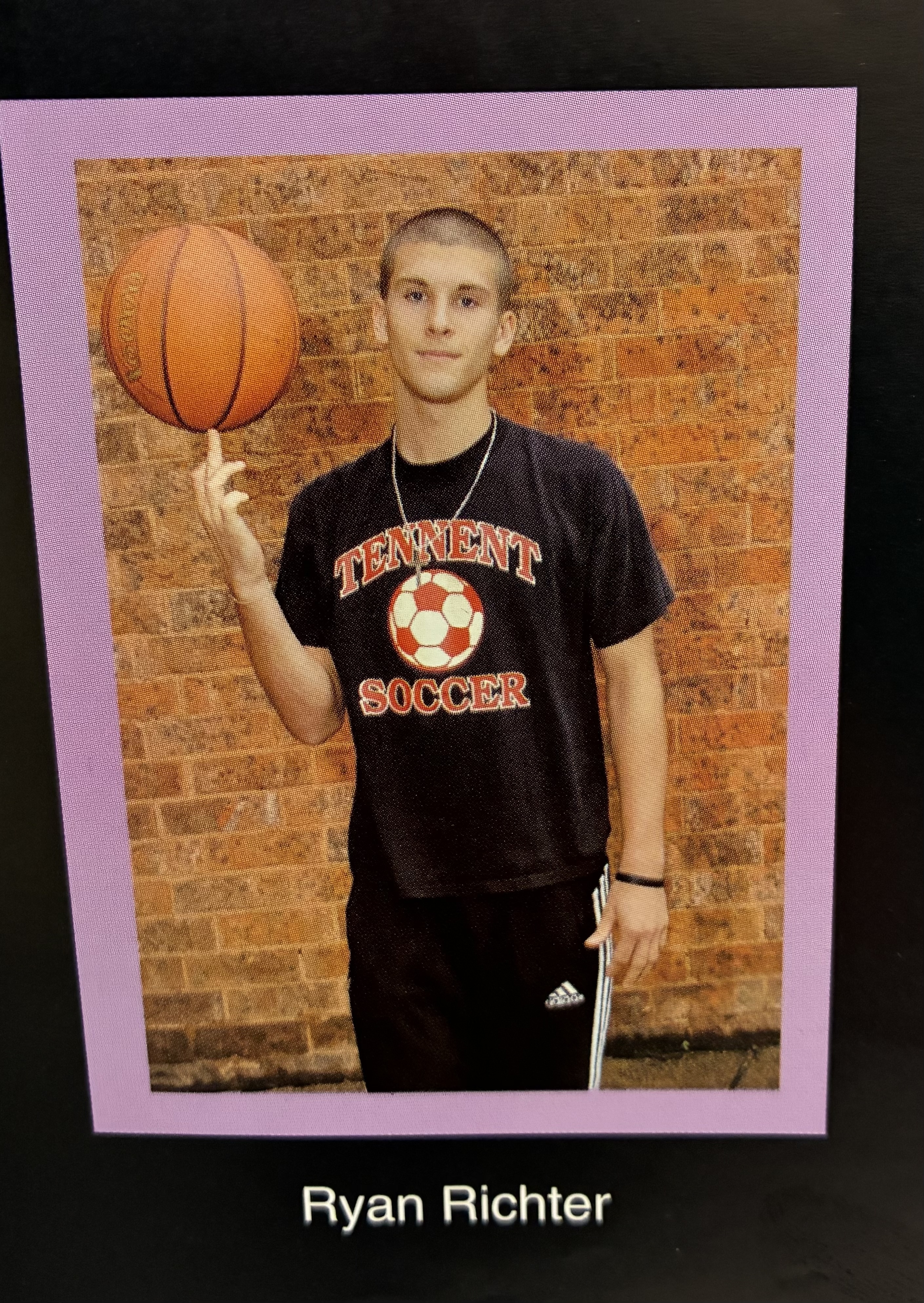
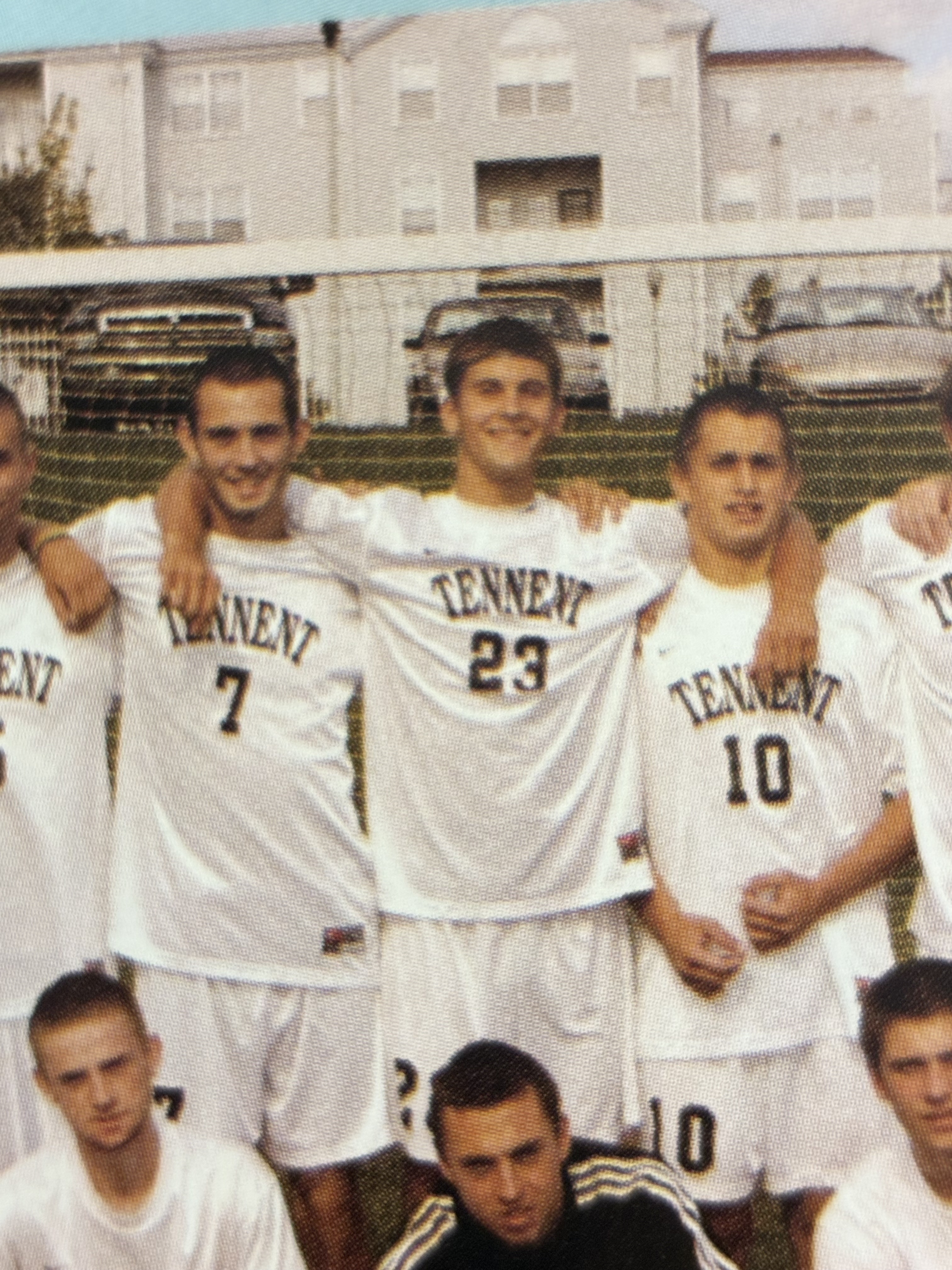
In some ways, this version of Richter is just like he was as a kid: driven, focused, thoroughly prepared. But aesthetically, it is completely different. Richter, a three-sport athlete at William Tennent High School, was captivated by NBA culture growing up, particularly Allen Iverson.
He’d wear a headband during basketball games. He pierced both ears. He’d drive around Bucks County in a white Kia, with an enlarged Jumpman logo on its hood, and Sixers jerseys covering its seats.
À la Shaquille O’Neal, Richter would give himself nicknames: “Shaq Daddy,” “Shaq-Daddy-Licious,” “Ric-Daddy-Docious.” Those monikers are long gone, but that side of Richter isn’t.
Ryan Richter was a three-sport athlete at William Tennent High School, who parlayed his talents into a pro soccer career and now an interim role as the Union’s head coach. Courtesy / William Tennent H.S.
“It’s like, I’m still listening to Get Rich or Die Tryin’ when I’m driving into work,” Richter said. “You know?”
His high school basketball coach, Glenn Dolton, called this a “paradox.” Beneath the panache was a teenager who was confident, but not cocky. Hard-working, but also light-hearted, with a self-deprecating sense of humor.
Treating pro soccer as a profession wasn’t a main goal. Richter was always immersed in the sport — his dad played at The College of New Jersey, back when it was known as Trenton State, and his grandfather played for a team in Warminster — but he also played basketball and football through high school.
The Sixers were Richter’s favorite team, and Iverson his favorite player. Richter was in the building for Game 5 of the 2001 Eastern Conference semifinals, when The Answer dropped 52 points, and returned for the Eastern Conference finals against the Milwaukee Bucks.
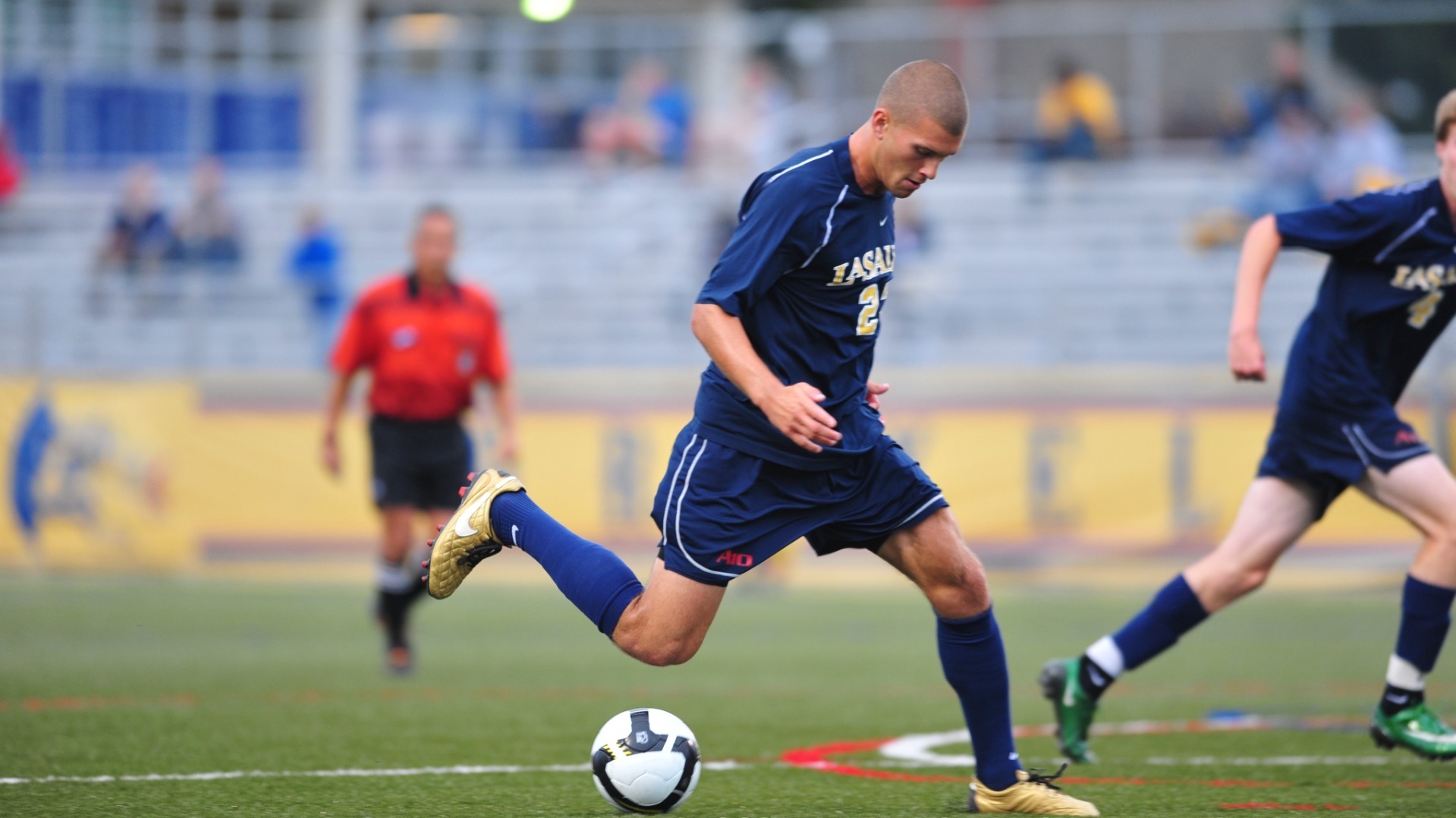
Before he was the Union’s interim head coach, Ryan Richter was the Atlantic 10 Player of the Year at La Salle University.Courtesy / La Salle Athletics
A La Salle graduate, Richter was drafted by his hometown MLS team in 2011, began coaching for them in 2018, and has gradually worked his way up since.
Now, the 37-year-old is at the helm, leading the Union from the worst record in the league to playoff contention. At the time of this report, the club hasn’t lost a league game under his watch. Players say the energy in the locker room has changed for the better.
The soccer world might be surprised. But Southampton isn’t.
“He knows what it takes to get the job done, and he does not like to lose,” his childhood best friend, Mike Pio Jr., said. “And, I mean, that’s pretty evident with how they’ve been doing so far.”
Some people hate losing more than they love winning. Richter says he’s the opposite, and has been that way since he was a child.
He was competitive not just on the field, but in everyday life. If he was playing a game of Connect Four, he’d want to crush the opposition. He and his friends would hang out at the local youth center to jump into hotly contested pickup hoops games.
Once, the teenagers joined an adult bowling league. They were the youngest members by about 20 years, but that didn’t quash Richter’s spirit.
“The competitiveness was also there,” Pio said. “I think everybody else in that league was probably old enough to be our fathers.”
A formative moment came in his freshman year of high school. Richter tried out for the junior varsity basketball and soccer squads, and failed to make either team. He got to work, and by sophomore year, made varsity in both sports.
Ryan Richter (center) didn’t make the varsity team his freshman year at William Tennent. The next season, he made varsity in both soccer and basketball. Courtesy / William Tennent H.S.
But he never forgot the feeling of being passed over — or the names of the students who passed him.
“He still reminds me of that occasionally,” Dolton said, “that I should have brought him up. Which, looking back on it, I’m like, ‘Yeah, you may have a good point there.’”
Coaches loved Richter, because he’d push his teammates as hard as he’d push himself. If a fellow athlete wasn’t hustling enough, he’d pull him aside or ask a higher-up to step in.
Pio’s father, Mike Pio Sr., experienced this firsthand when he worked as an assistant soccer coach at Tennent.
Video: Union interim manager Ryan Richter not satisfied with landing in a playoff spot
“He expected his teammates to basically bleed the way he bled,” Pio Sr. said. “Even during practice, he would call people out.”
Teenagers didn’t always love being challenged, but Richter had an affability which allowed him to break through. He was athletically gifted on the field, but didn’t take himself too seriously or act like he was better than anyone else.
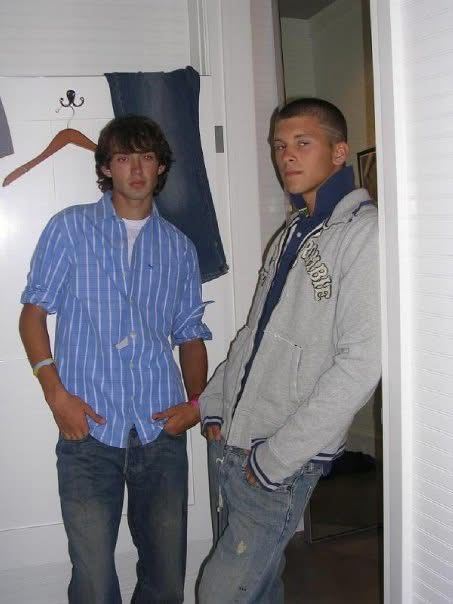
The hood-sized ode to Michael Jordan was evidence of this. So was a photo that Richter took with Pio Jr. when they were in high school. The two friends were at the Willow Grove Park Mall, in an Abercrombie and Fitch dressing room.
Before he was the Union’s interim manager, Ryan Richter (right) was a three-sport athlete at William Tennent High School, with an affinity for NBA culture and swag.Courtesy / Mike Pio
Images of models adorned the walls, and Richter and Pio Jr. wondered how easy that work must be.
So, they tried it themselves, posing for a photograph that still hangs beneath a magnet on Pio Sr.’s refrigerator door.
“It was like they were posing for GQ magazine,” Pio Sr. said. “Hilarious.”
The teenager would set up silly challenges, like singing the national anthem before a basketball game, despite the fact that he was not musically inclined. And physical challenges, like improving his vertical so he could dunk in a game.
Richter stood at 6-foot, but had smaller hands, which made it difficult to palm the ball. But he was determined. In a game against Abington, he finally got the moment he’d been waiting for.
“He threw one down, and it was like the place exploded,” Dolton recalled. “It was like the greatest thing that ever happened. It was really funny.”
Union interim manager Ryan Richter starred on William Tennent’s varsity basketball team.Courtesy / William Tennent H.S.
Richter was recruited by several nearby soccer programs: Temple, Delaware, and Iona. But he ultimately chose La Salle because of its coaching staff.
Head coach Pat Farrell’s rules were rigorous, but aligned with Richter’s already sky-high expectations. He noted that Farrell pushed him, personally too.
“It was just the things that he emphasized,” Richter said. “About taking responsibility, about being a man and taking care of your school stuff, and staying out of trouble.
“He’s not a guy of so many words, but he was just a father figure for everybody.”
Before he was the Union’s interim head coach, Ryan Richter was the Atlantic 10 Offensive Player of the Year at La Salle University.Courtesy / La Salle Athletics
Richter upped his work ethic to a new level in college. The striker showed up to practice an hour-and-a-half or two hours early. He’d train with the Ocean City Nor’easters, a USL League Two team, to stay in shape during the offseason.
When he returned in the fall, he’d be ready for more. And by 2011, he was en route to a professional career.
“He would say, ‘Do you want to do some extra [shooting], or do you want to do some skill work,’ like ball work and things like that,” Farrell said. “And we could never say no.”
Richter’s playing career with the Union was brief — only making an appearance in two international friendlies and 10 reserve league matches — but his time as a coach there has spanned nearly nine years.
After playing professionally for seven years, Richter was hired by the Union in 2018 to work at their academy, serving in various development roles.
In 2022, he was promoted to assistant coach of the Union, under then-head coach Jim Curtin, and in 2025, was named head coach of the Philadelphia Union II.
Ryan Richter has held several roles within the Union, including former head coach of the club’s developmental team, Union II. Jonathan Tannenwald / Staff
When Bradley Carnell was fired in late May, after a league-worst record of 1-10-4, and replaced with Richter, many current players were already familiar with him.
The Southampton native had coached Cavan Sullivan since he was 8. Outside back Frankie Westfield had never played for Richter, but knew him through regular games of teqball and basketball with his teammates at the Academy.
Centerback Neil Pierre started his season on a six-month loan to a team in Denmark. When he returned in July, he wasn’t sure what he’d find.
He’d heard from teammates that the locker room was “losing its head.” But with Richter already having an established relationship with multiple players, it helped make Pierre’s immersion back into the squad smooth.
“We were going through a tough time,” Pierre said. “I guess it wouldn’t be the same upbeat attitude. People wouldn’t be as into the culture. Kind of lost that ‘Philly’ mindset. And I think when [Richter] came back, he just brought it back.”
Ryan Richter (left) greets Union midfielder Quinn Sullivan during a recent match.Elizabeth Robertson / Staff Photographer
Richter’s Bucks County tendencies are never too far. He has been known to challenge other coaches on the basketball court. He is still a massive Sixers fan, and gleefully shared the news of LeBron James coming to Philadelphia after a Union practice in July.
But perhaps the biggest way his upbringing shines through is in his approach to younger players. Sullivan is only 16, but a teenage phenom who is bound for Manchester City when he turns 18.
In an Aug. 19 match between the Union and Inter Miami, Sullivan defended his brother, Quinn, after defender Ian Fray stepped over him and pushed his head down.
Cavan ran over, and got in a scuffle that instantly became the story of the game. He received a red card (later rescinded).
Got to protect your own brother.
Cavan Sullivan and Yannick Bright were given red cards.
Cavan Sullivan and Richter talked about the incident two days later. The head coach told him that he did nothing wrong, but to remember that he draws scrutiny like nobody else on the roster.
And that if he does act up, it’ll become international news.
“I always try to keep in mind of where some of the younger guys are at, and remember what I was like,” Richter said. “When I was 16, I was driving around with a Jordan logo on my car, and who knows what kind of trouble I was getting in.
“That’s why I think Cavan is such an amazing kid; because of the pressure that he has to deal with, and the spotlight that’s always on him. Could you deal with that when you were 16?”
Richter, seen here with Union teen midfielder Cavan Sullivan, says he tries to remember himself at a young age in order to keep his players, many of whom are still in their teens, focused on the team’s mission.Yong Kim / Staff Photographer
Learning soccer on the fly
Richter’s friends did not grow up diehard soccer fans. Like most Philadelphians, they are all-in on the Eagles and the Phillies; maybe some basketball and hockey, too.
His new role has served as a teaching moment for everyone. Last month, a group of Southampton natives went to Subaru Park for a game against Atlanta United. They were stunned by what they saw: Union goals in 96th and 97th minute, en route to a 3-2 comeback win.
“They’re like, ‘Soccer is amazing!’” Richter said. “It’s like, ‘This is a one-in-a-thousand game that you guys saw tonight.’”
Nevertheless, the head coach’s buddies have since tuned into to every press conference and every match, home or away. They’ve been filling his group chat with lots of “DOOP” and other words of encouragement.
Ryan Richter says his approach is solely game by game and isn’t taking too much stock in the success the Union have had since he took over as interim manager. Isaiah Vazquez / For The Inquirer
They’re also provided some friendly, albeit superstitious, advice.
“One of our buddies just texted this morning,” Pio Jr. said “He goes, ‘I changed my mind. I don’t think they should remove the interim tag, because you’re doing way too good with it.’”
Richter’s friends have ninemore games to learn; maybe more, if the Union make the playoffs. But regardless of how this season ends, his community will continue to be proud of him.
A local kid, who once patrolled Bucks County, is now patrolling the sidelines of Subaru Park — and doing a good job, at that. The headband and earrings may be gone, and so is the White Kia.
But somewhere, beneath his outward professionalism, is that same Iverson-loving teenager; better known not as Ryan Richter, but as a “licious” or a “docious.”
Tom Schafer was a hulking man when he played one preseason game with the Eagles in the summer of 1984. The undrafted free agent center stood at 6-foot-2 and 270 pounds, with a booming voice and an unabashed confidence to match.
By the fall of 2009, his broad frame had hollowed out. His voice had been reduced to a rasp. Schafer could walk, but only gingerly, and for short distances.
Yet here he was, sitting in a West Chester University parking lot, handing out fundraising pamphlets and preaching to tailgaters about his long-lost teammate.
It was not the way most people battling cancer would have chosen to spend their time. But Schafer was not most people.
When Schafer was told the disease he’d battled two decades prior had returned in 2008, he had already made a commitment and was determined to see it through, no matter how many rounds of treatment he would have to endure.
“He still had that fire about the statue,” said former West Chester center Joe Walsh. “He was talking then about everything we see now.”
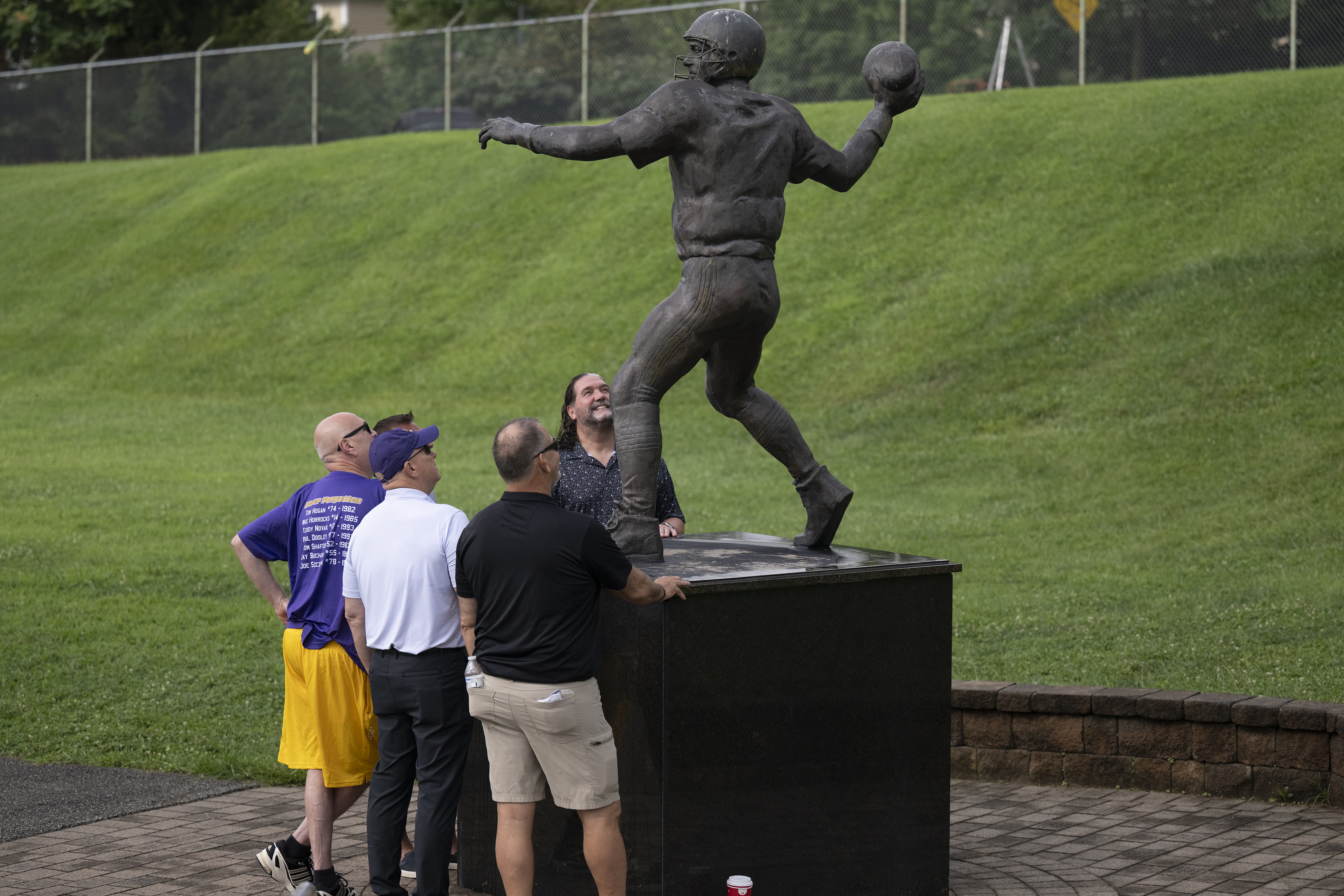
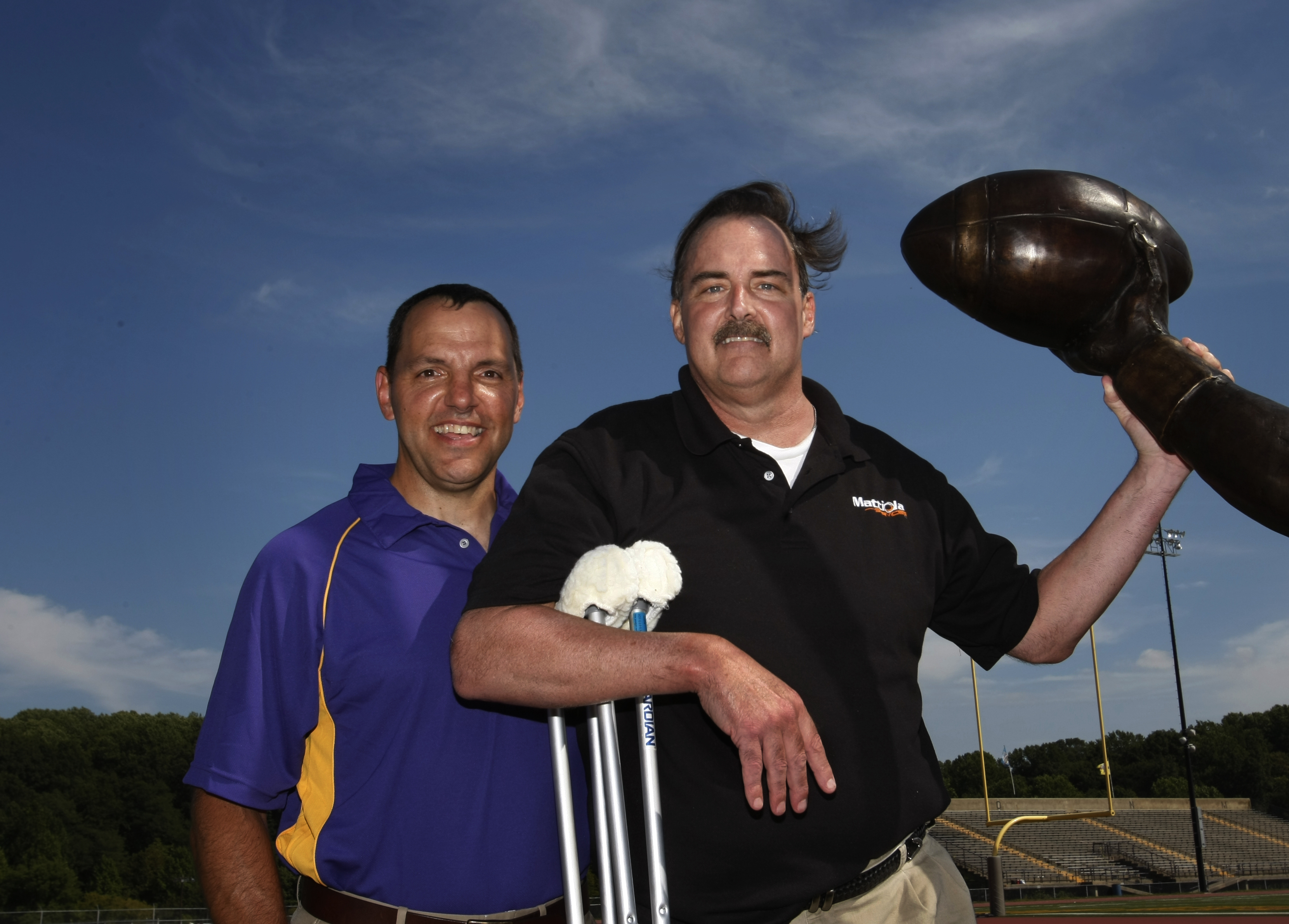
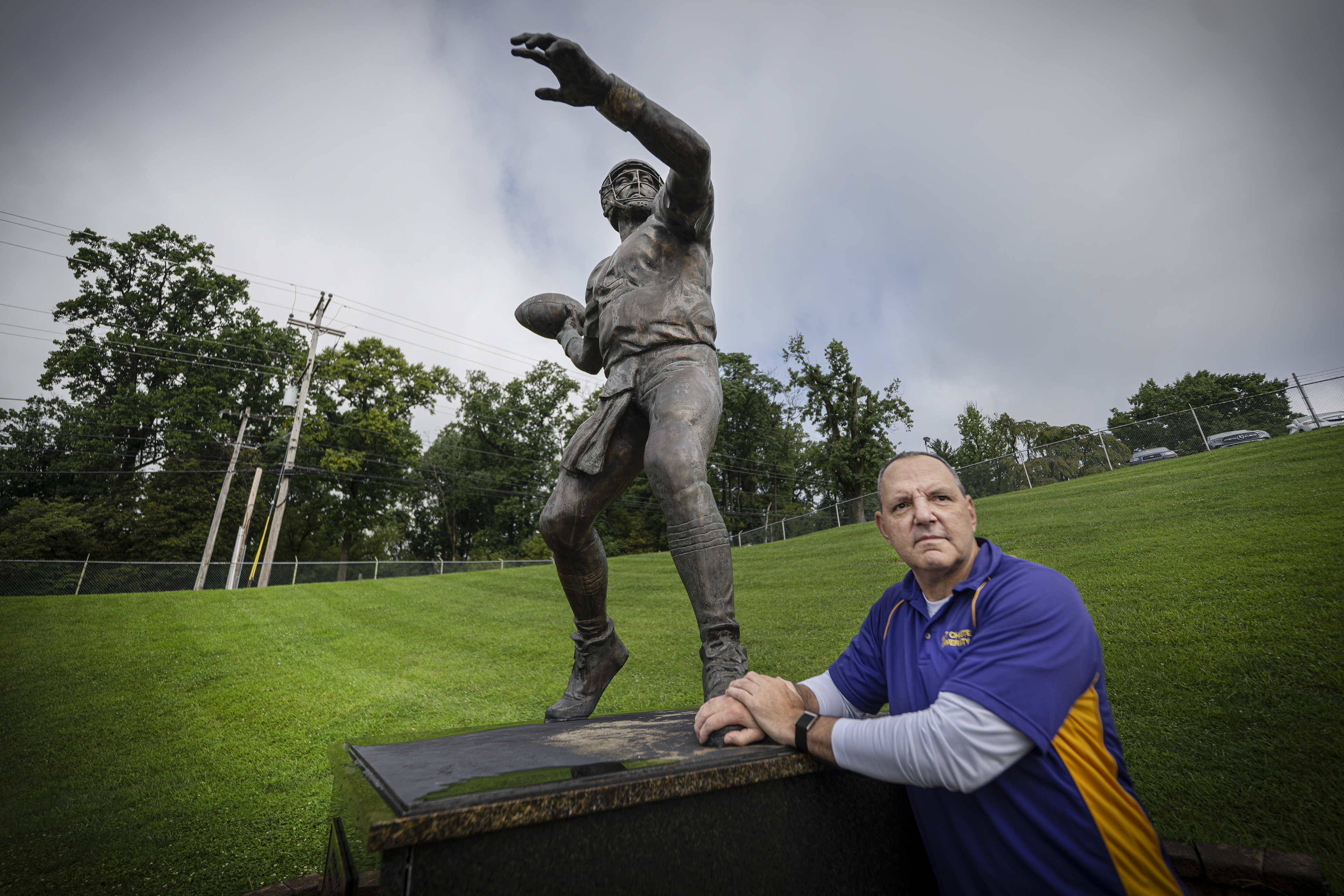
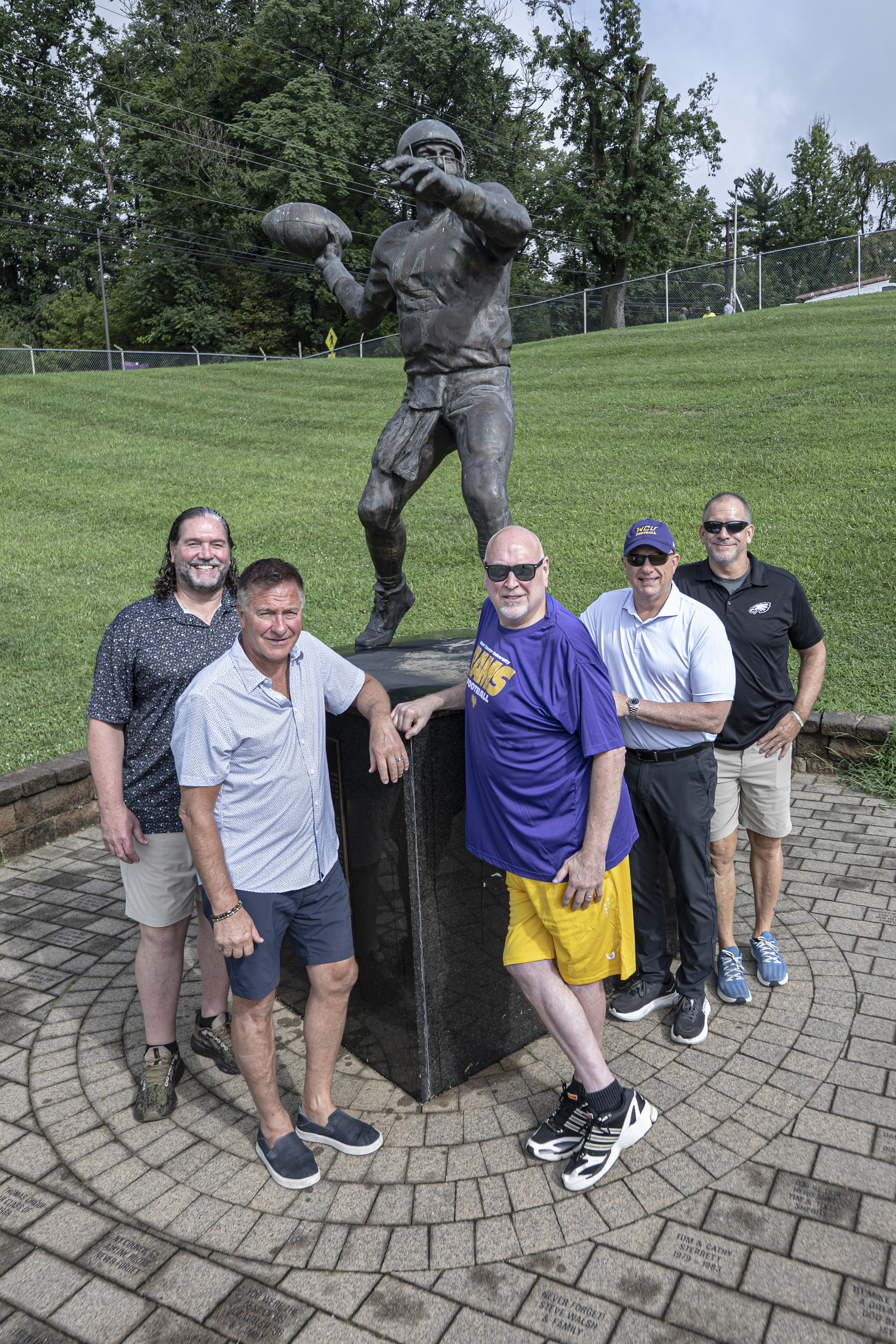
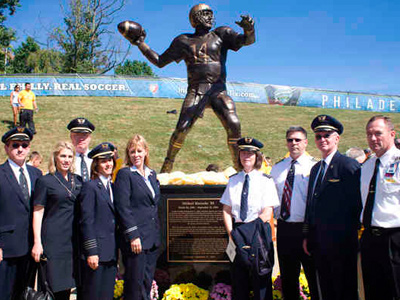
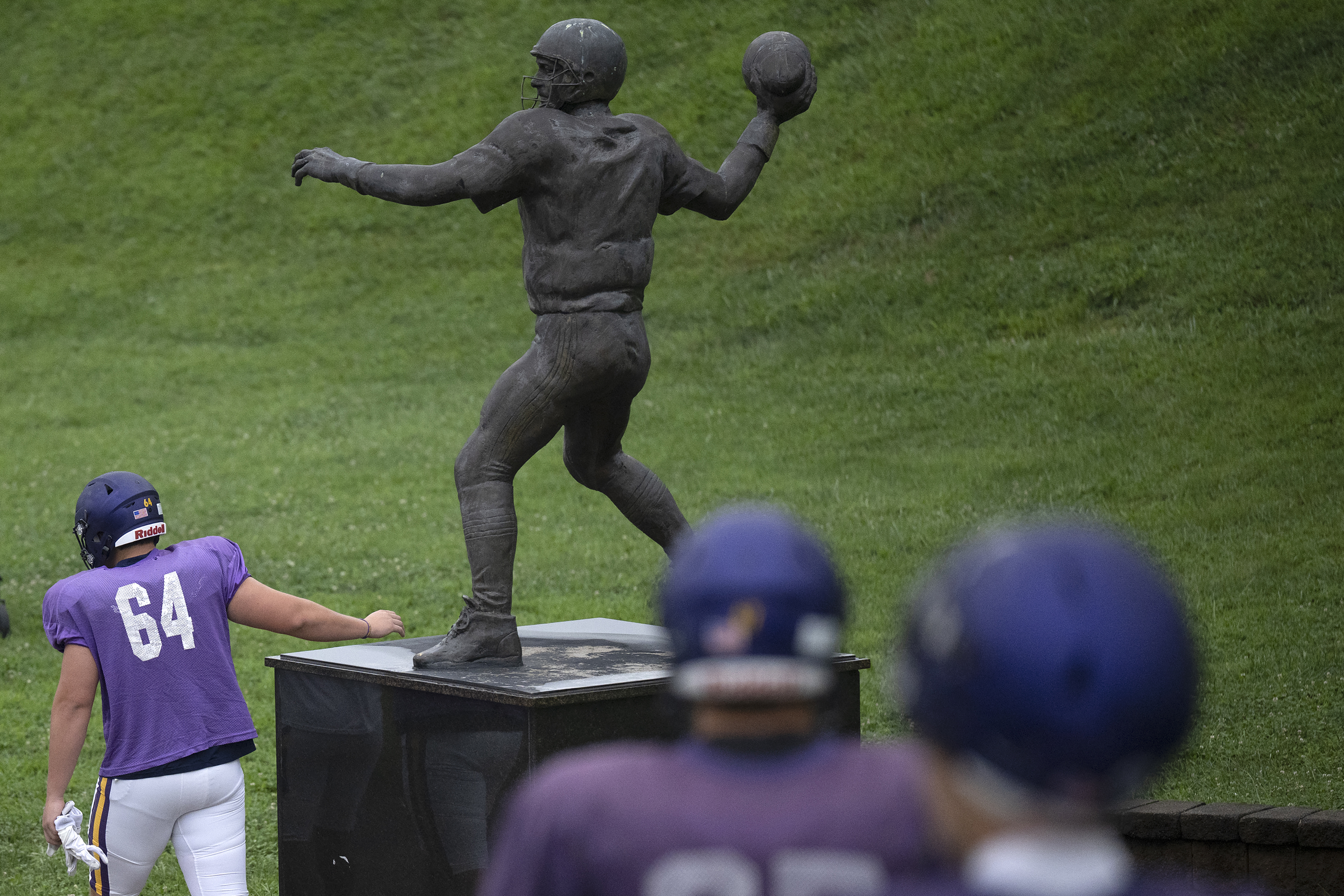
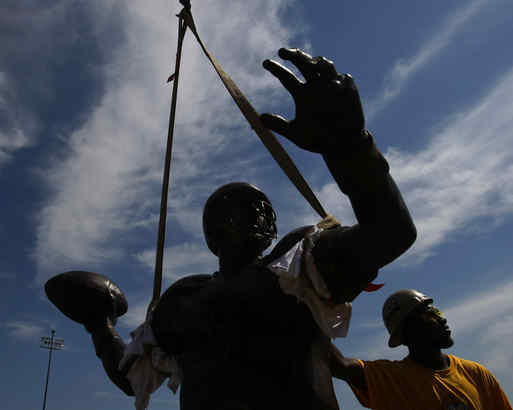
Walsh motioned to the northwest corner of Farrell Stadium. There, at the base of a hill, stood a bronze likeness of a quarterback, his left foot firmly planted, his right arm cocked, ready to uncork a spiral.
Former teammates John Mininno (left) and Tom Schafer (right) visit the statue of Michael Horrocks which was unveiled Sept. 11, 2010. Michael S. Wirtz / Staff Photographer
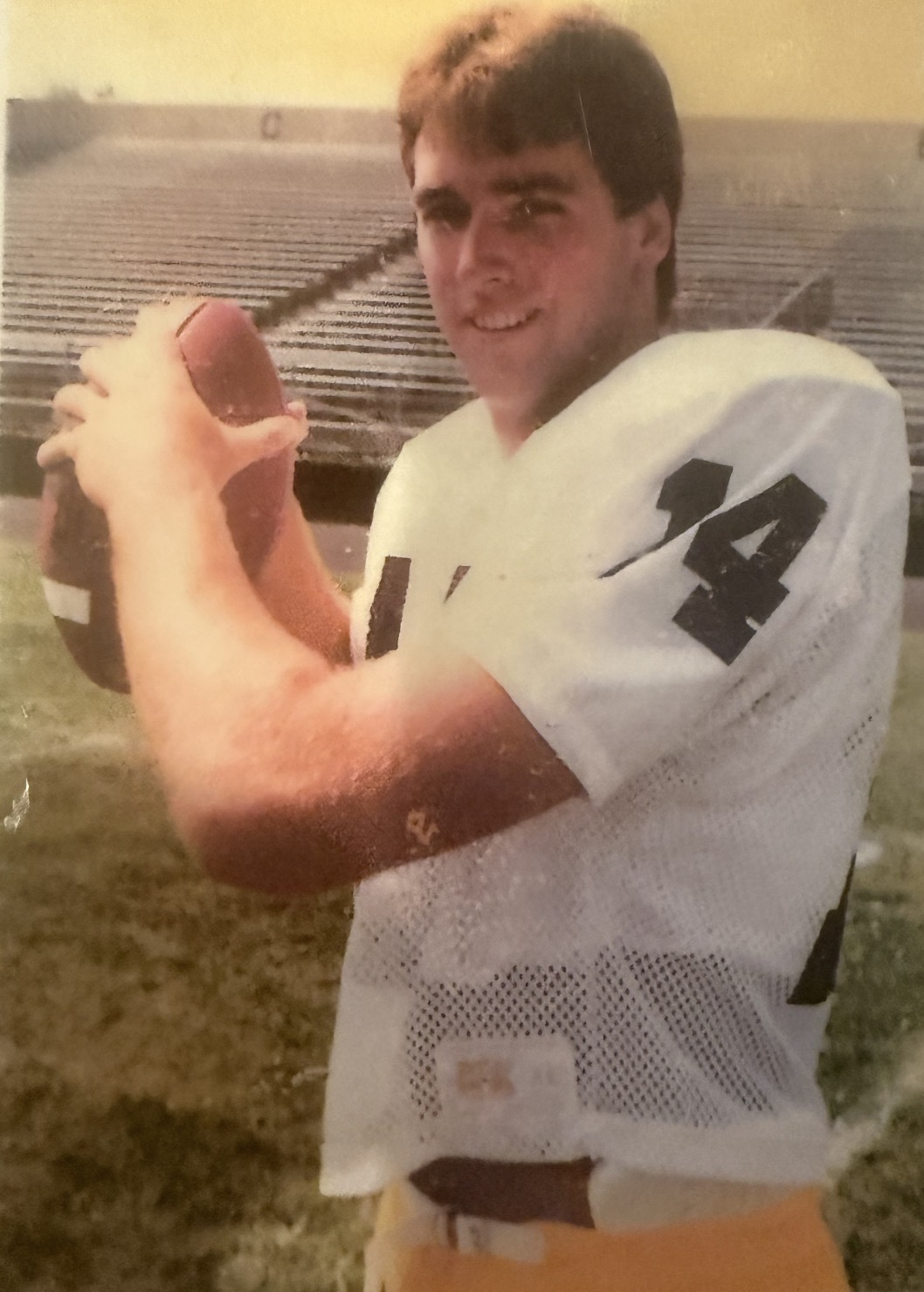
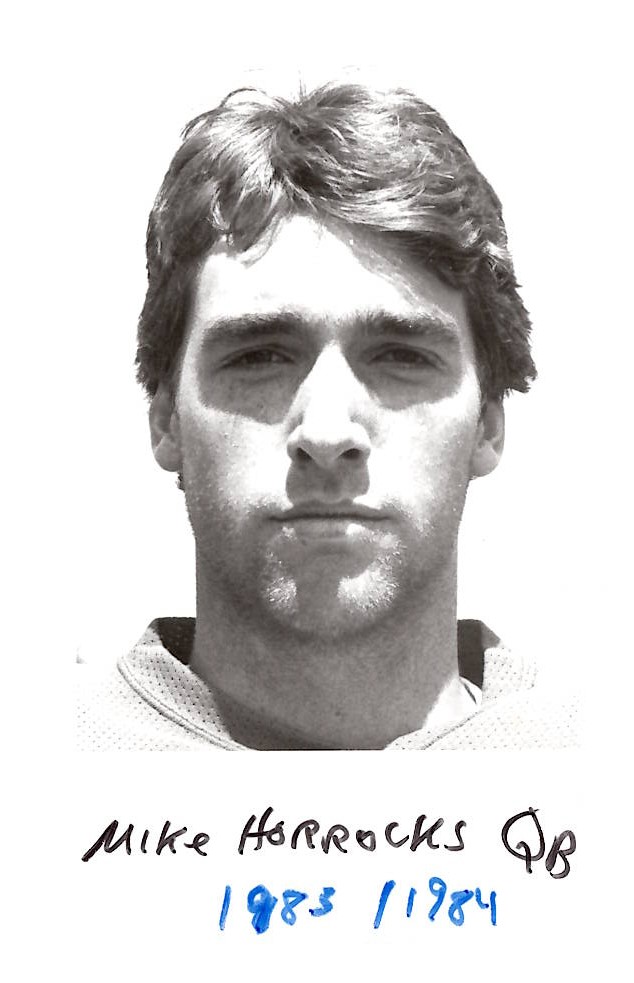
The man was Michael Horrocks, Class of 1985. He and Schafer overlapped on the football team for twoseasons, but Schafer took a liking to the sophomore’s goofy personality.
And when he found out that that same sophomore had been a copilot of Flight 175, the plane that hit the South Tower on Sept. 11, 2001, he was distraught.
Years passed, and Schafer began to coach high school football throughout the region. Some of his players joined West Chester’s program. None knew of Michael Horrocks. Not of his tragic place in history, or of his greatest moment on the field, when he led the Golden Rams to a 35-27 upset win over Delaware in 1983.
They didn’t know of his service in the Marines, or his devotion to his kids, and his wife, and his friends. They didn’t know his name at all. And Schafer desperately wanted them to.
So he and his teammates came up with a plan to ensure Horrocks’ presence would be felt for years to come. From 2008 to 2010, the West Chester alums raised $150,000 for a scholarship endowment and a statue to commemorate the late quarterback.
They faced all sorts of challenges, some of them logistical. West Chester had never built a statue on campus before, and had no clear guidelines on the process to have one erected.
Former West Chester University football player John Mininno is photographed near a statue honoring his former teammate, quarterback Michael Horrocks.Jose F. Moreno / Staff Photographer
In an initial conference call with Horrocks’ teammates, school officials tried to persuade them to build something smaller, like a plaque or a bench. They warned the former players of the money they would need, and the bureaucratic hurdles they would face.
But Schafer was undeterred.
“Tom went in there and said, ‘F— you, we’re not doing a plaque. We’re doing a statue,’” said Class of 1988 linebacker John Mininno. “And he was not to be denied.”
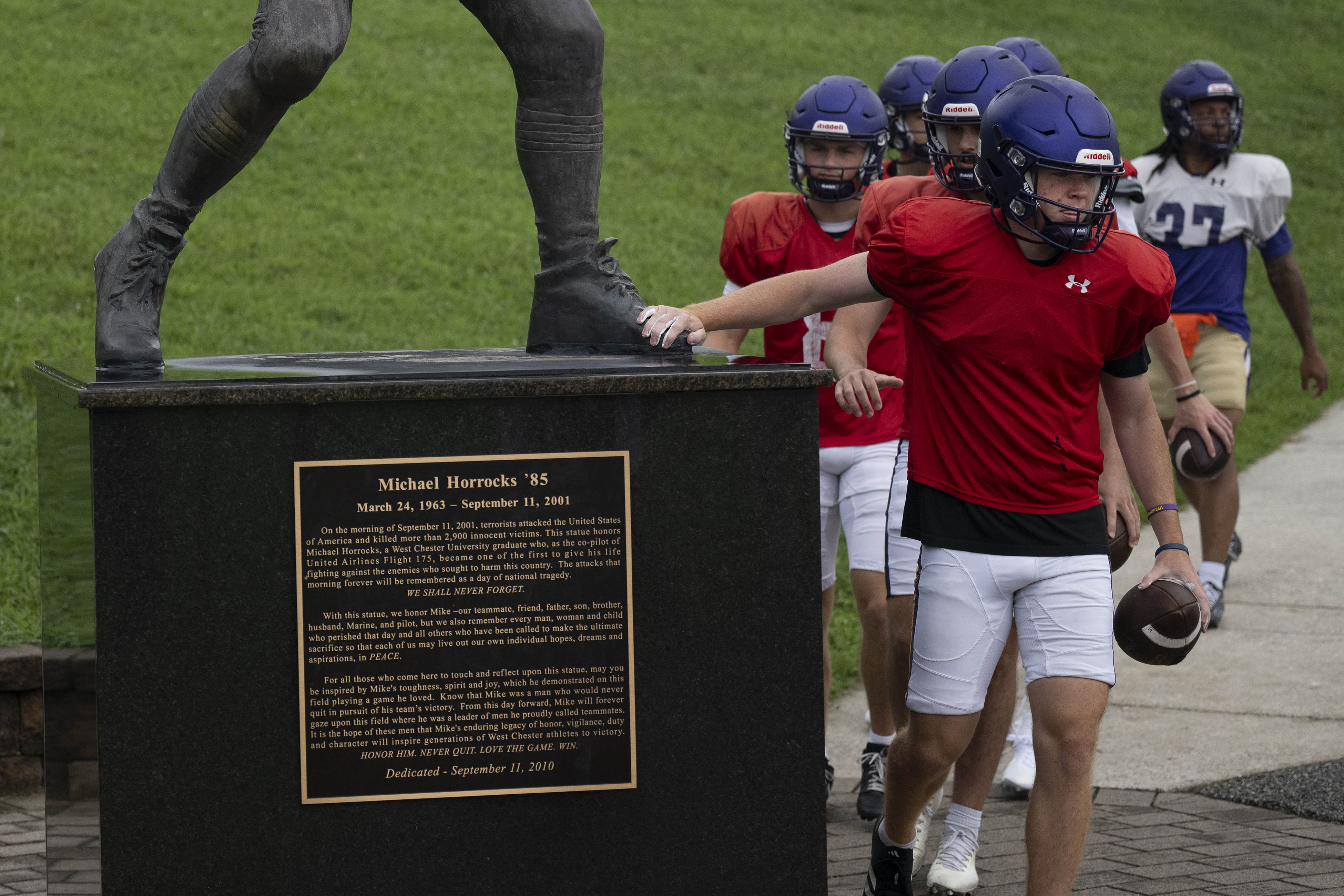
The result was not just a statue, but a tradition. Since it was unveiled in 2010, West Chester’s players have tapped Horrocks’ left foot before every practice and game.
They have done this so often that you can see scuffs of gold peeking out from beneath the bronze. Horrocks is not here in the physical sense, but this version of him — fearlessly driving down the field, leading his men — is now preserved.
And his teammates intend for it to stay that way.
“We want this to be a legacy,” Mininno said. “We want this to be here for much longer than we’re going to be around.”
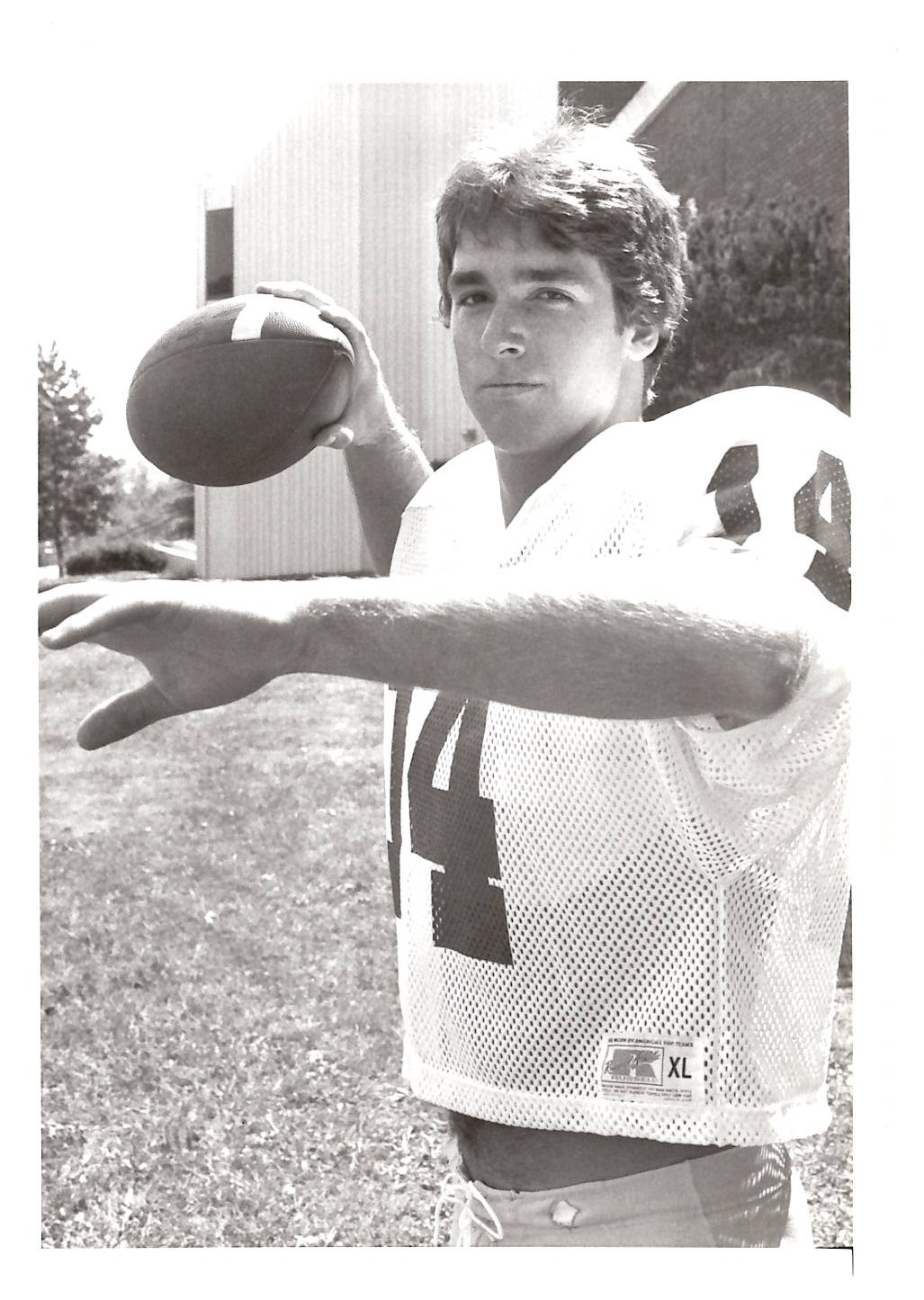
Michael Horrocks emerged as a starting quarterback and a trusted leader at West Chester.provided by Mark Gosik
‘A pilot the entire time’
Horrocks was born and raised about 70 miles west of West Chester, in Hershey, Pa. He attended Hershey High School, where he played varsity football under head coach Robert “Gump” May.
May was tougher than most coaches. His team did three-a-days throughout the summer: an unusually heavy workload, which had the intended effect of whittling unreceptive players from the roster.
The coach would start camp with 75 kids. Two weeks later, he would be left with 30.
One kid, in particular, was always in that lattergroup.
“Mike stayed,” May said.
Horrocks was fighting for playing time with Scott Campbell, a quarterback who would go on to have a six-year career in the NFL. Locals were skeptical that the backup would perform in the opportunities he did get, but he quickly proved them wrong.
Over his one season as a starter at Hershey, and in limited appearances before that, Horrocks led his team to a litany of come-from-behind wins, including one against rival Palmyra High School, which took a 21-point lead in the first quarter.
“After Scott Campbell graduated, everybody thought, ‘Well, they lost their big gun,’” May recalled. “Well, Mike jumped in and he was just as big a gun.”
Michael HorrocksSpecial Collections, West Chester University
Gump reached out to a friend, Rick Daniels, a part-time assistant who later became West Chester’s head coach, and sent him some film of Horrocks. In the spring of 1981, the quarterback drove to campus for a visit.
Daniels was already impressed by what he saw on film. Horrocks didn’t just have a strong arm; he was also quick on his feet, and he had an air of unflappability about him. He joined West Chester’s team that fall as a backup quarterback.
Once again, Horrocks found himself in the unenviable position of filling in for an NFL-caliber player in Ron Gaynor, who later bounced around training camps with the Seahawks, Eagles, and Bills.
Nevertheless, the aspiring starter worked with the intensity of a seasoned veteran. Horrocks and tight end Al DePippo would regularly put in extra hours, throwing after practice and then heading to the weight room. If it was locked, they would use the neck machine beneath the stands.
Horrocks coupled his drive with a lighthearted composure that allowed him to thrive in intense situations. The first time he interacted with Schafer was in 1982,when Horrocks was a sophomore.
Gaynor had gotten hurt; Horrocks was asked to fill in.
“He crouched down in the middle of the huddle, looked up at us, and said, ‘Ah, the big boys,’” Schafer recalled to The Inquirer in 2010. “I said, ‘Shut up and call the play.’”
It was a precursor of huddles to come. Some players got stiff when they first entered regular season games. Horrocks was the opposite. He would walk onto the field with a toothy grin and a laugh, confident in the hours of prep behind him.
Michael Horrocks led West Chester to a rare win over rival Delaware in 1983. Special Collections, West Chester University
This continued even after he was named the starting quarterback in 1983. Horrocks was known to play pranks, like tying teammates’ shoelaces together, or putting slices of cheese in a friend’s textbook.
West Chester had some of its greatest moments under Horrocks and his playful persona. In his first game as a starter, Sept. 10, 1983, the Golden Rams faced the University of Delaware on the road.
It was a harrowing matchup. West Chester played in Division II, while Delaware played at what was then known as the Division I-AA level. The Blue Hens had won their last 15 games against the Golden Rams, a streak that dated back to 1957.
But West Chester was unafraid. After a scoreless first quarter, the Golden Rams jumped to a 21-3 lead in the second. They upped it to 35-3 in the third and held on for the win.
Horrocks finished the day 10-of-18 for 129 passing yards and two touchdowns.
West Chester’s campus erupted into a giant party, as if the team had won the national championship. But the quarterback at the center of it all was already focused on his next game.
When he returned home that night, he recapped different plays and passes to his housemates on Magnolia Street.
“He would talk about even some of the plays that he missed,” said his friend Chris Conner. “He never got too big. Even though he had just beaten Delaware, he was still the same guy.”
From left, West Chester University football alumni Tom Weaver, Mike Esposito, Bob Campbell, Mike Hudson and Dean DiPasquale pose for a photo with a statue honoring their former teammate Michael Horrocks last month. Jose F. Moreno / Staff Photographer
In 1984, West Chester hired a new head coach, Danny Hale, who brought in a new I-formation attack that incorporated elements of the West Coast offense. This system was different from what the team was accustomed to running (a split-back veer offense), and Hale, who was hired late, had limited time to teach it.
He and quarterbacks coach Bill Hart met with Horrocks every day in the football office on campus. They would draw up plays on the chalkboard and quiz their pupil about different coverages and fronts he would face.
Hale’s system allowed Horrocks the ability to audible if the situation called for it, and the head coach wanted him to be well-prepared. But Hale and Hart soon learned that that wouldn’t be a concern.
The Golden Rams went 7-3 in 1984, and 5-1 in their conference, falling just shy of winning the Pennsylvania State Athletic Conference’s Eastern Division title.
When DePippo looks back, he realizes that the same qualities that served Horrocks in the air were those that made him a good quarterback: a natural leader, a hard worker, a man who could balance an easygoing nature with intense focus.
“It comes back to what kind of pilot do you want?” DePippo said. “Do you want somebody that’s going to panic when the s— hits the fan, or do you want a guy that’s going to be confident?
“And Mike was that confident guy; a pilot the entire time. We just didn’t know it.”
Pilot Michael Horrocks (left) was introduced to flying in the 1980s. (Photo provided by Mark Gosik)INQ WILLIAMS
From football to flight
The first time Horrocks flew a plane was in 1983. He was in Fort Lauderdale, Fla., for spring break with two friends, Mark Gosik, a former guard for West Chester, and Rob Jeffries, a tight end at Lehigh.
They were visiting a family friend of Horrocks’, Bill Blauer, who worked for a commercial airline. One afternoon, Blauer invited them aboard his four-seat aircraft.
Gosik and Jeffries sat in the back, with headgear on, as Horrocks rode up front. About halfway through the two-hour ride, Blauer turned to Horrocks and told him to grab the controls.
Horrocks obliged and cruised the plane down, close enough to see the beachgoers below. As he flew over the ocean, with waves rippling beneath him, he realized he had found his calling.
The former quarterback felt that his best route to commercial flight would be through the Marines. Horrocks knew he would get the best training there, and he liked the idea of a new challenge. So, after graduating West Chester in 1985, he enrolledin Officer Candidates School.
He got his wings at a naval air station in Corpus Christi, Texas, and was stationed in the early 1990s at Marine Corps Air Station Cherry Point in North Carolina, where he joined a marine aerial refueler transport squadron.
Horrocks flew KC-130 turboprop aircraft, which were used to refuel helicopters and jets, but also to transfer cargo, passengers, ammunition — anything that needed to be moved. It was a daunting transition, one that many young pilots struggled with.
Miriam Horrocks (center, left) cradles her son Mick, 6, as her father-in-law William Horrocks (center, right) sits with her daughter Christa Horrocks, 9, as a US Marine Corps Honor Guard folds up the American flag following a memorial mass and service for her husband Michael Horrocks on Sept. 17, 2001.Tom Gralish / Staff Photographer
In training, they would be flying a single-engine plane, which stretched maybe 18 to 20 feet long. Now, as lieutenants, they were manning a plane five times as big, with three more engines, moving whatever needed to be moved at 30,000 feet in the air.
It was anything but a routine job. Horrocks’ operations officer, now-retired Lt. Col. Bill Franchi, said that when his squadron deployed to Bahrain during the Gulf War, they did so knowing that there was a good chance they would be targeted heavily.
But Horrocks was a natural, and quickly proved he could be relied upon. He went on a number of deployments, to the Middle East throughout the Gulf War, to Europe, to Central America, and became Franchi’s “go-to guy.”
Once, during a three-week detachment to Norway, a panel in the squadron’s KC-130 caught fire. As Franchi tried to put the fire out, he asked Horrocks to redirect the plane back to the local airport.
This was not a scenario that the young pilot had practiced in a simulator. Horrocks would be landing downwind, without flaps on his wings, which helped the plane maintain lift while slowing it down.
With a full-face oxygen mask on, and vapor from a fire extinguisher filling the cockpit, Horrocks guided the aircraft onto the runway, preventing what surely would have been a disaster.
“I told him, ‘I credit you with having saved about six people,’” Franchi said. “Because I didn’t have to do a thing. He had it. And that was sort of typical of Mike. You know?”
Horrocks spent his last few years in the military instructing Marine, Navy, and Coast Guard pilots in Florida. In 1997, his active duty came to an end. He enrolled in new-hire pilot training at United Airlines that summer.
United and Continental Airlines pilots and crew, all friends of Michael Horrocks, stand by his statue at Farrell Stadium in 2010. (Ed Hille / Staff Photographer)
He soon was flying commercial airplanes full-time and living in Glen Mills with his wife, Miriam, and their two young children, Christa and Mick.
Now that Horrocks was local again, he was able to reconnect with old teammates like Bob Rafferty, a former West Chester halfback and quarterback.
They would often see each other in Media, running errands at the Granite Run Mall. In December 2000, while shopping for Christmas gifts, they crossed paths one last time.
Horrocks was walking out of the mall, and Rafferty was walking in. They chatted about family. Horrocks mentioned that he had recently started working transatlantic flights for United.
The two men said goodbye and went their respective ways. Nine months later, Horrocks boarded a Boeing 767 at Logan International Airport in Boston.
Rafferty watched as it hit the South Tower of the World Trade Center. Few, if any, of his teammates knew that Horrocks was piloting commercial aircraft. The idea of him being on that plane didn’t even occur to them.
But Rafferty had a feeling.
“He was the first person I thought of,” he said.
West Chester University quarterback Colin O’Sullivan taps a statue honoring former quarterback Michael Horrocks before practice last month. Jose F. Moreno / Staff Photographer
‘Think of Mike’
Without social media, news of Horrocks’ death at age 38 spread slowly.Some West Chester football alumni found out when they saw Miriam Horrocks on the front page of The Inquirer, at her husband’s funeral in Upper Providence Township.
Others heard through teammates. DePippo was working on Wall Street and lost about 40 or 50 colleagues in the attack. He couldn’t process that Horrocks was gone, too.
In late September, Gosik and two friends, Tim and Patrick Dever, took a train to New York. They spent the day at ground zero, walking through rubble, picking up pieces of people’s lives off the ground: photos, notebooks, newspapers.
Gosik still remembers how dust and soot filled the air. So did the sound of car alarms, blaring for their owners. A few days earlier, a neighbor had made Gosik a lapel pin to commemorate Horrocks, with his No. 14 written on a felt football.
Gosik wore it on his jacket as he traversed the site where his teammate perished.
“We just felt like we needed to be there,” Gosik said. “We just wanted to go.”
Years went by, and the West Chester alums began to wonder why no tribute to their quarterback existed on campus. They were worried that Horrocks would be forgotten, and realized that their fears were well-founded.
West Chester University football players tap a statue honoring former quarterback Michael Horrocks before practice last month. Jose F. Moreno / Staff Photographer
“I don’t recall any of us even being aware of it beforehand,” said Tim Keyser, a wide receiver who graduated in 2013. “That wasn’t something I knew when I was a true freshman on campus or anything.”
The former players began to meet with the school about the prospect of a statue in 2008. Bill Zwaan Sr., who was head coach of the football program at the time, sat and listened as an official from the foundation tried to convey how complicated, and costly, it would be to build such a structure.
Horrocks’ teammates ended the meeting emphatically: by standing up and reiterating, for the umpteenth time, that they were going to move forward with the statue. After they left, the foundation official turned to Zwaan.
“And he said, ‘Do you think they really understood what we were talking about?’” Zwaan recalled. “And I said, ‘They do. And they’re going to do a statue. And you guys have got to be prepared for that.’”
It was a slow, arduous process. The former players not only would have to raise $50,000 for the statue itself, but also would donate $100,000toward a scholarship endowment, which DePippo and another teammate, Bruce Blake, started in 2004.
At this point, most of them had full-time jobs and families of their own, and carving out time was not easy. But they made it happen.
DePippo oversaw the money. Mininno began a letter-writing campaign to raise funds. Walsh served as a liaison between the alumni and the current coaching staff.
Schafer worked as a partner of a local concrete cutting company. He and another West Chester alumnus, Paul Vanscovich, donated their construction crews and equipment for free.
Other teammates chipped in through a team banquet and a Super Bowl pool. A few local businesses, and the pilots union, contributed as well.
The statue of Mike Horrocks at West Chester.MICHAEL S. WIRTZ / Staff Photographer
“I’d kick in $1,000, John would kick in $1,000, Jim O’Donnell would kick in $1,000,” DePippo said. “And then we would get on a text chain, and berate each other in team fashion. Like, ‘You’ve got to do this.’
“We raised money basically only through grassroots. I was specific about that. I didn’t want any corporate sponsorship.You know, ‘CBS Sports presents the Mike Horrocks statue.’ I didn’t want that.”
In the months before construction of the statue was finished, former players would visit West Chester to share stories of their late teammate with the current roster.
Walsh, DePippo, and Blake visited them the day before the dedication. Wearing purple and yellow practice jerseys, the team took a knee as Walsh began to speak.
He explained that one day, Horrocks’ teammates wouldn’t be able to share his story, and that it would be up to the next generation of players to do so.
Then he asked them to close their eyes, and think of a loved one: a sibling, a friend, a parent.
“And when you go down that hill tomorrow, and you touch [the statue of] Mike, think of Mike,” Walsh said. “Say his name. And think of someone else who is special in your life. And thank God that you have them with you today.”
Nine years after their father’s death, Christa Horrocks comforts her brother, Mick, at the unveiling of the statue of Michael Horrocks at West Chester University in 2010.
The statue was unveiled at 10:30 a.m. on Sept. 11, 2010, a perfect autumn day in Chester County. The school arranged a ceremony beforehand, with bagpipes, a marching band, and a flyover.
Miriam Horrocks and the children, now teenagers, were in attendance; Christa gave a speech about her father.
Sitting next to the podium, with crutches by his side, was Schafer. He was unable to speak to a large crowd, but sat throughout the entire ceremony with a smile on his face, shaking hands with football men young and old.
He died of cancer just over a month later, at his home in Phoenixville.
Last August, during a team reunion in West Chester, a thought occurred to Walsh. He pointed to the bricks surrounding Horrocks’ memorial, which contained inscriptions honoring the late quarterback.
He suggested adding a small stone, maybe toward the back, with the number 52 on it; a nod to a teammate who put another above himself, even when his body was failing.
“Tom just believed in his heart that it needed to be a statue,” Walsh said. “And he was right. He was right.”
Suzanne Edinger has lived in Pelham, Ala., since 2002, but a few months ago she began to receive an onslaught of messages from Philadelphians hundreds of miles away.
Most were Manayunk residents. Edinger’s family members reached out. Former neighbors reached out. Old classmates and friends reached out, tagging Edinger in photos and videos on Facebook.
They all had the same question.
“‘Is O’Brien’s Water Hole gonna be back?’” Edinger said. “He would be tickled to death. We’d probably have to come up there for a month if he was still around.”
The “he” is Edinger’s late father, Bill O’Brien, longtime steward of 320 Lyceum Ave. When the Philadelphia Cycling Classic came to town in 1985, its route ran right past his brick twin house.
Bill O’Brien was beloved by friends, neighbors and annual revelers at the bike race.provided by Suzanne Edinger
While this might not seem notable for a 14.4-mile race, O’Brien’s stretch was unique. He and his wife, Evelyn, were located right in the middle of the notorious hill known as the Manayunk Wall, scaling 250 vertical feet.
It became a pivotal point of the competition, 800 yards that could make or break a cyclist. So, the maintenance man did what he’d do for any struggling stranger: He tried to help them out.
Throughout the first iteration of the Classic, O’Brien stood in his yard with a hose in one hand, a beer in the other, dousing bikers as they rode by. This setup didn’t last long; O’Brien realized it would impede his Budweiser consumption, and race organizers wanted an option for cyclists to avoid the stream.
Undeterred, the North Philadelphia native headed to his workshop in search of a solution. He quickly found one. By 1986, he’d connected a single shower head to his hose, lightly spraying water atop the riders.
By 1987, he’d added another shower head. The year after that, O’Brien moved his hose alongside his fence, so spectators wouldn’t trip over it.
A white wooden sign with kelly green font dangled from the pipe: “O’Brien’s Water Hole.”
He built on this tradition over 23 years. Every version would be better than the last: a few more shower heads, “O’Brien’s Watering Hole” T-shirts, a Manayunk-themed banner, hung high above the street.
The O’Brien Water Hole became a key party spot for racegoers.provided by Suzanne Edinger
On race day, his house would be packed with people, some of whom O’Brien knew, and many he didn’t. But “The Mayor of Manayunk” was unfazed.
“Every year he ordered more kegs, and mom had more burgers, and she needed a bigger bowl of potato salad, and an extra bowl of beans,” Edinger said. “And he fed off of that. He just thought it was great. They saved [money] all year.
“‘I need to get plates.’ I’m like, ‘Mom, it’s February.’ ‘June will be here before you know it!’ So, it was always buying a little of this and that, when the budget permitted.”
The O’Briens moved to Alabama for work in 2008, and Bill died in 2019. But the lore of his Water Hole has endured.
And on Sunday, when the Philadelphia Cycling Classic returns for the first time in a decade, locals will remember the small Irishman with the big imagination.
“You couldn’t help but think of him when the race came up,” said O’Brien’s former next-door neighbor, Marty Costello. “Because it was his thing.”
The community’s handyman
O’Brien was raised with seven siblings on West Thompson Street, near the Church of the Gesú. Craftsmanship ran in his family; O’Brien’s father learned the trade from his father, who worked as a cabinet maker and carpenter in County Tipperary, Ireland.
The lessons Bill absorbed as a child served him for the rest of his life. After he and Evelyn moved to 320 Lyceum Ave. in 1961, the handyman refurbished pianos.
He then worked in carpentry, and then at a paper mill, before getting a job in maintenance for the Sisters of Mercy in Merion in the early 1970s. Evelyn was hired to operate the convent’s old-school switchboard a few years later.
The O’Briens stayed on with the Sisters of Mercy for three decades. Even amid a spiritual sanctuary, the couple showed the same fun-loving spirit they’d eventually bring to the Water Hole.
On St. Patrick’s Day, Bill would dress up as a leprechaun, with high white socks, a green sweater, and a little black pot of gold in hand. He and Evelyn would dole out chocolate coins to sick nuns receiving medical care on the property.
Bill and Evelyn were shocked to learn that word of The Water Hole had reached all the way to Ireland.provided by Suzanne Edinger
The sisters loved it.
“Those nuns were the first in line at both of their funerals,” Edinger said.
Bill wasn’t raised in Manayunk but embraced his neighborhood wholeheartedly. He ran the grade-school CYO at St. John the Baptist for over 20 years, taking local kids on annual ski trips to get them out of the city.
The Irishman could easily repair a leaking sink or a broken roof at his own house, but also made a point of helping neighbors with their needs, too. Before Marty Costello moved next door to the O’Briens, his grandmother, Concetta Pompizzi, lived in the same building.
In the 1980s, Bill fixed the railing on her front porch, a renovation so sturdy it lasted 35 years.
“Everybody loved Uncle Bill,” said O’Brien’s nephew, Patrick. “If he wasn’t your uncle, you still called him Uncle Bill.”
O’Brien’s handiwork and hospitality were well-known within Manayunk. But after the advent of the Water Hole, he became a much more prominent figure.
Longtime WMMR-FM host Pierre Robert, who died last year, was a frequent visitor to Bill O’Brien’s spot on the Manayunk Wall.provided by Suzanne Edinger
Every year, local reporters would flock to the brick twin house to interview him; Pierre Robert of WMMR was a regular visitor. This happened so often that friends began placing bets on how many TV appearances O’Brien would make in a given weekend.
On a typical race day, the family would welcome hundreds of people to their home. One neighbor, Gerry Boyle, said he met tourists from as far as Italy, Austria, and Germany. Policemen regularly stopped for sodas and waters, race officials for food and refreshments.
Despite all the chaos, the event was a testament to a community’s love. O’Brien never worked alone. The night before the Classic, locals would drop off kegs of beer.
Dennis Kelly, a friend who lived a few blocks away, would bring doughnuts to make sure Bill had something to eat before he started drinking. Cousins would stand on ladders, hanging banners and flags across Lyceum Avenue.
The work that went into assembling the Water Hole went on even after Bill and Evelyn O’Brien had left Manayunk.provided by Suzanne Edinger
Boyle would arrive at 6 a.m. on race day to set up the shower pipes. Fitzpatrick Funeral Home would lend its nearby parking lot to O’Brien’s friends and family.
An artistically inclined nun at the Sisters of Mercy even designed an “O’Brien’s Water Hole” T-shirt, written in Celtic font.
One of Edinger’s cousins wore it on a trip to Ireland years later. A passerby recognized the name.
“They’re like, ‘Oh, we see that on TV,’” Edinger said. “‘We know O’Brien’s Water Hole.’ It was just crazy. And that was a story that [my dad] just thought … that was it. His name had reached the motherland.”
Bill O’Brien and his wife, Evelyn, around 1970.courtesy of Suzanne Edinger
Continuing the tradition
After the O’Briens moved out in 2008, two friends, Gary Brett and Dan White, bought the property. They did so with the intention of keeping the Water Hole alive, and the Irishman was more than happy to assist.
He left them with his four shower heads attached to a pipe and walked the men through his setup with the hose and the fence. Brett and White put their own spin on it, adding spray nozzles to create more of a mist than a shower.
Just like O’Brien, the friends would host a party on race day. But it wasn’t the same without the handyman, and locals would often ask for him.
“All the time,” Brett said. “Every year. I mean, every single year. Like it could’ve been five years after he moved out, and they’re like, ‘Is Bill here?’”
The two men continued this tradition until the race was canceled in 2017 due to a lack of funding. O’Brien died of a stroke two years later, while visiting family in Phoenixville. He was 85.
When his body was transported from the viewing at Fitzpatrick Funeral Home to Mass at St. John the Baptist, the driver took a special route. Instead of turning onto Manayunk Avenue, she chose to stay on Lyceum, trudging up the hill, and pausing right outside No. 320.
The cars behind the hearse did the same, bidding a final farewell to a house that was a home for so many. It’s unclear whether the current owners will create a Water Hole of their own on Sunday.
But even if they don’t, locals will be thinking of the man who always showered his neighbors with water and warmth.
Luke Butler’s introduction to the idiosyncrasies of Phillies fans came on Aug. 10, 1999. He was 11 years old, sitting in the upper bowl of Veterans Stadium with his mother, Martha, and one of her friends.
The two women were there to see Mark McGwire, but Butler was locked in on another St. Louis Cardinal. Or rather, what spectators were throwing at him.
It was J.D. Drew’s first game in Philadelphia since he’d rejected the Phillies’ attempts to sign him in 1997, choosing instead to reenter the MLB draft the following year.
While roaming center field in the eighth inning, an irate Philadelphian flung a roll of toilet paper in Drew’s direction. Then, another irate Philadelphian hurled two D-cell batteries.
The middle schooler was understandably unsettled. Nevertheless, the moment stuck.
“The spunky surreality of being a Phillies fan … I feel like the seeds were really planted on that night,” he said.
Butler’s awareness of his comrades’ quirks only increased from there. As he grew up around the Vet, and eventually, Citizens Bank Park, he continued to witness fan groups like the Wolf Pack and Padilla Flotilla.
Once, in 2004, Butler and his friends wore matching yellow T-shirts that said “Keith Jones, Corn Boy” on the front, as a nod to the WIP Morning Show host who had a farm in South Jersey.
This group was a little too obscure to become popular. But 22 years later, during the team’s most recent homestand, Butler’s maize-fueled fandom finally caught on.
More ears of the corn, in the stands, at a Phillies game last week.Photo courtesy of Luke Butler
The stalks seemed to have a sagelike effect; after back-to-back losing series, the Phillies were suddenly playing as well as ever.
Once the team won their next two games in Minnesota, superstitious fans joked about bringing corn to the ballpark. Butler was one of the few who actually did.
“You could say my relationship with corn and the Phillies is actually like 20 years old,” he said. “We didn’t bring corn [in 2004]. But this was an extension of that, you could say.”
Butler, who works for the city’s health department, stopped at Reading Terminal Market before last Monday’s game against the Marlins. He bought an 80-cent ear from Iovine Brothers, tucked it into his bag, next to his score book, and drove to South Philly.
The security guards at the gate on Darien Street played along.
“The guy searching my bag was like, ‘Oh man, I got to take your ear of corn,’” Butler recalled. “And I was just like, ‘All right, well, the bit is up.’ And then he just looks at me, and he’s like, ‘I’m just messing with you. You’re good.’”
Less-online fans were predictably confused by Butler’s husked talisman. But the Phillies edged the Marlins, 6-5, despite a late rally from Miami, so the fan decided to bring it back on Tuesday.
This tradition continued for the entire six-game homestand. Butler was at the ballpark every day, corn in hand, often bringing extra ears for friends and family. He said he would wave the corn during pivotal moments, “like a smudge stick or a sage,” and just “rattle it around.”
Butler, his friends, and his mother were standing in front of Ashburn Alley, pointing the maize toward home plate. They watched as Bryce Harper doubled, J.T. Realmuto singled, Justin Crawford walked, and Edmundo Sosa drove them all home with a two-out double.
Then, Schwarber provided a finale too good to be scripted. As he stepped up to the plate, Butler lifted his ear to the sky, and yelled, “Kyle, hit it to the corn!”
The Phillies slugger obliged, crushing a 459-foot walk-off home run that cleared the batter’s eye, to cap a 6-4 win against St. Louis.
“It looked like a howitzer,” Butler said. “We were all fist-pumping the corn and jumping. It was a little — obviously can’t say it full-on — but it was a little like ‘Bedlam at the Bank.’ Pandemonium.”
As the crowd dispersed, Butler walked to the railing overlooking the bushes and trees. He bent over, peered between the bars, and tossed the ear into the batter’s eye.
“It was weary,” Butler said. “It was asking to go. But it also felt like, this wild, amazing energy of this streak connected to the Field of Dreams; now that ear of corn is always in the trees.
“We’ll have more [corn]. We’ll have fun with it. We’ll let it grow and evolve as it wants. But the original one is [there].”
After Kyle Schwarber hit his walk-off home run on Sunday, Luke Butler and his mother, Martha, paid a visit to Harry Kalas, ears in hand.Photo courtesy of Luke Butler)
He left his two other ears at the grave site of longtime broadcaster Harry Kalas in Laurel Hill Cemetery, to commemorate a “magical homestand that he would have loved.”
The lifelong Phillies fan was hoping his team would continue its winning streak out west, and offered to bring a “U-Haul full to the brim with corn” if they did.
But regardless of what happens throughout the rest of this Phillies road trip, Butler will be back at Citizens Bank Park next homestand, armed with his favorite vegetable.
And who knows? Perhaps that original ear will live on; a symbolic slice of heaven, far from Iowa.
“The dream would be that the seeds are fertilized,” Butler said. “And that next summer, people are like, ‘How in the hell is there corn growing in center field?’”
When Andrew Painter was optioned to triple-A Lehigh Valley in June, he received something he sorely needed: space. Seventy-seven miles north of Citizens Bank Park, far from the scrutiny of Philadelphia, the right-handed pitcher was able to work and think.
He could try grips, mechanical tweaks. In three straight games with the Iron Pigs, he threw three different changeups. This is not the type of thing Painter would be able to do in the big leagues, especially not in the midst of a playoff push.
“You’re able to go down there, and games don’t really mean much,” Painter said. “Obviously you’re playing to win, but it’s about development. There’s obviously a lot less stress, and you’re able to kind of freely work on things.”
“Freely” is an apt description. Before Painter was sent down on June 18, he looked anything but free. The 23-year-old labored through each start. He struggled with command. His fastball lacked its signature rise.
By June 17, his ERA had ballooned to 7.06 ERA.
The monthlong hiatus to Allentown appears to have helped. It allowed the highly touted rookie to take a hard look at what worked and what didn’t, and make changes without fear of failure.
Andrew Painter has a 3.62 ERA in five starts since being recalled from triple-A Lehigh Valley.Derik Hamilton
The Phillies’ pitching coaches dove deep into his mechanics and unearthed some telling data points. Chief among them was the way Painter moved his lower half.
Before, he was standing more upright, almost as if his back leg was completely straight.
The coaches suggested that he hinge his back hip, and bend his back knee more. What might seem like a small tweak has produced notable results.
Now, Painter is driving more toward the plate, which has improved his command. He’s moving more efficiently, which has helped him sustain velocity deeper into games.
In the rookie’s outing on Saturday, his fastest pitch of the night — and of his young career — was his 100th. It clocked in at 99.6 mph.
“To me it feels like it’s less effort, and I think that kind of goes to … now when I’m in the sixth inning, there’s a little bit more energy,“ he said. ”Whereas before it was kind of [like] I was reaching for everything, and those were 94s, 95s.”
He added: “I think everything’s good when I’m just synced up, right? I feel like some guys try to throw it as hard as they can, and it ends up being slow, because they’re not in as powerful of a position.
“For me, the moves that we worked on with the lower half, kind of allows me to just be behind the ball a little more.”
Andrew Painter has 26 strikeouts in 27 1/3 innings since rejoining the Phillies.Elizabeth Robertson / Staff Photographer
Another suggestion from the Phillies pitching corps was to adjust his fastball grip. Painter widened his fingers slightly, and shifted them more diagonally, so they aren’t right on top of the seams.
“Because when I was throwing fastballs in the first half, the seams were almost taking it down, so it was killing vertical [break],” Painter said. “Whereas [my fastball] has always risen.”
The changes haven’t just been mechanical. Those who work with Painter believe he has a different energy about him, more of a self-assured confidence. Lehigh Valley pitching coach Phil Cundari said they’ve focused on staying present; to not dwell on an inning, or even a pitch.
Cundari is uniquely qualified to help with this. Before he joined the Phillies organization in 2023, he was a licensed psychotherapist and had his own clinical practice.
Harvey Dorfman, the legendary mental skills coach who helped transform Roy Halladay’s career, was one of Cundari’s mentors. Halladay was introduced to Dorfman in 2001, in the midst of his lowest point in professional baseball.
Halladay had been demoted to the minor leagues after posting a 10.64 ERA through 67⅔ innings in 2000. He was at single-A Dunedin in the Blue Jays organization when Halladay’s wife, Brandi, bought him Dorfman’s book, The Mental ABC’s of Pitching.
That, coupled with some mechanical tweaks, guided Halladay back to the big leagues and onto a path toward the Hall of Fame. No one knows what path Painter will take, but he finds himself at a similar crossroads; humbled, at 23 years old.
From what Cundari can see, the rookie has responded well.
“The experience and the path that he’s had, both of those things are pretty challenging to try and overcome,” Cundari said. “But I think he’s done a great job. I think what you’re seeing right now is someone who’s much more in command. Not just of his stuff, but of his emotions, and who is in command, mentally.
“And you’re seeing a really confident young man up there. So, outings like [Saturday] night, hopefully we’re going to see more of those.”
Edmundo Sosa walked up to the plate in the bottom of the ninth inning on Sunday afternoon. The bases were loaded with two outs. The Phillies faced a four-run deficit against the Cardinals.
These aren’t circumstances that normally lead to success (let alone a six-run rally, en route to a 6-4 walk-off win). But Sosa wasn’t afraid. He looked to his teammate, Bryce Harper, standing on third base, 90 feet away.
Harper gave him a knowing glance. “Like, ‘Yes, you got this,’” Sosa recalled. Then the utility infielder turned toward the dugout. His teammates wore the same expression.
Momentum in the ballpark was starting to build. Kyle Schwarber could feel it from the moment Harper hit his line-drive double to lead off the inning.
Luis Arraez and Brandon Marsh recorded back-to-back flyouts, but J.T. Realmuto singled, and Justin Crawford walked to give the Phillies a chance for a victory.
Schwarber leaned over to Trea Turner, who was beside him, and joked that Sosa would “hit a grand slam somehow.” He didn’t do that. But the infielder did something nearly as good; roping a double to left field double that just stayed fair, to drive in all three runners.
Momentum continued to build; the infield dirt vibrated, the crowd began to rumble. Schwarber stood in the on-deck circle as Bryan De La Cruz worked a six-pitch at-bat against Cardinals closer Riley O’Brien, fouling off a two-strike pitch before taking two balls, then finding a hole up the middle for a game-tying single.
Then, it was Schwarber’s turn. He said he went up to the plate looking to pass it on Turner; instead, on a 2-2 count, the slugger launched a 459-foot home run to center field to give the Phillies their ninth straight win.
When Schwarber saw St. Louis’ center fielder turn around in resignation, he knew it was over. He flipped his bat, flipped his helmet, and started jogging around the bases.
“I think it was just more just shock, disbelief,” he said. “I didn’t know what to do there. I’m not trying to be disrespectful to them. But it was just a little bit of disbelief.”
Anyone watching in the moment wouldn’t begrudge his reaction. For eight innings, the Phillies offense looked lifeless, recording only four hits, with no runs off the Cardinals’ pitching staff. And St. Louis had brought in O’Brien, who led the National League with 33 saves, to start the ninth.
It seemed like the eight-game winning streak would come to an unceremonious, muted end, and a strong, scoreless showing from the bullpen would be squandered.
Instead, that streak is alive and well, as the Phillies head to the West Coast for a nine-game road trip. Since the Field of Dreams Game in Iowa, they’ve made up five games against the Cubs in the National League wild-card race, sitting in second place at 73-58, only a game-and-a-half behind Chicago.
Over that span, they’ve also made up seven games against the NL East-leading Braves, who led the Phillies by 2½ games going into their night game at Milwaukee.
“I feel like it’s a lot of really good baseball,” Schwarber said. “It’s a lot of complete baseball. It’s not like we’re out there just hitting homers and relying on that, I feel like there’s a lot of different things we’re doing well.
“I feel like the defense is playing really well. Our pitching obviously is our pitching, our starters set the tone for us, they’re attacking the zone, they’re trusting the defense, getting their punch outs.
“And our offense just from top to bottom feels like they’re doing what they need to do with their plans, and staying aggressive to their plans, and whatever individual approach they need to have.”
One person who was not surprised was Cristopher Sánchez, who took in the six-run rally from the TV in the clubhouse. The left-handed starter said he felt good about his outing, but conceded that there were a few routine plays he could’ve made, which proved costly.
He allowed stolen bases to Jordan Walker and JJ Wetherholt, both of whom ended up scoring for runs.
“Usually I control the runners pretty well,” he said. “I was bothered a little bit because they took those two bases quite easily.”
Sánchez fanned seven Cardinals across 6 2/3 innings, allowing four runs on nine hits with no walks. It wasn’t as dominant as his other showings, but on Sunday afternoon, that didn’t seem to faze him.
“Incredible, incredible,” Sánchez said of his teammates’ come-from-behind effort. “But this is who we are. This is who we are.”
window.addEventListener(“message”,function(a){if(void 0!==a.data[“datawrapper-height”]){var e=document.querySelectorAll(“iframe”);for(var t in a.data[“datawrapper-height”])for(var r,i=0;r=e[i];i++)if(r.contentWindow===a.source){var d=a.data[“datawrapper-height”][t]+”px”;r.style.height=d}}});
Bryson Stott injury scare
In the bottom of the sixth, Bryson Stott took a foul ball off his right foot in the midst of his at-bat; the trainers visited him at home plate briefly. He remained in the game but was later removed in the eighth inning, with a right foot contusion. Arraez replaced him at second base.
Interim manager Don Mattingly said after the game that X-rays on Stott’s foot were negative and they’ll see how he feels tomorrow.
“I kind of expect him to be in there,” Mattingly said. “Honestly, a lot of the foot things, if it’s not a fracture, they bounce back decent. Not a lot of area to get swollen up in there. So I expect him to be able to play.”