Author: Alex Coffey

  • AND1’s trash-talking factory was based in the Philly suburbs. It began with a stolen roll of Wawa toilet paper and a dream

    AND1’s trash-talking factory was based in the Philly suburbs. It began with a stolen roll of Wawa toilet paper and a dream

    When Tom Austin lived in Philadelphia, he liked to go on long walks. Sometimes for three or four hours. The Wharton grad would roam to Center City, to Boathouse Row. It helped him clear his head, and sometimes generate new ideas.

    One morning in the summer of 1993, while strolling down Spruce Street, he had a good one. Or rather, five good ones. He, a fellow Penn alum, Seth Berger, and a friend, Jay Coen Gilbert, were in the process of creating a start-up.

    Their first concept, a coupon book for basketball gear and equipment, had failed. The $50,000 they’d raised was rapidly dwindling. So, the group decided to pivot.

    Instead of selling coupons, they’d sell T-shirts. The company would be named “AND1,” a nod to streetball slang. Now, they needed something to put on said T-shirts, an edgy slogan that would resonate with hoopers of all ages.

    As Austin continued to walk, and think, and walk, and think, it came to him. They’d use trash-talk; the kind you’d hear in a local pickup game. He started coming up with boastful taglines, carefully crafting each quip in his head.

    Call 911 — I’m on fire.

    Call the police — there’s a beating in progress.

    It’s just you and me. OK, it’s just me.

    Go to church — pray you don’t guard me.

    It is hot in here, or is it just me?

    More insults started to spill out, and in a moment of panic, Austin realized he needed to write them down. He was living frugally, and didn’t have a notepad at home. He didn’t have a car to drive to an office supply store, either.

    So the 21-year-old walked into Wawa and stole a roll of toilet paper.

    “I’m not proud of that, but that’s how it happened,” Austin said. “I didn’t have anything to write on.”

    He added: “I hope the statute of limitations on that is over.”
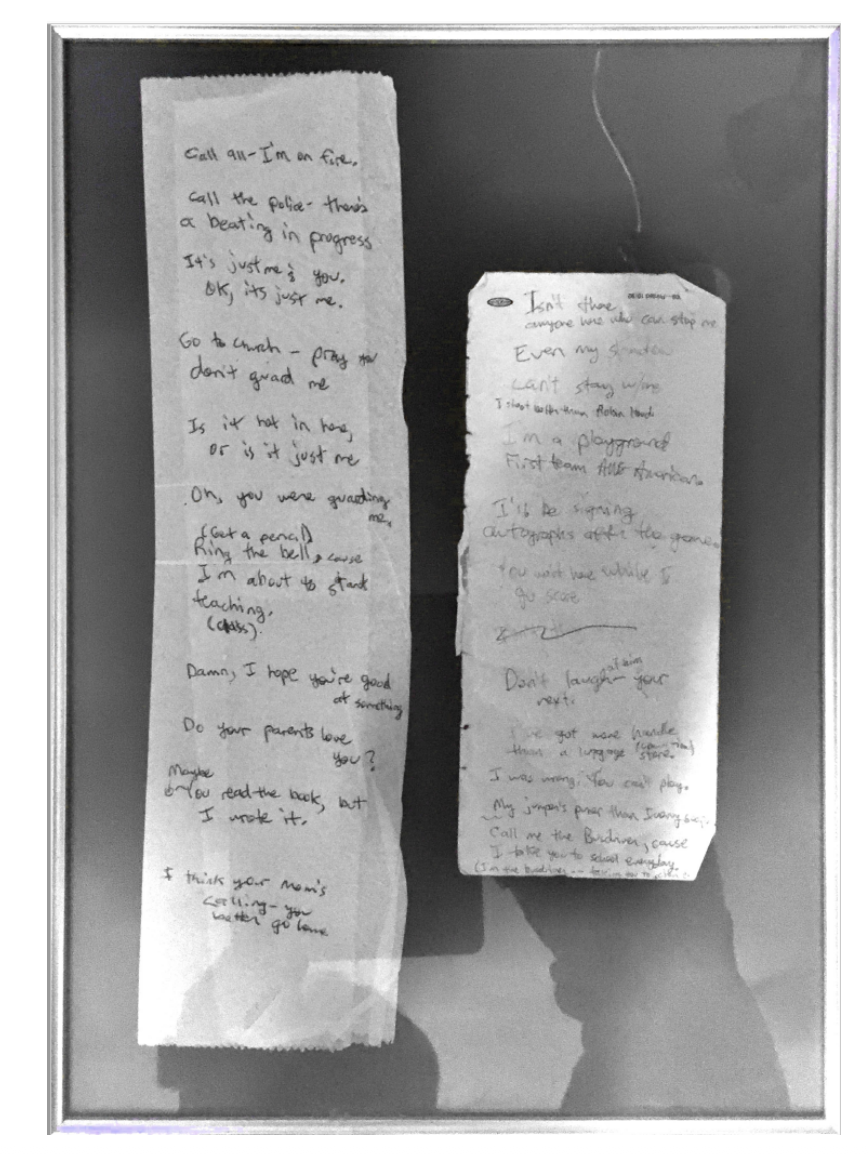
    Without access to writing paper, Tom Austin improvised.provided by Tom Austin

    Six months later, Austin’s phrases were printed on T-shirts sold at Foot Locker, coupled with a logo of a faceless basketball player. What started as a small order turned into a financial boon.

    AND1 sold $1.6 million worth of T-shirts in its first year. More retailers came calling, and before long, the company was expanding to shorts, sneakers, and more.

    It became a cultural phenomenon. NBA players would get AND1’s faceless man tattooed onto their arm. Latrell Sprewell, Vince Carter, and Kevin Garnett wore their shoes.

    AND1’s mixtapes — video compilations of street ball moves — and the subsequent AND1 mixtape tour, made celebrities out of everyday people. Most were known only by their nicknames: “The Professor,” “Hot Sauce,” “The Bone Collector.” One of them, “Skip To My Lou,” had a long NBA career.

    Because the first mixtape was shot at Rucker Park in Harlem, the company became synonymous with New York basketball. But at its core, AND1 was a Philadelphia brand.

    And while it is not the powerhouse it once was, that brand’s legacy still has plenty of cachet.

    “There was something about the Philly identity,” Austin said. “It was always the underdog. We were always that underdog story, taking on Nike and Adidas. They’re the Rocky villains, man.”
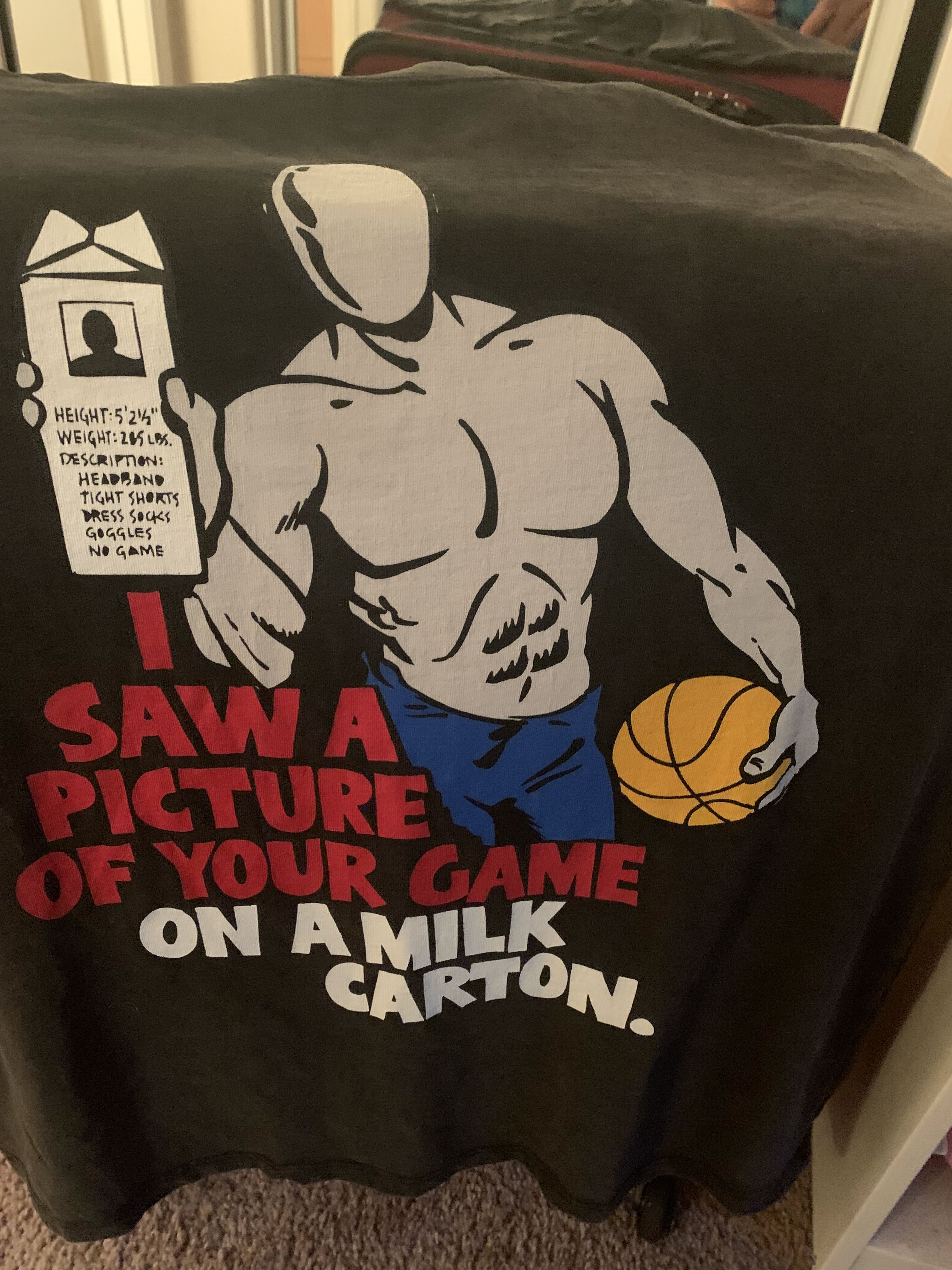
    The AND1 slogans were kind of mean.provided by Tom Austin

    Philadelphia roots

    Austin transferred from Holy Cross to Penn in 1990, a lanky sophomore from rural Massachusetts. He was far from home and had trouble meeting people at first.

    The teenager decided to branch out in the only way he knew how: by finding a pickup basketball game.

    He discovered a nearby spot on campus, Gimbel Gym, which was open to the public. Inside were courts full of players who likely wouldn’t have otherwise met. There were law school students, business school students, janitors, locals from the neighborhood.

    Gimbel’s mainstay was a man known only as “Moose,” who loomed at 250 pounds. Austin didn’t have that kind of size — an “eighth grade-level body with a 20-inch vertical,” he said — but he was skilled.

    Before long, the New England native was hooping in Gimbel seven nights a week. And he quickly established himself as a “Moose”-caliber gym rat.

    Austin could shoot. And this was not just the consensus among pickup players. Penn’s men’s basketball team would go to Gimbel every so often to practice.

    They noticed “Tommy Gun.”
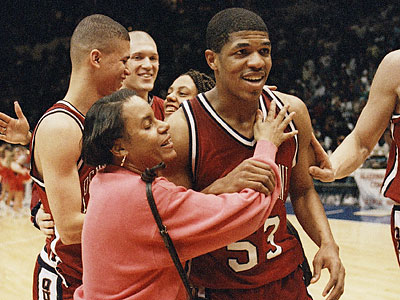
    Jerome Allen (53) started at Penn in the 90’s but has vivid memories of the future AND1 entrepreneurs balling on campus.

    “He could play,” said former Penn standout player and head coach Jerome Allen, now an assistant with the Detroit Pistons. “Just flat-out, in that setting. Whether it was him snatching the rebound and pushing it in transition, or him catching it on the wing and driving a closeout, or him in an iso.

    “If you took him for granted, you would get embarrassed. Easily.”

    This was how Austin met his friend and future business partner Seth Berger. After the Massachusetts native graduated in 1993, he began to interview with investment banks, but found it wasn’t a fit. Berger had heard through mutual friends at Gimbel that Austin had a 3.95 GPA.

    Berger shared a business plan he’d been formulating. The idea was for a coupon booklet that could be used to get discounts on basketball gear. Austin came on board along with Coen Gilbert, a Stanford graduate.

    He moved into a house at 40th and Sansom with six other guys, most of them Penn basketball players, renting a room for $100 a month.
    AND1’s adoption of grassroots and playground basketball iconography was an essential part of the brand’s appeal. ALEJANDRO A. ALVAREZ/Daily News

    The coupon idea didn’t attract the brands or customers necessary to succeed. But the trash-talking T-shirts became a lifeline; a product that was relatively inexpensive to make, quick to turn around, and easy to sell.

    And their Philadelphia community came together to make it happen. The entrepreneurs turned to Joe and Dom, two men who worked out of an old Italian neighborhood, to lay out their T-shirts.

    Joe and Dom introduced them to Stephen Sistilli, a local comic book designer who created the faceless man. The bulk of the trash talk ideas came from Austin. But to market-test his work, he’d give Moore and his teammates sheets of paper with 20-30 phrases.

    They were told to circle their favorite ones.

    “I remember this one that was like… ‘Your game’s on the back of a milk carton, it’s missing,’“ Moore said. ”I remember that one.”

    Added former Penn forward Scott Kegler: “There was something about your game and your girlfriend. ‘Your game’s uglier than your girlfriend,’ or something like that. Really in-your-face and offensive, but also very funny.”

    Weeks later, those phrases would be seen on T-shirts, which were stored at a warehouse in Camden. They were printed in Delaware County at a company called AMPRO, which extended a line of credit to the founders in their early days.

    “The only reason we could make those shirts is because AMPRO said, ‘Hey, if you bring us a high-quality order, we’ll make the shirts for you,’” Austin said. “When we made shorts, I was driving out to Lancaster, into Mennonite country, driving by these one-horse buggies, to go pick up our short orders.

    “We were getting our embroidered stuff done in this Italian shop in an Italian neighborhood. And all the women called me ‘hon’ and had these long fingernails. All these parts of the city came alive to help us. You know?”
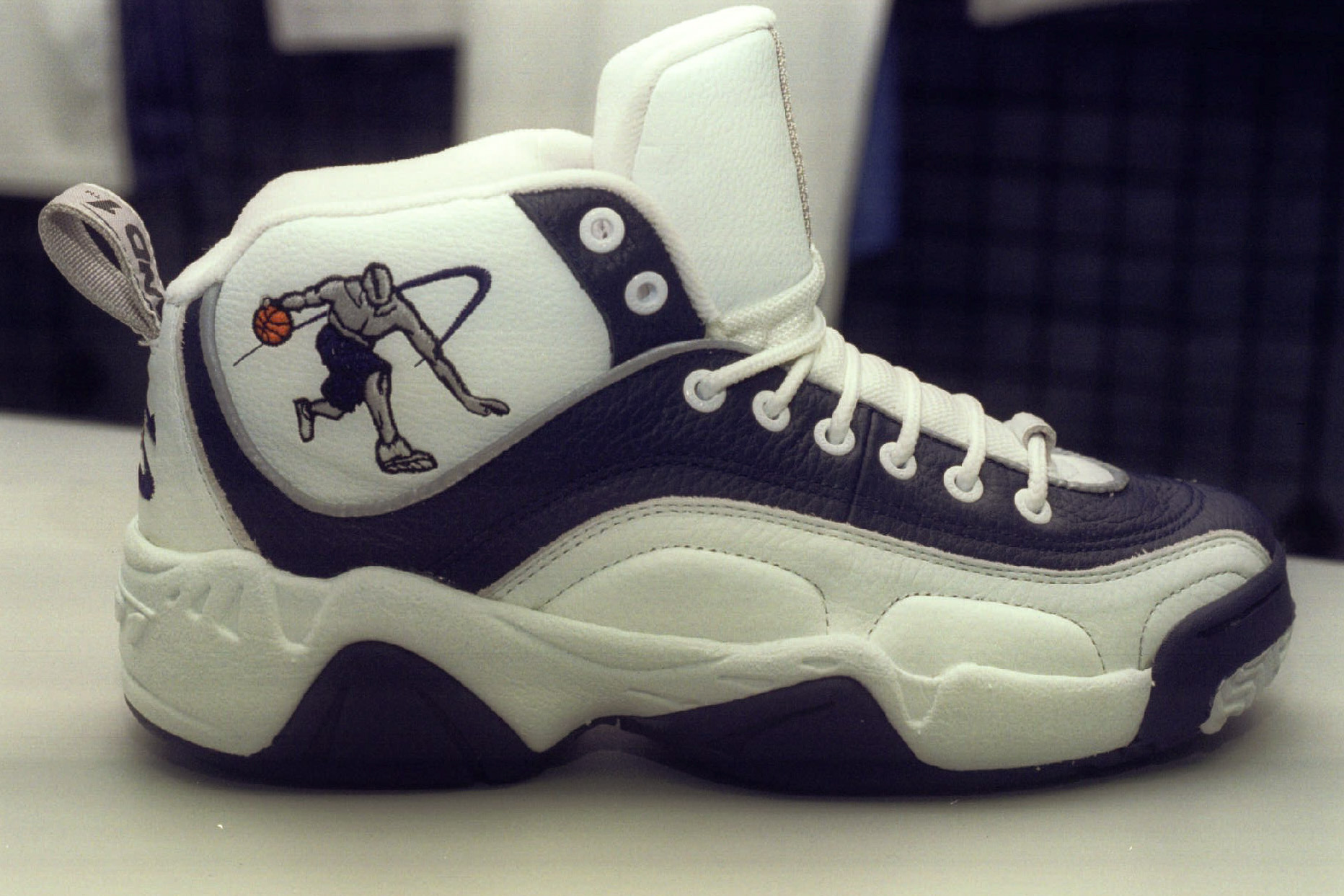
    One of the shoes manufactured by AND1. Their logo includes a “faceless, raceless” player.Joan Fairman-Kanes / Inquirer Archives

    Bringing streetball to the suburbs

    In its earliest days, AND1 was operating out of Berger’s apartment in Philadelphia. But as the company grew, it moved to the Main Line.

    Their first location was in Ardmore, back when the company only had six employees. Then, in the mid 1990s, AND1 relocated to Rosemont to fit about 20 more people, many of them local college graduates.

    Justin Cupps was one of those graduates. He was another product of Wharton who had connected with AND1 through one its athletes, NBA guard Darrell Armstrong.

    Cupps didn’t know anything about retail, but he did know business and basketball, and those were important qualifications.

    He says today it was the best job he ever had. AND1’s employees worked hard and played hard in the most literal sense. They’d hold afternoon pickup games at Haverford College three or four times a week. Trash talk wasn’t just permitted, but encouraged.

    On Monday mornings, employees would filter into Berger’s office and sit on his couches, armed with their most insulting one-liners.

    “There weren’t a lot of PowerPoints,” Cupps said. “There were no big board tables. It was sit around and talk hoops and try to come up with what we think were going to be the most entertaining or creative sayings to put on T-shirts.”

    Those that didn’t make the cut were discarded into a cabinet, a graveyard for barbs deemed too soft. As the staff swelled to 150-200 employees, the company moved to Paoli, but never lost its street ball culture.

    Graffiti lined the building’s walls. It housed a pro-sized basketball court inside, complete with a full-service locker room. Cubicles were separated by wire mesh, to simulate a playground court’s chain-link fence. Employees wore shorts and sneakers, with the exception of AND1’s corporate lawyer, who went shoeless.
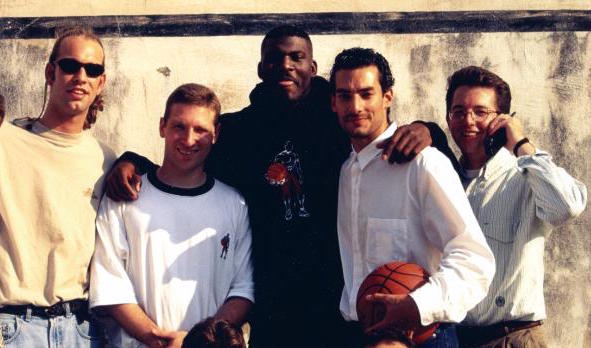
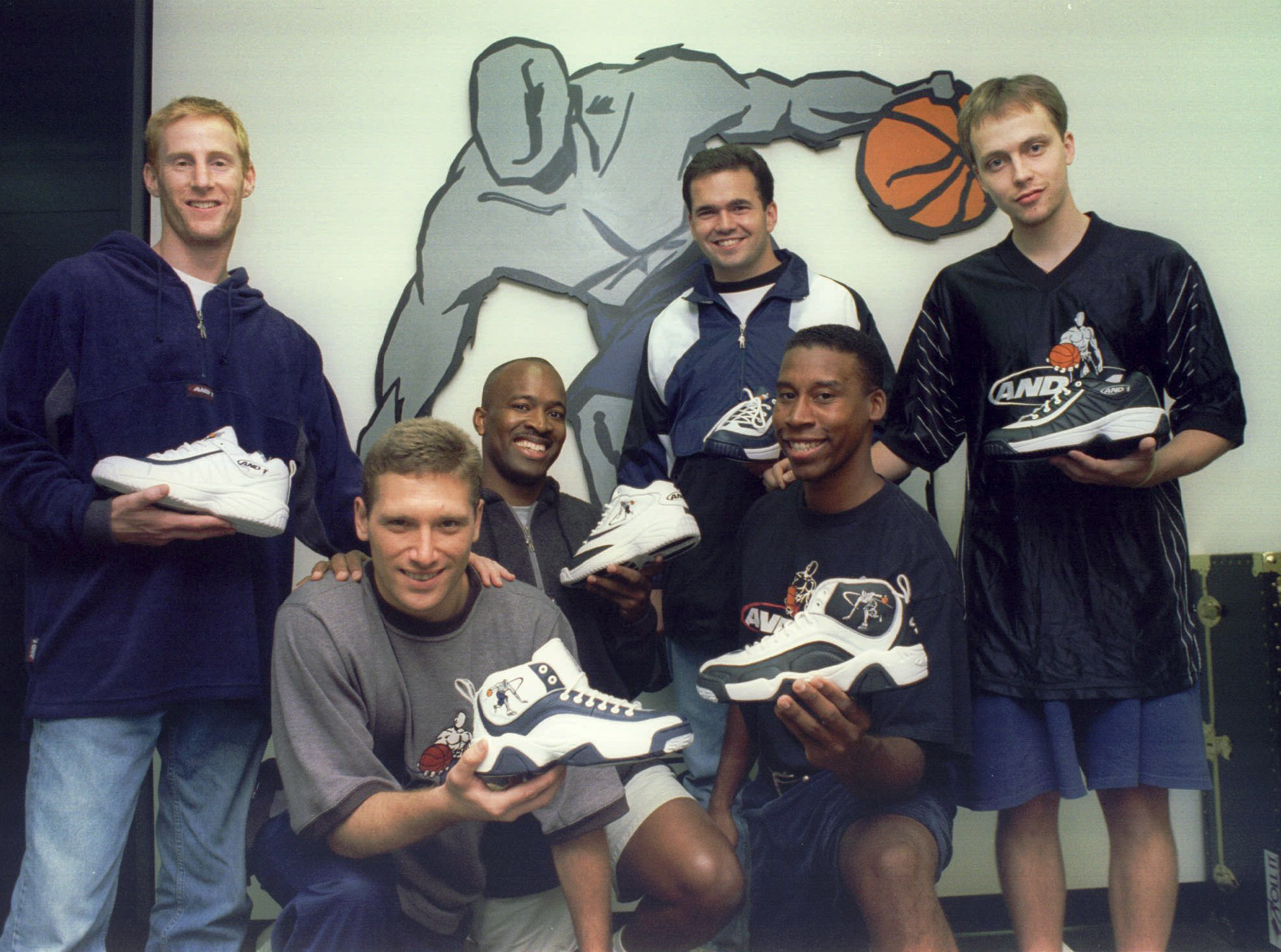
    NBA star Larry Johnson (center) was an early adopter of AND1’s wares while Seth Berger (second from left), Marc Brownstein (holding basketball) and the company’s creative team tried to grow the company.provided by Marc Brownstein

    After going nearly broke, the company was now competing with multi-billion dollar brands by selling high quality goods for a lower price, all targeted toward a specific demographic (basketball players aged 14-25).

    By 1999, AND1 was drawing over $70,000,000 in annual revenue. But the mixtapes elevated them into an entirely different category; from selling clothes to steering the cultural zeitgeist.

    AND1’s mixtapes would be sold in over 100 countries. Its stars would tour all over the United States; ESPN turned the phenomenon into a reality TV show, Streetball: The AND1 Mixtape Tour, which debuted in 2002.

    Still, the company had even greater aspirations; to own an NBA team, to create entertainment properties, to overthrow their multi-sport competitors. But that dream was never realized.

    In January of 2002, Austin left AND1. He estimates that he’d worked 360 days a year for six years, five months of which was spent living in Asia, where he learned the manufacturing and export pieces of the shoe trade. He was getting sick, couldn’t sleep, and was completely burned out.

    Once Austin departed, AND1’s footwear department had to be restructured. Larger competitors like Nike threw their ample resources behind street ball designs, and the newer company struggled to compete.

    Many of the retailers AND1 worked with — Foot Locker, Foot Action, Champs — consolidated, giving the company fewer sources of income.

    Annual revenues began to drop, from $175,000,000 in 2002 to $130,000,000 in 2003. They increased again, to $160,000,000 in 2004, and AND1 was sold to a California-based footwear company, American Sporting Goods, in 2005.

    Like Austin, Berger and Coen Gilbert were ready for a new chapter. Berger had young children at home, and wanted to spend more time with them; Coen Gilbert was looking to get into social entrepreneurship. Both left after the company was sold.
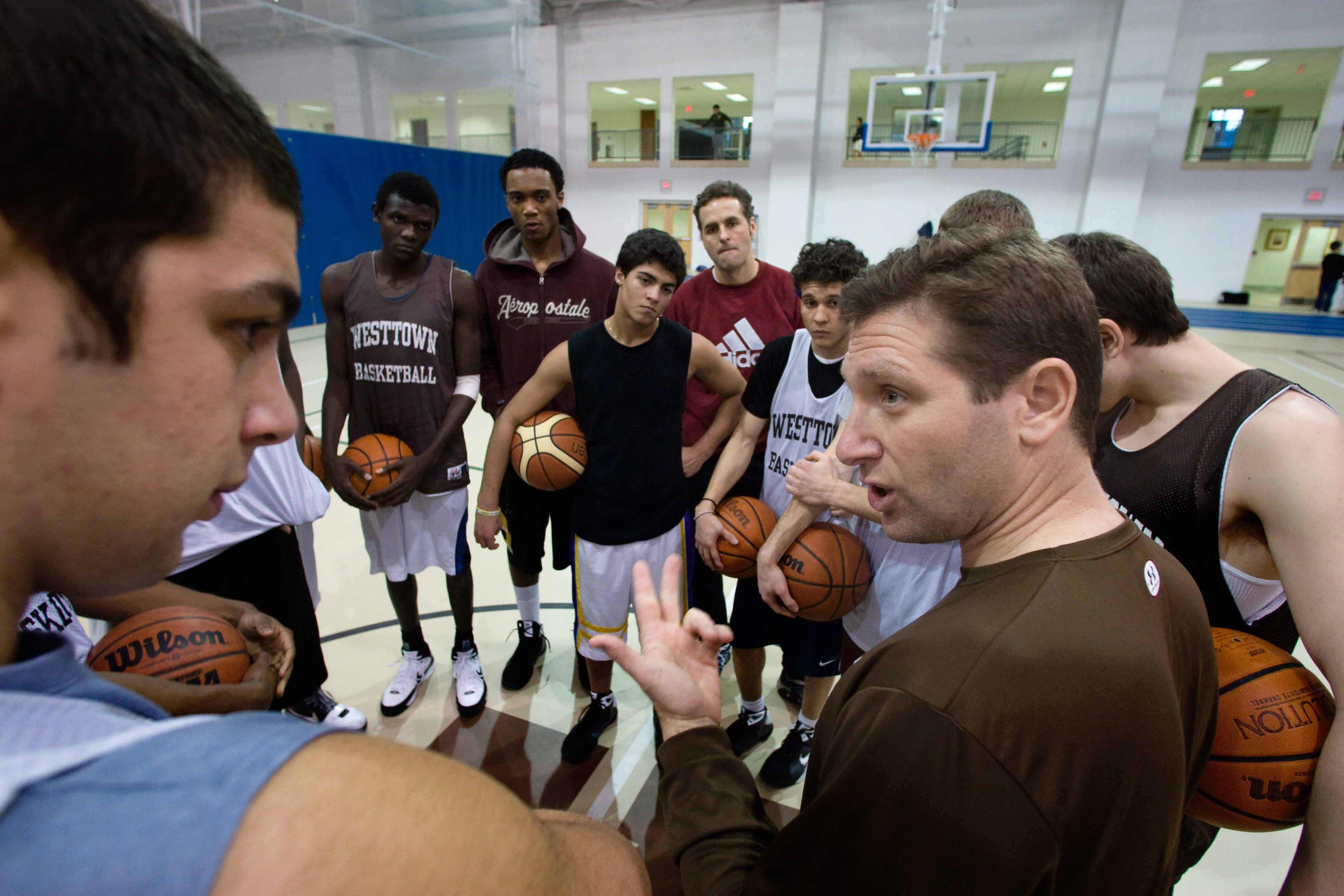
    Seth Berger moved on from AND1 to turn the Westtown School boys basketball team into a local powerhouse. David M Warren / Staff Photographer

    AND1 became more corporate under its new leadership, and saw its customer base erode. The former start-up was acquired by another entity in 2011, Brown Shoe Company, which sold it a few months later to Galaxy International.

    But AND1’s roots remain very much intact. “The Professor” and “The Bone Collector” from the Mixtape Tour continue to share basketball highlights on social media. Many of the Main Line employees are still in touch through a private Facebook group.

    You can still find the T-shirts, the sneakers, the mixtapes. And Austin, who now works for a talent assessment company, still has that stolen sheet of toilet paper, scribbled with hypermasculine insults.

    Coen Gilbert had it framed for him a few years back; a reminder that before AND1 became AND1, it was just an ambitious idea, spearheaded by three Philadelphia-based entrepreneurs, hustling their way to the top.
  • Lewis Kalb never became a professional announcer. But during Wednesday’s Phillies game, he had his ‘moment.’

    Lewis Kalb never became a professional announcer. But during Wednesday’s Phillies game, he had his ‘moment.’

    Some kids dream of playing in the major leagues, but Lewis Kalb was always different. Growing up in Detroit in the 1950s, he had no interest in becoming the next Al Kaline or Jim Bunning.

    He had his eyes set on a much more exclusive club, one that only hundreds had ever qualified for. Kalb wanted to be a broadcaster. The boy spent his nights listening to the deep drawl of Ernie Harwell, and after the family moved to Medford Lakes in 1965, the laid-back style of By Saam.

    He quickly realized this would be a lofty goal. In the 1970s, Kalb served as a public address announcer for the hockey team at Hillsdale College in Michigan, and worked as a disc jockey for the local radio station.

    Job opportunities weren’t coming. So he decided to pursue a more pragmatic career, in sales, and moved to Los Angeles in 1977 to work for Russell Stover Candies. But even then, he couldn’t shake his dream.

    As Kalb drove thousands of miles up and down the California coast to peddle boxes of chocolate and other confections, it would be Vin Scully’s voice crooning through the car stereo.

    “I would say, ‘Well, you’ve wanted to do this since age 12,’” Kalb recalled. “You can’t wait too much longer. Now I’m 27, 28 years old. So, if you’re going to pursue it, if you’re going to give it a shot, that’s the time to do it.”

    He moved to State College in 1980 to enroll in broadcasting classes at Penn State, working as an overnight disc jockey with some public address appearances on the side. In 1984, Kalb was hired as the afternoon drive host for WZBZ 99.3 in Atlantic City, a role he’d hold for two years.

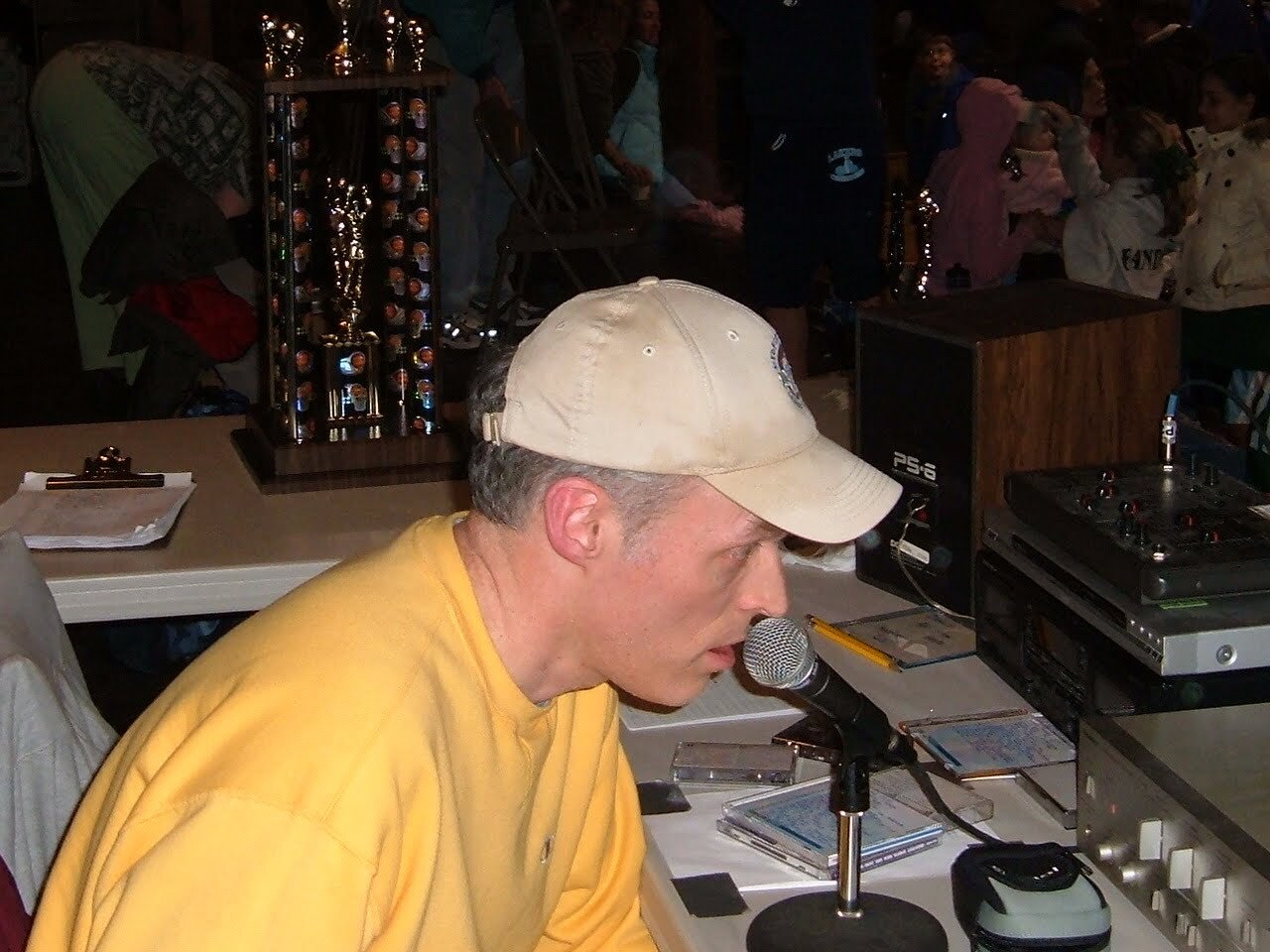
    Lewis Kalb broadcasting a basketball game at Vaughan Hall in Medford Lakes, N.J., in 2010.Courtesy of Lewis Kalb

    The aspiring play-by-play man transitioned into freelance work after that, as a Philadelphia-based reporter for WFAN and WNAW in New York, but never found a full-time gig. The closest he got was in 1996, when the Sixers held open auditions for a public address announcer.

    Kalb knew he’d be competing against “heavy hitters,” in his telling, so he decided to get plenty of reps in. About a mile away from his house in Medford Lakes was a local recreation center, Vaughan Hall.

    The Detroit native began announcing kids’ basketball games, multiple times a week. He didn’t get the Sixers job, but found his calling in the process.

    “It was my volunteer niche,” Kalb said. “It was the greatest thing in the world. The response I got from the kids, the parents, the grandparents, everybody, they loved it so much.

    “Because here I was, announcing their kids, like it was NBA basketball. Playing the music in the timeouts, pumping them up with the intro music, just like the Chicago Bulls used to introduce their championship teams.

    “And it was so overwhelming that I said, ‘You know what? This is what I’m going to do to volunteer and give back to my community.’ And 30 years later, I’m still doing it and loving every second of it.”

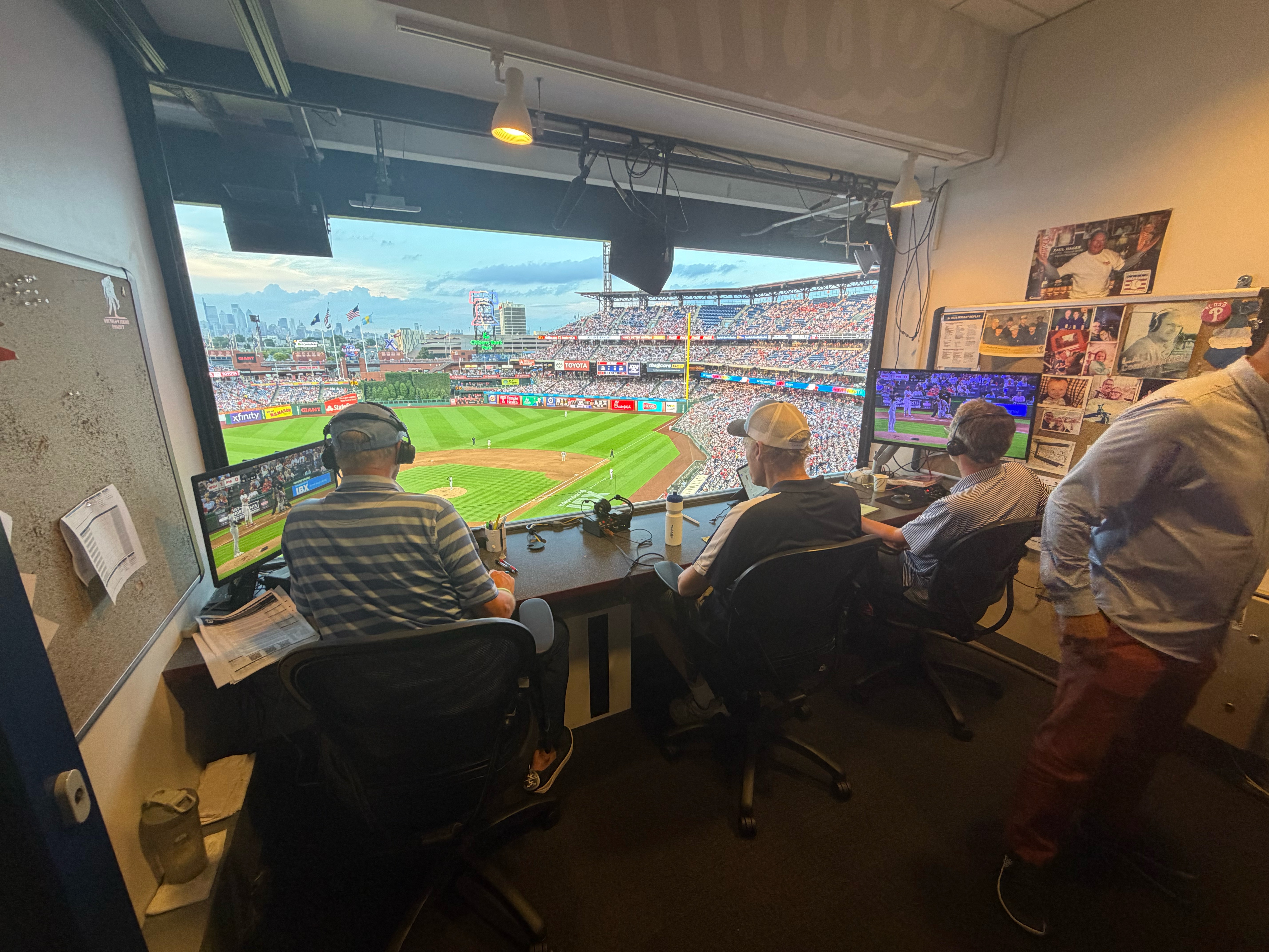
    For those 30 years, Kalb and his dulcet tones were the best-kept secret in Medford Lakes. Not anymore. On Wednesday night, in the third inning of the Phillies-Nationals game, sandwiched between Scott Franzke and Larry Andersen, the 73-year-old took to the air.

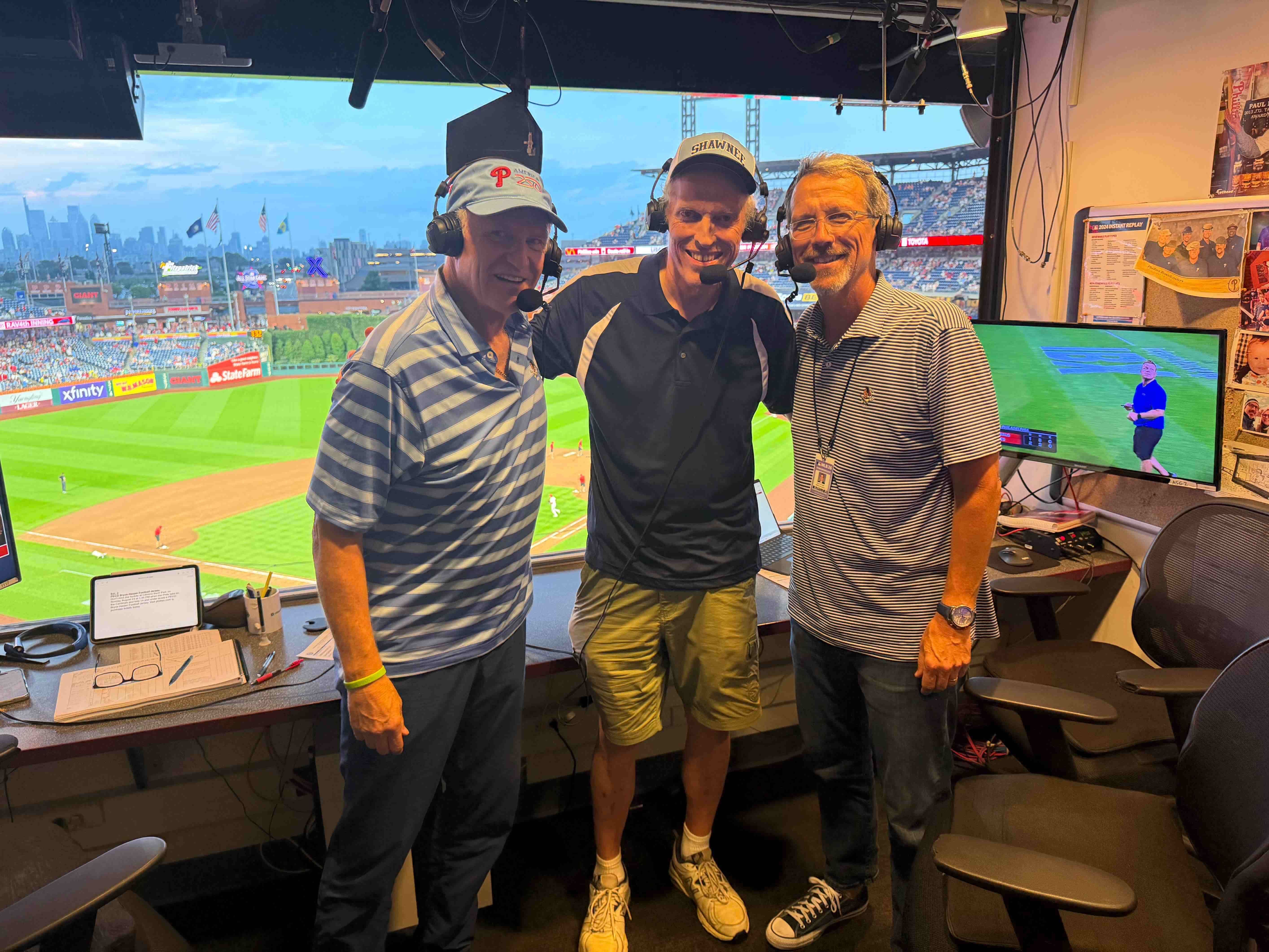
    Lewis Kalb (center) with Phillies radio broadcasters Larry Andersen (left) and Scott Franzke (right) after joining them on air on Wednesday.Courtesy of Lewis Kalb

    He’d paid $22,000 for the opportunity in the Phillies’ Phantastic Auction. And to Kalb, a substitute teacher at Neeta Middle School, it was worth every penny.

    The septuagenarian had only minimal live play-by-play experience; about 10 high school baseball games, if that. He’d also done some work on YouTube, holding a camera in one hand, and a mic in the other, while narrating various local sporting events.

    But decades of Scully and Harwell and Saam and, of course, Harry Kalas, had given him an education unlike any other. And when he started to speak, that old-school sound came pouring out.

    Franzke noticed it immediately. The Phillies have held their auction for 14 years, which has brought all sorts of voices into the booth. But the team broadcaster had never heard an auction winner like this.

    Some past auction segments would become de facto interviews, with Franzke and Anderson asking the winner questions about their fandom to fill time. In this case, they barely had to talk at all.

    Kalb had studied so much he didn’t look at his rain-soaked sheet of paper. He had a natural rhythm and feel for what was unfolding in front of him.

    “He was, for the most part, with the play,” Franzke said. “And I think anytime, [with] someone who hasn’t practiced it, that’s the first thing that happens, is they get behind the play. Which is fine. It’s a fun thing; we’re not auditioning, it’s an auction.

    “But for a lot of people, that’s the thing that you notice. The ground ball is on its way to a position and a lot of people are checking their notes. Who is playing that position? What position is it? But he was right on it. Right from the very beginning.”

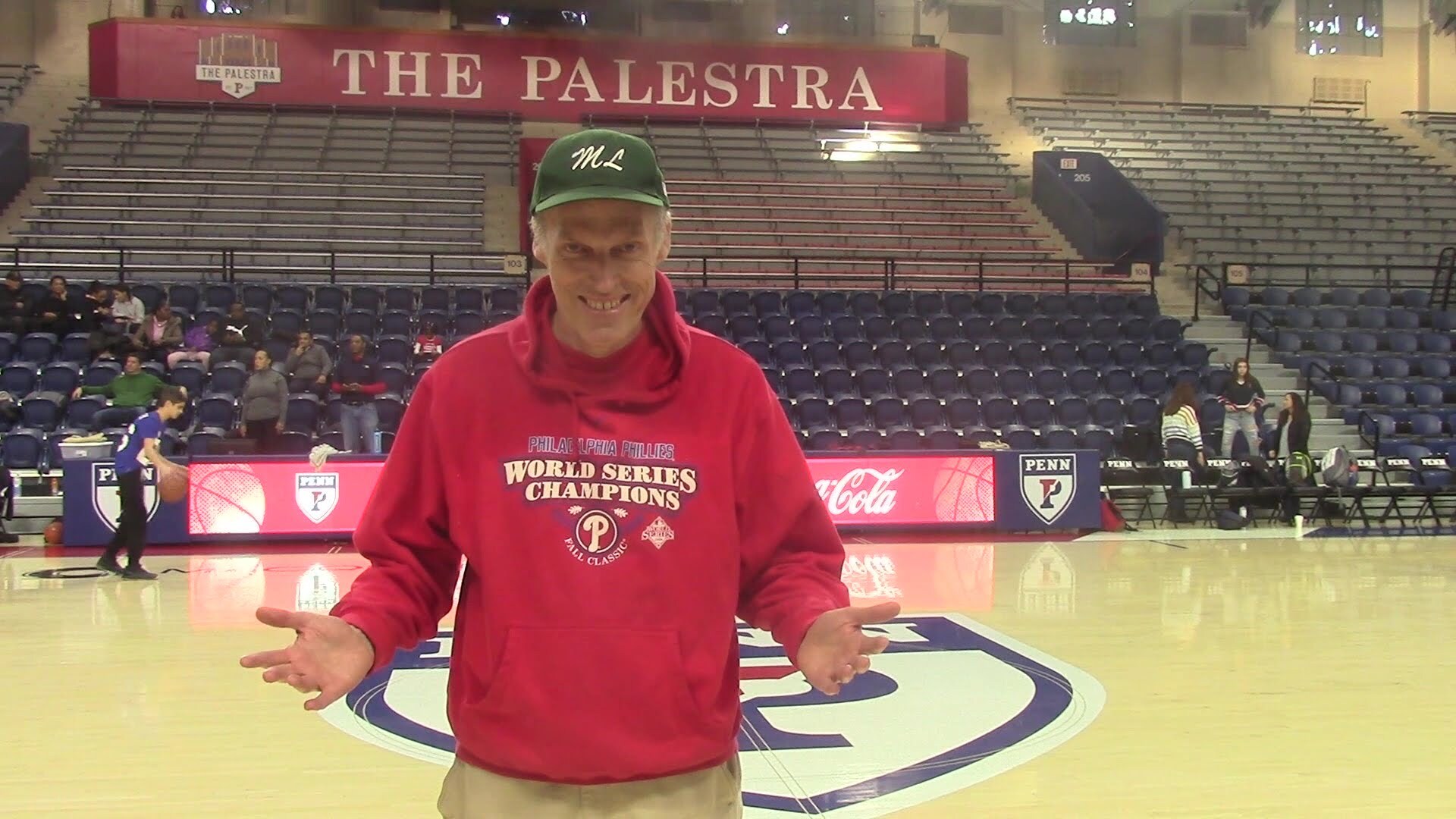
    Lewis Kalb on the court at the Palestra after announcing a game in 2019.Courtesy of Lewis Kalb

    Kalb had spent the previous week rehearsing for his segment. He had studied each Phillies and Nationals player, making sure he knew their bio, and how to pronounce their name.

    Every night, he practiced play-by-play in front of a small audience on Facebook Live, while watching the Phillies game on TV. That might’ve helped him a bit. But it was also clear, to anyone listening on Wednesday, that the 73-year-old has a gift.

    And while that gift never led to a job in the booth, it did give a lot of joy to a small borough in South Jersey.

    “I didn’t have a career,” Kalb said, “but I had my moment. And I know that’s something that for the rest of my life, I will always cherish.”

  • Chris DiJulia was known for his wit, loyalty, and perseverance — not his wheelchair. Philly will always remember him that way

    Chris DiJulia was known for his wit, loyalty, and perseverance — not his wheelchair. Philly will always remember him that way

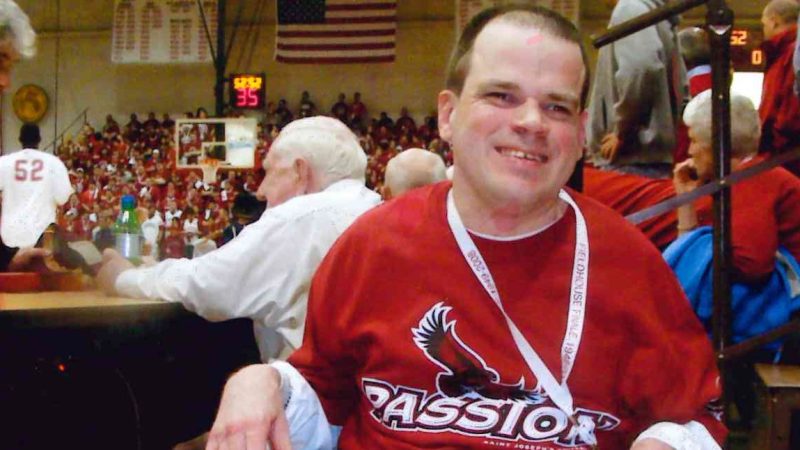
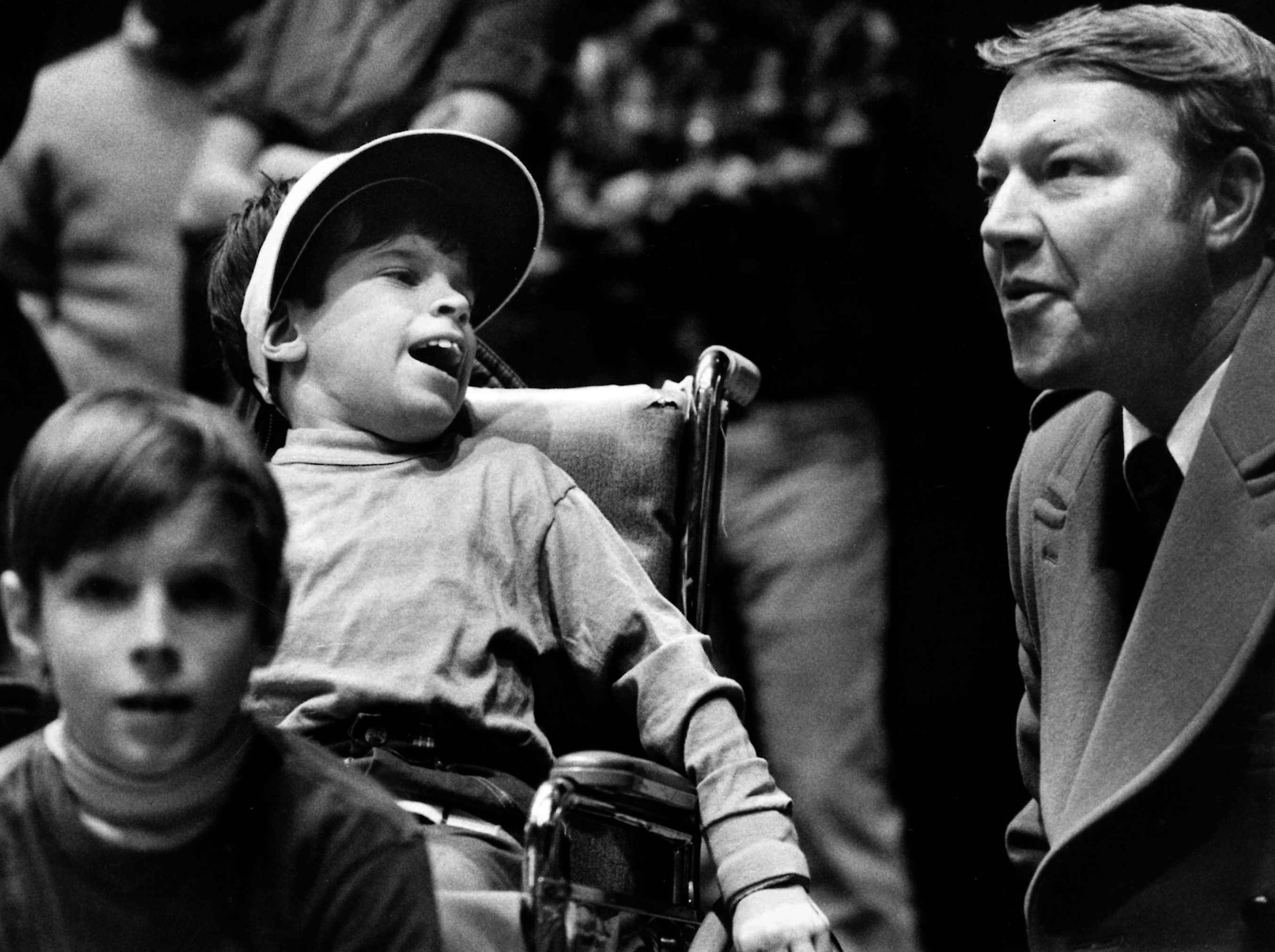
    Chris DiJulia spent 56 years living as if he didn’t have cerebral palsy. He’d take “walks” in his wheelchair, down the block from his Havertown home. He was a regular passenger on SEPTA long before paratransit came to the suburbs in 1994.

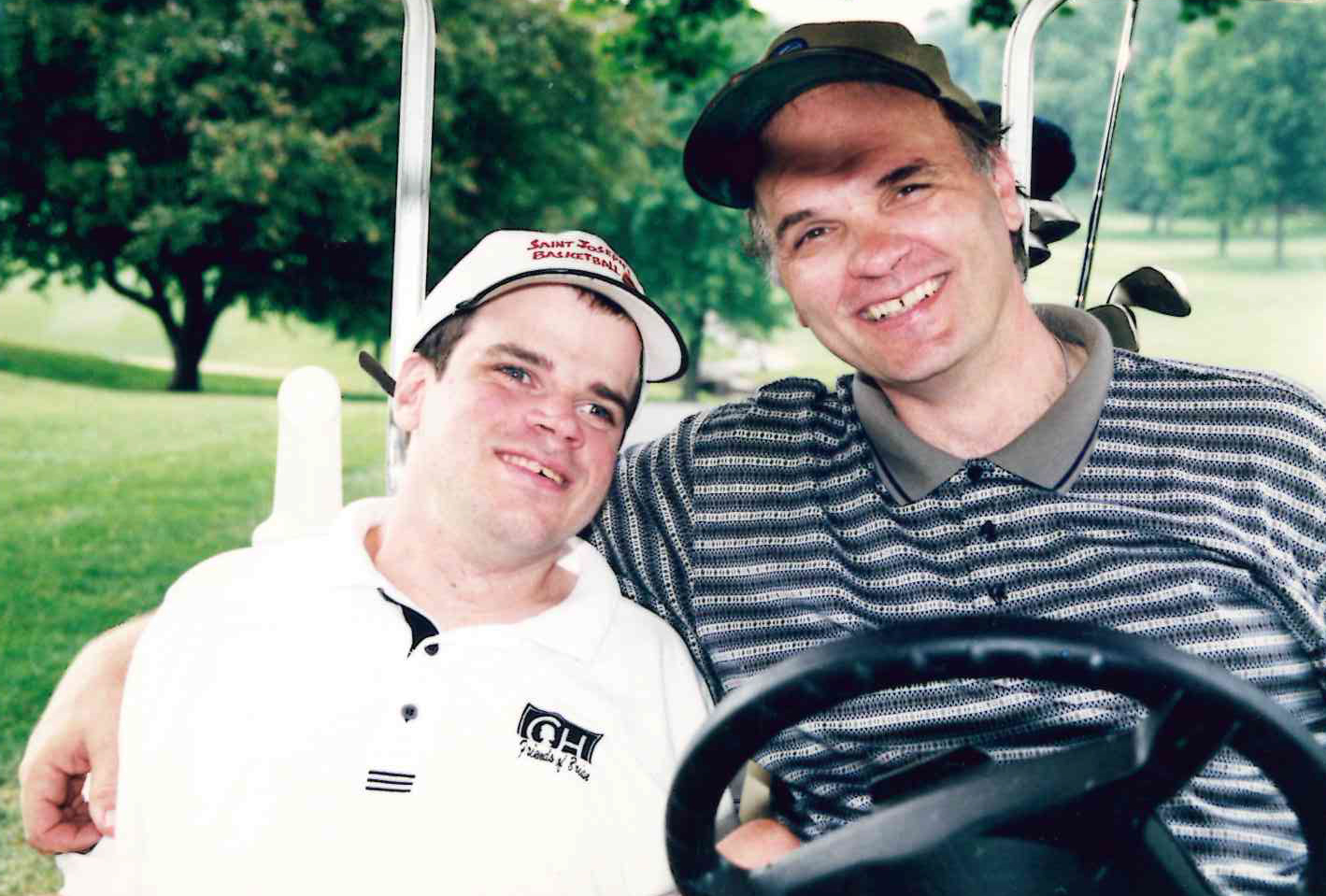
    The avid St. Joseph’s basketball fan would often go to Hawk Hill to visit his father, Don, the longtime athletic director, or to watch men’s and women’s basketball practice.

    But he’d also venture to Eagles training camp in West Chester, games at the Palestra, Villanova, Temple, all on his own, boldly traversing a city unequipped to take him anywhere.

    Of course, this came with its challenges. A broken elevator or an unexpected flight of stairs could derail an entire trip. Sometimes, a bus driver would pretend not to see DiJulia waiting at his stop because they didn’t want the hassle.

    But DiJulia was no fool, and certainly no pushover. He’d scribble down the license plate, call SEPTA’s customer service line, and report the vehicle.

    “And probably said a thing or two about them as they drove by,” his father added.

    This spirit was what made DiJulia special. His limbs were short and stiff, his speech was slow and slurred, but between the ears, he was just like anybody else, and expected to be treated as such.

    He frequently signaled this through his humor. If the St. Joe’s fan was among a group of coaches trading barbs, he’d join in. DiJulia was not above yelling “brick” when a player missed a shot, or expanding that sentiment to, “you’re building a whole house!”

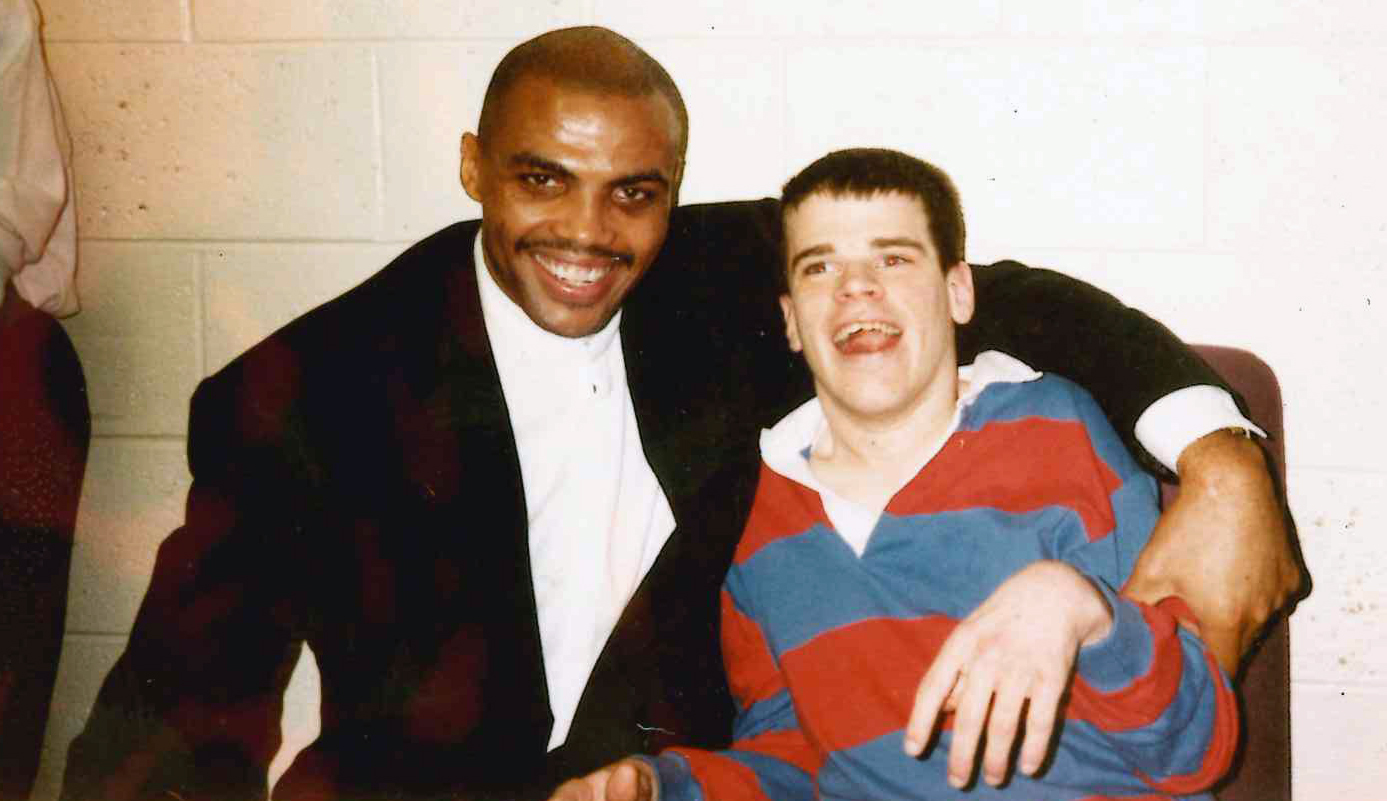
    Charles Barkley (left) and Chris DiJulia became friends in the 1980s.provided by Saint Joseph's University

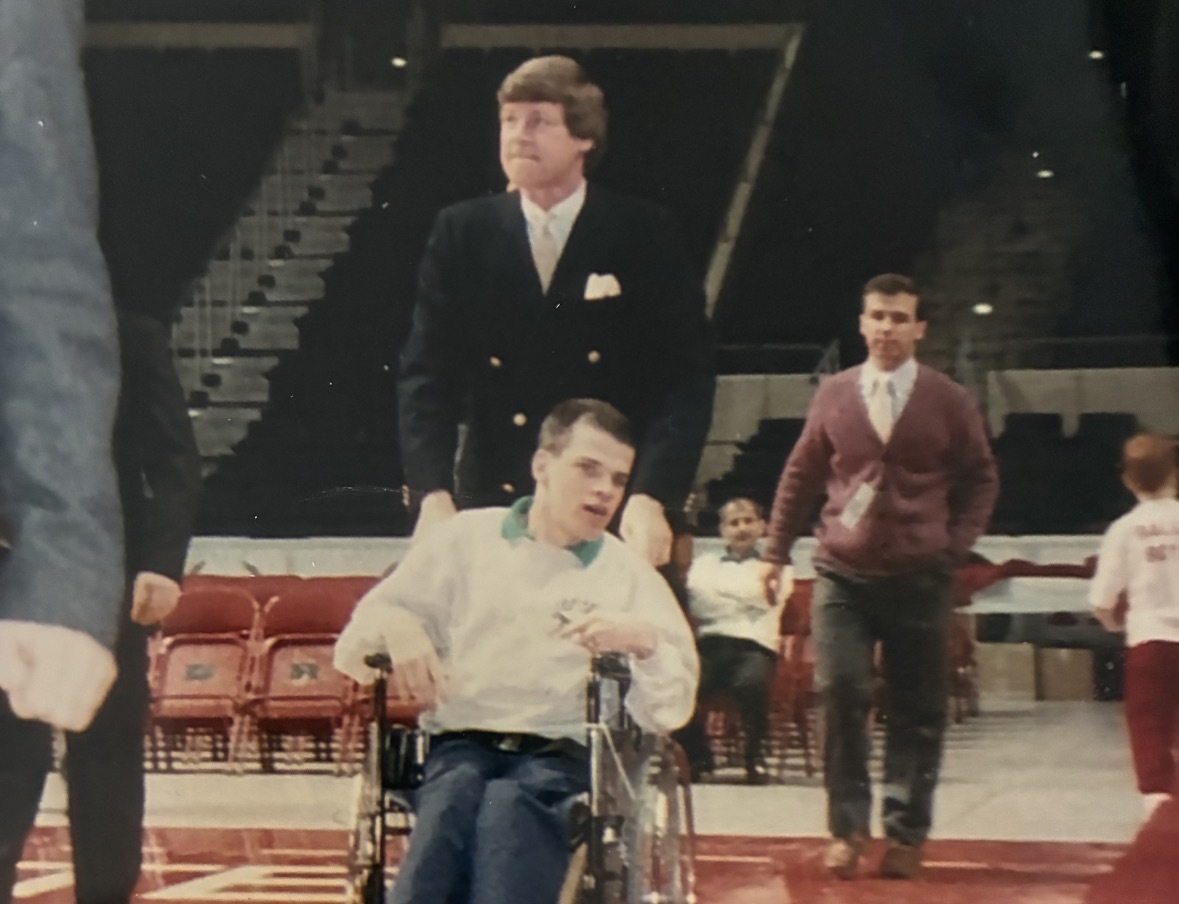
    No one was exempt, not even NBA stars. Charles Barkley first met DiJulia in the late 1980s, at the start of his professional career. The Sixers practiced in the morning at St. Joe’s, and the teenager in the wheelchair was always there.

    If Barkley had a poor showing, DiJulia would be quick to point it out.

    “When I had hair, you never played bad and [went] to a Black barbershop,” Barkley said last week. “You never played bad and [went to] see Chris DiJulia the next morning. You know something bad is going to happen.”

    DiJulia could’ve lived a smaller, less-adventurous life in Havertown, and no would have blamed him. But he chose to immerse himself in the world of Philadelphia sports, with all its eccentricities and quirks, and fit right in.

    Now, that world is mourning his absence. On July 27, DiJulia died of natural causes stemming from cerebral palsy. The outpouring of support has been immense and wide-ranging.

    The DiJulia family has heard from former St. Joe’s basketball players, softball players, field hockey players. Broadcasters and coaches have reached out, many of whom are no longer in the Philadelphia market.

    On Thursday morning, Phil Martelli, another close friend of DiJulia’s, texted Delonte West. The former Hawks guard has long struggled with substance abuse and homelessness, but has been sober for the past 190 days.

    Phil Martelli (right) was among those on Hawk Hill who drew endless inspiration from Chris DiJulia.provided by Saint Joseph's University

    He asked Martelli to relay a message.

    “Please send my condolences for Chris,” West said. “[He] was my brother, I carry him in spirit, he used to always have the right words and smile for me.”

    A public funeral will be held on Aug. 12. The family is expecting a big crowd. Some will travel hundreds of miles, all to support a man who would do anything to support them.

    Pushing through the pain

    DiJulia was born in Connecticut in 1969. At first, his parents thought he was healthy; it wasn’t until the baby was baptized that a family member with a medical background noticed his head was oversized.

    Doctors diagnosed him with cerebral palsy, and he underwent surgery at three weeks old (the first of over 20 surgeries throughout his lifetime).

    Even as an infant, Chris radiated joy, with a big smile and bright blue eyes. Pat DiJulia knew her son had obstacles ahead, but when she’d look at his face, full of expression, she could tell he understood what she was saying.

    Don was an assistant college basketball coach at Fairfield at the time. A few years later, when he was hired by George Washington, the family moved to Virginia.

    Chris DiJulia (center, with longtime Phillies broadcaster Harry Kalas) developed a love of sports at a young age.provided by Saint Joseph's University

    In 1973, he accepted an assistant coaching job at American. Chris was approaching pre-school age, but local options were limited.

    The boy would need physical, occupational and speech therapy. The Americans with Disabilities Act was 17 years from becoming law, and most schools didn’t provide those kinds of services yet.

    So, the DiJulias were directed to three boarding schools on the East Coast. The one closest to them, in Virginia, was more like an institution; instead of catering to a specific population, it housed students with a number of physical and mental disabilities.

    They chose to send Chris to Philadelphia instead, to the HMS School for Children with Cerebral Palsy. Both parents had family in the area who could visit him. Don started looking for work there, which is how he ended up becoming the St. Joe’s athletic director in 1976.

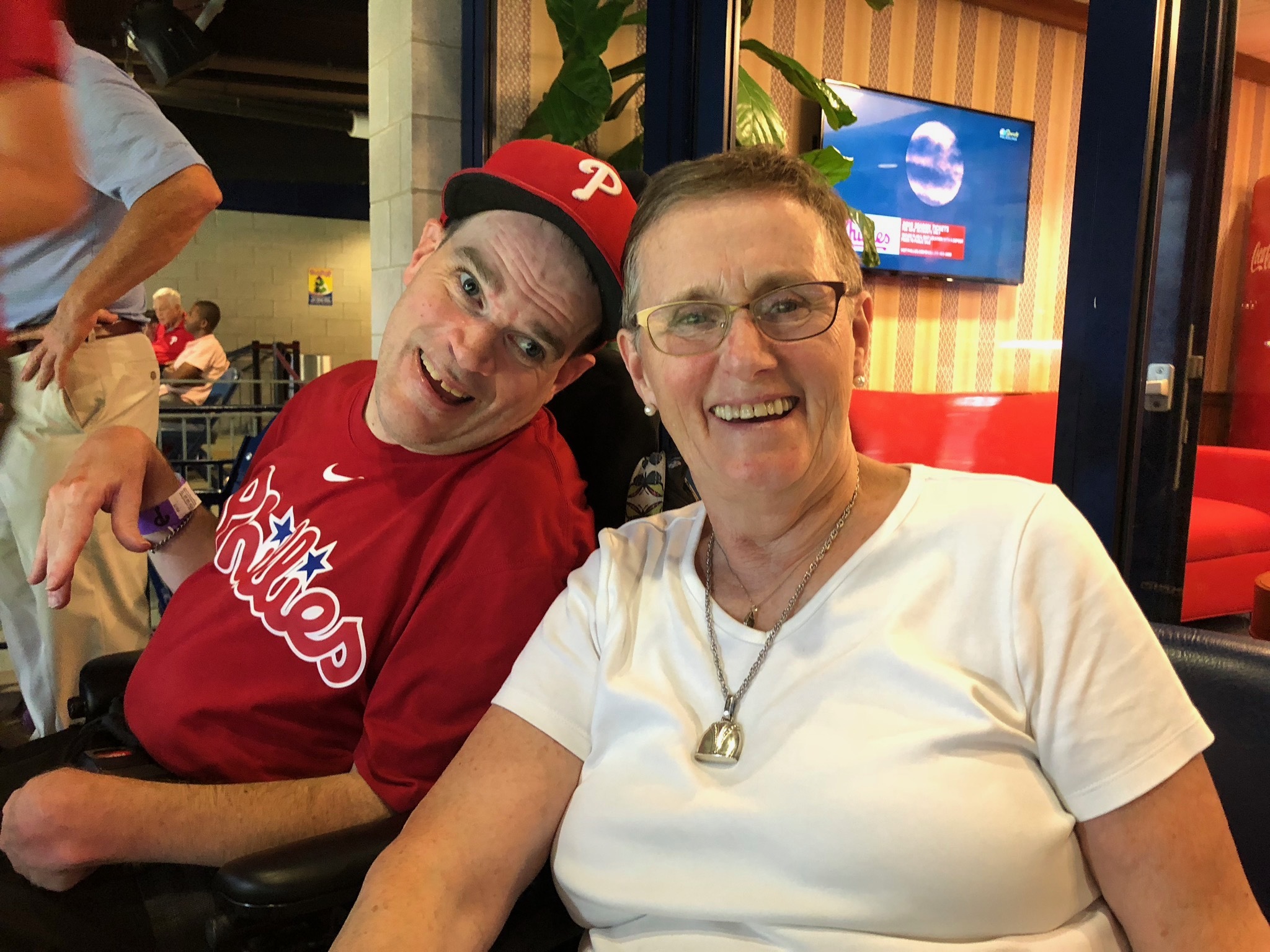
    It was at HMS that Chris found his love for Philadelphia sports. Many staff members were Phillies fans and began to watch games with him. He quickly developed a talent for critiquing the local ball club (one that would serve him for the rest of his life).

    The younger DiJulia would spend his weekends at Alumni Memorial Fieldhouse and the St. Joe’s athletic offices. He did not do so quietly. Women’s basketball coach Jim Foster said the 9-year-old would routinely bust into his office, so much so that he joked he was going to “need a new doorway.”

    The family returned to Connecticut in 1984, when Don was named commissioner of the Metro Atlantic Athletic Conference. But they couldn’t stay away from Hawk Hill, and came back in 1988, after Don was re-hired as athletic director, a job he’d keep for the next 30 years before retiring.

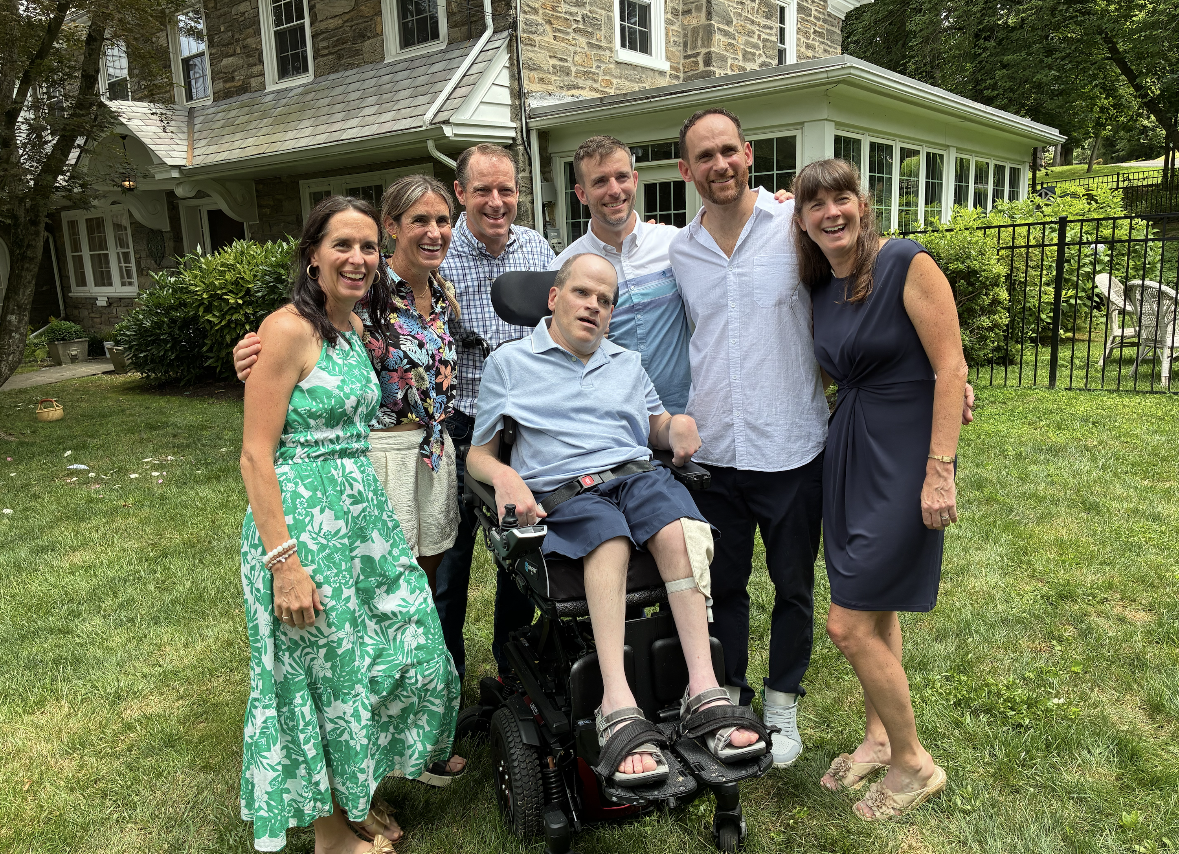
    The DiJulia siblings were raised by their parents, Don and Pat, to stick together.provided by Kath DiJulia Cloran

    By this point, Chris was a young man, brimming with confidence. This was due in large part to his upbringing. He was one of seven children, and Pat and Don treated him no different than the others.

    The family would help Chris where he needed it, but always encouraged him to be independent. If he could lift his arms and put his shirt on with some minor assistance, then he would do it.

    If he could shuffle his feet from the wheelchair to the bed, as someone hoisted him up, then he would do that, too.

    “He was one of the seven,” his sister, Kath Cloran, said. “And yes, he needed extra care, but he was held to the same standards as all of us.

    “He never wanted to be special. He just wanted to fit in and do what all of us did, really, and just live as regular a life as he possibly could.”

    Transportation was integral to this. Don and Pat would map out a route for their son before each trip, making sure he was familiar with every curb and stair.

    Some of these trips were laborious. To get to his technical school in Norristown, for example, Chris would travel a half mile on Haverford Road, to a platform for a high-speed rail.

    Chris DiJulia (with his mother Pat) would stop at nothing to be close to the Philly sports scene.provided by The DiJulia Family

    When he arrived at Norristown Transit Center, he’d take an elevator to the street level (if the elevator was working, which was a big if) and “walk” a few more blocks to school.

    Despite any setbacks, the process was empowering. And paratransit made it even easier. Before long, Chris could travel all over the city, which meant ample trips to St. Joe’s and elsewhere.

    Jim Lynam, the Sixers’ former head coach and DiJulia’s uncle, said it wouldn’t be unusual for his nephew to attend Sixers practice in the morning, St. Joe’s men’s basketball practice in the afternoon, and women’s basketball practice at night.

    This was how he met Barkley.

    The NBA star quickly realized DiJulia was able — and willing — to spar. So, Barkley and a few of his teammates, Rick Mahorn and Manute Bol, started going back and forth with him.

    “Some fans, they’re just a-holes,” Barkley said. “They’re just mean. But the way he said something and just started laughing immediately, it took all the sting away.”

    He added: “I literally met this guy 1,000 times, because he was always at practice. And I think it gave him joy. It gave us joy, but I think it really gave him joy, too.”

    ‘People just loved him’

    DiJulia became omnipresent in Philadelphia basketball circles. When he wasn’t at St. Joe’s, he’d be at home, on the phone, usually with a coach.

    In the late 1980s, Foster invited him to sit on the bench during women’s basketball games (a tradition that continued after Cindy Griffin took over the program).

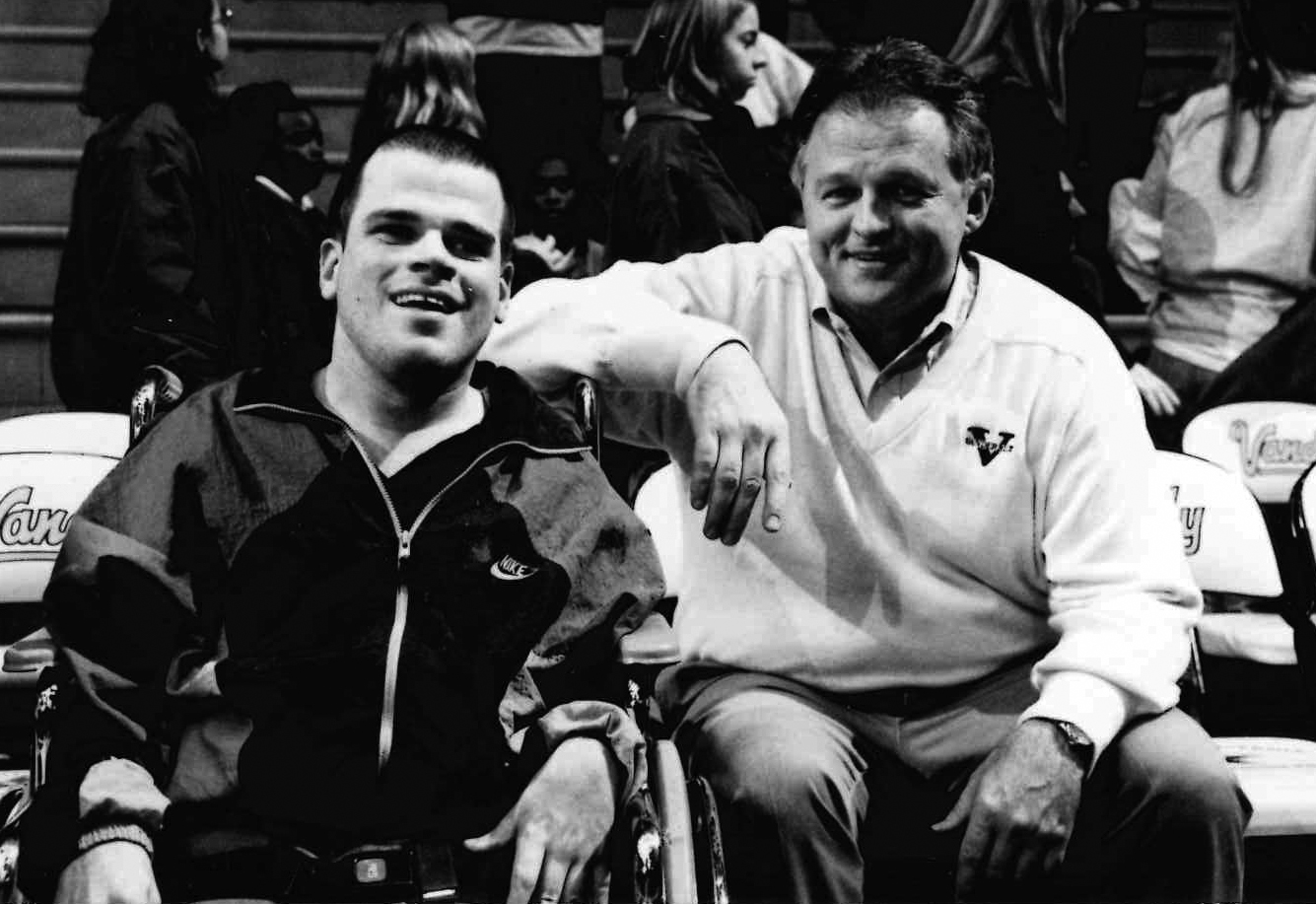
    Chris DiJulia’s friendship with St. Joe’s women’s basketball coach Jim Foster (right) continued after Foster moved on to Vanderbilt.provided by Saint Joseph's University

    The coach and his de facto assistant created a pre-game routine. After Foster gave his initial speech, he’d turn to DiJulia, who would share a few words.

    “And then he would say, ‘But what it really comes down to,’ and he’d point to his heart,” St. Joe’s Hall of Famer Katie Gardler said. “And then he would point to his head.

    “And you looked at all your teammates, and you’re like, ‘We’re doing this for him. Because he can’t get out there. We’re doing this for him.’”

    DiJulia soon expanded his network beyond Hawk Hill, attending the NCAA and Atlantic 10 tournaments, among other events. If a coach left Philadelphia, he’d follow their careers, often traveling to go see them.

    From the 1990s to the 2020s, DiJulia flew to Vanderbilt, Ohio State and Chattanooga to visit Foster, and drove to Michigan with his father to visit Martelli. Every year, he’d trek to Burlington to see Tom Brennan, the men’s basketball coach at the University of Vermont.

    Brennan was among his closest friends. They first met in the 1970s, when the coach was assisting Rollie Massimino at Villanova. Brennan was hired by Yale in 1982, overlapping with DiJulia in Connecticut, which brought them even closer.

    The two men discovered that they had a similar sense of humor; or as Pat put it, were “both crazy.” Games at Yale eventually led to daily phone calls, which led to trips to Vermont. In late November 2001, DiJulia visited Brennan when Cleveland State was in town, led by Massimino.

    After the game, they got dinner with a few other coaches and family members. At one point, DiJulia asked Massimino a question that silenced the entire room.

    “He said, ‘Rollie,’” Brennan recalled. “And back then, nobody called him Rollie. It was ‘Coach Mass.’”

    The head coach turned to DiJulia, with an air of incredulity.

    “Rollie?” Massimino said. “Rollie???”

    The St. Joe’s fan grinned.

    “That’s your name, ain’t it?”

    DiJulia was a fixture at the University of Vermont. Every time he visited, he’d sit on the bench, right next to Brennan, tasked with keeping track of timeouts. This didn’t always go according to plan.

    In February 1991, Vermont played at Delaware. It was a close game in the final minutes. Vermont was down three with the ball. Brennan turned to DiJulia and asked if they had any timeouts.

    He said yes, but had counted incorrectly. Vermont got a technical foul. Delaware made one of two free throws, took possession of the ball, and won the game.

    “The fun they’ve had with that over the years…” said Don.

    Chris DiJulia and one of his best friends, Tom Brennan.Provided by the DiJulia family

    Chris was also a regular on Brennan’s sports talk radio show on WCPV-FM. One time, he got the coach out of a parking ticket, because a police officer recognized DiJulia, and decided not to “mess up DeJules’ weekend.”

    He was so beloved that in 2005, when Vermont was playing to reach the NCAA tournament, a booster chartered a plane to fly DiJulia to Burlington for the America East final. A gaggle of reporters met him at the airport.

    After DiJulia returned home, Brennan checked in with his friend.

    “I said, “Are you going to see St. Joe’s [in the NIT]?” Brennan recalled. “And he said, ‘Yeah… commercial.’ You got some balls. Commercial!

    “But people just loved him. They loved him.”

    DiJulia’s unflinching honesty was a big reason why. In the mid 1990s, amid a stretch of below-.500 seasons, he penned an angry letter to Phillies team president Dave Montgomery.

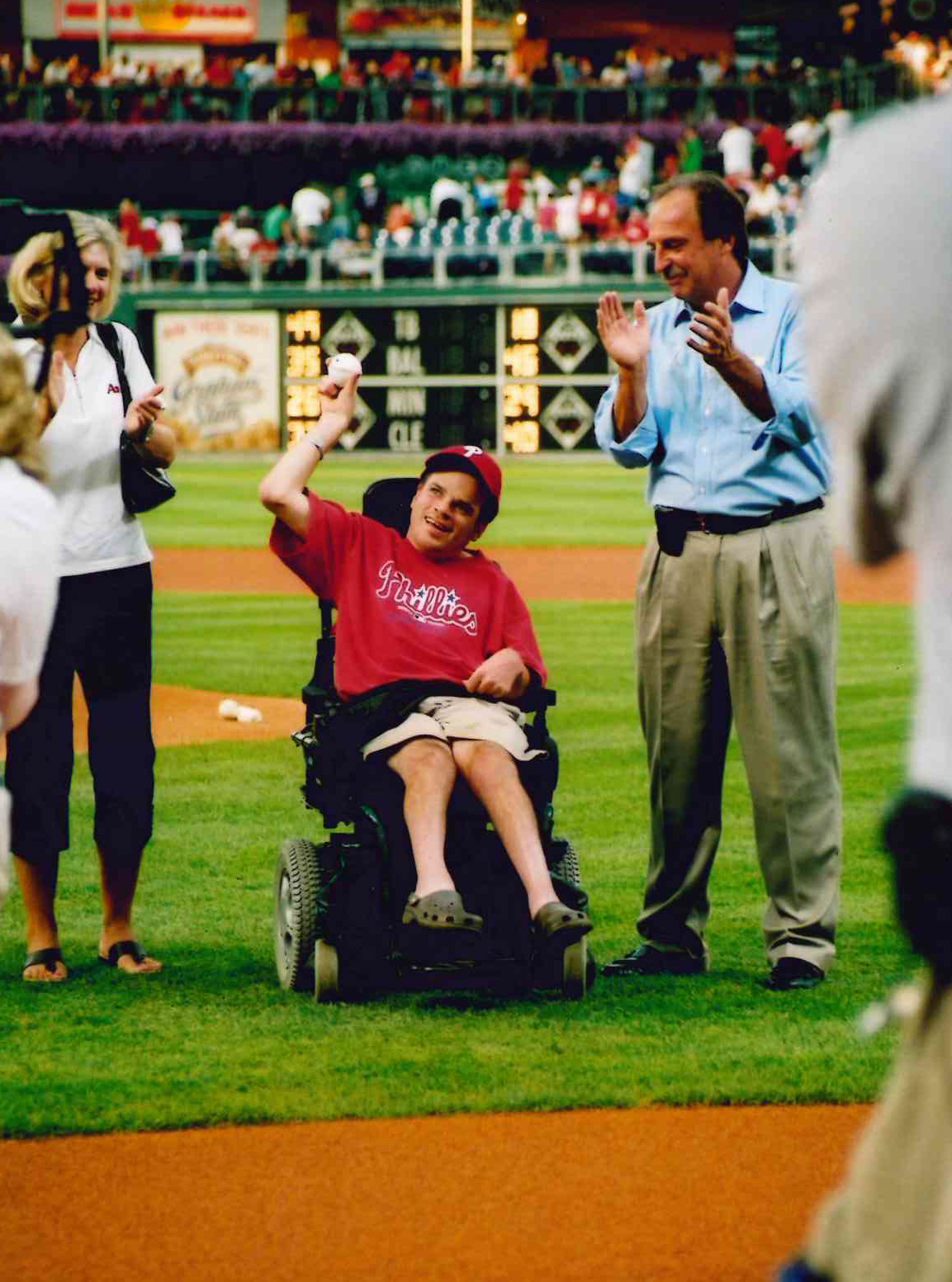
    Chris DiJulia (with former Big 5 coach Fran Dunphy on the right and St. Joe’s women’s basketball coach Cindy Griffin on the left) was a massive Phillies fan.provided by Saint Joseph's University

    Montgomery invited him to his box, with Brennan and Don DiJulia. The executive asked what he could do for the frustrated fan.

    “And he said, ‘The first thing is to stop our team from sucking,’” Brennan recalled.

    (Montgomery and DiJulia went on to have a very close relationship, one that improved when the Phillies ended their World Series drought in 2008.)

    “He was always ready,” Brennan said. “You couldn’t throw him off his game, man.”

    A spirit worth celebrating

    DiJulia’s health declined over the past two years. He could no longer feed himself or travel. Sitting on the bench at St. Joe’s was not possible; neither was attending games at Citizens Bank Park.

    But DiJulia adjusted, as he always did. He continued to work the phones, keeping in touch with coaches. He’d follow his favorite teams remotely, either on TV or an internet stream, rather than in person.

    And through it all, he never lost his spirit. Last Easter, DiJulia’s sister, Tyl Sadoff, gifted him a T-shirt. On the front was a message he thought was hilarious: “Just call me Jesus, I keep coming back.”

    Perhaps that is the lesson. Even in the darkest of moments, Chris DiJulia was able to laugh. And since his passing, loved ones have found that is the best way to honor him. To share their favorite stories, of their favorite guy, with a tinge of sadness, but a bellyful of joy.

  • This Delco man sunburned LeBron James’ jersey into his back in Sea Isle. He called it an act of ‘Philly toughness’

    This Delco man sunburned LeBron James’ jersey into his back in Sea Isle. He called it an act of ‘Philly toughness’

    Joey Abel was born in Drexel Hill and raised in Broomall, but now works in insurance in New York. For the past few months, the 28-year-old has been surrounded by hordes of Knicks fans, reveling in their long-sought championship.

    It has not been a pleasant experience. Like most Delaware County natives, Abel supports Philadelphia’s pro sports teams, through good times and bad.

    This included the Process years, when the Sixers were winning as few as 10 games a season. Even then, Abel was all-in. He was drawn to the analytical mind of Sam Hinkie, the excitement of Tony Wroten, and, of course, the hope of a bright future.

    Joey Abel with his nephew, Lucas.provided by Joey Abel

    At 11:30 a.m. Friday, that hope was realized. Abel was traveling from Atlantic City to Sea Isle City with his aunt, Rita, for a family vacation down the Shore, when he saw that LeBron James was coming to Philadelphia.

    He couldn’t believe his eyes. Back in May, the Sixers had seemed rudderless; a team encumbered by big contracts with a small window. Now, Abel believed they had their missing piece, a future Hall of Famer who could lead them out of the wilderness.

    The Malvern Prep alumnus was ecstatic. So as he approached the beach, he decided to celebrate in a way only a Philadelphian could: by suffering just a little bit more.

    As Abel and his family planted chairs into the sand around the 56th Street beach in Sea Isle, an idea occurred to him. His nephews used a blue zinc sunscreen stick to protect themselves from the sun.

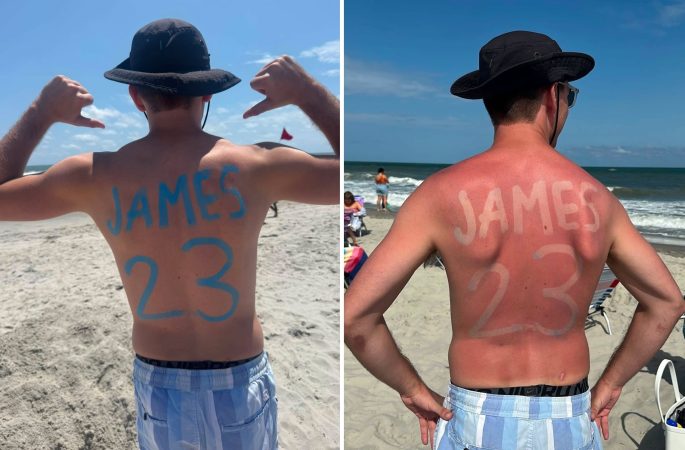
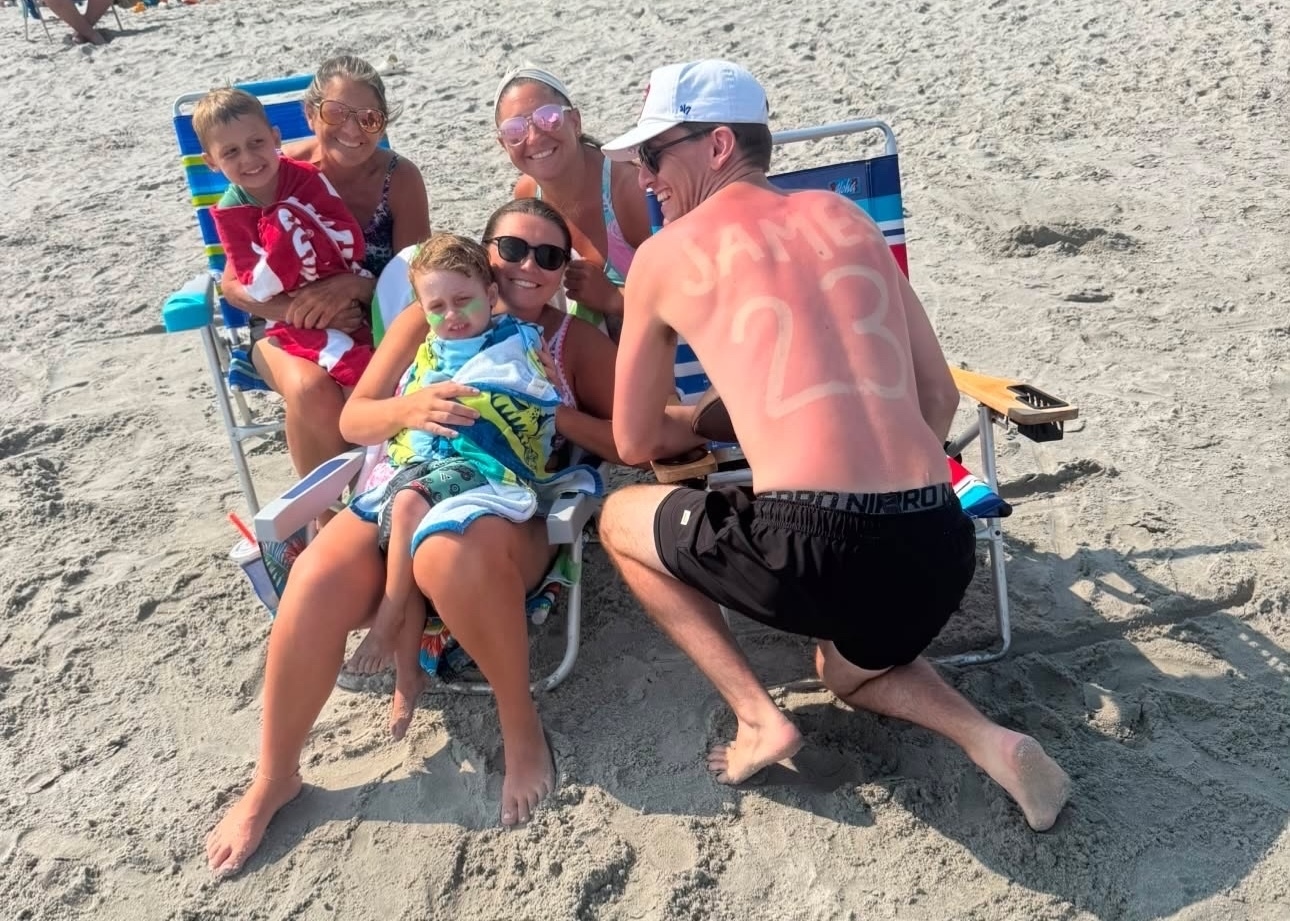
    Eager to show his devotion to the King, Abel asked his sister, Jill, to write “James” and “23″ into his back, with no sunscreen applied anywhere else.

    “I don’t even know [how I thought of it],” Abel said. “I was just like, ‘How can I get a LeBron James jersey as fast as possible?’ And for some reason, that’s where my mind went.”

    With few clouds in the sky and a forecast in the high 70s, the conditions were perfect for a roast. Abel played with his nephews in the water and returned to the beach, lying flat on his stomach as he burned to a crisp.

    Joey Abel and family in Sea Isle City.provided by Joey Abel

    About an hour later, his family rubbed the sunscreen off to find a semi-permanent LeBron James jersey seared into his back.

    “I was like, ‘All right, I want to see if I can get this good,’” Abel said. “And it got good.”

    The reactions from nearby beachgoers were predictably hilarious. One man walked up to Abel and asked if he’d lost a bet. A few others sheepishly requested a photo of his scorching-red “James 23.”

    His mother, Annette, was less enthused.

    “They were all just embarrassed,” Abel said. “They’re like, ‘Joe, are you kidding me?’”

    Later that night, he went out with Jill to the Ocean Drive, and met a fellow Sixers fan at the bar. The Delco native felt compelled to share his act of sacrifice.

    “I couldn’t not show him the giant LeBron sunburn on my back,” he said.

    Before long, the scene became a “photo shoot,” with others asking to take photos of Abel’s de facto tattoo.

    This was Day 1 of the Abel’s family vacation. The 28-year-old will be in Sea Isle until Sunday and has no plans to apply aloe vera before then.

    “It does hurt, but I did it, right?” he said. “I’m going to have to keep it. I don’t really want it to fade as fast. Philly toughness, like LeBron’s going to learn.”

    Abel says James’ decision has helped soften the blow of the Knicks’ recent championship. He’s now excited to return to New York City in the fall and hopes to see the Sixers in person when he does.

    But don’t expect him to go anywhere near Madison Square Garden.

    “I think I’m going to have to go to a Nets game,” he said.

  • Jadin Aviles was a star athlete with a bright smile and maturity beyond his years. North Philly mourns his unfulfilled promise.

    Jadin Aviles was a star athlete with a bright smile and maturity beyond his years. North Philly mourns his unfulfilled promise.

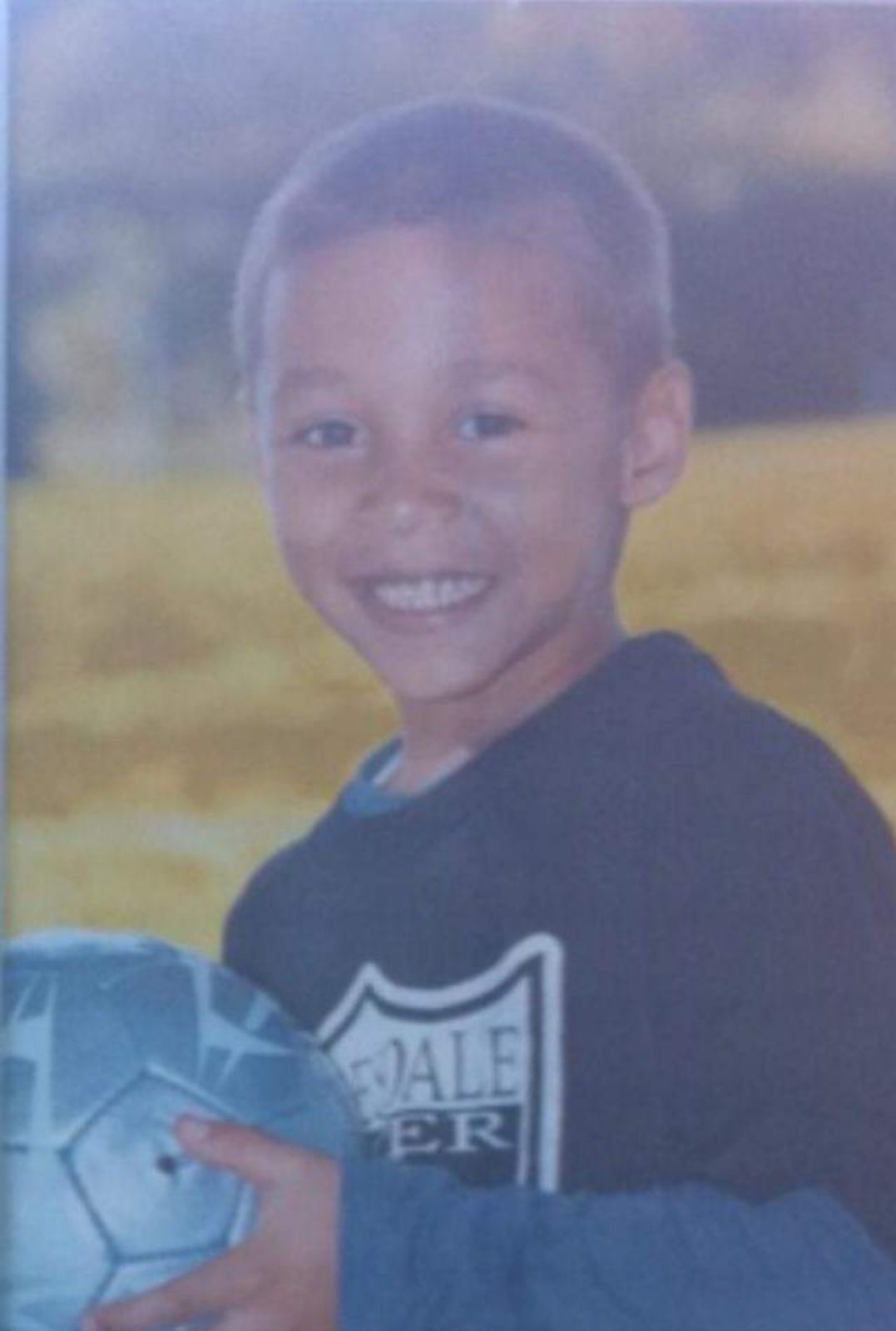
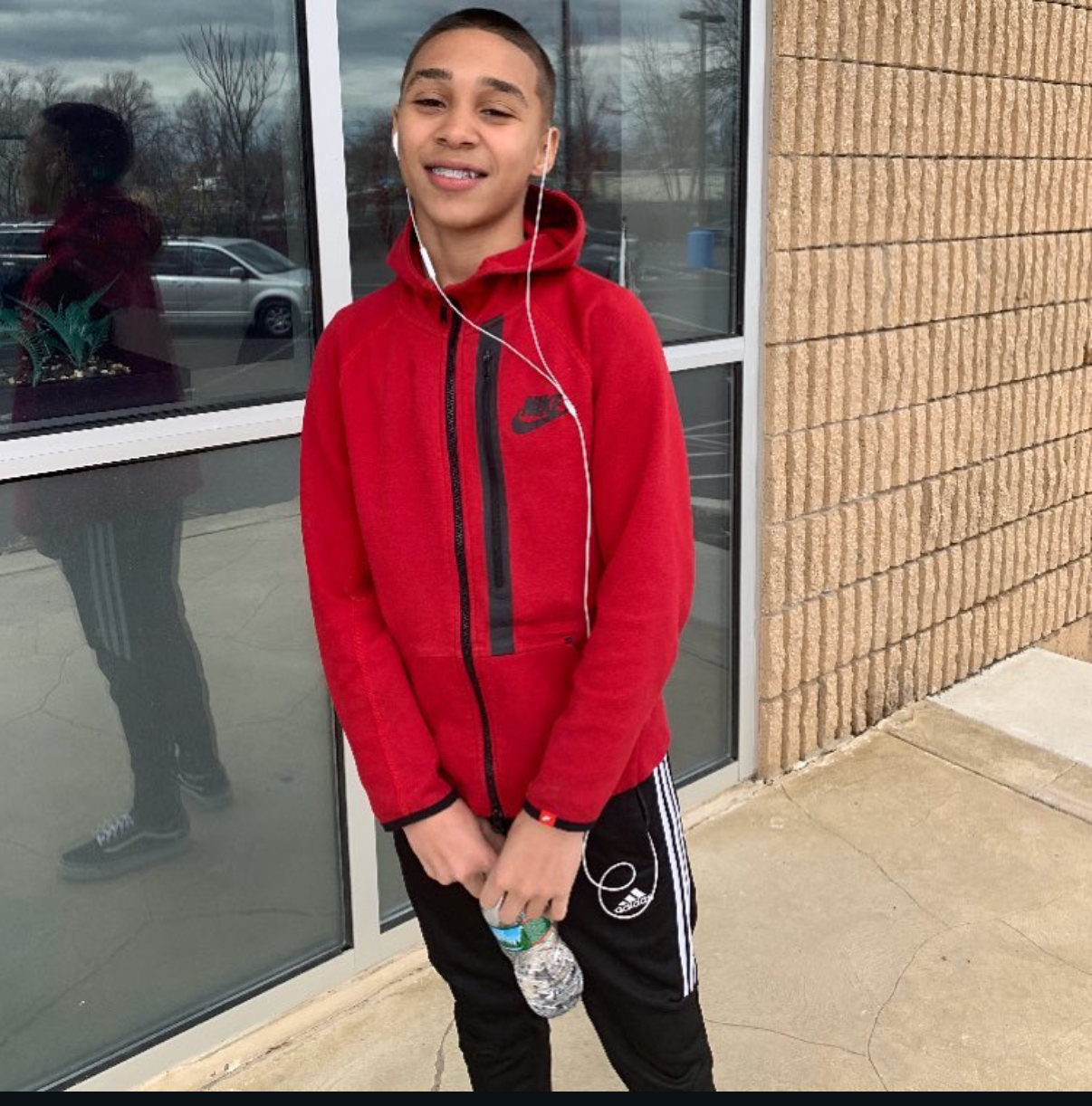
    The first thing people noticed about Jadin Aviles was his smile. It was bright and big, and became part of his identity. Not just because of his youthful spirit, but the work that shaped each glistening tooth.

    When Aviles was 9, his mother, Emelissa Gonzalez, saw that he was closing his mouth in photographs. Sometimes, he’d cover it with his arm. She asked why; Aviles explained that he was insecure.

    Gonzalez turned to her son.

    “Don’t worry,” she said. “Once we hit a certain age, we will get them done.”

    A few years later, the mother surprised him with a trip to the orthodontist in Northeast Philadelphia. Not every child would react with enthusiasm, but this child did.

    Aviles eagerly picked out the colors of his braces — red and blue — and was diligent in wearing his rubber bands. Tightening the wires was hardly a chore; the teenager saw this as a necessary (albeit painful) step to getting the grin he wanted.

    By age 15, he finally had it. Aviles smiled constantly — so much so that his friends began to tease him. But he didn’t mind. Gonzalez had invested her hard-earned money. He had treated that investment with care. Wasn’t that something to be proud of?

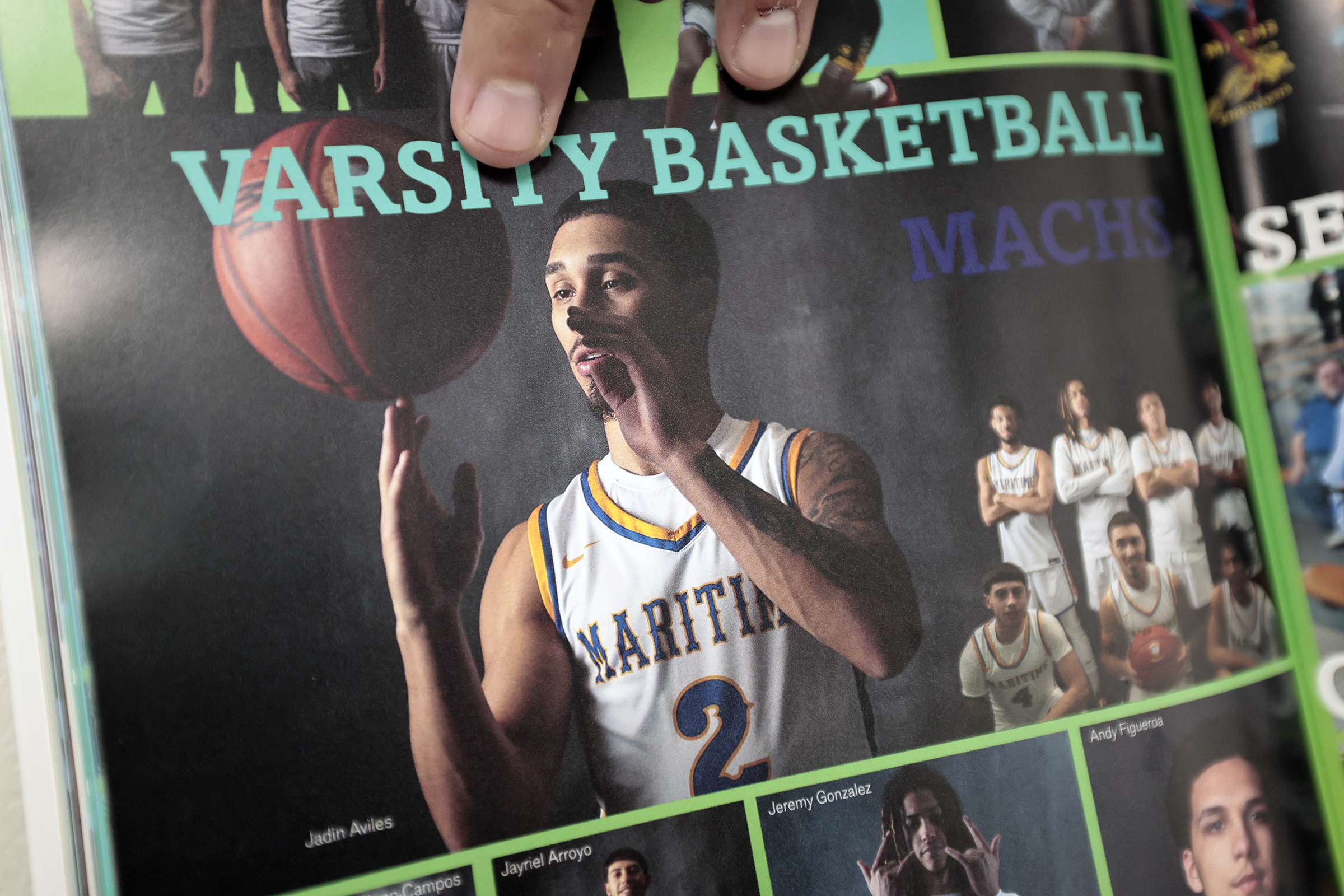
    Aviles brought the same industrious energy to basketball. He played in two youth leagues — La Liga Del Barrio and Timoteo Sports — as well as on his high school team, Maritime Academy Charter.

    Athletic director Kevin Schultz would let the shooting guard and his teammates into school early, so they could shoot from 5:30 a.m. to 7:30 a.m.

    “Class started at 8:02 [a.m.],” former Maritime teammate Andy Figueroa said. “So we was in the building before all the teachers.”

    Aviles wasn’t competing in front of a packed Palestra, but he did become a “street legend” in North Philadelphia, according to those who knew him.

    This was as much about his ferocity as it was his empathy. The teenager would rarely, if ever, jaw at referees. He’d often extend a helping hand to an opponent who’d fallen on the court.

    “He would come to our church sometimes,” said Pastor Rob Whitmire, executive director of Timoteo, “and to see how he cared for people, it was something unique. Because, if I’m that guy, if I’m that player, that’s really not how they carry themselves. It’s not a caring spirit. And he just had a caring spirit.”

    His community is now trying to keep it alive. On May 12, Aviles was riding his moped in a bike lane on Aramingo Avenue. A pickup truck, turning left, ran him over. Aviles suffered extensive brain damage, and died that night.

    He had just turned 20.

    It is a devastating loss, one that friends and family have struggled to reckon with. To many, Aviles, with his beaming smile, was brightness incarnate. He seemed to make all the right choices. How could things go so horribly wrong?

    As North Philadelphia celebrates his past, and mourns his unfulfilled promise, they’ll continue to point to Aviles as an example. Proof that a life built on kindness and respect can be a life well-lived, no matter how it ends.

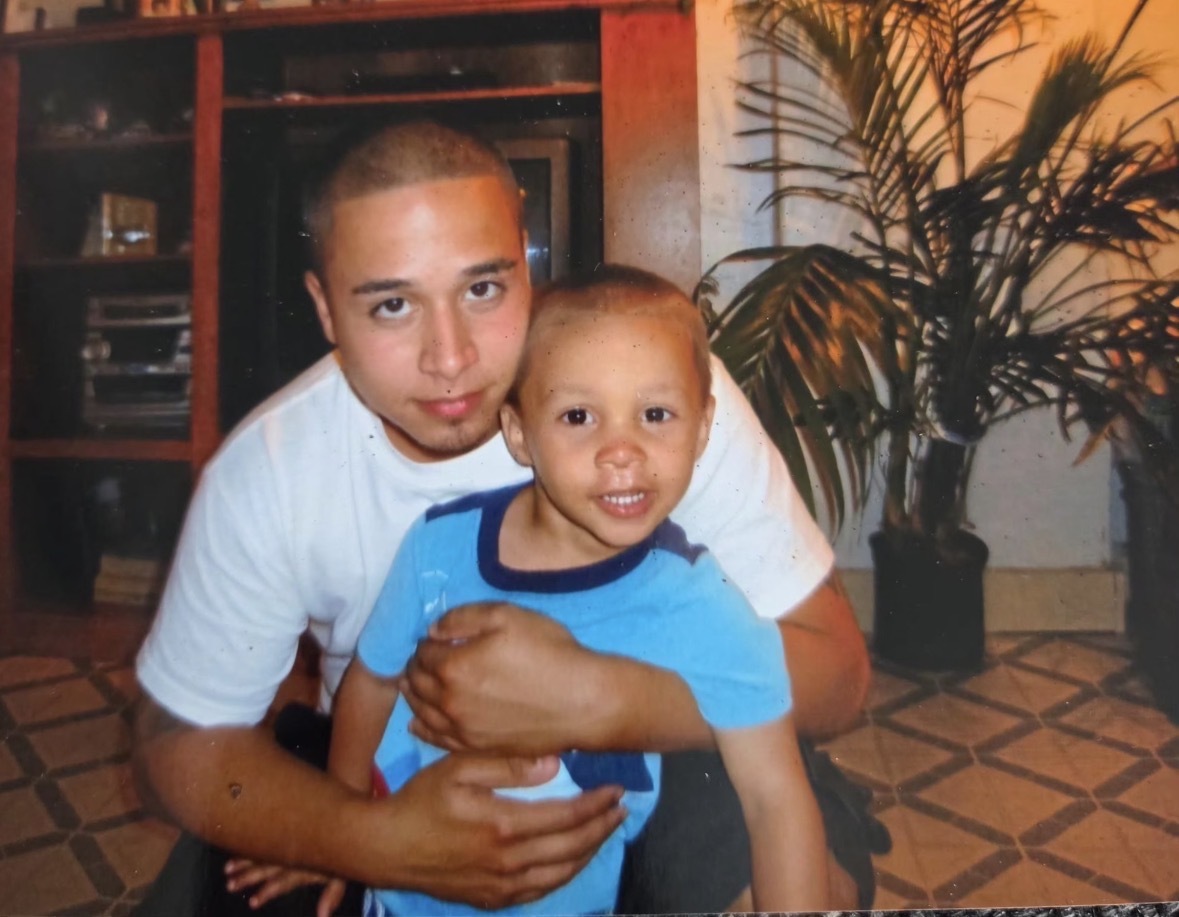
    Sam Aviles with his son, Jadin.courtesy of Sam Aviles

    Bonding through basketball

    Aviles grew up with his mother. His parents broke up when he was 2 but maintained an amicable relationship. Even as a child, the future basketball star was self-sufficient.

    He wasn’t the kind to throw a temper tantrum in a toy store. He rarely cried. If he did, his father, Sam, could quickly calm him down with a meal and some TV.

    By the time he was 9, Jadin’s uncle and grandfather, who worked in electricity and construction, were teaching him odd jobs around the house.

    The third grader knew how to navigate a switchbox and how to repair a lamp fixture. Once, when a pipe burst in the bathroom, Aviles called Gonzalez’s brother, Emanuel.

    “‘Hey Tío, how do I fix this?’” she remembered him saying. “And over the phone, he’s literally fixing a pipe.”

    Sam introduced the younger Aviles to basketball at age 5. He’d heard about La Liga through a cousin and signed Jadin up. One day, in the fall, they went to Towey Playground, around the block from Gonzalez’s home.

    Jadin Aviles took early to multiple sports, but basketball quickly became his greatest love.courtesy of Emelissa Gonzalez

    Sam was a new father, with no experience in youth sports. He did not realize that his son would be playing on a smaller court, with a hoop eight-feet high. So, they started practicing at the regulation-sized Towey, with Jadin chucking basketballs from above his head.

    The boy didn’t complain, but once he and his father showed up to La Liga in December, it dawned on them that they had overestimated these dimensions. Even still, Jadin took to basketball, and began to participate in La Liga every winter.

    Shortly after, Sam joined the organization as a coach. The father and son became inseparable; often watching games together, and taking extra shots at the Mariana Bracetti Academy gym (where La Liga is based).

    The younger Aviles soon added another league, Timoteo, in the hopes of further refining his skills. At both stops, he established himself as a tough and bullish guard, who played far beyond his stature.

    Whitmire became familiar with Aviles through his church, Grace and Peace Community Fellowship, where the teenager would volunteer. When the pastor first saw him play, in 2020, he didn’t recognize him.

    The Jadin Aviles Whitmire knew was quiet and reserved. This kid was anything but. Eric Moore, assistant director at Timoteo, remembers that day vividly.

    Aviles was in eighth grade, battling older students at the Esperanza High School gym. Moore and Whitmire stood in the back corner.

    “And he was like, ‘Yo, is that Jadin?’” Moore recalled. “And I’m like, ‘Bro … yeah.’ And he’s like, ‘His defense is phenomenal.’

    “And I was like, ‘Wait till he gets the rock. Wait till he handles the rock.’”

    Added Whitmire: “I saw him come down and pull up on a guy and shoot, and I’m like, ‘Oh.’ There was something about his form that’s like, ‘No, that’s not normal. That’s not a rec player.’”

    Jadin Aviles became a factor on the court and an approachable mentor to younger teammates.courtesy of Emelissa Gonzalez

    At La Liga, Aviles always competed above his age group, and consistently held his own. His father called him a “giant slayer”; fully grown, Jadin stood at only 5-8, but was unafraid of opponents who were taller and larger than he was.

    The numbers back this up. For five years in a row, Aviles averaged at least 11.1 points per game. He increased his scoring in 2025, with 24 and 46-point games. But despite his offensive output, he also devoted time and energy to his shortcomings.

    One of the guard’s proudest moments came in 2023, when Timoteo named him defensive player of the year.

    “[A coach] started working out with him, and he would ask what they wanted to do that day,” Sam said. “And Jadin was like, ‘Defensive drills, defensive drills, defensive drills.’”

    Sam joined Timoteo as a coach in 2021, with the goal of spending more time with his son. But then an unexpected opportunity presented itself.

    In 2022, Maritime’s head coach, Ercel Ballinger, contacted Sam to see if he would be interested in running the junior varsity team. He agreed, and took a job at the school a year later as a member of the support staff.

    Jadin, who spent his freshman year at Roman Catholic, transferred to Maritime to play for his father. It turned out to be a life-changing decision. The younger Aviles thrived in the Philadelphia Public League.

    He was reunited with childhood friends like Yozuet Pagan, an older kid on the block who taught him ballhandling and finishing at Towey. And as he matured, Aviles became comfortable taking on that role himself, with younger teammates.

    Jadin Aviles flourished as a player after transferring from Roman Catholic to Maritime.Elizabeth Robertson / Staff Photographer

    Andy Figueroa was the biggest example of this. Like Aviles, he’d tried Roman Catholic, only to find it wasn’t a fit. The veteran guard began to check in on his pupil, and one morning, he approached the 16-year-old in the hallway at school.

    Jadin knew Figueroa had been struggling, and was at risk of becoming ineligible.

    “He was like, ‘We need you on the court for our next game. So make sure you’re doing everything right,’” Figueroa recalled. “That made me realize that I got to make sure I do well, not just for me, but for my teammates, too.”

    Aviles’ words were only bolstered by his play. By senior year, he was putting up career numbers, in points (15.3), rebounds (4.3), assists (2.5), and steals (3).

    It was good enough to earn him first team All-Public League honors.

    The teenager’s magical season came to an end on Jan. 23, 2025, Maritime’s senior night. A few hours earlier, Aviles told his father, who had since been promoted to varsity head coach, that he would “leave it all out on the court.”

    And he did. Facing Hill Freedman World Academy, which sat atop the conference, Aviles dropped 25 points with four rebounds and five steals. The Juniata Boys & Girls Club was packed to capacity, and their crowd was going berserk, almost as if it were a cathedral all their own.

    Sam Aviles (left), with Jadin Aviles’ sisters Madison and Mia Valerio, and stepmother Alexis Ferranti, witnessed Jadin’s development on the court. Elizabeth Robertson / Staff Photographer

    A bright future, a brutal end

    Aviles could have gone to college if he wished. Small institutions from Philadelphia and the surrounding areas sent him letters in the mail. Sam found a trade school in Media with a basketball team.

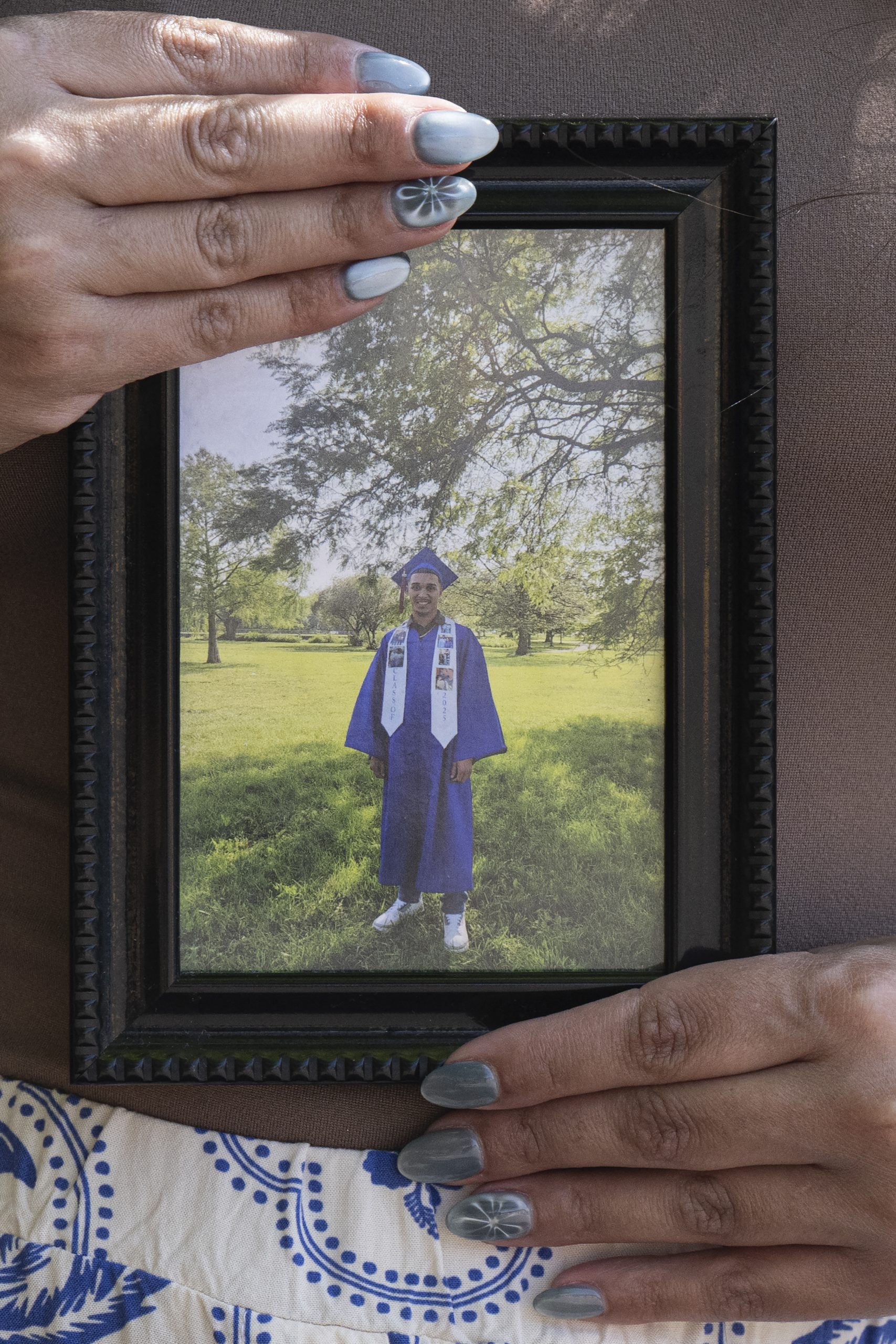
    But none of this was enough to persuade him. Jadin wasn’t interested in sitting in a classroom, or accruing student debt. He was interested in working, though, and 30 days after he graduated, he was hired at Menasha, a packaging company on East Erie Avenue.

    Two of his cousins worked there, as well as his uncle, James Arroyo Jr. It was an unnatural transition; Aviles was hired to work the night shift, from 11 p.m. to 7 a.m.

    But as with most challenges in his life, the teenager embraced it. Before long, he was training for a promotion, going from stacking boxes, an entry-level role, to running the label machine.

    “He got in there and [excelled],” said Arroyo Jr. “He hosed up pretty good.”

    The job provided a good salary and strong benefits, giving Aviles a level of financial freedom he’d never experienced. He was proud of this, telling family and friends that he had “all of his bills on auto pay.”

    In February, Aviles and his girlfriend, Jaeda Rodriguez, rented an apartment at Roosevelt Boulevard and C Street. It was a big step for them; Aviles had never lived apart from his mother or father.

    Emelissa Gonzalez was proud of her son, Jadin Aviles, but had reservations about how quickly he had become self-sufficient. Jose F. Moreno / Staff Photographer

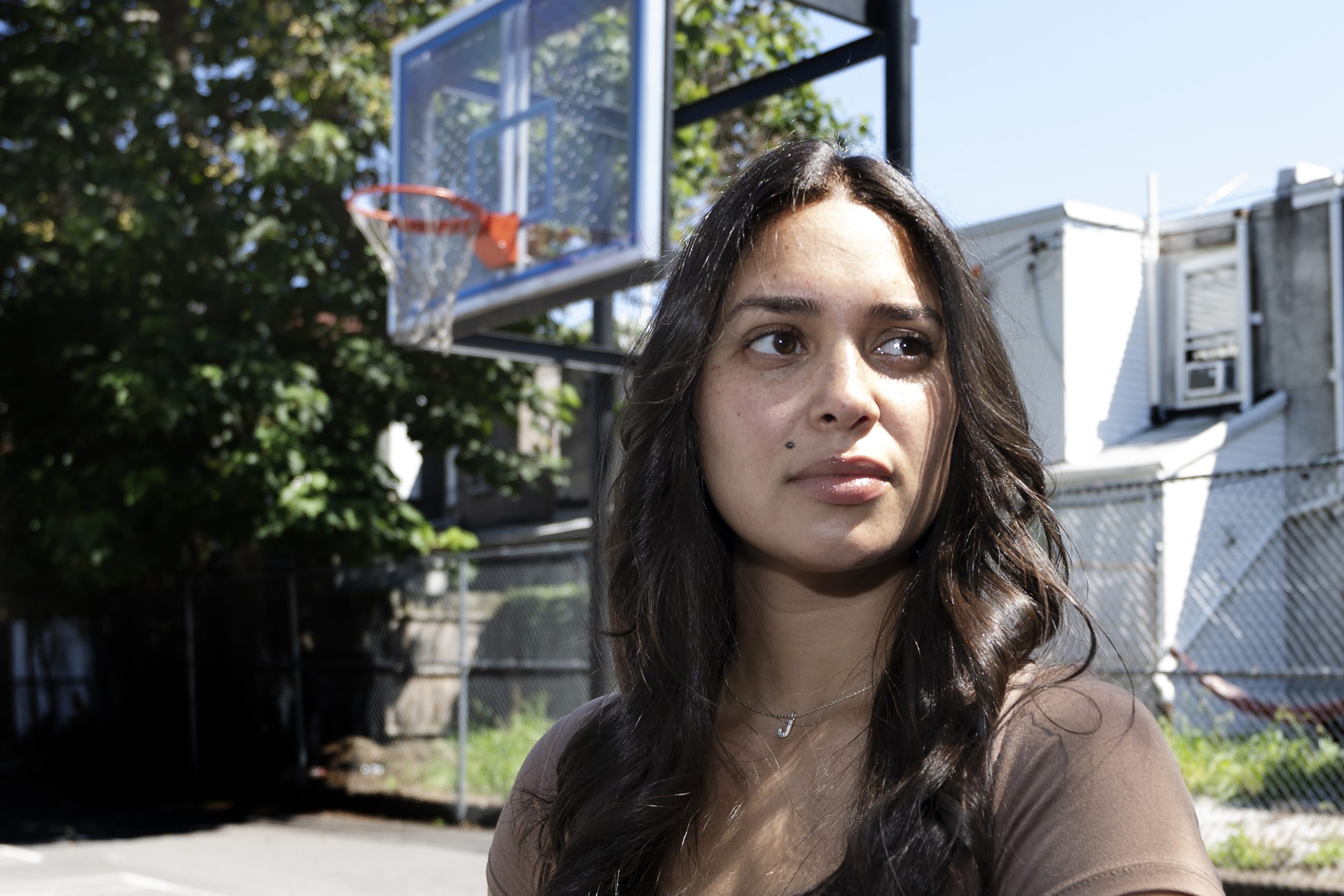
    And Gonzalez was skeptical at first. She can still remember the day he told her; how nervous he was.

    “I was like, ‘Is she pregnant?’” Gonzalez recalled. “‘Don’t tell me that I’m a grandma!’”

    Aviles explained that he was moving out. His mother’s response was short and succinct: “Boy, no. You can’t be doing that.” But eventually, she warmed to the idea, and as Gonzalez packed her child’s belongings, in his new home, she began to cry.

    “What’s wrong?” he asked.

    “One day you will understand,” she replied.

    The couple loved their newfound life. Within weeks, they’d adopted a pit bull from a local animal shelter — “Bubba” — and began to put him through dog training. Aviles suddenly had access to things like trips to the Shore and a newer car.

    From a young age, he was drawn to bikes. Sam bought his son a black moped when he was 16, a miniature-motorcycle from Walmart that had a “lawnmower for an engine.”

    Now, Aviles was able to purchase one of his own, and on May 11, he and a family friend, Kenny Enrique, drove to Allentown to retrieve it. They loaded the two mopeds into Enrique’s car, and brought them back to Philadelphia.

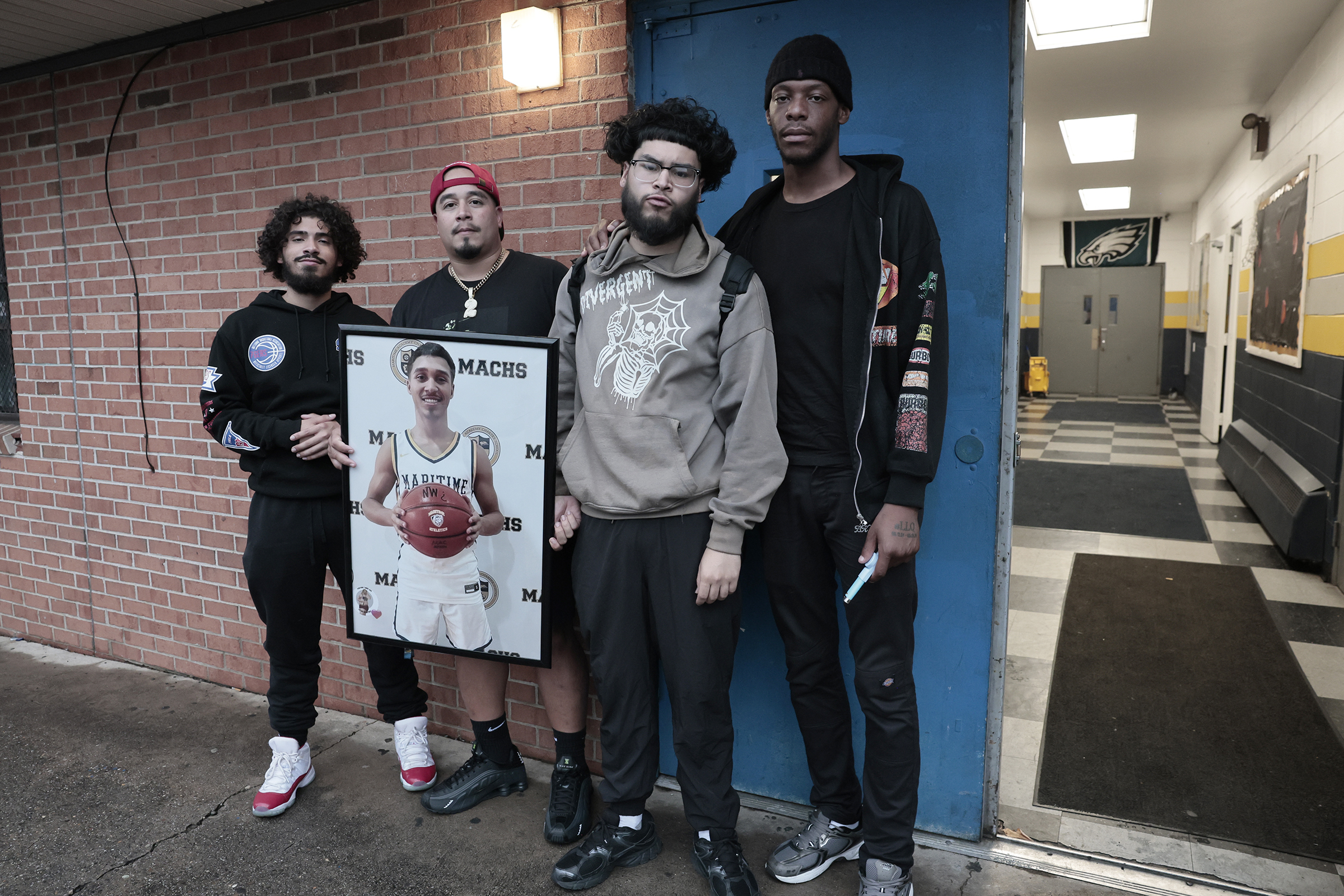
    Hector Rosado (from left), Sam Aviles, Lucardo Marrero, and Sincere Jackson hold a photo of Jadin Aviles as they stand outside of the Juniata Park Boys & Girls Club earlier this month. Elizabeth Robertson / Staff Photographer

    The next afternoon, the two men departed Aviles’ apartment in Olney, riding the mopeds to visit Sam at Maritime. They turned onto a bike lane on Aramingo Avenue; Jadin in front, Enrique behind him.

    As they approached the four-way intersection, a pickup truck emerged in the left lane, heading northbound. A Philadelphia police report stated that the driver turned while the light was green, but failed to yield the right of way.

    The right side of the truck hit Aviles. He fell to the ground and was run over. Enrique ran to find his friend face down, with his hood over his head, the moped laying a few feet away.

    Enrique knelt and placed his hand on Aviles’ arm. Traffic began to slow; a few passersby stopped to call an ambulance. As Enrique went to retrieve his bike, he noticed something out of the corner of his eye.

    “The [driver of the truck] was still moving,” he said. “I’m not going to say he left, but he probably would have left if I didn’t start yelling at people to make him stop.
    “So, I started yelling, ‘Stop that truck, stop that truck!’”

    The driver remained at the scene, where both men were questioned by the police. Throughout his interview, Enrique asked whether or not officers would give an alcohol or drug test to the driver.

    “He said that our officers are trained to identify when somebody is under the influence,” Enrique recalled. “And I said, ‘Well, what’s an opinion versus an actual drug test or a blood test?’

    “And he just ‘never minded’ what I said. I said the same thing to the next officer. They just ignored me.”

    Officers later discovered that the driver of the truck had twice had his license suspended for driving under the influence, and did not have insurance at the time of the crash, according to a copy of the police report obtained by The Inquirer.

    The police department’s Crash Investigation Division obtained footage of the fatal collision. One of the responding officers’ body cameras was “activated through the duration” of the interviews at the scene, the report shows.

    A police spokesperson said that the crash remains under active investigation, and that the driver is cooperating with authorities.

    The department did not respond to additional questions that The Inquirer submitted about the investigation, including why the driver of the truck was not required to undergo testing to determine if he was under the influence of drugs or alcohol.

    Aviles was transported to Temple University Hospital, where his parents joined him. Sam’s girlfriend, Alexis Ferranti, met them there, as did Rodriguez. It wasn’t until 7:03 p.m. that the family was able to see Jadin, who was unresponsive.

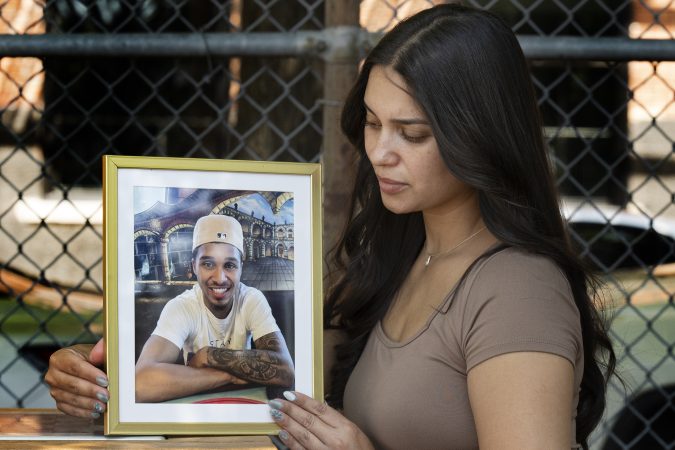
    The 20-year-old’s face was wrapped in a bandage, covering the smile he’d worked so hard for. He couldn’t move or speak. Doctors told Gonzalez and Aviles that they had about an hour to say goodbye.

    The parents prayed, and listened to Christian music, and told their child how much they loved him. That they were there for him, even if he couldn’t see them, and that they’d always be there for him.

    “And we all watched,” Gonzalez said, “my son go with the Lord.”

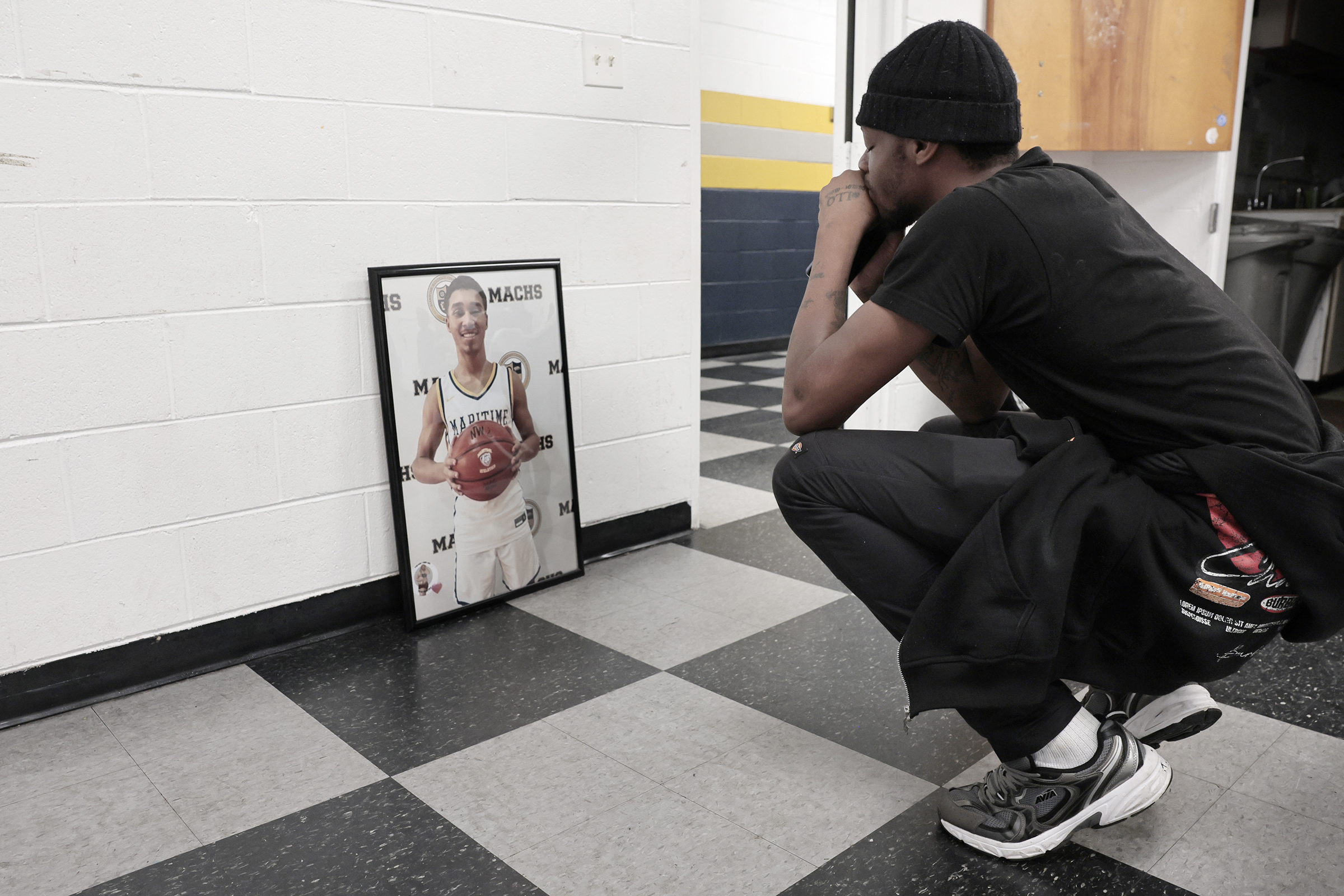
    Jadin Aviles’ friends and former teammates, including Sincere Jackson (pictured), remember a good person who developed himself into a basketball standout. Elizabeth Robertson / Staff Photographer

    A funeral on hardwood

    The funeral was held on the morning of May 22. Initially, Gonzalez and Aviles planned to use her church, but realized it couldn’t contain the large crowd they were expecting.

    So, they moved the service to the Juniata Boys & Girls Club, a place where their son had some of his greatest moments. Building employees took out the scorer’s table, and angled team benches toward the court.

    Rows of chairs were stacked in the middle, all facing a casket underneath the hoop. Just like on Jadin’s senior night, the gym was filled with people; so many that a line wrapped around the block onto Castor Avenue.
    They came from all corners of the neighborhood — Hunting Park, Olney, Kensington — shuffling in and out to pay respects. At one point, the funeral director had to turn mourners away, because the family was able to rent the gym for only two hours.

    It was a surreal day, especially for those who had played with Jadin on that same floor. Dominic Lopez, a Maritime teammate, thought about Aviles’ 25-point game.

    Andy Figueroa did, too. After it was over, he walked up to Eric Moore, who’d watched Jadin grow up at Timoteo, to ask how he was doing.

    “And I told him, ‘You are Jadin,’” Moore recalled. “‘Own it. Because you are him. You are that person.’”

    Jadin Aviles’ family and friends are attempting to move on from his loss while honoring his memory. Jose F. Moreno / Staff Photographer

    There has been an emptiness in North Philadelphia since Aviles passed. Spaces he used to frequent are quiet. Ray and Esther Alvarez, who run La Liga, returned to their home gym in June.

    Esther found herself thinking back to that kind boy, who would always greet her with, “Bendiciones, Titi.”

    “I knew I wasn’t going to physically see him,” she said, “but I was waiting for my bendición.”

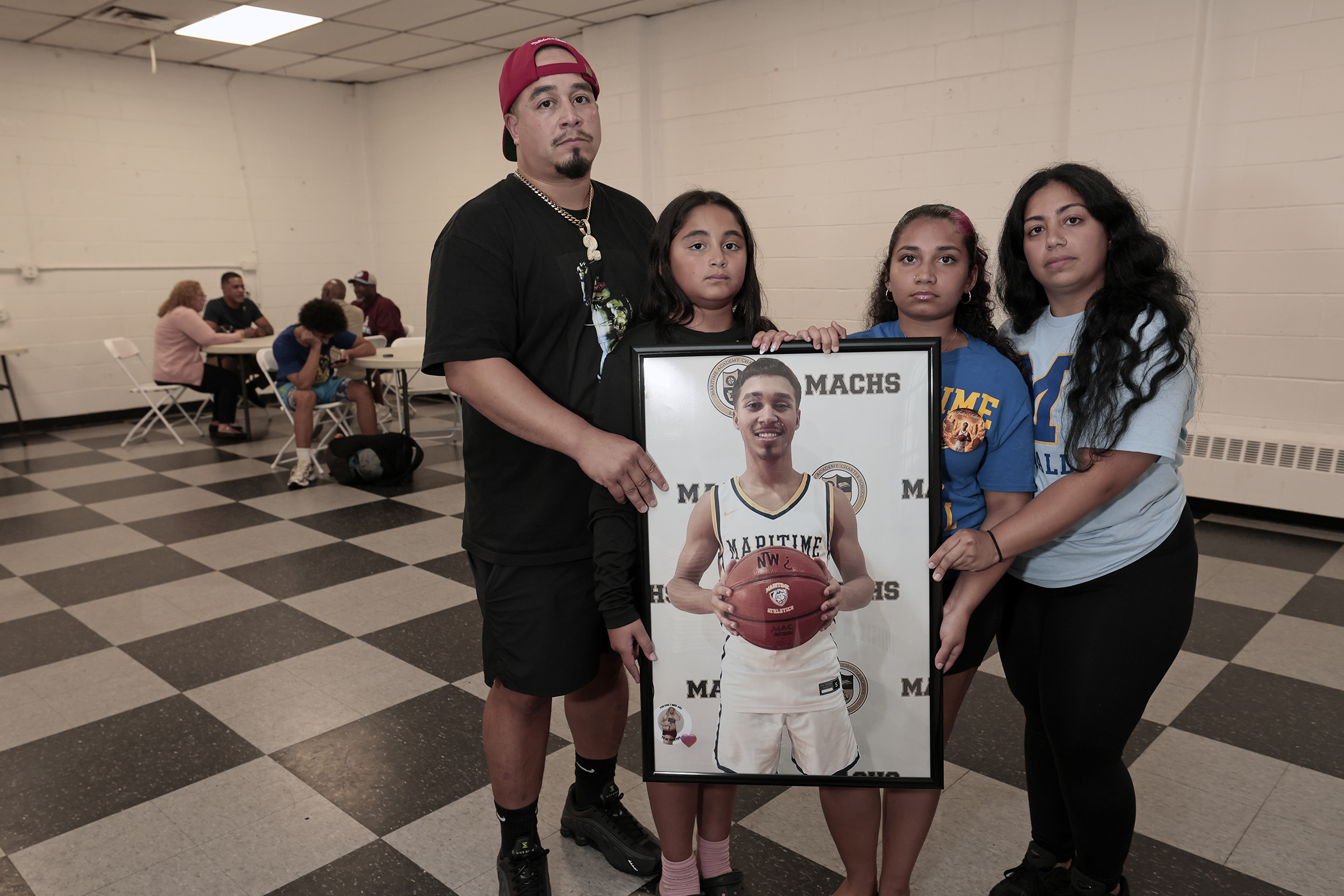
    Aviles’ spirit will continue to permeate. La Liga is planning a memorial fund in his name. Sam is thinking about hanging one of his jerseys in the Maritime rafters.

    But perhaps the best way to honor him is to emulate him. To tell young people about a giant on the court and a leader off it, who was so remarkable, and so loved, that he drew hundreds, maybe a thousand, to his funeral.

    And that he did it all on his own, with hard work and a big smile, and that someday, they could, too.

  • Steve Gansey received a whole lot of brotherly love after LeBron James picked the Sixers

    Steve Gansey received a whole lot of brotherly love after LeBron James picked the Sixers

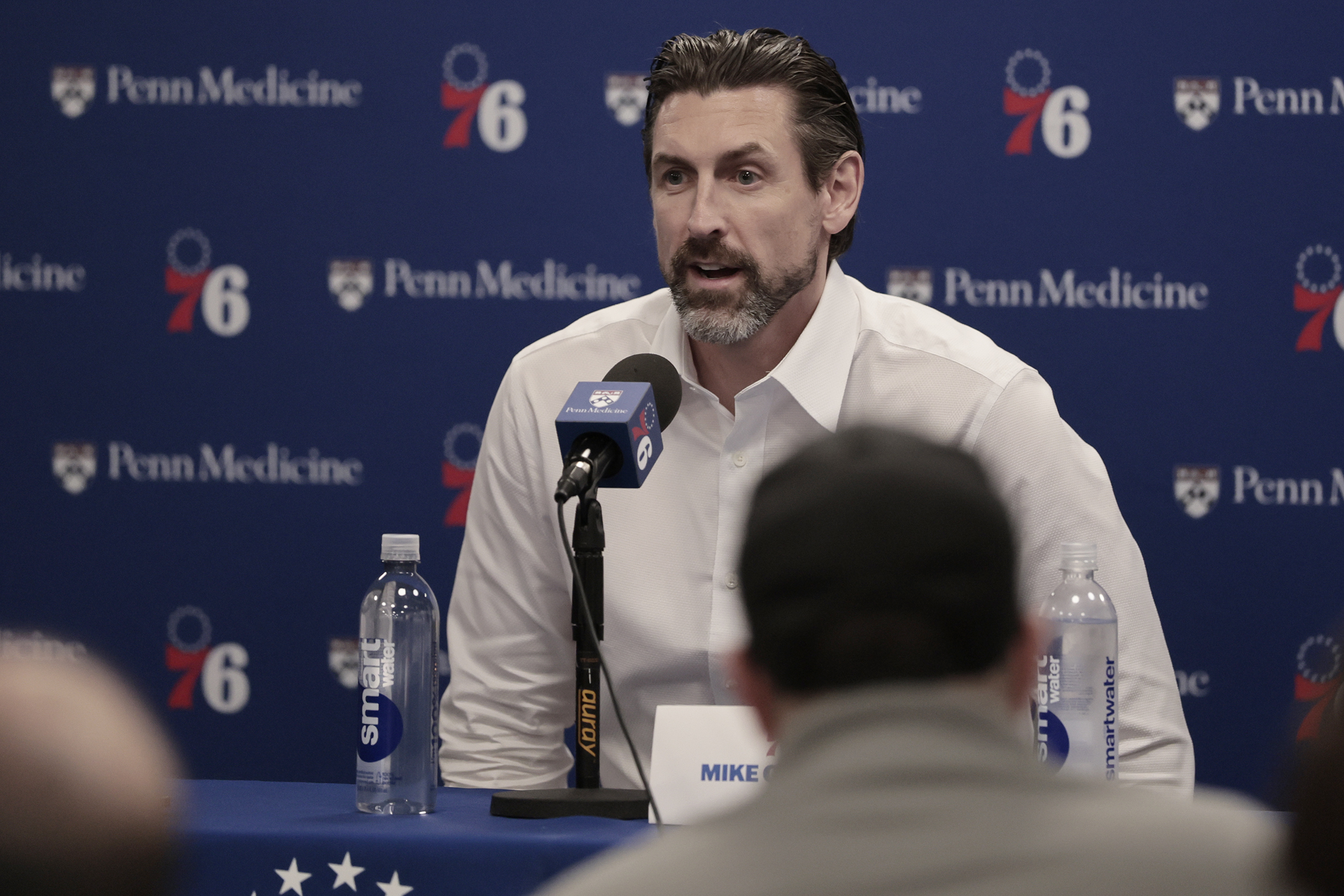
    Steve Gansey, brother of Mike Gansey, was at work on Friday morning when the texts started to trickle in.

    Two colleagues from Philly shared the news that LeBron James had agreed to sign with the 76ers. The younger Gansey logged onto Twitter, and saw a post from ESPN insider Shams Charania saying the same.

    Like any other responsible basketball fan, he checked to make sure it wasn’t a prank account, before getting too excited.

    “I was like, ‘OK, well, who knows?’” Gansey said on Friday. “You’ve got to do your due diligence and make sure that’s real.”

    About an hour later, Steve received the ultimate confirmation from his brother, Mike, the Sixers’ president of basketball operations.

    “Mike actually called me,” he said. “And was like, ‘What’s up?’ And I was like ‘….What’s up?’”

    Steve said his brother barely talked about LeBron at all.

    “We talked about how excited he is, this, that, and the other, and the first thing he said was, ’Yeah, it’s Nick Nurse’s birthday,’” Gansey said. “And Nick was boarding a plane or something, and Mike had to shoot him a text, and he said, ‘Happy Birthday,’ or something.”

    He added: “Only a couple of hours after he gets the news with LeBron, Mike is talking about going to the flea market with his kids tomorrow in Cleveland. And how excited he is to find some old-school Starting Lineups or action figures. That’s just who Mike is.”

    The younger Gansey ignited Twitter a few weeks ago when he posted a photo of his brother, side-by-side, with LeBron, in high school. LeBron played basketball at St. Vincent-St. Mary, a short drive from Olmsted Falls, where Gansey played.

    Steve says he didn’t have any inside knowledge when he posted that prophetic tweet, but that didn’t stop Sixers fans from showering him with praise on Friday afternoon, after the news became official.

    “Everyone was like, ‘Thanks Steve, for everything,’ like I did something,” Gansey said. “I gave people hope, I guess, by throwing out a couple of tweets there.”

    Steve has never been to Philadelphia; the closest he got was a few trips to Delaware when he was coaching in the G League. But he is excited to go. And when he does, he will have plenty of free food and alcohol awaiting him.

    “Someone said that Mike can walk on the Sch-ku-yu? What is it? Water?” Gansey said, referring to the Schuylkill River. “I was like, ‘OK, that must be a tough body of water to walk on.’

    “The free Tastykakes. ‘I have your hookup for free Tastykakes for Mike.’ Free cheesesteaks. ‘You get free beer, or a free drink, when you come into town.’”

    These are nice perks, but the younger brother is more proud of his brother than anything else — and unlike the rest of the NBA, he’s certainly not surprised.

    “It comes around,” he said. “And that’s what relationships are. Obviously they have a good relationship together, they won a championship together, they feel comfortable. Nick Nurse won a championship. He’s a players-first type of coach.
    “It’s just really awesome that they are back together again. And it’s even cooler that they’re teaming up in a different city. Two northeast Ohio guys, takin’ on the world.”

  • Before Mike Gansey became a Sixers executive, he was a hard-nosed high school player who earned LeBron James’ respect

    Before Mike Gansey became a Sixers executive, he was a hard-nosed high school player who earned LeBron James’ respect

    Steve Gansey was playing with his son a few weeks ago, as ESPN hummed in the background, when he heard something unusual. It was Kendrick Perkins, talking to his NBA Today cohosts, about a photo that recently went viral.

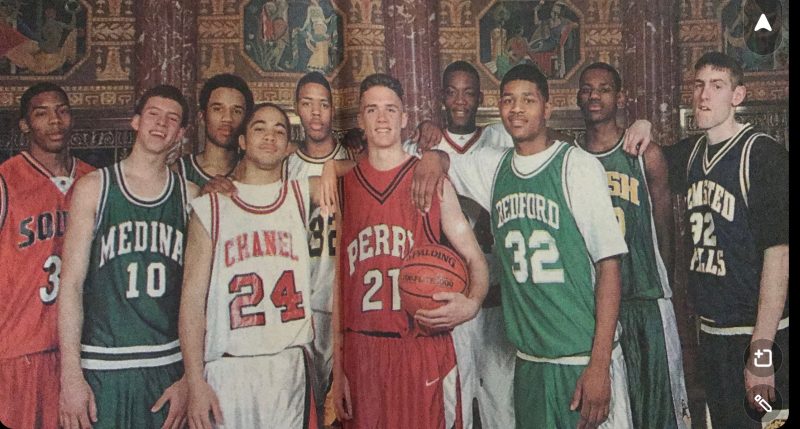
    It was taken in 2000, and was on the front page of the Cleveland Plain Dealer’s sports section. Ten high school basketball players from Northeast Ohio stood side by side, in their respective jerseys.

    The group had been voted by coaches and athletics directors as the best players in the region. There was Maverick Carter and Chester Mason (“Chet the Jet”) toward the left. Brian Swift was closer to the middle, alongside Mike Patrick.

    But what caught the commentators’ attention was to the far right: future Sixers president of basketball operations Mike Gansey, of Olmsted Falls High School, alongside future Hall of Famer LeBron James, of St. Vincent-St. Mary.

    Gansey was a junior at the time; James was a freshman. Steve Gansey, Mike’s younger brother, posted the photo on X on July 1, with an eyeball emoji, promptly setting the Sixers fan base ablaze with speculation.

    Before long, it received hundreds of retweets. Sixers fans sent Gansey direct messages asking if he had any information on whether James would consider coming to Philadelphia.

    He says he didn’t.

    “I’m getting DMs like ‘Hey if you make this happen, free cheesesteaks,’” Steve said. “And I’m like, ‘OK, alright, cool!’”

    The post eventually reached the NBA Today crew. As the younger Gansey held a Sheriff Woody doll in one hand, and a Buzz Lightyear doll in the other, he overheard the panel referring to him.

    “Perk goes, ‘Gansey’s little brother posted this picture,’” Gansey said. “And I’m like, ‘Uh oh. Mike’s going to be [ticked].’”

    Mike was not upset. The younger Gansey, who coached for 14 years (seven as head coach) in the NBA G League, asked if his brother wanted him to delete the photo. The Sixers executive said, “No dude, it’s cool.” But he certainly wasn’t as enthusiastic as Sixers fans.

    “Mike is a very humble person,” Steve said. “He doesn’t like attention and all that. I just think it’s one of the coolest pictures, and it’s not just Mike and LeBron.

    “There are some unbelievable basketball players in that Cleveland, Akron, northeast Ohio area. I’m glad they’re getting some love, too.”

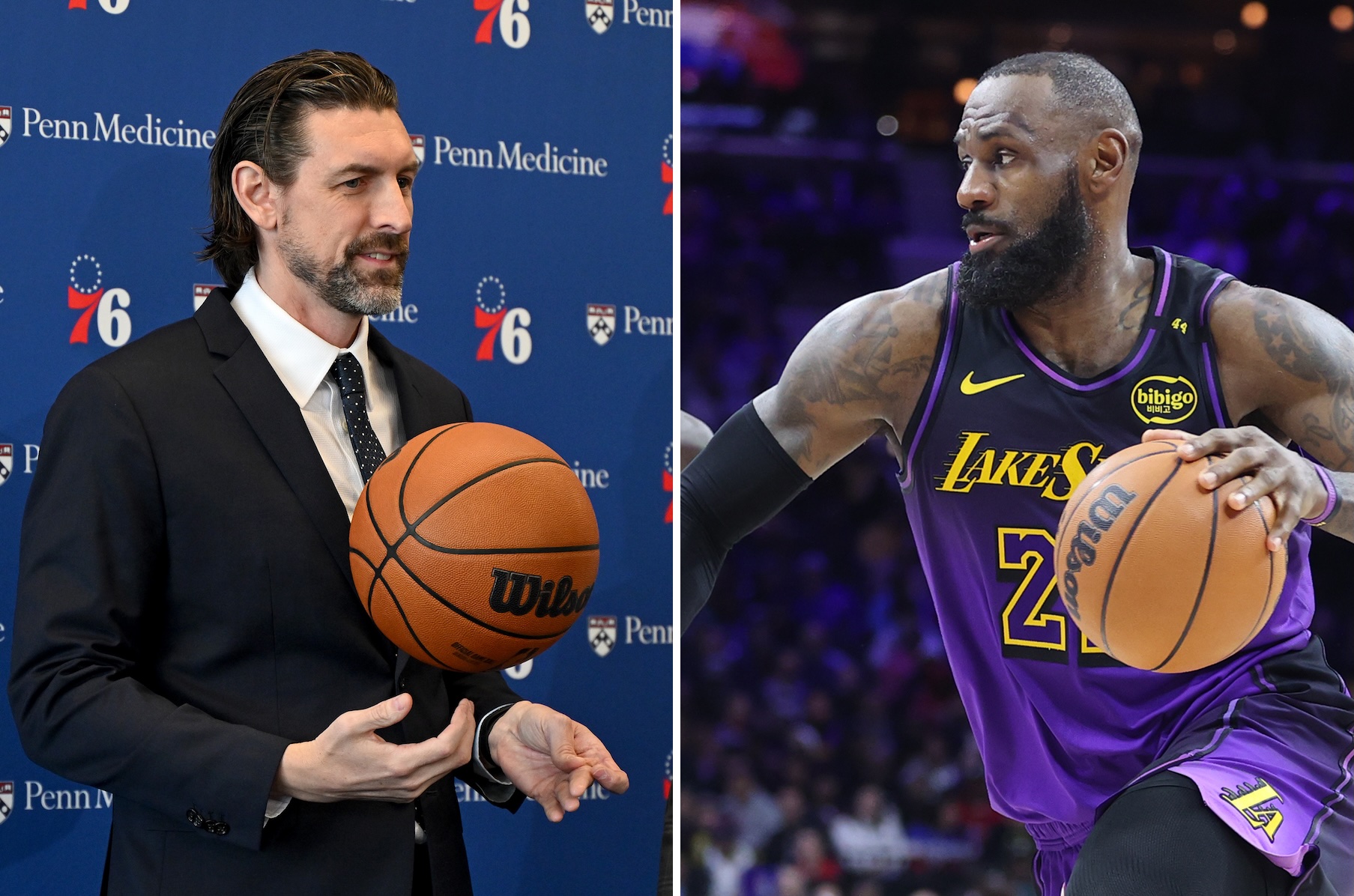
    Sixers president Mike Gansey (left) and NBA star LeBron James both played high school basketball in Ohio, where James beat out Gansey for Mr. Basketball Ohio in 2001.Tom Gralish and Charles Fox / Staff Photographers

    Steve has long teased his brother about his run-in with the future Hall of Famer. When Mike was working in the Cleveland Cavaliers’ front office, his brother would joke that he’d make T-shirts with the photo printed on the front.

    Mike’s response: “No. Do not do that.”

    Steve also sent the photo to Koby Altman, Cleveland’s president of basketball operations, who worked closely with Gansey in the Cavaliers’ front office.

    “Koby loved it,” Steve said. “He laughed. He said, ‘Oh I know, we’ve talked about it a couple times.’”

    The truth is that James and Gansey never competed against each other on their high school teams. Olmsted Falls and St. Vincent-St. Mary were in different regions.

    Olmsted Falls, which is on the west side of Cleveland, was grouped with schools in northwest Ohio, closer to Toledo. St. Vincent-St. Mary’s is south of Cleveland, and often played schools in the Akron-Canton area.

    It is possible they overlapped playing AAU ball, but if they did, Steve didn’t hear about it. Coincidentally, the elder Gansey also played AAU ball against former Eagles and current Green Bay defensive coordinator Jonathan Gannon, who is also from the Cleveland area.

    “He went to St. Ignatius,” Steve said. “Mike battled him.”

    Despite their lack of competitive overlap, James and Mike Gansey shared a mutual respect. Over the years, Gansey frequently referred to the future Hall of Famer as the “greatest of all time.”

    And James thought highly of the future executive, too. One time, when Gansey was playing in Europe, and James was in the midst of his first stint with the Cavaliers, the two brothers went to a game at Quicken Loans Arena (now Rocket Arena).

    Gansey knew some of Cleveland’s players, from training with them during the summer, and went down to the tunnel to say hello.

    “And we were probably 100 feet from where LeBron and his people were talking,” Steve recalled. “Someone said, ‘Ganz is over there.’ And LeBron totally walked the opposite way of where he was going, and went to dap up Mike, to say, ‘What’s up, hey man, how you doing?’ Just a quick hello.

    “It just shows you the respect. And I was like, ‘Man, Mike, he really walked 100 feet over here, and just dapped you, and walked directly right back. That’s pretty cool.’ And Mike’s like, ‘Yeah, yeah, he’s a great guy,’ and that was it. I’ll always remember that.”

    Steve Gansey (left center) is the younger brother of Sixers executive Mike Gansey (right center).Courtesy of Steve Gansey

    The Sixers president of basketball operations isn’t the type to brag about any of this, or even mention it. He has never been one for the limelight. His high school coach, Pat Donahue, described him as a team player, almost to a “fault.”

    Gansey was one of the best players in the state (he came in second in Mr. Basketball voting in the state of Ohio in 2001, behind none other than James) but wasn’t a ball hog.

    If anything, he was the opposite. There were times when Donahue would have to talk to Gansey, midgame, to encourage him to take more shots. Even in AAU, competing with players who were trying to get the attention of college schools, he was very much team-first.

    “He very rarely came out and said, ‘OK, I’m gonna hit five threes in this game to try to get the coach from Duke to pay attention to me,’” said Donahue. “He was more, ‘Hey, I’ll pass to this guy,’ or ‘I’ll do this, I’ll get some rebounds and help the team win.’ And he’s always been that way.”

    Despite the future executive’s selfless style of play, he finished his high school career with 1,909 points, which is still the boys’ basketball all-time record at Olmsted Falls. Donahue felt bad that his pupil wasn’t able to reach 2,000, and mentioned this to him after his senior season.

    “I walked up to him and I said, ‘Mike, I’m sorry, 90 more points, or whatever it was,’” Donahue said. “‘I could have gotten you that by doing stuff for you.’ And he goes, ‘Coach. I don’t care. That doesn’t mean anything.’ And that’s just the way he is. It didn’t mean anything to him.”

    Gansey’s professional basketball career was short-lived. He had a short stint in the D-League (now the G League) and played in Germany, Italy, and Spain for a few years. But that experience was not for naught.

    Those who know Gansey best say he was quietly studying the players around him, through an entirely different lens. As his teammates thought about how to attack opponents, the future executive was pondering roster construction and player makeup.

    Mike Gansey was hired as the Sixers’ president of basketball operations last month.Elizabeth Robertson / Staff Photographer

    When he reached the Cavaliers’ front office, he was well acquainted with the NBA. But that didn’t keep Gansey from his meticulous preparation. He would attend Summer League games with Donahue in Las Vegas, bringing a big notepad to scribble down thoughts during games.

    “He’d be at every Summer League game, and he would sit there,” Donahue said, “and this is before he was the [general manager] of the Canton [G League] team. He would watch every summer league game. Every one.

    “And he would sit there with his notebook, and he would just take notes about the players. I don’t even know how much say he had in what the Cavs did. He just wanted to be prepared.”

    His little brother and the former Olmsted Falls coach say that in Gansey, the Sixers are getting a hardworking executive who keeps his head down but is aggressive, just like he was as a player.

    And so far, his Philadelphia tenure is off to a promising start (with the exception of a Phillies mishap in June).

    “Oh, he loves it,” Steve said. “He loves it. He loves the city, loves everyone embracing him. Mike felt really bad about that no-hitter he jinxed, but I joked with him, ‘I think you made up for it a little bit.’

    “I mean, time will tell, but you got them off your back at least. So, that’s pretty impressive, even though you haven’t played any games yet.”

  • Brandon Marsh’s dad died of cancer in 2021. He found a way to honor him in his first All-Star Game.

    Brandon Marsh’s dad died of cancer in 2021. He found a way to honor him in his first All-Star Game.

    Every time Sonja Marsh is at a major league baseball game to watch her son, or an international track meet to watch her daughter, she brings a small, gray urn with butterflies on the side.

    It contains the ashes of her late husband, Jake, who died of cancer in April of 2021. There are countless ways the family has kept his memory alive. Brandon Marsh and his sister, Erin, each have a tattoo on their arm that says “believe,” a favorite mantra of their father’s.

    They wear rubber bracelets bearing his name, and always seem to find signs that their father is with them. Butterflies are a big one. The Phillies outfielder said he’s seen “millions” of the winged creatures since his father passed.

    Another example came in May of 2024, when a black T-shirt was unexpectedly delivered to Marsh’s locker in Miami. On the front was the logo of Jake’s favorite band: Guns N’ Roses.

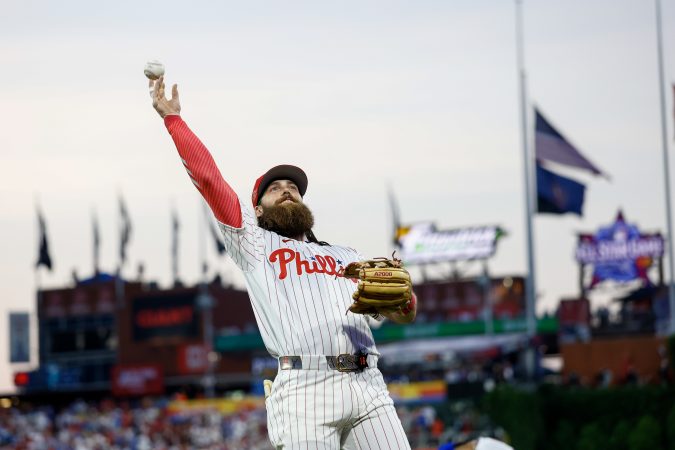
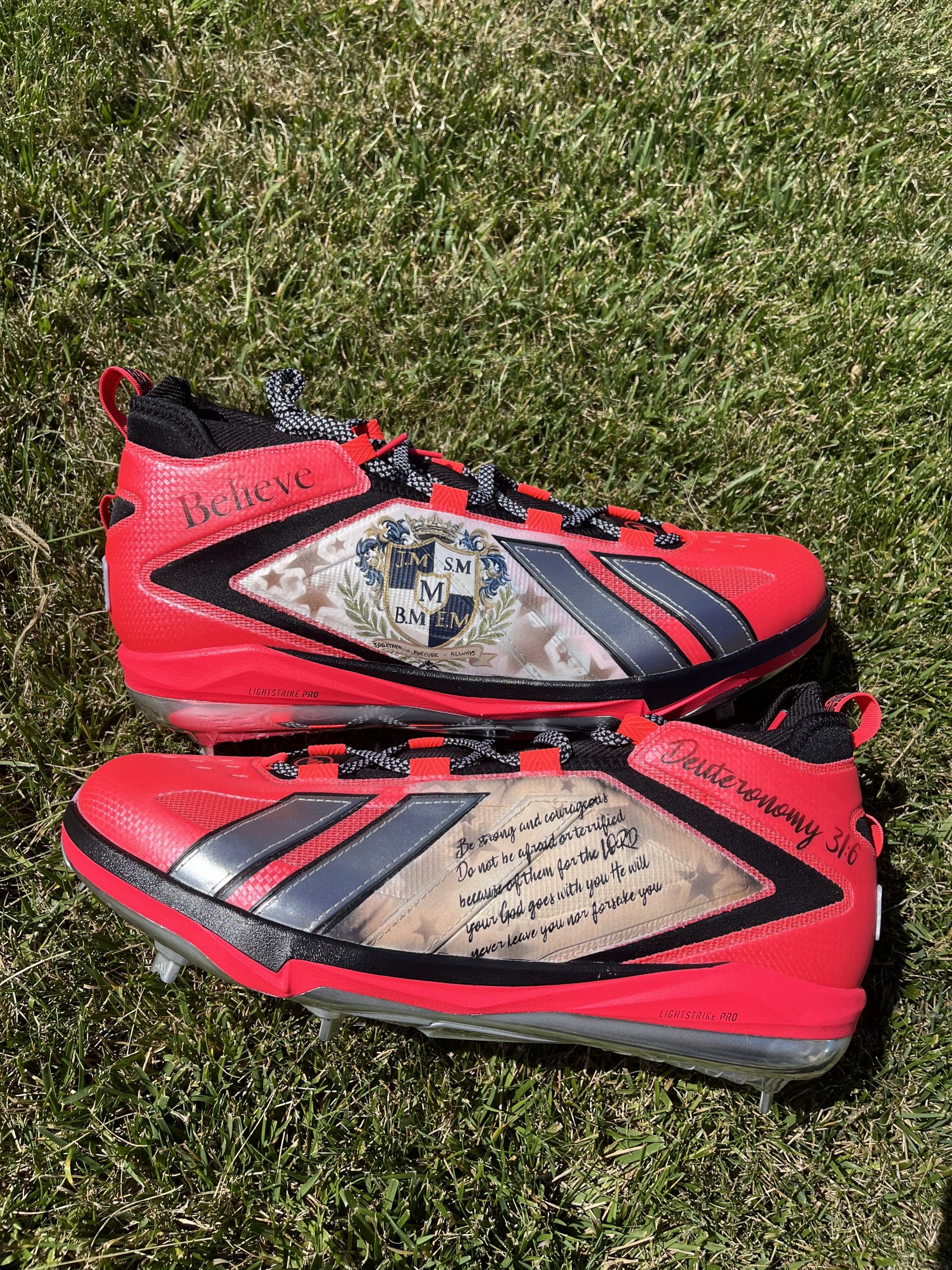
    So, it was only fitting that in Marsh’s first-ever All-Star appearance on Tuesday at Citizens Bank Park, he and his family found a way to include their loved one. Not long after the All-Star roster was announced on July 4, Sonja began designing a logo for her son’s cleats.

    On the left side, was a family crest, split into four initials: “J.M., S.M., B.M., E.M.” On the right, a Bible verse, Deuteronomy 31:6: “Be strong and courageous. Do not be afraid or terrified because of them, for the Lord your God goes with you; he will never leave you nor forsake you.”

    Brandon Marsh’s All-Star cleats honoring his late father.Marsh family

    She sent the design to Marsh’s agent, Eric McQueen, who put it on some bright red cleats. The outfielder received them on Tuesday morning, as a surprise before the All-Star Game.

    “I wanted to make sure Jake was on them,” Sonja said. “Because I just think his dad would be so proud to be here. And he is 90% of the reason [Brandon] is where he is.”

    Marsh’s ascension from platoon outfielder to everyday player has been well-documented. In April of 2025, he went hitless through 29 at-bats before landing on the injured list.

    Now, 15 months later, the 28-year-old is among the best players in the league, leading his team in batting average (.301) and hits (102). Those struggles have made his All-Star berth all the sweeter. Sonja said she’s noticed a change in her son’s energy.

    “Whenever I call him now, it’s not, ‘Hey Mom, I’ve only got five minutes. Walking into the training room, what you need?’” she said. “It’s, ‘So, Mom, can you believe such and such? Hey, did you see so and so?’ Conversationally, it’s gotten better.”

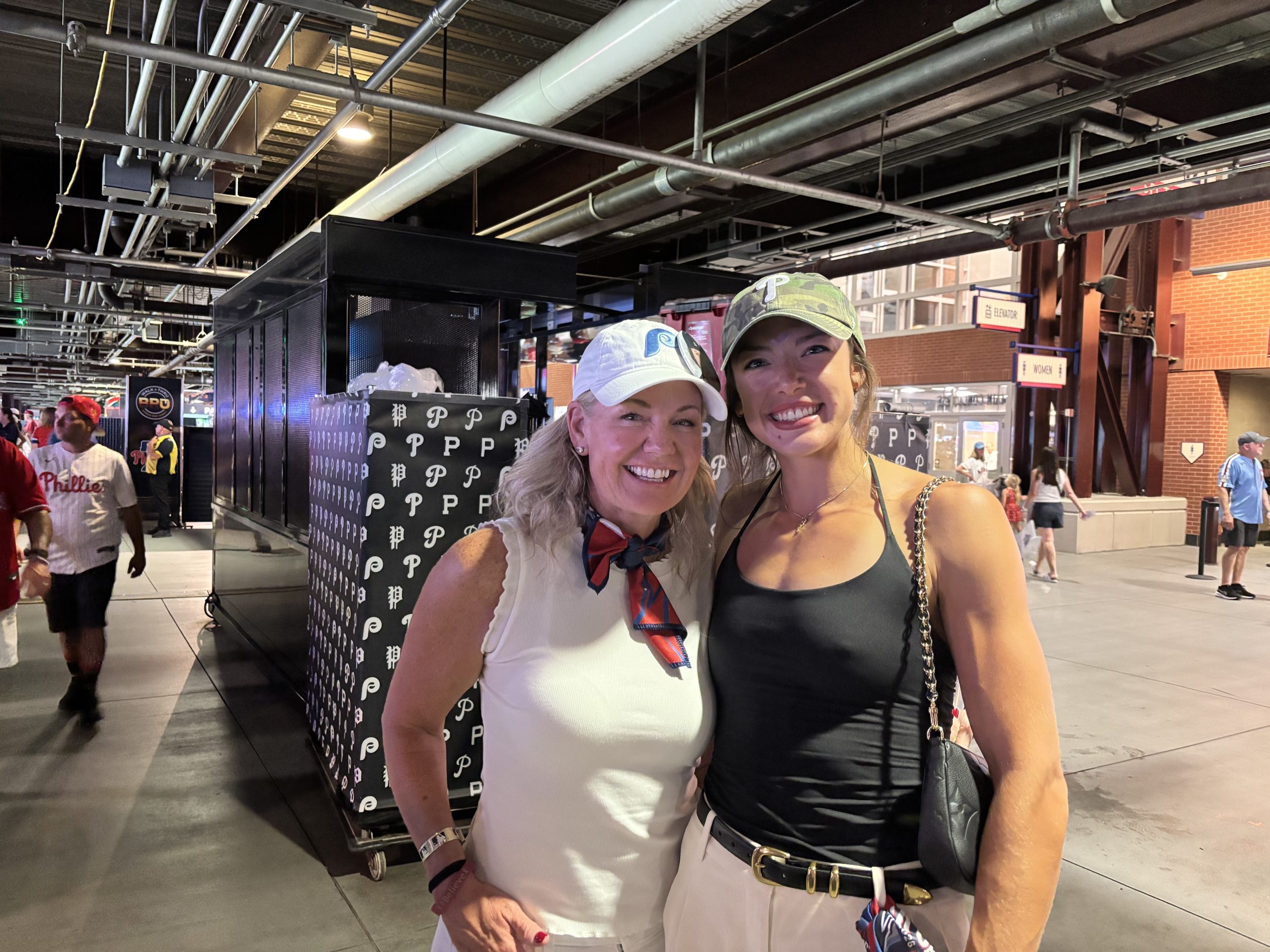
    Brandon Marsh’s mother Sonja (left) and sister Erin at the All-Star Game on Tuesday at Citizens Bank Park.Alex Coffey

    She said he was struggling with stress more than anything else; about performing, about his role. When Jake was alive, he was his children’s biggest cheerleader, knowing the right words to say in a moment of self-doubt.

    This is not Sonja’s strong suit — “I’m not as good at that,” she said — which made those brief phone calls especially challenging. But bit by bit, Marsh worked his way out of it, en route to his best season to date.

    He is so locked in that he wouldn’t even discuss the All-Star Game with his family — even after he’d made the team.

    “I called him, to say congratulations,” Sonja said, “and he’s like, ‘Mom, thank you for calling, can we talk about this on Sunday? Because I still have six more games to win.’”

    Added Erin: “Brandon would not talk about the All-Star Game. He was like, ‘I don’t want to jinx it.’”

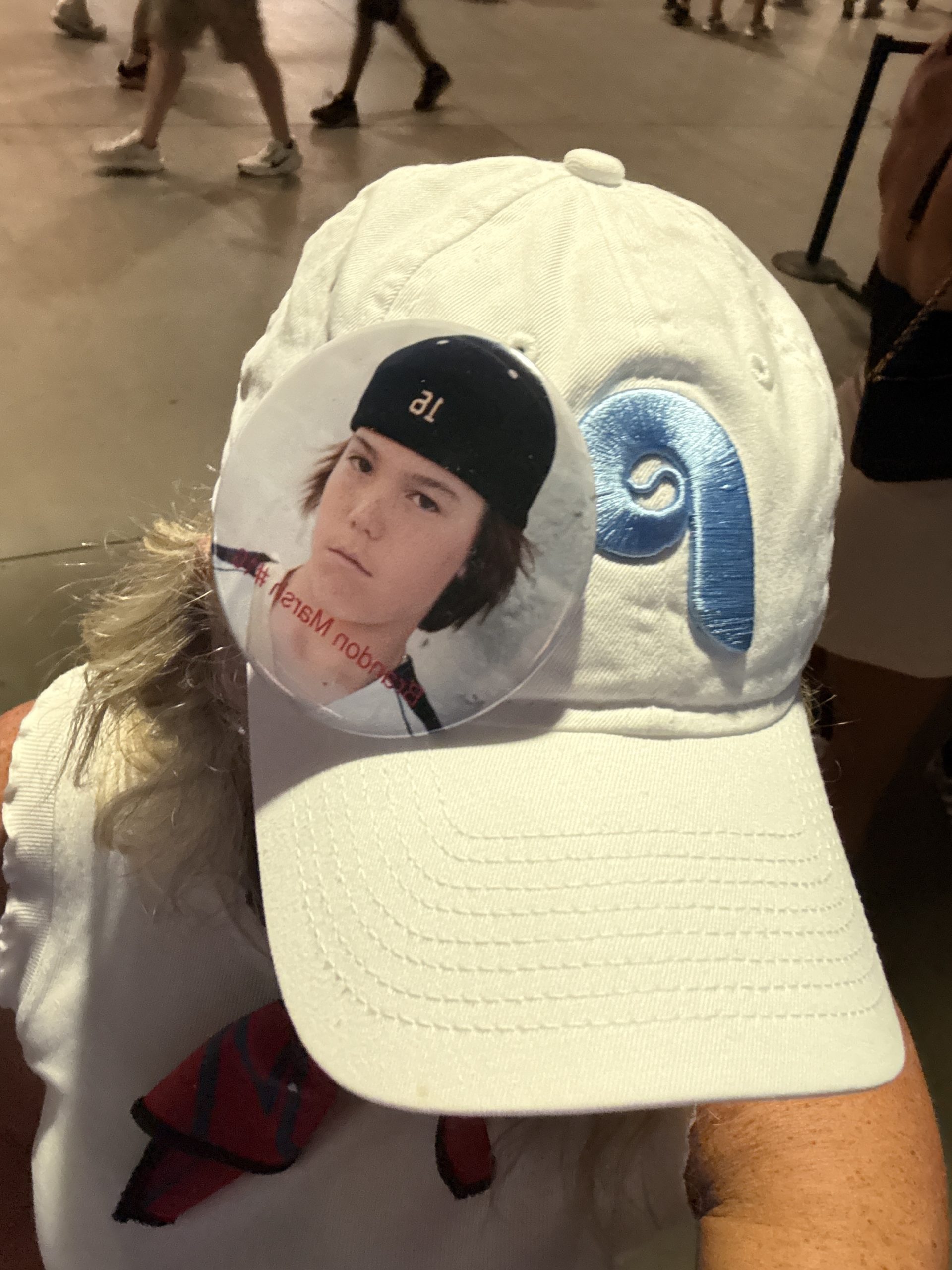
    It’s hard to overstate how proud his family is. On Tuesday night, Sonja watched from Section 120 with a large button of her son’s face on her cap (a clean-shaven Marsh, age 9, glowering at the camera).

    Erin, a professional heptathlete, was also able to make it to Philadelphia, finding a pocket of time between competitions. They watched the game with family and friends, remarking on how far Brandon has come.

    During the All-Star Game, Brandon Marsh’s mom Sonja was wearing a pin showing a 9-year-old Marsh.Alex Coffey

    But Jake Marsh was there, too; in the urn by Sonja’s side, the bracelets on Brandon’s wrist, and of course, the bright red cleats on his feet.

    “I know he was watching tonight,” Brandon said, “and he had the best seat in the house.”

  • Kyle Schwarber and his pitcher, Rafael Peña, did a ‘practice’ run in Detroit. It set the stage for an epic Home Run Derby.

    Kyle Schwarber and his pitcher, Rafael Peña, did a ‘practice’ run in Detroit. It set the stage for an epic Home Run Derby.

    When Rafael Peña throws to Kyle Schwarber in the batting cage, he likes to challenge him. The Phillies designated hitter will get a steady stream of curveballs, changeups, and sliders.

    He’ll also get some trash talk. Peña jokingly dares the slugger to scrape out a hit. These sessions are meant to prepare; not to please. “We really don’t do a lot of feel-good BP,” Schwarber said.

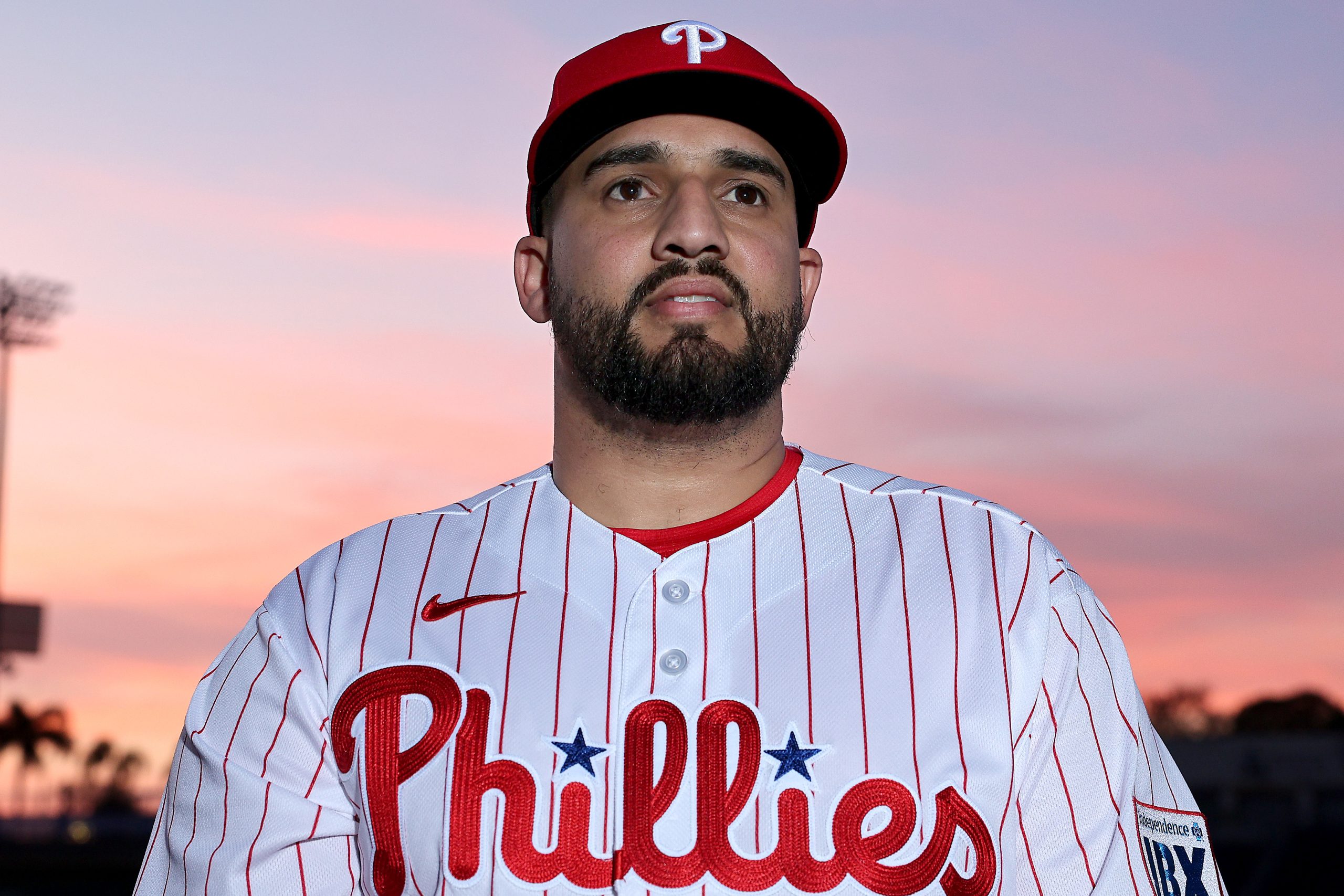
    But when the DH was deciding whether to participate in the Home Run Derby, it was Peña who came to mind. The assistant hitting coach has thrown more batting practice to Schwarber than anyone in the organization (with the exception of Kevin Long, who coached him before he arrived in Philadelphia).

    So, Schwarber asked him if he’d be his pitcher about 10 days ago while the Phillies were on the road. But Schwarber hadn’t announced that he was participating in the Home Run Derby. The coach assumed he was talking about cage work.

    “He asked me what I was doing,” Peña said. “And I was like, ‘I’m going to be in Philly.’ And he was like, ‘Do you want to throw to me? Do you want to throw BP to me?’

    “And I was kind of like, ‘What do you mean?’ And he was like, ‘Well, in the Derby.’ I throw BP to him all the time. I didn’t know if maybe he was going to stay late one of the days or something like that.”

    Kyle Schwarber electrified the Citizens Bank Park crowd in the Home Run Derby but came up just short of a title. Yong Kim / Staff Photographer

    Peña agreed, and the two men got to work. On Saturday, when the Phillies were in Detroit, Peña, Schwarber, Long, and bullpen catcher Brad Flanders took a car service to Comerica Park.

    They arrived hours before game time, and long before the rest of the team got there. Peña measured the exact distance from the plate that he’d be positioned in the Derby and set up behind an L screen.

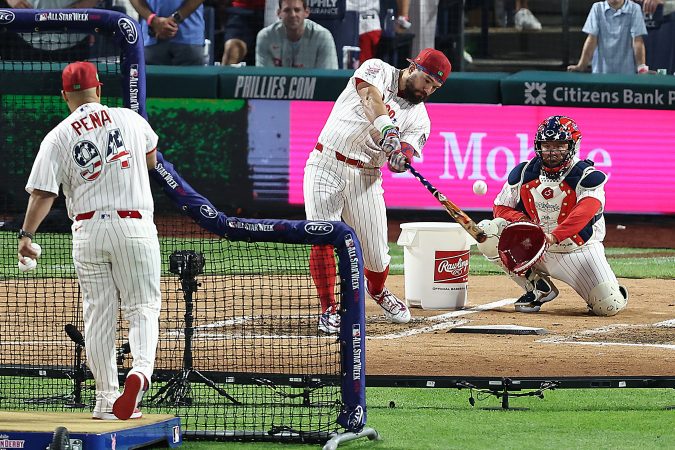
    Flanders, wearing the same bright red glove he’d later use on Monday night, bent into a crouch. Schwarber stepped up to the plate. Peña began firing pitches middle, middle-in.

    The assistant hitting coach called it a “practice round.”

    “We did 20 [pitches] and he hit 13 out of 20,” Peña recalled. “And then we did a 15 round and he hit nine out of 15.”

    Long, who was watching from a few feet away, gave his stamp of approval.

    “K-Long was just like, ‘Just feed it in there,’” Peña said. “‘You don’t need to go too crazy. Just feed it in there. Flandy has a big target, big red target.’”

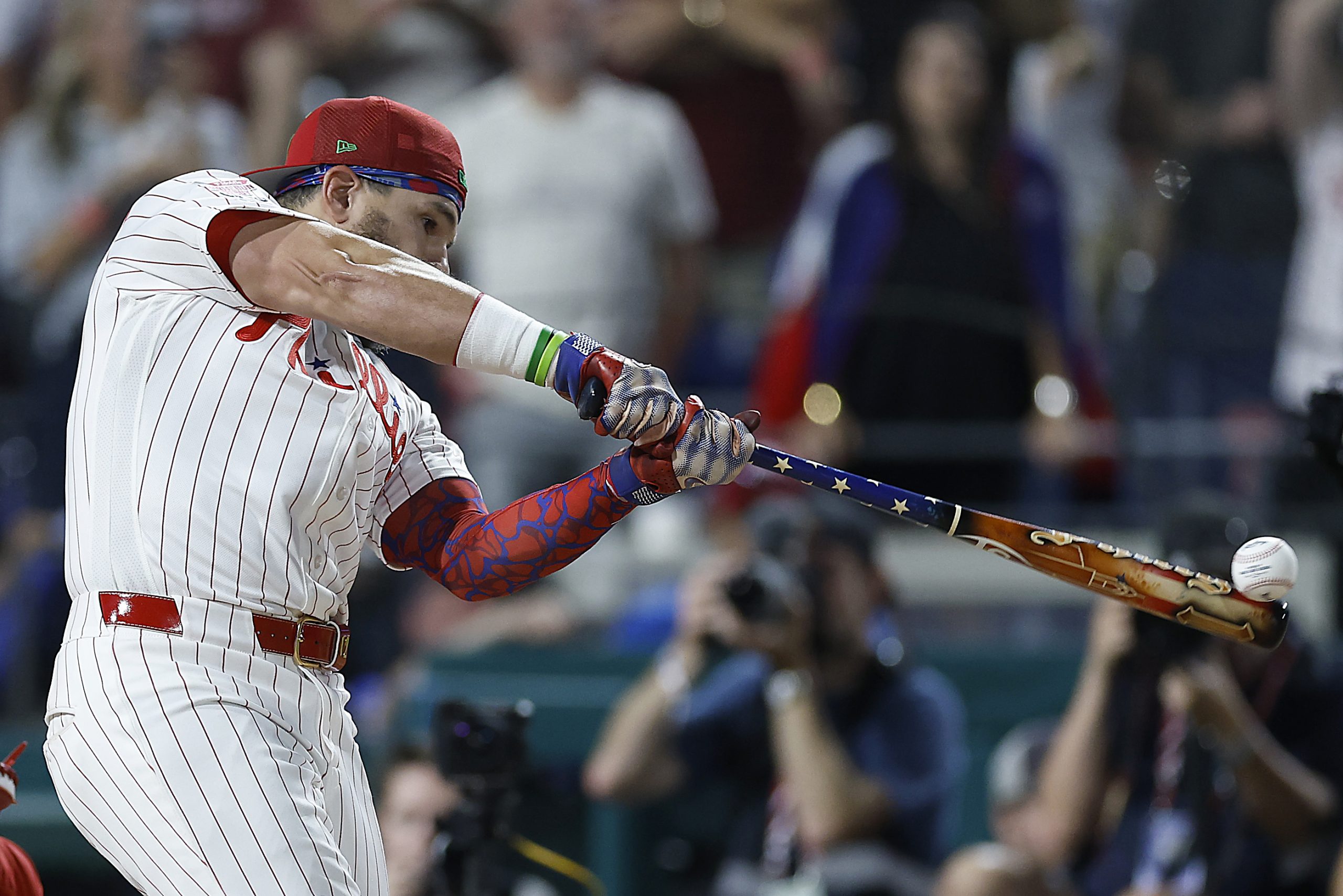
    It ended up being a harbinger of Schwarbombs to come. Two days later, with Peña behind the L-screen, the Phillies DH put on an epic performance in Citizens Bank Park, falling one home run short of winning the Home Run Derby.

    Schwarber started slow — falling short in his first five tries — but gained momentum as the night went on. He finished his first round with 10 home runs, his semifinal round with nine, and his final round with 11.

    He seemed like he was guaranteed a win, until Cardinals outfielder Jordan Walker crushed 12 home runs a few minutes later (an especially impressive feat, given that the crowd was actively rooting for his demise).

    Even though this wasn’t the result the Phillies wanted, for Peña, it was still a meaningful moment. The assistant hitting coach was born and raised in Santo Domingo, Dominican Republic, where his father, Rafael Sr., took him to his first baseball game at the age of 7.

    Rafael Sr. was in the stands on Monday night. He had family and friends following along from the Dominican Republic. His daughters, Sophia and Isabella, were cheering him on from home in Oklahoma City.

    Phillies assistant hitting coach Rafael Pena has a strong rapport with Schwarber, which was evident on Monday night. David Maialetti / Staff Photographer

    “They called me [today]. They’re like, ‘Hey Daddy, are you ready? Have you practiced?’” Peña said. “It’s fun.”

    Peña said on Monday afternoon that if Schwarber hit like he did on Saturday, he’d have a good chance of winning it all. And his words proved prescient. Schwarber came incredibly close; Walker was down to his last swing.

    But the baseball gods had other ideas, and Schwarber will have to wait another year, at least, for his next chance at the trophy. And if he calls, Peña will be ready.

    “It’s special,” Peña said. “I’ve watched this since I was a little kid; every single Home Run Derby. So being a part of it is amazing.”

  • The Kevin McGonigle Fan Club has traveled far and wide to see him play. Now, Delco’s All-Star is coming home

    The Kevin McGonigle Fan Club has traveled far and wide to see him play. Now, Delco’s All-Star is coming home

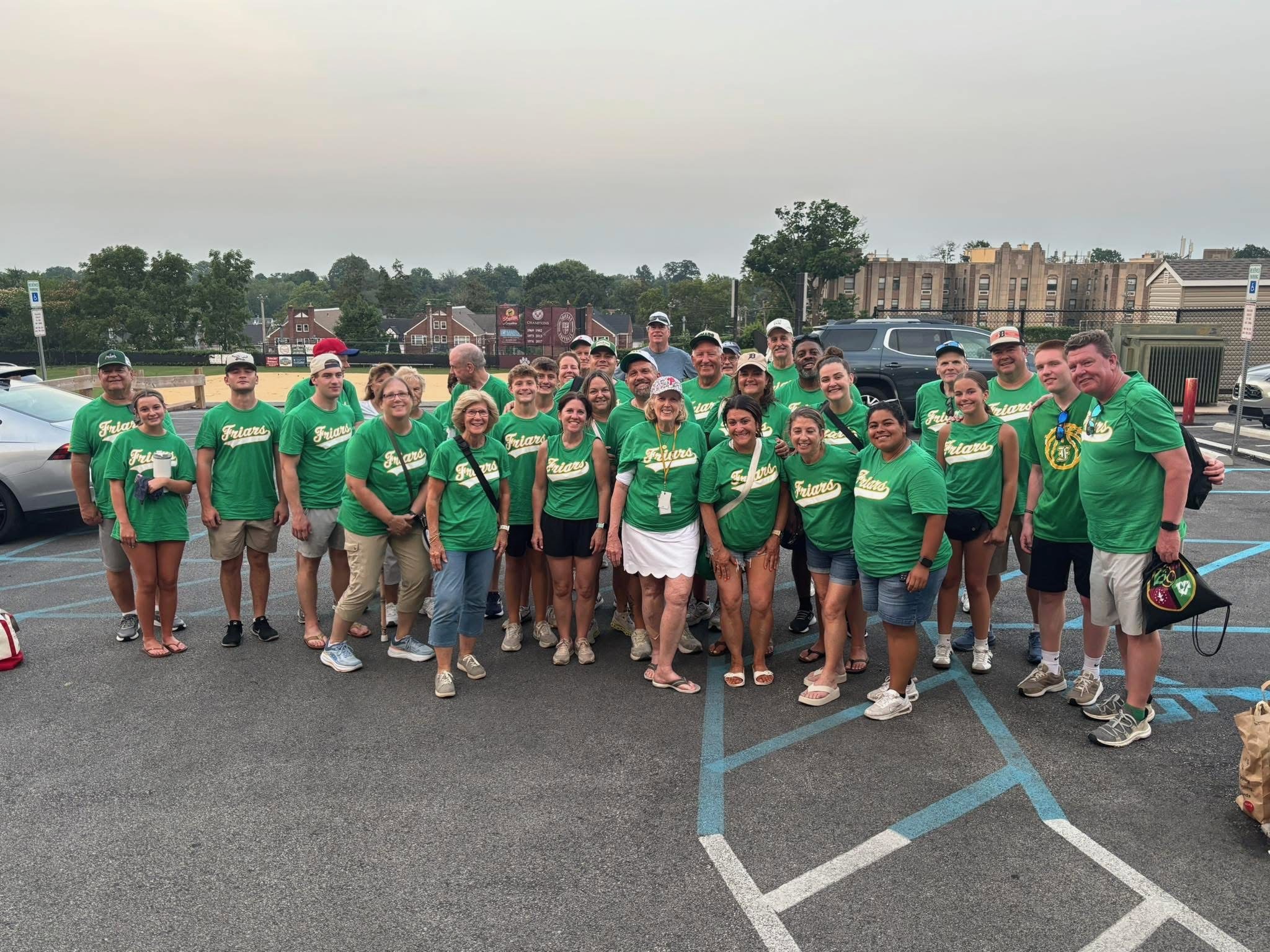
    In March, Patty Martin and Liz Warren sat in an office at Monsignor Bonner and Archbishop Prendergast High School, poring over the Detroit Tigers’ 162-game schedule.

    It wasn’t how the administrative assistant and math teacher typically spent their lunch breaks. But these were unusual circumstances. The women scanned each date, city, and time, looking for the right confluence of all three.

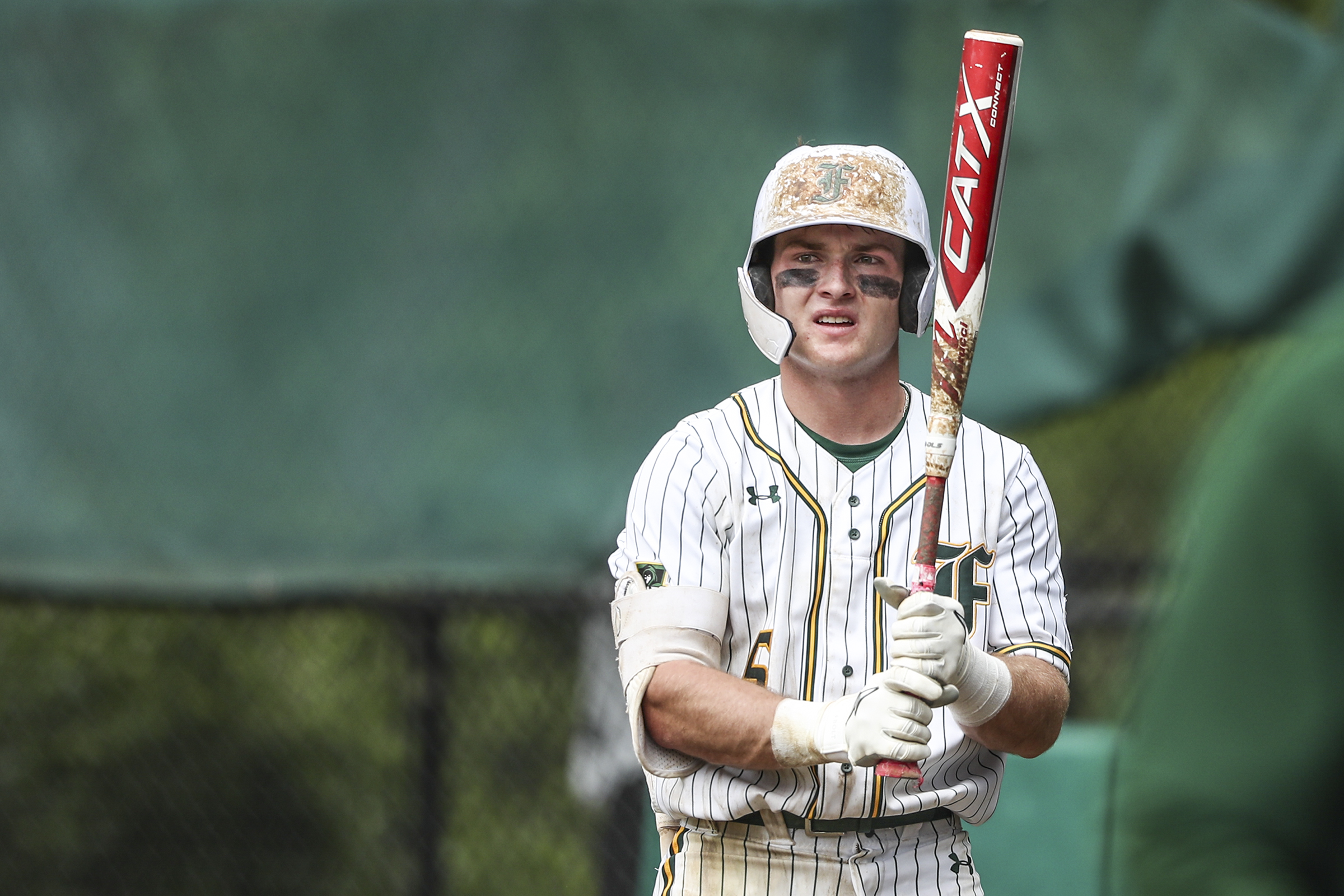
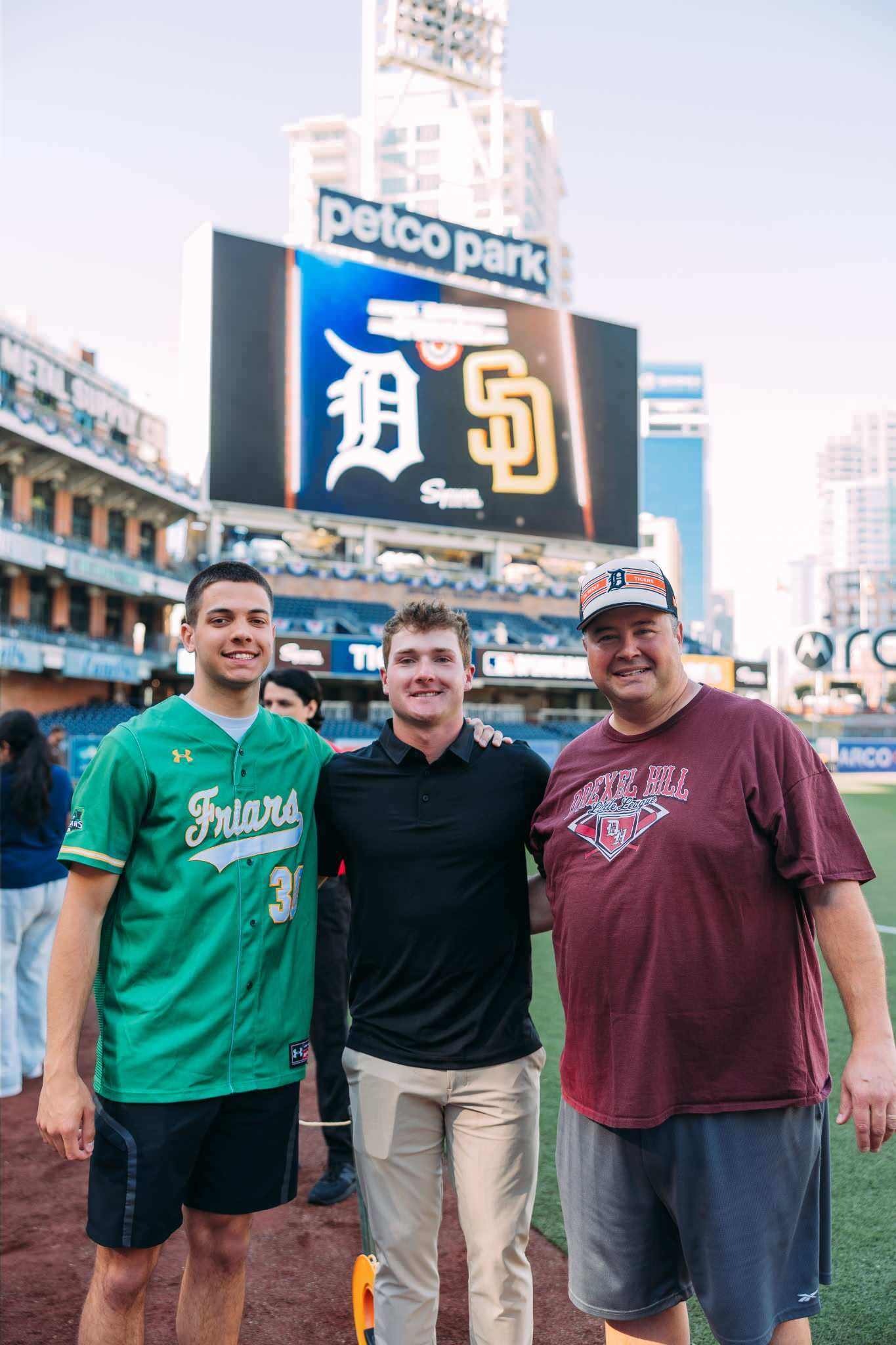
    Former student Kevin McGonigle had just been named to the team’s opening-day roster. Martin and Warren were eager to see the 21-year-old shortstop play, ideally at Citizens Bank Park.

    They realized, to their dismay, that this wasn’t going to happen. The Tigers were scheduled to face the Phillies only once in 2026, in Detroit. Undeterred, the Bonner & Prendie staffers continued their search.

    Martin circled May 14, a 1:30 p.m. game against the New York Mets. This seemed like the perfect fit; teachers could drive to the stadium, and it was Ascension Day — a Holy Day of Obligation — which the Catholic school occasionally had off.

    Only this year, it didn’t. The administrative assistant decided to throw a Hail Mary. That afternoon, Martin emailed a friend who worked for the Archdiocese of Philadelphia.

    “And I said, ‘Do you think maybe somebody would allow us to close school that day?’” she recalled.

    The answer was swift and unequivocal.

    “‘Nah, don’t think it’s gonna work,’” Martin said. “‘Not gonna work.’ And we kind of knew, in our hearts, that we were shooting for the stars. But hey, it was worth a try.”

    The co-workers found an alternative. On the morning of July 1, 55 members of the Bonner & Prendie community — coaches, students, maintenance workers, secretaries, teachers — piled onto a bus bound for the Bronx.

    They arrived at Yankee Stadium at 12:45 p.m., donning Kelly green T-shirts with “Friars” on the front and “McGonigle” on the back. New York City was in the midst of a heat wave, but that didn’t seem to matter.

    McGonigle greeted the group before the game and rewarded their efforts in the third with a 422-foot home run to right-center field. The Delco contingent went berserk.

    “We’re all cheering, and everyone’s like looking at us like, ‘Who are these people?’” said Bonner’s baseball coach, Steve DeBarberie. “They’re wearing Kelly green to a Yankees-Tigers game?”

    Added Martin: “We all went wild, of course, because we’re like, ‘He did that for us.’ I’m very certain, he did.”

    Ever since McGonigle was drafted by the Tigers in 2023, Delaware County has shown up to support him. When he was in the minor leagues, residents traveled to places like Grand Rapids, Mich., Lakeland, Fla., and Erie, Pa.

    The group from Archbishop Prendergast High School that took a bus trip to Yankee Stadium to watch Kevin McGonigle play.Jason Shepherd

    They’ve attended spring training games and Arizona Fall League games and even an All-Star Futures Game. A few Bonner alums flew to San Diego in April for McGonigle’s big-league debut. Nearly 300 people made the trip to see him in Baltimore in May.

    Some know the shortstop personally, but not all. Yet the Kevin McGonigle Fan Club keeps growing, and on Tuesday night, after years of cross-country travel and hourslong drives, their hometown hero will return to Philadelphia to compete in the 2026 All-Star Game.

    It’ll be the first time McGonigle plays at Citizens Bank Park. To local supporters, this is almost too good to be true: an athlete who represents them wholeheartedly, on baseball’s biggest stage, mere minutes away.

    “Everyone is so excited, especially for the Philly aspect,” said Warren. “Not only is it amazing that it’s his rookie year, but [also] that he gets to come home.”

    Kevin McGonigle starred at Bonner-Prendergast before being selected by the Tigers in the first round of the 2023 MLD draft. Heather Khalifa / Staff Photographer

    A kid worth traveling for

    Delco has gone to such lengths for a reason. The future All-Star was not the type of ballplayer built in a lab, under the careful guise of top hitting instructors. He did not have endless resources for equipment or travel.

    Rather than a baseball hotbed like Florida or Georgia, McGonigle was raised in a working-class home in Aldan. His parents, Kevin George and Tracy, worked opposite shifts at a local water utilities company.

    When Tracy was growing up, in Lansdowne, the sport was relatively inexpensive. Kids would share bats and gloves. She’d never heard of anyone driving far to tournaments.

    But the mother quickly learned that to capitalize on her son’s talent, she’d have to invest. Kevin George learned this, too. The parents, who divorced when Kevin was young, began saving money where they could.

    Sometimes this meant working more. Sometimes it meant cutting back on expenses. Tracy remembers her son and his teammates standing outside a supermarket, or wandering through The Yard Pub in Havertown, selling raffle tickets to pay for travel.

    “You scraped it together, you put it away, and you used the credit cards, and you worried about the payment later,” Tracy said. “And I think any parent would do that. You do what you have to do to make your kids happy.”

    By middle school, McGonigle was playing for Drexel Hill Little League, St. Bernadette’s CYO, and a local travel ball team. He’d train every day with his father, who had recently purchased a bright blue Jugs pitching machine.

    The McGonigles didn’t have much yard space, but one of Kevin George’s teammates, Jac Campbell, did. Kevin George asked Jac’s father, Jim, if they could use his lawn, where he’d set up a makeshift batting cage.

    The elder Campbell agreed. Kevin George moved the pitching machine 60 feet away from home plate, and began toying around with it. Before long, the device was spitting out curveballs, change-ups, and sliders.

    “It was an expensive machine that threw mid-90s,” said Campbell. “It wasn’t some candy-ass machine that you would set up down at the Little League.”

    McGonigle did not like that his parents were financing his passion, and would often tell Tracy he needed to find a job. But with the time constraints of travel baseball, coupled with Bonner-Prendie baseball and his training schedule, it was difficult to get hired.

    So, the mother and son came up with an agreement. The future All-Star would clean the bathroom, dust the family room, and do other tasks around the house to earn his keep.

    Still, the guilt persisted, especially when it came to daily expenses like gas money. McGonigle hated asking for it. Tracy came up with another idea.

    “In my kitchen, I have a little box,” she said. “It’s a wooden box, and on the top it says, ‘Blessed.’ And I said to him, ‘You know what? You don’t have to ask me anymore.’

    “I said, ‘I’m just gonna put money in the blessed box. Whatever you need. And then you don’t have to ask me. You don’t even have to feel bad about it.’ And it worked.”

    A young Kevin McGonigle swings off a tee is in his backyard in Delco.Tracy McGonigle

    McGonigle was painfully aware of his parents’ sacrifice, and determined to make the most of it. By his senior year, MLB scouts were flocking to Bonner-Prendergast for games.

    This became somewhat of a spectacle, so the shortstop started leaving class early to take batting practice on his own. His hope was that it would create less of a distraction for his teammates.

    “Just so that it didn’t interrupt the routine,” said his former CYO, Little League, and Babe Ruth League coach, Jason Shepherd. “His teammates respected the fact that he thought of them before himself.”

    It wasn’t the first time Shepherd had seen the selfless trait from McGonigle. When he was 14, juggling travel ball and Babe Ruth, the high schooler had two tournaments fall on the same weekend.

    One was in Tampa, the other in Williamsport, Pa. McGonigle decided he’d play in both. After the game in Florida, he drove through the night to Delaware County with a teammate.

    The next morning, McGonigle met Shepherd in his driveway for the three-hour ride to Williamsport.

    “Obviously, he was the best player on the team,” Shepherd said. “One of the best players in the state at the time. When we knew we were getting Kevin for the rest of the playoffs, it brought a lot of energy.”

    McGonigle has continued to give back to his community since being drafted by the Tigers in the first round in 2023. He’s donated signed bats to Drexel Hill Little League, and has occasionally stopped in during the winter to serve as a volunteer coach.

    In 2024, fresh off his first season in the minors, the shortstop donated $40,000 to Bonner & Prendie. To Campbell, it’s gestures like these that compel people to travel so far.

    “If he wasn’t a good kid, you wouldn’t have half of that [stuff] going on,” he said. “You know what I mean? The fact that he’s a good kid makes it easier for everyone to want to go see him.”

    Justin Shepherd (left), Kevin McGonigle, and Jason Shepherd after McGonigle’s big league debut in San Diego.Jason Shepherd

    ‘I still miss home’

    At times it can seem like the Kevin McGonigle Fan Club has the entire season mapped out. In April, Shepherd and his son, Justin, flew to San Diego for the rookie’s debut, but their flight was delayed a few hours and they missed most of the game.

    They ended up staying for the rest of the series, and the following week drove eight hours from Delco to Detroit for his home opener. DeBarberie and four other Bonner coaches met them there.

    McGonigle’s best friends, Michael Anderson and Joey DeMucci, visited him in June. Martin will watch McGonigle play in Chicago later this month. Jim and Jac Campbell will be in Detroit in August, and DeBarberie has plans to drive to Pittsburgh after that.

    But the biggest showing to date was over Memorial Day weekend at Camden Yards in Baltimore. Tracy reserved 265 tickets through group sales, and Shepherd coordinated a tailgate at Pickles Pub across the street from the stadium.

    “They’re like, ‘Well, do you want us to put McGonigle on a sign?’” Shepherd said. “And I’m like, ‘No, do not make any reference to McGonigle. Just put ‘Delco tailgate.’ People will know where to go.’”

    Saturday’s game was rained out, which turned the tailgate into a whole-day affair. The entire top floor of the bar was full of Tigers and Bonner McGonigle jerseys.

    Tigers rookie Kevin McGonigle greets family and friends in Blatimore.Tracy McGonigle

    It ended up being the highlight of the trip. McGonigle stopped by and stayed with friends and family for two hours, taking photos and catching up.

    This wasn’t just a kind act on the shortstop’s part. Shepherd and his son visited him last November, while he was playing in the Arizona Fall League. One night, while the former coach was grilling steaks outside, he asked the future All-Star a question.

    “I asked him, ‘What’s been the hardest thing so far?’” Shepherd recalled. “And he’s like, ‘Coach Shep, honestly, I still miss home.’ And it just struck me.

    “I was expecting, ‘The workouts are hard,’ or, ‘This pitcher was really tough.’ He’s just like, ‘No, I just miss home.’ And I get it. No different than a kid going off to college, far away. Just homesick a little bit.”

    Tigers rookie Kevin McGonigle is second in the AL with a .392 on-base percentage at the All-Star break.Lon Horwedel

    Childhood bedrooms and mom’s laundry

    As McGonigle wrapped up his first-half campaign, it became clear to his mother that the All-Star Game was within reach.

    The rookie was near the top of a number of American League leader boards. He has more walks (60) than he did strikeouts (56), and is second among regulars in on-base percentage (.392).

    But Tracy didn’t dare broach the subject. She knew her son wouldn’t want her to. So, she was surprised a couple of weeks ago when he brought up the Midsummer Classic on his own.

    “He said, ‘Whether I’m in the game or not, I’m staying at home,’” Tracy recalled. “And that’s all he said.”

    The shortstop reiterated this stance after the roster was announced.

    “I’m coming home,” he told her. “I’m not staying in the hotel.”

    Throughout All-Star Week, the eight-year, $150 million man is sharing a bedroom with his brother, Ryan, in Aldan. A signed watercolor of Cole Hamels still hangs on the wall there, alongside some framed USA Baseball jerseys and caps.

    Just like any other parent with a 21-year-old sleeping under their roof, Tracy’s maternal instincts routinely kick in.

    “He’ll say, ‘Mom, I can do my own laundry,’” she said with a laugh. “And I’m like, ‘But why? I’ll do it. It’s fine.’ When he’s home, in the offseason, he still has a job. He’s at the training facility every single day, all day.

    “But yeah, it’s, ‘Who wants dinner? How about I do your laundry?’ He’s just a normal kid.”

    Kevin McGonigle with the kids of his former Bonner baseball coaches.Steve DeBarberie

    Of course, there are plenty of things that aren’t normal. McGonigle doesn’t borrow cash from the blessings box anymore. He no longer takes swings in the privacy of Campbell’s backyard.

    But amid all this change, the Bonner alumnus can always return to a place that is refreshingly static. Full of people who are proud of him, not just for his talent, but also for the unglamorous work behind it.

    And if he ever needs a reminder, McGonigle can look for the Kelly green T-shirts, scattered among a sea of Tigers blue; a sign that Delaware County is never too far away.