Author: Will Bunch

  • In a dark 2026, a Summer of Love breaks out | Will Bunch Newsletter

    Some newsletters have a theme, and this week’s focus is a rare one: good news. Let’s start with the subject of a recent column: Izzy Aly, the 40-year-old Egyptian national from Orlando who’d been in U.S. Immigration and Customs Enforcement custody for nearly six months, amid allegations of neglect around his worsening health. Today, I can happily report that Aly is a free man: released from detention and back home in central Florida. But he still needs assistance for his legal bills and replacing what was taken during his time away; you can help out here.

    If someone forwarded you this email, sign up for free here.

    Soccer, Obama, Knicks give a glimpse of the America we can be at 250

    I’m old enough to remember when Lawrence, Kansas was the nightmarish vision of a dystopian U.S. future. The year was 1983, and the corn-fed university town seemed to producers the most fitting all-American location to decimate in a fictional Cold War nuclear apocalypse, ABC’s The Day After.

    In 2026, Lawrence is not only still standing, but it’s putting the heart in the American heartland — making love, not nuclear war. And its obscure object of desire is, of all things, a soccer team from 5,000 miles away: the national squad from Arabic-speaking, predominantly Muslim Algeria.

    When the Algerians chose Lawrence — about 40 minutes west of Kansas City, where two of its three World Cup matches are taking place — as its training base for the planet’s greatest sporting event, locals came out to greet the foreigners like rockstars.

    “I was just so happy that they chose our hometown,” an older man, tearing up slightly, told an Algerian reporter in a video that went viral, as he waited in a rainstorm for the team to arrive. He said he knew three things about Algeria — that it touches the Mediterranean in the north, the Sahara Desert in the south, and that it fought for independence from France. “We don’t know too much, but we want to welcome them here.”

    That they did in Lawrence. There are signs on all of the lampposts — “1,2,3, Viva l’Algérie!” — and an official welcome party featured the University of Kansas marching band nailing its cover of the Algerian national anthem while 800 Kansans saluted a rendering of the Algerian flag by local landscape artist Stan Herd. Herd told ABC News that what’s happening in his hometown is “not about football. It’s about cultures coming together. It’s about shared humanity.”

    What’s happening in his prairie town is special yet not unique during the second-ever World Cup on U.S. soil. Greensboro, N.C. is festooned with the flags of the Norwegian team that’s training there (although the team chef did have to fly in the players’ halibut) while Chattanooga, Tenn. has gone gaga over sightings of the Spanish soccer superstars training in their city.

    There’s a saying in soccer that if one team has all the momentum but then the other team nets a surprise goal on a counterattack, they’ve scored “against the run of play.” It’s hard to imagine anything more against the run of play than these outpourings of international love in states that have voted in the last three elections for the xenophobia of Donald Trump and his mass-deportation regime.

    The affection for Algeria is especially remarkable in Kansas, where in 2012 Republican lawmakers enacted a largely symbolic ban against Sharia law in state courtrooms, and in 2017 a man claimed he’d murdered “two Iranians” — the victims were actually of Indian descent — after Kansas candidates ran scare campaigns warning that Muslim terrorism might come to Middle America.

    Yet these World Cup welcomes in red America also seem to have captured what feels like a shift in karma that arrived just ahead of the summer solstice. Sure, the news on TV was still giving off bad vibrations — from the reality of a lost war in Iran to the cosmic metaphor of green slime in the Lincoln Memorial Reflecting Pool. But everyday people seem determined not to let our government drown us in their muck.

    With the United States less than two weeks from its 250th birthday, regular folks seem eager, even desperate, to celebrate what is good not just about our nation but the bigger world that’s showed up in North America with a soccer ball and a smile.

    There was a brief moment of epiphany last Thursday when I started to wonder if — in spite of everything, and there is a lot of everything — America was on the cusp of a Summer of Love, and a much more successful one than the original 1967 iteration.

    I’d hopped in the car for the only place I ever go — the dog park — and the dedication ceremonies for Chicago’s Obama Presidential Center were on the radio. I heard the former first lady, Michelle Obama, uttering words that are never formed on the lips of the 47th president: “equality, empathy, honesty, inclusion, fairness.”

    She said of her fellow Americans that “deep down in our hearts and souls we all know right from wrong. We know selflessness from greed, righteousness from injustice.” This was just four days, 900 miles, and about 2,000 light years from Trump’s beclowning of the White House grounds for the Caligula-style spectacle of a blood-soaked Ultimate Fighting slate of cage matches that ended with a horrific slur against — wait for it — Michelle Obama.

    The Obama Presidential Center was one window into the Bizarro World where America’s leaders are still deeply invested in democracy. Another was unexpectedly taking place in New York City, where the first NBA championship in 53 years for basketball’s Knicks spread joy from Fifth Avenue to Howard Beach, with bond traders high-fiving cabbies as old-fashioned ticker tape rained down on the hoops heroes.

    “Neighbors invited neighbors over,” first-year New York Mayor Zohran Mamdani said in his City Hall speech. “Strangers high fived one another in the street. Subway conductors sang their announcements and bus drivers danced behind the wheel. So often, when this city comes together, it is because we are forced to by a moment of tragedy or adversity. What a gift it is to be brought together by pure, unfiltered joy.”

    Indeed, it was a remarkable day, with the Chicago and New York celebrations wrapped around a full day of World Cup matches as Americans cheered the best players from Europe, Asia, South America and Africa — some from nations that have been travel-banned and others that have been bombed by a Trump regime that just doesn’t get it.

    Some cynicism is always necessary. The World Cup is still over-commercialized and overpriced, the Knicks are still owned by a pro-Trump billionaire jerk, and Barack Obama often did not live up to his lofty rhetoric, as residents of drone-struck villages from Pakistan to Somalia can confirm. Trump is becoming a laughingstock, but a laughingstock with nukes, and we don’t know what dangers lie ahead.

    Yet despite all of those things, it feels like America is having a People’s 250th birthday — one that doesn’t need Trump’s poisoned stamp of approval, or million-dollar donations from crooked corporations, or cage-fighting thugs, or rejects from the I Love the ‘90s Tour singing, or not singing, on the National Mall.

    Millions of Americans are looking for a workaround — ways to voice hope over hate, seek joy instead of despair, and wave the U.S. flag while saluting the banners of Algeria or so many places where people may not look or talk quite like us, but share the same dreams. You could squint last week and see the America we are supposed to be at age 250.

    Yo, do this!

    • The one story that truly epitomizes where we are at in the middle of the 2020s is the rise of Elon Musk as the world’s first trillionaire, even as he spews racist bile on his social-media platform X. The veteran writer Charlie Warzel, currently with the Atlantic, looks at the shaky vessel behind Musk’s surge in wealth: SpaceX, the rocket-and-satellite company that recently went public at a valuation that for a time topped $2 trillion — despite currently losing billions of dollars a year. He writes: “SpaceX is a rocket company, a complex financial instrument, a meme, a monument to a broken financial system.” Here’s a gift link for all of Warzel’s must-read essay.
    • One grossly underreported story that cuts especially hard here in Pennsylvania is the lingering health crisis in rural communities from the fracking boom of the 21st century. A journalist named Justin Nobel has been on the beat of exposing the health hazards of radioactive fracking waste for a decade now, and his latest report for the DeSmog blog from my long-ago western Pennsylvania stomping ground of Washington County is devastating. He finds waste with shockingly high levels of radiation right next to a popular hiking trail, and a possible link to the bone cancer that killed a local teen and devastated his family.

    Ask me anything

    Question: Is it possible to file against Todd Blanche now for disbarment and if so why is no one taking action or talking about it? — gordeaux (@gchdrake.bsky.social) via Bluesky

    Answer: This is a great question, as I’d been thinking about this as the topic for a future column. Blanche, the current acting attorney general who before that was the Justice Department’s No. 2 and before that Donald Trump’s personal attorney, has been accused of a smorgasbord of potential legal misconduct, from his mishandling of the Epstein Files to his role in sending immigration detainees to a Salvadoran hellhole prison. State bar associations are absolutely empowered to investigate misconduct by Justice Department lawyers not only in D.C. but around the nation. But they have been frustratingly slow in doing so. How worried is Team Trump? A recently proposed Justice Department rule would allow the attorney general — right now, this is Blanche — to block state bar-association misconduct probes. Stopping this rule would be one small step in the looming battle for truth and reconciliation in America.

    What you’re saying about…

    I got a healthy response to last week’s question about whether readers have stayed on X (formerly Twitter) since an openly racist, anti-democratic and extremely wealthy Elon Musk bought it in 2022. Not surprisingly, many of you left after his purchase, or the 2024 election in which he heavily funded Donald Trump. “I absolutely think governments, organizations, media companies and really just about everyone should at a minimum do as I have done and stop posting there completely,” Linda Mitala wrote. But Patrick Roan is conflicted. “I have stayed with it because there are some really good people who have not completely left, including a few who are only on X, but are good and knowledgeable writers with enlightened points of view,” he offered.

    📮 This week’s question: The looming Fourth of July is one of those round-number birthdays, America’s 250th. Are you planning to do anything special or different for this Independence Day? Or will you do less because Donald Trump is president? Please email me your answer and put the exact phrase “July 4 plans” in the subject line.

    Backstory on the quiet outrage of soldiers occupying D.C.
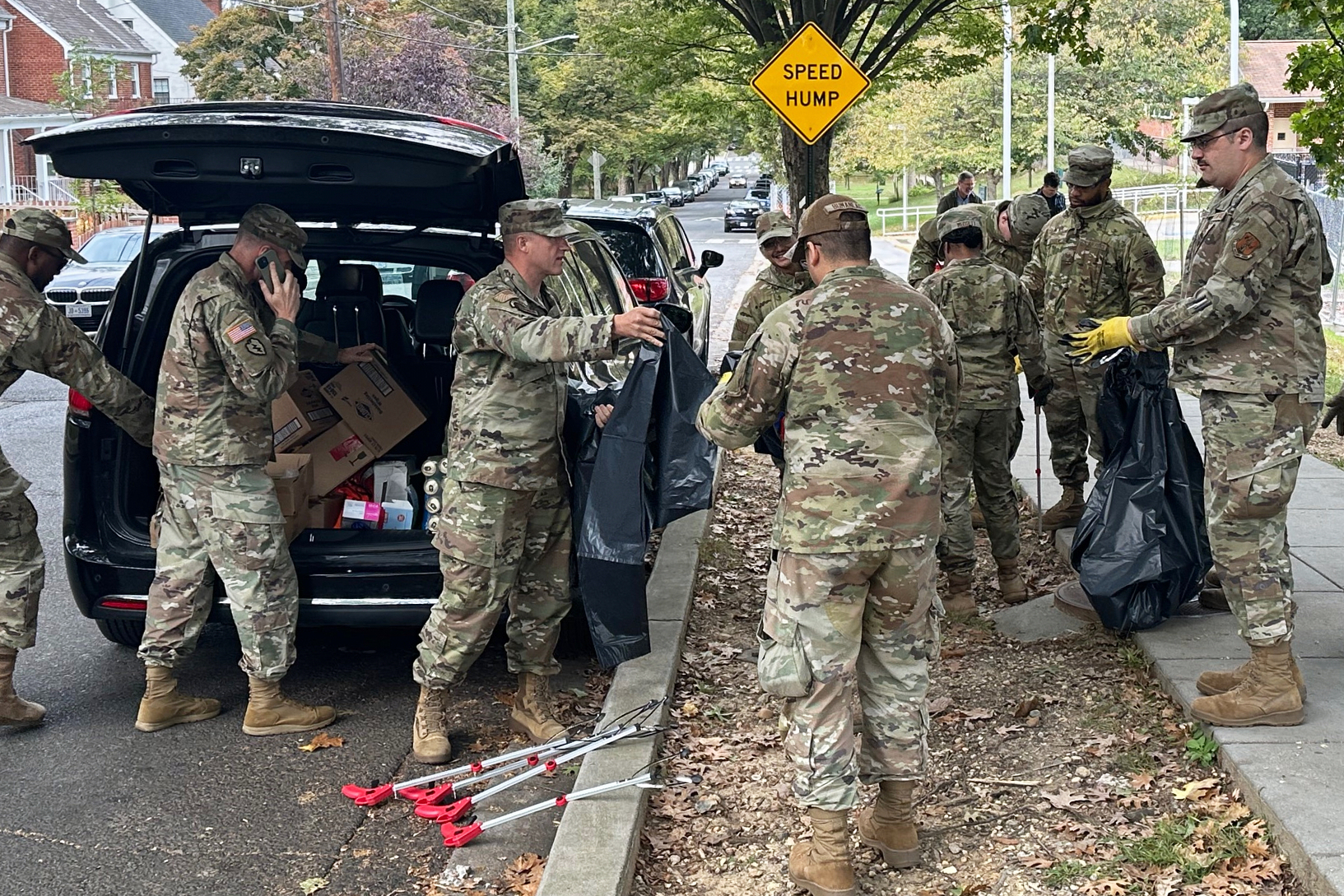
    D.C. National Guard members take part in an October clean up of the park around Fort Stevens Recreation Center in the Brightwood section of Washington.Gary Fields

    On Father’s Day morning this past Sunday, a longtime Washington, D.C.-based writer named Ian Livingston went out to get a breakfast sandwich. When he returned, he found a small platoon of National Guard soldiers, dressed in camouflage, patrolling an alley near his home. On a video that soon went viral, the troops smile slightly or ignore Livingston and his phone camera, which doesn’t make the scene any less disturbing. “Just a normal morning in our police state,” he wrote.

    The normalcy is the problem. It’s been more than 10 months now since Donald Trump first took the extraordinary step of ordering the large National Guard deployment in the nation’s capital, with soldiers from the D.C. armory — authorized by Defense Secretary Pete Hegseth to carry weapons — soon augmented by detachments from red states, rising to an occupation force in the thousands. The move, which the president linked to a surge in “violent gangs, bloodthirsty criminals, and homeless people,” made a lot of headlines, then disappeared from the news. But soldiers haven’t disappeared from the streets. In fact, Trump recently authorized an increase to some 5,000 troops ahead of the July 4 festivities.

    But what for? Researchers have found that the presence of the National Guard has had no apparent impact on violent crime rates — which were already at or near 30-year lows — although there has been a drop in “opportunistic crimes” like vehicle break-ins. But the legal parameters of their actual mission bar the troops from making actual arrests, although they can detain someone until district police show up. Typically, their squadrons have been spotted around D.C. picking up trash, although some are now deployed against the algae tourists of the Lincoln Memorial Reflecting Pool.

    And at what price? The annual cost to taxpayers of the constant Guard deployment has been estimated at as much as $600 million — money that could otherwise be spent on things like actual solutions to the city’s chronic crisis of homelessness. The unbusy troops are, unfortunately, a magnet for America’s growing number of unhinged people, including the one who killed a West Virginia Guard member and seriously wounded another in a shooting last year. For most, the extended deployments mean unwelcome days away from family, actual work, and their hometowns.

    But the real cost is a psychic one: the mental impact of living in an occupied city. Trump’s forever deployment of armed soldiers in our nation’s capital achieves some of the highest goals of his brand of strongman authoritarianism: a) a constant show of force aimed at demoralizing a population that’s increasingly unhappy with life under the 47th president and b) a threat that protesters should stay away from the White House and the Capitol when things really start to go south. We need to keep reminding ourselves what Ian Livingston conveyed to us this weekend: This is not normal. In the immortal 1971 words of singer Freda Payne, bring the boys (and the girls) home.

    What I wrote on this date in 2020

    This date six years ago was also nearly one month after the Minneapolis police murder of George Floyd, and America — and especially Philadelphia — was still dealing with the consequences. On June 23, 2020, I wrote about an Amnesty International report about police brutality in response to those protests, including the cops’ tear-gas assault on protesters blocking the Vine Street Expressway in Center City. ” We should be shocked that police forces in the United States are acting like the so-called ‘state security forces’ in an authoritarian banana republic,“ I wrote. ”Tear gas is banned in warfare under the United Nations, yet police commanders don’t think twice about lobbing it into crowds of Americans from Seattle to the gates of the White House.” Read the rest: “Amnesty International won a Nobel Prize for fighting torture. Next up: Philly police.”

    Recommended Inquirer reading

    • Only one column last week as I enjoyed a Juneteenth/Father’s Day extended weekend. In that piece, I looked at the real reasons behind the federal conspiracy indictment against a group of an anti-ICE activists that some are already calling “the Minneapolis 15.” The charges — mostly centering on constitutionally protected free speech such as discussing their protests on the Signal app — are outrageous. But they also signal that the Trump regime is desperate to quash political dissent ahead of the November election.
    • The World Cup is a remarkable moment for sports, but also an incredible time for journalism, because the stories in the stands are often as compelling as what’s taking place on the pitch. At The Inquirer, the five-week tournament has been a great way to reveal how Philadelphia relates to the wider world. Last week’s match between Brazil and Haiti might have been a rout on the field, but sports columnist Mike Sielski took in the scene with Haitian fans who were just delighted their violence-wracked nation was having a moment on the world stage. Alex Coffey spent the weekend with four French fans who played hooky from their jobs back home to spend an unforgettable week in America’s founding city. Longtime soccer writer Kerith Gabriel hailed the city’s joy over the World Cup as “the escape we didn’t know we needed.” It’s easy to join this party in print for the last three unforgettable weeks of the World Cup: subscribe to The Inquirer today.

    By submitting your written, visual, and/or audio contributions, you agree to The Inquirer’s Terms of Use, including the grant of rights in Section 10.
  • The ‘Minneapolis 15’ ICE-protester indictments are meant to shut you up

    In the tumultuous five-plus months since masked federal immigration agents descended on her hometown, the Rev. Jen Crow of the First Universalist Church of Minneapolis has already been arrested at an airport sit-in, organized a vigil after the murder of her neighbor Alex Pretti, and held trainings at her church for volunteer observers.

    So when Crow learned on Tuesday that 15 local activists had been indicted by federal prosecutors on felony conspiracy charges for monitoring and allegedly at times impeding U.S. Immigration and Customs Enforcement and Border Patrol officers, she did the one thing the Donald Trump regime does not want anyone to do.

    She went down to the St. Paul federal courthouse to protest, again. Crow told me by phone Wednesday that everyday Americans who oppose immigration raids can’t surrender to the fear that the Justice Department wants to create by threatening long prison terms.

    “When you see the federal government turning on its own people, the thing is we have to act anyway and just trust in the purpose and trust in what we’re doing and our care for each other, and just really lean into that,” Crow said. “To let the fear wash through, but not get stuck in it.”

    Crow and as many as 200 other Minnesotans chanting “Free them all!” outside the 15 activists’ arraignment on Tuesday were rewarded for their ongoing courage with a blast of chemical irritants from U.S. Marshals, which, according to videos, started with little or no provocation by the outside protesters.

    “Witnesses tell me that what was going on at the time is that they were holding the doors open, so that you could hear the chants inside the building, when suddenly somebody saw folks putting on gas masks inside the courthouse,” local journalist Pilar Pedraza of KSTP-TV reported. “And all of a sudden they came out and started spraying a chemical irritant at them.” Videos showed other protesters hit with pepper spray, with one violently thrown to the ground.

    The indictment of the Minneapolis 15 — a so-called “conspiracy” that included innocuous acts of dissent like discussing ICE activities on the Signal app or publishing an article on a pro-anarchist website — and the chemical assault against citizens exercising their free-speech rights are all the same instinct from a violently repressive government.

    They want you to shut up. They want you to stay in your home. And they want to make you very afraid — five months before an election that they are practically screaming they plan to do everything in their dictatorial powers to steal.

    The good news is that the government’s intimidation campaign is being met with renewed resistance in the Twin Cities — the place where regular folks with whistles and cell phones eventually drove away most of the immigration raiders, albeit at the horrible cost of more than 4,000 immigrant arrests and two citizens gunned down in the street.

    “The only thing I did was care about this, my community and my neighbors,” Natasha Rakotz — one of the Minneapolis 15, a caretaker whom prosecutors accused of sideswiping an immigration agent’s vehicle — told reporters after her arraignment.

    The charges against the Minneapolis 15 — tied to a protest group known as Direct Action Minnesota, or DAMN — is arguably the most aggressive in a flurry of actions by Trump’s Justice Department aimed at convincing the public that the ideology of aggressively fighting fascism, known as “antifa,” is some kind of highly organized terrorist cell along the lines of ISIS or al-Qaeda.

    It’s one more over-the-top lie from a regime that swims in a stinky green algae pool of falsehoods.

    Federal prosecutors have been racing to crayon in the blanks since Trump’s September 2025 executive order that declared “antifa” — again, not an actual group — as a “domestic terrorist organization.” The Minnesota indictments are the most dramatic of a myriad of federal cases from New Jersey to Oregon.

    These prosecutions have run the gamut. In Texas, an actual criminal act that warranted charges — when a protester at an ICE detention site fired a gun — became the impetus for a sweeping dragnet that led to convictions against nine activists. In Spokane, Wash., prosecutors recently gained convictions against three protesters who tried to stop ICE agents from transporting two Venezuelan immigrants, even after an acting U.S. attorney resigned because he believed the charges were unwarranted.

    But other Trump efforts to criminalize dissent have collapsed, almost farcically so — from a jury’s speedy acquittal of the Washington, D.C. man who threw a salami sandwich at an agent, to the implosion of a case against Chicago ICE-detention-center protesters, including congressional candidate Kat Abughazaleh, known as “the Broadview Six.” The former defendants and some members of Congress are calling for an investigation of alleged grand jury misconduct by Chicago U.S. Attorney Andrew Boutros and his underlings to obtain their indictment.

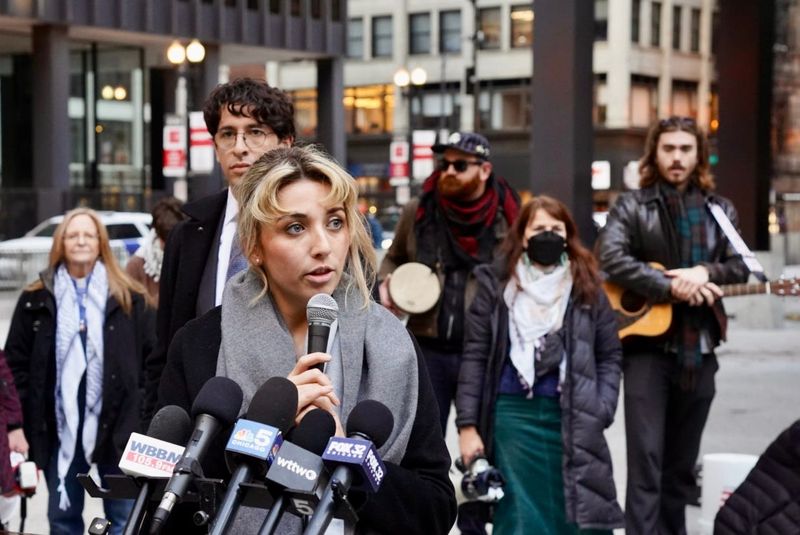
    Democratic Congressional candidate Kat Abughazaleh addresses supporters in downtown Chicago outside the federal courthouse where she pleaded not guilty to charges filed in connection with a protest against the Trump administration’s mass deportation campaign.Michael Loria, USA TODAY

    In Minnesota, U.S. Attorney Daniel Rosen strived on Tuesday to defend the new prosecution as skeptical reporters asked him why felony charges were lodged when not a single agent was hurt, why the urgency of this case when there’s been no prosecution of the agents who shot and killed Pretti or the unarmed motorist Renee Good, and whether the case amounted to what writer George Orwell famously called “thoughtcrime.”

    Rosen insisted that “whether or not they actually, at the end of the day, caused bodily harm is not the measure of whether or not they committed a serious federal crime.”

    Still, the federal case against the Minneapolis 15 contained just a couple of instances of alleged property violence ― the sideswipe and the kicking out of a vehicle’s tail light. Mostly, the indictment describes a lot of activities —like Signal chats, monitoring the movement of immigration agents on public streets, discussing the use of protective gear like shields, or an anarchist’s speaking tour about the protests — that would seem to be constitutionally protected free speech.

    With the enactment of the First Amendment in 1791, America’s founders vowed to protect “the right of the people peaceably to assemble, and to petition the Government for a redress of grievances.” Just days before the nation’s 250th birthday, an authoritarian regime in Washington wants to make this a crime for which you could spend a large chunk of your life in prison.

    “It does look like the government is throwing the book, maybe even over-charging some of the protesters,” Roy Gutterman, director of the Tully Center for Free Speech at Syracuse University, told me yesterday, noting that any act of actual violence wouldn’t be protected by the First Amendment. But he added that “even if some of the charges end up being thrown out, the breadth of the government’s arguments and the weight of the charges certainly send a message to protestors.”

    Exactly. Although the indictments are a living hell for the Minneapolis 15, the real target here is regular American folks like you — citizens who aren’t normally inclined to protest the government, but are starting to wonder what to do as the regime and its 80-year-old and increasingly out-of-touch leader spiral out of control.

    Before you even dare venture out to a church meeting where they pass out whistles and teach you how to warn your neighbors that masked ICE agents are snatching people off the streets, they want to plant seeds of doubt. Am I risking my freedom, and my family, just for posting something in a Signal or WhatsApp chat?

    They want you to be terrified, and on some level you should be afraid, not just of what the government is doing but why they are doing this now. Trump was already nearing record-low approval numbers before this week’s humiliating surrender deal aimed at ending the president’s foolhardy war of choice with Iran. The near inevitability of a Democratic House in 2027 all but guarantees Trump’s next impeachment and two years of political hell to end his 47th presidency.

    Thus, Trump’s desperate determination to interfere in the November election is becoming increasingly clear, with everything from unwarranted meddling by the U.S. Post Office to his insistence that grossly unqualified loyalist Bill Pulte serve as his director of national intelligence, in order to invent foreign election plots.

    Criminalizing dissent isn’t a sideshow. It’s central to the plan. They want to stop you from taking to the streets in massive numbers if and when they take illegal actions to keep the Republican Party in power. They are using these bogus indictments to lay the foundation for the solution that Vice President JD Vance proposed for Minneapolis back in January — to invoke the Insurrection Act and send in tanks.

    The case against the Minneapolis 15 reminds me of the remarkable novel Every Man Dies Alone by the German novelist Hans Fallada, based on the true World War II era heroism of Otto and Elise Hampel, who placed postcards around Berlin criticizing Adolf Hitler and the Nazis for two years before they were arrested and executed by guillotine. Are we now becoming such a totalitarian society?

    Hopefully not, if American citizens like the Rev. Jen Crow continue to speak out.

    “We’re not going anywhere,” she said after the feds’ courthouse chemical attack. “Those of us who care about each other and care about the rule of law and care about following the rules we’ve set out as a society that protect basic human rights, we’re not going anywhere.”

  • JD Vance can never become president | Will Bunch Newsletter

    One of my many New Year’s resolutions back in January was never to write what I call “Captain Obvious columns” about the Donald Trump scandal du jour that’s all over your social media feed. So you’ll have to imagine the column I didn’t write about Trump’s tacky UFC cage match that desecrated the White House, and the role of bread and circuses (or just circuses…where’s the bread?) in the inevitable decline and fall of decrepit empires.

    If someone forwarded you this email, sign up for free here.

    A ‘President JD Vance’ would be a different kind of dictator. The scary kind.

    They say you never get a second chance to make a first impression — unless your name is JD Vance, or it becomes JD Vance after a few false starts. In 2016, a then utterly unknown Yale Law grad introduced himself to America with a No. 1 bestseller, Hillbilly Elegy, that used his (sort-of) Appalachian family’s hardscrabble story to come off as an empathetic horse whisperer for the white working class.

    He cemented that first impression when we learned he’d privately described Trump as a kind of a demagogue feeding off the pathologies he’d written about in Elegy — someone he feared might become “America’s Hitler.”

    But Trump’s victory coupled with some exposure to the ketamine-fueled paranoia of Silicon Valley’s billionaires gave the former James Donald Bowman yet another shot at reinvention — now embracing extreme right-wingers and crackpot conspiracy theories all the way to his election, at age 40, as the 50th vice president of the United States.

    Today, less than two weeks before the 10th anniversary of Hillbilly Elegy’s publication, Trump has become America’s…Mussolini, a strutting yet sometimes buffoonish strongman and a hopelessly corrupt invader of faraway lands.

    It’s Vance who could actually become America’s Hitler, if he gets that chance…a very real possibility.

    That’s a strong statement, but it’s also perhaps the most powerful takeaway from the heavily promoted, about-to-be-published book from all-access New York Times reporters Maggie Haberman and Jonathan Swan, Regime Change. It portrays the vice president as eager to go much further than Trump in crushing domestic dissent.

    In book excerpts published Monday, Haberman and Swan depicted Vance — in a tag-team alliance with Trump’s ruthless mass-deportation guru Stephen Miller — as calling for the radical step of invoking the Insurrection Act to send in troops to put down protests by everyday Americans in Minnesota who were enraged by masked goon squads snatching their immigrant neighbors and the killing of two U.S. citizens.

    Describing a White House meeting of senior aides — but not Trump — in late January after Renee Good and Alex Pretti were gunned down, the Times reported that “Vance got to the point. They needed to invoke the Insurrection Act, swiftly, to crush the unrest in Minnesota. It would be painful in the short term, he said, but the message it would send — that paid agitators could not get away with disrupting ICE operations — would make sure no one tried it again.”

    There are many problems with Vance’s anti-democratic impulses. As Haberman and Swan reported, even most of the Trump aides in the room agreed that invoking the 1807 law in this circumstance would be both a significant expansion of presidential power and a public-relations nightmare. Even worse, the nation’s No. 2 official was urging this would-be abuse of power based on a right-wing internet lie — the falsehood that Minnesota’s angry neighbors were “paid protesters.”

    The deeply reported episode isn’t the only disturbing glimpse of Vance’s governing philosophy in recent months, but it’s the most revealing, and most damning: a true believer in the worst conspiracy theories about the left, with the inclination to wield dictatorial powers against them.

    Earlier this month, Vance — arguably the regime’s top cheerleader for Europe’s extreme far-right political parties — stunned the United Kingdom’s center-left government by weighing in on growing unrest over the stabbing death of an 18-year-old English college student by a Sikh migrant. He sounded more like a wannabe X influencer than a top official of the U.K.’s historic American ally. As racist hate mobs prowled streets in England and Northern Ireland, Vance said the murder of Henry Nowak proved that “European elites” had failed to oppose the “politics of self-hatred and the mass invasion of migrants.”

    One thing is clear: Vance is not on the side of calm, which is problematic when what the world needs now is love, sweet love.

    Increasingly, Vance seems to disappear for longer stretches of time, and when he reemerges he is bathed in the stench of the social media sewers where he seems to spend much of his time.

    That’s certainly appears to be the case with his main mission in 2026; rooting out fraud, which isn’t targeted at the nation’s biggest scam — the multi-dollar enrichment of the president’s family — but at alleged schemes by Somali immigrants and other heirs to Ronald Reagan’s racially coded “welfare queen.” A recent Washington Post report found many claims by a Vance-led task force are misleading or overhyped, and that legitimate business have been swept up in its wide net.

    Ten years ago, Vance wrote a book seeking your empathy because that served his true purpose: ruthless ambition. In that context, it was no moral conflict at all to pull a 180 and support a victorious Trump, or to leverage his rising fame into a hookup with Silicon Valley types like his billionaire patron Peter Thiel — people who believe in building private cities to protect them from the masses and the government, and who are more prone to conspiracy theories than your 79-year-old uncle on Facebook.

    Thiel and the other tech billionaires have programmed Vance into a true believer of whatever nonsense they believe, and lined him up next in the queue for power. That makes him even more dangerous than Trump, who believes in nothing beyond himself.

    Ever since Trump first claimed victory on Nov. 8, 2016, I’ve worried that the next guy would be even worse — chasing American autocracy with a real plan, not clown-car narcissism. Vance is the one I was worried about, and he is only an 80-year-old, Big Mac-infused heartbeat away from the presidency for the next 31 months.

    I’ve made clear my disgust at political violence, and the possibility of a Vance succession is another reason why I shudder to think what would happen if an attack killed or disabled the 47th president someday. If Vance was willing to send troops to Minneapolis to stomp down soccer moms and baristas with whistles, his militaristic power grab against the left after an assassination would end any last hope for our bedridden democracy.

    It’s one more item on the pro-democracy checklist. It may be the proverbial lost cause worth fighting for, but we should try to ensure that JD Vance does not become the 48th president of the United States.

    If Democrats stay on track to retake the House and possibly the Senate, they should hold hearings not only on Trump’s high crimes and misdemeanors but on the vice president’s involvement — and, based on that evidence, his possible impeachment. It may prove impossible to remove Vance from office, but hearings will help to establish a record that will end his dreams — and those of his billionaire buddies — about 2028.

    It’s past time for the next transition for this American chameleon who calls himself JD Vance: back to private citizen.

    Yo, do this!

    • The World Cup’s return to North America has gone much as I expected it would: Marred by its runaway commercialism and the U.S. immigration hassles that kept too many fans and a world-class referee from Somalia at home, but with a focus on joy on the pitch and in the stands now that the games have begun. Here in Philadelphia, the essence of everything good about the World Cup has been the FIFA Fan Festival at Lemon Hill, the city greenspace on the hill behind the Art Museum on the Schuylkill. It’s been a daily gathering post for thousands of fans to watch the matches on a 60-foot screen, imbibe from a beer garden, and load up on official merch. It’s free but ticketed; learn how to gain access and how to get there here.
    • Some 51 years after Jaws, filmmaker Steven Spielberg is still finding ways to get us out to the multiplex for a summer blockbuster. His new the-aliens-are-here epic, Disclosure Day, merges nostalgia for his greatest hits like E.T. with our 21st century anxieties about artificial intelligence, outsiders, space, and what it means to be human in our modern world. It’s getting excellent, but not perfect, reviews, and I’m looking forward to seeing it for myself.

    Ask me anything

    Question: What is your favorite fast food joint? — @funkndonuts.bsky.social via Bluesky

    Answer: Most of this week’s questions were in this lighthearted mode; it feels like the good sports excitement of the World Cup and the NBA finals has provided us a calm eye in the hurricane. Anyway, as an apparent donut lover you’ll be glad to know that my modern family runs on Dunkin coffee. As a kid, my barely-evolved-from-hillbillies family had low-brow tastes that I now appreciate in hindsight, and on our yearly road trips to the ancestral home of Peoria, I fell in love with the greasy pizza — later augmented by greasy fried chicken — at Shakey’s. The chain has shrunk to a few West Coast outlets and I haven’t been in decades. Probably for the best.

    What you’re saying about…

    Last week’s question about what the next, hopefully normal U.S. president should do about the ballroom monstrosity rising on the east side of Donald Trump’s White House drew a good array of responses. Although a couple of you wanted to see the project repurposed for community gardens or housing for D.C.’s homeless, others believe any Trump creation must be expunged in dramatic fashion. “Provide Pulaskis (fire axes) and sledgehammers and a good crew of competent supervisors and let we the people come and pay five bucks for the privilege of fifteen minutes of smashing it up,” wrote Linda Nafziger-Meiser. “Hell, I’ll bring my own Pulaski.” But architect Larry Weintraub thinks the White House needs a ballroom, as long as it meets historical and architectural standards. “Hopefully, the new design will be understated but appropriate and subordinate to the majesty of the White House,” he wrote.

    📮 This week’s question: In a recent column, I announced that I’ve deleted Elon Musk’s social-media app X, which once thrived as Twitter. I saw that as a way to protest Musk’s racism, and his obscene wealth. Should governments and corporations continue to use X for communications? Are you still on X or have you left, and why? Please email me your answer and please put the exact phrase “Deleting X” in the subject line.

    Backstory on the birthright citizen who’s a U.S. hero

    Folarin Balogun, now 24, grew up in London, which is where one of the world’s top clubs, Arsenal, spotted him as a potential soccer star at age 8. His parents are Nigerian. He currently plays club soccer in Monaco. So how was it that Balogun found himself last Friday wearing the red, white, and blue jersey of the United States in front of 70,000 delirious Americans on the pitch near Los Angeles, mixing skillful footwork with an aura of glee as he scored two goals in a 4-1 World Cup opener win over Paraguay?

    Credit the 14th Amendment — or maybe blame it, if you’re one of the reactionaries who believe that people like Balogun should not be U.S. citizens, soccer gods be damned.

    Even if for some weird reason you’re not yet a soccer fan, you’ve probably followed the heated debate over birthright citizenship. The notion that anyone born on U.S. soil is automatically an American citizen — an idea enshrined after the Civil War to remove any potential doubts about the citizenship of formerly enslaved African Americans — is disputed by the Donald Trump regime. The president’s executive order seeking to undo the longstanding interpretation of the 1868 14th Amendment, and strip citizenship from millions of people born here to immigrant, non-citizen parents, is currently before the U.S. Supreme Court. Trump’s xenophobic MAGA supporters have long slurred children of undocumented migrants with the epithet, “anchor babies.”

    It turns out that Balogun, when he’s not lighting up the back of the net, is a law-school case study of the immigration debate roiling his accidental country. In the summer of 2001, Balogun’s future mom, who was seven months pregnant, and dad decided to vacation in the United States. When the couple attempted to fly home to London, an unnamed airline worker who would change the course of soccer history told Florence Balogun she was too pregnant to safely fly. So she stayed in Brooklyn, gave birth to her son, and the family left America after two months.

    As he developed into a world-class striker on European soil, Balogun came to understand that his U.S. citizenship offered a much better shot at competing in the World Cup than the other two nations where he was also eligible, England or Nigeria. For his mom, Balogun’s fate was sealed in the summer of 2001. “Even when he wasn’t even thinking of making an international decision, I’d already made up my mind that he is going to play for America,” Florence Balogun said.

    They say that the Supreme Court, despite all the blather about “calling balls and strikes,” is in reality always aware of the political zeitgeist. Even a right-wing justice who happens to also be a long-suffering Phillies fan in Samuel Alito probably sees on some level that stripping citizenship from the breakout star of U.S. men’s soccer would be highly unpopular. The World Cup — the idea, and not its capitalist corruption by FIFA — imagines a society that abhors exclusion, where it takes every kind of people to make what life’s about. I dream of an America that can run with France and Argentina on the pitch, and that welcomes human beings like Balogun, even ones who’ve never kicked a soccer ball in their lives.

    What I wrote on this date in 2019

    This newsletter goes out Tuesday on the 11th anniversary of the day that changed America forever: Donald Trump’s gilded Trump Tower journey down an escalator to join the 2016 presidential race, as Neil Young’s “Rockin’ in the Free World” blared behind him. In 2019, I used that date to reflect how much we’d fallen in just four years since June 16, 2015. I wrote: “The president’s “shocking” tweet or statement of the day still sparked hours and hours of cable TV blather, including a parade of congressional Democrats who were concerned or saddened or what not. They called Trump’s worst acts impeachable offenses, but then nobody impeached him. They said Trump was unpresidential, but the next day he was still president.” Read the rest: “4 years since Trump came down that escalator and the cycle of empty outrage has become unbearable.”

    Recommended Inquirer reading

    • Last week I focused on the little people who’ve been crushed by the return of Donald Trump, and the big guys getting obscenely rich. In my Sunday column, I looked at the agonizing fate of Tuan Van Bui, an Amerasian born in Saigon at the height of the Vietnam War who was welcomed to Philadelphia in 1990 under a government-approved visa. Why was he violently arrested by U.S. Immigration and Customs Enforcement, and what is the truth about his April death behind bars in Indiana, at age 55? Over the weekend, I voiced my outrage over Elon Musk, who in just one week used his massive platform on X to whip up race riots in Belfast, and was rewarded by Wall Street as the world’s first trillionaire. I looked at how we enable this situation, and announced my small step in fighting back by deleting the X app.
    • One depressingly constant story in the 21st century is the way that supposedly liberal blue states and big cities still fall back on oppressive, militarized policing to crack down on protesters. Progressive activists in New Jersey took to The Inquirer this week to express their lingering disappointment in first-year Gov. Mikie Sherrill — a Democrat that many of them had worked to elect in 2025 — and her state police’s aggressive handling of demonstrations outside the ICE detention center in Newark, Delaney Hall. They would have found an amen chorus here in Philadelphia’s LGBTQ+ community, where city cops showed up at the annual Gayborhood Pride festival in riot gear and arrested 15 of the revelers. The backlash against the police actions has already triggered a City Council investigation. Journalists are typically society’s first line of defense against police misconduct. You support that mission when you subscribe to The Inquirer.

    By submitting your written, visual, and/or audio contributions, you agree to The Inquirer’s Terms of Use, including the grant of rights in Section 10.
  • Elon Musk egged on a race riot, then became a trillionaire. What are we even doing?

    The images coming out of Belfast — the city in Northern Ireland made famous by decades of ethnic violence that came to be known simply as “the Troubles” — were horrific enough. The sight of cars and homes ablaze and hordes of masked, young men roaming the city streets brought back painful memories for old-timers.

    “I lost my teenage years to the Troubles,” a shell-shocked 71-year-old, Paul Sharkey, told the New York Times, after watching a flaming van crash near his home on the outskirts of Belfast. “I thought moving out here I had got away from them — from the bombs and bullets, all the rest of it …”

    Remarkably, no one seems to have been killed in a couple of nights of riots that targeted Belfast’s Black and brown immigrant communities after a Sudanese migrant was charged with a stabbing — captured on video — that left a white man in a coma. But terror was felt across Northern Ireland’s largest city, as volunteers raced to rescue families from burning homes, immigrant addresses were posted online, and workers were afraid to go to work after a nurse was attacked.

    And yet, there was something about this anti-immigrant pogrom in Belfast that was just as appalling as the pictures of burning streets and fleeing children. Their biggest cheerleader was not some street thug in a balaclava, but the richest person in the history of Planet Earth, urging the rioters on from some posh hideaway on the other side of the Atlantic.

    Tuesday morning, as news of the stabbing attack spread across the United Kingdom, Elon Musk took to X — the influential social media site that was called Twitter when he bought it in 2022 for $44 billion — to amplify a post by U.K. far-right extremist leader Tommy Robinson. It called for white people “to hit the streets” that night and protest what Robinson called “yet another invader attack on our people.”

    “Only by protesting REPEATEDLY and LOUDLY will there be any change!!” wrote the U.S.-based, South African-born electric-car-and-spacecraft mogul, just hours before the sadly familiar loudness of repeated explosions rocked Belfast.

    Musk’s tweet was hardly a one-off. In a flurry of X posts attacking immigration, he told his 240 million followers that British Prime Minister Keir Starmer “hates white people,” while sharing an image of the Black suspect that simply said, “Millions must go.” When his diatribes started provoking a backlash, he wrote, “Murderous migrants beheading innocent people in their hometown is what’s making people angry, not ‘social media’!”

    The nonprofit tech watchdog Center for Countering Digital Hate found that Musk’s posts about Belfast and racial politics in the U.K. were viewed an astonishing 64 million times. The center noted that the amplified posts from Robinson — banned from the pre-Musk Twitter for hate speech, but restored in 2023 — drew responses calling for lynching and other forms of violence. Musk has also been using X to promote a fringe, far-right anti-immigrant party called Restore Britain, an offshoot of the Nigel Farage-led Reform UK.

    It’s kind of bizarre that this then-billionaire not-too-busy-to-hate found the time for this, in a week where he had one job: to make sure the long-awaited stock offering of one of his major business ventures, SpaceX, launched on Friday without blowing up like some of its rockets.

    Unfortunately for the star-crossed Musk, investors’ shock and revulsion over the entrepreneur’s vile posts caused …

    OK, if you follow the news, you know that the unfinished sentence above was a little bit of cynical misdirection. Wall Street, from the biggest investment banks to starstruck small-time day traders, could not wait to throw their cash at SpaceX and its founder. They acted as if Musk the anti-immigrant hatemonger and Musk the tech visionary were two different human beings, even as they also ignored the fantastical malarkey of SpaceX’s dream to build data centers in outer space.

    By the end of a tumultuous week, the tulip-mania demand for SpaceX stock — with the market valuing the money-losing company at a gobsmacking $2.1 trillion — made the already world’s richest person wealthier in a way that defies comprehension. The man who wanted to burn everything down on Tuesday became the planet’s first trillionaire on Friday.

    Even as the globe — excepting that island of basketball joy in Gotham City — watches a decadent Donald Trump turn 80 by tarnishing the White House with a tacky ad-draped display of barbaric blood sport that would have embarrassed Caligula’s Rome, Elon Musk is truly the ultimate story of our modern empire’s decline and fall.

    The problem is which Musk story to tell. Each narrative is more shocking than the next.

    The saga I’ve started to recount here, about a man whose wealth is now greater than the yearly gross domestic product of all but the 21 richest nations, who uses that power to urge poor white people to firebomb and assault their Black and brown neighbors, isn’t even the worst thing Musk has done. Not by a long shot.

    The prequel to Belfast came just over a year ago, when Musk — after spending some $288 million, an all-time U.S. election record yet the equivalent of sofa-cushion change for a future trillionaire, to put a dictatorship-minded Trump back in the White House — was handed an all-access pass to our federal government for what was dubbed the Department of Government Efficiency, or DOGE.

    Musk and his young DOGE dudes took a chain saw — as Musk boasted by brandishing a real one — to any program that advanced world peace or the plight of its most underprivileged. In particular, the utter destruction of the U.S. Agency for International Development (USAID), which Musk bragged about tossing into a proverbial wood chipper, has been blamed by a number of experts for an unthinkable hundreds of thousands of deaths across Africa, Asia, and elsewhere from disease or hunger, with children as most of the victims.

    Remember when we were outraged that our leaders said they could shoot one person in the middle of Fifth Avenue? How quaint.

    And yet, there’s another Musk storyline on top of the obvious question of, why are so many people betting their money on literally the world’s greatest purveyor of hate speech, and the alleged architect of a born-in-the-USA genocide? That question is, why are we collectively throwing all this money at Musk at all?

    The 1990s Wharton School graduate started with some good ideas — an early stake in PayPal that gave him the funds to launch SpaceX and take over early EV leader Tesla. But his revenue stream is increasingly from the crony capitalism of government contracts, not the free market — as Chinese EV makers have been cleaning Tesla’s clock. And it’s almost lazy, yet true, to describe SpaceX’s business model as pie-in-the-sky science fiction.

    The openly racist tycoon isn’t even a good businessman, and yet he has failed upward to $1.1 trillion. I think there’s one question about Musk that towers over all the others.

    What are we even doing here?

    It’s easy to look at Musk as an amalgamation of the many, many things that are wrong with the world right now. He is a poster child for the policies that have enabled an Epstein class of billionaires with more dollars than we have the ability to count, even as thousands starve and his fellow Americans can’t pay the rent. He has so many scandals that some of them — his data center polluting a predominantly Black neighborhood in Memphis, or the DOGE cuts that could have slowed the spread of Ebola, or stopped the arrival of the screwworm striking Texas cattle — couldn’t even fit into this longer-than-typical column.

    Musk’s destructive abuse of his massive X platform has given him the power to manipulate the struggling masses into attacking each other — instead of the small circle of people hoarding the world’s wealth, led by Musk himself. When buying Twitter wasn’t enough for his obscene ambitions, he decided to buy the White House.

    When I wrote about Musk for the very first time two years ago, I reached for the obvious cliché and called him a Bond movie villain, but that was far too generous. He has devolved into one of the most problematic entrepreneurs in human history; Henry Ford behind the wheel of a Cybertruck.

    It’s past time to look inside ourselves and ask one more question: Now that Musk has shown us who he really is, why do we continue to support him? Why do millions of investors pay so much for the magic beans of Tesla and now SpaceX to endorse the lead spreader of racist ideology — putting aside the fact that his stock bubble will burst any day now?

    Why do so many leading politicians across the United States and the U.K. — liberals as well as conservatives — and supposedly socially conscious corporations, among others, still use X to convey information, when its owner uses it to promote views that really aren’t any different from David Duke or the Ku Klux Klan?

    That’s also a question for myself. In November 2024, when Trump was reelected with Musk’s support, I moved about 98% of my social media posting over to Bluesky. But I didn’t close my X account, which still had 80,000 followers, because I wanted to keep posting my columns there so a few more folks might read them.

    Today, I will make one last post on X — a link to this column, in the vain hope that the platform’s proprietor might see it, and that other folks will join me in quitting. Tonight, sometime before I sit down to watch Les Éléphants stomp Ecuador, I will delete my account for good.

    You should, too.

    We’ve all helped to create this monster, and we all can do our small part to slay the dragon. There are hopeful signs, led by the thousands who came out this weekend in Belfast and elsewhere in the U.K. to protest Musk-fueled hate. If we don’t act quickly and nonviolently to undo the massive policy failure of the world’s first trillionaire, the raging fires of Belfast are going to look like child’s play.

  • The U.S. welcomed this child of the Vietnam War. Why did he die in ICE custody?

    The U.S. welcomed this child of the Vietnam War. Why did he die in ICE custody?

    Tuan Van Bui’s bad luck arguably started the day he was born in 1970 in the city then known as Saigon — the child of a Vietnamese woman and one of the thousands of U.S. soldiers who fought in Southeast Asia for nearly two decades.

    Van Bui never knew his dad, but he quickly learned what it was like to grow up in a hostile homeland that called the estimated 25,000 to 50,000 Amerasian kids like him “children of the dust.” The communist government that won the war in 1975 denied him any education past grade school.

    In 1990, Van Bui caught a break — of sorts. In the late 1980s, a U.S. Congress struggling to come to grips with the mess America had left behind passed the Amerasian Homecoming Act. That allowed Van Bui to legally immigrate to America and settle in Philadelphia’s Kensington neighborhood, but with no real safety net.

    His first two decades on U.S. soil were rough, marked by occasional run-ins with the law. But in middle age, Van Bui had settled into a more comfortable American life. He married a fellow Amerasian immigrant in 2017, earned some money from construction and other odd jobs, and indulged his quirky hobbies like stamp collecting. He was paying back his fines from the bad years and — although threatened with a removal order — he religiously showed up for check-ins with U.S. immigration officials.

    His family says Van Bui was doing everything the right way.

    Still, it was with much trepidation that Van Bui showed up with his wife at the Philadelphia immigration office on Aug. 18, as the reelected Donald Trump and his team pushed for a massive increase in arrests and deportations. What happened next, as his wife related to family members, was even worse than they had feared.

    Tuan Van Bui in an undated family photo. Van Bui, 55, died in immigration custody at the Miami Correctional Facility in Bunker Hill, Ind., on April 1.Handout art

    Van Bui’s stepdaughter, Ly Wang, told me this week that U.S. Immigration and Customs Enforcement officers were waiting. “Before he could even really check in, they saw him, they spotted him,” she said. “The ICE agents ambushed him, and they shoved my mom out of the way. They tackled my stepdad … shoving him into a wall because he’s a big dude.” Wang said the ICE agents threw Van Bui’s paperwork in the trash and warned her mom, “You need to leave before we make it a problem for you, too.”

    Van Bui’s arrest that August day was the start of a seven and a half month Kafkaesque journey through the rancid food and 4 a.m. wake-ups of ICE detention sites, first in upstate Pennsylvania, and then nearly 700 miles away in rural Indiana.

    It ended on April 1. That morning, Van Bui had made his usual phone call to his wife and, despite the routine complaints, sounded fine. The next call came that night, but from the chaplain at Indiana’s Miami Correctional Facility. Van Bui had suddenly collapsed and died. He was just 55.

    It took more than two months for Wang and her mom — who herself had suffered a debilitating stroke in the days right after watching Van Bui’s violent arrest — to deal with Indiana authorities, obtain some additional testing, bring his body back home, and secure a spot for him in the Fernwood Cemetery in suburban Lansdowne, where he was buried on June 5.

    But his family’s many questions have not been laid to rest.

    Why was Van Bui’s ICE detention dragged out for so many months when — given the wretchedness of life behind barbed wire — he and his family would have preferred deportation to Vietnam, even if he hadn’t been there for 36 years? Why wasn’t Van Bui given more medical attention, as doctors noted his swollen knees and other signs of worsening health? And why is ICE’s account of Van Bui’s death so different from what other detainees told the family — that staff did nothing at first while they, the detainees, attempted CPR until paramedics finally arrived a full hour after the collapse, too late to do anything but declare him dead?

    And a bigger question hangs over all of this: Why did a redemption-seeking United States government invite Van Bui to come here from the other side of the world, only to leave him to fend for himself before brutally arresting him, dumping him in a hellhole prison, and allegedly watching him die from chronic and then acute neglect?

    “I think he fully considered America to be his home, and he was very comfortable here despite even all the challenges against [Amerasians],” Wang said. What happened to Tuan Van Bui is in many ways mystifying, but he is also not unique.

    Even as the Trump regime’s deportation raids have sometimes dominated the headlines, much of the attention has focused on the targeting by masked ICE and Border Patrol agents of brown and Black neighborhoods, such as Latinos in Los Angeles and Chicago or the Somali community in Minneapolis. The government’s stepped-up arrests of Asian Americans have largely flown under the radar.

    “There’s just a severe sense of fear in the community,” Nancy Nguyen, the executive director of Philadelphia-based VietLead, told me, adding that the message “for the Asian communities is that they are not wanted here under Trump.”

    A painful irony is that the hardest hit have been refugees for whom the United States opened its doors in the latter years of the 20th century — a belated acknowledgment that their plight was often the result of America’s violent and unpopular war in Southeast Asia. This winter in Minnesota, masked immigration raiders frequently targeted the Hmong people from Laos who’d once been welcomed for their role in helping American troops and the CIA over there.

    Nguyen said that nationally, more than 1,000 Vietnamese immigrants and more than 500 Laotians were deported in 2025 — compared with fewer than 100 a year before the second coming of Trump. A few have been sent to remote African nations like Eswatini, where they don’t know any people or the language. Many more have been languishing, as Van Bui did, in the cruel limbo of ICE detention — sometimes with lethal consequences. Nguyen said that of the 50 or so ICE detainees who’ve died under the Trump regime, nearly a third were of Asian descent.

    Van Bui was actually the second Asian American to die at the Miami Correctional Facility — run by the state of Indiana, which contracts with ICE — since February. Lorth Sim, 59, who came to America in 1983 as a refugee from the brutal dictatorship of Cambodia’s Pol Pot, also collapsed at the facility, where officials also blamed heart disease.

    What’s more, Van Bui is the third member of Pennsylvania’s Asian community to die in immigration custody in less than a year. In January, 46-year-old Cambodian American Parady La was arrested outside his Upper Darby home and died three days later at Philadelphia’s federal detention center, reportedly while undergoing narcotics withdrawal. Last August, 32-year-old Chinese immigrant Chaofeng Ge died at the upstate Moshannon Valley Processing Center five days after his arrest near Harrisburg; family members and advocates have challenged ICE’s assertion that his death was a suicide by hanging.

    In Van Bui’s case, ICE issued a fairly detailed statement that insisted the Amerasian detainee — who’d suffered a serious stroke on Christmas Eve 2023 and used a cane for mobility, among other preexisting health problems — was properly monitored and treated amid clear signs his condition was deteriorating, with a decreased platelet count and then swollen knees indicating “obstructive pulmonary disease.” It also claimed — disputed in the accounts other detainees have offered Van Bui’s family — that staff at the Indiana facility responded quickly to his April 1 collapse with CPR and a defibrillator before he was pronounced dead at 6 p.m.

    Whether ICE and Indiana corrections officers offered Van Bui adequate medical care is still up for debate, but what the government definitely did not offer was empathy. As with other ICE custody deaths, grieving relatives were slammed with an official press release that denied Van Bui’s humanity.

    “Criminal illegal alien from Vietnam passes away at Miami Correctional Center” was the headline on ICE’s press release, which stressed Van Bui’s encounters with law enforcement when he was a younger man.

    His stepdaughter Wang told me the litany of criminal charges in the release includes some arrests for which he was not charged or convicted, and that he was diligently repaying fines for other past violations. But what hurts more is the regime’s cruel characterization of a human being whom Wang described as a soft-spoken, gentle giant who never turned down a request for help from his Kensington neighbors and — “a nerd in a way” — loved to scour flea markets for cuckoo clocks or rare coins or stamps.

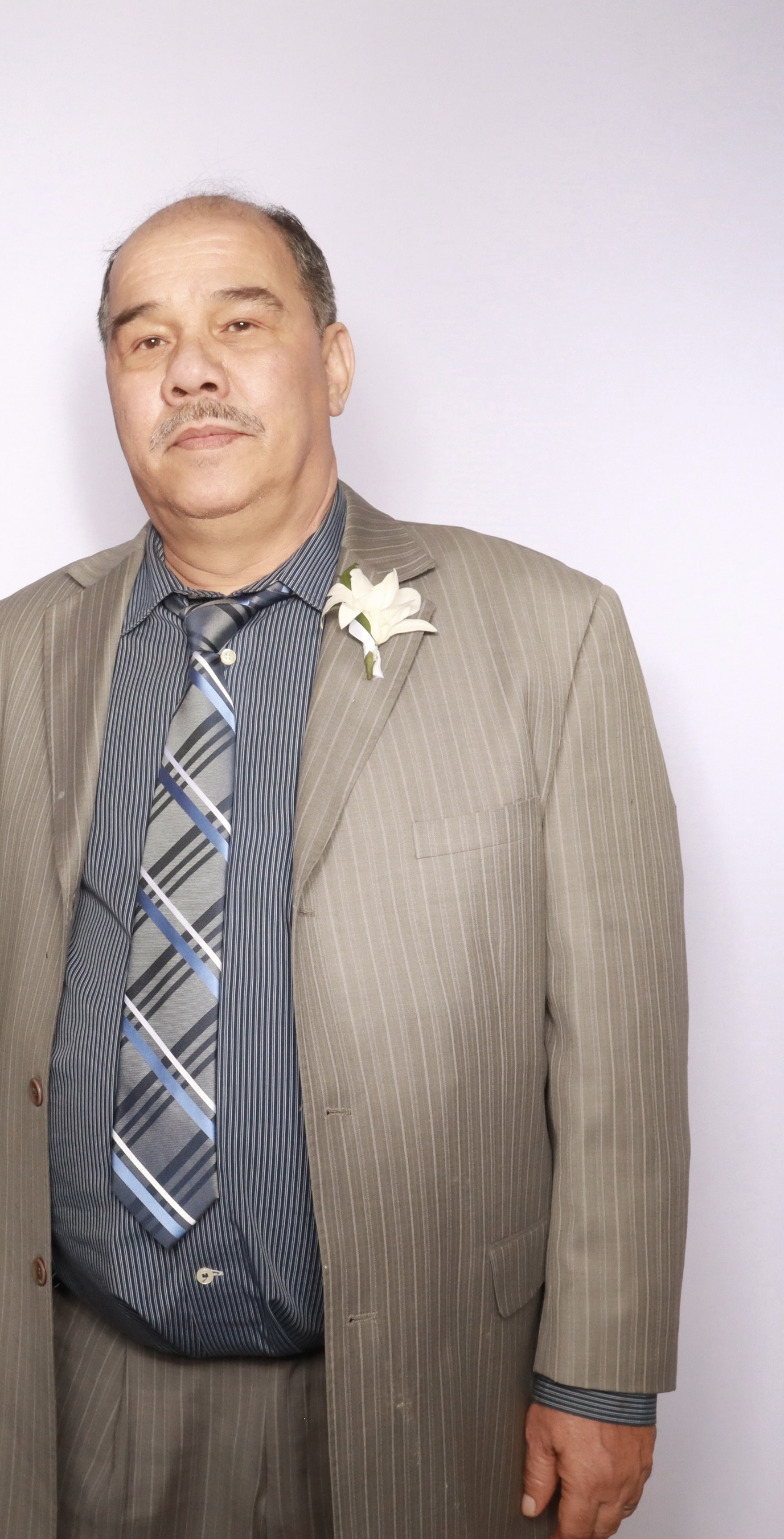
    Chaofeng Ge, 32, died in August at the Moshannon Valley Processing Center while detained by ICE.Courtesy of David Rankin

    She said he’d told her little about the first 20 years of his life in Saigon (renamed Ho Chi Minh City after the war), but did admit that the abandonment of his American GI father weighed on him.

    “Something that he did tell me and just confided in me was that he never felt like he grew up feeling wanted, you know? Starting with his dad not being around, and his mother being very busy and being a single parent,” she said. “So he had kind of a rough start.”

    Amerasian kids were treated cruelly in Vietnam — as reminders of the hated Americans who’d invaded their country — and typically denied any education beyond grade school, which apparently was the case for Van Bui. The United States seemed to acknowledge that harsh reality when Congress and the Reagan administration enacted the special AM-1 visa that allowed Van Bui to come here in 1990. But the new arrivals didn’t always adapt easily to a home where they were reminders of a war that most Americans wanted to forget as much as the Vietnamese.

    “My impression that he got into kind of the wrong mix of crowds,” said Wang, who first met her future stepfather when she was a teenager. “I see him as someone who, because he didn’t have that much of an education … that you could manipulate, unfortunately.”

    Like many others, Van Bui faced an immigration judge’s removal order from the 2000s because of his legal problems, yet was allowed to remain as long as he continued his regular check-ins — which he did until his violent arrest last August.

    Van Bui was initially sent to the large Moshannon Valley site in Clearfield County, Pa., then transferred in December hundreds of miles west to the lockup in tiny Bunker Hill, Ind., where, since last year, ICE has promised the state of Indiana $291 a day — four times the normal rate — to house some of its rising numbers of detainees.

    In just a short period of time, complaints from detainees, advocates, and Indiana Democratic Rep. André Carson — who visited the site just days after Van Bui died — that conditions at Miami Correctional Facility are cruel and inhumane have mounted. Carson said two detainees he met described “heartbreaking” conditions, and that a lack of functioning intercoms may have played a role in Van Bui’s death. The American Civil Liberties Union of Indiana settled multiple suits from state inmates — predating the 2025 deal with ICE — alleging pitch-black conditions from windows covered with steel plates, and frequent episodes of cells flooded with wastewater.

    Wang said it took weeks to even learn Van Bui had been moved to Indiana, and when they did reconnect, he complained of freezing-cold winter conditions and horrible food, even as they were awakened by guards for breakfast at 4 a.m. Things were so bad that Van Bui actually wanted to be deported back to Vietnam, but despite finally seeing a judge in February, the government continued to hold him in these gulag-like conditions.

    Until he died.

    During the agonizing weeks Van Bui’s wife and stepdaughter worked to bring home his remains — an effort which included this still active GoFundMe page — they heard from other detainees, most of them also Asian Americans. One Vietnamese native from Philadelphia who successfully won his release in a habeas corpus case tracked down Van Bui’s wife for a surprise visit, to tell the family his version of what really happened on April 1.

    “What we’ve heard from the cellmates is that he collapsed, and they immediately called for help, and no one came,” Wang recounted. “So the cellmates themselves, they did the CPR. None of the staff did CPR. The cellmates did the CPR. They … did CPR and chest compressions relentlessly, with somebody else pressed up against the gate of the jail cell just yelling, ‘Help! Help!’”

    They allege there was no help, not right away.

    “From their view, what they saw was the correction officer sitting there staring at the video and not moving at all,” Wang continued. “It’s reported that [the corrections officers] waited at least around 15 to 20 minutes before they got up, locked down all the cells, and then finally went over to see what happened. Once they came over, they bought a defibrillator, except they did not know how to use it, so they had to call the paramedics. By the time the paramedics showed up, they declared him dead, which was about an hour later than he actually collapsed.”

    I asked a spokesperson for the Indiana Department of Correction about what really happened on April 1, but was referred to ICE. And ICE, as with past columns, has not responded to my request for more information. All we have is ICE’s official report, which insists that detention center staff were the ones who performed CPR, that the defibrillator was used — and which offers no timeline for how long it really took for the paramedics to arrive.

    Those explanations aren’t satisfactory to Van Bui’s family, or to immigration advocates here in Philadelphia or the ACLU back in Indiana, who continue to press for answers while they explore possible legal action.

    But there are questions that are bigger than any courtroom. Why are Asian communities that, in those post-Vietnam War years, drove the comeback of America’s cities and older suburbs now targeted by a terror campaign from the U.S. government? Why did the United States abuse innocent people from Southeast Asia — and especially the Amerasians — twice, first in a pointless war and now in a gulag archipelago on American soil?

    What did Tuan Van Bui do to deserve neglect and death in a dark, dank cell hundreds of miles from the people who loved him?

    When his family finally held his services at a Chinatown funeral home, it wasn’t known if his wife would be healthy enough to attend. She did show up briefly at his wake, just long enough to utter these anguished words that Ly Wang posted on their GoFundMe page.

    “You said you would come home! Why didn’t you come home?”

  • Before the World Cup, a beautiful game for U.S. Ivorians | Will Bunch Newsletter

    This should be a moment for sports fans to be insanely happy. The finals are underway in both the NHL and NBA, and the matchups and the games so far have never been more compelling. Soccer’s World Cup — always the greatest show on earth — starts Thursday (see below). Yet, something seems off. If you wanted to attend Monday night’s Knicks-Spurs Game 3 at Madison Square Garden, it would have cost about $4,500 — not courtside, but in the last row. Equally insane and opaque ticket pricing has ruined the World Cup for many fans. Sports are supposed to be an escape from life’s problems, not a PowerPoint demonstration of them.

    If someone forwarded you this email, sign up for free here.

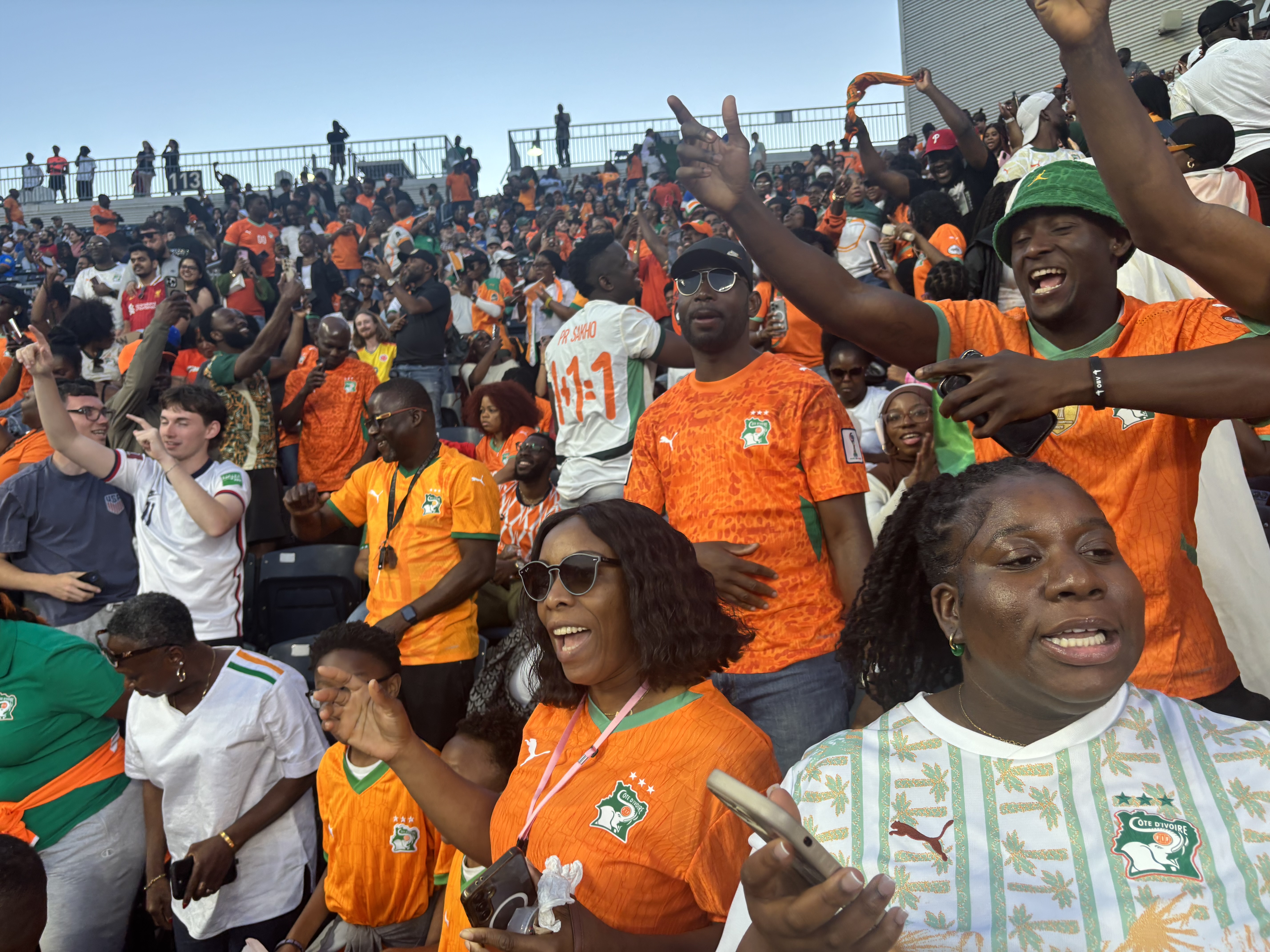
    Orange-clad Ivorians bring soccer joy to a World Cup tune-up in Chester

    Fans of the Côte d’Ivoire national soccer team erupt in cheers during their team’s 2-0 friendly match win over the Philadelphia Union II squad at Subaru Park in Chester on June 8, ahead of the 2026 World Cup.Will Bunch

    The cosmic vibes were not great Monday night. On the car radio, the news brought a new cycle of bombs dropping across the Middle East, and yet another onscreen meltdown from an American president who is stumbling toward his 80th birthday in confused anger. Reports from the eve of the much-anticipated return of soccer’s World Cup to North America were less about the game and more about U.S. immigration outrages, including a Somali referee turned away at the airport.

    Then at about 6:59 p.m., I walked through a long tunnel in suburban Chester and into an undulating orange sea of pure joy.

    On the green soccer pitch of Subaru Park, the national team from Côte d’Ivoire lined up in rapt attention as “L’Abidjanaise,” the national anthem of the West African nation, blared from a loudspeaker. But in the stands, fans wearing their native country’s iconic orange jerseys could not sit still, laughing and waving their cell phones, confirming with videos that their heroes were actually here, on U.S. soil.

    For a you-can’t-beat-it ticket price of zero dollars, in a year of maximum sports greed, members of an African diaspora scattered along the Eastern Seaboard had driven up or down I-95 for hours to watch Côte d’Ivoire — also known by the anglicized Ivory Coast — easily win its World Cup tune-up match against the young American prospects of the Philadelphia Union II, 2-0.

    Fatim Toure, 27, in her Côte d’Ivoire jersey, and her 26-year-old sister, Ferima, wearing her headwrap like many female fans at the stadium, had driven down from North Jersey to see the match, and were now beaming as they watched the kickoff from the tunnel as the sun set on a crisp, perfect June evening.

    Fatim said the sisters “were filled with nationalism and pride, so we’re excited to see how it goes.”

    The cheerfulness of the Côte d’Ivoire faithful who turned the 18,500-seat stadium bright orange — drowning out scattered dots of Philadelphians in the Union blue of the regular home squad — was infectious. It was truly what the world needs now.

    Soccer fans like me have been waiting since 1994 with patience, then anticipation, and finally something bordering on dread for the World Cup — Planet Earth’s ultimate sporting event — to finally return to U.S. grass. With the opener in Mexico City (75% of the matches are in the United States, with the rest in Canada and Mexico) slated for Thursday, news about the World Cup and soccer’s corrupt, authoritarian-loving governing body, FIFA, has been dominated by grim headlines.

    Formerly hopeful fans turned disillusioned by astronomical and often inscrutable ticket prices. Local tourism officials are dismayed at empty hotel rooms, as the expected international fans either balked at the cost, feared airport encounters with hostile U.S. immigration agents, or felt general revulsion at America’s autocratic turn under Donald Trump.

    Indeed, the political rise of Trump — the stuff of cartoon satire not long after the first World Cup matches were played here 32 years ago — and his hostile border regime have sparked the greatest angst, and on the eve of the kickoff, these fears are coming true.

    Top soccer referee Omar Artan from the African nation of Somalia was turned away at Miami International Airport on Saturday, denied the pinnacle of his profession by U.S. Customs and Border Protection agents for reasons still unknown. The star striker for the Swiss national squad was also initially denied entry (since reversed), while a star player from Iraq was interrogated for hours.

    Players from Iran — the nation Trump decided to bomb back in late February and is still engaged in a murky war — are going ahead with matches in Los Angeles and Seattle, but U.S. officials are forcing them to immediately return to their base camp over the Mexican border in Tijuana and not stay here overnight.

    Côte d’Ivoire, an ethnic melting pot of 32 million people on Africa’s Atlantic coast where French is the official language, hasn’t been immune to the xenophobic U.S. turn on immigration. The nation is one of several under a restrictive travel ban by the Trump regime, and efforts to allow visas for some soccer fans have been plagued by confusion, including a $15,000 bond that was announced, then canceled.

    While Monday’s free friendly match was a gleeful coming-out party for a diaspora that’s rooted in East Coast urban neighborhoods such as Southwest Philadelphia, most acknowledged that fans back in their native Côte d’Ivoire, where soccer is the national obsession, could never afford the cost of coming here — or the risk.

    “The ICE situation has killed the entire momentum of the World Cup,” a Liberian-born woman from Southwest Philly, who said she came out to support her African neighbors, told me. “America could have used this to boost the economy and generate income, but because of the whole ICE situation, a lot of people are afraid to come.”

    No World Cup squad will be more deeply tied to Philadelphia than Côte d’Ivoire, which plays two of its three matches at the temporarily unbranded Lincoln Financial Field, starting against Ecuador on Sunday night. The team is training in Chester at the Union’s facilities and staying in Delaware. But with the cheapest tickets on StubHub for that Ecuador showdown starting at $836, few whom I spoke with will be attending the matches that actually count for Côte d’Ivoire’s long-shot dream of becoming the first African nation to win the World Cup.

    “I wish, but I couldn’t get any tickets, unfortunately — it was too expensive,” Audrey Yao, a 32-year-old Ivorian American researcher from the University of North Carolina who was visiting Philly from Chapel Hill, told me. “So the opportunity to see the team today — that’s why I’m here.“

    For many Ivorians, Monday’s free friendly was essentially their World Cup, and they partied accordingly — swaying and gyrating to piped-in African Zouglou music between breaks, and celebrating wildly as keeper Alban Lafont stopped a penalty kick for Les Éléphants against rising young Union star Cavan Sullivan.

    As a die-hard — emphasis on the word die — Union supporter for their 16-year tortured history, I’ve seen some great matches in Chester, but I’ve never had so much fun.

    Monday night wasn’t just how the World Cup should have, could have been. It was very much the way America is supposed to be — with people who were proud and happy to be here, with one foot still planted in their bright-orange African heritage as they lived and breathed that Philadelphia freedom, with no masked goon squads there to hassle them.

    By the setting-sunlit banks of the Delaware River, there was no U.S. Immigration and Customs Enforcement, no need to raid the ATM, no bad news from outside the stadium walls. Just 90 minutes of the Beautiful Game.

    Yo, do this!

    • Don’t expect a lot of high-class book or film reviews this month, as my waking nonwork hours are devoted to watching the World Cup. Three games to circle this week are Thursday afternoon’s opening match in Mexico City between Mexico and South Africa (3 p.m., Fox); the first U.S. match against Paraguay in Los Angeles Friday night (9 p.m., Fox); and Philadelphia’s first contest between Côte d’Ivoire and Ecuador Sunday night at 7 p.m. on FS1, or in person at “Philadelphia Stadium” if you can spare the cash.
    • What if the biggest story of our time isn’t Trump’s outbursts, or even the World Cup — but the growing inability of our young people to sit down and read a book from cover to cover? The latest installment in this genre comes from university professor Tyler Jagt in a searing essay for the Chronicle of Higher Education: “My Students Can’t Read.” Is the culprit the smartphone and now AI, or the lost COVID-19 years, or the teach-to-the-test dictates of the Common Core curriculum? There’s a strong case for “All of the Above.”

    Ask me anything

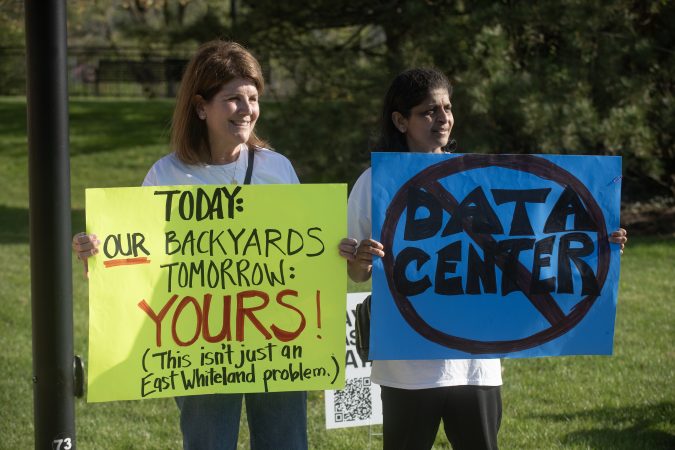
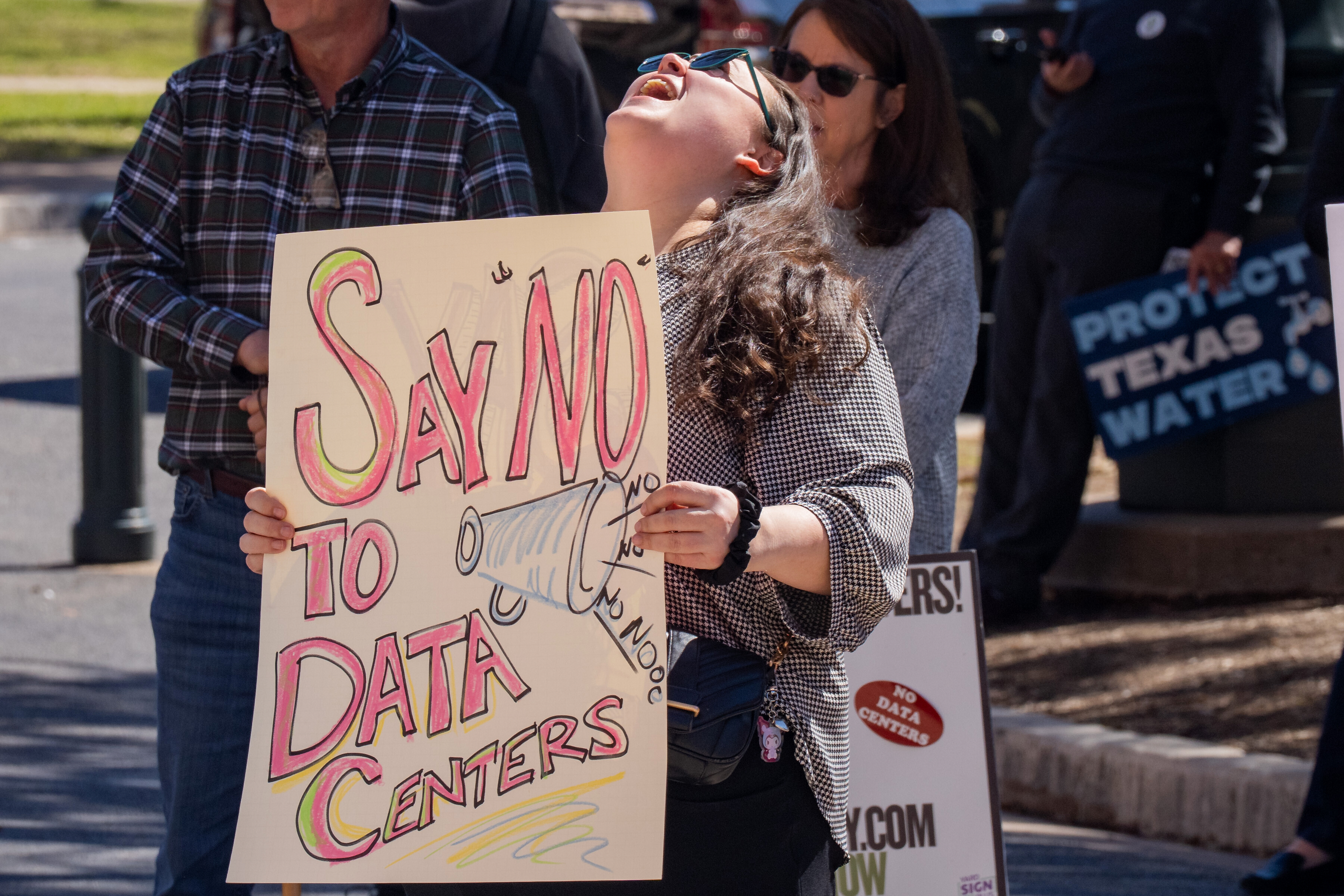
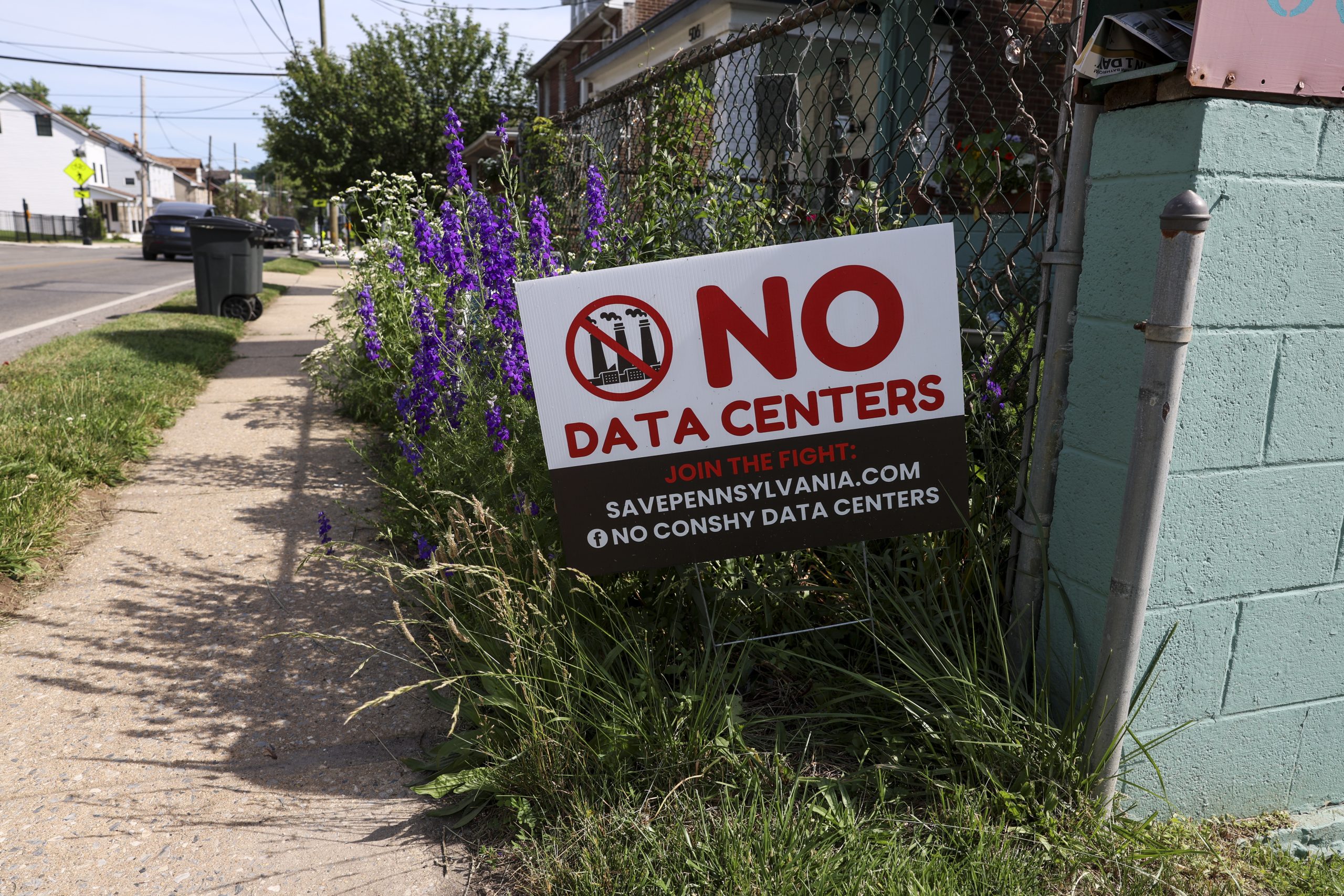
    Question: You recently wrote about data centers. Have there been any groups who have successfully gotten data center plans aborted? What do you think are the most effective ways for communities to fight back? — @silvermoonfafo.bsky.social via Bluesky

    Answer: There are already signs that the backlash against these massive, noisy, energy-and-water-sucking data centers powering the artificial intelligence revolution is becoming one of the most successful grassroots movements in American history. I wrote this spring about how everyday folks in rural Montour County, Pa., successfully blocked an Amazon-backed site that started with a lot of support from elected officials. How’d they do it? I wish there was some big secret, but basically it was: showing up. They organized petitions and got big crowds to speak at county commission and zoning board meetings, and the politicians had little choice but to listen. They have money, but we have people. Never forget that.

    What you’re saying about …

    Well, you won’t know it from today’s soccer-heavy newsletter, but not all readers share my deep passion for the Beautiful Game. Most questions that aren’t some variation on how much do you hate Donald Trump, or John Fetterman, or the media get low responses, but my World Cup question about a favorite team besides the U.S. set a record for reader nonparticipation. Andrew Ross is rooting for Portugal because he moved there from Philly three years ago (and we are all jealous). Weekly correspondent Mary Ann Petro isn’t rooting for anyone and hopes the Yanks “go down in flames.” I’m rooting for the U.S. and Côte d’Ivoire, but you knew this.

    📮 This week’s question: Few things are more outrageous these days than Donald Trump’s expensive desecration of Washington, starting with that $1 billion-or-whatever proposed ballroom at the White House. So what happens to the ballroom when the good guys retake power? Tear the whole thing down, or blow it up on national television? Or repurpose it as a community health center or midnight basketball court, or something else? Please email me your answer, and please put “Ballroom future” in the subject line.

    Backstory on how an LA mayor’s race could blow up America

    Everything about the doomed bid of a B-list reality-TV star, Spencer Pratt, to become a Republican mayor in the ultra-liberal enclave of Los Angeles has been utterly predictable. That includes his campaign that was big on the kind of social media stunts that an entertainment-oriented LA media loved, and short on substantive ideas for a city with big problems that are both chronic (its incurable homelessness) and acute (violent immigration raids, the 2025 wildfires). It also includes the fact that Pratt wasn’t likely to get more than the roughly 27% his highest-profile fan, Donald Trump, received in 2024 from America’s second-largest city.

    And now the least surprising thing of all: The right-wing conspiracy theories that Pratt’s apparent defeat by two Democratic women of color — incumbent Mayor Karen Bass and progressive upstart Nithya Raman — is their long-sought proof of massive voter fraud, after Pratt had started the lengthy vote counting in second place.

    It’s not just the usual loudmouths on X. Trump is taking the lead role, again, in spreading election lies, telling Kristen Welker of NBC’s Meet the Press in their now-notorious Wisconsin interview that the California voting was rife with fraud, and, when asked for any proof, blurted angrily: “No, they’re crooked … Just like you’re crooked.” When House Speaker Mike Johnson was asked about these lies on Capitol Hill, he only amplified them, stating that “everybody knows instinctively that something is wrong.” No proof, just “instincts.” Trump’s handpicked and apparently incompetent top prosecutor for Southern California is now threatening an investigation.

    Here’s the thing. California’s elections are among the most democratic and inclusive in America. There is extensive opportunity for the convenience of mail-in voting, and voters are allowed to send these ballots right up until Election Day. Local officials then have up to 30 days to meticulously count all the votes. That means a) it takes longer to declare a winner in California than anywhere else, and b) it unexpectedly turns out there are significant differences between who votes by mail instead of in-person, and the shape of the race can change dramatically from election night to the end of the lengthy counting. To today’s GOP, any fair and measured vote-counting must be a conspiracy.

    Why does it matter? Pratt loses and — according to some reports — moves out of LA. End of story, right? Not exactly. We don’t know yet what ridiculous claims California’s train wreck federal prosecutor will make about supposed election fraud, but it’s almost guaranteed that the Trump regime is looking to make California the bogus argument for extreme measures to influence the general election in November.

    Sending in troops? Seizing election machines? Invalidating results? It will all be on the table for Team MAGA in November, and the fact that the former bad boy from MTV’s The Hills couldn’t get elected mayor of one of the nation’s most diverse and liberal cities will be cited as a reason. Spencer Pratt has landed a starring role in the worst reality show ever.

    What I wrote on this date in 2023

    Even though it was only three short years ago, memories of this week in early June back in 2023 are a little foggy — because the skies here in Philadelphia and around the Eastern Seaboard were filled with suffocating, thick smoky haze from wildfires up in Canada. Before digging up my column, I’d forgotten that a Phillies game at Citizens Bank Park was canceled because of the horrendous air quality. I wrote: “In a perfect world, [President Joe] Biden would have donned an N-95 mask Wednesday and spoken in front of the orange blur of the Statue of Liberty to declare unconditional war on fossil fuels.”

    Read the rest: “America sleepwalks through a climate crisis. Will this smoke alarm wake us up?”

    Recommended Inquirer reading

    • I’ve never had so many column ideas swirling around in my head as this chaotic start to the summer of 2026. Last week’s Sunday column looked at the openly fascist coming-out party for the former U.S. chief immigration raider Greg Bovino, who attended a European white supremacist conference. I said it matters a lot that he is now screaming the not-that-quiet part about U.S. xenophobia out loud. I shifted gears over the weekend and wrote about the growing panic of U.S. elites over grassroots opposition to data centers, which has sparked bizarre accusations of Chinese influence, as well as spying on activists by some police agencies. The 1 Percent can’t admit it’s really the noise pollution and higher electric bills.
    • Wrapping up this week’s theme in a bow, I have to say I’ve been blown away both by the quality and the quantity of The Inquirer’s coverage of the World Cup, which has truly matched, if not surpassed, some of the national outlets. Lead writer Jonathan Tannenwald, with a well-deserved reputation as one of the nation’s top soccer journalists, has been following the U.S. team in its Georgia training and at its warmup matches, profiling key American players like its star Christian Pulisic, and filing other human interest stories like a Penn soccer standout who’ll be taking the pitch for Haiti. Other Inquirer writers have contributed with in-depth features about everything from the role the late Tug McGraw’s widow played in bringing soccer to Philadelphia, to the storied history of the cinder (ouch!) pitch in Fishtown that brought Philly “attytood” to the sport’s slow rise here. That’s not to mention the comprehensive guide we published earlier this year. You won’t be able to read all this without a subscription, so now is the time to finally sign up. And let the games begin.

    By submitting your written, visual, and/or audio contributions, you agree to The Inquirer’s Terms of Use, including the grant of rights in Section 10.

  • You hate data centers. They think you could be a terrorist or Chinese dupe.

    You hate data centers. They think you could be a terrorist or Chinese dupe.

    A year or so ago, many Americans had never heard of a data center. Today, these massive warehouse-type structures with an insatiable thirst for electricity and water are fast becoming the new “third rail” of U.S. politics. Sarah Longwell, the focus-group guru and TV pundit who writes for the “Never Trumper” site the Bulwark, said what she’s hearing from everyday voters is stunning.

    “I’m in the middle of a huge countywide fight against data centers,” one small-town Georgia woman told a focus group, in a tape that Longwell played on a podcast. “People are showing up about their water already, and about 40 people are being pushed out of their homes. It’s just very personal.”

    It’s the same here in Pennsylvania, where leaders in both parties, including Democratic Gov. Josh Shapiro, see data centers as an economic savior much as oil was in the 1860s. “We don’t want them!” exclaimed a Pittsburgh voter at the notion of these tech sites replacing shuttered steel mills. “It doesn’t matter who the governor is, who the mayor is. They’re all on board because it’s job creation.”

    Not on board? The average American. As recently as last September, a poll conducted for the environmental site Heatmap found voters evenly divided on whether they’d support a data center built near their home. Just nine months later, its newest survey finds about seven in 10 people would now strongly oppose one — a steep and shockingly rapid decline in public support for the infrastructure of artificial intelligence, or AI.

    Indeed, the trouble in the heartland for data centers has come so quickly it’s hard to say how much is driven by environmental complaints — such as noise and vibrations from data centers already up and running — or rising electric bills, and how much is simply white-hot rage at the tech billionaires getting even richer from AI, or the compliant politicians who’ve jumped on the bandwagon of their biggest donors.

    Christina Speasmaker, of Waco, Texas, chants with other protesters demonstrating against laws surrounding data centers outside the Texas Capitol in Austin in February.Mikala Compton

    Fortunately, we live in a thriving, well-oiled democracy in which our elected officials have their fingers on the pulse of the people and have rapidly shifted gears — to grab a pitchfork and join their furious constituents on the front lines of the war against data centers. Right …?

    OK, you probably saw right through my lame sarcasm there. Instead, America’s elites, and their beat cops who exist less to enforce laws than to uphold the social order that’s made their bosses so powerful, refuse to believe that regular folks have rationally decided that new data centers are unwanted scars upon the land.

    If you oppose data centers, they’ve decided, you must have been brainwashed by Chinese communist spies.

    Or worse. You may even be a terrorist.

    Last Thursday, the Republicans on Capitol Hill who lead the House Energy and Commerce Committee sent a letter to Trump regime officials urging an investigation into whether China — as part of a 21st-century nuclear arms race to become the planet’s dominant AI force — is secretly funding all these farmers and suburban moms fighting data centers.

    It’s an outlandish and unsubstantiated claim. Indeed, some of the GOP’s supporting evidence comes from a “think tank” called — and you cannot make this stuff up — the Bitcoin Policy Institute. Yet, anti-left conspiracy theories are sure to find a sympathetic ear in Donald Trump’s rabidly pro-AI government.

    A yard sign in Conshohocken protests a proposed data center on the site of the shuttered Cleveland-Cliffs steel mill.Monica Herndon / Staff Photographer

    “It’s not organic and local, some of this is foreign-sourced dark money coming in,” Interior Secretary Doug Burgum — formerly the governor of oil-drenched North Dakota — said at a May event hosted by the right-wing site Breitbart News. “The people who used to fight on climate change have shifted.”

    That shift would have to be the result of Manchurian Candidate-level brainwashing from Beijing, and not because studies have shown that at least 56% of the massive amounts of new energy needed to run these data centers comes from fossil fuels — oil, gas, and coal — right when the global climate crisis is accelerating. Last week, the World Meteorological Organization warned the planet should expect record heat through 2030.

    Dang, those Chinese spies are good.

    At least we can take comfort in the fact that the nation’s leading law enforcement organizations are working hard to respect the all-American First Amendment rights to free speech and dissent of these data center activists, much as they did for the civil rights marchers and anti-war protesters of the 1960s and ‘70s.

    LOL.

    Also last week, the Intercept reported on a document — later confirmed by The Inquirer — from the Delaware Valley Intelligence Center, which is hosted by the Philadelphia Police Department, that revealed that cops are sifting through social media posts by anti-data center activists, convinced they pose a newfangled terror threat.

    “Domestic violent extremists (DVEs) are likely interested in targeting artificial intelligence (AI) data centers, posing a physical and cyber threat to infrastructure in the Philadelphia regional area,” stated a December alert from the intelligence fusion center, which coordinates local, state, and national law enforcement.

    These fusion centers, you may recall, were established after the 9/11 attacks to prevent another World Trade Center-level incident. Today, “the terrorists” are apparently folks in places like East Whiteland Township or Vineland, N.J., who, in the immortal words of David Byrne, dress like students, or dress like housewives, or in a coat and a tie. Philly cops said in the report they are on the lookout for potential acts of vandalism and something they called “more disruptive First Amendment activity.”

    A massive data center is under construction in Vineland, N.J. It is expected to be complete later this year, with a capacity of 300 megawatts.Courtesy of DataOne

    I’m pretty sure your right to be nonviolently disruptive in America — without the government working to suppress those rights — is exactly why James Madison wrote up the First Amendment back in 1789.

    To be clear, vandalism or arson or other destruction at data centers would be wrong — but I’m struggling to find many examples of this. There have been a couple of reports of shots being fired at the homes of a pro-data center politician and AI impresario Sam Altman, which is deplorable. But the anti-data center movement is, overall, remarkably nonviolent. The threat to the system isn’t the bullet but the ballot, and they know it.

    “The more they try to silence us, the louder we’ll get,” Karen Feridun, the veteran environmental activist from Berks County, Pa., who founded the Pennsylvania Data Center Resistance group on Facebook, told me on Sunday. She noted that law enforcement also spied on her anti-fracking efforts in the 2010s, so she is not surprised.

    Feridun — who, as far as I know, does not speak a word of Mandarin — said activists see the law enforcement monitoring as an effort to intimidate them, but it is only fueling fears that the AI powered by data centers will be used for broader domestic surveillance.

    Indeed, we have never seen such a disconnect between our clueless elites, from Silicon Valley to Capitol Hill and the hallways of Harrisburg, and everyday folks who are filled with fury.

    That communication breakdown peaked a few weeks ago when an obscure real estate executive was tapped to address the graduating seniors at the University of Central Florida, and didn’t think twice about hailing the glorious AI future that 22-year-olds see as obliterating their job prospects. The speaker recoiled in shock at the overwhelming boos.

    Some observers argue that folks in the rural towns or sprawling exurbs fighting the data centers see them not just as ugly, noisy neighbors, but also as a proxy for the threat to the social order posed by AI as it disrupts the workplace or classroom learning.

    But in reality, the rage runs even deeper. It’s anger not only at the machine, but the world that created it — a world where the gap has never been wider between the billionaires of AI (and, this week, the first trillionaire) and us regular schlubs, struggling to pay the electric bill or fill the gas tank before our boss replaces us with a robot.

    Making matters worse is the realization that both political parties are in the back pocket of Big Tech and their crypto-bro allies, who are spending well over $300 million to buy the 2026 midterms. If anything, the hypocrisy of top Democrats like Shapiro or Virginia Gov. Abigail Spanberger, who claim to be fighting climate change while pushing for these energy hogs, is more infuriating than the predictable “Drill, baby, drill!” chants of Neanderthal Republicans.

    They just don’t get it. They spend all day in their cloistered back offices, counting their future cash, and all night at swank political fundraisers, convinced that anyone who’s not on board with their gravy train must be a deranged radical from Antifa™, or a useful idiot for the International Communist Conspiracy.

    They see the pitchforks and the flaming tiki torches and are squinting to see a “Made in China” label. They miss the righteous wrath, born in the USA.