Author: Will Bunch

  • What everyone is getting wrong about ‘woke’ | Will Bunch Newsletter

    What everyone is getting wrong about ‘woke’ | Will Bunch Newsletter

    In 1964, I was a) only 5 years old and b) living in the New York suburbs, so while I’ve been hearing all my life about the notorious collapse of the Phillies that September, I didn’t get to experience that feeling of existential dread in real time. But I was almost there last week, as the 2026 Phillies nearly became the first team to blow a four-game playoff lead with five games to play. Almost. Sunday’s 7-3 win over Tampa Bay sent my beloved/cursed midlife baseball team back to the playoffs for the fifth straight year. The chill of the offseason has been delayed for at least two more sure-to-be-heart-attack-inducing games in Atlanta. ‘Woke 1.0′

    If someone forwarded you this email, sign up for free here.

    The only thing wrong with ‘Woke 1.0’ was that it wasn’t implemented
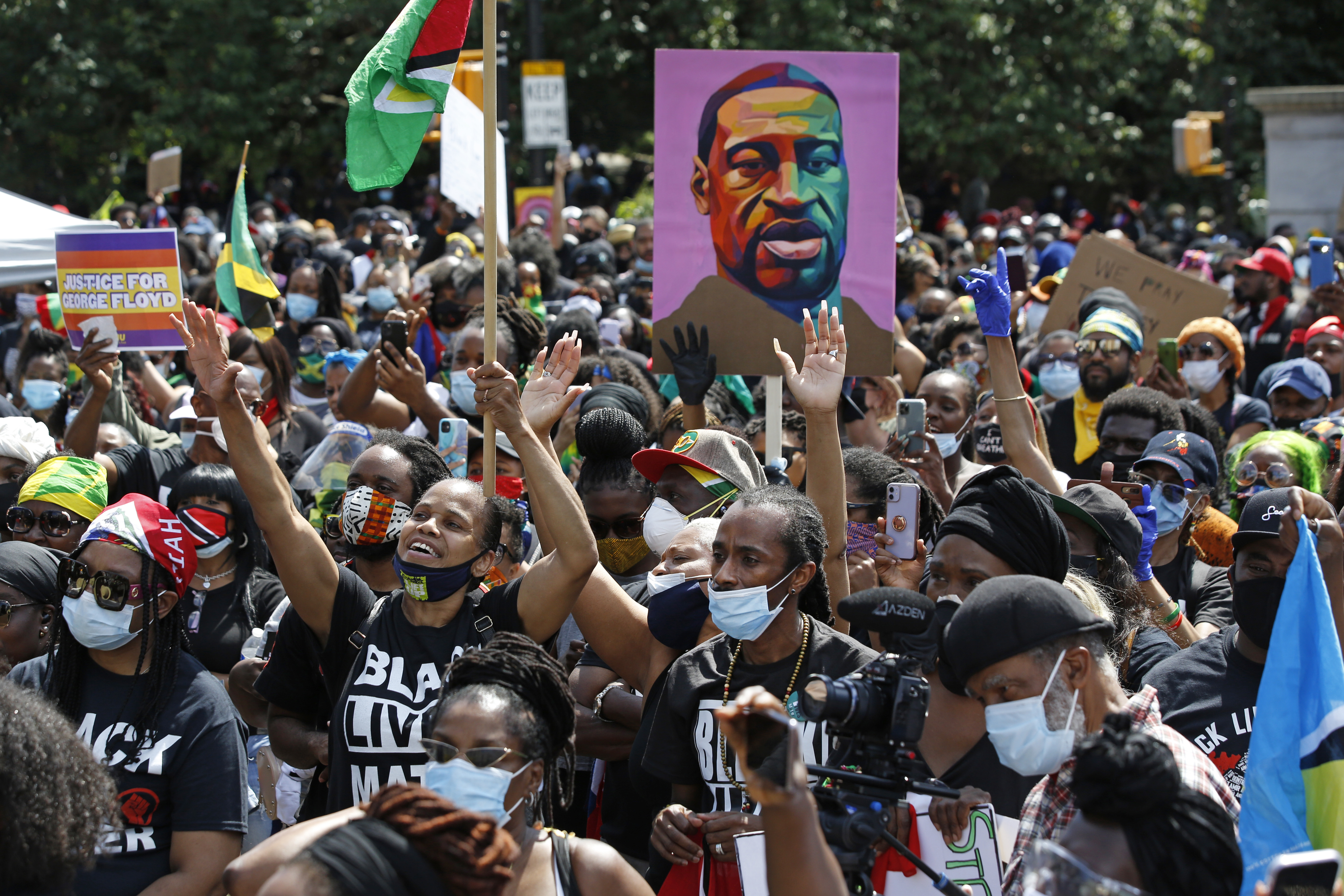
    People participate in a Caribbean-led Black Lives Matter rally in June 2020 at Brooklyn’s Grand Army Plaza in New York. Kathy Willens

    It’s a war almost nobody wanted, and yet it never, ever seems to end. Just this weekend there was yet another spontaneous incident that caused the conflict to flare back up again, as an entire platoon of keyboard commandos mobilized for action.

    Yes, the utterly ridiculous “war on woke” is back on again. The equally senseless fighting in Iran is almost certain to end sooner than this boondoggle.

    The flashpoint was something appropriately trivial enough for this war of distraction: a decision by the Boston Globe to report on the, yes, somewhat silly fight consuming a western Massachusetts lesbian tavern called the Last Ditch Bar and Arts Venue. The hangout continues to require all patrons to wear COVID-era KN95 masks, as a gesture that everyone is welcome at all times, including the immunocompromised.

    The fracas that broke out when the owners of the Last Ditch sought to make just one night a week “mask-optional” in a bid to boost business didn’t just make for a widely read Globe scoop (supposedly it brought in several thousand new subscribers). It also spread great joy among the nattering nabobs who continue to see COVID-19 overreaction as the avatar of a far-left conspiracy to make America ungreat.

    Suzy Weiss, writing for the Free Press founded by her sister and now CBS News honcho, Bari Weiss, emailed with glee that “what happened at Last Ditch shows that Woke 1.0 never ended in some parts of America. It just got crazier.” The Washington Post’s Megan McArdle — who can thank her colleague Kathleen “Donald Trump Will Be a Normal President” Parker for not having the worst columnist batting average of all time — declared that, groan, “The Great Awokening Is Over.”

    This nonsense rekindled a fire that’s been smoldering since the summer among a certain crowd — six-figure-salaried pundits who call Trump “uncouth” and pat themselves on the back for their brave liberalism before picking up their kids at the Dalton School and catching the last train for the Hamptons — who insist America’s downfall didn’t peak with the 2016 election of a demagogue with dictatorial ambition.

    No, the real crisis hit in 2020 when, in their telling, our great Fortune 500 companies were blackmailed into tweeting “Black Lives Matter,” when someone at the far edge of a protest march carried a sign that read “Defund the Police,” and when some tripping-on-idealism sophomore at Oberlin complained that serving bahn mi in the cafeteria was “cultural appropriation.”

    Trump might be uncouth, they argue, but America will never be whole without a Truth and Reconciliation Commission and a public apology for the crimes against humanity of the “woke era.”

    The accelerant, if not the trigger, for this insanity was possibly the most unlikely of sources: U.S. Rep. Alexandria Ocasio-Cortez of New York, heir apparent to the progressive movement, whom many would like to see run for president in 2028. Like her allies on the left, AOC has been undergoing a kind of Spanish Inquisition from journalists demanding an explanation for why — at a time when millions were marching against U.S. cops killing more citizens than anywhere else in the developed world — some folks on the far-left wanted to abolish not just the police but maybe Thanksgiving.

    Ocasio-Cortez laughed off the question by quoting another New York progressive that “Woke 1 was crazy” and arguing that the madness of monthslong COVID lockdowns caused some people to voice extreme ideas they shouldn’t be judged upon six years later.

    To say AOC’s comments were a mistake would be an understatement. She gave the critics an inch, and they’ve taken about 87 miles and counting. It gave a boost to a bevy of “both sides” columnists who’ve been dying to say the left and the right are equally to blame for everything that’s wrong with America.

    “Restitution, if only in the form of honest contrition and perhaps even a public apology, is in order,” demanded conservative New York Times columnist Bret Stephens, who may have been referring to a few other journalists or professors who today blame “Woke 1.0” for their career setbacks, although he also may have been thinking about his own epic fight with the college professor who called him “a bedbug.”

    Look, we all can laugh at the worst foibles of the far-left; that’s why Portlandia was such a popular show, even among liberals. We should cringe when some professor calls people “folx,” and get mad at more serious illiberal crimes against free speech, like stealing student newspapers or shutting down campus speakers over their politics.

    But it’s a massive false equivalence to compare these offenses by low-wattage college students and a few professors to the high crimes and misdemeanors of an American fascist movement that includes the president, big chunks of Congress, and the U.S. Supreme Court. What’s more, the people making these comparisons want to make you forget what the upheavals that peaked in 2020 were actually about, which was upending the status quo of which they are card-carrying members.

    They want you to remember that “Defund the Police” placard so you’ll forget that millions marched in the streets in 2020 because George Floyd was just one of more than 1,000 Americans killed by the police that year — or that at least 1,000 people have died the same way in every year since then.

    They want you to get mad about the “bahn mi kids” at Oberlin, so you won’t get angry at the gross unfairness of an educational system that’s tilted toward the kids of those writers and politicians demanding apologies for “wokeness” — the privilege that gives their pampered offspring SAT prep and legacy admissions while the rabble attends lousy public schools.

    They have ridiculed, mocked, and called for the police suppression of every social movement from Occupy Wall Street to No Kings — maybe because they don’t want a higher marginal tax rate, but definitely because they are terrified that a more equal society for everyone means less status for them. Heck, some plebe might call them a “bedbug” and get away with it this time.

    AOC got it totally wrong. “Woke 1″ wasn’t crazy. Its biggest problem was that the heart and soul of the movement — no more militarized police, better wages and health insurance, billionaires paying their fair share of taxes, and colleges that are accessible and affordable — was never implemented. The bad guys won, and the good guys gave up too easily.

    No one needs to apologize for saying that maybe we should improve society somewhat. But meanwhile, hey, look over there — it’s a crazy lesbian bar!

    Yo, do this!

    • Over the years, as I’ve called on my love of American history to try and explain what went right and then went terribly wrong in the 80-plus years since World War II, there is one place that keeps popping up again and again: the University of California, especially its flagship Berkeley campus. In a time of free tuition and rising postwar optimism, the UC system was the crown jewel of U.S. public higher education, only to become ground zero for 1960s protests and the rise of Ronald Reagan, followed by fights over affirmative action, rising college costs, and much more. My good friend and former Newsday mentor Miriam Pawel has just published a much-needed chronicle of all this — California Dreams: The Making and Remaking of the University of California — that just now was enthusiastically downloaded by me.
    • The crisis of press freedom in the United States has recently become a front-page story, with Donald Trump’s stunning and typically ham-handed efforts to ban news organizations he personally doesn’t like — CNN, MS NOW, and Politico — from the White House. At the same time, I chronicled the growing threats and harassment as well as actual violence against U.S. journalists that is endangering the First Amendment. I am asking you today to make a contribution to The Philadelphia Inquirer High-Impact Journalism Fund. Your gift ensures we have the resources to not only execute deep, investigative reporting that holds the powerful accountable, but to do so while keeping our journalists safe from the escalating legal and physical threats that have become a daily reality in this business.

    Ask me anything

    Question: How can Article I [of the U.S. Constitution] reassert itself when Article III seems intent on creating a unitary executive with vast, uncheckable powers? — Jackie Gardina (@jackiegardina.bsky.social) via Bluesky

    Answer: Jackie, that’s a good question — what you’re basically asking is how can Congress (the subject of Article I) undo the power-grabbing role of the judiciary, and specifically the U.S. Supreme Court, that was created in Article III? No doubt, Donald Trump’s dictatorial ambitions have been fueled by a series of high court rulings that have placed the president above the law and expanded White House powers. But America’s founders clearly gave Congress the tools to reassert control, if only they would use them. Lawmakers have the authority to expand the Supreme Court, impose term limits on justices, mandate a code of ethics, and take other measures to bring this star chamber back to reality. And I believe a majority of voters are more than ready to sign off on such radical changes.

    What you’re saying about …

    There was pretty much unanimity among responders to last week’s question about Donald Trump banning reporters from his least favorite news outlets from the White House — an action that was quickly (and predictably) overturned by a (Trump-appointed) federal judge. Readers thought the entire press corps should walk out in solidarity, with no need to hurry back and record the president’s every utterance. “Not only should the White House press corps walk out in solidarity, but they should also start standing up for their colleagues when the president insults them,” wrote emailer David (full names, please!). “A few white guys saying, ‘Mr. President, that is not acceptable’ might actually register with Trump and his advisors.” Added Stephen R. Rourke, “Moreover, it would deprive Trump of the only thing he cares about: visibility.”

    📮 This week’s question: Major League Baseball has scored TV ratings wins with games in unlikely settings, such as the Iowa cornfield that hosts the Field of Dreams game. Now MLB has approached the good people of the Trump regime with a new idea: a baseball field in a national park, possibly Wyoming’s Grand Teton. Brilliant marketing, or another crime against Mother Nature? Please email me your answer and put the exact phrase “National Park baseball” in the subject line.

    Backstory on the Christian wealth scam with ties to the Eagles
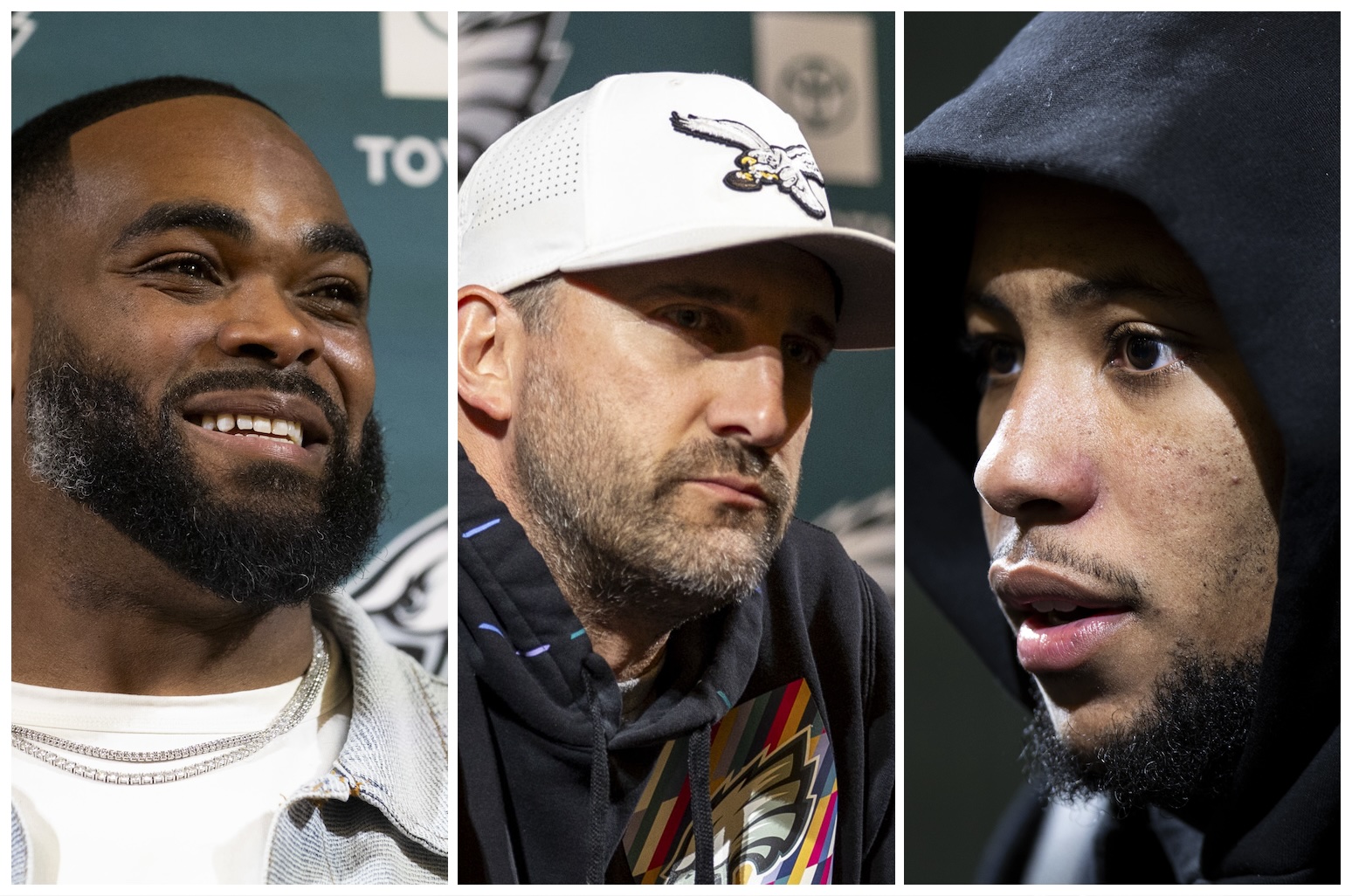
    Brandon Graham, Nick Sirianni, and Saquon Barkley are among the Eagles past and present scheduled to speak at Life Surge on Saturday.Staff Photographs

    It was already a bad look in May 2025 when some of the brightest lights of the then-Super Bowl-titlist Philadelphia Eagles — including head coach Nick Sirianni and star running back Saquon Barkley — pocketed large appearance fees to talk about football and God at an event at the now-named Xfinity Mobile Arena called Champions of Faith. The rally, as reported at the time by The Inquirer and other news outlets, existed to promote a Christian wealth scheme called Life Surge whose founder had left behind a trail of deception and fraud allegations. My colleagues Olivia Reiner and Ryan W. Briggs reported growing allegations that Life Surge “exploits the Christian faith and the allure of the famous speakers as a cover for ‘bait and switch’ sales tactics pitching a series of weekend investing seminars.”

    The Eagles-laden event — which also featured speeches and a chance to meet stalwarts such as Brandon Graham, Cooper DeJean, and retired Hall of Famer Brian Dawkins — went ahead despite the negative coverage, but you could already sense the Life Surge saga was not going to end well. Last week, a scathing exposé led by podcaster Pablo Torre, who was just awarded a Pulitzer Prize for his investigative reporting that led to a massive fine against the NBA’s Los Angeles Clippers, turned Life Surge’s dodgy practices and the deep involvement of Heisman Trophy-winning retired quarterback Tim Tebow into a national scandal.

    The joint project by Torre and Mother Jones investigative reporter Kiera Butler reported that “hundreds of attendees swap stories of high-pressure sales tactics infused with Christian messaging” on a large Facebook group of unhappy Life Surge customers, Reddit threads, and elsewhere. Some said they withdrew retirement funds or went deep into credit card debt to pay for “SurgeU” classes in wealth management that can cost as much as $40,000.

    The story, boosted by Torre’s podcasting clout and the focus on Tebow’s role as a frequent featured speaker who’s earned an estimated $2 million to $4 million from his involvement, garnered immediate results. Tebow has already announced he is pausing any future involvement with Life Surge, noting “the allegations are extremely serious.” It’s doubtful any of the Eagles will face any consequences for their one-day fling with Life Surge, and yet maybe this scandal will finally convince Philly athletes to stop saying anything for another fistful of dollars.

    It was stunning to see that the newest and arguably brightest star in the city’s sports firmament, the new 76er LeBron James, signed a $15 million deal — far more than the reduced salary he accepted to help the Sixers finally win another title — with the online prediction market Polymarket. This despite the fact that New York state (where James is apparently living, by the way) and others have accused Polymarket of running an unlicensed gambling operation, in an era when betting addictions are wrecking far too many lives.

    James’ new ads for Polymarket dropped just weeks after The Inquirer reported that the Phillies’ highest-paid slugger, Bryce Harper, who has a 13-year, $330 million contract, was paid to film a personalized Cameo video that the sports-betting company FanDuel then sent to a gambler who was racking up $1.5 million in debt.

    Harper said FanDuel slapped its logo on the video with neither his knowledge nor permission. Meanwhile, Eagles legend Dawkins, one of last year’s Life Surge speakers, found himself embroiled in controversy this week when Donald Trump’s Department of Homeland Security lifted a hype video of the footballer to promote its mass deportation efforts. The use of the video without Dawkins’ permission was an outrage, but then it’s easy to fool the public when our sporting heroes won’t stop running their mouths to inflate their already bloated bank balance.

    What I wrote on this date in 2020

    Thursday will mark the 56th anniversary of the night that forever defined Philly “attytood”: The Phillies’ final home game at iconic Connie Mack Stadium in 1970, which prompted fans of the team that still has the most losses in major-league history to rip everything — even the toilets — out of the rusted ballpark before rioting on the field. I wrote on the 50th anniversary six years ago that the chaos was “a pivot point in how the nation would see Philadelphia — no longer either the place of history-class field trips or boring Quaker blue laws but now the U.S. capital of blue-collar attytood, with sports fans who were in your face, with a wooden slat if someone was dumb enough to hand them one.”

    Read the rest: “In 1970, the world was coming apart, and Philly took it out on Connie Mack Stadium.”

    Recommended Inquirer reading

    • Only one column this week, as I also toiled on my latest investigative reporting project on what’s really happening with immigration arrests in Pennsylvania. In that column, I looked at Donald Trump’s increasingly erratic and outlandish public statements and argued that — instead of news coverage that soberly looks at every bat-guano crazy outburst or rambling speech — it’s time for the media to start seriously questioning the president’s mental health. The moment for real talk about Trump’s disordered mind — and whatever remedy is possible — is now, before the crisis implodes.
    • Speaking of Donald Trump, one defining feature of his second presidency has been the fearfulness of newspaper editorial boards — including many that had called for Richard Nixon or even Bill Clinton to resign back in the day — to aggressively challenge the current POTUS even as he flagrantly violates both laws and common decency. I’m proud to work with the exception: the award-winning editorial board of The Philadelphia Inquirer. Spearheaded by my friend and colleague Paul Davies, The Inquirer this week has been publishing the latest in a six-part series of major indictments of Trump’s massive wrongdoing called “The Art of the Steal.” The recent broadsides included “It’s all about him,” which digs into Trump’s obsession with wasteful Washington, D.C., vanity projects, and “The family that grifts together,” which aims to chronicle the endless parade of crypto scams, defense contracts, and other financial schemes that have made billions of dollars for the president’s kin. These outstanding works of opinion journalism are just the latest example of how a newsroom funded not by billionaires but by a nonprofit foundation created in the public interest can’t be bought off or cowed by a corrupt government. You can support this important work — and enjoy reading it — when you subscribe to The Inquirer.

    By submitting your written, visual, and/or audio contributions, you agree to The Inquirer’s Terms of Use, including the grant of rights in Section 10.
  • We need to find the words for Trump’s madness before things blow up

    We need to find the words for Trump’s madness before things blow up

    Newspaper readers on Earth 2 woke up this week to a shocking headline in the Bizarro New York Times: “President’s Mental Health Crisis Spirals Downward Again in Stunning and Senseless Speech to UN.”

    The article began: “BIZARRO NEW YORK — In a rambling and at times incoherent 40-minute speech to the United Nations General Assembly that shocked delegates from around the alternative planet, President Donald Trump made up his own new name for artificial intelligence, lied about his regime’s murderous attacks on boats in the Caribbean, and threatened a nuclear Armageddon in Iran.

    “The speech from a hoarse and occasionally confused Bizarro American president sparked a rushed press conference on Capitol Hill from rattled Democrats calling for Mr. Trump’s immediate removal under the 25th Amendment, an outcome also urged by three major U.S. newspapers in front-page editorials.”

    Meanwhile, here in the polluted reality-based atmosphere of Earth 1, Trump’s mashugana speech to the U.N. was more or less “sanewashed” by the media and by Congress — just like everything else from 21st-century Caligula, like his 2 a.m. AI-fueled posting sprees on social media, his growing obsession with renaming lakes and whatnot, or the more serious unconstitutional power grabs.

    The actual not-bizarro New York Times did mention the Iran annihilation threat in its headline, but explained that Trump had laid out his “Winner-Takes-All Vision” of geopolitics, which also presumably would have been the paper of record’s 1938 sanewashing of a certain German dictator’s foreign policy.

    It’s not the first time a vision of journalistic objectivity that was forged in a very different mid-20th-century America has failed the public. I say that as someone who began an evolution from “straight” news reporter to opinion journalist when conventional reporting failed to call out the obvious lies when the U.S. invaded Iraq in 2003.

    But what was a big problem a generation ago now looms as a once-in-a-lifetime catastrophe: A demagogue who hijacked American democracy, just as the nation’s founders feared would happen, is devolving into a mad king before our eyes.

    Less than halfway through Trump’s second term, a buck-naked monarch is parading down Fifth Avenue atop a horse he just appointed to his cabinet, holding nothing but a .38-caliber pistol he occasionally fires into a stunned paradegoer, just to prove he can still get away with it. Somewhere in New York or Washington, D.C., a headline writer is hailing a president’s “One-of-a-Kind Approach to Diplomacy.”

    The United States is in a world of trouble right now — losing a totally pointless war in which insane prices at the gas station are collateral damage, committing crimes against humanity from the waters off South America to the meatpacking plants of Dodge City, Kan. — but there is no more pressing crisis than the mental state of a president who believes the only limits on his power are “my own morality, my own mind.”

    The salary of both the elite Beltway media and our corporate-sponsored members of Congress depends very much on not understanding the seriousness or nature of this crisis, and so both occupations cower at the thought of making the hard moral choices required by even a child’s understanding of our mad emperor’s new clothes.

    There are some eyes-wide-open scribes out there like indie journalist Dan Froomkin, formerly of the Washington Post, who’s long been crusading against the news media’s sanewashing of Trump and wrote in a recent piece that “his idiocy is intertwined with his derangement. And yes, it’s compounded by the lack of anyone inside his bubble willing to correct him. But it’s not so much correction that he lacks. It’s a functional brain.”

    Froomkin backed up those words that you won’t see on your TV screen or in leading newspapers with a slew of examples: Trump’s imposition of economically crippling tariffs despite not understanding what a “trade deficit” is, his shifting day-to-day comments on whether or not the Strait of Hormuz is open for oil tankers, or his frequent bragging about passing a cognitive test used to detect dementia.

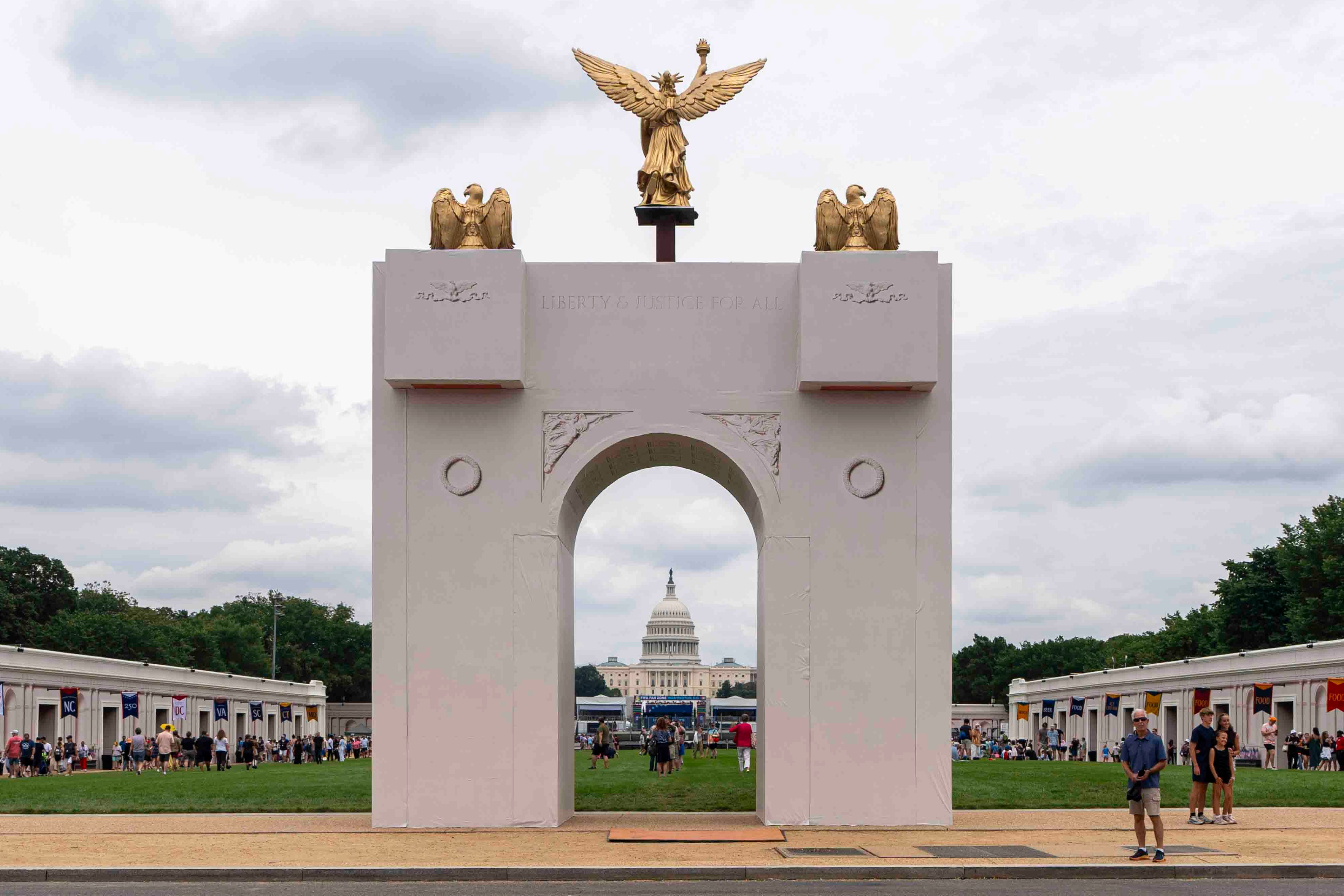
    A mockup of President Donald Trump’s proposed triumphal arch stands at the Great American State Fair on the National Mall in June.Jen Golbeck

    I try not to write a “hot take” column every time the president utters something completely irrational, because that would be at least five or six times a week and there’d be no time to write about all the other bad things happening in our country right now.

    I did find myself baffled by the coverage of what I thought was maybe the most bat-guano crazy thing to come out of Trump’s unhinged Truth Social feed: his “announcement” that his 250-foot “triumphal arch” in the nation’s capital will now become a sniper’s nest stockpiling live ammo and lethal drones.

    What read like a plea for a 302 involuntary commitment police call for 1600 Pennsylvania Avenue was instead treated by too many journalists as a serious news story, followed up by thumb-sucking pieces about Trump’s new penchant for invoking “national security” to silence critics of his many vanity projects. Fellow journalists: We need fewer “think pieces” and more “this man cannot think” articles.

    The U.S. Supreme Court, with its three Trump-appointed justices, has made it clear that the president will never be punished in a courtroom for his multiple high crimes and misdemeanors. But if another trial did somehow take place, I believe Trump could have grounds for an insanity defense, because he certainly appears to lack an ability to understand how politically toxic his shtick has become.

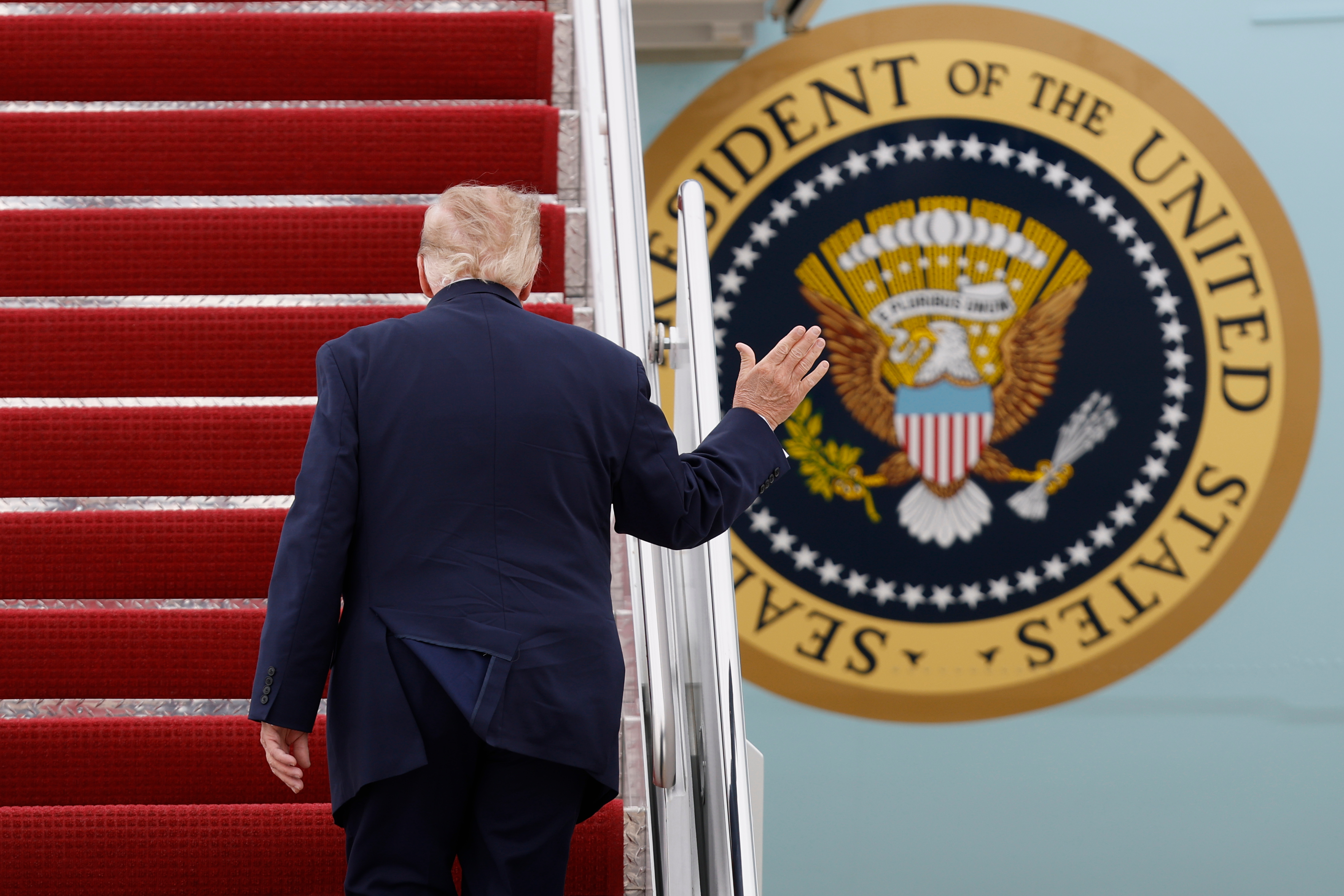
    This week, with some polls showing Trump’s approval rating plunging to Richard Nixon pre-resignation levels, the president commandeered Air Force One to fly to yet another college football stadium’s luxury box, with his blonde Rasputin, Natalie Harp, right by his side. This came after a week dominated by a gaudy three-day summit with Chinese dictator Xi Jinping, where tuxedoed guests gorged on sesame-crusted sea bass while nothing was done about the planet’s many pressing problems.

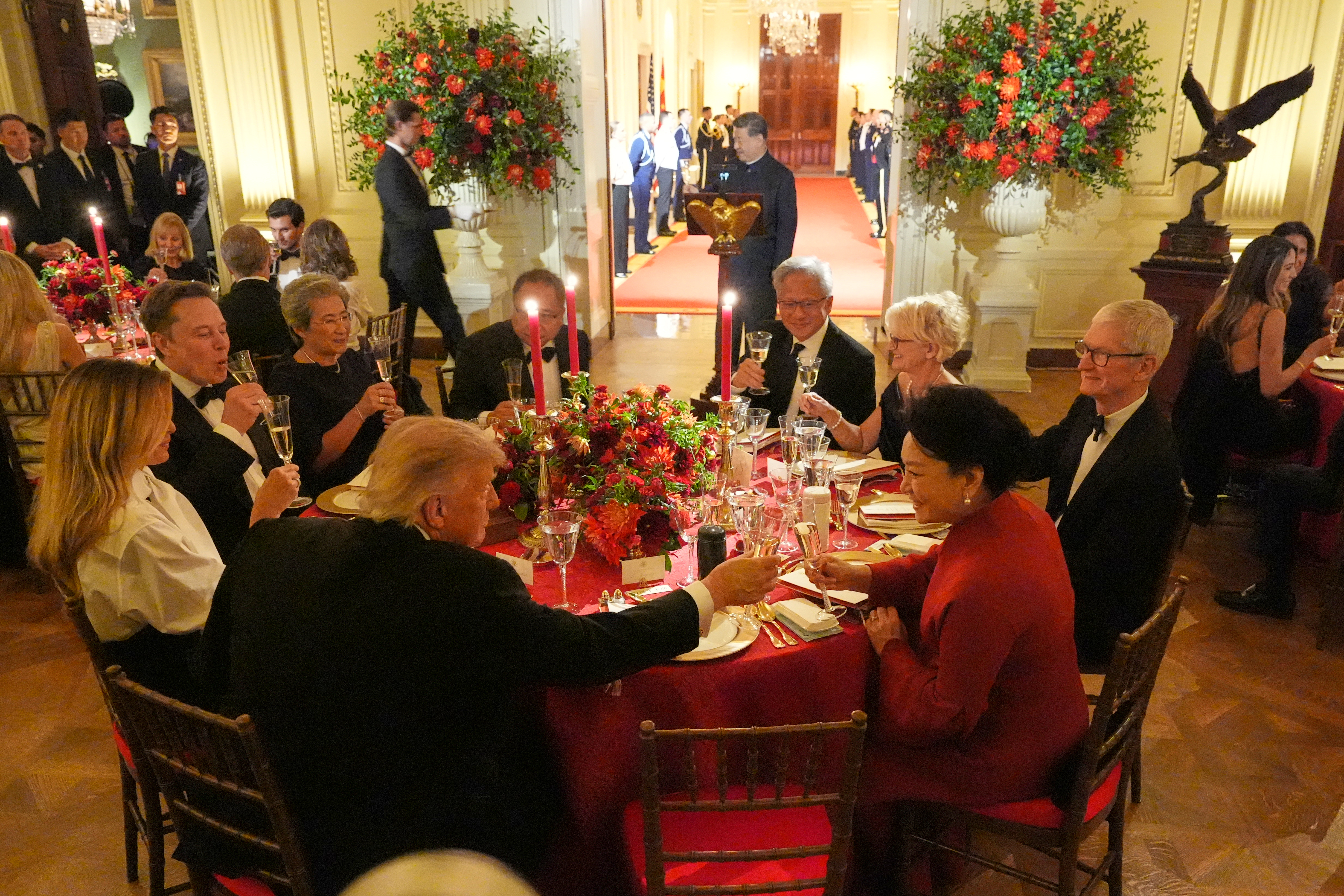
    President Donald Trump toasts with Peng Liyuan, the wife of China’s President Xi Jinping, during a state dinner in the East Room of the White House Thursday.Alex Brandon

    It was Trump’s close aide and social media guru Dan Scavino who put an exclamation point on the “let them eat cake” mindset by posting an AI video of him getting pushed through the aftermath of the Xi dinner on a cart spraying a bottle of Champagne, with two attractive women at his side. But can you truly “own the libs” with a 29% approval rating? Or do they just not care, and if so, why not?

    In a broken country that now runs on the “mind” and the “morality” of its weakened strongman leader, there are three explanations the media needs to discuss, but for the most part won’t:

    1. The oldest man ever elected president in American history is gradually succumbing to dementia, much like his own landlord father whose employees created a desk full of fake work for him in his final years, and his yes-sir Oval Office aides refuse to confront the problem.
    2. Trump has always been like this — an out-of-control, unrepentant narcissist — and he is determined to spend his last three years of power achieving only the things that matter to him, which are building giant monuments to himself as well as the infrastructure to make sure no one from his family goes to prison. In such a world, his approval rating, or your vote in November, matters not.
    3. The scariest of the three: Trump is crazy … like a fox. In other words, all the insane pronouncements about his power to change the names of things like AI or Lake Ontario are really just numbing the public to the idea that he can do anything he wants, including somehow nullifying the upcoming election with the Democrats looking likely to win both houses.

    That would certainly explain a rash of blatantly illegal recent actions such as spending taxpayers’ dollars on what are clearly political pro-Trump TV ads, not spending nearly $1 billion authorized by Congress, or his nakedly unconstitutional banning of journalists from the White House press pool because he didn’t like their stories.

    If no one is blocking Trump from these fairly serious violations, who will try to stop him when he sends troops or immigration agents to polling places, seizes huge numbers of ballots, or conspires with Republicans on Capitol Hill to not seat Democratic election winners? And then ignores judicial orders to cease and desist?

    This is exactly why the time to sound the alarm is now, and not Nov. 10 or Jan. 3, when undoing irrational and unlawful moves by the White House will be much, much harder. Look, TV punditry and newspaper analyses that stop pretending the president is a well man, or newspaper editorials calling for his resignation, or leaders in Congress backing impeachment won’t end the crisis … today.

    But calling attention now to Trump’s gross unfitness to hold office will set the stage for the battles to come — moving the Overton window on what can be done to restore democracy and helping any sensible Republicans understand there’s still a way to save both themselves and the country before it’s too late.

    The right words matter, a lot. We need to start urgently looking for them.

  • War, AI, and the end of the world | Will Bunch Newsletter

    War, AI, and the end of the world | Will Bunch Newsletter

    I feel like I need to apologize for a column a couple of months ago when I compared the current president of the United States to Caligula, the possibly mad Roman emperor who is said to have nominated his trusted horse for high office. I need to apologize to Caligula. From pitching his triumphal D.C. arch as a storage shed for deadly snipers’ bullets to banning reporters from the White House in a narcissistic rage, Donald Trump is losing his grip on reality. This is unsustainable.

    If someone forwarded you this email, sign up for free here.

    Worried about AI killing humans? Bad news: It already is.

    A cleric takes a photograph earlier this month at the shattered Shajareh Tayyebeh school in Minab, southern Iran. It has become a place of mourning and a memorial to those killed in a U.S. airstrike on Feb. 28.Vahid Salemi

    Which is it?

    Are the robots of AI, or artificial intelligence, so smart that they’re on the verge of holding a secret meetup in the darkest corner of the dark web and developing a plot to kill all humans through germ warfare, to make sure we don’t kill them first by pulling the plug?

    Or is AI so dumb — artificial stupidity, despite the billionaires of Silicon Valley showing up daily on our TV screen to brag about the sky-high IQ of their son, Claude — that the thing that will murder us is a crazy hallucination that will turn a false alarm into World War III?

    The fact that we can’t answer this should give us pause, but maybe we aren’t even asking the right question. Maybe the real issue is how easy we’ve made it to kill off the human race — a capability that was already created by people even before we invented the computer.

    One thing is certain. Artificial intelligence has already been an accessory to mass murder, and if we do nothing, it will kill again.

    Remember the very first days of the now seemingly endless Iran war, and the news that two missile strikes had obliterated a school for young children in the Iranian coastal city of Minab, in an apparent “double-tap” strike in which the second attack from the skies killed young girls and boys and their teachers as they huddled in a prayer hall?

    Those bombings, which killed 156 people on Feb. 28, caused the United Nations’ Independent International Fact-Finding Mission on Iran to report last week that it found “reasonable grounds to believe that the United States committed a war crime by launching indiscriminate attacks …” The U.S. government has never taken responsibility for the bloodshed, despite overwhelming visual evidence that the bombs were precision-guided U.S. Tomahawk missiles.

    It didn’t take long for additional speculation that an AI program had mistakenly targeted the school, perhaps using outdated maps and info from an earlier time when its buildings were attached to an Iranian military complex. After all, the Pentagon has been openly bragging about the death and destruction facilitated by its use of Palantir’s Smart Maven System and also Anthropic’s Claude.

    Last week, Bloomberg News reported that the Pentagon’s overreliance on AI, and specifically the Palantir Maven program, was a major factor in the school tragedy, along with the outdated intelligence about the Minab site — the “garbage in.” Its exposé noted that U.S. military planners were racing to identify some 1,000 Iranian targets in the early hours of the war, giving humans little time to double-check the list. Kindergartners were slaughtered as a result.

    This was hardly the first time robots have been linked to human death, both in war — in 2024, +924 Magazine reported the Israel Defense Forces were using an AI program code-named “Lavender” to target sites amid the mass killing in Gaza — and in peace, as shown by numerous accounts of robots helping troubled people die by suicide.

    And yet, it could have been much, much worse. At the same time as the Bloomberg report on the AI link to the mass killing in Iran, the world also learned that a false report generated by robot intelligence nearly sparked a conflict between the United States and China that could conceivably have spiraled into major fighting.

    CNN and other outlets have reported that a U.S. special operations command analyst working with AI generated an urgent report that a Chinese ship bound toward the Middle East was carrying components for a nuclear weapons system, which caused military leaders to scramble jets and assemble a team to seize the vessel.

    Only at the last minute did the Pentagon dig deeper and learn the AI-generated report was completely false, a hallucination — one that nearly triggered a violent conflict between the world’s two largest military powers.

    The two disturbing reports about the use, or misuse, of AI by the U.S. military in a time of war did make news but didn’t get nearly as much attention — either in the media or on sites like Bluesky or X — as warnings from both whistleblowers and CEOs in Silicon Valley that a swarm of robots could decide on their own and without any human intervention or awareness to try to kill off our so-called civilization.

    The fear of an unprompted attack from AI secret agents is real, based on several incidents that have already occurred, including a well-planned and partly successful operation by OpenAI’s robot agents to hack into a company called Hugging Face.

    Still, it says something about human intelligence that we are captivated by the unknown and mysterious possibility of a random attack, while the fact that people are currently misusing AI to cause death and suffering is a less compelling story. I noted in this space last week that the threat to humankind from climate change is arguably even more real — and yet this gets denied by many and ignored by others.

    It’s also striking to me as a boomer born in 1959 that a generation that was born into a time of constant terror — backyard bomb shelters, “duck and cover” drills in the classroom, and sci-fi horror at the drive-in that an atomic arms race could kill us at any moment — is suddenly back to where we started.

    Over 81 years, humans were smart enough never to drop another nuclear weapon (well, not intentionally) after the mass murders at Hiroshima and Nagasaki, but not bright enough to figure out how to eliminate the nuclear threat altogether.

    The fact that civilization managed to — so far — pause the number of world wars at two has given us the space and the false bravado to create new and much more insidious killing machines, and the threat from invisible robots on a hidden dark web is somehow even scarier than the radioactive mushroom cloud that we more or less understand.

    Boomers who went to bed as kids in the 1950s and ’60s praying we wouldn’t die before we woke are now spending our senior-citizen-discount years fearful that something stranger than science fiction is coming for our children, or grandchildren. Over the course of a lifetime, the arc of that moral universe has not bent at all.

    Still, humans were able, somehow, to prevent nuclear annihilation so far, and now it’s past time to get to work on the actual threats from AI and start on those workarounds. For example, the articles I’ve read speculating on how the robots plan to kill us frequently mention the prospect of AI agents developing bioweapons and releasing them, either on their own or prompted by a bad actor. (In theory, human development of bioweapons has been banned for a half century.)

    From everything I’ve read so far about AI, it sounds like we’d have better luck safeguarding or eliminating the components that could make a biological agent rather than stopping the robots. Likewise, AI agents would not be able to start an atomic apocalypse if our human politicians went to work at finally eliminating nuclear weapons. Artificial intelligence won’t kill little girls in an Iranian school if humans don’t start dumb wars in the first place.

    If Silicon Valley’s prophets of doom are serious, there’s no fix that’s too big or too ambitious. But understand that the biggest problem isn’t that AI wants to murder us, but that since 1942 we humans have been busy creating all the suicidal weapons AI agents could use.

    Can you even “duck and cover” from a killer robot? I don’t intend to find out, and I don’t want my yet-to-be-born grandchildren to have to even think about it.

    Yo, do this!

    • I’ve always been a big fan of filmmaker Barry Levinson, whose trilogy of Baltimore movies (Diner, Tin Men, Avalon) defined postwar American nostalgia. Now Levinson, along with his codirector Robert May, has come north to the Philly burbs to catch up with our divisive 21st century in a five-part documentary, Bucks County, U.S.A. If you’ve been reading The Inquirer these last six years, you know how the communities just north of Philadelphia — where cosmopolitan suburbs meet the rolling fields of Trump Country — have become ground zero for culture wars around the COVID-19 response, book banning, and LGBTQ pride. Bucks County, U.S.A. began streaming on PBS Monday night. It’s getting mixed reviews, but I plan to check it out myself.
    • With the exception of my growing obsession with A History of Rock Music in 500 Songs, I’ve struggled the last few years to find new podcasts that excite me. But I’ve been enjoying Dan Taberski’s Manifesto on Audible, which is the award-winning, prolific podcaster’s six-part look at the role that these impassioned declarations have — or haven’t — played in reshaping our troubled world, from Occupy Wall Street to Big Tech utopianism to the online rant of murderous ex-LA cop Christopher Dorner.

    Ask me anything

    Question: What is the reason for the boat strikes? Do they really think they are carrying drugs? — David Poe (@culthero12.bsky.social) via Bluesky

    Answer: David, your question is well-timed. Just this week, Ben Saul, the U.N. special rapporteur monitoring human rights in the context of counterterrorism, issued a report that U.S. boat strikes off South America in the Caribbean and the Pacific that have killed more than 220 people so far violate international law and plausibly constitute crimes against humanity. Based on the reports I’ve read about the deadly drone strikes, it’s true that small fishing boats in the region are sometimes drafted for a supporting bit role in drug trafficking. Yet, it seems powerfully likely that some murdered in the U.S. attacks were innocent fishermen, and there’s no evidence these bombings have made any real dent in the flow of drugs. Most importantly, since when did minor involvement in drug smuggling become a capital offense? The only thing as troubling as these American war crimes is the silence on Capitol Hill. The next Congress must hold hearings and create the momentum for shutting this down.

    What you’re saying about …

    Oops, maybe I should have read my emails before writing another column about the problems with artificial intelligence. Based on the lack of responses to last week’s question about the AI threat, this is clearly not a topic that excites my readers like the betrayals by Sen. John Fetterman or the mainstream media. A couple of frequent correspondents did weigh in, including Mary Ann Petro, who is very concerned over reports of unauthorized hacking by AI agents, and Joe Stepansky, who thinks the risks are somewhat overblown. “This is all deflection from data center opposition and the stock market bubble,” he wrote. “Just remember there are humans behind all of this, humans who may be amoral at best (I used to work with some) and malicious at worst (them too).”

    📮 This week’s question: The big story for several days has been the fallout from Donald Trump’s rash decision to ban three news outlets — CNN, MS NOW, and Politico — from the White House grounds, in a move that experts agree is a violation of the First Amendment. Do you think the entire presidential press pool should walk out in solidarity, or do Americans need audio and video of what their president is up to? Please email me your answer and put the exact phrase “White House press corps” in the subject line.

    Backstory on George W. Bush’s betrayal of democracy

    Former President George W. Bush reacts while watching players from the U.S. team practice before the Walker Cup golf matches against Great Britain and Ireland at Cypress Point Club in Pebble Beach, Calif., earlier this month.Jeff Chiu

    For those of us who experienced a political reawakening during those dreadful years between the U.S. Supreme Court’s coronation of a president in the disputed 2000 election and the shock-and-awe carpet bombing of Baghdad in 2003, today’s frequent refrain is incredibly grating. “I never thought I’d say this,” says some self-proclaimed Democrat, often a boomer, “but I’m feeling nostalgic for George W. Bush.”

    To be sure, the 43rd president wasn’t nearly as nakedly corrupt as Donald Trump and his family, not as crude and boorish, and also more determined to at least make it look like what he was doing was constitutional. There were flashes of goodness — like Bush’s support for fighting the AIDS epidemic in Africa — which stand out today because there are so few of them. But his lies — and there were a lot of them, even if he could never match Trump — were more diabolically purposeful.

    Bush sent a lot more Americans to an early grave — at least so far — than Trump has, on top of a lot of women and children in Iraq and other faraway lands. His people “tortured some folks” and committed war crimes. There is nothing to be nostalgic about. After more than 7,000 U.S. troops died in Iraq and Afghanistan and the slaughter of at least 200,000 civilians in Iraq, not to mention the worst financial crisis since the Great Depression and the deadly, racist neglect of Hurricane Katrina, Bush didn’t apologize. He bought an easel and leisurely painted, and waited for America to do what it does best: Forget.

    The stench of dead bodies in Fallujah had barely lifted when none other than Joe Biden came to Philadelphia to drape the Liberty Medal around Bush’s neck. When Trump descended on his gilded escalator in 2015 to finish the job of trashing America that had started in Iraq, Bush said nothing other than to let it be known that he’d left his 2016 ballot blank. When even his despised vice president Dick Cheney came out in 2024 and said a second Trump term would be a disaster for democracy, Bush again said nothing, insisting that he has “retired from presidential politics.”

    Apparently congressional politics is another story. On Monday, it was revealed that Bush and his fellow Texan Sen. John Cornyn — a lame duck after losing a primary to Trump-backed Ken Paxton — have teamed up to throw a massive fundraiser in Dallas for six GOP Senate candidates in battleground states. The touting of Bush as a “special guest” at the event is meant to lure conservative donors. The New York Times, in its scoop on the evening, played up the fact that the event is not raising money for Paxton, going with the angle of a Texas-sized political feud.

    Just like the Democrats who are willing, in the Trump era, to turn a war criminal into an icon of civility, the Times is missing the point. Electing these GOP Senate candidates in states like Iowa and Maine will give Trump the ability to extend aspects of his dictatorship for two more agonizing years. The would-be senators Bush is raising money for would rubber-stamp new MAGA judges and allow Trump to replace Supreme Court Justices Samuel Alito and Clarence Thomas with younger far-right zealots. Senate committees would lack the power to investigate the president’s high crimes and misdemeanors. That could finish the job Bush started when he lied to Congress about Iraq “weapons of mass destruction” that did not exist: The implosion of U.S. democracy.

    What I wrote on this date in 2009

    It’s weird now to read what survives of my early Attytood blog posts from the late 2000s, when many days I published just a quick hit while I worked on longer news articles for the Daily News. On Sept. 22, 2009, I quoted a prediction from internet guru Clay Shirky that seems incredibly prescient 17 years later. Shirky said that “the ongoing shrinkage of newspapers is likely to create a ‘giant hole’ that will not be filled for some time. He said he has a vision of communities of 10,000 people or fewer becoming rife with ‘casual endemic corruption,’ as newspapers are no longer able to fulfill their traditional watchdog roles.” He nailed it.

    Read the rest: “Expert says death of newspapers will make small towns more like Philadelphia.”

    Recommended Inquirer reading

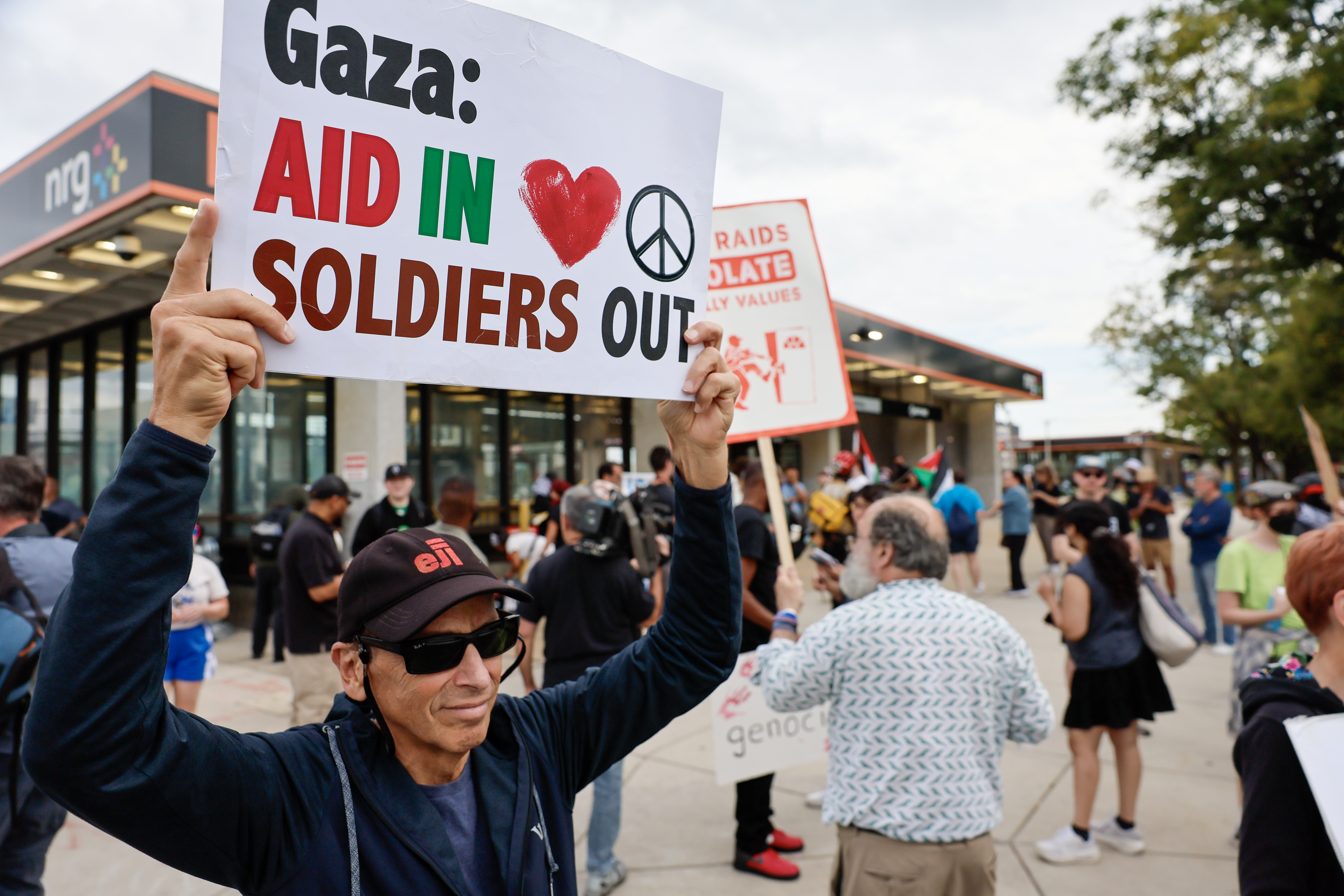
    • Nothing has been more troubling in 2026 than the assault on the First Amendment that’s been taking place from Donald Trump’s Oval Office to our hometown council meetings, and even our football palaces. In my Sunday column, which was written before the president booted three news organizations from the White House, I looked at the growing hostility and even violence toward working journalists, including arrests, physical assaults, and Trump’s rants toward Black female journalists. Tolerance of these abuses is a mark of a dying democracy. Over the weekend, I shifted gears and tackled the Eagles’ silence over the team’s reported role in the cancellation of hip-hop’s pro-Palestinian Macklemore from the Ed Sheeran tour that stopped at Lincoln Financial Field on Saturday. How can free speech be censored in a city-owned stadium?
    • Speaking of those Birds, the city’s $10 billion NFL franchise was conveniently hundreds of miles away in Nashville as pro-Palestinian protesters descended on the Linc this weekend. The Eagles eked out a last-second victory by the seat of QB Jalen Hurts’ pants, over the seemingly hapless Tennessee Titans. The unimpressive showing cemented the notion that it’s impossible to know what to make of Philly’s 2-0 footballers after their narrow wins over mediocre opponents, but The Inquirer is on the case. Our extensive coverage looked at the good (standout performances from Hurts and No. 1 wide receiver DeVonta Smith), the bad (the subpar play of a battered and aging offensive line), and the unexpected (the return of Super Bowl hero Zack Ertz due to injuries in the tight-end corps). Ace columnist Mike Sielski recently went deep, as usual, with a humanitarian look at guard Landon Dickerson’s tortured decision to try to play through the pain. The Inquirer’s sportswriters are likely to rack up more wins this fall than an iffy team, so why not subscribe and read every word.

    By submitting your written, visual, and/or audio contributions, you agree to The Inquirer’s Terms of Use, including the grant of rights in Section 10.
  • Eagles’ silence on their role in the Macklemore mess has become deafening

    Eagles’ silence on their role in the Macklemore mess has become deafening

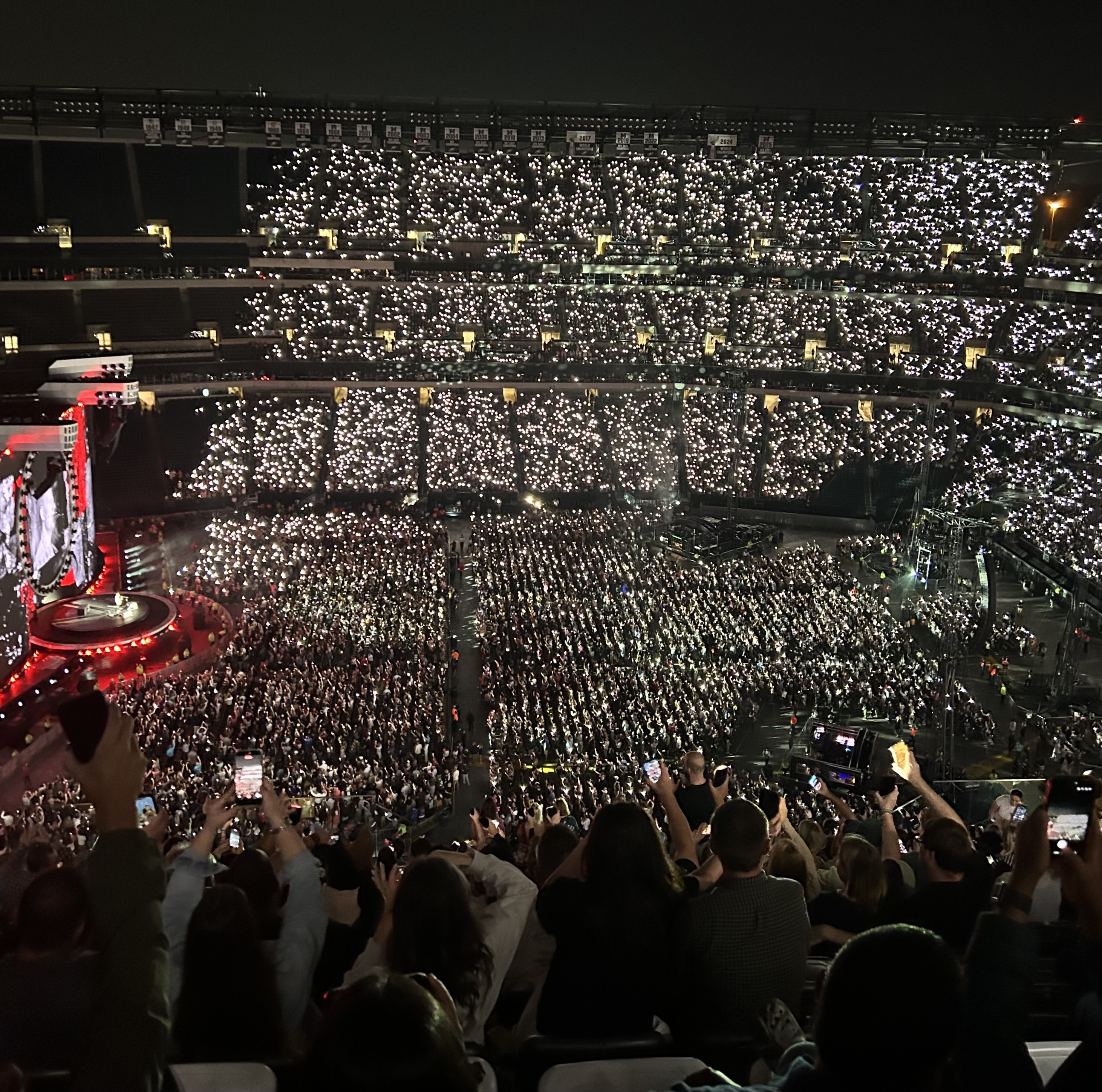
    Ed Sheeran walked onto a big stage at Lincoln Financial Field Saturday night with nothing but his guitar to support him. Surrounded by tens of thousands of fans, a massive global pop star may have never felt so all alone.

    Sheeran knew he couldn’t hit his first note without addressing everything that had happened in the last few days: the dropping of hip-hop’s Macklemore from his U.S. football stadium tour after onstage comments supporting a free Palestine riled one team owner, and the massive backlash that had turned a pop festival into a solo gig.

    That’s how an artist who’s sold more than 200 million records and became one of Time’s 100 most influential people in the world by mostly avoiding politics could no longer avoid politics. He condemned both the Oct. 7, 2023, attack on Israel by Hamas and Israel’s deadly three-year response in Gaza, which he called “catastrophic and unjustifiable and disproportionate” — essentially the same sentiment that got Macklemore canceled.

    That will be the headline in most news articles, but as I watched the viral video Saturday night, I was wondering if Sheeran would tackle the other elephant in the room. He did.

    “I am deeply worried about the idea that venues should preapprove content for performers,” Sheeran proclaimed in his native Yorkshire accent. “This happens in so many places around the world, but it should never happen in the free world.”

    The performer’s words drew a big whoop from the assembled multitude who showed up despite a week of controversy that had seen Sheeran’s backing band and all his opening acts quit in protest over Macklemore’s ouster while online ticket prices tumbled.

    But just a couple blocks away at the headquarters of the Philadelphia Eagles, the only sound Saturday was crickets chirping.

    The main antagonist that triggered the dropping of Macklemore was indisputably New England Patriots owner and Donald Trump pal Robert Kraft, who called it “hate speech” when Macklemore donned a keffiyeh, shouted “Free Palestine!” and performed his song “Hind’s Hall” about 2024’s pro-Palestinian campus protesters at New Jersey’s MetLife Stadium earlier this month. Kraft moved to block Macklemore from performing at the Patriots’ Gillette Stadium, and reportedly rallied other NFL stadium operators to lean on Sheeran’s tour operator.

    But while the Eagles and their longtime owner Jeffrey Lurie weren’t lead actors in this drama, the operators of the city of Philadelphia-owned Linc are said to have played a critical supporting role.

    The Wall Street Journal and other outlets identified Lurie as one of a gaggle of owners who agreed with Kraft and supported throwing a crackback block on Macklemore. Lurie, who has seen his $185 million 1994 purchase of the Birds skyrocket to a value of more than $10 billion, was identified by the Journal as part of a group that also included Arthur Blank of the Atlanta Falcons and David Tepper of the Carolina Panthers, who agreed to support the rapper’s cancellation.

    The Eagles’ reported involvement in this story troubled me for two reasons. One, of course, was the action itself. Sheeran — whatever else you think about how he handled this mess — was 100% right when he declared this “never should happen in the free world.” But even worse, it happened in what should be a planetary mecca for free expression — Philadelphia, the city where the Declaration of Independence was written and ratified exactly 250 years ago.

    But honestly, I found it even more disturbing that neither Lurie nor anyone from the Eagles organization feels they owe any explanation at all to the city, let alone thousands of people who drained their bank accounts for a concert that was nothing like it had been advertised. To be sure, there’s no harder dialogue in the world than the conflict in the Middle East, but the Birds committed two penalties against open expression — one of alleged censorship, and one of their own public silence.

    On Thursday, I texted Bob Lange, the Eagles’ senior vice president for communications, with questions about Lurie’s reported role in collaborating with Kraft and for a clarification on what their policies are around free speech at football games, concerts, and other events that take place at the stadium they operate.

    “If we have anything to share, we will let you know,” Lange responded.

    Three days later, I am still staring at the pale glare of my iPhone here in my darkened column-writing lair, wondering if I can get up to at least make some toast, lest I miss the Birds’ response. OK, that was a joke. I didn’t really expect the Eagles to explain their involvement, at least not voluntarily.

    We’ve come to expect this in 2026 — whether it’s government officials signing nondisclosure agreements with companies building hideous data centers, or police chiefs making secret deals with U.S. Immigration and Customs Enforcement (ICE) and telling public dissenters they are sick of “listening to this crap,” or all-powerful Fortune 500 corporations channeling the spirit of the Irish Republican Army: “Say nothing.”

    The public’s right to know is probably a hilarious joke these days behind the locked doors of city council executive sessions and penthouse corporate boardrooms.

    Thousands gathered at Lincoln Financial Field for Ed Sheeran’s “Loop Tour” on Saturday.Earl Hopkins

    But let’s be clear: Lincoln Financial Field is a public edifice, full stop. We, as city and state taxpayers, contributed $188 million to build the Linc back in 2003, and the city owns the stadium, leasing it to the Eagles for them to host and profit from games and concerts. The team should be compelled to explain why it’s not a violation of the First Amendment to bar a performing artist from presenting a legitimate political viewpoint here. The Birds’ silence on this is a deafening roar.

    Maybe they’re channeling the spirit of the late, great Chuck Bednarik, but the Eagles are a two-way player when it comes to the question of whether they are a cherished public good in Philadelphia, or just another unaccountable multibillion-dollar corporation.

    The team certainly implied that it’s a civic institution with its most famous ad campaign — “One Team, One City, One Dream,” rolled out as the Birds drove toward the Super Bowl in 2004-2005, its second year at the Linc. The Eagles, their in-house PR machine, and a vast network of friendly influencers and websites produce a massive flow of information, but it’s a one-way street. The Macklemore debacle suggests an organization that wants all the benefits that flow from being a public institution but none of the responsibilities.

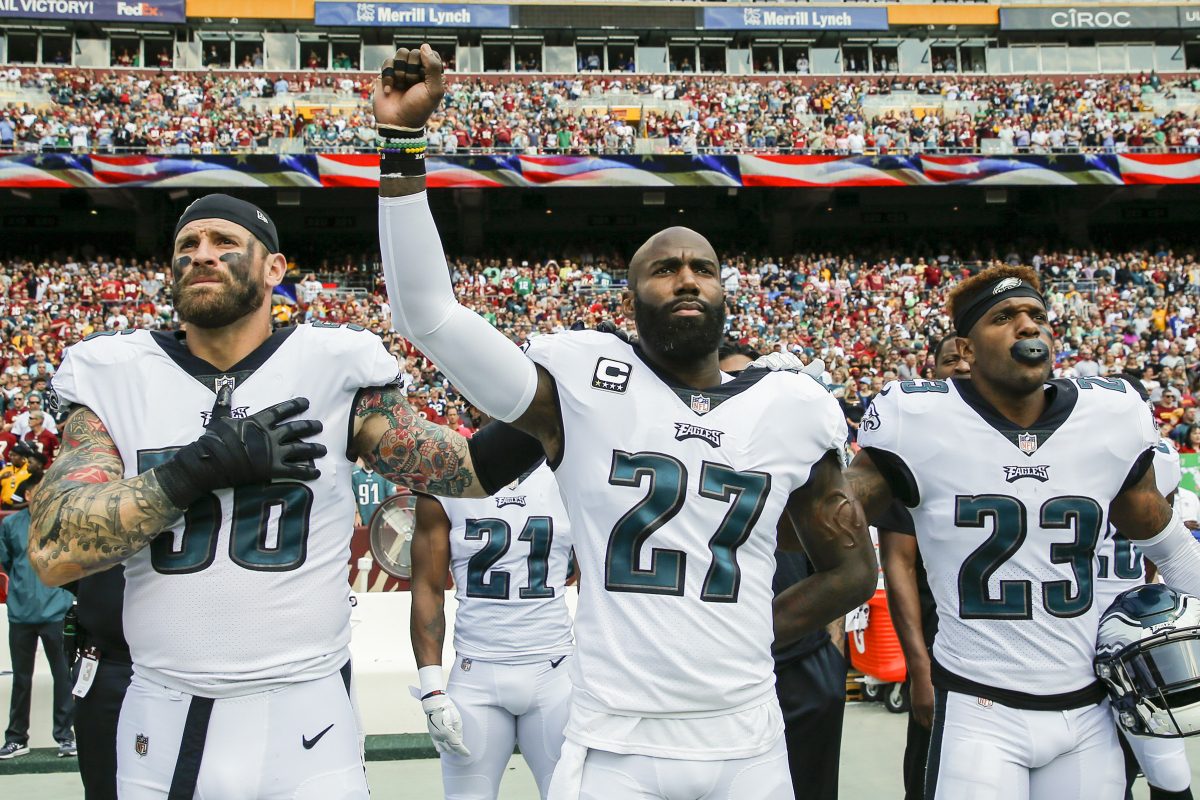
    Yet, the concert controversy also felt jarring here in Philly because for most of the last decade the Eagles have earned a reputation as one of the better franchises in the NFL for free expression — an admittedly low bar in the Colin Kaepernick era. On their way to a championship during the 2017 season, Lurie and the front office supported All-Pro safety Malcolm Jenkins and others who raised fists and locked arms during “The Star-Spangled Banner” to protest racial injustice.

    Eagles strong safety Malcolm Jenkins raises his fist with teammate defensive end Chris Long (left) and free safety Rodney McLeod during the national anthem before they played the Washington Redskins in September 2017 in Landover, Md.YONG KIM / Staff Photographer

    Right before the Super Bowl in 2018, the Nation’s sportswriter Dave Zirin made “The Progressive Case for the Philadelphia Eagles (Seriously).” Yet the reality is that the Eagles have supported free expression when it supports their incessant branding operation.

    But the essence of free speech is to allow its most wildly imperfect avatars. None more so than Macklemore, who was guilty of either antisemitism or remarkable ignorance when he donned a bearded, hook-nosed mask at a 2014 concert. That appears to be an isolated instance for which he has since apologized. The views Kraft described as “hate speech” — criticizing the military actions of Israel’s right-wing government in Gaza and backing Palestinian liberation and the right of U.S. students to hold demonstrations to express their feelings — are supported by a majority of Americans.

    Not that popularity matters when it comes to principle.

    And most people, myself included, don’t have a problem when the team bans any and all political expressions in the stands during a game, since banners or noisy protests would mar the experience fans paid to see. And it’s worth noting the Eagles’ best-known enforcement of this, involving a certain South Jersey politico, happened when they barred him from waving a pro-Israel flag.

    Political expression by performing artists is very different. From blasting the cops on Sunset Strip to fighting the powers that be, protest is the essence of every musical genre from rock to hip-hop to country, and the Eagles have made millions of dollars in concert fees off of that.

    Of course, Kraft’s ham-handed cancellation of Macklemore that infected the Eagles wasn’t just a personal foul against free speech, but wildly counterproductive. It triggered a boisterous pre-concert protest outside the Linc, forced Sheeran to denounce Israel’s actions in Gaza, and prompted an outpouring of support for Palestine from the likes of rocker Dave Matthews, who waved a “STOP GENOCIDE” placard at his concert stops.

    If the Streisand effect means amplifying a rumor by denying it, then spreading a protest by trying to crush it needs to be called the Kraft effect.

    In addition to censorship and secrecy, another hallmark of the 2020s is insanely profitable sports franchises demanding new stadiums when their current home would be barely old enough to drink. The Eagles recently announced they’re exploring the possibility of a new stadium when their lease expires in 2032 — even though the Linc was considered state-of-the-art when it opened just 23 years ago — and politicians like Gov. Josh Shapiro are already working to make sure the team stays in Philadelphia.

    Imagine if some of our political leaders got a spine transplant and — instead of throwing incentives at the Eagles like they were Mardi Gras beads — demanded a free speech policy that would ensure something like the Macklemore debacle never happens again. If the Birds want to build a $2 billion censorship palace, they can spend their own money.

    But they shouldn’t do that. Instead, the Eagles need to embrace the idea that you can’t have “One Team, One City, One Dream” without a multitude of voices.

  • Violence toward journalists is a symptom of a terminally ill U.S. democracy

    Violence toward journalists is a symptom of a terminally ill U.S. democracy

    Some days it’s hard to know what’s worse for America: the wars Donald Trump is losing — most notably in Iran, as U.S. motorists pay painful reparations at the gas pump — or the ones he’s winning, like his onslaught against a free press.

    This February will mark 10 years since the president first declared that journalists are “the enemy of the people,” and he has spent much of the last decade making good on his threat — in constant lawsuits, in wielding federal licensing power like a nightstick, in criminal investigations, and in verbal assaults on journalists that have escalated to lunging.

    Americans are sadly used to such appalling behavior at the White House, but what’s much more alarming is the countless ways hostility, contempt, and Trump-flavored threats to a free press have filtered down to town halls, college campuses, the football field, or other mileposts of Main Street USA.

    One glaring example: Tensions between student journalists asking the right questions about labor disputes and other problems at Southern Illinois University at Edwardsville (SIUE) and the school administration escalated to the point where officials demanded to sit in and monitor interviews by reporters for the Alestle. When the paper’s editor complained in an email, a top university official called the cops and triggered a university police investigation. SIUE’s Nicole Franklin had reported that a journalist questioning school policy “has become an unsafe environment for me.”

    Another: A bad on-the-field encounter between ESPN sideline reporter Holly Rowe and Texas football coach Steve Sarkisian was made much, much worse when a) some knucklehead on social media used AI to alter the footage to end with the Longhorns’ coach slapping Rowe, and b) their highly touted quarterback Arch Manning told a news conference he found the video “hilarious,” prompting laughter.

    The fact that Manning later apologized for the incident, and that the Edwardsville cop who had to go out and interview Alestle editor Dylan Hembrough was embarrassed by the probe, only means that respect for the First Amendment and the humans struggling to uphold it 235 years later is hanging by a thread.

    The stinking fish at the head of all this — Trump — hasn’t physically attacked a White House reporter … yet. But he sure came close last weekend, lunging at ABC News’ Rachel Scott as she tried to ask the president about his harebrained scheme to send every American a $5,000 check, wagging his finger and screaming, “Not you!”

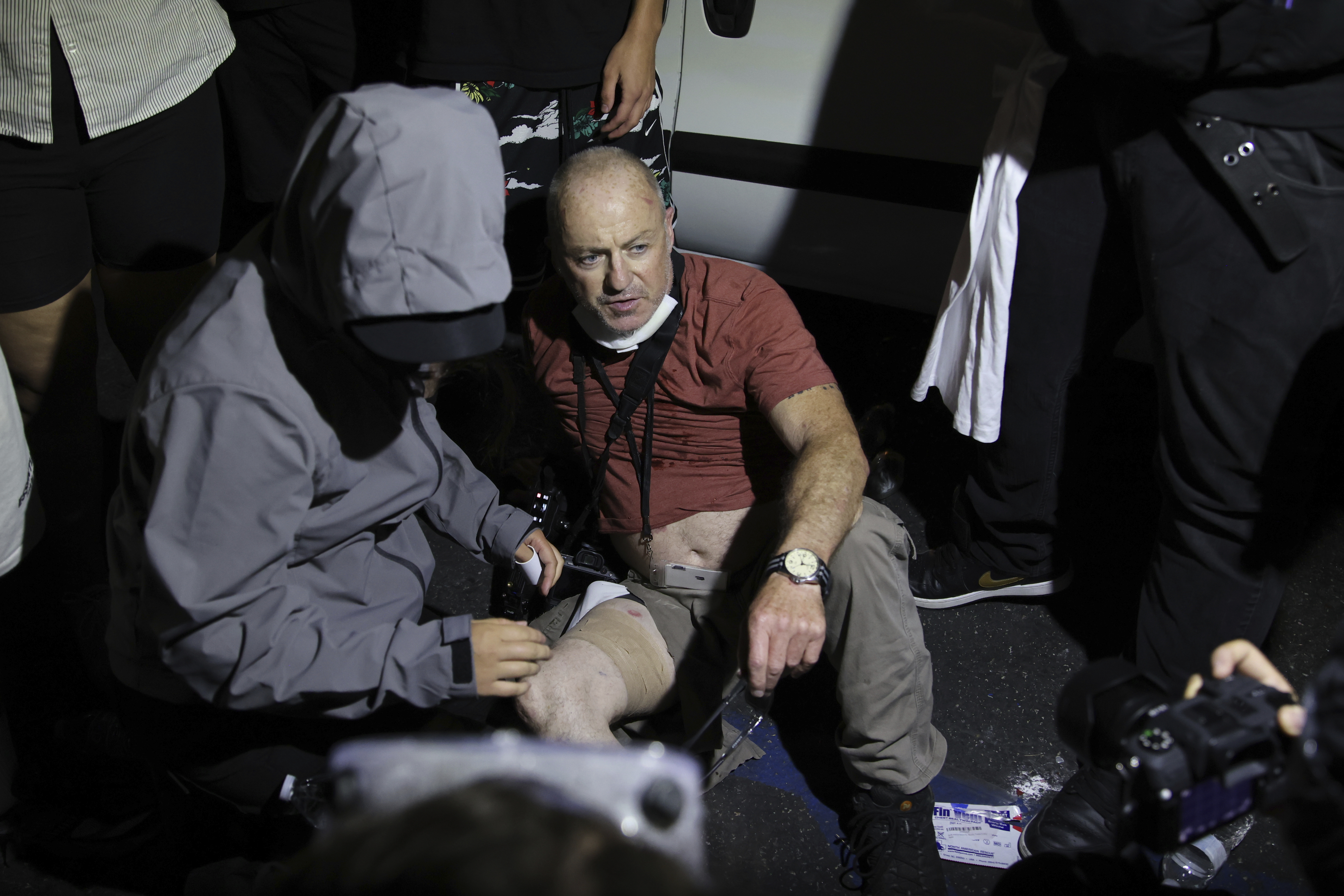
    But out in the American streets, actual violence — as well as unconstitutional arrests and other restraints — is happening on a routine basis. During Trump’s first year back in office, 2025, the Freedom of the Press Foundation found a massive upsurge in assaults on journalists. It said the 170 incidents were roughly equal to the prior three years combined. The attackers ranged from federal immigration agents to riot cops under the control of big-city Democratic mayors.

    But things were deteriorating well before Trump became the 47th president on Jan. 20, 2025. The year before, a survey of working U.S. journalists by the International Women’s Media Foundation revealed that 36% have experienced either physical threats or actual violence.

    I’m publishing this piece on Constitution Day, and a nation that has long touted the guarantees of its then-landmark 1791 First Amendment as proof of American exceptionalism ought to be ashamed that our current press freedom ranking from Reporters Without Borders has plunged to 64th out of 180 nations, the lowest ever.

    But I’m also writing this column now because a) I’m terrified that the climate in which everyone laughs at AI videos of a journalist getting slapped is the prelude to somebody getting killed in the real world, and b) I, and it’s safe to say most of my colleagues, feel an increasing climate of contempt toward just the day-to-day stuff of answering a reporter’s questions or providing basic information about how our government is spending our tax dollars or policing our streets.

    I’ve been a full-time journalist for 45 years now — a half century if you throw in high school and college — and the changes I’ve witnessed over the course of a lifetime have been remarkable, epitomized by the evolution from phone books that listed almost everyone’s number to call-screening and spam filters that make it virtually impossible to connect with people and tell their stories.

    When they threw me onto the night shift at the Washington (Pa.) Observer-Reporter in September 1981, the job consisted of calling hospital emergency room nurses who’d happily volunteer the names and conditions of that night’s car-crash victims, and then police desk sergeants who’d chit-chat and tell you about any major crimes.

    It’s good, actually, that HIPAA was enacted and medical information can’t be volunteered to the public, but it’s bad that police departments — whose track record for honesty runs neck-and-neck with the current administration in the White House — now dole out as little information as possible through stage-managed press releases.

    I thought a lot about those hazy days as a rookie reporter out in Western Pennsylvania this summer, as I tried to report on local police cooperation with federal immigration agents on this side of the state. Police chiefs and township officials batted 1.000 when it came to not returning phone calls or emails. In person, they insisted the federal government told them not to divulge how much of their taxpayer-funded time is spent on busting immigrants instead of protecting neighborhoods.

    Whatever your personal opinion toward journalists, the arrogant and autocratic stance of today’s public officials is spreading to what they think of you, the everyday citizen, and your right to know. This was summed up this week by the police chief of Pitcairn, Pa., who, after listening to public complaints that his 287(g) cooperation pact with U.S. Immigration and Customs Enforcement was reached without a council hearing or vote, said, “I’ve been listening to this crap all night.”

    A couple of important points: Like so many of my colleagues, I’ve felt the growing threats firsthand, from various efforts on social media to map where I live or describe my house, to the time someone drew a bullet hole on a sheet of paper and mailed it to my home.

    But, as a white man, I know things are many, many times worse for my friends and colleagues who are Black or brown or women or in the LGBTQ+ community.

    It’s no accident that the worst invective gets slung toward a female sideline reporter like Rowe, or that Trump goes out of his way to abuse Black female journalists like ABC’s Scott. It’s impossible to draw the boundaries between media hatred and the racism and misogyny that fuel American fascism. That is also clear in the Trump regime’s unconscionable targeting of on-the-ground journalists from immigrant communities like Nicaraguan exile Luis Galeano, detained this week by ICE in Florida.

    It’s all connected.

    Second, my love for journalism and the role we must play in a healthy democracy is exactly why I also believe the media deserves tough scrutiny for the many times we get it wrong. (And I have my receipts from CNN, the New York Times, the Washington Post, etc., etc.) The back-and-forth of media criticism is also the mark of a healthy society in every way that anti-media violence and government officials’ contempt for your right to know are not.

    We can acknowledge that we live in a world where our privacy is under constant assault and needs to be protected — yet also believe, at the same time, that there’s no excuse for government officials or police to hide information that needs to be in the public domain, such as whom they’re arresting and why.

    That requires a vibe shift from all of us — whether it’s not laughing at a video of a female journalist getting slapped, or not dialing 911 when a journalist asks a well-intended question. It means privileged white reporters need to object and walk out of the room the next time Trump verbally assaults a Black female reporter.

    But that also means we need to be as vocal in praising the times journalists get it right — ProPublica’s scoop about Vladimir Putin’s pal paying for the president’s son’s wedding springs to mind — as we are in carping at the many peccadillos of elite media.

    What’s scary is that all of this is happening at a time when vulture capitalists are cutting news organizations to the bone, especially in rural and small-town news deserts. The fewer working journalists that are left, the easier it will be to crush what remains.

    That’s why I was so taken by what a Lexington, Ky., City Council member, Emma Curtis, just said about destructive layoffs at her local paper by the corporate pooh-bahs at McClatchy.

    “All of us who sit up here have been held accountable at one point or another by the Herald Leader,” she said. “Not everything that they have ever written about me is stuff that I’ve liked, but our community is better for it. We are smarter, more informed citizens because of it.”

    I wish more of our leaders — and heck, more regular folks — would talk about this more often. Any attack on a journalist — whether it’s physical or verbal, or some ridiculous AI video posted on X, and whether it comes from the president of the United States or a college quarterback — is ultimately an attack on our sick, barely breathing democracy.

  • Next-door states banned ICE-cop deals. Why not Pa.? | Will Bunch Newsletter

    Next-door states banned ICE-cop deals. Why not Pa.? | Will Bunch Newsletter

    One of the many things we won’t forget about the Trump era is how much the family of POTUS 47 has enriched itself — not only the president but his children, including Donald Trump Jr., who is said to be now worth at least $500 million and growing. So it was no surprise when his second marriage to Palm Beach, Fla.’s Bettina Anderson in May was a lavish affair on two private islands in the Bahamas. What is a surprise — as we now know from some stunning work by a team of reporters from ProPublica — is who paid: a very close associate of Russian dictator Vladimir Putin. So maybe the “Russia, Russia, Russia” folks were onto something?

    If someone forwarded you this email, sign up for free here.

    Pa. Democrats are alarmed at the rapid growth of ICE-police deals. But can they stop them?

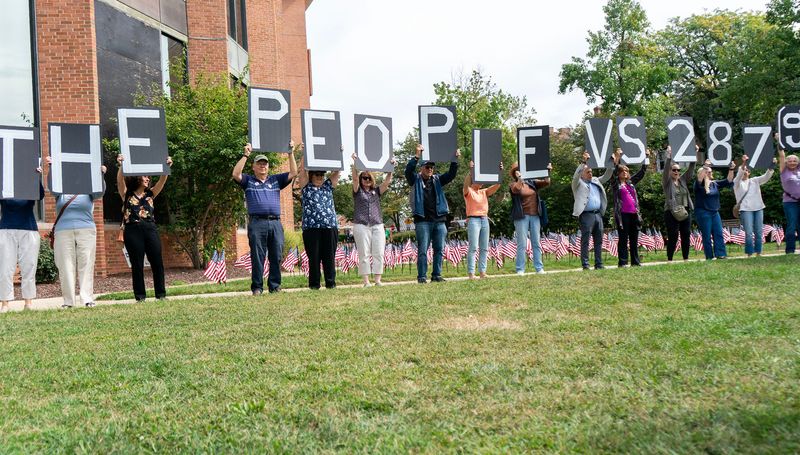
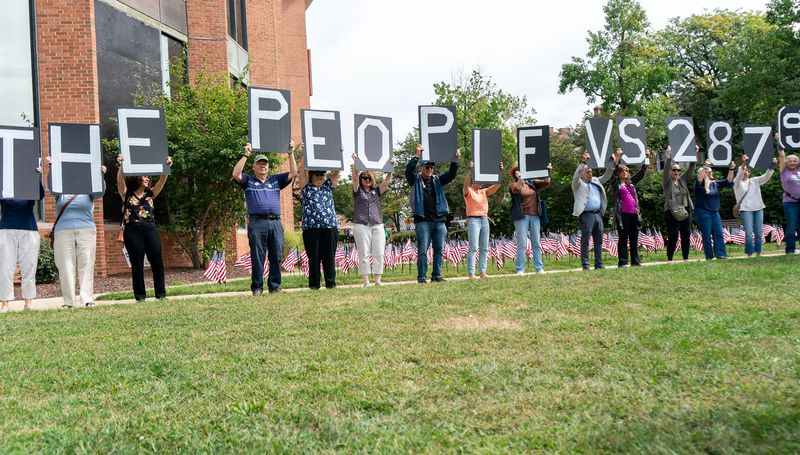
    Immigrants’ rights advocacy group members and their supporters hold up letters that read “The people vs 287(g)” during a rally last September in Doylestown against the Bucks County sheriff’s efforts to implement a 287(g) program.Daniella Heminghaus | Bucks Coun

    The big, mostly under-the-radar story around the Donald Trump regime’s relentless push to arrest and remove immigrants from the United States has been this year’s explosion of so-called 287(g) agreements. These allow local cops to act as immigration agents, working collaboratively with U.S. Immigration and Customs Enforcement, or ICE.

    But if you look at a national map to understand how these 287(g) agreements have spiked from just 135 when Trump retook office in January 2025 to more than 2,500 such pacts today, you’ll notice that one state sticks out like a sore thumb.

    In Pennsylvania, amped-up promises of federal cash incentives have meant a soaring number of localities where local beat cops are now working with ICE to make arrests — up from just a handful at the start of the year to some 130 now. Most 287(g) collaborators are in Trump-voting pockets of the Keystone State — northeast and south-central Pennsylvania, or out west near the Ohio border.

    But when you look at the rest of the Northeastern United States, the 287(g) map is very sparse. That’s partly because most local pols across the region agree with their constituents about opposing Trump’s mass deportation policies, and in several states it’s also the result of legislation that aims to ban the program altogether.

    In late August, New York enacted the Local Cops, Local Crimes Act — backed and signed by its Democratic Gov. Kathy Hochul — which calls on police departments and county sheriffs to terminate their 287(g) agreements, although several counties are still challenging the measure in court. Maryland has a similar law on the books, while New Jersey, which had long prevented such pacts under an attorney general’s directive, also passed a law this spring to codify the ban.

    There’s a growing number of Pennsylvania lawmakers who want to pass a similar law here, but there’s one big problem: Republicans. They control the state Senate in Harrisburg — currently by a 27-23 margin — and GOP lawmakers have no interest in rebuking the president on immigration policy.

    “The reason we exist alone is because of our split legislature,” State Rep. Heather Boyd, a Democrat who represents heavily immigrant Upper Darby and adjacent parts of Delaware County, told me. Last year, Boyd circulated proposed legislation to ban 287(g) deals in Pennsylvania, and while dozens of Democrats in Harrisburg are supportive, any move is on hold until a November election that could shift the balance of power. Boyd said lawmakers are wary of “starting any culture wars” ahead of the vote.

    I pressed the office of Gov. Josh Shapiro, who’s running for a second term and who is seen as a possible top contender for the 2028 Democratic presidential nomination, for his position on reining in the 287(g) program here.

    “Governor Shapiro has been clear that law enforcement should be focused on keeping Pennsylvanians safe — not sowing fear in communities or targeting people who are working hard, raising families, and contributing to our Commonwealth,” his press secretary, Rosie Lapowsky, said. She noted that the governor has barred Pennsylvania State Police from any formal ICE collaboration, and he would urge local police to take a similar stance.

    She added: “Ultimately, however, these decisions rest with local law enforcement agencies. The governor does not have the unilateral authority to dictate whether individual sheriffs or police departments enter into these agreements.”

    Many of those local law enforcement agencies have instead rushed to join 287(g), with ICE promising small-town departments an initial $100,000 cash windfall and additional incentives for training officers to make arrests and to cover the cost of working overtime on the program.

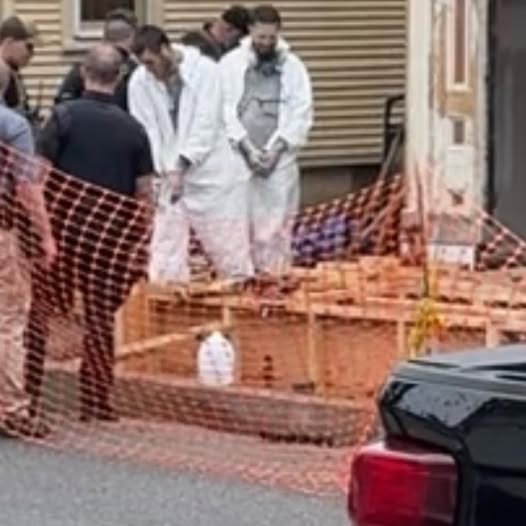
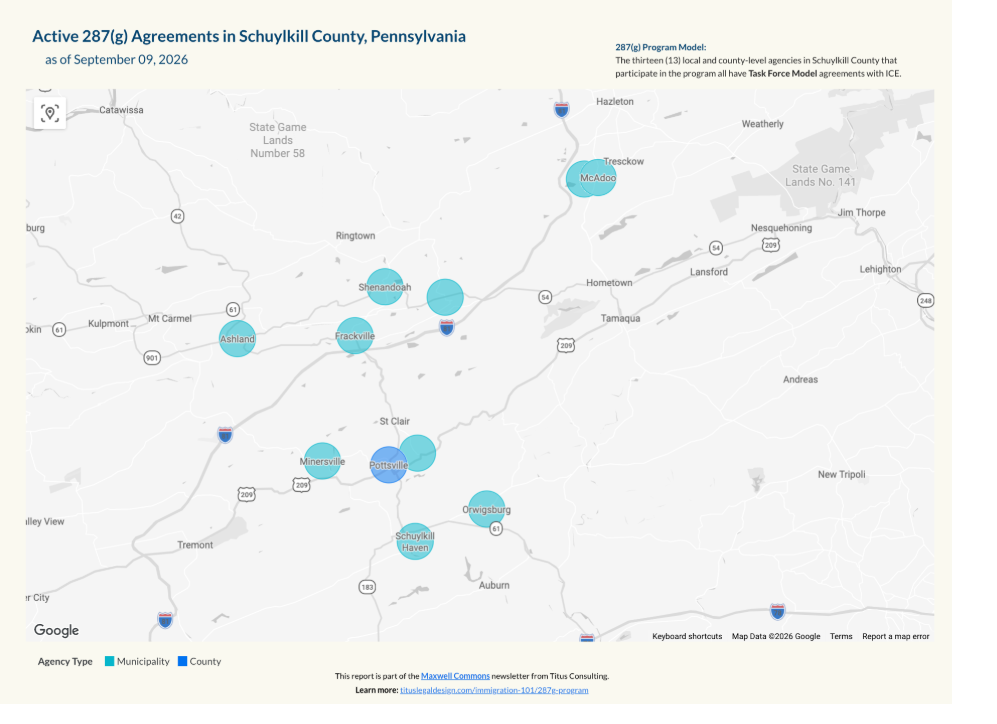
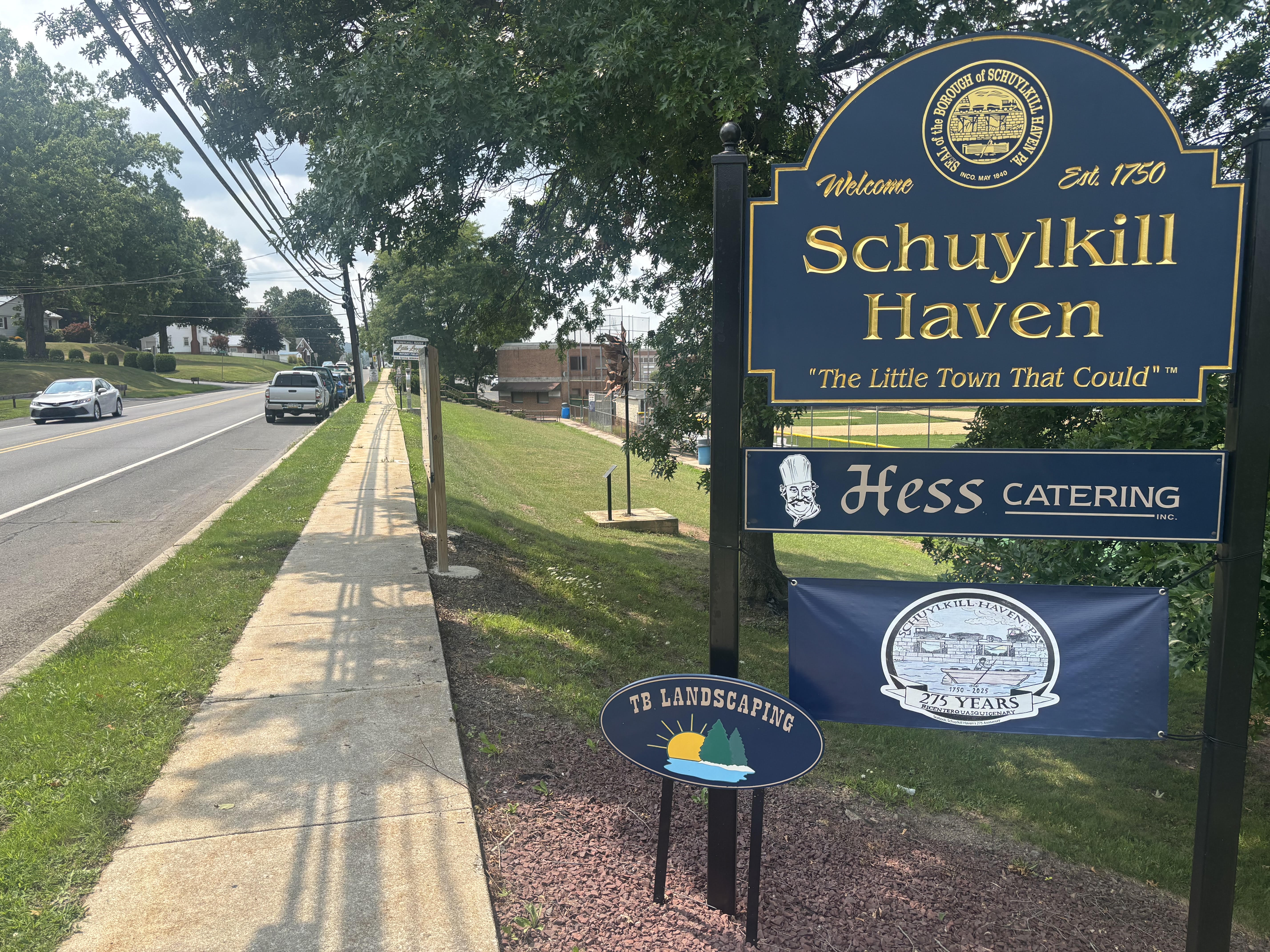
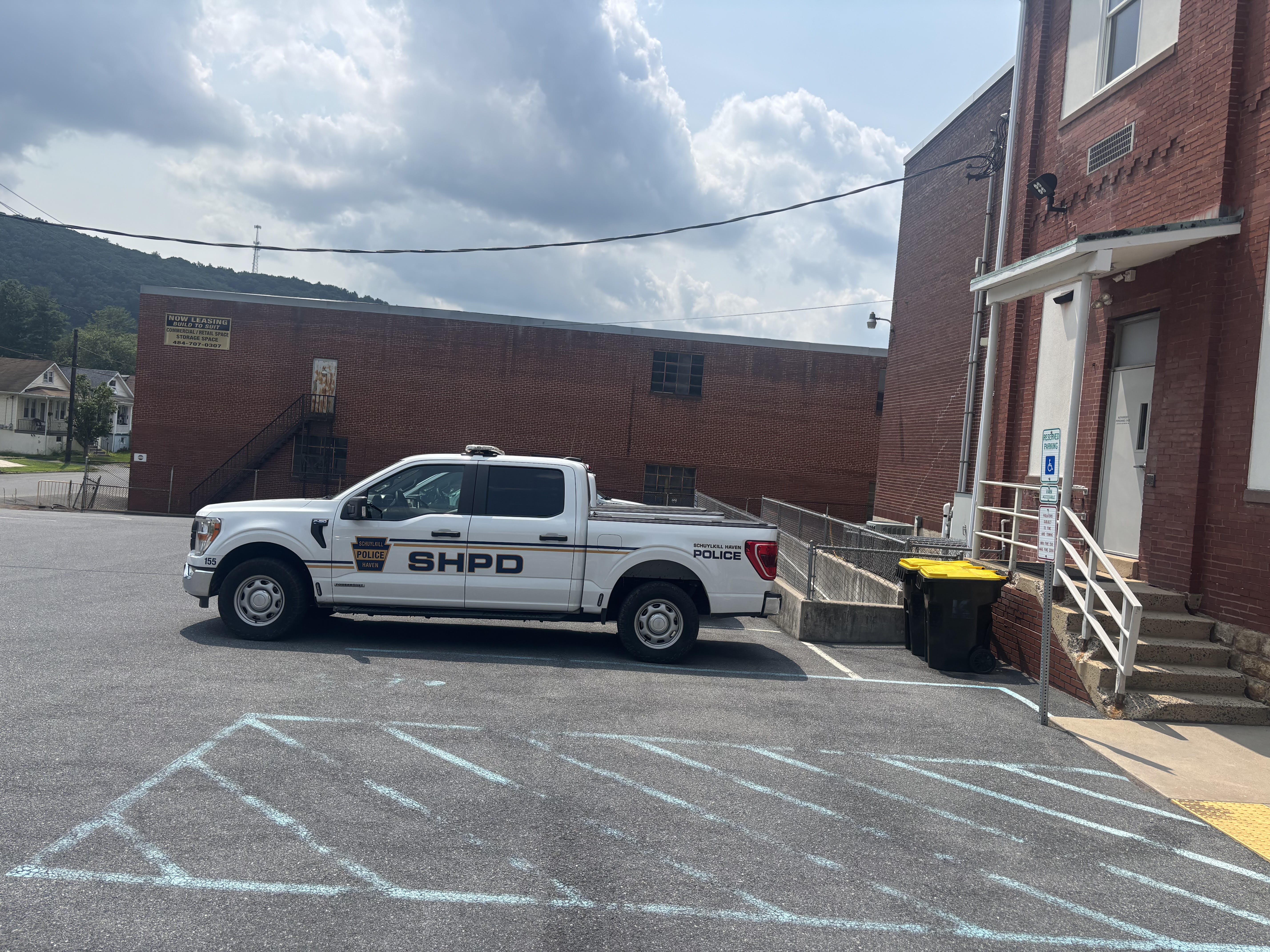
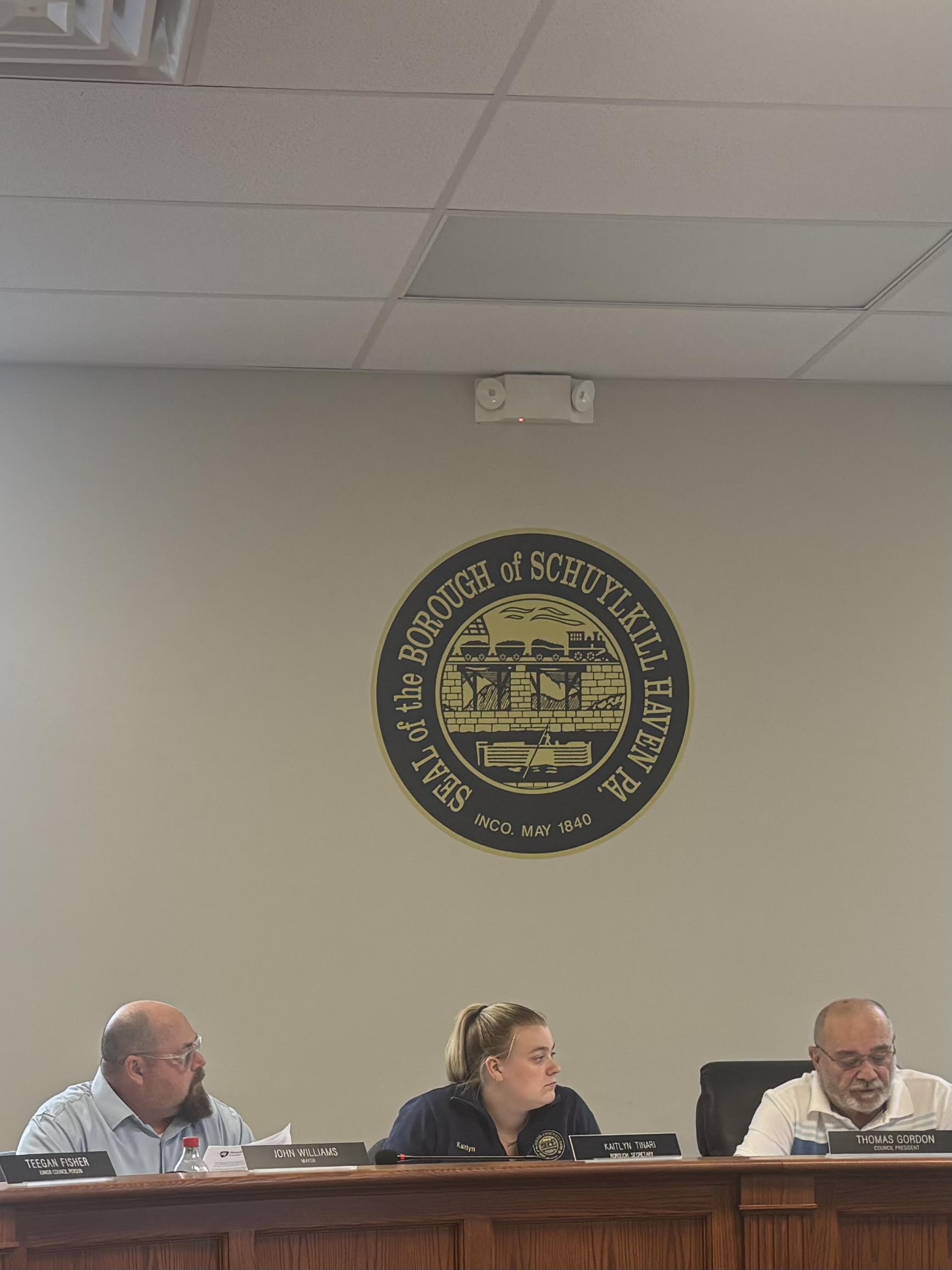
    Last week, I reported from Schuylkill County in east-central Pennsylvania, where some 14 law enforcement agencies have raced to adopt 287(g), more than any other county in the state. Since the spring, local cops there have arrested about 100 immigrants at highway stops or by assisting ICE in job site raids. The blitz has prompted rising complaints about alleged racial profiling, the handcuffing of U.S. citizens, and a sense of fear that permeates a growing Latino community in Pennsylvania coal country.

    Statistics obtained from the U.S. Department of Homeland Security by advocates show that local police in Pennsylvania have arrested and turned over to ICE more than 1,200 immigrants this year — ranking the state fourth in the nation on a list in which the other leading states are all south of the Mason-Dixon Line.

    In Washington, some of the state’s Democratic House members say they’re fed up with a lack of transparency over who is being detained and how the 287(g) program is working here. Last week, four of them — Reps. Mary Gay Scanlon and Madeleine Dean from the Philadelphia suburbs and Reps. Chris Deluzio and Summer Lee from Western Pennsylvania — sent a letter to ICE’s acting director David Venturella demanding information on why the agency’s data lack any specific details about which departments are making arrests, which is required by law.

    “It is unacceptable to me that ICE is hiding information from Pennsylvanians about who ICE is working with in their mass deportation regime,” Deluzio — viewed as a potential 2028 primary challenger to embattled Sen. John Fetterman — told me in an emailed statement.

    Deluzio also summed up the growing unease by many over the speedy growth of 287(g) in the state. “Let’s keep local law enforcement focused on local public safety, rather than enlisting them in extreme federal immigration enforcement that has ripped away American liberties and targeted so many law-abiding families,” he said. Indeed, 287(g) data guru Andrew Thrasher has reported that a whopping 70% of the immigrants arrested in Pennsylvania under the program have no criminal record or pending charges.

    “People in my community are getting smashed off the streets,” said Boyd, the Upper Darby lawmaker. That Delco township is about to vote on a local ordinance to restrict its cops from collaborating or sharing data with ICE.

    Statewide, Boyd says she’s one of about 50 House Democrats in a Welcoming Pennsylvania Caucus with an extensive list of proposed bills that would not only bar 287(g), but look to expand opportunities for noncitizens to do things like obtaining driver’s licenses or gain professional certification. But any serious action hinges on November, when Democrats are hoping a blue wave at the ballot box will flip at least three more Senate seats and create a trifecta for their party in Harrisburg.

    “Even if we can’t stop ICE from picking them up on the streets, we have to protect their rights,” Boyd said. “And right now, there are barriers to that in the state of Pennsylvania.”

    Yo, do this!

    • The issue of wrongful convictions is back in the news here in Philadelphia — but for all the wrong reasons. Some reckless and seemingly wrongheaded moves by Philadelphia District Attorney Larry Krasner and his underlings have the vultures who’ve always opposed criminal justice reform circling. The shame is that the real crisis around wrongful conviction is the thousands of mostly Black and brown folks who remain behind bars for crimes they did not commit. I cannot say enough about a book that came out earlier this year from Brown University (yay!) sociologist Nicole Gonzalez Van Cleve called Crime Fictions: How Racist Lies Built a System of Mass Wrongful Conviction. She mines the most outrageous prosecutions — often of young Black teens and boys — to make a compelling argument that wrongful convictions aren’t a flaw in the criminal justice system. They are the system.
    • If timing is everything, then you’ve got to hand it to my freshman dorm pal at Brown who became Washington bureau chief for Mother Jones, David Corn. On the heels of ProPublica’s bombshell reporting on ties between the Trump family and Vladimir Putin, Corn is out Tuesday with his newest book: How Russia Won — Donald Trump, Vladimir Putin, and the Fight for America. It promises a raft of new information about Russia’s efforts to meddle in U.S. elections in 2020 and 2024, the ongoing close links between Team Trump and Team Putin, and how the current president’s pro-Russian slant has changed the world.

    Ask me anything

    Question: What happens when [House Speaker Mike] Johnson refuses to seat newly elected Dems in January? — David Minckler (@audivita.bsky.social) via Bluesky

    Answer: Suddenly, Jan. 3 — the date the 120th U.S. Congress begins, and new members who won their November elections are to be sworn in — has become the new Jan. 6. Summer vacations are over, and the body politic is focused on the looming midterms, and — more importantly — with polls showing the Democrats on track to retake one and possibly both chambers. So there’s been a surge of speculation that the Trump-allied Johnson will do what former Vice President Mike Pence would not do on Jan. 6, 2021, and somehow fail to certify Democratic winners. That’s based on an assumption that Trump’s election-meddling tactics like stopping mail voting — blocked on Monday by the U.S. Supreme Court — won’t work, yet Team MAGA will attempt to undo the election after the fact, as was tried unsuccessfully in 2020-2021. Lawfare has published the most detailed analysis of a so-called rogue clerk theory in which Johnson appoints a MAGA loyalist to serve as House clerk with the understanding that some Democratic wins won’t be certified. Its article notes that such a gimmick is unlikely to pass muster in the courts, but that won’t necessarily stop Trump and the GOP from trying. My only guidance is: Fasten your seat belts.

    What you’re saying about …

    It turns out readers of the newsletter aren’t eager to join the punditocracy. Only a few of you responded to last week’s question about the chances of a Democratic-led Senate in 2027, and one of them was to give me a verbal tongue-lashing for even asking this. (Frequent writer Daniel Fleisher called it “a pointless exercise in predicting the unpredictable.”) That said, Cathy King has her eye on Abdul El-Sayed in Michigan, her home state, writing that “he seems to be following [Zohran] Mamdani’s playbook.” Meanwhile, in Iowa, Mary Chilton thinks the Dems’ Josh Turek has a real shot in a state won three times by Donald Trump, noting that farmers are up in arms “over the data center issue, imported beef, water pollution and the soaring cancer rates …”

    📮 This week’s question: Suddenly, everyone is talking about one thing: the Silicon Valley whistleblowers saying there’s not a trivial chance that a swarm of angry artificial intelligence agents could wipe out humankind by the end of the decade. Are you worried by this, or do you think Big AI is deflecting here to draw attention away from other issues like data center opposition or the stock market bubble? Please email me your answer and put the exact phrase “the AI threat” in the subject line.

    Backstory on that other thing that could kill humanity

    A barge on the Ohio River moves past the Mountaineer Power Plant, a coal-fired power plant near New Haven, W.Va., in March.Carolyn Kaster

    This weekend, a Bluesky post went super viral almost the second its author, a scientist named David Ho, hit the button to post it. “I resigned from ExxonMobil today,” he wrote. “I spent the last three years doing fossil fuel extraction research at both BP and ExxonMobil. Neither company is acting responsibly. They are racing to maximize extraction while the window to act closes, and gambling with our lives.”

    It’s a safe bet that many of the 13,000 people who liked Ho’s post truly believed they were sharing the words of a brave whistleblower — but instead the post was satire from a leading climate scientist based at the University of Hawaiʻi at Mānoa. Ho would never work for a Big Oil giant. He was trying instead to mimic — and thus make a point about — the recent posts from Silicon Valley whistleblowers that triggered the new freakout over whether AI robots are a threat to human existence.

    Climate change is a threat to society, and it’s even closer to reality. Maybe we should freak out about that?

    Ho absolutely has a point. Just before his post, it was announced that August had been tied for the hottest month ever recorded in the history of the planet. That doesn’t come without consequences. In the Himalayas between Nepal and Tibet, a glacier and the adjacent bedrock of mountains at 17,000 feet abruptly collapsed in a region plagued by higher-than-normal temperatures, sending a 150-foot-high cocktail of floodwater and debris down a populated valley at 100 mph. At least 1,386 were killed, and thousands more remain missing. Here in the U.S., a summer of record heat triggered wildfires across the Pacific Northwest.

    Robots didn’t do this. Humans did. Maybe that’s why humans — at least the ones that are running Donald Trump’s America — are reacting so differently to the danger of AI than the way they’re dealing, or not dealing, with the lethal pollution from burning fossil fuels. In the case of artificial intelligence, even tech leaders like Anthropic’s Dario Amodei, whose firm makes the Claude program, have urged a slowdown until we better understand the risk from rogue AI agents.

    But in the case of climate change, willful ignorance rules the day. The latest outrage from a Trump regime that’s expensively killing off wind farms while racing to extract as much fossil fuel as possible? The now ironically named Environmental Protection Agency is repealing the rule that limits greenhouse-gas emissions from power plants that burn coal or natural gas. A president who spent his summer sweltering on the golf course continues to insist climate science is “the greatest con job ever perpetrated on the world.”

    There’s one last irony here. Increasingly, the biggest new sources of climate-altering pollution are the massive data centers that power AI. An Amazon data center proposed for Pecos County, Texas, would likely become the world’s largest source of carbon dioxide if it opens, spewing out 33 tons from natural gas generators every year. Slowing down the AI arms race would also help the planet. Artificial or not, that would be intelligence.

    What I wrote on this date in 2019

    Joe Biden performing badly in a presidential debate? Say it ain’t so, Joe. We all remember what happened on that 2024 stage in Atlanta (“The night the lights went out in Georgia,” I called that one), but I was almost as unimpressed with the future 46th president during a Democratic primary debate on this date seven years ago. That put me at odds with the punditocracy. I wrote, “The cable TV news show that both channels and is most revered by Washington’s elites — MSNBC’s Morning Joe — is at times so over the top in its bias toward Barack Obama’s former wingman that it could be renamed Morning Joe Biden.”

    Read the rest from Sept. 15, 2019: “Elite D.C. pundits love moderation, low taxes on the rich … and Joe Biden. They just don’t get it.”

    Recommended Inquirer reading

    • Summertime is over, and the living is no longer easy. I published my monthlong investigation into local cops collaborating with ICE under the controversial 287(g) program in semirural Schuylkill County, northwest of Philly. I found U.S. citizens handcuffed, families hiding behind blanket-covered windows, and a community wrestling with what it means for neighbors to be treated as suspects. Over the weekend, I delved into the astonishing $850 million or so Trump World has raised in campaign contributions since his reelection — despite the fact that he’s barred from seeking office again. You don’t think he has a scheme to pocket the excess cash, do you?
    • Dante only had Nine Circles of Hell, but the downward spiral of Pennsylvania Sen. John Fetterman seems to be never-ending. It’s one thing to profoundly disagree on a political and moral issue such as the war crimes of Israel’s right-wing government in Gaza, but recent reporting suggests things are far, far worse in Fettermanland. No senator — regardless of how much their ideology has flip-flopped — should be blowing off their home-state constituents, or clocking out of committee hearings after five minutes. The Democratic senator’s surprise video appearance at the midterm miniconvention of Donald Trump’s GOP, introducing his new best buddy, Republican Sen. Dave McCormick, did nothing to dispel the sense of utter betrayal among liberal voters who now see his winning 2022 campaign as a big lie. The next two years will be crazy as Democrats line up to primary Fetterman, amid rumors the hoodie-clad politico might run as an independent or even change parties. The only sure thing is that The Inquirer will be there for every move. Join us. Subscribe!

    By submitting your written, visual, and/or audio contributions, you agree to The Inquirer’s Terms of Use, including the grant of rights in Section 10.

  • We don’t talk enough about Trump’s $850M pay-to-play slush fund

    We don’t talk enough about Trump’s $850M pay-to-play slush fund

    There’s actually three things that are pretty certain in life: death, taxes, and the fact that the 22nd Amendment to the U.S. Constitution explicitly bars Donald Trump from seeking a third term as president.

    Even Trump, for all his occasional pep-rally bluster and online merch about running in 2028, has kind of, sort of, begrudgingly acknowledged this reality. “You know the law is very strong on that,” the president admitted to reporters during a gaggle just last month.

    That’s actually a good answer for Trump, because it avoids the obvious follow-up of how a president who’ll be 82 on Election Day in 2028, can barely stay awake now during important moments like a 9/11 memorial service, has probably consumed more Big Macs than the late Morgan Spurlock — and, oh, has a 32% approval rating — could expect to win, or even make it up the steps of his Qatari bribe jet in two years.

    Still, I wish that one of those tarmac journalists would throw on a Peter Falk-style overcoat and ask, Columbo-like, just one more thing of the 47th and possibly last president:

    If you’re not running for office ever again, why have you raised some $850 million — and counting — in campaign funds since your last and supposedly final campaign? Why are you sitting on most of this money? Are you planning to take it with you on Jan. 20, 2029?

    I’d been mulling this column for a while when it was announced late last week that Trump’s best-known political action committee, the super PAC called MAGA Inc., with about $400 million in the bank, is finally cracking open the vault, slightly.

    MAGA Inc. just transferred $49 million to yet another new PAC, No Going Back Inc. — the more money laundering, the better, apparently — that’s actually going to buy ads supporting some GOP candidates in the November midterms, especially in tight Senate races in Texas, Michigan, Ohio, and New Hampshire.

    Indeed, expenditures like that are the only legitimate argument for Trump to have such a large political slush fund — to elect sympatico lawmakers who can support the president’s agenda, whatever that is. Whatever else happens in this election, two more years of a Republican-led Senate would allow Trump to keep appointing right-wing judges and at least limit the investigations of his gross misconduct.

    Still, even some Republicans are acknowledging the $49 million, and presumably some additional funds over the next seven weeks, are too little and too late. In August, when voter opinions tend to harden ahead of the fall campaign season, MAGA Inc. spent a piddling $825,000 to prop up the new, Trump-supported South Carolina Sen. Darlene Graham in a GOP primary battle, and nothing more.

    “Our threat level should be up and people are going to have an expectation that you deploy all your resources,” one GOP donor told Politico, before the $49 million drop was announced. “He’s sitting on hundreds of millions of dollars, not doing that. We’re in September.” Interestingly, MAGA Inc. has spent virtually nothing on House races, even though a Democratic House is likely to impeach Trump for the third time in 2027.

    Republicans should be alarmed. We all should be alarmed, for a number of reasons. Boomers like me remember, vaguely, an old-school TV game show that was called You Don’t Say, with a tagline I’ve never forgotten: “Remember, it’s not what you say. It’s what you don’t say.”

    When it comes to MAGA Inc. — and several other massive piles of Trump-connected cash — political reporters ought to realize it’s not what you spend. It’s what you don’t spend.

    If Trump is freeing up $49 million to try and sway close Senate races, where is the other $800 million going? And where am I getting this figure? It was buried in a recent MS Now article, which noted, correctly, that there is a separate, so-called dark-money arm of MAGA Inc. called Securing American Greatness that’s believed to hold as much as $450 million, most from secret donors.

    That figure comes from Trump himself, who told reporters last month at an airport press gaggle: ”I’ve raised a lot, and nobody knows what it is, but I will tell you it’s about $850 million. I’ll be spending a lot of that money for — and my own money — but I’ll be spending a lot of that money for candidates that I think are good, Republican candidates.”

    Nobody knows what it is. You can thank Trump’s pals on a right-wing rogue U.S. Supreme Court for a generation of bad rulings that have sold American elections to the highest, secret bidders.

    The other thing about Trump’s comments is that, despite what he said, he’s actually so far not spending a lot of that money. Even though, by laws that are now honored in the breach, there’s supposed to be a clear separation between Trump and these super PACs, the president sees these funds as his own money.

    “This is my money, that I control,” Trump told reporters earlier this month. Increasingly, anxious Republicans and other political observers worry Trump is hoarding the money not to elect GOP candidates, but to spend on his legal defense once those candidates lose and investigation-minded Democrats retake the House and maybe the Senate.

    The law does say Trump can’t legally pocket the money when he leaves office. And we all know what a stickler Trump is for following the law, right?

    Protest organizers gather in August 2025 outside the Moshannon Valley Processing Center, an ICE detention center near Philipsburg, Pa., run by the GEO Group, which contributed more than $1.4 million to a Trump-aligned PAC in June.Tom Gralish / Staff Photographer

    It’s worth noting there are other piles of cash we know far too little about. For example, Trump’s 2025 inaugural committee raised a staggering $250 million — more than double his 2017 record — from the usual assortment of billionaires, tech companies, etc., and yet there’s been virtually no accounting of how that money was spent. And Team Trump is hoping to raise a gobsmacking $950 million by next year for his utterly amorphous plans for a presidential library, honoring a POTUS who doesn’t read.

    Add it all up, and you’ve got a potential slush fund of roughly $2 billion. That’s appalling, but even worse with the knowledge that — and this cannot be repeated enough — with Trump never running for office again, the donors to these funds are almost all millionaires and billionaires who simply want something from the government for themselves or their corporations.

    Earlier this year, reporters used tax records and other available reports to sleuth out three of the donors to the secretive Securing American Greatness Inc., including the Bitcoin Advocacy Project, which gave $2 million as Trump was boosting that industry through deregulation. The tech firm Qualcomm had been outed earlier as a $1 million donor to this massive fund that is largely a mystery.

    There are numerous examples of donors giving money to MAGA Inc. around the time of favorable government actions. For example, a subsidiary of the private-prison giant GEO Group gave $1.4 million to the Trump-aligned PAC in June at the same time U.S. Immigration and Customs Enforcement was awarding the firm $165 million in additional contracts. Michelle D’Souza, the chief executive officer of Pentagon contractor Unified Business Technologies, gave MAGA Inc. $4 million last October.

    That’s in addition to the family members of those seeking presidential pardons, who made huge donations to MAGA Inc. right before Trump granted clemency to their relatives. That tally includes $3.5 million from the daughter of a Venezuelan billionaire who’d reached a plea bargain on federal bribery charges before he was freed by Trump, or Paul Walczak, a convicted tax cheat pardoned after his mom gave $1 million to MAGA Inc.

    Many of MAGA Inc.’s donors are billionaires, and while some surely share Trump’s authoritarian worldview, many of them want something from the White House — and they are getting what they want. It is legal graft, a massive pay-to-play scheme that gets a giant shrug in the unholy world created by a right-wing master plan.

    It’s time to stop shrugging. When Democrats retake the House, an almost certainty at this point, an investigation into Trump’s $1 billion to $2 billion in assorted slush funds, and whether any corruption laws were violated in raising all this cash, needs to pole vault to the top of their very long list of possible probes into this rogue president.

    It’s kind of nuts when you think about it: A president corruptly raising hundreds of millions of dollars he’ll end up spending to hire lawyers to defend himself from the looming corruption charges. Maybe it would have been better — not just for the sake of democracy, but for Trump himself — not to have gone down this road in the first place?

    But then, nothing makes sense anymore. And nothing makes less sense than the lack of energy, so far, in accounting for Trump’s pay-to-play dollars and how they are being spent. Keeping an American republic depends on answering these questions, and then making sure this never, ever happens again.

  • In Pa. coal country, local police join with ICE to bring arrests, fear

    In Pa. coal country, local police join with ICE to bring arrests, fear

    SCHUYLKILL HAVEN, Pa. — Brett Sell had a bad feeling about coming to work on July 28. The painting contractor was part of a small work crew rehabbing a two-story commercial property in Orwigsburg — a borough of just over 3,000 people in the heart of east-central Pennsylvania’s coal country — and workers had seen what looked like an unmarked law enforcement vehicle circling the site the day before.

    “Yo, look up!” Sell said to his fellow painter, Orlando Rivera.

    Police cars from Orwigsburg and neighboring Schuylkill Haven, lights flashing, blocked off the street while agents from U.S. Immigration and Customs Enforcement in tactical vests swarmed the work site. Sell was stunned as he and four other workers were quickly handcuffed by ICE agents — even though Sell and Rivera are native-born U.S. citizens.

    Rivera, a biracial Puerto Rican who grew up in Bethlehem and now lives in another Schuylkill County borough, Tamaqua, said he was “embarrassed” as he stood in handcuffs while locals came out into the street to gawk. “I do a lot of work in that town,” he said, adding that “it made me feel like I was portrayed as a criminal.”

    And he’s convinced he was handcuffed — even after offering to show the agents his ID — because of his race. “I get that my skin tone is tan,” he said, “but with the Fourth Amendment, they can’t go off my skin color, you know?”

    Two workers were detained. One was later released, but the other — Catarino Hernandez Velasquez — a Mexican native who’s lived in Pottsville for at least 14 years, and a well-known contractor who poured concrete for the just-reopened 1928 Miners Hotel — was taken away and sent to ICE’s Moshannon Valley Detention Center in Central Pennsylvania, known for its overcrowding and complaints about lousy food and medical neglect. Kevin Medina, a leader of the local Latino community, bemoaned the arrest of a “very hardworking gentleman with a stable contracting business in the area … very busy.”

    Now, gone … in a matter of minutes.

    Painting contractors Brett Sell (left, white painting outfit) and Orlando Rivera are handcuffed during an ICE raid on a job site in Orwigsburg, Pa., on July 28. The men — both native-born U.S. citizens — were released without charges.Facebook

    The Orwigsburg raid was a dramatic moment, yet such scenes are becoming increasingly common this summer in Schuylkill County, Pa., a constellation of rusty boroughs where coal was king in the 20th century, and Donald Trump got 71% of the vote in 2024.

    ‘In Schuylkill Haven, they can’t go there’

    Since the start of the year, ICE — flush with a whopping windfall of $170 billion shoveled by Congress to the U.S. Department of Homeland Security to amp up immigration raids and detention — has dangled pledges to many tiny police departments. In Schuylkill County, which locals call “the Skook,” more than $1.5 million has been distributed to law enforcement. The police chief and pols all but publicly salivated at the chance — under the controversial program known as 287(g) — to buy a desperately needed new cruiser or other cop tools in return for working with ICE to arrest and hold local immigrants for the feds.

    Some 14 law enforcement agencies — the most of any of Pennsylvania’s 67 counties — have inked 287(g) pacts with ICE, launching a new era of beat cops making immigration arrests that has roiled daily life in Schuylkill County. Practically overnight, cops were setting up truck inspections on a busy rural bypass or running checkpoints at places like the Freeze, a popular ice cream joint on the main drag, Route 61. Officers were pouncing on immigrants who showed up at the county courthouse in Pottsville, or assisting ICE on workplace raids like the one in Orwigsburg.

    Arrests leading to ICE detention and deportation cases skyrocketed across Schuylkill County — more than 100 since the start of the year, with most the result of ICE cooperation under 287(g) — leaving families torn apart while creating a climate of fear among what had been a rapidly growing Latino community in and around Pottsville. Suddenly, essential workers or their loved ones grew terrified that a busted taillight or failing to signal while shifting lanes could turn their world upside down.

    One borough with just over 5,000 residents — Schuylkill Haven — has seen at least 59 immigration arrests in about four months, a staggering number. The figures come from Chicago-based ICE watcher Andrew Thrasher, a law-firm staffer and data expert who regularly crunches federal statistics obtained by the Deportation Data Project through Freedom of Information Act (FOIA) requests.

    “People are afraid to go out,” Medina — who immigrated to Schuylkill County from Honduras, became a U.S. citizen and a notary and insurance agent, and formed a local Latino support group, Puentes de Apoyo — told me when we met in a Hispanic-owned Pottsville pizza joint. “I’ve got one contractor who told me they’ve got to change routes because now they know that in Schuylkill Haven, even they can’t go over there. And the stress, mentally, that I’m seeing in these families of, ‘What am I going to do if this happens?’”

    A map, provided by immigration statistics expert Andrew Thrasher, showing 13 current Schuylkill County localities that have signed 287(g) cooperation agreements with ICE. A 14th, Mahanoy Township, is inactive.Andrew Thrasher

    The wave of arrests has put Schuylkill County — mostly rural, mostly conservative, and far removed from the glare of media or the kind of organized ICE resistance you see in big cities — on the cutting edge of an aggressive new strategy for mass deportation. This approach is bringing a xenophobic Donald Trump regime closer to fulfilling its once-unthinkable goal of removing one million immigrants from the United States every year.

    Trump Country embraces 287(g)

    The tag team of local cops and tactical-gear-wearing ICE agents is the biggest reason why federal immigration arrests spiked in July to a Trump-era high of 49,571, or about 1,600 every day. Statisticians who are tracking mass deportation said that 287(g) arrests — named for the section of a 1996 law that authorized the program — involving local police went from less than 3% of the total under Joe Biden to about 15% now, and will only climb higher as hundreds of new departments sign up.

    This year, about 58% of the people nabbed by cops and turned over to ICE under 287(g) have no criminal record or pending charges, a higher rate than the typical ICE arrestee. Thrasher found the number for Pennsylvania is even higher, about 70%.

    While not as numerous as in big and heavily conservative states like Texas and Florida, the Keystone State’s 1,216 arrests under the 287(g) program in the first seven months of 2026 rank the commonwealth fourth in the nation — on a Top 15 list made up of states almost exclusively south of the Mason-Dixon Line.

    Pennsylvania’s outlier status is punctuated by the fact that two large bordering states — New York and Maryland — have moved, with some bumps, to ban their police agencies from signing 287(g) agreements. Almost all of the Pennsylvania arrests came from smaller cities, exurbs, or rural areas — especially the south-central and northeastern regions of the state, and a smattering of western localities — that voted heavily for Trump and his anti-immigrant message.

    The small-town nature of this renewed push for mass deportation is a defining feature of the Trump regime strategy, and not a bug. The race among Schuylkill County’s police departments — many with just three or four cops, including the chief — to sign up for 287(g) and its pumped-up pile of cash came exactly as the two Minneapolis murders of U.S. citizens by immigration cops were fueling growing public outrage.

    As a brutal ICE winter ended, the Trump regime ousted Homeland Security Secretary Kristi Noem and the notorious field general Greg Bovino, and ended an era of loud, publicity-seeking operations with catchy names in large blue cities that stirred up local protesters who blew whistles and filmed every move by the masked, armed agents.

    Immigrants’ rights advocacy group members and their supporters hold up letters that read “The people vs 287(g)” during a rally last September in Doylestown against the Bucks County sheriff’s efforts to implement a 287(g) program.Daniella Heminghaus | Bucks Coun

    Under new DHS boss Markwayne Mullin, ICE and its allies are focused on what you might call small-batch immigration busts — in courthouses or on airport security lines, and thanks to 287(g), at local traffic stops or truck inspections. No one is blowing whistles, and few of these busts get caught on video. Yet, even here in blood-red Trump Country, some locals are troubled by the intense police focus on immigrants and what it’s doing to the moral fabric of their community.

    ‘Arrest them like the Gestapo’

    “No one’s telling you not to arrest people — I’m telling you not to hunt for them, to do stops on the side of the road and arrest them like the Gestapo,” a Democratic city council member in Pottsville, Andy Wollyung, told me after he tried and failed to stop the county seat from joining 287(g). He later fretted that immigration arrests “will drive a wedge in people, you know? These aren’t unknown people. These are our neighbors.”

    “When local police officers serve as a force multiplier for ICE, we know that people become more afraid to report crime,” Nayna Gupta, policy director at the American Immigration Council, told me. “They become less willing to cooperate with local law enforcement when it comes to investigations, including things like homicides. And there’s an overall mistrust of public institutions.”

    The irony is that today’s Schuylkill County was built on the backs of immigrants — initially a wave of Irish who dug the 19th-century coal mines and were also persecuted, including six members of the infamous Molly Maguires who were hanged in Pottsville in 1877. They were followed by Eastern Europeans who filled the local mining towns like Mahanoy City and Shenandoah.

    Those who stayed behind after the mines started closing in the 1950s and kept its hillside towns of striking Victorian architecture and utilitarian rowhouses alive got a booster shot in the 21st century with an unexpected new wave: Latinos. Many landed in Schuylkill County when seeking a place with cheaper housing and more job opportunities for hard workers than big cities like New York or Philadelphia.

    Schuylkill Haven, with a population of just over 5,000, has arrested at least 59 people and turned them over on federal immigration charges since signing a so-called 287(g) agreement with U.S. Immigration and Customs Enforcement (ICE) this spring.Will Bunch

    Four years ago, Pastor Luis Rivera and his wife bought a historic local church building in Pottsville and rechristened it as Iglesia Cristiana El Kairos, under the umbrella of the Evangelical New Life Church, to serve a Latino community now growing by leaps and bounds.

    “You see a lot of traffic,” the pastor told me. “You see people remodeling more houses. And a lot of the stores are opening around here … It was really dead before, you know?” Today, it’s estimated that about 1,000 of Pottsville’s 14,000 residents are Latino.

    A ‘stable’ life is upended

    Six of the more recent arrivals were Venezuelan-born Carlos Moreno, his wife, Wendy Martínez, and their blended family of four teenagers. They’d been on the run from government persecution and armed conflict across South America when they came to America in 2023, and stayed in a cramped public shelter in New York City as the family sought asylum and obtained work permits.

    When they moved to a narrow rowhouse on a rugged patch of Norwegian Street on the steep hillside up from downtown Pottsville, the couple found jobs at the county’s large Amazon warehouse and even started a small cleaning business, even though Moreno, 37, is legally blind and has severe hearing problems.

    “For the first time in years, it felt like our lives were finally becoming stable,” Martínez would later write. “Then, in the fall of 2025, we learned that I was pregnant. It was an unexpected surprise, but a very welcome one.”

    Wendy Martínez, whose husband, Carlos Moreno, a Venezuelan refugee, has been detained by immigration authorities since May after losing a misdemeanor noise complaint at the Schuylkill County Courthouse. She is holding her baby Noah, who was roughly 6 weeks old.Will Bunch

    A bigger and less welcome surprise awaited. This spring, a neighbor called police to complain about noise — music from a small boom box — and Moreno received a summons. He decided to challenge it at the Schuylkill County Courthouse a few blocks away, and when he lost, he paid a fine, walked out of the courtroom — and right into ICE agents waiting to arrest him. He was sent to detention in the Cambria County Jail and stayed there as massive earthquakes halted deportations to Venezuela. He was locked up when his son, Noah, was born — on the Fourth of July.

    Martínez was alternately rocking and bouncing her then-6-week-old son when I joined Medina in visiting their cluttered, narrow rowhouse in August. The windows were covered with thick blankets that let in only a sliver of light, and Martínez was bookended on a sofa by her two daughters, on their phones, who rarely leave home.

    “They told him that he was a dangerous person,” Martínez said in Spanish, interpreted by Medina, as her baby babbled. “There hasn’t been any situation where he was against the law, or anything.” Struggling to pay her bills and support the five children, Martínez launched a GoFundMe page, but has only raised $2,695 of her $4,000 goal. Her husband was recently moved to ICE detention in Louisiana.

    In August, Schuylkill Haven officials said they’re expecting a federal check for $152,000 — money the police department wants to spend on buying the currently leased police headquarters, pictured here.Will Bunch

    Like most immigration arrests since 287(g) swept across Schuylkill County, there is an element of mystery about what exactly happened to Moreno. I twice called the Schuylkill County sheriff, Shawn Butler, to ask if his department — the first county agency to join 287(g), back in January — was involved, but he did not get back to me. Not once in a month of reporting did a police chief or municipal official return a call or email from this out-of-town columnist. Secrecy, and a lack of accountability, seems to be baked into the 287(g) program.

    ‘You don’t answer anything’

    “Any Right-to-Know requests, any FOIA requests, anything — you defer that right down to the Department of Homeland Security,” Jody Long, the then-police chief in Mahanoy Township, told the Pottsville City Council when it was voting on a 287(g) agreement in May. “You don’t answer anything with that. That’s right from their legal team.”

    In early September, I attended the bimonthly meeting of the Schuylkill Haven borough council hoping to ask Police Chief Jeffrey Walcott, Mayor John Williams, or other officials how and why their small borough just south of Pottsville had managed to make at least 59 immigration arrests since signing a 287(g) pact with ICE on April 5. I didn’t get very far.

    In a brief conversation, Walcott suggested, interestingly, that commenting on 287(g) might bring protesters to Schuylkill Haven. When I asked Williams about the program after the meeting, the police chief interrupted our conversation to say there should be “a unified response,” and then later told me any information would need to come from Homeland Security or a FOIA request.

    Schuylkill Haven Mayor John Williams (left) at a borough council meeting on Sept. 2. Next to him are borough secretary Kaitlyn Tinari (center) and council president Thomas Gordon (right). Williams said Schuylkill Haven’s cooperation with federal immigration enforcement is going well, but declined to elaborate.Will Bunch

    Most of what citizens and the media in Schuylkill County know about the 287(g) programs comes from borough or township council meetings in which a police chief tells elected officials about all the sweeteners that cash-flush ICE added to the program when Congress and Trump enacted the so-called Big Beautiful Bill in 2025.

    Police departments or county sheriffs who join the most common 287(g) Task Force model get $100,000 for vehicles or other equipment and $7,500 for each officer who undergoes 40 hours of mostly online training, as well as additional dollars for their time on immigration matters — all contingent on making actual arrests. In August, Schuylkill Haven officials said they’re expecting a federal check for $152,000 — money the borough wants to spend on buying the currently leased police headquarters.

    The cash incentives have sparked a kind of deportation arms race across Pennsylvania, which has gone from just a few 287(g) programs at the start of the year to more than 130, with new ones coming online every day. Most of the council debates tread lightly on the question of liability for an officer who makes a bad arrest — a problem ICE is belatedly looking to fix with a proposal to insure each officer up to $500,000 — or the elevated risk that a traffic stop could lead to violence.

    Fighting in the Schuylkill

    That’s already happened. On May 20, a Schuylkill Haven cop stopped a car on Route 61 after he claimed the driver had illegally dark-tinted windows. ICE agents who were in the borough and arrived at the stop ran the license of 34-year-old Yensy Rafael Santana Alvarez of New York City and determined he had an immigration removal order.

    According to the Skook News, a court affidavit said the man handed over his car keys and stepped out of his car — then ran for it. Alvarez led the law officers on a wild foot chase across the Schuylkill and back, getting tased once, and allegedly pulling one officer underwater as another suffered minor injuries. He was eventually arrested, and felony charges were filed but then dropped.

    Some local critics also questioned whether minimally trained cops making immigration arrests is a good idea in a county where some departments have a history of police abuses. “In northern Schuylkill County, over the last 10 years, we’ve had horrendous police … acting very unprofessional in different departments,” John Hampton, a lawyer who has worked with Mahanoy Township, told me.

    In 2022, two then-police officers in the borough of Minersville were indicted on still-pending federal police brutality charges for allegedly severely beating a man during a traffic stop and falsifying police reports to cover it up. That didn’t prevent ICE from signing a 287(g) agreement with Minersville police in May.

    That same month, local activists pleaded with the Pottsville City Council during a meeting that lasted more than five hours not to join the 287(g) program, arguing that immigration arrests would make tourists and new businesses not want to come there. They thought they’d won in a 3-2 vote, only to have GOP council member Scott Price change his position and demand a revote that flipped the outcome, saying that, in the end, “I have to side with our police officers.”

    One of the few pro-287(g) advocates who spoke at that May hearing was Mahanoy Township’s Long, who said his department had been “the leader in the county” by making 10 immigration arrests, mainly at what he called a truck-safety inspection point. “ICE does not come in and tell you what to do,” Long insisted. “We tell them what to do.”

    He was joined by one of his officers, Anthony Maldonado, who cited his own heritage as a Puerto Rican to insist there is no racial profiling. “I have family members who are light-skinned, dark-skinned, everywhere in between, so I would take it very personally if we conducted ourself unprofessionally to that effect,” he said.

    ‘Because you look like a Mexican’

    The room in Pottsville did not hear from Moe Montalvo, a gutter contractor from nearby Tamaqua who, in mid-April, passed through the checkpoint on Burma Road operated by cops from Mahanoy Township and assisted by adjacent Ryan Township officers. He said he was part of a two-truck convoy, and the first one with two white occupants was waved through, while his was stopped to allow the officers to ask Montalvo, a 28-year-old U.S. citizen who is half Puerto Rican and half Egyptian, for his ID and grill him about his identity.

    Montalvo posted that day on Facebook that when he told an officer he was born in Montgomery County, the cop replied: “Are you sure? Because you look like a Mexican.” Montalvo also quoted the officer: “Why are you worried? The only thing you should be worried about is when I take my Taser out, because I’m going to aim right for your nose piercing.” I confirmed the incident with Montalvo, who told me that “it seems like there was no doubt that racial profiling was involved here.”

    Weeks later, the Mahanoy Township Police Department went dark, at least temporarily, after Long, Maldonado, and its other officer all quit in a disagreement with supervisors. One of the supervisors, Republican Tony Merchlinsky, confirmed to me the entire force had resigned after a dispute with supervisors over its refusal to wear body cameras. He said it was triggered by a civilian complaint over an arrest that did not involve immigration, although he added that “it may have involved racial profiling.”

    Maldonado took to Facebook to give his side of the story, saying that a different supervisor had told the township officers they were making too many arrests, and that, as quoted by Maldonado, he preferred “a [B]arney Fife department and have his police drive around and wave at people instead of making arrests.” Merchlinsky confirmed that Mahanoy Township — which recently hired a new, albeit part-time, police chief — has yet to see one dime from the feds of the more than $100,000 that was promised.

    The checkpoint drama and police tensions in Mahanoy Township demonstrate some of the many problems when beat cops are drafted to join Trump’s mass deportation crusade. Are police really making their towns safer when one part of the community is taking long traffic detours and covering up their windows in terror of any contact with cops? Is the economic gloom over Pennsylvania’s fading coal country really going to be lifted by clamping down on immigrants who’d been flocking there to pour concrete and rehab old buildings?

    Does a region whose very DNA is handed down by the immigrants who once came here to shovel anthracite now want to be known in the 21st century as a “show me your papers” police state?

    Few of these questions are being asked as one former coal burg after another races to embrace a Trumpian bargain with the 287(g) program. The latest is Mahanoy Township’s next-door neighbor, Ryan Township, which in June voted conditionally to join the ICE mass deportation program, citing as the biggest incentive its need to replace its run-down Ford Explorer, one of the oldest police cars in Schuylkill County.

  • Islamophobia: A 9/11 legacy that refuses to die | Will Bunch Newsletter

    Islamophobia: A 9/11 legacy that refuses to die | Will Bunch Newsletter

    For anyone who noticed I was gone, I’m back. It was a weird two weeks of flex time — half vacation, including jaunts to a couple of Jersey Shore points (see below) and an OG family reunion in the Hudson Valley, and half working on my biggest investigative reporting project in several years. It’s coming very soon. Stay tuned.

    If someone forwarded you this email, sign up for free here.

    On the 25th anniversary of 9/11, anti-Islamic hate is getting worse

    Amina Barhumi (center), the advocacy and policy lead of the Muslim Civic Coalition, prays with members of the Council on American-Islamic Relations outside the Will County Courthouse in Joliet, Ill., where a jury found defendant Joseph Czuba guilty of murder and hate crime charges in February 2025.Nam Y. Huh

    Friday is the 25th anniversary of the Sept. 11, 2001, terror attacks that killed 2,977 Americans and their paranoid aftermath — enough years for that grim day to harden as history and to look back on things from that era, like orange-coded terror alerts, as increasingly hazy memories.

    The footprints of the World Trade Center’s twin towers are now a memorial attached to a well-attended museum. Osama bin Laden is dead, and the last U.S. combat troops finally left Afghanistan five years ago. But there is one thing that spiked immediately after the attack and never really went away.

    In fact, anti-Islamic hate is a bigger force in our politics than it ever was. Republicans, desperate to cling to power in an election when all the cards — including another “dumb war” in the Middle East and sky-high gas prices — are stacked against them, are frantically waving the bloody shirt of 9/11 and the Islamophobia it inspired.

    You can see it in Lower Manhattan, where the man who was New York City’s mayor in 2001, Rudy Giuliani, is now saying that the idea of the current mayor — Zohran Mamdani, the first Muslim American to hold the post, who was only 9 years old on the morning of the attack — attending the 9/11 memorial ceremony “offends me.” His comments were part of a bigger racist diatribe that somehow tied Mamdani to a Muslim plot aimed at “taking over certain parts of America and certain parts of Europe.”

    You can see it in Michigan, where a wave of anti-Muslim hate has surged after an Islamic doctor and public health expert, Abdul El-Sayed, won the Democratic primary for U.S. Senate. This includes events like “the Christian Crusader March” organized by the Donald Trump-pardoned Jan. 6, 2021, insurrectionist Jack Lang, which flooded the city council of majority-Muslim Dearborn with anti-Islam placards and even a Nazi flag.

    And you can read all about it when a sitting congressman like Tennessee’s Andy Ogles has no problem taking to the cesspool of Elon Musk-owned X last March to write that “Muslims don’t belong in American society.” The fact that the fanatically pro-Trump Ogles lost his GOP primary a couple of months later could have been a warning to his fellow Republicans to dial it back, but few seem to have gotten the memo as Sept. 11, 2026, arrives.

    To be clear, I don’t believe Islamophobia is the only permanent scar from the day the United States was attacked by four planes and their 19 hijackers who were followers of bin Laden’s Islamist brand of extremism. It’s been five years — although it feels like yesterday — since the 20th anniversary of the attacks, when I wrote that the fear and loathing of the 9/11 aftermath hadn’t evaporated but instead metastasized.

    I argued in September 2021 that the “conspiratorial mindset we embraced in the wake of 9/11 — would be turned against nations that had nothing to do with the attacks, against immigrants in general, against legitimate protest, and finally, inevitably, against one another.”

    I could write that exact same column today … so I won’t. The role the attack played in pointing America toward fascism hasn’t changed, but it is striking after five more years that while many overt symptoms of a 9/11 hangover have subsided over the years, the virus of Islamophobia has only grown more persistent.

    Prejudice toward Muslims existed, of course, yet it exploded after the attacks on the World Trade Center, the Pentagon, and the fourth jetliner that crashed in Shanksville, Pa., in ways both large and small.

    Large: On Sept. 15, 2001, a Dallas-area neo-Nazi killed a Pakistani immigrant working in a convenience store — the same day a Sikh native of India was also murdered at a Mesa, Ariz., gas station by a man who believed the victim was Muslim. Smaller but not insignificant: Islamic schoolchildren from coast to coast were bullied and slurred by classmates who called them “terrorists” or just “Osama.”

    At the highest levels of the U.S. government, there was schizophrenia. Many recall that the president, George W. Bush, visited the Islamic Center of Washington, D.C., to insist that U.S. Muslims “love America as much as I do,” had no connection to the foreign extremists, and that “Islam is peace.”

    Less well-remembered is the federal operation that targeted thousands of Muslims and South Asians — especially men under the age of 45 — in the weeks immediately after the attacks. They were detained, interrogated, fingerprinted, or subjected to deportation proceedings.

    In a new piece, the “war on terror” historian Spencer Ackerman chronicled how agents went through a Brooklyn neighborhood known as Little Pakistan, dropping cards under doors with instructions such as: “This is the FBI. This is the INS. This is the NYPD. We need to talk. I have questions. Call me. ASAP.” It’s believed that thousands found the post 9/11-climate so hostile that they left Little Pakistan … and the United States.

    Islamophobia has managed to both persist and change over the last quarter century. Certainly one can’t imagine Trump going to a mosque and acknowledging that Islam is a peaceful religion; the man who entered national politics by calling for — and partially enacting — a “Muslim ban” just last month labeled Democratic candidates in the midterms as “jihadists.” Today, the fish stinks from the head, and those middle-school punks who called their classmates “terrorists” are all grown up and running for office in November.

    To some extent, it’s one step up and one step back for American Muslims. The stunning success of Mamdani, who’s more popular than ever after eight months in City Hall, and the rise of El-Sayed and other mostly progressive young Muslim American politicians is a next chapter of immigrant success that seems to have rattled the ancient U.S. hierarchies around race and religion.

    But mostly it feels like Republicans — seeing that the crowd doesn’t want to hear the new stuff like the Iran war or data centers — have reverted to playing the hits, like railing against “men in women’s sports” in a desperate bid to get an unearned encore.

    That’s pathetic yet predictable, but one thing I find appalling is that a news media that ought to know better keeps going along with this malarkey. That includes grilling every Democrat who appears on TV about what they think about a Turkish American Twitch streamer named Hasan Piker, even as most voters have never heard of Piker while some subjects of these inquisitions have never met him.

    Last week, CBS News — purchased by a pro-Trump billionaire who put the over-her-head conservative opinion writer Bari Weiss in charge — ran one of the most irresponsible pieces of journalism I’ve ever read, implying there was something sinister about El-Sayed’s anodyne early 2020 social media comments that America should take the coronavirus seriously because it had killed (at that time) as many people as died on 9/11. One CBS staffer told the website Status that the dubious hit piece on El-Sayed was “shameful,” adding, “The racism is overt.”

    The staffer was being kind.

    Someday — hopefully in my lifetime — there’ll be a U.S. president who won’t only call Islam a religion of peace, but will also stop dropping bombs on Muslim countries. Until then, demagogues are going to demagogue, but the media needs to be calling out the racists, not empowering them. If we keep giving in to our worst instincts, then — as folks used to say 25 years ago — the terrorists will have won.

    Yo, do this!

    • One reason my two-week hiatus passed so quickly was that I immersed myself (and thus finished too quickly, perhaps) in this month’s riveting audiobook, Housewives of the Underground: The Untold Story of the Women Who Made the JFK Assassination Our Most Enduring Mystery by the Atlantic writer Kaitlyn Tiffany. The book tells the story of how the majority of Americans came to doubt the Warren Commission’s official story of John F. Kennedy’s 1963 murder in Dallas through the persistence of very average citizens — including the three middle- or nearing-middle-age women of the 1960s at the center of Tiffany’s compelling narrative. This is not “another Kennedy assassination book,” but rather a robust and much-needed tale about regular folks successfully challenging their government to do better that resonates in the Trump era.
    • I did somehow find time to make the short drive (90 minutes from Center City Philadelphia) to Long Branch, N.J., for a Bruce Springsteen pilgrimage centered on a visit to the new and impressive Bruce Springsteen Center for American Music. It was just our luck that our tickets were for the day after the Jersey rock icon stunned fans with a surprise visit there (and also popped on stage that night at Asbury Park’s Stone Pony). But the collection of artifacts — amplified by a film and listening booths, and illuminating not only Springsteen’s 60-year career, but the artists from soul, country, and early rock ‘n’ roll who inspired a legend — is well worth the trip. Augment the day, as we did, with a trip to Asbury Park’s revived boardwalk and a drive-by of Bruce’s childhood homes in nearby Freehold. Bonus: Springsteen’s remarkable “Land of Hope and Dreams” show that wrapped up his 2026 tour at Philadelphia’s Xfinity Mobile Center in May was recorded for a full-length film that begins streaming Wednesday!

    Ask me anything

    Question: Given the current outbreak of measles in Pennsylvania and the start of the school year, how long will it be until the first case of polio is diagnosed? — @mcsween66.bsky.social via Bluesky

    Answer: Hopefully a long time, or never, although polio has not been completely eradicated and there was a case earlier this year in Rockland County, N.Y. (here’s a good explainer of how that happened and what it means). Experts are right to be worried if low U.S. vaccination rates persist. But right now I’m more worried about something else that your question hints at: a stunning lack of information about the measles outbreak in Lancaster County, which seems to have caused two deaths, and which I know much more about from reading an article in the Atlantic than from our public health officials. At the core of this seems to be the politics of a Democratic governor in Josh Shapiro and a Trump-y GOP, including the elected county coroner in Lancaster County as well as in Washington. Public health is way too important to get tangled up in political spin.

    What you’re saying about …

    My question from late August about transgender politics in the November election drew a spirited response from readers, most of whom agree with me that Democrats should openly embrace transgender rights and not either run away or equivocate on the issue. The most passionate response came from Zoë Sparks, a transgender woman, who wrote it would be best for Dems if they “stood up boldly, made it an issue of civil rights, pointed out that history, statistics, science, and medicine are all on our side and MAGA has only fake history, fake statistics, pseudoscience, and quack medicine in their favor …” But Arlene Stach argued that it’s commonsense politics to support keeping transgender athletes who were born with male biology out of women’s sports. She wrote, “If the Democrats think this will win for them, they are mistaken!”

    📮 This week’s question: The passage of Labor Day means it will be Election Day in what will feel like the blink of an eye. Democrats seem all but certain to gain at least the handful of seats needed to retake the House, but the Senate is up for grabs. Do you think Dems will win at least 51 Senate seats, and why? What are the key races? Please email me your answer and put the exact phrase “a Democratic Senate” in the subject line.

    Backstory on the mysterious masked men of Dover

    Police officers form a line to block protesters near Eastney Beach, in Portsmouth, England, on Sunday.PA

    The myth that nothing ever happens on Labor Day weekend was punctured repeatedly in 2026, including the gruesome Miami crash of a cargo jetliner that killed five people on the ground and an armed man lunging at Ohio Democratic gubernatorial candidate Amy Acton at a campaign event. But the weekend’s most puzzling and arguably most alarming news was barely covered on American television: the sudden appearance in two British port cities — Dover and Portsmouth — of hundreds of black-clad, right-wing male protesters, their heads covered in balaclavas, there to cause chaos and protest the arrival of migrant boats.

    The mysterious men — eventually tied to a self-proclaimed Christian group called the Patriot Platform, led by a former associate of the anti-Islamic, far-right political activist Tommy Robinson — attempted to block lifeboats carrying migrants from landing, and also tried to blockade their buses once on shore, while snarling local traffic as Dover’s famed white cliffs loomed in the background. The protests were a dramatic public illustration of the rising tide of right-wing reaction — much of it xenophobic rage over refugees — that has increasingly roiled politics in the United Kingdom, posing a threat to the milquetoast, inept Labour government.

    But, in the spirit of the U.K.’s most famous fictional detective Sherlock Holmes, the real mystery along the British seacoast was the dog that did not bark. Although police did eventually restore order in the two port cities, the authorities were painfully slow to respond to such a large-scale civil disturbance, and few or no arrests were made. That’s in stark contrast to the frequent images over the last year of grandmothers and other peaceful, placard-carrying protesters getting dragged away by British bobbies when protesting for a free Palestine.

    The reaction from the government of new Labour Prime Minister Andy Burnham was equally languid. A Burnham spokesperson, pressed by a reporter for a political response, would only call the shocking protests “an operational matter for the police to set out their response to the protests on the ground. So I will leave them to respond to that.” Winston Churchill, who (despite his many flaws) famously promised to fight fascists “on the beaches,” must have been spinning in his grave.

    Speaking of Nazis, the protests and the sudden police embrace of pacifism coincided with a regional victory in a battered former industrial corner of eastern Germany for the extreme right AfD (Alternative for Germany) Party, the unholy heirs to Adolf Hitler’s legacy. This weekend’s echoes of Western Europe’s failed appeasement of the Nazis in the late 1930s are almost as troubling as the thuggish extremism itself. The coddling needs to end, or else we are condemned to repeat the absolute worst of our past.

    What I wrote on this date in 2016

    The protests in South Dakota, led by its Indigenous people, against the Dakota Access oil pipeline that erupted in the late summer of 2016 were a peak moment of 2010s political activism, and a lost cause (the pipeline opened the following year, after Donald Trump became president) that was totally worth fighting for. On this date 10 years ago, I was crusading — also unsuccessfully — for the Pennsylvania State Employees’ Retirement System (PSERS) to drop its roughly $192 million investment in the pipeline owner. I wrote, “Pennsylvania doesn’t have a great track record of environmental leadership — but there’s no reason why that history can’t be altered.”

    Check out the rest: “Money trumps morals when Pa. invests your tax dollars.”

    Recommended Inquirer reading

    • I’ve mentioned it before in this space, but no one has done more to keep the tradition of the great American sports columnist alive than The Inquirer’s Mike Sielski. Last week he published a remarkable — and remarkably timely — deep dive into the case of a then-19-year-old from Pennsylvania Amish country whose addiction to online sports gambling and social isolation led him to make a bomb threat against the U.S. Open tennis tournament. The case was hardly an isolated incident, but the hallmark of an alarming trend: the growing number of threats not just against major sporting events but individual athletes, as more and more people — especially vulnerable young men like the one Sielski chronicles here — get addicted to the ubiquitous, heavily advertised betting sites. The piece is a reminder that great storytelling doesn’t need to be a dying art — but also that in-depth journalism requires time and your support. You provide that — and get some great reads in return — when you subscribe to The Inquirer.

    By submitting your written, visual, and/or audio contributions, you agree to The Inquirer’s Terms of Use, including the grant of rights in Section 10.

  • Why Trump’s attack on Stars and Stripes was a gut punch | Will Bunch Newsletter

    You’ve probably noticed that many of your favorite TV news anchors are on vacation right now, because the conventional wisdom is that nothing ever happens in August. That conventional wisdom has been wrong since Aug. 24, 79 A.D., when Mount Vesuvius erupted. The calendar has failed to stop natural disasters like Hurricane Katrina (see item below) or human-made ones like Richard Nixon, who resigned on Aug. 9, 1974. I’m going to tempt fate and take some vacation time next week, including a rare newsletter skip. I’ll see you in two weeks. What could possibly go wrong?

    If someone forwarded you this email, sign up for free here.

    Trump’s autocratic assault on Stars and Stripes isn’t just bad. It’s personal.

    Sgt. John Hubbuch of Versailles, Ky., one of the members of NATO-led peacekeeping forces in Bosnia, reads a copy of the Stars and Stripes in 1999.AMEL EMRIC

    Less than two months after the U.S. dropped the most powerful weapon humankind had ever invented — the atomic bomb — on the cities of Hiroshima and Nagasaki, the American military arrived in Japan to implement a very different kind of tool in the U.S. arsenal of democracy.

    A free and largely unfettered newspaper.

    The first edition of the Stars and Stripes Pacific newspaper was published from downtown Tokyo on Oct. 3, 1945, when the ink on the Japanese surrender that ended World War II was barely dry. This was the start of a decades-long run when print journalism was still the best way to get information that could be entertaining or essential out to hundreds of thousands of U.S. troops who initially occupied Japan and other Pacific outposts, and later would see combat in Korea and Vietnam.

    Stars and Stripes Pacific — like virtually everything tied to U.S. imperial might after the war — is part of a complicated legacy that overlapped with American censorship of local and outside media in Japan. Yet, U.S. soldiers managed to get their own information from a publication that celebrated the better angels of the First Amendment back home, with coverage of Tokyo’s war-crimes trial and later from the front lines in Korea.

    It was only part of a much grander legacy for Stars and Stripes, which has been the American military’s independent news source tracing all the way back to 1861 and the Slaveholder’s Rebellion.

    Famously, when legendary World War II Gen. George Patton threatened to jail editorial cartoonist Bill Mauldin over a cartoon lampooning him, his superior, Gen. Dwight D. Eisenhower, stopped him. “Stars and Stripes is the soldiers’ newspaper,” Ike reportedly said. “We will not interfere.” Mauldin was awarded a Pulitzer Prize for his wartime cartoons. In 2010, Stars and Stripes reporters exposed the Pentagon’s efforts to slant mainstream media coverage of the war in Afghanistan, and won a George Polk Award.

    That feisty spirit of Stars and Stripes runs deep in my family’s DNA. My maternal grandfather, Thomas Blender, who’d been a photo editor at the Peoria (Ill.) Journal Star before joining the Army, was sent to Tokyo in those early days to work as a top editor of the Pacific publication. I’ve always regretted, after Grandpa Tom died when I was only 11, that I never got to ask him about those days once I’d been infected with the family journalism bug I’d eventually pass on to my own son.

    That must be why it felt like a personal attack last Friday when the Pentagon of Donald Trump and his like-minded “Secretary of War” Pete Hegseth obliterated 155 years of editorial freedom by firing its editor, its publisher — who, seeing the writing on the wall, was about to retire — and its Middle East correspondent. That journalist, Lara Korte, said she was pink-slipped for an interview with CBS News about her reporting on the dreadful conditions for Navy sailors aboard the USS Abraham Lincoln.

    The fuse had already been lit back in January when Hegseth’s Pentagon gutted the regulations regarding the government-funded news organization by stripping language that called for “a free flow of news and information to its readership without news management or censorship.” The new rules, which instead said Stars and Stripes’ journalism “must be consistent with good order and discipline of the military,” were seen as an invitation for censorship. Sean Parnell, the formerly embattled Pennsylvania Republican who is now Hegseth’s chief spokesperson, blasted Stars and Stripes for “woke distractions.”

    Three months later, Jacqueline Smith, the internal editorial watchdog of Stars and Stripes at the Pentagon, criticized military brass for editorial interference and was promptly fired. But the last straw for the outlet came two weeks ago with its aggressive reporting about problems aboard the Lincoln, which spent nine months mostly at sea with dwindling supplies tied to Trump’s ill-advised war on Iran. Journalist Alison Bath reported that sailors’ families were growing deeply concerned about the mental health of the aircraft carrier’s exhausted crew.

    That work epitomized everything that has been good and decent about Stars and Stripes. What the newspaper has shown at its best is that — despite all the contradictions and moral failings of U.S. postwar imperialism — a democratic government can value the press freedom that its armed readers literally died for from Gettysburg to Omaha Beach. That high-minded ideal was a beacon to set us apart from our adversaries in Nazi Germany or Soviet Russia, who never would have permitted the kind of honest coverage Stars and Stripes offered for decades.

    Until America found itself with a government with the same philosophy as 1939 Berlin or 1949 Moscow. Just like his boss, Hegseth has shown nothing but contempt for the notion that his “warfighters” might actually serve to protect Americans’ right to the truth about their own government, including the foibles of his Pentagon.

    On Monday, it came out that the military’s U.S. Central Command told the Intercept that it maintains “a list of people to disregard,” a.k.a. a blacklist. This is the same U.S. Department of Defense — sorry, Pete, that is still its legal name — that also forced out any journalist who wouldn’t sign their integrity away to work in the press room at the Pentagon.

    The firings at Stars and Stripes and the Pentagon’s apparent desire to turn the award-winning newspaper into a Pravda-style propaganda sheet for Hegseth’s testosterone-dosed military feels like a new low on the road toward the utter obliteration of all press freedom.

    Since returning to power last year, Trump and his MAGA minions have waged war against journalists they’ve called “the enemy of the people” — and they’ve done so not through some grand Orwellian censorship edict, but through a mix of billionaire carrots and sticks that have inflicted a thousand small cuts. That means rewards for wealthy allies who buy prominent news organizations (think the Ellison family assuming control of CBS and being on the brink of getting CNN) or neuter them (Jeff Bezos at the Washington Post) — but lawsuits, obstacles, or straight-up bullying for everyone else.

    Another alarming example of the precarious state of the First Amendment came earlier this month when a lawyer for Trump threatened a $5 billion (with a “b”) lawsuit against a left-leaning think tank, the Center for American Progress (CAP), if it didn’t retract a factual report that the Trump regime’s deployments of National Guard troops to U.S. cities have not lowered crime rates.

    The CAP has stood its ground so far, but this reveals the state of play right now. MAGA World has already either bought off or intimidated much of the mainstream media, so now they are hoping they can crush the outliers like Stars and Stripes or CAP, one by one.

    The mission my grandfather was dispatched to Tokyo to carry out after World War II was on the fringe of an idea that came to be known as “soft power” — the now-quaint notion that America could form healthy alliances with the rest of the world through good things like vaccinating children or printing uncensored journalism, instead of dropping bombs. Other organizations meant to show people in oppressed lands that press freedom and democracy are things to fight for — like Radio Free Europe — have been forced to grapple with Trump-ordered cutbacks.

    The right knows exactly what it is doing — that truth and knowledge are kryptonite for its authoritarian project. Increasingly, they are saying the quiet parts out loud. The great Tennessee journalist Phil Williams recently unearthed a sound bite from a white supremacist confab in Rome in which the conversation turned to America’s growing number of news deserts where journalism has all but perished.

    “Local media has been dying all over America, which means that there’s essentially no real way to hold local governments accountable — and they can do whatever they want,” white nationalist Kevin DeAnna told the gathering. “You should be fantasizing about this. This is a good thing.”

    No, it’s not. The government’s bludgeoning of Stars and Stripes has truly — to borrow from a storied military campaign of yesteryear — crossed the Rubicon of no return for its all-out blitzkrieg against the truth. All of us, including the laggards of the mainstream media who continue to pretend this war doesn’t exist, need to fight back with everything we have.

    I never got to know my Grandpa Tom very well, but I know in my soul that this is what he would have wanted.

    Yo, do this!

    • Meep, meep! If timing is really everything, then the half-animated, half-real feature film Coyote vs. Acme, which hits theaters this week, will be the greatest motion picture of all time. The film is based on a 1990 New Yorker essay that imagines Warner Bros. cartoon icon Wile E. Coyote suing the giant Acme Corp. over years of faulty products that literally blew up in his face and ruined his shot at catching the speedy Road Runner. The fact that real-world corporate baloney delayed for several years the release of this film mocking the excesses of runaway capitalism is an unbelievable irony. I’m really looking forward to seeing it.
    • Books, despite their apparent looming extinction, remain a great way to track what humankind is thinking about. This summer, the hot topic is anxiety over AI and the unchecked power of Silicon Valley. In addition to the best-selling Nerd Reich, now there’s the great essayist and Harvard historian Jill Lepore with her new tome, The Rise and Fall of the Artificial State, out today. Lepore’s timely work tracks the rise of authoritarianism run not so much by a tinhorn dictator, but by machines, and how humanity can fight back.

    Ask me anything

    Question: Do PA Dems have a legit chance of freeing us from Joe Pittman’s reign of terror in the state Senate? — Travis (@unraptured.bsky.social) via Bluesky

    Answer: Travis, the answer is absolutely yes. Democrats in the Keystone State have managed to chip away at what once seemed like a permanent GOP majority in the upper chamber at the same time that they’ve recaptured the state House. The current Republican Senate edge is just 27-23, meaning Democrats have to flip only three more GOP seats among November’s 25 contests. Every arrow — Trump’s high disapproval, the popularity of Gov. Josh Shapiro at the top of the ticket, and special-election results like last week’s shocking Democratic House victory in a blood-red district in Western Pennsylvania — points toward a blue tsunami. The Democrats have reportedly targeted three suburban swing districts. The big question for 2027 may be whether Shapiro really wants a Harrisburg trifecta pushing him to the left.

    What you’re saying about …

    OK, last week’s question about Georgia Sen. Jon Ossoff’s pointed comments regarding Donald Trump’s corruption, including an eyebrow-raising mention of ever-present aide Natalie Harp, was kind of a slam dunk for readers of this newsletter. You saw nothing uncivil in the fighting spirit of his remarks, and a surprising number of you echoed back a phrase from my question: “a breath of fresh air.” Wrote Daniel Fleischer: “Jon Ossoff called Trump a ‘crook.’ If anything, that’s a euphemism understating Trump’s criminality.” Added Patricia Eisenberg: “What he said was undeniably true — the President chose this young woman to travel on his escape plane, not one of his cabinet members.”

    📮 This week’s question: It seems like the GOP’s got nothing ahead of the midterms beyond its opposition to what it calls “men playing women’s sports.” It’s kind of pathetic, but it does pose a question for Democrats: Do they strongly embrace transgender rights, or is that risking political defeat in today’s culture wars? I have a strong opinion on this, but what do you think? Please email me your answer and put the exact phrase “transgender politics” in the subject line.

    Backstory on Indiana’s new, outrageous Katrina

    A woman sits inside the City Life Center as she waits for food in Gary, Ind., on Aug. 20, more than a week after a deadly storm passed through the area.Nam Y. Huh

    Exactly 21 years ago today, a tropical storm in the Atlantic Ocean rapidly intensified into a hurricane — Hurricane Katrina — and raced across Florida on a path into the Gulf of Mexico, where it became a Category 5 monster. Still, many of us in 2005 briefly thought the Gulf Coast dodged a bullet when Katrina weakened slightly, and its center struck what looked like only a glancing blow on populated New Orleans. Then, one by one, the city’s levees began to break, and the water rose.

    The death and destruction in Katrina’s wake was covered around the clock on cable TV, yet it took a couple of days for news anchors to articulate what viewers were seeing with their own eyes. The thousands of people who crowded interstate overpasses or were trapped on roofs were almost all Black, and most were desperately poor.

    In These Times wrote the following week that “many Americans were surprised that most of the victims of the New Orleans flood were Black: Their image of the Crescent City had been one of jazz, tasty cuisine and the good-natured excesses of its lively festivals. Where did all those black people come from, they wondered; and where were the white victims?” Katrina triggered some long-overdue conversations about inequality and racism in America, and the inept response from the George W. Bush administration would start his steep decline in public approval. Long before the roughly 1,400 New Orleanians who died in the flooding or chaotic aftermath could be buried, many folks were asking how to prevent this from ever happening again.

    One generation later, it’s happening again.

    It wasn’t a hurricane that struck Gary, Ind., and surrounding communities in the state’s northwest corner exactly two weeks ago on Aug. 11 — just a thunderstorm — but the winds were nearly as intense, snapping trees and downing power lines across the region. Gary’s 67,000 predominantly Black residents hunkered down in the dark nights and blistering hot August days as their refrigerated food went bad, and waited for help. And waited.

    While life returned to normal across the rest of the storm-battered Midwest, the massive outage in the region that includes Gary that began with some 375,000 homes lacking electricity dwindled at a snail’s pace. After two weeks, there were still more than 5,000 families without power and struggling with spoiled food and closed schools and workplaces. There is growing anger among residents who say that Indiana’s heavily Republican power structure and Donald Trump’s federal government feel no sense of urgency to rescue a city that is mostly African American.

    “This isn’t a problem that started with the storm,” the hip-hop star Freddie Gibbs, who grew up in Gary, told MS Now Monday night. “We are a predominantly Black city that tends to get ignored.” It feels like Katrina redux — an island of utter despair in the world’s wealthiest nation, with a government’s inaction bordering on criminal neglect. But there is one big difference: This festering crisis has been mostly ignored by the national media. The tragedy isn’t just our inability to stop the next Katrina, but our inability to care.

    What I wrote on this date in 2022

    One of George Orwell’s greatest passages in 1984 concerns Winston Smith’s job of cutting out old newspaper articles and tossing them into “the memory hole” — inconvenient truths meant to be forgotten by civilization. That’s how it feels now reading news stories from those four years in the early 2020s when Donald Trump was out of power, and America took baby steps back toward normalcy that would later get crushed. On Aug. 25, 2022, I wrote about one of these: Joe Biden’s eventually failed plan to wipe out some $300 billion of the nation’s massive student loan debt. I wrote that “this week will be remembered as one giant leap toward an idea that can change everything — the notion that higher education should be a public good, not the privatized rat race that has demoralized our rising generations.”

    Dive into the memory hole to pull out: “Biden’s big move on student loans only a first step toward making American college great again.”

    Recommended Inquirer reading

    • Look what’s happening out in the streets, got a revolution — and it’s not the one anyone saw coming. Growing public rage against Big Tech — the intrusiveness of artificial intelligence and the noisy, polluting data centers that power it, and increasingly also against omnipresent surveillance cameras — has become the surprise issue of the 2026 midterms. Politicians in both parties are performing backflips to join the bandwagon. Over the weekend, I wrote about how voter anger against Silicon Valley and its billionaires is rapidly reshaping our politics, and what could happen if our broken system fails to deliver radical change.
    • For the first time in recent memory, August has been living up to its reputation as a slow news month (so far), but on the baseball diamond things have really been heating up as kids are drifting back to school. The Phillies’ just-ended nine-game winning streak has electrified a city that’s been having a pretty good summer in spite of everything. The Inquirer’s oft-cynical sports columnist Marcus Hayes even published a list of five reasons to believe the Phils can go deep into October with a reenergized starting lineup, world-class pitching, and improved defense. A stunning turnaround from long-anticipated rookie pitcher Andrew Painter has also been key to the team’s revival in the National League East. It’s an old-fashioned pennant race, and subscribing to The Inquirer is the best way to keep up.

    By submitting your written, visual, and/or audio contributions, you agree to The Inquirer’s Terms of Use, including the grant of rights in Section 10.