Author: Harold Brubaker

  • Main Line Health is adding specialty physicians to reduce wait times

    Main Line Health is adding specialty physicians to reduce wait times

    In the last 16 months, Main Line Health has gone from employing no gastroenterologists to nine, with two or three more expected to start this summer.

    The hiring is part of a push by the nonprofit health system to reduce wait times for patients.

    “We are down to three weeks” from months of waiting for a GI appointment, Main Line CEO Ed Jimenez said in a June interview. The organization has also hired six GI physician assistants and nurse practitioners to speed up care.

    A similar move in urology is planned as the health system in Philadelphia’s western suburbs partially unwinds its traditional heavy reliance on outside physicians for specialty care, seeking to regain momentum after financial losses during the COVID era.

    In another shift, Main Line is replacing contracted Jefferson Health trauma surgeons with its own hires. Main Line is ending its contract with Jefferson at the end of this year.

    Overall, Main Line has hired 100 physicians since Jimenez became CEO in June 2025. About a third replace people who retired, but “two-thirds are brand new, accretive, so we’ve been very successful,” he said.

    Some of the hiring is related to the needs of patients coming to Main Line after last year’s bankruptcy collapse of Crozer Health. That includes eight OB-GYNs and one advanced practice provider hired from Crozer.

    Starting a urology department

    Christopher Hartman joined Main Line from Northwell Health on Long Island in January as medical director of urology. One of his jobs is to build the employed physician group. How big it gets will depend on its success in drawing patients.

    By targeting GI and urology, Main Line is putting itself into competition with private practices — U.S. Digestive Health and MidLantic Urology — it has had close ties with for years.

    MidLantic’s market president, Michael Hagg, is Main Line’s system chief for urology. Main Line said he oversees urologists who are not Main Line employees.

    “We continue to work and serve the communities of Main Line Health as we have for the past several decades as urologists, collaborators, and leaders across all four Main Line Health campuses, working with past and present CEOs and hospital presidents,” Hagg said in an email.

    Both MidLantic and U.S. Digestive Health grew substantially with the help of private-equity backing. U.S. Digestive was sold last year to a subsidiary of UnitedHealth Group, SCA Health, which declined to comment on Main Line’s move into gastroenterology.

    Bringing trauma surgery in house

    Main Line plans to hire at least a dozen trauma/critical care surgeons to replace the Jefferson Health physicians it has been relying on for those services. Main Line’s emergency departments at Lankenau Medical Center and Paoli Hospital are Level II trauma centers.

    “We appreciate the excellent care provided by these trauma surgeons. However, at this point, we believe the time is right to bring the program in house so we can continue to grow and enhance it,” Main Line said in an email.

    Main Line declined to say how many surgeons it had already hired. It can’t hire the Jefferson surgeons for contractual reasons, it said.

    Jefferson declined to comment.

  • Nursing homes got more Medicaid money out of Pennsylvania’s new budget

    Nursing homes got more Medicaid money out of Pennsylvania’s new budget

    Pennsylvania’s new budget has two significant changes for nursing homes.

    In a long-sought victory for the nursing-home industry, lawmakers altered how the Medicaid long-term care budget is set, increasing the state’s share of nursing home funding by $162 million next year.

    Lawmakers also amended the formula used to calculate whether nursing homes are complying with a 2022 law that required them to devote 70% of their expenses to resident care. The changes will make it easier to comply.

    Change to 20-year-old Medicaid funding rule

    For two decades, Pennsylvania Medicaid has paid nursing homes less than their audited costs, according to Michael Jacobs, CEO of the Pennsylvania Health Care Association, a trade group for nursing homes and other long-term care providers.

    In 2005, when lawmakers decided they could only afford to pay nursing homes 95% of their costs, the measure was supposed to be temporary. But 20 years later, what was called the “budget adjustment factor” remains in place. The gap between funding and audited costs grew to 20% from 5%, Jacobs said.

    This year, lawmakers agreed to raise the factor from 80% to 86% of costs and guarantee that it won’t drop below that level for two years.

    “It’s a monumental victory for long-term care to get predictability and stability by putting in a floor,” Jacobs said.

    That translates to a $162 million increase in state funding next year. (The change takes effect Jan. 1, because that’s when the fiscal years for Medicaid insurers begins.)

    The floor on the budget adjustment factor “provides much-needed resources and stability to help nursing homes recruit and retain the experienced caregivers residents depend on,” Matt Yarnell, president of SEIU Healthcare Pennsylvania, said in an email.

    “Now it’s critical that nursing home operators put these additional resources where they belong: into the quality of care for residents and into the frontline workforce,” said Yarnell, whose union represents thousands of nursing home workers.

    Including a federal match of more than $200 million, nursing homes are expected to see a roughly $20 to $25 per day increase for residents with Medicaid, Jacobs said. He did not provide a percentage for the total state and federal increase.

    Current minimum daily Medicaid rates range from $236.56 for Burgh Care Center in Pittsburgh to $573.92 for Fox Subacute in South Philadelphia, which specializes in caring for patients who need ventilators to breathe, according to state data.

    A new formula for calculating 70% rule

    In 2022, Pennsylvania became the fourth state to require nursing homes to devote a specific percentage of expenditures to resident care. Pennsylvania’s law set the threshold at 70%, with fines for nursing homes that didn’t comply.

    When the state Department of Human Services began evaluating nursing homes under the new law, the analysis resulted in what the agency described last year as “distorted” penalties that it considered “inconsistent” with the intent of the law, known as Act 54 of 2022.

    The agency found a lack of consistency in how nursing homes were reporting expenses. Some facilities, “mistakenly reported items that would be considered costs for resident care and services as administrative operating costs,” making it seem like they owed big fines, the agency said.

    The original formula for overall costs also included things over which the nursing home operators had no control. Examples are property taxes, a nursing-home assessment, and depreciation. These items elevated total costs, making it harder for nursing homes to comply with the 70% rule.

    The new law excludes those items from total expenses. Rent, which is often paid to related parties and has been found to be inflated in some cases, remains part of total costs.

    One expense — excess administrative costs — was added to the new formula. That figure frequently topped $1 million per nursing home last year, according the cost report data.

    Jacobs welcomed the formula changes, saying the industry was particularly interested in removing nursing home assessments and property taxes from total costs.

    “We’re happy to be held accountable for the dollars that are being paid to the facilities and making sure they go where they need to be,” he said.

  • A Penn Medicine employee shuttle was struck by a car and knocked on its side early Friday in South Philly

    A Penn Medicine employee shuttle was struck by a car and knocked on its side early Friday morning in South Philadelphia, police said.

    One passenger was initially in critical condition, but has since been upgraded to stable, Philadelphia police said.

    The van was transporting 11 employees, plus the driver, the University of Pennsylvania Health System said. All were taken to hospitals for evaluation and treatment, Penn said, but other details on the passengers’ conditions was not provided.

    The white Ford van was traveling east on Reed Street when a red Honda Civic Sport traveling south on South Christopher Columbus Boulevard struck the front driver’s side.

    The impact caused the van to spin and tip onto the driver’s side, before stopping near train tracks in the road’s median.

    The incident remains under investigation, police said.

  • Jefferson, Nemours, Temple, and St. Chris are exploring alliance to support the North Philadelphia children’s hospital

    Jefferson, Nemours, Temple, and St. Chris are exploring alliance to support the North Philadelphia children’s hospital

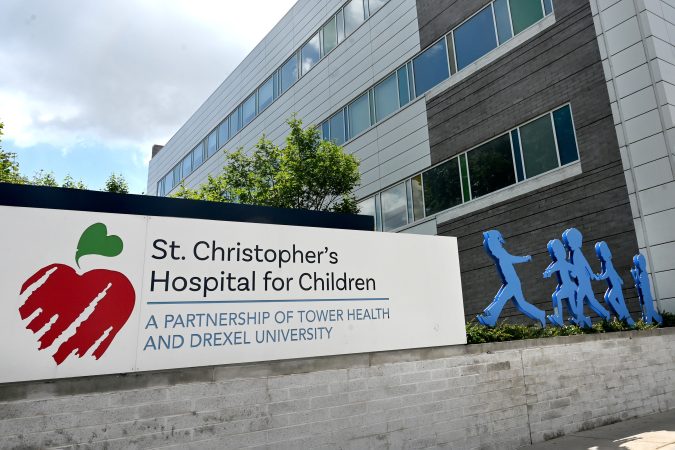
    Three major Philadelphia-area health systems are exploring an alliance to support financially struggling St. Christopher’s Hospital for Children in North Philadelphia, its leaders announced Wednesday.

    The proposed alliance would involve Nemours Children’s Health, Jefferson Health, and Temple Health, a St. Chris statement said.

    St. Chris’ ownership would not change from the current 50-50 partnership between Drexel University and Tower Health.

    Under the alliance, Wilmington-based Nemours would provide highly advanced, or tertiary, care. Nemours is Jefferson’s primary pediatric partner in the Philadelphia area.

    The preliminary agreement announcement provided no timeline to form the alliance. It also did not mention specific financial support for the North Philadelphia institution, which has received millions from local health players following a 2019 bankruptcy and steep losses during the pandemic.

    St. Chris’ board chair, P. Sue Perrotty, said the 150-year-old hospital will remain a “gateway” to care for families.

    “Our goal is to preserve what makes St. Christopher’s so special while strengthening our operations, so our community-focused mission will endure,” she said.

    “Whether care is delivered at St. Christopher’s or through our partners when clinically appropriate, our team will continue to coordinate every step of a patient’s journey, providing families with a seamless experience and a trusted guide throughout their child’s care.”

    Beyond the critical health services St. Chris provides, the institution also plays a vital part in medical education for area medical schools, including those at Drexel, Thomas Jefferson University, Philadelphia College of Osteopathic Medicine, and Temple University.

    It serves as a safety net for healthcare in some of Philadelphia’s lowest-income communities. About 85% of its patients in recent years have been insured by Medicaid, the highest percentage of any children’s hospital in the nation, according to St. Chris.

    Twice in the past four years, a coalition of Philadelphia nonprofits provided financial lifelines for St. Chris.

    Children’s Hospital of Philadelphia, Jefferson, Temple, Philadelphia College of Osteopathic Medicine, Independence Health Group, and private donors provided $50 million over two years starting in 2022. Two years later, the same group, minus Independence, contributed another $30 million.

    Jefferson and Temple were also part of a consortium that considered bidding for St. Chris in 2019 during its parent company’s bankruptcy. They backed out before the auction, which Drexel and Tower won with a $50 million bid.

    Nemours spokesperson Shelley Meadowcroft said there was no financial support included in the agreement.

    Nemours in recent years has lost affiliations with Main Line Health and ChristianaCare to CHOP. The alliance will strengthen “access to high-quality pediatric care in our region,” she wrote in an email.

    “This collaboration also strengthens Delaware’s role in pediatric care by positioning Nemours Children’s Delaware-based clinical operations as a central hub for advanced specialty care, education, and innovation,” she added, “while supporting the long-term strength and mission of St. Christopher’s Children’s Hospital and the communities it serves.

    In a statement, Temple University officials characterized the agreement as “non-binding letter of intent” to form an alliance “in support of St. Chris and its future.”

    “The proposed alliance reflects a shared commitment to securing a future for St. Christopher’s while preserving the mission, clinical excellence and community role that have made the hospital a resource for children and families in Philadelphia and across the region,” officials said.

  • $617 million in tax-free bonds for sale of South Jersey’s Advantage Behavioral Health blur private equity, nonprofit lines

    $617 million in tax-free bonds for sale of South Jersey’s Advantage Behavioral Health blur private equity, nonprofit lines

    A newly created nonprofit wants to borrow $617 million through tax-free bonds to buy Advantage Behavioral Health, a fast-growing South Jersey behavioral health company.

    The current owner, a Connecticut private equity firm called Clearview Capital, isn’t walking away from Advantage, which it bought 15 months ago.

    Clearview Capital and current executives will continue to own the for-profit entity that manages Marlton-based Advantage, according to a preliminary bond offering statement filed late last month.

    Advantage’s proposed sale to a nonprofit called QCF Advantage LLC is noteworthy for mixing for-profit and nonprofit business interests. It would make a private-equity company a key partner in a nonprofit organization with financing from the tax-exempt municipal bond market.

    Advantage’s sale price is about $520 million. That price includes $80 million being held back to see if Advantage hits profit targets after the sale. The company had $141.6 million in revenue in the 12 months that ended May 31. Most of the remaining money from the bond sale will go into reserve funds.

    Like many other mental health service providers, Advantage does not accept Medicare or Medicaid. Taking only private insurance and out-of-pocket payments helps Advantage register strong profit margins amid growing demand for mental health and addiction services.

    The transition to nonprofit ownership creates “a structure that’s designed for long term stability, reinvestment, and patient care,” James D. Golden, CEO of QCF’s parent company, told prospective investors in a recorded presentation.

    “We can provide an efficient exit to private capital,” he said in the recording, published June 30 on a website that tracks documents related to the municipal bond market. “Tax-exempt financing is really the mechanism that makes all that possible.”

    That financing will leave Advantage with an extraordinarily large debt load, said Robert Q. Kreider, a former nonprofit CEO who has no ties to Advantage. He noted that debt of that size requires continued strong growth to make the debt payments and have enough money to continue growing.

    “The bondholders are getting such a juicy rate, they’re willing to accept the risk,” said Kreider, a consultant and former CEO of Devereux Advanced Behavioral Health.

    Officials at Clearview Capital, Advantage, and QCF Advantage did not respond to requests for interviews.

    Advantage’s founding and growth

    Advantage has expanded to Pennsylvania and six additional states beyond New Jersey since its founding in 2017.

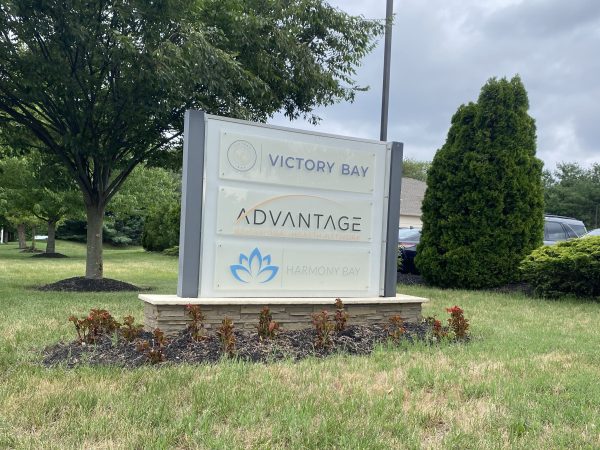
    It initially provided intensive outpatient therapy through a business called Victory Bay in Laurel Springs.

    It launched a telehealth version of its services, called Harmony Bay, in 2020. Outside of New Jersey, Advantage uses Harmony Bay as a way to build a presence in a new state, before introducing in-person services through Victory Bay.

    (function(){function e(){window.addEventListener(`message`,function(e){if(e.data[`datawrapper-height`]!==void 0){var t=document.querySelectorAll(`iframe`);for(var n in e.data[`datawrapper-height`])for(var r=0,i;i=t[r];r++)if(i.contentWindow===e.source){var a=e.data[`datawrapper-height`][n]+`px`;i.style.height=a}}})}e()})();

    Advantage also operates 17 sober-living houses under its Dignity Hall brand in Blackwood, Laurel Springs, Sicklerville, and several other South Jersey towns.

    The average daily census of patients at Victory Bay has soared over the last five years to 805 in the three months that ended June 30, from 81 in the first quarter of 2021, according to data in the bond disclosures. The company employs more than 700.

    Despite the expansion to Massachusetts, Florida, Indiana, Maryland, Ohio, and California, the services provided in a string of buildings along Chews Landing Road in Laurel Springs accounted for 55% of revenue, most of the company’s cash flow last year.

    The parking lots at several of those buildings were packed last Thursday. As part of the bond financing, 20 New Jersey properties valued at $14.4 million are being mortgaged.

    New projects are under development in Absecon and Pine Brook, N.J.; Scranton, Pa.; and Lancaster, Ohio, the bond prospectus said.

    A nonprofit buyer as a vehicle for private equity sales

    QCF Advantage was created in April to acquire Advantage.

    Owner QCF/I Inc., a tax-exempt organization based in Houston, acquires healthcare facilities that can be paid for with tax-exempt financing, according to its 990 tax form. Founded in 1997, QCF stands for Quality Care Foundation.

    “We’re a nonprofit focused on improving the quality of care in the behavioral health industry. We believe mental health is one of the most persistent, complex, and costly challenges in our country today,” Golden told prospective bond investors.

    QCF/I’s niche is buying for-profit businesses, often from private equity firms, while giving the sellers the option to keep managing the business, he said.

    In the Advantage arrangement, QCF/I will collect 2.25% of revenue for administrative services — to be paid before bondholders.

    Clearview Capital, the current private equity owner, will stay involved through an existing management entity that will collect 5% of monthly revenue under an initial 15-year contract.

    Golden and Richard T. Needham together form QCF’s board. They have a background in private equity at a Houston private equity firm called Domain Capital Partners that is not related to Clearview. The phone number on the 990 led to a voicemail box that was full. A voicemail at Domain Capital got no reply.

    QCF’s other businesses include a psychiatric hospital in Las Vegas and an addiction treatment center in North Jersey.

    Surging debt load

    Advantage had about $6 million in long-term debt at the end of 2024, three months before its sale to Clearview for an undisclosed price.

    A year later, the debt totaled $52.5 million, not including a $10 million line of credit.

    If the bond sale happens as expected, the company’s long-term debt would skyrocket to $604 million at the end of this year, according to the bond document.

    That large debt means the success of QCF Advantage depends on continued dramatic growth in revenue and profits, according to a deal summary from Stacy DiStefano, CEO of Consulting for Human Services, a Philadelphia-based advisory firm.

    Advantage’s projected annual interest expense is $42.7 million. For context, that’s about the same as the combined $42.2 million in interest paid last year by three large unrelated health systems in the same South Jersey market, Cooper University Health Care, Inspira Health Network, and Virtua Health.

    Colin Studwell, Advantage’s CEO, said during the investor presentation available on Munios.com that the company is well-positioned for strong growth. He credited the management entity, known as a management services organization, or MSO, that Clearview and executives, including Studwell, already own.

    Studwell will continue to run the MSO, which handles operations support, billing, collections, human resources, information technology, and everything else it takes to run the business.

    “Our MSO capabilities are the engine which allow us to continue to scale our services and treat more patients without any decay in clinical or operational efficiency,” Studwell said.


  • Rothman Orthopaedics is refocused on Philly region, opening three new surgery centers

    Rothman Orthopaedics is refocused on Philly region, opening three new surgery centers

    Rothman Orthopaedics plans to open three new surgery centers over the next year and keep adding doctors in its Philadelphia-area market, as the large physician-owned group refocuses growth efforts on its original territory.

    “Our biggest priority in the near term is strengthening our core business here, in Southeastern Pennsylvania and New Jersey,” Rothman CEO Christian Ellison said. “We’re not gonna ignore opportunities. We’ll be opportunistic around things that make strategic sense.”

    The new approach comes after a now abandoned effort to break into the New York market, first in a partnership with Northwell Health in 2017 and then with NYU Langone Health. That foray ended last year with the sale of Rothman Orthopaedics of Greater New York and its three locations to NYU Langone.

    Rothman has seen more success after following the lure of fast population growth to Florida, where it opened offices in the Orlando area in 2020 in partnership with AdventHealth.

    “Florida has been a big success, because we’ve had the partnership down there with Advent Health that’s been kind of mutually beneficial,” said Ellison, who became Rothman’s CEO last fall.

    The Philadelphia draw

    The practice headquartered in Center City already has 24 locations in the Greater Philadelphia market. That number includes facilities that Rothman operates in partnership with Jefferson Health, Main Line Health, AtlantiCare, and RWJ Barnabas.

    Rothman located its newest office in West Chester, an area where Rothman had little market share, according to Ellison. He also sees opportunity in other parts of the Philadelphia region and contiguous markets.

    To make that growth possible, Rothman is partway through an effort to hire 41 physicians by the end of this year. That represents a 20% increase and will bring Rothman’s total to 214 physicians, the company said.

    The need for ambulatory surgery centers

    Rothman is a partner in nine surgery centers in Pennsylvania and New Jersey and two surgical hospitals (Rothman Orthopaedic Specialty Hospital in Benslam and Physicians Care Surgical Hospital in Limerick).

    Those outpatient facilities account for nearly two-thirds of Rothman’s surgeries. Even the surgical hospitals function primarily as ambulatory centers, Ellison said. The remaining third of surgeries takes place in acute-care hospitals.

    “We are challenged for operating room capacity right now, both in the acute care hospitals, as well as in our ASCs, and so we feel like we need to bring more operating rooms online,” Ellison said.

    What’s more, Medicare and private insurers want more procedures done in lower-cost surgery centers. In the future, insurers will pay the same price for an outpatient knee replacement whether its done in a hospital of freestanding surgery center, Ellison predicted.

    Rothman hasn’t finalized locations for the new surgery centers, but Ellison said he expects two to be in Southeastern Pennsylvania and one in New Jersey. The centers will likely be in areas where Rothman has an established patient base.

    The physician group prefers to open the new centers independently, as opposed to going through partnerships like it has historically. “We think we’re uniquely positioned to manage that patient experience in the surgical environment,” Ellison said.

  • How much did Philly-area nonprofit health system CEOs make in 2024?

    How much did Philly-area nonprofit health system CEOs make in 2024?

    Jefferson’s Joseph G. Cacchione ranked as the highest-paid CEO at the Philadelphia region’s nonprofit health systems in 2024, with total compensation of $7 million, according to The Inquirer’s annual review of public tax forms.

    Madeline Bell at Children’s Hospital of Philadelphia collected $5.5 million in 2024, giving her the number two spot.

    Both also were top earners in The Inquirer’s 2023 compensation analysis. Jefferson is the largest system based here, both by revenue and number of hospitals, with 33 stretching from South Jersey to near Scranton. CHOP is among the nation’s top-ranked children’s hospitals.

    Janice Nevin at ChristianaCare joined the ranks of the top five. She received $3.5 million, about the same pay as the region’s fourth highest earner, Al Maghezehe at Capital Health, which has a network of outpatient clinics in Bucks County and two hospitals in Mercer County. Maghezehe’s compensation stands out because Capital had by far the lowest revenue among the systems with the 10 highest-paid CEOs.

    A couple of CEOs who left their positions before 2024 continued collecting long-term compensation, as is common in the industry.

    Most notably, Jefferson’s former CEO Stephen K. Klasko collected just over $1 million in 2024. He retired at the end of 2021, but remained an adviser through June 2022. The 2024 payment brought his total through 2024 to $48.7 million for 8½ years as CEO.

    Lori Herndon left AtlantiCare in June 2023. Her compensation the following year was $1.3 million.

    Other CEOs left during 2024, making it possible they will be listed in the next round of 990s. Those executives include Donald Mueller at St. Christopher’s Hospital for Children, Michael Laign at Redeemer Health, and Ronald W. Johnson at Shore Medical.

    Here’s a look at the numbers from The Inquirer’s review of the latest 990 tax returns of 20 nonprofit health systems, covering 11 health systems with operations concentrated in Southeastern Pennsylvania, seven in South Jersey, and two in northern Delaware:

    (function(){function e(){window.addEventListener(`message`,function(e){if(e.data[`datawrapper-height`]!==void 0){var t=document.querySelectorAll(`iframe`);for(var n in e.data[`datawrapper-height`])for(var r=0,i;i=t[r];r++)if(i.contentWindow===e.source){var a=e.data[`datawrapper-height`][n]+`px`;i.style.height=a}}})}e()})();

  • NovaCare Rehabilitation’s parent, Select Medical, was sold in $3.9 billion private equity deal

    NovaCare Rehabilitation’s parent, Select Medical, was sold in $3.9 billion private equity deal

    NovaCare Rehabilitation’s parent company, Select Medical Holdings Corp., was taken private in $3.9 billion private equity deal this week.

    NovaCare has more than 100 physical therapy locations in the Philadelphia region, including some through a partnership with Rothman Orthopaedics.

    For 25 years, NovaCare sponsored the Philadelphia Eagles practice complex in South Philadelphia. Jefferson Health took over the sponsorship this year.

    Top management joined private-equity firm Welsh, Carson, Anderson & Stowe in the acquisition of Select Medical, which is based in Mechanicsburg, Pa. The sale was completed Wednesday. The price per share was $16.50 per share, an 18% premium to the latest close before the deal was announced in November.

    In addition to outpatient physical therapy through NovaCare and other subsidiaries at 1,850 locations in 36 states, Select Medical operates 104 long-term acute-care hospitals in 28 states and 38 rehabilitation hospitals in 15 states. The company has more than 45,000 employees and had $5.5 billion in revenue last year.

    Select Medical acquired NovaCare in 1999. Publicly traded NovaCare fell on hard times because of Medicare reimbursement changes under the federal Budget Reconciliation Act in 1997. The law capped reimbursement for speech, physical, and occupational therapy in nursing homes.

    The company, then headquartered in King of Prussia, lost $700 million in annual revenue because of those changes, The Inquirer reported at the time.

  • Connolly Dermatology, a once fast-growing practice, faces N.J. lawsuit over unpaid wages

    Connolly Dermatology, a once fast-growing practice, faces N.J. lawsuit over unpaid wages

    A former Connolly Dermatology employee filed a lawsuit Thursday in Atlantic County, N.J., seeking unpaid wages for herself and other employees of the once fast-growing skin care practice.

    The plaintiff, Tracy Piccardo, worked in the Linwood office as a receptionist. More than 70 employees owed back pay had been identified, according to her lawsuit, filed in Superior Court by David R. Castellani. Piccardo did not immediately respond to a text seeking comment on the lawsuit.

    The practice’s owner, dermatologist Coyle S. Connolly, did not provide an on-the-record comment.. At its peak, Connolly had 30 locations, mostly in New Jersey and Pennsylvania. It’s not clear if any of them are open now.

    Connolly’s practice stood out as Medicare’s top biller three consecutive years for a skin cancer treatment that saw a 40% reimbursement cut this year under the government insurance program.

    The lawsuit alleges violations of the state’s Wage Payment Law/Wage Theft Act, breach of contract, and unjust enrichment.

    It seeks payment of back wages with interest, damages to be determined at trial, and attorney’s fees. The complaint had no estimate of how much money is at stake.

    Increasing financial pressure

    Piccardo told The Inquirer in May that the practice had been short on supplies, such as paper towels, toilet paper, paper toner for months.

    At that point, Piccardo and other employees hadn’t been paid for three weeks, she said at the time. That was the second payroll lapse this year, Piccardo and other employees told The Inquirer.

    The New Jersey Department of Labor said in May that it was investigating complaints about missed payrolls.

    At least two Connolly landlords have sued over unpaid rent since May.

    In early May, the owner of a Montgomeryville office sued to take possession of it after Connolly allegedly failed to pay rent in April.

    Last month, a landlord sued Connolly for unpaid rent on a property in Middle Township, N.J., that the practice had occupied since 2007. The lawsuit says Connolly was delinquent on more than $39,000 of rent.

  • Two more Philly-area oral and maxillofacial surgery practices have joined a New Jersey group

    Two more Philly-area oral and maxillofacial surgery practices have joined a New Jersey group

    MAX Surgical Specialty Management, a private-equity backed company consolidating oral and maxillofacial surgery groups in the Northeastern U.S., has acquired two more practices in the Philadelphia area.

    The latest deal, announced Friday, gives the Hackensack, N.J., firm 12 surgeons at 12 locations in Pennsylvania. Surgeon Jason M. Auerbach founded MAX in 2022 with private-equity backing and entered Pennsylvania two years later.

    The two newly acquired practices have six offices in Bucks and Chester Counties.

    Oral and Maxillofacial Surgeons P.C. has three surgeons, and offices in Doylestown, Quakertown, Warminster, and Chalfont. Oral Associates of the Main Line has two surgeons and offices in Exton and Paoli.

    MAX did not disclose financial terms of the transactions.

    In addition to New Jersey and Pennsylvania, MAX has practices in Connecticut, New York, and Vermont. The company — a management services organization — is majority-owned by its physicians, Auerbach said.

    Oral and maxillofacial surgeons work at the crossroads of dentistry and medicine. Most have dental degrees, but some also have medical degrees. They remove wisdom teeth, install dental implants, repair facial traumas, and treat jaw injuries, among other services.

    North Jersey origins

    Auerbach founded Riverside Oral Surgery in Bergen County in 2007 and grew it to 12 locations before founding MAX with private equity partners. Part of his motivation was to create a home for independent physicians, Auerbach said in a May interview.

    The Philadelphia region still has a high concentration of independents, with strong patient demand. “It’s hard nowadays to be an independent oral-maxillofacial surgeon, in terms of the complexities in running a healthcare business,” Auerbach said.

    Robert Mogyoros, whose Greater Philadelphia Oral Surgery is in Elkins Park, said he valued his independence above all, but decided to look for a group to join after the business side had gotten too challenging.

    Physician groups get better prices from vendors, better deals with insurers, and have an upper hand in physician and employee recruitment, said Mogyoros, who became part of MAX last July.

    “What attracted me to MAX was that it’s doctor-driven and doctor-run,” he said in a May interview.

    Rothman and Kim Oral & Maxillofacial Surgery, with offices in Northeast Philadelphia and Cinnaminson, was MAX’s first acquisition in Southeastern Pennsylvania. That deal also happened last year when MAX announced that it had borrowed $77 million to support growth.

    When doctors sell their practices to MAX, they typically invest about 30% of the value into MAX, Auerbach said. MAX’s outside investors are MedEquity Capital near Boston, RF Investment Partners in New York, and Kian Capital in Charlotte, N.C.

    Editor’s note: This article was update to correct the year when MAX made its first Pennsylvania acquisition.