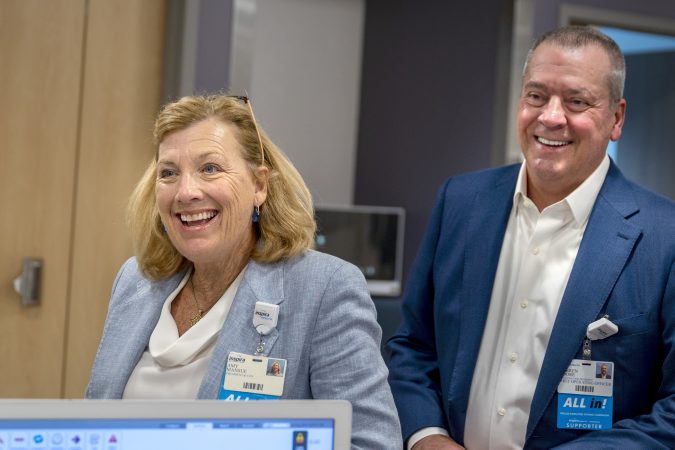
New Jersey hospitals could lose an estimated $3.6 billion from Medicaid changes through 2032, forcing them to bring their expenses in line, Inspira Health Network CEO Amy Mansue said Friday during a panel discussion in Cherry Hill.
“That will only happen with dramatic changes in how we look at our business,” she said during the Southern New Jersey Development Council’s Annual Health Care Leadership Forum at the Legacy Club of Woodcrest.
Mansue predicted that health systems will close little-used programs. “There is no way to cut that much money out of the hospitals without doing some of that,” she said.
The $3.6 billion estimate from the New Jersey Hospital Association does not include hospitals’ losses from the growing population of uninsured people who show up at emergency departments because they can’t afford to pay cash for a doctor visit.
The hospital executives pleaded for state officials to reduce the red tape that makes it hard to implement programs needed to meet community needs.
“We need to be more nimble, we need to be more adaptable, we need to be more flexible,” said Aaron Chang, president of Jefferson Health NJ, which includes hospitals in Cherry Hill, Stratford, and Washington Township.
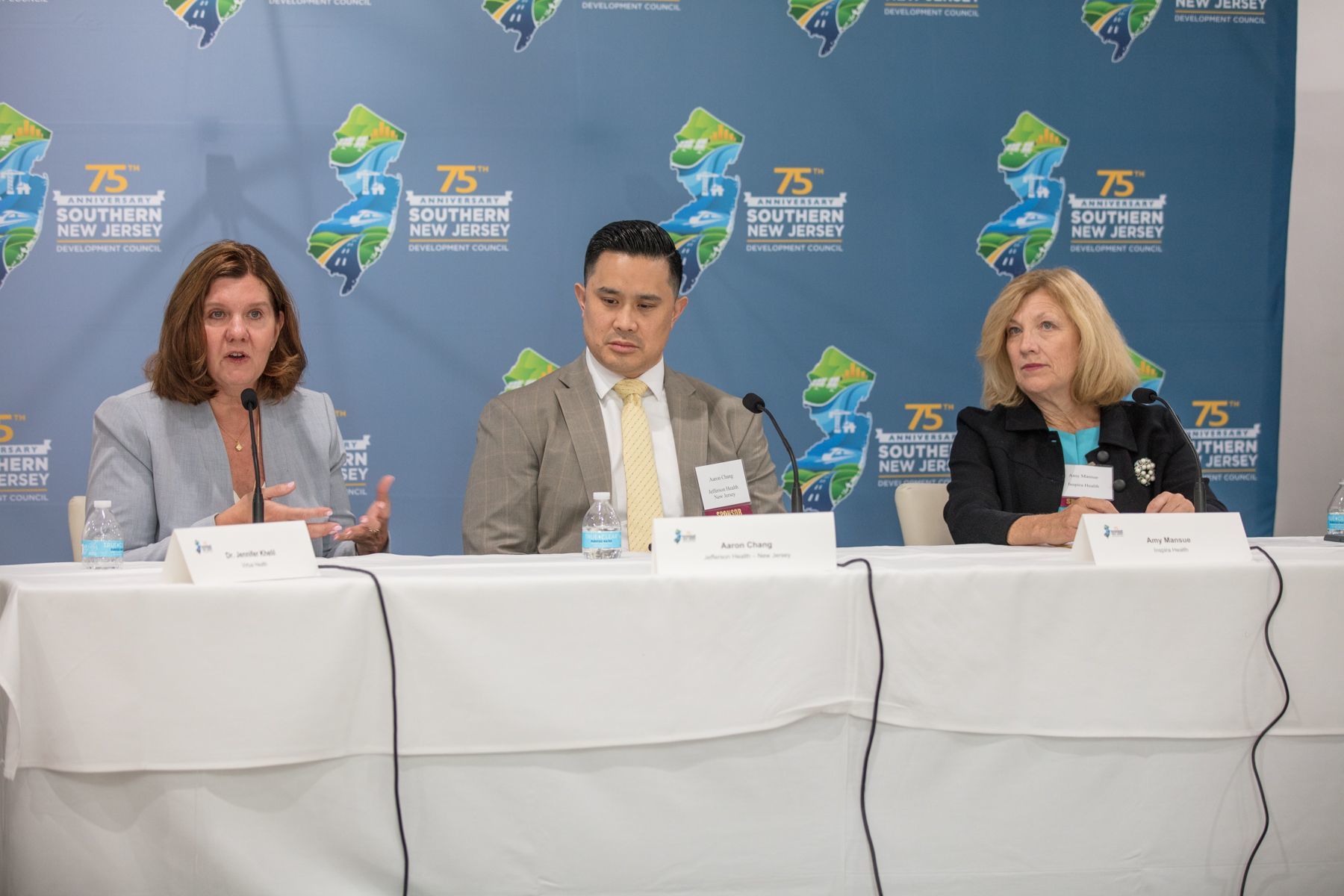
Jennifer Khelil (left), Virtua Health’s chief clinical Officer; Aaron Chang (center), president of Jefferson Health New Jersey; and Amy Mansue, CEO of Inspira Health spoke Friday at the Southern New Jersey Development Council’s Health Care Leadership Forum.Southern New Jersey Development Council
Inspira is adding a $220 million patient tower at Inspira Mullica Hill in Harrison Township, near the intersection of Routes 55 and 322. Construction is expected to be completed Oct. 1, Mansue said. “The reality is we’re not going to open until March” because it will take that long to get all the regulatory approvals, she said.
Inspira operates three other hospitals in Cumberland and Salem Counties.
Raynard E. Washington, who heads the N.J. Department of Health, spoke after the panel and said Gov. Mikie Sherrill is serious about making it easier to do business in the state. She told state agencies “to limit additional regulations and to look for opportunities to streamline,” he said.
Workforce development is a top priority
Six years ago, Virtua and Rowan University started working together to create the Virtua Health College of Medicine & Life Sciences out of Rowan’s School of Osteopathic Medicine, Rowan’s School of Nursing & Health Professions, and Virtua’s Our Lady of Lourdes Nursing School, plus a new school of translational biomedical engineering and sciences.
The institution officially launched in 2022 with $85 million in support from Virtua and $125 million from Rowan and has seen its class sizes grow steadily.
“We are now training about 360 nurse graduates every year, 300 medical students,” said Jennifer Khelil, Virtua’s chief clinical officer. Virtua operates five hospitals in South Jersey.
Workforce efforts also reach into high schools, Chang said. Jefferson Cherry Hill Hospital has a relationship with Cherry Hill West High School that brings 12 to 15 interns to the hospital.
“Because of the internship, their exposure to the hospital environment, whether it’s the ancillary departments and or the clinical areas, over 95% of those individuals get a healthcare job as a first foray into the workforce,” Chang said.
Editor’s note: This story has been updated to correct the time period for the Medicaid cuts.
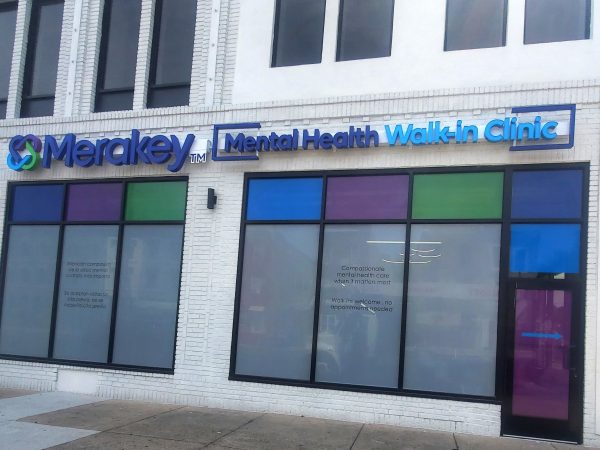
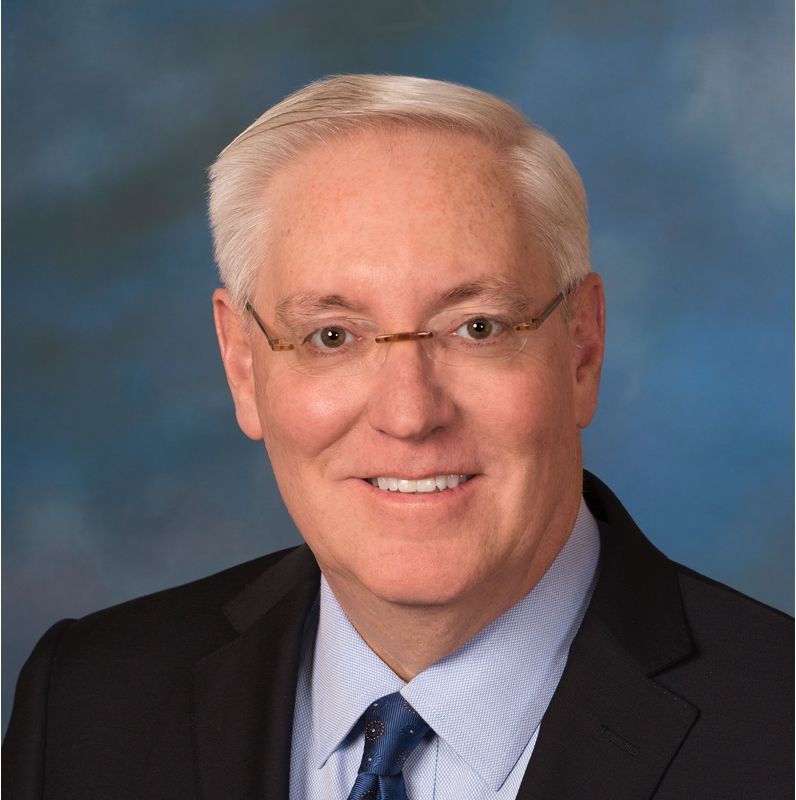
Merakey USA, based in Lafayette Hill, is acquiring Boundless, an Ohio nonprofit that provides services for people with intellectual and developmental disabilities and behavioral health needs, in a deal that leaders of both organizations described this week as a model for their industry.
“It’s the marriage of two financially stable organizations” that are preparing for turbulence in the human services sector, said Merakey CEO Joseph S. Martz. More typically human services deals happen because one nonprofit needs a financial rescue, as happened with Philadelphia’s Resources for Human Development in 2024.
Merakey and Boundless planned to announce the news Thursday.
Martz and the CEO of Boundless, Patrick Maynard, both said the size of the combined organization — more than $1 billion in revenue — would enable it to invest in the systems, technology, training, and workforce development needed to be financially sustainable.
The deal, expected to close in July, will create an organization that supports 50,000 individuals and families annually in 12 states and employs 11,000 people.
Joseph S. Martz is CEO of Merakey USA, which is acquiring Boundless, a human services provider based in Columbus, Ohio.Merakey USA
The executives cited pressures from an expected change in how their organizations get paid. A shift is underway to payment for results rather than for straight volumes of services. Looming cuts to Medicaid over the next decade are also forcing human services providers to rethink how they operate.
“We’re entering a time when resources are going to be a lot tighter, and I think organizations need to be thinking differently about how they approach that. We’re seeing some other pretty large consolidations,” said Chuck Ingoglia, CEO of the National Council for Mental Wellbeing, a Washington nonprofit advocacy group.
Origins of the Merakey-Boundless deal
Stacy DiStefano, CEO of Consulting for Human Services, a Philadelphia-based adviser firm, introduced Martz and Maynard to each other in July 2024.
That led to a series of conversations about issues the two organizations were spending money to solve and the realization: “Why don’t we just come together and use the combined resources of our organizations to solve that problem,” Martz said.
Merakey and Boundless had already been growing through acquisitions, though Boundless has grown more dramatically. In the last seven years, the nonprofit made five acquisitions that helped increase its annual revenue to an expected $200 million this year from $20 million, Maynard said.
“My goal was to create sustainability in a broken system where most of us are living off of Medicaid, which comes nowhere close to providing the resources that cover the costs,” Maynard said.
Patrick Maynard is CEO of Boundless, a Ohio human services provider that is merging into Merakey USA, of Lafayette Hill.Boundless
The added scale enabled Boundless to add healthcare and dentistry for its clients, but the Medicaid shortfall for those dental services is $75,000 a month, Maynard said. That kept Maynard looking for even bigger partners, like Merakey.
Maynard cited Merakey’s expenditure of $18 million for Workday software, a system for human resources and financial management as an example of something Boundless could never afford. At $200 million in annual revenue, Boundless struggled to spend $2 million on a system for electronic health records, he said.
A new structure
Merakey, which started as the Northwest Center in the Mount Airy section of Philadelphia in 1969, remains firmly rooted in Pennsylvania. The state is expected to account for more than half its $850 million in revenue for the fiscal year that ends this month, Martz said.
States where Merakey operates include Indiana, Kentucky, Ohio, Michigan, and Wisconsin. A new division called Boundless Midwest, led by Maynard, will assume responsibility for Merakey’s operations in that region when the deal is done.
Both boards have approved the transaction, which remains under review by the Ohio Attorney General.
Martz said he expect Boundless to continue growing though acquisitions and the development of new programs with the support of Merakey.
“We are going to be a big organization, but it’s really about being a better organization, about the quality of care that we provide,” Martz said. “If you’re not culturally aligned, bigger for bigger sake, just doesn’t make any sense to me.”
Main Line Health and UnitedHealthcare have an “agreement in principle” on new contract and will extend the current contract until the new deal is completed, Main Line Health said Wednesday.
Main Line’s contract with United was set to expire Tuesday, potentially disrupting care for 32,000 people who rely on Main Line doctors and have health insurance through United. The negotiations covered employer-sponsored plans and Medicare Advantage plans.
“For nearly a year, Main Line Health worked diligently and in good faith to reach a responsible agreement — one that reflects the true cost and complexity of the high-quality care we deliver to this community every day. We are pleased to have reached this milestone, and our patients will experience no disruption to their care,“ Main Line said in an email.
Main Line said the preliminary agreementrelieves some of the administrative burden for doctors and patients. They include prior authorization delays, claim denials, and excessive audit activity, Main Line said.
United, the nation’s largest health insurer, did not immediately provide a comment.
The company based in Eden Prairie, Minn., this year failed to reach a new agreement with Jefferson Health’s Lehigh Valley Health Network for Medicare Advantage and employer plans. That outcome added to the worry for some patients that the same thing would happen in Philadelphia’s western suburbs, where Main Line is the leading provider of healthcare services.
The Children’s Hospital of Philadelphia announced Tuesday that Joseph Mitchell will succeed Madeline Bell as CEO, when Bell retires Oct. 1 after a nearly 40-year career at the University City nonprofit.
Bell, 65, became CHOP’s CEO in July 2015 following eight years as chief operating officer. During Bell’s tenure as CEO, CHOP more than doubled its annual revenue to more than $5 billion, added a hospital in King of Prussia, and started building a $2.6 billion patient tower on its main campus.
Mitchell, 51, joined CHOP as president in April 2025 following a national search by CHOP’s board for Bell’s successor. In 2024, Bell had notified the board of her intention to retire, CHOP said.
Before coming to Philadelphia, Mitchell was an executive vice president at Boston Children’s Hospital and president of Franciscan Children’s, a specialty hospital that Boston Children’s acquired in 2023.
“The opportunity to lead an institution that is so iconic, impactful, and relevant, and has the opportunity to impact pediatrics and have an indelible imprint on kids and families was just irresistible,” Mitchell said in an interviewthis week. “It was an easy decision to move my family from Boston to Philadelphia.”
CHOP is financially strong as Mitchell assumes the top job, but like other health systems it will face financial pressure from Medicaid cuts starting next year. The nonprofit has also been under fire from the Trump administration for its program that serves transgender youth.
Mitchell trained as a urologist and worked at McKinsey & Co. as a consultant for 14 years before becoming CEO of Franciscan Children’s in 2021. He led a financial turnaround effort there and planned for a dramatic expansion of its campus in Boston’s Brighton neighborhood.
“Joe brings a fresh perspective, a patient-first approach, and a strong strategic mindset,” Greg Davis, CHOP’s board chair, said in a news release. “We are confident he will guide CHOP into its next chapter with continued excellence and impact.”
Bell’s tenure as CEO
Bell, who started at CHOP as a nurse, oversaw substantial growth of CHOP’s footprint in West Philadelphia and on the eastern side of the Schuylkill with two research towers on Schuylkill Avenue near the South Street Bridge. CHOP also expanded its specialty-care network in the suburbs.
CHOP became the pediatric partner for Main Line Health, Lehigh Valley Health Network, and ChristianaCare under Bell’s leadership. Such relationships with systems focused on adults help steer patients needing advanced specialties to CHOP. CHOP has long been Penn Medicine’s pediatric partner.
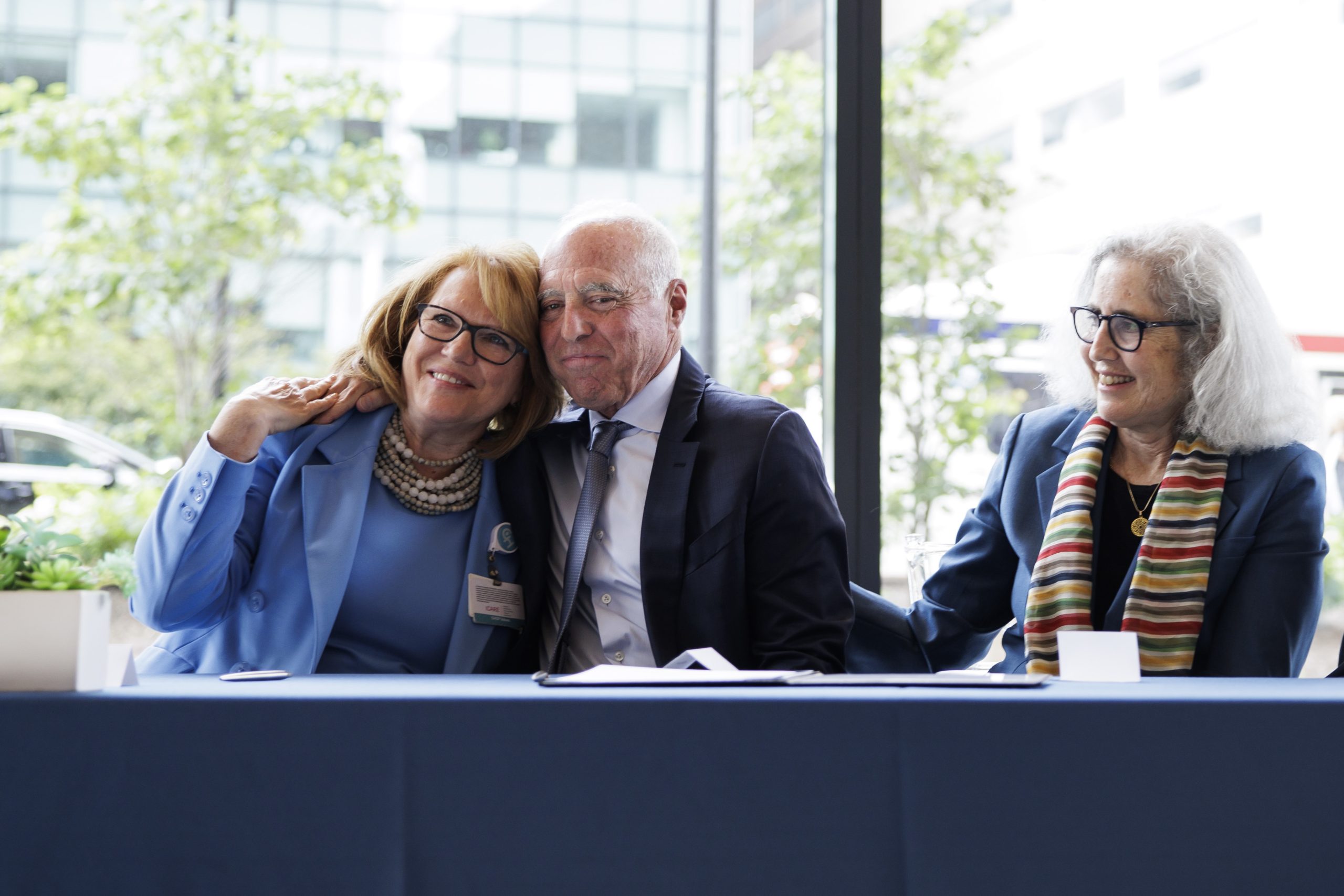
Madeline Bell sat next to Philadelphia Eagles owner Jeffrey Lurie last year during a ceremonial signing of documents for the Lurie family’s $50 million donation to create the Lurie Autism Institute at the University of Pennsylvania and CHOP.Monica Herndon / Staff Photographer
In a prerecorded statement for staff and others viewed by The Inquirer in advance of the transitional announcement, Bell highlighted medical breakthroughs in cell and gene therapy during the past decade, as well as an expansion of behavioral health services. The Lurie Autism Institute, a partnership between the University of Pennsylvania and CHOP, launched last year thanks to a $50 million gift from Philadelphia Eagles owner Jeffrey Lurie and his family.
Also last year, CHOP received its largest gift ever, $125 million from Comcast CEO Brian Roberts and his wife, Aileen. The new patient tower expected to open in 2028 will bear their name. In 2024, real estate investor Mitchell L. Morgan and his family donated $50 million toward the cost of one of the two research towers near the South Street Bridge.
After retiring, Bell plans to continue as honorary consul of Spain for the Philadelphia region, a position she started last July, and hopes to remain on the board of Comcast-NBCUniversal, she said. Also, she will continue to support CHOP philanthropically and will remain a resource for Mitchell.
CHOP is among the nation’s largest pediatric systems. It has 774 licensed hospital beds and employs 31,000 people. In the nine months that ended March 31, CHOP had 27,643 inpatient admissions and 1.3 million outpatient visits.
Joe Mitchell’s priorities
Since arriving in Philadelphia, Mitchell has immersed himself in getting to know CHOP, visiting primary care and specialty sites, as well as the hospitals, he said. The next step was broadening his responsibilities to the point where most of CHOP’s senior executives are now reporting to him.
He said it’s too soon for him to address specific strategic moves, but emphasized that his priority is expanding access to care for children and families.
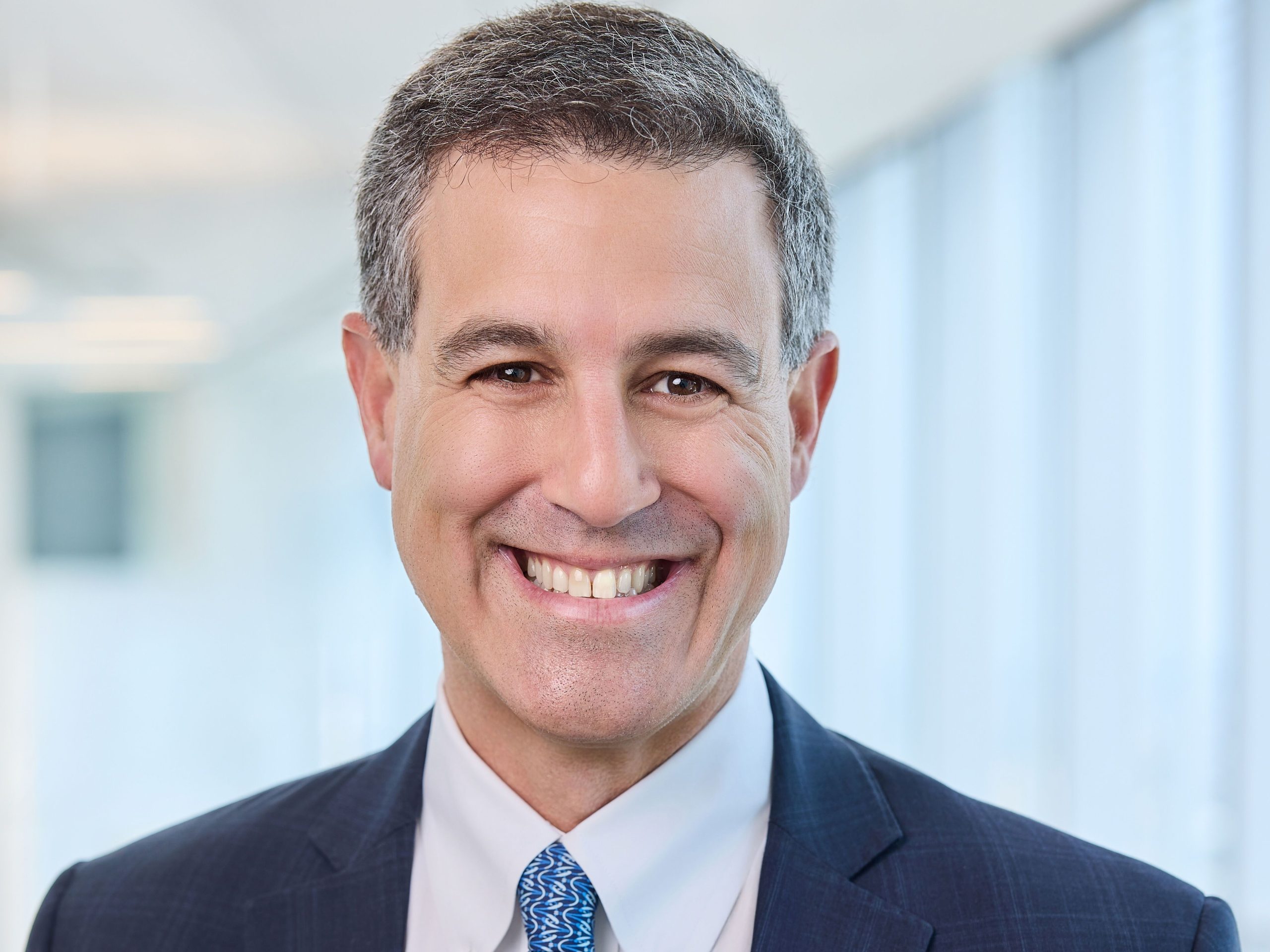
Joseph Mitchell will succeed Madeline Bell as CHOP’s CEO this fall.Children's Hospital of Philadelphia
That could get harder with Medicaid cuts looming next year. Nearly 50% of CHOP’s patients have the insurance for low-income families.
“We’re doing everything we can to preserve access for families, to advocate for funding and resources at the state and federal level,” said Mitchell, who grew up in St. Louis in a family “that was deep into healthcare.”
He moved to Boston for a residency at Brigham and Women’s Hospital. That’s where he met his wife, Vivian. They have two children, 17 and 14, and the entire family has fallen in love with Philadelphia, he said.
“CHOP has embraced me, but Philadelphia as a community has really embraced us,” he said.
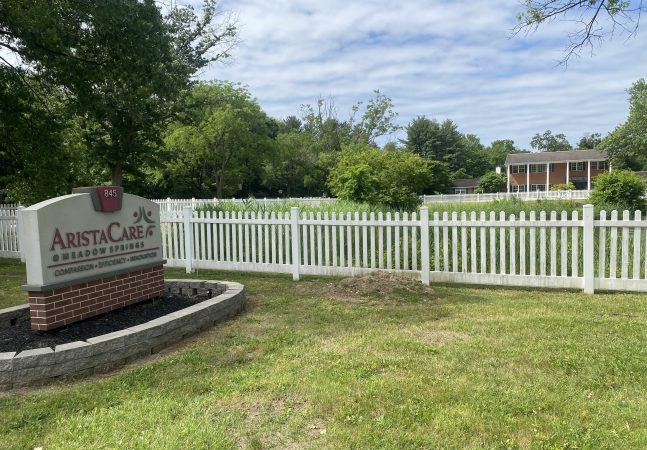
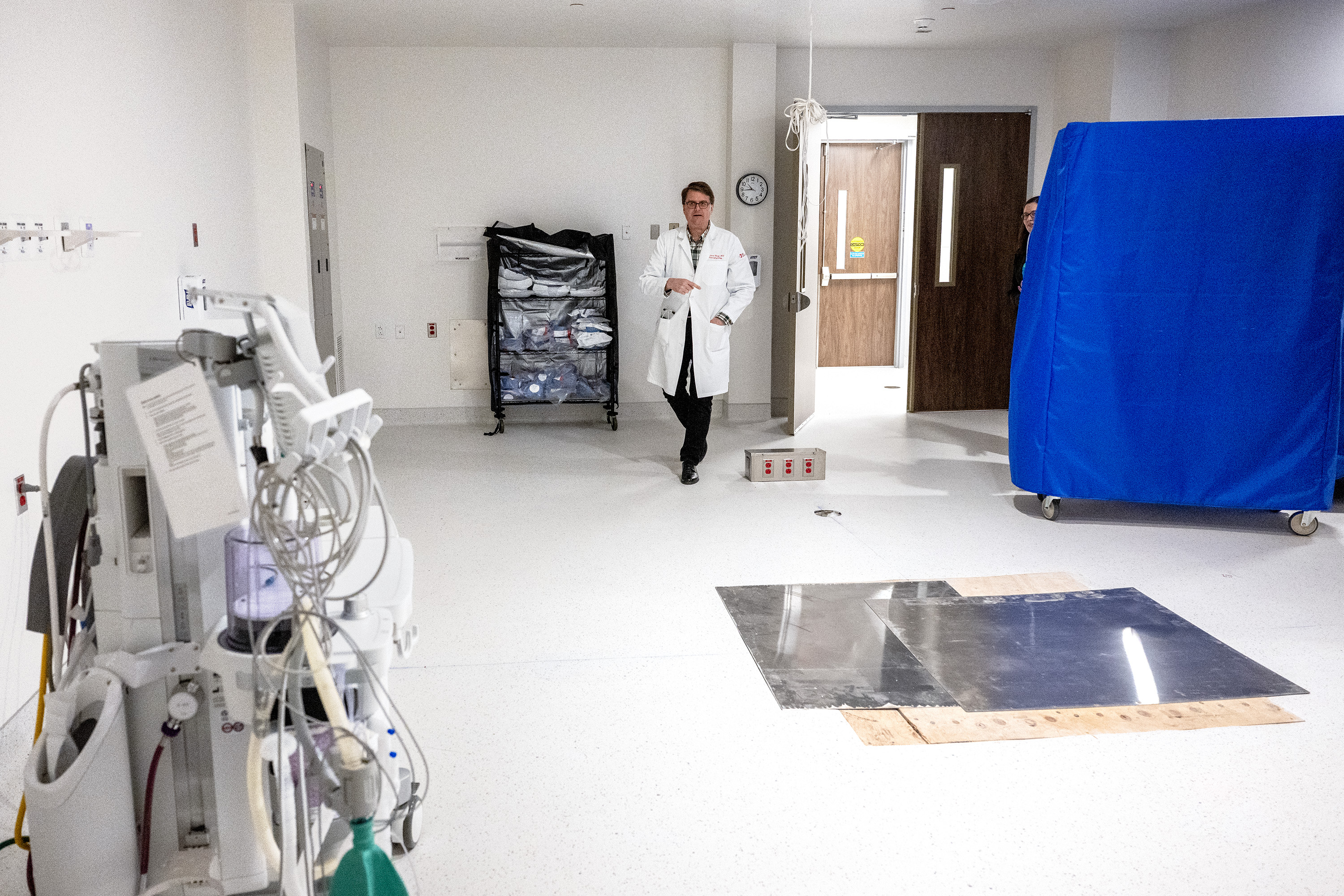
AristaCare at Meadow Springs, a Plymouth Meeting nursing home that specializes in patients who need ventilators to help them breathe, has started doing a key lung procedure in-house that used to require patients to be transferred to a hospital.
The effort is part of a broad trend in healthcare to provide more care outside of hospitals, which are the most expensive sites of care.
Meadow Springs’ goal in doing the lung-clearing procedures in-house is reducing the number of times its residents are hospitalized, the facility’s administrator Rob Nealon said.
Keeping residents in the facility benefits Meadow Springs financially even though it doesn’t charge for the treatment because it doesn’t lose revenue to hospitals, Nealon said. It’s also better for residents to avoid difficult transitions and long hospital stays, he said.
The treatment, called a bronchoscopy, uses suction tubing with video to go deep inside a patient’s lungs to clear out secretions and mucus plugs that make it hard for ventilator patients to breath, said Lejoy Mathew, respiratory director for the facility.
The nursing home with 153 licensed beds has the capacity to care for 72 people on ventilators.
AristaCare did its first bronchoscopy in February and has done four more since then, Mathew said.
Patients who are dependent on ventilators often have a chronic respiratory disease, neuromuscular or neurodegenerative diseases, or traumatic brain injuries.
The company, based in Cranford, N.J., also owns AristaCare at East Falls, another ventilator facility it acquired in 2024, and plans to start doing bronchoscopies there as well. The East Falls facility has 66 beds.
Main Line Health is adding a 108-bed patient pavilion to its Paoli Hospital campus as part of a push to expand its capacity in Chester and Montgomery Counties, the nonprofit health system announced Tuesday.
The building, expected to cost between $220 million and $240 million, is scheduled to open in early 2029. The project will expand Paoli’s capacity by more than 40%.
Patient rooms will occupy three of five floors. They will be convertible from standard hospital rooms into rooms for intensive care. One floor will be used for diagnostics, such as radiology and perinatal testing. The roof will have a landing pad for helicopters.
Beyond Paoli, Main Line is adding to its outpatient capacity in Downingtown, where a large facility that has township approval will include surgical care. The health system also has shared an early-stage proposal for outpatient offices in the Collegeville area, while it considers building there what would be its fifth hospital in Philadelphia’s western suburbs.
“While many communities face declining access to care, Main Line Health is moving forward with optimism, investing in this region’s future and reaffirming our commitment to exceptional care where people live and work,” Main Line CEO Ed Jimenez said in the announcement.
Paoli hospital currently has 261 licensed beds and employs nearly 1,400 people, according to Main Line. The hospital had 53,000 emergency department visits in the year that ended June 30, 2025. Main Line Health completed its last major expansion of Paoli Hospital in 2009, doubling the facility’s size.
Like other Philadelphia-area health systems, Main Line has experienced tough times financially since the pandemic, which led to broadly higher costs in healthcare. In the nine months that ended March 31, Main Line had a $214,000 operating profit on $2.1 billion in revenue.
More Main Line projects
Separately, about 12 miles west of Paoli Hospital, in Downingtown, Main Line plans to open a large outpatient facility next summer. Main Line Health Downingtown, at the intersection of Lloyd and Manor Avenues, willcost $150 million and include a surgery center and substantial imaging capabilities.
Incentral Montgomery County, as well, Main Line recently made a presentation to the Upper Providence Township Board of Supervisors about a major development in an area where the health system has seen substantial growth.
The long term could see Main Line builda 108-bed hospital, but more immediately itneeds to add outpatient office space in the Collegeville area, Main Line said.
Half of the nonprofit health systems in Southeastern Pennsylvania had operating losses in the first nine months of fiscal 2026, the systems’ latest reports to municipal bond investors showed.
All had strong revenue growth, with the exceptions of Redeemer Health and Tower Health, the two smallest systems by revenue. The gains at Jefferson Health and Penn Medicine benefited from acquisitions in fiscal 2025.
The reports are not perfectly comparable because of variations in accounting practices.
For example, Jefferson, Main Line Health, and ChristianaCare changed their depreciation rates, which reduced their expenses relative to competitors. Jefferson includes investment income in its revenue, boosting its results.
Here’s a summary in order of revenue, from the region’slargest to smallest systems:
Jefferson Healthhad a $252.6 million operating loss, which it attributed to severe winter weather, restructuring costs related to layoffs, and shortfalls in insurance reimbursement. Total revenue was just shy of $13 billion, up from $11.6 billion last year, which included only eight months of results from Lehigh Valley Health Network.
Children’s Hospital of Philadelphia had a $271 million operating profit in the first nine months of fiscal 2026, up from $195.8 million the year before. Total revenue rose 9% to $4.1 billion from $3.7 billion, thanks to strong gains in payments for hospital patients and unspecified other operating revenue.
Temple University Health System had an operating loss of $9.9 million, recovering largely from a $50.5 million loss in the first half of fiscal 2026. In the same period a year ago, Temple had a $10.9 million operating loss. The health system’s revenue was $2.6 billion, up from $2.3 billion last year.
Main LineHealth reported a small operating profit of $214,000, following a winter quarter setback. The four-hospital nonprofit system recorded an $8.5 million loss in the three months that ended March 31. Severe winter weather reduced patient visits, and the health system increased its reserves for medical malpractice expenses.
Tower Health swung to a small operating loss of $3.6 million. During the same period a year ago, Tower had a $4.2 million operating profit. Revenue increased 1.6% to $1.6 billion.
Steep losses continued at Redeemer Health, which reported a $29 million operating loss, compared to a $33 million loss last year. Redeemer’s total revenue rose by less than 1%, to $332 million. Redeemer owns Holy Redeemer Hospital, a 239-bed facility in Abington Township, Montgomery County, not far from Jefferson Abington Hospital.
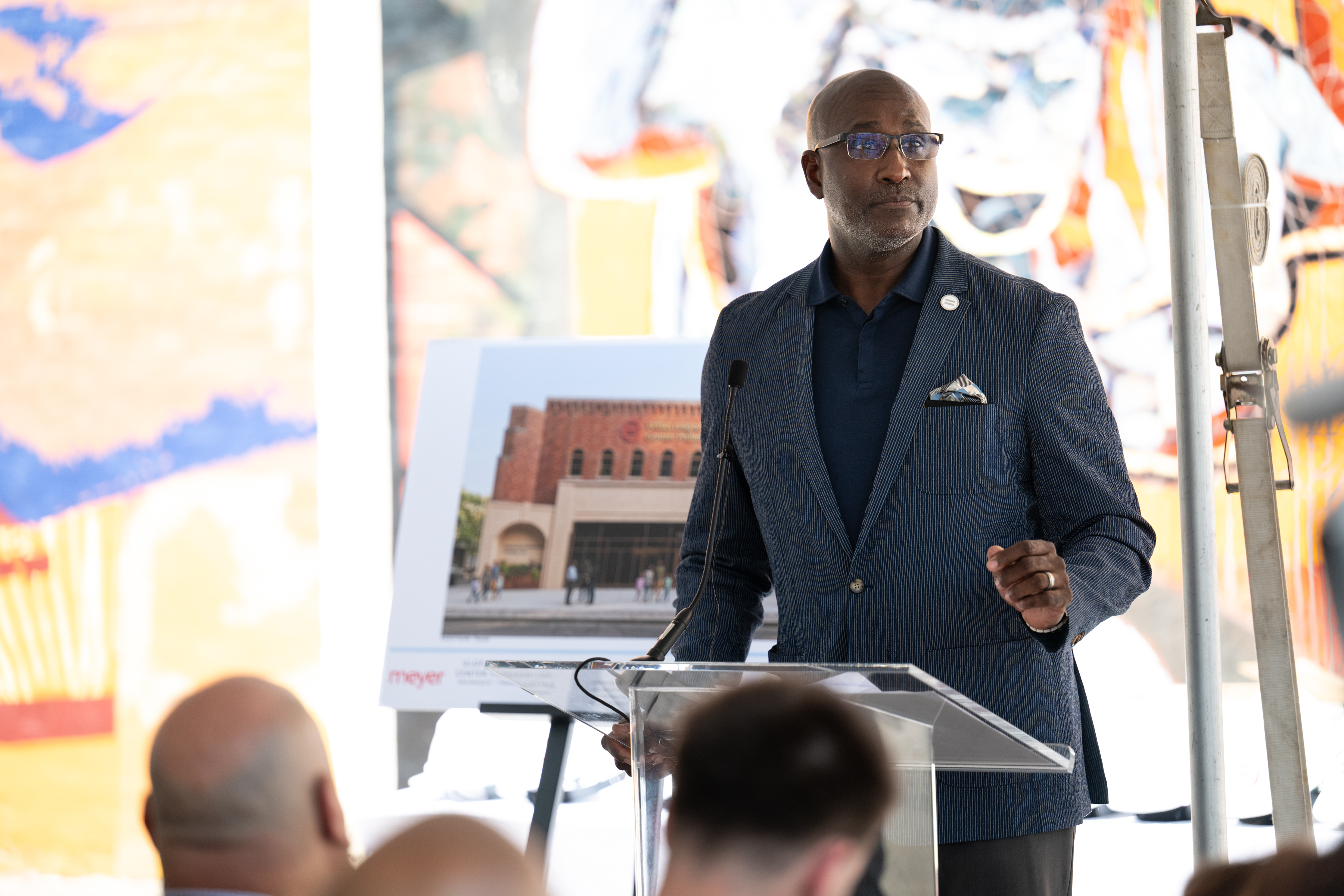
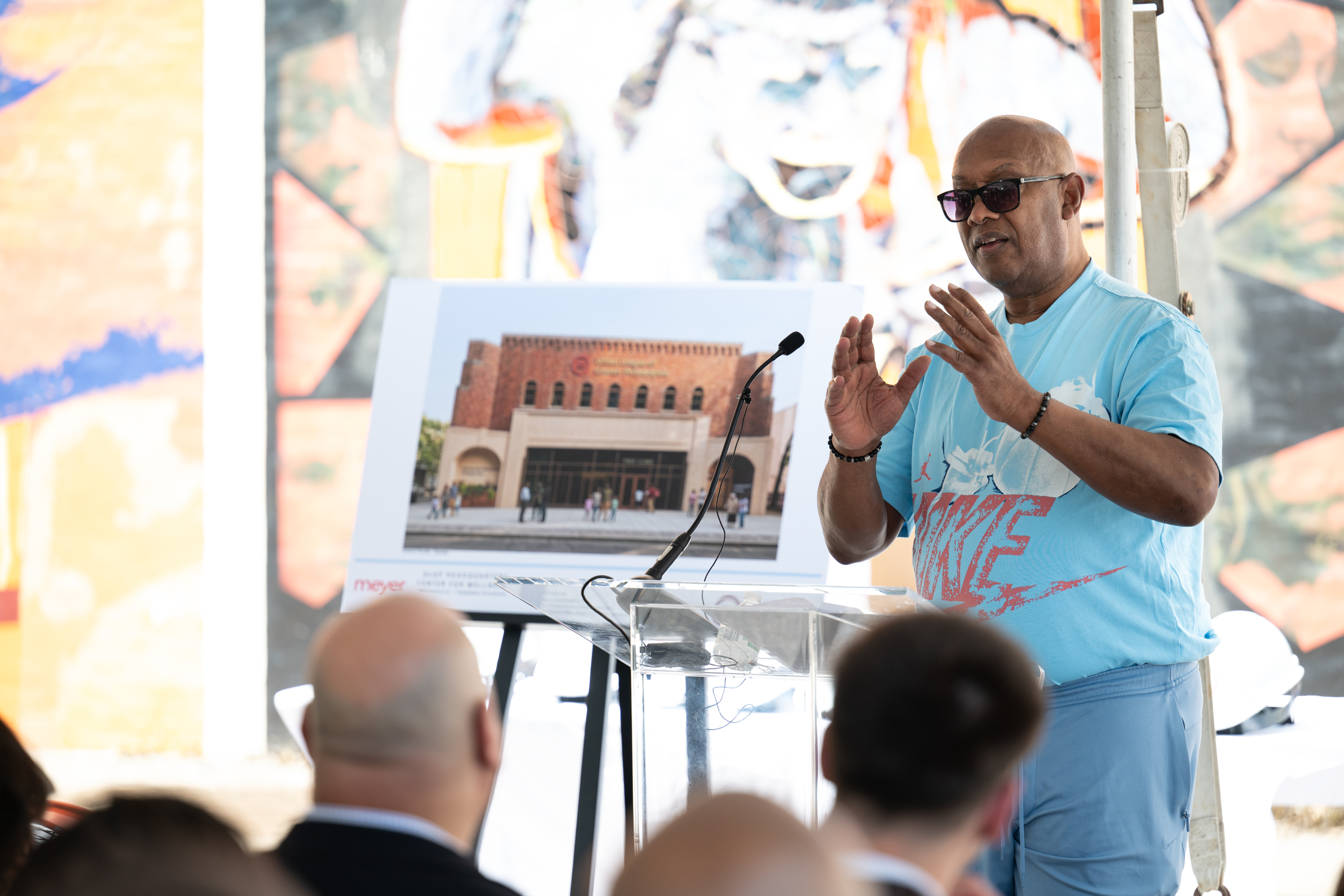
The Urban League of Greater Philadelphia is opening a free clinic in West Philadelphia for people without health insurance. The $8 million Center for Well-Being will also offer workforce development, housing, and other services, Urban League officials announced Friday.
The clinic will be open to all Philadelphia residents and expects to serve residents of eastern Delaware County as well, Urban League president Darrin W. Anderson Sr. saidat Friday’s kickoff event.
“Across Philadelphia, too many residents continue to face barriers to good health, economic mobility, stable housing, quality jobs, and the resources needed to thrive. These challenges are deeply interconnected and require more than isolated solutions. They require a comprehensive community center approach,” Anderson said.
The Urban League acquired the building in March for $1.6 million — attracted by the proximity to the Market-Frankford El and its parking lot, both of which make the building accessible to people outside the immediate neighborhood. With internal demolition about half finished, the center is expected to open in the first quarter of next year.
U.S. Rep. Dwight Evans secured $1.2 million in seed money for the Urban League of Philadelphia’s Center for Well-Being in West Philadelphia. He spoke Friday at an event announcing the project.Erin Blewett / For The Inquirer
The center — in a former Mercy Hospital of Philadelphia building — will employ around 30 people when it is fully operational, said Chetan Panda, vice president of community and economic impact for the Urban League.
The hires for the 4,500-square-foot clinic with eight exam rooms will include a medical director this fall, he said.
The project’s funding comes from a federal tax credit program designed to encourage private investment in economically distressed neighborhoods.
Finanta, a nonprofit Community Development Financial Institution and credit union in Philadelphia, arranged the financing.
Three years ago, U.S. Rep. Dwight Evans, a Philadelphia Democrat retiring at the end of his current term,secured $1.2 million in seed money for the project.
The role of free clinics
The Urban League modeled its free clinic on those in Cherry Hill, Phoenixville, and West Chester. The city’s numerous free primary care clinics are only open periodically, as opposed to being open daily.
Philadelphia has 110,000 people without insurance, according to Panda. Many of them earn too much to qualify for Medicaid, yet don’t have access to insurance through their jobs. Their jobs pay too poorly for themto afford insurance on the state’s Affordable Care Act exchange, Panda said in an interview Thursday.
The clinic will refer people who have Medicaid, Medicare, or private insurance to the federal health clinic closest to them. In West Philadelphia, that could be Spectrum or PHMC at the former Mercy Hospital of Philadelphia.
Urban League of Greater Philadelphia officials, politicians, and other supporters sign a beam that will be used in the the refurbishing of the the Urban League’s planned Center for Well-Being.Erin Blewett / For The Inquirer
Federal clinics, known as federally qualified heath centers, have a sliding payment scale for people who don’t have insurance. “We see that a lot of uninsured people forgo care at the FQHCs because they don’t want to pay the sliding scale. That’s a cost burden,” Panda said
When they need care, they often seek it in high-cost emergency departments, he said.
Free clinics rely on nearby hospitals for some of their staff and for donated services, such as X-rays and other diagnostic tests. Penn Medicine will support the new clinic in West Philadelphia, just as it does existing federal health centers, said Richard Wender, Penn’s chair of family medicine, who was at Friday’s event.
Correction: This story has been updated to correct Chetan Panda’s title to vice president, and with the correct name of Community Volunteers in Medicine in Chester County.
Independence Blue Cross, the Philadelphia region’s largest health insurer, launched this month a policy designed to move care into lower-cost surgery centers and away from hospitals and clinics that can generate payments twice as high for the same treatment.
The policy started June 1 echoes Medicare’s efforts to slow federal healthcare spending by paying the same price for outpatient procedures such as colonoscopies and knee surgery in hospitals as in surgery centers.
Pressure from employers to control costs has similarly motivated IBX and a newer regional competitor, Pittsburgh-based Highmark, which implemented a similar policy on Jan. 1. Both companies’ policies affect people with low risk of complications who are covered by commercial insurance or Medicare Advantage.
When doctors seek insurance authorization for certain procedures, IBX reviewers will ask whether doctors can treat low-risk patients in a surgery center, according to the company’s chief operating officer Richard Snyder.
“This is a gentle move,” Snyder said. “We’re not willing to force you to change doctors to have your colonoscopy or your service, but we want docs to get privileges in ambulatory surgery centers.”
The region doesn’t have enough low-cost surgery center capacity for a large-scale move to that setting, Snyder said. That means the policy might not hit hospital finances right away.
But the implication is that the policy could take a harder edge in the future. IBX’s goal is to spur the development of more surgery centers — either by the incumbent health systems or by new competitors, Snyder said.
Even now, the potential for delayed care and denied coverage has several regional health systems worried. Temple University Health System, for example, does not own ambulatory surgery centers, so the time could come when it has to coordinate care with outside providers.
The money at stake
Surgery to remove torn cartilage on the knee can cost $7,190 when performed on an outpatient basis in a hospital, nearly three times the $2,477 cost in ambulatory surgery centers, according to Philadelphia-area commercial insurance averages from heath prices data firm Turquoise Health.
Smaller gaps exist for hernia repairs and colonoscopies with a biopsy, Turquoise reported. Another data firm, Medscout, showed that a majority of those colonoscopies had already shifted to ambulatory surgery centers by 2024. The shift was far less advanced for hernia repairs— a procedure IBX is targeting.
(function(){function e(){window.addEventListener(`message`,function(e){if(e.data[`datawrapper-height`]!==void 0){var t=document.querySelectorAll(`iframe`);for(var n in e.data[`datawrapper-height`])for(var r=0,i;i=t[r];r++)if(i.contentWindow===e.source){var a=e.data[`datawrapper-height`][n]+`px`;i.style.height=a}}})}e()})();
Some physicians’ groups already are seeing opportunity in commercial and government insurers’ increased emphasis on surgery centers as a way to reduce spending — as well as regulatory changes that allow more procedures to be done in free-standing surgery centers.
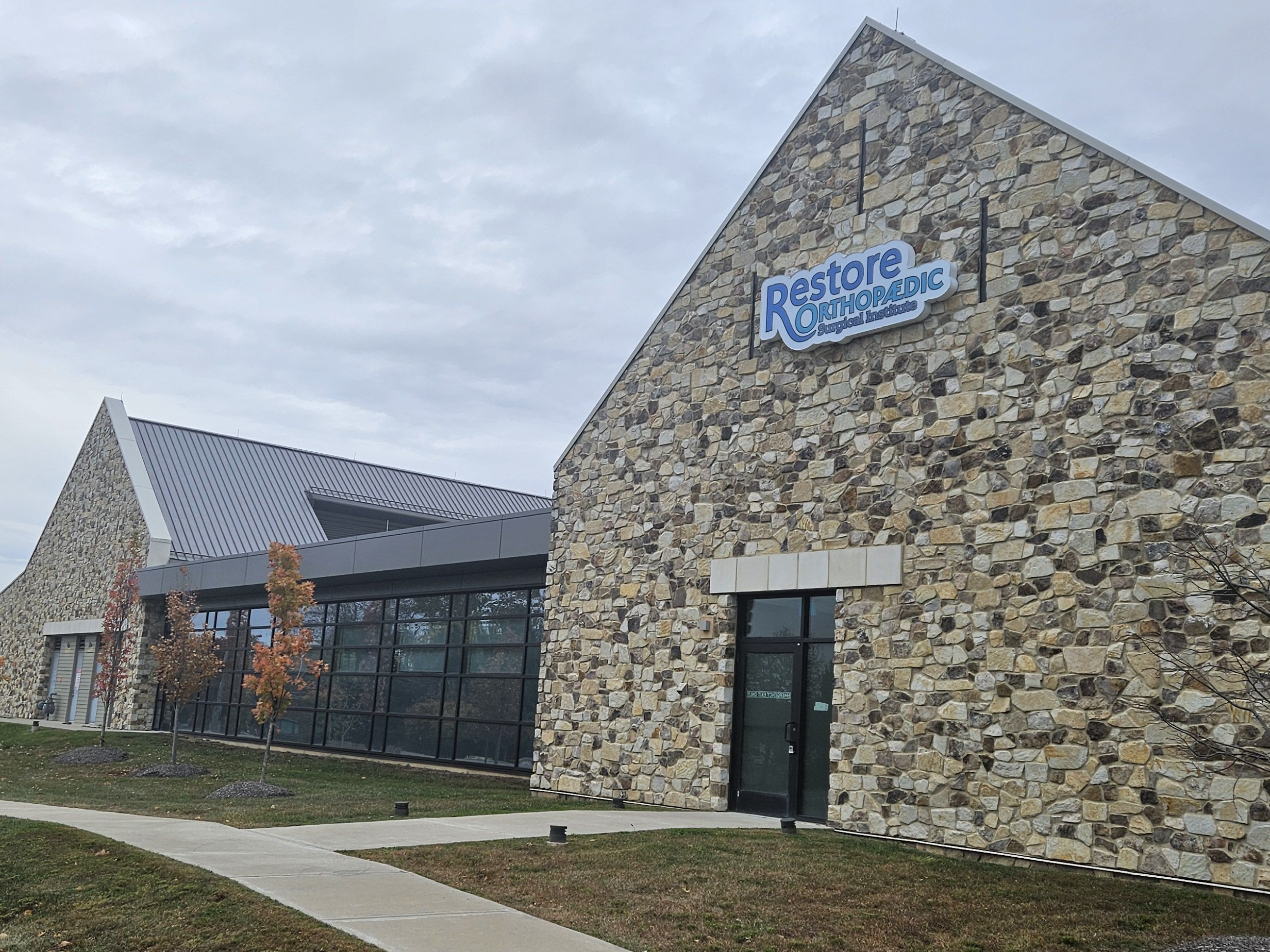
Restore Orthopaedic Surgical Institute in Chadds Ford, founded by a group of Delaware doctors, has been quickly become a high-volume joint-replacement center.
In the coming year, Rothman Institute plans to open three surgery centers in the Philadelphia region, the private practice’s CEO Christian Ellison said.
Restore Orthopaedic Surgical Institute in Chadds Ford has grown quickly to become one of the top joint replacement destinations in Southeastern Pennsylvania after opening in March 2023. The center is positioned to take advantage of an effort by Highmark and IBX to move outpatient procedures from high-cost hospitals to lower-cost surgery centers.Restore Orthopaedic Surgical Institute
Potential consumer impact
Several major health systems said the new site-of-care review policies raise questions about the potential impact on patients, without commenting on the implications for their finances.
Because Temple University Health System does not have any ambulatory surgery centers, “the policy will require certain studies and procedures to be referred outside the health system. This could create additional coordination requirements and may contribute to delays in testing, crucial diagnosis, and/or treatment,” Temple said in an email.
Main Line Health also said it anticipates the policy “could disrupt established care pathways, including in circumstances where surgeons lack privileges at available free-standing surgery centers,” the nonprofit said in a statement. Main Line has ownership interest in three surgery centers in Philadelphia’s western suburbs.
The University of Pennsylvania Health System said it will “advocate for our patients’ best interest and appeal any service denials based on the clinical and nonclinical exceptions outlined in the policy.”
Additional concerns for consumers include complexity, confusion, and possibly more risk of having care denied to what can already be a burdensome prior authorization process, said Christine Monahan, assistant research professor at Georgetown University’s Center on Health Insurance Reforms.
Monahan said she understands insurers’ impulse to steer people to lower-cost settings, but called policies like IBX’s “maybe not the most efficient way to handle the inefficient pricing in the system.”
The economic and political backdrop
The biggest increases in healthcare costs in 15 years are hitting employers this year, according to Mercer’s National Survey of Employer-Sponsored Health Plans.
The average increase was 6.7%, according to the February survey of 161 chief financial officers, who were not identified.
The increases are substantially higher than broader inflation. “It becomes more of a tax on employers,” Snyder said. “Next to salaries, many will tell you, that’s the biggest line item” in their expenses.
IBX has taken other steps to reduce healthcare spending, such as in 2015 introducing a benefit design that includes a preventive colonoscopy with no out-of-pocket costs for the patient at what are called Preventive Plus facilities. Elsewhere, they have a $750 co-pay.
Highmark and IBX have new policies designed to move more outpatient procedures and treatments out of high-cost hospitals and into lower-cost surgery centers.Pablo Martinez Monsivais
Medicare has pushed for the last decade to pay the same for services in hospital outpatient departments as in doctors’ offices and surgery centers.
Medicare prohibited most new off-campus hospital clinics from billing at hospital rates in 2017. So-called site-neutral payments expanded in 2019 to include clinic visits. This year, the government applied the standard to payments for drug administration, such as chemotherapy.
Highmark Health Plans’ approach
In the first five months of under new policy, Highmark Health Plans has found some health systems are willing to accept lower surgery center rates for procedures performed within hospitals.
“What we’ve found is that a number have been willing to do that,” said Kate Musler, chief financial officer for Highmark’s insurance arm. “It may be advantageous for them to have that volume flow through the hospital and keep some volume there, it’s just not necessary in terms of the expense level.”
Musler cited bariatric surgery as an example of how technology and surgical practices have advanced to the point where a hospital is no longer needed.
It’s too early to say how much savings the new policy has generated, including in Southeastern Pennsylvania, Musler said. Highmark has seen its policy accepted at different levels across the five states where it took effect.
Some hospital systems are proactively shifting care to surgery centers to reduce costs, said Musler, who oversees Highmark underwriters helping employers understand their health expenses.
“We hear directly from employers who are making very difficult decisions,” she said. “It is now more than ever a question of whether they can afford employee health.”
Chris Feaster sees Main Line Health clinicians for mammograms, breast MRIs, and other preventive screenings required due to her high risk of breast cancer.
The 61-year-old Montgomery County resident has been panicked in recent weeks after Main Line sent patients a letter warning that the nonprofit health system’s contract with her insurer, UnitedHealthcare, may end later this month.
Main Line is a leading provider of care across Philadelphia’s western suburbs, where it has four hospitals. Feaster has relied on its facilities for care for 40 years.
“They know me,” she said of her Main Line providers in an interview. “I have been getting monitored there since the time I was in my early 30s.”
Feaster, who lives in Trooper, has already experienced a healthcare disruption caused by another insurance dispute. Two years ago, Axia Women’s Health and United failed to reach adeal. That forced Feaster to find a new gynecologist after 40 years.
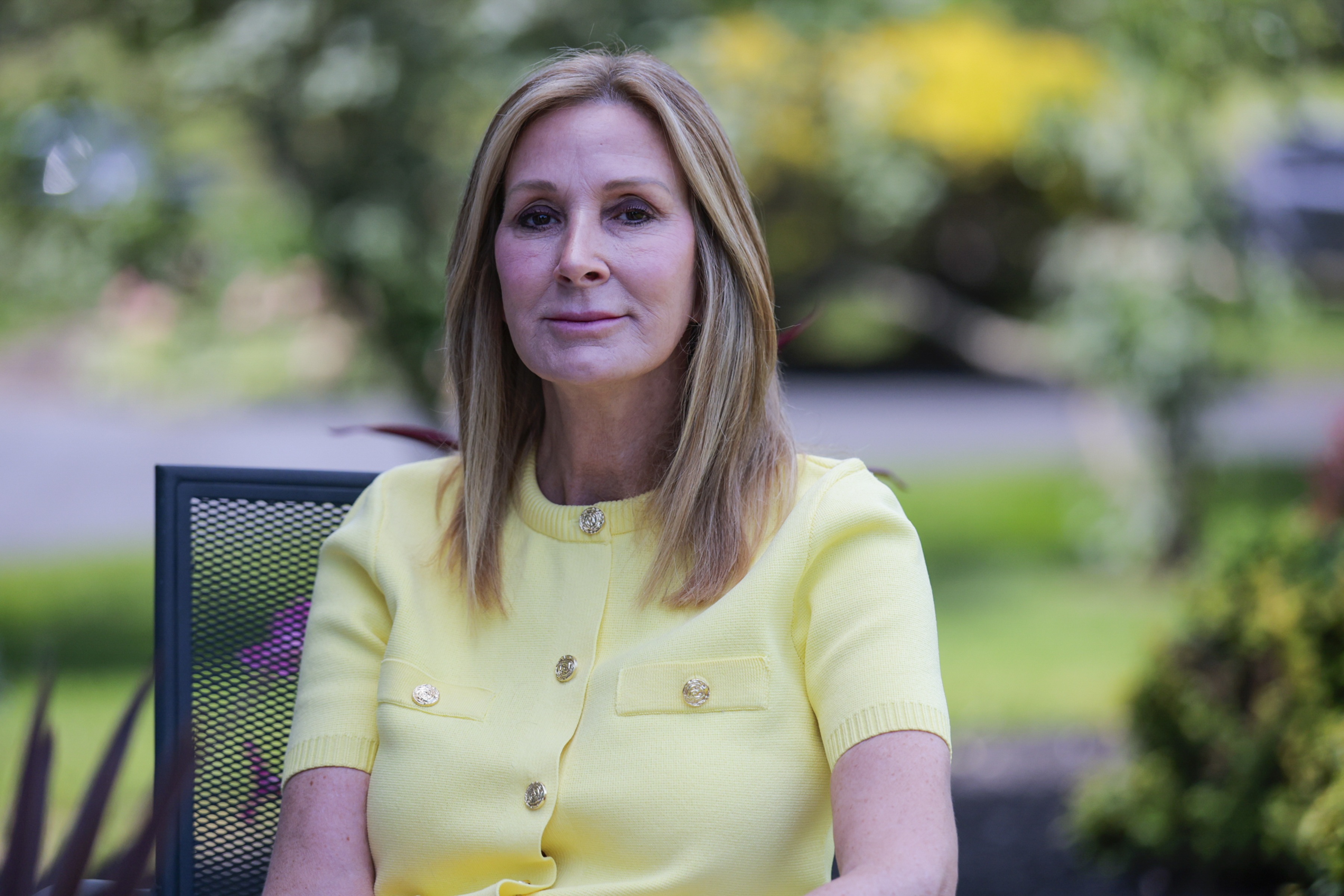
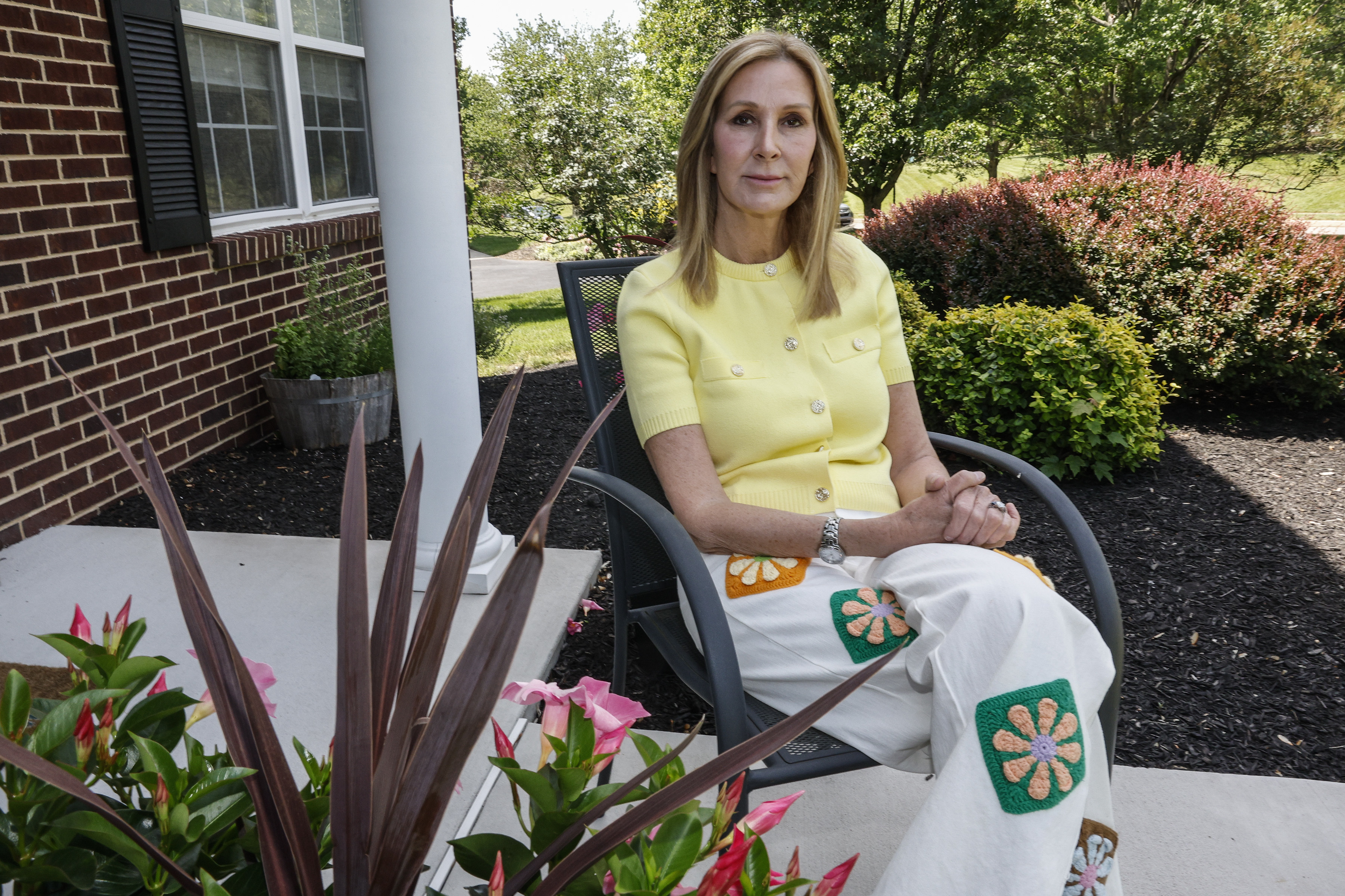
Chris Feaster is among thousands of Main Line Health patients worried about the prospect of Main Line Health going out of network with UnitedHealthcare at the end of this month.Steven M. Falk / For The Inquirer
If no deal is reached by June 30, Feaster could be facing a repeat.She is among 32,000 affected Main Line patientswho have United insurancethrough Medicare Advantage plans and commercial insurance from employers.
Main Line Health said that United had been engaging more meaningfully in negotiations in recent weeks. “We are hopeful that momentum continues. We remain committed to reaching a resolution before June 30,” itsstatement said.
For Main Line, which is far less profitable than it was before the pandemic, the dispute is not just about rate increases. The nonprofit health system also wants toreduce claim denials, prior authorization delays, and excessive audits.
“Main Line Health is seeking price hikes that would significantly increase costs for families and employers,” UnitedHealthcare said.
United added that self-insured companies would absorb the biggest hit ”impacting the money they have to grow their business and compensate their employees.”
Worries about maternity care
Jessica Geida, a Newtown Square resident and an ob/gyn who is not currently practicing, is particularly worried about access to maternity care in Delaware County, given that Axia is already out of network with United.
Main Line operates the only practice that delivers babies at Riddle Hospital for people with UnitedHealthcare (UHC), said Gaida, who has worked at Axia and Main Line. “If they drop UHC, there would be no access to care in the Delaware County,” she said.
Maternity care has been underpressure in Delaware County since the maternity unitclosed at Delaware County Memorial Hospital in early 2022, followed by the shutdown of Crozer-Chester Medical Center a year ago as part of the Prospect Medical Holdings bankruptcy.
Mercy Fitzgerald Hospital in Darby closed its labor and delivery unit more than 20 years ago.
If Main Line and United fail to reach a deal, UnitedHealthcare patients might have to go to Penn Medicine’s Chester County Hospital in West Chester, which is already busy.
Patients who get into Penn’s ob/gyn practice at Penn Medicine Radnor deliver babies at the Hospital of the University of Pennsylvania in Philadelphia, according to that group’s web site.
Feaster saida call from UnitedHealthcare Friday left her feeling very uncertain about her care.
Feaster grew up in Wayne and kept seeing Main Line doctors when she moved to Trooper, which is north of King of Prussia.
Feaster would have to specially request a continuation of care to keep seeing each of her Main Line doctors at in-network prices, the UnitedHealthcare representative told her.
The temporary stopgap is designed to help people who have significant needs — including cancer patients in the middle of treatment — avoid gaps in care while they switch to doctors who accept their insurance.
Feaster would have to fill out part of the form, and her doctors would have to complete another part. She’d also have to take the same steps for Main Line providers of her regular mammograms, breast MRIs, and DEXA bone density scans.
UnitedHealthcare would then review each request to determine whether to approve.