Author: Matt Breen

  • Their fantasy football league started 40 years ago with a fax machine. It’s still going strong.

    Their fantasy football league started 40 years ago with a fax machine. It’s still going strong.

    The draft was set to begin last week when Jeff Killian reminded the members of his fantasy football league that he could fax them a rule book if they needed a copy. A hand went up.

    “Umm,” Jack DeStefano, 32, said. “I don’t have a fax machine.”

    Of course. Killian, 63, meant he would email the seven-page document. That’s what happens when you’re the commissioner of a fantasy league that started in 1986.

    The league began after someone went to California on business and returned to the AT&T office near the King of Prussia Mall with a stack of papers detailing something called “Fantasy Football.”

    They found eight guys, rented a room at a hall in Chester County, and launched the Vince Lombardi Memorial Football League. The league members faxed their lineups on Friday night to the commissioner and then waited until Tuesday to see how their team performed.

    It seems harder every year to find someone who doesn’t play fantasy football as it is estimated that 40 million people will play this season. But it’s hard to find a fantasy league that’s been around as long as the VLMFL where players once scoured newspaper box scores to tabulate their stats long before smartphones relay that information in real time.
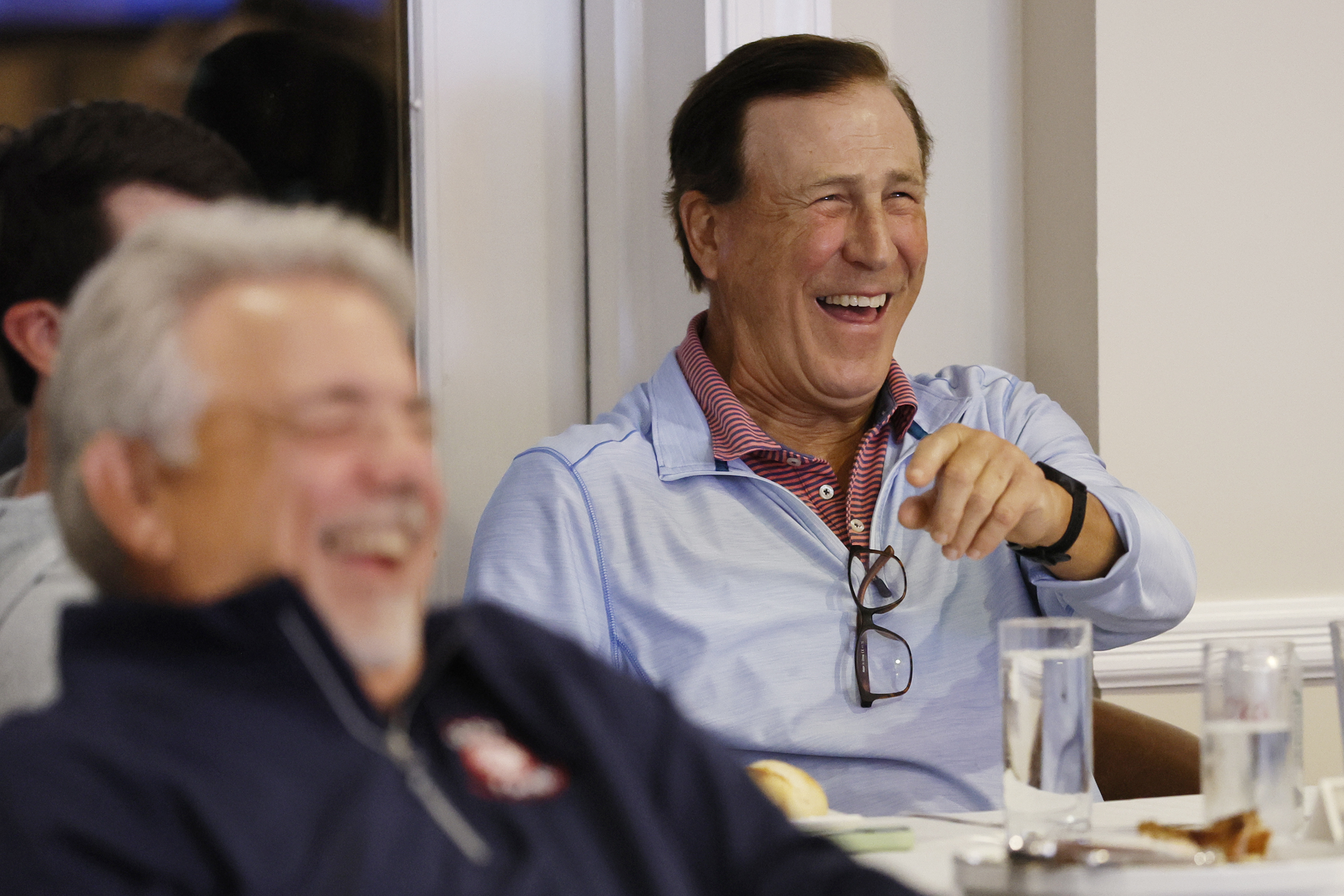
    Jeffrey Jaskol (left, foreground) and Ken Leidheiser laugh at a story being told by Leidheiser during their fantasy football draft at the Chester Valley Golf Club in Malvern on Aug. 28.Elizabeth Robertson / Staff Photographer

    The game was a mystery then — “People said ‘Fantasy what?’,” original leaguemate Ken Leidheiser, 69, said — but the VLMFL figured it out. They created their own rules and have stayed true to them for 40 seasons.

    Two original members are still in the league while the majority of the players have been involved since the late 1980s or early 1990s. They drafted Bo Jackson, Dan Marino, and Randall Cunningham and won championships with the Bears defense.

    “I can still remember watching a game years ago on Monday Night Football where Jerry Rice caught a touchdown so I could beat my big rival,” said 77-year-old Lee Bye, who retired from the VLMFL after 30 seasons and seven championships for the Bye Boys. “That still sticks with me after all these years. Here it is after midnight and I’m jumping around in my basement.”

    Some teams are now managed by second-generation fantasy footballers as the 60-something OGs have infused the league with their number-crunching sons.

    And everyone is within six degrees of AT&T, where inaugural champ Paul DeStefano, 68, still works.

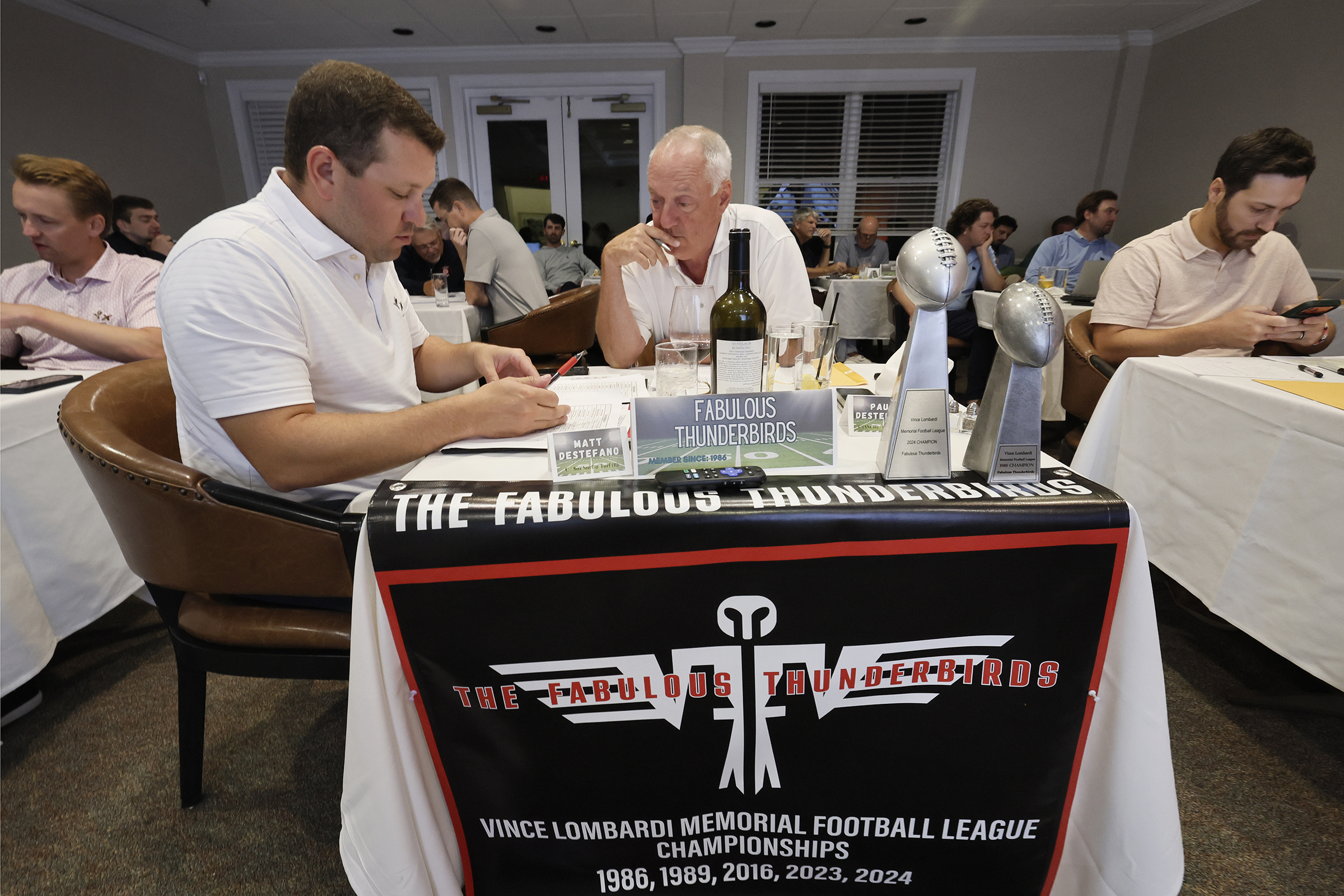
    “I’m not in it for the money,” said DeStefano, who manages the five-time champion Fabulous Thunderbirds with his son Matt and once staged a parade down his street after winning it all. “It’s the camaraderie. It’s sitting up at night for Sunday Night Football and my wife says, ‘Why are you still up?’ I go, ‘Because I need 5 more yards from my running back and I have to watch the game until the end.’ You think you can control it. The next morning, I’ll be exhausted at work going, ‘Why the hell did I stay up for the game?’”
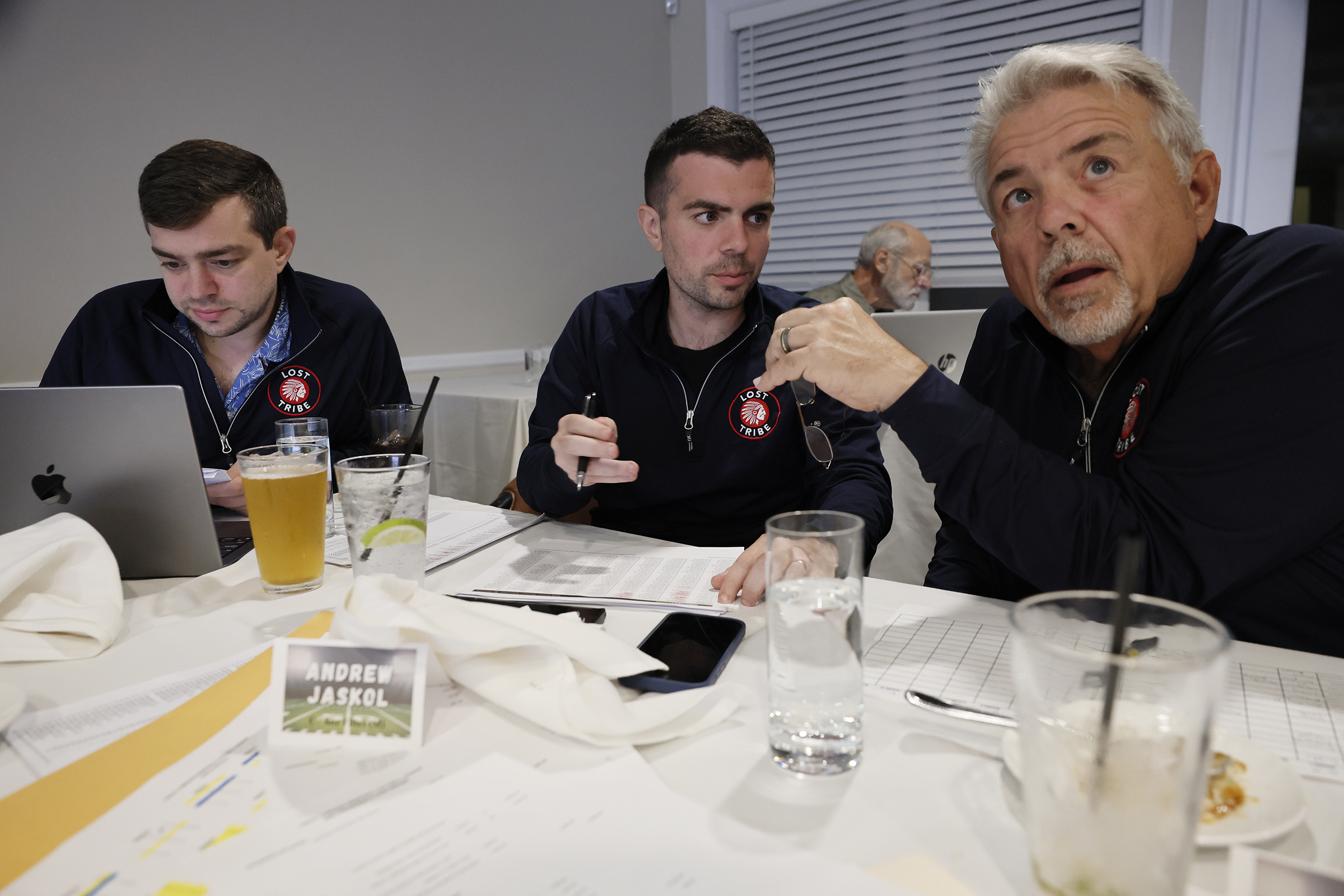
    Jeffrey Jaskol (right), and his sons Adam (left), and Andrew (middle) work to make a selection in their fantasy draft.Elizabeth Robertson / Staff Photographer

    The old days

    It’s easy now to stay informed as there are websites, podcasts, TV shows, and social media accounts dedicated to fantasy football. The game is impossible to ignore. But in the early days, information was the great separator between the VLMFL’s Have and Have Nots.

    They read NFL previews in Sports Illustrated, studied newspaper articles, and looked anywhere for information that is now seemingly everywhere. Fantasy magazines, which started printing in the late 1980s, were gold. It was survival.

    One leaguemate once used his first-round pick on Bills running back Robb Riddick, only to be told that he suffered a serious knee injury days earlier. Better luck next year.

    “We were scrambling,” DeStefano said. “We were literally going through pages trying to figure out who’s a guy we need. Some guys were football savvy and some guys wanted to be in because they wanted to be a part of what we were doing. Fourth-round came, they didn’t know anybody and they’d be asking us for a running back. Of course, we didn’t help.”

    To add a player during the season, a leaguemate had to call Greg Swerdlow’s apartment in Bedminster, N.J., where the commissioner changed the greeting of his answering machine to say it was the “VLMFL Transaction Hotline.” They left their waiver claims after the beep as the moves had to be recorded by Friday at 5 p.m.

    The commissioner listened to his voicemails, wrote down everyone’s adds, and then determined who had priority if two teams left messages claiming the same guy. They rang Swerdlow’s apartment a second time as he changed his voicemail greeting to a list of transactions while his roommate’s yellow lab barked in the background.

    “So the tradition was you would get your transactions through a dog barking,” said Swerdlow, 61.

    The opposing players faxed their starters to Swerdlow by 8 p.m. on Friday and then sent them to their opponent as if they were baseball managers exchanging lineup cards. They spent Sunday looking for glimpses of their players long before Sunday Ticket and RedZone allowed them to see it all. They’d see a highlight on the 6 p.m. news or a touchdown catch on a postgame show.

    But there was no way to know for sure if you won until you opened the newspaper on Monday morning. They agreed that USA Today would be their paper of record as it used the Elias Sports Bureau for statistics while The Inquirer — which many had delivered to their home — did not.

    So they counted their own scores and then waited for Swerdlow, who created a computer program to input scores, to fax over the official tallies.

    “You had to be careful at the office not to leave stuff on the fax machine in case your boss saw it,” Leidheiser said.
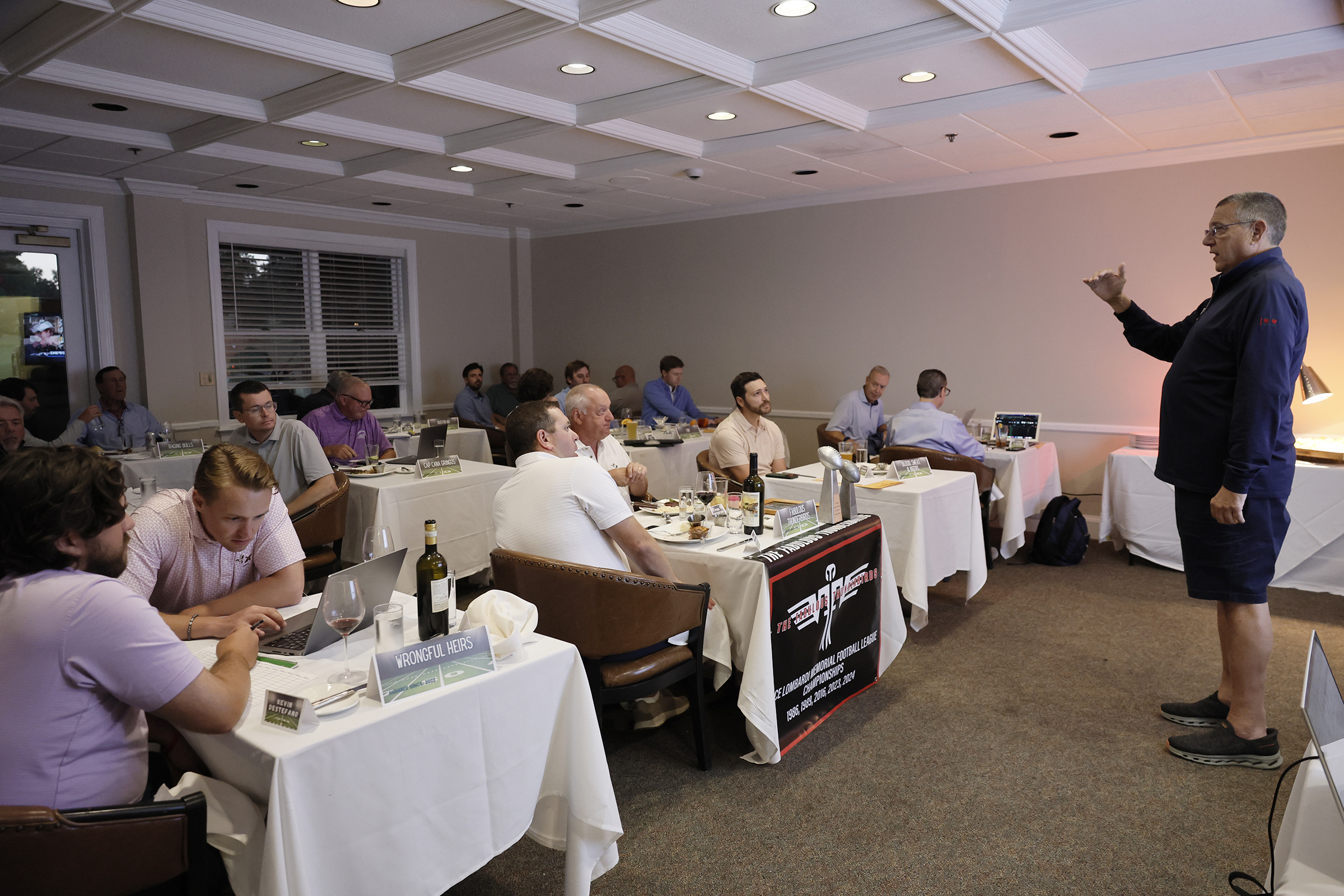
    Jeff Killian (right) talks with the group before the 41st Annual VLMFL draft party at Chester Valley Golf Club in Malvern on Friday, August 28, 2026.Elizabeth Robertson / Staff Photographer

    Their own rules

    Killian, the current commissioner, joined the league in 1989 after hearing about it at DeStefano’s Christmas party. Killian played fantasy baseball and already spent his Sundays watching football. He was in.

    And then he watched as the first eight selections in the VLMFL draft were quarterbacks. Killian panicked.

    “So we drafted a good NFL quarterback, not a fantasy QB,” Killian said. “We drafted a great NFL quarterback, but he sucked in fantasy. We drafted Phil Simms. I still own the worst record in the history of the league: 1-15. I didn’t win until Week 10.”

    But Killian was undeterred. He dug in and learned the league’s scoring system, which has been fine-tuned over the years but remains true to the original idea: big plays are king. A 60-yard interception return for a TD is worth 26 points. A 50-yard rushing TD is worth 14 while a goal-line plunge is worth just three.

    Each team starts a quarterback, two running backs and two receivers along with a defense and kicker. Tight ends count as receivers and there is no “flex” spot.

    It’s not a dynasty league and the 12-team draft is not an auction. VLMFL keeps it old school, so much that you wonder if they’ll add fullbacks next year. Kickers and defenses are more valuable in the VLMFL than most other leagues, which is why big-footed Brandon Aubrey of the Cowboys went in the fourth round.

    “It’s different from every other league,” Swerdlow said. “People will say, ‘You’ve been in a league since when?’ Then you tell them about the rules. ‘Those rules are crazy.’ Yeah, we didn’t have all of society’s model to build our league off.”

    The league season runs the entire NFL regular season with the champion being the first-place team after Week 17. The VLMFL, unlike most leagues, does not do a playoff to crown a champ.

    The trophy — a 30-inch wood base topped with a gold football player — arrived in the early 1990s and a new winner is inscribed each year. It had to be repaired twice and there’s still some magic marker marks on the base left years ago by someone’s kid. Like the league, the trophy keeps going.

    “I think it was Matt, Paul’s son,” Killian said. “But we’re not sure.”
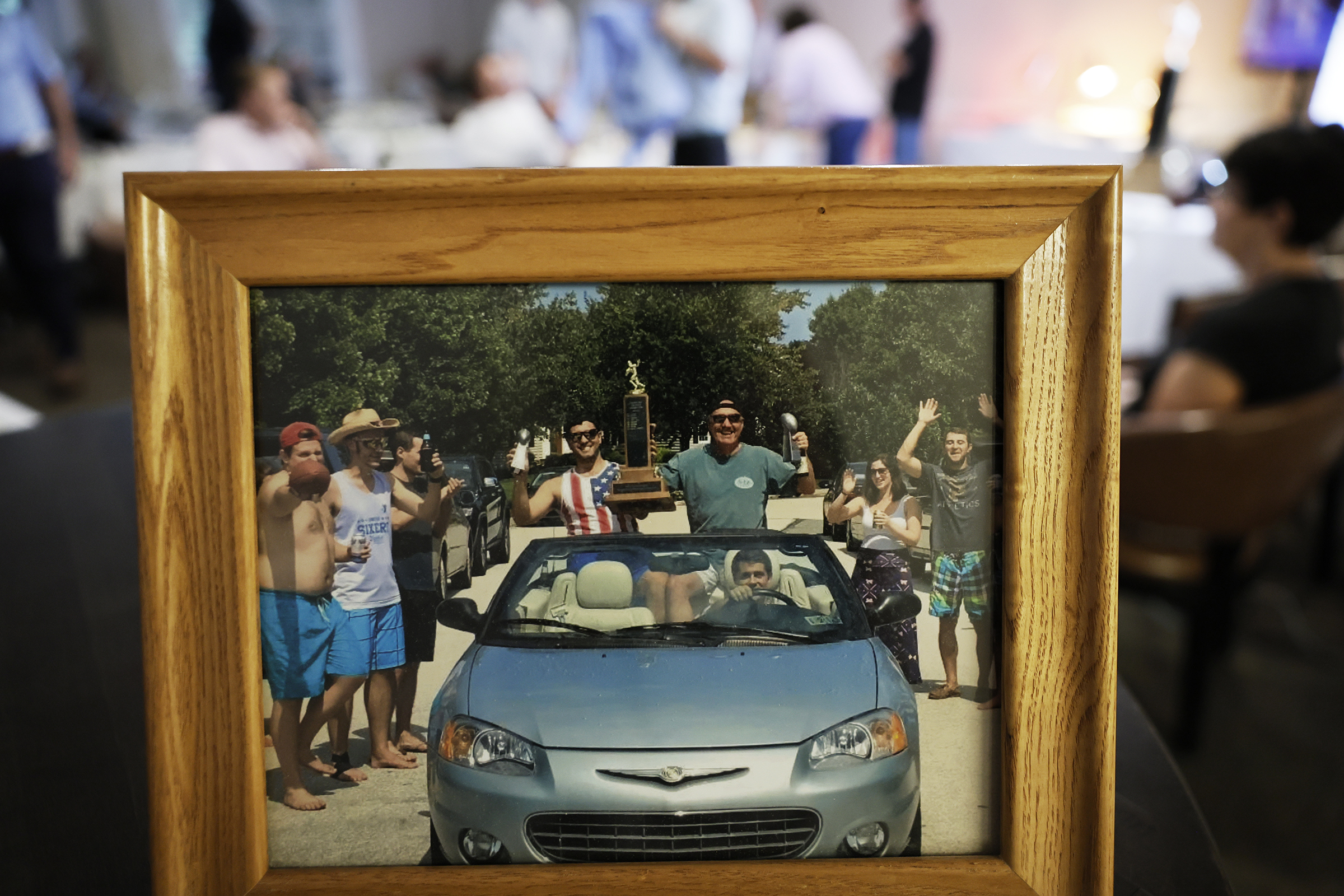
    A photo provided by Paul DeStefano of his team’s “parade” after they won the fantasy league trophy.Elizabeth Robertson / Staff Photographer

    Draft night

    The league that held its first draft 40 years ago at the old Mile Post Inn gathered last Friday at the Chester Valley Golf Club in Malvern. They golfed in the afternoon and then had dinner in a private room before drafting. Each team had their own table with laptops open and papers spread as if they were NFL GMs.

    “This is the best day of the year,” said 67-year-old Jeffrey Jaskol, who drafted for his team, The Lost Tribe, with his sons Andrew and Adam.

    Leaguemates were heckled for drafting Cowboys and someone cursed when Chargers QB Justin Herbert was snagged. Titans running back Tony Pollard — “I have to go way down on my list,” someone shouted — and Commanders QB Jayden Daniels — “Are you kidding me,” another yelled — were met with jeers.

    “We only see each other one night a year. Some of these guys I see once or twice a year,” Leidheiser said. “It’s a once-a-year meeting. I do it just for the competitive fun of it. Plus it’s like a fraternity of guys. We’ve known each other for more than 30 years.”

    Lee said he used to worry every year that someone in his family would die and force him to miss draft night. That’s how much he loved the barbs they traded. He kept the yapping going one season when he learned other VLMFLers were attending the same Eagles game. He got in early, tracked down their seats and left them notes reminding them that he was the champ.

    “They’d get a hot dog and come back to that,” Lee said. “The camaraderie was the thing that was so much fun. It built more and more every year.”
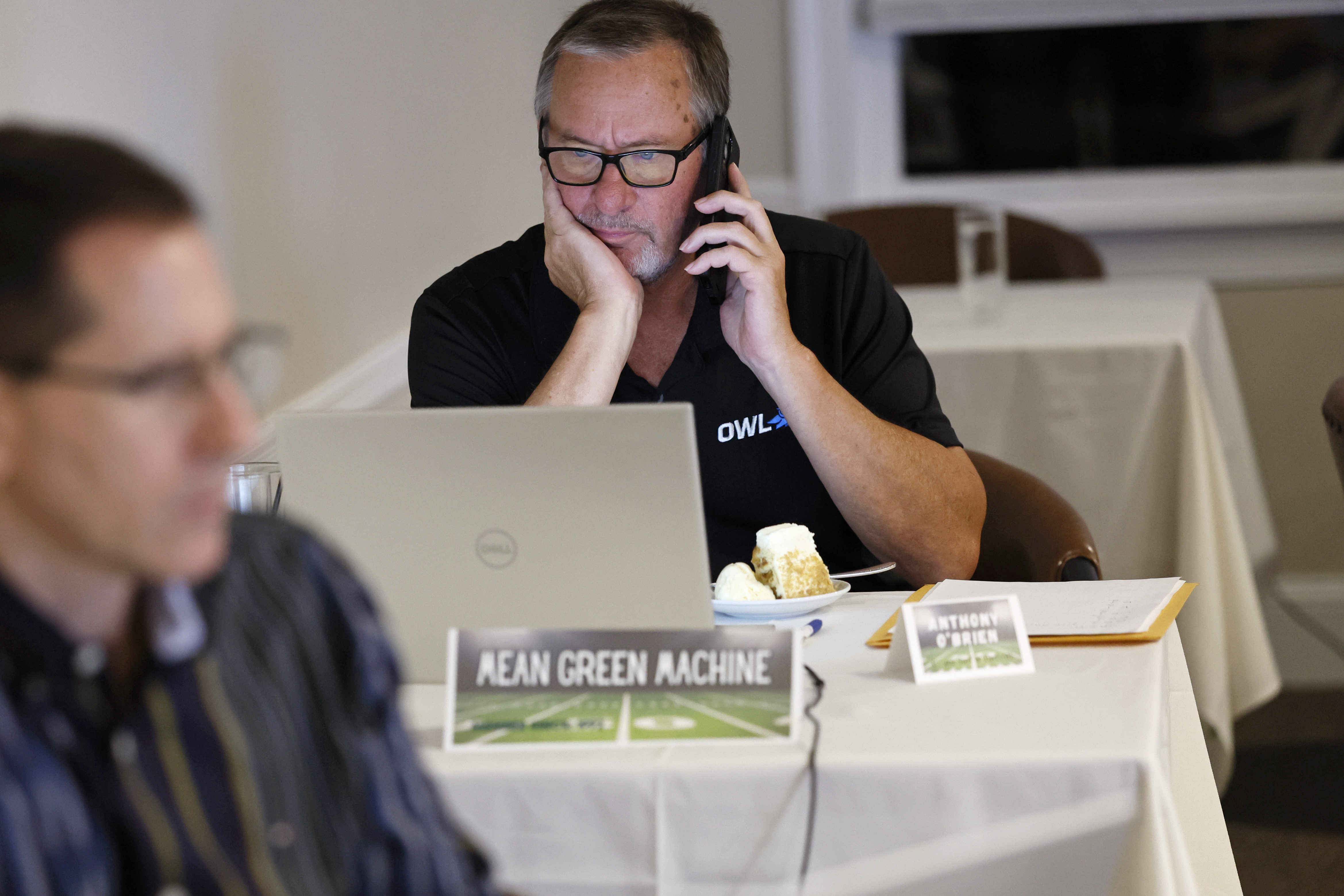
    Anthony O’Brien works the phone during their fantasy football draft party.Elizabeth Robertson / Staff Photographer

    Fantasy football, which is thought to have been created in 1962 by an Oakland Raiders owner, was still a foreign concept in 1986, but Leidheiser was sold because it reminded him of the rosters he built in beer-league softball in Wayne. He enjoyed playing GM and was soon hooked.

    But now he says he sits back at the draft and follows the lead of his son Korey, a 30-year-old who works in data analytics. The results have never been better, the dad said.

    “We were in college and we realized most of these guys were doing it by hand and my brother and I could look up stats online,” said Korey, whose brother Kyle is now running his own squad. “It’s all numbers, right? It just depends on what you’re adding up.”

    The best part about the league, Jaskol said, was how it evolved over the years to include so many kids of the old-timers. Then his two sons started teasing him for having a fancy for past-their-prime running backs and overdrafting Eagles.

    “And I said I loved this,” Jaskol said.

    The league donated money one year to a leaguemate whose house burned down and toasted a longtime member after he died in 2019. The league stays connected through an email chain — “Sage Advice,” Killian wrote in a subject line last week — and meets after the season for another night of smack talk. It’s what keeps the league going after 40 seasons.
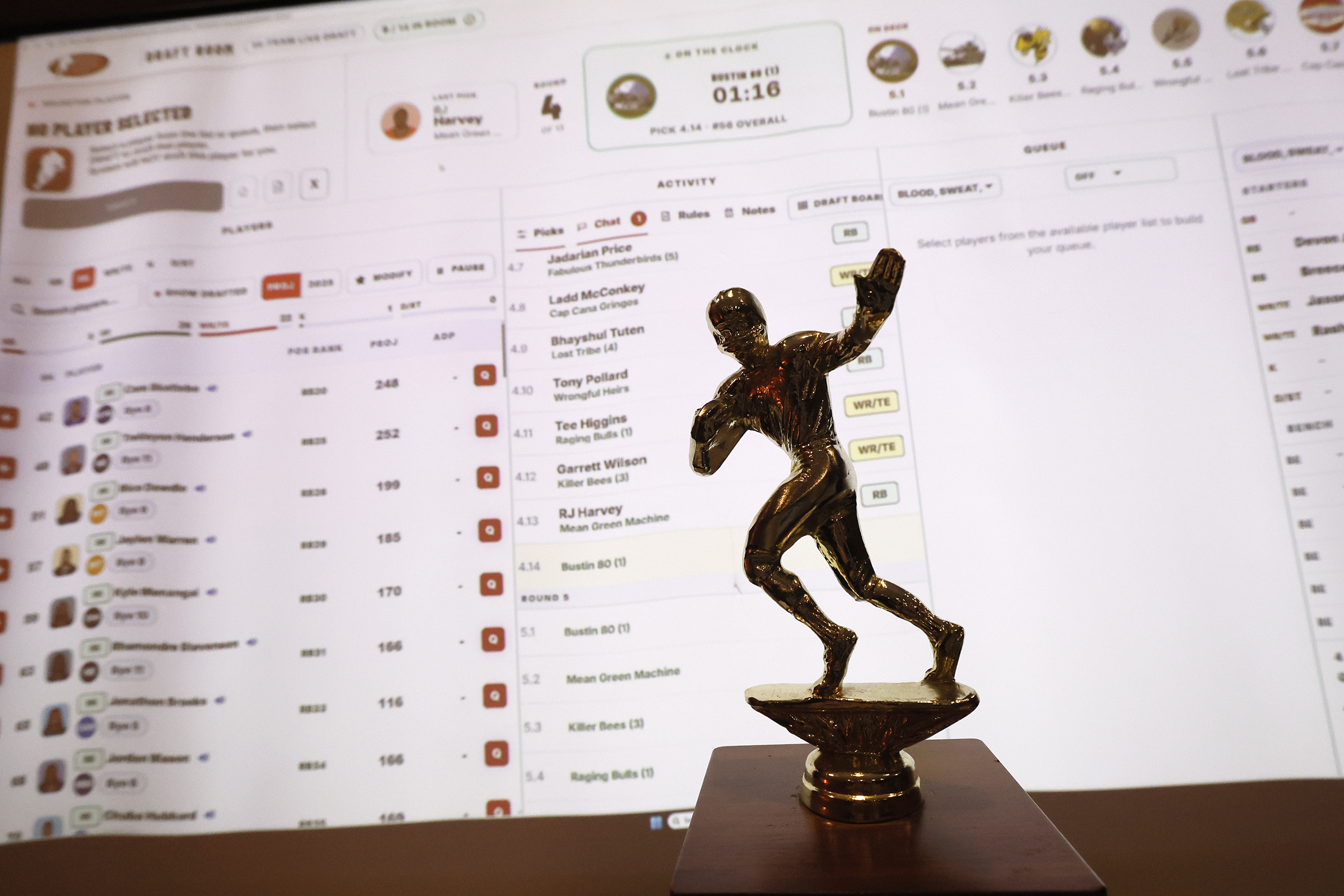
    The league’s championship trophy on display during the fantasy draft.Elizabeth Robertson / Staff Photographer

    The VLMFL started before fantasy football became mainstream and the game that everyone now plays once seemed to belong to the guys who traced their league back to an AT&T office.

    People got married, had kids, switched jobs, and moved away. So much has changed in their lives since 1986, but the VLMFL feels mostly the same when the guys gather to draft at the end of every summer. That’s what keeps them coming back. The old fantasy league became more than just a league. But you no longer need a fax machine to play.

    “It’s really cool how 70% goes back over 30 years. That’s what makes it fun. You’re seeing the same people and you’re telling the same jokes,” Killian said. “I play about 100 rounds of golf a year. But I won’t play on a Sunday again until the Super Bowl is over.

    “I don’t care if someone invites me to Merion this fall. I won’t go on a Sunday. My buddies laugh at me all the time and say, ‘I can’t believe you’re going to sit at home and watch football all day and it’s going to be 80 degrees and sunny.’ Have fun.”
  • Robin Carpenter will be thinking of his former Masterman teacher as he conquers the Manayunk Wall

    Robin Carpenter will be thinking of his former Masterman teacher as he conquers the Manayunk Wall

    Robin Carpenter was riding his bike home from Julia R. Masterman School, pedaling along the Schuylkill when a teacher stopped him.

    He wasn’t in Kevin Saint Clair’s class, but he knew him. Everyone did. Saint Clair rode his bike to Masterman every day, hung his spandex in his classroom to dry, plucked food off students’ trays in the cafeteria, and once used a flat tire as a science lesson.

    He was a legend in those halls.

    Saint Clair asked Carpenter how his freshman year was going and what he thought about the soccer team. School was good, Carpenter said, but soccer was a flop. The teenager from Manayunk spent more time on the team’s bus to away games than he did on the field, subbing for just a few minutes once the outcome was decided.

    Saint Clair coached the school’s cross-country team, a group of kids like Carpenter looking for their place. He never cut a runner, ended the season with a pasta dinner at his home in Chestnut Hill, and regularly won Public League titles. Saint Clair told Carpenter to give running a try.

    “He said it’s not too late,” Carpenter said.

    So there was Carpenter in the pack of runners moving through the hills in Fairmount Park while Saint Clair rode his bike next to them. Legs heavy? Breath short? Don’t slow down, Saint Clair shouted as they neared the top of Lemon Hill. Speed up, the coach said as he reminded them they still had more to give even when the tank seemed empty.

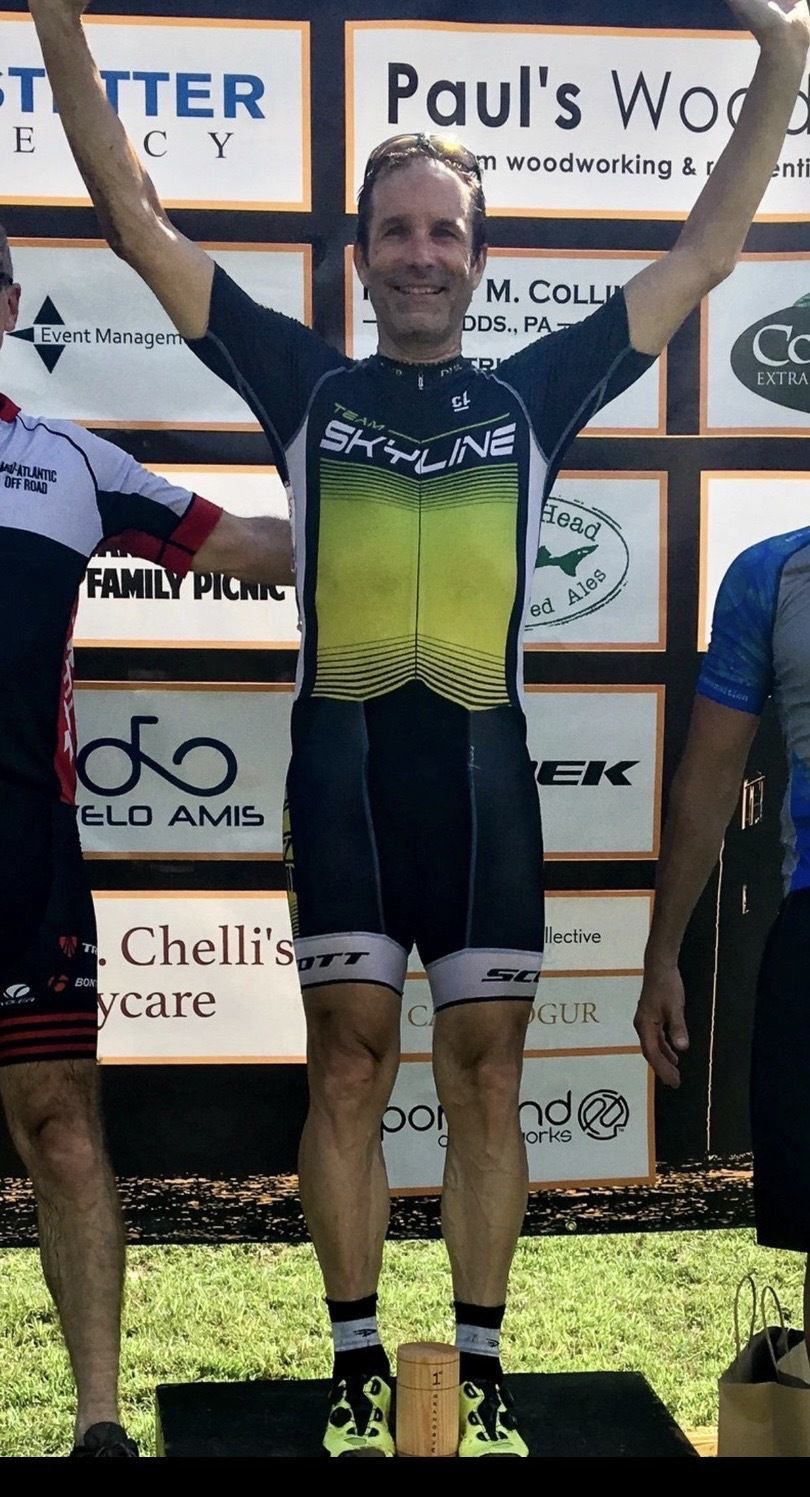
    Carpenter ran four seasons for Saint Clair, who died at 65 in November 2023 when he was hit by a car while riding his bike. The coach’s invite gave Carpenter a spot on the team while also providing the teenager the chance to begin a more than 15-year cycling career that will take another climb Sunday up the Manayunk Wall when the Philadelphia Cycling Classic returns.

    Carpenter grew up attending the race every summer and sold lemonade — people used to tell him he could make more if he added liquor — to fans as a kid. He rode his bike to school and won $15 after coming in third out of three riders as an 11-year-old. But Carpenter had no clue how to become a pro. And then he met Saint Clair, who invited him to ride with his team on the Main Line.

    Kevin Saint Clair, a fixture in the Masterman community, was an avid cyclist, math teacher and coach. He died in a bike accident in 2023.Handout image

    The teacher who urged him to run in Fairmount Park was soon teaching him the basics of cycling, a sport that would take Carpenter all over the world. It all started with a teacher giving him a chance.

    “He forever lives on in my memory as the guy who pushed me forward into the sport,” the 34-year-old Carpenter said.

    The Wall

    There were multiple ways for Carpenter to get home to Manayunk from Center City but the Wall — the uphill slog that feels like a roller-coaster climb — was the path to avoid. Finally, he gave it a try. The 11-year-old Carpenter, with his dad riding next to him, dug into the pedals of his Huffy that a neighbor gave him.

    “We successfully made it up without stopping,” Carpenter said. “Huge accomplishment.”

    The Carpenters dropped themselves into Fairview Park where a neighbor asked why they were so exhausted. The Wall, they said. She told them about the amateur bike race happening in just a few hours. Carpenter was in.

    “That was the beginning of it, sort of discovering that you could do something like this,” Carpenter said.

    Carpenter latched on a few years later with Saint Clair, who was a member of the U.S. rowing team before turning to cycling when his back started to bother him. Saint Clair grew up in Logan and went to Cardinal Dougherty before earning degrees from Temple and St. Joseph’s. He taught at the Gesu School before moving to Masterman. He identified people by what parish they grew up in and asked people where they went to high school.

    “Kevin was so Philadelphia,” his wife, Ellen, said.

    Saint Clair loved his students, his wife said. He showed up at their doorsteps if their grades were struggling and once made parents cry at a conference by simply telling them that their boy who was getting in trouble was a good kid.

    “No one had ever said that about their child,” Ellen Saint Clair said. “Kevin saw the good in him.”

    The teacher didn’t know Carpenter would become a professional cyclist when he invited him to join the cross-country team. But he knew he would have a better time running in Fairmount Park than he would sitting on the bench at soccer games. That’s what Kevin Saint Clair was all about.

    “He wanted to encourage everyone, those in the back of the pack and those in the front of the pack,” Ellen Saint Clair said. “He really valued a work ethic. You can be born with great talent but you can squander it. It was the kids who just had an indomitable spirit and gold standard of work ethic like Robin that he loved.”

    More to give

    Kevin Saint Clair once missed being on the national team by one rower. The guy who bumped him off was someone he helped coach. The team won the world championship and Saint Clair was left out. It would have been easy to be bitter. But that wasn’t Saint Clair.

    “He was proud of them,” Ellen Saint Clair said.

    He loved seeing the success of the people he taught or coached. Maybe he played a part in it. He rooted for his runners to beat his old times and cheered on that boat he could have been in. So his wife knows how proud Saint Clair would be this weekend to see Carpenter pedaling his bike up the Manayunk Wall.

    “It’s so heartbreaking for me that the Classic is back and Robin’s in it and Kev’s not there,” Ellen Saint Clair said. “But I know Robin will be thinking of Kevin.”
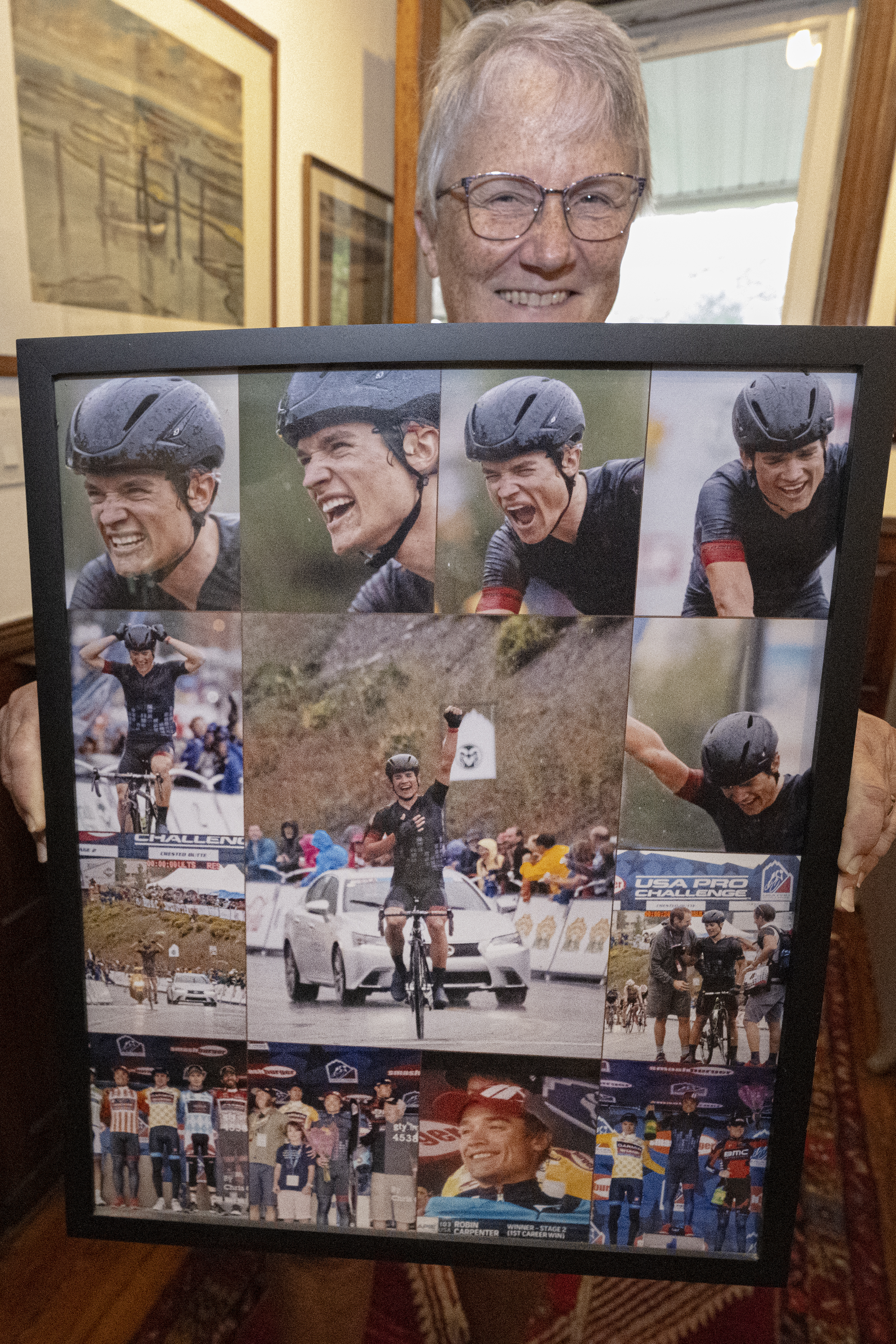
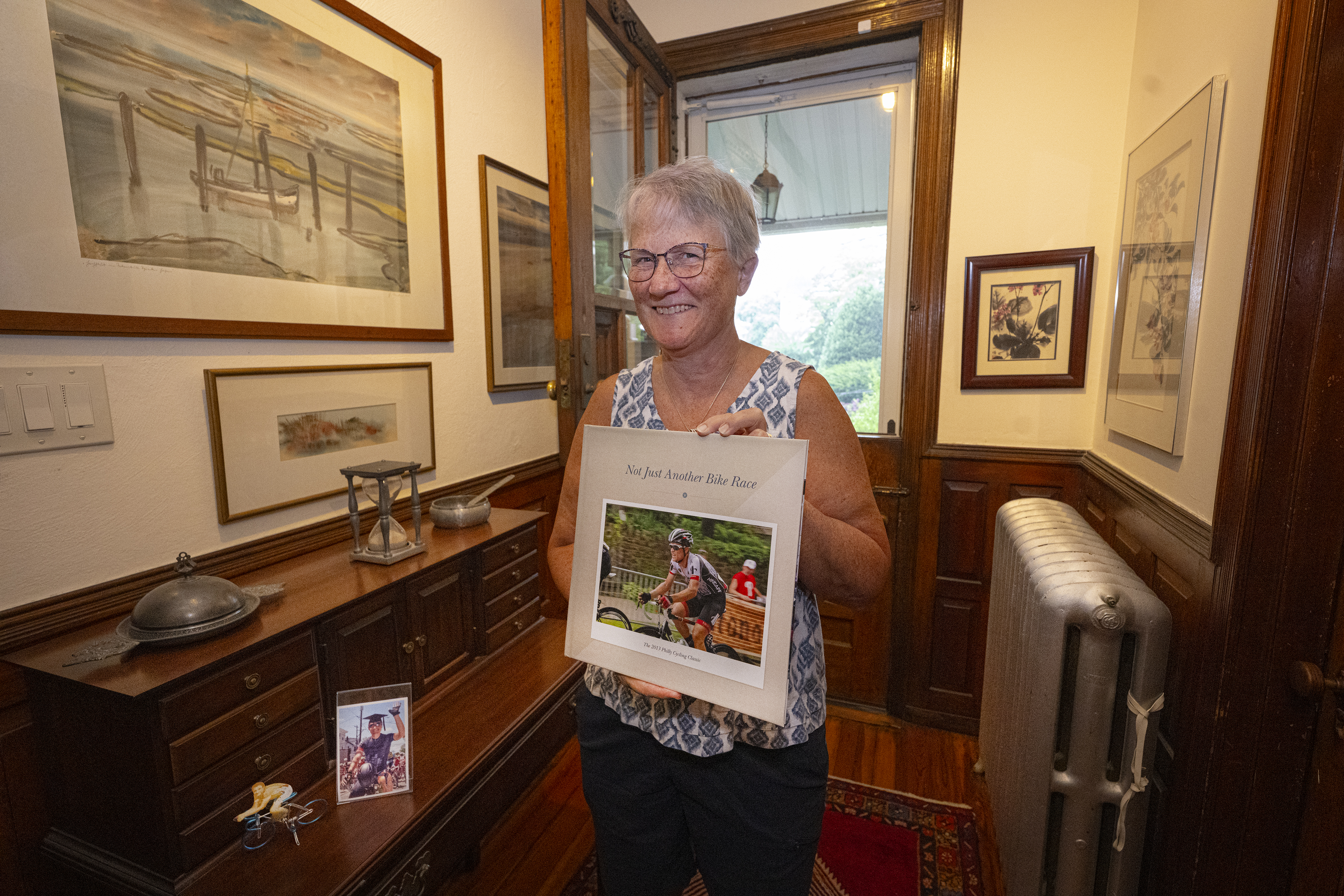
    Julia Heberle holds a collage of photographs of her son, cyclist Robin Carpenter, who will compete in the upcoming Philadelphia Cycling Classic.Jose F. Moreno / Staff Photographer

    Ellen Saint Clair isn’t sure yet where she’ll be Sunday when the race returns to Philadelphia. Maybe she’ll be rowing on the Schuylkill when the cyclists pass as she met her husband there when they were both training at the Vesper Boat Club. Or maybe she’ll find a spot near Lemon Hill. But she knows where the old coach would be. He’d be standing at the top of the Wall, reminding Carpenter that he had more to give. That was how Saint Clair coached his runners but also how he lived his life. There was always more to give.

    “He wanted these kids to feel like they were a part of something bigger than themselves and to challenge themselves. Kev knew the value of athletics beyond what your body can do. Just how it builds confidence and how it develops the individual. He had so many first-time athletes on his team and he loved it,” Ellen Saint Clair said. “I hope if Robin’s legs are like lead and his back is hurting, he just taps into Kev. ‘You have more. Go now.’ He would be so proud of him.”
  • A new Wing Bowl documentary chose to celebrate the event instead of focusing on the ‘ugly’

    A new Wing Bowl documentary chose to celebrate the event instead of focusing on the ‘ugly’

    Angelo Cataldi made a passing comment after Pat Taggart and his crew visited WIP’s morning show years ago, telling them they were the guys he would pick if there was ever a documentary to be made about Wing Bowl. Time went by, Cataldi retired, and Taggart saw no one ever made that film. It was time, he thought. So they reached out to Cataldi in 2023. The former radio host told them to meet him in Sea Isle City. He’ll be on the beach, reading a book under a blue tent.

    “Sure as anything, we showed up to Sea Isle and there he was,” Taggart said.
    Taggart, who grew up in Southwest Philly, caught Cataldi’s attention in 2016 when he directed a documentary called Billboard Boys about a promotional stunt by an Allentown radio station. Cataldi loved it. Taggart promised Cataldi on the beach — “I was wearing a bathing suit and flip-flops,” he said — that he would treat Wing Bowl the same.

    “Angelo is an interesting guy,” Taggart said. “Him in real life is not like him on the radio. He’s very much an introvert and not overly talkative. He’s a family guy. We got there and we weren’t there very long. He had his book and he said, ‘Everybody says they’re going to do this and nobody follows through.’ I don’t even know how much eye contact we made. But we left there and he said, ‘You guys are the guys. I believe you’re going to do this right.’”

    Wing Bowl — which ran for 26 years before the station 86’d it in 2018 — seemed ripe for a documentary.

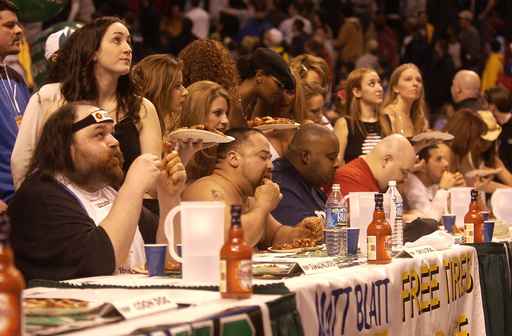
    A popular champion went to state prison, there were fights in the arena, the mayor attended, a major league umpire was the judge, and gentleman’s clubs were as much a part of the eating event as the restaurant that provided the chicken wings. The scene was often as ugly as the guy who vomited one year after eating a wing that still had a feather attached.

    Co-founder Angelo Cataldi at Wing Bowl 20.Alejandro A. Alvarez / Staff Photographer

    But Taggart steered his film — which is titled No One Died — away from the mess. The documentary touches on the ugly and describes the chaos in the arena but most of the 95 minutes are spent celebrating Wing Bowl as an event unique to Philadelphia that brought people together.

    “You have to show the El Wingador stuff. You have to show the ugly of the fights and some of the misogyny,” Taggart said. “But I feel like you have to show enough to tell the story and not linger on it. At the end of the day, this was always a comedy. My fear was that if someone from out of town told this story, 75% of it would’ve been that.”

    “He really wanted the story told, and he wanted the story told by people who understood Philadelphia and understood Wing Bowl and people he trusted. I’m so grateful that was us.”

    ‘Uniquely ours’

    The crew asked Cataldi if he wanted to be a producer but he declined. The man who redefined sports talk radio in Philadelphia said he didn’t want to control the narrative. But he had one request: interview Arson Arnie, a longtime caller to Cataldi’s morning show.

    “We showed up to his house and he’s sitting on his front stoop in a Randall Cunningham jersey chain smoking out of a Veterans Stadium ashtray,” Taggart said. “In his backyard under a tree are two Veterans Stadium seats rotting away and in the middle of the yard is a Deion Sanders Starting Lineup [figure] with its head ripped off. He didn’t place it for us. That’s just where it lived.”

    Arnie Adkins, aka “Arson Arnie,” with Pat Taggart, the director of “No One Died.”Pat Taggart

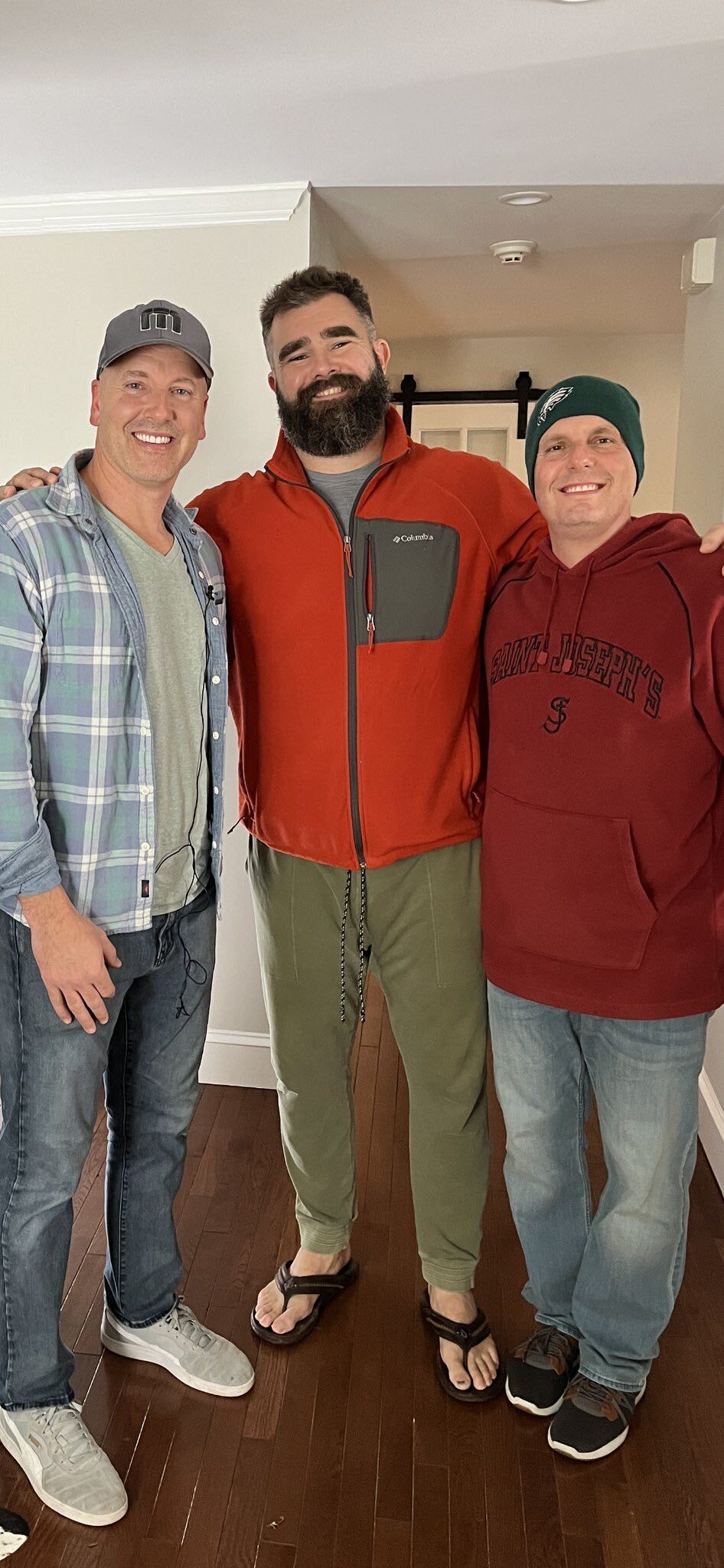
    Arson Arnie, who is a cab driver named Arnie Adkins, fills the documentary with old Wing Bowl stories and what it means to be an Eagles fan. The filmmakers conducted more than 40 interviews and even sat with Jason Kelce — who competed in Wing Bowl 22 — at his house the day before he played a game during one of his final NFL seasons.

    But Taggart said Arson Arnie is the character who seemed to resonate the most.

    Arson Arnie seemed to encapsulate what fandom looked like in the 1990s when Wing Bowl was launched as a radio stunt to celebrate another Super Bowl without the Eagles. WIP — especially Cataldi’s show — didn’t just tell fans what to think about but often succeeded at telling Philadelphia how to feel. The AM station was the guiding light for people like Arson Arnie.

    “It’s different now,” Taggart said. “Whether you think it’s better or worse, it’s absolutely different. If you were a fan of WIP, it was hard to not be a fan of Wing Bowl. They were so smart that they stretched a one-day event into two or three months of programming.”

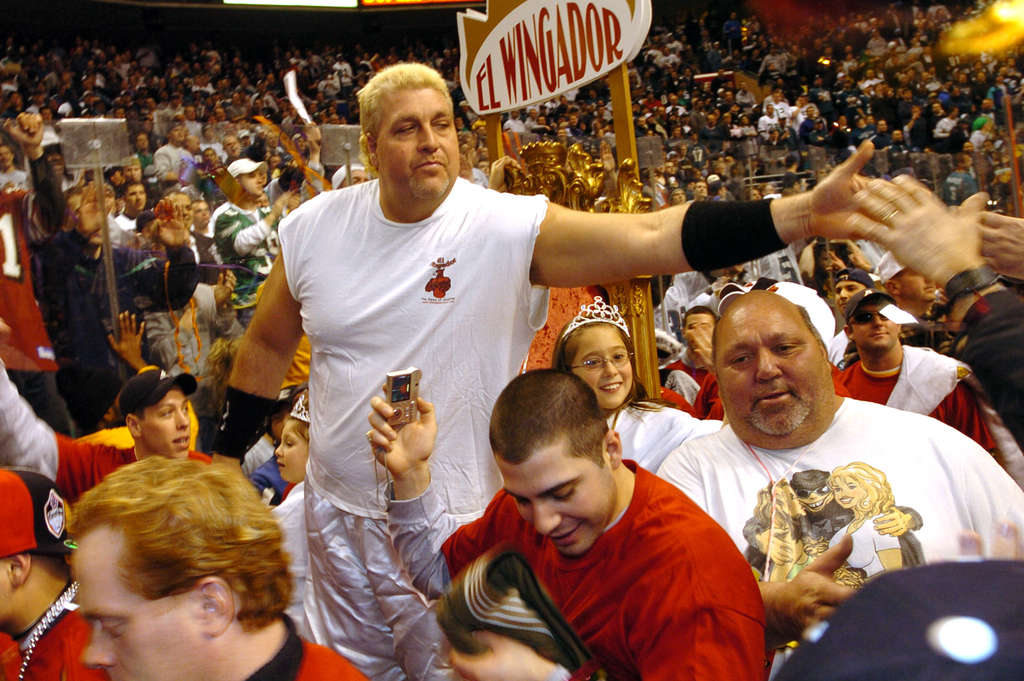
    Taggart interviewed El Wingador, whose real name is Bill Simmons, and asked him how he went from wing king to state prison on drug charges. They showed footage of the rowdy crowd that nearly rioted in 2005 after being turned away days before the Eagles played in the Super Bowl.

    The film didn’t hide the fights in the crowd, the all-night partying that bled into the event, or the other things that led to a former WIP promotion director saying in the documentary that Wing Bowl had become “out of place” by the time it ended. But Taggart’s film looks fondly on a bygone era and the people like Arson Ernie who made it happen.

    Pat Taggart with Jason Kelce and producer Frank Petka after interviewing Kelce for the “No One Died” documentary.Pat Taggart

    “It was uniquely ours,” Taggart said. “Find someone in Philadelphia who likes a cheesesteak outside of Philadelphia and raves about it. You can’t find it. Why? Because the cheesesteak is ours. Wing Bowl was Philadelphia’s. It was a true original. Other people tried to copy it with absolutely no success. It only worked here. It needed the perfect fan base that understood what it was and got behind it. This was never an eating contest. This was a party.

    “Someone said to me, ‘If you wanted to miss Wing Bowl, it was very easy. It happened once a year. It happened in an enclosed building for four hours. If you didn’t want to see it, don’t listen and don’t go.’ So it was absolutely a voluntary event for people.”

    El Wingador gets a hero’s welcome at Wing Bowl 13.AP

    A moment in time

    Taggart said he was negotiating a deal with two production companies before he realized he would be trading away the ability to edit his film and the documentary’s final cut would be out of his hands. So Taggart said he backed out and decided to release the film himself earlier this month. The documentary can be purchased on Prime, Apple TV, and YouTube.

    “We weren’t willing to take that risk,” Taggart said. “We wanted to make sure the film got out there the way it was intended. If this got out there and it was a smear piece on Philly and the lazy narrative of snowballs at Santa and look at the stuff they did on a snowy morning every year, I would’ve been distraught.”

    He showed the film to El Wingador and then asked the five-time champ if the documentary treated him fairly. It was perfect, he said. They showed it to Ed Rendell, who as mayor helped WIP move the event in 1998 to the Spectrum. The documentary shows a clip of Rendell saying how Wing Bowl was to Philadelphia what Mardi Gras was to New Orleans. Taggart asked Rendell after he watched the film about his time at Wing Bowl.

    “He said No. 1 I looked around and said this is the craziest thing I’ve ever seen,” Taggart said. “Then my second thought was I probably shouldn’t be here.”

    Cataldi says in the documentary that he wasn’t ready to end Wing Bowl but the station decided it was time. It was the end of an event that was often used as a punchline by outsiders. But Taggart says for Philadelphians, Wing Bowl wasn’t a joke. It was something to treasure.

    “It was a moment in time,” Taggart said. “It was the wackiest event in the history of the media and it can never happen again. But to ignore that it ever happened would be silly. I just watched a baseball game the other day in St. Louis, which is supposed to be a baseball city. There was nobody there. We had 50,000 people that day on a snowy February morning trying to get in to watch a chicken eating contest. This city is just different.”

  • ‘Shoeless’ Joe Jackson is known for ‘Field of Dreams’ and the Black Sox. But his career started in Philly.

    ‘Shoeless’ Joe Jackson is known for ‘Field of Dreams’ and the Black Sox. But his career started in Philly.

    It was just the previous season that Joe Jackson played a game without cleats, so he had only been “Shoeless Joe” for a few months. Yet it was already obvious that Shoeless Joe was destined to be a star. That’s why Jackson was on a sleeper train bound for Philadelphia in August of 1908.

    Philadelphia Athletics manager Connie Mack had dispatched three scouts — including his top lieutenant — earlier that summer to get eyes on Jackson in Greenville, S.C., before signing him for $900.

    But Jackson didn’t want to leave his tiny South Carolina hometown. He had just turned 21 years old and was married weeks earlier. A son of a sharecropper, Jackson never went to school and was thrilled to be earning $75 a week for the Greenville Spinners.

    Jackson, leery of life up North in the big city, delayed his trip while another teammate whom Mack signed left for Philly.

    Shoeless Joe finally relented and boarded the train with his minor-league manager Tom Stauch, who was instructed to deliver Mack the player an A’s scout described as “the sweetest hitter I’ve ever seen.”

    Stauch woke up when the train pulled into Philadelphia. Jackson wasn’t there. He hopped off overnight during a stop in North Carolina while everyone was sleeping. Jackson sent Mack a telegram, claiming that his mother was ill and he had to take care of her. Shoeless Joe would one day become baseball royalty before being blackballed in one of sports’ greatest scandals. But he had no interest in playing for the A’s.

    “Connie Mack understood,” said Dan Wallach, the former executive director of the Shoeless Joe Jackson Museum in Greenville, S.C.

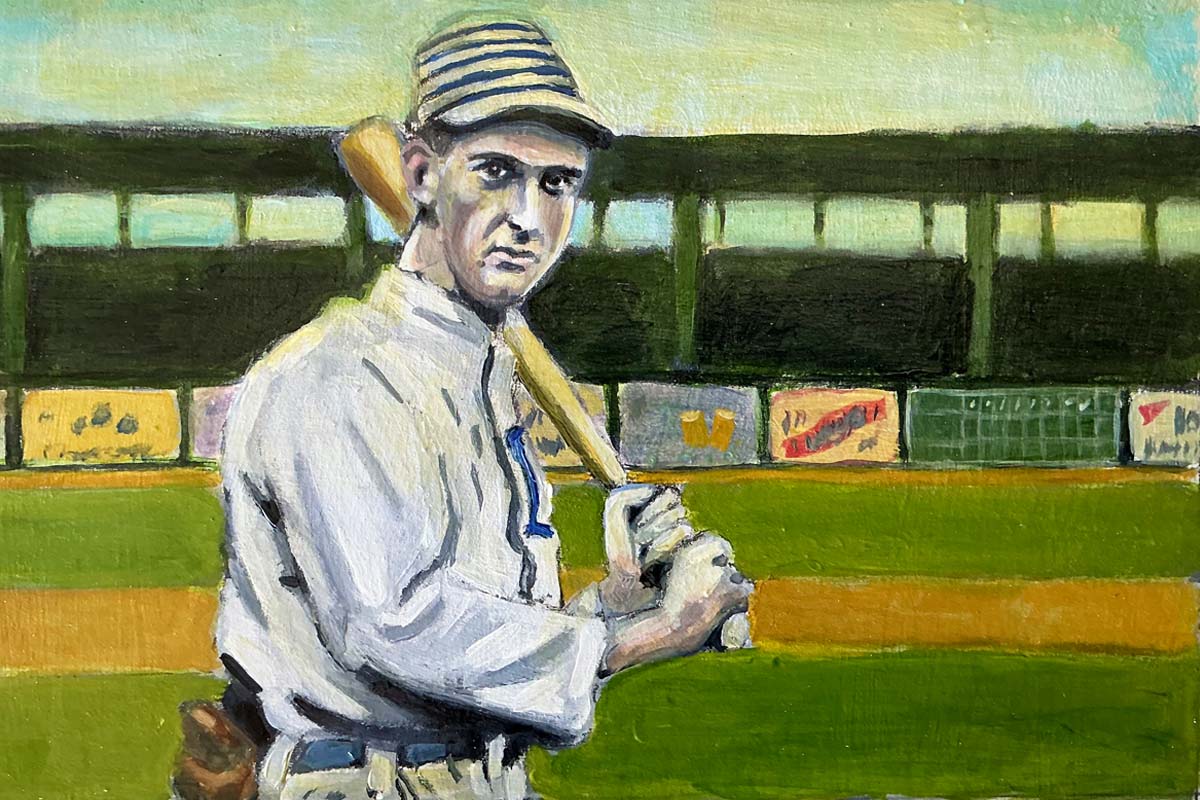
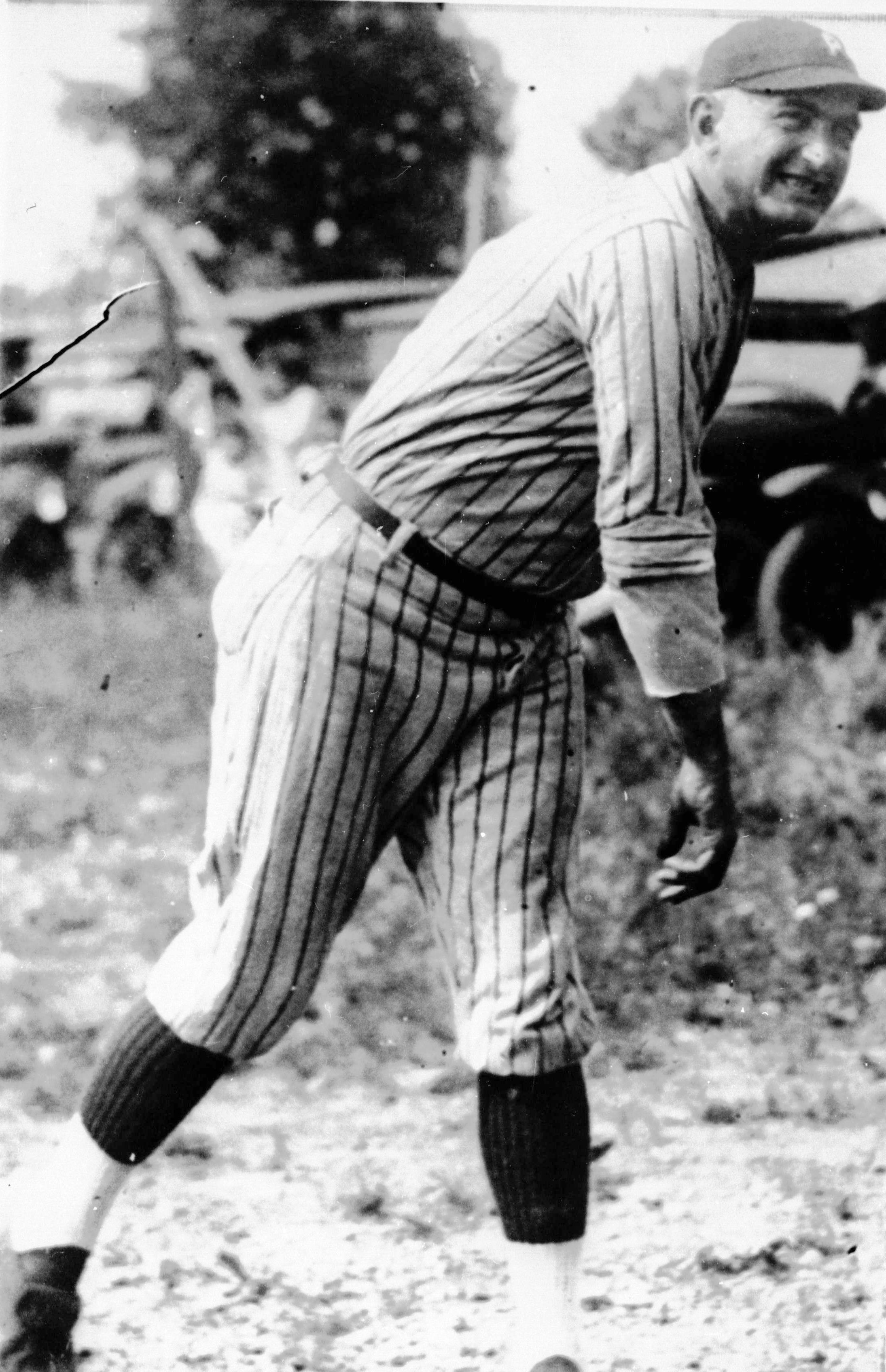
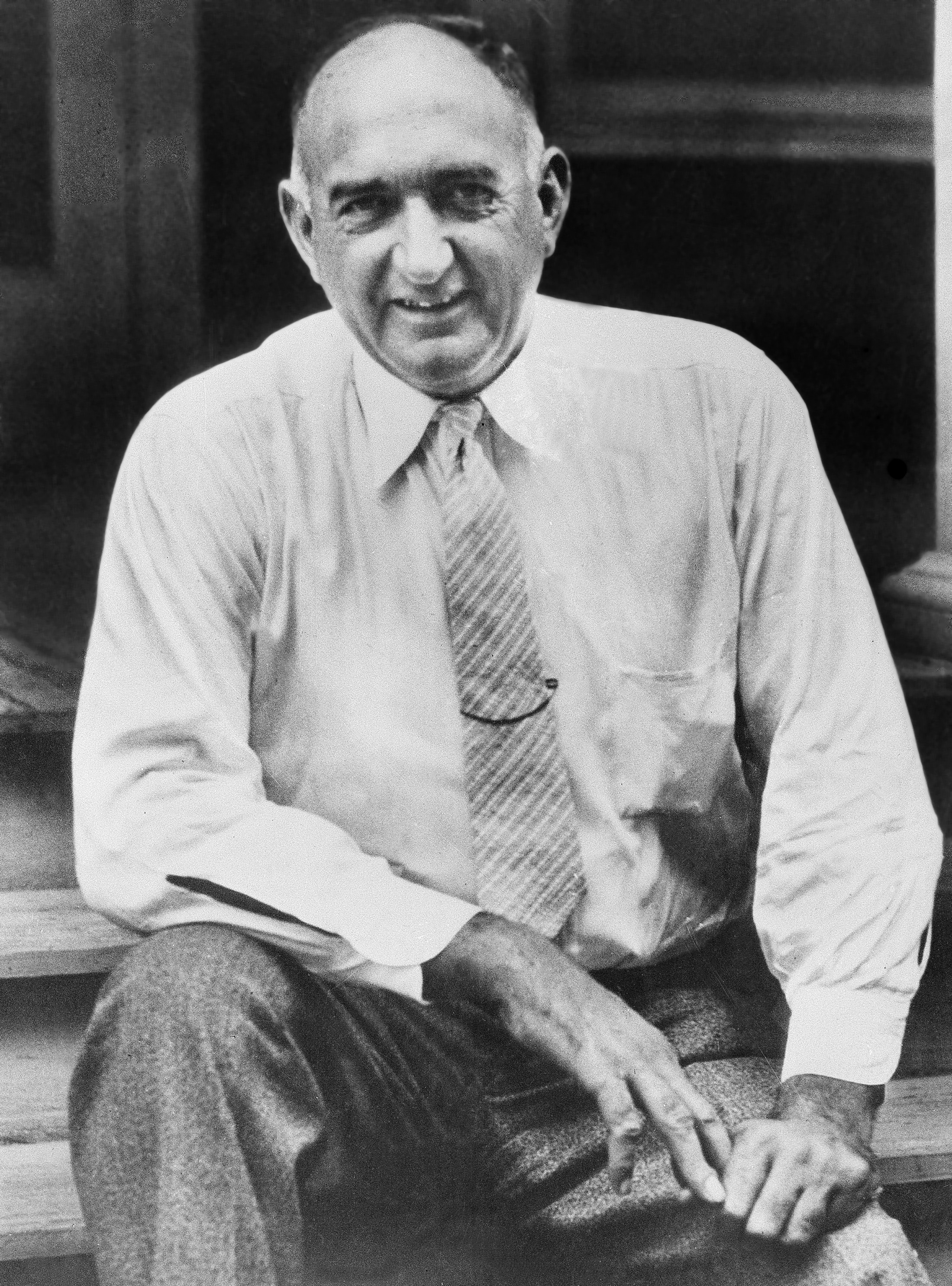
    “Shoeless” Joe Jackson was a .356 career hitter over 13 seasons.Anonymous

    Field of Dreams

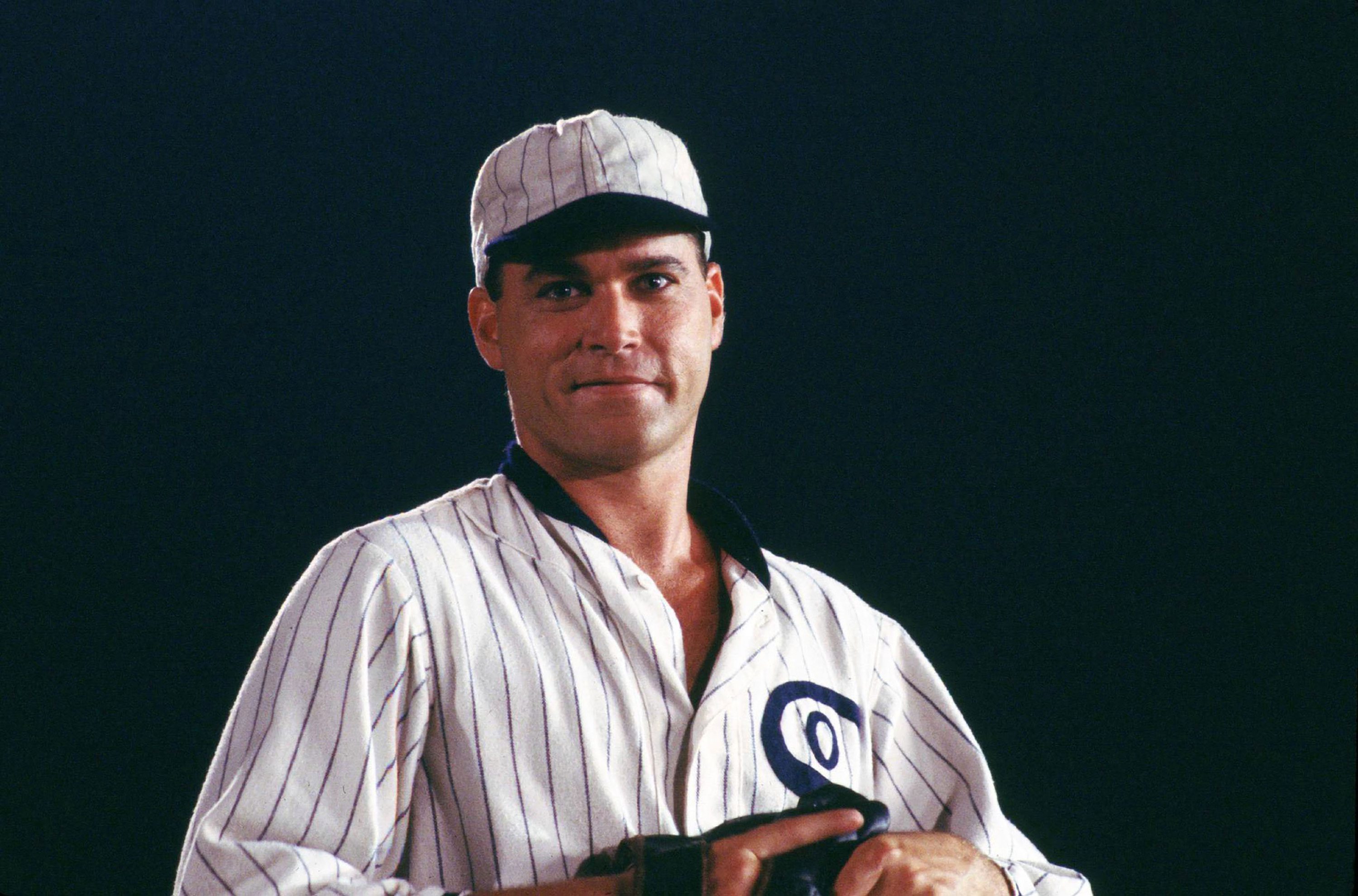
    Shoeless Joe will be remembered Thursday night when the Phillies play the Twins in an Iowa cornfield where the 1989 film Field of Dreams was shot. The portrayal of Jackson — “Is this heaven?” his character, played by Ray Liotta, famously asked after emerging from the stalks — is an iconic piece of Hollywood lore.

    His baseball career was made for movies, so much that films — the other being 1988’s Eight Men Out — were released in consecutive years about Jackson. He was a baseball superstar who became tied up in a gambling scandal that nearly took down the sport after Jackson and seven Chicago White Sox teammates were banned for life amid accusations of throwing the 1919 World Series.

    Jackson denied until his death at age 64 in 1951 that he lost on purpose and a legion of supporters have since worked to clear his name.

    Major League Baseball clarified in 2025 that Jackson — along with Pete Rose — was no longer banned as lifetime penalties expire once someone died. So Jackson’s Hall of Fame case will be voted on in December 2027 by a panel assembled by the museum.

    “I have never advocated for him to be inducted into the Hall of Fame because I think he’s more famous outside the Hall than in it,” said Wallach, who now hosts a baseball podcast called My Baseball History. “Obviously, I think his play and his career warrants that he be honored the way his contemporaries are. But the entire thing that makes his story unique and gives people a reason to fight for him is that he belongs in the Hall of Fame and he’s not in it. So the day he gets in it, there’s no story anymore. I have mixed emotions about him getting in.”

    Jackson, like he is portrayed in Field of Dreams, is best remembered for his time with the White Sox. He won the World Series in 1917 and then hit .375 in the 1919 Series against Cincinnati that the “Black Sox” were accused of throwing. He’ll always be known for the years in Chicago. But his big-league career started in Philadelphia.

    “He didn’t spend a ton of time in Philadelphia,” Wallach said. “But it was an interesting footnote to his career.”

    Ray Liotta portrayed “Shoeless” Joe Jackson in the classic 1989 film “Field of Dreams.”UNIVERSAL / MCT

    It started in Philly

    Mack sent Socks Seybold, a player who scouted Jackson earlier that summer, back to South Carolina in hopes of persuading Jackson to give Philly a chance. Seybold found Jackson working at a cotton mill. Shoeless Joe said he would come to Philadelphia but he had to bring his wife, Katie. The A’s agreed.

    Mack usually required his players to be high school educated and preferred that they went to college. But Jackson didn’t even know how to read or write. He never signed autographs and carried a copy of his signature signed by his wife in his wallet that he would trace if he had to complete a legal document.

    “He knew the lines he was making on the paper spelled ‘Joe Jackson,’ but I don’t think he knew he was writing a ‘J’ and writing an ‘O’ and writing an ‘E,’” Wallach said. “I don’t think he knew exactly what he was doing, but he could mimic the paper.”

    That’s how much Mack thought of Jackson’s ability that the owner overlooked his education. Mack offered to get Shoeless Joe a tutor and tried to find ways for him to get comfortable in Philadelphia. But there was little Mack could do.

    The A’s players teased Jackson when they went out to dinner and he held his menu upside down.

    “If the waitress came to him first, he would say, ‘Give me a second and let everyone else order,’” Wallach said. “He would listen to his teammates’ orders and whatever he thought sounded the best, that’s what he would order when it came back to him. His teammates weren’t stupid. Most of them were college educated. They saw exactly what was going on. He just didn’t feel comfortable being there.”

    “Shoeless” Joe Jackson is shown in 1935. He owned businesses in Savannah, Ga., and Greenville, S.C. He died in 1951.ASSOCIATED PRESS

    Jackson played five games for the A’s in 1908 at Columbia Park in Brewerytown before playing the next season in Savannah, Ga., where he led the South Atlantic League with a .358 batting average. Mack called Jackson back to Philadelphia for the final month of the 1909 season and he again played five games at the newly opened Shibe Park at 21st and Lehigh.

    “Connie Mack did what he could to make Joe’s time in Philadelphia positive,” Wallach said. “But it just wasn’t going to work. It became clear pretty quickly that Joe was talented and was going to be a star but that wasn’t going to happen with the Athletics.”

    Mack traded Jackson before the 1910 season to Cleveland, knowing the player he lured to Philadelphia would be better suited elsewhere.

    Jackson’s career is now cleared to reach Cooperstown, N.Y., via the Classic Baseball Era Committee. It might not happen in December 2027, but he will eventually be enshrined. The numbers — his career .356 average is fifth best all-time — are too strong to deny.

    His plaque will likely detail the betting scandal, his trusty bat Black Betsy, and his time in Chicago and Cleveland, where his career blossomed after Mack sent him there.

    But the first line under Jackson’s nickname will say “PHILADELPHIA” as Shoeless Joe’s iconic career started with 10 games in North Philly that have long been forgotten.

    “Connie Mack said he regretted selling Jackson to Cleveland,” Wallach said. “They really had a mutual respect for each other. Connie Mack wanted Joe to work out in Philadelphia. He knew he was going to be a star. He knew he had this ability. He won batting titles in every league before Philadelphia. He was great.

    “But it was like he traded him to Cleveland out of mercy because he wanted him to have success. It was clear to him that that wasn’t going to happen in Philadelphia.”

  • Mickey Harrington was the Phillies’ Moonlight Graham. He never got his Field of Dreams.

    Mickey Harrington was the Phillies’ Moonlight Graham. He never got his Field of Dreams.

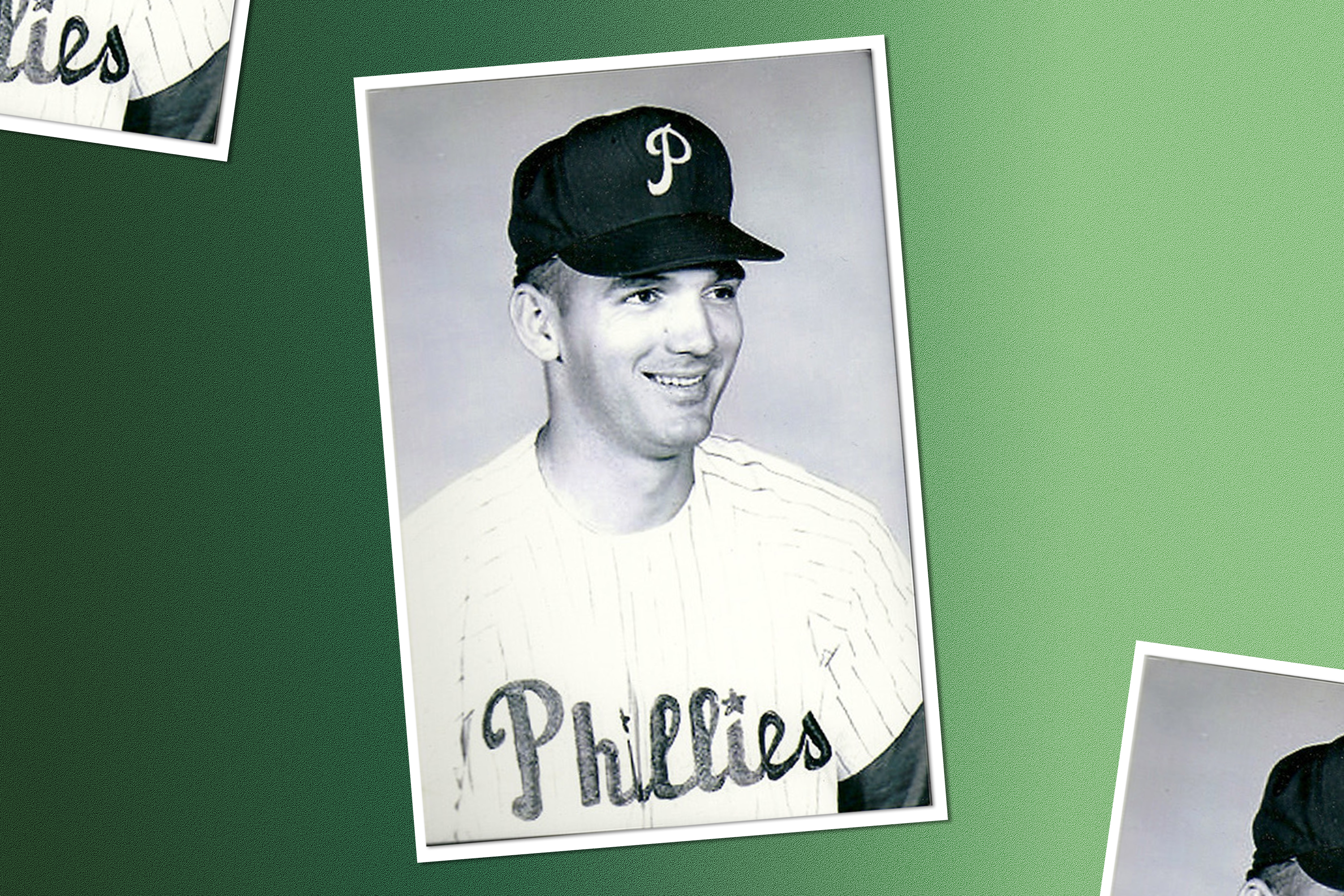
    Mickey Harrington played with major leaguers, played against major leaguers, played for major leaguers, and even roomed with major leaguers. But him? Harrington was stuck in the minor leagues in 1963 after signing six years earlier with the Phillies.

    Harrington served two years in the Army and could have played professional basketball after being drafted by the New York Knicks. He picked baseball, believing it was his best chance at a career. And then Harrington watched every season as his teammates left the minors for the majors while he stayed behind.

    Finally, he got his chance. The Phillies called up Harrington in July of 1963, flying him from Hawaii where he was playing for a triple-A team. The 28-year-old was a big-leaguer.

    Harrington sat on the bench for eight games before manager Gene Mauch used him as a pinch runner on July 10, 1963. Roy Sievers singled to start the eighth inning against the San Francisco Giants at Connie Mack Stadium and Harrington stepped onto the grass at 21st and Lehigh.

    The inning ended two batters later when Clay Dalrymple grounded into a double play. Harrington had reached second on a single by Don Hoak before Don Demeter hit a grounder to first. A newspaper account blamed Harrington for “reckless baserunning” as he was tagged after making a wide turn around third base.

    Mauch, the fiery manager they called the “Little General,” immediately lifted Harrington from the game and replaced him with Frank Torre. Two days later, the Phillies dropped Harrington back to the minor leagues.

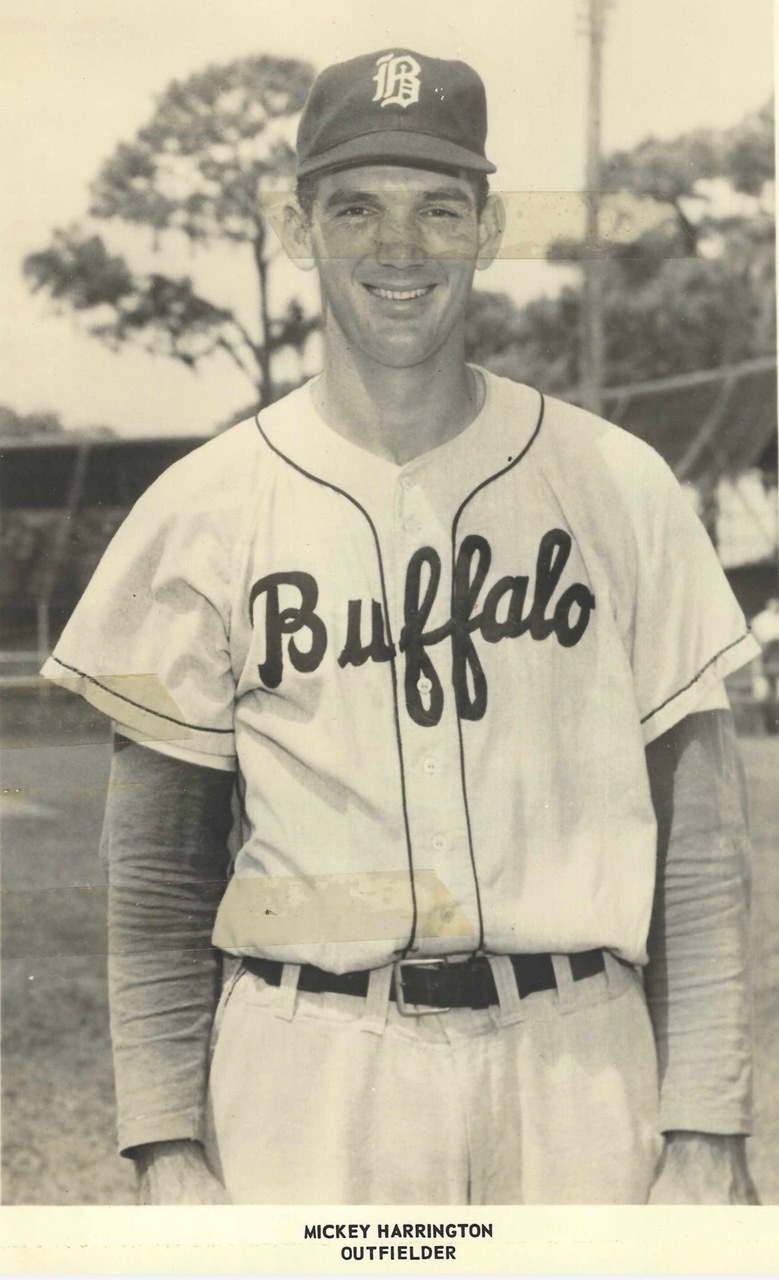
    Mickey Harrington as a minor leaguer in Buffalo.Harrington family

    He was a professional ballplayer for 10 seasons but his only experience in Major League Baseball was being used once as a pinch runner. He didn’t play the field, score a run, or step into the batter’s box. Harrington, who died in 2017, finally became a big-league player. But his career only lasted a few minutes.

    “Deep down, I could read between the lines even though he didn’t say much about it,” said son-in-law Ken Knopp. “I know it hurt him. He felt at some point that he was beating his head against the wall. I know it hurt his feelings. But he never really said that much about it. It was frustrating for him. He couldn’t break in.”

    Field of Dreams

    The Phillies will play Thursday against the Minnesota Twins in Dyersville, Iowa, the setting for Field of Dreams, the 1989 Hollywood film where a cast of legendary players appear as ghosts on a baseball diamond built by a farmer in the middle of a cornfield.

    A thread of the movie was focused on Moonlight Graham, a longtime minor-league player who played one inning in the majors as a defensive substitute in 1905 but never had a chance to hit.

    “It was like coming this close to your dreams, and then having them brush past you like strangers in the crowd,” the older Graham character, played by Burt Lancaster, says in the film. “At the time, you don’t think much of it. We just don’t recognize life’s most significant moments while they’re happening. Back then I thought, ‘Well, there’ll be other days.’ I didn’t realize that that was the only day.”

    The Iowa diamond brought the ghosts of “Shoeless” Joe Jackson, Mel Ott, Gil Hodges, and other deceased greats out of the cornfield and gave their careers a second life. Graham — wearing an old New York Giants jersey — finally got his chance to bat and hit a sacrifice fly. Jackson asked the farmer if the field was heaven. No, it was Iowa.

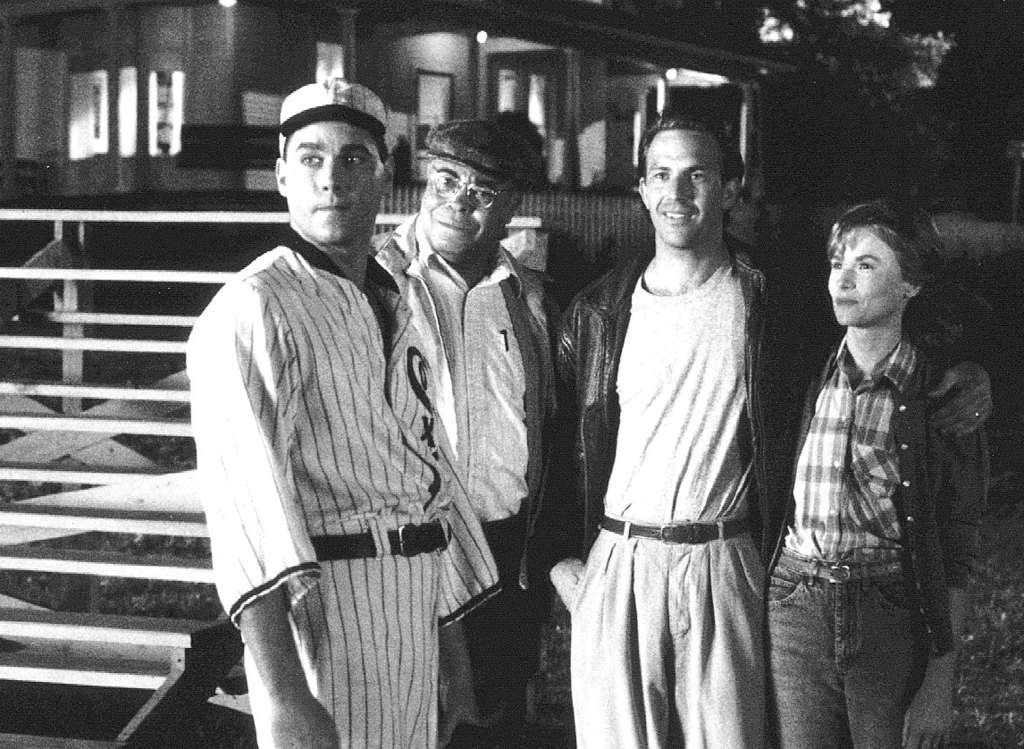
    In 1989’s “Field of Dreams,” James Earl Jones (second from left) starred with (from left) Ray Liotta, Kevin Costner, and Amy Madigan.

    It was magic and the film, which is routinely ranked among the top sports movies ever made, was nominated for Best Picture at the 1990 Academy Awards.

    Harrington’s big-league career was a flash just like Moonlight Graham’s. But the man who grew up in Hattiesburg, Miss., never got to hit on a field of dreams.

    “It was a thrill to get there,” Harrington told the Clarion-Ledger of Jackson, Miss., in 2003. “But it was a letdown not getting to bat. It would have been nice to bat one time.”

    Playing with legends

    Harrington hoped to return to Hawaii after being dropped back to the minors but was instead sent to Little Rock, Ark., where Dick Allen was playing as the team’s first Black player. For Harrington, it was another encounter with the type of players who played on that cornfield.

    He roomed with Chuck Tanner, hit against Tommy Lasorda, and played against Sparky Anderson, all future managers. Willie Mays, Willie McCovey, and Orlando Cepeda were on the Giants when Harrington passed through as a pinch runner.

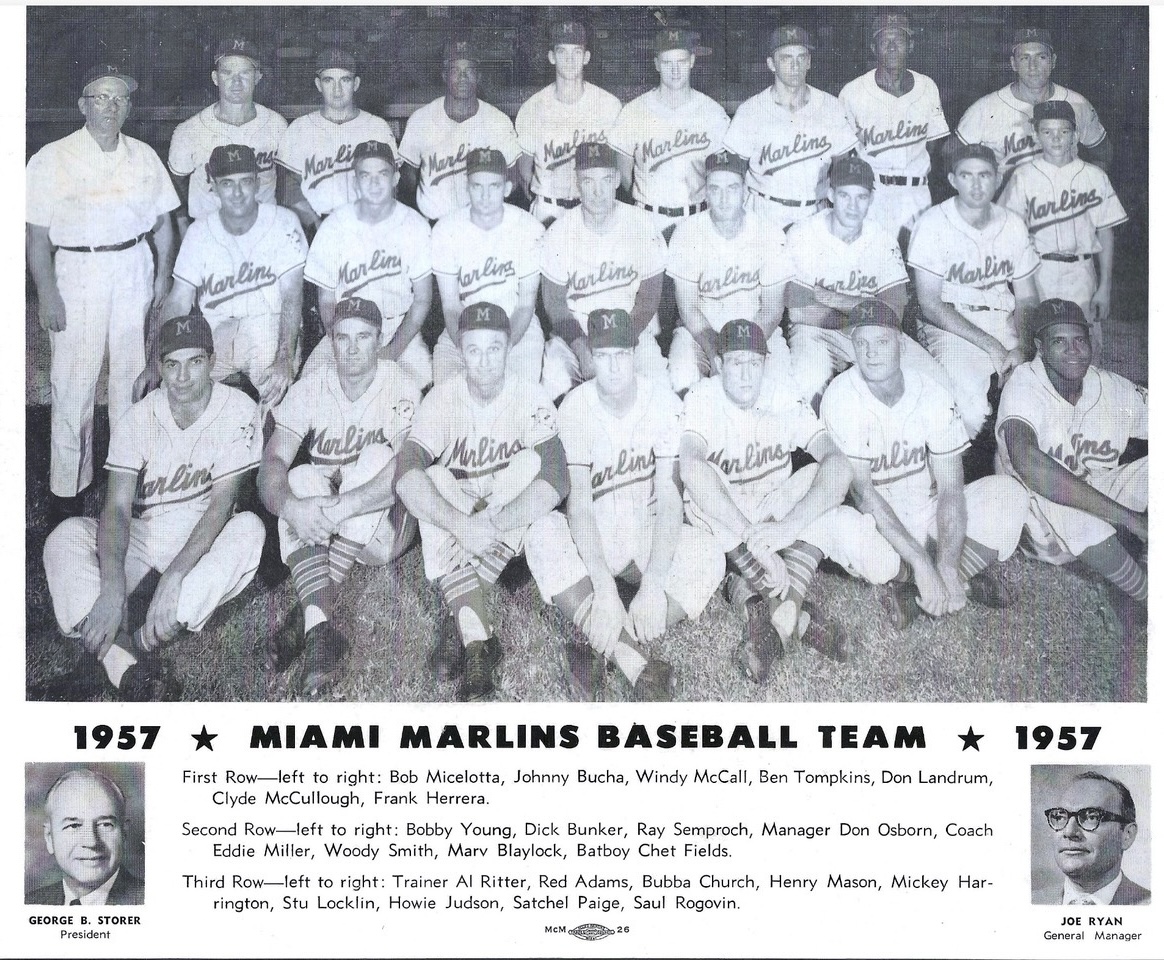
    Harrington spent most of his first season in 1957 with Miami, where the Phillies had a triple-A club. He was being teased in the clubhouse for being from Mississippi when an older pitcher asked him where he was from. Hattiesburg, Harrington said. The pitcher grew up 90 minutes away in Mobile, Ala. It was 50-year-old Satchel Paige, another legend for Harrington to cross paths with.

    “Satchel Paige stood up,” Knopp said. “‘Hey, y’all leave him alone. He’s my neighbor.’ They became good friends. Satchel Paige took up for him. That’s a pretty good way to be introduced to Satchel Paige.”

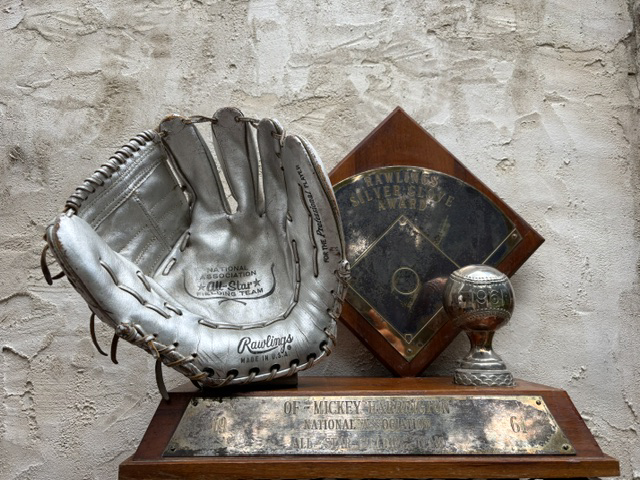
    Harrington was hitting .298 with the Hawaii Islanders in 1963 when the Phillies called him to the majors. He batted .305 over the previous four triple-A seasons and won a Silver Glove Award — the minor-league version of the Gold Glove given to the best fielders — in 1961 for his work in the outfield.

    A team photo of the 1957 Miami Marlins, a Phillies triple-A team that included legendary pitcher Satchel Paige.Harrington family

    Harrington performed in the minors like a prospect, but his only chance at the majors was that Wednesday night at Connie Mack Stadium.

    Maybe Harrington’s modesty, Knopp said, caused him to be overlooked. Or maybe those two years in the Army delayed his career enough to keep him stuck in baseball purgatory. Or perhaps he should’ve played basketball.

    “In baseball vernacular, they call it a cup of coffee,” Knopp said. “I never understood it. He was a great ballplayer.”

    Harrington retired after the 1966 season, returned to Hattiesburg, and worked at his father’s sporting goods store. His first daughter, Heather, was born when he was playing and his second daughter, Hope, was born just after he retired. Harrington filed a patent in 1973 for a batting tee and built a home on a plot of land owned by his father-in-law. He was always using his hands. Harrington turned a shack into a three-bedroom home with two fireplaces and a big living room.

    “It’s all cypress wood on the outside,” Knopp said. “He did all the woodwork, carpentry work all by himself. It’s a beautiful house. It’s an amazing house.”

    He was soon hired as an assistant coach on the basketball and baseball staffs at Southern Mississippi University, where he played before being drafted by the Army.

    Harrington was an all-American basketball player in high school and was a four-year starter in college. He had chances to play at bigger schools but his dad, Smokie, urged him to stay home at Southern Miss. He lived a few minutes from campus after his playing career and became a fabric of the university.

    The school president tabbed him in the 1980s to build a 220-acre equestrian center with bleachers for 2,500 people. He had a barn moved to the facility and rallied a group of college students to build the center using supplies that Harrington received through donations.

    Mickey Harrington’s Silver Glove Award from 1961, which is the minor-league version of the Gold Glove.Harrington family

    The farmer in Iowa built a baseball diamond that brought ghosts of the past. Harrington built a rodeo ring that led to his daughter meeting her husband.

    “They were literally screwing down the seats on the bleachers an hour before the first performance started,” Knopp said.

    His major league career was just a few minutes but there were always reminders of a guy who spent a decade as a professional athlete. He biked 20 miles a day, even when his knees were shot and he could hardly walk. He competed in the Senior Olympics and was back on his bike just months after a truck hit him in his 70s and broke his neck, shoulder, and ribs. And his hands — the ones big enough to palm a basketball — were a marvel.

    “He would have handshake competitions,” his daughter Heather said. “If he didn’t see his nephews in a while, he would put out his hands and his hand would just swallow their hands. They would try not to flinch, but he would tighten down on them. Finally, they’d go ‘OK, Uncle Mike. I give, I give.’ He was a cool human being.”

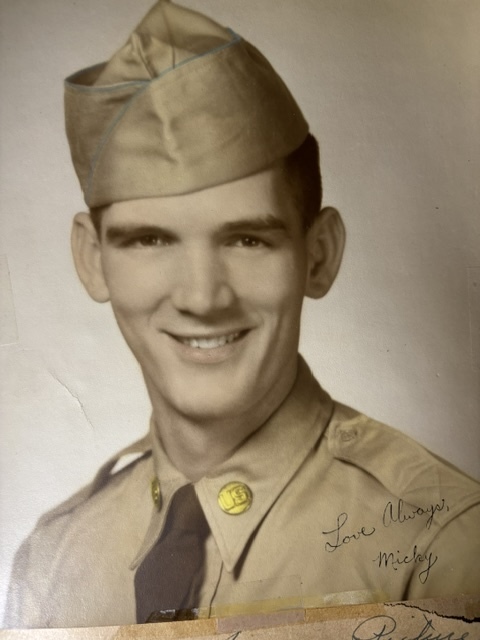
    Mickey Harrington’s Army photo.Harrington family

    ‘He would’ve got a hit’

    Harrington didn’t talk much about his career but Knopp could often find an opening as the two sipped hot chocolate in the winter and ate Klondike bars while watching football in Harrington’s living room.

    There was the time he was playing on the baseball team at his Army base and had to tell the general he couldn’t make the trip for that weekend’s game. His captain said Harrington — who was an excellent typist and worked as a clerk — had to finish inputting reports. The base’s general managed the baseball team and said he would handle it.

    “Mickey was sitting at his desk, typing away, and he heard the phone ring in the captain’s office,” Knopp said. “He just heard, ‘Yes, sir. Yes, sir. Yes, sir.’ He hung the phone up, went over to Mickey, and said, ‘Mickey, it’s OK. You can go.’”

    He told his son-in-law how fans booed him during the Civil Rights Movement whenever the ballpark’s public address announcer said he was from Mississippi. Harrington told them to stop telling the fans where he was from. And there was that time his teammate in the minors blockaded the umpires in their dressing room before the game started.

    “The national anthem is over and there are no umpires,” Knopp said. “Finally, someone heard the umpires banging on the door. They moved everything out of the way and they got out. The umpire knew who did it and didn’t say a word. He walked over to Mickey’s dugout, pointed to this guy, and said, ‘You’re out of the game.’”

    Mickey Harrington later in life. He died in 2017.Harrington family

    Harrington told a reporter in 2003 how he never understood why the Phillies used him as a pinch runner since he was a “6-foot-4 and 205 pounds.”

    “Maybe that’s why the Phillies never won any ballgames back then,” he cracked. (They actually went 87-75 in 1963.)

    But Heather said she always sensed her dad was at peace with how things went. He never seemed bitter or longed for a chance. At his funeral in 2017, Harrington’s nephew Larry said in a eulogy that Uncle Mike stayed positive. He always moved forward and simply believed “it didn’t happen so it didn’t happen.”

    Heather agreed. That was her dad. He spent just a few minutes on a field of dreams at 21st and Lehigh. And he was OK with it.

    “From the time I was very young I heard how talented he was. But never from him. He never said a word about it,” she said. “He was an incredible person. He made you want to do better. He made you want to live better. He made you want to push harder.”

    But what would have happened if Harrington got the chance to hit like Moonlight Graham did that night on that cornfield in Iowa?

    “He would’ve got a hit,” Heather said. “Absolutely. Oh, for sure.”

  • LeBron James could live in New York while playing in Philly. Wilt Chamberlain did it first.

    LeBron James could live in New York while playing in Philly. Wilt Chamberlain did it first.

    The trolleys stopped running at midnight, so Tom Hoover waited outside the Philadelphia Warriors locker room for a lift back to Villanova. He was a teenage college student and his ride after sitting in the stands at Convention Hall was the passenger seat of Wilt Chamberlain’s purple Cadillac El Dorado.

    A 40-minute drive, Hoover said, became a 10-minute sprint as Chamberlain burned rubber before dropping his buddy off at the dorm.

    “Dippy had a heavy foot,” Hoover said. “Back then, you didn’t pay attention. You were just talking and riding. But you would be like ‘Damn, how’d we get here so fast?’ It was one of those kinds of things.”

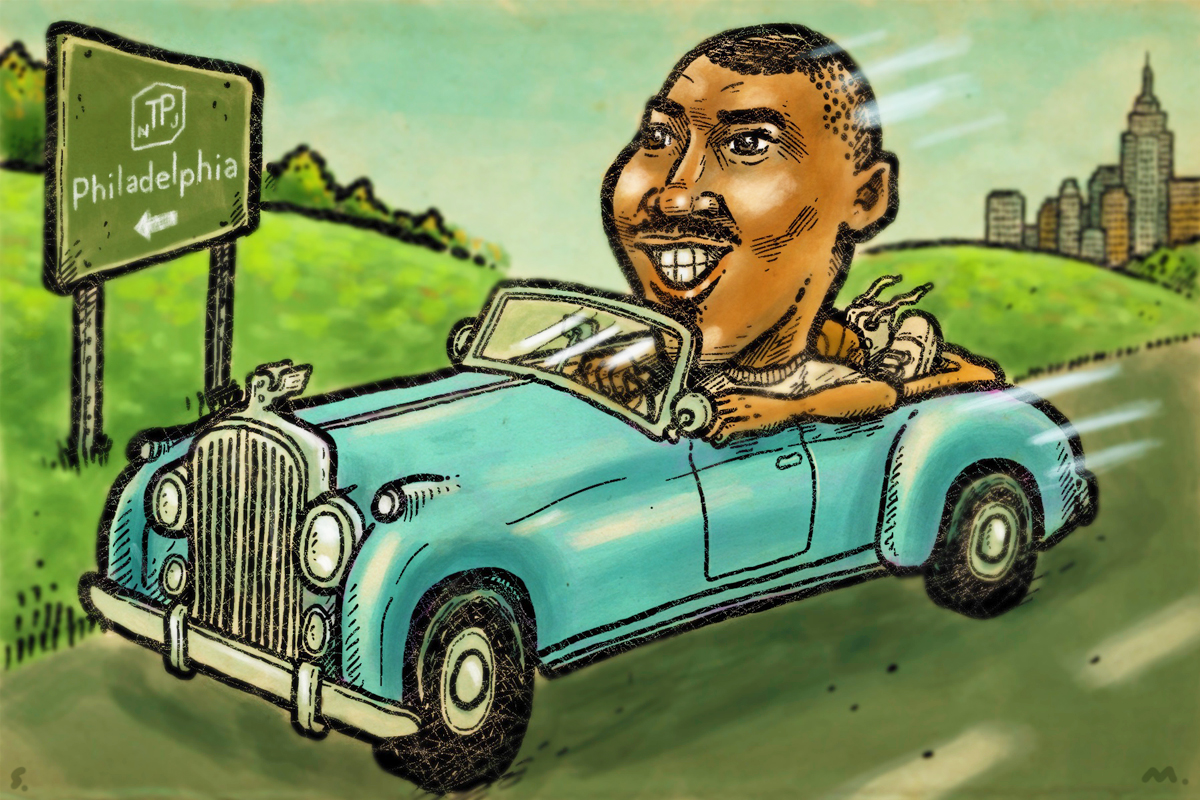
    Chamberlain then jumped on the turnpike and headed for New York, as he lived in the 1960s in an apartment overlooking Central Park while playing in Philadelphia.

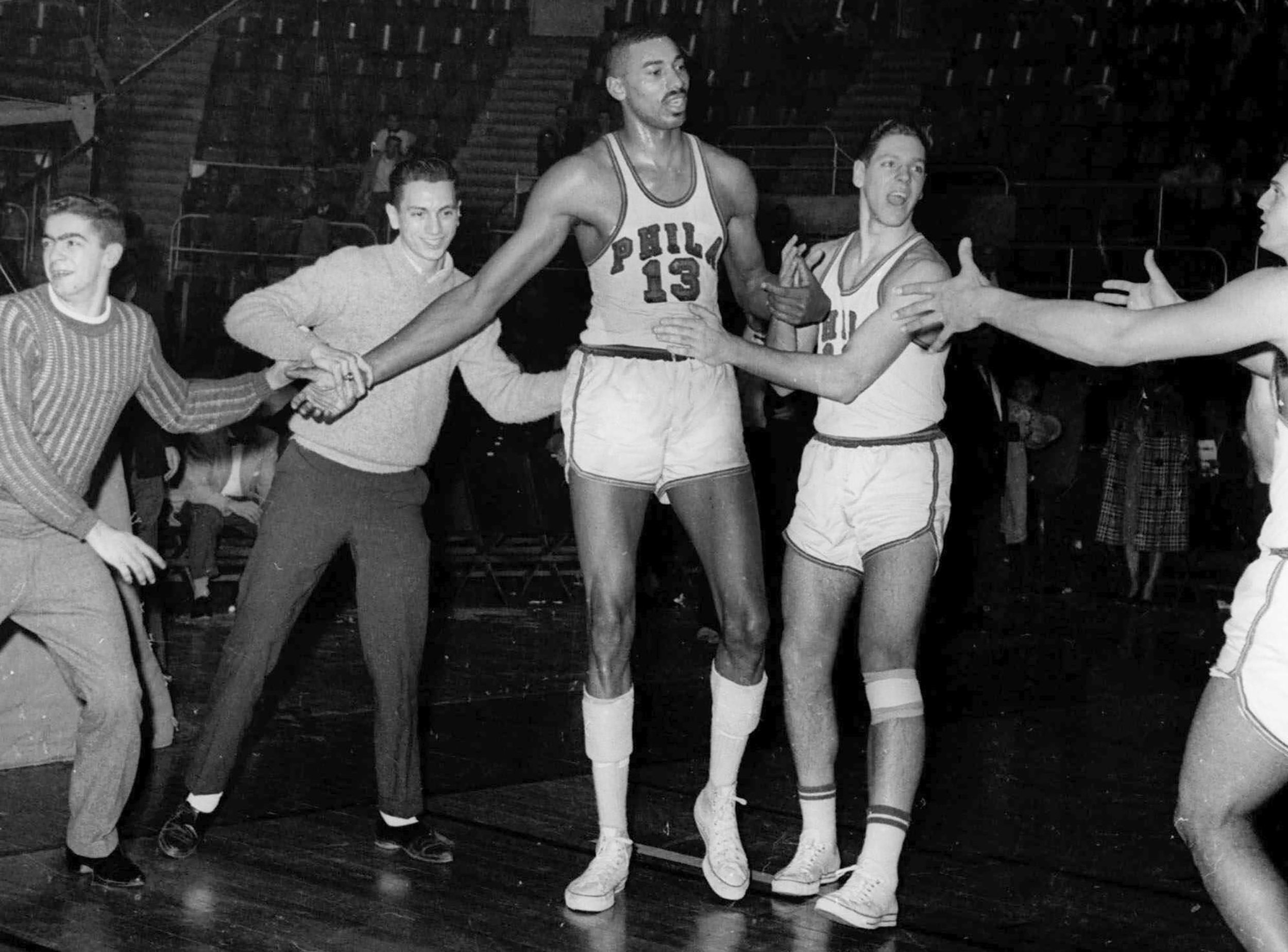
    He maintained a residence in Philly but spent most nights in New York, from which he’d commute for games and practices while owning a popular club in Harlem. Chamberlain even hitched a ride from Hershey back to New York in 1962 with Knicks players after his 100-point game.

    “He would do 90 to 100 [mph] all the way up the turnpike,” Hoover said of Chamberlain, who died in 1999. “And if he got stopped. ‘Oh, it’s Wilt Chamberlain. Can I get your autograph?’ Back then it was a different time. It was really different.”

    Fans and teammates rush onto the court to congratulate Wilt Chamberlain after his 100-point game in 1962 in Hershey, Pa. He hitched a ride back to New York with Knicks players after the game.PAUL VATHIS / AP

    Chamberlain’s commute could be copied this season as several NBA insiders reported last month about the possibility of LeBron James living in New York while playing for the Sixers. James, one report suggested, could use a helicopter to get to games and practices. Not even Chamberlain’s heavy foot could keep pace with that.

    “I was thinking LeBron might do the same thing,” said Hoover, who played for the Knicks after leaving Villanova and now lives in Manhattan. “Philly is not his kind of town. And that’s not a knock against Philadelphia. But I just think he’s a New York City kind of guy after living in L.A. That kind of lifestyle. So I can see him living in New York and making that trip back and forth.”

    A New York ‘magnet’

    Chamberlain purchased Smalls Paradise in 1959, spent $200,000 to renovate the club on Seventh Avenue and 135th Street, and renamed it Big Wilt’s Smalls Paradise. It became the spot.

    “Oh, that was jumping, man. You kidding me?” Hoover said. “That was just a wonderful time in my life and a wonderful time to be growing up as 20-some years old, living in New York, and hanging in that place.”

    Chamberlain told Ebony magazine that he spent 18 hours a day at Smalls to learn everything about owning a bar. Sammy Davis Jr. played Smalls, as did King Curtis, Jerry Butler, The Coasters, and Willis “Gator” Jackson. James Brown would perform at the Apollo Theater and then stop by Smalls.

    “Dip was a magnet for everyone,” Hoover said. “People just wanted to be around him. They would come in there and just look at him. They had never seen a guy who could dress like that and looked like that. He was a 7-foot athlete who wasn’t gangly and uncoordinated. Plus, that big diamond he wore on his finger. They never saw anything like that.”

    The club was a hub for Black entertainers, drawing “everybody who was anybody.”

    Wilt Chamberlain “was a magnet for everyone,” said his friend Tom Hoover. “They had never seen a guy who could dress like that and looked like that.”Harry Benson/Express/Hulton Arch

    “My mother always tells the story that she met Sidney Poitier at the club,” said Gloria Miller, whose father, Vince, was Chamberlain’s childhood best friend and often drove with him back to Philly.

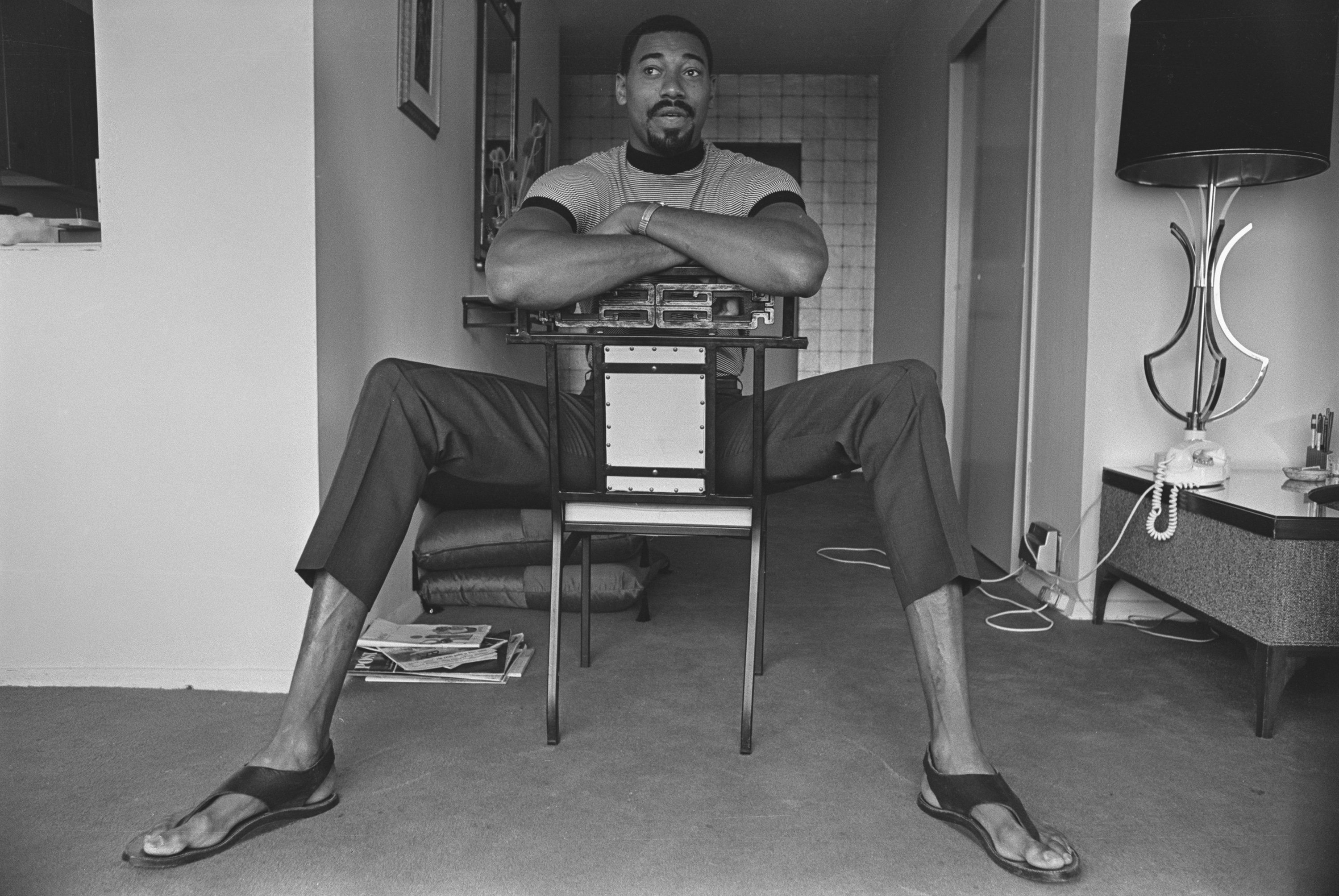
    Chamberlain’s Manhattan apartment was on the top floor of Park West Village, then a ritzy high-rise near Central Park. The apartment had a terrace and windows that overlooked the park with a view downtown of the Empire State Building.

    Kareem Abdul-Jabbar — who hung there as a high schooler still named Lew Alcindor — described the apartment as “the ultimate bachelor pad.”

    “A two-bedroom place done up in antique gold finish with a big couch in the living room, paintings on the walls, good stereo, great record collection,” Abdul-Jabbar wrote in his autobiography Giant Steps. “Wilt was known for his expensive taste, and the place showed it. I walked in and I clammed right up tight. I didn’t know what cool was, but I knew very strongly that I didn’t want to be uncool.”

    Abdul-Jabbar played “Dirty Hearts” at Chamberlain’s dining room table with Chamberlain, Hoover, and Cal Ramsey. Chamberlain’s crew used to close Smalls at 4 a.m. and then play cards at the apartment. Abdul-Jabbar called them “hearts junkies.”

    They ate sandwiches and swapped stories: What did Bill Russell say? What was Elgin Baylor complaining about? What’s up with Oscar Robertson? The loser of the card game had to chug a quart of water.

    “But he would never drink,” Hoover said. “So it was like a wrestling match with that big guy.”

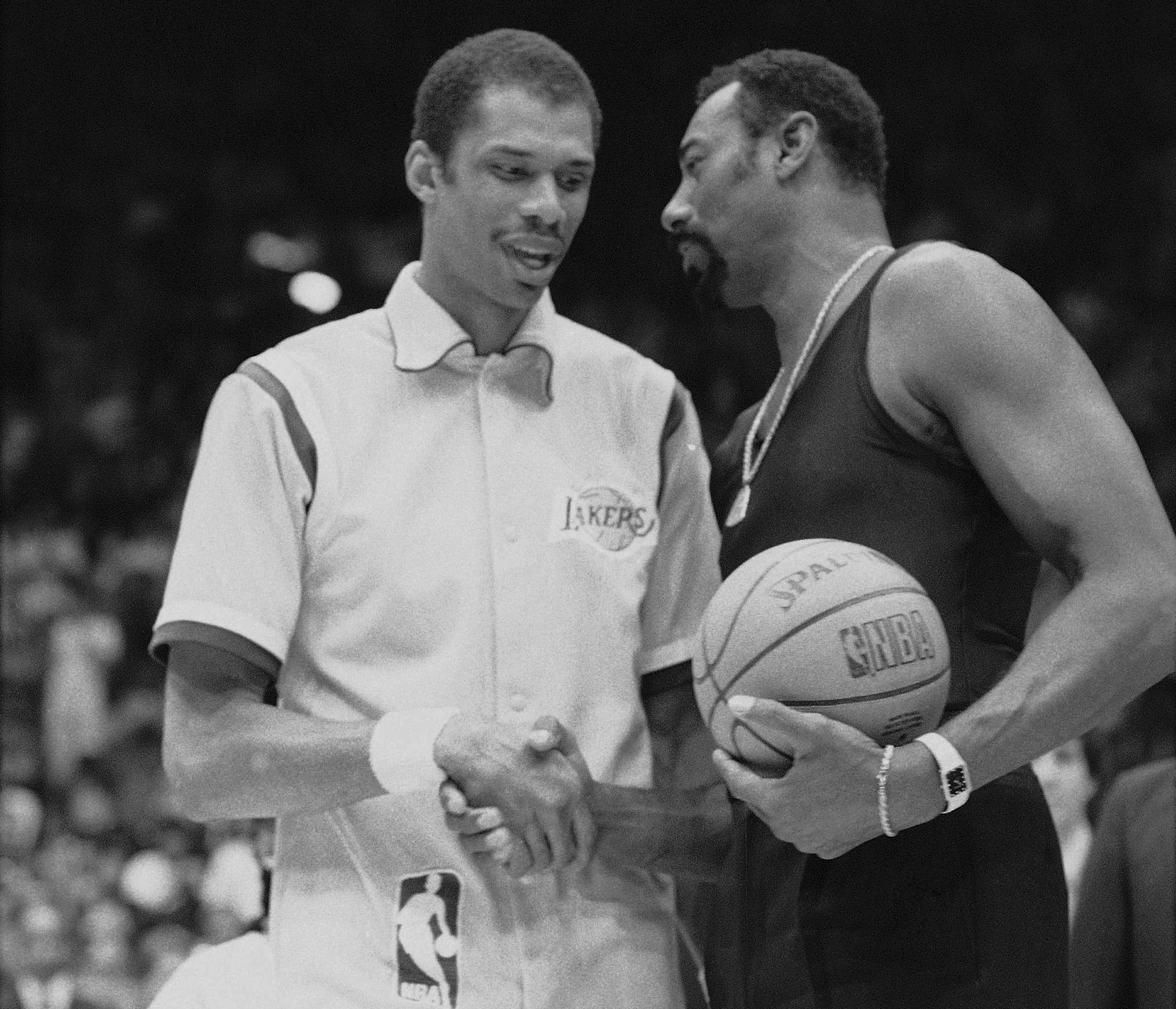
    Kareem Abdul-Jabbar (left) is congratulated by Wilt Chamberlain in 1984 after Abdul-Jabbar passed Chamberlain’s NBA all-time scoring record. LeBron James has since passed Abdul-Jabbar’s record.Mark Avery

    Living in Elkins Park

    The Sixers traded for Chamberlain in February 1965, bringing him back to Philadelphia after the Warriors had moved three years earlier to San Francisco. There were a few weeks left in the regular season, and Sixers owner Ike Richman didn’t want Chamberlain spending nights in New York.

    “He had a driver who he used to pay to take him up to New York,” said Richman’s son, David. “My father used to pay him under the table to not drive him to New York.”

    Richman instructed Chamberlain to live at his home in Elkins Park for the rest of the season.

    “I came home from Cheltenham High School and my mother, with our domestic helper, was putting my twin beds together and doing all this stuff to my room,” Michael Richman said. “I said, ‘What are you doing?’ She said, ‘Wilt’s moving in. Daddy’s making him.’”

    Chamberlain shot baskets in Richman’s driveway, hung out with the kids, and ate dinner with the family. Richman and Chamberlain usually drove together to Convention Hall, but once Richman had to be there early for a playoff game against Cincinnati. So he asked David — who had just earned his driver’s license — to drive Chamberlain.

    The 16-year-old usually drove a 1959 Austin-Healey Sprite, but that wouldn’t be big enough for Chamberlain. Neither would the Pontiac Tempest. So the teenager drove his dad’s Cadillac.

    “He used to sit in the back seat of the car and hang his body over the front seat,” Richman said. “It was like having a cobra in the car. He was in the back, but his head and body was in the front seat.”

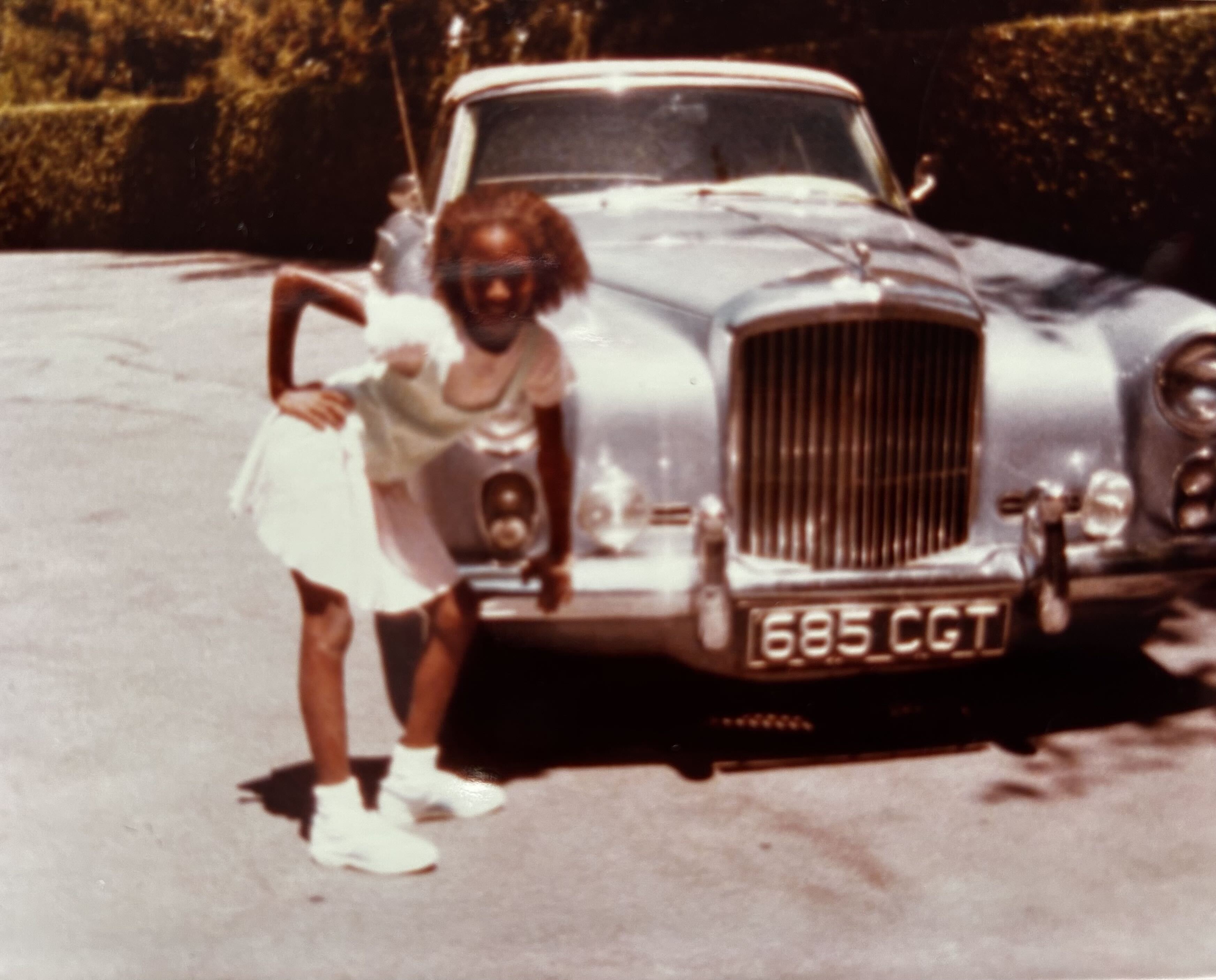
    Gloria Miller as a child standing in front of Wilt Chamberlain’s powder blue Bentley.Gloria Miller

    The season ended that April when the Sixers lost to Boston in seven games. Chamberlain shared an apartment the next season with Miller on the Benjamin Franklin Parkway but spent most of his time in New York. He often commuted by train or driving to Philly with Miller in a powder blue Bentley that was delivered to his Manhattan apartment.

    The press ripped Chamberlain every time he missed a practice and chided him for living in another city. He once shoved a reporter into a locker after the writer kept asking him after a playoff defeat — in which Chamberlain scored 46 points — if he would have made more free throws had he not missed practice that week.

    “He wasn’t kidding when he played. He really meant it,” said Richman. “Whether he was going up to New York to party or whatever, when it came to game time, he was never half-hearted about it. He was really into it. When it was time to play ball, this wasn’t a game to him. It was a war.”

    Family in Philly

    Chamberlain drove after each season to Los Angeles, where he had built a beautiful house off Mulholland Drive in Bel Air.

    “He used to jump in his Bentley and drive for three days straight without stopping,” Richman said. “He didn’t need to sleep. Then he would get there. He was basically an insomniac.”

    The powder blue Bentley was there in the 1970s when the Millers — who lived in South Jersey — visited Chamberlain.

    “He called my father ‘Miller’ so he would call me ‘Little Miller’,” said Miller, whose father worked as a scout for the Sixers. “My mom was going to make dinner so we had to go to the store. He said, ‘Come on, Little Miller. Come to the store with me.’ I was getting my shoes on and he had no patience. He said, ‘You don’t need shoes. Come on.’ We got in the Bentley and we’re riding down the freeway and I’m like, ‘Why are they all looking at us?’ I didn’t realize I’m in a beautiful Bentley with Wilt Chamberlain. But it fit him.”

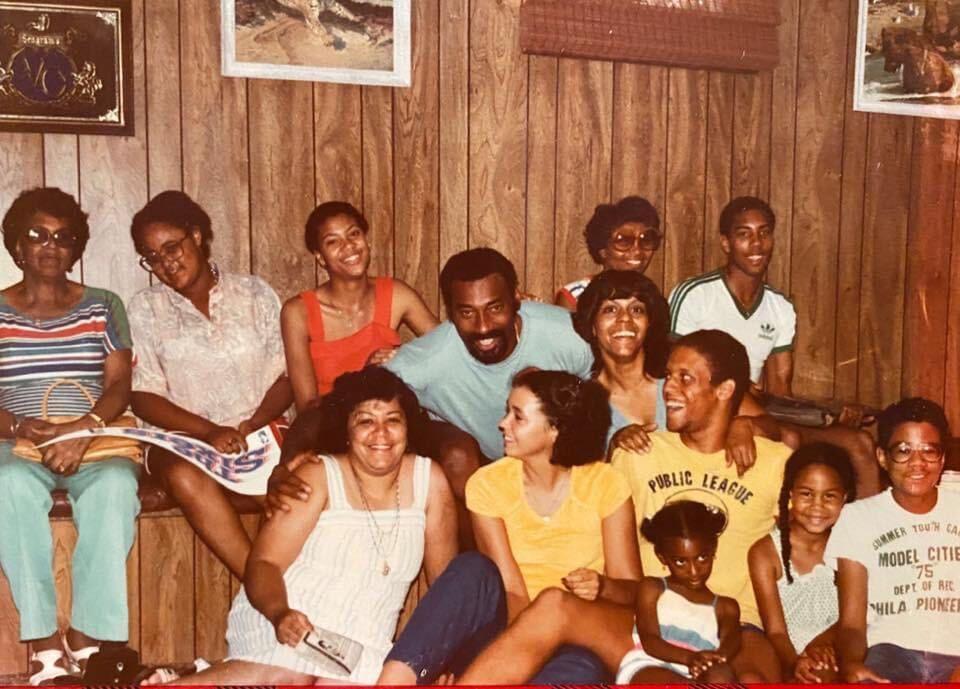
    Chamberlain retired in 1973 and spent most of his time in L.A. but still kept close ties to Philly. He was the best man in Miller’s wedding and became Gloria Miller’s godfather. The basketball icon kept a tight circle of friends from his childhood. Chamberlain, just like when he lived in New York, was always close to Philadelphia.

    “He was family,” Miller said. “He never forgot where he came from. Whenever Wilt came to town, he would come to my parents’ house and my mother would make him fried chicken and cobbler. Wilt and I would pick up the cobbler pieces together. It was just home. It was family.”

    Wilt Chamberlain visiting the Miller family in Philadelphia in the 1970s.Gloria Miller

    Hoover said he never thought much about Chamberlain living in New York while playing in Philly. The 7-footer belonged in the big city. And Hoover wouldn’t blame James for thinking the same.

    Hoover met Chamberlain when he was playing a summer game in New York — “Wilt Chamberlain knows my name,” Hoover thought after Chamberlain watched him play — and they soon became friends. Chamberlain dropped him off at his dorm and sped to New York. Hoover said no one even noticed the basketball superstar dropping off the college kid. It was normal.

    “Nobody saw me. It wasn’t necessary,” Hoover said. “The key to having relationships with guys is just having relationships. Not taking pictures, getting autographs, and jumping out saying, ‘Look who I’m with.’ That kind of thing makes you have lasting relationships with guys. If you’re always in front and always going to be out front with them, then that relationship is not going to last at all.”

  • Chase Utley’s path to the Phillies Wall of Fame was forged with hours in the video room

    Chase Utley’s path to the Phillies Wall of Fame was forged with hours in the video room

    The game was finished and the Phillies had a flight to catch as Kevin Camiscioli hurried to unhook the computer monitors and video equipment in the visiting clubhouse.

    But Chase Utley — “Nobody spent more time in that video room than Chase,” Pat Burrell said — wasn’t finished yet.

    Forget that the game was over. Utley had more tape to dissect. He replayed each at-bat like it was the Zapruder film. So Camiscioli, then the team’s director of video, gave his workstation to Utley and packed up everything else.

    “But then I pulled the wrong power cord, and it was the main power cord,” Camiscioli said. “As soon as I pulled it out, I could hear the power supplies click. They lost power.”

    Camiscioli stood up and locked eyes with Utley.

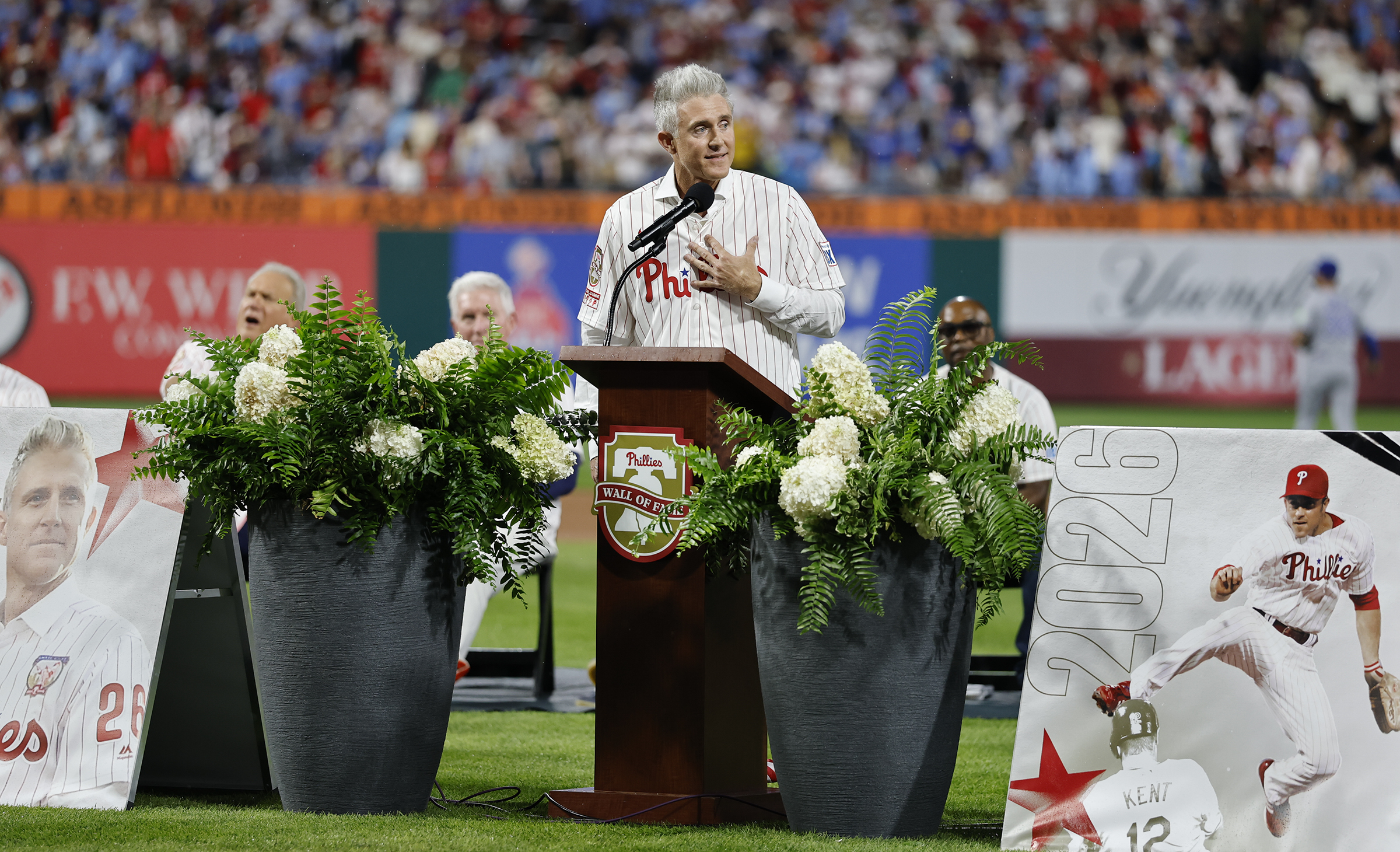
    Utley spent hours before — and even after — games in the video room trying to find any advantage he could. He was obsessed, Utley said. And it’s that work ethic that he credits for the iconic career that landed him Friday night on the Wall of Fame at Citizens Bank Park and soon could take him to Cooperstown, N.Y.

    But when Utley’s computer unplugged, Camiscioli held his breath.

    “I said, ‘Man, I’m sorry,’” Camiscioli said. “He starts walking to me. I’m like, ‘Here we go.’ He looks at me and goes, ‘That’s OK.’ Phew. Bullet dodged.”

    Earning Philly’s respect

    Utley debuted in April 2003 as a pinch-hitter for the final home opener at Veterans Stadium. But he didn’t really arrive until later that month when the Phillies recalled him from triple A.

    The Scranton Wilkes-Barre bus pulled over and Utley waited at a Subway until a ride arrived to bring him to Philadelphia. A day later, he hit a grand slam for his first big-league hit and sprinted around the bases as if he was being chased. From then on, his connection with Philadelphia was unrivaled.

    Jimmy Rollins (left), Chase Utley, and Ryan Howard were part of the Phillies’ core that won the 2008 World Series.YONG KIM / File Photograph

    “I get asked all the time, ‘What was it like to play in Philly?” Utley said. “The truth is you don’t just play in Philly. You survive it. You earn it. And, if you’re lucky, you grow from it. To me, this city is about passion. It’s about emotion. It’s about toughness. But most of all, it’s about winning. For 13 years, I tried to play the game that this city expects us to play: hard, honest, no shortcuts, no excuses. You let me know every night whether I was doing my job. That’s what I love most about this city. In Philadelphia, you don’t get respect. You have to earn respect.”

    Fans roared on Friday when Utley walked onto the field and interrupted his Wall of Fame speech with ovations and catcalls.

    “I love you, too,” Utley responded to a screaming fan.

    Philadelphia has fallen for athletes: Wilt, Bednarik, Dr. J, Iverson, Schmidt, Clarkie, and so on. But there’s an argument to be made that no one won over Philly like Utley.

    “I adore this town,” Utley said. “We had such amazing moments over the years and created so many memories together. Winning the World Series was No. 1, but there were so many other great times together. They supported me essentially from Day 1. I had to earn their respect, and I felt like I did a good job of that. I’m as much obsessed with the fans as they seem to be with me.”

    He grew up in Southern California but was made for South Philly. He played with a scowl and let his game do the talking. He was The Man and always arrived first at the ballpark and was last to leave.

    Utley would go to the trainer’s room before checking in with Camiscioli to watch video. Then he ate a peanut butter and jelly sandwich, hit the weight room, and took batting practice. He grabbed a sweet potato and watched more video before the game began. It was the same thing every day. Even the food didn’t change.

    “He just had that look in his eye,” Camiscioli said. “You got the heck out of the way. You knew when to talk and when not to talk. Just because you knew he was in the zone. You knew. Roy Halladay had that look, too. When it got to a certain time before the game, he would walk from Point A to Point B with determination. There was more speed than regular. A 7 o’clock game, he’s basically suited up to the cleats by 6 ready to go.”

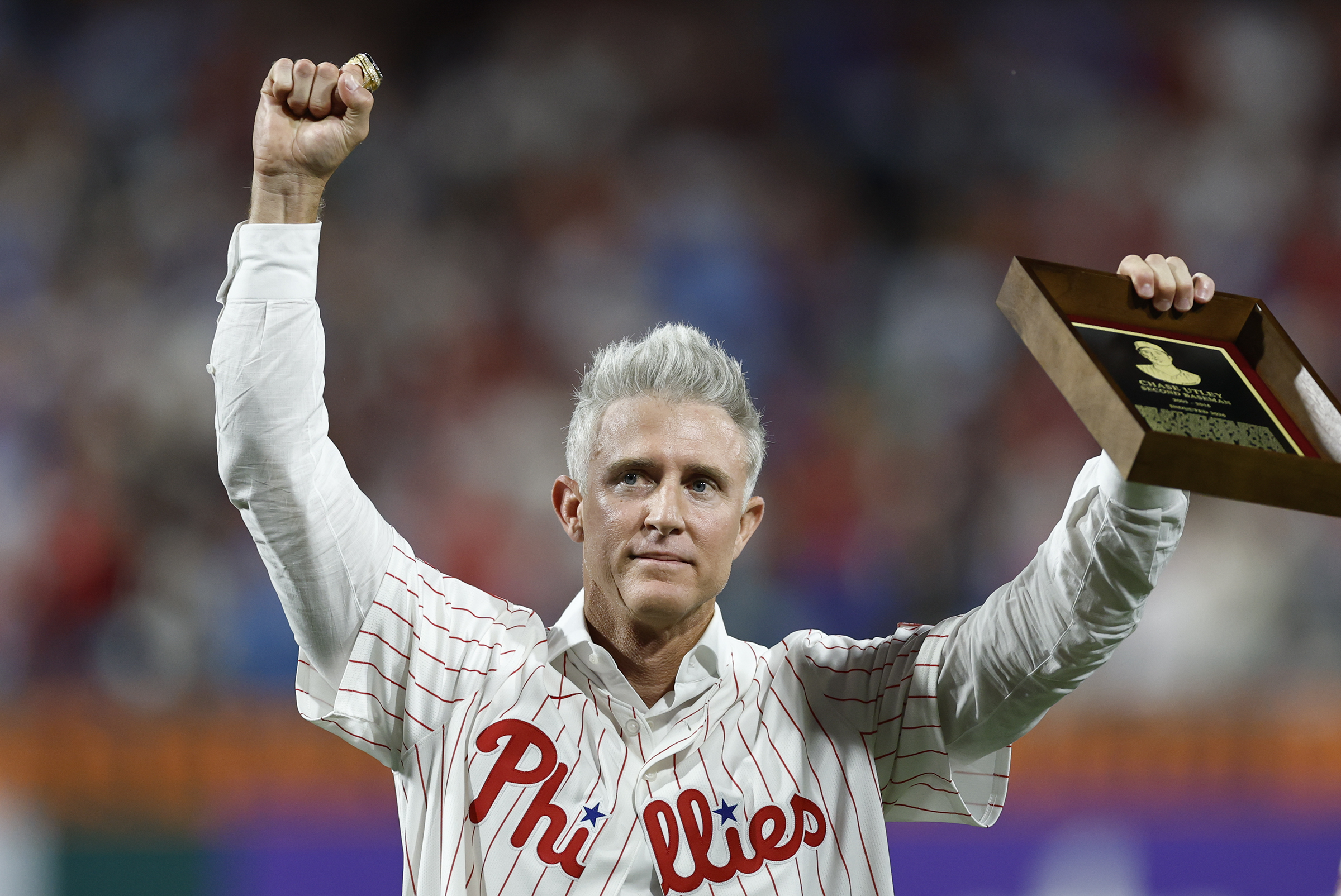
    Chase Utley thanks Phillies fans while getting inducted into the Phillies Wall of Fame on Friday.Yong Kim / Staff Photographer

    ‘What could he be looking at?’

    Utley sat for more than an hour in the afternoon before a game studying every opposing pitcher. The video guys eventually knew what Utley wanted to see so they queued up clips of the other teams’ pitchers in every situation possible and watched Utley go to work.

    “He’d call you over sometimes after he was sitting there for three hours and he’d be like, ‘I don’t know if my eyes are going cross, but is this what I’m seeing?” Camiscioli said. “Some guys go to the clubhouse and they play cards. Some guys do nothing. Some guys play ping-pong. Chase watched video. That’s what he did. I’m surprised he doesn’t need glasses from staring at the monitors so much.”

    Other players soon filtered in, sitting with Utley as if he was a professor teaching a class. He shared the tidbits he gleaned from video — like the opposing pitcher always throws a fastball if he starts with his glove by his belt — and hoped he gave his teammates an advantage before the game started.

    “I wanted to be as prepared as I possibly could,” Utley said. “I felt like the more video I watched, the more information I could gather, the better suited I was to compete on a nightly basis. There were some days when it didn’t tell much, but there were plenty of days where I felt like I benefited greatly from the preparation I put in, my teammates also. Nowadays, the game has changed, and there’s plenty of people watching video. Back then, it wasn’t quite the same. I wanted to be as prepared as possible.”

    The video room is just a few feet from the dugout at Citizens Bank Park, and Utley would stop back after each at-bat, when players were still allowed to watch video during games. He used two monitors to compare what he saw before the game to what actually happened during the game and then leave the monitors up for teammates to check out. Class was always in session.

    “He was very generous with his knowledge,” Camiscioli said. “I never really saw him force himself onto anybody, but eventually people knew and figured it out. Ut had a routine. He was in the video room all the time. There were so many times where it would be like, ‘Oh my God. What could he be looking at?’ But then you started to notice guys filtering in and hovering around him. His preparation was just off the chart.”

    It was one thing to pick apart pitchers during a regular-season game, but Utley requested the same footage when he was selected to the All-Star Game. Camiscioli, who worked for the Phillies from 1996 to 2021, loaded an iPad before the All-Star break with clips of the American League pitchers. For Utley, nothing was an exhibition.

    “All-Star Game? He wanted to hit,” Camiscioli said. “You know how the All-Star Game is. It’s a fun time. He wanted to rake. It was business as usual.”

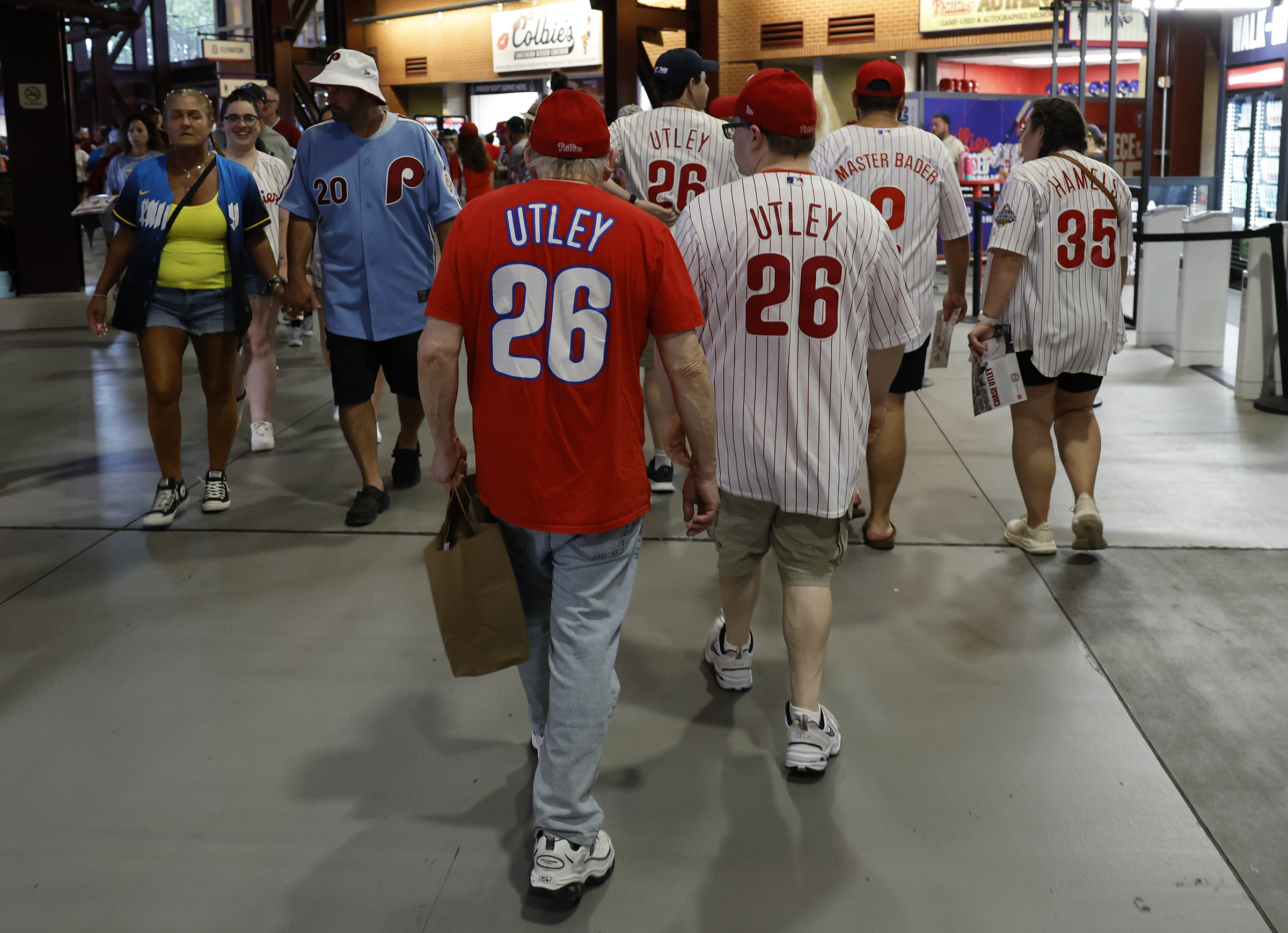
    Phillies fans walk the Citizens Bank Park concourse with Chase Utley jerseys on.Yong Kim / Staff Photographer

    A sense of pride

    It didn’t take long for Utley to tell Camiscioli and his staff to just give him some basic instructions on the computer so he could move through his film without help. That’s who he was, Camiscioli said. Utley didn’t want to bother anyone else.

    “He was great to us,” Camiscioli said. “He respected us and appreciated us. It wasn’t, ‘Oh, you’re just staff.’ In return, everyone wanted to run through a freakin’ wall for him. To this day, I still would.”

    So it meant something that Utley invited Camiscioli and other staff members from his playing days to be at his induction on Friday night. Jimmy Rollins, Ryan Howard, and Cole Hamels were there. But so was Camiscioli and other behind-the-scenes folk who helped Utley become The Man. They loved him, Camiscioli said. Even if he made packing up the equipment a little bit complicated.

    “For me and the guys who worked with me, it was a sense of pride,” Camiscioli said. “We were proud that we could be a part of it. He treated us with respect. You know, that doesn’t always happen. He was really good to us.”

  • Being a Phillies fan and having an insane jersey collection helped Will Yip win a Grammy award

    Being a Phillies fan and having an insane jersey collection helped Will Yip win a Grammy award

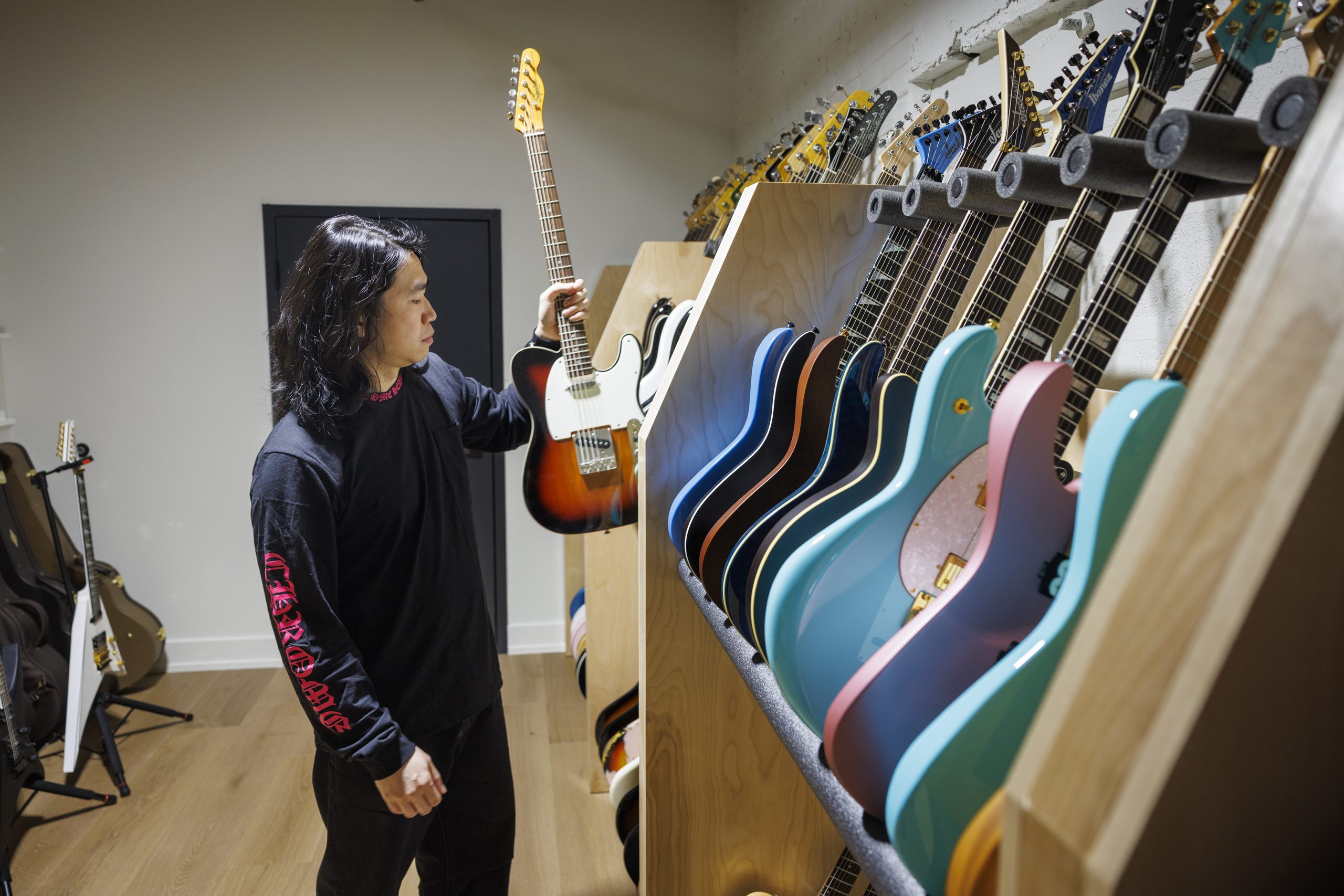
    There’s a piano in every studio, a room full of guitars, and a mixing console shipped from Los Angeles that was used to record some of hip-hop’s iconic albums. Everything an artist needs, Will Yip said, is waiting for them in his South Philadelphia music studio.

    But perhaps the most important thing is the TV in the lobby that Yip — a Northeast Philly native who won a Grammy earlier this year — flips on each night to catch the Phillies.

    The 39-year-old works with some of the biggest acts in rock, continuing a career that started as a teenager volunteering at a Mayfair studio. Music has consumed him ever since he was a kid when he heard his brother listening to Dr. Dre and Nirvana.

    He arrives at Memory Music Studios — the spot he opened in December at Swanson and Wolf Streets — each morning and does not leave until late at night. Artists send him ideas or ask for edits at odd hours. It’s a great gig, but a record producer does not clock out.

    So that’s why Yip steps outside the studio every night and puts the Phillies on that TV in the lobby.

    “When 6:40 comes around, I can check in on the game. Every game,” Yip said. “It’s my comfort zone and something I can count on every day. When they’re off on a Monday or Thursday, I’m like, ‘Damn.’ It kills me. It crushes me. Especially when they’re good.

    “If anything, it has helped my music career. I think if all I was doing was music and didn’t have that time to step away a little each day, I think I’d lose my mind. This way, I can refocus and watch the game and come back and say, ‘This song rocks.’ Everyone needs something, a little balance, another place to put their energy in. Three hours a day, I’m forever grateful for the Phillies.”

    William Yip at his recording studio in Philadelphia this summer.Tyger Williams / Staff Photographer

    For so many, a game is the reward at the end of a day. The Phils are a conversation starter with a stranger, background noise in the car, and even on the TV at the recording studio. Fandom is what brings people together, Yip said. And it’s that fandom that helped him win that Grammy.

    “The Phillies changed my life,” Yip said. “I think if I didn’t have the Phillies, I probably would’ve lost my mind on music. I need it. You can ask my wife. I need something to take my mind off music. If I didn’t have sports, I think I would get too consumed with music. I’m always stressing about music, so to be able to take a step back is huge.”

    The Phillies felt cool again to the Yip brothers when Chase Utley arrived.(Michael Bryant / Staff Photographer)

    Chase brings them back

    Yip remembers how excited his older brother, Wilfred, was to open a pack of cards in the summer of 1993 and find Darren Daulton. The younger brother was hooked. And then Joe Carter hit that homer.

    “That stuck with me,” said Yip, who was 6 years old that October.

    The Phils bonded Yip with his brother, who is four years older than him. But that connection felt thinner in the early 2000s when the Phillies were in a rut and his brother left for college. Yip, then a teenager, checked out of sports after becoming immersed into music. That was his life.

    Then Chase Utley arrived. The Phillies felt cool again. And the Yip brothers had something to share.

    They went to Utley’s bobblehead night in 2006, and the crowd was electric. His sabbatical from the Phillies was necessary, as Yip started his path to that Grammy during those few seasons he missed. But he needed to be a fan again. He needed something else.

    Yip worked with Lauryn Hill, sat Prince next to his wife at a concert, and met Jay-Z and Beyoncé. But it’s only the Phils who leave him starstruck.

    “If it’s a Phillie, I lose my s—,” Yip said. “I lose my mind. If John Mayberry Jr. walked in the door right now, I’d go ‘Holy s—! That’s John Mayberry Jr.’ I always tell my buddies that my dream in life is to become friends with Chase Utley and Bryce Harper. That’s my dream. Forget the Grammy. That’s the absolute dream. Chop it up with Chase one day.”

    Will Yip (left) and Mark Hoppus from the band Blink-182 watch a Phillies game at Citizens Bank Park on July 22.Elizabeth Robertson / Staff Photographer

    The Yip brothers have shared season tickets to the Eagles for 10 years, and Yip said the Birds have never lost when the brothers are in the Linc together. If there’s a big game, Wilfred texts his little brother that “they need us today.” The brothers go, and the Eagles win.

    “That didn’t work with the Phillies,” Yip said. “In 2023 with the Diamondbacks, it was Game 7 [of the NLCS], and my brother goes, ‘They need us.’ I said, ‘I’m not sure that works with the Phillies.’ We went, and it didn’t work. But at least we shared it together.”

    Maybe it would have been easier for Yip to check out after Carter’s homer. That was enough heartbreak. But Yip, just like everyone else, kept coming back. He stepped away as a teenager but returned to the thing that crushed him when he was in elementary school at John Hancock. Why?

    “There’s always hope,” Yip said. “I think hope and dreams keep us alive. It’s the journey that keeps us alive. If we all accomplished our dreams right now, what would tomorrow even mean? It’s the hope of ‘Man, we can do it.’ That means so much. Without hope, humans don’t exist. I learned that as a sports fan. ‘This could be the year.’

    “But for Philly sports, if we don’t have sports, what do we have? Sports is what ties our community together. Purely culture in terms of art, food, music, sports — and this is coming from a guy who works in music — sports is the most important thing to the city of Philadelphia. It just is. It ties everyone together. There’s no concert that you’ll ever put together or meal you’ll ever put out there that will get 2.1 million people walking Broad Street like that parade did.”

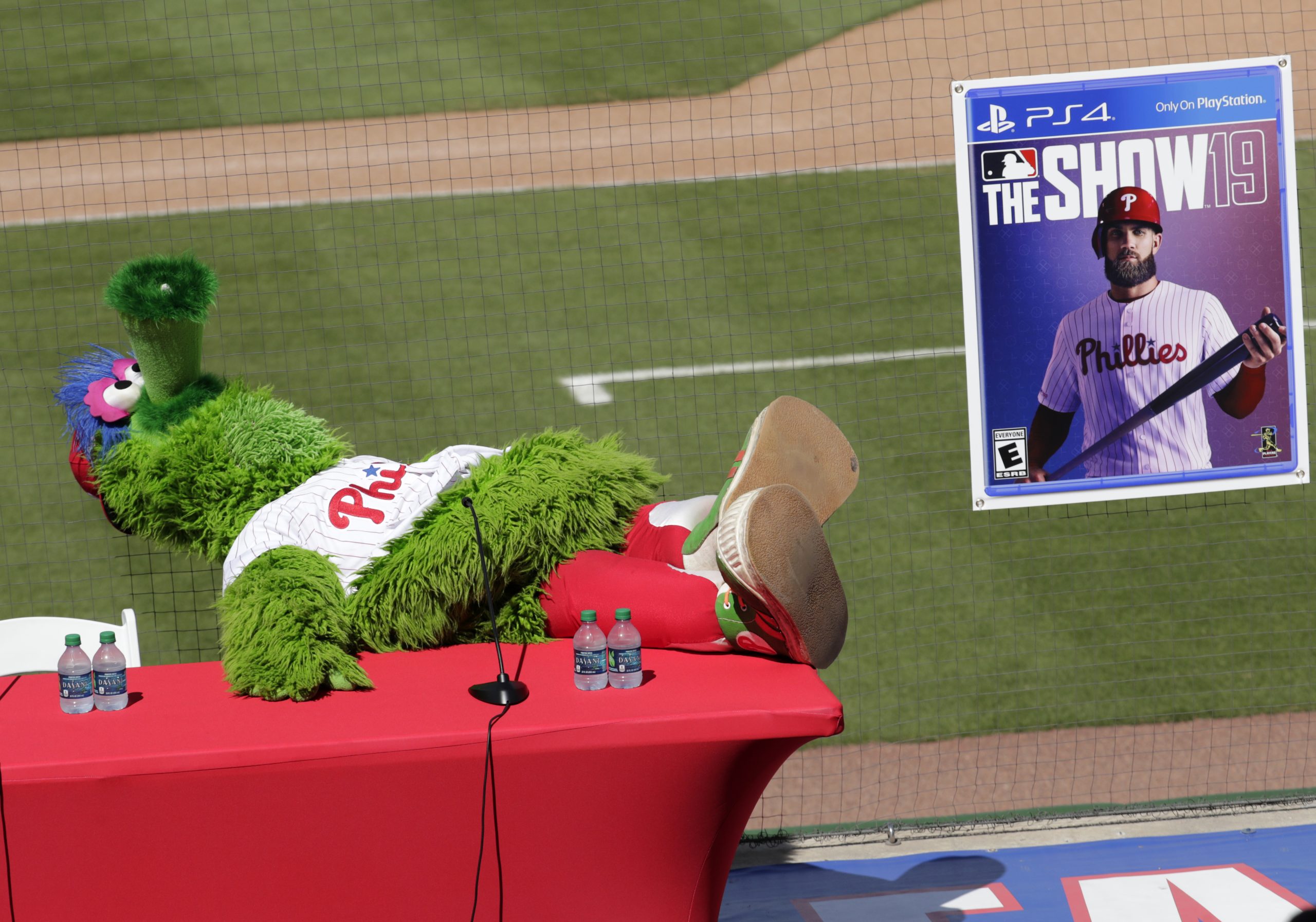
    Among Will Yip’s collection of Phillies memorabilia: This cover for “MLB The Show ’19” that hung behind Bryce Harper during his introductory news conference in 2019.Lynne Sladky

    The thrill of the hunt

    There was something about holding the game-used Utley bat that his wife, Christina, bought him for Christmas in 2010. It was like owning a piece of history. Yip needed more.

    “I went down this rabbit hole,” Yip said. “I had to see what else was out there.”

    He scoured eBay, joined Facebook groups, and logged onto auction house websites. Yip became a part of what he calls an “underground market” of people who become friends as they help each other find game-used Phillies memorabilia. The search became a thrill as he spent an hour every night browsing for new things to add or became friends with other fans who were searching for others. It was another way to step back from the music he was creating.

    He has 100s of jerseys that he keeps in storage and has lost track of how much money he’s spent over the years.

    Yip has the last jersey Roy Halladay pitched in and the final uniform Ryan Howard wore. He bought the batting helmet Cole Hamels used when he hit a home run and the first bat Aaron Nola swung. He has World Series jerseys worn by Utley, Jimmy Rollins, and Harper and a bunch of game-used Rollins bats. He has a glove used by Utley — which is rare, since fielders use the same glove for years — and the video game cover that hung behind Harper at his introductory news conference in 2019.

    Will Yip has the jersey Ryan Howard wore here during his last game as a Phillie in 2016.DAVID MAIALETTI / Staff Photographer

    Not every purchase has been a great investment. Yip is a fan, so he dreamed on the same players everyone else did. He collected Cody Asche, Darin Ruf, and Domonic Brown jerseys. He bought six of Scott Kingery’s tops and spent too much on Maikel Franco.

    “My wife probably wanted to kill me when I got a lot of that stuff,” Yip said. “We were looking for the next guy. You can’t hit on them all. But the ones that hit, hit.”

    The attraction to collecting was the ability to own pieces of history, something that never felt tangible for the child of immigrants who grew up in a rowhouse near Frankford Avenue and Knights Road. Yip used to stay up until his dad came home from waiting tables at the restaurant he owned so they could watch the Sixers game he taped that night on VHS.

    Now he has a closet full of artifacts. No, he does not wear any of it.

    “You don’t do that,” Yip said. “You can’t wear that. I’ve never worn one. I’ve swung a bat though. You can feel the power of Chase.”

    Will Yip in the guitar room of his Memory Music Studios in South Philadelphia.Alejandro A. Alvarez / Staff Photographer

    ‘Winning our ’chip’

    Yip was at the Grammy Awards in February, but he was thinking like he was in the stands in South Philly as his chances to win started to dim. Turnstile, the band Yip produced, fell to Yungblud for Best Rock Performance and Trent Reznor of Nine Inch Nails for Best Rock Song.

    Yip started thinking like a bummed fan late in the game: He talked himself into accepting a loss for Best Rock Album.

    “We were like, ‘Hold up. We’re not supposed to be here,’” Yip said. “‘It’s all good. This isn’t built for us. We make punk music, man. We’re lucky to be here.’ I came to terms after the first two that we weren’t going to win the Best Rock Album, which is the one that I really wanted.”

    And then Turnstile won. Yip’s wife started crying. It was all so surreal, like that walk-off you saw only because you refused to leave the game early, even though you didn’t think the Phils would come back.

    “It was winning our ’chip,” Yip said. “It was hard work, but it doesn’t make me who I am. A statue is never going to make you who you are. But it does make me appreciate the appreciation from other people. They acknowledged our hard work. We don’t need a Grammy to validate who we are, but it was a win that we touched so many people. That’ll be the closest thing I’ll feel to winning a World Series.”

    Will Yip (left), with Mark Hoppus, says the Phillies are “the best distraction, the best getaway,” from his music career.Elizabeth Robertson / Staff Photographer

    His family was back home, and his mom told him that his brother cheered louder than he did when the Eagles won the Super Bowl. The brothers watched that game together just like they did when the Phillies won it all in 2008.

    They watched the Phils win at Wilfred’s apartment in Gulph Mills and drove back to the Northeast to celebrate at Cottman and Frankford. The brothers stopped at a Wawa as they cut through the city and a man stopped Yip as he walked in.

    “If you looked at us, we couldn’t look more different,” Yip said. “He daps me up, gives me a hug outside this North Philly Wawa, and says, ‘We did it, man.’ Me and this guy will probably never see each other again. We’re from completely different neighborhoods, but ‘We did it.’ And that’s what Philly sports is. I’ll never forget that.”

    The Phillies were the common bond outside that Wawa, providing a connection between two strangers. The hope that Yip clung to for all those seasons finally paid off. And now the Phils provide a distraction when he turns the music down and takes a brief break from his own dream.

    “That is why I lean in on the Phillies so hard and connect with them so hard. It’s the best distraction, the best getaway,” Yip said. “It’s always there. It’s definitely helped my career because it just gives me a reset and a focus. We care so much about sports because of that distraction, that extra thing that connects us all no matter who it is. We can all get together and talk about last night’s game. What else does that? I don’t think anything.”

  • Joe Girardi enjoys broadcasting, but he’d like to manage again. He’ll get a chance next month in Philly.

    Joe Girardi enjoys broadcasting, but he’d like to manage again. He’ll get a chance next month in Philly.

    Joe Girardi was driving earlier this month when he spotted a youth baseball game near his home in New York. He had to stop. Girardi, the former Phillies manager, stood in the outfield and watched the group of 7- and 8-year-olds.

    “I was a little worried about the kids,” Girardi said. “Because I coached my son when he was in coach pitch and the thing I hated to hear the most was the ice cream truck. Because I knew at that point that I lost him. The ice cream truck was there and I was a little worried about these kids, but they only had a half inning to go and they got through it.”

    It’s been more than four years since Girardi last managed in the majors, but the 61-year-old has yet to leave the game. He works as a TV commentator for Yankees broadcasts, was in the booth Sunday for the Yankees-Phillies game, and is sometimes the guy in the outfield hoping no one hears the ice cream truck.

    He’s open to managing again, a job he did for 14 seasons. He won a World Series in 2009 with the Yankees against the Phils, was the National League Manager of the Year in 2006 with the Marlins, and guided the Phillies for two-plus seasons before being fired early in the 2022 season.

    “If I had an opportunity, I would love to listen to that,” Girardi said. “But I’m happy with what I’m doing, and if I never get an opportunity, I’m OK with that.”

    Next month, Girardi will return to the dugout in South Philly to manage a team in the Perfect Game All-American Classic on Aug. 16 at Citizens Bank Park. The annual showcase brings together the country’s 60 best high school seniors, many of whom will be drafted next summer. Girardi will manage in his old ballpark.

    Joe Girardi will be back in his old ballpark, Citizens Bank Park, on Aug. 16 managing in the Perfect Game All-American Classic.ELIZABETH ROBERTSON / Staff Photographer

    “This is a thrill for me,” Girardi said. “This is a celebration of what they’ve accomplished so far, but it’s just the surface of what they can accomplish. I’m excited to see it because I’m amazed at the young talent that’s out there right now and how good these young players are and how physical they are.

    “I’m excited to see this game and just be a part of it. These kids dream about playing in the big leagues, and you’ll have a lot of first- and second-round picks from this game in 2027. They’re a lot closer than they think. It will be enjoyable for me one day to say, ‘Oh, I managed that kid four years ago and now he’s in the big leagues.’ That’s exciting for me.”

    No regrets

    Girardi’s broadcasting work reminds him of the one thing he does not miss about managing a big-league club.

    “We got to the hotel here in Chicago at 2:15 a.m., and I don’t miss that,” Girardi said Monday before calling that night’s Yankees-White Sox game.

    He approaches his TV work with the same detail he brought to the dugout. He was armed Sunday night with stats and data to support his analysis during the Phillies-Yankees game on NBC, sounding a lot like the manager who came prepared to afternoon sessions with reporters.

    “I enjoy studying the other team and how to beat them,” Girardi said. “That’s what I love. I watch a ton of games. I watch the home broadcasts so I watched the Phillies for a week and picked up little things about their club and what’s going on. I just feel like that’s the best way to scout. And I dig into the numbers heavily. That’s what I love about it.”

    The Phillies missed the postseason on the season’s final day in Girardi’s first year, a 60-game season in 2020 without fans that was delayed after the pandemic halted spring training. Girardi was hired because of his pedigree with the Yankees and wonders if things would have been different in Philly under normal circumstances.

    “Yes, I do,” Girardi said. “Just that everything was so closed down and I felt like we couldn’t be people. We weren’t supposed to slap high fives with guys if they scored or hit a home run. I remember the time that Miami got sick and they were at our ballpark and we had to shut down for a few days. I drove into the parking lot and they handed me the thing to spit in. A guy in a Hazmat suit. Then I drove around after I spit and gave it to another guy out the driver side window. I was like ‘This is the life we’re living.’ It was just so strange.”

    “I don’t look back with any regrets. I enjoyed my time in Philadelphia.”

    A masked Joe Girardi greets then-Marlins manager Don Mattingly in their season opener for the 2020 season that was reduced to 60 games because of the COVID pandemic.CHARLES FOX / Staff Photographer

    The Phillies fell short again in 2021, and Girardi was fired in June 2022 after a slow start. Rob Thomson, Girardi’s bench coach, took over and guided the Phillies to the World Series. The Phillies fired Thomson in April and replaced him with Don Mattingly. He seemed to have the same touch as Thomson four years ago as the Phils inched toward first place before stumbling the last few weeks. Girardi knows how it feels to be the guy at home watching your team win without you.

    “I felt bad for him,” Girardi said. “It’s hard because I know how much Rob put into it. They got off to a slow start and were playing two teams who were extremely hot in the Cubs and the Braves, and he got let go. I feel really bad for him.

    “It’s hard to just be let go. Because you give up so much to manage. You’re rewarded handsomely as a manager, but you give up a lot of family things and you dedicate yourself to the team, and I always felt a huge responsibility for everyone because if we didn’t do well, it affected a lot of people. It wasn’t just me. It could affect my coaches, the front office, other people. It’s just hard to be let go because you put your heart and soul into it.”

    Full circle

    Girardi was between managing jobs when he spent the summer of 2018 coaching his son’s youth baseball team. He drove his SUV to Perfect Game tournaments across Florida and up to Georgia while his son Dante folded the back seats to make a bed.

    “I was driving and he was sleeping,” Girardi said. “It was so enjoyable for me because my favorite thing in the game of baseball is to see people have success, and I got the chance to do that. With these Top 60 players, these kids have had a lot of success. And I want to see them have some more.”

    Girardi had already won a World Series as a player and a manager by then, but he learned something that summer managing teenagers.

    “It was a term that I never heard before,” Girardi said. “Our manager said ‘We have a P.O. coming in.’ I’m going ‘What’s a P.O.?’ For us, that meant something different, right? But it meant ‘Pitcher only.’ They would fly in, pitch a game, and leave. It was like Roger Clemens.”

    Dante Girardi, who played high school ball with Phillies pitcher Andrew Painter, will be on his dad’s coaching staff next month in Philly. It’s full circle, his dad said. The ice cream truck used to ruin his practice, and now they’ll be in the dugout together. And the Perfect Game All-American Game reminds Girardi of an All-Star Game for college summer-league players he played in at Veterans Stadium in the summer of 1984.

    Girardi’s Cape Cod League team shared the visiting clubhouse with the Cubs, who were in town to play the Phillies. The Cubs drafted Girardi two years later, and he reached the majors in 1989. His first manager was Don Zimmer, who he saw that day at the Vet. It all happened so fast.

    “The one thing I want these kids to realize is they’re not that far away,” Girardi said. “In a blink of an eye, you can be an All-Star in the Major League All-Star Game. This is fun for me.”

  • LeBron James and nine other stars who stunned Philly simply by coming here

    LeBron James and nine other stars who stunned Philly simply by coming here

    Jayson Werth was sleeping on his couch when Pat Gillick called him in the winter of 2006. Zack Wheeler is one of the best pitchers in baseball yet wasn’t the highest-paid pitcher in his free-agent class.

    If we’re talking about the best signings in Philadelphia sports history then Werth — a flier who became an essential piece of a great Phillies era — and Wheeler — an underpaid pitcher who should’ve won two Cy Young Awards — would have a case. But that’s not this list.

    These are the 10 players whose arrival to Philadelphia via trade or free agency made you stop in your tracks, text your group chats, and blast sports talk radio as if it was your favorite song. These are the acquisitions that felt like championships. Would anyone have been opposed if the Sixers dropped a banner last week that said “We Signed LeBron?”

    Here’s a list of 10 players (including LeBron James) who brought Philadelphia to a halt in the last 50 years simply by coming here.

    Honorable mentions: Jeremy Roenick, A.J. Brown, Trea Turner, Kyle Schwarber, Peter Forsberg, Ricky Watters, Paul Coffey, Lance Parrish.

    Saquon Barkley smiles while meeting with the local media during an introductory news conference in March 2024.Yong Kim / Staff Photographer

    10. Saquon Barkley, 2024

    It’s easy to forget now but this move was met by some with trepidation: Why did the Eagles pay for a running back? How much does Barkley have left? Those questions were soon dismissed and the fanfare around the trade only grew that summer when John Mara said he would lose sleep if Barkley was an Eagle. Then, Barkley scored three times against Green Bay to open a special season. There was never a reason to have angst.

    Jim Thome hit 89 home runs in his first two seasons with the Phillies.

    9. Jim Thome, 2002

    How important was it to land Jim Thome? Even Johnny Doc got involved. The Phillies were a season away from opening Citizens Bank Park and needed a big name to drum up interest in a franchise that hadn’t done much since 1993. Enter Thome. The Phillies blew him away with an offer that Cleveland could not match. The Phils were suddenly relevant again.

    Cliff Lee, being presented with his jersey during a news conference, had a 2.94 ERA in five seasons with the Phillies.Laurence Kesterson / Staff Photographer

    8. Cliff Lee, 2010

    The excitement felt two months earlier with the arrival of Roy Halladay was tempered by the accompanying trade of Lee to Seattle. Lee became a hero in October of 2009 when he casually dominated the Yankees in the World Series. In December, he was gone. And it was pure joy when the Phils operated in secret — they were the “Mystery Team” — and signed Lee late at night at the winter meetings. Lee’s return was doubly sweet when it was reported that he picked the Phils over a better offer from the Yankees. The Four Aces were assembled 12 days before Christmas and the Daily News headline the next morning nailed it: Merry Cliffmas.

    Terrell Owens is all smiles after a September 2004 Eagles win.JERRY LODRIGUSS / Staff Photographer

    7. Terrell Owens, 2004

    You knew Owens’ arrival was a big deal when they lit up “WE GOT T.O.” at the top of the PECO building, which then felt like the city’s way to celebrate big events. It took 12 days for the Eagles to land Owens, who had agreed to a deal with the Eagles before the 49ers traded him to Baltimore after his agent missed the deadline to void the final years of his contract and make him a free agent. A hearing was held at Penn where lawyers from the NFL and NFLPA argued if Owens should have been granted free agency. The parties agreed on a settlement: a three-way trade between the Eagles, 49ers, and Ravens that brought Owens to Philly. The team landed the piece they were missing after three straight losses in the NFC Championship Game. The party — remember his first preseason game? — was on.

    The Daily News on July 1, 1992 with the news that the Flyers won the rights to 19-year-old center Eric Lindros, completing a blockbuster deal with Quebec.

    6. Eric Lindros, 1992

    The Flyers agreed to a deal with the Quebec Nordiques for Lindros before the 1992 NHL draft. But so did the Rangers. Now what? An arbitrator ruled that the Flyers-Nordiques deal came first so Lindros — who refused to play for Quebec and skipped the previous NHL season — belonged to Philly. Fans still remember the name Larry Bertuzzi, who was the arbiter who ruled in the Flyers’ favor. Lindros was pegged as a generational player and the best talent to enter the NHL since Mario Lemieux. The Flyers were five years removed from their last trip to the Stanley Cup Finals and Philly was still very much a hockey town. The arrival of Lindros was huge.

    The Sixers and coach Billy Cunningham (left) rode to the championship in Moses Malone’s first season in Philly in 1982-83.(Philadelphia Daily News/George Reynolds)

    5. Moses Malone, 1982

    Who better to add after losing in the NBA Finals than the NBA MVP? That’s what happened to the Sixers after they fell to the Lakers in 1982 and went after Moses Malone. So how did they land him? Cash. Houston had the right to match any offer Malone signed since he was a restricted free agent so Harold Katz built a deal that he knew the new Rockets ownership group could not match. The contract was the largest in NBA history and was built on cash instead of deferred payments, stocks, or bonds. Katz said Houston would lose money if they agreed to the terms. They agreed with Katz and worked out a sign-and-trade to send Malone to Philly. The headlines wrote themselves — “76ers Hope to Follow Moses to Playoffs’ Promised Land,” said the Daily News back page — as the Sixers looked for their missing piece after promising Philly that they owed them a title. “There is good money to be spent and there is bad money. Money for Moses Malone is good money,” Katz said. His “Good money” was “Stupid Money” before “Stupid Money.”

    Pete Rose (right) tells the media in 1978 that negotiations with Phillies owner Ruly Carpenter (left) were unsuccessful. Rose wanted more money than the Phillies were offering.Bill Ingraham

    4. Pete Rose, 1978

    Pete Rose came to Veterans Stadium in 1978, met with the Phillies, and then held a news conference — sitting alongside owner Ruly Carpenter — to say he declined the team’s offer that was substantially lower than others. Can you imagine that happening today? The Phils were out on Rose, who they thought was the player needed to get over the hump after years of near misses. But they got back in the box a week later at the winter meetings in Disney World. The Phillies upped their offer and landed Rose. No player until James came to Philly with a track record like Rose: an MVP, two World Series titles, three batting crowns, and on his way to becoming baseball’s hit king. And it almost didn’t happen. Inquirer columnist Larry Eichel wrote the next day that Rose was “the hired torch brought here in the hopes that his undying competitive fire will catch and ignite a team known as much for its listlessness and studied nonchalance as for its performance.” The Phillies were hoping for more than just a player but a new identity. Sounds familiar.

    Julius Erving shakes hands with 76ers owner Fitz Eugene Dixon at a news conference to announce the signing of the former ABA star on Oct. 21, 1976.A

    3. Dr. J, 1976

    The Sixers outbid the Lakers and the Bucks to land Erving, who won three straight MVP awards in the ABA with the Nets and was considered to be the best player in the world. He reimagined the slam dunk earlier that year and kids dreamed of being like the Doctor long before they wanted to “Be Like Mike.” Like James, Dr. J was more than a basketball star: he was a celebrity. And he joined a team that made the playoffs the previous season for the first time in four years. The dormant Sixers were finally starting to emerge.

    Bryce Harper is introduced to the Phillies with his new friend the Phanatic during a news conference on March 2, 2019 in Clearwater, Fla.Mike Ehrmann / MCT

    2. Bryce Harper, 2019

    You thought LeBron James took awhile to make a decision? The Bryce Harper chase lasted months and bled into spring training before Harper finally joined the Phils days after John Middleton flew his private jet to Las Vegas to give a final sales pitch. The saga was long, but it was filled with great drama: The Phils went to Vegas to meet Harper, hosted Manny Machado at Citizens Bank Park, lost Machado to the Padres, and then seemed to be losing Harper to the Dodgers. But then Middleton’s “Stupid Money” prevailed. It was euphoria best summed up by the 8-year-old kid who got off the school bus to learn Harper was a Phil: “What!? No. No. He’s a Dodger. You’re joking!”

    Harper beats out Dr. J and Rose because sports are just a bigger industry now than they were then. Every move — and flight — was tracked all offseason as the Phillies pursued their guy. Those other moves took a few weeks to finish. This was a quest. The team store at Citizens Bank Park ran out of the letter “E” to make Harper jerseys and Fanatics said it was the most popular sports jersey in a player’s first 48 hours with a team. The Phillies sold more than 100,000 tickets in the hours after Harper signed as everyone was swept up in the hysteria. The reactions were just different in 2019 than they were in 1976 or 1978.

    LeBron James picked the Sixers to play with for his 24th NBA season in 2026-27.Yong Kim / Staff Photographer

    1. LeBron James, 2026

    It made basketball sense for James to pick Philly after the Sixers traded for Jaylen Brown. James could join a win-ready roster with Brown, Tyrese Maxey, and Joel Embiid. Of course, he’s coming to Philly. But then the decision slowed down. Maybe we were thinking with our hearts and not our minds. The insiders narrowed his choice to Miami or Cleveland with Philly being a No. 3. And then came the best Friday news dump in Philadelphia history: James was joining the 76ers. It was the biggest transaction in the history of Philadelphia sports. Harper was exciting. This was bigger. Dr. J moved the needle but not like this. Pete Rose? Sorry, Charlie Hustle. That was no match for LeBron’s arrival. No matter what happens next, you’ll always remember where you were last Friday when LeBron picked Philly.