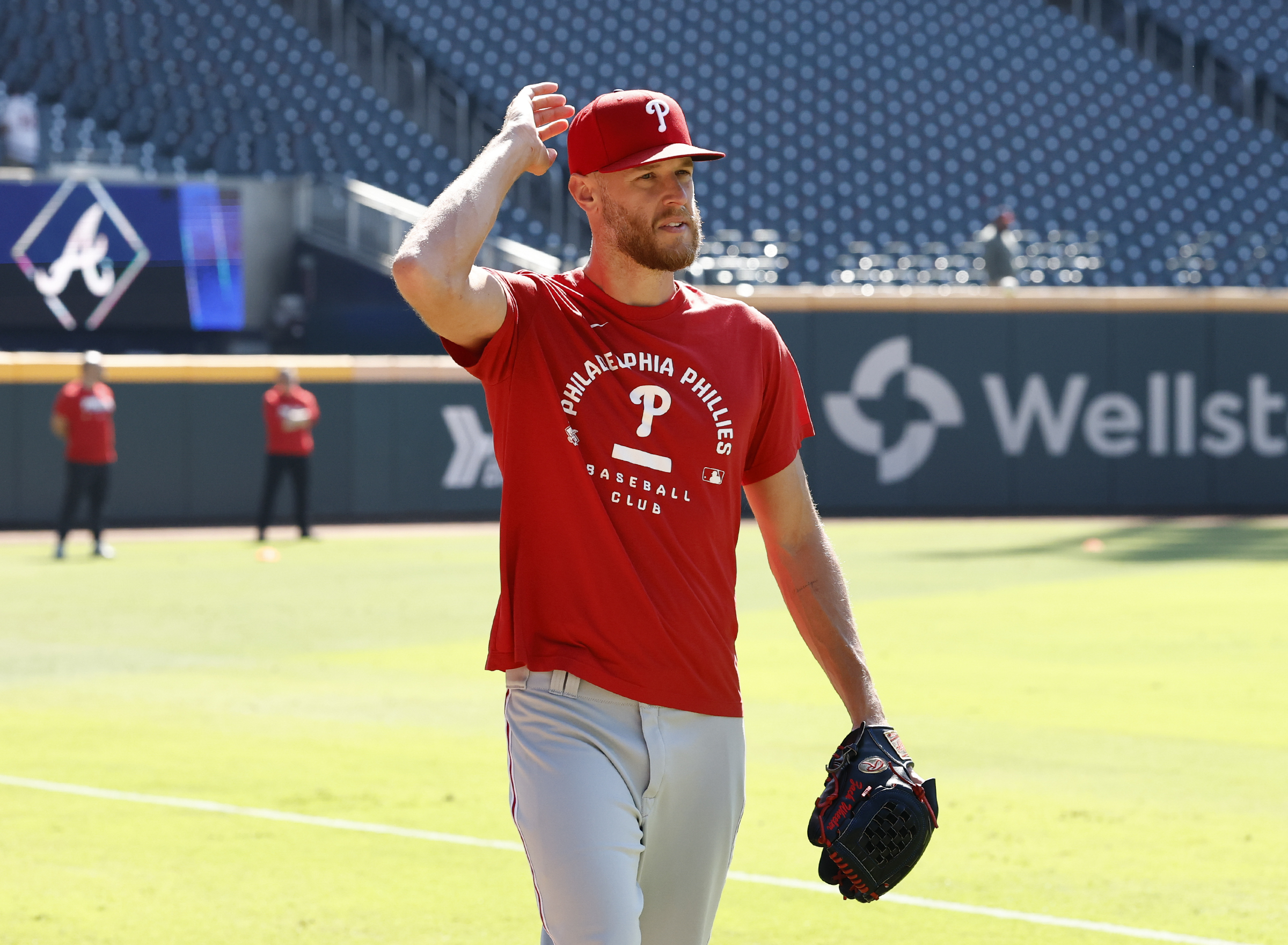
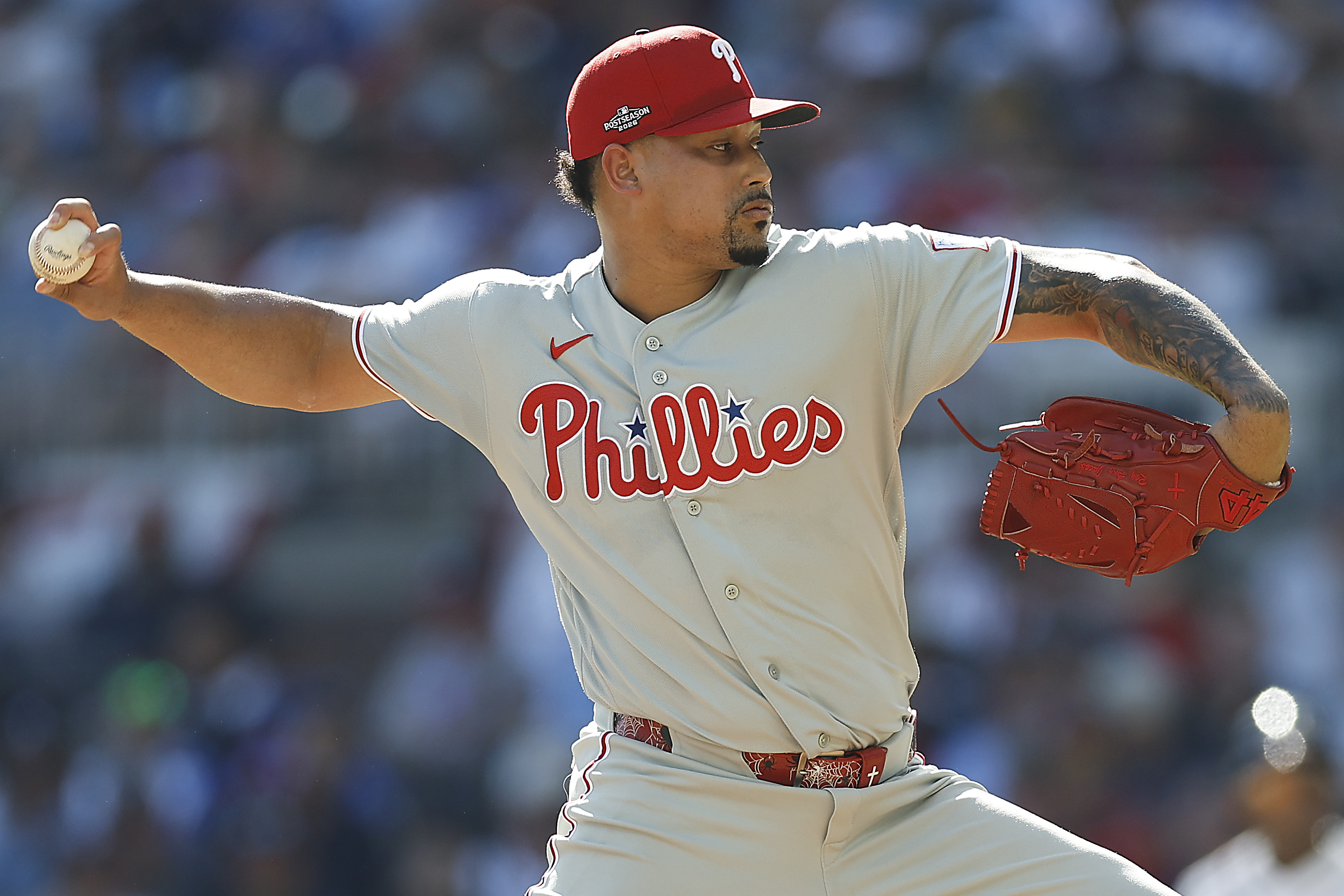
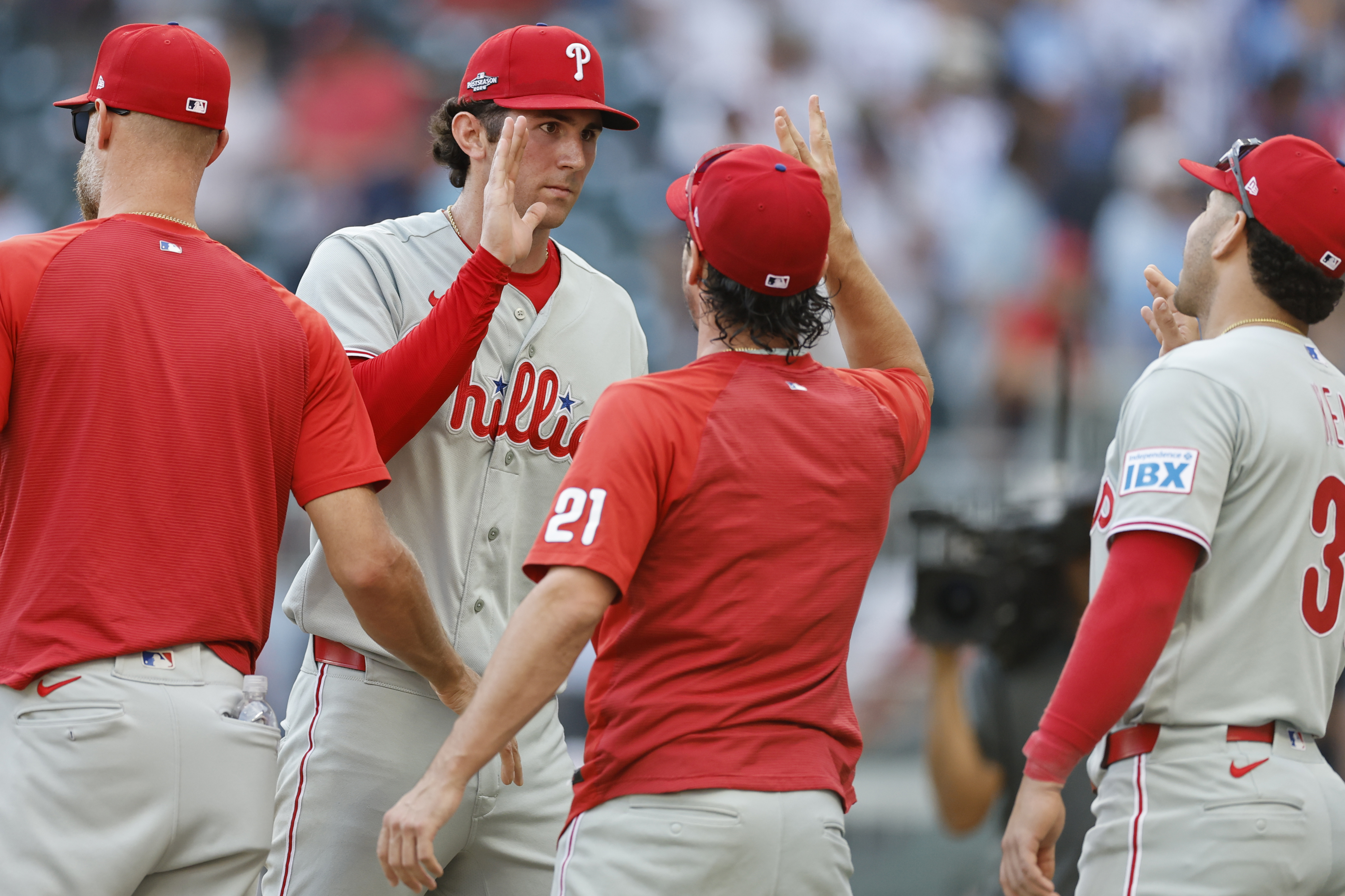
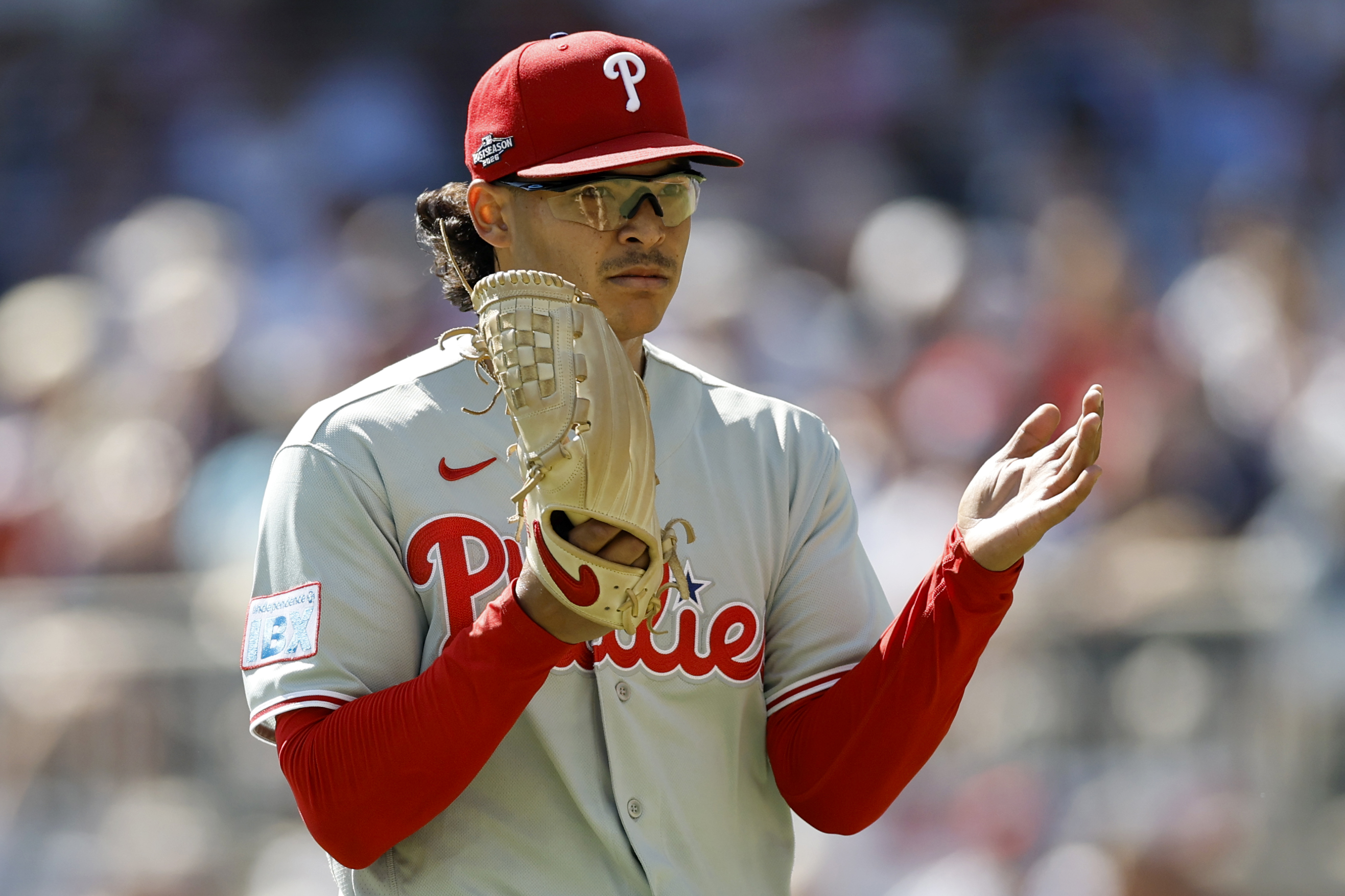
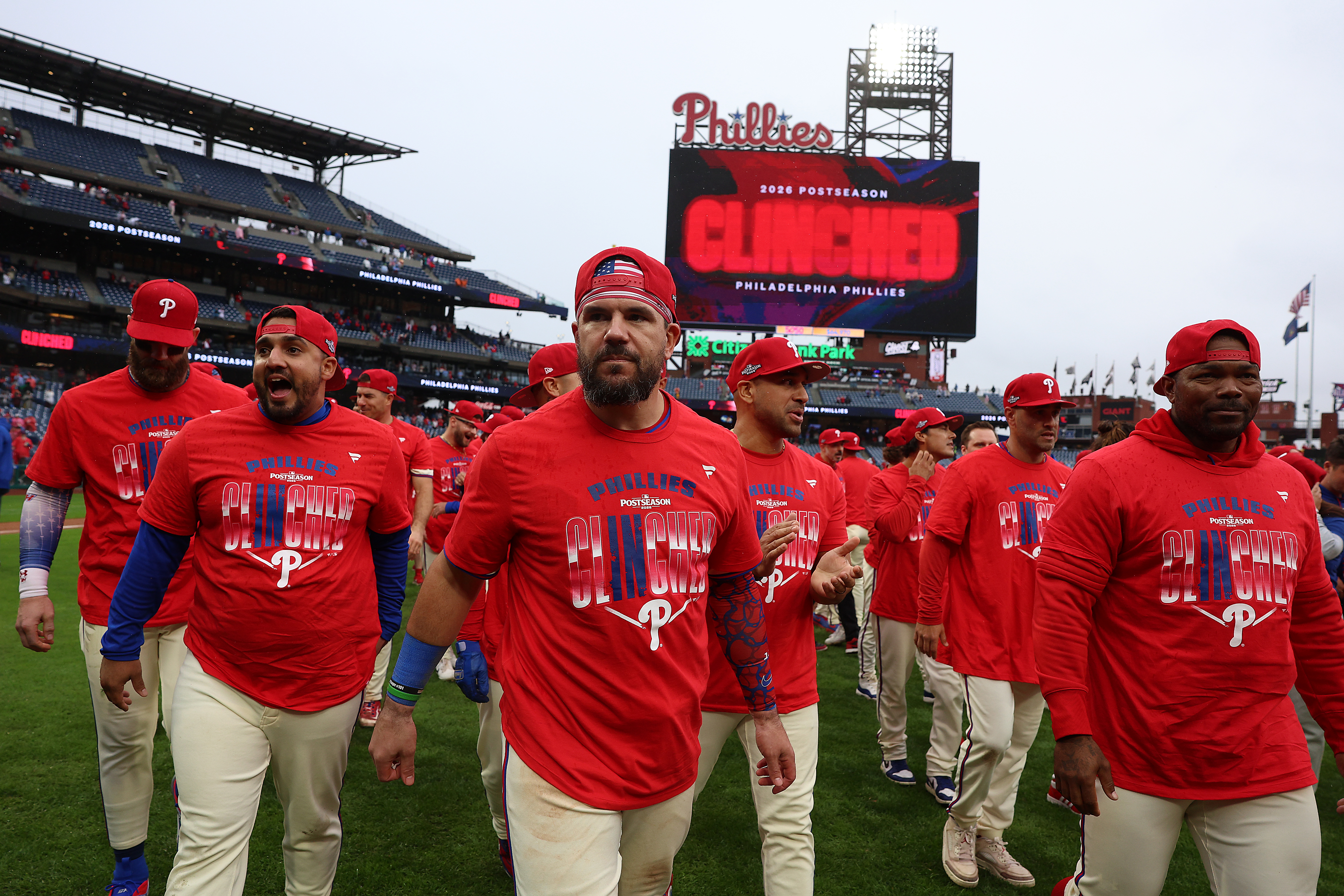
The Phillies bristled last winter at the suggestion that they were running it back after another disappointing October. Rob Thomson — then still the manager — pointed in January to the team’s three new relievers, Adolis García in right field, Justin Crawford in center, Andrew Painter in the rotation, and Otto Kemp’s place on the roster.
But everyone knew enough to know they were indeed running it back. The main pieces were the same. So the final result — yet another disappointing October — wasn’t much of a surprise.
The three new relievers? Just one pitched in the postseason. García had a .599 OPS when his season ended with a shoulder injury. Crawford looked like a rookie, Painter was a mixed bag, and Kemp appeared in just 13 games before finding himself in the batter’s box for the final out of Thursday’s listless 6-2 loss to Atlanta in Game 3 of their wild-card series.
The Phils were flat in an elimination game, a fitting way to end a season that rarely gave you reason to believe that this October would be any different from last October. The front office didn’t act last winter with any urgency, doing little to upgrade a roster that needed improvement. And then the team started 9-19.
García? He had a .675 OPS over the last two seasons. An upswing would’ve been a bigger surprise than what the Phils got. The bullpen additions? They fizzled. Kemp? The Phils were so thin that they added him to their postseason roster even though he hadn’t been in the majors since May. The bullpen was a disaster, the lineup underperformed, and the trade deadline acquisitions fell short.
The Phils had a good run when Don Mattingly replaced Thomson in late April and they played well in August. But that soured in September when they nearly missed the postseason. The maddening season was extended by three games, just one of which was actually in October. Game 3 was lined up for them: Aaron Nola and Zack Wheeler vs. Ray Kerr and Grant Holmes. But this October was the same as last October. They indeed ran it back.
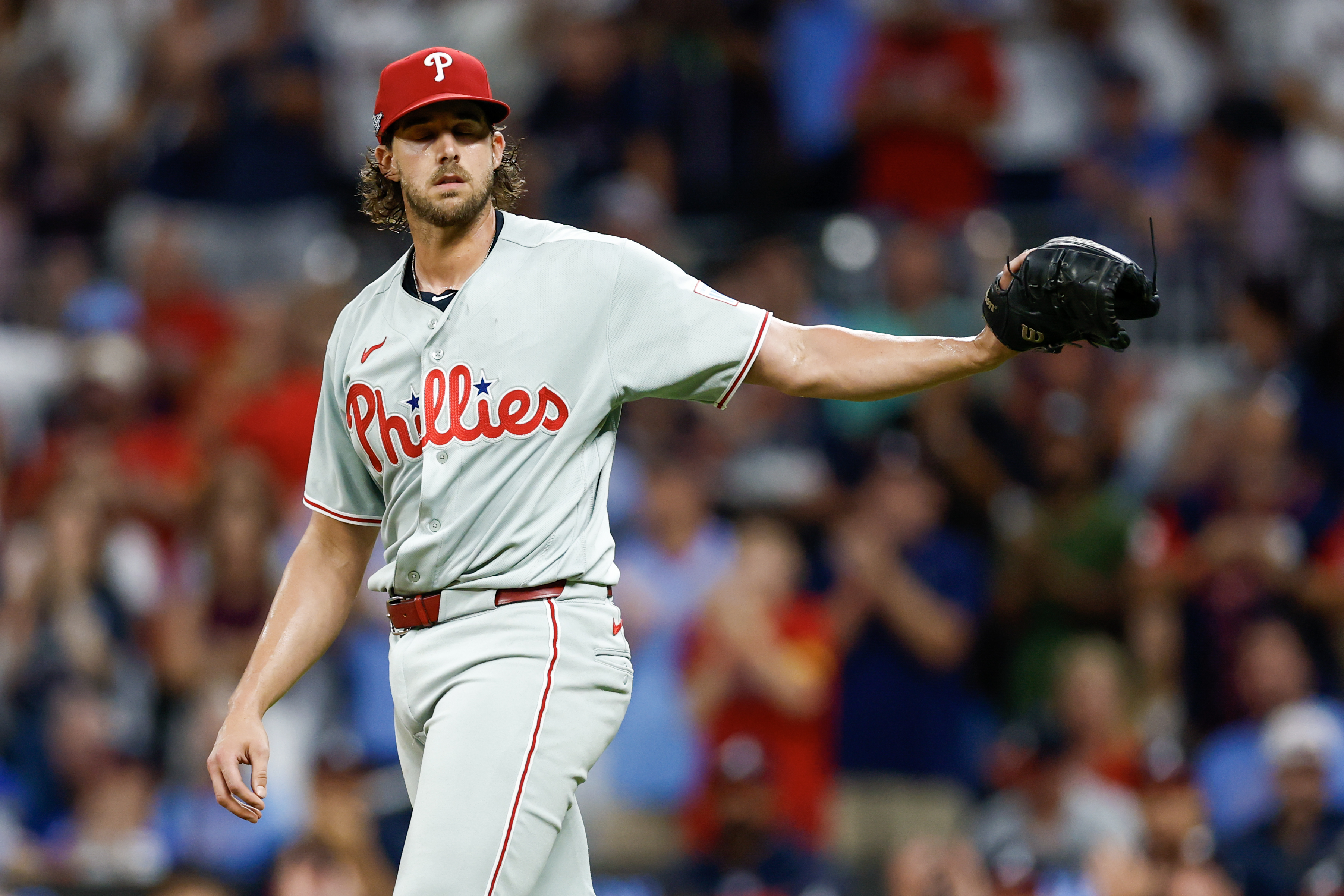
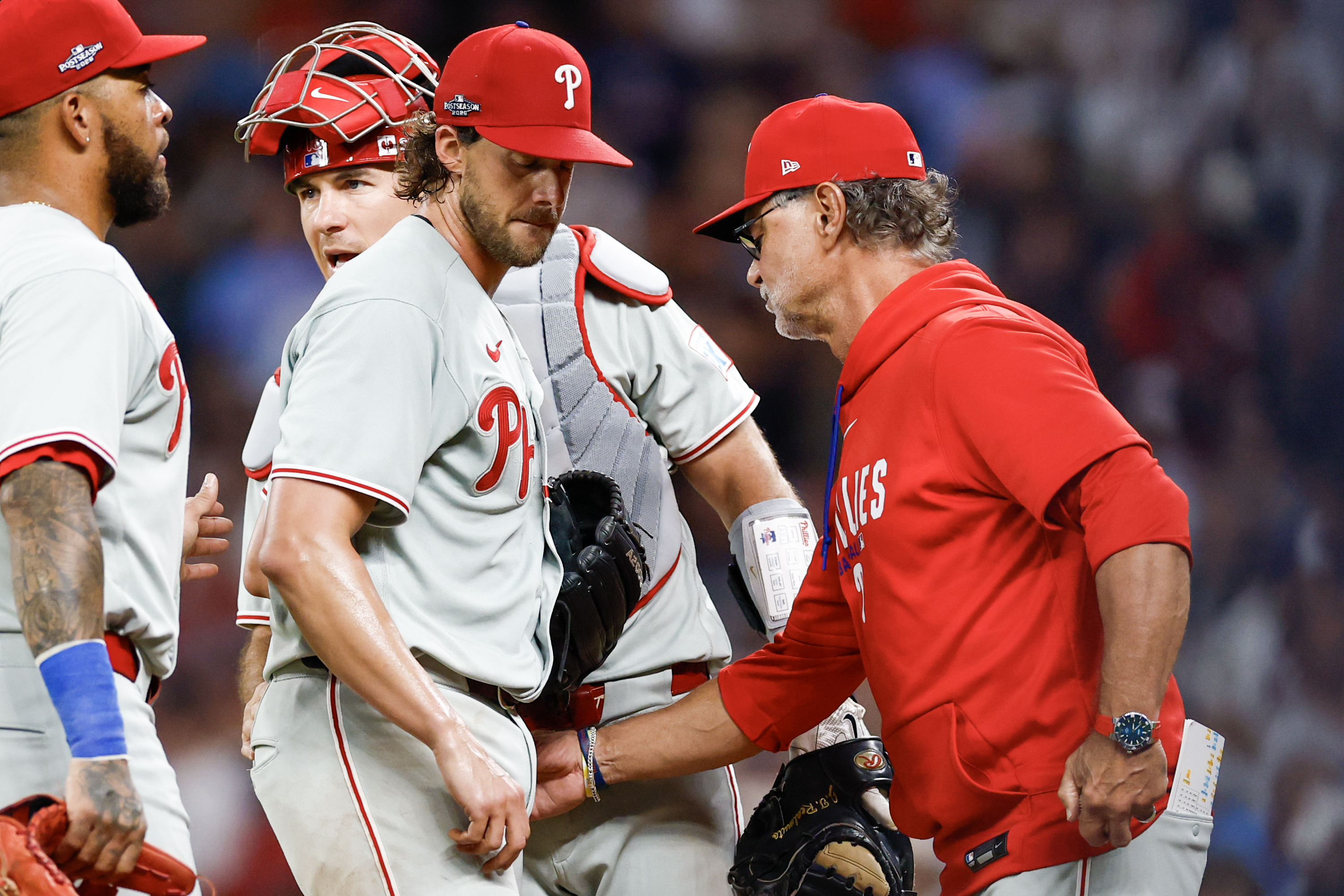
Aaron Nola started Game 3 and lasted 1 2/3 innings, giving up a three-run homer to Michael Harris II in the first. Yong Kim / Staff Photographer
I had no problem with …
… the plan to start Nola before going to Wheeler. The Phils needed Nola to go through the lineup at least once and then you’d be able to decide when to best deploy Wheeler. Nola couldn’t do it and that was the game. But the plan — which would have Nola to Wheeler to Duran — was sound. It didn’t work out.
Remember when …
… the Phillies beat the Diamondbacks by 10 runs in Game 2 of the 2023 NLCS and then flew to Arizona with visions of splashing in their pool? The Phils have since gone 4-12 in the postseason and have failed to win a playoff series. The Phils had a second-straight pennant in their grasp that night and felt like a budding dynasty. How was that just three years ago?
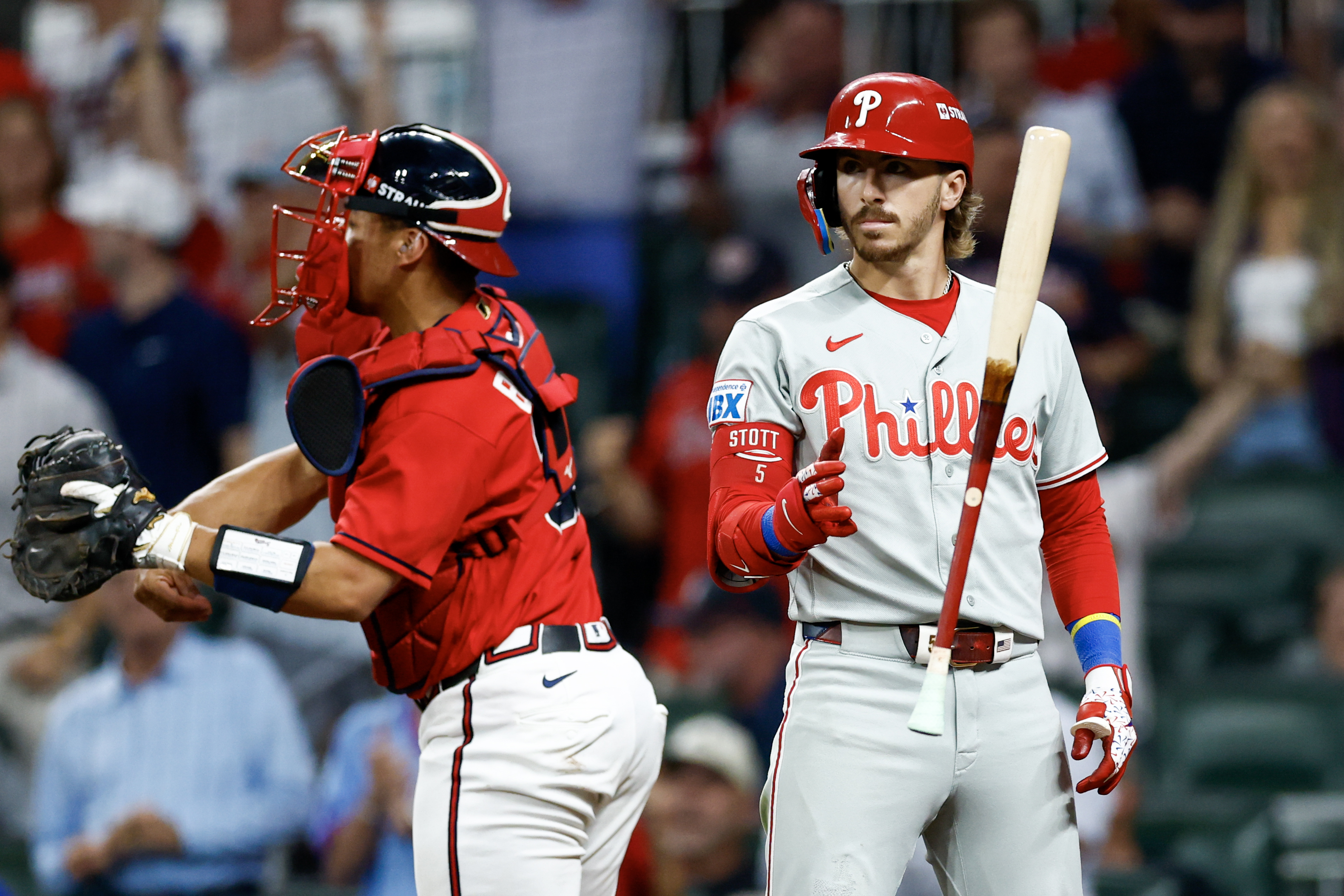
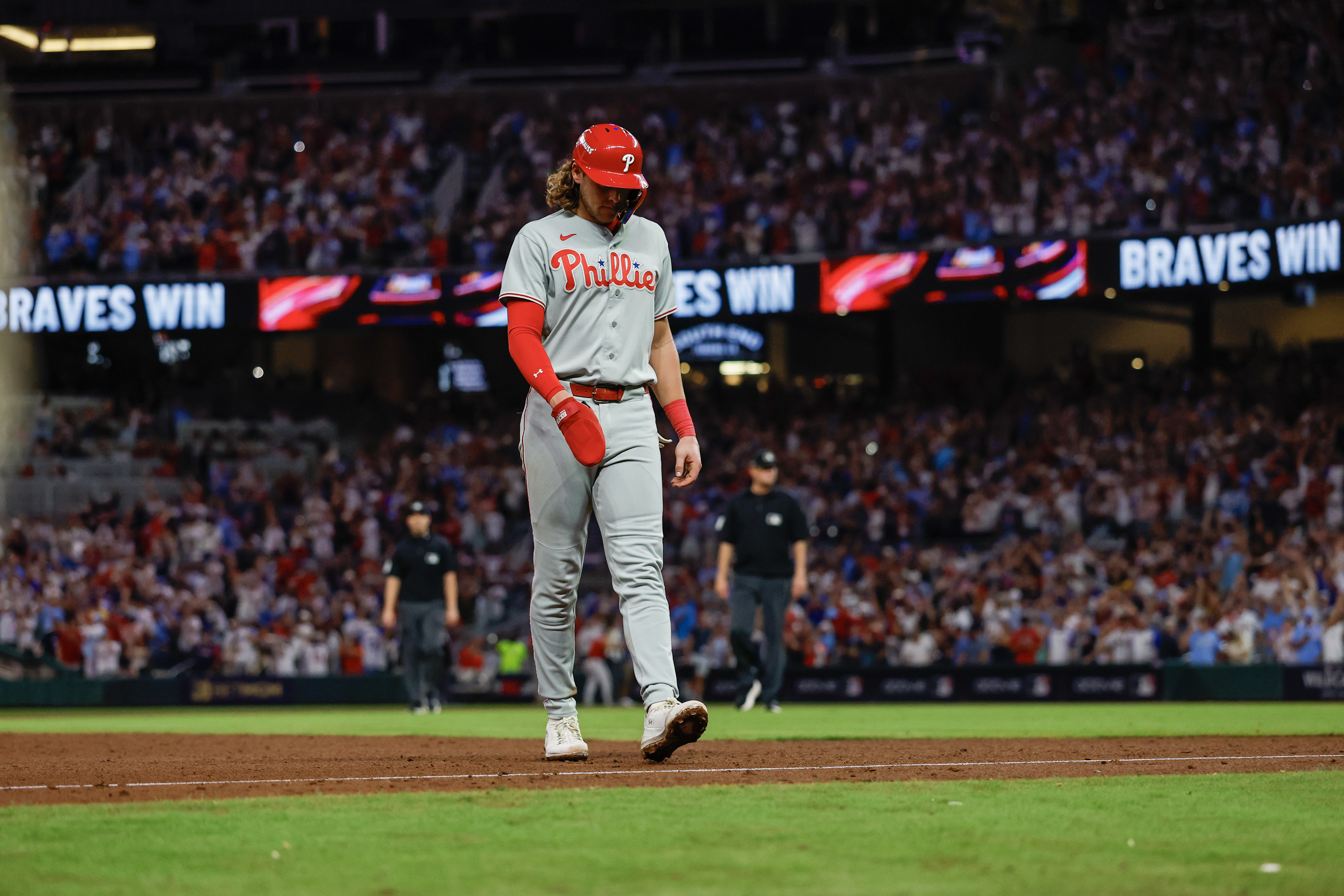
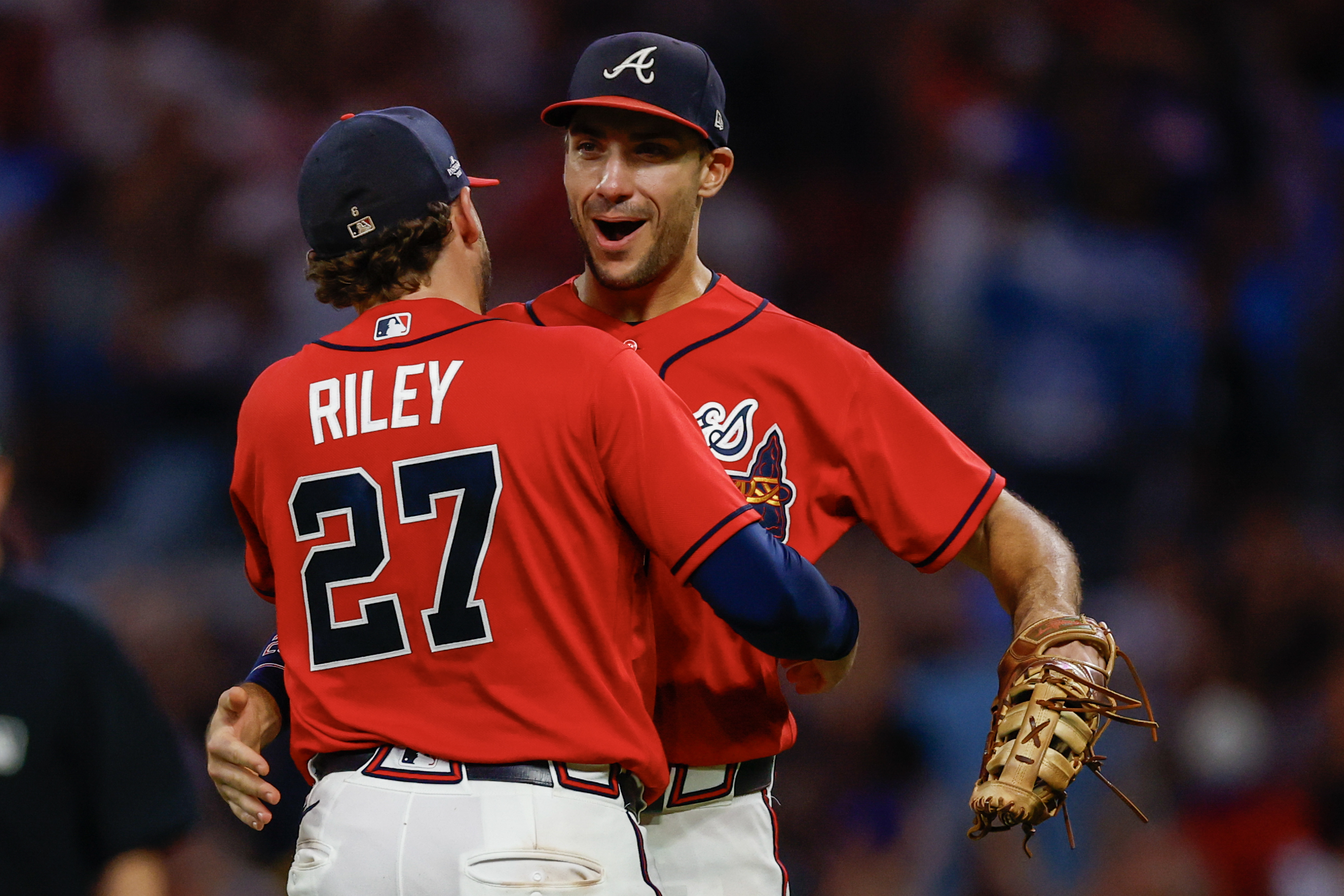
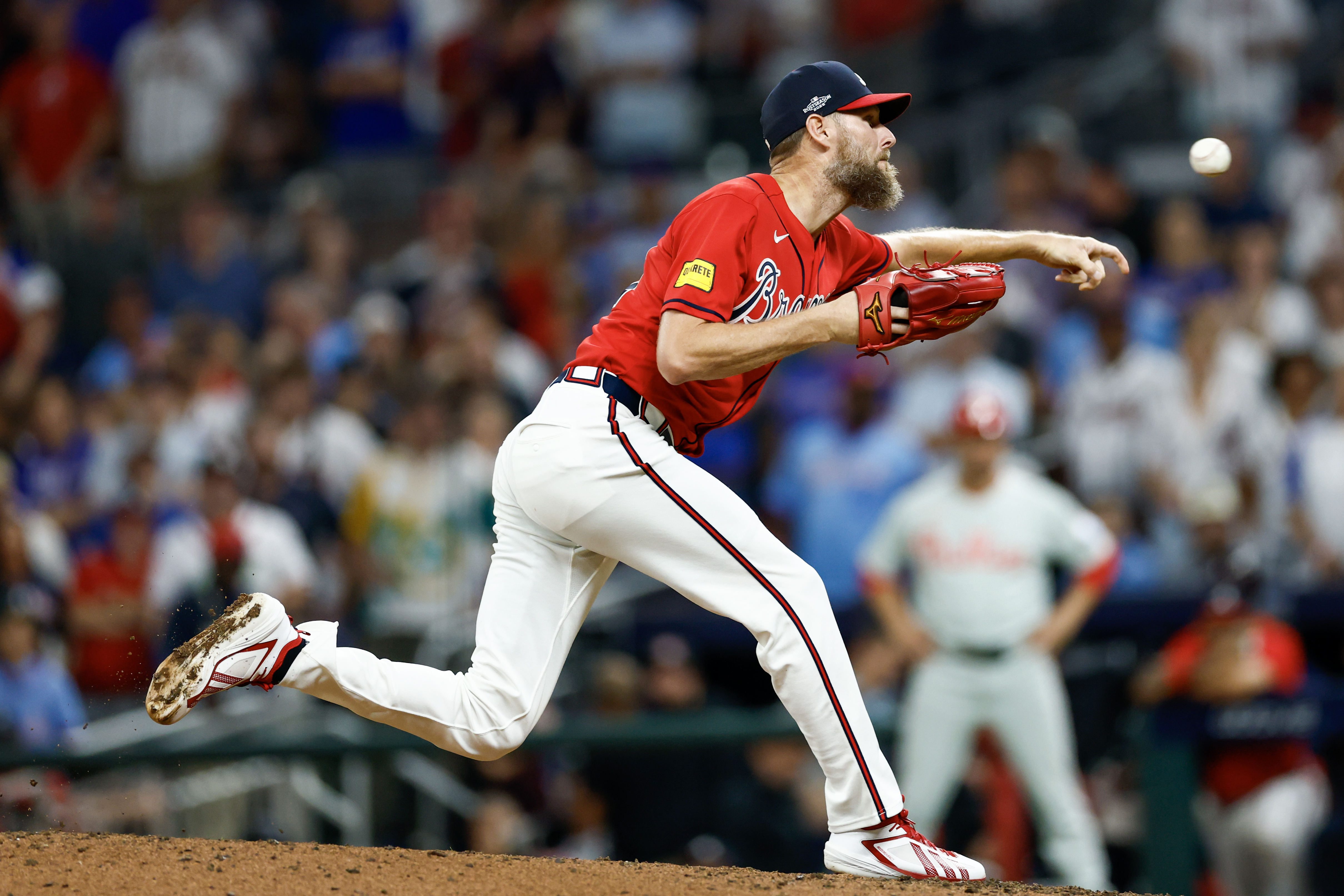
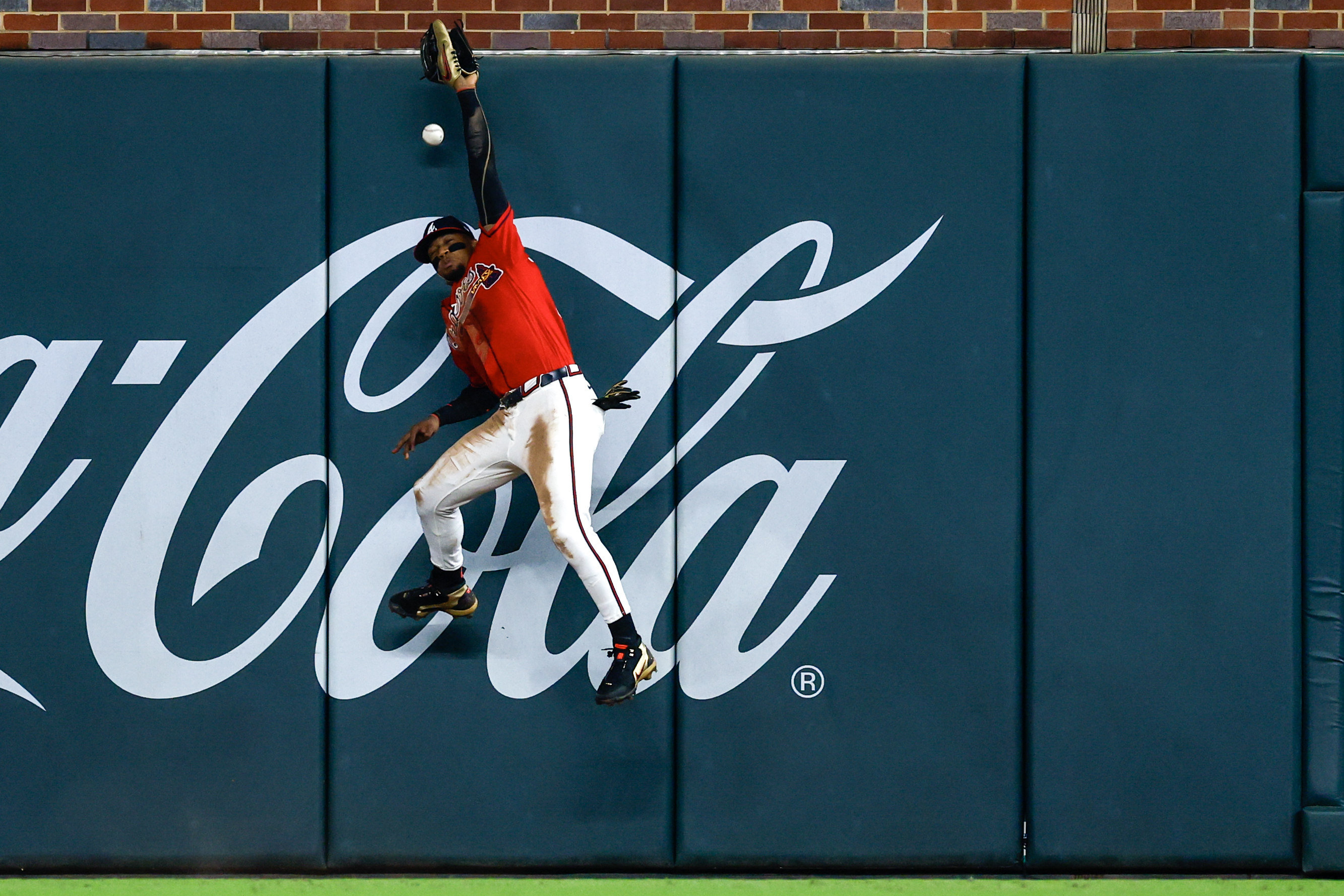
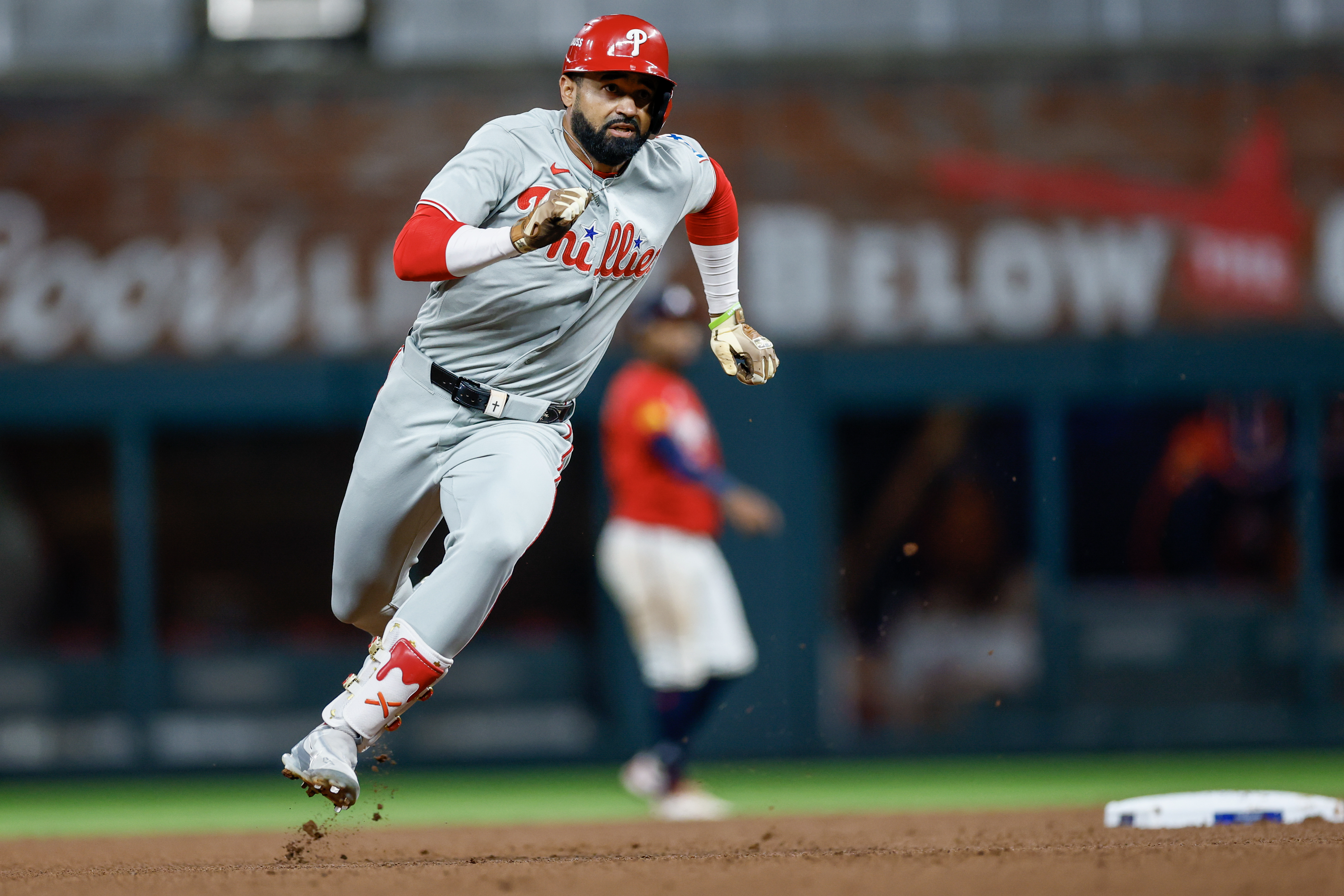
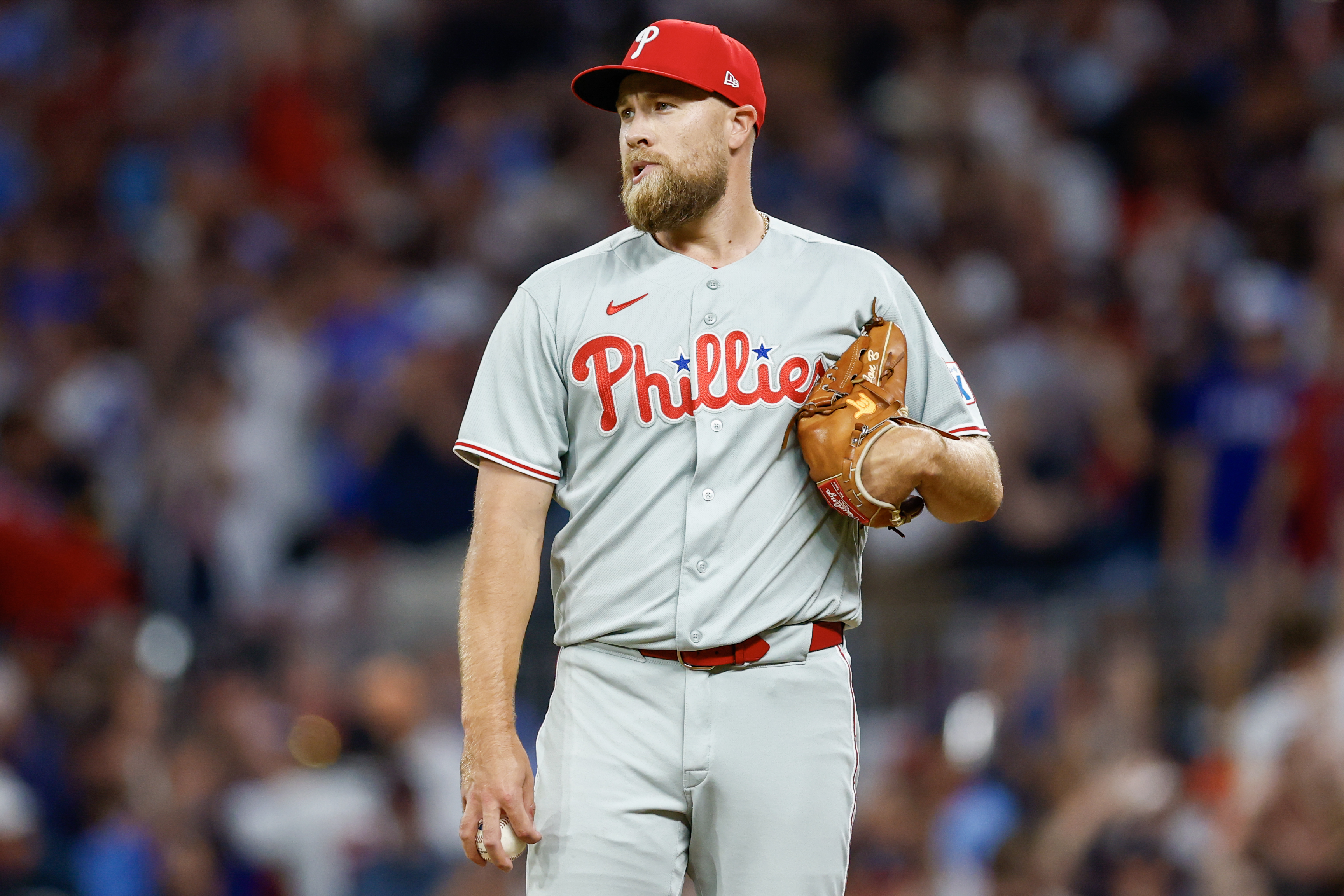
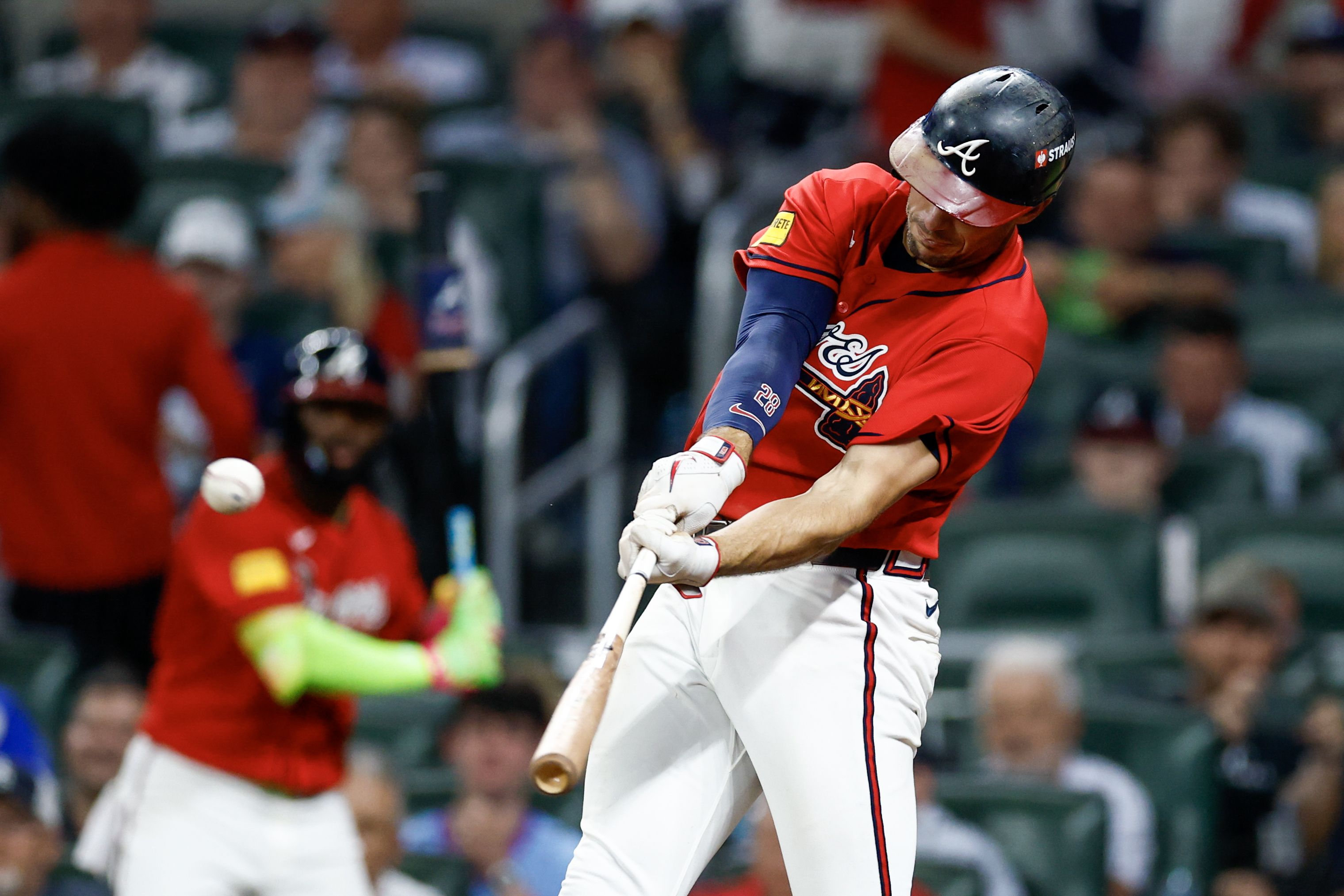
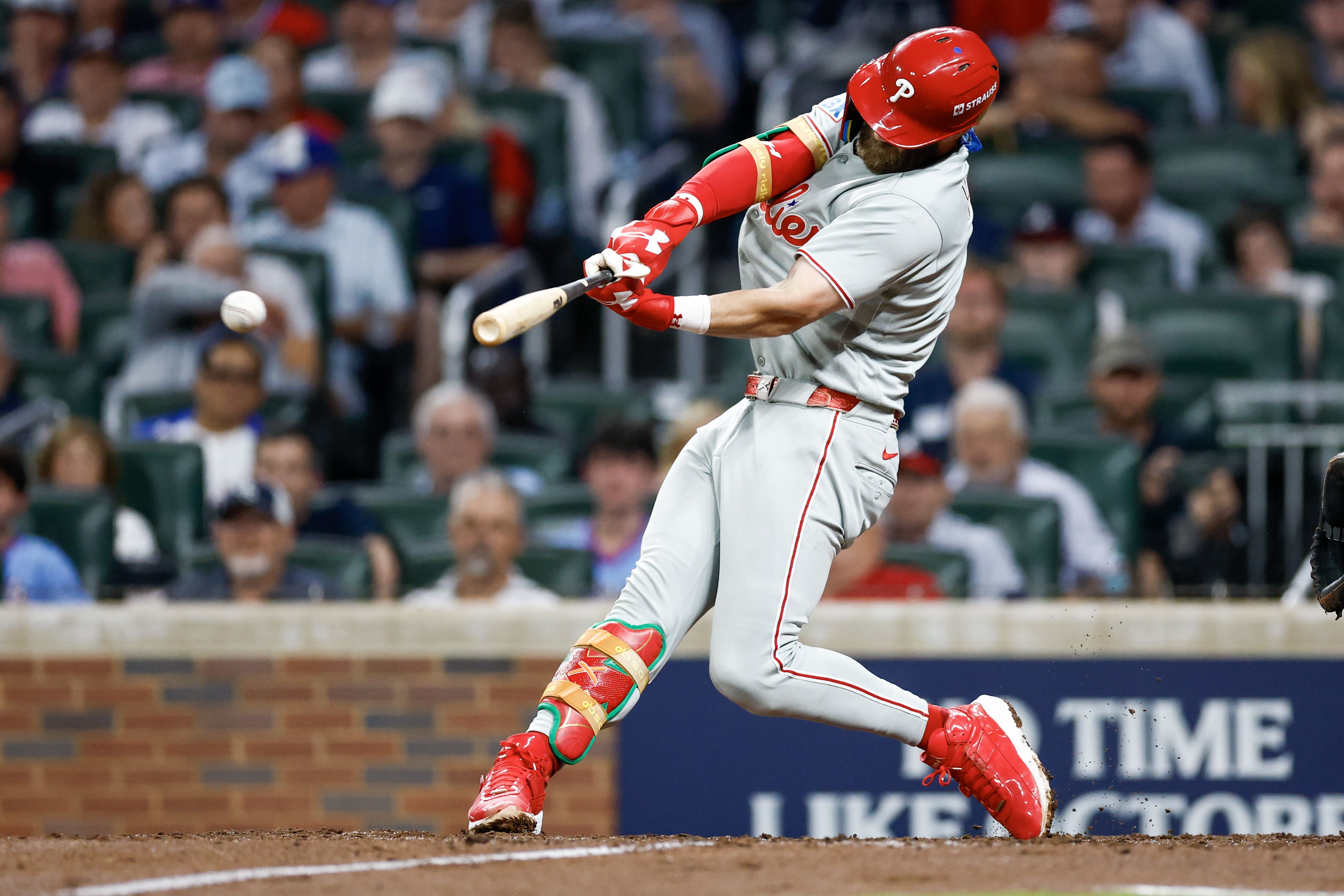
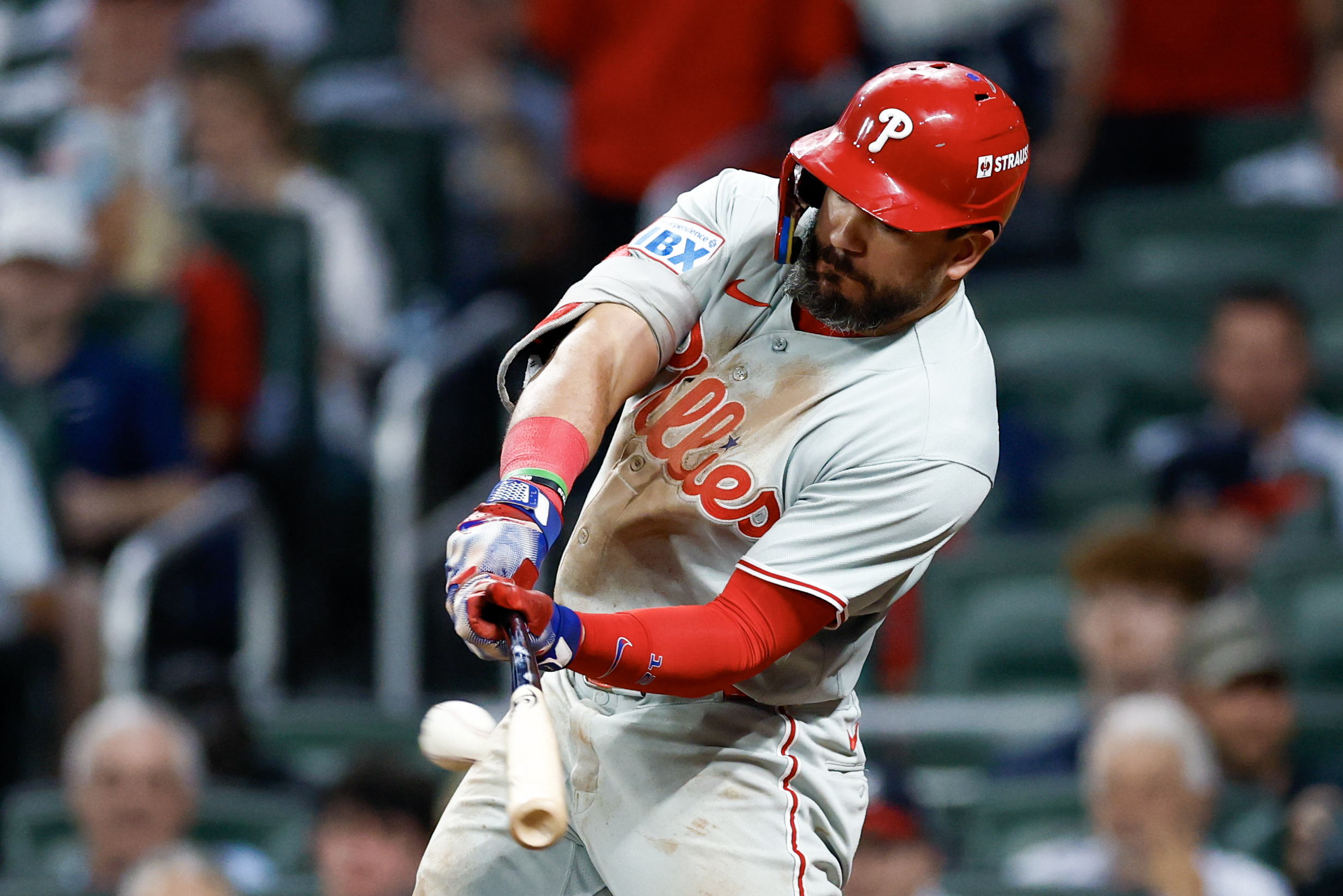
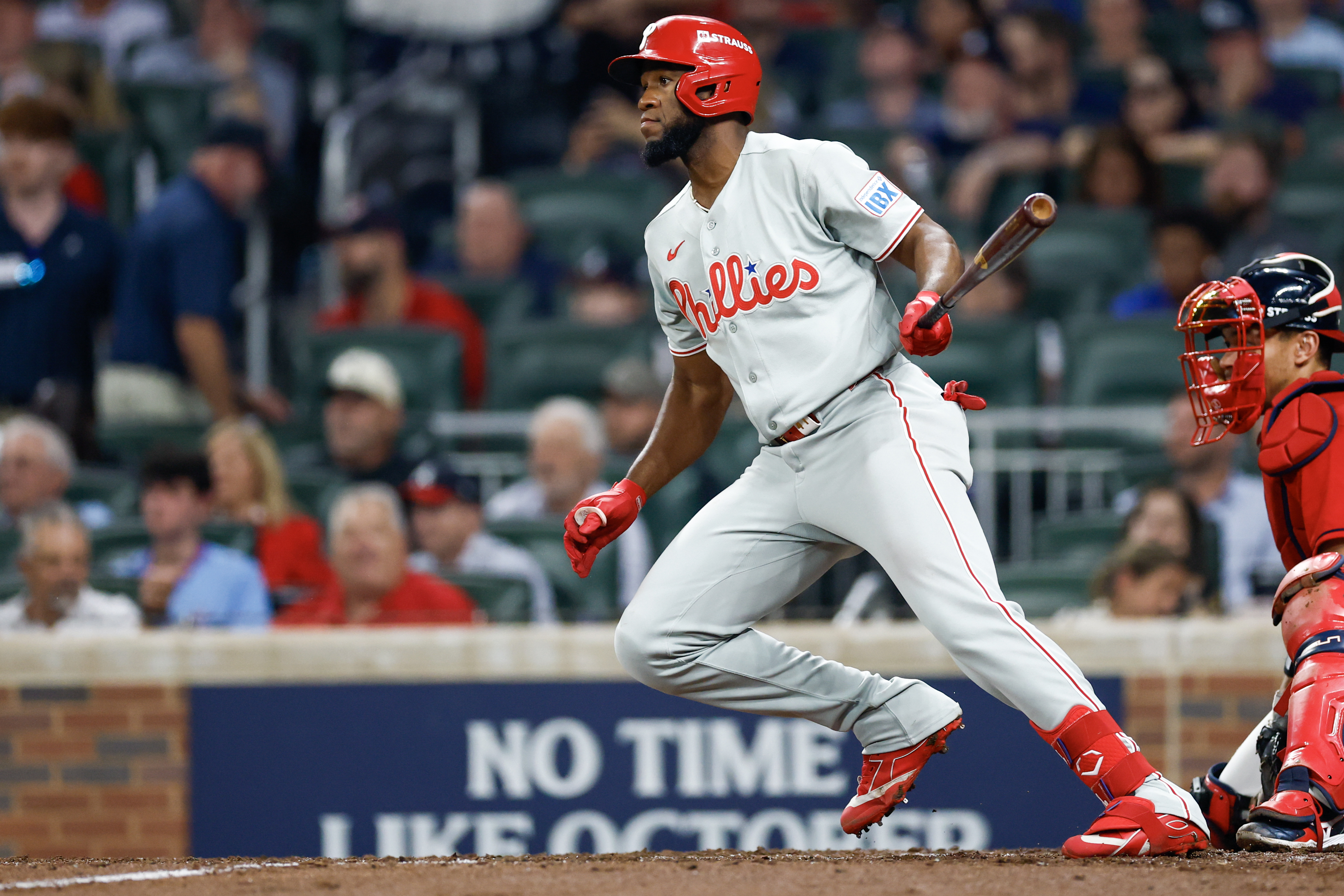
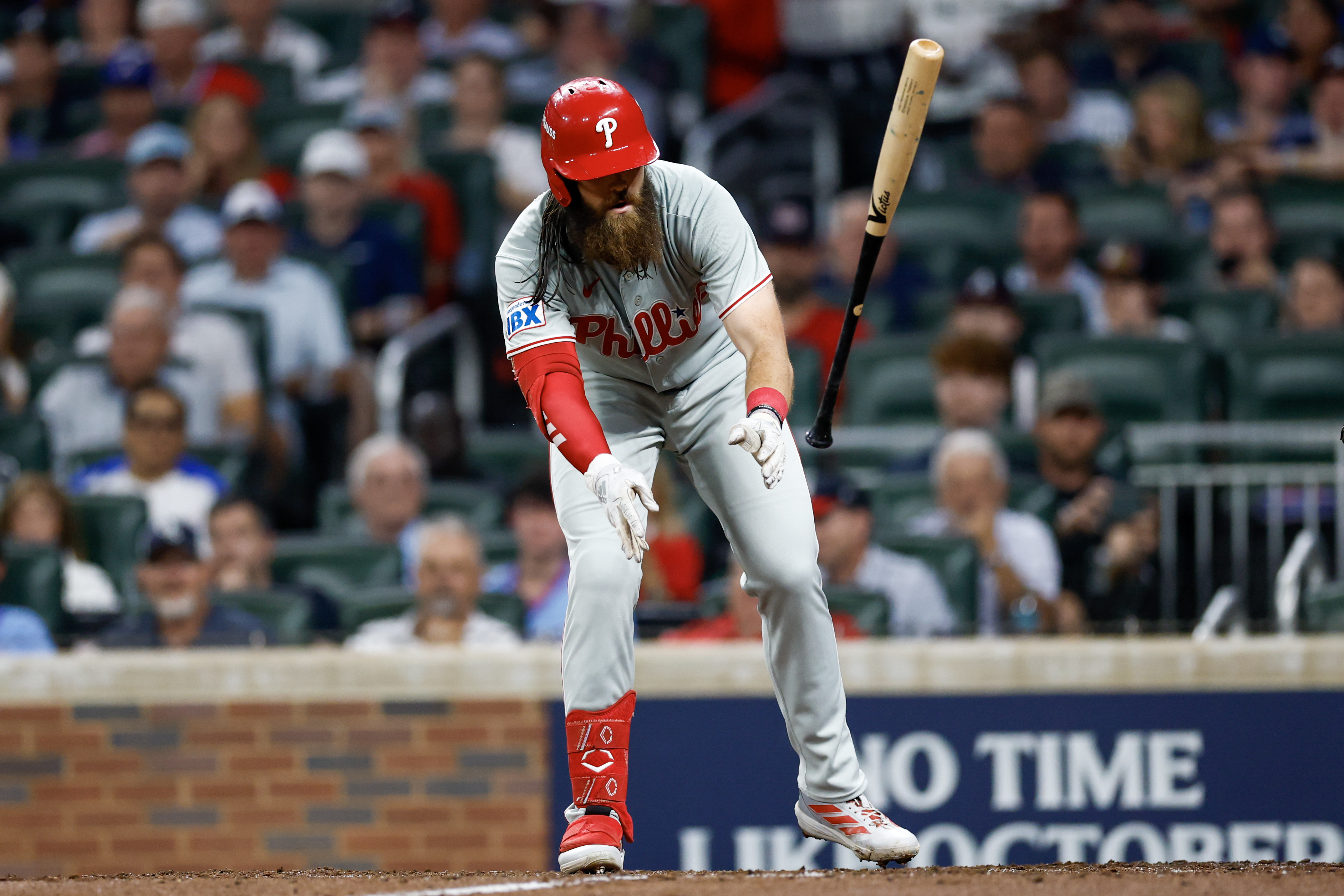
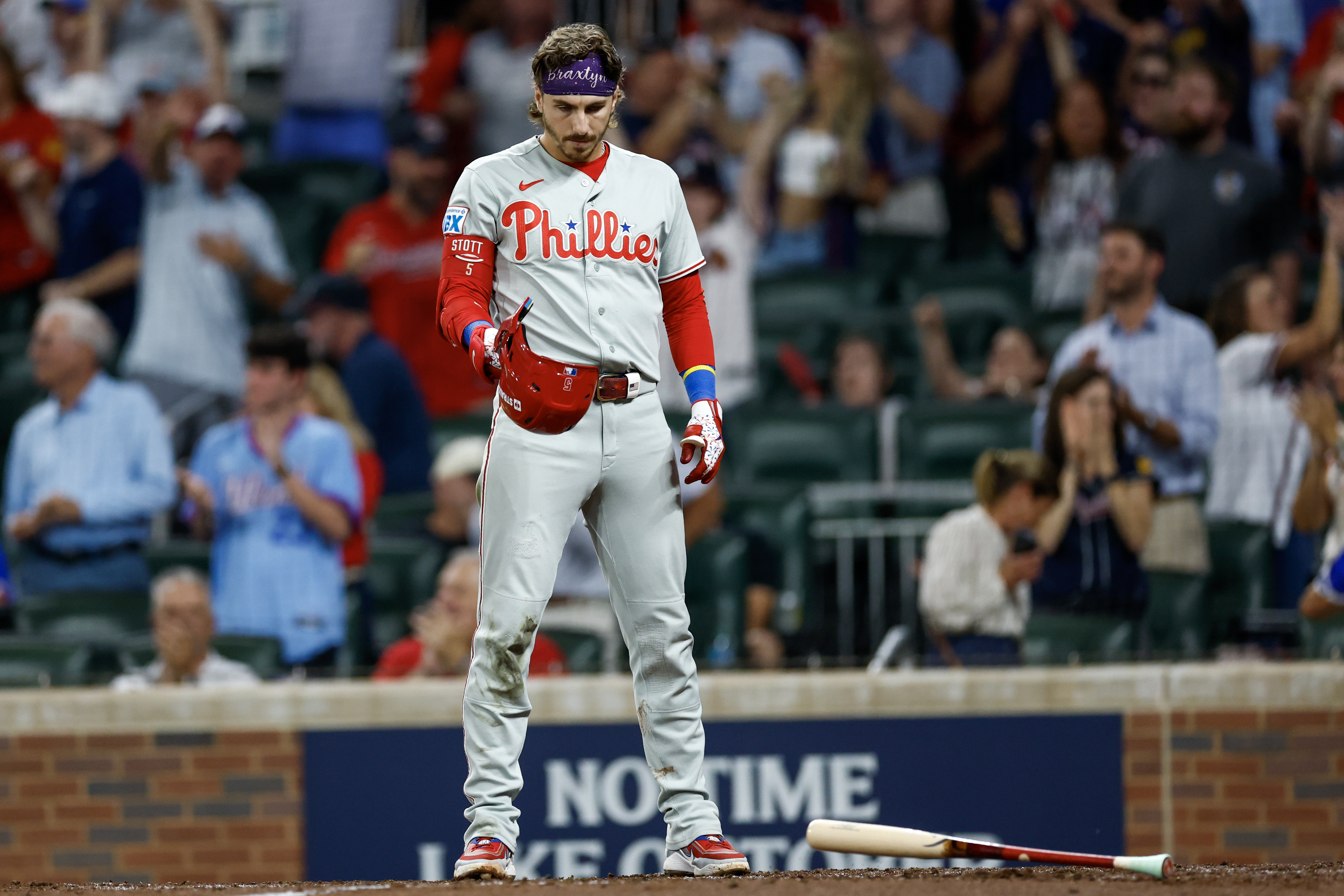
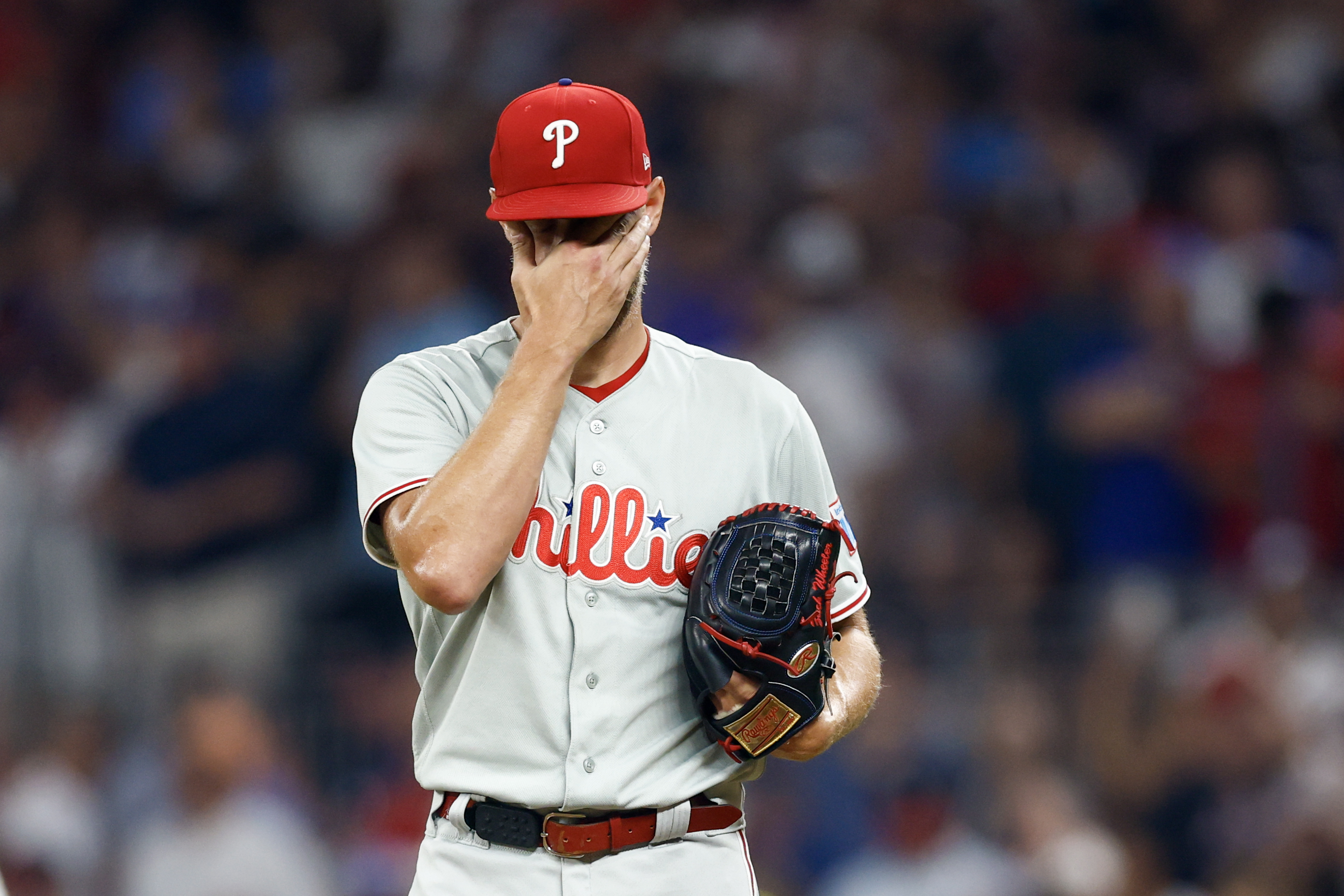
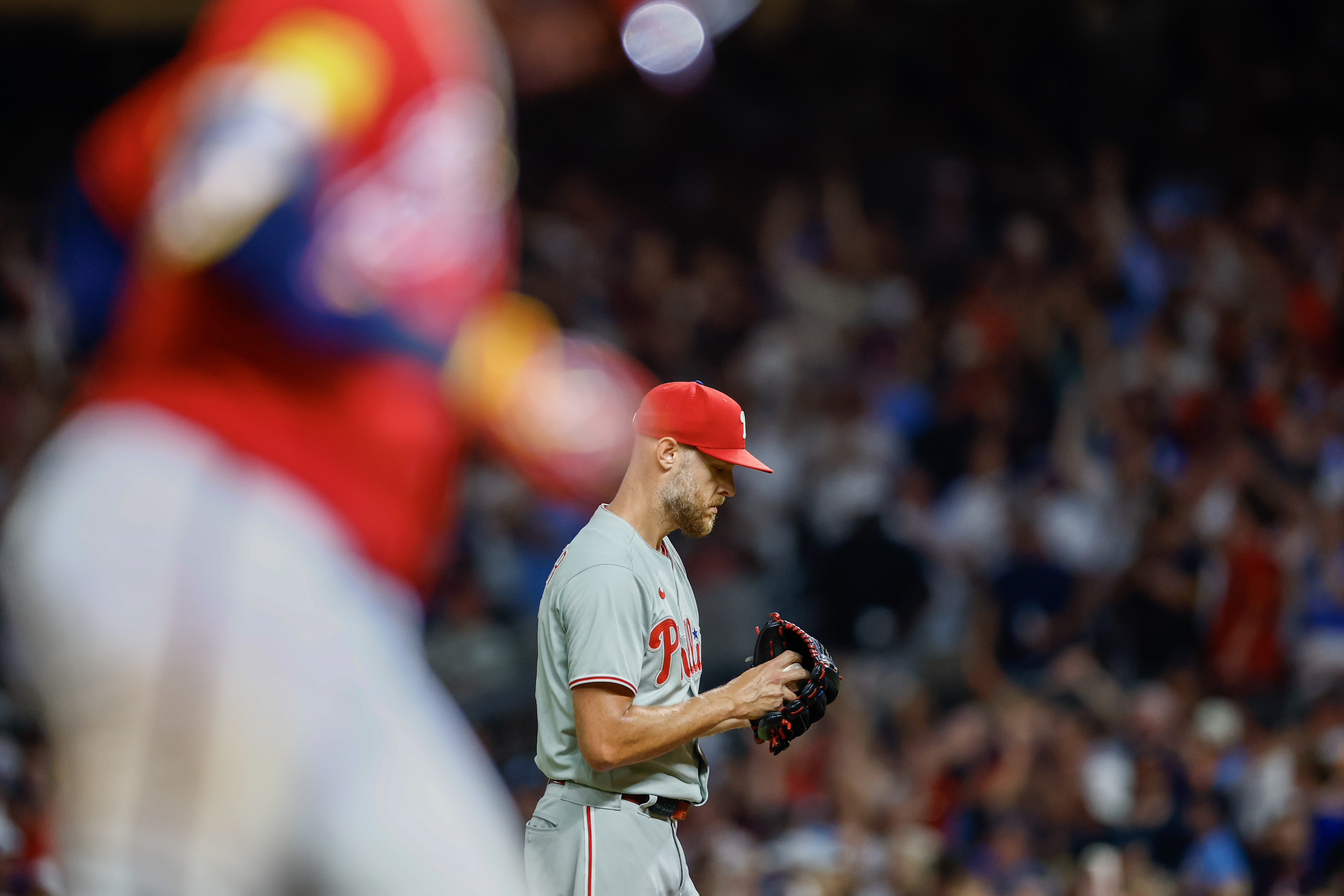
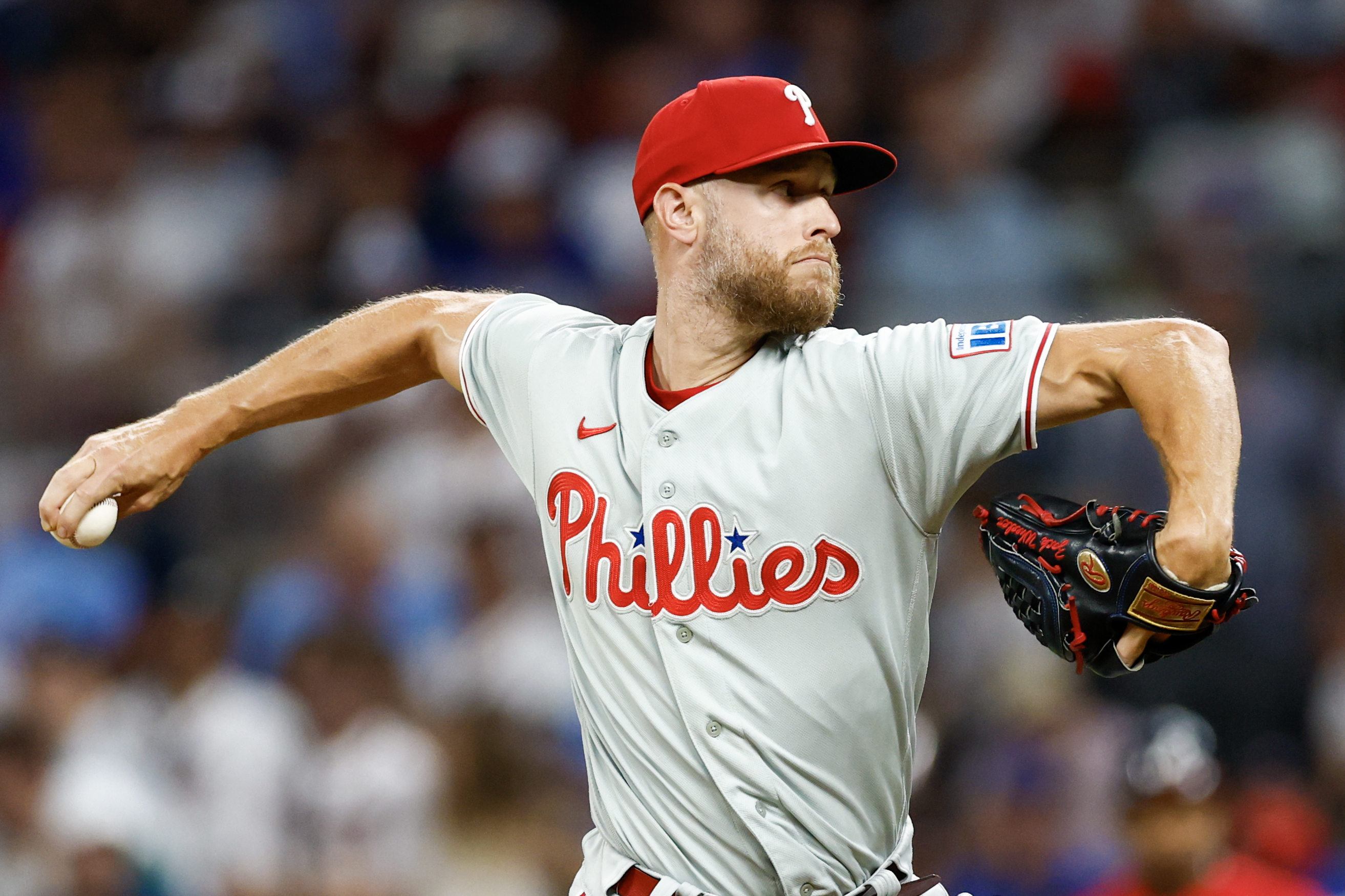
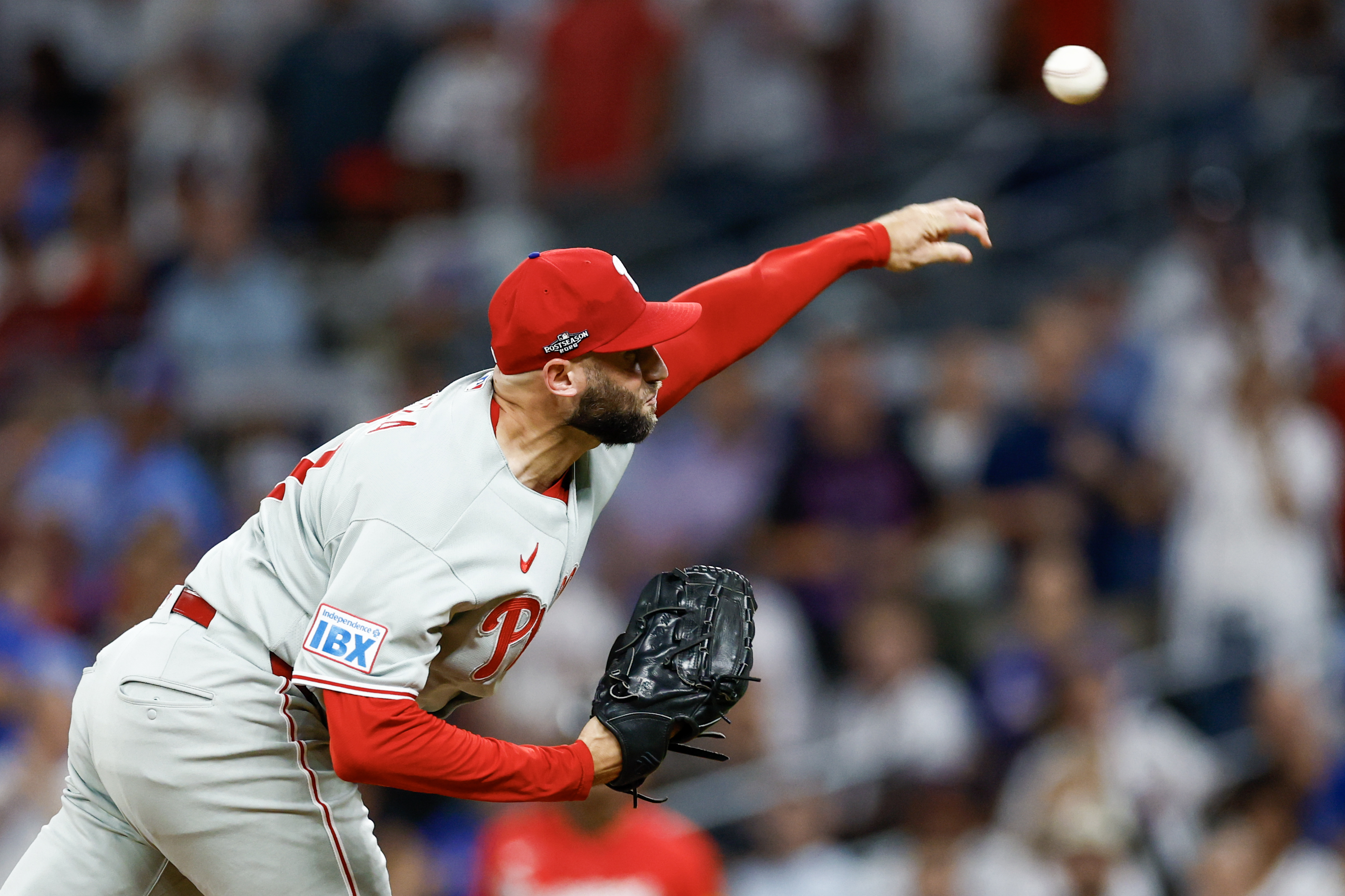
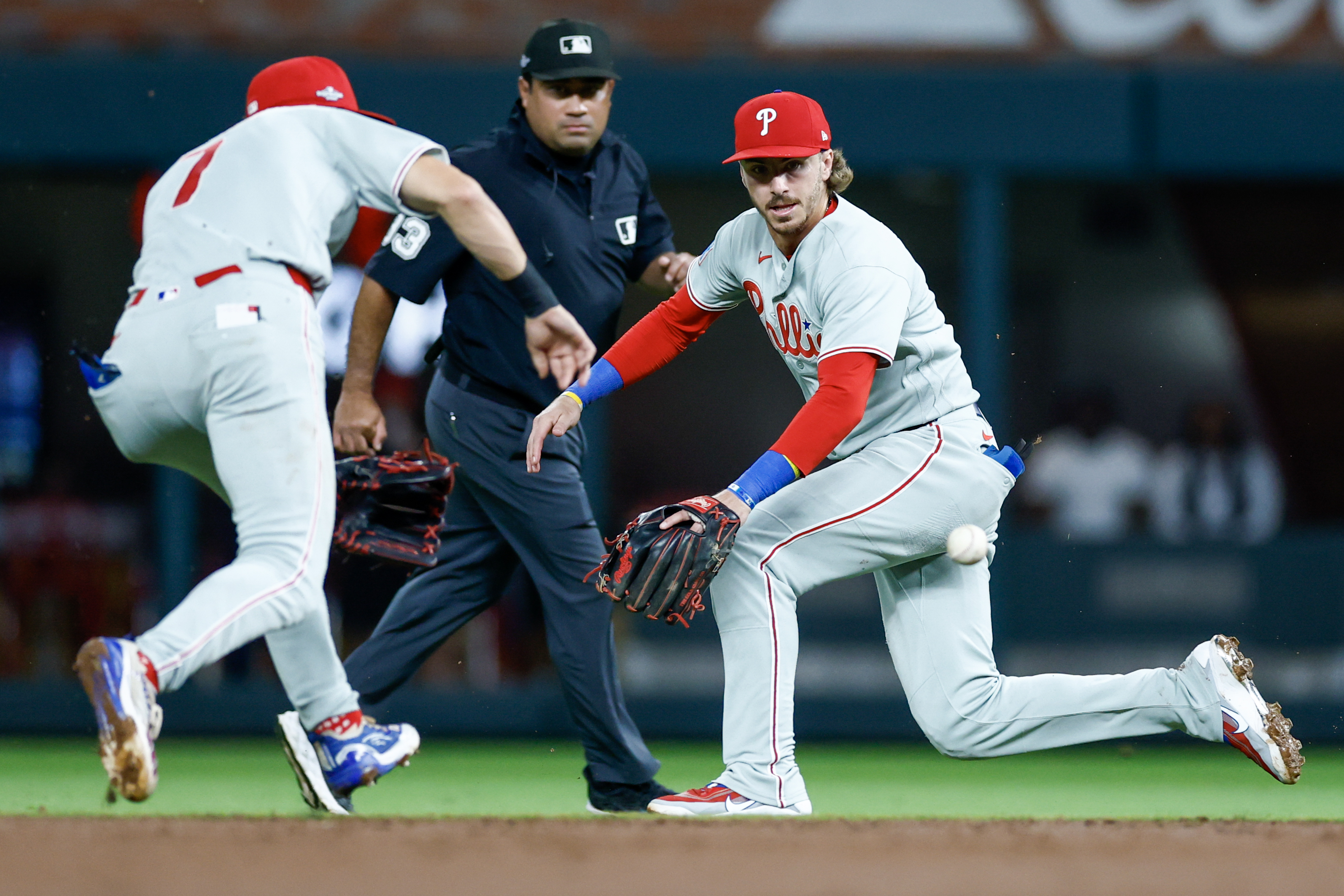
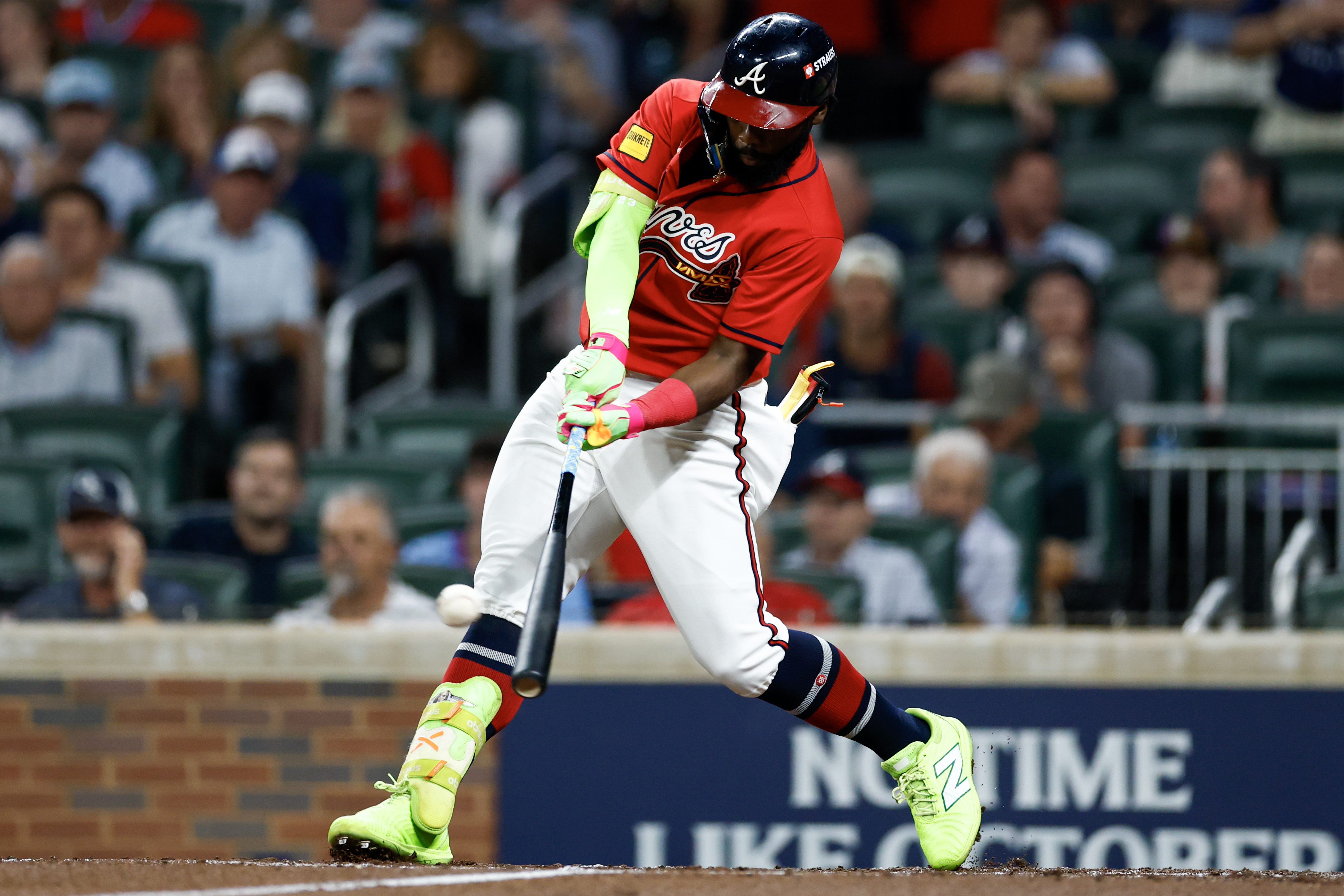
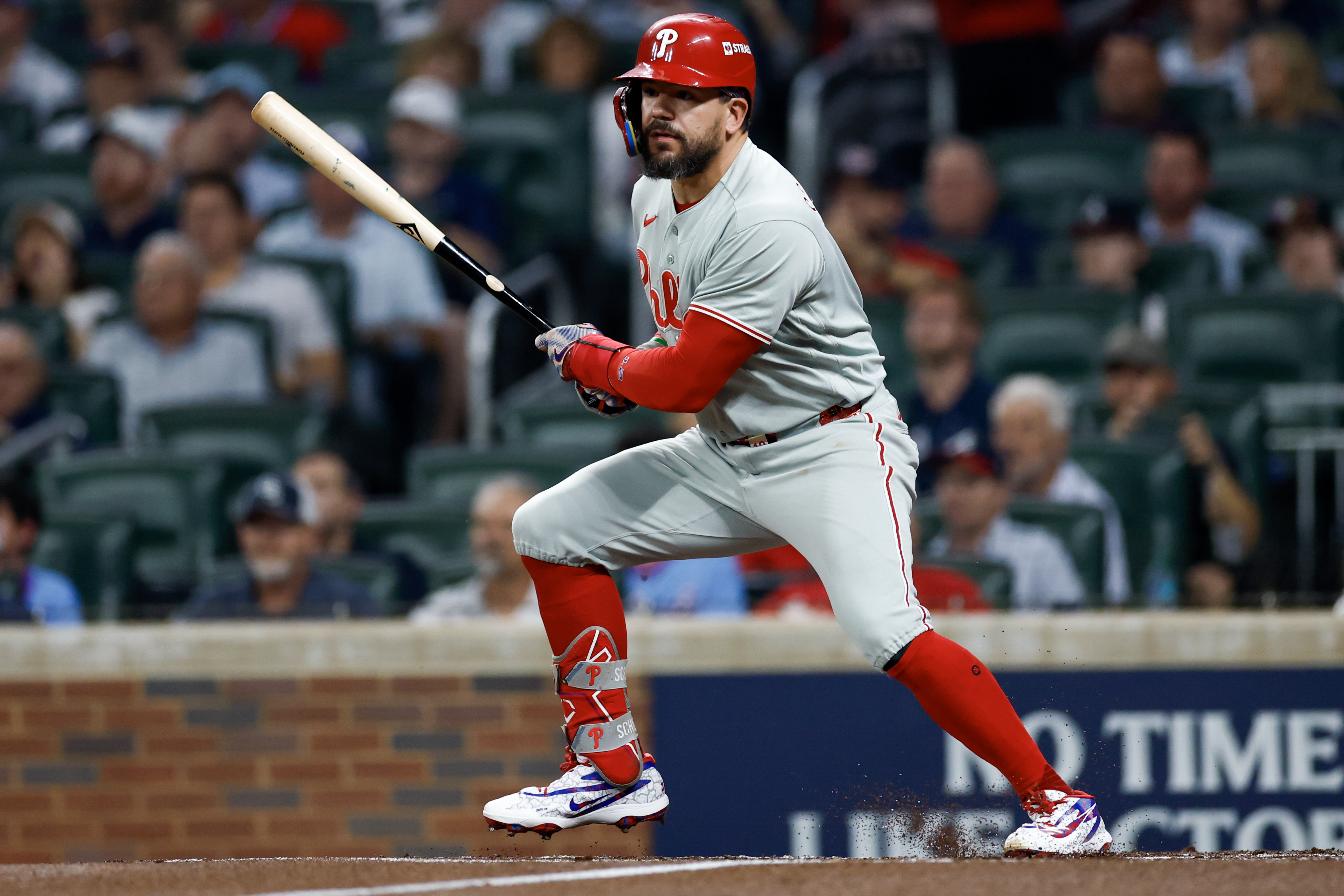
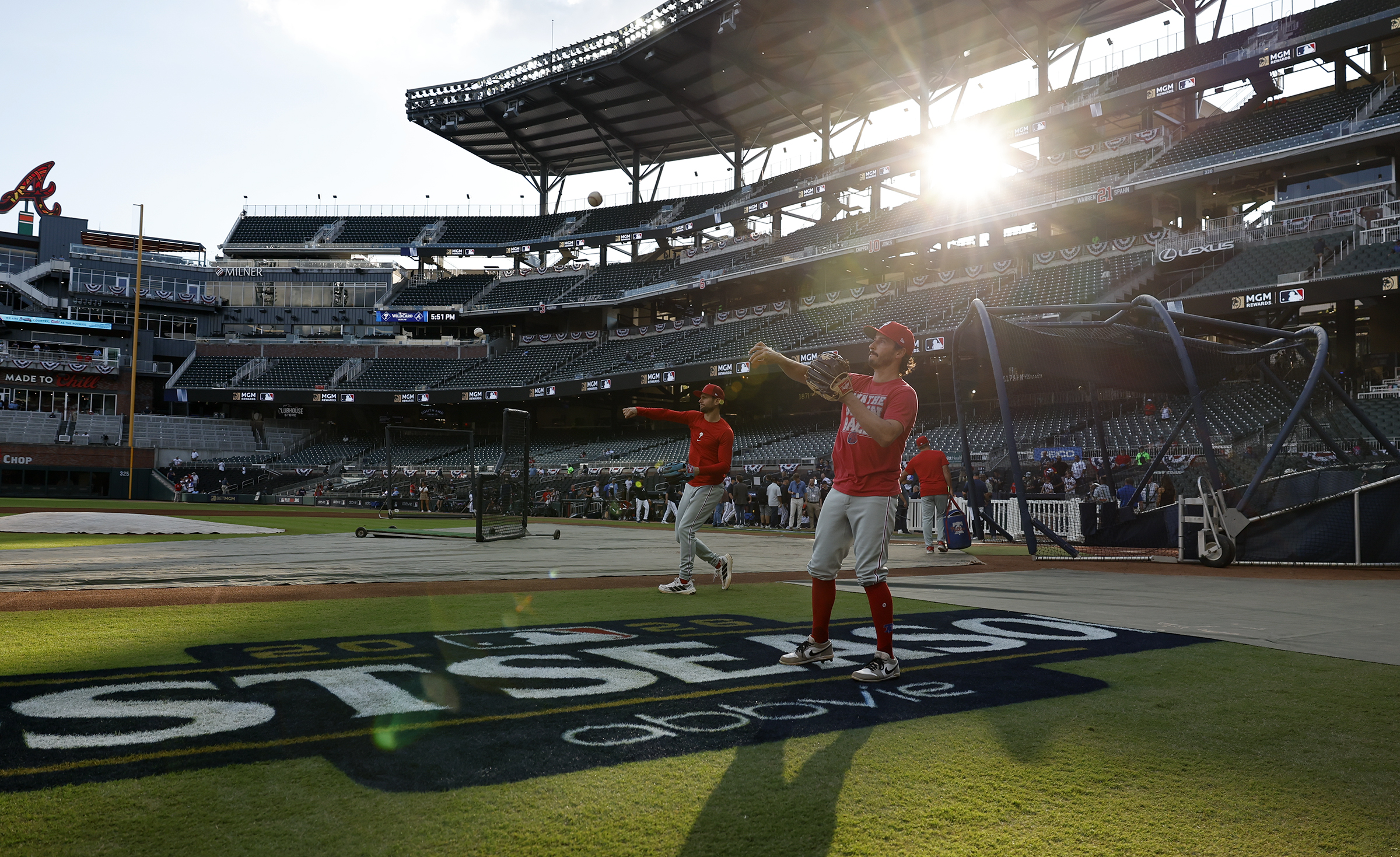
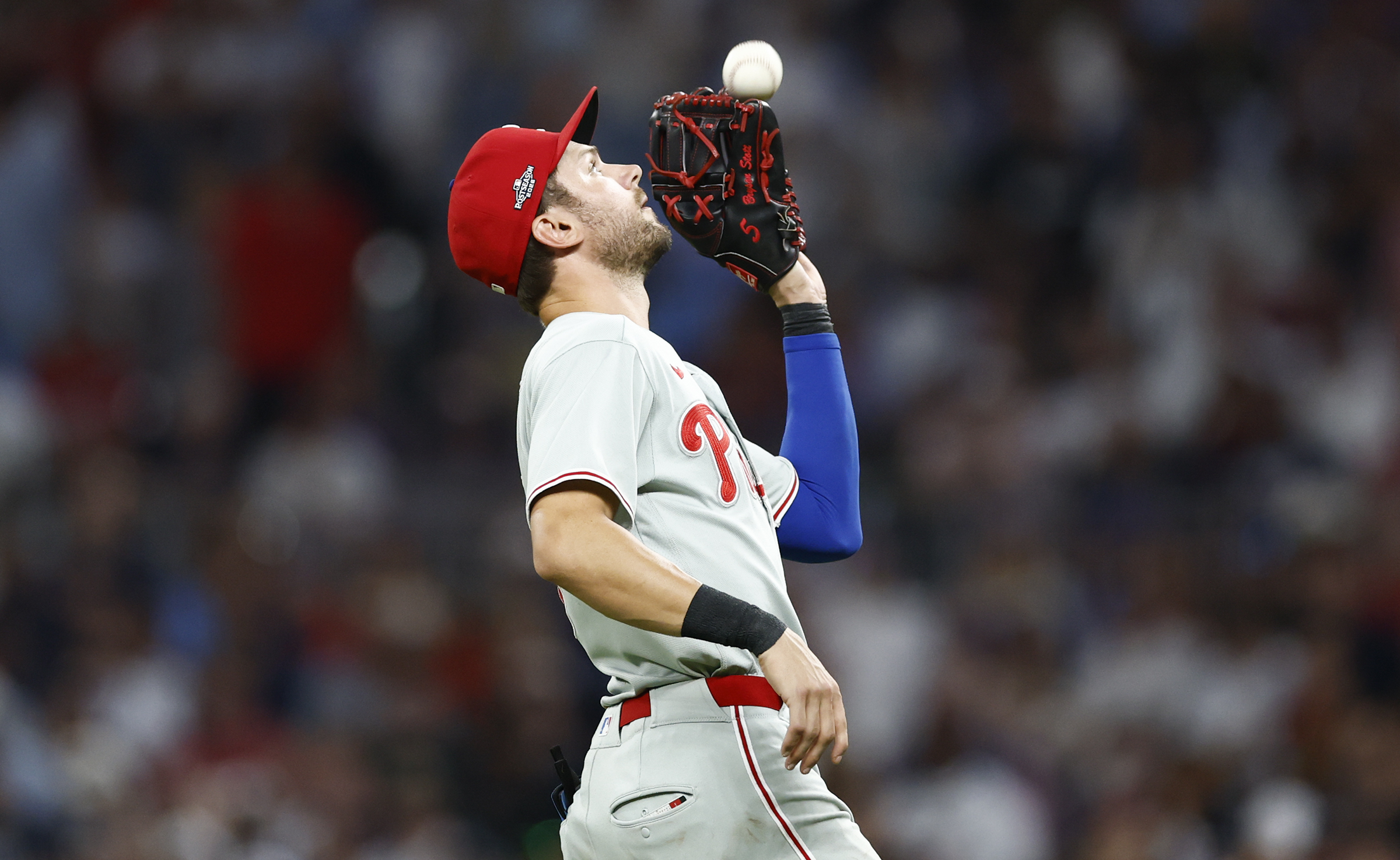
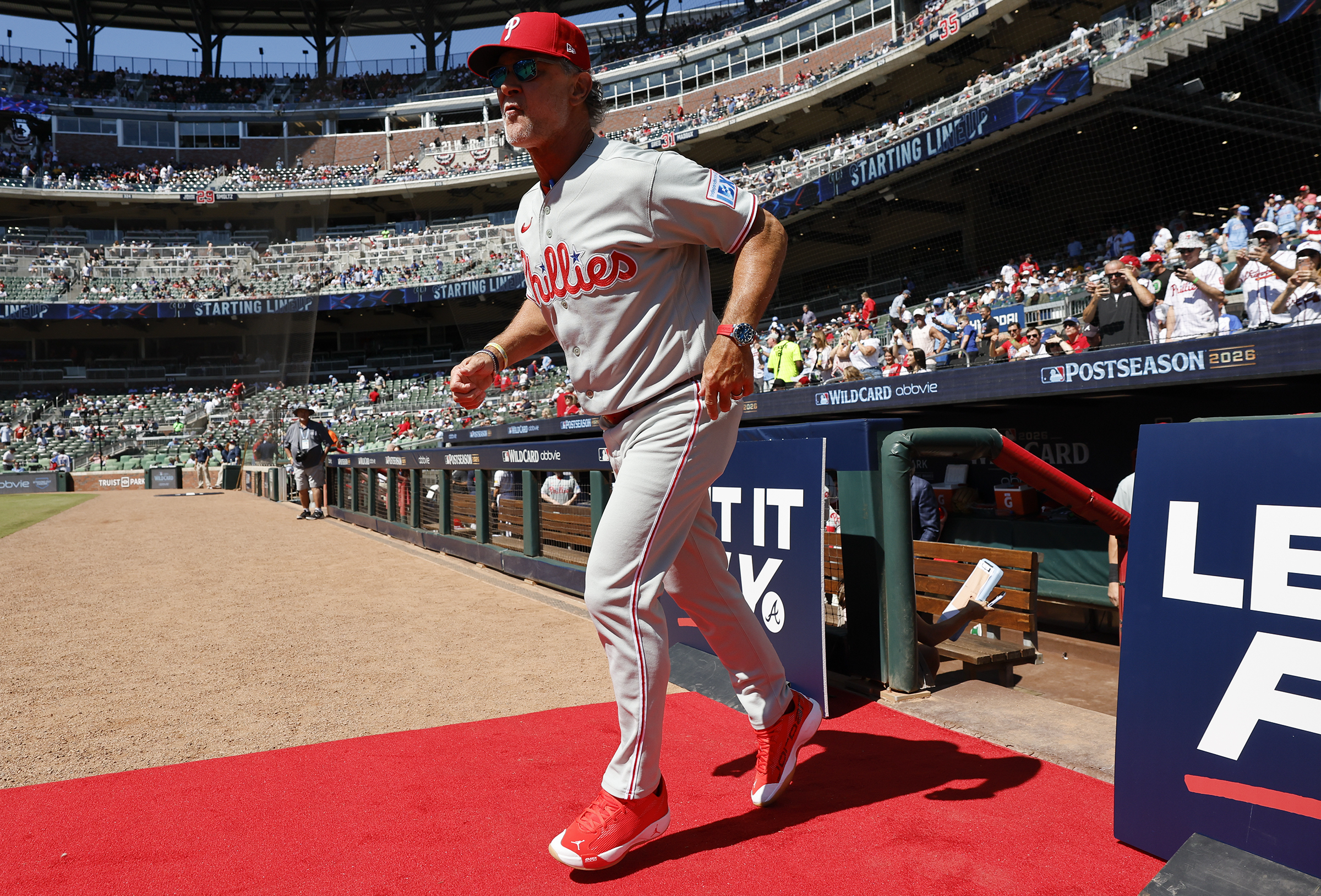
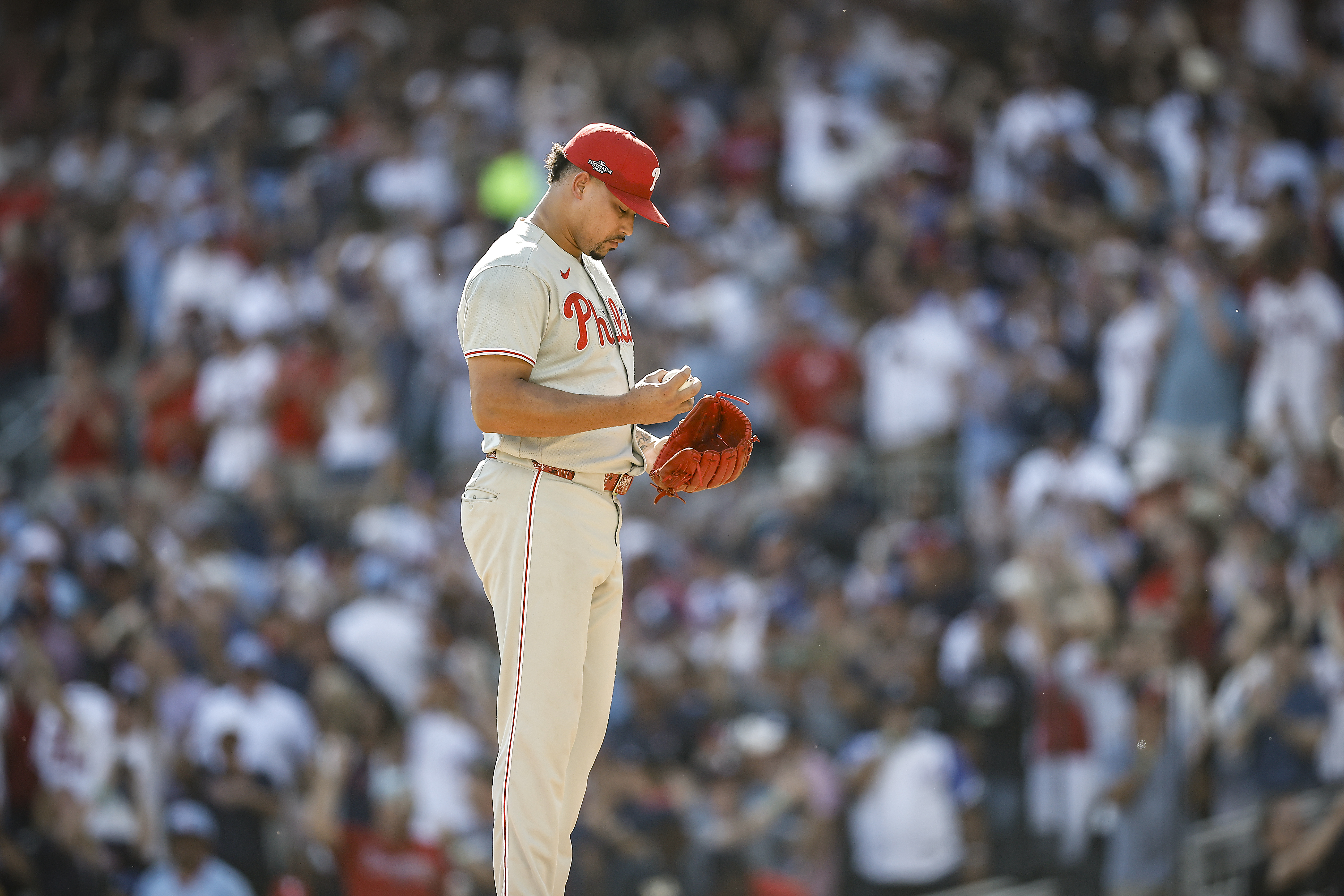
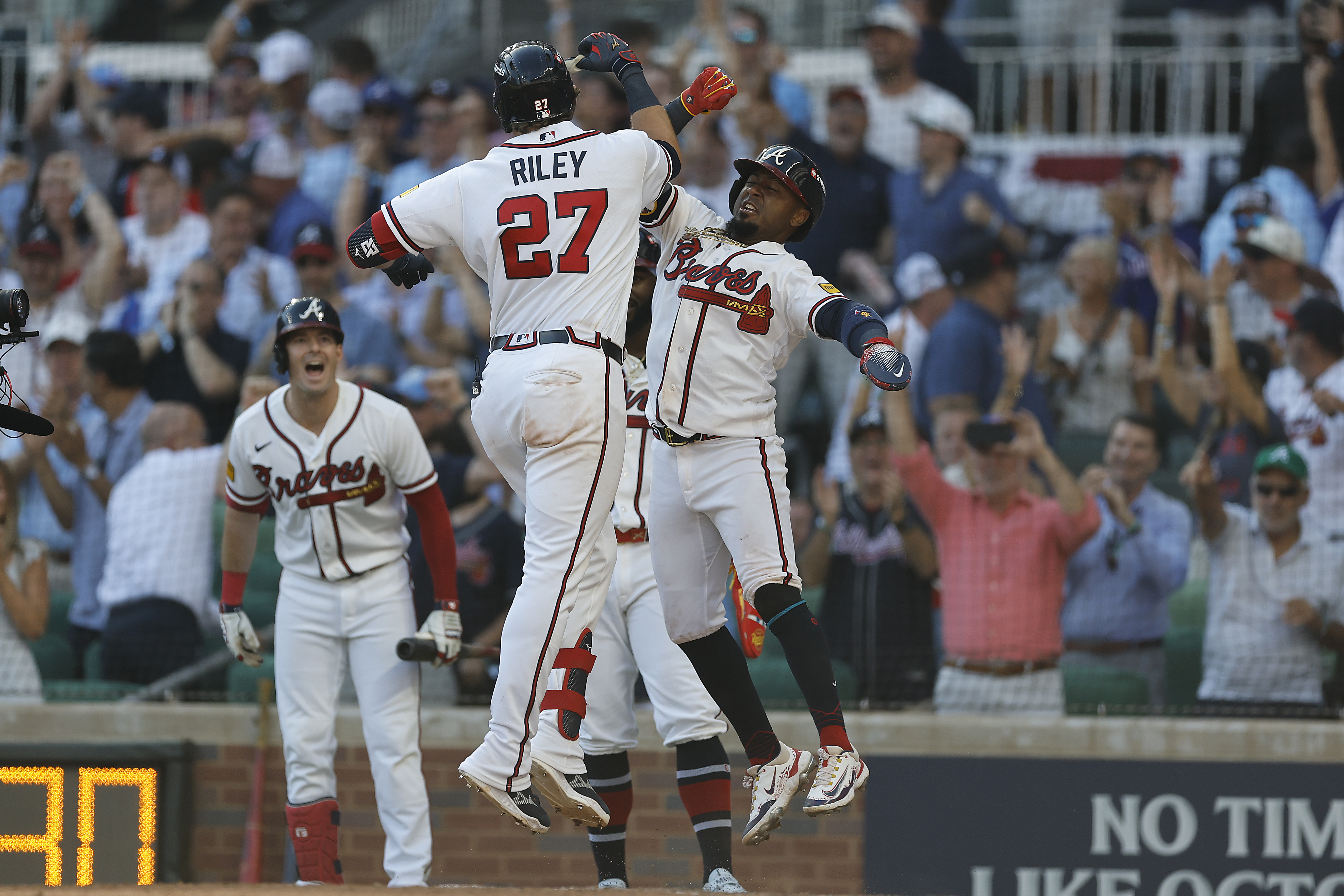
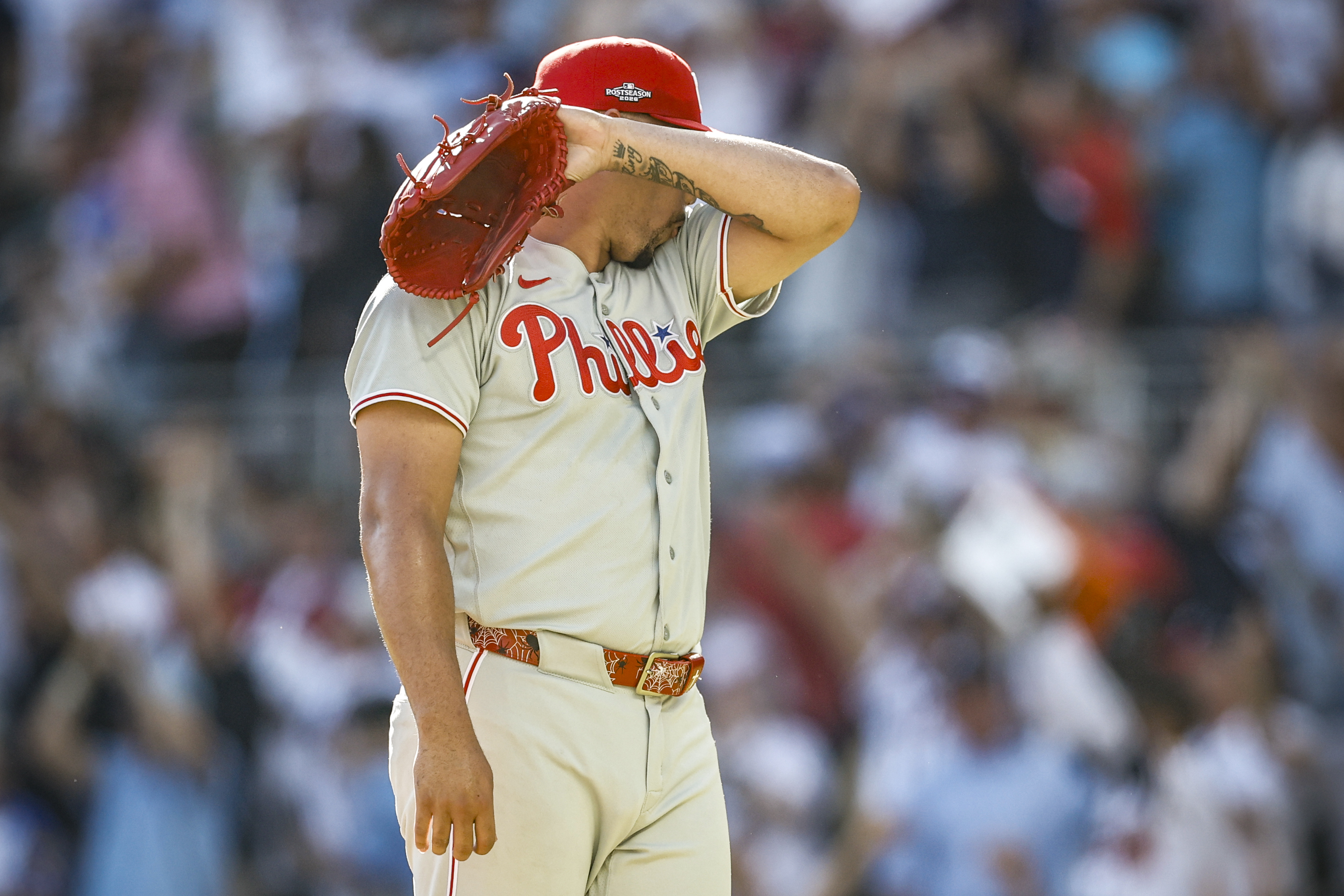
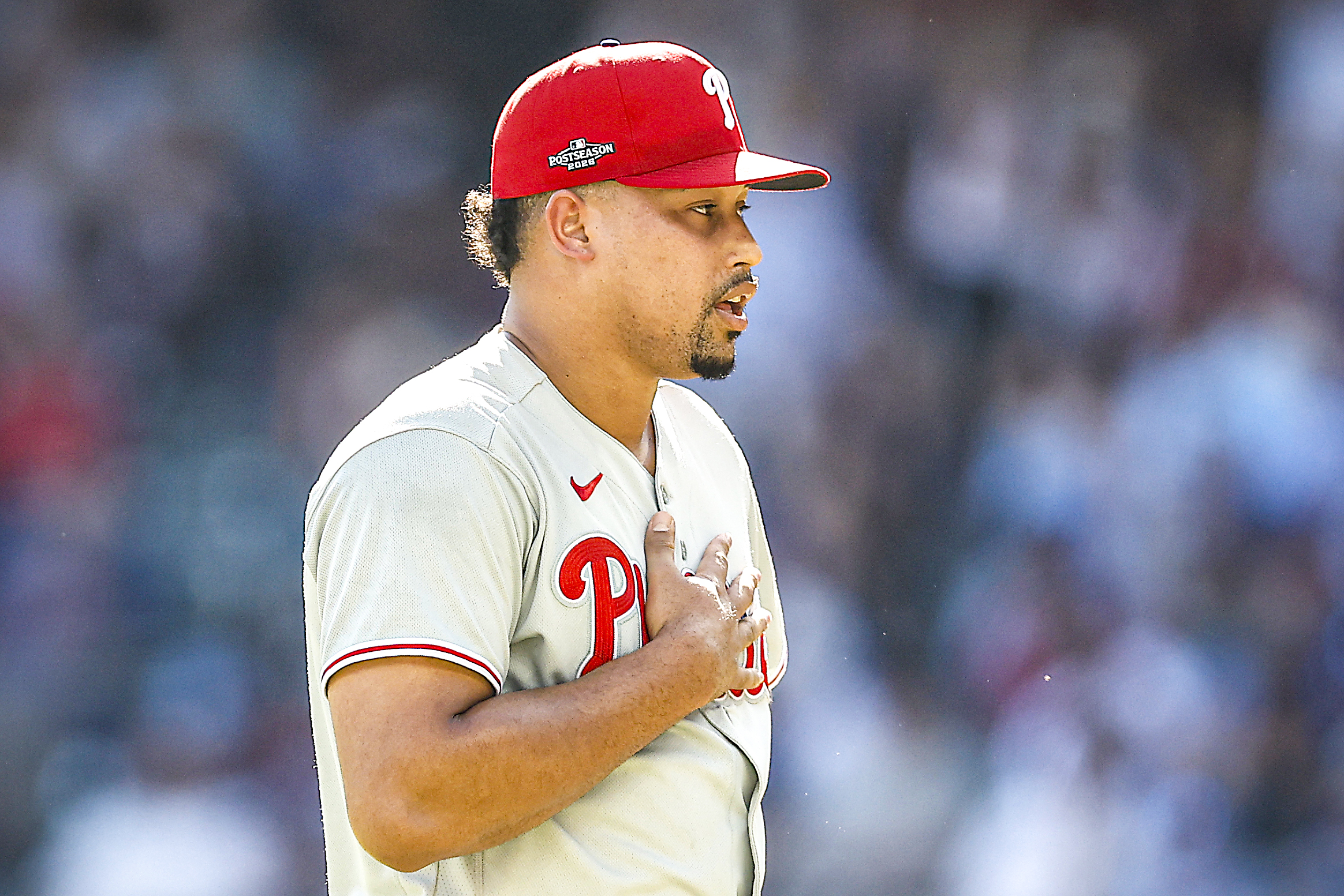
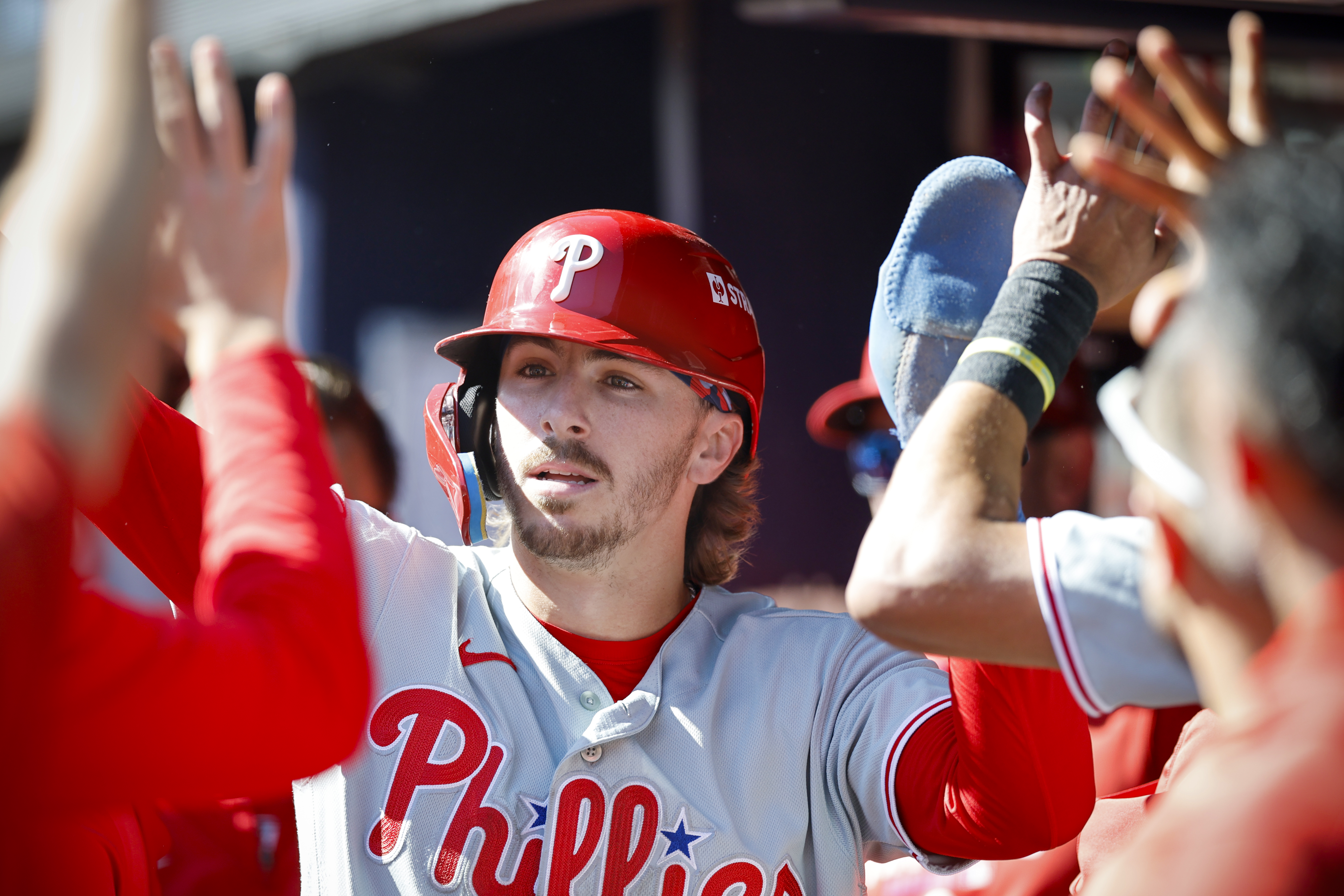
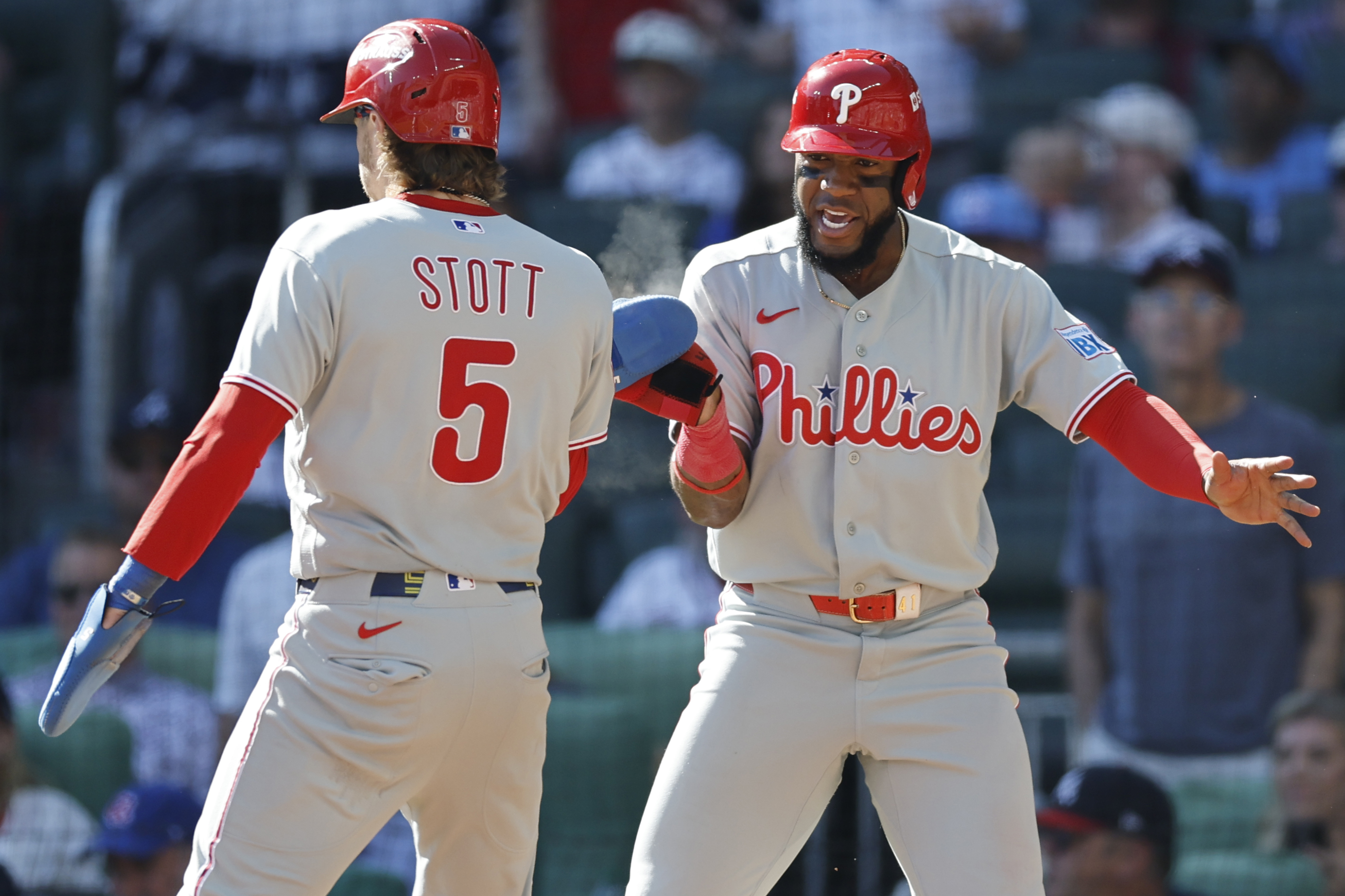
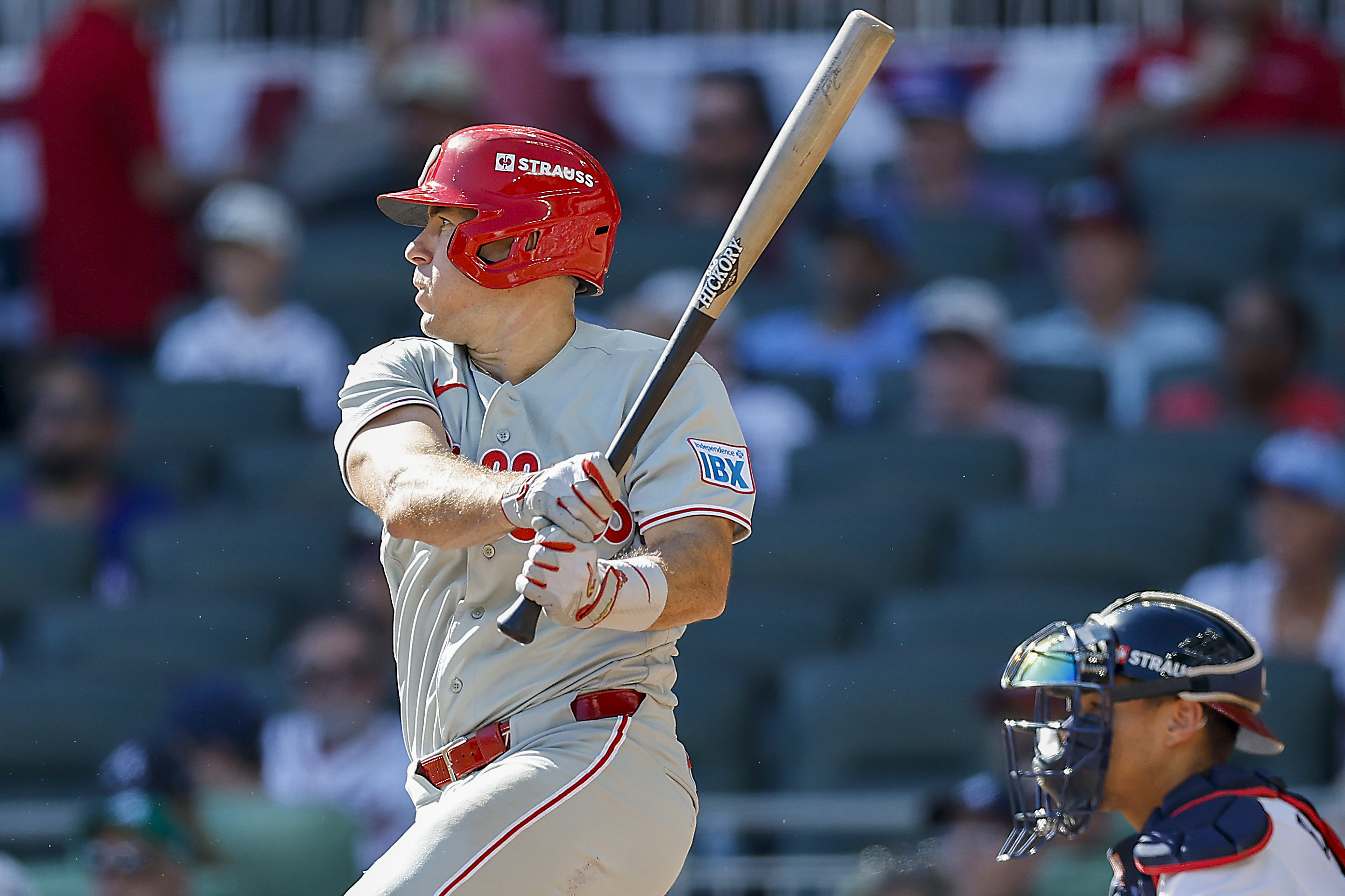
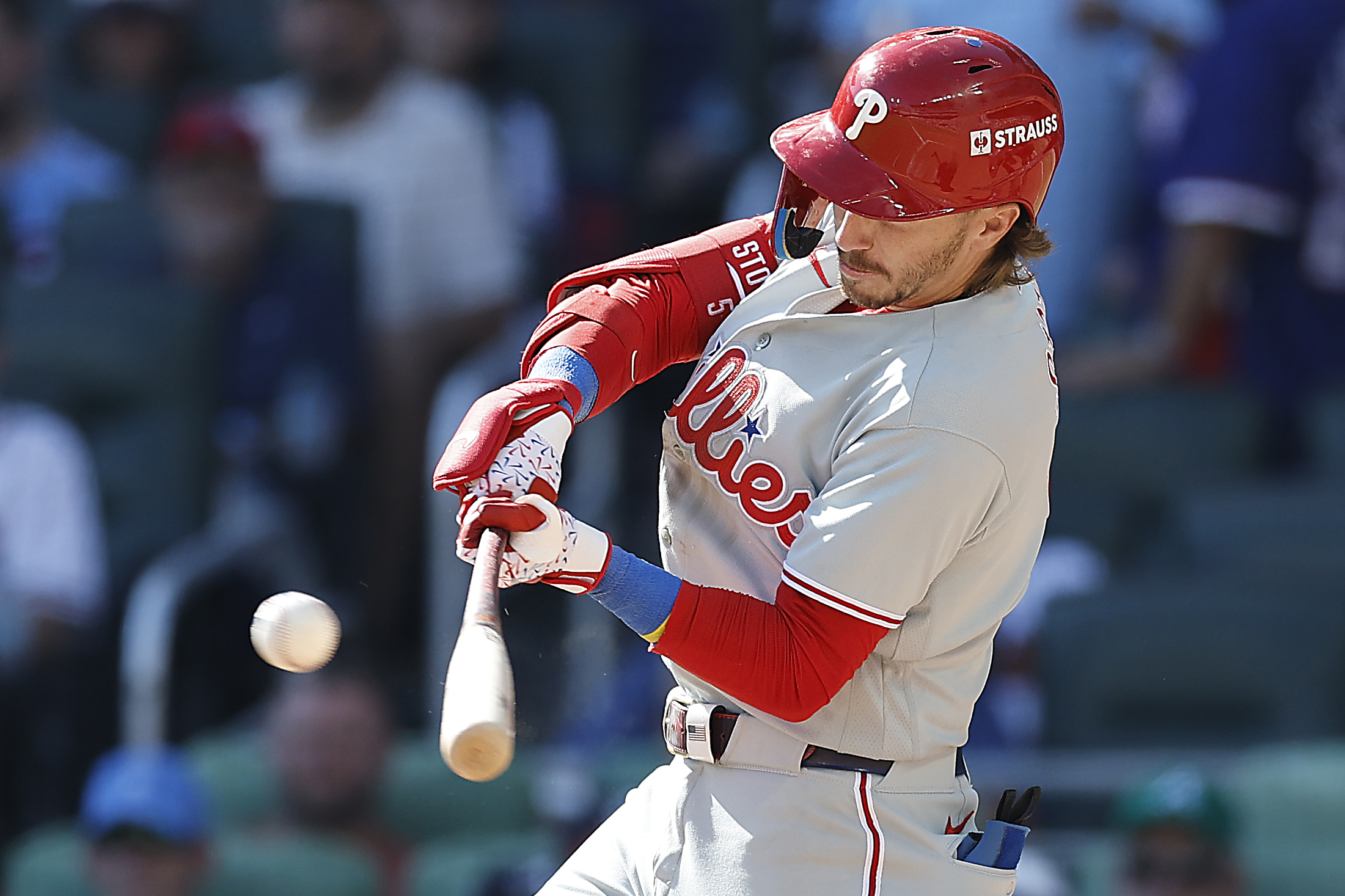
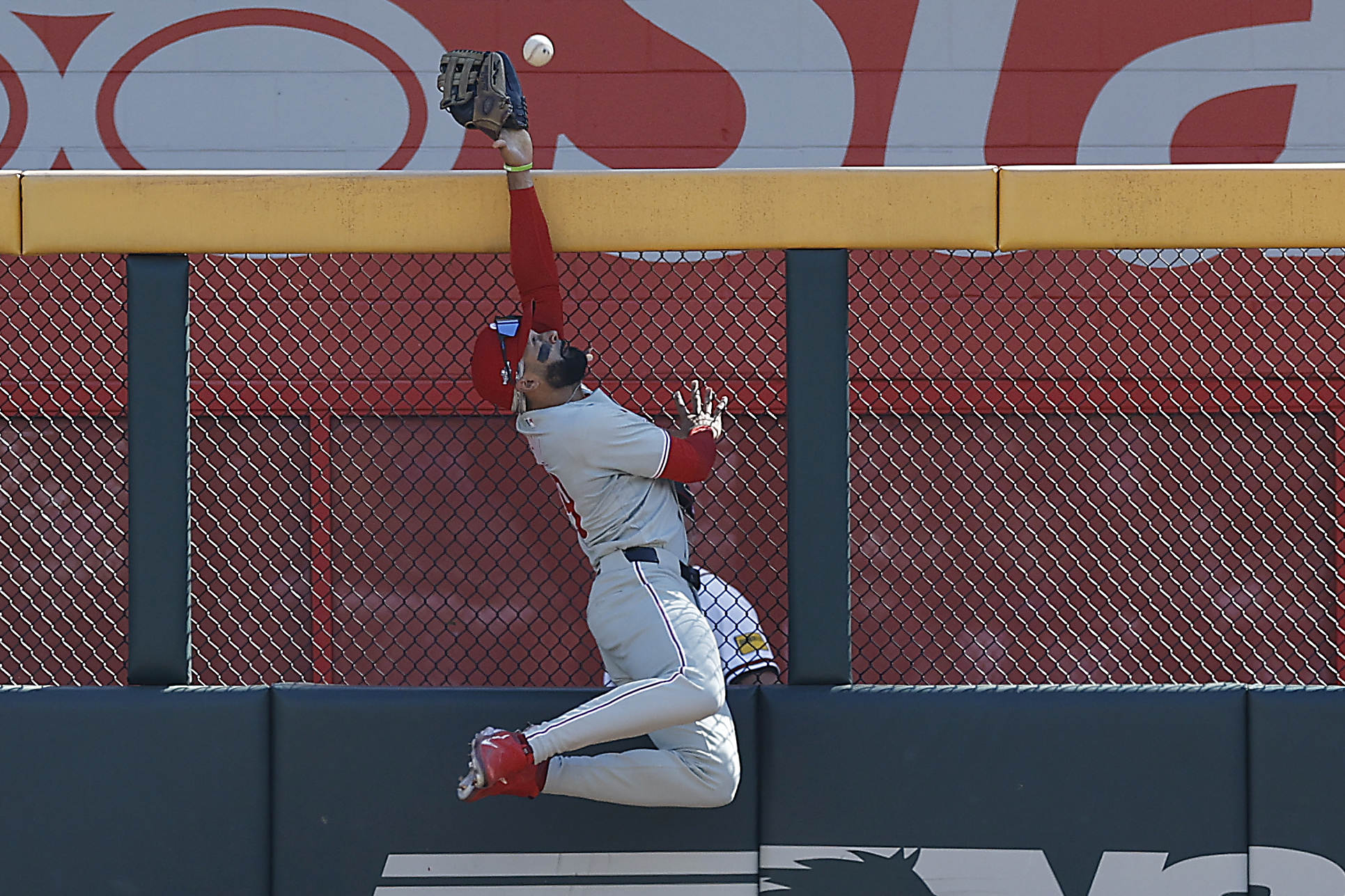
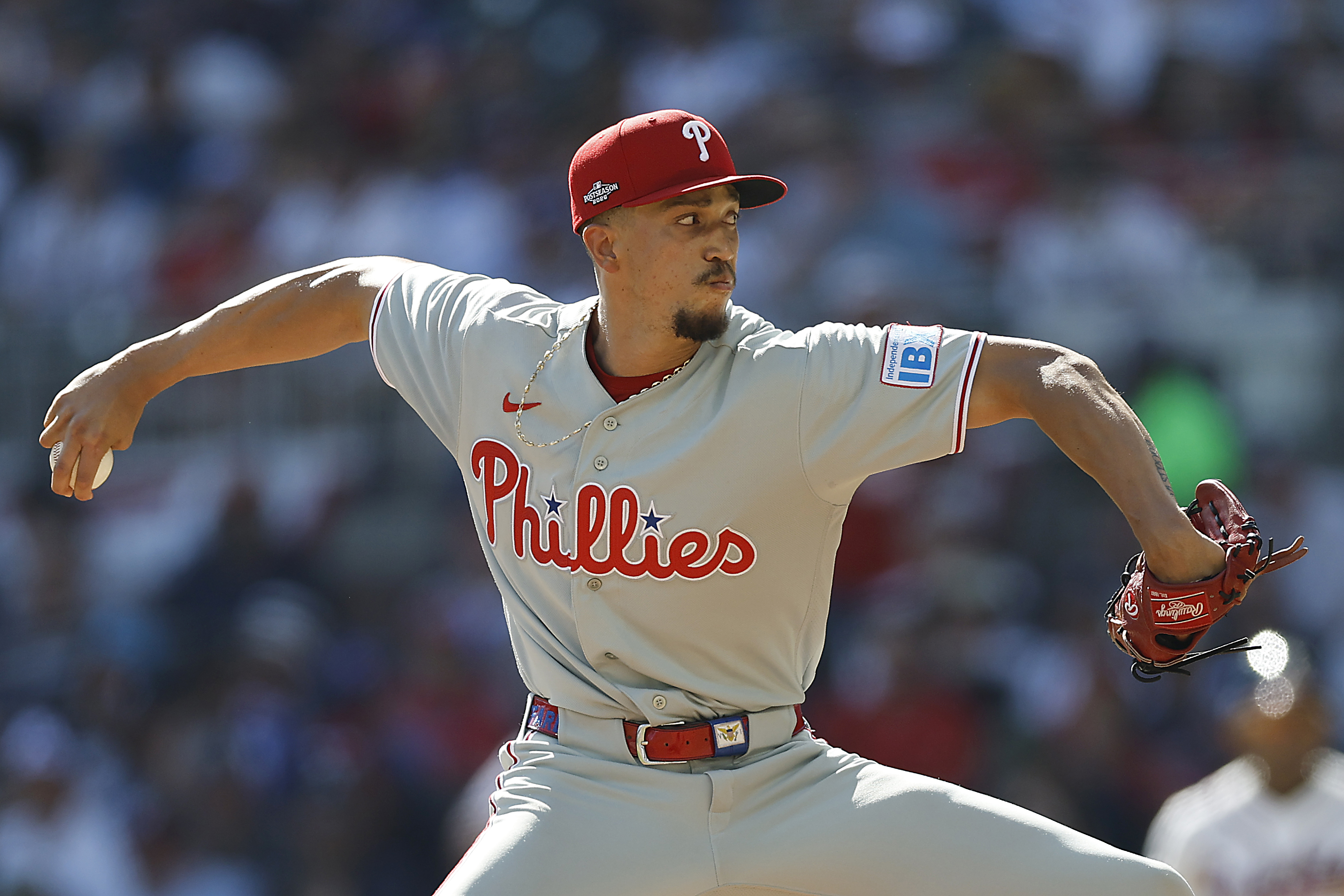
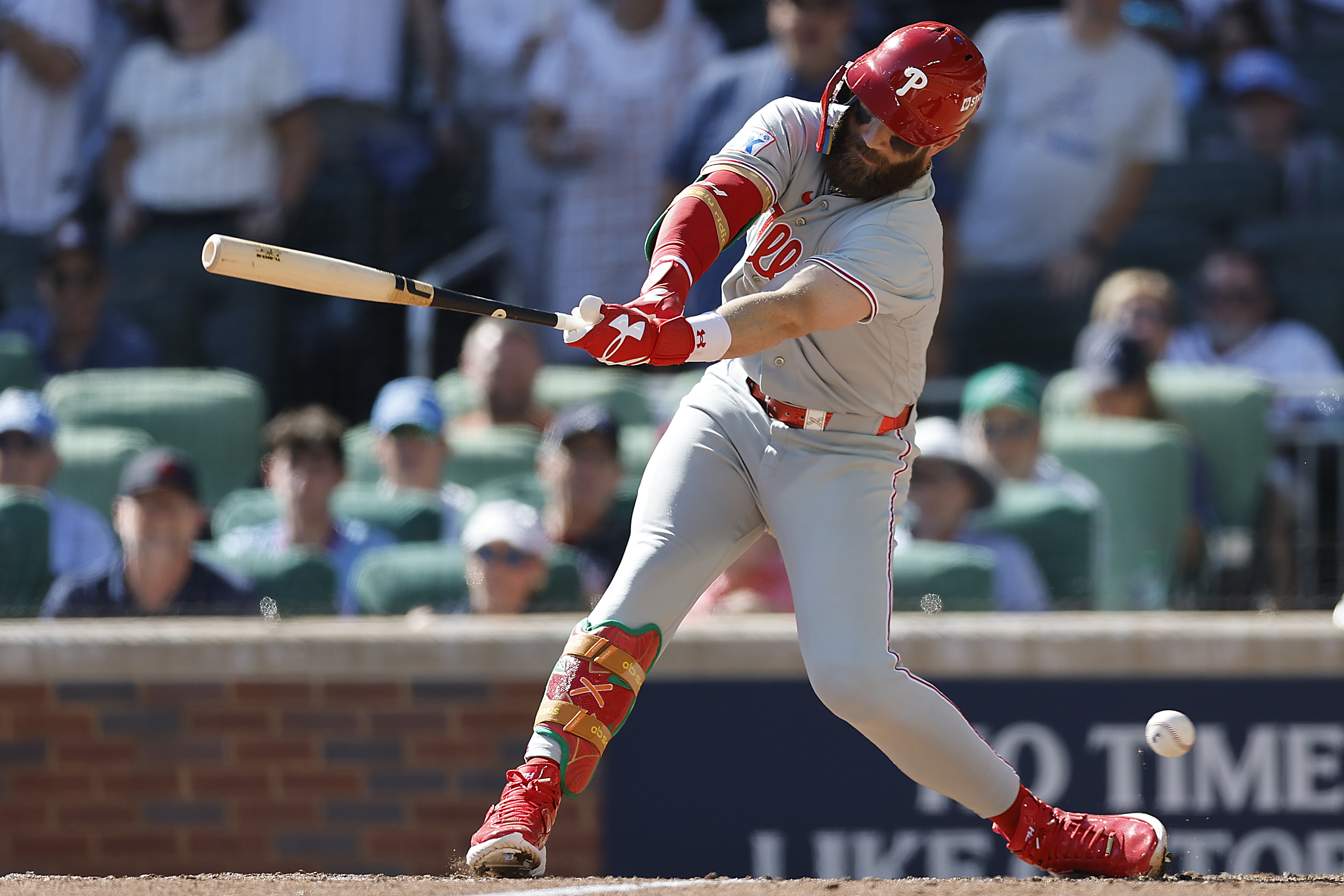
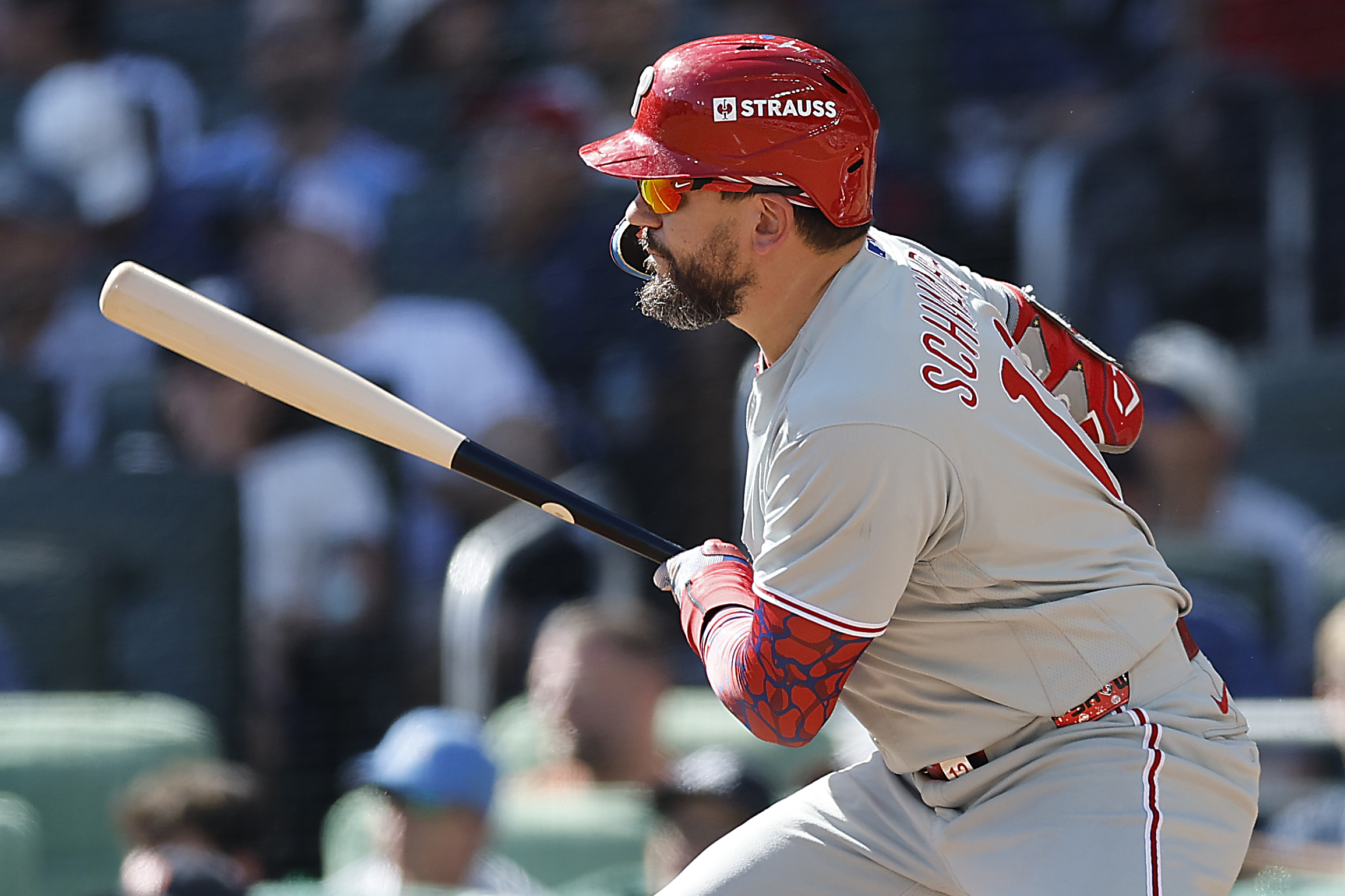
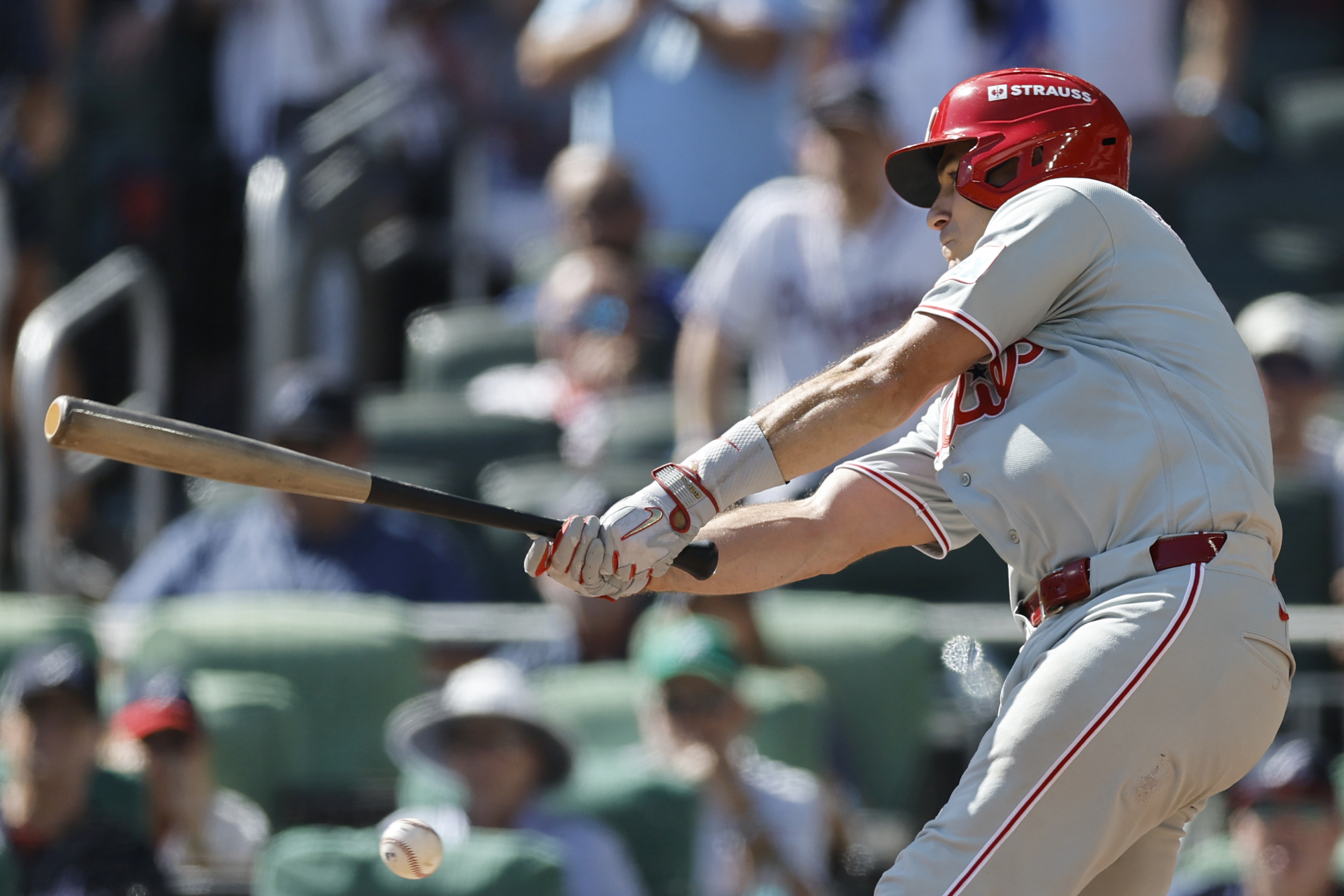
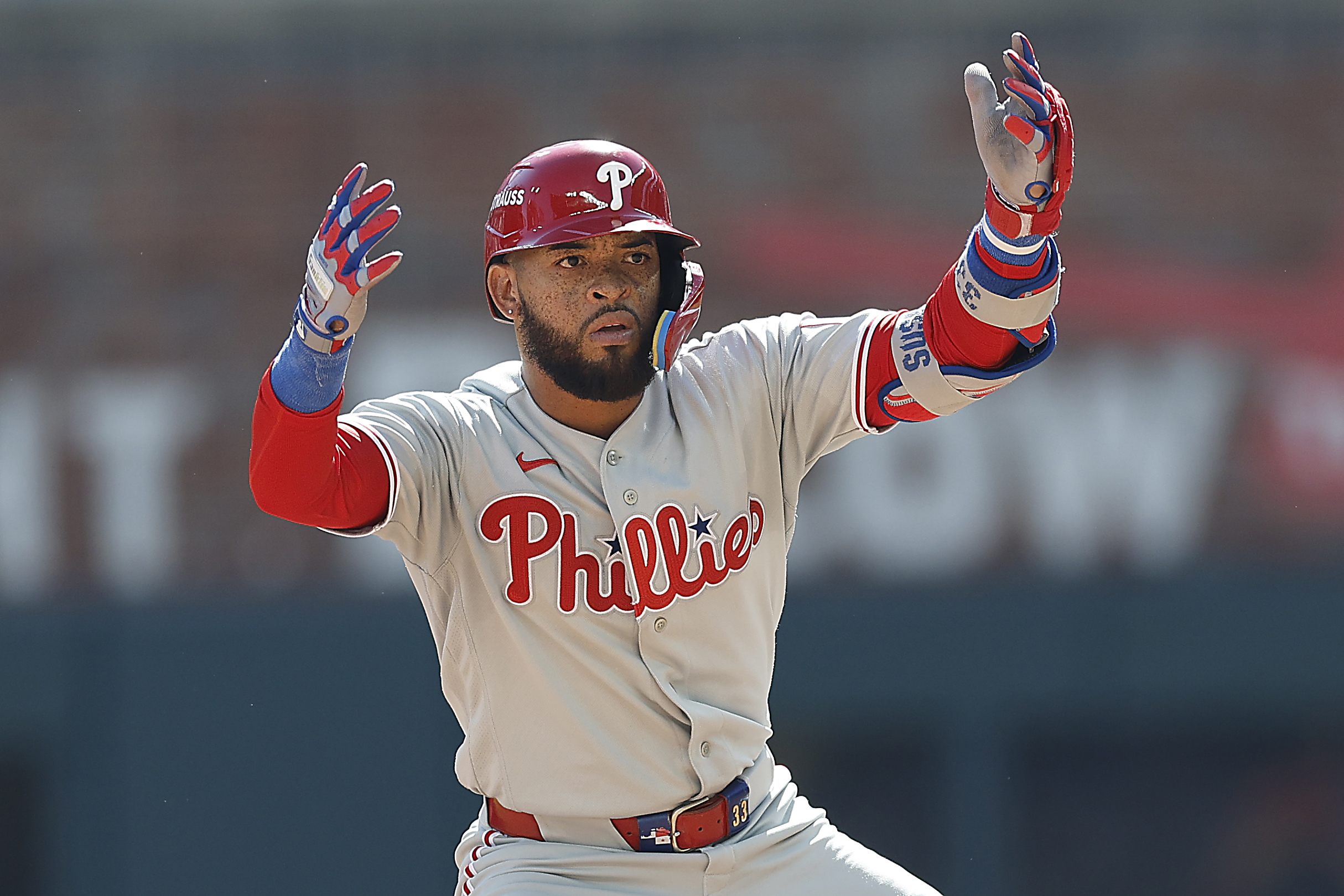
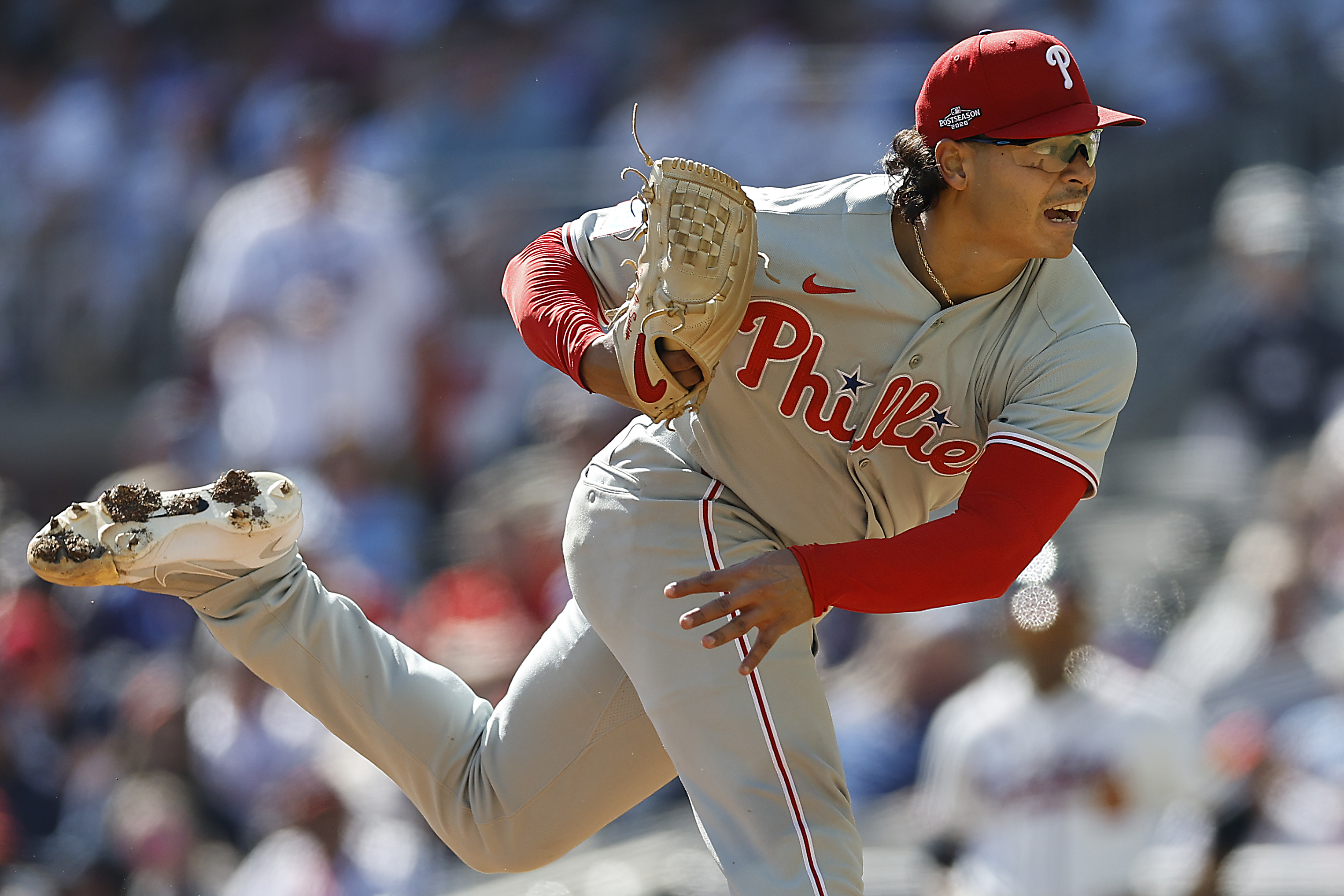
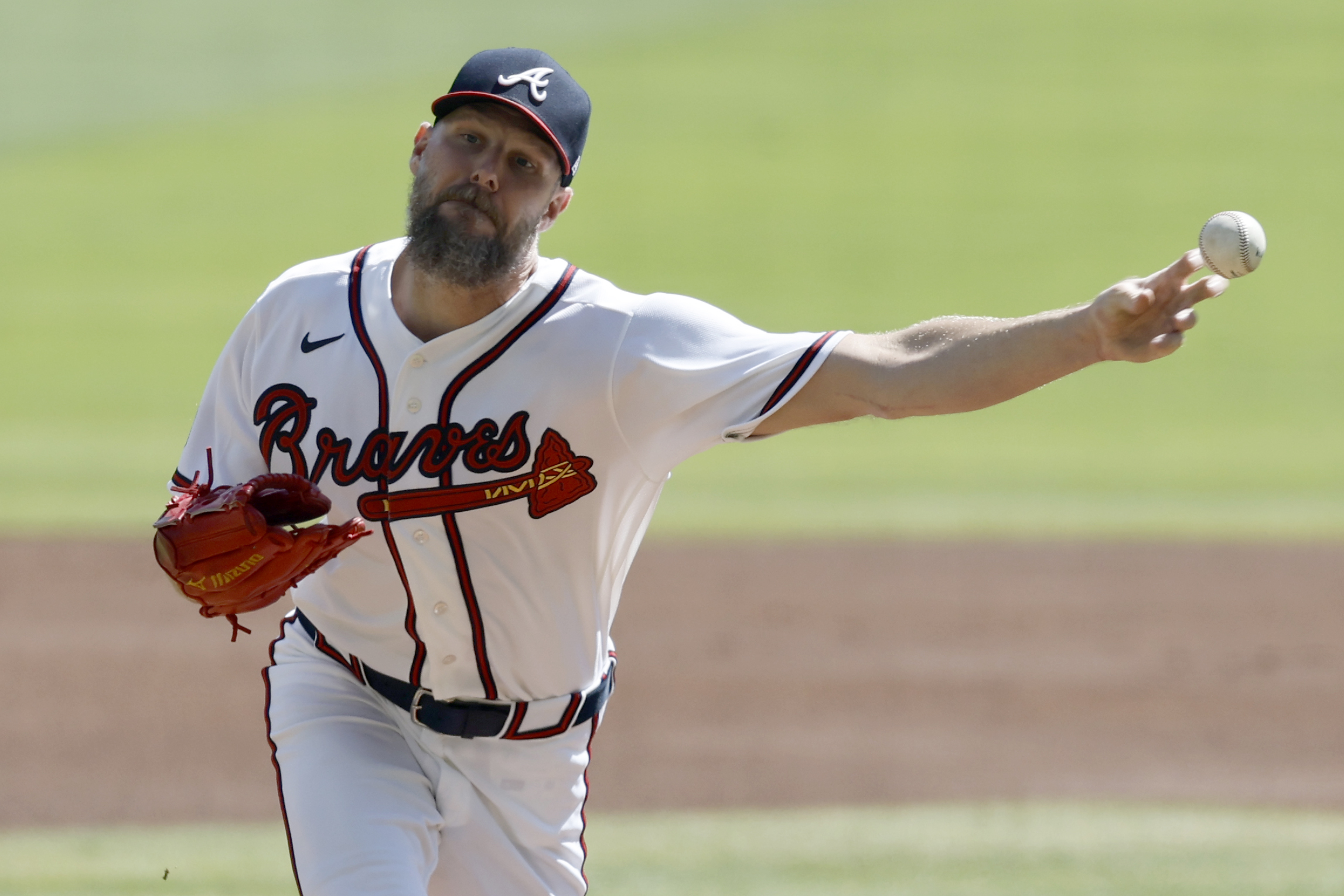
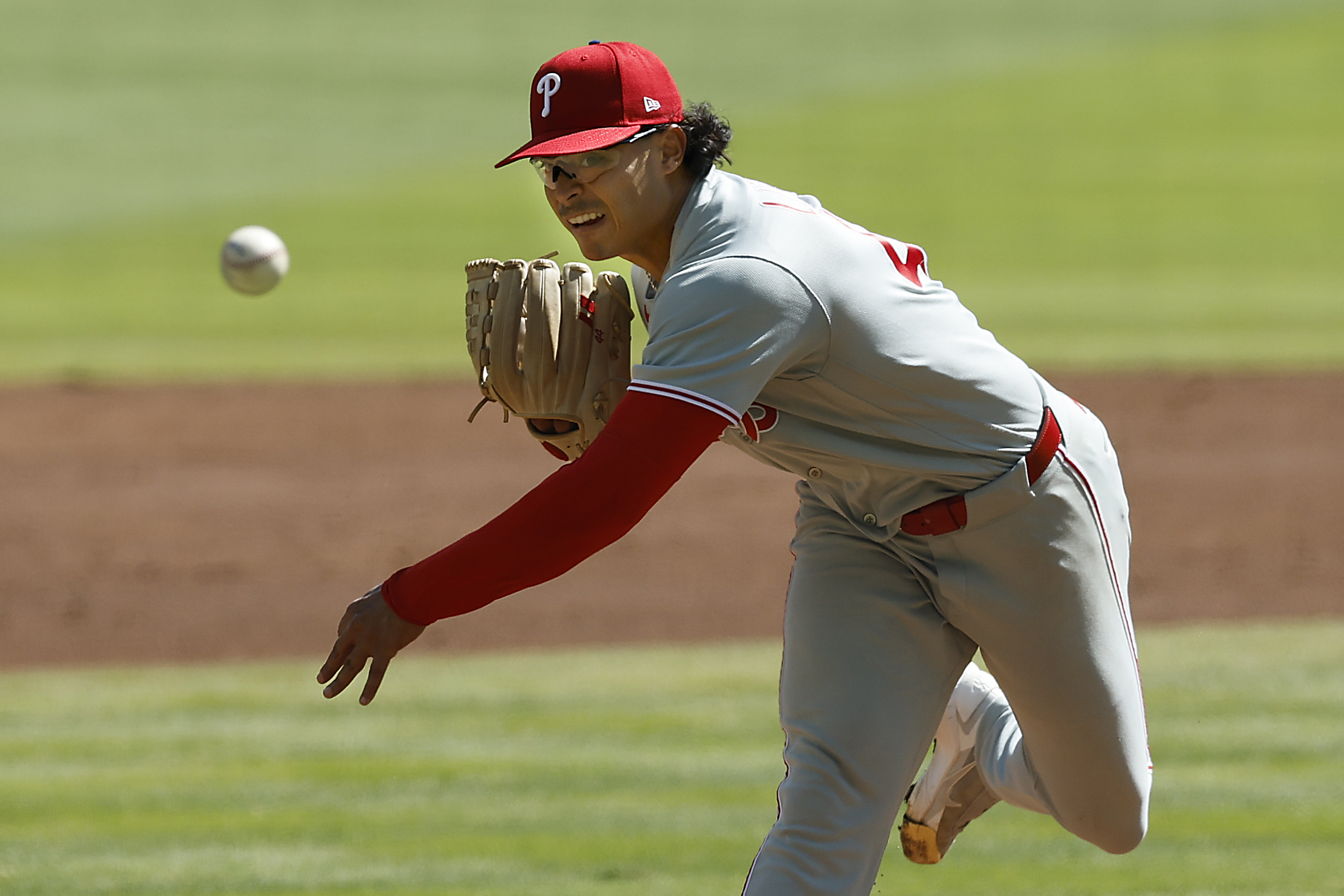
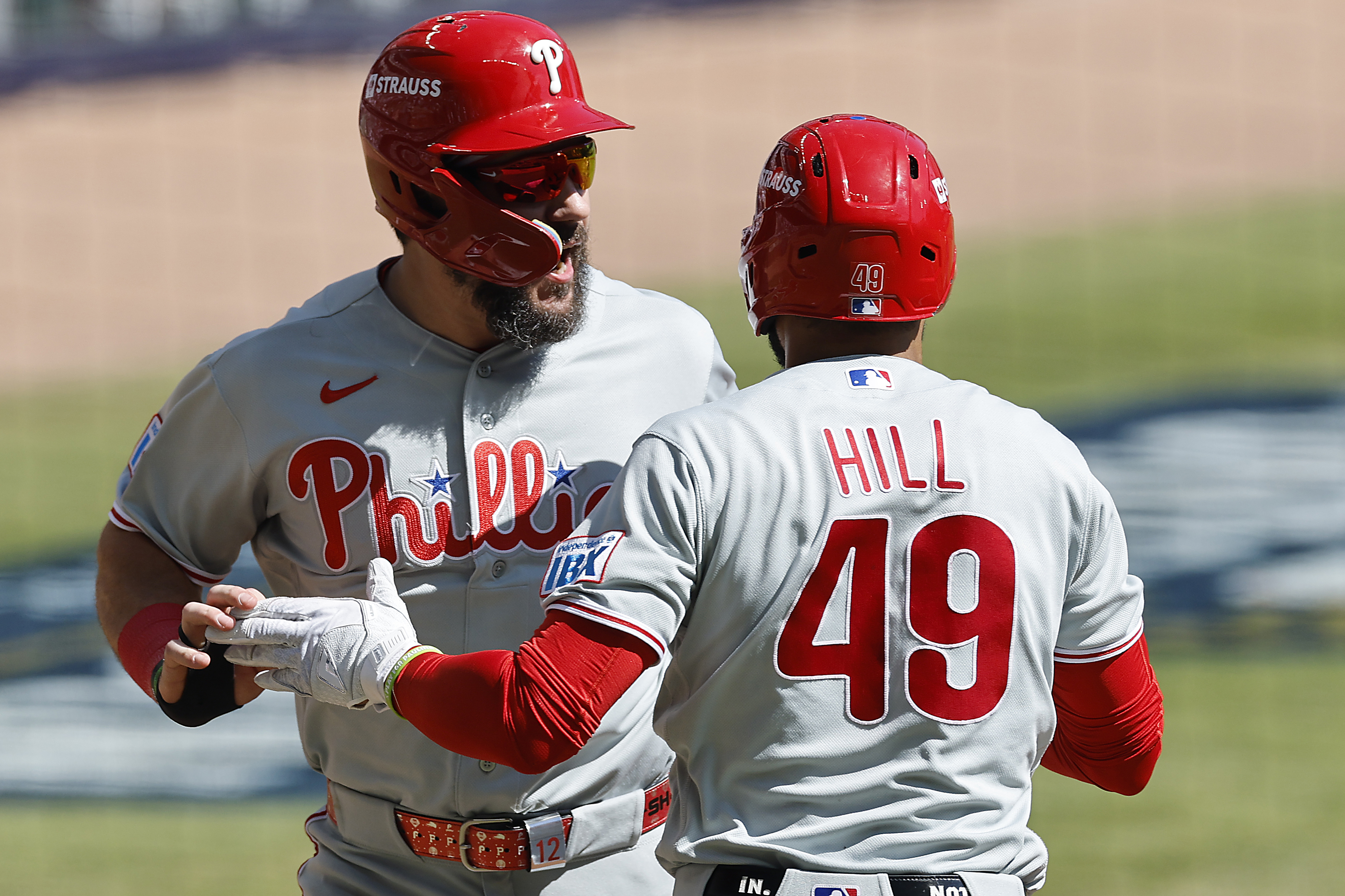
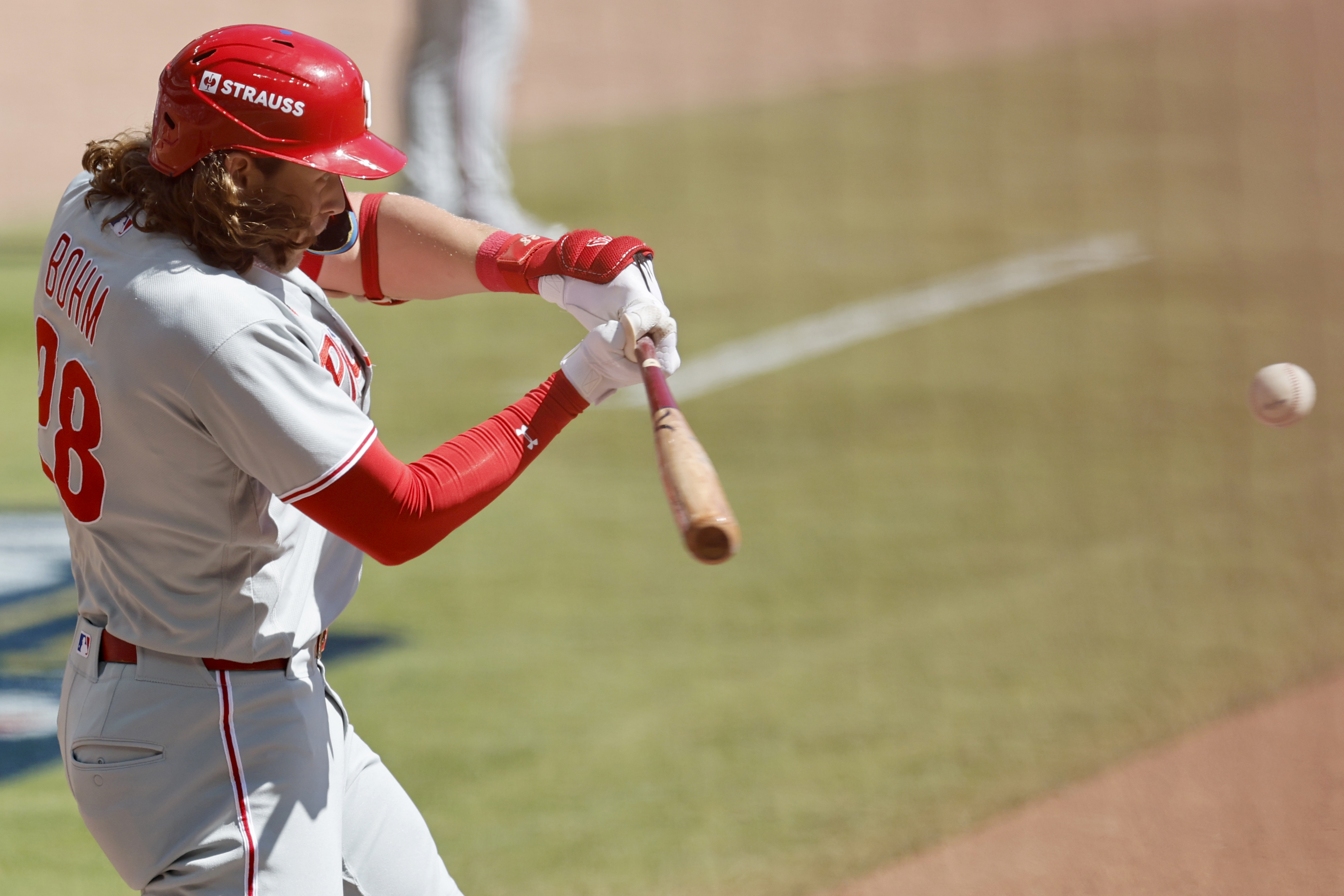
Phillies Alec Bohm walks off the field after the final out in Game 3 of the National League wild-card series against the Braves Thursday, Oct. 1, 2026, in Atlanta.Yong Kim / Staff PhotographerBraves Austin Riley (left) and Matt Olson celebrate their win in Game 3 of the National League wild-card series over the Phillies Thursday, Oct. 1, 2026, in Atlanta.Yong Kim / Staff PhotographerBraves starting pitcher Chris Sale closes the game during the ninth inning in Game 3 of the National League wild-card series against the Phillies Thursday, Oct. 1, 2026, in Atlanta.Yong Kim / Staff PhotographerBraves right fielder Ronald Acuña Jr. attempts to catch Phillies Derek Hill triple during the eighth inning in Game 3 of the National League wild-card series Thursday, Oct. 1, 2026, in Atlanta.Yong Kim / Staff PhotographerPhillies Derek Hill runs to third after hitting a triple during the eighth inning in Game 3 of the National League wild-card series against the Braves Thursday, Oct. 1, 2026, in Atlanta.Yong Kim / Staff PhotographerPhillies pitcher Jonathan Bowlan after Braves Matt Olson hits a solo home run during the seventh inning in Game 3 of the National League wild-card series Thursday, Oct. 1, 2026, in Atlanta.Yong Kim / Staff PhotographerBraves Matt Olson hits a solo home run during the seventh inning in Game 3 of the National League wild-card series Thursday, Oct. 1, 2026, in Atlanta.Yong Kim / Staff PhotographerPhillies first baseman Bryce Harper hits a double during the sixth inning in Game 3 of the National League wild-card series against the Braves Thursday, Oct. 1, 2026, in Atlanta.Yong Kim / Staff PhotographerPhillies designated hitter Kyle Schwarber hits a single during the sixth inning in Game 3 of the National League wild-card series against the Braves Thursday, Oct. 1, 2026, in Atlanta.Yong Kim / Staff PhotographerPhillies Bryan de la Cruz hits a single during the fifth inning in Game 3 of the National League wild-card series against the Braves Thursday, Oct. 1, 2026, in Atlanta.Yong Kim / Staff PhotographerPhillies Brandon Marsh tosses his bat after drawing a walk during the fifth inning in Game 3 of the National League wild-card series Thursday, Oct. 1, 2026, in Atlanta.Yong Kim / Staff PhotographerPhillies second baseman Bryson Stott after he strikes out looking to end the fourth inning in Game 3 of the National League wild-card series against the Braves Thursday, Oct. 1, 2026, in Atlanta.Yong Kim / Staff PhotographerPhillies pitcher Zack Wheeler after Braves Ozzie Albies hits a two-run homer during the fourth inning in Game 3 of the National League wild-card series Thursday, Oct. 1, 2026, in Atlanta.Yong Kim / Staff PhotographerPhillies pitcher Zack Wheeler after Braves Ozzie Albies hits a two-run homer during the fourth inning in Game 3 of the National League wild-card series Thursday, Oct. 1, 2026, in Atlanta.Yong Kim / Staff PhotographerPhillies pitcher Zack Wheeler throws a pitch during the third inning in Game 3 of the National League wild-card series against the Braves Thursday, Oct. 1, 2026, in Atlanta.Yong Kim / Staff PhotographerPhillies pitcher Tim Mayza throws a pitch during the second inning in Game 3 of the National League wild-card series against the Braves Thursday, Oct. 1, 2026, in Atlanta.Yong Kim / Staff PhotographerPhillies second baseman Bryson Stott (right) and shortstop Trea Turner (left) go after a single hit by Braves designated hitter Dominic Smith during the second inning in Game 3 of the National League wild-card series Thursday, Oct. 1, 2026, in Atlanta.Yong Kim / Staff PhotographerPhillies manager Don Mattingly takes out pitcher Aaron Nola during the second inning in Game 3 of the National League wild-card series against the Braves Thursday, Oct. 1, 2026, in Atlanta.Yong Kim / Staff PhotographerPhillies pitcher Aaron Nola after giving up a three-run home run to Braves Michael Harris II during the first inning in Game 3 of the National League wild-card series against the Braves Thursday, Oct. 1, 2026, in Atlanta.Yong Kim / Staff PhotographerBraves Michael Harris II hits a three-run home run during the first inning in Game 3 of the National League wild-card series against the Phillies Thursday, Oct. 1, 2026, in Atlanta.Yong Kim / Staff PhotographerPhillies designated hitter Kyle Schwarber hits a single during the first inning in Game 3 of the National League wild-card series against the Braves Thursday, Oct. 1, 2026, in Atlanta.Yong Kim / Staff PhotographerPhillies shortstop Trea Turner and back-up catcher Garrett Stubbs (right) throw the baseball during warm ups before the Phillies play on the Atlanta Braves in game 3 of the National League wild-card series on Thursday, Oct. 1, 2026 in Atlanta.Yong Kim / Staff Photographer
Please stop suggesting that …
… Garrett Stubbs should’ve started over J.T. Realmuto since Nola was pitching. Yes, Nola has better numbers this season with Stubbs behind the plate, but they’re practically equal (.703 OPS against with Realmuto compared to a .692 OPS against with Stubbs) across Nola’s career. Plus, Realmuto has caught more than 700 innings from Nola than Stubbs. Realmuto had a big triple in Game 1 and another hit in Game 2. Plus, his defense in Game 2 kept the Phils alive. There was no reason to swap Realmuto out in an elimination game and sacrifice an at-bat or two just so Stubbs could catch Nola.
… Aidan Miller to be an impact player. The Phils have produced just one homegrown impact bat — Rhys Hoskins — since the end of the last golden era. Bohm and Stott’s career production hovers around league average. Crawford looks like a fine player but not a star. Hoskins had a career OPS+ of 125 when he left the Phils. That kind of production would play. The lineup will be another year older in 2027 and it’s hard to imagine this run continuing without an infusion of young talent. There’s not much in the pipeline besides Miller.
… they already have their rotation set for 2027 and it’ll rival any team in baseball. You can put Zack Wheeler, Jesús Luzardo, and Cristopher Sánchez up against any other staff’s top three pitchers. Painter looked the part after returning from the minors and his performance in Game 2 makes you feel even better about next season. Nola threw a dud on Thursday, but he’s a luxury as your fifth starter.
Phillies shortstop Trea Turner, who will be 33 next season, has seven years left on his contract.Yong Kim / Staff Photographer
Worry about the Phils because …
… they’re getting older and there doesn’t seem to be much you can change about the lineup. Realmuto turns 36 in March and has two years left on his deal. Harper and Schwarber will both be 34 next season and Turner will be 33 with seven years left on his 11-year deal. The offense — besides Harper and Schwarber — underperformed in 2026 and it’s hard to believe they’re going to get better with a core that remains intact. They’ll acquire a right fielder (or a first baseman and have Harper stay in right) and maybe replace Brandon Marsh in left. They can swap out Bohm for Miller but there doesn’t seem to be room for the drastic upgrades they need as they already have $217 million committed for next season. Plus, they need to spend some money on the bullpen.
Every era eventually ends. Thursday night felt like an inflection point. The Phils won’t run it back again. Right?
The Phillies have Aaron Nola and Zack Wheeler lined up Thursday to face the Braves in Game 3, a game that seemed unlikely to be played when Bryce Harper lost that fly ball in the afternoon sun. But we know what happened next. Atta’ boy, Harper.
Now the Phils have every advantage to become just the fourth team in the new postseason format to win a wild-card series after dropping Game 1.
The key to winning this series was forcing a third game as Atlanta entered the playoffs unsure who would be its third starter. They’ll use Ray Kerr, a reliever who returned in August from Tommy John surgery, as an opener likely followed by Grant Holmes as a bulk reliever.
And we thought Don Mattingly’s options were limited this postseason.
Credit Cristopher Sánchez and Andrew Painter for the heavy lifting in Game 2 on Wednesday. They were excellent and allowed the Phils to enter Game 3 with Nola and Wheeler, two pitchers who have met the moment more often than not in this Phillies era.
Jhoan Duran didn’t pitch in Game 2 so he’ll be ready on Thursday. Mattingly said it’s “all hands on deck” but the Phillies would love to just use three.
After throwing 27 pitches in a two-inning appearance in Game 1, closer Jhoan Duran should be available for Game 3.Yong Kim / Staff Photographer
Earl Weaver famously said momentum in baseball is the next day’s starting pitcher. The Phillies left Game 2 with plenty of momentum after punching back with three homers and now they’ll enter Game 3 on the same ride as the Braves scramble to find a pitcher.
Kerr throws in the mid-90s and faced the Phillies twice in September, holding them scoreless over 6⅓ innings in relief in a pair of games the Phils won. Holmes is a middle-of-the rotation starter with a low-90s fastball who blanked the Phillies for six innings in a 1-0 Phils victory on Sept. 7. Kerr and Holmes handled the Phillies in September. But then again, who didn’t?
The toughest game of the series was always going to be Game 1 against Chris Sale, and the Phillies nearly won. The level of difficultly eased up in Game 2 against Tyler Mahle. The Phillies won that. The key to winning this series was always the Phils forcing a third game, knowing Atlanta could not match their starters. The Phillies got to Game 3. There’s no excuse not to finish the job.
Nola needs to …
Do what he did last year against the Dodgers in an elimination game. He pitched two innings, navigating one turn through the L.A. lineup in Game 3 of the National League Division Series before passing it to Ranger Suárez. Nola and Suárez combined for one run over seven innings. The plan was then to use Duran for six outs but that wasn’t necessary as the Phils took a seven-run lead in the eighth. The Phils will ask more from Nola than two innings but the task will be the same: Keep it close and get the ball to Wheeler.
Do what he always does. The Phillies looked ready to collapse last week until you saw that Wheeler was starting Game 162 and the Phillies just needed a win. Did anyone doubt Wheeler? He threw 97 pitches on Sunday so he’ll be pitching in Game 3 on three days’ rest. How many innings can the Phils expect from him? Two or three would be ideal. If Nola goes four or five and Wheeler gets you to the seventh, then Duran can take it from there.
Rookie Andrew Painter pitched three shutout innings to close out the Braves in Game 2.Yong Kim / Staff Photographer
I’m still thinking about …
… Painter starting his postseason debut by throwing six straight balls before pitching three scoreless innings for the win. The biggest positive to come out of this season has been Painter since he returned from triple A. He didn’t look ready for the moment in the first half of the season just like he didn’t look ready for it on Wednesday. But he finished the regular season with a 3.65 ERA in 11 starts. He recovered, just like he did on Wednesday. It’s too early to think about 2027 but at least the Phillies know they can factor Painter into their plans. That wasn’t a guarantee in June.
… how about the Braves not using Robert Suarez in Game 2? Suarez returned from the injured list in September and pitched twice in the season’s final week before being added to the postseason roster. He was lights out as Atlanta’s setup man before injuring his elbow in June and his velocity last week was about where it was preinjury. So how does Suarez — who the Braves signed before the season to a three-year contract worth $45 million — not get used in Game 2?
The Braves played matchups in the eighth and got burned by left-hander Dylan Lee giving up back-to-back left-on-left homers to Harper and Kyle Schwarber. Suarez, a right-hander, had better numbers this year against lefties than righties. That could’ve been his spot. In the 10th, Bohm homered against Didier Fuentes, who pitched for a second straight day after giving up a two-run triple in Game 1 to J.T. Realmuto. That could’ve been Suarez, too. The Phils will take it.
Jesús Luzardo gave the Phillies five strong innings in Game 1.Yong Kim / Staff Photographer
If the Phillies win …
Game 1 of the NLDS will be Saturday in Los Angeles against the Dodgers and the Phils would be happy to have to figure out their pitching plan. Jesús Luzardo would be on three days’ rest but would the Phils push him so soon after returning from the injured list? Painter would be on two days’ rest after throwing 37 pitches in relief. Can he go on Saturday?
It’ll be interesting to see how the Phils handle Game 1. One guess: They use Painter as an opener and hope he can give them three innings. Then they lean on the bullpen and try to steal a game. That allows Luzardo to be on regular rest in Sunday’s Game 2 and Wheeler to start Tuesday’s Game 3 on regular rest in Philly. First, they have to win Thursday.
He was right Tuesday to use Jhoan Duran in the seventh inning to protect a one-run lead against the top of Atlanta’s lineup in their 5-3 loss in Game 1 of their wild-card playoff series. The Phillies couldn’t get to the ninth inning unless they got through the seventh, and Duran needed just 12 pitches. That inning against Drake Baldwin and Ronald Acuna Jr. was the highest-leverage situation of the game. Duran was the right pitcher for that spot.
Mattingly’s decision to send Duran back for the eighth is fair to criticize until you think about the manager’s other options.
The Phillies ignored their bullpen all season, giving Mattingly one option Tuesday: be desperate. A properly constructed roster doesn’t force the manager to use the closer in the seventh inning and consider using that pitcher for nine outs. Other playoff teams have more than one trusted high-leverage arm. That’s the hand Mattingly was dealt. Somehow it almost worked.
Duran recorded the first two outs of the eighth on three pitches and then almost finished the inning on an 85.5 mph grounder. If Trea Turner makes that play, no one is questioning Duran in the eighth. Then the collapse happened. But who should Mattingly have used in the eighth?
Jonathan Bowlan hasn’t pitched in two weeks and had allowed runs in five of six appearances before going to the injured list. Andrew Painter’s only two relief appearances were as a bulk reliever following an opener. It would’ve been foolish to tap Painter there after Duran sped through the seventh. José Alvarado? We’ve seen that before. It wasn’t conventional but asking Duran to pitch a second inning was the right choice, especially in the postseason.
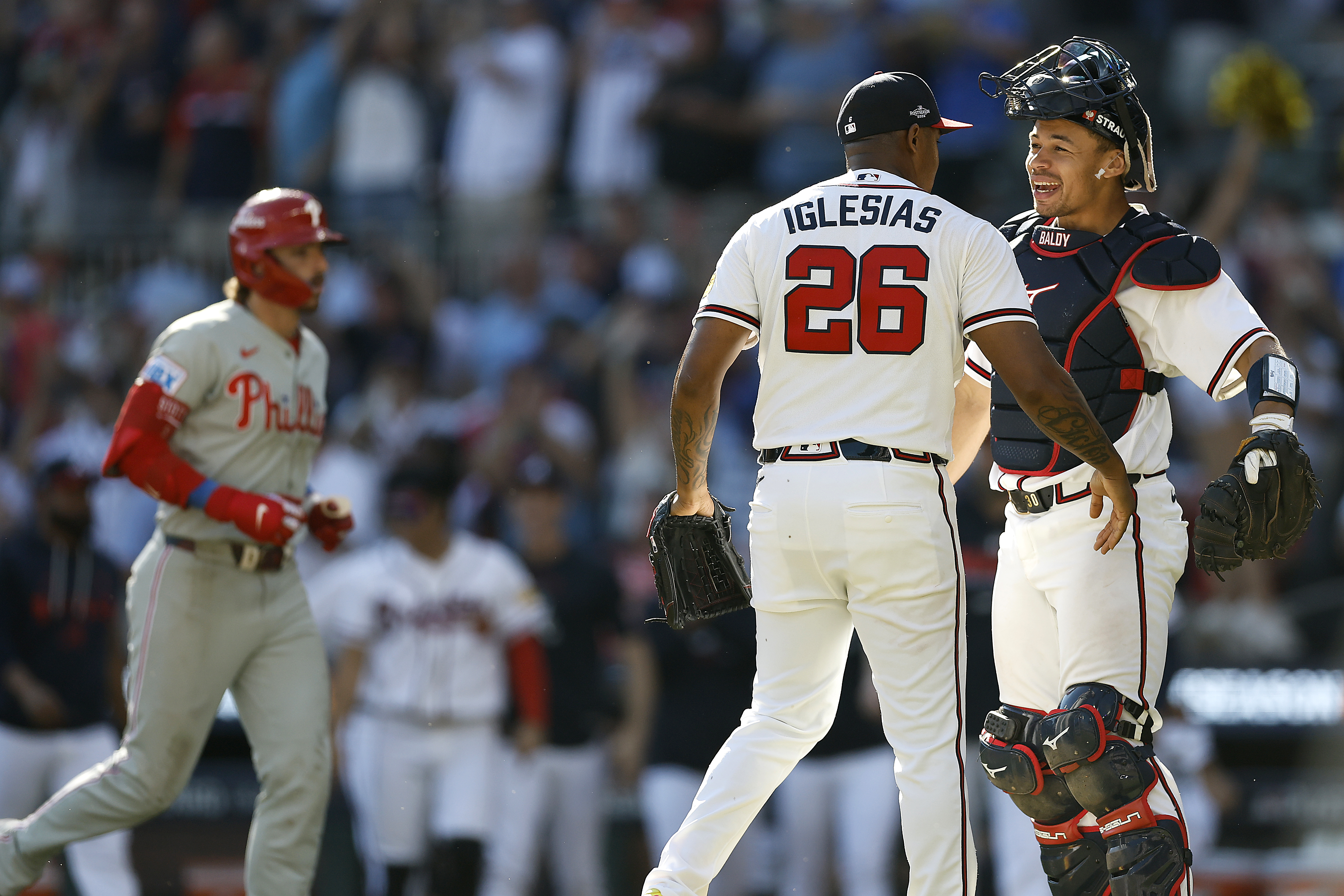
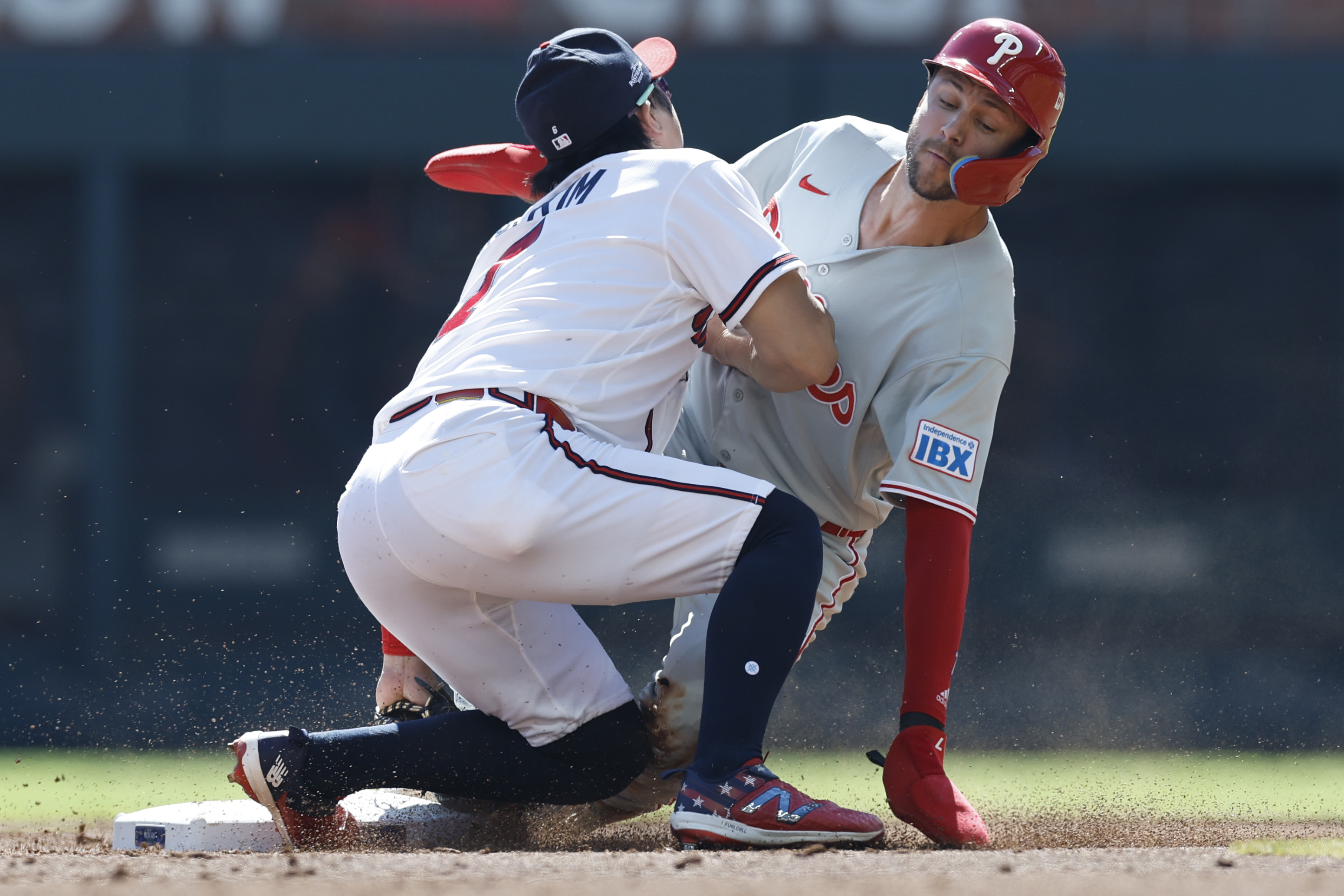
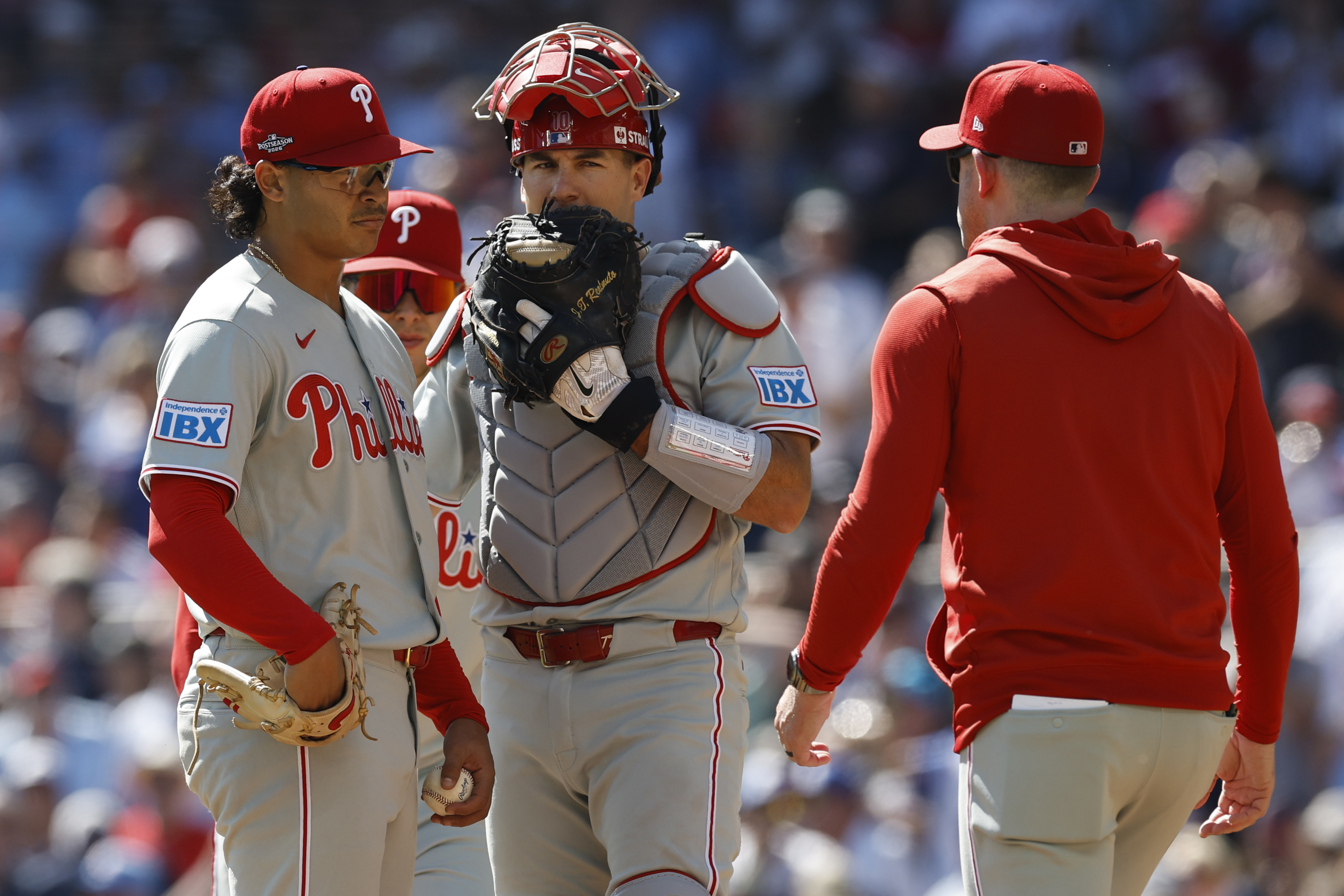
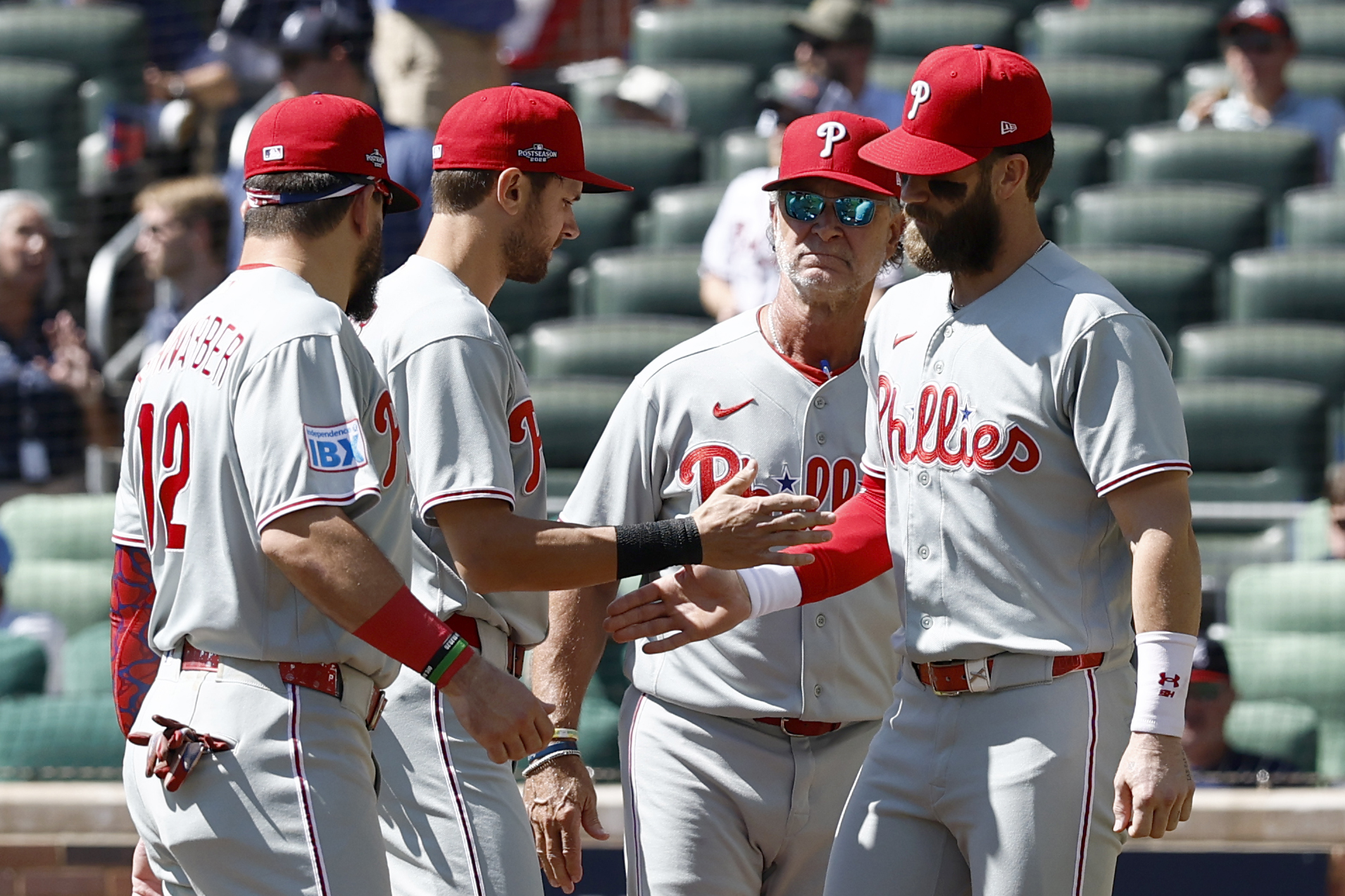
Philadelphia Phillies second baseman Bryson Stott (left) jogs off the field after the final out as the Atlanta Braves relief pitcher Raisel Iglesias (center) celebrates their win with Atlanta Braves catcher Drake Baldwin (right).Yong Kim / Staff PhotographerPhiladelphia Phillies relief pitcher Jhoan Duran reacts after giving up a three-run homer to the Atlanta Braves Austin Riley in the eighth inning.Yong Kim / Staff PhotographerAtlanta Braves Austin Riley celebrates his three-run homer in the eighth inning.Yong Kim / Staff PhotographerPhiladelphia Phillies relief pitcher Jhoan Duran reacts after giving up a three-run homer to the Atlanta Braves Austin Riley in the eighth inning.Yong Kim / Staff PhotographerPhiladelphia Phillies relief pitcher Jhoan Duran reacts after catching a line drive off the bat of Atlanta Braves Matt Olson in the eighth inning.Yong Kim / Staff PhotographerPhiladelphia Phillies relief pitcher Jhoan Duran pitches against the Atlanta Braves in the seventh inning.Yong Kim / Staff PhotographerPhiladelphia Phillies Bryson Stott celebrates after he scores in the seventh inning.Yong Kim / Staff PhotographerPhiladelphia Phillies Bryan De La Cruz (right) celebrates with Bryson Stott after they both scored on J.T. Realmuto hit in the seventh inning.Yong Kim / Staff PhotographerPhiladelphia Phillies catcher J.T. Realmuto knocks in two runs in the seventh inning.Yong Kim / Staff PhotographerPhiladelphia Phillies Bryson Stott singles in the seventh inning.Yong Kim / Staff PhotographerPhiladelphia Phillies Derek Hill reaches for a ball of the bat of Atlanta Braves second baseman Ozzie Albies in the sixth inning.Yong Kim / Staff PhotographerPhiladelphia Phillies Alex McFarlane pitches against the Atlanta Braves in the sixth inning.Yong Kim / Staff PhotographerPhiladelphia Phillies Bryce Harper strikes out in the sixth inning.Yong Kim / Staff PhotographerPhiladelphia Phillies Kyle Schwarber singles in the sixth inning.Yong Kim / Staff PhotographerPhiladelphia Phillies catcher J.T. Realmuto strikes out to end the fifth inning.Yong Kim / Staff PhotographerPhiladelphia Phillies second baseman Edmundo Sosa celebrates his fifth inning double.Yong Kim / Staff PhotographerPhiladelphia Phillies starting pitcher Jesus Luzardo delivers a pitch against the Atlanta Braves in the fourth inning.Yong Kim / Staff PhotographerPhiladelphia Phillies starting pitcher Jesus Luzardo reacts to the third out in the third inning.Yong Kim / Staff PhotographerAtlanta Braves Ha-Seong Kim tags Philadelphia Phillies shortstop Trea Turner as he tries to steal second base in the third inning.Yong Kim / Staff PhotographerPhiladelphia Phillies starting pitcher Jesus Luzardo (left) and Philadelphia Phillies catcher J.T. Realmuto (center) talks as pitching coach Caleb Cotham makes a visit after the Phillies game up a run to the Atlanta Braves.Yong Kim / Staff PhotographerAtlanta Braves starting pitcher Chris Sale pitches in the first inning.Yong Kim / Staff PhotographerPhiladelphia Phillies starting pitcher Jesus Luzardo pitches against the Atlanta Braves in the first inning.Yong Kim / Staff PhotographerPhiladelphia Phillies Kyle Schwarber and Derek Hill (right) celebrate after Schwarber scores on an Alec Bohm double in the first inning.Yong Kim / Staff PhotographerPhiladelphia Phillies Alec Bohm hits a RBI double in the first inning.Yong Kim / Staff PhotographerPhiladelphia Phillies Bryce Harper (right) and Trea Turner greet each other before the start of game 1.Yong Kim / Staff Photographer
The Phils’ big splash this winter was Brad Keller, who struggled before undergoing Tommy John surgery that will likely cost him next season. They acknowledged their bullpen need at the trade deadline by adding Brooks Raley, who pitched so poorly he was left off the postseason roster. The other additions last winter were names you probably already forgot. The Phillies have a $320 million payroll yet tried to build their bullpen off Temu. So don’t blame Mattingly for trusting his only option.
Tuesday could have been avoided had the Phils added more last winter or been more aggressive at the trade deadline. It also could have been avoided if Zack Wheeler didn’t have to start Sunday in Game 162. They could’ve used Wheeler and Luzardo to steal Game 1. But Wheeler’s unavailable unless the Phils win Game 2 on Wednesday. Credit the bullpen there, too. One less seventh-inning meltdown and the Phils could’ve secured a playoff berth before the season’s final day.
How the Phillies have three catchers on their postseason roster. What do you do with three catchers in a three-game series? That’s like the Eagles dressing four quarterbacks. The construction of the bullpen got a lot of attention after Tuesday’s loss, but don’t overlook how a team with a $320 million payroll started Derek Hill, Bryan De La Cruz, and Edmundo Sosa at No. 5, 6, and 8 while Atlanta had Michael Harris II, Ozzie Albies, and Austin Riley hitting 5-7.
We’ll always wonder…
What would have happened had Turner made that play in the eighth inning? It was difficult, but it was the play I envisioned Turner making when the Phillies signed him to that $300 million contract. I thought the Phillies were signing a future MVP shortstop who could do everything. I’ve never been more underwhelmed by a Philadelphia athlete. Tuesday was just another chapter.
Game 2 starter Tyler Mahle has a 2.28 ERA in four starts against the Phillies this season.Erik S. Lesser
It’s going to be tough to…
Beat Tyler Mahle on Wednesday. He faced the Phillies twice in six days earlier this month, allowing one earned run in 13 innings as the Braves started to run away with the division. He struggled in San Francisco but was much better there after returning from the injured list in late June and blooming into a smart buy-low candidate at the trade deadline.
He dominated the Phillies by mostly throwing a fastball and splitter as he simplified his arsenal since joining the Braves. He doesn’t throw hard but has a ground-ball rate similar to Jesús Luzardo and induced 19 groundouts over those two starts against the Phils. He’ll be looking for that weak contact again.
Cristopher Sánchez will start for the Phillies in Game 2 on Wednesday.Yong Kim / Staff Photographer
But I still think…
Cristopher Sánchez can save the season. He’s still one of the best pitchers in baseball and can win you a playoff game. But that loss was a gut punch. The Phils suffered playoff gut punches in Atlanta in 2022 and 2023 and won the series. But they had a day off after both of those losses before regrouping at home in front of a crazy crowd. But there’s no bat spike without Rhys Hoskins misplaying that ball in Game 2. And there’s no stare down without Bryce Harper being caught on the base paths. The Phillies have responded before. They’ll just have to recover quicker this time. They have the pitcher to do it.
The Phillies have won 88 or more games just 23 times in their 144-year history. And I can’t imagine any of those 23 seasons were more maddening than the last six months. Well, maybe that 1964 season was. But we don’t need to rehash that right now.
The Phils have given you enough reasons this month to doubt that they can win twice in Atlanta and keep this thing going. They still don’t have a cleanup hitter, the bullpen is thinner than the new-look Joel Embiid, they lost their second-to-last game of the season by 11 runs, and they’re carrying three catchers on their postseason roster. So it’s hard to be bullish on the Phils, who are countering Chris Sale with an opener in Game 1 on Tuesday (2 p.m., NBC).
But before you check out, remember that this Braves team actually seems beatable. Their bullpen is even stronger with the return of Robert Suarez but they lost two starters this month to injuries. The Phillies know what Ronald Acuna Jr. did in September but Matt Olson, Ozzie Albies, and Austin Riley each had an OPS in September less than .640. And the Braves have not won a playoff series since they won it all in 2021. Two of their last three October exits were at the hands of the Phils.
So here’s three ways to talk yourself back into the Phillies before the start of the wild-card series.
Jesús Luzardo will start for the Phillies in Game 1.Elizabeth Robertson / Staff Photographer
They’ve been here before. Twice. The Phils weren’t able to line up their pitchers in the 2022 and 2023 NLDS after using Zack Wheeler and Aaron Nola to get through the wild-card round. They arrived in Atlanta both years with questions about their pitching. The Phils used Ranger Suárez, who gave the Phils three-plus innings in back-to-back years and proved his mettle while becoming one of this era’s beloved players. The Phils are in a similar pinch on Tuesday as Wheeler and Cristopher Sánchez are unavailable after pitching in the final series of the season. Jesús Luzardo will start Game 1 but interim manager Don Mattingly called him an “opener” as the Phils don’t know how long Luzardo can pitch three days after returning from the injured list. If the Phillies can steal another Game 1 in Atlanta, someone has to do their best Ranger. A combination of Luzardo and Andrew Painter seems like the plan for the bulk of the outs.
Video: Three things to watch in Phillies’ wild-card series vs. Braves
Chris Sale is dominant but the Phils should have a pitching advantagein Game 2 and 3. Tyler Mahle was excellent after being acquired at the trade deadline from San Francisco and allowed just one run this season in three starts against the Phils. But he did get roughed up by the Reds last week in his final start of the regular season and had a 5.13 ERA with the Giants before coming to Atlanta. He’s human and Sánchez is the better pitcher who the Phils hope can do enough to force a Game 3. If so, the Phils will have all hands on deck (even Wheeler) against Grant Holmes. The Braves placed Bryce Elder and Martin Perez on the injured list in September, depleting even more of their options after Sale and Mahle. If the Phils win one of the first two games, they’ll take their chances in an elimination game against Holmes.
The Phillies could use Bryce Harper turning into “The Showman” again in the postseason.Elizabeth Robertson / Staff Photographer
Bryce Harper still has five years left on his contract after 2026 but the championship window of the Harper Era seems to be closing, especially with 2027’s labor uncertainty looming. “We’ve never finished the job. We’ve got to do that,” Harper said Sunday after the Phils clinched a postseason berth. Surely, he knows there’s only so many more chances left to get the job done. Harper was quiet last October against the Dodgers but this could be the week he returns to being The Showman, who seems to meet the moment better than most. After Sale, the Phillies will get their chances against right-handed starters in Game 2 and 3.
Harper talked Monday about how he loves to play in Atlanta as he has a .916 OPS at SunTrust Park and has homered 18 times there since it opened in 2017. The Phillies didn’t do much offensively in September, but Harper did have a good series in Atlanta while the Phils lost two of three. Oct. 1 isn’t until Thursday. So the Phils have some work to do to reach Red October. This is Harper’s chance to power them there.
I’m curious to see …
If Kyle Schwarber is batting leadoff again. Two moves reeked of panic to me over the weekend when the walls were closing in: starting Nola on two-days’ rest and moving Trea Turner to leadoff. No Phils batter has hit first more in the last five years since Schwarber, who had been batting leadoff again this season since August. You want to change it up? Do it two weeks ago and not in the final weekend when everyone is talking about 1964. The offense has been at its best over the last five years when Schwarber is batting leadoff. There’s no reason to go away from that now.
Getting to star closer Jhoan Duran will be a key question for the Phillies for their postseason run.Monica Herndon / Staff Photographer
I’m also curious about …
The Phillies’ plan to navigate the late innings if they have a lead. How do they get the ball to Johan Duran? Jonathan Bowlan is back but hasn’t pitched since Sept. 17. Does Mattingly trust him like he did before the groin injury? Jose Alvarado was rocked on Saturday by the Rays. Can you ask him to get important outs? Alex McFarlane’s velocity dipped in the final week and the results were concerning on Sunday. Brooks Raley was acquired to be that guy, but he’s almost unusable. This series could ultimately be decided by the bullpen and the lack of options.
Luzardo will start on Tuesday, but Painter may be tasked with getting more outs as it doesn’t seem like the Phils are counting on Luzardo for too much length. Painter threw his four-seam fastball this season for 32.8% of his pitches and only one team has a worse slugging-percentage than the Braves this season against four-seamers. The Braves slugged .391 this season against four seamers and hit .235. Painter’s best start this season (two hits in seven shutout innings against Arizona earlier this month) came thanks to a dominant fastball. If his fastball is on Tuesday, the Braves’ lineup seems like his perfect match.
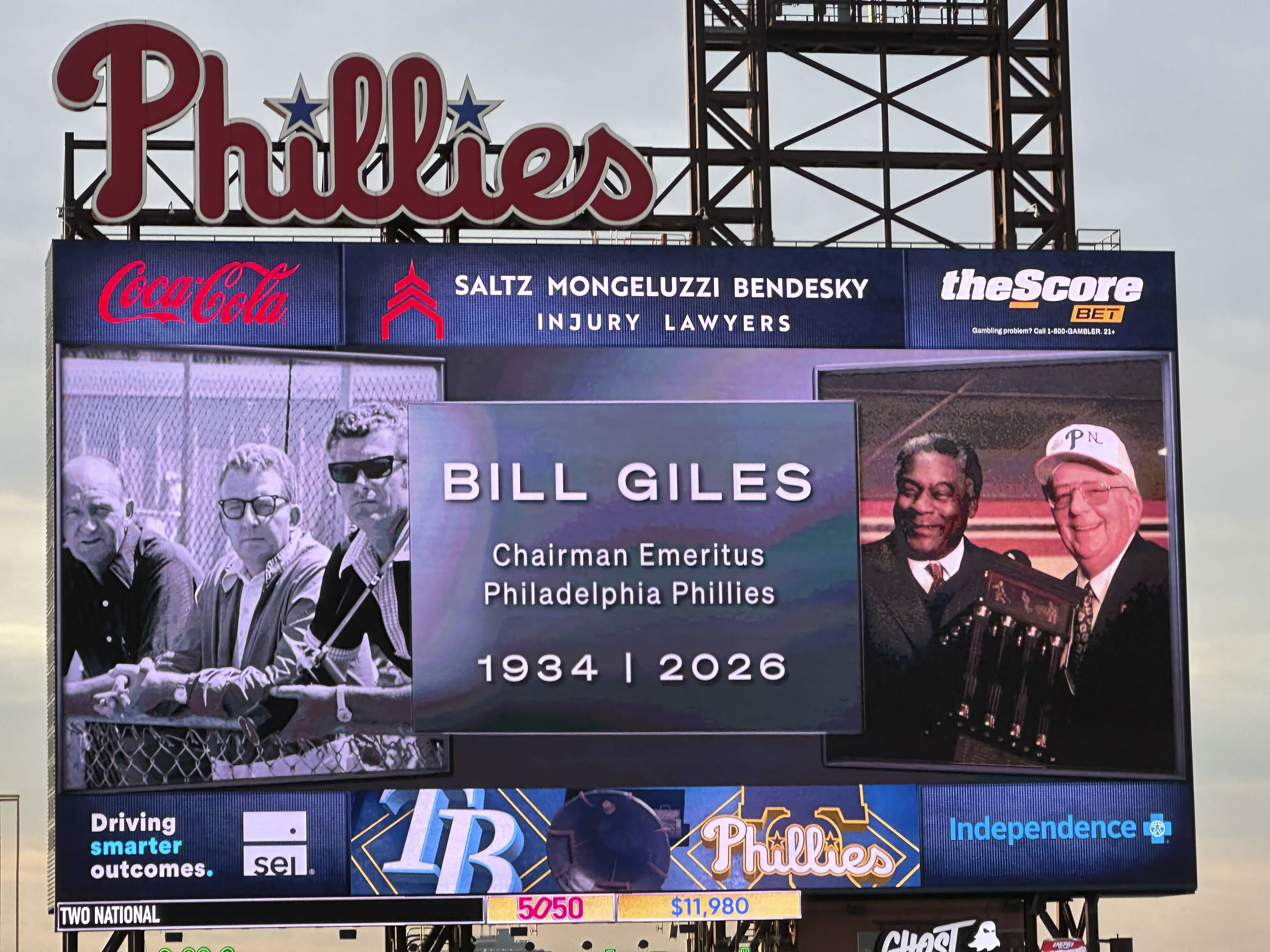
Bill Giles, the longtime Phillies executive who helped create the Phillie Phanatic and used a tightrope walker to sell tickets before becoming a part owner, died Friday. He was 92.
Mr. Giles joined the Phillies in 1969, just as they were readying to move to Veterans Stadium. The team lacked star power, but it was Mr. Giles’ job to fill the seats when the cavernous stadium opened in April of 1971. So Mr. Giles, the son of a Hall of Fame baseball executive, got creative.
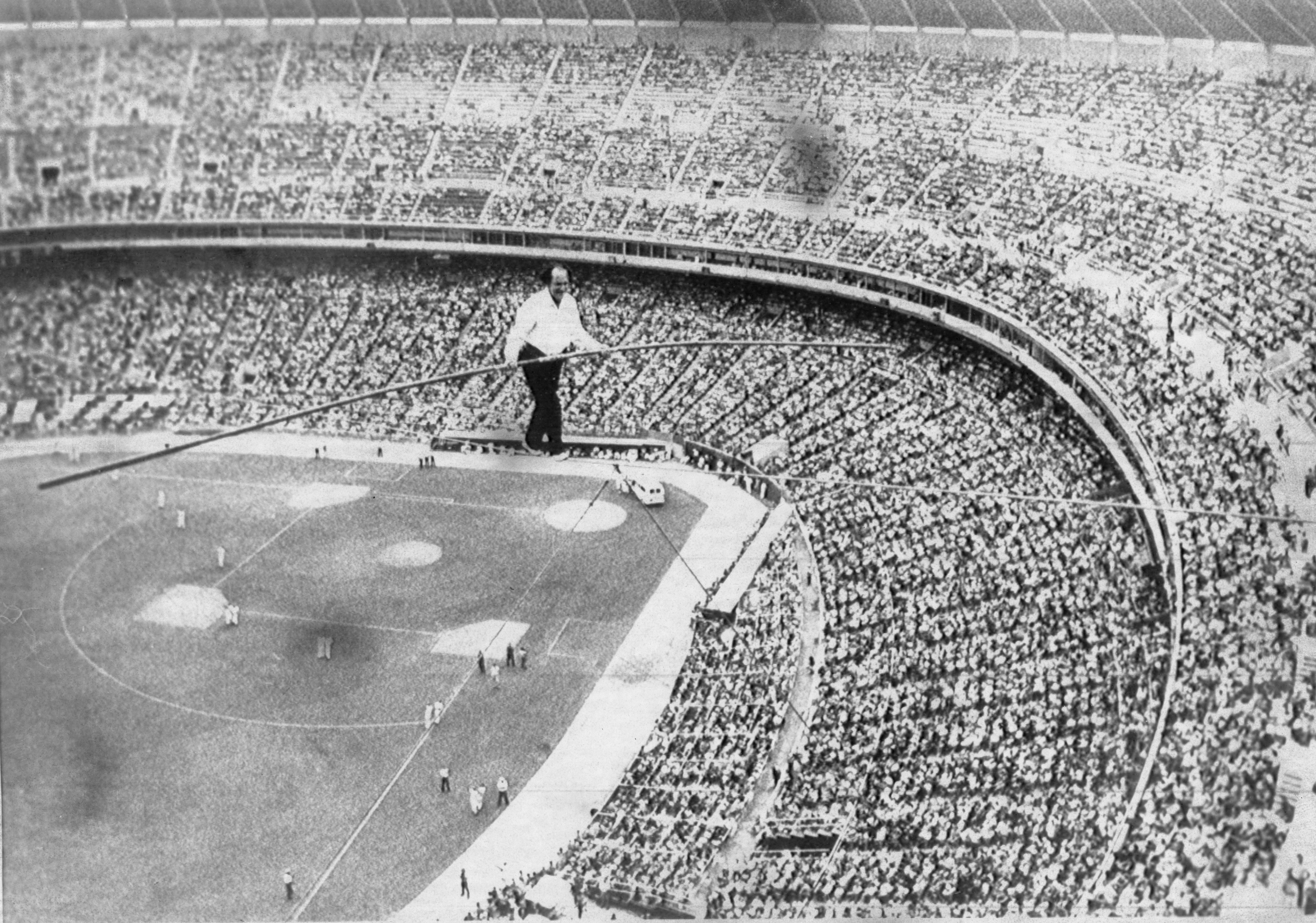
Karl Wallenda walked a tightrope across the stadium between games of a doubleheader, Benny the Human Bomb exploded, fire trucks drove relief pitchers from the bullpen, and Kite Man tried to deliver the first ball one season before crashing into empty seats.
A news report once described Mr. Giles as “Philadelphia’s resident combination of P.T. Barnum and Walt Disney.” And Mr. Giles’ biggest draw was the Phanatic, the mascot he green-lighted in 1978.
“I always wanted to make people happy,” Mr. Giles said in 2022. “So anything I could think of I would try.”
William Yale Giles was born on Sept. 7, 1934 in Rochester, N.Y. His father, Warren, was the president and general manager of the Cincinnati Reds before becoming the president of the National League. Mr. Giles knew as a kid that he wanted to work in baseball and started working for the Reds as a teenager.
He met his wife, Nancy, when they were students at Denison University in Granville, Ohio. Mr. Giles told Nancy after their first date that they’d be married one day and honeymoon in Hawaii. He was right. Mr. Giles graduated from Denison in 1956 and spent three years in the Air Force before working for a Reds farm team. He moved to Houston in 1962 to be the publicity director for the Colt .45s, a first-year expansion team that soon became the Astros. Seven years later, he came to Philly.
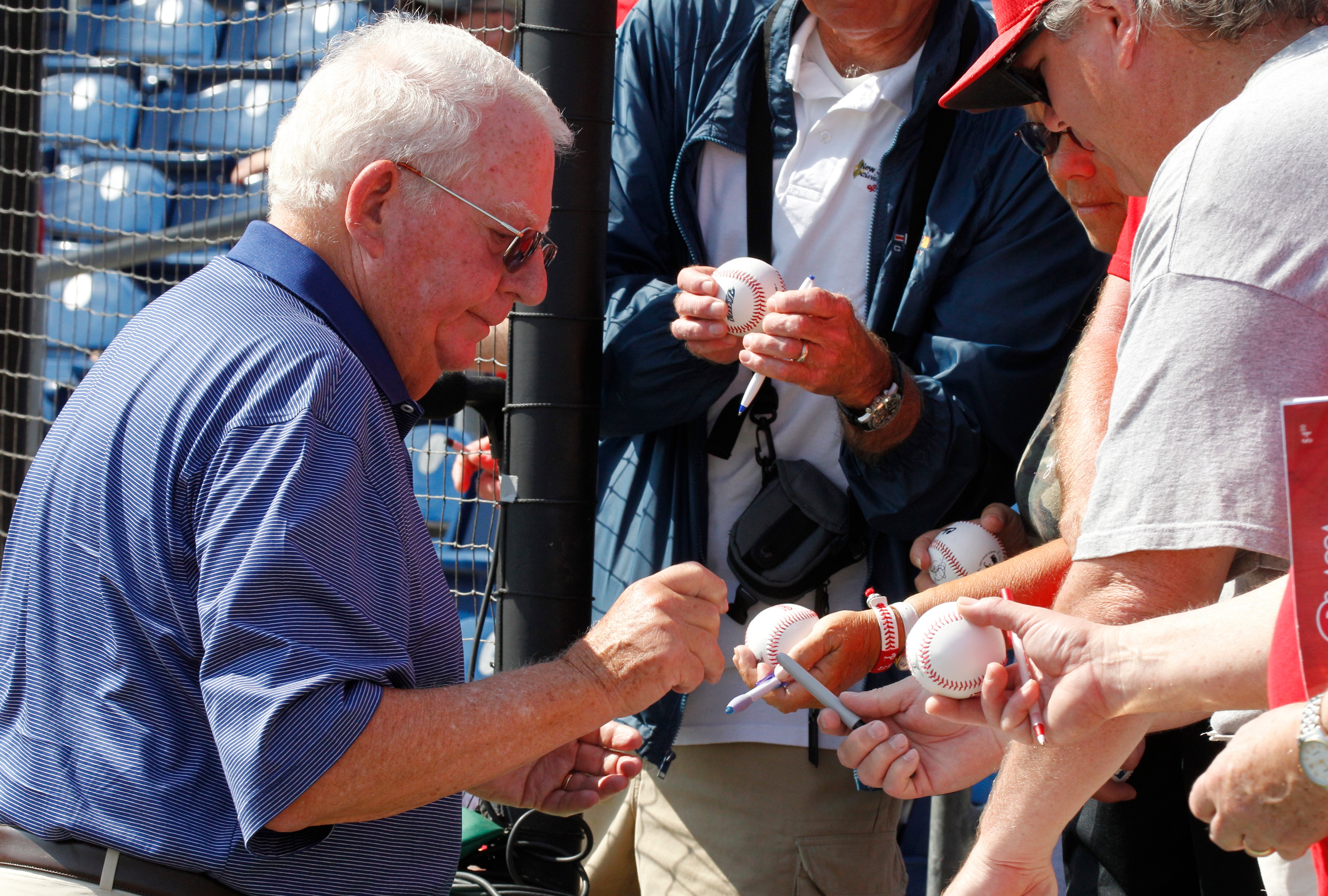
Bill Giles, signing autographs in 2011, was named chairman emeritus in 2015.Gene J. Puskar
“Bill was the heart and soul of the organization for over two decades,” Phillies great Mike Schmidt said in a statement. “He was a close personal friend to so many of us. He will always be a big part of Phillies history. Prayers go to the Giles family in this time of mourning.”
Mr. Giles helped the Phillies close Connie Mack Stadium, which included his idea to have a helicopter land on the field after the final game to retrieve home plate and transport it to South Philly. He gave fans that day wooden seat back slabs from the stadium, which many used as tools to remove seats and toilets. The Phillies moved the following April to the Vet, where the promotions became wackier.
“In the early ’70s, we didn’t win a lot of games,” said Larry Bowa, who slapped the first hit at the Vet. “So we had to get people in there. It was like a circus.”
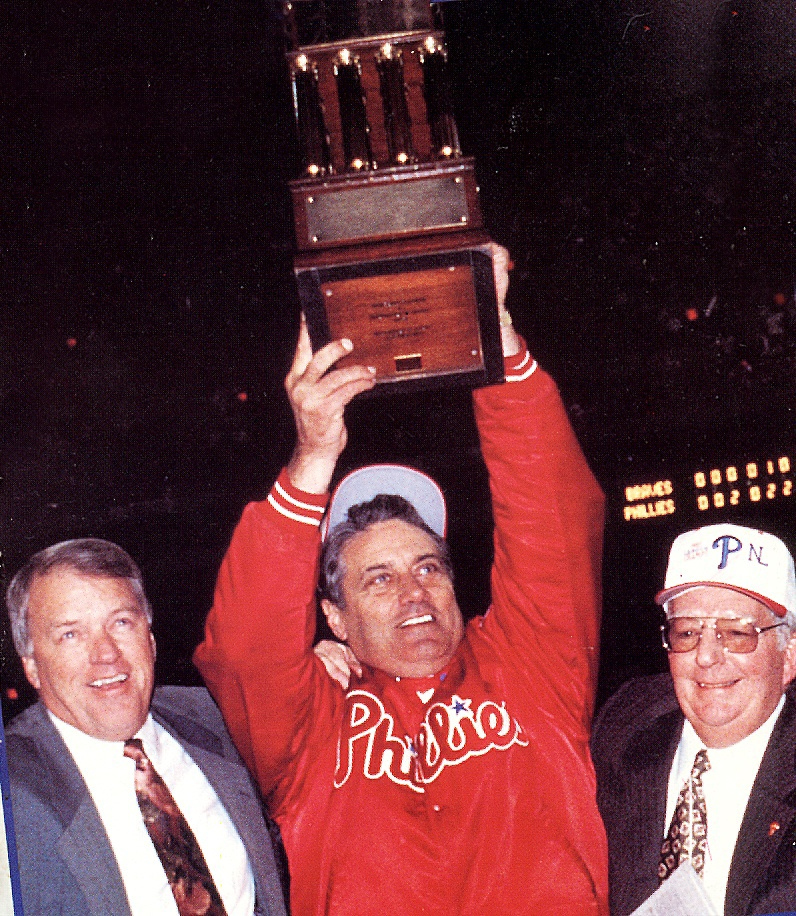
Phillies general manager Lee Thomas (left), manager Jim Fregosi (center), and president Bill Giles celebrate after winning the NLCS in 1993.Phila. Phillies
The 1972 Phillies won just 59 games, 27 of which were wins by Steve Carlton. So Mr. Giles drummed up ticket sales by having Wallenda walk 640 feet across the stadium between games of a doubleheader. He didn’t know Carlton was starting Game 1, which meant the doubleheader would be a rare game that season where the baseball was the draw. The show went on.
There were 38 people — 19 on each end — holding the wire to make it taut, but that was not enough to steady it as Wallenda took his first steps. Two weeks earlier, his son-in-law Richard “Chico” Guzman had died after he fell 50 feet before a performance in West Virginia. Guzman’s widow, Carla, started screaming for her father to back out. The Vet didn’t seem safe.
“I was sold on the idea and wasn’t at all fearful,” Giles said. “Until we got the wire up there and it was swaying a little bit. I said, ‘Oh, [bleep].’ I got really nervous.”
Karl Wallenda crosses Veterans Stadium on a tight rope on Aug. 13, 1972.UPI
Wallenda thought about quitting but kept going. He walked about 35 feet and sat down, motioning for the 38 people to pull tighter.
“When he sat down on the wire, I started thinking, ‘Oh, what’s going to happen now?’ You never sit down on a wire,” Bill Hall, a promoter who booked Wallenda, said in 2022. “I started to pray to God to get us through this, but then I thought, ‘Wait a minute, God didn’t tell us to come up here.’”
Wallenda stopped again in the middle of his walk, performed a headstand on the rope, and finished. Giles was relieved. A few years later, Dennis Lehman, then a member of the front office, saw the San Diego Chicken and told Mr. Giles that the Phillies should try a mascot. Mr. Giles said OK and assigned Lehman and Frank Sullivan, the team’s promotions director, to pursue it.
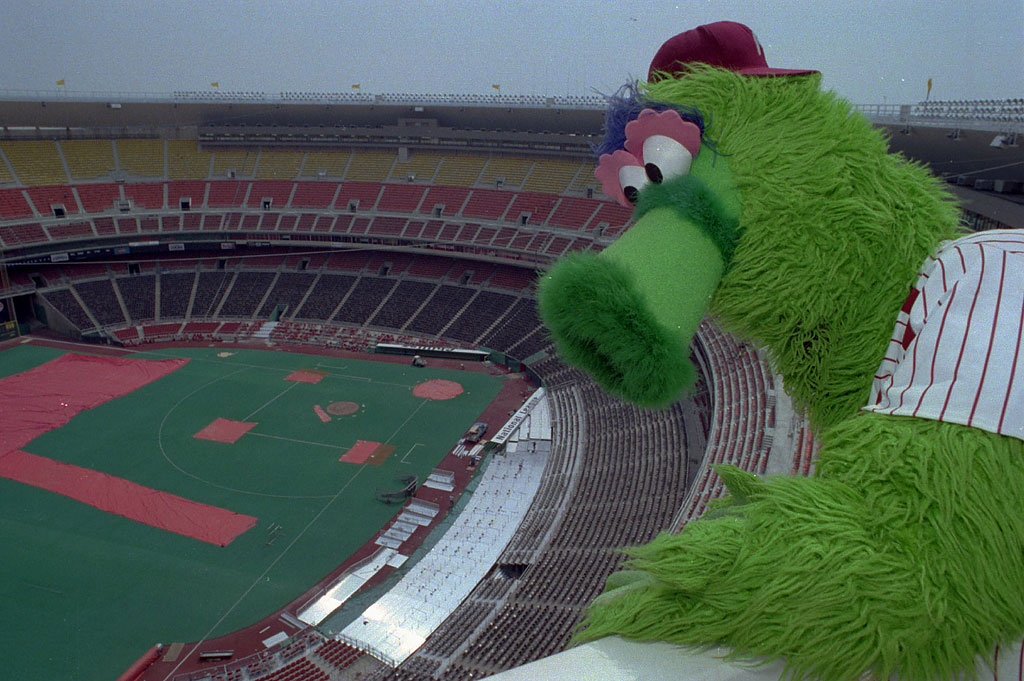
The Phillie Phanatic surveys an empty Veterans Stadium ahead of the start of the 1991 season.George Widman/AP fi;e photo
The Phillies worked with Bonnie Erickson and Wayde Harrison to create the green, flightless bird from the Galápagos Islands. Mr. Giles tapped Dave Raymond, then an intern in the sales department, to play the part. The Phanatic arrived in April of 1978 and has never left.
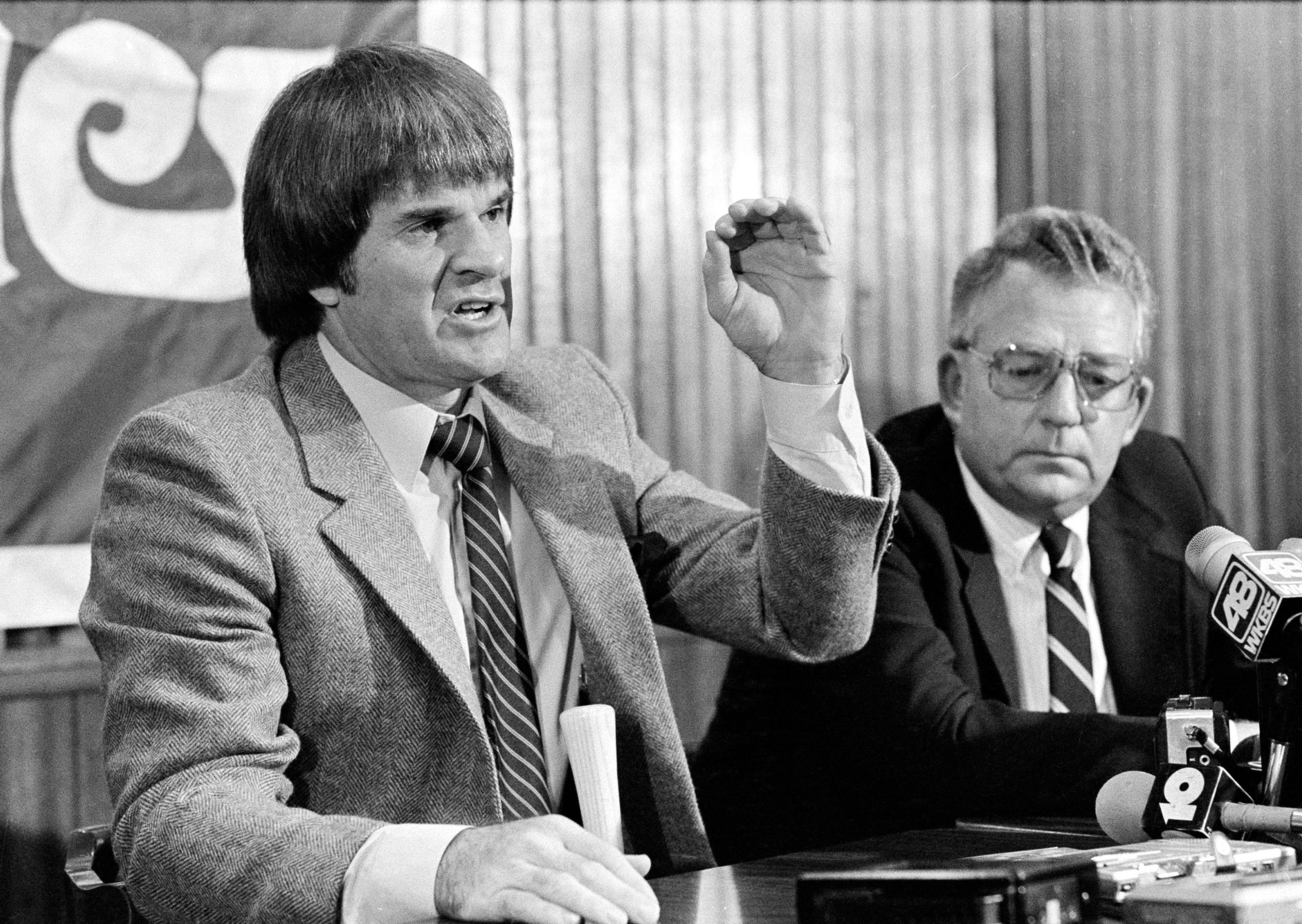
Mr. Giles brought Astros broadcaster Harry Kalas to Philadelphia in 1971 and helped convince Pete Rose to join in December of 1978, which helped lead to the 1980 World Series championship. He organized a group in 1981 to purchase the Phillies and served as team president until 1997. He then became the team’s chairman. The Phils won National League crowns twice during Mr. Giles’ presidency, which was mostly marred by low payrolls and losing seasons.
Bill Giles (right) helped convince free agent Pete Rose to sign with the Phillies in 1978.Al Schell
Mr. Giles said often that the Phillies were losing money and needed a new ballpark to compete. That arrived in 2004. The payrolls rose, the winning returned, and the Phils won their second world championship in 2008. Two weeks earlier, Mr. Giles — then the honorary president of the National League — presented the team with the National League championship trophy named for his dad. The Phillies soon started a sellout streak of 257 games. They no longer needed any wacky promotions. A winning team sold the tickets in a new stadium that Mr. Giles helped build.
“The Phillies family lost an icon today,” Phillies managing partner and CEO John Middleton said in a statement. “Bill helped to reshape our franchise from a traditional baseball club into a highly visible entertainment and business operation. His profound impact in overseeing one of the greatest eras in franchise history, both on and off the field, will forever be his legacy. Our hearts are heavy for the Giles family and all those who had the privilege of knowing Bill.”
The basement on Almond Street didn’t have much, but it had one of those old couches that every basement needs.
“The one that you know is comfy just by looking at it,” Quinn Sullivan said.
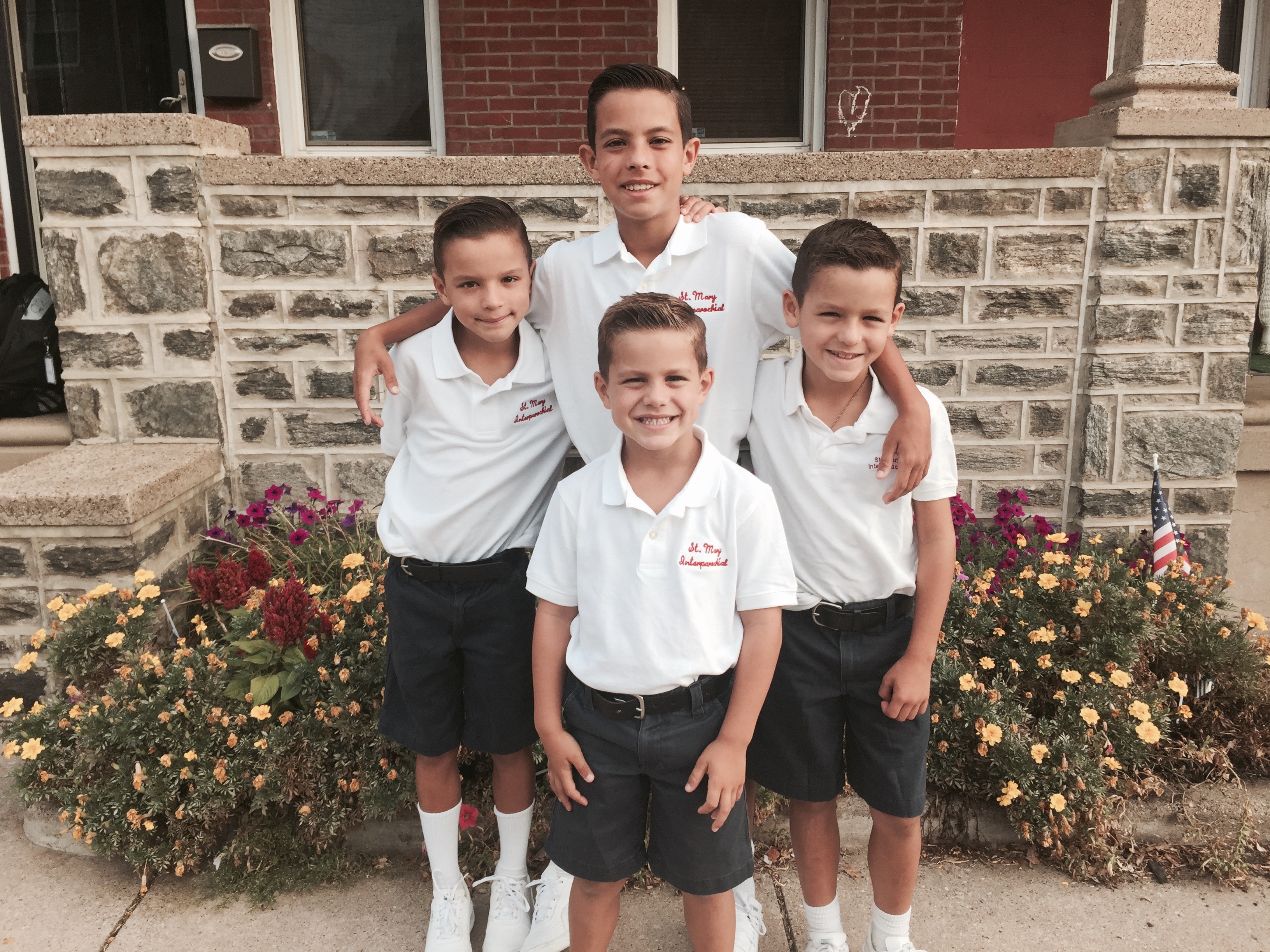
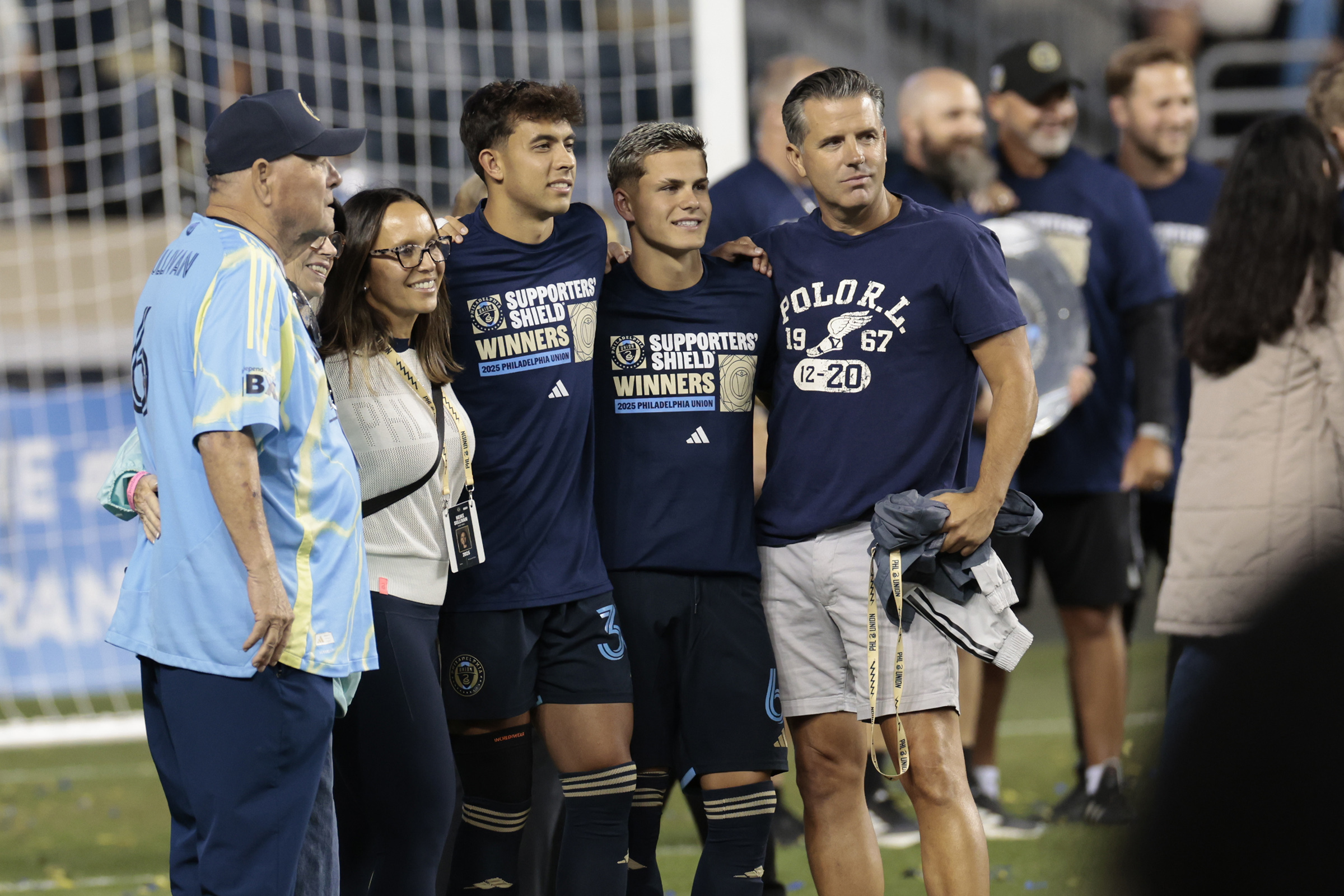
The Bridesburg basement, half of which was unfinished, became a clubhouse for the four Sullivan brothers. The miniature soccer net was all Quinn, Declan, Ronan, and Cavan needed to fill an afternoon. Cavan, the youngest of the four, did whatever he could to keep up as he played in a diaper and learned to volley a ball with both feet when he was just 18 months.
It was impossible to know that the seeds of Cavan’s career — perhaps the most promising in the history of American soccer — were being planted on Almond Street where Brendan and Heike Sullivan never told their sons that there was “no ball in the house.”
The boys caromed soccer balls off the living room radiator, played football in the kitchen, broke light bulbs in the basement, and got into some scraps. The parents were just letting their boys play, their mom said.
But there was something different about the toddler who knew how to catch a football.
“Like you throw it at him and he has his hands up,” Brendan said. “He’s not catching with his chest. He’s catching it with his hands. He caught a baseball with his glove. So you know but you don’t know the extent to how different it is.”
The soccer world soon saw what the Sullivans saw in their basement.
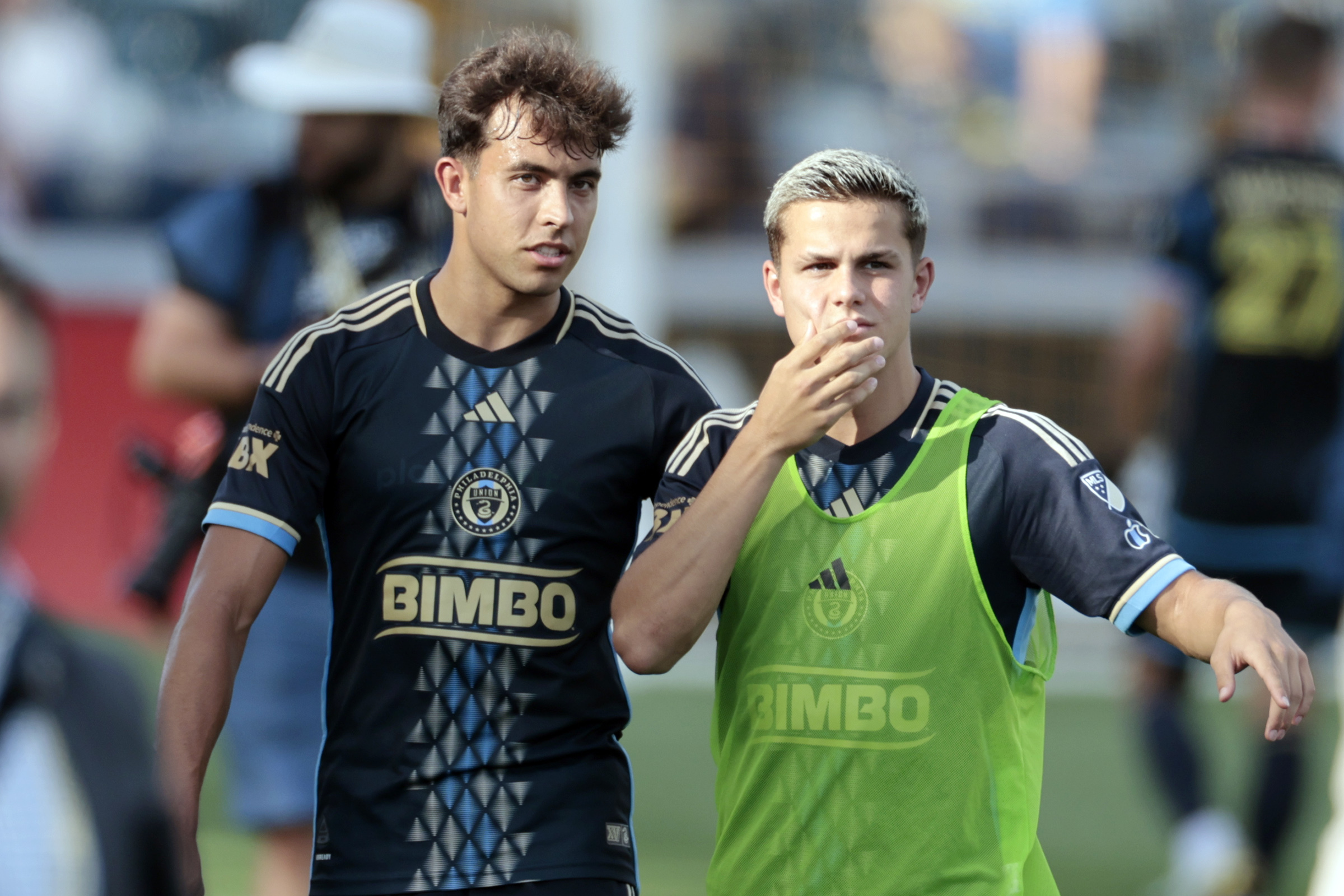
Cavan was deemed a prodigy when he was 6 years old and European powers scouted him before he was a teen. He signed his Philadelphia Union contract when he was 14, giving him the chance to play professionally alongside Quinn. He has an agreement to join England’s Manchester City next year when he turns 18, and is training this week for the first time with the senior U.S. men’s national team.
Even more? He’s a safe bet to play for the U.S. in the 2028 Olympics and then the 2030 FIFA World Cup.
The kid from Bridesburg could be the future of American soccer. It started on Almond Street.
“My dad would be in the net and we would just shoot on him all day, whenever we got the chance,” Cavan said of that old basement. “You fall in love with the game in moments like that.”
The Union’s Quinn Sullivan has words with Miami’s Lionel Messi during their match on Aug. 19 at Subaru Park.Steven M. Falk / For The Inquirer
No fear
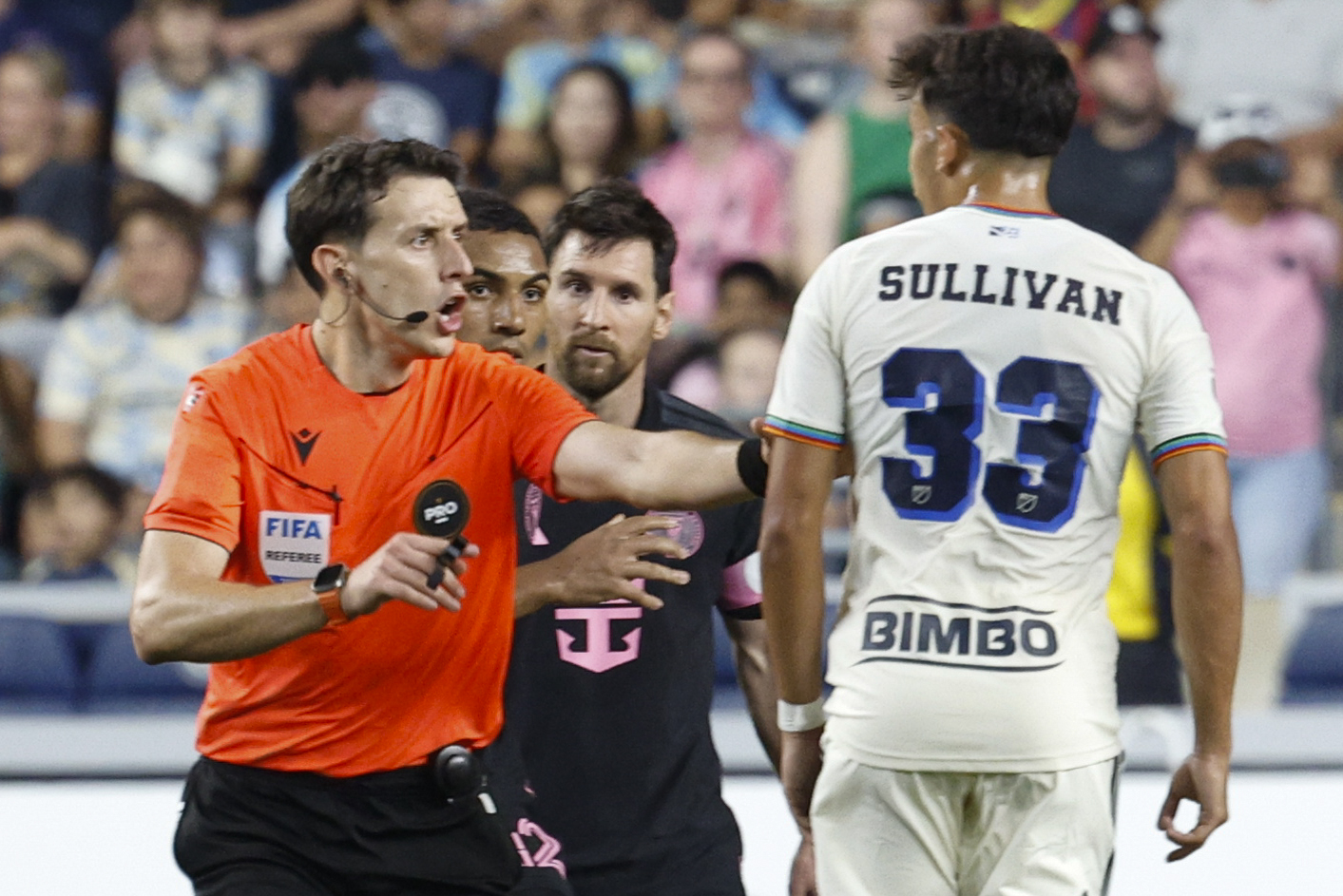
It happened so fast that the Sullivans couldn’t really tell what happened from their seats at Subaru Park. Did Cavan get punched? Did Quinn just go nose-to-nose with Lionel Messi?
Then they watched the replay of the fracas between the Union and Inter Miami, a skirmish that felt like the ones the parents — who met as college soccer players at Penn — used to break up in the backyard.
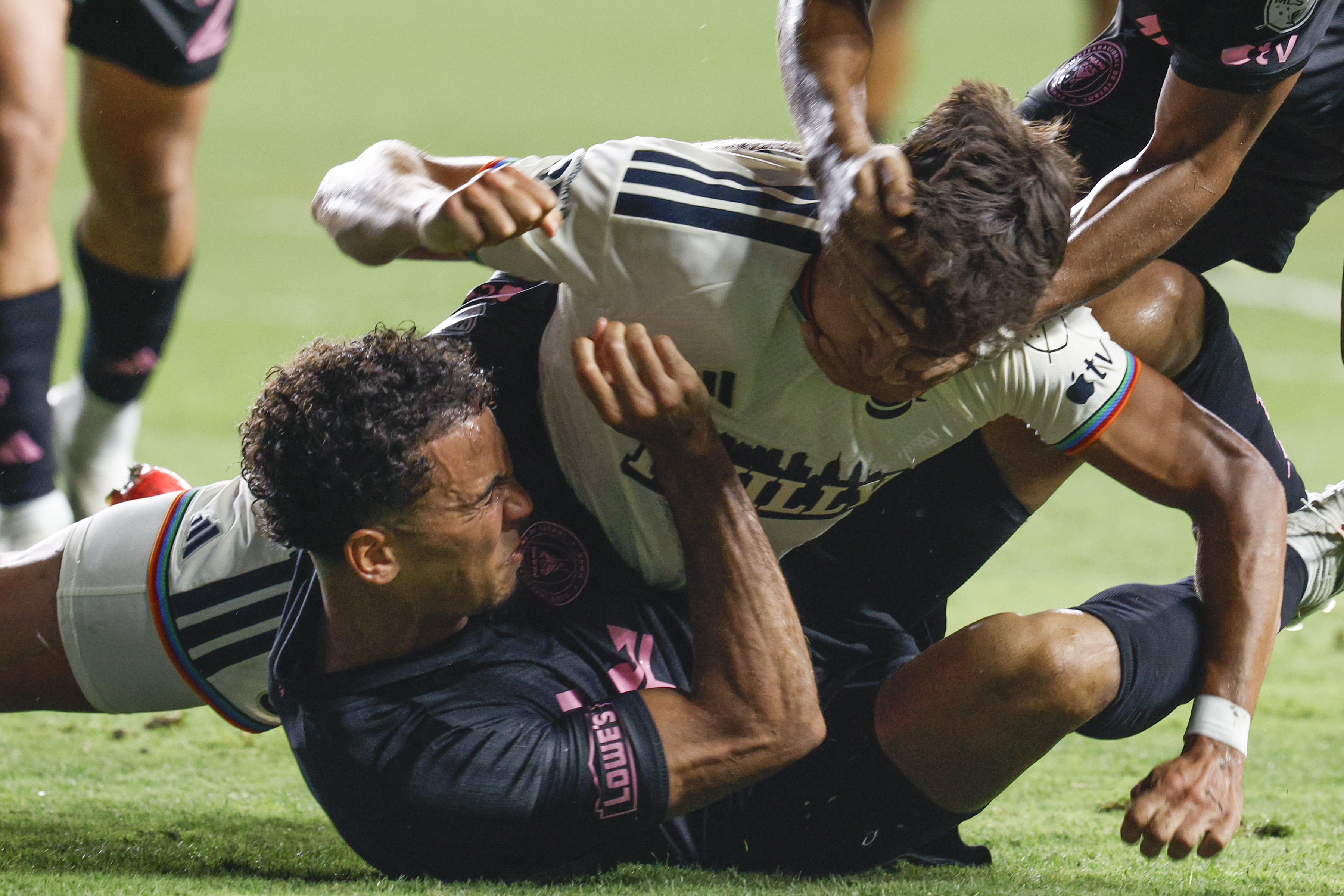
A Miami player tried to step over a fallen Quinn — “You got the wrong guy, buddy,” his dad said — before Quinn hooked his leg and took him to the ground like a UFC fighter.
A swarm of Miami players gathered around Quinn as Cavan sprinted across the field like his brother’s tag-team partner. Quinn used to spend hours on his computer cutting up Cavan’s game tapes and posting the highlights to YouTube. That was support, Quinn said. So of course the little brother had his back last month.
“It’s like ‘You better go in,’” said 18-year-old Ronan, who plays at St. Joe’s with his twin brother, Declan. “He would’ve gotten s— if he didn’t. It’s a lot about where we came from. That’s Northeast Philly right there.”
Cavan squared up against a 25-year-old foe who tried to throw a punch at the 16-year-old boy. Both players were sent off and Messi then slapped Sullivan in the head, appearing to reprimand him for taking down the Miami player. Quinn Sullivan, who grew up idolizing Messi, charged his hero and pushed his face against his.
“I was raised in Philly and you don’t take disrespect,” Quinn, 22, said. “It might sound corny to some people or cliche, but I didn’t like him touching my face and I’m not going to be the guy who falls down. I had to make sure he knew that I didn’t think it was cool.”
The Union’s Quinn Sullivan wrestles with Miami’s Ian Fray on Aug. 19 at Subaru Park.Steven M. Falk / For The Inquirer
It was Cavan’s footwork, speed, and skill that drew the world’s attention. But it is his fearlessness — the mentality that allowed a 16-year-old to run last month toward the fire — that sets him apart.
“There’s a little bit of a flair, a confidence, an arrogance,” said Taylor Twellman, the former U.S. player who now broadcasts MLS games on Apple TV. “But there’s also a real urgency to win, to compete. For a 16-year-old kid, I can see that there’s a little bit of a dog in him. You know what I mean?”
And it’s all about where he’s from. His grandfather, Larry, grew up in Kensington and played at North Catholic. His dad grew up in Juniata Park and played at St. Joe’s Prep. His uncle John Albright played at Frankford and his cousin Chris Albright went from Northeast Philly to the World Cup. Those guys were as tough as the cinders they often played on and they passed that grit down like an heirloom.
For generations, soccer was the sport in the Northeast Philly neighborhoods. And there was only one way to play.
Cavan always played two years ahead of his age group, which teamed him with the twins and allowed his parents to be at just two games every weekend instead of three. He held his own, just like he did in the basement.
Eventually, they figured, his age would catch up to him. It never happened, which is what allowed YSC Academy — the school connected to the Union Youth Academy — to see if Cavan could skip two grades and start seventh grade with his brothers. He handled that, too.
“We never really thought of him as younger,” Declan, 18, said. “I feel like because he was always in our circle, hanging with our friends, he was always like our age in our head. He’s mature for his age and part of that is because he was always around kids who were older than him.”
The Union’s Cavan (left) and Quinn Sullivan celebrate Quinn’s goal on Sept. 9 at Subaru Park.Elizabeth Robertson / Staff Photographer
Brendan coached Cavan’s first team at Lighthouse, which the son described as a group of “aggressive and eager kids” who just went out and played. They didn’t have private training but Cavan had a dad who was committed to teaching them the things he learned from his dad.
Brendan drilled his sons in Ocean City, often turning two-hour sessions into four-hour slogs while Heike waited to go to the beach. They played games their dad invented like “Gauntlet” and “Thirty Seconds of Hell” and debate what was worse: the burning of your quad muscles or the ringing in your ears from the fiery coach.
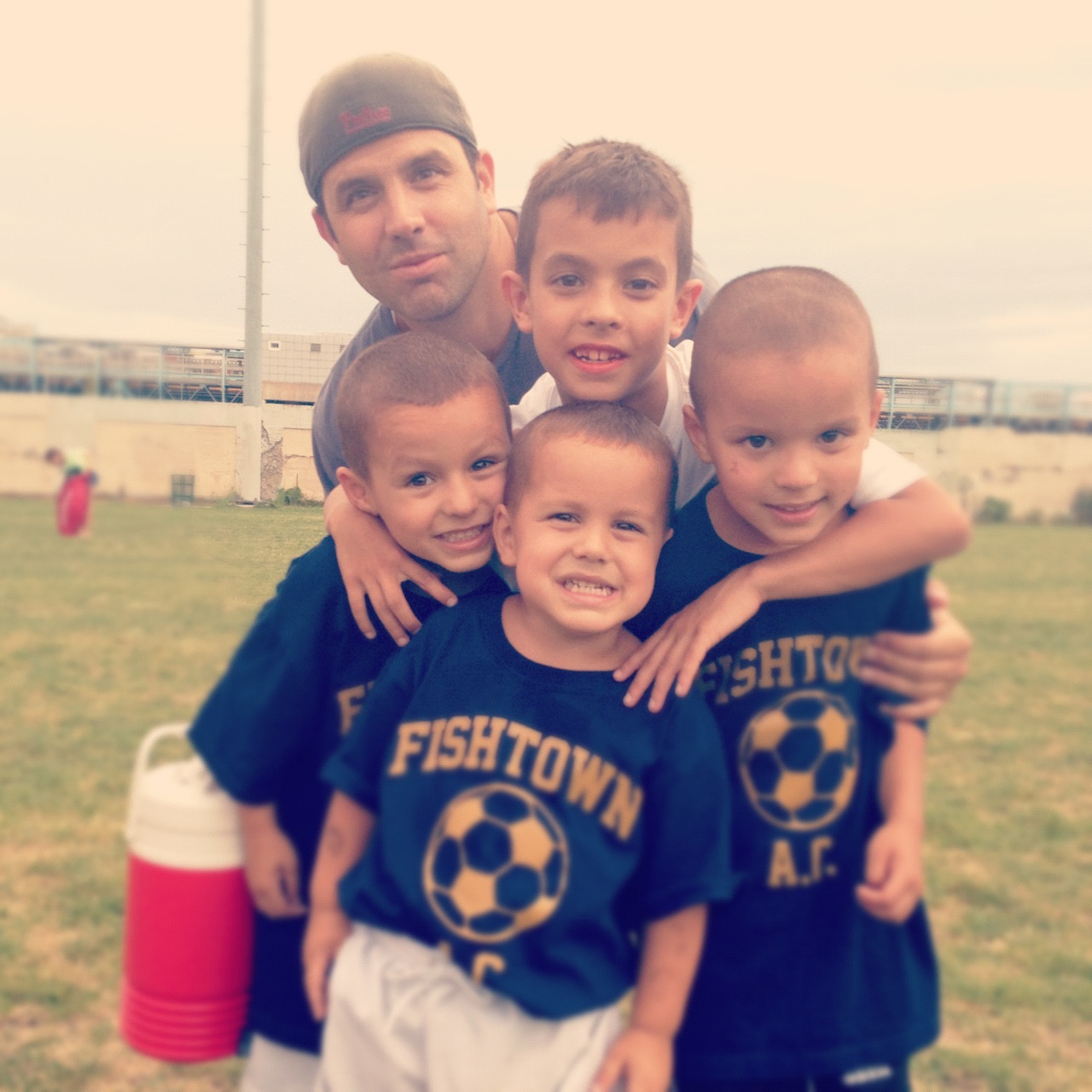
Cavan Sullivan, front, with his brothers Declan, Quinn, and Ronan and their father Brendan at Newt’s Field in Fishtown.Heike Sullivan
They practiced more on the beach and the boys remember being the last ones to leave travel tournaments while their dad gave instruction long after the final whistle. He was intense, but the boys learned to love it. Quinn said his dad always told his sons he loved them, even when they fell short. He taught his sons to play hard.
And that’s why the brothers from Almond Street weren’t afraid of Messi and Co.
“I love that Quinn didn’t back down in the face of Messi, a guy he has tremendous respect for,” Brendan said. “But you’re still just a dude on the field, same as me. We laced our boots up the same way today. I’m not backing down.
“The old saying goes, ‘If you’re looking for a fight from someone from Philadelphia, you’re more than likely going to get it.’ That’s how we’re raised here. You don’t back down. Stand your ground.”
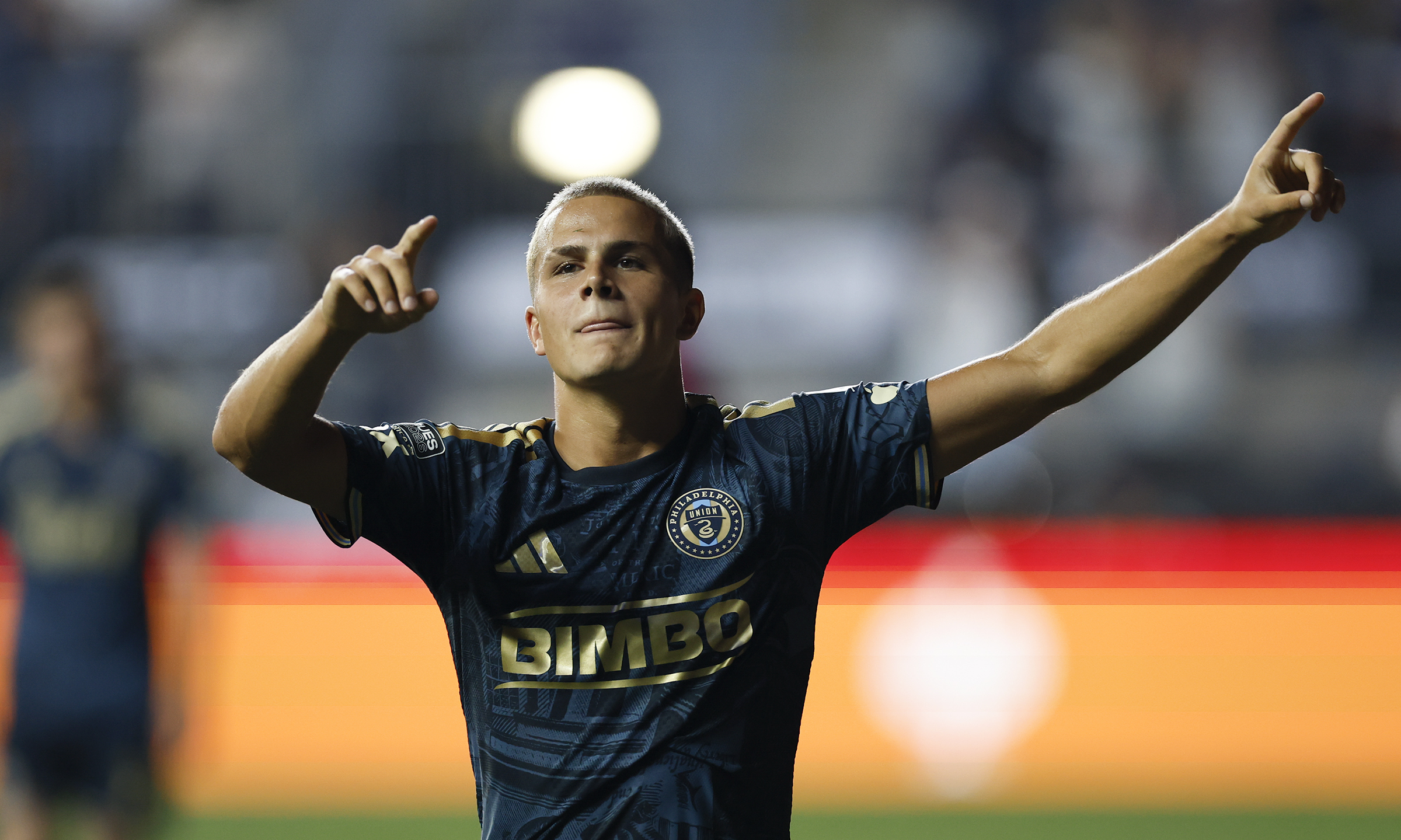
The spotlight on Cavan Sullivan has become in recent months as bright as his bleach blonde hair.Yong Kim / Staff Photographer
Bleached super star
Cavan left Sunday for Atlanta, where he’s training for the first time with the U.S. team and beginning a journey that could make him the star of the next World Cup. He’ll likely earn his first national team appearance before returning to the Union.
But before he boarded his flight, Cavan needed to get his hair right. So his mom, who used to bleach her husband’s hair in the 1990s when he played pro soccer in New York, got to work.
“I looked like a Duracell battery,” Brendan said as his old hair was more copper than blonde. “Cavan gets the extra love.”
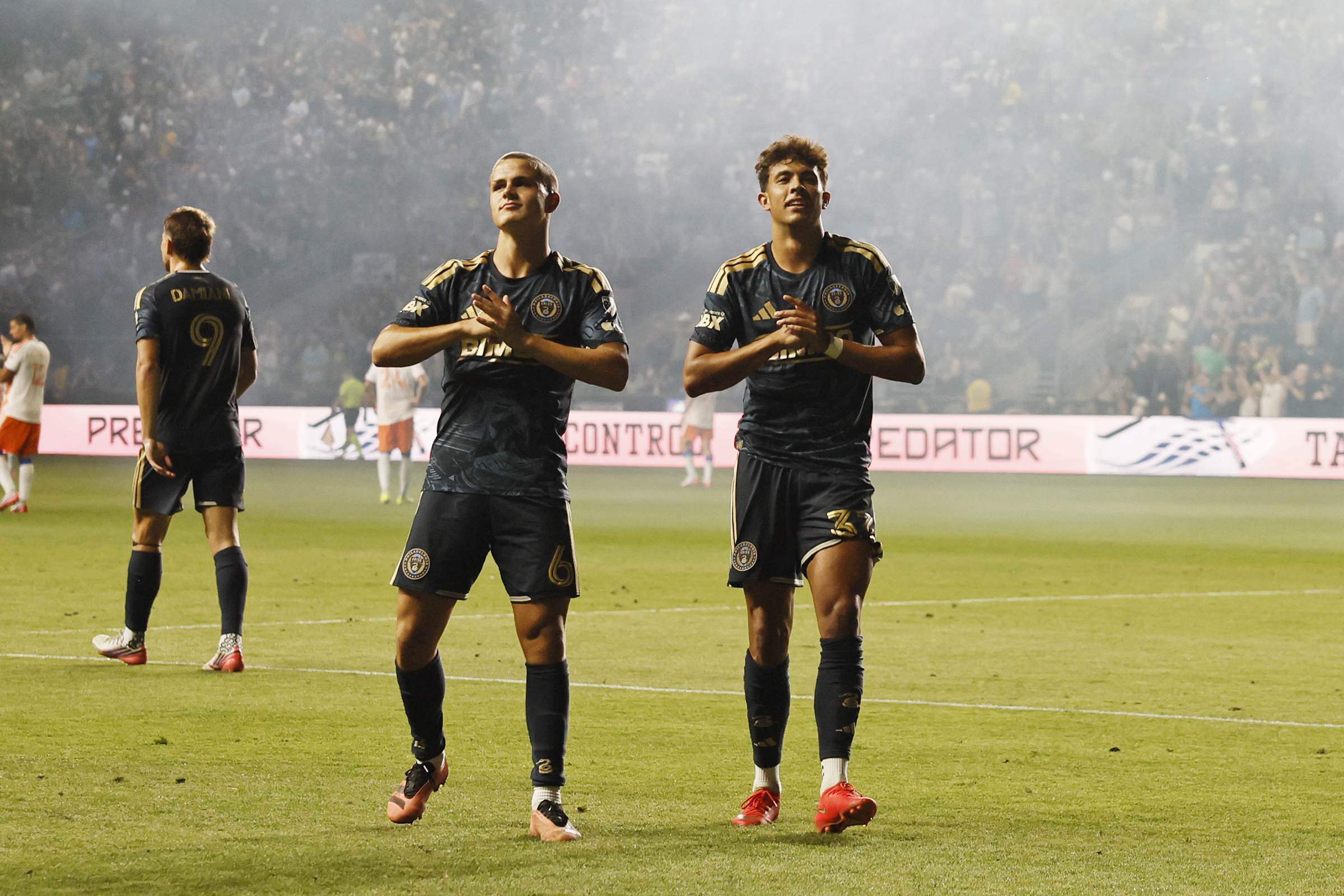
Cavan looks the part of a star with his bleached hair, eyebrow slit, and gold chains. He breezes through interviews like he beats defenders as no question seems to trip him up. He’s been in modeling campaigns for non-soccer brands, was photographed this summer by Annie Leibovitz, and has more than 400,000 followers on Instagram.
He plays the game like a showman and often tops goals with choreographed celebrations like the time he threw chalk in the air as an homage to LeBron James.
“That’s him,” said Union teammate Frankie Westfield, who grew up in Morrell Park and is with Cavan with the U.S. team. “That’s how he performs. Even in the locker room and in training, he’s dancing around. I don’t want to say he doesn’t care because he cares so much, but I think just playing loose and free makes him what he is. He brings a whole new vibe.”
Cavan has the makings to be more than just a soccer star.
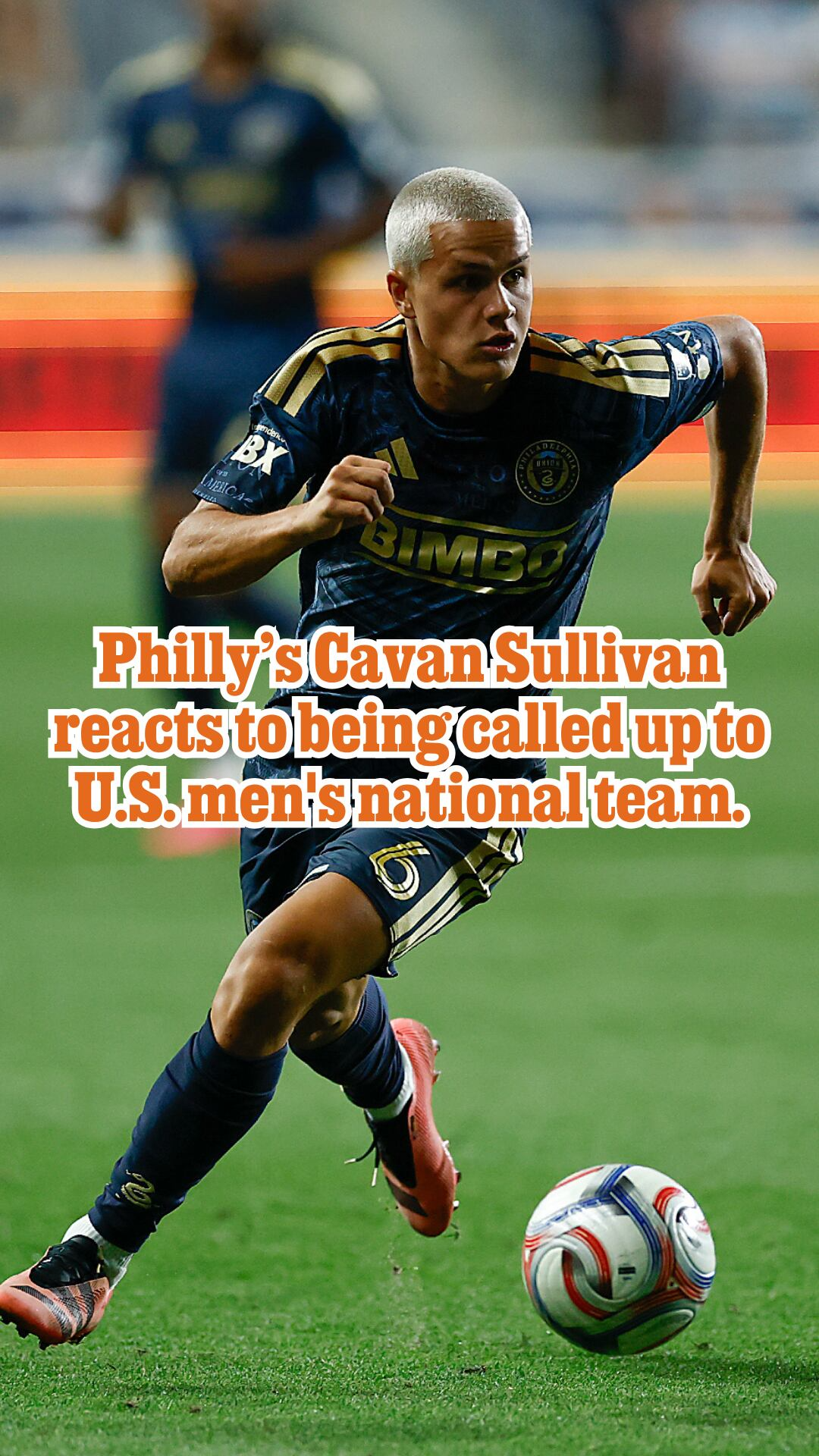
Video: Philly’s Cavan Sullivan reacts to being called up to U.S. men’s national team.
The spotlight on Cavan has become in recent months as bright as his hair. But the kid seems comfortable in it, managing the attention with ease despite being just 16.
“I think I just understand that I haven’t really done anything yet,” he said. “There hasn’t been anything major that I’ve done. I’m still trying to prove myself and make my mark on the city and on the club. I always want more. I always want to be the best. When you focus on it that way, it’s natural to just avoid all the other stuff.”
Quinn remembers driving Cavan home from their Union practice and how the younger brother would be breaking down footage from the session and sending clips to his dad for feedback. He’s always thinking about the game.
He doesn’t count his social media likes or chase clout and even remarked to his brother how he couldn’t get his latest ridiculous goal — a beautiful backheeled tip — off his timeline.
Quinn and Cavan Sullivan pose for a photo after a Union victory over New York City FC last season.Elizabeth Robertson / Staff Photographer
“I was like ‘Dude, you have to hit the not interested button,’” Quinn said. “But he deals with it well. It comes with the game. It comes with being the type of player he is.”
Perhaps Cavan’s ability to shrug at attention goes to how his parents treated him and his brothers. They talked to their kids about the games on the way home and then treated them like kids when they walked in the front door.
Cavan could be playing next year in Europe, but he still has chores at home. And the Sullivans never posted — “I did a couple times,” Heike admitted — about their children on social media.
“Why would you?” Brendan said. “There’s no need to talk about how you won a tournament or had a hat trick. You don’t brag about anything. This is his normal. It’s not normal to us, but he looks at it as his normal. So it’s weird for him if this is his normal. But then again, we don’t talk a whole lot about it. We never gave him media practice. He just knows, ‘Don’t sound like a jerk.’”
Cavan never played the game for attention or accolades. He became a child star, but he wasn’t groomed for it. His parents declined interviews over the years and other media projects.
The Sullivans knew they had a phenom, but they didn’t publicize him, not even on Facebook. They treated him like a kid, his mom said, because he was a kid. It was that simple.
“This wasn’t something we were seeking out,” Heike said. “And maybe that attitude prepared him to not make a big deal out of it.”
Older brother Quinn (left) has Cavan Sullivan’s back on and off the pitch.Elizabeth Robertson / Staff Photographer
Shaped by Philly
The Sullivans left Almond Street in 2018 for Norristown and the allure of a driveway, a backyard, and extra bedrooms. There’s not much to complain about. But they still miss things about the old neighborhood.
There was a corner store where a dollar was enough to score a handful of candy. Brendan can still taste the polish kielbasa and his sons remember the fear they felt as a 4-year-old walking alone around the corner to their grandparents and the pride of making it there safely. There was Wiffle ball and basketball with the neighbors, riding bikes through the cemetery, and playing for hours on the sidewalk.
Philadelphia’s soccer scene was born in neighborhoods like Bridesburg, where European immigrants brought the game decades ago when they came to work in factories along the Delaware River. Rowhouses — just like the one on Almond Street — produced pioneers like Walter Bahr and Benny McLaughlin. The Northeast is where Chris Albright and Bobby Convey, teammates on the 2006 U.S. World Cup squad, grew up. The cinder fields was where Don D’Ambra and Dave MacWilliams made their mark.
The same neighborhood that shaped Sullivan is what powered Philadelphia soccer for generations. He’s only 16 years old and he soon could be the face of a sport. But he was not an overnight sensation. Cavan’s emergence was generations in the making. Just the ones who came before him, he’s a kid from the neighborhood.
The Sullivans left Bridesburg years ago. The basement now belongs to someone else. But the memories? They’ll always belong to the four brothers.
“Northeast Philly sort of shaped me in a way,” Cavan said. “It was just a great place to be.”
Bob Sumner was reffing a high school basketball game years ago when Speedy Morris, then the coach at St. Joseph’s Prep, waved him over.
Perhaps the legendary coach wanted to discuss a call or ask the ref to look for something on the court. Nope. He just wanted to tell Sumner what he thought of the ref’s beloved college football team.
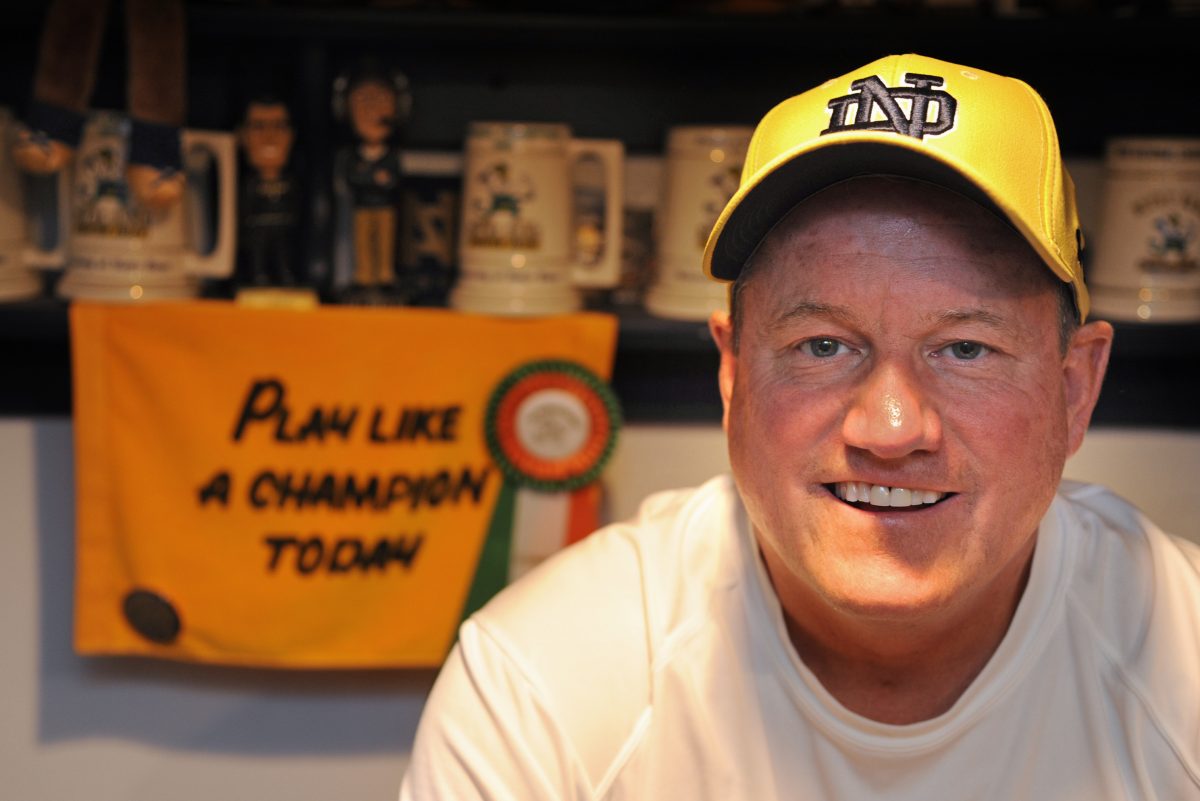
Sumner’s passion for the Irish runs so deep — Saturday’s game against Michigan State marks his 50th annual pilgrimage to South Bend, Ind. — that even black-and-white referee stripes can’t hide his love for the blue and gold. Most don’t even know his name.
“People will say, ‘Bob Sumner is doing the game,’” Sumner said. “They’ll say, ‘That wasn’t Bob. That was Notre Dame Harvey.’”
Sumner, like so many Irish supporters, didn’t attend Notre Dame. But that didn’t stop him from falling for the Irish in the 1970s as a kid in Grays Ferry, where it seemed like half the neighborhood was split between Penn State and the Golden Domers.
The neighborhood — just like pockets of Northeast Philly and Delaware County — often felt like a Notre Dame satellite campus.
Sumner’s Uncle John took him as a kid to see the Irish at JFK Stadium and he used to race home with his brother after church at St. Gabriel’s to watch the ND highlight show.
In 1977, Sumner flew to South Bend with a bunch of older guys from the neighborhood who watched Notre Dame every Saturday at Dean’s Bar. Notre Dame Harvey — no one quite knows why his family started calling him Harvey, but it’s easy to explain the Notre Dame part — was born.
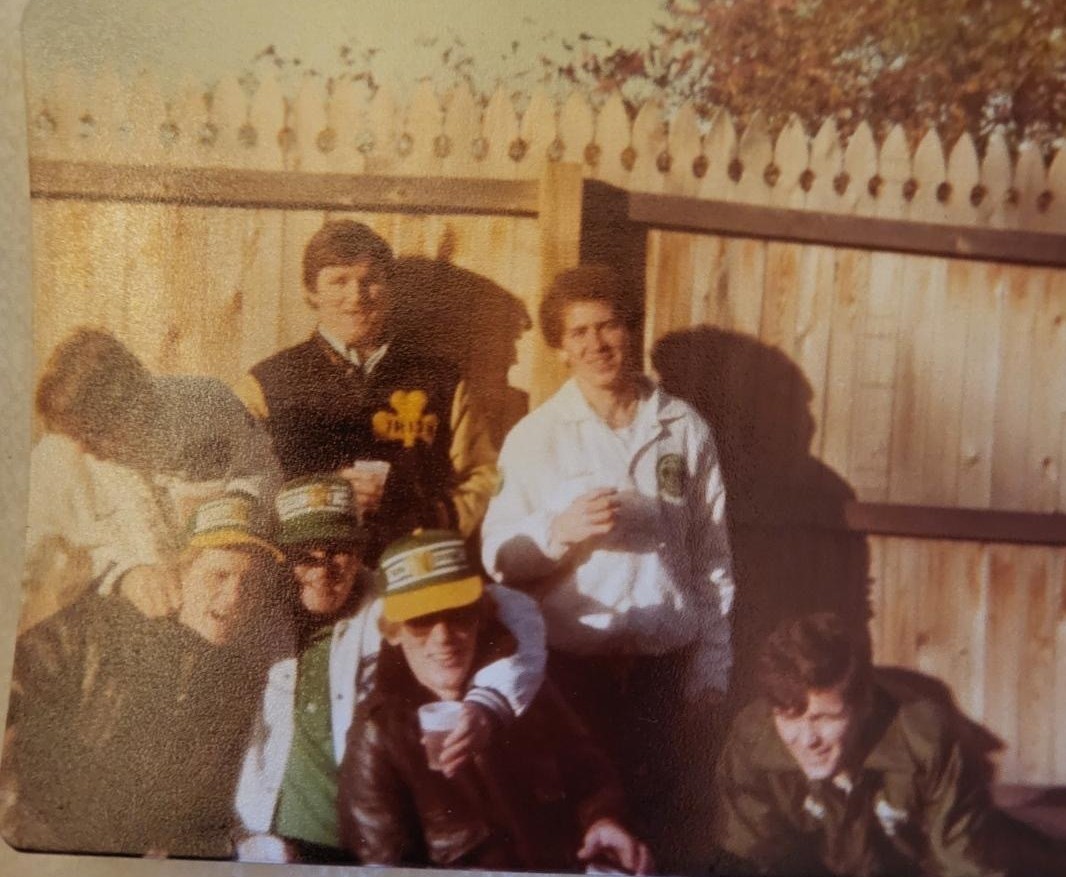
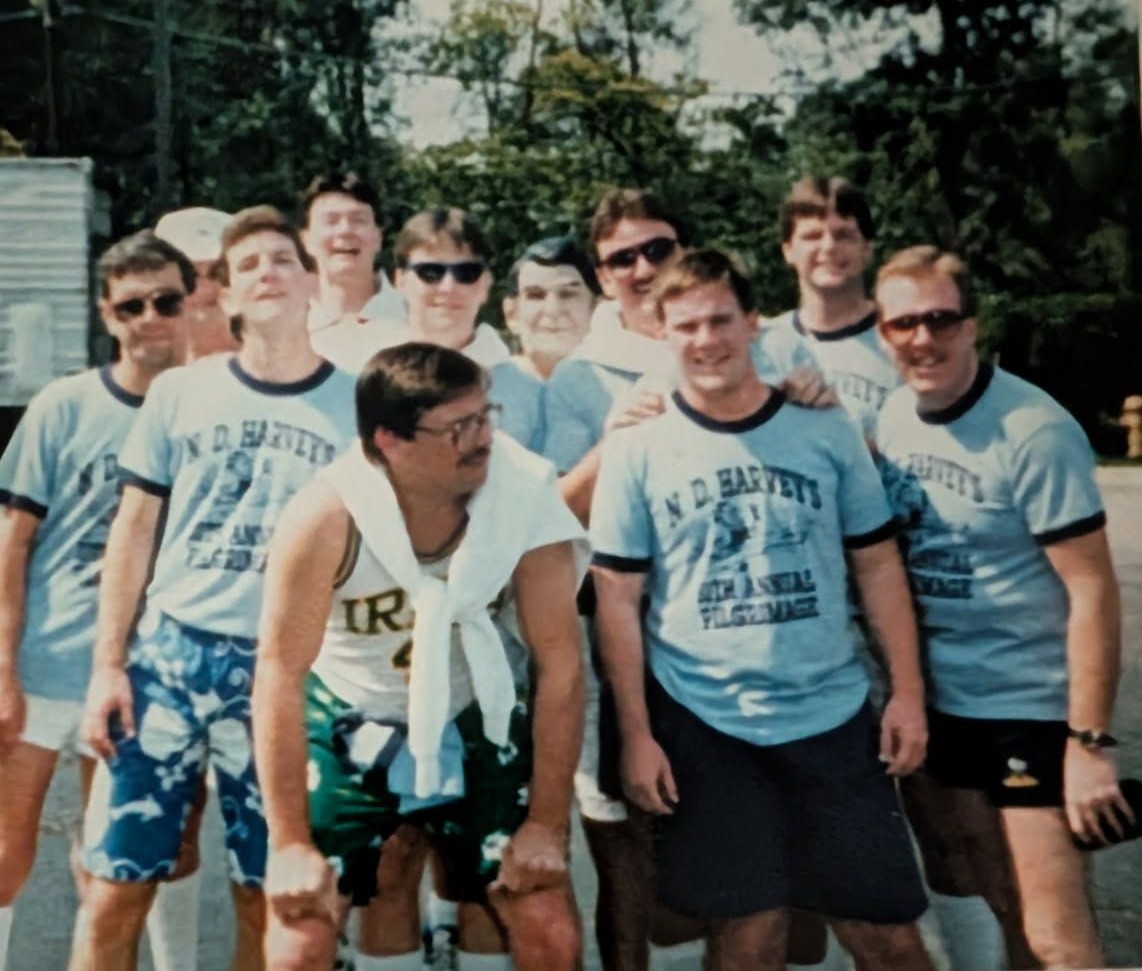
Notre Dame Harvey and the “Gang From Grays Ferry” during a trip to South Bend in 1981. They’ve made 50 straight trips to see the Irish.Bob Sumner
The Grays Ferry clan — “The Notre Dame Club of Grays Ferry,” they called themselves — went out every season as they drove Winnebagos, rented buses, and boarded airplanes to turn South Bend into South Philly.
One guy said he told his wife before they got married that the annual trip was part of the deal. Sumner even played the fight song at his wedding.
They hang in the bars, walk around campus, go to church, and even once helped paint the gold helmets. It’s hard to explain, Sumner said, until you make the trip. The school became his identity as there’s no hiding his love for ND. Even when he’s trying to ref.
“I knew I couldn’t ‘T’ Speedy up,” said Sumner who ends every phone call with a ‘Go Irish.’ “He’s a legend.”
A nail in the foot
Sumner’s first trip to Notre Dame in October 1977 came a week after the Irish wore green jerseys and blew out fifth-ranked Southern California. The team ran onto the field that day behind a wooden Trojan horse, which was still on campus when the guys from Grays Ferry arrived.
“I was jumping on it and I stepped on a nail,” said George Sumner, Notre Dame Harvey’s older brother. “I had to go to the hospital on my first night on campus.”
A nail? No big deal. Sumner got a shot at the hospital and was back with the clan that night. The Irish played Navy the next afternoon and the guys returned to Dean’s at 29th and Tasker with a win.
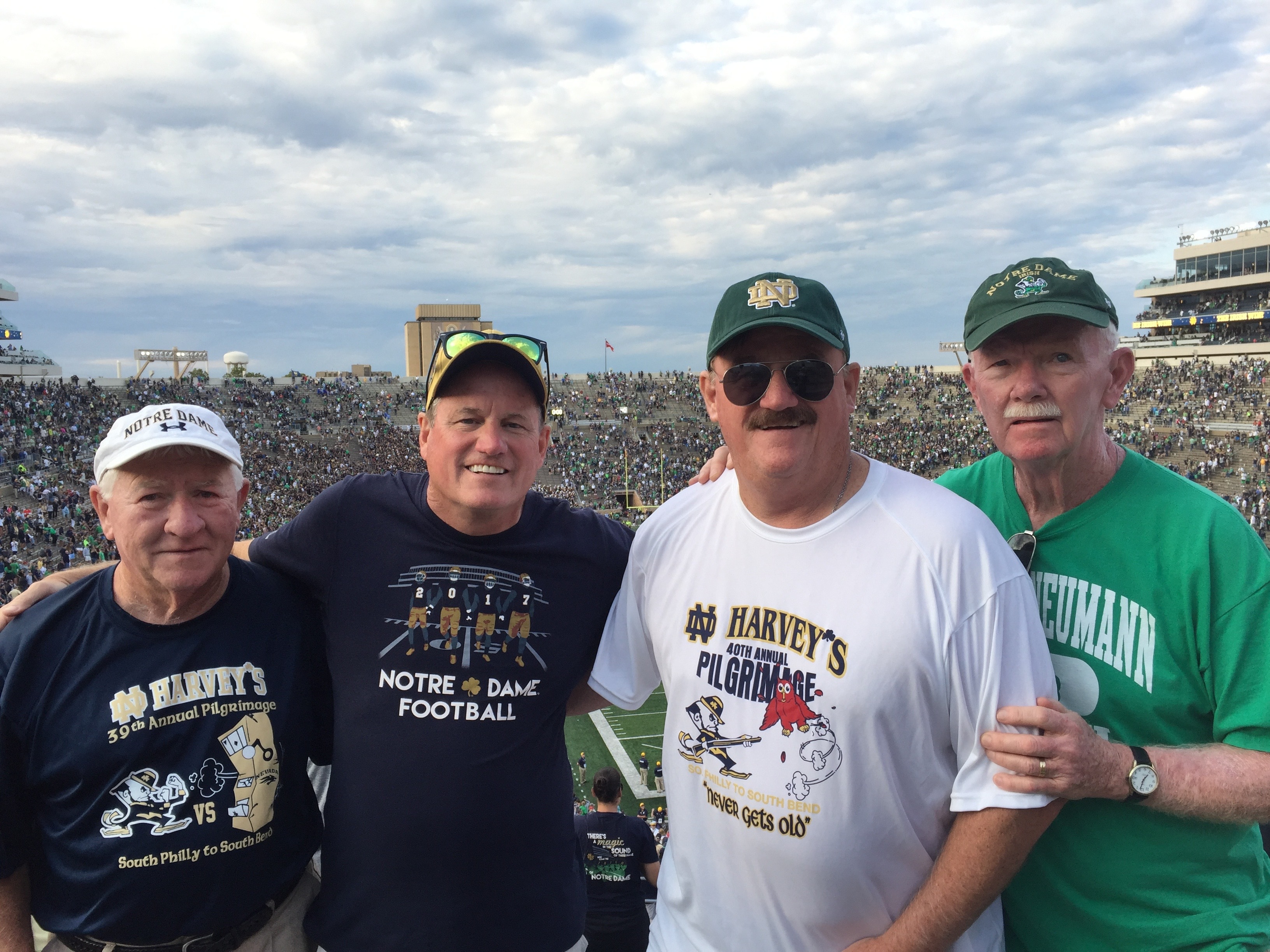
Frank Henry, Notre Dame Harvey, George Sumner, and Joe “Whitey” Gibson at Notre Dame Stadium in 2017 for the 40th annual trip.Bob Sumner
“First time in the stadium, I had the tears running,” Sumner said. “It’s something that you grew up with and you saw it on TV. But when you’re there, it’s like, ‘Oh my God. I’m here.’”
The first trips were run by neighborhood pillars Jack Keenan and Greg Horan before Notre Dame Harvey took over. They connected with alumni, found ways to score tickets to sold-out games, and have met everyone from Ara Parseghian to Will Fuller.
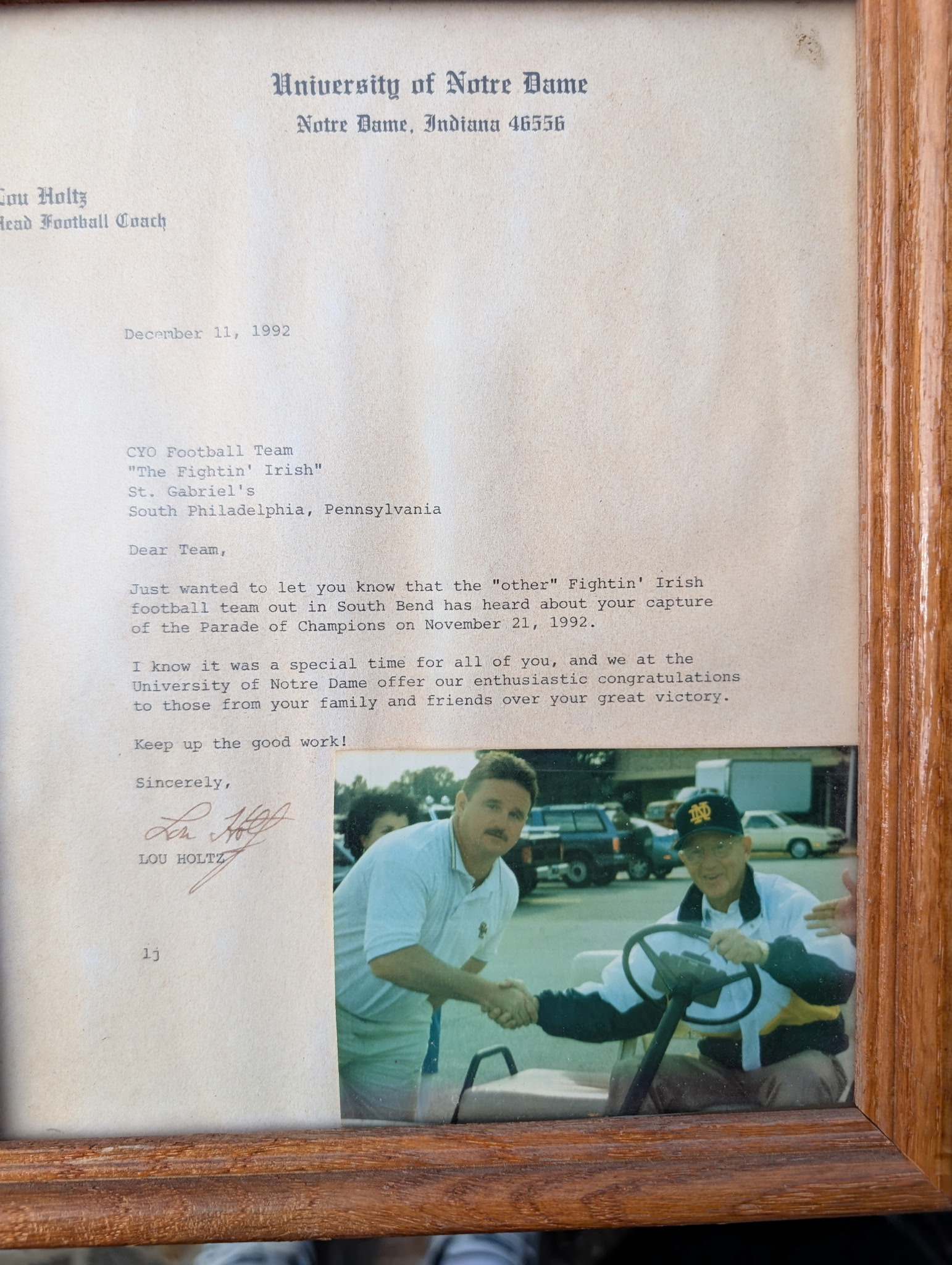
Lou Holtz even wrote a letter to Bob Sumner after Sumner coached the St. Gabriel CYO football team — of course, they’re the Fightin’ Irish — to a 1992 championship.
“Just wanted to let you know that the ‘other’ Fightin’ Irish football team in South Bend has heard about your capture of the Parade of Champions,” Holtz wrote.
Notre Dame coach Lou Holtz wrote a letter to St. Gabriel’s CYO team after the other Fightin’ Irish won a football title in 1992.George Sumner
Most of the crew who have traveled with Notre Dame Harvey are Subway Alumni, the moniker worn with pride by ND fans who didn’t go to school there. They used to pack a bus with neighborhood guys and made sure they had enough beer and hoagies for the ride.
“Going out was phenomenal,” George Sumner said. “But coming home was a long ride. Win or lose. It’s brutal.”
The annual trip became an event. For years, they parked their Winnebago next to the stadium all weekend and showered in the basketball arena. They were living large, George Sumner said.
“People say, ‘You go there,’” said George Sumner, who went to Temple but cheered for the Irish against the Owls. “I say, ‘Yeah.’ My wife says, ‘Stop lying.’ I say I go every year. But I did sneak into two classes. I snuck into a philosophy class and a chemistry class so I’ve taken classes there. Dean’s list.”
Harvey planned to leave Thursday morning before dawn, which he figured would get him to the Linebacker Lounge by 4:30 p.m.
“We’re in ND,” Harvey texted Thursday at 4:38 p.m. “Go Irish.”
They planned to have a “a couple cold ones” at the Linebacker Lounge and “go as far as their body takes us.” The 68-year-old Harvey said the crew might not stay out like they used to and has learned the importance of a good breakfast.
But the bartenders at the spot by the football stadium still know the crew from Philly as the “Grays Ferry Gang” who always pile their cash together on the bar.
“We’re Philly people,” Sumner said. “We throw up a kitty. People don’t know what a kitty is. The bartenders we know in the Linebacker say, ‘They’re all right. That’s a kitty.’”
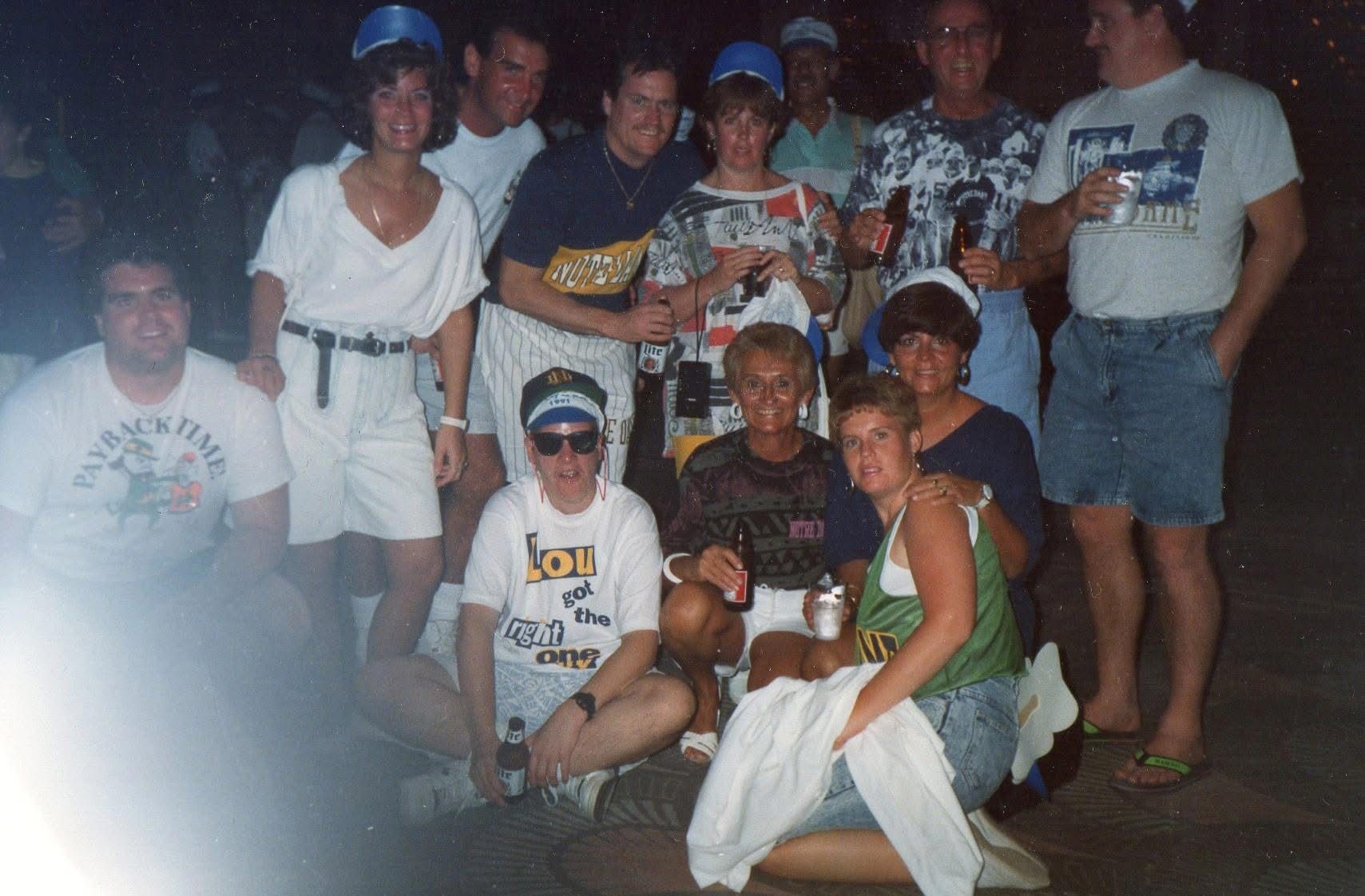
Notre Dame Harvey and the Grays Ferry Gang in South Bend in the late 1980s.Bob Sumner
The crew is about 700 miles from Grays Ferry, but they make an Indiana watering hole feel like Dean’s, where they still gather once a year to watch the Irish. They pool their money together and tell the bartender to pull from the pile whenever someone orders a drink. The leftover cash belongs to the bartender.
“Being from South Philly and Grays Ferry, you always took care of the bartenders and treated them with respect just like a police officer,” Sumner said. “We went to Pittsburgh one time for a game and threw up a kitty with 300 or 400 dollars on the bar. Guy goes ‘What’s that?’”
Sumner gave him a South Philly education. The crew stayed for two hours and left $100 on the bar.
“He goes, ‘What’s that?’ I said, ‘That’s yours. We’re leaving,’” Sumner said. “He was almost in tears. We’re walking out the door and says to the gang, ‘By the way, guys, I open up tomorrow at 8 o’clock.’”
Notre Dame Harvey and The Grays Ferry Gang even traveled to Hawaii to see the Irish play in a bowl game.Sumner
The trip is planned around the game on Saturday but it has become so much more than just the four quarters. It’s the kitty on the bar, the pep rallies, the excitement when the crowds begin to fill campus on Friday, and the tailgate on Saturday — “Bring your own food,” they say — as kickoff nears.
“People still think we’re crazy,” said 71-year-old George Sumner. “But there’s so many people we’ve met and friendships formed all over Notre Dame.”
‘I felt like Rudy’
Sumner bartends each summer at Keenan’s — the North Wildwood bar Jack Keenan used to run — and one of his coworkers lives near Joey O’Brien, the star recruit from La Salle who is now a freshman at Notre Dame. Harvey needed to meet the kid and his parents so his buddy set up a dinner at a bar in Lafayette Hill.
“I didn’t even know where Lafayette Hill was,” said the guy who calls his South Jersey town “Little South Philly.”
He listened to O’Brien’s father Joe tell stories — “He’s like one of us,” Harvey said — and talked to the kid about playing at ND. Earlier this year, Harvey was wandering around campus the day before the Blue and Gold spring game when the football team walked by on their way to practice. O’Brien spotted him and asked Harvey if he wanted to come to practice.
“I felt like Rudy,” he said.
Notre Dame Harvey met Irish head coach Marcus Freeman before the 2026 spring game. The coach thought he was a player’s uncle.Sumner
A staffer brought him to head coach Marcus Freeman and introduced him as “O’Brien’s uncle.” He was in. Notre Dame Harvey — the guy who used to call into Howard Eskin’s WIP radio show to defend the Irish — watched practice on the sidelines. Eventually, he made it back to his crew after telling them he was making a coffee run. Three hours later, he had another story to tell.
“I was just out for a casual walk and one of the greatest thrills of my life happened,” Sumner said. “I was like a kid in the candy store. Everyone treated me great. Freeman must’ve really thought I was his uncle.”
Reggie Jones played college football for three seasons.
But he didn’t actually play.
He was on Temple’s scout team, where his role was to help the guys who did play prepare each week for Saturday. He practiced all week and then watched the games last season from his apartment near campus.
Finally, he had enough.
Jones told his parents and girlfriend following last season that he was quitting. He let some teammates know. That was it.
“I would come home so sad because I didn’t know what I was going to do with myself,” Jones said. “Then one day, I was scrolling on TikTok, and I came across this walk-on basketball player named Brandon Dwyer from Florida Gulf Coast.”
Video: K.C. Keeler on where Temple football is headed in the future
Dwyer had gone viral on social media for documenting his life as a walk-on as he created a series of videos titled “The Road to One Point.” He made his first basket last November, just as Jones was deciding he was through being a walk-on. And the video inspired Jones to keep going.
“For a month straight, I would go to his page every day and just watch his videos,” Jones said. His story was exactly like mine. He was always a bench rider. He was about to quit, too. Watching these, I got the love back for football.”
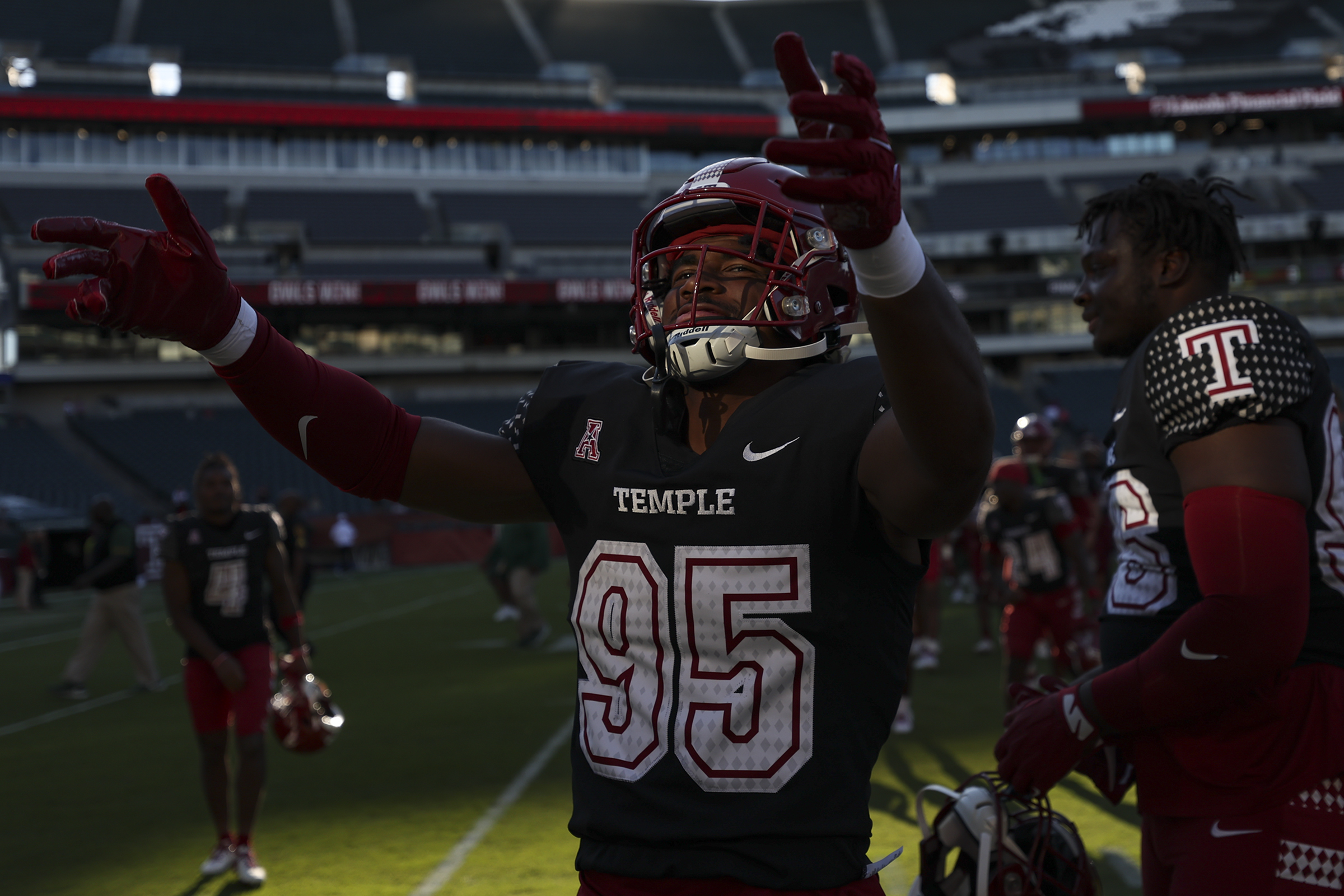
Temple linebacker Reggie Jones says his persistence to stay with the Owls program was watching TikToks from a Florida-based basketball player going through a similar situation.Isaiah Vazquez / For The Inquirer
Jones stayed with the football team and started to document his “Road to One Tackle.” His first video in January picked up thousands of views, and his followers grew. He was on to something. But Jones knew he couldn’t make a tackle from the scout team. He had to get on the field.
“I told myself, ‘Reggie, this is your season. I don’t care what you do, but get off the scout team because you can’t be in the same boat for four years,’” said Jones, who has 174,000 followers on Instagram. “Every year, I was tired of it, but this year I was like, ‘This is my senior year. I can’t go out like this.’ That first padded practice, I was just trying to go through everyone because I had to show these coaches that I deserved to play.”
Jones quickly worked his way off the scout team this summer and then found his name on the team’s depth chart. He was a special teamer. Nine months after nearly quitting, Jones earned a spot on the team.
“You know when you have a lot on your chest, and it feels like something was taken off,” Jones said. “Like, I can finally breathe.”
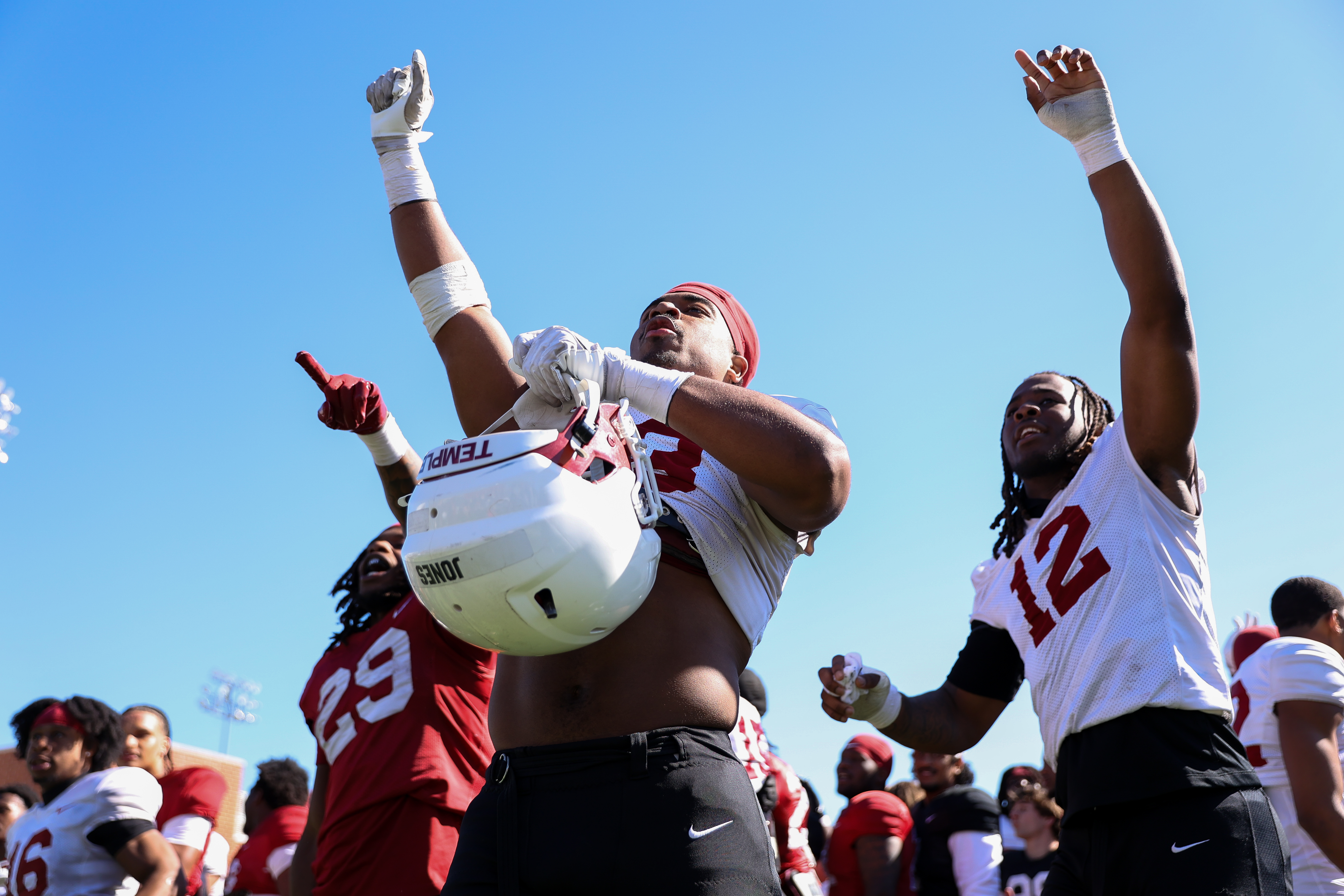
Temple linebacker Reggie Jones (center) and cornerback Denzel Chavis cheer after last spring’s Cherry and White Spring Game at Edberg-Olson Hall.Isaiah Vazquez / For The Inquirer
Building a following
Jones attended Maryland’s DeMatha Catholic High and hoped to play college basketball. But he stopped growing as a high school junior.
“I wasn’t about to be a point guard,” said Jones, who is 6-foot-1.
Jones played football at DeMatha but didn’t take it seriously until his senior year. By then, it was too late to earn a college scholarship. Temple offered him a chance to walk on, which meant he would be on the hook for his tuition and had slim chances of seeing the field. Jones took it.
He came to Temple with 20,000 social media followers, building a following making silly videos during high school. A friend told Jones he should start making football videos. Soon, he started making some money and signed with an agent, who helped him connect with more sponsors. He wasn’t playing on the football team, but his videos were finding an audience.
“Of course I’m a walk-on on the team, but there’s a lot of walk-ons in life,” said Jones, who is on track to graduate in May with a degree in sports and entertainment management. “You know what I mean? Everyone is an underdog. I’ve been an underdog my entire life. For some reason, I always got put in the position where people looked down on me and I always made them eat their words. You have people who are looking for ways to get out of that funk and I think that’s why my story has resonated with so many people.”
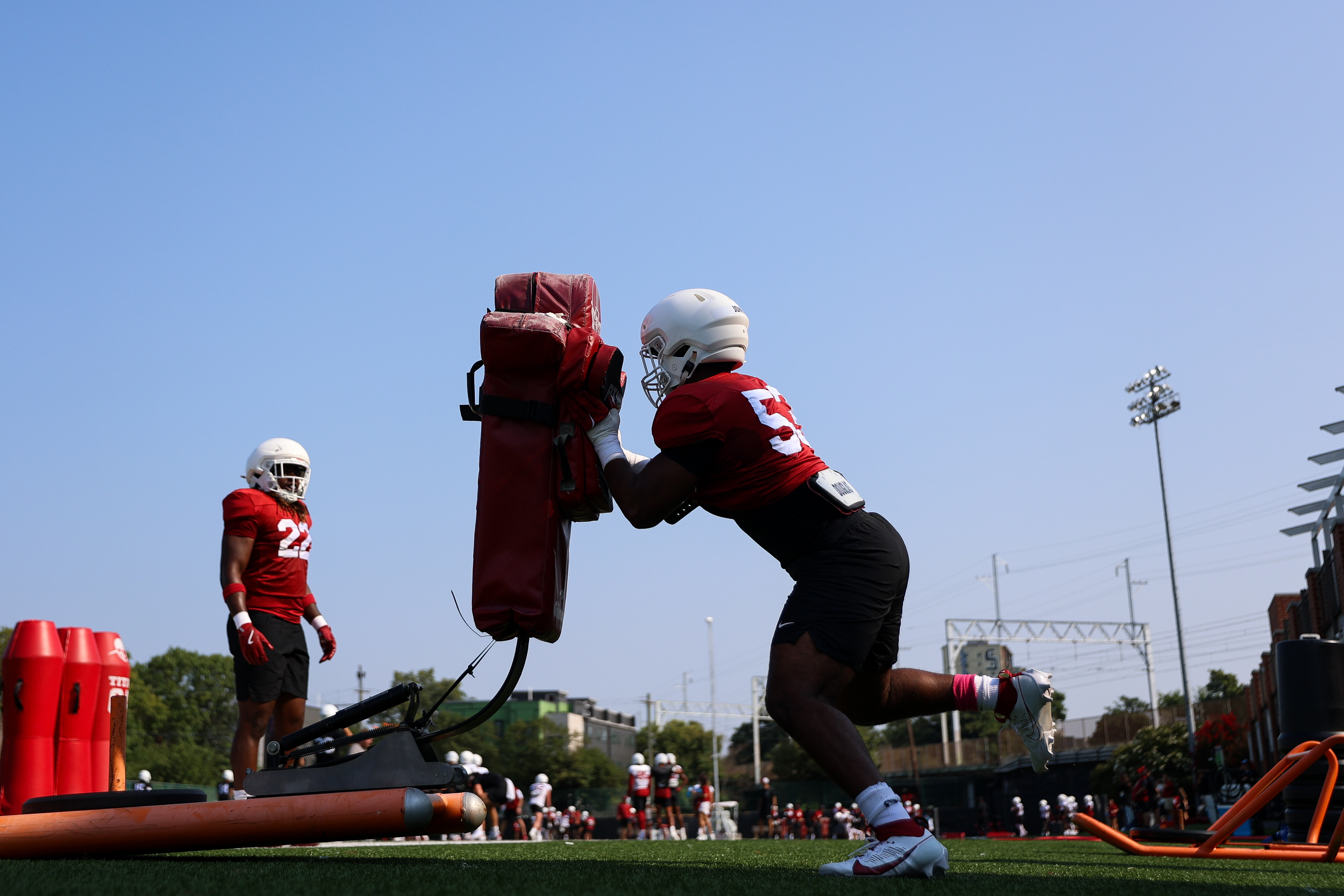
His “Road to One Tackle” videos showed him practicing, lifting weights, and hitting the tackling sled. But Jones is a content creator so there was a video this summer of him dancing after practice, struggling to take his pads off, and purchasing a seltzer water that sponsors him. His videos – some of which have more than 100,000 views – are more than just football.
Video: K.C. Keeler is building Temple football around ‘love and trust’
“I can’t even look at Instagram and TikTok anymore like a normal person,” said Jones, who simply shoots his videos with his iPhone. “I’m constantly looking for ideas. Most of the time, I get my ideas from non-football-related ideas. I then connect them to football. I’ve learned from making content that you can’t go straight to football, football, football because they won’t resonate with everyone. Then I put a football twist on it.”
The first tackle
Jones called his girlfriend Gabby Linden last month after he learned he was going to play in Temple’s season opener. She started crying and told Jones to call his parents. They started screaming.
“My parents paid for school,” Jones said. “They saw me grind day in and day out to play college football and they were so excited.”
The Owls were well ahead on Saturday against Rhode Island when the team’s linebackers coach told Jones that he was going in. Jones said he was flooded with emotions. He almost quit football a season earlier and now he had a chance to make a tackle in an NCAA game. His girlfriend, who he met his first semester at Temple, was in the crowd. So were his parents.
“My heart dropped to my ankles,” Jones said. “This is the opportunity I’ve been waiting for.”
The first play was a handoff, Jones rushed to the line of scrimmage, and found the ball carrier. He did it. Jones pointed a finger to the sky and cried as his teammates roared from the sidelines. But there wasn’t much more time to celebrate. Rhode Island was in a hurry-up offense and Jones had to get ready for another play.
“I had to lock back in,” Jones said.
But that was OK. There was plenty of time afterwards for Jones to create content. He filmed the scene in the locker room as he danced with his teammates and had someone take a picture of him holding a piece of paper with “1” on it as a nod to Wilt Chamberlain after his 100-point game. It was a great moment. And it was also great content.
Temple linebacker Reggie Jones (center) and cornerback Denzel Chavis cheer after last spring’s Cherry and White Spring Game at Edberg-Olson Hall.Isaiah Vazquez / For The Inquirer
“As soon as I took the picture, everyone jumped me at once,” Jones said. “It was so cool. I’m glad I was able to do that with my teammates. You know when someone in your family does something good and the whole family celebrates? It was just like that. A big family celebration because they knew how much work I put in and they were so proud that I actually did it.”
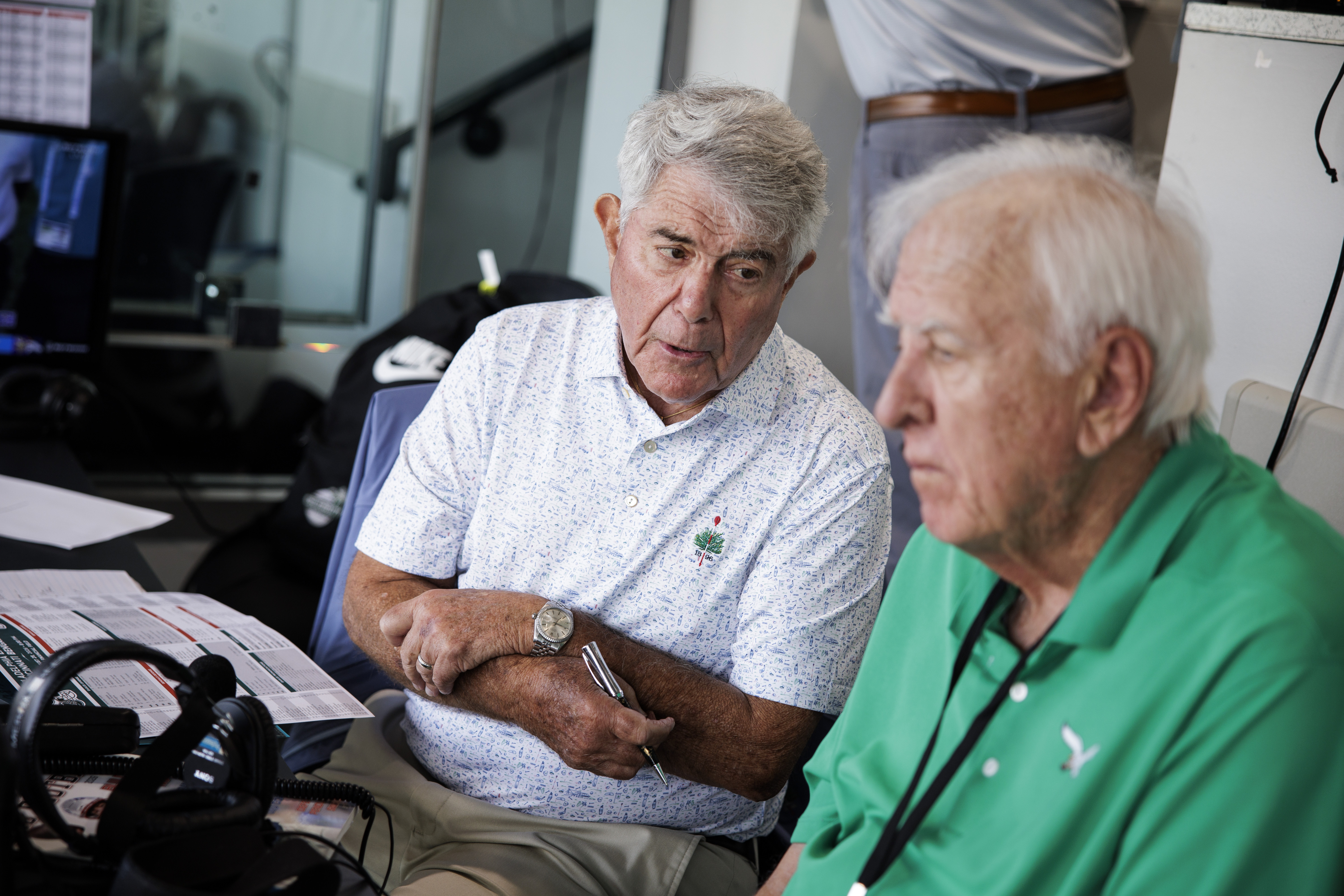
Merrill Reese sat in his living room chair, awaiting the rapid-fire questions from his wife as she prepared the longtime Eagles broadcaster for another game.
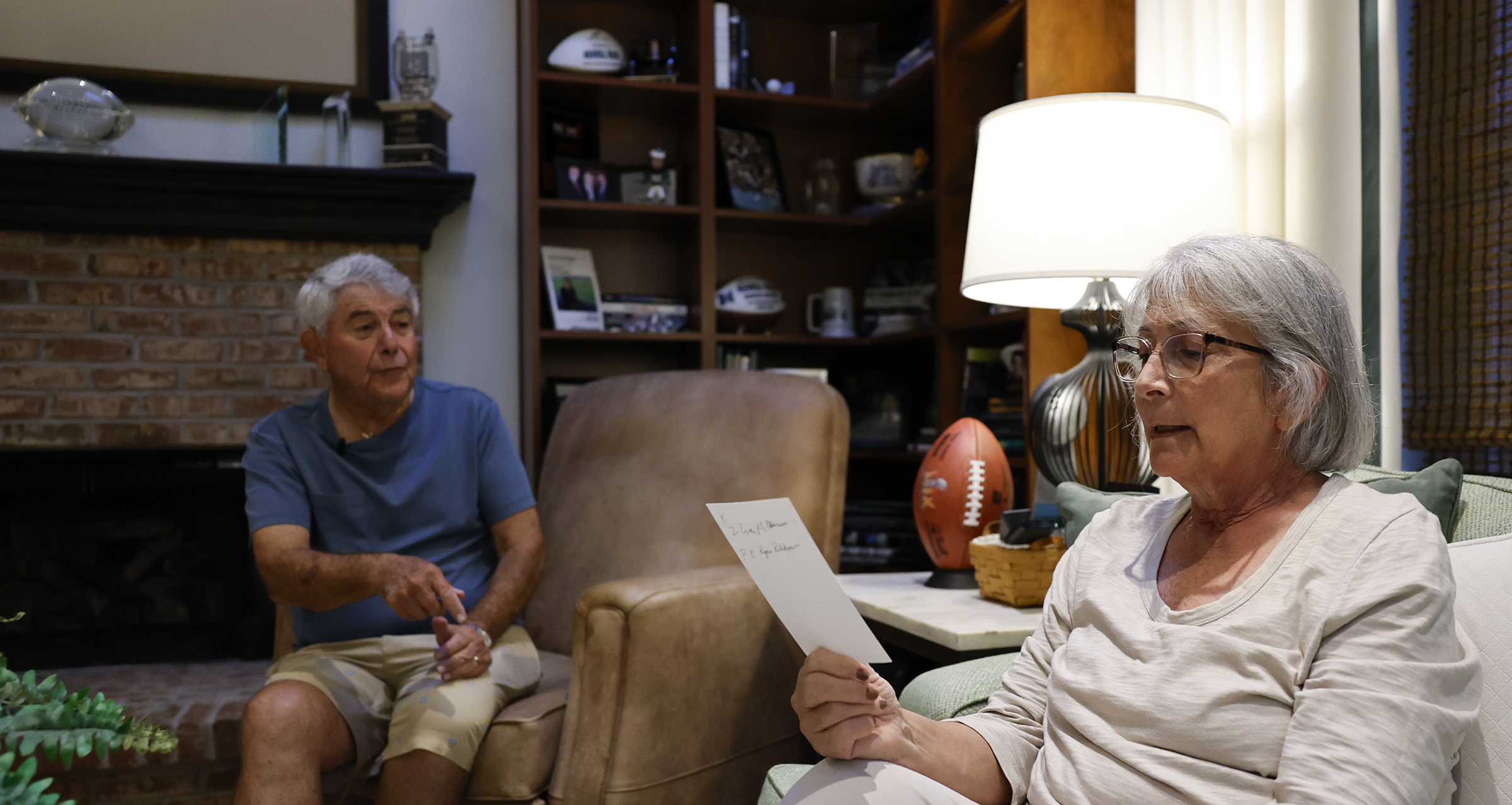
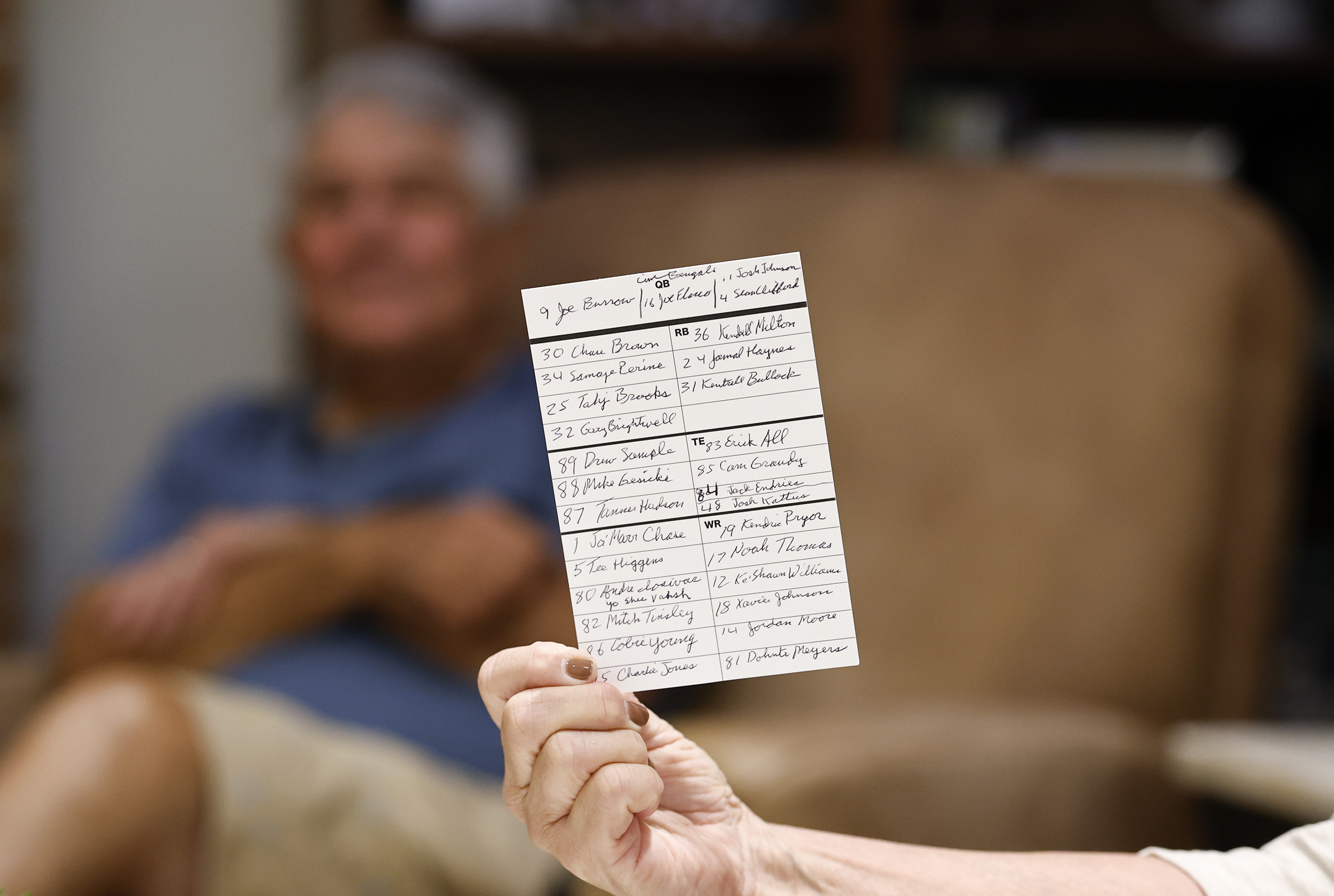
“Thirty-one,” said Cindy Reese, reading off an index card listing Cincinnati Bengals running backs.
Reese — who begins his 50th season on Sunday as the voice of the Eagles — needed a moment to think.
Cindy, who has a doctorate in education and spent 20 years teaching middle schoolers, quizzes him the night before each game on the opposing players. She reads him a number and he spits out a name. They repeat the numbers until he masters it, like a student preparing for a big test.
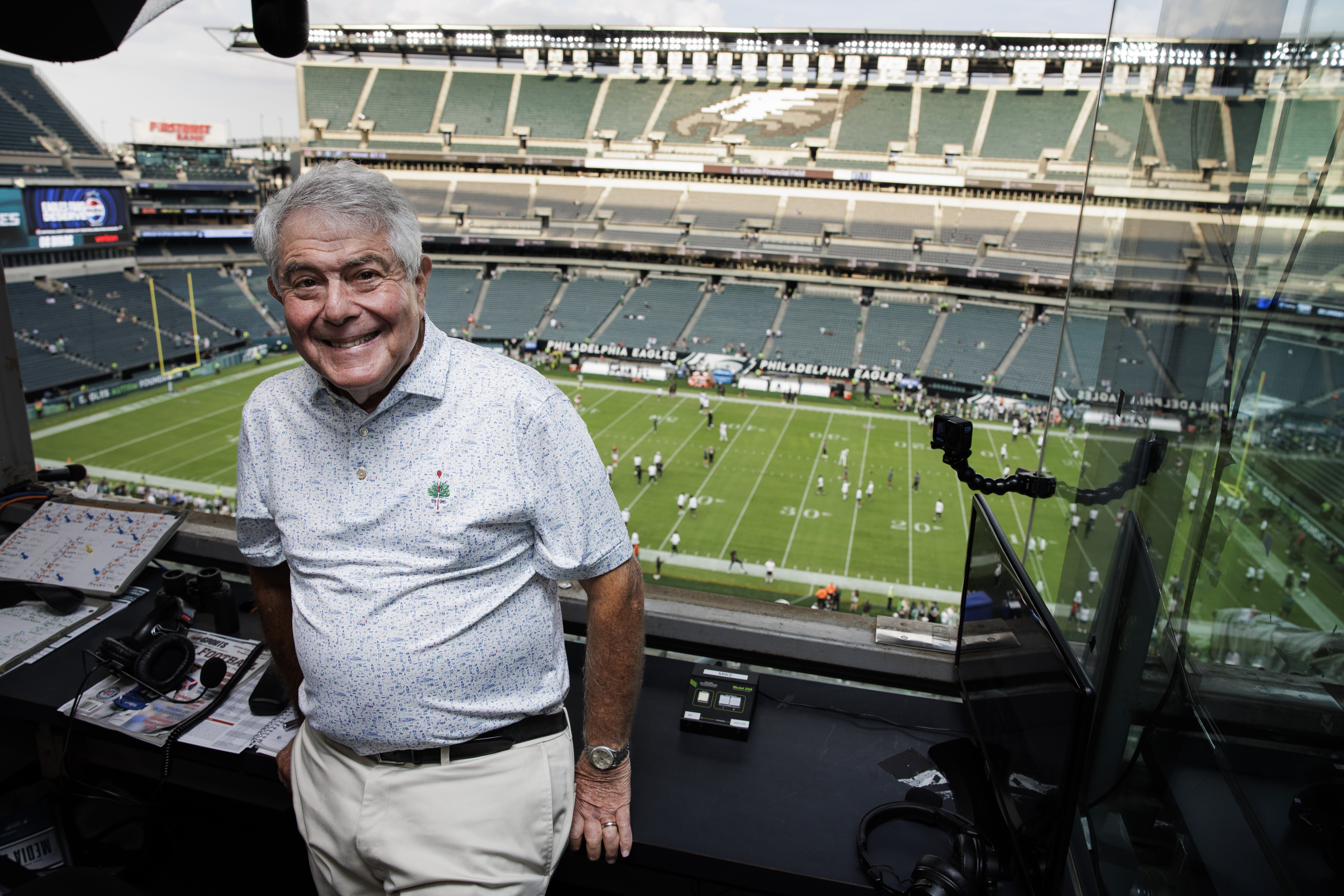
Reese grew up a Birds fan in Overbrook and would stare at the broadcast booth at Franklin Field while dreaming of being there one day. Now it’s hard to remember a time when Reese wasn’t calling the action in a voice that the Daily News once perfectly described as an “urgent baritone.”
Reese voiced two Super Bowl wins, told you the Eagles stopped ‘em again, and can make the word “good” sound great. He turned 84 earlier this month and has no plans of retiring. His 50th season, Reese said, isn’t a farewell tour.
Cindy Reese holds a note card with the names of Bengals players to help her husband, Merrill Reese, prepare for an Eagles preseason game against Cincinnati.Yong Kim / Staff Photographer
“Forever,” Reese said of how long he plans to call the action. “My word is always forever. I always kiddingly say they’re going to have to remove me with a crane. Look, I love to golf. But I’d rather broadcast an Eagles game than anything in the world. My greatest pleasure is to sit there and broadcast an Eagles game. There’s nothing I love more. I even enjoy doing the preseason games. I can truly tell you that I love it as much or more as I ever loved it. I have no intention of stopping.”
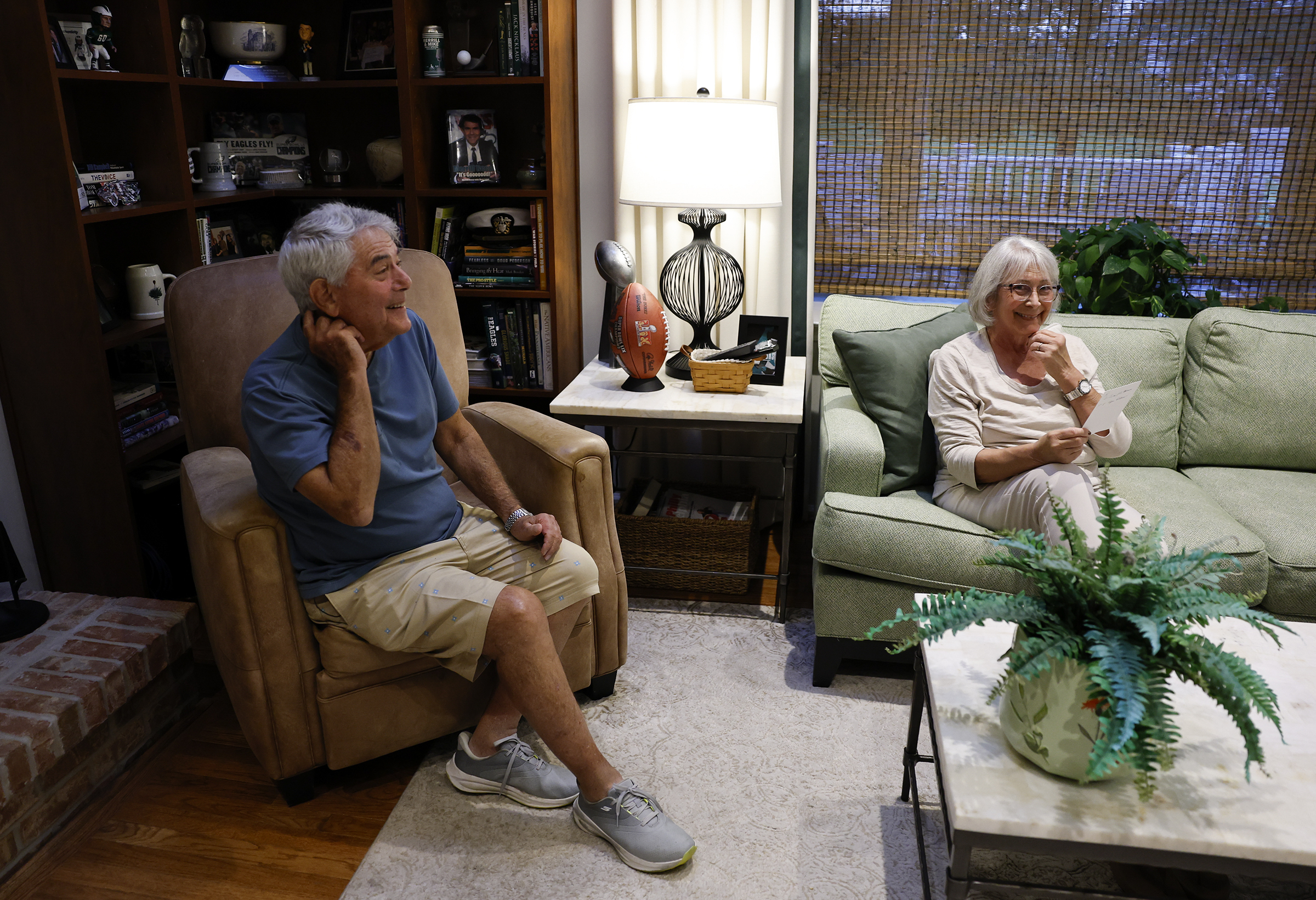
Reese golfs three times a week, stays active, and says his vision is crisp after having cataract surgery a few years ago. And his recall, which he credits to his work as a child actor, stays sharp thanks to those study sessions in his Blue Bell living room where his wife sits on the sofa and asks him who wears No. 31 on the Bengals.
“Kentrel Bullock,” Reese said as Cindy nodded and moved to No. 35.
Merrill Reese is entering his 50th season broadcasting Eagles games.Monica Herndon / Staff Photographer
Chasing a dream
Reese was making $125 a week in the late 1960s at WBCB in Levittown when he heard KYW was having auditions for a radio newscaster. This was his chance. He nailed his tryout, wrote a strong script, didn’t flub any words, and felt good.
KYW’s news director brought Reese into his office and told him he was going to do him a favor.
Reese, who went to Temple before serving in the Navy, started his radio career in towns like Pottstown. Now he thought he was finally going to land a job in the big city.
“I said, ‘Boy this is great,’” Reese said. “But he said, ‘I’m going to tell you that he would be wise to find another profession because you’re never going to work in a major market station.’”
Reese was crushed. He went home and hid in his bedroom until his mother asked him what was wrong. He told her what the KYW boss said.
“He’s right,” his mom said.
Reese was stunned. His mom didn’t think he could cut it? She told her son that if he could be deterred by one detractor then he would never make his dream come true. She was right. Reese went back to work the next day in Levittown, kept pushing, and was working six months later at WWDB in Philadelphia. That news director? Reese said he soon got canned.
Video: unCovering the Birds: Is tight end the biggest area of concern?
Reese’s mother was a kindergarten teacher who loved the performing arts. She took Reese to the theater and signed him up for acting lessons when he was a boy. He was an extra in a Cecil B. DeMille movie starring Jimmy Stewart, regularly appeared on local TV shows like Chuck Wagon Pete, and did commercials as an 8-year-old.
Reese had a part in a live radio drama but was instructed to memorize his lines while the adult actors were allowed to read a script. They thought it would sound too rehearsed if the kid read. So Reese spent every afternoon studying with his mom before going outside with his buddies. The memory that is now sharpened in his living room was being formed.
“I have an unusual memory because I was trained at that age,” Reese said.
Merrill Reese and Cindy, at their Montgomery County home last month, have been married for 47 years.Yong Kim / Staff Photographer
‘How about next Saturday?’
Reese and his wife met on a blind date, went out in the city, and didn’t talk again.
“I was geographically undesirable,” said Cindy, who grew up in Wallingford.
They reunited two years later and went on a double date on the Main Line with Reese’s sister and brother-in-law.
“We had a great time,” Cindy said. “I said, ‘Are you going to wait another two years to call me again?’ He said, ‘How about next Saturday?’ That was that.”
By then Reese parlayed his WWDB job into a gig at WIP, which hired him to do five minutes of sports every hour each morning before naming him the host of their Eagles pregame and postgame show.
He joined the broadcast booth in 1975 as a color analyst and then became the play-by-play man at age 35 in December 1977 after his partner Charlie Swift died by suicide. Reese got a call in the middle of the night that Swift died. That Sunday, Reese had to call the action.
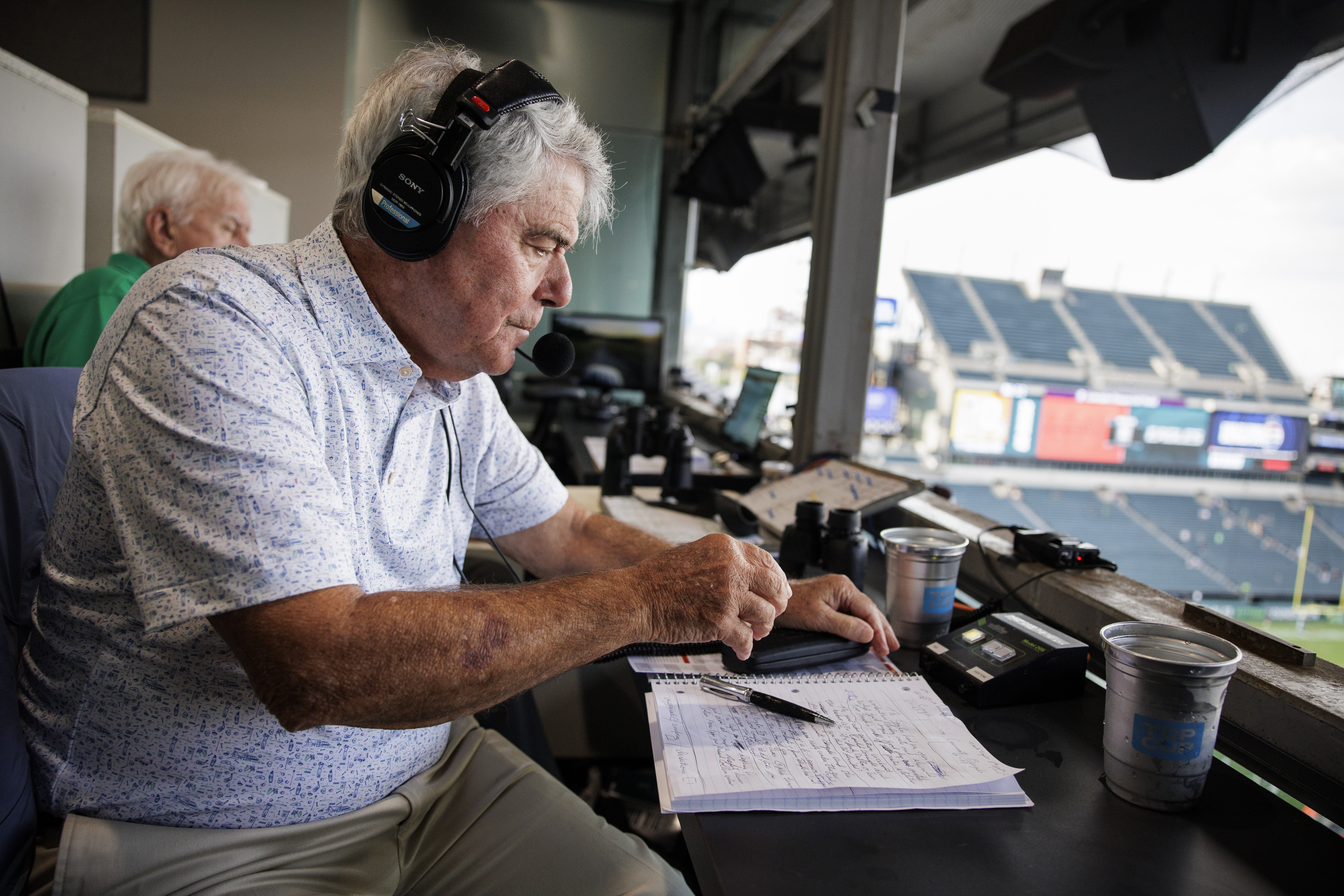
Merrill Reese talks with his longtime spotter Bill Werndl (right) in the broadcast booth before a preseason game against the Bengals on Aug. 28.Monica Herndon / Staff Photographer
“I’m standing there in the booth and the Eagles held a moment of silence for Charlie Swift,” Reese said. “All the players on the sidelines turned and looked at the booth. My knees are literally knocking into each other. I’m hoping something can just come out of my mouth. After that, they queued me and I went on. I did a little remembrance for Charlie Swift, broke for a commercial, and from there on it was all football.”
Reese finished the 1977 season but there was no guarantee that the job would be his in 1978. The station tried to land Al Meltzer, the popular broadcaster who was returning to Philadelphia after a year in Chicago. They told Reese that “Big Al” could sell more advertisements. Reese understood. But he wanted that job.
“I used to dream many times that winter that they called me and told me I had the job,” Reese said. “I would wake up depressed because I didn’t have the job. It was just a dream. Other times, I would go to sleep and dream that they called me and said they decided to go into a different direction. I would wake up relieved because I still wasn’t out of it.”
Meltzer turned down the Eagles’ gig to become the sports director at Channel 10. Reese was thrilled. The job was his.
“It was very exciting,” Cindy said. “It really did launch the trajectory of our relationship because that was going to be our lives.”
“I believe we’ve become like members of the family (for listeners),” says Merrill Reese, with longtime radio partner Mike Quick.ELIZABETH ROBERTSON / Staff Photographer
Members of the family
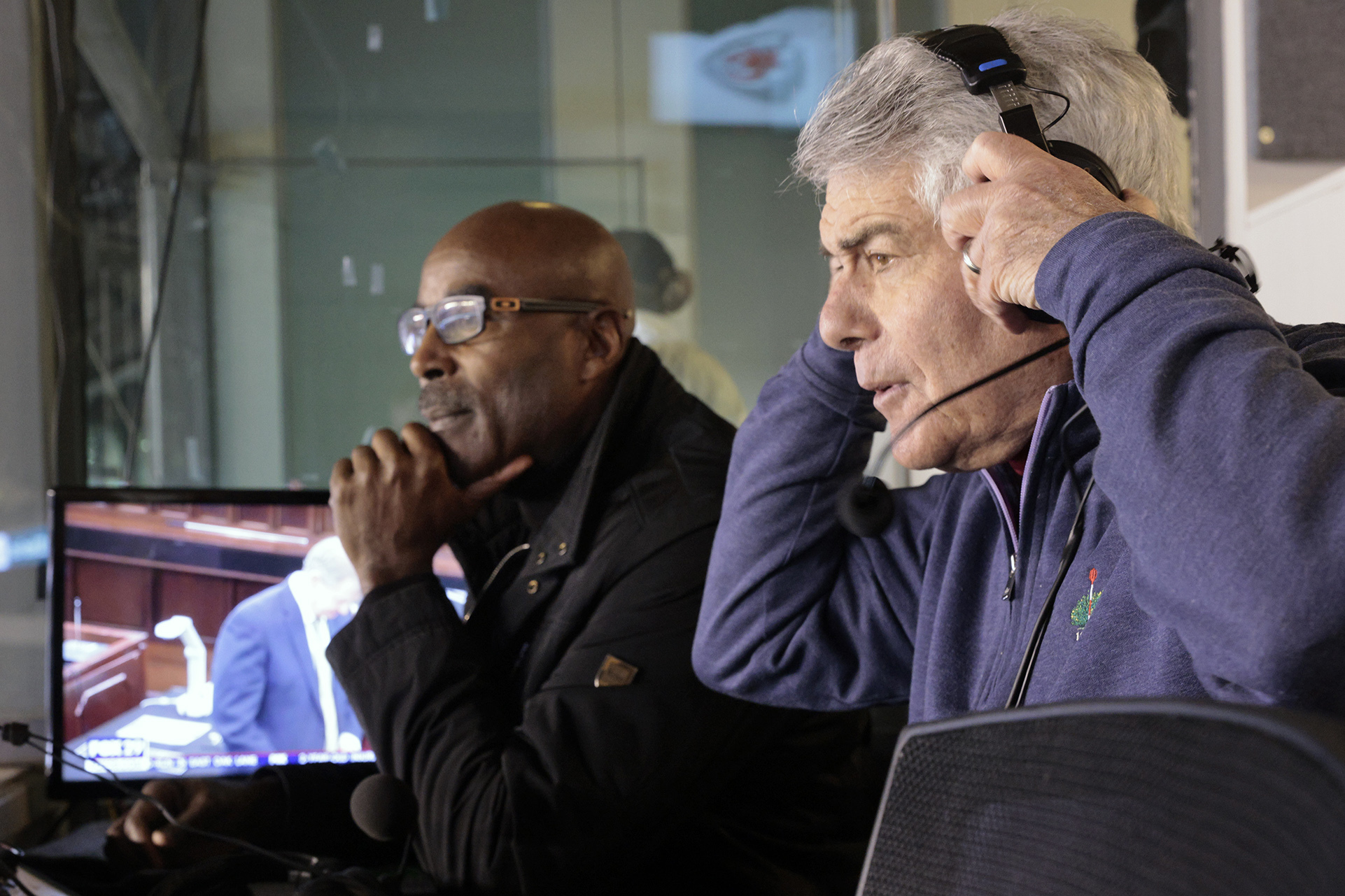
Reese and his longtime broadcast partner, former wide receiver Mike Quick, are so popular that fans delay their TV feeds and hit mute to sync their screens with the WIP-FM broadcast. The broadcasters even have their own beer. In Super Bowl seasons or super bad seasons, Merrill and Mike give you a reason to tune in.
“I believe we’ve become like members of the family,” Reese said. “We’re like their old friends who’ve been with them for many, many years. They grew up listening to us and we’ve become somebody who is able to react the way they react. We’re not homers. We don’t paint phony pictures. We don’t make a game exciting. I try to transmit the excitement, but when they’re bad, I’ll say they’re bad. I think people appreciate that. They can identify with us. They feel comfortable with us.”
Reese’s voice — the one that every Eagles fan has tried to imitate — somehow sounds the same year after year.
He said he isn’t a smoker or drinker. He doesn’t scream and tries not to talk on the phone the day before a game. He builds his vocabulary by reading everything from the newspaper to mystery novels. But the secret to Reese’s longevity may be his wife.
“My wife is my partner and basically in everything we do,” said Reese, who married Cindy in June 1979. “Cindy has always helped me prepare. Cindy is my confidant and my friend. We golf together. We do a lot of things together and Cindy is also very accomplished in her own right. She’s a great writer, an environmentalist. She has so many interests. We have a wonderful life together with two great kids and two wonderful grandchildren.”
Cindy listens to each game and gives her husband feedback when he’s off the air. She understands football but isn’t a crazed fanatic.
Cindy Reese holds a note card with the names of Bengals players she uses to quiz her husband in preparation for a game. Yong Kim / Staff Photographer
“I’m an Eagles fan, but I’m really a Merrill fan,” Cindy said.
The couple raised two children — Nolan and Ida — but Reese’s broadcasting gig took him away to training camp every summer, practices during the week, and games on the weekend. There were radio shows, appearances, and hours of preparation. The job is more than just four hours on a Sunday afternoon.
So it was often up to Cindy to make sure everything was in line at home.
“It’s been teamwork. We had to be a team because of the nature of raising a family under those circumstances,” Cindy said. “The thing that makes our relationship different from a woman married to a football player is that there’s a time limitation. There might be four years or six years or whatever that their husband is involved in. With coaches, and people like Merrill, there’s no time frame. It just went on. Here we are. Fifty years.”
The broadcaster used to study the opposing rosters on his own before his wife stepped in. Cindy, who now mentors student teachers at Gwynedd Mercy University, turns their living room into a classroom. They’ve been doing it like this since Reese got the Eagles gig.
Her husband has to be quick during games as an assistant in the booth points to a number after a play to indicate who tipped a pass or forced a fumble. No. 31? No. 97? No. 56? Cindy says the numbers as rapidly as a football shoots from a JUGS machine. The former sixth-grade science teacher makes sure her husband knows them all.
“He’s amazing,” Cindy said. “He can memorize all these numbers. I’ll do the cards with him and when I leave the room, I don’t know the numbers. But he does. I don’t have that kind of memory. He has an amazing memory.”
Merrill Reese “says he wants to do it forever and as long as he’s able and happy with it then it’s great,” said his wife Cindy.Monica Herndon / Staff Photographer
Reese has called Eagles games from Jaws to Jalen Hurts but still wakes up nervous every Sunday. It’s because he cares so much, he said.
So Cindy always does her best to make sure the house is calm in the hours before her husband leaves. He’s too uneasy before kickoff to eat at the stadium so she makes him a stack of apple cinnamon pancakes every Sunday morning to hold him over. First, she sharpens his memory. Then, she fills his stomach. They’ve done it for 50 years and hope to do it forever.
“The station has changed many times, the ownership has changed many times, the coaches have changed many times, but Merrill is the constant,” Cindy said. “He just loves the seat and being involved. He says he wants to do it forever and as long as he’s able and happy with it then it’s great.”
It had been six days since Dillon Minacci waited at school for his parents to finally pick him up. National Park rangers told the Minaccis to stay inside their Queen Village home — which sits on the grounds of the Gloria Dei Old Swedes Episcopal Church — as a precaution following the terrorist attacks that morning in New York.
Could the old church where Betsy Ross was once married be next? So Dillon was one of the last kids to leave St. Mary School in the shadow of Independence Hall. No one knew what to think that day, Paula Minacci said of Sept. 11, 2001. And everyone seemed to struggle to find normalcy in the days that followed.
Finally, the Phillies were back at Veterans Stadium. Their game against the Braves on Sept. 17 was the first major league game after the season was paused. Jim Minacci told his son they were going. Then he went to the church basement — where he still works with his wife as the sextons — and grabbed a big American flag on a wooden pole.
“It was embarrassing, right?” said Dillon, who was then in the fourth grade and just old enough to roll his eyes at his parents. “I was like, ‘What are you doing? Why are you bringing a flag to the park? What are we doing?’”
Paula Minacci dropped them off at the stadium and then waited to make sure they’d let them in with the big flag. The Vet was filled that night with American flags. People waved them in the stands and the players had them stitched on their uniforms. Phillies manager Larry Bowa cried during the anthem and Harry Kalas opened the telecast with an emotional monologue about how sports can be a diversion and a unifier.
No one questioned Minacci’s flag.
Jim Minacci carries his large American flag as he walks around Veterans Stadium on Sept. 23, 2001.Tom Gralish / Staff Photographer
He sat with the pole for a few innings in the upper deck before telling his son he wanted to take a lap around the stadium, which had a rung in front of the seating bowl. His son was embarrassed, but he told his dad he’d come with him. And then the cheers started. The fans chanted U-S-A and shouted for Minacci as he marched around a half-filled stadium with the flag over his shoulder like a patriot. Embarrassed? Not anymore, his son said.
“For us, we were like, ‘Hell yeah. This is awesome,’” Dillon, 35, said. “We got back to our seats and he said, ‘We’re going again.’ OK. I didn’t expect this to be happening. Let’s go.”
The Minaccis attended every game the rest of the season as the late-30s dad became Flag Man, a symbol of patriotism when everyone seemed to rally around the flag. They started their night marching around the upper deck before heading to the lower bowl where the chants were just as loud.
A cast of kids would leave their seats every night to walk behind Flag Man, whom Pat Burrell called “the pied piper” when Minacci was featured in the team’s highlight video.
Phillies general manager Ed Wade presented Flag Man with a custom jersey and a security guard started letting the Minaccis in without tickets. Flag Man’s hands were so sore from carrying the wooden pole that he started to wear fingerless gloves. He loved it.
Jim Minacci, aka Flag Man, is trailed by a line of kids as he walks around the upper deck over the outfield at Veterans Stadium on Sept. 23, 2001.Tom Gralish / Staff Photographer
The Vet already had the Wolf Pack and other fan groups that injected character to a concrete goliath. Flag Man fit right in. Minacci became part of the scene.
All these years later, the 64-year-old Minacci is still not sure why he brought the flag that first night. He remembers watching the news and seeing people at Ground Zero, volunteering to dig through the rubble of the World Trade Center. Minacci wanted to be in Manhattan but had two jobs in Philly and a son. So he grabbed his flag and went to the game.
“I probably brought the flag so it could represent all those people doing all that good work,” he said. “People were doing extraordinary things against the backdrop of this terrible disaster that in our lifetime was unprecedented. I felt a real sense of wanting to go to the game to enjoy myself and be free of all the struggle and strife but also be part of a community and be with my son in a moment that meant something.”
“It was just being present and showing support for these people who were doing extraordinary things.”
Flag Man grew up near Binghamton, N.Y., in a small town he said had more cows than people. His father Paul was a Yankees fan but he often took his family in the early 1970s to Philly — where he graduated from Penn — to see games at the Vet when tickets were easy to get.
Minacci chased down players for autographs and can still remember how it felt to sit in the stands with his dad. He moved to Philly in the 1980s and soon found himself sitting in the same seats with his son.
Jim Minacci looks back on his Flag Man days as “a unifying visual. Something everyone could agree to. Back then, it was an agreeable moment.”Tom Gralish / Staff Photographer
“I just always loved baseball and doing it with my dad just like he did it with his dad,” Dillon said. “Baseball is so unique in that you don’t really have to pay attention to it. That’s kind of the beauty of it. It’s an atmosphere that’s open to whatever you make it. Other sports, you’re kind of locked in on the time limit or the net you have to hit it into. Baseball is very much, ‘Are you paying attention or not? Can I take advantage of that?’ For a father and son, you get to spend time whether you’re talking or not.”
The Vet was their place before 9/11 so it was where the Minaccis needed to be after that dark Tuesday. The Minaccis — just like the rest of the 27,910 fans — longed for an escape. They didn’t know their night would be the dawn of Flag Man.
“We got home and he said, ‘We have to go again tomorrow,’” Dillon said. “I was like, ‘I’ll go to baseball every night of the week if that’s what this is.’ I was totally in. If you get a couple drinks in me, then I pull down the old video yearbook. Damn, that was cool. I can’t believe I was a part of that and my dad had the idea to do that.”
He took a trip with his parents last month to a minor-league game in upstate New York and told his dad how impactful those nights at the Vet were. His parents were always “locally minded,” Dillon said, as their work at Old Swedes made them a fabric of the neighborhood. Flag Man was an extension of that. His dad always seemed to bring people together. Everyone just got to see it this time.
“I know my son is a better person today for it. His awareness of being a part of a community,” Minacci said. “As a father, as a human being, that’s the reward.”
Dillon now lives in Austin, Texas, and will often ask another Philly transplant if they remember Flag Man. Of course, they remember that guy who used to carry a flag around the Vet. That’s my dad, the proud son tells them. No way, he hears. Flag Man is a memory.
Jim Minacci and his wife Paula at Gloria Dei Old Swedes Episcopal Church, where they work and live as sextons/caretakers.Tom Gralish / Staff Photographer
“There’s the baseball game, the baseball team, the baseball staff, and then the crowd who fills the stadium,” Minacci said. “We got to be a part of that community.”
Minacci brought his flag back to the Vet in 2002 and 2003 as he continued to march before the Vet closed. Citizens Bank Park opened in April 2004 and Minacci was there with his flag for the first game. The guy at the gate apologized. Minacci couldn’t bring the long wooden pole into the new park. Flag Man was finished.
“I think what bummed him out the most was him not being able to end it in a way that he wanted to,” Dillon said. “He wanted the chance to say ‘Thank you.’ It really meant a lot to him and it meant a lot to me. We met a lot of people at the ballpark and became a part of the Phillies community. So it goes.”
Dillon (front) and Jim Minacci at the Rush concert earlier this month.Dillon Minacci
Minacci stood outside the stadium that day before deciding to go home. It was over. He’s another fan now when he goes to the ballpark except that he still wears his Flag Man jersey — with No. 47 as a nod to Larry Andersen — when he sits in the seats. Kids who used to trail him at the Vet will stop him and tell him about those days. Now those kids have kids of their own. Minacci helped people come together that September. It was a time and place he’ll never forget.
“It was a unifying visual,” Minacci said. “Something everyone could agree to. Back then, it was an agreeable moment. It would be hard to find that agreeable moment today. We’re all so segmented. It’s awful. It’s really hard.”