An eclectic crop of new restaurants has opened over the last several months across the Philadelphia suburbs in Pennsylvania, New Jersey, and Delaware. Some — like the three sports bars in Camden County alone — are breathing new life into familiar addresses. Others mark ambitious first ventures.
Here are 18 of them, from Phoenixville to Gloucester Township to Wilmington.
Pennsylvania
Academy Grill (424 S. Bethlehem Pike, Fort Washington): Michael Sloane and Jay Rosenthal’s group, Fine Line Dining, has transformed the former Cantina Feliz into a polished white-tablecloth destination. Jeffrey Power, longtime chef at the erstwhile Dettera in Ambler, oversees a menu of house-made pasta, seafood, and steaks.
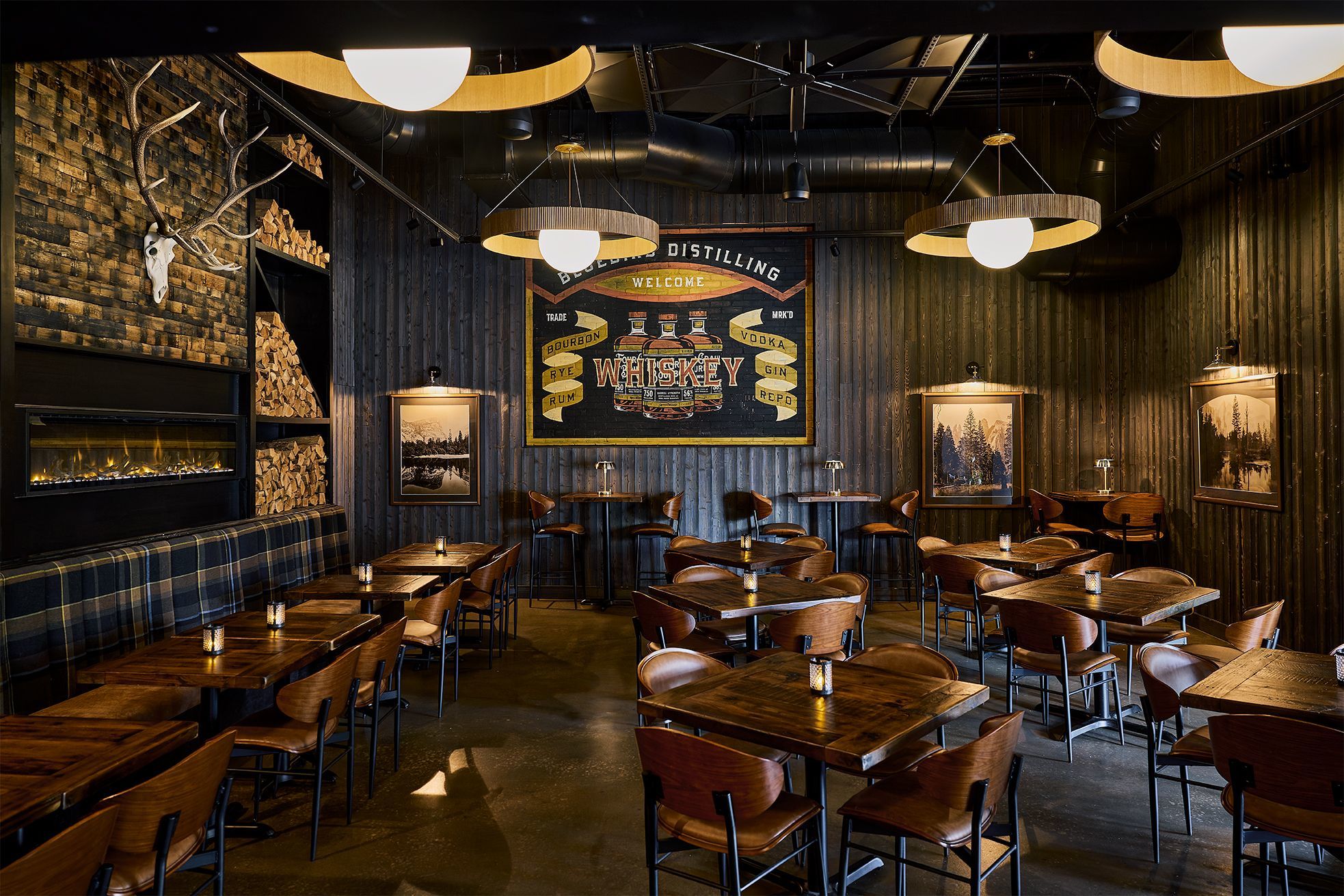
Bluebird Distilling has reopened with a new neo-Neapolitan pizzeria and restaurant.Photos courtesy of Ed Newton
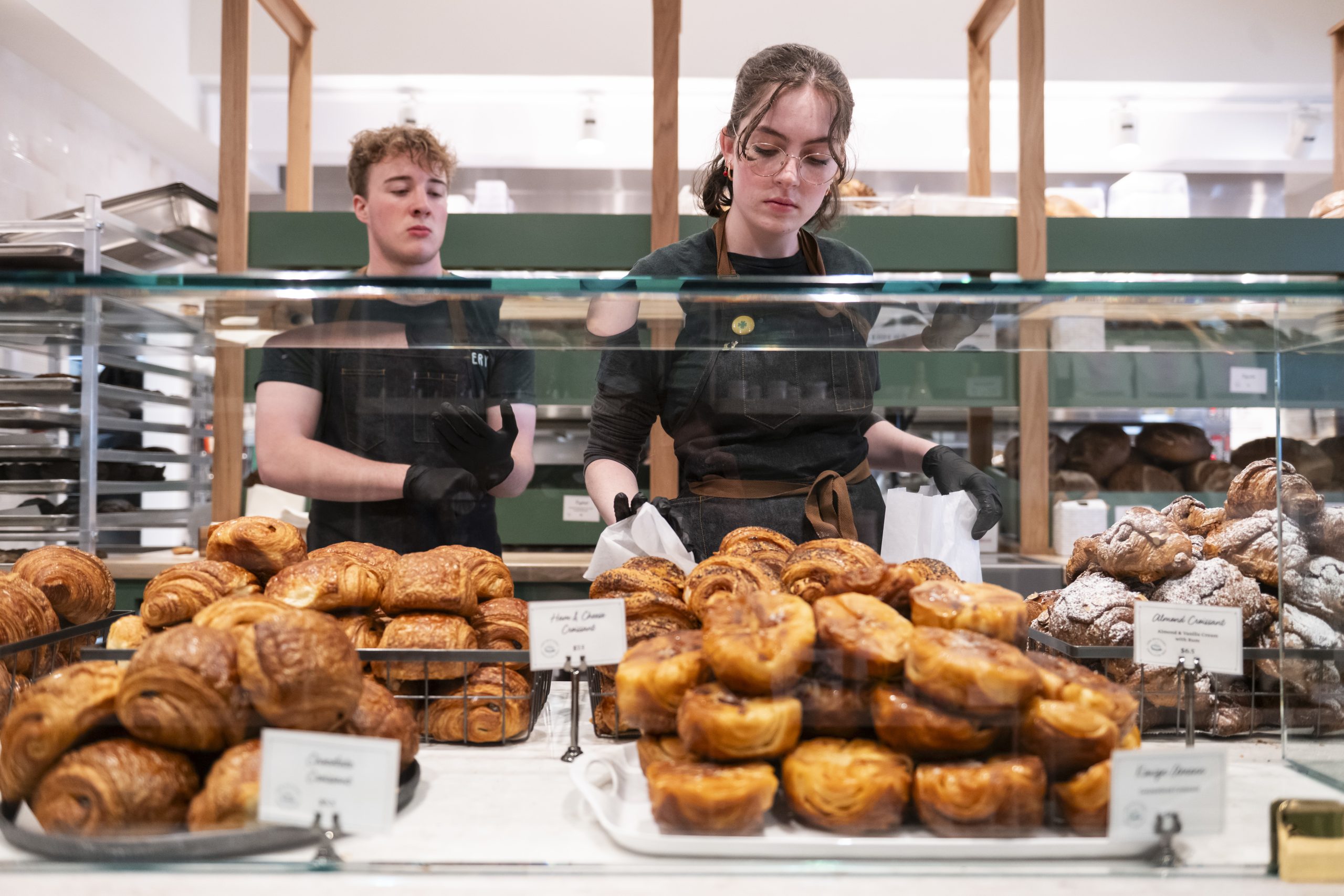
Noah Clifford (left) and Sofia Siano working the pastry case at the Buttery in Bryn Mawr.Allie Ippolito / For The Inquirer
The Buttery Bryn Mawr (836 W. Lancaster Ave., Bryn Mawr): The Malvern bakery-cafe opened its Main Line expansion with 82 indoor seats and daily service from 7 a.m. to 5 p.m. The menu includes sourdough breads, pastries, Turkish eggs (poached eggs cooked in garlicky yogurt with a drizzle of spicy butter), sandwiches, and seasonal lunch dishes, plus grab-and-go foods after the kitchen closes at 3 p.m.
Cleavers (103 Squire Dr., Newtown Square): The Center City cheesesteak shop grand-opened its second location last month at Ellis Preserve, offering cheesesteaks, chicken cheesesteaks, burgers, sandwiches, fries, and milkshakes.
The Coffee Station (1117 Smithbridge Rd., Glen Mills): The Delaware County breakfast-and-lunch operator took over the former Meghan’s Restaurant, which had occupied the building for 27 years. The menu includes omelets, pancakes, breakfast sandwiches, burgers, hoagies, wraps, soups, and salads. Other locations are in Morton and Garnet Valley.
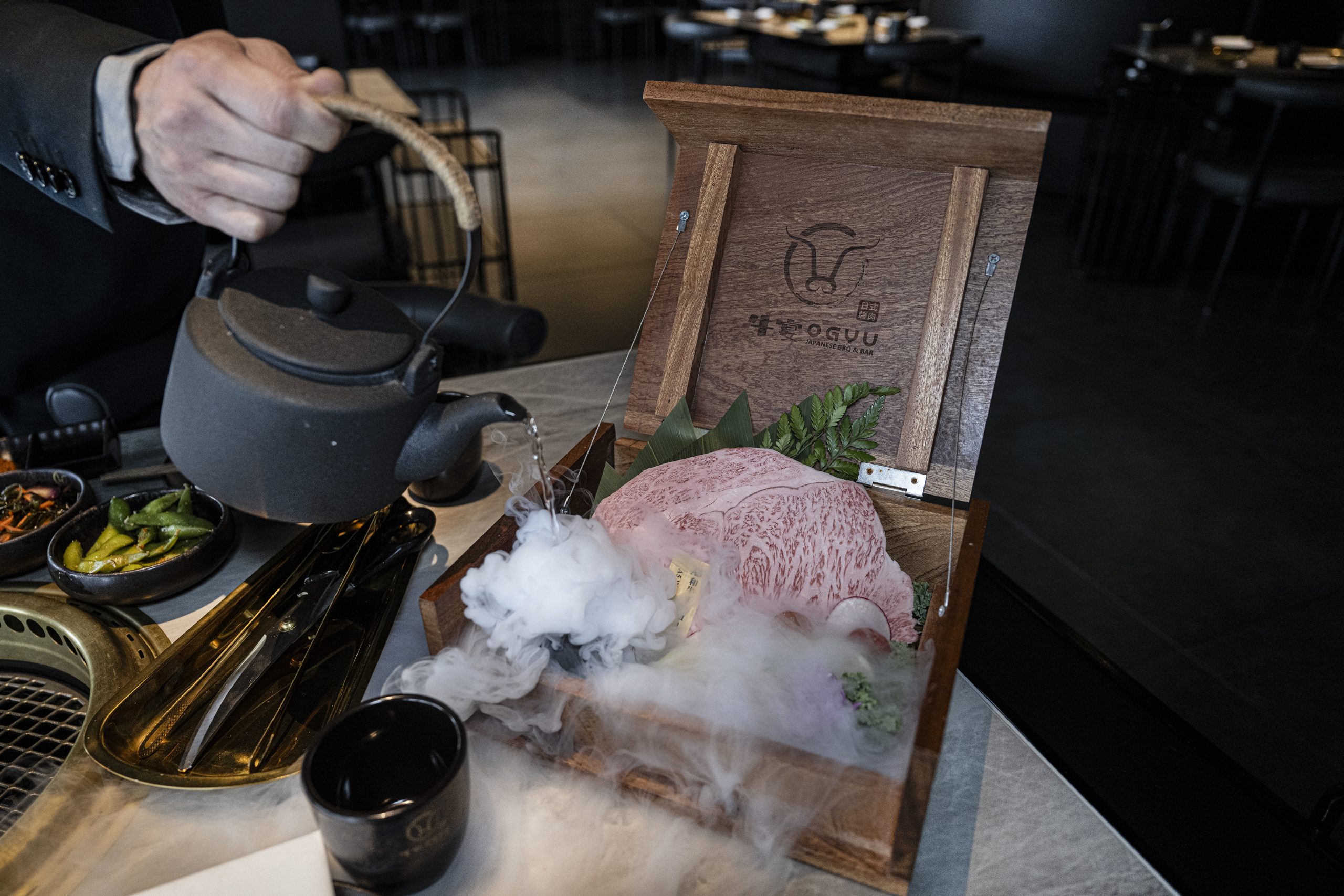
Tabletop and tableside cooking are offered at Ogyu Japanese BBQ.Jose F. Moreno / Staff Photographer
Ogyu Japanese BBQ & Bar (60 Greenfield Ave., Ardmore): Restaurateur Sam Li’s upscale yakiniku restaurant occupies the former Iron Hill Brewery. Customers grill premium Wagyu and other meats on tabletop burners, choosing from fixed-price packages or à la carte selections. The dramatically remodeled space includes black-and-gold finishes, marble-paneled walls, a large bar, and private dining rooms.
Upper Darby’s Tina Fey offers Jimmy Fallon a slice of Pica’s pizza on the “Tonight” show in 2014.Lloyd Bishop / NBC
Pica’s Italian Market (1101 Sussex Blvd., Broomall): After closing its landmark Upper Darby dining room earlier this year, the Pica family soft-opened this mostly takeout shop in a Delco light-industrial park, carrying the restaurant’s signature square pizzas, sandwiches, prepared foods, and other Italian specialties. Pica’s, which hit the national radar in 2014 when locally raised Tina Fey sampled its pizza on the Tonight show, traces its roots to Frank Pica Sr.’s West Philadelphia pizzeria. There’s a West Chester location, too.
P.J. Whelihan’s (2920 S. Eagle Rd., Newtown): The regional sports-bar chain took over the former Iron Hill Brewery at the Village at Newtown with its signature wings, burgers, sandwiches, salads, and American entrees, backed by numerous televisions and a broad draft-beer selection. Most of Iron Hill’s existing layout was retained.
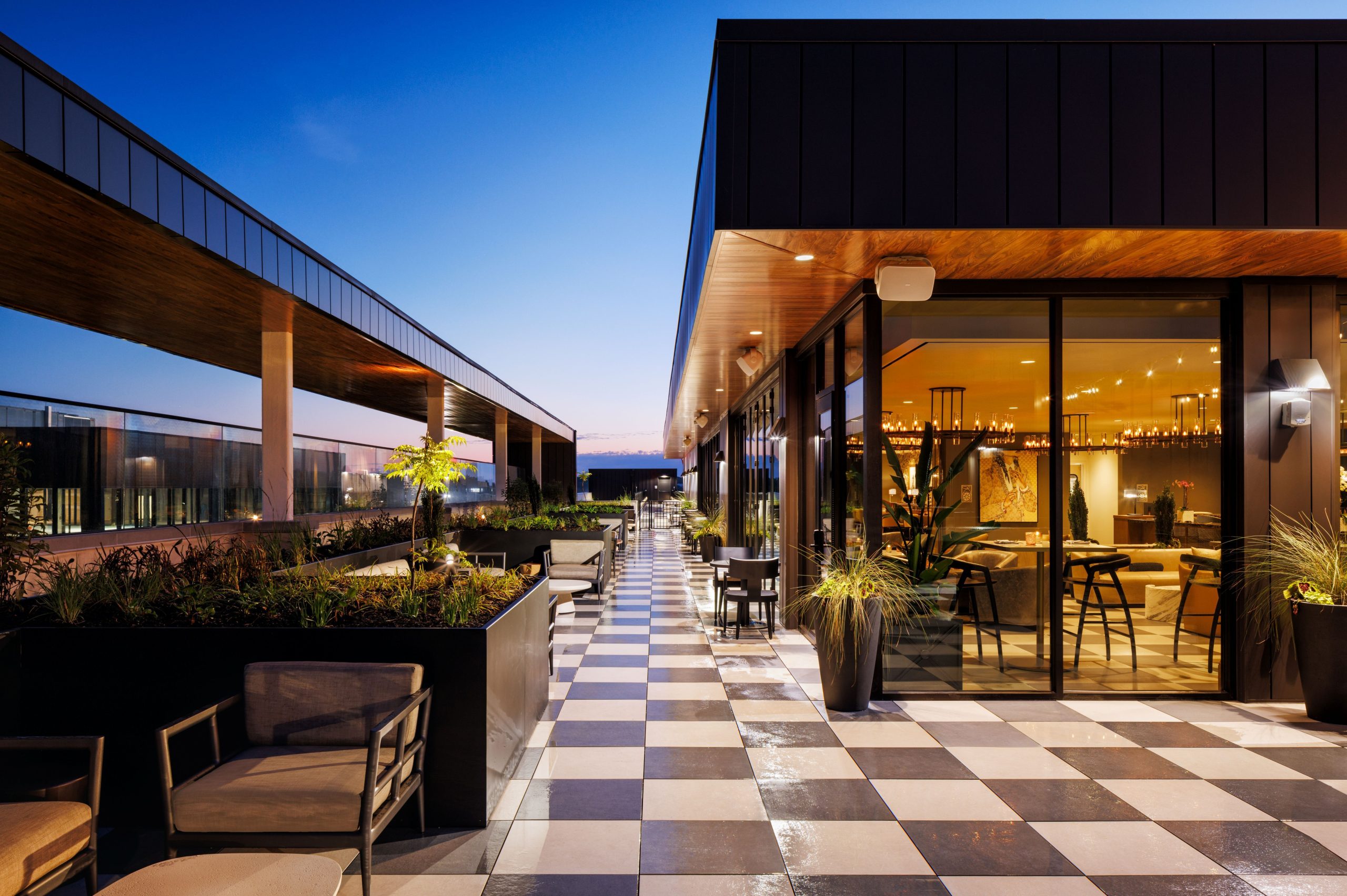
Pomelo Rooftop Terrace at the Brandywine, 165 King of Prussia Rd., King of Prussia.The Brandywine
Pomelo Rooftop Terrace (165 King of Prussia Rd., Radnor): This expansive rooftop bar and lounge atop The Brandywine hotel in Radnor (with 136 seats, inside and out) will grand-open Aug. 8 with chef Michael Davies’ menu of shareable plates (e.g. oysters, scallop crudo, a smash burger, grilled branzino, lion’s mane mushroom cake), raw bar, botanical-focused cocktails, wine, and beer. Weekend brunch begins Aug. 22.
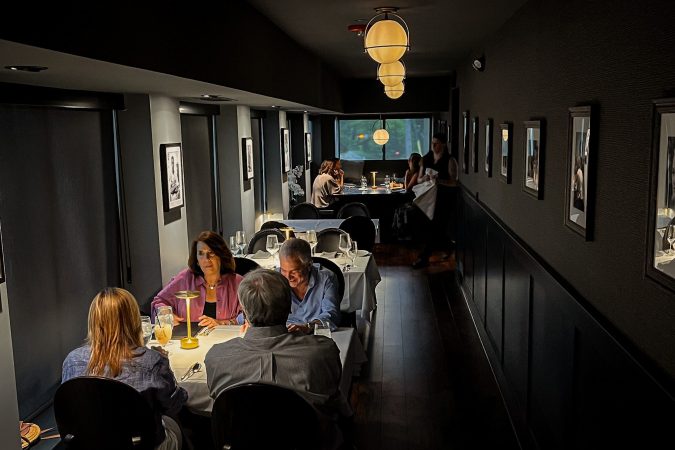
Porter (34 E. Butler Ave., Ambler): This newcomer is in the former Gypsy Blu space on the first floor of Ambler’s historic former Wyndham Hotel, offering contemporary American cooking in a candlelit, vintage-inspired dining room. Menu includes oysters, pasta, risotto, seafood, and meat dishes. Gaslight, a separate craft-cocktail bar with small plates, is upstairs.
Rick’s Tavern (201 W. Seventh Ave., Conshohocken): Chef Derek Davis runs the show at Rick and Gale Mahoney’s modern tavern on the rebuilt site of Pizza Time Saloon and Old Time Saloon. The two-story restaurant honors those neighborhood institutions with wood-fired pizza while adding house-made pasta, cocktails, private-event space, and live music upstairs on Friday and Saturday nights.
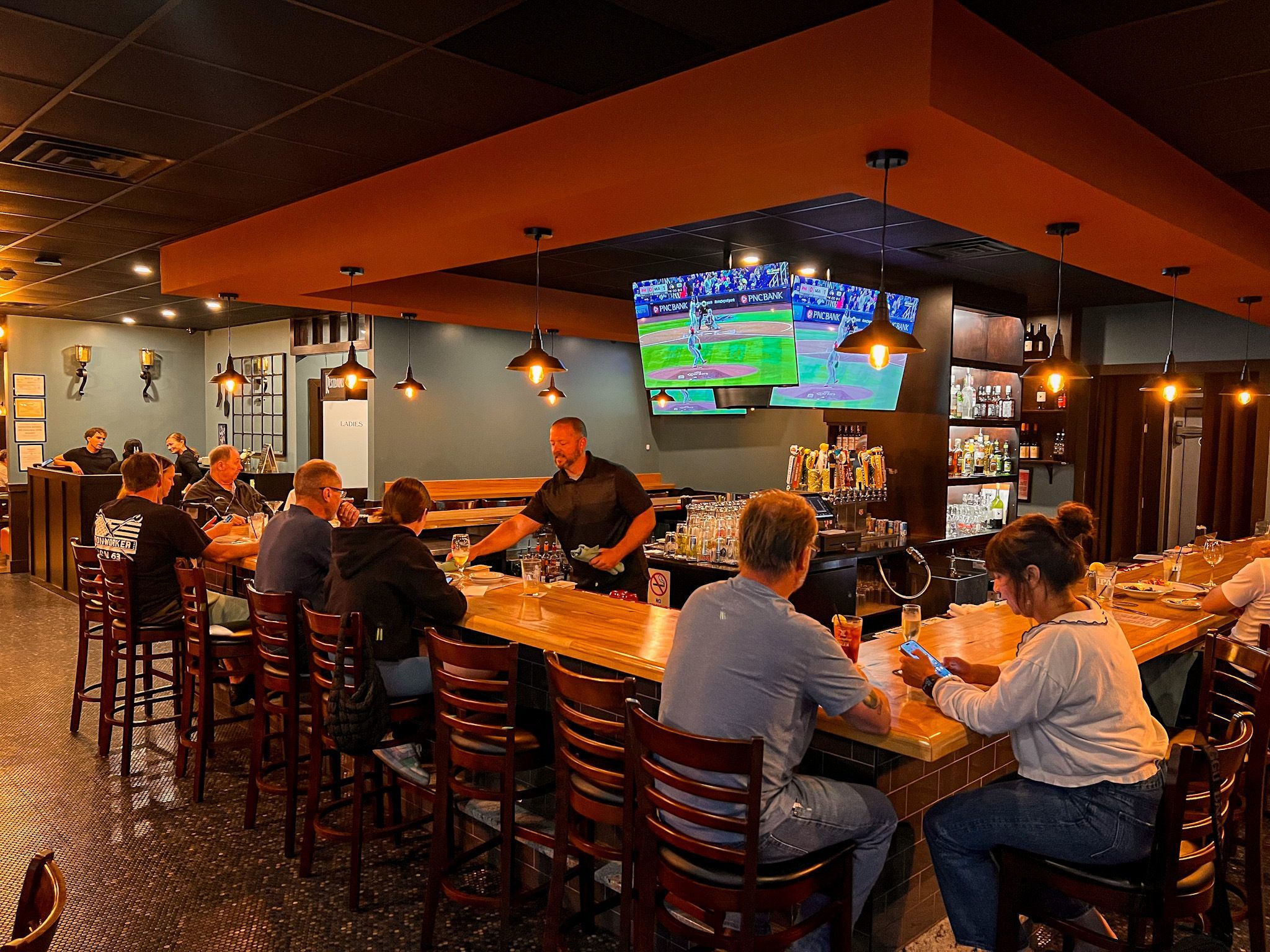
The bar at the Scratch Kitchen by Gallo’s, 575 Horsham Rd, Horsham.Michael Klein / Staff
The Scratch Kitchen at Gallo’s (575 Horsham Rd., Horsham): The Harvey family, owners of Gallo’s Seafood in Northeast Philadelphia, is behind this casual, roomy neighborhood restaurant in the former Farm & Fisherman Tavern. Chef Bob DeLange, the owners’ son-in-law, combines seafood dishes from Gallo’s with burgers and bar food inspired by Harv’s Burger Bar, Gallo’s adjoining Northeast Philadelphia tavern.
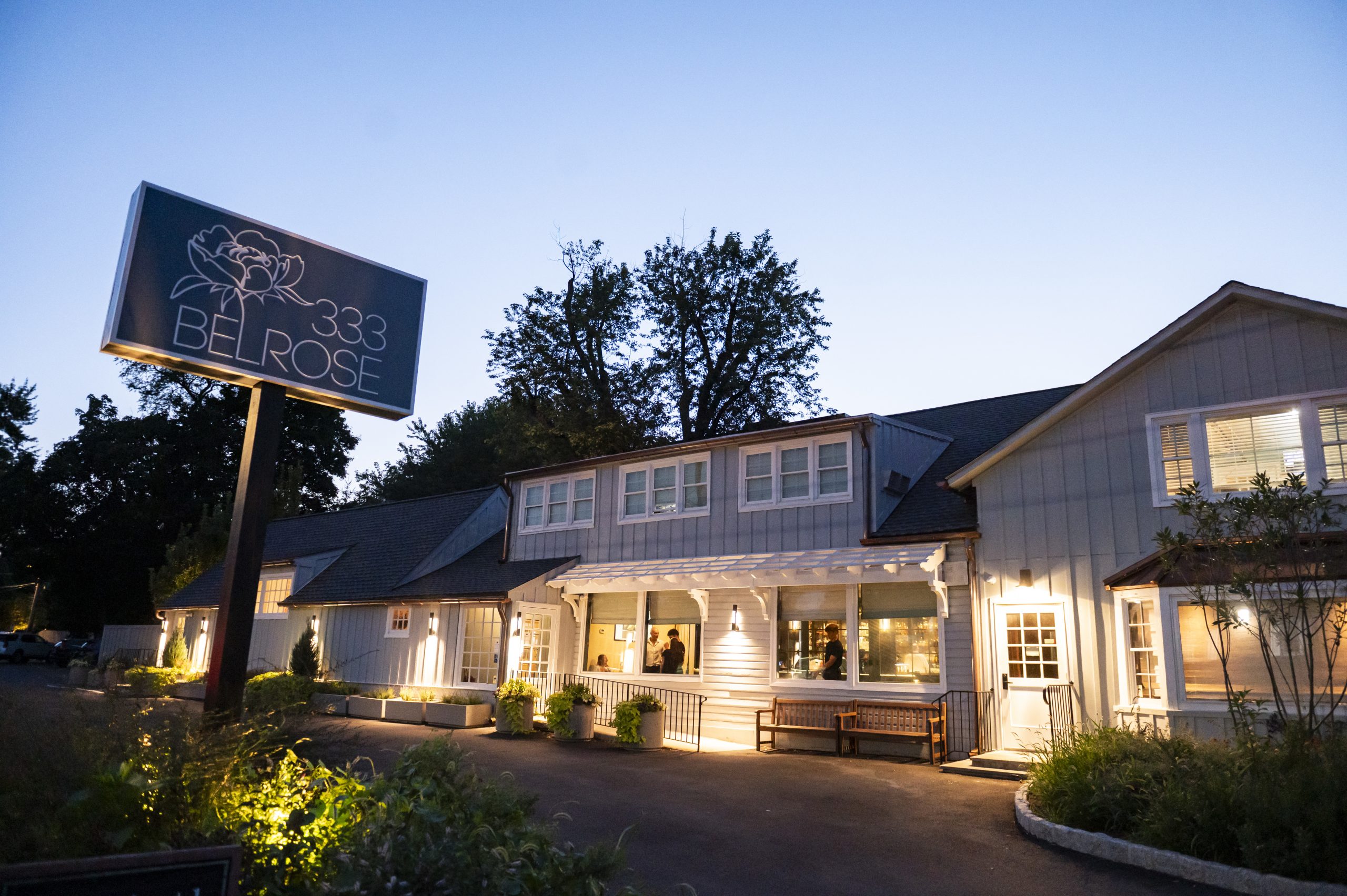
The exterior of 333 Belrose in Radnor’s St. Davids’ area.Allie Ippolito / For The Inquirer
333 Belrose (333 Belrose Lane, Radnor): The longstanding contemporary American restaurant has reopened under chef Ross Essner after an extensive renovation that flipped the positions of the bar and main dining room.
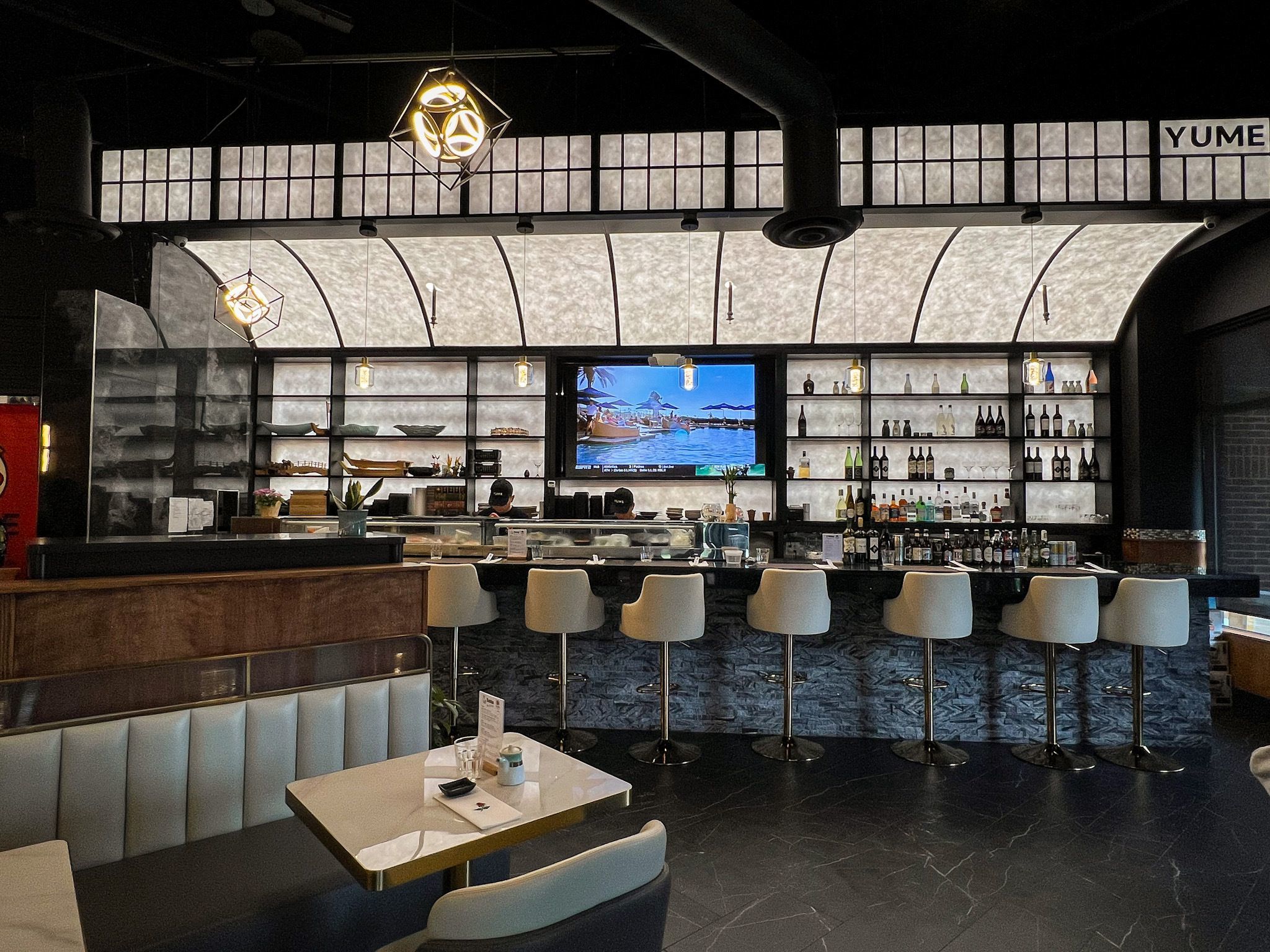
Yume Sushi in the Shoppes at English Village, 1460 Bethlehem Pike, North Wales.Michael Klein / Staff
Yume Sushi (1460 Bethlehem Pike, North Wales): This Japanese restaurant has opened in the Shoppes at English Village, down the row from Trader Joe’s. Co-owner and head chef Kevin Wan brings about a decade of sushi experience to the venture. The menu centers on sushi, sashimi, rolls, and Japanese-Asian fusion dishes.
New Jersey
Flying Pig Tavern & Tap (1300 Blackwood-Clementon Rd., Gloucester Township): The sprawling former Favorites off-track-betting building has come up as the fifth unit in a growing group. Menu of pizzas, burgers, wings, tacos, and entrees shares billing with live bands, darts, shuffleboard, and a covered tiki bar. A sixth location is planned for the former Andalusia Bar & Grill space in Bensalem.
Home Team Tavern (267 S. Black Horse Pike, Mount Ephraim): Greg D’Alesio has turned the former Mount Ephraim Bar & Grill into a compact, sports-themed neighborhood tavern. Its scratch kitchen serves pizzas, burgers, wings, sandwiches, and elevated bar food, alongside draft cocktails and beer.
Thirsty Turtle Tavern (270 White Horse Pike, Barrington): This new concept from SAS Restaurant Group in the former Chuck Lager space features an open kitchen, burgers, pizza, sushi, cocktails, draft beer, and an outdoor patio behind garage doors. It operates daily; weekday happy hour and weekend brunch are expected to begin in the fall.
Delaware
Ezme (625 N. Market St., Wilmington): Chef Antimo DiMeo and the Bardea Restaurant Group opened this coastal Mediterranean restaurant across from Bardea Food & Drink. Inspired by cuisine from Turkey, Greece, and the Aegean coast, the menu encompasses mezze, raw-bar dishes, handmade breads, grilled seafood, and fire-driven preparations accented with herbs, citrus, and spices. Both à la carte and tasting-menu formats are available.
Pennsylvania’s 10 state universities,facing declining enrollment, will consider offering some three-year bachelor’s degreesas a way to make college more affordable and allow students to get into the workforce more quickly.
The Pennsylvania State System of Higher Education would join a growing number of colleges nationally launching accelerated bachelor’s degrees that reduce the required credits for graduation from the standard 120 to between 90 and 100.
The development comes as colleges continue to face criticism over costs and some schools try to stem declining enrollments. PASSHE has lost 30% of its enrollment since 2010, though it recorded an increase last fall for the first time in 15 years.
For a long time, the four-year bachelor’s degree has been the norm. Some students certainly have completed their degrees more quickly, but only by taking all the required credits at an accelerated rate.
The new approach, which PASSHE’s board of governors plans to discuss in October, would reduce the number of credits needed.
“This initiative would provide more options,” said system Chancellor Christopher Fiorentino. “A three-year degree focuses on essential competencies while preserving the liberal arts core. We can reach more students who don’t fit into the traditional path.”
Three-year degrees emphasize what students should know and be able to do by the time they finish, said Madeleine F. Green, executive director of the College-in-3 Exchange, which is pushing for three-year degrees to become “a widely accepted path” to a bachelor’s.
“The benefits are reduced cost and time to degree and equal or better learning outcomes than those resulting from a four-year degree,” Green said. “… It is widely accepted in higher education that time does not equate to learning.”
But the movement already has garnered detractors. The American Association of University Professors and American Federation of Teachers have blasted the idea as more states, including Ohio, Massachusetts, Indiana, and Virginia, explore, plan for — and in some cases even mandate — three-year degrees.
The three-year degree movement “threatens academic integrity by substituting for a comprehensive education a stripped-down curriculum that prioritizes speed over essential intellectual development,” the two groups said in a joint statement in response to new accelerated degree programs at Suffolk and Merrimack Universities in Massachusetts.
“Compressing or reducing the curriculum threatens to narrow students’ education at precisely the moment when society needs graduates with stronger critical thinking, communication skills, scientific literacy, and civic understanding,” they said.
There is no comprehensive inventory of colleges nationally that offer three-year degree programs, Green said. A June study by the Rand Corporation cited 119 programs that had been “publicly announced” as of May 2026, she said. Those programs are in fields such as business, cybersecurity, criminal justice, health administration, public health, and design, the report said.
The Higher Learning Commission, the nation’s largest college accrediting body, had approved 58 reduced-credit bachelor’s degree programs at 26 institutions, none of them in Pennsylvania or New Jersey, said Laura Janota, a spokesperson for the commission.
The Middle States Commission on Higher Education, which accredits colleges in the Pennsylvania and New Jersey, does not require special approval for three-year degrees.
But PASSHE likely would have to get approval from the state.Green, of College-in-3, said both Pennsylvania and New Jersey have regulations that state a bachelor’s degree is 120 credits.
“We are reviewing all regulatory questions as part of this effort and will share what we learn with the board in October,” said Kevin Hensil, PASSHE spokesperson.
Robert M. ZemskyCourtesy of the University of Pennsylvania
‘Product rejection’
Robert M. Zemsky, an emeritus professor at the University of Pennsylvania’s Graduate School of Education who co-started College-in-3, said he’s aware of more than 90 colleges planning to or considering offering reduced-credit bachelor’s degrees. The idea attracted quite a bit of attention in 2009 when he first floated the idea — even a cover story in Newsweek — he said, but accrediting bodies were not on board at that time.
But now, he said, colleges are beginning to realize that their product is being rejected by students who drop out or transfer after their first year or fail to enroll at all.
“What’s different is the key people in higher education are beginning to figure out that it really is product rejection,” he said, “and they’re going to have to redesign what they do top to bottom.”
He estimated by 2027 that there would be 200 colleges offering three-year degrees and 500 by December 2028.
“After you get to 500, it will be everywhere,” he said.
Christopher Fiorentino, PASSHE chancellor.ED HILLE / MCT
Fiorentino, the PASSHE chancellor, said he planned in the coming months to propose ways PASSHE could begin to offer a limited number of three-year degrees. PASSHE’s 10 universities are West Chester, Cheyney, Commonwealth, Indiana, Penn West, Shippensburg, Slippery Rock, Kutztown, East Stroudsburg, and Millersville.
He said adults with some college credits and no degree may be interested, or partnerships in which students attend community college for two years and then finish their bachelor’s in one-year at PASSHE.
Kenneth M. Mash, president of the Association of Pennsylvania State College and University Faculties.Tyger Williams / Staff Photographer
The move was harshly criticized by faculty union head Kenneth M. Mash, as providing substandard education.
“Too many students that we are admitting are underprepared for the college experience,” Mash, president of the Association of Pennsylvania State College and University Faculties, said at the board of governors meeting earlier this month. “Well, if they’re underprepared coming in, and we’re telling them you only have to be here for three years, how are they ever going to be ultimately prepared for their future?”
He said the nation’s elite universities and top research universities aren’t the ones promoting three-year degrees, but rather those that serve large numbers of first-generation students and students of color.
“I can’t help but wonder why it’s OK to offer these less-than degrees to these students,” he said.
Federal and state aid programs should be expanded to make college more affordable, according to faculty union groups.
Cynthia Shapira, chair of the Pennsylvania State System of Higher Education board of governors. Courtesy of the Pennsylvania State System of Higher Education
But Cynthia Shapira, PASSHE’s board chair, said some states already are home to institutions offering or considering three-year degrees and PASSHE has an obligation to consider doing the same.
“The idea to not even consider [it] … would be to put our heads in the sand,” she said.
Eliminate some general education courses and electives
Fiorentino said the same kind of criticism was leveled at online programs and community colleges when they first started. Pennsylvania was slow to embrace online programs and now lots of Pennsylvania residents are enrolled in programs out of state, he said. He said he doesn’t want PASSHE to be left behind again.
“We owe it to our students,” he said. “We owe it to the commonwealth, and we owe it to our institutions to at least take a hard look at these three-year degree opportunities.”
In an interview earlier this year, Fiorentino said that eliminating 30 credits from the four-year degree would be the equivalent of removing 10 courses. Schools would have to explore what to eliminate, he said. They could choose to get rid of some general education courses, general elective courses, and electives in the major, he said.
The system, he said, will look at “how do you make adjustments to get students out more quickly and still have them prepared to perform effectively in the world.”
Zemsky, the Penn professor, said general education courses, which have been criticized by some students as a waste of time and money, could be scaled back.
Eventually, he said he thinks more students will opt for three-year degrees as opposed to four-year degrees.
How employers will react is uncertain. Three-year degree programs are too new for data on how graduates will fare in the job market or graduate school admissions.
“We’re looking at 2028, 2029 before there’s going to be any real graduation of three-year degree people,” Zemsky said.
Green said most colleges pursuing three-year degrees have had conversations with employers.
“Employers are more interested in students’ skills than in the number of credits they earned in obtaining the degree,” she said.
Moving to three-year degrees will affect university budgets, and colleges will have to adapt, Zemsky said.
“Right now, we spend a lot of money on things that the customer doesn’t want,” he said.
More than 30% of high school students in the affluent Radnor and Wallingford-Swarthmore districts played sports in the 2024-25 school year.
In the Philadelphia school district, less than 10% of high school students did.
The disparities are part of a pattern, with fewer students playing sports in lesser-resourced urban schools, according to Research for Action, a Philadelphia-based educational research organization that released a report Thursday analyzing high school sports participation rates across Pennsylvania.
The report, which looked at sports as another barometer of opportunities available to students, found participation varies widely — as does school spending on sports programs.
It also found a link between funding and sports participation, with more students on average playing in higher-spending districts.
“The degree to which a student may have access to school athletics really depends on what district they’re in,” said Maja Pehrson, the report’s lead author.
Here’s what the report found — and what questions it raises about access to high school sports in Pennsylvania.
There are big differences in sports participation rates
Participation in school sports “hasn’t really been looked at very much,” Pehrson said. Research for Action analyzed data that school districts and charter schools are required to report to the Pennsylvania Department of Education on athletic opportunities.
The report found participation rates in the 2024-25 school year ranging from 5% in some school districts, to a handful of districts with rates above 40%.
Topping the list locally were Jenkintown School District, at 35%, and Springfield Township School District in Montgomery County at 34%; followed by Radnor and New Hope school districts, at 31%; Wallingford-Swarthmore, at 30%; West Chester, at 28%; and Upper Dublin, at 27% — all majority white, relatively affluent districts.
Below the Philadelphia school district’s 9.6% rate were Upper Darby, at 9%; William Penn and Norristown, at 8%; and Chester-Upland, at 6% — all districts that are majority non-white and high-poverty.
Overall, large, urban districts tended to have the lowest participation rates, meaning “almost half of Pennsylvania high school students are enrolled in districts where the likelihood of participating in a school athletics team is relatively low,” the report said.
Those “very low” participation districts — with 5% to 17% of students participating — also offered fewer sports per 1,000 students than high-participation districts, the report found.
Naima DeBrest, a spokesperson for the Philadelphia district, said the district had expanded athletic opportunities in recent years “by introducing new sports such as girls wrestling and girls flag football” and creating intramural programs at the elementary and middle school levels.
Despite “common challenges” faced by urban districts, “the district remains committed to expanding access to high-quality athletic opportunities and ensuring students have meaningful opportunities to participate in sports that support their academic success, well-being, and overall development,” DeBrest said, noting that the district’s rate is comparable to other urban districts.
<iframe title="Sports Participation and Athletics Spending Among Local School Districts" aria-label="Table" id="datawrapper-chart-dyc1W" src="https://datawrapper.dwcdn.net/dyc1W/1/" scrolling="no" frameborder="0" style="width: 0; min-width: 100% !important; border: none;" height="971" data-external="1"></iframe><script type="text/javascript">(function(){function e(){window.addEventListener(`message`,function(e){if(e.data[`datawrapper-height`]!==void 0){var t=document.querySelectorAll(`iframe`);for(var n in e.data[`datawrapper-height`])for(var r=0,i;i=t[r];r++)if(i.contentWindow===e.source){var a=e.data[`datawrapper-height`][n]+`px`;i.style.height=a}}})}e()})();</script>
And looking at what districts spend on athletics, it varied widely, the report found. Districts with “very low” participation reported spending an average of $409 per high school student on athletics, while “very high” participation districts — with 28.2% to 61.6% of students participation — spent an average of $939 per student.
Locally, the Jenkintown, West Chester, Phoenixville, and Colonial school districts reported spending more than $1,100 per high school student on athletics, compared with $145 per high school student in Philadelphia.
The report noted that those figures don’t fully reflect spending on school sports. Many districts didn’t report any spending on athletic facilities, for instance; Pehrson said it was likely hard for schools to calculate how much of their overall facilities spending was tied to athletics.
The data also don’t reflect any activities fees paid by students.
Charters have lower participation rates — but in line with Philly
Statewide, brick-and-mortar charter schools, which are publicly funded but independently run, reported lower rates of sports participation. On average, 8.4% of charter high school students participated in sports, compared with 18.1% in district schools. (Cyber charter schools reported no participation; charter students who participate in district programs are counted by districts.)
Rather than a difference between the charter and district sectors, however, the gap could largely be a product of school district conditions, the report said. Half the state’s charter high schools are located in Philadelphia, where the charter sports participation rates largely mirror the district’s, the report said.
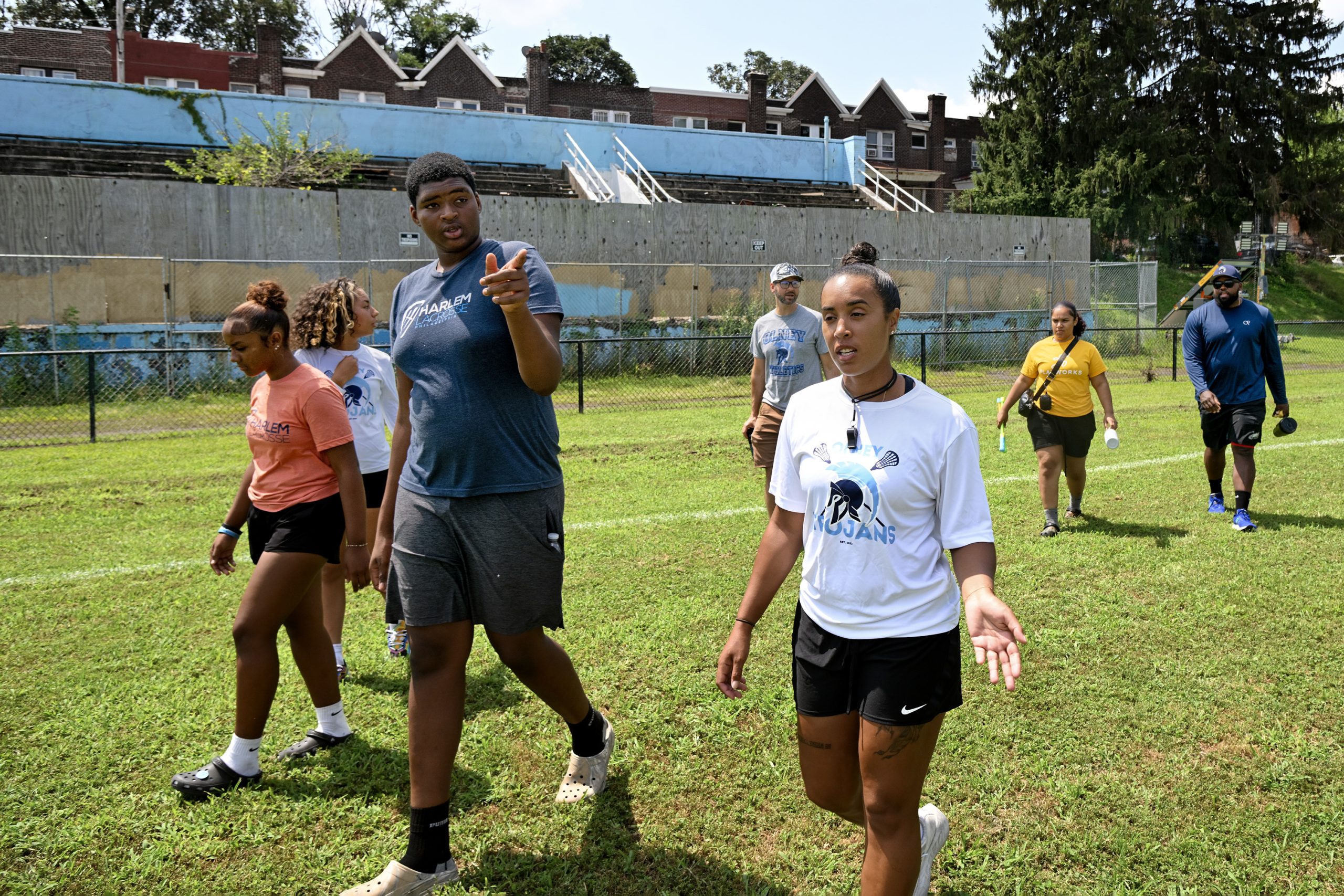
In front of their boarded up dilapidated stadium, Olney High School athletes Cindi Lizardo (from left), Emma Blanco, Sidi Traore; and principal Michael Roth, coach Siena Childs, recent graduate Ysis Rivera, and athletic director Jorge Gonzalez point out the deplorable condition the sports facilities are in July 24, 2025. Olney High School, which spent a decade under charter management, was turned back over to the Philadelphia school district in 2022.Tom Gralish / Staff Photographer
Gender gaps persist
Boys participated in sports in 2024-25 at a higher rate than girls — at an average rate of 20.3% compared with 15.8%, the report found.
And those gaps persisted across different types of school districts, the report found. For instance, in districts with “very low” overall sports participation, 14% of boys participated, compared with 10% of girls. In districts with “moderate” participation, 24% of boys participated, compared with 19% of girls. And in “very high” participation districts, 35% of boys participated, compared with 30% of girls.
What’s driving the disparities?
The report found that access to high school sports in Pennsylvania “is not evenly distributed and is strongly shaped by structural conditions.”
“Districts with fewer athletic opportunities are more likely to be urban districts with large high schools and more students of color, and they tend to offer a narrower range of teams and spend less per student on athletics, limiting the extent to which students can engage,” the report said.
But district funding alone isn’t responsible for disparities, the report noted. The gender gap, for instance, is found in well-funded and poorly funded districts.
The pattern of higher-spending districts seeing more participation “doesn’t line up neatly for every district,” Pehrson said, noting that the data can’t fully answer questions about what’s driving differences in participation.
Other possible factors could include transportation and sports outside of schools, Pehrson said.
DeBrest, the Philadelphia spokesperson, noted that urban districts may also have limited athletic facilities, and practice space “and the need for some students to balance academics, work, or family responsibilities.”
Pehrson hopes the findings prompt more investigation into the availability of school sports, which “are a key part of students’ educational opportunities,” Pehrson said — from boosting physical and mental health, to promoting social-emotional skills and building community.
“There are clear disparities in terms of sports opportunities students are having,” Pehrson said. “Why is that, and how can we move forward and try to figure out these differences?”
Editor’s note: This story has been updated to reflect that Jenkintown and Springfield Township were the local districts with the highest sports participation rates.
In a matter of seconds, a highway traffic stop in Tredyffrin Township sent Joel Perez Rodriguez from confusion, to panic, to fear.
When he saw red-and-blue emergency lights in his rearview mirror, he did what any law-abiding citizen would do, Chester County prosecutors said Thursday: He pulled onto the shoulder of the Pennsylvania Turnpike.
But Assistant District Attorney Monica Szyszkiewicz said the men who approached Perez Rodriguez’s vehicle on March 28 were not police officers — they were criminals, in league with his sister’s uncle, hired to rob Perez Rodriguez of $49,000 his sister had given him an hour earlier at her home in Germantown.
The botched robbery ended with Perez Rodriguez shot in the chest, as other bullets narrowly missed his wife and 4-year-old son.
Two of those men, Roberto Morel, 51, and Tuften Green, 31, were held for trial Thursday evening on charges of attempted murder, aggravated assault, attempted theft, and related crimes after an hours-longpreliminary hearing before District Judge Lauren Holt. Holt dismissed kidnapping charges the men faced, arguing there was a lack of evidence to support them.
The third suspect, Terrell Adams, 38, waived his hearing, and will also be held for trial.
Lawyers for Morel and Green told Judge Holt that Szyszkiewicz and Pennsylvania State Police investigators had built their case entirely on circumstantial evidence.
Morel’s attorney, Timothy Tarpey, said his client did not spend time with Perez Rodriguez during the three days he and his family visited his sister, and asserted he had no knowledge of the money being exchanged.
But Szyszkiewicz said investigators, using a litany of surveillance footage and cell phone data, had been able to reconstruct the entire plot, which began with the three men meeting up hours before the shooting at a gas station in Germantown. Video from that location, played in court, showed Morel and Green arriving at the same time, in separate vehicles, and discussing their plan, according to Trooper Adam McLaughlin.
“They conspired to pull the victim over for what other reason than to get the money they had received an hour before,” she said, arguing it was no coincidence that Morel had a clear connection to Perez Rodriguez. “Why else would they do that?”
Green’s attorney, Brian McCarthy, said despite the voluminous text messages prosecutors had pored over between his client and Morel, neither man made specific mention of a robbery, nor was there any attempt during the car stop to take the money from the car’s backseat.
Holt was not swayed.
Another video, taken from a Ring surveillance camera near where Perez Rodriguez’s sisterlives showed the three men began following his car moments after he pulled out of her driveway, en route to his home in North Carolina.
And data pulled from Green’s smartphone showed he was on the phone with Morel throughout the entire chase and subsequent shooting. The call ended, Szyszkiewicz said, when Perez Rodriguez fled the scene.
His sister owns a bodega in Germantown and had given him the $49,000 to invest in his tobacco business back in North Carolina.
As the family was driving westbound on the Pennsylvania Turnpike, they were being tailed by a Chevrolet Suburban being driven by Adams, investigators said Thursday, as well as a Honda CRV driven by Morel.
Text messages revealed Green and Morel had discussed adding emergency lights to the SUV, exchanging pictures of them both before and after they had been attached to the vehicle’s dashboard, according to testimony Thursday.
Once those lights were activated, Perez Rodriguez pulled over. He assumed, he said Thursday, that the occupants of the car behind him were undercover officers.
Green and Adams approached his car. Both were dressed in all black, with Adams wearing a hat with “police” sewn into it.
Right away, Perez Rodriguez said he knew something was wrong with the so-called officers. The way they spoke and carried themselves made him suspicious.
His suspicions were confirmed when Green, seeing Perez Rodriguez’s wife was trying to dial 911, stuck a handgun into her ribs and tried to grab the phone from her.
Perez Rodriguez sped away, and Green, according to prosecutors, fired the handgun five times.
An Army reservist, coincidentally driving by in the aftermath of the shooting, saw Perez Rodriguez had pulled again onto the shoulder, and stopped to help, prosecutors said. She helped stabilize his gunshot wound until medics arrived to take him to Paoli Hospital.
All three defendants will be arraigned in county court in West Chester later this month.
A Pennsylvania State University board of trustees committee on Thursday voted to recommend a 2.5% tuition and room and board increase for undergraduates on the University Park campus in 2027-28.
That’s a larger increase than the 2% tuition hike already approved for 2026-27. Penn State sets its costs a year ahead of time; rates for 2026-27 were set last year.
Meanwhile, in-state undergraduates at the Commonwealth campuses would see no tuition increase for the fifth consecutive year and smaller increases for room and board than those at University Park.
The full board will vote on the proposed rates on Friday.
Under the plan, undergraduate freshmen and sophomores at University Park would pay $21,400 in annual tuition for 2027-28, up $522 over last year.
For those out-of-state, the annual tuition rate would rise 4% to $46,356, up $1,782.
Room and board for both would rise 2.5% to $15,896 annually, which the university said was its lowest increase in the last nine years.
The proposed tuition increases will raise $59 million in additional revenue, said Sara Thorndike, senior vice president for finance and business.
While the proposal was passed unanimously by the committee, several board members raised questions.
“I’m going to reluctantly support the tuition increase,” said board member Brandon Short. “We’re dealing with an existential crisis, and it’s not unique to Penn State that the cost of education is increasing at a … faster rate than what people think the value of a college diploma is … We all hold our noses and vote for the increase, but at some point, it’s not an easy answer, but we’ve got to come together and figure it out.”
The university needs to make tough decisions and engage in “outside-the-box” thinking, he said.
“Doing the same thing over and over again and expecting different results is the definition of insanity,” he said.
Thorndike said the university has been cutting costs and continues to look for more efficiencies as it maintains a balanced budget.
“We’re doing individual unit budget cuts,” she said. “We’re doing budget cuts associated with inflation, finding new revenues, and then asking for a modest tuition increase, so it’s a combination of all of those things to get to this point.”
New board member Joseph S. DeRenzo questioned if in-state tuition increases could be kept lower at the expense of larger hikes for out-of-state students, or if larger increases could be charged for high-demand degrees in business and engineering.
“Our out-of-state rates are actually very similar or high compared to our peers, and we’re already seeing an impact again on how much they’re discounting compared to what we’re discounting and how that’s affecting enrollments,” Thorndike said. “If we start to see a decline in out-of-state enrollments, that will not help us be able to keep our in-state rates low. It will actually have the opposite effect.”
Thorndike also said that tuition revenue is projected to be $37 million under budget this year because of lower enrollment at the Commonwealth campuses, as well as international and graduate enrollments.
Other local colleges also are raising tuition. The Pennsylvania State System of Higher Education, which oversees 10 universities including West Chester and Cheyney, last week raised tuition 4.3% — the largest percentage increase in a decade. Also last week, Rutgers University increased tuition 3% for in-state and out-of-state students, which the school touted as its lowest increase in four years. Meals and housing on average were increased 4%.
And Temple University voted to raise tuition an average 3.4% for both in-state and out-of-state students.
The 2027-28 budget includes a 3% pool for merit-based salary increases for employees and 4% for graduate assistant stipends, the university said.
Undergraduate tuition for students from out of state would increase by 4% at University Park and 1% at the Commonwealth campuses.
As for graduate students, those in-state at Commonwealth campuses would pay a 1% increase in tuition and 2% for those out of state. At University Park, in-state students will see a 2% hike and out-of-state students 4%.
A Malvern man was sentenced Tuesday to more than three years in prison for having a collection of homemade bombs at his house — a discovery police made after he was arrested for bringing guns to a “No Kings” protest in West Chester last year.
Kevin Krebs, 32, apologized for his actions, saying he had let his family down and adding: “I really screwed up, and I regret everything that I did.”
His family said in court that Krebs — who was adopted from a Lithuanian orphanage as a toddler — had suffered from lifelong developmental disabilities, including autism. And they believed his interest in bombs and firearms was part of an obsessive nature that he also displayed in other, non-threatening technical areas, such as electrical work, which he performed professionally.
Krebs told U.S. District Judge Mary Kay Costello that he had built the bombs only to blow up pumpkins in the Poconos, calling his pursuit “purely recreational.”
Costello said she was not sure that was true. And in any case, she said, his possession and interest in building such devices was a threat to himself and others.
“Just having these bombs in your home posed a grave danger to other people,” Costello said.
In addition to imposing a 37-month prison sentence, Costello ordered Krebs to serve three years of supervised release. He had pleaded guilty in December to a charge of possessing unregistered devices.
A firearms case remains pending in Chester County, with a trial scheduled to begin next week, according to court records.
The events that led to Krebs’ arrest began last June, when attendees at a “No Kings” protest in West Chester told officers they thought Krebs had been carrying a gun.
Police who stopped Krebs found him carrying a loaded handgun, extra rounds of ammunition, and other weapons including a knife and bayonet, prosecutors said. He also had an AR-15 rifle in his car.
He did not have a concealed carry permit, and Chester County prosecutors charged him with illegal gun possession.
Two days later, police searched his home on Conestoga Road and found 13 homemade pipe bombs, prosecutors said, some of which contained nails or screws, which can make the devices more violent when they detonate. Investigators also found components used to make detonators and tactical vests, which prosecutors said demonstrated that he was not simply experimenting with explosives — he was building an “arsenal” of dangerous weapons.
County prosecutors charged Krebs with new crimes including possessing weapons of mass destruction and causing a catastrophe, and federal prosecutors went on to adopt the portions of the case that related to explosives.
Krebs’ case attracted attention in part due to its connection to the No Kings demonstration, one in a series of recurring events at which protesters across the country rally against President Donald Trump. But prosecutors said Krebs’ beliefs and potential motives were not particularly clear.
Krebs was a registered Democrat but had previously been registered as a Republican and said online that he had voted for Trump. Writing online, Krebs later said he came to regret that vote, and before the No Kings event, he had been posting violent rhetoric about Trump and police.
Krebs said in court Tuesday that he attended the protest “in support of the rally” but did not elaborate.
Krebs’ parents told Costello, the judge, that they harbored deep remorse and shame for failing to recognize their son’s drift toward dangerous habits.
But Costello said they had done everything they could to provide their son a better life — welcoming him into a safe home, providing him structure and support, and seeking to connect him with therapy and medications throughout his life.
“This is not your fault,” Costello said. “This was Mr. Krebs’ doing, and he’s going to have to face the consequences of that.”
Pennsylvania State University, Temple and the University of Pittsburgh will split $10 million in the state’s first allotment toward performance-based funding under the new budget.
It’s the first time since the legislature passed the new performance-based formula last November that the three so-called state-related universities are receiving the funding in addition to the general appropriation they received last year. The formula considers overall enrollment, graduation rates, number of lower-income students as measured by those receiving federal Pell grants, students receiving degrees in high demand areas, and other factors.
For Penn State, the new funding will amount to a little over $4 million, raising its general education subsidy to $246.1 million, the school said in a news release. The school said it was its first increase in state education funding since 2019.
“This initial investment is an important first step that recognizes the essential role higher education plays in strengthening our commonwealth,” Penn State president Neeli Bendapudi said. “The metrics at the heart of this model align closely with Penn State’s mission and values.”
Temple said it would receive a little over $2 million in performance-based funding, in addition to its $158.2 million general appropriation. The North Philadelphia-based university also is set to receive $500,000 for its “University College,” which helps adult and non-traditional students and lifelong learners pursue degrees. A university spokesperson said the money is for the school’s bachelor of general studies program.
The performance-based funding grew out of a longstanding battle between the legislature and state-affiliated universities over transparency and accountability. State-related universities received hundreds of millions in state funding, yet have a quasi-public status exempting them from much of the state’s open records laws, a fact that has long been criticized by some legislators.
Gov. Josh Shapiro, a Democrat, signed the $50.8 billion budget deal Sunday, applauding leaders from both parties for their work on the issue. He specifically highlighted House Minority Leader Jesse Topper (R., Bedford), who has led the charge to create the new performance-based funding model.
“That’s something that leaders in Harrisburg have talked about for years and years and years, but we came together and we got it done,” Shapiro said during a news conference before signing the budget deal into law.
Meanwhile, the system that oversees Pennsylvania’s 10 universities including West Chester and Cheyney will receive $626.1 million, up about $5 million over last year. The Pennsylvania State System of Higher Education had been seeking a $31 million or a 5% boost in order to roll back a 4.3% tuition increase its board approved last week.
System spokesperson Kevin Hensil said Monday that the tuition increase would stay in place.
In-state students, who make up the vast majority of the system, will pay $8,338 annually, up $344 from $7,994.
The extra $5 million from the legislature, Hensil said, was “due to the expiration of funds related to a transfer workforce development partnership initiative” and would not impact the tuition increase.
The budget also included $78 million for debt relief in the system, but Hensil said that also would not impact the tuition increase.
“We are determining how it will be used, as we have in the past when such money was provided,” he said. “That analysis is underway.”
By the state covering the PASSHE debt, Shapiro said it would enable the state’s 10 state-owned universities to “shift those dollars into more funding for our faculty, more funding for our students, and more funding for our academic programs.”
In addition to West Chester and Cheyney, the other universities in the 83,005-student system include: Commonwealth, East Stroudsburg, Indiana, Kutztown, Lock Haven, Millersville, Penn West, and Shippensburg.
Lincoln University, which also is a state-related school, is not included in the performance-based funding plan, but it received a $1.1 million boost.
Funding for the state’s community colleges was held flat.
In the back of a classroom where she had just read to 20 attentive preschool kids, U.S. Rep. Chrissy Houlahan was concerned about what the staff of the West Chester YMCA was telling her.
Nearly a third of the families who rely on the facility’s childcare programs — in the richest county in Pennsylvania, and one of the wealthiest in the country — receive financial assistance to cover the $1,900 monthly cost, the staffers said.
Houlahan, a Democrat who is soft-spoken when she is not grilling President Donald Trump’s cabinet secretaries or House Speaker Mike Johnson (R., La.) on Capitol Hill, asked about the income qualifications for financial aid. At a certain point, the YMCA staff told her, some parents have a disincentive to earn more, lest they become disqualified and then stuck with a higher bill.
“It’s terrible, no matter how you do the math,” Houlahan said a few hours later at a Malvern restaurant, relaying the story to her daughter, Molly Rosa Houlahan, and daughter-in-law, Kristen Rosa Houlahan.
The YMCA’s fee was about the same amount the couple were paying for their 18-month-old, Lucy. With another child due in September, it is also an amount they still are unsure how to afford twice over.
“We’re very fortunate in our jobs, and we’re both trying to get promotions in order to be able to afford a second daycare,” said Molly Rosa Houlahan, 33, a local theater director and producer. “But we are not in that position yet. I don’t totally know what will happen when this second child arrives.”
From childcare to healthcare, groceries to gas prices, affordability concerns have remained top of mind for Americans this year — dominating discussions on Capitol Hill ahead of the high-stakes midterm elections.
Republicans, who control Congress and the White House, say they have made real progress in raising wages and lowering costs. They marked the first anniversary of Trump’s One Big Beautiful Bill Act — since rebranded by Republicans as the Working Families Tax Cut Act — this month by celebrating the law’s more generous tax refunds and other benefits, like new investment savings accounts for children under 18.
Democrats have pointed to the bill’s simultaneous cuts to Medicaid spending and food assistance for low-income families. They say Trump signaled he has no interest in lowering costs when he refused to sign a bipartisan housing bill and said he doesn’t “think about Americans’ financial situation” when handling the war in Iran.
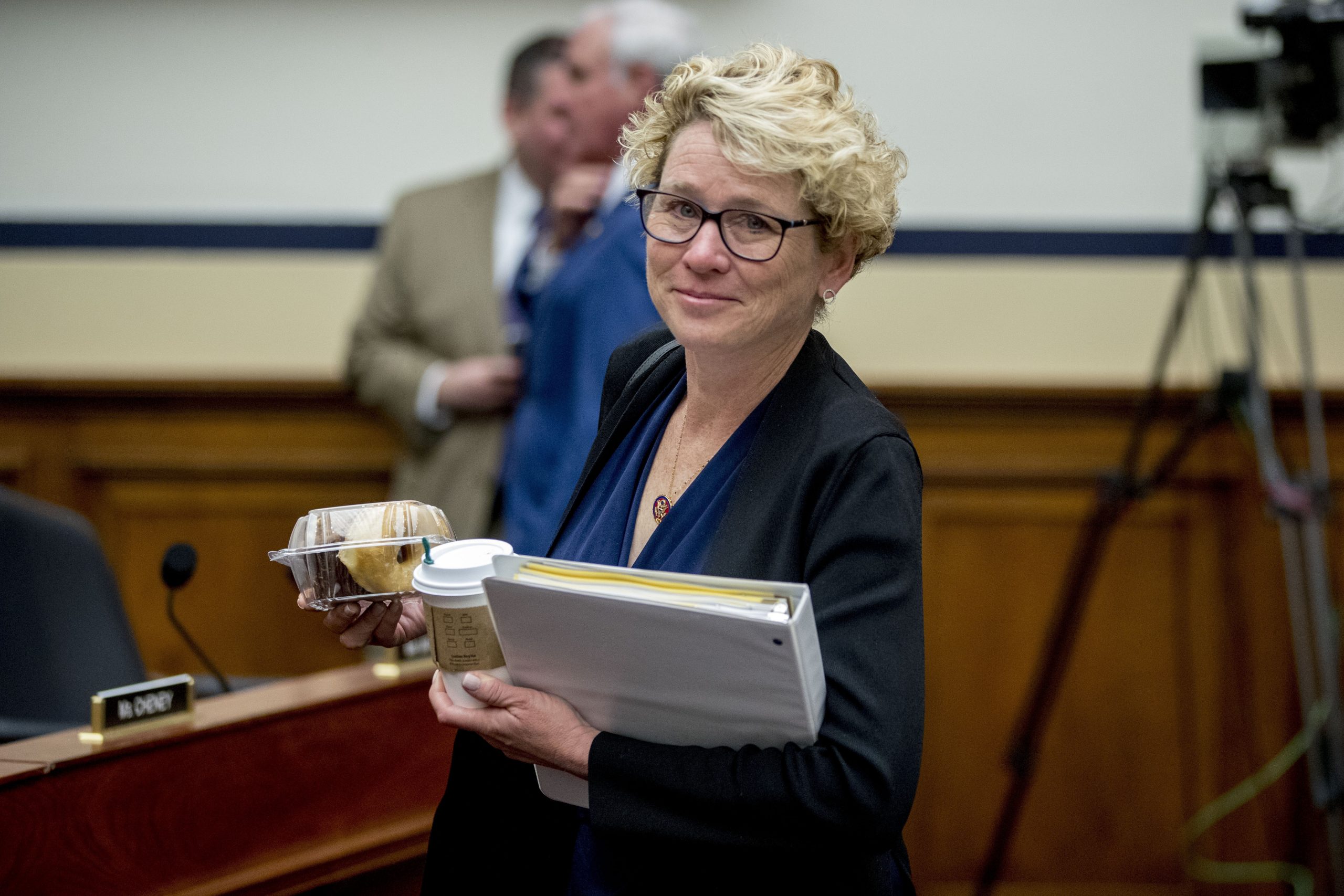
In this 2019 file photo, U.S. Rep. Chrissy Houlahan (D., Pa.) arrives for a House Armed Services Committee budget hearing for the Departments of the Army and Air Force on Capitol Hill in Washington.Andrew Harnik
Houlahan, who has represented most of Chester and Berks Counties since 2019, routinely highlights the broader scope of cost-of-living issues alongside her colleagues. She has taken a leading role among centrist House Democrats to help craft a detailed “affordability agenda.”
Whether her party can advance any of those policies in Washington, even if it wins control of one or both chambers of Congress in November, remains an open question as Trump remains in office and the International Monetary Fund warns of a worsening global economy.
But as the fight drags out, it has also become increasingly personal for Houlahan and her family.
In addition to occasionally helping fill the gaps in their granddaughter’s care, Houlahan and her husband’s own home in Devon, Chester County, has transformed into a version of a so-called sandwich generation household within the last year. The couple’s other adult daughter, her husband, and both of Houlahan’s parents, who are 80 and 84, have all moved in.
The underlying circumstances for the multigenerational home, as they would be for any family, are various and personal. And Houlahan emphasized across multiple interviews that she is fortunate to have the means to welcome her family under her roof. (Houlahan is an Air Force veteran and a former executive at the athletic apparel company AND1. Her husband, Bart, is a partner at an investment research firm.)
But the larger realities — like skyrocketing costs for childcare and senior living — have also now played a role in her own life.Her mother has a Parkinson’s diagnosis, and her parents were unable to find a one-floor living space that was affordable and fit their other needs as they looked to move closer to their family.
“We’re having these conversations, and you know people all over our community are having these conversations,” she said. “It’s an acute issue for families in our area: How do you balance all of this?”
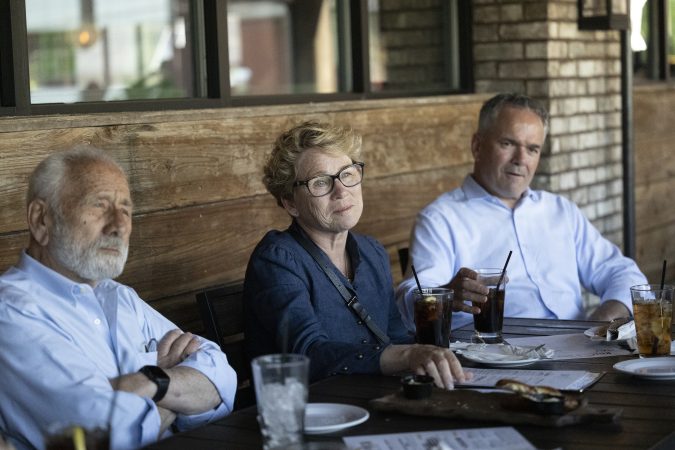
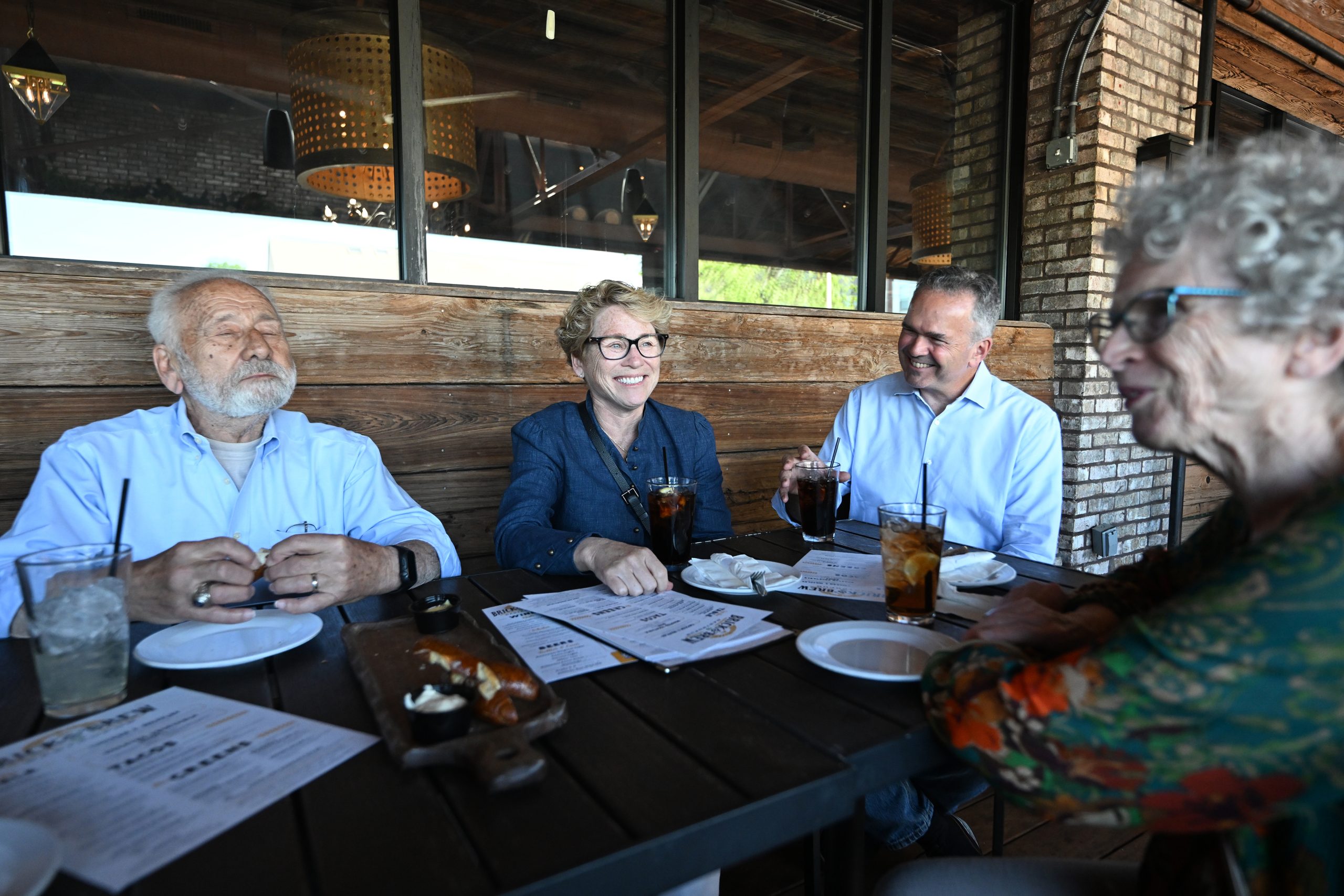
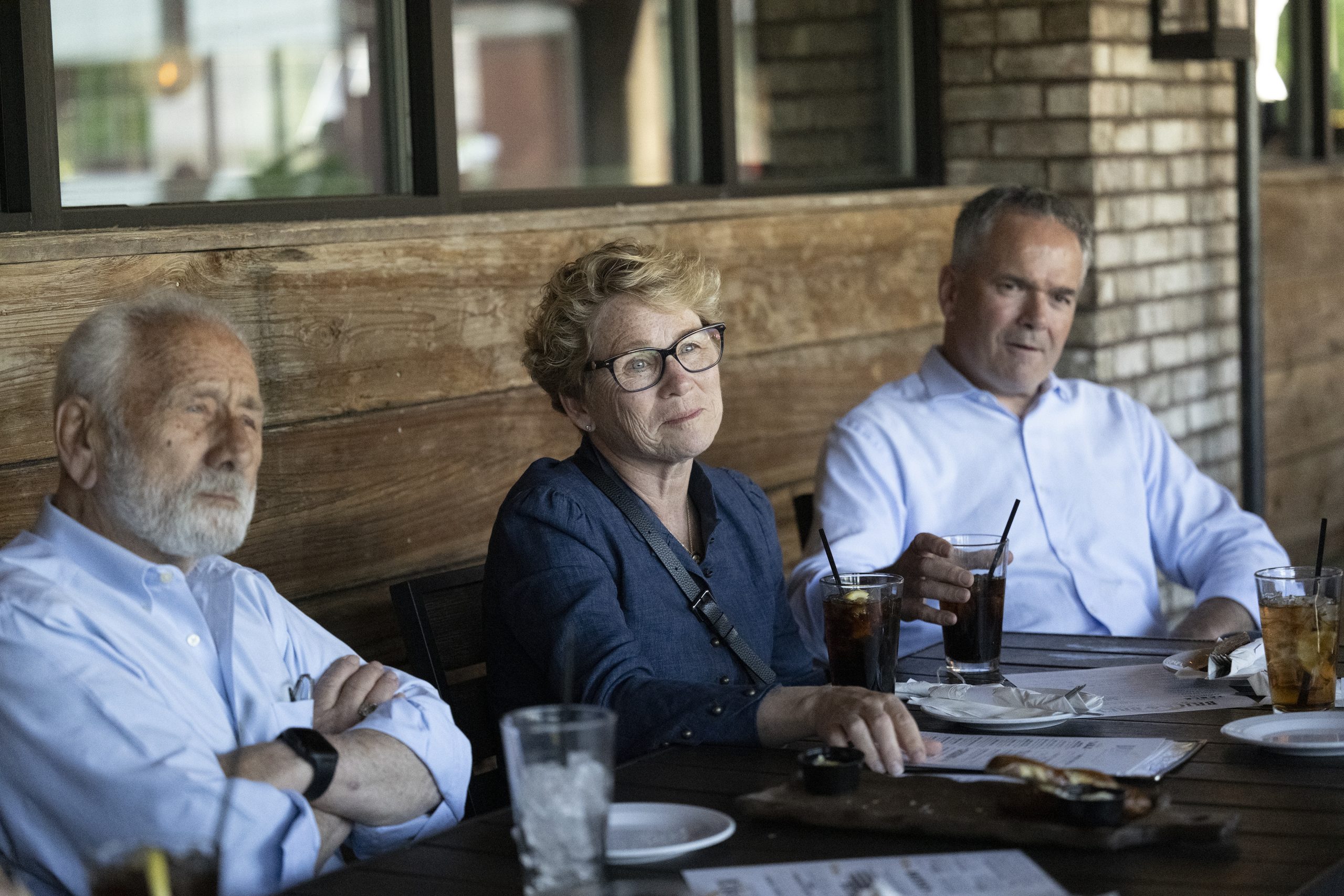
U.S. Rep. Chrissy Houlahan (center) has dinner with her family at Brick & Brew in Malvern, including her father, Andy Jampoler (left), her husband, Bart Houlahan, and her mother, Suzy Jampoler.Jose F. Moreno / Staff Photographer
‘A big balancing act’
Houlahan has shared parts of her family’s story as she has traveled her district this year — prioritizing events and meetings that aim for a deeper understanding of an affordability crisis that has not spared her home county, where the median household income is about $131,000, or 40% more than the statewide average.
On back-to-back days this spring, that meant a focus on the kinds of childcare and senior-care issues she has become familiar with.
“We call it ‘from zero to Edna,’” Laura Schoefield-Pierson, executive director of the YMCA of Greater Brandywine, said of the facility’s programs aimed at all ages, from infants to seniors.
Walking Houlahan through the pre-K classes and a gym with a dozen seniors playing table tennis, Schoefield-Pierson spoke about the organization’s exercise programs aimed at offsetting symptoms of Alzheimer’s or Parkinson’s, and about the complexities of providing assistance for families with young children.
In addition to the “many children” whose care is subsidized through the state’s Child Care Works program — set for families earning 200% or less of the federal poverty level, or $66,000 for a family of four — others receive aid through the YMCA, Schoefield-Pierson said. The facility’s fundraising goal this year is $237,000, she said. On the day of Houlahan’s visit, Schoefield-Pierson said “the kiddos” were writing thank-you notes to donors.
U.S. Rep. Chrissy Houlahan (D., Pa.) interacts with teachers and children at a childcare center at the YMCA in West Chester.Jose F. Moreno / Staff Photographer
Though the U.S. Department of Health and Human Services recommends childcare should not exceed 7% of household income, Houlahan said she was surprised to learn a family would have to earn $327,000 to meet that benchmark at the YMCA for one child.
Nationally, the average annual cost of childcare in 2024 was $13,128, an increase of 29% over the previous five years and far exceeding the national recommendation for the average household’s budget.
“It’s crazy how much healthcare and childcare plays into your family planning,” said Helena Cordoba, a 35-year-old mother of two who said at a roundtable hosted by Houlahan that she had been hoping to grow her family.
A Colombian immigrant who owns Café Com Leite in Phoenixville, Cordoba said she thought she had been living the American dream. But a recent miscarriage and the rising costs of both childcare and healthcare, which she does not currently have, have made her rethink her family’s plans.
“I never thought I was going to say, ‘Maybe the miscarriage is a blessing.’ That thought on its own is very saddening,” Cordoba said. “I don’t know if we were going to be able to afford another baby. Our life would have been completely turned upside down.”
Others voiced similar struggles while Houlahan sympathized and shared her daughter’s own experience with a $2,000 monthly daycare bill.
Karessa, Amelia, and Zack Hathaway, pictured here in 2023, at Sweet Amelia’s in Kennett Square.Monica Herndon / Staff Photographer
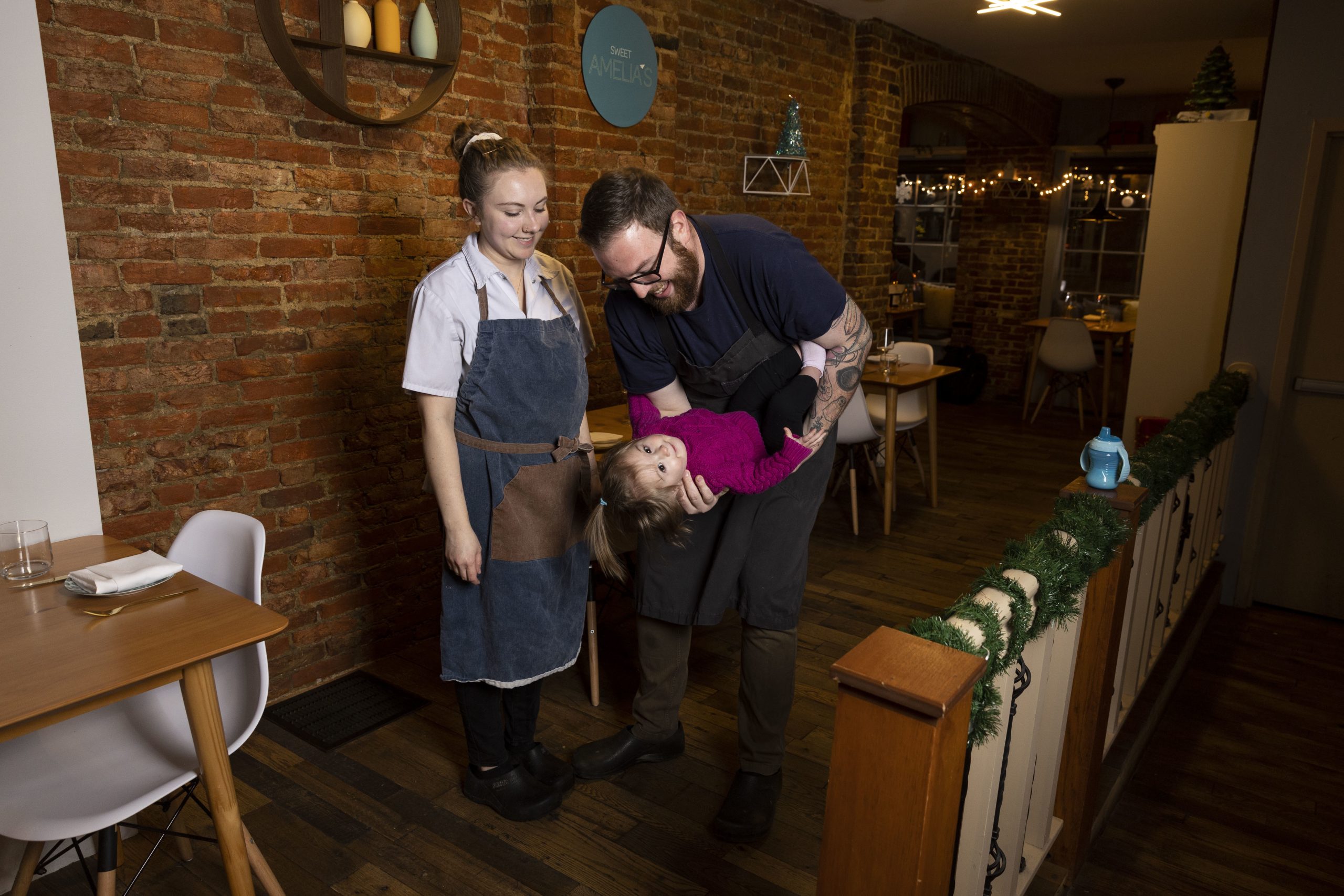
Zack Hathaway, who owns the restaurant Sweet Amelia’s in Kennett Square with his wife, Karessa, said their business “makes just enough” to cover the $700 to $800 weekly cost for their babysitter amid a demanding restaurant schedule. Thomas Smith, who works at the Cleveland-Cliffs steel plate production facility in Coatesville, said he makes too much to qualify for subsidies for his grandchildren but still struggles to cover the cost.
“It’s like a big balancing act to be able to put your kids in a place that you want to feel comfortable with them being and with being able to afford it,” said Amarte Grove, another Cleveland-Cliffs employee and a father of five daughters.
In another tour focused on the other end of the agespectrum, Houlahan peppered staffers at Brandywine Valley Active Aging in Downingtown about their work to offer free meals, housing services, and activities to about 120 seniors daily.
According to the organization, Chester County’s homeless population has decreased in recent years — from 916 in 2023 to 747 in 2025. But the percentage of that population that is over 60 has increased from 9% in 2023 to 14% in 2026. About 45 older adults in the county were homeless as of early May, according to the organization, which works alongside other independent and government groups to connect seniors with stable housing.
“It is really difficult to live in Chester County,” said Jen Manthey, BVAA’s director of information and assistance. “It takes a long time for them to get out of homelessness, partly because it takes a long time for us to build the trust with them and get that rapport — that they trust what we’re saying, and there aren’t $400 room rentals out there that we’re just hiding from you.”
U.S. Rep. Chrissy Houlahan (D. Pa.) visits with senior citizens at the YMCA in West Chester. She shares the burden of the “sandwich generation” caring for her elderly parents, opening her home to her adult daughter and son-in-law, and helping to care for her other daughter’s toddler.Jose F. Moreno / Staff Photographer
Nick Popov, BVAA’s chief operating officer, said demand remains high for the 5,000 free lunches the organization provides every month to individuals age 60 and older. The cost for those meals is reimbursed through the Pennsylvania Department of Aging, though the organization raises most of its funding in total, he said.
“The services are out there. We’re doing everything we can to provide them,” Popov said. “But it’s always a struggle to kind of balance the bottom line between our goals and what we can actually affordably accomplish.”
Houlahan’s parents said they had never expected to move in with their daughter. Even as they looked to move closer to their family and could not find a spot that fit their financial and physical needs, it took some convincing, mostly from their son-in-law, Bart Houlahan.
“It was an inspiration that permits us to enter old age — serious old age, not just the kid stuff right now — with greater confidence that our health will be sustained,” said Andy Jampoler,Houlahan’s father, a Holocaust survivor born in German-occupied Poland in 1942.
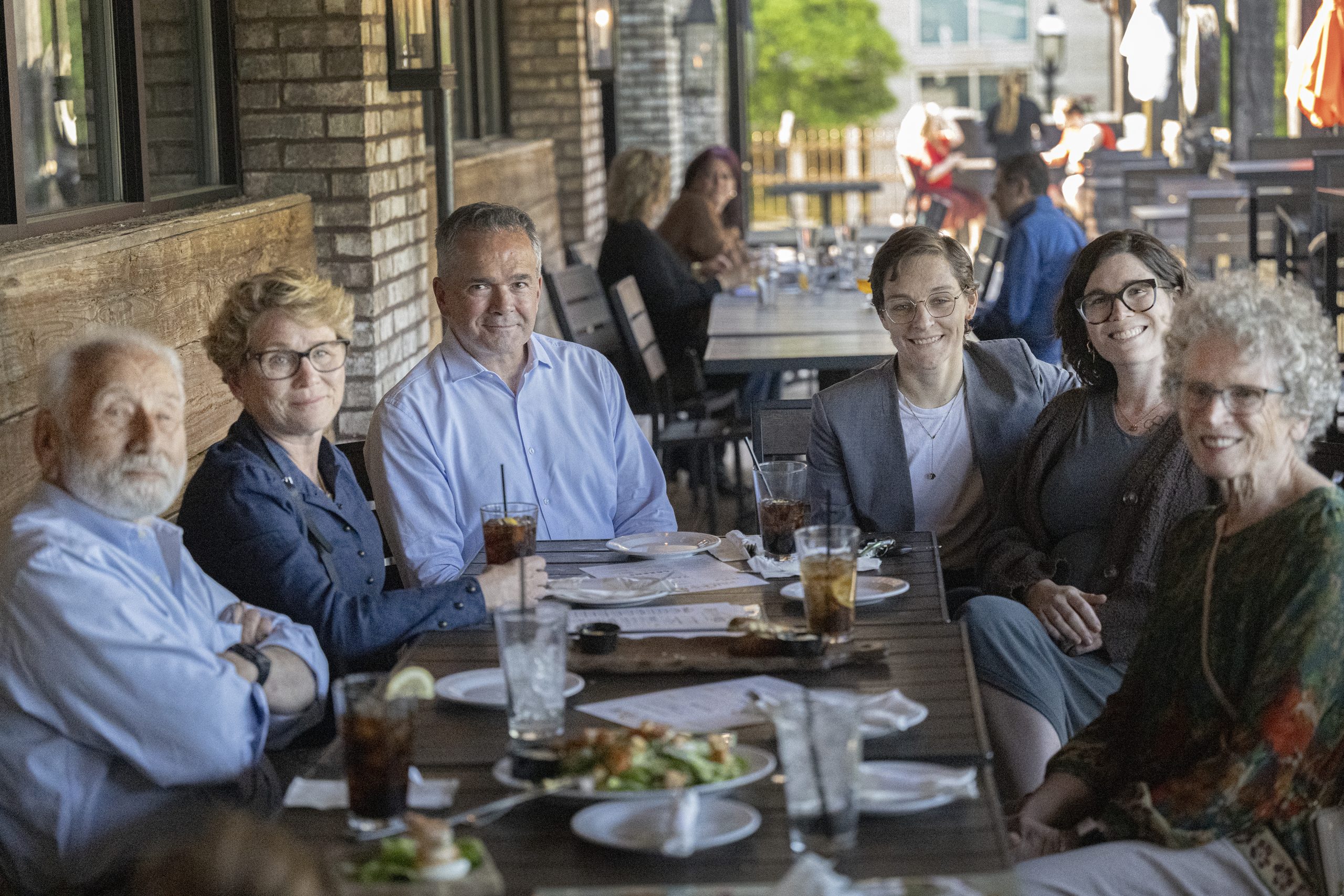
U.S. Rep. Chrissy Houlahan poses at a family during dinner at Brick & Brew in Malvern, including her father, Andy Jampoler (left), her husband, Bart Houlahan, daughter Molly Rosa Houlahan, daughter-in-law Kristen Rosa Houlahan, and Houlahan’s mother, Suzy Jampoler.Jose F. Moreno / Staff Photographer
Turning experience into policy
In May, Houlahan introduced legislation that would require the federal government to collect data on the sandwich generation, a step she said is critical to creating better policies for an “undervalued role in the nation’s economy.”
It would require at least one federal survey to ask whether individuals provide unpaid care to both children and older adults. U.S. Sen. Andy Kim (D., N.J.), who has two young sons and cares for his father with Alzheimer’s, sponsored a companion bill in the Senate.
Sen. Andy Kim (D., N.J.) poses with his family and Vice President Kamala Harris after taking the ceremonial oath of office in the old Senate chamber on Jan. 3, 2025, in Washington.Steven M. Falk / Staff Photographer
Houlahan is also the chair of an “economic growth and cost of living” working group within the New Democrat Coalition, a group of self-described centrist Democrats that includes about half of the entire caucus. The group rolled out an “affordability agenda” earlier this year that is considered a framework for how Democrats would tackle housing, healthcare, energy, paid family leave, and much more if they win control of the House.
U.S. Rep. Brad Schneider (D., Ill.), chair of the New Democrat Coalition, credited Houlahan for her leadership with the agenda, describing her as having a “quiet wisdom that focuses on the core of a problem” while bringing her own life experience to the work.
“Everyone’s experience is unique, but her experience shares many of the aspects of what people across the country are facing,” Schneider said. “The sandwich generation, taking care of kids and parents, for whatever circumstance, while at the same time seeing the cost of just everyday living … is putting a burden on families.”
The legislation aims to incentivize housing construction, restrict large investors from buying single-family homes, help families with home repairs, and more. The president reiterated Friday that he would not sign it, allowing the bill to become law without his signature.
In her Capitol Hill office about an hour after Trump canceled that bill signing late last month, Houlahan described the president as “so obtuse that he can’t see in front of him that this is something that the people want.” After spending much of the last year calling out Johnson, the House speaker, for not standing up to Trump, she said there should be “counterinsurgents” and an “uprising” in the Republican Party.
At the same time, she expressed some hope. The housing bill may have been a rare moment of bipartisanship, but it was also a sign that Congress can still act on affordability even before the end of the year, she said.
“We don’t have time, for all of this stuff, to wait until somebody else is in charge,” Houlahan said. “We can do this ourselves.”
U.S. Rep. Chrissy Houlahan (D., Pa.) sits between her father, Andy Jampoler, and her husband, Bart Houlahan, at Brick & Brew in Malvern. Houlahan’s parents recently moved in with her. Jose F. Moreno / Staff Photographer
It’s possible that nobody knows the stretch of Brandywine River that meanders through the heart of Wilmington better than Missy Morrissey.
Since her sister Susan’s battered body was discovered there nearly seven years ago, the West Chester native regularly returns to its banks, mulling a question:
How exactly did the 50-year-old Delaware County schoolteacher arrive in the shallows more than three miles downriver from where her car was found abandoned early on a July morning in 2019 in what authorities said was a homicide?
And how, she wonders, has the crime gone unsolved for all these years?
Susan Morrissey, who had been sipping wine and texting with friends into the early morning hours, left her Wilmington home just after 3 a.m. for reasons unknown, authorities said, and turned up dead in the river hours later.
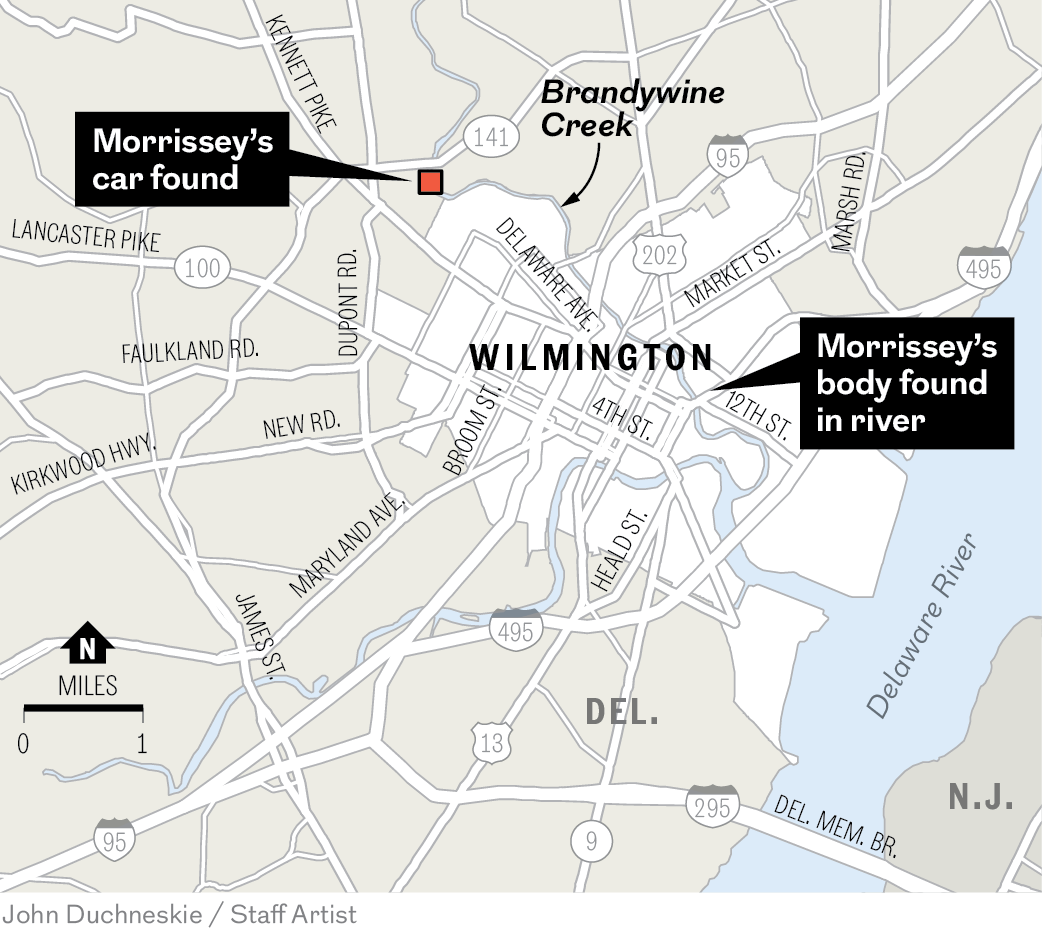
Surveillance cameras captured Morrissey’s black Honda Civic as it left her home and headed to the gates of a nearby office building, where it was parked haphazardly and left unlocked with her cell phone and purse inside.
It was not until about four hours later that a construction worker discovered Morrissey’s body floating in the water miles away near the Northeast Boulevard bridge. She had died from blunt force trauma and drowning, the medical examiner found.
A photo of Susan Morrissey.Missy Morrissey
Investigators can’t say for sure how Morrissey’s body made it to the opposite side of town, though they believe she was alive when she entered the river and that she did not do so near where her car was parked.
“A friend refers to it as ‘the magic carpet ride,’” Missy Morrissey said of the distance between her sister’s car and where her body was discovered. “We just can’t figure anything out.”
It’s a puzzle that brings Missy Morrissey, the oldest of four siblings, back to the Brandywine each year, where she lays a bouquet of roses to honor her sister’s memory.
But this year, as yet another anniversary of Morrissey’s July 23 death nears, her family has begun to wonder whether after years of efforts to uncover the truth, her killer may never be found.
“On the first anniversary in 2020, I couldn’t have imagined that we would be sitting here in 2026 talking about this,” said Meg Morrissey Heinicke, the second-youngest of Susan’s siblings. “I would say time doesn’t heal all wounds. It is just as painful this year as the first year, the second year, the third year.”
Homicide detectives with the Delaware State Police say the investigation continues, but they have no suspects or motive, and there are no new developments in a crime that has divided the Wilmington and Chester County communities and drawn attention from true-crime podcasts and amateur sleuths across the country.
Missy Morrissey appreciates that people have taken an interest in her sister’s death long after it faded from the headlines.
Still, she and her family just want the crime solved.
A sister with flair
Susan Morrissey did just about everything with flair, her siblings said.
She grew up around West Chester and Wilmington and attended the city’s prestigious Tatnall School before heading to Georgetown University and later to San Francisco State, where she earned a master’s degree and began her career as an educator at a public school in a low-income Bay Area neighborhood.
Morrissey volunteered often, her siblings said, working with young people at a juvenile detention facility and devoting hours to an animal rescue, where she combed frigid Northern California beaches for stranded sea lions.
She was the first to read up on far-flung conflicts and the world’s injustices, and she loved sitting with a book on the beach in Stone Harbor.
It was she who recommended Noam Chomsky tomes and George Carlin stand-up specials to her less-enlightened siblings, they said. Everything from her CD collection to her handwriting oozed taste and personality.
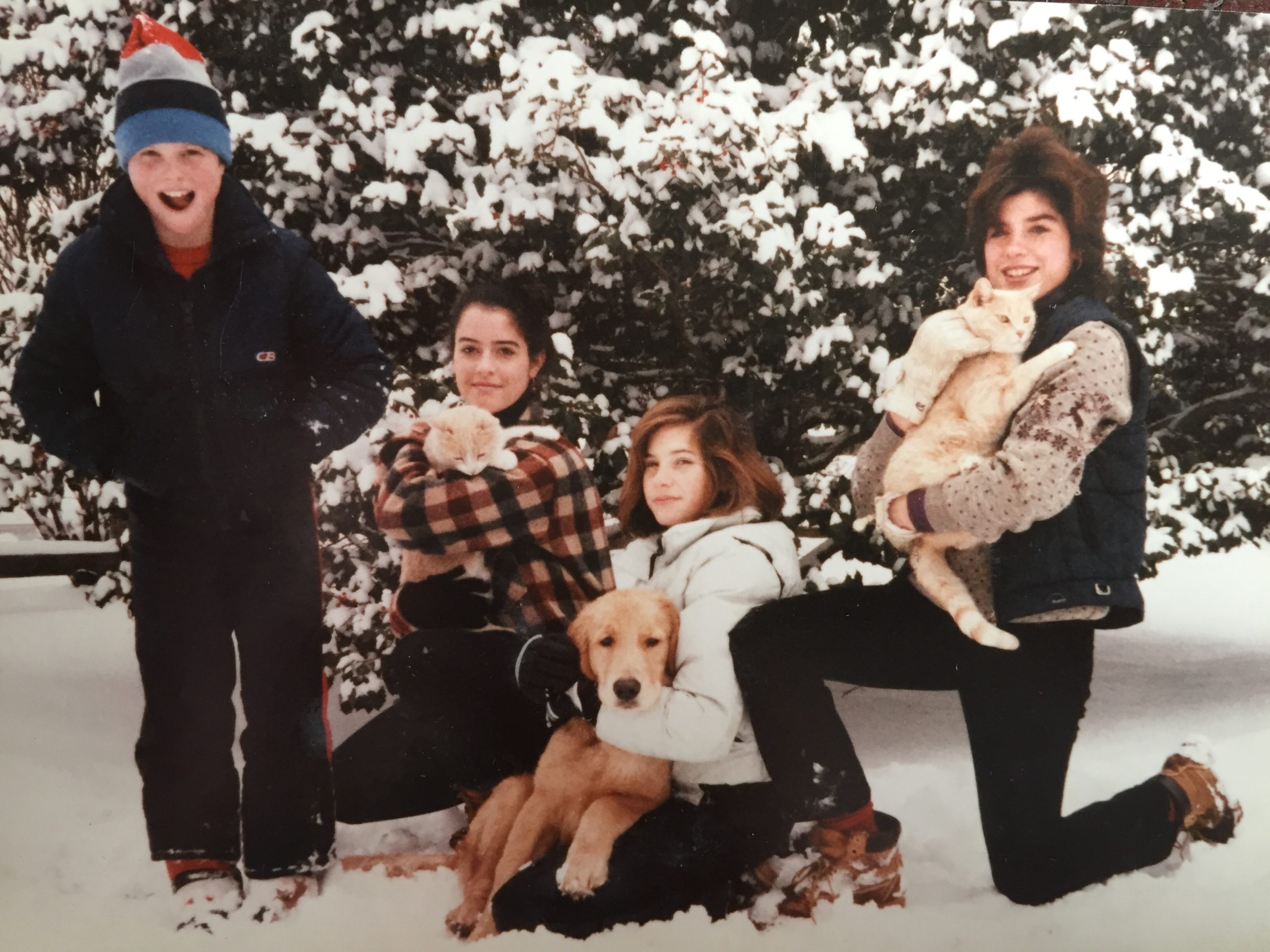
The Morrissey siblings (from left: John, Meg, Missy, Susan).Missy Morrissey
“I don’t know how many people feel this way, but I kind of felt like the coolest person in the world happened to be in my family,” said John Morrissey Jr., the youngest of the siblings.
Morrissey eventually returned east and, after a disappointing stint of online dating in her 40s, reconnected with a former schoolmate, Ben Ledyard, an investment consultant and a regular on the Wilmington social scene.
The two soon wed, and each weekday morning, Morrissey drove to Pennsylvania to teach English at Academy Park High School in Sharon Hill, Delaware County, where she worked for 13 years until her death on July 23, 2019.
Her brother now lives in Virginia but regularly returns home to the Brandywine Valley, where visits have begun to trouble him.
With each crossing of a bridge, each riverside drive, he said, a reminder of his sister’s killing lurks beneath the river’s surface.
“Susan liked true crime,” he said, “especially local crime.”
The mystery of her death, he said, is “exactly the kind of case that Susan would have been interested in.”
A body in the water
Even after all these years, Missy Morrissey still has the texts saved to her phone.
It was 12:29 a.m., she said, and the sisters casually exchanged messages while Susan Morrissey relaxed with a glass of wine on the back porch of her Riverview Avenue home.
She was a night owl, her sister said, and often stayed up late chatting with family or friends, especially during her summer break from school. Morrissey, she said, had been looking forward to attending a Rolling Stones concert with her husband at Lincoln Financial Field the next evening.
Phone records showed that Morrissey texted with friends and updated her storefront on Poshmark, an e-commerce site for secondhand fashion, until 2:45 a.m.
Then at 3:02 a.m., a nearby security camera captured Morrissey’s car leaving her driveway, according to Delaware State Police. It traveled around a mile through Wilmington to Walker’s Mill, a historic riverside property that had been converted into offices.
In the dark of night, however, detectives who later reviewed the footage could not determine who drove the vehicle to Walker’s Mill or see who left the car after it was parked.
Map of Wilmington, Del., showing locations in the death of Susan Morrissey, whose death seven years ago remains unsolved.John Duchneskie
What happened in the nearly five hours between the car’s arrival at Walker’s Mill and the discovery of Morrissey’s body downriver remains a mystery. Investigators say they have not determined why Morrissey would have entered the water that morning.
“She got her injuries close in time to when she died, and she died close in time to when her body was found” at 7:39 a.m., said Detective Daniel Grassi of the Delaware State Police.
He believes she may have entered the river anywhere from the Brandywine Zoo to the 16th Street Bridge, more than two miles downriver from her vehicle.
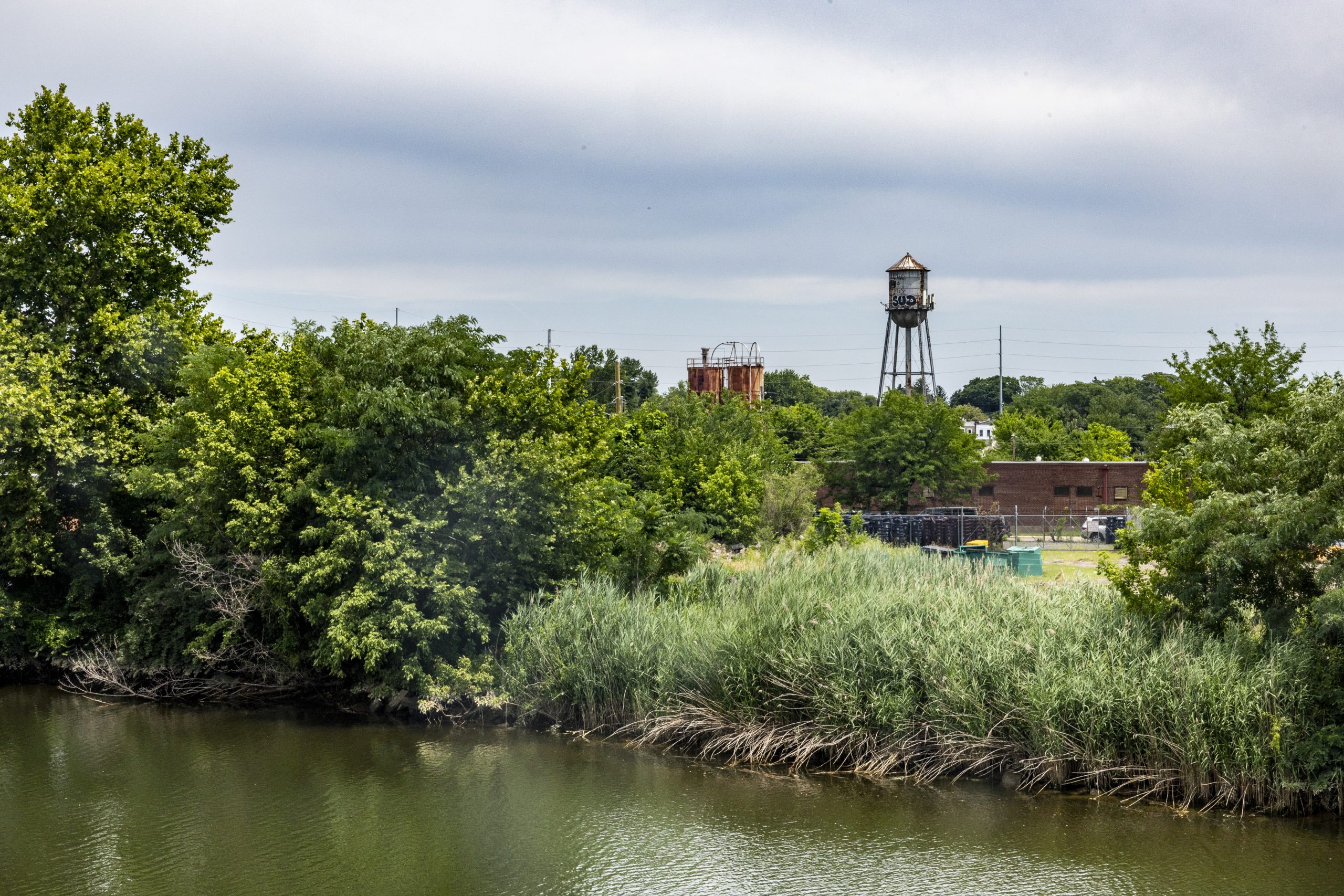
A water tower is seen from the top of the Northeast Boulevard Bridge in Wilmington, Del., on Friday, June 26, 2026. Susan Morrissey, a schoolteacher in Delaware County, was killed in Wilmington, Del., seven years ago this summer. Her body was found in the Brandywine River near the Northeast Boulevard Bridge.Aidan T. Gallo / Staff Photographer
Using data from Morrissey’s Fitbit device, investigators have pieced together the barest of timelines from that morning.
The tracker did not record Morrissey’s GPS location, so investigators cannot trace her movements, but they know she walked about a mile within an hour of her vehicle arriving at Walker’s Mill.
And at 7 a.m., the device stopped recording her heartbeat.
“I don’t know why she left the house at 3 a.m., and I don’t know what she was doing between 3 and 7,” Grassi said. “That four-and-a-half hour gap is a major issue with the investigation.”
What happened to Susan?
At her West Chester home, Missy Morrissey, 58, keeps hundreds of pages of notes and documents related to her sister’s case, making her something of an in-house historian of the family’s tragedy.
Since 2019, she has studied the river’s edge between Walker’s Mill and the Northeast Boulevard Bridge, poring over maps, interviewing store owners and strangers, and posting flyers seeking information about the killing near where Susan Morrissey may have been.
It is not only the lack of a suspect that vexes her. Police have not detailed the cause or extent of Morrissey’s injuries, beyond saying that they were traumatic.
Morrissey had been home alone that evening while her husband attended a screening of a documentary about the jam band Phish along with a friend. When he came home, Ledyard told investigators, he and Morrissey sharedhalf a bottle of wine before he took a sleep aid and went to bed around 11 p.m.
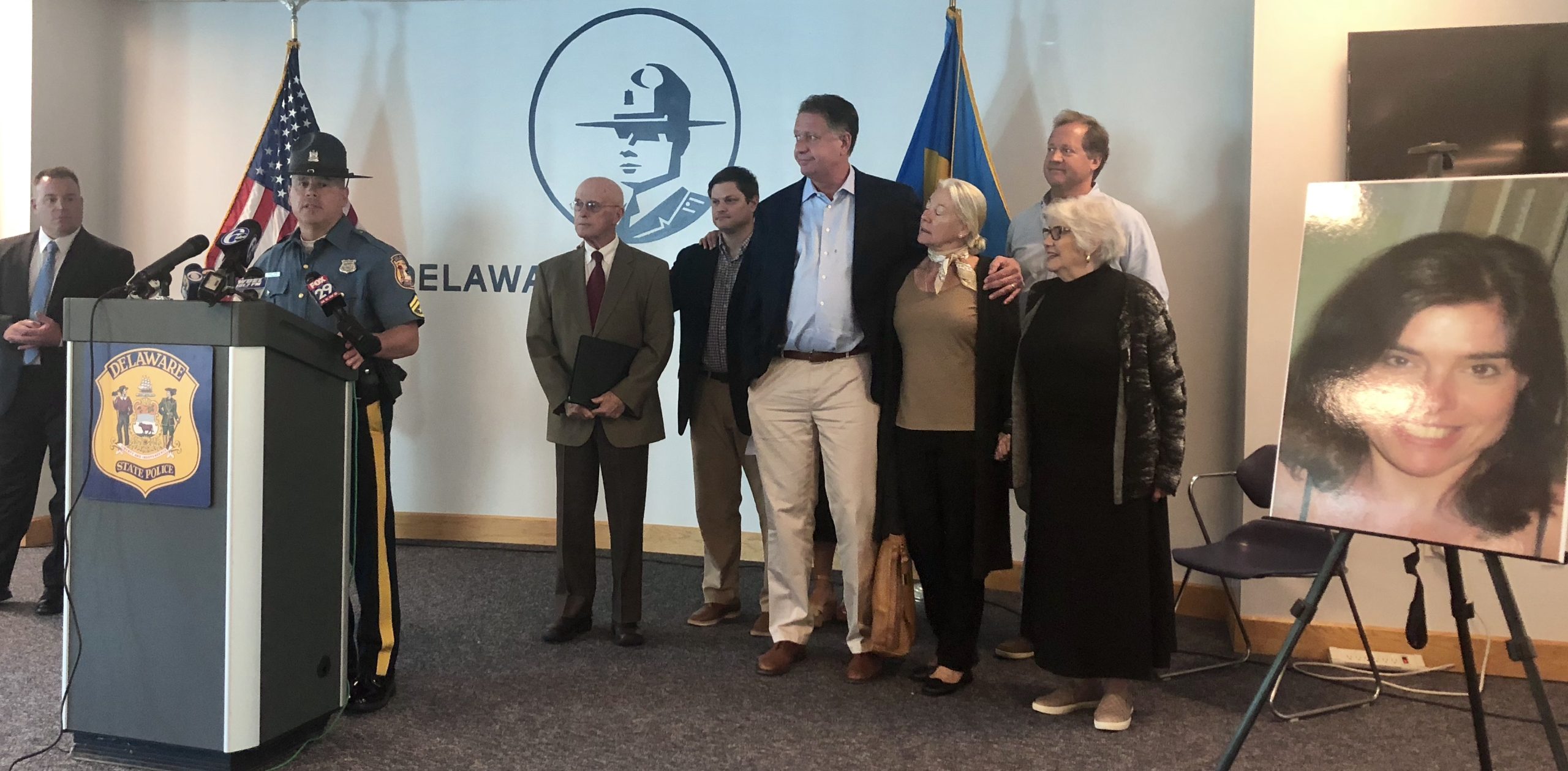
Delaware State Police Master Cpl. Michael Austin speaks in 2019 to brief reporters about updates in the death of Susan Morrissey Ledyard. With him were her brother, John (second to left), and husband, Ben (third from left).Katie Park/Staff
He said he had no idea what happened to his wife — a woman he told reporters was “the love of my life, my best friend” — until police came to the house around 9:30 the next morning to tell him she was dead.
Ledyard could not be reached for comment.
Two years after Morrissey’s death, Ledyard remarried, and in 2023 he was charged with assault for attacking his wife with a marble figurine and smashing her head into the floor after she asked him to turn down loud music on New Year’s Day.
He pleaded guilty to second-degree assault and was sentenced to two years in prison.
The charges brought fresh attention to the Morrissey case and fueled internet speculation that he could have harmed his former wife.
But police say he is not a suspect in the homicide and has cooperated fully with law enforcement.
‘A hope you desperately cling to’
Morrissey’s parents, Serena and John, died last year at 89 and 91 — without learning what happened to their daughter and without seeing anyone brought to justice for the crime.
John Morrissey’s death from advanced dementia came just two days after the anniversary of his daughter’s death.
“It’s been a tough year for our family,” said Meg Morrissey Heinicke, who lives in San Francisco. “This year’s anniversary feels particularly sad and painful.”
Yet there remains “a hope that you desperately cling to” that the case will be solved, she said.
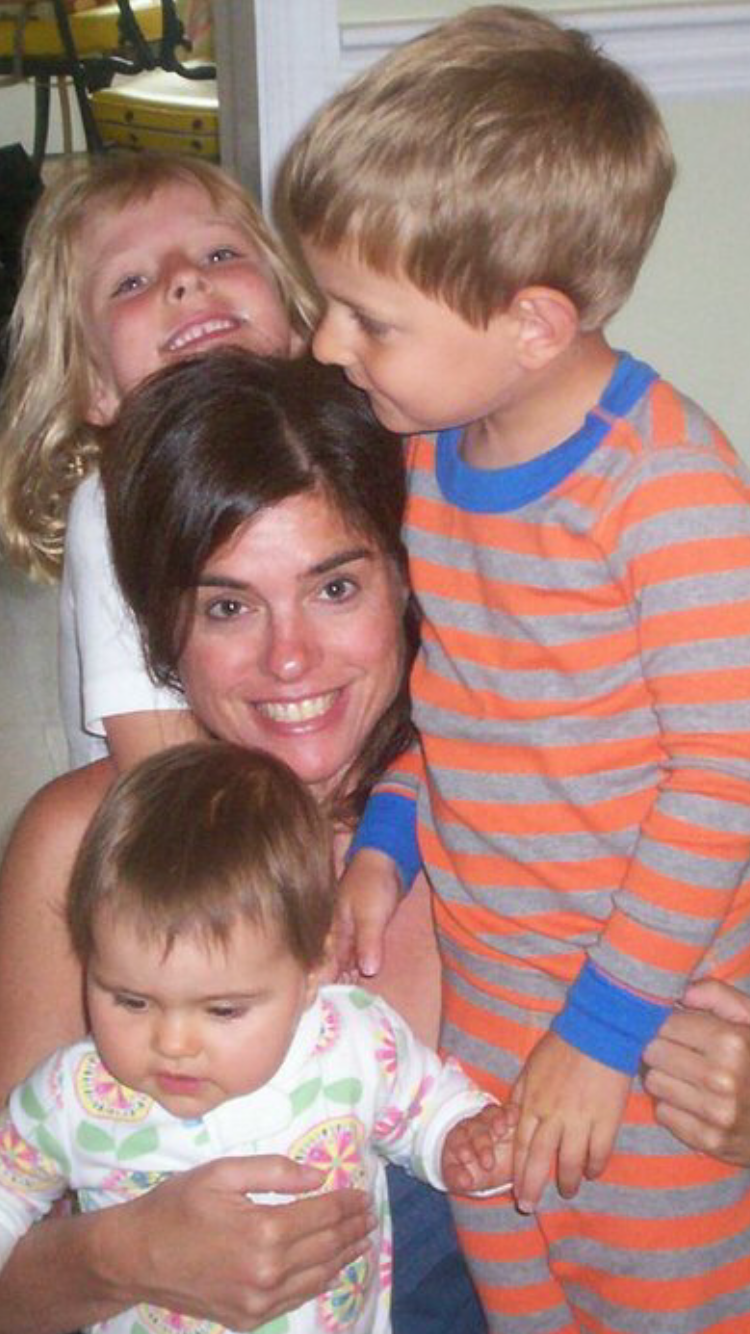
Susan Morrissey with her nieces and nephew. Missy Morrissey
In honor of their sister, the siblings started the Susan Morrissey Foundation, which awards an annual scholarship to an Academy Park student for excellence in English, a small way of keeping her memory and love of the written word alive.
In their quest for answers, the family has promised a $50,000 reward for information leading to an arrest.
“I just want us to have some answers,” Missy Morrissey said of the family’s ongoing grief. “I don’t think that any of us can really process, or go on, without knowing.”
Anyone with information about the case is encouraged to call detectives with the Delaware State Police at 302-365-8441 or email daniel.grassi@delaware.gov.
Students in the Pennsylvania State System of Higher Education will face a 4.3% tuition hike — the largest percentage increase in a decade — if the system does not get a boost in state funding.
PASSHE’s board of governors voted unanimously Thursday on the plan, which would enact the tuition increase if the system does not receive a 5%, or $31 million, increase in its state appropriation, which currently stands at $625 million. Gov. Shapiro has proposed flat funding for the system, and budget negotiations are continuing.
Tuition would rise to $8,338 annually, up $344 from $7,994.
“We’re all disappointed to … have to make this motion,” board chair Cynthia Shapira said. “We hope we do get the increase.”
The 10 universities in the system are Cheyney, West Chester, Commonwealth, East Stroudsburg, Indiana, Kutztown, Lock Haven, Millersville, Penn West, and Shippensburg. Collectively, they enrolled 83,005 students last academic year, when the system experienced its first enrollment increase in 15 years. About 90% of students are Pennsylvania residents.
The vote to increase tuition came one day after Temple University approved a budget thatincreased tuition an average of 3.4% for next year.
Rutgers University also on Thursday voted to increase tuition 3% for in-state and out-of-state students, which the school touted as its lowest increase in four years. Tuition for a typical in-state, full-time arts and sciences undergraduate will increase on average $448 for the year, rising from $14,933 to $15,381, the school said. Meals and housing on average will rise 4%, from $15,332 to $15,945.
Earlier this year, the University of Pennsylvaniaincreased its total costs by 3.8% for 2026-27. Pennsylvania State University, which approves tuition increases a year in advance, hiked tuition 2% for in-state students at University Park for 2026-27 and froze it for those attending Commonwealth campuses.
The resolution approved by the PASSHE board calls for the increase to be rolled back “if sufficient funding in state appropriation is received.”
System chancellor Christopher Fiorentino said the tuition increase would cover the $31 million gap if the system does not get the increase. The board of governors took the same action last year and did not roll back a 3.6% tuition hike because the state held its funding flat.
“We’re still really the most affordable four-year option that’s out there,” Fiorentino said in an interview before the meeting, comparing PASSHE schools to state-related universities like Temple and Penn State where tuition is more than twice that amount.
Until 2025, the system had kept tuition at the same rate for seven years; if it had enacted inflationary increases, tuition would be $1,800 higher now, Fiorentino said. Preceding the freeze, tuition hikes were 2.5% in 2016-17, 3.5% in 2017-18, and 3% in 2018-19.
Fiorentino said he continues to make the system’s case to legislators for more funding.
“Our graduates earn 65% more over their careers than people without college degrees, which is about a million dollars in lifetime earnings,” he said. “Ninety percent of our students are from Pennsylvania, and 80% of them take their first job in Pennsylvania after they graduate. Investing in the PASSHE system … is truly an investment in the workforce of the Commonwealth of Pennsylvania.”
System to launch new ‘last dollar’ scholarships
The system also announced that beginning in fall 2027, it would provide “last dollar” scholarships to all Pennsylvania students who receive federal Pell and state Pennsylvania Higher Education Assistance Agency grants. For many students from the lowest-income families, the grants cover full tuition, but some families in the middle range who receive smaller amounts of aid are still on the hook for part of the cost, the chancellor said.
“They’re the ones that tend to get caught in a bind, and they’re the ones that we’ve been worried about,” he said. “We’re going to cover the balance of their tuition” and make sure they are not affected by future tuition increases.
Fiorentino said he hopes that donors will want to contribute to the effort so the level of aid can be expanded.
The new scholarship program, called the PASSHE Pledge, will not cover room and board or fees.
He did not have an estimate of how many students would qualify, but said system officials have been worried about losing them. And that would add to the enrollment decline at a time when the system, like other colleges, already is challenged by a shrinking pool of available high school students.
“We’re hoping this is going to increase our enrollment numbers,” Fiorentino said.
It is too early to predict fall enrollment, he said, but some of the system’s 10 universities are doing better with deposits than last year, some the same, and some a little worse.
“We’re cautiously optimistic that we’re going to be stable,” he said.
The system is partnering with community colleges to streamline the transfer process and concentrating on bringing students with some college credits and no degree back into the system, he said.
“We will continue to work hard to maintain and grow our enrollments,” he said.