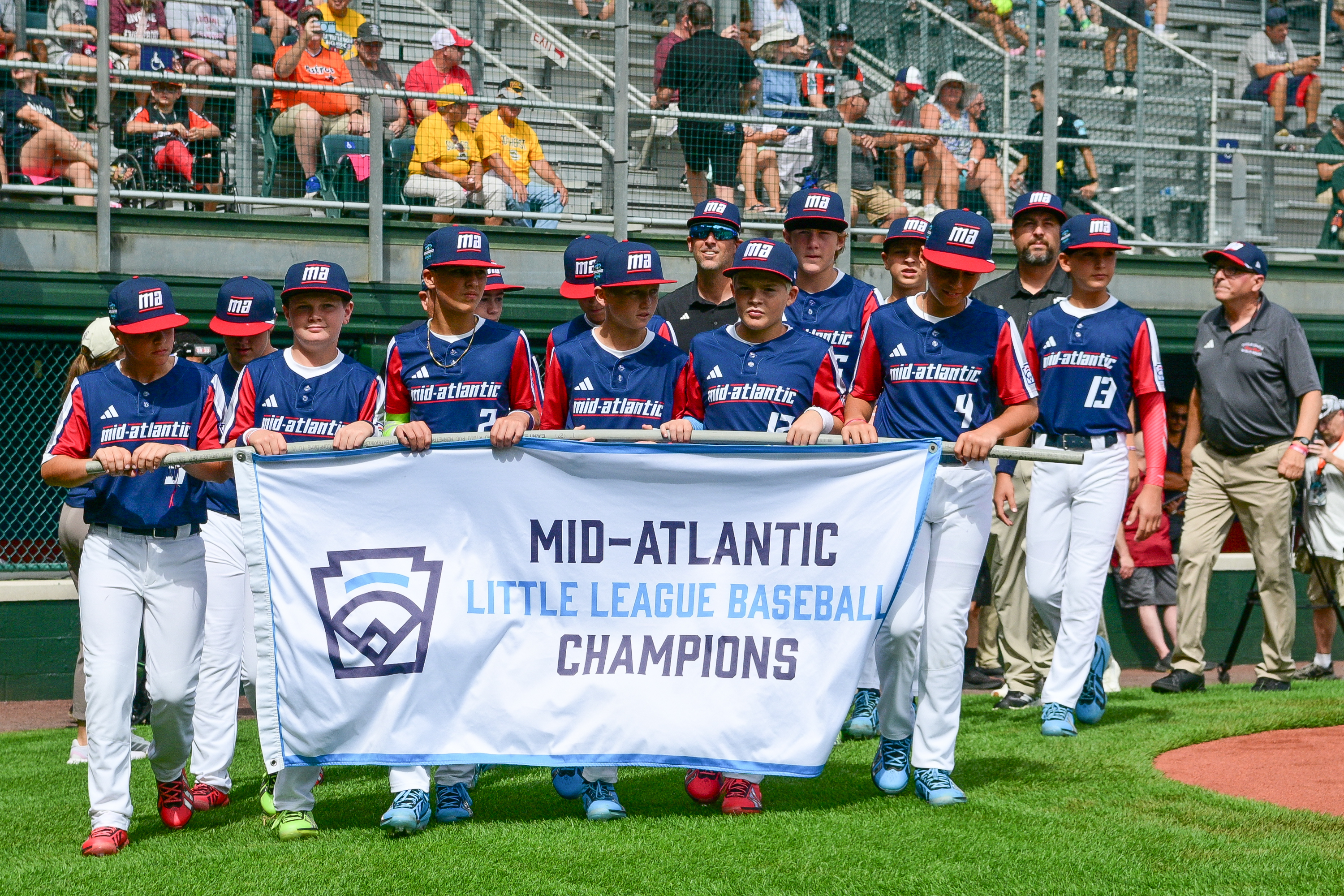
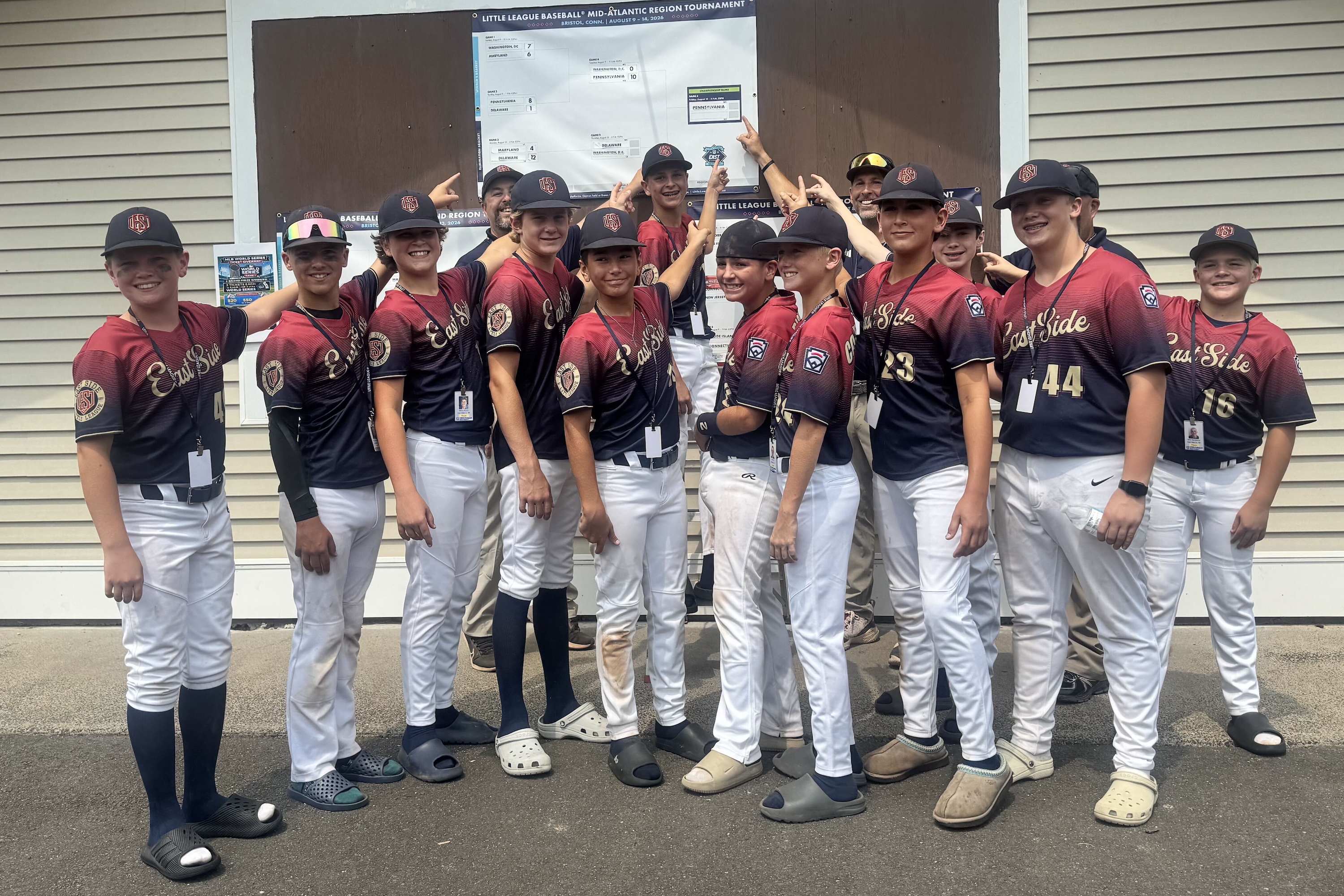
East Side Little League, a 12-and-under baseball team from West Chester, saw its run in Williamsport, Pa., end in a heartbreaker.
On Monday, East Side fell 6-5 to Phenix City Youth Baseball LL and was eliminated from the Little League World Series. Powered by its stellar hitting, East Side came out to an early 5-0 lead. However, a big third inning from Phenix City led the Alabama team’s comeback.
Trailing 5-0 with two outs in the third, Phenix City left fielder Cooper Champion stepped up to the plate with the bases loaded and hit a two-run single to right field. Phenix City added two runs before the inning was capped off by an RBI single from pitcher Kinley Rasmus that tied the score.
Rasmus is just the 25th girl to appear in a Little League World Series game.
The game stayed tied at 5-5 through the regulation six innings until Phenix City catcher Brooks Cameron’s single scored Urijah Berklite with the winning run in the bottom of the seventh.
For East Side, Cole Warner scored a run in the first inning before hitting a two-run homer to center field in the third. After starting the game at center field, Warner moved to the mound in the fourth inning. He allowed just one run while collecting six strikeouts to close out the game.
East Side outfielder Ryan Hennessey, the son of coach Bob Hennessey, scored two runs and had a two-run double before Phenix City stormed back.
The kids from East Side Little League in West Chester made the trip to Williamsport.Courtesy of Katherine Cowperthwait
The loss marks East Side’s second of the tournament in as many appearances. The team, which battled out of the loser’s bracket in the Pennsylvania state tournament, gained significant support from the Greater Philadelphia area after cruising through the Mid-Atlantic regionals. In West Chester, watch parties, filled with East Side alumni and fans, sprung up around the borough.
In Williamsport, the East Side players were able to interact and befriend peers from all over the world — even bunking with Japan’s 12-and-under team. They also had the chance to meet players from the Milwaukee Brewers and Atlanta Braves before the Little League World Series MLB Classic.
“It’s just a dream come true, to be honest,” Bob Hennessey previously told The Inquirer. “That’s every Little Leaguer’s dream. It was my dream growing up to see these boys get here and get to experience it. Nothing but amazing.”
Jessie Hilker and her father, Jeffrey, knew they had built some buzz and intrigue ahead of opening their West Chester fantasy bookshop, Leaves & Lore, this past weekend.
But nothing could have prepared them for the hours-long line that wrapped around the building and left their shelves “pretty much barren.”
“We’re a little, like, what just happened,” Jessie Hilker, 29, said.
Leaves & Lore officially opened its doors Saturday at 118 N. High St., and the response was immense and instantaneous. The bookshop, which is themed around fantasy novels, had a line for six hours. It sold 600 orders on the first day. Jeffrey Hilker, 64, estimates about 1,500 people walked through.
“I’m a pretty optimistic person, and I thought we would do well,” he said. “I just didn’t think it would be like this.”
Though spotlighting fantasy and “romantasy,” the bookshop also sells genres like romance, dark romance, mystery/thriller, horror, and fiction, plus books for kids and teens.
It also carries “bookish merch” like apparel, bookmarks, themed candles, stickers, and more. Customers can purchase a “book bouquet” — a book swaddled with flowers — or book the space for events (think birthdays or girls’ nights) and photography sessions (like engagement shots or bridal portraits).
A sweet treat or freshly brewed coffee and tea are also on offer.
By Saturday night, the shelves were nearly empty, Jessie Hilker said. On Sunday, she and her father had planned to open during normal hours, from 10 to 4 p.m., but had to close early because they had run so low on stock.
“It’s definitely a passion project,” Jessie Hilker said. “I wanted to open a bookstore because I enjoy reading. So to see so many other people enjoy it, as much as I do, makes it very special.”
Jessie Hilker is a lifelong reader. If she was punished for something as a child, she would get her books taken away, she said. Her dad had a hard time giving her enough books to read. During college, she fell out of the habit for a bit, but the fantasy genre sparked the love within her again.
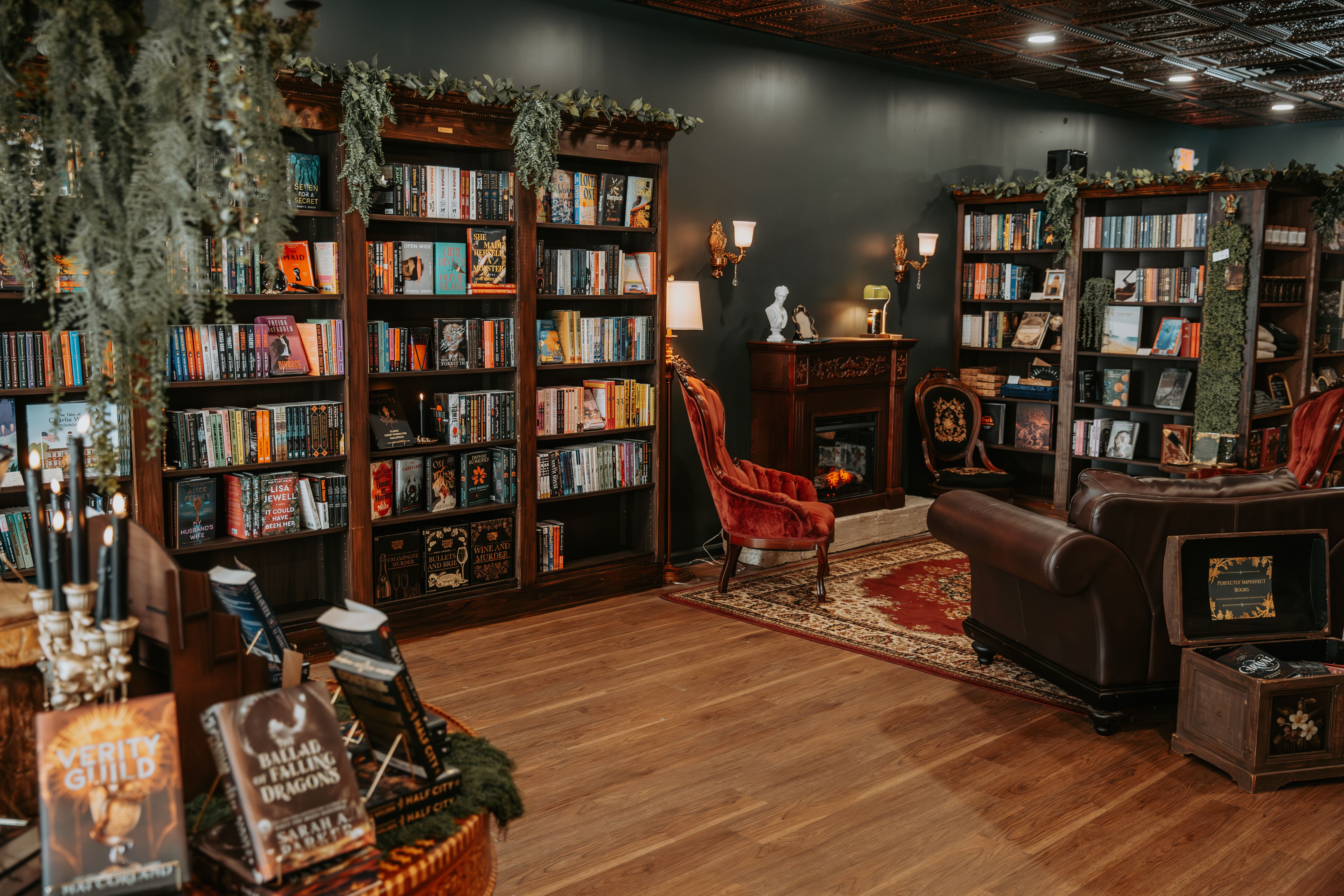
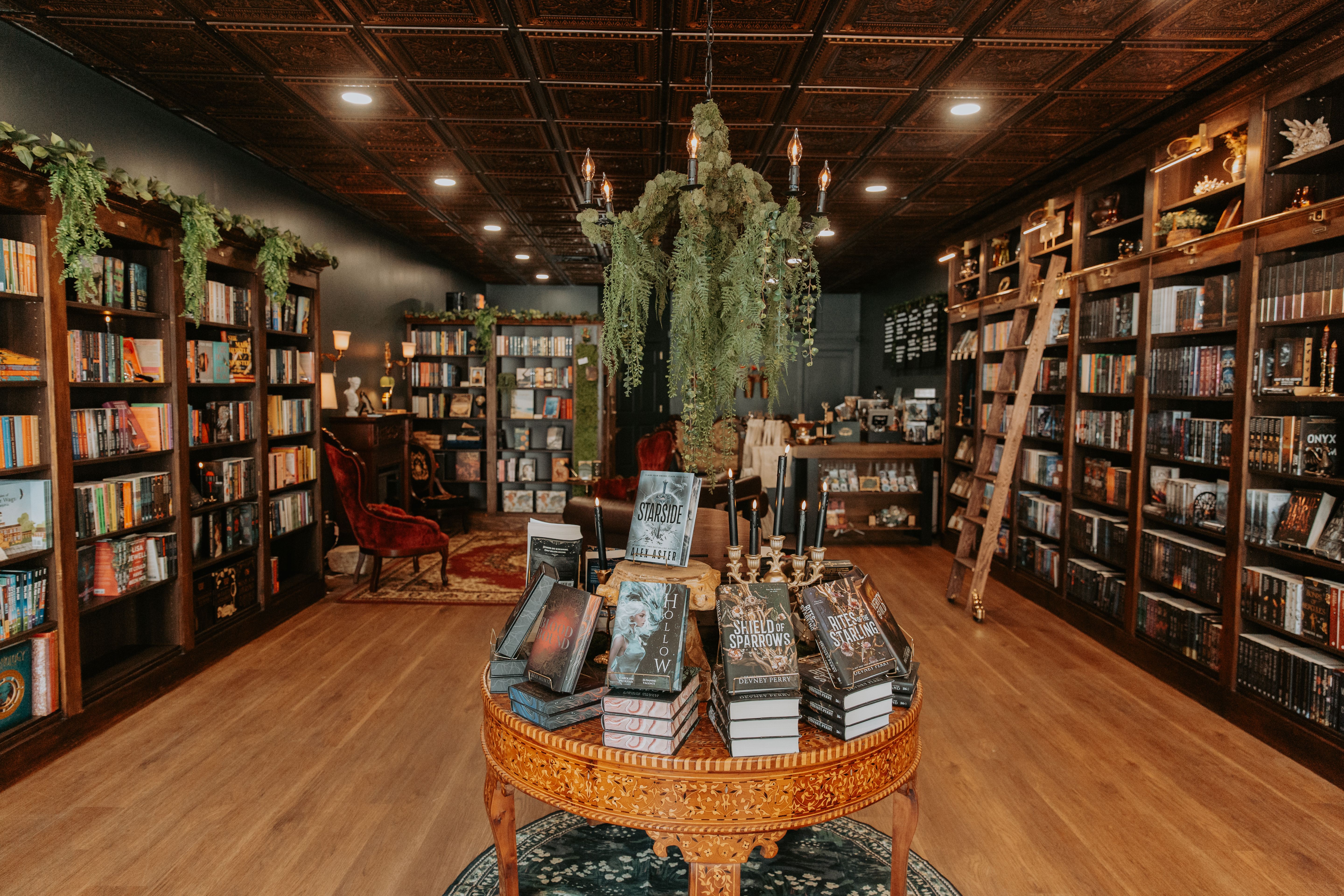
Leaves & Lore opened at 118 N. High St. in West Chester with enthusiastic success on Aug. 22. Lines wrapped around the building for hours.Photo courtesy of Robin Dayley
She is not alone. “Romantasy,” a blend of romance and fantasy, has buoyed the publishing industry in recent years, selling millions of copies and generating hundreds of millions of dollars. You’ll see those novels, like A Court of Thorns and Roses or Fourth Wing and plenty more, on Leaves & Lore’s shelves. Traditional fantasy, alongside romance and dark romance, has also seen staggering success.
Fantasy is not exactly Jeffrey Hilker’s genre, but he and his daughter always wanted to open a business together. When it became clear that business would be a bookstore, he was down to see her vision through. They went to Europe, traveling across Scotland and the U.K. to peruse bookshops that they wanted to emulate.
For about two years, they kept an eye on available spaces in West Chester. They knew that was where they wanted to be since they both live in the borough, and it felt like the right spot for such a shop.
Leaves & Lore is fantasy-focused, and offers bookish apparel and merch, along with “book bouquets” and freshly brewed coffee.Photo courtesy of Robin Dayley
Jessie Hilker wanted Leaves & Lore to feel like stepping inside a fantasy novel, with the space “Renaissance-inspired, very medieval.” She pictured bookcases that stretch floor to ceiling and a moving ladder; her father was “just trying to make it happen,” he said.
They built up a following on social media. A peephole let passersby take a peek as the Hilkers brought Jessie’s vision to life, creating some in-person interest, they said.
Still, their opening was unbelievable, Jessie Hilker said.
But they plan to keep the momentum going. They have events scheduled for some forthcoming book releases in the fall, and an interest to partner with local authors on signings.
Jessie Hilker said she was “ordering like crazy” to replenish the store’s stock, though there was enough supply left to fill the shelves to reopen Tuesday.
“I wanted to just be a place where people feel like they can come and just escape for a little bit. Whether they come to study, whether they come to pick up a book … whether that’s picking up just their coffee for the day, I hope it’s just a place that many people feel like they are accepted and welcomed,” she said.
This suburban content is produced with support from the Leslie Miller and Richard Worley Foundation and The Lenfest Institute for Journalism. Editorial content is created independently of the project donors. Gifts to support The Inquirer’s high-impact journalism can be made at inquirer.com/donate. A list of Lenfest Institute donors can be found at lenfestinstitute.org/supporters.
Though off to a disappointing start after losing their opening game Friday, nothing could dampen the fun for West Chester’s East Side Little League team Sunday as they hung out with the pros alongside their teammates during the Little League World Series MLB Classic.
Players from the Milwaukee Brewers and the Atlanta Braves came to Williamsport before their specialty game Sunday evening to sign balls, give high-fives and even play ping pong with the 12-and-under players from around the world.
“I got to play ping pong against Jacob Misiorowski and I beat him,” said Dillon DiGiulio, a first baseman and pitcher for East Side. “I was a little nervous. I was shaking.”
A highlight for many young players during the 12-day Little League World Series is the MLB Little League Classic. Started in 2017, the event brings two MLB teams to Williamsport to play a friendly game and celebrate the youth that fuel excitement in baseball.
East Side players were divided on who would win that night’s game, some cheering for the Brewers and some for the Braves, but they were all thrilled for the chance to talk with players they look up to.
East Side will play a team from Alabama in their next World Series matchup.Ralph Wilson / For The Inquirer
“My favorite part today has been getting all the signatures from the pros,” said Adam Zenis, a left fielder on the team. “We’re all really excited for the rest of the week, too.”
East Side will get its shot at redemption Monday, playing in the elimination bracket against the Southeast Region team from Phenix City, Ala. Ahead of the game, the 12-year-olds are feeling excited and confident.
For many of the players, though, the experience of playing in the World Series is the best part of it all, win or lose.
“My favorite part is just getting to hang out with all the different teams,” said Colton DeGrazio, a catcher on the team. “We’ve created so many bonds with teams and people around the world that we never even knew like Japan, Korea, and I just feel like that’s probably the coolest part.”
A loss on Monday would eliminate East Side from the tournament.Ralph Wilson / For The Inquirer
Though many of the boys root for different teams back home, from the Mets to the Phillies, it’s clear that every kid playing at the Little League World Series loves baseball to the bone.
“It’s just a dream come true, to be honest,” said East Side coach Bob Hennessey. “That’s every Little Leaguer’s dream. It was my dream growing up to see these boys get here and get to experience it. Nothing but amazing. I heard Colton say it’s an amazing experience to meet all these players and teams from around the world. So we’re lucky. We’re very lucky.”
While East Side Little League, a 12-and-under baseball team from West Chester, competed in South Williamsport, Pa., a crowd cheered them on at home.
On Friday, East Side lost, 3-1, to Bayonne Central Little League — a team representing New Jersey and the Metro Region — in the West Chester squad’s first matchup of the Little League World Series. Despite outhitting Bayonne Central, 6-5, East Side could not bring in its runners.
The team’s lone run came at the top of the fifth when Jack Cassidy’s hit brought Dillon DiGiulio home.
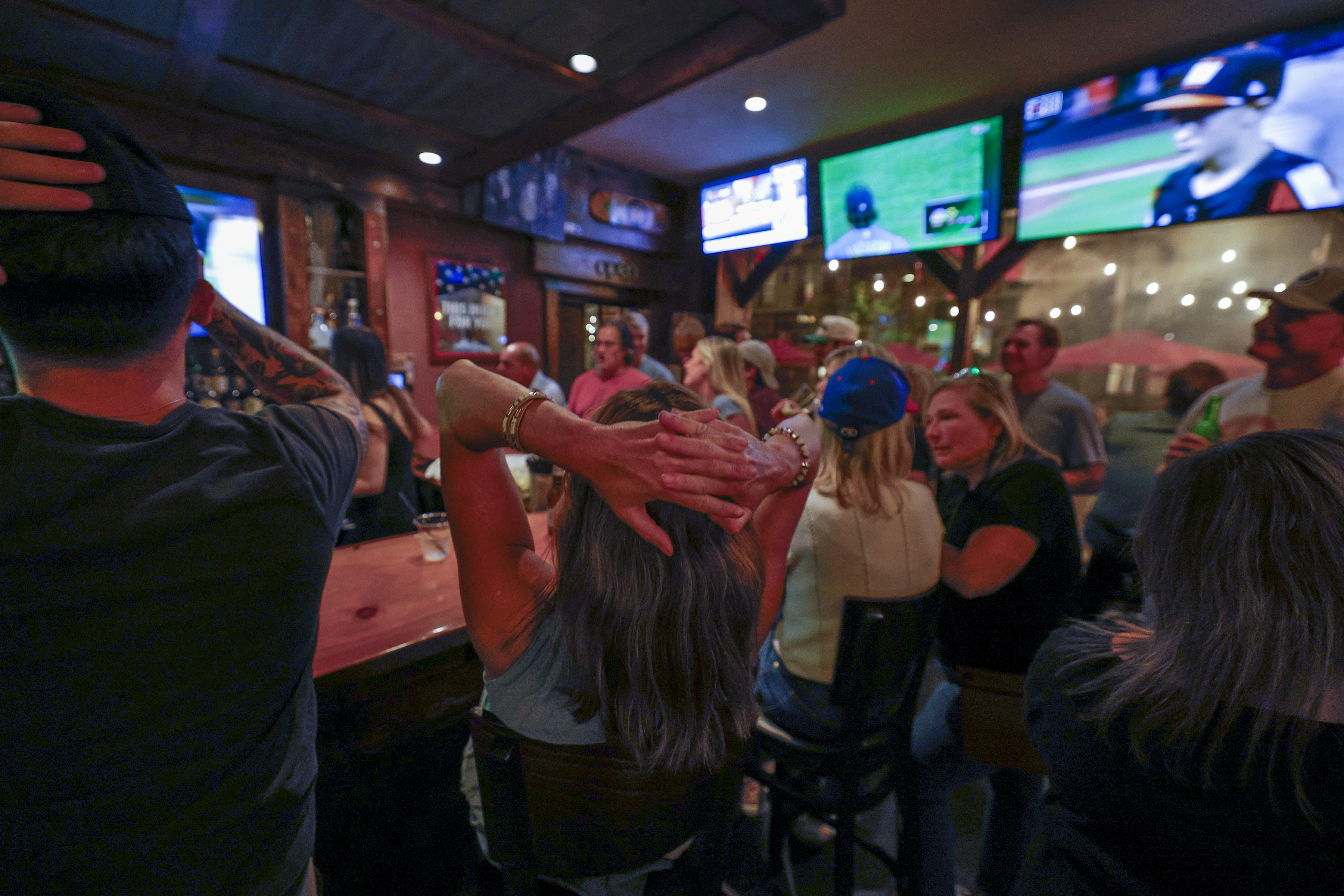
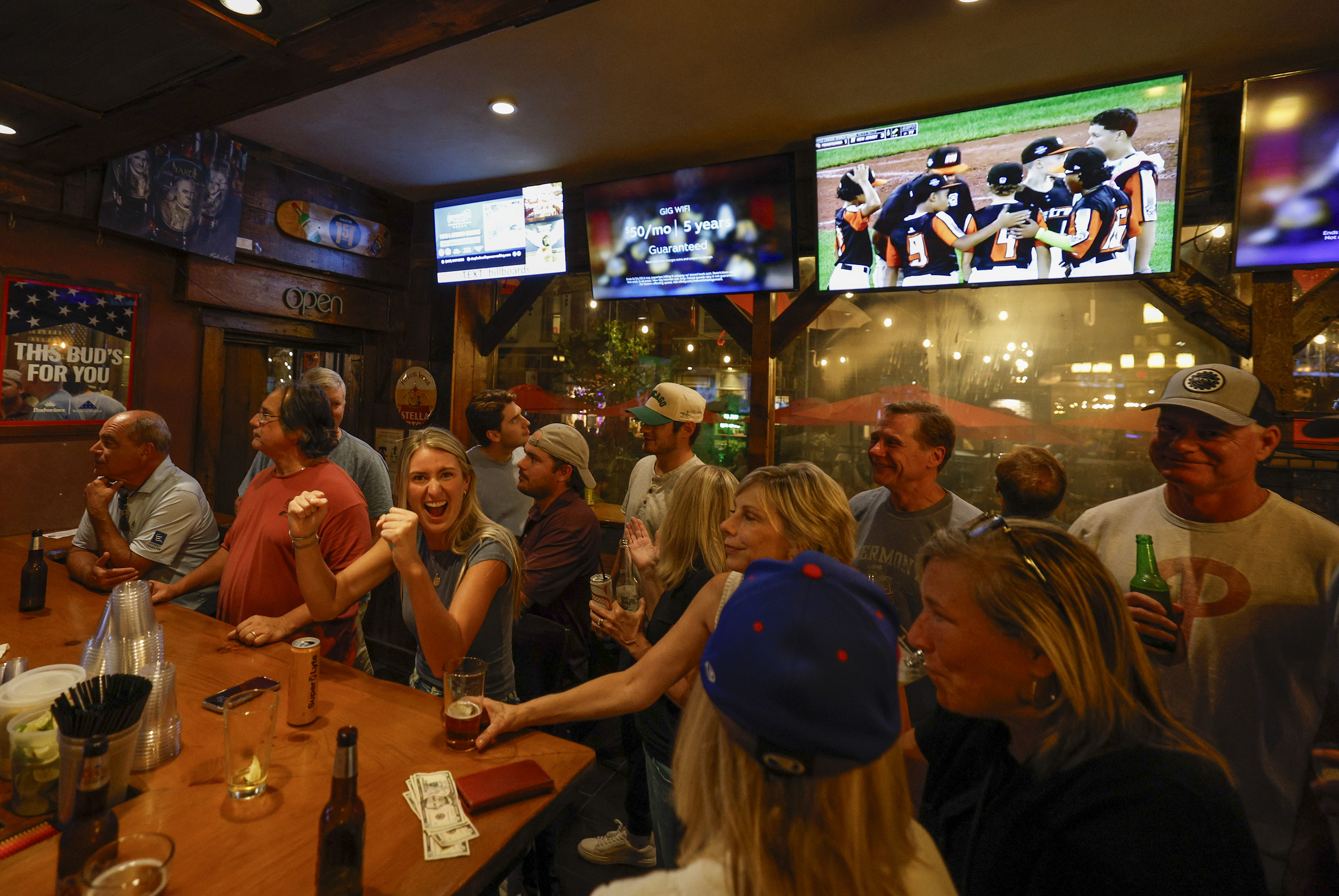
While East Side never led on Friday, the team’s faithful kept hope alive inside of Saloon 151, a bar in downtown West Chester. Fans arrived to the bar early and stayed until the final out.
“The West Chester community is awesome,” said Mike Calio, who has two sons who previously played for East Side. “The amount of support that comes out for them is insane. This is awesome. The parents love it. The grandparents love it. The kids love it.”
Added Carrie Iannelli: “It’s awesome that they’re supporting the boys. You’re seeing it all over West Chester, not just here tonight, but all over — businesses, people. It’s just really supporting the team and helping them get what they need to be supported up there. A lot of buses went up, so I think that’s really cool.”
Mid-Atlantic fans cheer on their team on Friday against Metro at Lamade Stadium in South Williamsport, Pa. Ralph Wilson / For The Inquirer
It’s a double-elimination tournament, so East Side’s championship chances are not over. The team will play in an elimination game on Monday (7 p.m., ESPN).
It won’t be the first time this year East Side needed to claw out of a loser’s bracket. After losing in the Pennsylvania state tournament, the team rattled off five consecutive wins to make it to the Mid-Atlantic regionals.
“They had the mentality of, ‘Hey, we’re not ready to go home yet,’” East Side coach Bob Hennessey previously told The Inquirer. “I think it was just like, ‘Stay focused, go out there, and continue to play your game.’”
Mid-Atlantic’s Ryan Donnelly fields a ball of the bat of Metro’s Chase Klimkowski on Friday.Ralph Wilson / For The Inquirer
‘It’s a brotherhood’
Saloon 151 was packed with former and current East Side players.
Ryan Tench, a West Chester native who played for East Side growing up, came to the bar to cheer on his former team with a group of his old Little League teammates. The group managed to stick together through high school and college.
“The environment is electric,” Tench said. “It brings back a lot of memories. … To be able to share memories when I’ve played, and now to share memories with people that I’m with now and watching the same kids, it’s awesome. I love it.
“It’s a brotherhood. Honestly, these are lifelong friends that you will have for the rest of your life, and it’s amazing. I’m happy for these kids. I hope they do well, and we’re all rooting them on.”
On the other side of the bar, Peter Castagna sat at a table with his son, Eamon, who plays for East Side’s 10U team. In two years, Eamon Castagna will have a chance to make it to Williamsport himself. In the meantime, he is soaking in all the attention the program is getting.
The East Side Little League watch party at Saloon 151 on Friday near featured former and current East Side players.Steven M. Falk / For The Inquirer
“It means that people support East Side, and people are ready to cheer for East Side, and people are just happy that they’re at the Little League World Series,” Eamon Castagna said. “It feels good because you know that East Side has good players. And it lets East Side be known to the world, really.”
Peter Castagna is hoping that East Side’s run, which has captured the Philadelphia area’s attention, will teach his son a few lessons.
“Not every kid has to make the Little League World Series in order to be successful,” Peter Castagna said. “But I think it just shows if you work hard, and whatever you’re working hard at, you will be successful.”
Mid-Atlantic’s Mike Nolan reacts after hitting a double on Friday.Ralph Wilson / For The Inquirer
West Chester will limit where future smoke and vape shops can open within the borough, after an innocuous corner store grandfathered into a residential neighborhood became a glowing, neon vape shop and brought pushback.
Council voted unanimously Wednesday to amend its zoning ordinance to allow smoke and vape shops by conditional use only in the town center and commercial services district. The goal is to considerably limit where the shops can appear, after a resident came to council with concerns about the sale of a small corner store to a new owner who put in a vape shop. Its bright lights flooded the resident’s home, and it was right by school bus stops.
The ordinance also defines smoke and tobacco shops as a retail store that primarily sells tobacco, CBD, THC, kratom, and vaping products. If at least 20% of the store’s display area is dedicated to the sale of smoking products, it’s considered a smoke shop.
The measure also outlined parameters including limits on how close the shops can be to one another and requiring them to be more than 500 feet away from schools, public recreation facilities, day cares, school bus stops, libraries, and religious institutions. The shops can’t be permitted on a lot or within a building that is also residential. The shops can’t sell food.
It also places restrictions on age, prohibiting those under the age of 18 from entering the shop without a parent or guardian, and requiring the business to verify ages. Anyone under 18 cannot be employed to work within the store.
“It helps us kind of separate incompatible uses, preserve the quality of life, health, safety, and welfare of our residents, particularly the vulnerable populations,” said council member Lisa Kearns. “It also helps us make certain our business district remains diverse, and vape shops don’t take over our commercial areas or neighborhoods.”
West Chester’s town center has at least five smoke and vape shops and the updated zoning won’t affect any of the existing businesses. Instead, the ordinance will keep others from coming into the roughly handful of other retail locations that are in residential areas, officials said.
“We in the borough are not trying to stifle business as much as we’re trying to create a balance so that families and residents can have the quality of life that they’re looking for,” said Nicole Scimone, council president.
A suggestion from the borough’s planning commission to carve cigar shops out as a separate entity was ultimately not included, as the amendment would require months before it came back to council for approval. At Wednesday’s meeting, Kearns urged the borough to adopt the amendment because she would “hate to see another vape shop open up where we don’t want it to be between now and then.”
Meanwhile, an ordinance seeking to regulate the sale of kratom — an herbal substance that can have effects similar to opioids and stimulants, according to the National Institutes of Health — was sent back to committee for further refinement. Kratom often appears in vape and smoke shops.
The ordinance would have prohibited the sale and public use of kratom and 7-OH, the synthetic of kratom, in the borough. It wouldn’t have prohibited the use or possession.
Supporters of the “leaf” version of the substance — which often appears as a supplement or a tea — opposed West Chester’s proposed ordinance and pressed council to tweak the language.
Some council members felt they were overstepping in passing a measure.
“I think this is a big lane violation, quite frankly. We are not the FDA,” said council member Brian Travis. “I asked point blank the chief of police if this even was on the radar. It’s not. Nothing’s come up. It’s not a problem right now locally, but we’re making it a problem.”
Council member Bernie Flynn said that, after talking with two soon-to-be West Chester University students, neither had heard of it. It made him wonder how popular it really was.
“I don’t think we should be in the business of telling adults what they can or cannot do,” he said.
Several bills in the state legislature have been introduced regarding the sale and use of kratom. In July, the U.S. Drug Enforcement Administration announced it planned to temporarily place the chemical found in the synthetic kratom, 7-OH, in Schedule I of the Controlled Substances Act, alongside drugs like heroin and LSD. That won’t apply to the plant itself.
This suburban content is produced with support from the Leslie Miller and Richard Worley Foundation and The Lenfest Institute for Journalism. Editorial content is created independently of the project donors. Gifts to support The Inquirer’s high-impact journalism can be made at inquirer.com/donate. A list of Lenfest Institute donors can be found at lenfestinstitute.org/supporters.
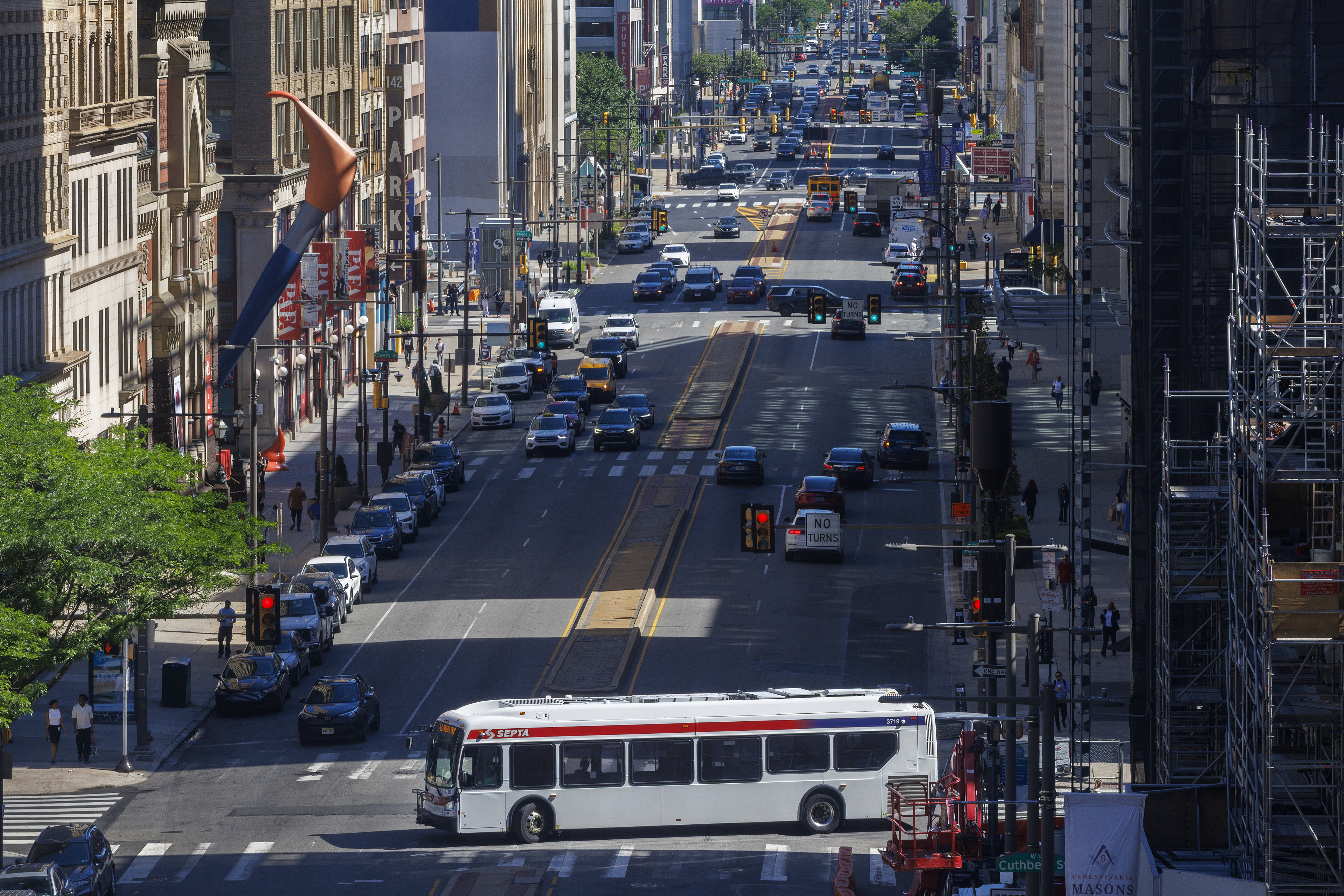
The first phase of SEPTA’s bus network overhaul begins Aug. 23, and Brandon Miller is mobilizing hundreds of employees for a final push to meet face-to-face with riders in the days leading up to the changes and during the first week after they take effect.
“It’s a blitz,” said Miller, manager of planning programs at SEPTA, describing discussions at “pop-ups” as an effective way to help people navigate the new network.
Unlike some transit agencies, SEPTA has not done a comprehensive redesign of its bus network in its 58-year history. The agency has publicly pushed to do so since 2021, but change was delayed by opposition, political wrangling, and, later, a two-year fiscal crisis.
Originally the “Bus Revolution” was supposed to happen all at once, but SEPTA ultimately decided to phase in changes to routes.
“I think there’s more willingness to accept the fact that … we need to make the bus network a little bit more efficient,” Nemiroff said. “We need to make the system more attractive for people.”
Some routes with low ridership or that duplicate nearby service will be eliminated. Others will be extended or run more frequently, and two new routes will be added.
What routes will change?
New and expanded routes: Route 72, a new crosstown bus running along Cheltenham Avenue, and the new Route 76 bus from Columbus Commons to Rising Sun and Olney. Route 45 will be extended to provide service to the Navy Yard, and Route 79 will be extended from South Philadelphia into University City.
Eliminated routes: 35, 47M, 62, 78, 80, 89, and 106.
Riders can call SEPTA customer service at 215-580-7800 or email specific questions to planning@septa.org.
I want to talk to someone in person.
Beginning Monday, street teams will conduct “pop-up” visits at key transit hubs at various times between 6 a.m. and 8 p.m.
Next week, visits will include South Broad Street and Snyder Avenue, Cedarbrook Plaza, Hunting Park Station for changes to Route 53, Spring Garden Station, and Willow Grove Mall.
Staff are also attending community events.
When will changes happen?
The majority of changes will take effect Sunday, Aug. 23, followed by the Route 105 extension and elimination of Route 106 on Monday, Aug. 24.
Phase 3 changes are planned to begin in June 2027.
Phase 4 changes are planned to begin in Fall 2027. Many details are still being worked out.
Why redesign the bus network?
SEPTA launched its bus redesign efforts in earnest after ridership declined 13% from 2013 to 2019, a drop attributed to slow speeds, reliability problems, and competition from ridesharing companies. And that was before the COVID-19 pandemic.
Bus ridership rebounded faster than it did on other transit services, but SEPTA’s thinking is that simplifying the network will make it easier to use, with more frequent service on fewer or shorter routes.
Will bus stops be changed?
Stops will disappear during the first phase on routes that are eliminated, but there will be no wholesale changes yet.
Having more stops per mile provides access to more people, but closely spaced stops can also slow buses and make them less reliable.
Early plans for Philadelphia’s bus network redesign aimed to “rebalance” stops by spacing them farther apart to improve speed. But the idea has been unpopular.
SEPTA may revisit the issue later.
More questions about the New Bus Network?
Email transportation reporter Thomas Fitzgerald at tfitzgerald@inquirer.com.
East Side Little League, a 12-and-under baseball team from West Chester, is headed to Williamsport, Pa.
On Friday, East Side defeated Wilmington’s Naamans Little League, 3-1, to punch its ticket to the Little League World Series. East Side was powered by pitcher Cole Warner, who allowed just one run on four hits and struck out eight in five innings.
“Feels really good, just representing Pennsylvania,” Warner said on the ESPN broadcast. “Little kids who play for East Side, we set the example. Hopefully, they can carry on.”
Warner set East Side up, but relief pitcher Ryan Donnelly made the game-clinching play.
In the final inning, with runners on first and second, Naamans second baseman Joey DeCaro hit a short roller toward third base. Donnelly slid to grab the ball, and his throw beat DeCaro to first for the game’s final out.
East Side went to celebrate, throwing their gloves and piling on top of each other, but a challenge delayed the party. Eventually, after an almost four-minute review, the call was confirmed. East Side was heading to the World Series, and the team got to celebrate for a second time.
“It felt really good waiting there,” Warner said. “We all knew he was out.”
East Side scored all three of its runs in the first inning. Center fielder Ryan Hennessey got his team started, launching a ball to center to bring in Donnelly and — following a Naamans error — Warner. East Side would score once more in the inning with third baseman Jack Cassidy hitting a single to bring Hennessey home.
Naamans scored its run in the second when utility player Taj Amobi doubled in left fielder Charles Puit.
East Side will look to become the first team from Pennsylvania since 1960 to win the Little League World Series, when Levittown American defeated Fort Worth, Texas, 5-0, in the championship game. However, a few area teams have reached the series in recent years: Glenmoore Eagle Little League (from Upper Uwchlan Township) last year, Council Rock Newtown Little League in 2024, and Media Little League in 2023.
Tori Bauver was sitting at home on July 11 when the sky outside of the Wyndon Apartments in Wynnewood began to darken. Bauver watched the clouds roll in, then the rain come, blowing “literally sideways” outside her window. She remembers leaning in to see the darkening landscape and noticing that rain had begun to penetrate her windows. Then the “outside went stark white” and water started pooling on her windowsills.
“I was like, ‘Oh, my God. This is gonna flood. This apartment’s gonna flood,’” she said.
The light fixture above Bauver’s bed filled with water, then poured over the edges. The ceilings began to leak, then one by one, they collapsed. The building’s roof ripped off, and Bauver had a clear, and unsettling, view of the sky from her living room.
Bauver, now a resident of West Chester, where she and her partner moved after breaking the lease on her Wynnewood apartment, had been living in the Wyndon Apartments for two years when the July microburst storm tore through Lower Merion, destroying her home and more than $5,000 of her and her partner’s belongings. She was one of dozens of suburbanresidents who emerged from the storm with damaged property and a devastated home.
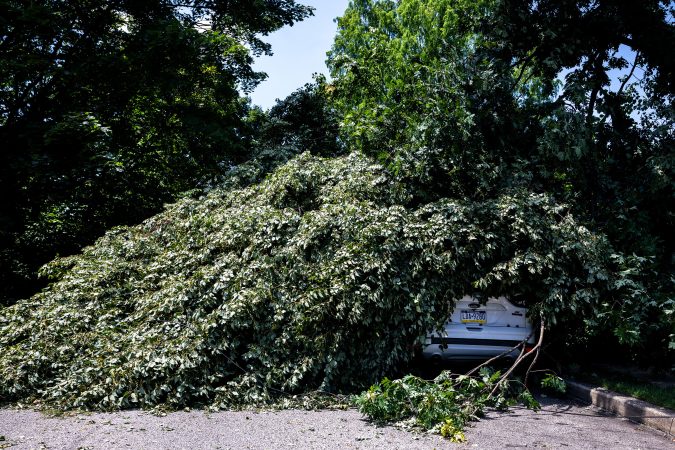
As the Philadelphia region sees hotter and more humid summers, flash flooding, extreme precipitation, and life-threateningstorms have become a more common feature of daily life.Weather eventsmarked by downed trees, dangerous flash floods, waterlogged roadways, and eroded bridges are, more and more,forcing suburban residents and cash-strapped local governments to pour millions into repair and resilience projects, all while large swathsof the region’s infrastructure are built to withstand weather patterns of a bygone era, one in which storms like July’s microbursthappened once in a decade, rather than multiple times a summer.
As the region’s weather patterns intensify, officials and climate experts say the municipal mosaic of Philadelphia’s suburbs faces unique challenges when it comes to planning for a future marked by climate change.
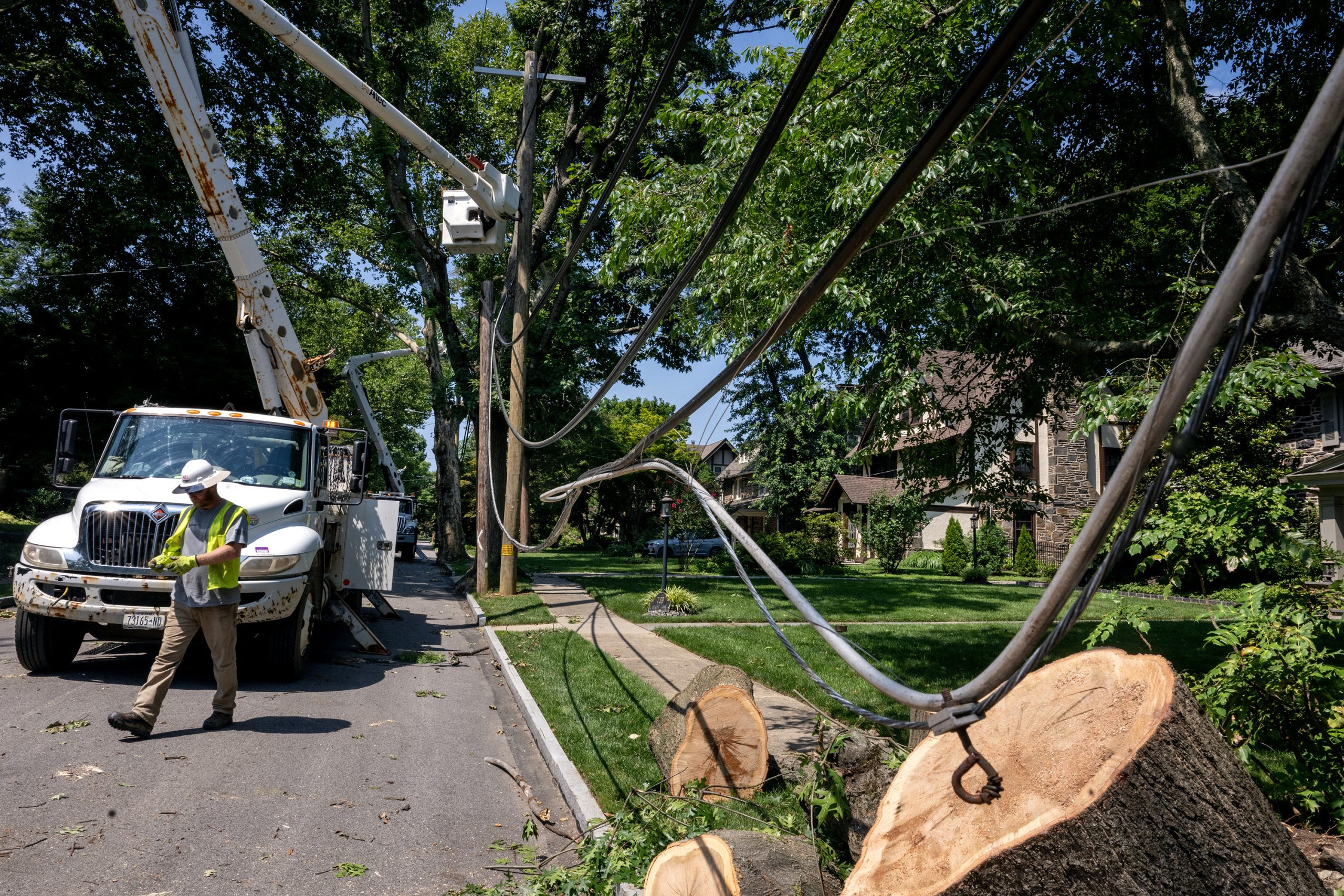
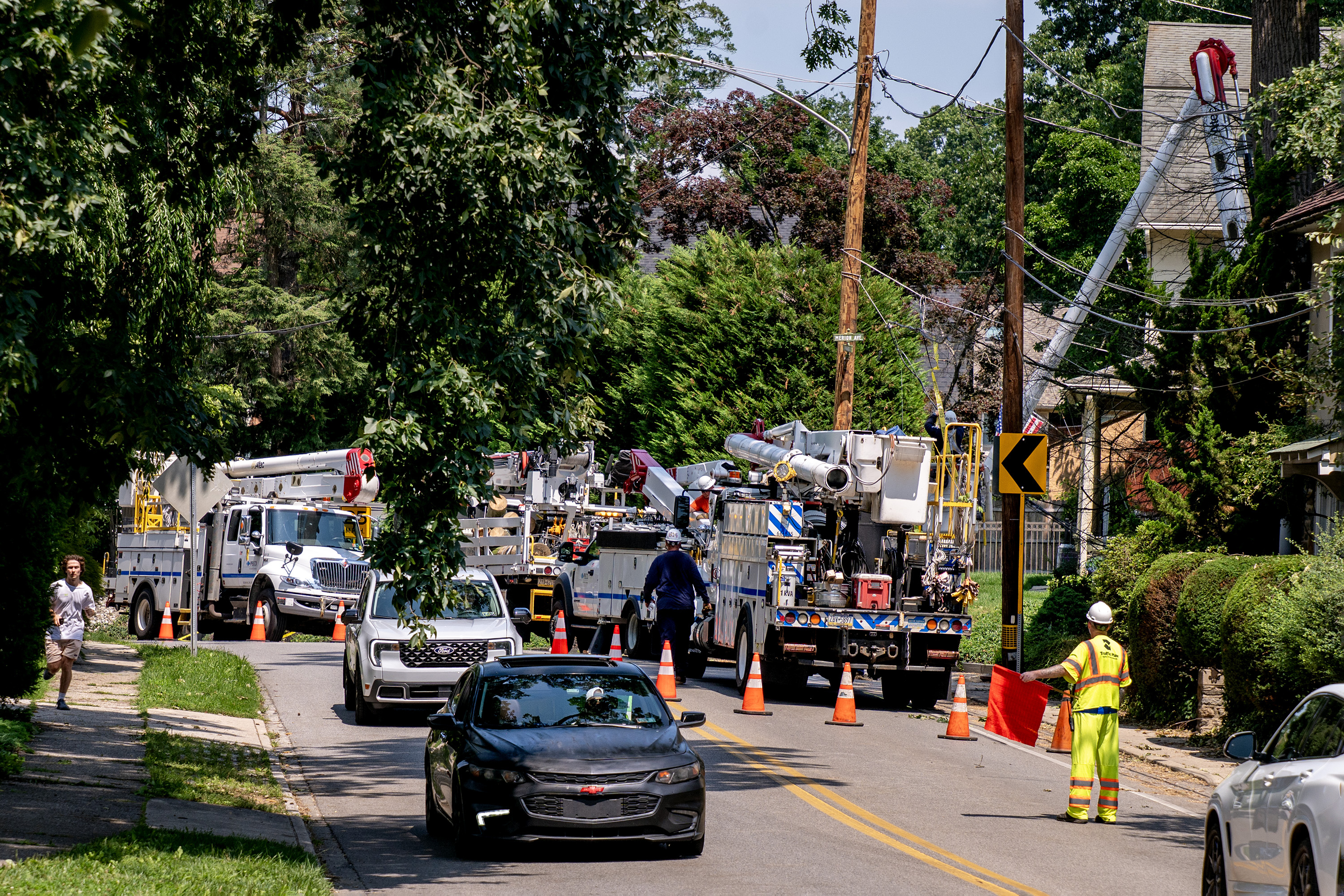
Utility workers restore power in Merion Station on July 13 after a microburst storm ripped through parts of Philadelphia and Montgomery County.Tom Gralish / Staff Photographer
The Philadelphia region’s changing weather
The average July temperature in Philadelphia has risen 4.4 degrees since 1940. In the 1900s, Philadelphia averaged four days per year with temperatures above 95 degrees, according to a 2024 EPA report. This summer, Philly has seen six days with high temperatures above 95 degrees, according to the National Weather Service. By the end of the 21st century, that number could climb to more than 50 days per year.
Hotter weather means more precipitation, and more frequent and intense rain events. For every 1.8 degrees the air temperature increases, the amount of water the atmosphere can hold increases by 7%.
“The infrastructure we have now is not always built to a standard to accommodate the extreme weather we’re seeing now,” said Chris Linn, manager of the Office of Resilience and Environment at the Delaware Valley Regional Planning Commission.
AsRay Courtney, a Lower Merion commissioner and chair of the township’s sustainability committee, said, “We get a 100-year storm every year.”
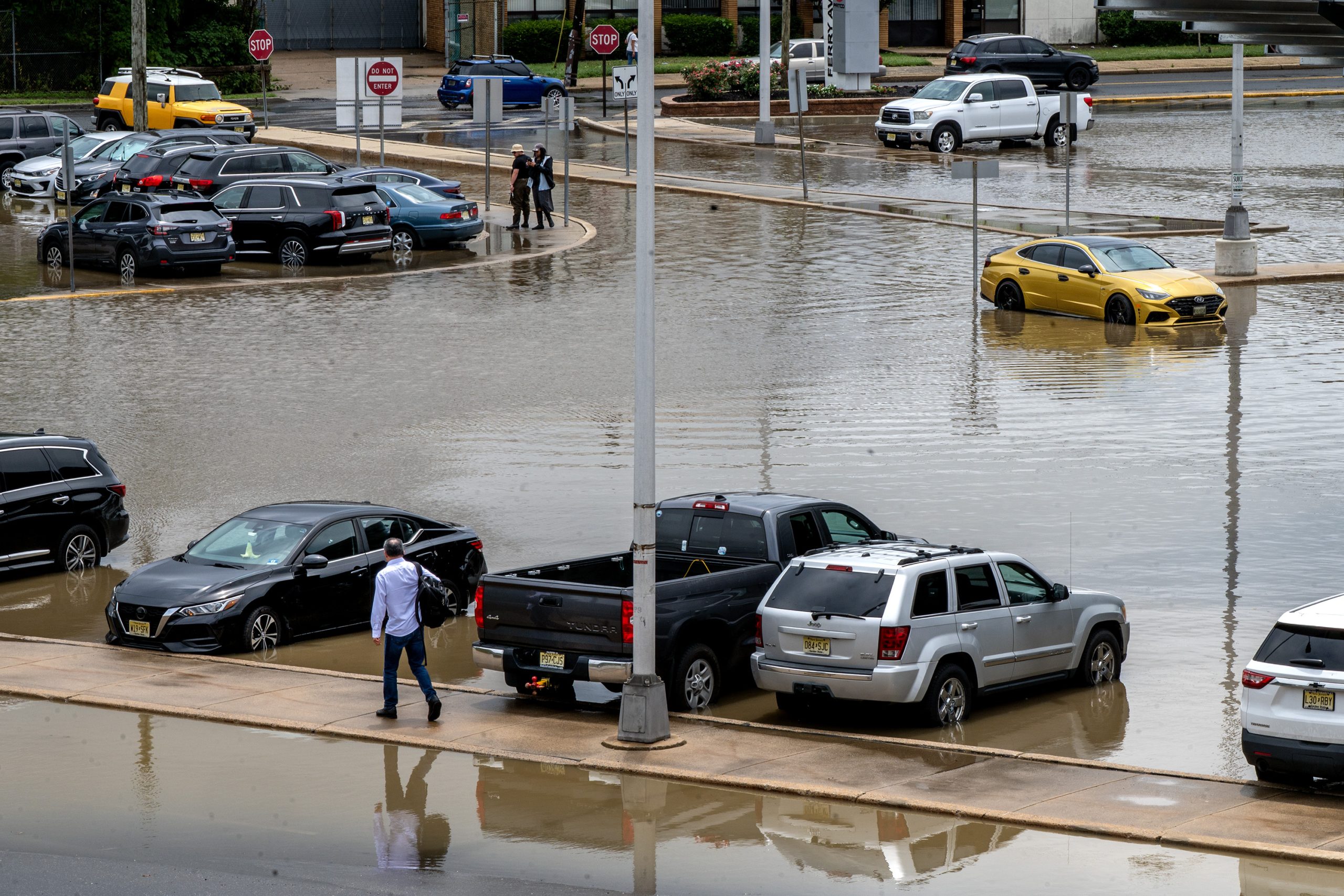
Cars in a flooded parking lot at the Ferry Avenue PATCO station in Camden on July 6. Philadelphia and its suburbs have been hit with numerous flash floods this summer, as an increasingly hot and humid atmosphere gives way to more extreme weather.Tom Gralish / Staff Photographer
Flooding as ‘the biggest and most common hazard’
The impacts of intense storms are multitudinous and cascading, and the topography of Philadelphia’s suburbs can make it particularly difficult to find effectivesolutions.
Linn said flooding is “the biggest and most common hazard that communities face,” and it presents the most “consistent and pervasive” issues for municipal leaders.
Intense precipitation and flash floods, which have been a constant this summer, can disrupt transit, turn roads into rivers, and endanger residents’ lives. High winds and saturated soil frequently bring down trees, damaging homes and cars and knocking out overhead power lines. Disruptions to power can be particularly dangerous when residents are left without fans or air-conditioning during hot summers.
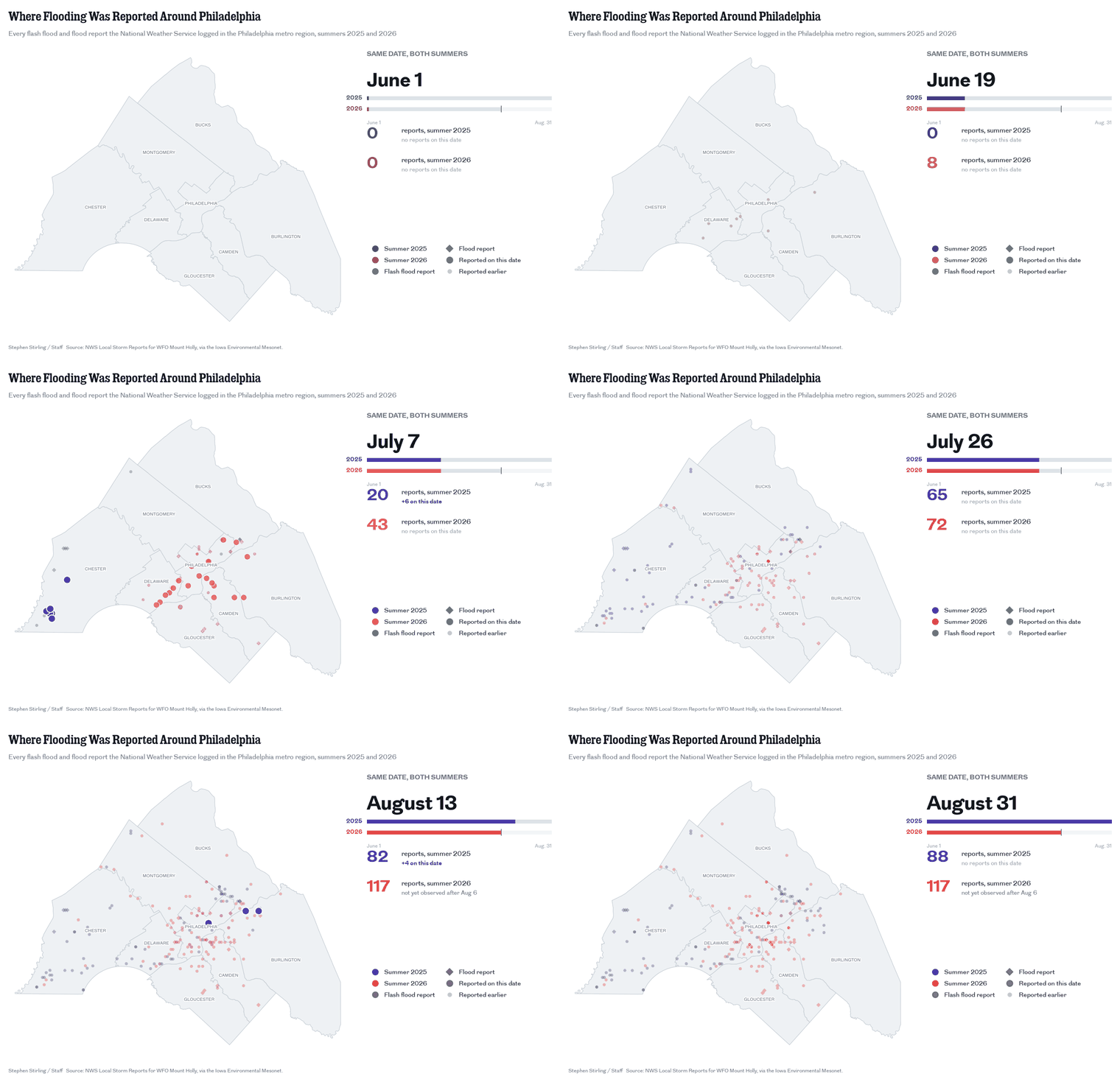
Flooding has been reported more than 200 times in the Philadelphia region over the last two summers.Stephen Stirling
“I see roads flooding consistently, trees coming down, power going out, and then our local government spending resources every time one of these storms happens. It’s overtime costs and tree costs, and then also all the private citizens having to spend costs cleaning up trees and other debris,” Courtney said.
“These unlikely, freak events are really the ones that break us,” said Matthijs Bouw, architect and professor at the University of Pennsylvania’s Stuart Weitzman School of Design.
A key tool for managing extreme weatheris stormwater systems, or the collection of drains, basins, ditches, and pipes that collect rainwater and snowmelt and move it from developed areas into local waterways. Stormwater systems are critical in moving water off impervious, or impenetrable, surfaces, like the parking lots, paved roads, and shopping centers often found in the suburbs.
The more developed a suburb is, the more runoff a storm will produce, increasing flooding risks, said Franco Montalto, professor of civil, architectural, and environmental engineering at Drexel University.
Yet many municipalities are contending with aging stormwater systems that require costly repairs. Lower Merion’s 2018 Comprehensive Stormwater Management Plan listed aging pipes, undersized infrastructure, operational costs, and increasing flooding as challenges for the township. Many of Philadelphia’s suburban communities are composed of buildings that predate a 1978 state law requiring counties and local governments to plan with stormwater management in mind.
Some communities are more vulnerable to climate impacts than others, with density, land cover, wealth, and the state of repair of existing infrastructure as factors. A 2021 climate change vulnerability analysis by Montgomery County found denser, water-proximate communities like Norristown and Pottstown to have some of the highest risk of increased stresses due to climate change. Greener, more rural parts of the county like New Hanover and Marlborough Townships presented lower risks.
The aftermath and clean up of flooding in Camden on July 6. Stormwater systems are a critical tool for local governments to manage flooding. Jessica Griffin / Staff Photographer
How can communities mitigate impacts?
Experts described a range of interventions for managing climate impacts, from constructing rain gardens to rewriting zoning ordinances.
Maintaining a healthy tree canopy and building rain gardens can help rainwater permeate into the ground. Larger infrastructure efforts like stream restoration projects and floodplain maintenance can help stabilize the built environment.
However, Linn said, these interventions “don’t necessarily address more severe or catastrophic flooding in terms of mitigating those impacts.”
Long-term climate resilience, experts said, relies on making land-use and zoning decisions that preserve floodplains and natural drainage patterns and ensure stormwater systems can manage our new, rainy reality.
Montalto is interested communities that have become “safe to flood,” or that have created parks, parking lots, road medians, and other open spaces that trap water during floods, then properly drain it, keeping it away from buildings and roads. A basketball court built below a park, for example, can fill with water during a storm and slowly drain, mitigating runoff (one was recently installed in New York City). Copenhagen’s Cloudburst Management Plan, adopted in 2012 after a major storm, is a blueprint of sorts in Montalto’s mind.
However, bringing “safe to flood” infrastructure to Philly’s suburbs may be a far-out goal.
In the vast suburbs, the collection of boroughs, townships, and county lines makes unified action difficult, and forces officials to think along municipal, not watershed, lines. On the Main Line alone, rainfall and snowmelt drain into a collection of dozens of creeks and streams that do not start or stop where a municipal boundary is drawn, making it difficult to take coordinated and effective action when it comes to flood mitigation along certain waterways.
Finding the funding to repair and replace stormwater infrastructure, too, can be taxing, as local governments stare down costly projects, even with the availability of state and federal grants.Political will factors in, with municipalities differing in their desire and ability to use taxpayer dollars to tackle climate issues.
Philly’s suburbs, like the city, are also often old, dense, and built out, making it hard to retrofit them to be more climate-sensitive.
“So many of our communities are built out and have been built out for a long time, so the vulnerabilities and the challenges are built in to the community,” Linn said.
Utility workers restore power along Wynnewood Avenue in Merion Station on July 13.Tom Gralish / Staff Photographer
Solving ‘complex issues’ in Montgomery County
Despite the challenges, progress is being made, said Montgomery County Commissioner Jamila Winder.
Montgomery County in 2025 led a flood mitigation planning study for the 362-square-mile Perkiomen Creek Watershed, which stretches across Montgomery, Bucks, Berks, and Lehigh Counties. The study identified flood-prone areas, evaluated mitigation tactics, and worked to build a framework for long-term resilience. The county is currently in the process of carrying out a floodplain restoration project along the Wissahickon Creek in Whitemarsh Township. Both projects came to fruition after Hurricane Ida tore through the region, bringing record floods and killing multiple people.
The county has repaired 30 structurally deficient bridges since 2017 and has repaved dozens of miles of road. County workers also removed 200 dangerous trees earlier this year, resulting in a significant drop in emergency phone calls about tree damage, Winder said.
Lower Merion in 2021 hired its first full-time sustainability manager and in 2023 completed its first sustainability plan. Radnor Township has adopted a comprehensive climate plan, and Haverford Township has set out to achieve 100% zero-carbon renewable power by 2035.
The Pennsylvania Department of Environmental Protection in January announced more than $17 million in funding for environmental projects across the state, including stream restoration and stormwater management.
Winder said, “We’re seeing that when we work across federal, state, county, and local leadership, that we can come together to solve some of these complex issues.”
This suburban content is produced with support from the Leslie Miller and Richard Worley Foundation and The Lenfest Institute for Journalism. Editorial content is created independently of the project donors. Gifts to support The Inquirer’s high-impact journalism can be made at inquirer.com/donate. A list of Lenfest Institute donors can be found at lenfestinstitute.org/supporters.
The company also has named new directors with long retail and digital experience, replacing those who oversaw the company under billionaire media investor John Malone.
With over 1,000 employees at its broadcasting campus, once one of Chester County’s top tourism draws, QVC has struggled with the decline of television and the fragmentation of digital media.
George said in a statement that he is excited to reconnect with company veterans and to work with the new board. He promised “innovative shopping experiences” and better investor returns during the search for his permanent replacement.
Having cut its crushing debt load in its bankruptcy reorganization, QVC still faces the challenge of adding young shoppers at a time when retailing has spread across social media platforms, streaming apps, and global e-commerce sites.
QVC said it has emerged from Chapter 11 after cutting its debt load by over $5 billion and gaining access to $600 million in new credit.
The stock will re-list on Nasdaq under trading symbol QVCG, replacing pre-bankruptcy shares that traded below $1 just before the bankruptcy.
David Rawlinson was CEO of the QVC companies from 2021 to 2026 as the West Chester remote-shopping group struggled with shoppers’ migration to social media, logistics challenges, and financial stress.Qurate Retail Inc.
The company filed for bankruptcy protection in April after years of losses and cost cuts. Those included the shutdown of rival-turned-affiliate HSN’s Florida campus last year. The companies had merged in 2017.
The new financing is provided by hedge funds specializing in corporate turnarounds, led by Connecticut-based Strategic Value Partners LLC, whose past focus includes natural gas and building materials companies and the 2022 relaunch of airline Aeromexico and Los Angeles-based Oaktree Capital, a unit of Canada-based Brookfield Corp.
Pennsylvania’s school pension fund, PSERS, is an investor in Oaktree. The New Jersey Division of Investment, which manages state, school, and local-government worker pension funds, is an investor in Strategic Value Partners.
In a parting statement, Rawlinson praised “the resilience, commitment and execution our teams have demonstrated,” along with customers and investors. He noted QVC was “a TikTok Shop Seller of the Year for 2025″ and has been growing its streaming-media business rapidly. He added that it’s the “right time” for him to move on, and “I can think of no one better qualified” than George to take over.
George departed after initiatives including his acquisition of Seattle online-shopping network Zulily failed to generate profits. Rawlinson shut the division in 2023.
A fatal fire at QVC’s main warehouse in North Carolina during the 2021 Christmas season worsened COVID-era shipping delays early in Rawlinson’s tenure, making it tougher to pay down debt and endure the costs of new programs.
George is a past chairman of the National Retail Federation, currently chairs the National Constitution Center in Philadelphia, and is a board member at AutoZone and Ralph Lauren. He was an executive at Dell Computer and McKinsey & Co. before joining QVC, and will chair the new board.
Gone from that board are longtime allies of media billionaire John Malone, who invested in QVC in the 1990s, bought control of the company from Comcast in 2003, and had served as chairman. He left the board last year. His son Evan, a Philadelphia entrepreneur, and other longtime QVC board members have been replaced.
Besides George, the new QVC board members are:
David Charles Boone, CEO of Michaels stores
Nicolas Le Bourgeois, a former Amazon and TikTok Shop executive
Jason Lee Horowitz, ex-head of marketing at Mattel
For more than a year, Giuseppe Tosco tried to get Dave Portnoy’s attention with a giant roadside sign outside his Montgomery County pizzeria that read, “We Want Dave Portnoy.”
Two months ago, Tosco finally took it down to replace it with a sign advertising the new patio at Italian Delite in Trappe.
On Tuesday, Portnoy walked in anyway. “The first thing he asked was, ‘Where’s the sign?’” Tosco said. “I told him we’d taken it down. He said, ‘Oh my God, it’s been that long?’”
The surprise visit was one of at least five stops Portnoy made across Philadelphia and its suburbs Tuesday as the Barstool Sports founder filmed new installments of his influential “One Bite Pizza Reviews,” whose scores can transform the fortunes of a neighborhood pizzeria.
In each review, Portnoy samples a plain cheese slice — often taking much more than one bite — and assigns it a score on a 10-point scale. His ratings have become one of the pizza world’s most sought-after endorsements, often drawing long lines and national attention for top-scoring shops.
Three of Tuesday’s scores became known almost immediately, as onlookers shared them. Johnny’s received an 8.3, Liguria an 8.2, and Marina’s a 7.9. The owners of Pizza Di Vita and Italian Delite said they never heard their scores before Portnoy moved on; they are waiting for the videos to be released.
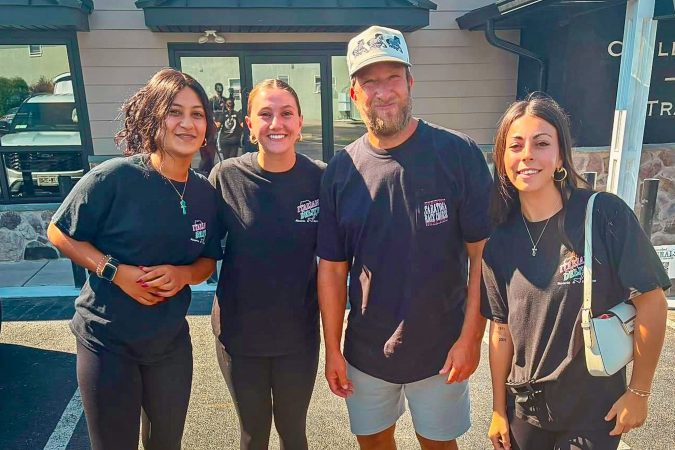
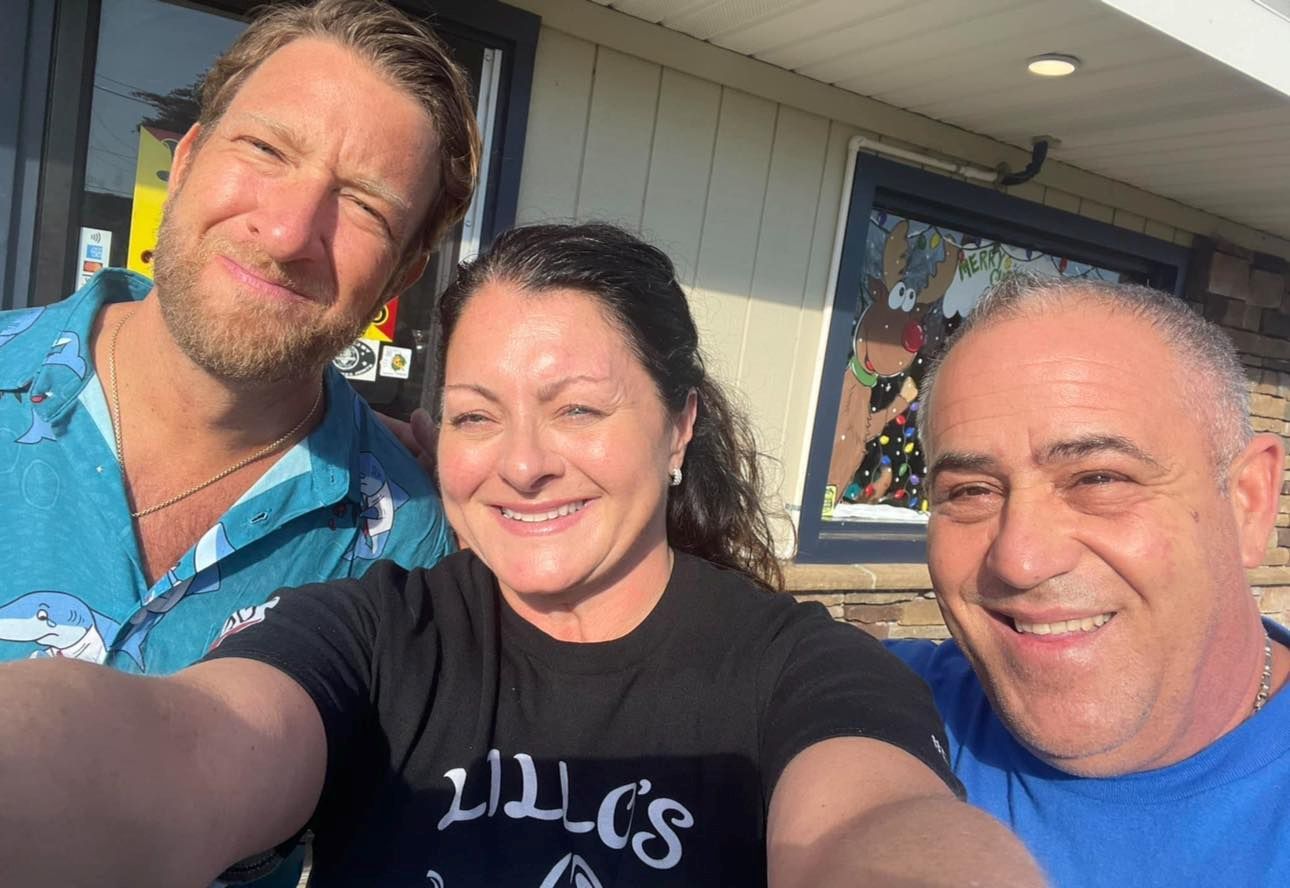
Lisa and John Paxia of Lillo’s Tomato Pies in Hainesport with Barstool Sports’ Dave Portnoy (left) in November 2022.Courtesy of Lillo Paxia
If Tosco spent more than a year trying to lure Portnoy to the Collegeville suburbs, John Bisceglie initially refused to believe the reviewer was coming to Johnny’s Pizzeria (which has a spot on The Inquirer’s 76 list).
“Somebody texted me, ‘Dave’s in Philly. Heads up,’” Bisceglie said. “I just laughed it off. I’ve heard that before.”
Still, he was working at his shop in Wayne when he sent a photo of Portnoy to his employees at Johnny’s Bryn Mawr, just in case.
Then, manager Jaison Velásquez called.
“He said, ‘I just got an order for Barstool,’” Bisceglie recalled. “I said, ‘Oh my God. It’s happening.’”
Bisceglie stayed on the phone coaching his staff. “I told them, ‘Wait about 10 minutes so the pizza comes right out of the oven. Make it crispy. Well done.’”
He credited Velásquez and manager Dan Bisceglie, his cousin, with staying calm. “He kept telling me, ‘I got this. Relax. I got this,’” Bisceglie said of Velásquez.
When Portnoy awarded the pie an 8.3 on camera, Bisceglie knew it was significant.
“Those pizza guys don’t hand out scores like that very often,” he said. “An 8.3 is a big deal.”
For Tosco, at Italian Delite in Trappe, the visit was memorable before the review even began.
Tosco said he had tagged Portnoy incessantly on social media. “I told him, ‘If you came, you came. If you didn’t, you didn’t. I just didn’t want to keep bothering you,’” Tosco said.
The day became even stranger when Portnoy reviewed the wrong pizza.
Tosco had been away at a catering meeting when his cousin called to say Portnoy had arrived after placing an order under the name “Austin.” By coincidence, the restaurant’s social media team was filming, and Tosco’s cousin had made workers prepare a practice pizza for the camera. That pie came out of the oven before Portnoy’s order.
“My cousin said, ‘That’s not your pie,’” Tosco recalled. “Dave said, ‘I don’t care. I want that one.’”
As Tosco pulled into the parking lot, Portnoy was already recording the review.
Afterward, Tosco asked Portnoy to hang for five minutes. “I told him, ‘I just want to make you a Philly cheesesteak,’” Tosco said. “He said, ‘You seem like a good dude. I’ll come back in for you.’”
Tosco still doesn’t know what score Portnoy awarded his pizza. “I ended up getting a cheesesteak review, too, which was really cool,” Tosco said.