Tag: UniversalPremium

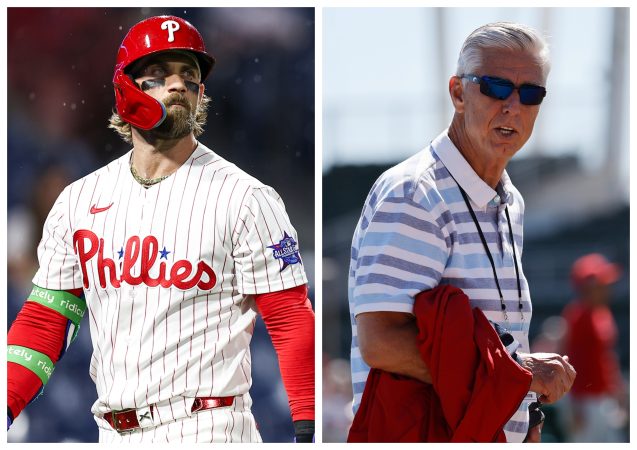
  • The Phillies do ‘need some help’ by trades. But they also need some from Bryce Harper and his teammates.

    The Phillies do ‘need some help’ by trades. But they also need some from Bryce Harper and his teammates.

    Help!

    I need somebody …

    Help!

    … not just anybody …

    Help!

    … you know I need someone …

    Helllllllllllllp!

    Nine losses in 12 games over a span of 14 days will have an effect on people, especially when the trade deadline is bearing down.

    It caused Bryce Harper to channel John Lennon.

    “I think we need some help,” Harper told reporters in Miami — and that was before the Phillies gagged a 6-0 lead into an 8-6 loss Wednesday, the worst gut punch at the worst time.

    OK, before we continue: Harper isn’t wrong.

    Everyone can see that the Phillies need, at minimum, a right-handed hitter, a late-inning reliever, and another starting pitcher. The front office is aware; 29 other teams know it, too.

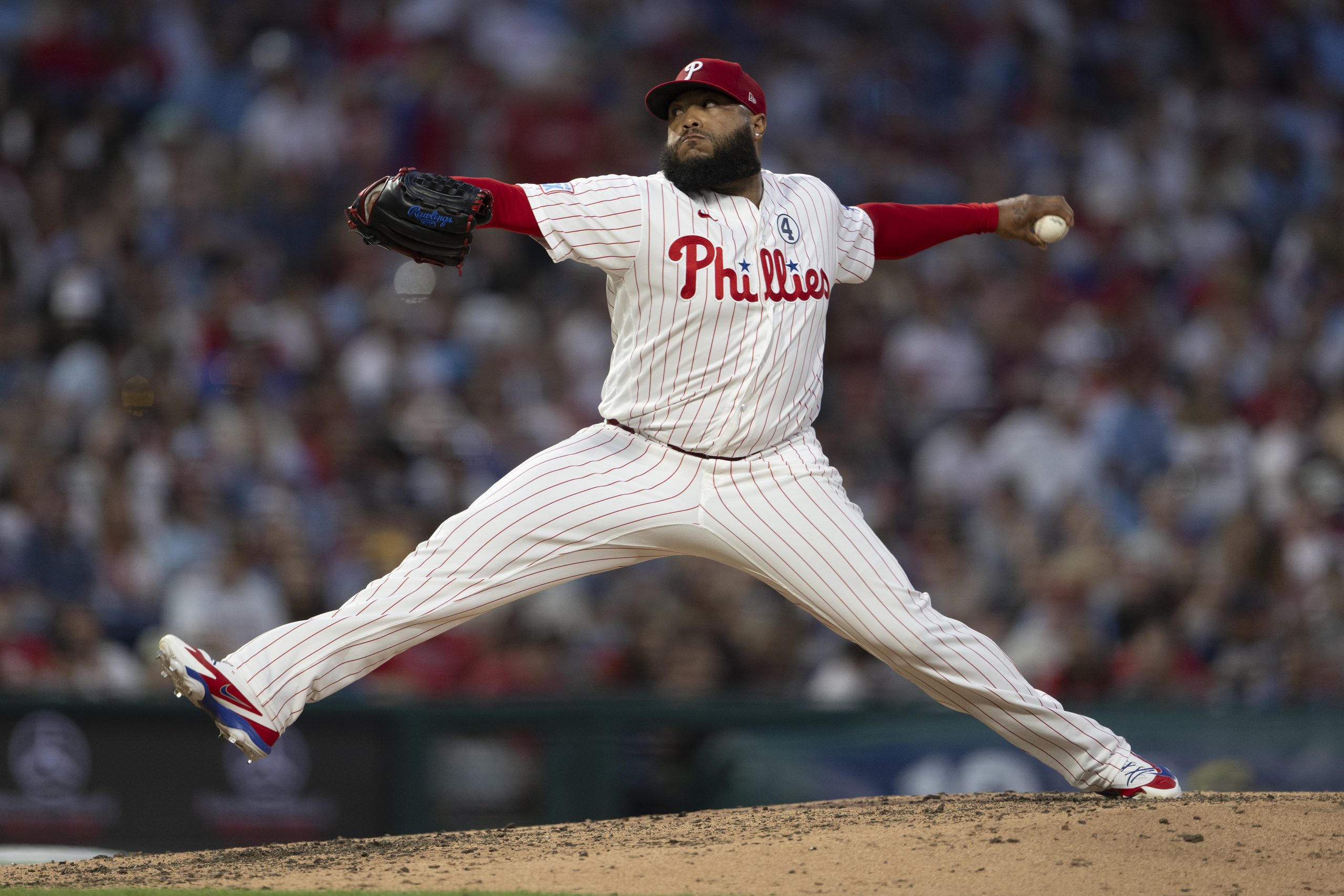
    Some of it is the consequence of bad luck. The Phillies’ most expensive offseason additions — right fielder Adolis García and reliever Brad Keller — went down with season-ending injuries. Mostly, though, it’s an indictment of Dave Dombrowski’s Jenga-tower roster that a team with a $317 million luxury-tax payroll has so many holes.

    And, well, take it away, Bryce.

    “I think we’ve proved pretty much all year, we’ve done a pretty good job, but any time you can get some help in here and reinforcements, I think it helps,” he said. “… I think obviously everybody knows what we need. We need both [hitting and pitching].”
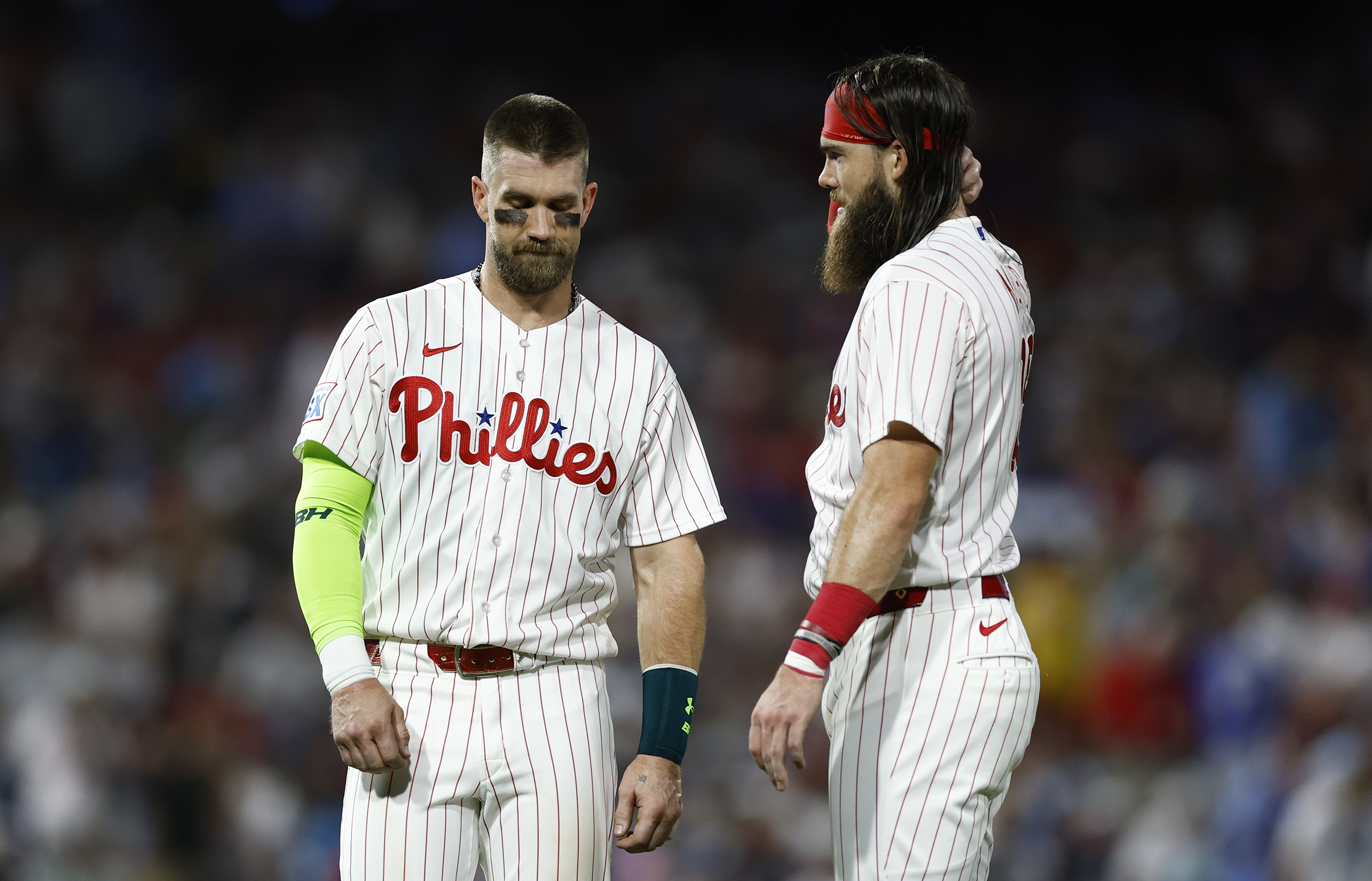
    Bryce Harper (left) and Brandon Marsh have struggled at the plate since representing the Phillies in the All-Star Game.Yong Kim / Staff Photographer

    Harper shared that opinion during All-Star week and reiterated it to MLB.com and The Athletic a few days ago. But because his latest comments were on camera, and because the deadline is Monday, his words were amplified.

    So, can the Phillies get everything they need?

    “I don’t know,” Harper said. “We’ll see. I mean, that’s a Dave question.”

    As in Dombrowski, who irritated Harper after last season by wondering if he was still elite. They talked it out in spring training, and as owner John Middleton said, “I’m confident that everything’s behind us now.” Clearly it isn’t. As long as Harper hits and Dombrowski builds a contending roster, they will co-exist. But Harper’s cry for help, five days before the deadline, likely annoyed the front office.

    In reality, there’s only so much help available on the trade market, with right-handed bats especially scarce.

    Entering play Wednesday, 22 teams were no worse than 3½ games out of a wild-card spot. Within that extreme seller’s market, neither Mike Trout nor Byron Buxton is willing to waive no-trade rights. Buxton (hip) went on the injured list Wednesday, and two more available right-handed bats — Spencer Steer of the Reds and the Giants’ Casey Schmitt — suffered major injuries this week.

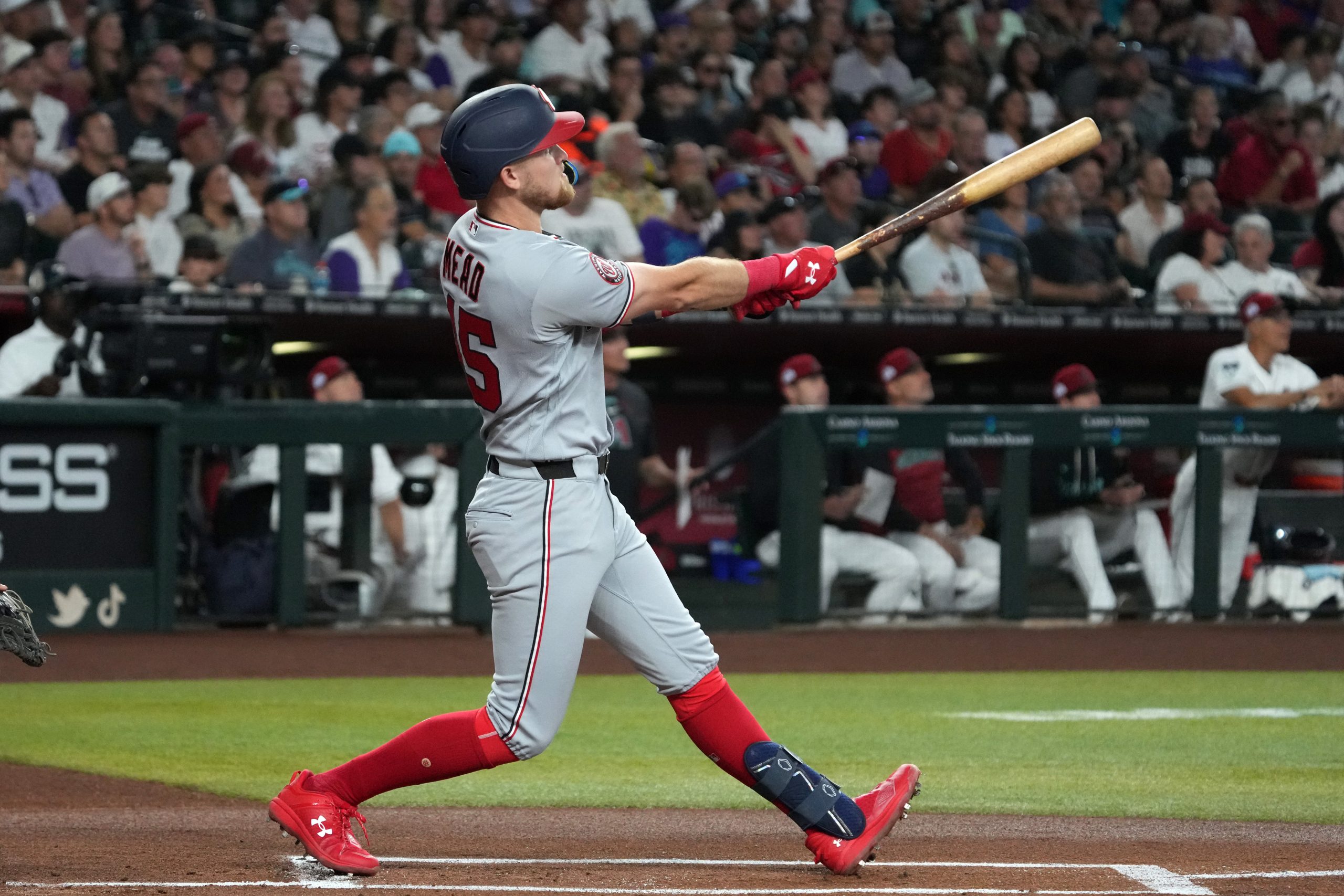
    Last weekend, the Red Sox dealt Connelly Early, a 24-year-old lefty with six quality pitches and five years of club control, for infielder Curtis Mead, who was having a breakout season for the Nationals after getting designated for assignment in March. And even before Mead broke his wrist in his first game, rival scouts agreed that Boston overpaid to gain access to a right-handed hitter.

    There’s a larger supply of available starting pitching. The Phillies scouted Giants lefty Robbie Ray last weekend and Mets righty Clay Holmes’ two injury rehab starts in the minors. They reportedly sent scouts to observe the Blue Jays’ Kevin Gausman, the Nationals’ Foster Griffin, the Mets’ Freddy Peralta, and others.

    But the Phillies really need offense. They’re tied for last in the majors in on-base percentage (.303), including a worst-in-the-majors .279 mark and .639 OPS from their right-handed hitters.

    And even if there was a high-impact bat available, the industry consensus is that they lack upper-level talent in the farm system to anchor such a swap.

    In that case, no matter what Dombrowski does before 6 p.m. Monday, Harper’s plea for help must extend to his teammates, too. Because although he’s right about the need for reinforcements, it’s really the stars — three hitters, in particular — that must shine brighter.
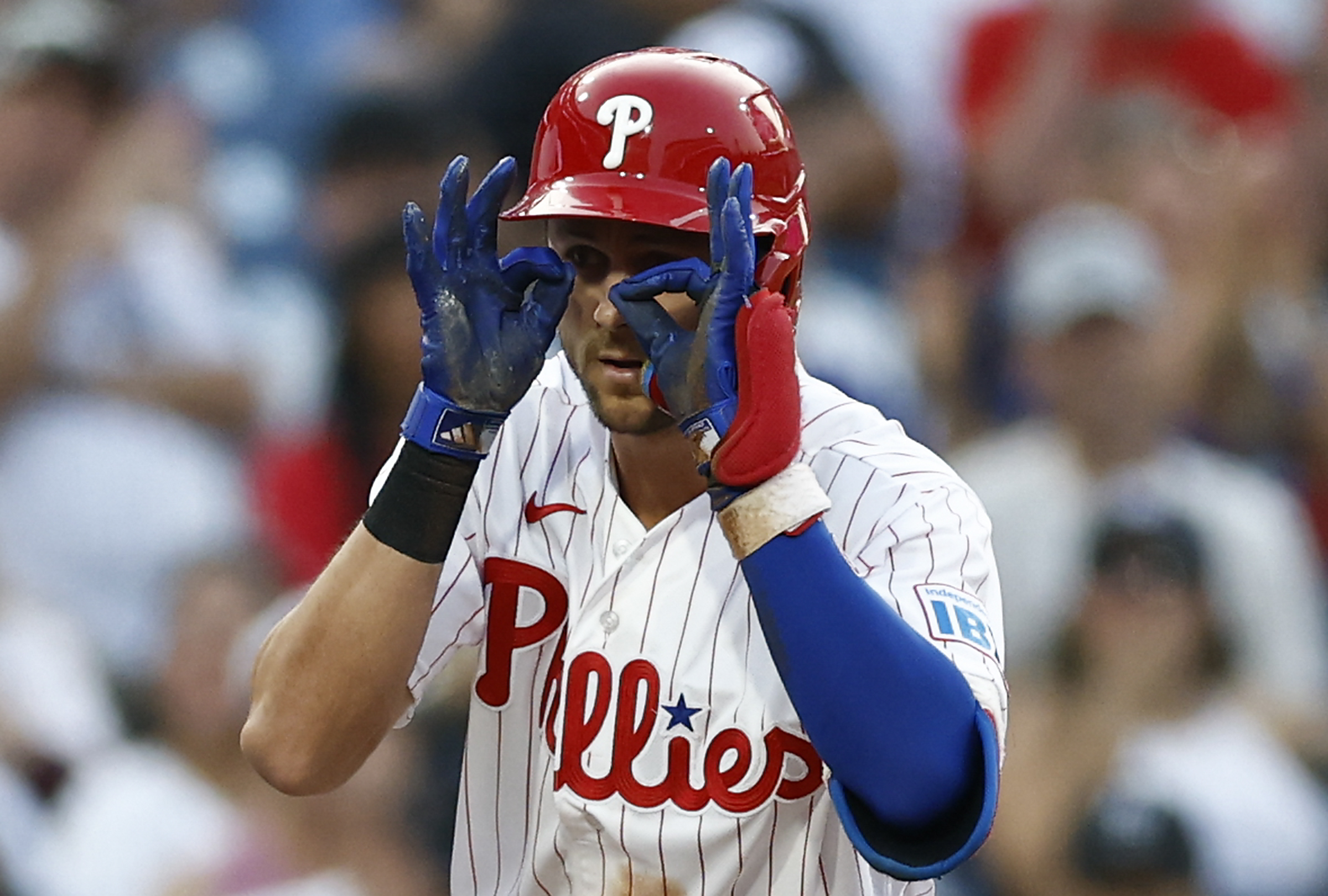
    Phillies shortstop Trea Turner has made seven errors since the All-Star break.Yong Kim / Staff Photographer

    Trea Turner

    After winning the batting title and finishing fifth in the National League MVP race last season, Turner is playing at less than replacement level, according to Baseball-Reference’s WAR calculation.

    Turner’s value is dragged down by his defense. He has seven errors since the All-Star break and leads the majors with 19, a striking regression from the best defensive season of his career last year.

    Lately, the Phillies hold their breath on every grounder to shortstop.

    Help!

    “He’s just in a place where he’s searching, and he’s too internal with his thought process,” infield coach Bobby Dickerson said this week on The Inquirer’s Phillies Extra podcast. “The ball’s put in play, and he’s thinking more about what to do with his body than engaging with the ball. … You can see he’s a step late, not as aggressive, not as decisive.

    “Right now he’s in a bad place. And it puts us all in a bad place, really. We just need to get him back to what he can do, and it’s my responsibility to get it done.”

    Not coincidentally, Turner’s problems in the field have come in the midst of his career-worst season at the plate.

    Through June 15, he was batting .216 with a .268 on-base percentage and a .595 OPS. The last six weeks have been better. In his last 35 games, Turner is batting .296 (43-for-145) and slugging .524 with eight homers.

    A midseason position change isn’t under consideration. So, as the Phillies try to fix Turner’s defense, they need at least a high level of production at the plate.

    Turner, as intelligent and self-aware as any player, often overthinks his struggles. Dickerson wants him to “be an artist instead of a scientist.”

    “He wants answers scientifically a lot of times,” Dickerson said. “The more scientific he is, the more he locks himself up. … We had his confidence flying high last year. He felt real confident. Now, he’s almost anticipating, don’t mess up. We’ve got to get it right.”
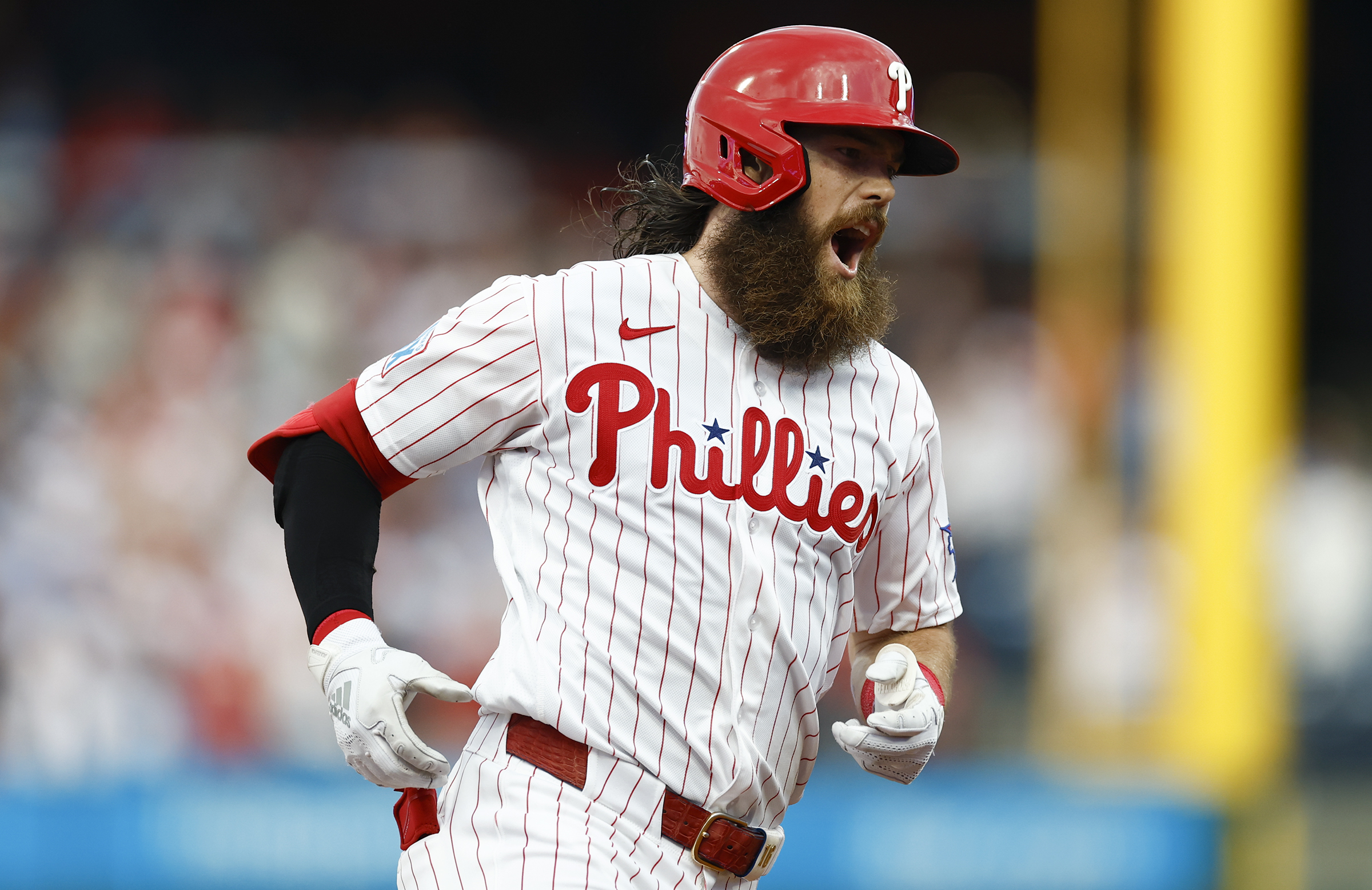
    Phillies outfielder Brandon Marsh has struggled since starting the All-Star Game.Yong Kim / Staff Photographer

    Brandon Marsh

    It took only 19 days for the Phillies to climb from the 9-19 start that got Rob Thomson fired to the .500 mark.

    Marsh batted .381 during that stretch.

    Kyle Schwarber hit 32 homers before the All-Star break, and yes, Harper was elite. But there wasn’t a more consistent Phillies hitter than Marsh, who played himself not only into the lineup against lefties but also into the cleanup spot for Don Mattingly.

    But Marsh is 5-for-43 with one homer since the break. He stopped hitting lefties, too, and was on the bench last week against the Dodgers’ Eric Lauer and the Yankees’ Ryan Weathers, hardly Chris Sale and Tarik Skubal.

    Help!

    “I was talking to some guys around the All-Star Week, and I was like, ‘Would you rather be an All-Star or win a World Series?’ And the answer is easy. You’d rather win a World Series,” said Marsh, 4-for-30 against lefties since June 25. “… If that means having to take a step back and be more of a role player, then that’s what I’m going to be.”

    Actually, the Phillies need Marsh to be a costar again.

    Because Dombrowski could trade for, say, Lane Thomas from the Royals to split time with Marsh as part of a triple-platoon in the outfield. But it would be easier if the Phillies could count on Marsh every day and add lefty-hitting Daulton Varsho from the Blue Jays or Jake McCarthy from the Rockies, or righty-swinging Jo Adell from the Angels or Taylor Ward, if the Orioles sell.

    “I do believe that [Marsh] is going to be a guy that can be an everyday guy,” Mattingly said. “Something we talked about is understanding how to hit lefties and what you need to do. Understanding ball movement, what do you want to hit, where does [the swing] have to start. He’s a guy that, honestly, at the big league level has really not had the opportunity to continue to do that.

    “But at some point, we’re trying to win games. We need to be better against lefties.”
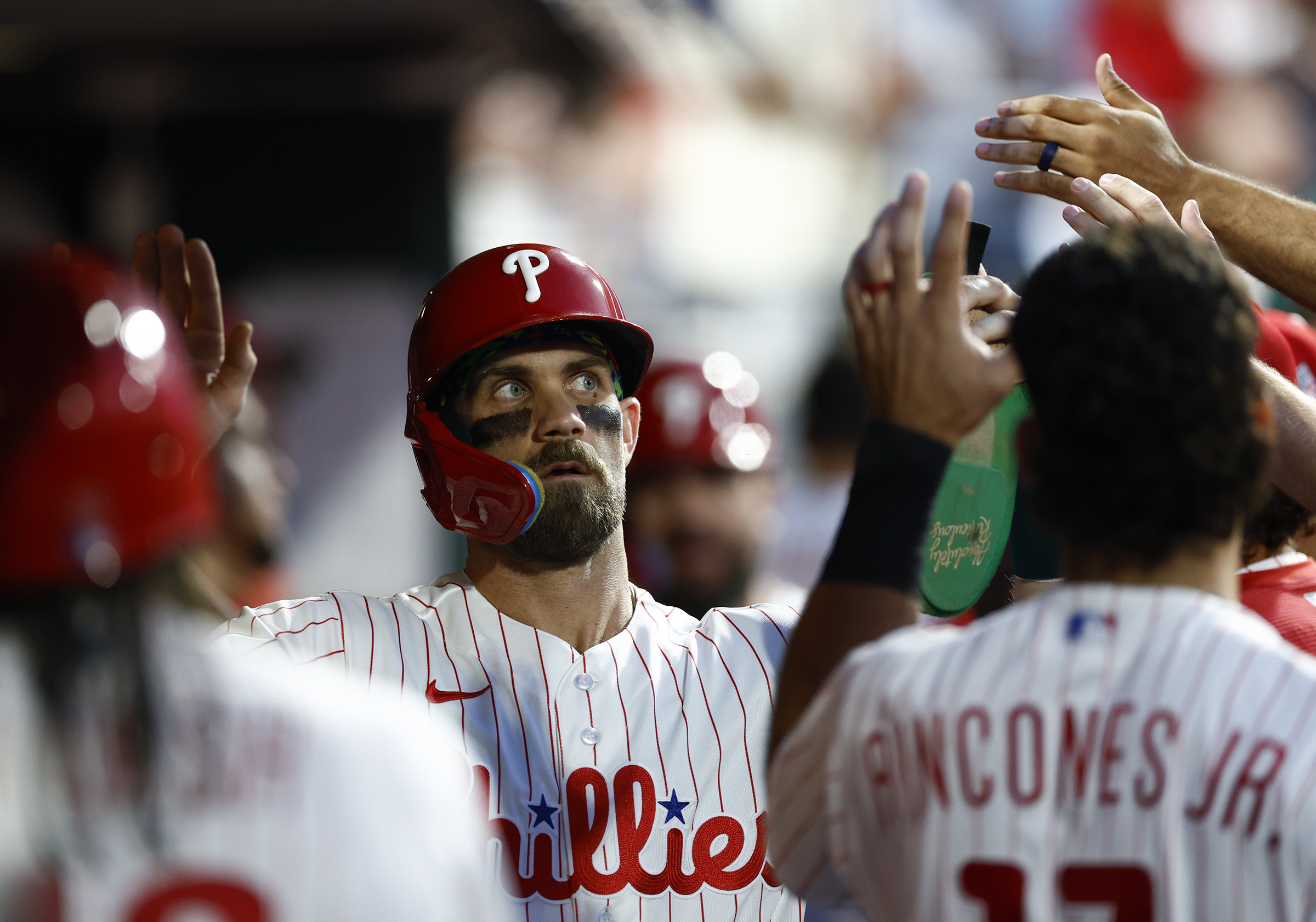
    Phillies first baseman Bryce Harper is 8-for-43 (.186) with 16 strikeouts since the All-Star break.Yong Kim / Staff Photographer

    Harper

    Help me if you can, I’m feeling down …

    … and I do appreciate you being ’round

    Help me get my feet back on the ground

    Won’t you please, please, help me?

    Harper’s candor is refreshing. He speaks his mind, even when it ruffles feathers.

    “I mean, Dave’s been doing this a while,” Mattingly told reporters Wednesday. “He’s never really backed away from trying to get guys. We’re going to try to get better at the deadline.”

    Asked if he was bothered by Harper’s comments, Mattingly, whose son, Preston, works under Dombrowski as general manager, said he only was concerned with what they implied.

    “If you say something about our team,” Mattingly said, “then you’re saying something about one of our players that you don’t like.”

    “Bryce is Bryce,” Mattingly continued. “He’s going to say what he wants. I’m not really concerned about it. I take it kind of with a grain of salt, knowing how players are over the years.”

    But Harper also isn’t satisfied with how he has swung the bat lately. He’s 8-for-43 (.186) with 16 strikeouts since the break, even after homering in the first inning Monday and tripling home a run in the fifth inning Wednesday.

    As Harper likes to say: “Not enough.”

    The Phillies need more, even if help is on the way.
  • Jalen Carter got his money. The Eagles have to hope he has grown up enough to earn it.

    Jalen Carter got his money. The Eagles have to hope he has grown up enough to earn it.

    Jalen Carter plodded off the dais late Wednesday morning with a look of relief on his face, as if he were a student who feared public speaking and had just delivered an oral presentation for class. The Eagles’ first practice of training camp, at the Jefferson Health Training Complex, had ended minutes before. It was humid, and Carter wiped his brow with a towel. To his left were Dom DiSandro, who is the Eagles’ chief security officer, and Toni Brown, who is Carter’s mother. Dom and mom. Maybe the two most important people in making sure that the Eagles get their money’s worth from Carter, who is, for the moment, the highest-paid defensive tackle in the National Football League.

    “I messed up a little bit,” Carter said to Brown and DiSandro, “but it was good.”

    The Eagles had announced Tuesday that they and Carter had agreed to a four-year contract extension that reportedly guaranteed him $106 million and could pay him as much as $160 million. When a modern professional sports franchise holds a press conference, it does so not just to acknowledge the news that has already broken. The point and purpose of the event, from the franchise’s perspective, are to send subtle signals about what the angle on the news is supposed to be.

    So there was Brown near the dais. And there was tackle Jordan Davis, Carter’s teammate at the University of Georgia and with the Eagles, hanging near the back of the media tent, ecstatic for his friend. And coach Nick Sirianni and vice president Howie Roseman had been there hours earlier, making no mention of the risk the Eagles had taken on with this commitment to Carter.

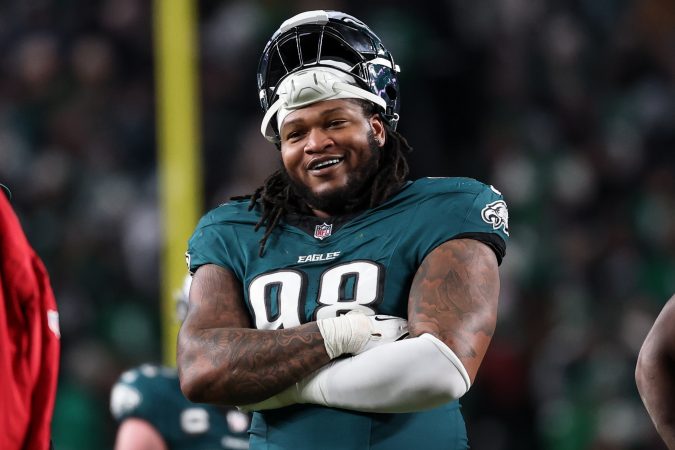
    And there is risk here — plenty of it. Carter is just 25, and he has been a great player at times for the Eagles. He was the primary reason they beat the Los Angeles Rams in the 2024-25 NFC divisional round, and he has the power, strength, and raw talent to be the league’s best defensive tackle if he can stay healthy and keep his head on straight. But from the road-racing accident in January 2023 that led to two people’s deaths and caused him to drop far enough for the Eagles to trade in that year’s draft, to the decline in his play in the second half of his rookie season, to his dumb decision to spit in Dak Prescott’s face in last season’s opening game, to the two shoulder procedures that cost him a month of time, Carter has given the Eagles ample cause to cross their fingers here and hope.

    Roseman likes to consummate such deals — extending the contracts of players whom the Eagles want to retain for years — as early in an offseason as possible. Carter’s, though, took much longer, and the reasons go beyond the ones Roseman cited Wednesday, the suggestion that he and Drew Rosenhaus, Carter’s agent, were simply waiting for the market to settle.

    At just 25, Jalen Carter has the power, strength, and raw talent to be the league’s best defensive tackle if he can stay healthy.Monica Herndon / Staff Photographer

    “We felt like [defensive tackle] was one of the strengths of our team,” Roseman said. “We want that to be one of the strengths of our team going forward. The defensive tackle position in the league, in college football — it’s a deficient position. It’s hard to find guys like that. So we feel like it was a priority.”

    Understand: That’s why Carter got this extension, and that’s why the Eagles didn’t have much of a choice in giving it to him. He’s that talented, that vital to Vic Fangio’s defense. “The attention he draws is incredible,” linebacker Zack Baun said. “You’ve got to have four hands on him,” meaning the opposing offensive line has to double-team Carter at all times, opening up possibilities for his teammates to make plays. There’s no replacing a player like Carter, and if he commits another awful mistake off the field, if he does something dirty on the field and the NFL doesn’t go easy on him again — as it did last season after the Prescott incident — he will cost the Eagles dearly. As Roseman and more than one player said Wednesday, the Eagles don’t pay you for what you’ve done. They pay you for what you’re going to do.

    To his credit, Carter said all the right things Wednesday, even pausing, after taking two questions, to thank the Eagles and chairman Jeffrey Lurie and even the media members in attendance. Any teacher or professor would have passed him on his assignment.

    “When you get picked in the first round, a top-10 pick, you get a little bit of decent money,” he said. “That didn’t change me. I still came here. I had a goal. I let the team know and the fans know that the goal was to get a championship. It happened, but it’s a new contract, and it’s time to get more championships for the city of Philly.

    “My goal wasn’t to come out and ‘Let me be the highest-paid defensive tackle.’ My goal was to build team chemistry and win a championship. I think that all falls in line with getting to where I’m at now.”

    The proof was never going to present itself Wednesday. The easy part is over for Jalen Carter. He got his extension, and now he has to earn it. Now he has to keep every day clean. “I don’t think money is ever going to change me,” he said. It was an assertion that could cut either way, for good or bad, and it’s on him, his support system, and the Eagles themselves to make sure they don’t regret that he said it.

  • Eagles practice observations: Sean Mannion’s offense starts clicking; Jalen Hurts under center; Jalyx Hunt hunts

    Eagles practice observations: Sean Mannion’s offense starts clicking; Jalen Hurts under center; Jalyx Hunt hunts

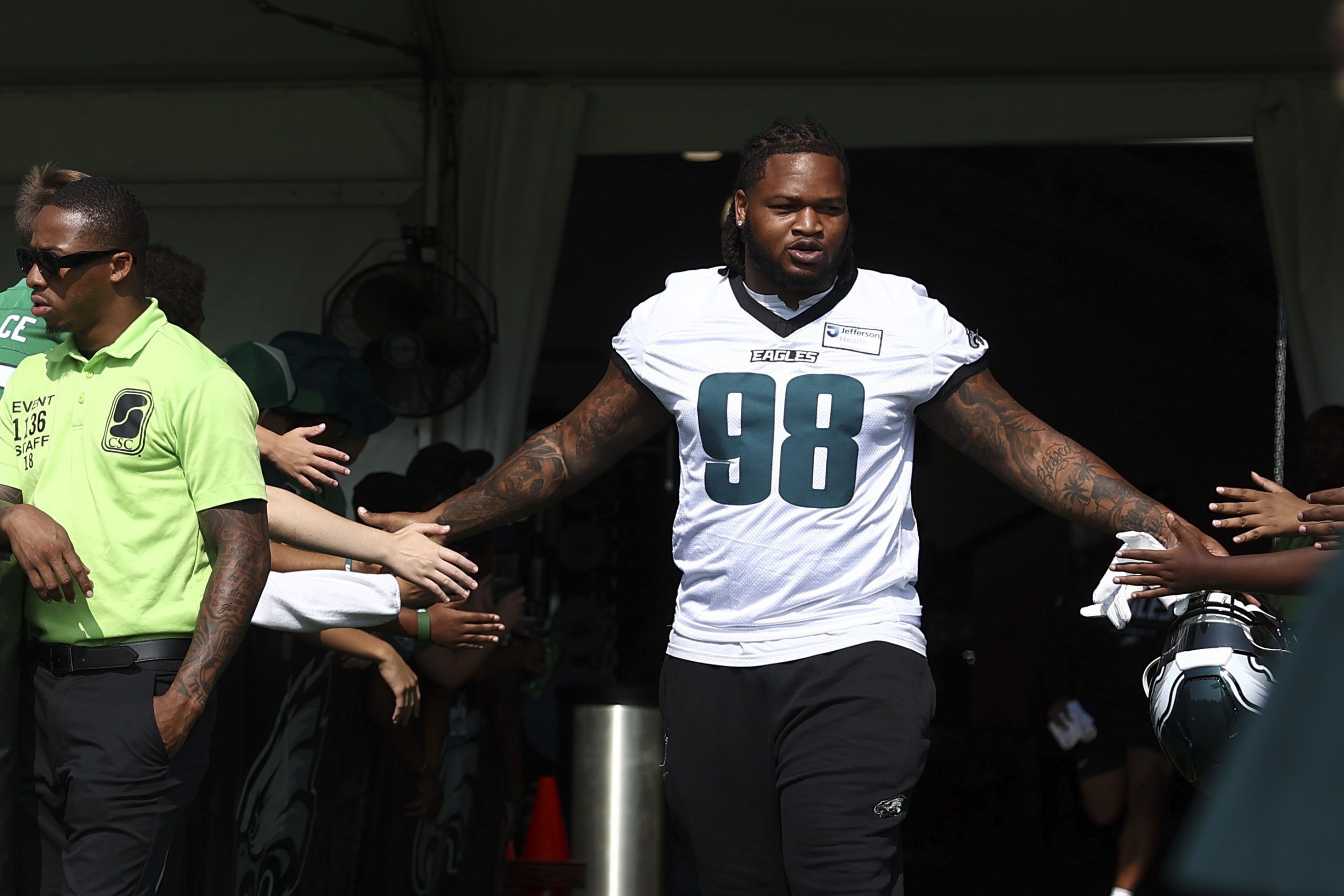
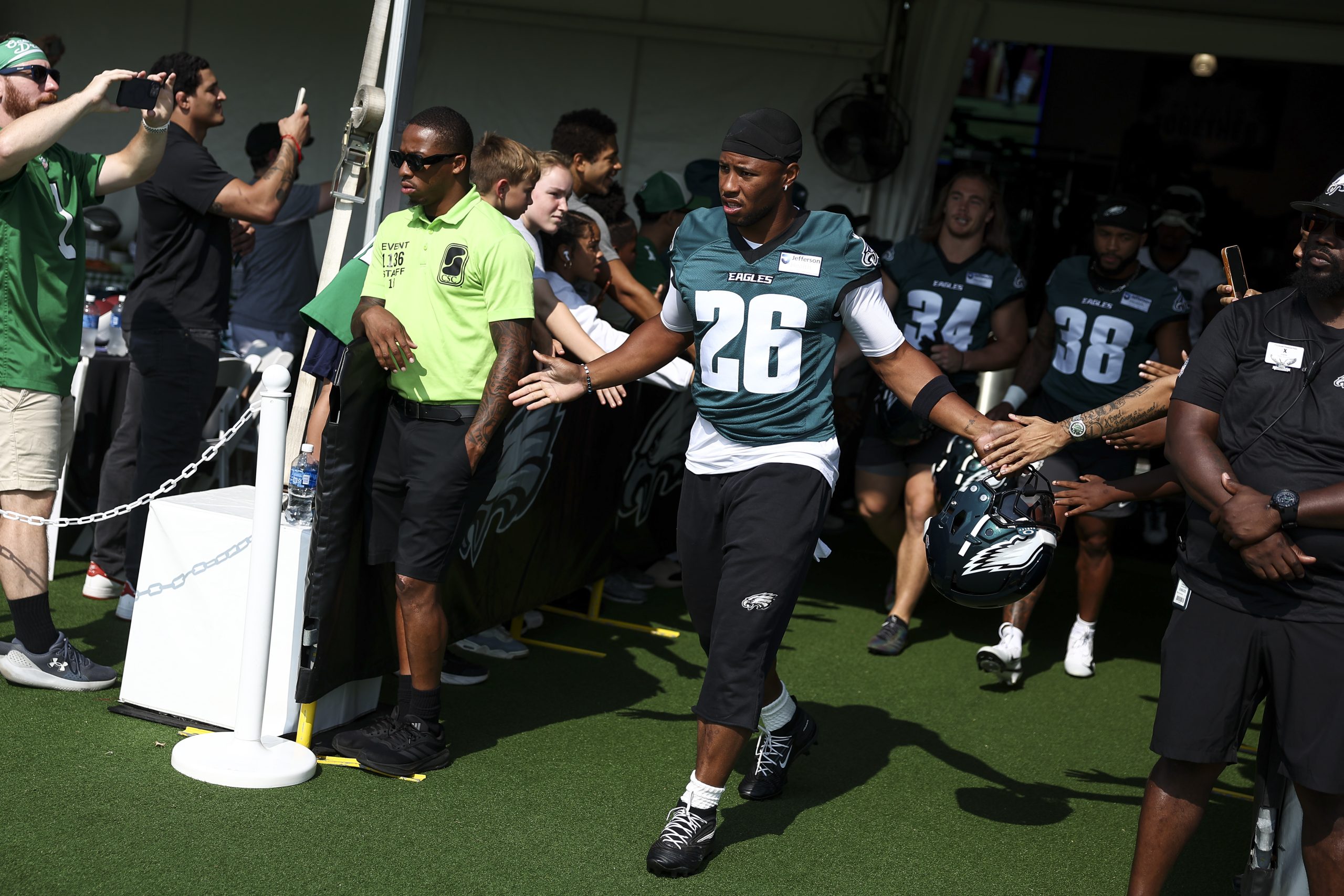
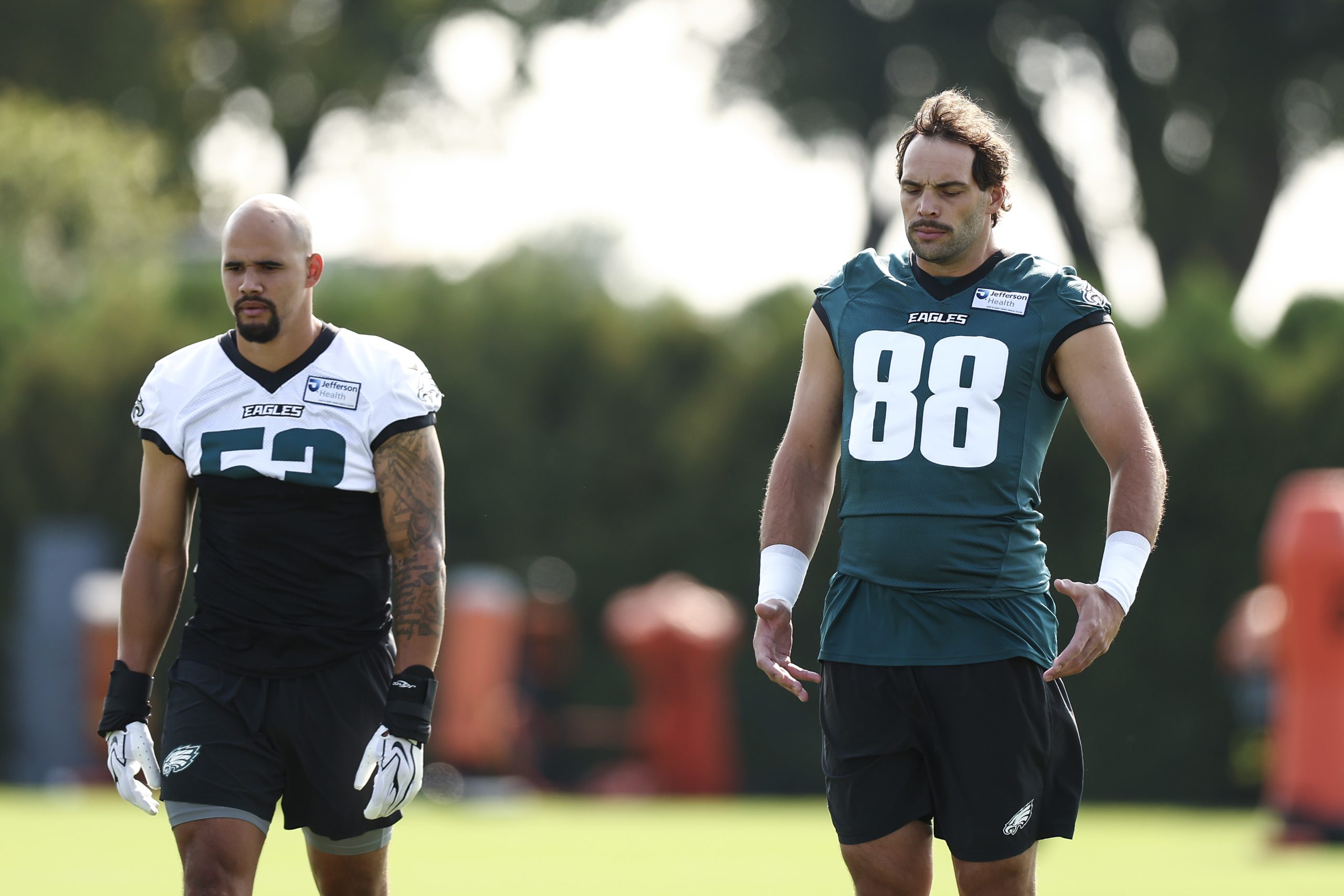
    The Eagles held their first practice of training camp on Wednesday at the Jefferson Health Training Complex. Here were my observations from Day 1:

    Healthy Birds

    The Eagles announced that outside linebacker Jonathan Greenard was placed on the Physically Unable to Perform (PUP) list just before practice. He apparently strained a pectoral muscle while lifting prior to camp. Greenard isn’t expected to be out long-term, but starting him on PUP allows the team to save a roster spot if he’s going to miss more than a month in the regular season.

    It’s unclear if the injury had anything to do with his recovery from December shoulder surgery. Greenard didn’t practice much in the spring after he was acquired via trade during the draft. He’s learning a new defense, but he’s been around the block a few times and shouldn’t be held back once healthy.

    Jonathan Greenard (right) was present on Wednesday but will remain sidelined indefinitely with a pectoral injury. Monica Herndon / Staff Photographer

    The Eagles were otherwise full-go. I don’t recall them being as healthy entering camp in all my years on the beat. Every player passed Tuesday’s conditioning test, as coach Nick Sirianni suggested before practice. Linebacker Jihaad Campbell (shoulder), wide receiver Makai Lemon (hamstring) and several other players who were limited in the spring were back in action.

    Campbell, by the way, switched his jersey number from 30 to 11. That should end all talk of the former Eagles wide receiver who previously wore the double ones. Right?

    Positional battles

    There’s really only one “starting” spot up for grabs and it technically isn’t a full-time job: safety. Cooper DeJean is expected to “start” at safety in base personnel alongside Andrew Mukuba. DeJean was there again on Wednesday. Marcus Epps filled the primary nickel role, however, with a splash of Michael Carter II at times. Those two appear to be the frontrunners. General manager Howie Roseman won’t be shy about trading for an upgrade if needed.

    There are some intriguing competitions further down the depth chart. Jonathan Jones was the first cornerback up when starter Quinyon Mitchell took a breather during team drills. Jeremiah Trotter Jr. and Smael Mondon were the backup inside linebackers behind Zack Baun and Campbell.

    A handful of receivers will be vying for the snaps that became available when A.J. Brown was finally traded to the Patriots. DeVonta Smith is the bona fide WR1, but new faces like Dontayvion Wicks, Hollywood Brown and Lemon, along with returnees like Darius Cooper and Johnny Wilson will be contending for playing time.

    Line ’em up

    The first-unit offensive line is set, but swing tackle along with a few other backup spots are up for grabs. New O-line coach Chris Kuper will work some reserve linemen at various positions to create versatility. Here’s how the units looked on Wednesday:

    A few notes:

    Jordan is new after the Eagles signed the veteran guard at the conclusion of minicamp in June. Bell was back in the lineup after sitting out the last day of minicamp. He and Fred Johnson are presumably battling for the swing tackle role, although Kuper could have both active on game days. Hollin Pierce and Jaeden Roberts were with the third unit at left tackle and left guard, respectively, during the period for developmental players.

    Mannion mirror

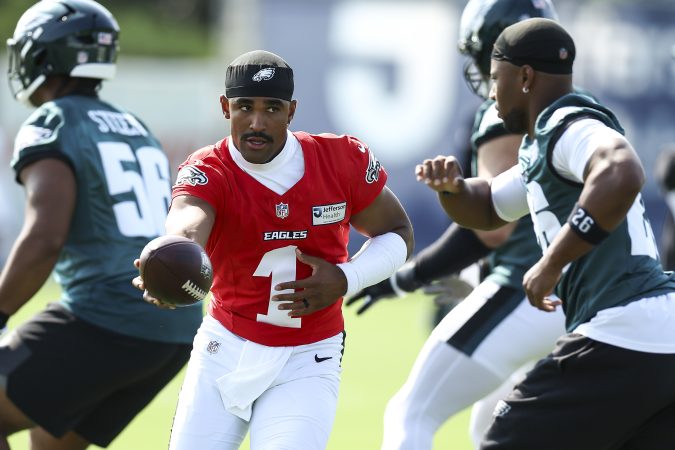
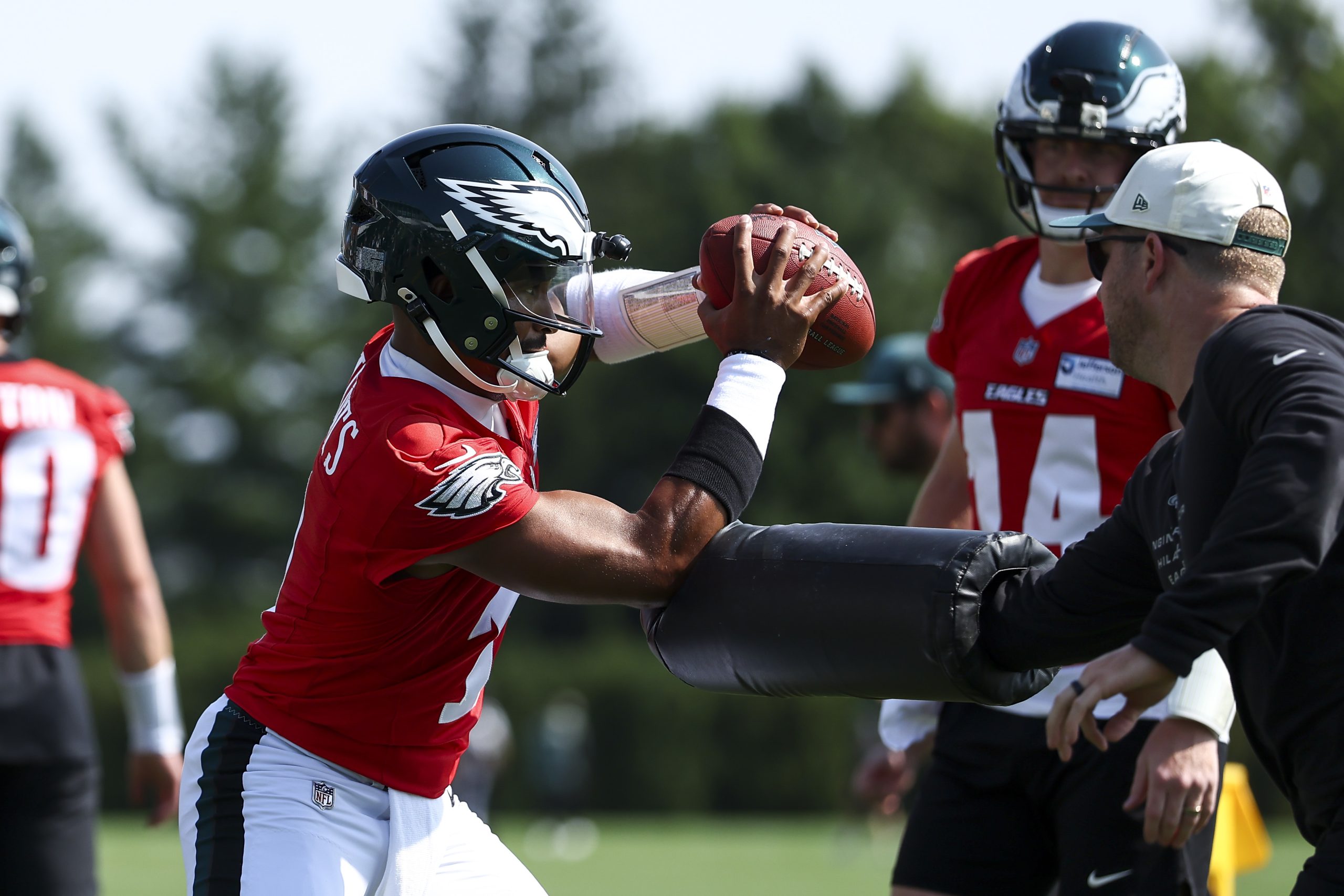
    New offensive coordinator Sean Mannion continued to implement many of the concepts we saw from the Kyle Shanahan-Sean McVay scheme he brought to the Eagles in the spring: a lot of under center sets, play-action and motion. I’d estimate that more than half of the plays came with the quarterbacks lined up under center.

    Jalen Hurts continued to learn the intricacies of the new offense on Wednesday. Monica Herndon / Staff Photographer

    Jalen Hurts has improved from under center since entering the NFL, but he hasn’t done much of it, at least compared to rest of the league. There will be more of him turning his back to the defense on play action and naked bootlegs. An early awkward pass across Hurts’ body to Lemon illustrated that there will be some growing pains.

    Hurts to be…

    There will be an adjustment period for all involved, but mostly Hurts. He’s endured other previous changes in play-calling and scheme with varying results. The offense wasn’t sharp during the spring practices open to reporters. That came as little surprise, and neither should struggles during the summer.

    Hurts’ first pass of camp was a wobbler to Wicks that Mitchell nearly intercepted. But he had some strong moments in the later team portions with good ball placement on a toss to Wicks with cornerback Riq Woolen in coverage and a strike to a crossing Smith just over Mitchell.

    The catch of the day came during seven-on-sevens when Hurts hooked up with Cooper. The receiver got behind DeJean out of the slot and made a diving grab over the middle.

    Saquon Barkley’s ability to adapt to the wide-zone blocking scheme will be worth watching. Monica Herndon / Staff Photographer

    Run it back

    The Eagles won’t be in full pads until the fifth practice of camp on Tuesday, but they were able to incorporate more of the run game into team drills. Some of the biggest changes on offense will come with the move to more wide-zone blocking. Lane Johnson said the new system is “O-line friendly” and should theoretically place less stress on the group in pass blocking situations.

    Running back Saquon Barkley took the first handoff of camp and ran behind Johnson off tackle. He was met near the line of scrimmage by Baun on his next carry. Backup Tank Bigsby’s first touch came on a rush up the middle after Steen climbed to the second level. Could we see more of Bigsby as the inside complement to Barkley this season?

    Hunting season

    Greenard’s absence pushed Jalyx Hunt into the starting spot at right outside linebacker opposite Nolan Smith Jr. Hunt will likely play as many snaps as the other two this season. There’s an argument to be made that he should get more playing time than Smith. Nevertheless, he took advantage of his opportunities with Greenard out.

    Hunt shot into the backfield unblocked and forced Hurts to check down to Cooper on one play-action pass that came from under center. He blew up tight end Dallas Goedert with an edge rush and Hurts had to hurry a dump to Bigsby that wasn’t caught. And he beat Jordan Mailata on back-to-back rushes — one with an inside move and the other from the outside — that blew up pass plays.

    Dallas Goedert (right) rebounded from an early drop in Wednesday’s practice. Monica Herndon / Staff Photographer

    Sloppy go droppy

    Defensive coordinator Vic Fangio enters his third season at the helm with little turnover on his side of the ball. He’s always evolving and will introduce new ideas, but the core of his unit remains intact. The defense should have the upper hand in competitive periods, especially with the offense still ironing out details.

    Mannion’s unit had a couple of false starts from Mailata and Landon Dickerson. Brown lined up illegally at one point. Defensive tackle Jalen Carter, fresh off his contract extension, was flagged for offsides at one point. He slipped by Steen for a would-be tackle of Barkley in the backfield earlier in the session.

    Goedert dropped an early pass, but rebounded later on a short crossing route. Hurts and Barkley had a miscommunication on a botched handoff.

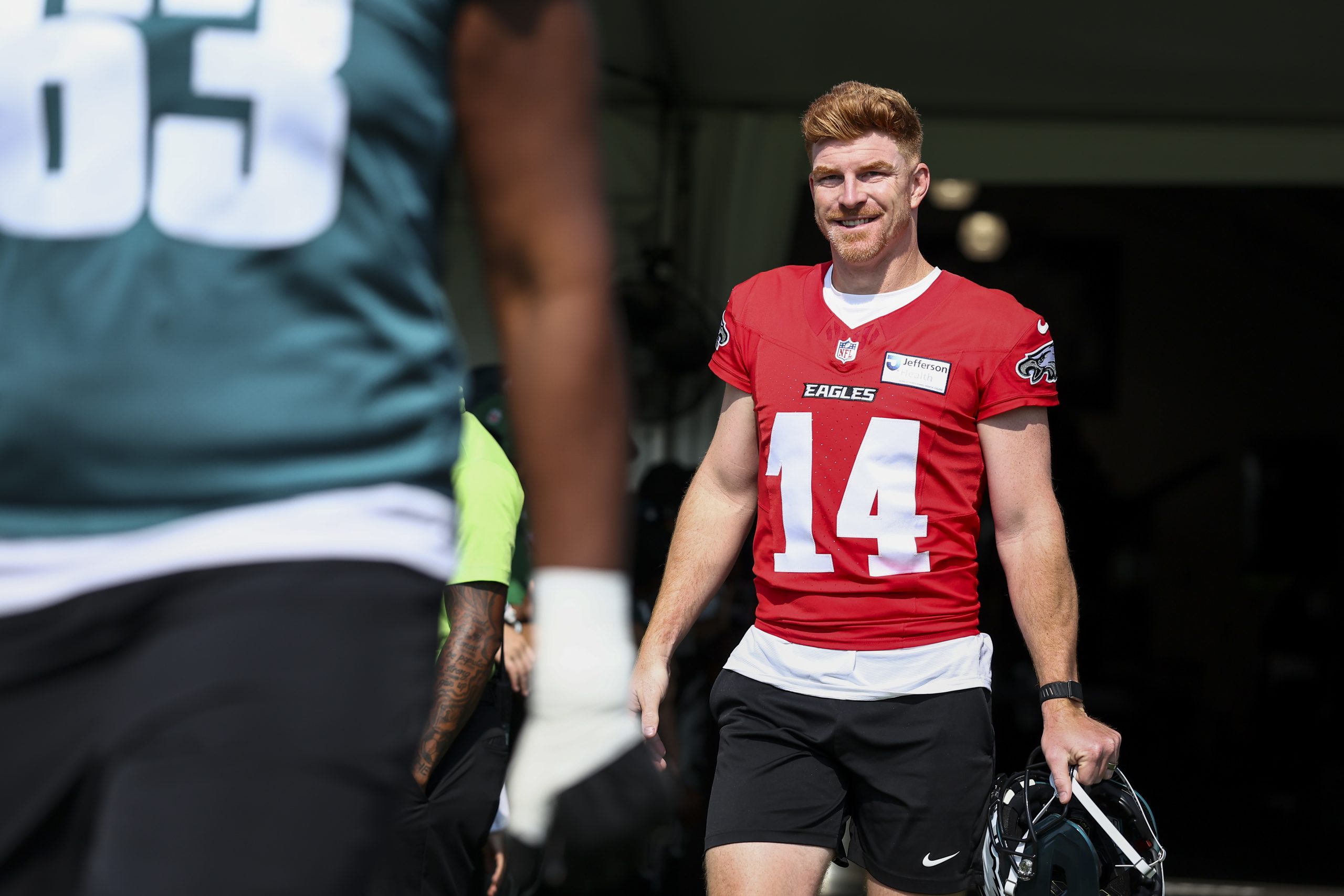
    Andy Dalton (14) is vying for the No. 2 quarterback job. Monica Herndon / Staff Photographer

    Back it up

    Quarterbacks Tanner McKee and Andy Dalton continued to split second unit snaps, much as they did in the spring. McKee’s first completion during seven-on-sevens went to rookie tight end Eli Stowers. Dalton hit Wilson over the middle with a pass only the 6-foot-6 receiver could reach.

    Trotter had a couple of run stops, one time seemingly filling a gap out of nowhere to stop Bigsby in his tracks. Former Texans running back Dameon Pierce was relatively quiet in the spring, but he had a nice cutback on an inside rush.

    Extra points

    Rookie quarterback Cole Payton had his ups and downs in the spring, but he continued to display a willingness to throw downfield a month later. He ripped a pass to receiver Quez Watkins during seven-on-sevens, and found receiver Britain Covey on a deep corner route. … Second-year defensive tackle Ty Robinson was relegated to snaps during the developmental period. Not a good sign. … Lemon fielded punts behind Covey and Elijah Moore. … The Eagles return Thursday for practice and will have a closed-to-reporters walkthrough on Friday.

  • Barclay Pies in Cherry Hill sets a new standard for gluten-free pizza in the Philly area

    Barclay Pies in Cherry Hill sets a new standard for gluten-free pizza in the Philly area

    It’s been a long time since Samantha and Mike Garbose have been able to truly enjoy the same pizza together. Ever since Mike discovered an intolerance to gluten in 2019, their pizza dates have resulted in this married couple ordering a “his” and “hers” situation with separate pies.

    Being relegated to the gluten-free alternative is not a fate Mike begrudges: “We both agree that each of us is totally entitled to the food that our diets and preferences warrant.” Then again, the contrast in quality between standard wheat-flour crusts and those made with gluten-free ingredients can be hard to ignore.

    “At places that have both gluten [-full] and gluten-free pizza,” says Samantha, “usually I get something that looks phenomenal and Mike gets something that looks like a cardboard circle — and then I feel guilty about that.”

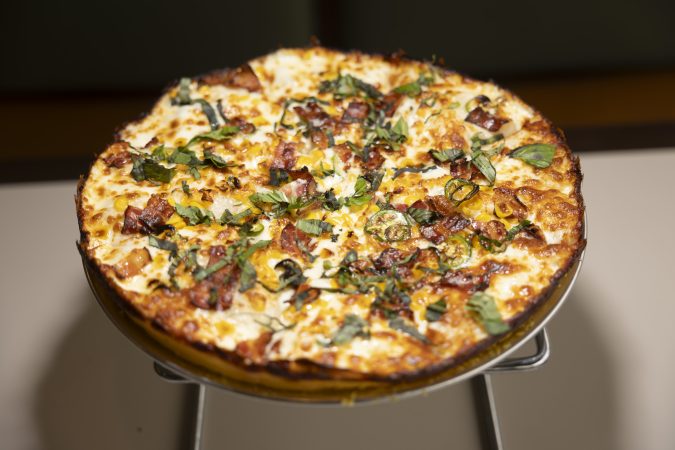
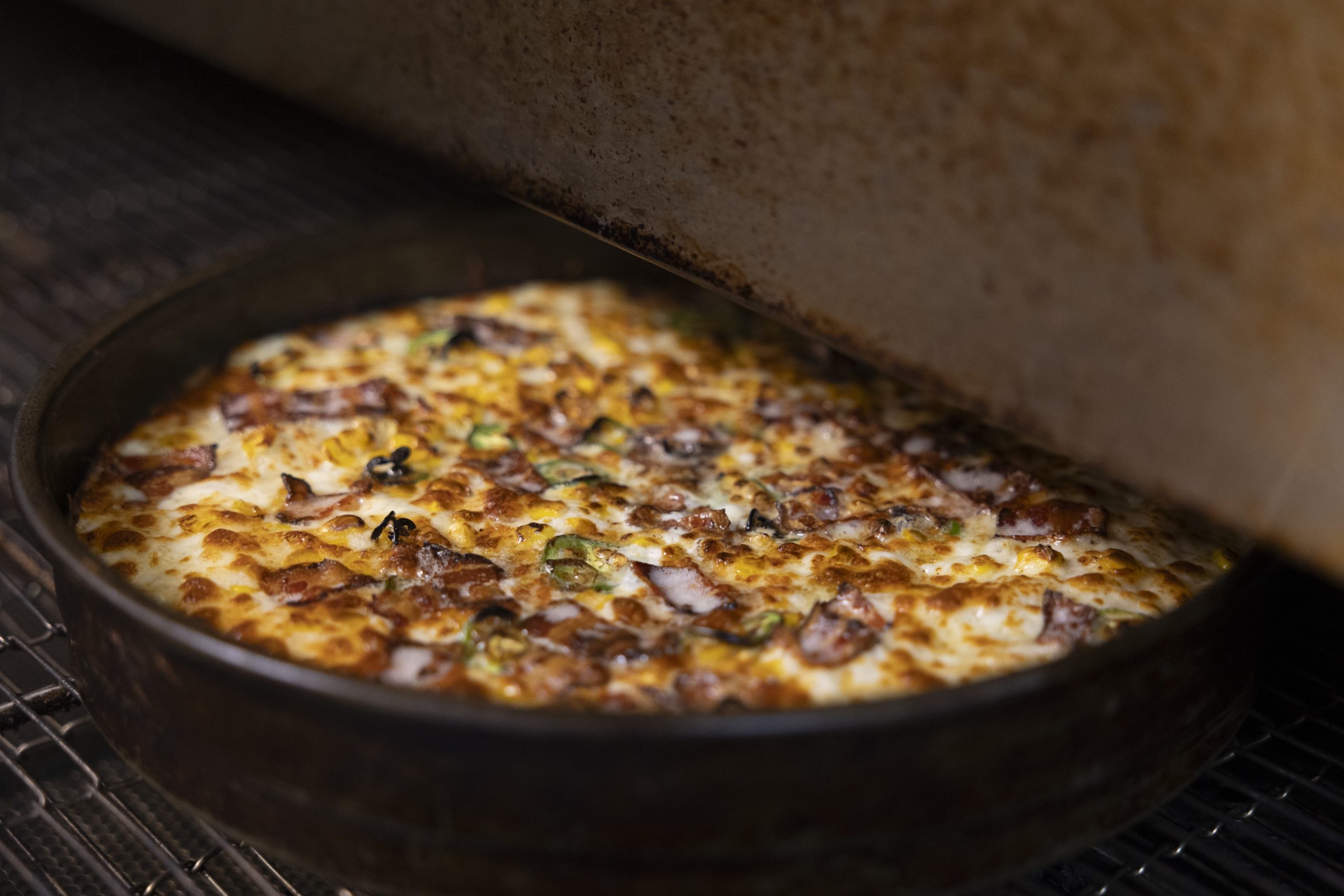
    Gluten-free pizza with summer corn at Barclay Pies in Cherry Hill.Tyger Williams / Staff Photographer

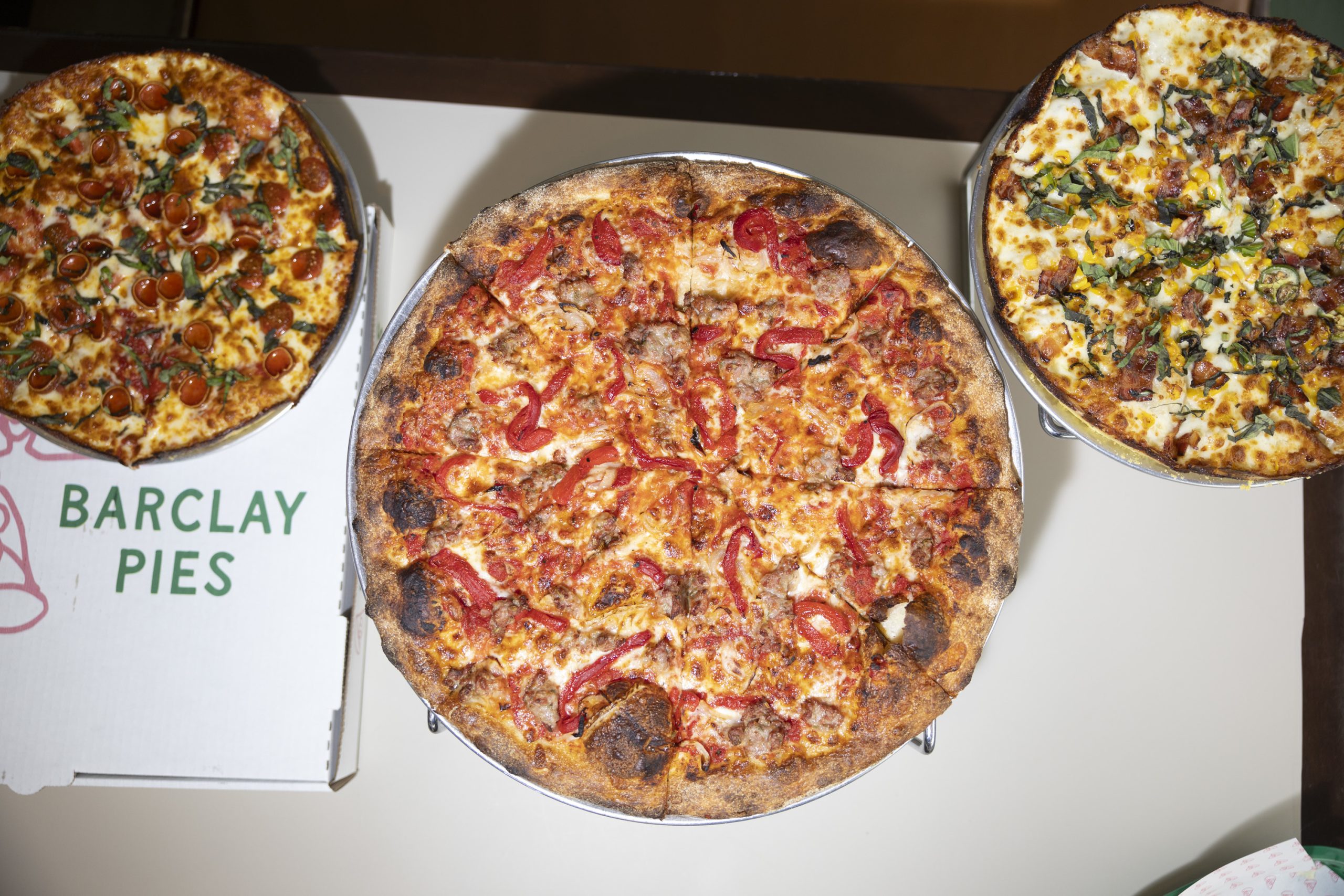
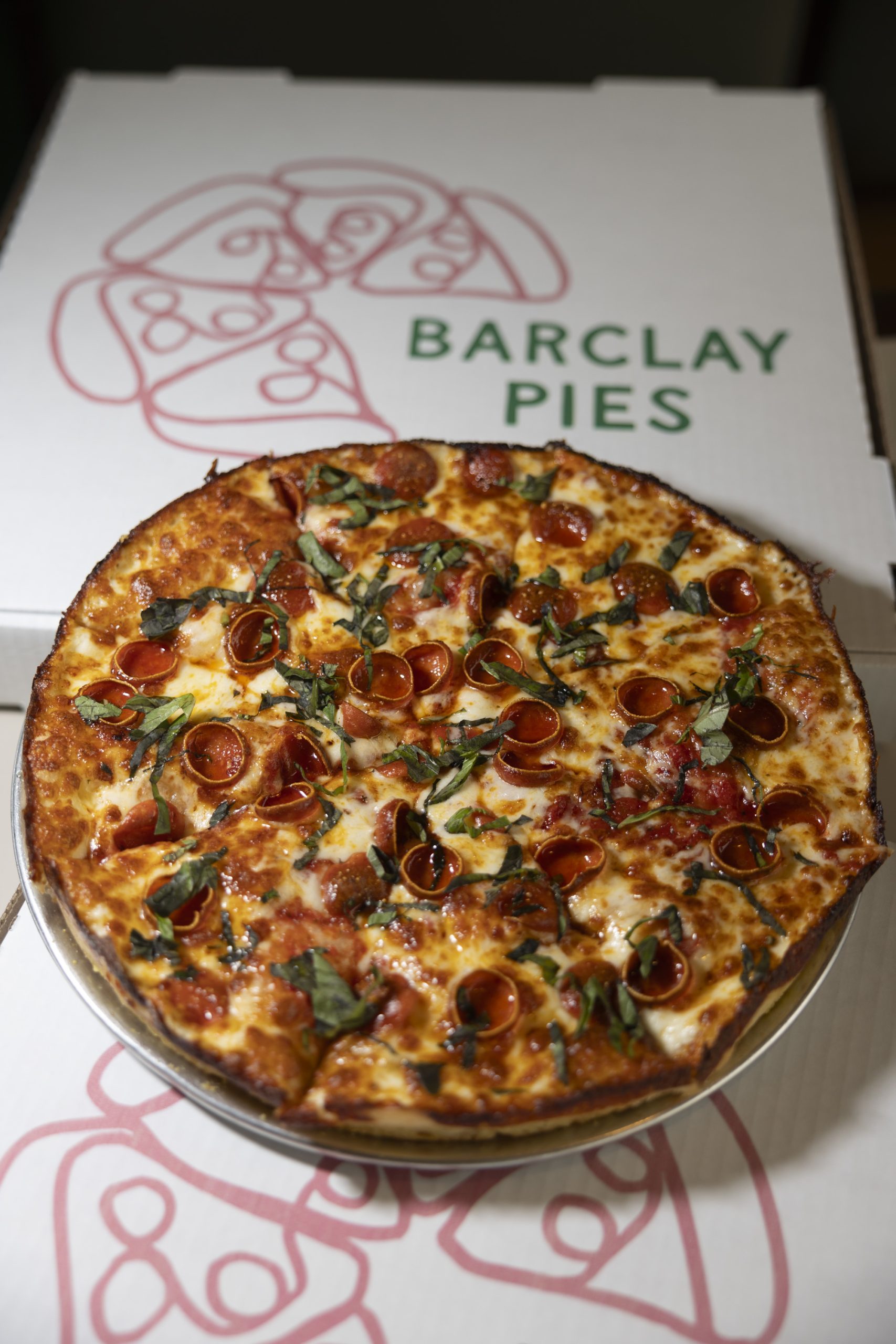
    But there would be no guilt tonight at Barclay Pies. Not once the first gluten-free pizza arrives at our table, its airy puff of a crust crisped around the edges to a tawny snap that beckons from under a crown of molten mozzarella topped with sweet summer corn, bacon, and chile peppers. Another pie arrives, this one zesty with a layer of red sauce bursting with bright California tomatoes and a whiff of oregano; fistfuls of cup-and-char pepperoni rounds are scattered over the top, then finished with honey and freshly ripped basil.

    “Oh wow, that does not even look gluten-free!” says Samantha.

    That’s been my exact reaction every time I’ve visited this pizzeria in Cherry Hill, initially with my daughter, Alice, who has celiac disease. Barclay also makes standard pizzas with glutinous flour, but it has generated a serious buzz within the gluten-free community over the course of its first year — for good reason.

    Gluten-free pizza with pepperoni at Barclay Pies in Cherry Hill.Tyger Williams / Staff Photographer
    Co-owners Thomas “TJ” Hunton (left) and Daniel Romero at Barclay Pies in Cherry Hill.Tyger Williams / Staff Photographer

    Barclay Pies was launched last summer by friends Thomas “TJ” Hunton, a regional director of operations for Shake Shack, and Daniel Romero, a vice president in engineering for Aramark. Its remarkably good pizzas, careful protocols to avoid cross contamination, and outgoing hospitality have helped change the narrative about what’s possible in a fast-casual setting with gluten-free options that go beyond just the pies.

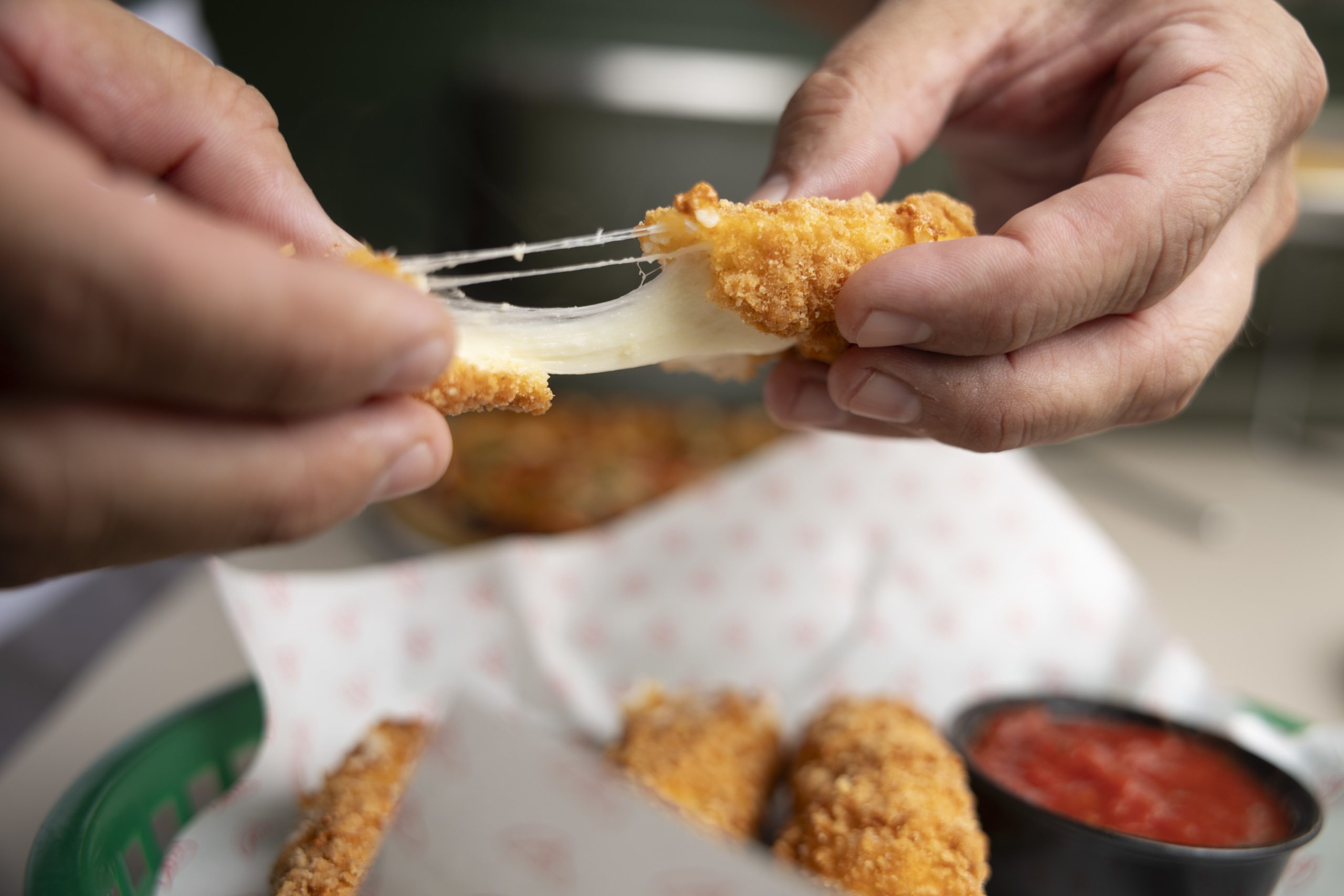
    Indeed, a mozzarella stick was the first bite to turn heads at our table. A safe-to-eat mozzarella stick is rare and coveted in the gluten-free community because deep fryers are common culprits for cross contamination. Not only are Barclay’s fryers completely gluten-free, these delicately hand-breaded sticks encrusted in potato starch, rice flour, and gluten-free panko crumbs are perfectly crisped. There is also a hunk of milky fresh mozzarella inside (another rarity: most use standard low-moisture varieties) that offered hot cheese-pull satisfaction from one side of the table to the next.

    Gluten-free mozzarella sticks at Barclay Pies in Cherry Hill.Tyger Williams / Staff Photographer

    The chicken wings were also superb, tender and juicy from a dry brine and par-bake, sealed inside a sheer crust of egg whites and rice flour, available in several good flavors, from punchy Buffalo sauce shaded with the richness of brown butter to lemon-pepper that sparkled in its craggy breading.

    My encounters on previous visits with boneless chicken tenders were far less inspired, including some overly brined meat so rubbery they gave me a refund. But I was heartened by a 360-degree turnaround on this latest visit. The team recently reworked their recipe, and the final results — expertly verified by Hunton’s 6-year-old daughter, Amelia — are stellar: a perfectly tender baton of meat in a flavorful crust ready for various house-made dips. The tangy ranch with buttermilk and fresh herbs was a favorite, though classic honey mustard also did the trick.

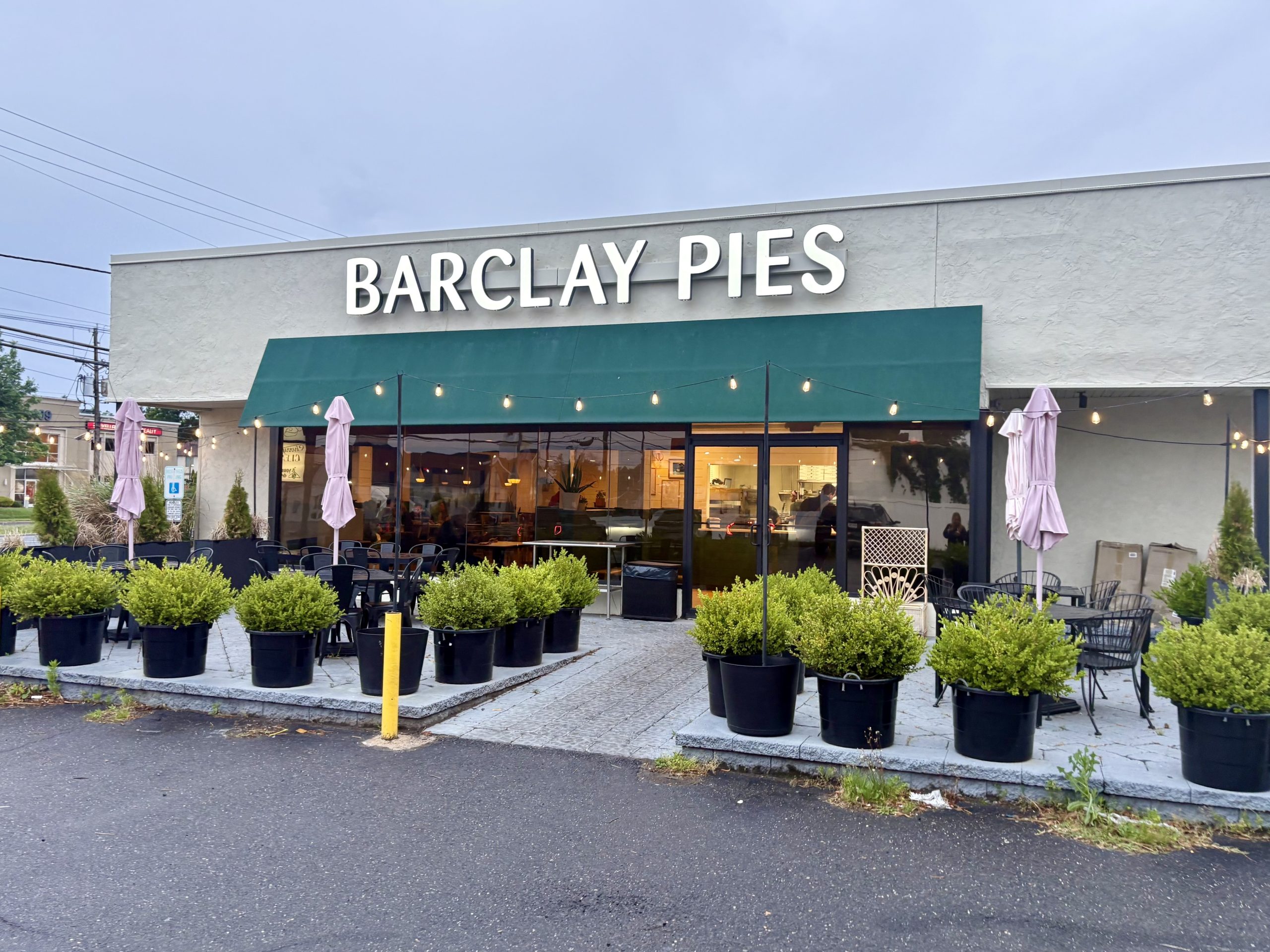
    Barclay Pies, located along Route 70 in Cherry Hill, has become known for its gluten-free pizzas.Craig LaBan / Staff
    Julie Romero (center right), of Cherry Hill, and Claire Ryder, of Collingswood, are enjoying some gluten-free pizza at Barclay Pies in Cherry Hill on July 21.Tyger Williams / Staff Photographer

    But pizza, of course, is the restaurant’s prime magnet. The duo decided to tackle the daunting gluten-free genre because Romero’s wife, Julie, has celiac disease. Making a gluten-free pizza worth the trouble is a major challenge. Gluten is a key protein found in certain grains — namely wheat, barley, and rye — that provides the structure to hold gas bubbles during fermentation and fosters a chewy, complex crust. Until recently, most GF versions of pizza I’ve tasted, whether made from alternative flours or cauliflower — and commonly outsourced in restaurants to avoid cross contamination — have been less than exciting, with textures ranging between pressboard and Styrofoam.

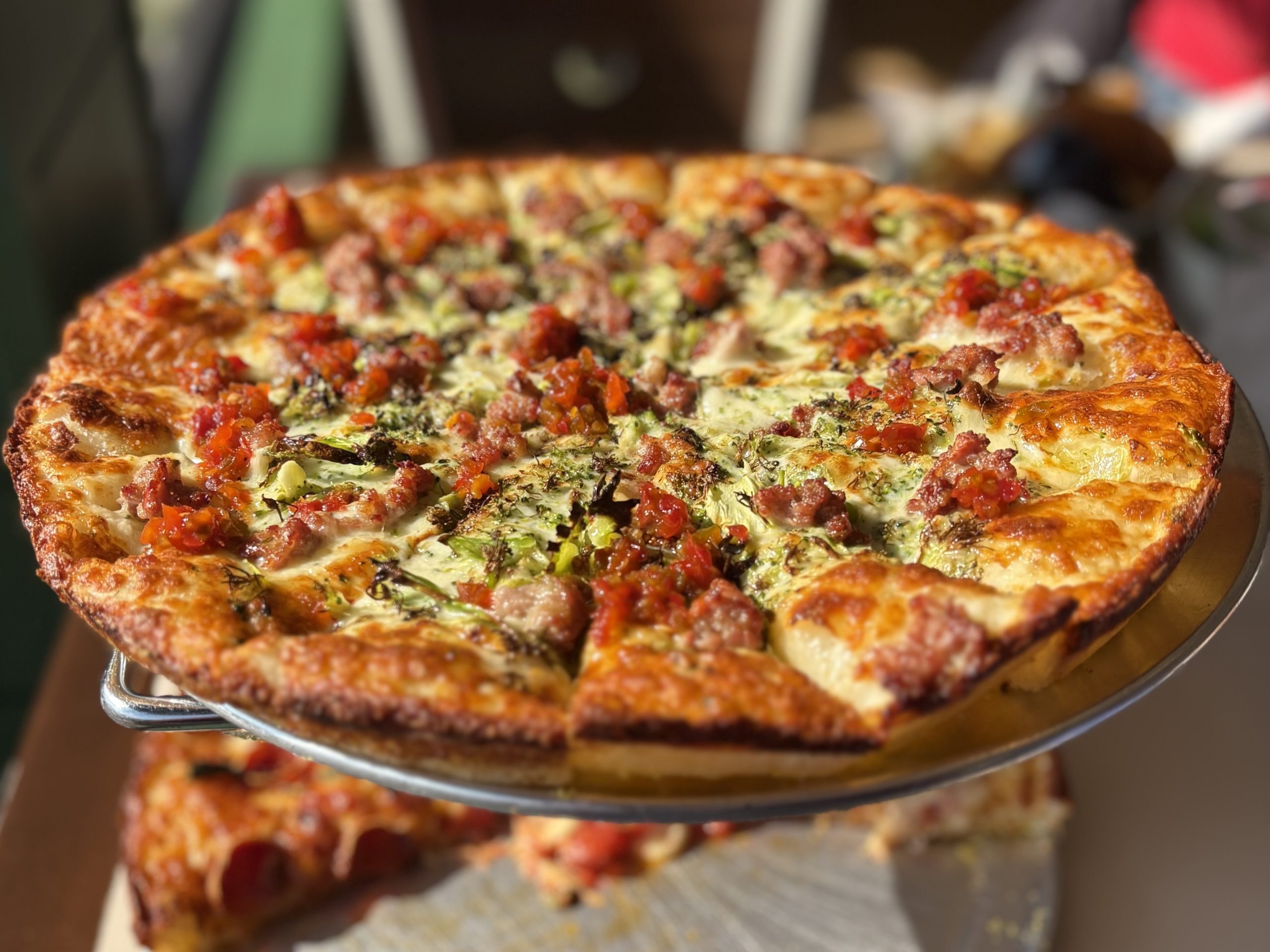
    Barclay’s gluten-free pies are not that. The Romeros worked for nine months to perfect a high-hydration crust that puffs like a supple focaccia. With a light dusting of cornmeal adding a delicate bottom crunch and the Detroit-style crispy frico cheese band around the edges, the pie achieves textural contrasts this gluten-free dough itself would not otherwise form. The pan-based format is helpful to prevent cross contamination, but having grown up in the Midwest, where deep-crusted pies are common, I found these to be completely satisfying platforms for Barclay’s toppings. I was impressed by the mushroom pie that blends thin-shaved creminis with caramelized onions over a white base of seasoned heavy cream and mozzarella. I also enjoyed the locally inspired combo of fennel sausage, broccoli, and zesty cherry pepper hoagie relish, the addition of Cooper Sharp lending the base of molten mozzarella some extra South Philly flow.

    The gluten-free broccoli and sausage pizza at Barclay Pies in Cherry Hill also comes topped with hoagie pepper relish.Craig LaBan / Staff

    I appreciate that Barclay is continuously tweaking its recipes, increasing the size of its fresh sausage chunks from the dried-out crumbles I found early on to the porky nuggets that dotted the roasted pepper-sausage pie we ordered on a traditional gluten-full round. That pizza had a perfectly fine, well-developed crust that was solid by neighborhood pizzeria standards. But the gluten-free pies are the draw, special enough to merit a regionwide pilgrimage.

    Samantha Garbose agreed: “Usually when we get gluten-free food together, I’m pretending it’s good, but I actually thought [Barclay’s] gluten-free pizza was better than the one that had gluten.”

    Standard gluten-full pizza with sausage and peppers at Barclay Pies in Cherry Hill.Tyger Williams / Staff Photographer

    Barclay’s sales numbers are starting to bear this out. Hunton says they initially anticipated selling only 10 gluten-free pies a day to supplement their traditional pizza sales. But gluten-free pies now account for a third of the pizzas they bake.

    “By the end of the first month we realized we’d really struck a chord,” says Hunton. “There’s a market need for a pizzeria that was truly inclusive.” Barclay also offers vegan pizzas with a cheese substitute made in-house from oat milk and tofu, deliberately avoiding nuts, an allergen ingredient commonly used in vegan cheese.

    There’s still a catch. One reason this dough is so good is because it uses Caputo Fioreglut, an Italian gluten-free flour blend that contains wheat starch whose gluten proteins have been removed. Fioreglut performs closer to wheat flour than most GF blends and is considered safe for most celiacs, but not for those who have an allergy to wheat.

    “We need to be pizza for everyone and we’re not fully there quite yet,” concedes Romero. “But that’s our North Star.”

    The gluten-free broccoli and sausage pizza at Barclay Pies in Cherry Hill also comes topped with hoagie pepper relish.Craig LaBan / Staff

    The past few years have been a vibrant era for local experimentation with better gluten-free pizza alternatives, though few compare to Barclay Pies’ crust. Emmy Squared has long made gluten-free versions of its standard Detroit pies in Queen Village. Corio in University City has been working on a potato-based dough for thin-crusted counterparts to its Neapolitan-style pizzas. Gluten-free pasta specialist Settantatré has mastered an airy gluten-free focaccia base for the tomato pies it sells at local farmers market stands and its Berwyn market-cafe. Perhaps the best gluten-free pizza I’ve ever eaten was created by 13th Street Cocktails caterer Aaron Gordon for the exceptional pan pies at his Agricola in Passyunk Square, but this quirky corner pizza atelier is not a reliable source for frequent orders, limited now to only private charity events (but perhaps reopening to the public this fall).

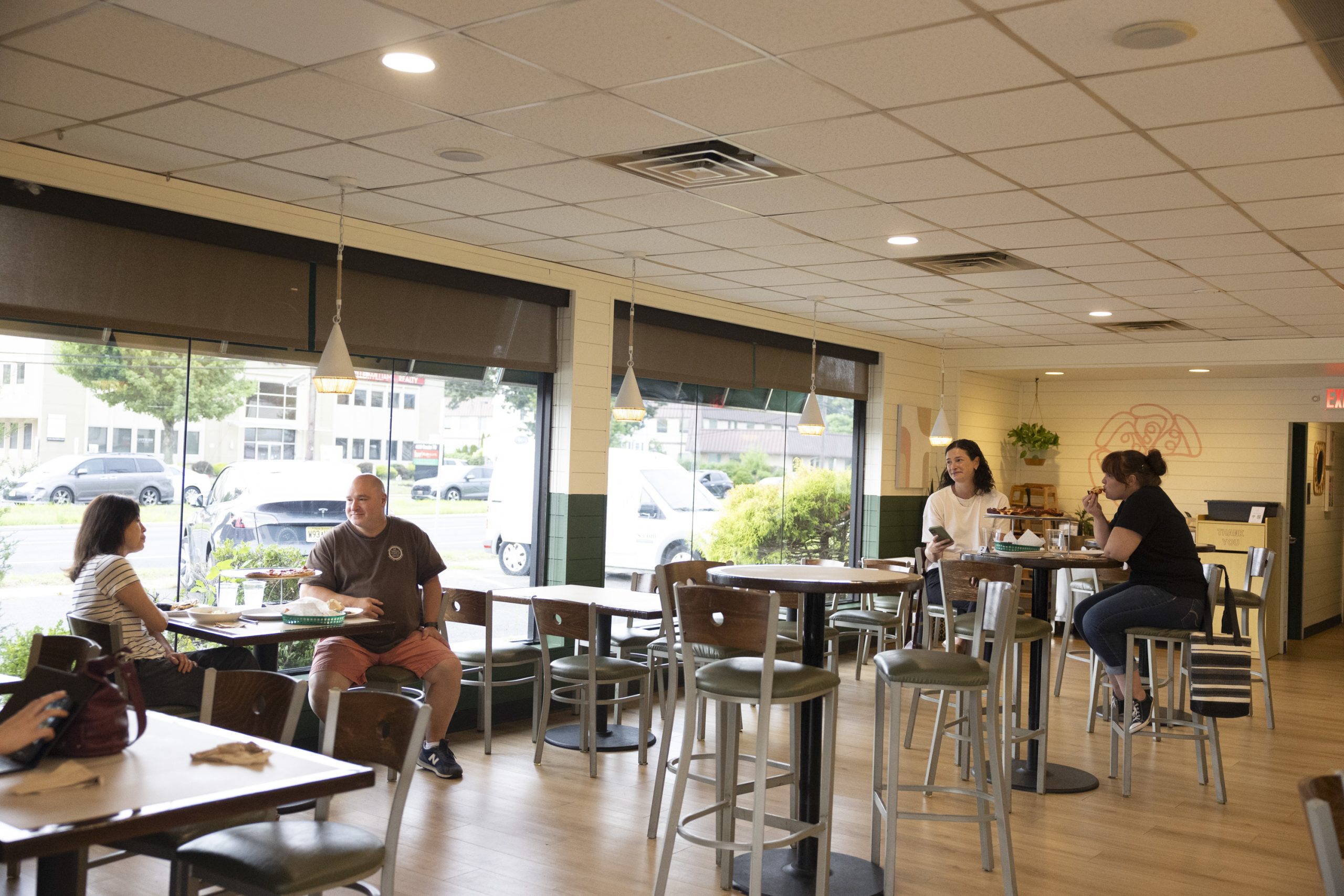
    Hunton and Romero have drawn on their professional experiences to quickly build Barclay Pies into the region’s most accessible hub for gluten-free pizza satisfaction. With its 50 indoor seats, 25 on its patio, and a bright pink-and-green makeover for the former Seasons Pizza, they’ve created a pleasant dining space with user-friendly systems for a cheerful and well-trained staff to operate efficiently while the owners, who are frequently there, also retain their day jobs. (Hunton, a Garces alum, still oversees operations at 70 Shake Shacks from New York to Virginia.)

    Most importantly, gluten-free customers can take comfort in knowing protocols have been put in place to minimize risks of cross contamination. The gluten-free dough is mixed first thing each morning in a separate GF-only mixer, prepped at a separate station, run through a dedicated conveyor belt oven, and finished at a separate station with color-coded cutters and spatulas. The gluten-free pies are also proofed and cooked in round pans to clearly distinguish them from the gluten-full Detroit pies that are cooked in square pans.

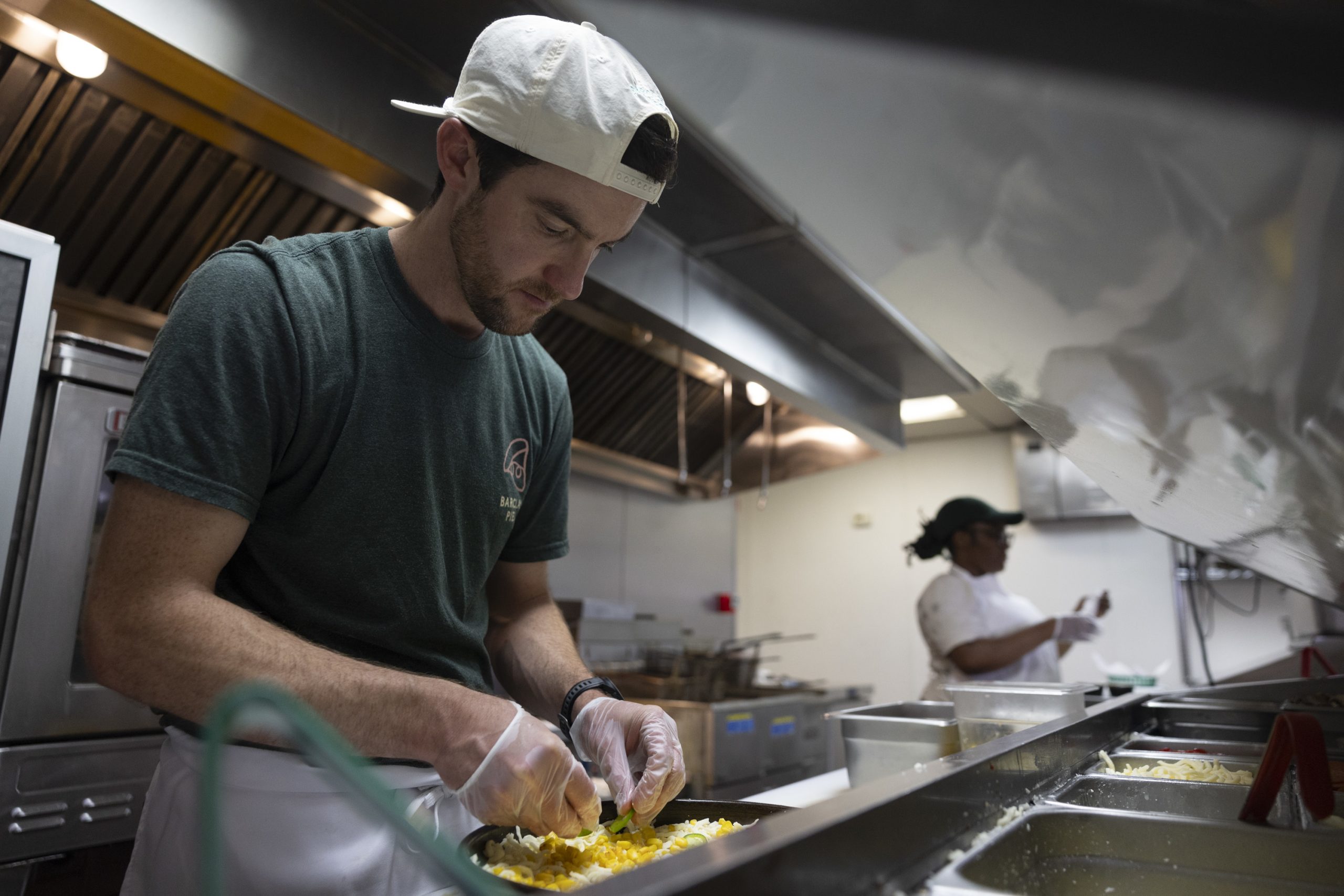
    Co-owner Thomas “TJ” Hunton making gluten-free pizza with summer corn at Barclay Pies in Cherry Hill.Tyger Williams / Staff Photographer

    While there will never be 0% risk as long as products with gluten are made in-house, and that may not suit those who are especially sensitive, my daughter ate there three times without incident. Hunton and Romero also strongly believe there is a broader community benefit to offering both options, as opposed to being entirely gluten-free. This way groups of diners with diverse needs and preferences can feel seen and safely served together without being singled out.

    This works especially well for the Garboses.

    “We’d prefer to go to a restaurant that has great options for both of us,” says Mike. “Life is too short for either of us to eat bad food.”

    But in the case of Barclay Pies, their “his and hers” pizza night had a different, guilt-free twist: “It’s been so long since Mike and I got to actually enjoy the same pizza,” says Samantha. “This was really a thrill.”

    Gluten-free pizza with pepperoni at Barclay Pies in Cherry Hill, N.J., on Tuesday, July 21, 2026.Tyger Williams / Staff Photographer

    Barclay Pies

    450 Marlton Pike, Cherry Hill Township, N.J. 856-712-1900; barclaypies.com

    Open Sunday to Thursday, 11 a.m. to 9 p.m.; Friday and Saturday, until 9:30 p.m.

    Pizzas, $19-$24 (plus $4 for gluten-free crust).

    Wheelchair accessible.

    Menu is almost entirely gluten-free. Standard pizzas with gluten-full flour are made in the same facility but extreme care and protocols are taken to prevent cross contamination.

    BYOB. There are several excellent liquor stores nearby. The restaurant also provides good-quality stemless plastic drinkware.

    Menu Highlights: Gluten-free pizzas; mozzarella sticks; wings; chicken tenders.

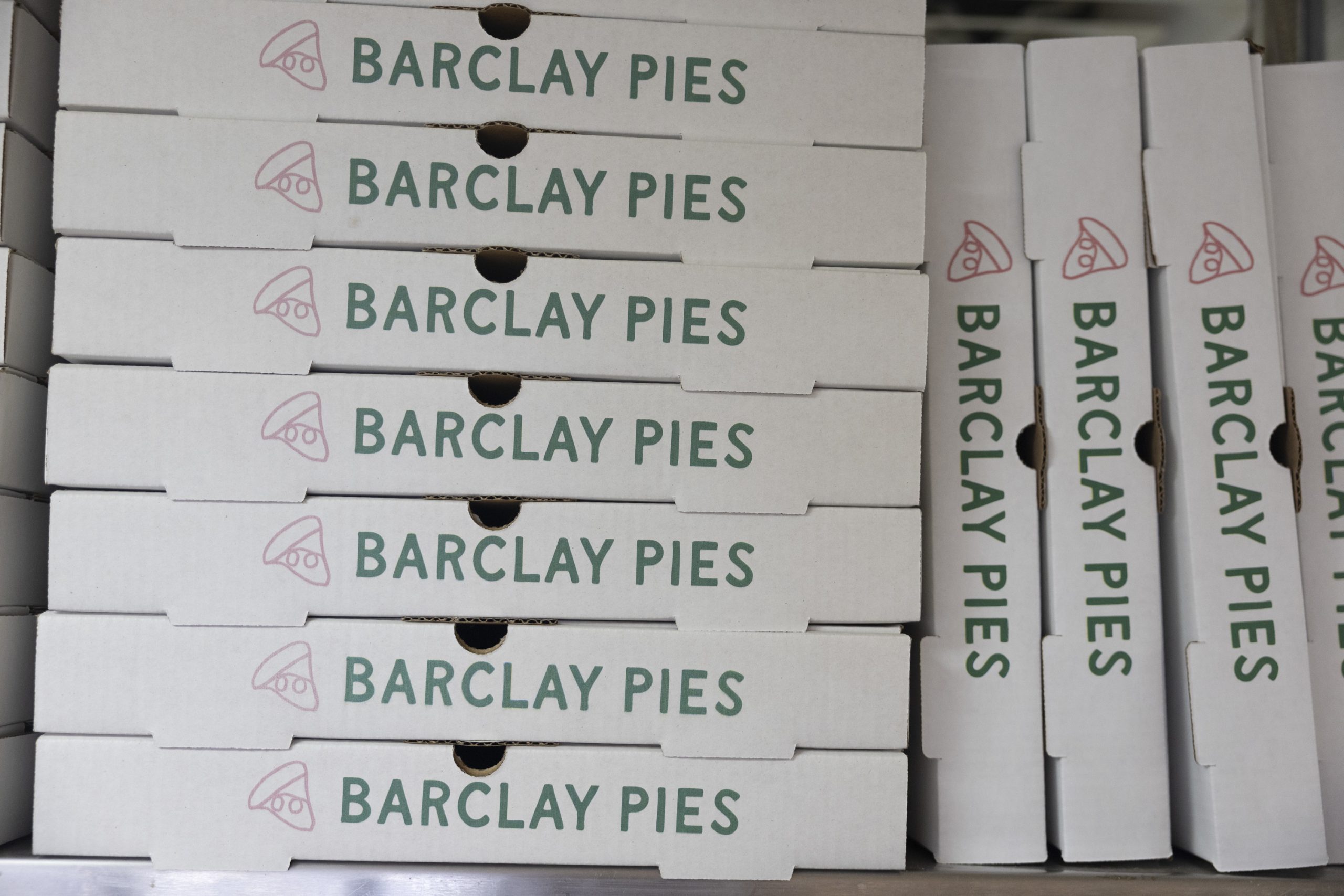
    Barclay Pies boxes in Cherry Hill.Tyger Williams / Staff Photographer
  • Draymond Green is right about VJ Edgecombe. But he couldn’t be more wrong about LeBron James.

    Draymond Green is right about VJ Edgecombe. But he couldn’t be more wrong about LeBron James.

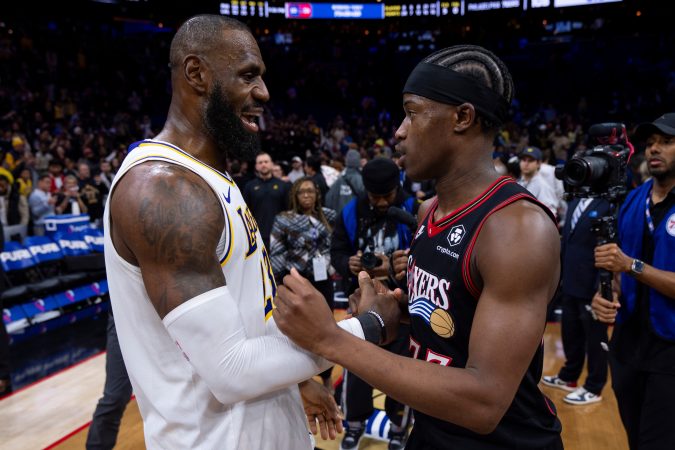
    Draymond Green is wrong about one thing. VJ Edgecombe’s agent should be ecstatic. If he isn’t, then Edgecombe should find a new agent. There are only a small handful of people who have more to gain from LeBron James signing with the Sixers, and all of them own charter helicopter services that fly between New York and Philly.

    That’s not to say we should completely dismiss the concern raised by Green in a recent podcast episode.

    “If I’m VJ Edgecombe’s agent, I’m not sure I’m happy with the summer that the 76ers have had,” said Green, the star power forward whose Warriors were among a number of contenders that had hoped to land James. “Like you go from being sometimes the second option when [Joel] Embiid was out to sometimes being the fifth option. It’s a big, big difference.”

    Green isn’t wrong about the overarching issue. What he’s missing is that the issue predated James, and that James is much more likely to alleviate it than exacerbate it.

    Nick Nurse will need to be mindful of Edgecombe’s usage rate. On a team with three prime-aged players accustomed to getting 20-plus shots per game plus LeBron, the Sixers would be doing themselves a disservice if they allowed Edgecombe to pause his superstar progression to spend a couple of seasons as a glorified Josh Hart. I don’t know if I’d go so far as to call it a concern. But it is most definitely an unknown, one that carries some downside risk. Green is right about that.

    Edgecombe’s superstar flashes as a rookie occurred in moments and stretches where he operated as the primary option. We got the best glimpses of the guy he could become in the moments where the Sixers needed him to be that guy: when the offense ran through him, when the success or failure of the possession at hand was his to dictate. Remember the 20 points he scored in the first half against the Celtics in Game 2 of the Eastern Conference semis? Edgecombe scored five unassisted buckets during that heater. Four of them were pull-up jumpers, including a 27-footer from three-point range.

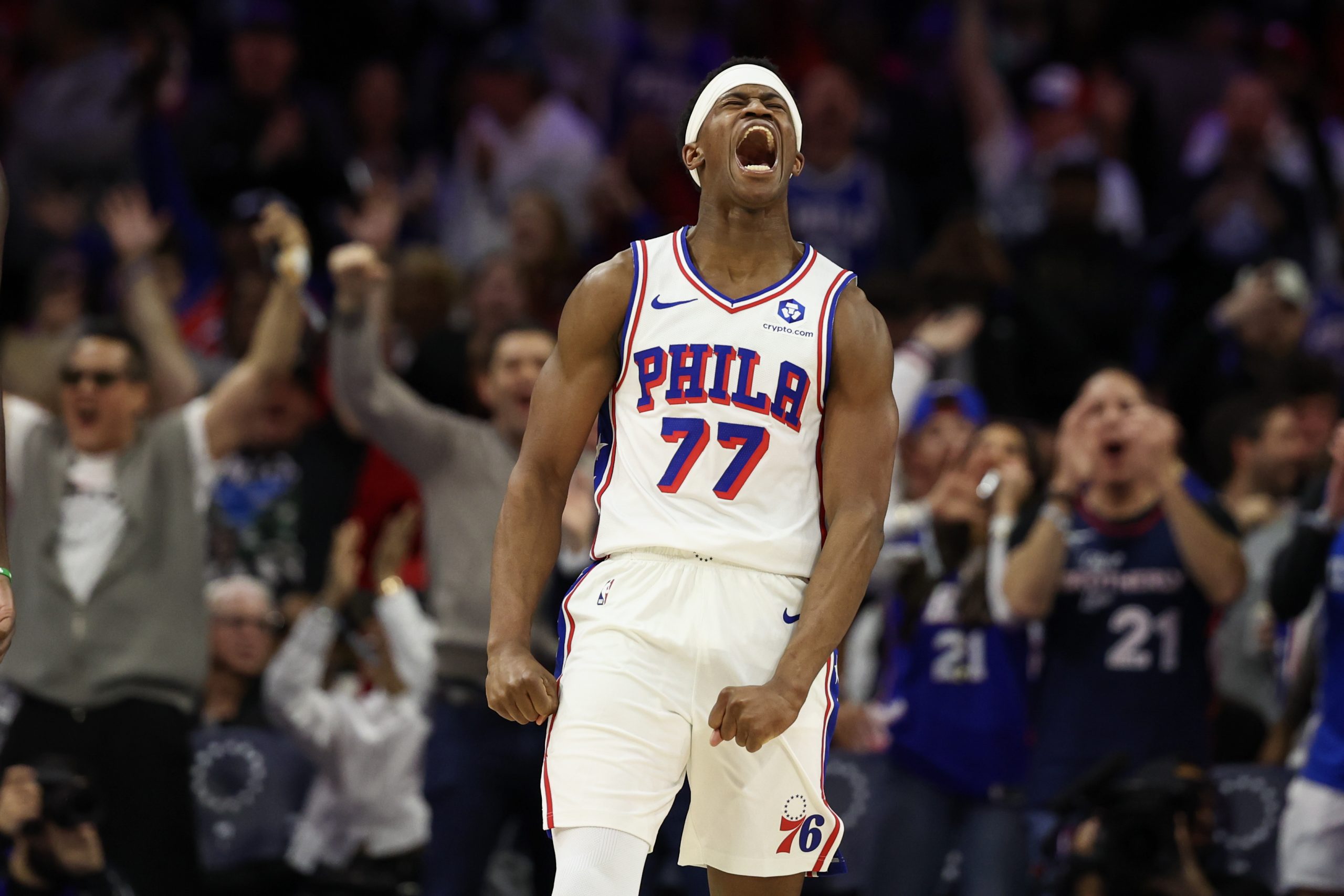
    Sixers guard VJ Edgecombe will be a key member of one of the NBA’s best five-man lineups.Monica Herndon / Staff Photographer

    That aspect of Edgecombe’s game is why NBA folks mention guys like Jimmy Butler and Dwyane Wade when talking about his potential. Neither is a perfect comp. Butler is a better one than Wade. They both make sense from a stylistic viewpoint. Wade and Butler are/were two of the best at methodically getting to their spots and then owning that spot. That’s something a player needs to develop, both in terms of feel and in terms of pacing. So, yeah, it’s a potential drawback if Edgecombe always gets last dibs on spots. I’m just not sure I agree with Green that LeBron compounds the potential issue. I actually think he could prove to be a godsend for Edgecombe.

    Two things you can say about James throughout his career. One, he recognizes talent; and, two, he is willing, even eager, to facilitate things for that talent. That’s especially true of young talent.

    Kyrie Irving flourished alongside James in Cleveland. So did Austin Reaves in Los Angeles. James has played with a slew of young up-and-comers who didn’t have nearly the talent that Edgecombe has. All had plenty of opportunities. Kyle Kuzma and Brandon Ingram both averaged at least 18 shots per 100 possessions when they were on the court with James during his first year with the Lakers. Malik Monk had arguably the best season of his career as a 23-year-old Laker. D’Angelo Russell’s most efficient seasons — really, his only efficient seasons — came during the 125 games he played with the LeBron Lakers.

    Two years ago, Russell, James and Anthony Davis all averaged between 14 and 18 shots per game, while Reaves and Rui Hachimura both got between 10 and 12. Keep in mind, James and Davis both played 70-plus games and 35-plus minutes per night that season.

    Nurse will be able to find spots to let Edgecombe do his thing. James only played in 60 games last season. Embiid has played in 96 total over the last three seasons. During the course of a game, you could see a lineup with Edgecombe, Dean Wade, Anfernee Simons, Kentavious Caldwell-Pope and a backup center on the court together.

    James shouldn’t be a drag on Edgecombe. He should be a force multiplier. There’d be a bigger reason for concern without him. Really, it’s what makes the signing of James so transformative. Before, there was some real reason to wonder how well Edgecombe and Maxey would mesh with a couple of ball-dominant alphas who both feel as if they have a lot left to prove. James’ biggest benefit to the Sixers is his ability to smooth that dynamic, not so much in the locker room but on the court with his style of play and commanding presence. There’s a very real world where he ends up serving as the bridge connector between the younger and older halves of the foursome.

    The biggest winners of last week’s wild turn of events were Edgecombe and his financial dependents. Them, and the Air Redick operators.

  • The Phillies must go through the Dodgers. To do it they’ll need to find a lefty reliever at the trade deadline.

    The Phillies must go through the Dodgers. To do it they’ll need to find a lefty reliever at the trade deadline.

    Whatever the prediction models say about the Phillies’ chances to win the World Series — 5.8%, according to FanGraphs; 1.5%, from Baseball Reference — let’s agree on one thing.

    The road will probably run through the Dodgers.

    It’s not only that the two-time defending champs are playing at a 102-win pace. They’re also finally getting healthy. With Edwin Díaz and Kiké Hernández due to return this week and Blake Snell soon to follow, who needs the trade deadline?

    At last check, five of the Dodgers’ seven best healthy hitters bat from the left side. The thought of running through a gauntlet of Shohei Ohtani, Freddie Freeman, Max Muncy, Kyle Tucker, and Dalton Rushing in the late innings has made one lefty reliever especially popular in trade talks leading up to Monday’s 6 p.m. deadline.

    Remember the name: Adrián Morejón.

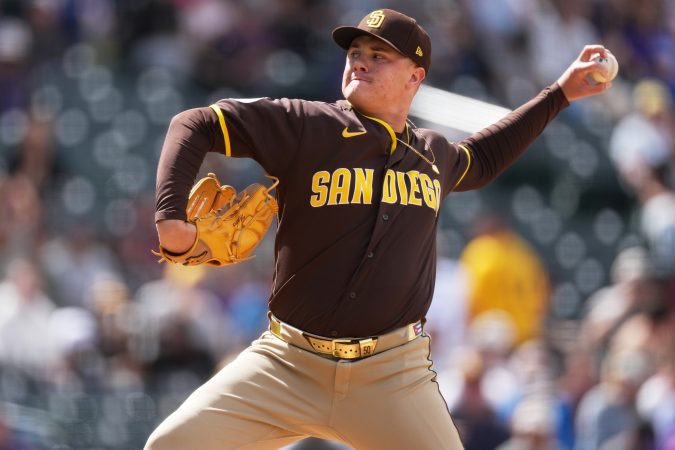
    “Everybody” is asking the Padres about Morejón,“ a major league source said, “especially in the National League.” The 27-year-old pending free agent has a fastball that averages 99.4 mph and a 27.4% strikeout rate to go with a 3.20 ERA.

    Oh, and he has allowed one homer to a left-handed hitter (old friend Mickey Moniak of the Rockies) in the last two seasons.

    As constituted, the Phillies are a tough matchup for the Dodgers, especially in a seven-game series, because of lefty starters Cristopher Sánchez and Jesús Luzardo. Los Angeles gets considerably more production from the left side of the plate (.809 OPS) than the right (.720).

    But the Phillies’ best lefty reliever is José Alvarado, who has a 6.00 ERA despite allowing only one run in his last seven appearances. While team officials cite underlying metrics, such as batting average on balls in play (.412) and expected ERA (3.66), to claim that Alvarado has been unlucky, he also has given up a higher-than-usual rate of line drives and fly balls.

    Phillies lefty reliever José Alvarado entered the week with a 6.16 ERA in 44 appearances.Jose F. Moreno / Staff Photographer

    Tim Mayza, a groundball pitcher with his best strikeout rate (24.2%) since 2023, is the second lefty. He has an 8.68 ERA this month. Beyond that, Tanner Banks is out until at least mid-September with a strained left forearm.

    So, it would make sense for Morejón to top the Phillies’ list of deadline targets, though it remains unclear if he will even be available.

    The Padres are among the NL’s biggest underachievers, with a 53-53 record. But after sweeping the Marlins last weekend — aided by 2⅓ hitless innings from Morejón — they were two games out of a wild-card spot. And their last six games before the deadline are against the woeful Rockies and Giants.

    With a good week, the Padres could buy — or stand pat, at least — and take their chances with Morejón and star closer Mason Miller at the back of the bullpen. If they stub their toe again, moving Morejón’s expiring contract could be among their first trades.

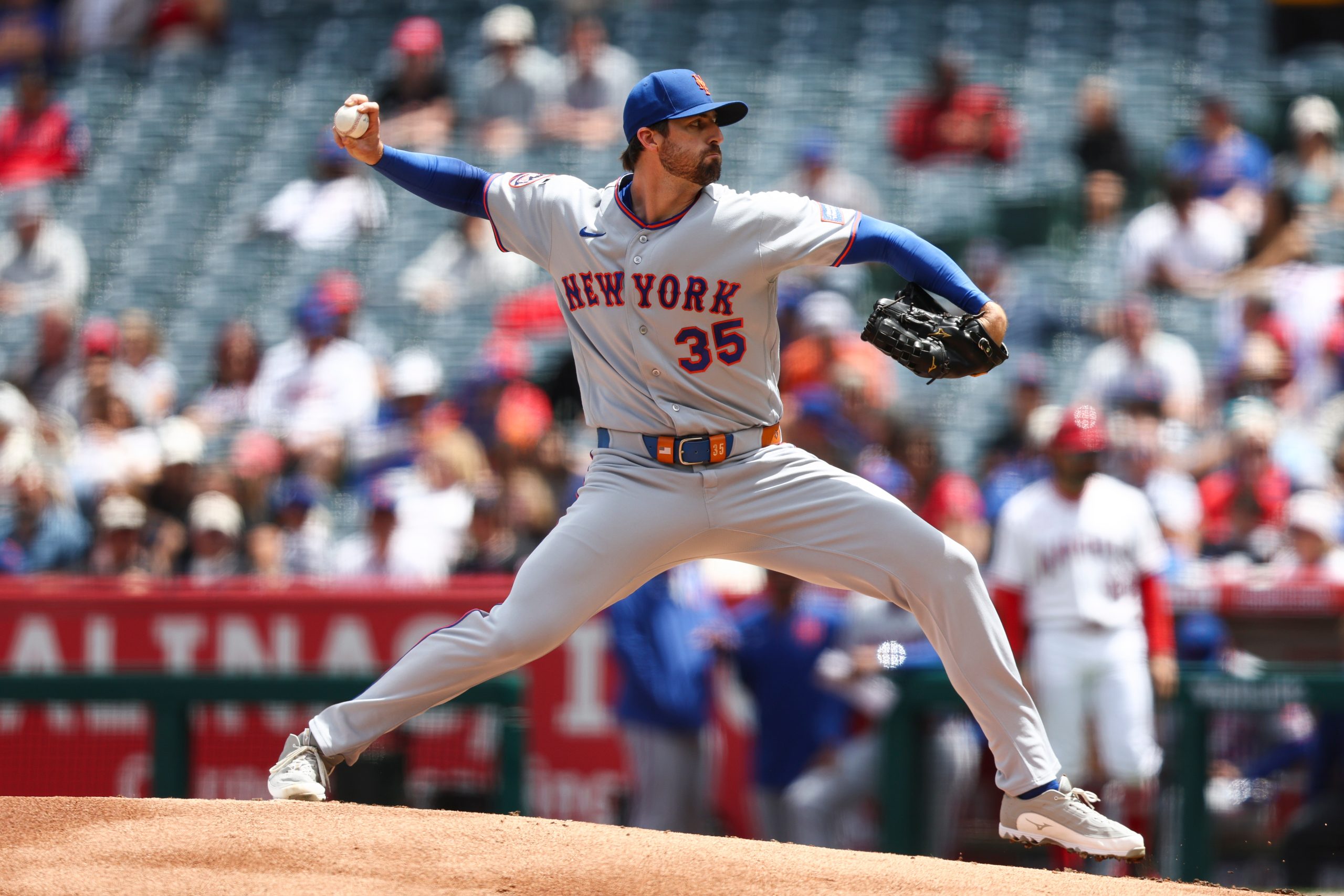
    The Mets have two veteran lefties who are eminently available. And Brooks Raley (2.09 ERA) and A.J. Minter (2.45) auditioned for scouts against the Dodgers last weekend.

    Raley, 38, got three outs, including Ohtani, on seven pitches in the seventh inning Sunday, two days after giving up back-to-back hits to Tucker and Teoscar Hernández and a sacrifice fly to Ohtani. Minter, 32, allowed a two-run homer to Tucker in the eighth inning Friday.

    Both lefties will get traded. But would the out-of-contention Mets deal them to a division rival?

    The Red Sox paid a high price last weekend to acquire righty-hitting infielder Curtis Mead from the Nationals.Rick Scuteri

    The price for right

    In a one-for-one swap of major leaguers last Saturday night, the Red Sox acquired infielder Curtis Mead from the Nationals for Connelly Early, a 24-year-old lefty starter with six pitches and five years of club control.

    At first blush, three rival scouts said Boston overpaid.

    But it also appears to be indicative of the market for right-handed bats, with demand far surpassing supply. Mike Trout and Byron Buxton don’t seem inclined to waive no-trade protection; the Orioles have pending free agent Taylor Ward and a losing record but remain in wild-card contention. The Reds were listening on Spencer Steer before putting him on the injured list with a sprained wrist that may end his season.

    Nationals president of baseball operations Paul Toboni told reporters he was “not really expecting to consider anything for Curtis” until the Sox came with a “pretty darn aggressive” offer. Red Sox chief baseball officer Craig Breslow said it was “incredibly uncomfortable” to deal Early but called it a “need-for-need-type trade.”

    There isn’t a team that needs a right-handed bat more than the Phillies, last in the majors in on-base percentage (.280) and OPS (.640) from the right side of the plate.

    One option: the Royals’ Lane Thomas, who hits lefties and would be a platoon option with Brandon Marsh or perhaps Gabriel Rincones Jr. The Phillies looked into Thomas two years ago before he got traded to the Guardians.

    The Phillies had a scout in San Francisco over the weekend. The Giants are reportedly open to moving Heliot Ramos, more of an everyday solution. But given that he’d come with three years of club control, an overpay might be required to land the 2024 All-Star.

    Mets righty Clay Holmes is scheduled to make his second minor-league start Tuesday night in his return from a leg fracture.Jessie Alcheh

    Searching for Holmes

    With rain in the forecast Tuesday in the Northeast, the Mets relocated righty Clay Holmes’ minor-league rehab start to a low-A game in Florida.

    It will be heavily scouted.

    The Phillies dispatched a scout to Syracuse, N.Y., last week for Holmes’ first start in his recovery from a fracture in his right leg. If he’s healthy, the 33-year-old closer-turned-starter could help the Phillies in the rotation in the final two months of the regular season before possibly shifting to a late-inning role in the postseason.

    Giants lefty Robbie Ray (1.71 ERA in his last 10 starts) and Blue Jays right-hander Kevin Gausman (4.51 ERA) could also be on the move. Like Holmes, they are pending free agents.

    Two rival team officials theorized that the Phillies could reduce the prospect return for a pitcher such as Ray or Gausman by taking on the remainder of the salary. Both are owed about $8 million through the end of the season.

  • LeBron James believed he could win with Joel Embiid. The 2024 Olympics can show the Sixers how.

    LeBron James believed he could win with Joel Embiid. The 2024 Olympics can show the Sixers how.

    On a practice court in Paris early in the 2024 Summer Olympics, during the event that was supposedly a testament to his selfishness and opportunism, Joel Embiid glanced around the gym at the stars who soon enough would meet their expectations of gold-medal glory. There was Steph Curry. There was Kevin Durant. There was You Know Who.

    There was LeBron James.

    “This is a great setting for me because I’m playing with a lot of great players,” Embiid said then. “It’s all about finding ways to win. Whatever I can add to make sure we win, that’s all there is.”

    Two years later, with James’ decision last week to become Embiid’s teammate again, Embiid’s up-and-down experience during those Games should take on a new perspective and value. If the sacrifice of Embiid’s playing in those Olympics, dragging his body up and down the court for five games in that tournament, was a lost Sixers season in 2024-25, maybe the real upshot is that the entire experience and Team USA’s victory paved the way for James to stun everyone and sign with the 76ers.

    Only Embiid and James know how many text messages it took, how much pleading Embiid had to do to persuade James that Philadelphia was the place for him, that Embiid was healthy enough and committed enough for the two of them to win a title here. Whatever words and memes passed between them this offseason, they were enough that a source with knowledge of their interaction said that Embiid played “a significant role” in coaxing James to choose the Sixers.

    He wasn’t the only one. Bob Myers brought the necessary cachet and credibility, and Mike Gansey’s relationship with James from their time together in Cleveland helped, and Tyrese Maxey’s talent and connection to James through Klutch Sports mattered. Still, this was mostly a peer-led push from Embiid and Maxey to get James to see the possibilities here.

    Most importantly for the Sixers and the player who has been their centerpiece for the last 12 years, Embiid already had to have established a baseline of confidence with James for LeBron to take this leap.

    They’ve been in the NBA together since 2014, but when Embiid finally settled on playing for Team USA in ‘24 — after shopping his skills to France and Cameroon — his relationship with James could have fallen apart. And from an outsider’s view, it had the potential to crumble. It was a chore just to watch Embiid lumber around the floor, his left knee leaving his whole body wobbly and unstable, the sweat flooding his face.

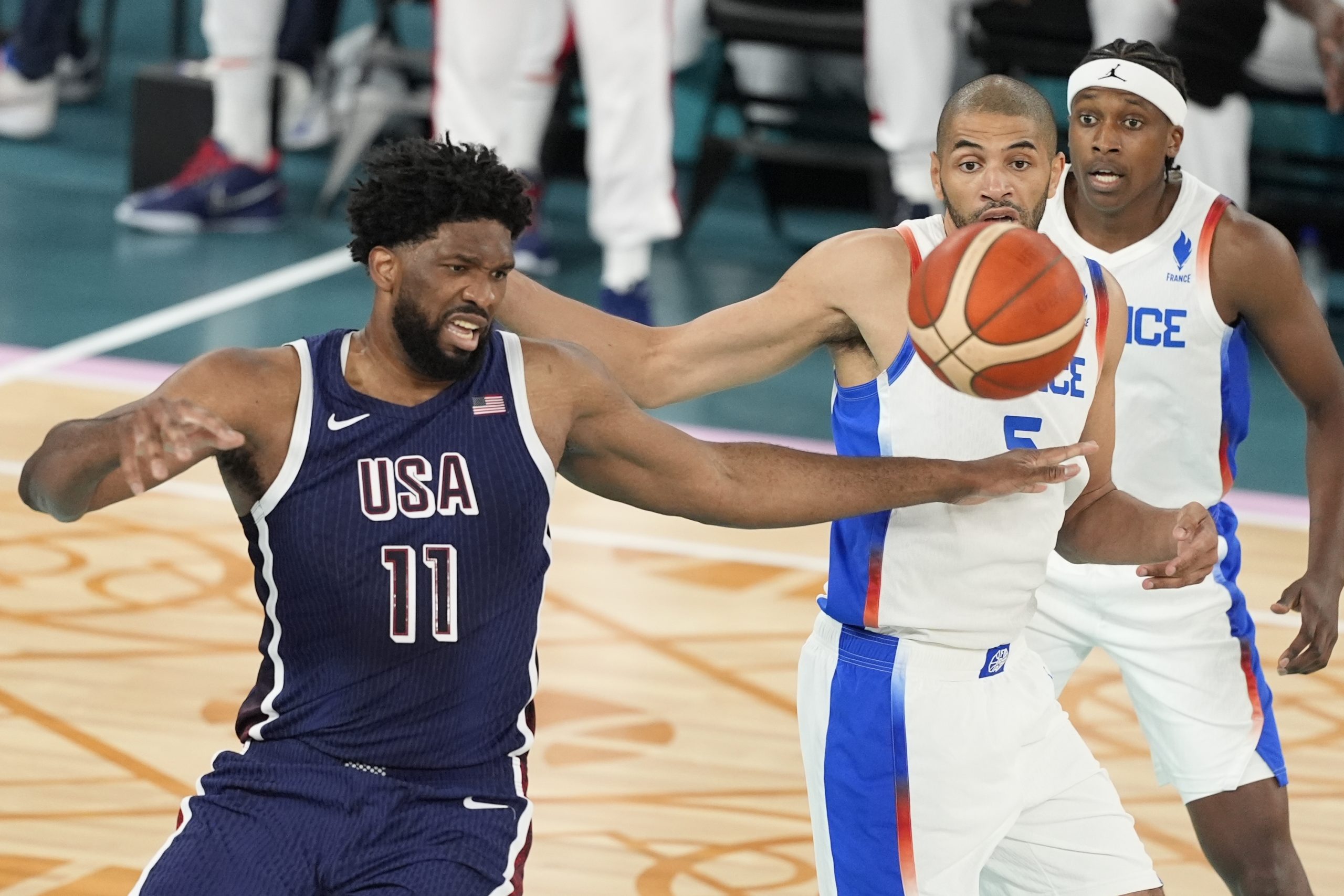
    Joel Embiid (11) was not physically at his best in the 2024 Paris games but his efforts were a step towards a future alliance with LeBron James. Michael Conroy

    The complaints that Embiid had put his own aims and goals — “It feels good to be part of winning something as a team,” he said after Team USA’s victory over France in the gold-medal game — above the good of the Sixers were to be expected around here. They also ignored the priority that Embiid’s Team USA teammates, James among them, placed on competing on that stage, for the right to call themselves the best in the world. In that context, there was an understanding that it took a lot for Embiid just to be out there playing, and there was an appreciation that, without him and his 19 points and second-half dominance of Nikola Jokić in the semifinals against Serbia, the U.S. wouldn’t have won gold at all.

    No, Embiid wasn’t the overall force that James or Curry or Durant was in Paris, but he apparently didn’t do anything to dissuade James from thinking that he could win with him. Now Embiid gets another shot to witness what James does each day to prepare, how much that preparation matters to him, and how he can model the habits and behavior on which James has built his remarkable 24-year pro career.

    “Even though I see a broken-down Joel — in the fourth quarter, if ever the verb ‘trudge’ would fit anybody, Joel just trudges up the court — even given all of that, I would say it is absolutely true it’s good to [be] around these guys who have won something — just getting a different kind of culture,” former Sports Illustrated staff writer Jack McCallum, the author of Dream Team, the definitive work on the 1992 U.S. Olympic men’s basketball team, said in a 2024 interview.

    “What those guys got from the other guys. I was sort of astonished to hear that. … ‘Oh, I really found out how Karl Malone worked out. Oh, I really found out about Larry Bird’s shooting drills. Oh, I watched [Michael] Jordan and [Scottie] Pippen play defense, and I took that back to my team.’ As much as [the Sixers] are probably going, ‘No,’ I would say play, because I think there’s a real positive aspect that he can get out of that.”

    The time to show what he learned is now. At 32, without having appeared in more than 39 games in any regular season since 2022-23, Embiid can’t be counted on and shouldn’t expect to be the primary focus of the offense every single time he’s in the lineup. The best-case scenario for the Sixers, of course, is that he won’t have to be — not every night, not even most nights. Among James, Brown, Maxey, VJ Edgecombe, and an improved bench, they have plenty of firepower even if Embiid isn’t their alpha and omega. “You’re used to being the guy,” he said in Paris. “Now you’ve got to be with these guys.” What they’ll likely need is what he gave Team USA against Serbia. What they’ll need is Embiid to pick his spots, to win them particular games against particular opponents. He’ll still be vital, but he might end up bearing a lesser burden, and the team might be better for it.

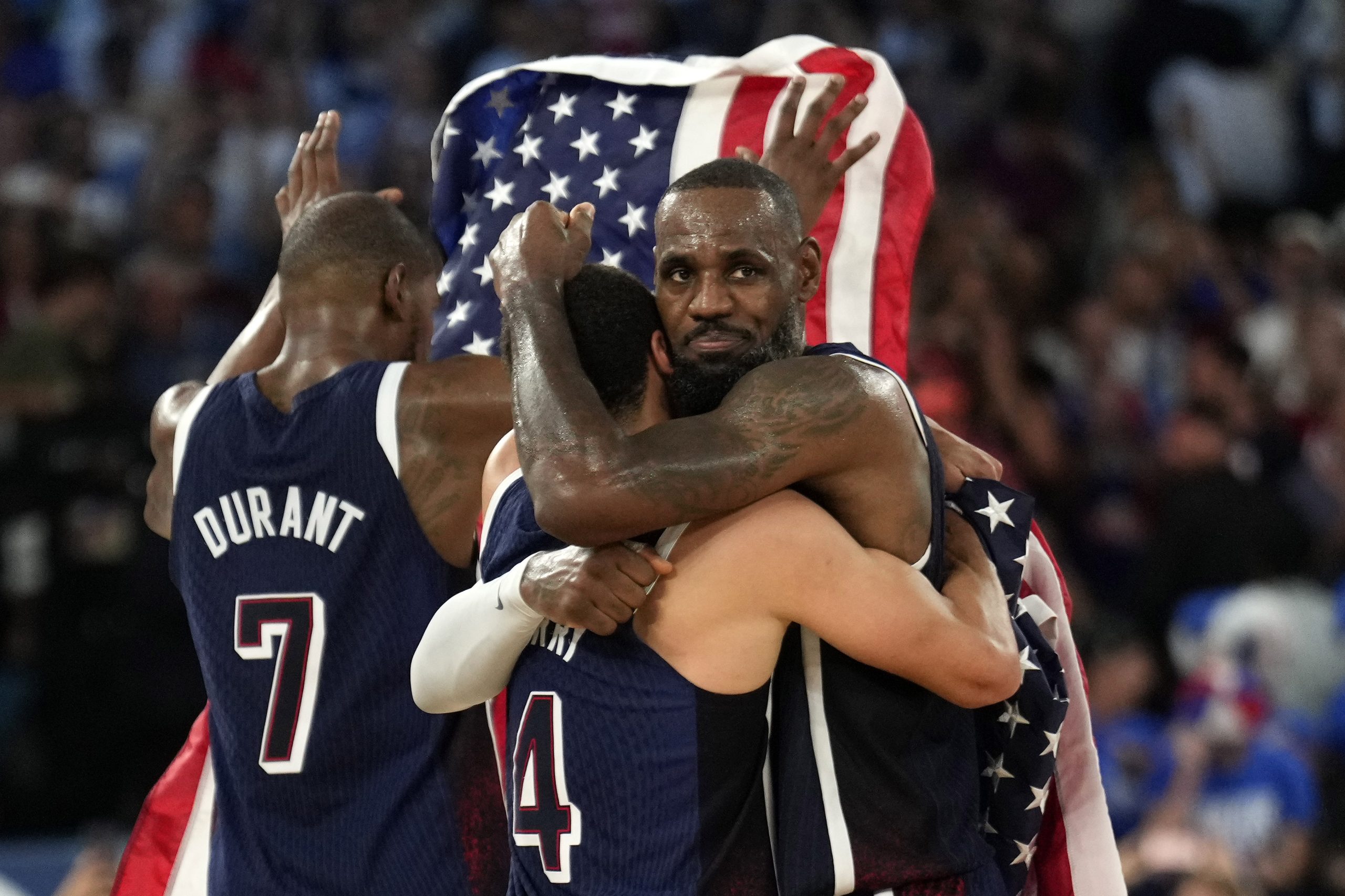
    Team USA’s superstars won a gold medal together, and their work habits rubbed off on one another. Mark J. Terrill

    “There’s a certain amount of relief that comes with not having to bear the full responsibility of the franchise,” Steve Kerr, who was Team USA’s head coach in Paris, said at the time. “These guys get to lean on each other. Every game is different. They get to throw all the other nonsense out the window because none of it matters. The only thing that matters is winning the gold medal.”

    The same standard applies here and now for James and Embiid, for the Sixers, for a city waiting 43 years and counting for its latest NBA championship. Joel Embiid’s performance in those Olympics was mostly a hard watch and a distant memory until these last few days. But come next spring, if there’s a celebration here unlike any since 1983, the windfall will have been worth the stiff investment.

  • LeBron James’ maddening process was everything the Sixers needed

    LeBron James chose the Sixers the only way he could.

    By letting everyone think there was no way he would.

    It all makes a little more sense now, doesn’t it? The weeks of deliberations, the radio silence, the professions of ignorance from those close to James, the cryptic dispatches from the Man Behind the (Recording Studio) Curtain. For nearly a month, the world watched and waited and speculated amid a maddening self-muzzling interrupted only by the occasional communication via proxy. What we knew came almost entirely from a handful of podcast episodes where Rich Paul sounded more like a bystander than James’ agent and confidant.

    Eyes were rolled. Deep breaths were sighed. Every lapsed news cycle was another shell in the stockpile of the critics and skeptics and purists who prefer brands of basketball to basketball brands. James’ most hostile audience has always been those who would rather live in a world where the Greatest of All Time is not first and foremost a business, man. But let’s give them their due. Even someone who is unbothered by the primacy of the 1099 in sports could have found their patience tested by James’ monthlong melodrama.

    In hindsight, James’ actions seem perfectly reasonable. This wasn’t attention-seeking behavior. It was the private torment of a man who was about to choose, via his own free will, to move from Los Angeles to Philadelphia.

    But it is deeper than that. Everybody involved needed it to go down this way. The significance of James’ signing with the Sixers is that he had every reason not to. He had other options, all of which had won championships within the last decade-and-a-half. They had superstars, some of the greatest to ever play the game: Steph Curry, Nikola Jokić, Giannis Antetokounmpo, James Harden.

    They had stronger personal ties, more spotlight appeal. They had the tech scene, the outdoors, the party scene. James said he was looking for basketball bliss. Which means there is a lot of political capital in the fact that he chose the Sixers. The basketball is all they had to offer.

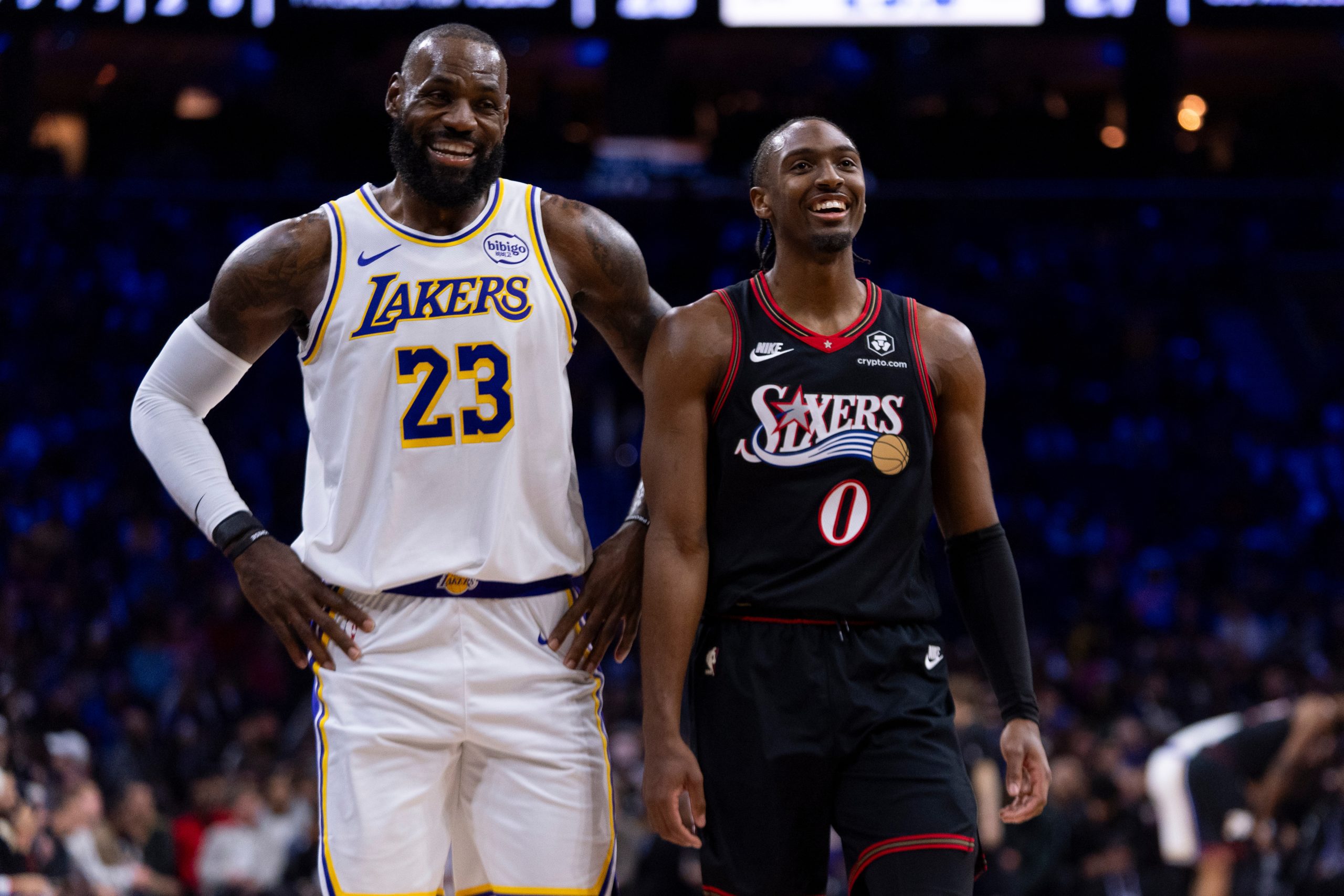
    LeBron James has a well-documented friendship with Tyrese Maxey with both being part of Klutch Sports.Chris Szagola / AP

    It’s perfectly valid to question whether James at 42 years old will create the on-court impact worthy of the hoopla surrounding his decision. There are plenty of scenarios where the sum of the parts exceeds the whole. That’s true even before you factor in age and injury. In James, Jaylen Brown, and Joel Embiid, the Sixers have three players who are accustomed to having the loudest voice in the room. In Tyrese Maxey and VJ Edgecombe, they have two young players who have been plagued by bouts of deference when sharing the court with more established veterans.

    Yet, therein lies the significance of James’ deliberate evaluation of his options. The great general Charles de Gaulle once said that silence is the ultimate weapon of power. For weeks, everyone wondered what he would decide, and why. They thus imbued his ultimate decision and explanation with a tremendous amount of power. It meant something when James finally picked Maxey, and Edgecombe, and Brown, and, yes, Embiid. Everybody assumed James wouldn’t pick the Sixers because they were the Sixers. But he did pick them, which automatically makes them something nobody thought they were before.

    Intentional or not, James’ decision-making process has empowered both his new organization and his new teammates before he has even arrived.

    You probably saw the social media video Maxey released in the wake of James’ signing. It was just a few seconds of him yelling spastically. You have to think that there was a little bit of that going on inside Brown and Embiid as well. At various points over the last few years, both players have allowed their veils to slip from their insecurities. Brown, passed over for the Olympic team after winning NBA Finals MVP, second fiddle to Jayson Tatum, inefficient, overpaid, not a real superstar.

    Embiid, injured, maybe finished, soft, selfish, supplanted by Maxey and Edgecombe as the heart and soul of a franchise. Who knows how those insecurities would have played in a power vacuum like that which could have existed without an unquestioned adult in the room. Insecurity is mostly thirst for validation. To be good enough for the best is a heck of a quench.

    Part of me wonders whether LeBron’s real attraction to the Sixers is an opportunity to lead. Not that he hasn’t always led, in both spirit and example. But the Sixers offer him a unique opportunity.

    More than any of the teams that pursued him this offseason, maybe even more than any team he has been on to this point, the Sixers were a team that genuinely needed exactly a player and a person like James is right now. It will be fascinating to see how the whole thing will look on the court, and what part James will play. Don’t be surprised if his biggest impact has already been made.

  • Kobe Bryant turned Chester-Lower Merion into a decades-long basketball rivalry: ‘The history will never fade’

    Kobe Bryant turned Chester-Lower Merion into a decades-long basketball rivalry: ‘The history will never fade’

    John Linehan and Kobe Bryant used to talk. A lot. This would not have been unusual for other AAU teammates, but these two were fierce high school rivals.

    Linehan was a scrappy point guard for Chester. Bryant was a relentless shooting guard for Lower Merion. Both were competitive, almost to a fault, and in the days leading up to big games, they’d get chippy.

    The week before the 1996 PIAA Class AAAA District 1 title game, for example, the players talked every day on bulky landline phones, with Bryant often calling Linehan at his home in Chester.

    “I just said, ‘You know, John, I haven’t won a championship yet, and you have,’” Bryant told The Inquirer in 1996.

    Linehan knew what his friend was doing. The future NBA star did the same thing a few weeks later, on March 19, a day before the teams met again in the state semifinal.

    “He was trying to get me to trash talk,” Linehan said. “I think he needed a little edge. I didn’t want to give him too much. I was like, ‘Man, you crazy.’”

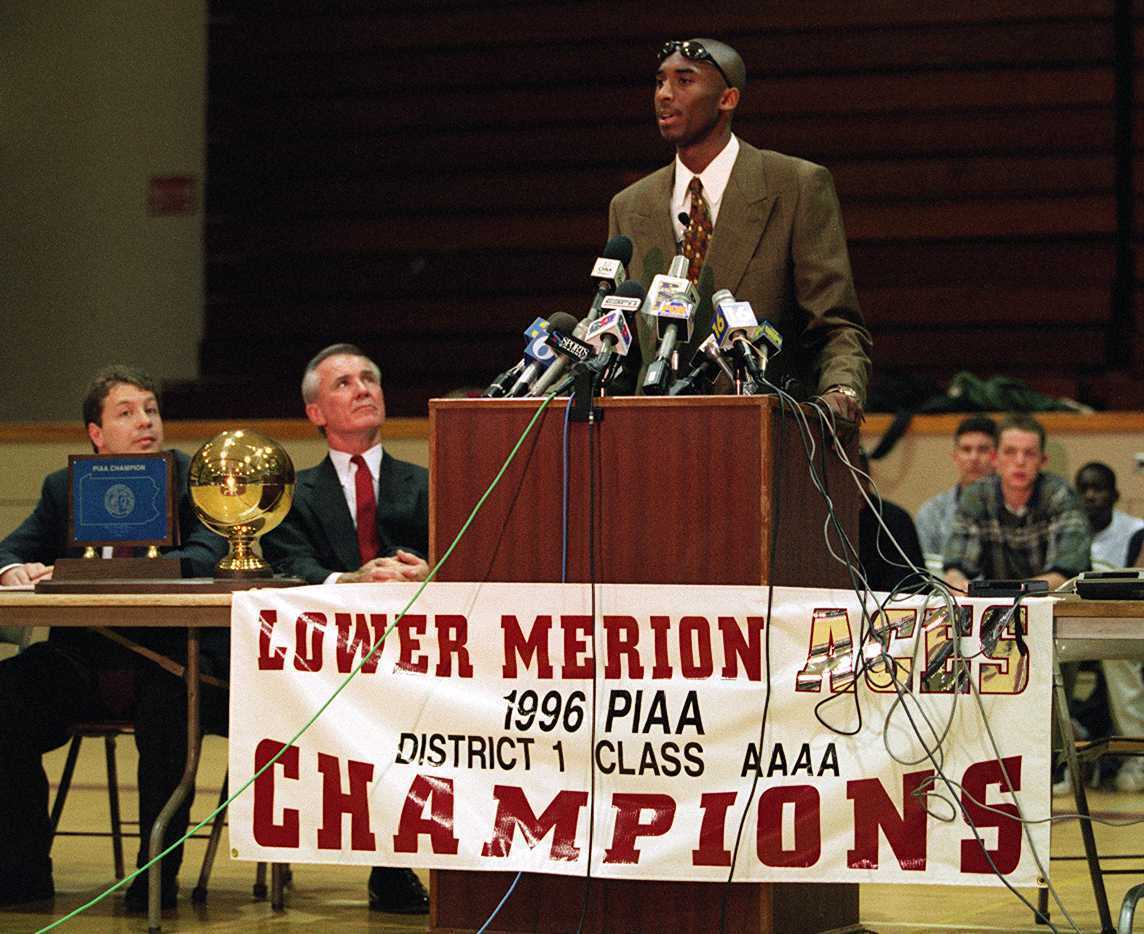
    The late Kobe Bryant, a former Lower Merion basketball star, announcing he will go directly into the NBA draft out of high school.ALEJANDRO A. ALVAREZ / Staff Photographer

    Lower Merion wasn’t a basketball school when Bryant arrived in the fall of 1992. It paled in comparison to the local powerhouses like Simon Gratz, Coatesville, and Chester.

    But Bryant changed that. Even in his freshman year, a season in which the Aces went 4-20, he brought a new standard, working out before class and introducing a level of toughness that was foreign to his teammates.

    By the mid-1990s, Lower Merion was among the best high school teams in the Philadelphia area. Its players were more confident, celebrating after big shots, and talking loud on the court.

    The Aces didn’t play as many games against Coatesville, a rising power led by Rip Hamilton. They couldn’t consistently measure themselves against Gratz, which didn’t participate in the PIAA playoffs until the 2004-05 season.

    But they could against Chester. And so, a decades-long rivalry was born.

    From 1996 through the mid-2010s, Chester and Lower Merion put on some of the greatest high school basketball games in the area. They’d often sell out venues like the Palestra and Villanova’s Pavilion. Some fans would even scalp tickets.

    Their communities were almost diametrically opposed. Chester was predominantly Black; Lower Merion was predominantly white. Chester was plagued by poverty; Lower Merion was considered affluent.

    Chester, with its Biddy League, had a legacy of basketball greatness, and a steady pipeline of talent. Lower Merion had nothing comparable. But these differences melted away on the court.

    And while the rivalry is not what it once was, it lives on today.

    “The pride and the intensity and the history will never fade,” said Lower Merion coach Gregg Downer. “I mean, if we played them tomorrow night, that would be an intense game.”

    The Bryant-Linehan era

    When Downer was named head coach in 1990, he already was well-aware of Chester’s tradition. He’d played youth basketball growing up in Media and had heard about the stars who’d come out of the Biddy League.

    It was obvious that his team would have to go through the Clippers to win any sort of accolade. But it wasn’t until Bryant’s arrival that Downer’s aspirations became a real possibility.

    The shooting guard, who was the son of former 76er Joe “Jelly Bean” Bryant, was mature for his age. He’d demand more, mentally and physically, of older teammates. Doug Young, a former Lower Merion forward, remembered seeing Bryant leaving the locker room at 7 o’clock one September morning in 1993.

    He’d been at the high school gym since 5 a.m., working out by himself. To the Lower Merion basketball team, this was a “crazy” concept, so Young and his cohorts decided to join him.

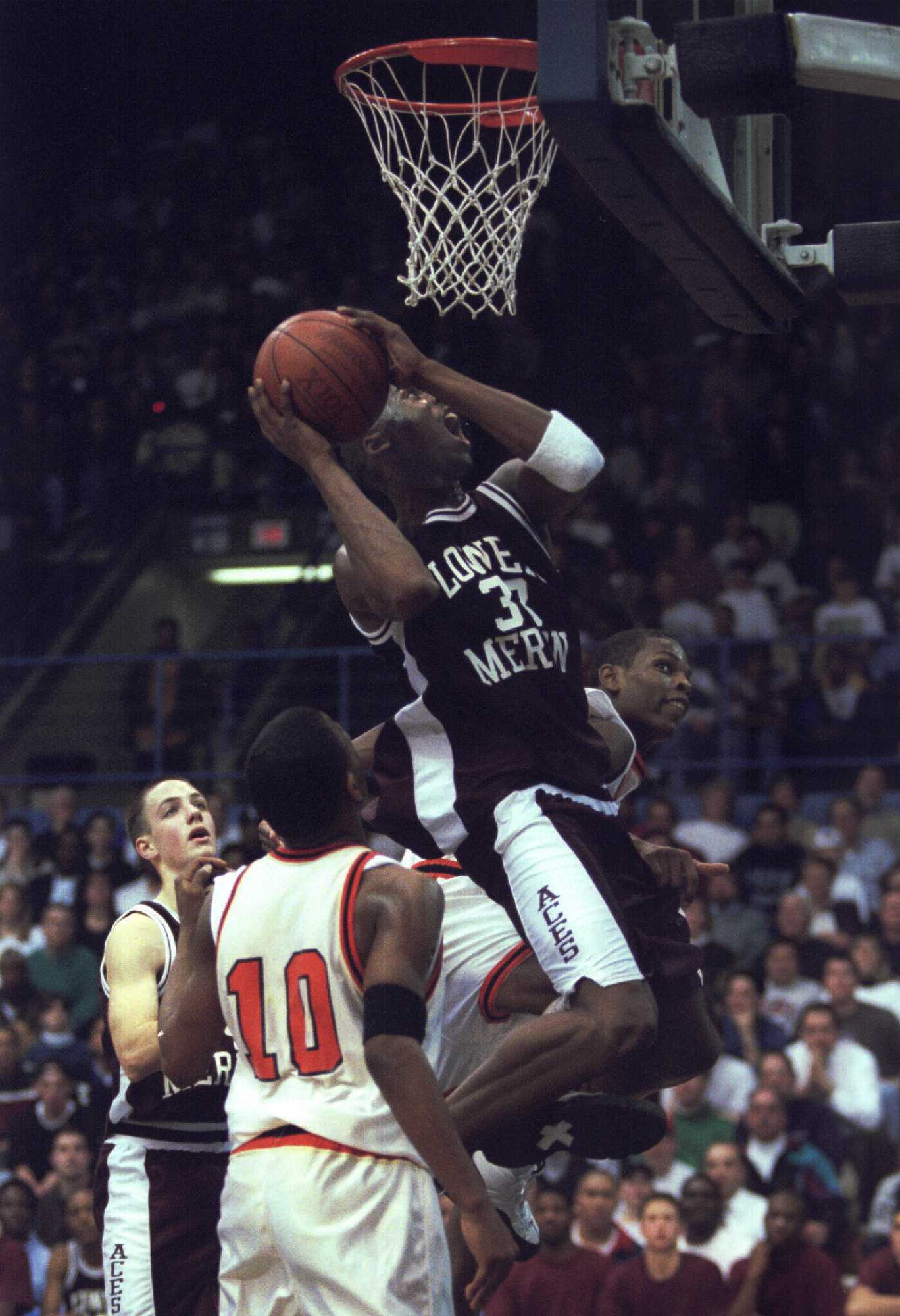
    In the District 1 championship game against Chester, Kobe Bryant goes to the hoop over the Clippers’ John Linehan.Jay Gorodetzer / Staff Photographer

    They arrived the next day at 5:06 a.m. The players knocked on the door. Bryant didn’t answer.

    “He wouldn’t open it,” said Young, who graduated in 1995. “You’re either there or you’re not. We were six minutes late.”

    His teammates waited outside until 6:30 a.m., when the school opened. They made sure to show up before 5 a.m. from that day on.

    Downer was wired the same way. The coach — and his NBA-bound pupil — would push the team in practice. Losses were particularly tough. The players would go through endless sprints and rebounding drills that sent them running to the trash can.
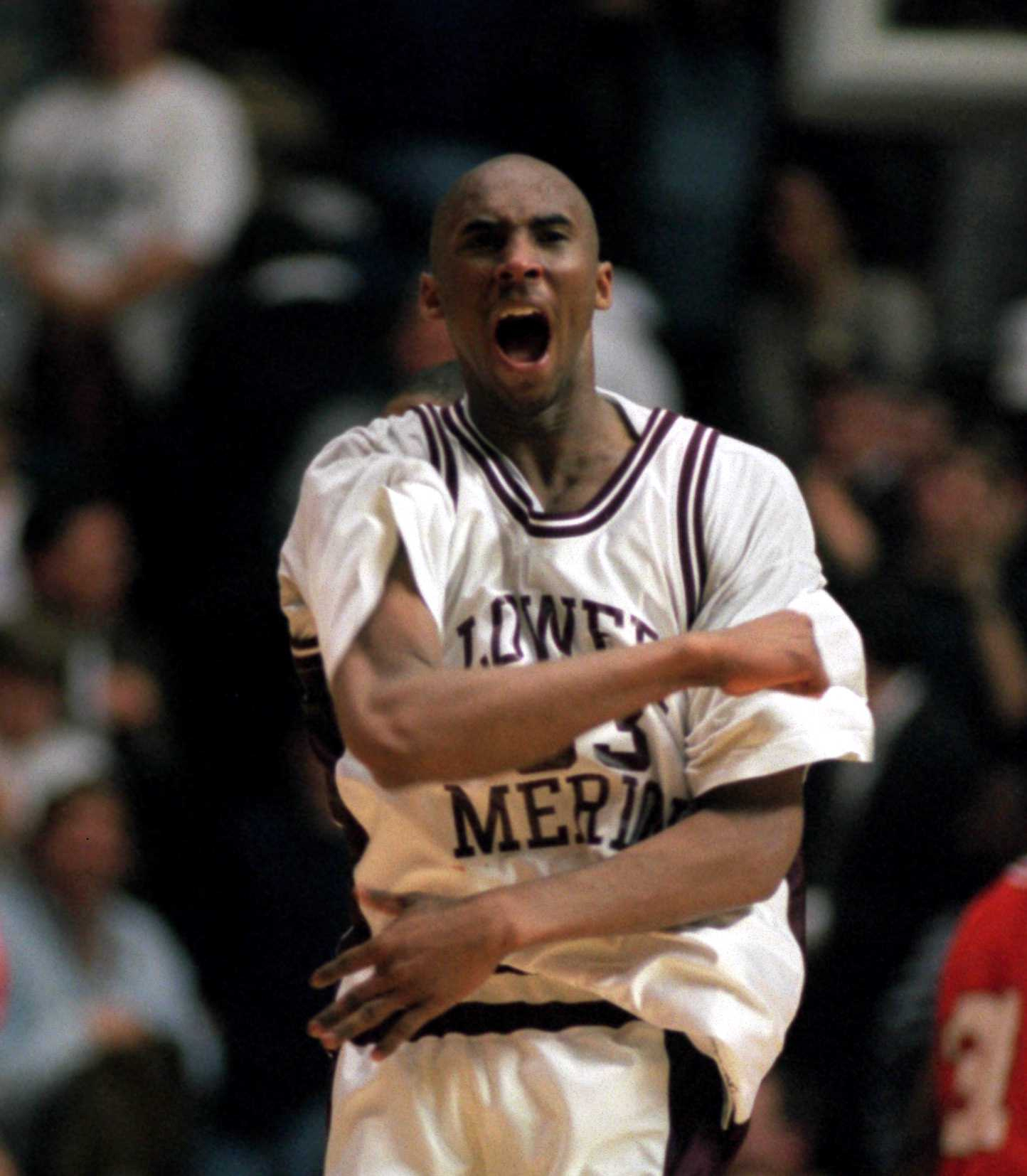
    It wasn’t fun. But over time, the method created a newfound tenacity.

    “No one walked into high school saying, ‘Oh, yeah, I want to win a state championship,’” Young said. “But [Kobe] knew what that was. He was like, ‘I don’t know any other way. If we’re not going to win a championship, what the heck are we playing for?’”
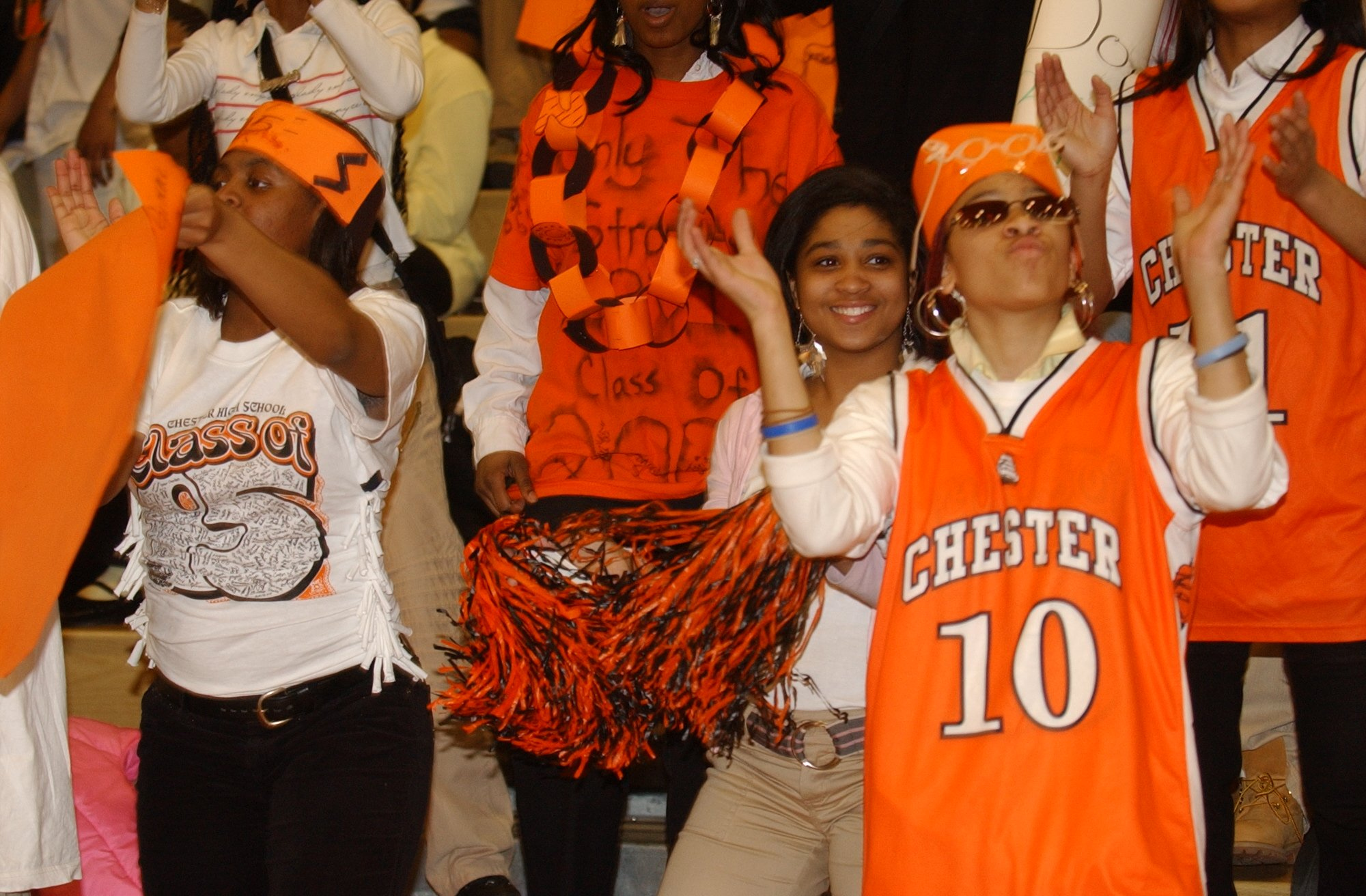
    Chester was always going to be an obstacle, so Downer tried to play into the battle. He’d use analogies for the tough, hard-nosed team, comparing it to an animal stalking its prey.

    The coach began to screen movies to underscore this point. Together, in a Lower Merion classroom, Downer’s players watched Jaws and other tales of survival, like The Edge, a 1997 thriller about a plane that crashes in the Alaskan wilderness.

    “This bear is stalking them, and the couple is saying, ’What are we going to do about this bear?’” Downer said. “And one of them says, ‘The only thing we can do is kill the bear.’

    “And I remember being like, ‘We can do this.’ But the only solution is to — not to be overly graphic — but to kill them.”

    (The bear in this analogy was Chester.)

    He added: “We tried everything humanly possible to get through to this team.”

    The first few games were ugly. In 1995, Lower Merion met the Clippers in the District 1 championship, only to lose by 27 points. But they came back with a renewed focus the following year, in 1995-96, going 25-3 in the regular season to earn a district final rematch against Chester.

    The Aces showed up at the arena with “27″ printed on their warmup shirts. Bryant, armed with fresh bulletin board material from Linehan, dropped 34 points against the Clippers en route to a 60-53 Aces win.

    The shooting guard scored 39 points later that month — with a broken nose — in a 77-69 state semifinal win over Chester. Lower Merion went on to beat Erie Cathedral Prep, 48-43, to win its first state championship since 1943.

    Kobe Bryant celebrates after defeating Chester at the Palestra in 1996 to advance to the state final.

    To Linehan, the difference Bryant made was obvious. He joked that he’d “never heard of Lower Merion” before his friend arrived. But once he did, Chester realized it would have to go to great lengths to prepare for the phenom.

    Ahead of a big game against Lower Merion in the mid-1990s, the coaching staff reached out to Clippers alumnus Zain Shaw. He played at West Virginia and in Europe and possessed some of the same characteristics as Bryant — a tall frame and an athletic build with strong ballhandling skills.

    The Clippers invited Shaw to practice, where he played the role of Bryant (to the best of his ability).

    “Kobe was so special, we had to bring in a pro to help us prepare,” said Linehan, who later starred at Providence.

    But there was another impact the future Lakers star had, one that had nothing to do with his own prowess. Linehan noticed that Bryant’s Lower Merion teammates started to take on some of his qualities. Suddenly, they were playing brash, confident basketball.

    “We didn’t have reason to believe, until Kobe got there, that we belonged on the court with Chester,” Young said. “The fear was real. Teams were afraid of Chester because they’d run you out of the building.

    “The idea of Lower Merion being on the court in a meaningful game against [them] was such a crazy thought. But then, you started to believe.”

    The buzzer-beater heard ’round Chester

    Bryant never got over the rivalry, even after he embarked on his Hall of Fame NBA career in 1996. Sometimes, he’d call the coaching staff before big games against Chester, leaving expletive-laden voicemails to use as motivation.

    The Lakers shooting guard also created an incentive structure for his former team.

    “You couldn’t get a pair of Nike sneakers unless you qualified for the playoffs,” Young said. “If you don’t earn it, you don’t get it.”

    He became especially involved in 2005-06. After a lull in the early 2000s, Chester and Lower Merion found themselves neck-and-neck again. The Aces were led by the duo of Ryan Brooks and Garrett Williamson, and the Clippers boasted a deep roster, headlined by Darrin Govens. All of them eventually played in the Big 5.

    (Chester was so stacked that it brought a 1,000-point scorer off the bench in Noel Wilmore.)

    Students from the class of 2005 show their support as Chester and Lower Merion play in the state final. Hinda Schuman / Staff Photographer

    The rivals met in the state championship on March 19, 2005. Despite strong performances from Williamson and Brooks, the Clippers pulled away in the second half thanks to a dominant third quarter from Govens. Chester won, 74-61.

    The teams reconvened the following season with their competitive spark fully reignited. They faced each other three times that year. Chester took Round 1, a one-point regular-season victory on Dec. 27.

    Round 2 was in the district final on March 3. Before the game, in front of a packed crowd at the Pavilion, Chester sophomore Karon Burton walked up to the layup line.

    Lower Merion’s student section caught his ear with a chant about coach Fred Pickett’s stout stature.

    “Hey Karon,” said one group.

    “Hey Karon,” responded the other.

    “Fred’s gonna eat you! Fred’s gonna eat you! Fred’s gonna eat you!”

    The dig didn’t intimidate Burton. If anything, it fueled him. He grew up playing street ball in Chester and always loved trash talk.

    Instead of cowering, like the crowd hoped, the sophomore delivered an unforgettable outing. The game went into overtime, and was tied at 80 with only a few seconds remaining. During a timeout, assistant coach Keith Taylor pulled Burton aside.

    “He was like, ‘Hey, listen,’” Burton said. “They’re going to double Darrin. If you get that ball, do your thing.’”

    Taylor’s words proved prescient. As Lower Merion’s defenders swarmed Govens, the Clippers inbounded the ball to Burton.

    He took a pull-up jumper from beyond the arc and drilled it for an 83-80 win. The Chester fans stormed the court. Burton, who later joined Wilmore in the 1,000-point club, said he felt like a celebrity in his hometown.

    “It was like watching a buzzer-beater in the NBA,” he said. “I just ran to my teammates, they picked me up. It was a crazy feeling.

    “I’m a big Kobe fan, too. Kobe’s my favorite player ever. So when I came and I hit the game-winner on that team …”

    Round 3 took place a few weeks later, in a state semifinal rematch at the Palestra on March 22. Bryant called Lower Merion’s coaches before the game.

    “I don’t remember specifically what he said, but I’m sure there were a lot of [expletives] dropped,” said Young. “Like, ‘Don’t call me back if you don’t beat those [expletives].’ That was a line we heard from him a couple times.”

    This one didn’t go Chester’s way. After trailing the Clippers, 47-37, at the end of the third quarter, the Aces came roaring back in the fourth and put up 33 points to eke out a 70-65 win.
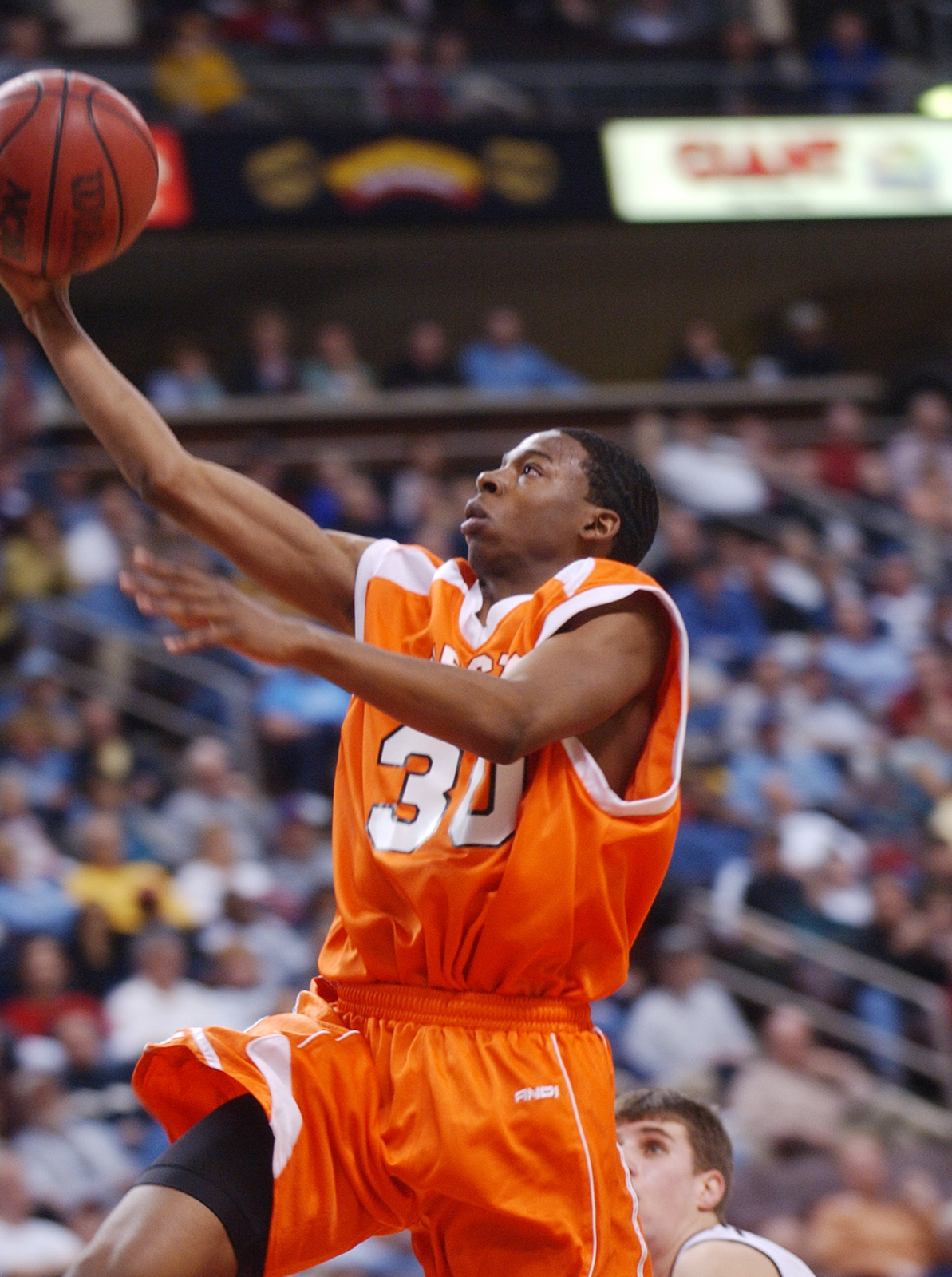
    The celebration in the locker room was cathartic. Water sprayed into the air. Players sat atop each other’s shoulders and turned the showers into a slip ‘n slide. Bryant called in, again, as other members of the 1996 team filtered through.

    Darrin Govens scored his 1,000th point for Chester against Lower Merion in the state championship in 2005.Hinda Schuman / Staff Photographer

    This was not how Govens wanted to end his high school career. And a few months later, when he arrived at St. Joseph’s on a basketball scholarship, he saw a familiar foe.

    It was Williamson, his new Hawks teammate.

    “We were sitting on the opposite side of the bench,” Govens said. “I didn’t want to sit next to him; he didn’t want to sit next to me. We’d kind of avoid each other and just head nod.

    “Even in running drills, it was a competition. He looked to the left. I looked to the right. We tried to beat each other in sprints. But then we realized, ‘All right bro, we’re teammates now.’”

    ‘Hero status’

    Chester had always rallied around its high school basketball team. Linehan said it was akin to playing for the Sixers. The teenagers were treated like professional athletes — especially those who had been a part of big wins.

    The Clippers’ public address announcer, James Howard, called this “hero status.”

    “All of a sudden, your money’s no good,” he said. “Barbers take care of you, make sure your hair looks nice before games. Free food. Little kids look up to you and ask for your autograph. That’s how it is.”

    In Chester, there were plenty of heroes to draw from. There was Linehan, but also Jameer Nelson, who met a young Burton in the late 1990s. Nelson, a friend of Burton’s cousin, gave the aspiring basketball player a gift before he left for St. Joe’s: his MVP medal from the Chester summer league.

    “He was one of the biggest guys in our city,” Burton said, “so it’s definitely something that I’ll always remember.”

    By the early 2010s, when the rivalry was reignited for a third time, Lower Merion had built more of a basketball tradition. Aces guard Justin McFadden said he’d get stopped in Wawa before big games against the Clippers.

    Chester celebrates its win over Lower Merion for the state championship in 2012. Steven M. Falk / Staff Photographer

    “It became a community thing,” he said. “People would be asking, ‘What do you guys think about Chester? Do you think we can get it done?’”

    In 2012, the schools met in the state championship for the first time since 2005. Junior forward and future NBA starter Rondae Hollis-Jefferson put up a double-double to lead the Clippers to a resounding 59-33 win over the Aces. It was their second straight title and their 58th straight victory.

    A year later, after going 17-0 in the Central League, the Aces met the Clippers in the state final again. Chester had won 78 straight games against in-state opponents. Snapping that streak would be daunting, but Downer had a plethora of motivational tactics at his disposal.

    Just as they had in the 1990s, The Aces again spent pockets of the season watching Jaws, The Edge, as well as an addition: Al Pacino’s “Inch by Inch” speech in Any Given Sunday.
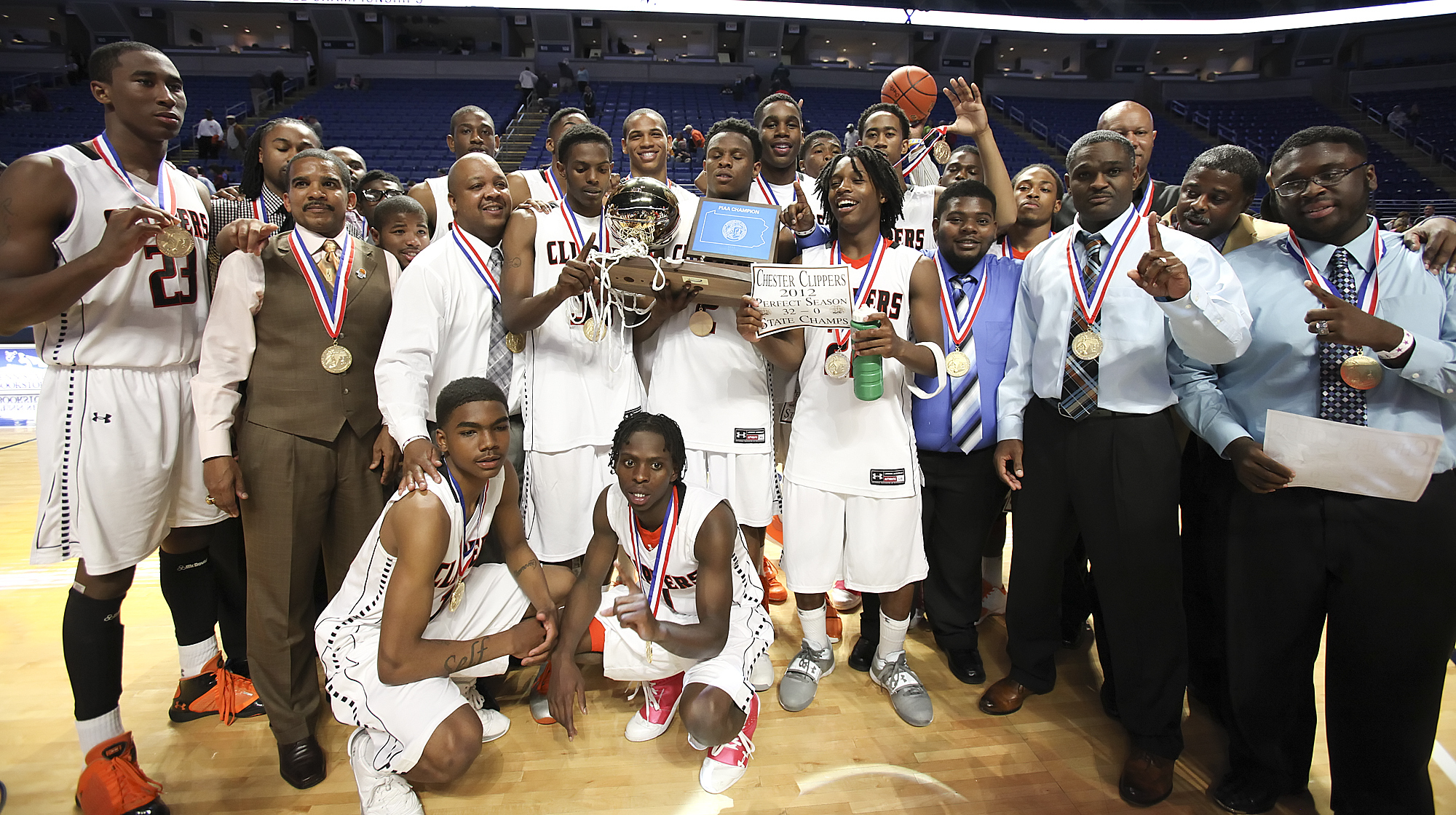
    “He would have that fired up on YouTube, ready to go,” McFadden said. “Looking back, [your reaction] is a chuckle, but in the moment, it worked. We knew that this was the hill that needed to be climbed.

    “And every time they played that speech, we got goose bumps. We were ready to fire.”

    Chester got out to an early lead, but Lower Merion rallied behind a 22-point, 11-rebound performance from B.J. Johnson, who later starred at La Salle. The Aces snapped the streak and won their seventh state title with a 63-47 victory.
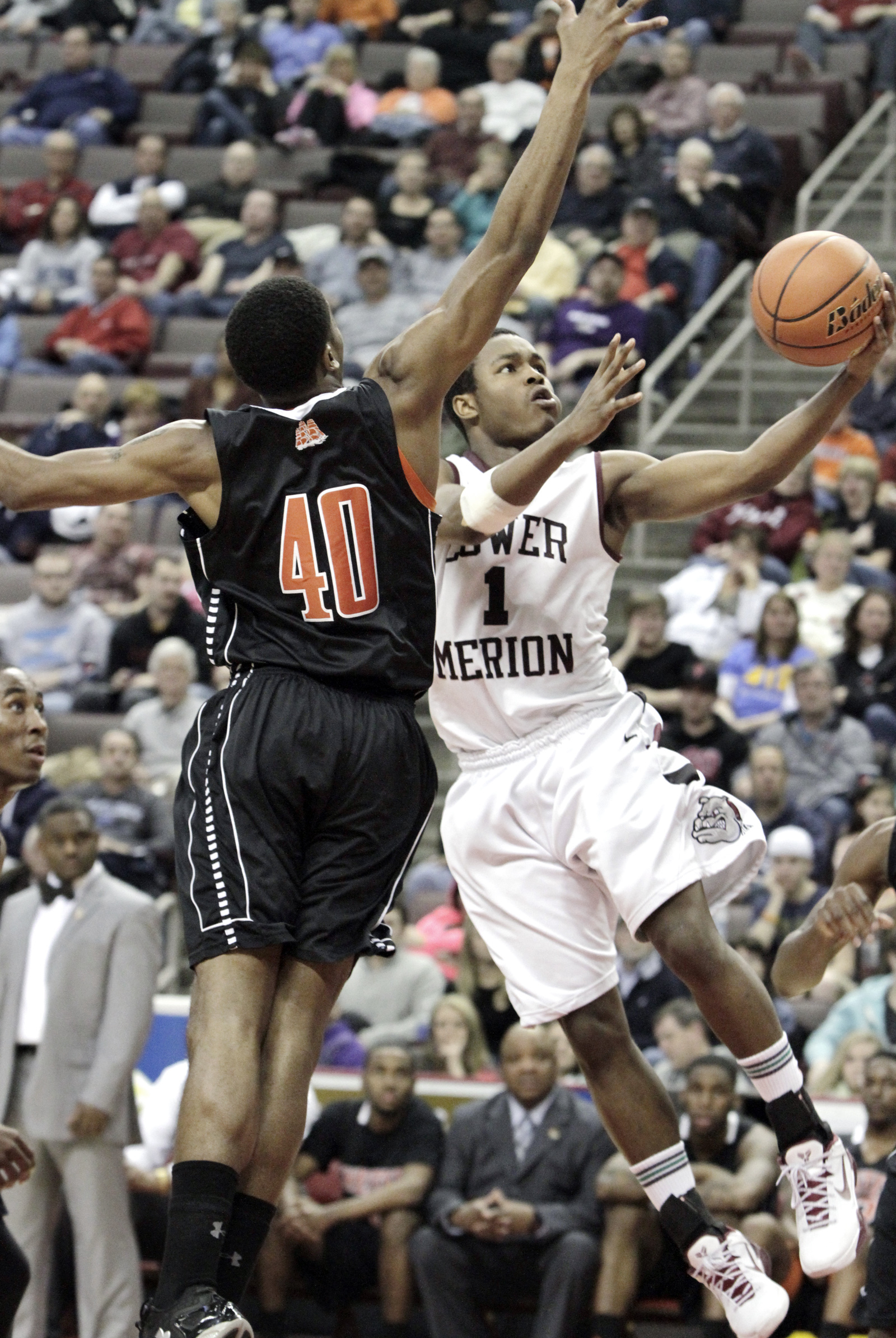
    Lower Merion’s Jaquan Johnson goes to the net as Diamonte Reason guards him in the Chester-Lower Merion state championship game in 2013.Elizabeth Robertson / Staff Photographer

    The Clippers then were coached by Larry Yarbray. Pickett, who was diagnosed with cancer in 2010, was in declining health. Just before he died in 2014, Downer decided to say goodbye.
    He and his former assistant coach Jeremy Treatman drove out to Pickett’s home in Chester. They went to his bedside.

    “And we talked,” Downer said. “And we held hands. It was a really touching moment for me. This is a man that carried Chester on his back. That tried to carry Lower Merion on his back. And I knew it was the last time I was going to see Fred.

    “We walked out the door, and we told each other that we loved each other. And I never thought he would say that to me, or vice versa. But it was just kind of like, ‘You know what? We’ve had some amazing battles, and there’s a lot of respect there.’”

    Keeping the tradition alive

    In recent years, the Chester-Lower Merion rivalry has diminished.

    There was a brief period when the teams were in different classifications. Both programs have lost players to private schools that can recruit, and the addition of the Philadelphia Catholic League to the PIAA has made the state playoffs more competitive.

    One place the Aces and Clippers could meet is in the district tournament, where they reunited in 2024. But they haven’t played each other since. And Howard says the contests don’t have the same feel.

    “Both teams have lost D-I talent,” he said. “It’s not as high-flying, above the rim, as it was in the past. But still a great game. Sold out at Lower Merion, and at Chester, same thing.”

    The history will always be there, though, and Burton is doing his best to keep it alive. His 8-year-old son, Karon Burton Jr., is playing in the Biddy League. His father is his coach.

    Sometimes, they go on YouTube and watch old Clippers games. Junior’s favorite, of course, is the 2006 district final.

    Burton believes that his son has a promising future, but isn’t sure of where he’ll go to high school yet. He doesn’t want Karon Jr. to feel obligated to follow his father’s path.

    But if it worked out that way, what a story that would be.

    “I’d love to be the first father and son to have 1,000 points,” Burton said. “With the same name? That would be crazy.”

  • The fates of Crozer-Chester Medical Center and Springfield Hospital remain uncertain three weeks after bankruptcy auction

    The fates of Crozer-Chester Medical Center and Springfield Hospital remain uncertain three weeks after bankruptcy auction

    Friday marks three weeks since the bankruptcy auction for Delaware County’s Crozer-Chester Medical Center and Springfield Hospital, and it’s not clear how much progress has been made.

    Closing the sales depends in part on local authorities agreeing to tax deals that set the assessments at the transaction prices of $10 million and $3 million, respectively, for a limited period of time.

    Upland Borough, which is home to much of Crozer-Chester, is working on a property tax agreement that will be filed in court, borough council president Christine Peterson said Thursday. “We anticipate that Upland Borough Council will take action in favor of that stipulation once it is complete,” she said.

    A representative for Chester Upland School District did not respond to a request for comment Thursday.

    If the school district also agrees to a tax resolution, a company called Chariot Allaire Partners LLC is clear to acquire the shuttered safety net hospital for $10 million.

    Yoel Polack, who is principal of Chariot Equities and has been talking with local officials and prospective healthcare providers about plans for the hospital, said last Tuesday that he expected to issue what he called a “comprehensive memo” on the property this week.

    Polack said in an email Thursday that there was still no update, but he is hoping to have something in the next few weeks.

    The backup bidder for Crozer-Chester is the same group that won the auction for Springfield. The auction led to Chariot increasing its offer by $3 million.

    Both facilities are owned by Prospect Medical Holdings, whose next bankruptcy hearing is scheduled for Tuesday. Items to be considered include Springfield Township’s lawsuit aiming to force Prospect to improve safety on the hospital campus that it closed in 2022.

    Bankruptcy Judge Stacey Jernigan granted a temporary injunction blocking Springfield from taking any action against California-based Prospect.

    Another topic is a proposed $1.5 million settlement of a lawsuit filed on behalf of Crozer employees who did not receive 60 days notice before losing their jobs in April and May when Prospect closed Crozer-Chester Medical Center and Taylor Hospital, which has since been sold. Federal law requires employers to provide two months notice of layoffs.

    A stalemate in Springfield

    Lawyers for Prospect identified Restorative Health Foundation and Syan Investments as the auction winner with a $3 million bid. But it appears a tax agreement that would assess the Springfield property at the purchase price is nowhere near completion.

    “The township has no interest in agreeing to a tax deal without having a better understanding of the buyer’s intended use of the site and whether it aligns with the township’s comprehensive plan,” spokesperson Pete Peterson said in an email.

    A representative for the winning bidders, Aminah Shabazz Perez, told the Delaware County Times recently that the buyer was in talks with two health systems about moving into the hospital, but one of them told township officials that was not true, Peterson said.

    “In addition, the township already did its due diligence prior to the bankruptcy auction and engaged in discussions with representatives of different health systems,” he said. ”There was no interest in the property due to the cost of improvements the facility would need.“

    Attempts by The Inquirer to reach Shabazz Perez have not been successful. Prospect did not respond to request for comment on the property tax situation.

    The Springfield School Board would also have to agree to a tax settlement, but has not voted “on any proposed resolution of the outstanding tax appeals or the tax assessments relating to the Springfield Hospital and parking garage properties,” the school board’s solicitor Mark Sereni said Wednesday.

    The face value of the Springfield School District’s latest claim in bankruptcy court is $1.43 million. Under an abandonment order signed on Oct. 14 by Jernigan, the district would receive a general unsecured claim, which is not likely to be worth much.

    If Prospect abandons Springfield and Crozer-Chester, the municipalities would have to foreclose on the properties to collect any of the money Prospect owes them.