IRVINE, Calif. — In the traditional American sports, there are rules requiring teams to publish injury reports.
Sure, a coach might just say a player has a “lower-body injury,” especially in hockey. But there still are rules, and many Philadelphians (especially 76ers fans) might know them by heart these days.
So if you’re wondering why the U.S. staff haven’t said much about the matter, the answer is simple: why should they? All it would do is give things away to the tournament’s other teams, including the Americans’ next opponent, Australia.
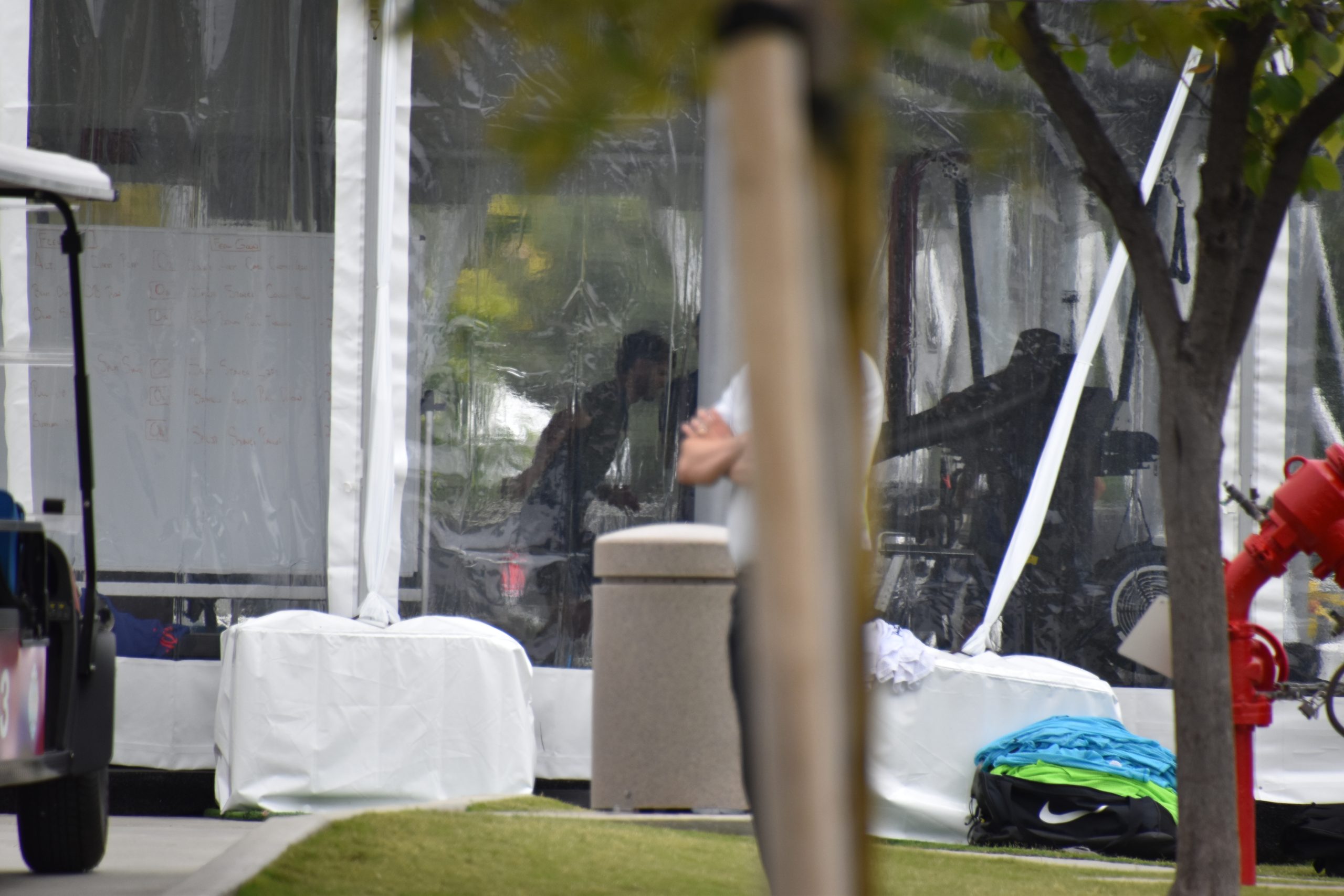
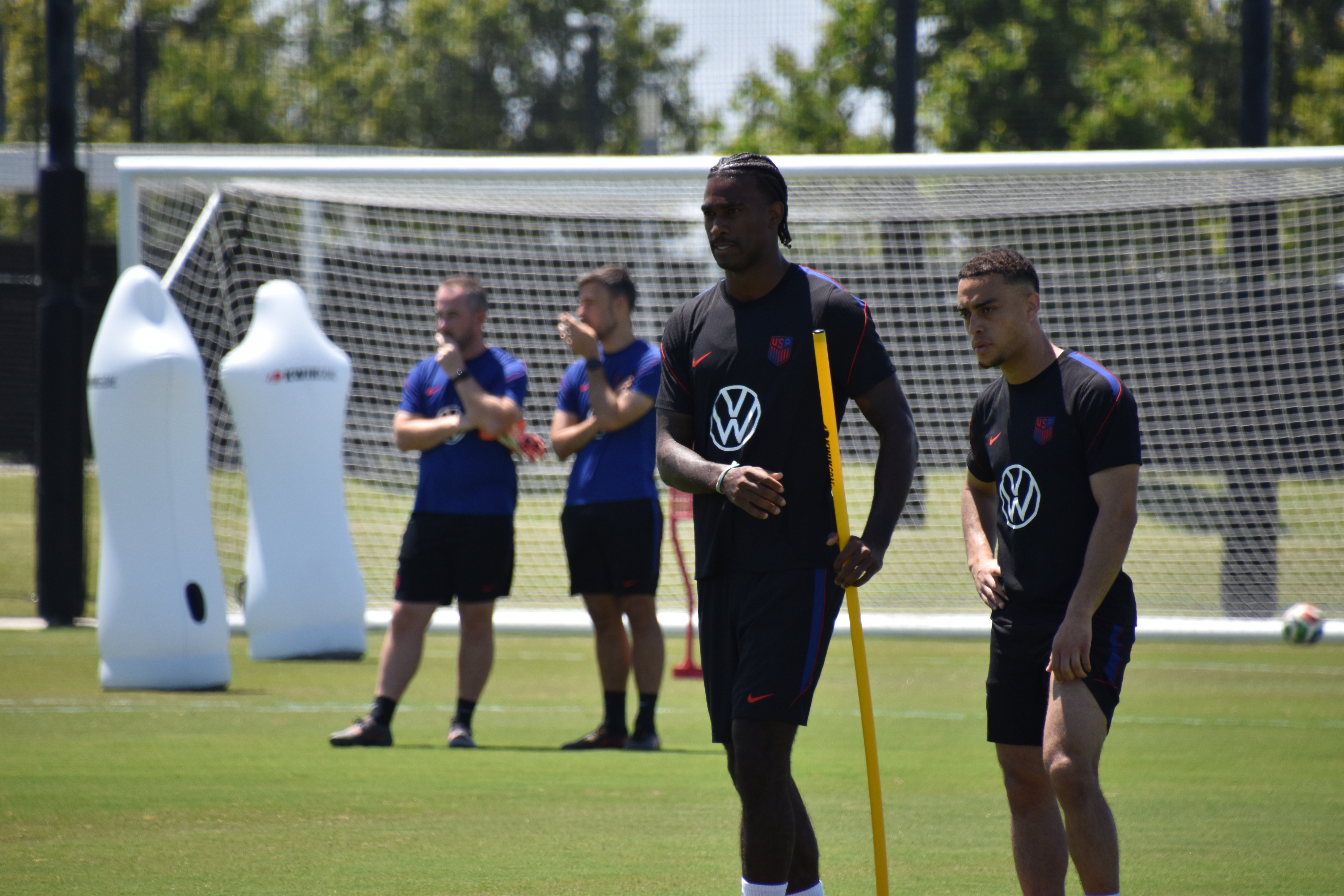
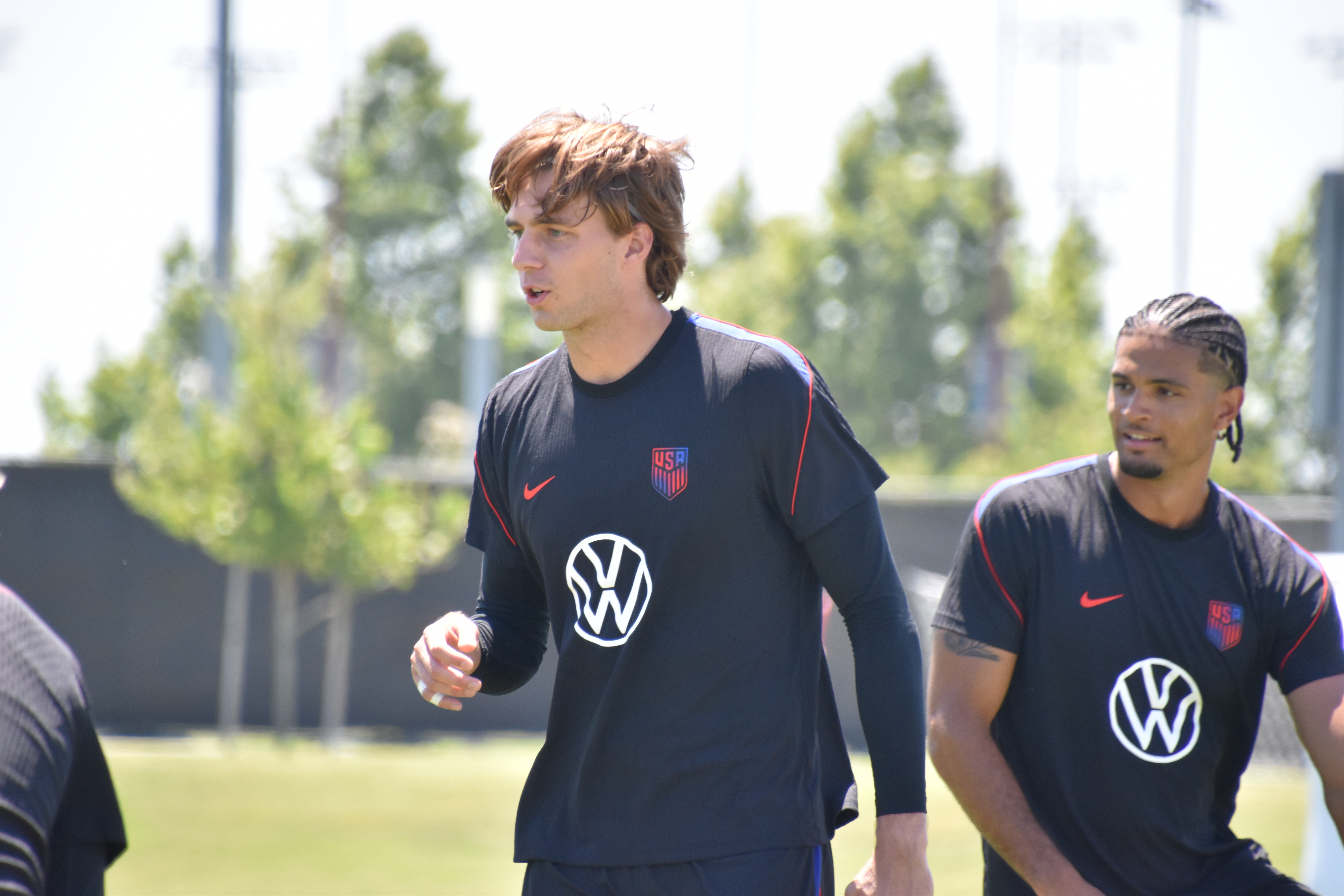
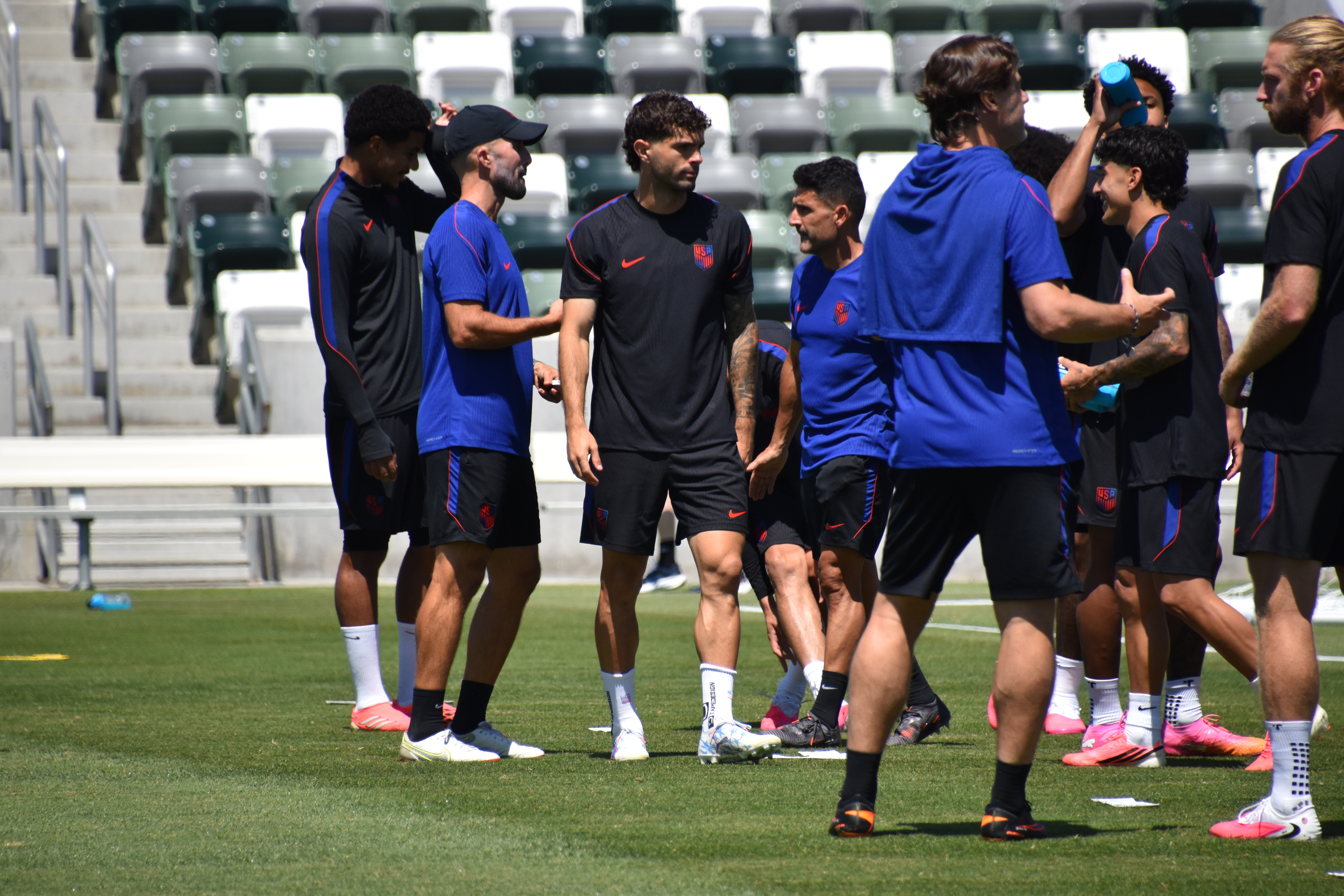
Christian Pulisic did some exercises in the workout tent at the start of Friday’s practice.Jonathan Tannenwald
“When I’m in England, they tell you exactly what it is with stuff like this,” said midfielder Brenden Aaronson, whose Medford and Union roots make him as well-versed in American ways as the world’s game. “With this situation, I can’t tell you what it is because I’m not a part of the medical staff and stuff like that. But it is different, and it is a different part of the game when it’s at club and in international football.”
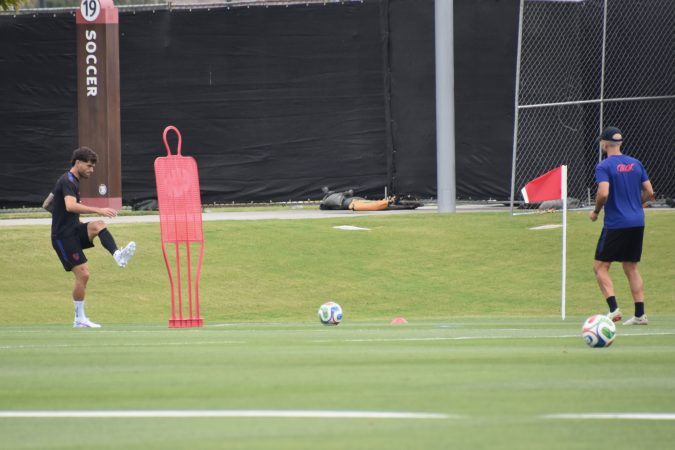
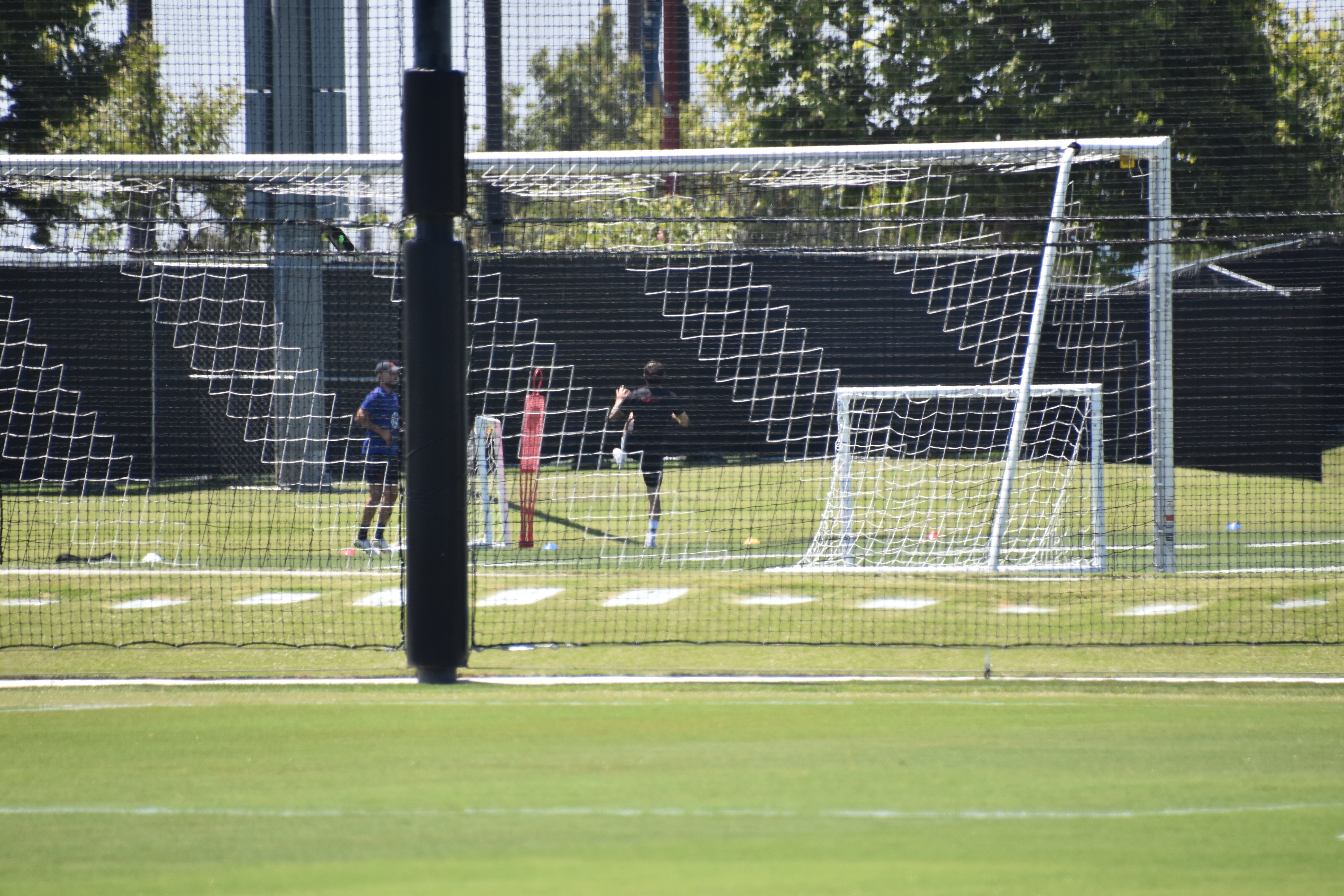
Officially, Pulisic remains day to day. He trained on his own during the first 15 minutes of Wednesday’s practice, which was the portion that was open to watch. Most of that time was spent in the team’s workout tent, but he emerged toward the end and walked across a field to kick a ball back and forth with a coach.
This was the extent of the day’s drama, even though Pulisic’s absence from Friday’s game (3 p.m., Fox29, Telemundo 62) obviously would be a huge deal.
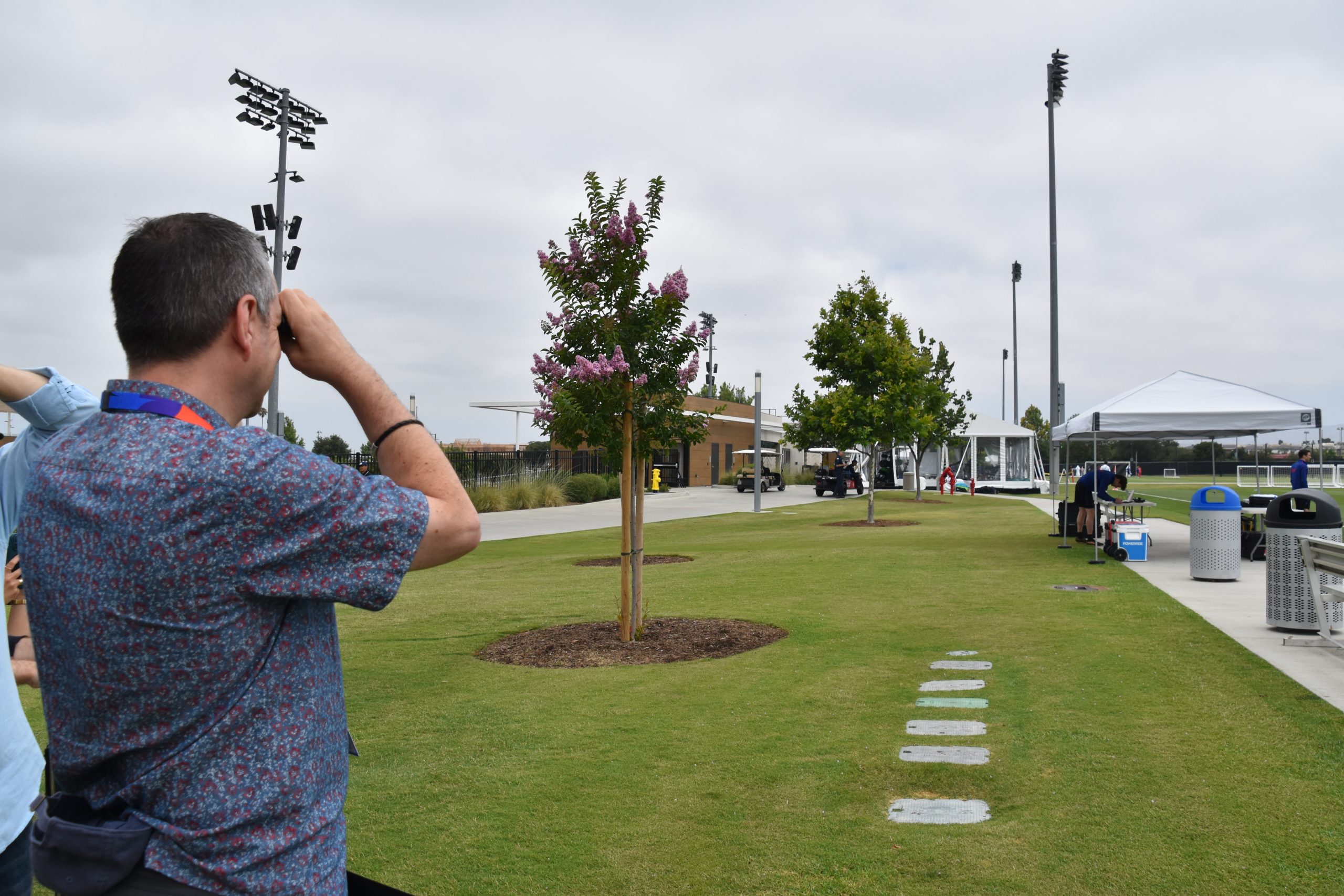
There was a lighthearted moment when a reporter used a pair of binoculars to try to spot Christian Pulisic.Jonathan Tannenwald
What do Pulisic’s teammates think of all this? Everyone who has spoken this week hasn’t said much, and that continued Wednesday.
“I’m not sure the exact sort of terminology of his injury,” defender Antonee Robinson said. “I mean, he’s been taking it day by day, and he’s not been training fully with the group yet. We’ve still got a couple of days to see where he’s at, and thankfully we’ve got a lot of boys on the bench who are eager and ready to get involved in helping the team, and a lot of quality.”
A few hours later, the caravan flew north to Seattle to get ready for Friday’s big game (3 p.m., Fox29, Telemundo 62). The U.S. will train at the University of Washington on Thursday, then get ready for a thunderous atmosphere at the stadium downtown on Friday.
Along the way, the ritual likely will be repeated: questions about Pulisic, vague answers, and a collective shrug. This is how it is, and how it has been, and it’s just another part of the World Cup’s spectacle.
And would you believe that Christian Pulisic has WALKED OUT OF THE TENT and is now DOING A DRILL on the field.
(In all seriousness, he’s got some kind of wrapping on his left leg. But otherwise, this whole thing is yelling into a molehill.)
Speaking of spectacle, they don’t come any better than Lionel Messi’s dazzling hat trick in Argentina’s 3-0 win over Algeria. The 38-year-old tied the World Cup’s scoring record with his 16th goal in the tournament, sending a jam-packed crowd in Kansas City into rapture — and the rest of the world, too.
“For the fans watching, obviously Messi’s probably the greatest footballer who’s ever lived, and he’s still going, still showing quality,” Robinson said. “As a fan, I’m sure it was amazing to watch him. That’s the magic of the tournament: you want to see the world’s best doing what they do on this stage, and hopefully every game like that keeps giving those moments, and it’s enjoyable the whole way through.”
Aaronson has also watched Messi plenty, including in person last year at Subaru Park when Inter Miami visited the Union. He admitted that “the fanboy comes out of all of us,” even though he also knows that if the U.S. finishes second in its group and reaches the round of 16, it could play Argentina.
“If we do play Argentina, we’ll all be ready to go,” Aaronson said.
Messi’s next chance to break the scoring record, which has stood since Germany’s Miroslav Klose set it in 2002, will come Monday against Austria in Arlington, Texas.
But he isn’t the only player chasing history at this World Cup. France’s Kylian Mbappé’s two goals against Senegal on Tuesday took his tournament total to 14, and made him his country’s record scorer with 58 all-time.
Mbappé’s next game is in Philadelphia, on Monday against Iraq. And if there wasn’t already enough hype around Les Bleus’ visit, their 3-1 win in the Meadowlands raises the hype around what might be this World Cup’s most star-studded squad.
Mbappé and Messi’s heroics were expected to draw big TV audiences, along with Norway star Erling Haaland’s two goals in his World Cup debut, a 4-1 win over Iraq. It was quite a sight to have all three stars play on the same day.
“You see the results in the last couple of days, of teams who definitely weren’t the favorites managing to get points, and I think that’s what the World Cup’s about,” Robinson said. “It’s about bringing lots of different cultures together and giving them moments like this, and experiences, and it’s really nice to see.”
Look at these DR Congo fans celebrating in the middle of thousands of Portugal fans 🇨🇩 pic.twitter.com/WtMzcBJJvw
IRVINE, Calif. — Sebastian Berhalter was just over a year old when he went to South Korea to see his father, Gregg, play in the 2002 World Cup. But he knows a lesson from back then applies today.
The U.S. men’s soccer team opened that tournament with its biggest win on the biggest stage since 1950, a 3-2 upset of Luis Figo’s Portugal. It stunned the world, even if it only made a limited impact back home.
It also was just one game. The Americans followed it with a 1-1 tie vs. co-host South Korea, then a 3-1 loss to Poland in the group stage finale. They backdoored their way into the round of 16 only because South Korea edged Portugal at the same time as the U.S.-Poland game, which allowed the Americans to finish second.
Longtime U.S. fans will remember their shredded nerves of that morning, as Portugal hammered away in the final minutes but could not find the net. An equalizer would have put the Americans out on goal difference, since Portugal had routed Poland, 4-0.
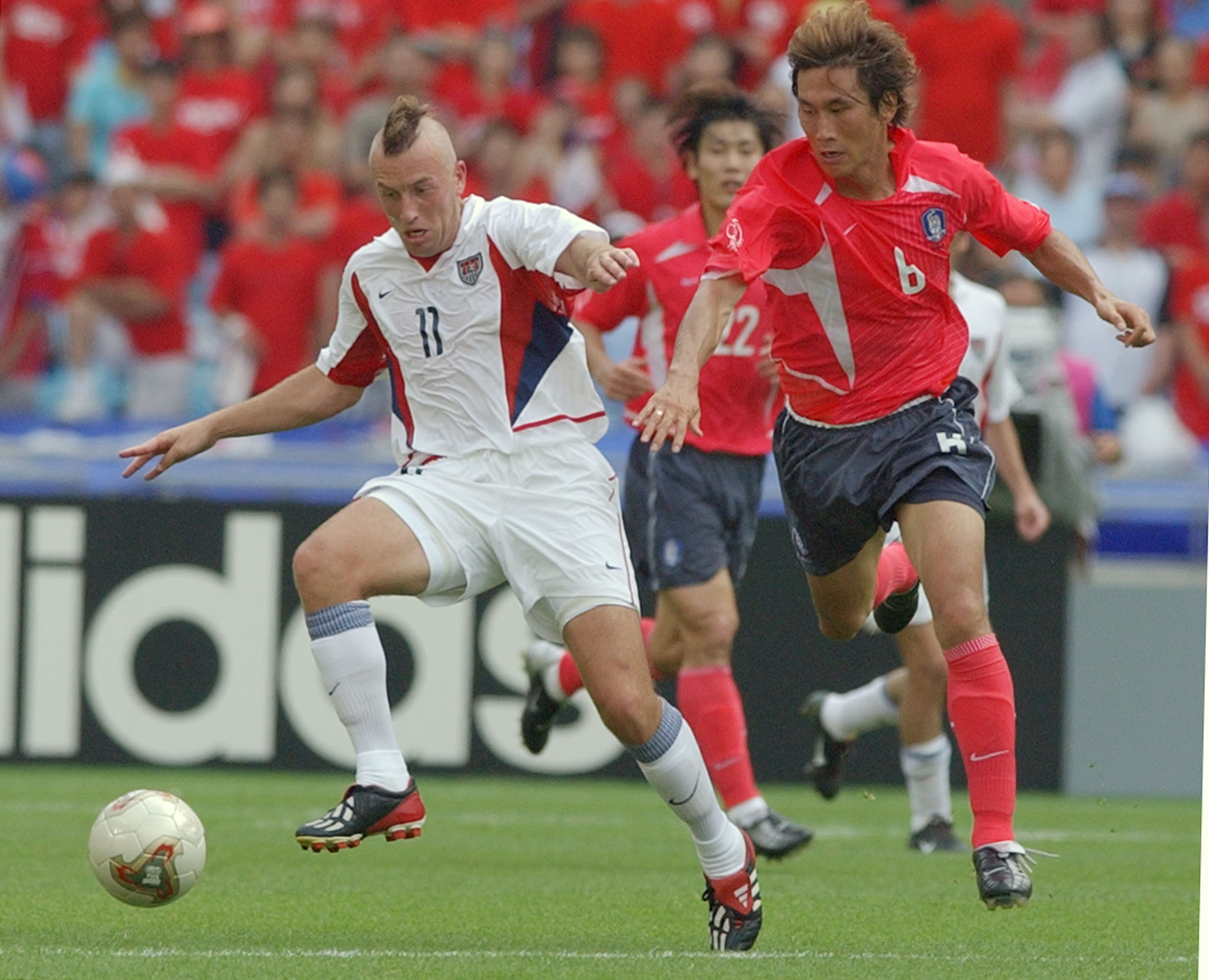
Clint Mathis (left), one of the stars of the 2002 U.S. World Cup team, on the ball against South Korea.Beth A. Keiser
The odds of that scenario repeating are lower now, not least because the U.S. is the co-host. The caldron on Friday in Seattle will be theirs this time, instead of the opponent’s.
Still, it’s worth turning to that page of the history book to bring some perspective to the upcoming U.S.-Australia showdown for first place in Group D (3 p.m., Fox29, Telemundo 62).
“Yeah, it is one game, and we know we have tough teams coming up, and they’re all going to present different challenges,” the now-25-year-old Berhalter said after Tuesday’s practice. “But for us, it’s just taking it one moment at a time, one game at a time, and we’ll be good.”
Winger Tim Weah has had his own moments of fandom lately, as a Brooklyn native and New York Knicks diehard. But when he put on his work clothes, his focus was clear.
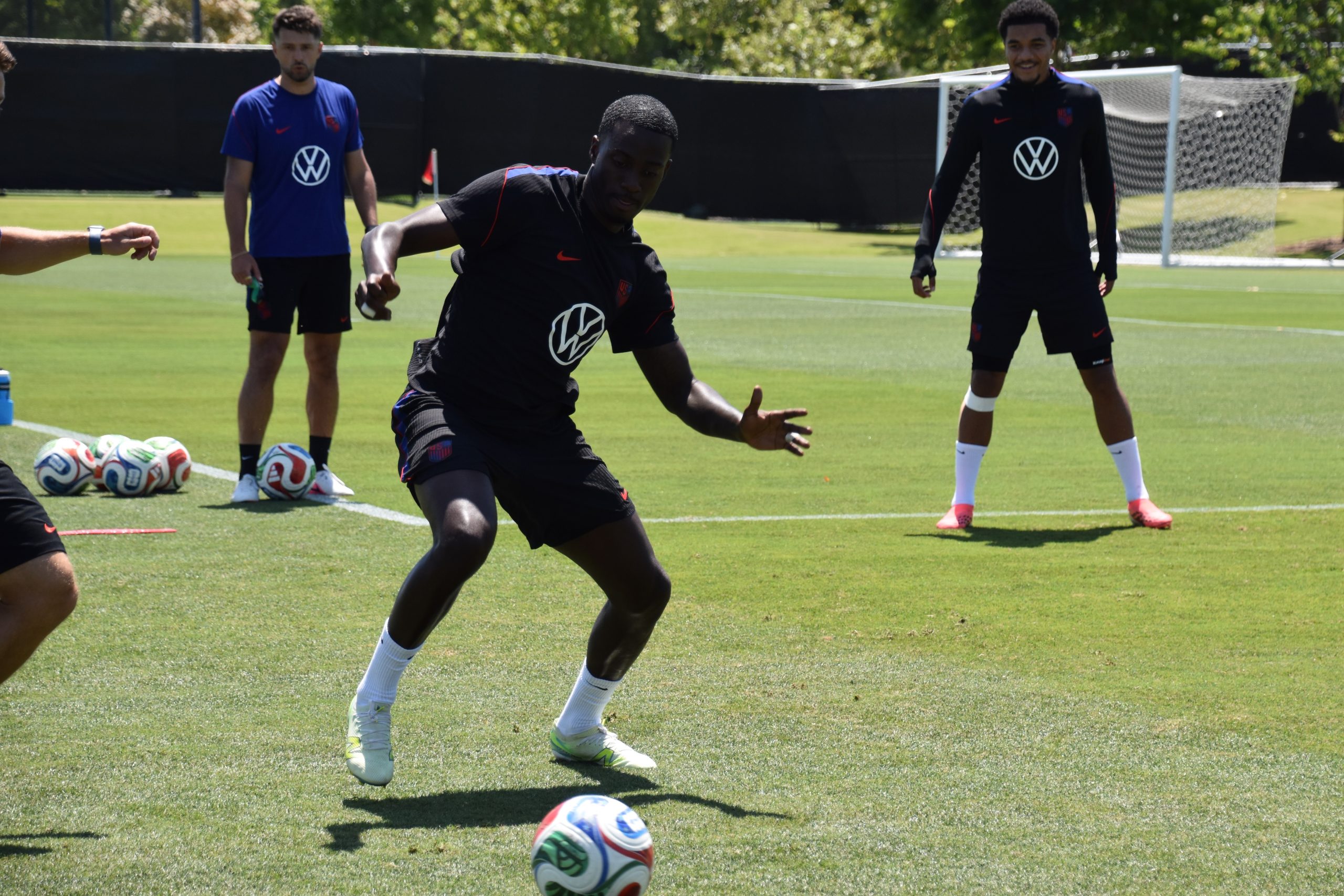
Tim Weah on the ball during Tuesday’s practice.Jonathan Tannenwald
“From a fan standpoint, I think it’s amazing to celebrate it,” he said. “But for us, we want to not get too high. We want to make sure that we’re focused on what we need to focus on. I think staying humble is the key. As a group, we just have to prepare for our next game and be ready to fight.
The familiarity between these teams extends beyond their friendly meeting in suburban Denver last October, a 2-1 comeback U.S. win. Australia midfielder Aiden O’Neill and defender Kai Trewin play for New York City FC, highly regarded defender Lucas Herrington plays for the Colorado Rapids, and veteran defender Miloš Degenek used to play for the Columbus Crew.
If it becomes the kind of physical contest that friendly was or the defense-first game Australia played in upsetting Turkey, Berhalter said the U.S. will be ready.
“I love the way they defend,” he said. “You like teams that have that brotherhood. You like teams that when you go against them, you can see they’re hungry and that they want to fight, because it makes you raise your level that much more.”
He also had the line of the day when he praised manager Mauricio Pochettino’s influence on the team’s intensity.
“I think one is that we’re American, we don’t take s—, and I think that’s something that he really put in,” Berhalter said, drawing laughs with his turn of phrase. ”Even though he’s [Argentine], he has that mindset of, ‘Look, this is what we do, and this is who we are, and this is what America’s about.’ Even from an outside perspective, he showed us Americans what we’re about, and he really drilled that into us, and I think that’s something that has helped us this last cycle.”
Cavan Sullivan slammed his book bag down and told the teacher that he had had enough of those boring, dull readings.
Animal Farm? The House on Mango Street? No, not those.
It was the passages Mark Franek assigned four years ago to the class of ninth-grade soccer phenoms about the sport’s history in America that made Sullivan irate. They weren’t just uninteresting. They were negative.
“You can just take a look at the books and the titles of them,” said Franek, who teaches at YSC Academy, the soccer-specific high school that funnels students to the Union. “One is Why the U.S. will never win a World Cup. Who wants to read that? Let alone, Cavan Sullivan.”
Franek, 57, taught at Penn Charter in the 1990s before becoming a lawyer and then returning to the classroom in 2022 to teach at YSC, the high school for elite boys’ soccer players that produces World Cup players and sits across the parking lot from the Union stadium in Chester.
The school moved from Wayne to Chester in 2023, taking over space in an old power station on the banks of the Delaware River. It is an incubator of soccer talent, and three players on the U.S. World Cup squad — Mark McKenzie, Auston Trusty, and Brenden Aaronson — graduated from YSC.
Sullivan, a 16-year-old who already plays for the Union and has a deal to play for Manchester City in the English Premier League when he turns 18, graduated last month. He might be the future of American soccer. First, Sullivan had to learn the history of American soccer. And it was Franek’s job to make that subject more engaging.
“If you think about where someone is in their formative years and this really critical point of development in mid-adolescence and learning about themselves and the world and the soccer world,” said Jared Micklos, YSC’s Chief Strategy Officer. “Then understanding what comes before them is also this optimistic way to give them hope and confidence and belief that they might be able to write the literal next chapter is something you need to reinforce and you need to inspire.”
The Union’s Cavan Sullivan wrote the foreword for the book written by his former teacher, Mark Franek.Elizabeth Robertson / Staff Photographer
Back to school
Franek grew up in York and played soccer at Duke University before starting his teaching career in Montgomery, Ala. He wanted to teach American Literature and coach varsity soccer. An Alabama high school, Franek said, was the only place that would let him. He moved four years later to Penn Charter, where he coached Chris Albright and Bobby Convey — teammates on the 2006 U.S. World Cup team — and taught Matt Ryan.
Franek left Penn Charter in 2007 and enrolled at Temple’s Law School after realizing there was money in litigation. He used to charge his neighbor $20 to mow his grass while his wife — a lawyer — made much more for providing a few hours of legal aid for the neighbor’s painting business.
He landed a job with a big firm, enjoyed the money, but hated the hours. Franek was in his early 40s when he passed the bar, but he was working like someone in their 20s. He worked almost every weekend and could see he would soon be missing his son’s soccer games. Something had to give.
He went to YSC to meet Brendan Sullivan shortly after Quinn Sullivan — Cavan’s older brother — signed with the Union in 2022. Franek wanted Sullivan to autograph a jersey for his son. And there he saw Nooha Ahmed-Lee, the former administrator from Penn Charter and current YSC Head of School.
“An hour later, I realized she was actually vetting me and trying to figure out if I was happy being a lawyer,” Franek said. “I talked to my wife and said, ‘I’m going to call Nooha and say if you’re serious about an English position, then I’m serious about getting out of the law and back into teaching.’ It was the right time for me.”
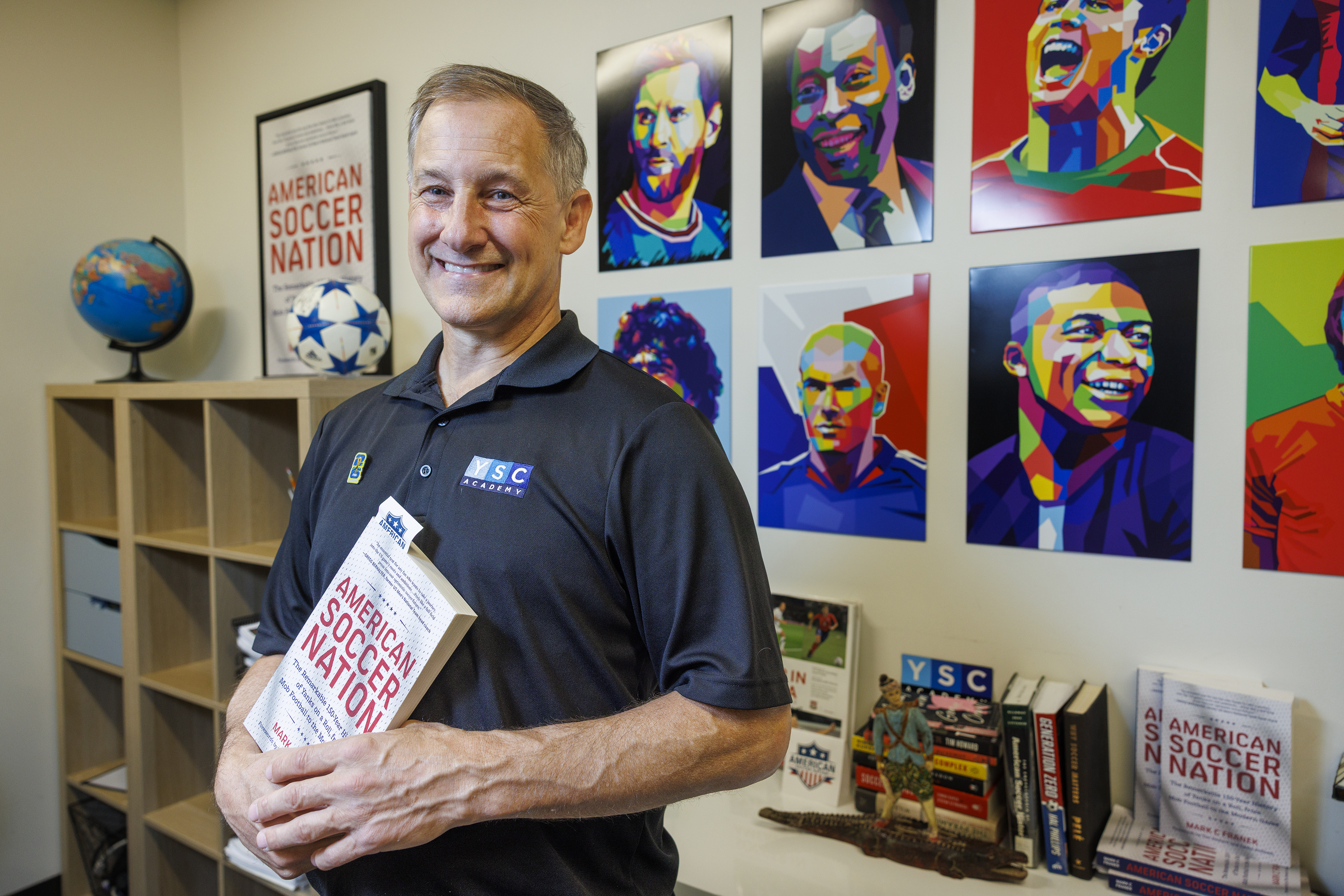
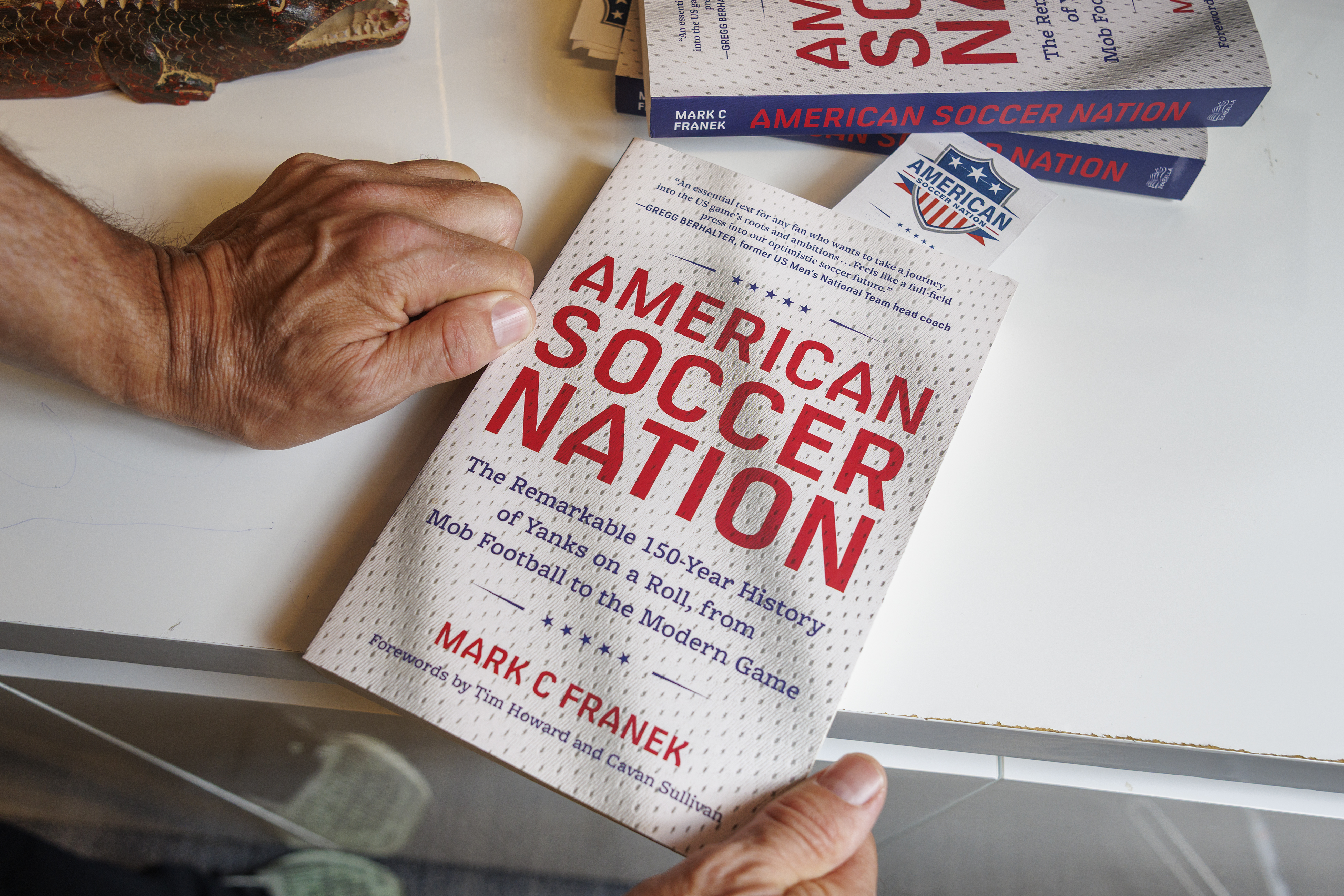
Mark Franek shows his book, “American Soccer Nation: The Remarkable 150-Year History of Yanks on a Roll, from Mob Football to the Modern Game.”Alejandro A. Alvarez / Staff Photographer
Writing the book
Ahmed-Lee heard about Sullivan’s reaction to those readings and challenged Franek to design a course about the history of American soccer that he could weave into his English class. Franek accepted. He tracked down every book he could find about U.S. soccer, combed through internet articles, and learned everything he could.
But Franek failed to find something that covered the whole story. So Franek wrote his own: a nearly 300-page book that was published earlier this year titled American Soccer Nation. It is a thorough history of American soccer that tries to deliver the story with optimism. It’s something Sullivan would want to read. He even wrote the foreword.
“It’s incredibly rewarding to see an idea that began in our classrooms grow into a resource that is now helping students and soccer enthusiasts better understand the game,” Ahmed-Lee said.
Franek uses the book in class at YSC as he assigns a chapter every week. The kids who dream of playing professionally learn about the pro league that rivaled baseball in the 1920s and the one that recruited Pele in the 1970s. Yes, there was pro soccer before the MLS. And Franek’s book does not ignore the mistakes that plagued those early leagues or the challenges the MLS faces today.
“I have the best job in the world,” Franek said. “I get to teach young men in small classes who are living the dream. They’re grinding in the pitch and the classroom, trying to get better, and they have little tolerance for busy work or boring work or work that won’t help them get better whether it’s on the pitch or in the classroom.”
The final chapter of Franek’s book details YSC and why he believes that “total immersion” is soccer’s path to success in America. The Union paired their soccer academy with a high school that is centered around soccer.
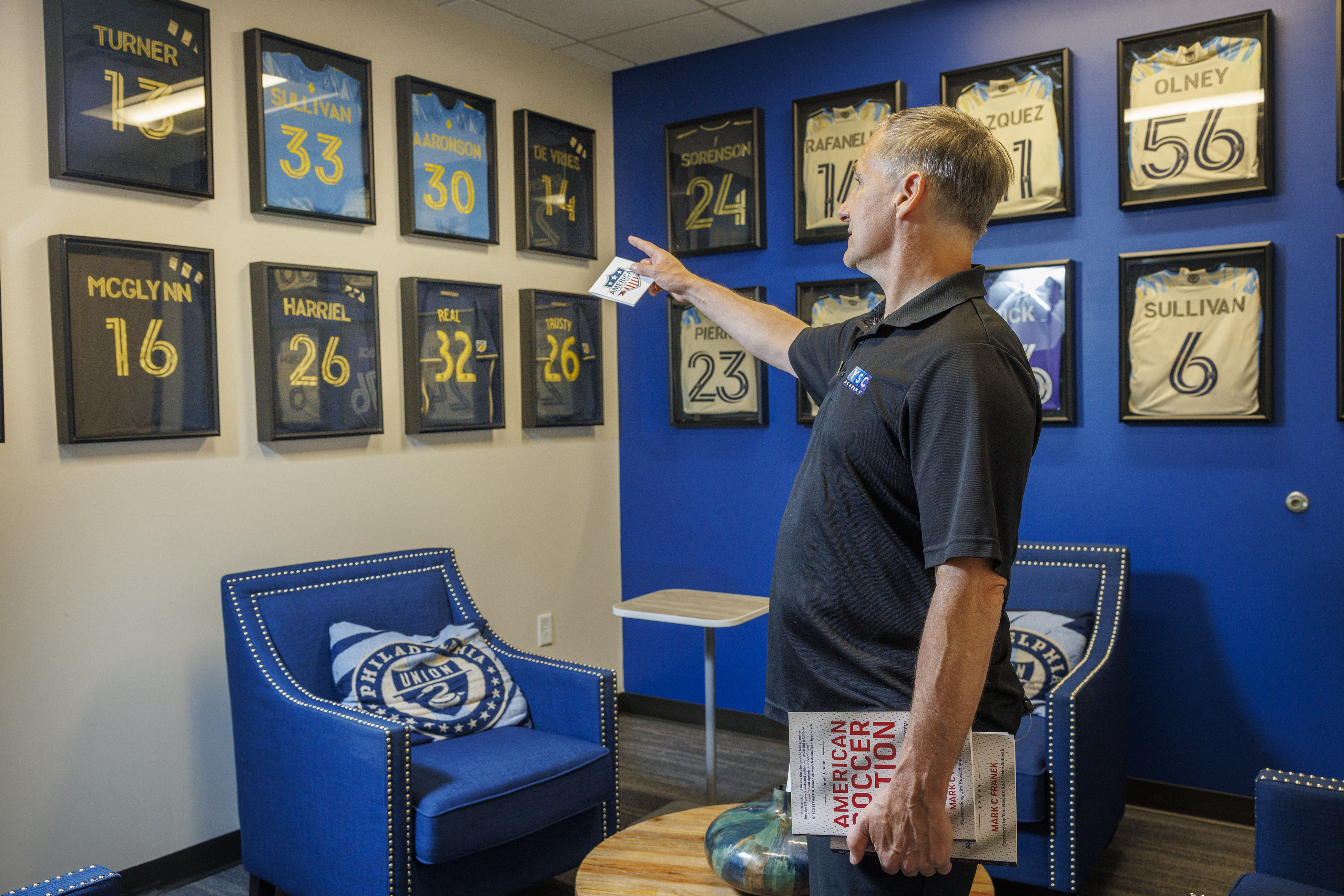
Mark Franek shown in the “jersey room” at YSC Academy in Chester. Alejandro A. Alvarez / Staff Photographer
“Imagine what the United States could do on the international level if one-third or one-half of the 30 MLS teams were able to build an academy and then surround that soccer environment with a learning environment that works for their setting and their community where you’re supercharging the dream and helping the kids along to the college dream,” Franek said. “The Union have shown without a doubt that it works.”
YSC says 86% of its students graduate from college and 68 have signed professional soccer contracts since the school opened in 2013. The academics are not secondary at YSC but everyone understands the importance of soccer. The day starts later so students can train in the morning. Coaches and teachers work together to not overload a student’s schedule.
“We have to remind everyone that their ultimate drive and purpose is to be great at soccer,” Micklos said. “Whether that means they’re a pro directly when they leave our doors and walk off the stage or they go to college and become a pro or it means they go to college, play soccer, and that’s the end of their soccer career, but the journey has prepared them for life and a career off the field.
“The thing that drives them and their passion and the reason for the school is to help stimulate that growth and help them on that journey. It’s a hard journey for a young person to have the demands they have. If those things aren’t designed around their schedule then we’re actually doing them a disservice in their day-to-day life by creating a bigger challenge or hurdle than they need vs. saying, ‘Hey, we incorporate everything you need on the soccer field and then integrate that into what we’re doing at the school because an aligned and integrated environment is going to be the one that helps you best prepare.”
Even the food is fit for budding pro athletes.
“I remember two weeks into school and Cavan was eating a T-bone steak in my class,” Franek said. “I’m like, this is weird. I’ve taught for 15 years at Penn Charter and I’ve never seen anyone pull out a T-bone steak with A1 Sauce and then grab House on Mango Street. You’re living with alpha males. There’s a certain energy around the building that’s palpable and it’s glorious. Cavan was great and so is pretty much everyone. They’re moving in a direction and they’re super-focused.”
Franek had Sullivan and his classmates autograph a ball during their freshman year. It was a keepsake of a class that pushed him to write that book. So far, several of them have already signed pro contracts. Sullivan should soon be playing in England for one of the world’s biggest clubs, and he’ll be a contender in four years to make the U.S. World Cup roster. Perhaps he’ll even team with his older brother, who graduated from YSC in 2022. If so, Franek will have more positive stories about American soccer to share with his students. And his book will need some more chapters.
IRVINE, Calif. — The U.S. men’s soccer team’s big win over Paraguay electrified this World Cup, especially for American fans. But the players can’t spend too long reveling in the moment, because the next game is now on the horizon.
Monday was always going to be a natural moment to turn the page, since it marked the return to work after two days off. But there was also a wakeup call over the weekend, when Australia upset Turkey and blew Group D wide-open.
The players got the message.
“We saw a team that went out against Turkey and competed at a very, very high level,” stalwart U.S. midfielder Tyler Adams said of his team’s next opponent. “They’re combative, they’re smart, tactically they were unbelievably sound. So I think it’s going to be an extremely difficult game.”
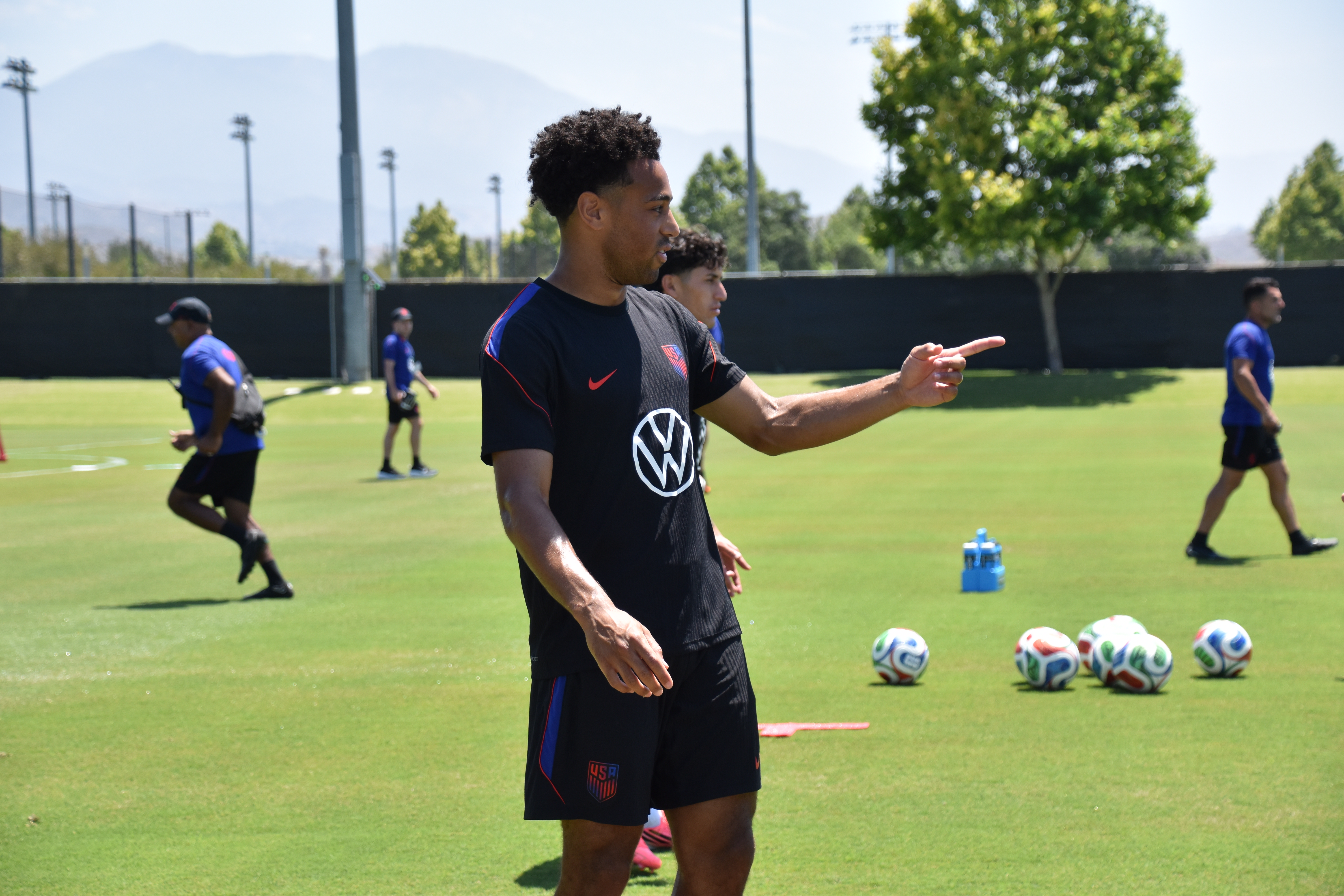
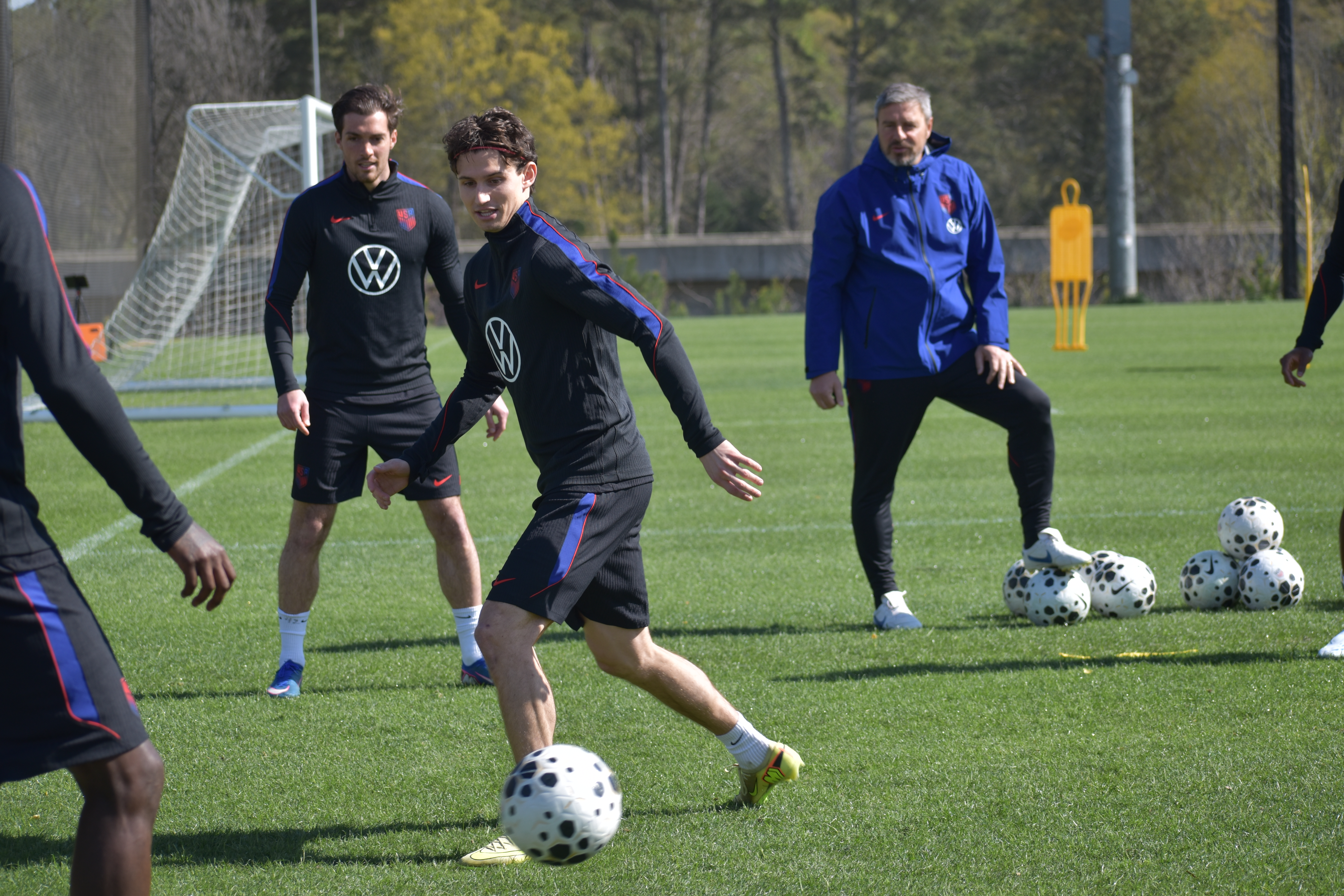
Tyler Adams making a point to a teammate during a drill.Jonathan Tannenwald
As he got ready for Monday’s practice, Adams said it was “pretty easy” for the team to shift its focus ahead.
“I think that having a day off is obviously nice to just be able to disconnect,” he said. “I think having this amount of time in between games is really nice, just for the body, the mind, everything in between. It was a good start — it’s exactly what we wanted and we set out to do. That being said, the focus has to be on Australia now.”
Australia’s win raises the stakes even higher in what was already a much-anticipated game (3 p.m., Fox29, Telemundo). The scene will be just as much of the story as the action on the field, as soccer-mad Seattle finally hosts the U.S. after not being part of any previous World Cup in this country, from the 1994 men’s tournament to the 1999 and 2003 women’s ones.
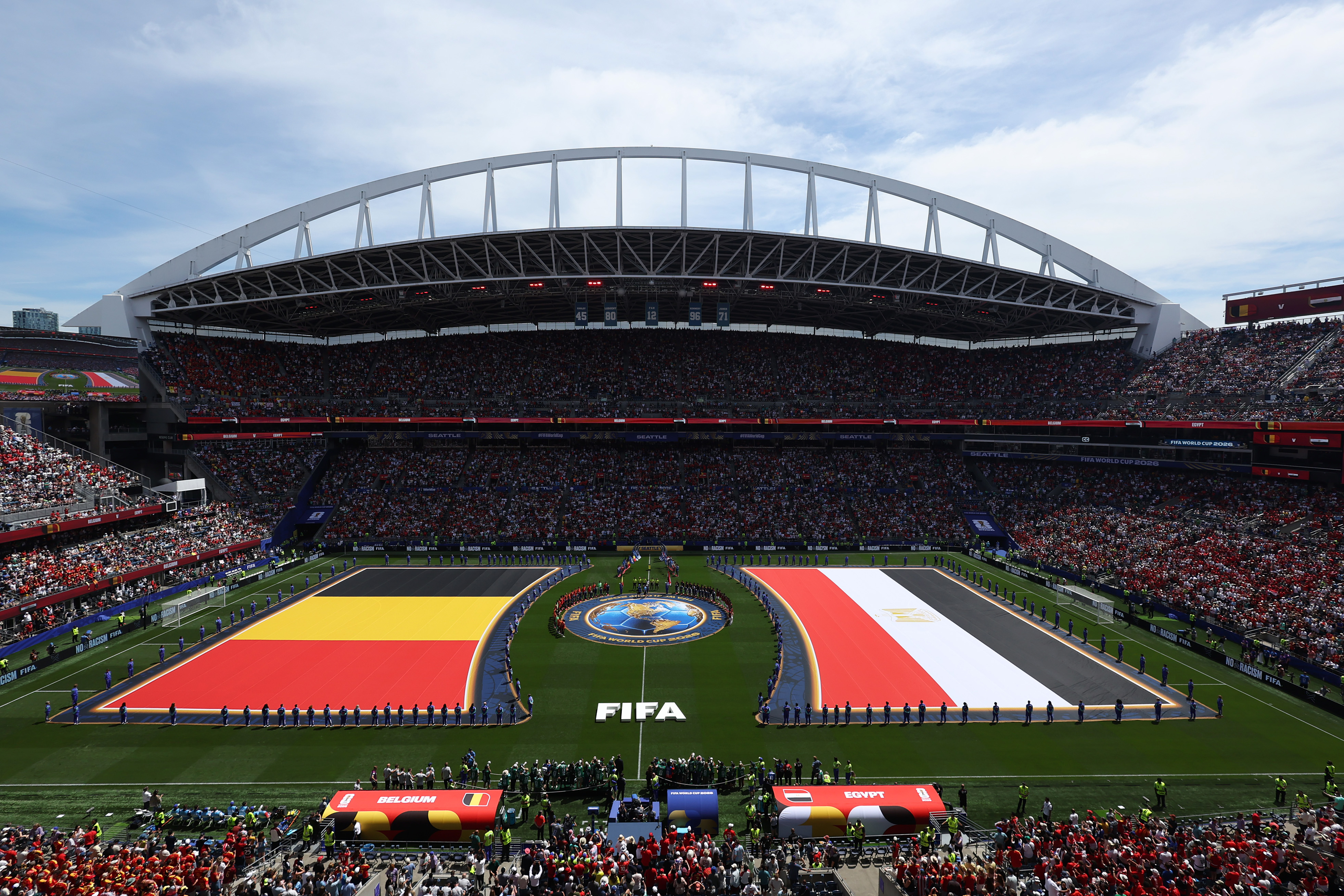
The city looked terrific in its first time on the big stage, Egypt’s 1-1 tie with Belgium on Monday.
A view of the full house in Seattle as Belgium and Egypt’s players lined up for the national anthems.Maddy Grassy
When the U.S. and Australia met in a friendly last October, striker Haji Wright scored both American goals in the 2-1 win. He reflected Monday on watching tape of the Turkey game, and how these Socceroos compare to last fall.
“Saw a well-executed game plan from Australia,” he said. “They’re tough to break down, they’re dangerous on counterattacks, they have good players at the top of the pitch, and they were able to be effective and damage Turkey. I think Turkey kind of came into the game a bit overconfident, and I think we won’t make that same mistake.”
That was a reference to team captain Hakan Çalhanoglu claiming a few days earlier: “I think we will dominate the game, because we have more qualities and a more talented team.”
Some U.S. pundits have done some boasting of their own, and Adams was asked about that. He quickly brushed it off.
“I don’t think any commentary helps anybody,” he said. “And no, it’s not going to be a layup. If anything, it’s going to be one of the most difficult games that we play.”
Haji Wright (center) in a drill at Monday’s practice.Jonathan Tannenwald
The U.S. will be on alert not just for Australia forward Nestory Irankunda, already justifying the hype as a breakout star. Adams’ yellow card in the second half against Paraguay means that if he’s is booked again in this game, he’ll miss the group finale against Turkey on June 25. Card accumulation is then reset after the group stage ends, and after the quarterfinals.
“I live with yellow cards,” Adams said. “I think that for me, it’s something that you have to manage of course, but especially in the second game, you can’t take your foot off the gas.”
When kickoff arrives, it will have been a week since the Americans’ group opener. That’s a rare sight in a World Cup, created by FIFA’s expansion of the field to 48 teams. In the past, there were usually three or four days between games.
“I absolutely love it after playing a long season,” said Adams, who plays his club soccer for the English Premier League’s Bournemouth, noting too that the last World Cup in 2022 — his first — was the first moved from the summer to autumn because of Qatar’s heat.
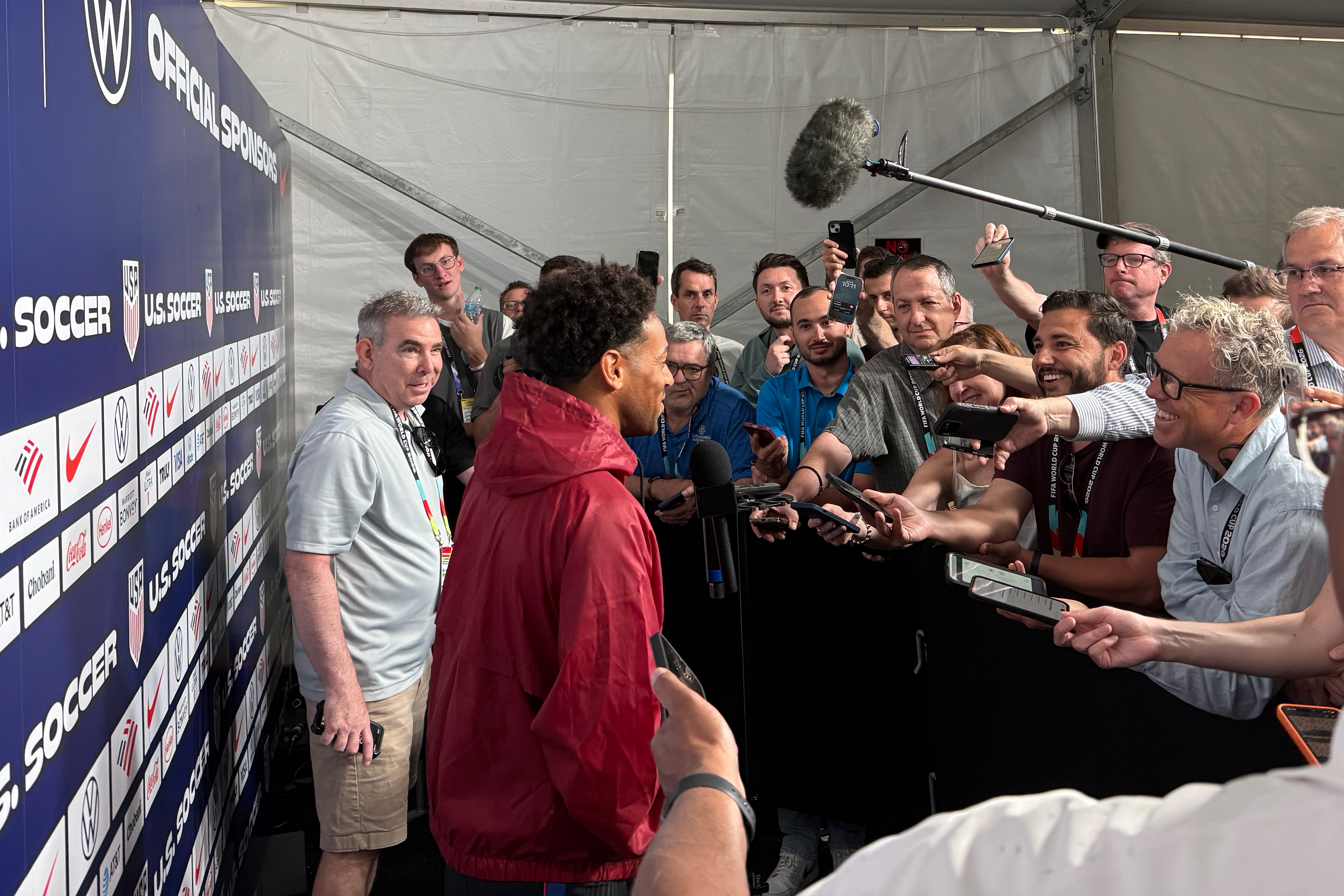
Tyler Adams drew a big crowd for his session with the media, as he always does.Jonathan Tannenwald
“Your body feels it, obviously, a little bit more coming into the end of the season, into a World Cup where there’s so much emotion, so much adrenaline, all these things,” he said.
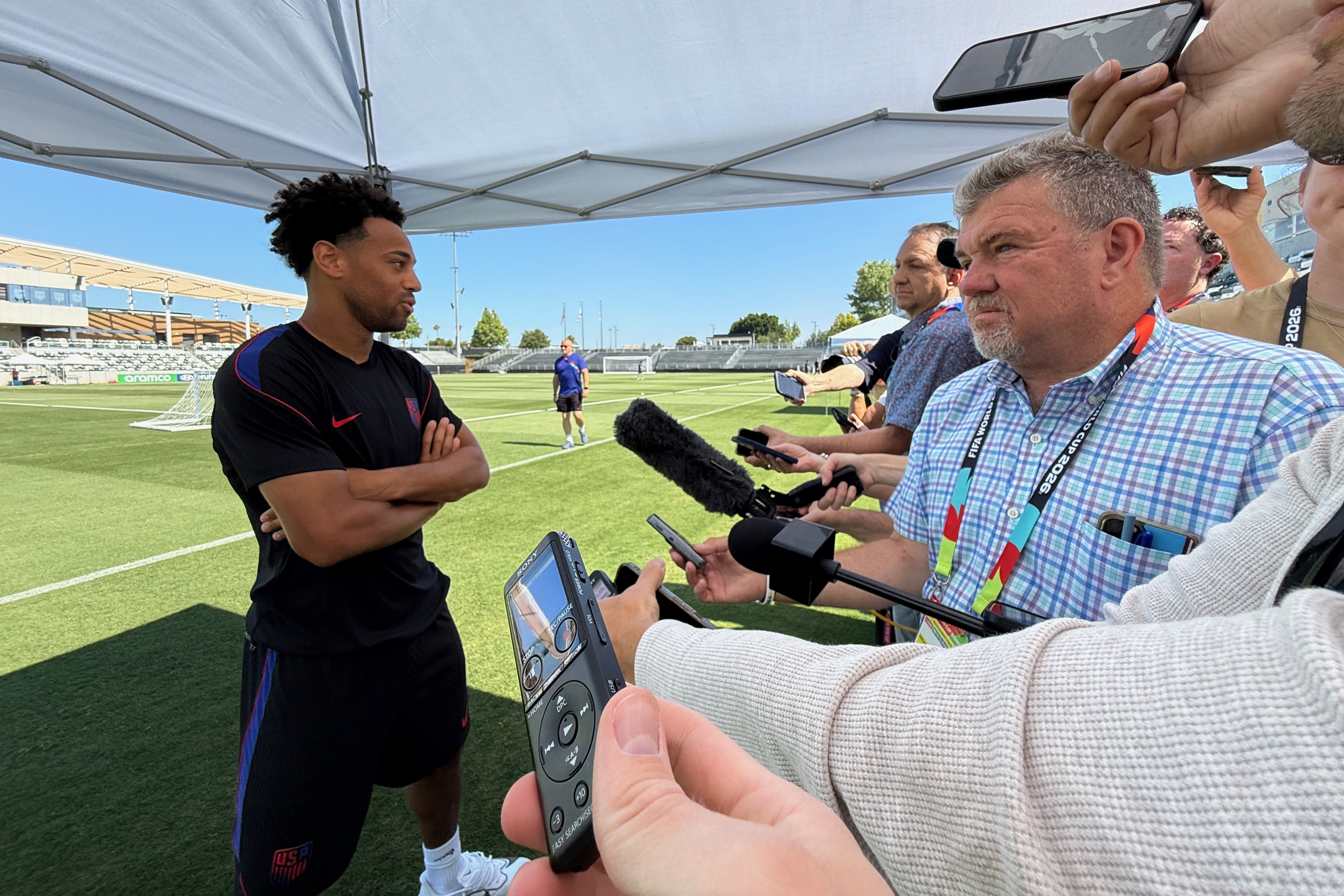
Pulisic trains separately
As he nurses the hamstring knock that sent him out of the Paraguay game at halftime, Christian Pulisic did not take the field with his teammates Monday morning. He emerged separately a few minutes later, and worked on his own with a trainer on the next field over.
A U.S. Soccer spokesperson said Pulisic was scheduled to do a “modified training session” with “gym and individual field work.”
Pochettino wasn’t scheduled to meet with the media on Monday, but he came over during practice to say hello and talk casually for a few minutes. When a reporter asked him how Pulisic is doing, Pochettino answered “Good.”
Christian Pulisic working with a trainer on a separate field Monday morning.Jonathan Tannenwald
Adams shared the sentiment, and a few more words.
“Come on — Christian will be ready, everyone. Let’s relax,” he said with his usual spirit. “I think that he picked up a knock a few days before the game, and I think he got kicked in the same spot again during the game, and when you go in at halftime, things obviously get tight within the 15-, 20-minute break. But he’ll be fine.”
U.S. Soccer also announced that 20-year-old goalkeeper prospect Julian Eyestone of English club Brentford has joined the camp as a training player. Diego Kochen of Spain’s Barcelona departed last week, while the Union’s Andrew Rick has stayed all along.
Though U.S. Soccer didn’t say why Kochen left, ESPN reported last week that the 20-year-old is on the verge of a season-long loan to Danish club Lyngby to get some regular playing time. Lyngby earned promotion to Denmark’s top flight last month, and its ownership includes the Union holding a partial stake.
Julian Eyestone (left) is another of the U.S. program’s leading young goalkeeper prospects.Jonathan Tannenwald
Yes, it was only one game, and these U.S. players know that better than anyone. But they also know how big this was.
It’s not an overstatement, especially for a fan base that has endured so much frustration over the last 12 years. It’s OK to savor a moment of real happiness, and the rest of the nation is welcome to join the party.
It’s especially worth saying that this team’s biggest players delivered on the biggest stage.
Christian Pulisic was dazzling, especially with his playmaking on the first two goals, before exiting at halftime as a precaution after a hit to his left calf.
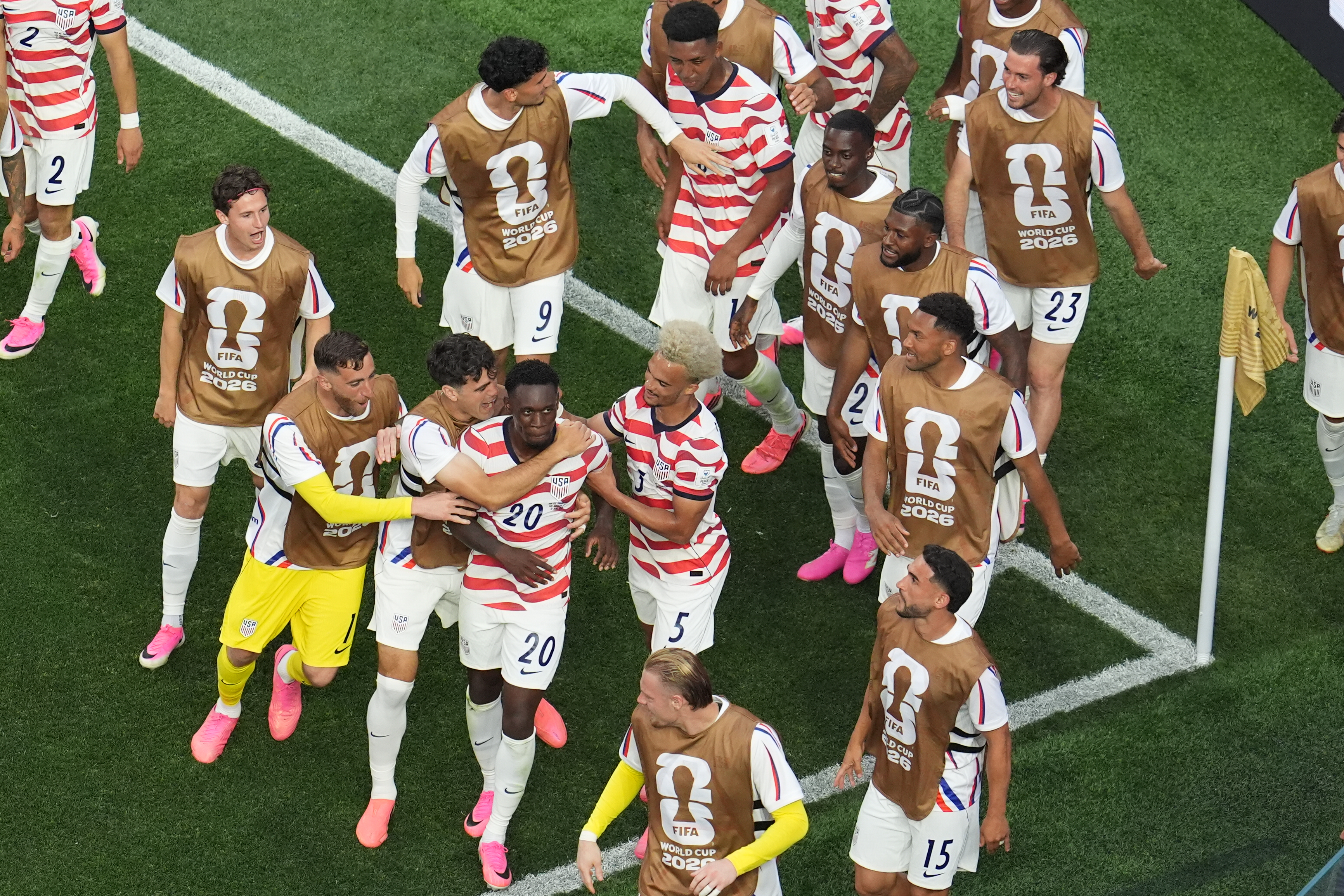
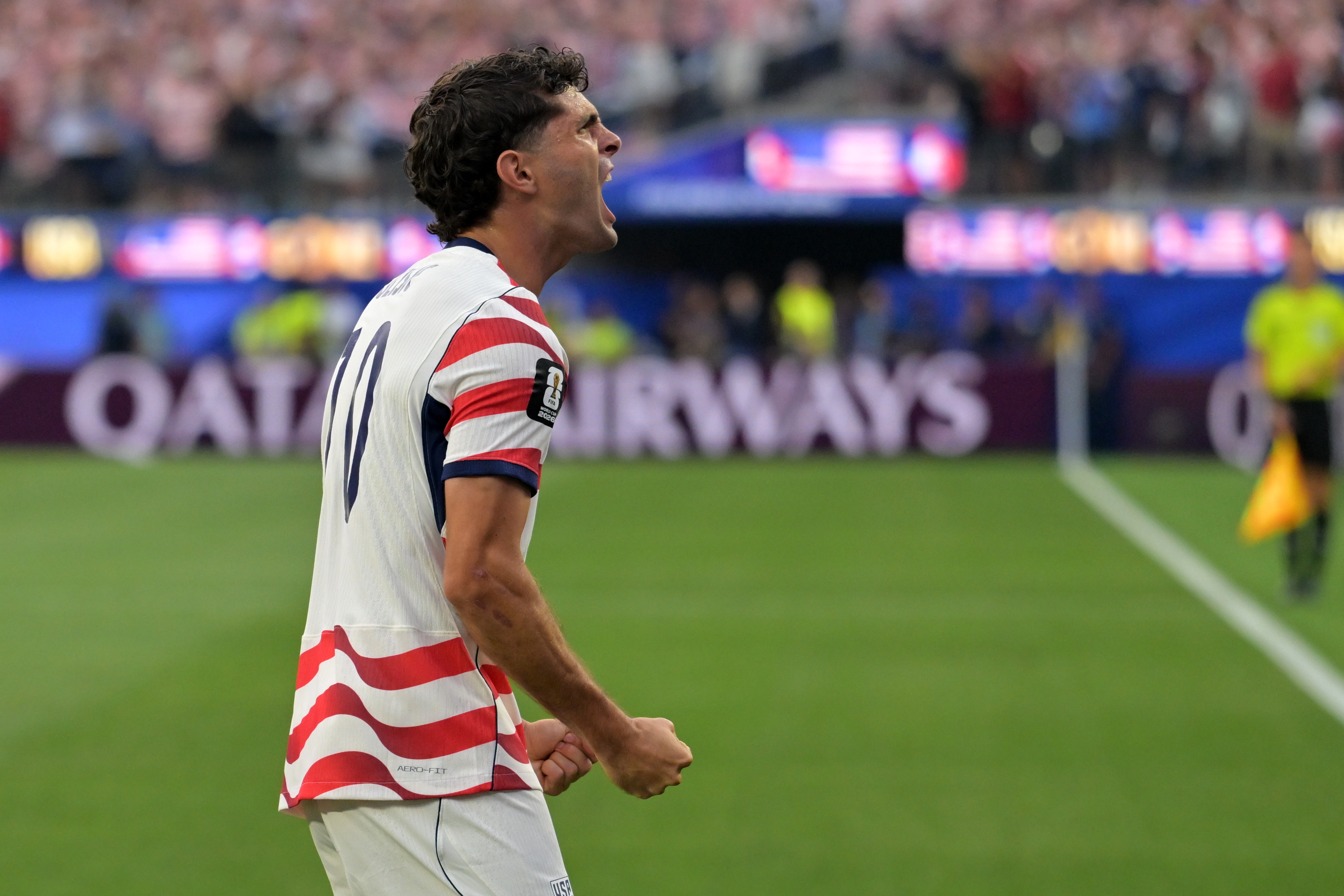
Christian Pulisic celebrates after his playmaking helped force the Paraguay own goal that opened the scoring.Jayne Kamin-Oncea
Folarin Balogun again showed why he’s the striker the U.S. program craved, with clinical finishes on the second and third goals. Weston McKennie drove the play from the engine room, starting with a charge downfield to set up the first tally.
Tyler Adams was the midfield general, and Chris Richards was impeccable on the back line: 6 of 10 duels won, three clearances, and a perfect 84-of-84 passing. Gio Reyna, so long maligned, capped the night with a thunderbolt.
While the instinct at halftime was to compare this game to the Portugal one in 2002, the final whistle brought another comparison.
Just 15 months ago, many of these players left this Los Angeles-area stadium at a low point: humiliating losses to Panama and Canada in the Concacaf Nations League final four.
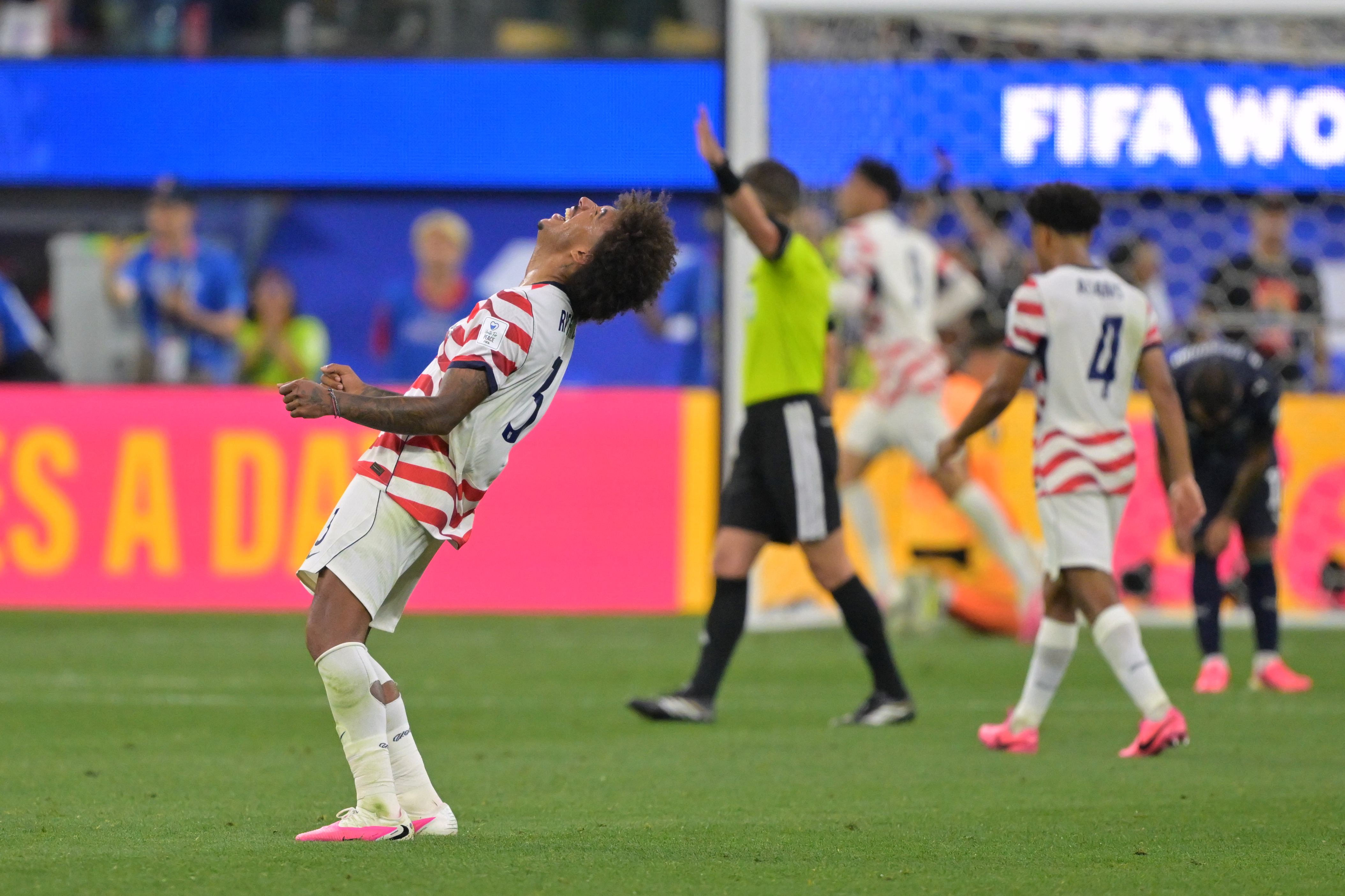
Chris Richards (left) celebrates after Gio Reyna’s late goal capped the U.S.’ win over Paraguay.Jayne Kamin-Oncea
Richards and Adams were asked if they thought about that time as they returned to the ultramodern venue typically known as SoFi Stadium, and both said they did not. But they had no doubt about how far their program has come.
“I think you’ve seen a complete culture shift,” Richards said. “There [were] a lot of question marks last March about if we have that fight, if we can do it, if we can go all the way, especially without having any real competitive games. But I think we proved it to everybody tonight.”
Adams spoke of the team’s growth “as players and individuals, but also just understanding what the manager wants, exactly how to instill that every single day, the culture of the team, bringing more players into the fold. We’ve come a very long way.”
It bears saying that Balogun missed those Nations League games because of injury. But the search for a marquee striker had gone on long before then. But it bears repeating: He has delivered.
¡TRIUNFAZO DE ESTADOS UNIDOS!
El equipo de las Barras y las Estrellas goleó a Paraguay en su debut en la Copa del Mundo.
— Telemundo Deportes (@TelemundoSports) June 13, 2026
“When I committed, and throughout the whole cycle and the whole journey to me being at this point, I’ve always said the fans gave me so much motivation, showed me so much support,” he said. “And for me, the most important thing has always been to be able to repay that. I feel like today’s a great opportunity, and I just want to continue to show the fans I made the right decision.”
He called it “a dreamy night,” and speaking soon after the final whistle meant he had only started to process it.
“I’ve not been able to take it all in,” he said. “When I get back to my hotel and I rest, I’m sure I’m going to really be able to be in the moment and experience how much of an amazing night this is.”
A true home advantage
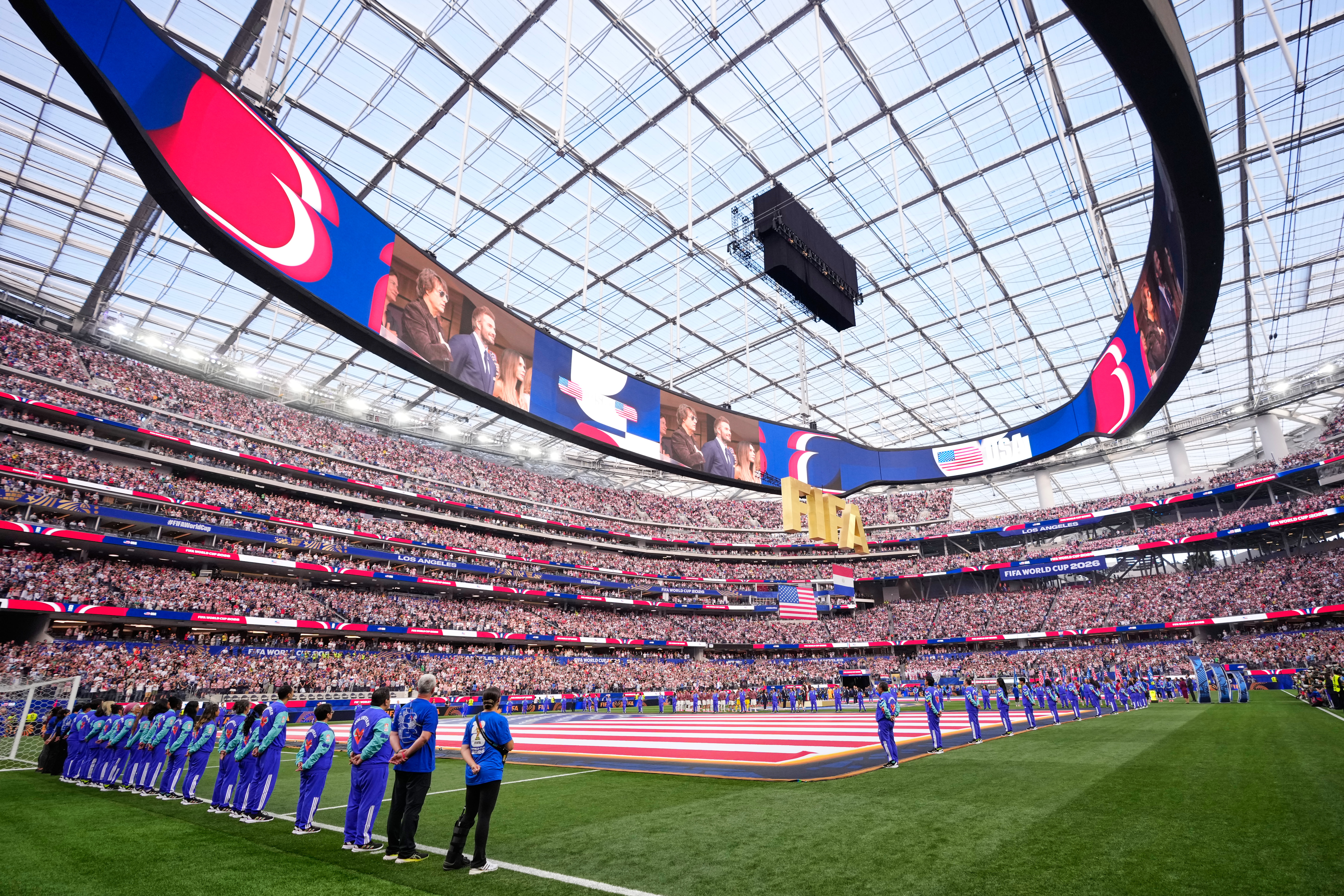
Another contrast between last year and this one came from the stands. While the players were the best actors, the crowd of 70,492 played more than just a supporting role.
A view of the crowd from field level during the national anthems.Mark J. Terrill
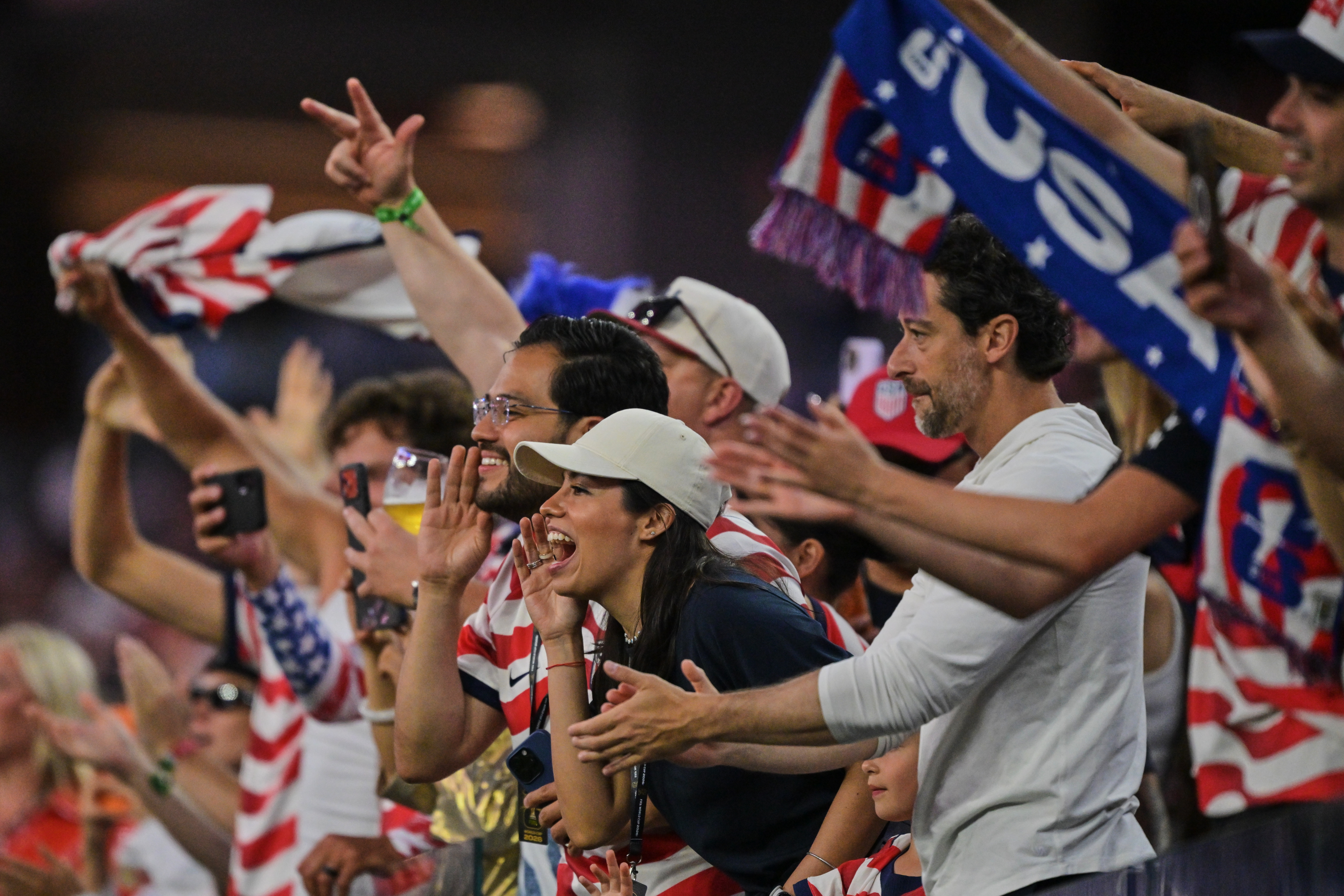
The compounded fear of seeing laid-back LA pay FIFA’s exorbitant ticket prices vanished when the national anthem singers found themselves joined by a rising chorus. There were “USA!” chants all night, real and organic, from the moments before kickoff to a key stretch late in the game when the players needed a boost after Paraguay’s goal.
Player after player said they felt it on the field.
“Walking out to that makes it feel real,” Adams said. “Seeing that support, you don’t want to let the fans down and the country down.”
Pulisic said: “It meant everything for us. A half like that, for it to go as it did, and have the fans really excited about it our performance, it felt amazing.”
Some of the U.S. fans in the stands on Friday.Jayne Kamin-Oncea
Last summer, McKennie stood at the White House with his club team, Juventus, and watched President Donald Trump make that moment about something totally unrelated to his visit. This time, the Texas-born son of a retired Air Force staff sergeant could express his own form of patriotism.
“Hearing the national anthem and hearing the fans singing it, in that moment, it’s one of those things that just pushes the feeling even further,” McKennie said. “Where you’re like, ‘I’m proud to be American, this is my home, this is my country.’ And that’s something that is hard to describe — it’s something that as a player you just feel whenever you just see that.”
Medford’s Brenden Aaronson said the anthem gave him “goose bumps,” even though he was on the bench and didn’t play. Cristian Roldan, another unused substitute, called the atmosphere “beautiful.”
“I had gotten some texts from a few mentors that said, ‘Make sure you take a moment to take it in,’ because they know I otherwise I wouldn’t,” he said. “And so I did. I just looked up, and it was a breathtaking sight, I would say.”
Pochettino, an Argentine who has spent his coaching life in Europe, felt something, too.
“It was amazing for our fans to watch this type of game,” he said. “And today, I am so proud, and we are so proud, because I think we are winning a lot of fans, adding fans [of] that sport here in America.”
This was just one game, of course. But it was a big one, and not just because it was the highest-scoring U.S. men’s game in World Cup history. At the final whistle, it opened a path toward even bigger things to come.
INGLEWOOD, Calif. — Simply put, the U.S. men’s soccer team’s World Cup got off to a dream start.
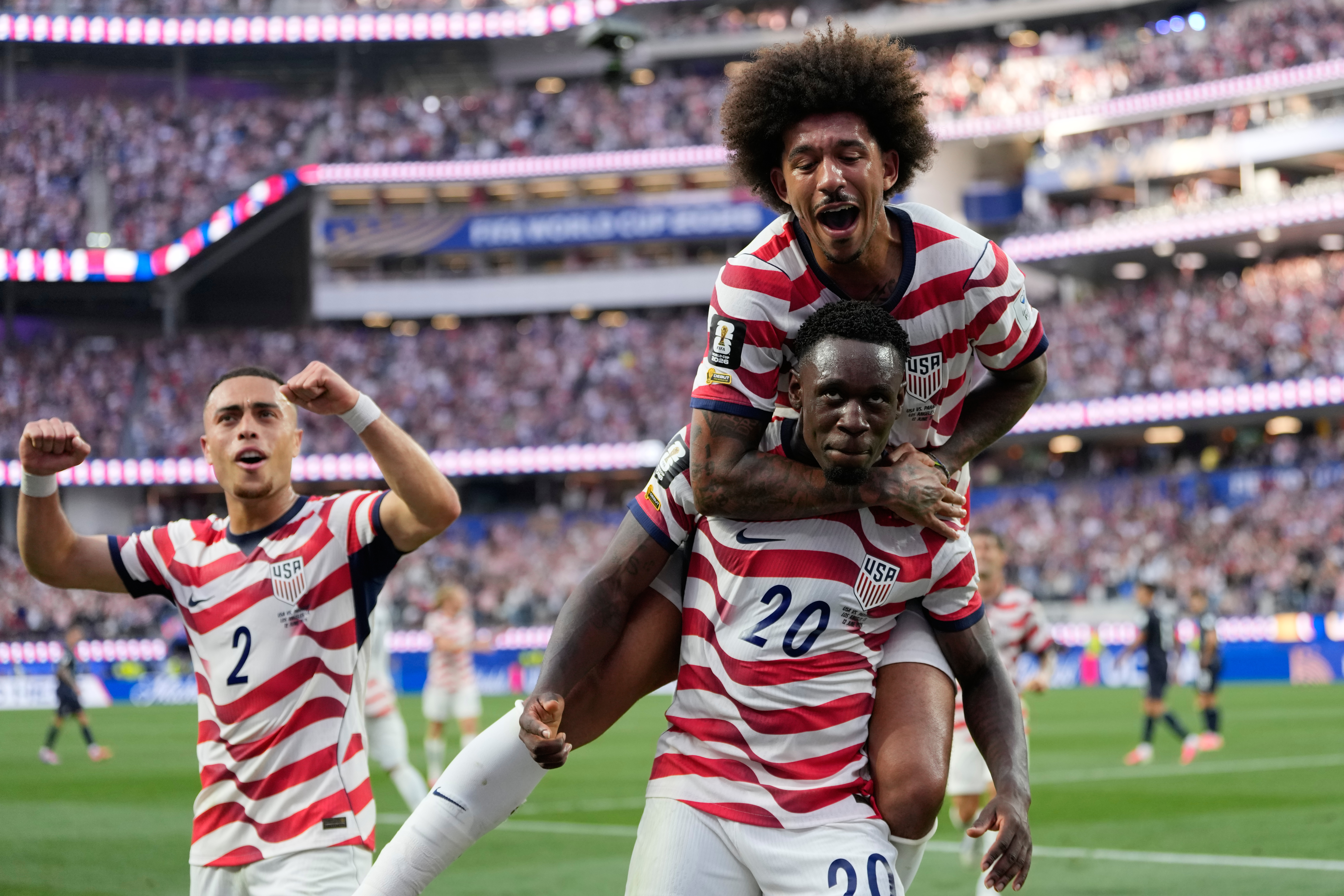
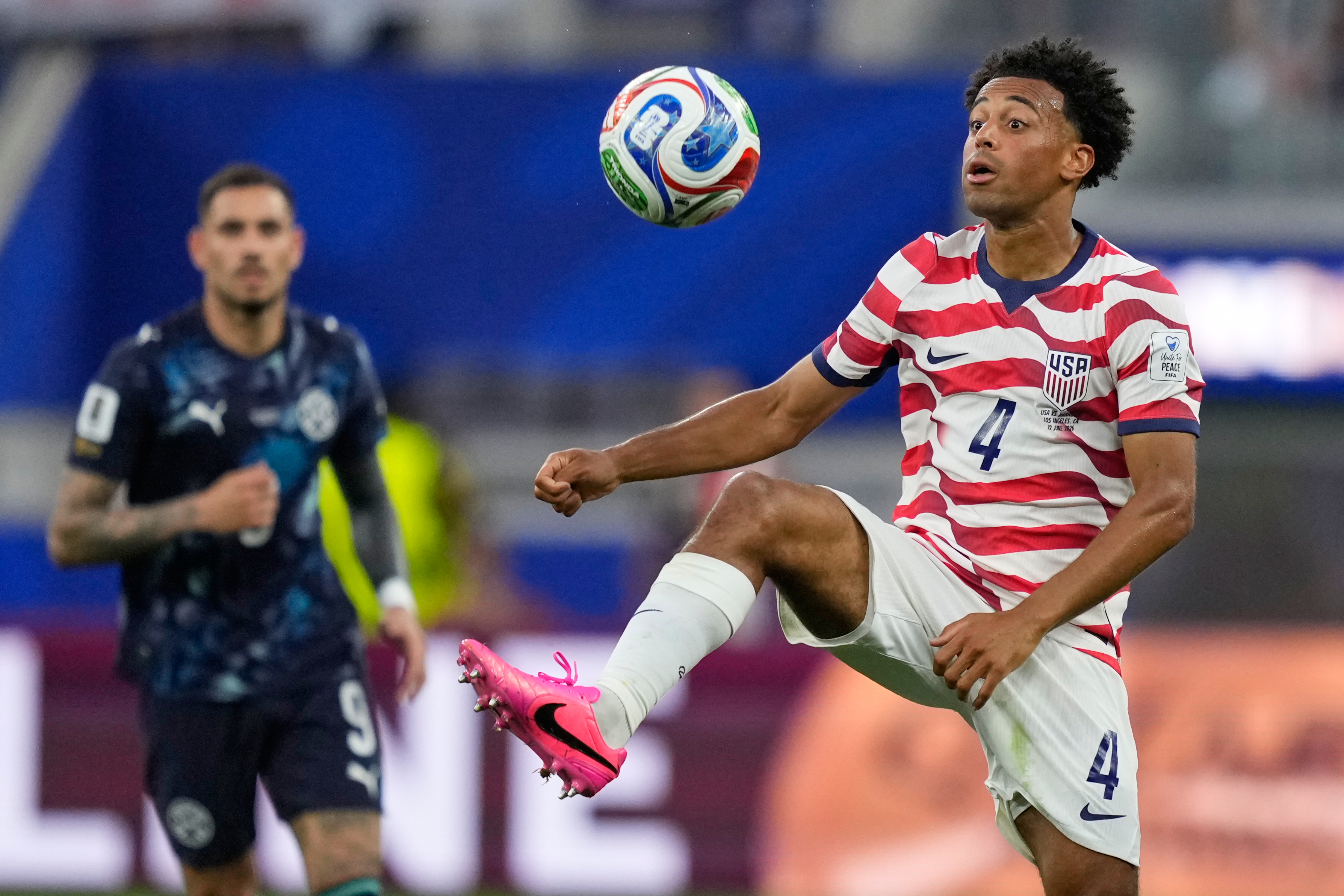
Folarin Balogun’s goals and Christian Pulisic’s playmaking led the Americans to a 4-1 win over Paraguay in their tournament opener, the highest-scoring performance ever by the U.S. men in a World Cup.
The crowd of 70,492 played a role too, belting out out the national anthem along with celebrity singers Dan + Shay and chanting “USA!” throughout the game.
With that as fuel, the U.S. needed just seven minutes to get on the scoreboard.
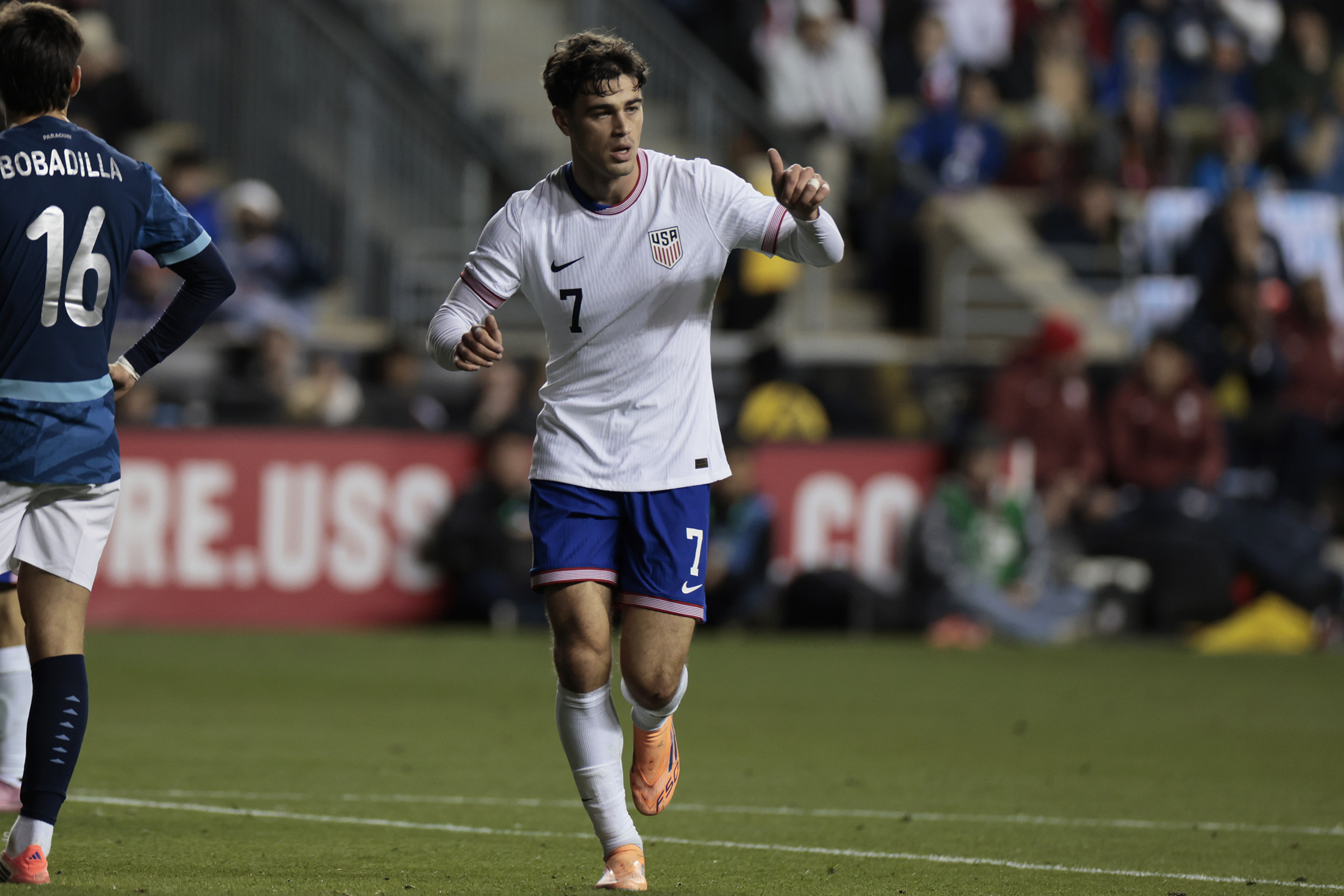
Weston McKennie created the opener in tandem with Pulisic. McKennie drove hard up the middle, including a cutback between two Paraguayan players, then fed Pulisic on the left. The Hershey, Pa., native uncorked a dazzling split of two players and a slip past a third, with the latter move sending the ball to McKennie. He aimed to lay it off for Balogun, but Paraguay’s Damián Bobadilla did the job instead by deflecting the ball into his own net.
It could have been 2-0 in the 28th, but Pulisic was offside in the buildup, and Balogun was off at the end. But the real thing arrived three minutes later, and this time, it was a no-doubter.
Pulisic was front and center again, seizing a sharp through ball from Antonee Robinson and charging up the left flank. The centering pass was on the money for a charging Balogun, who held up behind Paraguay’s back line and easily slotted home.
The crowd erupted again, a real roar despite FIFA’s price-gouged tickets that have kept so many soccer fans out of World Cup stadiums. There were pockets of empty seats, especially in the most expensive sections, another indictment of the governing body.
But the fans who were here, for all they paid, delivered. From the anthem to thunderous “USA!” chants, they showed up in a way the U.S. team often hasn’t felt — especially in Southern California. One need only think back to last year’s Concacaf Nations League final four in this same stadium, when indifference and unhelpful kickoff times left the Americans drowned out.
The U.S. lost both of those games. Now, in their first of two group games here, they were rolling — and not done scoring yet.
In the last minute of first-half stoppage time, Antonee Robinson corralled a loose ball in his own half. He gave it to Tim Ream, who had no pressure on him and took his time before passing to Tyler Adams. Paraguay again did not press, so Adams offered the ball to Malik Tillman. He turned, took one touch, then zinged a low pass through four Paraguayan players.
Balogun saw it coming even before Tillman had fully turned and was off to the races. He was past Paraguayan centerback Omar Alderete — of English Premier League club Sunderland — and stayed on his feet as Alderete tried to slide at him. He then cut left past a spinning Gustavo Gómez and slammed a shot into the top corner.
The goal made Balogun the first U.S. men’s player to score multiple goals in a World Cup game since Bert Patenaude at the first ever World Cup in 1930, coincidentally also against Paraguay. And the half was the highest-scoring by a U.S. men’s team since the famed 3-2 win over Portugal in 2002.
The second half started with a shock: Pulisic was subbed out. Sebastian Berhalter replaced him and went to a deeper central midfield spot, which sent Tillman up to Pulisic’s spot.
“I just got a bit of a kick in the first half,” Pulisic said postgame. “Back of my leg, sort of my calf area. Staying positive. I don’t think it’s anything.”
A U.S. Soccer spokesperson said manager Mauricio Pochettino would address the matter postgame.
Ream and Adams drew yellow cards early in the second half, though Ream’s was canceled. The Adams booking was especially significant, given the roster’s lack of central midfield depth.
Tyler Adams (right) will have to be careful to not get a yellow card in the next game against Australia. If he does, he’ll be suspended for the group stage finale vs. Turkey.Mark J. Terrill
Adams must now avoid cards through the second group-stage game, against Australia next Friday in Seattle (3 p.m., Fox29, Telemundo 62), to avoid being suspended for the crucial group-stage finale against Turkey on June 25.
With 25 minutes to go, the joy of the first half was replaced by nerves. Even though the U.S. was up, 3-0, Pulisic’s departure and Adams’ yellow put the building on edge.
Pochettino made two more substitutions in the 72nd, Tim Weah for Sergiño Dest and Ricardo Pepi for Balogun, but Adams stayed in.
Seconds later, Paraguay scored far too easily. Goalkeeper Orlando Gill sent a long ball forward, Miguel Almirón knocked it down to Julio Enciso, and he fed Maurício for an open shot.
The crowd could tell the vibes were changing and tried to stir the home team with another loud “USA!” chant. Weah shot high, and Tillman shot straight at Gill.
Gio Reyna was the last substitute, replacing Tillman in the 82nd.
There were seven minutes of stoppage time to endure at the end — and quite a few hard hits from Paraguayan players.
But the Americans endured and even earned one of the sport’s most famous compliments. As they ran out the clock in stoppage time, the crowd chanted “Olé!” as they passed the ball around the field.
In the final seconds, Reyna gave them an electric parting gift. A long passing sequence finished at his feet just outside the 18-yard box, and he stepped up unmarked to smash in the finale.
INGLEWOOD, Calif. — U.S. men’s soccer team manager Mauricio Pochettino has said many times during his tenure that he wants his players to believe they can win this World Cup.
If it’s unrealistic, or derided by fans and media, he does not care. His job has been to make his players think they can do it, and use that belief to put extra fuel in the tank.
(For the record, reaching the quarterfinals is the bar most outsiders have set; and if you ask this reporter’s opinion, that’s correct.)
On Thursday, in his final remarks before Friday’s opening game against Paraguay (9 p.m., Fox29, Telemundo 62), Pochettino finally turned to a more realistic tone.
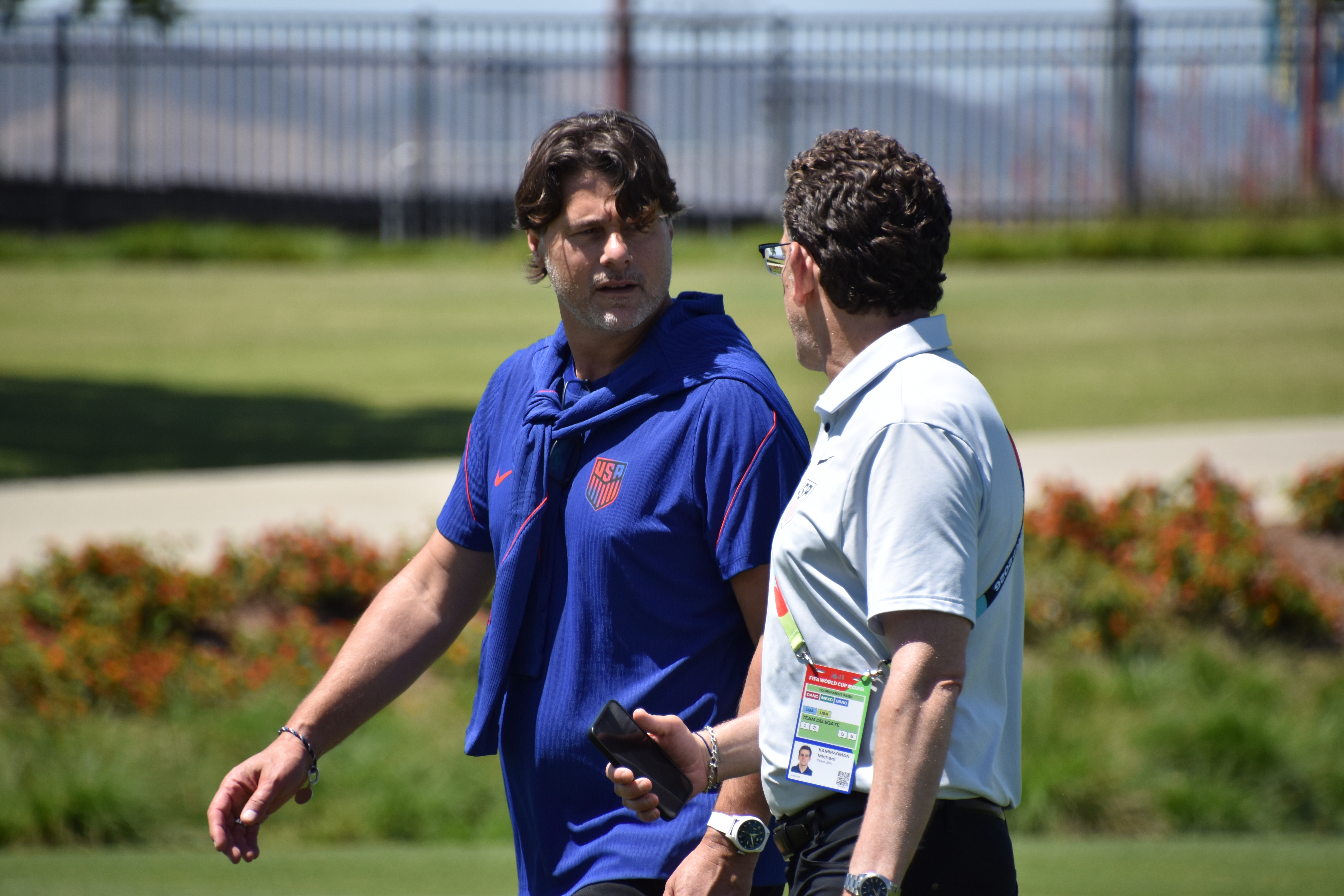
Mauricio Pochettino (left) walking with a U.S. team staffer at Thursday’s practice.Jonathan Tannenwald
Asked how he defines success now, he started by saying “it’s difficult.” Then, acknowledging those who hadn’t heard his passionate stances in the past, he set out his explanation.
“I think for me, ‘successful’ is winning,” he said. “It’s win tomorrow, and win after tomorrow, and win. If we don’t arrive to the final and we don’t win the World Cup, to talk about ‘successful’ is, I don’t know — for me and my mindset.”
Pochettino has heard from plenty of people in his 22-month tenure to date about the mountains American men’s soccer must climb, and the obstacles along the way. And now he knows firsthand how his players truly stack up against the world’s best, especially after games against powers Belgium, Portugal, Senegal, and Germany.
“If you say to me, oh, the conditions, or this [other thing], or we play against good national teams, I say, OK, OK,” he said. “But when we signed here, it’s because we wanted to come here, and to be involved in that unique event, but with the possibility to compete well, and believing in winning.”
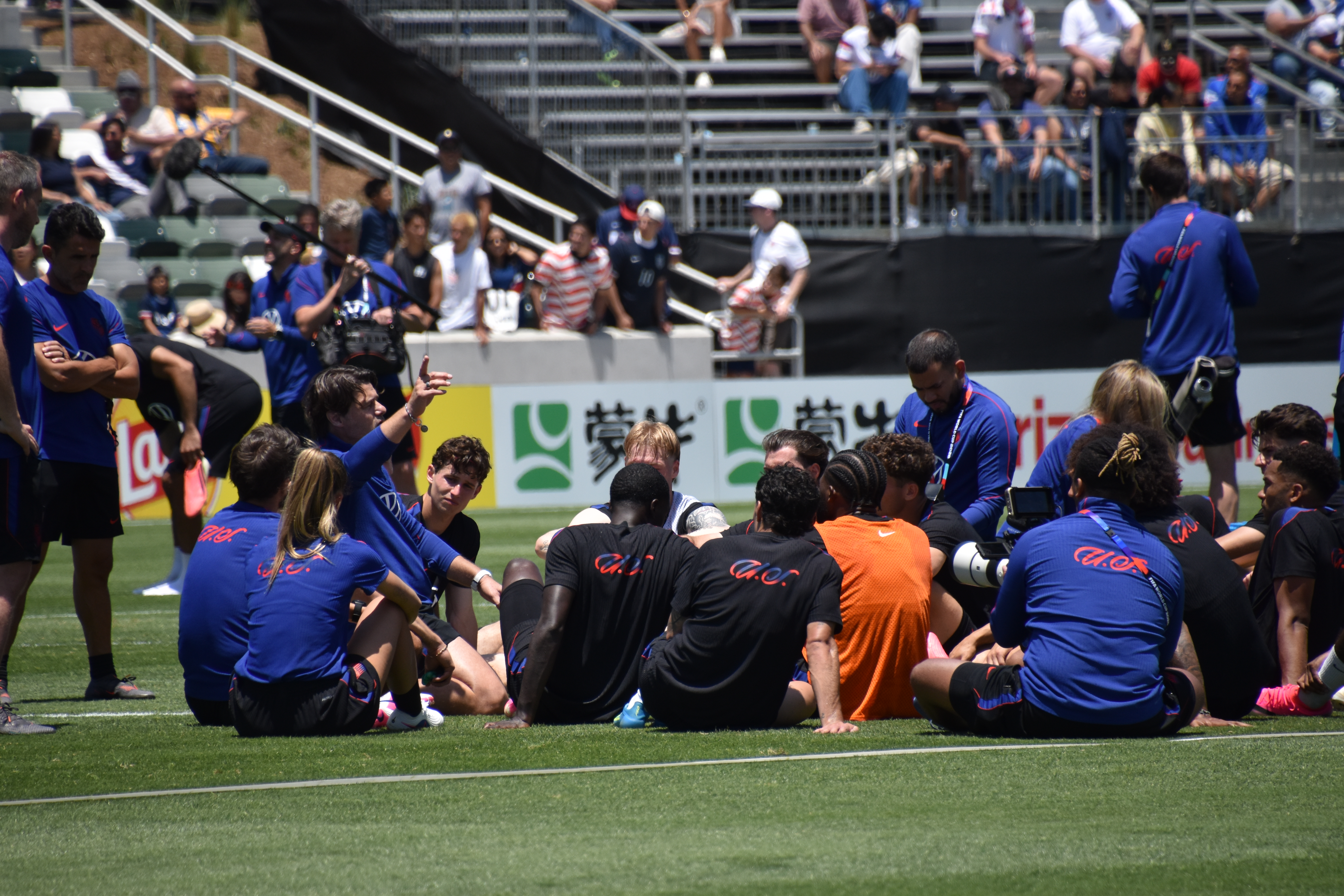
Mauricio Pochettino making a point to a group of players during the U.S. team’s open practice on Monday.Jonathan Tannenawld
Asked what he’ll say to his players before Friday’s kickoff, Pochettino joked that “I already spoke, I already talked — too much. I said [to them], don’t expect an unbelievable speech Friday.”
That’s mainly because in his opinion, they “don’t need an external motivation” at this point.
“They need the motivational speech and inspiration when they need to go to train and improve in every single area,” he said. “And then tomorrow, it’s late. … If you are not ready, sorry guys, it’s impossible to perform. What were [we] doing all this year and a half [we’ve been preparing]?”
‘Their emotional intelligence is very high’
But in a way, the manager gave that speech to the media from the podium on Thursday, in a news conference where he alternated freely between English and Spanish.
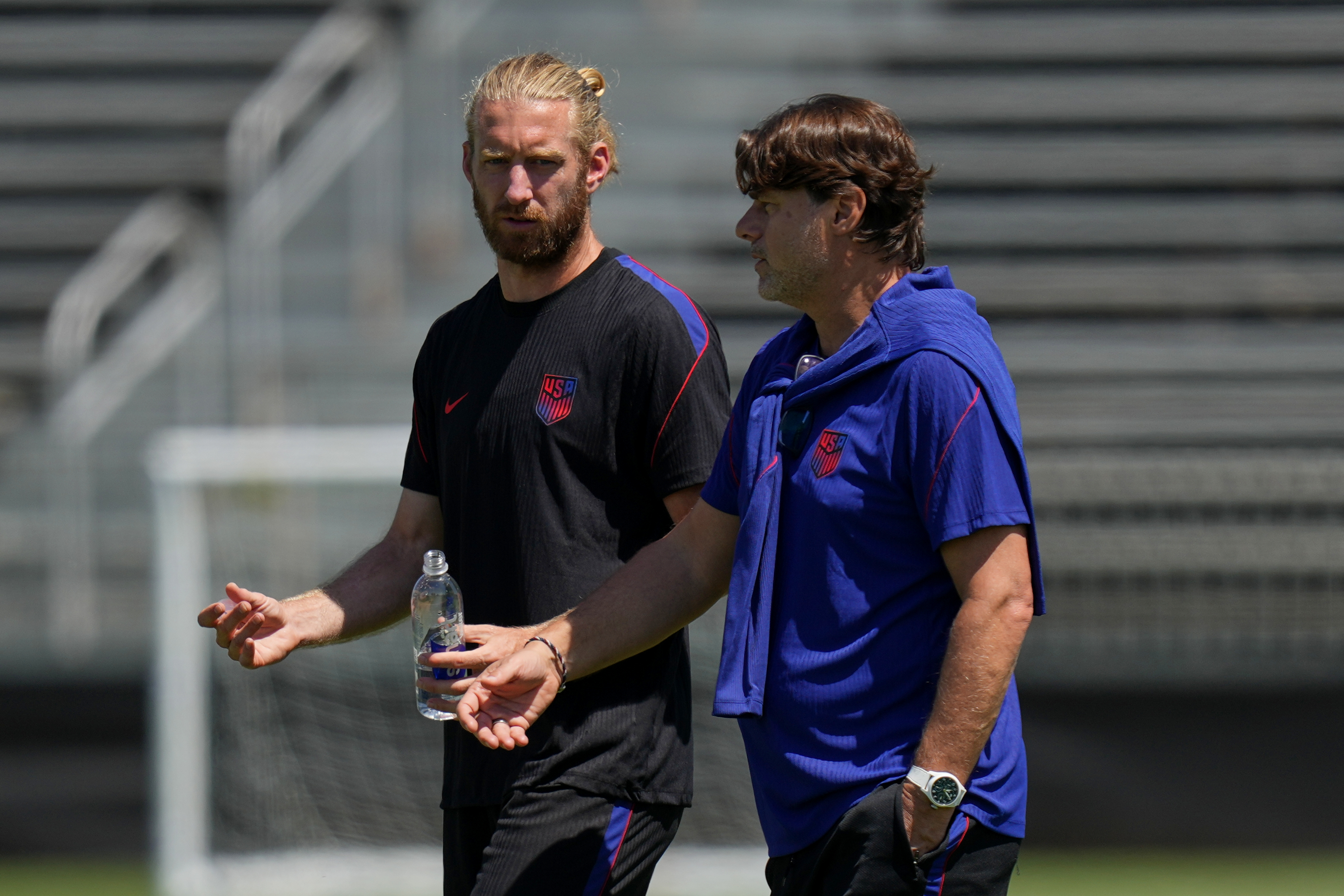
Mauricio Pochettino (right) talking with U.S. captain Tim Ream at Thursday’s practice.Andre Penner
“The players, tomorrow, need to go on the field and feel in a bad way that they need to perform,” he said. “And to perform is to respect some rules, but also the most important is not to be disconnected with your emotional relationship with the game. And we were talking about that: they need to think tomorrow and play like they are a child, with no pressure, with no responsibility.”
He also said he wants his players to “take it step by step,” and that “the key is not to look at the finish line before you actually get there.”
Pochettino particularly applied that to the players he’ll summon from the bench, a key part of any manager’s strategy with five substitutes allowed per game.
“How many players aren’t starters early in the World Cup, but end up big figures in the tournament?” he said. “It’s not just about how you start, but how you continue and how you finish.”
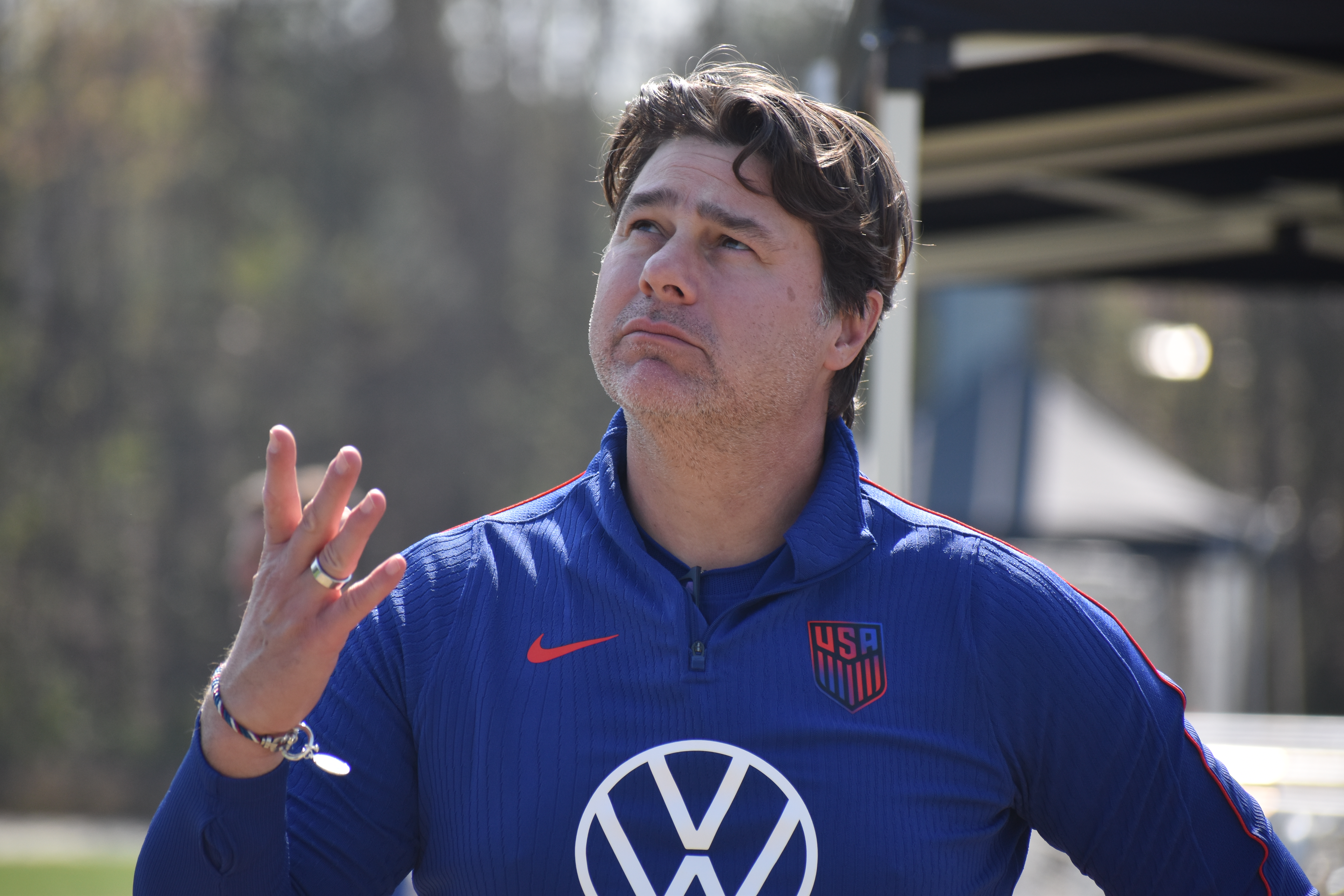
Mauricio Pochettino looks to the heavens during a philosophical moment at a U.S. practice in March.Jonathan Tannenwald
Perhaps his most revealing words came when he opened up about what he has learned from the players, for as much as they have learned from him.
“I really admire the players’ mindset,” Pochettino said. “I don’t think they should be underestimated, because their emotional intelligence is very high — well above the global average. They become great athletes because they possess that capacity and talent, and they develop that mental strength. I tell you, they are all intelligent.”
He has also learned the different ways required to connect with the 26 players on this squad, and the over 70 he has had in U.S. camps over his tenure.
“The trick is getting to know each individual so you can communicate effectively, finding the right frequency,” he said. “You realize that, ultimately, they all feel the same things, face the same struggles, and have the same needs. It’s about finding the right frequency to connect with each personality. They are giving us so much, and honestly, we are really enjoying the whole group.”
Keeping the lineup secret
As nice as it was to hear Chris Richards declare himself “ready” on Wednesday, that only counted for so much without his boss’s blessing. Pochettino gave it on Thursday, calling the key centerback “available.” He also said all 26 players on the roster are fit to play.
But he backed off saying whether Richards has the green light to start.
“Chris is available to be selected, and then we will decide if he’ll start from the beginning of the game or is on the bench,” Pochettino said. “But I think we celebrate the job that our medical staff and performance [staff] did — worked really hard to recover Chris, and recover some other players that arrived with minor things. No big issues. … It’s a really good feeling to have 26 players available to be selected.”
Pochettino said he knows what his starting lineup will be, but signaled that he hasn’t told the players. That includes the goalkeepers, the subject that has been second to Richards’ health in the most-discussed rankings.
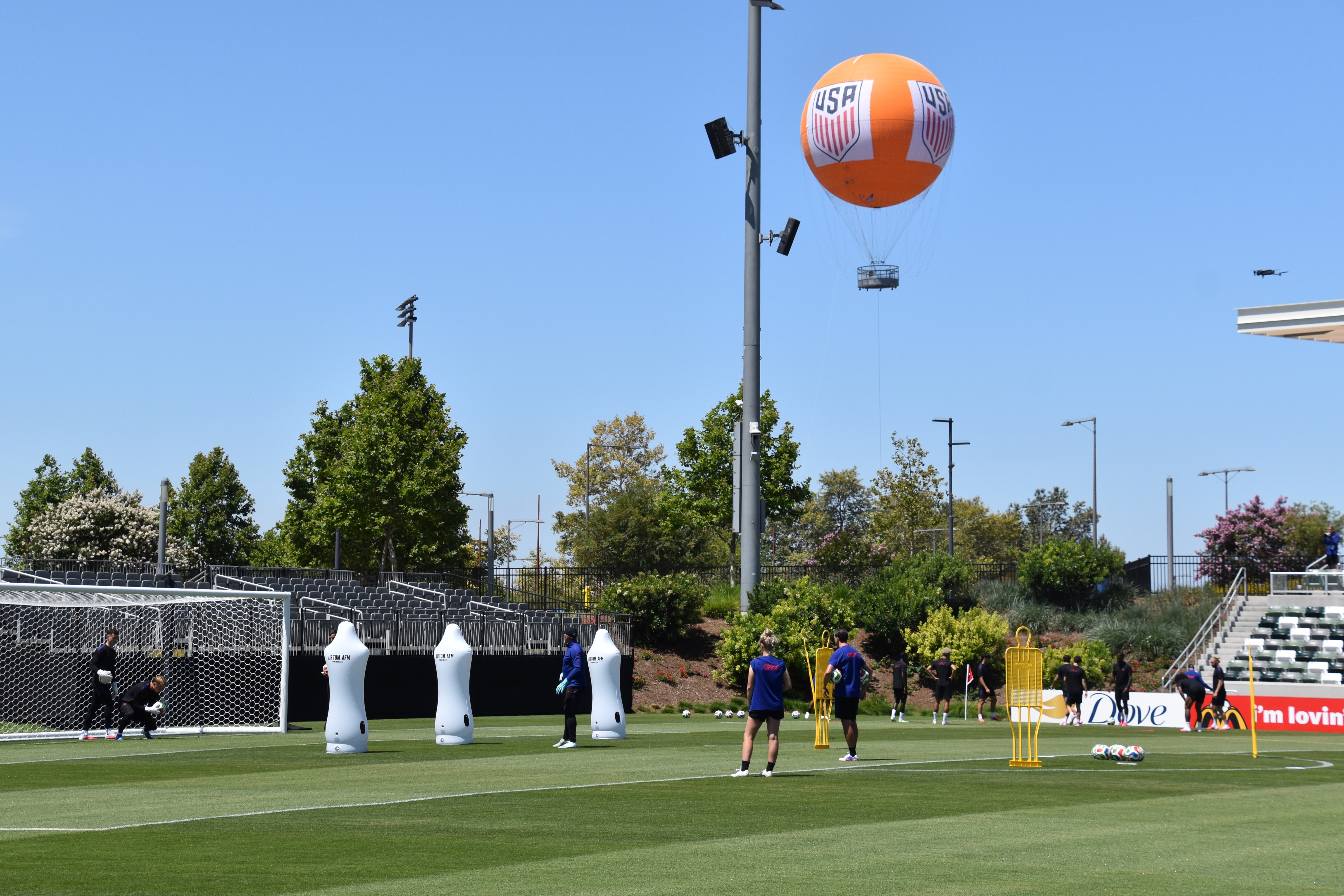
The goalkeepers at work during Friday’s practice in Irvine, Calif., amid a backdrop including a balloon decorated with U.S. Soccer’s logo.Jonathan Tannenwald
“No, I’m not going to tell you,” he said when invited to. “But I already decided. Only if something happens before the game [would it change].”
Asked if the players know, he said: “I don’t know if they know. Because if they know, you are going to start to call them.”
The room laughed with him at that. Such leaks are a tradition in other countries, including Pochettino’s native Argentina, and England where he worked for many years. It isn’t in the United States, though, at least not yet.
IRVINE, Calif. — There is no question that this U.S. men’s soccer team has players with talent and pedigree like never before. Even some of their predecessors, who are as prone to claiming “back in my day” as in any other sport, have said as much lately.
Now, at last, the time has arrived to prove it. For all the pomp and circumstance that Friday’s World Cup opener against Paraguay (9 p.m., Fox29, Telemundo 62) will bring, it also will serve as the ultimate measuring stick.
This is the 12th men’s World Cup in which a U.S. squad has taken part. In the first 11, going all the way back to the inaugural edition in 1930, the Americans have played 37 games.
They have won just nine.
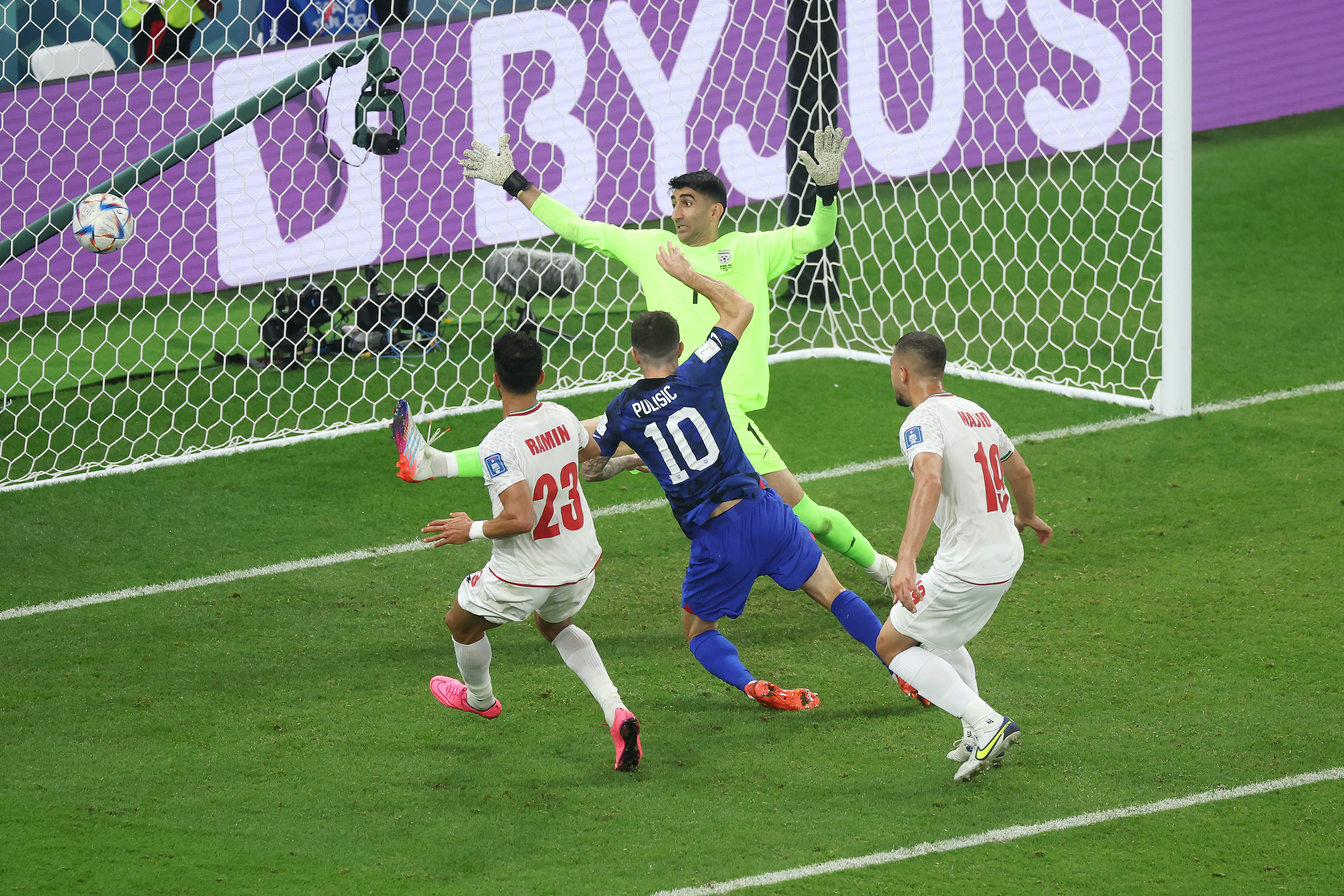
Christian Pulisic’s goal against Iran in 2022 came in the only U.S. win in that tournament.Alex Grimm
It’s not just that number, sitting alongside 20 losses and eight ties. It’s that the U.S. men haven’t won two games in a group stage since that 1930 tournament. They haven’t won two games in a single tournament since 2002, when they reached the quarterfinals with a round of 16 win over Mexico.
That, in turn, still stands as the only World Cup knockout-round win in program history. And the fact that it came against the opponent the U.S. knows best in the world means that while there isn’t an asterisk, it’s still not the same as beating a team from elsewhere.
Can this be the summer when that finally changes? And if so, what will it take?
“I think the maturity of the group now, I would say,” U.S. midfield star and longtime leader Tyler Adams said at Friday’s practice. “I know we’ve got some faces [for whom] it will be their first experience in the World Cup. But that being said, they’re all playing at a high level somewhere in the world, if not in MLS, and they’re all going to be able to contribute at a high level.”
Tyler Adams (left) speaking with the media before Friday’s practice.Jonathan Tannenwald
The U.S.’s group is easier than others, lacking a European or South American superpower and coincidentally having three rematches of friendlies from last year. A smaller gap in talent means intangibles like mentality and home-field advantage might make a difference.
“I think just continuing to put in good performances, and believing,” said Christian Pulisic, the Americans’ most important playmaker. “I think having the confidence that we’re able to beat anyone, I think that’s what it is. And I think we’ve gained some experience, especially the last World Cup, a lot of guys being around, and now we have an opportunity to prove it.”
Indeed, Pulisic and Adams are among 13 players on this World Cup squad — exactly half the roster — who were also in Qatar in 2022. But the message has also gotten through to players who weren’t, such as fast-rising defender Alex Freeman.
“I feel like for us it’s having, that confidence in ourselves,” he said. “Knowing that we’re on home soil and it’s a different type of environment, knowing that we have the fans behind us. Now it’s kind of just to show what we can do, knowing that on the field it’s going to be a different type of confidence, different type of intensity that we’ll have to show.”
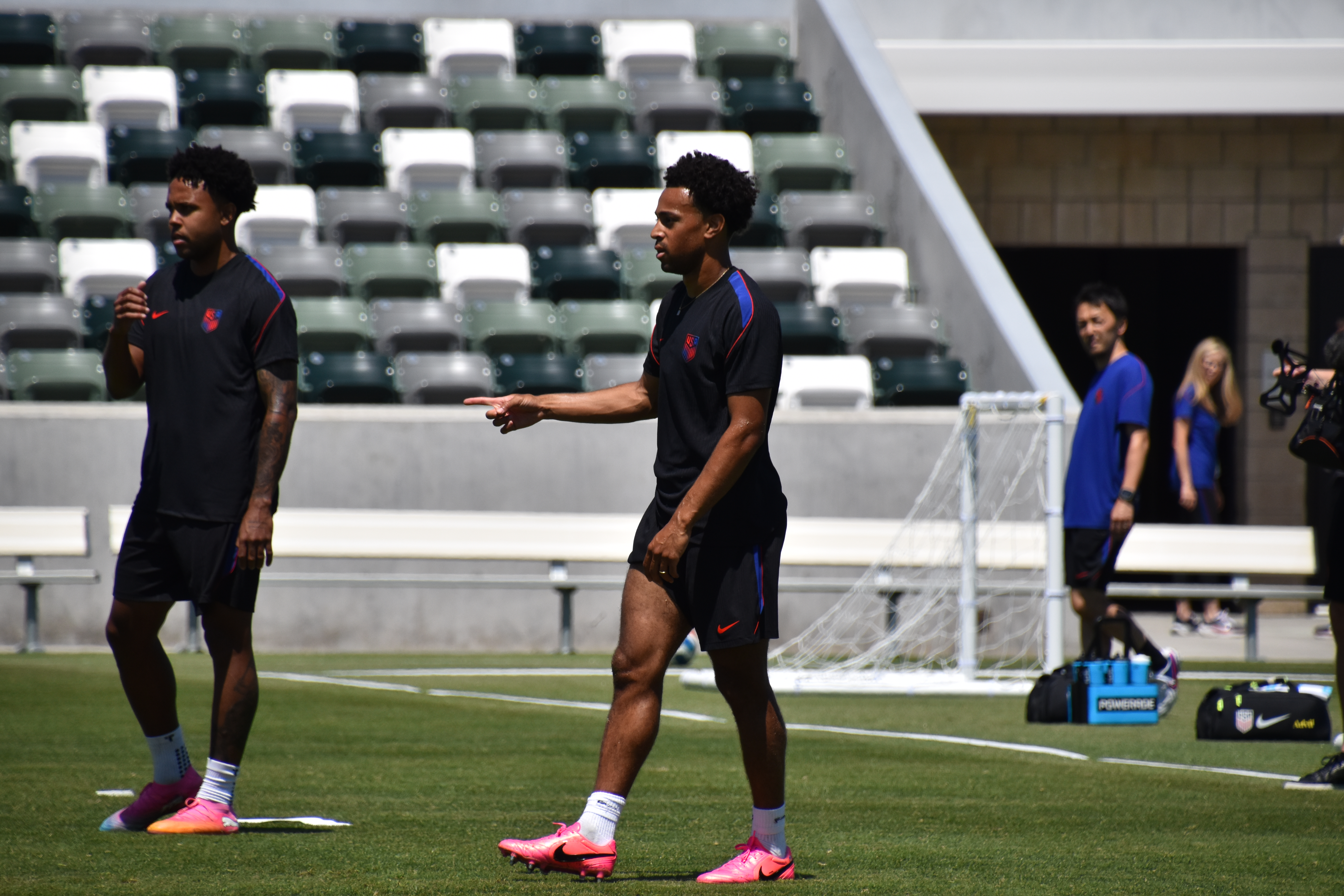
Christian Pulisic (center) getting to work on Friday.Jonathan Tannenwald
And how did they feel on game day eve?
“A good nervous, I feel like,” Adams said “I’ve never get nervous for games, but I just feel like … it just feels really real in the moment. And I’m to get out there with this group of guys, because I’m confident in what we can do.”
Adams wasn’t on the squad when the U.S. beat Paraguay in Chester last November because of an injury suffered a few days before that game. So when asked if that game matters now, his first answer was, “I mean, I didn’t play in it, so to me it doesn’t matter.”
But after the laughs all around that ensued, he agreed that the experience does help the team overall.
“It is nice when you’re breaking down film of an opponent, and you’re breaking down watching with players that we have on the field,” he said. “So I think for a lot of guys, it was probably a good experience.”
Freeman was on the field and became the center of attention when a brawl broke out at the end of the game. That was the latest lesson for the 21-year-old defender, who made a big move from Orlando City to Spain’s Villarreal two months later.
“I think for me and the team, we know how intense it is, right? And aggressive as well,” he said. “We feel like in those games, it’s going to be kind of the battle, who can strike first. I think for us, it’s to be aggressive first — I think we want to be those people that can go and make the game the way we want to do.”
So, here they are, in the final hours before the biggest game of their lives, with the opportunity for more biggest games of their lives afterward.
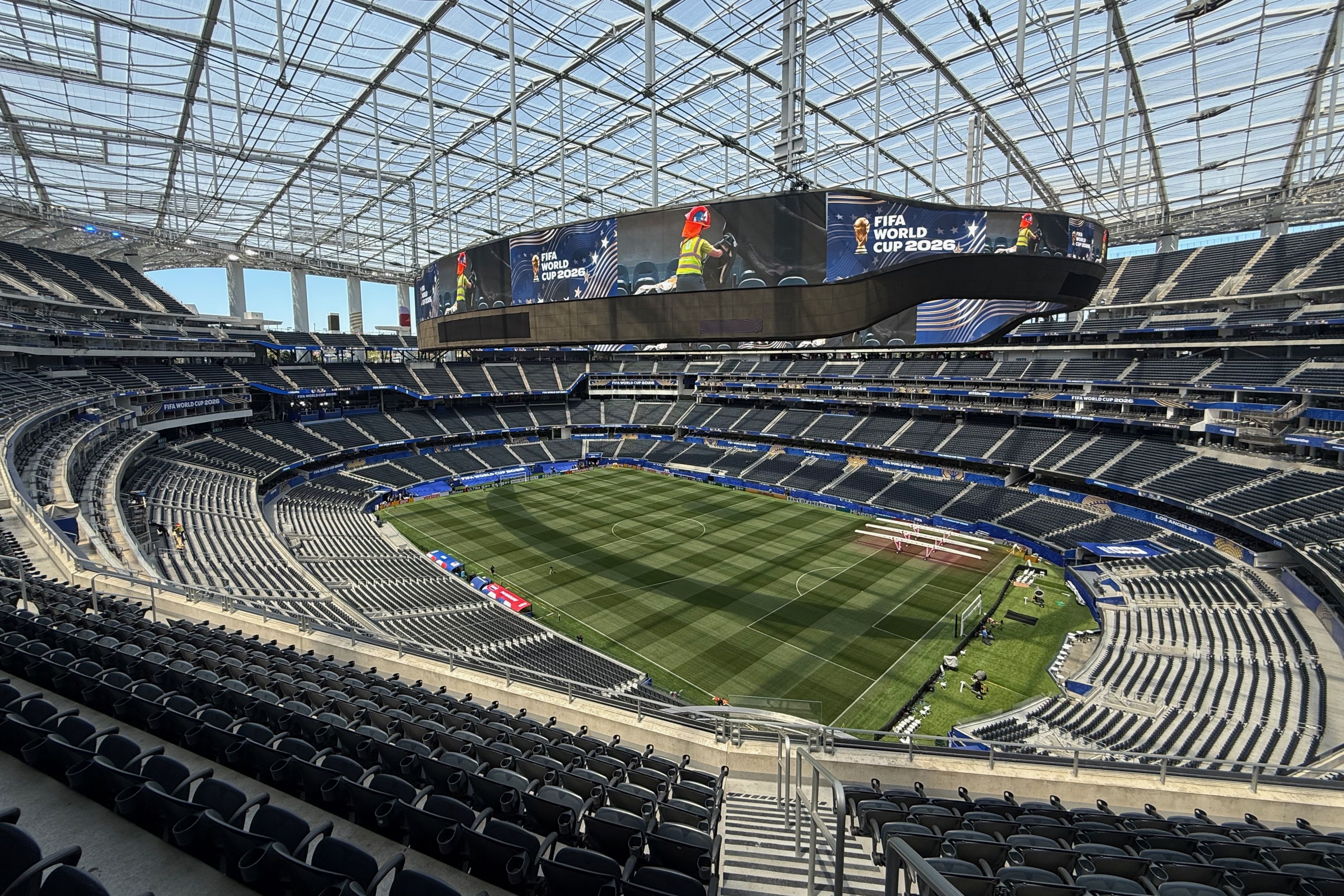
Final preparations were underway Thursday afternoon at the stadium in Inglewood, Calif., where the U.S. and Paraguay will meet on Friday night.Jonathan Tannenwald / Staff
“It’s not quite here — still got another day,” Pulisic said. “But definitely feeling more real, getting excited.”
And Adams gave one more rallying cry, adding to the list of them he has given.
“This is, for me, the biggest opportunity to just really grow the game, to inspire people, to show that American players are at the level of the rest of the world,” he said. “I’m not going to say it’s difficult to showcase that week in week out when you’re playing abroad, but that’s not the collective. Now you have a group of Americans playing together at a high level — let’s show everyone what we’re capable of doing.”
Earlier today, Tyler Adams was asked about the burden Christian Pulisic has carried on his shoulders for a decade as the biggest #USMNT star.
Here was Adams' eloquent response, and what Pulisic said a few minutes later about whether he feels less of a burden now:
America getting out of its group on American soil.
In this World Cup, that is the first goal — and the road begins Friday when the U.S. men’s national team kicks off against Paraguay (9 p.m., Fox29, Telemundo).
Paraguay is the first of three matches for the United States in Group D, where they’ll also face Australia (June 19, 3 p.m.) and Turkey (June 25, 10 p.m.).
It’s a group from which many feel the U.S. can emerge, and a recent pair of tuneup matches against Senegal and Germany provided additional validation.
Gio Reyna was the goalscorer the last time the U.S. men played Paraguay in November at Subaru Park in Chester.Elizabeth Robertson / Staff Photographer
Paraguay is also a team the U.S. defeated 2-1 at Subaru Park in Chester just eight months earlier, with a sizable contingent of players who qualified for head coach Mauricio Pochettino’s World Cup roster.
We’ve been watching since the beginning of qualifying cycles, which, as the host nation, the U.S. didn’t need to qualify for. Along the way, we analyzed a wide pool that over two years competed in a Concacaf Nations League third-place game and a Gold Cup final in the lead-up.
The hope and expectation around this team are mostly justified. Because of that, I’m going to be a contrarian for a moment. Dating back to the first World Cup in 1930, the U.S. men have played 37 games on soccer’s biggest stage. They’ve won just nine, lost 20, and tied eight; and they haven’t won more than one group game in a tournament since that inaugural edition.
This team doesn’t face the pressure of world powers like Argentina and England, but it still faces plenty as a co-host desperate to give the sport a lasting legacy here. Paraguay, meanwhile, loves playing defense — and will likely play even more without injured star forward Julio Enciso.
It’s good for the U.S. that they beat Paraguay last November in a friendly at Subaru Park. But this game will be a lot harder, and I’m not at all sure the home team will have a big home advantage from the L.A. crowd. I think the U.S. wins it close.
One of the great things about being so deeply entrenched in this sport is the freeing feeling that wins and losses in tuneup matches offer very little insight into how good a team is. Win over Senegal? Somewhat ecstatic. Loss to Germany? Somewhat expected.
I think it comes down to a few things, but what I mainly look for in this first match against Paraguay is who Pochettino puts out there. He beat this nation with a group largely comprised of the same guys, and has an even stronger cast in this go-around. I think this is the perfect first match to get acclimated and one the U.S. takes three points in.
Prediction: United States 2, Paraguay 0.
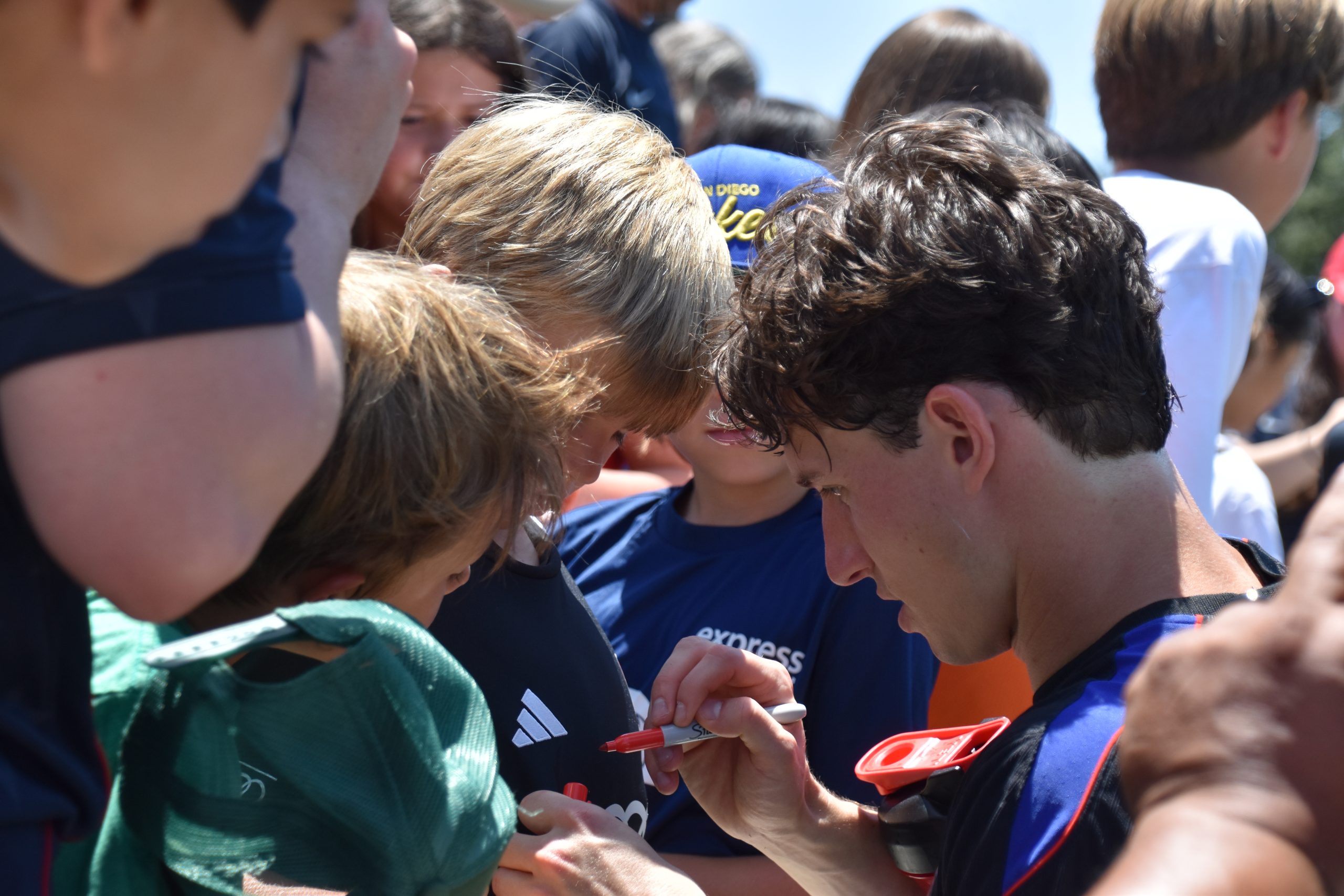
Medford native Brenden Aaronson (right) signs an autograph for a fan during a U.S. men’s national soccer team practice on Monday.Jonathan Tannenawld
Who will be the U.S. face of the U.S. World Cup? Easy. Christian Pulisic, Captain America, who gets America’s biggest soccer party started with a signature goal in the opener. Pulisic, whose goal in a friendly last month was his first goal for club or country in five months, brought the energy in the opening minutes of the 2022 opener before finally breaking through — and perhaps risking his future generations — for a goal against Iran.
The U.S. should win their group, and the path starts with a win on Friday. The Americans will take care of business against Paraguay and the country’s biggest soccer star will shine bright in L.A.
There’s no way that arguably the most talented team America has ever sent to a World Cup loses its first match on home soil … right? Doubts about the goalkeeper situation and the health of Chris Richards aside, this match is too big for the U.S. to lose.
Fortunately for the Americans, the U.S. will get the lowest-ranking member of Group D to start their World Cup campaign. They have already beaten Paraguay in a friendly during Pochettino’s tenure with a less talented squad, and there’s nothing that suggests that the Americans won’t be able to replicate that result on Friday on the big stage in Inglewood.
Some people might be surprised to realize that the United States has been part of the World Cup tournament since the very first edition in 1930 — and Philadelphia has been a part of that as well. The Philadelphia area has contributed players, coaches and administrators to the United States men’s national team for all that time.
Here’s a look at the World Cups the U.S. men’s team has participated in, the pepople in them with Philadelphia connections, and the Union connections to soccer’s biggest stage over the team’s history.
Uruguay, 1930
Players: A Penn graduate who played soccer and football and ran track in his time there, James Gentle signed as a striker with the Philadelphia Field Club and later coached at Haverford School.
Born in Scotland, Bart McGhee moved to Philadelphia as a child and played for numerous area teams. Against Belgium, McGhee scored the first-ever U.S. World Cup goal (the second overall World Cup goal) en route to a 3-0 win.
Goals from Bart McGhee, Tom Florie and Bert Patenaude led the 🇺🇸 to a 3-0 tournament-opening victory against 🇧🇪in Montevideo. pic.twitter.com/OTxIO4kzua
— U.S. Soccer Men's National Team (@USMNT) July 13, 2020
Jimmy Douglas, the USA’s goalkeeper, is credited with the first-ever World Cup shutout. He also played briefly for Philadelphia Field Club in his pro career.
The debut tournament of the World Cup was where the U.S. had its best-ever finish, reaching the semifinals. Host Uruguay won the tournament.
Players: Bill Fiedler was born, raised, and played his entire pro career in Philadelphia for the Philadelphia German-Americans and the Philadelphia Passon. He didn’t enter the one game the U.S. team played in the 1934 tournament.
Neither did Al Harker, who also had a long career for the Philadelphia German-Americans, playing for them for well over a decade.
Peter Pietras was born in Trento and played for five years with the Philadelphia German-Americans. He played in the game against Italy.
German-born Herman Rapp, appropriately enough, also played for the Philadelphia German-Americans when he went to Italy as part of the World Cup team, but he saw no action in the one game.
Francis “Hun” Ryan, born and raised in Philly, was the first World Cup player to have played for the still-active Lighthouse Boys Club team. He also played for the Philadelphia German-Americans and in the match against Italy.
Administration: Elmer Schroeder, who was the first American-born director of the U.S. Soccer organization, was previously the director at Lighthouse, starting at the age of 19.
David Gould, appointed as team manager by Schroeder, played for years in the area and also coached Penn soccer for 27 years.
The 1934 tournament was entirely single-elimination. The U.S. lost its one game to Italy, 7-1, which still remains a record for both countries at the World Cup, since that is the most goals Italy has ever scored in the competition. The score also remains the most goals the U.S. has ever conceded at the World Cup. Italy, the host country, went on to win the tournament.
Walter Bahr is one of seven National Soccer Hall of Famers who started at the Lighthouse in Kensington.
Brazil, 1950
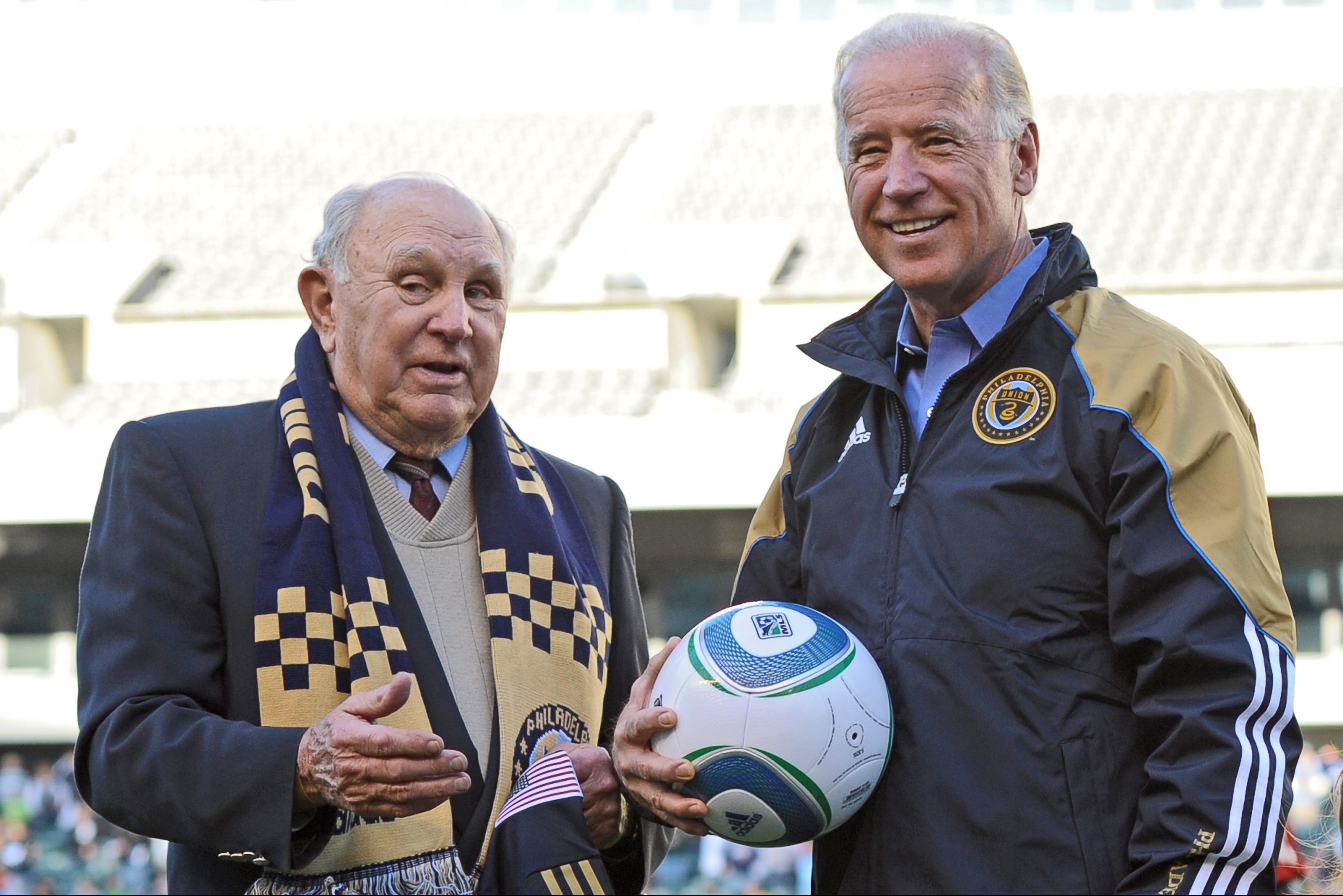
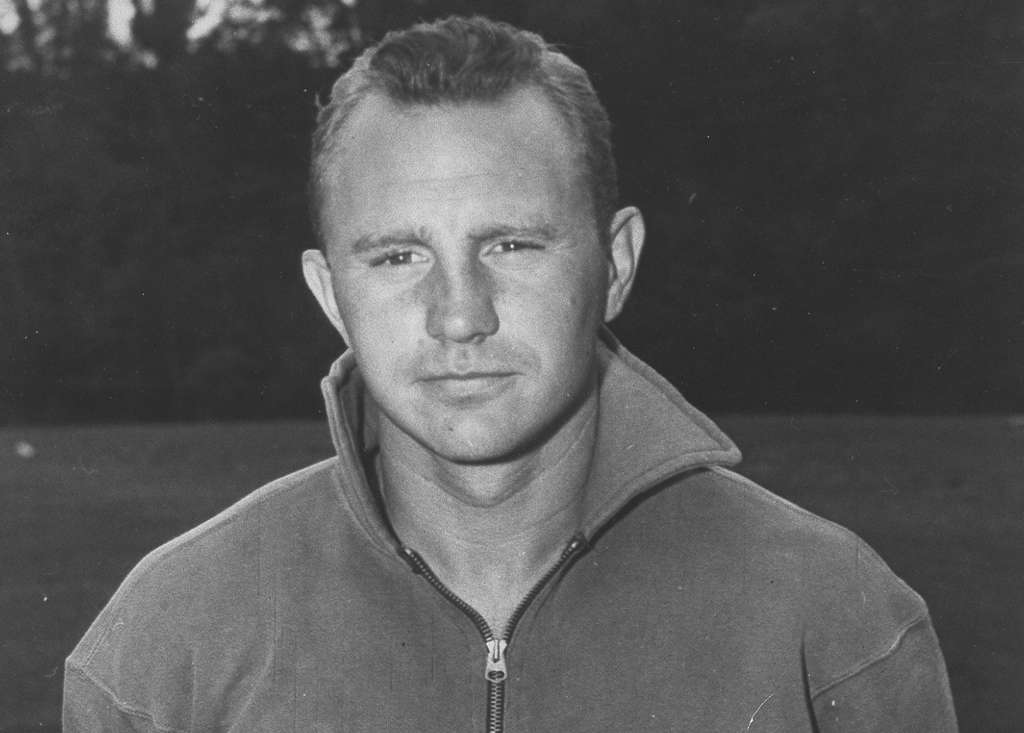
Players: Walter Bahr was born, lived, and played professionally in the area with the Philadelphia Nationals. Bahr captained the team in all three group games the Americans played at the World Cup, including the stunning 1-0 upset of England. He provided the assist on the winning goal.
Sixty years later, he bridged the generations when he stood on the sideline with then-U.S. Vice President Joe Biden at the first home game in Union history.
Ed McIlvenny, who briefly played for Wrexham in Wales (now owned partly by Philly’s own Rob McElhenney), was a Scot who immigrated to the Philadelphia area. He became a teammate of Bahr’s on the Philadelphia Nationals and won a league title before returning to Britain for a short stint with Manchester United.
Administration: William Jeffrey was the manager of the U.S. team. Another native Scot, he coached Penn State for 26 seasons.
The United States lost their group games against Spain, 3-1, and Chile, 5-2, and did not advance to the knockout stage. The champion was Uruguay, which claimed its second title.
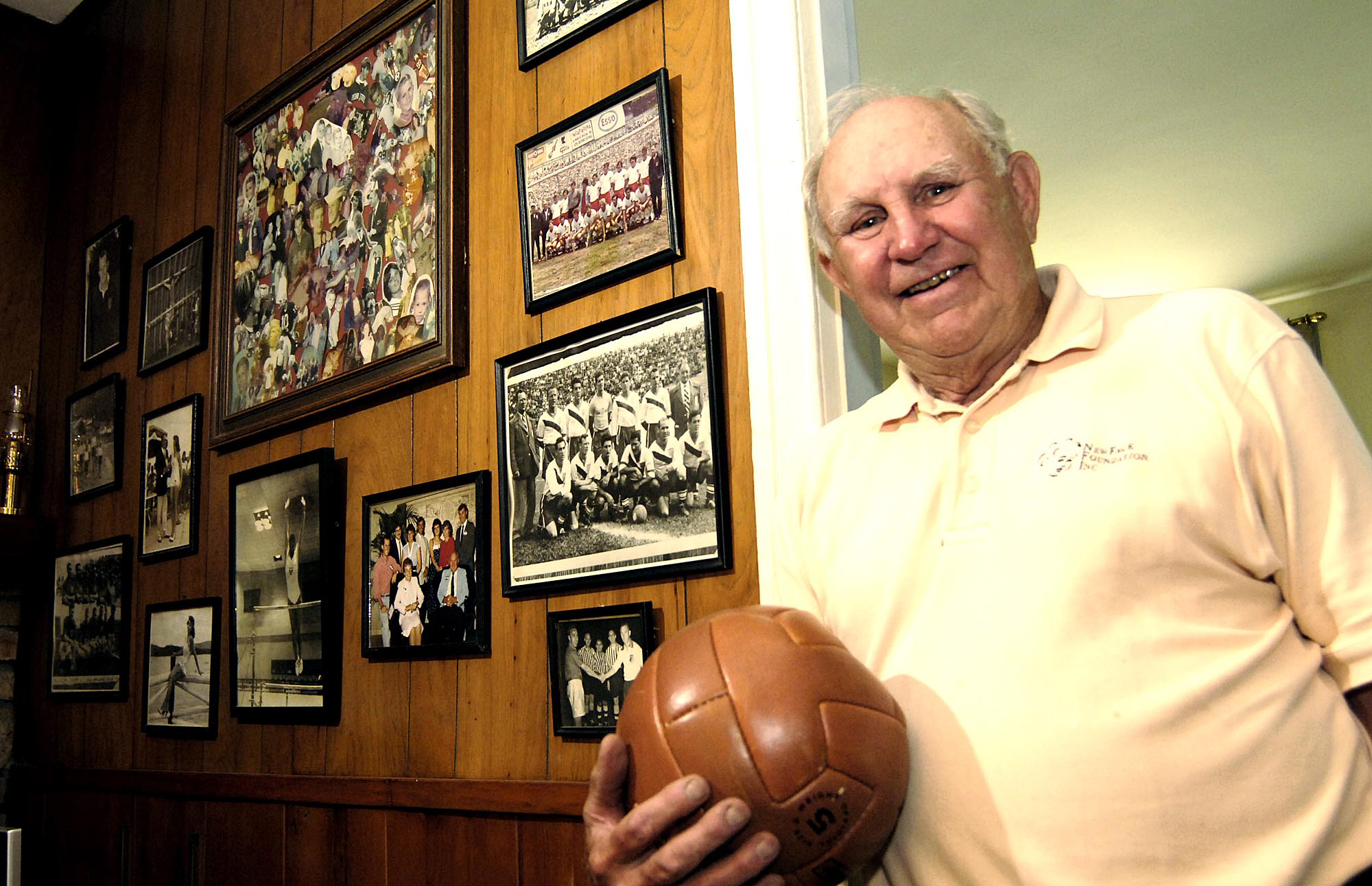
Walter Bahr at his home in Boalsburg, Pa., in 2006. Bahr kept lots of memorabilia from his days as a U.S. national team player.
Italy, 1990
Players: Peter Vermes, who grew up in Delran, played college soccer at Rutgers. He went on to earn 66 caps with the U.S. men’s national team and played in every group game at the World Cup.
The U.S. lost to Czechoslovakia, 5-1, Italy, 1-0, and Austria, 2-1. The champion that year was West Germany.
United States, 1994
Players: While the Dutch American former midfielder Earnie Stewart was raised abroad, his connection to Philadelphia was established when he arrived to take on his first stateside job in 2015 as sporting director of the Union. Now Stewart serves as sporting director of the United States Soccer Federation.
In 1994, Stewart helped the American team advance from group play. He scored a goal in the team’s 2-1 win over Colombia, and played in the other group games, a 1-1 draw with Switzerland and a 1-0 loss to Romania.
The U.S. was eliminated in a 1-0 loss in the next round against Brazil, the eventual champion.
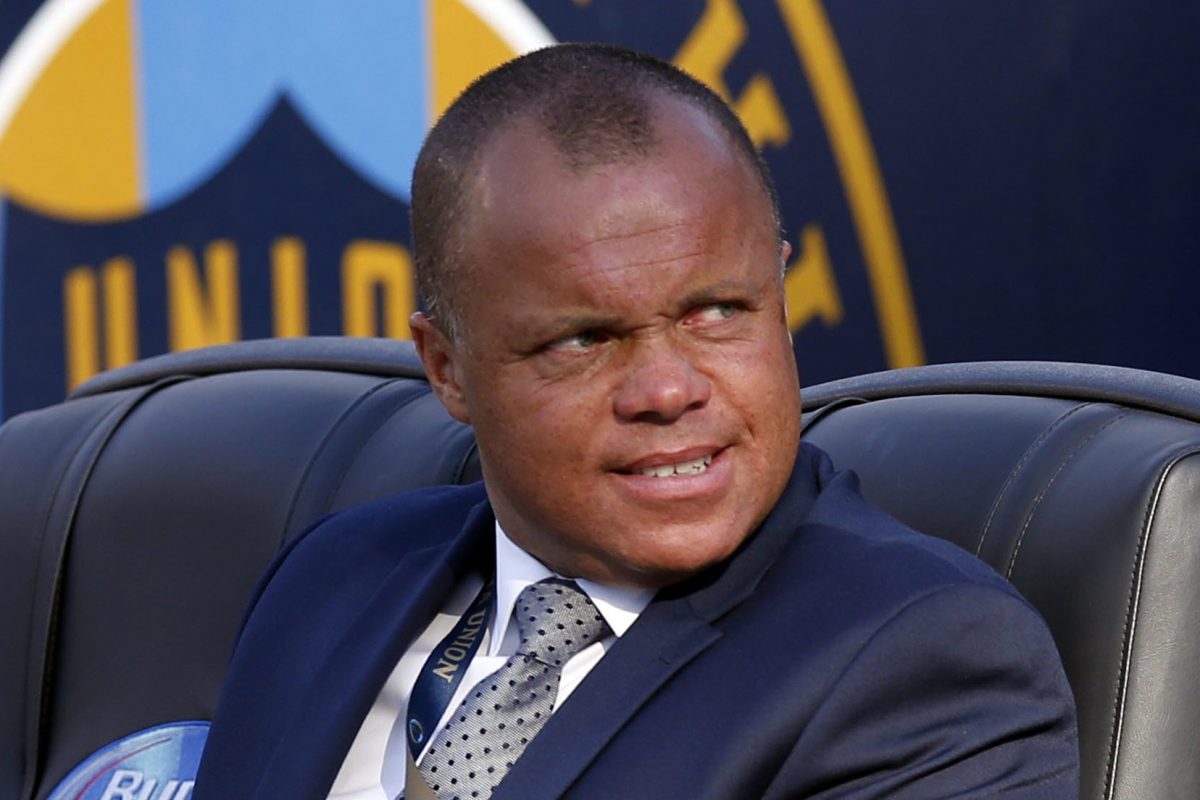
USSF sporting director Earnie Stewart previously held a similar role with the Union.
France, 1998
Players: Stewart also took part in this World Cup, where the U.S. lost to Germany, 2-0, Iran, 2-1 and Yugoslavia, 1-0. Host country France claimed the title for the first time.
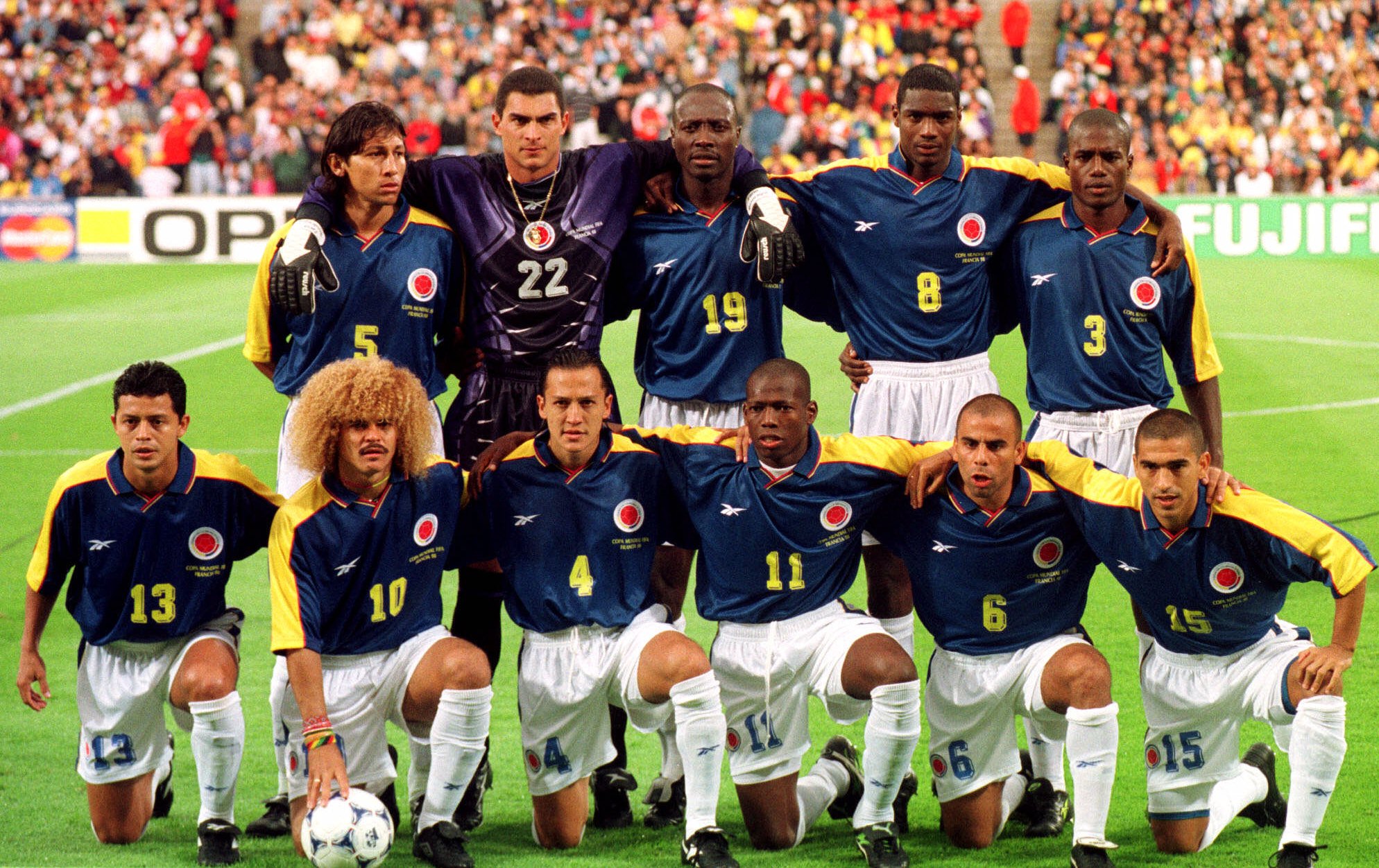
A future Union player was in this tournament, 12 years before the Union launched and a decade before Philadelphia even was announced as a future expansion market. (In fact, it was just the third year of MLS’s existence.) Goalkeeper Faryd Mondragón started all three of Colombia’s group games in net.
Faryd Mondragón stands second from left in the back row of Colombia’s team photo before its 1998 World Cup game against Romiania.
South Korea/Japan 2002
Players: Stewart again participated, playing in every game of the tournament for the U.S. and helping the team to its greatest tournament success since 1930. The Americans advanced out of the group stage after defeating Portugal, 3-2, losing to Poland, 3-0, and drawing with South Korea, 1-1.
The United States then advanced to the knockout rounds and defeated Mexico, 2-0. In the quarterfinals, the Americans played a tough match against Germany, but were eliminated, 1-0.
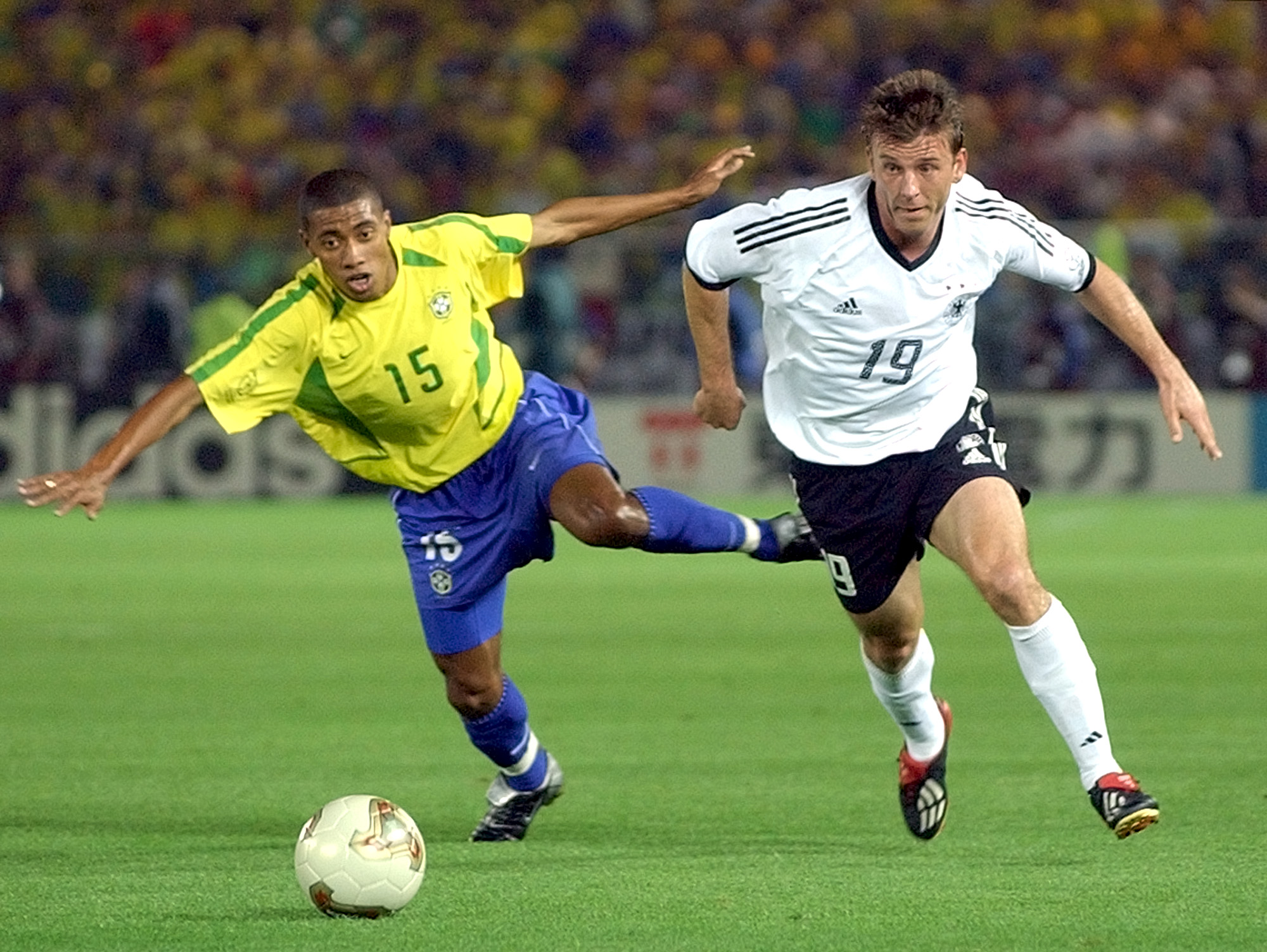
A future Union player was one of the stars of Brazil’s championship squad. Kléberson had two assists in the tournament, including on the goal in the final that sealed a 2-0 win and the Seleçao’s record fifth title.
Kléberson (left) in action during the 2002 World Cup final.
Germany, 2006
Players: Chris Albright, born and raised in Philadelphia, also played professionally for the Union and served on the team’s technical staff. He did not play in the tournament.
Bobby Convey, born and raised in Philadelphia, a former Penn Charter student, did play in all three group games, a 3-0 loss to the Czech Republic, a 1-1 draw with Italy, and a 2-1 loss to Ghana. Convey’s free kick helped create the own goal against Italy for the draw.
Middletown native Ben Olsen, who played for FC Delco, a local soccer powerhouse, played as a substitute against Ghana after Claudio Reyna was injured.
Future Union player Oguchi Onyewu started all three games of the tournament. The centerback signed with the club in 2017, his final professional season before retirement.
The Americans failed to advance. Italy won the tournament.
Philly native Bobby Convey played multiple games in the 2006 World Cup for the United States.
South Africa, 2010
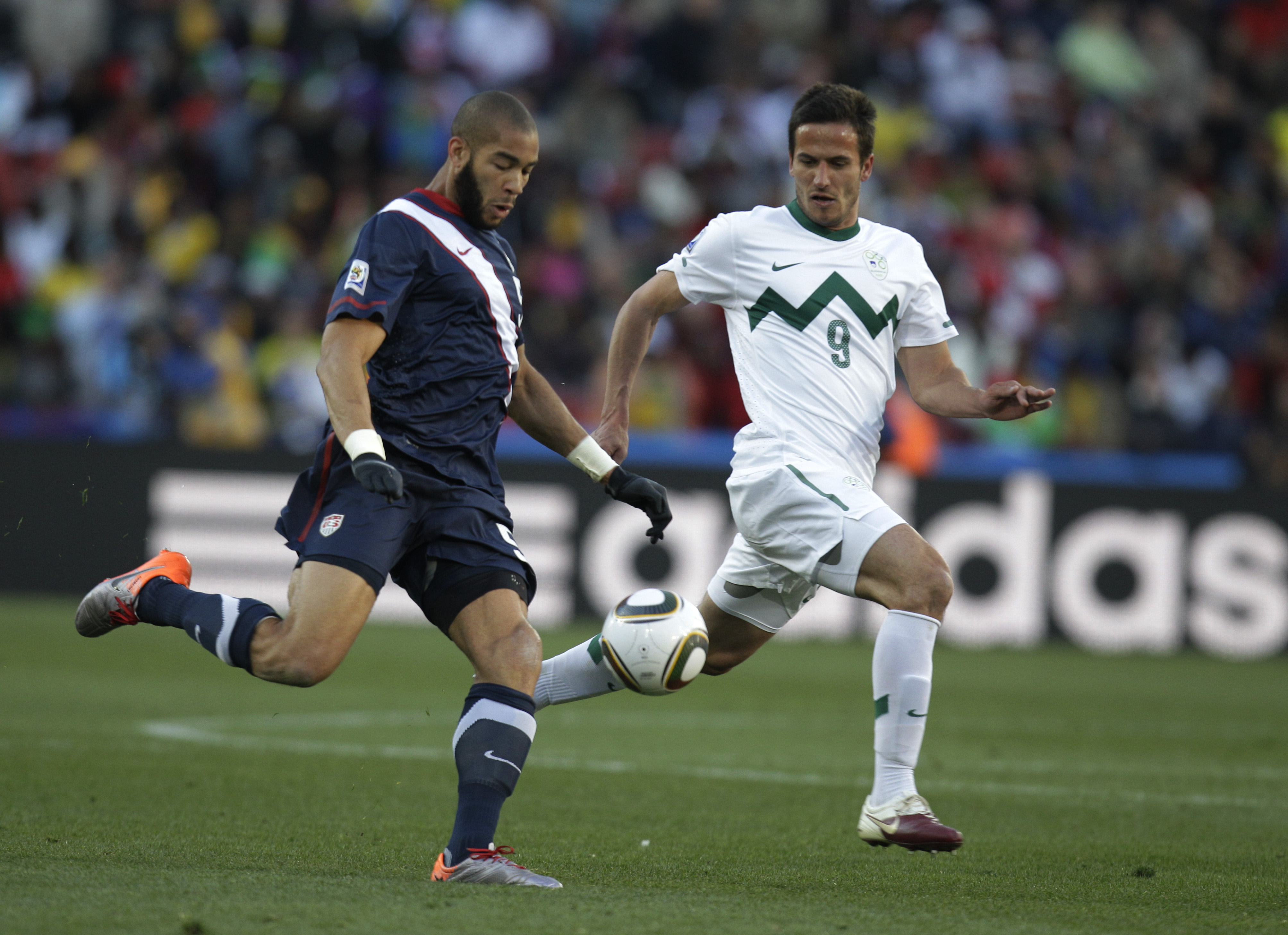
Players: Maurice Edu, who would go on to become one of the premier signings for the Union in 2015, played in the two games of the group stage following the 1-1 draw with England. He volleyed in a shot against Slovenia in the 2-2 draw that would have been the winning goal if it had not been waved off for a foul. He also played in the 1-0 win over Algeria.
Onyewu played in the first two games of the tournament.
A pair of future Union players featured for other countries: Tranquillo Barnetta for Switzerland and Kléberson for Brazil.
The United States advanced to the knockout stage but lost there to Ghana, 2-1, in added extra time.
Spain won its first title at this World Cup.
Oguchi Onyewu (left) in action at the 2010 World Cup.
Brazil, 2014
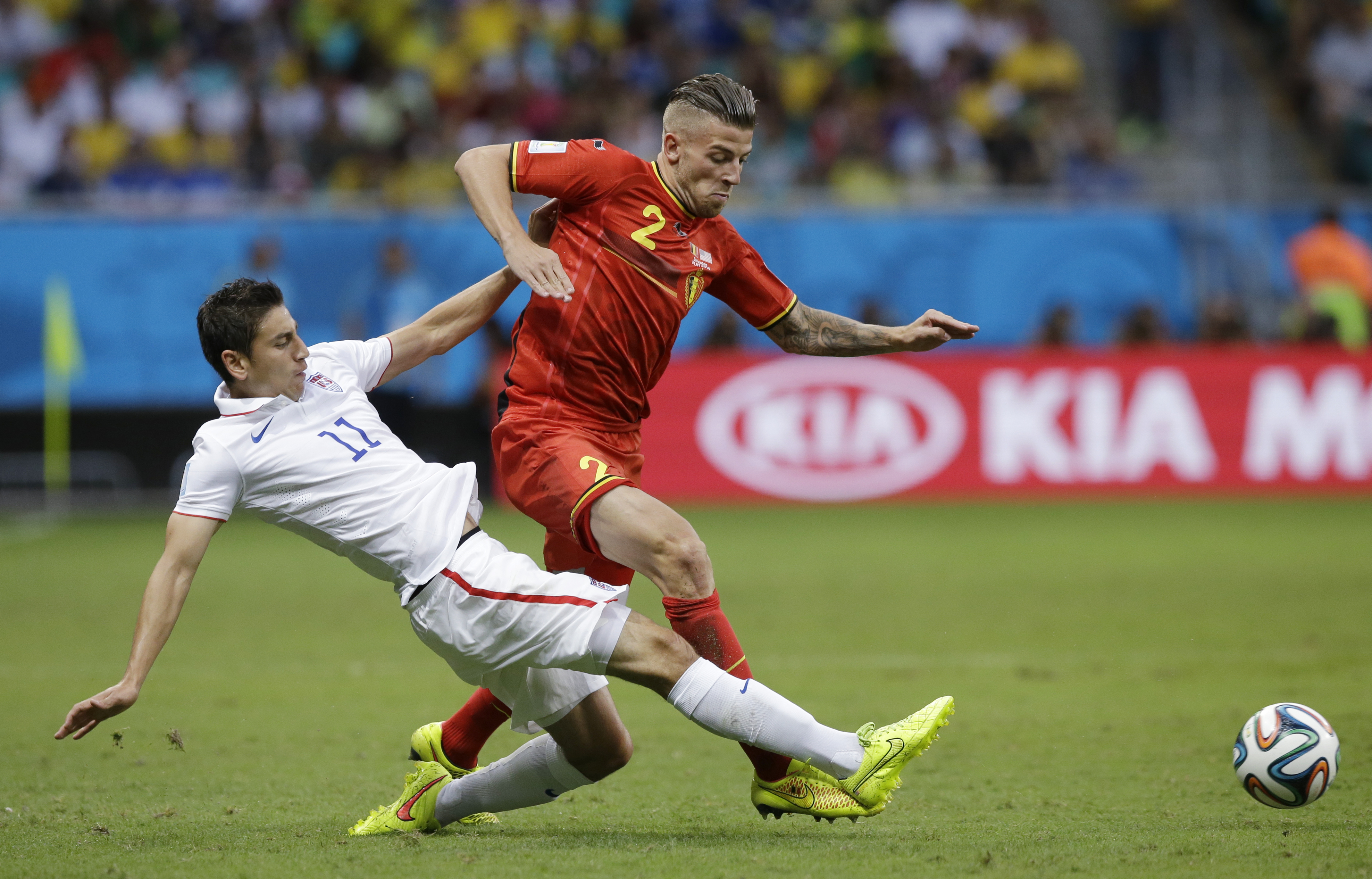
Players: Alejandro Bedoya, the Union’s longtime captain, played in all four U.S. games at the tournament. The Americans defeated Ghana, 2-1, drew Portugal, 2-2, and lost to Germany, 1-0. That was good enough to advance to the round of 16, where the U.S. lost in added extra time to Belgium.
Union centerback Carlos Valdés played for Colombia, though at the time he was on a string of loans away from the team. He’d asked for them because the Cafeteros’ coach at the time, José Pékerman, didn’t rate MLS. So Valdés tried to get elsewhere to make an impression (and he wasn’t alone).
Haris Medunjanin played for Bosnia, memorably getting Lionel Messi’s jersey after facing Argentina in the group stage. And David Myrie, who was on the Union’s inaugural season squad in 2010 (but didn’t last long), was on Costa Rica’s team.
Germany won the tournament, claiming its fourth title.
Alejandro Bedoya (left) in action for the U.S. during the round of 16 battle with Belgium.
Russia, 2018
Players: The U.S. infamously failed to qualify, which obviously put a big dent in things. But a former Union player and a future Union player took part for other countries. Gabriel Gómez played for Panama six years after his one season in Chester, and Marco Fabián played for Mexico eight months before he joined the club.
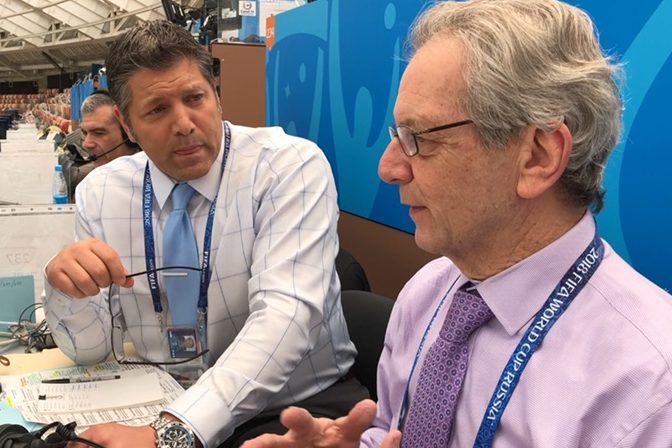
Broadcasting: Philly fans also heard a familiar voice on Fox’s TV coverage. This was the 13th World Cup of longtime Union play-by-play voice JP Dellacamera’s Hall of Fame career, including the eighth men’s tournament.
France won the title, led by Kylian Mbappé’s emergence as the sport’s new superstar.
JP Dellacamera (right) with his broadcast partner at the 2018 World Cup, former U.S. goalkeeper Tony Meola.
Qatar, 2022
Players:Olivier Mbaizo became the first active Union player to make a World Cup roster, with Cameroon. He never got on the field, though if the Indomitable Lions had advanced from the group stage he’d likely have played in the round of 16 due to a teammate’s suspension.
Union alum Brenden Aaronson made his first U.S. World Cup team, two years after moving to Europe. The Medford native was at England’s Leeds United then, his second club after initially going from Chester to Austria’s Red Bull Salzburg for $6 million. The later move to Leeds commanded a $30 million transfer fee, and the Union banked $5 million of it in a sell-on fee.
Hershey’s Christian Pulisic was also on the U.S. squad, scoring the winning goal against Iran and finally fulfilling his promise as a superstar. The Americans advanced to the round of 16, then lost to the Netherlands.
Steven Vitória played for Canada seven years after his one season in Chester.
Administration: This was Stewart’s World Cup as U.S. Soccer’s sporting director.
A coach: Ventnor City native and Ursinus grad B.J. Callaghan was one of U.S. manager Gregg Berhalter’s top assistants.
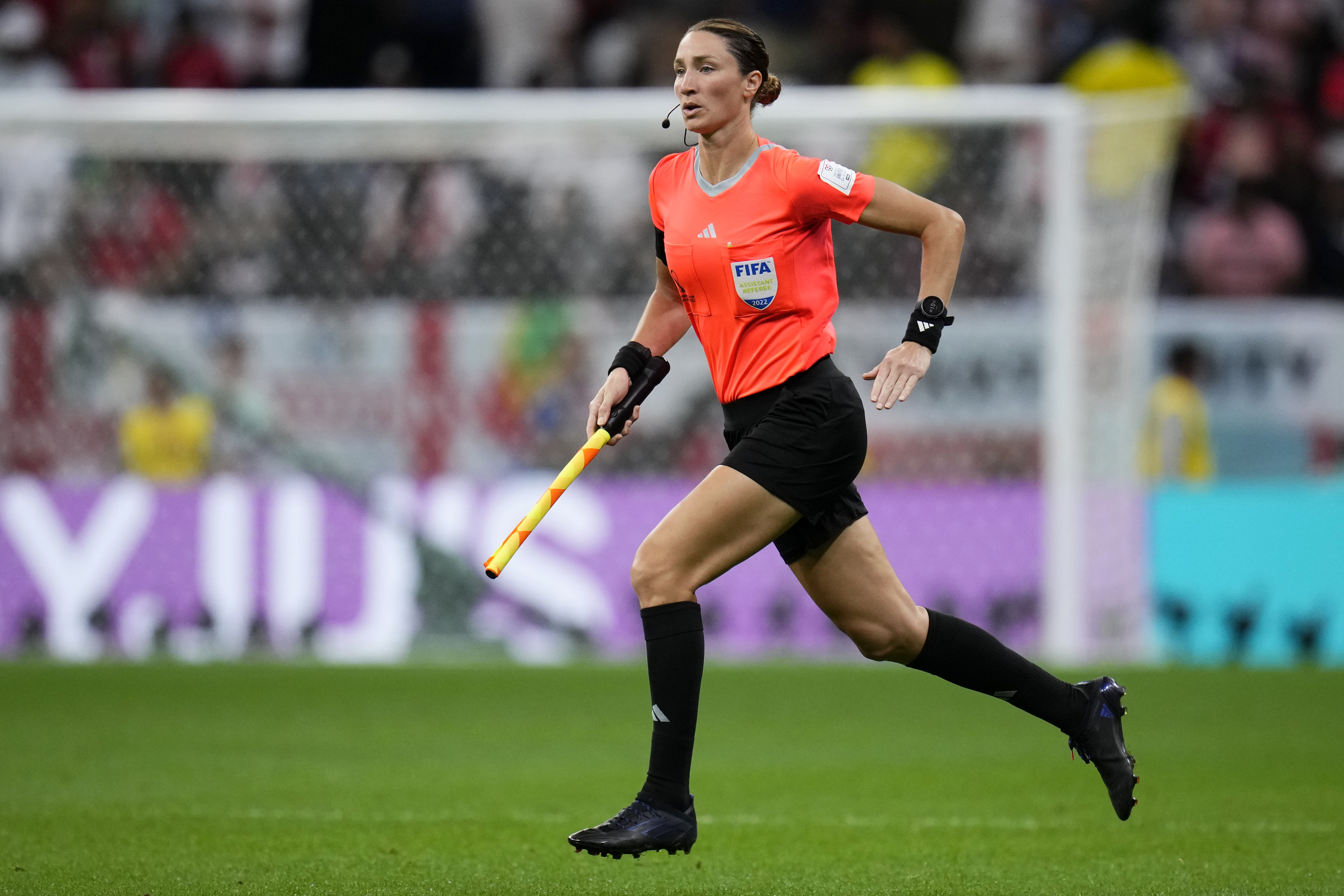
A referee: Though Kathryn Nesbitt wasn’t born in Philadelphia, the assistant ref had lived in the city since 2019 when she was appointed to her first World Cup.
Broadcasting: Dellacamera was in Fox’s booth again, while former Union captain Maurice Edu and Delran’s Carli Lloyd joined the network as analysts. Fox reporter Tom Rinaldi spent part of his college years at Penn, and was another familiar voice from plenty of trips to Philly for other sports.
Argentina won the tournament, finally giving Lionel Messi the biggest trophy and crowning him as men’s soccer’s greatest player of all time.
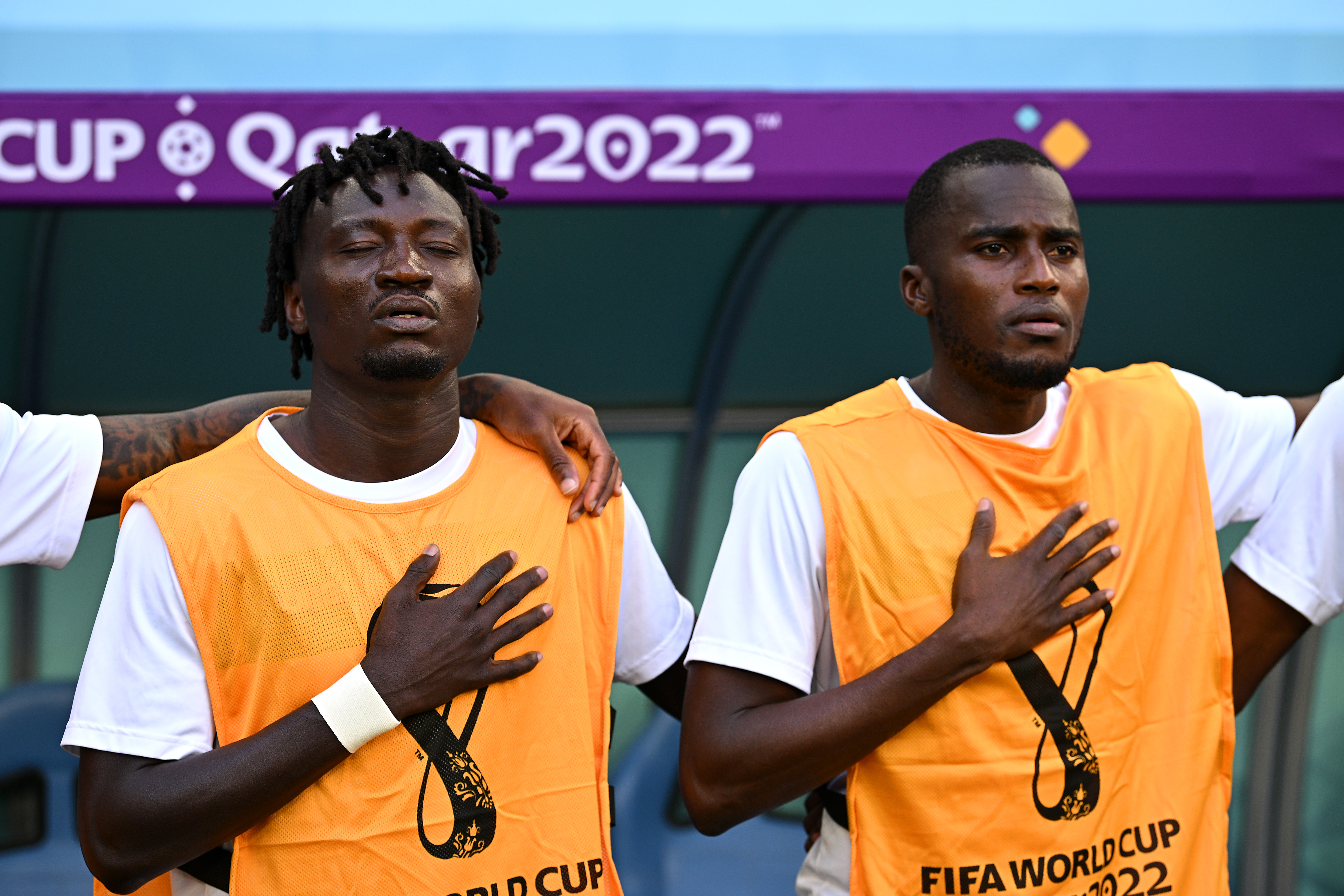
Olivier Mbaizo (left) on Cameroon’s bench at the 2022 World Cup.
USA/Canada/Mexico, 2026
Players: The Union’s Danley Jean Jacques and Olwethu Makhanya made the rosters of Haiti and South Africa, respectively. Jean Jacques was a stalwart of Les Grenadiers, and had the bonus of Haiti getting a group stage game in Philadelphia against Brazil. That was one of six tournament games in the city, as the men’s World Cup finally came here for the first time.
Makhanya’s inclusion, meanwhile, was surprising at the time.
Haiti’s squad also included Penn alum Duke Lacroix, who made the big stage over a decade after his college years with the Quakers.
Four Union alums made the U.S. squad: Aaronson, Wayne’s Matt Freese, Media’s Auston Trusty, and Bear, Del.’s Mark McKenzie. It was the most players from the Philadelphia region on a U.S. team since 1934. (Pulisic could count as an honorary fifth.)
Brenden Aaronson (center) made his second straight World Cup team in 2026.
Former Union midfielder Jamiro Monteiro made Cape Verde’s squad for its first ever World Cup. So did Philadelphia native CJ dos Santos, who had played for U.S. youth teams but switched to the nation of his father’s roots. He was in the Union academy for a while before leaving to Portugese club Benfica, then returning to MLS in 2022 with Inter Miami. In 2024, he moved to San Diego FC, and that was his club at the time of the World Cup.
A referee: Nesbitt was selected to her second straight men’s World Cup on the sidelines. Since 2022, she had been selected for the 2023 women’s tournament, and was part of the first American refereeing team to officiate a women’s World Cup final. (It hadn’t happened before because of how many times the U.S. made the final.)
Broadcasting: Dellacamera, Lloyd and Edu were back with Fox, this time joined by Philadelphia resident and former Independence and U.S. women’s team player Lori Lindsey. She and Dellacamera called some games together, including Ivory Coast vs. Ecuador.
Kathryn Nesbitt at the 2023 World Cup. The 2026 tournament was her third between men and women combined.