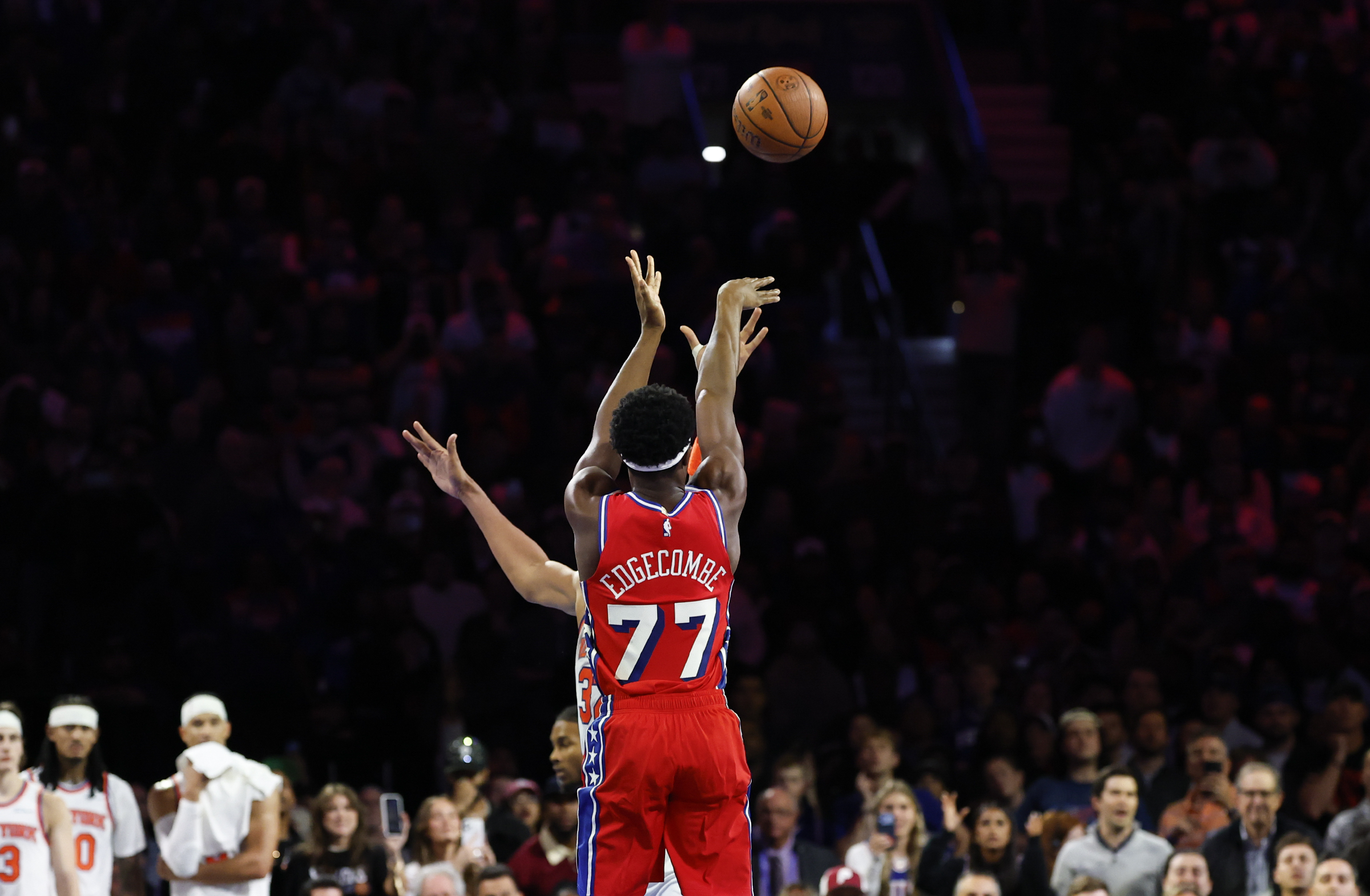
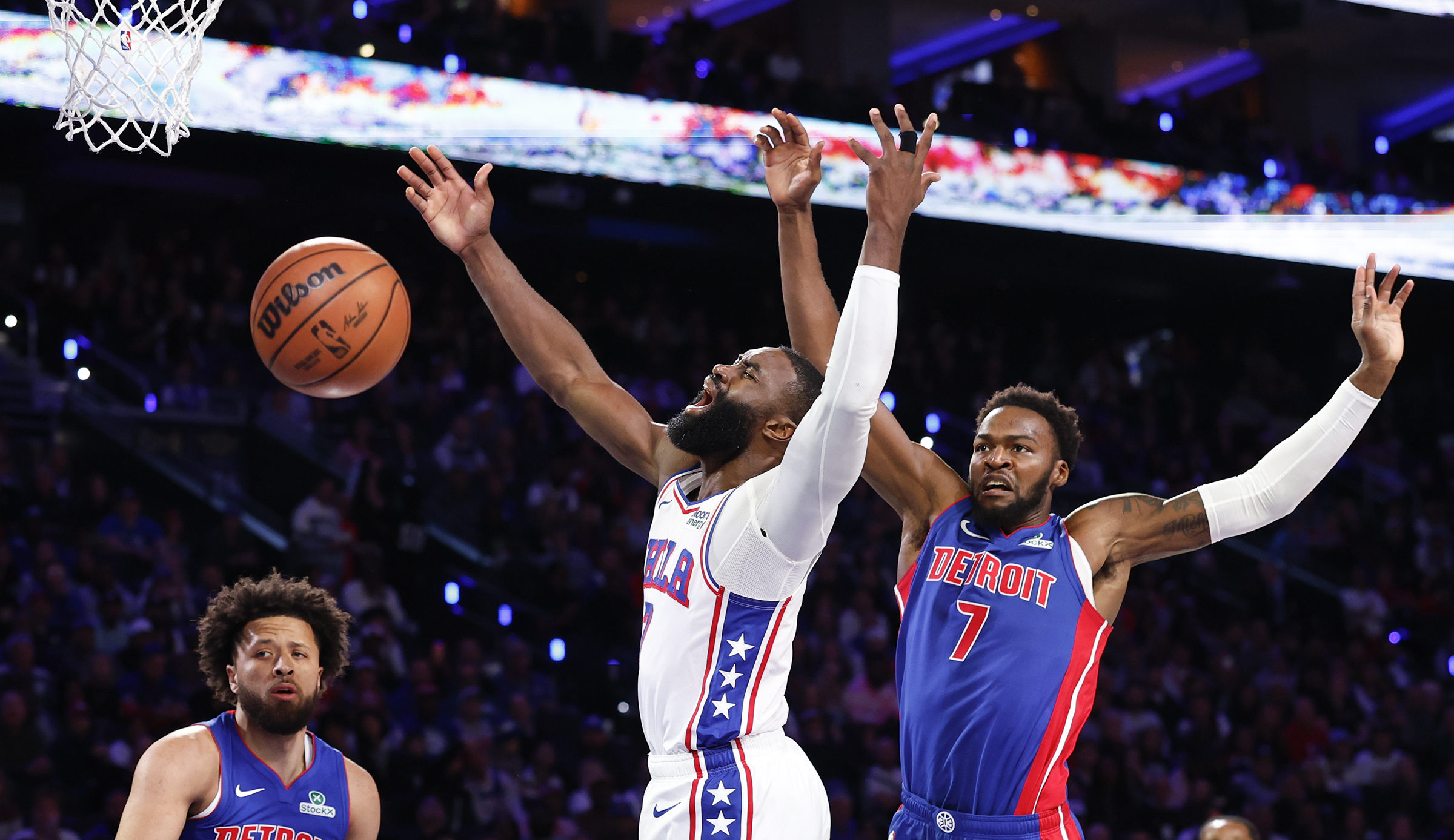
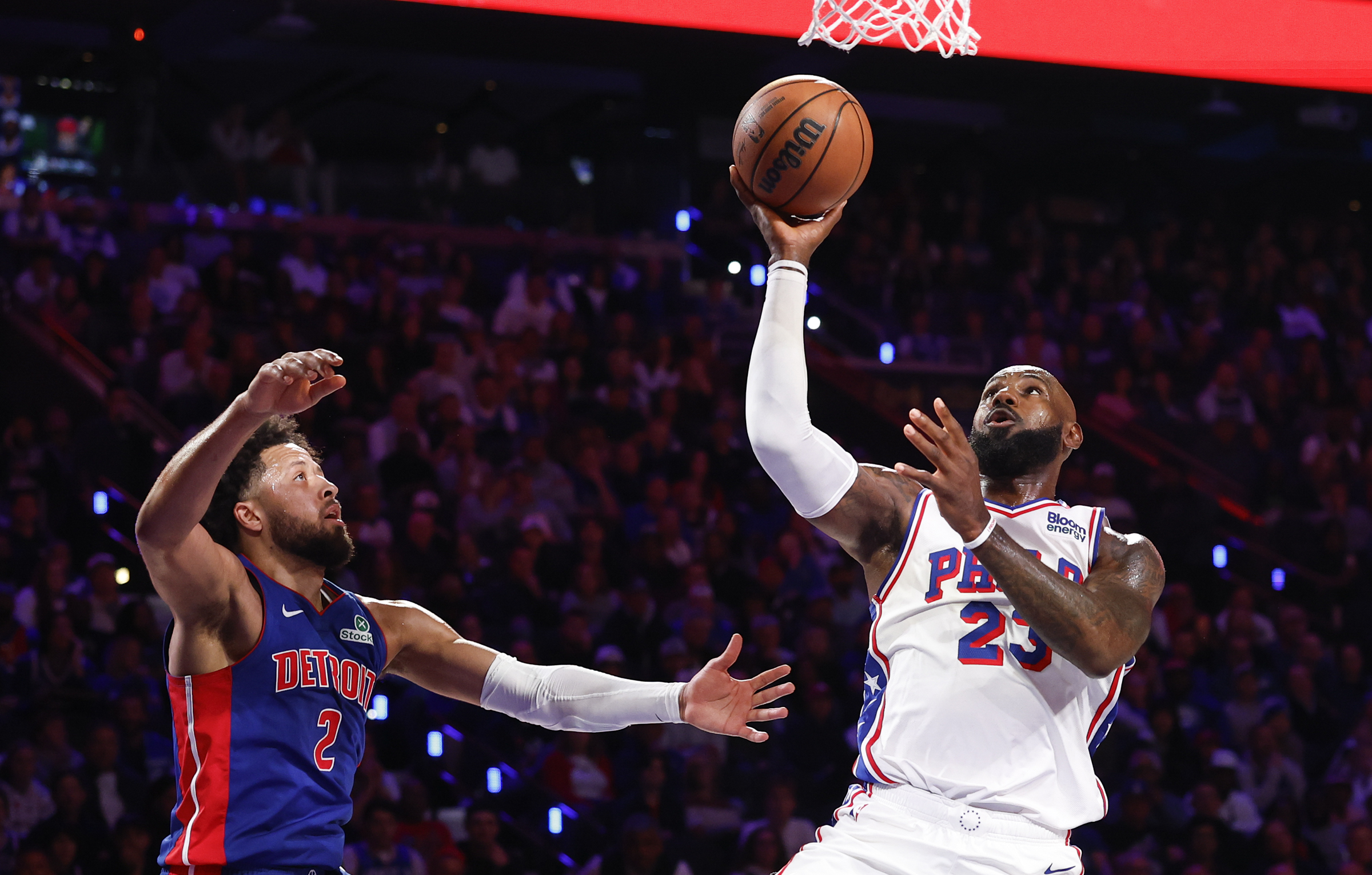
Jalen Brunson elevated over VJ Edgecombe’s outstretched arm, splashing the three-pointer from the right corner. It gave the New York Knicks a one-point lead over the 76ers — their first since the matchup’s opening minute — with just over 90 seconds to go and ignited the visiting fans who had been quiet for the bulk of the night.
Then Edgecombe, the Sixers’ second-year guard, stuck with Brunson, the reigning Finals MVP, as he missed a driving shot off the glass on the Knicks’ next possession. And then, after the Sixers had regained the lead, Edgecombe let it fly from long range, stretching the Sixers’ lead to four points with 33.6 seconds remaining. And then he pulled down the final rebound, wrapping the ball in both arms in his team’s 98-93 victory over the defending NBA champions on Friday at Xfinity Mobile Arena.
Sixers followers already had become accustomed to those clutch moments from Edgecombe as a mature-beyond-his-years rookie. That intangible trait is a reason All-NBA guard Tyrese Maxey called Edgecombe perhaps the Sixers’ most important player — even after adding the legendary LeBron James and All-NBA wing Jaylen Brown — entering a high-pressure 2026-27 season. And against the Knicks, Edgecombe still found his spots for crunch-time impact with Maxey, James, and Joel Embiid on the floor to help the Sixers win their NBA Cup group play opener and improve their record to 5-1.
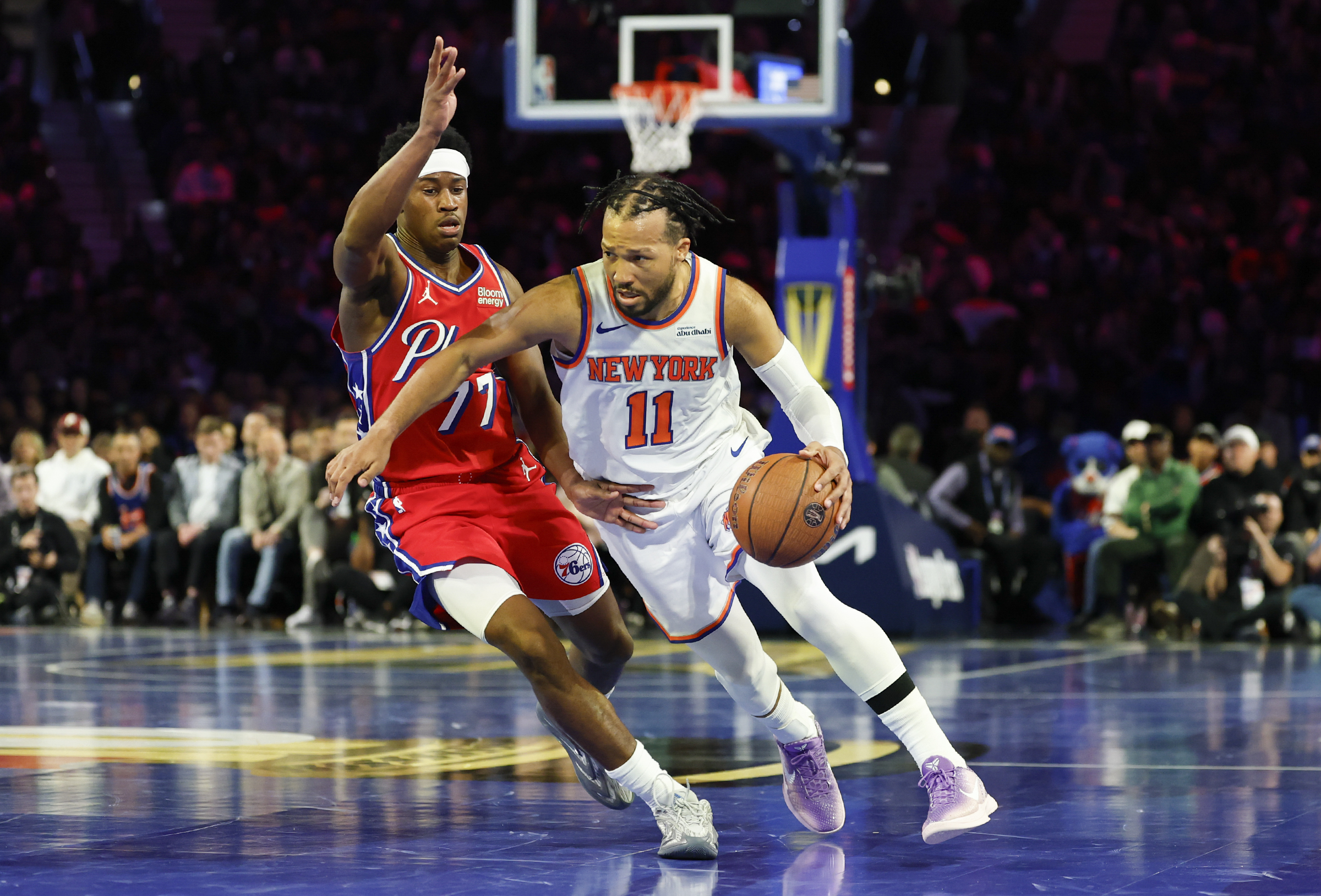
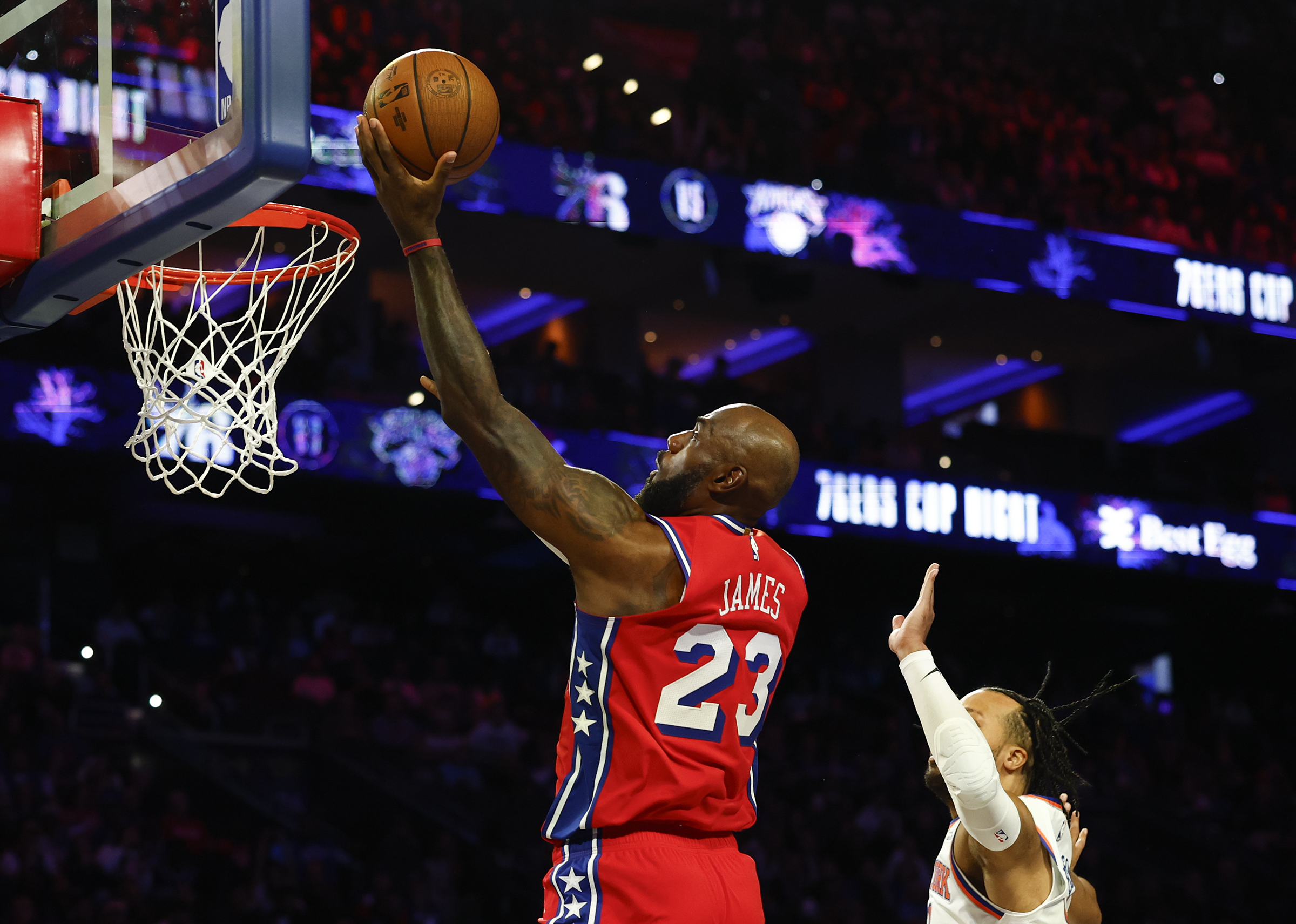
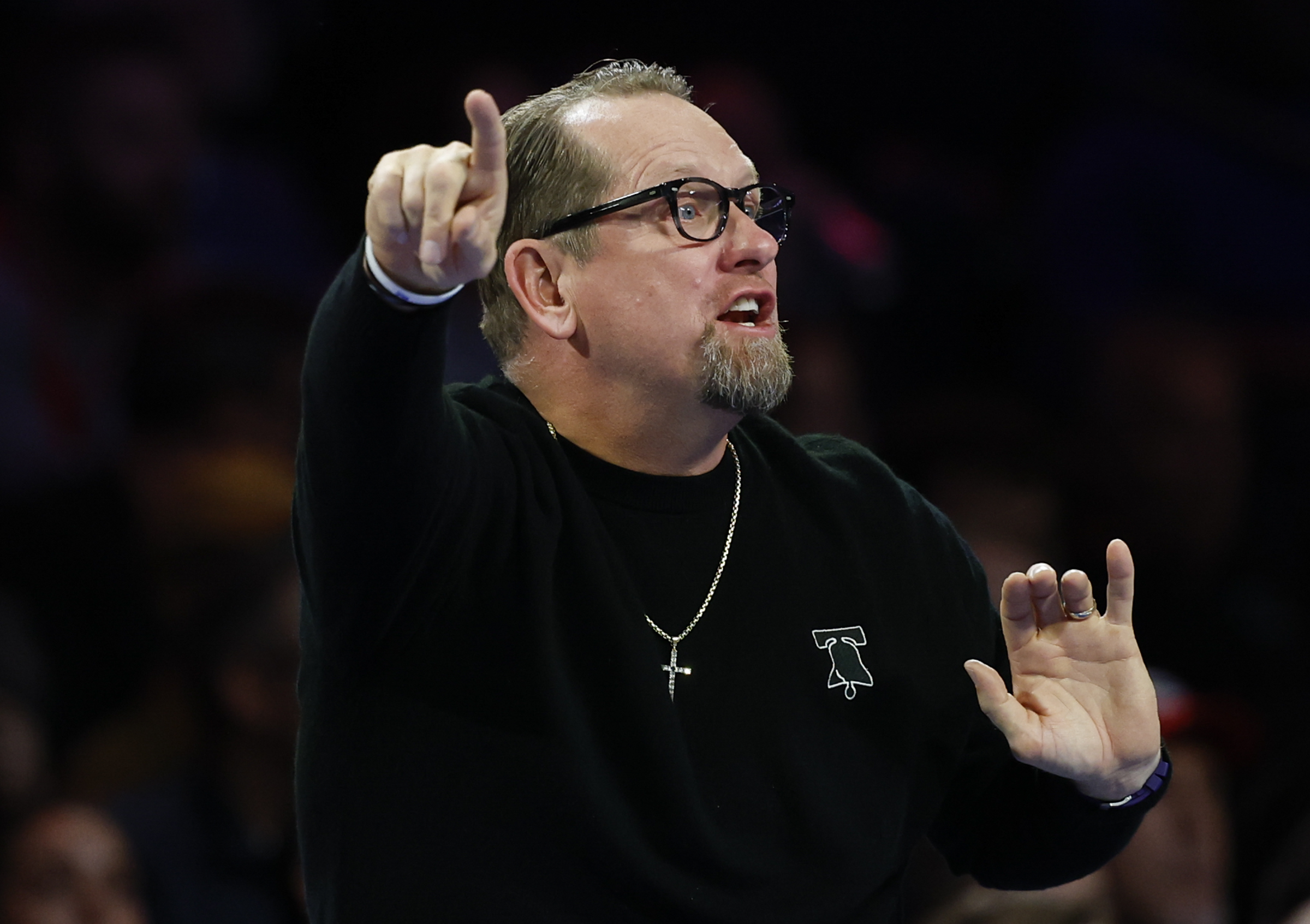
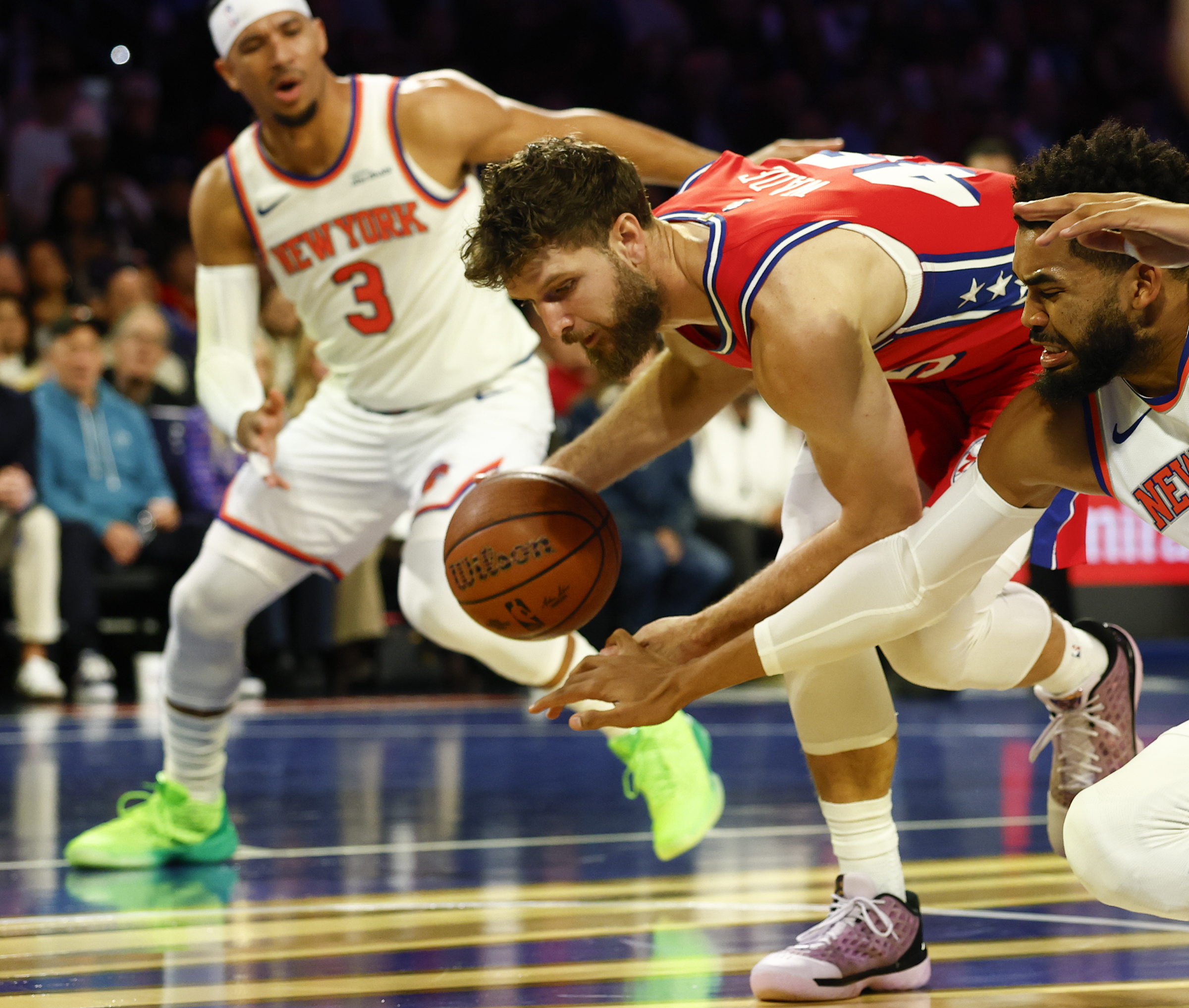
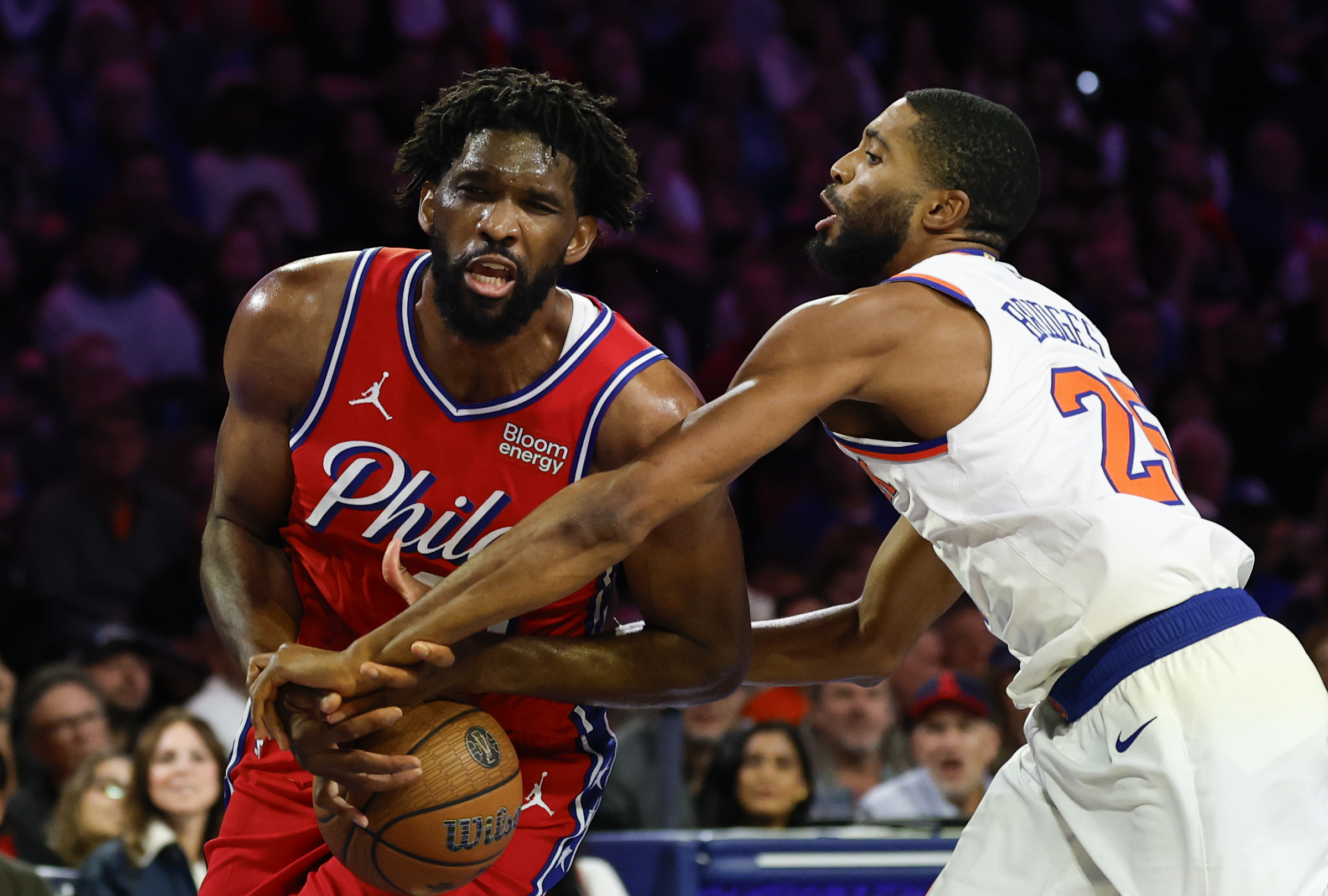
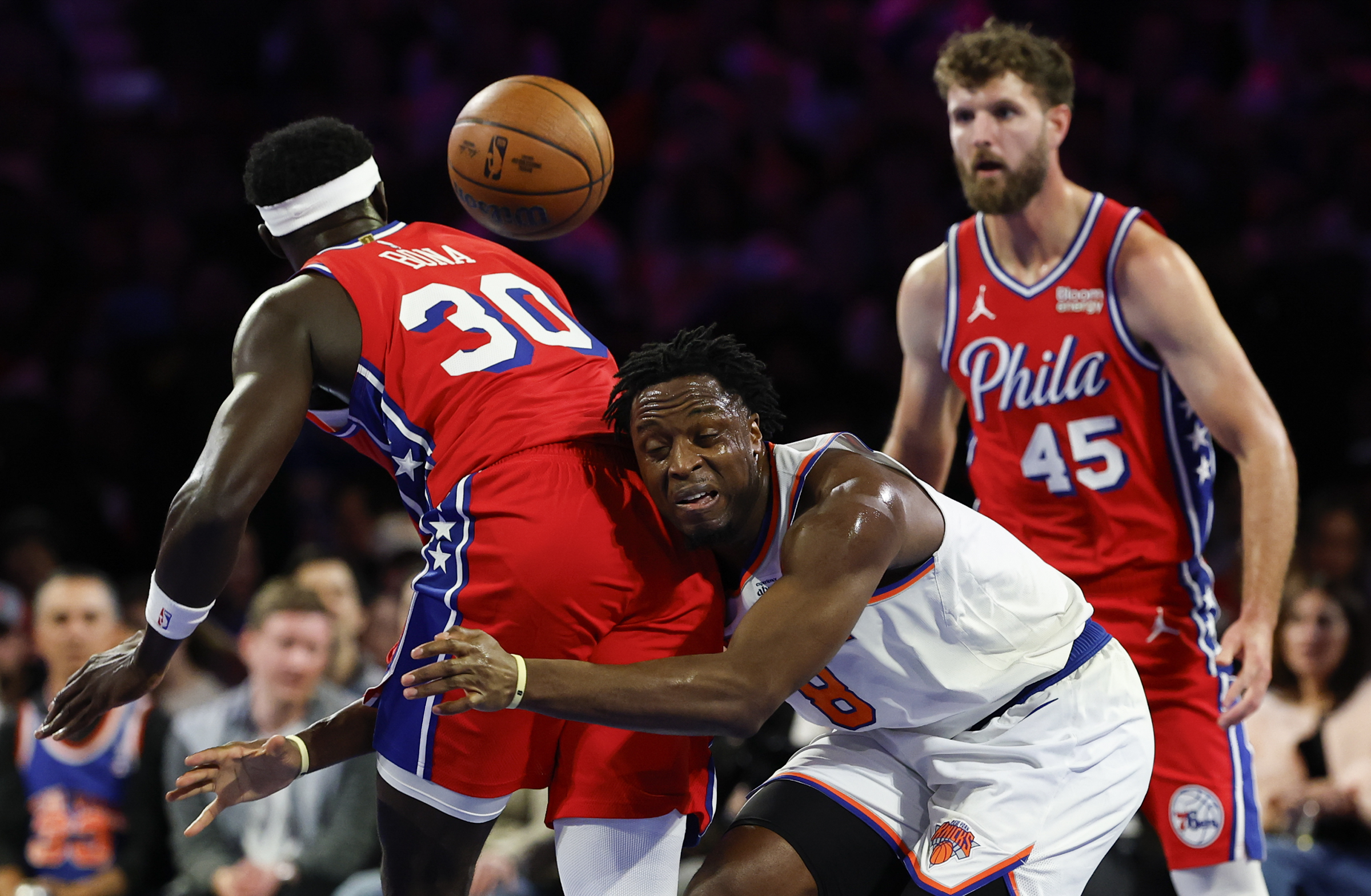
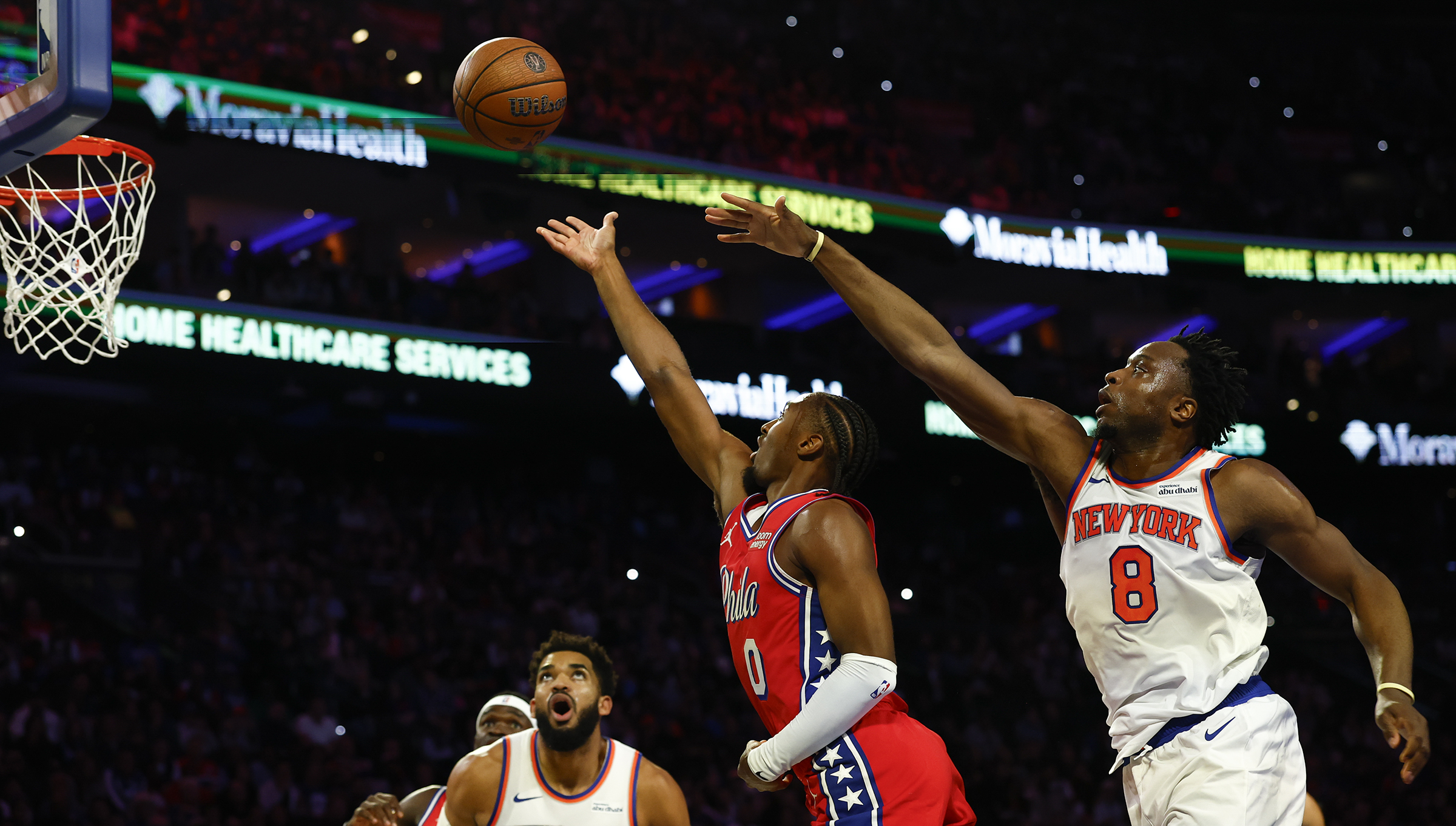
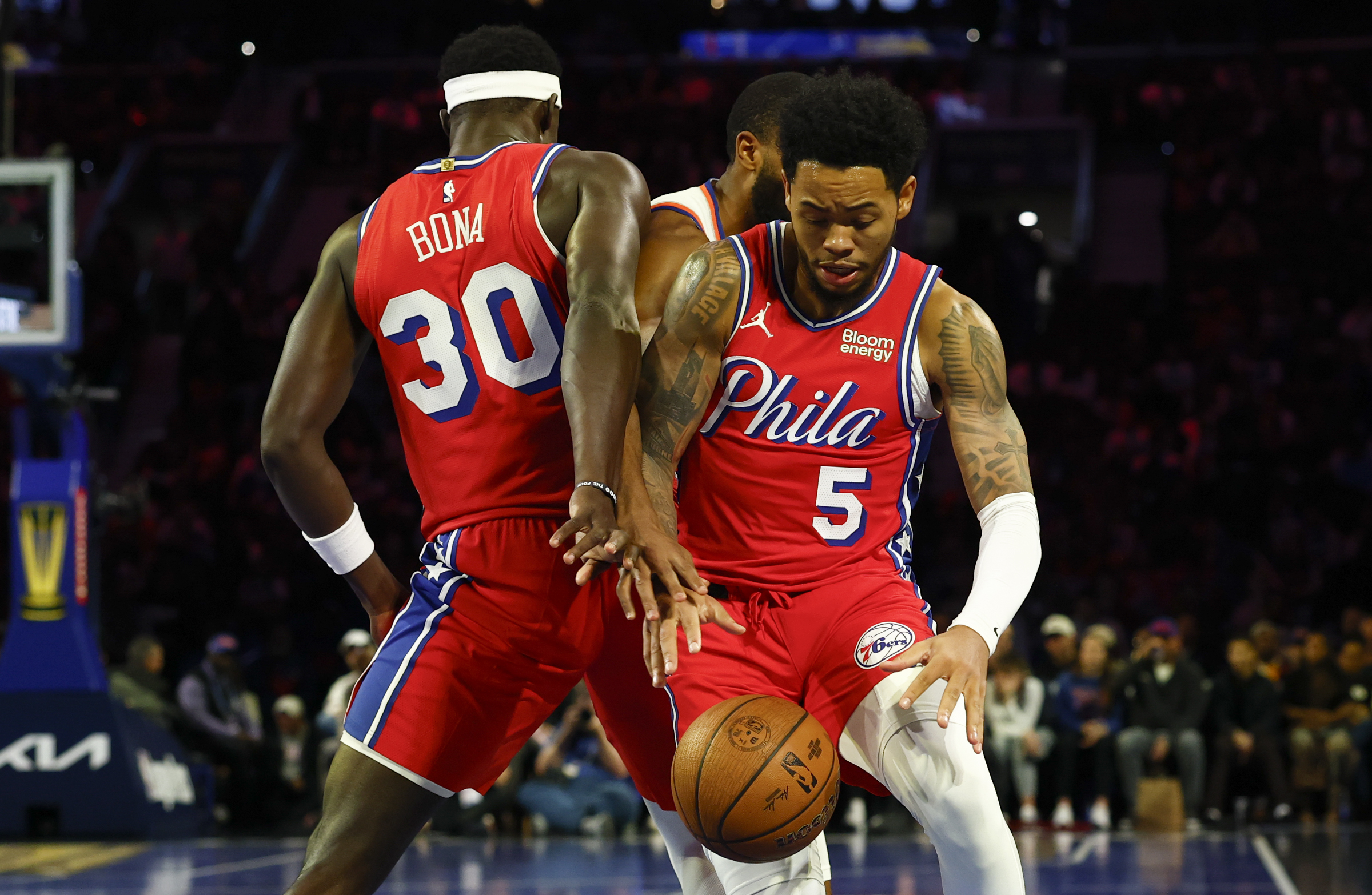
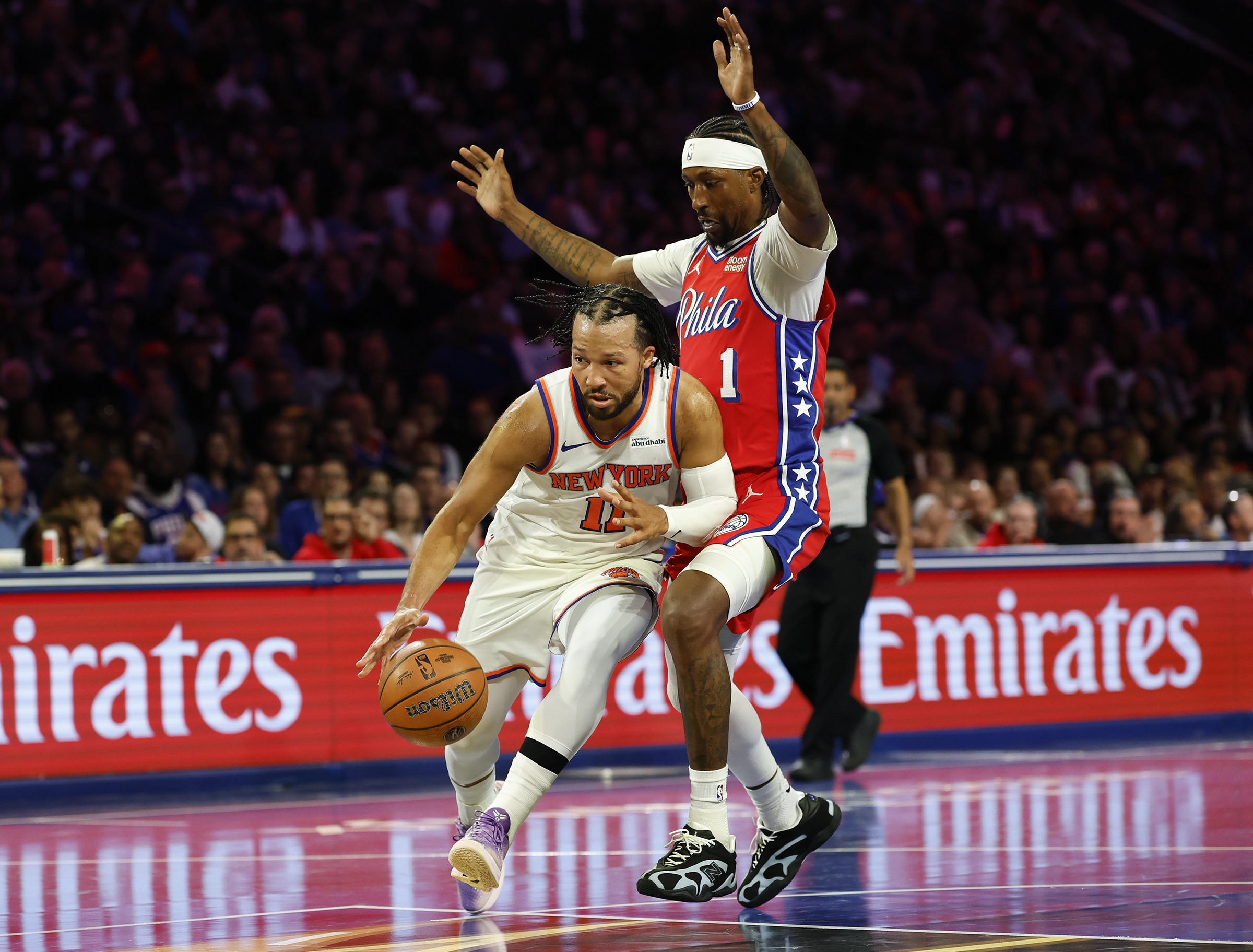
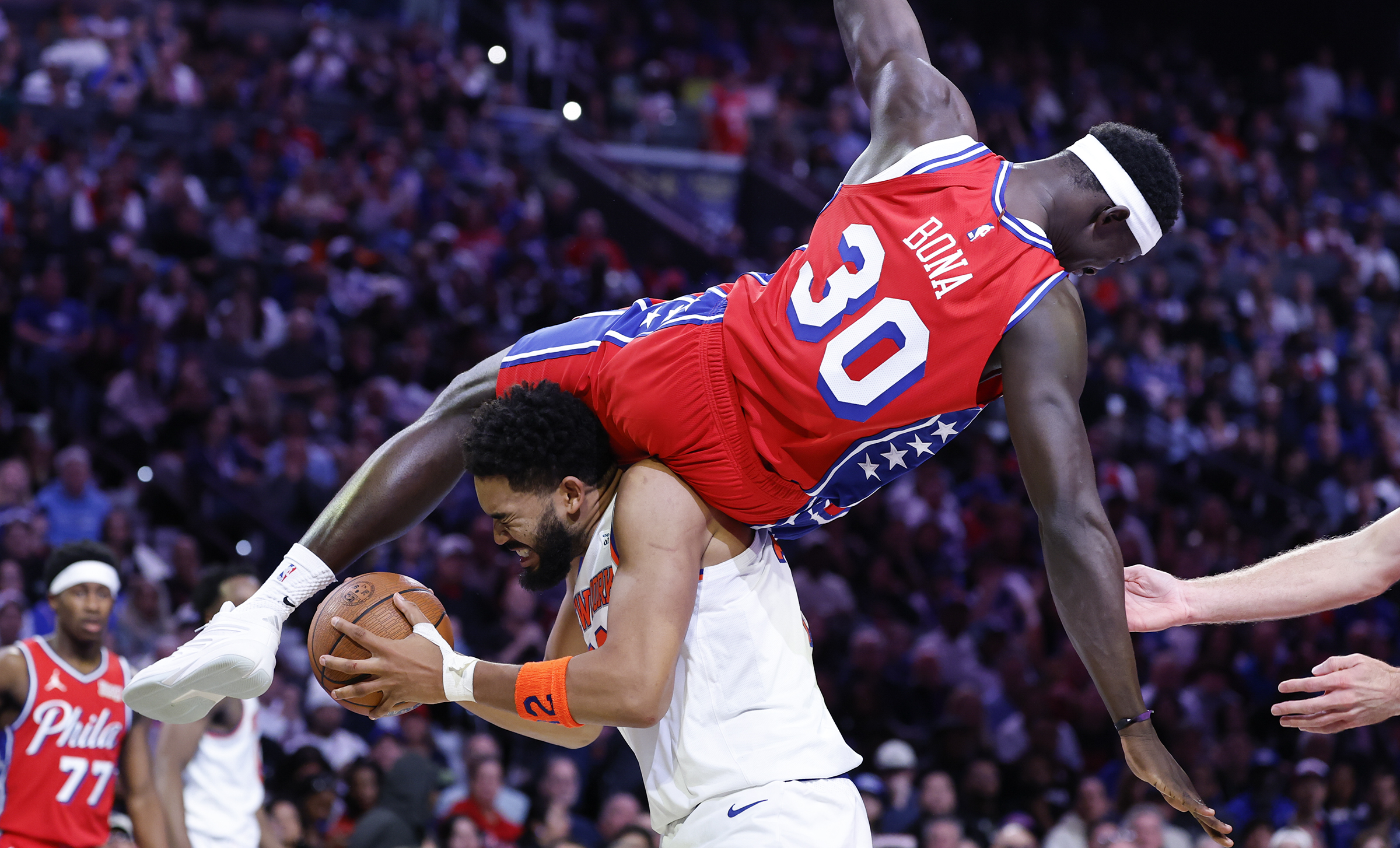
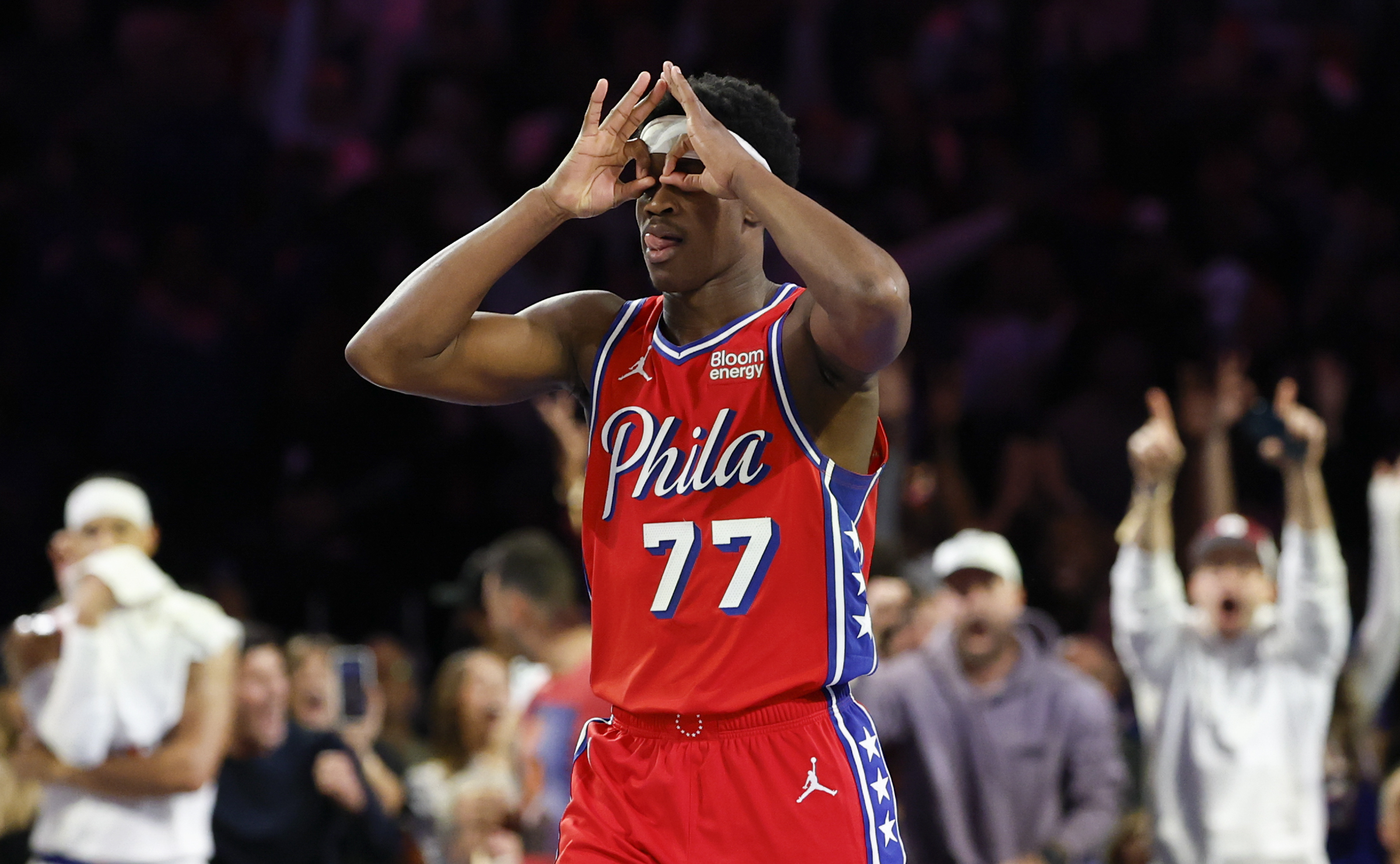
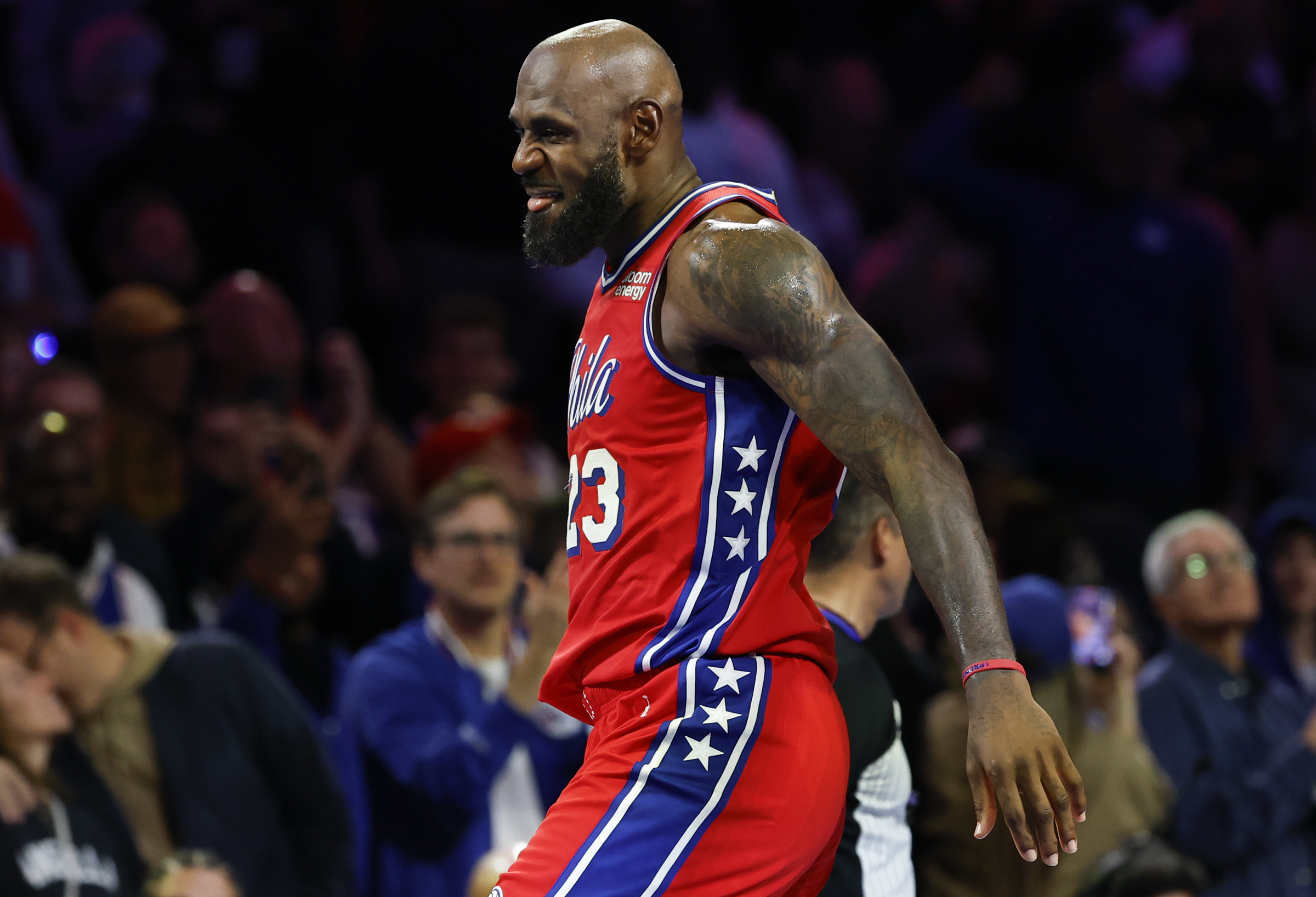
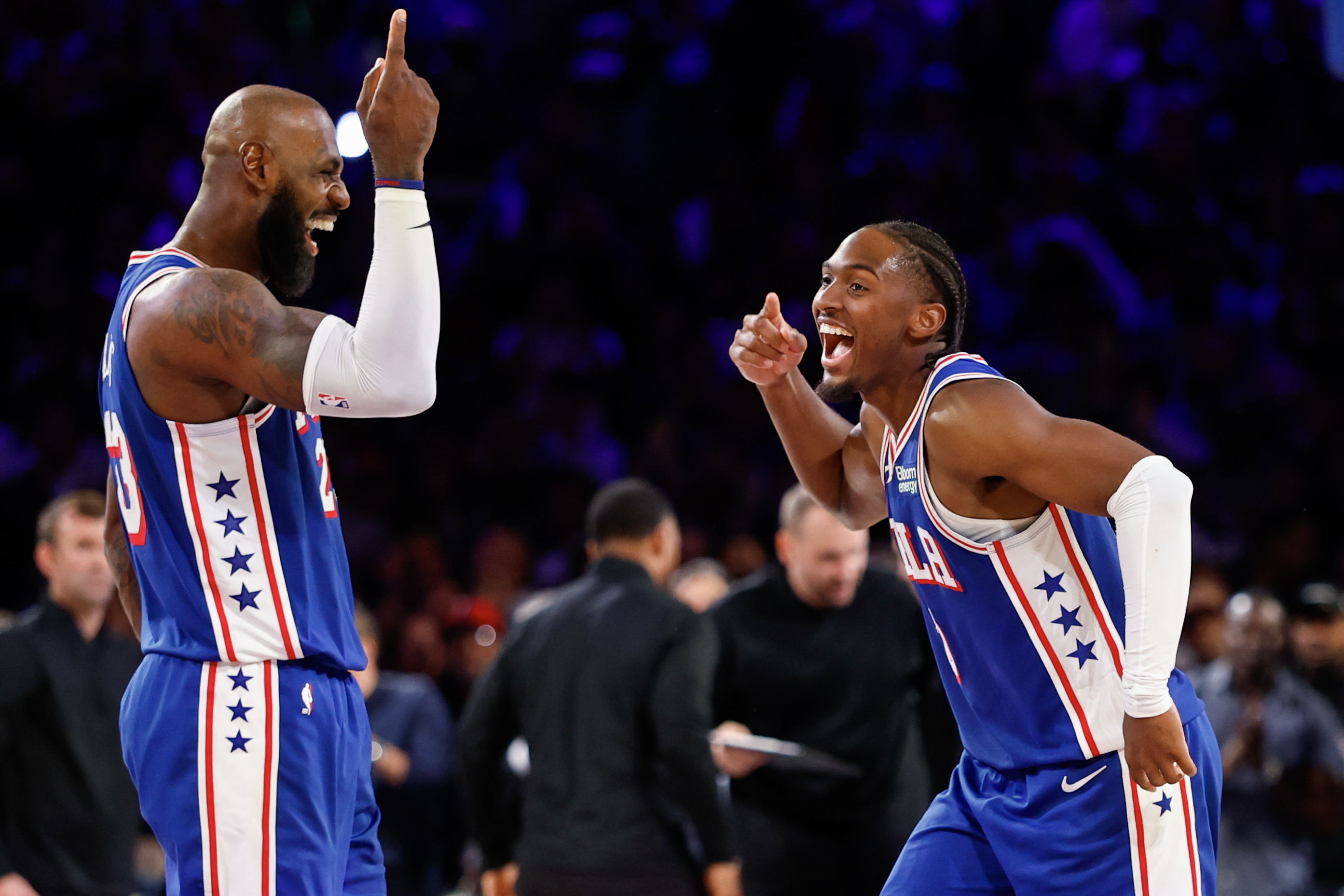
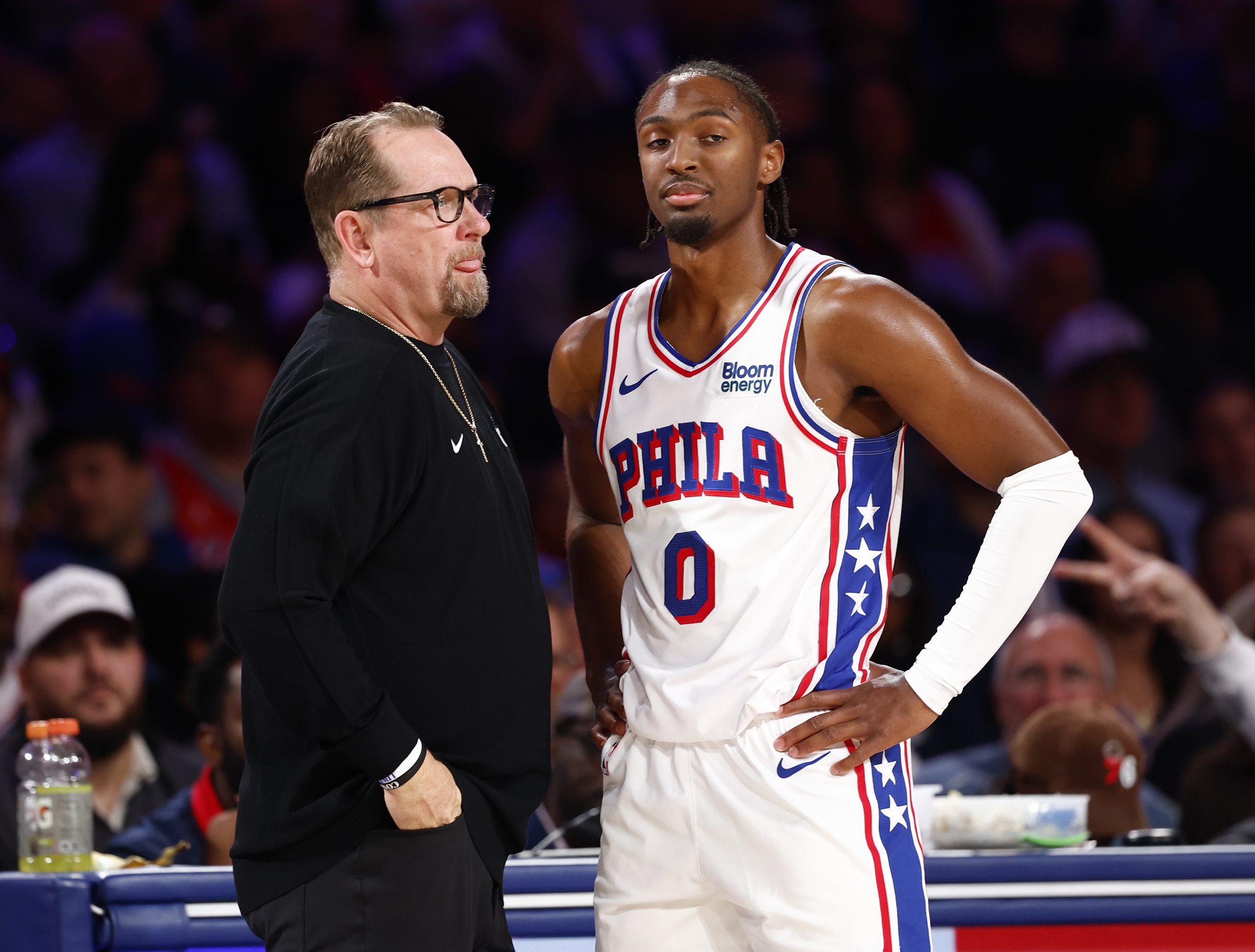
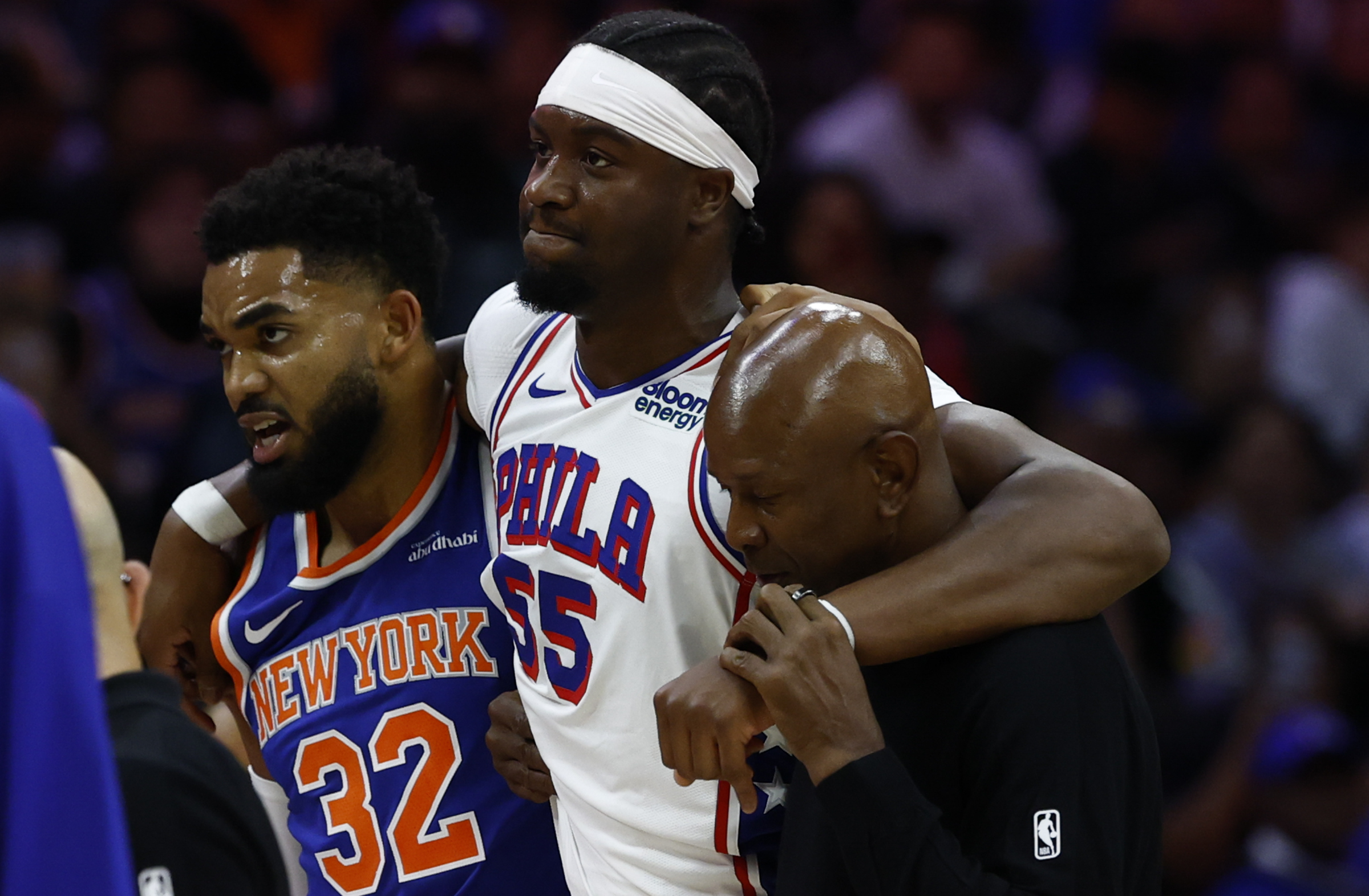
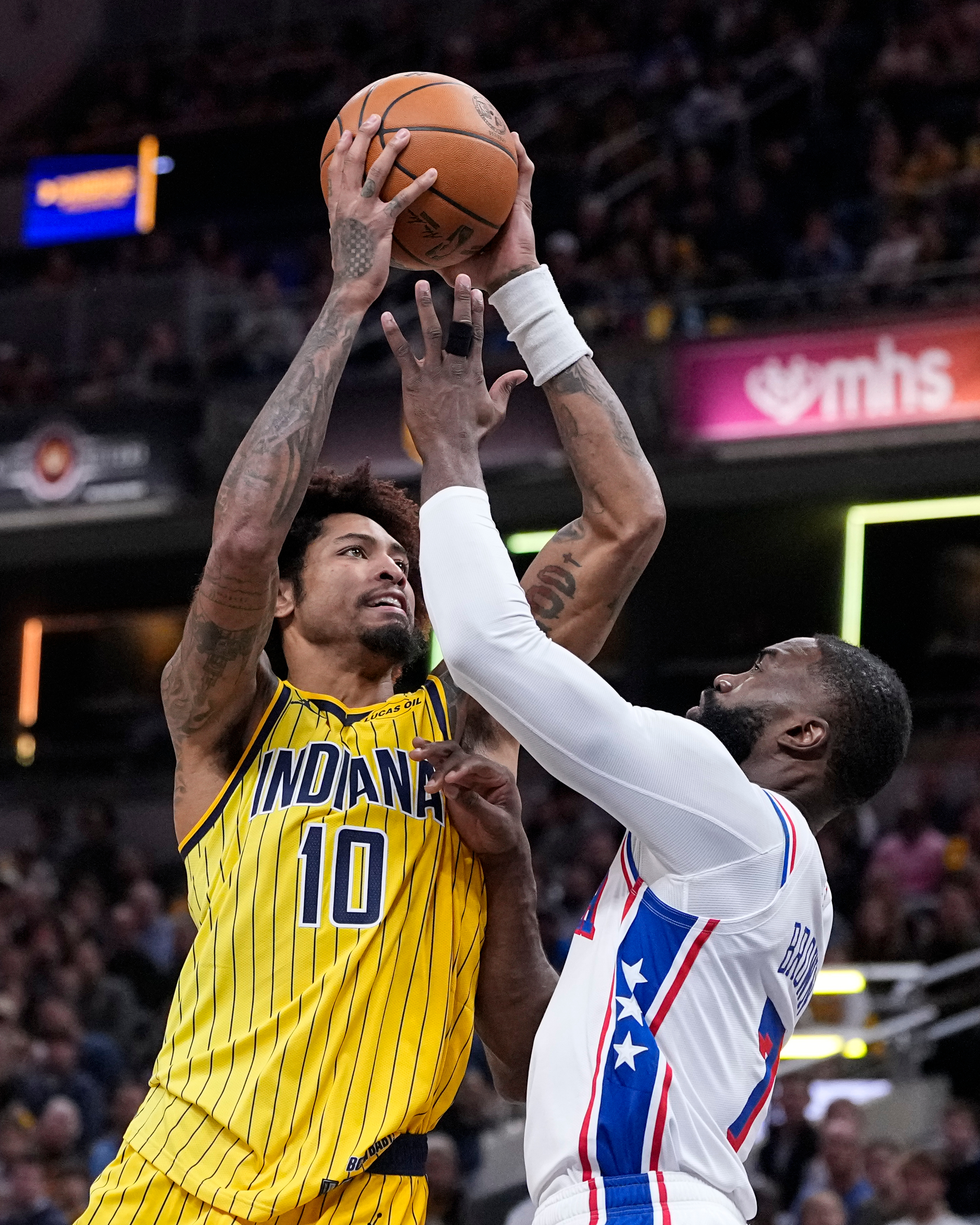
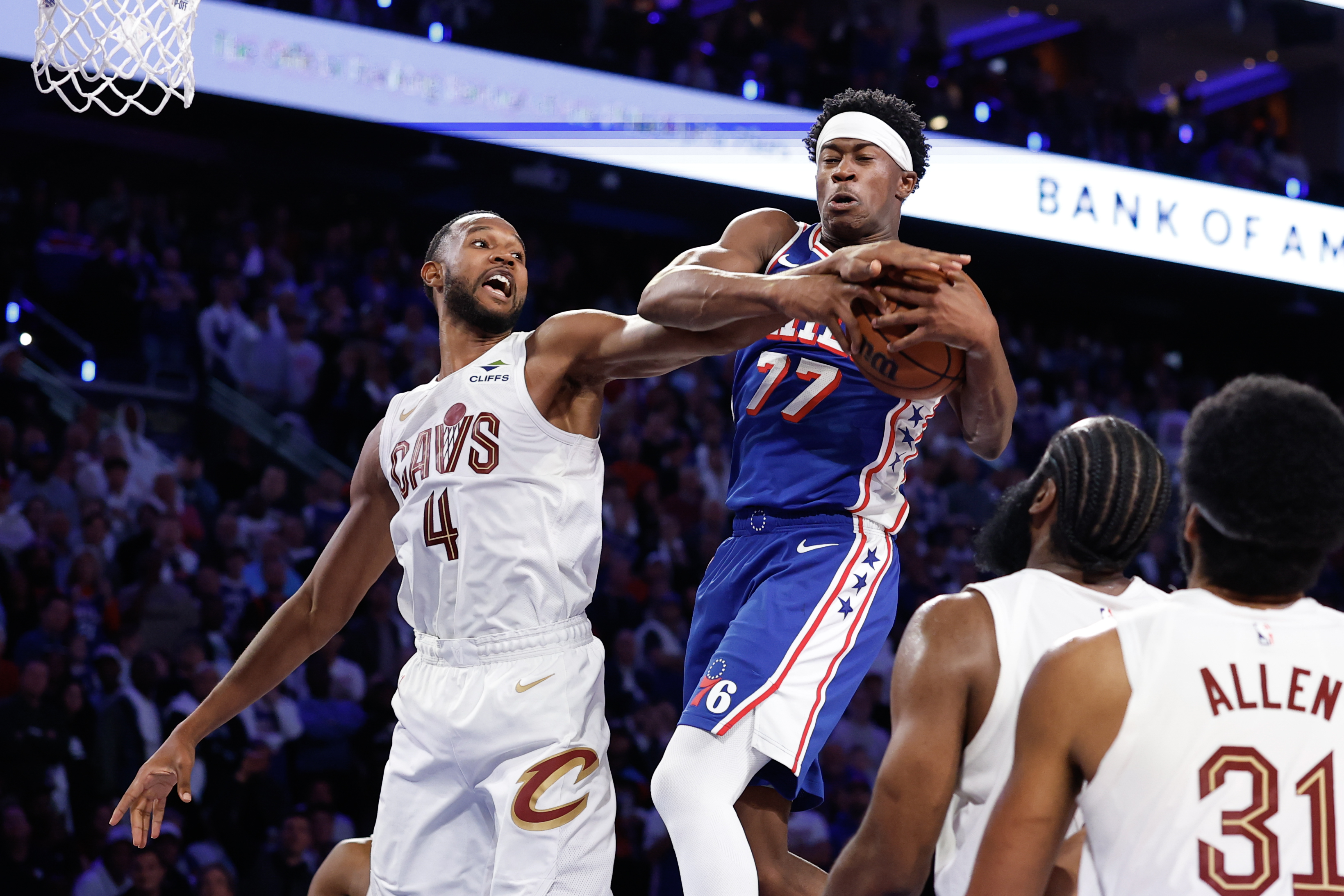
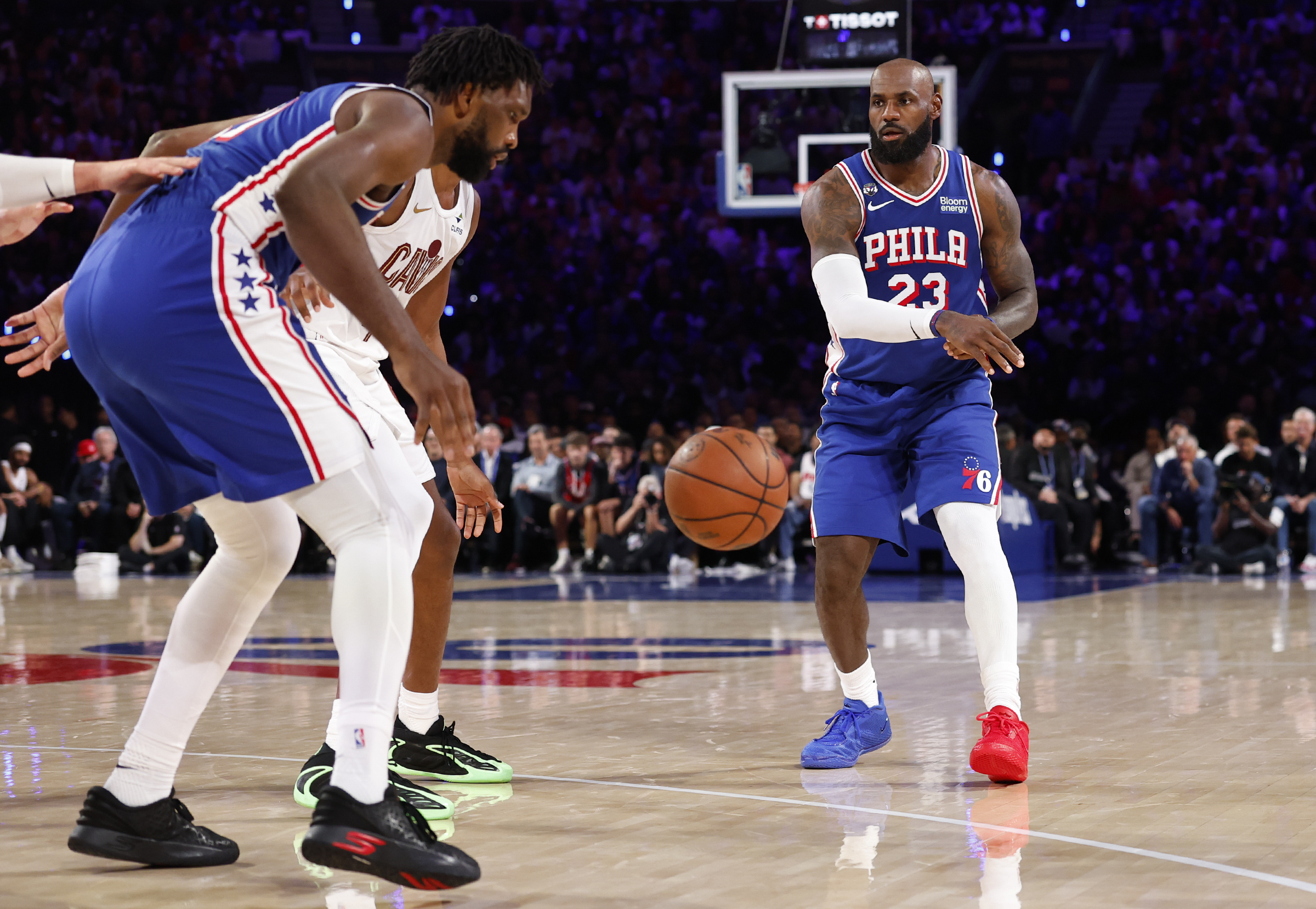
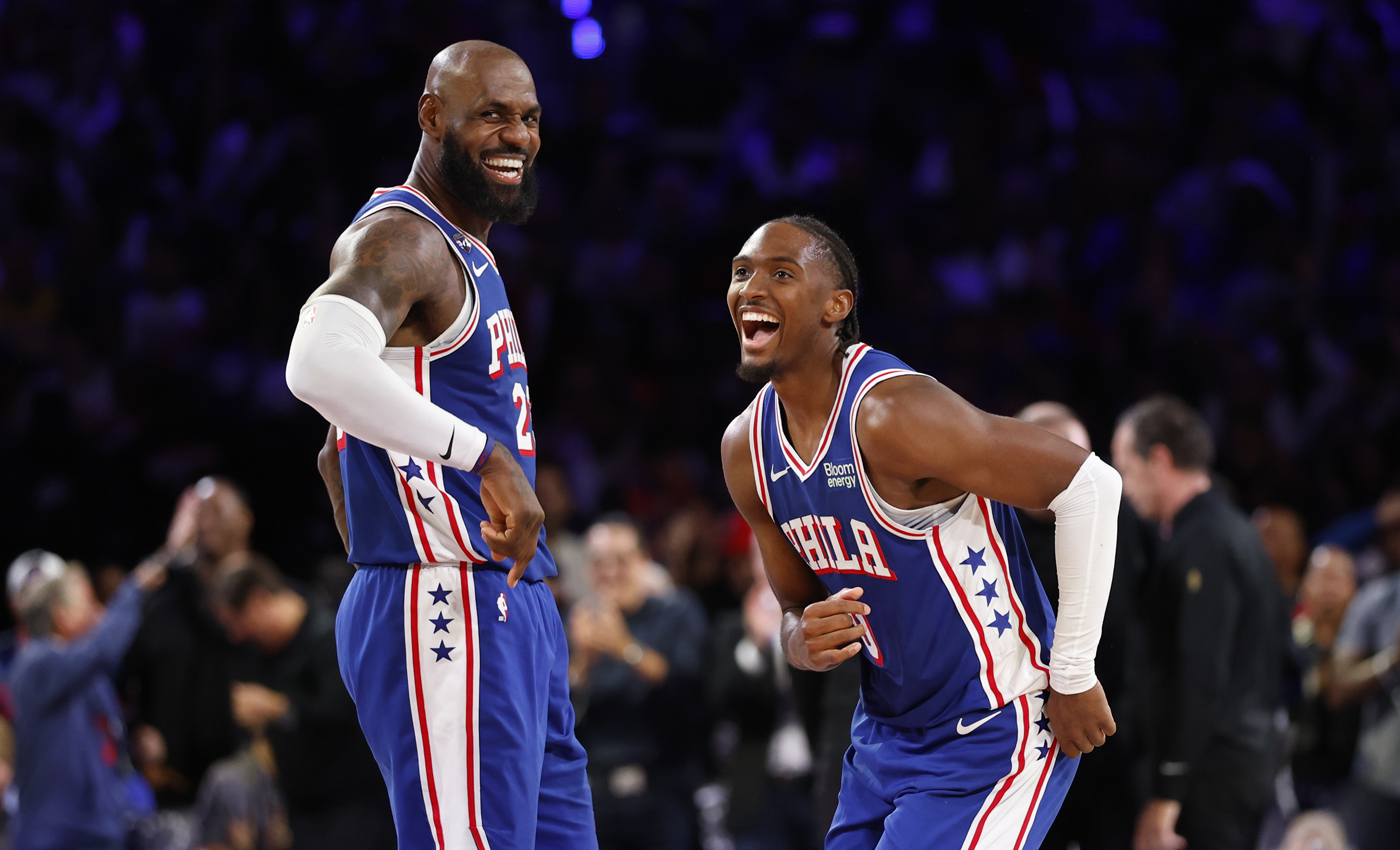
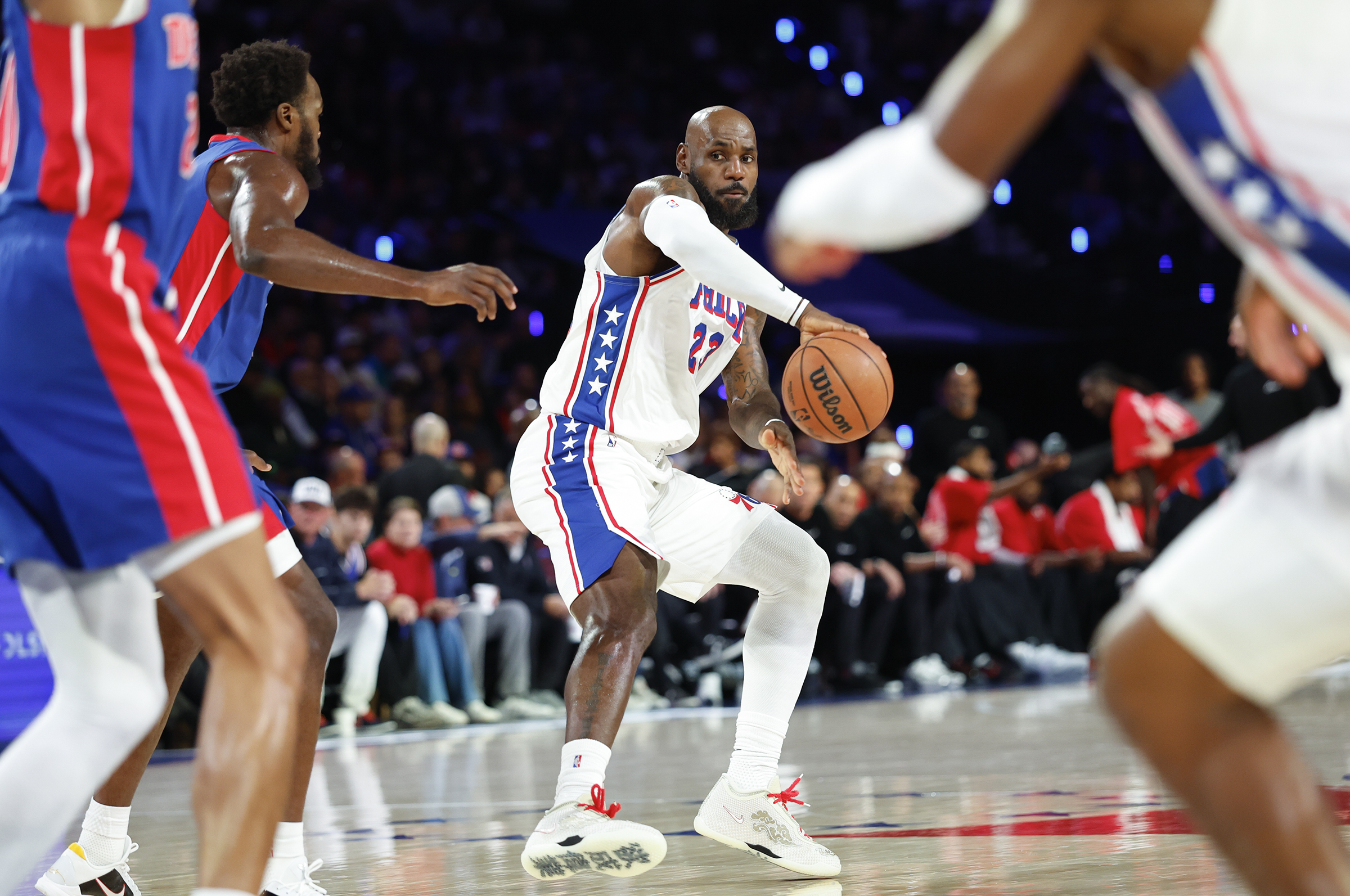
Sixers forward LeBron James lays-up the basketball past Knicks guard Jalen Brunson in the first quarter.Yong Kim / Staff PhotographerSixers head coach Nick Nurse yells to his team in the first quarter.Yong Kim / Staff PhotographerSixers forward Dean Wade grabs the basket past Knicks center Karl-Anthony Towns in the first quarter.Yong Kim / Staff PhotographerSixers center Joel Embiid loses the basketball against Knicks guard Mikal Bridges in the second quarter.Yong Kim / Staff PhotographerKnicks forward OG Anunoby loses the basketball against Sixers center Adem Bona in the second quarter.Yong Kim / Staff PhotographerSixers guard Tyrese Maxey lays-up the basketball past Knicks forward OG Anunoby in the second quarter.Yong Kim / Staff PhotographerSixers guard Anfernee Simons grabs the loose basketball after a screen set by teammate center Adem Bona past Knicks guard Mikal Bridges in the second quarter.Yong Kim / Staff PhotographerKnicks guard Jalen Brunson dribbles the basketball against Sixers guard Kentavious Caldwell-Pope in the third quarter.Yong Kim / Staff PhotographerAdem Bona fouls New York Knicks center Karl-Anthony Towns in the fourth quarter.Yong Kim / Staff PhotographerSixers guard VJ Edgecombe shoots a three-point basket late in the fourth quarter past Knicks center Karl-Anthony Towns.Yong Kim / Staff PhotographerSixers guard VJ Edgecombe celebrates a three-point basket late in the fourth quarter.Yong Kim / Staff PhotographerSixers forward LeBron James celebrates after making a late fourth quarter basket.Yong Kim / Staff Photographer
“That’s just the confidence I have in myself,” Edgecombe said postgame. “I still have to shoot the ball, regardless. I mean, if it’s the right shot, I’m going to make sure I shoot the ball. Because after that, if I turn it down, there might not be a better shot after that.”
If one only perused Friday’s box score, Edgecombe’s statistical line of 13 points on 6-of-10 shooting and eight rebounds looks productive but not spectacular. He did have an early scoring impact, hitting a long jumper over Knicks big man Karl-Anthony Towns and finding free space for two dunks. Edgecombe also was crucial to the defensive effort on Brunson, who missed six of his first seven shots while the Sixers built a double-digit lead in the first half.
Then Edgecombe went quiet — “I can become passive at times, but I always just try to make the right play,” he said — before those massive plays on both ends down the stretch.
On the Sixers’ newly loaded roster, Edgecombe’s responsibilities have shifted. Offensively, the electric 21-year-old guard is not a primary ballhandler as often, making his complementary cutting, transition play, and rebounding important. He is averaging 11.6 points and 7.8 rebounds in five games but is shooting 40.7% from the floor, including 29.6% from three-point range.
Yet Edgecombe is morphing into a ferocious asset on the opposite end of the floor.
Though he believes he has made the most strides as an off-ball defender, he regularly is tasked with guarding many of the NBA’s elite perimeter players. He also has faced the Knicks more than any other opponent in his early professional career, including last spring’s playoff sweep and multiple preseason games.
That means several reps against Brunson, whom Edgecombe on Friday morning praised for his fundamentals and ability to “get really hot, really fast.”
“I can’t hang my head down and get mad because he made a tough shot,” Edgecombe said of Brunson’s go-ahead three-pointer in front of the Sixers’ bench. “He shot it over me. I kind of did my job, but it’s going to happen. …
“I just try to make sure every shot is a little just difficult or it’s contested to where, if they make a bunch of contested shots and win the game like that, credit to them.”
So Edgecombe focused on keeping his composure for the next play.
Coming out of an earlier timeout, Edgecombe had told Maxey he would set a screen for his backcourt mate, and they would “make something shake from there.” So when Mikal Bridges abandoned Edgecombe near the top of the key to double-team Maxey — the reigning Eastern Conference Player of the Week who finished Friday with 27 points — Edgecombe got the ball and fired away. When his deep shot swished through the net, he brought both hands to his eyes to create the shape of goggles with three fingers pointing up.
“He came in and hit the biggest shot of the game,” teammate Anfernee Simons said.
It was “vintage” VJ in crunch time — even on the Sixers’ newly star-studded roster while facing the defending champs.
“He just does that,” head coach Nick Nurse said. “It’s really who he is. I think we all know it.”
Time and again in the 76ers’ 98-93 win over the New York Knicks, LeBron James came to the rescue when the Sixers needed him.
He did it late in the game, as the Knicks finally chipped all of the Sixers’ lead away and grabbed a one-point advantage of their own. He did it earlier in the second half, when the Sixers needed to calm down some Knicks runs. Add it up with his 20 points, nine rebounds, and eight assists, and Friday was James’ “best game, for sure” with the Sixers, according to coach Nick Nurse.
“I’m just trying to get more and more comfortable with what we’re running offensively,” James said. “I think every game, every week that I’m here, my body will continue to ramp up and ramp up and I’ll feel better. So, that played a part.”
There were moments, big and small, in which James contributed to winning, especially when the Sixers were punching air in an attempt to get anything going. Among those plays:
A cross-court pass with his body turned away from Kentavious Caldwell-Pope, who buried a corner three that put a temporary stop to one of the many Knicks second half runs.
A rebound putback that put the Sixers up five with 11.9 seconds remaining.
A jumper that put the Sixers ahead, 91-90, with 1:10 left after a Jalen Brunson three had given the Knicks the lead for the first time in the fourth quarter.
The first of those plays was James’ basketball IQ and court vision on full display. Tyrese Maxey dumped it down to James in the post, and, with his back to the basket, he spied Brunson coming over to help off Caldwell-Pope, then zoomed the pass to the opposite corner, and Caldwell-Pope buried the shot at the 6:58 mark.
That moment stopped a 7-0 Knicks run, but James had more in store for the final minutes.
Sixers forward LeBron James lays-up the basketball past Knicks guard Jalen Brunson in the first quarter.Yong Kim / Staff PhotographerSixers head coach Nick Nurse yells to his team in the first quarter.Yong Kim / Staff PhotographerSixers forward Dean Wade grabs the basket past Knicks center Karl-Anthony Towns in the first quarter.Yong Kim / Staff PhotographerSixers center Joel Embiid loses the basketball against Knicks guard Mikal Bridges in the second quarter.Yong Kim / Staff PhotographerKnicks forward OG Anunoby loses the basketball against Sixers center Adem Bona in the second quarter.Yong Kim / Staff PhotographerSixers guard Tyrese Maxey lays-up the basketball past Knicks forward OG Anunoby in the second quarter.Yong Kim / Staff PhotographerSixers guard Anfernee Simons grabs the loose basketball after a screen set by teammate center Adem Bona past Knicks guard Mikal Bridges in the second quarter.Yong Kim / Staff PhotographerKnicks guard Jalen Brunson dribbles the basketball against Sixers guard Kentavious Caldwell-Pope in the third quarter.Yong Kim / Staff PhotographerAdem Bona fouls New York Knicks center Karl-Anthony Towns in the fourth quarter.Yong Kim / Staff PhotographerSixers guard VJ Edgecombe shoots a three-point basket late in the fourth quarter past Knicks center Karl-Anthony Towns.Yong Kim / Staff PhotographerSixers guard VJ Edgecombe celebrates a three-point basket late in the fourth quarter.Yong Kim / Staff PhotographerSixers forward LeBron James celebrates after making a late fourth quarter basket.Yong Kim / Staff Photographer
When asked what James has brought to clutch moments for this Sixers team, Maxey said: “leadership. Calming presence.”
“He’s going to get a lot of rebounds, maybe go get the ball and calm us down,” Maxey said. “At the end of the day, it’s LeBron James. He can do the stuff like he did tonight. He got a couple of big buckets.”
Knicks fans in the arena were making plenty of noise after Brunson hit a three to put the Knicks ahead, 91-90. The Sixers’ last few possessions had been a bit disorganized. James got the ball a few feet outside the right block, and he dribbled to the middle of the lane for a fadeaway over Knicks forward OG Anunoby to give the Sixers the lead right back.
“For me to be able to be a calming factor for our team late game, just the experience that I have, and if it’s me with the ball, me without the ball, being able to put guys in the right position, just trying to talk them through,” James said of his mindset late in games. “If the other team makes a run, we come to the sideline, are we good? Let’s move on to the next play. Let’s figure out how we can be better for this play and the rest of the game. So it’s something I want to continue to pour into the team.”
LeBron James on setting scoring records in his 40s, and being a calming presence for the 76ers.
“I guess the best teacher in life is experience, and I’ve been in really big games.” pic.twitter.com/qiAg9DBrBs
It’s not a given that teams will be good in late-game situations, even teams with as much talent as the Sixers. Every team has to feel its way through those moments, especially if players are going through those tense moments together for the first time.
But James is constant in his communication and his encouragement. That has helped the Sixers win five of their six games, most of which have come in clutch situations.
“He’s seen a bunch of different end-of-game situations, so he’s composed, he’s relaxed,” VJ Edgecombe said. “But he’s also just so vocal, that kind of helps us. That helps us all the time … just gives us the confidence to guard, just expects certain actions, or he calls out something before it happens.”
Like he knew that Caldwell-Pope was going to be open for that three, or what exactly he wanted to do when Anunoby was guarding him late.
That’s where the basketball mind of James has had a hidden value for the Sixers, and they might not be 5-1 without it.
“The fact that we’ve been in some close games this year,” James said, “we’ve actually prevailed — and teams have made runs, teams have gotten up on us, we’ve got up on teams and them come back and we kept our cool — it’s very encouraging. And we will try to continue that trait going forward.”
Not long ago, Dru Joyce was watching the Sixers at home in Pittsburgh when he saw something that brought him back to his childhood. The game was about to start, and players were jogging onto the court, high-fiving their Philadelphia teammates.
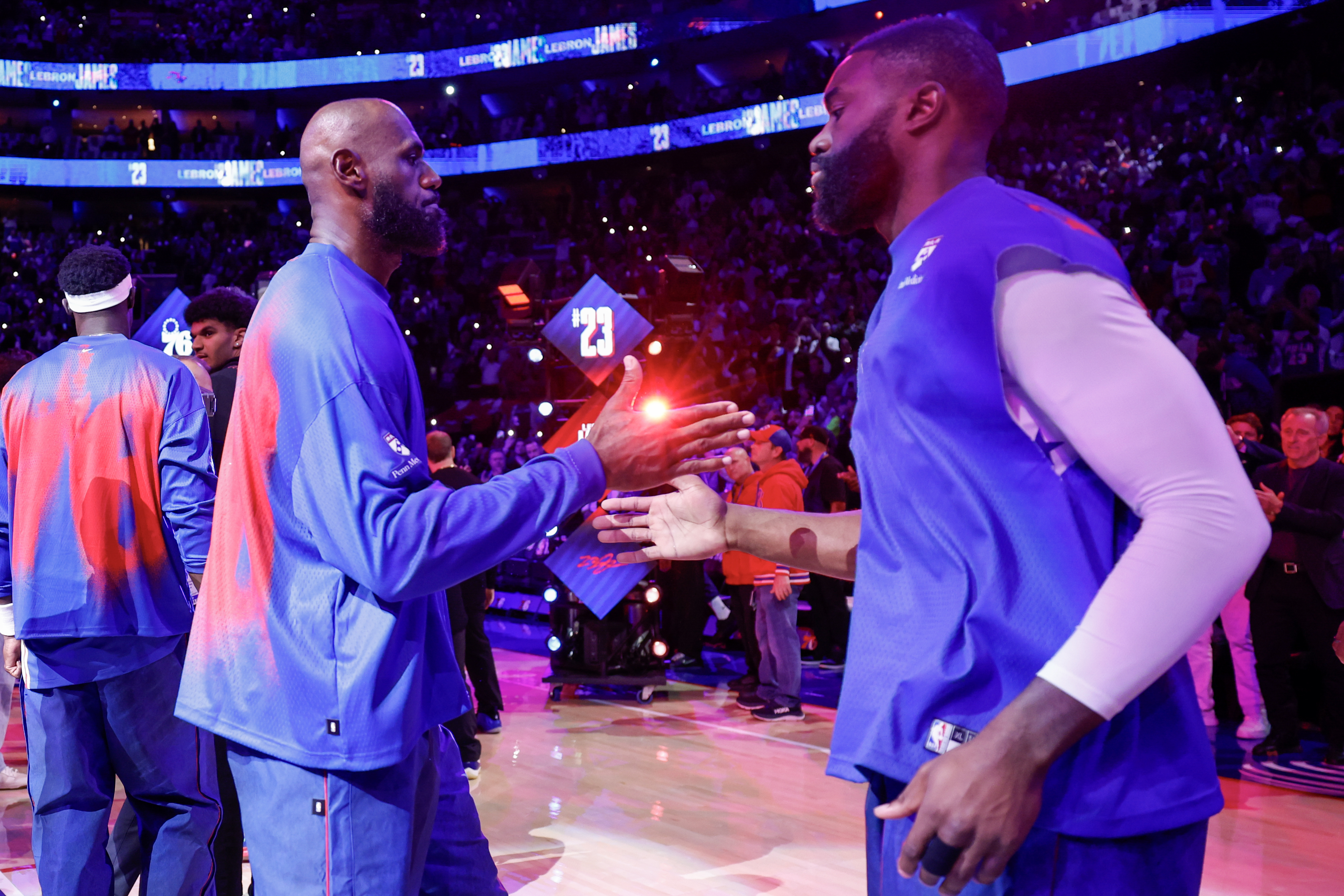
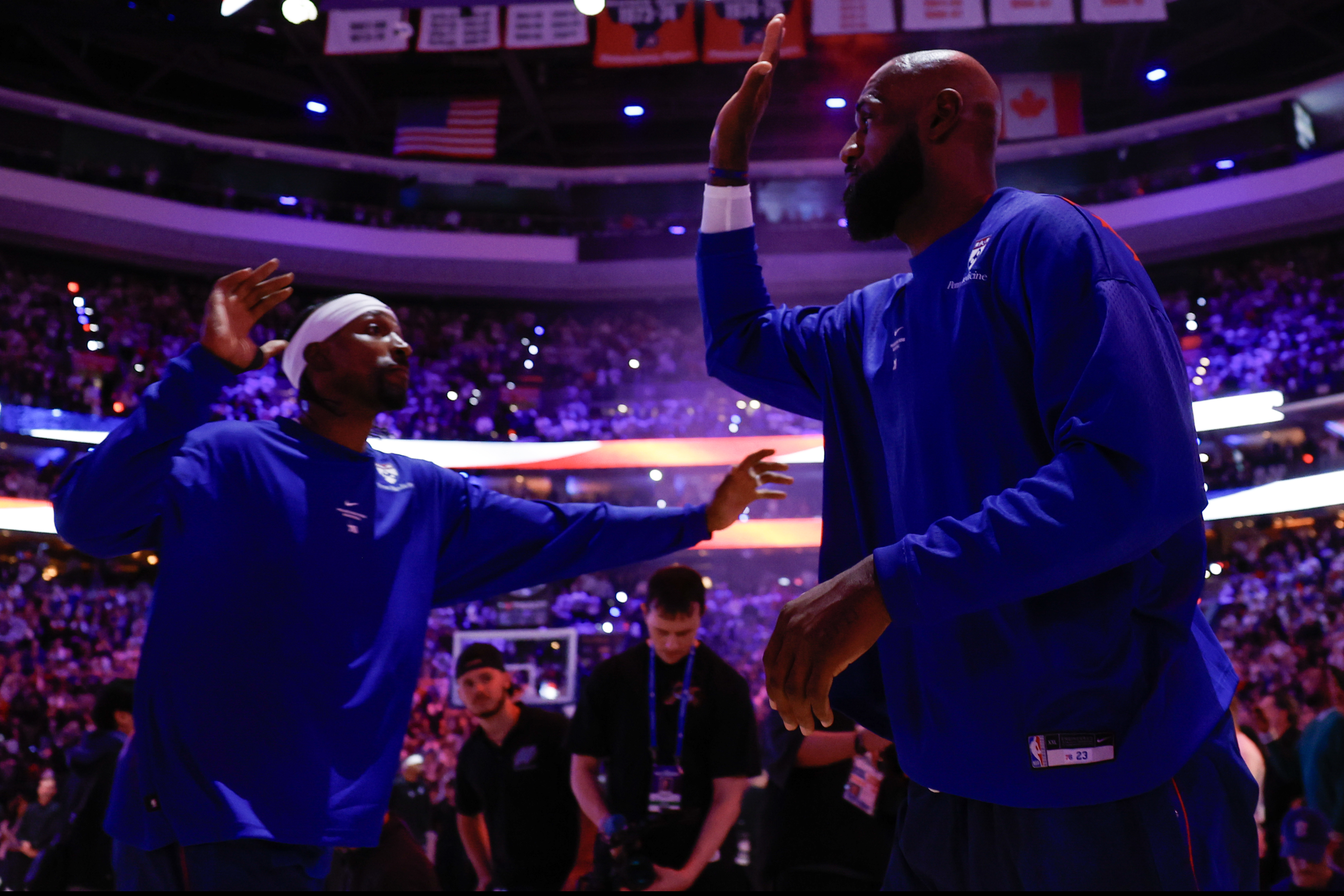
Amid the slapping palms and bumping fists, a 6-foot-9, 250 pound showman emerged, armed with his own choreography. As LeBron James traveled down the line, he paused at almost every Sixer, stuck out his hand, and proceeded to reveal new, tailor-made handshakes.
Each gesture was distinct. There was the finger-twirl with Tyrese Maxey; the imaginary mask with Jaylen Brown; the hip thrusts with Joel Embiid.
For Kentavious Caldwell-Pope, a former teammate of James’ with the Lakers, the four-time MVP pretended to load a clip. For VJ Edgecombe, the future Hall of Famer tapped his head twice and powerfully shrugged his shoulders.
And of course, James couldn’t leave out Dean Wade, the lone Caucasian on the roster.
“I just have the simple, ‘Hire me’ handshake,” Wade said. “I try to stay out of it because I can’t do this stuff.”
Joyce’s family was mesmerized. His wife and son asked about the Sixers star’s near-photographic memory. The head coach of Duquesne’s men’s basketball team had little insight to provide.
“You see him have new handshakes with new guys, and it’s like, ‘Man, another set of guys, another set of handshakes,’” Joyce said. “Like, why? Why and how?”
LeBron’s handshake with Dean Wade vs. the rest of his teammates. 🤣🤣🤣
He might not have answers to these questions, but Joyce certainly has the context. He first met James when they were nine years old, competing against each other in the same Akron, Ohio, rec league.
One day, his father, also named Dru Joyce, knocked on James’ door in the Elizabeth Park projects to see if the hardcourt wunderkind would join his son’s AAU team.
Gloria James cautiously peeked behind the curtain with young LeBron by her side. He locked eyes with the young Joyce and before long, they were teammates, through their senior year at St. Vincent-St. Mary High School; a bond that endures to this day.
Joyce recalls the handshakes starting in ninth grade. They were far less elaborate back then — maybe one step instead of four — but James and his friends made them part of their pre-game routine, forging muscle memories that would last a lifetime.
And the King is still preserving the practice today. At every stop of his NBA career, from Cleveland to Miami to Los Angeles, and now, to Philadelphia, he’s created handshakes. They are all intentional; often with some sort of underlying theme.
What’s more remarkable, though, is the sheer breadth of these gestures. James doesn’t just shake hands with stars. He’s expanded his repertoire to include role players, two-way players, and rookies.
He has custom greetings with coaches, team attendants, locker room managers and photographers; inviting them all into his Hall of Fame orbit, if only for a few seconds.
While this tradition might seem paltry compared to James’ other accomplishments, those who know him say it’s anything but.
“He’s an incredible athlete, an incredible man,” said James’ former teammate, Quinn Cook. “But I think for him, his superpower isn’t his talent. His superpower is making everybody feel important.
“Anybody that’s around him, he’s going to make them feel like the biggest person in the world.”
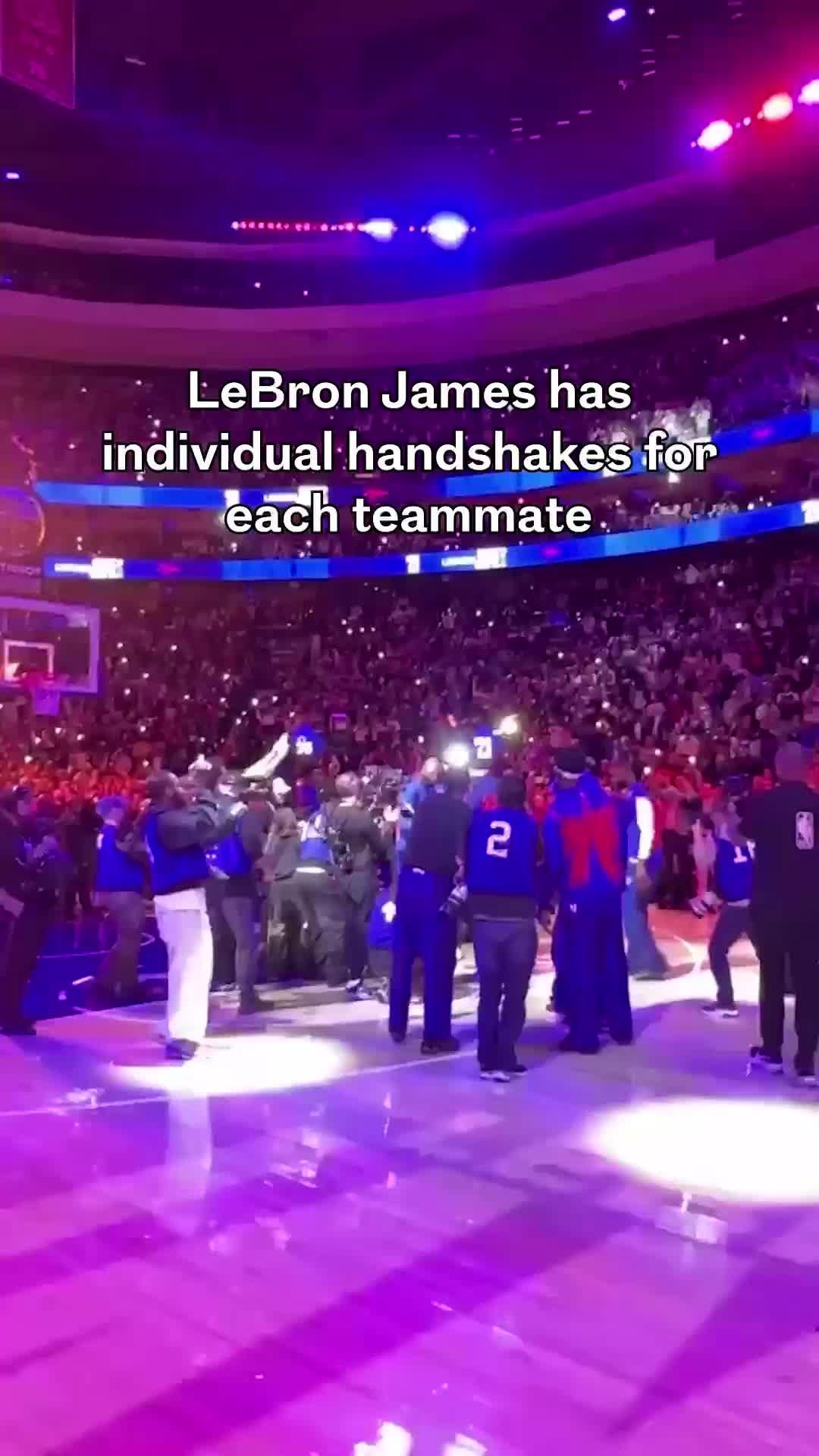
Video: LeBron James has individual handshakes for each teammate
‘He just ripped it’
Before James signed with the Sixers in July, he talked to Maxey about the scrutiny his presence would bring. There would be more cameras, more media, more pressure.
There would be outside noise in both the figurative and literal sense; players would have to get used to the sound of his helicopter, for example, soaring over the team’s practice facility in Camden.
James, the league’s all-time leading scorer, was used to this. The Sixers were not. But for all of his far-reaching fame, he’s also shown an unlikely ability to relate. Cook experienced it firsthand when he was a rookie in training camp with Cleveland in 2015.
He and the future Hall of Famer weren’t strangers. Cook and James are mutual friends with Kevin Durant, and Cook attended James’ basketball camps growing up. But they’d never gotten to know each other well, and upon joining the Cavs, James immediately gravitated to the undrafted point guard.
As Cook tried to earn a roster spot, he became James’ and J.R. Smith’s designated rookie. This status involved menial tasks like carrying around a bag of playing cards and gum when the veterans were in need, and picking up Krispy Kreme donuts in the morning.
Sixers forward LeBron James and guard Tyrese Maxey celebrate a stop late during the fourth quarter against the Cavaliers.Yong Kim / Staff Photographer
But the payoff was worth it. On road trips, Cook would sit alongside his vets. They’d always pay for meals, donating their per diems to the cause. Even after the rookie was sent to the G League, James continued to attend his games, driving 60 miles from Cleveland to Canton.
Cook had been going through some challenges at home. His grandfather had recently died, and his aunt, who suffered a stroke earlier in her life, was having health problems.
James could tell it was weighing on him. So, he began to check in.
“Any time I had an hour, two hours, or they were off, Bron’s like, ‘Man, meet me at the house,’” Cook recalled. “‘Let’s go to the facility and just talk.’
“At this time, I’m fully in the G League. I’m not even with the Cavs anymore. I’m with the minor league team. And Bron, literally, anytime they were in town, and he had an hour, two hours: ‘Hey, come here, let’s play Madden.’”
To Cook, the handshakes are an extension of this side of James. The NBA star doesn’t discriminate; he’s crafted greetings with everyone from Dwyane Wade to Jarred Vanderbilt; from Jayson Tatum to Zydrunas Ilgauskas.
This extends to arena staff, too. Cook has seenJames exchange handshakes with janitors and social media managers. In 2011, when the forward joined the Miami Heat, he developed a rapport with one of the team attendants, Marvin Ulysse.
He’d often compliment Ulysse on his sneakers, which invariably led to other topics: where they grew up, how they grew up, their love for the game. One time, during the preseason, James walked into the Kaseya Center, and guided Ulysse through a five-step process.
Stop 1 of the LeBron James Reunion Tour tonight (stop 2 is Wednesday in Cleveland). And he still remembers all the handshakes… pic.twitter.com/YXJJi09cFv
The team attendant was stunned. While Ulysse knew James had a long history of custom hand-shaking, he figured he’d be the last person to ever receive one.
But there he was, later that night; standing in front of a mirror, practicing each twist and turn and arm bump, to make sure he didn’t forget.
“I was a team attendant,” Ulysse said. “I’m not thinking I’m gonna get a handshake like the players are. But then he made a handshake with every team attendant in that locker room.”
James continued his hand-shaking ways when he signed with the Lakers in 2018. Caldwell-Pope saw his role change that year, to more of a three-and-D player; James began to call him “sniper.”
The following season, the four-time MVP approached him at practice with a phrase any of his current (or former) teammates would be familiar with.
“He was like, ‘I got a handshake,’” Caldwell-Pope recalled. “And we just did it. Mine, specifically, is being locked and loaded. Basically, we just loading the clip. Just getting ready to g—damn play, and shoot the ball at all times.”
Sixers forward LeBron James and teammate Kentavious Caldwell-Pope shake hands before a game against the Cavaliers.Yong Kim / Staff Photographer
For Rui Hachimura, it was a respectful bow, like they do in his native Japan. For D’Angelo Russell, it was a nod to the ice in his veins. For Anthony Davis, it was a flurry of high-fives, followed by an interlocking-finger finale. For Dalton Knecht, it was a raised bow-and-arrow aimed toward the sky.
Drew Timme was on the Lakers’ G League team when he was introduced toJames in 2025. The future Sixer was on a rehab assignment, and they started joking about the time James sported a mustache with the Cavs about a decade ago.
Timme — who still has his signature handlebar — was signed to a two-way contract last November. One night, before a Lakers game, he was standing in the tunnel when James turned to him.
The Akron native dapped Timme up, and then lifted his hands, tracing an imaginary mustache above his mouth.
“I was like, ‘I can f— with it,’” Timme said. “He just ripped it. I was like, ‘That’s why you’re the GOAT, man.’”
It didn’t take long for James to get to work in Philadelphia. By the second day of camp, he’d already concocted a greeting with Maxey: slapping the back of their hands, raising them for a high-five, and then twirling their fingers in the air.
Rookie Labaron Philon Jr. and second-year shooting guard Edgecombe noticed the veteran teaching his new handshakes in practice. The one with Caldwell-Pope, in particular, stood out; the two first-round picks were in awe of the intricate routine after seeing it at a team dinner.
They decided to patiently wait their turn.
“Me and Labaron were like, ‘Maybe one day,’” Edgecombe said with a laugh.
That day came sooner than Edgecombe expected. A couple of weeks ago, before the Sixers’ season opener in New York, James walked up to the guard with a message: “V, I got one for us.”
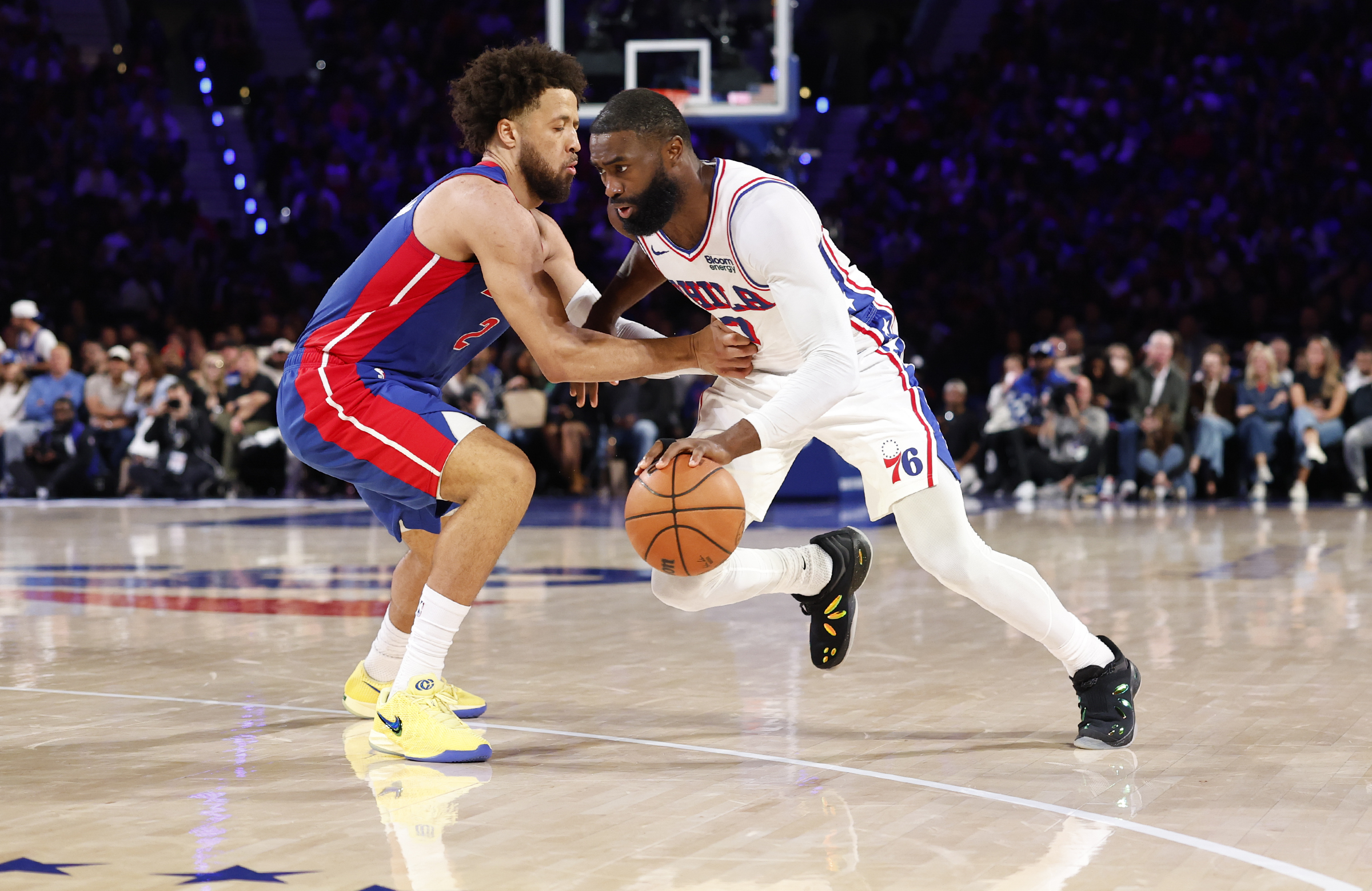
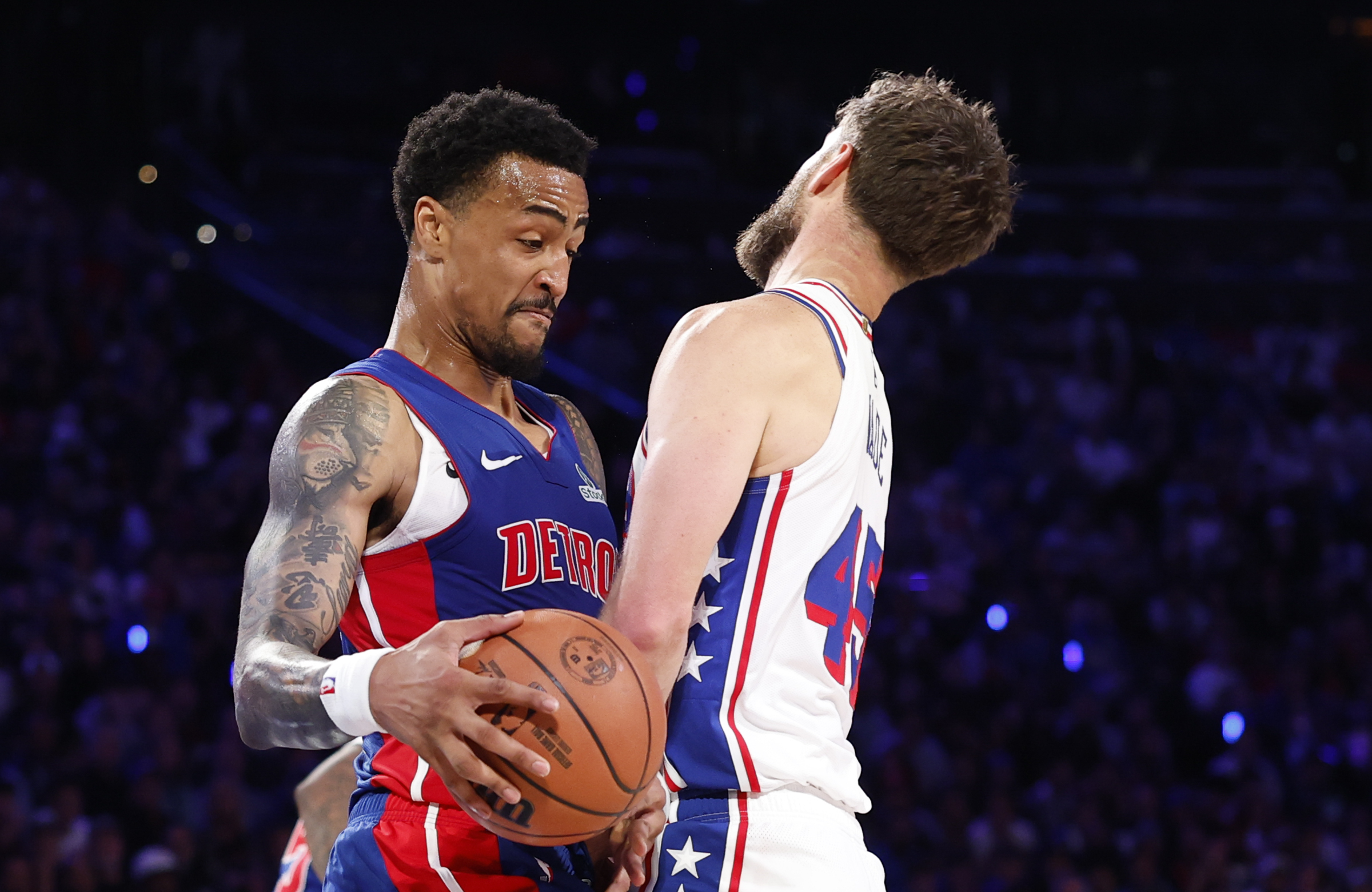
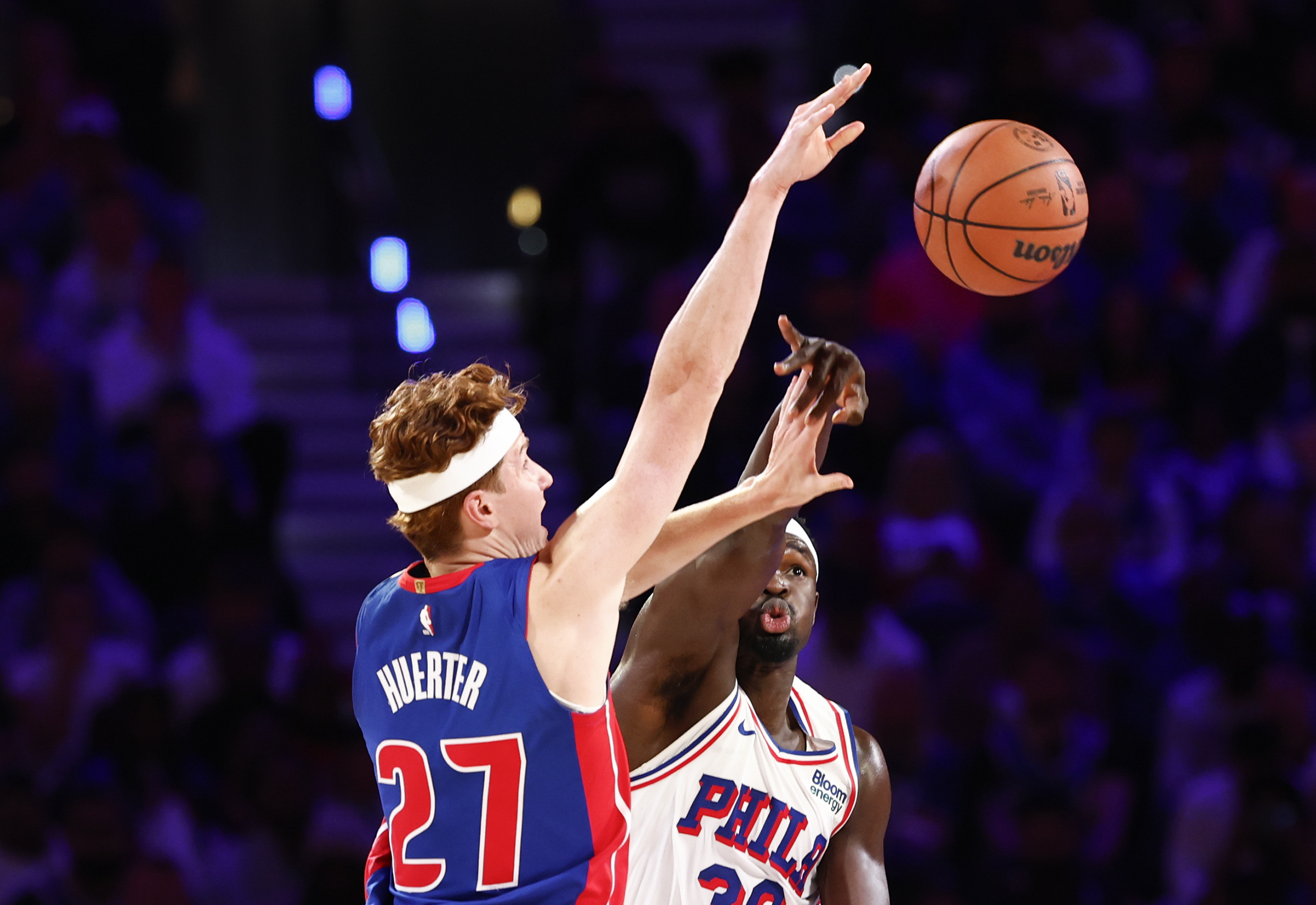
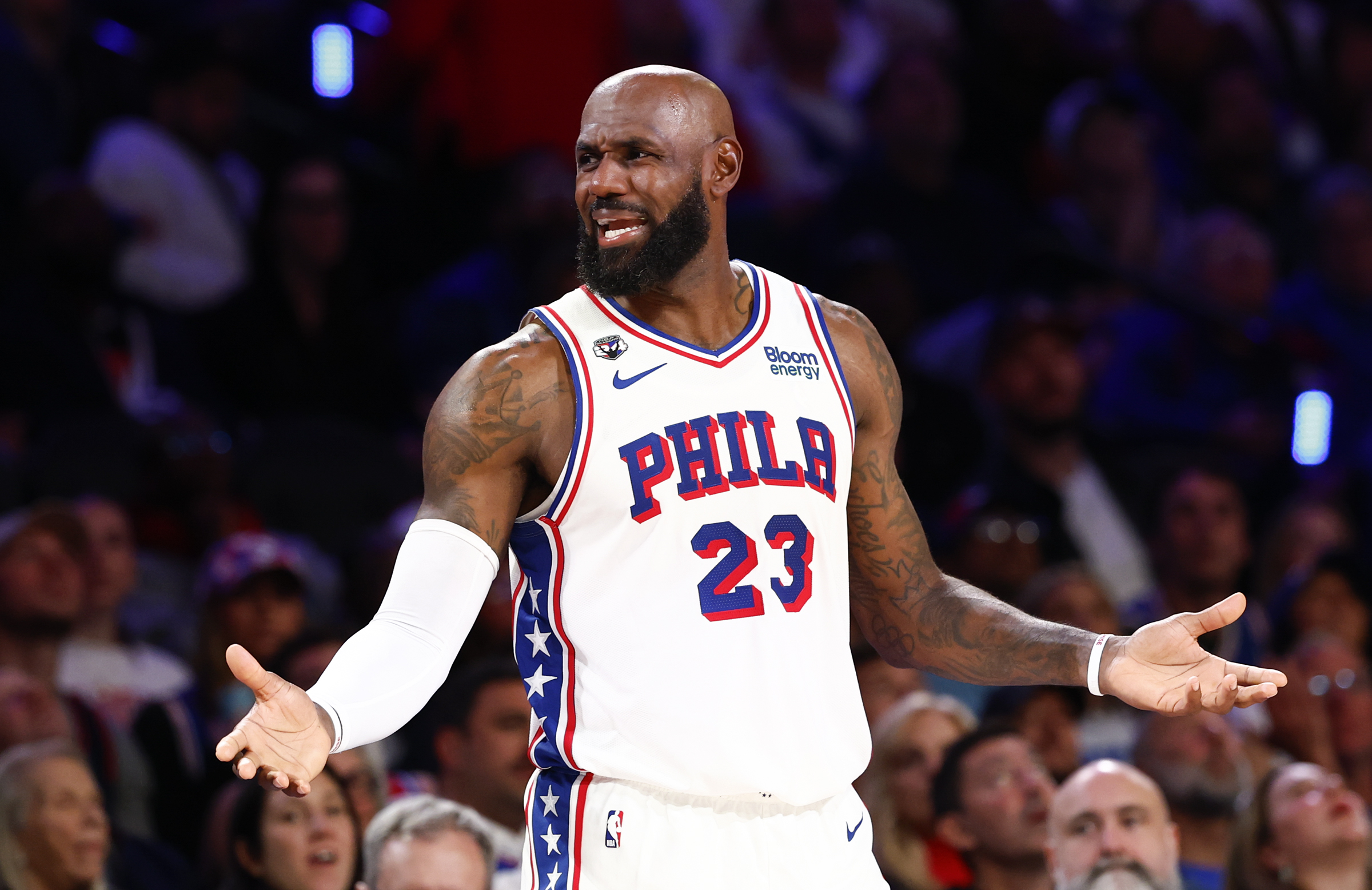
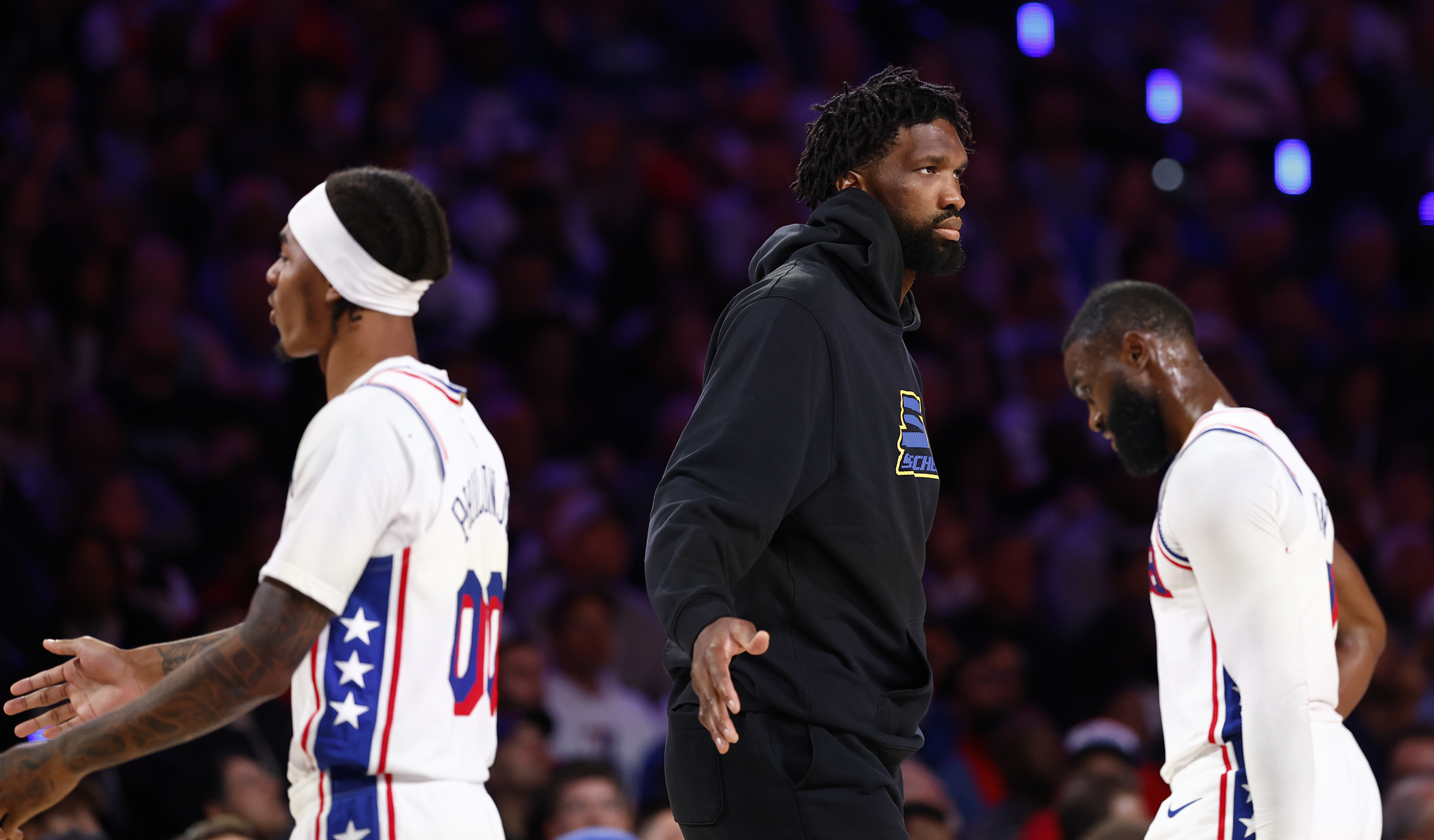
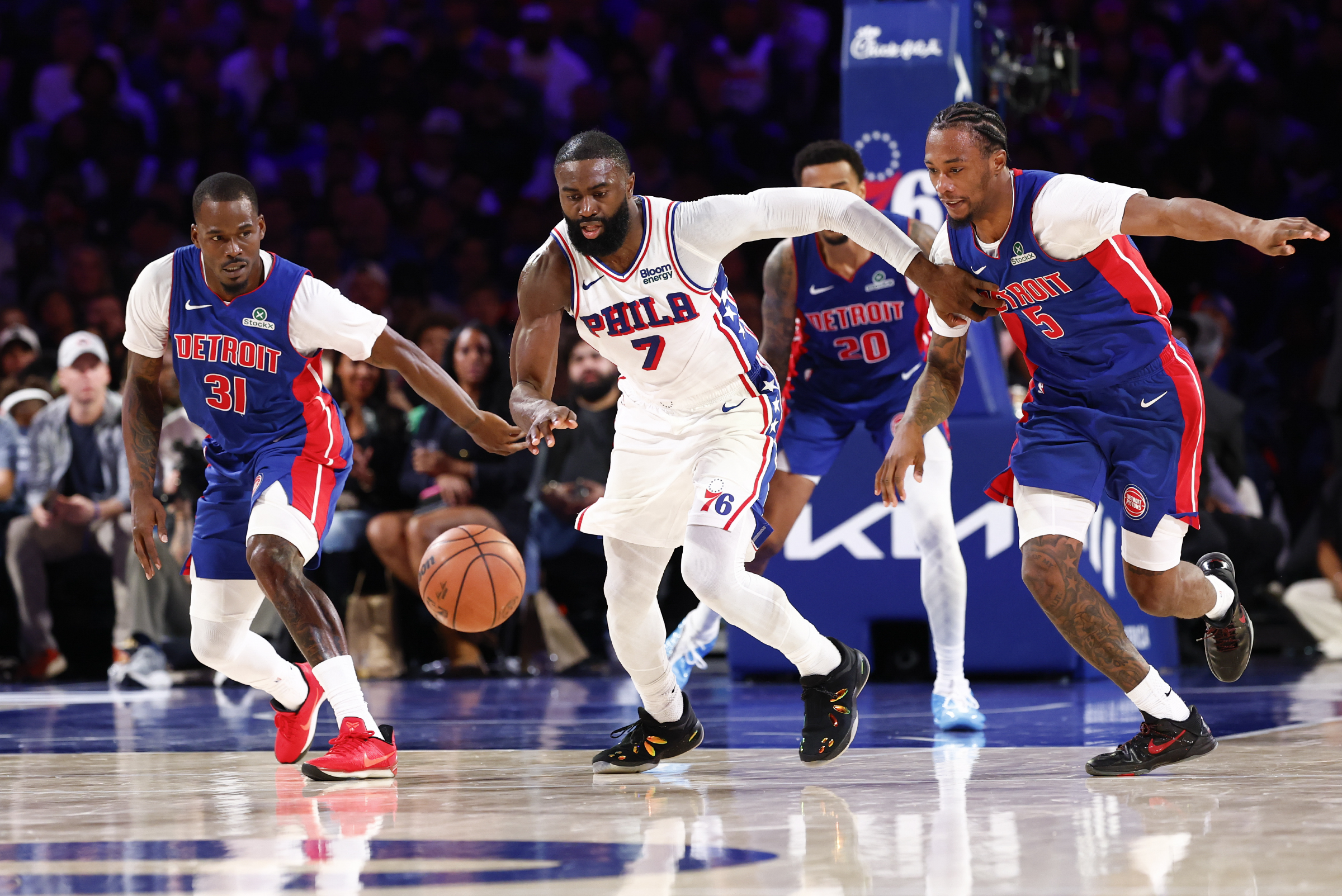
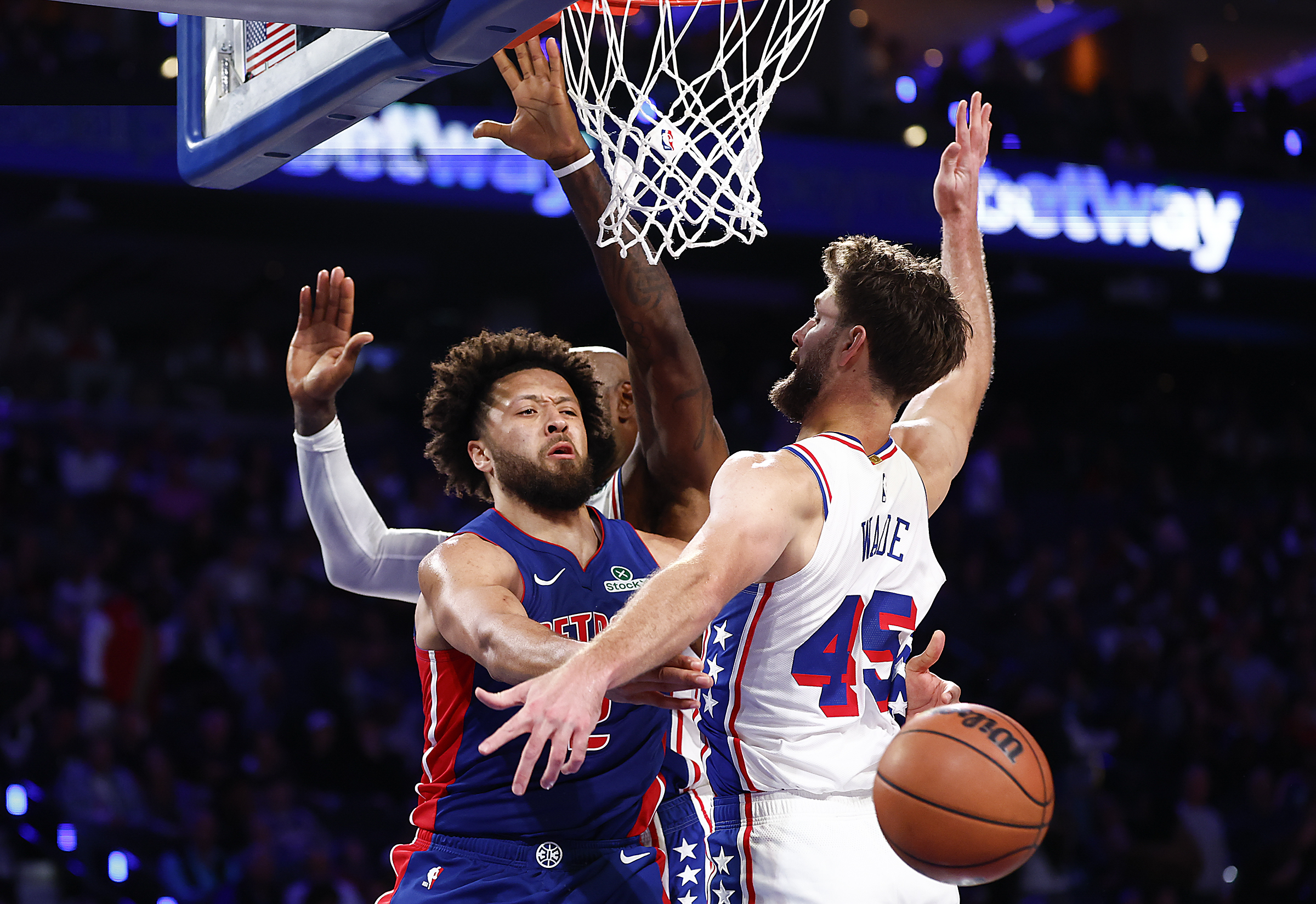
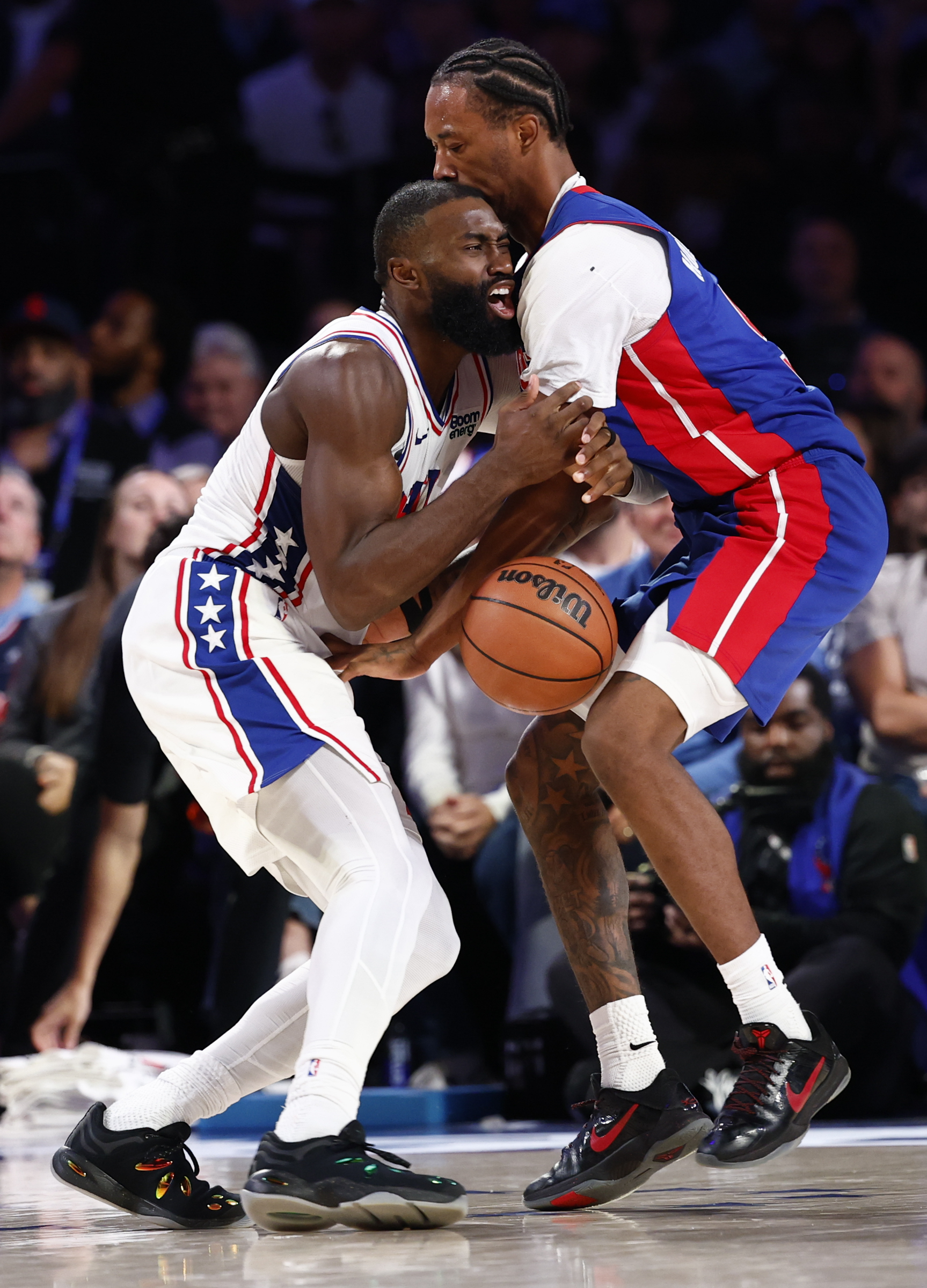
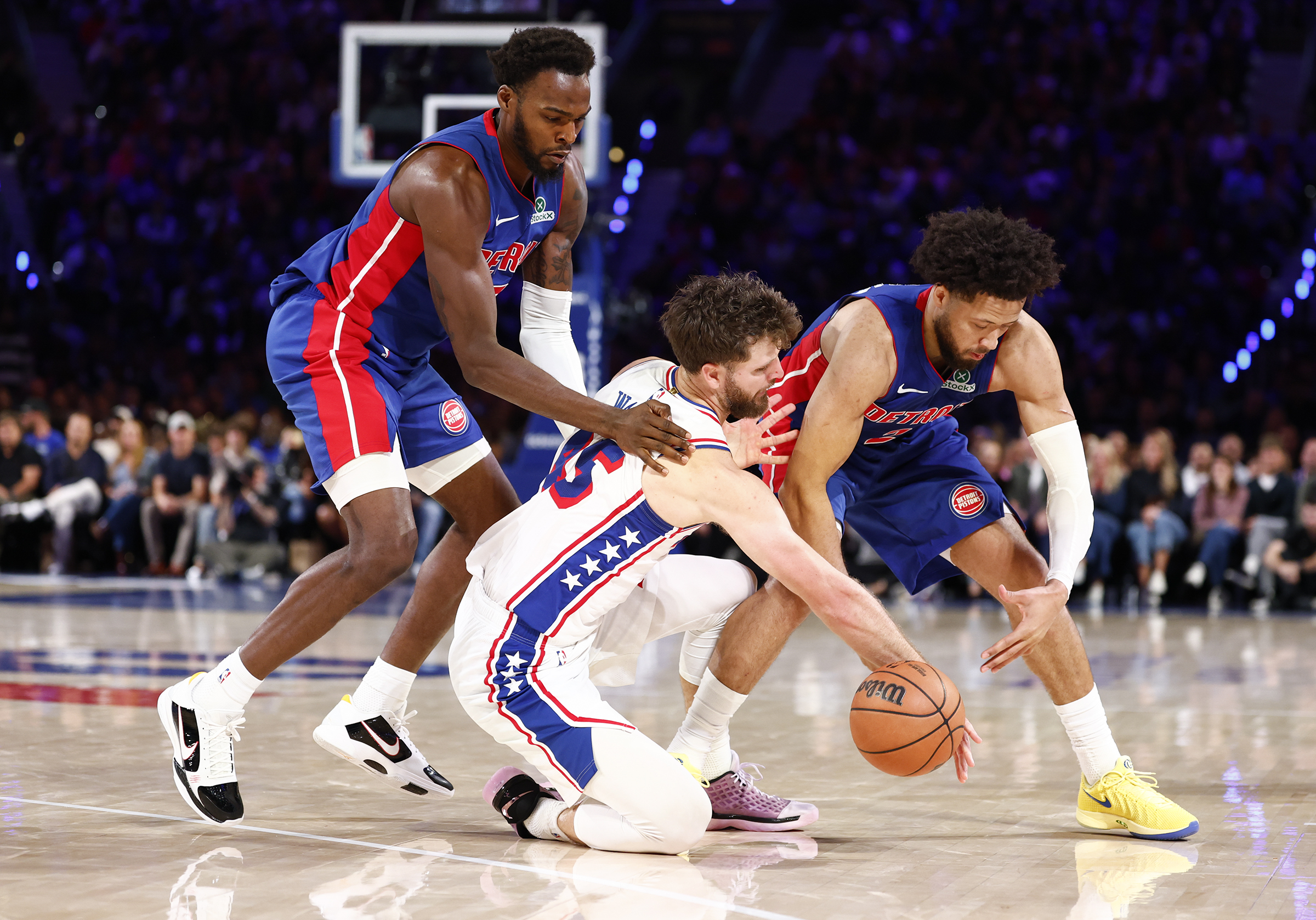
Sixers guard Jaylen Brown gets fouled driving to the basket against Pistons forward Paul Reed in the first quarter.Yong Kim / Staff PhotographerSixers forward LeBron James lays-up the basketball against Pistons guard Cade Cunningham during the first quarter.Yong Kim / Staff PhotographerSixers head coach Nick Nurse and guard Tyrese Maxey meet during the first quarter.Yong Kim / Staff PhotographerSixers guard Jaylen Brown drives to the basket against Pistons guard Cade Cunningham during the second quarter.Yong Kim / Staff PhotographerPistons forward John Collins collides with Sixers forward Dean Wade in the second quarter.Yong Kim / Staff PhotographerSixers center Adem Bona deflects the basketball against Pistons guard Kevin Huerter during the second quarter.Yong Kim / Staff PhotographerSixers forward LeBron James reacts after committing a second quarter offensive foul.Yong Kim / Staff PhotographerSixers center Joel Embiid greets his teammates during the third quarter. Embiid did not play due to plantar fasciitis management.Yong Kim / Staff PhotographerSixers guard Jaylen Brown (center) chases after the basketball against Pistons guard Javonte Green (left) and forward Ron Holland II during the fourth quarter.Yong Kim / Staff PhotographerPistons guard Cade Cunningham passes the basketball past Sixers forward Dean Wade in the fourth quarter.Yong Kim / Staff PhotographerSixers guard Jaylen Brown loses the basketball against Pistons forward Ron Holland II in the fourth quarter.Yong Kim / Staff PhotographerSixers forward Dean Wade (center) goes after the basketball against Pistons guard Cade Cunningham (right) and forward Paul Reed in the fourth quarter.Yong Kim / Staff Photographer
He started tapping his head — “like when you dunk on somebody” — and shrugging his shoulders, like a boxer ready to fight.
The future Hall of Famer provided no explanation, but somehow, it fit Edgecombe perfectly. Maxey says this isn’t by accident. For as spontaneous as James’ handshakes might appear, he does put thought into them.
And just like they did in Akron, and Cleveland, and Miami, and Los Angeles, the gestures still make an impact. A few seconds of daps and twists and bumps, to remind a teammate that they matter — even to one of the all-time greats.
“You got a handshake with LeBron James, man,” Maxey said. “Especially for guys that don’t play as much… that’s a memory.”
INDIANAPOLIS — Tyrese Maxey sent a text message to Tyrese Haliburton and Anthony Edwards, offering well wishes following their recent injury diagnoses.
“I hate seeing guys hurt,” Maxey said Wednesday night. “[I told] them I was praying for them and I want to see them play.”
The absence of Haliburton — the Indiana Pacers’ star point guard who, in his early days back from Achilles surgery, suffered a strained hamstring — along with starting center Ivica Zubac (sprained ankle) took some sizzle out of their early-season matchup against the 76ers. They are two names already on a lengthy list of prominent players expected to miss notable time with injuries barely a week into the 2026-27 NBA season.
“Sometimes you simply can’t stay out of harm’s way,” Pacers coach Rick Carlisle said during his news conference before the Sixers’ 114-109 win at Gainbridge Filedhouse. “But I can guarantee you that every team is looking into it and studying it as best they can.”
The most gruesome injury thus far was All-Star Oklahoma City Thunder forward Jalen Williams’ fractured fibula and dislocated left ankle sustained Sunday night, which ends his season and begins a monthslong recovery process. Thunder teammate Cason Wallace also has a torn labrum in his shoulder and is expected to miss several months.
The list continues with Edwards, the Minnesota Timberwolves four-time All-Star guard who is expected to be sidelined for two months following arthroscopic knee surgery. And Orlando Magic All-Star Paolo Banchero, who is out for at least a month with a high ankle sprain. And Toronto Raptors perennial All-Star Kawhi Leonard, whom ESPN reported will miss “weeks” with knee swelling. And Utah Jazz big man Jaren Jackson Jr. (six weeks, MCL). And Detroit Pistons All-NBA big man Jalen Duren (hamstring, two weeks). And even maligned former Sixer Ben Simmons, whose attempted NBA comeback with the Sacramento Kings was derailed by a preseason Achilles tear.
The Sixers also have not been immune to the rash of injuries, with reserve big man Ariel Hukporti also suffering a ruptured Achilles in his new team’s preseason opener. The former Knicks center was spotted using a scooter to maneuver around the practice facility earlier this week and on ring night when the Sixers kicked off their season at Madison Square Garden.
Sixers guard Jaylen Brown gets fouled driving to the basket against Pistons forward Paul Reed in the first quarter.Yong Kim / Staff PhotographerSixers forward LeBron James lays-up the basketball against Pistons guard Cade Cunningham during the first quarter.Yong Kim / Staff PhotographerSixers head coach Nick Nurse and guard Tyrese Maxey meet during the first quarter.Yong Kim / Staff PhotographerSixers guard Jaylen Brown drives to the basket against Pistons guard Cade Cunningham during the second quarter.Yong Kim / Staff PhotographerPistons forward John Collins collides with Sixers forward Dean Wade in the second quarter.Yong Kim / Staff PhotographerSixers center Adem Bona deflects the basketball against Pistons guard Kevin Huerter during the second quarter.Yong Kim / Staff PhotographerSixers forward LeBron James reacts after committing a second quarter offensive foul.Yong Kim / Staff PhotographerSixers center Joel Embiid greets his teammates during the third quarter. Embiid did not play due to plantar fasciitis management.Yong Kim / Staff PhotographerSixers guard Jaylen Brown (center) chases after the basketball against Pistons guard Javonte Green (left) and forward Ron Holland II during the fourth quarter.Yong Kim / Staff PhotographerPistons guard Cade Cunningham passes the basketball past Sixers forward Dean Wade in the fourth quarter.Yong Kim / Staff PhotographerSixers guard Jaylen Brown loses the basketball against Pistons forward Ron Holland II in the fourth quarter.Yong Kim / Staff PhotographerSixers forward Dean Wade (center) goes after the basketball against Pistons guard Cade Cunningham (right) and forward Paul Reed in the fourth quarter.Yong Kim / Staff Photographer
Keerthika Uthayakumar, a master at compiling and releasing NBA statistical information on the internet, posted Wednesday evening that 79 players — approximately 15% of the league — were listed with an injury or illness on the 2:30 p.m. injury report for that night’s games.
Injuries — and how to curtail them — have become a topic of NBA conversation seemingly every few months. They have turned into debates about load management, the 82-game schedule, and style of play across the sport’s eras.
At the end of last season, they revolved around some of the league’s best players falling short of the 65-game benchmark to be eligible for postseason awards and All-NBA selection. Those honors not only shape individual legacies and the overall history of the game, but sometimes come with contract implications. That rule, which was collectively bargained by the National Basketball Players Association and the league’s owners, was implemented for the 2023-24 season to try to limit load management and encourage star players to suit up more frequently. It runs in tandem with the player participation policy, which fines teams for sitting star players during nationally televised and NBA Cup games.
Sixers stars Joel Embiid and LeBron James have been held out of back-to-back games. Yong Kim / Staff Photographer
When asked why injuries could already be mounting, Carlisle reiterated that “the game is fast and not slowing down.” He also referenced a “school of thought” that offseason player workouts with personal trainers might need to “evolve to the way the game is played now.”
“It’s a running and speed game,” said Carlisle, who has been playing and coaching in the NBA since the 1980s. “It’s a different kind of conditioning than it’s ever been.”
Maxey, who last season led the NBA in minutes per game, reiterated on Wednesday the importance of taking care of his body but conceded “it’s the NBA, man. It’s a grueling season. … And being healthy is part of being a good team.”
Sixers coach Nick Nurse, who was part of the Raptors’ initial load-managing philosophy with Leonard on the way to winning the 2019 NBA title, also has dealt with a bevy of injuries to key players in his three-plus seasons with the Sixers. Now, he is managing the health of LeBron James, who is still an excellent player but will turn 42 years old in December, and Joel Embiid, the former NBA Most Valuable Player whose career has been littered with injuries including multiple knee surgeries.
Both players only participated in one game of the Sixers’ back-to-back last weekend. They have another coming up Friday and Saturday, first a marquee NBA Cup group play matchup against the New York Knicks before a road date at the Charlotte Hornets. Embiid played a team-high 39 minutes against the Pacers — in a close game with limited backup center options because of, you guessed it, injuries — but acknowledged “that’s not going to last” as a realistic workload for him throughout a season during which the revamped Sixers hope to contend for a championship.
Nurse called fixing the injury issue “maybe not my exact expertise or lane to think about,” But the coach added that the Sixers’ staff — including the medical and training teams, along with the front office — is “always trying to find the right balance between rest and work, both physically and mentally.”
“[You] always just keep trying to keep the best pulse you can on that,” Nurse said.
And perhaps, in Embiid’s words, turn to trusting a higher power to keep his body intact.
“It’s all up to God,” he said when asked about how to limit injuries across the league. “All we’ve got to do is pray.”
We’re still early in the NBA season, but the 76ers’ season has started to take form over the past month, starting with media day in late September. We’ve now watched several games and gotten to watch the team’s big five meld together in real time. We’ve also gotten to watch the team without a few of their stars — namely LeBron James and Joel Embiid — which will be a common occurrence throughout their 82-game slate.
That said, The Inquirer decided to ask beat writers Chris Hine and Gina Mizell about their early impressions of this team, keying in on LeBron James, Joel Embiid, and a few other core issues that will need to be solved during the Sixers’ quest for a title.
Question: LeBron has officially been in Philly for a month. What’s one surprising thing you’ve learned about the Hall of Famer since his arrival at media day?
Chris Hine: The willingness to adapt and set up the talent around him. He clearly recognizes what the Sixers have when it comes to their ability to play in transition, and he’s willing to push and condition his body at age 41 to play an up-tempo style of basketball.
He’s often the one making the hit-ahead passes, looking for ways to ignite a fast-break opportunity when one might not be there. At 39, I’m tired when I have to play more than a few softball games in one day. I can’t imagine running and sprinting miles in an NBA game. But it’s what this team needs, and he’s willing to do it.
Gina Mizell: I don’t know if this is surprising, per se, but it is impressive watching his playmaking in person more than a couple times per season. That’s on kick-ahead passes and in halfcourt offense. We also have gotten glimpses of his meticulous pregame routine to maintain this level of production at age 41, such as his stretch routine in the locker room period that is open to the media.
And from our perspective, I respect the way he handles himself and explains the game even in chaotic media scrums. You can tell he’s been dealing with the global celebrity limelight for a quarter century.
Q: Tyrese Maxey recently won Eastern Conference player of the week and has served as the Sixers’ scoring linchpin. Do you expect him to stay in that role? And is it best for the Sixers?
Hine: It is best for the Sixers, but I don’t know if I expect him to always be in that role, given that someone else may be cooking, as the kids say, on any night. Maxey getting catch-and-shoot three-point looks, along with getting him going in transition, are the two main ways he can maximize his efficiency.
If the Sixers are operating fluidly on offense, and they’re getting out on the break, then Maxey is going to benefit in the stat column. If the offense bogs down into isolation-heavy looks, then it’s anybody’s guess who is best for that role, given the talent in the rest of the starting lineup.
Mizell: Yes to both of those questions, at least until it’s proven that the Sixers’ offense consistently functions better with a different scoring pecking order. Maxey does not seem to be forcing things — or, at least, does not appear to be working as hard to score as he needed to for portions of the last three seasons while Embiid and/or Paul George were injured.
He cares most this season about being efficient, which should include more catch-and-shoot looks, more opportunities to come off screens and with speed and get immediately downhill, and more transition buckets. Embiid said recently that Maxey should challenge for a 50/40/90 shooting-percentage season. He does not need to average more than 28 points again to be the Sixers’ top scorer — and potentially an MVP candidate. There will be a handful of nights when Embiid, Jaylen Brown, or even James or VJ Edgecombe goes off for 35 points.
Q: The Sixers are playing their best with Joel Embiid on the court. Is this a good or bad sign for the Sixers?
Hine: It is good, because the ceiling of this team depends on Joel Embiid being healthy and playing good basketball. It’d be alarming if Embiid was healthy and the Sixers weren’t playing their best basketball with him out there.
Of course, the Sixers need to find a solution to the backup center rotation behind him, and they should get a better picture of what that looks like when they get some injured players back. But ultimately, if the Sixers want to win a title, Embiid looking like he does now is essential.
Mizell: Mostly good, if he stays healthy. Even with the small sample size, this is the best Embiid has looked on both ends of the court since Jonathan Kuminga fell on his knee and began his yearslong health issues. Though viewed as a ball-dominant (and highly skilled) big man, Embiid reiterated after amassing a triple-double in Saturday’s win over the Bucks that he prefers to get others involved with side-to-side ball movement.
With all the talent now surrounding him, this is his chance to prove it. And while the backup center conundrum is a tad overblown, given how many other frontcourt players were out for Sunday against Detroit, it has been regarded as the Sixers’ biggest positional weakness since the summer. When the trade market opens up more after Dec. 15, that could be an upgrade area.
Q: This Sixers have shown flashes on defense and in transition. In what area do you think they’ve shown the most potential?
Hine: It’s all tied together, but I think this team can be a good to very good defensive team when it is locked in on that end. Jaylen Brown and VJ Edgecombe can be point-of-attack weapons. Tyrese Maxey continues to get better. Perhaps the emphasis on transition, and the way it leads to easy points with this kind of personnel, will make it easier to focus defensively since good defense leads to good offense. That’s especially true early in the season as they are figuring things out in the halfcourt.
Mizell: Their really terrific stretches of defense in the second halves against the New York Knicks and Cleveland Cavaliers have been their most impressive basketball in the early season. But the transition game should be a weapon they can consistently utilize as they figure out their halfcourt offensive flow. James, Maxey, Brown, and Edgecombe are all among the league’s best fast-break players.
Q: The Sixers added a lot of new faces over the summer. Who do you think has made the best first impression?
Hine: Assuming we’re not just talking about the starters, I’ll also say Kentavious Caldwell-Pope. His two-way ability can be crucial for them, especially as they navigate nights during the season when James or Embiid may be out. He’s always been a sound defender, and he looks like he has plenty left in the tank when it comes to his quickness and athleticism. If he can shoot anywhere near his days with the Denver Nuggets, when he shot above 40%, that’d be a huge boost for the Sixers.
Mizell: I’ll mostly put this in the “still too early” category. But I’ll go a bit off the beaten path and say that Caldwell-Pope has been a sneaky surprise. It was reasonable to question how much he had left in the tank after rough stints with the Memphis Grizzlies and Orlando Magic. But he has been impactful along the perimeter on both ends of the floor. And when asked about teammates with championship experience, Maxey made sure to shout out KCP. That illustrates the respect he has already earned in the locker room.
INDIANAPOLIS — Prior to the 76ers’ Wednesday matchup at the Pacers, coach Nick Nurse spoke about his revamped roster not only stringing together longer periods of good minutes, but limiting stretches of bad ones.
The Sixers provided both in a topsy-turvy second half. They surrendered 17 consecutive points to begin a brutal third quarter, then stormed back in a dominant final period to win 114-109 at Gainbridge Fieldhouse.
First came Indiana’s surge out of the locker room, flipping what was a 15-point first-half deficit into a lead that eventually grew to 88-75 at the end of the third quarter. The Pacers outscored the Sixers, 36-13, in that period.
Then came the Sixers’ counter in the final period, fueled by a 24-6 run. Tyrese Maxey, who scored 17 of his 27 points in the final frame, tied the game at 94 with a driving finish and then gave the Sixers a two-point lead with two free throws on their next possession. The Sixers never relinquished the lead again, with Maxey drilling two three-pointers in the final two minutes to clinch the victory.
The game went down to the wire despite Indiana playing without star point guard Tyrese Haliburton, who was out with a mild hamstring strain, and starting center Ivica Zubac, who missed the game with an ankle sprain.
The Sixers (4-1) will next host the New York Knicks Friday night in their first NBA Cup group play game.
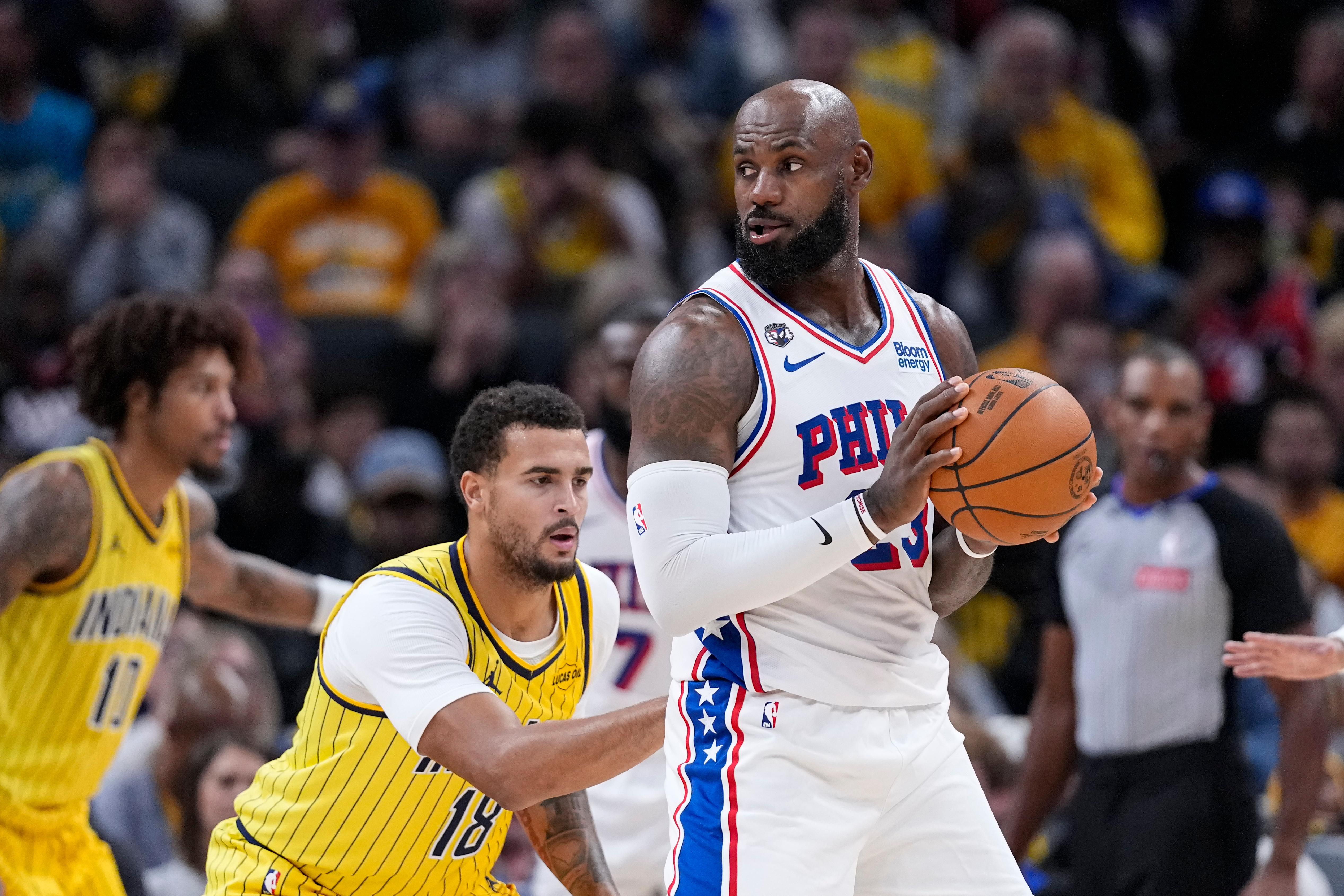
LeBron James (right) had 13 points, 10 assists, and five rebounds.Michael Conroy
Before the lull, a better start
Nurse was curious to see how his team would start the game, after digging big holes against the Cleveland Cavaliers and Detroit Pistons during the season’s first week.
The first-quarter results were mixed, netting a 25-25 tie. The Sixers got nothing in the paint for about half the period, instead primarily needing long-range jumpers to keep pace while totaling nearly as many turnovers (seven) as made field goals (nine).
Ball movement improved for the Sixers in the second quarter, helping them build that 15-point lead. The defense also held strong throughout the half, holding the Pacers to 39% shooting and 6-of-20 from three-point range at the break.
Then, the third quarter happened. And then the fourth.
In the middle
Joel Embiid finished with 21 points and 11 rebounds. But the Sixers’ center spot outside of the former MVP remains in flux, with Jabari Walker (knee), Dominick Barlow (back), and Tacko Fall (quadriceps) still sidelined with injuries.
After Embiid picked up two first-quarter fouls, Adem Bona initially replaced him. But he lasted less than two minutes before also being whistled twice, shifting the Sixers into a small-ball look with Dean Wade in the middle. They then began the second period with Wade and LeBron James in the frontcourt before Embiid returned.
Bona reentered for another two-minute stint in the third quarter, before Embiid played the entire fourth and logged a team-high 39 minutes.
Simons’ spark
After starting the season 5-of-21 from long range, Anfernee Simons snapped out of his slump in a big way by going 7-of-11 for 20 points.
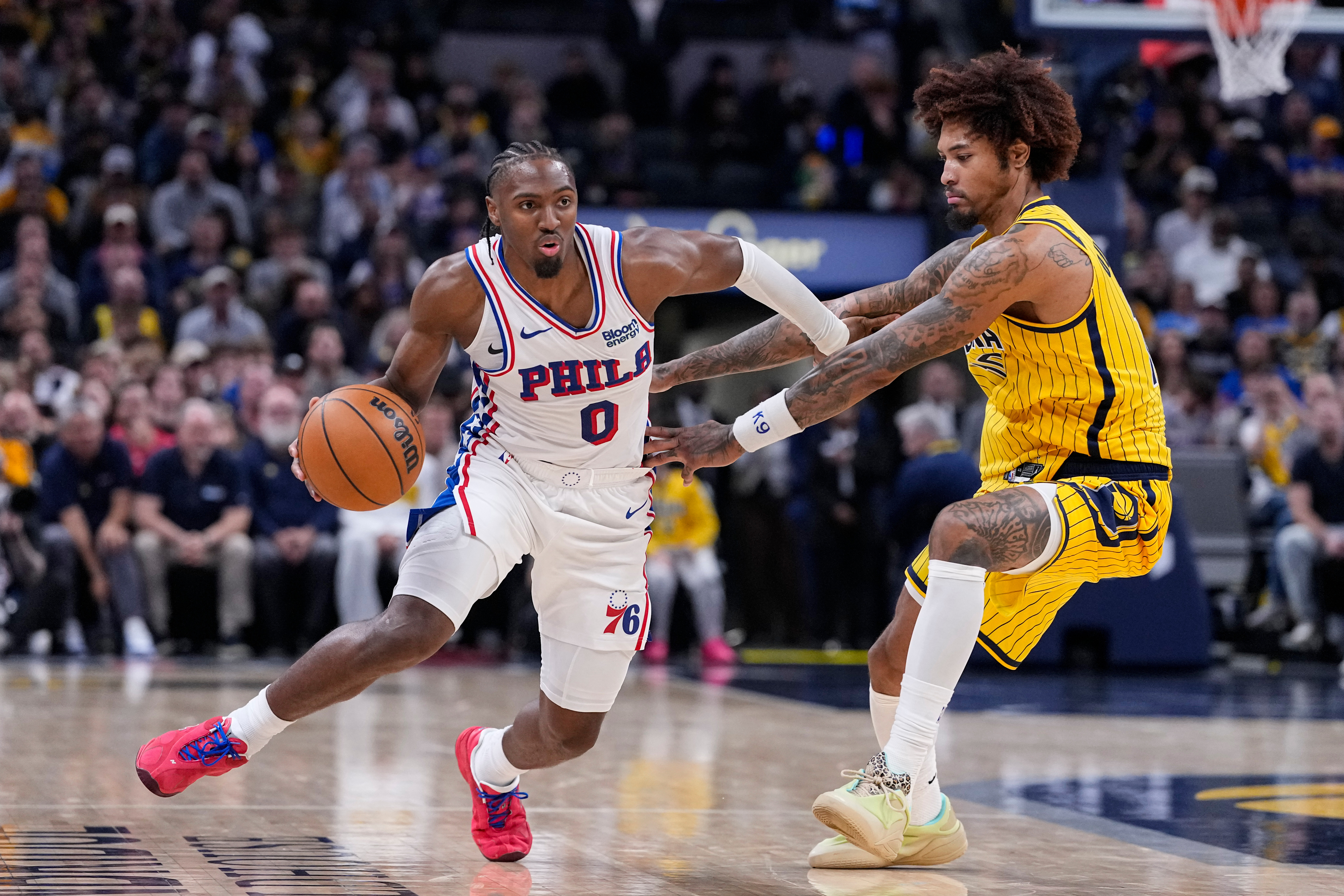
He hit two on back-to-back possessions late in the first quarter, helping the Sixers increase their lead to 22-17. He sank two more in the second, including one that drew a grin from Simons after it bounced around the rim and through the net.
Simons buried two more deep shots in the fourth, helping the Sixers get back within striking distance before retaking the lead.
Pacers’ Kelly Oubre Jr. (left) scored 15 points against his former team.Michael Conroy
Hello again, Kelly Oubre Jr.
With Haliburton sidelined, former Sixer Kelly Oubre Jr. (15 points) moved into Indiana’s starting lineup to face his former team for the first time.
Oubre, who rebuilt his NBA career by averaging 14.9 points and 5.4 rebounds in three seasons with the Sixers, waved at the visitors’ bench before tipoff. He drew an early offensive foul on Maxey, and responded with his quintessential point toward the Pacers’ end of the court.
Then Oubre blew a kiss after his first three-pointer to give Indiana a 28-27 lead in the second quarter. In the third, he got into the lane for a finish early and converted a transition bucket to push the Pacers’ advantage to 69-62. He waved a finger at Embiid when he got fouled by the Sixers’ big man underneath the basket in the fourth quarter. And Oubre also spent portions of the game guarding Jaylen Brown and VJ Edgecombe.
Just over five minutes into the 76ers’ loss to the Pistons on Sunday, a column of the score sheet remained filled with zeroes: defensive rebounding.
The Sixers were without a resting Joel Embiid, and coach Nick Nurse started a small lineup that featured LeBron James playing center, but that was still a jolt to see. Before Adem Bona secured the first defensive rebound at the 6-minute, 56-second mark, the Pistons had opened a 20-5 lead on the back of second-chance opportunities, and the Sixers were playing catch-up all night.
After the game, a joking LeBron described what the Sixers had to do better, paraphrasing a famous description of rebounding from a former teammate of his who was on the Pistons bench.
There’s obviously a little more to it, especially when the Sixers play in these smaller lineups while multiple frontcourt players — like Dominick Barlow, Tacko Fall and Jabari Walker — are attempting to make it back from injuries.
Even on opening night, the Sixers allowed former teammate Andre Drummond to grab six offensive rebounds in the first half, and that was with Embiid in the lineup.
The Sixers have done a good job course correcting their rebounding issues midgame, and that has enabled them to come back from early deficits. Keeping that emphasis on 48 minutes of sound rebounding was something coach Nick Nurse discussed in practice before Wednesday’s game against the Indiana Pacers.
Sixers forward LeBron James passes to center Joel Embiid in a game against the Cleveland Cavaliers.Yong Kim / Staff Photographer
“If you want to look at the bright side, a lot of these things are happening because we’re forcing them into really tough shots, late shot-clock things, all that kind of stuff,” Nurse said. “But we just got to finish it, and our guys got to understand that … it’s everybody, man. Everybody’s got to be on a chase-the-ball alert once we’ve made them miss.”
Through four games, the Sixers are 16th in defensive rebounding percentage, a metric that tracks how many of every possible defensive rebound a team grabs. There’s a different mindset that comes with rebounding out of smaller lineups, especially if a team has a renowned offensive rebounder, like a Drummond or Boston’s Mitchell Robinson. Recently, Walker (who did individual work Tuesday as he’s recovering from left knee soreness) said when he knows he might be playing center against a team with a good rebounder, it might cause him to lose a little sleep.
“There’s a handful of [centers] in the league where it’s like you think about it the night before,” Walker said. “Like, ‘Oh, damn, I got to go against him and I got to hit him early.’ ”
Rebounding in those situations might require getting two players to compete with an opposing team’s center. But overall, the Sixers have to be ready for teams to attack the offensive glass, especially as they await reinforcements in the frontcourt.
“Teams are sending lots of crashers against us, so we’ll get challenged,” Nurse said. “We gotta fix that, and we should be able to do that. We show the clips, we drill it. We got to take it to the floor now, and we got to do it from the start of games.”
Guard Tyrese Maxey said “if some of our tall guys come back, that would be great” as one way the rebounding could improve. The Sixers also missed the rebounding of VJ Edgecombe on Sunday, as he sat out because of an abdominal contusion. Edgecombe had 13 rebounds against the Bucks. He practiced in full Tuesday, as did Fall. Perhaps some help is coming on the glass. In the meantime, the Sixers said they are being mindful to not let this problem persist.
“We just gotta hit, man,” Maxey said. “We gotta hit, box out, try to fight, man. We gotta figure it out. The ball comes off the rim. Got to do whatever we gotta do to get that rebound.”
Sixers guard Tyrese Maxey was named Eastern Conference Player of the Week after he led his team to a 3-1 record to start the season. Memphis Grizzlies guard Ty Jerome received the honor for the Western Conference, averaging 34.7 points, 4.3 rebounds, and 6.0 assists and leading his team to a 3-0 record.
Maxey averaged 28.8 points, 4.0 rebounds, and 4.8 assists in four games, three of which were wins over the New York Knicks, Cleveland Cavaliers and Milwaukee Bucks. The Sixers’ All-NBA guard was also efficient, shooting 46.6% from the field despite struggling from deep.
Maxey emerged as the star on a star-laden team, serving as its offensive engine by scoring with ease and setting up teammates. He helped tide the Sixers over in moments when Joel Embiid, Jaylen Brown, and LeBron James were still trying to adjust to life as part of a big five. This was particularly true when the Sixers got down big early against the Knicks and Cavaliers, including a historic 29-point comeback against Cleveland.
He started the season with 28 points, four rebounds, and five assists in a 106-100 win on ring night at Madison Square Garden, setting the stage for the ’Nova Knicks’ 0-3 start to the season. He followed that with 32 points against the Cavs, 26 vs. the Bucks, and 29 in a loss to the Pistons.
Maxey served a similar role over the last few seasons as he became an All-NBA and All-Star performer as Embiid and former Sixer Paul George struggled with injuries. He averaged 28.3 points, 4.1 rebounds, and 6.6 assists last season as he led the Sixers to the postseason, where he received help from Embiid and George as they stole a first-round series from Brown and the Boston Celtics.
The Sixers star maintains career averages of 21.2 points, 3.2 rebounds, and 4.8 assists. Perhaps his biggest coup came this offseason when he played a major role in luring James to the Sixers on a two-year, $8 million deal.
In his 24 seasons, LeBron James said he’s observed that there’s one facet of the game that typically takes a long time to calibrate when acclimating to new teammates or a new team — the offensive side of the ball. Not just the offense as a whole, but specifically the halfcourt, where teammates have to adapt to the individual tendencies of players they are getting to know in a new light.
“Offense is, for the most part, about rhythm, and about knowing where your teammates are going to be,” James said. “You can close your eyes and know where your teammate is going to be, and that takes time. That takes a lot of like, reps and reps and reps, from games, to practices, to film, ‘OK, we need to be there when that happens.’ So, we just have to go through that.”
That’s one reason why through four games, the Sixers’ halfcourt offense has veered from inconsistent to downright clunky. It was the latter, especially in the first half, of their 106-93 loss to the Detroit Pistons on Sunday. Even in their three wins, transition and early shot-clock offense has saved the Sixers and spurred comebacks against the New York Knicks and Cleveland Cavaliers.
The Pistons’ switch-heavy defense, which was without its best perimeter defender in Ausar Thompson, exposed the Sixers’ nascent cohesion in the halfcourt. In that jagged first half, the Sixers offense had a rating of 69.4 points per 100 possessions. For reference, the worst halfcourt offense in basketball last season, the Brooklyn Nets, had an offensive rating of 91.6, according to the website Cleaning the Glass.
Sixers coach Nick Nurse talks with guard Tyrese Maxey during Sunday’s game against the Pistons.Yong Kim / Staff Photographer
“I didn’t think we got into a very good flow offensively,” Sixers coach Nike Nurse said. “… We felt like we were disorganized a little bit. A lot of guys moving positions, a couple guys coming back, all that kind of stuff. It felt that way. We just weren’t able to get much flow in the offense. So those two things.”
Without Joel Embiid and VJ Edgecombe, the Sixers were trying some lineups they had not experimented with much during training camp. Guard Tyrese Maxey said they had shuffled through a lot of lineups in the first month of practices, but the starting lineup with Maxey, James, Dean Wade, Jaylen Brown, and Kentavious Caldwell-Pope?
“That was one we hadn’t worked on,” Maxey said. “But it happens, and I take some responsibility on myself of not going to get the ball and get it orchestrated sometimes, and organized. I’ll be better at that.”
Some Tyrese Maxey video postgame tonight talking about some adjustments they might try to make on offense pic.twitter.com/DajsZDDRSz
The offense looked as if it could use some more organization as it bogged down into isolation-heavy possessions that ended with contested shots. But learning some of the nuances of how certain players like to play could alleviate that pressure if chemistry between two teammates can create space for a cut, or a good pass to an area where a certain player likes to receive the ball, or where he likes to operate on the floor.
Maxey used what he’s learning about Brown as an example of what it’s like to play against someone, then try to learn them as a teammate.
Sixers guard Jaylen Brown gets fouled driving to the basket against Pistons forward Paul Reed in the first quarter.Yong Kim / Staff PhotographerSixers forward LeBron James lays-up the basketball against Pistons guard Cade Cunningham during the first quarter.Yong Kim / Staff PhotographerSixers head coach Nick Nurse and guard Tyrese Maxey meet during the first quarter.Yong Kim / Staff PhotographerSixers guard Jaylen Brown drives to the basket against Pistons guard Cade Cunningham during the second quarter.Yong Kim / Staff PhotographerPistons forward John Collins collides with Sixers forward Dean Wade in the second quarter.Yong Kim / Staff PhotographerSixers center Adem Bona deflects the basketball against Pistons guard Kevin Huerter during the second quarter.Yong Kim / Staff PhotographerSixers forward LeBron James reacts after committing a second quarter offensive foul.Yong Kim / Staff PhotographerSixers center Joel Embiid greets his teammates during the third quarter. Embiid did not play due to plantar fasciitis management.Yong Kim / Staff PhotographerSixers guard Jaylen Brown (center) chases after the basketball against Pistons guard Javonte Green (left) and forward Ron Holland II during the fourth quarter.Yong Kim / Staff PhotographerPistons guard Cade Cunningham passes the basketball past Sixers forward Dean Wade in the fourth quarter.Yong Kim / Staff PhotographerSixers guard Jaylen Brown loses the basketball against Pistons forward Ron Holland II in the fourth quarter.Yong Kim / Staff PhotographerSixers forward Dean Wade (center) goes after the basketball against Pistons guard Cade Cunningham (right) and forward Paul Reed in the fourth quarter.Yong Kim / Staff Photographer
“When he drives, what is his tendency?” Maxey said. “Once you’re playing against the guy you kind of know, and you know how to kind of stop him, but when you’re playing with him, now you’re trying to help him. ‘OK, is he going over there? When he goes over there, now I got to pull over here, or I got to space there.’
“Bron is the same way. But I think, yeah, we’ll be fine on that.”
Nurse emphasized a theme he repeated during training camp, even when the offense didn’t look they way the team wanted — that the intent to make the right plays was there. He still sensed that, even as the halfcourt offense is finding its way a week into the season.
“I think for the most part, the intent of making the right play and passing ahead and throwing to the next action, etc., has been excellent,” Nurse said.
Even though Joel Embiid said Saturday he felt good enough to play Sunday, the 76ers and the oft-injured Embiid made a long-term call to manage his workload and sat him for the team’s 106-93 loss to the Detroit Pistons.
But not only did the Sixers get a slice of what life will be like when Embiid sits, they also had to navigate the night without guard VJ Edgecombe, who missed the game because of an abdominal contusion he suffered in the win over the Milwaukee Bucks.
The Sixers continued an early-season trend of falling behind big early only to storm back. This time, they couldn’t climb all the way back after cutting a 21-point deficit to four and they fell to 3-1.
Tyrese Maxey led the Sixers with 29 points while Cade Cunningham had 26 for the Pistons. Jaylen Brown struggled and went 5-for-20 from the field for 16 points. As a team, the Sixers shot 40%, just 7-for-27 from three-point range.
Jaylen Brown hit only five of his 20 shots from the field.Yong Kim / Staff Photographer
LeBron part of shorthanded center rotation
LeBron James returned after resting on the front part of the back-to-back Saturday and had 18 points and five assists. James struggled from the foul line, as did the rest of the Sixers, who shot 14-for-23.
As coach Nick Nurse pointed out prior to the game, the Sixers’ injury report was filled with “fours and fives,” meaning his options at center were limited.
The Sixers were not only down Embiid but also were without other frontcourt options like Dominick Barlow and Jabari Walker. They also missed Edgecombe, who, while not a candidate to play center, did have 13 rebounds in the win over the Milwaukee Bucks on Saturday.
Nurse began the game with Dean Wade and James playing small ball center, and the early returns were not inspiring. No one in that lineup was credited with an individual defensive rebound as the Pistons raced out to a 25-7 lead. Detroit, who was without its starting center, Roman Catholic alum Jalen Duren (hamstring), had 12 second-chance points in the first quarter alone. It didn’t help the Sixers that Maxey picked up two fouls early in the quarter.
Adem Bona grabbed five of the Sixers’ nine offensive rebounds against Detroit.Yong Kim / Staff Photographer
It wasn’t until Adem Bona came in that the Sixers started to rebound both on the defensive end and on the scoreboard. Bona had six rebounds in the first quarter while the rest of the team had four. The Sixers trailed 34-22 after one and had dug themselves another early hole. Bona ended up with his best showing of the season, and finished with six points and 13 rebounds in 24 minutes.
Offensive issues early
The Sixers halfcourt offense has been inconsistent through the early part of the season, and given their inability to rebound, they weren’t getting out in transition as much as they would like.
The Pistons’ lead grew to 21 by the later part of the quarter while the Sixers offense bogged down in the halfcourt. They missed Embiid, who had a triple double in the win over Milwaukee. Good shots were hard to come by, even with Detroit down Duren and its leading perimeter defender Ausar Thompson (ankle).
Sixers guard Jaylen Brown gets fouled driving to the basket against Pistons forward Paul Reed in the first quarter.Yong Kim / Staff PhotographerSixers forward LeBron James lays-up the basketball against Pistons guard Cade Cunningham during the first quarter.Yong Kim / Staff PhotographerSixers head coach Nick Nurse and guard Tyrese Maxey meet during the first quarter.Yong Kim / Staff PhotographerSixers guard Jaylen Brown drives to the basket against Pistons guard Cade Cunningham during the second quarter.Yong Kim / Staff PhotographerPistons forward John Collins collides with Sixers forward Dean Wade in the second quarter.Yong Kim / Staff PhotographerSixers center Adem Bona deflects the basketball against Pistons guard Kevin Huerter during the second quarter.Yong Kim / Staff PhotographerSixers forward LeBron James reacts after committing a second quarter offensive foul.Yong Kim / Staff PhotographerSixers center Joel Embiid greets his teammates during the third quarter. Embiid did not play due to plantar fasciitis management.Yong Kim / Staff PhotographerSixers guard Jaylen Brown (center) chases after the basketball against Pistons guard Javonte Green (left) and forward Ron Holland II during the fourth quarter.Yong Kim / Staff PhotographerPistons guard Cade Cunningham passes the basketball past Sixers forward Dean Wade in the fourth quarter.Yong Kim / Staff PhotographerSixers guard Jaylen Brown loses the basketball against Pistons forward Ron Holland II in the fourth quarter.Yong Kim / Staff PhotographerSixers forward Dean Wade (center) goes after the basketball against Pistons guard Cade Cunningham (right) and forward Paul Reed in the fourth quarter.Yong Kim / Staff Photographer
The Sixers offensive rating in the halfcourt through the first two quarters was an abysmal 69.4 points per 100 possessions. They had a burst in the last 93 seconds of the second and closed the half on a 9-0 run and trailed 56-44. Six of those points came in transition after a rebound or turnover.
Injuries abound
Edgecombe was a late scratch because of an abdominal contusion. Nurse said Edgecombe took a knee to the midsection that he was able to play through Saturday, but Edgecombe was sore on Sunday. Walker was out because of left knee soreness he suffered in Saturday’s game. Barlow (low back stress reaction) and Tacko Fall (left quad strain) remained out.