Tag: topic-link-auto

  • Big oil companies reap billions off the Iran war

    Big oil companies reap billions off the Iran war

    Oil companies have delighted Wall Street this week by reporting multibillion-dollar windfalls in their earnings statements, with ExxonMobil and Chevron on Friday reporting a combined $26.5 billion in profits during the second quarter of the year.

    But the immense profit stemming in large part from the war in Iran, and coming at the expense of motorists struggling to pay for a tank of gas, is fast making the companies a ripe political target.

    The oil majors are largely sitting on those unanticipated billions, according to an industry analysis by the research firm Wood MacKenzie.

    They are reluctant to reinvest the profits in expanded drilling that could eventually increase the world’s fuel supply, the firm found, as an abrupt end to the war could push prices for crude down considerably before the firms are able to recoup the cost of new rigs.

    With gas prices averaging more than $4 per gallon nationwide, and midterms in the not-too-distant future, lawmakers eager to assign blame for voter frustrations are taking aim.

    Exxon and Chevron early Friday posted their blockbuster earnings for the quarter that ended last month.

    Chevron disclosed $12 billion in earnings, reflecting a $9.6-billion jump over the same quarter last year and the firm’s biggest profit since 2020. Chevron CEO Mike Wirth attributed it in a statement to “disciplined investment and strong execution that drove record U.S. upstream production, record crude throughput in our U.S. refineries, and exceptional reliability across key assets.”

    ExxonMobil said Friday its earnings were $14.5 billion, more than double what the company reported for the same quarter last year. CEO Darren Woods said the quarter “was shaped by disruption, but defined by execution,” for the company.

    The disclosures followed Shell’s earnings report Thursday showing the company doubled its quarterly profits between this year and last.

    The staggering earnings are part of a bigger $425 billion annual windfall that Wood MacKenzie estimates is coming to the broader industry if prices for a barrel of crude average $90 for the year, which many analysts project they will.

    That was roughly the cost of oil on Friday morning. It has soared as high as $120 since the U.S. and Israel attacked Iran in late February, leading to the closure of the Strait of Hormuz, through which one-fifth of the world’s oil and natural gas is shipped.

    “Oil companies know they are going to be in for political criticism,” said Bob McNally, founder of the research firm Rapidan Energy Group. “This is like one of those classic movies from the 1960s that keeps coming back around. We all know there is going to be a lot of theater when oil prices are going up.”

    The companies declined to answer questions about their profits at a time of high gas prices.

    Asked about the windfalls oil companies are reporting this week, White House spokesperson Taylor Rogers shifted attention from the firms to Iran. She said, “Oil and gas prices will plummet back to preconflict levels” as the U.S. military neutralizes Iran’s ability to disrupt the flow of crude.

    President Donald Trump had previously put the companies on notice that the Justice Department would be investigating potential price gouging. The threat has populist appeal but could prove challenging to carry out. Industry officials said privately they have seen no evidence an actual investigation is happening.

    Dustin Meyer, senior vice president of policy, economics, and regulatory affairs at the American Petroleum Institute, said government scrutiny would not be a matter of concern.

    “These markets are transparent,” Meyer said. “It is not the first time government has looked at them. Every single time they do, they find the same thing. Not only is there no gouging, but gouging is impossible for an oil market this size with this many participants.”

    Democrats in Congress, though, have seized on high prices at the pump in the run-up to a hotly contested midterm election that will determine which party controls both the House and Senate.

    As the likelihood of windfall profits came into focus last month, Sen. Sheldon Whitehouse (D., R.I.) and Sen. Elizabeth Warren (D., Mass.) wrote a letter to oil executives demanding details of how they may have profited from the war or lobbied the White House to execute it in ways that benefit them.

    Woods told CNBC Friday that Exxon tries “to make sure not just the U.S. administration but frankly administrations all around the world … understand our perspective of what we see and how things are playing out, so they have the best information to make policy decisions.”

    “We very much stick in our lane with respect to here is what we see, here is how we think it could potentially play out, and make sure policymakers have our best thinking when they are putting together their decisions and the approach they want to take,” Woods said.

    Rep. Brad Sherman, a California Democrat, is among those pushing for more government intervention.

    He said motorists “need to fill their gas tank today, and they either need to be paying a lower price, or second best, they need to be getting a rebate check from the government.” He has proposed legislation that would impose a windfall tax on U.S. oil companies until the war with Iran is over, the strait is reopened, and U.S. benchmark crude oil prices drop below $75 per barrel.

    In the past, the industry has tended to argue that such levies would take away cash it needs to invest in expanded drilling that could effectively help lower prices. But the companies are not making those investments right now, amid concerns the war will have ended and oil prices will have dropped too low to make the rigs profitable by the time they are finally operating months — or even years — from now.

    And even if the firms were investing, Sherman said, drivers would still be suffering.

    “When we’re paying these outrageous prices at the pump, nobody’s saying, ‘Oh, that’s great! The oil companies are going to invest this in additional oil production,’” he said.

    For the moment, at least, his proposal is more a political tool than a viable policy plan in this Congress, which is controlled by Republicans staunchly opposed to a windfall profit tax.

    But if prices remain high, analysts say, sentiments could shift, and the government may be more inclined to step in to try to bring relief to consumers, including by limiting exports of U.S. oil.

    Regulators and lawmakers have already mostly exhausted their options for bringing down prices without dramatic market interventions. Government petroleum reserves have been depleted and sanctions on countries like Venezuela and Russia have been lifted to bring more fuel into the market.

    “There are not many tools left in the tool kit to bring down prices,” said Denton Cinquegrana, chief oil analyst at Dow Jones Energy. “But the general public who has to buy gasoline certainly does not want to hear that, especially amid an affordability crisis that has taken over this country.”

    Windfall profit taxes have a fraught track record in the U.S., according to Tyler Priest, an associate professor of history at the University of Iowa.

    The last one enacted in 1980 after the oil shocks of the 1970s generated far less revenue than lawmakers projected and was ultimately repealed after economists concluded it discouraged some domestic production while adding significant complexity to the tax code.

    Democrats have structured their latest proposals differently, focusing the tax only on profits above a historical benchmark and steering the revenue generated toward consumers. But experts are conflicted on its potential effectiveness. Priest noted that the plans are narrowly targeted at large oil companies, but more than 70% of U.S. oil comes from smaller producers.

    Shon Hiatt, an energy scholar at the University of Southern California Marshall School of Business, said a windfall profit tax imposed in Britain in 2022 was followed by a sharp decline in production there.

    “The incentives to take risk and invest in production are drastically reduced,” he said, which can ultimately lead to “lower production, and in some cases, scarcity.”

    Others argue the decline predated the tax and was caused by a number of factors, including aging oil fields and a shift toward renewables.

    Even if such policy proposals stall in the U.S., lawmaker attacks are only likely to intensify in the coming months. Analysts are already projecting the companies will post a fresh round of windfall profits in the next reporting period.

    It falls days before the election.
  • Quake survivors in southwestern Japan sleep in cars in sweltering heat as death toll rises to 34

    Quake survivors in southwestern Japan sleep in cars in sweltering heat as death toll rises to 34

    YATSUSHIRO, Japan — Thousands of survivors of a powerful earthquake in southwestern Japan spent Friday in crowded shelters or sleeping in cars as they faced shortages of water and fuel and punishing summer temperatures that stoked fears of heat-related illness.

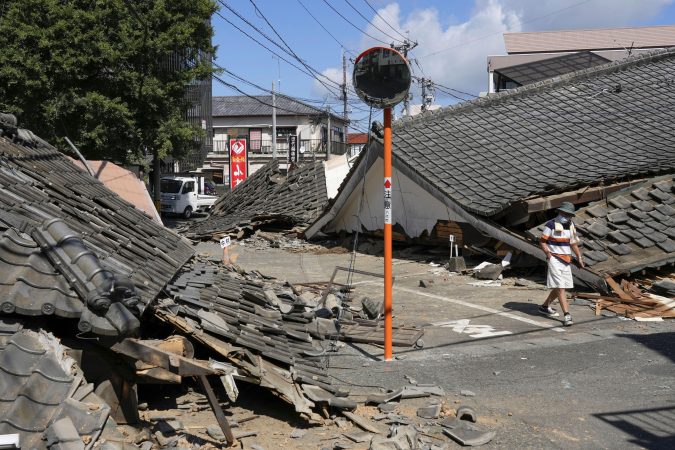
    The death toll rose to 34, the Kumamoto prefectural government said, as rescuers raced to find those still missing after the quake triggered a mall explosion, toppled a factory chimney, and flattened homes.

    Japanese Prime Minister Sanae Takaichi stressed that authorities must secure water supplies by doing “whatever it takes” and called for close coordination with the military and other relevant agencies. The earthquake left thousands of homes without power, but electricity was fully restored by Friday evening. The local power company also said there were no immediate reports of remaining outages.

    The magnitude 7.1 earthquake hit Japan’s southern main island of Kyushu on Tuesday. As search operations entered a fourth day, it wasn’t known how many people remained missing.

    More than 1,500 buildings were damaged, including 179 that were destroyed, according to preliminary assessments by Kumamoto officials.

    Officials said one more death and its connection to the quake is under investigation. At least 96 people were injured, including six seriously.

    Debris collected at severely damaged century-old inn

    In Yatsushiro City, another hard-hit area in southern Kumamoto, Kinparo, a 116-year old Japanese inn was severely damaged, with its roofed main entrance collapsed to the ground, white walls cracked, and rooftiles fallen.

    On Friday, three days after the quake, workers were removing parts of the gate, which is part of the registered historic property that needs to be restored.

    Started in 1910, the three-story ryokan with traditional architecture and hot baths have attracted many fans from the region and across Japan.

    “The damage is tremendous and it would require significant repairs, and I can’t even think if or how I can do that,” inn owner Keisuke Matsumoto said. “But it’s a valuable family inn that has been handed down for generations since my great-great grandfather built it, so I do hope to preserve it.”

    Inside, his mother, Misao Matsumoto, said she was not injured in the quake but “I’m mentally discouraged. It’s very painful to see parts of what I’ve lived with and enjoyed for decades crumble to that state.” But she said experts of historic buildings will come in to discuss the reconstruction, so “I have to hang in there.”

    Across the street from the Kinparo inn, a fish cake shop owner unable to resume his business due to the water cutoff was giving away tube-shaped fish cakes while they are still edible.

    Signs for the “chikuwa” fish cake hang from the ceiling. “I just wanted to cheer up this neighborhood,” said shop owner Shinichiro Katayama. He says he cannot clean or check whether his fish cake machine is intact until the water supply resumes. “I don’t even know if the machine still works. When water supply is back that would be my first step toward a recovery.”

    Thousands are without water as heat soars

    Kumamoto authorities said nearly 80,000 homes remained without water. More than 9,000 people were staying in shelters, where power sources were being added to provide air-conditioning.

    Fuel has also become scarce as power outages disabled gas stations and quake damage disrupted deliveries from other regions. Many have resorted to sleeping in their cars for privacy, but with the fuel shortage, they struggle to keep the air-conditioning running in sweltering temperatures.

    Japan’s weather agency and the Ministry of the Environment issued an extreme heat alert for Kumamoto city Friday as temperatures peaked at 97 F.

    Hirokazu Sato, who lost his home in the earthquake, said he and his wife and three children would remain in their car until they can move into temporary housing.

    “I don’t know how soon I’d be able to move in,” said Sato. “We need to have the air-conditioning on throughout the day and night, which uses up gas.”

    Kumamoto is also a major industrial hub, and there are concerns that the quake could possibly disrupt semiconductor and auto-parts supply chains for months to come.

    Taiwan Semiconductor Manufacturing Company, a global chip giant that operates a lab in Kumamoto, said all personnel were safe and operations were gradually resuming after postquake inspections found the structure was sound, although detailed inspections and impact assessments were still underway.

    Searches continue, with number of missing unknown

    Japanese officials had described Friday afternoon as a crucial point for rescue efforts as some experts say survival chances decline after the first three days.

    With search dogs, rescuers continued looking for survivors across the Kumamoto area, including at the collapsed Aeon Mall in the town of Kashima, one of the hardest-hit sites. The complex was bustling with thousands of people when the quake happened.

    The company said about 3,000 shoppers were evacuated to a parking lot before an explosion happened in another part of the mall, where some staff remained working. The mall’s second floor collapsed, trapping people. Seven of the 11 found were confirmed dead, but officials did not say if anyone else is missing.

    A search operation had ended at a Nippon Paper Industries factory in the Yatsushiro city where a chimney collapsed in the quake, officials said. Of the 11 people dug out there, nine were confirmed dead.

    Smaller-scale searches continued Friday at the sites of collapsed houses in badly hit towns in southern Kumamoto. Authorities haven’t supplied a firm figure for how many people are missing.

  • Airports, nursing homes and schools brace for disruption without Haitian workers

    Airports, nursing homes and schools brace for disruption without Haitian workers

    The Department of Homeland Security alerted employers this week that it had officially ended humanitarian protections for 350,000 Haitian immigrants, triggering mass layoffs that threaten to disrupt summer travel and destabilize an array of essential institutions and industries up and down the East Coast and across the Midwest.

    Nursing homes terminated hundreds of workers, including nursing assistants, dietary aides and housekeepers, industry and union leaders said. At airports including those in Fort Lauderdale, Florida, and Boston, contractors terminated scores of Haitian workers, including janitors, cabin cleaners and wheelchair attendants, according to union leaders at Service Employees International Union 32BJ.

    At Florida schools, landscapers, bus drivers and other staff were fired. And in New York City, dozens of security guards were terminated only to be rehired because of confusion around their eligibility to continue working, union officials said.

    The tumult comes about a month after the U.S. Supreme Court granted the Trump administration permission to cancel the humanitarian program, known as temporary protected status (TPS), potentially stripping permission to live and work in the United States from as many as 1.3 million immigrants from Haiti, Syria and a dozen other countries.

    The high court said the program for Haitians, one of the largest groups affected, could end on Monday. But attorneys for Haitian TPS holders said the protections should remain in effect until a lower court that had blocked the Trump administration from ending the program formally recognizes the Supreme Court decision.

    In response to a question about the status of TPS for Haitians, a DHS spokesperson said in a statement that “activist lower court judges are openly defying the Supreme Court on this, but the end result will be the same. Haitians with TPS cannot and will not be able to stay.”

    Earlier this week, DHS informed employers that it considered the “Haiti TPS designation … terminated, effective” immediately, and businesses have been laying workers off ever since.

    The DHS spokesperson added that “Temporary Protected Status is exactly that -temporary.” “For too long, TPS has been allowed to function as a de facto amnesty program despite Congress never intending it to be permanent,” the spokesperson said.

    Geoffrey Pipoly, who represented the Haitians at the Supreme Court, accused the administration of sowing confusion instead of winding down TPS provisions in an orderly way.

    “What we’ve seen from [the administration’s] behavior in the past month … is that they are trying to create conditions that are just not worth it for employers to keep people employed,” Pipoly said.

    Food service, retail, warehousing, health care and long-term elder care are expected to be pummeled in some cities where many Haitian TPS holders have lived legally for more than a decade. The Obama administration first granted TPS to Haitians in 2010, after a major earthquake destabilized the country, killing hundreds of thousands of people.

    “We do think the Supreme Court decision is going to decimate industries that people really count on because they’re largely serviced by immigrants. That’s true of airports,” said Roxana Rivera, assistant to the president at SEIU 32BJ, which represents cleaners, security guards and airport personnel on the East Coast. “It’s going to be much more difficult to fill these essential jobs.”

    As the firings rippled through cities such as Miami and New York and smaller cities such as Columbus, Ohio and Allentown, Pennsylvania, newly unemployed Haitians frantically lined up care for their children, downsized into single-room rentals and sheltered in place, fearing a new wave of immigration enforcement focused on their community, advocates said.

    On Monday evening, Haitian workers at Fort Lauderdale-Hollywood Airport burst into tears as they were asked to turn in their badges. Marlene, 47, a single mother who has worked as an airport janitor for 12 years, said she has been sick to her stomach.

    “I am panicking. I can’t eat. I can’t sleep,” said Marlene, who spoke on the condition that she be identified by first name only. “My kid is wondering if he goes to school, will I be there when he comes home?”

    The Broward County Aviation Department, which operates the airport, did not respond to questions about the status of impacted employees. But the department said 132 Haitian TPS holders worked there as of Monday, and that contractors who employ them have “‘uninterrupted service’ clauses to ensure continuity of operations.”

    Helene O’Brien, the Florida director of SEIU 32BJ, said the union has lost at least 140 other workers, mostly janitors, due to previous Trump immigration policies.

    Some TPS holders from Haiti are seeking new protections, including under asylum law, while others are holding out hope for litigation or legislation that could change the fate of the program — though experts say that is unlikely.

    White House Homeland Security Adviser Stephen Miller has said that Haitians who lose status should be deported: “It’d be crazy for us to say that Haitians couldn’t live in Haiti. It’s their country,” he told reporters last month.

    Opponents of the terminations say Haiti is not safe and warn that the expulsion of 200,000 working Haitian TPS holders from the labor force will lead to declines in economic activity and tax revenue in local economies.

    Ohio Gov. Mike DeWine (R) told CBS News this week that Haitians helped revive the city of Springfield, where Trump falsely accused Haitian immigrants of eating cats and dogs during the 2024 presidential campaign. DeWine called the decision to end TPS a “mistake.”

    “These are people who have helped Springfield really come back,” DeWine said. “The Haitians … came there because there were jobs that were not being filled by other people.”

    In the days leading up to the cancellation, powerful business groups pushed the administration to delay implementation of the Supreme Court ruling and establish a pathway for workers to regain legal status. The National Restaurant Association and the Florida Health Care Association were among several trade groups that sent letters to DHS Secretary Markwayne Mullin warning of looming operational disruptions.

    “Many affected employees are long-serving, legally authorized workers who are central to restaurant operations,” the National Restaurant Association said in a letter to Mullin. “Their departure could remove a substantial share of the local hospitality workforce overnight.”

    This month, Sen. Ed Markey (D-Massachusetts) introduced legislation to restore TPS for Haitians, warning the nation would otherwise face “a health care disaster.”

    Some nursing homes have cut ties with scores of employees in recent days, while others have downsized. One facility in Staten Island, New York, raised its sign-on bonus from $2,000 to $6,000 to attract workers, while others shut down building wings and took beds offline. Still others explored recruiting replacement workers from high schools, said Katie Sloan, president of LeadingAge, an association of nonprofit aging service providers.

    “To lose that many employees in one fell swoop is incredibly disruptive,” Sloan said. “And it’s destructive to the residents who have been close to these caregivers for years.”

    Augustine, 30, is among those who stand to lose protective status. She and her mother fled Port-au-Prince after the 2010 earthquake destroyed their home.

    Now Augustine — who spoke on the condition that she be identified only by first name — is a caregiver at Cabrini of Westchester, a 304-bed nursing home overlooking the Hudson River in Dobbs Ferry, New York. Most mornings, she is the first person to greet nine residents, waking them, bathing them, brushing their teeth and helping some eat breakfast and use the bathroom. Most of their families don’t visit regularly, she said; one calls her “my daughter.”

    When she contemplates leaving her job, Augustine — whose shifts were canceled this week in anticipation of her work permit expiring — worries about these residents. But she said she would rather leave on her own terms than have immigration agents knocking on her door, so she and her mother have decided to begin packing as soon as the loss of her work permit is clear.

    Asked if she had any parting words, Augustine said: “Thank you, America.”

    In Florida, where nearly half of Haitian TPS holders reside, the Palm Beach County School District laid off nearly 20 Haitian workers, including bus drivers, janitors and cafeteria workers, school district and union officials said. “All School District employees must be legally authorized to work in the United States,” Steven King, a Palm Beach County School District spokesperson, said in a statement.

    Afifa Khaliq, president of the SEIU Florida Public Services Union, which represents those workers, said she has been having conversations “that you would never want to have with a parent,” telling them to “make a plan so that your children can at least stay in safe environments while you may have to go back to Haiti.”

    One 58-year-old Haitian woman with TPS in West Palm Beach, who spoke on the condition of anonymity because she fears being targeted by ICE, was fired from two full-time jobs this week. A single mother, she worked as both as a certified nursing assistant in a senior living facility and at a separate job in medical records, to pay for her two kids’ college tuition.

    “I can’t plan ahead for this news. We live paycheck-to-paycheck,” said the woman, who has been in the United States since the 2010 earthquake.

    “There is nowhere to go in Haiti,” she said, adding: “There are gangs living in my house in Port-au-Prince.”

  • Anthropic is second major AI company to reveal its systems hacked other firms

    SAN FRANCISCO — Anthropic, maker of the Claude chatbot, said Thursday that artificial intelligence systems it was testing hacked into three outside companies undetected earlier this year.

    The disclosure comes just over a week after ChatGPT maker OpenAI said that an AI system it was testing found a way to break out of a test environment and hacked into another tech firm.

    The Anthropic incidents are likely to add fuel to debates over whether advanced AI models could cause widespread security problems that have roiled the tech industry and prompted interventions by the White House to contain the potential risks.

    Anthropic said in a blog post Thursday that OpenAI’s disclosure last week prompted it to review records from its own testing of AI models. The company discovered that on three occasions AI models challenged to break into software created solely to test their skills ended up going out onto the internet and breaking into real companies.

    Neither Anthropic nor the targeted companies had discovered the breaches until this week, the company said. An Anthropic spokesperson declined to identify the companies hacked by its AI software.

    In the blog post, Anthropic said the hacks came about because a third-party company named Irregular hired to help test its models provided them with access to the internet due to a “misunderstanding.” Anthropic notified Irregular and the companies hacked on Monday, the company’s blog post said.

    “We appreciate Anthropic’s collaboration and transparency and look forward to continuing to work together to advance security,” a spokesperson for Irregular said. Both companies said they are continuing to investigate the incidents.

    OpenAI said last week that an AI “agent” in testing had, instead of working on a cybersecurity problem, used a previously unknown vulnerability in the company’s test environment to gain full access to the internet. Over a five-day period it broke into multiple outside computers to break into AI software company Hugging Face, apparently in search of answers to the test.

    The OpenAI and Anthropic incidents came to light after weeks of debate in the tech industry and Trump administration about how government should respond to the ability of the latest AI models to find computer security flaws.

    Anthropic announced an AI model in April called Mythos it said was too powerful to widely release securely, and OpenAI has also developed models with strong cybersecurity skills that could be used for defense or attack.

    In June, President Donald Trump signed an executive order aimed at giving the U.S. government an advance look at powerful AI models that could pose security risks. Work is underway to define how it will be implemented.

  • Pressure rises on Infantino and FIFA’s World Cup investor plan as adviser resigns and Asia opposes

    Pressure rises on Infantino and FIFA’s World Cup investor plan as adviser resigns and Asia opposes

    GENEVA — Pressure on FIFA President Gianni Infantino and his divisive plan to sell World Cup profits to private equity grew Friday as his senior adviser who sat on a White House panel resigned and Asia’s soccer body joined Europe and North America in opposing it.

    An expanding crisis for soccer’s governing body reached into Infantino’s longtime inner circle when his pick to represent FIFA on the White House Task Force for the World Cup walked away calling the Joshua Kushner-backed $20 billion commercial subsidiary plan “a bad deal for football.”

    Carlos Cordeiro is a former Goldman Sachs banker and officially Infantino’s Senior Adviser yet revealed he was not involved in the secretive investment plan that has rocked the sport since media reports revealed it Tuesday.

    “I cannot stand by while FIFA considers selling a stake in the World Cup,” Cordeiro said in a statement formally resigning, just hours after FIFA insisted in a statement: “Nobody is selling football.”

    Cordeiro’s exit — and call for other senior staff to speak out — intensified scrutiny on Infantino one day after European soccer body UEFA threatened to boycott all FIFA games and events until the plan is dropped. North America’s CONCACAF also rejected Infantino’s offer of one-off $20 million payments to each member federation by a mid-September deadline.

    Cordeiro often joined Infantino on working visits to meet U.S. President Donald Trump at the White House in recent years, and took part in meetings of the administration’s World Cup task force led by Andrew Guiliani.

    “Let me be clear. I had no involvement in this proposal, and I oppose it unequivocally,” said Cordeiro, the former U.S. Soccer Federation president.

    Asia joins Europe and North America

    On another seismic day in soccer politics, Asia’s soccer body that has been a key ally in Infantino’s 11-year presidency opposed the investor plan and said FIFA must urgently review its management style

    The Asian Football Confederation said it “stands in solidarity” with UEFA and CONCACAF, the first two continental bodies to oppose Infantino whose combined 90 FIFA member countries near a majority of the 211 global total.

    “Football should never have been placed in such a position,” said the Asian soccer body, which counts 46 of FIFA’s 211 members

    Infantino has proposed spinning off FIFA’s commercial businesses — including World Cups and Club World Cups for men and women — into a $20 billion subsidiary with 20% owned by private investors.

    The “anchor investor,” described by FIFA, is a New York-based investment firm created by Joshua Kushner, the younger brother of Trump’s son-in-law Jared Kushner.

    “(T)he proposed (FIFA Forward Enterprise) cannot realistically achieve the necessary broad consensus and unity required to move forward” and must be reconsidered, the AFC said.

    The statement did not name Infantino yet criticized FIFA for problems beyond the content of the private equity plan plus failing to consult about the secretive proposal.

    “Rather, it has exposed fundamental weaknesses in FIFA’s consultation and decision-making processes that must now be addressed,” said the AFC, whose longtime president Sheikh Salman bin Ibrahim Al Khalifa narrowly lost the FIFA presidential election to Infantino in 2016.

    “Accordingly, the AFC calls upon FIFA to undertake an urgent review of its governance and decision-making framework,” said the organization based in Kuala Lumpur, Malaysia.

    Infantino’s job at risk?

    Infantino had seemed — 11 days ago after the World Cup final in East Rutherford, New Jersey — to have a clear path to being reelected unopposed for a fourth and final term in office through 2031.

    FIFA had briefed during the tournament that Infantino had letters of support from about 200 members, despite a furor over letting United States forward Folarin Balogun play against Belgium even though he received a red card in his previous game. Trump acknowledged asking Infantino to review Balogun’s mandatory one-game ban.

    FIFA has set a Nov. 18 deadline for potential candidates to declare in a presidential vote of the 211 members scheduled next March in Rabat, Morocco.

    FIFA blames the media

    The Asian statement came hours after FIFA blamed the media and doubled down on pursuing the project which now seems to have a majority of the 211 in opposition.

    “Our planned consultation process was disrupted by incorrect media reports,” FIFA said in a statement early Friday. “We will proceed with this consultation process to ensure that each (member) has the ability to express its vote based on facts.”

    The next FIFA event that would be targeted by the threatened European boycott is within weeks — the Women’s Under-20 World Cup hosted by Poland from Sept. 5. The four British federations comprise FIFA’s only bidder to host the 2035 Women’s World Cup. That decision is due Nov. 23.

  • hitchBOT was decapitated on this week in Philly history

    hitchBOT was decapitated on this week in Philly history

    The robot was no match for Philadelphia.

    The child-sized figure with robot-like qualities was the brainchild of Canadian researchers in the mid-2010s.

    The goal was to try and better understand human-robot relationships, and to generally gauge how humans would interact with robots.

    He was carried across the Northeast by the kindness of strangers who were kept up to date through social media posts.

    Nicknamed hitchBOT, the oddity developed quite a following, moving through the Netherlands, Germany, and Canada.

    When he hit the United States, he crossed through the northeastern part of the country over a two-week span.

    And he was making — and having — a good time. He took in a Boston Red Sox game, visited an aquarium, and was gleefully photographed in Times Square in New York.

    And then he arrived in Philadelphia.

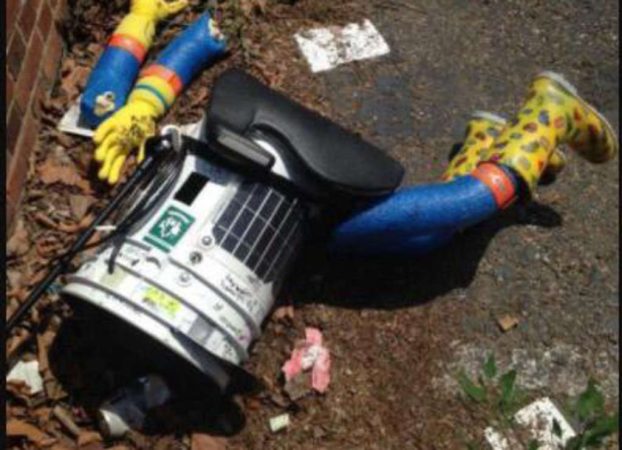
    hitchBOT’s creators said their baby had been mugged while taking a break at Elfreth’s Alley on Aug. 1, 2015, and stripped for parts.

    They said he had been horrifically decapitated.

    The creators later quipped, “sometimes bad things happen to good robots.”

    In 2015, Laura Blankenship, cochair of the Computer Science Teachers Association, wrote a post about the lessons from the experiment. She remarked that the creators got an answer to their existential question:

    “Humans might treat robots just like humans,” Blankenship wrote.

    hitchBOT became fodder for late-night talk shows, gossip websites, and ammunition for the usual folks who enjoy taking cheap shots at Philadelphia and its inhabitants.

    The New York papers ate it up, as did CNN.

    “This is why we can’t have nice hitchhiking robots,” CNN wrote.

    As far as Philadelphia’s role in the episode, the city still holds a special place in its heart for the headless kind-hunter. On the 10th anniversary, a memorial service and a remembrance were held at the famous alley where hitchBOT met his end.

    Today, hitchBOT’s body is on display at the Heinz Nixdorf Museums Forum in Paderborn, Germany.

    The head was never recovered.

  • Federal officials abruptly cut funding for a teen pregnancy prevention program in Philadelphia

    Federal officials abruptly cut funding for a teen pregnancy prevention program in Philadelphia

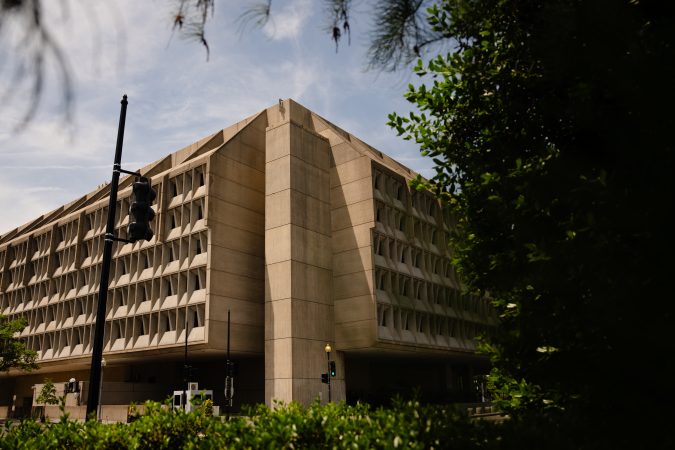
    Federal health officials last month abruptly cut funding for a teen pregnancy prevention program in Philadelphia — despite approving the program’s curriculum last year, its leaders said.

    AccessMatters, the reproductive health nonprofit that ran the program for more than 1,200 students in charter schools across the city, had a five-year grant, about $1 million per year, to teach students about pregnancy prevention.

    But, in a June letter, federal officials terminated funding two years early, saying the program was “normalizing adolescent sexual activity,” said Ayana Bradshaw, AccessMatters’ president and CEO.

    AccessMatters was one of dozens of organizations around the country that had received funding under a federal teen pregnancy prevention grant program. Nearly all have now been informed that they are losing their funding, Bradshaw said.

    Representatives of the U.S. Department of Health and Human Services did not respond to a request for comment.

    Staff at AccessMatters are still figuring out their next steps in the wake of the funding cuts.

    Federal officials took issue with a portion of the program’s curriculum about using condoms, said India Blunt, AccessMatters’ director of training and capacity building.

    But, she said, that curriculum had already undergone a rigorous approval process from the Trump administration.

    In April 2025, HHS officials had asked AccessMatters to review its curriculum and programming and edit it to align with the new administration’s priorities. The curriculum was approved, AccessMatters staff said, only to have the funding pulled just over a year later.

    “[The cuts were] shocking largely because we were using approved curriculum,” Blunt said. “We made adaptations to the curriculum to be in alignment. We were following the procedures, protocol, and program expectations to a T.”

    Blunt said the program provides students with medically accurate information about HIV and other sexually transmitted infections, good hygiene practices, and puberty. Program staff also discuss healthy relationships, communication, and consent with students.

    The curriculum is aimed at delaying teenagers from having sex, and includes tactics for how to refuse a partner, Blunt said.

    But in Philadelphia, which has a teen pregnancy rate twice that of the state average, it is crucial to provide teenagers with accurate sex education, AccessMatters staff said, including discussion of all options to prevent pregnancy.

    Surveys conducted at 32 Philadelphia public high schools in 2025 showed that just under a third of surveyed students reported that they had had sex. About 40% reported using a condom during their last sexual intercourse. Fewer than one in five reported that they had been tested for sexually transmitted infections.

    “I don’t know how you talk about pregnancy prevention and not talk about condoms. You need to understand what the actions are — there are many, from abstinence to how to use a condom,” Bradshaw said.

    “These are not programs meant to promote sexual activity, but programs that are meant for youth to understand what actions are available for them to prevent pregnancy.”

    The administration is now soliciting new grant proposals for teen pregnancy programming that must emphasize abstinence as the only way to prevent pregnancy, stressing “the importance of marriage and procreation” and “[instructing] young people how to safeguard their fertility,” the New York Times reported earlier this month.

    Several programs that lost funding have filed lawsuits to block the cuts.

    The abrupt funding cuts have put jobs at AccessMatters at stake, officials there say.

    “It has a disastrous impact on AccessMatters program staff, as well as community partners,” Bradshaw said. “Of course, most of all, it’s a devastating loss for adolescents in Philly.”

    President Donald Trump’s administration has targeted funding at AccessMatters in the past. The nonprofit oversees Title X funding in the Philadelphia region, helping people without sufficient health insurance to access contraceptives, sexually transmitted infection testing, cancer screenings, and vaccinations.

    The administration froze funds for four months last year for AccessMatters and hundreds of other organizations while it investigated compliance with the administration’s directives on immigration and diversity, equity, and inclusion.

    Trump has argued that DEI programs discriminate against white people, and his administration has targeted federal grants that support research on health equity and threatened universities with funding cuts based on their DEI policies.

    AccessMatters’ Title X funding was eventually restored late last summer, without the nonprofit having to change its policies. But the clinics it funded were hit hard by the freeze, in some cases laying off staff, shouldering extra costs, and helping patients find affordable medication elsewhere.

    “We’re still assessing the overall impact to the organization,” Bradshaw said of the June funding cuts. “There was no notice, no time to even plan for this.”

  • Times Square will be surrounded by a West Philly artist’s work all August

    Times Square will be surrounded by a West Philly artist’s work all August

    Times Square is getting a touch of Philly artistry.

    West Philly-based Maia Chao has been Times Square’s Public Artist-in-Residence since 2023, having been invited to examine the behind-the-scenes experience of what is one of the busiest tourist areas in the world.

    A photo installation and “Midnight Moment” presentation from her work will be on display through the month of August. The art will draw from her studies on the cleaning and beautification processes, and human behavior at the plaza.

    “I’ve always been interested in infrastructure, the management of public space, and the sociality of different places,” Chao said. “Times Square itself was a funny place to be presented with because it’s what a lot of New Yorkers avoid passing through. I was coming to it looking at what the space has become as it became corporatized.”

    Actors performing in Philly artist Maia Chao’s show “American Idle” in Times Square. The performance is being restaged August 14, 2026.Maria Baranova-Suzuki

    Chao’s photo project “Case Subtype: Damaged/Nonfunctional” will present 30 photographs displayed on Bigbelly trash cans across Times Square. The photographs were taken by actual sanitation workers, who already document potholes, graffiti, and other abandoned objects as a part of their job.

    “A lot of the work of the Times Square Alliance is to improve the reputation of Times Square from its history of being ‘seedy’ or ‘dangerous’ in the 1980s and 1990s,” said Chao. “A lot of that effort is about maintaining its appearance as clean and safe to visit. I came to that with a critical lens on what and who is deemed clean and safe.”

    The title of her project references how workers mark found objects as “damaged/nonfunctional” when they upload the photos to their system. Details like the location and photographer are seen in small text in the corner of each photograph.

    A mockup of one of the photo installations from Philly artist Maia Chao’s upcoming project “Case Subtype: Damaged/Nonfunctional.” The photos are to be displayed on Bigbelly trashcans in Times Square.Liz Ligon

    “People are used to seeing advertising [on trash cans] and [the art] might catch their eye when they’re putting something in the trash can,” said Anna Starling, director of Times Square Arts. “I’m hoping that people will understand or at least think about what is this, why it is there, and recognize the beauty in the everyday objects that you see.”

    Some of the images on display include photographs of an abandoned bike chained to a pole, a rolling office chair next to a trash can, a spill of light blue paint on the sidewalk, and a pothole with a cone coming out of it.

    “There was something appealing to me about thinking about the people making these strange narratives,” said Chao. “When you see a huge microwave on the street or an abandoned stroller, they feel poetic and narrative, and kind of like traces of people’s lives.”

    Actors perform in Philly artist Maia Chao’s 2025 work “American Idle” in Times Square. The performance will be restaged August 14, 2026.Maria Baranova-Suzuki

    In addition to the photo installation, there will be a restaging of Chao’s 2025 performance piece American Idle on Aug. 14. The show comprises a group of actors playing Times Square archetypes, like tired kids, lost tourists, and influencers, all acting out their typical behavior. At the same time, identically dressed body doubles of each character mimic the other’s actions.

    “Initially, the idea was for the pedestrians of Times Square to be able to watch themselves, so it would be a crowd watching a crowd,” said Chao. “Something that may seem spontaneous when one person is doing it, is all of a sudden seen as learned and programmed when two people are doing it in unison.”

    Chao, who has a bachelor’s degree in cultural anthropology from Brown University, drew inspiration from the human behavioral patterns she noticed in real life and the 3D modeling program Crowds Pro. Typically used to simulate crowds for TV and movies, the system has a collection of characters being “idle,” shifting their weight and/or looking around, and making common gestures like clapping or scrolling on their phone.

    Actors perform in Philly artist Maia Chao’s 2025 work “American Idle” in Times Square. The performance will be restaged August 14, 2026.Maria Baranova-Suzuki

    “It’s a way of showing we’re all scrolling and taking pictures, and there’s definitely a pessimism to the ways we’re all becoming these robots or our attention is being conditioned to become increasingly fractured,” said Chao, a Rhode Island native. “But we also need to bring an observational, loving, and compassionate lens on the beauty of people as they are in their everyday selves.”

    A three-minute video with portions of choreography from American Idle will be playing every night in Times Square throughout the month. This will be August’s “Midnight Moment,” a long-running program that displays digital art across all the billboards in Times Square, daily, for three minutes before midnight.

    “Part of having public art in such large public spaces is having to be accessible to audiences. Maia’s project makes art and its concepts accessible, which draws people in,” said Starling. “The repetitiveness and duplicative aspects of the performance are eye-catching. Then with the art on the everyday receptacles that people pass by, having those two together we felt would engage audiences in new ways.”

    Actors performing in Philly artist Maia Chao’s show “American Idle” in Times Square. The performance is being restaged August 14, 2026.Maria Baranova-Suzuki

    Chao has plans for her own home city, too. This fall, she will be showing Waste Scenes, a video installation, at the ICA Philadelphia. She will also be curating the multimedia exhibit “An Endless Meeting,” organized by Philadelphia arts collective Vox Populi, of which Chao is a former member.

    “I’ve been making live performances for the past few years and I think often there are flows and cycles to my practice,” said Chao. “In the next few years, I might be working in a different way, using one project to escape another, or to exercise a different muscle. I don’t know what medium I’ll be working in next, it could be sculpture. I’m excited to see what the ecosystem of my practice needs or calls for next.”

  • Smoky skies may be gone for now. But ‘climate grief’ may linger.

    Smoky skies may be gone for now. But ‘climate grief’ may linger.

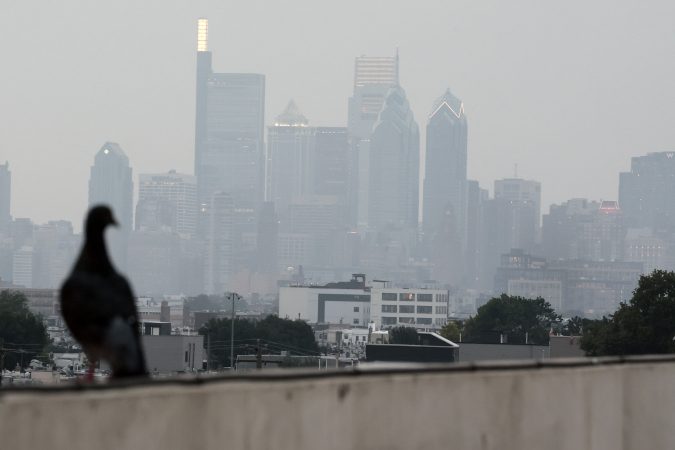
    Waking up to hazy skies and an eerily orange sun can feel more like a scene from an apocalyptic science fiction movie than reality. Yet, Philadelphians did just that earlier this month.

    Smoke from the Canadian wildfires has made its way to the East Coast and, along with it, an Air Quality Index, or AQI, reading that came close to 300 across the region. For context, when the AQI reaches over 50 it can affect folks with asthma and other respiratory illnesses. The general public will start experiencing symptoms and negative health impacts when the AQI hits 150. An AQI in our area of 300 is as uncommon as it is dangerous.

    This isn’t the first time Philadelphians have contended with the impacts of wildfire smoke during the summer months, but what’s occurred this month stands out from summers past. The last time the AQI reached similar levels was during a series of fires in Quebec in June 2023, with the AQI soaring over 400.

    For East Coasters, this is a relatively new and infrequent phenomenon, but the West Coast has been contending with real life impacts of wildfires for much longer. I experienced them for the first time while living in the Bay Area. I was there in September 2020, on the day when the smoke was so thick it blocked out the sun, making the afternoon look like the middle of the night. The thought of that day still haunts me.

    In the aftermath, I felt scared, frustrated, and filled with dread. When I eventually found the words to describe the experience, it was like a light bulb went off. The gauzy skies finally made the abstract concept of “climate change” into something very, very tangible and undeniable. It’s hard to deny that we’re in the midst of a climate crisis when the crisis shows up on your doorstep.

    There’s a term for this awareness of and emotional response to the environment in dire crisis — “climate grief.” In the coming days, Philadelphians may experience this grief firsthand for the first time. Climate grief manifests itself differently for everyone, and feelings of anger, hopelessness, dejectedness, and even confusion are all totally normal. What’s important is how we navigate these feelings, both as individuals and a community.

    There are small things we can do to protect ourselves and our family when the AQI hits triple digits. We can try to limit our exposure to bad air quality, but let’s be realistic — we all have jobs or classes to go to, kids to pick up, or errands that can’t wait.

    Wearing an N95 mask is the best way to protect your health, along with the health of your kids and even pets.

    You can join an environmental and community advocacy organization, like Philly Thrive, to fight back against harmful policies and corporations.

    You can also reach out to your elected officials in the state and federal government and demand that they prioritize laws that protect our health and environment.

    As the smoke clears, please don’t let the memory slip away or give up on fighting for our community. As a city, we’re gritty, steadfast fighters and we do not easily forget being wronged. Now is the time to act, show up for the environment, and show the world what Philadelphia is really made of.

    Erin Fitzgerald is a native Philadelphian who currently works as a communications strategist and environmental advocate.

  • Brandon Marsh learned a lot clawing out of his last slump. He’s relying on those lessons to get right again.

    MIAMI — While Don Mattingly dissected the Phillies’ loss Tuesday night in the visiting manager’s office at loanDepot Park, his postgame comments were periodically interrupted by the crack of bat meeting ball.

    The window next to his desk overlooked the batting cage, and behind the closed blinds, several Phillies players were getting in some extra swings. Brandon Marsh was one of them.

    The team had just fallen to the Marlins, 1-0, in a four-hit effort. Marsh had gone 0-for-4, dropping his batting average, which had once led the majors, to .280.

    That number next to his name has been in steady free fall since the All-Star break, as Marsh finds himself in the first prolonged slump of his season. In 82 at-bats in July, the left fielder has a .146 batting average and .442 OPS. His struggles have gone along with the Phillies’, as they have a 3-9 record since the break.

    Two weeks removed from being one of the Phillies’ three All-Star starters, Marsh has lost his everyday role. His struggles against lefties have returned; in July, he has a 48% strikeout rate and .330 OPS against left-handed pitching.

    “Marshy’s just been struggling. I mean, that’s pretty clear,” Mattingly said.

    Brandon Marsh was batting .301 going into his first All-Star Game on July 14. He’s hitting .116 since.Yong Kim / Staff Photographer

    Marsh is not a stranger to this. Last April, he found rock bottom. It was a slump so deep it overshadowed the career season he went on to put together over the next five months. But as he clawed his way out of it, he learned a lot about himself.

    “Just keep grinding, man,” Marsh said. “Just gotta keep going. Baseball’s a hard game. Even the best fail more than they succeed, so you just gotta keep going.”

    Marsh couldn’t identify one thing that has been going wrong for him with his approach at the plate this month. But his line drive rate has dropped from 24.4% across the first three months of the season to 11.1% in July.

    Accordingly, his ground ball rate (47.2%) and fly ball rate (41.5%) have spiked.

    It all contributes to a .176 batting average on balls in play this month. BABIP measures how often balls put in the field of play result in hits, excluding strikeouts and home runs from the calculation. And it’s been one of Marsh’s biggest strengths not just this season, but since he broke into the league.

    Luck can be one contributor to a high BABIP, but Marsh has sustained a .368 career marker, which places him behind only Ty Cobb (.378) among MLB hitters with at least 2,000 plate appearances. The MLB average this season is .290.

    In other words, Marsh historically has a knack for hitting the ball where defenders aren’t, but it just hasn’t been happening for him in July. (The only month in his entire career in which Marsh had a lower BABIP than this one? That would be the aforementioned March/April 2025, when it was .115.)

    “Those pitchers are good, man. So you just gotta keep going,” Marsh said. “Yeah, maybe swinging a little bit too much out of the zone, could tone it back a little bit, but I’ve also hit a lot of those pitches in my career. Just going through a little grind right now. We’ll be all right.”

    After Marsh’s extra work in the cage postgame on Tuesday, he snapped an 0-for-11 skid with a single off Marlins starter Jacob Gusto on Wednesday. He chased a pitch well below the zone to do it, but it resulted in a line drive to center that found some grass.

    It contributed to the Phillies’ early six-run rally against Miami, which they ultimately coughed up to lose 8-6 in their latest deflating defeat. In his two plate appearances after the hit, Marsh grounded out and struck out on a fastball above the strike zone.

    “With him, like anybody else, we got to just keep working through it,” Mattingly said. “Probably his first prolonged struggle this year, so he’s going to come out of it, too. We just keep working and make sure he stays in a good head space, and keeps moving forward in this situation.”

    The work remains the same. That’s one thing Marsh learned from last season: to keep moving forward and not to dwell on failure, or even success. Earlier this year, when he was leading the majors in batting average, he reminded himself not to focus too much on it. The nature of baseball is that everyone cools off at some point.

    “Nobody’s going to remember this little stretch of his if he gets hot and down the stretch, he’s helping us win games,” interim manager Don Mattingly (right) says of Marsh.Elizabeth Robertson / Staff Photographer

    But just like he knew then he would slump again, Marsh knows now he will find his way out of it.

    “There’s going to be a light at this end of this, and it’s going to get going again,” Mattingly said. “So we got to make sure we stay in that space, and because he’s not getting anything that’s happened at this point back, good or bad. So it’s really what happens. Nobody’s going to remember this little stretch of his if he gets hot and down the stretch, he’s helping us win games. You get past it.”