Tag: topic-link-auto

  • A New York City agave bar has opened in the former Martha space in Kensington

    A New York City agave bar has opened in the former Martha space in Kensington

    You can order 10 different margaritas, a tequila-spiked rendition of a Clover Club, and whole barbecued dorade for the table at East Kensington’s newest bar.

    Mixteca — an agave-focused coctelería from two James Beard Award-winning bartenders — opened at 2113 E. York St. in late August, breathing new life into the space formerly occupied by the acclaimed neighborhood bar Martha.

    This is Mixteca’s second location. Founders Euclides “Victor” Lopez and Jeff Bell worked together for 15 years at the iconic New York City speakeasy Please Don’t Tell (better known as PDT) before opening the first Mixteca in the West Village last summer. The bar is intended as a vibe-y ode to the tequilas and mezcals distilled in Puebla, the Mexican state from which Lopez hails.

    Mixteca — named after the artisan-rich region of central Mexico — is as much a tribute to Lopez’s heritage as it is an outgrowth of Lopez and Bell’s relationship. Bell worked his way up at PDT from Lopez’s barback to lead bartender and eventually owner, after buying the speakeasy and its brand from co-founder Brian Shebairo.

    Victor Lopez pours cocktails at Mixteca in East Kensington.Monica Herndon / Staff Photographer

    The duo were part of the team at PDT that won the inaugural James Beard Award for Outstanding Bar in 2012, and also helped bring the bar — located behind a payphone inside an East Village hot dog joint — to Hong Kong. All the while, Lopez held down consistent bartending shifts four nights a week.

    Lopez “is one of the best cocktail makers I’d ever worked with,” Bell said. “We’d play these games with him back in the day at PDT where we’d make him a drink, and he’d correctly guess the components.”

    In New York, Mixteca is a bar first, with an extensive drink list of inventive takes on classic cocktails prepared with Latin American flavors, like a tomatillo gin and tonic or a Negroni infused with palo santo, a wood used for spiritual cleansing across Latin America. In lieu of a full food menu, Lopez and Bell partnered with Los Angeles-based Tacos 1986 to serve a handful of tacos and quesadillas.

    The dining room at Mixteca on a friends and family night Aug. 26.Monica Herndon / Staff Photographer

    Mixteca in Philly, meanwhile, is equal parts bar and restaurant, with a full-fledged food menu of Poblano-inspired share plates and nearly double the number of cocktails. The space seats 100 people across its airy, bench-lined main dining room, dimly lit mezzanine, and large patio outfitted with string lights and rainbow-colored chairs. The restaurant has an eye-catching centerpiece: a large arch over the center bar made of intricate ceramic Talavera tiles imported from Puebla. They almost create a halo over the shelves upon shelves of alcohol.

    Lopez and Bell said they have been enthralled with Philly since 2011, when they attended a gin symposium in the city and drank their way through Rittenhouse Square at Franklin Mortgage, the Ranstead Room, and David Suros’ agave-focused restaurant Tequilas. Neither was looking to open another bar until they toured the old Martha space after a deal with the New York City-based Filipino restaurant Pig & Khao fell through. (Pig & Khao and Mixteca are financially backed by the same investment firm, Apres Cru Hospitality.)

    The strawberry margarita, Fish House Punch, and carajillo cocktails at Mixteca.Monica Herndon / Staff Photographer

    “The high ceilings, the exterior, the energy of the neighborhood … it was perfect,” Bell said. “There’s a chaos to New York that can be exhausting, and I don’t see that in Philly.”

    Lopez needed even less convincing: “I told Jeff, ‘I’ll probably move to Philly because I love it.’”

    Classic cocktails with an agave twist

    Mixteca’s Philly menu uses the New York location’s as a starting point for an array of drinks that draw deep on mezcal and tequila.

    The restaurant has the same house margaritas on the menu — classic, made with Cointreau; and spicy, made with wasabi, cucumber, and hot honey — plus seven new flavored options, such as guava and blackberry, made with fruit juice.

    The aorade asado at Mixteca. The Philly location is equal parts bar and restaurant, with a full-fledged food menu of Poblano-inspired share plates.Monica Herndon / Staff Photographer

    The Philly location’s 18 signature cocktails include classics like rye whiskey Manhattans and espresso martinis as well as agave-centric counterparts, like the aptly named Puebla York (made with reposado tequila, mezcal, Cynar amaro, and cassis) and a cold brew carajillo, the popular Mexican cocktail made with tequila and vanilla-forward Licor 43.

    Lopez also created versions of two timeless local cocktails: a mellower, peach-infused Fish House Punch that swaps brandy for reposado and Oaxacan rum, and a foamy raspberry Clover Club that uses white tequila instead of gin. Both go down easy.
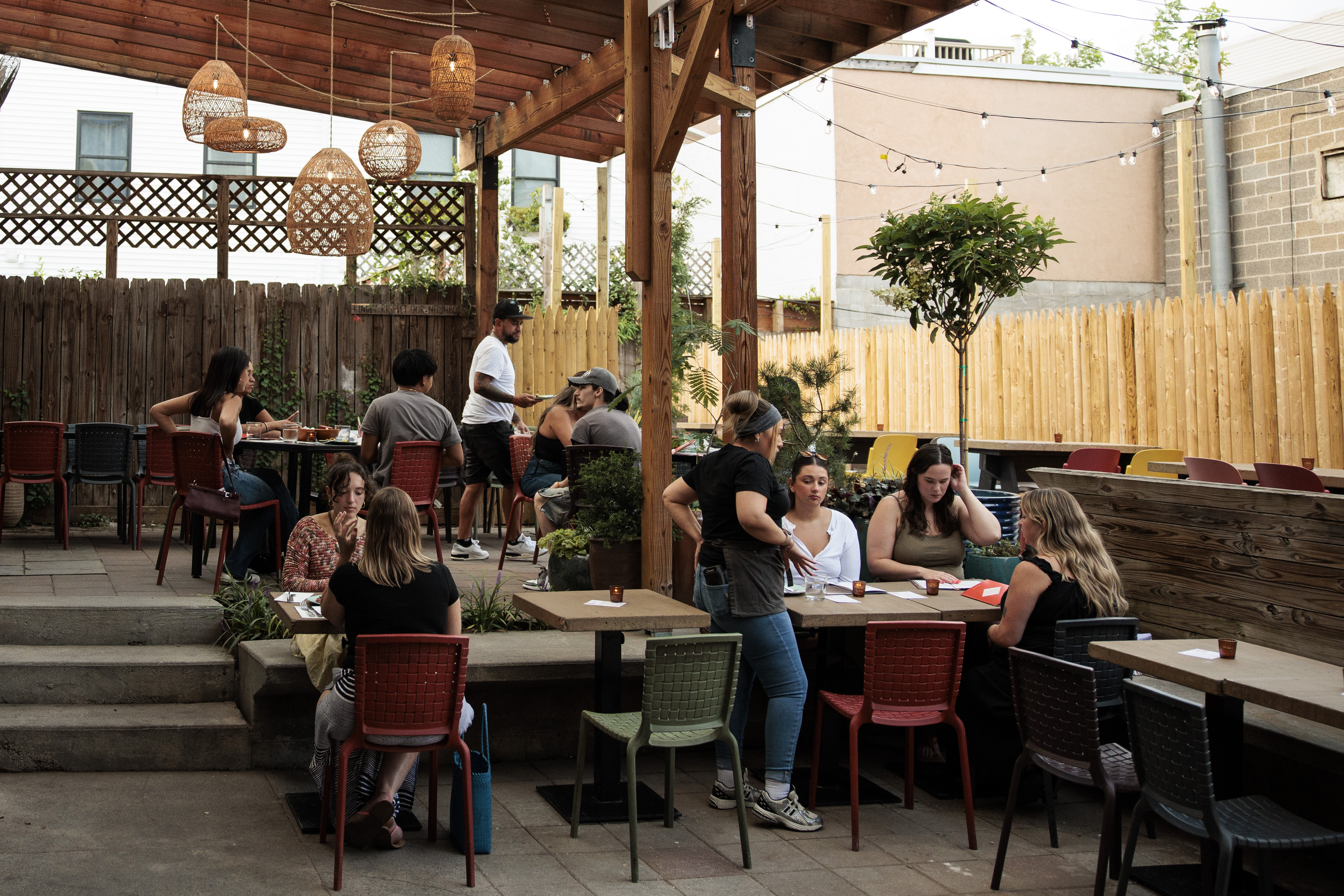
    The patio at Mixteca on a friends and family night Aug. 26.Monica Herndon / Staff Photographer

    Though no executive chef heads up Mixteca’s kitchen in Philadelphia, the food menu got the stamp of approval from Lopez, who said the flavors were “the closest” to what he grew up eating as a kid in Mexico. Highlights include a bright hamachi and yellowtail ceviche; steak, mushroom, and chicken tacos served on made-to-order corn tortillas; and a whole dorade asado designed for sharing. Served with warm tortillas, white salsa, and a crisp tomato-cucumber salad, the fish sits at the center of a table like a prized catch of the day.

    Lopez and Bell aren’t looking to outshine the neighborhood’s already-busy bar scene. Mixteca is blocks away from the Madrid-inspired Bar ILU and industry favorite gastropub Meetinghouse. It’s also around the corner from East Kensington standbys Philadelphia Brewing Co. and Atlantis: the Lost Bar.

    “We’re showing up to a party that’s already happening. We’re not the hosts,” said Bell. “We want to ingratiate ourselves.”
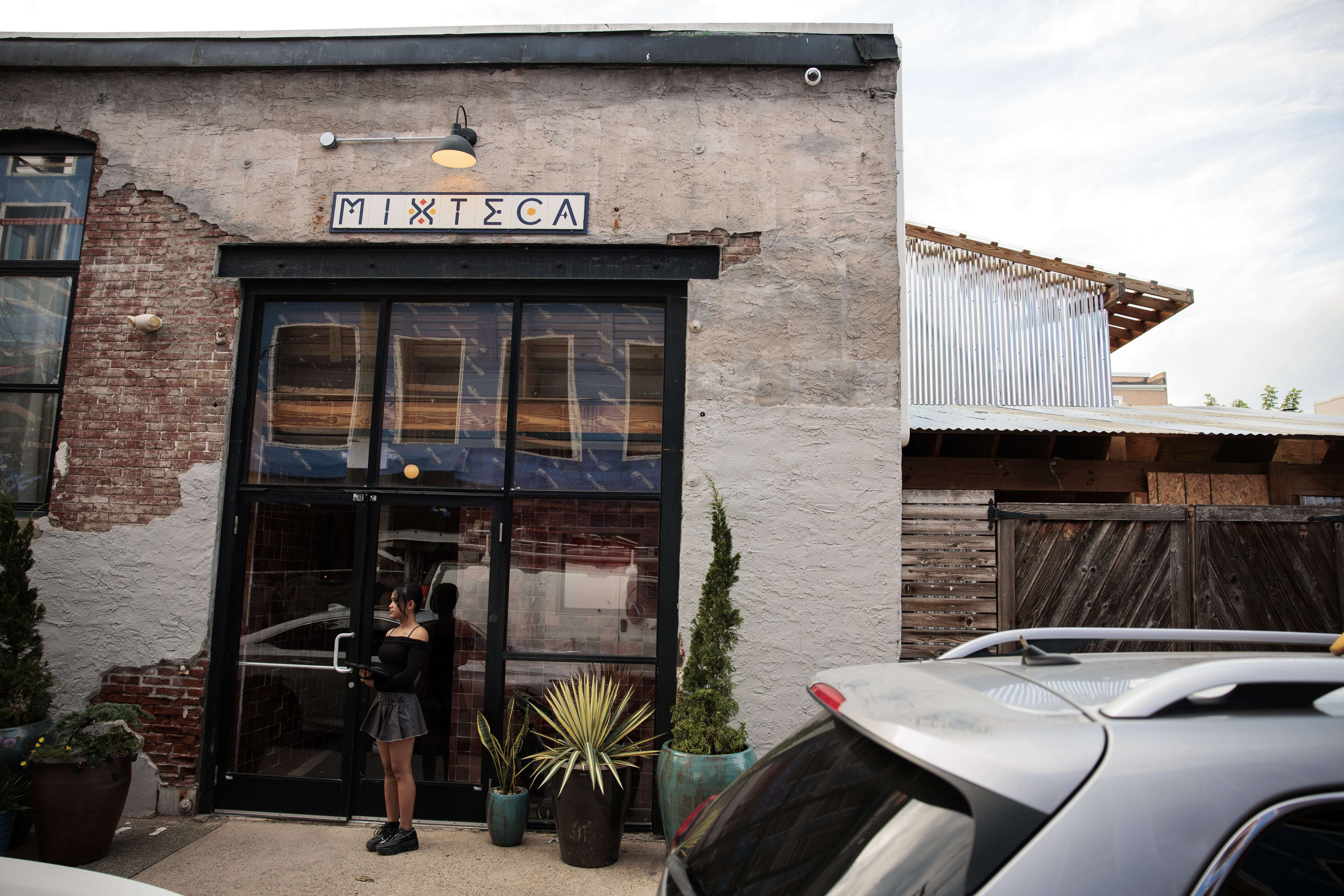
    The exterior of Mixteca, in the former Martha space in East Kensington. Monica Herndon / Staff Photographer

    Mixteca, 2113 E. York St., 215-714-3148, cocteleriamixteca.com. Hours: 4 p.m. to midnight Monday through Wednesday; 4 p.m. to 2 a.m. Thursday to Friday; noon to 2 a.m. Saturday; noon to 10 p.m. Sunday.


  • Fairmount Park has become a favored target of illegal tire dumpers with U-Hauls

    Fairmount Park has become a favored target of illegal tire dumpers with U-Hauls

    Michael Glatfelter routinely encounters giant piles of tires as he spins through Fairmount Park on his daily bike rides.

    Glatfelter, 74, started spying the illegal dumps in secluded areas two years ago. Now he says he encounters them at least once a month and is disgusted by their persistence — even as the city clears the piles within days.

    “There has to be a way of catching these people,” he said.

    Philadelphia officials say they are also frustrated by the tire whack-a-mole and are strategizing to prevent it. They say there have been at least 40 large-scale illegal dumping incidents on parkland citywide just this year. More than one-third involved tires, with dumpers frequently bringing them in via rented U-Haul trucks.

    On Tuesday, crews from Philadelphia Parks and Recreation cleared 800 tires from Fairmount Park brought in by someone driving a U-Haul. The truck and tires were abandoned near Centennial Arboretum off Avenue of the Republic.

    “This is part of a broader trend,” said Ra’Chelle Rogers, a spokesperson for parks and recreation.

    If caught, the dumper faces millions in fines.

    For his part, Glatfelter doesn’t blame officials. He posted a video to his Facebook page earlier this month of construction trucks cleaning up a massive pile of tires, with a caption describing how sick he was of living in a dirty city.

    “I blame our citizenry. I’m sorry to say, but I think we are totally worthy of that ‘Filthadelphia’ moniker,” he said in an interview.

    The tires dumped illegally Tuesday in Fairmount Park were brought in via a U-Haul truck.Philadelphia Parks and Recreation Department

    ‘So wide-open’

    Fairmount Park is considered a jewel of Philadelphia, with more than 2,000 acres split between the east and west sides of the Schuylkill. But its sprawling network of roads and remote areas also make it easy for dumpers to access undetected.

    “Fairmont Park is so wide-open, which is the beautiful thing about it,” said Natalie Walker, sustainability director for parks and recreation. “The challenge is keeping it beautiful while also preventing the kind of activity that degrades the park and takes away staff time.”

    Officials are asking the public to report any instances via the 311 system and to call 911 if they spot live dumping. They are also asking the public to share information that could identify dumpers if they feel safe doing so.

    The city has installed cameras in various park areas known for persistent dumping, Walker said.

    Violators face fines of up to $5,000 per illegally dumped item. Over the past three years, parks and recreation has issued $1.3 million in violations for illegal dumping on parkland.

    One strategy is to fortify park perimeters by blocking vehicle access without sacrificing the welcoming green space for pedestrians and cyclists, Walker said.

    For example, parks and recreation has installed three new gates near George’s Hill in West Fairmount Park, a dumping hot spot.

    The city has also organized cleanups and installed fencing, gates, and guardrails at other chronic dumping sites. They’ve installed bollards and boulders, as well as lock covers engineered to thwart bolt cutters.

    City crews removing about 800 tires illegally dumped in Fairmount Park near Centennial Arboretum off Avenue of the Republic.Philadelphia Parks and Recreation Department

    A $4 million fine?

    Parks and recreation is working with police to identify the dumper in Tuesday’s incident.

    That cleanup was triggered when park rangers and local partners spotted a stuck U-Haul truck abandoned next to several piles of tires. Officials determined the dump consisted of 8.4 tons of debris, translating to an estimated 800 tires.

    Although the U-Haul was reported stolen, investigators are looking into whether the driver got stuck and possibly falsely reported the theft to escape liability, Walker said.

    Walker said the dumper faces fines of up to $5,000 per item, amounting to about $4 million.

    Illegal dumping occurs when unscrupulous shops pay people to dispose of tires cheaply and avoid disposal costs of about $100 per ton, Walker said.

    The city routinely issues civil notices of violations, Walker said. She noted a 2023 incident when a repeat offender was fined $380,000 after being caught on camera dumping near Ormiston Mansion on Reservoir Drive.

    Walker said parks and recreation has a grant from the William Penn Foundation to implement part of its strategy. For example, park ambassador Dan Lidon conducts daily inspections, maps hot spots, and coordinates with community groups.

    On Aug., 25, 2026, crews from Philadelphia Parks and Recreation removed about 800 tires illegally dumped in Fairmount Park near Centennial Arboretum off Avenue of the Republic. The tires were brought in via a U-Haul truck.Philadelphia Parks and Recreation Department

    Dumping beyond Fairmount

    Residents, community nonprofits, and parks groups say dumping is widespread in other parks, vacant lots, and remote areas.

    In 2024, an estimated 4,000 tires choked a wooded ravine off Newtown and Adams Avenues, a stretch of debris sprawling more than 100 feet through Tacony Creek Park. The city used its own workers as well as a chain of volunteers to remove them.

    And this year, The Inquirer reported on what’s possibly the city’s largest illegal dump off Pennway Street in Northeast Philadelphia, which spans more than a city block and spills down a treacherous slope that’s difficult to access.

    In July, a group of 75 Philadelphia residents representing neighborhood groups and nonprofits gathered at the Discovery Center in Fairmount Park to map, by hand, illegal legacy dumps throughout the city.

    The group is still compiling information and a map that will eventually be posted online.

    Yet despite these efforts, it hasn’t made much of a difference to Glatfelter’s eyes, at least.

    “I know the mayor says, ‘cleaner, greener’ …but I know the city is not clean. It’s just not,” he said.

  • Center City bar Jose Pistola’s has closed after 19 years

    Center City bar Jose Pistola’s has closed after 19 years

    A distinctive stretch of 15th Street in Center City has lost both of its longtime bars within a year.

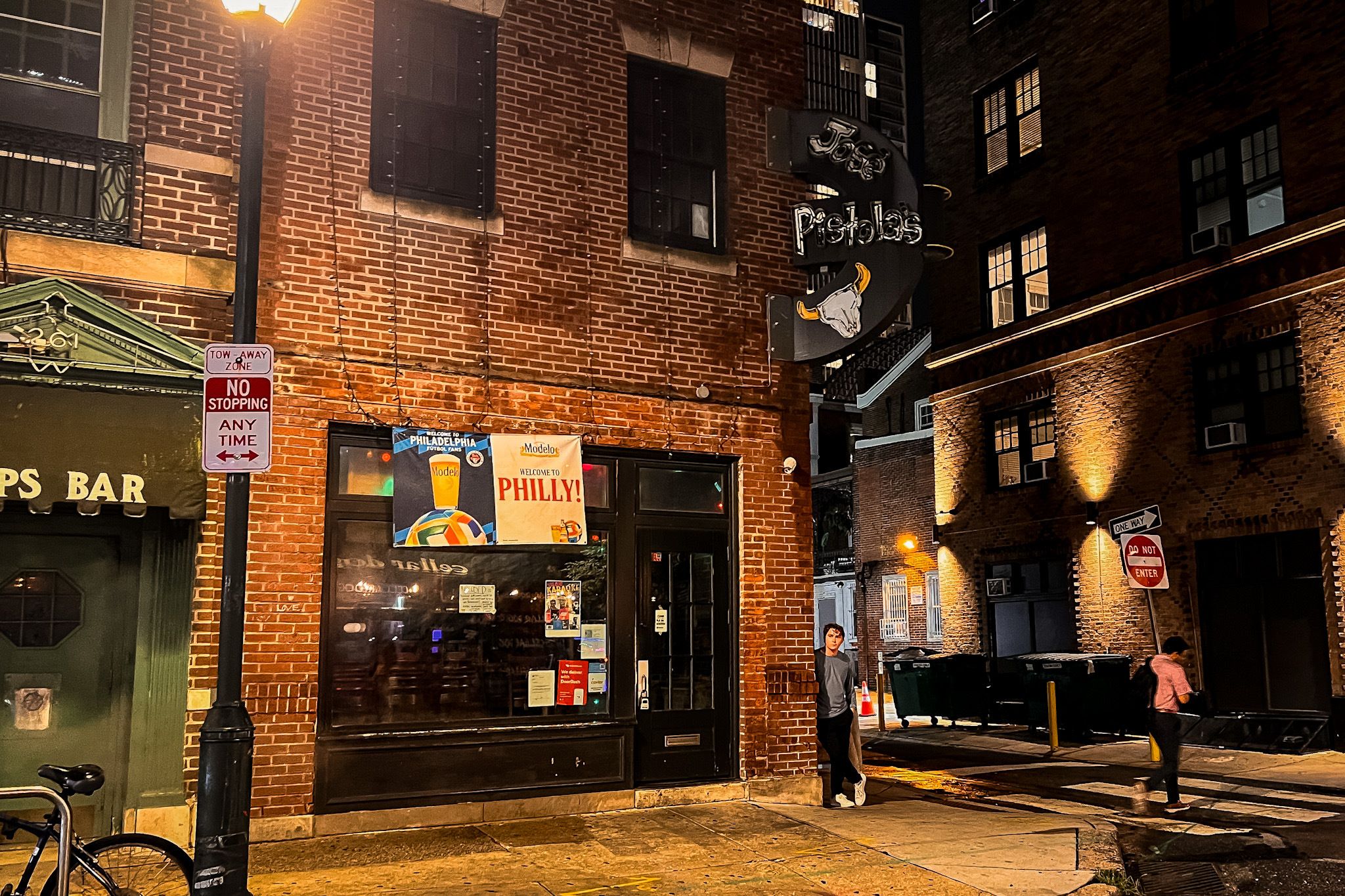
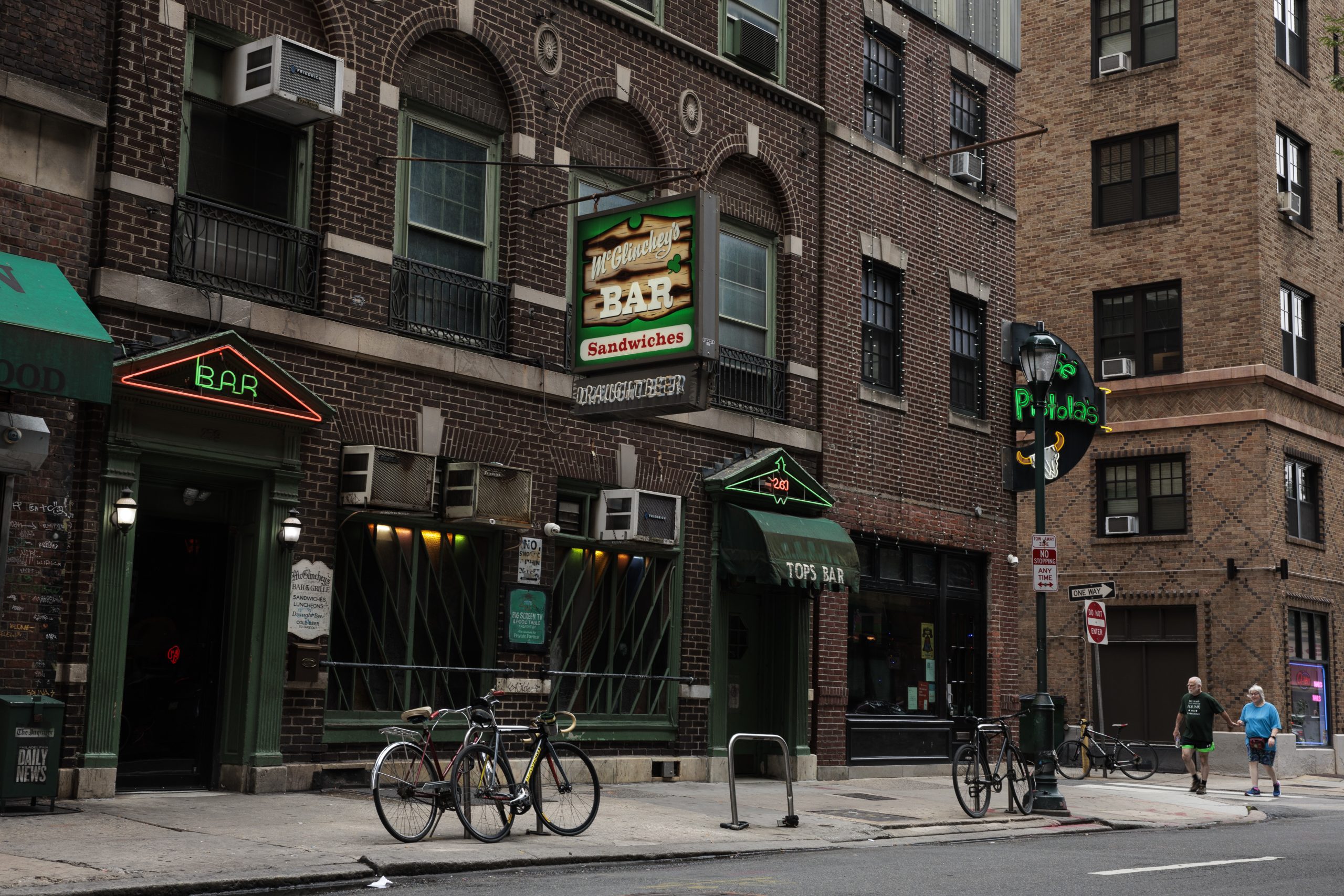
    Jose Pistola’s, the Mexican-inspired craft beer bar at 263 S. 15th St., has closed after 19 years, following last August’s closing of its next-door neighbor, McGlinchey’s.

    The closing of Jose Pistola’s came abruptly Tuesday amid a number of factors, including the Philadelphia Gas Works’ cutoff of its gas service. Although co-owner Joe Gunn said the business had made payments and was trying to resolve the issue, he said PGW would not restore service for three more days. . “That was the straw that broke the camel’s back,” Gunn said.

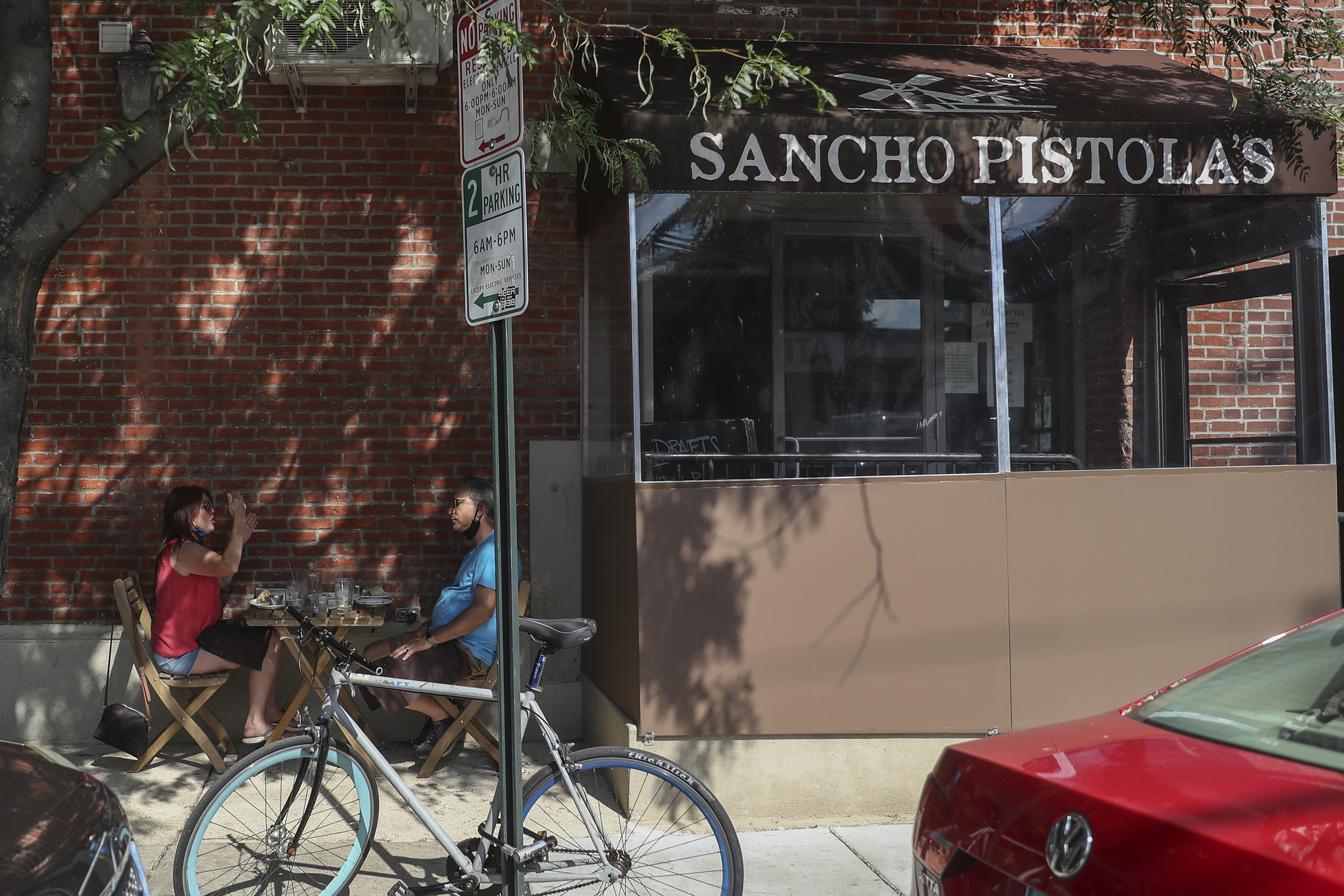
    Sancho Pistola’s in Fishtown, which opened in 2014, is not affected by the Center City closing.Heather Khalifa / Staff Photographer

    The closing does not affect Sancho Pistola’s on Girard Avenue in Fishtown, which opened in 2014, or Pistola’s Del Sur on East Passyunk Avenue in South Philadelphia, which opened in 2017. They are doing well, Gunn said. “They’re in no danger of going anywhere.”

    In 2009, court records show, the City of Philadelphia, which owns PGW, obtained a judgment of nearly $48,000 against Jose Pistola’s. According to a 2025 court docket entry, the judgment was never satisfied. A PGW spokesperson on Friday declined to comment, saying it does not share information about individual accounts.

    Gunn, saying that he did not want to blame PGW, said the interruption forced a decision that he and business partner Casey Parker had already been contemplating.

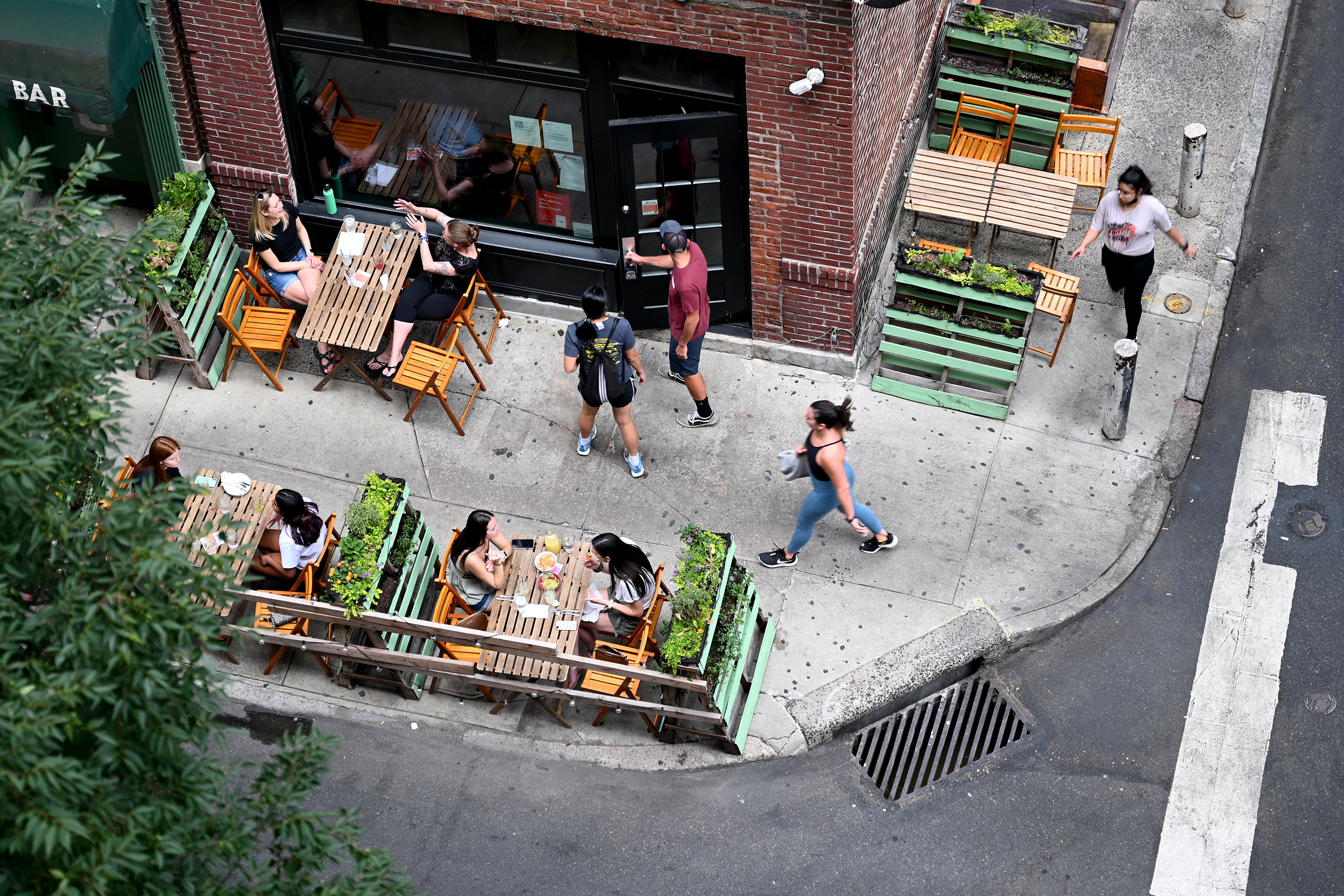
    A view of Jose Pistola’s pandemic-era outdoor seating at 15th and Manning Streets in 2021. Tom Gralish / Staff Photographer

    Gunn said they had about a year remaining on their lease and had been discussing a five-year renewal with their landlord. But with both Gunn and Parker now 51 and their children getting older, he said another long commitment seemed increasingly daunting. “It takes a lot of energy to play that game,” Gunn said.

    The numbers were difficult, too. As other bar and restaurant owners have lamented, higher food and operating costs had squeezed the business, while the late-night trade that once helped sustain bars like Pistola’s has diminished.

    “Frankly, [the bar] just never fully recovered from COVID,” Gunn said. “Coming out of COVID, the world was a different place — the price of goods, the cost of everything, and people don’t go out as much late. These younger generations are too smart to drink their life away.”

    “It’s always been tight, but everything changed,” Gunn said. “And then people just don’t drink as much.”

    About 25 people worked at Jose Pistola’s. Gunn said they had little warning because the owners themselves had not decided to close until the last minute. He said he and Parker are trying to place employees at their other restaurants or with friends in the industry.

    “We’ll absorb what we can, obviously, in the other two places,” Gunn said. “We have a lot of friends in the business, so we’re aggressively trying to help them.”

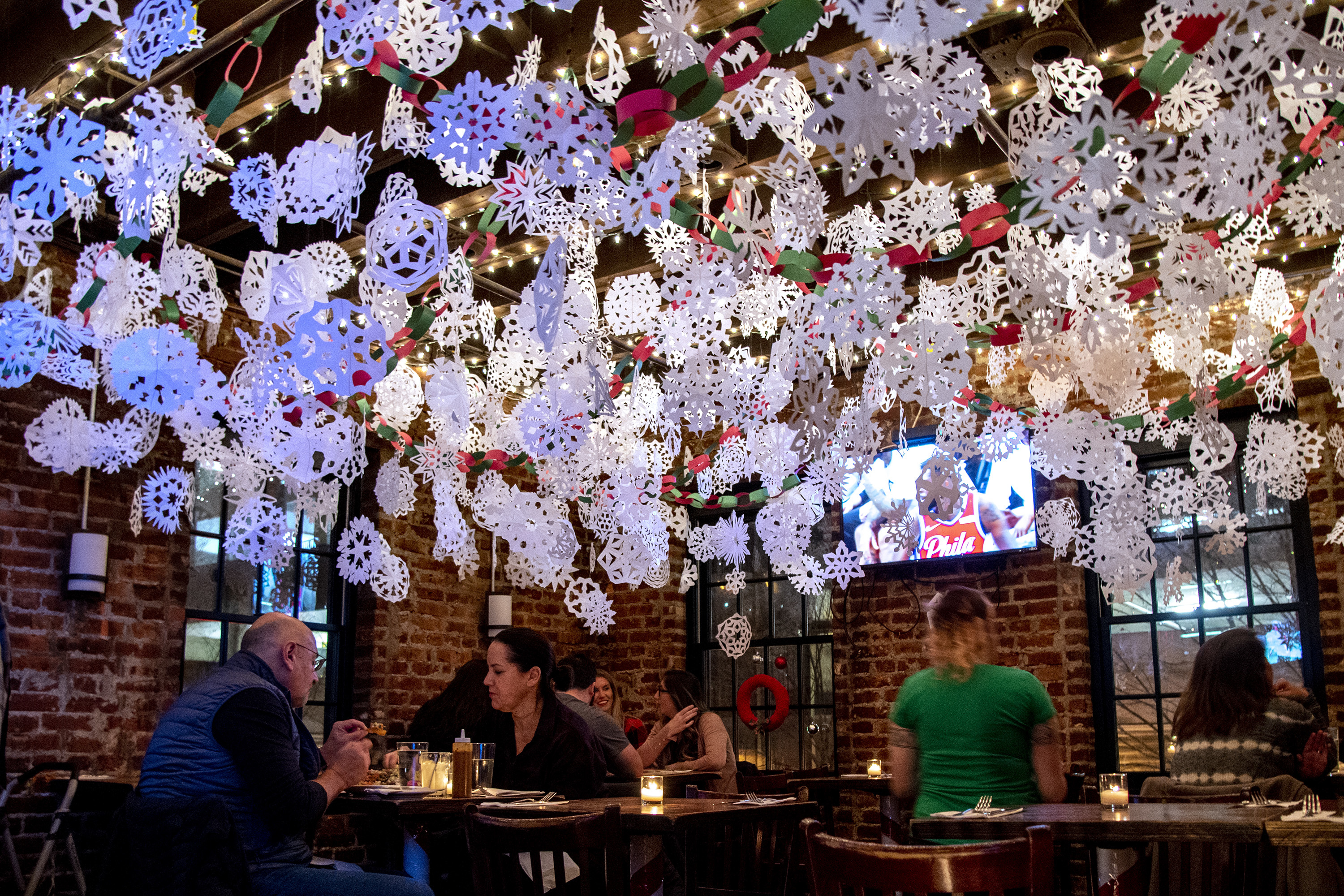
    Jose Pistola’s bar, as decorated in 2019 for its annual Jose Pistola’s Christmas Smackdown Bar Crawl.Tom Gralish / Staff Photographer

    Jose Pistola’s — its name a loosely licensed Spanish rendering of Gunn’s first and last names — opened Aug. 29, 2007, taking over the longtime Copa, Too! space. Gunn and Parker were both veterans of Fergie’s Pub; Gunn had worked there for about seven years before leaving to open Pistola’s, while Parker had moved on by then.

    The bar quickly established itself through its combination of craft beer, Mexican-inspired food, and an irreverent neighborhood-bar atmosphere. It became particularly associated with Philadelphia’s burgeoning craft beer movement and the early years of Philly Beer Week.

    Its food grew more ambitious after Puebla-born chef Adán Trinidad joined the operation and eventually became a partner. Trinidad, whose resumé included El Vez and Alma de Cuba, brought to the menu such dishes as tortilla soup, goat sopes, carnitas-filled steamed buns, and Brussels sprout tacos that caught the attention of Inquirer critic Craig LaBan.

    The partners later expanded the Pistola’s name to Fishtown and East Passyunk. Trinidad died after a fall in October 2021 at age 39.

    Adán Trinidad was chef-partner until his death in an accidental fall in 2021.Rachel Delsurdo / Courtesy of Jose Pistola's

    For most of Jose Pistola’s run, its next-door neighbor offered a study in contrasts.

    McGlinchey’s — now on the market — was a cash-only dive bar known for low prices, dim lighting, smoke in the air, and an eclectic clientele. It endured by barely changing, while Jose Pistola’s brought craft beer and more ambitious food to an equally unpretentious neighborhood-bar sensibility.

    The two businesses were nevertheless close.

    “We had a great relationship with them,” Gunn said. “We loved them because of how funny they were. They were just kind of cranky, and they put up with us.”

    McGlinchey’s, as seen in August 2025, was next door to Jose Pistola’s.

    Gunn said the McGlinchey’s closure was part of a broader change he has watched on this stretch of 15th Street between Locust and Spruce Streets.

    “The whole corridor used to be more vibrant,” he said. “I think COVID wiped out a lot of those places. It changed everything for us.” The block is also home to Cellar Dog and Garage Rittenhouse.

    As recently as Thursday, Gunn said, he and Parker were “still fighting to figure out a way to [save] it. But it just, I think, ran out of steam.”

  • Philly-area AMC Theatres will screen two Dolly Parton movies

    Philly-area AMC Theatres will screen two Dolly Parton movies

    In the days since her Aug. 25 death, the tributes to country music icon Dolly Parton have piled up: from music megastars, tech-industry titans — even the Buckingham Palace guards.

    Add AMC Theatres to the list.

    The company announced this week that it will be holding a retrospective of the artist’s film work, with screenings of a pair of Parton-starring films — Steel Magnolias and The Best Little Whorehouse in Texas — in her honor. Screenings begin Friday and run through Sept. 2, the company said.

    In all, roughly 200 AMC locations nationwide will hold screenings.

    Participating Philadelphia-area theaters include AMC Cherry Hill 24 and AMC Voorhees 16 in New Jersey, and AMC Neshaminy 24 in Bensalem. Tickets will be offered at discounted prices and are available through the AMC website.

    The two films are among several that Parton appeared in between 1980 and 2015, a list that also includes 9 to 5, in which she starred alongside Jane Fonda and Lily Tomlin, and received three Golden Globe nominations.

    The 1982 musical comedy The Best Little Whorehouse in Texas saw Parton play a brothel madam alongside Burt Reynolds, earning her another Golden Globe nomination in the process.

    In 1989’s Steel Magnolias, Parton stars alongside Julia Roberts, Sally Field, Shirley MacLaine, and Daryl Hannah.

    A longtime star of the music, film, and television industries, Parton’s death has brought a wave of homages this week from everyone from Taylor Swift to Amazon founder Jeff Bezos. Her death followed a brief battle with cancer, a family spokesperson has said.

    Parton was a 10-time Grammy Award winner, and her 55 Grammy nominations make her the third-most nominated woman in the awards’ history, according to the Associated Press, trailing only Beyoncé and Swift.

    In addition to AMC, Regal Cinemas will be screening both films, as well — though screenings will be limited to Parton’s home state of Tennessee.

  • Trump’s Supreme Court is still helping him try to steal elections | Editorial

    Trump’s Supreme Court is still helping him try to steal elections | Editorial

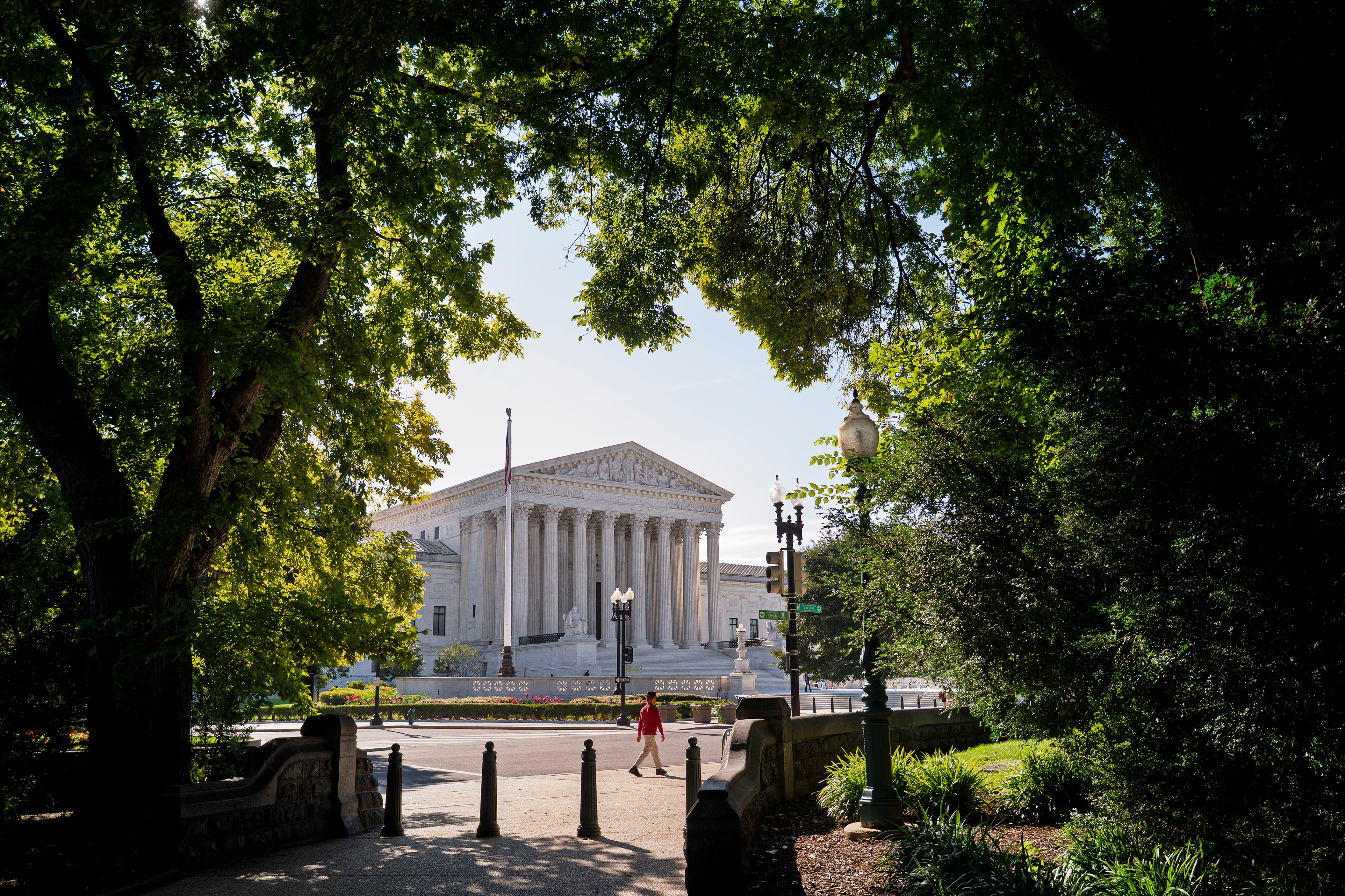
    The U.S. Supreme Court, as one of its members recently noted, has held that judges “are not required to exhibit a naiveté from which ordinary citizens are free.” And yet, that is precisely what its conservative justices just did.

    Considering one of Donald Trump’s latest attempts to illegally suppress votes, the court’s Republican-appointed majority was — or pretended to be — so naive as to fail to notice the president’s plain intent.

    At issue was Trump’s March order directing the U.S. Postal Service to restrict mailed ballots by delivering only those sent by “confirmed” citizens listed by the U.S. Department of Homeland Security.

    The court allowed the government to proceed with this plot on the grounds that it wasn’t fully hatched. Because postal and other officials hadn’t yet developed a full-fledged plan to meddle with the election, the justices reasoned, it was too soon for Gov. Josh Shapiro and 22 other state officials to sue to stop them.

    The ruling came, by the way, with just over two months left until the midterm elections, and some mail-in ballots expected to be sent to voters in less than a week.

    It doesn’t take half a dozen elite jurists poring over this set of facts to understand what’s going on.

    It isn’t genuine presidential concern about a means of voting that Americans have practiced since the Civil War and even beforehand — Pennsylvania pioneered military absentee ballots in the War of 1812 — and which Trump used as recently as this month, when he cast his ballot by mail in Florida.

    Rather, the president is trying to head off a well-earned midterm shellacking of his fellow Republicans in Congress any way he can other than by actually persuading Americans to vote for them. He has already pushed unprecedented partisan gerrymandering, lobbied for legislation to make voting harder, and after his 2020 defeat, attempted to overturn results with fraud and violence. The Supreme Court helped him get away with that, too.

    But it’s not impossible for a federal judge to dispense with a state-sponsored attack on democracy swiftly, decisively, and appropriately. We know that because it’s what happened when U.S. District Judge Indira Talwani ruled on Trump’s mail heist in June.

    The Boston-based judge blocked the president’s executive order until after the midterms in light of the elections’ imminence and because, as she succinctly put it, “The Constitution does not grant the President any specific powers over elections.” As Talwani pointed out, the founding document delegates authority over elections to Congress and the states, neither of which ever asked a post office to take over for them.

    The judge is not an outlier here: The First U.S. Circuit Court of Appeals upheld her decision in July, noting that the administration hadn’t even argued that Trump’s order was legal, only that it was too soon to consider it. The appellate court added that the states, given the approach of elections they play a substantial role in running, had “no practical choice but to respond” to the executive order when they did.

    It’s not impossible for a member of the Supreme Court to recognize reality when she sees it, either. In dissenting from the majority, Justice Ketanji Brown Jackson wrote that “what makes today’s ruling so off-base is the Court’s lack of situational awareness.” She added that her colleagues overlooked the administration’s “actual objective: to secure our imprimatur for its effort to foment chaos ahead of the November elections.”

    As unstinting as Jackson’s dissent is, her attribution of the majority’s decision to obliviousness is charitable. The problem is less likely that the Republican appointees don’t know what Trump is up to than that they don’t care.

    While the court’s ruling isn’t close to the end of the legal challenges to Trump’s scheme — another lawsuit was filed Wednesday in response to the Postal Service’s newly finished plan to lose our votes in the mail — it does perpetuate unnecessary confusion over a popular means of participating in a crucial election. Even if the president is never permitted to block ballots outright, bewildering the people who cast them will serve his purposes just fine.

    In an age of official disinformation and artificial intelligence, the country could use some clarity. Fortunately, we have a Constitution that provides a crystalline degree thereof on the subject of authority over elections. Unfortunately, we have a Supreme Court that refuses to acknowledge the obvious.

  • What geriatric emergency departments do differently

    What geriatric emergency departments do differently

    It had been a rough few months. Cynthia Tompkins was hospitalized in May for osteomyelitis — a bone infection — then spent six weeks in a rehabilitation facility. “It was a struggle,” she said. “I didn’t bounce back too well.”

    Tompkins returned to her home in San Diego, but she was still taking antibiotics, along with a host of other drugs for diabetes, pain, and blood clots. The deaths of her husband the previous year and her closest friend more recently had sapped her spirits.

    In early July, a new symptom appeared: violent vomiting three times within about 24 hours. “I was so depleted,” she said. “I got weaker and weaker.” A friend who was visiting her called an ambulance.

    “It’s the last place you think you want to go, the ER,” said Tompkins, 75, a retired teacher and family program director. She anticipated spending hours on an uncomfortable stretcher in a chilly hallway. Arriving at the emergency department at UC San Diego Health in La Jolla early in the morning, “I was in a knot,” she said.

    But the place upended Tompkins’ expectations. Since 2022, this and every other adult ER in San Diego has been accredited as a geriatric emergency department, redesigned to address the specific risks and needs of older patients. It’s an approach, recent studies show, that can reduce hospital admissions and deaths among older adults and lower costs.

    “They took me right to a room,” Tompkins said. She was transferred to a gurney with a thicker mattress to prevent bedsores and given blankets. “I got an IV right away because I needed fluids,” she said.

    She was pleased that the small, curtained room, with sound-absorbing walls to lower the cacophony of emergency care, had a cushioned chair for her friend, who would stay with her, and a window looking out on trees.

    The window served a medical purpose, too. Patients “can see whether it’s day or night,” said Denise Valenzuela, the geriatric emergency nurse assigned to Tompkins. “It prevents delirium,” the sudden change in mental status that can arise in hospitalized older patients and increase dementia risk.

    Before long, “I just felt a calmness,” Tompkins said. “I felt, I’m where I need to be right now.”

    Since 2017, the American College of Emergency Physicians has accredited 624 such geriatric emergency departments across the United States, including 73 in Department of Veterans Affairs medical centers. “A fairly exponential rate of growth,” said Kevin Biese, the emergency doctor who directs the Geriatric Emergency Department Collaborative.

    Few of these units are restricted to older patients. Instead, like the ER in La Jolla, they serve all ages but incorporate senior-friendly practices and protocols in an environment aimed at staving off disorientation, falls, and other elder hazards. They’re classified from Level 1, for those fulfilling the highest number of criteria, to Level 3.

    Adults 75 and older visit the emergency room at a higher rate than any other age group except infants: 76 visits per 100 people in 2022. Yet standard emergency care “wasn’t correctly designed for the needs of older adults,” Biese said.

    The mission of a traditional ER is to speedily identify the central problem and either fix it or admit the patient to the hospital for ongoing care. “We ask, ‘What’s your chief complaint?’” Biese said. “You fell down the stairs and broke your leg.”

    Older patients rarely arrive with a single ailment, however. Like Tompkins, most contend with several chronic conditions, take multiple prescriptions, and need a variety of tests and assessments. Trained geriatric emergency teams focus not only on the broken leg but on determining what caused the fall, and how to prevent another one.

    “An emergency department doesn’t routinely screen for delirium” and cognitive impairment, said Ula Hwang, an emergency doctor and researcher at NYU Langone Health. “But it’s one of the first things geriatric emergency departments will do,” along with a careful review of all the patient’s medications.

    Geriatric ERs also try to counter sensory impairment, another contributor to delirium, by distributing reading glasses and sound-amplifying devices. They dim glaring lights and offer eye masks and earplugs to promote sleep. If Tompkins had forgotten her walker, the unit would have lent her one.

    These ERs also aim to address a rising concern in emergency departments: hours or even days spent “boarding,” when admitted patients wait for open beds before they can leave the ER.

    “Prolonged boarding has increased among older adults,” said Cameron Gettel, an emergency doctor and researcher at the Yale School of Medicine, referring to waits that last over three hours. He is a co-author of a study on the topic published in Health Affairs Scholar.

    Spending more time boarding isn’t merely uncomfortable or inconvenient. Researchers studied patients 75 and older in emergency departments across France. They found that those kept there overnight before moving to an inpatient ward had a higher in-hospital mortality rate (15.7%) than those admitted to a ward before midnight (11.1%). Overnight boarding was associated with more falls and infections, too.

    What geriatric emergency staffers prefer, however, is to help patients avoid hospitalization altogether. “Admission may not be the best thing for an older adult,” Hwang said. “It might be the worst.”

    Hospital patients, she said, are exposed to infections, staff errors, and the rapid deconditioning that accompanies days spent in bed. All pose a greater threat to older patients.

    Previous studies have found reduced admissions from geriatric emergency departments, but most of those studies involved one or two hospitals. Now, Hwang and her team have used nationwide data from the federal “Health and Retirement Study” and Medicare claims for nearly 4,600 adults age 65 or up, comparing those treated in geriatric emergency departments with a matched group seen in standard ERs.

    The differences were stark: Patients in the geriatric units had a 39% lower likelihood of hospital admission and a 38% reduction in mortality over 30 days. The geriatric ERs also saved Medicare up to about $3,000 a visit, according to an earlier study Hwang led.

    So having more than 600 accredited geriatric emergency departments nationwide represents both great strides and — in a country with more than 5,000 emergency departments — missed opportunities, Biese said.

    In the Philadelphia region, the VA medical centers in Philadelphia and Wilmington are accredited as geriatric ERs, as are Pennsylvania Hospital in Philadelphia, Cooper University Medical Center in Camden, Jefferson Lansdale Hospital, and Inspira Medical Center Mullica Hill, according to the American College of Emergency Physicians.

    “I’d encourage people to ask why their hospitals don’t have an accredited GED,” he added, referring to a geriatric emergency department. “We should demand that.”

    In La Jolla, Tompkins began feeling stronger. The intravenous fluids supplied anti-nausea medication and corrected the electrolyte abnormalities that her lab work revealed. She was able to sip water and juice and eat a few graham crackers.

    A battery of other screens and scans found no serious concerns. After completing a geriatric assessment, Valenzuela, the nurse, suspected Tompkins hadn’t been eating well and was taking medications on a mostly empty stomach.

    By about 6 p.m., Tompkins and her doctor agreed she could return home. She left the hospital with numbers to call for further help, and several staff members checked in by phone to see how she was doing.

    Better, was her answer. “They took care of the whole me and put me on the right track,” Tompkins said. “I’m progressing. It’s slow, but I’m OK.”

    The New Old Age is produced through a partnership with The New York Times.

    KFF Health News is a national newsroom that produces in-depth journalism about health issues and is one of the core operating programs at KFF — the independent source for health policy research, polling, and journalism.

  • Makai Lemon has all of the opportunity in the world. The Eagles need him to seize it.

    Makai Lemon has all of the opportunity in the world. The Eagles need him to seize it.

    There is a piece of math that makes it awfully difficult to assume anything about Sean Mannion’s offense.

    It’s a piece of math that is either working in strong favor of or in strong disfavor of Makai Lemon. It depends on how the rookie feels about pressure.

    The expectations for the Eagles’ 2026 first-round pick should be a lot higher. Because the bar is high. And he is the only one who has the skill set to clear it.

    Let’s start with the math. Specifically, with the number 142.9. That’s how many targets A.J. Brown averaged per 17 games during his four seasons with the Eagles.

    Add to that 34.5, the number of targets that Jahan Dotson averaged per 17 games in his two seasons with the Eagles.

    Our total is 177.4.

    Which brings us to the most critical number: 66.5.

    That’s how many targets Dontayvion Wicks has averaged per 17 games in three NFL seasons.

    As the signs will say in London in Week 5: Mind the gap!

    One thing you can safely say about the Eagles offense in its first year under Mannion: some wide receiver is going to have a breakout season, or the defense is going to need to win them a lot of games.

    The other options are outliers. Even if the offensive line recaptures the bodily spirit of 2024, are the Eagles really going to average nearly 5 yards per carry without somebody drawing Brown’s level of gravity opposite DeVonta Smith? If not, are they really going to run the ball 621 times while passing it only 448? If not, are the Eagles really going to put up championship-caliber point totals with Smith accounting for a third of the targets and yards?

    DeVonta Smith figures to be the main beneficiary among Eagles receivers after A.J. Brown’s departure.Elizabeth Robertson / Staff Photographer

    The breakout certainly could be Smith’s. Plenty of folks inside and outside of the Eagles organization have murmured Jaxon Smith-Njigba and DK Metcalf when hypothesizing about Smith in his post-Brown chapter. Last season, after the Seahawks traded Metcalf to the Steelers, Smith-Njigba’s target share jumped from 137 to 163 and his yardage from 1,130 to 1,793. In other words, he turned from Smith into a supersized Brown.

    In the event of such a breakout from Smith, the Eagles wouldn’t necessarily need anything greater than replacement-level production from the rest of the Eagles’ receiving corps. Last season, the only Seahawks receiver other than Smith-Njigba with more than 26 targets or 188 yards was the ghost of Cooper Kupp, who finished with 47 catches and 593 yards.

    But, like we said, that’s an outlier.

    One can argue that the Denver Broncos, Buffalo Bills, and Kansas City Chiefs offer alternate hypotheticals for life without a true No. 2.

    Denver made it to last year’s AFC championship game with Troy Franklin’s 65 catches and 709 yards in the second chair behind Courtland Sutton’s 74 and 1,017.

    The Bills had the second-highest scoring offense in the NFL in 2024 with Khalil Shakir leading the way at 100 targets and 821 yards. That was the year after they parted ways with Stefon Diggs.

    The Chiefs had the NFL’s highest-scoring offense in 2022, the year after they traded away Tyreek Hill. Their top wideout was JuJu Smith-Schuster, who had 101 targets and 933 yards.

    The rebuttals are easy.

    The Chiefs had Travis Kelce, who filled the Hill vacuum with a career-high 152 targets and 110 catches for 1,338 yards. If Dallas Goedert does that, great. He’s the breakout. Otherwise, Smith-Schuster’s 933 yards would be a heck of a season for Lemon or Wicks.

    The Broncos and Bills traded significant draft capital for receivers this offseason; Jaylen Waddle headed to Denver from Miami, and D.J. Moore went to Buffalo from Chicago. Both served as verdicts on a by-committee approach at wide receiver.

    There’s a lot we don’t know about Mannion and how his scheme will express itself. There’s even more we do not know about how Jalen Hurts and the rest of the Eagles’ talent will play without a generational wide receiver on one side of the field and Smith on the other.

    But we can venture to say that nobody besides Lemon or Smith has the potential to maintain the Eagles’ aggregate WR1/WR2 production. Ours is not the first fan base or media contingent to sell themselves on best-case scenarios for Wicks, Marquise “Hollywood” Brown, or Elijah Moore. Those players are here for a reason. Their sample sizes are more than large enough.

    That’s one of two reasons Lemon is the player most integral to the Eagles’ 2026 hopes. The second is that he has the ability.

    The Eagles traded up a spot and snaked the Steelers for a reason. He isn’t your typical late first-round receiver. There is plenty of maturity and present-day NFL value evident in his game tape. He doesn’t have the outlier physical or athletic measurable of a potential generational performer like Brown. But he has the technical skills and toughness that play immediately in the NFL.

    We have not heard much of Lemon this last month. Summer-long soft tissue injuries have a knack of doing that to rookies. The big question is whether the time he has lost can quickly be regained.

    That’s true for Lemon individually. It’s just as true for the Eagles’ offense overall.

  • Camden drops uniforms in high schools in favor of a dress code

    Camden drops uniforms in high schools in favor of a dress code

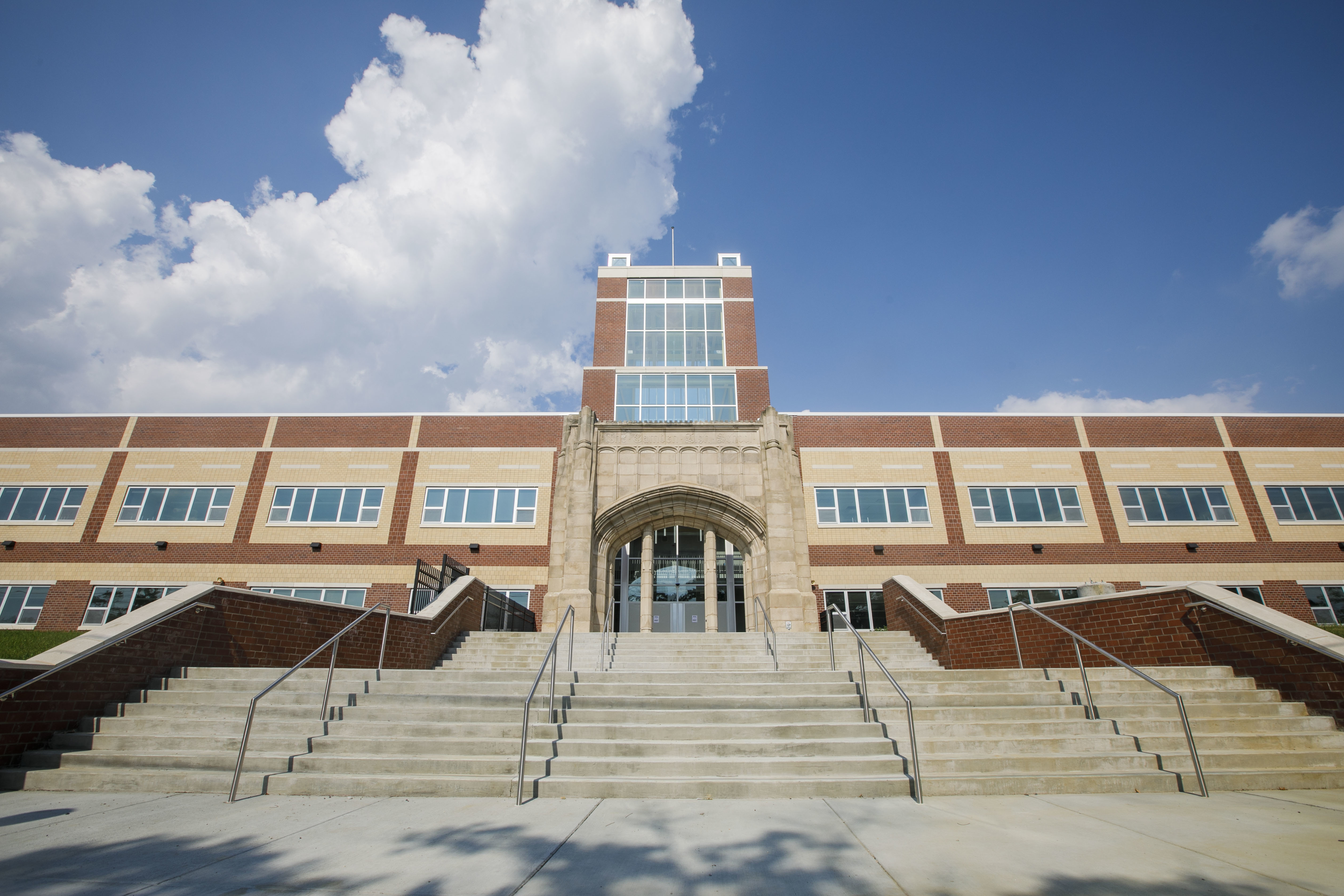
    The Camden school district has dropped its longtime mandatory school uniform policy at its five high schools.

    Instead of wearing uniforms that included khaki pants and a shirt based on their school colors, students returning to school on Sept. 3 will have a dress code that allows more flexibility but bans durags, bonnets, hair rollers and curlers, pajamas, and revealing clothing.

    Superintendent Alfonso Q. Llano Jr. said the decision was made after feedback from students and staff in the South Jersey school system. Elementary and middle school students will continue to wear uniforms. In a social media post earlier this month, the district explained the decision as a response to students who expressed “desire for greater opportunities to express themselves through their clothing while maintaining a safe learning environment.”

    High school will also start an hour earlier at 8:05 a.m. and run until 2:25 p.m. The district said the earlier time aligns with national start times and better meets the needs of students who work after school or have extracurricular activities.

    The new dress code has drawn mixed reaction from students and staff. It will impact students at the district’s two traditional high schools, Camden High and Eastside High, and three magnet schools, Dr. Charles E. Brimm Medical Arts High, Creative Arts High, and the Big Picture Learning Academy.

    “I think it’s a good idea. It allows students to break the mode, creates more creativity,” said Odalys Dejesus, 17, a rising senior at Eastside. “It’s a good step forward.”

    Former school board member Jose E. Delgado said the uniform policy was established more than two decades ago to improve security by making it easier to identify students entering buildings, curb bullying, and stop students from wearing gang colors.

    Delgado and others who served on the board that adopted the uniform policy have asked state Department of Education Commissioner Lily Laux to review whether Llano followed procedures for switching to a dress code.

    “It makes no sense,” Delgado said. “The uniform policy was working.”

    A state education department spokesman said the dress code policy was a local matter. Camden has been a state-operated district since 2013.

    Llano has been making changes since becoming schools chief in March. He sent pink slips to the entire central office staff. He backpedaled on a plan to merge the three magnet high schools after a backlash.

    State superintendent Alfonso Q. Llano Jr. speaks during the Camden City board of education regular meeting in Camden on Tuesday, April 21, 2026.Elizabeth Robertson / Staff Photographer

    Delgado believes the dress code policy is too subjective and can be interpreted differently by school leaders. He also worries about enforcement.

    “The teachers are not going to enforce this,” Delgado said. “They have enough problems.”

    Camden Education Association President Pam Clark said she supported the new policy for high school students only.

    “I’m for the district giving the students a chance to wear their regular clothes,” Clark said. “However, the students need to know there will be consequences if they do not come to school presentable.”

    The policy also bans open-toe shoes, most face coverings like ski masks, baseball hats, short shorts and mini-skirts, and baggy pants with underwear showing. Hoodies are allowed but the hood must be removed when the student enters the building.

    The policy calls for progressive disciplinary action for violators, beginning with a warning, and possibly escalating to in-school suspension and a meeting with a parent or guardian for repeat offenders.

    Last year, then-acting Superintendent Davida Coe-Brockington said the district would enforce a long-standing policy banning students from wearing all-black outfits at the Camden High campus.

    Interim state-appointed Camden school Superintendent Davida Coe-Brockington.Camden school district

    The complex houses four separate wings, and students were assigned shirt colors based on their school. Coe-Brockington said the all-black outfits made it difficult for staff to easily identify which school a student attends.

    Karen Borrelli, a veteran health and physical education teacher at Brimm, does not support the move to a dress code. She said the uniforms gave the schools identity, especially at the Camden High campuses. Some parents depended on district-issued vouchers to purchase uniforms, she said.

    “They don’t have the money to get outfits and keeping up with the Jones,” Borelli said referring to possible peer pressure students may face to wear the latest fashions. “Our parents can’t afford that.”

    Llano said students may still opt to wear uniforms. Borrelli expressed doubt that they would because they would stand out.

    “The focus shouldn’t be on what they are wearing to school, but on academics,” Borrelli said. “It’s going to be a mess.”

    Tuskegee University sparked a national debate earlier this year when president Mark Brown tackled the thorny issue of proper attire for students at the historically Black college.

    Like Camden, Tuskegee banned students from wearing hair bonnets and durags, which customarily are worn to protect Black hairstyles while people sleep.

    The Philadelphia school district leaves it to schools to set a dress code policy for students “so that their appearance does not constitute a health or safety hazard.”

    Last school year, an uproar flared at Philadelphia High School for the Creative and Performing Arts when female students complained they were unfairly flagged for dress code violations.

    Students said they were told by administrators that the crackdown was imposed because men outside of school were following female students. The district said it would review the dress code policy.

    Staff writer Kristen A. Graham contributed to this report.

  • The sheriff’s office doesn’t need a babysitter; it needs to be abolished | Shackamaxon

    The sheriff’s office doesn’t need a babysitter; it needs to be abolished | Shackamaxon

    This week’s edition of Shackamaxon covers data centers, property assessments, and more woes at the Philadelphia Sheriff’s Office.

    Jason Kelce with Liquid Death mascot Murder Man in an ad for the canned water and Garage Beer.Garage Beer

    Sports data center

    Former Eagles offensive lineman Jason Kelce seems to be more omnipresent in retirement than he was during his career. Most recently, he filmed a commercial for Garage Beer and Liquid Death that asked Americans to send him their urine to supply data centers.

    While conjuring a negative image of yellow liquid in a cup is probably an unwise strategy for someone who co-owns a light beer company, Kelce’s commercial had another major problem — data centers don’t actually use as much water as public perception suggests.

    In fact, the biggest threat to U.S. water supplies is something far more mundane: alfalfa farming.

    Across the arid Western states, farmers are using vast amounts of water to irrigate their fields, which are then used to feed cows for the beef industry. A single acre of alfalfa uses 1.6 million to 2.5 million gallons of water. In Utah, feed farming uses over half the state’s water supply. Meanwhile, the data centers themselves increasingly rely on closed-loop systems. The water used as coolant gets purified and reused, reducing their own need.

    The confusion over water use is emblematic of the general debate over the centers, which is rife with hard-to-vet claims. And shifting public opinion has left politicians in both parties flat-footed and scrambling to react.

    Gov. Josh Shapiro, the ever-Ambitious Abingtonian, issued his own response to the situation. Much of what Shapiro said is reasonable. He wants tech companies to pay for their own power and contribute to community benefits agreements, and to respect the Pennsylvania Constitution’s guarantee of clean air and pure water. Some of it is less sensible, specifically his commitment to local control.

    Local control sounds great in theory: Why shouldn’t communities have the final say over how they are developed? In practice, however, it is shortsighted. There are two reasons for this.

    One, the impact of data centers is regional, not local. If opponents are correct about the impact on water and electricity bills, this impact will exist no matter where the centers operate. Given the PJM grid Pennsylvanians rely on spans multiple states, there is no plausible pathway for local communities to insulate themselves from rising energy demand by blocking data center proposals.

    Two, not every community can afford to say no. Take the bankrupt city of Chester, for example. From its efforts to sell the Chester Water Authority to its role as host for the Reworld Trash Incinerator, financial considerations already play a big role in that city’s policymaking. By handing control to local authorities, the governor is ensuring cities like Chester will disproportionately play host to data centers.

    For those who believe they will have a strong negative impact on quality of life, how is that possibly fair?

    Instead, what is needed is federal, regional, or at least statewide coordination.

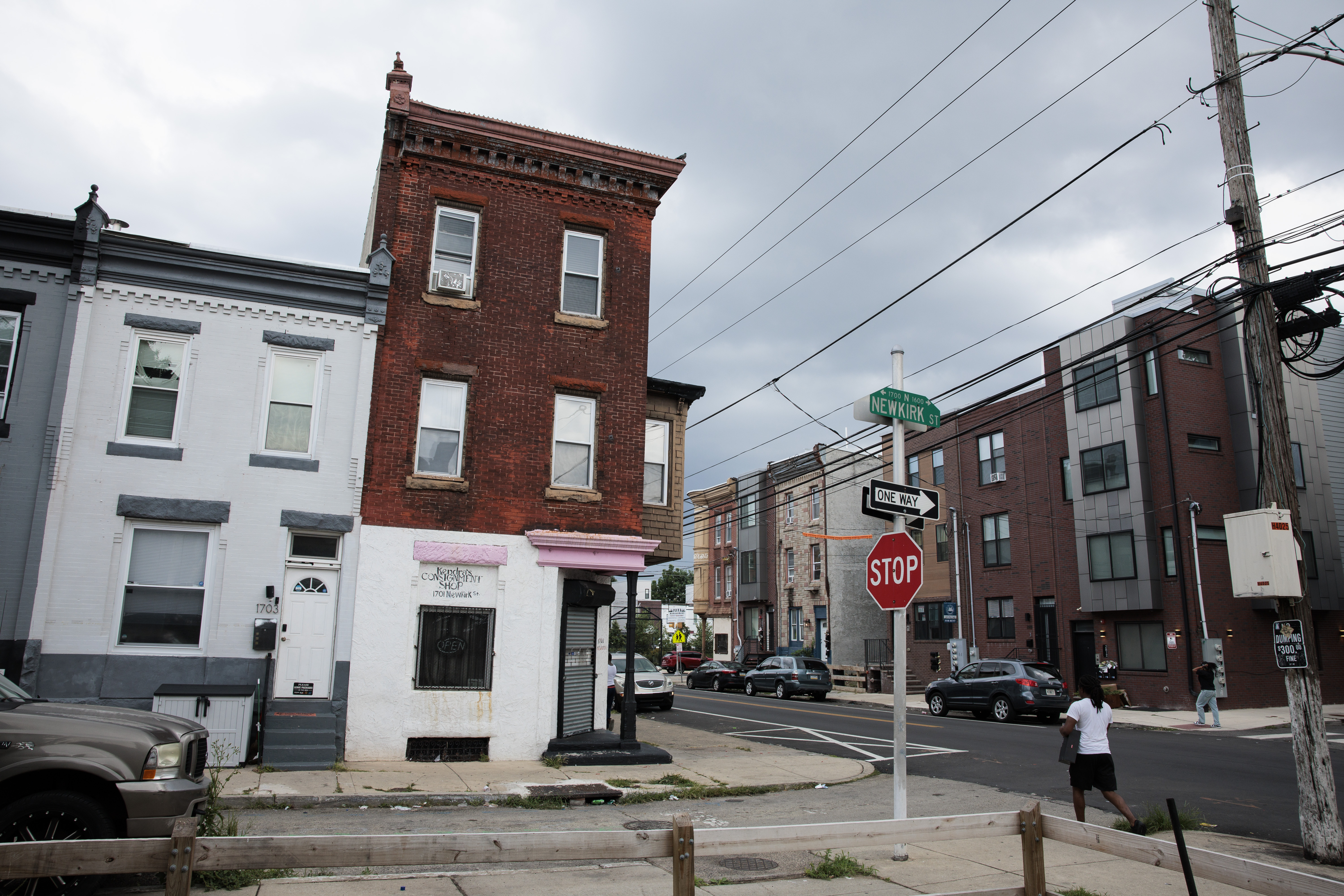
    The 1700 block of North Newkirk Street on Aug. 20. On this block in Strawberry Mansion, some homeowners saw their property assessments double.Monica Herndon / Staff Photographer

    Fair value

    Over in Allegheny County, home to Pittsburgh and many of its suburbs, the courts have ordered local officials to begin a full property reassessment, which must be completed by 2032. Pennsylvania is unique in not requiring regular reassessment.

    Pittsburgh’s values were last set in 2012, but more than a third of the state’s counties haven’t been reassessed since the 20th century. This leads to wildly out-of-whack and unfair tax bills for some residents.

    Of course, Philadelphians can tell you that regular reassessment is not a panacea for discontent. The city’s most recent valuations have set off a firestorm of consternation, especially given how many lower-income areas saw big increases. It doesn’t help matters that the neighborhoods Cherelle L. Parker used to represent on City Council, and powered her election as mayor, saw some of the smallest boosts in valuation.

    As tempting a story as the mayor favoring her core supporters while squeezing the city’s poorest neighborhoods may be, that is not an accurate assessment.

    Given the massive decrease in shootings and consistent efforts to clean and green the city, it is not surprising to see increased demand for neighborhoods like Kensington, Grays Ferry, and Fairhill. While there is still a long way to go on public safety, higher valuations are a sign of progress.

    It also should remind Council members that their theory that development drives property appreciation is faulty. Many of the neighborhoods with higher appreciation have seen little to no new development. In Northern Liberties/Fishtown, one of the city’s hot spots for new construction, values increased by just 1.7%.

    Additionally, the city has a powerful tool for protecting low-income homeowners: the homestead exemption. While the city’s stated property tax rate is 0.013998, owner-occupants pay a much lower rate. For a home valued at the city’s median of $260,000, the total tax bill is $2,239.68, or 0.008614. In Fairhill, where the median home value is $80,000, the homestead exemption eliminates the total tax liability for many residents. Boosting the exemption from $100,000 to $110,000 or $120,000 would ensure more low-income homeowners are protected from rising tax bills.

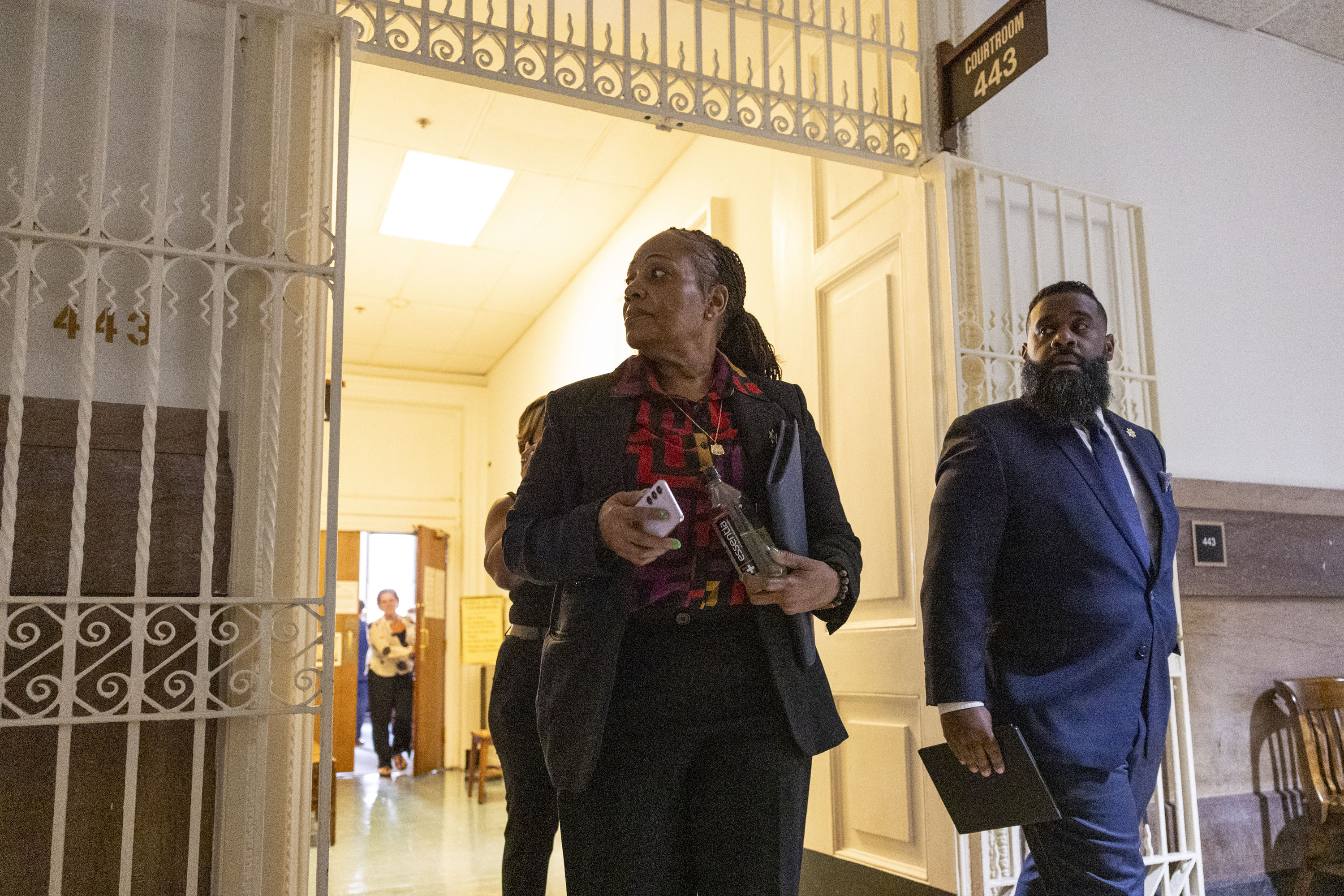
    Sheriff Rochelle Bilal is seen exiting a courtroom at City Hall on Wednesday.Tyger Williams / Staff Photographer

    Bilal’s babysitter

    Mayor Parker wouldn’t do it. City Council wouldn’t, either. Accountability for the Philadelphia Sheriff’s Office instead came from Common Pleas Court Judge Paula A. Patrick.

    After listening to a list of excuses and promises, it was clear Patrick had her fill of incompetence. The beleaguered department, which had been ordered to produce a specific set of documents months ago, suddenly released thousands of pages the night before the hearing.

    Instead of putting officials before the court with direct knowledge of why a backlog in processing property deeds began, Sheriff Rochelle Bilal instead sent Steven Wakefield, a deputy undersheriff who was hired just two months ago. Wakefield was tasked with testifying about past events he was not privy to, despite repeated warnings from the judge.

    As for Bilal herself, she claims to have “limited personal knowledge of the underlying facts.”

    Issuing deeds is one of the core functions of her job, but apparently the sheriff had no idea what was going on. Instead, Wakefield tried to scapegoat a former employee named Melissa Simpson, who had apparently been handling the entire process on her own without oversight from anyone.

    This testimony led to an agreement in which Bilal will have to identify someone to oversee deed sales for six months. A babysitter, essentially.

    While it is good to see someone holding the sheriff accountable for once, a temporary babysitter is only a partial solution. The office should be abolished.

    Sadly, that seems unlikely. Bilal may struggle to perform her day job, but she has thrived at building up political allies. She has been invited to news conferences by District Attorney Larry Krasner, remains a political player after her years running the Guardian Civic League, and faces next to no criticism from City Council. She was even honored by the Phillies as a “hometown hero.”

    Troublingly, Bilal does not even seem to have an opponent in next year’s elections, despite the continued public mismanagement of her office. That, at least, should change.

    Perhaps the Ambitious Abingtonian can find a Perspicacious Philadelphian willing to take on the challenge of replacing Bilal.

  • Winners of the Philadelphia Cycling Classic recall ‘the theater’ the race once was, and can be again

    Winners of the Philadelphia Cycling Classic recall ‘the theater’ the race once was, and can be again

    There’s a stretch along the 14.4-mile course of the Philadelphia Cycling Classic that remains a core memory for Freddie Rodriguez.

    It’s been more than a decade since his last professional race, but the former American road racer described the course as a scene that engaged all five senses.

    Rodriguez referred to it as “the theater.”

    “As you come into Ben Franklin Parkway, there’s the park on the right that feels like you’re riding into a stadium,” Rodriguez recalled this week, ahead of the race’s return after a 10-year hiatus. “It all almost feels like a track, like a velodrome; it’s a really cool feeling, and then you head down Kelly Drive, which is open and where the race opens up. And just the mix of people out watching a bike race and all of us [racers] riding really hard, it’s really a great part of what makes this race so special.”

    While the famed Manayunk Wall gets all the notoriety, Rodriguez contends that multiple sections of the course are appealing to riders and spectators alike. From going through Lemon Hill to the bottleneck of riding down Main Street Manayunk, Rodriguez says all of it is “iconic to the race.”

    Rodriguez, who won the men’s event in 2001 and placed in the top 10 on four other occasions, including a pair of third-place finishes (2008, 2012), says there was a time when the annual Classic, which has been referred to by many different names over the years, was the preeminent road race in the country.

    “I’m not kidding, it was the No. 1 one-day race in America,” Rodriguez, who will be on scene as a commentator alongside former racers John Eustace and Mark Holden for 6abc’s broadcast. “And I do believe it’s now again the number one day race in America. Hopefully, this will also help set a foundation for professional racing in the United States.”

    Eric Heiden raises his hands in victory, crossing the finish line for Team 7-Eleven, becoming the first winner of the men’s event.George Widman

    ‘Ten laps of that thing’

    It’s hard to look at the Eric Heiden’s cycling career and not call him an overachiever. The former Olympic speed skater turned cycling road racer, won the first Philadelphia Cycling Classic when it was called the Philadelphia International Championship in 1985, and parlayed a Hall of Fame sports career in cycling and speed skating. Now, he’s an orthopedic surgeon with a practice in Utah, previously serving as team doctor for a number of U.S. Olympic teams and even doing a stint for the NBA’s Sacramento Kings.

    His favorite memories mirrored Rodriguez, noting that the stretch along Kelly Drive offered a “recharge.”

    “For me, the nicest thing was riding along the river there, the Schuylkill River, just where it was nice and cool,” Heiden recalled. “It was flat and you could kind of recharge before you took that ride and headed into Manayunk, which was very hard.”

    Riding up the steep half-mile stretch of the famed Manayunk Wall has been a daunting task for amateur and professional riders alike. Akira Suwa / Staff Photographer

    But his memory of tackling The Wall, the near half-mile stretch of Levering Street in Manayunk, is a memory he’ll also never forget — but not because it was another favorite.

    “We had to do 10 laps of that thing,” Heiden told The Inquirer. “And, I’m not a very good climber; I was a little heavy for that climb. Even if you’re a good international racer, it’s a challenge getting up that thing; I’m not going to lie to you. I mean, it’s like 20% grade. Yeah. You look at that, and as you come around the corner you’re going, ‘Whoa, nelly.’”

    Heiden, who originally used bikes to cross-train for his Olympic speed skating career, ended his cycling career as an inductee into the United States Bicycling Hall of Fame. Racing in Philly, he says, was a big part of that.

    “This race proved a lot to me, not just in my abilities as a racer, but how much I was able to do,” he said. “To me, this was the first legitimate national championship where the distance was significant. The organizers, those guys were passionate about the sport, and they really put together a good experience for the riders and for the teams.

    Eric Heiden said that the Philadelphia International Cycling Classic, in all of its iterations, served as a proving ground for many cyclists, including himself. Photo by Lee Rogers

    “It was really professionally run. Our team came there expecting to win the national championships, and we had all the top guns and 7-Eleven showing up. It meant that much and was a race that was taken very seriously.”

    What does the return of the Philadelphia Cycling Classic represent?

    “This race has a strong tradition in the USA, and in the history of USA cycling,” Heiden said. “To see it once again resurrected gives us a lot of hope on where cycling is headed these days.”