Tag: topic-link-auto

  • Metropolitan Museum of Art scraps John Galliano-focused Met Gala plans

    Metropolitan Museum of Art scraps John Galliano-focused Met Gala plans

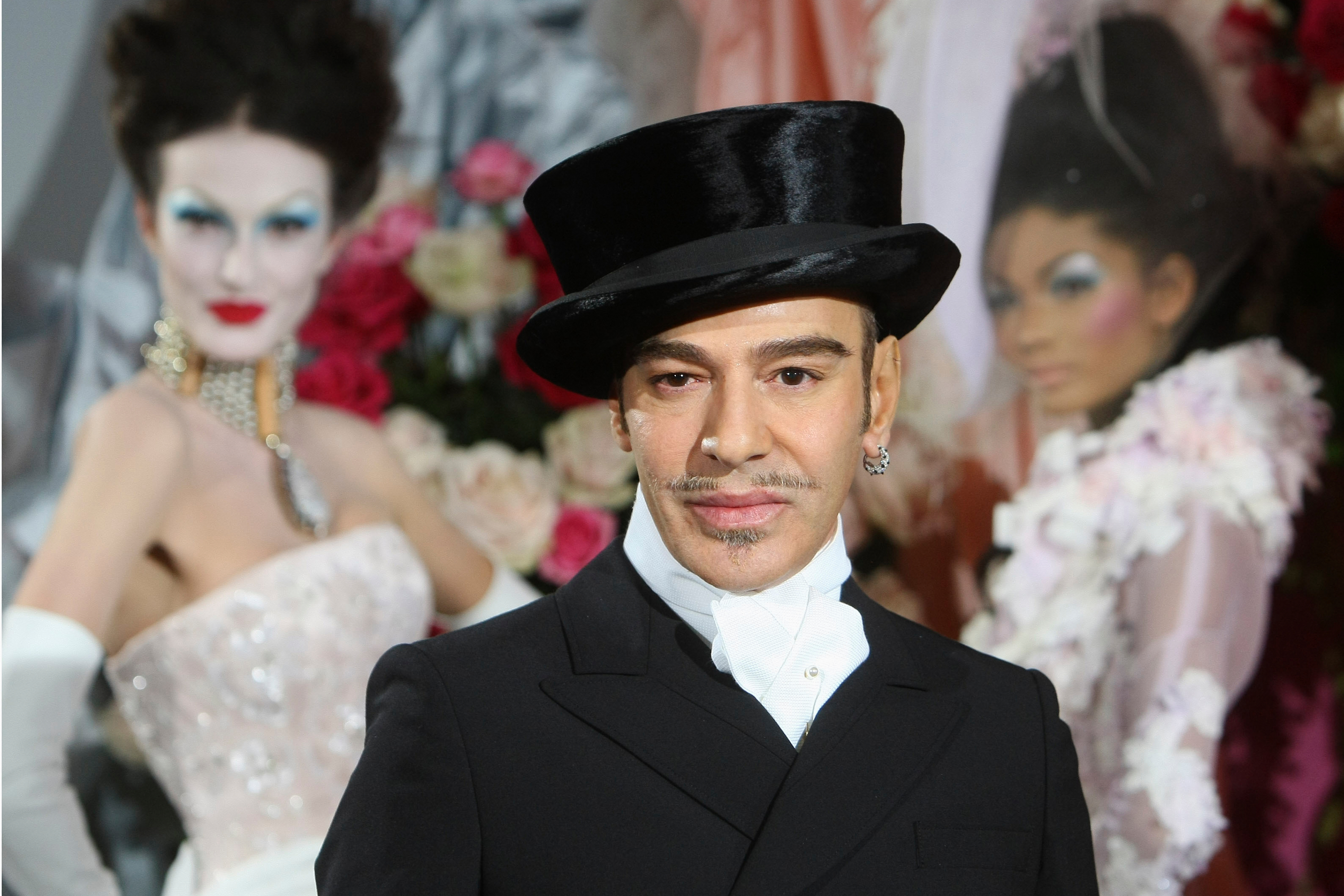
    Next year’s Met Gala will not spotlight controversial fashion designer John Galliano after all.

    The Metropolitan Museum of Art and Galliano announced in a joint statement that the museum would not move forward with John Galliano: Horizons. Galliano, 65, is a British designer who has worked for some of the industry’s top fashion houses, including Christian Dior, Givenchy, and Oscar de la Renta.

    At the peak of his career, he served as Dior’s creative director for nearly 15 years. But in 2011, he was infamously canceled after his conviction in a Parisian court over a series of racist and antisemitic comments. It cost him his job leading Dior. At the time, Galliano said his alcohol abuse sparked the outburst.

    The museum’s retrospective was reportedly going to highlight the fashion director’s portfolio while also addressing his personal life, including his public exile and the work he later did to atone and get sober.

    “Following thoughtful discussions with many stakeholders and with John Galliano, we together have decided not to proceed with the exhibition,” said Metropolitan Museum of Art director Max Hollein.

    The announcement came exactly one month after the initial Met Gala theme reveal. Galliano’s exhibit would have only been the third retrospective for a living designer in the Costume Institute’s history.

    While fashion experts largely agreed the fashion director’s work is seminal, critics said the exhibit’s timing — which coincides with a global surge in antisemitism — was cause for concern.

    Professional thrifter and fashion writer Virginia Chamlee previously told The Inquirer that while the Met was equipped to accurately cover the designer’s checkered past, she was concerned about whether the storytelling would resonate with the average Met Gala consumer.

    The annual exhibit’s largest publicity draw is a televised red carpet where celebrities invited often wear pieces by or paying tribute to the spotlighted designer — not the exhibit itself.

    “Even if the museum intends to offer a complete examination of Galliano’s complicated legacy, it may come off as a straightforward celebration of someone who said things so heinous and racist that they were charged and fired for them.”

    In the joint statement, Galliano himself said he requested not to move forward with the exhibit.

    “After much reflection and discussion with The Met and all those involved, I have decided, with great sadness, that it is best for the exhibition not to take place at this time,” Galliano said. “I remain fully accountable for the pain caused by my words in the past, particularly the hurt I caused to the Jewish and Asian communities, and I remain deeply sorry for it. I understand that meaningful atonement is not achieved through an exhibition, institutional recognition or a single public gesture. It is a continuing responsibility, demonstrated through listening, learning and one’s conduct over time.”

    Galliano went on to thank Anna Wintour, a longtime champion of Galliano’s and the global editorial director of Vogue, chief content officer of Condé Nast, and Met Gala chairperson responsible for the event’s programming.

    In her extended statement to Vogue, Wintour framed Horizons’ cancellation as a “postponement.”

    “John’s decision to ask the Museum to postpone the exhibition devoted to his work is very courageous and a measure of the man he is,” she said. “I believe this is the right decision, and both he and the Museum have my full support.” The Met’s version of Wintour’s statement does not use that phrasing.

    Information on a new Spring Costume Institute exhibition and the 2027 Met Gala will be announced later, the museum said. The Gala itself was initially scheduled to take place May 3, though it’s unclear if that date would shift in light of the exhibit change.

  • When it comes to sportswashing, Trump is off to the races

    When it comes to sportswashing, Trump is off to the races

    Donald Trump seemed genuinely happy last Sunday as he waved the green flag to start the Freedom 250 Grand Prix, the first IndyCar race in the nation’s capital. Whether you regarded the event as crass exploitation or a rousing sports presentation, it certainly wasn’t surprising.

    Way before he became a politician, the president was an entertainer.

    Trump made cameos in movies, headlined his own reality TV show, The Apprentice, and organized high-profile boxing matches and MMA fights at his casinos. He owned the Miss Universe pageant and a football franchise of the short-lived USFL, brought in Michael Jackson to the grand opening of his Trump Taj Mahal in Atlantic City, and he even “fought” in wrestling bouts himself.

    As a journalist based in Berlin, I’ve done a great deal of reporting over the past decade about the global tilt to the political right. What Trump has done as president, especially in his second term, echoes what autocrats around the world do to boost their public image.

    The race was already the final event of Trump’s attempt to commandeer America’s Semiquincentennial festivities under the Freedom 250 banner. But just in case it wasn’t clear who the star was, the military flyover and the presidential limousine cruising down Pennsylvania Avenue before the race made it obvious. The president was also front and center (it was coincidentally his birthday, after all) when he used the South Lawn of the White House to host a mixed martial arts event on June 14.

    It seems fitting that, just like Trump’s family businesses have no problem taking large amounts of money from the leaders of authoritarian nations like Saudi Arabia and the United Arab Emirates — including $2 billion to a private equity firm founded by son-in-law Jared Kushner and $500 million for the Trumps’ crypto ventures — the president would also take to their sportswashing playbook.

    Both the Saudi government and the UAE have used sports and entertainment to improve their global reputation and distract from allegations of human rights abuses and repressive policies.

    Trump’s supporters may argue that the president’s great race wasn’t much different from the high-profile sporting contests that are held in European capitals — and they would be right, up to a point. A crucial difference is that most of those European events have historical and communal aspects to them that are very different from the spectacles Trump is setting up left and right.

    The Monaco Grand Prix, for instance, was first held in 1929, during a time when European motor sports were gradually turning professional. In the years leading up to the first race in the principality, other famous European circuits like Monza, the Nürburgring, or Spa-Francorchamps had held their first races, so it was fitting for the time.

    The Tour de France has been held since 1903 and was founded as a marketing ploy for a French sports paper. The first tour consisted of only six stages, ended in a small suburb of Paris, and developed steadily over time to become the global phenomenon we know today. Formula E races are held in world capitals, but in restricted spaces like former airports or fairgrounds.

    Trump’s Freedom 250 Grand Prix had more in common with the Azerbaijan Grand Prix in Baku.

    A former member state of the Soviet Union, Azerbaijan had been ruled autocratically by former Azerbaijani KGB head Heydar Aliyev since 1993. Shortly before his death in 2003, he had his son take over in an election described as fraudulent by independent observers. Ilham Aliyev has been ruling the country ever since — and has implemented a thorough sportswashing strategy for more than a decade.

    Baku has hosted European Football Championship games and has been a sponsor of Spain’s Atlético Madrid. For the grand prix, the country pays 40 million to 50 million euros per year to Formula One — all while freedom of speech is highly restricted, journalists are being jailed, and there’s a gap — in both income and equity — between the shiny capital of Baku and the rural areas filled with subsistence farmers.

    With the ongoing war in the Middle East, the Jeffrey Epstein issue still looming, and the cost of living continuing to rise thanks to his bad policies, Trump may believe he can paper over the cracks with a checkered flag.

    After all, if the people can’t afford bread, Trump’s happy to give them circuses.

    Wim Orth is a journalist with WELT in Berlin and an Arthur F. Burns fellow at The Inquirer.

  • Seeking: A barn? Chester County’s only roller derby league is hitting obstacles while looking for a new space

    Seeking: A barn? Chester County’s only roller derby league is hitting obstacles while looking for a new space

    After graduating nursing school and navigating the loss of her mother, Corinne Kucewicz was looking for something positive to focus her energy on. That’s when she found Brandywine Roller Derby, Chester County’s only league.

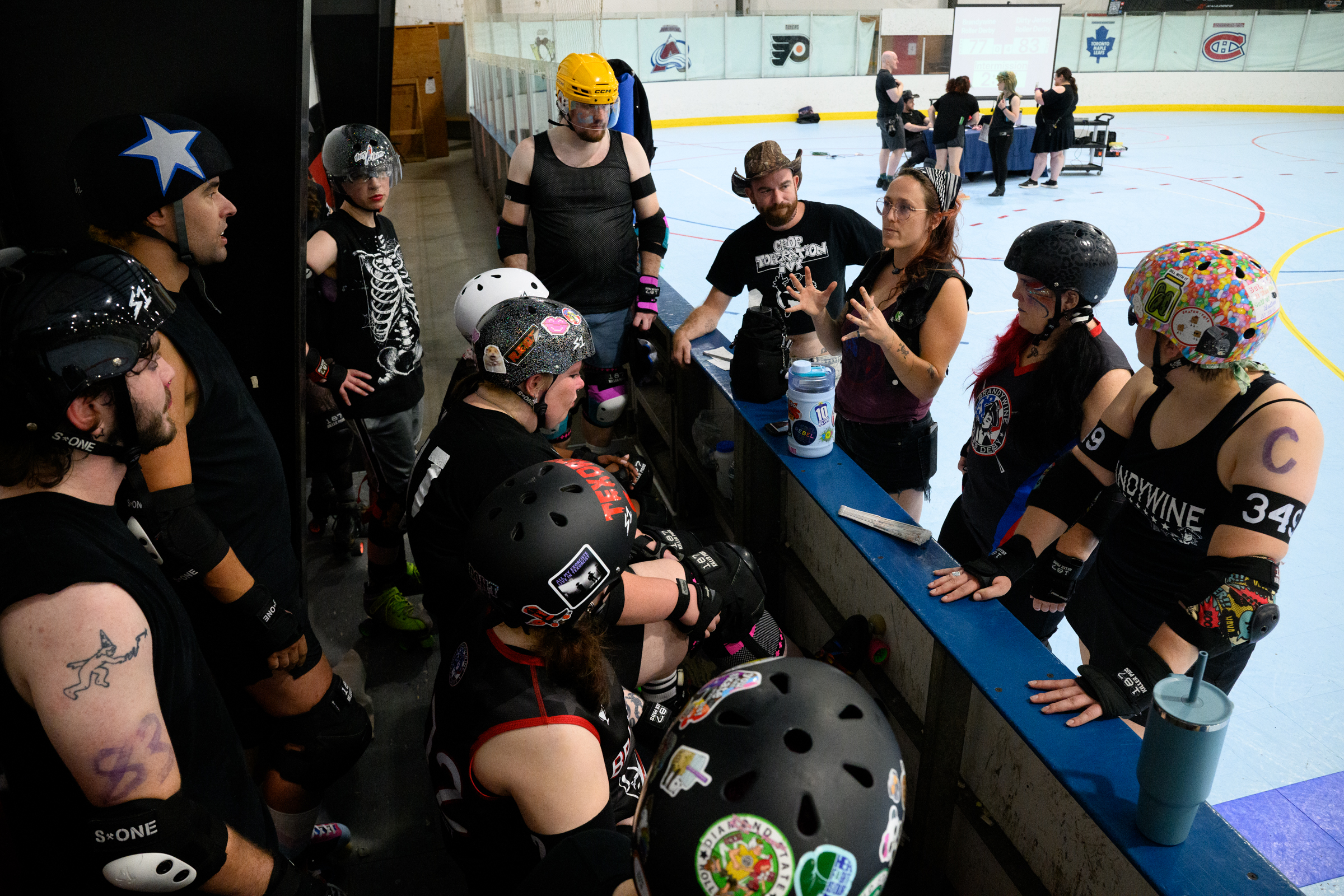
    Now the league’s president, overseeing roughly 26 members, Kucewicz, 28, worries about Brandywine’s future as they struggle to find a permanent and affordable home in Chester County to practice, hold games, and fundraisers. Without any roller rinks in the county, they’ve ended up at their current space at a school facility in Exton. It offers enough room for their track, but with a slippery — and sometimes muddy — floor that can make skating conditions iffy, the location is starting to hurt retention.

    “It worries me if we don’t find another space that our league is going to go kaput,” said Kucewicz, who goes by Maria Von Scrapp on the track. “That would obviously be worst-case scenario, but unfortunately, as one of the leaders of the league, that’s something I have to worry about.”

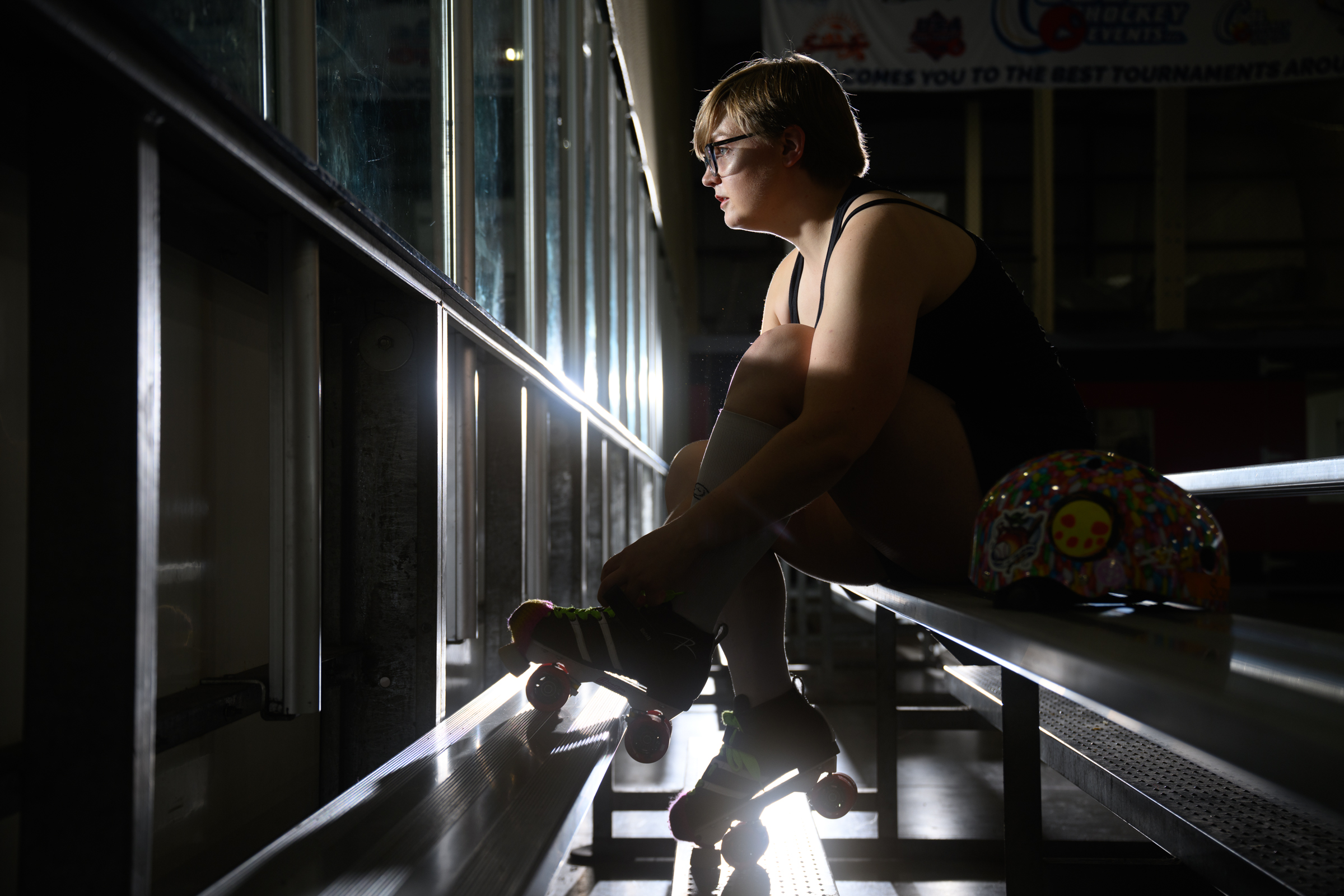
    Corinne “Maria Von Scrapp” Kucewicz, captain of Brandywine Roller Derby, sits for a portrait at the 422 Sportsplex in Pottstown on Saturday, Aug. 22, 2026.Kriston Jae Bethel / For the Inquirer

    Roller skating has seen its peaks and valleys. There was a boom as far back as the 1880s. More recently it’s been a fixture of school trips or birthday parties. Roller derby, which started in 1935, has a long history itself, transforming from a race, to a full-contact sport, to a scripted professional-wrestling-esque performance.

    Today’s roller derby — a DIY, gender-expansive, and LGBTQ+-friendly sport — cropped up in the early 2000s. Gone are many of the banked tracks, the raised, curved oval that was synonymous with derby of the ’70s and ’80s. Many leagues rent spaces and play on “flat tracks,” which is exactly how it sounds.

    COVID-19 offered a bit of a paradox for roller skating and derby. The pandemic led to the closing of rinks across the country, as many large venues struggled with shutdowns. It simultaneously put roller derby leagues on pause, with skaters unable to hold practices or bouts (i.e. games), eating into funds they had raised through selling tickets and skaters’ dues. Some leagues collapsed.

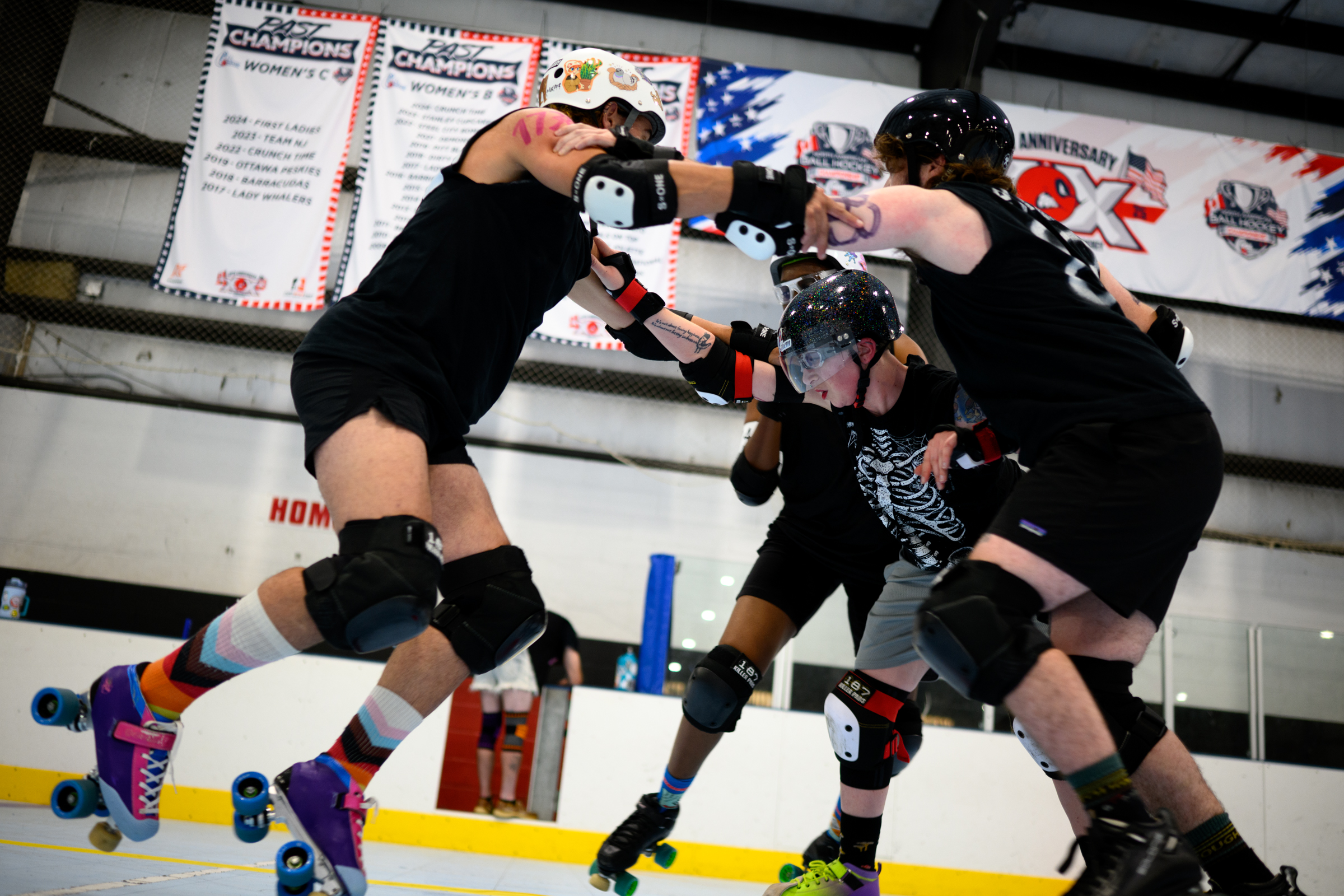
    Members of the Brandywine Roller Derby warm up on the track before a bout against the Dirty Jersey Roller Derby Violet Uprising at the 422 Sportsplex in Pottstown. Kriston Jae Bethel / For the Inquirer

    At the same time, roller skating spiked, with merchandisers struggling to keep up with demand as people increasingly took up the hobby.

    As pandemic restrictions eased, and roller derby leagues were able to practice again, they saw a depleted returning membership but heightened interest in the niche sport.

    Kucewicz was among them. She showed up with a cohort of other interested skaters to a 2024 recruiting event. The team took her in despite having no past skating experience, and taught her how to skate, how to fall safely, how to hit, and how to take a hit.

    “It was an amazing mix of friendly people and people that I saw myself being friends with,” Kucewicz said. “That was something that I definitely needed at the time, and is still important.”

    Before the pandemic, Brandywine had a large league that was doing well, Kucewicz said. When they were able to start skating again after, they were down to six returning skaters but also had a crowd of interested newbies.

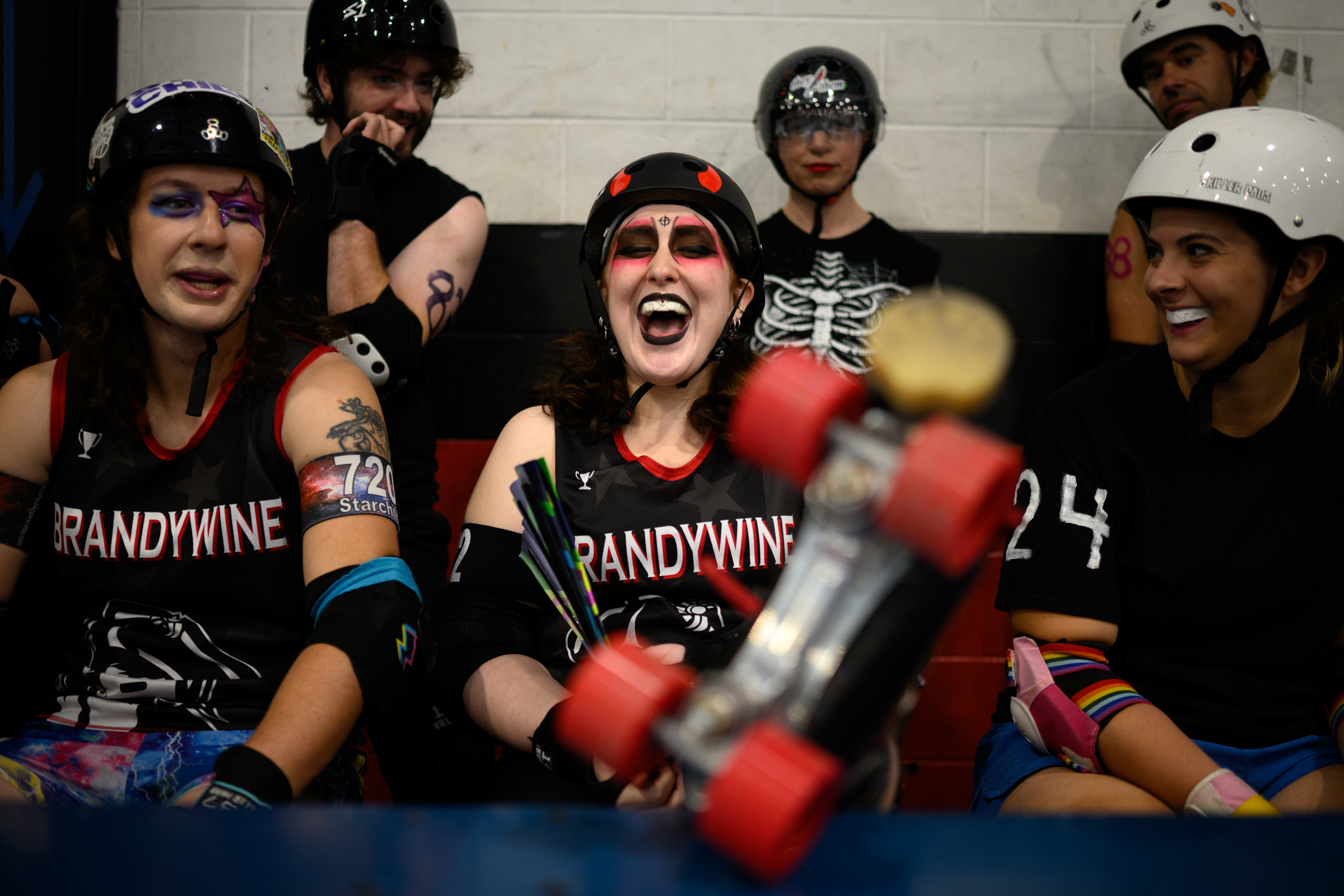
    Rachael “The Texorcist” Gable laughs alongside teammates. Kriston Jae Bethel / For the Inquirer

    Finding a space has proven to be difficult. When the league was founded in 2010 by a group of skaters, they met at the Caln Roller Rink in Downingtown. But a changing of the rink’s ownership ultimately closed the rink.

    The league ended up at Collegium Charter School in Exton two years ago, practicing in an outdoor-indoor, climate-controlled space. The floor is, essentially, plastic tiles on top of dirt. When it rains, mud seeps through.

    The floor itself is uneven: On one side of their track, it goes uphill; the other, downhill. Aside from scrimmaging, derby is a lot of learning and drilling fundamentals, focusing on agility and footwork. A slippery, uneven floor makes that difficult.

    “Members have left and gone to other leagues because they’re afraid, because our floor is so slippery, that they’re going to injure themselves. Or they just want a higher level of derby that we can’t really provide at this moment because our floor is not that great,” Kucewicz said.

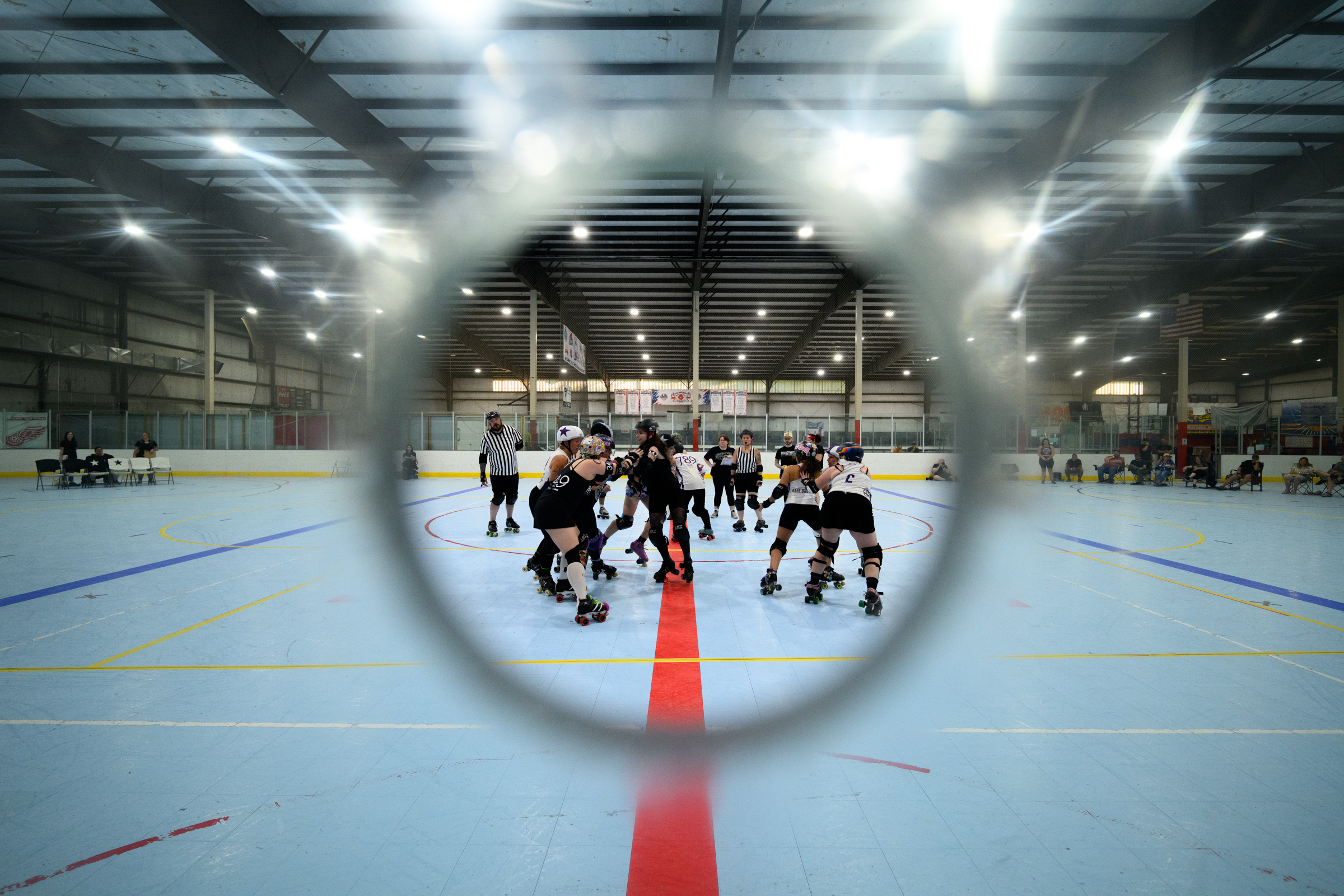
    Brandywine Roller Derby and Dirty Jersey Roller Derby Violet Uprising compete during a bout at the 422 Sportsplex in Pottstown. Kriston Jae Bethel / For the Inquirer

    As they prepare for a new class of recruits — they’re holding a new skater program Sept. 20 — they want to find something more suitable.

    In their hunt, they’ve been priced out of anywhere that can be an option for them, said Christi Tuminelli, a league skater who has been overseeing the search for a new space. Most warehouse spaces are going for $12 to $24 per square foot. Their budget is closer to $2 per square foot. They’ve reached out to more than 30 properties. Most have gone quiet.

    Others don’t work, either because the property doesn’t fit the size of the track they need, or the owner isn’t interested in sports. They also have had to contend with worries about damaging the floor, which they say is a nonissue.

    The league is open-minded about its future home; Tuminelli was contacting farms about their barns. They need an open space, with minimal columns in the way. The track spans 108 by 75 feet, which is roughly 8,100 square feet. They want to stay in Chester County, with the hope of getting more involved with the community when they have a stable location. Ideally, they’ll be able to host the public for games or fundraising events. Right now, the team hosts its bouts in Pottstown, in Montgomery County. They’re breaking even between renting the space and raising funds from ticket sales, they said.

    “Right now we’re at an impasse because we need the space to generate the income, but we can’t afford the space without new people,” Tuminelli said. “We are a working nonprofit that can pay sustainable rent. We just can’t compete with the market rates in Chester County.”

    While derby is a sport, it’s also a community.

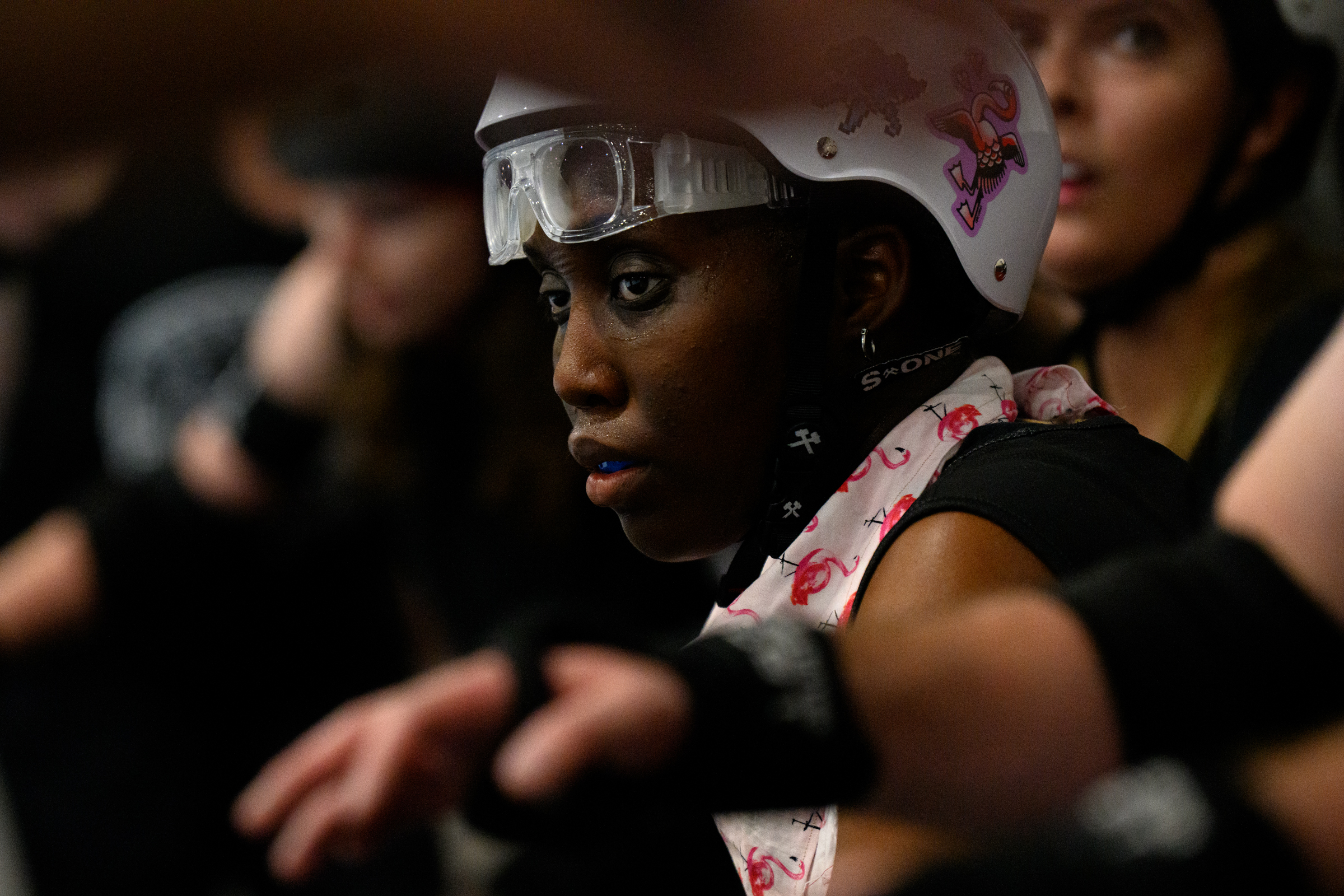
    Najah “Chaotic Condor” Coon from Brandywine Roller Derby sits on the bench during a recent bout. Kriston Jae Bethel / For the Inquirer

    Tuminelli — or Mother Mayhem, on the track — went to her first bout wracked with nerves but walked away feeling excited and empowered. Tuminelli, 42, was never a “sports girlie” growing up, she said. But if she had known what they offered, maybe she would have joined earlier.

    With other teams an hour or so away from the suburbs, it’s an important to have the outlet within their own community, Tuminelli said.

    “When I moved here from New York, I didn’t know anybody. And having a kid that was young and being in a new space, it’s scary as a new mom,” she said. “I wanted something for me, and this was great. Derby just allows you to do things. It raises your confidence.”

    This suburban content is produced with support from the Leslie Miller and Richard Worley Foundation and The Lenfest Institute for Journalism. Editorial content is created independently of the project donors. Gifts to support The Inquirer’s high-impact journalism can be made at inquirer.com/donate. A list of Lenfest Institute donors can be found at lenfestinstitute.org/supporters.

  • World Series or bust? The surging Phillies should know that answer by the time they leave Arizona.

    World Series or bust? The surging Phillies should know that answer by the time they leave Arizona.

    In October of 2023, the Diamondbacks dashed the Phillies’ dream of winning consecutive pennants.

    In September of 2026, the Diamondbacks will serve as a benchmark as to whether these Phillies even have a chance of achieving what the 2023 Phillies came so close to achieving.

    Hard to believe, Harry.

    A month ago, as the Phillies foundered on the edges of relevance, none of this seemed to matter much. Today, the Phillies have found an identity grounded in smart at-bats, a solid starting rotation, and unexpectedly competent defense. Suddenly, what seemed like a wasted season through four months has transformed into a season of hope and expectations.

    As in, if the Phillies are playing this well now, there’s no reason to think they can’t win their first World Series in 18 years.

    We’ll know better by dinnertime Wednesday.

    The Phillies on Monday night begin a three-game series in Arizona that could determine whether the Phils host a wild-card series in October. The D-backs lead the season series after winning two of three in Philly in April.

    As this series begins, the Diamondbacks hold the final wild-card slot but stand 4½ games behind the Phillies. The Phillies are tied with the Cubs, but the Cubs won six of seven against the Phillies in the April games that exhausted the teams’ head-to-head matchups. Should the Diamondbacks surge and the Cubs stall, there’s a chance this week’s results provide the tiebreaker that gives the Phillies the top wild-card spot, the No. 4 seed in the National League playoffs, and home-field advantage over No. 5 that comes with it.

    Of course, the Phillies can render these scenarios obsolete if they clobber the Diamondbacks, pass the Cubs, and maybe even catch the Braves for the NL East title, in which case tiebreakers won’t matter. But the Braves lead by five games with 25 to play, so that seems a bit much to ask.

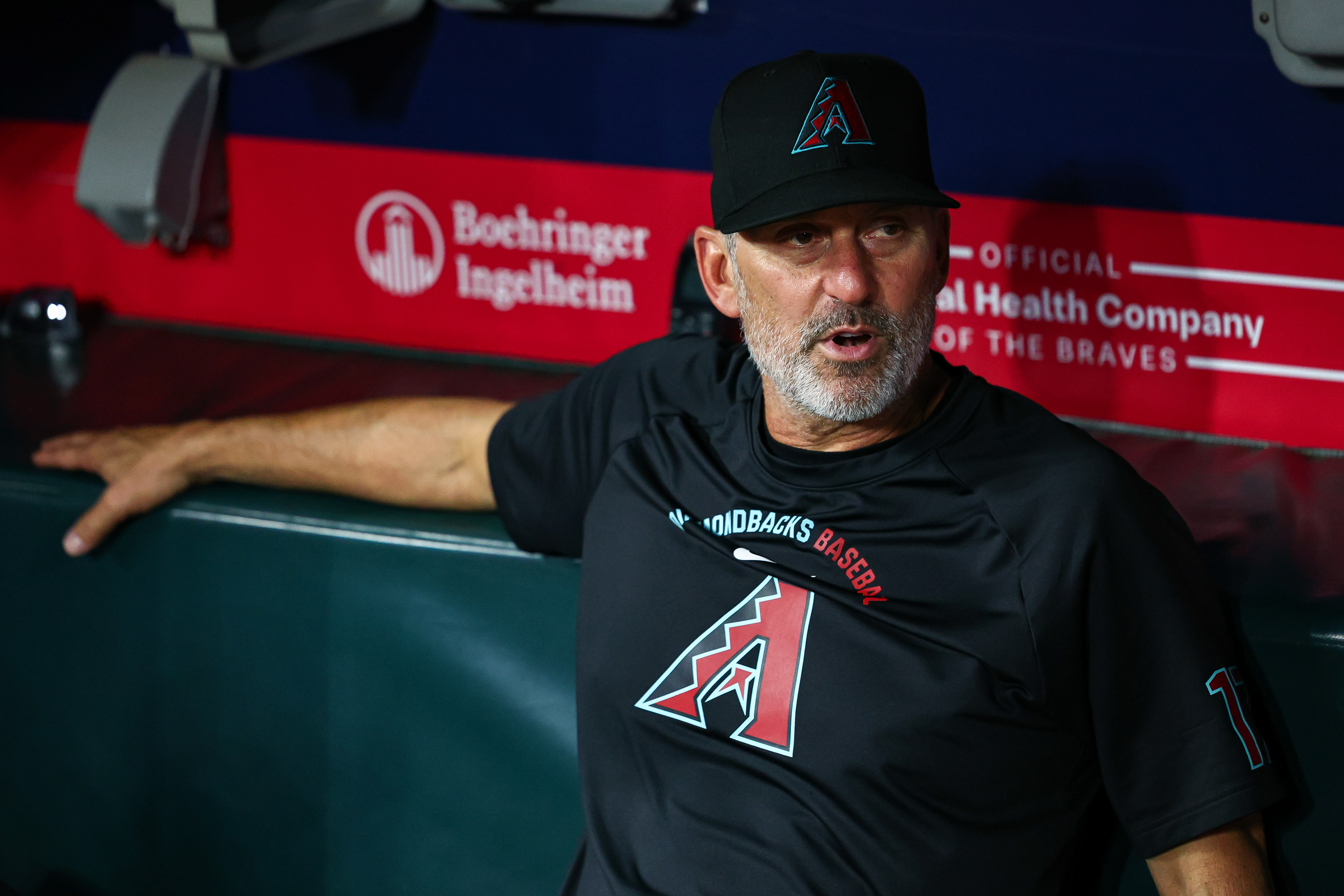
    Manager Torey Lovullo’s Diamondbacks have a half-game lead on the Padres for the third and final wild-card spot going into Monday’s series opener against the Phillies.Colin Hubbard

    For the moment, it’s more important to judge whether the Phillies can play excellent baseball on the road against a team that is 13-8 against them since Game 3 of the 2023 NLCS.

    The magnitude of the lows might skew the emotions, but the lows against the Diamondbacks seem to be lower than most of the other lows this Harper-Wheeler-Schwarber edition of the Phillies has delivered since 2022.

    It begins with that 2023 NLCS, when the Phillies’ bats deserted them and they lost Games 6 and 7 at home. The Phils haven’t won a season series against Arizona since, and their first meeting this season did not portend favorably.

    The Phillies struck out 16 times against the Diamondbacks on April 10, 16 games before the Phillies fired manager Rob Thomson and promoted new bench coach Don Mattingly to interim manager. The 16 Ks remain a season high, part of the 8.8 strikeouts per game that was among baseball’s worst rates.

    Now, though, they’re striking out 2.5 fewer times per game, the second-best rate in baseball. It is the most promising stat of a slew of numbers that indicate that this Phillies team might even be able to topple the Dodgers in the postseason.

    If it’s hard for you to believe, that’s completely understandable. Even in the middle of their recent nine-game winning streak, their longest in four years, the Phillies supplied little real reason to believe they might make another long run into October.

    Shortstop Trea Turner’s Season from Hell continued. The bullpen remained unreliable. And the two best pitchers weren’t the two best pitchers.

    Things change.
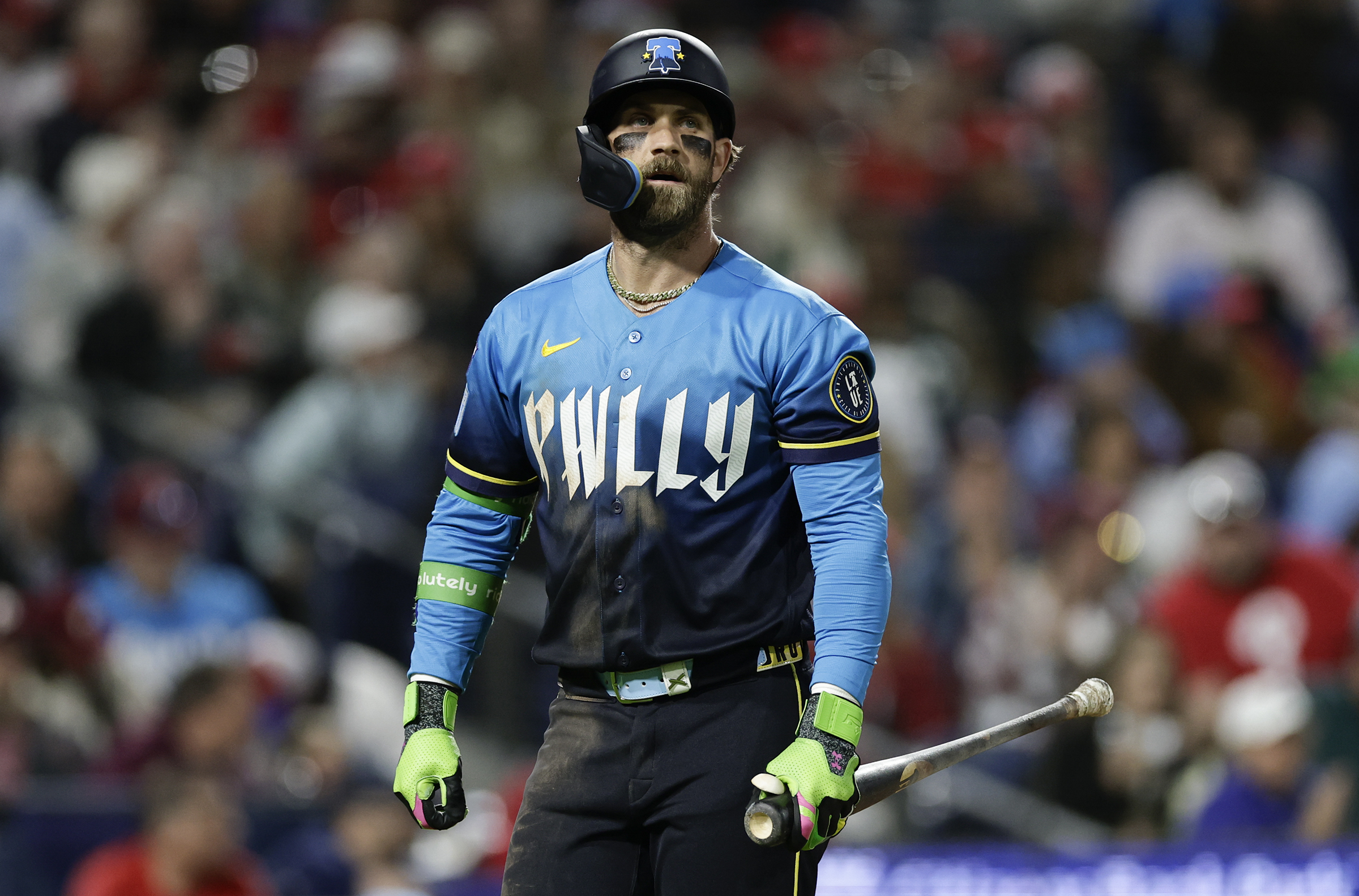
    Phillies first baseman Bryce Harper after striking out against the Arizona Diamondbacks on April 10.Yong Kim / Staff Photographer

    Struggling aces Cristopher Sánchez and Zack Wheeler just combined to allow one run over 13 innings Saturday and Sunday against the Angels. Which, of course, makes them formerly struggling aces Cristopher Sánchez and Zack Wheeler. Add in Jesús Luzardo’s seven shutout innings in Seattle on Wednesday, and that’s one run allowed for the Big Three in their last 20 innings.

    That’s just the icing.

    Consider the continued efficiency of No. 4 starter Aaron Nola, who’s on a six-game heater, and rookie Andrew Painter, who’s been better than a No. 5 in five of his six starts since his recall from the minors, and the Phillies transform from Lost Cause to Title Contender.

    They’ve won 13 of 15 games, six of those wins on the road, three of the last five in their last at-bat.

    Oh yeah.

    The hitting.

    Since three-time batting champ Luis Arráez played his first game Aug. 4 just after Dave Dombrowski’s latest deadline magic, the Phillies lead Major League Baseball with a .272 batting average and are tied with the Red Sox for the lead in on-base percentage, at .353, improvements of 35 and 48 points, respectively; their .305 on-base percentage had been third-worst. In that same span, they lead the National League with 100 walks. They are averaging 5.5 runs, an improvement of more than a run per game.

    Since Arráez slid into the cleanup spot they are 16-7, have gone from eight games above .500 to a season-high 17 games above .500, and are tied with the Cubs atop the National League wild-card standings going into Monday.

    Arráez’s arrival shuffled the defense, an unintended consequence that reaps daily rewards. Arráez is best at second base, so Bryson Stott moved to third base, where he has proved to be the best third baseman in baseball since the move. Third baseman Alec Bohm pushed first baseman Bryce Harper to right field, where both are at least average, whereas neither was average in his previous position.

    In the middle of it all, Harper has reached base in 32 consecutive games, a career best. A two-time MVP in the midst of his most efficient stretch of offense would be the biggest news of all on a team that didn’t have so much to win, so much to lose, and so much scar tissue since its NLCS collapse in 2023.

    Still.

    Listen, the Phillies aren’t the best team in baseball. They still make too many baserunning errors. Wheeler is still walking too many batters (three more Sunday). The bullpen is still thinner than the Arizona atmosphere.

    But if they take off from PHX on Wednesday night with two or three wins in hand, maybe overtake the Cubs if the Brewers beat up on them the next four days, and sustain this surprising run of professionalism and competence, then yes.

    Believe it.

    World Series or bust.

  • Philly’s first Kyo Matcha draws long lines in Chinatown

    Philly’s first Kyo Matcha draws long lines in Chinatown

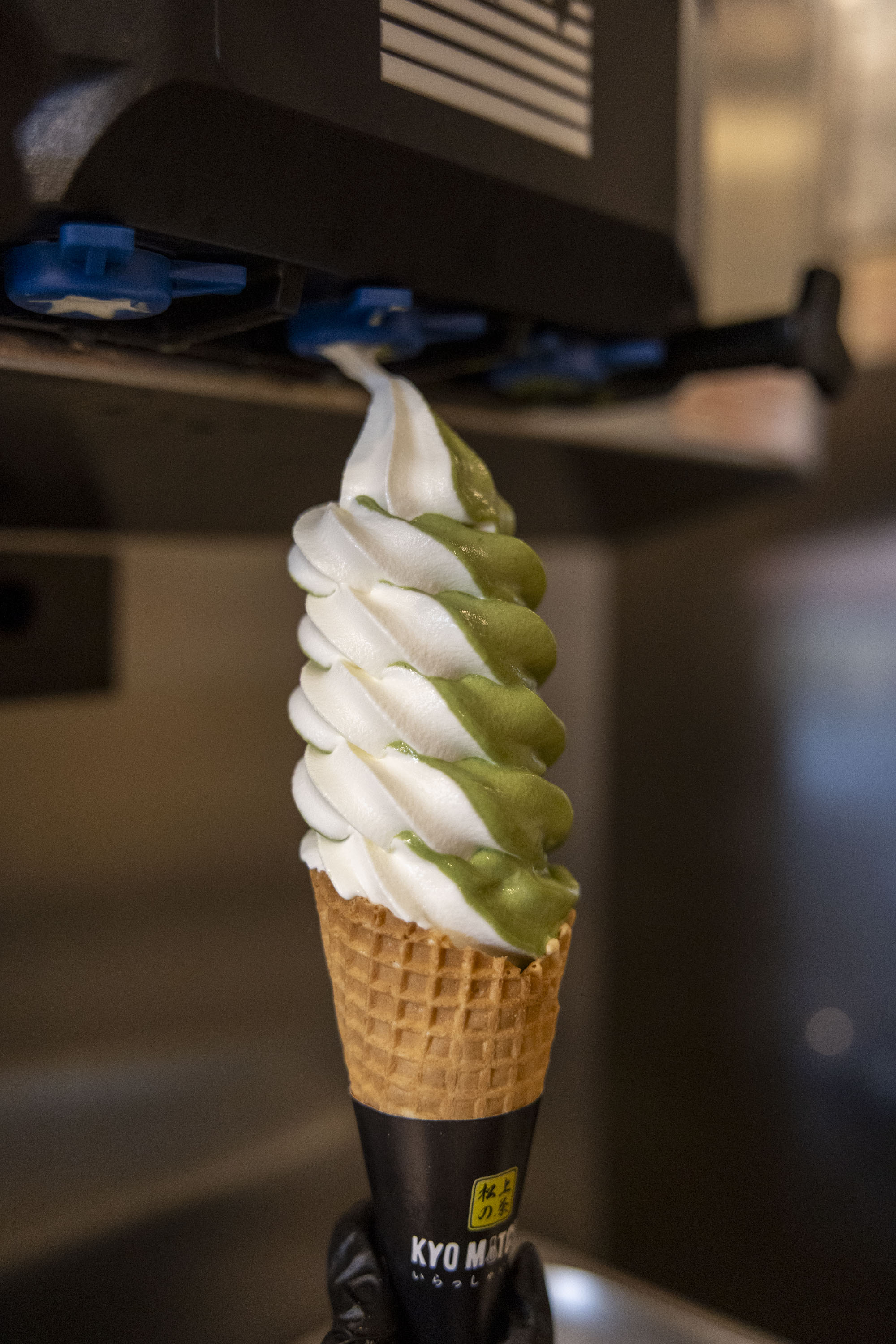
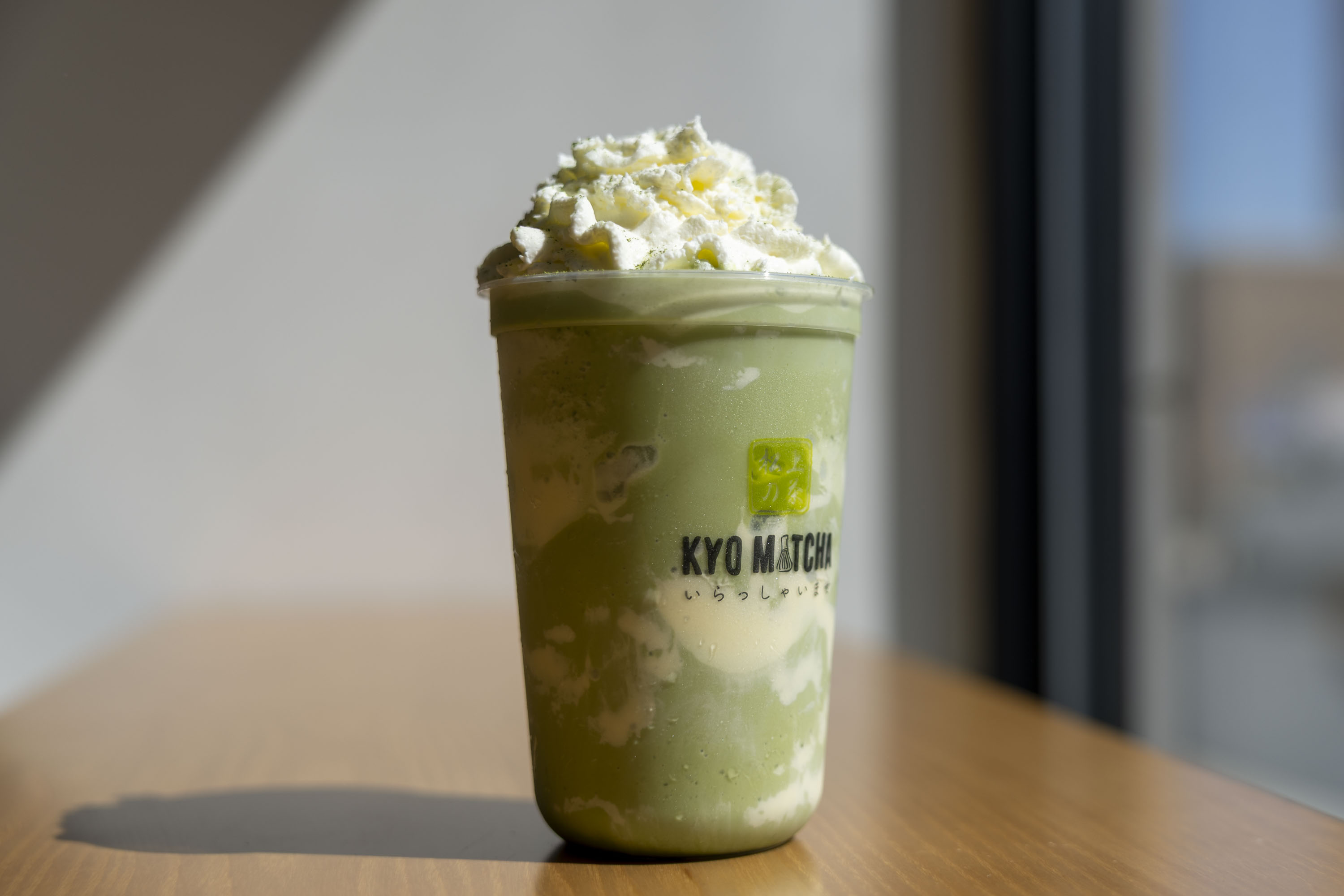
    The lines are long. The branding is adorable. The drinks are bright green, as are the lacy swirls of matcha-seasoned soft serve. This is the formula for Kyo Matcha, which opened in August in Chinatown.

    The same trappings can be found at both Matcha Panda Cafe, which opened in 2022, and Matcha Cafe Maiko, which opened in 2023 — years before high-end Japanese tea became so in-demand that suppliers couldn’t keep up. But there’s something a little curious about Kyo Matcha, a chain that is also known as Kyoto Matcha, with locations in Maryland, Pittsburgh, Virginia, and Massachusetts, as well as in Spain, Vietnam, and Turkey.

    The inside of Kyo Matcha.Tyger Williams / Staff Photographer
    A soft serve ice cream matcha mix at Kyo Matcha.Tyger Williams / Staff Photographer

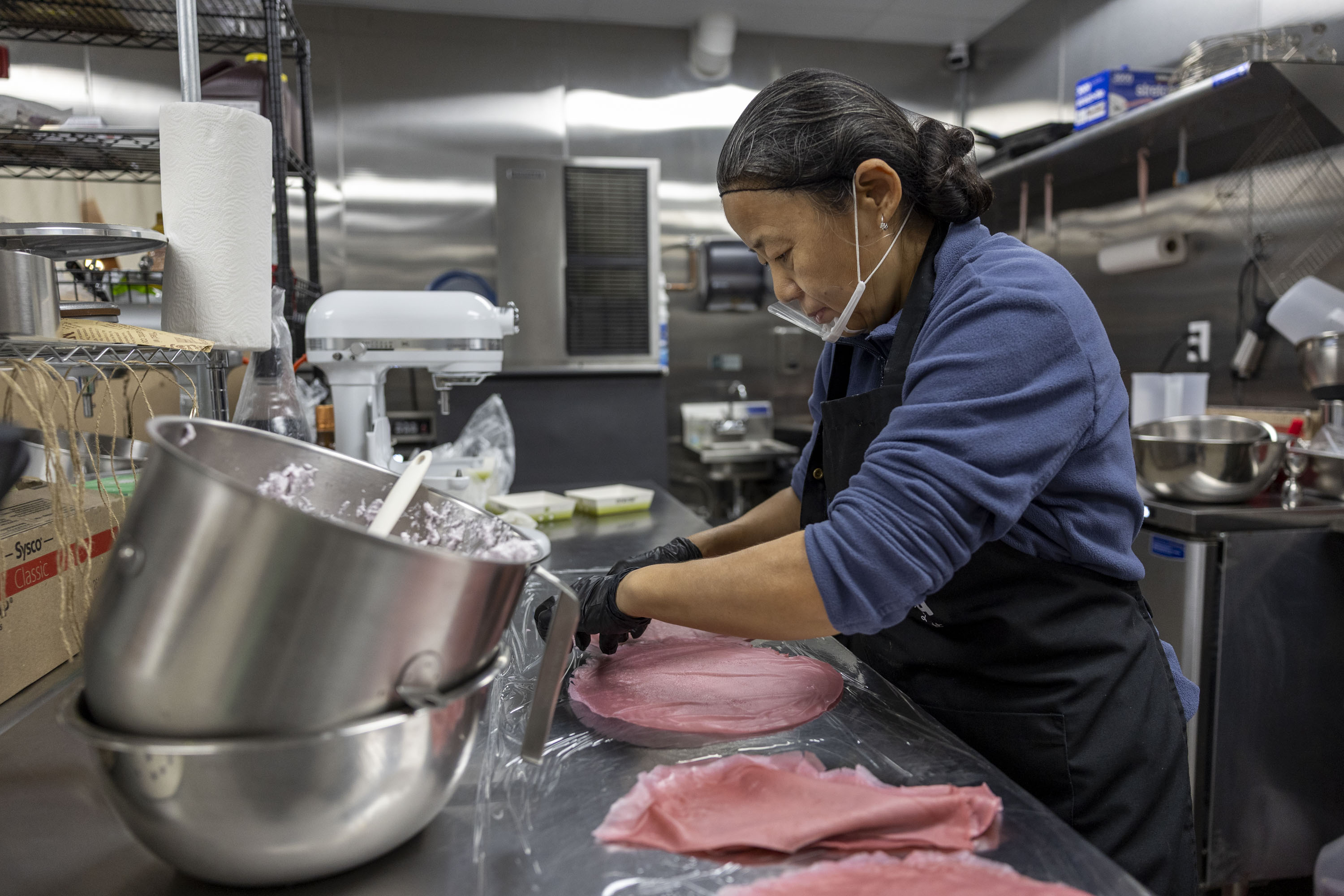
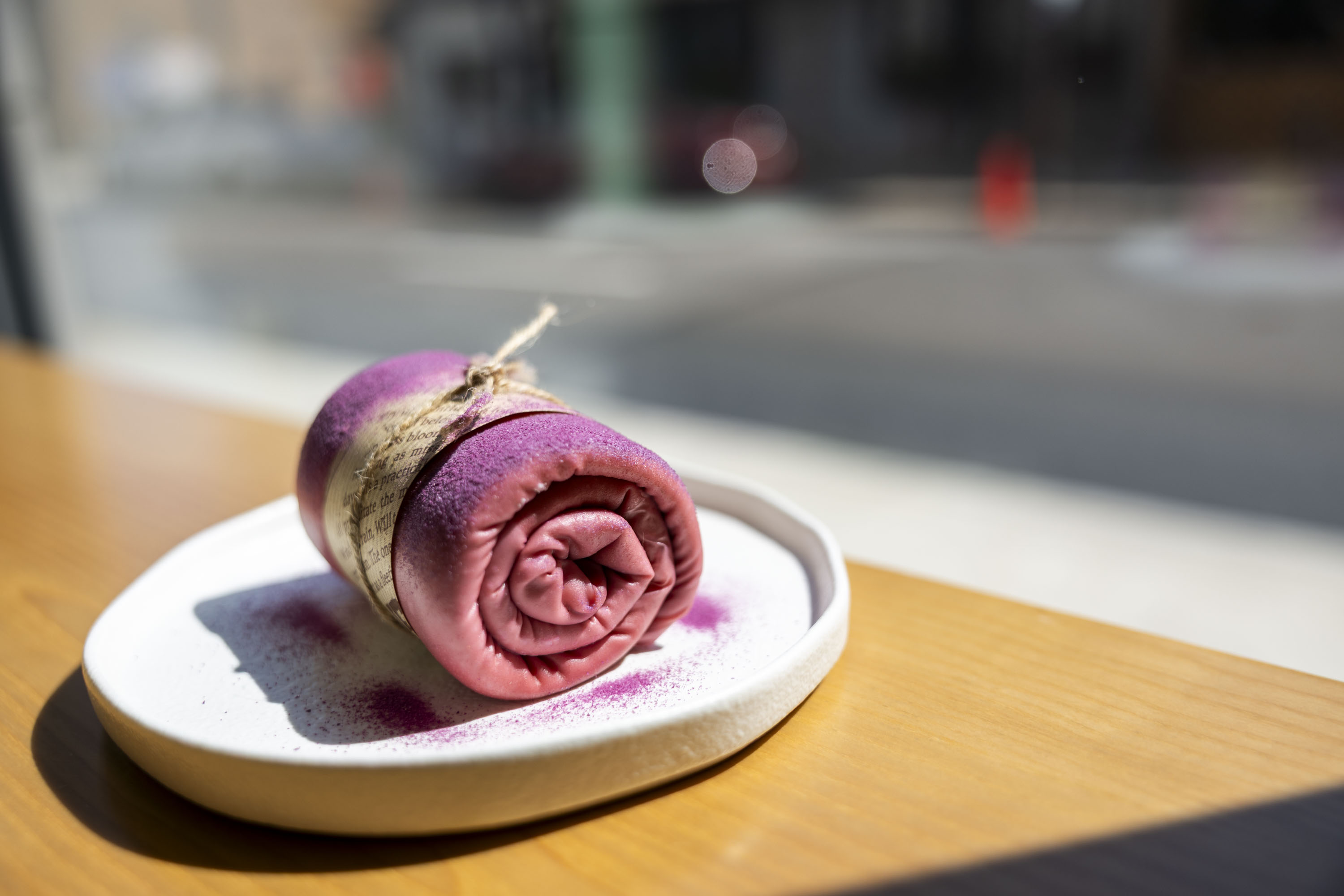
    Indeed, the students who work the front of house are just as bubbly as the ones who serve similar ice creams and tea drinks at the other matcha-focused shops in Chinatown. But in the kitchen at Kyo Matcha, a small crew of older Chinese chefs who previously worked at dumpling stores or preparing food in retirement homes are painstakingly making matcha and ube crepes, then layering them into cakes or rolling them into desserts by hand.

    The franchise is a project that brought two mainland Chinese couples into business together: Tom Kang, 34, and Danya Li, 30, who met studying hospitality at Temple University; and Alex An, 32, who also owns an international trading business, and Jing Xiong, 31, a UX lead designer.

    Mrs. Jiao is making a fresh Ube Tower Cake at Kyo Matcha on Wednesday, Aug. 26, 2026, in Philadelphia.Tyger Williams / Staff Photographer
    A Ube Tower Cake at Kyo Matcha on Wednesday, Aug. 26, 2026, in Philadelphia.Tyger Williams / Staff Photographer

    Kang also owns and operates Stay at Luna, a collection of 10 apartment hotels mostly clustered around Chinatown. (There’s a Stay at Luna located above Kyo Matcha.)

    Located on 11th Street between Race and Vine Streets, in the former Vietnam Palace space, Kyo Matcha is a little off Chinatown’s beaten path. “We felt that if we created a beautiful space and offered something a little different, it could become another reason for people to come to this part of Chinatown,” said Kang.

    A Creme Brûlée Matcha at Kyo Matcha on Wednesday, Aug. 26, 2026, in Philadelphia.Tyger Williams / Staff Photographer

    He became enamored with Kyo Matcha due to both its high-quality matcha powder and its menu, equally balanced between beverage and desserts.

    And why did four young people choose to open a franchise instead of creating their own brand?

    “Starting a brand from scratch is so hard,” said Li.

    While menu items all have to be approved by Kyo Matcha’s corporate office, the business arrangement still leaves room for the owners to innovate as they develop desserts for Philly customers.

    As at other beverage chains, you can specify your preferred level of sweetness when ordering a drink here. There’s only one option, a simple iced matcha, where you can try matcha unadulterated by milk or syrup, to appreciate its grassiness. All beverages are served cold.

    A Matcha Crepe Cake at Kyo Matcha on Wednesday, Aug. 26, 2026, in Philadelphia.Tyger Williams / Staff Photographer

    The matcha trend shows no sign of abating, though global shortages persist as the tea’s leaves take four to five years to mature. The obsession with the bright green Japanese tea has manifested in a slew of matcha-driven beverages and desserts in Philly’s Chinatown, where there’s also been a wave of beverage shop openings.

    Kyo Matcha opened the same week as Arch Street’s branch of Heytea, a Chinese brand operating over 4,000 locations worldwide. They join over a dozen tea-focused shops in the neighborhood.

    The inside of Kyo Matcha on Wednesday, Aug. 26, 2026, in Philadelphia.Tyger Williams / Staff Photographer

    But there still seems to be plenty of appetite for approachable matcha offerings. “Matcha is especially popular among younger customers, and we see a lot of students and younger professionals, but we’ve also seen families, tourists, Chinatown residents, and people who have never tried matcha,” said Kang.

    Kyo Matcha, 222 N. 11th St., kyotomatcha.us. Hours: Noon to 10 p.m. Monday to Thursday, 11:30 a.m. to 10:30 p.m. Friday and Saturday

  • With shutdown looming, House leaders aim to quickly pass funding bill

    With shutdown looming, House leaders aim to quickly pass funding bill

    House lawmakers, fresh from their August break, are expected to vote this week on a Senate-passed measure that would fund federal agencies through Dec. 11, avoiding a government shutdown before the Nov. 3 midterm elections.

    Republican leaders aim to pass the stopgap funding bill Tuesday under a “suspension of the rules” — a fast-track process that requires support from a two-thirds majority of the chamber, according to two House GOP aides who spoke on the condition of anonymity to candidly discuss party strategy.

    Bills on the House suspension calendar get limited time for debate and are not subject to amendment or other procedural hurdles, allowing Republican leaders to move quickly to avert a shutdown. With control of Congress on the line, both parties are eager to return to the campaign trail.

    “That’ll be a priority over in the House because we get things done,” Majority Whip Tom Emmer (R-Minnesota) said Sunday in an interview on Fox News.

    The House passed its own stopgap funding measure in July, but it lacked support in the Senate. Senate appropriators Susan Collins (R-Maine) and Patty Murray (D-Washington) instead drafted their own stopgap bill, which passed the Senate on a bipartisan 90-6 vote.

    In addition to funding the government past the Sept. 30 deadline, the measure includes additional funding for housing and nutrition programs requested by the White House. It also would temporarily block the White House budget office from adopting a rule to give political appointees more power over discretionary grants.

    Despite that constraint on its authority, the White House has issued a statement of administration policy in support of the legislation.

    “President [Donald] Trump strongly opposes another futile Government shutdown,” the White House said in the statement. “Every Member of Congress should support passage of this [bill] to keep the Government open as discussions on fullyear appropriations continue.”

    If the House approves the measure, lawmakers will be free to head back out of town by the end of the week.

    Avoiding a shutdown is just the most urgent of several items on lawmakers’ to-do list before November elections. Republicans also hope to approve fresh funding for the war in Iran and implement new restrictions on voting — top Trump priorities. And they want to provide emergency assistance to American farmers battered by Trump administration policies, including tariffs and high fuel costs caused by the Iran war.

    GOP lawmakers are looking to use the reconciliation process to advance all three priorities, which would allow them to pass with a simple majority in both chambers, forgoing Democratic support. But last month, Senate Republicans delayed a vote on a budget framework — the first step in the reconciliation process — amid opposition from multiple members of the conference.

    Senate Budget Committee Chairman Ron Johnson (R-Wisconsin) told reporters that senators would bring forward a “better” budget framework in September.

    Work on the federal farm bill — which is due to expire Sept. 30 — is also stalled just as lawmakers are eager to find another way to demonstrate support for a critical constituency. The House passed its version in April, but the Senate has struggled to advance its own version amid opposition from Democrats who do not support reductions in federal funding for food stamps proposed by Republicans.

    With the Senate not due back in Washington until Sept. 14, House lawmakers are in a holding pattern on these measures. Emmer, speaking to Fox News on Sunday, expressed frustration with the Senate logjam.

    “We sent our priorities over to the Senate,” he said. “We sent the Clarity Act. … We sent the Save America Act several times, and it sits over there, languishing in the Senate. … It really is going to be on the Senate’s shoulders to start getting something done when we get back.”

    Besides voting on the stopgap budget bill this week, the House is expected to vote on a censure motion against Rep. Chuck Edwards (R-North Carolina) following a recommendation from the Ethics Committee.

    Earlier this month, the committee found that Edwards engaged in “persistent unprofessional and inappropriate conduct” toward two female staffers, behavior Edwards denies.

  • Grand Canyon braces for more storms after deadly flash flood, about 15 people still missing

    Grand Canyon braces for more storms after deadly flash flood, about 15 people still missing

    FLAGSTAFF, Ariz. — More rain and thunderstorms were possible Monday at the Grand Canyon following a major flash flood that left one person dead and about 15 others missing or unaccounted for, with scores of visitors evacuated and the only water pipeline for tourists and residents destroyed.

    Emergency water restrictions that began Monday prevented tourists from staying overnight at lodges and hotels within the park. Year-round residents were asked to conserve water.

    A flood watch was in effect. Visiting the Grand Canyon — a crown jewel of the national park system — can be particularly dangerous in the summer because of the risk of flash flooding that accompanies the monsoon, or rainy season. Clear days can give way quickly to thunderstorms and downpours.

    “With deep monsoonal moisture in place and already saturated soils in some locations, an elevated risk of flash flooding will be in place through Monday,” the National Weather Service said early Monday.

    The body of a 46-year-old man was recovered Sunday evening near Crystal Rapids along the Colorado River, the National Park Service said without providing additional details.

    The flooding Saturday in Bright Angel Creek, which flows into the river, led to more than 60 people being airlifted from the depths of the canyon. The park service asked anyone with details about hikers or campers still unaccounted for to get in touch. The Arizona Department of Public Safety helped with additional evacuations Sunday.

    “These measures are crucial for ensuring the safety and sustainability of water resources,” the park said in a statement.

    Parth Desai was hiking through a narrow passage in Bright Angel Canyon with fellow physicians and a park ranger when heavy rain started falling Saturday.

    “We saw the creek flood, waterfalls coming up out of nowhere, boulders, mud, landslides happening everywhere,” he said.

    Later, as they made their way toward Phantom Ranch, a colleague shouted “Up, Up, Up, Up!” as a 4-foot (1-meter) debris wall headed toward them and they ran up into a patch of cacti, he said. They were rescued by helicopter late Saturday after making it to the Phantom Ranch area, he said.

    Torrents of water wiped out footbridges over the creek and altered the landscape, widening the creek bed and extending an existing river rapid or creating a new one. The flood was a major blow to an enduring effort to modernize the pipeline that serves 6 million visitors a year and roughly 1,600 residents of Grand Canyon Village.

    “Heaven help us if the whole thing down there at the bottom has to be reconstructed,” said Jack Schmidt, director of the Center for Colorado River Studies at Utah State University. “Where are they going to get the money?”

    Halting overnight stays at the park because of a lack of water is rare, although the pipeline frequently has failed over the years. While the Grand Canyon has large storage tanks for potable water on the South Rim, they won’t be refilled while the pipeline is out of service.

    A $208 million rehabilitation of the pipeline and upgrades to the associated water delivery system started in 2023, with the park service calling it a crucial investment to ensure the park can meet the needs of residents and visitors. The project was expected to be completed next year.

  • This principal in Nepal evacuated 900 students before flooding swept away their school

    This principal in Nepal evacuated 900 students before flooding swept away their school

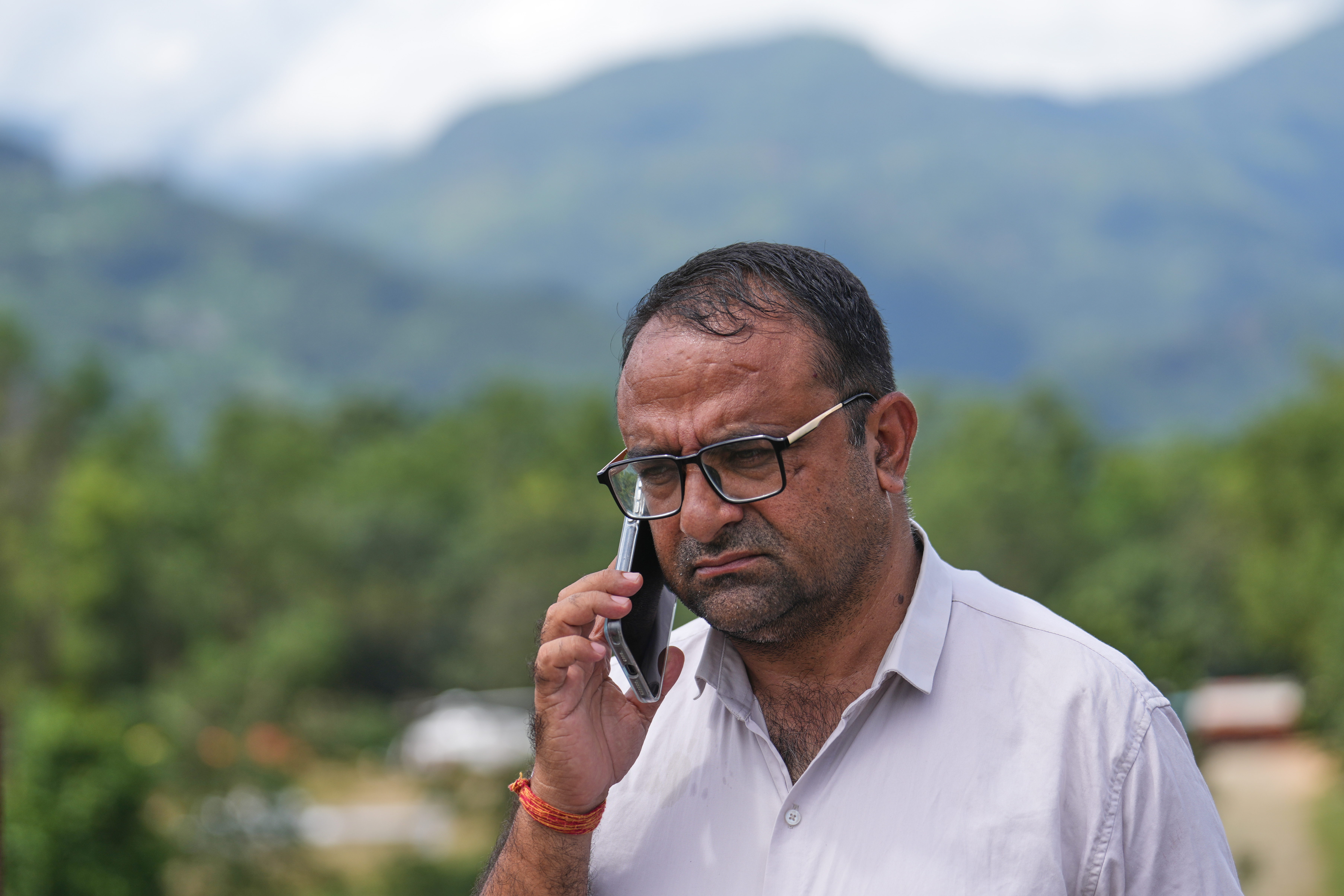
    BIDUR, Nepal — Rajendra Dawadi was inside his classroom when the school’s accountant rushed in with a warning: Floodwaters were racing through Nepal’s Trishuli Valley, tearing apart homes, bridges and entire villages.

    Then a teacher received another warning by phone. Moments later, a parent arrived to take her child home. The danger had not yet been confirmed, but Dawadi had little time to act. He rang the school bell and ordered his students and staff out of the building and toward higher ground.

    “I immediately decided to stop … school and (get the children out),” he told The Associated Press.

    As he followed them to a nearby hill, the floodwaters rose behind him. From the safety of the hillside, he turned to watch the school where he had once been a student — and where he had spent years teaching — disappear beneath a torrent of water, mud, boulders and debris. Two staff members could not make it and remain missing.

    Dawadi’s decision to evacuate the school saved at least 900 students from last week’s devastating flash floods in Nepal, unleashed after a glacial collapse in the Himalayas. The disaster killed over 900 people across Nepal and China, while more than 4,700 remain missing.

    As Nepal grapples with the catastrophic natural disaster, Dawadi’s story has emerged as a striking example of foresight and courage.

    The Tribhuvan Trishuli Secondary School in the Trishuli Valley of north-central Nepal had 1,643 students. At least 900 were on campus that morning, while some students were still making their way to school. Dawadi ordered those already there to leave and called bus drivers, telling them to only stop at safer places.

    One bus, packed with students, had already reached the school when Dawadi told the driver to turn back, he said. The bus crossed a newly constructed bridge and, moments later, the old bridge beside it collapsed.

    For Dawadi, the scale of the destruction has become personal, as the school had been both his workplace and a large part of his life.

    “I have no words. I got education from that school. And I gave education at that school,” he said.

    The destruction of Dawadi’s school was not an isolated loss.

    Across northern Nepal, the floods have left thousands of children without classrooms, disrupted their education and raised fears that the disaster could cost them months of schooling. Charity group Save the Children said in a statement that at least 69 schools in northern Nepal have been completely destroyed, putting the education of nearly 19,000 students at risk.

    Dawadi’s quick thinking and swift response during the disaster have been hailed as an act of heroism. When he returned to the site of the school days later, parents embraced him as they thanked him for saving their children.

    “Their parents hugged me, they cried with me,” he said. “They were emotional.”

    Student Suvina Tamang, 14, said the school’s three-story building was swept away shortly after all the students had been evacuated.

    “I will thank him when I see him” for saving my life, she said.

    But Dawadi is reluctant to accept the role of hero. For him, rescuing his students was his responsibility. Now he says, students will need psychological counseling. Then, lessons must begin again, even if the school must temporarily relocate.

    His appeal to the Nepalese government is simple: rebuild the schools and get children back to classes.

  • These Philly sushi chefs lift weights — and bluefin tunas — together

    These Philly sushi chefs lift weights — and bluefin tunas — together

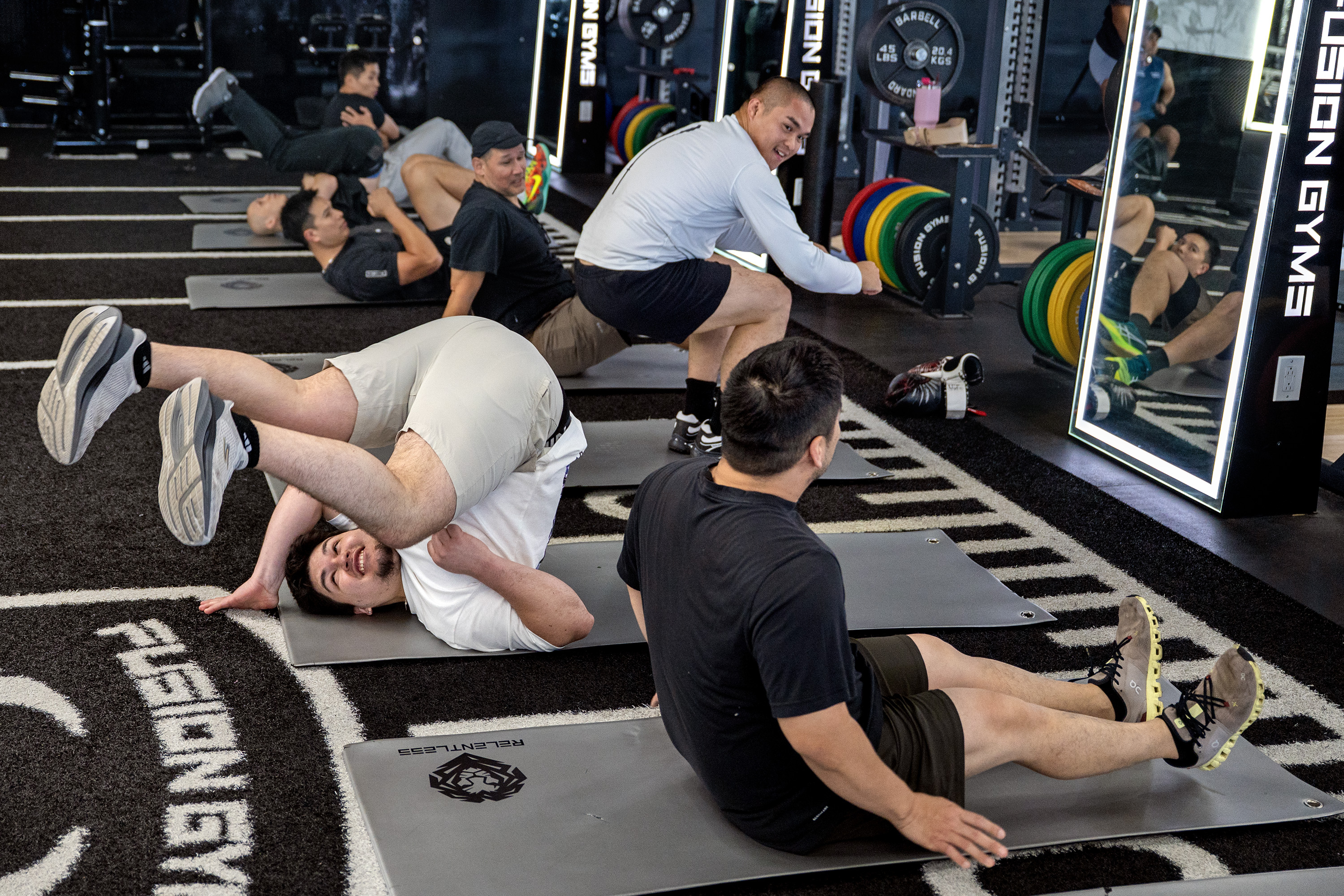
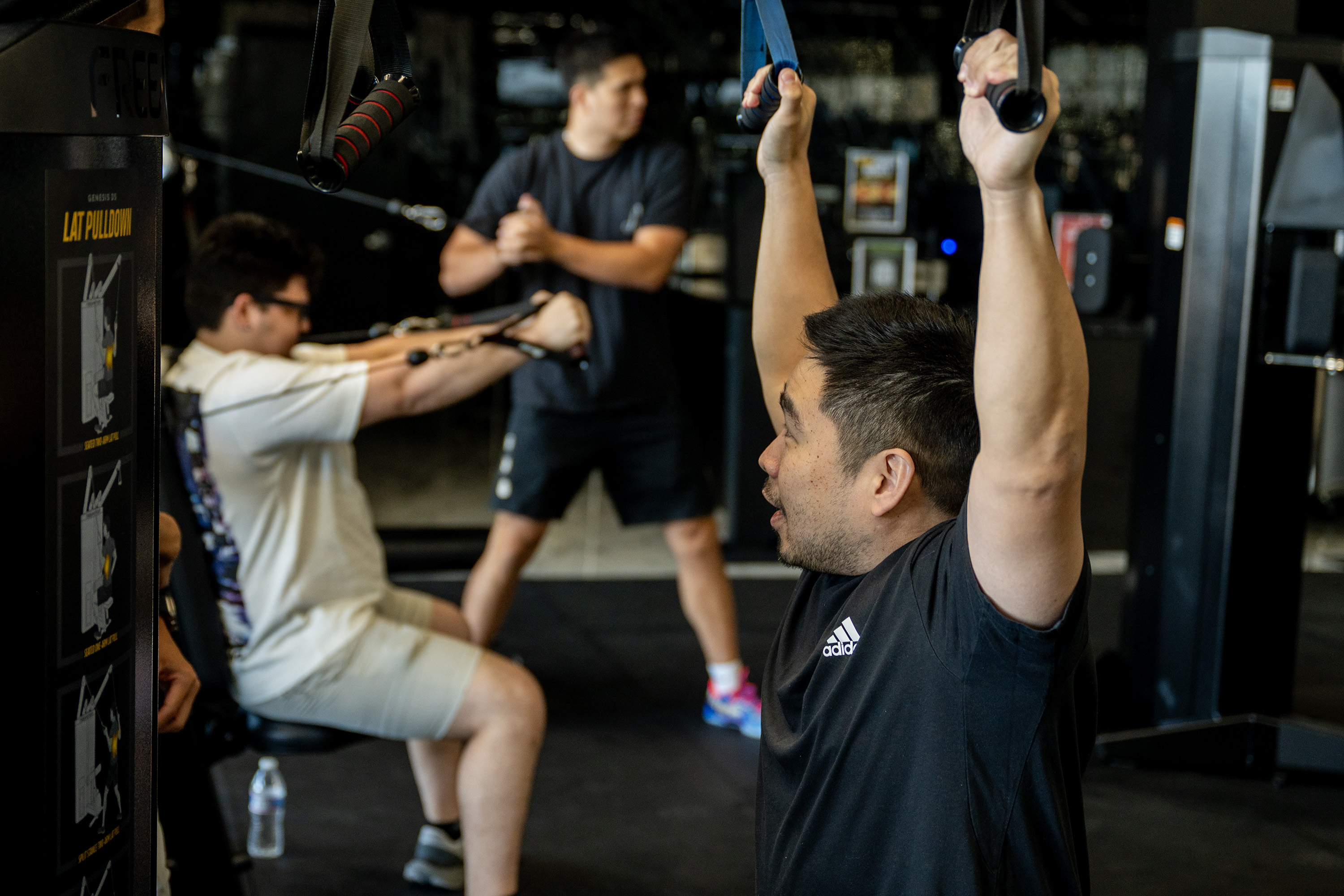
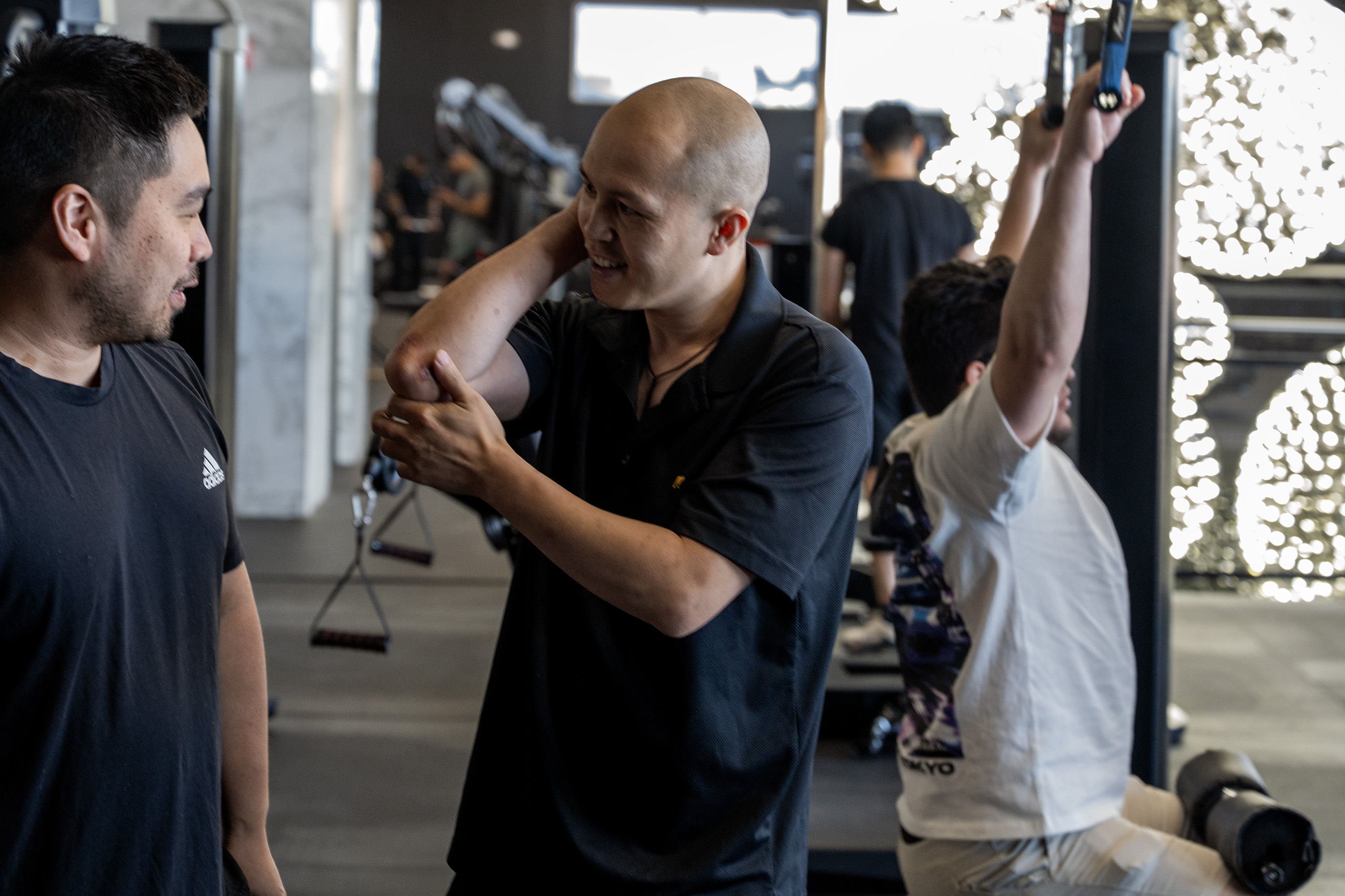
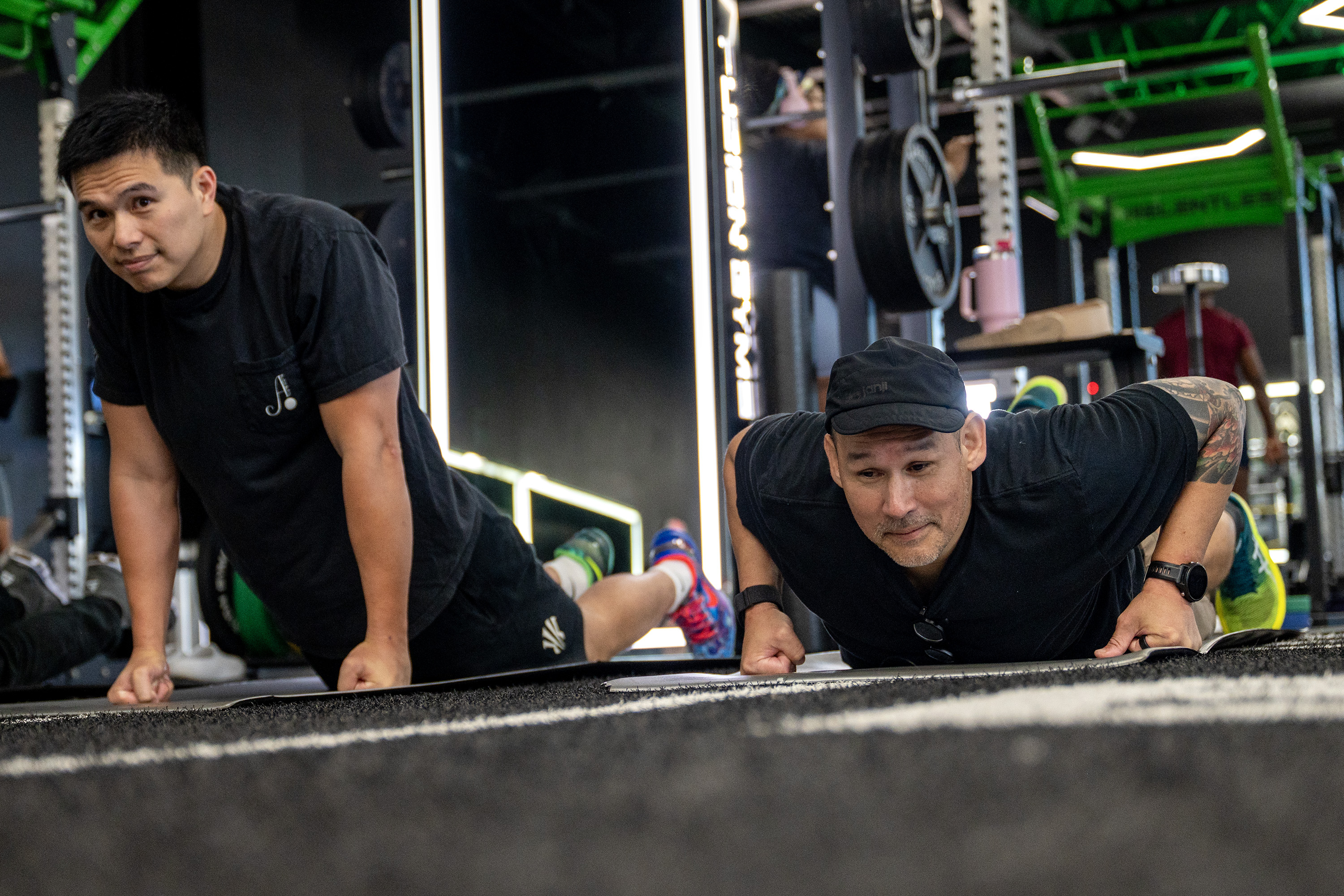
    One of Fusion Gyms’ five locations is in a strip mall in deep South Philly, sandwiched between a children’s clothing shop and a wig store. In the neon-green glow of the gym’s bright lights, seven Philly sushi chefs stretched on rubber mats, preparing to lift weights set to be as heavy as a fully grown bluefin tuna.

    The crew — usually just four or five chefs — meets regularly on weekday mornings, loosely led by Albert Zheng, 34, and Dan Santana, 40, who co-own and run Kiku Sushi in South Philadelphia. (Zheng also owns Javelin in Fairmount and is a partner in the upscale Old City omakase restaurant Ogawa.)

    Zheng and Santana are there every weekday. The other chefs drop in weekly or monthly. They exercise to stay fit for their physically demanding jobs, but also just to hang out with each other.

    On a recent Tuesday morning, a larger-than-normal group gathered, including chefs from Kiku, Ogawa, and Javelin, as well as Kichi Omakase and Yanaga Kappo Izakaya, which houses the omakase counter 637 Sushi Club.

    Sushi chefs work out at Fusion Gyms in South Philadelphia in August. They get together regularly, trading both exercise tips and fish intel. From front to back are Dan Santana; Carlos Wills, Joseph Nguyen, Kevin Yanaga, Albert Zhang, Cai Li, and Alex Jiang.Tom Gralish / Staff Photographer

    They also count among their crew sushi chefs from Sagami and Nakama. “We’re less consistent in summer, when our kids are home from school,” Zheng said. “During the school year, we drop the kids off and meet at the gym right after.”

    They work out for two, sometimes three hours at a stretch. “The third hour is usually our jaw workout,” joked Zheng. “And it takes longer when there are more people.”

    As they wove through Fusion Gyms’ open-floor plan, they compared ingredient lists and traded tips about good restaurants and where to get salmon for a better price. These are regular topics of discussion, along with mise en place and sourcing.

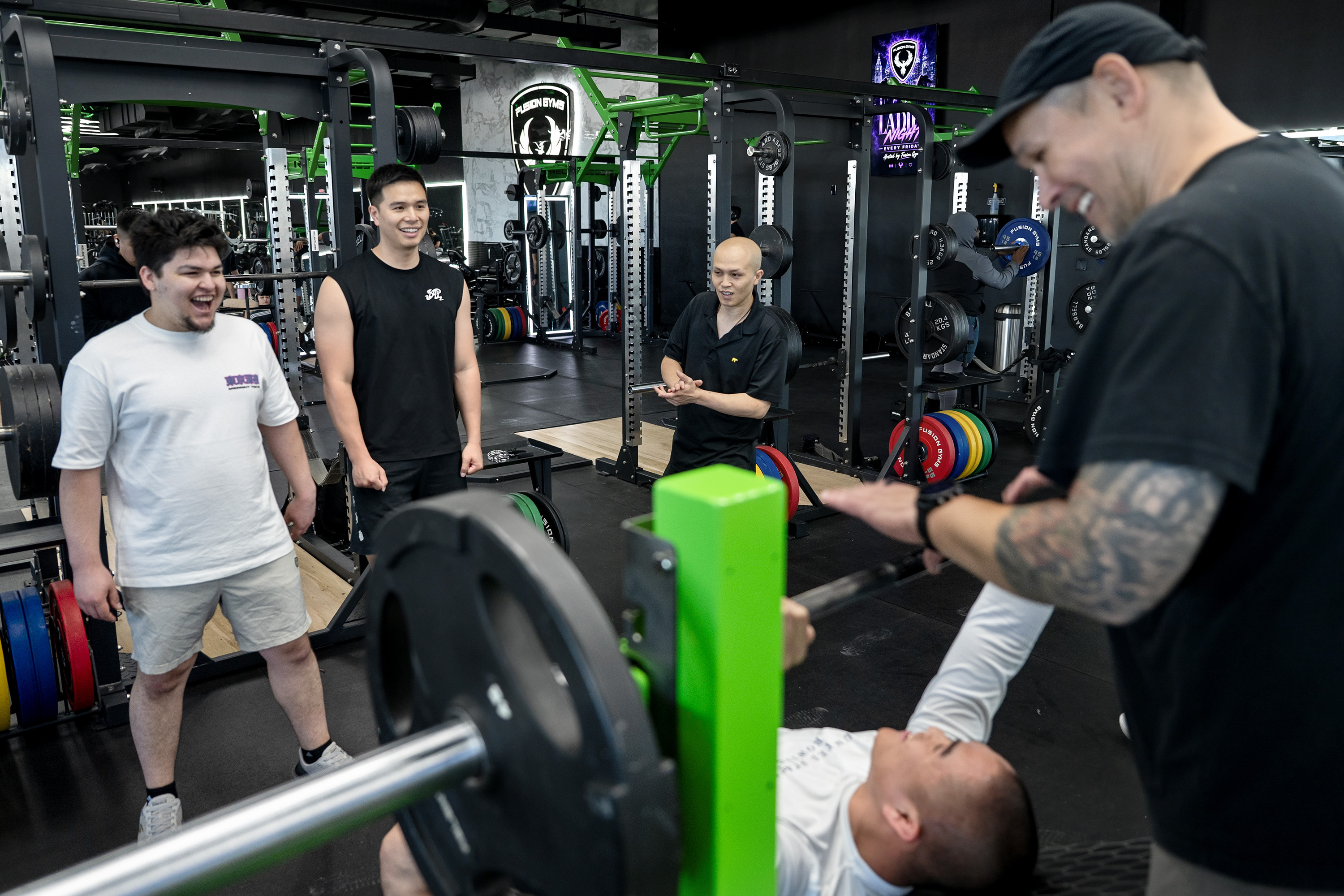
    Sushi chefs work out at Fusion Gyms in South Philadelphia in August. They get together regularly, trading both exercise tips and fish intel. Clockwise from left: Carlos Wills, Albert Zheng, Alex Jiang, Kevin Yanaga, and Joseph Nguyen (on bench).Tom Gralish / Staff Photographer

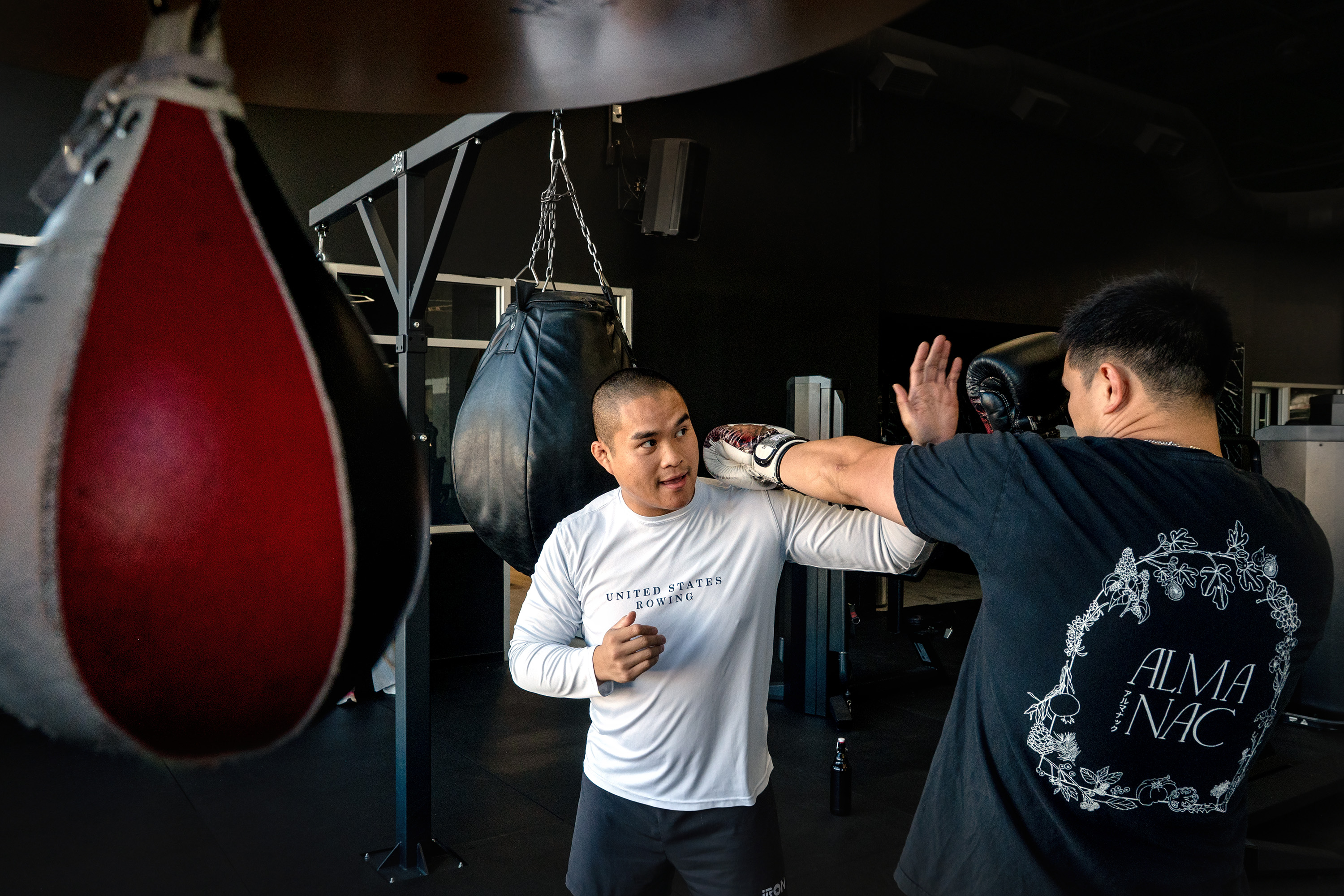
    Kevin Yanaga, 55, and Joseph Nguyen, 27 — partners in 637 Sushi Club’s Oma Cafe, which pairs fish with coffee — coached the others through Muay Thai moves while trying to convince the other chefs to join them on a November trip to Vietnam for a three-day Oma Cafe pop-up. “I need help prepping,” said Yanaga.

    Sushi chefs work out at Fusion Gyms in South Philadelphia. They get together regularly, trading both exercise tips and fish intel. From front to back are Dan Santana, Carlos Wills, and Albert Zheng.Tom Gralish / Staff Photographer

    At one point, Carlos Wills, 26, who helms the omakase counter at Ogawa, pulled up a list of available ingredients sent by his buyer from Japan’s Toyosu Market, the world’s largest wholesale seafood market, and showed Yanaga the $500 tray of uni and $55 60-sheet packet of nori that he was considering ordering once he was done working out.

    On this Tuesday, the chefs were also drinking some of the world’s most expensive coffee, brewed by Nguyen. “It’s Orange Geisha and it’s expensive because it’s so rare and it takes half a pound of beans for me to brew one bottle,” explained Nguyen, who also owns and operates the Coffee Connoisseur Club. The Instagram-based subscription club sources beans from Nguyen’s plots in Vietnam and small farmers in South America. “This is a $250 bottle of coffee,” Yanaga interjected.

    “I’m getting kumquat, jasmine, and orange notes coming from it,” said Nguyen. “I like saba [mackerel] paired with this, as the fattiness of it pairs with the bright citrusy notes. Saba with a little bit of wasabi.”

    There was no saba in sight as Nguyen held a punching bag while Zheng jabbed, gently coaxing him on where to aim his punches. He did the same for Alex Jiang, 42, from Kichi Omakase. “We have a heavy jab over here!” he proclaimed.

    Sushi chefs Joseph Nguyen (left) and Albert Zheng work on boxing at Fusion Gyms.Tom Gralish / Staff Photographer

    When the crew moved on to bench-pressing, Wills said, “You can tell people this is how I prepare to lift a tuna.”

    As Wills sat back on the weight bench and lifted the bar, he said, “This is a 60-pound tuna.”

    The sushi chefs spot one another and cheer each other on: “One more! Half a tuna more! You’re very strong!”

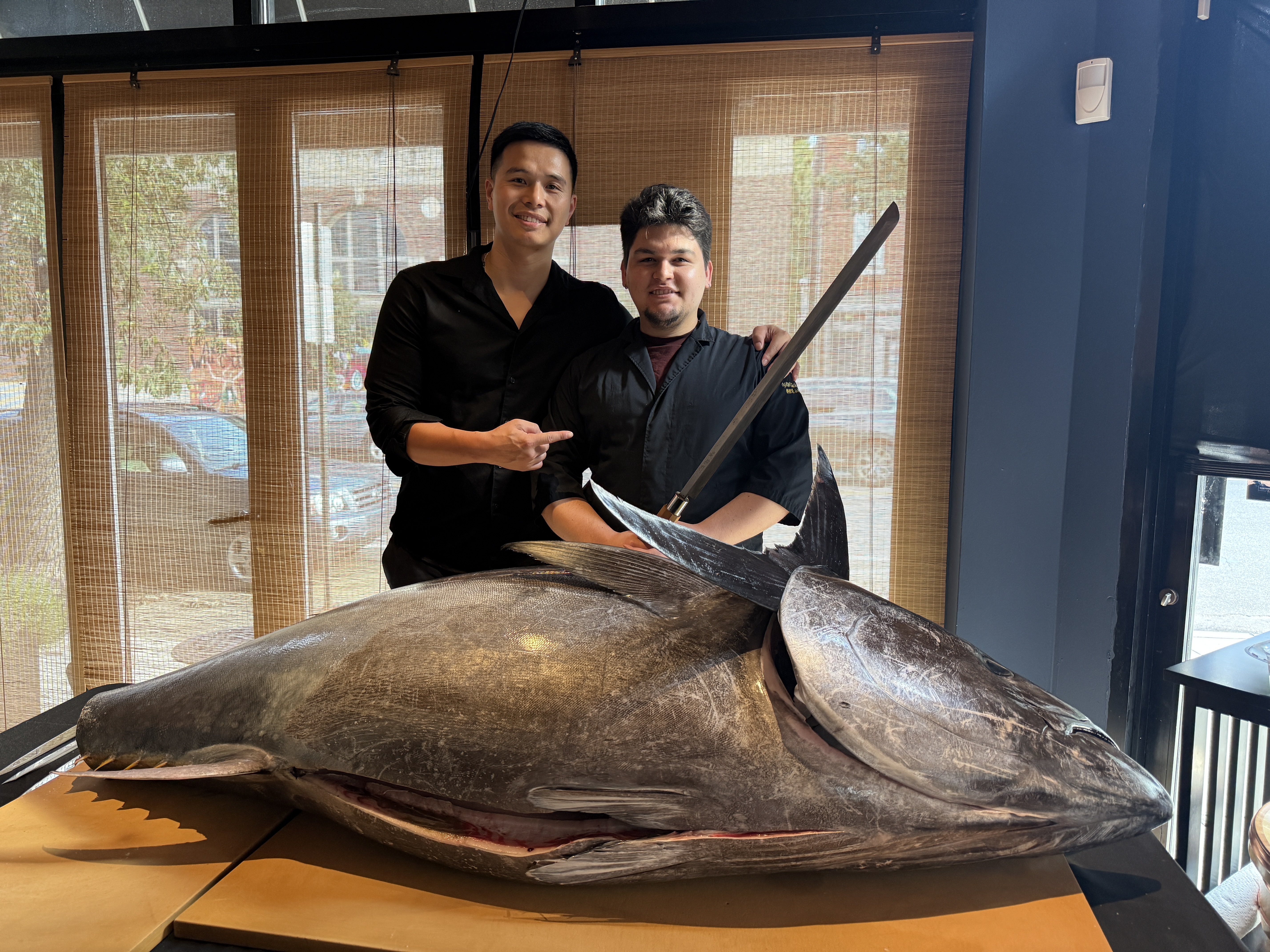
    “I thought about bench-pressing the 281-pound tuna we brought into Javelin for the tuna breakdown last week,” said Zheng. “But it was so slippery.”

    Sushi chefs like Albert Zheng and Carlos Wills say they work out to stay in shape for lifting fish like this 281-pound Spanish bluefin tuna at Javelin in Fairmount.Kiki Aranita / Staff /

    “When we get a tuna like that, it takes eight of us to lift it,” said Yanaga.

    “We got a Spanish bluefin last week,” said Wills. “It was $23 per pound, so just over $6,600. Pretty cheap. The Japanese ones are $31 per pound right now.”

    “Who wants to do a whole tuna?” asked Zheng as he and Santana added more weights on to a bar for a round of dead lifts.

    Nguyen steps up and dead lifts 315 pounds. “We’re hiring him for the next tuna breakdown,” said Wills.

    Sushi chefs (from left) Dan Santana, Alex Jiang, and Carlos Wills work out at Fusion Gyms.Tom Gralish / Staff Photographer
    Sushi chefs Albert Zheng (left) and Kevin Yanaga work on planks at Fusion Gyms in South Philadelphia.Tom Gralish / Staff Photographer

    In fact, the chefs do often join up for tuna cuttings, helping one another out even if they aren’t in business together.

    But mostly, the crew keeps one another accountable at the gym, welcoming each other even if weeks or months pass between workouts.

    Once the coffee was consumed and their muscles were spent, the chefs dashed off in different directions, to their respective sushi counters.

  • A South Jersey couple will open Freckled Jawn Brewing just in time for Oktoberfest

    A South Jersey couple will open Freckled Jawn Brewing just in time for Oktoberfest

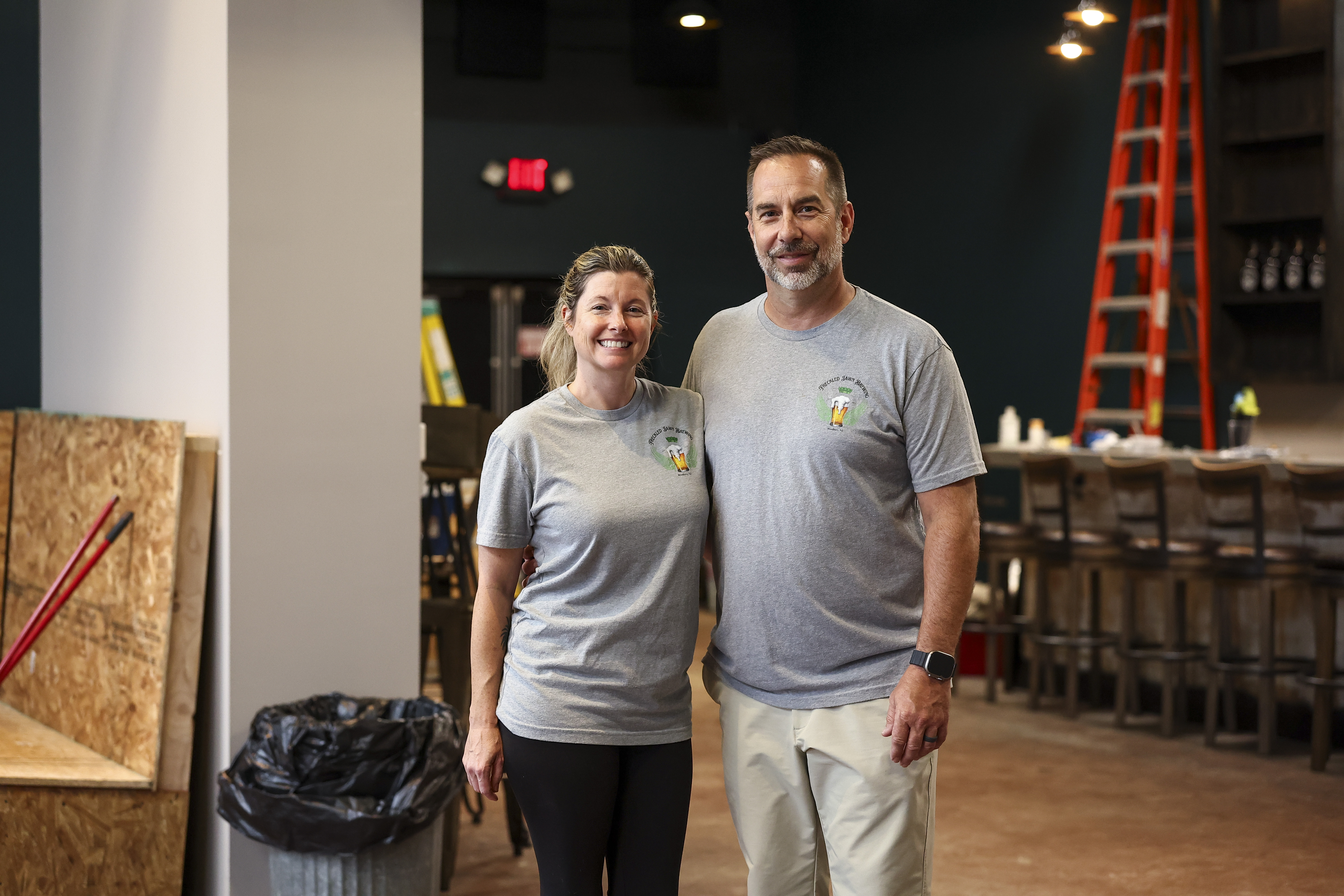
    Woodbury residents John Wagner and Colleen Gibson never planned to own a brewery.

    But when the husband-and-wife duo heard that their local drinking spot, Eight & Sand Beer Co. at 1003 N. Evergreen Ave., was up for sale last September, Wagner said they didn’t want to see a place so close to home shut down for good. They spoke with their neighbor, Woodbury’s former mayor Peg Hertrich, who connected them with the 10-year-old brewery’s owners.

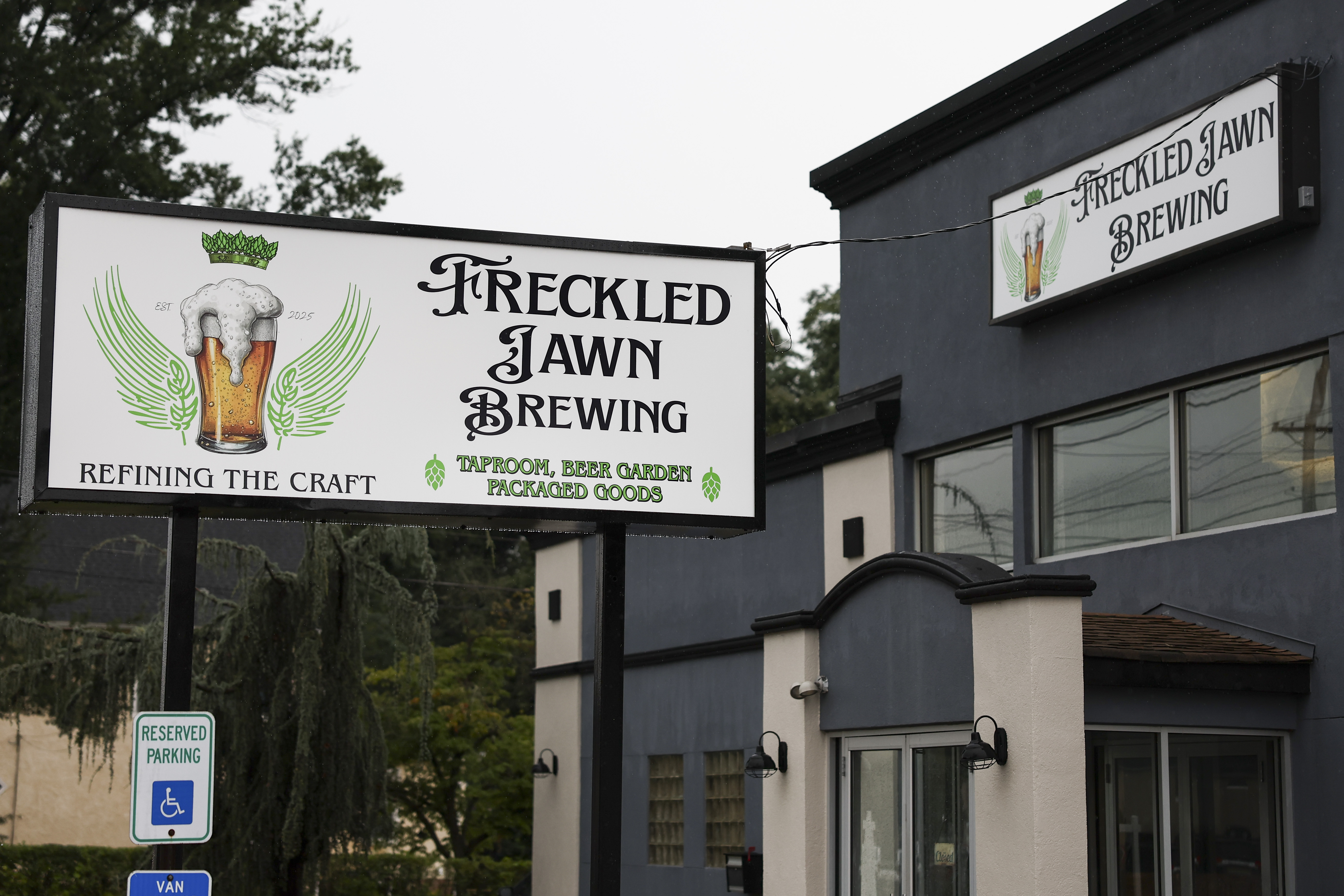
    The exterior of the new Freckled Jawn Brewing on Thursday, Aug. 27, 2026 in Woodbury, NJ.Monica Herndon / Staff Photographer

    “We never got an answer or a reason why not… so here we are,” Wagner, 53, said. “Fast forward almost a year later, and we’re getting ready to open.”

    The couple, together for 12 years, officially closed on the 4,300-square-foot brewery (that includes the brewhouse) in Gloucester County in early August, months after Eight & Sand closed. The $730,000 sale, Wagner said, included brewery equipment and a vacant lot behind the building, which will help the couple expand the property’s beer garden come spring.

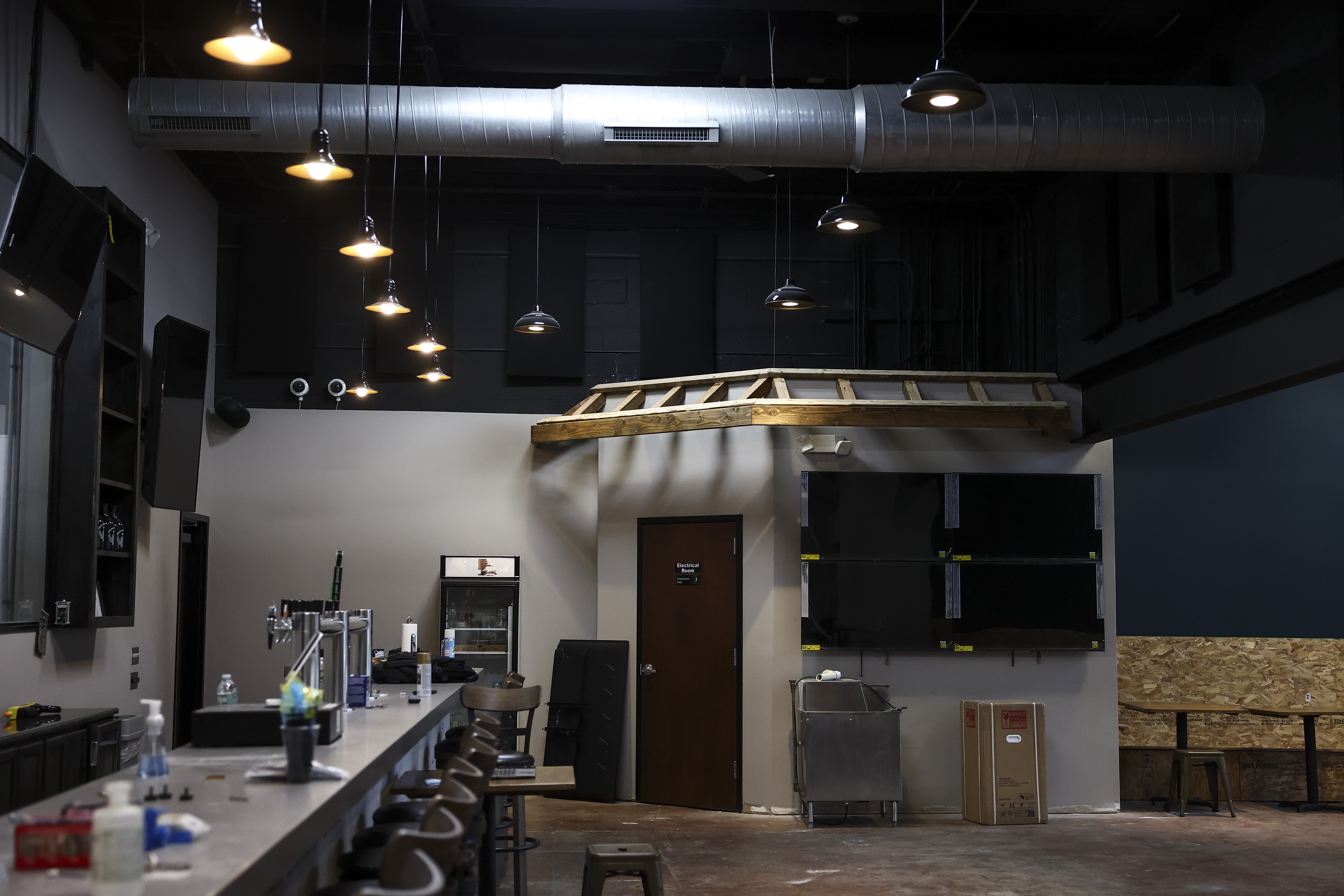
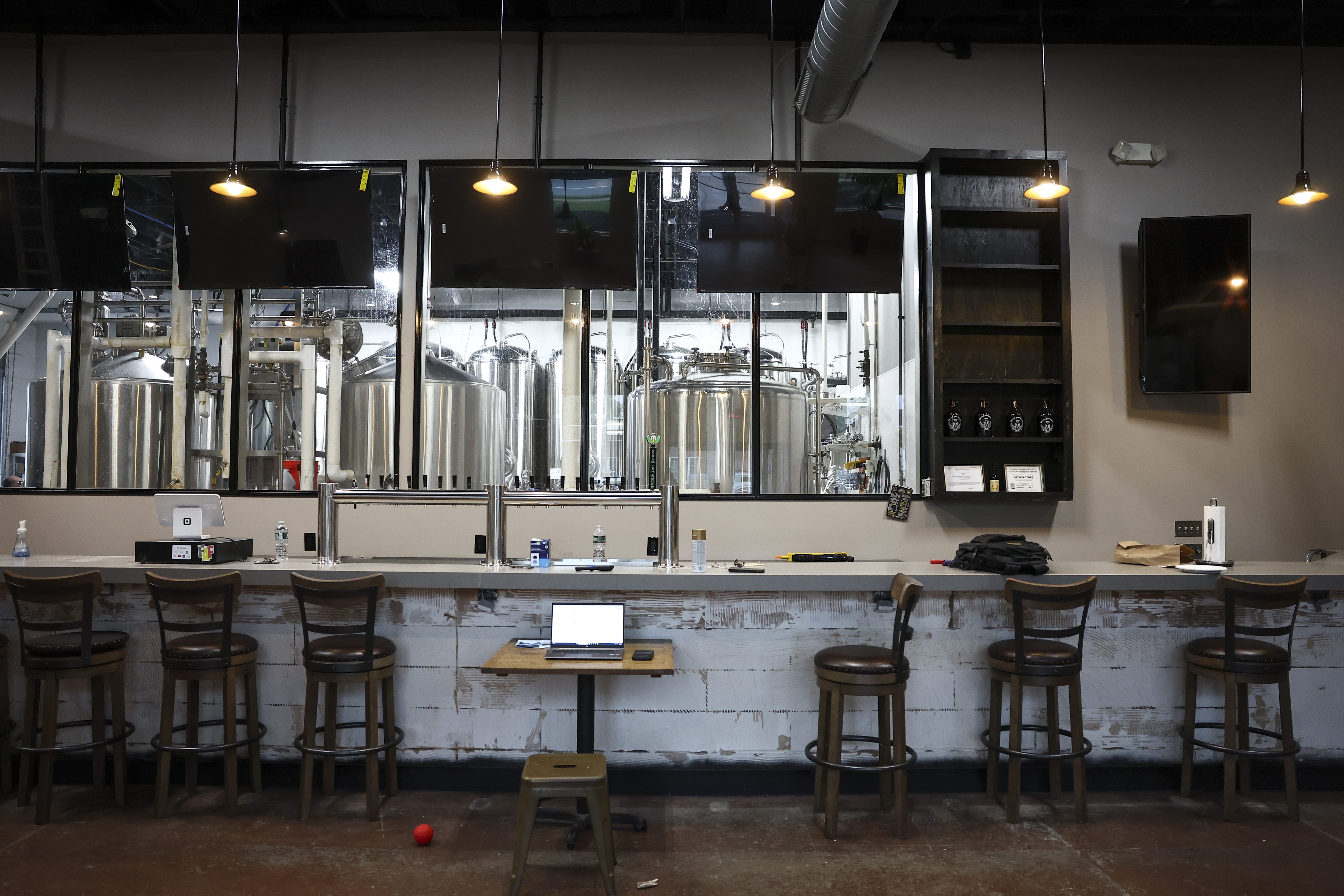
    The in-progress interior of Freckled Jawn Brewing.Monica Herndon / Staff Photographer

    Wagner and Gibson hope to open Freckled Jawn Brewing in the first week of October. An official date will come in the next couple of weeks, as they continue $40,000 of renovations and add new furniture to make the space feel less industrial and more inviting. Details will include leather and wood accents, an electric fireplace, dim lighting, and hopefully a touch of Philly sports.

    “I just want the community to have somewhere they can go that they’re excited and proud to have in the neighborhood,” Wagner said.

    The new brewery acquired Eight & Sand’s liquor license within 17 days of closing on the property, Wagner said, so Freckled Jawn has been clear to brew beer since Aug. 21.

    The in-progress interior of Freckled Jawn Brewing on Aug. 27, 2026, in Woodbury, N.J.Monica Herndon / Staff Photographer

    Three years ago, before their recent venture, the couple installed a basement bar in their South Jersey home for friends and family. They like to host St. Patrick’s Day parties.

    They affectionately called the bar “Freckled Jawn Tavern,” Wagner’s 2 a.m. brainchild. The name was inspired by Gibson’s own freckles and the way she pronounces her husband’s name, John, as the multipurpose Philly term “Jawn,” a symptom of her Jersey accent. The new brewery kept it.

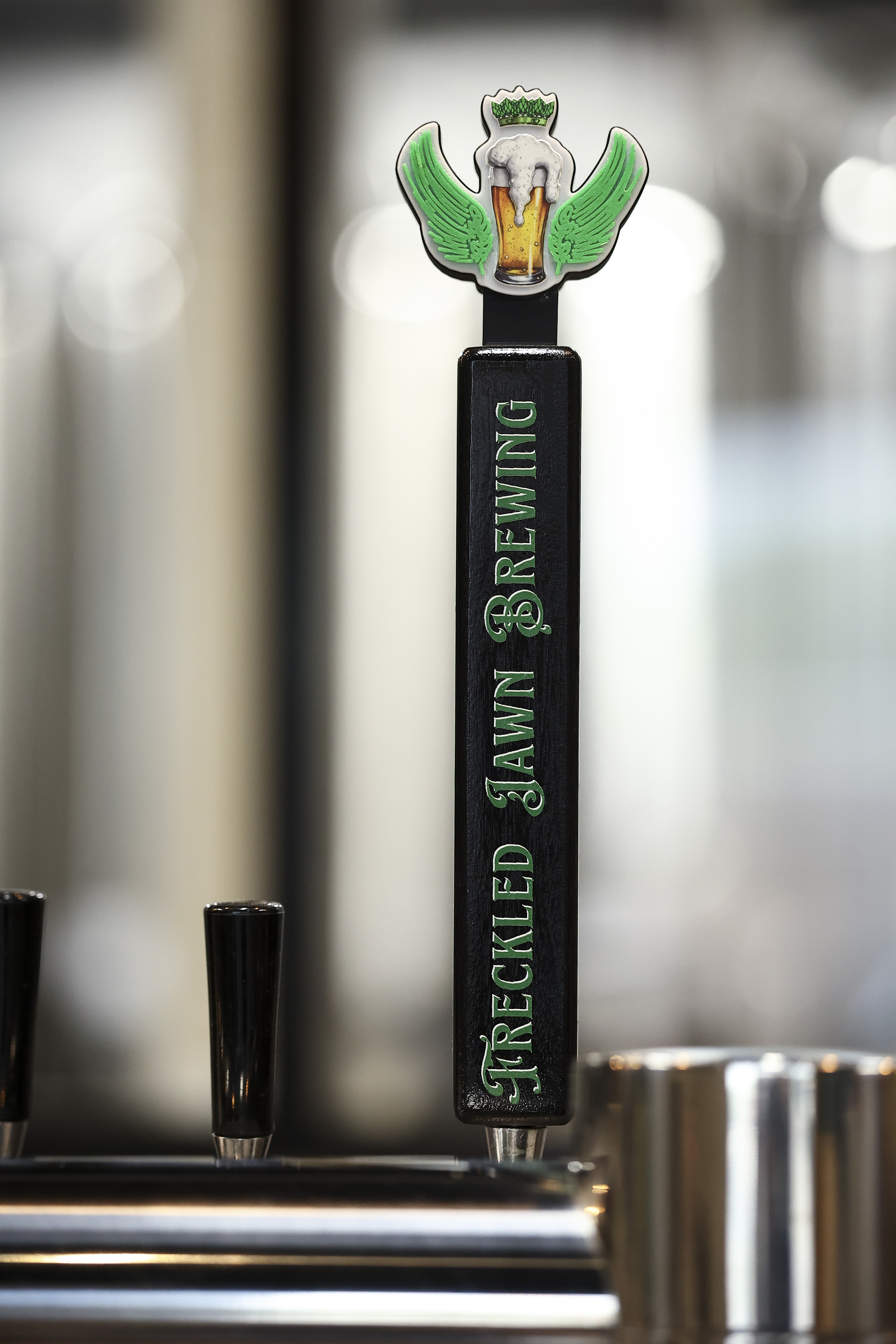
    A Freckled Jawn Brewing tap in the in-progress brewery.Monica Herndon / Staff Photographer

    “He calls me his ‘freckled jawn’ because I’m his anything and everything,” Gibson, 44, said.

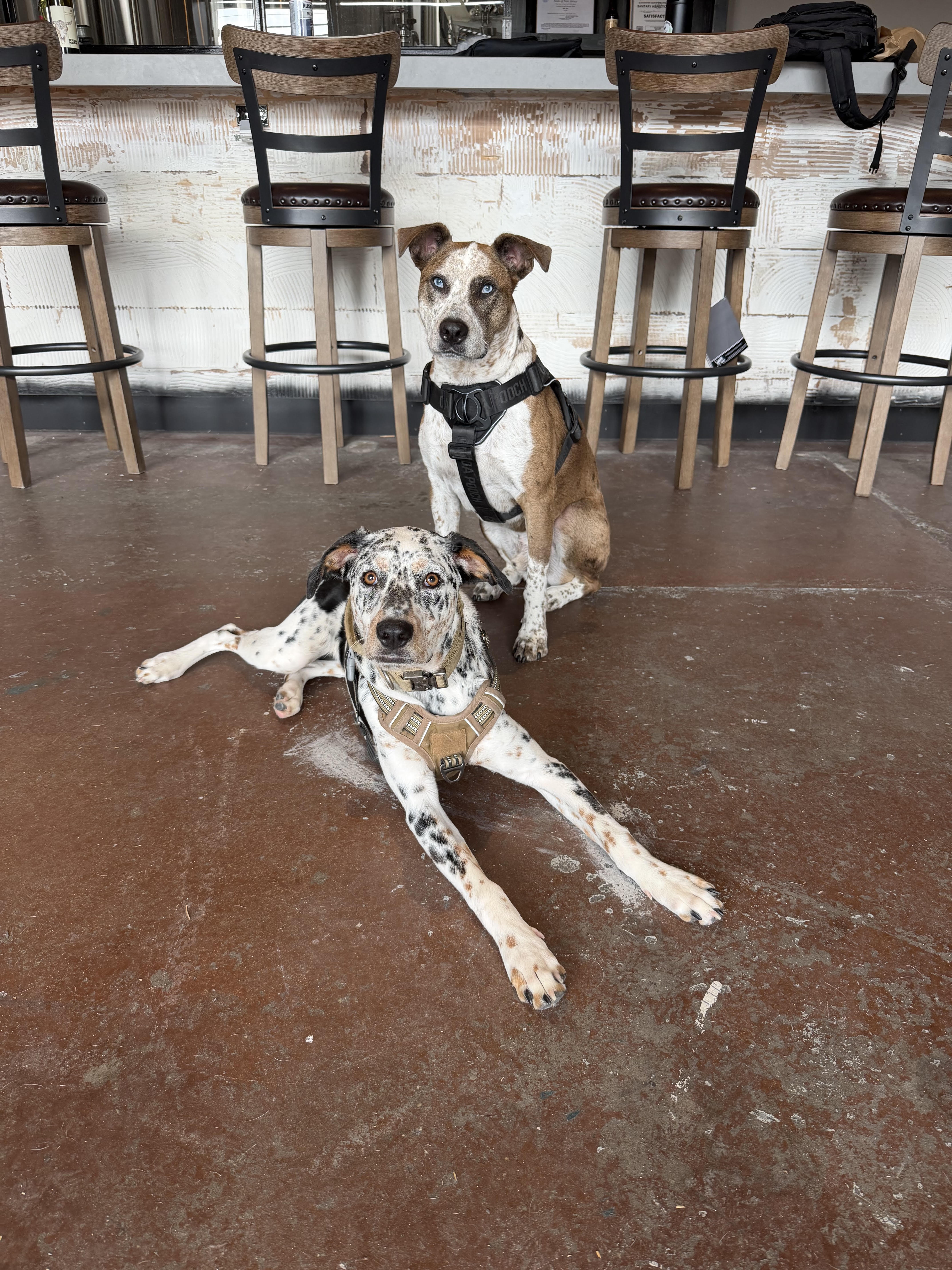
    Plus, the couple has two freckled dogs, Neo and Trinity, adoptees named after The Matrix characters, who will be welcome in the brewery’s pet-friendly beer garden when it opens next year.

    Neo (top) and Trinity (bottom) are the unofficial mascots of Freckled Jawn Brewing in Woodbury, Gloucester County, set to open in October 2026.Colleen Gibson

    The brewery’s indoor tasting room has capacity for 77 people, while the expanded patio area will fit between 150 to 200 people, Wagner said.

    Wagner and Gibson plan to run the brewery while continuing their jobs as managers in supply chain distribution and in transportation, respectively, in the Philly region, Gibson said. They’ll manage a staff under 10 to start, which will include some of their children, and head brewer Matt Karg.

    The in-progress interior of Freckled Jawn Brewing.Monica Herndon / Staff Photographer

    Karg, 37, moved to Philadelphia with his partner in July to be closer to family, and the head brewer position happened to open at the perfect time. He started brewing when he got out of the U.S. Coast Guard and went to North Carolina’s Asheville-Buncombe Technical Community College to learn brewing, distillation, and fermentation.

    He previously brewed for Hickory Nut Gorge Brewery in Chimney Rock, North Carolina, before the spot was destroyed by Hurricane Helene in 2024, and then for Hi-Wire Brewing in Asheville. He said he’s eager to introduce people to Freckled Jawn’s Oktoberfest beer, made just in time for the fall opening.

    “The New Jersey brewing scene is a close-knit community, which we’ve learned and loved. But everyone knows everyone,” Wagner said. “They almost know every brewer, so it’s exciting that nobody knows this guy.”

    Ready for something new, Karg said his hope for the brewery is simple.

    “Good beers and a good environment to sit and hang out for awhile,” he said.

    The brewery started on an Oktoberfest lager, Wagner said, since it takes the longest to brew. Freckled Jawn will also serve a light lager, an IPA, a blonde ale, and a stout.

    “We’ll continue to expand,” Wagner said. “But we don’t want to wait too long to open.”

    Freckled Jawn Brewing’s hours will be 4 p.m. to 9 p.m., Monday through Thursday; noon to 10 p.m., Friday and Saturday; and noon to 7 p.m. on Sunday.