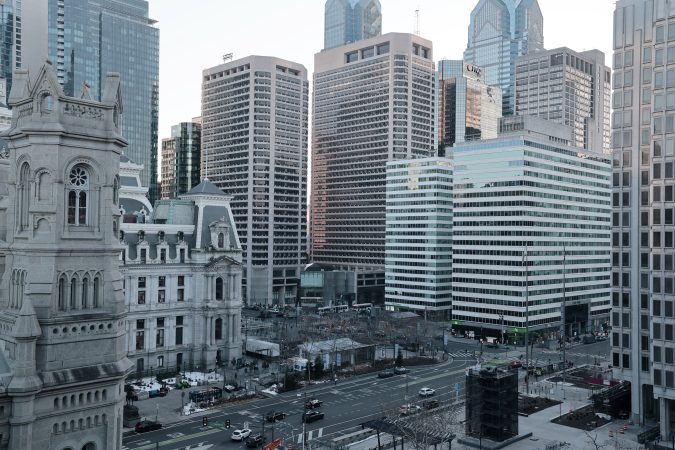
A New York-based developer that outbid real estate investor Dean Adler and Philadelphia’s PMC Property Group for control of the huge office complex at Centre Square has decided to walk away from the property.
Centre Square, one of Philadelphia’s largest office buildings, saw soaring vacancy after the COVID-19 pandemic and went into foreclosure in 2023.
In February, Adler announced that in partnership with PMC, he would buy the 1.76 million-square-foot office complex at 1500 Market St. for $70 million and transform it into a mixed-use mecca with hundreds of apartments and hotel space. The previous sale price in 2017 had been $328 million.
Then in May, the Philadelphia Business Journal reported that Manhattan-based CSC Coliving had bid $80 million for the project. CSC, too, planned a mix of residential, hotel, and office space.
“We were kicked out, and we didn’t fight it. We played by the rules,” Adler said. “We accepted when they were going to overbid us.”
On Thursday, the managing partner of CSC said his company had decided against the project.
“We backed out from 1500 Market,” said Salomon Smeke, managing partner and cofounder of CSC. “The tax abatement incentives in Philly were not enough to justify the conversion.”
Smeke said that “it would help” if a 20-year property tax abatement, like the one Mayor Cherelle L. Parker has been considering, were in place.
Asked for his reaction to CSC’s decision, Adler says that while he is still theoretically interested in the property, he will need to take another look to get a sense of why his competition backed out.
“Are we still interested? We are always interested,” Adler said. But he also said he would need to do more research.
“We are going to take our time,” Adler said. “I got to find out if there’s something we missed. Maybe they found something that we didn’t know, so we have to go back to do more homework.”
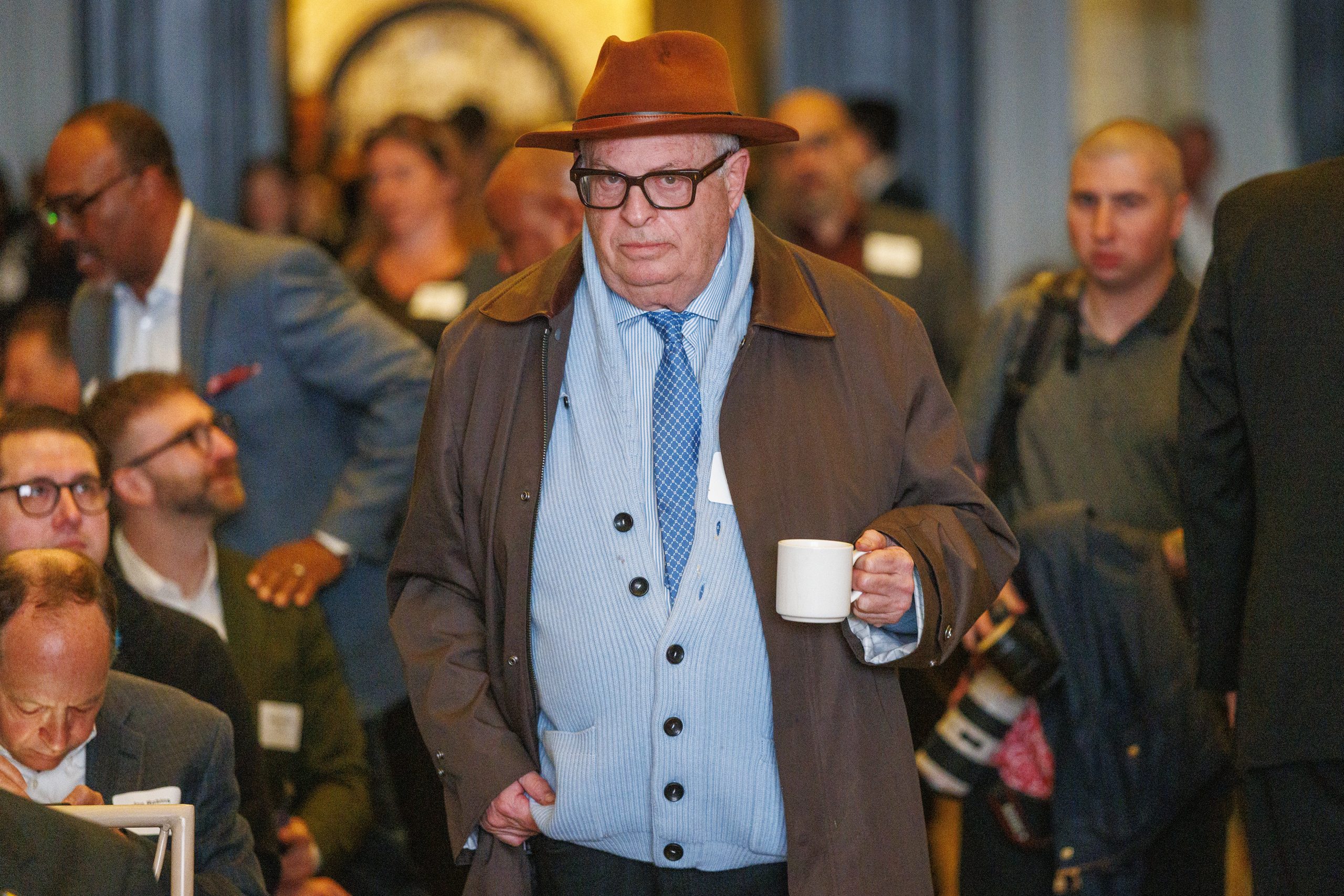
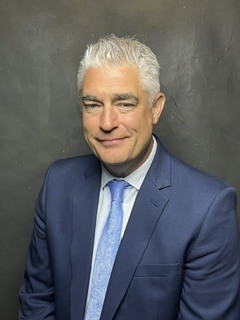
Philadelphia developer Dean Adler at the Center City District’s State of Center City event in April.Alejandro A. Alvarez / Staff Photographer
Adler has been on a roll of dramatic and ambitious adaptive reuse projects with his former company Lubert-Adler Real Estate Partners, transforming Philadelphia landmarks into mixed-use campuses, notably at the Bellevue Hotel on South Broad Street and the Battery on the Delaware River.
In these projects, Adler has championed a mix of residential, hotel, office, restaurant, and wellness.
Adler is also locked in a dispute with his former partner Keystone Property Group over the Bourse on Independence Mall, which he hoped to turn into another mixed-use hub.
The Centre Square project would have been CSC’s largest project in Philadelphia. The developer is known in Philadelphia for its purchase of the former International House in University City, rebranded as the Mason. CSC then toyed with the idea of turning the 3701 Chestnut St. tower into a drug and alcohol rehabilitation center.
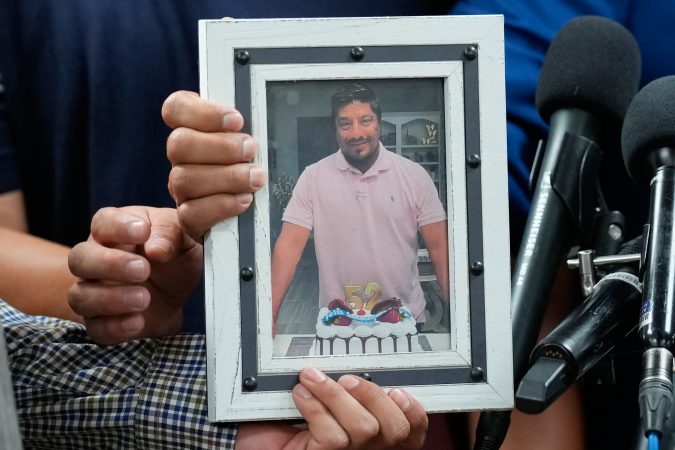
Lorenzo Salgado Araujo woke up at 5 a.m. Tuesday and started his day like almost every other one for the last 35 years since he came to Houston from Mexico and built his own American dream brick by brick — sending his three sons to top universities on the foundation he’d constructed through years of backbreaking labor.
His wife also got up to make him a hearty meal before he put on his work boots, fired up his van, and picked up three coworkers in Houston’s heavily Latino East End to build new homes on the city’s outskirts. But it proved to be Salgado’s last drive.
Just a short time later, the 52-year-old Salgado was lying face down outside of his van on a city sidewalk, surrounded by agents from U.S. Immigration and Customs Enforcement as blood poured from a bullet wound on the right side of his stomach. He was recorded screaming in pain: “Help me! They shot me! … ¡Me están matando!”
Translation: “They are killing me!”
He died a short time later in a nearby hospital. ICE said the fatal shooting occurred after officers tried to arrest Salgado in what it called “a targeted enforcement operation” — even though Salgado apparently had no criminal record and for more than a year had been steadily making progress toward securinga work permit that would resolve his immigration status.
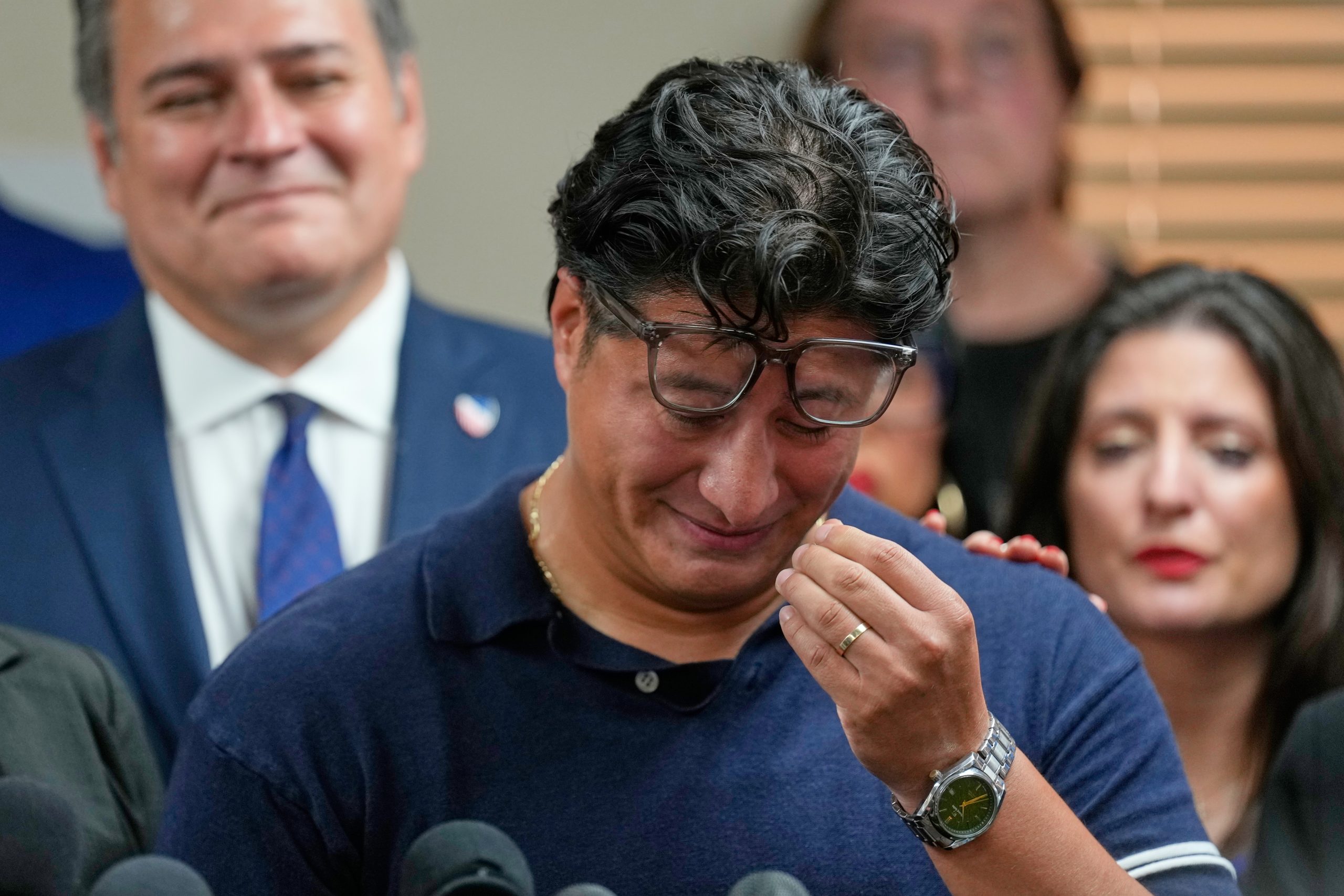
“We dotted every ‘i,’ crossed every ‘t,’ filled every document, attended every appointment,” his tearful son, 29-year-old teacher Ronaldo Salgado, said in a news conference on Wednesday. Afterward, the younger Salgado told the Bulwark: “I love our dad; he worked hard. He always told us that we needed to do well in school so we don’t end up like him in the sun.”
Ronaldo Salgado, son of Lorenzo Salgado Araujo, wipes away tears while speaking during a news conference Wednesday in Houston. David J. Phillip
The killing of Salgado — family man, essential worker, and American dreamer who was doing everything the right way after joining the 1990s mass migration of undocumented Mexicans — is a crime against humanity that makes anyone who still has a functioning moral compass want to scream in outrage.
Still, what happened after Salgado was gunned down is deeply troubling in a different way. America seemed to mostly shrug at a killing no less senseless than this winter’s Minneapolis ICE fatal shootings of Renee Good and Alex Pretti, let alone other law enforcement murders like George Floyd in 2020, which sparked days of nationwide protest.
The implosion of now ex-Maine Democratic Senate candidate Graham Platner or Donald Trump’s inane prattle at a NATO summit took up most of the hour on cable-TV news, with reporting on yet another ICE killing squeezed in at the end. A fascist regime cutting down our law-abiding neighbors in the streets is becoming background noise.
Just how they want it.
To be sure, there are differences between what happened Tuesday in Texas and the Minneapolis killings that grabbed so much attention six months ago. A large activist community in the Twin Cities was out in the streets at the time of the Good and Pretti shootings, with whistles and cell phones, producing a flood of video evidence that exposed ICE’s lies and inspired massive demonstrations.
In contrast, Salgado was killed in a low-income neighborhood, and while there is video of the wounded laborer on the ground, there’s not yet been definitive footage revealing how or why he was shot. That doesn’t alleviate the nagging concern that the media and some corners of the public and the body politic care more when the victims are white U.S. citizens — which, if true, is morally unconscionable.
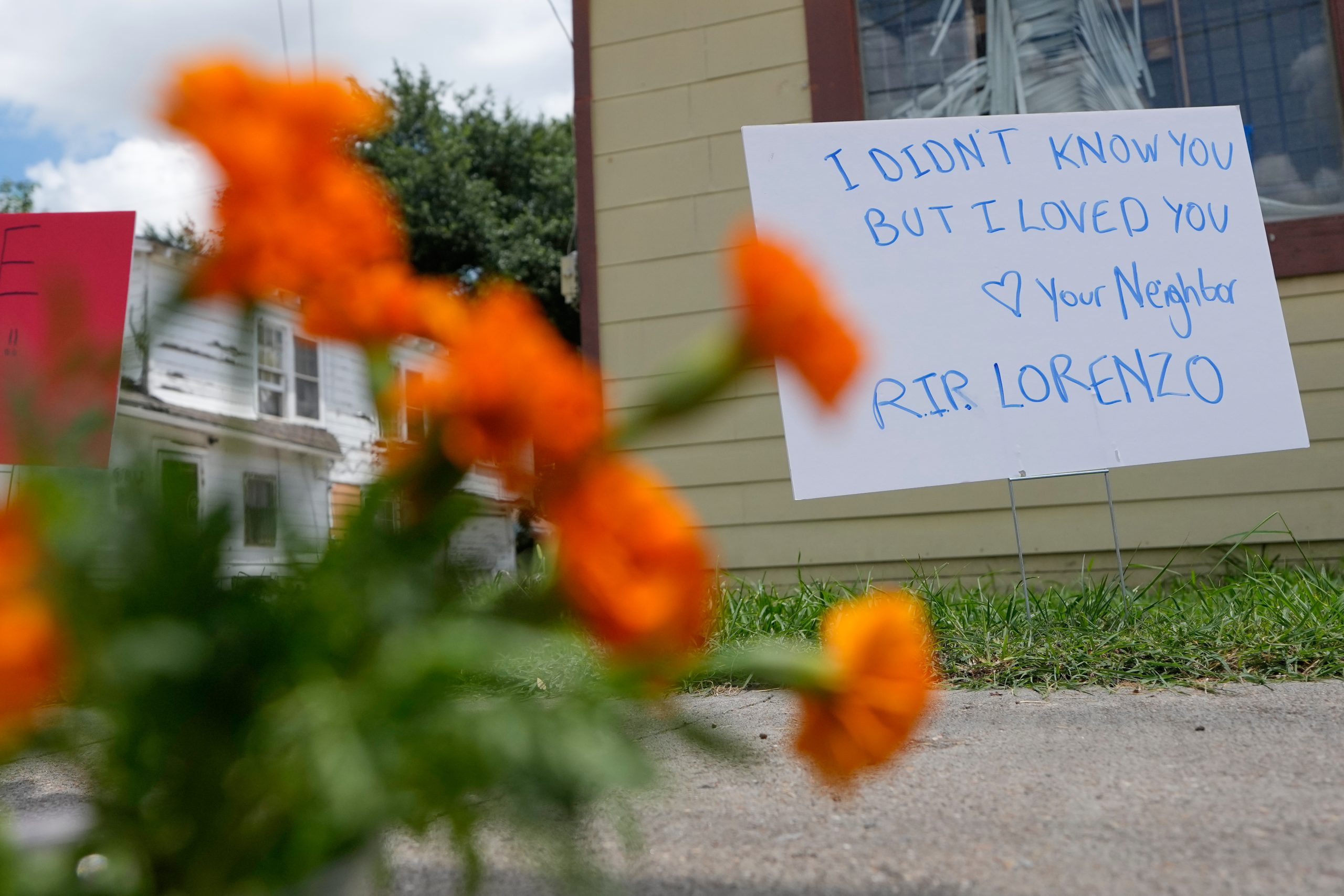
A makeshift memorial for Lorenzo Salgado Araujo, who was shot and killed by an ICE officer Tuesday, is shown Wednesday in Houston. David J. Phillip
Americans should be alarmed at the bigger picture that’s slowly unfolding before us. After briefly pressing the pause button in the furor over the Good and Pretti killings — pulling back from its federal assault on Minnesota, firing the flamboyant and infuriating Greg Bovino and Kristi Noem, and drastically scaling back its plan for warehouse concentration camps — ICE is back, and more dangerous than ever.
After an era of waving a red flag before an activated, engaged, and angry citizenry it didn’t see coming, by naming operations like the “Catahoula Crunch” or “Charlotte’s Web,” and with Bovino mugging for the TV cameras, ICE has resumed working toward its inhumane target of one million deportations per year, but with a much lower profile.
There are thousands of new immigration agents on the streets, fueled by Congress giving two massive funding infusions totaling about $240 billion, and with Homeland Security and ICE under new management, they are hoping to terrorize immigrant communities without generating headlines or protests. “ICE is making record arrests right now,” Trump’s immigration czar, Tom Homan, told Fox News. “We turned the heat up …”
The New York Times reported last week that with no press releases or hoopla, daily immigration arrests had doubled over a five-day period to a total of roughly 10,000, or 2,000 per day, with immigrants arrested during required government check-ins, but also during traffic stops like the one in which Salgado was killed.
This is a human rights nightmare in the making. The stepped-up arrests are all but certain to lead to more dangerous and potentially fatal encounters like the one that occurred on Houston’s Canal Street, but the other impacts are equally pernicious.
Fear levels in big-city neighborhoods with large immigrant communities are spiking yet again — keeping countless kids home from school and essential workers off the job, crimping an already strained economy. The Trump regime’s squalid gulag archipelago of immigration detention centers — whose crisis of overcrowding had eased slightly with the spring enforcement slowdown — is seeing a surge again, and that will also lead to catastrophe.
Detention deaths are soaring to record levels — more than 50 since Trump returned to office in January 2025. We are learning troubling details, for example, about the March death of an Afghan national who came to the United States after working with U.S. Special Forces and who died after just one day in ICE custody. Relatives of Mohammad Nazeer Paktiawal, 41, said he was not allowed to bring his asthma inhaler into detention; officials say he died of an “adverse drug reaction” that brought on an attack.
In Houston, there’s no evidence to support ICE’s initial claim that Salgado was resisting arrest, but — given what we are learning about the horrors of detention — it’s not surprising that immigrants facing an arrest are terrified at what might happen next. Meanwhile, ICE and other agencies are going to extreme lengths to avoid accountability.
In California, ICE — overflowing with our tax dollars — is spending an astronomical $1.5 billion to buy two large privately run immigration prisons from the corporation CoreCivic, for the purpose of preventing state and local inspectors from monitoring what happens there. WIRED recently reported that ICE’s internal watchdog agency is focusing its attention not on agent misconduct but on tracking down outside critics.
What are they trying to hide?
In the killing of Salgado, we don’t know the answer — yet. ICE claims Salgado, whom it dehumanized as an “illegal alien,” “weaponized his vehicle” and tried to run over the agent who was arresting him, and that the agent then fired the fatal bullet.
We don’t know if there’s any truth here. But what we do know is that in every similar situation during the Trump regime — including Good and Pretti and others like Chicago nonfatal shooting victim Marimar Martinez — the initial ICE version of what happened proved to be a lie, and often a brazen one. It takes a willing moral blindness to automatically accept ICE’s story about what happened to Salgado.
And yet, we are seeing that not only from the local FBI — which is not investigating the officer’s action, but the alleged crime of resisting arrest — but also from Houston Mayor John Whitmire, who said he trusts the federal government to do a thorough investigation, as if he’d been living in a cave these last 15 months.
In their anguished news conference on Wednesday, family members and local Democratic officials called for the release of any ICE body-cam footage and an independent investigation into what really went down in Houston’s Magnolia Park section.
They need our help, though. ICE’s new summer assault on immigrant communities, and its ability to get away with its many crimes, is counting on an exhausted or apathetic American public to not demand action as so many of us did with Pretti or Good or Floyd.
Please say his name — Lorenzo Salgado Araujo — and take to the streets and demand justice. His death is just as deserving of our time and our moral outrage, if not more so.
“This is the exact spot that Lorenzo took his final breath,” Cesar Espinosa, executive director of the immigrant rights group FIEL Houston, told the protest marchers. “And in the spirit of solidarity, I don’t know about you, but I say, if they come for one of us, they come for all of us.”
A sampling of retailers, takeout businesses, pharmacies, convenience stores, and food stores shows half are violating Philadelphia’s ordinance that bans plastic bags and requires a fee on paper bags.
That’s according to the PennEnvironment Research & Policy Center, which sent members to purchase items in 80 stores across the city and in neighborhoods with varying demographics.
The nonprofit advocacy group’s survey found:
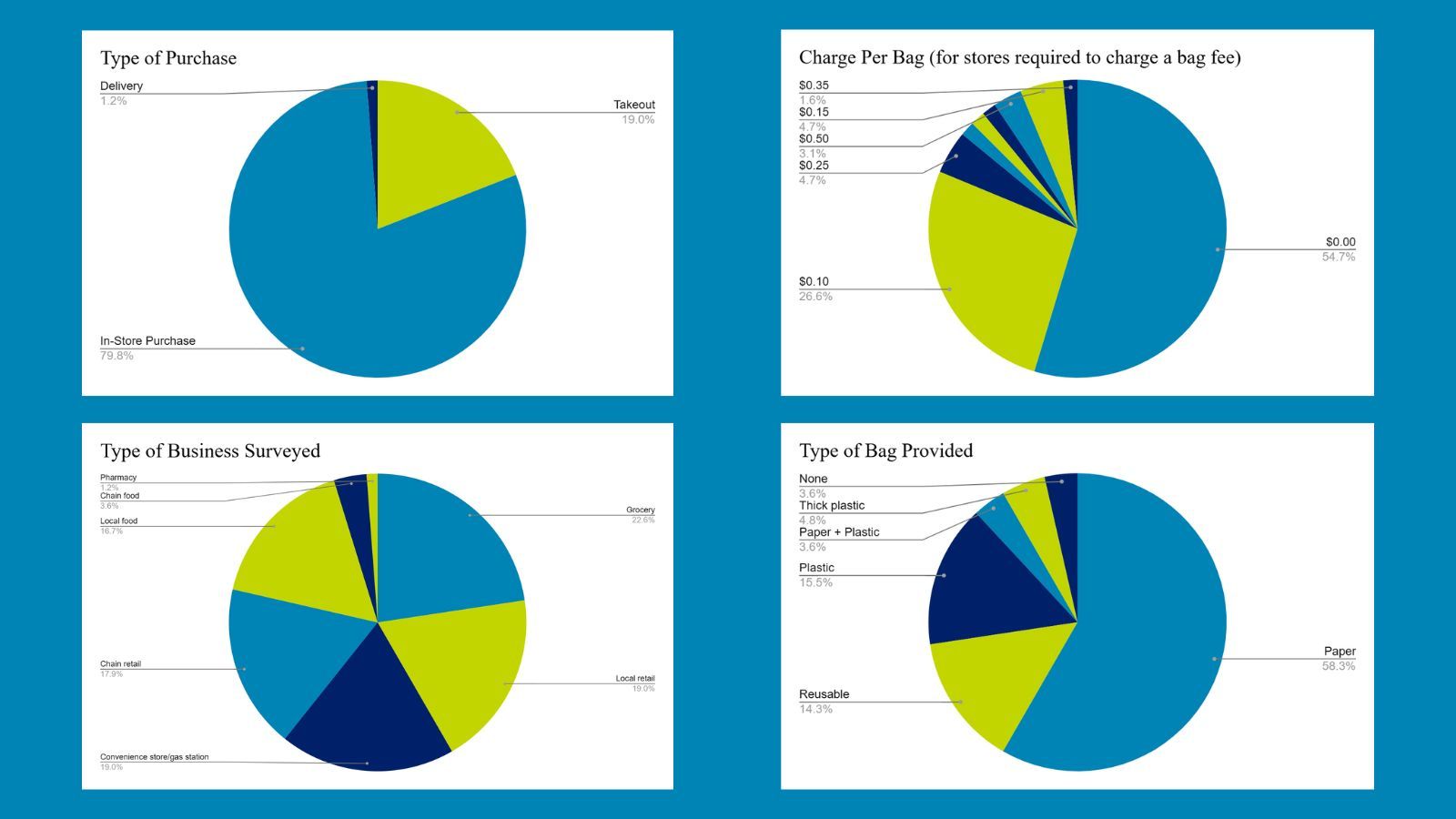
55% of businesses violated at least one key provision of the law.
50% of businesses failed to charge a 10-cent fee on paper or reusable bags.
20% of businesses provided plastic bags that have been illegal for years.
Faran Savitz, a zero-waste advocate for PennEnvironment, said during a news conference Thursday outside City Hall that the group didn’t just scrutinize chain stores like Wawa, although those larger operations were generally compliant.
He said the 80 stores surveyed were chosen to represent multiple types in all neighborhoods, although they amount to only a fraction of businesses in the city,
“We wanted to look at as many different types of businesses and hit as many different neighborhoods in the city as possible, so we could get a sense of is this concentrated on one neighborhood or is it spread geographically everywhere,” Savitz said. “We found that this is a pretty widespread problem.”
Charts from a survey of stores conducted by the nonprofit advocacy group PennEnvironment show what the report calls widespread noncompliance of Philadelphia’s revised plastic bag law that went into effect in January 2026.PennEnvironment
Savitz said that chain stores tend to know the law and its requirements. Many small businesses remain unaware.
However, the survey did highlight some positive momentum. Currently, three-quarters of surveyed businesses no longer distribute plastic bags. That’s a significant improvement from the group’s previous investigations that caught half of all stores providing them.
The city’s updated bag ordinance
Philadelphia’s original plastic bag law, introduced by Councilmember Mark Squilla, was passed in 2019 but was phased in slowly. It went into full effect in 2021.
After that, paper bag usage skyrocketed, said Squilla, who represents the 1st District, including parts of South Philadelphia, Center City, and the River Wards. Although paper bags are biodegradable, they require more energy to produce and the cutting down of trees.
Squilla introduced an updated bag ordinance last year, which was approved by City Council, and went into effect in January. It required a 10-cent fee on paper bags.
The goal of the fee, Squilla said, is to change shoppers’ behavior and get them to bring reusable bags to the store.
Squilla called the violations found by PennEnvironment “disappointing,” but said he knew compliance would be a challenge.
“Our goal is to end single-use plastic bags in our waste stream and in the city of Philadelphia,” Squilla said.
To close the compliance gap, PennEnvironment is urging Licenses and Inspections to improve education and enforcement, and asking residents to report noncompliant businesses to the city’s 311 system.
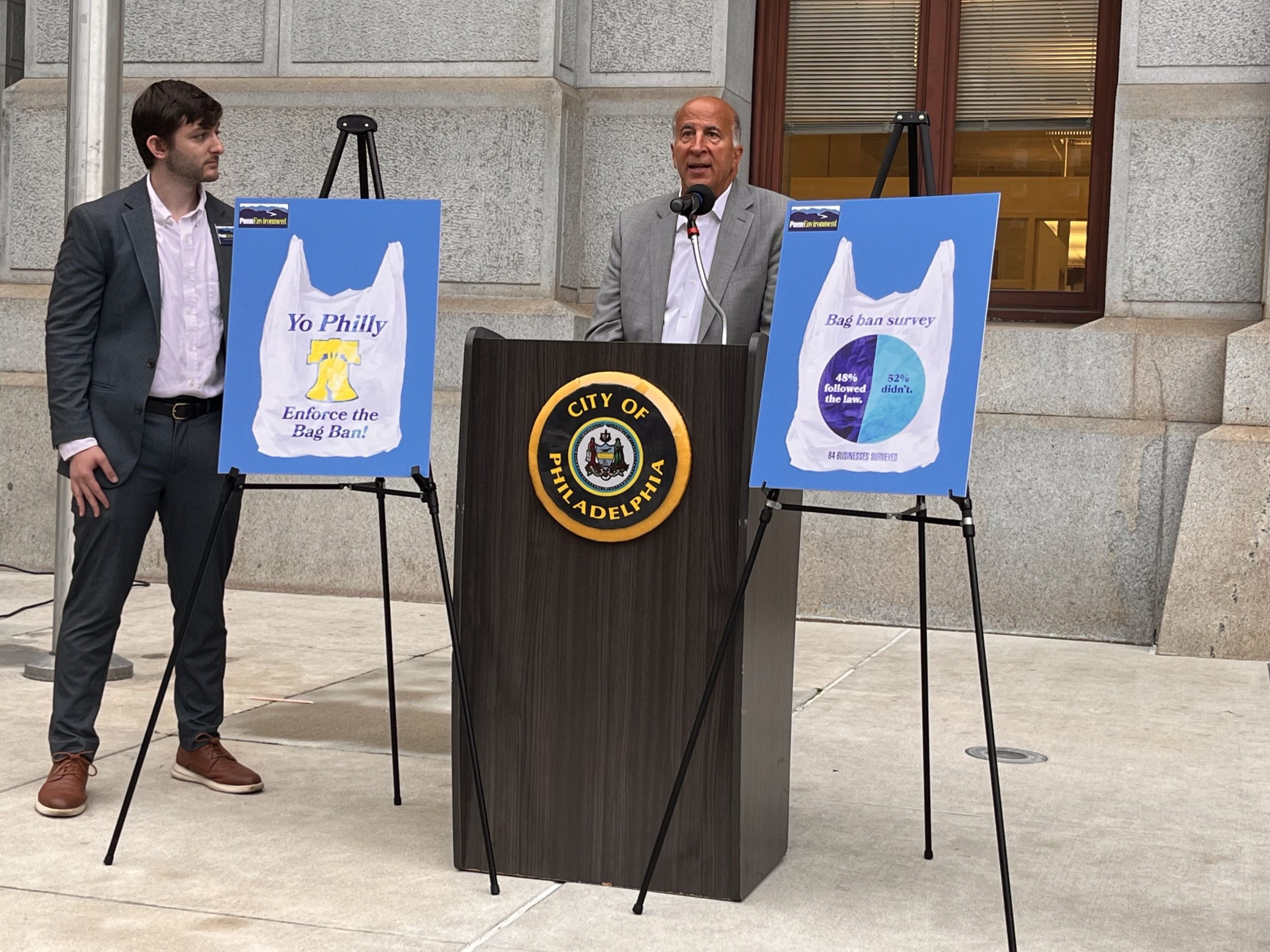
Faran Savitz (left) of PennEnvironment Research & Policy Center and Philadelphia Councilmember Mark Squilla, at lectern, discuss PennEnvironment’s findings outside City Hall on July 9. Frank Kummer
Plastic bags
Ryan Rabenold, environmental program coordinator at the Pennsylvania Resources Council, said the city’s law is key to reducing waste, noting that most reusable plastic bags do not get recycled.
Plastic bags contribute to litter, require fossil fuels to produce, and become microplastics in the environment when they break down.
“They either get lost in the system, are contaminated with food or grease, which makes them unrecyclable, or they simply get blown away when we’re trying to collect them,” Rabenold said. “When they do end up in our recycling system … they contaminate materials that are recyclable and force them to be removed from the system.”
Rabenold noted that microplastics have been detected in human blood and tissue.
“We are feeling the impacts of something that we may not be able to see, Rabenold said.
“It’s better for our health and the environment to use one thing 1,000 times,” Rabenold said of reusable bags, “rather than use 1,000 things once.”
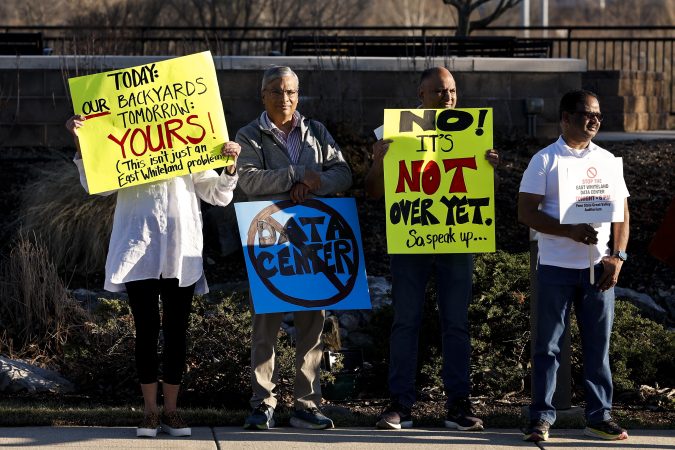
The developer of a 1.5 million-square-foot data center project proposed for an East Whiteland Superfund site has again returned to the township requesting changes to the plan — even as they’ve already started preparing for construction.
But on Wednesday, the developers asked for a “field change,” requesting permission to put into place some of the changes that would have been included in those amended plans.
The changes — which include the ambitions they’ve had since January — would remove the cooling towers, eliminate water cooling for the computer equipment, and install air-chilled units on the building’s roofs. These changes are permitted under the Land Development Agreement, Township Manager Steve Brown told the community at the meeting. But they require the board’s approval.
The request drew ire from community members who have for months been opposed to the project, fearing the data center’s impact on health and the environment. They’ve also raised concerns that it will rest atop the former Foote Mineral Co., a contaminated industrial site that landed on the federal list of hazardous places.
The board voted, 2-1, to table approval of the proposed changes; chairman Scott Lambert and supervisor Clinton Smith said there were still too many questions. Supervisor Peter Fixler cast the dissenting vote.
“What’s been presented to us this week, as I said before, I think is a gift. … What’s in front of me now is a data center that’s a third the size of their original proposal,” Fixler said ahead of the vote. “It would, I feel, be environmentally irresponsible to not approve this plan. I know that doesn’t sound popular.”
The developer said the reason for the change is water conservation, Brown said. The approved plan would use more than 3 million gallons of water a day, vs. the proposed plan, which would use air chillers.
Separately, the developer proposed slashing the size of the buildings, down from a sprawling 1.5 million square feet total build-out — with two data center buildings roughly 772,000 square feet each — down to a total of 536,000 square feet. It would strike a basement in the current plans, and also reduce the height of the building. These changes don’t necessitate board approval, Brown said.
In an email Thursday, Lou Colagreco, the attorney representing the developers, said they would respond to any of the board’s questions “that may still be outstanding.”
“At the end of the day, this is a simple question: Will we use a cooling system that consumes millions of gallons of water a day, as approved, or not?” he said. “We believe this is a very easy decision. We are at a moment in the job where we have no choice but to move forward with whatever path provides us certainty of execution. If the Board wants us to build with evaporative water cooling, we will continue to do so.”
As he discussed his decision, board chairman Lambert told residents that “we could get a call tomorrow from the developer, and he may say, ‘That 536,000 square foot offer we put out there to make it smaller, it’s gone.’”
On Wednesday, the community called for the rejection of the plans, saying that it was too big a transformation to be considered a field change.
“This isn’t moving a pipe from five feet away to have some mud moved on top of it. This is a half-a-million-square-foot change,” resident Tony Gianino said. “This is crazy. This is a completely new project. I’ve been saying this since the beginning. This is a substantial change. If not this, then what counts as substantial?”
Jeff Katz, another resident, said that the plans looked like those initially presented to the township in the spring, which were ultimately withdrawn.
“Bringing substantially the same changes back tonight … looks like an attempt to get through the back door of what could not be brought through the front,” he said.
This suburban content is produced with support from the Leslie Miller and Richard Worley Foundation and The Lenfest Institute for Journalism. Editorial content is created independently of the project donors. Gifts to support The Inquirer’s high-impact journalism can be made at inquirer.com/donate. A list of Lenfest Institute donors can be found at lenfestinstitute.org/supporters.
Mount Laurel public schools will start the next academic year with a new leader at the helm.
Neil Burti will take over as superintendent of schools starting Aug. 1, succeeding George Rafferty, who is retiring after leading the district for a decade.
After an extensive search, “Dr. Burti distinguished himself as the candidate whose experience, leadership style, and vision best aligned with the needs of the Mount Laurel School District,” Danielle Stuffo, president of the Mount Laurel Board of Education, said in an email.
Burti has more than 25 years of experience as an educator and administrator and is a longtime employee of the Cherry Hill Public Schools. While there, he served at all levels of leadership and was most recently the director of secondary education for the district.
Earlier this year, Burti also stepped in to handle the principal responsibilities during the second half of the school year at Cherry Hill High School East following a period of administrative upheaval in the school district.
The shake-up came after a lawsuit filed last September alleged that East’s former principal, alongside the Cherry Hill Board of Education and two other top administrators, subjected a former assistant principal to discrimination and retaliation.
“We are confident [Burti] will build upon the district’s many strengths, work collaboratively with our staff and community, and continue our focus on providing an exceptional educational experience for every student,” Stuffo said.
Stuffo said the district’s goals will largely remain the same under new leadership.
Like other districts, Stuffo said, Mount Laurel will work to continuously improve student experience and outcomes while adapting to evolving educational needs — and doing so within an increasingly limited budget.
“Fortunately, Mount Laurel is well positioned, with excellent staff and strong systems already in place. As Dr. Burti becomes familiar with the district, he will have the opportunity to evaluate our organizational structure and administrative leadership and, if appropriate, make recommendations to the Board for consideration,” she said in the email.
Burti was named the 2024 New Jersey Secondary School Principal of the Year during his time leading Cherry Hill’s John A. Carusi Middle School.
Burti holds a bachelor’s degree in movement studies and exercise science from East Stroudsburg University, a master’s degree in educational leadership from Temple University, and a doctorate in innovation and leadership from Wilmington University.
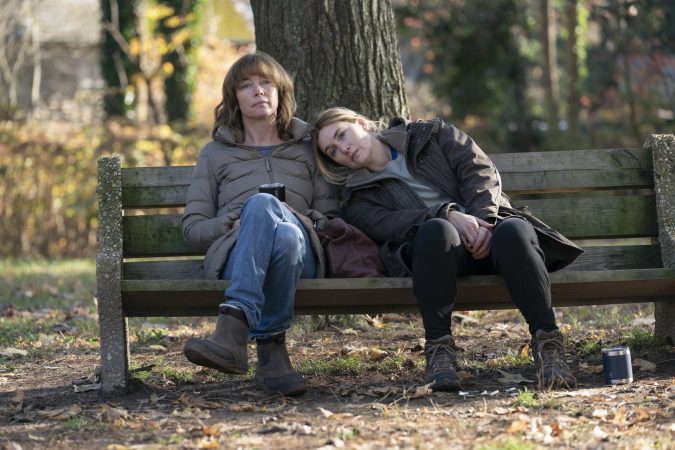
Playing the best friend to Kate Winslet’s titular Mare Sheehan character, Nicholson won an Emmy in 2021 for her heart-wrenching performance as the mother of (spoiler alert!) the young boy revealed as the killer Sheehan was investigating.
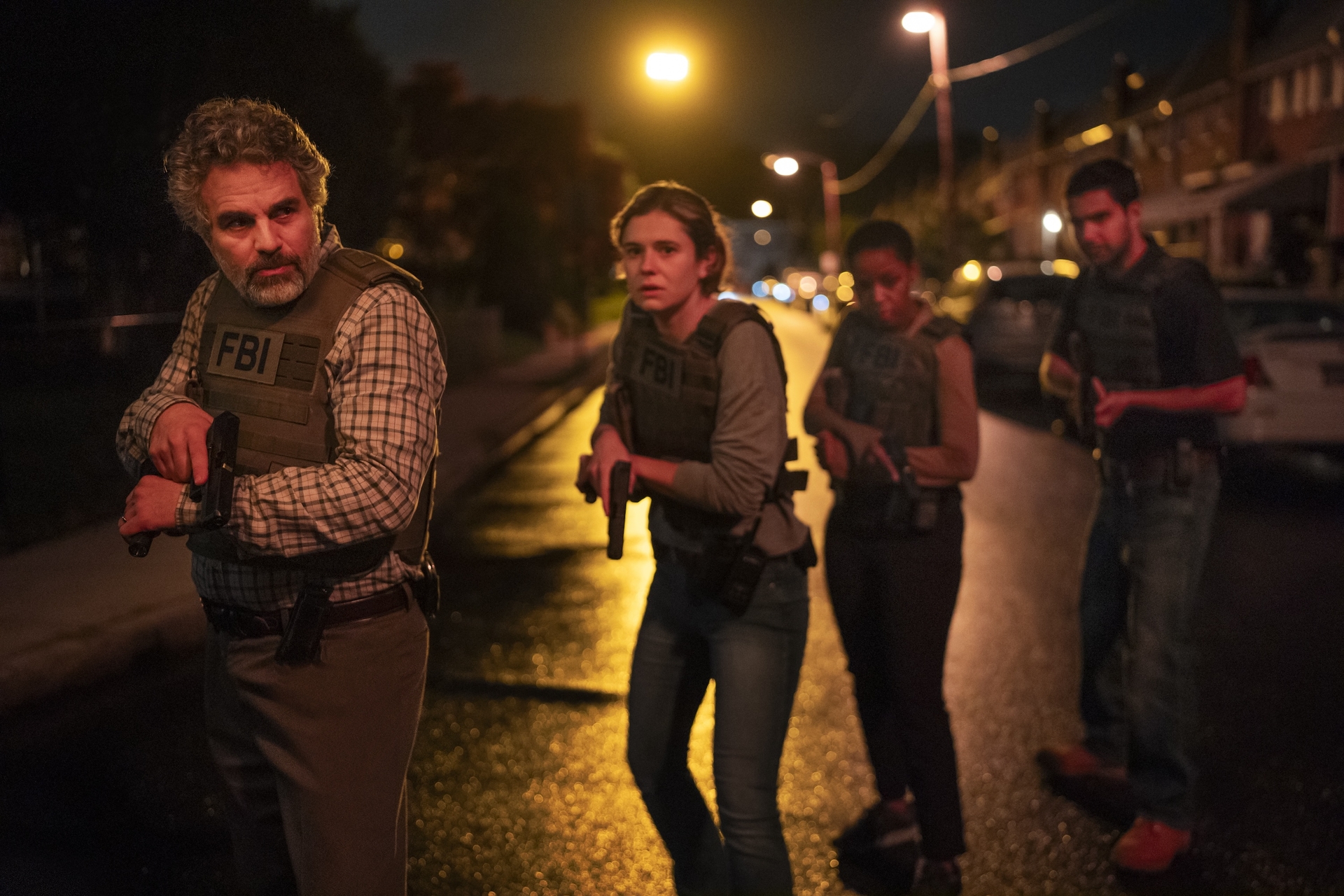
More details about how her character will factor into Task are under wraps. But we know that the new season follows Ruffalo’s ex-priest-turned-FBI agent — a performance that earned him an Emmy nod — as he leads another task force that will clash with the DEA.
Mark Ruffalo (left) plays FBI agent Tom Brandis in the HBO series “Task.”Warner Bros. Discovery
It’s the first time that the worlds of Task and Mare have officially collided, though both shows were created by Berwyn writer Brad Ingelsby and filmed in the Philadelphia area. There’s also some overlap in their creative teams, from production and costume design to dialect coaching. (Ingelsby recognizes the importance of getting the signature Delco accent just right.)
“We weren’t trying to separate Task from Mare. In fact, we were actually going the other way and saying, ‘No, it’s OK to use the same streets,’” said Ingelsby, who received an Emmy nomination recognizing his writing for the Task finale. “If there’s something architecturally that can connect the two worlds, let’s wrap our arms around it.”
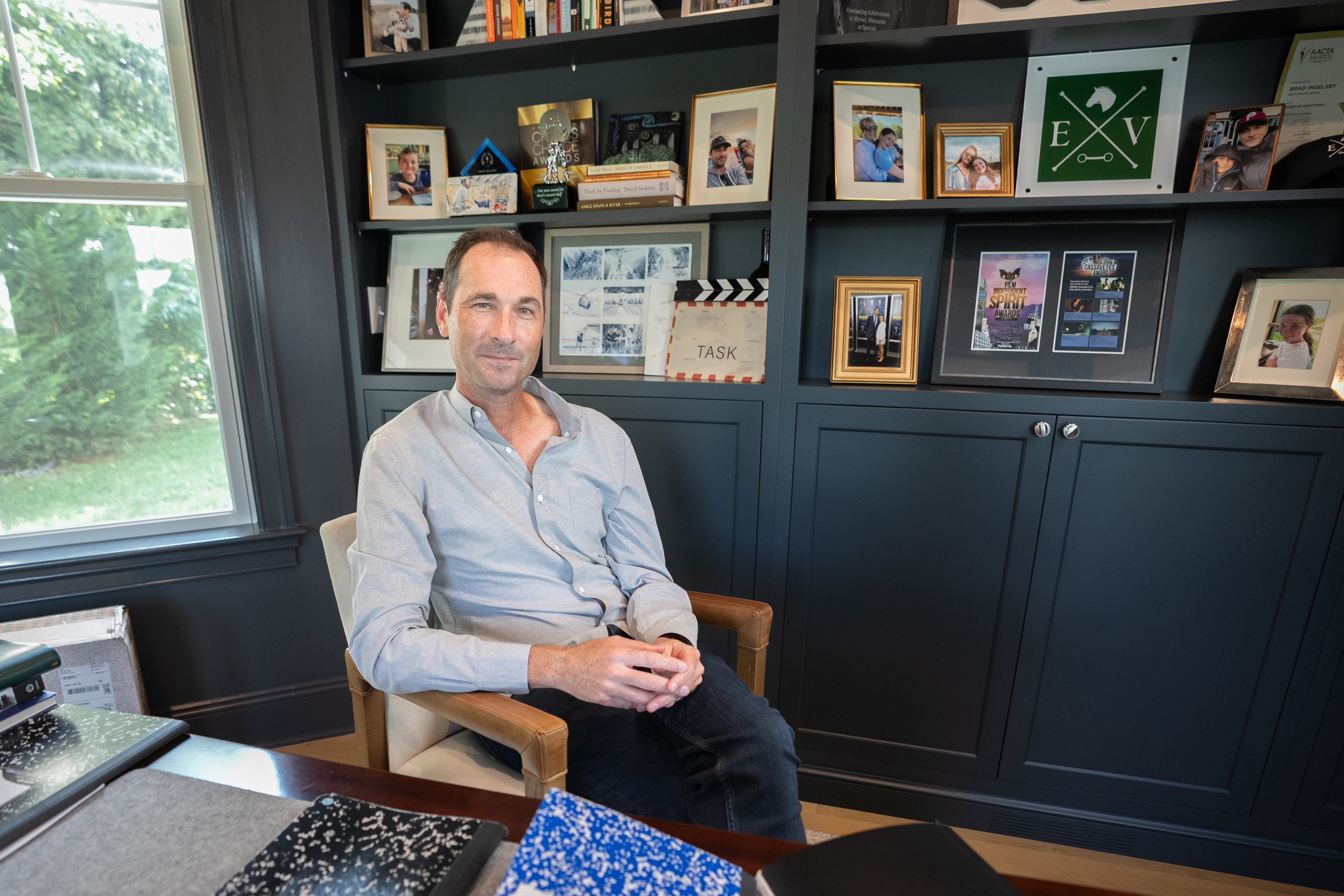
“Task” and “Mare of Easttown” writer Brad Ingelsby in his office in Berwyn, Pa.. on July 17, 2025. Jessica Griffin / Staff Photographer
Mare was developed as a limited series, but talk of a potential second season has persisted in the years since its release. Ingelsby has said the door is always open for a continuation of the show and earlier this year, Winslet reportedly said recent conversations with HBO were promising enough that she believes there’s a “strong likelihood” filming could begin in 2027.
It’s not yet clear whether Winslet could make a cameo in Task when the two shows crossover.
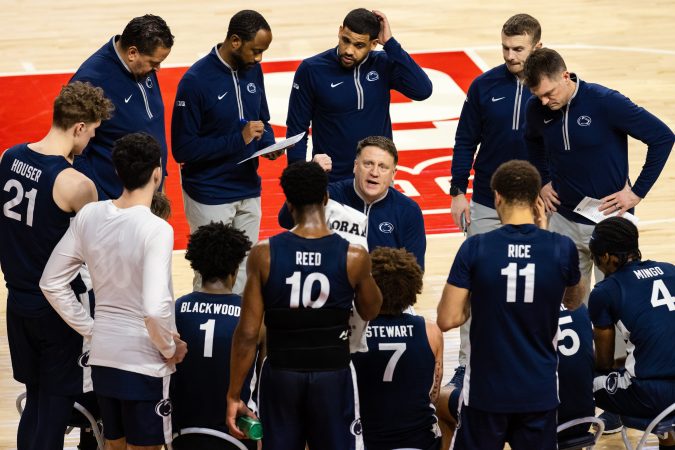
For the Palestra’s 100th anniversary, Penn State is returning to the storied arena to face a Keystone State rival, Pittsburgh.
The matchup will be Nov. 8, and it’s the second straight season in which the programs have played at a neutral site — they faced off at the Giant Center in Hershey on Dec. 21, 2025. Penn State holds an 76-73 advantage all-time over Pitt.
This is also the fifth consecutive season in which the Nittany Lions will play at the Palestra.
— Penn State Men’s Basketball (@PennStateMBB) July 9, 2026
“Games like this are what college basketball is all about,” Penn State coach Mike Rhoades wrote in a release. “Great history, passionate fan bases, and high-level competition. The Palestra is one of the most iconic venues in college basketball, and the opportunity to celebrate its 100th anniversary while renewing an in-state rivalry for the 150th time makes this a special event for everyone connected to our program.
Pitt coach Jeff Capel added: “Every basketball player and coach in this country understands the significance of playing at the Palestra. It’s one of the great venues in the history of the sport, and to play Penn State there in its 100th Anniversary year is a truly unique opportunity. Our players will be walking into a building with a century of history behind it, and after the atmosphere we saw in Hershey last year, I can’t wait to see the energy our fans bring to a place like the Palestra.”
The matchup is the second major addition to the Palestra’s 100th anniversary slate announced this week. On Tuesday, Penn announced that its annual Cathedral Classic will expand from four to five teams, ditching its round-robin format. The event, which is Nov. 27-28, will feature host Penn, La Salle, Bucknell, Buffalo, and Towson.
Penn announced in January that the Palestra’s anniversary celebration will begin in late August.
The World Cup may have moved on from Philadelphia, and the United States may have bowed out of the tournament, but the FIFA Fan Festival in Lemon Hill is bringing in events designed to keep the party going.
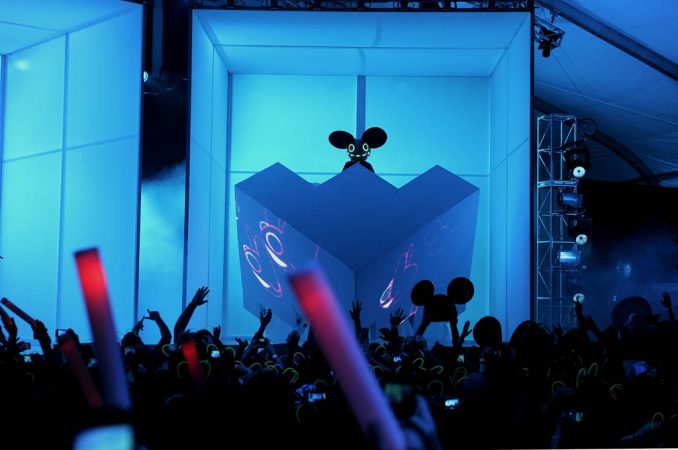
As 10 days and eight nations remain in the World Cup, the Fan Festival’s commitment to remain open for the full 39 days of the tournament begins Sunday with four concerts, including pop star Bebe Rexha (July 17) and world-renowned electronic DJ Deadmau5 on July 16.
Typically, a Deadmau5 ticket starts at $85, according to secondary market sites. His concert, and the others, are free; fans just need to register on FIFA’s Fan Festival website for a daily ticket. Access into the festival is on a first-come, first-served basis with a max capacity of 15,000 people.
“Deadmau5 has shaped electronic music with his level of production and technicality. Bringing his unique live performance style to FIFA Fan Festival Philadelphia is something special,” Michael DelBene, executive producer of FIFA Fan Festival in Philadelphia, said. “We truly believe there is something in this lineup for everyone and we hope to see visitors and Philadelphians alike come out and join us at Lemon Hill for their favorite act.”
Moar Free Shows 'n' Stuff
♦️ Thursday, July 16 ♦️ 7 PM ♦️ Lemon Hill, East Fairmount Park
— FIFA World Cup 26 Philadelphia™ (@FWC26Philly) July 9, 2026
In addition to Deadmau5 and Rexha, singer-songwriter Wisin performs on Sunday, followed by the return of the All-American Rejects, a pop-punk band that was one of the early acts at the Fan Festival on June 13.
With the World Cup set to end July 19, DelBene and Philadelphia Soccer 2026 noted that there could be further acts to come in addition to local artists, “cultural organizations, and community groups.”
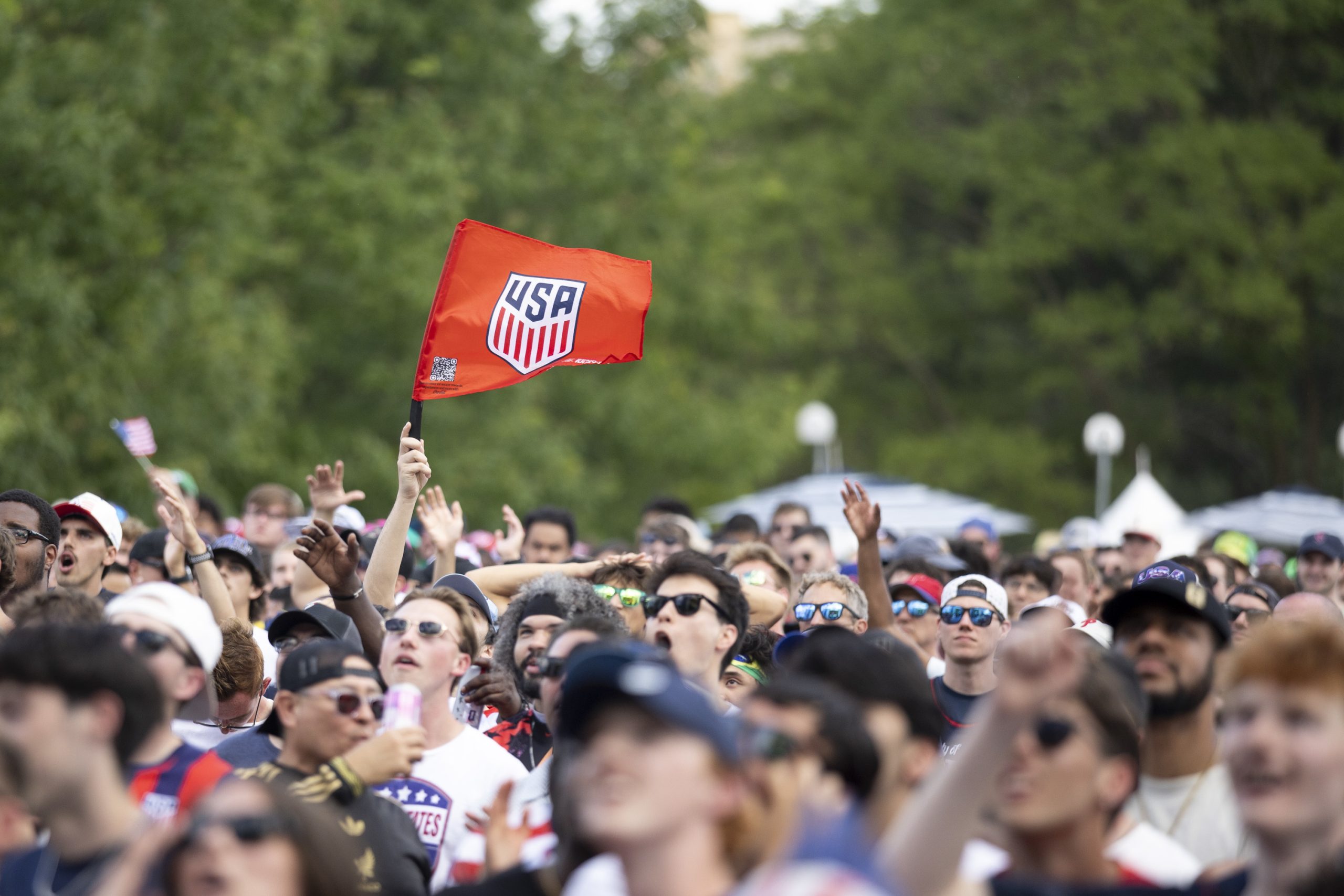
FIFA Fan Festival at Lemon Hill Park as seen capacity crowds during the World Cup. They’re hoping that continues with a slate of free concerts next week. Tyger Williams / Staff Photographer
FIFA Fan Festival free concert schedule
Sunday, July 12: Wisin, 2 p.m. (Festival gates open at noon and close at 4 p.m.)
Monday, July 13: All-American Rejects, 7 p.m. (Festival gates open at 5 p.m. and close at 9 p.m.)
Thursday, July 16: Deadmau5, 7 p.m. (Festival gates open at 5 p.m. and close at 9 p.m.)
Friday, July 17: Bebe Rexha, 7 p.m. (Festival gates open at 5 p.m. and close at 9 p.m.)
The Flyers’ pre-Fourth of July fireworks have officially become a dud.
On July 3, the team set off a bombshell when it tendered an offer sheet to Anaheim Ducks center Leo Carlsson. It came with a five-year contract worth an average annual value of $18 million. According to a league source, the deal was front-loaded with a heavy signing bonus — and signing bonuses every year of the deal. Carlsson would receive the league minimum in base salary every year, a deal Carlsson said was “too good to pass on.”
“It was an offer that 99% of people would sign too,” Carlsson told reporters on Thursday. “It’s a pretty simple answer. I really wanted to be here though. I really wanted them to match. I want to be an Anaheim Duck.”
That contract is now under control of the Anaheim Ducks, who matched the offer sheet on Thursday, a day before the 3 p.m. Friday deadline. The Ducks cannot trade Carlsson, who now has the highest AAV in the NHL, for one year.
“Did we expect the offer sheet to be this high? No. We did not see that one coming,” Verbeek told reporters on Thursday. “But we’re very confident, with the cap going up and the ability of Leo to make strides of improvement and become an elite player, we feel confident this contract will be a good one in the end.”
Did they leave enough cap space? The Ducks do have to re-sign restricted free agent Cutter Gauthier. But that is Anaheim’s problem now.
Carlsson was the type of top-line center the Flyers have been longing for since Claude Giroux was traded to the Florida Panthers in March 2022. Giroux, who was rumored to be interested in a return to the Flyers, inked a one-year deal to stay with the Ottawa Senators on Tuesday.
The offer sheet was always a long shot, but for a Flyers team that hopes its days at the bottom of the standings are done, it was one of scarce options. Since 2010, only nine players have signed an offer sheet, and six were matched. Top-six centers Sebastian Aho and Ryan O’Reilly, and now Carlsson, are among the group to be retained by their original team. The Flyers now have to pivot elsewhere to find a potential top-line center solution this offseason.
Could the Flyers take a swing at Columbus Blue Jackets center Adam Fantilli?Nick Wass
Aaron Portzline of The Athletic reported that Blue Jackets center Adam Fantilli, the No. 3 overall pick in 2023, could be the Flyers’ next target. Since Columbus is in the division, he would be difficult to pry away via trade, but could be amenable to an offer sheet. Fantilli was not eligible for arbitration.
Fantilli set career highs with 35 assists and 59 points in 2025-26. Across his 213 career games, Fantilli has 140 points (67 goals, 73 assists) but he hasn’t yet lived up to the high expectations of his record NCAA freshman season at Michigan, when he became just the third freshman to win the Hobey Baker Award as the nation’s top player, after Jack Eichel and Paul Kariya. That might make him easier to pry away, but the team runs the risk of giving up four first round picks for a middle-six player.
The Flyers are unlikely to make an attempt at the Chicago Blackhawks’ Connor Bedard, who is out for at least four months after undergoing shoulder surgery. The Blackhawks have nearly $30 million in cap space, per PuckPedia, and almost certainly would match any offer, assuming Bedard signed it.
Had the Ducks not matched the Carlsson offer sheet, the Flyers would have sent their next four first-round picks to Anaheim in return.
According to PuckPedia, the Flyers have a smidge over $29.5 million in cap space; however, that number includes center Jett Luchanko‘s contract ($941,667), and Flyers general manager Danny Brière told The Inquirer in early June that the expectation is he will be in Lehigh Valley of the American Hockey League. They still need to re-sign restricted free agents Trevor Zegras and Jamie Drysdale, who filed for arbitration on Sunday.
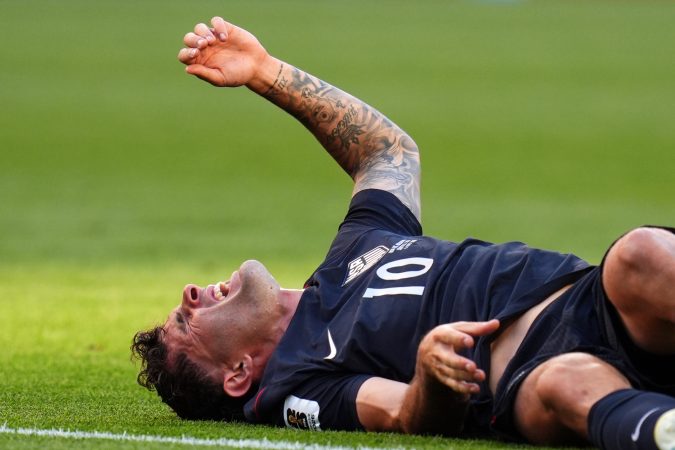
U.S. star Christian Pulisic fractured his right leg during the Americans’ World Cup loss to Belgium and will be sidelined for several weeks, a person familiar with the injury said Thursday.
The person spoke to the Associated Press on condition of anonymity because the diagnosis, first reported by the Athletic, had not yet been announced by the U.S. Soccer Federation.
Pulisic has a bone bruise and a microfracture of his tibia and fibula, the person said. He is expected to be able to resume training before AC Milan’s Serie A opener at Torino on Aug. 23, the person added.
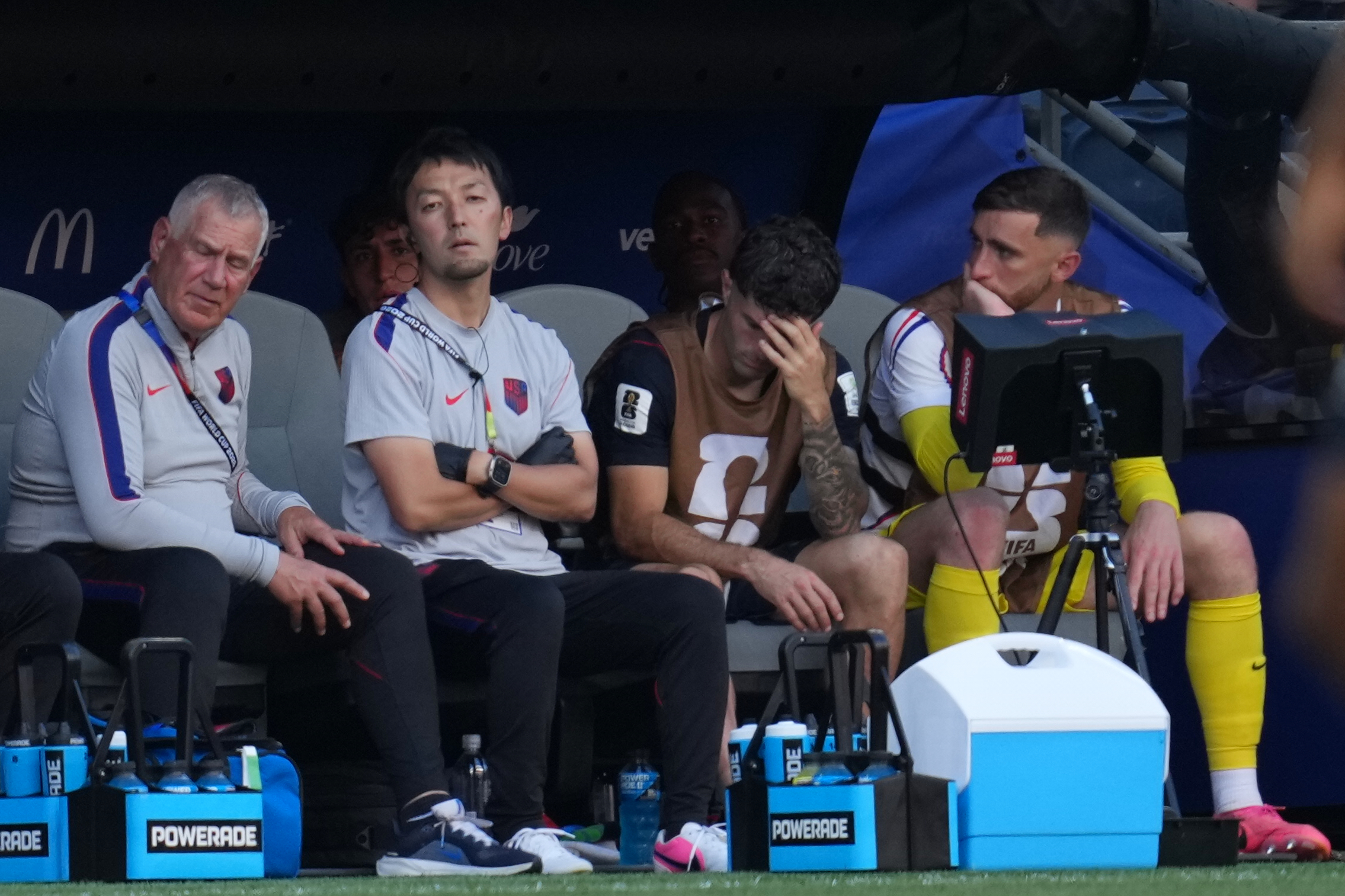
Christian Pulisic (second from right) on the bench after leaving the U.S.-Belgium game.Abbie Parr
Pulisic hit a leg of Belgium captain Youri Tielemans while attempting a shot in the 52nd minute of Monday’s 4-1 round of 16 loss in Seattle. He remained in the game but was hobbling, and Sebastian Berhalter replaced him in the 59th minute.
The Hershey native failed to score in the World Cup, missed one of the Americans’ five matches because of a calf injury, and left two other games early. He has 33 goals in 90 international appearances.
Pulisic, who turns 28 in September, is entering his fourth season with Milan.