Tag: topic-link-auto

  • What is the ‘dose zero’? Here’s what you need to know about Pa.’s new recommendations for early measles vaccination

    What is the ‘dose zero’? Here’s what you need to know about Pa.’s new recommendations for early measles vaccination

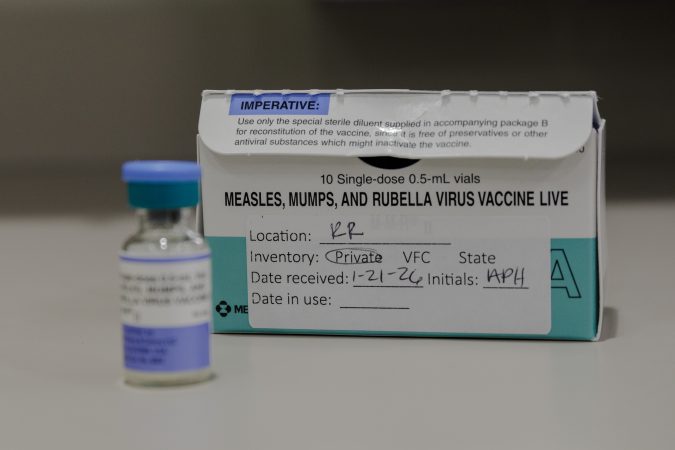
    As Pennsylvania grapples with a measles outbreak that has sickened 130 residents, state health officials are recommending some parents vaccinate young children early to provide extra protection against the highly contagious disease.

    Children as young as 6 months who live in or whose parents plan travel to affected counties should get a “dose zero” of the measles, mumps, and rubella shot, health officials said last month. Typically, children get their first measles shot at a year old.

    Measles infects up to 90% of unvaccinated people who are exposed to it, and complications can be particularly serious for young children.

    Here’s what you need to know about the “dose zero.”

    What is the dose zero?

    A “dose zero” MMR shot is an early vaccine given at 6 months old. Usually, a child receives the first MMR dose at 12 months old, then again between 4 and 6 years old.

    Babies receive some antibodies from their mothers that can interfere with vaccines that contain weakened versions of a live virus, including the MMR vaccine, said Katie Lockwood, a Children’s Hospital of Philadelphia pediatrician.

    Those antibodies mean that an MMR shot given before 12 months old can be slightly less effective at providing lasting immunity.

    But a “dose zero” can still provide babies with some protection that’s especially crucial in an outbreak.

    “What we see from that dose zero MMR is that you have some short-term protection that we believe will protect you during that period when you’re traveling to an outbreak area or internationally,” Lockwood said. (It’s long been recommended that parents opt for a dose zero if they’re planning to travel internationally with an infant.)

    “But it’s not generating the same long-term immune response that we see when we give the routine vaccine at age 12 months.”

    What happens after a dose zero?

    Babies still need a second dose of the MMR vaccine at 12 months old to provide lasting protection against measles, Lockwood said.

    Normally, kids then get their last MMR dose at around 4 to 6 years old. That dose is timed to protect children who may not have gotten vaccinated as babies — in school, they’re more at risk of contracting an infectious disease, Lockwood said.

    But in an outbreak, the state health department recommends that children get their second dose earlier as well — as soon as 28 days after their first dose.

    CHOP is now routinely recommending that children receive their final MMR dose at 15 months old. With 13 measles cases reported in Chester County since April, and 75 cases reported just to the west in Lancaster County, Philadelphia-area parents are close enough to the outbreak that many are opting in, she said.

    “It’s still the parents’ decision. But there’s not really a downside to giving it early,” Lockwood said. “Especially with all of these cases, a lot of parents are reporting that it makes them feel more comfortable, knowing that their child is fully protected.”

    How are area families reacting to the new recommendations?

    Lockwood, who practices in Flourtown, Montgomery County, said she’s fielded “really thoughtful” questions from parents as they decide whether to vaccinate early.

    “[They ask], ‘Why wasn’t this the standard the whole time?’” she said. “I always explain that it’s because measles wasn’t really around so we didn’t have to worry about it the way that we’re worrying about it now. Measles wasn’t a real threat to most children in their daily lives in the United States.”

    Lockwood said that some parents who had opted to delay or forego MMR vaccinations have changed their minds in light of the outbreak.

    “Chester County is really not very far away from most of my patients,” she said. “It does make it feel much more of a realistic threat to their child.”

    Lockwood also tries to reassure parents who are still hesitant about vaccination.

    “The MMR vaccine, because of some of the misinformation that has circulated around it for years, is one of the most studied vaccines,” she said. “For anyone who is worried about vaccine safety, this is really one with a wealth of safety data available. It’s been proven so many times to be safe and effective.”

    Where can Pennsylvanians get vaccinated against measles?

    MMR vaccines are generally available at doctors’ offices, urgent-care centers, federally funded health centers, and pharmacies. Philadelphia residents can get a free MMR vaccine at any city health center by calling 215-685-2933. Outside the city, county and municipal health departments and state health centers also offer the vaccine.

    It’s recommended that residents call ahead to clinics to check on availability.
  • Ex-Eagles coach Doug Pederson joins CBS in a surprising role as he eyes a return to the NFL

    Ex-Eagles coach Doug Pederson joins CBS in a surprising role as he eyes a return to the NFL

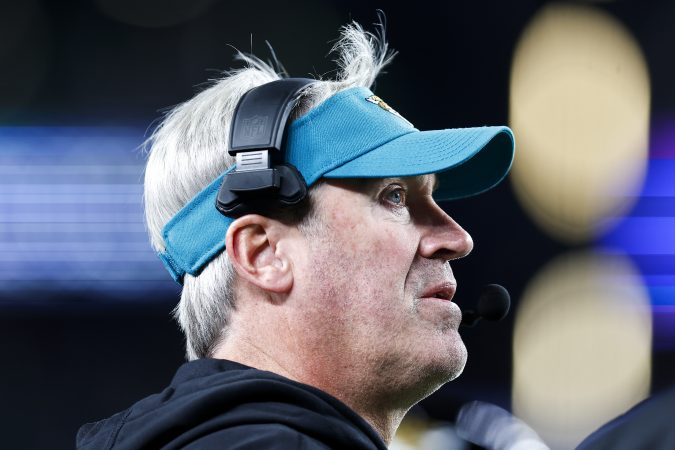
    Doug Pederson is following the well-worn path from coaching to broadcasting, but his first-ever TV gig might be a bit of a head scratcher.

    The former Eagles head coach and Super Bowl LII champ is joining CBS this season to call 10 college football games on CBS Sports Network, beginning with Maryland vs. UConn on Sept. 12.

    Outside of playing quarterback at Northeast Louisiana University, Pederson has no direct connection to the college football world. But as he made clear to CBS, his ultimate goal isn’t to have a second career as a college football analyst.

    “My goal, my passion, is to get back to the NFL,” Pederson said. “But when it’s all said and done, this is a great opportunity to get my feet wet with the broadcasting side, get some really good coaching and insight [on] how it all kind of works.”

    CBS certainly has plenty of NFL games, so Pederson could end up as an NFL analyst or land a role on a studio show like The NFL Today. But he could also see himself returning to the sidelines following head coaching stints with the Eagles and Jacksonville Jaguars, where he spent three years before being fired following the 2024 season.

    “I’m not closing the door to coaching,” Pederson said, “But this keeps me involved and sharp and connected to the game.”

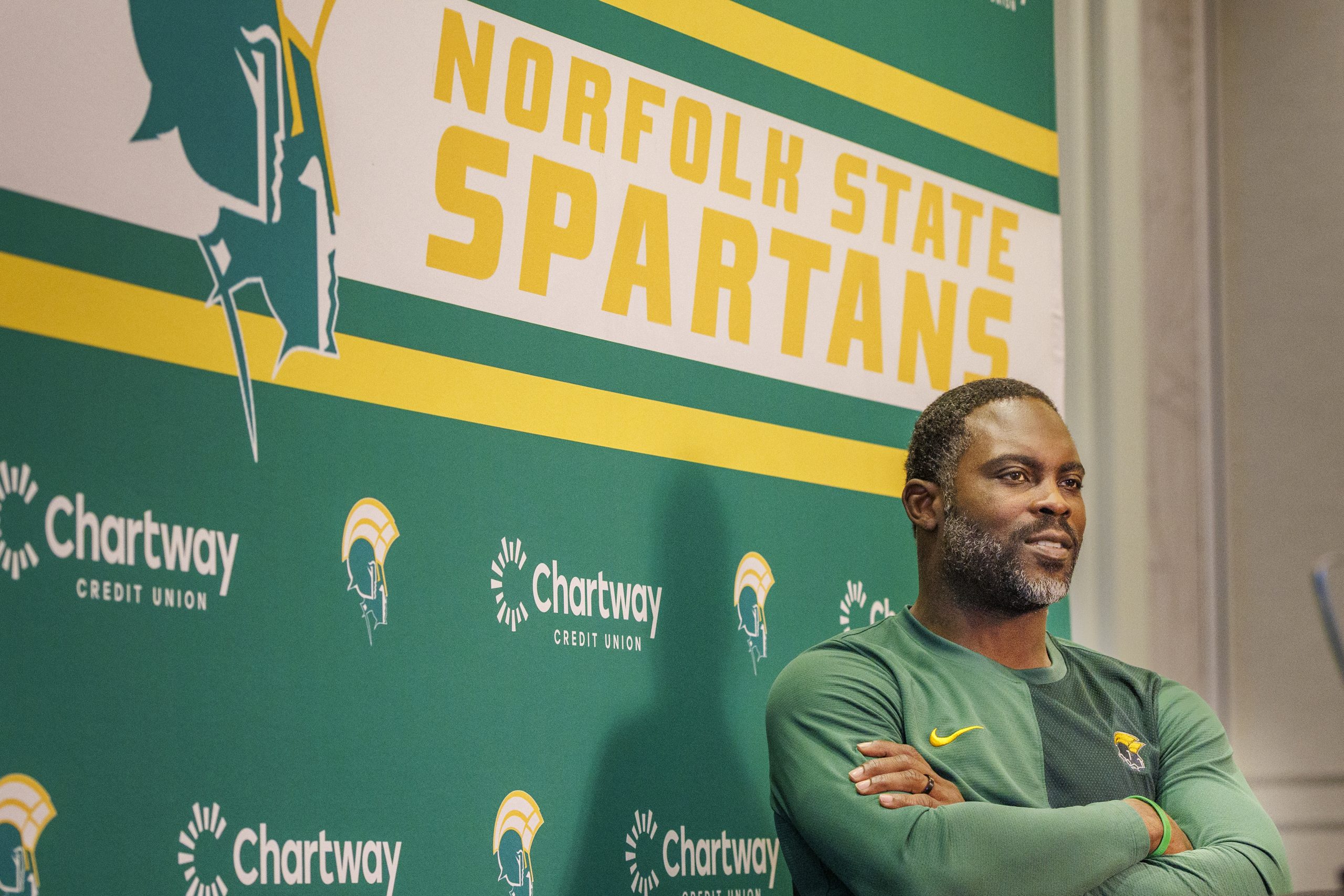
    Ex-Eagles quarterback Michael Vick turned a Fox gig into a head coaching job with Norfolk State.Alejandro A. Alvarez / Staff Photographer

    He wouldn’t be the first to use broadcasting to land a coaching job. In 2022, former New Orleans Saints head coach Sean Payton spent a season as a Fox analyst before landing a job with the Denver Broncos. Closer to home, Joe Girardi turned a role with the MLB Network into a short-lived job as the manager of the Phillies. And former Eagles quarterback Michael Vick used broadcasting as a path to becoming the head football coach at Norfolk State.

    For now, Pederson’s focus is on broadcasting. A month before the start of the college football season, Pederson doesn’t know who his play-by-play partner will be or if it’ll be the same person each week. He does know his schedule, which includes North Dakota State, Kennesaw State, and three UConn games. About the closest he’ll get to Philly is calling a University of Delaware game in Newark, Del.

    While this will be Pederson’s first time broadcasting games, he did travel to Los Angeles to audition with Fox, where he called a mock game alongside veteran play-by-play announcer Chris Myers. He’s also sought advice from a host of broadcasters ranging from Kirk Herbstreit to Greg McElroy — and even longtime ESPN veteran Chris Berman.

    “I understand football and how it works, and being able to describe it is a different thing,” Pederson said. “So it’s going to be a learning experience.”

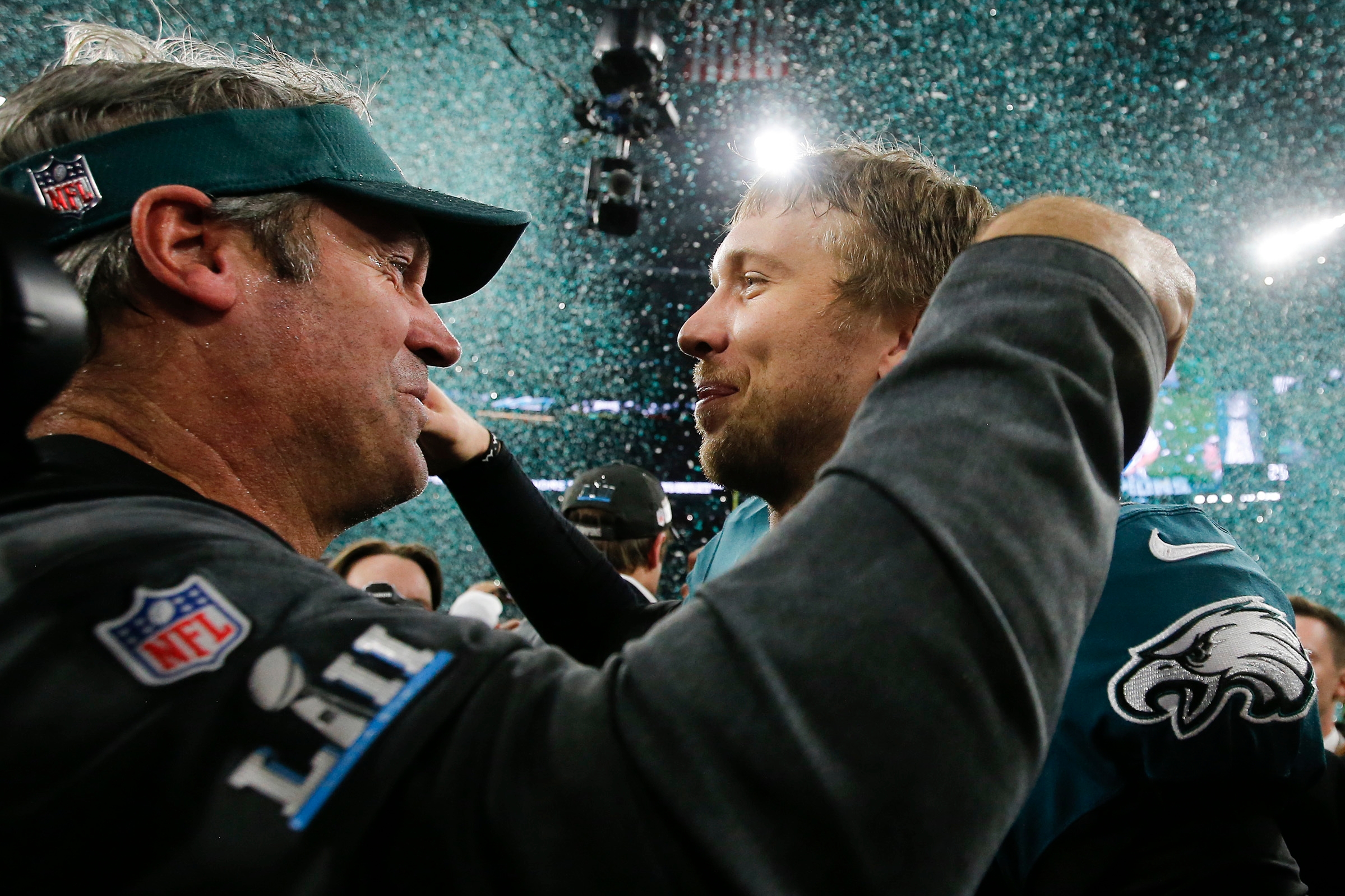
    Former Eagles head coach Doug Pederson won Super Bowl LII behind the heroics of backup quarterback Nick Foles.Yong Kim / Staff Photographer

    After coaching high school football for four years, Pederson was hired as the Eagles offensive quality control coach in 2009 by then-head coach Andy Reid. He followed Reid to the Kansas City Chiefs in 2013, where he served as the team’s offensive coordinator for three seasons before being hired as the Eagles head coach in 2016.

    In Philly, Pederson amassed a 42-37-1 record in five seasons, but his tenure includes the Birds’ improbable championship run during the 2017 season behind backup quarterback Nick Foles. A statue celebrating Pederson and Foles for the “Philly Special” play stands outside the Linc, though it was temporarily removed during the World Cup last season.

    “They could’ve just put a soccer ball over the top if it,” Pederson joked.

  • Nothing stood in between Jilly and Philly during Jill Scott’s four-night stand at the Met

    Nothing stood in between Jilly and Philly during Jill Scott’s four-night stand at the Met

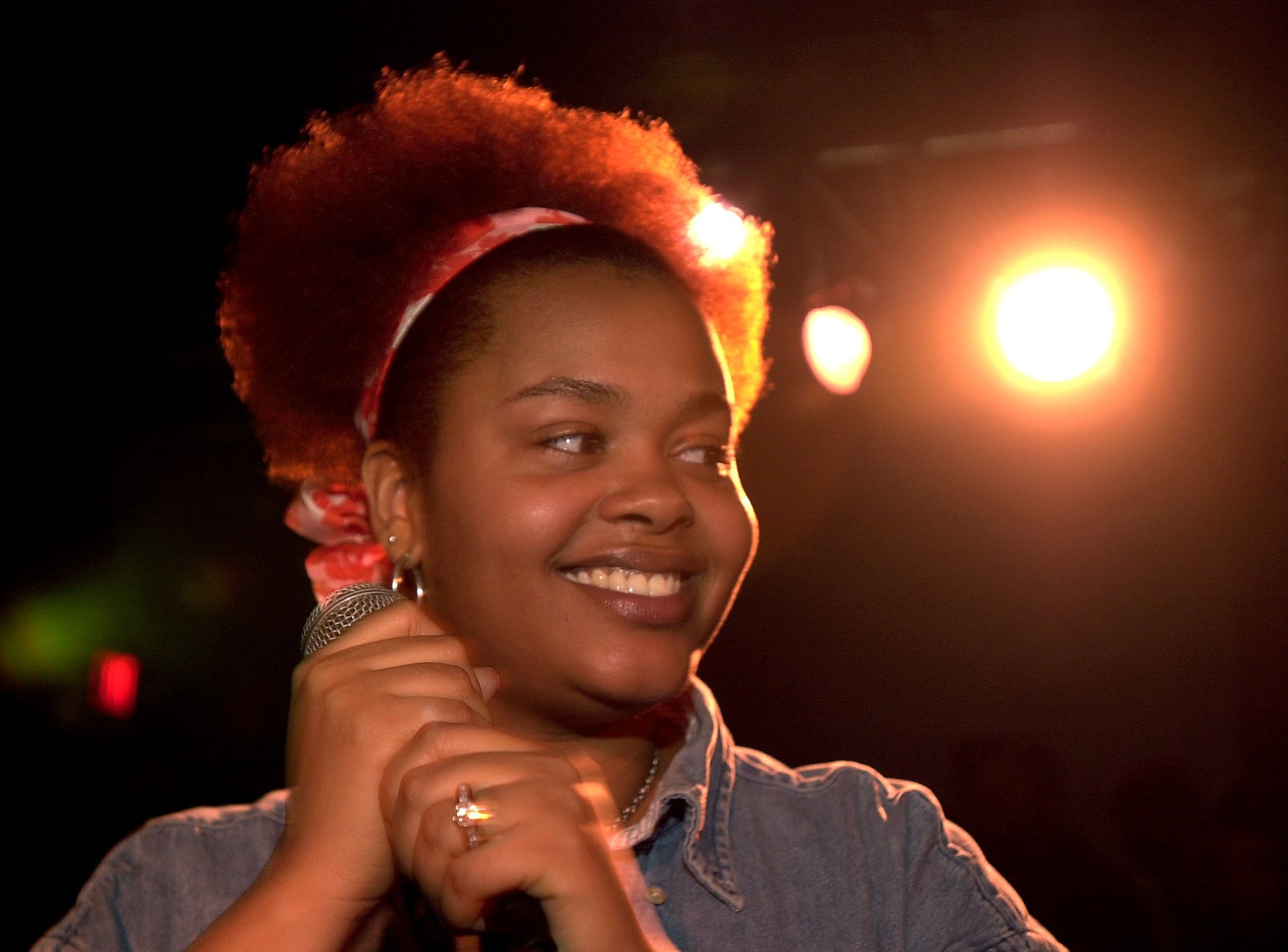
    No texting, no photos, no distractions. With mobile devices locked away in Yondr pouches, Jill Scott’s four-night stand at the Met Philly is a phone-free experience.

    In her run of sold-out shows at the Broad Street opera house that kicked off Friday and — with a couple of days off in between — finishes Wednesday night, there’s no intermediary technology to separate Jilly from Philly.

    Which really is “The Way” — the title of one of her signature hits, from her 2000 debut Who Is Jill Scott? Words and Sounds, Vol. 1 — it should be.

    When it comes to building community, Scott is up there with the best. Her staunchly loyal following has lived through trials and tribulations with the singer-songwriter-poet-rapper-and-actress from just ‘round the way at 23rd and Lehigh in North Philly for a quarter-century.

    At Monday night’s 2-hour, 23-song show, that bond was evident from the get-go.

    Following an opening set by Camden trumpeter and bandleader Arnetta Johnson, who is also scheduled to perform Wednesday, Scott opened with five straight tracks from To Whom This May Concern, her sixth album, which came out in February and is her first in 11 years.

    The first, “Dope S—,” featured a prerecorded spoken word piece by poet Maha Adachi Earth that offered a taste of what was to come: “I been manifesting visions, oh chile, I been making them all come true … I make love, I be good, I do dope s—.”

    That was followed by “Be Great,” a horn-fired banger cowritten with Adam Blackstone and Trombone Shorty that featured video screen images of HBCU marching bands while sousaphonist Adam Smith II — who otherwise played guitar — prowled the stage.

    That song threw down a challenge, to her audience, and to Scott herself: “All my life I want to do good, wanted to be good, to feel free of a history that made me cry,” she sang over a rugged funk groove.

    Then, she gave it a second thought: “I’ma go ahead and be great. Why not?”

    The new songs were warmly received by an audience that has grown up with Scott, 54, since she emerged from the turn-of-the-century neo-soul scene at the Black Lily nights at Old City club the Five Spot.

    The crowd was approximately 70% female, and as almost entirely Black as, for instance, the crowds at Connor Barwin’s Make the World Better concerts this past weekend at the Dell Music Center were almost entirely white.

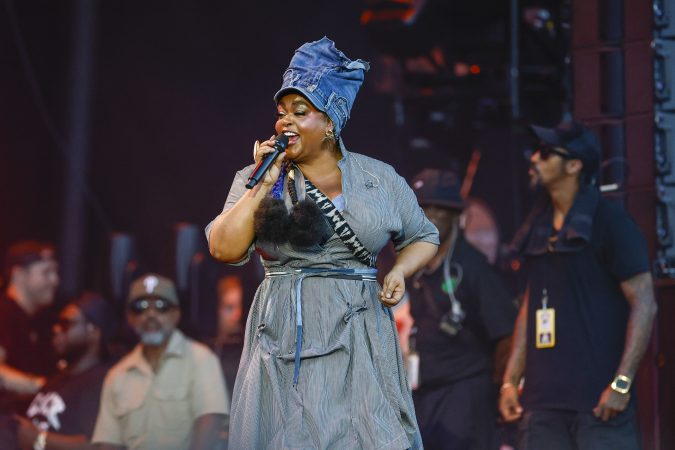
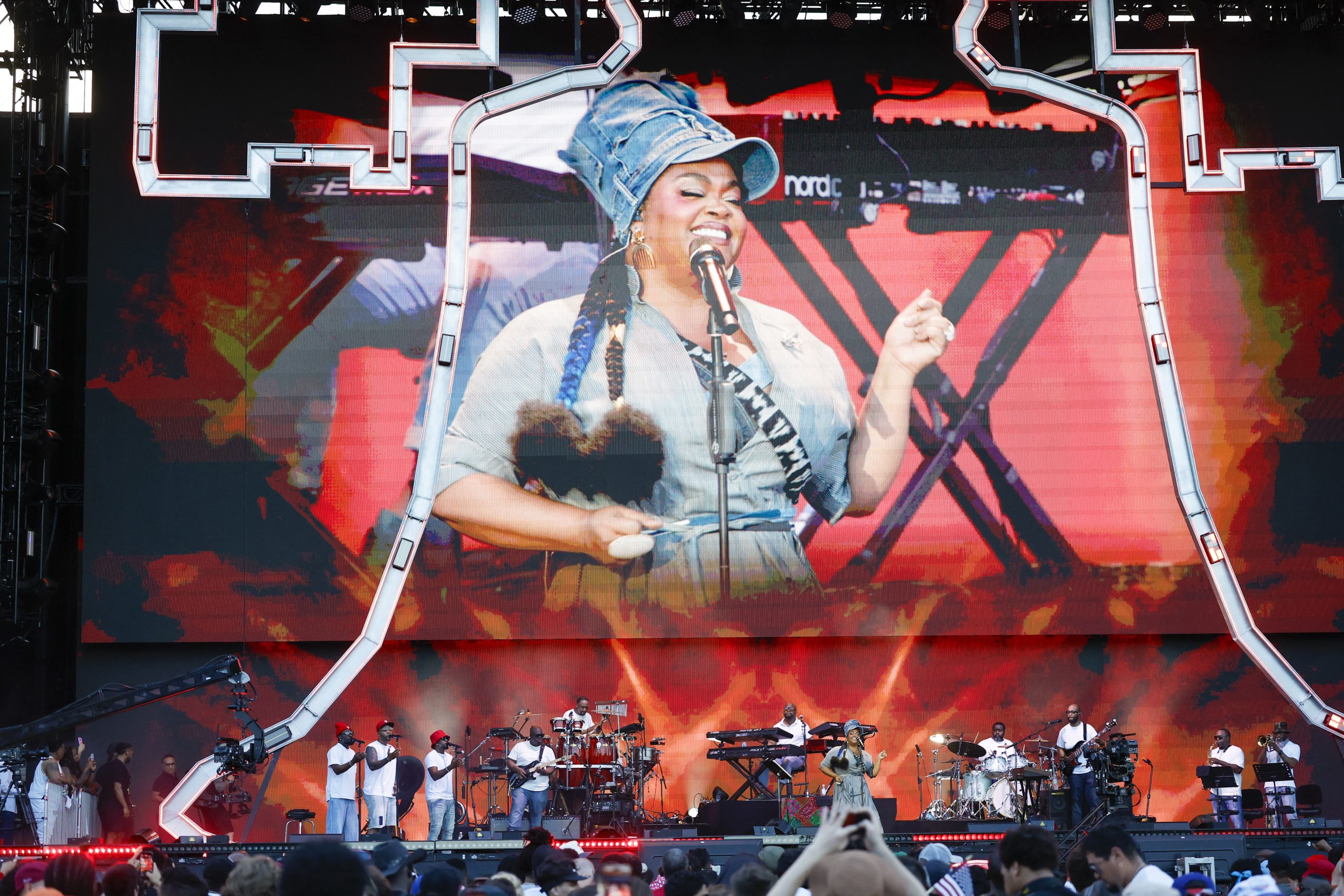
    Jill Scott at One Philly: Unity Concert for America on the Benjamin Franklin Parkway on July 4. Scott performed at the Met Philly on Monday, July 27, on her tour for her new album “To Whom This May Concern,” but no photography was permitted. She will return to the Met for one more show on Wednesday, July 29. Yong Kim / Staff Photographer

    To Whom is a jam-packed, musically diverse return from Scott, of which she is justifiably proud. She wove 14 of the album’s 19 tracks into her set.

    “Liftin’ Me Up,” which included a snippet of Jackie Wilson’s “(Your Love Keeps Lifting Me) Higher and Higher” was one To Whom highlight.

    Another was “Pay U on Tuesday,” in which Scott, who now lives outside of Nashville, Tenn., excoriated deadbeats — “You in jail again this weekend? You ain’t got your child support, for real? — in the style of 1920s blues belters like Bessie Smith and Ma Rainey.

    The look was completed with Scott cooling herself with a giant faux ostrich feather fan in the style Rainey favored, while the video screen was lit to look like a roadside juke joint.

    Scott keeps up a lively, theatrical but heartfelt rapport with her people, about love, loss, self-care, and finding the way to fulfillment. And the audience is happy to talk back.

    At different junctures, the video screen depicted a house with boxes of troubles outside labeled “Self Doubt” and “Ugliness,” packed up to be disposed.

    On “The Math,” the screen showed algebraic equations while Scott sang about behavior that does not add up to equal self-esteem. “Do the math, Jill!” a woman standing behind me enthusiastically shouted out. “Do the math!”

    As well as Scott’s new music went over, the crowd-pleasers came from the benchmark albums that kicked off her career. All night long, she was in excellent voice, not only singing, but rapping on “Norf Side” and “BPOTY.”

    She had plenty of help from fans who rose from their seats and joined in full-throated unison on the neighborhood stroll of “A Long Walk” and tender “The Way” from her debut, and “Cross My Mind” and “Golden” from 2002’s Beautifully Human: Words and Sounds, Vol. 2.

    FILE 3/28/00 Photography by Peter Tobia Black Lily, the soul-rap club event that showcases female artist held at the Five Spot in Center City. Jill Scott, pop soul singer, delights the crowd with wonderful vocals.Peter Tobia / Staff Photographer

    Scott’s 10-member band is of the highest caliber. The three male backup vocalists known as the Pipes supported her ably throughout. When the star left for a costume change — from one blue gown to another, with an ankle-length poofy white coat added for the second half — the trio kept the vibe alive with a winning version of Al Green’s “Let’s Stay Together.”

    “This is live music!” Scott intermittently stated throughout the evening, reminding the room that nothing they were hearing was canned. “This is live music!”

    She added, before “He Loves Me (Lyzel in E Flat),” that “Philadelphia keeps music alive.” The city continues to produce the world’s best musicians, said the singer, who grew up less than three miles away from the Met, on the 2300 block of Oakdale St. Other artists come to her shows to lure players away for their own bands, she added, “but they always come back.”

    With that, she introduced pianist Eric Wortham II, who has also toured with Adele and Jazmine Sullivan. He played a delicate intro to “He Loves Me (Lyzel in E Flat),” which came to a close with Scott’s showstopping operatic vocal flourishes.

    Special praise at the end of the show was reserved for bass player Duane “DW” Wright, with whom the singer shares music director duties. Scott was sexually frank throughout the evening, but she got down got and dirty during the finale when DW was spotlighted.

    Album cover of Jill Scott’s sixth studio “To Whom This May Concern” is a portrait of Jill Scott by muralist Marcellous LovelaceMarcellous Lovelace

    She called him a “whisperer” with a specialty in women’s sexuality. Wright laid down a deliciously provocative groove just to prove her right, and the audience leaned in, paying particularly close attention.

    Jill Scott with Arnetta Johnson and Freebird at the Met Philly, 858 N. Broad St., at 7:30 p.m. Wednesday July 29, themetphilly.com.

    Set list for Jill Scott at the Met Philadelphia, July 27, 2026

    “Dope S—“

    “Be Great”

    “Offdaback”

    “Beautiful People”

    “Liftin’ Me Up”

    “A Long Walk”

    “It’s Love”

    “Disclaimer”

    “Pay U on Tuesday”

    “Gettin’ in the Way”

    “Norf Side”

    “BPOTY”

    “Me 4”

    “Cross My Mind”

    “Don’t Play”

    “Crown Royal”

    “Lets Stay Together”

    “Pressha”

    “The Math”

    “To B Honest”

    “The Way”

    “He Loves Me (Lyzel in E Flat)”

    Encore

    “Golden”

  • Philly’s city budget is balanced, but structural deficit and federal funding concerns loom, board warns

    Philly’s city budget is balanced, but structural deficit and federal funding concerns loom, board warns

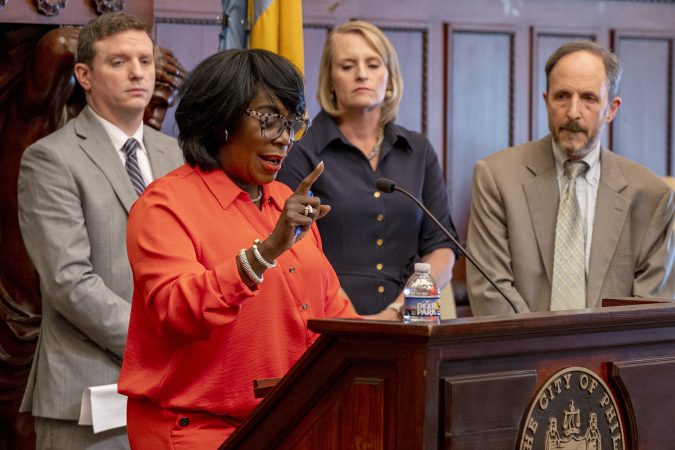
    A state board that oversees the City of Philadelphia’s finances signed off on Mayor Cherelle L. Parker’s five-year financial plan on Tuesday, despite a structural deficit and significant uncertainty about future federal funding.

    The Pennsylvania Intergovernmental Cooperation Authority, which was established in the early 1990s to monitor the city’s finances amid a severe fiscal crisis, must every year approve the five-year budget plan agreed to by the mayor and passed by City Council. The board voted 5-0 to green-light the plan.

    In June, Parker and Council agreed to a $7.1 billion budget for the fiscal year that began on July 1, as well as a five-year financial plan in which the city is projected to spend more than it generates in four of those years. This fiscal year, the city is projected to spend about $550 million more than it brings in.

    As has been common in recent years, the city’s budget relies on reserves and an existing surplus to avoid a significant deficit. The city is projecting that this year it will have a $364.6 million fund balance, which is the amount of money left over in the city’s general fund after liabilities are accounted for. That balance is set to decline in each of the next five years.

    Parker administration Finance Director Rob Dubow said the city is on track to unlock hundreds of millions of dollars in additional revenue once its pension fund is fully funded, a major milestone that is projected to take place in fiscal year 2033.

    Also on Tuesday, Alan C. Kessler was unanimously elected to serve as chair of the PICA board after Kevin Vaughn, who has chaired the board for a decade, announced he would not seek reelection to the position. He intends to remain a board member, he said.

    Kessler, who has also served on the board for about a decade, is a commercial litigation attorney. He is a prominent fundraiser in the Democratic Party and has long been active in local and national politics.

    As for the city’s financial position, board members on Tuesday also discussed potential risks that are largely outside the Parker administration’s control, such as the funding issues that both SEPTA and the Philadelphia School District have faced in recent years. The transit authority has warned of the possibility of debilitating service cuts, and the public school system is borrowing hundreds of millions of dollars just to pay its bills.

    Parker had earlier this year proposed implementing a tax on rideshare services to generate about $50 million a year for the district, but Council members rejected her plan.

    Administration officials identified existing funding for the district to stave off planned staff cuts. Dubow said Tuesday that cuts were made in each year of the five-year plan to make up for that money, but that the hope is to reach an alternative, recurring revenue generation plan before the cuts would take effect.

    The biggest uncertainty for Philadelphia’s finances, the board said, is the federal government and potential policy shifts affecting funding under President Donald Trump. PICA officials warned in a report that while the city has so far sustained only limited losses as a result of slashed grants under the Trump administration, the city “will not be able to absorb federal funding reductions at a greater scale without significant service reductions.”

    The city received more than $2.2 billion in aid from the federal government in fiscal year 2024, the most recent data available. More than half that money was for healthcare and other social safety net programs for poor and disabled residents.

    The president has repeatedly threatened to cut off federal funding to cities like Philadelphia that are led primarily by Democrats and have relatively permissive local immigration policies. However, those efforts have been tied up in litigation.

    A more pressing concern for the city, PICA officials wrote, could be the changes made last year to the enrollment criteria for social programs like Medicaid and the Supplemental Nutrition Assistance Program (SNAP).

    Philadelphia is one of the poorest big cities in the nation, and hundreds of thousands of residents rely on government assistance. The Pennsylvania Department of Human Services has estimated that changes to Medicaid instituted under the Trump administration will leave more than 73,000 Philadelphians without coverage by next year.

    And, the PICA report warned: Changes to federal programs can have ripple effects.

    “The fiscal crisis that precipitated the creation of PICA in the 1990s,” officials wrote, “was in part due to dramatic reductions in federal programs for vulnerable individuals that the City tried to manage but was incapable of replacing.”

  • Year 2 is when LeBron James teams hit their championship stride. Here’s how they did it.

    Year 2 is when LeBron James teams hit their championship stride. Here’s how they did it.

    LeBron James chose the 76ers because he believes their new-look roster offers the best available option for him to push for a final NBA championship.

    And the window is small, because James’ contract fits his age.

    The 41-year-old signed a “one-plus-one” deal, aka a two-year, $8 million contract with a player option on the second season. That forced the Sixers to do some roster tinkering for salary-cap purposes, waiving guard Dalen Terry before officially signing James on Sunday.

    It is fitting that James is likely to be in Philly for two seasons. At all three of his title-winning stops, he achieved that feat in the second year.

    For those eager to proclaim that the Sixers are immediately championship-or-bust for the 2026-27 season, let that history serve as a reminder that it can take time even for a star-studded roster to figure things out.

    Here is how James reached the NBA’s mountaintop at each previous stop:

    2010-12 Miami Heat

    First season

    After “The Decision” teamed James with Dwyane Wade and Chris Bosh to create the “Big Three” in Miami, the Heat turned an infamously shaky 9-8 start into 58 victories and the Eastern Conference’s No. 2 seed. James, Wade, and Bosh all made the All-Star team.

    Miami advanced to the NBA Finals, beating the Sixers in the first round along the way. But the Heat lost to the Dirk Nowitzki-led Dallas Mavericks, falling short of a championship in the first season of the “Heatles.”

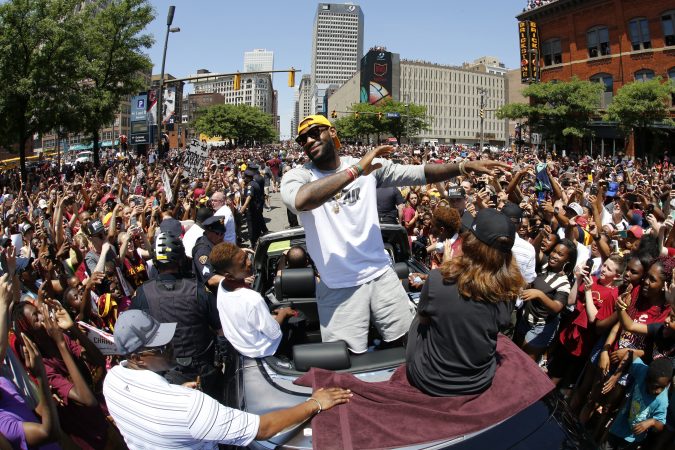
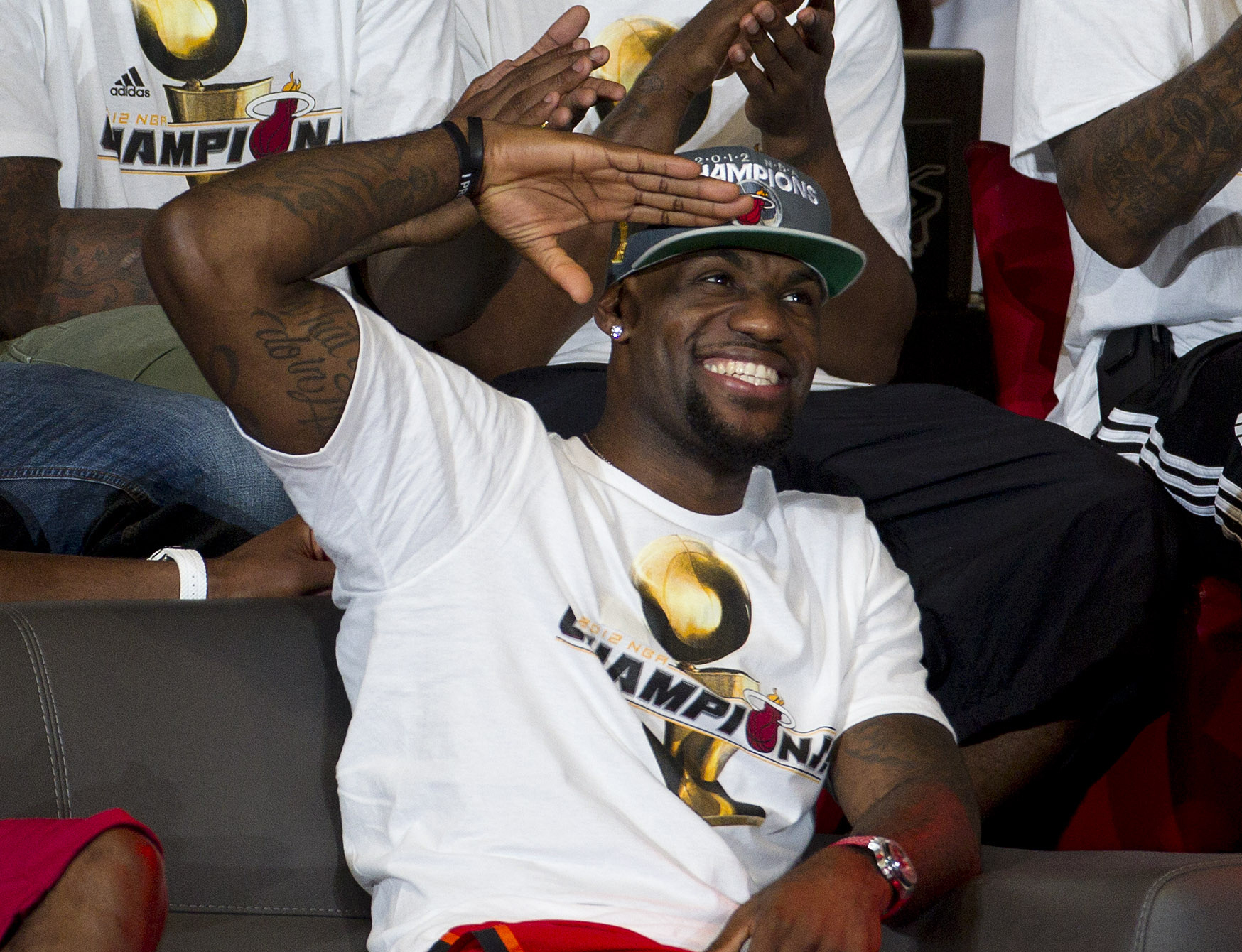
    LeBron James celebrates his first NBA title in 2012 with the Miami Heat. J Pat Carter
    Second season

    Following the NBA lockout, the Heat finished 46-20 and second in the East standings at the end of the shortened regular season. James won his third NBA Most Valuable Player award, and first with the Heat. James, Wade, and Bosh were All-Stars once again.

    In the playoffs, Miami beat the Boston Celtics in a thrilling seven-game Eastern Conference finals series. Then they topped the upstart Oklahoma City Thunder — then led by a young Kevin Durant, Russell Westbrook, and James Harden — to win James’ first NBA championship.

    Though that Heat team did not accomplish the “not five … not six … not seven …” declaration of James’ flashy Miami introduction, it did win back-to-back titles (and reached four consecutive NBA Finals) before he returned home to the Cleveland Cavaliers.

    2014-16 Cleveland Cavaliers

    First season

    James’ new “Big Three” with Kyrie Irving and Kevin Love also got off to a slow start at 19-20. After trading for J.R. Smith, Iman Shumpert, and Tomofy Mozgov midseason, the Cavaliers finished second in the East standings with a 53-29 record. James and Irving both made All-NBA teams.

    Cleveland advanced to the NBA Finals but lost to the Golden State Warriors to begin that team’s dynasty.

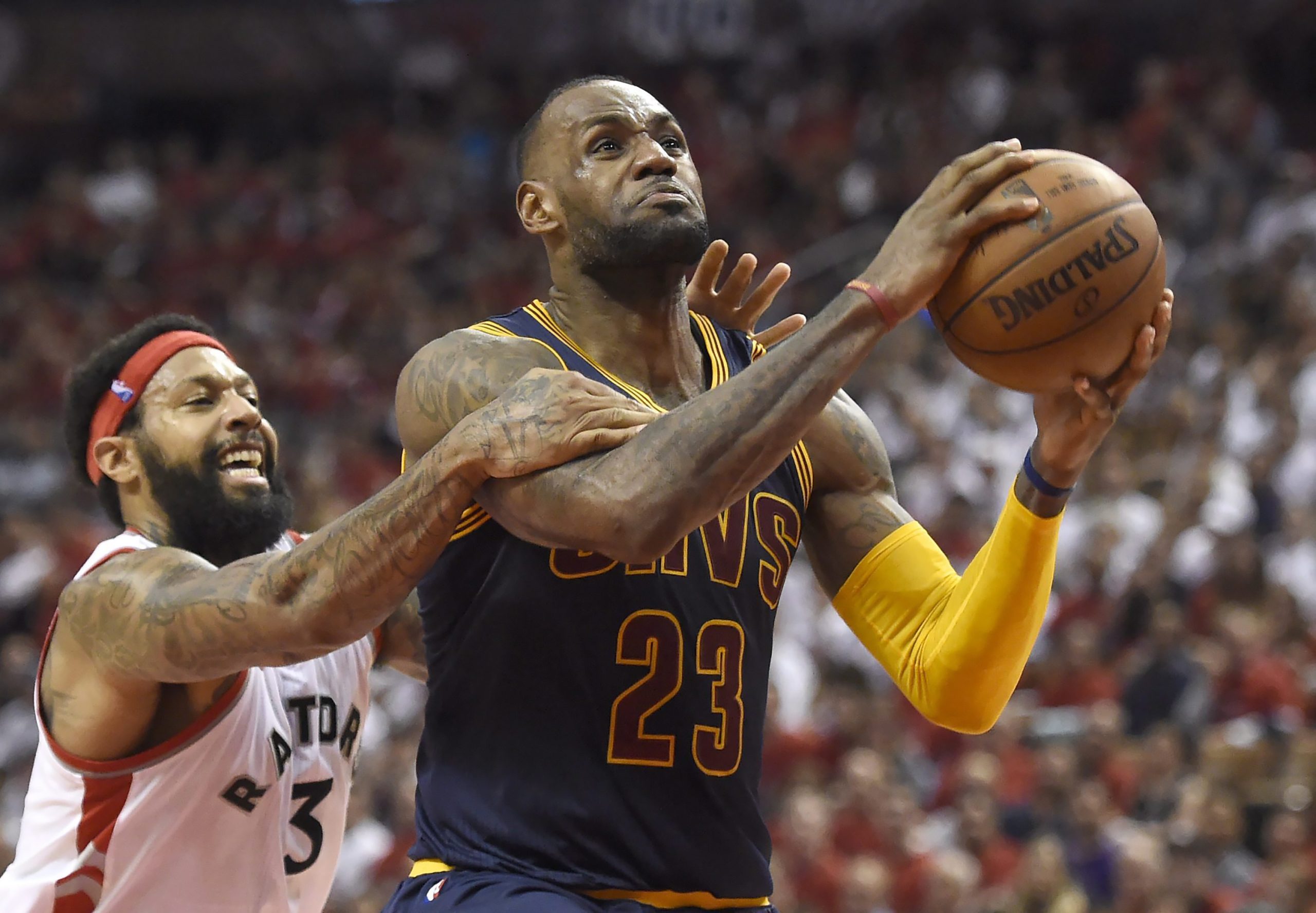
    Toronto Raptors forward James Johnson fouls Cleveland Cavaliers forward LeBron James during a playoff game in 2016.Frank Gunn
    Second season

    The Cavaliers underwent a critical midseason shakeup when, despite holding the East’s best record at the time (30-11), they fired coach David Blatt in January. They elevated then-assistant Ty Lue, who has since become one of the NBA’s most-respected coaches. Cleveland went on to finish the regular season 57-25 and atop of the Eastern Conference.

    That playoff run then culminated in an unbelievable, storybook Finals against the Warriors. The Cavaliers became the first team to overcome a 3-1 Finals deficit, and won a dramatic Game 7 to deliver the franchise’s first NBA championship. James’ crunch-time block on Andre Iguodala, which preserved a tie before Irving’s go-ahead three-pointer, is considered a historic playoff moment.

    James stayed with Cleveland for two more seasons — he reached the Finals each time to create a personal streak of eight in a row — but the Cavaliers lost again to Golden State both times.

    2018-20 Los Angeles Lakers

    First season

    James in free agency joined a Lakers team primarily with young players, including Brandon Ingram, Lonzo Ball, and Josh Hart. They slogged through an injury-riddled 2018-19 season — James only played 55 games — and missed the playoffs. It was the first time since 2006 that a James team had failed to reach the postseason.

    Team president Magic Johnson stepped down at the end of the season in an abrupt and now-famous “I’m not gonna be here” news conference, and coach Luke Walton and the team also parted ways.

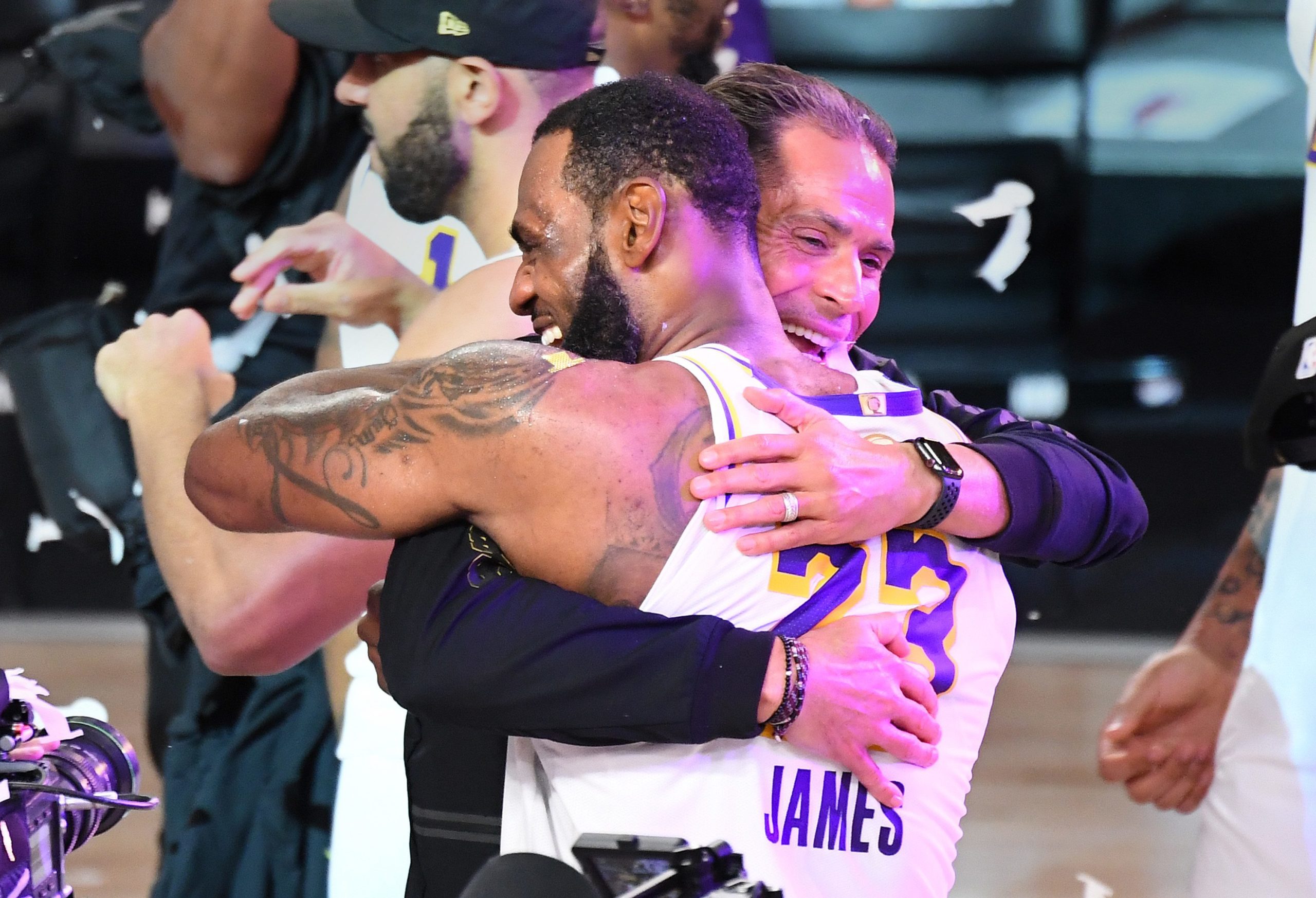
    LeBron James hugs general manager Rob Pelinka after the Lakers won the NBA title in 2020.Wally Skalij / MCT
    Second season

    Under promoted executive Rob Pelinka, the Lakers acquired star big man Anthony Davis in a blockbuster trade and added former Sixers Danny Green and Dwight Howard as veteran complements.

    The Lakers recorded the Western Conference’s best record (52-19) during a regular season interrupted for more than four months and then shortened because of the onset of the COVID-19 pandemic. James and Davis were both named first-team All-NBA.

    The Lakers’ “bubble” playoff run at Disney World ended with topping the Heat to clinch the storied franchise’s first title since 2010. Some critics will put an imaginary asterisk next to it. But that will likely go down as the most bizarre circumstances under which any NBA team will win a championship.

  • Eagles sign Jalen Carter to a contract extension through 2031, make him highest-paid defensive tackle in NFL history

    Eagles sign Jalen Carter to a contract extension through 2031, make him highest-paid defensive tackle in NFL history

    The Eagles are continuing to invest in the defensive trenches this offseason, agreeing to terms with Jalen Carter on a four-year extension to keep him under contract through 2031, the team announced Tuesday.

    The deal is worth $152 million, with $106 million guaranteed, NFL sources told The Inquirer’s Jeff McLane. His $38 million average annual value when the new contract begins will make him the highest-paid defensive tackle in league history.

    Carter, 25, is entering the fourth year of his rookie deal and had his fifth-year option exercised in April. By extending him now, on the day players report to training camp, the Eagles are preventing Carter from testing the market as a free agent anytime soon.

    Since the Eagles drafted him No. 9 overall in the 2023 draft out of Georgia, Carter has asserted himself as one of the top defensive tackles in the league. He earned original-ballot Pro Bowl nods in back-to-back seasons in 2024 and 2025. In his rookie season in 2023, Carter finished as the runner-up for the AP defensive rookie of the year award to Houston Texans defensive end Will Anderson.

    Carter took on the biggest workload on the defensive line in the Eagles’ 2024 Super Bowl-winning season, playing 79.4% of the defensive snaps. But Carter entered the 2025 season nursing shoulder injuries, forcing him to miss three games in the second half of the year while recovering from procedures.

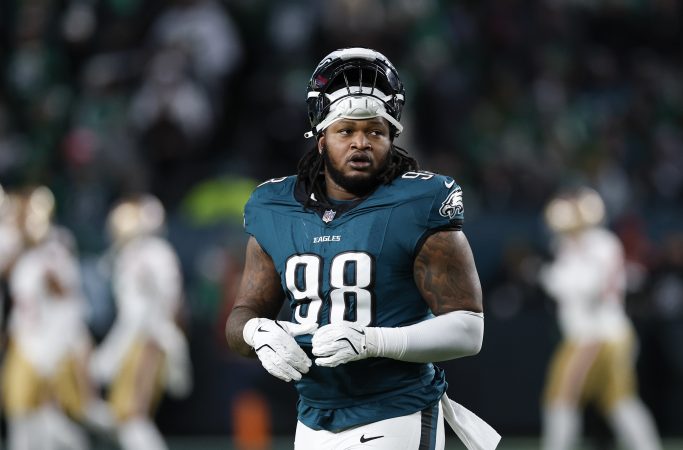
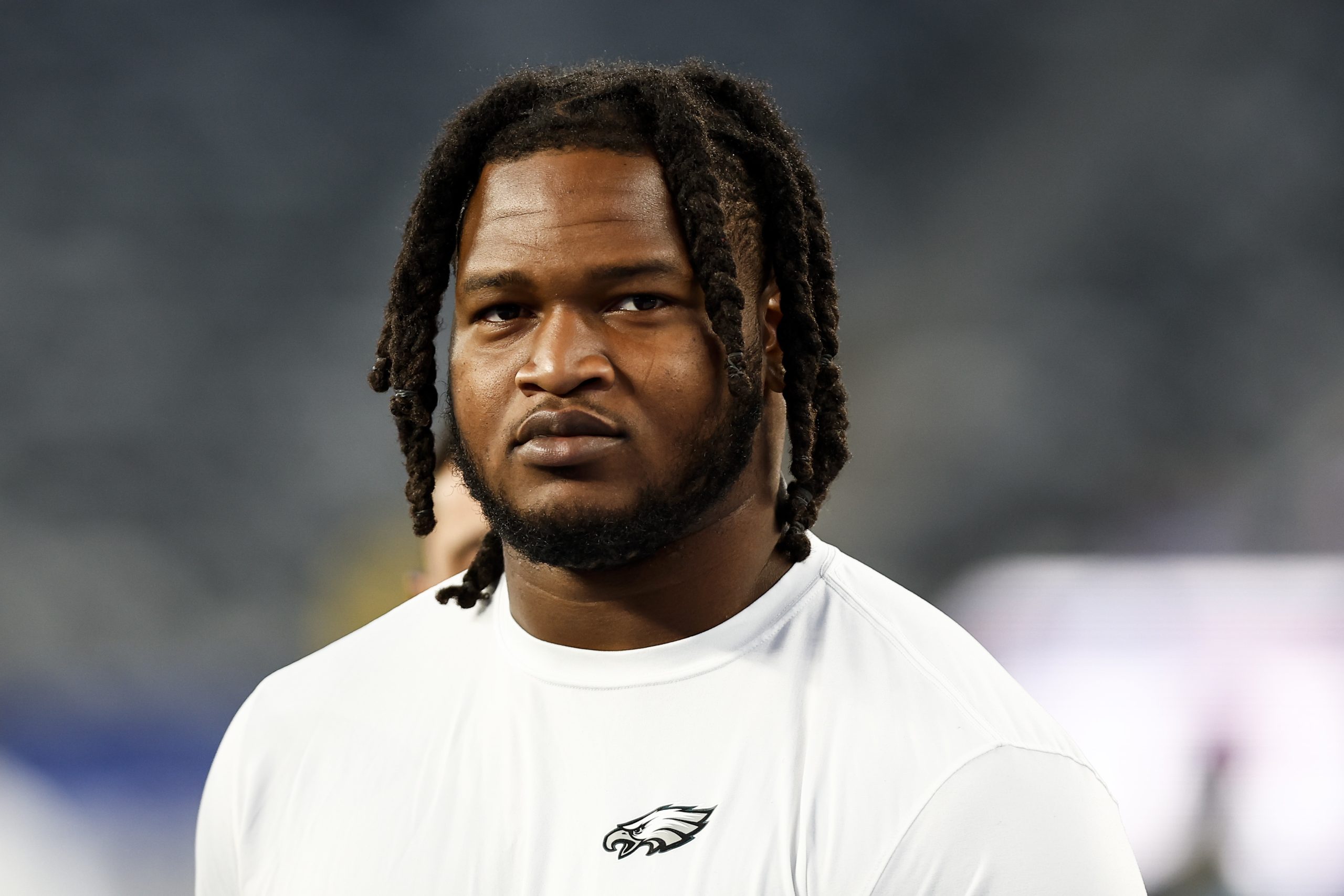
    Jalen Carter struggled with shoulder injuries in 2025 but was extremely effective in the Eagles’ Super Bowl season of 2024. Monica Herndon / Staff Photographer

    Because of his injuries, Carter wasn’t entirely himself last season, and he admitted as much. He generated a career-low 7.7% pressure rate while facing a double team on a career-low 41.7% of his pass rushes, according to Next Gen Stats. He had five pressures on 158 double-teams, a drop-off compared to his output in 2023 (12) and 2024 (15).

    Carter was not present for the two sessions of organized team activities — both voluntary — open to the media this offseason. He was on the field during mandatory minicamp but did not participate in team drills. In June, Nick Sirianni would not say whether his lack of participation was related to his contract or his injuries. However, Vic Fangio said in late May he thinks Carter’s shoulders are “fine.”

    “He’s had a good offseason of lifting,” Fangio said. “I think he started that earlier than normal for him and you can see the difference in that regard. I think he’s in a better spot now than he was.”

    By inking Carter to a new deal, the Eagles are showing they believe he can elevate his play. The same can be said for Jordan Davis, whom the Eagles signed to a three-year, $78 million deal in March. Between the two defensive tackles, the Eagles have security on the defensive side of the trenches.

    Carter and Davis were two of the defensive candidates eligible for extensions entering 2026. Moro Ojomo, who turns 25 in August, has not received one as he enters the final year of his rookie deal. With this new crop of young defenders earning lucrative contracts, general manager Howie Roseman is attempting to balance the scales by adding inexpensive talent through the draft, notably on offense this year.

  • South Jersey police officer will not be charged for killing a man with a knife

    South Jersey police officer will not be charged for killing a man with a knife

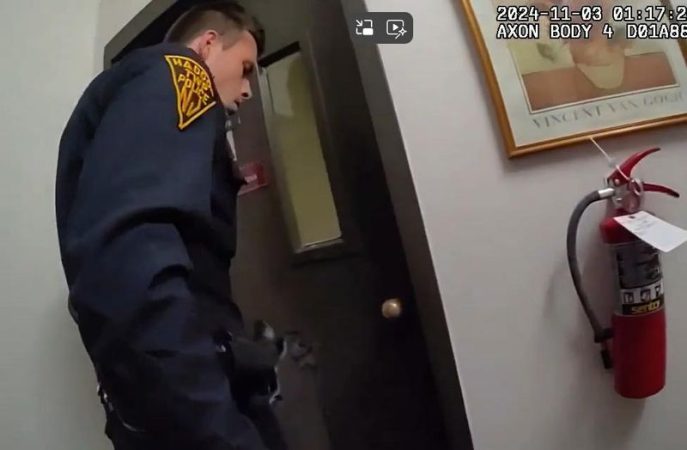
    A Haddon Township police officer will not be criminally charged for killing a man armed with a knife while responding to a reported burglary in 2024.

    A state grand jury voted Monday not to file charges against Officer Luke Falkenberg in the shooting death of Keith Edelin, 46, of Pennsauken. The grand jury finished deliberating on Monday after reviewing body-worn camera footage, 911 calls, and witness testimony, among other evidence.

    On Nov. 3, 2024, at 1:07 a.m., Falkenberg and three other township officers responded to a 911 call for an attempted burglary at an apartment complex on West Crystal Lake Avenue in the township’s Westmont section.

    In the released audio of the 911 call, a woman told the call taker that an unidentified man opened the door to her apartment. The woman said she closed it, but the man was still in the hallway.

    Upon arriving, Falkenberg and another officer found trails of blood in the lobby, elevator, and hallway carpets. As the two officers entered the apartment complex stairwell, they encountered Edelin on the top landing armed with a knife, prosecutors said.

    According to video captured by police body-worn cameras, Falkenberg and his partner spoke with Edelin for two minutes, including several commands from Falkenberg to Edelin to “drop the knife.”

    “You’re hurt, let us help you,” Falkenberg can be heard saying in the footage released by the New Jersey Attorney General’s Office of Public Integrity and Accountability (OPIA). “Listen, man, I just want to help you. OK? That’s all I’m trying to do.”

    Eventually, Edelin advanced down the stairs toward Falkenberg, who was standing a few feet from Edelin. Falkenberg then fired his handgun four times, striking Edelin. Medical personnel took Edelin to Cooper University Hospital, where he was pronounced dead one hour later.

    The New Jersey Attorney General’s Office is required to conduct investigations into a person’s death that occurs during law enforcement encounters. These investigations must be presented to a grand jury to determine if criminal charges should be filed against an officer in question.

    According to the attorney general’s office, the investigation is still ongoing and no further information is available.

    Staff writer Robert Moran contributed to this article.

  • Waymo, now being tested in Philly, has a safer track record than people, new study says

    Waymo, now being tested in Philly, has a safer track record than people, new study says

    Buckle up, Philly, because new research suggests what could be the rise of the machines — at least on area roads.

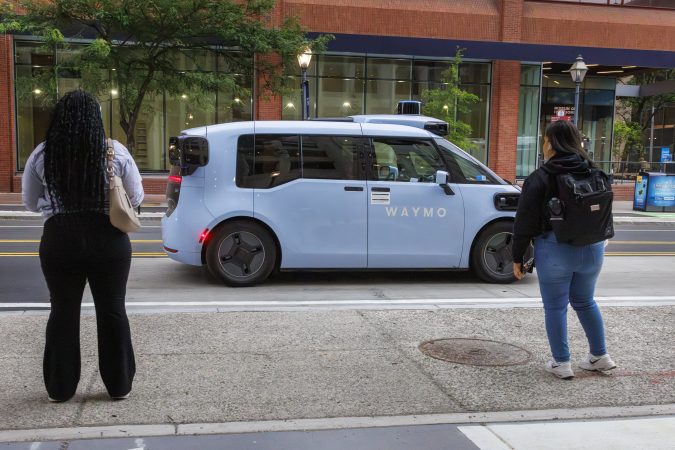
    A new study by the nonprofit Insurance Institute for Highway Safety (IIHS) reveals that Waymo’s fully autonomous vehicles are significantly less likely to be involved in traffic collisions than human drivers.

    The paper indicates that the self-driving vehicles of Alphabet Inc.’s robotaxi service, which is testing the service in the city, are not only safer, but much safer than humans.

    “The results provide further evidence that Waymo’s current L4 vehicles have lower crash involvement rates than human drivers,” the authors stated.

    Such findings could help lessen fears around the vehicles, which are already ubiquitous in California and headed that way in some other states.

    Philadelphia was not part of the study, but Waymo has been testing vehicles in the city without yet offering riderless service.

    “We welcome this new research from IIHS, which confirms our previous peer-reviewed analyses and reinforces the significant safety benefits of the Waymo Driver,” Waymo spokesperson Ethan Teicher said in an emailed statement.

    Teicher called the study “an important contribution to a growing body of research on AV [autonomous vehicle] safety data” and said more high-quality data like it would help build public trust.

    The study’s findings

    The authors found that the highly automated Level 4 (L4) vehicles operating without a human driver had a police-reportable crash rate 68% lower than human drivers in comparable areas.

    The research also looked specifically at crashes resulting in injuries. Autonomous vehicles performed even better, boasting an 81% lower injury crash rate compared against the human benchmark.

    Data indicate that Waymo vehicles were rarely instigators in collisions.

    To draw their conclusions, the authors analyzed 736 autonomous vehicle crash reports submitted to the National Highway Traffic Safety Administration (NHTSA) between July 2021 and December 2024.

    They found that the autonomous vehicles’ rate of rear-ending another vehicle was 91% lower than that of human drivers, and their rate of being rear-ended was 40% lower.

    Furthermore, they were involved in 85% fewer single-vehicle crashes per mile traveled.

    The IIHS, which conducted the study, is an independent, nonprofit scientific and educational organization, with the goal of reducing deaths, injuries, and property damage from motor vehicle crashes.

    The same organization has been performing crash tests on regular vehicles since the 1990s to rate their safety.

    Comparing the safety of robotaxis to human drivers has historically been difficult because of differences in how crashes are reported. Federal regulations require automated vehicle operators to report even the most minor incidents, such as scraping an undercarriage or hitting small road debris.

    In contrast, human drivers typically only report crashes that meet state damage thresholds — often $1,000 — or involve injuries, and even then, over half human crashes go unreported.

    To overcome that bias, IIHS researchers manually evaluated the descriptions of property damage and injuries. They estimated whether a “reasonable person” would have called the police.

    The study found that 78% of the reported automated vehicle incidents were too minor to meet typical police-reporting standards.

    Researchers then compared the adjusted crash data from Waymo — which voluntarily publishes its autonomous mileage — against police-reported human crash data from California, Arizona, and Texas. The analysis covered approximately 50 million miles of Waymo driverless operation and 222 billion human-driven miles.

    A Waymo car navigates North Broad Street in Philadelphia in May.Elizabeth Robertson / Staff Photographer

    The study’s limitations

    Despite the promising safety record, the researchers acknowledged several limitations.

    First, Waymo did not operate its driverless vehicles on interstates or freeways during the study period, environments that account for 22% of human drivers’ police-reported crashes.

    Second, because autonomous vehicles often drive empty, fewer humans are exposed to injury risk during collisions, which can artificially lower the overall injury rate.

    As self-driving fleets continue their rapid expansion, the study’s authors warn that manually reading crash narratives is an unsustainable method for monitoring public safety.

    The study only looked at Waymo, not other self-driving vehicles. Waymo is the largest such company to offer robotaxis, but Tesla is also testing driverless vehicles.

    The IIHS is calling for a standardized, national reporting system for automated vehicle crashes and mileage, arguing that streamlined data are essential for accurate and timely safety evaluations.

    Waymo said it supports an industry-standard reporting system that would include air bag deployments and an injury scale.

    When will Waymo be available in Philly?

    Despite the limitations, the study could reassure Philadelphians hesitant to ride in an autonomous vehicle.

    Waymo slowly began introducing the vehicles last summer, but they were driven manually by specialists in the most complicated to navigate parts of the city. They fanned out at all hours across various neighborhoods.

    In December, Waymo began autonomous testing in the city but still with a specialist behind the wheel with permission from PennDot.

    Teicher, the company spokesman, said Tuesday that Waymo is still currently testing. The next step would be to operate fully autonomously with employee-passengers, he said.

    If the feedback is positive, Waymo would be ready to begin taking on public riders.

    However, the company has declined to discuss timing and still needs regulatory approval to carry passengers in Pennsylvania.

    The robotaxi service has received intense local political scrutiny.

    The Inquirer reported in May that some City Council members and a coalition of religious leaders, labor unions, and rideshare drivers urged PennDot to halt Waymo until safety and job-loss concerns were addressed.

    Philly does not have the power to directly regulate Waymo.

  • Tower Health is laying off 160 workers at Pottstown Hospital while expanding emergency department, behavioral health

    Tower Health is laying off 160 workers at Pottstown Hospital while expanding emergency department, behavioral health

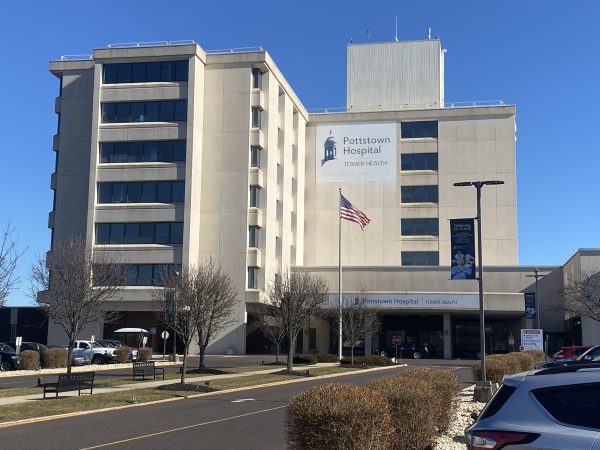
    Tower Health is eliminating 160 jobs at Pottstown Hospital as part of an effort to bring staffing at the Montgomery County facility in line with lower patient volumes, the Berks County nonprofit announced Tuesday. The cuts amount to 22% of the workforce at Pottstown.

    In addition to the job reductions — which are more than the 131 positions cut last year at Pottstown — Tower also plans “a multimillion-dollar investment” to expand the emergency department, enhance inpatient and outpatient behavioral health services, and update portions of the hospital, Tower said.

    “These changes are designed to strengthen the hospital’s ability to serve local residents for generations to come by preserving access to the services patients need most, investing in the areas of greatest community need, and ensuring Pottstown Hospital remains a strong, sustainable community hospital for the future,” Tower said in a statement.

    To expand behavioral health, Tower will convert some underused general-purpose hospital beds to inpatient behavioral health beds. The behavioral health total will rise to 52 from 28, an 86% increase. Pottstown has 213 licensed beds.

    Tower did not provide a timeline for the changes but said it plans to hire 38 people to staff the expanded emergency department and behavioral health unit, which will have a separate entrance for the sake of patients’ privacy when they seek mental health services.

    Another change at Pottstown involves the lease of an unspecified amount of space to Community Health & Dental Care, a federal health clinic that was formed in 2008 with funding from Pottstown Area Health and Wellness Foundation.

    Unlike the restructuring Tower announced last fall at Pottstown, which included the closures of the combined intensive care/critical care unit, the Pottstown location of the McGlinn Cancer Institute, and the hospital’s endoscopy center, this round is not eliminating any services, Tower said.

    In the nine months that ended March 31, Pottstown has 5,104 inpatients, down 9.7% from the same period the year before. Most of that decline came in the first three months of this year, after Tower’s service cuts, according to data shared with bondholders.

    After last year’s layoffs, which included about 60 registered nurses represented by Pennsylvania Association of Staff Nurses & Allied Professionals, Pottstown employed about 700 people. Overall, Tower employs more than 10,000.

    The union said it still has 200 Pottstown nurses in its ranks. “We have been in touch with hospital management to better understand the context for and impact of the proposed layoffs and to push hard for solutions that protect both patient care and the dedicated nurses who serve the Pottstown community,” a union spokesperson said.

    Tower’s anchor is Reading Hospital in West Reading, Pa. In additional to Pottstown, it owns Phoenixville Hospital, plus St. Christopher’s Hospital for Children in North Philadelphia in a 50-50 joint venture with Drexel University. Tower previously owned Brandywine, Jennersville, and Chestnut Hill Hospitals.

    It closed Brandywine and Jennersville and sold Chestnut Hill to a group led by Temple University Health System.

    Tower recently announced that Jefferson Health, Nemours Children’s Health, and Temple University Health System are working on forming an alliance to support St. Chris clinically. Last week, Tower said that it had formed a clinical affiliation to expand advanced care in its markets.

  • John Fetterman campaigned on ending the filibuster. Here’s why he changed his mind.

    John Fetterman campaigned on ending the filibuster. Here’s why he changed his mind.

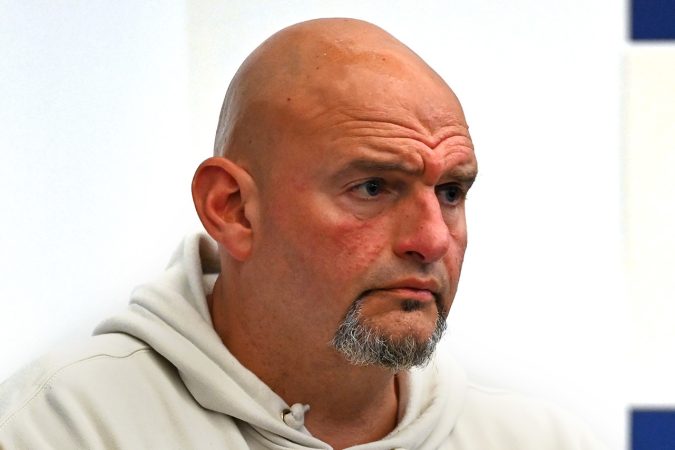
    WASHINGTON — U.S. Sen. John Fetterman, doubling down on a position that has already added to Democrats’ frustrations with him in recent months, offered a more detailed explanation this week for his change of heart about eliminating the Senate filibuster.

    The Pennsylvania Democrat wrote in an op-ed for the Washington Post that he had been “horribly wrong” to support ending the practice that requires bills to win 60 votes rather than a 51-vote majority.

    The rule frequently allows members of the minority party to block policies that fail to win bipartisan support, including some of each party’s top priorities — like abortion protections when Democrats have been in control, or the voting restrictions that Republicans are now attempting to pass at President Donald Trump’s urging.

    Fetterman was among many Democrats in recent years to campaign on eliminating the filibuster in order to secure those bigger wins. During his 2022 campaign, he specifically referred to passing abortion protections established under Roe v. Wade as a reason for that position after the Supreme Court overturned its landmark 1973 decision that year.

    “I became one of the first candidates in the country to call for abolishing the filibuster for a reason: it stands in the way of getting things done for [Pennsylvanians],” his active campaign website still read on Tuesday, nearly four years after he won.

    But as he has more frequently sided with Republicans and criticized his fellow Democrats, Fetterman has said repeatedly this year that he had been “wrong.”

    “We were very wrong about that to nuke the filibuster, and we should really humble ourselves,” he said on Fox News in February. In that interview and others, he needled Democrats who opposed the filibuster but now, he said, express a “love” for it as they find themselves in the minority and try to reject Republican policies.

    In the Washington Post this week, Fetterman wrote that Americans who are “horrified” at the policies coming out of the Republican-led Congress and Trump’s administration would be alarmed if the filibuster had been eliminated and every proposal could become law with a simple majority.

    “We’d have the Save America Act by now, which I do not support,” Fetterman wrote. “We could have extreme policies such as nationwide abortion restrictions, backpedaling on LGBT rights, repeal of birthright citizenship and limited voting rights across the country. With a government trifecta firmly in place, many provisions of Project 2025 would have easily been enacted. Republicans could fundamentally change the entire government and country with a simple majority vote.”

    Fetterman’s reference to the SAVE America Act comes as Trump has pressured Senate Republican leaders to eliminate the filibuster in order to pass the bill, which would enact sweeping election changes. It would require individuals to provide proof of citizenship when registering to vote and to show photo ID at the polls, and it would scale back mail voting.

    Opponents of the bill say it would make registering and voting more difficult for millions of people. And Fetterman has opposed the bill because of the changes to mail voting, though he has changed his position to support requiring a photo ID at the polls.

    The bill has failed to receive support from 60 senators, and Trump has demanded that Republicans bypass the filibuster to force it through with only GOP support. U.S. Sen. Dave McCormick (R., Pa.), a Trump ally, has said such a scenario is “very tempting” even though he campaigned against ending the filibuster in 2024.

    “It’s a path to get more things done,” McCormick said during a telephone town hall with constituents last week.

    Fetterman, in his op-ed, called the filibuster “a critical line of defense that prevents President Donald Trump from having a fill-in-the-blank government with new laws, deregulation or procedures of its choosing.”

    He wrote that “history has vindicated” former U.S. Sens. Kyrsten Sinema (D., Arizona) and Joe Manchin (D., W.Va.) for voting with Republicans to block reforming the filibuster when Democrats were in control in 2022.

    Fetterman could potentially play a similar role after the midterm elections this fall if Democrats win control of the Senate with a slim, potentially one-vote majority. Some observers have said Fetterman could also leave his party, becoming a Republican or — as Sinema and Manchin did after serving as Democrats — become an independent.

    “Some of my colleagues, including myself, have been frustrated when engaging with the minority,” Fetterman wrote. “But that process isn’t a bug — it’s one of the best features of the Senate. We have a great democracy that is imperfect, but it requires working together.”

    As Fetterman works more often with Republicans, though, Democrats have become more frustrated with him and vowed to mount a challenge if he seeks a second term in 2028.

    Former U.S. Rep. Conor Lamb — one of the Democrats who has not ruled out another campaign after losing to Fetterman in the 2022 primary — has said the senator’s switch on the filibuster “is probably the worst Fetterman story yet” that most people don’t realize.

    In a social media video in early June, Lamb said eliminating the filibuster was essential for Democrats to “put Roe v. Wade back into law” and to pass legislation on voting rights, gun control, and raising the minimum wage if they regain control of the Senate.

    “When we ran against each other, he promised he would fight for women on this issue and get rid of the filibuster,” Lamb said. “And of course, like so many things, he’s changed his mind.”