Tag: topic-link-auto

  • Meet the South Jersey business making food carts for Jersey Shore vendors and Disney World

    Meet the South Jersey business making food carts for Jersey Shore vendors and Disney World

    In a country-industrial stretch of Hammonton halfway between Philadelphia and Atlantic City sits a concrete-block maze of machine shops, where workers have built thousands of stainless-steel hot-sandwich and coffee carts and catering trucks.

    This is the one-story home of Custom Mobile Food Equipment, which for 74 years has built these customized portable kitchen-storefronts of varying sizes, and kept them on the road with extra helpings of customer support. They roll onto Jersey Shore boardwalks and Center City street corners, at weeklong public festivals and private events across America, and in fancy resorts and on military bases abroad.

    It’s a South Jersey fixture, with Camden roots and deep Philly ties.

    “We started small,” with hot dog carts cut to fit, not block, city sidewalks, said Custom vice president David Kyle. He said his family helped Philadelphia officials write the city’s street vendor ordinances, and made sure the carts fit.

    Custom has outlasted food fashions and changes in the ways workers lunch. Kyle said he’s confident the enterprise will outlast recent inflation, global competition, and import tariffs: “A lot of our business is repeat business, and the big names we go after,” he said during a tour of the plant. “People rely on us to turn out a product that will last.”

    From pony-cart produce to theme-park fixture

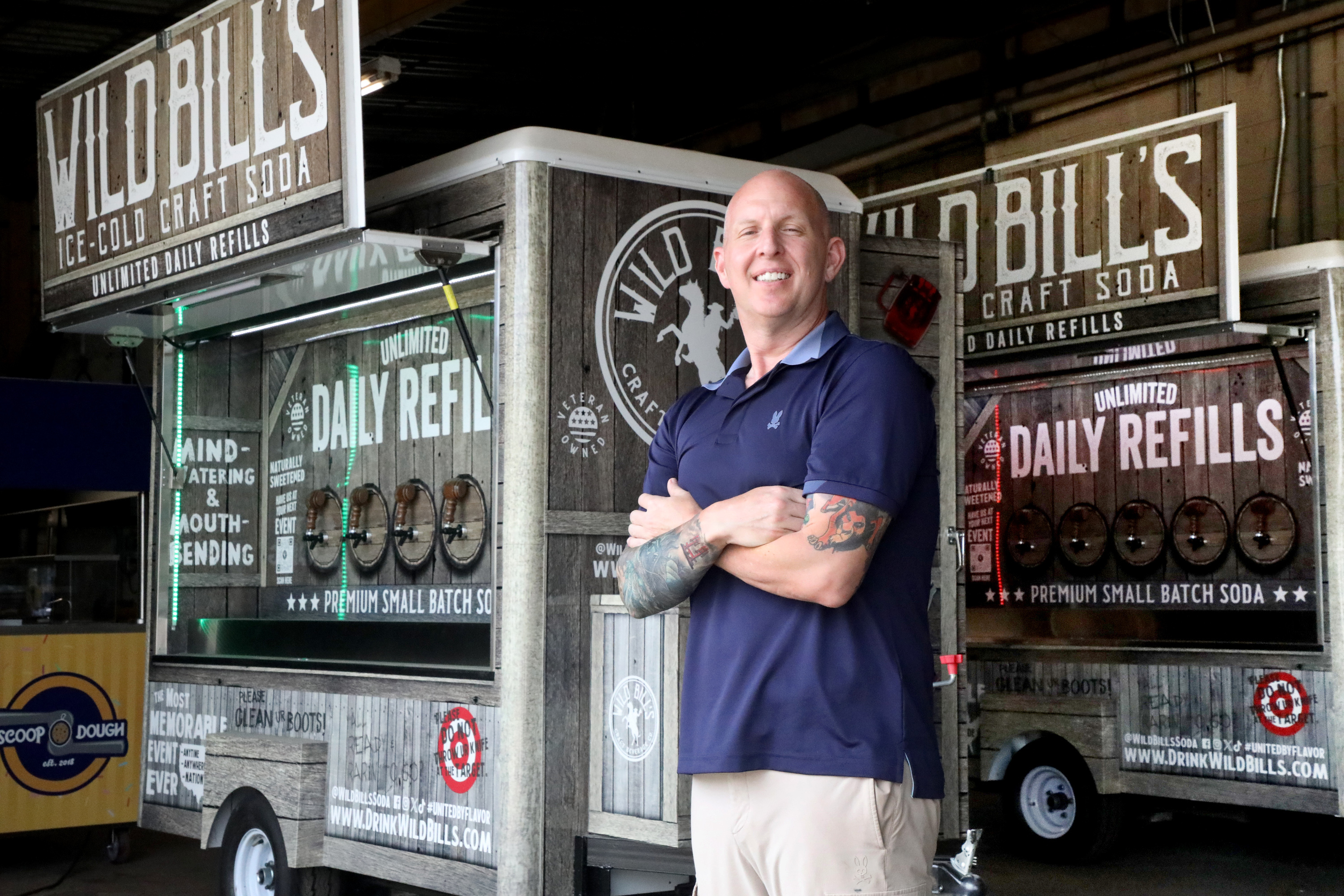
    Lehigh Valley-based Wild Bill’s Craft Beverage Co. serves its old-fashioned sodas from kegs mounted in Custom vehicles of several sizes. They sell drinks at crowded motorcycle rallies in Gettysburg and Sturgis, S.D., the Ohio State Fair, the Great State of Maine Air Show in Brunswick, San Diego Comic-Con, and Schuylkill regattas.

    “These are high-end, unique stands. We have 60 of them. We add a couple a year,” said Wild Bill’s chief executive, Mike Quilty. “One of our franchisees in Utah just drove one of Custom’s self-propelled Ford barrel wagons to Vancouver.”

    To make trips like that, the equipment has to be built well, Quilty said, noting Custom’s “unlimited support” for when technical issues arise, which doesn’t require buying a service contract.

    Custom’s late founder, William Sikora, developed the catering truck in the early 1950s as a kitchen on wheels installed on a Detroit-made chassis. Sikora as a grade-school kid in Camden had sold vegetables from a pony-drawn cart, then opened a grocery. He bought apartment buildings and diners, and became a top officer of First Peoples Bank.

    Walking room to room past heavy presses and cutters on the Hammonton shop floor, Sikora’s grandson Kyle said 40 workers build more than 100 pieces of equipment a year — food trucks, trailers, catering wagons, specialty equipment with kitchen-sized stoves, refrigerators, freezers.

    “We’ve sold to Disney World and SeaWorld, Sesame Place, and U.S. bases in Japan,” Kyle said on a muggy midsummer morning as room fans, metal-forming machinery, and new-cart test motors whirred. “We have 18 projects going right now.”

    Custom built 32 commercial kitchens on caster wheels for Carnival Cruise Line’s Calypso Lagoon in the Bahamas, which opened last year, with rounded bull-nose counters instead of sharp industrial edges to accommodate peak work flow.
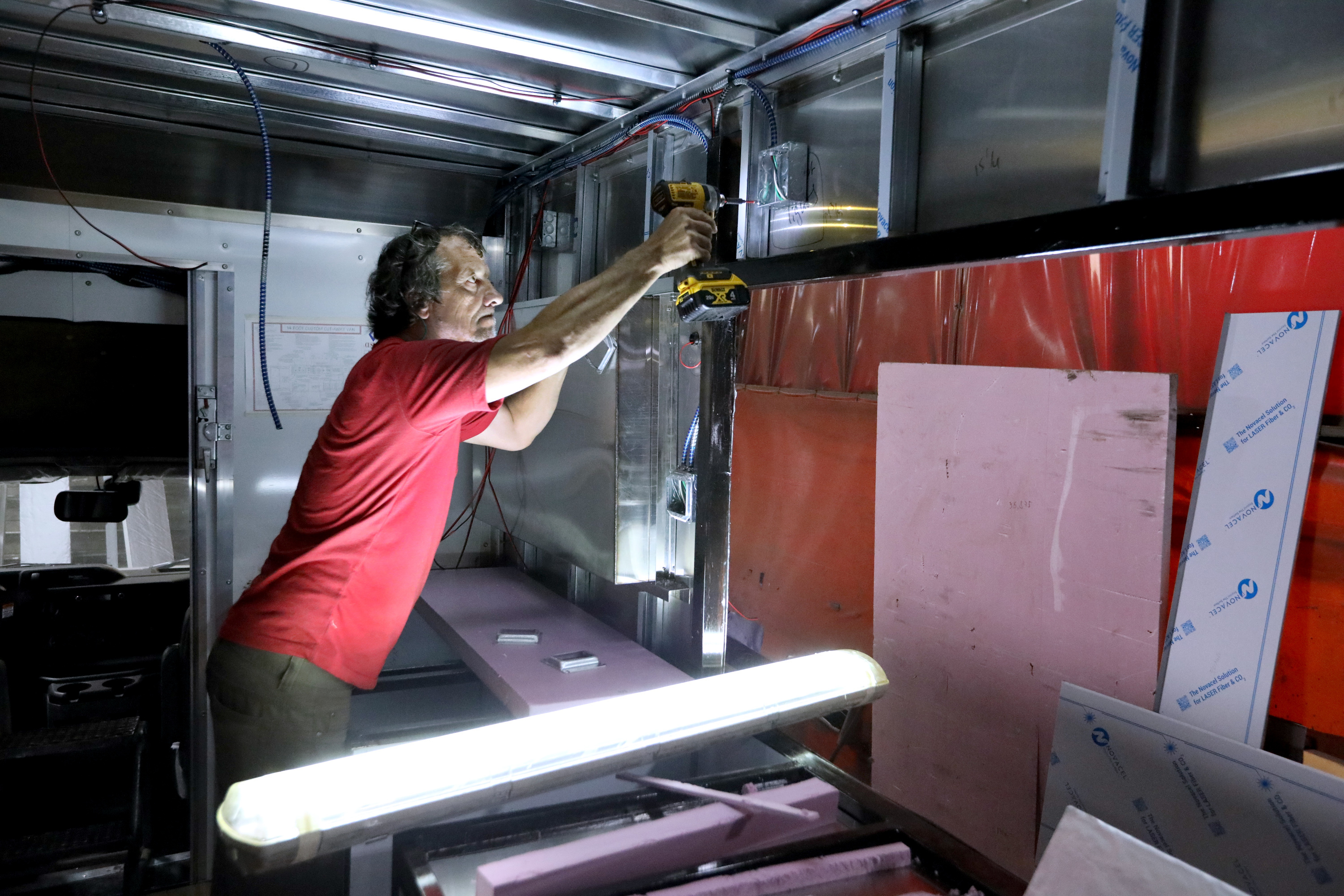
    Paul McIlvaine, an electrician, works on the interior of a Chickie & Pete’s food cart at Custom Mobile Food Equipment, in Hammonton, Tuesday, July 21, 2026.Vernon Ogrodnek / For The Inquirer

    How much does it cost to launch a kitchen cart?

    Today, Custom’s basic Model 525 carts retail for around $6,500. For that sum, plus storage, food, fuel, and licensing costs, “you’re in business serving food,” said Kyle.

    “It’s rewarding, you get to meet so many kinds of people,” he added.

    New catering trucks start at more than $125,000, like a high-end camper.

    All the carts and trucks are built from stainless steel sides, stamped with Custom’s distinctive elongated-diamond pattern over tubular steel framing. The company uses multiple steel suppliers, including Allegheny Ludlum Steel Corp. in Pittsburgh. It was harder to find domestic steel when the U.S. auto industry demand was stronger, Kyle said. But now materials costs are much higher, often in response to higher tariffs.

    “We try to use built-in-USA [materials], but some stuff you cannot get here,” Kyle said. Robertshaw Controls, for example, makes the only burner controls that fit Custom’s standards. They moved the operation to Mexico from Texas, so Custom now imports them.

    Cart metal is just one inflating cost vendors face, said Christian Subashi, second-generation owner of Loudogs hot-dog carts in Sea Isle City. Refrigerators were 50% cheaper before last year’s new tariffs, he said, and sausage prices have “gone through the roof.”

    Kyle said his company’s hot-dog cart price “has gone up $1,000 or $2,000 in 10 years,” lower than the general inflation rate. “We have to absorb some. It’s how you do business,” he said. He’s confident steel prices will stabilize eventually.

    The future of food carts

    The company has no plans to automate, Kyle said. “All our products are custom built — handmade and hand-fabricated. No two carts are exactly alike,” he said, noting that the company also retrofits and rehabs units as needed. “They can last forever.”

    “Our pricing is more, but it lasts longer than assembly-line stuff coming in from Mexico or China at low cost.”

    One once-robust market that has all but evaporated is carts for vendors who work construction sites. Custom employed over 100 during the building boom of the late 1990s. The company built a catering truck a day, on average, back then; now it’s closer to one a week.

    “Wawa and DoorDash are delivering deli trays to jobs sites now. And Wawa has built out so many stores in their area, guys can just leave the job and run to Wawa. So that business is down for us,” said Kyle.

    The focus now is on larger orders that can be built more efficiently. Plus it’s gotten harder, Kyle said, to hire skilled craftsmen.

    Local buyers of carts and trucks include Shore ice cream and water-ice vendors, as well as the food vendors that sell at breweries, thanks to the New Jersey’s restrictions on breweries serving food

    But Custom is also very much “a national brand,” said James Evans, who runs the food-truck division for Ocean City-based Manco & Manco Pizza, including eight Phillies stadium locations.

    Like Custom, Manco is a third-generation South Jersey business, and Evans said he wouldn’t have gone anywhere else to build stadium-ready trailers. The two firms cut a deal last February for Custom to build an initial “food truck you can drive, available for private parties, corporate functions, MLB events, anywhere we can take a truck.”

    The first was delivered in July, with four propane-fueled Baker’s Pride deck ovens “to cook our pizzas to Manco standards.”

    Custom faces a string of manufacturing challenges with any order, Kyle said.

    But from Manco’s perspective the passage of his project from plan to delivery “was seamless,” said Evans.

    “As we morph into their larger trucks, we will add wings and tenders,” he said. “If everything in business and life went that easy, it’d be great.”
  • FDR sent federal troops to break a racially tense transit strike on this week in Philly history

    FDR sent federal troops to break a racially tense transit strike on this week in Philly history

    So many young Americans who signed up for World War II in 1944 thought they were headed across the Atlantic to help pull European towns away from Adolf Hitler’s grip.

    But many GIs, fresh out of basic training at New Jersey’s Fort Dix, instead ended up sleeping in two-man tents in Fairmount Park.

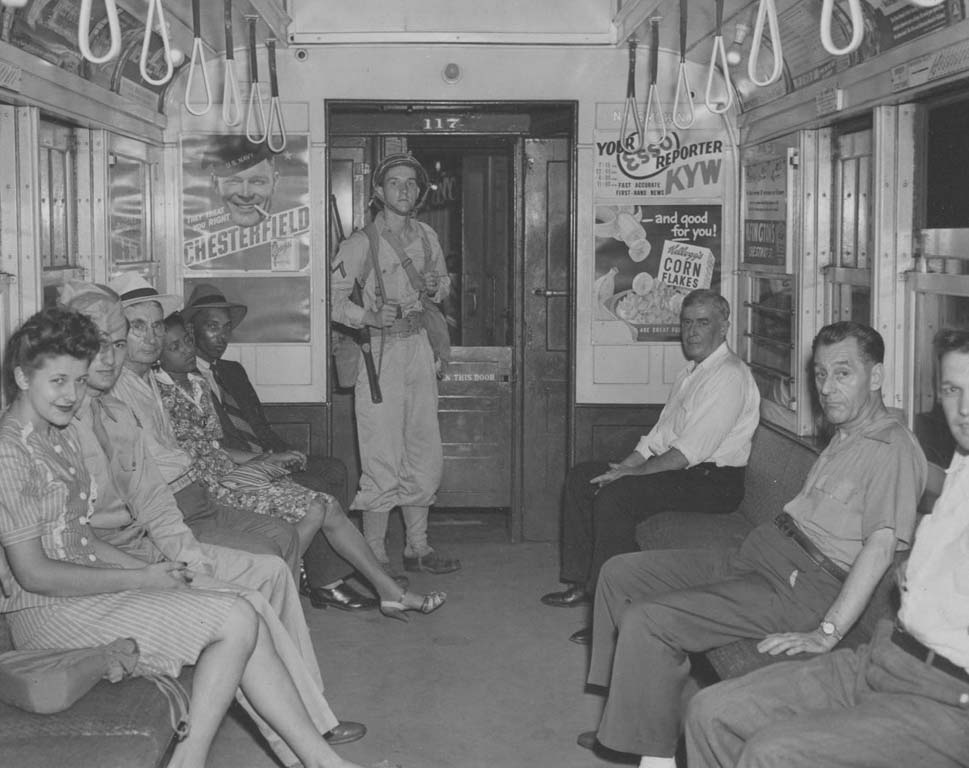
    On Aug. 5, 1944, President Franklin D. Roosevelt dispatched about 5,000 U.S. Army troops to Philadelphia to intervene in an ugly transit strike.

    When covering a trash strike in July 1978, the Daily News spoke with military members who were sent to the city during the tumultuous six days of the 1944 transit strike.

    “I had to work on Diamond Street,” James Denning of Maywood, N.J., recalled to the Daily News. “That was worse than Germany.”

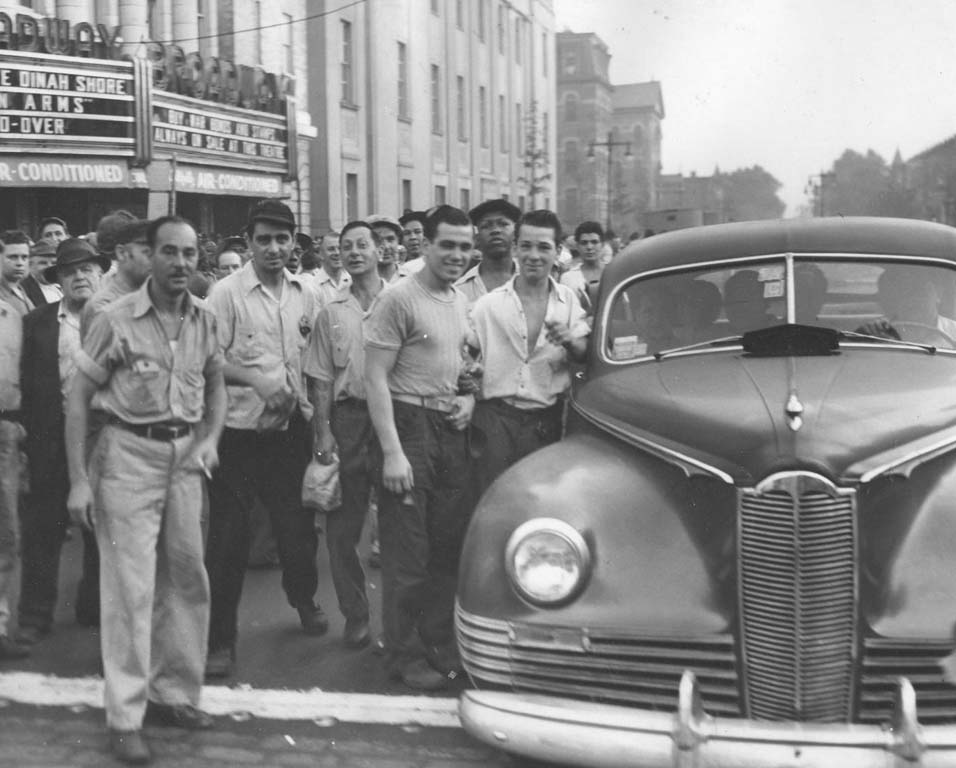
    Photo shows one of the subway car with passengers with a Armed soldier during the 1944 Philadelphia Transit strikes.Culross (Phila. Inquirer)

    It marked one of the first major federal interventions amid the fight for civil rights.

    On Aug. 1, white transit workers with the Philadelphia Transit Co. had gone on strike over the hiring of Black trolley operators.

    Black workers were now being given operator jobs, graduating to higher pay and better conditions than in their previous jobs in mechanics and labor.

    The Black drivers threatened to leave their posts unless they were guaranteed protection from racially motivated attacks. And the strike itself threatened to slow down the Philadelphia war machine feeding the need for ships, tanks, and uniforms.

    The Army took over the transit agency three days into the strike, and on Aug. 5, Roosevelt ordered the troops to break the strike.

    The intervention helped lead to the end of the strike after six days, but federal troops remained in the city, riding streetcars 24 hours a day, keeping them moving, and protecting Black transit workers on the rails and on the roads.

    Troops withdrew from the city on Aug. 17, and by early September, Black trolley drivers took their rightful places behind the wheel.

  • A lawyer and a teacher are sprucing up Camden, one free lawn cut at a time

    A lawyer and a teacher are sprucing up Camden, one free lawn cut at a time

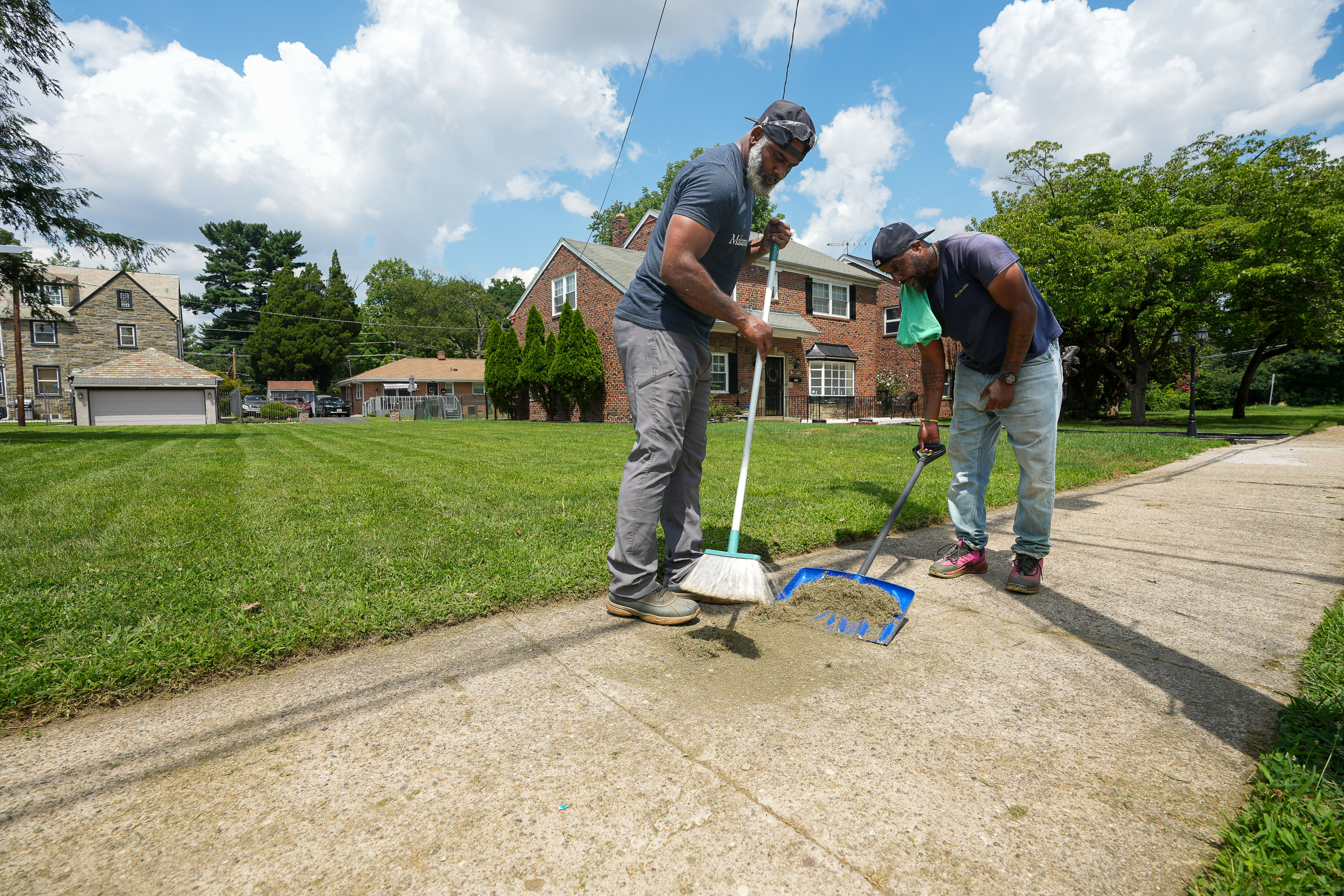
    With the afternoon sun beating down, Keith Benson and his childhood friend Brian Turner meticulously tended to a lawn in Camden’s Parkside neighborhood on a recent Friday.

    They took turns pushing a red lawn mower that left neat lines in the lush grass. They edged up the perimeter and pulled weeds from the sidewalk in front of the property on Bradley Street.

    A short time later, the pair completed the job, packed up their equipment and sped off to their next assignment in Benson’s burgundy Ford-150 pickup.

    They didn’t get paid and they didn’t want any payment, except possibly a cold bottle of water.

    Keith Benson and his childhood friend Brian Turner help residents and the community by providing free lawn care, in Camden, N.J., July 31, 2026.Jessica Griffin / Staff Photographer

    Benson, a Camden High history teacher, and Turner, a litigator and personal injury lawyer at a Cherry Hill law firm, are spending the summer working for free. They want to give back to the city where they have lived and worked.

    “I’m grateful to be able to do it,” said Benson, 46. “We have to pass that on.”

    Benson was looking for something to do when the school year ended in June. He came up with the idea and enlisted Turner to help.

    They shared their plans mainly through word of mouth, friends, and social media posts. The response has been overwhelming and the two have been fielding text messages and calls to schedule appointments.

    Since June, they have cut nearly 100 lawns, including 14 repeat cuts, Benson said. They hope to get back to every lawn once a week, he said. The free service is limited to Camden, and they use their personal equipment.

    “When they text us, we go,” said Turner, 47, of Cinnaminson. “We always show up when we say we will.”

    Camden Mayor Victor Carstarphen launched a “Camden Strong” campaign several years ago and has encouraged residents to help spruce up the community. That initiative is cleaning up neighborhoods, removing bulk trash, and restoring public spaces.

    This summer, too, residents such as Elton Custis have been cleaning up their blocks on Saturday mornings for a half hour to support Camden Strong. Custis compiled a list of more than a dozen mostly elderly neighbors for Benson and Turner for the free lawn cutting. They completed them all, he said.

    “I just love the fact that they started this,” Custis said. “They didn’t wait for anybody’s approval. They just got it done. They have been a godsend, that’s for sure.”

    As the temperature approached 90 degrees, Benson and Turner made their fourth stop of the day on Bradley Street. They have worked on the hottest days of the summer, stopping only for inclement weather.

    They cut a vacant lot adjacent to a home where Ted Davis Jr., the son of the city’s first Black judge, now resides. They also mowed his backyard.

    “They’re true to their word, when they say it’s free,“ said Davis, a retired personal trainer and high school coach. ”I offered to pay but they declined.”

    Davis said he was not surprised by the undertaking. He met both as teenagers when the signed up to train with him at his Smart Jox business.

    “I respect them very much,” Davis said. “It’s not a lot of people who are doing what they are doing.”

    Keith Benson and his childhood friend Brian Turner help residents and the community by providing free lawn care, in Camden, N.J., July 31, 2026.Jessica Griffin / Staff Photographer

    Earlier that day, Turner, a former assistant Camden city attorney, had stopped in his office at Malamut Law firm and worked for several hours. The firm has supported his community service, he said.

    Benson and Turner met in 1996 their sophomore year at Moorestown Friends School. Benson transferred from Cherry Hill schools.

    “We didn’t like each other at first,” Benson recalled.

    “He hated me,” Turner said.

    They became friends that summer when Benson’s father, also named Keith, forced them to sign up for a basketball camp. The elder Benson was unaware of the tension, but believed the young Black men in a predominantly white school should be friends.

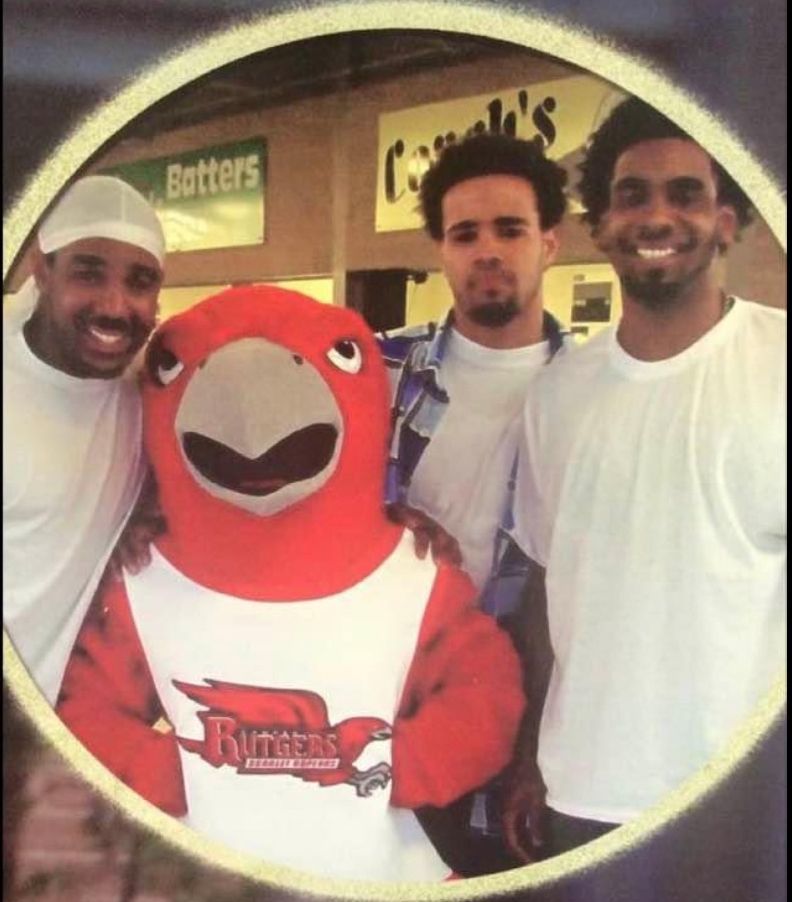
    Both men graduated from Rutgers-Camden where both played basketball and Turner was named the New Jersey Athletic Conference’s Player of the Year in 2002.

    Left to right: Rutgers-Camden basketball teammates Keith Benson, Robert Scott, and Brian Turner circa 2002.Courtesy of Keith Benson

    Both also earned doctorate degrees — Benson in education and Turner in law. Benson lives in Camden and the two conducted basketball clinics at Camden High this summer.

    “Now, they are ridiculously fast friends,” the elder Benson said. “Their friendship is beautiful and I love it.”

    Whistling and humming as they worked, Benson and Turner quickly finished up the lawn on Bradley Street. There was some friendly bantering about whether the lines in the grass were perfectly straight.

    “We do argue all the time,” Benson said.

    “Sometimes, he doesn’t listen,” Turner quipped.

    Next, the pair moved to South Eighth Street to cut the lawn in front of a rowhouse. They also cut the adjacent properties, including in front of a boarded up property on the corner.

    Keith Benson and his childhood friend Brian Turner help residents and the community by providing free lawn care, in Camden, N.J., July 31, 2026.Jessica Griffin / Staff Photographer

    They mowed eight lawns for the day. Both said they hope to inspire others to find ways to help their neighbors and the city.

    “We’ll do as many lawns as we can,” Benson said.

    Added Turner: “When you can help out, help.”

  • Ten months of inspections at St. Luke’s Hospital — Upper Bucks Campus: July 2025 — April 2026

    Ten months of inspections at St. Luke’s Hospital — Upper Bucks Campus: July 2025 — April 2026

    St. Luke’s Hospital — Upper Bucks Campus was not cited by the Pennsylvania Department of Health for any safety problems between July 2025 and May of this year.

    The Quakertown hospital is part of St. Luke’s University Health Network.

    Here’s a look at the publicly available details:

    • Dec. 4, 2025: Inspectors visited for a monitoring survey and found the hospital was in compliance.
    • Dec. 18: Inspectors came to investigate a complaint but found the hospital was in compliance. Complaint details are not made public when inspectors determine it was unfounded.
    • Jan. 21, 2026: Inspectors visited for a mental health survey and found the hospital was in compliance.
  • For the Sixers, ego concerns are secondary to Jaylen Brown and Joel Embiid’s fit on the court

    For the Sixers, ego concerns are secondary to Jaylen Brown and Joel Embiid’s fit on the court

    There are two sets of questions for these 76ers. Maybe it feels like that’s always been the case. Except that it hasn’t.

    The questions used to be: Will Joel Embiid be healthy? How often? To what extent? At what level of effectiveness? Nothing beyond these things mattered. Without Embiid, the Sixers weren’t a team you could even pretend to take seriously.

    Things aren’t what they used to be. With or without Embiid, the Sixers feel like they have a team that will have an identity. More than that, they feel like they have a team that will have a chance. If they didn’t make that clear when it traded for Jaylen Brown, they certainly did when they formally introduced him.

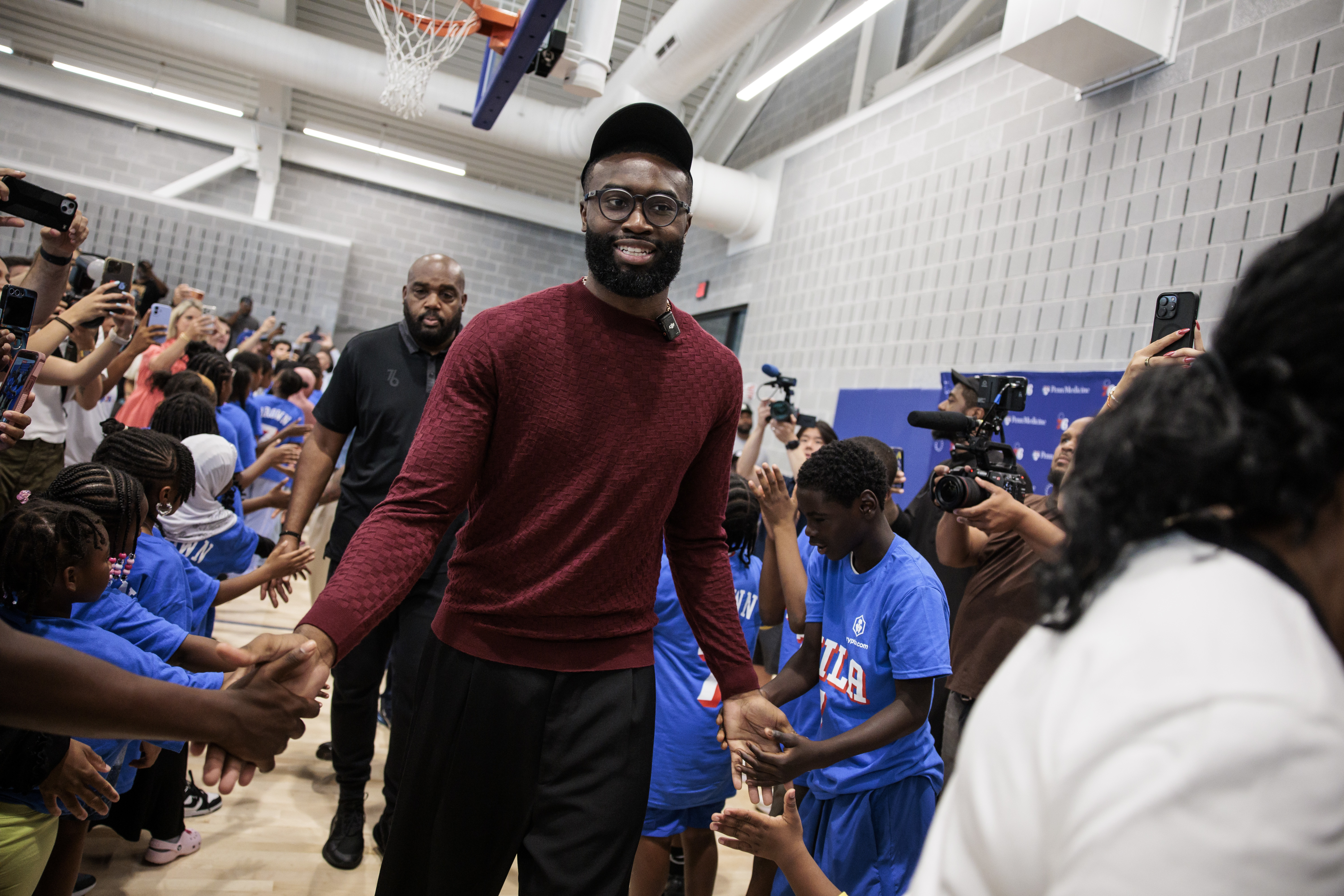
    The only things missing from Thursday’s press conference at Francis J. Myers Recreation Center in Southwest Philly were a marching band and a vice-presidential nominee. Upward of 100 people packed into the rows of plastic folding chairs that covered most of the width of the rec center’s indoor court and three-quarters of its length.

    In addition to the ownership group and most of the front office and Brown’s family and reporters from both Philly and Boston, there were cheerleaders and game day event staffers and security guards and a DJ and a gaggle of youth from the local community.

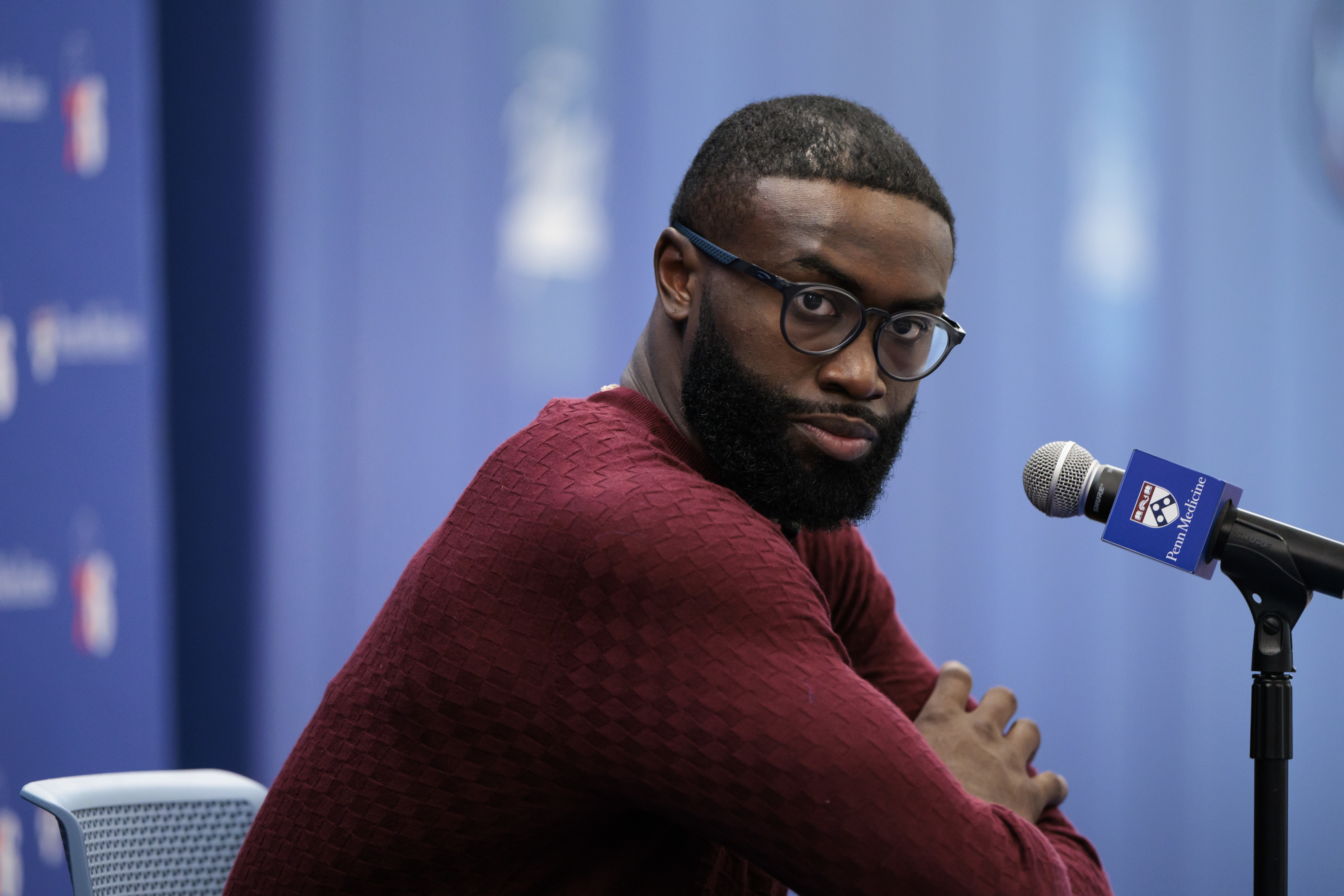
    New Sixer Jaylen Brown arrives for his introductory press conference at the Francis Myers Recreation Center on Thursday, Aug. 6, 2026 in Philadelphia.Monica Herndon / Staff Photographer

    While it was Brown who keenly requested that the event be held at a local rec center, the proceedings were just as much a show of force from the Sixers that left little room for doubt about the gravity they expect their newly acquired superstar to impart on the organization.

    “What an event,” Sixers first-year president of basketball operations Mike Gansey said. “It’s a special, special day to be a 76er.”

    While it would be easy to sit here and wonder about Embiid’s thoughts on all of the hoopla surrounding Brown, the much more relevant question concerns their coexistence on the court. Feelings? Sure. Everyone has them. But they require political capital to matter. For much of his tenure, the Sixers adhered to a doctrine of appeasement. Several different front offices and coaching staffs operated as if they lived in fear of a trade demand. Now, the Sixers couldn’t trade Embiid if they wanted. Both sides are surely aware of that.

    Besides, we’ve seen and heard plenty to suggest that Embiid is at the very least receptive to having another superstar on board. On Thursday, Brown said that the Sixers center reached out to him shortly after the trade went down. The team has an active group chat. Yes, LeBron James is a part of it.

    “Me and Joel have been friends throughout the years,” Brown said. “I love soccer, so we talk about that a lot. He reached out, too, when I got traded. He reached out the same day. I talked to him on the phone. I’m looking forward to earning everybody’s trust and respect and grinding and impacting winning. That’s what I’ve done my whole career, and that’s what I plan on doing here.”

    That’s all that counts in the chemistry department, for the time being. Even if Brown and Embiid have some aspects of their personalities that make you wonder about the occasional friction, the decade of close quarters competition between the two has generally revealed a healthy mutual respect. The two players shared a long one-on-one moment near midcourt in the aftermath of the Sixers’ win over the Celtics in Game 7 of April’s first-round playoff series. The two most important personality traits in any professional relationship are to mean well and to want to win the task at hand. Both Brown and Embiid have those fundamentals. That’s enough for now.

    The success and failure of the Brown-Embiid partnership will be determined by how well it works on the court. That, in turn, will determine whether the Sixers have the potential to become a truly great team. Brown and Embiid are both the ceiling and the floor. Tyrese Maxey and VJ Edgecombe both have the skill profile and willingness to adapt their roles to those around him. James did it even in his prime. Now, he is at an age where one generally accepts who he needs to be. The big question marks are Brown and Embiid.

    This isn’t a question of personality as much as it is a question of technical fit. There are a lot of parallels between Brown and Embiid, at least from a critical perspective. Shot selection, tunnel vision, decision-making, possession time, efficiency, pace in the half court, all have offered ample fodder for skeptics. Of the 20 players with a usage rate of at least 29% over the last eight seasons, only two have averaged fewer than four assists per game. You guessed it. Embiid and Brown.

    Whether or not these criticisms are prescient or fair, Brown and Embiid are clearly the two players who have the potential to clunk the operation up to a point of dysfunction. Don’t interpret that as a disservice to either. It’s just the style of their games. Whether the Sixers reach their ceiling will depend overwhelmingly on how well Brown and Embiid adapt their games to what optimizes the collective. Each has the ability to be the player they need to be. It is not a complicated thing. Drive when you have a lane. Shoot when you have a shot. Otherwise, keep the ball moving.

    “To win, you’ve got to be able to have sacrifice,” Brown said. “You’ve got to be able to have communication.”

    The presence of James as a connector and secondary playmaker should help. So, too, should the presence of Maxey and Edgecombe, two of the more likable, earnest and adaptable young players in the game. But if we are going to assume that Embiid’s outlook is as promising as the reports suggest, the Sixers’ fate will ultimately be determined by his synergy with Brown.

    It’s a great question to have.

  • Eagles wide receiver Darius Cooper takes pride in doing the dirty work. Will he be rewarded with a roster spot?

    Eagles wide receiver Darius Cooper takes pride in doing the dirty work. Will he be rewarded with a roster spot?

    All eyes are on the revamped receiving corps in the latest iteration of the Eagles offense.

    Dontayvion Wicks. Makai Lemon. Hollywood Brown — Howie Roseman allocated significant resources, including a first-round pick, to the room this offseason in preparation for life after A.J. Brown.

    When the NFL Network asked Jalen Hurts on Wednesday which receivers have emerged from the crop behind DeVonta Smith, the 28-year-old quarterback could have picked any of the Eagles’ notable offseason acquisitions.

    Instead, he mentioned a 2025 undrafted free agent out of Tarleton State.

    “I think Darius Cooper has done a really good job,” Hurts said. “He’s always been a big-body, physical, strong-hands guy. But just to see how he’s transitioned going into Year 2, I’m definitely excited for him, along with the rest of them.”

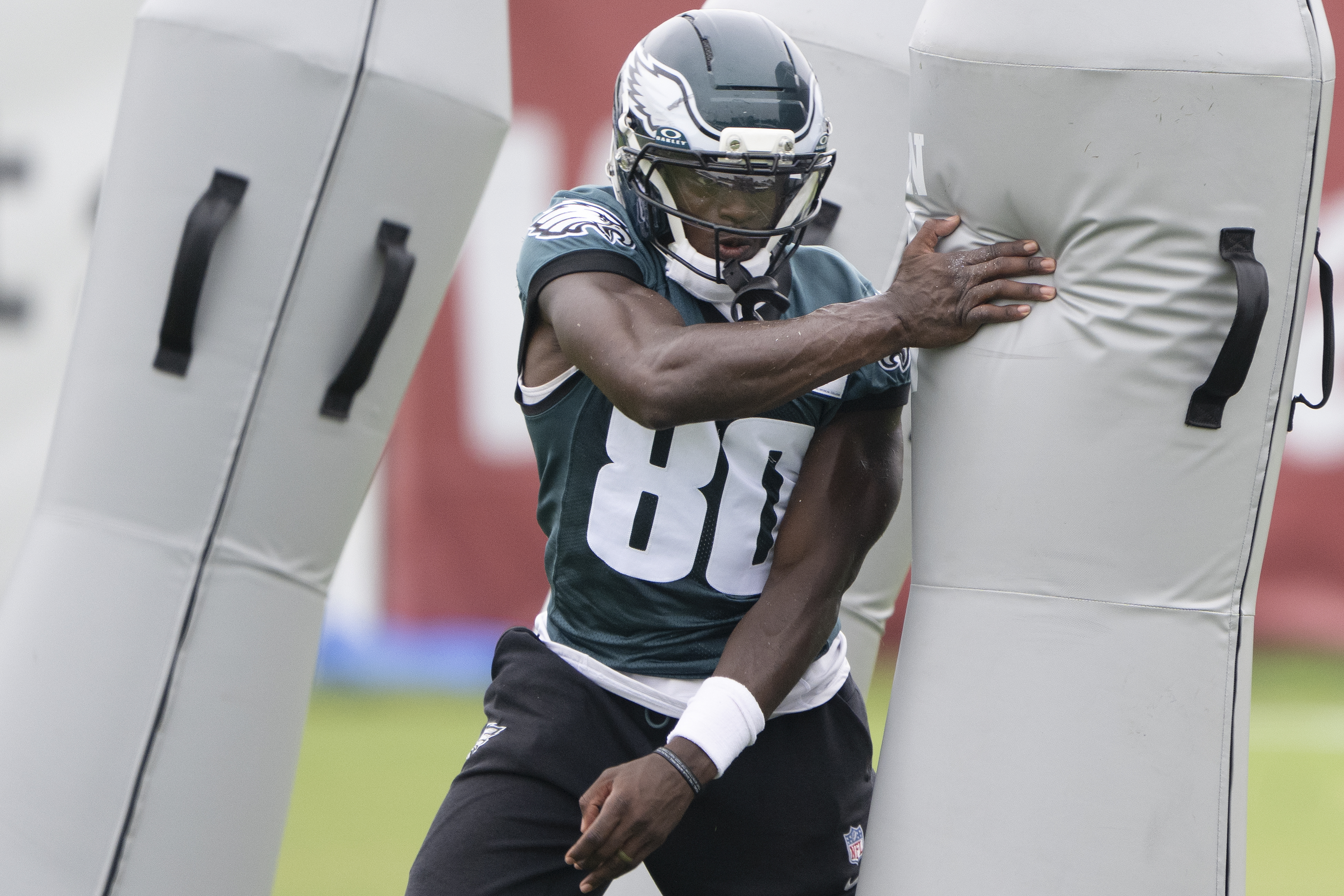
    Hurts’ selection of Cooper shouldn’t come as a surprise based on his body of work through six practices. The 5-foot-11, 210-pound receiver is in the early stages of reprising his 2025 training camp performance.

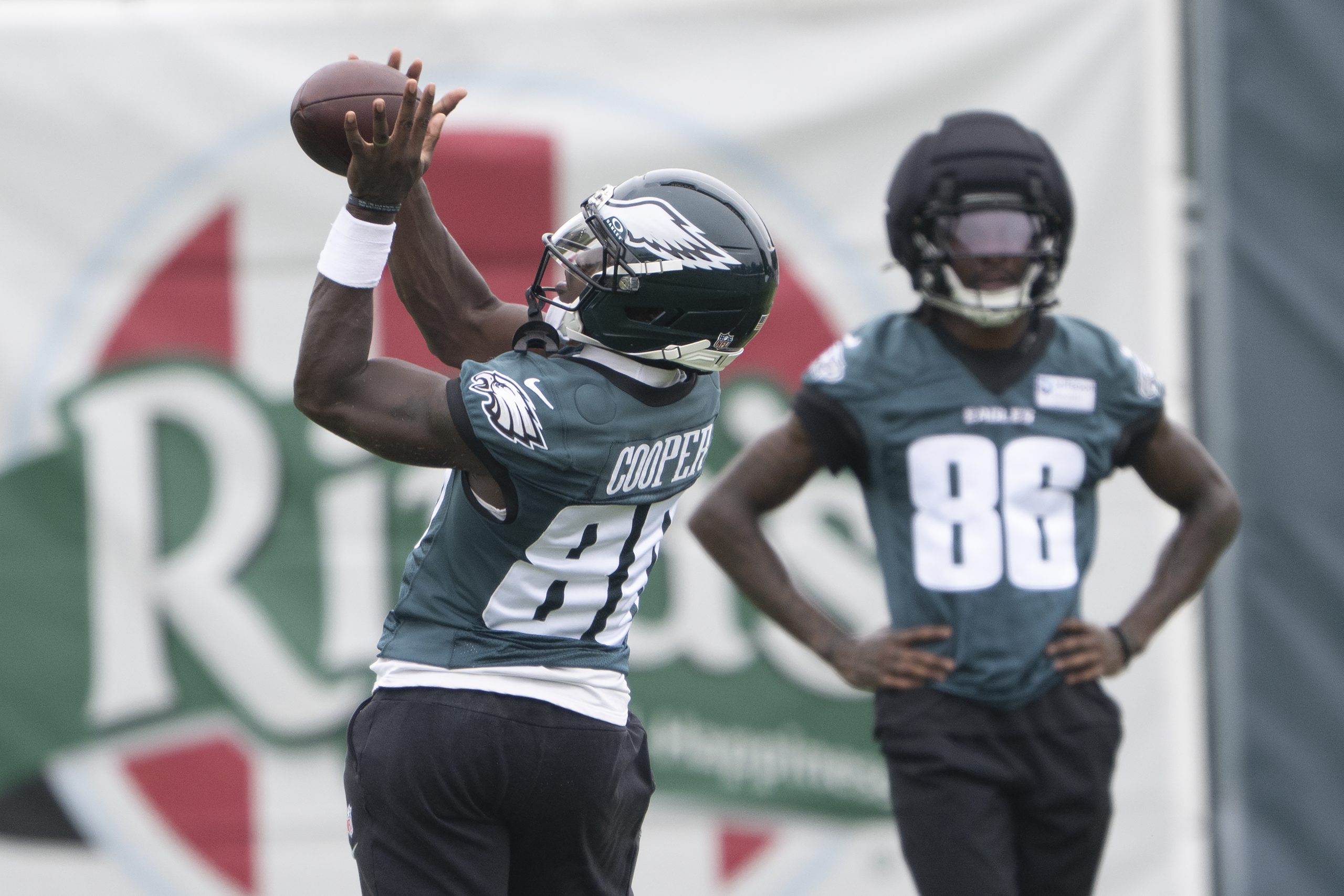
    On the first practice of camp this year, Cooper had the play of the day when he made a diving catch down the middle of the field on a pass from Hurts, placed out of reach from Cooper DeJean in 7-on-7s. Four practices later, Cooper had a one-handed snag on a pass from Andy Dalton in the end zone, but he narrowly failed to drag both feet in bounds.

    Darius Cooper has been a favorite target of Jalen Hurts and has built a good rapport with the quarterback. Jose F. Moreno / Staff Photographer

    Cooper called the near-touchdown a “pretty good catch,” but he acknowledged that the catch alone is only one facet of what it takes to pull off a play.

    “The catch is going to happen,” Cooper said. “But it’s what you do after that. Do you get your foot in? Do you get on your back? Do you do the fundamentals? That’s what I’m focused on.”

    A fixation on the small details is what earned Cooper a role in his rookie season. In June, Nick Sirianni referred to the 24-year-old receiver as one of the “dirty work guys” of the Eagles offense who is capable of executing unglamorous tasks such as blocking on the perimeter, chipping inline, and running clear-out routes.

    Cooper is proving in camp that he is capable of more, especially in the absence of Smith and Lemon, who have missed practice time this week with hamstring injuries. But Cooper said he still takes pride in that dirty-work role, and he also expressed an understanding that his coaches will require those responsibilities of him if he wants a spot on the team.

    “Still got to do the dirty work,” Cooper said. “Got to block on the perimeter. Still got to have that mentality on special teams as well. I’m in the same mindset. Nothing is changing for me.”

    That mindset isn’t changing because the chip on Cooper’s shoulder hasn’t disappeared. He wasn’t highly recruited as a quarterback coming out of Hazelwood West High School just outside of his native St. Louis. He switched to receiver at Tarleton State, a FCS program in Stephenville, Texas, and became the school’s all-time receiving leader with 3,185 yards in five years.

    Last year, Cooper became the 12th player from Tarleton State to make an NFL active roster, and the first since Colts and Texans outside linebacker E.J. Speed entered the league in 2019.

    “That’s been my life for my whole football career,” Cooper said. “Coming from smaller schools, things of that nature, but still making a name for myself. But really just staying humble. Keeping my faith in everything and putting the work in and God’s going to handle the rest.”

    Darius Cooper had nine catches for 92 yards in 13 games played with the Eagles as a rookie. David Maialetti / Staff Photographer

    Cooper has kept that faith in his ability to carve out a role with the Eagles, even when Roseman infused the receivers room with new talent this offseason.

    “It’s part of the game,” Cooper said. “It’s part of the industry that we play in. You’ve got to know how to adjust. You meet so many people in the NFL. So I’m happy to meet these new guys, learn from them, pour into them as they pour into me. It’s a blessing to me.”

    He and Hurts have also been investing in their connection. This offseason, Cooper was among the group of Eagles receivers, tight ends, and quarterbacks who traveled to Orlando, Fla., for workouts and off-the-field bonding. Cooper called the quality time he spent with Hurts “very important,” especially the conversations they had away from football.

    Cooper has an advantage on some of the newcomers to the room given that he began building chemistry with Hurts last year. But Cooper isn’t relying on his rookie season to prove he deserves a spot on the initial 53-man roster and a role in the offense once again.

    “Last year’s in the past,” Cooper said. “So this is a new year. Be where my feet [are] and I have that same mentality, for sure.”

  • As Cheltenham’s superintendent resigns, families say safety problems extended beyond football program

    As Cheltenham’s superintendent resigns, families say safety problems extended beyond football program

    Cheltenham Superintendent Brian Scriven resigned Thursday, a little more than a week after prosecutors charged four football coaches and six players in connection with violent assaults against a player last season in a high school locker room.

    The superintendent’s resignation, effective immediately, came amid community outcry over the district’s handling of the August and September 2025 incidents, which prosecutors say both involved students attacking a 15-year-old and using a broomstick to poke at his buttocks.

    Yet the district did not uncover that there had been two assaults, and administrators appeared to downplay a report from the 15-year-old’s mother, according to the Montgomery County grand jury that recommended the charges. It described a “level of incompetence” in the district that “put every young man on the football team at risk.”

    Some parents who have been battling the district to take student safety more seriously said Scriven and his administration did not fail only in overseeing the football program.

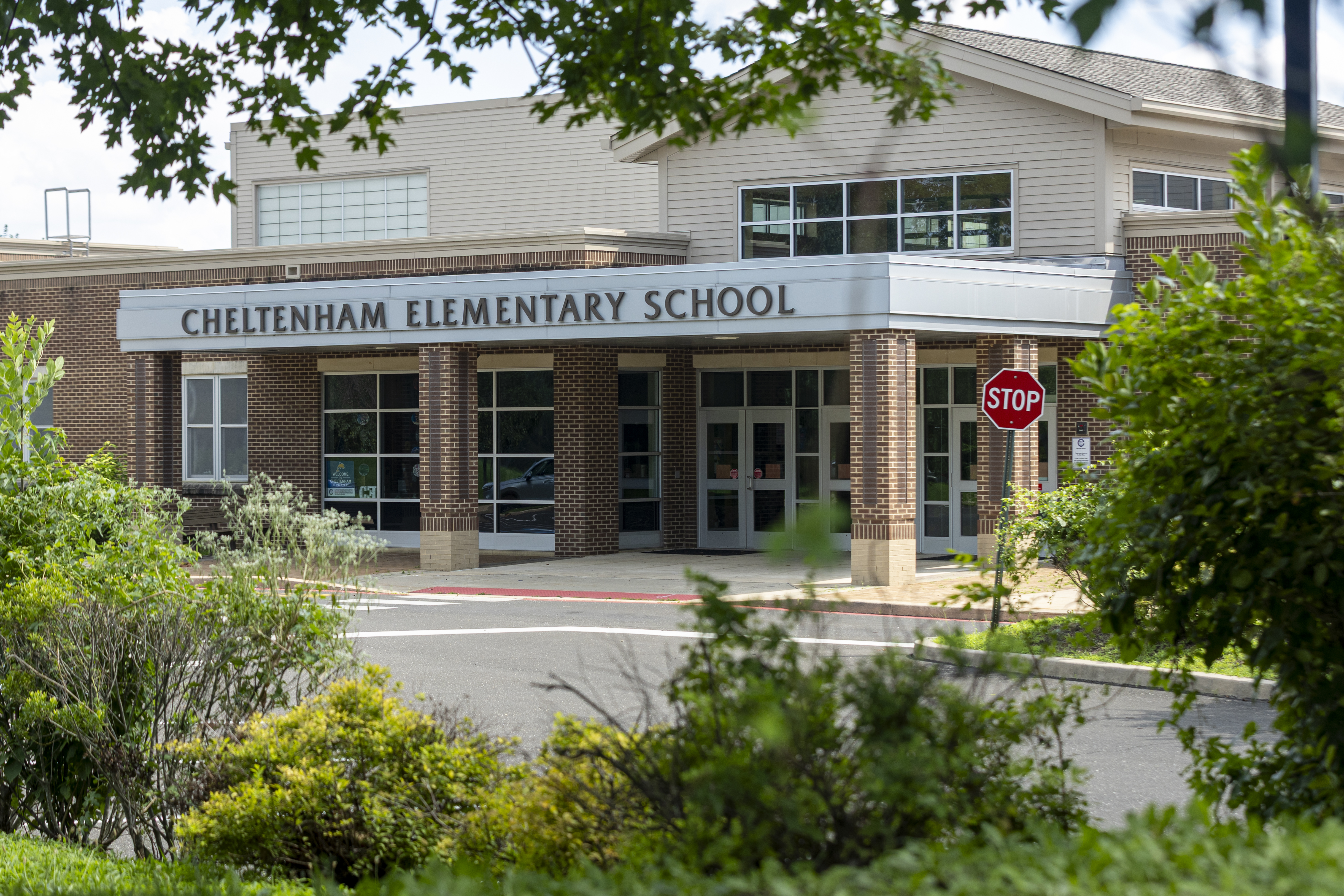
    “I see a complete lack of urgency,” said one mother who has been among a group of parents pressing the district since October to address violent incidents at Cheltenham Elementary School. The mother, who spoke on the condition of anonymity out of fear of retaliation for her child, said administrators still have not answered questions about how students are disciplined and how others are supported after assaults.

    Another Cheltenham Elementary parent, Shanyl Jones, said her daughter, an incoming second grader, twice experienced sexual touching and comments in school. In kindergarten, a boy repeatedly touched her against her will, conduct that escalated to him grabbing her vagina, Jones said.

    The boy also made sexually explicit comments to her daughter, Jones said. She reported the conduct and filed a Title IX sexual harassment case; the school moved the boy to a different classroom, she said.

    After a separate boy made sexual comments to Jones’ daughter in first grade, the principal called Jones and apologized, though the boy was not moved to a different classroom, Jones said.

    News of the football charges “just tore me up on what my daughter’s future would be in the school system,” Jones said. “It gave me no assurance they’re going to be able to reconcile what’s happening now.”

    Scriven said in his resignation letter Thursday that “this year has tested our community in ways none of us anticipated.”

    “I have come to believe that the district is best served by a fresh start under new leadership, and that stepping aside now is the right and necessary step to allow Cheltenham to move forward,” he said.

    The district has not commented on how else it plans to respond to the explosive grand jury report released last week, which described the response of several employees at the high school — identified only as Employees #1, #2, and #3 — as minimizing an assault reported by the 15-year-old’s mother, and trusting the word of the head coach, Terence Tolbert, that he had not instructed the student not to tell his parents what happened.

    The district did not respond to questions this week about its hiring of Tolbert — who was among the four coaches charged — including whether it had sought references from Abington, which cut ties with him after one year as its head football coach. Some parents of football players told The Inquirer they had “pleaded” with Cheltenham administrators not to hire Tolbert, whom they accused of allowing bullying during his tenure at Abington Senior High School.

    Nor did the district respond to questions about whether it would take action against any employees, including those described in the grand jury report.

    The Cheltenham High School vice principal whom the mother said she had reported allegations to, Mark Hoff, was named vice principal at Wyncote Elementary last month.

    The grand jury report “details very troubling questions about the management and operation of the district’s athletic programs, including the football program,” school board president Leah Mulhearn said in a statement this week. “Our highest priority is the safety and welfare of the children we serve.”

    Mulhearn, who did not address questions about Cheltenham Elementary in the statement, said the board was “focused on conducting a comprehensive review of the grand jury’s findings, including our policies and practices related to athletics, as the first step in implementing measures to ensure that no such conduct ever occurs again at our schools.”

    The district has said a Title IX investigation into the allegations will soon be finished, with possible discipline for students. Two 18-year-old players charged as adults — the other four were charged as juveniles — have already graduated.

    State Rep. Napoleon Nelson (D., Montgomery) said this week he plans to introduce legislation that would classify hazing as child abuse — a recommendation of the grand jury’s — requiring school employees to report allegations to the police.

    Community members are closely watching the school board’s next steps. Sharif El-Mekki, a nationally known Philadelphia-based educator who runs the Center for Black Educator Development and previously led Mastery Shoemaker Charter School, called on the school board in a letter to apologize to the victimized student and commission an independent investigation into the district administration’s conduct.

    “Every student in Cheltenham, every teacher, every parent, and every young leader in Montgomery County is being taught something right now by how the district is responding,” El-Mekki said.

    ‘Environment of ongoing chaos’

    Cheltenham Elementary parents said they raised concerns to administrators last October, after they heard from their children that a student touched another student’s penis sexually in class, over his clothes, in view of classmates.

    Some initially did not believe it. “We would have been told about it,” said one mother, who also spoke on the condition of anonymity out of fear of retaliation against her child.

    Parents began talking to one another to confirm what happened. Other parents and students told them the same child had been involved in previous sexual incidents, two mothers said.

    A group of parents sent an email on Oct. 3 to ShaVon Savage, then the district’s assistant superintendent, saying they had recently learned that a student “touched another child sexually during class time” and that the child had been involved in “multiple sexual incidents over the past few years.” They asked to be notified about instances of physical or sexual assault.

    In the email, shared with The Inquirer, they also asked for additional supervision and counseling for students with behavioral challenges and described an “environment of ongoing chaos” at the school, which last year served a larger number of students with emotional support needs than the district’s other three elementary schools.

    Savage wrote back 10 days later, saying she needed more details “to conduct a full and thorough investigation,” according to an email shared with The Inquirer. She also said that when a situation poses a “threat to a particular school community,” the district would communicate with parents, but could not share details about particular children due to federal privacy laws.

    Savage met with some parents in early November and said she would visit the school — though parents were unsure whether she did, the mothers said.

    Their concerns escalated when on Dec. 5, a Friday, the school’s principal, Stephanie Junod, was assaulted by a student, according to the mothers.

    That night, Scriven, the superintendent, sent an email to school parents, informing them that “while Ms. Junod was attempting to de-escalate a situation with a high-needs student, she was struck in the head by their thermos.” Scriven said the principal was “expected to make a full recovery.” Junod could not be reached for comment.

    Scriven said central office staff would be at the school the following Monday “to begin implementing additional measures to strengthen safety and provide more comprehensive support for students who require additional behavioral interventions.”

    Brian Scriven has resigned as superintendent of the Cheltenham School District.Courtesy of Cheltenham School District

    The mothers were angry that the district had not already been providing that support. Around the same time as Junod’s injury, they said, there was an assault on a student, and “at least two” against staff members, one of the mothers said.

    Parents had a meeting scheduled with Savage for Dec. 15, but administrators pushed it to January, one of the mothers said.

    Scriven met with parents on Jan. 8 and apologized for not treating their concerns urgently enough, according to the mother, who said Scriven also assured parents that “the football situation had been handled.”

    “Obviously, that was a lie,” she said.

    Scriven met with them again on Feb. 25 and said changes would be made, including putting a behavioral specialist at the school four days a week, according to the mother.

    Scriven did not mention that Junod would be resigning, the mother said — a decision announced shortly after the meeting.

    ‘Slow to respond’

    Problems at the school continued.

    On March 26, parents said, a student assaulted five staff members — including punching one in the face — in view of other children. Police came to the school.

    The district did not immediately notify parents. But Scriven sent an email to the school community the next day, reporting that “an emotional support student had an episode during which he eloped from the building and engaged in physical altercations with a number of staff as they were trying to de-escalate” the situation.

    “While I cannot share individual student consequences or placements, I can assure you that this situation is being addressed with the highest level of seriousness and urgency,” Scriven said in the email.

    In an email the next day demanding a meeting with administrators, one parent wrote: “The frustration among parents has reached a boiling point.”

    “Information is simply not being shared, and critical questions regarding the safety and education of our children are being ignored,” the parent said in the email, which one of the mothers shared with The Inquirer.

    Scriven responded to the parents on April 14.

    “I understand the urgency of your concerns and sincerely apologize for the delay in providing a comprehensive response,” Scriven said, in an email the mother shared with The Inquirer.

    Scriven said the school’s new principal, Shareese Nelson, had needed time to settle into the job, but “we are prepared to move forward in a more formal and collaborative manner.” He invited families to the school for an April 29 community meeting.

    The meeting was “highly emotional,” one of the mothers said, with parents sharing their children’s experiences. After the meeting, Scriven told a 6abc reporter: “I was slow to respond. I do have to own that, and rectify that immediately.”

    Shanyl Jones recalled that administrators seemed “completely unprepared” during the meeting to address parents’ safety concerns.

    In a message to the community May 6, the school board acknowledged “concerns around safety and student conduct have presented challenges that we continue to navigate.”

    The board said it took “all concerns that are raised with us as a board” seriously and was paying attention to how they were addressed.

    It also stood by Scriven, a former Baltimore County Public Schools administrator who was named Cheltenham’s superintendent in 2021.

    “Five years ago, the board invested in Dr. Scriven and his vision for the district,” the board said, calling the superintendent a “strong strategic thinker.”

    “We continue to support him and his vision,” it said.

    On Thursday, Mulhearn said in a statement that the board thanked Scriven “for his dedicated service to Cheltenham public schools.” She said the board had selected Joshua Sweigard, Cheltenham’s director of business services, as acting superintendent.

    While the district in May released an action plan for Cheltenham Elementary, including a safety audit, staff training, and monthly reports on school incidents, the mothers said it still has not clearly explained how it handles student assaults, and how kids who are victimized or witness them are supported.

    Until it does, “beginning from kindergarten up, we are not going to see this change in any meaningful way,” one of the mothers said. “This is not a one-off event.”

  • Cups of coffee: Ron Fazio played one game for the Eagles, then became the Toxic Avenger

    Cups of coffee: Ron Fazio played one game for the Eagles, then became the Toxic Avenger

    Inspired by Pro Football Reference’s “Cups of Coffee” database, The Inquirer identified more than two dozen living players who appeared in just one NFL game — and played that game as an Eagle. We’re seeking to tell some of those stories in our semiregular Cups of Coffee series.

    Ron Fazio was working at a racquetball club and serving as a substitute teacher in Willingboro in 1987, trying to make ends meet and decide what to do with his future. The New Jersey native certainly didn’t think it would include suiting up in the NFL.

    Fazio had been in training camp with the Cowboys and Eagles, but the former University of Maryland tight end had not made an active roster in three attempts. While with Dallas in the summer of ’85, he suffered a hand injury that erased any chance he had to make the team. Fazio was connected with the Eagles a year later, when the athletic director of the Willingboro School District where he worked called Eagles general manager Harry Gamble as a favor to him.

    Gamble invited Fazio to a team workout, where he got to catch passes from Randall Cunningham and Ron Jaworski, while working alongside Mike Quick and John Spagnola. Fazio was invited to training camp and got cut again, but he remembered that experience fondly.

    “They didn’t treat me like a rookie. They treated me like a free agent, so it was kind of cool,” Fazio said.

    His return to the NFL didn’t include similar sentiments from his would-be teammates.

    Eagles GM Harry Gamble gave Ron Fazio his chance to suit up in the NFL.

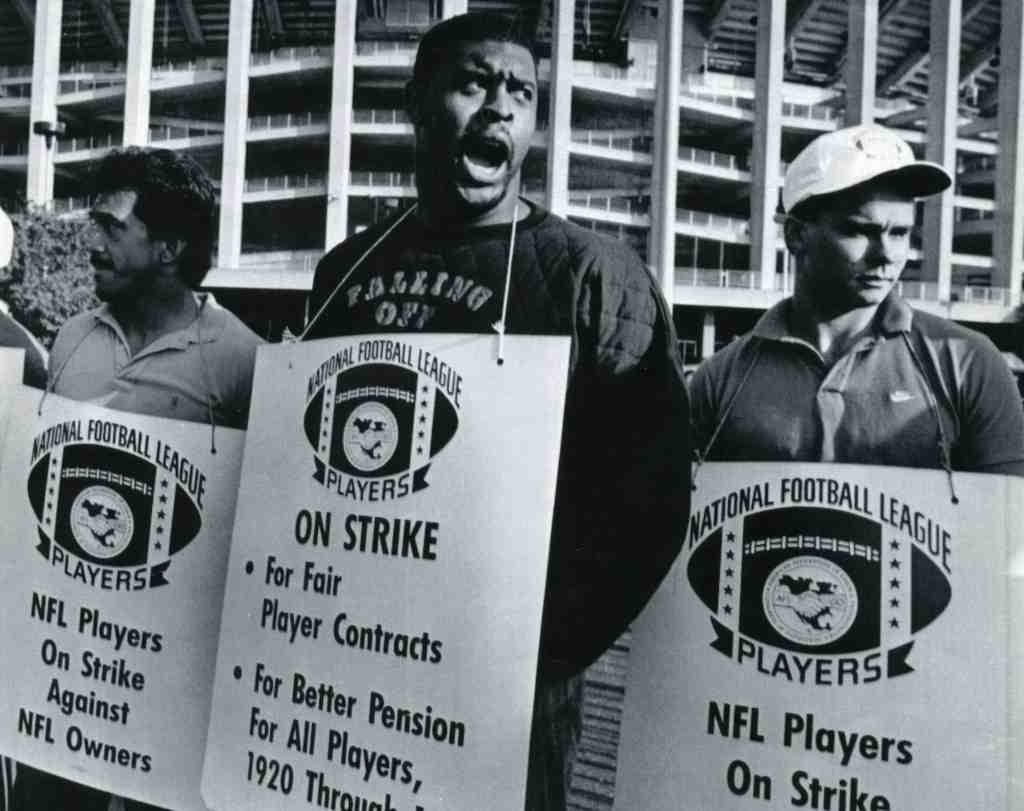
    When Gamble called in the fall of 1987 to see if Fazio was interested in playing for the replacement team amid the NFL player strike, his employers at the racquetball club — Jaworski, Quick, Spagnola, and former Eagle Joe Pisarcik — were not pleased by the prospect. Spagnola, the Eagles’ union rep and starting tight end, took Fazio aside.

    “He goes, ‘You shouldn’t do this. You shouldn’t cross the picket line.’ And I said, ‘It’s an opportunity.’ I said, ‘You have every right to strike; I have every right to try to play.’”

    Fazio promptly was fired from his day job. The general public supported his stint in the NFL about as much.

    “You know that a lot of the unions are upset that there’s these replacement players and … you just kind of knew that things [were] probably gonna get nasty,” he said.

    Growing up just a half hour from Veterans Stadium, the Oct. 4, 1987, game against the Chicago Bears should have been a true homecoming for Fazio. It was the Eagles’ only home game during the strike. But Fazio specifically told his family not to attend, out of concerns for their safety.

    The controversy surrounding the game also necessitated significant logistical planning. The team was well-aware of the many pro-union protests planned to block anyone from entering Veterans Stadium. So the team buses arrived at the stadium at 5 a.m.

    “That was unheard of,” Fazio said. “It was crazy.”

    The game day environment ended up being tense, including for the 4,000 fans who showed up to one of the least-attended NFL games on record. Well before kickoff, unions coordinated the presence of trucks and tractor-trailers surrounding the perimeter of the Vet. Many of the fans who persisted were met by hostility from protesters.

    “They had it very well-planned, and they were just circling the streets,” Fazio said.

    Picketing Eagles Junior Tautalatasi (left), Reggie White, and Brad Booth blocked the entrance to the Vet in 1987.United Press International

    Inside the stadium, Fazio earned his first and only game appearance as an Eagle. He played on the kickoff return team and was even on the field for a few offensive sets. While he didn’t see much time, getting a chance to play was extremely meaningful to him.

    “It’s kind of cool, and I’m thinking, ‘That’s my pride and joy,’” said Fazio, whose NFL whirlwind came to an end just weeks later when the strike was settled.

    As he sought a new career, Fazio bizarrely ended up starring in a sequel to a cult classic low-budget movie less than two years after his football career ended. He’d been working as a bouncer in New York City when a coworker signed up to be an extra in The Toxic Avenger, Part II. Out of curiosity, Fazio joined her. On the first day of filming, Fazio was asked to stay behind.

    “Because I was 6-3, 6-4, 240 [pounds] at the time, they said they wanted to see if I could be the Toxic Avenger second-string guy, and I was like, ‘Oh, sounds great,’” Fazio said.

    Fazio was hired primarily as the stuntman, while John Altamura was set to reprise his role as the lead. But the producers quickly grew tired of Altamura and his attitude toward those on set. So they got rid of him, and Fazio became the replacement Toxic Avenger. He’d never held an acting job and hadn’t acted in school — or ever. The way he got the gig was awfully similar to the way he made it to the NFL.

    “When they came to me, I was like, ‘Oh, thank you. Yes of course I would do this. This is great. I’ll step right in and do whatever you need me to do,’” Fazio said.

    The promotion also came with a significant pay raise, from $50 a day as an extra … to $70.

    “They kind of had [me] by the good ones there … it’s like, ‘If you don’t want to do it, we’ll get someone else,’” Fazio said.

    What nobody knew at the time was that Fazio actually would star in two movies. Once filming wrapped, the producers realized they had overshot significantly. They decided to use the extra footage to create The Toxic Avenger Part III, which was released at the same time.

    Neither film came close to the success of the original. And while they have provided Fazio the opportunity to sign autographs at conventions to this day, he couldn’t land much more acting work.

    Ever since, Fazio has lived a life more removed from the spotlight. After a hospital visit, he was inspired to work in the medical field and has worked as a cardiovascular physician assistant for the past 36 years.

    “You help people, that’s the bottom line,” Fazio said. “That’s what I like about it.”

  • Par Funding’s fraudster founder has a website lobbying for a pardon from President Trump

    Par Funding’s fraudster founder has a website lobbying for a pardon from President Trump

    Joseph LaForte was once the charismatic head of Par Funding, a Philadelphia-based lending firm that collapsed in spectacular fashion as prosecutors said he misled investors to the tune of $400 million and resorted to brutish loan shark tactics to collect on unpaid debts.

    Now, despite the fact that LaForte pleaded guilty to racketeering and wire fraud charges, a website has been set up to lobby President Donald Trump to free him from a 15½-year prison sentence — part of a campaign that describes LaForte’s prosecution as a “witch hunt.”

    “Stand Up for What’s Right, Free Joe LaForte,” says a scrolling banner on the website, FreeJoeLaForte.com. The site’s homepage also prominently features several images of Trump and says the goal is to “fight for [LaForte’s] presidential pardon through activism and exposing the truth.”

    Websites dedicated to overturning convictions are not unusual. But the existence of the LaForte campaign comes as Trump, in his second term, has shown a willingness to grant clemency to political allies or people he believes have been unfairly prosecuted — including those convicted of fraud. And well-connected lobbyists and lawyers have reportedly started charging defendants eye-watering sums for promises of presidential relief.

    LaForte does not have an official clemency application pending with the Office of the Pardon Attorney, according to that agency’s website. But the LaForte website is clear about its intent to lobby Trump for freedom.

    How the campaign came together — and whether LaForte has a role in it — is something of a mystery.

    LaForte’s lawyer in his criminal case, Joseph Corazzo, said he didn’t know of the site until he was contacted by The Inquirer and said he’s had no role in any potential efforts to seek clemency from Trump for LaForte.

    LaForte, meanwhile, is incarcerated at a federal prison in Fort Dix, N.J., and is not scheduled to be released until 2035.

    Unidentified creators

    The LaForte website, FreeJoeLaForte.com, does not say who owns or runs it. And phone messages and emails left through its contact pages in recent weeks went unanswered.

    One of the calls was directed to a number associated with John Sirmans, of Fanwood, N.J. And Sirmans’ name is listed as an author on dozens of PDFs that were published on the LaForte site.

    It is not clear how or if Sirmans and LaForte know each other, and Sirmans did not respond to requests for comment.

    PDFs on the site list another author as “Lisa Mac.” LaForte’s wife, Lisa McElhone, was sentenced to one day in federal custody for her role in the Par Funding scandal, and the Justice Department said LaForte sometimes used the alias “Joe Mack” while working at Par Funding.

    Attempts to reach McElhone — including by visiting Lacquer Lounge, the nail salon she owns in Old City — were unsuccessful.

    Meanwhile, a petition on change.org — which urges people to visit FreeJoeLaForte.com — is even more forceful its views on LaForte’s case, calling his imprisonment “unlawful” and saying he is “an innocent man targeted by a weaponized justice system that bends to partisan agendas.”

    But the creator of the petition, which has 40 verified signatures, is listed only as “Truth Seeker,” and attempts to reach that person through change.org were unsuccessful.

    Extensive coverage

    One of the more prominent sections on LaForte’s website, meanwhile, is a list of more than a dozen news articles written by Milton Allimadi, a New York-based journalist who runs an outlet called Black Star News.

    On LaForte’s site, Allimadi’s stories are labeled as being part of a series “dedicated to exposing the truth and corruption involved in the wrongful persecution of Joseph LaForte.”

    Allimadi said via email that he did now know who started FreeJoeLaForte.com or how the Black Star News articles ended up being highlighted there.

    He said he learned of LaForte’s case after speaking with the father of an inmate housed alongside LaForte. He declined to identify the person.

    Allimadi said he wrote about LaForte for Black Star News because the Par Funding founder’s story had “many interesting angles.” He said he’s never spoken to anyone associated with FreeJoeLaForte.com and was not paid by anyone connected to the site for writing or publishing his articles.

    Still, he said, he didn’t mind having his work promoted by LaForte’s site because that had already led to what he said was a modest but noticeable uptick in traffic and donations to Black Star News.

    “Our site’s major support comes from readers who donate … and some of his supporters who read and like the articles also definitely contributed, because there was a little spike,” Allimadi said.

    Another case that Allimadi covered extensively in recent months led to a sizable legal judgment against him.

    Last month, a jury in Michigan awarded more than $12 million to a doctor who said Allimadi and Black Star News targeted him with a “relentless, vindictive, and malicious online smear campaign” centering on allegations of domestic abuse and sexual assault of his ex-wife.

    Allimadi said his journalism was solid, and he is trying to get the verdict thrown out.

    As for LaForte, Allimadi said his coverage included references to LaForte’s history of criminal convictions, and he said it was “clear from [LaForte’s] background that he’s no saint.”

    But Allimadi said he also explored angles that hadn’t received much attention as Par Funding collapsed, including by raising questions about the conduct of the Securities and Exchange Commission and the court-appointed receiver in the case, which each contributed significantly to LaForte’s downfall.

    “I can see why [LaForte’s supporters] would want to post such articles on their site,” he said.

    Newsroom researcher Ryan W. Briggs contributed to this article.

  • Wilmington’s minor league team recently was acquired by an investment firm. The CEO wants to embrace the community.

    Wilmington’s minor league team recently was acquired by an investment firm. The CEO wants to embrace the community.

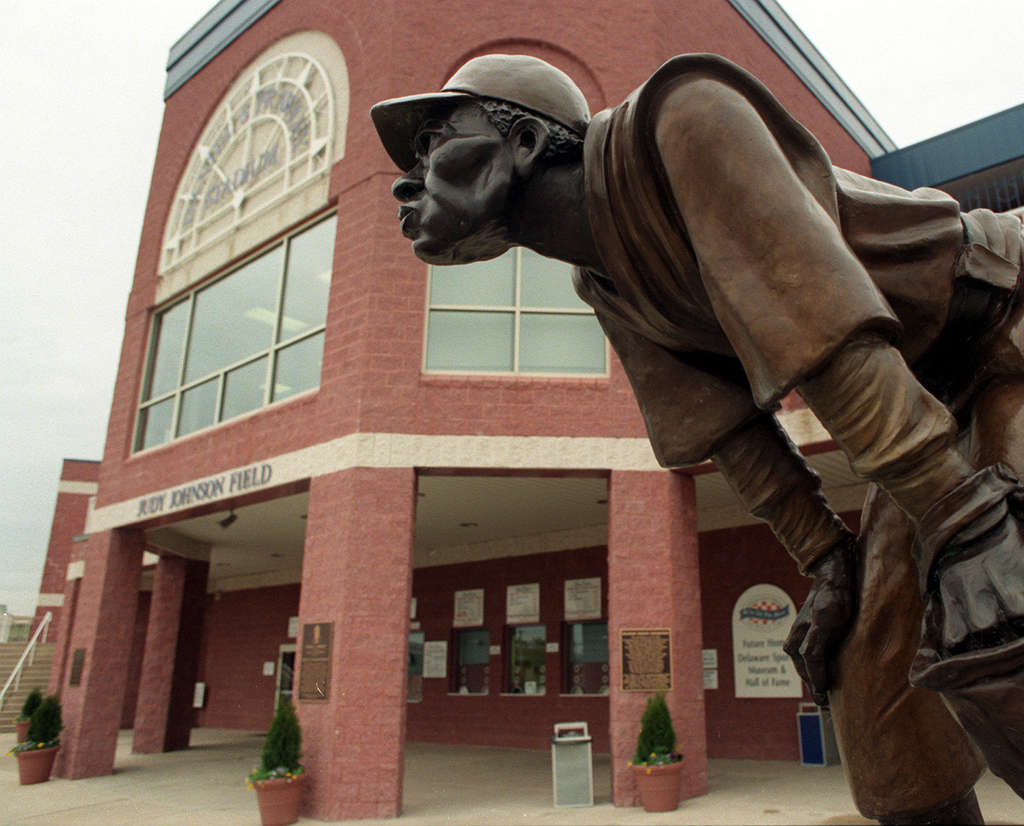
    Private companies buying minor league teams isn’t new. Now, one group’s portfolio includes a team roughly 30 miles southwest of Philadelphia.

    On July 20, sports investment group OnDeck Partners announced its acquisition of the Wilmington Blue Rocks, the high-A affiliate of the Washington Nationals.

    Since it was established in December 2025, ODP has quickly gained ownership of three minor league teams. Backed by billionaire investor Marc Lasry, ODP also owns the Montgomery Biscuits (the double-A affiliate of the Tampa Bay Rays) and the Visalia Rawhide (the single-A affiliate of the Arizona Diamondbacks).

    ODP CEO Mike Carney is ready to hit the ground running and says the group is approaching its third team with a community-forward mindset.

    “For a lot of the minor league owners, it is about legacy. It is about community,” said Carney, who has prior experience working for the Nationals. “There are a lot of factors that go beyond just the financial transaction … you really need to embed with the community in minor league baseball. That’s what we’re about.”

    Lasry, who heads private equity firm Avenue Capital Group, is the former owner of the NBA’s Milwaukee Bucks. ODP is part of the $1 billion Avenue Sports Fund, which aims to mirror companies like Silver Lake Technology Management LLC, which funds Diamond Baseball Holdings, the subsidiary that owns 48 of the 202 affiliated minor league teams across the country — the most of any private group.

    Though the Blue Rocks previously were owned by another small private group, Main Street Baseball, for 11 years, the acquisition by ODP is an example of the intricacies within the business of minor league baseball.

    History of the ‘farm system’

    On May 29, 1922, the Supreme Court ruled that baseball is exempt from antitrust laws in Federal Baseball Club v. National League. The ruling held that “exhibitions of baseball … are purely state affairs” and outside of interstate commerce regulations, exempting the sport from the Sherman Antitrust Act and effectively allowing the league to operate as a legal monopoly.

    That decision paved the way for the farm system used today, in which major league teams own affiliate teams ranging from rookie ball to triple A.

    “The farm system is basically where they’re growing talent,” said George Diemer, a professor at Temple and a sports economist. “Normally the courts would say, ‘Well, that’s against antitrust law. There’s no competition; you can’t do that. But baseball enjoys full immunity, so they can do whatever they want.”

    A Supreme Court case nearly 100 years ago paved the way for the modern farm system in baseball. Here, Andrew Painter pitches during a game in 2025 for triple-A Lehigh Valley.Yong Kim / Staff Photographer

    Now, more than 100 years later, that decision has been called into question multiple times — in 1953, 1972, and, most recently, in 2022, when Sen. Bernie Sanders (I-Vt.) pushed to target baseball’s antitrust exemption. While some regulations have been put in place, Diemer and others believe that the original 1922 ruling likely won’t ever be overturned, allowing American baseball to continue functioning as it does today.

    That system creates a chasm in which players and coaches controlled by a major league franchise are separate from the daily operations of the team and ballpark. Carney insists that with this transition, the Blue Rocks plan to keep the community at the forefront of their vision.

    “How can we get some of the scale and efficiency that large companies can get while still maintaining the strong local tie to the local community?” Carney said. “I think, just candidly, that’s a challenge we still have to solve.”

    The acquisition came with no staff changes to the team and instead focused on building upon what already was in place. Plans to expand offseason programming are a major focus.

    “These ballparks, oftentimes, especially the ones that we look at, are the center of entertainment,” Carney said. “We want the ballpark to be a place for families to be able to come for affordable entertainment as close to year-round as possible.”

    For Carney, the Blue Rocks include a personal connection, too. Formerly the senior vice president of business operations and chief revenue officer of the Nationals, he says buying the Blue Rocks marked a “homecoming” with the Lerner family, which owns the Nationals.

    On the field, Wilmington entered Thursday a half-game behind the Greensboro Grasshoppers in the South Atlantic League North with a 21-16 record. The Blue Rocks on Tuesday celebrated ODP with a ribbon-cutting ceremony and fan fest featuring music, games, and free tickets to the game against the Brooklyn Cyclones, which they lost, 7-1, the first of two straight losses.

    “We only have about seven months officially behind us right now,” Carney said as he reflected on the business so far. “So we know we have a lot more trust to build, but we are up for the challenge, and want to emphasize that the ballpark is here for everyone and has its place aside from the game.”