Two South Jersey towns were victims of cyberattacks last week targeting the water supplies of municipalities across the country.
Officials in Cape May and Woodbine, both in Cape May County, confirmed their water systems were hacked in the early morning hours of Monday, July 27. While both systems were impacted for about 12 hours, officials say water never stopped running and remained safe to consume.
“Water treatment, water supply, and monitoring systems continue to operate safely, and routine testing confirms that the water supply remains safe,” Cape May City Manager Paul Dietrich and Woodbine Mayor William Pikolycky said in a joint statement.
Both said no personal data or customer information was compromised.
In Cape May, hackers changed the IP address of the water department’s computer system, temporarily locking out officials, according to Dietrich. No water pumps were disrupted, and none of their systems were altered.
Cape May’s water system also supplies water to West Cape May, Cape May Point, Lower Township, and the U.S. Coast Guard Training Center.
In Woodbine, about half an hour north of Cape May, the city provides water to about 5,000 people, including campgrounds.
Similar to Cape May, communications were cut off to Woodbine’s water monitoring system, which was reactivated manually a few hours later. Pikolycky said the impact was minimal, similar to what happens during a power outage.
“We don’t have a complicated system,” Pikolycky said. “A couple bad actors interrupted our operation a bit, drove us a little nuts. That’s all.”
No issues in Philadelphia
At least seven states have been targeted in a wave of cyberattacks on water systems in the U.S., according to the FBI, but so far Pennsylvania doesn’t appear to be among them.
The Pennsylvania Department of Environmental Protection said there have been no reported attacks on local water systems in the commonwealth, and offered guidance to operators to help prevent future incidents.
A Philadelphia Water Department spokesperson said the city hasn’t been impacted by cybersecurity threats and “maintains an established cybersecurity program focused on protecting operational integrity and ensuring we are prepared to respond effectively to potential cyber incidents.”
Who is behind the cyberattacks?
A water tower in Plymouth, Minn. Ellen Schmidt
It remains unclear who is targeting local water systems across the country.
Thirty water facilities were targeted by cyberattacks in Minnesota, according to officials, and nine were impacted in Michigan. Similar to what happened in New Jersey, water systems continued to operate, and there were no impacts on public health.
“After remotely accessing internet-facing devices, the actors changed the IP addresses and passwords, resulting in a loss of monitoring and control functionality,” the FBI said in a statement.
Last month, the Cybersecurity and Infrastructure Security Agency — part of the Department of Homeland Security responsible for cybersecurity — released a joint statement with the FBI and CIA linking Iran to a broader range of cyberattacks targeting the same type of hardware hit in Cape May and Woodbine.
“Iranian cyber actors continue to target U.S. critical infrastructure, and the FBI is committed to identifying, disrupting, and imposing costs on those responsible,” Brett Leatherman, assistant director of the FBI’s Cyber Division, said in a statement.
A Florida-based political consultant who once worked as the campaign treasurer for Philadelphia congressional candidate Chris Rabb was charged Friday with wire fraud after she defrauded more than 20 clients out of about $1 million, according to federal prosecutors.
Yolanda Brown was charged in federal court in Philadelphia with one count of wire fraud, according to documents unsealed Friday. She was charged by information, which typically indicates a person intends to plead guilty.
She did not have an attorney listed in court records, and attempts to reach a lawyer who previously represented her were not immediately successful.
Brown had been under scrutiny for months over allegations from campaigns in several states that she had mismanaged, embezzled, or taken unauthorized withdrawals from accounts meant to support political candidates.
And Rabb accused her earlier this year of making unauthorized withdrawals from his campaign accounts, saying he had fired her and reported the allegations to federal authorities.
State Rep. Chris Rabb greets supporters on Tuesday, July 28, 2026.Tom Gralish / Staff Photographer
While Brown worked on Rabb’s campaign in 2025 and early 2026 — identified in court documents only as “Political Campaign #1″ — prosecutors said she set up new bank accounts on which she could serve as a signatory. She then transferred $19,000 into one of those accounts, they said, and went on to steer about $6,000 into her personal bank account without Rabb’s knowledge.
In April, Rabb’s campaign said it identified about $160,000 that had been routed into the account Brown had set up. But it was not clear Friday how much of that may have been embezzled for Brown’s personal use, and it is also not uncommon for prosecutors to formally charge a more limited scope of wrongdoing if a defendant has agreed to plead guilty.
Still, in charging documents, prosecutors said Brown, who ran Brown Financial & Consulting Services Group and worked primarily with Democrats, committed her fraud against Rabb actions as part an “overall scheme” in which she defrauded about 20 clients out of more than $1 million. Prosecutors did not name the other victims, or offer details on how the other cases unfolded.
Brown has been accused of other wrongdoing in recent years.
Earlier this year, Ken Welch, the mayor of St. Petersburg, Fla., said Brown embezzled more than $200,000 from his campaign committee. Another Florida-based political consultant also accused Brown of wiring $25,000 out of PAC’s bank account.
And in 2024, Brown — who also used different surnames, including her married name, Yolanda Rumph — pleaded no contest to felony embezzlement in California, where prosecutors said she stole from two different companies, including a nonprofit. She was ordered to pay $330,000 in restitution but served no jail time.
An attorney for Brown, Khambrel Davis, told The Inquirer earlier this year that one of Brown’s employees — not Brown — had actually committed the most recent fraud in Philadelphia and Florida.
But the employee had since disappeared, Davis said, and “everyone’s just assuming [Brown] must have done this. They’re kind of putting together this narrative that she’s just this habitual thief.”
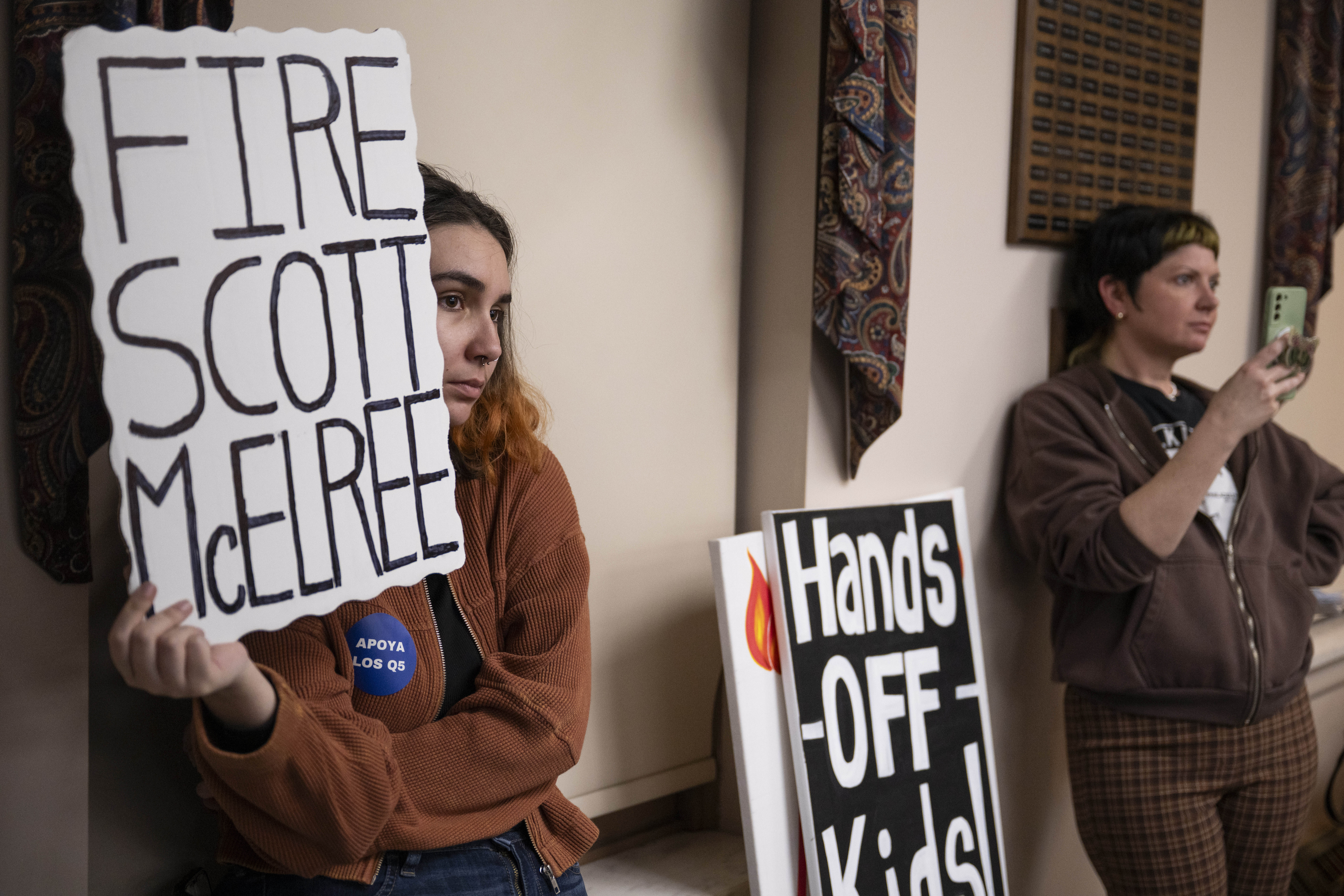
A leader of the Bucks County NAACP and a state legislator on Friday called for reforms in the Quakertown Borough Police Department, saying an investigation that cleared Police Chief Scott McElree of criminal wrongdoing for placing a teenage protester in a choke hold during a confrontation with students earlier this year should not end scrutiny of the incident.
NAACP president Adrienne King joined State Rep. Napoleon Nelson in urging Quakertown police to adopt stronger use-of-force policies to prevent a similar response in the future. Nelson, a Montgomery County Democrat, also said he plans to introduce legislation establishing statewide restrictions on choke holds and expanding the use of body-worn cameras, among other aims.
The calls for change came a week after the Bucks County District Attorney’s Office concluded its almost six-month independent investigation into a Feb. 20 brawl that broke out as students protested ICE enforcement. The investigation concluded that while McElree was the “precipitating factor” in the violence — and confirmed that he held a 15-year-old girl in a choke hold for at least eight seconds — he neither committed a crime nor violated his department’s policies.
In a 20-page report, investigators noted that Quakertown police have no policy restricting choke holds or other neck restraints and that Pennsylvania law likewise places no limits on their use. But investigators said McElree’s decision to engage with the students was “calamitous” and “led to confusion and trauma for an entire community.”
A panel of four members of the Police Chiefs’ Association of Bucks County had previously concluded that McElree had acted reasonably during the incident. On Friday, the group issued a statement saying it disagreed with investigators’ characterization of McElree’s actions as “calamitous.”
Investigators also concluded that several students continued assaulting McElree after it became apparent he was a police officer. McElree, who was 72 at the time, suffered what investigators described as “extensive and serious bodily injury,” including fractured ribs, multiple cuts, and a concussion.
On Friday, King and Nelson said Quakertown’s lack of policies governing choke holds underscored the need for reform, regardless of the district attorney’s conclusion that McElree had not acted criminally. “No criminal charges,” King said, “cannot mean no accountability.”
After George Floyd’s death at the hands of Minneapolis police in 2020, then-Bucks County District Attorney Matt Weintraub announced that all 39 law enforcement agencies in the county had committed to adopting use-of-force policies that met nationally recognized best-practice standards, including restrictions on choke holds.
But by the start of this year, King said, 13 agencies — including Quakertown’s police department — had yet to update their policies.
In a statement Friday, borough attorney Peter Nelson said the NAACP’s characterization of Quakertown’s policies was incorrect, saying that the department had adopted the proposed standards before Weintraub announced the countywide initiative. He said borough officials had reached out to the NAACP “to discuss their misunderstanding of our policies.”
Separately, the district attorney’s office said Friday that Quakertown’s police department does not currently have updated policies in place and that District Attorney Joseph Khan is urging the borough to adopt them.
Khan considers the adoption of the standards by all law enforcement agencies in the county“a matter of unfinished business” that he “is committed to helping complete,” spokesperson Manuel Gamiz said.
McElree, who also serves as the borough’s manager, did not return a phone call seeking comment Friday.
Nelson, the state representative, said the legislation he plans to introduce would include “commonsense measures to help ensure what happened” in Quakertown does not “continue to go unanswered.”
Meanwhile, the Peace Center of Bucks County plans to host four “listening circles” in Quakertown, where residents will be invited to discuss how the conflict affected their lives.
Barbara Simmons, the organization’s executive director, called the gatherings an “opportunity to cultivate empathy” in a community that has remained deeply divided since the confrontation.
The sessions are expected to begin next week, with dates, times, and locations to be posted on the center’s website.
Jesús Bueno prefers to answer interview questions in his first language of Spanish.
Still, when it came to what he believed should have been a penalty kick for the Union in the 89th minute of their 1-0 Leagues Cup loss to Liga MX’s Cruz Azul on Thursday, the Venezuelan midfielder was comfortable dipping into his English vocabulary.
“Clearly [a] penalty,” Bueno said after the match. “Disgusting situation.”
The situation Bueno references seemed simple. As the Union pressed for an equalizer late Thursday night, Milan Iloski received a ball from Frankie Westfield inside the 18-yard box and tried to center it for a teammate.
Iloski’s back-heeled cross contacted the wrist and lower forearm of Cruz Azul’s Gonzalo Piovi. Play stopped as the ball trickled out of bounds, but as the Union shouted for a handball, referee Juan Gabriel Calderon Pérez awarded a corner instead.
Brothers Quinn and Cavan Sullivan both stayed mum on the non-penalty post game, but interim head coach Ryan Richter’s summation of the incident was even more straightforward than Bueno’s.
Did the interim manager think it was a penalty?
“Yes,” Richter said.
Simple enough.
Richter’s side wouldn’t get the benefit of a golden opportunity to equalize. If the Union had converted from the spot, where they are 3-for-4 this season, it would have sent the game to a penalty shootout to decide the winner thanks to the tournament’s “no ties” format.
Taking the match to a shootout would have secured the Union at least one point in Phase 1 of the Leagues Cup, potentially two had they won in penalties.
Instead, the Union walked away without any points for a regulation loss, likely quashing their run in the Leagues Cup before the club’s second game. They’ll get back to work quickly as Necaxa, complete with former Union striker Julian Carranza, comes to Subaru Park on Sunday (7:30 p.m., Apple TV, UniMas).
The Leagues Cup, which features 18 Liga MX teams and 18 qualified teams from MLS, adopted its current format in 2025. After each team plays three Liga MX vs. MLS matchups in Phase 1, the top four teams from each league’s standings advance to a knockout bracket.
The Union can earn a maximum of six points from their next two Leagues Cup matches, starting with Necaxa on Sunday. But even if the Union were to win out, it would not ensure that they advance.
“We obviously know the two games coming up are big,” Cavan Sullivan said. “At the end of the day, it still might not be enough. That’s just the reality of the Leagues Cup. But the Philly mentality is to go out and win no matter what, so that’s what we’re going to do.”
In 2025, none of the MLS teams with losses in Phase 1 earned enough points to qualify for the knockout rounds.
Ahead of Thursday’s match, Richter said he planned to approach the tournament with his first team until “it’s not possible.”
Union interim head coach Ryan Richter shakes hands with Cruz Azul head coach Joel Huiqui before the Leagues Cup match at Subaru Park on Thursday.Isaiah Vazquez / For The Inquirer
Then perhaps having their first match come against Cruz Azul, the tournament’s No. 4 seed and the third-ranked team in the Concacaf Club Ranking Index, was a blessing for the Union.
The club is not mathematically eliminated from the Cup, but it has slim odds of advancing to the knockout rounds. The remaining Leagues Cup fixtures could be an opportunity for Richter to rotate his squad before the club returns to MLS play, especially considering the Leagues Cup allows for an expanded 30-man roster.
“We have to be smart,” Richter said. “If we look at it, and it doesn’t look possible to advance to the next round, then we have to play these games the way we do, try to win and approach them with the right energy and keep building on the positive momentum that we had from the first three league games.
“We don’t want to lose that base. That’s really important for us, that we don’t just use these two games and throw them to the side … But we also have to be realistic. We have a very busy stretch coming up in the season. We have to make sure that we’re not setting ourselves back by the way we approach these next two games.”
Union midfielder Cavan Sullivan (6) controls the ball against Cruz Azul at Subaru Park on Thursday.Isaiah Vazquez / For The Inquirer
Sullivan shines
Despite his age, 16-year old Cavan Sullivan looked at times like the best player on a pitch full of professionals during Thursday’s match.
Sullivan completed 22 of his 32 passes and was credited with two chance creations by soccer stats platform FotMob.
He also took two shots, the better of which came in the 59th minute. Iloski played Sullivan through on goal in the left side of the penalty area, but Sullivan’s left-footed, driven shot veered wide of the right post.
Aside than the unawarded penalty, it was the Union’s best scoring chance of the evening.
“I want to take responsibility,” Sullivan said. “I think there were two that I missed. I’m not happy about that. They need to be put to bed … In the Leagues Cup, every chance matters. It could affect us in the future. That one, those ones are going to keep me up at night. Can’t dwell on it. I’ve got to move on.”
Sullivan and the rest of the Union will need to shed Thursday’s loss quickly. Necaxa will come to Subaru Park on Sunday fresh off a 2-0 loss to Chicago Fire FC in its first Leagues Cup match.
“I think we’ll have to rotate guys,” Sullivan said. “It’s been tough on the bodies. You know that these teams are going to come in strong, and come in with some away fans. The dark arts, they’re going to try and get in your head, little fouls. Just got to deal with it and, of course, try and get those three points.”
Betty J. Wilson, 92, of Cherry Hill, celebrated longtime South Jersey teacher, singer, poet, mentor, community advocate, volunteer, and two-time chapter president of Alpha Kappa Alpha Sorority Inc., died Thursday, July 16, of cancer at her home.
Mrs. Wilson taught elementary school students in Bordentown, Bridgeton, and Mount Laurel from the early 1960s to the late 1990s, and served as two-time president of the Mount Laurel Teachers Association. She was named one of the country’s top teachers in 1972 by the old Outstanding Teachers of America Association and told the Courier-Post: “Children are our most valuable asset. If we don’t give them the proper training early, there’s not much chance for the future.”
Her family called her “dynamic and outgoing” in a tribute, and her daughter, Saundra Umstead-Capers, said: “She was a born leader and had a commanding presence.”
Mrs. Wilson championed discipline and parental participation in school and at home, and told the Courier-Post: “Most of our children are allowed to talk first and ask too many questions before complete directions are given. … If the child is used to directives, he won’t resent authority. And in life, we all have to take directions from someone else no matter who we are.”
She represented Mount Laurel teachers during sometimes contentious contract negotiations with Board of Education officials and helped improve teacher benefits and job protection through the New Jersey Education Association.
She joined Alpha Kappa Alpha in 1953 at what is now Virginia State University. Later, she cofounded local AKA chapters in Cherry Hill and Voorhees, served as two-time president of the Theta Pi Omega chapter in Cherry Hill, and was recognized by national AKA officials for her contributions.
Friends called Mrs. Wilson “a phenomenal woman” and “a beautiful, smart, professional woman” in online tributes.Courtesy of the family
The theme of her sorority presidency was service, scholarship, and Black American heritage, and she helped establish social service, public speaking, and scholarship programs. “Her presence,” sorority colleagues said in an online tribute, “will be profoundly missed.”
As a singer, Mrs. Wilson had a soaring soprano voice, and she took lessons in high school and college. She performed on a local TV station in Western Pennsylvania when she was young and sang with a traveling choir in college and for the school president.
She also wrote poetry for years and acknowledged the one-year anniversary of the 1999 death of her husband, Wilbur Wilson, by writing in 2000: “Your legacy stays with us and shall always light the way/We thank God for your presence and your sharing every day.”
She lobbied locally for the Civil Rights Act and the Voting Rights Act in the 1960s, and volunteered with the Rancocas Valley chapter of the Links and the South Jersey chapter of the Continental Societies. She served on the education committee at Evergreen Baptist Church in Palmyra and tutored the children of many church members.
In online tributes, friends called her “a phenomenal woman” and “a beautiful, smart, professional woman.” One friend said: “She impacted so many lives, especially the students she taught.”
Betty Jane Atkins was born April 6, 1934, in Library, Pa., about 12 miles south of Pittsburgh. The oldest of nine children, she was an honor student and the lead singer in every musical during her years at the old Snowden Township High School.
She attended Mt. Zion Baptist Church in Library, earned scholarships to attend college, and graduated with a bachelor’s degree in education at Virginia State.
Stylish and sophisticated, Mrs. Wilson was a popular figure on the college campus. She was selected by the football team to represent it on their homecoming float in 1953, and she served as the school’s Miss Valentine in February, Miss Apple Blossom in the spring, and Miss ROTC.
She was an engaging storyteller and, her daughter said, “a lot of fun.”
“Sister Wilson embodied the ideals of an Alpha Kappa Alpha woman,” sorority colleagues said, “elegant, poised, and gracious.”
In addition to her daughter, Mrs. Wilson is survived by a granddaughter, three sisters, a brother, and other relatives. Two sisters and two brothers died earlier.
Visitation with the family is to be from 6 to 8 p.m. Friday, Aug. 7, at Boyd Funeral Home, 1458 Mt. Ephraim Ave., Camden, N.J. 08104. Services are to be at 11 a.m. Saturday, Aug. 8, at Evergreen Baptist Church, 602 W. 3rd St., Palmyra, N.J. 08065.
Donations in her name may be made to Evergreen Baptist Church, 602 W. 3rd St., Palmyra, N.J. 08065.
The company also has named new directors with long retail and digital experience, replacing those who oversaw the company under billionaire media investor John Malone.
With over 1,000 employees at its broadcasting campus, once one of Chester County’s top tourism draws, QVC has struggled with the decline of television and the fragmentation of digital media.
George said in a statement that he is excited to reconnect with company veterans and to work with the new board. He promised “innovative shopping experiences” and better investor returns during the search for his permanent replacement.
Having cut its crushing debt load in its bankruptcy reorganization, QVC still faces the challenge of adding young shoppers at a time when retailing has spread across social media platforms, streaming apps, and global e-commerce sites.
QVC said it has emerged from Chapter 11 after cutting its debt load by over $5 billion and gaining access to $600 million in new credit.
The stock will re-list on Nasdaq under trading symbol QVCG, replacing pre-bankruptcy shares that traded below $1 just before the bankruptcy.
David Rawlinson was CEO of the QVC companies from 2021 to 2026 as the West Chester remote-shopping group struggled with shoppers’ migration to social media, logistics challenges, and financial stress.Qurate Retail Inc.
The company filed for bankruptcy protection in April after years of losses and cost cuts. Those included the shutdown of rival-turned-affiliate HSN’s Florida campus last year. The companies had merged in 2017.
The new financing is provided by hedge funds specializing in corporate turnarounds, led by Connecticut-based Strategic Value Partners LLC, whose past focus includes natural gas and building materials companies and the 2022 relaunch of airline Aeromexico and Los Angeles-based Oaktree Capital, a unit of Canada-based Brookfield Corp.
Pennsylvania’s school pension fund, PSERS, is an investor in Oaktree. The New Jersey Division of Investment, which manages state, school, and local-government worker pension funds, is an investor in Strategic Value Partners.
In a parting statement, Rawlinson praised “the resilience, commitment and execution our teams have demonstrated,” along with customers and investors. He noted QVC was “a TikTok Shop Seller of the Year for 2025″ and has been growing its streaming-media business rapidly. He added that it’s the “right time” for him to move on, and “I can think of no one better qualified” than George to take over.
George departed after initiatives including his acquisition of Seattle online-shopping network Zulily failed to generate profits. Rawlinson shut the division in 2023.
A fatal fire at QVC’s main warehouse in North Carolina during the 2021 Christmas season worsened COVID-era shipping delays early in Rawlinson’s tenure, making it tougher to pay down debt and endure the costs of new programs.
George is a past chairman of the National Retail Federation, currently chairs the National Constitution Center in Philadelphia, and is a board member at AutoZone and Ralph Lauren. He was an executive at Dell Computer and McKinsey & Co. before joining QVC, and will chair the new board.
Gone from that board are longtime allies of media billionaire John Malone, who invested in QVC in the 1990s, bought control of the company from Comcast in 2003, and had served as chairman. He left the board last year. His son Evan, a Philadelphia entrepreneur, and other longtime QVC board members have been replaced.
Besides George, the new QVC board members are:
David Charles Boone, CEO of Michaels stores
Nicolas Le Bourgeois, a former Amazon and TikTok Shop executive
Jason Lee Horowitz, ex-head of marketing at Mattel
Inside a shipping container on a lot beside SEPTA’s Carpenter train station in Mount Airy, thousands of old tools sit waiting, ready for a new life as part of the new Northwest Tool Library.
Set to open on Sunday, the tool library will lend hand tools, power tools, ladders, and various other gadgets to members in an effort to make home maintenance more accessible.
“We don’t all need to have leaf blowers,” said Jo Winter, executive director of West Mount Airy Neighbors (WMAN), the nonprofit civic group sponsoring the initiative. “If some of us have them in our shared space, it can be another effort to speak to the ethos of our community.”
The idea for the project sparked a few years ago when a Mount Airy resident died and his wife donated his tools to WMAN, Winter said. The neighborhood organization runs EcoLab, a community project revitalizing green space in a once-neglected lot behind a nearby Regional Rail station, and stored the tools in a shipping container on the lot for tree tending.
Mount Airy residents have long traded tools through the Facebook group Mount Airy Tool Exchange, especially as downsizing neighbors wanted to get rid of equipment they no longer had room for. But interest grew in having a designated tool library, as locals looked to the West Philly Tool Library as an example.
Ash Fritzsche was one of those interested residents. As an electrician, she has taught classes at the West Philly Tool Library, but when she moved to Mount Airy, it became too far to frequent. So she got involved in bringing one northwest.
Ultimately, WMAN realized theshipping container, which already housed landscaping tools, could also be used for “this other project everybody’s been talking about,” Fritzsche said.
As a sponsor, WMAN provides organizational support for the library, while volunteers run the day-to-day operations.
“It ticks all the boxes of something that would work in our community,” Winter said. “It’s mutual aid; it’s green; it’s this idea of sharing what you have, not throwing it into the trash.”
Organizers ran tool drives to collect donations, and now the library has thousands of tools in its still-growing inventory. Once the tool library opens, volunteers will run two shifts a week on Wednesdays and Sundays when members can stop by and borrow tools.
To join, members must pay an annual fee based on a sliding scale, so individuals contribute what they can afford. Fritzsche recommends removing three zeros from one’s annual income: If you make $50,000, pay $50 a year to support the library.
The organizers dream bigger than a shipping container — which they have already maxed out with the size of their stock. They hope to move into a brick-and-mortar location and offer programming, such as home improvement and life skills classes.
For example, Fritzsche believes everyone should know how to change a tire, change the oil, and know the basics of their plumbing and electrical systems, so they are empowered to be self-sufficient when something goes wrong.
“Life is so cyber right now,” Fritzsche said. “I’m interested in any sort of simple crafts that can be taught so that people can engage with the real world.”
No one should have to spend even a single day behind bars for a crime they did not commit. But in his zeal to right legal wrongs, District Attorney Larry Krasner lost the plot.
Since first getting elected in November 2017, Krasner, a former defense and civil rights attorney, has pushed for scores of exonerations for people convicted mainly of murder. But, it turns out, most are not exonerations in which the convict’s innocence is proven through incontrovertible evidence, such as DNA.
Instead, the DA’s office often sides with defense attorneys who claim some sort of procedural error, such as withheld evidence or inadequate defense counsel. In most of thesecases, there isn’ta court hearing in which the new findings get presented, and witnesses testify under oath. Instead, the prosecutors offer what is known as a concession, which often results in dropping the charges and letting the person go free.
But state and federal courts are starting to challenge Krasner’s tactics.
In June, the state Supreme Court rebuked the DA’s handling of a case in which it was seeking to vacate a 2004 murder conviction of Laver Brown, who was convicted of second-degree murder and robbery following the shooting death of Michael Richardson, a Rite Aid worker at a North Philadelphia store.
In July, former Assistant District Attorney Jaclyn Mason testified in federal court that Krasner’s office did not investigate the appeal of another convicted murderer and instead relied on the claims of his defense attorneys — and then encouraged her to lie about the lack of independent verification. Instead of going along with the scheme, Masonsaid, she quit.
That hearing before U.S. District Judge Paul S. Diamond was continued to Aug. 27, where more damning testimony may come.
The state Supreme Court has already seen enough. The court ordered the state attorney general to be allowed to review future cases in which Krasner’s office is seeking to overturn a conviction.
“What we have seen in this case and too many others is the opposite of justice,” Justice Kevin Dougherty wrote in the scathing 109-page opinion.
The high court found Krasner’s office misled the courts and submitted false statements when asking a lower-court judge to vacate Brown’s life sentence.
In June, the state Supreme Court ordered Pennsylvania’s attorney general to be allowed to review future cases in which Krasner’s office is seeking to overturn a conviction.
After his conviction, Brown’s attorneys said some earlier witness statements were not provided to his trial lawyer, which violated his right to a fair trial. Krasner’s office agreed and argued thatthe case file revealed a “pattern of prosecutorial misconduct” and requested Brown receive a new trial.
But lawyers for the families of Richardson and a second man Brown was convicted of killing in a separate incident asked the state Supreme Court to intervene.
Lawyers for the victims’ families argued that Krasner had a conflict of interest because two of his former law partners had been involved in Brown’s case.
The high court ordered a hearing that shed a harsh light on the conduct of Krasner’s prosecutors.
“We find the [district attorney’s office] … violated its duty of candor to the [Post Conviction Relief Act] court, withheld material evidence from the court, opposed efforts by [the victims’ families] to gain access to this evidence, submitted a false stipulation of fact, misstated facts in its pleadings, failed to conduct a reasonable investigation, and opposed a required evidentiary hearing,” Dougherty wrote.
Whoa. What the heck is going on?
The Supreme Court also found the prosecutors filed a joint document with Brown’s attorneys that “was false in multiple respects.”
The court rejected claims by the DA’s office that it conducted a thorough review of the record in the case. Instead, the court said prosecutors “cut corners” and failed to interview a single witness or any of the original investigators involved in the case.
The DA’s handling of Brown’s case is troubling enough. But it turns out this was not a one-off blunder. The Supreme Court found the case fit a disturbing pattern.
“There have been numerous instances of untrustworthy concessions, lack of candor, misrepresentations of fact, lack of adequate investigation, and avoidance of hearings,” the opinion said.
The Supreme Court went on to highlight problems with the DA’s handling of 10 additional cases, and said there may be many more.
One case involved efforts by Krasner’s office to overturn the death sentence of Robert Wharton, who was convicted in the 1984 strangulation and drowning deaths of a couple in their East Mount Airy home, leaving their then-7-month-old child alone. She survived.
The case eventually ended up before a three-judge panel of the U.S. Court of Appeals for the Third Circuit. In a unanimous decision, the panel found that Krasner’s office misled the court and “slant[ed] the facts” surrounding Wharton’s case before a lower federal court in 2019 in an attempt to vacate the death penaltyand instead let Wharton remain in prison for life.
Again, with the lack of candor.
U.S. District Judge Mitchell S. Goldberg denied the request and imposed penalties that required Krasner to write a letter of apology to the family of Wharton’s victims, which the appellate panel found were both “mild and fitting.”
“Courts rely on lawyers’ honesty; lawyers may not mislead them,” Circuit Judge Stefanos Bibas wrote in the panel’s March 2024 opinion. “But the Philadelphia District Attorney’s Office did just that.”
Back to the state Supreme Court.
After highlighting problems with the Brown case and 10 others, the court wrote, “These cases, and the present one, likely represent only a fraction of the [district attorney’s] problematic concessions since January of 2018.”
The court said many of the DA’s concessions did not include hearings in which sworn testimony from both sides is presented, which the court wrote “is generally the best means to expose problems and ensure a reliable and just outcome.”
For his part, Krasner was unrepentant. He issued a video statement following the Supreme Court opinion that leaned on his electoral victories to claim the ruling “undermines the value of a vote in Philadelphia as compared to every other county.”
District Attorney Larry Krasner (left) and G. Lamar Stewart, head of the community engagement and government affairs division, at Independence National Historical Park in February.Tom Gralish / Staff Photographer
Krasner added that social justice efforts like his often face a familiar pattern of resistance: “First they ignore you — we’re past it. Then they laugh at you — we’re past that. Then they fight you — and we have been fighting for 8½ years.”
The district attorney’s website trumpets 59 “exonerations” by the Conviction Integrity Unit created by Krasner. But the National Registry of Exonerations said the total number of exonerations by the DA’s office during Krasner’s tenure is 75 — an extraordinary number given that reversing a conviction faces a high bar and often takes years.
Nearly all of those set free have been Black men, underscoring how the legal system is often stacked against people of color. At the same time, no new charges have been brought in those cases, leaving killers and other wrongdoers walking the streets.
There is no denying systemic racism exists across our legal system, including in Philadelphia. I witnessed abuses and failures of cops, prosecutors, lousy defense attorneys, eyewitness misidentifications, and forced confessions up close as a reporter covering the courts years ago for the Wall Street Journal.
I wrote a story about a Latino man who was convicted of murder in the Bronx, N.Y., despite having a solid alibi: On the night of the murder, he was in prison in the Dominican Republic.
That’s all to say wrongful convictions happen, and sending someone to prison for a crime they didn’t commit — or worse, putting them to death — is the most heinous abuse of the legal system imaginable.
That’s why I welcomed Krasner’s efforts to review cases in which misconduct or errors may have occurred.
But the sloppy work by Krasner’s office has undermined his theory of the case. Sadly, those who have been truly wrongfully convicted will be the ones to suffer because judges will no longer trust the DA’s office.
When judges in state and federal courts and former prosecutors in Krasner’s own office are citing similar patterns of corner-cutting and lying, there is a serious problem.
Krasner built his career on demanding accountability from the system. He owes Philadelphians no less from his own office.
A New York City-based commercial real estate lender has asked a federal judge to force a sale of the Bourse building on Independence Mall after work ground to a halt on a hotel development amid the dissolution of a partnership between real estate magnate Dean Adler and Keystone Development + Investment.
As the two former partners fought a battle for control of the Bourse in Delaware Chancery Court, the property has racked up millions in liens and missed at least one mortgage payment.
The lender, KKR Real Estate Finance Trust, says it is owed more than $24 million in the latest turn in the legal drama surrounding the 131-year-old Beaux Arts building.
The loan also funded the purchase of 400 Market St., which was developed as planned.
The loan agreement required Adler’s development team to show that the hotel project was near completion by the end of May 2026. But earlier this year, the Bourse’s development team “abandoned its plans to redevelop a portion of the Bourse property into a hotel and ceased work on the hotel conversion,” the complaint says.
Adler had decided to scrap the hotel and event space plan and his partnership with Keystone, the Philadelphia Business Journal reported in April. Instead, Adler said he plannedto go into business with PMC Property Group, Philadelphia’s largest apartment owner, to convert the Bourse into a multifamily property.
Keystone filed a breach of contract suit and accused Adler of failure to provide promised funding for the project. Adler, in turn, accused Keystone of unauthorized spending and “gross negligence.”
The two are fighting in Delaware Chancery Court for control of the property and its future. In a March ruling, reported by Law360, a judge ruled against Adler’s attempt to oust Keystone.
The legal conflict between the two former partners has put KKR Real Estate Finance Trust’s investment at risk. By abandoning the plan and stopping construction, the suit says, the Bourse’s development team defaulted on the mortgage with more than $24 million of the principal outstanding.
The Bourse’s owners also racked up more than $2 million in liens filed by at least five contractors for failure to pay for their work and failed to make a mortgage payment starting in June.
KKR Real Estate Finance Trust is asking a federal judge to issue a judgment of $24.2 million plus interest and fees and to order a public auction of the Bourse building to pay back the debt.
Keystone declined to comment on an active lawsuit, but a spokesperson said the firm remains “confident” that it will prevail in the litigation against Adler in Delaware Chancery Court.
For his part, Adler said that he believes the legal cases with Keystone will soon be concluded and that KKR will follow.
“I believe we are near resolution on the Bourse lawsuit with Keystone,” he said. “And then we will resolve KKR’s potential foreclosure and be ready to revitalize the Bourse like we did at 400 Market.”
The former development partners purchased the nearby office building at 400 Market in the same deal as the Bourse and successfully converted it into apartments. KKR Real Estate Finance Trust made clear that building is not included in the lawsuit.
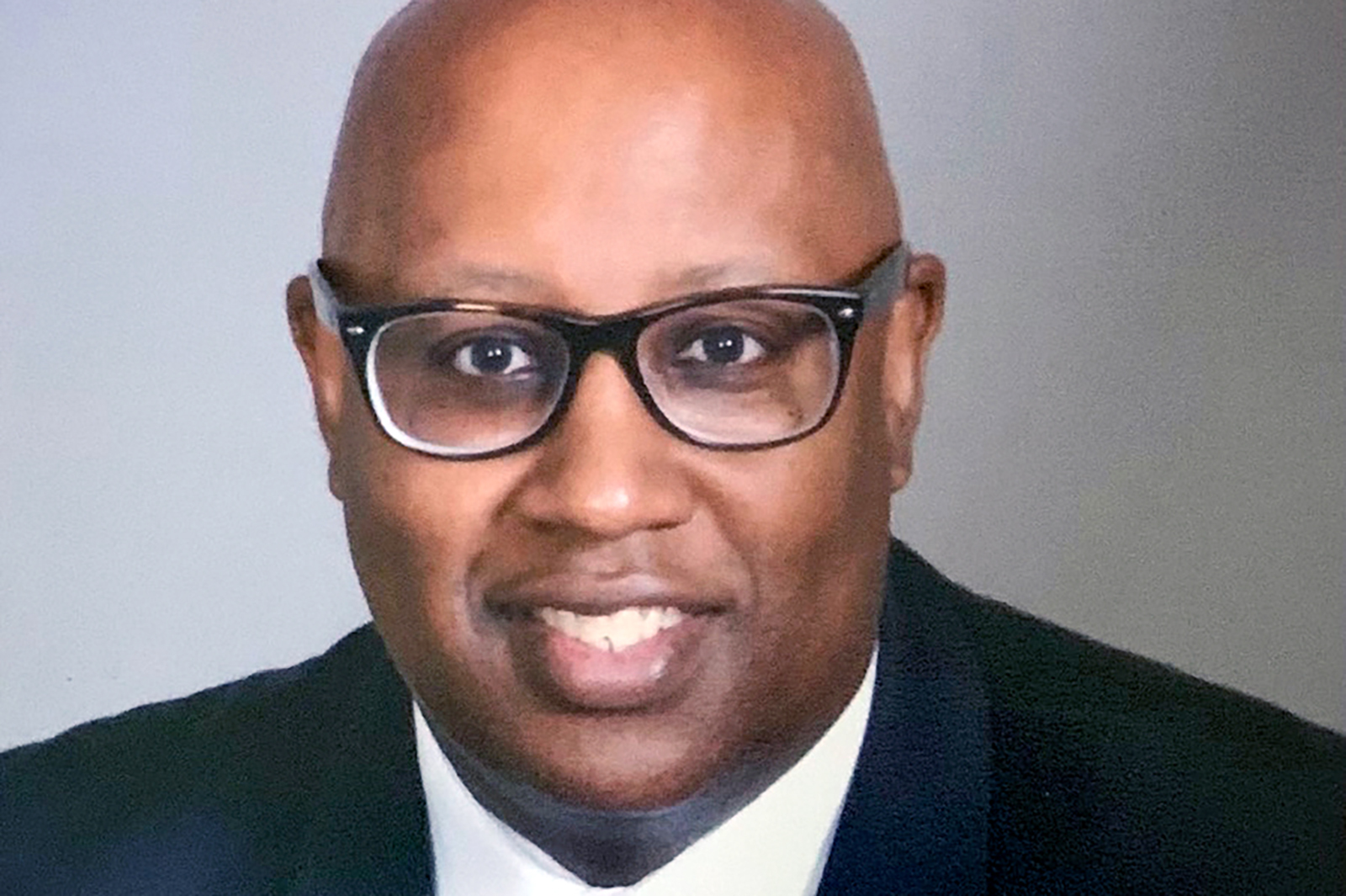
“This year has tested our community in ways none of us anticipated,” Scriven said in a resignation letter released by the district. “I have come to believe that the district is best served by a fresh start under new leadership, and that stepping aside now is the right and necessary step to allow Cheltenham to move forward.”
The resignation is effective immediately.
“The board has accepted Dr. Scriven’s resignation, and we thank him for his dedicated service to Cheltenham public schools,” school board president Leah Mulhearn said in a statement. She said Cheltenham’s director of business services, Joshua Sweigard, would serve as acting superintendent, pending a vote by the board at its next meeting Tuesday.
After canceling last year’s football season in October amid hazing allegations, the Montgomery County district announced in January that an investigation it commissioned had concluded that a “student-on-student” assault occurred on Sept. 3, witnessed by nearly 20 students.
The district failed to uncover that an earlier assault had occurred in August, Montgomery County prosecutors said. A grand jury report characterized the district’s investigation as flawed from the beginning, saying employees were dismissive when the 15-year-old victim’s mother reported on Sept. 7 that he’d been assaulted, and had wrongly taken the team’s head coach, Terence Tolbert, at his word that he didn’t instruct the boy not to tell his parents.
The employees included Tolbert. who was among the coaches charged with endangering the welfare of a child and conspiracy, “in every step” of their investigation, according to the report.
Scriven responded in a statement last week, saying that Tolbert wasn’t involved in planning the investigation. The superintendent said that “every report brought to the district’s attention was addressed based on the information available at the time.”
He didn’t respond to a number of questions about other failures alleged by the grand jury, including that employees were confused about mandatory reporting requirements, and that five football coaches lacked state-required clearances for completing training on reporting child abuse.
Football parents have also expressed frustration with the district’s response to the assaults, which also led to the cancellation of the upcoming season. Some told the Inquirer this week they urged Cheltenham not to hire Tolbert due to alleged bullying during his tenure as Abington’s coach.
In May, the school board had expressed its support for Scriven, sending a community message that acknowledged “concerns around safety and student conduct” that had challenged the district.
“Five years ago, the board invested in Dr. Scriven and his vision for the district. We continue to support him and his vision. He is a strong strategic thinker,” the board said in the May statement.
“Serving this district has been one of the greatest privileges of my life,” Scriven said in his resignation letter Thursday. He said he was “deeply proud of the work we accomplished together, and I remain hopeful for Cheltenham’s continued success.”
Editor’s note: This story has been updated to correct the year that Brian Scriven graduated from Cheltenham High School. He graduated in 1983.