Tag: topic-link-auto

  • Derek Hill delivers walk-off hit to lift Phillies past Blue Jays in extra innings

    Derek Hill delivers walk-off hit to lift Phillies past Blue Jays in extra innings

    It was a day for the old-timers, more than 60, from all eras in Phillies history. They stood along the third-base line, heard their names called, and waved to the crowd, a nod to bygone glory.

    Then, for the next 3½ hours, the Phillies applied their modern touches.

    There were Schwarbombs (two, actually), dominance from one of the Three Aces, and yes, because these are the 2026 Phillies, a melt-like-ice-cream eighth inning in which a reliever vaporized a three-run lead.

    And then they won anyway, in spite of themselves.

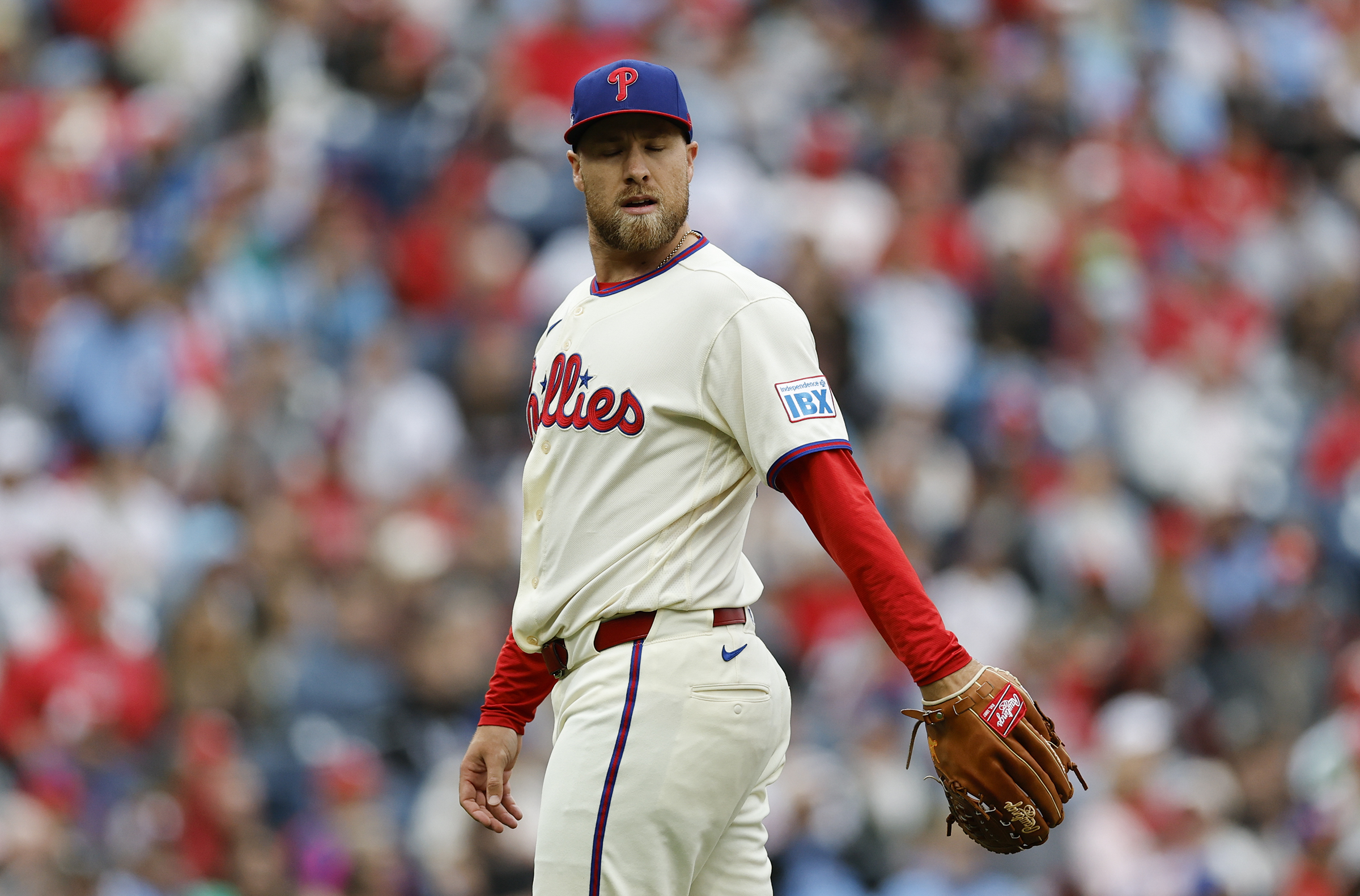
    Let the record show that the Phillies capped a sultry Sunday with two runs in the 12th inning of a sweep-averting 7-6 victory over the Blue Jays. Bryson Stott punched a game-tying single through the right side before Derek Hill drove in J.T. Realmuto with a bases-loaded single under diving shortstop Andrés Giménez.

    “I think you just look at the box score, you take the win, and you move on,” said Jesús Luzardo, who piled up 12 strikeouts in seven innings before the Jays blooped Orion Kerkering to death in the eighth. “Obviously a lot of ups and downs. At times you might be frustrated with it. I think the last three days have been a real grind, and we take the win and just move on.”

    In other words, it was imperfect.

    But it’s what these Phillies do.

    When they support Luzardo, Zack Wheeler, or Cristopher Sánchez by bopping balls over the fence, they win more often than they lose. It’s a decent recipe for October, if they get there. (They came into Sunday tied for the last National League wild card, but only one game ahead of the Padres.)

    Also, assuming the bullpen doesn’t mess it up. The scar tissue from the last few Octobers remains, even if the cast of characters is largely different.

    Now, almost three-quarters of the way into a 14-game stretch without a day off, the bullpen is on fumes. José Alvarado was unavailable Sunday after giving up two runs in the eighth inning the night before. Jonathan Bowlan, the most effective setup option, was down, too, interim manager Don Mattingly said.

    And the bullpen is about to get even thinner. Caleb Kilian, acquired from the Giants at the trade deadline, tweaked a muscle in his left side on his second-to-last pitch of the 12th inning and will be evaluated Monday.

    “I was kind of lobbying to go even farther,” said Luzardo, who has a 2.25 ERA and 119 strikeouts in 100 innings over his last 16 starts. “Our bullpen’s been grinding. They’ve been great for us all year. Obviously tough stretch. We haven’t really had an off-day lately. Just trying to take that load off them doing what we can as starters.”

    So, never mind that Kerkering allowed seven runs in his previous nine appearances. He was the choice to inherit a 5-2 lead built on Kyle Schwarber’s first homers since July 18, a span of 78 plate appearances.

    This time, Kerkering got two quick outs before allowing back-to-back singles, Ernie Clement’s RBI double off the left-field wall, and a two-run single from Giménez.

    The exit velocities on those hits: 70.1, 70.6, 87, and 64 mph.

    “It’s crazy what’s going on [in that inning],” Mattingly said. “But we hang in there. It’s nice for our club.”
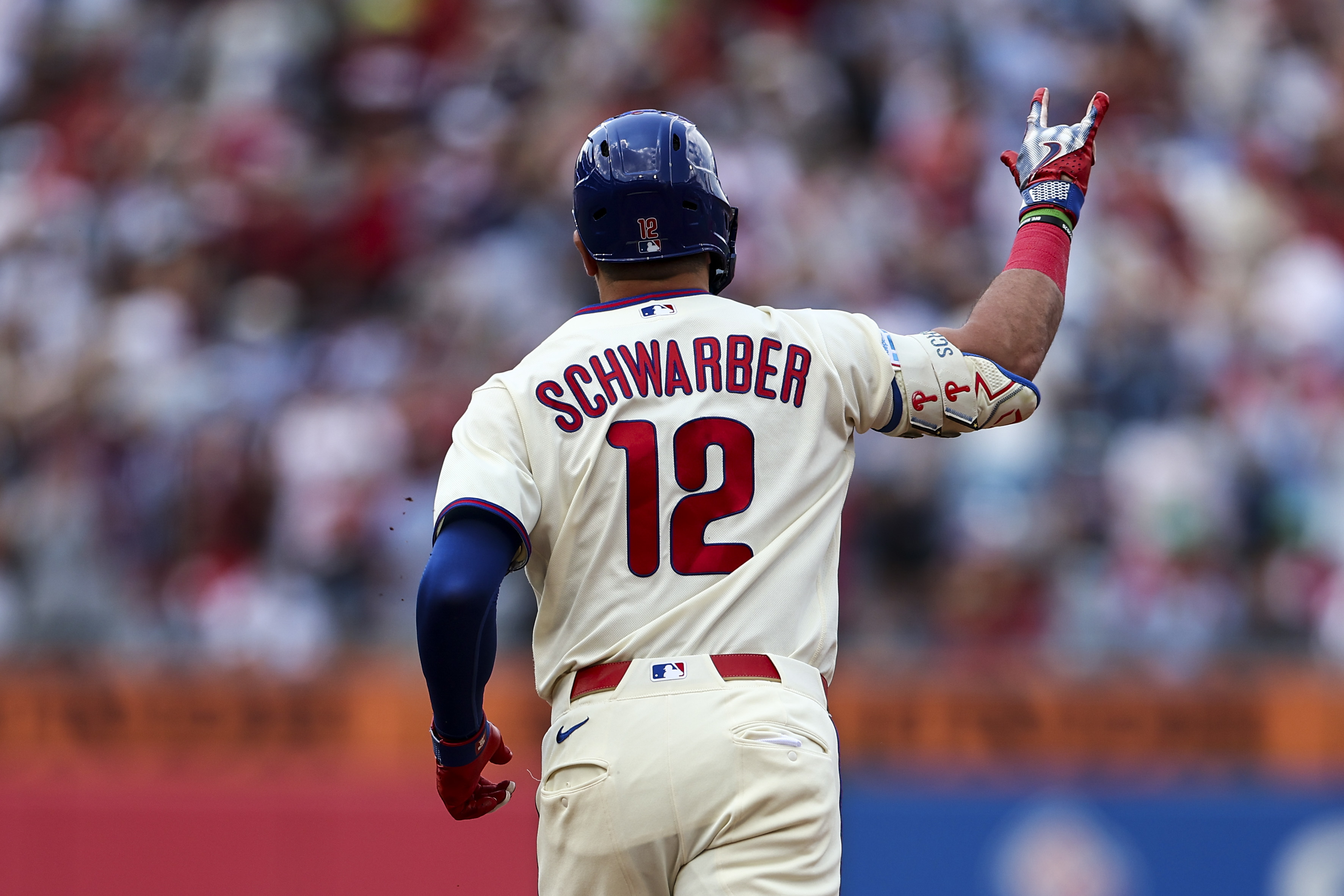
    Kyle Schwarber rounds the bases after hitting a two-run home run during the third inning against the Blue Jays on Sunday.Monica Herndon / Staff Photographer

    Once the game lurched into extra innings, both teams had chances to win.

    In the 10th, Alec Bohm was booed after popping up to the catcher with a runner on third base and one out. In the 11th, pinch-running Garrett Stubbs tagged up on a fly ball and got thrown out at the plate by Jays right fielder Nathan Lukes. The Phillies challenged, contending that catcher Alejandro Kirk blocked the plate, but the call stood.

    After the Jays took the lead in the 12th, Realmuto set up the winning rally with his first bunt attempt in … checks notes … 11 years. But he got it down perfectly and reached on a single to move autorunner Luis Arraez to third base.

    “I love that bunt,” Mattingly said. “Talking to [bench coach] Dusty [Wathan], when [Realmuto] hit outside, he would bunt first all the time. And he’s like, he felt like he was one of our better bunters. To not do it there felt uncomfortable.”

    Stott singled in Arraez, and after the Jays loaded the bases with one out to set up a double play, Hill came through.

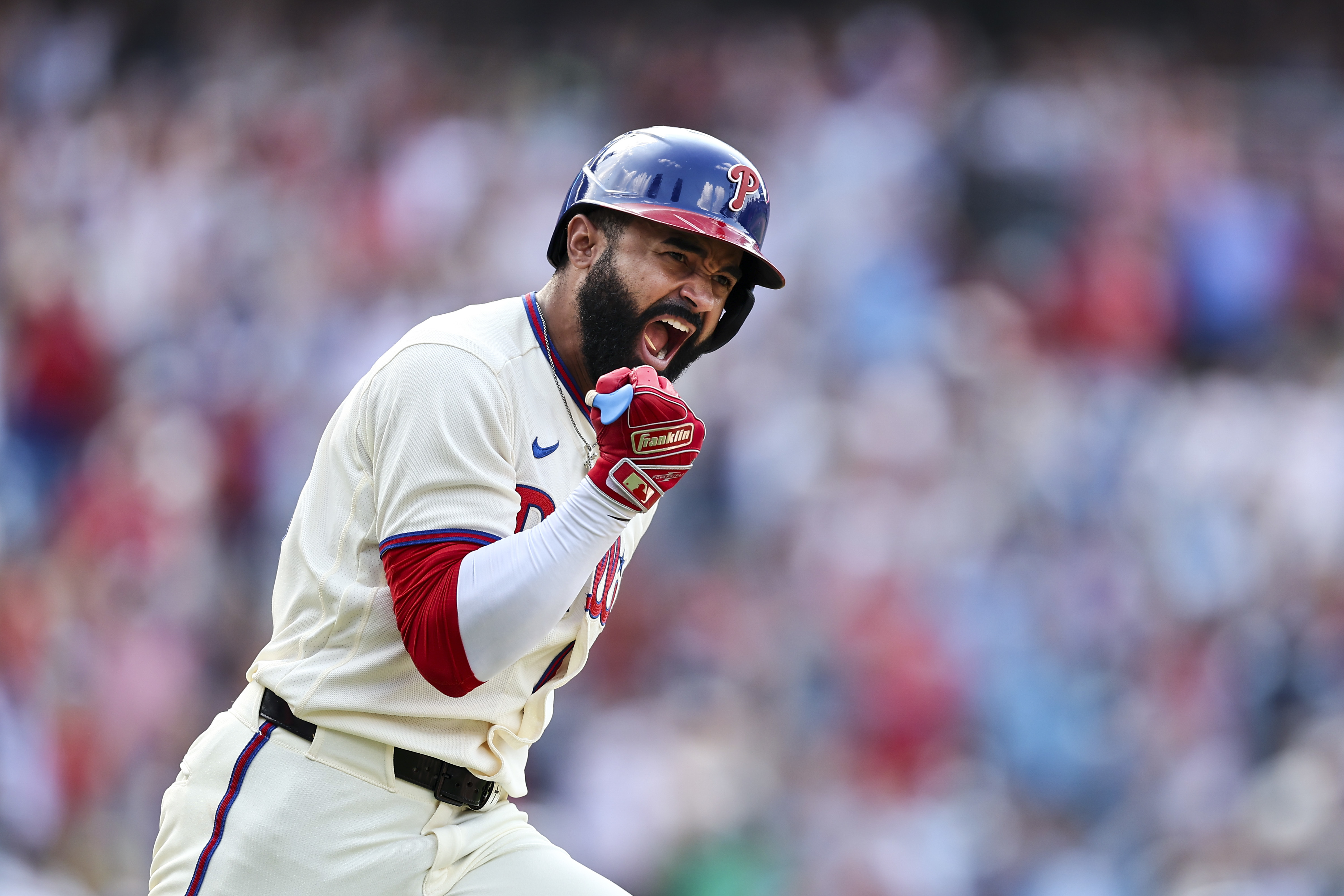
    “I think we always need a win like this,” said Hill, who raised his arms and got sprayed with water after rounding first base. “It don’t matter if you’ve lost 10 in a row or won 10 in a row. I think this galvanizes the team. These gritty wins, they go a long way at the end.”

    Maybe. We’ll see.

    For now, the Phillies (63-56) packed up the harder-than-it-needed-to-be victory — and a 4-3 homestand — and headed out on a weeklong road trip to St. Louis and Minnesota, with a Thursday detour to the Field of Dreams Game against the Twins in Dyersville, Iowa.

    Phillies alums line up on the field during the Alumni Weekend festivities at Citizens Bank Park on Sunday.Monica Herndon / Staff Photographer

    “It’s just trying to find a way to win a game at the end of the day,” Schwarber said. “I feel like that was kind of an example today. To keep fighting and find a way to finally get that job done, that’s what it’s about.”

    And so, especially on days like this, when the ghosts of 1980 and 2008 are standing there in plain sight, the question is unavoidable: Years from now, will this vintage of Phillies be remembered as champions or close-but-no-cigars for former tobacco magnate owner John Middleton?

    Let’s revisit that question in a few years, shall we?

  • Jonathan Bowlan has thrived as the Phillies’ setup reliever. The job could be his to keep.

    Jonathan Bowlan has thrived as the Phillies’ setup reliever. The job could be his to keep.

    All along, the Phillies figured they acquired their eighth-inning reliever in the offseason.

    Maybe they really did.

    It was supposed to be free agent Brad Keller. But after signing a two-year, $22 million contract, he had Tommy John elbow surgery on July 29 and will miss the rest of this season and most of next year.

    Jonathan Bowlan, a lower-profile addition in December from the Kansas City Royals for lefty Matt Strahm, stepped into Keller’s role and has thrived. And after the Phillies didn’t land a setup reliever at the trade deadline, it might be Bowlan’s job to keep.

    “I guess I don’t really look at it as that,” Bowlan said Sunday. “I mean, I’m a simple-minded person, pitcher, whatever you want to call it. I’m just trying to do my job to the best of my ability, no matter what the situation. That’s just kind of my mindset.”

    Bowlan, a 29-year-old righty, has been effective with that uncomplicated approach — and a few tweaks to his repertoire since joining the Phillies.

    After the trade, Bowlan got a call from pitching coach Caleb Cotham, who had two suggestions: throw more changeups, especially to left-handed hitters, and pick up a sweeper, the slider variant adopted by so many of Cotham’s Phillies pupils, notably Jesús Luzardo.

    Bowlan said he began experimenting with the sweeper two weeks before spring training and was “a quick learner when it came to that pitch.” It has replaced his curveball as his primary offspeed pitch to right-handed hitters.

    Phillies reliever Jonathan Bowlan has a 2.81 ERA in 44 appearances this season.Yong Kim / Staff Photographer

    But Bowlan needed help with lefties, who batted .288 and slugged .575 against him last season. Cotham didn’t alter his grip on the changeup. He just wanted him to throw it more often.

    “The shapes have always been there for the changeup,” Bowlan said. “It’s just the consistency of throwing that’s been the biggest thing.”

    He’s throwing his changeup nearly twice as often, which makes his fastball appear harder. But his heater has picked up actual speed, too, by almost 2 miles per hour. Last year, Bowlan’s fastball averaged 95.5 mph; this year, it’s up to a 97.2 mph.

    Bowlan believes the changeup and sweeper have had an effect.

    “Yes, for sure, that makes it play up a little more,” he said. “I would say 100%. Without having those other pitches, I mean, I can throw them to lefties or righties, both of them, and so that’s in the back of their mind as well. The ride [on the fastball] has always been there, so it probably helps even more since I have added that sweeper.”

    Add it up, and Bowlan has a 2.81 ERA, 52 strikeouts, and only 10 walks in 41⅔ innings over 44 appearances. Eight of his last 15 have come in the eighth inning.

    The late innings have been problematic for the Phillies in the postseason. They have star closer Jhoan Duran now, which surely helps. But carrying a lead from the starter to Duran was a problem for Strahm, David Robertson, and Orion Kerkering last season against the Dodgers. Jeff Hoffman struggled previously in 2024 and Craig Kimbrel in 2023.

    “It’s nice to be in those situations,” said Bowlan, who has a 1.48 ERA in 27 appearances since the beginning of June. “I love those situations. The energy is different, especially here in Philly with these fans and all the support.

    “And that’s just something that, maybe one day I will be that full-on leverage guy. But as of right now, I’m more of just, go out and attack these hitters and execute pitches, and if it falls into that leverage situation, then sure. But I do not look at it as like a leverage situation because I feel like that could complicate things or maybe speed things up for a little bit and make it a lot harder than it needs to be.”

    But there is one new wrinkle to Bowlan’s view of his job when it comes in the eighth inning.

    “You have that mindset of, I need to get the ball to Duran, whatever it takes,” Bowlan said. “That might be the minor switch in mindset. But that’s it. Nothing else. It’s not like, ‘Oh no, I don’t want to screw this up,’ you know? I’ve been through that. I’ve done that in the past. I’m over that. That’s not the mindset to have in those situations.”

    Phillies first baseman Alec Bohm draws a walk against the Toronto Blue Jays on Friday, Aug. 7, 2026 in Philadelphia.Yong Kim / Staff Photographer

    Eighth wonder

    Alec Bohm batted eighth for the first time since May 12 when he was in the midst of a deep early-season slump. This time, though, interim manager Don Mattingly said it had more to do with creating a better late-game matchup against the Jays.

    “The biggest thing was splitting him and J.T. [Realmuto] a little further apart just to kind of mix the righties up,” said Mattingly, who elevated Realmuto to the No. 5 spot. “This just spreads it out a little bit. And J.T., for me, has been swinging the bat a little better.”

    Bohm, who entered Sunday batting .224 with a .641 OPS, the worst totals of his career, had two hits, including an RBI single in the sixth inning.

    Extra bases

    Aaron Nola is on track to start Thursday night against the Minnesota Twins in the Field of Dreams Game in Iowa. Nola bruised his right knee on a comebacker to the mound in the sixth inning Saturday night. … At the end of a taxing week for the bullpen, the Phillies recalled righty Alan Rangel from triple A and optioned righty Chase Shugart, who threw 39 pitches Saturday night. … In recognition of their strikeout milestones Saturday night, Max Scherzer (now fourth all-time) and Nola (2,000 career) were invited to take photos with Steve Carlton (fourth all-time) as part of the pregame Alumni Weekend festivities. … After exiting his last start after four innings with a tight left hamstring, Andrew Painter (1-8, 6.48 ERA) is scheduled to start Monday night in St. Louis against Cardinals righty Hunter Dobbins (2-2, 3.60).

  • Shooting on Germantown Avenue prompts Temple University alert

    Shooting on Germantown Avenue prompts Temple University alert

    Two men were shot Sunday morning in the Franklinville section of North Philly, prompting Temple University to alert its students to avoid the area.

    Around 11:50 a.m., police responded to a shooting on a highway in the 3400 block of Germantown Avenue, near Temple University Hospital, according to Philadelphia Police.

    Two people in a vehicle fired at a different vehicle, striking two people and driving away, Denise Wilhelm, Interim Vice President for Public Safety and Chief of Police at Temple, said in a statement.

    An injured person walked into Temple University Hospital, while another was transported by police. They are being treated for non-life-threatening injuries, Wilhelm said.

    The shooting scene is being held for investigation, police said, and Temple Police are assisting detectives in reviewing security video.

    In the meantime, Wilhelm said, Temple University is increasing its police patrols in the area.

    While Wilhelm said there is no connection between the university and the shooting, Temple is offering support for students through Tuttleman Counseling Services, and an assistance program for faculty and staff.

    Anyone with information about the shooting can contact the PPD tip line at 215-686-TIPS (8477) or East Detectives at 215-686-3243. Temple’s Investigations Unit is also open for tips at 215-204-6200 or Temple Police at 215-204-1234.

  • Haverford College has agreed to new policies opposing antisemitism to settle a lawsuit

    Haverford College has agreed to new policies opposing antisemitism to settle a lawsuit

    Haverford College has agreed to form an antisemitism committee and enact policies supporting Jewish, Israeli, and Zionist students as part of a settlement of a suit filed during a wave of protests against the Israel-Gaza war.

    The suit, filed in May 2024, months after Hamas’ attack on Israel, contended the college failed to protect the plaintiffs and allowed antisemitic harassment and bias to flourish on campus.

    “We’re very proud that Haverford College will be a welcoming place for everyone, including Jews and others that support a Jewish state,” said Lori Lowenthal Marcus, legal director for the Deborah Project, the law firm that took on the case.

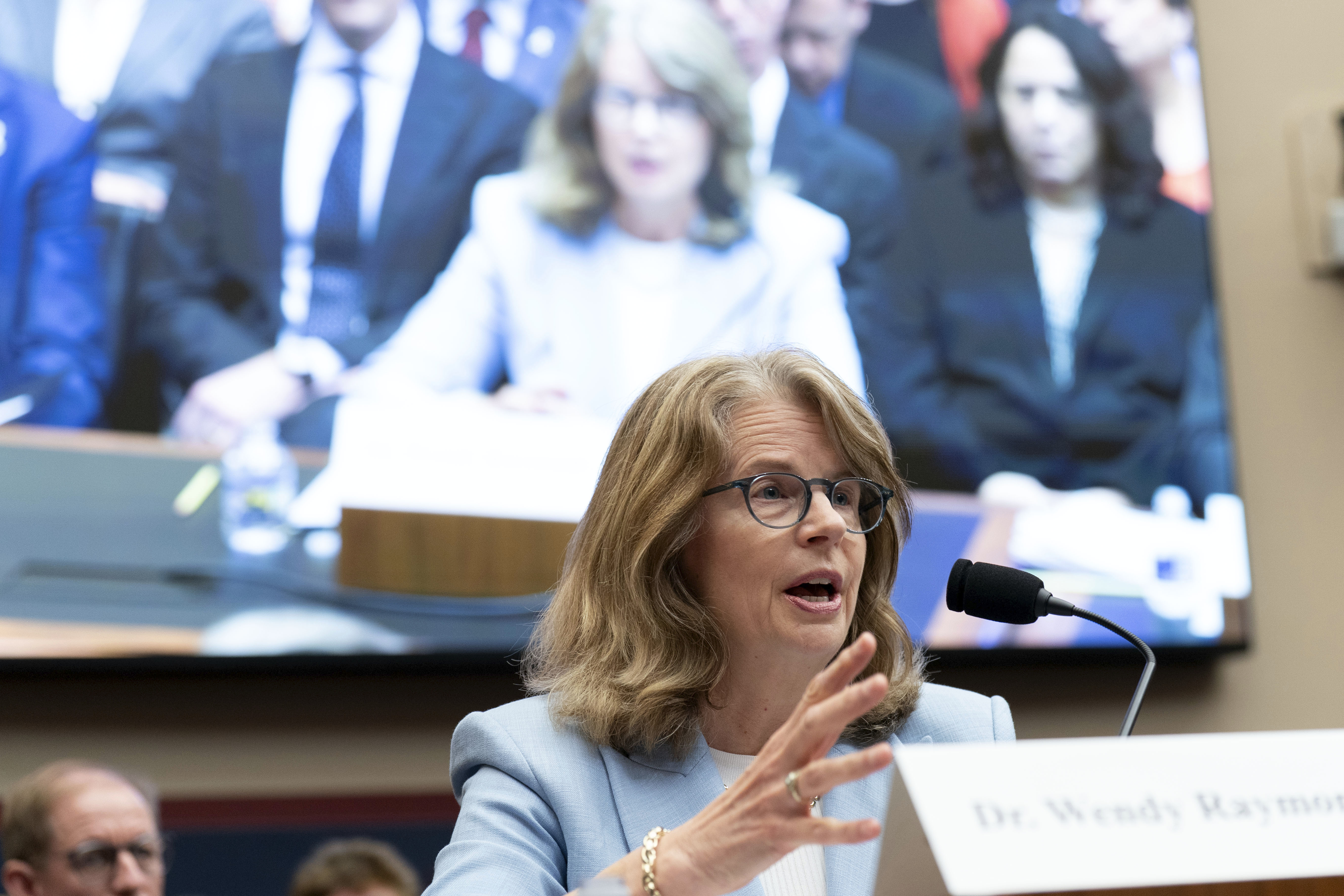
    Haverford College president Wendy Raymond released a public letter on Friday as part of the settlement in which she said the college supports students who are Jewish, Israeli, or supporters of Zionism.

    “In a community of learning, we may vehemently disagree with one another about the policies and actions of governments, but it is never acceptable to let those disagreements descend into the realm of discrimination, harassment, or bias,” Raymond said.

    The settlement aims to resolve injustices that students said they faced for supporting Israel while protests engulfed the small liberal arts campus, Marcus said.

    One student feared her in-class comments would reveal she was Jewish and put her at risk of discrimination from her professor, Marcus said.

    Others holding a meeting on antisemitism were interrupted by bullhorns, pots and pans, and cowbells.

    A plaintiff, former Haverford basketball player Ally Landau, was told she couldn’t promote antisemitism awareness at a game because the college couldn’t guarantee enough security to keep the game from being canceled.

    To address some of these issues, the college agreed that its new civil rights director would look into antisemitism claims, Marcus said.

    The civil rights director will work with an antisemitism committee made up of three Jewish community leaders, three people chosen by the plaintiffs, and three chosen by the school. The committee will advise the school president and provide an annual report to the college’s board of managers.

    “The committee and the civil rights director will look into whether anti-Israel sentiment is antisemitism,” Marcus said, and will rely on guidance from the International Holocaust Remembrance Alliance.

    Campus events hosted by Jewish Zionist or Israeli students are guaranteed security similar to what other events would get.

    People wearing masks or face coverings on campus will be required to show identification if asked by campus authorities.

    Professors who refuse to write letters of recommendation due to a student’s Jewish, Zionist, or Israeli identity will be in violation of the school’s anti-discrimination policy.

    And the college will mandate annual antisemitism awareness training and has added details on its anti-discrimination policies in its admissions documents. It also will publish a frequently asked questions document about antisemitism.

    Marcus declined to say whether the settlement included monetary compensation. She said the formation of the committee and new policies were the important changes.

    “It was a great resolution for what was a painful situation,” Marcus said.

    In her letter, Haverford president Raymond, who plans to step down in 2027, said the college is committed to doing better going forward.

    “It is our shared responsibility to create and maintain a community of belonging for all, where we each contribute to a learning environment and culture in which every person can thrive. Haverford College commits itself to ensuring such a future,” Raymond said.

    With the settlement, the court has dismissed all claims made by the plaintiffs “with prejudice,” permanently ending the legal action, a Haverford College spokesperson said.

  • One man dead and another injured in Ludlow double shooting

    One man dead and another injured in Ludlow double shooting

    A double shooting left one man dead and another wounded early Sunday in the Ludlow section of North Philadelphia, according to Philadelphia Police.

    Police say they arrived at 8th Street and Oxford Avenue around 3:15 a.m. to find two men with gunshot wounds.

    One man was taken by police to Temple University Hospital, where he was pronounced dead at 4:25 a.m.

    The other man was dropped off at Temple by private vehicle, and his condition remained unknown, police said.

    Through Saturday, a total of 412 people had been shot in Philadelphia this year, a 35% decline from this time last year, according to police crime statistics.

    As the Homicide Unit continues to investigate, police urged anyone with information to call the PPD tip line at 215-686-TIPS (8477). Tipsters can be anonymous.

  • Should Democrats campaign for more English lit majors?

    Should Democrats campaign for more English lit majors?

    There is one war Donald Trump is actually winning — unfortunately.

    Clearly it’s not the ongoing fiasco in the Strait of Hormuz. But Trump and his MAGA culture warriors keep gaining new territory here at home in their all-out assault on knowledge, with America’s college campuses as the prime battleground.

    The Trump regime is fighting to destroy liberal arts education in America, and this summer it opened a new front in the campaign to make going to college all about the narrow pathway to a job in a robot-driven economy — and little more.

    A little-publicized new rule published last month by Trump’s Department of Education aims to end student loans to young people who major in fields that lead to jobs with below-average incomes. The rule won’t take effect until next year, and there remain real questions about how it might work and which programs would be most affected. But some experts are worried that training for essential jobs like social work or teaching will be harmed.

    “I’m happy for an MBA to pay back every penny they borrowed,” Ted Mitchell, president of the American Council on Education and a former college president and education policymaker in the Barack Obama administration, told me last week. “But social workers and teachers shouldn’t be submitted to the same logic.” In other words, some jobs are more valuable to a healthy society than the dollar value we assign them.

    Still, education experts who are critical of the Trump regime over many other policies say there could also be some good to come out of student loan reform, since the rule is likely to most heavily impact for-profit institutions, especially those that have abused the system to saddle young people with high debt and poor job prospects.

    But Roosevelt Montás, who leads the Chang Chavkin Center for Liberal Education and Civic Life at Bard College, said the positive benefits of going after for-profit college scandals need to be weighed against the broader harm to the idea that a liberal education will give students more than a return-on-investment balance sheet.

    Montás called the student loan rule “an example of how the Trump administration has found areas that, in fact, deserve criticism and require reform in higher education, and he has used these as a tool to destroy and weaken the system.”

    This month, most of the nearly 20 million university students in the United States are drifting back to campus to begin a new academic year — with broad agreement across the political spectrum that American higher education is in crisis.

    Undergraduate enrollment actually peaked in 2010, when that era’s economic crisis was at its nadir, and has declined gradually in most years since. Public trust in higher education — as with other large institutions — has plummeted even more steeply. You could write a book about how college access, the insane cost of tuition, and resentment between educational haves and have-nots drive our deep, bitter political divide.

    The Trump regime is not letting this crisis go to waste. Ignoring the real roots of the problem — the steady privatization of getting a college degree since the 1970s — the MAGA government has been following the Project 2025 blueprint for waging an ideological war on campuses it sees as breeding grounds for future liberals.

    The student loan rule is just the latest onslaught. In recent weeks, a White House policy paper mapped out a massive shift of as much as $200 billion away from grants for basic science on university campuses and toward work on artificial intelligence, or AI, with private companies competing for those dollars.

    Meanwhile, a surprising number of universities — rather than fighting the Trump agenda — are saying they’ll sign onto a so-called reform agenda that merges some broadly popular measures, such as reducing tuition, with right-wing wish-list items like more conservative faculty, ending efforts to boost enrollment numbers for students of color, and cracking down on protests. This builds on the regime’s push to end campus diversity programs.

    The campus of Hampshire College in Amherst, Mass., in April. It is scheduled to close at the end of the fall semester.Leah Willingham

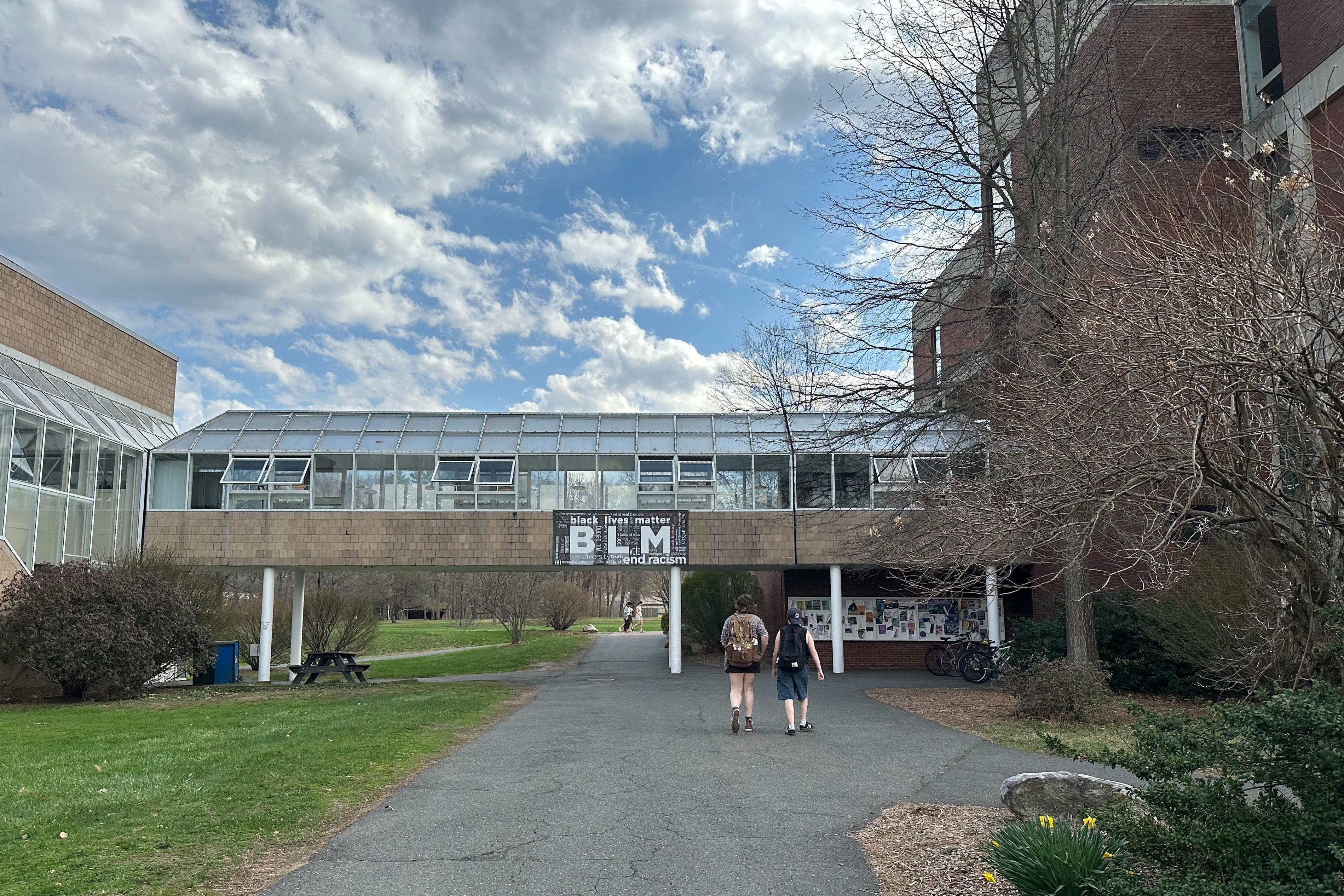
    This overlap of societal and governmental crises has fallen hardest on small liberal arts colleges — some, like the experimental, born-of-the-1960s Hampshire College, have announced plans to close altogether — as have some degree programs in the humanities at larger schools, which have seen layoffs or even elimination.

    “I think we’re at a real moment of crisis,” Montás said, noting that programs in the humanities and some social sciences were already weakened by downward enrollment trends and by ideological controversies even before the Trump regime targeted them. “These have energized questions about the value and cost of education. This combination of factors is proving deadly.”

    But while the headlines tend to focus on campus closings or the latest faculty layoffs, the bigger story is the government’s push to radically reform the role that higher education plays in a healthy democracy.

    In what we now clearly see as a golden age of U.S. college from the late 1940s into the ‘70s — when tuition was generally low, and enrollment was skyrocketing — advocates saw more diplomas as a way both to populate a new “knowledge economy” and also mold better citizens who’d be less likely to start World War III. Majors like English literature, philosophy, and sociology soared — as did the inclination to question authority in the fraught era of civil rights and the Vietnam War.

    That last part, arguably, is what triggered a 60-years-and-counting conservative backlash that is currently maxing out under Trump. His regime doesn’t want to wreck college altogether — white dude-bros still need their keg parties, after all — as long as the ultimate outcome is creating worker drones, not critical thinkers.

    The seeds exist for a backlash that might swing the pendulum back to where it was around 1965, but no one has really planted them. Instead of fighting the destruction of liberal education as a true opposition party, far too many Democrats have instead complied — insisting they support colleges, but only because they create jobs.

    “Every student should have access to an education that aligns with industry demands and evolves to meet the demands of tomorrow’s global workforce” is a quote that sounds like it was ripped from Project 2025, but it was posted in 2022 by Joe Biden’s education secretary, Miguel Cardona. Democratic governors like Pennsylvania’s Josh Shapiro spend more time touting trade school than talking about expanding opportunities for four-year bachelor’s degrees.

    I’d argue that these politicos are misreading the current zeitgeist. There’s growing alarm these days about students no longer reading books in school (or anywhere), about how smartphones are crimping kids’ ability to communicate and grow, and about how little young people learn about how our government works. These anxieties have only metastasized with the rapid growth of AI.

    Increasingly, politicians who last year were raving about the economic development possibilities of AI data centers are furiously backpedaling in the face of a full-on public revolt. While a lot of the backlash is driven by issues such as noise pollution or higher electric bills, the public unrest also reflects a more cosmic concern: Do we really want robots not only taking our jobs and making our art but thinking for us, too?

    It’s easy for a politician to be against something, like a data center. But who is going to fight for something, like the humanities? The headline of this column about Democrats making a demand for more English lit majors into a political rallying cry was somewhat facetious — but should it be? Real leadership would mean fighting to give more young people more opportunities to flourish as creators and thinkers, without being terrified the other side will call you an “elitist.”

    Mitchell said he’d like to see an expansion of federal loan forgiveness programs for graduates who go into public service careers like social work or teaching — perhaps on the state level — as part of a much broader return of the vanishing idea that higher education can be a public good.

    Both Montás and Mitchell also advocated for college programs that would better integrate both career skills training and wider education in the liberal arts and civics. Mitchell touted, for example, a new program at the University of Texas which — working with the online learning company Coursera, where he is a board member — allows students to earn career-readiness certificates on their transcript even as they also pursue a major in the humanities.

    Montás said his new center at Bard is part of a burgeoning national movement to grow general education programs within universities that promote classroom discussion through a heavy emphasis on what some call “the great books” of modern civilization. Advocates seek a core curriculum that would promote critical thinking and discourse beyond career-focused majors such as business or engineering. It would be, Montás said, “a return to approaches and conceptions of liberal education that are traditional — an emphasis on great books, an emphasis on character, an emphasis on civic education.”

    The 2026 campaigns for Congress are well underway, and while you’ll hear a lot about vital issues like expanding access to healthcare or lowering gas prices, hardly anyone is running on bringing books back into the classroom or saving the humanities major. That feels like a big mistake. When there is a war against the very notion of higher education, somebody needs to be fighting back.

  • Rich Paul tees off, Jaylen Brown shows love, and more from Tyrese Maxey Friends & Family Weekend

    Rich Paul tees off, Jaylen Brown shows love, and more from Tyrese Maxey Friends & Family Weekend

    Tyrese Maxey is from Texas, but he has made Philadelphia his new home. Each year, the point guard hopes to give back to the community that has watched him “become a man.”

    “I grew up here,” said Maxey, who’s entering his seventh season with the 76ers. “My daughter [3-month-old Marvel] is going to grow up here. … And I appreciate all the love and support that the Philly people, the Philly fans, the Philly community has [given] to me — and not just for myself, but my foundation as well, my family. They’ve really gotten behind what we’re trying to do here, and I’m nothing but grateful for it.”

    One way he’s fulfilling his mission of giving back and leading by example is through the Tyrese Maxey Friends & Family Weekend. The three-day event features a Night of Giving dinner, a celebrity golf tournament, and a 1% Skills basketball camp, with proceeds benefiting the Tyrese Maxey Foundation and its mission to strengthen families and communities.

    Here’s a look behind the scenes at the third annual weekend:

    Night of Giving

    At the Vie by Cescaphe venue on Broad Street, basketball-themed centerpieces lined the tables, a mural of Maxey with the words “1% Better Every Day” decorated the left wall, and the two-time All-Star stood with new Sixer Jaylen Brown.

    Brown stopped by Maxey’s Night of Giving dinner after his introductory news conference at the Francis J. Myers Recreation Center and throwing out the first pitch at the Phillies game earlier that day.

    “JB did say a lot of things in his presser that meant a lot to our team already,” Maxey said. “We talk a lot already, that’s like unheard of, you know what I’m saying, for a group of guys who haven’t really met together at one time. Talking, joking around in the group chat, talking about him skydiving. That’s all fun and games and I think the camaraderie is there. … And like I said, we have a lot of guys who like to do this community stuff as well. That’s a big thing. It’s going to be a big thing for our community in Philadelphia.”

    Tyrese Maxey defends one of the many kids who attended his 1% Skills Camp last weekend.Tyger Williams / Staff Photographer

    The Night of Giving dinner featured a silent auction that included items like a signed Joel Embiid jersey, a custom Tyrese Maxey rug, signed Mike Tyson boxing gloves, and a signed Boston Celtics Jayson Tatum jersey. Maxey said the dinner was the perfect way to kick-start a weekend devoted to giving back to the community.

    “I think [the Night of Giving] is extremely special because you can do a lot of fellowship here, do a lot of talking, do a lot of networking,” Maxey said. “And then it’s like all of us coming together. Everybody in this room is a piece of making the foundation special. And a piece of making this community special. And that’s something that we really do appreciate.”

    Celebrity golf tournament

    Fans drove past the first hole of The Union League Golf Club at Torresdale and yelled out to Klutch Sports CEO Rich Paul as Maxey and LeBron James’ agent practiced his swing before teeing off at the celebrity tournament.

    “Only in Philly,” Paul responded as he proceeded to take his first swing of the day.

    Kentavious Caldwell-Pope, another new Sixer represented by Klutch Sports, followed with a swing of his own, slicing the ball to the left of the fairway.

    Also among the more than 70 participants at the third annual tournament were Brandon Graham, Justin Edwards, Labaron Philon Jr., Dominick Barlow, and Jabari Walker. Brown was also in attendance after making an appearance at Eagles training camp earlier in the day.

    “He showed up to the Night of Giving, he showed up to the golf tournament,” Maxey said. “I said, ‘Look man, anything you want to do, let me know. I’ve been here for the last seven years so whatever you want to do, I’m pretty sure I have some type of connection with my team, the foundation. And we’re going to get it done.’

    “That makes me even more happy that somebody wants to come right in and he’s done the whole city tour, I feel like. He’s been everywhere. … That’s just love, man. I think the city is going to be glad to have him.”

    Since Maxey was drafted by the Sixers in 2020, he has remained a pillar in the community — giving back to the community through the Maxey Friends & Family Weekend, his annual Thanksgiving Turkey Drive, awarding scholarships and hosting school supply drives through his foundation, a nonprofit organization founded in 2021 with a mission to give the youth skills to become the next generation of leaders in the community.

    Tyrese Maxey interacts with the kids attending his 1% Skills Camp at Penn Charter on Saturday.Tyger Williams / Staff Photographer

    1% Skills Camp

    As Maxey prepared for 1% Skills Camp, a free youth basketball camp for kids ages 7-12, one of the kids asked him, “How much younger are you than LeBron?”

    Maxey responded, “probably like 30 years.”

    The William A. Graham Athletics & Wellness Center at Penn Charter had more than 200 kids participating in drills and competitions led by Maxey and local coaches.

    “Honestly, the biggest thing is just the love and the support,” Maxey said. “ … I always talk about getting 1 percent better not just in basketball but with life in general.”

    Since becoming a father, Maxey has a new perspective on the 1% Skills Camp.

    “It just makes me want to be more involved,” Maxey said. “Especially going through the experiences of a three-month-old. I’m just grateful. Grateful to be a father. Grateful to be someone who can protect her, watch her grow up, and try to be a loving person in her life.”

    After the camp, Maxey said he planned on competing in a pickup game with some of the camp directors — a task that was going to be a little difficult after a full day of golfing.

    “I took like three, four holes off to go check on Marvel, it was getting too hot for me,” Maxey said. “I’m more of a front-nine, back-nine guy. But 18 — I’m feeling it today, honestly. I’m old now. I’m 25, got to get to stretching a little bit and do a little foam rolling, maybe. Can’t just roll out of bed and go dunk anymore. No, I’m just playing.”

  • Making the invisible visible: Betye Saar’s legacy lives on in Philadelphia

    Making the invisible visible: Betye Saar’s legacy lives on in Philadelphia

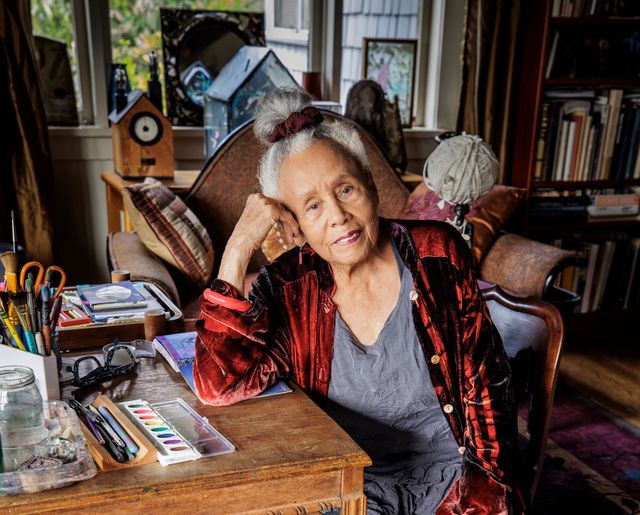
    Los Angeles-based artist Betye Saar died on July 26, just days short of her 100th birthday. A champion of the advancement of all underserved and underrecognized female artists, her assertive and sometimes combative spirit mirrored that of other African American artist-activists of her generation, such as Elizabeth Catlett and Samella Lewis, who fought racism and the oppressive nature of an arts ecosystem that fostered white male dominance.

    While Saar’s glowing presence will be missed, she leaves a legacy of art that is connected to Philadelphia in both actual and symbolic ways.

    Saar spent time here as a visiting artist in printmaking at Philly’s Brandywine Workshop and Archives in 1989, and again in 1992, when she was also a recipient of the organization’s Lifetime Achievement Award.

    Across seven decades, her creative efforts in assemblage and printmaking foretold the evolution of what art is or could be — by contributing to an evolving medium and studio practice that relied upon salvaging memories and emotions embedded in discarded, everyday objects and materials.

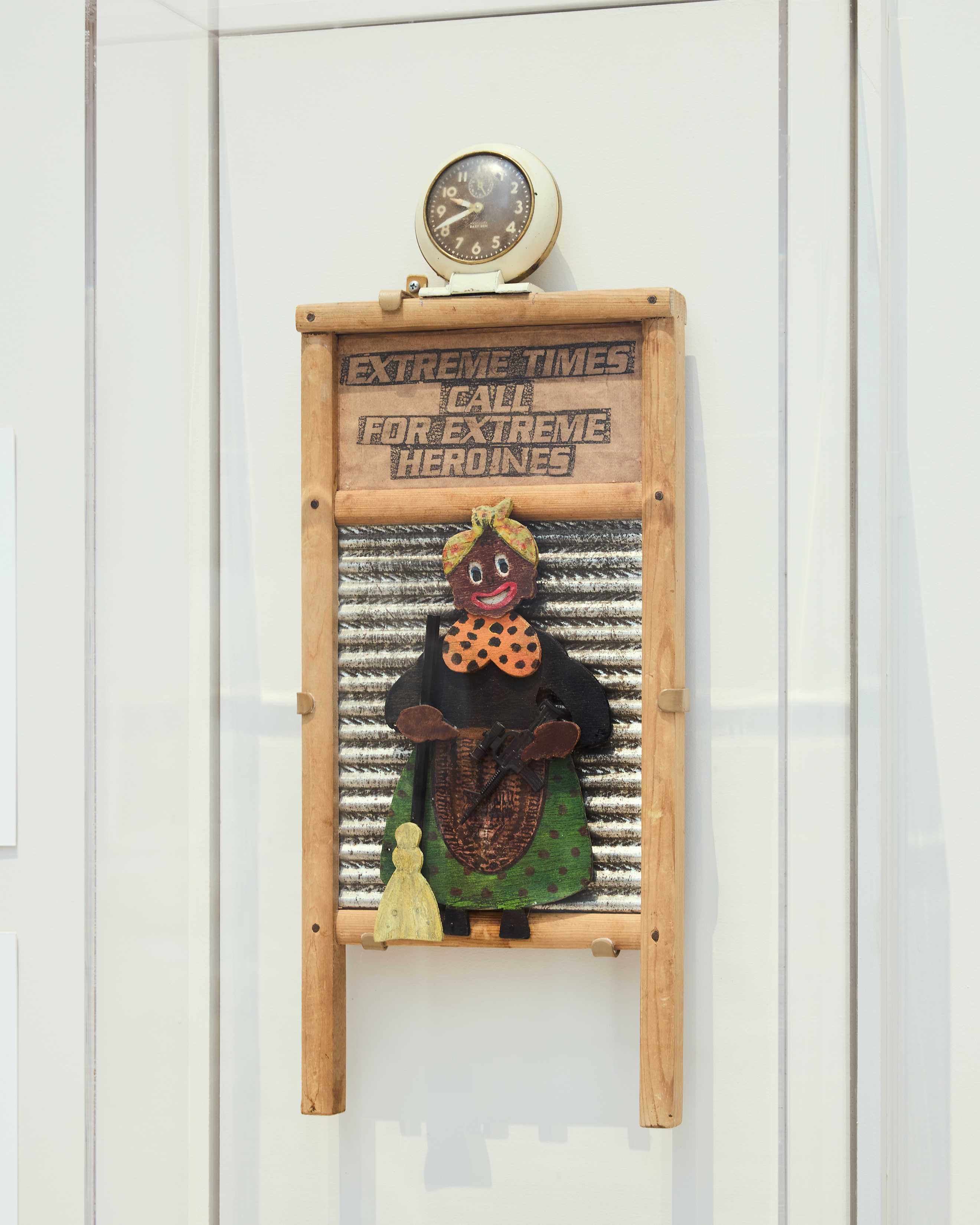
    Betye Saar, “Extreme Times Call for Extreme Heroines,” 2017, on display at the New York Historical in New York in June. LUIS CORZO

    Saar described herself as a scavenger: always looking down in order to find useful materials for her artmaking. At flea markets and swap meets, Saar would source images that portrayed African Americans in grotesque and negative narratives, which she would then use and recontextualize in her art assemblages and prints.

    This process of “scavenging” also informs the two mixed-media prints she created at Brandywine, LA Sky with Spinning Hearts (1989) and Mystic Sky with Self-Portrait (1992).

    Betye Saar’s “Mystic Sky With Self Portrait,” 1992, which she created when she was a visiting artist at the Brandywine Workshop and Archives in Philadelphia.

    Saar and her contemporaries, Catlett and Lewis (who were also visiting artists and Brandywine Lifetime awardees), experienced long, impactful careers during which high recognition came extremely late. This was an indicator of the market’s exclusionary agenda and inability to grapple with and comprehend their artistic talent and messaging. Despite the market and cultural biases and professional disadvantages of being people of color, women, and mothers (Saar’s daughters, Alison and Lezley, are also artists), they demonstrated a vision of social responsibility and aesthetic investigation highlighted by quality craftsmanship.

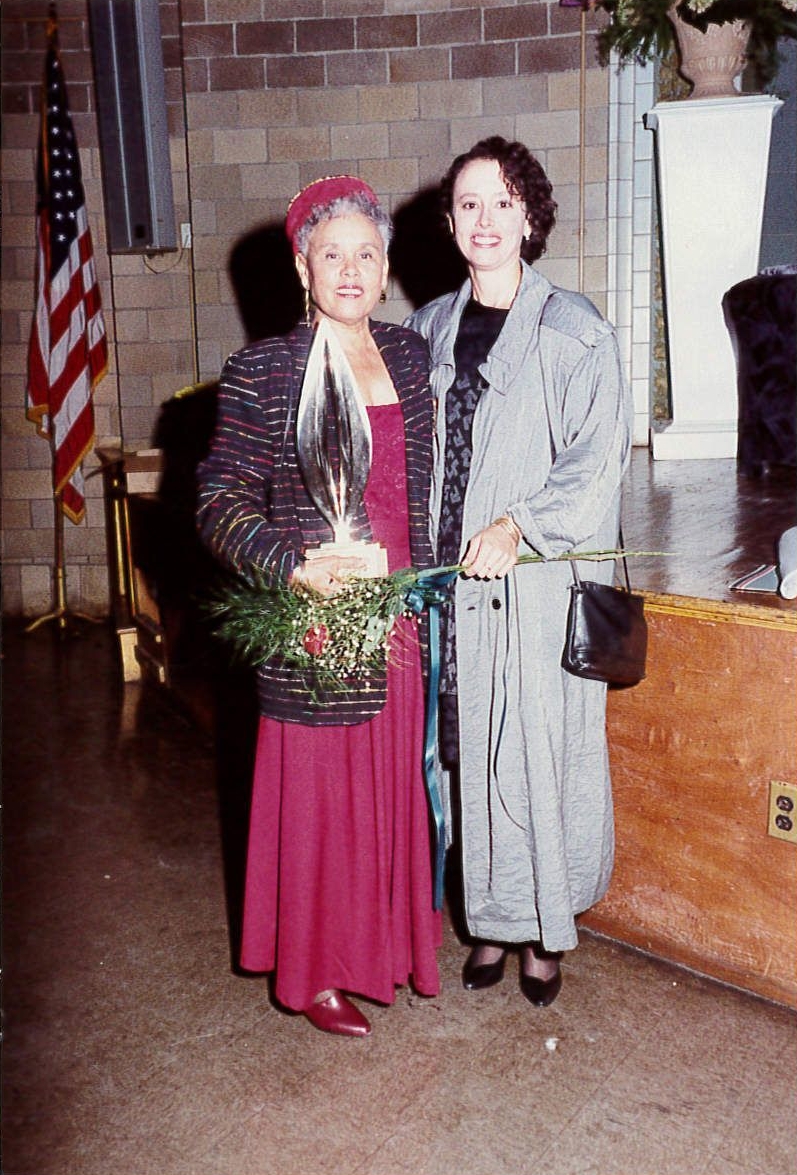
    Betye Saar and her daughter, Alison, at the Brandywine Workshop and Archive Awards Gala in 1992 at the Penn Museum.James O'Neal

    While Catlett’s and Lewis’ work in a variety of media focused on figurative art in the modernist tradition, all three can be described as social realists because of their dedication to sharing their life experiences and those of other African Americans. The themes of their art reflect ethnic identity and pride, while also conveying social messages — resistance and resilience. Collectively, they made the invisible visible.

    In the present cultural and historical environment, where censorship by politicians and uncertain economics place extraordinary demands on individual artists and the institutions that serve them, the commitment of community-minded artists seeking social justice is most reflected in the art and activism of women in the arts. These include major curator-historians such as Leslie King Hammond and Deborah Willis (raised in Philly), as well as young scholars such as Tatiana Reinoza at the University of Notre Dame and Imani Roach and Heather Hughes at the Philadelphia Museum of Art — all affiliated in some manner with Brandywine.

    Institutions such as the National Museum of Women in the Arts in Washington, D.C., the Sackler Center for Feminist Art at the Brooklyn Museum, and Philly’s own Colored Girls Museum are centers for cultural exchange and discourse about the role of art and narratives being shared through the contemporary expressions of female artists.

    Saar and other female artists of her generation in places like Cuba, Mexico, and other nations in Latin America, Africa, and Asia have been among the leaders demanding greater empowerment of women in the arts and culture sector, and society as a whole.

    What connects the legacy of African American female artists with the struggle for social justice, women’s rights, and financial equity is the global struggle among women for political and economic empowerment. The COVID-19 pandemic and #MeToo movement have highlighted the disparities women face in gaining assistance and recognition. Attacks on abortion rights and the mass removal of undocumented immigrants, especially women with children, have exacerbated efforts to afford greater respect and opportunity for women in general.

    In the United States, the 1960s Civil Rights Movement opened the door to advance the women’s rights and human rights movements. Today, women make up the majority of students on college campuses (56%). The employment population ratio for women was 54.4% as of June. Women hold 155 seats combined in the U.S. Senate and the U.S. House of Representatives. There are 14 female governors, and — following a national trend — Philadelphia has elected its first female mayor, notably an African American.

    While the statistics show progress, women, especially artists, think globally and connect globally. Advancement of women in the visual arts has been marked by the increase in women of all ethnic backgrounds receiving art history degrees with a focus on diverse art across the globe. Many now research and lecture on the diasporas of Africa, Asia, and Latin America, and how cultures move through migration patterns. Their art, writings, and instruction demonstrate how contemporary art exists within a global community with transnational identities.

    Saar’s legacy endures through the great art she left the world to enjoy and to engage with its profound social commentary.

    But in addition to that material legacy, her resilient spirit and passion to create — in a space that was not welcoming to mothers, women of color, or professionals who sought to disrupt the status quo — are qualities to emulate. Her spirit lives on in the City of Brotherly Love in the growing generation of female leaders of local museums and galleries building collections of art created by women.

    Allan L. Edmunds is an artist, a retired educator and arts administrator, and the founder of the Brandywine Workshop and Archives. Haeley Green is an AUC Collective intern at Spelman College in Atlanta.

  • Our Songs of Summer playlist feat. Charli XCX, Beyoncé, Taylor Swift, the Rolling Stones, and Kurt Vile

    Our Songs of Summer playlist feat. Charli XCX, Beyoncé, Taylor Swift, the Rolling Stones, and Kurt Vile

    This is the sun-baked time for irresistible hooks and big brash beats. This is the season when pop culture experts aim to pronounce that just one ubiquitous recording is this year’s unifying, definitive Song of the Summer.

    I’m not going to play that game — or not exactly, anyway. The 30 songs annotated here are all songs of the summer of 2026, many of them by big name artists and rising stars formidable enough to be widely considered on most Song of the Summer short lists.

    But the songs gathered here — by pop stars, singer-songwriters, hip-hop heroes, country singers, and indie rock bands — are not ranked. Instead, they’re arranged as a playlist of sometimes ebullient, sometimes bummed out tunes that aim to convey a wide range of what the summer of 2026 sounds like, with plenty of Philly artists worked into the mix.

    Put on your headphones.

    Charli XCX, “SS26”

    “Spring Summer ’26,” Charli XCX sings, sounding cheerful setting the mise-en-scène for her new album Music, Fashion, Film. “When the world is gonna end, no hope for any of it.” Rather than a BRAT summer — that was 2024 — this is a reinvention song for a season of disaffection. She opens her U.S. tour in Philly on Sept. 11.

    Ella Langley, “Choosin’ Texas”

    For such a pop juggernaut, the charms of “Choosin’ Texas” are surprisingly subtle considering how big the song has become. The traditional country-leaning Lone Star State singer’s single, about a spurned lover drinking Jack Daniels alone, has topped the Billboard Hot 100 pop chart for 17 weeks, the longest winning streak by a woman artist ever for a nonholiday song.

    Country singer Ella Langley’s record-breaking single is “Choosin’ Texas.”Columbia Records

    Madonna, “School”

    Summer school is in session on Confessions II with Madonna proclaiming she’s hungry to learn as well as teach. Her impressive sequel to her 2005 album Confessions On A Dance Floor returns to her comfort zone with producer Stuart Price.

    Beyoncé, “Morning Dew (Donk)”

    Beyoncé also wants to go back to school, “and have my locker full of pictures of you,” she sings on a track whose origin dates to 2013. But the song was not officially released until July 4. It’s also old-school and sultry in an R&B sense, with a remix that features a Jay-Z guest verse.

    Olivia Dean, “So Easy (To Fall In Love)”

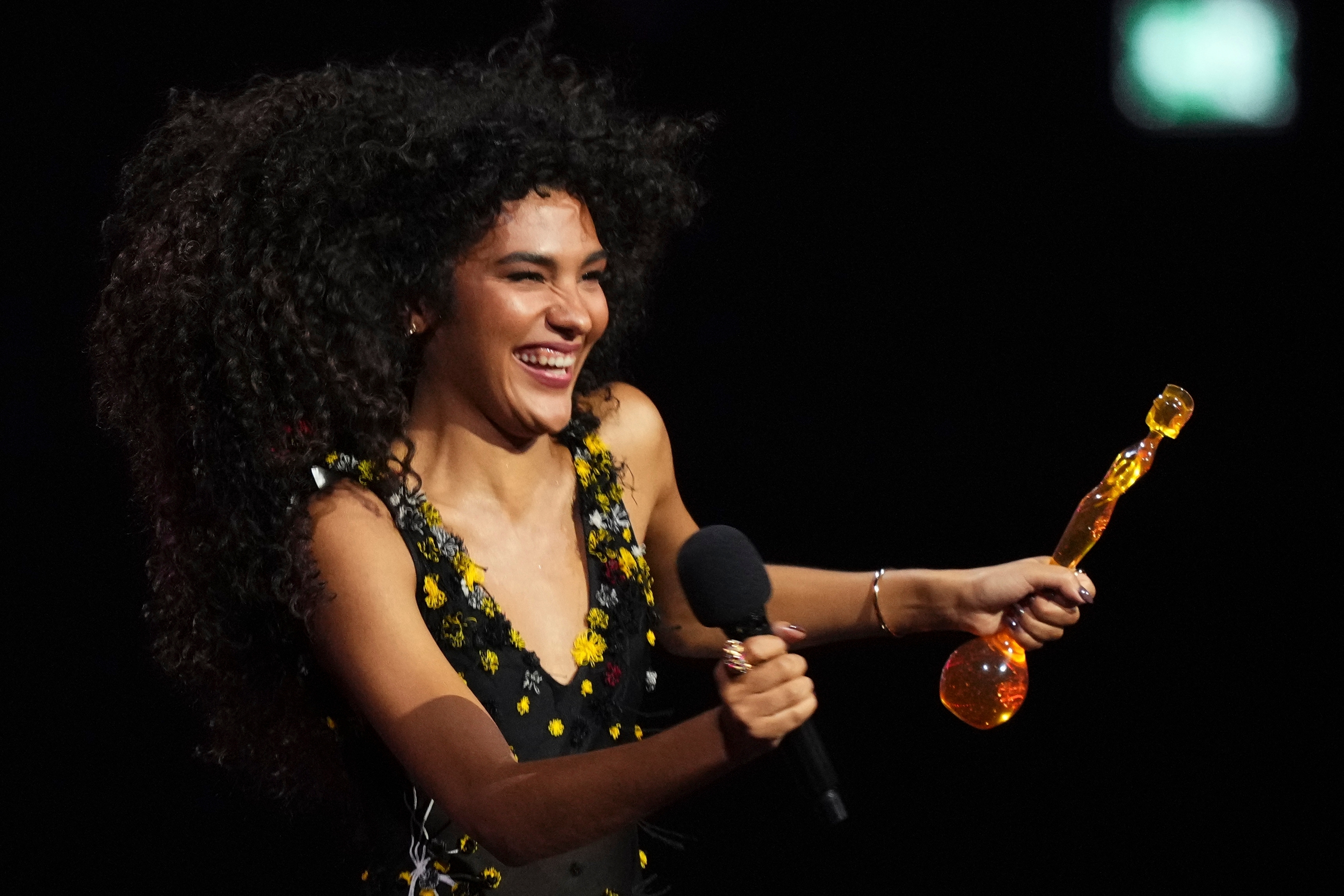
    British pop-soul singer Olivia Dean’s The Art of Loving came out in 2025, but her ascendance in America is ongoing. This bossa nova is a cool, welcome summer breeze that brings to mind Astrud Gilberto.

    Low Cut Connie, “Can’t Be Wrong”

    Perhaps the catchiest earworm yet from Adam Weiner’s South Philly rock and soul party and protest band. “Gettin’ naked in the afternoon, or maybe later underneath the moon … Oh, baby, you know it can’t be wrong.” Can it?

    Meek Mill, “Nightmares To Dreams”

    “Dreams and Nightmares,” the 2012 rager that has become an unofficial Philly anthem, gets a sequel, with a cameo from Pennsylvania Gov. Josh Shapiro in the video. Not equal to the original, but not bad.

    Stella Lefty, “Boston”

    Stella Lefty’s country hit makes the cut despite its title. And who can be mad at Boston after they traded Jaylen Brown to the Sixers to pave the way for LeBron James? But seriously, this song by Lefty, the daughter of billionaire Eric Lefkofsky, interpolates Noah Kahan’s “Stick Season” and is seriously catchy.

    Olivia Dean wins the Pop Act award during the Brit Awards 2026 in Manchester, England, Saturday, Feb. 28, 2026. (Photo by Scott A Garfitt/Invision/AP)Scott A Garfitt

    Taylor Swift, “I Knew It, I Knew You”

    This Toy Story 5 song’s arrangement, by Swift and Jack Antonoff includes banjo and mandolin, and has been characterized as country. Which means that between Swift, Lefty, Langley, and Morgan Wallen, last week’s Top 5 songs on the Billboard charts were all country for the first time.

    Phoebe Bridgers, “Lost Boys”

    Antonoff is also involved with this single about Peter Pan syndrome from Bridgers’ forthcoming album Lost Weekend, due Aug. 14. Philly indie savant Alex G. coproduces and boygenius’ Lucy Dacus and Julien Baker sing backup.

    Flight of Mavis, “Tonight’s the Night”

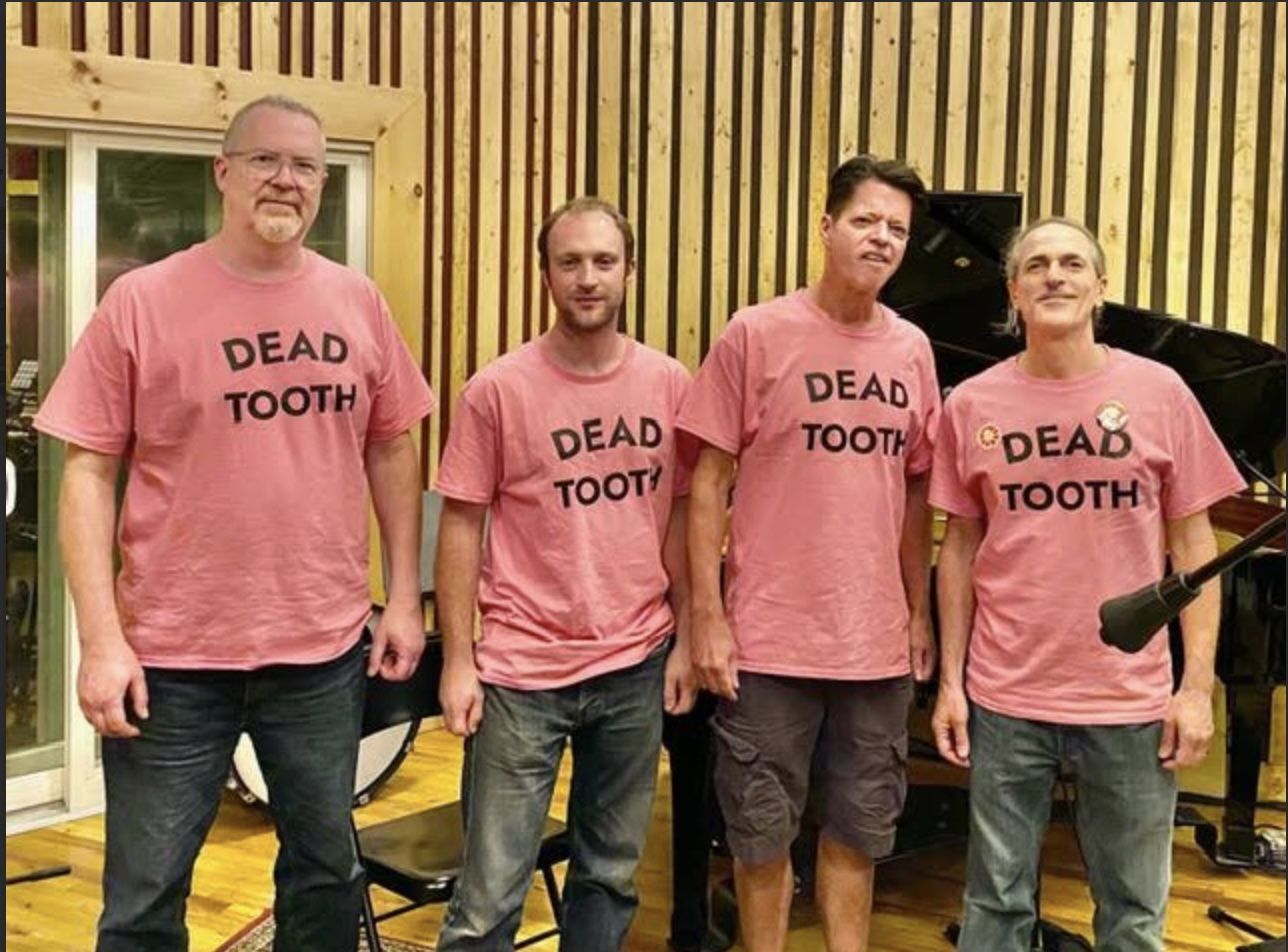
    This nugget from the Philly jangle pop band’s Mavis Sing Mavis is not a Neil Young cover but a song for music lovers. “Tonight’s the night,” Frank Brown sings, “I’m going to see my favorite band.”

    Philly band Flight of Mavis’ new album is “Mavis Sings Mavis.”

    Olivia Rodrigo, “The Cure”

    The Cure is one of Olivia Rodrigo’s favorite bands. This single from You Seem Pretty Sad for a Girl So in Love is not about Robert Smith, however. It’s a gem about a guy who will never be “the cure.” Rodrigo plays Xfinity Mobile Arena on Nov. 7 and 8.

    Hurry, “Moving After You”

    It’s hard to choose among Hurry songs, because Philly songwriter and guitarist Matthew Scottoline’s tunes all tend to captivate with melodic grace and wistful vibes. This one includes a cameo from Teenage Fanclub’s Gerard Love.

    Paul McCartney, “Days We Left Behind”

    Speaking of wistful, Macca looks back fondly on his pre-Beatles Liverpool boyhood on this charming centerpiece on The Boys of Dungeon Lane.

    Eric Bazilian, “Better Times”

    This song from the coleader of Philadelphia rock institution the Hooters is part of the “Philly Anthems” project of WXPN-FM (88.5). The sturdy tune strikes a hopeful note, with a hint of desperation: “Better times better come soon.”

    Twisted Teens’ new album and single is “Florida Water Blues.”Courtesy of the Artist

    Twisted Teens, “Florida Water Blues”

    Gnarly, country-flavored New Orleans garage rock band Twisted Teens look for meaning beyond “a hundred beers of solitude” in this winning title track from their new album.

    Sam and Louise Sullivan, “Love & Devotion”

    On last year’s Sweet Enough, Philly folk-pop sibling band Sam and Louise Sullivan sang of “Jealousy & Envy.” They’re on the lookout for nicer things on the title track to their new album.

    Kacey Musgraves and Miranda Lambert, “Horses and Divorces”

    Texas country singers Musgraves and Lambert had a beef dating back to 2011, when Lambert beat Musgraves to recording her own “Mama’s Broken Heart.” Now, the two horsewomen have made up, bonding over shared life experiences.

    Billy Strings, “Mill Town Flood”

    An original song from the country jam band multi-instrumentalist that tells a fictional tale about his real hometown of Muir, Mich. From So Much For Goodbyes, due Aug. 28.

    Rapsody, “Apple Juice”

    “Got a jones for you, sweet tooth, like sugar in my apple juice.” North Carolina rapper Rapsody goes deliciously neo-soul on this single from God Gotta Afro & Gold Hoops, due Aug. 28.

    Tyla performs during the Global Citizen Festival in 2025, in New York. (Photo by Charles Sykes/Invision/AP)Charles Sykes

    Tyla ft. Zara Larsson, “She Did It Again”

    A peppy, percolating team up of South African singer Tyla and Swedish pop star Larsson, drawing inspiration from early 2000s Britney Spears.

    Theodora, “Miss Kitoko”

    French Congolese singer Theodora — also known as Boss Lady — mixes Afro-pop and electronic elements with a verve that transcends language barriers.

    Ca7riel & Paco Amoroso, with Anderson .Paak, “Ay Ay Ay”

    Argentine experimental pop duo Ca7riel & Paco Amoroso’s collaborators on the Free Spirits album include Jack Black and Sting. On this exuberant track they mix in R&B and funk with beat savvy songwriter .Paak.

    Slayyyter, “Crank”

    With Charli XCX getting self-reflective this summer, Slayyter is picking up the in-your-face electro-pop slack. TikTok aided this screamy song’s success with clips of graduates yelling “Crank It!” upon receiving their diplomas.

    Slayyyter performs during the first weekend of Coachella Valley Music and Arts Festival in April.Amy Harris

    Tame Impala, with Jennie, “Dracula”

    Yes, Kevin Parker of Tame Impala’s vampiric concoction is lightweight stuff. But isn’t that what summer is for? And K-pop sensation Jennie boosts its exuberant groove.

    Ariana Grande, “Hate That I Made You Love Me”

    With the Wicked star announcing that she’s pulling back from public life, many observers are convinced that this single is about her fans and the prison of fame. Perhaps. In any case, its chilly tone and refusal to serve up a happy ending make for compelling listening.

    Steve Lacy, “The Feeling”

    The internet guitarist struggled to find an audience for his genre-splicing music before “Bad Habit” from his 2022 album Gemini Rights. He’s back in top form with this woozy song from his return album Oh Yeah?

    Weird Nightmare, “Might See You There”

    Power pop fun from the side project of Alex Edkins of Canadian punk-pop band Metz that doesn’t waste a note, at just over 2 minutes.

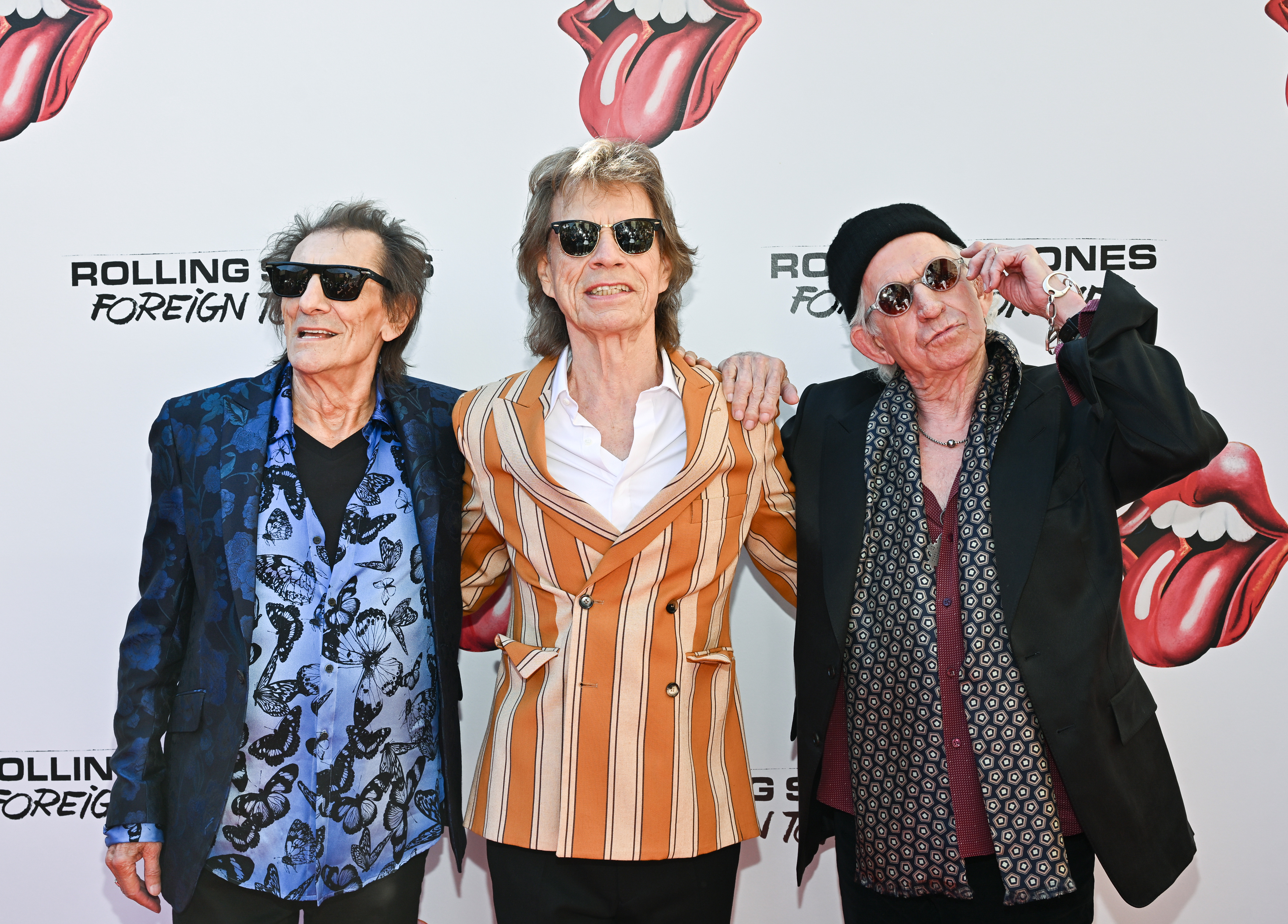
    Ronnie Wood, left, Mick Jagger and Keith Richards attend The Rolling Stones “Foreign Tongues” album launch event on Tuesday, May 5, 2026, in New York. (Photo by Evan Agostini/Invision/AP)Evan Agostini

    Rolling Stones, “Rough and Twisted”

    Is Foreign Tongues, the new Rolling Stones album, their best since … 1986’s Dirty Work? 1981’s Tattoo You? Whatever Stones fans decide, there’s no denying the octogenarians’ sound has energized, particularly on this feisty opener.

    Kurt Vile, “Zoom 97”

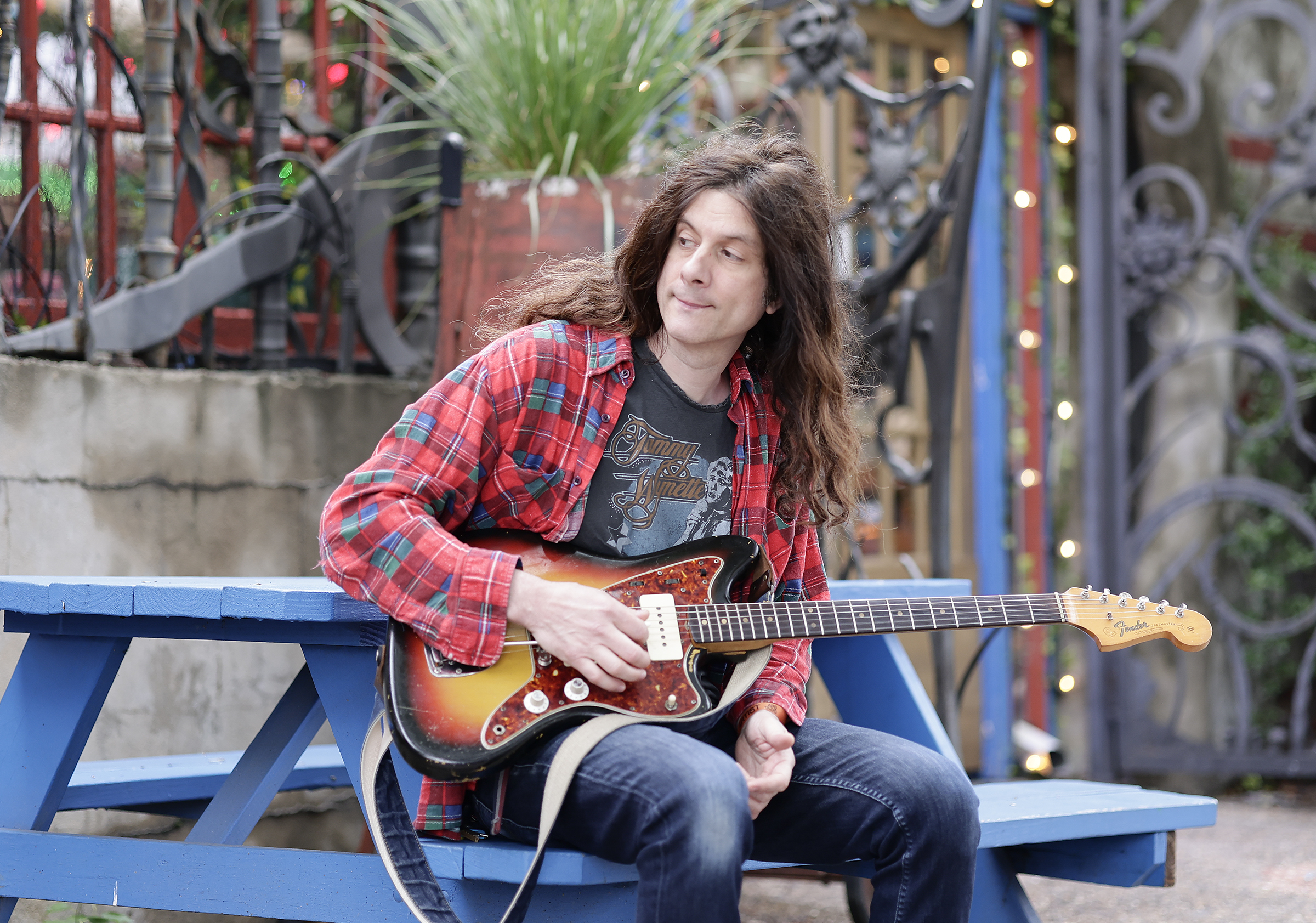
    The grabby single on Vile’s new 215 proud Philadelphia’s Been Good To Me is the hyped up “Chance To Bleed.” This second single, however, is more quintessential KV. It’s a song for a lazy summer afternoon, riding a lovably, languorous groove, as zigzagging his way down Lincoln Drive makes Vile “feel I can fly — for a while.”

    Philly alt-rock star Kurt Vile outside the Silk City Diner on Sunday, May 24, 2026 in Philadelphia.Yong Kim / Staff Photographer
  • Should you drink Philly’s tap water?

    Should you drink Philly’s tap water?

    If you live in Philly and want to know information about your tap water quality, start with the latest consumer confidence report, which is required to be produced annually by every community water system in the country. Most people never read them, but the reports provide essential information about drinking water quality.

    Like other large water systems, the Philadelphia Water Department publishes this information online, including the most recent 2025 drinking water quality report. The report provides an overview of Philly’s drinking water from source to tap. It reports that levels of approximately 100 regulated contaminants all meet federal standards.

    As an interdisciplinary scientist and engineer, I study drinking water infrastructure and how science gets translated into policy and decision-making.

    While the Philadelphia Water Department report is a good place to start, knowing what it tells you and where there may be gaps requires some background on how drinking water is regulated.

    How drinking water gets regulated

    In the U.S., drinking water is regulated under the Safe Drinking Water Act, which set limits for just over 20 contaminants when it became law in 1974.

    Subsequent amendments and regulatory processes have brought the total to about 100. That’s still a small number compared to the approximately 700 disinfection byproducts, the tens of thousands of chemicals in commercial use in the U.S. today, or other contaminants of emerging concern.

    While not all of these compounds end up in drinking water in amounts that can harm public health, the U.S. Environmental Protection Agency’s regulatory process is designed to be reactive, not proactive.

    Before setting a limit, the EPA must demonstrate that a contaminant may cause adverse health effects, that it occurs at levels that are a public health concern, and that regulation would meaningfully reduce risk.

    This process is repeated contaminant by contaminant, though a single glass of tap water may contain dozens of trace contaminants at once. The EPA has recently moved partly toward regulating mixtures of contaminants. The 2024 federal PFAS rule set individual limits for six PFAS compounds and also regulated four of them as a mixture. However, proposed changes to the 2024 federal PFAS rule include rescinding the mixture provision.

    Goals versus limits

    Federal drinking water standards involve two numbers for each contaminant. The maximum contaminant level goal, or MCLG, is the concentration at which the contaminant is believed to pose no significant risk to health in people who drink that water every day for 70 years.

    For chemicals classified as possible human carcinogens, MCLGs are typically set at a level where drinking the water daily for 70 years would cause one additional cancer case per 1 million people above the background rate.

    However, MCLGs are nonenforceable. Enforceable drinking water limits, also called maximum contaminant levels, or MCLs, are often higher than MCLGs because they take cost and feasibility into account.

    Levels of forever chemicals

    Two forever chemicals, PFOA and PFOS, deserve attention first. Both are types of perfluoroalkyl and polyfluoroalkyl substances, commonly called PFAS. PFAS are a family of synthetic chemicals widely used in consumer products. They persist in the environment and accumulate in the body.

    The 2025 report from the Philadelphia Water Department shows Philly’s highest reported levels of PFOA at 6.1 parts per trillion, or ppt, and PFOS at 4.6 ppt. Both are above the new federal limit of 4 ppt.

    But Philly remains in compliance. Meeting the federal limit is not required until 2029, and the EPA has proposed extending that deadline to 2031.

    The levels are well below Pennsylvania’s limits of 14 ppt for PFOA and 18 ppt for PFOS.

    Encouragingly, the Philadelphia Water Department is expanding its capacity to remove PFAS systemwide using powdered activated carbon. Small-scale tests have shown that powdered activated carbon can be effective for removing PFOA and PFOS, though effectiveness in real treatment conditions depends on dosing, contact time, and other factors.

    Lead, disinfectants, and sodium

    Lead in drinking water comes from lead leaching into the water from service lines leading from the water main to your house or from plumbing inside your home. Lead can cause serious health problems, and it accumulates in the body.

    As required by the Lead and Copper Rule, the Philadelphia Water Department’s treatment includes corrosion control that forms a protective coating on the inside of pipes. This reduces the amount of lead that leaches into drinking water from lead service lines. Homes built before a 1986 federal ban on lead pipes and solder carry the most risk, as do homes with lead service lines. More recent brass fixtures could legally contain small amounts of lead until 2014.

    The Philadelphia Water Department is required to collect samples from homes in Philly with lead service lines every three years. Testing in 2025 showed 90% of sampled homes were at or below 2 parts per billion, or ppb. That’s well under the 15 ppb EPA action level. But testing results ranged from 0 to 21 ppb, meaning some homes with lead service lines had measurable lead in their water.

    The maximum contaminant level goal for lead is zero because no safe level of childhood lead exposure has been determined.

    Chemical disinfection keeps water safe across Philly’s 3,000 miles of pipe but produces byproducts linked to increased cancer risk. These byproducts form when the disinfectant, in this case sodium hypochlorite, reacts with organic matter remaining in the water after treatment. Levels rise the longer water sits in the pipes.

    The Philadelphia Water Department’s 2025 annual averages were 51 ppb total trihalomethanes and 41 ppb haloacetic acids – both well under federal limits of 80 and 60 ppb, respectively. However, individual samples exceeded those limits. This suggests some homes further out in the distribution system may experience elevated levels.

    Finally, sodium levels are a concern for people with sodium-restricted diets, including those with hypertension, heart failure, or kidney disease. The American Heart Association recommends that people in these groups limit sodium intake to 1,500 milligrams per day. Depending on which plant serves you, Philly tap water carries 4 to 44 milligrams of sodium per 8-ounce glass. Over eight glasses a day, that’s roughly 30 to 350 milligrams, or up to nearly 25% of the recommended daily limit.

    What you can do

    Reducing your household exposure to drinking water contaminants isn’t difficult.

    A carbon filter certified to NSF/ANSI Standard 53 will measurably reduce disinfection byproducts, PFOA and PFOS, and lead. A certified carbon filter for a pitcher, faucet, or refrigerator works well to reduce levels in drinking water; reverse osmosis does more, but it costs more and wastes water.

    In addition, if your home has a lead service line or older plumbing, the Philadelphia Water Department recommends running cold water from the tap for 3-5 minutes when it has been unused for more than six hours before drinking or cooking with it. This flushes out water that has been in contact with plumbing.

    The Philadelphia Water Department offers free lead testing of tap water on request. The Centers for Disease Control and Prevention and EPA recommend that children at risk for lead exposure should have their blood lead levels assessed.

    Sodium is a different case: Standard carbon filters don’t remove it, but an ion-exchange pitcher, such as ZeroWater, or a reverse osmosis system will.

    Christine Kirchhoff is an associate professor of civil and environmental engineering and law, policy, and engineering at Penn State University.

    Reprinted from The Conversation.