Tag: topic-link-auto

  • Diane Richardson watching her daughter’s jersey retirement was a ‘full-circle moment’

    Diane Richardson watching her daughter’s jersey retirement was a ‘full-circle moment’

    WASHINGTON — Diane Richardson had spent the last few days struggling to sleep.

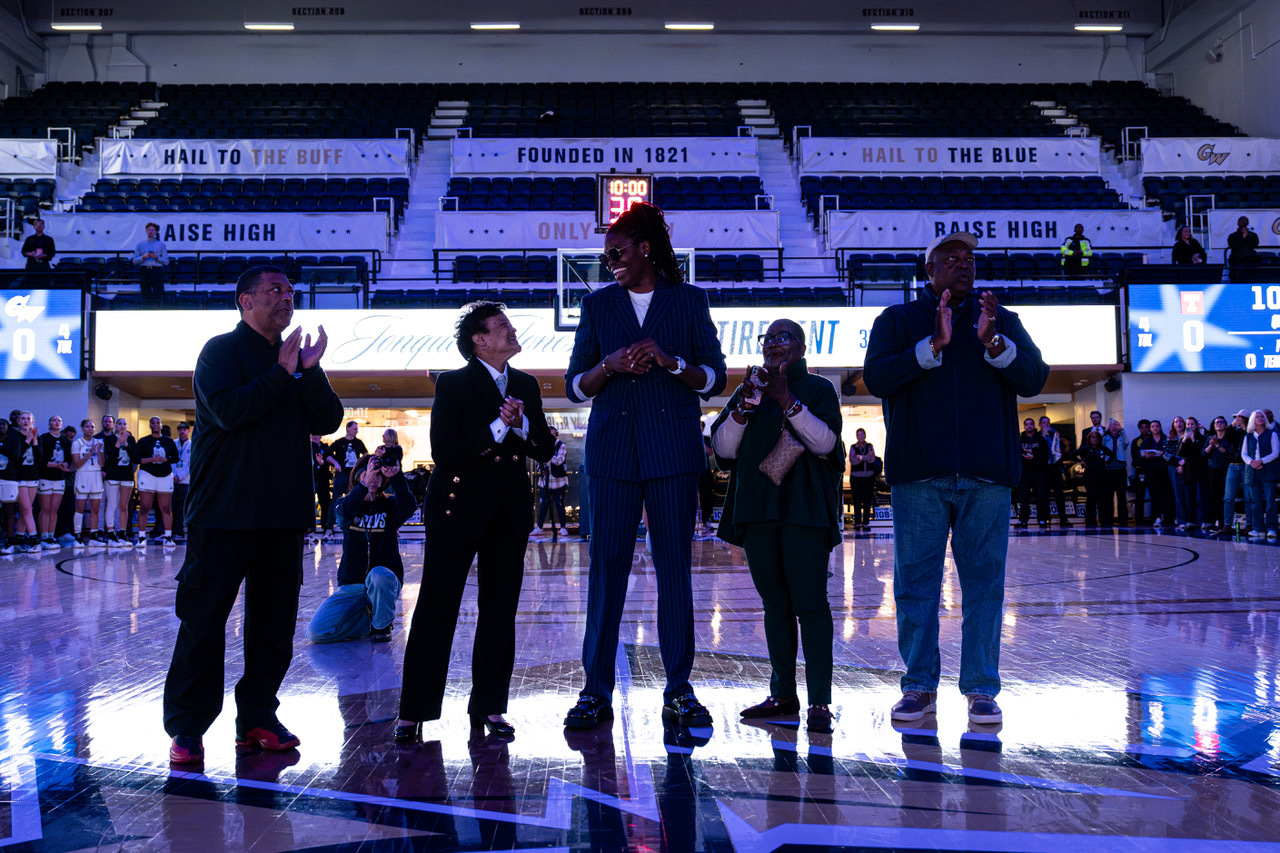
    The Temple women’s basketball coach knew what awaited her Tuesday night at George Washington, where she spent four seasons as an assistant coach. Her daughter, Jonquel Jones, would become the first player in program history to have her jersey retired.

    For Richardson, who helped raise Jones after she arrived in the United States from the Bahamas as a teenager, it was an opportunity to reflect on her daughter’s journey to becoming one of the WNBA’s most decorated players.

    When the two embraced before Jones’ No. 35 was honored at the Charles E. Smith Center, Richardson couldn’t contain her emotions.

    “I hate that I had to cry before the game, I cried with joy,” Richardson said afterward.

    There was still a game to coach, so Richardson collected herself and guided Temple to an 83-73 victory over her former program, improving the Owls’ record to 3-1.

    “It was surreal,” Richardson said. “I probably haven’t slept in the last couple days, knowing I was coming back home, and JJ was getting her jersey retired.”

    For Jones, the occasion carried a coincidence she hadn’t forgotten.

    Around 2011, Jones visited George Washington to watch a former high school teammate compete. At the time, she was committed to Clemson.

    The opponent at that game was Temple. More than a decade later, Jones returned to have her jersey honored, again with Temple on the opposite sideline. This time, Richardson was leading the Owls.

    “I think it’s a full-circle moment for me,” Jones said. “It was my first time coming on this campus, and I remember coming through the doors, and it was crazy because Temple was playing against GW.”

    Jones became one of the most accomplished players in program history, winning Atlantic 10 player of the year and defensive player of the year honors in 2015 and helping the Revolutionaries capture consecutive conference championships.

    But her college memories extended beyond trophies.

    She recalled dancing in the dorm rooms, listening to music, sharing food and spending time with teammates. Those moments stayed with her as much as the victories and individual recognition.

    The relationships she formed while dealing with injuries and difficult stretches gave her a support system long after college.
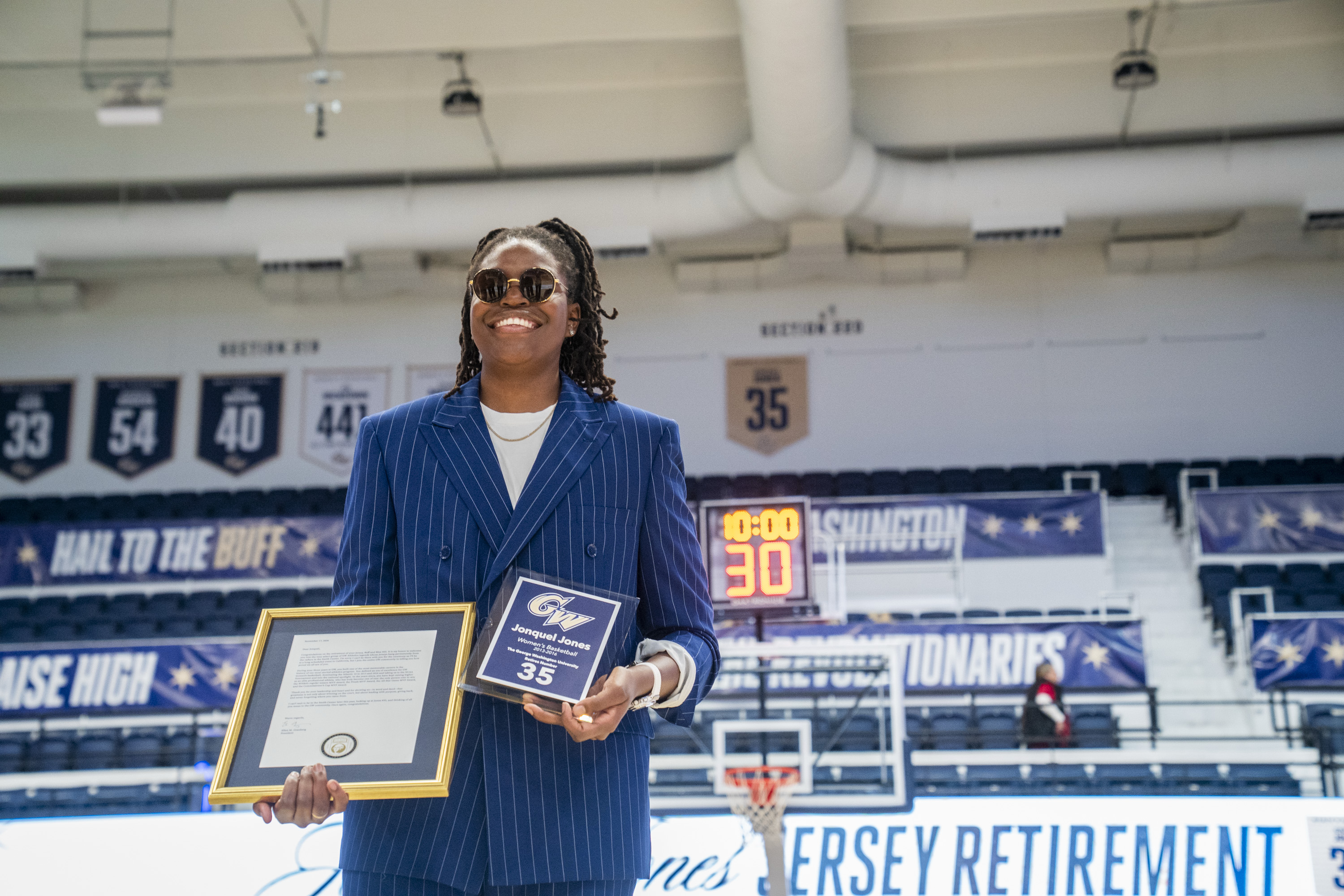
    Jonquel Jones had her jersey No. 35 retired at Smith Center on Tuesday.Maxine Wallace

    Richardson and her husband, Larry, welcomed Jones to their family after she came to the United States to pursue basketball. Richardson coached Jones at Riverdale Baptist in Maryland before playing at George Washington from 2012 to 2016.

    Jones was selected sixth overall in the 2016 WNBA draft. Richardson remembers a different side of her daughter’s development: the countless hours she spent practicing when nobody was watching.

    “She was out there all hours of the night, shooting baskets,” Richardson said. “She woke us up in the morning, shooting baskets.”

    Those memories made Tuesday’s ceremony especially meaningful.

    “Just raising her for 18 years, just knowing how hard she worked,” Richardson said. “It was great to see her rewarded for all of that effort.”

    Jones won the WNBA’s regular-season MVP award in 2021 and helped lead the New York Liberty to their first championship in 2024, earning Finals MVP honors.

    Richardson attended several games during that championship run, including the decisive Game 5 victory over the Minnesota Lynx.

    Two years later, mother and daughter shared another milestone.

    Jones said Richardson was a major reason she attended George Washington. Sharing Tuesday’s recognition with Richardson, Larry, and other family members reinforced the importance of their relationship.

    For Richardson, the trip carried its own memories.

    She still has a home in the Washington area and described returning to George Washington as a homecoming. Her former players attended Tuesday’s game.
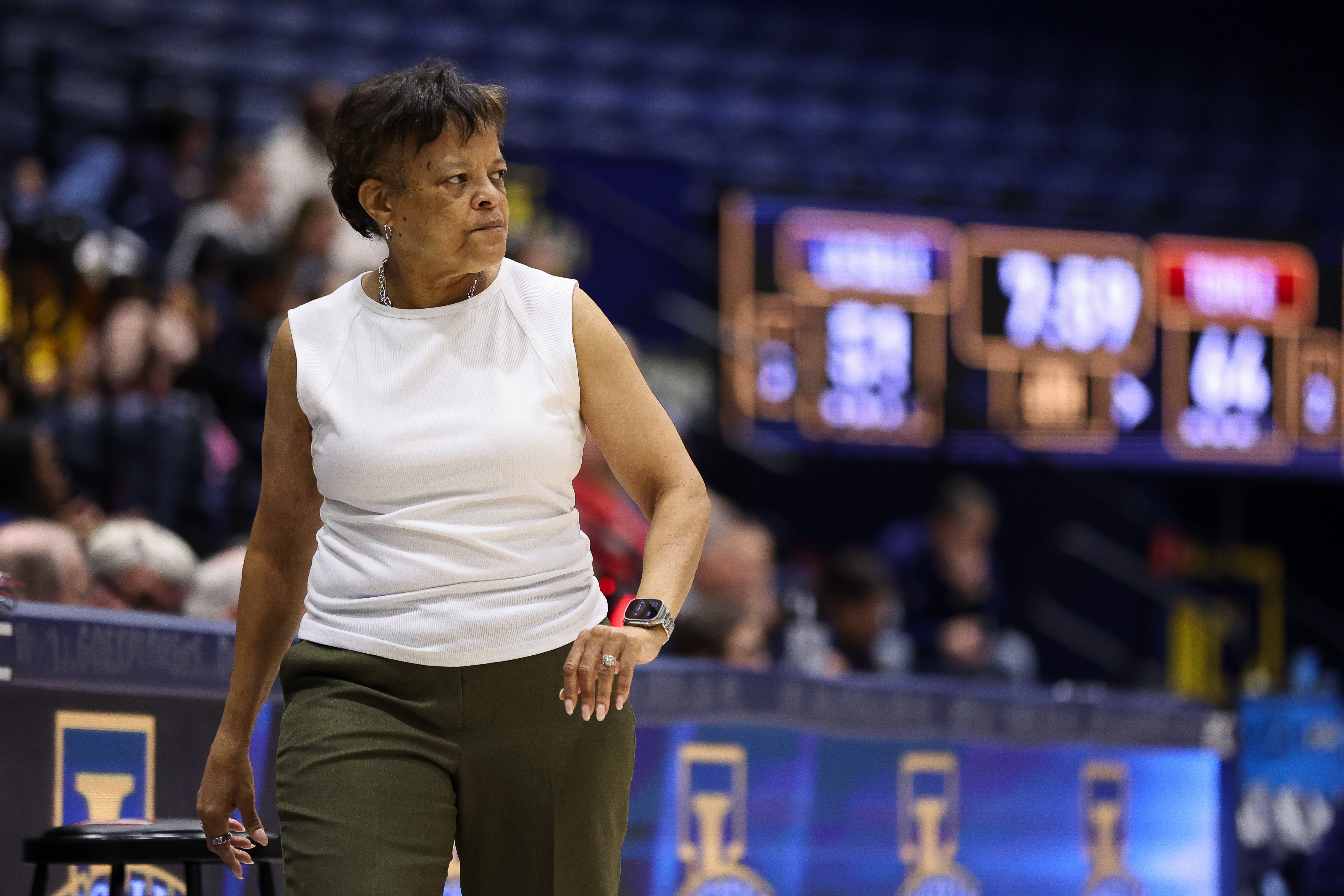
    Temple coach Diane Richardson said watching her daughter’s jersey retirement was “surreal.”Isaiah Vazquez / For The Inquirer

    Richardson had to navigate her emotions while preparing Temple for a challenging opponent. The Owls led by one point at halftime before George Washington opened the third quarter on a 9-2 run. Temple responded, with freshman Mariah Cross providing timely baskets and Taliyah Logwood energizing the team on both ends.

    Cross finished with 16 points, while Logwood added 14 off the bench. Kaylah Turner led Temple with 21 points and Shayla Smith contributed with 18 points and 10 rebounds.

    The Owls held a 57-52 advantage entering the fourth quarter and withstood a late George Washington push.

    Asked what advice Richardson used tell a younger Jones, the coach said to work hard and believe that greatness is possible. Jones saw it through with late-night workouts, college championships, and professional success.

    Now, her No. 35 will hang permanently in the building where she and Richardson shared some of their most important basketball memories.

    “I’m just so incredibly proud of her,” Richardson said.
  • Josh Harris gifts $15 million to Penn wrestling and Wharton School — and is ‘optimistic’ about the Sixers’ hot start

    Josh Harris gifts $15 million to Penn wrestling and Wharton School — and is ‘optimistic’ about the Sixers’ hot start

    When Josh Harris walks into Penn’s wrestling room, it looks the same — and “smells the same” — as it did when he trained there 40 years ago.

    The 76ers owner and alumnus of the Quakers program is giving that space a much-needed upgrade. His $5 million donation announced Wednesday by Penn will create the Harris Family Wrestling Room. It is part of a total $15 million gift, which also includes $10 million to expand the Harris Program at the Wharton Business School into the Harris Family Alternative Investments Center.

    “At the end of the day, you win by having great [athletes] and great coaches,” Harris told The Inquirer earlier this week. “And if you don’t have a good place for them to work, they won’t come — especially in college. The Ivys are quite good in wrestling … and all these places have incredible facilities, so Penn just needed that to compete.”

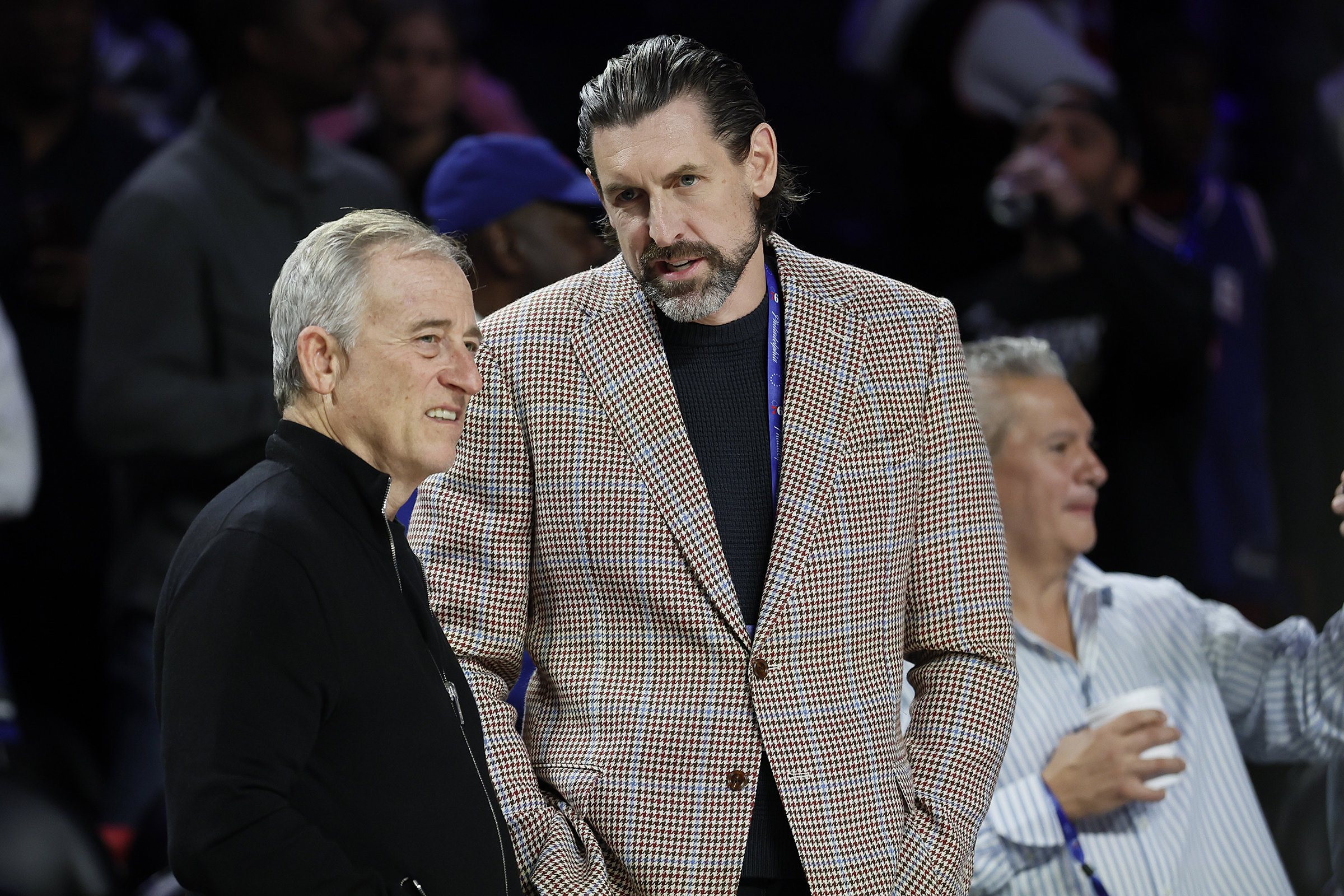
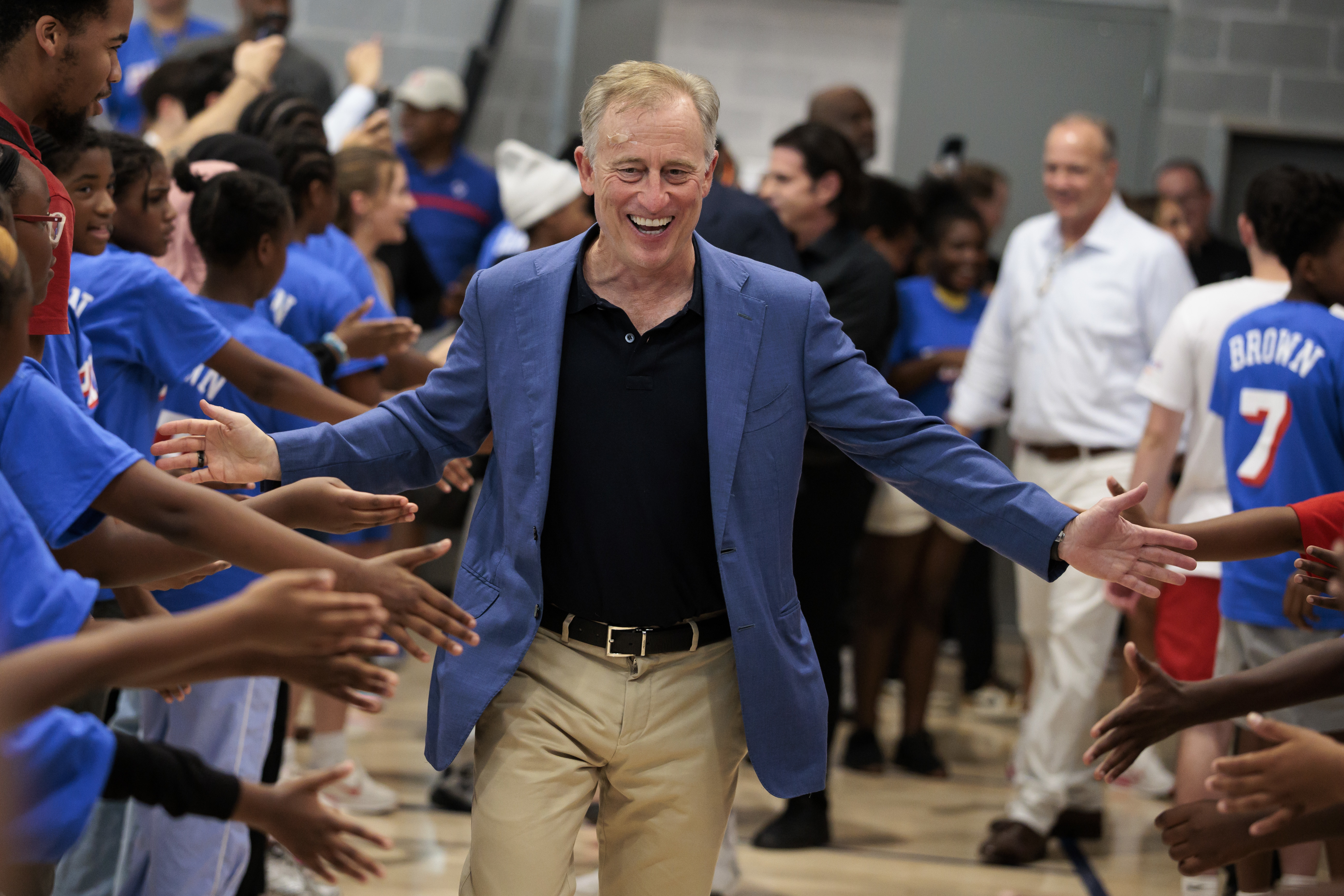
    Sixers owner Josh Harris, left, and president of basketball operations Mike Gansey talk before the Sixers face the Celtics.Elizabeth Robertson / Staff Photographer

    The new 8,900-square-foot wrestling room, expected to open in 2028 as the Pottruck-Reina Wrestling Center, is part of a broader renovation of Weightman Hall Gymnasium. The facility will be larger and include modern amenities such as a new locker room and hydration and treatment stations, Harris said.

    Harris credits wrestling with changing his life when he began the sport at age 10. It taught him life skills such as focus — because “there’s nothing like being on the mat and having somebody physically dominate you and try to choke you unconscious,” he quipped — while also being part of a team.

    He became an 118-pound member of Penn’s wrestling team as an undergraduate. At Penn, Harris was teammates with Roger Reina, who became the most successful coach in program history. Harris was inducted into the National Wrestling Hall of Fame in 2013 as an Outstanding American, which honors people who used “disciplines of wrestling to launch notable careers in other aspects of life,” according to the Hall’s website. Harris also endows an assistant coach position on Penn’s staff.

    On the academic side, Harris’ gift will turn the Harris Alternatives Investments Program — which was originally established in 2019 with a $10 million donation — into a fully realized center for student programming, faculty research, and global industry engagement, according to a Penn news release.

    Harris feels passionate about alternative investing after cofounding and building his wealth through the private equity firm Apollo Global Management. Wharton will study how private markets continue to evolve in scale and influence, with fellowships for students, a Harris Family Alternative Investments Conference, and dedicated data hub.

    “Josh and [wife] Marjorie’s vision for alternative investments at Wharton has always been bold, and this gift is a natural and inspired evolution of everything they have already built here,” Wharton School dean Erika H. James said in a news release. “The Harris Family Alternative Investments Center will be a truly world-class home for students, scholars, and practitioners in this field — and a lasting reflection of their extraordinary generosity and belief in what Wharton can do.”

    Added Harris: “Given the size of [private equity] now, [Penn] needed a center to fund research about it. … It’s really to allow the university to help a lot of people, and train a lot of people, and be more inclusive as far as who works in the industry.”

    Harris’ connection to Penn runs deep. He said his grandfather was admitted to the school, but never attended because his family could not afford it. But Harris’ father went on to graduate from Penn, and met Josh’s mother while she was a student at Temple. Josh’s son, Stuart, also is a Wharton graduate.

    “It’s almost, like, part of me,” Harris said of Penn. “ … It’s about recognizing and being grateful for the university that did so much for me, in terms of educating me and creating relationships that I still have today.”

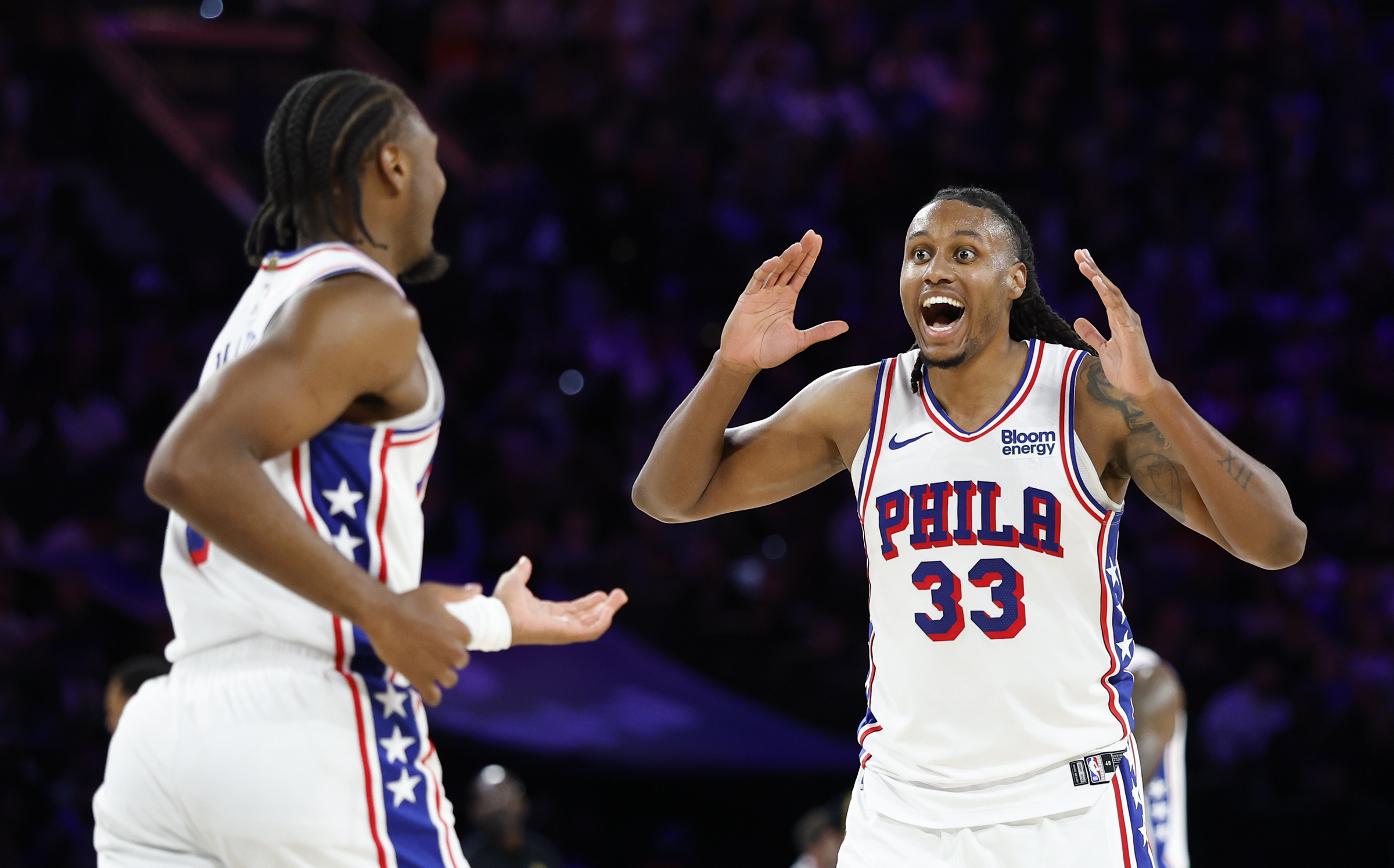
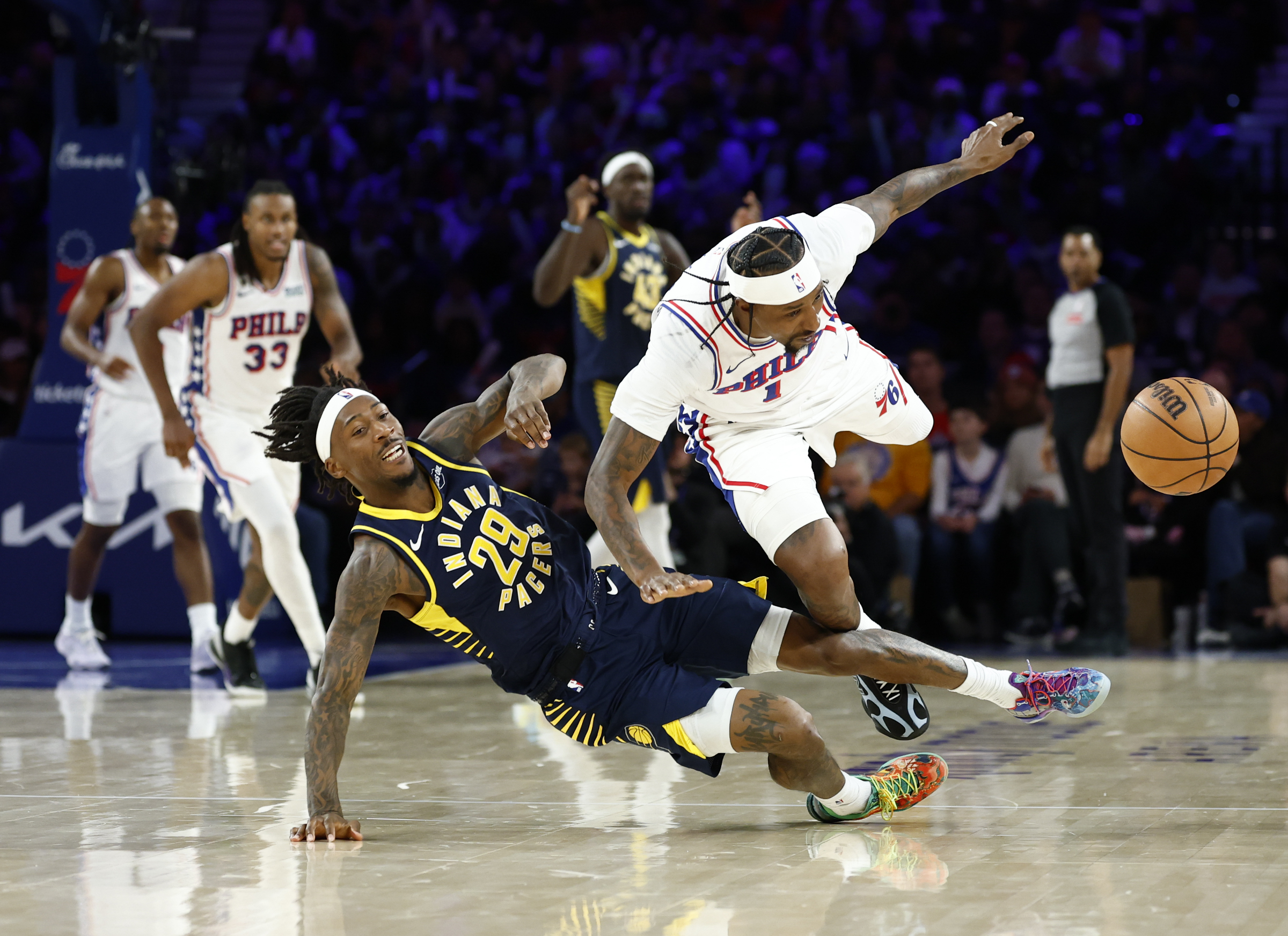
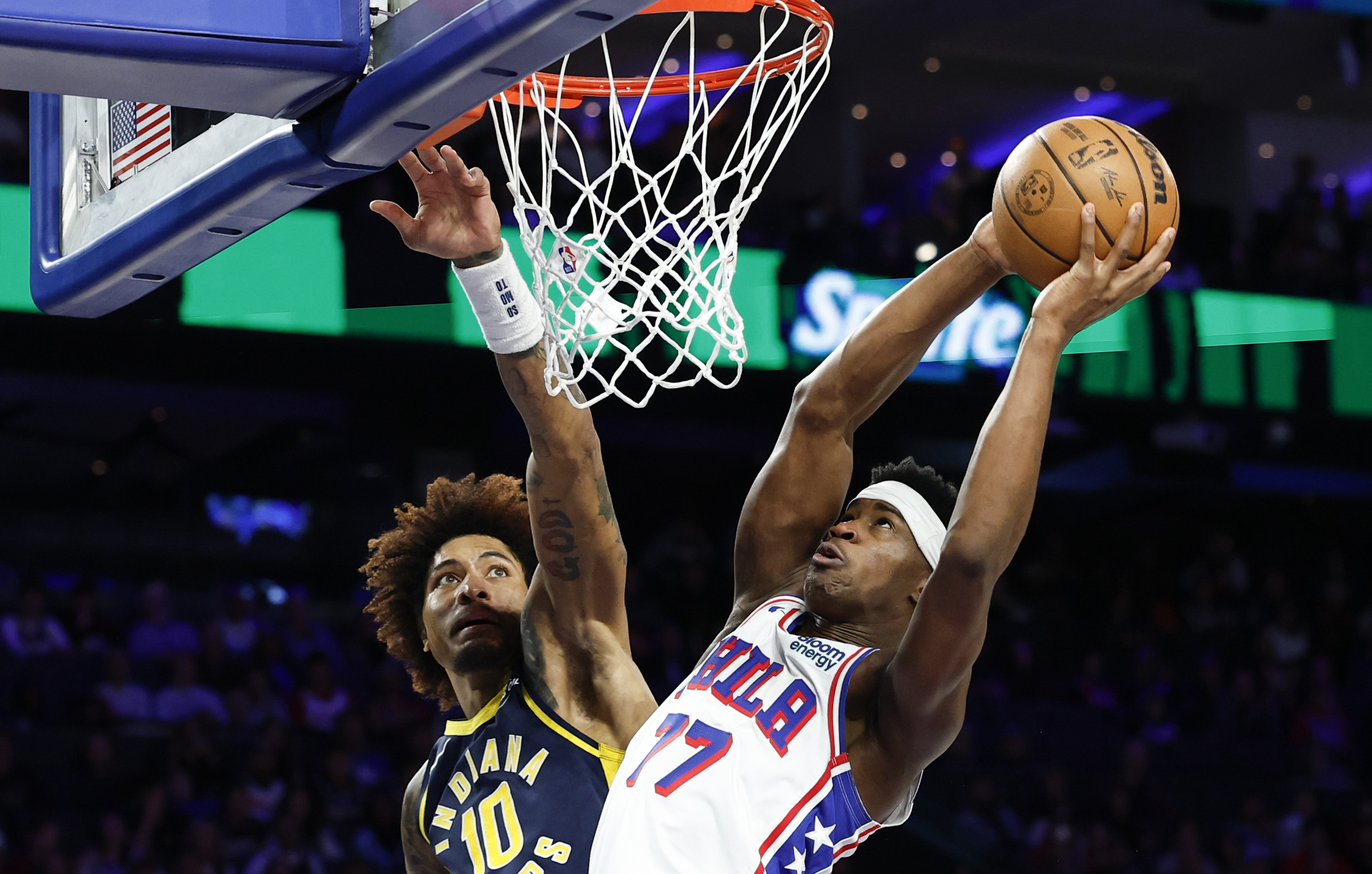
    Harris’ gift to Penn also arrives during the Sixers’ 12-3 start, which he called “incredible.”

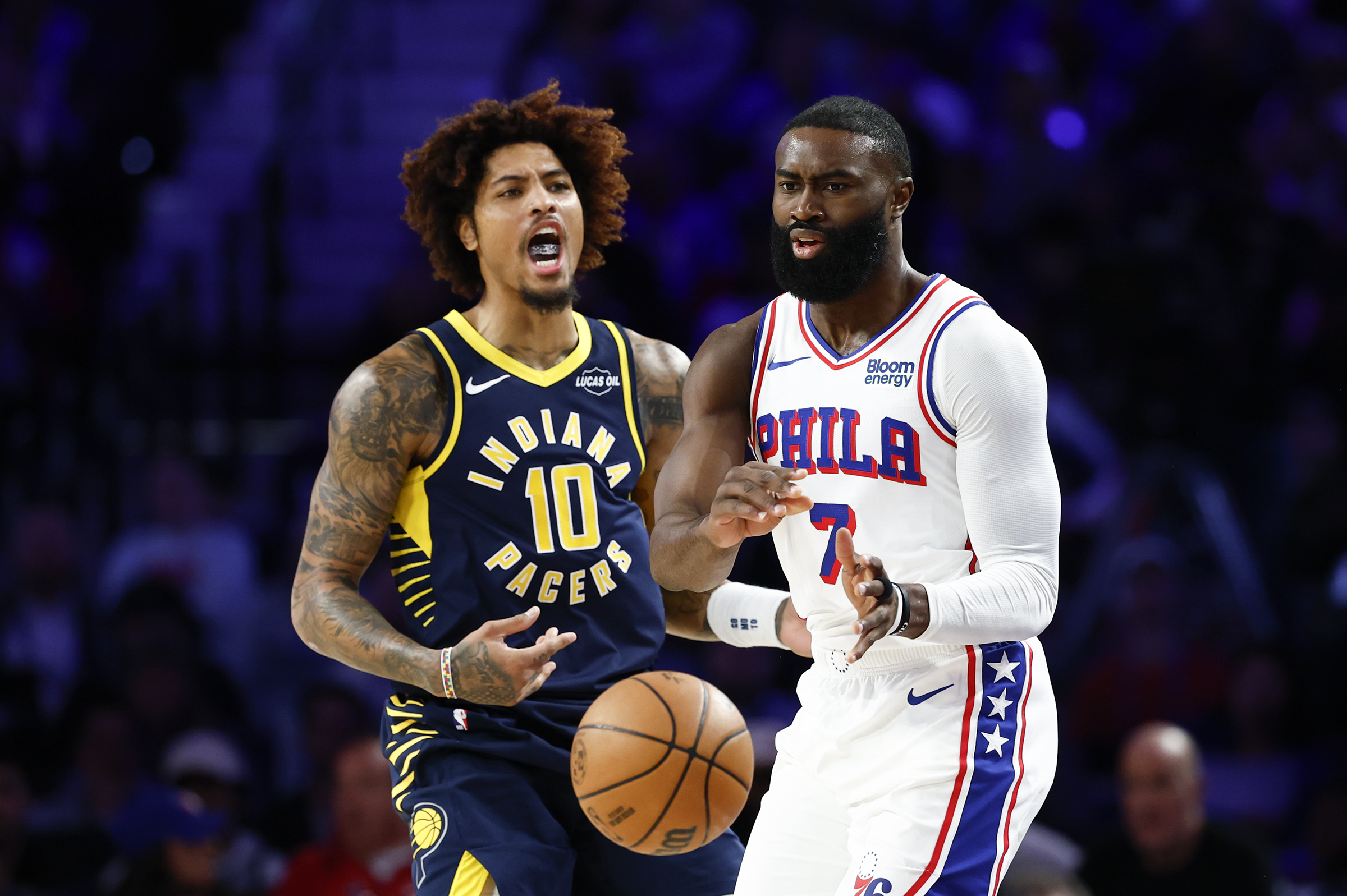
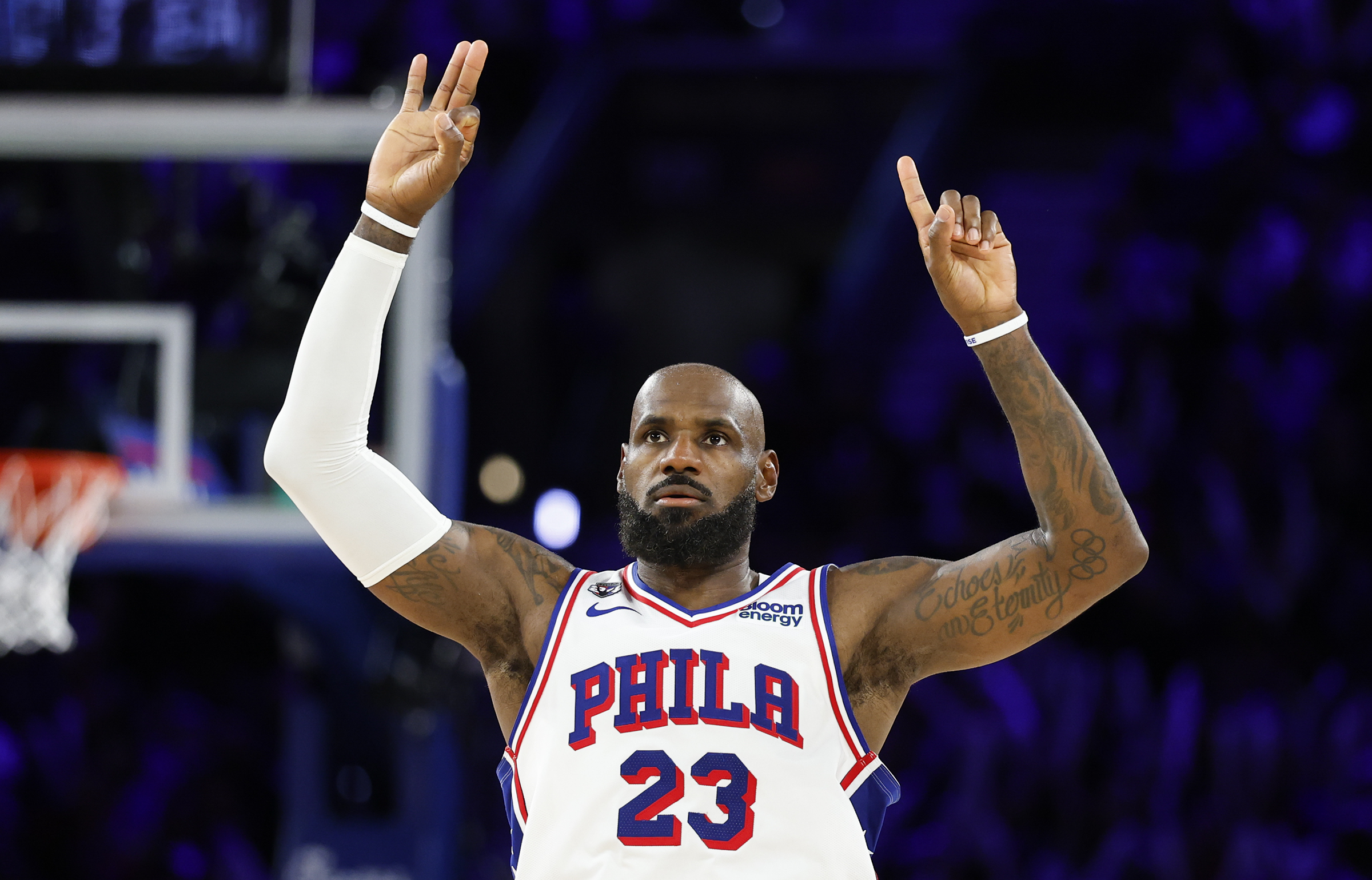
    He has enjoyed getting a closer look at the legendary LeBron James’ leadership, at fellow newcomer Jaylen Brown’s impact, and at Tyrese Maxey’s continued ascent into the early MVP conversation. After the transformative offseason to add James and Brown, Harris also sees the early signs of a culture focused on winning “and really enjoying each other.”

    “There’s alignment up and down, from what I can see,” Harris said. “And I think it’s critical and really important. [It’s] a group of really professional players that have been there and been in this situation before.

    “To see it come together so early as well as it has — obviously, we still have work to do — is gratifying. So it makes me feel optimistic. Again, we’re a long way from the playoffs right now. … I’ve just been around too long. We need to stay healthy and continue to deliver.”

  • On the Medicaid cuts, Gov. Shapiro should just say no

    On the Medicaid cuts, Gov. Shapiro should just say no

    David Oxman is a critical care physician and healthcare activist.

    On Jan. 1, 2027, new Medicaid work requirements passed by the lame-duck Republican Congress will take effect.

    All Pennsylvanian adults 18-64 will now be required to prove they work or volunteer at least 80 hours per month to maintain Medicaid coverage. Estimates are that the bureaucratic hurdles these changes impose will cause thousands to lose coverage. Not because they don’t qualify, but because they won’t be able to navigate the red tape required to prove they do.

    In response, the city, the state, community groups, and healthcare systems are scrambling to mitigate the harm. Designing education programs to let people know about the new requirements, automating electronic medical records to try to make proving medical exemption easier, and going out in the community to spread the word to the nearly 90,000 vulnerable people in Philadelphia alone.

    All crucial efforts to try to make the cracks people could fall through just a bit smaller.

    But there is another approach lawmakers could be taking: Just saying no.

    Let’s first be clear about what is happening. The Republican Party — the self-proclaimed enemy of stupid regulation and unnecessary paperwork — is intentionally weaponizing bureaucracy to cull Medicaid rolls and fund tax cuts.

    Medicaid participants will now need to submit more paperwork to prove they meet the work requirement. But having a job is not enough. They must prove that activities add up to 80 hours a month. Yet for some people — e.g., the home health aide for several different families, a self-employed contractor, or a driver for DoorDash — that could be really hard.

    Moreover, proving that you are medically unable to work will be no small thing. Even people with permanent disabilities are not exempted indefinitely. Federal rules require at least annual recertification, even when a person’s condition will never change.

    We have seen this movie before. In 2018, the state of Arkansas implemented more limited work requirements. Billed as a way to “strengthen personal responsibility” and “encourage appropriate care,” the program did neither. The changes did nothing to increase workforce participation, but were highly effective in getting people kicked off Medicaid. In the seven months that the program ran, before it was shut down by a federal judge, 18,000 people — or 25% of Medicaid beneficiaries targeted by the new rule — lost coverage.

    Meanwhile, the people of the state of Arkansas not only got sicker, but they also got poorer. Low-income adults impacted by the new policy delayed medical care and stopped taking medications they couldn’t afford. Fifty percent reported struggling to pay off medical debt incurred after losing coverage.

    In shutting down the program, a federal judge ruled that the work requirements intentionally undermined the purpose of the Medicaid program, which is providing medical assistance to those who could not afford it.

    When similar work requirements go into effect nationally next year, the Urban Institute estimates that up to three million people will lose Medicaid solely because they cannot navigate the certification process.

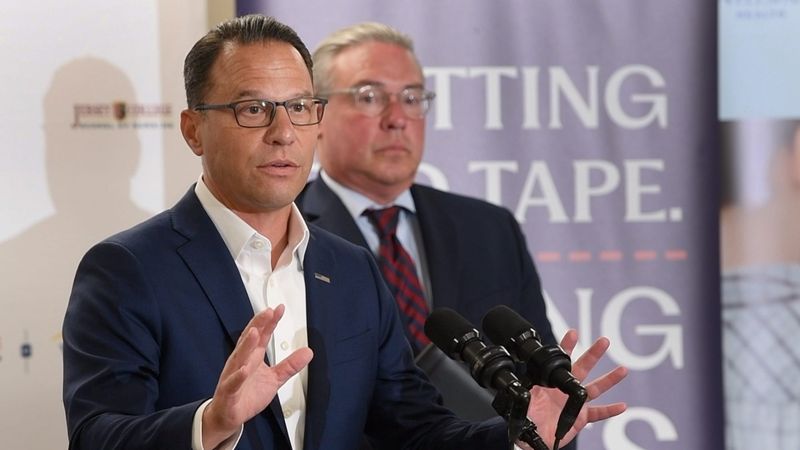
    Gov. Josh Shapiro replies to a question about the effects of the ‘Big Beautiful Bill’ on Medicaid and SNAP in Pennsylvania during a press conference at WellSpan Health’s Jersey College School of Nursing in York on July 7.Paul Kuehnel/ York Daily Record

    All of this begs the question: Why should Pennsylvania do the dirty work of implementing a policy that will predictably strip health insurance from eligible residents? People are on Medicaid for two reasons. They are poor — making no more than 133% of the poverty level — and they have no other vehicle to get medical care.

    No one is getting cancer to live large off checks meant to pay for chemotherapy.

    States need to go further than efforts to lessen the damage and ensure their citizens are not harmed by the new rules. They need to stand up and say no. This month, four states — Oregon, Minnesota, New Mexico, and Washington — did just that. They sued the Trump administration in federal court, directly challenging the legality of federal Medicaid work requirements and the financial penalties states face if they refuse to implement them. Gov. Josh Shapiro and the state of Pennsylvania should join that lawsuit.

    In the meantime, the governor should announce a moratorium on disenrolling Pennsylvanians under the requirements while litigation is pending, as well as issuing a statement that he will not remove anyone from the rolls until the case is resolved.

    If the federal government insists Pennsylvania implement these requirements before courts have resolved their legality, the governor should seek an emergency injunction authorizing Pennsylvania to maintain coverage for all beneficiaries while legal challenges proceed.

    The Keystone State should not let itself become an instrument of a federal policy that threatens to strip health insurance from people simply because they can’t navigate a complicated reporting system.

    Working to mitigate the harm the new Medicaid work requirements create is good. Preventing them from happening altogether is better.

  • LIV golf’s death made for a better PGA Tour thanks to Tiger Woods and yes, Phil Mickelson

    LIV golf’s death made for a better PGA Tour thanks to Tiger Woods and yes, Phil Mickelson

    LIV Golf died a well-deserved death two weeks ago, drowned in its own hubris, abandoned by the cold-eyed theocrats who financed it. The ultimate cause of death: When it came time to put up or shut up, the traitorous players who gorged at the trough of hypocrisy when the money gushed freely — players who said they left the PGA Tour for a place where they could claim ownership in the business of golf — refused to put any of their skin in the game.

    Many of them now have no place to play.

    Vive la mort!

    Fortunately, its death was not in vain.

    What emerged from almost five years of these turbulent, fetid waters is a professional golf scene that is cleaner, clearer, and easier to follow. The announcement Monday detailed how golf, in 2028, will become a worldwide meritocracy. It will be better suited to feature the biggest names in the biggest tournaments while rewarding the best players from overseas, from the game’s fringes, and from the evermore compelling college ranks.

    It also pays far better.

    Thank LIV for that, especially.

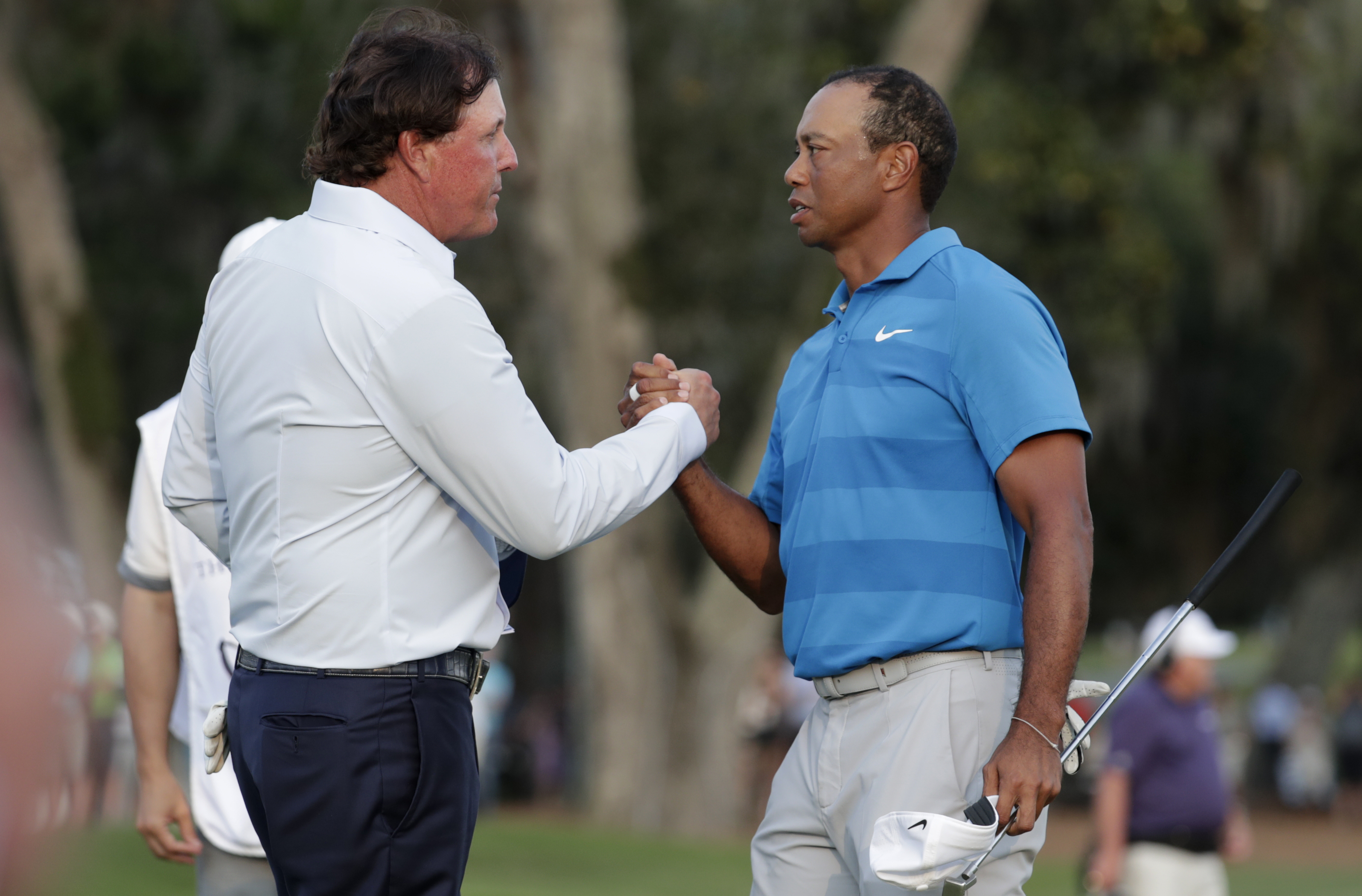
    “I can confidently say the PGA Tour is in the best position it has ever been,” said Tiger Woods, the most significant golfer in history.

    Woods, sidelined for two years by injury, has been busy nonetheless. He chaired the PGA Tour’s Future Competition Committee that spent the past 18 months accumulating feedback from players, fans, and sponsors in efforts to streamline the new system.

    Done.

    Simplified, the most successful 120 players will play at the highest level, the next 144 one level below, with lesser players based in the U.S., DP World Tour players, and college players able to rise through the ranks, again, on merit.

    Little wonder that the chief catalyst in this process came from the NFL.

    In June of 2025 the PGA Tour stole NFL executive vice president Brian Rolapp from the world’s richest sports league and made him the CEO.

    From left, Adam Scott, PGA Tour Commissioner Jay Monahan, incoming CEO Brian Rolapp, and Tiger Woods at the Travelers Championship in Cromwell, Connecticut in 2025.Doug Ferguson

    Rolapp, a former TV executive, spent 22 years helping professional football become America’s dominant sport as well its most unifying entity, largely because it is a simple game with simple routes to reward; in other words, the opposite of pro golf.

    Why leave the NFL? Because he realized NFL commissioner Roger Goodell wasn’t going anywhere, and he knew whoever saved PGA Tour golf from the threat of LIV would be regarded as a cross between a messiah and a genius by the corporate billionaire class to which golf caters.

    And so he has become.

    It wasn’t really a fair fight.

    After all, Rolapp is a sleepy-eyed BYU Mormon with a Harvard MBA who negotiated the NFL into the apex predator of sports entertainment.

    His opponents? Saudi silver-spoon royalty connected with terrorism, murder, and oppression; LIV CEO Greg Norman, still extremely fit but already a golf outcast; and Phil Mickelson, the LIV bell cow whose veneer of respectability had long ago begun to dullen. Also, Mickelson stunk at golf.

    That trio managed to beclown themselves to degrees exceeding their previous beclownments. The Saudis wasted $6 billion. Norman’s animosity continually soiled the brand. Mickelson’s utter absence of morality served as the moral compass of the poorly conceived, nonentertaining endeavor (Mickelson has withdrawn from public life in disgrace after multiple accusations of sexual assault).

    If LIV’s tawdry existence, buffoonish mismanagement, and predictable demise served any purpose, it at least buried whatever respectability remained for Saudi Arabia, the Great White Shark, and Lefty.

    It accidentally served a far greater purpose: It galvanized a game that desperately needed galvanization.

    In Rolapp, it procured an actual businessman and replaced an ineffectual leader, golf industry lifer Jay Monahan, who is retiring at the end of the year as commissioner but whose role as the Tour’s leader evaporated when Rolapp came aboard. Rolapp will assume the commissioner’s title Jan. 1.

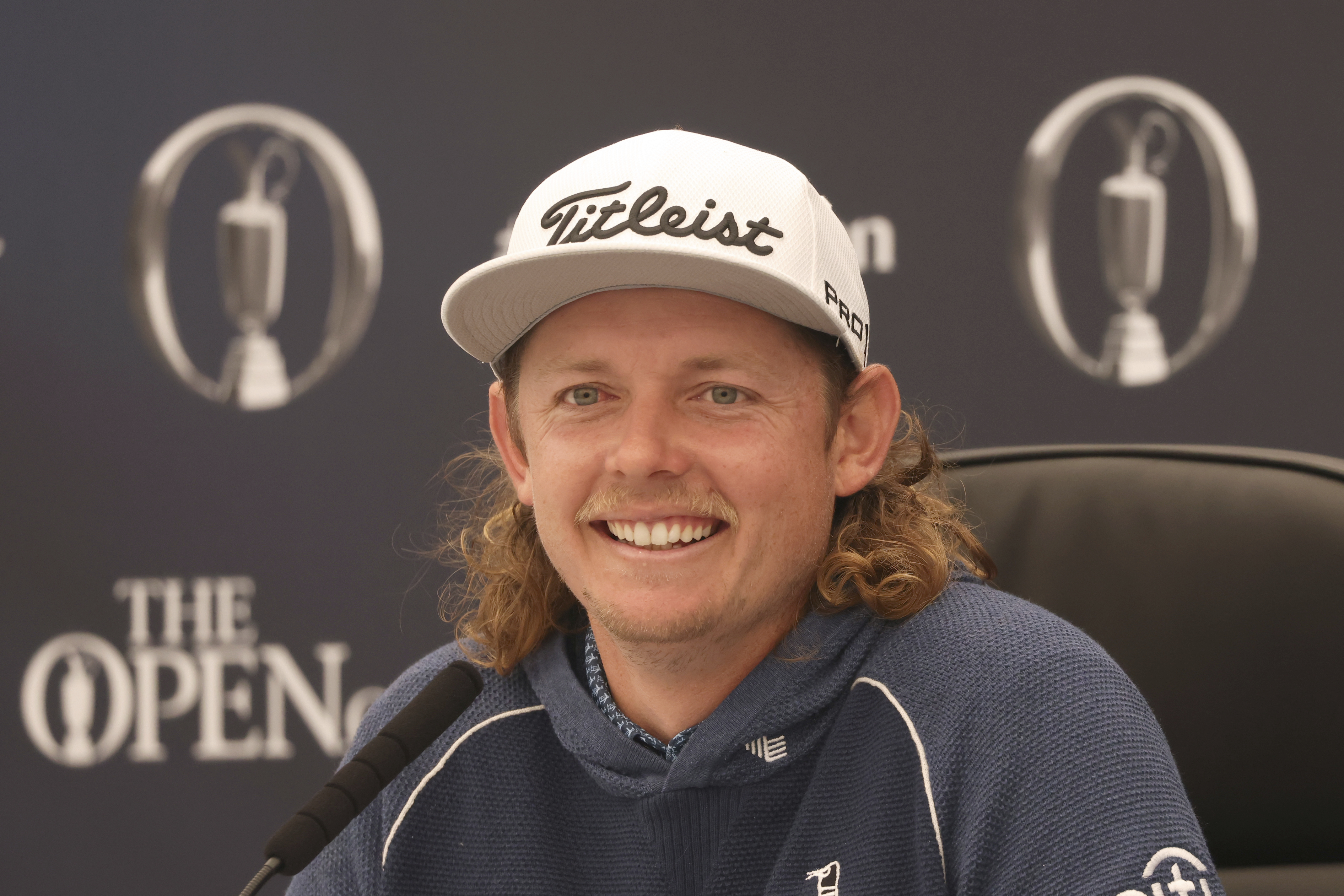
    His most pressing duty will be deciding a path to return for elite LIV prodigals such as social media superstar Bryson DeChambeau, international power Jon Rahm, LIV titan Joaquin Niemann, and mullet aficionado Cameron Smith.

    Australia’s Cameron Smith, winner of the 2022 British Open and well-known for his mullet, is one of LIV Golf’s best players who will be competing on the PGA Tour again at some point.Peter Morrison

    All four will participate on the DP World Tour in 2027, but the PGA Tour would be better with any and all of them.

    Not that any or all of them are necessary.

    As Woods said, the tour over which he will preside has never been healthier, and that’s mainly because LIV forced the tour to reinvent itself.

    Total prize money ballooned from $368 million in 2022 to about $500 million in 2026. Scottie Scheffler broke the yearly earnings record in 2022, 2023, 2024, and 2026, and he still led everybody in 2025, with $27.6 million, which was more than double the previous record of $12 million set by Jordan Spieth in 2015.

    How good has it gotten?

    Spieth hasn’t had a top-3 finish in two years, hasn’t won a tournament since April 2022, and has fallen from No. 8 in the world to No. 70, but he’s still made more than $20 million since 2022.

    “I would be lying if I said that we would have gone through this without LIV,” Spieth said in 2023 of the massive purse increases, one of the first PGA Tour players to acknowledge the ripple effect of LIV’s outrageous outlay.

    He was right then.

    He is right now.

    Just don’t expect him to write Greg and Phil any thank you notes.

  • One of Philly’s favorite pop-up bakers is going brick-and-mortar in Point Breeze

    One of Philly’s favorite pop-up bakers is going brick-and-mortar in Point Breeze

    Northeast Philly native Zach Posnan was teaching middle-school math and science in Kensington when the pandemic hit. Along with everyone else, Posnan got swept up in the sourdough craze.

    Unlike everyone else, he never let go.

    “Since I was using ratios in my baking and also teaching ratios to sixth graders, I’d bring my computer to where I was rolling out dough and putting all the ingredients together and use baking in my examples,” he said.

    When restrictions lifted and in-person classes resumed, he started bringing his loaves to school and serving breakfast in class.

    Zach Posnan, Owner of Brass Monkey Bread, poses for a portrait in his new space where he will setup his bakery on Tuesday, Nov. 17, 2026, in Philadelphia, Pa.Tyger Williams / Staff Photographer

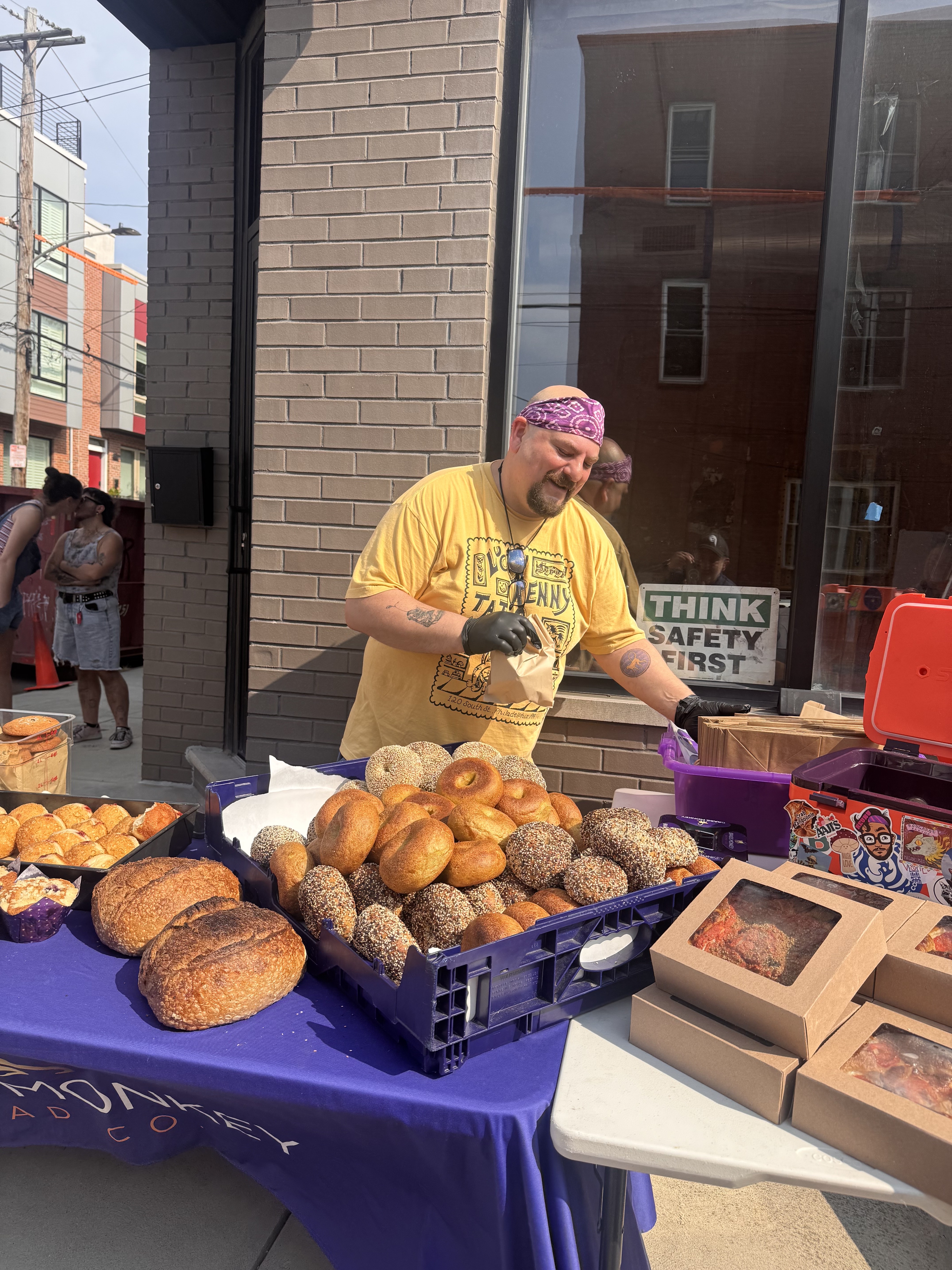
    This hobby eventually turned into a business: Brass Monkey Bread. For the last four years, Posnan, 45, has been one of Philly’s hardest-working pop-up bakers, setting up his bright purple-clothed table several days a week at cafes and markets all across town, including Breezy’s Deli and Market on Washington Avenue, Ellie and Bird Coffee in Port Richmond, Riverwards in Fishtown, Bodie in Fairmount, and several others. Posnan’s bagels, sourdough loaves, and tomato pies (easily some of the best in the city) sell out practically instantly.

    At last, that table is heading into retirement. Posnan has the keys to a brick-and-mortar bakery at 1439 S. 20th St. in Point Breeze, at 20th and Dickinson.

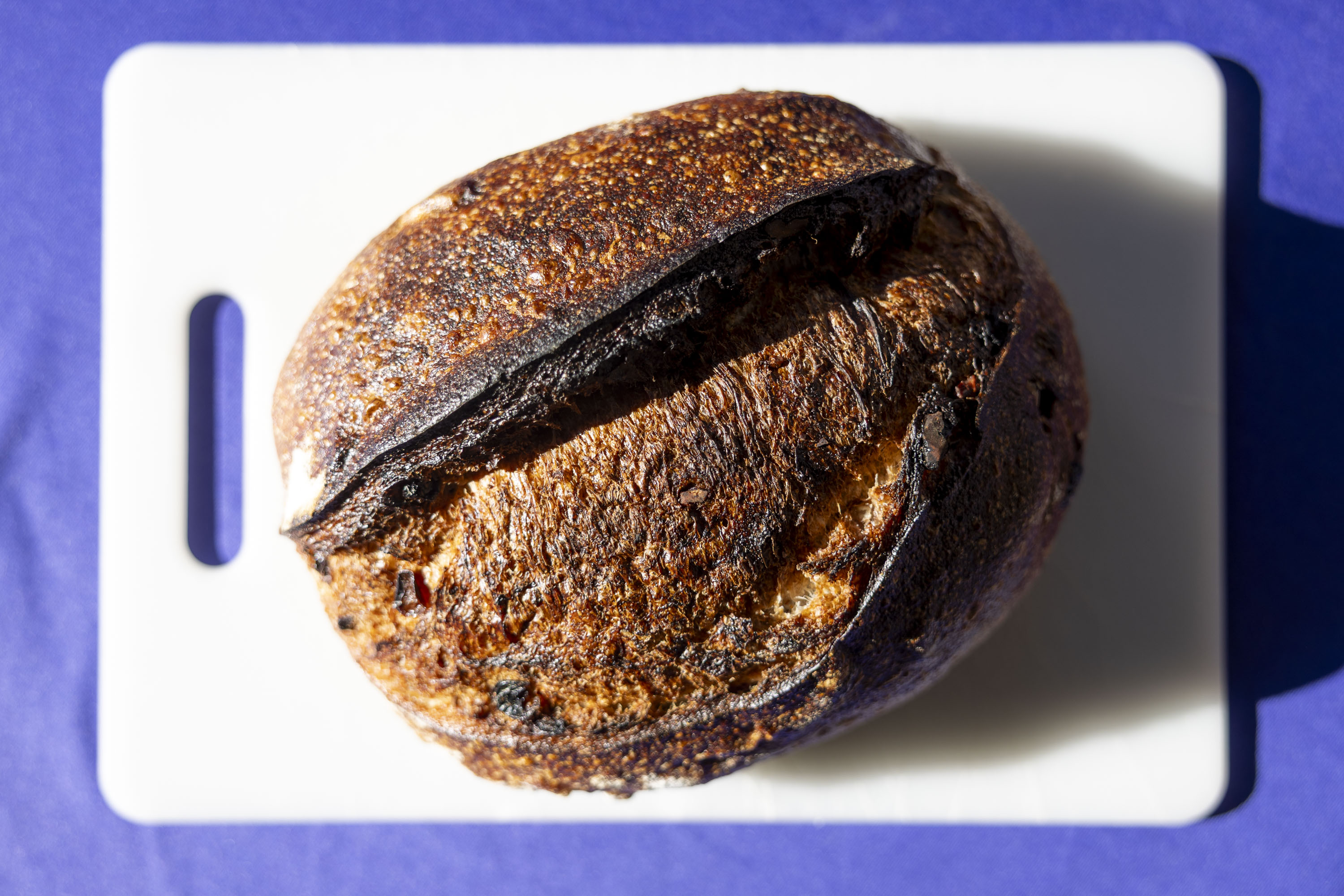
    The Cranberry and Walnut Sourdough made by Zach Psnan from Brass Monkey Bread on Tuesday, Nov. 17, 2026, in Philadelphia, Pa.Tyger Williams / Staff Photographer

    Posnan, who grew up in Elkins Park from age 7, moved to South Philly in 2009. Until recently, he was an award-winning teacher — he received a Lindback award for distinguished teachers in 2023 for his work at Conwell Middle School in Kensington.

    “I miss working with the kids, but I don’t miss all the other stuff,” he said, referencing bureaucratic challenges. “At some point, I will start doing classes at the bakery for both adults and kids.”

    Posnan signed the lease on Brass Monkey’s 1,400-square-foot space in March, but gutting the long-empty storefront — a former hoagie shop — was a long process. He received the keys last week and projects it will take six months to fully outfit the space.

    Baker Zach Posnan at one of his pop ups.courtesy of Brass Monkey Bread

    Funding for the brick-and-mortar has come from two sources so far: a GoFundMe, and a Kickstarter-esque fundraiser that Posnan calls “100 Little Monkeys” for individuals who invest $1,000 to receive perks like merchandise and free breakfast for a year.

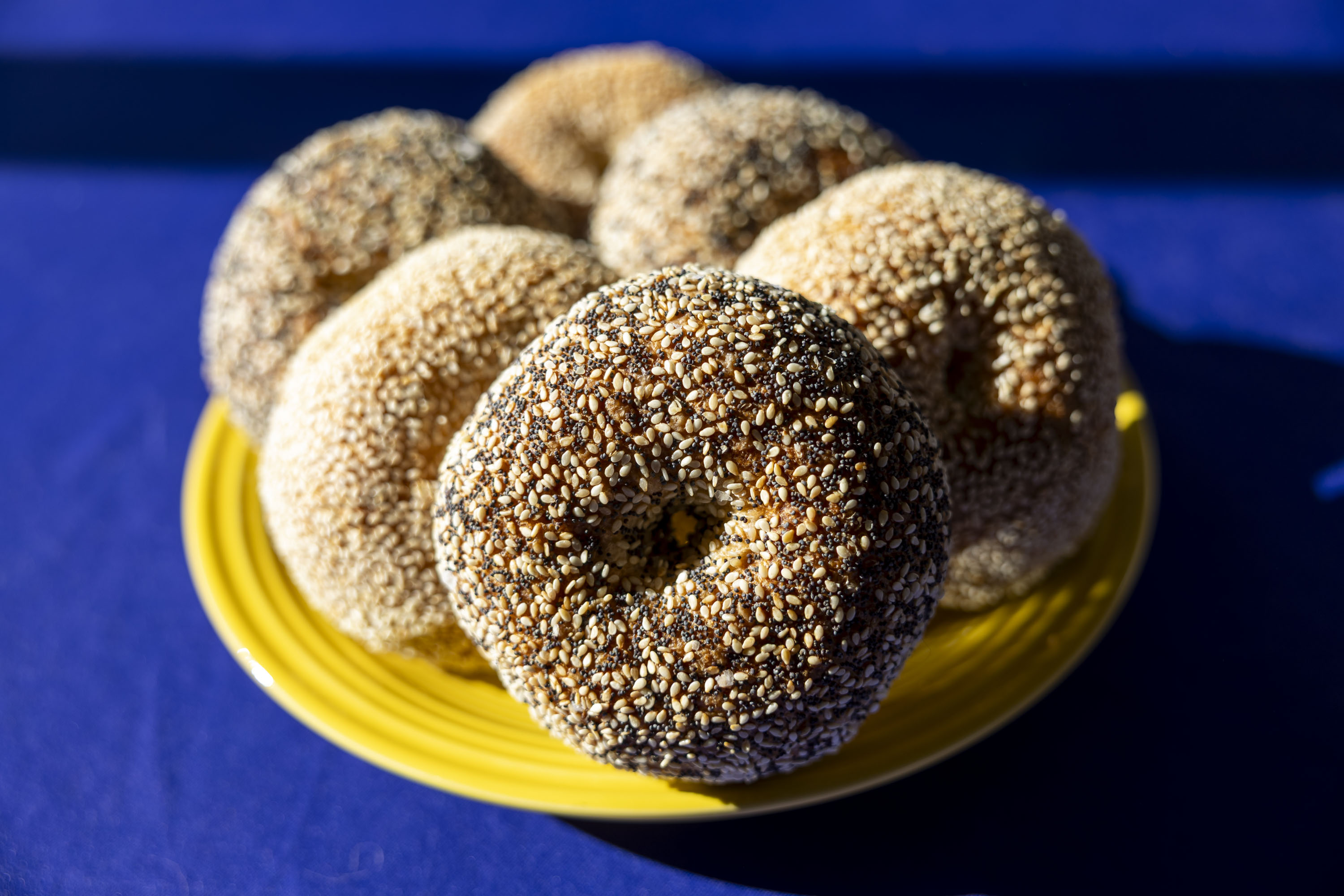
    He anticipates the future menu will include his tomato pie, sourdough loaves, soft pretzels, babka, muffins, and his distinct bagels, in flavors like curry and “something” — coated in sesame, poppy, and flaky salt. (“It’s not quite everything but it’s definitely not nothing,” he said.) There will also be a coffee program, sandwiches, and wholesale bread for restaurants.

    The interior of a loaf of sourdough from Brass Monkey Bread.courtesy of Brass Monkey Bread

    Posnan hopes the bakery will become a community space. “I worked with the underserved in Philadelphia for eight years, and I’m going to do a lot of things there that I’m going to transfer here.”

    One such thing will be the hygiene closet he kept in his former classroom that was filled with “tampons, pads, deodorant, toothbrushes, toothpaste, cologne, and anything the kids might want or need for personal hygiene. It was there for the whole school,” he said. “They could just come in, take what they needed, and my only rule was that they could not disturb my class.”

    The bakery’s name comes from the expression, “cold enough to freeze the balls off a brass monkey” — something of an occupational hazard for Posnan, given he has spent most of the last few years vending outside.

    He will soon wind down his pop-up schedule to once a week as he works on the bakery. Which means, for a time, those crusty breads and airy, focaccia-like tomato pies will become even more rare.

  • Police handcuff and remove ICE protesters who chained themselves together to block the agency garage

    Police handcuff and remove ICE protesters who chained themselves together to block the agency garage

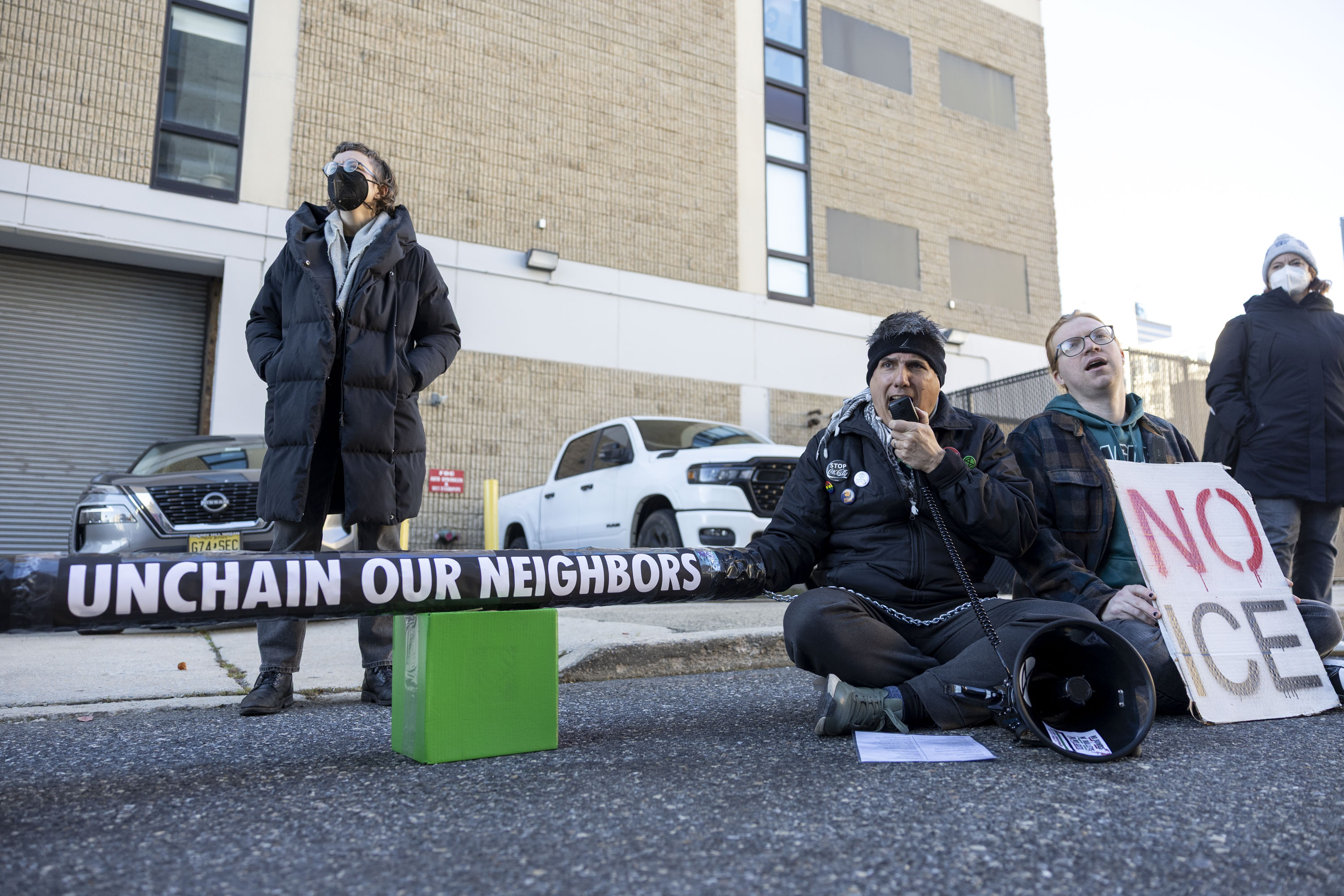
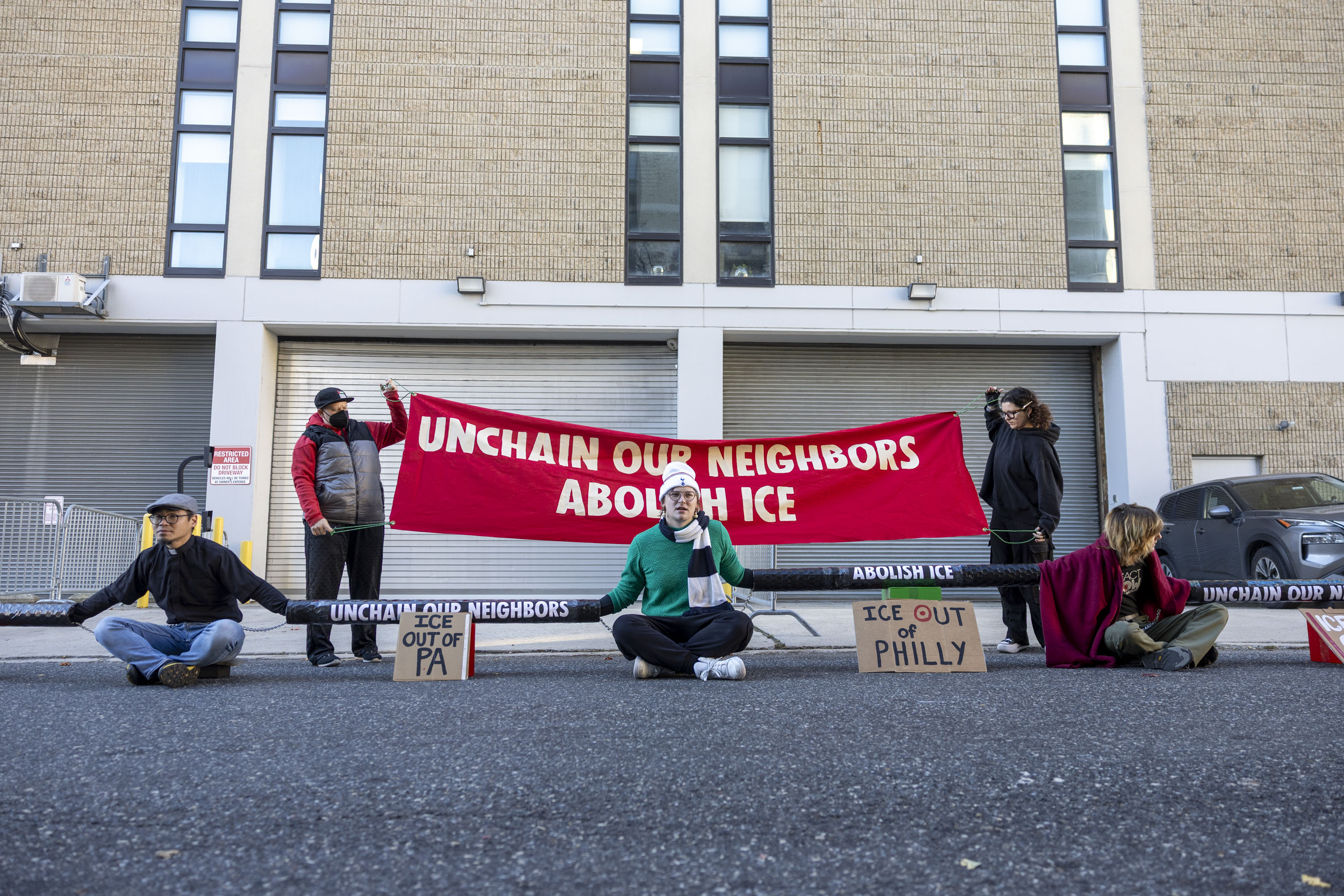
    Protesters chained themselves together outside the ICE office in Philadelphia on Wednesday morning, forming a steel and human cordon to try to block agency operations.

    The demonstrators barricaded the garage doors, on the south side of Cherry Street at Eighth Street, in an attempt to stop Immigration and Customs Enforcement vehicles from leaving or entering the building.

    Philadelphia police gave the protesters three warnings to disperse ― nobody moved ― then brought in electric saws and other tools to physically break the chains. The demonstrators did not resist.

    Meanwhile, as police worked, a crowd of more than two dozen additional activists serenaded those in chains with songs and anti-ICE chants.

    “We love you!” they shouted to those who, once freed, were handcuffed and led away.

    Frank Fortino, of Somerton, leads chants during an anti-ICE gathering outside ICE headquarters in Philadelphia on Wednesday as he is chained to another demonstrator. Tyger Williams / Staff Photographer

    Philadelphia police said 10 people were issued code violation notices, which are noncriminal citations, for obstructing the highway. Those citations typically result in fines, not jail time.

    The Department of Homeland Security said in a statement that “anti-ICE agitators” had obstructed federal law enforcement operations, and were arrested after ignoring warnings to stop.

    “Within two hours, the scene was cleared and operations continued,” the statement said. “The men and women of ICE are entrusted with upholding the rule of law and are held to the highest standards of professionalism, integrity, and ethical conduct.”

    In the past, activists sought to halt access to those ICE doors by linking arms or sitting down, but their lines were quickly pulled apart by police or federal authorities at the scene.

    On Wednesday, they went a step further.

    The demonstration began about 8 a.m., starting outside the Federal Detention Center, which holds immigration detainees, at Seventh and Arch Streets. The group marched to the ICE office at Eighth and Cherry, where others had taken up chained positions outside ICE.

    The ICE office has been a continuous target of protest by immigrant allies, religious groups, and political leaders as President Donald Trump pursues his mass-deportation agenda.

    The Wednesday morning protest was led by No ICE Philly, which in the last year has emerged as perhaps the boldest and most visible of the city’s pro-immigrant organizations.

    Its members and supporters have been cited or arrested by police multiple times as they carried out peaceful civil disobedience in the Philadelphia region. Last month, a dozen members were ejected from the Criminal Justice Center as they called for greater protections for immigrants who go to the courthouse. No one was arrested at that action.

    Addison Zipko of West Philadelphia (center) is chained to other demonstrators outside the garage doors at ICE headquarters during an anti-ICE protest in Philadelphia on Wednesday.Tyger Williams / Staff Photographer

    On Wednesday, the group said its goals were to raise awareness, put pressure on elected officials after the Nov. 3 election, and make sure that the people locked up inside knew they were not forgotten.

    They said they wanted to remind government leaders in the wake of the midterm balloting that most Americans believe immigration enforcement has gone too far.

    “I’m really proud of the 10 folks who risked their safety locking themselves together to block the garage doors, and it was a huge risk that they took,” said the Rev. Jay Bergen, a leader of No ICE Philly and pastor of the Germantown Mennonite Church. “If we keep one family from being torn apart today, it was worth it.”

    Bergen said the group would “continue to take action against ICE and ICE collaborators. … We’re going to continue to support immigrant neighbors across the city.”

  • Philly boxer Hank Lundy says ‘age is nothing but a number’ in his ‘new chapter’ with BKB Bare Knuckle Boxing

    Philly boxer Hank Lundy says ‘age is nothing but a number’ in his ‘new chapter’ with BKB Bare Knuckle Boxing

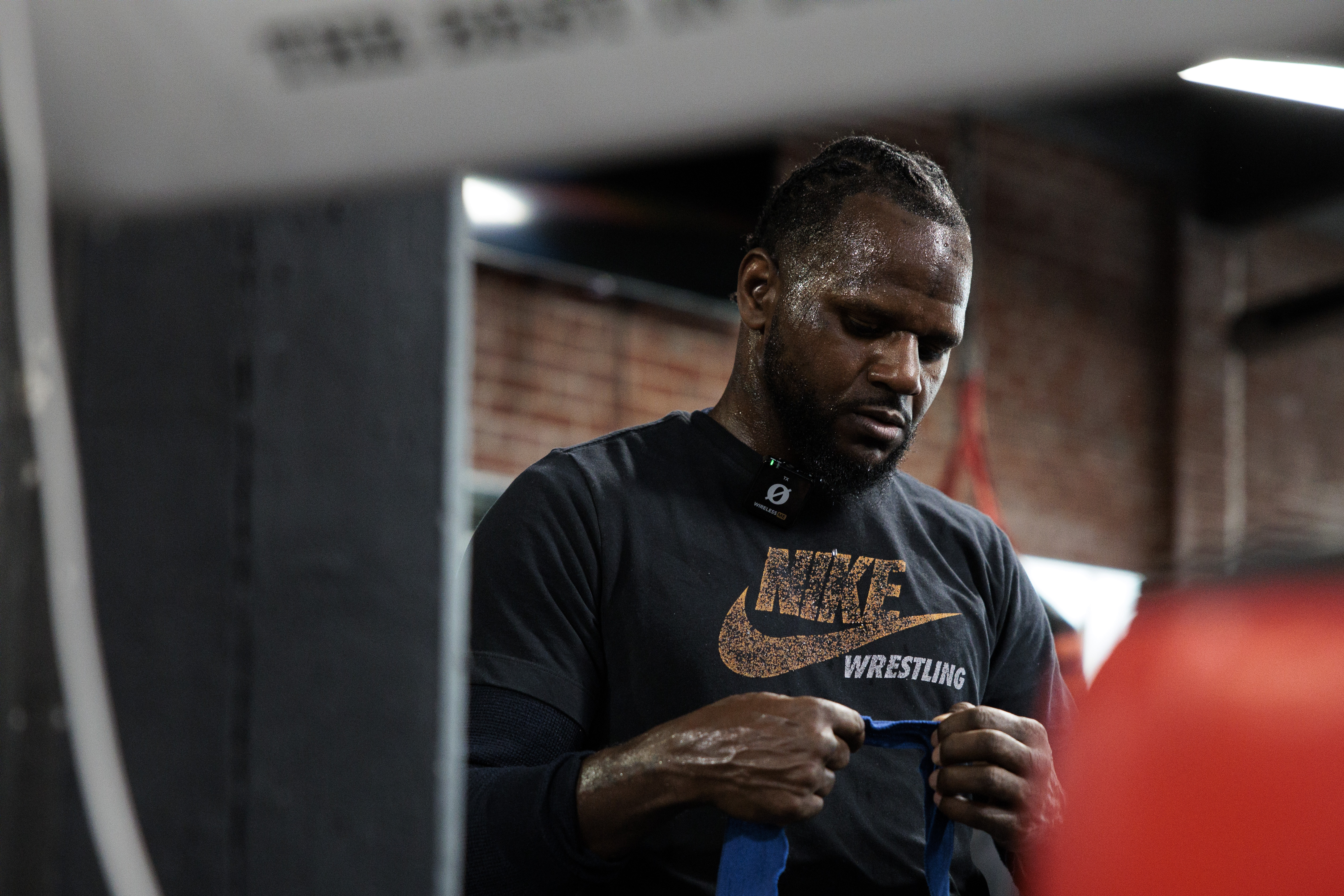
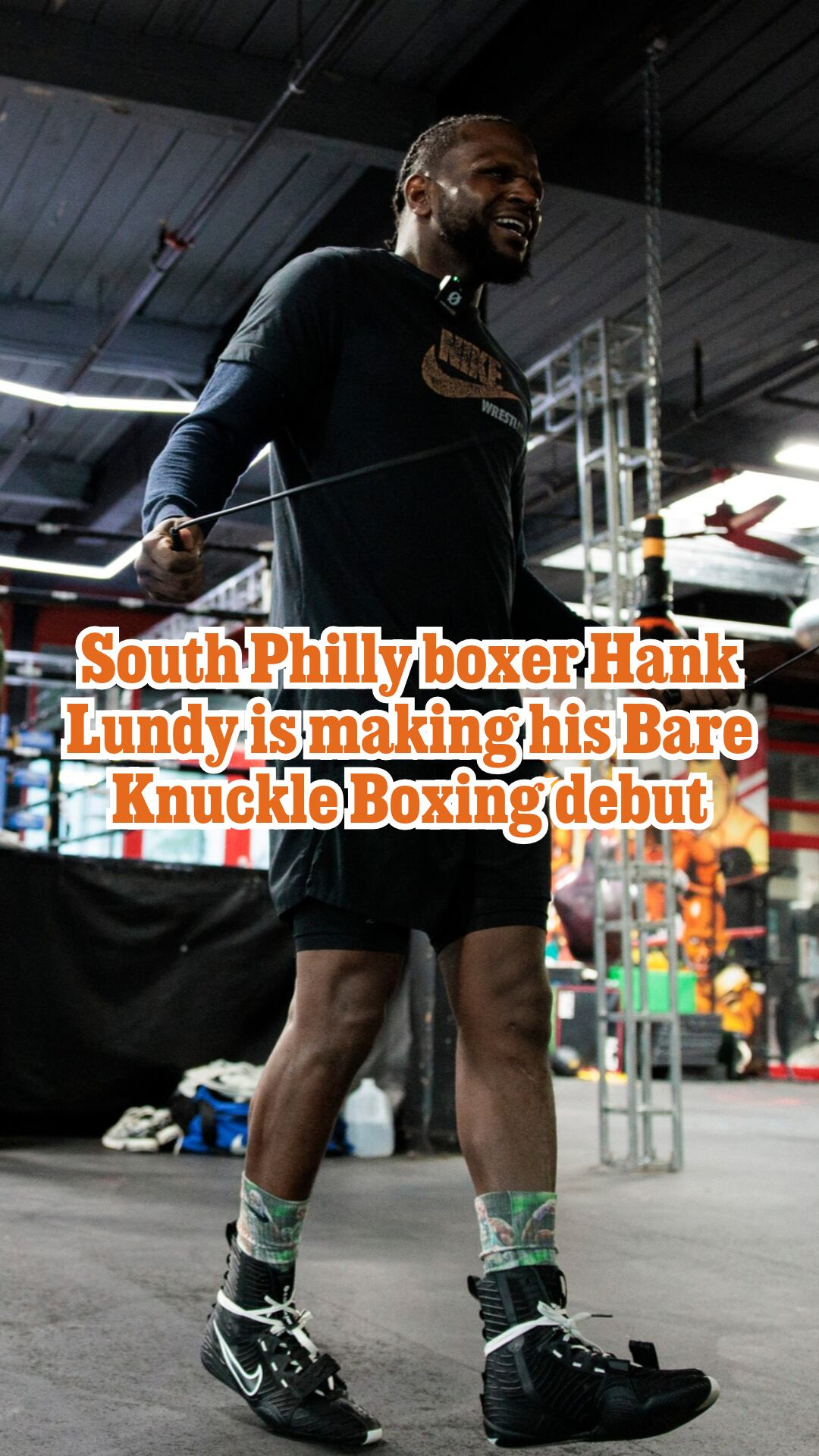
    South Philly’s “Hammerin’” Hank Lundy can usually be found at 365 Fitness & Boxing Loft on North 5th Street, punching a wooden beam with his bare fists. It’s just one of the ways the 42-year-old is conditioning his hands to prepare for his bare-knuckle boxing debut on Saturday at Estrella Studios in Burbank, Calif.

    Lundy and Santos will be the main event of the Burbank card, competing in a five-round welterweight contest broadcast exclusively on Bally’s digital platforms, including Bally Sports Live apps, ballysports.com, and Stadium’s free ad-supported TV channel.

    “You got to get your hands used to hitting bones,” Lundy said. “And I have, what, 20 years of conditioning in my hands? But you have to really get used to hitting that. But when your adrenaline is pumping, you don’t feel any of that. When you get a guy in there trying to knock your head off, all you got in your head is, ‘Get this man out of here, knock him out, and get it over with. I hurt him before he hurts me.’”

    Lundy is a former WBO junior welterweight contender with a professional record of 32-14 with 14 knockouts. He also was the 2003 Pennsylvania Golden Gloves winner and a 2005 National Golden Gloves silver medalist. In 2016, he headlined Madison Square Garden Theater in New York, where he lost to Terence Crawford for the WBO super lightweight title.

    His last professional bout was at the Liacouras Center in April 2024, when he defeated Juan de la Cruz Rodriguez.

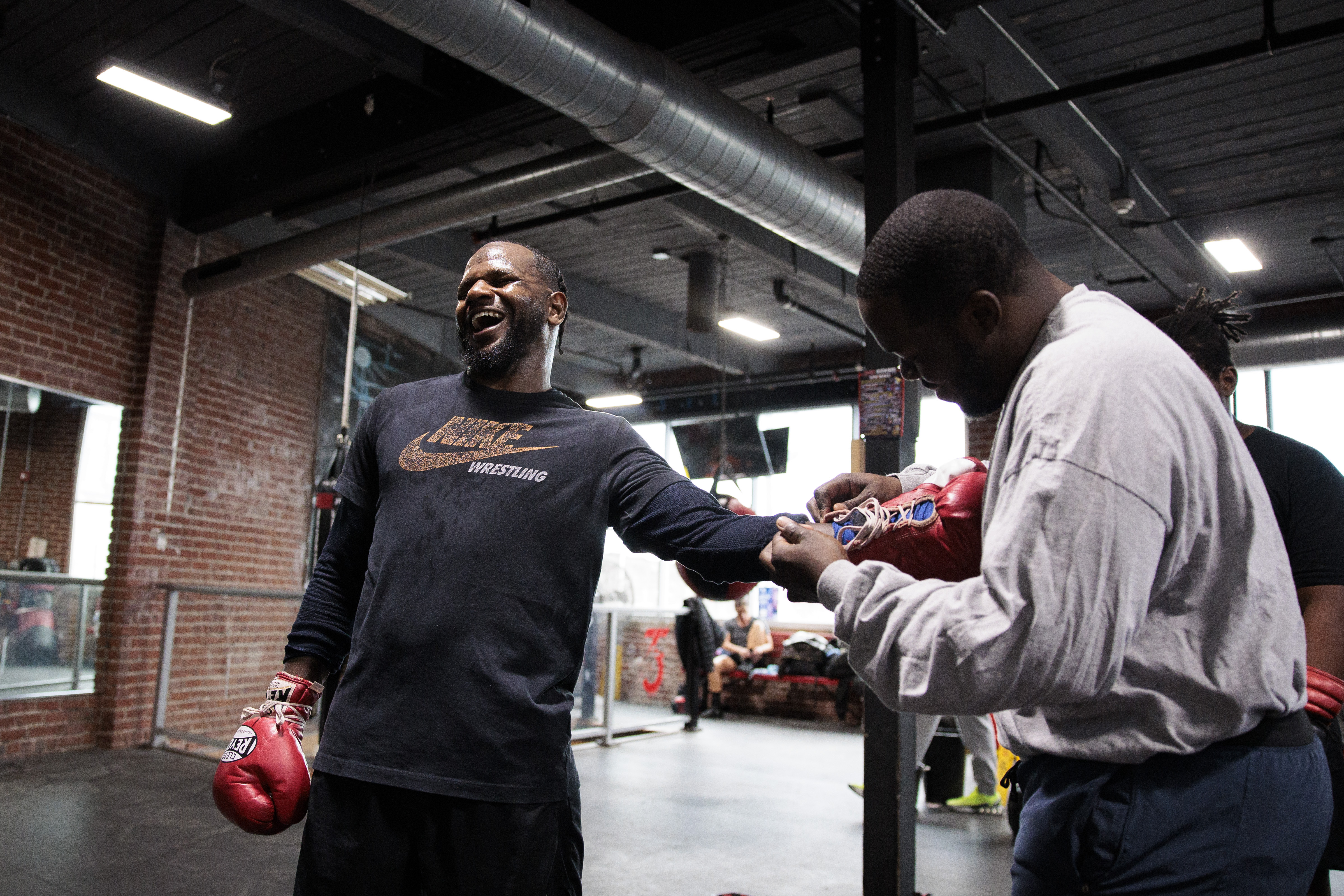
    Hank Lundy has a professional boxing record of 32-14, with 14 knockouts. He’ll return to the ring on Saturday for his bare-knuckle boxing debut. Monica Herndon / Staff Photographer

    Now, Lundy is ready to get back into the ring after signing with BKB Bare Knuckle Boxing and will debut against Jairo “Almighty” Santos.

    “I’m not the average 42,” Lundy said. “But these guys, they think that I’m old and I’m slow. You’re gonna be in for a rude awakening. That’s one thing about Hank Lundy, you know, I always had something to prove. Once you get me in that mission, in that mode, it’s gonna be bad for people. Get your popcorn ready. I’m ready to put on a show and show the world that Hank Lundy is not done, and this is a new chapter, and age ain’t nothing but a number.”

    Lundy, who was known as “Li’l Tyson” after Mike Tyson, has been fighting since he was 17. Lundy remembers getting into a fight with an older kid, whom he knocked out, while walking home from football practice at John Bartram High School.

    South Philly boxer Hank Lundy is making his Bare Knuckle Boxing debut
    Video: South Philly boxer Hank Lundy is making his Bare Knuckle Boxing debut

    Boxing wasn’t his first path. Lundy was offered a football scholarship to Kutztown University but says he turned it down so his aunt could send his sister, Muneerah Scott, to school instead.

    “I gave it up for one of my sisters to go to school, and I jumped in the gym and said, ‘Look, I’ll figure it out. I’ll find another way to make it,’” Lundy said. “And once I jumped in the ring, I knew this was my sport, you know? I knew this was for me. There was never a dull moment or a doubt in my mind. It was just questioning when I was going to get discovered, when I was going to make that big break, and it happened.”

    Lundy says Philly was the perfect place to grow as a fighter.

    “Growing up in the tough city of Philadelphia, I have to put it like this, there’s a lot of fighters in Philly. You can see a guy that’s a bum basically on the street that could fight. It’s a fighting city,” Lundy said. “It helped me a lot, and it became my background at the end of the day. As I said, I always could fight. And, once I got into the sport and learned the thing called boxing, I could already street fight, so it just went to another level.”

    Trainer Greg Hackett (right) ties Hank Lundy’s gloves during a workout at 365 Fitness Loft & Boxing Club on Nov. 9.Monica Herndon / Staff Photographer

    As Lundy prepares for his BKB Bare Knuckle Boxing debut, he spoke with a few others who made the same transition, including Jamel Herring and Austin Trout, who have competed with Bare Knuckle Fighting Championship.

    “Bare-knuckle boxing, that’s the real thing,” Lundy said. “And I know that my hands are dangerous. When I announced it, a lot of people were like, ‘Oh, hey, this is not boxing.’ And a lot of people that know me, that watched me grow up, well, they know this is right up my alley. This is what we were known for, for real. You know what I mean? The whole city knows me for fighting. So why not? Let me throw my hand in the wrench. Let’s get it.”

  • Meet the musicians behind the viral ‘LeBron, LeBron, LeBron’ song — and, yes, the Sixers star has heard it

    Meet the musicians behind the viral ‘LeBron, LeBron, LeBron’ song — and, yes, the Sixers star has heard it

    Everyone is singing LeBron, LeBron, LeBron.

    The viral TikTok remix of Steve Lacy’s “oh yeah?” has taken the internet — and Philadelphia — by storm. It was at the LeBron James look-alike contest. It has played during Sixers games at Xfinity Mobile Arena. Even Trevor Zegras is singing it.

    It’s been spoofed by college a cappella groups, sung by entire student sections, remixed, and used for countless fan edits of the man himself. LeBron has heard it — and finds it “hilarious” — and Lacy even performed it at a recent concert in Camden.

    But the original idea for “LeBron, LeBron, LeBron” was the brainchild of two musicians who independently created versions of the song. First was 22-year-old Iowa State student Michael Kronke, who’s been posting his own music on TikTok since 2022 under the name kidkronke.

    “Before, it was just my own music. I would just make stuff,” Kronke said. “It wasn’t very good. A couple songs got some likes, but what would get the most likes was when I did covers of songs, not even remixes, just covers of songs I liked.”

    His first big video was a Kid LAROI cover. From there, he started to experiment more with remixes.

    Despite being a lifelong Bulls fan from Illinois, Kronke also is a massive LeBron fan — “Jordan fans might hate me, but I love LeBron” — and has made his own LeBron covers on TikTok for over a year. His first LeBron cover, posted in March 2025, has over a million views, but none grew quite as massive as “LeBron, LeBron, LeBron.”

    Lacy’s “oh yeah?” got stuck in Kronke’s head after hearing it during a critical scene in Spider-Man: Brand New Day, but it didn’t click for him until someone in his comment section asked him to do a LeBron cover of the song. He decided to replace the song’s “come on, come on, come on” refrain with “LeBron” and posted the remix on Aug. 8.

    “It was pretty easy to remix that one,” Kronke said. “That’s probably the easiest song I’ve ever made. It took the least amount of time, and it was the biggest one.”

    LeBron-themed song covers have been a popular trend on TikTok for a few years. Kronke credited to user ilyaugust, who has done a number of LeBron tribute songs and covers with just James’ name.

    Lacy, who couldn’t be reached for comment, quickly reposted Kronke’s video to his TikTok account, which has approximately 3.1 million followers.

    But the song didn’t hit its peak until over a month later, after another user, Danay Berhane, known as dentzilla on TikTok, coincidentally came up with the same idea and posted a video singing a similar refrain on guitar. (Berhane’s version replaces the two “oh” vocalizations with additional LeBrons and adds a quick “James” at the end.)

    Berhane, a 31-year-old who lives in Vancouver, British Columbia, has been playing guitar since high school. In guitar class, every student performed once a week so their teacher could track their progress and motivate them to improve. In adulthood, Berhane started posting videos of him playing songs he loves on TikTok and Instagram for the same reason: to hold himself accountable and to keep practicing.

    Berhane isn’t a fan of James’ previous teams. He roots for the Toronto Raptors, who James has so famously torched over the years that it spawned the nickname “LeBronto.” But to Berhane, James remains the greatest of all time.

    “Maybe he hasn’t won every single Finals, but you can’t win a championship with just one person,” Berhane said. “The fact that he’s able to get a team that shouldn’t be in the Finals to the Finals so many times, and he’s bounced my team specifically so many times, as a fan, it was hard, but that’s one of the reasons I respect him.”

    He decided to put that to video by recording a version of one of his favorite artist’s songs. Berhane’s “oh yeah?” cover blew up pretty quickly, buoyed by the larger song trend and Kronke’s initial video.

    Kronke said the success of the song belongs to both of them, and they’ve shared the exciting moments together, including when Lacy performed “LeBron, LeBron, LeBron” at his Camden show on Oct. 15, which helped them finally connect after multiple missed attempts.

    “He was singing it, and just seeing — there was this one video where it panned to the crowd, and everyone else was singing along,” Berhane said. “I was like, ‘Whoa, that’s crazy,’ because when I did it, I was just practicing the song and messing around in my backyard.”

    It was especially surreal when, after a recent game, LeBron, LeBron, LeBron himself shared that he had not only heard the song, but got a laugh out of it. The Sixers played it in the arena as James stepped to the free-throw line against the Knicks on Oct. 30.

    “It’s pretty hilarious, to be honest,” James said. “I heard it toward the end of a game when we were winning. Made a play and heard that song. I was just chuckling to myself on the inside. It’s pretty funny.”

    Sometimes, Kronke will find himself watching a video of people singing the song or an edit with the song as a backing track and forget for a second that he made it. Now, he and Berhane have millions singing along.

    So, what is it that makes songs about LeBron so popular? Kronke has a few theories.

    “LeBron is just — he’s an inspirational guy,” Kronke said. “We all love basketball, and when you look at LeBron, you think of greatness, and people just love hearing songs about him. I can’t really explain why, but something about a good song and the lyrics about LeBron, it just resonates with people on social media.”

  • La Salle’s Joanie Quinn embraces a bigger role with a simple goal: ‘Be the best she can be’

    La Salle’s Joanie Quinn embraces a bigger role with a simple goal: ‘Be the best she can be’

    Basketball is in Joanie Quinn’s blood. Her great-aunt played at Immaculata in Chester County, her mother played at Boston College, her uncle played at St. Joseph’s, and her aunt played at La Salle.

    “It’s our thing,” Quinn said. “It’s something our family really bonds over.”
    The junior guard is carrying on her family’s tradition at La Salle. More than two dozen of her relatives are alumni. She’s also the top returning scorer for the women’s program. Entering Wednesday’s matchup with Rowan, Quinn was averaging 13.3 points, 2.3 rebounds, 2.8 assists, and 3.3 steals.

    Being 30 minutes from her Newtown Square home, Quinn always knew she wanted to play college basketball close to family.

    “The Big 5 is a really cool thing to be a part of, so I always wanted to compete in it,” she said. “I had a dream of going to California when I was younger but then when I committed to La Salle … I’m actually really glad that I found this kind of home away from home, but not that far from my actual home. It felt right because it was just such a family situation here.”
    Her family’s deep basketball roots and local ties have helped Quinn, a Cardinal O’Hara graduate, understand the significance of playing at La Salle

    “Her brother coached here and her high school coach [Chrissie Doogan] coached and played here, so there are significant ties to being here to begin with,” said Explorers coach Mountain MacGillivray. “She’s from a family of basketball junkies, so her getting to play in front of them and have them turn out on a regular basis, it’s got to be fun and motivating for her.”

    The 5-foot-9 guard appeared in 33 games last season with 32 starts and ranked third in scoring with 11.2 points per game. With no seniors or graduate students on the roster this season, Quinn is taking on the title as captain, a role she is used to.

    Through four games, Joanie Quinn is averaging 13.3 points, 2.3 rebounds, and 2.8 assists.Isaiah Vazquez / For The Inquirer

    “Ashleigh [Connor] and Aryss [Macktoon] had the captain’s title last year, but you’re talking about Joanie Quinn, who has been a natural leader from day one and has been playing starter minutes for the last two years and not missing any games,” MacGillivray said. “But the reality is, this isn’t a very hard group of kids to lead. They really want to be their best, and they’re eager to be corrected, and they’re eager to be told what to do. We have a very strong leadership group that are leading kids who are looking forward to being led.”
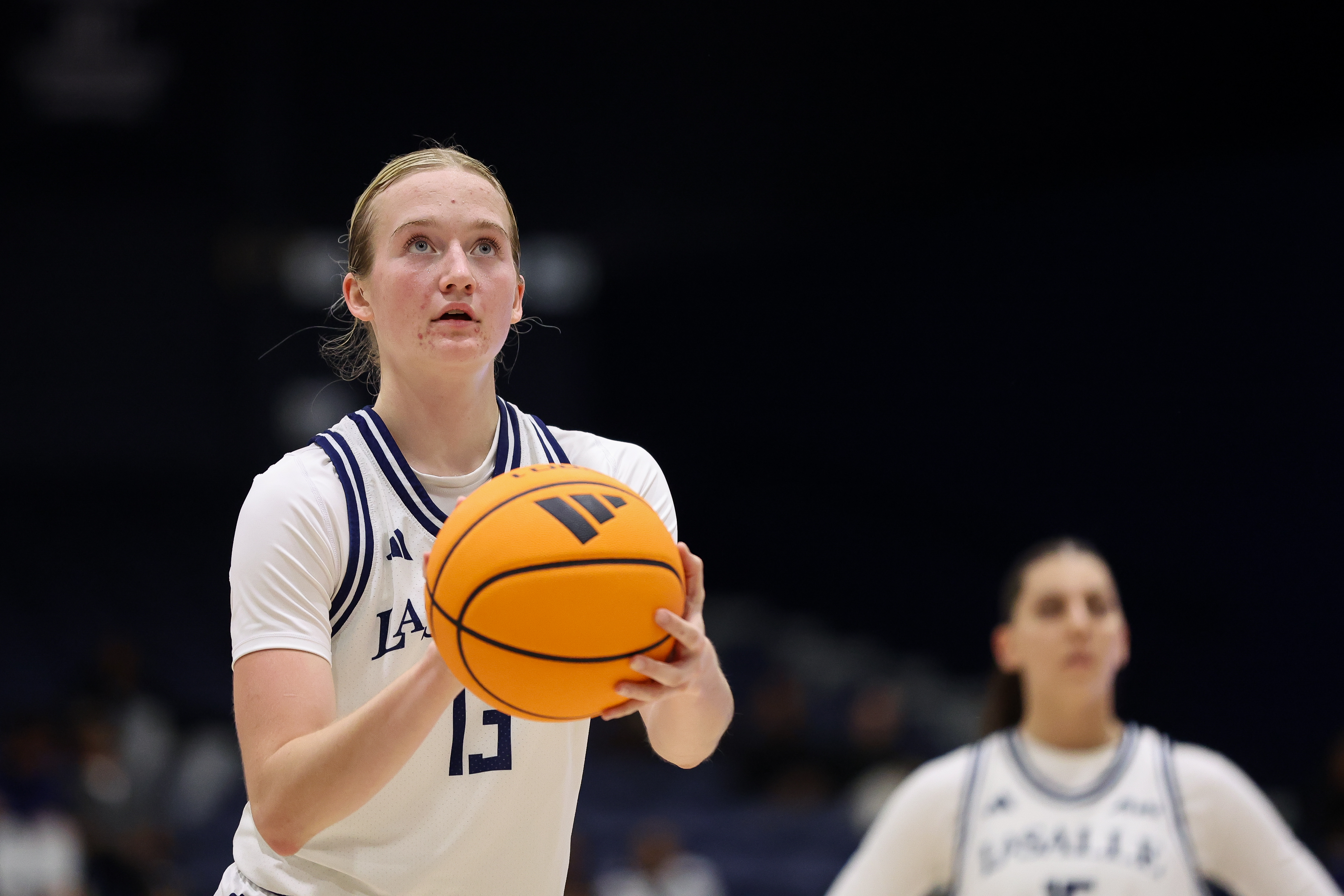
    During the 2025-26 season, the Explorers reached the Women’s National Invitation Tournament, earning a first-round bye before defeating Binghamton in the second round. It was the first time since the 1991-92 season that La Salle competed in postseason play. Quinn hopes this year’s squad can build on that success.

    “Obviously the WNIT is great, but everybody wants to go to March Madness,” Quinn said. “So I think carrying that momentum from last year and trying to build on it is going to be something that’s a big goal for us this year.”
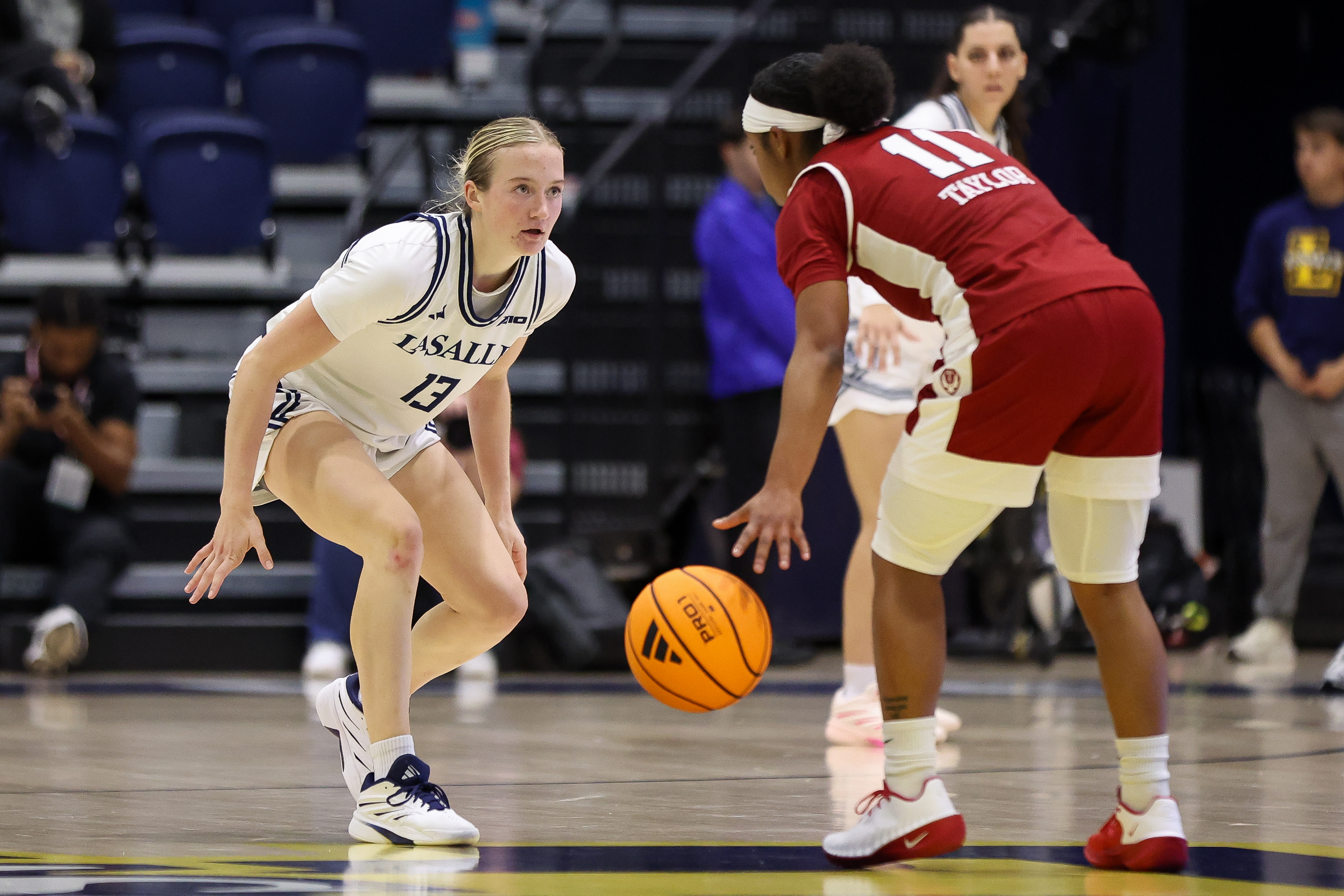
    Through four games, Quinn is the starting point guard rather than playing on the wing, where she played last season. This position is not entirely new to her.

    “Every time Ashleigh wasn’t in the game last year the only other one [point guard] was Joanie,” MacGillivray said. “Joanie played the one 50% of the time last year, especially when we were being pressured. She’ll be on the wing this year, too. The key for her is that she made a big jump from freshman to sophomore year and there’s no reason for us not to expect a big jump from sophomore to junior year. She keeps getting physically stronger and has a tremendous work ethic.”
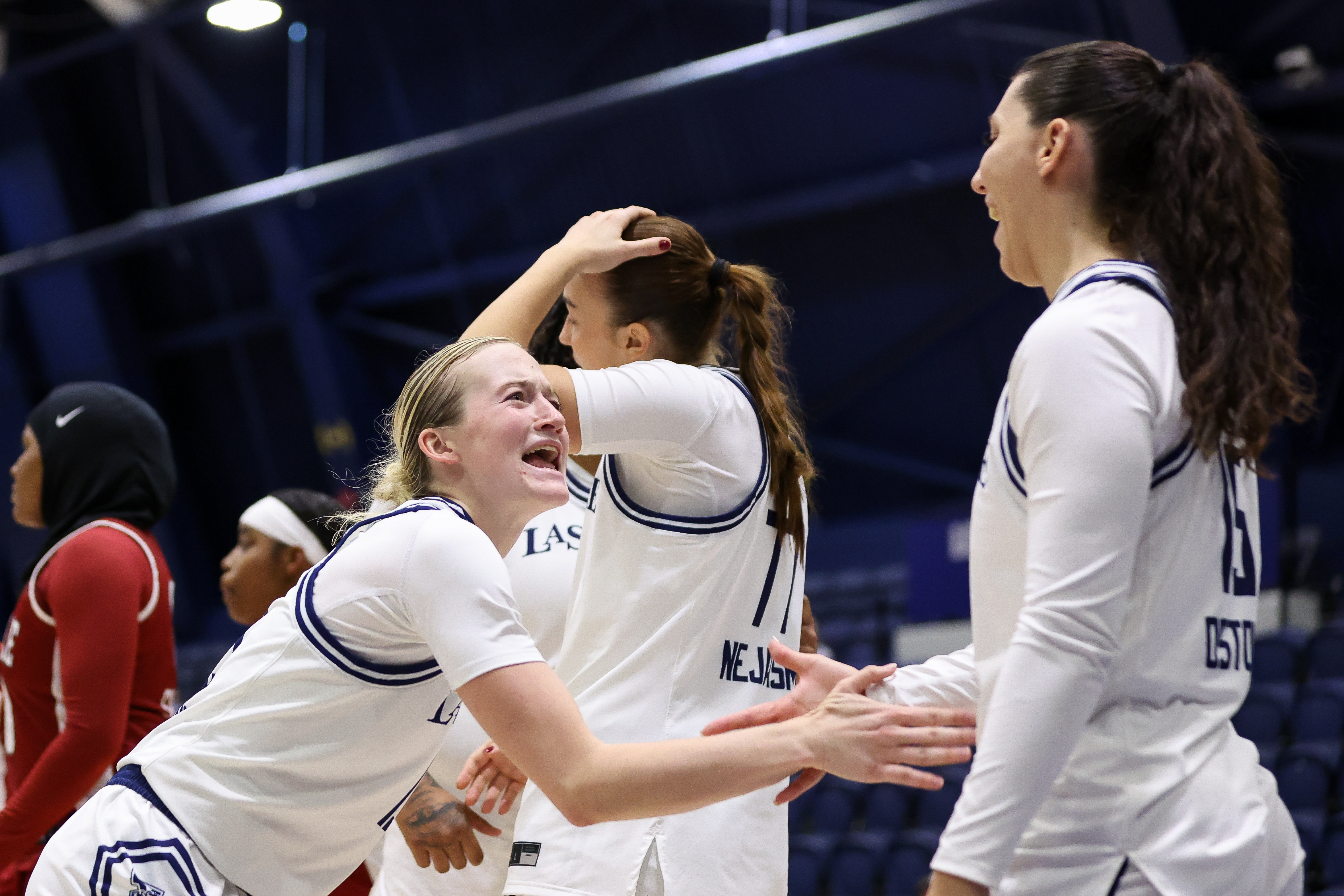
    The Explorers have seven returning players, three of whom were starters and four who played major minutes off the bench. To Quinn, Lin Manuel-Miranda’s lyrics to “My Shot” from Hamilton best describe La Salle’s team this year.

    La Salle guard Joanie Quinn is a team captain this season.Isaiah Vazquez / For The Inquirer

    “I would say that we’re very young, but we’re also really scrappy,” Quinn said. “We have important pieces returning and that kind of grit is important to all of our different players and especially the new people who are trying to come in and compete for time. They are very gritty and scrappy. I love Hamilton and our team is like that quote: ‘young, scrappy and hungry.’”

    The Explorers went into Wednesday’s game 1-3, but they look to improve under Quinn’s leadership.

    “Joanie, on the court, just is never really satisfied, and that’s the sign of someone who has the chance to be really, really good,” MacGillivray said. “She does not settle for ‘Oh, last year was a good year and that’s enough.’ She just wants to be the best she can be.”

  • Bernie Sanders unveils his plan to push Medicare for All when Democrats take power

    Bernie Sanders unveils his plan to push Medicare for All when Democrats take power

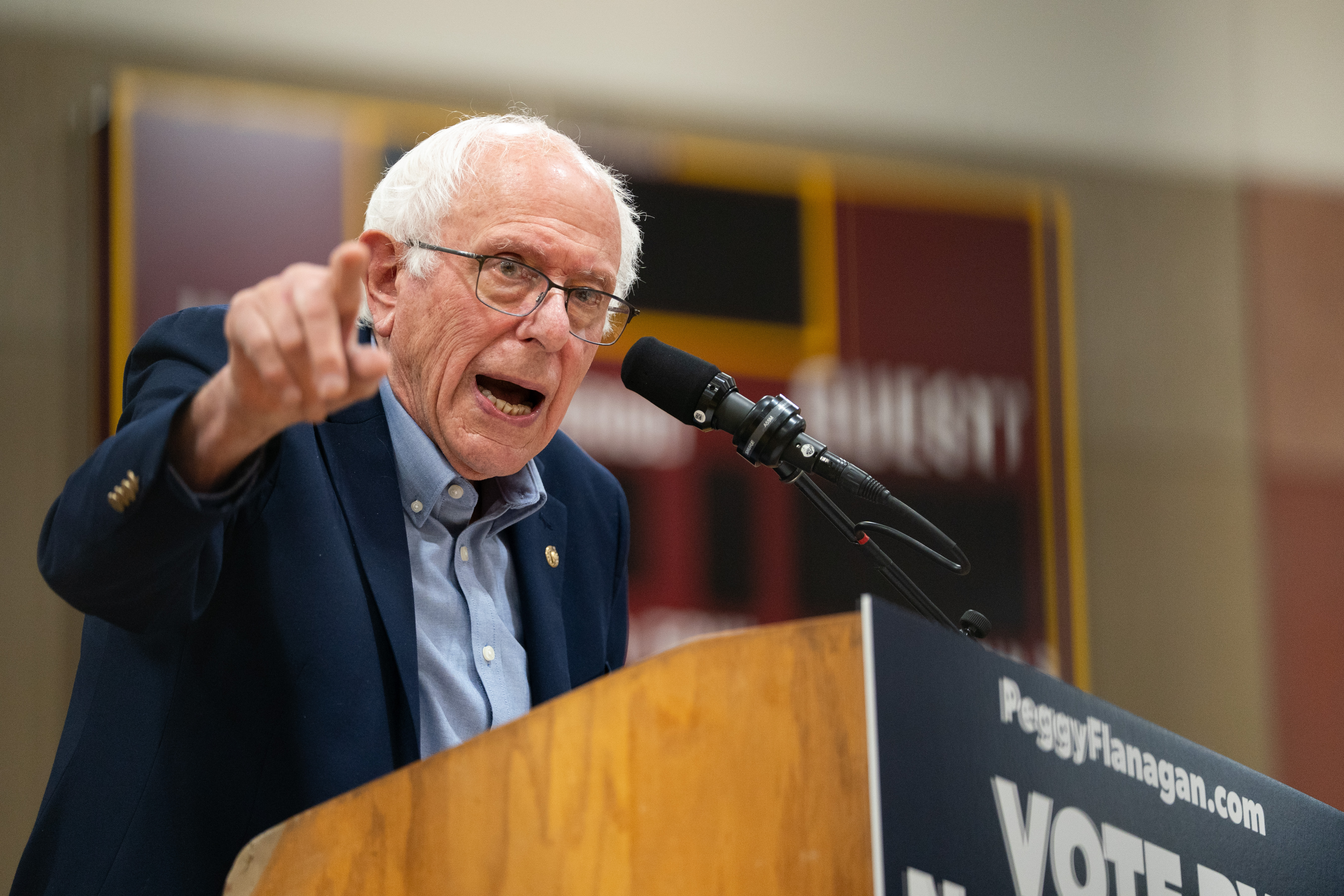
    WASHINGTON — Sen. Bernie Sanders is preparing to use his return atop a powerful Senate committee to push for sweeping changes to the nation’s healthcare system, setting up an early test of how far Democrats are willing to go in embracing progressive priorities.

    Sanders, a Vermont independent who caucuses with Democrats, is currently the ranking member on the Senate Health, Education, Labor and Pensions Committee and is expected to become its chairman when Democrats take control of the Senate in January. His agenda, first provided to The Associated Press, lays out the legislative implementation for proposals that he and progressive candidates championed on the campaign trail this cycle.

    At the center is Sanders’ longstanding push for Medicare for All, a universal healthcare system that would be implemented over four years. The first year would lower the Medicare eligibility age from 65 to 55, expand coverage to include dental, vision, and hearing care, and guarantee healthcare to children through age 18.

    “This is no longer a utopian vision. This is where the American people are,” Sanders said in an interview with the AP.

    The proposals offer an early glimpse of how progressives hope to shape the Democratic Party’s priorities after an election that delivered the party control of Congress but also exposed competing visions for its future. With the 2028 presidential election already looming, Sanders is seeking to push Democrats toward a populist economic agenda that he argues has gained broader support.

    “I think the election, in my opinion, was a crying out for fundamental change in the way the government does business and the absolute need to protect a struggling working class,” Sanders said. “I think this is a time to bring about very significant changes in policies so that we can actually improve the lives of working families.”

    Sanders keeps pushing for Medicare for All

    Sanders has long championed a single-payer national health insurance program that would replace most private insurance with a federally administered system providing universal coverage.

    His proposal for the new Congress lays out a four-year transition to that system, beginning with expanding Medicare eligibility and benefits. In the second year, the eligibility age would fall to 45, followed by 35 in the third year, before extending coverage to everyone in the fourth year.

    “Transforming a system which is 18% of the GDP of America, you don’t do that overnight,” Sanders said of the transitional period.

    But the costs of lowering Medicare eligibility are likely to lead to massive debate between the two major political parties as the national deficit stands at $2 trillion, or 6.2% of gross domestic product. And the Congressional Budget Office estimated in 2022 that lowering the age of Medicare eligibility to 60 would increase federal budget deficits by $155 billion over the 2026–2031 period.

    Sanders’ prior proposals to pay for the program shift healthcare financing away from private insurance premiums and toward payroll contributions — including a combination of employer and household premiums, higher taxes on the rich, and new taxes on Wall Street and large firms.

    Sanders also argued that Democrats could pass the first stage of the transition through budget reconciliation, a process that allows certain tax and spending legislation to advance through the 100-member Senate with a simple majority rather than the 60 votes typically required to overcome a filibuster. Democrats will have a 56-44 Senate majority when the new Congress begins in January, marking the party’s largest advantage in the chamber in 16 years.

    Along with pushing for greater access to primary care, Sanders says Democrats will push for lower prescription drug costs.

    A changing political landscape

    Sanders has previously balanced his progressive ambitions with the realities of governing. During his first stint chairing the HELP Committee from 2023 to 2025, he worked with Republicans on legislation to lower prescription drug costs and expand access to primary care. He also chaired the Senate Budget Committee from 2021 to 2023, helping advance major Democratic spending priorities.

    But now, just weeks after the midterms, Sanders is laying out an ambitious agenda that he argues reflects a shift not in his own positions but in voters’ demands for sweeping changes to the healthcare system.

    He sees signs of that shift among Democratic leaders. House Democratic leader Hakeem Jeffries of New York has pledged to get to work “right out of the gate” to restore Affordable Care Act subsidies and reverse Medicaid cuts enacted under Republicans.

    Jeffries said Tuesday that Democrats know that simply returning to the status quo “is not acceptable” and they are preparing ways to further expand healthcare access by lowering the Medicare eligibility age, adding access to vision, hearing, and dental coverage, and ensuring all kids are covered.

    “Jeffries basically supported the first year of Medicare for All,” Sanders said.

    But anything that passes Congress the next two years will still need to be signed by President Donald Trump to take effect. Sanders rejected the notion that Trump, a Republican, wouldn’t sign something like Medicare for All into law.

    “Donald Trump may be crazy, but he is not stupid. He’s a smart guy, and he’s a very good politician,” Sanders said.

    An agenda beyond healthcare

    Sanders is also preparing to use the committee to advance a broader economic agenda that includes raising the federal minimum wage from $7.25 an hour to $20 an hour and promoting the PRO Act, which would strengthen workers’ rights to unionize.

    The proposed wage increase would nearly triple the federal minimum, which has remained unchanged since 2009, and could face resistance from lawmakers concerned about the impact on small businesses and employment. Sanders proposes to implement it over a four-year transition period.

    Sanders’ agenda also calls for sweeping restrictions on artificial intelligence, including a moratorium on new AI data centers, a pause in advanced AI development, and a ban on artificial superintelligence.