Tag: topic-link-auto

  • Federal investigators subpoenaed records about Philly lobbyist William Dunbar, who was key to Mayor Parker’s campaign, sources say

    Federal investigators subpoenaed records about Philly lobbyist William Dunbar, who was key to Mayor Parker’s campaign, sources say

    Federal investigators last summer issued subpoenas for documents and financial records related to William F. Dunbar Sr., a Philadelphia lobbyist who was a close confidant of Mayor Cherelle L. Parker during her 2023 campaign, according to three people with direct knowledge of the probe.

    Dunbar, who has extensive political ties, was a key member of Parker’s informal “kitchen cabinet” of unpaid advisers during her 2023 run, and he ran her campaign, People for Parker, for most of 2024, the mayor’s first year in office. He has also raised money for U.S. Sen. Cory Booker of New Jersey and members of Philadelphia City Council, and he co-chaired Gov. Josh Shapiro’s 2023 inaugural committee.

    The sources, who spoke on the condition of anonymity to discuss a sensitive legal matter, said federal investigators in the summer of 2025 issued subpoenas to multiple associates of Dunbar’s, compelling them to produce records related to his business and political dealings. One source described the investigation as “fairly broad.”

    None of the sources said they were aware of an investigation centered on Parker.

    Dunbar, 42, declined to comment Thursday.

    A spokesperson for the U.S. Attorney’s Office in Philadelphia declined to comment. No charges have been filed in relation to the probe.

    A Parker campaign spokesperson declined to comment on her behalf.

    Records show that Parker’s campaign increased its spending on legal services in 2025, around the time that the sources said the subpoenas were issued. The Inquirer reported this week that the campaign has paid its law firm, Dilworth Paxson, about $108,000 since the start of 2025, according to campaign finance reports. It paid the firm less than $15,000 during the 2023 election year and about $19,000 in 2024. People for Parker did not respond to a request for comment on what was driving the increased legal bills.

    During the 2023 election, the campaign was led by campaign manager Sinceré Harris and senior adviser Aren Platt. Dunbar and several other informal advisers, however, were part of Parker’s inner circle, helping with strategy and fundraising.

    In 2024, Dunbar officially joined the campaign for the first time after Platt and Harris became chief deputy mayors in Parker’s administration. Both have since resigned from city government. Platt later returned to the campaign to serve as executive director of People for Parker.

    Dunbar has never been personally paid by People for Parker, according to campaign finance records. The campaign made rent payments to his firm, Dunbar Public Affairs & Associates, totaling $22,850 from March 2024 to November 2024.

    Parker’s campaign parted ways with Dunbar in late July 2024. Dunbar at the time said it was the mayor’s decision to take the campaign in a different direction.

    “I’m very much still an informal senior adviser but because of a different set of priorities, the mayor has decided to manage her politics herself,” Dunbar told The Inquirer at the time. “My business has continued to grow as we work to support our clients.”

    Parker added: “Will has been a valued friend to me, and let me just say that life is good right now [for Dunbar] and business is good and it’s growing.”

    Dunbar, an Overbrook Park native who got his start in politics working for former U.S. Rep. Chaka Fattah (D., Philadelphia), has developed an extensive political network through fundraising and advising campaigns. He worked in government affairs for Comcast before expanding his lobbying portfolio after Parker’s victory in the 2023 election.

    Dunbar in recent years registered as a city government lobbyist on behalf of several clients, including Comcast, the Philadelphia School District, the Chamber of Commerce for Greater Philadelphia, Jackmont Hospitality, and several other companies, according to public disclosures. Dunbar’s lobbying registration had been listed as “expired” in city records Friday, but was changed to “submitted” after the initial publication of this story.

    Dunbar worked with the school district as a subcontractor for a Harrisburg lobbying firm, DT Firm.

    “In June, the DT Firm informed the District [that] Mr. Dunbar was no longer a subcontractor with the firm,” district spokesperson Naima DeBrest said in a statement.

    DeBrest did not respond to a question about whether the district received a subpoena. The DT Firm declined to comment.

    Comcast and the chamber also declined to comment.

    Jackmont, which operates concessions at Philadelphia International Airport and also runs two TGI Friday’s locations in Philadelphia, did not respond to a request for comment.

    Staff writer Ryan W. Briggs contributed to this article.
  • Jefferson Health reported a $181.5 million operating loss in fiscal 2026

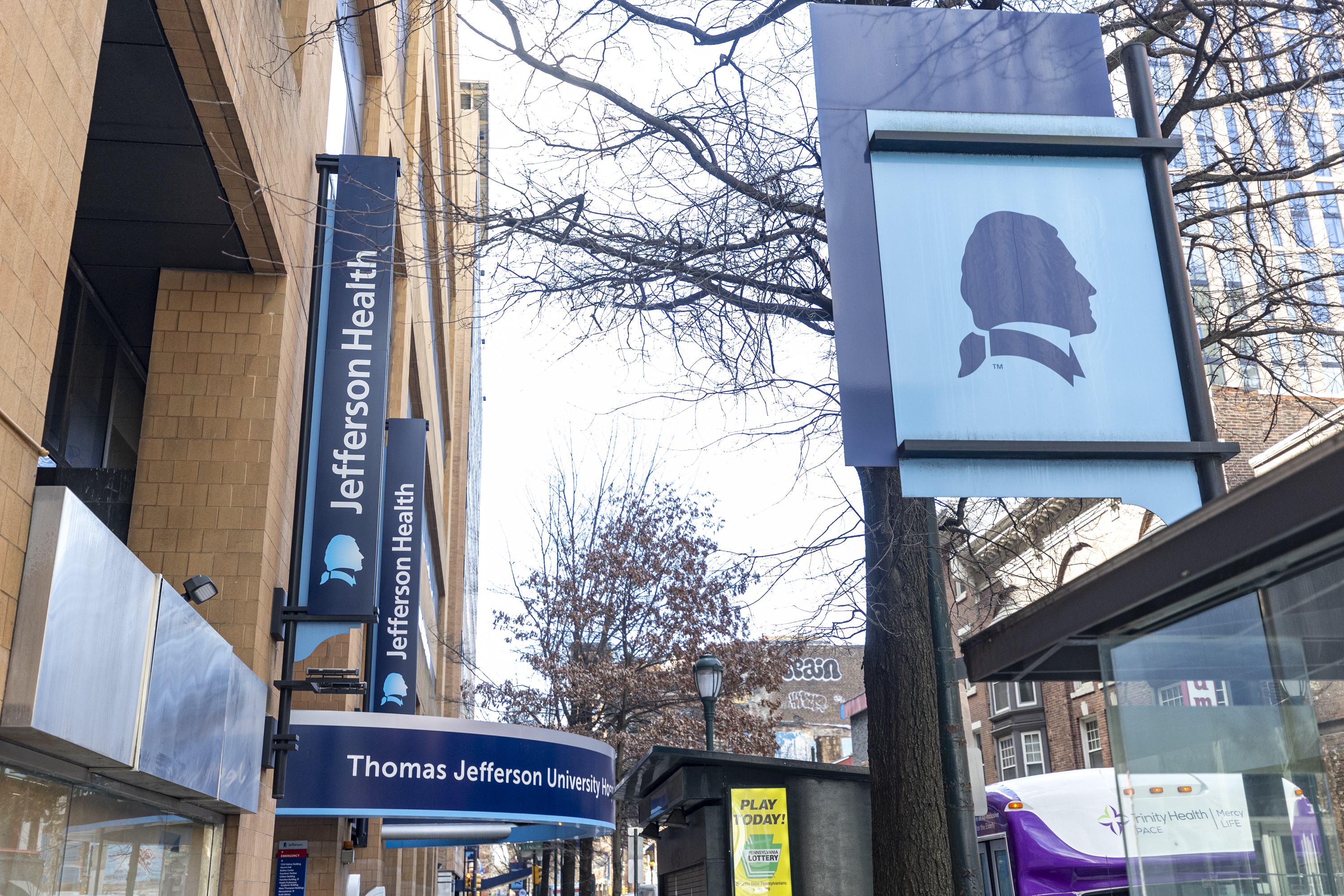
    Jefferson Health reported a $181.5 million operating loss in fiscal 2026

    Thomas Jefferson University and Jefferson Health posted an operating loss of $181.5 million in the year that ended June 30, an improvement over last year’s $208 million loss. In both years, the loss was concentrated in Jefferson’s insurance business.

    The fiscal 2026 results, reported to bondholders Friday, included $112 million in costs for layoffs and other moves designed to put the Philadelphia region’s largest health system on firmer financial ground.

    Jefferson highlighted in its preliminary report to investors that results improved each quarter of fiscal 2026 — from an operating loss of $103.8 million in the first quarter to a $71.1 million operating profit in the fourth quarter.

    “We’ve made significant progress strengthening Jefferson’s financial performance, yet those gains are increasingly threatened by the actions of commercial insurers in Pennsylvania,” Jefferson’s chief financial officer, Michael Harrington, said in an email.

    Jefferson sued Independence Blue Cross last month over policy changes that the health system says amount to back-door price cuts.

    “Despite already paying some of the lowest reimbursement rates in the nation, certain payers are now attempting to unilaterally rewrite or reinterpret existing contract terms to further reduce payments and improve their own margins at the expense of providers and the patients they serve,” he said.

    Separately, Jefferson sued Aetna in April over a policy that reduces payments for hospital stays for Medicare Advantage patients that Aetna decides aren’t sick enough to qualify for full payment.

    Insurers are under pressure from employers to slow healthcare expense growth. Independence said in response to the lawsuit that it acts in the best interest of its customers. Aetna said its policies comply with federal laws and regulations.

    Here are more details on Jefferson’s results:

    Revenue: Jefferson’s revenue reached $17.7 billion, up from $15.8 billion the year before. Fiscal 2025 included just 11 months of Lehigh Valley Health Network results. Jefferson completed that acquisition on Aug. 1, 2024, expanding its reach into Northeastern Pennsylvania and giving the nonprofit more than 30 hospitals.

    Jefferson Health Plans: Jefferson’s insurance arm had a $130.3 million loss in fiscal 2026, an improvement over a $169.9 million loss the year before. The insurance arm had 415,172 members on June 30, up from 366,780 the year before. The plan is diversifying away from Medicaid as it increases enrollment in Medicare Advantage and the Affordable Care Act markets. The percentage of membership in Medicaid fell to 75% this year from 87% last year.

    Notable: The fourth quarter of fiscal 2026 was Jefferson’s first profitable quarter in at least four years, according to Inquirer calculations that exclude investment income. Unlike other local health systems, Jefferson follows accounting rules for higher education, allowing it to include a portion of investment income in revenue.

  • Chris DiJulia’s funeral celebrated an indomitable spirit … and Philadelphia’s amazing basketball family

    Chris DiJulia’s funeral celebrated an indomitable spirit … and Philadelphia’s amazing basketball family

    Chris DiJulia never played a minute and he never coached a game, but at 11 a.m. Wednesday, he was the king of Philadelphia basketball.

    More than 600 people crowded into St. Denis Catholic Church in Haverford for an 80-minute celebration of 56 years of life well-lived. DiJulia, a fixture at St. Joe’s basketball games, had cerebral palsy, and so spent his life in a wheelchair, and died July 27 of natural causes related to his condition. A few people have ever lived a fuller life; the DiJulias prayed Chris would live to be 5, much less 56.

    As was the case for so many of the Phillies games Chris attended, it was standing room only for his memorial service Wednesday; more than 100 folks leaning against the walls and watching from the knave. They came from Chicago, Atlanta, Buffalo. It was streamed online, and it got views from as far away as Alaska. There were more college basketball coaches at the funeral than there were at LeBron and Kobe’s high school games.

    The event was more than a home-going for a man of unequaled strength and unmatched faith. It was a testament to the close-knit family of Philly college hoops.

    There is nothing like it, not anywhere in the world. It is a club, a cult, and, as the kids say now, a vibe. It goes beyond just the Big Five, beyond just the City Six (hello, Drexel), beyond men’s basketball. It is D-I and D-II and D-III and junior college. It is all of it.

    It took his daddy’s breath away.

    “Chris was unique,” said Don DiJulia, the retired athletic director at St. Joseph’s University. “But having all this happen, to even think there would be 600 people at 11 o’clock on a Wednesday … couldn’t even think that.”

    Legendary Temple coach John Chaney would have been there too, but he predeceased Chris by five years. How can you be sure? Because Chaney famously once said that Chris was the only person from St. Joe’s that Chaney liked.

    St. Denis was the site on Wednesday, and Wednesday will be remembered as a quintessential Philly hoops moment, even though there were no refs and no clock.

    More than anything, Philly basketball is its sites and its moments. It is the Palestra, the best place to shoot on God’s green earth, and Lynn Greer leading Temple back from 16 down to beat St. Joe’s in double OT there in 2002.

    It also is the DAK at Drexel and Gola/Glaser at La Salle, and it has been the smoky Philadelphia Civic Center, where I covered La Salle’s men years ago, and, of course, St. Joe’s Alumni Fieldhouse/Hagan Arena, where the DiJulias watched their Hawks play and soar and crash. All of these places can be deafening and intimidating and, by city requirement, always over-warm.

    On Wednesday, it was a gray stone Catholic church. For once, Chris was the star.

    DiJulia was the son of retired St. Joseph’s University athletic director Don DiJulia, and, despite his disability, for more than five decades Chris was everywhere basketball was played, loud and critical and present. Family and friends overfilled the pews, crammed shoulder-to-shoulder with giants from the media and, more than anything else, with Big Five royalty.

    You’ve probably been to funerals where there wasn’t a dry eye in the place, but most of the tears shed at St. Denis were tears of laughter and of joy. Chris was known best for his wry wit. In their eulogies, Chris’ siblings and parents proved again and again that wit is genetic.

    Chris loved the local pro teams and he was nuts about golf, so more than half the assemblage, to honor his fandom, wore jerseys instead of mourning clothes. The best: A shamrock-green Tug McGraw No. 45 and a pinstriped Richie Ashburn No. 1. Chris suffered and celebrated the maddening Phillies, and he so adored baseball that the service began with the national anthem and included a seventh-inning stretch complete with God Bless America.

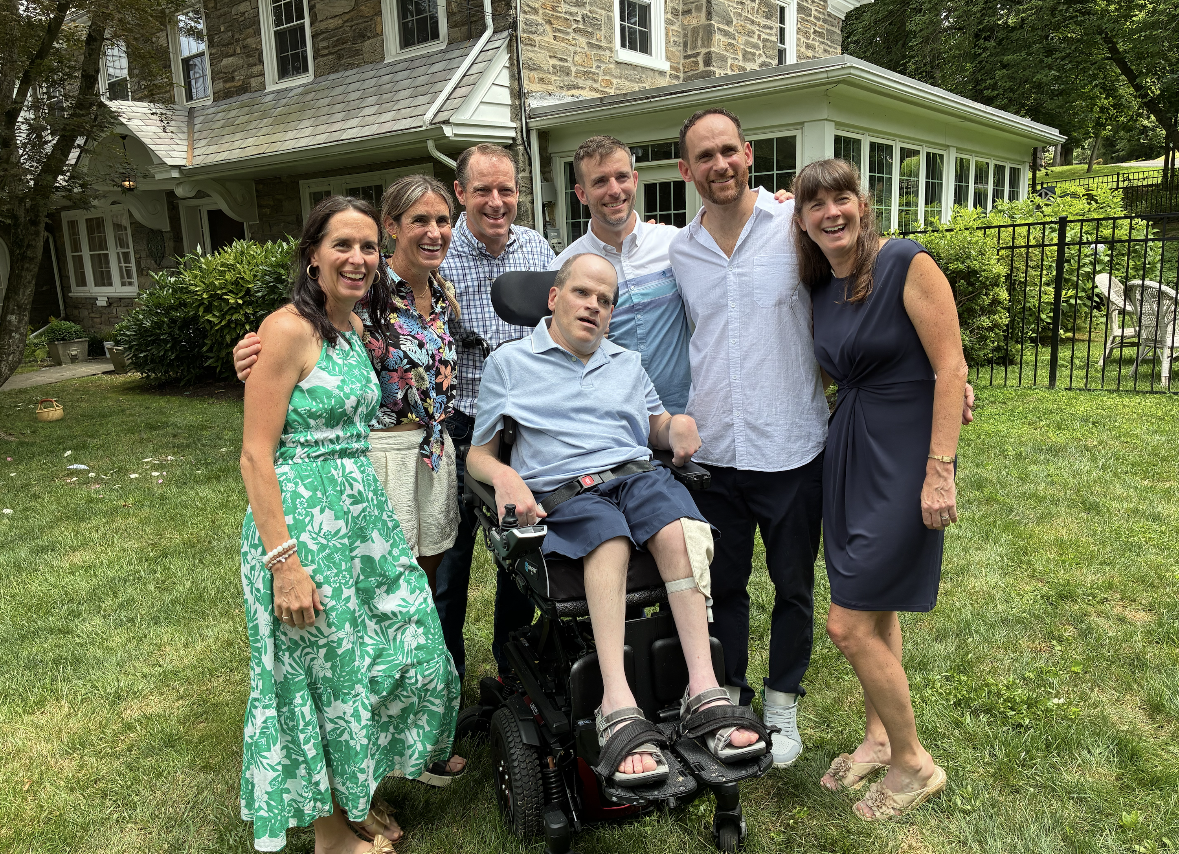
    Chris DiJulia, with his parents and siblings.provided by Kath DiJulia Cloran

    It was in his blood

    But as much as Chris loved the pros he was of college hoops, especially Philly college hoops. It was in his blood. Don played basketball (and baseball) at St. Joe’s, and he coached college basketball before he directed college programs.

    Don played for Jack Ramsey’s 26-1 team in 1965. He is a charter member of the Philadelphia basketball aristocracy. Chris is a legacy member.

    Membership can be earned.

    The first sporting event I attended after I arrived in Philly in February 1995 was a 30-point Penn men’s win over Brown at the Palestra, but that didn’t earn membership. It takes decades as a fan, years as a media member.

    I fast-tracked.

    I married in.

    My wife, Dr. Shelly Bowers Hayes, scored more than 1,100 points as Penn’s point guard until 1995. We met playing pickup on the Palestra floor that March, started dating a year later, and we’ve coached our kids the last six years (mostly, she coaches).

    I’ve done this job for 31 years. I’ve belonged to lots of clubs and organizations and associations. There’s no community like the community of Philly college hoops. Proved again for 80 minutes of joy, and a little pain, at St. Denis on Wednesday.

    This year Philly has hosted the NFL playoffs, the men’s NCAA Tournament, the NBA playoffs, the NHL playoffs, the Unrivaled women’s 3-on-3 league, the PGA Championship, the FIFA World Cup, and the Major League Baseball All-Star Game.

    Wednesday’s sellout was the most deserving of them all.

  • A Main Line psychiatrist who had sex with a patient poses no threat to other patients, judge rules

    A Main Line psychiatrist who had sex with a patient poses no threat to other patients, judge rules

    A Main Line psychiatrist who lost her medical license after a state investigation found she had a yearslong sexual relationship with a young patient while prescribing him highly addictive psychotropic drugs may continue practicing while she appeals the revocation, a state judge ruled.

    In ruling in favor of Amy Mazza MacIntyre on Thursday, the judge agreed that she posed no threat to patients, who would likely suffer if their care was disrupted or if they had to find a new provider amid what Commonwealth Court Judge Stella Tsai acknowledged as a “shortage” of specialized child and adolescent psychiatrists in the Philadelphia region.

    Tsai also found that MacIntyre would be “irreparably harmed” if forced to close her Bryn Mawr practice because hundreds of current patients likely wouldn’t return, even if she later won her appeal to keep her license.

    MacIntyre’s “actions leading to the instant revocation, although spread over several years, were focused on a single individual,” Tsai wrote in her opinion. “In that time, she has treated thousands of patients without reported incident, and there is a purported shortage of psychiatrists with [MacIntyre’s] subspecialty.”

    MacIntyre, who specializes in treating young patients with complex psychiatric diagnoses, began seeing a then-17-year-old cancer survivor in 2004 when he was a senior at Lower Merion High School. She first had sex with him in 2011, when he was 24, and prescribed him powerful psychiatric drugs through mid-2017, according to an investigation by the Pennsylvania State Board of Medicine. The board found that the drugs, including Xanax and Adderall, were given to him without proper medical evaluations.

    The board revoked her medical license in May, finding she had engaged in sexual misconduct and inappropriate prescribing in violation of state medical licensing laws. She then appealed the decision to Commonwealth Court, where the case is pending. Last month, she asked Judge Tsai to temporarily lift the revocation so she can continue seeing patients while she fights the board’s disciplinary action.

    “We are extremely pleased by the judge’s decision and believe it to be appropriate,” MacIntyre’s lawyer, Gary Samms, wrote in a text message to an Inquirer reporter Friday. Samms declined to comment further, citing the appeal. He has advised MacIntyre not to talk to The Inquirer. MacIntyre, 52, did not respond to an email sent Thursday.

    Matt Heckel, a spokesperson for the Department of State, which oversees state licensing boards, said the judge merely granted MacIntyre’s request to continue seeing patients but did not address the larger question of whether her license should be revoked. The state is fighting her appeal, arguing that “no sanction short of a revocation would adequately protect the public.”

    The patient at the center of the case, Justin Kopicki, who is now 39 and in law school in Oregon, said the judge’s ruling was “extremely problematic,” opening up a “really dangerous can of worms.”

    “It says to other psychiatrists and practitioners that it is OK to violate the laws of their license and to take advantage of their patients,” Kopicki said in an interview on Thursday evening. “The court is basically saying that the public interest is not at risk here. Quite frankly, it’s an egregious position to take.”

    Kopicki, who gave The Inquirer permission to use his name, said it’s “a very large slap in the face against what I went through.”

    “It was not an isolated incident,” he said. “It was something that went on for six, seven years continuously.”

    Mixing sex and medications

    Kopicki was diagnosed with leukemia at age 4. He received chemotherapy treatments at Children’s Hospital of Philadelphia until age 7, when the cancer went into remission.

    In high school, he grew depressed and anxious. He isolated himself from peers. His mother worried his mental health problems stemmed from his childhood battle with cancer. She contacted CHOP, which referred him to MacIntyre, then 31.

    During his first appointment in 2004, MacIntyre diagnosed Kopicki with anxiety and agoraphobia. She suspected he also suffered from obsessive-compulsive disorder. She put him on medication.

    According to the board’s investigation, MacIntyre “became focused on [Kopicki’s] sexual activity” during treatment sessions in 2010. During a session in early 2011, she told him she “wanted to climb on top of him” and did so, kissing him, the board’s revocation order says.

    Soon after, they had sex for the first time at Kopicki’s father’s house. Although MacIntyre stopped charging him for sessions, she formally treated him through June 2013, writing patient notes in his medical record. From 2013 to 2017, she continued having sex with him while prescribing a revolving mix of up to 12 medications to him, without proper evaluations, according to the board’s order.

    The board’s investigation — based partly on emails, texts, and voicemail messages that MacIntyre sent Kopicki — revealed that she gave him a $5,000 saxophone and a Cartier watch, hired him to work in her office, proposed marriage to him, told him she miscarried his baby, sent him naked selfies, and took him on trips, including to Turks and Caicos and Walt Disney World.

    The board also found that MacIntyre prescribed medications to Kopicki’s mother and father, although they were not her patients.

    In an interview with The Inquirer last month, Kopicki said MacIntyre had “groomed” and manipulated him while prescribing “really large quantities” of stimulants and benzodiazepines, including “Xanax and Klonopin mixed together.” She would withhold his medication refills if he refused to go away with her or tried to end the relationship, he said.

    Kopicki cut off all contact with her in 2017, shortly after MacIntyre showed up at his father’s house, yelling and demanding to speak with Kopicki. His father called 911, the board found.

    Kopicki first complained to the state medical board in 2017. He also filed a medical malpractice lawsuit against her in Montgomery County Court. His lawyers did not want him to cooperate with state investigators while the case was pending, and the state dismissed his complaint.

    MacIntyre settled the case with Kopicki in 2020 for an undisclosed amount, and he again complained to the board in 2021. The board launched an investigation, interviewing Kopicki and reviewing “thousands of text messages” between the two.

    ‘One of the worst’ cases

    During the disciplinary proceedings, MacIntyre admitted to sexual misconduct, immoral and unprofessional conduct involving a patient, failure to maintain complete medical records, and fraudulent, reckless, or negligent practice. She had disputed claims that she engaged in improper prescribing, but the board found her culpable.

    In her appeal, MacIntyre is seeking a lighter discipline, such as probation. While not excusing her behavior, MacIntyre provided explanations to the board. She testified at a state hearing last year that she had been afraid of Kopicki and that he forced her to have sex. She said she tried to get a protection-from-abuse order against him, but didn’t qualify for one because they weren’t married or living together.

    The board rejected her arguments, citing a lack of evidence, finding her testimony not credible, and pointing to her “shifting explanations.”

    MacIntyre also cited “personal stressors” in her life at the time of the misconduct, including the birth of a child and her mother’s dementia.

    Samms argued that she has learned from her mistakes: She underwent an extensive evaluation with a psychologist who found her fit to practice, and she also went to therapy to address her behavior with Kopicki. Additionally, MacIntyre has limited her interactions with patients to mostly medication management, and has not violated any regulations for the last decade, Samms said.

    Samms told Judge Tsai during oral arguments last month that MacIntyre has treated about 15,000 patients without any incident since at least 2017, when contact with Kopicki ended.

    “While she acknowledged wrongdoing, it was an isolated patient due to isolated circumstances,” Samms said during the July 30 hearing. “There’s never been any other issues regarding her licensing or her practice.”

    Dana Archer, the lawyer representing the State Board of Medicine, argued that the reason so much time had lapsed between her misconduct and the board’s sanction is because “she did everything that she could to hide it.”

    “Just because you’re successful in hiding your inappropriate conduct doesn’t mean you should be rewarded and receive a lesser sanction because you were successful in keeping it a secret,” Archer told Tsai.

    Archer said MacIntyre took advantage of a vulnerable patient, who was “basically a child” when she began treating him. Her conduct was one of the board’s “worst” cases, she said.

    “It was one of the worst things that a psychiatrist can do to a patient,” Archer said.

  • Kensington High School students will be relocated after asbestos ‘concern’ during HVAC project

    Kensington High School students will be relocated after asbestos ‘concern’ during HVAC project

    Kensington High School students and staff are being relocated to the vacant Austin Meehan school building through the end of the calendar year, after an asbestos “concern” arose during an HVAC project, Philadelphia school district officials said.

    While workers were installing a new heating and cooling system, “an asbestos inspector identified a concern about the demolition of the old system,” Oz Hill, the district’s deputy superintendent of operations, said in a letter to the high school community Thursday — a little more than a week before the new school year begins Aug. 24.

    Hill said the district “immediately stopped the project and has been working cooperatively with the city’s Air Management Services and the Philadelphia Federation of Teachers while the building is thoroughly cleaned and air quality tests are conducted to show the space meets standards to be reopened.”

    Arthur Steinberg, president of the PFT, said he was told that “a contractor broke into some space … disturbed some asbestos, and tracked it all over the building.”

    “That essentially contaminated the entire building, by them moving around after the asbestos material was disturbed,” Steinberg said in an interview Friday.

    Steinberg said the relocation to Austin Meehan, a vacant middle school in Northeast Philadelphia, would mean “turmoil.”

    Austin Meehan, which closed in 2022, is more than seven miles away from Kensington High School.

    In the message, Hill said the district had considered closer options, but they “did not meet the space or accessibility needs for Kensington’s more than 400 students and 90 staff.” He said “details about the schedule, transportation, and all logistics will be forthcoming.”

    A district spokesperson did not immediately respond to a request for comment Friday.

    Steinberg said the relocation “creates logistical nightmares for everybody,” with new commutes for staff and families.

    “But it’s better than trying to make them occupy a building that’s contaminated with damaged asbestos,” Steinberg said. He said the PFT will be on site as Kensington staff report to Austin Meehan Monday to hear and address concerns.

    The PFT also has an occupational hygienist at Kensington High School supervising the district’s work, to ensure the asbestos is properly cleaned up and tested, Steinberg said.

    The union “will ensure that building is suitable for occupancy, or our members will not go back in,” he said.

    Asbestos has been a recurring issue in the Philadelphia School District’s aging buildings. In recent years, some schools have temporarily closed after the discovery of damaged asbestos.

    Hill said the district “will also work to address other Kensington building needs, including maintenance repairs and the continued proactive removal of asbestos materials where we can minimize future risk of damage.”

    “When Kensington students and staff return to the building in January, they will be welcomed back to a healthy, more comfortable space for learning,” Hill said.

  • Delaware County district attorney says Aldan Borough police shooting of 23-year-old man was justified

    Delaware County district attorney says Aldan Borough police shooting of 23-year-old man was justified

    The Delaware County District Attorney’s Office said Friday that Aldan borough police were justified in fatally shooting a man last week.

    District Attorney Tanner Rouse called the shooting a “tragedy” at a news conference Friday but said the Aldan Borough police officer who shot him was justified, “not just legally, but as a person.”

    “What you will see is a young man who unfortunately seemed very intent on this outcome,” Rouse said.

    The Montgomery County Coroner’s Office identified the man police shot as 23-year-old Ugochukwu Ilodigwe.

    Police were responding to a “request for service” 911 call the morning of Aug. 7, Rouse said. Such calls are a public service in which residents request that police take them somewhere, Rouse said.

    The DA’s office played body camera footage that showed the chaotic, deadly incident.

    When the officer arrived, she was attacked and fell to the ground, video shows. Ilodigwe could be seen holding a “meat-cutting” knife in the footage, Rouse noted. He said the knife was about a foot long. Ilodigwe could be heard shouting, “shoot me, don’t shoot me” in the video.

    The officer shouted “Taser, Taser, Taser!” and shot Ilodigwe with the stun gun, video shows. He fell to the ground, and she repeatedly ordered him to put his hands behind his back. Rouse pointed out that Ilodigwe could be seen reaching for the knife as he lay on the ground. He also could be heard saying he had a gun, Rouse said.

    “She pleads with the decedent, pleads with him to stop. He makes no indication that he is going to relent,” Rouse said. “We have every reason to believe that he intended her grave bodily harm, life threatening bodily harm.”

    Eventually, Ilodigwe got up and was shot again with the Taser. When it did not stop him, the officer shot him twice, the video shows.

    The officer has been cleared to return to active duty, said Aldan borough Mayor Michael Ceci.

    “This was a tragic event all around. The conclusion of this investigation doesn’t change the fact that a family has lost a loved one, and we recognize the grief they are experiencing,” Ceci said.

    By Friday afternoon, Ilodiwge’s family had raised more than $4,500 for burial costs on GoFundMe. Contacted Thursday, Ilodigwe’s sister, Kenechukwu, declined to comment and did not respond to a request for comment Friday.

    “I am creating this fundraiser to help my family lay my brother to rest after his sudden and heartbreaking death. He was killed recently in a situation with the police, and our lives have been changed forever,” said a post attributed to his sister, Kenechukwu Ilodigwe.

    She said Ugochukwu was a “bright, giving person” who loved football, jokes, “and how big his dreams and aspirations were.”

    “He had the kind of heart that could brighten anyone’s day, and he would give to someone in need even if it meant going without himself. Losing him so abruptly has left us in deep pain, and it is especially hard knowing I did not get the chance to say goodbye.”

  • The Union are out of the Leagues Cup, but a busy — and important — stretch of MLS play awaits

    The Union are out of the Leagues Cup, but a busy — and important — stretch of MLS play awaits

    The Union will want to forget their Leagues Cup finale, a lethargic 2-0 loss to Santos Laguna on Thursday night at Subaru Park.

    Fortunately for Ryan Richter’s squad, there isn’t long to dwell on the loss or its Leagues Cup run, which ended with a win and two losses.

    The Union will travel to Yankee Stadium to face New York City FC on Sunday (6 p.m., Apple TV), kicking off a crowded stretch of the schedule that features three games in seven days.

    “We have to take this one on the chin,” said Richter, the Union’s interim manager. “We have to have some honest conversations tomorrow, and we have to start preparing right away and get ready to start MLS play again in the way we left off in the last game against Atlanta.”

    The Union already had considered their busy schedule before getting the ball rolling against Santos Laguna.

    While they weren’t mathematically eliminated from the Leagues Cup entering Thursday, they would have needed to win by at least four goals and have favorable outcomes in other matches.

    “That is something that we’re capable of, but not many games are going to go exactly that way,” Richter said of winning by four goals. “If you push for that, you win, 3-0, and you don’t get it, that leaves you now tired on Sunday.”

    So Richter took the opportunity to rest many key players. Quinn Sullivan and Japhet Sery Larsen put in 90-minute shifts, but the likes of Milan Iloski, Cavan Sullivan, Danley Jean Jacques, Frankie Westfield, and Kai Wagner rested their legs as the Union prepare to enter a key stretch.

    “Including tonight, that’s four games in 10 days,” Richter said. “That’s tough, to play with the same team through that kind of stretch. … We turn around Sunday against New York City. [It is] a big game to try and keep the form that we’ve had in the league. To keep that going, we wanted to make sure that we were fresh going into that.”

    Quinn Sullivan (left), on the ball as Santos Laguna’s Salvador Mariscal defends in the first half, was among the Union’s regulars who played a full 90 minutes in Thursday’s Leagues Cup group-stage finale.Elizabeth Robertson / Staff Photographer

    After they travel to NYCFC, the Union will host Lionel Messi’s Inter Miami on Wednesday. The Union then travel to Texas to face Austin FC next Saturday.

    While Richter was disappointed not to get a better effort from his Thursday night selections, based on how Thursday night’s games played out, there was no way for the Union to advance, even with a win against Santos Laguna, as Real Salt Lake, the fourth-place MLS team and the last one to advance, finished with seven points.

    NYCFC found itself in a similar situation to the Union when it came to its Leagues Cup finale, but manager Pascal Jansen took a more aggressive approach.

    NYCFC needed to win big against Necaxa and get some help from the out-of-town scoreboard to move on to the knockout rounds and set its lineup accordingly. Jansen started usual MLS starters like Nicolás Fernández, Keaton Parks, and Andrés Perea.

    NYCFC lost, 2-1, to Necaxa and was eliminated.

    The approach each team took to their Thursday night Cup games could give the Union a rest advantage when it comes time for the two sides to meet on Sunday, with the Union needing every point they can get to claw back into the playoff picture.

    The Union (4-10-4, 16 points) won one game before the league’s summer FIFA World Cup break, leading to the dismissal of manager Bradley Carnell in May. Richter took over as interim and coached the Union to three consecutive league wins after returning from the international break in July.

    Despite their recent run of good form, the Union are still chasing the rest of the Eastern Conference. They sit seven points behind D.C. United, which currently occupies the ninth and final playoff spot in the East.

    The Union will play three matches against the East before the end of August, two of which are away.

    Since their return to the league schedule, the Union have looked like a different team than the one that lost, 2-1, to NYCFC (7-6-5, 26 points) in March.

    But can the momentum the team built through its first three post-international break league matches carry through a poor Leagues Cup campaign? Richter hopes so, but he didn’t see it in his team on Thursday.

    “I didn’t see that fire, in the end of the game, that I saw in the last few weeks,” Richter said. “We can’t lose that. We can’t lose that piece.”

    The Union currently are 13th in MLS’s 15-team Eastern Conference.Elizabeth Robertson / Staff Photographer
  • Thora Jacobson, award-winning former chief executive officer at the Fleisher Art Memorial, has died at 77

    Thora Jacobson, award-winning former chief executive officer at the Fleisher Art Memorial, has died at 77

    Thora Jacobson, 77, of Philadelphia, award-winning former chief executive officer at the Fleisher Art Memorial, former executive director at the Philadelphia Art Alliance, former director of design review for Mural Arts Philadelphia, former chief operating officer for Philagrafika, former chair of the Philadelphia Art Commission, onetime adjunct instructor at Drexel University, independent curator, artist, mentor, Mummers Parade judge, and much more, died suddenly Sunday, Aug. 2, at her home. The exact cause of her death has not been determined.

    Born and reared in Ridley Park, Delaware County, Ms. Jacobson became interested in art education, administration, and conservation at Trinity Washington College in Washington in the 1960s. She settled in South Philadelphia after college in the 1970s and spent the next 50 years organizing, promoting, and inspiring local artists and art organizations.

    “Philadelphia richly deserves to be known as a place that honors its own,” she told The Inquirer in 2006.

    She joined Fleisher in 1972, rose to CEO in 1983, and left in 2006 to work over the next two decades at Philagrafika, Mural Arts Philadelphia, the Philadelphia Art Alliance, and elsewhere. During her 34 years at Fleisher, she developed its Center for Works on Paper, the Community Partnerships in the Arts program, and the Challenge series juried competition.

    She also oversaw three capital campaigns and told The Inquirer that her priority was “seeing connections and possibilities between and among artists, institutions, and their constituencies.” A colleague said on Facebook: “To many of us she was Fleisher.”

    She prepared Philagrafika to host the city’s first international festival of printmaking in 2010, consulted with artists on major projects at Mural Arts, and organized popular national juried exhibitions at the Art Alliance. “Her love and commitment to the arts knew no bounds,” Jane Golden, executive director of Mural Arts Philadelphia, said in a tribute. “Thora’s imprint was profound.”

    John Ittmann, former curator at the Philadelphia Museum of Art, told The Inquirer in 2006: “Thora is a real firecracker. She has a wonderful type of energy that is really infectious.”

    Ms. Jacobson was also chair of the Philadelphia Art Commission for a decade, interim director of operations for the Asian Arts Initiative, vice president of the Philadelphia Volunteer Lawyers for the Arts, trustee of the National Guild of Community Arts Education, member of the American Swedish Historical Museum, and, most recently, a visual arts management consultant.

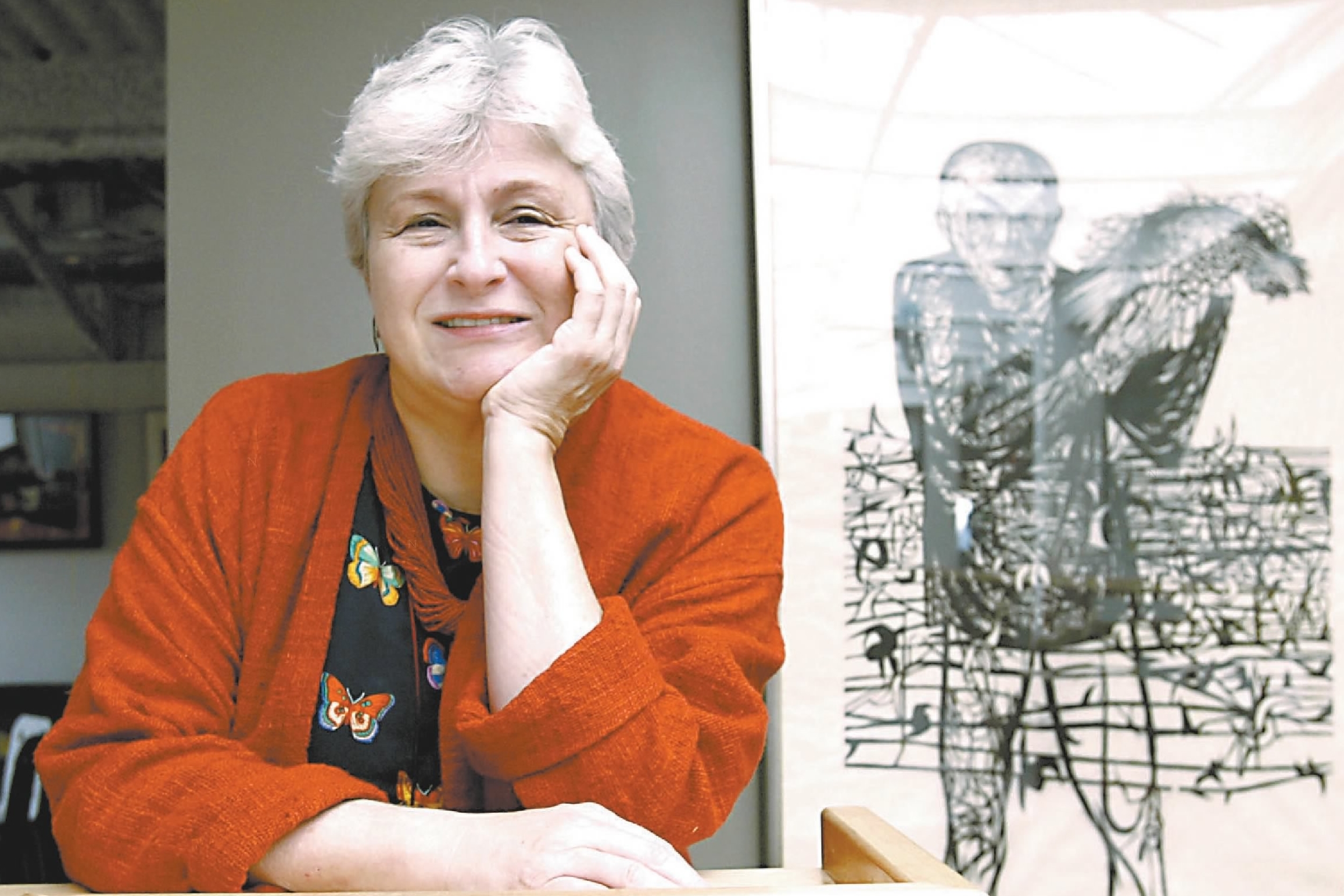
    Ms. Jacobson and fellow curator Warren Angle admire an exhibition at the Fleisher Art Memorial in 2002. April Saul / Staff Photographer

    “Thora was kind and clear,” colleagues at Social Impact Studios said on Facebook, “but firm as she pushed us to keep tweaking things until they were as strong as they could be.”

    She was an adjunct instructor at Drexel University from 2010 to 2014 and led research projects at Drexel and the University of Pennsylvania on social impacts of art in Philadelphia neighborhoods. Her first job out of college was coordinator of the student center at the Art Museum.

    She curated and juried shows, and wrote forwards and essays for art books and catalogs. She drew in her spare time and judged the Mummers Parade for years.

    She was featured in The Inquirer and Daily News, and appeared in the 1992 TV art documentary Monuments in Love. In 2006, she earned the Visionary Woman Award from Moore College of Art and Design, and was honored for lifetime achievement by Tri-State Artists Equity.

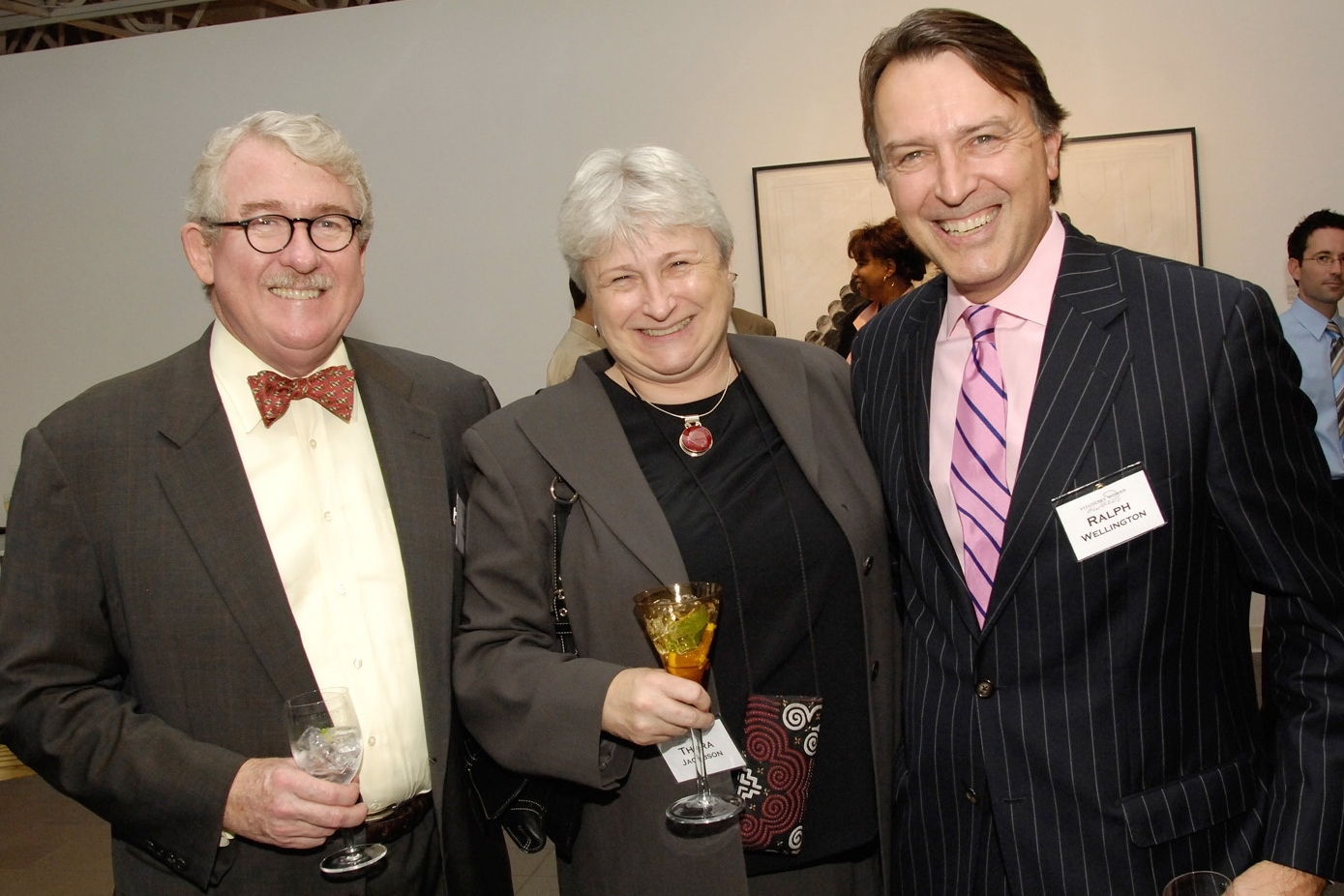
    Ms. Jacobson, standing between Jim Straw, to the left, and Ralph Wellington to her right, earned the Visionary Woman Award from Moore College of Art & Design in 2006.Gary Horn Photography

    “She’s really respected throughout the arts community in Philadelphia,” Happy Fernandez, then president of Moore, said in 2006. Anne d’Harnoncourt, then director of the Art Museum, said Ms. Jacobson’s “impact has been enormous.”

    William Valerio, director and CEO of the Woodmere museum, said: “Thora was a towering figure in the arts of Philadelphia, a builder of institutions whose accomplishments are lasting.”

    Thora Elizabeth Jacobson was born Feb. 19, 1949, in Ridley Park. She was the youngest of three children; her father died when she was 3. She played field hockey in high school, was fascinated by words and language, and graduated from the old Holy Child Academy in Sharon Hill.

    She met her husband, Antonio Sorgini, when he was taking classes at Fleisher, and they married in 1980 and had a son, Antongiulio. Her husband died in May.

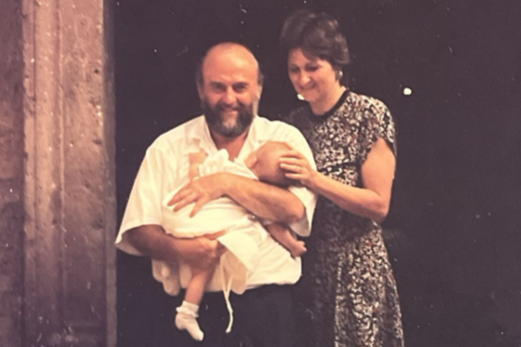
    Ms. Jacobson, her husband, Antonio Sorgini, and their son, Antongiulio, lived in South Philadelphia.Courtesy of the family

    Ms. Jacobson was a talented seamstress and baker. She did humorous impersonations, collected art, and enjoyed working with young people.

    Friends noted her “many kindnesses” and “decades-long advocacy for artists and the cultural community” in online tributes. Woodmere’s Valerio said: “She was both a strong voice and a warm friend to many.”

    Her son said: “She had a sharp wit and relished cheerful banter among friends and colleagues. Above all, she took the work of mentorship very seriously.”

    In addition to her son, Ms. Jacobson is survived by a sister and other relatives. A brother died earlier.

    Friends noted Ms. Jacobson’s “many kindnesses” and “decades-long advocacy for artists and the cultural community.”Courtesy of the family

    A celebration of her life is to be held later.

    Donations in her name may be made to the Fleisher Art Memorial, 719 Catharine St., Philadelphia, Pa. 19147; and Mural Arts Philadelphia, 1727-29 Mount Vernon St., Philadelphia, Pa. 19130.

    Ms. Jacobson was a talented seamstress and baker.
    Mark Garvin, / Philadelphia Museum of Art
  • Lights, camera, action on the El. SEPTA police to star in a TV docuseries.

    Lights, camera, action on the El. SEPTA police to star in a TV docuseries.

    Film crews are hard to hide on the subway.

    SEPTA said a production company is making a TV docuseries for A&E on the work of the transit police, shadowing officers in Philadelphia as they patrol trains, buses, and streets.

    SEPTA riders posted a flurry of photographs, questions, and comments on social media platforms after sightings of TV crews.

    An email was sent to SEPTA employees last week explaining what’s behind filming they might see on the system.

    The documentary will ”offer viewers a unique perspective of SEPTA law enforcement, allowing the audience to get to know some of the men and women of SEPTA’s 200-plus strong police force,” the internal message said.

    Screenshot of a post on X of an internal email sent to SEPTA employees about the A&E documentary.X.com

    SEPTA says it looks forward to having the transit police being in the spotlight, noting their challenging job, a sharp drop in violent crime on the transit system, and a crackdown on fare evasion and anti-social behaviors like smoking in stations and on vehicles.

    The production company has editorial control but has SEPTA’s permission to embed with police units. The transportation authority says it is not receiving any compensation from the production.

    SEPTA senior press officer John Golden said the eventual series will not be so-called reality TV.

    “There is nothing scripted about this,” he said, and the action as crews follow officers is not staged. It also is not focused only on arrests or confrontations.

    The docuseries project was first reported Thursday by news site Philly Voice.

    Alastair Cook, cofounder and owner of Double Act Productions, emailed that he was traveling and not able to immediately discuss the show.

    The company, headquartered in the Brixton district of London, has produced dozens of documentaries and fact-based dramas for outlets like A&E, the BBC, National Geographic, and Discovery+.

    A representative for A&E Global Media did not respond to a request for comment.

  • The Foo Fighters played ‘song after song after song after song’ in a three-hour tour stop at the Linc

    The Foo Fighters played ‘song after song after song after song’ in a three-hour tour stop at the Linc

    The five-and-a-half-hour, three-band odyssey that was the Foo Fighters’ “Take Cover Tour” stop at Lincoln Financial Field on Thursday started with a bang.

    It came courtesy of a hellacious opening set by Mannequin Pussy for what was the Dave Grohl-led band’s first show in Philadelphia in 15 years.

    The Philly punk rock-plus band earned a position of prominence in this review with an absolutely ripping performance that Foo fans who didn’t arrive at the sports complex by 5:30 p.m. on a weekday afternoon should be kicking themselves for missing.

    I’m being effusive about Mannequin Pussy not simply to cheer on one of the best bands to emerge from the Philly music scene in the last decade. The Marisa “Missy” Dabice-led quintet did make the most of their biggest hometown show ever.

    Marisa “Missy” Dabice, lead singer of Mannequin Pussy, performs as the first opener during the Foo Fighters’ “Take Cover Tour” at Lincoln Financial Field on Thursday, Aug. 13, 2026. Mannequin Pussy is from Philadelphia and performing their first stadium tour.Allie Ippolito / For The Inquirer

    Nor is the cheerleading an inappropriate response, especially after the band performed in the home of its favorite football team all dressed in green and ending its action-packed set by leading the crowd in “Fly, Eagles, Fly” and an “E-A-G-L-E-S” chant before leaving the stage flapping their arms as if they were wings.

    In 30 minutes, in a less than half full Linc, Mannequin Pussy found time to emphatically deliver seven songs from their top notch 2024 LP I Got Heaven, plus career highlights like “Drunk II,” “Control,” and “Romantic.” They also paid tribute to stage hands and support staff at the Linc while sharing several Go Birds! exclamations along with less friendly words for Pennsylvania U.S. Sen. John Fetterman.

    With a take-no-prisoners attitude driven by bassist Colins “Bear” Regisford and drummer Kaleen Reading, Mannequin Pussy repeatedly displayed a knack for constructing compact songs that — much like a band that Grohl used to play drums with called Nirvana — move from passages of real beauty to explosions of fury.

    Mannequin Pussy performs as the first opener during the Foo Fighters’ “Take Cover Tour” at Lincoln Financial Field on Thursday, Aug. 13, 2026. Mannequin Pussy is from Philadelphia and is performing their first arena tour.Allie Ippolito / For The Inquirer

    I’m making a point of Mannequin Pussy’s concise, impactful approach because it contrasted so sharply with the Foo Fighters’ sprawling headlining set, which stretched over three hours.

    In between, Josh Homme’s desert rock band Queens of the Stone Age was also excellent in an hourlong set. The band lived up to its stoner rock rep while riding a slinky, sometimes downright sexy groove, particularly on “Make It Witchu.”

    It was impressively locked in, though Homme — which rhymes with “mommy” — sounded a little woozy at times. It was hard to tell if he was kidding when he quipped: “Wow, it was the wrong day to take mushroom before the show.”

    Dave Grohl, lead singer of the Foo Fighters, performs during their “Take Cover Tour” at Lincoln Financial Field on Thursday, Aug. 13, 2026.Allie Ippolito / For The Inquirer

    The Foo Fighters hit the stage a few minutes after 8 p.m. Grohl trotted down the runway that extended onto the field of the stadium, by then filled with 60,000-plus fans of the band who first performed in Philadelphia at the Trocadero in 1995. They last played South Philly at what was then the Wells Fargo Center, in 2011.

    Since then, there were several Foo shows across the river in Camden at the amphitheater now known as the Freedom Mortgage Pavilion. A scheduled 2022 show at the Linc was canceled after the death of drummer Taylor Hawkins earlier that year.

    The Foos’ return features new drummer Ilan Rubin, who formerly pounded the skins for Nine Inch Nails. Earlier this year, Rubin replaced Josh Freese, who had replaced Hawkins in 2023.

    On the “Take Cover Tour,” which kicked off in Mexico in January and runs through March, the Foos are exerting themselves as one of the world’s biggest bands, playing stadiums all over the globe.

    Grohl — who sang and played guitar, except for one brief stint in which he switched places with Rubin and got behind the drum kit — repeatedly mentioned the Linc was the largest venue the band has played in Philadelphia. He also name-checked the Electric Factory, where the band performed three times in the late 1990s and early ’00s.

    The Foo Fighters during their “Take Cover Tour” at Lincoln Financial Field on Thursday, Aug. 13, 2026.Allie Ippolito / For The Inquirer

    The stature of the band was also expressed by the length of the show.

    Playing for three hours means you’ve attained epic status. Bruce Springsteen has done it for decades. It comes naturally to jam bands like Phish, whose identity is built around extended improvisation. And Taylor Swift also crossed the threshold with her career-spanning “Eras Tour.”

    The marathon set gave the Foos — that also includes guitarists Pat Smear and Chris Shiflett, bassist Nate Mendel, and keyboard player Rami Jaffee — time to visit all its own eras.

    That meant reaching back to the 1995 self-titled release on which Grohl played all the instruments, which is still the band’s best album. Of the two songs from that record, “This Is the Call,” was included in extended version. The other, “Big Me,” was part of a acoustic set and brimmed with a welcome melodic sweetness and light.

    The stripped-down set also included a breezy “Wheels” and “Marigold,” a rarity that Grohl put out on a cassette-only release in 1992 using the band name Late! And when he briefly dismissed the band to do a solo, “Under You,” from the band’s 2023 album, But Here We Are, Grohl delivered a not-on-the-set-list surprise.

    It was a Philly special: a shortened version of New Hope duo Ween’s “Freedom of ’76,” a song that The Inquirer recently named one of the most iconic Philadelphia songs of all time. Ween FTW!

    Queens of the Stone Age performs as the second opener during the Foo Fighters’ “Take Cover Tour” at Lincoln Financial Field on Thursday, Aug. 13, 2026.Allie Ippolito / For The Inquirer

    In April, the Foos released its 12th album, Your Favorite Toy, a bracing, disciplined record that benefits from brevity, with its 10 songs clocking in under 33 minutes.

    For whatever reason, only one of those songs — the hard-hitting title song — made the cut on Thursday. Perhaps Grohl was worried about performing too much material unfamiliar to the crowd — a significant portion of which was in his mid-50s age cohort, but also with many fans a generation or two younger.

    The show had its highlights, from crowd-pleasers like the crunchy “Monkey Wrench” to “The Teacher,” a tribute to Grohl’s mother, Virginia, who died in 2022. It was a heartfelt, lengthy elegy in which he played a double-necked guitar and sang: “You taught me how to be / Never showed me how to say good bye.”

    Also entertaining was a medley where the band members were introduced, and got to play a song by a band they used to be in. It was especially fun since Mendel was once in Sunny Day Real Estate, Jaffee played with the Wallflowers, and Smear was a member of L.A. punks, the Germs.

    Dave Grohl, lead singer of the Foo Fighters, performs during their “Take Cover Tour” at Lincoln Financial Field on Thursday, Aug. 13, 2026.Allie Ippolito / For The Inquirer

    Grohl was, as always, an ingratiating presence. He drops F and MF bombs at an astounding rate without seeming the slightest bit subversive or mean-spirited. The joy he takes from being on stage is infectious, and was reciprocated by a singing-along audience pleased to be hanging out on what turned out to be a pleasant and not-too-crushingly-humid of a summer evening.

    The Foos have a number of memorable songs that the band has made stick over its 30-year career — such as “The Best of You,” “Learn to Fly,” and “Everlong,” which was the final encore, with fireworks.

    But the band doesn’t have an endless supply, nor much variety in their meat-and-potatoes approach. Many songs like “Run” were burdened by drawn out arrangements that turned into a slog.

    Early on, Grohl promised that as the evening went on the Foos would be generous in performing “song after song after song after song … three hours isn’t enough!”

    On the contrary, it was more than enough.

    The crowd watches the Foo Fighters perform during their “Take Cover Tour” at Lincoln Financial Field on Thursday, Aug. 13, 2026.Allie Ippolito / For The Inquirer