Tag: topic-link-auto

  • When did human tragedy become social media content?

    When did human tragedy become social media content?

    Within minutes, photos begin appearing online. Someone posts a video from the shoulder of the road. Someone else starts speculating about what happened in the comments. Before police have had the chance to notify a family, strangers are watching someone else’s worst day unfold on their phones.

    Every time I see those kinds of images of car crashes on social media, I think the same thing.

    Someone in that vehicle is a husband. A wife. A son. A daughter. A best friend.

    Someone’s family may not even know yet.

    For one of us, Kristi Hughes, I know how sacred those first hours are. Having lost my husband, Sean, in a preventable car crash, I understand through the worst kind of lived experience that families deserve the chance to receive devastating news from loved ones — not from Facebook, TikTok, Instagram, or a stranger’s livestream. They deserve the privacy to process the unimaginable before the world begins watching.
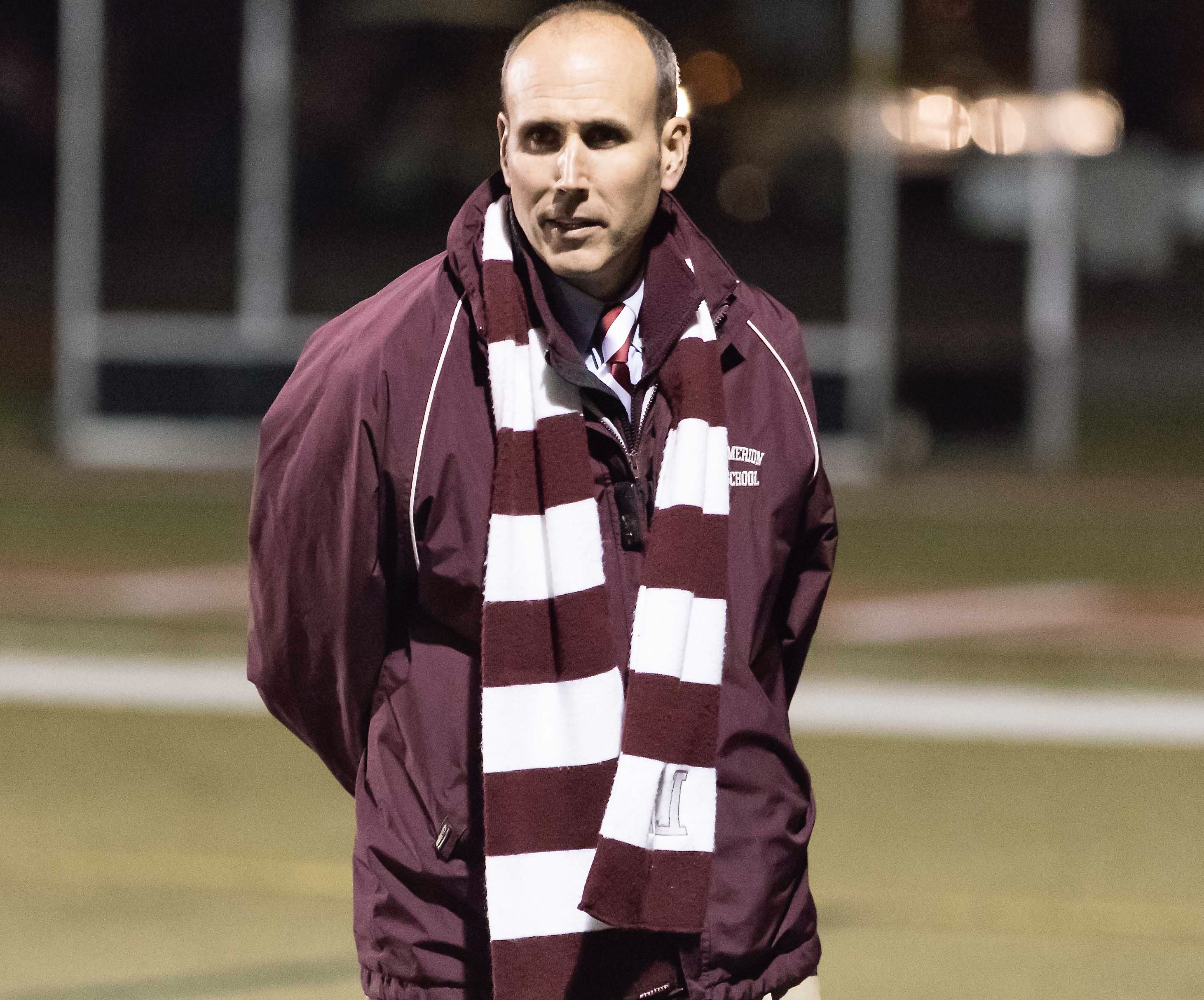
    Lower Merion principal Sean Hughes in 2016.Courtesy of Lower Merion School District

    The dead deserve dignity.

    The living deserve the space to grieve.

    As for the second author of this essay, my name is Michael L. Saile Jr., and I have spent more than two decades representing families after catastrophic injuries and wrongful death as a trial attorney. I have seen firsthand the emotional, financial, and legal challenges they face. In recent years, however, another layer of trauma has emerged. Families are no longer grieving in private. Increasingly, they are forced to confront photos, videos, and online commentary documenting some of the worst moments of their lives.

    Technology has transformed how we experience emergencies. Smartphones allow anyone to become an eyewitness, and social media rewards immediacy.

    In this image made from video taken from social media, a massive video screen suspended above the stage fells onto performers at a concert in Hong Kong in 2022. Two dancers of the dancers onstage were injured.UGC via AP

    Unfortunately, somewhere along the way, many of us stopped asking, “How can I help?” and started asking, “Should I record this?”

    That shift should concern all of us.

    To be clear, technology itself is not the problem. Photos and videos can preserve important evidence, help investigators reconstruct crashes, and even support legal claims. Social media can mobilize communities, connect families with resources, and raise awareness about important issues.

    But there is a profound difference between documenting an event for a legitimate purpose and turning another person’s tragedy into content.

    For families living through these moments, those images are not simply photos on a screen. They are someone’s final moments. They are the wreckage of a future that will never happen.

    Long after emergency vehicles leave and headlines fade, those images can remain online indefinitely. Years later, a child may search for a parent’s name and discover photographs or videos of the crash that took their life. A spouse may unexpectedly encounter graphic images while scrolling online. A family member trying to remember a loved one for the life they lived instead finds the moment they died.

    Every time a crash photo appears in my social media feed, I think about the family that hasn’t received that call yet. I think about a spouse sitting at work, a parent picking up another child from school, or grandparents making dinner, completely unaware that life is about to change forever.

    There are practical consequences, as well. After a serious crash, insurance companies, investigators, and attorneys routinely review publicly available social media posts. Images, videos, and comments — whether shared by those involved or by well-meaning friends and witnesses — can complicate investigations, spread misinformation, and, in some cases, become evidence.

    For anyone involved in a serious accident, a few simple precautions can make a difference:

    • Let law enforcement determine the facts before posting or commenting publicly.
    • Avoid speculating about fault or the extent of injuries.
    • Ask family and friends not to share updates or photos without permission.
    • Preserve photos and documentation privately rather than posting them online.
    • Remember that once something is shared publicly, it can be difficult — or impossible — to remove.

    Perhaps even more important is what each of us can do as bystanders.

    If you come upon a crash scene, pause before reaching for your phone. Ask yourself whether recording the moment will truly help — or whether your attention would be better spent moving safely through the area, giving first responders room to work, or simply respecting the privacy of the people involved.

    Not every heartbreaking moment belongs on social media.

    Before you hit “post,” ask yourself one question:

    If this were my spouse, my child, my parent, or my best friend, would I want the world watching before I even knew what had happened?

    Every crash scene represents more than twisted metal and flashing lights. It represents a family whose life may never be the same. Technology will continue to evolve. Social media isn’t going away. But compassion is still a choice.

    The next time you witness someone else’s worst day, choose humanity over curiosity.

    Because the dead deserve dignity. And the living deserve the privacy to grieve. And every child deserves to remember a parent by the life they lived — not by the images the internet refused to forget.

    Kristi Hughes is a communications strategist and president of the Sean Hughes Memorial Fund. After losing her husband, Sean, in a preventable car crash in 2021, she has dedicated her work to advancing conversations around roadway safety and preparedness and supporting families navigating tragedy. Michael L. Saile Jr. is a Pennsylvania trial attorney, a partner at Cordisco & Saile LLC, and the host of the “Injury Pros Podcast,” who has, for more than two decades, represented individuals and families affected by catastrophic injuries and wrongful death.
  • Surprised by the 15% increase in property taxes in Kensington? You shouldn’t be.

    Surprised by the 15% increase in property taxes in Kensington? You shouldn’t be.

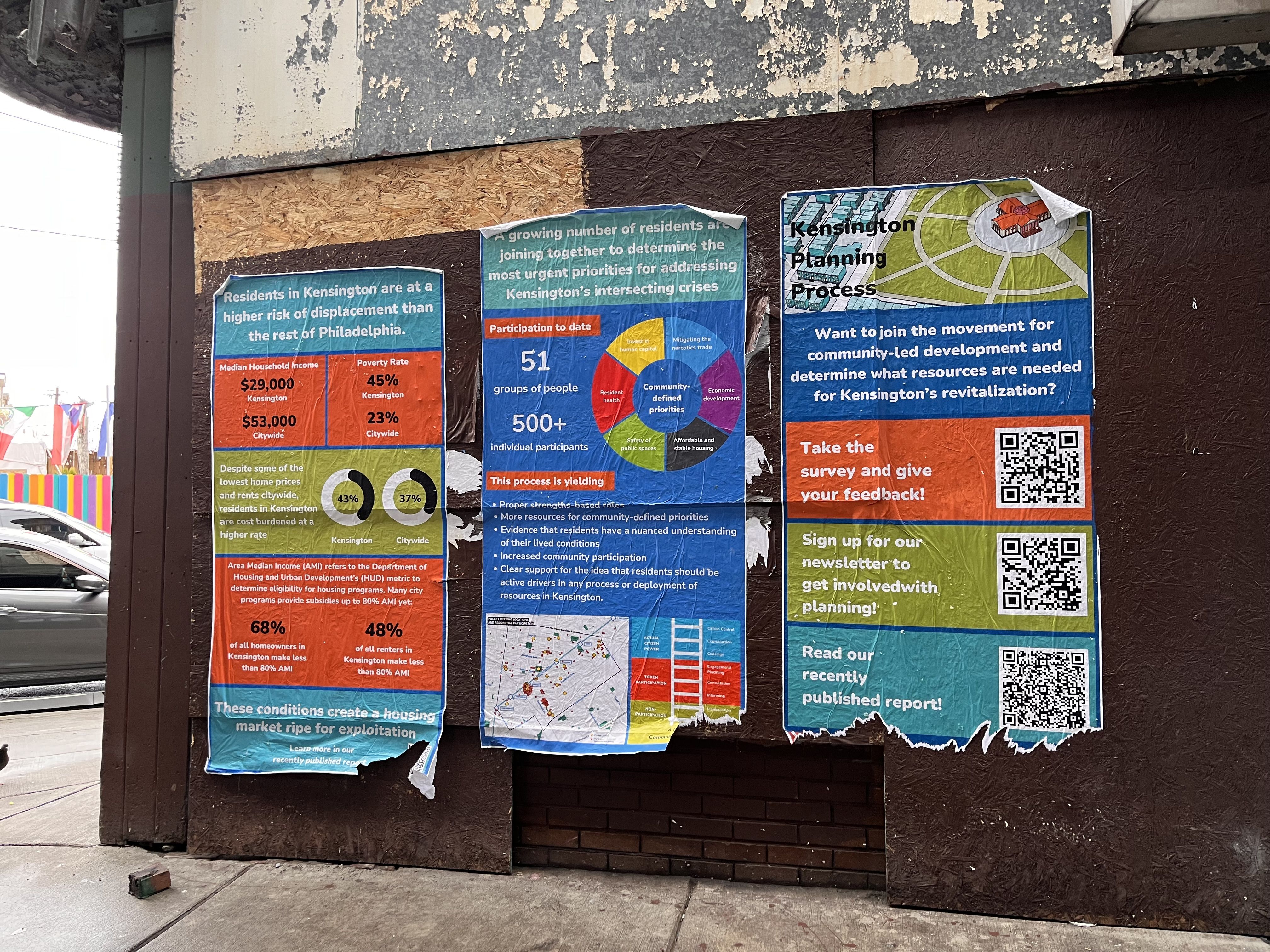
    Last month, housing valuations, and therefore property taxes, increased by 3% across the city. Valuations in Kensington, however, went up an average of 15%, with Mantua, Grays Ferry, and Kingsessing not far behind.

    What do all of the latter communities have in common? They are all under pressure from rapid gentrification, and they are all communities where residents are the least equipped to pay the property taxes associated with the increased home valuations.

    Response across the city was surprise — as if the warning signs had not been there all along.

    Some people have remained willfully ignorant about the pressures of gentrification in Philadelphia’s neighborhoods because they don’t want to acknowledge that long-standing city programs were not built to prevent this moment from occurring.

    Another set of people are feigning surprise, but are not really surprised at all, because this was the plan all along and part of the displacement strategy of “fixing” these neighborhoods.

    And then there are those who are honestly surprised because they simply weren’t paying attention.

    While we have acted surprised, we have missed the point that the system that created these conditions is operating exactly as it is intended to function, and that without addressing the city’s reliance on property taxes and its detrimental impact on those least able to pay, we won’t find a way forward and dangers foretold will progress.

    Challenges foretold

    We should not be surprised.

    As a Kensington resident, and the executive director of New Kensington Community Development Corp., I — along with many others — have been sounding the alarm, ringing the warning bells about the likely displacement of long-term community residents for years.

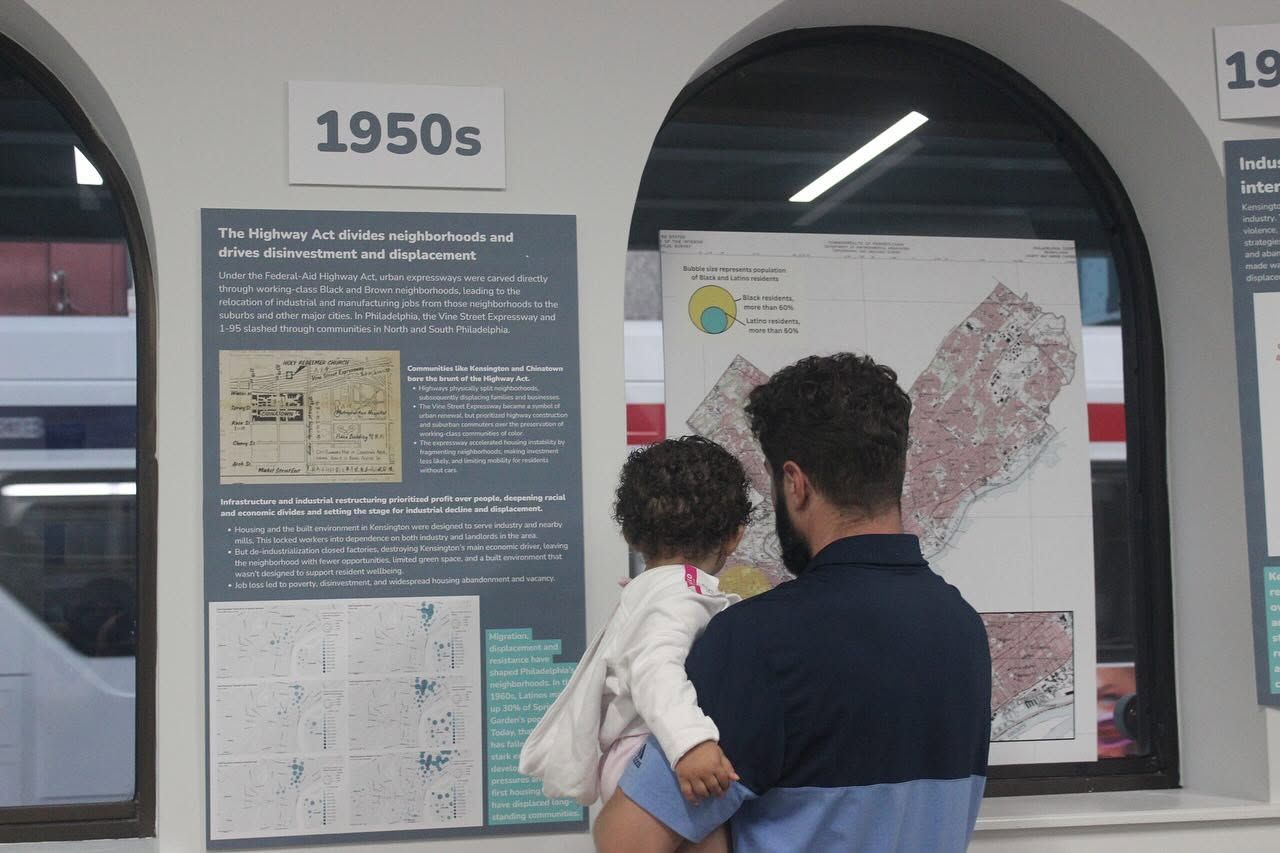
    An attendee reads one of the Kensington history panels on display at the opening of the “People-First Housing” exhibit and engagement series at the Kensington Engagement Center in September 2025. The series explored Philadelphia’s history of profit-first housing strategies and a new people-first vision for the future.Courtesy of NKCDC

    In 2018, I made clear to Philadelphia’s managing director that without a clear plan that addresses the unsheltered population in Kensington, there would be both long- and short-term impacts for the greater community as we went from “camps of unsheltered citizens to the construction of $369,000 homes mere feet away.”

    The cycle repeated again in 2024, with new public officials in charge, embarking on their latest plans to “fix” Kensington.

    After a period in 2017-2018 that left Kensington ripe for massive investment by prospectors and developers, I warned in an opinion piece in The Inquirer that without a greater plan cocreated with the community, “Kensington will be turned over to privatization and the free market — neither of which have ever been kind to people of color and those with limited means.”

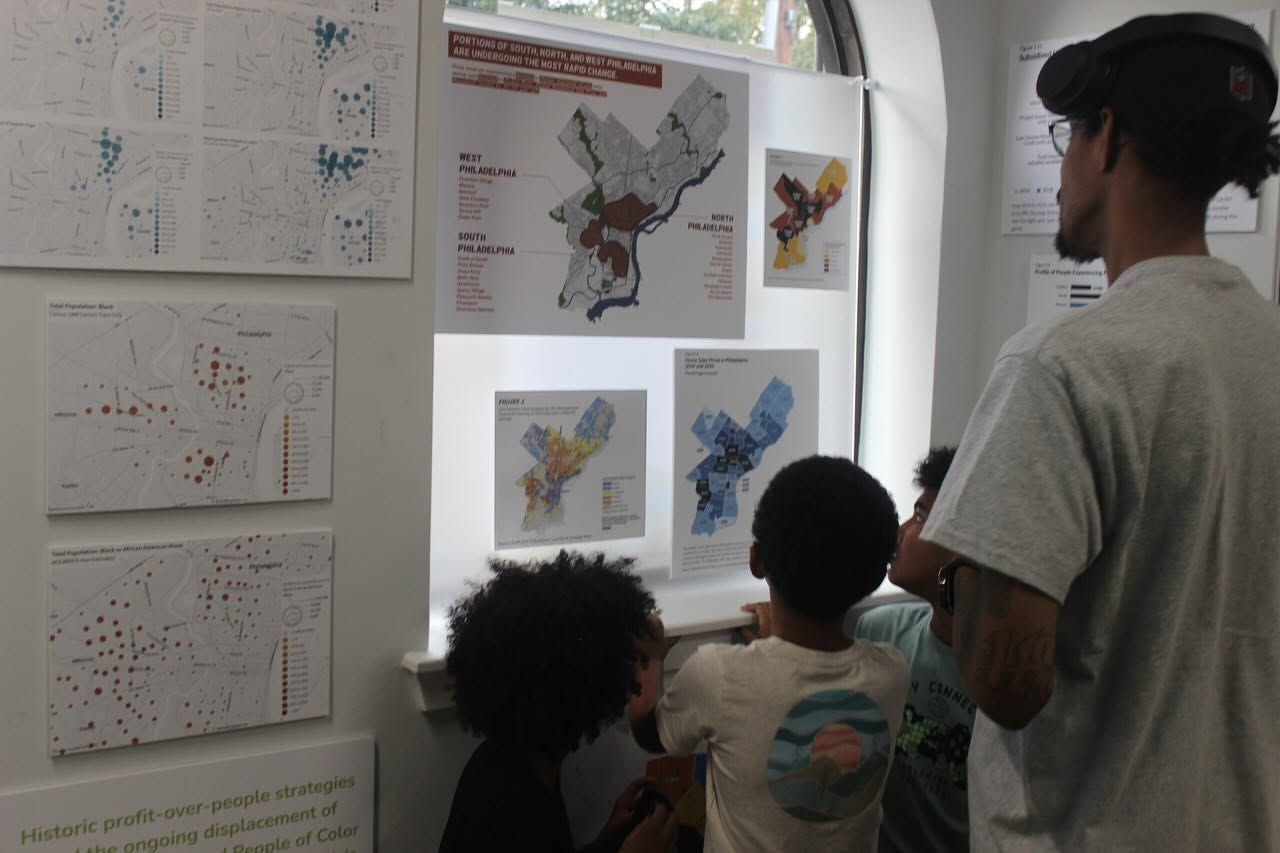
    Attendees looking at neighborhood maps and charts at the opening of the “People-First Housing” exhibit and engagement series at the Kensington Engagement Center in September 2025. Courtesy of NKCDC

    In 2024, while the opportunity was there, it was critical that “any effort to fix Kensington should not just be about eliminating the drug economy or ending Kensington as a containment strategy for the city; it should be about preserving a community,” and that “if none of these answers exist, the second stage of displacement — this time of long-term residents — is already underway” and that “without a greater plan to address the long-term needs of residents that’s cocreated with the Kensington community, my neighbors and I could be cheering our own demise.”

    In 2025, I warned of not only the corporate commodification of our community’s housing stock and the detrimental effects that has on communities, but also how in communities such as Kensington — with high rates of poverty and old housing stock — we would see increases in purchases of homes by private equity. Those would then be turned into rentals where new corporate landlords would evict tenants from previously owner-occupied homes at three times the rate of small investors.

    At the time, my organization saw that 70% of the more than 500 evictions we had prevented over the last few years were in properties owned by LLCs — many of which were from out of state.

    Others issued warnings, too.

    In 2025, the Reinvestment Fund reported that corporate investors are most active in Black and brown neighborhoods where they are responsible for more than one in four residential purchases, therefore “creating more extraction through landlords rather than creating and maintaining wealth among homeowners.”

    Missed opportunities, new crisis moment

    Because we did not act when we were warned or take advantage of the opportunities presented to us, the system is working exactly as it was designed to function — and that has created additional pressures and crises.

    Rather than addressing the core problems of poverty and extraction from our most vulnerable, we chose single-issue approaches. How will someone who earns the area median income in Kensington — $30,000 a year — pay for a 15% increase in property taxes, while also trying to survive after cuts to Supplemental Nutrition Assistance Program benefits, to Medicaid, and an underfunded transportation system?

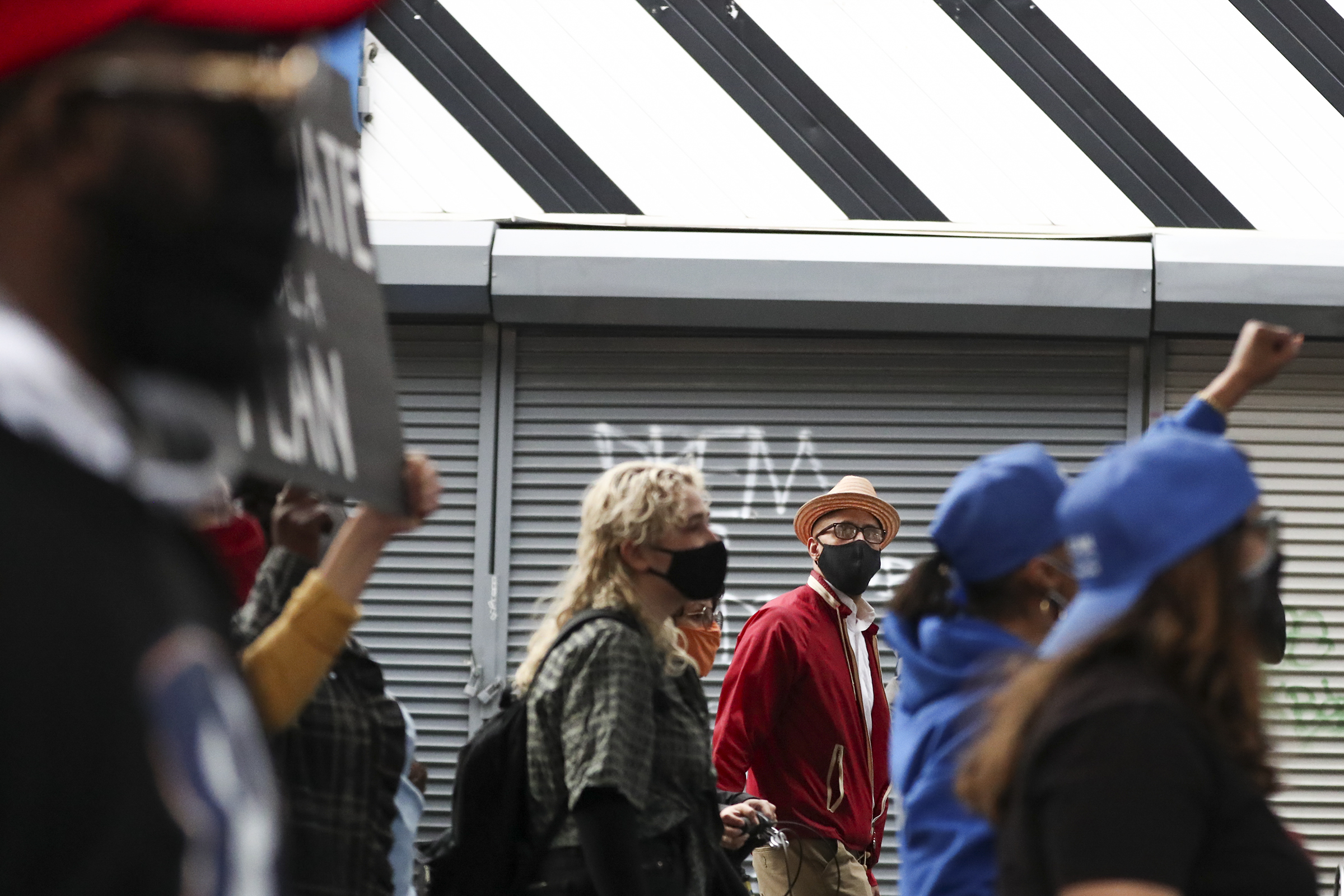
    Bill McKinney, executive director of the New Kensington Community Development Corp. (center), walks with demonstrators underneath the El down Kensington Avenue in March 2021.HEATHER KHALIFA / Staff Photographer

    Longtime residents of Kensington are nothing if not resilient, but they cannot absorb injury after injury to their already difficult daily circumstances. After this property tax increase, more of them will find themselves considering moving out of their homes.

    Like my neighbors in Kensington, I receive five or six calls, emails, and texts every week asking to purchase my home. As the Reinvestment Fund indicated, communities under pressure — like mine — are at the greatest risk from outside investors.

    A different path forward

    I acknowledge we have a number of existing programs to provide relief to homeowners feeling the pressure of increases to property taxes, such as the homestead exemption, the Longtime Owner Occupants Program, tax freezes, and filing appeals. These programs should be utilized, modified, and expanded, but none of them will solve our greater problems.

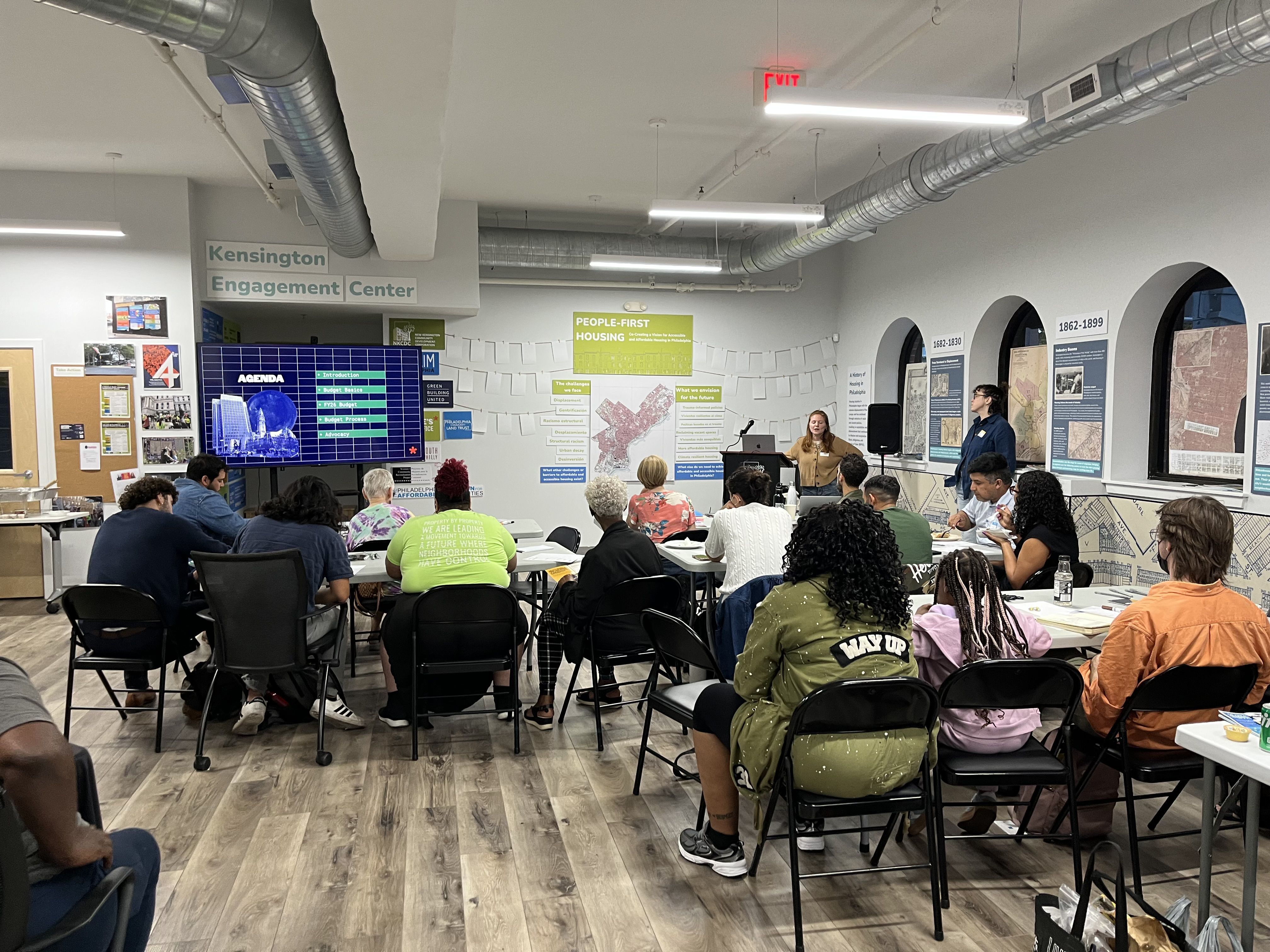
    A community group known as the People’s Budget Office facilitates a workshop on Philadelphia’s municipal budget at the Kensington Engagement Center in October.Courtesy of NKCDC

    We have left housing solutions to the free market, where the goal is to maximize profit and therefore displacement.

    We need to address the city’s overreliance on, and benefit from, the $2 billion in property taxes, much of which is also levied from the most vulnerable residents of the city — and we need to develop a comprehensive affordability plan that is cocreated with the community and those actually implementing anti-displacement strategies.

    There are a variety of approaches we can take that mitigate impacts on its low-income residents, and that will counter the rush to displacement:

    • Address poverty by advocating for the state to finally adopt an increase to the minimum wage so that our working poor are less exploited for their labor, and so they have the money to address these property tax and social safety net changes.
    • Continue exploring and implementing some of the emergent basic income programs that have shown success.
    • Expand home repair programs such as Built to Last, which make necessary repairs to prevent homeowners from selling their homes to investors, as well as making their homes more affordable through green upgrades.
    • Utilize city revenue that doesn’t burden the most vulnerable and truly makes a difference to the budget. If 10,000 homeowners in upper Kensington all receive an annual increase of $250 to their property taxes, the burden is significant to low-income residents, yet only generates $2.5 million for the city.
    • Eliminate the recent reductions in the Business Income and Receipts Tax (BIRT), which cut as much as $300 million annually in revenue for the city.
    • Hospitals, universities, and churches should pay property taxes, too.  More than a third of all of the property in the city is owned by hospitals, universities, and churches that don’t pay property taxes due to their nonprofit status while accumulating massive endowments and limiting access to healthcare as they shift from serving as charitable organizations to corporations. As a result, we receive only about two-thirds of the possible revenue from property taxes, leaving at least $1 billion on the table each year.
    • The wealthiest should pay their fair share. Philanthropy is part of the social contract within capitalism that tries to maintain a balance between extraction and a point of collapse of the host, the city. It is clear the extractors must do better. We allow people to profit immeasurably from others’ labor and consumption as long as they give pennies back on the dollar. Philanthropic entities are only required to, cumulatively, give 4% of what they have gleaned from earned and unearned income sources to recipients of their largess. It is not enough. The host is not going to survive; the contract has been broken.
    We are currently at the front end of the budgeting season, when we have the ability to use our collective brain power to develop and implement a strategy that will prevent anyone from ever having to say “I told you so” again — and for residents to not be victims of the shortsightedness of the city they reside in.

    I have just identified billions of dollars in revenue that does not come from the city’s most vulnerable — and there is much more than what I quickly listed. I write this as an invitation to work with others so we can collectively attack the disease of willful ignorance and the displacement of our most vulnerable with a cure of cocreated solutions.

    At this moment of surprise, despair is not a strategy — and change is possible. We must have the courage to share or take the power necessary to implement these very actionable solutions.

    Bill McKinney is a Kensington resident and the executive director of the New Kensington Community Development Corp.

  • After 22 years away, Gargoyles gallery and vintage shop returns to South Street with all its treasures

    After 22 years away, Gargoyles gallery and vintage shop returns to South Street with all its treasures

    Behold a marvelous menagerie of Americana — a curated cornucopia of century-old curios and Victorian age sensibility.

    Stroll the sepia-toned rows of travel-worn valises and towering top hats. Cast iron railway signs and old pub mirrors. Dime store novels and Gilded Age comic strips. Handcrafted, model pond yachts and leather-worn sporting relics. Glamorous art deco advertisements and dreamlike Jazz Age prints.

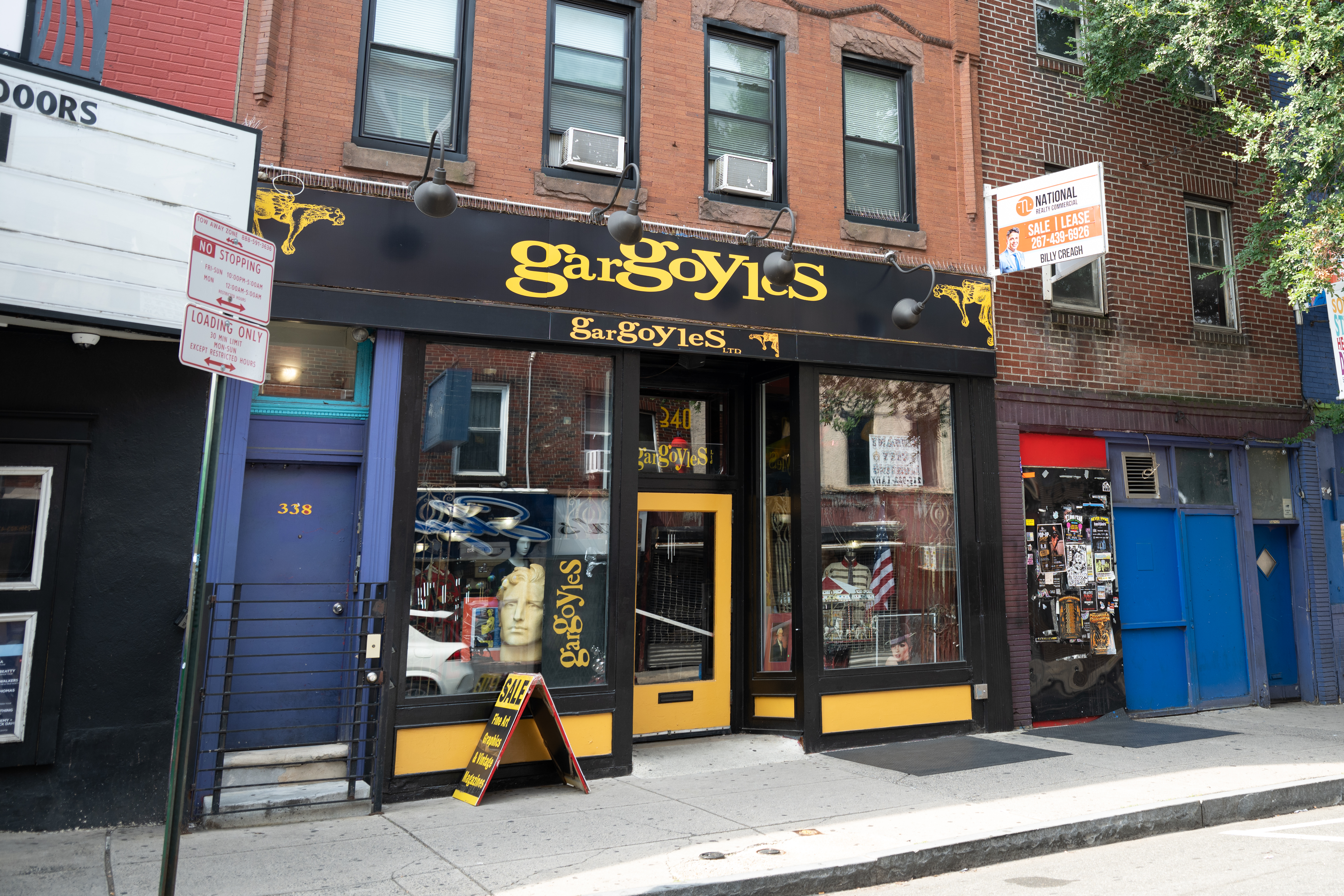
    The exterior of Gargoyles, a vintage shop at 338-340 South Street in Philadelphia, on Aug. 11, 2026.Erin Blewett / For The Inquirer

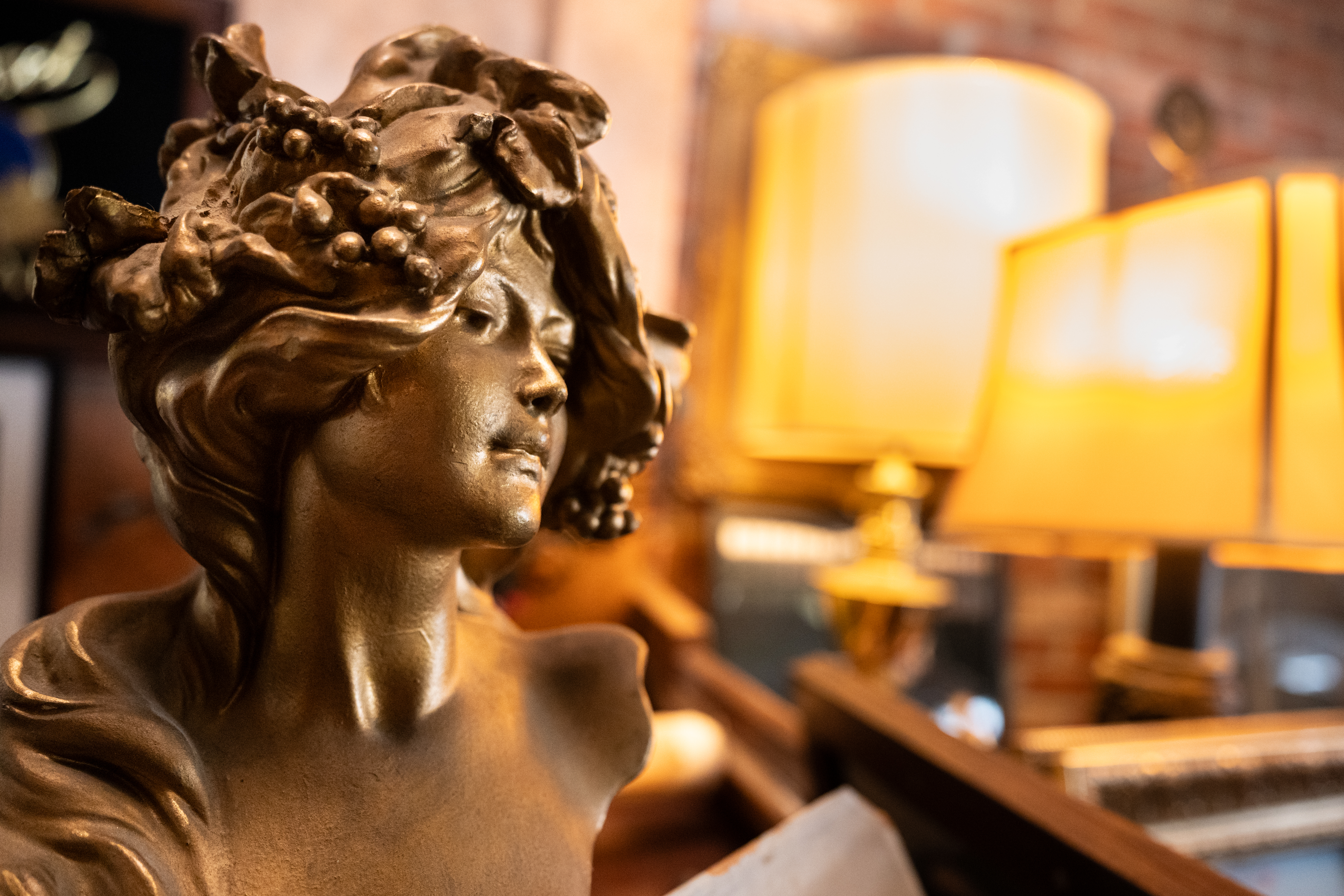
    Endless architectural embellishments, like terra cotta cupids and stone lion heads, ornamental arches, columns, mantels, and fine wooden sideboards culled from the English countryside or rescued from bygone wrecking balls.

    All of it carefully chosen and displayed for its taste and excellence by Hadassah Zuberi, 80, a lioness of architectural salvage, who for decades sold architectural vestiges, rare memorabilia, and period props to Philadelphia’s grand department stores — including Gimbels, Strawbridge & Clothier, and Wanamakers — as display furnishings.

    And all of it, once again on South Street.

    Confident of change

    In May, almost 22 years after shuttering her storied showroom — Gargoyles ltd., which she operated in a pair of South Third Street storefronts, steps off South, for nearly 35 years before closing in 2004 — Zuberi returned home to Philadelphia.

    Her store’s latest incarnation is located at 340 South St., former home of the Hurricane Alley bar, and across from the iconic Eye’s Gallery. It has quickly become a popular staple on the famed, if perpetually embattled, Philly thoroughfare that now sprouts signs of rebirth after quality-of-life issues and nuisance businesses.

    A decorative bust is displayed among vintage furnishings for sale at Gargoyles on South Street in Philadelphia on Aug. 11, 2026.Erin Blewett / For The Inquirer

    “We’re going to elevate the character of the street,” said Zuberi on a recent afternoon, perched in her oversize leather shop chair as classical music played. “It’s been run-down. I’m confident it’s going to change.”

    Zuberi had relocated her business to the arts enclave of Kingston, N.Y, amid rising property taxes and the shuttering of national department stores.

    The move comes after Rick Milan, former owner of the legendary South Street punk store Zipperhead and now a board member of the South Street District, who owns properties on the street, including the former Hurricane Alley space, lobbied Zuberi to come back to Philly.

    A former customer, who once bought vintage ski equipment from Gargoyles as home decor, Milan serendipitously wandered into the Kingston shop during a vacation in 2024.

    “I knew right away this was the Gargoyles from Third Street,” he said. “South Street is currently going through a big vintage surge. And I really wanted to recruit Hadassah back to South Street.”

    Preserved vestiges of old Philadelphia

    More than a half century had passed since Zuberi, born and raised in Jerusalem, opened her original Philly shop, a joint venture with her first husband, Richard Serbin.

    Studying graphic design at the Bezalel Academy of Arts and Design — Israel’s oldest and most prestigious school of art, design, and architecture — Zuberi moved to Philadelphia in 1967 at the age of 21.

    At the time, Philadelphia was busy remaking itself.

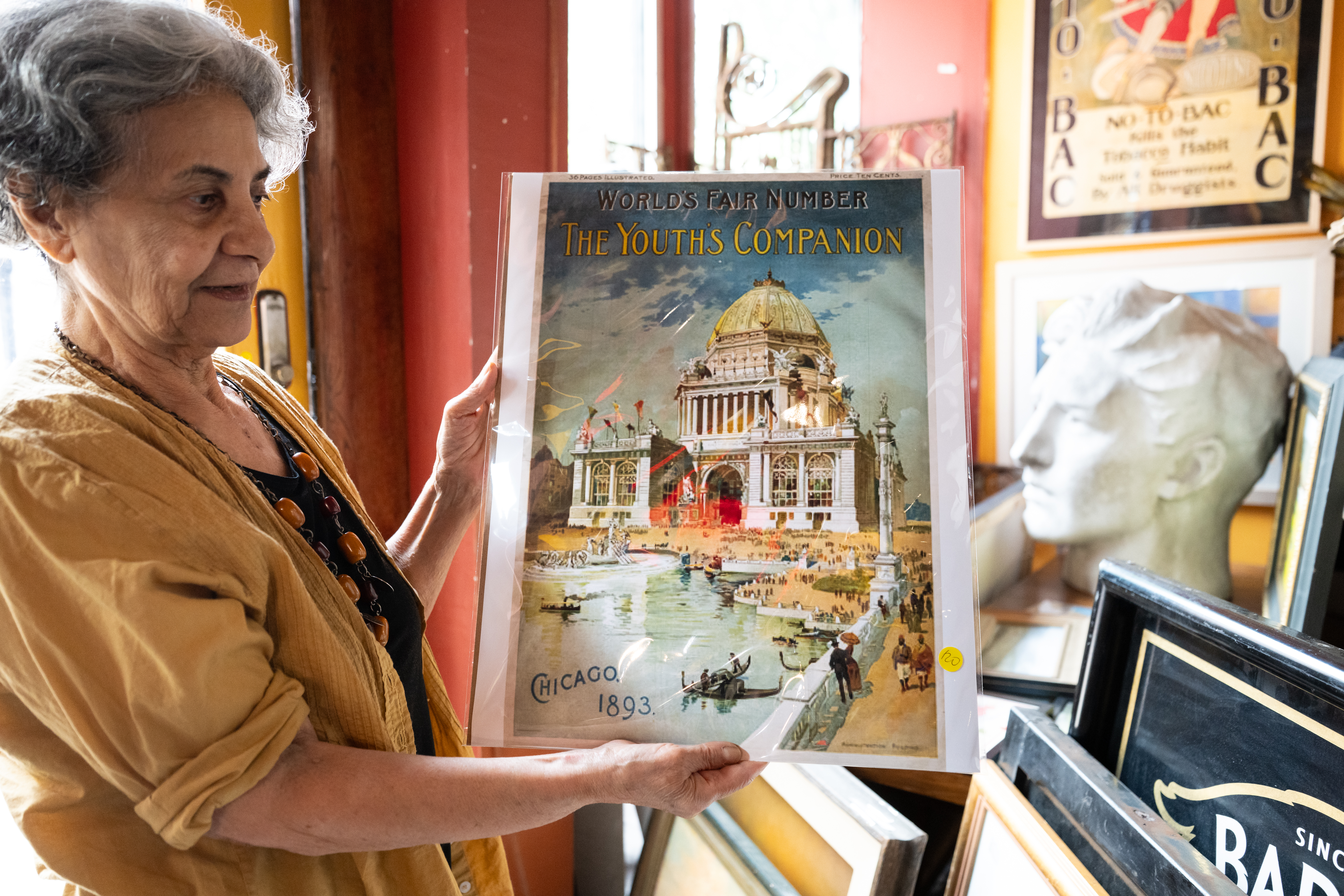
    Hadassah Zuberi displays a reproduction print of an 1893 World’s Fair issue of the Youth’s Companion magazine at her vintage shop, Gargoyles, on South Street in Philadelphia on Tuesday, Aug. 11, 2026.Erin Blewett / For The Inquirer

    “Nineteenth-century Philadelphia was falling away,” she said. “They were tearing down incredible mansions, which was criminal. They demolished some amazing landmarks.”

    Designing a home of their own, the newlyweds hired prominent Philadelphia architect Adolph DeRoy Mark and began to purchase the architectural salvage of stately Philly residences, public buildings, and churches destined for destruction. They filled the shop — massive twin storefronts at 512-514 S. Third St., which Zuberi’s father-in-law purchased for $18,000, and which is now a rowhouse — with preserved vestiges of old Philadelphia, including a specially made gargoyle.

    “We got a whole bunch of amazing ironwork and Tiffany stained glass windows,” she said. “Cherubs. Magnificent columns. We had a couple thousand door knobs that were brass and copper. Just fantastic stuff.”

    South Street to the pyramids

    Enjoying the earliest days of its renaissance by the late ‘60s and early ’70s, South Street was a near-deserted strip, an empty canvas fast filling with hippies, hipsters, and hucksters. Transforming into a stronghold of bohemia, the neighborhood was still touch and go, Zuberi remembered.

    “We had one of our employees who would go to the front door with a baseball bat because he didn’t know who was going to come in,” she said.

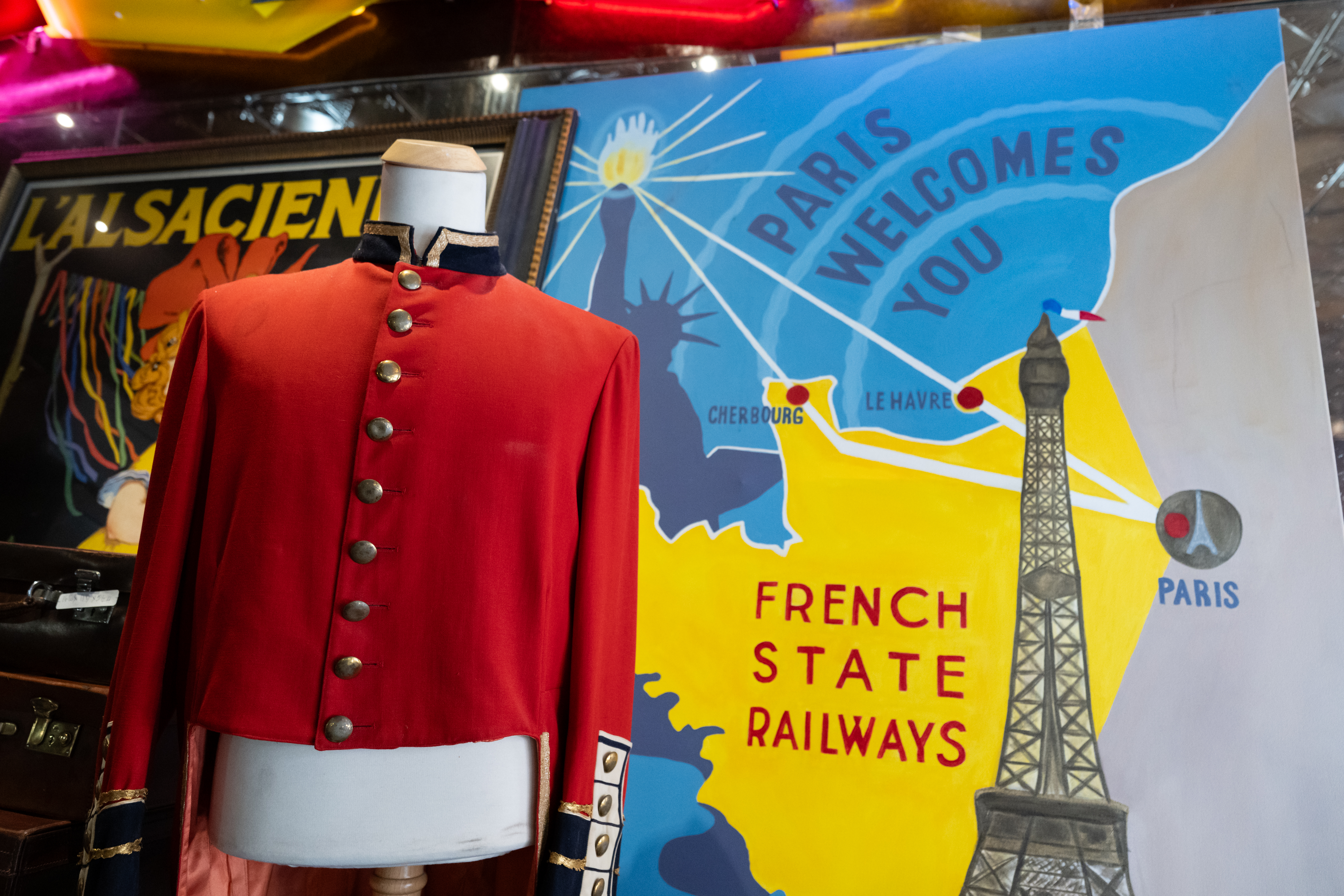
    A vintage uniform jacket and travel posters are displayed inside Gargoyles, Hadassah Zuberi’s vintage shop on South Street in Philadelphia, on Tuesday, Aug. 11, 2026.Erin Blewett / For The Inquirer

    Selling architectural remnants to restaurants and hotels — and local eateries, like Downey’s Irish Pub, Saloon Restaurant, and the Borgia Tea Room in Headhouse Square — the shop became one of the East Coast’s largest dealers in antique architectural embellishments. The couple traveled through England and Belgium, filling department store orders and printed catalogs for national chains.

    “My mother was at the pyramids in Egypt and she had a Gargoyles bag,” said a laughing Zuberi of the Philly heyday. “And someone was like, ‘Oh, I was at the store in Philadelphia.’”

    The shop outlasted her marriage. On her own in the shop, and raising children, Zuberi embraced a newfound sense of artistic freedom, buffeting her inventory with vintage memorabilia and curios she found inspiring, and more of her own artwork and paintings.

    “It was passion,” she said. “This idea that you can take anything that has some semblance of design and use it anywhere. No rules.”

    All the while, South Street rose and fell, embracing its bohemian roots and transforming into a vibrant punk and counterculture stronghold, and eventually battling corporate encroachment and abandonment.

    By 2004, developers were buying buildings for investments, losing sight of the character of the neighborhood, Zuberi said.

    “It lost its magic touch,” she said.

    Back on South Street

    “What the hell are you doing here?” she remembered Milan asking, when he happened into her Kingston store in 2024. “Listen, I want you back on South Street.”

    While Kingston brought more success from locals and New York City tourists, Philadelphia, where she still kept a home, never stopped calling.

    “I was homesick,” she said. “Philadelphia has all the culture in the world.”

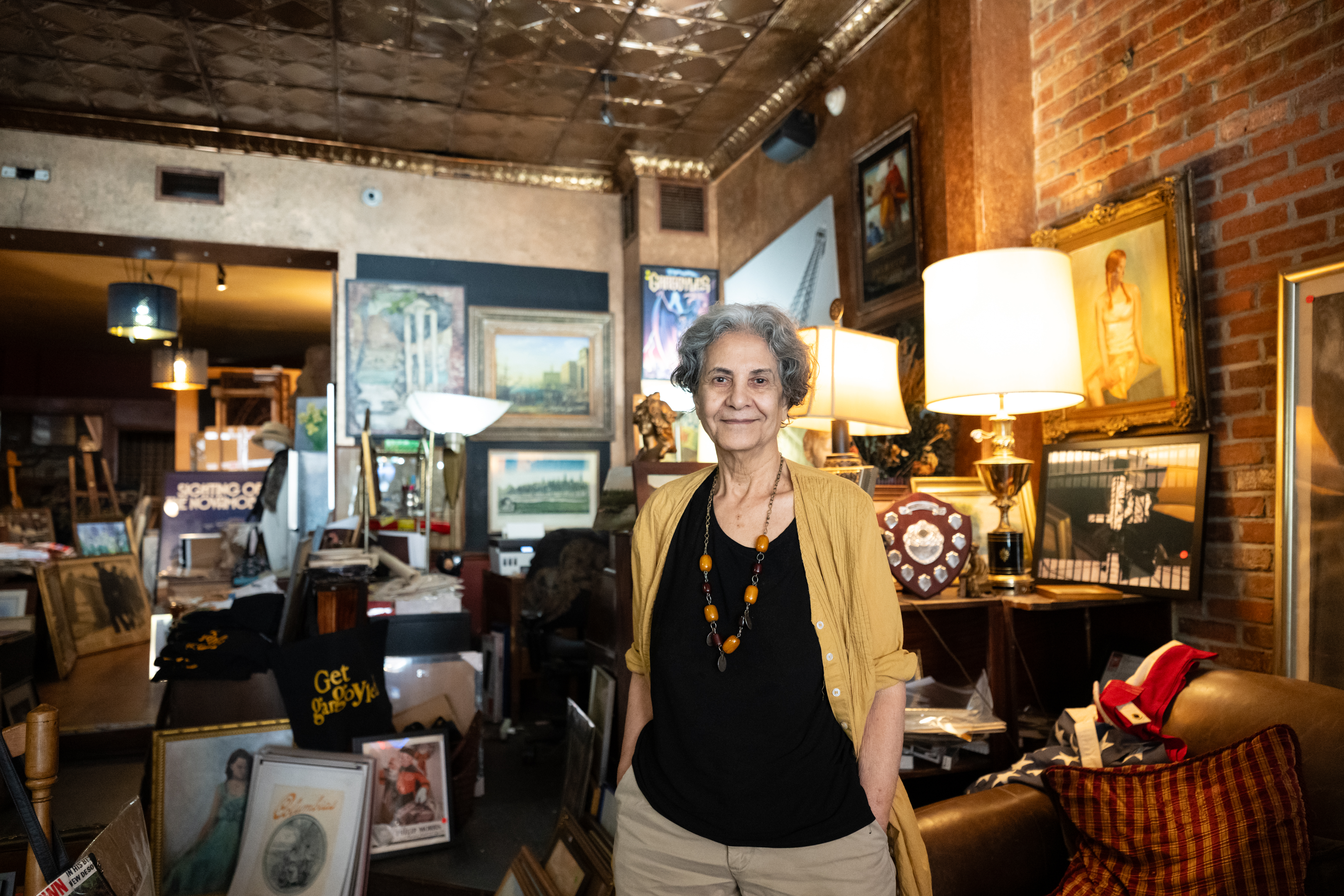
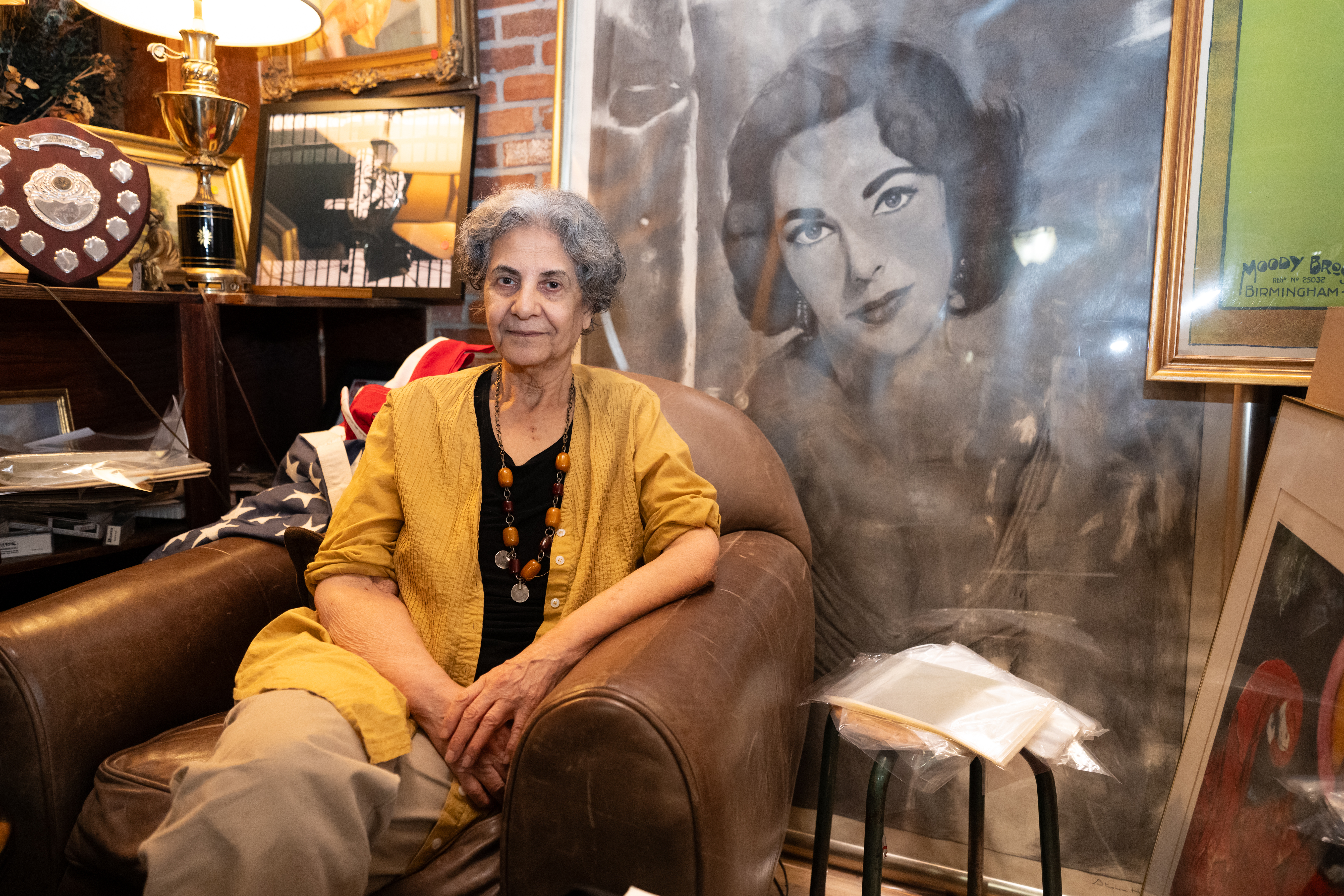
    Hadassah Zuberi, owner of Gargoyles, poses for a portrait in front of a charcoal portrait of Elizabeth Taylor at her vintage shop on South Street in Philadelphia on Aug. 11, 2026.Erin Blewett / For The Inquirer

    Earlier this year, after selling her New York building, she called Milan, who envisions Gargoyles as a one-of-a-kind legacy business that can help attract life to South Street. The Hurricane Alley space — which still includes the old wooden bar — made for a match.

    “It’s a lovely shop, and she’s a lovely woman,” he said.

    On a recent afternoon, Zuberi, elegantly reposed in her leather chair and framed by a favorite portrait of Elizabeth Taylor, warmly greeted a steady stream of customers.

    She is glad to be back in Philadelphia, surrounded by her treasures, and encouraged by the view of the changing street outside, she said.

    “This is my la la land,” she said, over the strains of a concerto playing on the speakers. “If I want to pretend the world is beautiful and everybody has taste, all I have to do is look around and avoid the rest.”

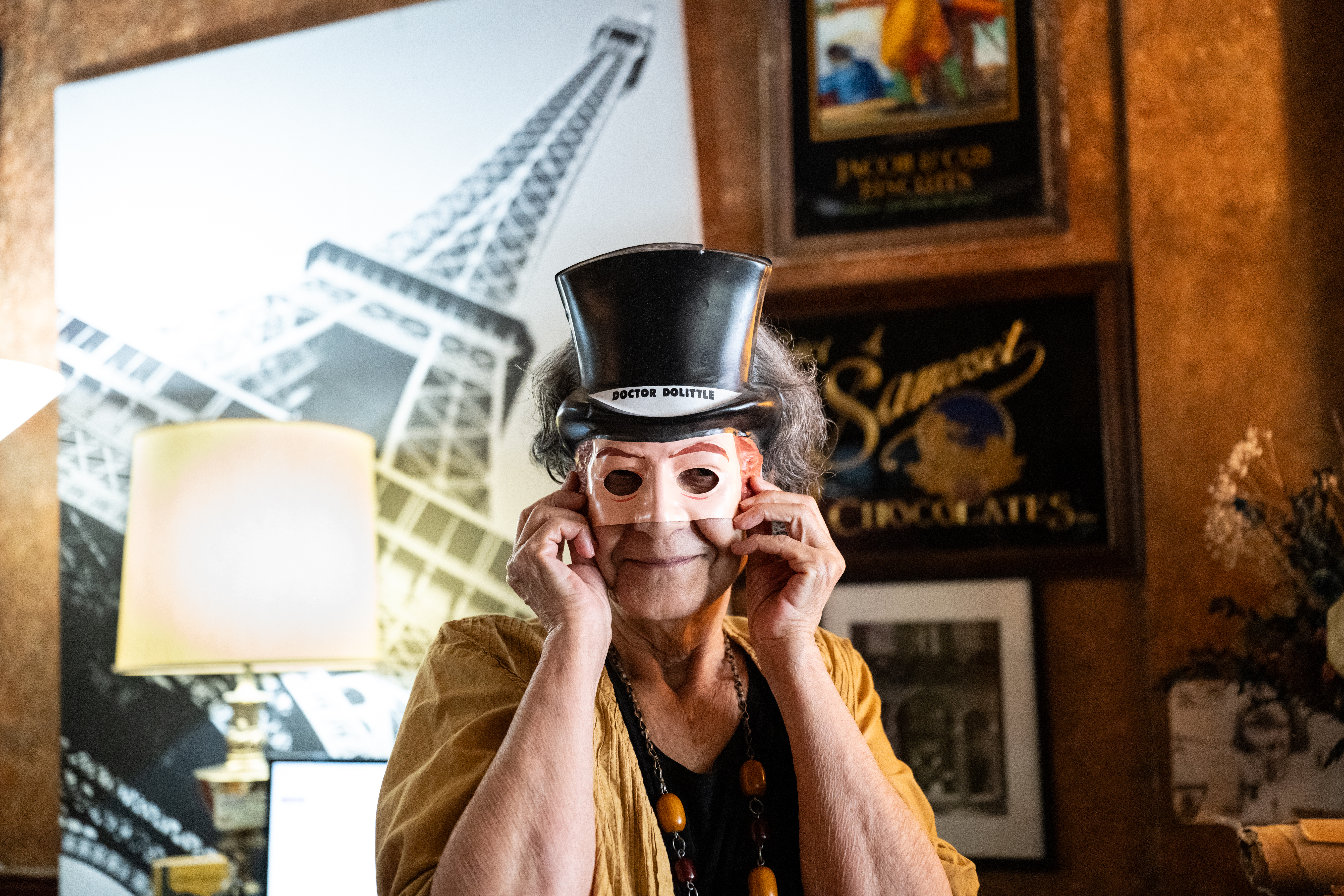
    Hadassah Zuberi, owner of Gargoyles, tries on a vintage “Doctor Dolittle” mask at her shop on South Street in Philadelphia on Aug. 11, 2026.Erin Blewett / For The Inquirer
  • Philly’s bike messengers are on call and on the move

    Philly’s bike messengers are on call and on the move

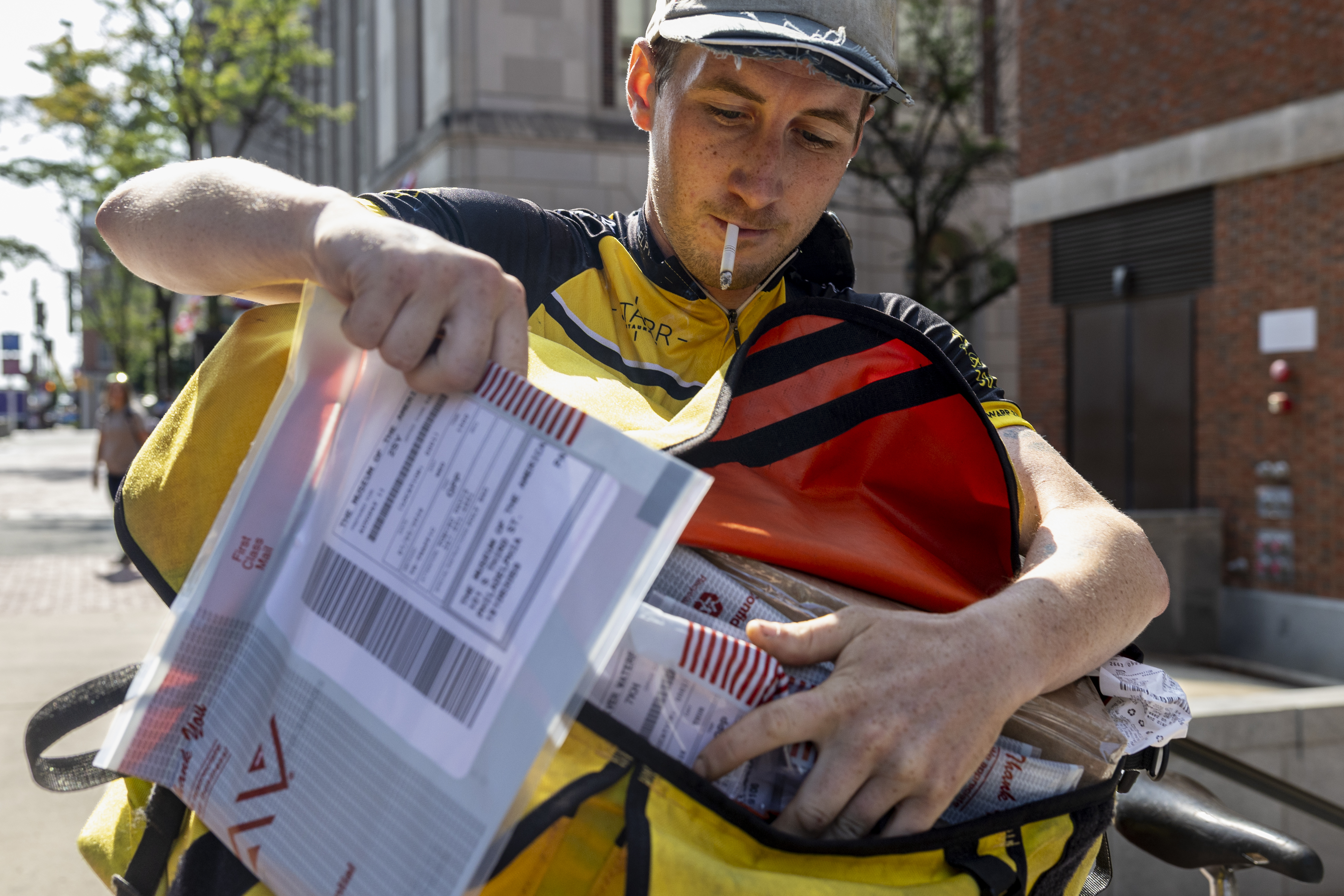
    In a world of autonomous food delivery robots and Amazon Prime, Philadelphians might be surprised to find bike messengers zooming across Center City streets, if they even know what one is. But what distinguishes the messengers from other cyclists and delivery drivers is not just the comically large bags they carry and the decked-out single-speed bikes they ride, but their ability to strategically and efficiently navigate the city. While most people rely on Google Maps, full-time bike messengers Brian Campbell, 31, and Orchid Newberger, 29, spend all day hustling through busy streets and traffic-filled intersections with addresses in hand and routes in mind. While Campbell starts his mornings in Old City delivering paystubs, Newberger finds herself riding between South Street and Spring Garden; they end up meeting at the 1700 Market plaza to catch up, smoke cigarettes, and play scratch-off tickets. They are expected to deliver legal documents for lawyers, safely transport medical samples for hospitals, and even serve people subpoenas, all while dodging motor vehicles and e-bikes. Although each dispatch could lead to a potential injury, what makes the job worth it is the freedom that the ride brings. “I’m as free as the breeze and I ride where I please,” Campbell said.

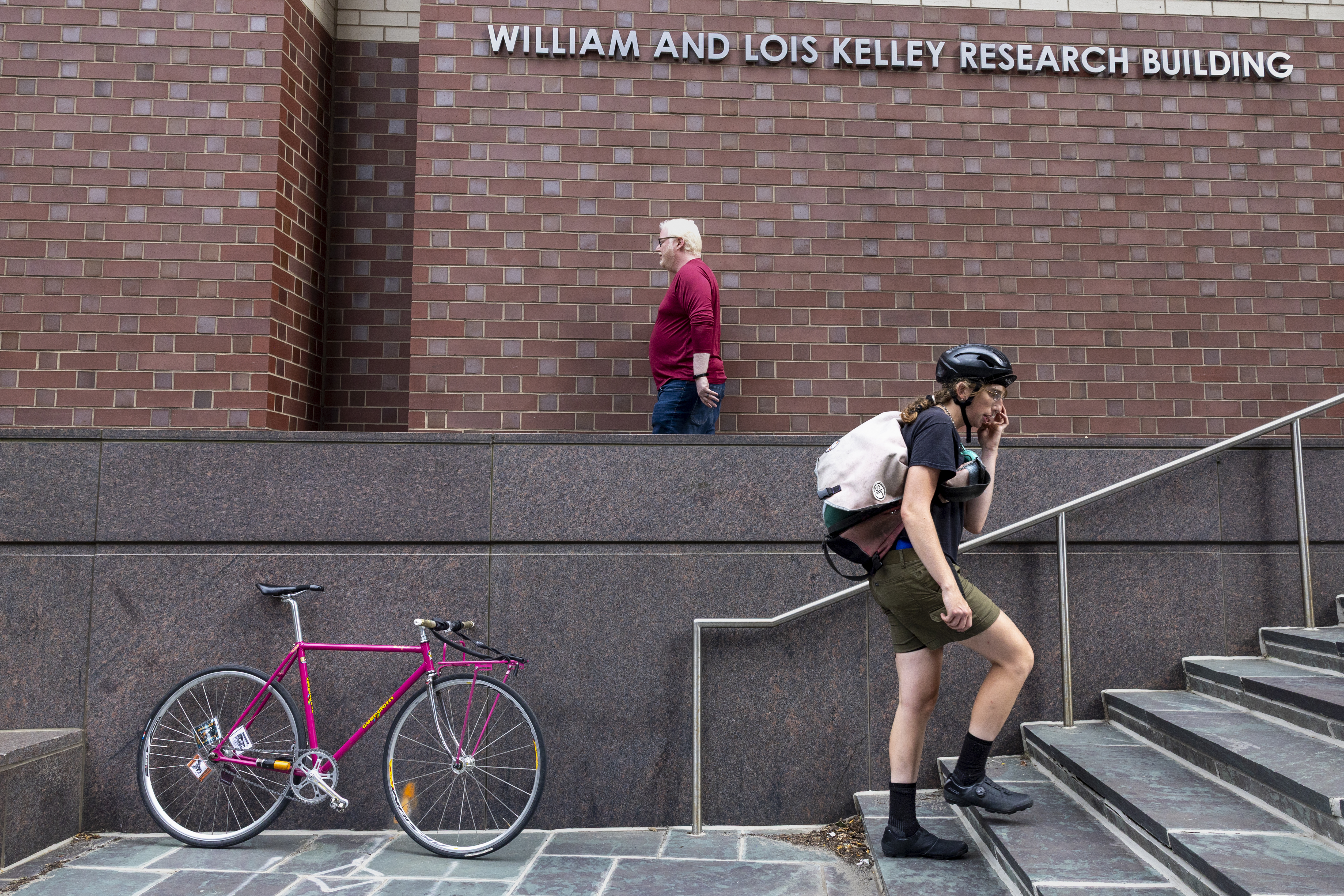
    Orchid Newberger, 29, of Fishtown, walks up the entrance stairs of the William and Lois Kelley Research Building on the University of Pennsylvania campus to pick up medical samples on July 30. Newberger graduated from Penn with bachelor’s and master’s degrees in material science engineering but found it hard to both land a job within that field and enjoy it. Newberger picked up bike courier work shortly afterward. “I spent a lot of time in school figuring out that that’s not what I wanted to do with my life.”Aidan T. Gallo / Staff Photographer
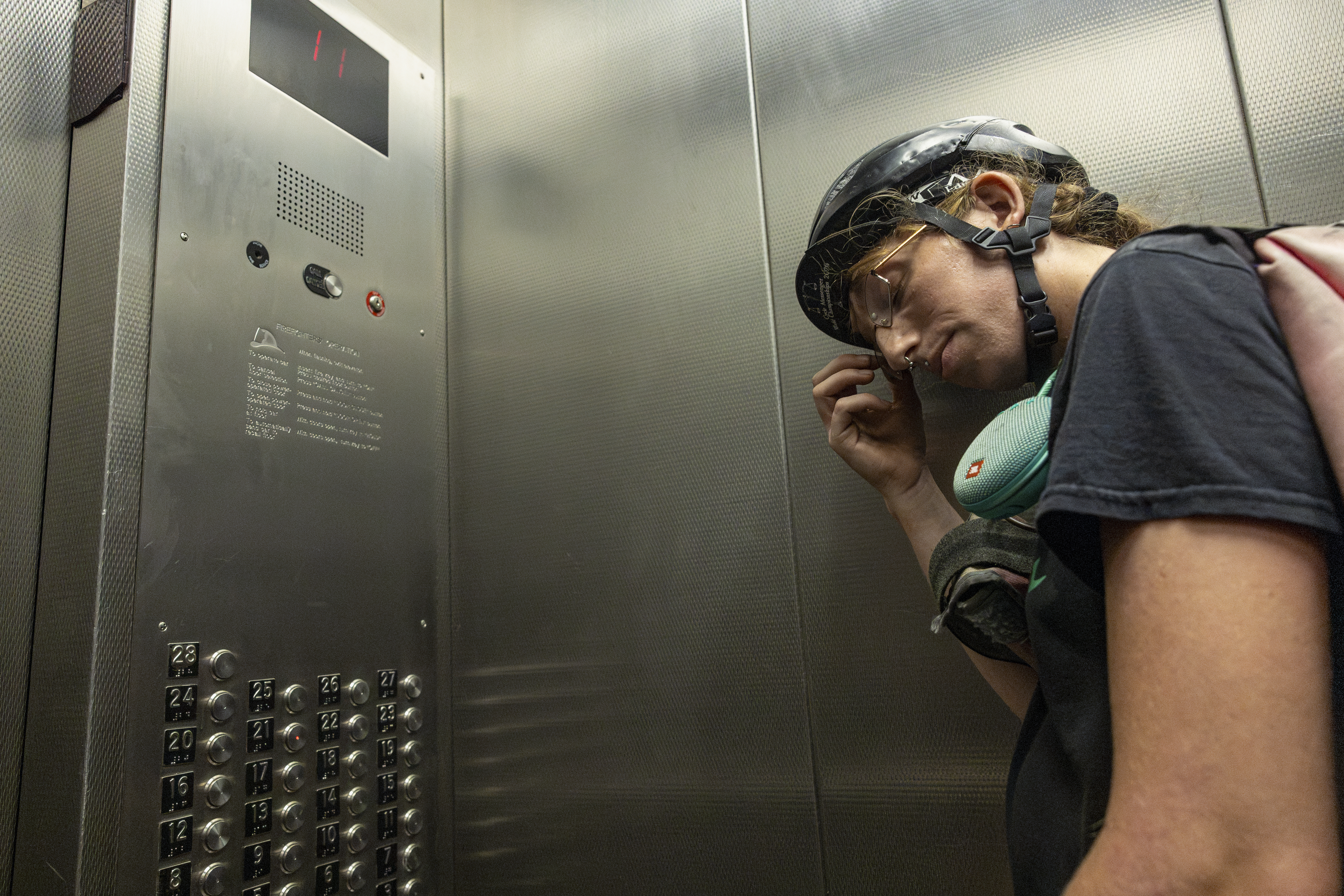
    Newberger inside an elevator at the Cira Centre building for a pickup. “This isn’t a ‘forever job,’ obviously,” Newberger said.Aidan T. Gallo / Staff Photographer
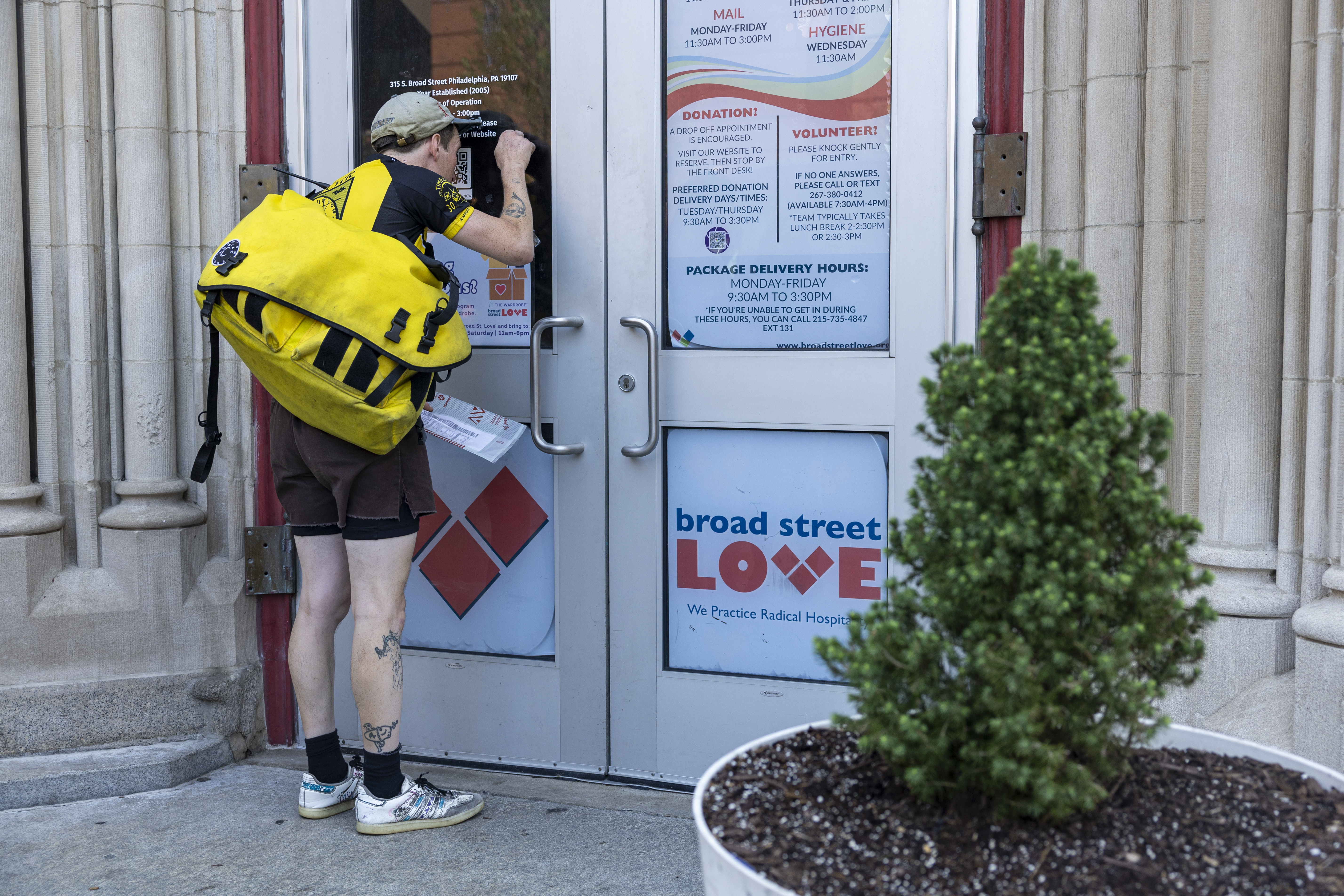
    Bike courier Brian Campbell, 31, knocks on a door at the Broad Street Love social services building to deliver payroll stubs on July 22.Aidan T. Gallo / Staff Photographer
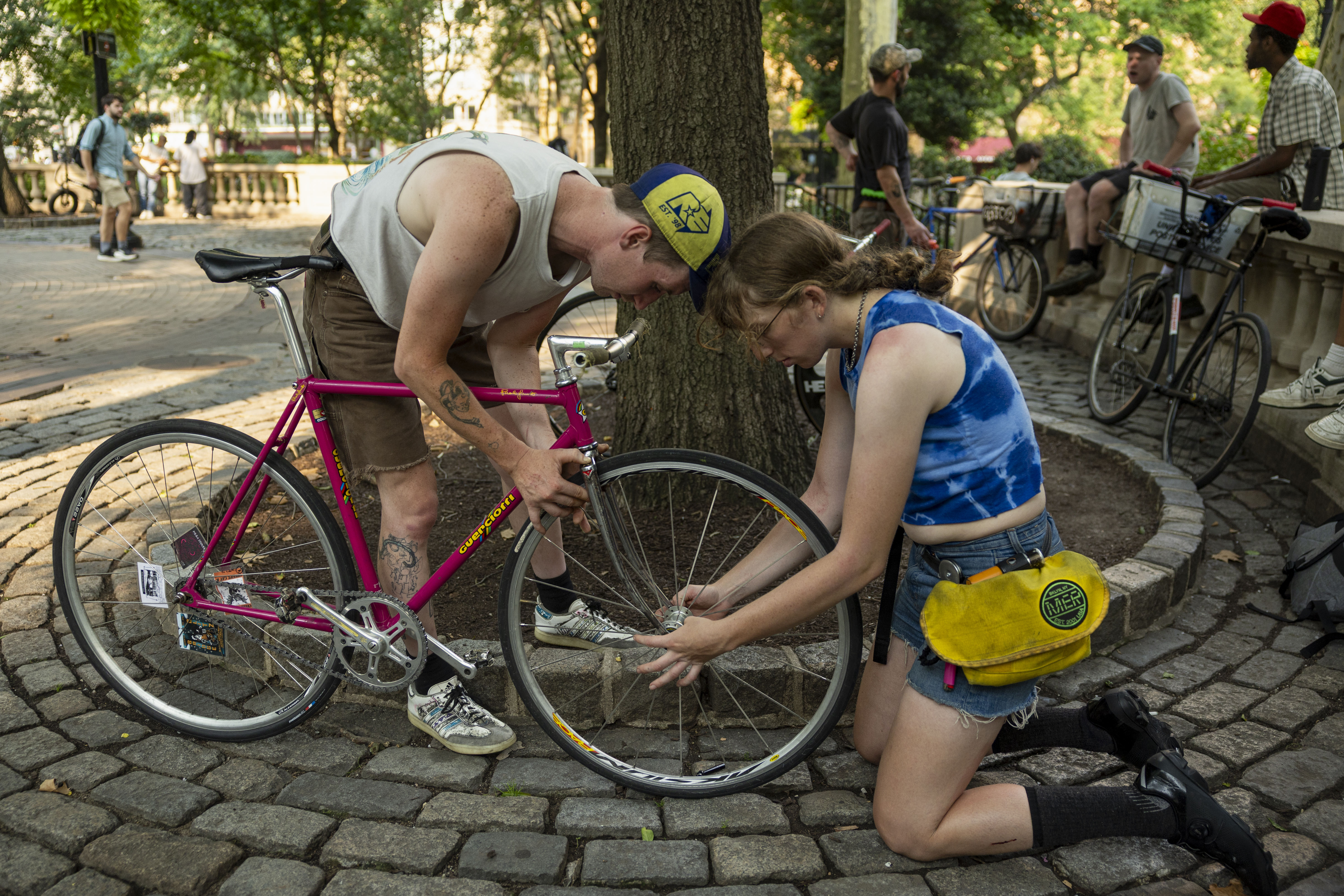
    Campbell helps Newberger adjust her bike’s front wheel at Rittenhouse Square on July 14.Aidan T. Gallo / Staff Photographer
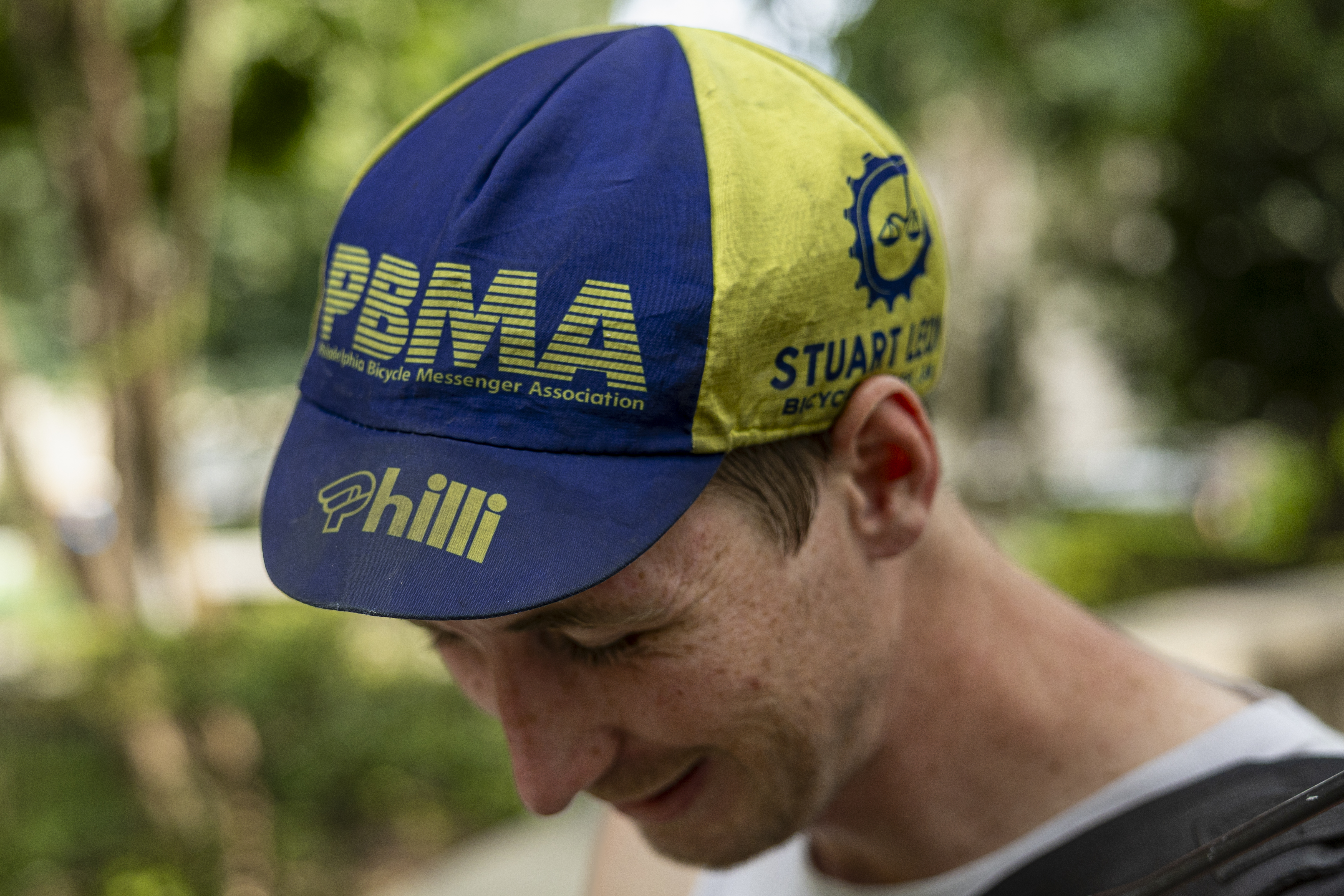
    Campbell wears a Philadelphia Bicycle Messenger Association (PBMA) cap on July 15. As many couriers ride without health insurance, PBMA provides donations to injured couriers for medical expenses. “It’d be really nice to have health insurance at a job like this, like, if I’m sick or hurt I just lose money, and that’s where PBMA comes in because we have to look out for ourselves on that front,” Campbell said.Aidan T. Gallo / Staff Photographer
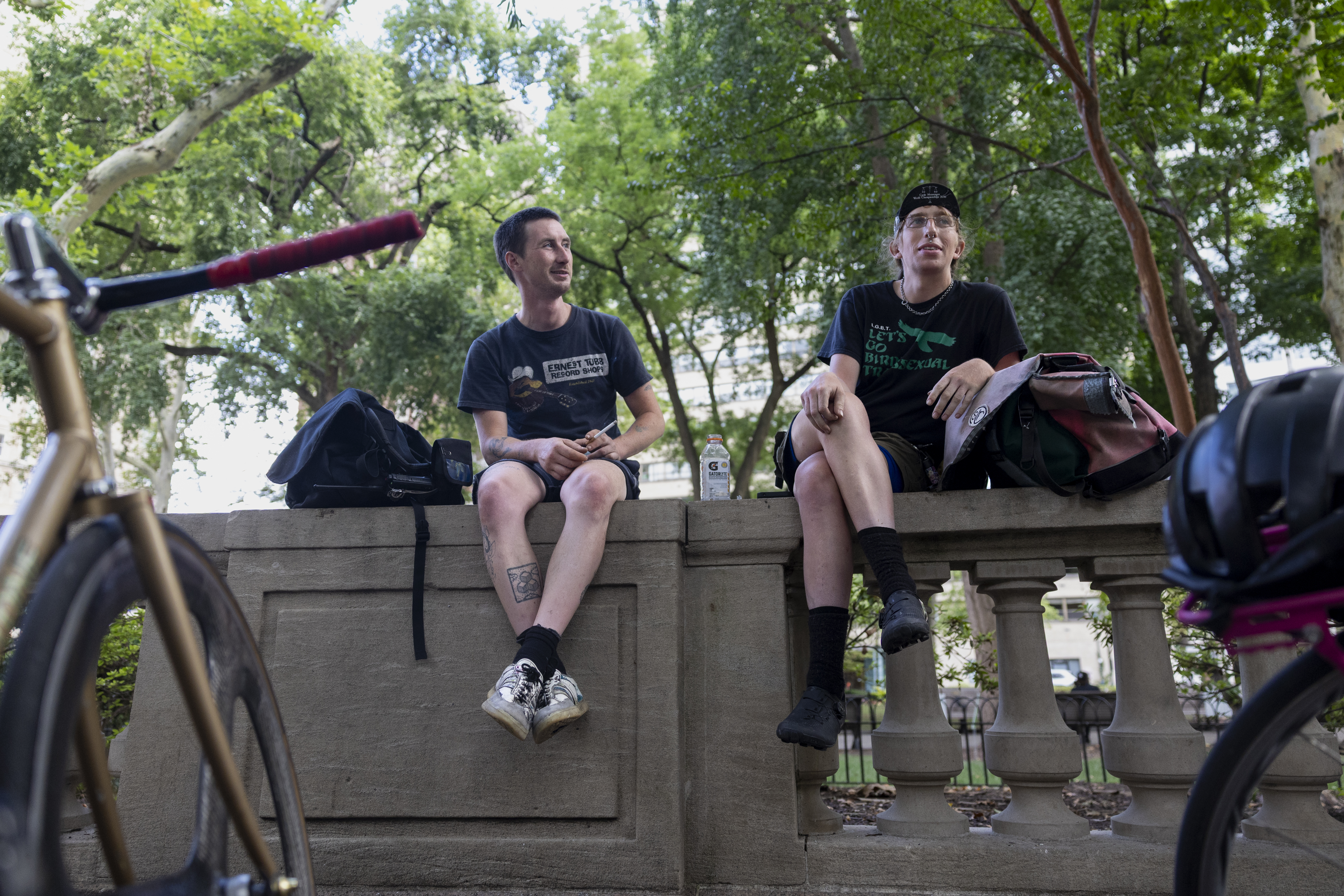
    Campbell and Newberger at Rittenhouse Square after finishing their shifts July 30. They are among many bike couriers who hang out at the park before and after work.Aidan T. Gallo / Staff Photographer
    Campbell sorts through his messenger bag to deliver payroll stubs outside the Museum of the American Revolution on July 22.Aidan T. Gallo / Staff Photographer
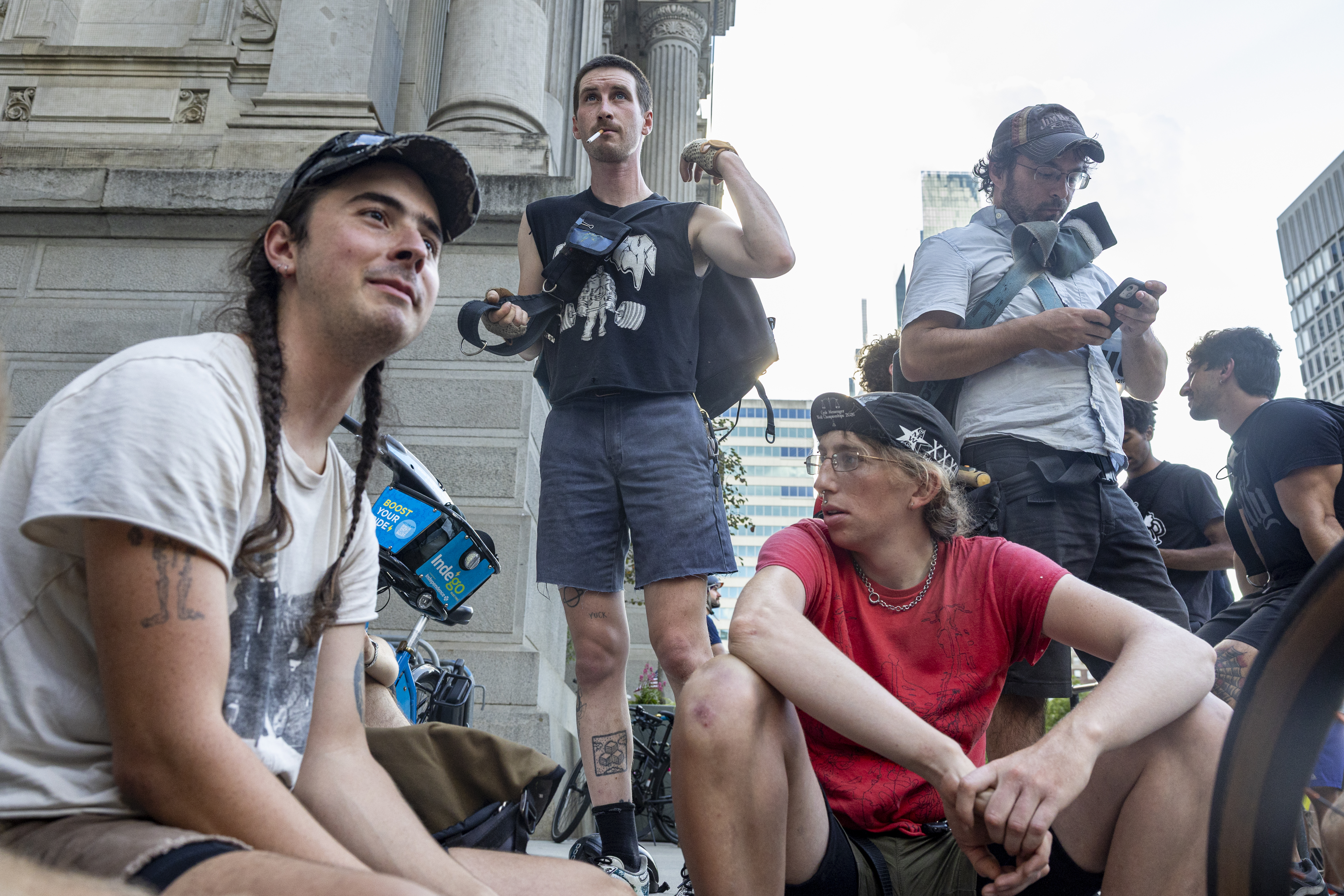
    Campbell adjusts his messenger bag alongside Artemis Darrow (left), 24, and Newberger before participating in the Critical Mass Philly event at City Hall on July 31. The evening event was held to reclaim public streets, promote cyclist safety, and advocate for better bike infrastructure.Aidan T. Gallo / Staff Photographer
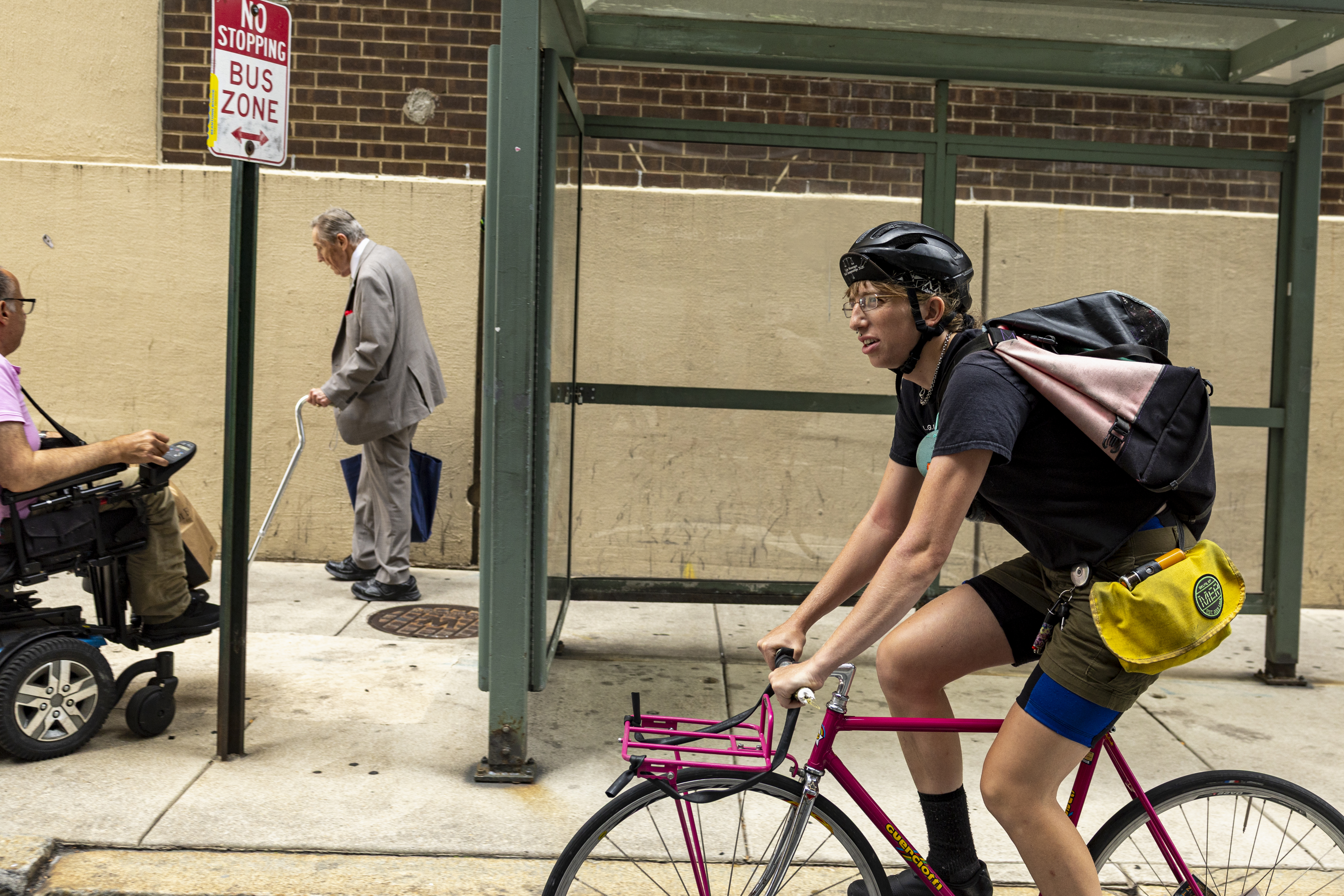
    Newberger rides past a bus stop on July 30.Aidan T. Gallo / Staff Photographer
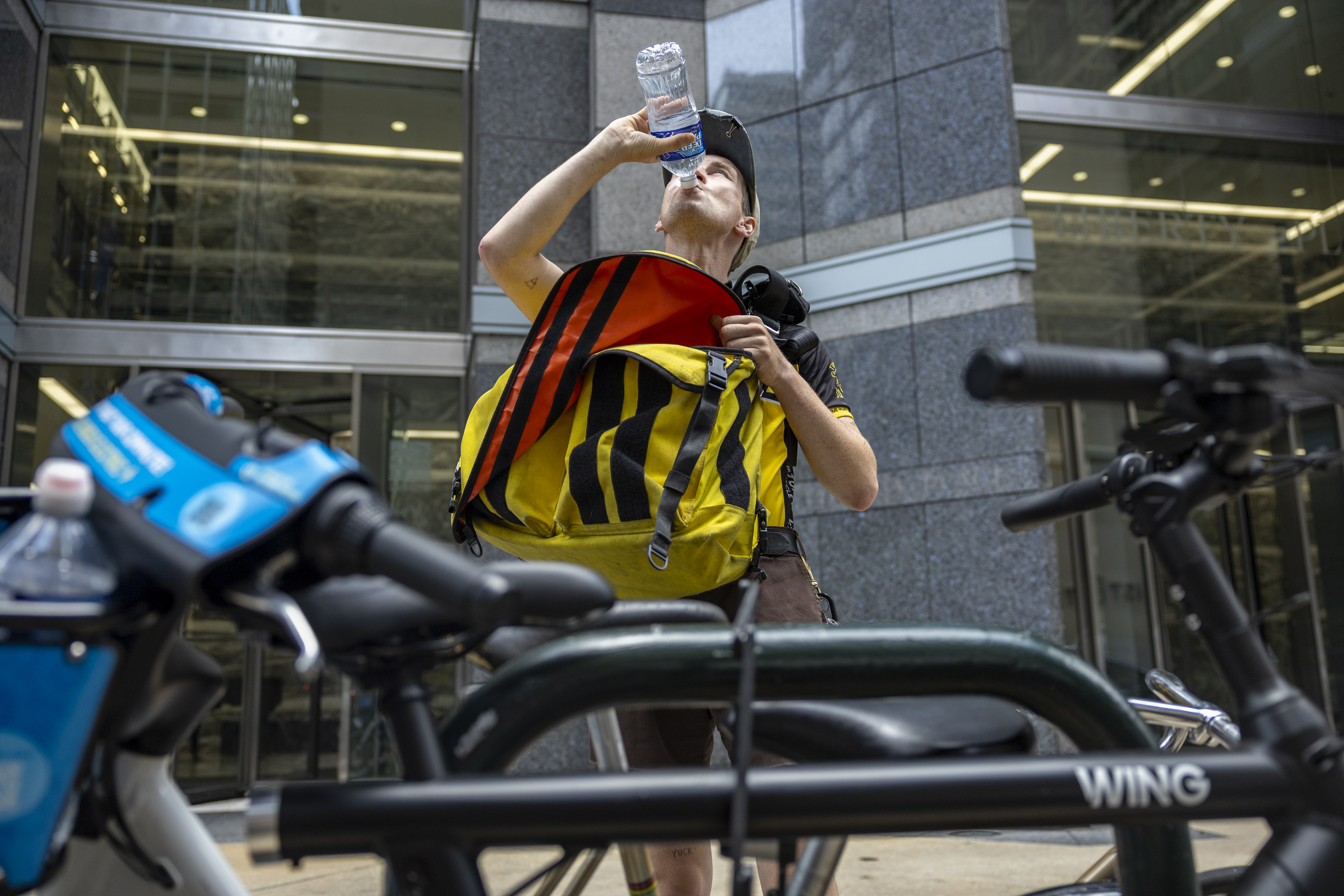
    Campbell drinks from his water bottle outside the Liberty Place shopping center before heading out for more deliveries.Aidan T. Gallo / Staff Photographer
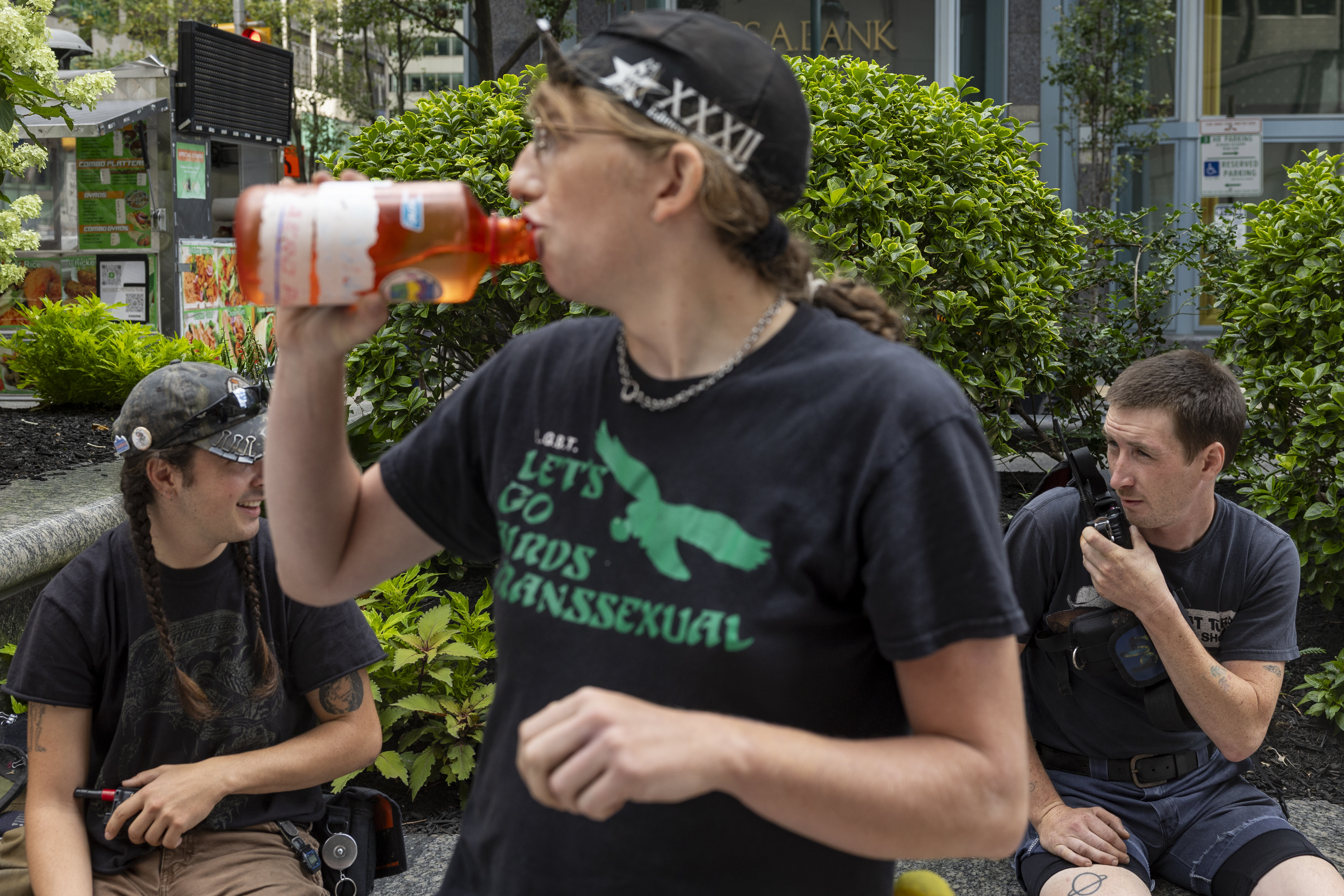
    Newberger drinks from her water bottle while Campbell (right) listens for a dispatch from his walkie talkie at the 1700 Market Plaza on July 30. Aidan T. Gallo / Staff Photographer
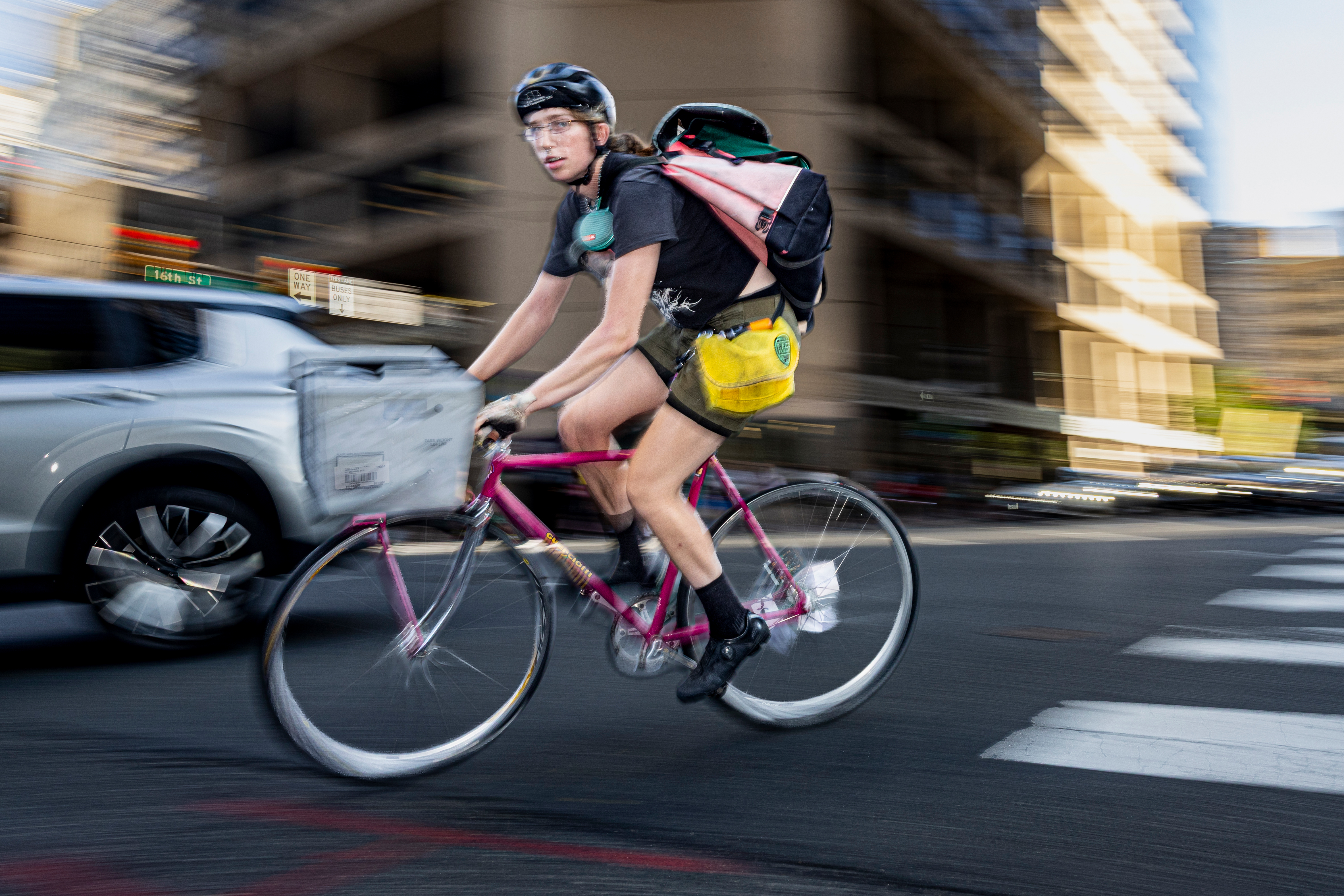
    Newberger at 16th and Market Streets during her evening shift on Aug. 4.Aidan T. Gallo / Staff Photographer
  • Off-duty police officer killed in early-morning shooting in Southwest Philly

    Off-duty police officer killed in early-morning shooting in Southwest Philly

    An off-duty Philadelphia police officer, Alhassane Barry, 29, died after being shot early Sunday morning outside an after-hours lounge in Southwest Philadelphia, police said.

    Shortly before 4 a.m., police responded to a radio call reporting a shooting on the 7200 block of Elmwood Avenue, police said Sunday afternoon. Responding officers found Barry and another gunshot-wound victim at the scene, police said.

    Both victims were taken to Penn Presbyterian Medical Center, where Barry was pronounced dead around 8 a.m., police said. The other victim was in critical condition when he arrived at the hospital, said police spokesperson Sgt. Eric Gripp.

    No arrest has been made, and the motive for the shooting is unknown, police said.

    A funeral service for Barry is scheduled for Monday at a mosque in Southwest Philadelphia, about one block from where he was shot.

    Detectives and police officers remained on the scene Sunday morning at South 73rd Street and Elmwood Avenue.Tom Gralish / Staff Photographer

    The 29-year-old officer had been with the Police department for two years, police said Sunday, and was assigned to the 12th District, in Southwest Philadelphia.

    (function() {
    var l2 = function() {
    new pym.Parent(‘copshot_sw_philly’,
    ‘https://media.inquirer.com/storage/inquirer/projects/innovation/arcgis_iframe/copshot_sw_philly.html’);
    };
    if (typeof(pym) === ‘undefined’) {
    var h = document.getElementsByTagName(‘head’)[0],
    s = document.createElement(‘script’);
    s.type = ‘text/javascript’;
    s.src = ‘https://pym.nprapps.org/pym.v1.min.js’;
    s.onload = l2;
    h.appendChild(s);
    } else {
    l2();
    }
    })();

    This is at least the fourth Philadelphia Police Department officer to die in a shooting in the last decade, according to the Officer Down Memorial Page, a national site that tracks police deaths that occur while in the line of duty. Most recently, in September 2024, officer Jamie Roman died in the hospital nearly two months after being shot in the neck during a routine car stop.

    In the last three years, at least 18 Philadelphia police officers have been shot in 12 incidents.

    Sunday’s shooting occurred near a property neighbors and police have called an after-hours lounge. A social media account linked the address to a nightclub called “Nipsey’s Hookah Lounge.”

    A neighbor, Safiatu Keita, said while she was saddened to hear of the officer’s death, she was not totally surprised that a shooting happened there. Keita said loud parties at the property have kept her family awake until 5 a.m. and left garbage cans piled high with empty liquor bottles.

    “It’s not safe for us, because when people are drunk there, we can’t do anything,” Keita said.

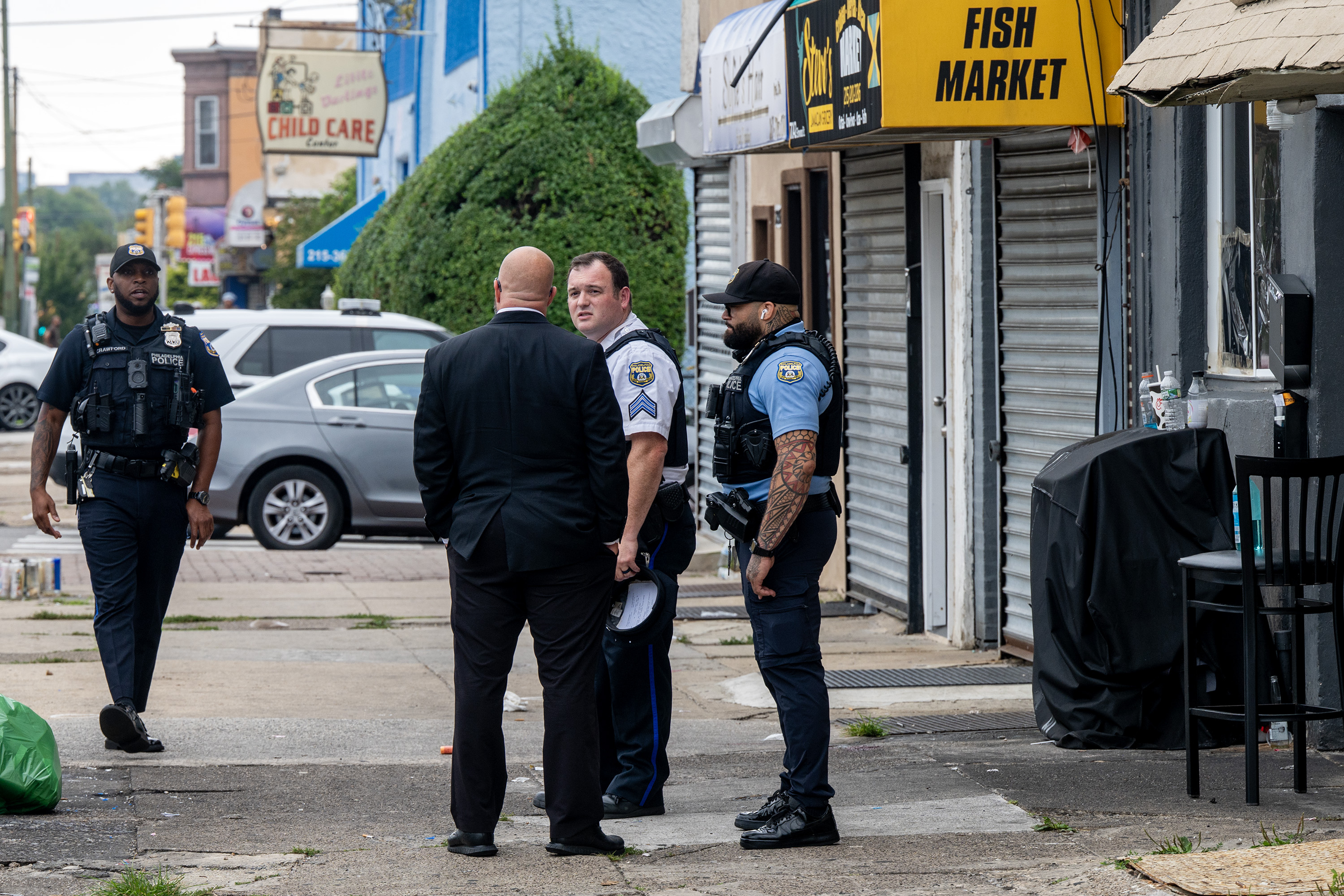
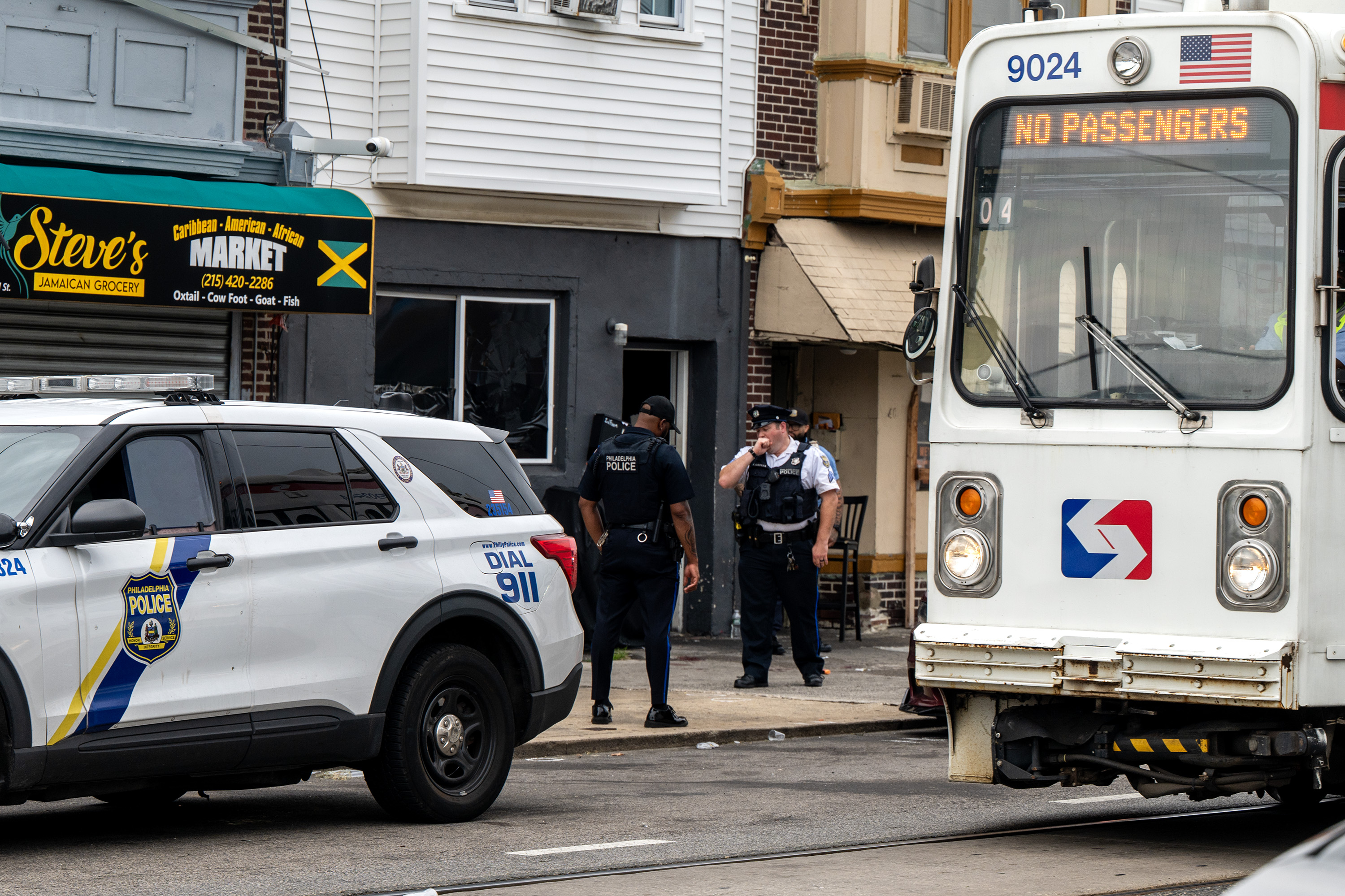
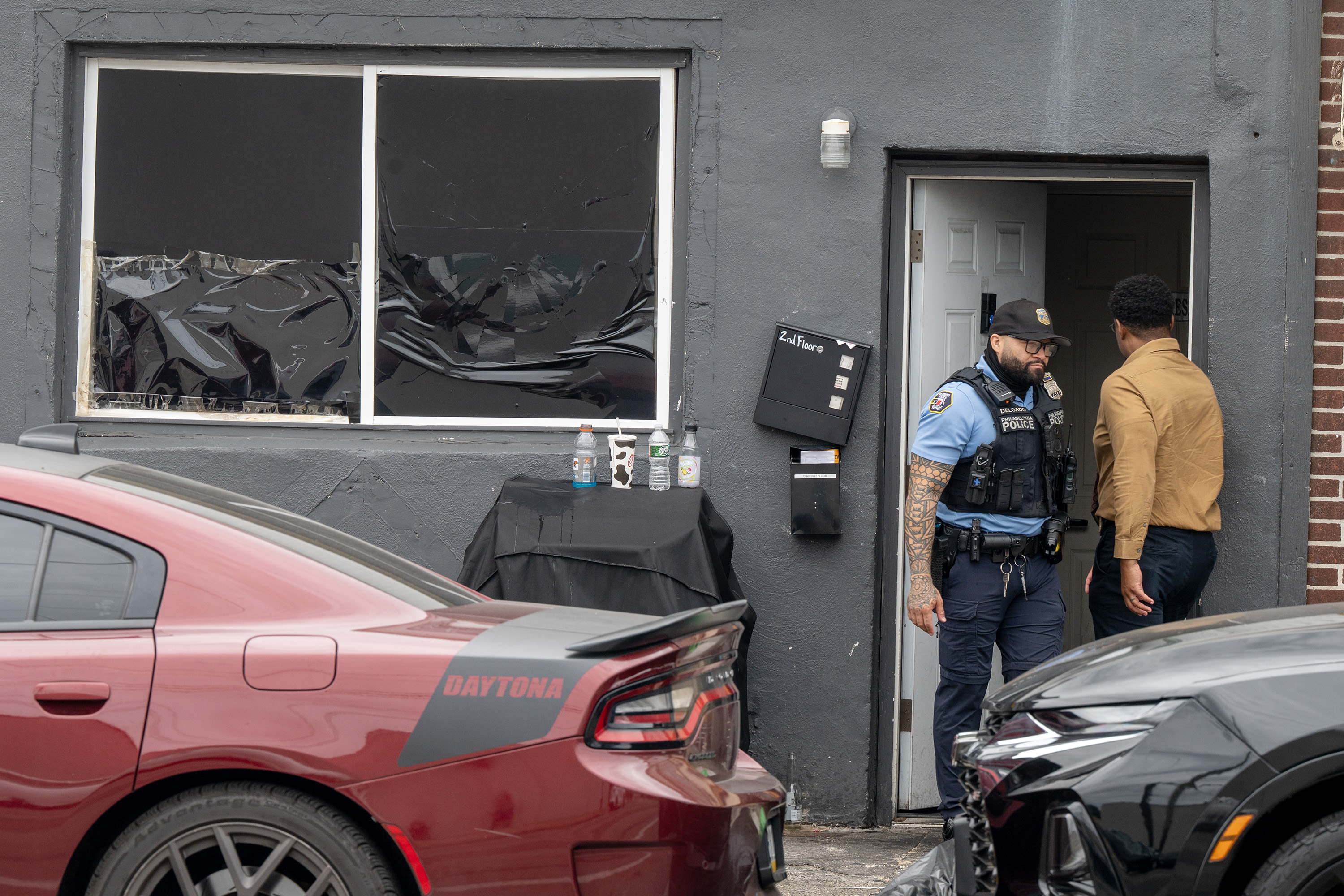
    On Sunday morning, the door of the property hung open as police stood near yellow tape closing off the block. An officer pointed out a pool of blood in front of a cooking grill on the sidewalk. White chalk circles on the street and sidewalk marked places where evidence had been identified.

    “It’s a bad day,” one officer said, when a passerby asked what happened.

    Detectives and police officers remained on the scene of Sunday’s shooting in Southwest Philly.Tom Gralish / Staff Photographer

    As detectives in suits came and went, a police lieutenant on the scene said they were working to obtain footage from security cameras on the street, which should provide more insight.

    Mayor Cherelle L. Parker said she spent time with the family at Penn Presbyterian hospital to express her profound sorrow for their loss, and offer prayers for the 12th Police District.

    “Any loss to gun violence significantly impacts us all. We will never stop working to make Philadelphia a safer city,” Parker said.

    Outside Penn Presbyterian’s emergency room entrance late Sunday morning, police vehicles blocked off a segment of the street while officers stood outside. About a dozen people walked in a solemn procession to the front of the emergency department.

    As a gurney was wheeled out of the hospital and into an ambulance, the group broke into mourning. Police saluted, and the ambulance drove away from the hospital.

    “We continue to ask the community for their prayers, we continue to pray for his family,” Philadelphia Police Commissioner Kevin Bethel said

    Bethel said anyone with information should call 215-686-TIPS.

  • How Philly’s new Broad Street planters will turn what could be a grand urban avenue into a highway

    How Philly’s new Broad Street planters will turn what could be a grand urban avenue into a highway

    Broad Street is one of Philadelphia’s great ceremonial boulevards.

    A defining urban design element in William Penn’s pathbreaking 1682 plan for Philadelphia, Broad Street intersects with Market at Penn Square, creating the armature for the colonial city that gives Philadelphia its je ne sais quoi — its unique sense of place. For out of this intersection sprang our majestic City Hall, anchoring the four original quadrants of Penn’s city, each coalescing around one of Penn’s great public squares.

    South Broad Street is a place where the city comes together. Think of the great swell of civic ecstasy that suffused the street on either of the occasions in recent years when it hosted the Eagles’ Super Bowl victory celebrations. And then there is the perennial only-in-Philadelphia Mummers Day Parade, which animates the street on New Year’s Day as glittering costumes and the strains of string bands bounce and reverberate among the canyons of South Broad.

    Still, the street struggles to invite people to linger, stroll, dine, and shop along its sidewalks on a daily basis, never matching the urban vibrancy of the great streets of the world like Fifth Avenue in Manhattan or Oxford Street in London. And it’s not for lack of trying.

    The Avenue of the Arts was created to do just this during the Rendell administration. In defining an area for the performing arts, the street soon saw the arrival of the Kimmel Center, the Wilma Theatre, and other arts-based performance spaces. And yet, the street continued to flounder as a welcoming urban place.

    Now, to be sure, South Broad has a lot going for it. One need only stand at the intersection of Broad and Walnut, surrounded by handsome towering buildings with majestic light fixtures along the sidewalk, and you have a sense of what the street was — and what it could be. The street certainly needs some TLC, but not radical surgery.

    Which makes the recent “improvements” on the block of South Broad in front of the Kimmel Center all the more perplexing.

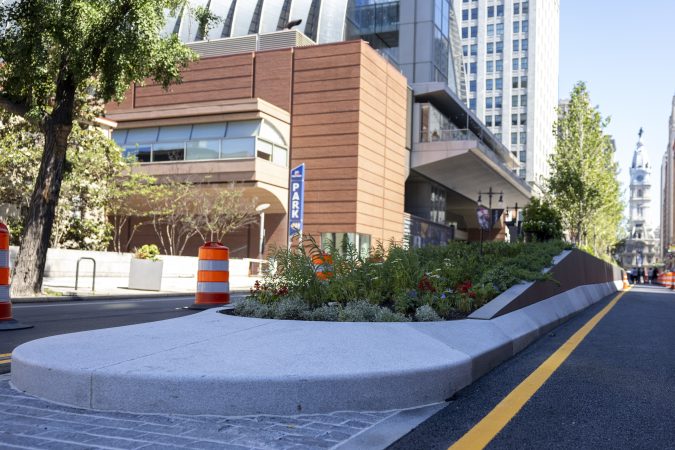
    For there, officials have unveiled a beta test for a new Avenue of the Arts streetscape project smack in the middle of South Broad Street that includes an egregious four-foot-high continuous planter with trees on top of it. All intended to increase the attractiveness of the street and thereby encourage a livelier street life.

    But therein lies the rub.

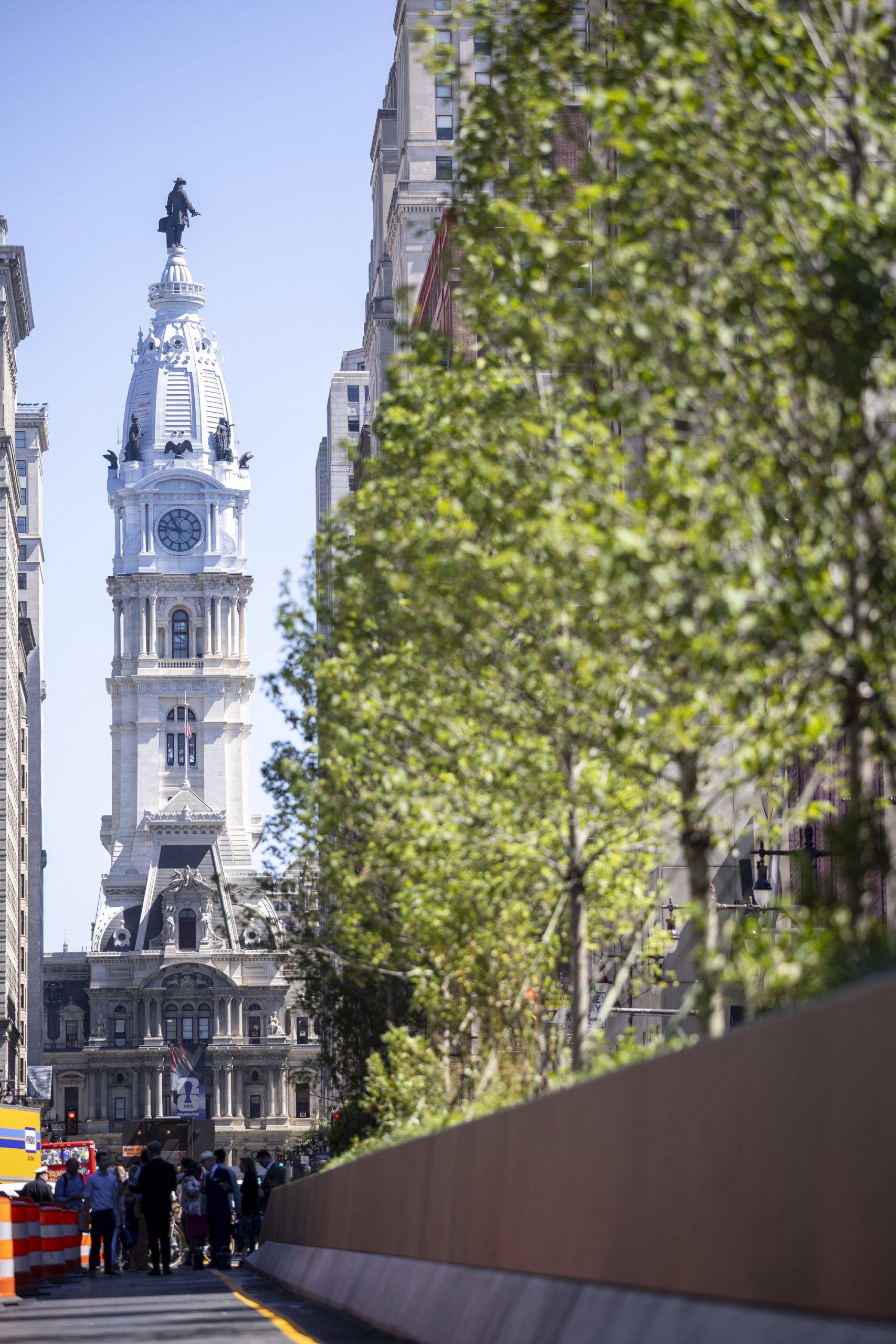
    In creating this continuous concrete highway divider-cum-planter in the center of the street, the project actually has a chilling effect on South Broad. Not only do the planter and the trees destroy the primacy of the view of City Hall tower along the street, but it reinforces the nature of Broad Street as a highway, and makes it impossible to see the other side of the street while either walking or driving. And forget about parades and festivals.

    The planters and trees destroy the primacy of the view of City Hall Tower along the street, write Alan Greenberger and Harris M. Steinberg.Tyger Williams / Staff Photographer

    We are told this is to be replicated on the street from City Hall to Washington Avenue to the tune of $150 million, or $15 million per block. Who thought this was a good idea?

    And, as if to add insult to injury, the project proposes outsized planters along the sidewalks that will further isolate the two sides of the street, crowd out whatever street life exists, and create, along with the tall planter in the center of the street, a series of cattle chutes for 10 blocks.

    Welcome to Broad Street Narrows.

    This can’t stand. The project must not be replicated along the length of the Avenue of the Arts. There are ways to integrate plantings into great streets, such as along Michigan Avenue in Chicago, but they are low in scale, do not include trees in the center of the street, and do not destroy the sensation of the street as a whole.

    And the proposed planters have got to go, as well. One could think of planting shade trees along the sidewalk offering respite from the sun and inviting people to sit along the street and have a bite to eat. The subway concourse below South Broad is extremely wide and could undoubtedly accommodate the tree roots below grade.

    The goal of increasing street life is crucial. To do so, it would be better to widen the sidewalks to allow for cafes and strolling. Street life needs foot traffic, and foot traffic is generated by people living, working, and shopping in the area, along with attending performances.

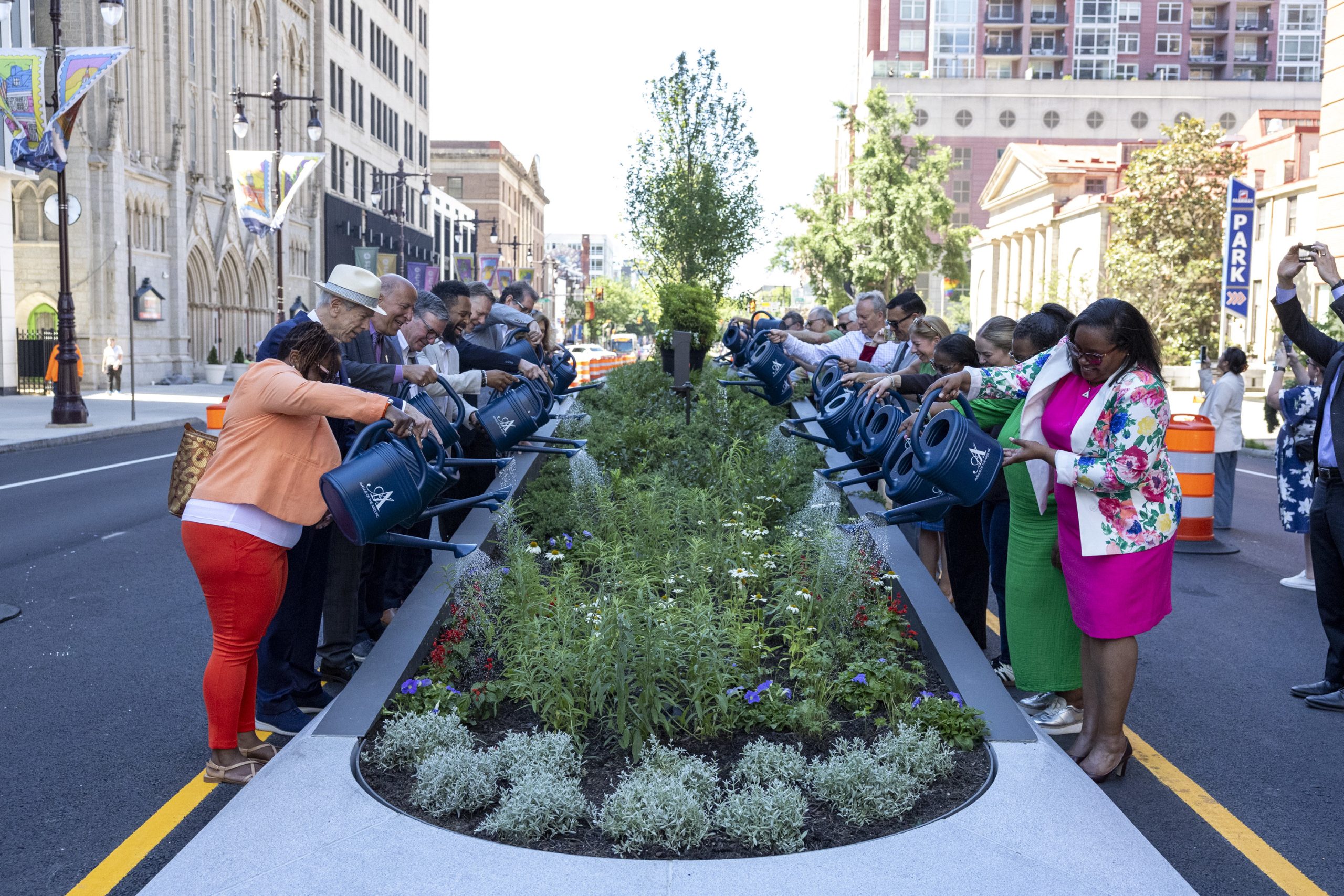
    Guests at a June ceremony to unveil one of the redesigned medians water the greenery in its planter just outside the Kimmel Center.Tyger Williams / Staff Photographer

    How is it that a street lined with hotels, residences, and offices has only one place for outdoor dining — at Arthaus? Broad Street wants bustling sidewalks, but landscaping and hardscape improvements alone will not increase street life. We learned this the hard way on the ill-fated Chestnut Street Transitway of the 1970s, and the planter fiasco should serve as a cautionary tale for the current design process for Market East.

    We must not fall prey to the false choice that in order to maximize urban vibrancy, we must sink millions of dollars solely into landscaping and other surface improvements.

    South Broad can be the best it can be with some thoughtful planning and a little gentle nurturing — it doesn’t need a Jersey barrier running down the middle of the street.

    Alan Greenberger served as deputy mayor for economic development and director of commerce under Mayor Michael A. Nutter, and chaired the Philadelphia City Planning Commission. Most recently, he served as vice president of real estate and facilities at Drexel University. He is a fellow of the American Institute of Architects. Harris M. Steinberg served as the founding executive director of PennPraxis at the School of Design at the University of Pennsylvania. He led the planning process for the Central Delaware Waterfront, which is currently guiding the development of the riverfront. Most recently, he served as the founding executive director of the Lindy Institute for Urban Innovation at Drexel University. He is a fellow of the American Institute of Architects.

  • At 125, Philadelphia’s official tall ship isn’t done riding the waves

    At 125, Philadelphia’s official tall ship isn’t done riding the waves

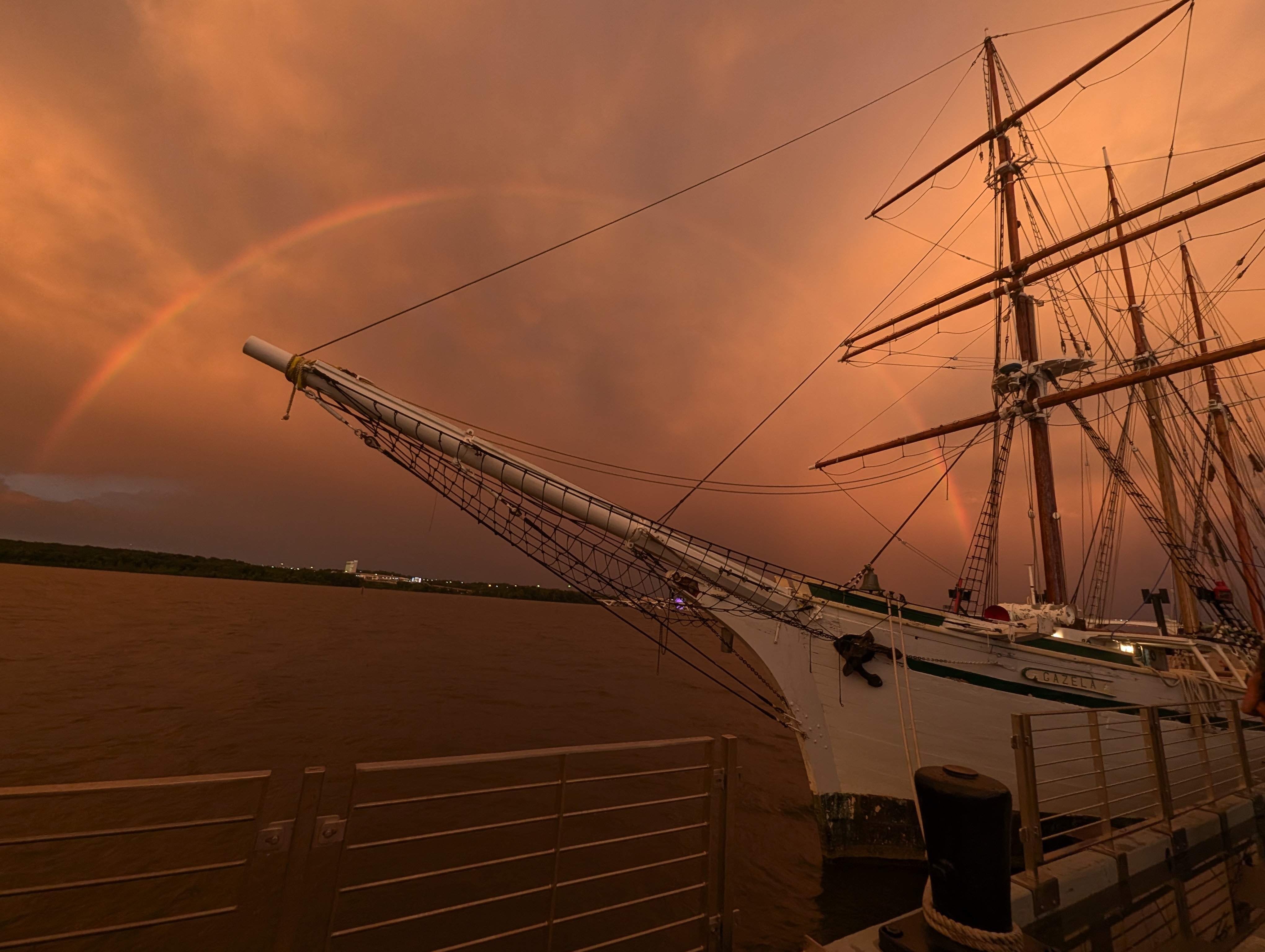
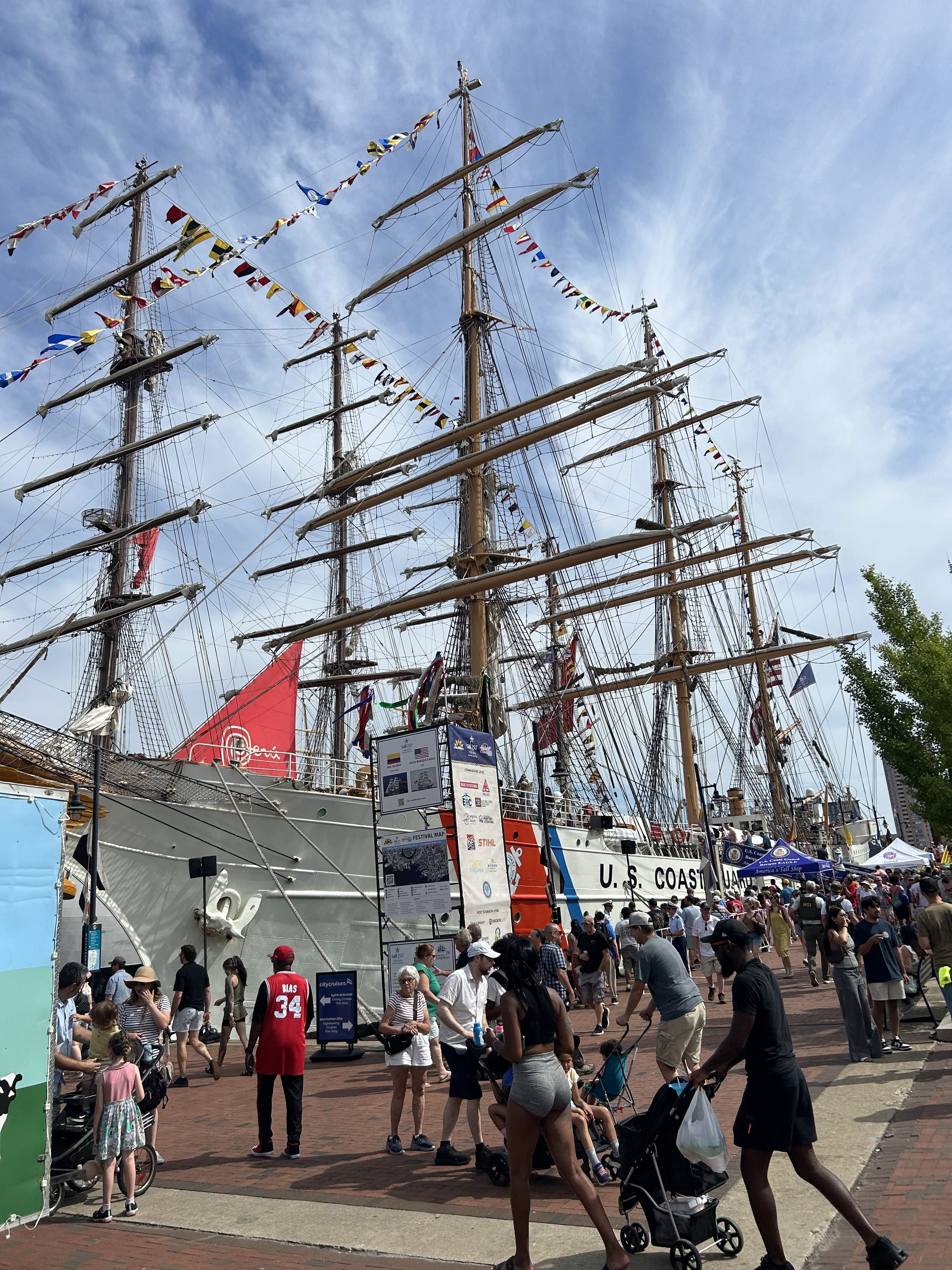
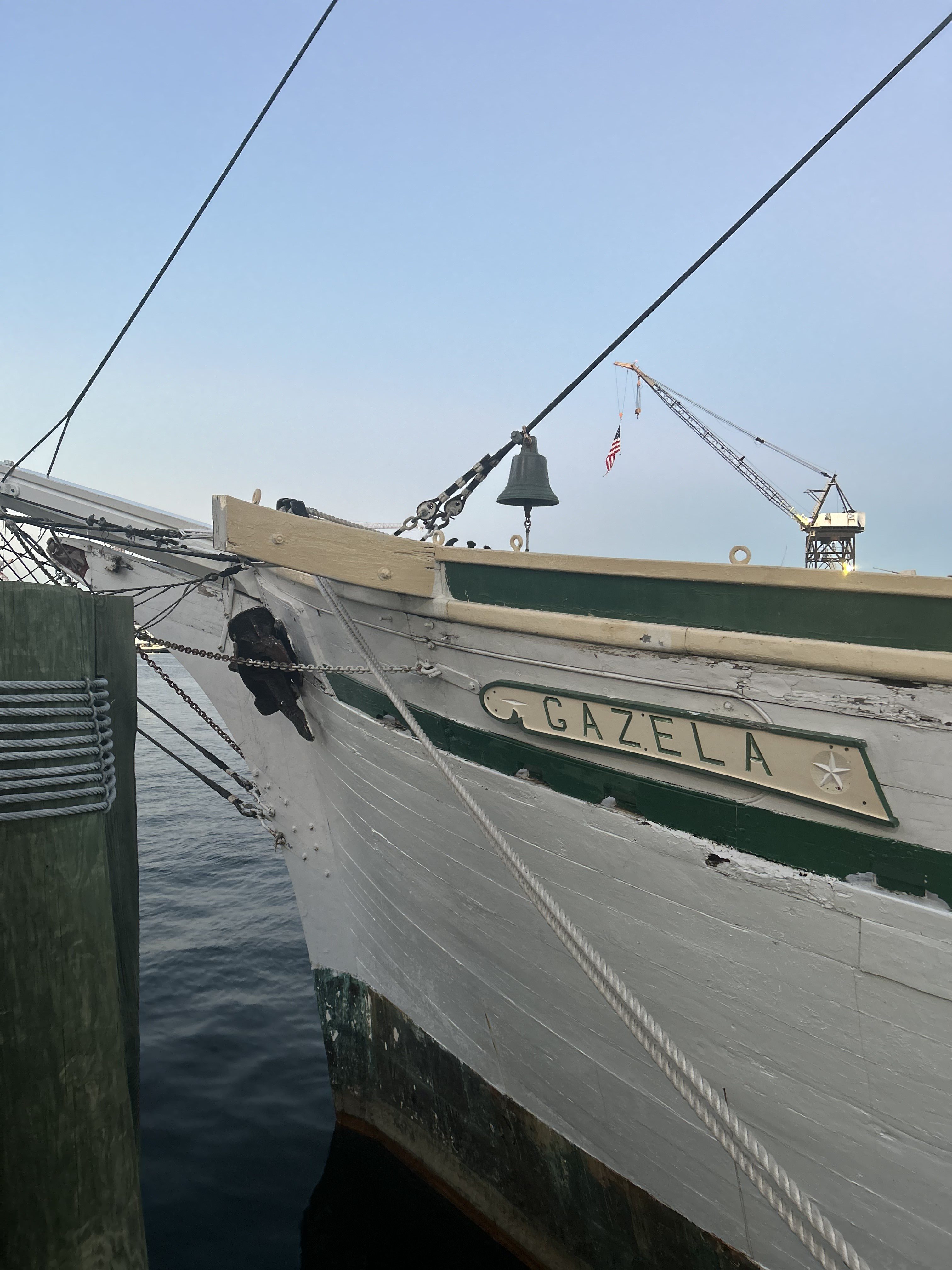
    125-year-old Gazela weighs 299 gross tons and is 177 feet tall. The ship has traveled across the Atlantic, appeared in the 1994 movie Interview with the Vampire, and was once, according to one of the ship’s longtime volunteer custodians, blessed by a group of nuns.

    It is also the official tall ship of Philadelphia, a role that requires it to take on some very serious duties. That included setting sail to Virginia’s Norfolk area, making stops at East Coast ports along the way, to represent the city at Sail250 Virginia, a celebration of the country’s 250th birthday, where the ship was one of the 60-plus visiting vessels from about 20 countries.

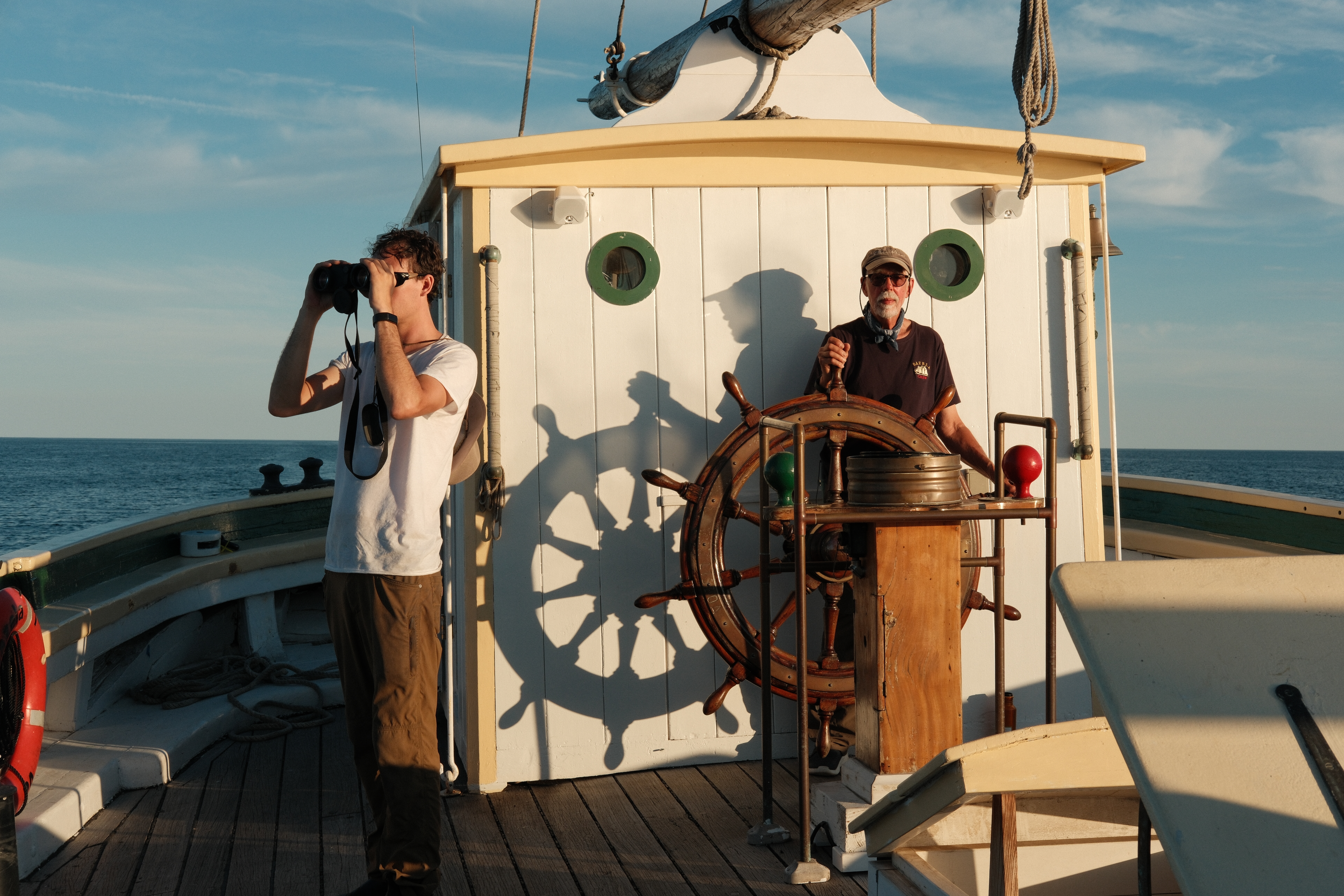
    Second mate Chris Peterson and crewmember Gary Dos Santos helm Gazela.Gael Chang Ortiz

    125 years of sailing

    Hailing from Portugal, the Gazela was first a cod fishing vessel from 1901 — when the ship was built — to 1969. During those years, the ship traveled thousands of miles, fishing off the coast of Newfoundland, and getting packed with salt and cod to bring back to Europe.

    In 1969, after a disastrous trip of horrible weather, broken gear, and a dismally low amount of fish caught, Gazela was finally laid up, putting the ship out of service. In 1971, Philadelphia philanthropist William Wikoff Smith brought the ship to the Philadelphia Maritime Museum. Just one year after arriving in America, Gazela was almost destroyed in an arsonist’s fire.

    As part of the Bicentennial celebration in 1976, Gazela participated in a race to Bermuda, where, during the last five minutes, the ship was wedged between two other vessels and nearly crushed.

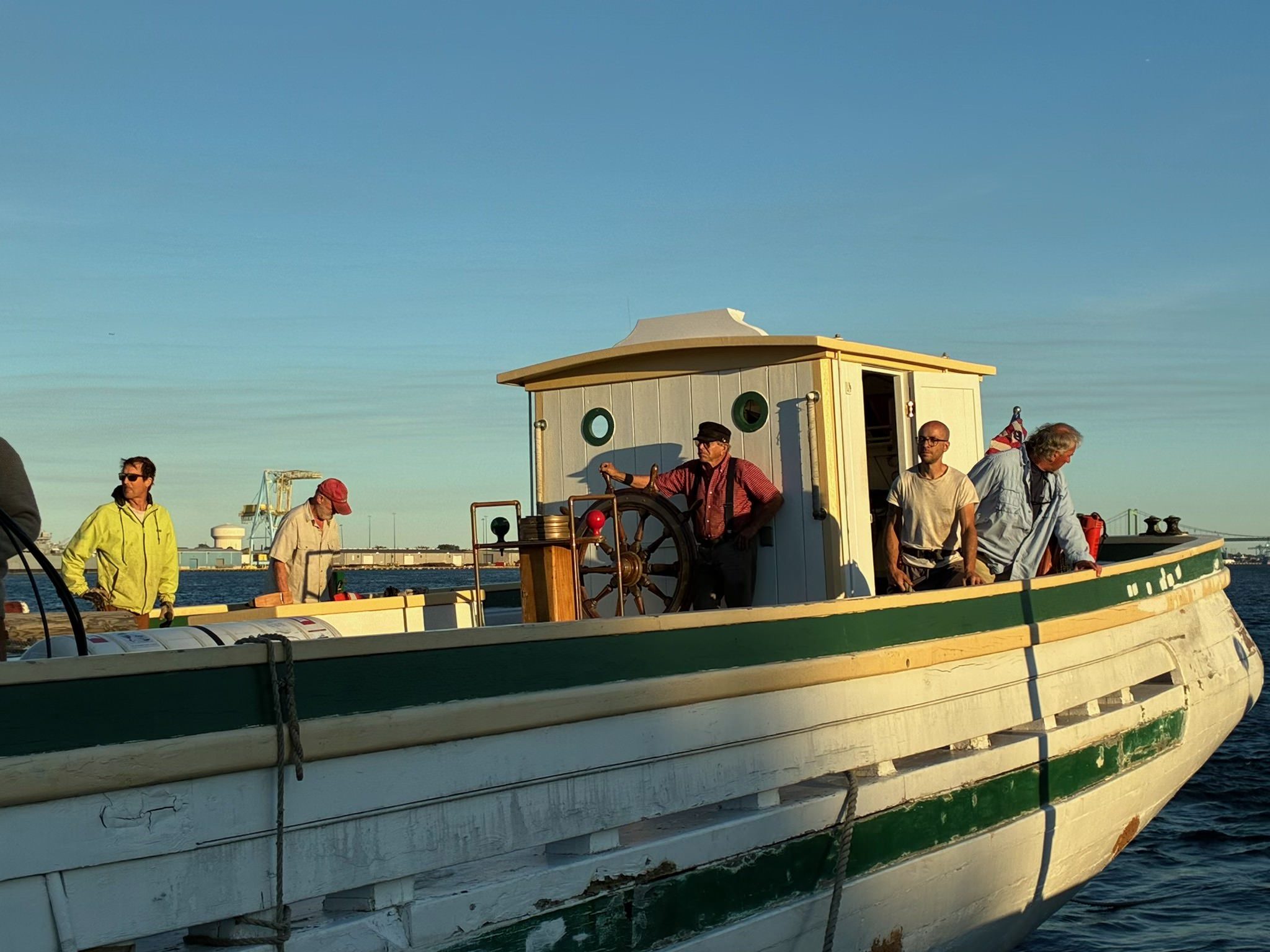
    Gazela prepares to set sail from Philadelphia on June 8.Allison Grosso

    When the ship is not at sea, Gazela remains docked at Penn’s Landing, under the care of the Philadelphia Ship Preservation Guild, providing an education to tall ship enthusiasts. Groups tour the decks; volunteers learn about carpentry, knots, and ship maintenance. The ship provides a venue for the guild’s apprenticeship program and a slew of classes aiming to educate folks on building a maritime career.

    All that grit has made Gazela a true Philadelphian: scrappy and enduring, no matter what punches life lands. A proud immigrant, the ship is a symbol of both global maritime history and Philly’s specific historical importance as a shipyard.

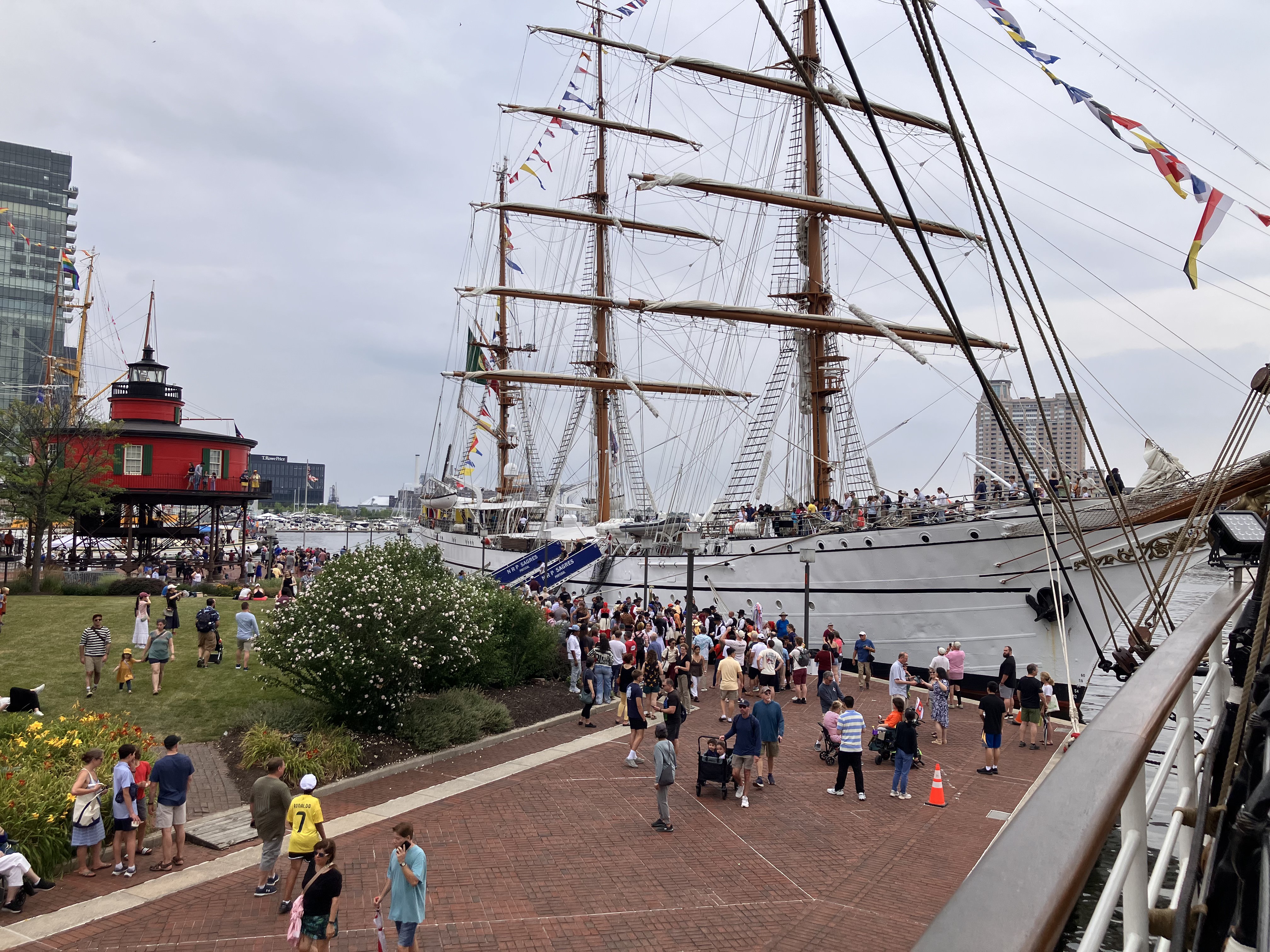
    Crowds gather to board the Portuguese naval vessel Sagres in Norfolk, Va.Alisa McDonald

    ‘We’re from Philly, what of it?’

    On June 18, David Goldman, the captain for Gazela’s trip to Portsmouth, one of the ports on their trip, stood with a slew of tall ships behind him. The ships were anchored outside of Norfolk, resting before a parade that would take them to dock alongside the city’s shore.

    “This scene could be out of the page of a book from 150 years ago. Please treat it with the reverence it deserves,” he said to the crewmembers. The Gazela stood out a little in the crowd: older than most of the other ships and a bit worn down from its century-plus of sailing. Slightly ragtag, slightly punchy.

    One crewmember referred to the ship as an “ugly duckling,” of course, with love.

    “We’re from Philly, what of it?” is the attitude that Gina Pickton, PSPG’s executive director, thinks Gazela has.

    A Coast Guard ship at port in Norfolk, Va.Isaac Pollock

    “This has not been easy, this is not a vacation,” said Allison Grosso, who manages events and communications for the guild. “Everybody on this boat feels the same way, and cares that much that we’re doing all this, because it’s that special to us.”

    Underway, the crew of 40 volunteers rotated through approximately five-hour shifts. Within each watch, a crewmember stood on lookout, checked the ship’s safety (including the ship engine — one was added in 1938 and updated in the late 20th century), helmed it, and kept it to the correct angle measured on a beautiful brassy compass.

    Bunks were stacked in threes in the focsle, with about a foot and a half of space in between, and hung in twos in the hold.

    Many of the volunteers have “land jobs” — one works at an environmental nonprofit, another attended art school, and another was in the Air Force. Some are hobbyist retirees; others, adults at the beginning or middle of a maritime career; one, a high school graduate spending as much time with the ship as he can before heading off to Temple in the fall.

    They form a tight-knit community.

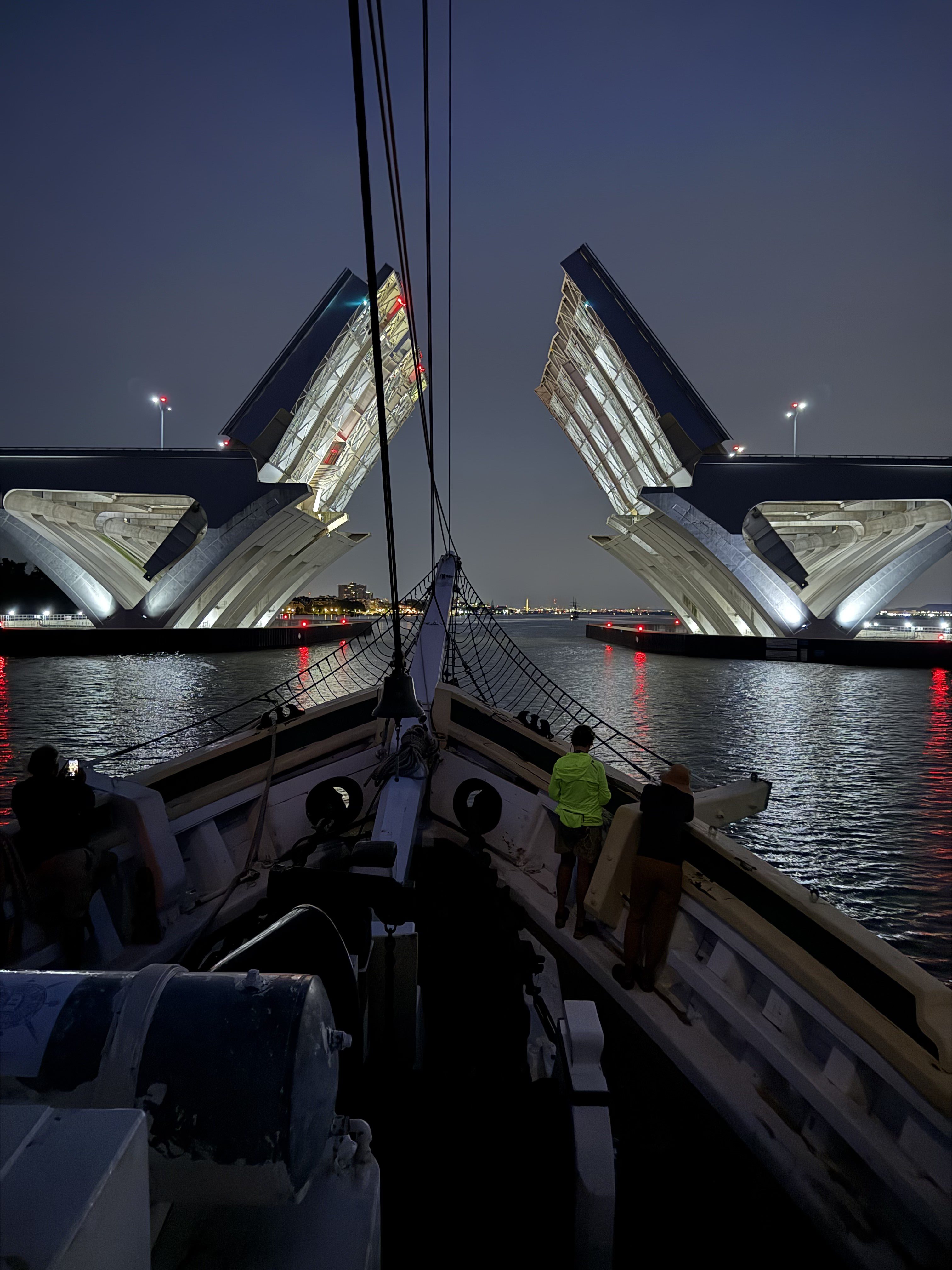
    Maryland’s Woodrow Wilson Memorial Bridge opens for Gazela’s passageStephan Botes

    “You can just step on[board], and people will be so friendly to you,” said Gael Chang Ortiz, 18. “They’re willing to teach you so much.”

    At 125, the tall ship remains an object of endless affection. While the ship was anchored outside of Portsmouth, a rowboat carrying four young men approached the ship’s flank and tossed a friendly offering of Goldfish crackers onto the ship’s deck.

    “Gazela’s still a fishing vessel!” shouted a crewmember, holding the bounty high.

    The Gazela just outside of PhiladelphiaAlex McNeil

    Documenting history

    Beyond preserving the community, the guild is working on preserving Gazela’s history — and not just by repainting the ship’s hull. Nancy Linden, the journey’s third mate, is working on an oral history project about Gazela. Chang Ortiz said he’s considering participating in Gazela’s apprenticeship program; there are PSPG members who started as volunteers and have wound up seeking full-time maritime careers.

    Gazela’s crew also thinks it’s important not only to preserve history, but to tell it truthfully.

    “Historically, sailing was an interesting pathway for both enslaved Americans as well as free African Americans to make a living,” said Maura Hackett, the chief mate for this journey and a seafarer for about two decades. “It’s really unfortunate that the first thing a lot of people think about [ships] is old white guys.”

    Gazela sits at port in Portsmouth, Va.Isaac Pollock

    “It’s hard to see yourself doing something if you’re not mirrored in the crew or the representation,” Hackett said. “I’ve had little kids come up to me and say, ‘I can be a captain too?’ And [I’ve said,] ‘Yeah, you can!’”

    After 29 days spent as much as 300 miles from home, Gazela returned to Philly.

    And as fireworks lit up the sky on July 4, the Portuguese Gazela, half as old as the ship’s adopted country, was just another Philadelphian basking under the night sky of the city it calls home.

  • Fans savor watching first-ever Women’s Lacrosse League championship: ‘Inspiring for young athletes’

    Fans savor watching first-ever Women’s Lacrosse League championship: ‘Inspiring for young athletes’

    A number of shirts that read “Everyone Watches Women’s Lacrosse” filled the concourse at Subaru Park, as fans filed in for the first-ever Women’s Lacrosse League Championship on Saturday.

    And when the Maryland Charm beat the California Palms 16-13 to claim the league’s first championship title, sparklers shot out, champagne was popped, and red, yellow, and white confetti rained down.

    Jaycie Jaskolka, a 30-year-old Philly native, chose to root for the Palms because of their pink jerseys, while handing out friendship bracelets for both teams, the Philadelphia Waterdogs of the men’s Premier Lacrosse League, and other WLL teams.

    Jaskolka said with the women’s sports history that already exists in Philly, adding the city as a stop to the WLL tour and the site for its first championship game is special.

    “It’s so cool to kind of like see history happen,” Jaskolka said. “It’s one of those things that I wish I had this when I was younger, but I’m so glad that we get to have it now. Better late than never.”

    For younger fans like Savannah Focht and Harper Willson, two 13-year old lacrosse players who traveled from Maryland to watch the Charm play, watching women pursue lacrosse professionally gives them the hope that they can too someday.

    “It’s really inspiring for young athletes, and it makes us want to work harder and motivates us,” Focht said.

    Young fans try to catch T-shirts during a break in the action at the inaugural Women’s Lacrosse League Championship on Saturday.Elizabeth Robertson / Staff Photographer

    During the game, pink and red rally towels rippled through a crowd that included U.S. National Lacrosse Hall of Famer Tina Sloan Green and two-time women’s World Cup champion and Olympian Ali Krieger. Influencer Jackie Johnston, better known on social media as “Coach Jackie” for her women’s sports content, was also in attendance.

    There were photo-ops and fan activations around the concourse, a performance from the West Powelton Steppers at halftime, autograph stations, and more to add to the excitement for fans.

    But for Charm midfielder Ally Kennedy and her teammates, the job was building up the product on the field to appeal to more fans.

    “We know if the best product is not on the field, we’re not going to win a championship, and it’s not going to grow the game either,” Kennedy said. “Goal number one is growing the game. We’re on ESPN. This was a great game, a huge game. I hope people all across the country were watching and became lacrosse fans and fell in love with the Charm.”

    Elijah Stobaugh, 23, a Bradenton, Fla. native, understood the gravity of the moment. Like Kennedy, Stobaugh and his friends have high expectations for where the league can go and how Saturday’s championship was a “major step in achieving it.”

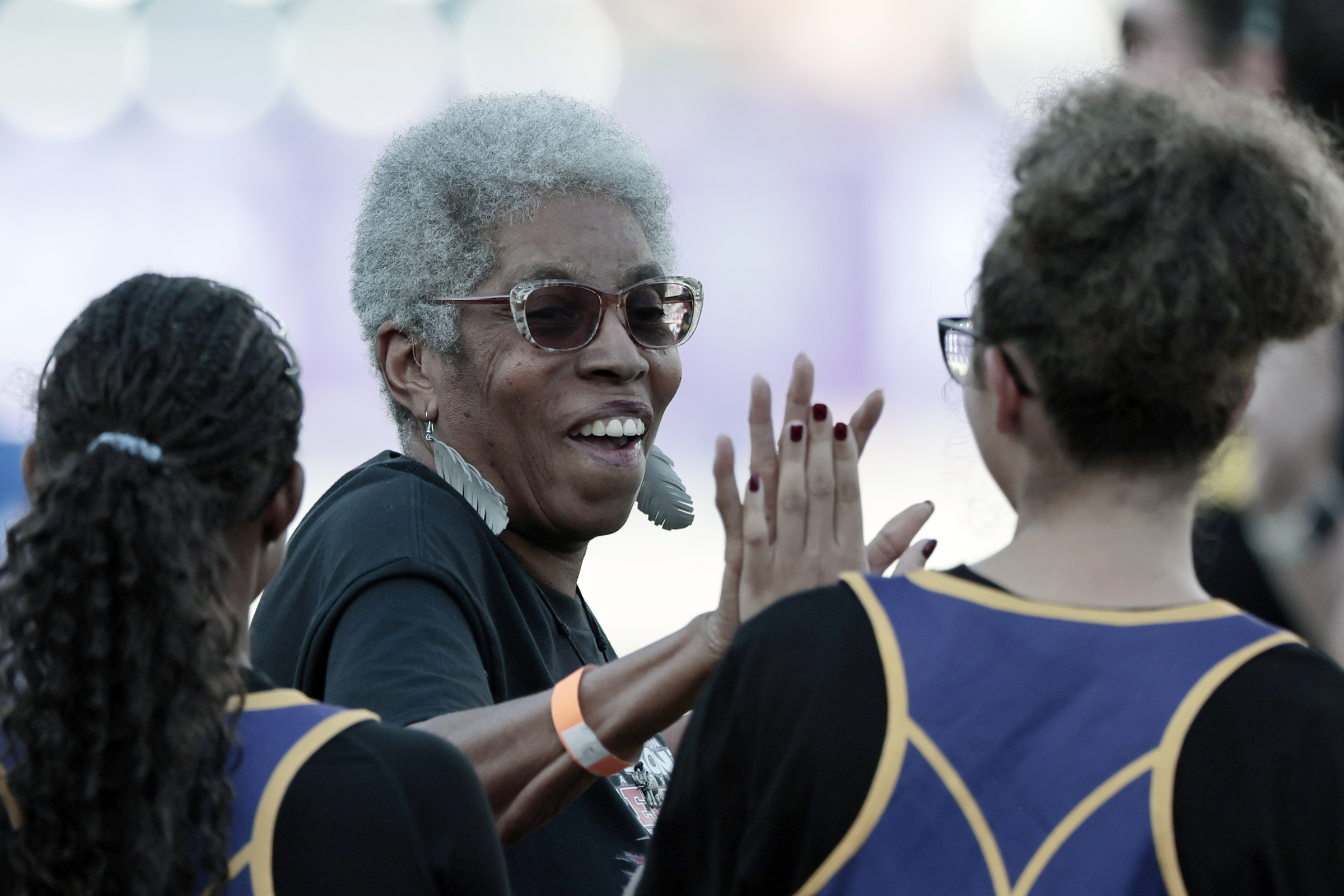
    Tina Sloan Green high fives young players after being honored before the Women’s Lacrosse League Championship game.Elizabeth Robertson / Staff Photographer

    “I can’t imagine what this league’s gonna be like in 20 years,” Stobaugh said. “So saying that I was at the first [championship] game is going to be cool 20 years from now because it’s going to be growing.”

    Waterdogs clinch top seed in PLL playoffs

    Earlier in the day, the Waterdogs had the first game in their homecoming weekend, beating the New York Atlas, 18-10, and securing the No. 1 seed and a bye to the semifinals of the PLL playoffs, which begin next weekend. Although the crowd erupted after the clock ran down on Philly’s victory, it was still the second-loudest moment during the game.

    The loudest moment came when Waterdogs attackman CJ Kirst scored his first goal of the day with a little over three minutes to go in the first quarter. Kirst’s 31st goal of the season broke the league’s single-season mark, which was previously held by the Boston Cannons’ Marcus Holman, who scored 30 goals in 10 games in 2023.

    The moment that followed, when Kirst’s teammates joined him on the field to celebrate, is when the reality of his milestone hit, he said.

    “I think that was pretty special and definitely something that I’m going to carry with me for that moment,” Kirst said. “Not really putting the ball in the back of the net, but being able to celebrate with every guy on the field.”

    Philadelphia native Jimmy Pine, 14, was just one of many fans wearing a purple Waterdogs jersey with “Kirst” on the back. Just as it was for the women’s game, Pine said fans being able to experience the PLL in person, especially Kirst’s record-breaking goal, can continue to grow professional lacrosse in the area.

    “When they see how fast people can shoot, how cool it is to make a save, or how cool it is to hit, people are gonna love it and watch it,” Pine said.

    The relationship goes both ways.

    Kirst said playing at home, seeing the purple jerseys in the crowd and the support of the fans during warmups was a cool experience and hopes Sunday’s game against the Maryland Whipsnakes to close out the regular season will draw the same crowd.

    “To have the support from Philadelphia and the sport of lacrosse to be so passionate about the Waterdogs, it truly means a lot,” Kirst said.

  • Manayunk is embarking on another new era after decades of evolution

    Manayunk is embarking on another new era after decades of evolution

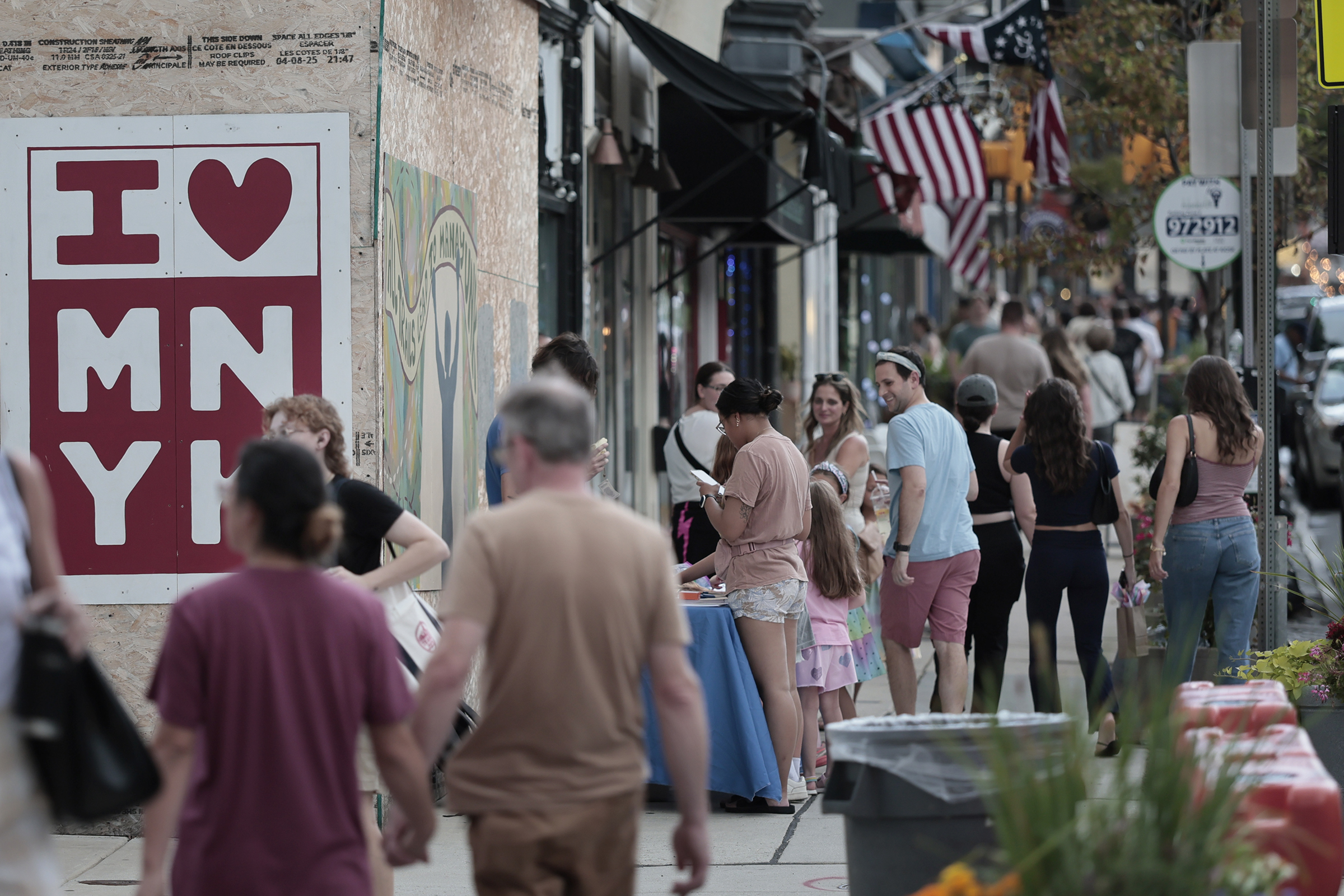
    On the last Thursday of July, during Manayunk’s summertime Stroll After Hours event, throngs of young families pushing strollers and couples walking dogs roamed the business corridor.

    Some stopped at art vendors with frames sprawled across the sidewalk, while others meandered down Grape Street to grab a bite from a food truck or claim a seat at the outdoor screening of Toy Story.

    On such an evening, Main Street Manayunk’s evolution is on full display.

    The riverside neighborhood in Northwest Philadelphia has seen many eras, from textile mills in the 19th century to chain retailers in the 1990s, to today’s collection of local upstarts.

    “It’s the best it’s ever been,” said Jen Wankoff, 51, of Roxborough, who turned out to Stroll After Hours with her friend, Jen Filip, 50.

    “It used to be a lot more commercial. There was a Banana Republic, a Pottery Barn, but then once one left, they all left,” said Filip, who has lived in Roxborough since the early 2000s. “Now it’s all small businesses.”

    More changes are coming to Manayunk. Even as apartment development has slowed in much of Philadelphia, over 1,800 new residential units are proposed along or adjacent to Main Street. All that additional population stokes neighborhood anxiety about traffic and parking, but retailers expect it will be good for business.

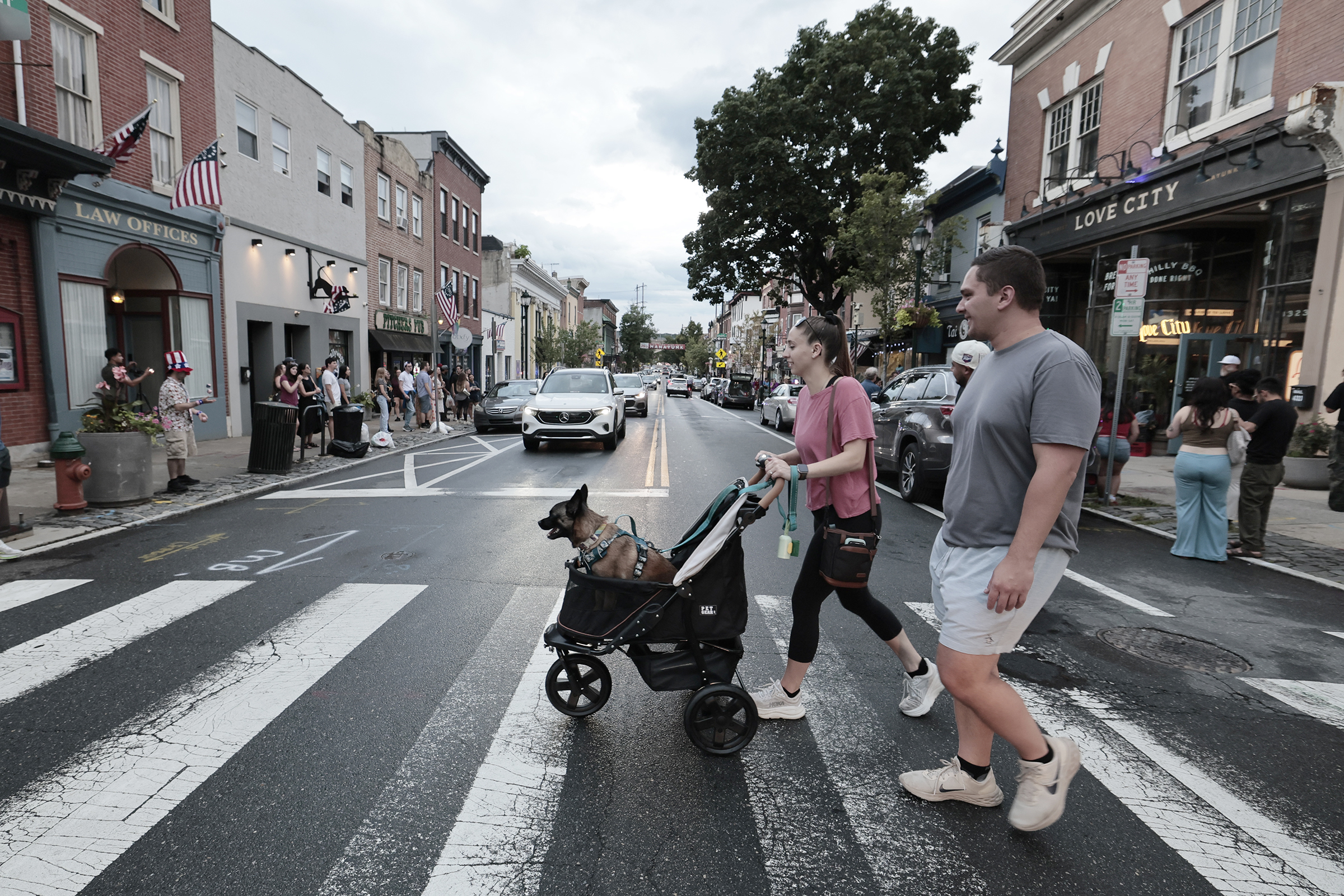
    Kim Albanowski of Philadelphia pushes her dog, Koda, across Main Street in “his chariot” as Jason Pepin looks on.Elizabeth Robertson / Staff Photographer

    “There’s probably going to be 1,600 new people living in those units, and they’re all going to come to Main Street to shop and eat,” said Dan Neducsin, 83, who has long been the largest property owner on Main Street and helped shape the identity of the corridor.

    “The restaurant scene has been strong [since the 1990s], and now I think it’s even going to get stronger,” said Neducsin, who has sold 12 of his properties in recent years to long-term tenants and small-business owners like Tim Spinner, owner of Taqueria Amor.

    “I just want to see the people who I have in there now do well, and my tenants have welcomed the opportunity,” said Neducsin, who emphasized that his company is not closing or selling all its holdings. But “it does make sense now for some new people to come in and take advantage of what’s here.”

    Manayunk’s Main Street appeal

    In the past two years, 12 new businesses opened along Main Street.

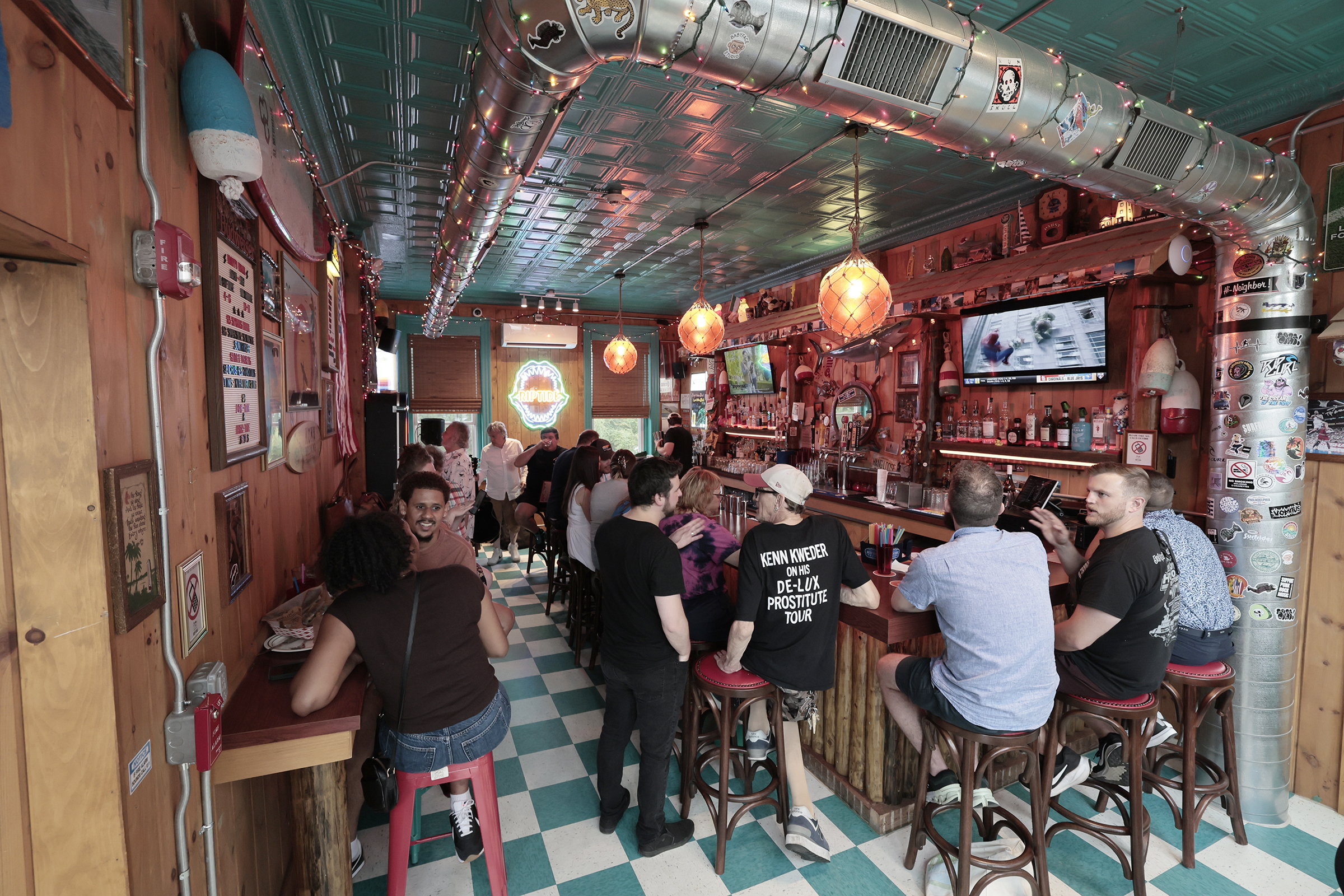
    One of them is Riptide Tavern, opened in June by Spinner, who also owns Taqueria Amor next door.

    Spinner said he wanted to open a neighborhood bar with creative cocktails and a cheap beer menu — much like a dream restaurant he conceived for a culinary school project years ago.

    “I wanted to be in the Caribbean or down the Shore, but along the Schuylkill River with the canal back there is close enough,” Spinner said.

    The Riptide Tavern in Manayunk is packed on a Thursday during Stroll After Hours.Elizabeth Robertson / Staff Photographer

    Eleanor’s Consignment is set to open on Main Street in October. Owner Emily Mannix, a former paralegal who has lived in Manayunk for two years, named the consignment store after her late mother, who died in 2023. They shared a love of secondhand-shopping.

    “This has been something that has been on my mind for the past four years,” Mannix said. “Life is short, and I might as well jump in and try.”

    It’s not a bad place to do that. Realtor Christine Ertz notes that while rent is not low, it’s more affordable than in areas like South Street and Queen Village.

    “Manayunk has the demographic businesses want,” said Ertz. “It has the younger folks, but also the more mature folks that have expendable income, and we’ve got the 27-to-35-year-olds that really enjoy the niche, smaller stores.”

    The apartment boom in Manayunk promises to add even more. Many of the new developments have smaller units, which are likely to attract single people or younger couples. The price points of the new rentals, while lower than Center City or Northern Liberties, also suggest that tenants will have disposable income.

    Those changes haven’t been without controversy. The Manayunk Neighborhood Council has pushed back against development it deems as out of scale with the community, and that’s often lacking new commercial space, affordable housing, and parking while being weighted to small apartments.

    John Hunter, an architect and zoning chair of the Manayunk Neighborhood Council, says few of the new buildings have commercial space to add to the neighborhood’s daytime vitality. He disagrees with the idea that the apartment boom will boost local businesses.

    “We have heard that misrepresentation for years now — that new apartments will generate pedestrian traffic along Main Street,” Hunter said. “Fifteen years of those promises has proved that is not the case.”

    But some neighborhood observers see the development interest along Main Street as a concrete example of the area’s ability to attract people and investors.

    “We’re seeing a diverse group of experienced, well-regarded developers all making independent decisions to put their capital and time into Manayunk,” said Veronica Blum, a retail broker with MPN Realty who has been working with Neduscin on leasing and sales.

    “When that many smart people come to the same conclusion about a neighborhood, it says a lot,” said Blum. “It’s a real vote of confidence in Manayunk’s future, and I think we’re just beginning to see what’s possible.”

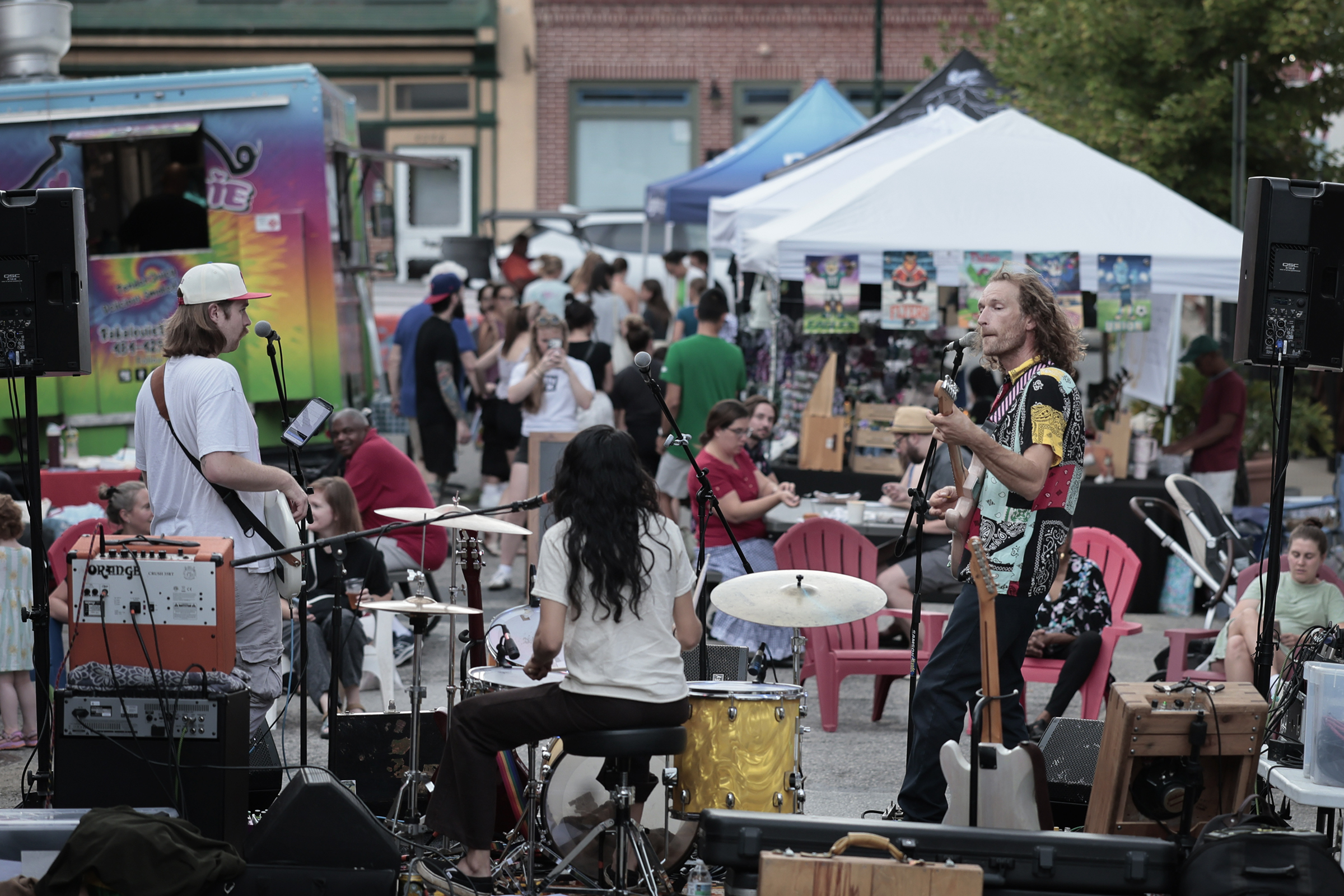
    Nervous Nikki and the Chill Pills perform during the Stroll After Hours event on July 30.Elizabeth Robertson / Staff Photographer

    The cost of staying open

    Still, the commercial corridor has seen turnover and closures.

    Pizza Jawn closed and Kismet Bagels came in its place — Pizza Jawn’s owner bought the former Manayunk Tavern down the street, which became Bar Jawn. Smiley’s closed and Blu Zone Cafe moved in; and Iron Works Fitness opened up in the former Kismet Cowork.

    A large restaurant space sat empty for months after Winnie’s closed last November. But, two Roxborough natives recently leased the space for a new “punk French” restaurant, planned to open in late fall.

    Joan Boroff Denenberg, who does marketing and retail strategy for the Manayunk Development Corp. (MDC), said a few storefronts remain empty because the property owners aren’t local and are backed up with other projects throughout the country.

    Neduscin says he isn’t struck by an unusual number of vacancies along Main Street. But maybe that’s because when he began buying properties there in the late 1980s, much of the commercial strip was vacant to the southeast of Cotton Street.

    “Anytime I saw a property that was available in Manayunk I ended up buying it because I thought if I owned enough properties, I could kind of set the direction of the street,” Neduscin said. “I got to handpick who my potential tenants would be. I tried to bring tenants that I thought would bring additional people here.”

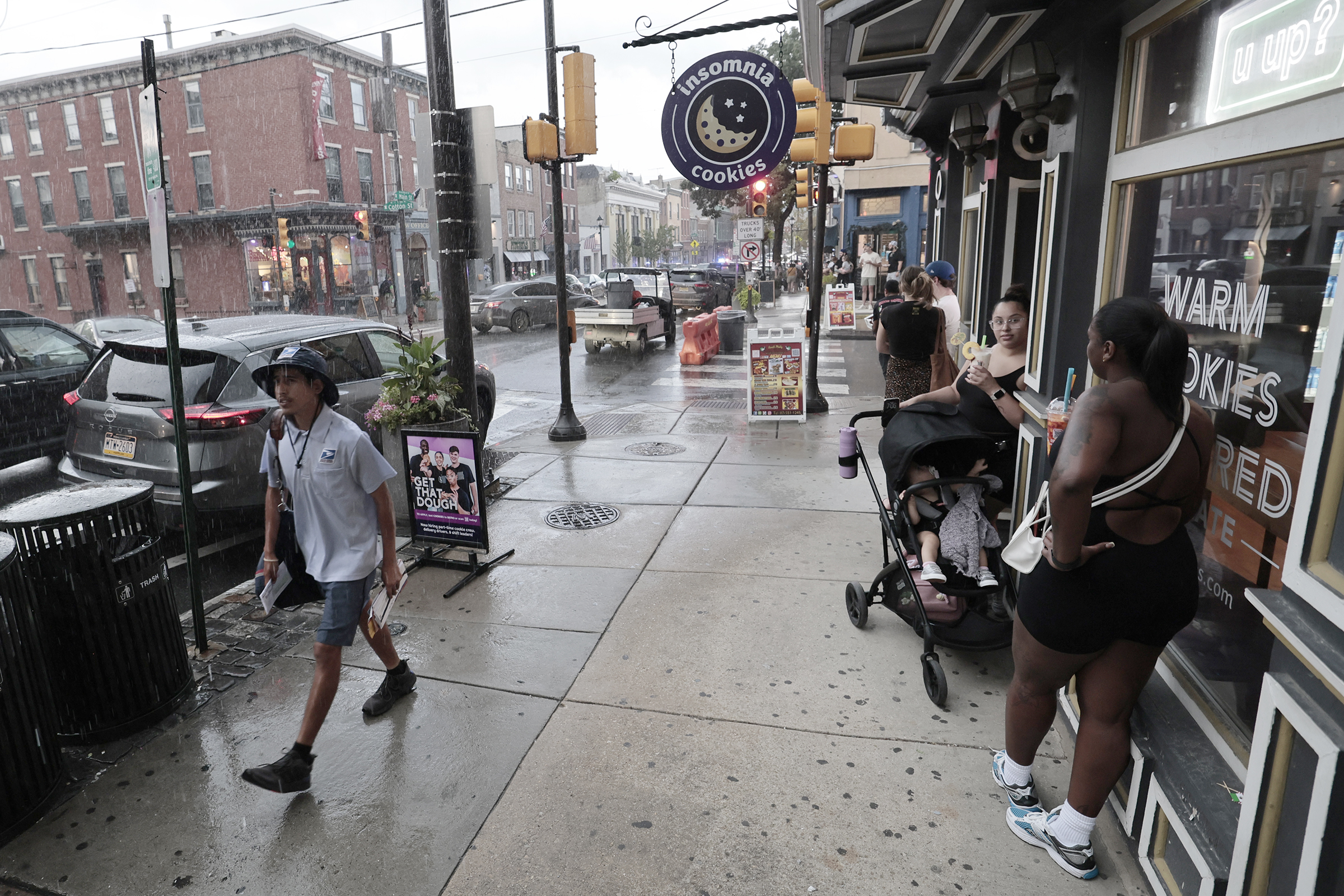
    Insomnia Cookies is one of the few remaining chains with a presence on Main Street in Manayunk.Elizabeth Robertson / Staff Photographer

    The bustle of Main Street now extends all the way down to Shurs Lane, roughly double its occupied length when he started.

    Neduscin also says he really tried to find independent entrepreneurs to lease to — “I didn’t want a McDonald’s on Main Street” — and those restaurateurs and small-business owners gave Main Street a unique identity.

    More than 30 years later, that’s why he wanted to sell some properties to one-time tenants like Spinner.

    Still, business owners say myriad challenges remain. The permitting process is notoriously slow, especially if a trip to the Zoning Board of Adjustment is necessitated. That can leave business owners paying rent without being able to open their doors as they wait for permission.

    “When it takes longer, you have to have deeper pockets, and I think that does scare some prospective businesses,” Neduscin said.

    Further, owners on Main Street face the macro challenges affecting small businesses throughout the region. Brandy Deieso, who opened the gift boutique the Little Apple in 2010, said the cost of goods has increased due to tariffs, shipping costs, and rising gas prices.

    “Being a street full of locally owned small businesses is great,” said Melissa Walter, co-owner of Love City Brewing, which just opened a second location in Manayunk. “But as we all know, running a small business is really hard.”

    Building a business community

    The bubblegum pink Cupid’s Bookshop storefront has built a following and even attracted customers from Baltimore and New York since opening last year. Now, it’s upgrading to a bigger location on Main Street.

    “The growth we’ve had, it’s been amazing,” said owner Tina Long.

    Cupid’s capitalized on the insatiable demand for bodice rippers and love stories, and Long says the bookshop benefited immensely from the MDC’s incubator program. Cupid’s was the first participant.

    The program allowed Long to lease a storefront at 106 Grape St., owned by the business association, for a below-market monthly rent of $1,000 for up to three years, and the MDC provided guidance and support. With her new storefront opening in August and a five-year lease, she’s graduating from the incubator space early.

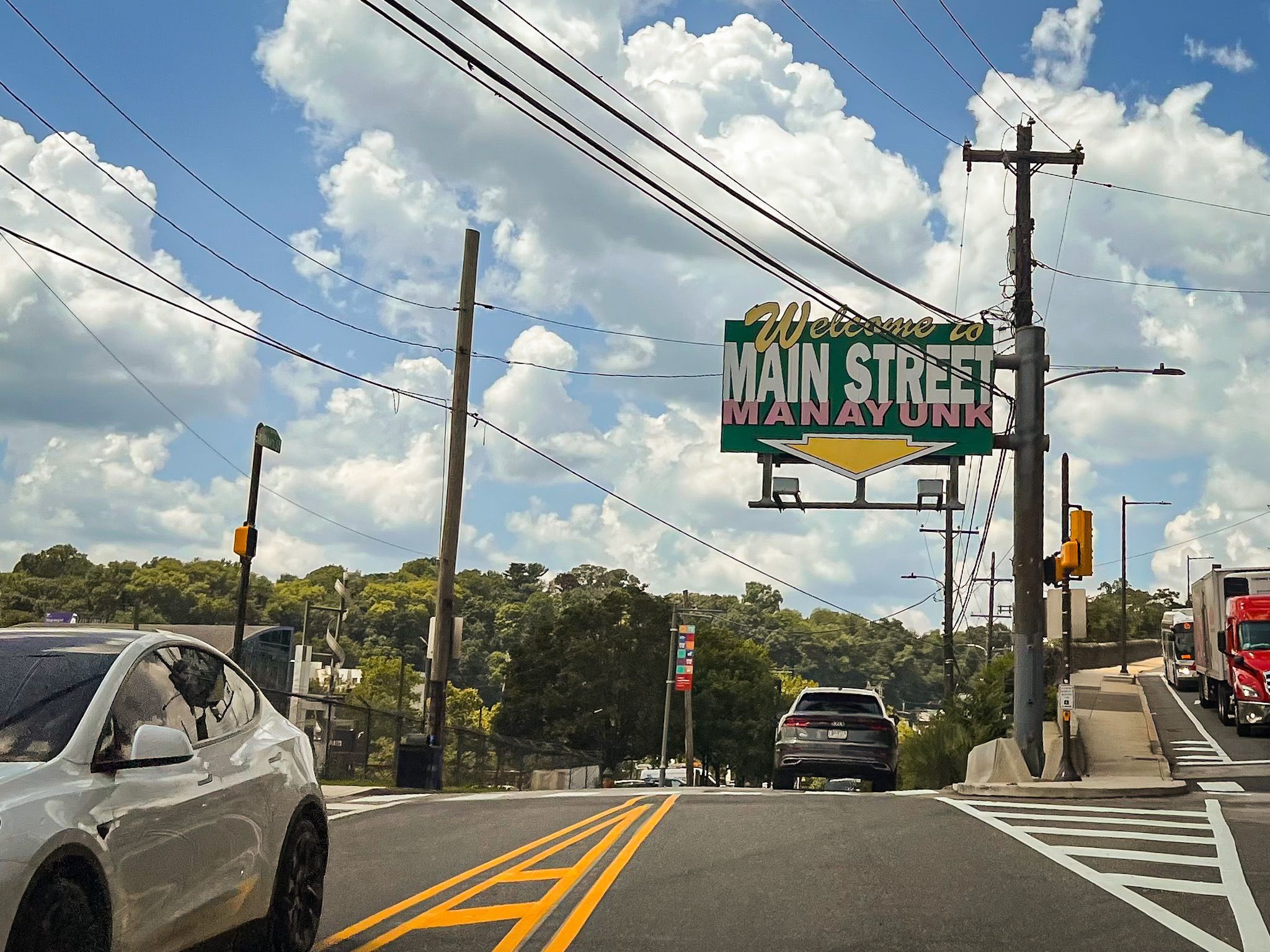
    The “Welcome to Main Street” sign hangs over Main Street at Ridge Avenue in Manayunk.Michael Klein / Staff

    “We loved the idea, but it turned out beyond our wildest dreams,” MDC executive director Gwen Mccauley said. “She’s now becoming part of the fabric of our district.”

    Baby Face Studio also ended up on Main Street in part because of the MDC.

    Artist and owner Kim Canefield in 2022 applied for the MDC’s emerging artist tent at the Manayunk Arts Festival, where she could set up shop for $100 instead of operating a $500 tent on Main Street. The festival draws over 300 artists and 150,000 visitors each June, McCauley said.

    She set up a full-time vendor tent at the next three Arts Festivals. Each time, she was stationed in front of an art gallery, not knowing that the same space would eventually become Baby Face Studio.

    “I just kept looking at it, and peeking through the window,” Canefield said. “The whole time I was staring at the future of what the studio was going to be.”

    Love City Brewing already has a foothold in Callowhill, but saw Manayunk as a place to grow. Its second spot opened in the former Fat Lady Brewing. When searching for a new location, co-owner Walter was attracted to Main Street’s critical mass of small, independent businesses.

    “Seeing them succeed, we thought: ‘Oh, we’re a small, local Philly business too,’” Walter said. “We can make it work there.”

  • Lower Merion has banned two parents from school board meetings for ‘disruptive’ behavior. Can it do that?

    Lower Merion has banned two parents from school board meetings for ‘disruptive’ behavior. Can it do that?

    Rebecca Foscolo acknowledges she was “extra spicy” at a Lower Merion school board meeting in June, when the board voted to repeal a policy that let parents like her opt their kids out of school-issued laptops and iPads.

    Foscolo, who is part of a group of parents demanding that the affluent Montgomery County district scale back on screens, could not believe the board was moving ahead with the vote, after parents had pleaded for the option to say no to devices they said were imperiling their kids’ ability to learn.

    “All these educated people are telling you you are doing something wrong, and you are sitting there and doing nothing,” Foscolo yelled at the board, while seated in a row in the Lower Merion High School auditorium.

    Members of the district’s security came up to Foscolo, who left on her own.

    Now she is no longer allowed to attend Lower Merion school board meetings in person, for a year.

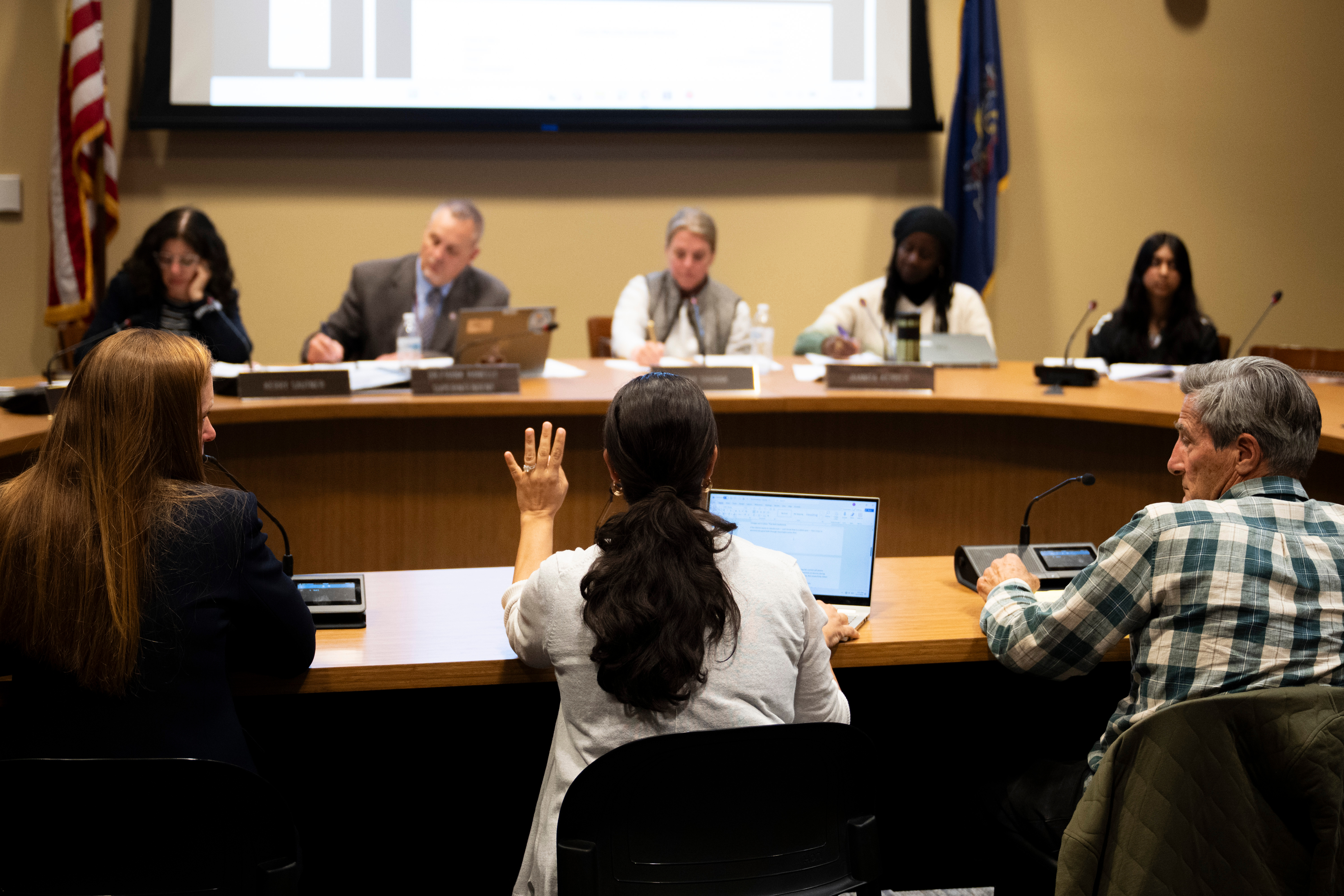
    After a second outburst during a board policy committee meeting on Aug. 3, Foscolo received a letter from the district’s solicitor, informing her she had violated Lower Merion’s civility policy.

    A second parent in the Pencils Over Pixels group, David Smyth, said he had received a similar letter after the meeting.

    In his Aug. 4 letter to Foscolo, Lower Merion solicitor Kenneth Roos wrote that at both the June 15 and Aug. 3 board meetings, she “displayed disruptive and bullying behavior, including yelling at school board members and administrators while they were conducting board business.” He said her conduct “contributed to the board needing to go into recess prior to the completion of each meeting.”

    The district on Friday announced that its meeting on Monday night, when the board is expected to approve a new technology policy, would be virtual only “due to disruptions at two recent meetings,” as well as “threatening comments on social media pages.” It did not say what the social media comments were.

    Foscolo, who shouted at the board that “the way you’re responding is ridiculous” after it cut off public comment on Aug. 3 before she had a chance to speak, accused the district of violating her constitutional rights.

    “They’re basically just trying to bully me and silence me,” Foscolo said in an interview. She and Smyth were banned from attending school board meetings until June 30, 2027. They can watch meeting live streams and submit written comments, Roos said.

    Rebecca FoscoloCourtesy of Rebecca Foscolo

    The bans come amid ongoing tensions between the Pencils Over Pixels group and the 8,500-student Lower Merion School District over school technology use, a battle that has received national attention amid a growing parental movement pushing back on screens in schools.

    ”While we would have preferred that everyone remained calm, and we recognize that the behavior may have been perceived as disruptive, we do not believe banning concerned community members from all future board meetings is an appropriate or productive response,” the group said in a statement.

    In another statement, Pencils Over Pixels said it was “disappointed” by the decision to make Monday’s meeting virtual.

    Any threatening comments “were not condoned by any member of this group and any threatening language is promptly removed,” the group said.

    Is it legal?

    First Amendment lawyers said the district’s actions in banning residents could be running afoul of their constitutional rights.

    “Unless there’s a threat of violence, there’s really no basis” to ban someone from public meetings, said Sara Rose, deputy legal director of the ACLU of Pennsylvania. A person who is “truly disruptive” can be removed from a meeting, she said, and if the district referred the matter to prosecutors, a court could decide to ban the person.

    “But the school district cannot unilaterally tell people they cannot attend future meetings,” Rose said, adding: “I haven’t found a single decision that says that’s permissible.”

    The ACLU in November 2024 sued the Souderton Area School District after it banned two parents and a student from school properties, accusing them of threatening a school board member. The parents and student, who were part of a group of demonstrators protesting the board president, said they were wrongly accused, and the district lifted the ban in March 2025.

    Other restrictions on speech during school board meetings have also led to legal battles. In 2022, the Pennsbury School District agreed to pay $300,000 to four men who had sued the district, saying their public comments at board meetings had been illegally curtailed. A federal judge had previously directed the district to stop enforcing a policy that prohibited abusive, offensive, or personally directed public comments.

    Melissa Melewsky, media law counsel at the Pennsylvania NewsMedia Association, questioned Lower Merion’s decision to end public comment after 45 minutes during its Aug. 3 policy committee meeting.

    While government agencies are allowed to have guidelines for how long public comment can last, “there has to be flexibility,” Melewsky said. If there is not enough time to hear every person on a controversial issue, she said, agencies are supposed to schedule another meeting to finish the public comment, and “any proposed action has to be put off as well.”

    Asked why the district believed its actions were legal, spokesperson Amy Buckman said that residents “were advised that intentionally disrupting a lawful meeting or the administration of a government function is a criminal offense in Pennsylvania.”

    She noted the board’s policy for committee meetings includes a 45-minute time limit for public comment on agenda items, “unless extended by the board for special circumstances.”

    Pencils Over Pixels said its members had been “assured by the board that the Aug. 3 meeting would be an opportunity to engage with the policy committee” and receive feedback to their questions about the district’s new technology policy.

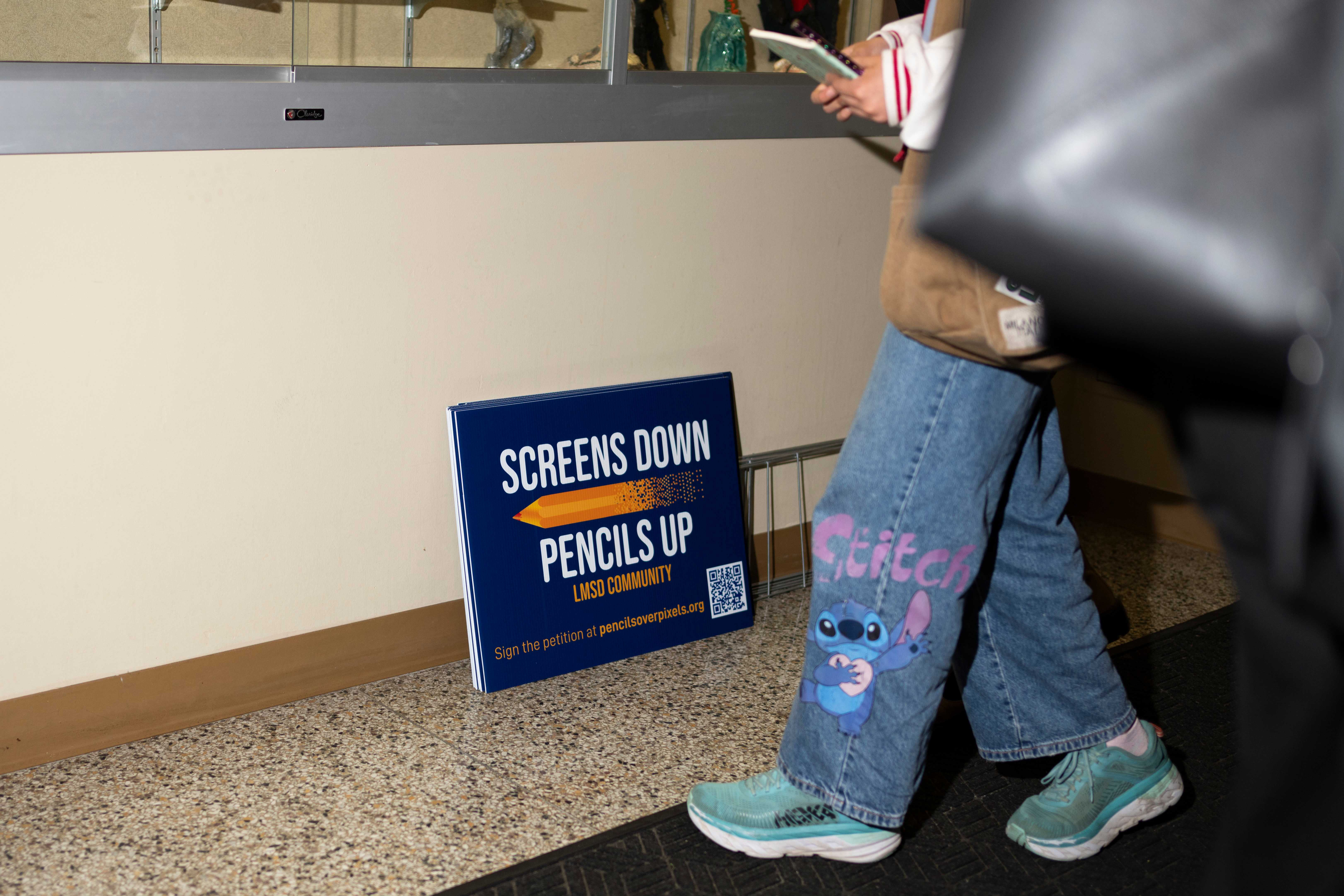
    Signs reading, “Screens down, pencils up,” are seen a school board meeting at the Lower Merion School District Administration Building on Monday, May 11, 2026, in Ardmore, Pa. (AP Photo/Joe Lamberti)Joe Lamberti

    While Pencils Over Pixels said it had urged its members to remain “calm and professional,” some “were rightfully upset that they were unable to engage in dialogue with the committee as promised,” the group said. “Unfortunately, their emotions governed their behavior.”

    Frustrations around tech use

    Lower Merion parents have been appearing before the board to complain about school technology use since the spring, describing kids focused on gaming or visiting inappropriate websites instead of doing schoolwork. Others have criticized the district’s use of educational technology programs as low quality, and say they do not want their kids doing reading and math on computers. Hundreds of parents signed a petition in favor of opting out of computers.

    The district, which has said it is not possible to opt out of technology use, rescinded its policy allowing for that option and has been moving forward with a new version that places more limits on screens.

    Under the policy, which the board is expected to vote on Monday, kindergartners and first and second graders will no longer be issued personal devices, while third and fourth graders will have personal logins to computers in the classroom. The policy includes new guidelines for screen time by grade, and district officials say there will also be new tools for teachers and parents to monitor kids’ internet usage.

    Parents pushing for stricter limits have called for the district to release its contracts with educational technology companies and data on how long students are on screens during the school day.

    They also want more say in how technology is used, including through the creation of a committee to review the district’s educational technology programs.

    “They’ve not been really having good-faith personal conversations,” Smyth, who has a seventh and an eighth grader, said of the board.

    Smyth, who went up to the microphone after the board said that public comment was over Aug. 3 and called on the board to answer how many speakers remained, said in an interview he was “only disruptive to insist on continuing public comment.”

    Foscolo, who has a rising first grader and a 3-year-old, said that while she had previously addressed the board about the technology policy and had met with several board members, she had repeatedly asked to meet with the board’s president, Kerry Sautner, and the policy committee chair, Anna Shurak.

    When Sautner responded, she told Foscolo to come to the Aug. 3 meeting, Foscolo said. She was frustrated she was not able to speak then.

    To Foscolo, the board appears to be “placating” parents who have concerns about technology, rather than having genuine debate.

    “You have a bunch of parents who want to help, and you’re like, ‘Don’t talk,’” she said.