Tag: topic-link-auto

  • Phillies rally from five-run deficit to complete series sweep of Twins

    Phillies rally from five-run deficit to complete series sweep of Twins

    MINNEAPOLIS — Andrew Painter threw six balls to begin his start here Sunday. Upon finally landing a pitch in the strike zone, he received a derisive cheer.

    So much for “Minnesota nice.”

    Come to think of it, there was a sizable delegation of traveling Phillies fans in town for the weekend. For five innings, a stray strike from Painter was all there was to provoke their applause.

    But a funny thing happened along the way to a series-finale egg-laying. The Phillies rallied from an early five-run deficit to pull ahead in the eighth inning of a 7-5 victory to complete a three-game, two-state sweep of the Twins.

    “We’ve been able to come back, and our bats have been good,” interim manager Don Mattingly said after the Phillies inched ahead of the Diamondbacks and back into sole possession of a wild card. “Up and down [the lineup], as long as we stay with it and start getting guys out there, you’ve got a chance to break through.”

    For the record, Alec Bohm bashed a three-run homer in the sixth inning to draw the Phillies within 5-4, then dropped a fly ball inside the right-field line for a game-tying single in the eighth.

    But it was reserve outfielder Bryan De La Cruz, in only his third at-bat in eight days, who broke the tie by punching a two-run single through the right side.

    “I understand that’s my role, and I just have to take advantage of the opportunities that I get, seize the moment, and just keep going,” De La Cruz said through a team interpreter. “I know that maybe I haven’t earned a spot every day here, but that’s what I have to do, just try to come through on the spots that the team needs me to.”

    Andrew Painter throws during the first inning against the Minnesota Twins on Sunday.Bailey Hillesheim

    Jhoan Duran survived a 33-pitch tightrope walk in the ninth inning of his first appearance in Minnesota since getting traded by the Twins 382 days earlier. But the Phillies jetted home on the fuel of three consecutive wins over 243 miles from the Field of Dreams in Dyersville, Iowa, to the Twin Cities.

    They also took Painter off the hook for a rough start.

    Seeking to build off 5⅓ solid innings earlier in the week in St. Louis, Painter loaded the bases with two out in the first inning on back-to-back singles and a walk. He gave up a long, loud foul ball to Brooks Lee and hung a slider on the ensuing pitch for a grand slam.

    “That’s where I’m trying to bury it, especially ahead in the count,” Painter said. “I believe it’s 1-2. You have room to play around there, so you’ve got to be able to execute that. That’s got to be a ball down. We’re trying to get chase there. Just left it up.”

    Chalk it up as another lesson in a season full of them for the 23-year-old rookie.

    Painter hit the next batter, Luke Keaschall, on the bill of his batting helmet with a first-pitch fastball. Not a great look, but considering Painter’s lack of command, in keeping with the rest of the first inning.

    Even so, the umpires conferred behind the mound and issued warnings to both teams, a decision that irritated Twins manager Derek Shelton.

    “I’m not trying to go up and in with that,” said Painter, who has a 6.43 ERA through 18 games (16 starts). “I’m just trying to rip that through the zone and be really aggressive with the fastball there. It kind of just got away from me a little bit. Just got to be able to bounce back.”

    Alec Bohm celebrates after hitting a three-run home run during the sixth inning on Sunday.Bailey Hillesheim

    Painter allowed a solo homer to Kody Clemens in the third inning, but otherwise, he froze the scoreboard to enable the Phillies to mount their second-largest comeback of the season. They overcame a six-run deficit on May 15 in Pittsburgh.

    “I’m really happy with the way [Painter] responded after that because him getting through five is huge today,” Mattingly said. “He gives up the solo, but hung in there and kept going. That was huge.”

    Through five innings, the Phillies not only trailed 5-0 but had three hits. The third time through the order against Twins starter Dean Kremer was different. They loaded the bases on two walks and a single before breaking through on Luis Arraez’s groundout and Bohm’s three-run homer.

    It set the stage for the eighth-inning, which began with Bryce Harper’s one-out single and a double by Arraez before Bohm’s game-tying bloop and De La Cruz’s go-ahead single gave the traveling Phillies fans something real to cheer about.

    “I’ve got to be better from the jump,” Painter said. “I’ve got to be in zone more. Obviously I put the team in a really tough spot. But really good job by the guys to come back and battle like that.”

  • Perfect Game’s All-American Classic brings former major leaguers together to coach future stars

    Perfect Game’s All-American Classic brings former major leaguers together to coach future stars

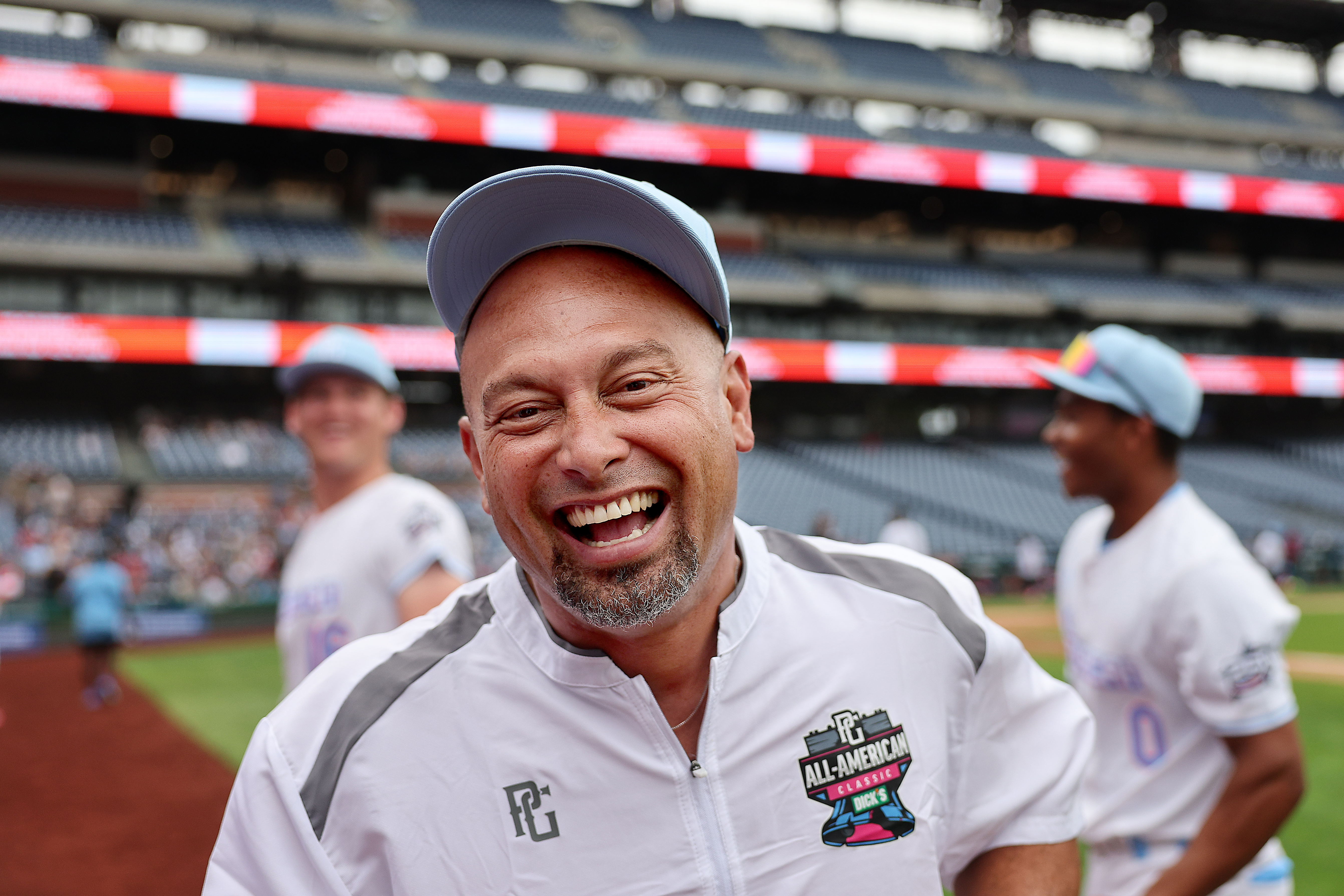
    The past and the future met at Citizens Bank Park on Sunday morning for the Perfect Game All-American Classic. Sixty of the top high school baseball players in the country took the field and were coached by former major leaguers.

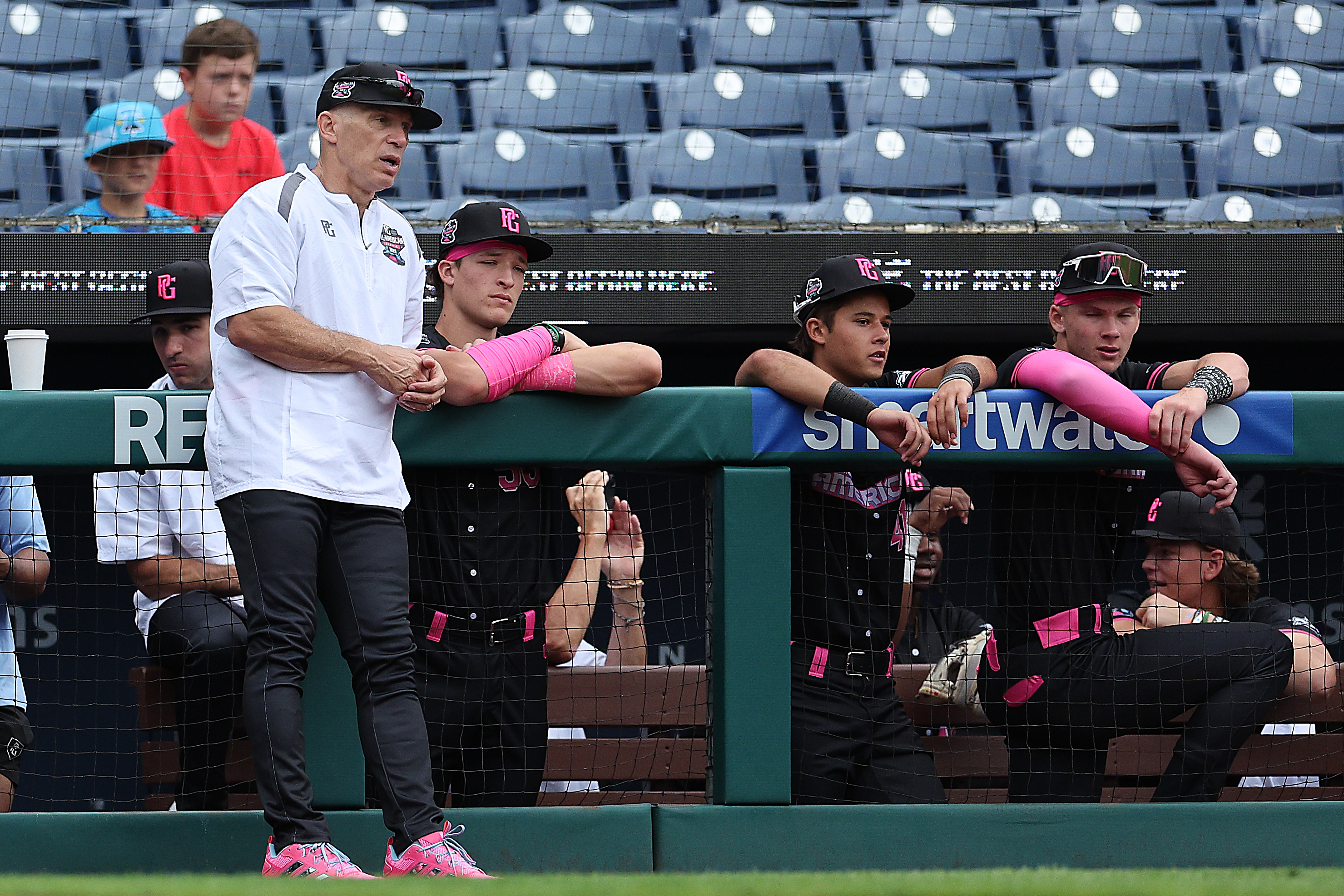
    Former Phillies manager Joe Girardi, a four-time World Series champion as both a Yankees skipper and player, served as the manager of the West team. Across the field in the first-base dugout, former Phillies center fielder Shane Victorino was the manager of the East team.

    Ultimately, it was Girardi who came out on top with an 8-3 win for the West team.

    Girardi spent 273 games as the Phillies manager starting in 2020. He went 132-141 record with a .484 win percentage before being fired early in the 2022 season. He hadn’t been back in the dugout at Citizens Bank Park since. Instead, he’s been focusing on his role as a Yankees game analyst for the YES network. He said it was great to be back in Philly.

    “I enjoyed my time here,” Girardi said. “It’s a great baseball town. People are extremely passionate. Just great to be around these young kids too.”

    Girardi was the manager of the West team for his first time back in the dugout at Citizens Bank Park after being fired in early 2022.David Maialetti / Staff Photographer

    Victorino, whose eight seasons in Philly included two All-Star selections, three Gold Gloves, and the 2008 World Series title, has spent a lot of time back in the city. During All-Star Weekend last month, he led Team Victorino to win the inaugural MLBx three-on-three tournament against Jimmy Rollins, Ryan Howard, and Andruw Jones.

    Also part of both the Perfect Game coaching staff and the 2008 Phillies were pitchers Kyle Kendrick and Tom Gordon. Milton Thompson and Ben Rivera, from the Phillies’ 1993 NL champions, joined them on the coaching staff, along with fellow ex-Phillie José Contreras. Former manager Charlie Manuel was in attendance as the honorary chairman for the first-ever Perfect Game event held at Citizens Bank Park.

    With so many players back and involved in the event, Victorino said it’s a testament to the “Phillie way.”

    “There’s something special when I came here, and I learned that through the years that there’s a way that they do it here,” he said. “To be a part of it, to be called back, and to be a part of this organization still, [with] five, six people involved in this [event] it’s always amazing.”

    Former Phillie Shane Victorino was the manager of the East team and was one of five former Phillies part of the coaching staff for the game.David Maialetti / Staff Photographer

    Fellow former major leaguers Mo Vaughn, Trevor Hoffman, Ryan Klesko, Todd Coffey, Denard Span, and Jason Phillips, and Girardi’s son Dante were also on the coaching staffs.

    For Dylan Seward, a shortstop from Corona, Calif., who is projected to be the top pick in the 2027 draft by MLB.com and is committed to Tennessee, the opportunity to play and learn under these veterans was “a major blessing.”

    “Joe’s managed some of the best players ever, so getting to pick his brain a little bit, to me, that’s how you get better,” Seward said. “Always [having an] open mind and ask a lot of questions from guys with a lot of knowledge and just really listening.”

    In line with the rest of the big names surrounding the game, Daron Sutton and former Phillies outfielder Hunter Pence called the game on PGTV.

    Pence’s nephew, Striker Pence, a 6-foot-6 two-way player also from Corona, pitched the first inning. The right-hander maxed out at 99 mph with the rest of his pitches sitting in the high 90s.

    In the fourth inning, Pence, who bats left-handed, hit a double to centerfield that brought in the first two runs of the game.

    On the East team, Brue Milner, a catcher from Tallassee, Ala., who is committed to Georgia Tech, went yard in the top of the sixth to bring in a run for Victorino’s team. Later in the inning, a base-hit from Harry Chubb Jones Jr., an Alabama pledge from Douglasville, Ga., tied the game.

    A sacrifice fly from Max Hemenway, a native of Puyallup, Wash., who’s another Tennessee recruit, gave the East a one-run lead in the top of the eighth. An RBI single from LSU recruit Sebastian Castillo, of Justin, Texas, in the bottom of the frame tied it up. Pence walked, moving Castillo to second before he stole third. A single from Ontario’s Jalen Jacobs brought Castillo home before a grand slam from another LSU pledge, Koa Romero from Des Allemands, La., ended the game.

    The talent displayed is something both Victorino and Girardi said they don’t recall possessing at 17, but it says a lot about the direction the game is heading.

    “It’s amazing the size, first and foremost, and then the ability to play the game at the level at such a young age,” Victorino said. “I think it’s pretty impressive, but again, there’s so much more for these kids to learn, so much more ahead for them.”

  • Man accused of burglarizing nearly 30 Philly stores arrested in Florida

    Man accused of burglarizing nearly 30 Philly stores arrested in Florida

    A man who police say burglarized nearly 30 stores in Philadelphia was arrested last week in Florida.

    Ravon Service, 31, was arrested Aug. 10 at a resort hotel in Kissimmee, Florida, about 20 miles southwest of Orlando, according to the U.S. Marshals Service in Philadelphia.

    Service is accused of breaking into and stealing cash from 26 stores in South and Northeast Philadelphia. According to police, he allegedly burglarized the businesses early in the morning and took the money from offices, safes, or cash boxes.

    Police had been the investigating a slew of commercial burglaries since early 2025.

    “This arrest stops a serial burglar from continuing to victimize Philadelphia businesses and brings his repeated criminal activity to an end,” Supervisory Deputy Robert Clark said in a statement.

    The Philadelphia Police Department did not immediately respond to an email Sunday seeking additional information.

    Service was also wanted in connection with other crimes in Montgomery County as well as Georgia and New Jersey, the U.S. Marshals said.

    He is currently being held in a Florida jail, where he awaits extradition back to Pennsylvania, the agency said.

  • Phillies’ Trea Turner avoids injury after fouling a pitch off his leg, but gets Sunday off vs. Twins

    Phillies’ Trea Turner avoids injury after fouling a pitch off his leg, but gets Sunday off vs. Twins

    MINNEAPOLIS — Trea Turner watched the replay before he left the ballpark here Saturday night.

    “It looked a lot worse than it was,” he said.

    Indeed, Turner left the game — and the Phillies hoping for the best — after fouling a pitch off his upper right leg in the eighth inning of a 9-1 rout of the Twins. He writhed on the ground and and got to his feet with assistance from head athletic trainer Paul Buchheit.

    But by the time the game was over, Turner was walking through the clubhouse without even a trace of a limp.

    Turner could have started Sunday, too, interim manager Don Mattingly said. But the Phillies weren’t pushing it with their star shortstop, whose legs make him one of the fastest players in the sport.

    “I don’t like taking chances with his legs,” Mattingly said. “Because he [could] end up running differently, and then he’s got a hamstring or he’s got a hip or something going on. It’s just kind of a natural, easy decision with Trea, just because you want to be more cautious with him than some other guys.”

    And so, Edmundo Sosa made a rare start at shortstop for the series finale against the Twins, with Turner available later in the game, according to Mattingly.

    In rewatching the swing from Saturday night, Turner said he was bothered more by falling hard on his right ankle than actually fouling the pitch off his leg.

    “I just couldn’t catch myself, couldn’t stop spinning and falling backwards,” Turner said. “I kind of like sat on my ankle. Watching a replay, I can see how the trainers and everyone’s like, ‘Oh no, that looked really bad.’”

    Turner has turned around his season over the last two months. At his nadir, he was batting .216 with a .595 OPS on June 15. Since then, he was batting .292 with an .841 OPS and 10 homers in 49 games through Saturday night.

    And after a rough stretch last month, his defense at shortstop has stabilized. Turner made four errors in four games — and six in 10 games — out of the All-Star break. But he has been error-free for 15 games.

    Even as the Phillies displaced three-fourths of the infield after trading for second baseman Luis Arraez, they left Turner at shortstop. Infield coach Bobby Dickerson has expressed confidence that the 33-year-old can stay at the position beyond this season.

    “He’s got to put a chip on his shoulders and say, ‘The way to quiet everybody is to make plays, to do my job and do it right and do it good,’” Dickerson said on The Inquirer’s Phillies Extra podcast. “I always talk about shortstop as the quarterback position. … We’ve got to get back to him leading as a shortstop — make plays, play it calm, let everybody breathe. That’s the only way he stays there.”

    Said Mattingly: “It seems like he’s cleaned stuff up and had better results. I think he’s just kind of stayed after it and kept working. I know he’s been doing a lot of hand [exercises], activation stuff, but just kind of continuing to work. And it has been better.”

    Phillies outfielder Derek Hill takes photos at the Field of Dreams movie site Thursday in Iowa.Yong Kim / Staff Photographer

    Hill gets a hand

    Reserve outfielder Derek Hill kept playing Saturday night after getting hit on the right hand while attempting to bunt in the fifth inning. But after the game he went for X-rays, which came back negative.

    “I think he’s good,” said Mattingly, who expected Hill to be available off the bench. “I’m sure he’s sore.”

    Hill, who plays center field against left-handed starting pitchers, has brought energy — highlight-reel defense and a few clutch hits, too — since being acquired in a trade with the White Sox for two minor leaguers on June 11. In 40 games through Saturday, he was batting .250 (21-for-84) and slugging .452 with five homers.

    With a righty on the mound Sunday for the Twins, Justin Crawford started in center field.

    Extra bases

    Backup catcher Rafael Marchan (knee) was scheduled to continue his triple-A assignment, but Lehigh Valley’s game got suspended by rain. The Phillies will gradually step up his workload behind the plate. “We’re trying to build him up to the nine-inning type of thing, and then we’ll kind of go from there,” Mattingly said. … The Phillies flew home after the game to begin a six-game homestand against the Marlins and Cardinals. Cristopher Sánchez (15-4, 2.54 ERA) is scheduled to start at 6:40 p.m. Monday night against Marlins righty Janson Junk (6-7, 4.41).

  • We need to care about Trump’s CIA murdering fishermen on the high seas

    We need to care about Trump’s CIA murdering fishermen on the high seas

    One of the worst things about Donald Trump’s America in the 2020s — I know, I know, it’s hard to pick — is the return of all the horrible stuff you foolishly thought our flawed nation was done with after the reckonings of the 1970s.

    The American quagmire in Iran makes Vietnam look practically wise in comparison. Then it came out last week that the government was spying in Minnesota on what should be constitutionally protected protest activity by labor unions or environmental groups, in a callback to the notorious illegal FBI op known as COINTELPRO.

    Oh, and the CIA is murdering* people in Latin America again.

    The asterisk is for “allegedly,” based on a report last week in the Washington Post that confirmed growing suspicions about mysterious drone attacks last winter by “gringos” that struck at least three fishing boats that had sailed deep into Pacific Ocean waters from an impoverished coastal village in Ecuador.

    One of the fishing vessels remains missing, its eight crew members presumed dead. The survivors of the other attacks remain traumatized from their injuries and their subsequent interrogation by men who wore no military uniforms — but had U.S. flag patches and spoke with American accents.

    In March, the crew of the Negra Francisca Duarte II was returning to its Ecuadorian port in Manta with a fresh catch of seafood and, its sailors insist, no illegal drugs when it noticed a blue ship was trailing it on the horizon. Moments later, drones flew over the fishing craft and began dropping explosives.

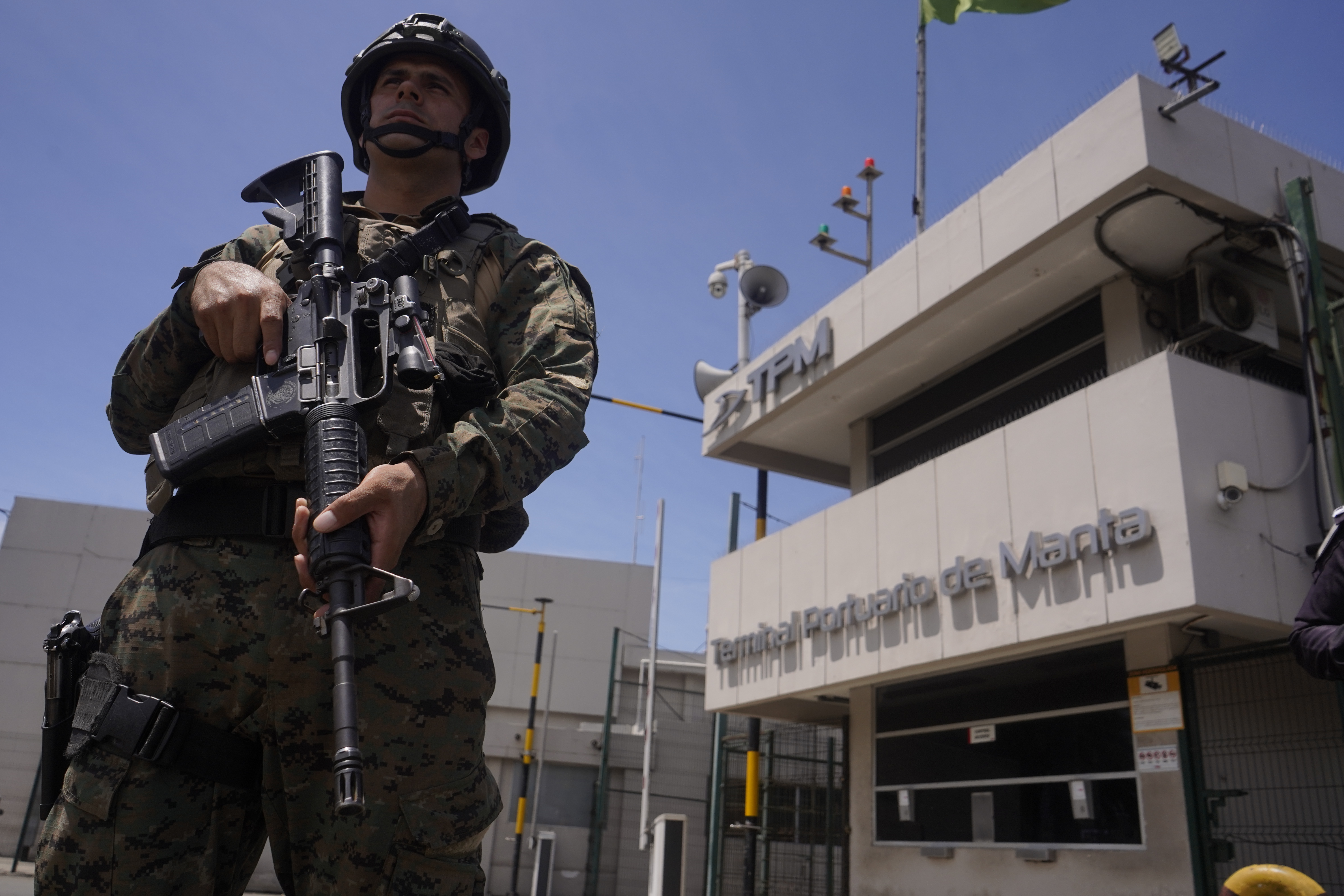
    Soldiers guard the port of Manta, Ecuador, in February.Cesar Munoz

    “The boys were there, hurt and scared. Some got a fire extinguisher to try to put out the fire, but there were too many flames,” the captain of the Negra Francisca, Hernán Flores, told the New York Times, which published the first U.S. media account of the mysterious attack. Flores said injured sailors jumped into the ocean or scrambled onto lifeboats, and all were at first relieved when the blue boat arrived to rescue them.

    Instead, according to the Times and other accounts, their ordeal was only beginning. The survivors were bound, hooded, and interrogated by the strange English speakers, who offered no medical treatment for their wounds. The boat headed north and transferred the crew members into custody in El Salvador, where officials soon released them — not charged with any crime, after the attack that nearly killed them.

    The initial Times article did not confirm whom the men were working for, but it noted extensive data showing how each of the three attacked fishing boats had been tracked by a maritime patrol plane that was registered to a UPS mailbox in Richmond, Va., and flew from Tennessee to a military airstrip in El Salvador in November.

    After the Times wrote about the three mystery boat attacks, the Post followed up with a report that the attacks were a special covert operation conducted by the CIA. These secret strikes have amplified a series of publicly acknowledged boat attacks in both the Pacific and the Caribbean by the U.S. military that have now killed more than 220 people since Trump returned to the White House 19 months ago.

    Last week’s news reports built upon research and more than 100 interviews by the group Human Rights Watch, which is troubled by the lack of both legality and morality in a partnership forged between the United States and Ecuador. This includes not only the three boat attacks but a land assault against a farm near the border with Colombia, which also found no drugs, but in which farmers said they were tortured by the Ecuadorian military.

    “The two countries’ security relationship is deepening at a moment when both governments have engaged in serious human rights violations fueled by their insistence on framing their confrontations with organized crime groups as a kind of war,” the rights group wrote.

    It’s no secret that drug cartels have enlisted some fishing boats — sometimes through desperation to boost their meager income, but often through extortion — to aid their smuggling operations out of South and Central America.

    But these alleged CIA drone strikes raise stark questions about the Trump regime’s strategy that is literally shoot first, ask questions later. Why are some sailors executed at sea when there’s not even evidence to charge the survivors with a crime? Even if some of these boats are tied to narcotics trafficking, what’s the legal and moral justification for a death sentence for low-level drug offenses?

    There’s also this: What are these extrajudicial killings even accomplishing, beyond cementing the image around the world that Trump is running a violent criminal enterprise? The Drug Enforcement Agency (DEA) has assessed that — some 230 or so lost human lives later — these U.S. boat attacks have had zero impact on reducing the flow of cocaine into the United States. That’s in part because most drugs that come into the United States by sea pass through larger commercial ports, not small fishing villages.

    Instead, the biggest impact from the military drone strikes has been the series of so-called snuff videos that either Trump or Pete Hegseth’s Pentagon has posted to social media platforms showing boats in gentle tropical waters getting blown to smithereens, in shock and awe tribute to their regime’s power to kill with impunity. But the secret, allegedly CIA attacks are not even that.

    What is even the point of this cruelty?

    I’m writing this column to honor the on-the-ground courage of Human Rights Watch and amplify the excellent journalism of Times and Post reporters — and because I’m furious that this story has drawn so little attention, and even less outrage.

    Deep into the second year of Trump’s strongman second presidency, the news media is overwhelmed by the Caligula-like craziness of his regime and its fights over matters as small as a ballroom and as big as the Strait of Hormuz, not to mention the frequent weather disasters made worse by the climate crisis the president believes is a hoax. Some maimed or missing fishermen in a tiny village on the bottom side of the planet aren’t making the cut.

    Which is probably exactly what the regime is going for. Trump and his MAGA minions would like nothing more than to numb you, me, and the rest of us to their growing archipelago of death, a bloodstained map that stretches from the icy streets of Minneapolis to a dingy detention site in Newark, N.J., and from a bomb-blasted island off Iran to the sickbeds in an African refugee camp. They want us to feel numb as their authoritarian death cult expands, and we cannot allow that to happen.

    The truth is that the United States will remain a global pariah — a pitiful, helpless giant — as long as there is no accountability for these war crimes, including, or perhaps especially, the terror perpetrated by mystery men with American flag patches on the high seas. That means public hearings, trials, prison sentences, and the kind of truth and reconciliation this nation has not seen before.

    Certainly the fishermen of Manta, Ecuador, will never forget the horrors that rained down upon them from a clear Pacific sky.

    Simon Villacreses, a 52-year-old crew member of the Negra Francisca Duarte II, told Reuters that he suffered a head injury in the assault, and remains traumatized months later. “They started pointing guns at us. They took us aboard, put hoods over our heads and tied ​our hands behind our backs,” he said of the “gringos.”

    The rattled Villacreses has not been back to sea since, telling the reporter, “Maybe I’ve given up fishing for good.” His livelihood has been destroyed by the criminal enterprise run out of 1600 Pennsylvania Avenue. Our outrage is not enough. We need to be relentless in the pursuit of justice.

  • The tale of Trump’s food cart escape in Ankara explains why he is losing in Iran

    The tale of Trump’s food cart escape in Ankara explains why he is losing in Iran

    The jokes about Donald Trump’s secret escape from Turkey last month via an airport catering truck are still flooding the internet. Typical mockery included AI-generated images of the president hunched inside the truck gorging himself on bags of McDonald’s fries, while making his furtive getaway.

    The jests about Trump’s transfer from Air Force One to a smaller plane via the truck — after Israeli intelligence warned a dubious CIA of a possible shoulder-fired missile attack by Iranians — may be funny. But Trump’s clandestine feint, even if it was more Maxwell Smart than James Bond, should be taken seriously.

    It serves as a chilling metaphor for why Trump’s misbegotten Iran war has gone so wrong.

    “If you’re hiding in a catering truck when you control the most powerful military in the world, you aren’t winning,” posted Ron Filipkowski, editor-in-chief of the progressive MeidasTouch Network, who wasn’t above making fun of Trump before nailing the bitter truth.

    It is mind-boggling that an American president, who flies in one of the most highly protected planes in the world, had to be smuggled onto a different aircraft because the U.S. military couldn’t guarantee his safety. It’s all the more astonishing since the old Air Force One, on which POTUS was originally departing Ankara, had a defensive system designed to defeat such heat-seeking missiles (which Trump’s preferred luxury plane gifted to him by Qatar still doesn’t).

    You may recall that it was ragged, barefoot Afghans who drove the then-mighty Soviet military out of Afghanistan in the 1980s by using shoulder-fired missiles — known as MANPADS — to take down powerful Russian attack helicopters. That’s called asymmetrical warfare, in which the weaker party uses unconventional means to offset the conventional might of the opponent.

    Ukraine is waging a complex version of asymmetrical war against Moscow, having pioneered a staggering array of drones that can destroy tanks, ships, air defenses, and military infrastructure deep inside Russia.

    Yet, Trump refuses to grasp how radically the nature of warfare has changed, enabling weaker countries to hold off stronger ones using robots, long-range air drones, and sea drones — or even updated shoulder-fired missiles.

    Trump and his secretary of defense, Pete Hegseth, seem to envision war either as a throwback to World War II, or through the blurred lens of the U.S. kidnapping of Venezuelan President Nicolás Maduro. Either you crush the enemy with massive air power, ships, and male troops brimming with testosterone, or you do a quick, one-off beheading of the enemy, bringing them under your heel.

    Neither model applies to the war on Iran.

    Trump’s original goal was supposedly to halt Iran’s nuclear program. In the 12-day Israel-U.S. war on Tehran in June 2025, Iran’s nuclear sites were hit heavily. After that, the U.S. could have tracked any rebuilding of those sites by satellite and taken necessary action while negotiating a nuclear deal. The Strait of Hormuz, then wide open to global shipping, was not an issue.

    Instead, the president abandoned promising nuclear negotiations to join a cockamamie regime change scheme proposed by Israeli Prime Minister Benjamin Netanyahu in February. Jerusalem assassinated Iran’s grand ayatollah and planned to swiftly replace him with a former Iranian president who had constantly called for the destruction of Israel.

    I once had the stamina-draining opportunity to listen up close in a small room as said former leader, Mahmoud Ahmadinejad, ranted for two hours. I can tell you that anyone who knew anything about Iran, or who listened to advisers who did, knew this plan was deeply delusional.

    Catering trucks are parked at Air Force One on the tarmac as the motorcade carrying U.S. President Donald Trump arrives to depart following the NATO summit at Ankara International Airport in Ankara, Turkey, on July 8.Alex Brandon

    Trump was clearly suffering from Maduro Derangement Syndrome, mistaking Iran for Venezuela. As Gen. Dan Caine, chairman of the Joint Chiefs of Staff, warned at the time, a prolonged Iran war risked swallowing the bulk of America’s long-range missile arsenal. Indeed, these weapons, which cost millions of dollars each, were wasted chasing cheap Iranian drones.

    Most dangerously, Russia, China, and North Korea have now seen that Trump’s manly U.S. Army is woefully unprepared for the wars of the future. His staggering request to Congress for a $1.5 trillion budget, an increase of 42% over the past year, doesn’t even include tens of billions in additional funding that he wants for the endless Iran war.

    Yet, that budget is clogged with massive funding of legacy items and vanity projects unsuited for future warfare but protected by members of Congress, defense companies, and Trump cronies who benefit from the projects.

    Prime among them is the 15-ship, Trump-class nuclear-powered battleship program, costing $275 billion over a 30-year span. Not only is Trump’s extravagance not needed by the Navy, but his “golden fleet” will be easy targets for the constantly evolving armada of unmanned anti-ship drones.

    You might think the painful Iran experience would have awakened Trump to the urgent need to prepare the army for drone warfare. He and his showman secretary of war talk a big game, but neither he nor the Pentagon has yet grasped the lessons of the Iran — or Ukraine — wars.

    Trump still rejects Kyiv’s offer to share drones and technology and to jointly produce the scarce Patriot interceptors. Private U.S. companies simply can’t gear up fast enough to meet the immediate need. Private U.S. investors are rushing to Ukraine to check out their innovations, but the Pentagon’s budget is still stuck in the past.

    The result is clear: As the Wall Street Journal just reported, in military exercises in Germany, Ukrainian drone units once more defeated U.S. troops and armored vehicles.

    The U.S. military knows about its continued vulnerability to drones, and how essential they are to modern warfare — and understands the value of pairing with Ukraine, the world’s leader in the technology. “You can’t get training like this in the United States,” NATO’s top military leader, Air Force Gen. Alexus Grynkewich, told the Journal.

    But Trump is still fixated on traditional military might as the road to quick victories — unlike U.S. adversaries in Tehran, Moscow, Beijing, and North Korea. Sharing technology with each other, they are advancing in the use of unmanned and unconventional weapons, leaving the U.S. behind.

    Even as he absconded in a food cart, Trump was still declaring victory in Iran, and claiming Wednesday that he has “total control over the Strait of Hormuz.” Wrong. Iran now controls that vital waterway via drone and missile attacks.

    Trump’s current “strategy” is to wait Iran out while blockading its ships, or those loading up at Iranian ports, from exiting Hormuz. Never mind the cost to the global economy or to U.S. military readiness or to American consumers at the pump.

    POTUS has few options. Lacking munitions, the U.S. can’t launch a ground war against Tehran (thank goodness). And renewed bombing will only cause Iran to bomb energy production sites in Arab Gulf states, which will drive oil prices to new heights.

    What a president with a coherent mind and any rational strategy would do is squeeze the Pentagon to reorient U.S. military production. That, however, would involve a new defense secretary and a full-court press to reorient spending toward the future. Most of all, it would require making the most of all the hard-won drone wisdom Ukraine is so willing to share.

    For that, the U.S. would need a very different person than the man in the White House. It would also require a Congress willing to challenge the president if he refused.

    And so, pending midterm elections, I believe that all the food cart jokes ricocheting around the world convey the sad reality. My favorite was one that asked, “What was the name of the operation that lured Trump into the catering truck?” The answer: “Operation Orange Chicken.”

    That’s a good punch line, but here’s the grim reality: Trump is unwilling to face the truth of his failures and incapable of devising a strategy that will keep Americans safe.

  • A Kensington restaurant makes New York Times’ greatest Mexican restaurants list

    A Kensington restaurant makes New York Times’ greatest Mexican restaurants list

    Frankie Ramirez’s aguachiles, lamb-neck birria, and seasonal tlayudas have already earned his Kensington restaurant, Amá, a spot in Philadelphians’ hearts. Now, the chef has notched even higher-profile praise.

    Ramirez’s contemporary Mexican menu landed Amá on the New York Times’ list of the greatest Mexican restaurants across the U.S.

    “While Mexican restaurants [in Philadelphia] have long been shaped by Puebla, the home state of many local families, Mr. Ramirez offers a broad taste of the country’s extraordinary regional variety,” Times’ contributor Regan Stephens wrote of Amá, praising its standout chips and salsa combo — with house-nixtamalized heirloom corn tortilla chips and six artisan salsas — among other dishes.

    A variety of salsas representing different regions in Mexico, are lined up in the kitchen at Ama on Wednesday, July 16, 2025 in Philadelphia.Monica Herndon / Staff Photographer

    Inquirer critic Craig LaBan also singled that starter out in his 2025 review of Amá, whose ambitious menu signals “a golden moment for the city’s Mexican restaurant scene,” LaBan wrote.

    Amá, which opened in May 2025 at Front and Oxford Streets, is Ramirez’s ownership debut. The chef worked in Philadelphia kitchens for several years, starting as a dishwasher at Marcus Samuelsson’s Washington Square before moving on to a string of roles with Starr Restaurants, including executive chef at LMNO. His partners in Amá include his wife, Veronica, and Delaware County restaurateurs Crisalida Mata and Roberto Medina.

    Chef Frankie Ramirez is opening Amá at Front and Oxford Streets.Mike Prince

    Earlier this year Ramirez earned a nod from the James Beard Awards committee as a semifinalist for emerging chef. The restaurant was also a close contender for the 2025 edition of The 76 best restaurants in Philadelphia.

    “My goal is to change the way people stereotype our cuisine, and I think the time is right for Philly,” Ramirez told The Inquirer last summer.

    The restaurant, at 101 W. Oxford St., is open for dinner seven days a week, with reservations on Resy.

  • ‘This is her legacy’: Tina Sloan Green celebrated for laying the foundation for women’s lacrosse

    ‘This is her legacy’: Tina Sloan Green celebrated for laying the foundation for women’s lacrosse

    Philadelphia native Tina Sloan Green, a trailblazer for Black women in lacrosse and field hockey, broke racial barriers on the field.

    Growing up at the peak of the Civil Rights Movement, Sloan Green became the first Black athlete selected to the national field hockey and lacrosse teams. Once she made Team USA, she was barred from playing in multiple countries due to legal segregation persisting abroad. Still, she kept pushing.

    In 1975, Sloan Green took over the Temple women’s lacrosse team, becoming the first Black head coach in collegiate lacrosse history. Through her 18-year tenure in North Philadelphia, she led the Owls to 11 consecutive Final Four appearances and three national championships.

    On Saturday, Sloan Green was honored for her many accomplishments before the inaugural Women’s Lacrosse League championship. The league’s new leadership trophy will be named after the former Temple coach.

    “It made me feel so good because I’m 82 years old, and to be able to see this, what’s going on, it wasn’t like that back in the day,” Sloan Green said.

    The championship game, which saw the Maryland Charm defeat the California Palms, 16-13, drew a significant crowd to Subaru Park in Chester. It was also broadcast to a national audience on ESPN. The major strides that the league — and women’s lacrosse — have made in recent years are not lost on Sloan Green.

    “We’ve shown that it can be done and I’m a prime example of that,” Sloan Green said. “To have this televised and all this stuff, they’ve got to believe it now that they can do it. I’m looking down there [at the] next generations of lacrosse players, and they’re going to be all different types of people. … They’re all going to love the game.”

    The Charm’s Sydni Black, a Black woman, was named the championship’s most valuable player after finishing with four goals and one assist. With lacrosse stars from the past and present packed into Subaru Park, Black noted that Sloan Green was “the legend in the house” on Saturday.

    Maryland Charm players celebrate after winning the inaugural Women’s Lacrosse League Championship on Saturday.Elizabeth Robertson / Staff Photographer

    “This is her legacy,” Black said. “She has done so many incredible things for the sport. … To be able to do it in the area that she actually carved her own legacy with Temple and everything around here is incredible. When we stand on the backs of giants, she is the biggest giant. Those kind words and even having her own eyes on the game today, that’s why we do it. We’re honoring everyone who came before us and inspiring everyone to come after us.”

    When she took the field, Sloan Green was joined by players and coaches of the Eyekonz Sports League — a local field hockey and lacrosse program that looks to create opportunities for Black and Latino children in the Philadelphia area. After having brain tumor surgery in 2021, Sloan Green joined the program as a coach.

    Some of Sloan Green’s former Temple players also made it out to Chester to see their coach honored. One was former Owls goalkeeper Jill Marple — who was inducted into the Temple Athletics Hall of Fame in 2022.

    “God is going to have to laugh at what they’ve done, what they’ve become,” Sloan Green said about her former players. “It was really an amazing, amazing opportunity for me to see, to be alive, to see my future in all of this. Not just on the field, but administratively, to see people of color in the sport.”

    In many ways, the significance of Saturday’s inaugural championship seemed to outweigh the actual result of the game. Fans donning “Everyone Watches Women’s Lacrosse” T-shirts clambered the concourse to get autographs from WLL players. Meanwhile, one attendee, Jaycie Jaskolka, noted that she was excited to see “history happen” on the field.

    After the final whistle and the trophy was presented, former U.S. soccer defender Ali Krieger presented the Charm with a check worth $80,000. The amount, courtesy of Cash App, matches the championship bonus the men of the Premier Lacrosse League receive.

    “As a girl, I went to the men’s Final Four because I didn’t know anything about the women’s Final Four,” said Charm coach Emily Parros, a Delaware County native. “I would ask for cleats and I would ask for signatures and all the things. And now it’s real for girls and boys as well. They’re the ones asking for these women’s autographs.”

    And the sport’s rise would not have been possible without legends like Sloan Green laying out the foundation, Black said.

    “I see my future,” Sloan Green said. “I see lacrosse being a headline sport.”

  • When did human tragedy become social media content?

    When did human tragedy become social media content?

    Within minutes, photos begin appearing online. Someone posts a video from the shoulder of the road. Someone else starts speculating about what happened in the comments. Before police have had the chance to notify a family, strangers are watching someone else’s worst day unfold on their phones.

    Every time I see those kinds of images of car crashes on social media, I think the same thing.

    Someone in that vehicle is a husband. A wife. A son. A daughter. A best friend.

    Someone’s family may not even know yet.

    For one of us, Kristi Hughes, I know how sacred those first hours are. Having lost my husband, Sean, in a preventable car crash, I understand through the worst kind of lived experience that families deserve the chance to receive devastating news from loved ones — not from Facebook, TikTok, Instagram, or a stranger’s livestream. They deserve the privacy to process the unimaginable before the world begins watching.

    Lower Merion principal Sean Hughes in 2016.Courtesy of Lower Merion School District

    The dead deserve dignity.

    The living deserve the space to grieve.

    As for the second author of this essay, my name is Michael L. Saile Jr., and I have spent more than two decades representing families after catastrophic injuries and wrongful death as a trial attorney. I have seen firsthand the emotional, financial, and legal challenges they face. In recent years, however, another layer of trauma has emerged. Families are no longer grieving in private. Increasingly, they are forced to confront photos, videos, and online commentary documenting some of the worst moments of their lives.

    Technology has transformed how we experience emergencies. Smartphones allow anyone to become an eyewitness, and social media rewards immediacy.

    In this image made from video taken from social media, a massive video screen suspended above the stage fells onto performers at a concert in Hong Kong in 2022. Two dancers of the dancers onstage were injured.UGC via AP

    Unfortunately, somewhere along the way, many of us stopped asking, “How can I help?” and started asking, “Should I record this?”

    That shift should concern all of us.

    To be clear, technology itself is not the problem. Photos and videos can preserve important evidence, help investigators reconstruct crashes, and even support legal claims. Social media can mobilize communities, connect families with resources, and raise awareness about important issues.

    But there is a profound difference between documenting an event for a legitimate purpose and turning another person’s tragedy into content.

    For families living through these moments, those images are not simply photos on a screen. They are someone’s final moments. They are the wreckage of a future that will never happen.

    Long after emergency vehicles leave and headlines fade, those images can remain online indefinitely. Years later, a child may search for a parent’s name and discover photographs or videos of the crash that took their life. A spouse may unexpectedly encounter graphic images while scrolling online. A family member trying to remember a loved one for the life they lived instead finds the moment they died.

    Every time a crash photo appears in my social media feed, I think about the family that hasn’t received that call yet. I think about a spouse sitting at work, a parent picking up another child from school, or grandparents making dinner, completely unaware that life is about to change forever.

    There are practical consequences, as well. After a serious crash, insurance companies, investigators, and attorneys routinely review publicly available social media posts. Images, videos, and comments — whether shared by those involved or by well-meaning friends and witnesses — can complicate investigations, spread misinformation, and, in some cases, become evidence.

    For anyone involved in a serious accident, a few simple precautions can make a difference:

    • Let law enforcement determine the facts before posting or commenting publicly.
    • Avoid speculating about fault or the extent of injuries.
    • Ask family and friends not to share updates or photos without permission.
    • Preserve photos and documentation privately rather than posting them online.
    • Remember that once something is shared publicly, it can be difficult — or impossible — to remove.

    Perhaps even more important is what each of us can do as bystanders.

    If you come upon a crash scene, pause before reaching for your phone. Ask yourself whether recording the moment will truly help — or whether your attention would be better spent moving safely through the area, giving first responders room to work, or simply respecting the privacy of the people involved.

    Not every heartbreaking moment belongs on social media.

    Before you hit “post,” ask yourself one question:

    If this were my spouse, my child, my parent, or my best friend, would I want the world watching before I even knew what had happened?

    Every crash scene represents more than twisted metal and flashing lights. It represents a family whose life may never be the same. Technology will continue to evolve. Social media isn’t going away. But compassion is still a choice.

    The next time you witness someone else’s worst day, choose humanity over curiosity.

    Because the dead deserve dignity. And the living deserve the privacy to grieve. And every child deserves to remember a parent by the life they lived — not by the images the internet refused to forget.

    Kristi Hughes is a communications strategist and president of the Sean Hughes Memorial Fund. After losing her husband, Sean, in a preventable car crash in 2021, she has dedicated her work to advancing conversations around roadway safety and preparedness and supporting families navigating tragedy. Michael L. Saile Jr. is a Pennsylvania trial attorney, a partner at Cordisco & Saile LLC, and the host of the “Injury Pros Podcast,” who has, for more than two decades, represented individuals and families affected by catastrophic injuries and wrongful death.

  • Surprised by the 15% increase in property taxes in Kensington? You shouldn’t be.

    Surprised by the 15% increase in property taxes in Kensington? You shouldn’t be.

    Last month, housing valuations, and therefore property taxes, increased by 3% across the city. Valuations in Kensington, however, went up an average of 15%, with Mantua, Grays Ferry, and Kingsessing not far behind.

    What do all of the latter communities have in common? They are all under pressure from rapid gentrification, and they are all communities where residents are the least equipped to pay the property taxes associated with the increased home valuations.

    Response across the city was surprise — as if the warning signs had not been there all along.

    Some people have remained willfully ignorant about the pressures of gentrification in Philadelphia’s neighborhoods because they don’t want to acknowledge that long-standing city programs were not built to prevent this moment from occurring.

    Another set of people are feigning surprise, but are not really surprised at all, because this was the plan all along and part of the displacement strategy of “fixing” these neighborhoods.

    And then there are those who are honestly surprised because they simply weren’t paying attention.

    While we have acted surprised, we have missed the point that the system that created these conditions is operating exactly as it is intended to function, and that without addressing the city’s reliance on property taxes and its detrimental impact on those least able to pay, we won’t find a way forward and dangers foretold will progress.

    Challenges foretold

    We should not be surprised.

    As a Kensington resident, and the executive director of New Kensington Community Development Corp., I — along with many others — have been sounding the alarm, ringing the warning bells about the likely displacement of long-term community residents for years.

    An attendee reads one of the Kensington history panels on display at the opening of the “People-First Housing” exhibit and engagement series at the Kensington Engagement Center in September 2025. The series explored Philadelphia’s history of profit-first housing strategies and a new people-first vision for the future.Courtesy of NKCDC

    In 2018, I made clear to Philadelphia’s managing director that without a clear plan that addresses the unsheltered population in Kensington, there would be both long- and short-term impacts for the greater community as we went from “camps of unsheltered citizens to the construction of $369,000 homes mere feet away.”

    The cycle repeated again in 2024, with new public officials in charge, embarking on their latest plans to “fix” Kensington.

    After a period in 2017-2018 that left Kensington ripe for massive investment by prospectors and developers, I warned in an opinion piece in The Inquirer that without a greater plan cocreated with the community, “Kensington will be turned over to privatization and the free market — neither of which have ever been kind to people of color and those with limited means.”

    Attendees looking at neighborhood maps and charts at the opening of the “People-First Housing” exhibit and engagement series at the Kensington Engagement Center in September 2025. Courtesy of NKCDC

    In 2024, while the opportunity was there, it was critical that “any effort to fix Kensington should not just be about eliminating the drug economy or ending Kensington as a containment strategy for the city; it should be about preserving a community,” and that “if none of these answers exist, the second stage of displacement — this time of long-term residents — is already underway” and that “without a greater plan to address the long-term needs of residents that’s cocreated with the Kensington community, my neighbors and I could be cheering our own demise.”

    In 2025, I warned of not only the corporate commodification of our community’s housing stock and the detrimental effects that has on communities, but also how in communities such as Kensington — with high rates of poverty and old housing stock — we would see increases in purchases of homes by private equity. Those would then be turned into rentals where new corporate landlords would evict tenants from previously owner-occupied homes at three times the rate of small investors.

    At the time, my organization saw that 70% of the more than 500 evictions we had prevented over the last few years were in properties owned by LLCs — many of which were from out of state.

    Others issued warnings, too.

    In 2025, the Reinvestment Fund reported that corporate investors are most active in Black and brown neighborhoods where they are responsible for more than one in four residential purchases, therefore “creating more extraction through landlords rather than creating and maintaining wealth among homeowners.”

    Missed opportunities, new crisis moment

    Because we did not act when we were warned or take advantage of the opportunities presented to us, the system is working exactly as it was designed to function — and that has created additional pressures and crises.

    Rather than addressing the core problems of poverty and extraction from our most vulnerable, we chose single-issue approaches. How will someone who earns the area median income in Kensington — $30,000 a year — pay for a 15% increase in property taxes, while also trying to survive after cuts to Supplemental Nutrition Assistance Program benefits, to Medicaid, and an underfunded transportation system?

    Bill McKinney, executive director of the New Kensington Community Development Corp. (center), walks with demonstrators underneath the El down Kensington Avenue in March 2021.HEATHER KHALIFA / Staff Photographer

    Longtime residents of Kensington are nothing if not resilient, but they cannot absorb injury after injury to their already difficult daily circumstances. After this property tax increase, more of them will find themselves considering moving out of their homes.

    Like my neighbors in Kensington, I receive five or six calls, emails, and texts every week asking to purchase my home. As the Reinvestment Fund indicated, communities under pressure — like mine — are at the greatest risk from outside investors.

    A different path forward

    I acknowledge we have a number of existing programs to provide relief to homeowners feeling the pressure of increases to property taxes, such as the homestead exemption, the Longtime Owner Occupants Program, tax freezes, and filing appeals. These programs should be utilized, modified, and expanded, but none of them will solve our greater problems.

    A community group known as the People’s Budget Office facilitates a workshop on Philadelphia’s municipal budget at the Kensington Engagement Center in October.Courtesy of NKCDC

    We have left housing solutions to the free market, where the goal is to maximize profit and therefore displacement.

    We need to address the city’s overreliance on, and benefit from, the $2 billion in property taxes, much of which is also levied from the most vulnerable residents of the city — and we need to develop a comprehensive affordability plan that is cocreated with the community and those actually implementing anti-displacement strategies.

    There are a variety of approaches we can take that mitigate impacts on its low-income residents, and that will counter the rush to displacement:

    • Address poverty by advocating for the state to finally adopt an increase to the minimum wage so that our working poor are less exploited for their labor, and so they have the money to address these property tax and social safety net changes.
    • Continue exploring and implementing some of the emergent basic income programs that have shown success.
    • Expand home repair programs such as Built to Last, which make necessary repairs to prevent homeowners from selling their homes to investors, as well as making their homes more affordable through green upgrades.
    • Utilize city revenue that doesn’t burden the most vulnerable and truly makes a difference to the budget. If 10,000 homeowners in upper Kensington all receive an annual increase of $250 to their property taxes, the burden is significant to low-income residents, yet only generates $2.5 million for the city.
    • Eliminate the recent reductions in the Business Income and Receipts Tax (BIRT), which cut as much as $300 million annually in revenue for the city.
    • Hospitals, universities, and churches should pay property taxes, too.  More than a third of all of the property in the city is owned by hospitals, universities, and churches that don’t pay property taxes due to their nonprofit status while accumulating massive endowments and limiting access to healthcare as they shift from serving as charitable organizations to corporations. As a result, we receive only about two-thirds of the possible revenue from property taxes, leaving at least $1 billion on the table each year.
    • The wealthiest should pay their fair share. Philanthropy is part of the social contract within capitalism that tries to maintain a balance between extraction and a point of collapse of the host, the city. It is clear the extractors must do better. We allow people to profit immeasurably from others’ labor and consumption as long as they give pennies back on the dollar. Philanthropic entities are only required to, cumulatively, give 4% of what they have gleaned from earned and unearned income sources to recipients of their largess. It is not enough. The host is not going to survive; the contract has been broken.

    We are currently at the front end of the budgeting season, when we have the ability to use our collective brain power to develop and implement a strategy that will prevent anyone from ever having to say “I told you so” again — and for residents to not be victims of the shortsightedness of the city they reside in.

    I have just identified billions of dollars in revenue that does not come from the city’s most vulnerable — and there is much more than what I quickly listed. I write this as an invitation to work with others so we can collectively attack the disease of willful ignorance and the displacement of our most vulnerable with a cure of cocreated solutions.

    At this moment of surprise, despair is not a strategy — and change is possible. We must have the courage to share or take the power necessary to implement these very actionable solutions.

    Bill McKinney is a Kensington resident and the executive director of the New Kensington Community Development Corp.