Tag: topic-link-auto

  • The invisible volunteers who help keep democracy running

    The invisible volunteers who help keep democracy running

    They’ve been called the “most important people in running an election” by Secretary of the Commonwealth Al Schmidt, yet even as interest in election security has skyrocketed after Donald Trump’s persistent false claims of voter fraud, their jobs seem to be hidden in plain sight.

    Unlike the grifters and sycophants who help feed the president’s Big Lie and earn millions of social media followers, make frequent TV appearances, and are showered with adulation by the White House, the roughly 45,000 volunteers across Pennsylvania who are essential to ensuring elections happen fairly, smoothly, and efficiently are rarely recognized for the work they do.

    No wonder poll workers are in short supply — in the commonwealth and across the nation. A Brookings Institution report said that about half of all election officials found it either very or somewhat difficult to find enough workers.

    As someone who worked in elections before becoming a journalist, I’m hardly surprised. Running the polling booths is neither glamorous nor convenient. Voting starts promptly at 7 a.m. on Election Day and continues until 8 p.m. With prep and closing work, a shift can take up to 16 hours for some. In Philadelphia, doing your part to help preserve democracy can earn you up to $295. Elsewhere, compensation tends to be much less.

    In Pennsylvania, the job comes with an additional wrinkle. Our poll workers are elected. Across roughly 1,700 divisions in the city of Philadelphia alone, neighbors are asked to choose a judge of elections and inspectors. The judge then appoints a clerk, and either the city commissioners or the election board finds a voting machine operator. If the judge fails to show, the first voters may be asked to hold a curbside election to pick a successor.

    It is all somewhat delightfully antiquated even as it can contribute to Election Day delays.

    Recently, Philadelphia’s election officials sought to stem the shortage of poll workers. City Commissioners Omar Sabir, Seth Bluestein, and Lisa Deeley joined Schmidt to honor some of the city’s poll workers — and ideally recruit others at a rally in the City Hall courtyard, complete with pizza, pretzels, and water ice.

    Student poll worker India Nakai, 17, a Girard College senior, told the audience she was motivated to serve her community and see what happens behind the scenes, even though she isn’t old enough to vote herself yet. At the other end of the spectrum was another kind of senior, honoree Gwendolyn Clay, 74, who has been working the polls for 51 years.

    Their dedication to public service and commitment to helping their neighbors reminded me of the people who signed up to help count ballots during 2020.

    I was there at the Pennsylvania Convention Center, where — despite the pandemic and the threats of armed agitators who believed Trump’s false claims of fraud — scores of Philadelphians showed up every day to help tally the unprecedented flood of mail-in ballots.

    Vote counters zealously followed the law, erring on the side of strict interpretation and removing ballots for even minor and inconsequential errors like a missing date or an absent secrecy envelope.
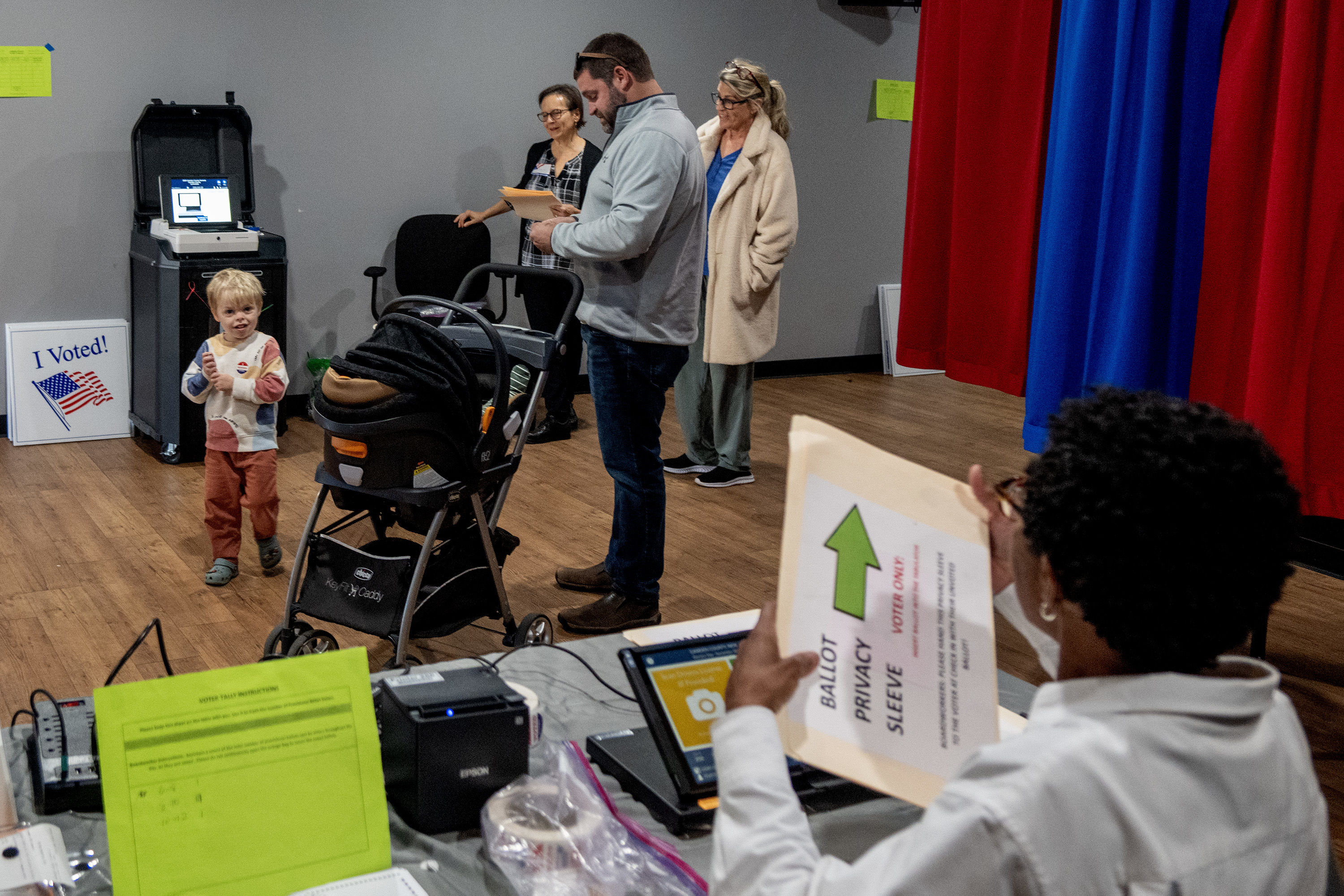
    Poll worker Janice Masud-Paul (seated) speaks with 4-year-old Weston after his father, Bob Comfort, voted in the Erlton Fire House on Route 70 in Cherry Hill on Election Day last year.Tom Gralish / Staff Photographer

    Elections, and democracy itself, depend on this kind of selfless dedication.

    Unfortunately, people like Clay and Nakai, who are willing to do essential but usually thankless work, are becoming rarer. And it’s not just staffing the polls that has seen recruitment challenges.

    Service organizations like the Elks, Kiwanis, and Rotarians once built and maintained parks and memorials, but are now in the midst of rapid decline. Veterans from the wars in Iraq and Afghanistan are less likely to join VFW or American Legion clubs, and more and more Americans are spending their days alone.

    Traditional, neighborhood-based churches have been supplanted by regional megachurches, with paid full-time staff replacing the volunteers and part-timers who once taught Sunday school and led worship.

    Across society, genuine connection is being eroded. It has been replaced by communities of outrage.

    The election-denying hordes are just one facet of this phenomenon. Instead of toiling away for hours in service of their fellow citizens, members of an outrage community must simply “like,” “reply,” or “repost” sentiments that align with their own half-baked suspicions. The actual factual record rarely matters, replaced by the wisdom of the algorithmic mob.

    Communities of outrage now exist for nearly every major facet of life, and every national news story. They allow participants to live in a world reconstructed to fit their belief system, with all the inconvenient facts smoothed away.

    School shootings like Sandy Hook are dismissed as false flags. Disappointing election results are attributed to fraud. People across the ideological spectrum increasingly believe antisemitic conspiracy theories, which blame every complex societal problem on Jewish people. Climate change is either denied or blamed solely on corporations, with no acknowledgment of who is buying all the gas, using artificial intelligence, or purchasing legions of plastic junk to fill our homes.

    Collective action to fix societal woes becomes impossible when individuals can no longer agree on what’s happening in the first place. As the internet has become a haven for everyone’s petty grievances, a society built on online outrage is a miserable one. At the turn of the century, roughly 70% of Americans reported being satisfied with the direction of the country. Today, that number sits at 25%.

    It is up to us as individuals to choose differently.

    Outrage artists will continue to peddle lies as long as we are willing to click on them. Outrage communities will keep growing as long as real communities continue to shrink. Filling a vacant seat on an election board won’t fix this problem overnight, but it is a step in the right direction.

    The more we strive to follow the example of service-minded people like Nakai and Clay, the closer we’ll be to creating a society we can be proud of.
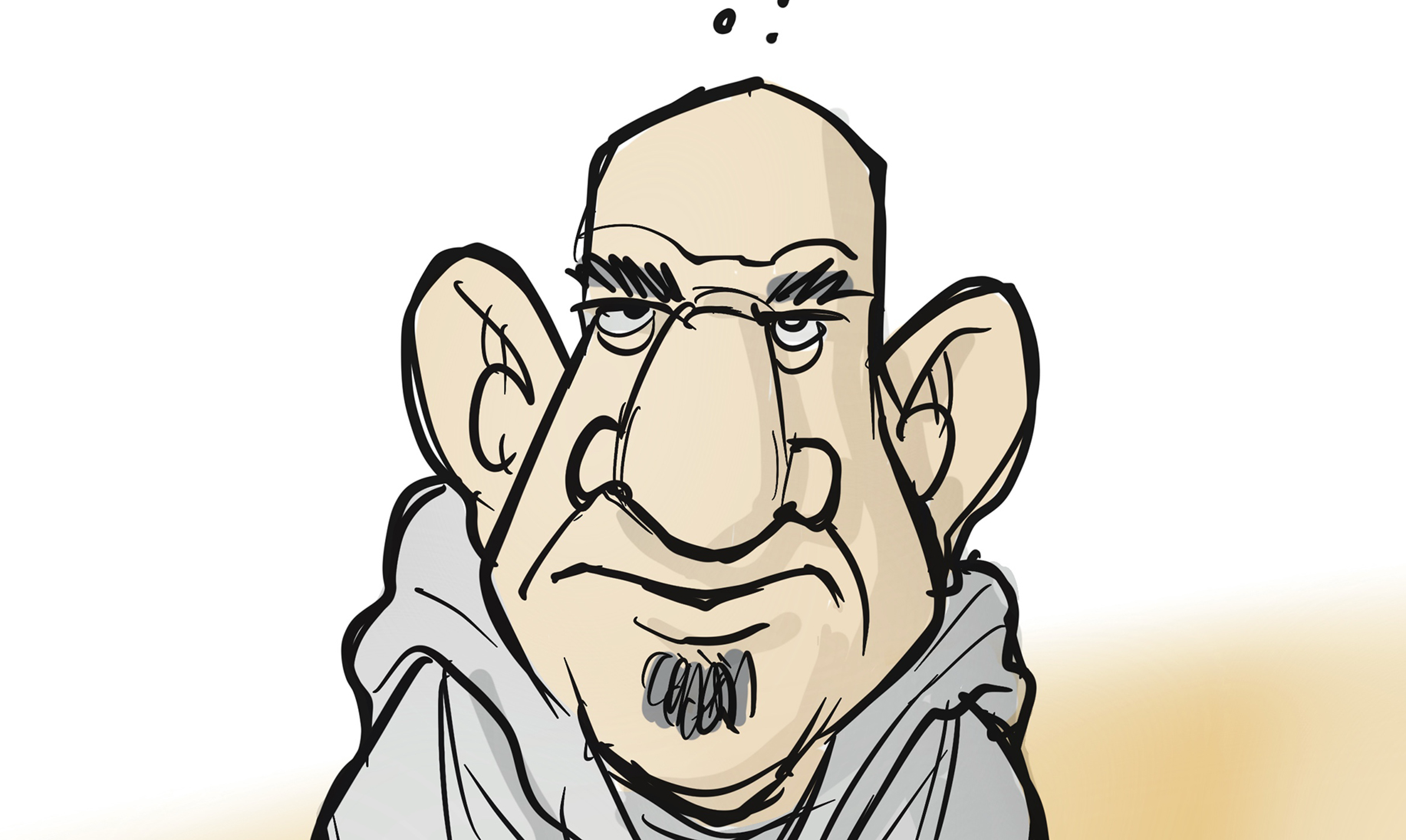

  • Straying from the herd | Editorial Cartoon

    Straying from the herd | Editorial Cartoon

    John Cole spent 18 years as editorial cartoonist for The (Scranton) Times-Tribune, and now draws for various statesnewsroom.com sites.

  • Philly Open organizers believe the event has the ‘potential to grow into something special’ after strong fan turnout

    Philly Open organizers believe the event has the ‘potential to grow into something special’ after strong fan turnout

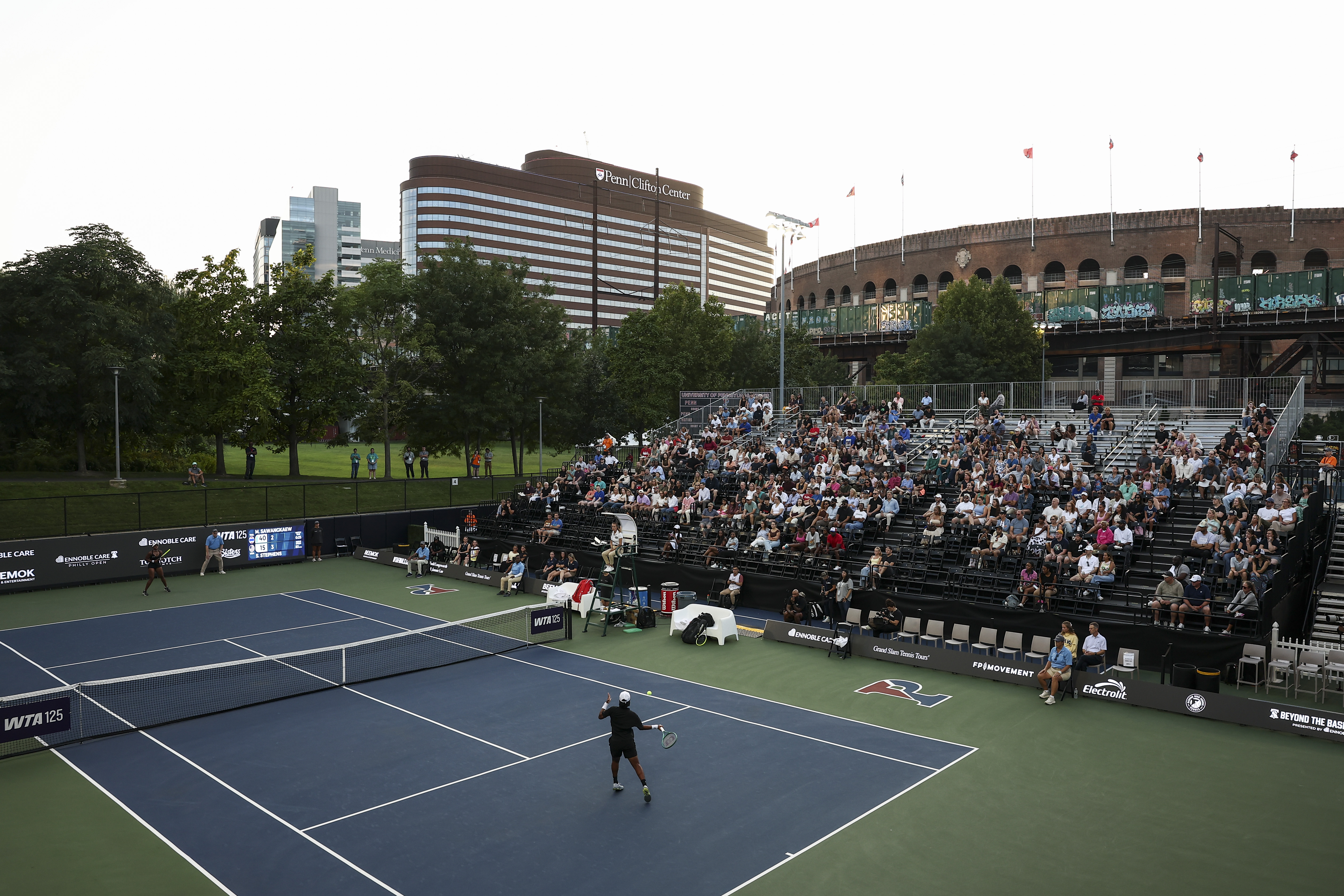
    In the final of the inaugural Ennoble Care Philly Open on Penn’s campus on Saturday, Katie Volynets beat Tereza Valentová, 6-3 and 7-5.

    The event marked the return of the Women’s Tennis Association to the city after more than two decades. Event organizers Top Notch Management and the Philadelphia Sisters secured a three-year contract for the tournament to be held in the city through 2028, but tournament director Alex Guthrie said the plan is for the Philly Open to become a regular stop on tour.

    “We put a lot of time, energy, and investment into this,” Guthrie told The Inquirer. “We want this. We didn’t invest all this time and energy just to do it for three years. We see this as a 10, 20-year thing. I think this has the potential to grow into something special.”

    Guthrie said the organizers weren’t sure what to expect from fans. Crowds at WTA 125-level events can vary widely from session to session and tournament to tournament, but the WTA was impressed with the turnout in Philly, especially for the day sessions.

    The tournament sold out its opening day on Aug. 23, selling 1,500 tickets, and maintained a solid crowd for the remaining sessions. For the final, fans packed the grandstand, the nearby grass hill, and some unticketed even peeked in from a bridge outside the grounds.

    “I was so surprised that even the day it rained, the fans stayed all night and watched the match finish,” Volynets said. “That was really impressive to me, and says a lot about the crowd. I also thought that they cheer so well, because they’re so respectful, they clearly know their tennis. They cheered both sides on while still making me feel like a home favorite.”

    Katie Volynets claimed the inaugural Ennoble Care Philly Open on Saturday.Thibault Camus

    Hosting the tournament the week before the U.S. Open helped draw a field of several top-100 players, including both finalists (Volynets ranked 91st, while Valentová was 57th). Semifinalist Julia Grabher was a late entry to the field, after a late U.S. Open withdrawal pulled her out of qualifying and straight into the main draw.

    “She was already in New York for qualifying, and she texted me, ‘Hey, do you have any wild cards open?’ And a space had literally just opened up for us,” Guthrie said. “If we were anywhere else, she couldn’t just take an hourlong train ride.”

    Some players on tour, Guthrie said, avoid first-year events to make sure the facilities and management are up to par before committing. After the success of the 2026 edition, he believes it’ll be an easier sell next year.

    Working with a new facility at Penn, which hadn’t previously hosted a professional event before, added a few “quirks and challenges,” but ultimately Year 1 was a success among the players.

    “I love these kind of courts,” Volynets said. “They’re grippy, so you can play different spins. If you play a slice, it stays low, if you hit topspin, it goes high. I love how the courts accept the spin. I think it makes tennis so fun to play and so fun to watch.”

    Spectators watched from the bridge near Penn’s tennis courts throughout the Philly Open week.Monica Herndon / Staff Photographer

    Organizers have already begun conversations with potential sponsors for 2027, and hosted a few prospective sponsors during the week. In order for Philly to attract a larger 250 or 500-level WTA tournament, more sponsorships and funding would be required, according to Guthrie.

    But the tournament is on stable footing. The Philadelphia Sisters hope the event will become another permanent installment of women’s sports on the Philly sports calendar.

    “From a Year 1 perspective, the foundation was laid very well,” Guthrie said. “Now that it’s happened, and people see what the event is — we were selling something that didn’t exist. Now we have proof of concept, fans know what to expect, and sponsors know what to expect.”

  • Will Cavan Sullivan’s latest highlight-reel goal lead to a USMNT call-up? The drumbeat is growing.

    Will Cavan Sullivan’s latest highlight-reel goal lead to a USMNT call-up? The drumbeat is growing.

    Lionel Messi scored four goals for Inter Miami on Saturday night, a feat that no doubt will have given MLS the kind of global publicity it craves.

    But it wasn’t the league’s only headline. In fact, for quite a few people around the league, it wasn’t the biggest.

    The Union’s visit to Red Bull New York finally drew the kind of hype that U.S. national team fans have waited to see for a domestic league game. As with their meeting at Subaru Park soon after the World Cup final last month, it featured a slew of major prospects for the 2030 World Cup team: the Union’s Cavan and Quinn Sullivan, Frankie Westfield, and Neil Pierre against New York’s Julian Hall, Adri Mehmeti, Matthew Dos Santos, and Justin Che.

    It took just one moment for the Union’s 3-1 win to live up to the billing, from the player who stood atop the marquee.

    Cavan Sullivan’s sixth goal for the Union’s first team was easily his most sensational: a perfect jumping trap of Danley Jean Jacques’ cross-field pass, a cut left into the 18-yard box, and a lashing shot to the far post.

    It sent jaws dropping from North Jersey to Chester and well beyond, perhaps even to his future home at Manchester City. (Or at least it would have when they woke up Sunday morning over there, as it was just before 2 a.m. in England when the play happened.)

    “This was the first moment of a really special individual play for one of his goals,” interim Union manager Ryan Richter said. “So that was cool.”

    The trap alone was a special play, and Richter rightly insisted that the pass was its own highlight. Jean Jacques hit it inch-perfect into open space on the right flank.

    WHAT A GOAL BY CAVAN SULLIVAN!

    WHAT A CALL BY DAVE LENO!

    [image or embed]

    — Nick Piccone (@piccone.bsky.social) August 29, 2026 at 9:07 PM

    Sullivan then brought the ball down before it could hit the turf, with the kind of first touch that makes soccer scouts worldwide swoon. All the more when it’s done by a 16-year-old — and yes, with an extra layer when that teen is an American. The world has gotten used to this country winning men’s World Cup games, but it’s sometimes still surprised when a Yank shows such skill.

    There was no guarantee a goal would follow, though, not least since Sullivan had passed up a chance to fire from atop the box in the first half. This time, he charged past Dos Santos and shot before a sliding Ronald Donkor could get there.

    It really was a breathtaking play.

    “The first half, I didn’t think that he was at his best: A couple opportunities where he had a chance to make a play that didn’t come off in the way that you know he can, and then a couple defensive lapses, I thought … [where] he got outplayed a little too bit too easily,” Richter said. “But the second half, he fixed what he needed to fix, and he got going in the game.”

    Then came a moment where Richter could watch just like the rest of us.

    “The goal that he scored, it’s what he’s capable of doing,” he said. “In these one-v-one situations, he’s different, and we want to give him the freedom to express himself. And honestly, he has gained the respect of his teammates, that they also give him the freedom that he can go in these moments, because they know that he can create something out of it.”

    The drumbeat has grown louder for Sullivan to earn his first senior U.S. national team call-up for the four-game friendly run in September and October. Indeed, quite a few observers think Mauricio Pochettino should call up Pierre and Westfield, too.

    Pierre has turned just as many heads in the know as Sullivan lately, and turned more with his latest goal Saturday — his fourth in nine Union first-team games this year.

    “He’s growing every week, and you guys are watching the same thing I am: he looks like a top center back in this league,” Richter said. “He has to keep pushing, and keep his feet on the ground, and focus in the right way, and become the best center back in this league. That should be his target — but that’s a day-to-day thing that he has to keep pushing to get better and better.”

    Westfield, meanwhile, has become the leading candidate to be the starting right back on the 2028 Olympic team.

    Andrew Rick and Quinn Sullivan could also merit consideration, given their past work for Pochettino and Rick’s potential to make the 2028 squad.

    Asked whether Cavan should get the call, Richter answered promptly: “That’s not my job to influence that one way or the other.”

    The Union could soon see Mauricio Pochettino (right) call up a new generation of their prospects, following in the footsteps of alumni like Auston Trusty and Mark McKenzie.Jonathan Tannenwald

    But that doesn’t mean he isn’t allowed to, and he snuck in a little of it.

    “If you’re watching the games — which, the national team staff, I’m sure they are watching these games — then he’s making a case for himself,” Richter said.

    The squad should be announced in mid-September, which means the Union probably have three more games before then: Saturday at home vs. CF Montréal (now with Chilean legend Alexis Sánchez), Sept. 9 at home vs. FC Cincinnati, then the year’s longest road trip to visit San Diego FC on Sept. 13.

    (And yes, this writer hears those of you ready to pounce on Richter saying “watching the games.” Four years into MLS’s streaming deal with Apple, no Union-related subject still draws more emails than the lack of games on traditional TV. So take note that the Cincinnati game will be on FS1.)

    The two weeks left for the U.S. staff to judge the Union will go by quickly. But they’ve got plenty of evidence now, especially with Cavan Sullivan, Pierre, and Westfield.

    So does ever more of the soccer world.

    Lionel Messi scored four goals last night, but it isn't the biggest story in MLS this morning – not even on the league's own website.

    Cavan Sullivan is.

    www.inquirer.com/soccer/union…

    [image or embed]

    — Jonathan Tannenwald (@jtannenwald.bsky.social) August 30, 2026 at 9:52 AM

  • Congestion pricing, dog beaches, eliminating beach tags: 11 ideas to improve the Shore

    Congestion pricing, dog beaches, eliminating beach tags: 11 ideas to improve the Shore

    The Jersey Shore is like the old joke: Nobody goes there anymore, and also, it’s more crowded than ever.

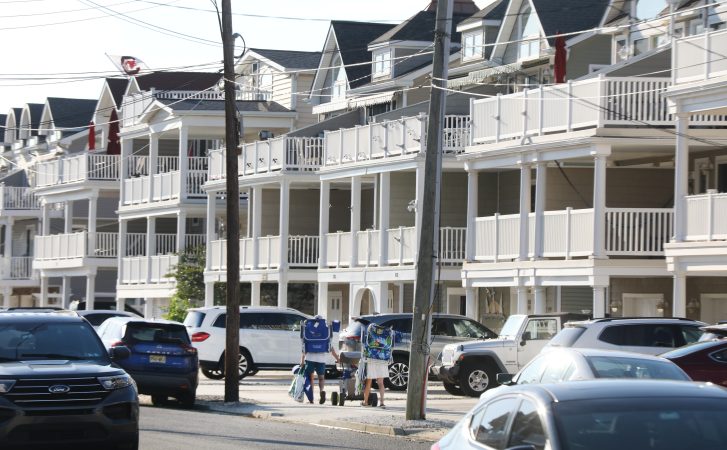
    It is true that many Shore stalwarts have been priced, or annoyed, off the beach. And that towns feel busier and sometimes tenser than ever: more cars, not enough parking, canopy-to-canopy beaches, prohibitive housing costs, that occasional rudeness.

    Not to mention rising sea levels, nuisance flooding, and seemingly regular tornado watches.

    To move from complaining to solutions, we racked our brains, asked experts, and solicited ideas from our readers for ways to improve the Shore experience for everyone.

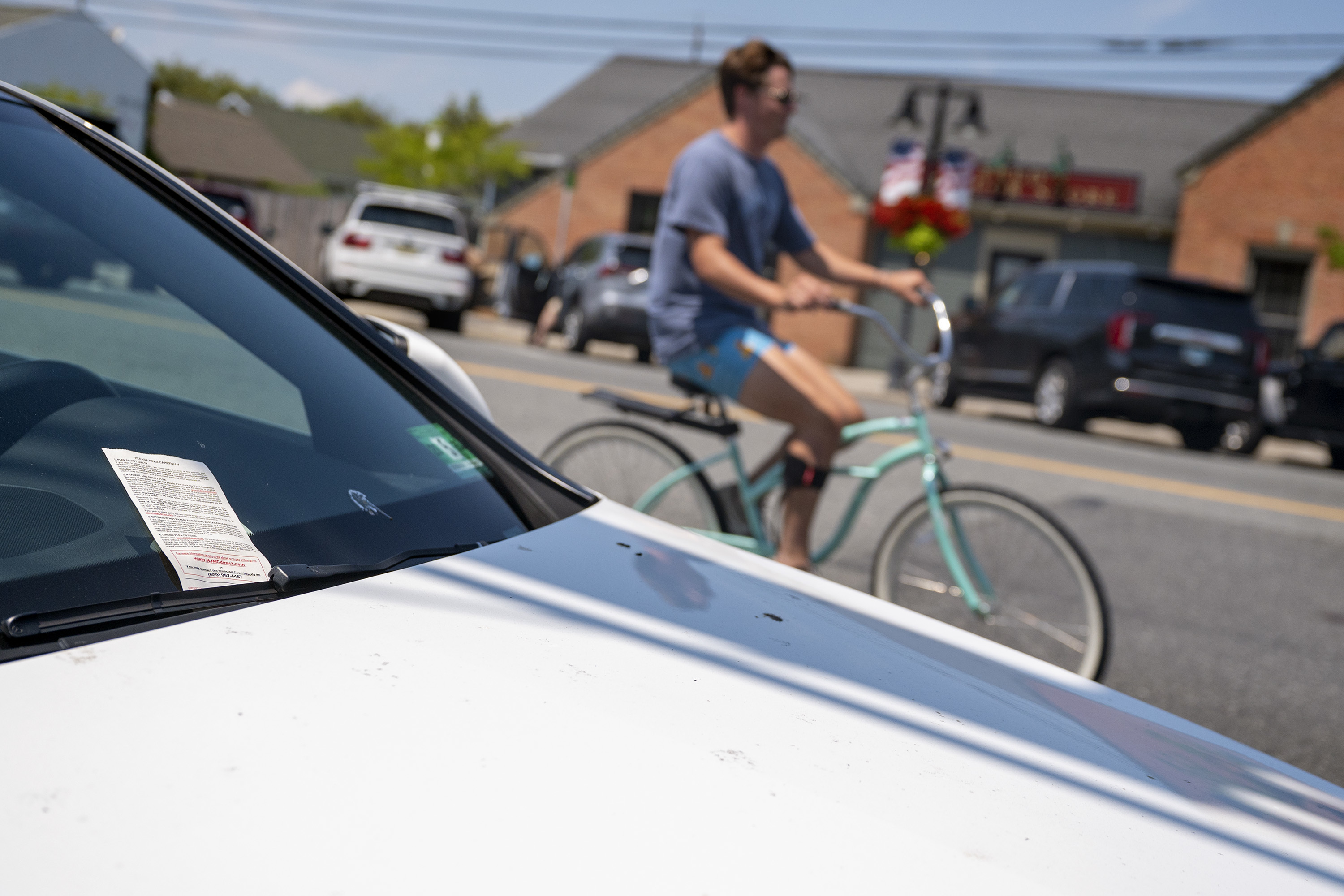
    A car with a parking ticket on 96th Street, the main shopping and dining street in downtown Stone Harbor on July 12, 2023.Tom Gralish / Staff Photographer

    Leave the cars off the island

    So many of the suggestions had to do with reducing traffic and the sheer number of cars in beach towns during the summer.

    Wrote one reader: “We need fewer cars on the island so bikers can safely travel — need to open lots on parkway and run shuttles.”

    This reader proposed giving every homeowner two parking passes. “I live in Sea Isle,” the reader said. “Too many cars.”

    Kara Cumiskey said that tenants brought seven cars to her four-bedroom rental in Ocean City.

    “I think that there should be a ‘beach tag’ for cars,“ Cumiskey wrote to us. “Or some type of ‘congestion pricing’ for bringing your car onto the island. Something that gives people some pause for bringing a car for every person.”

    While a mandatory ban or limit on cars seems unlikely, giving people the option of leaving their cars off the island and shuttling or Jitney Guy-ing into paradise seems like an interesting idea. The golf cart and e-bike rental business would definitely pick up. Fewer turtles would be squashed.

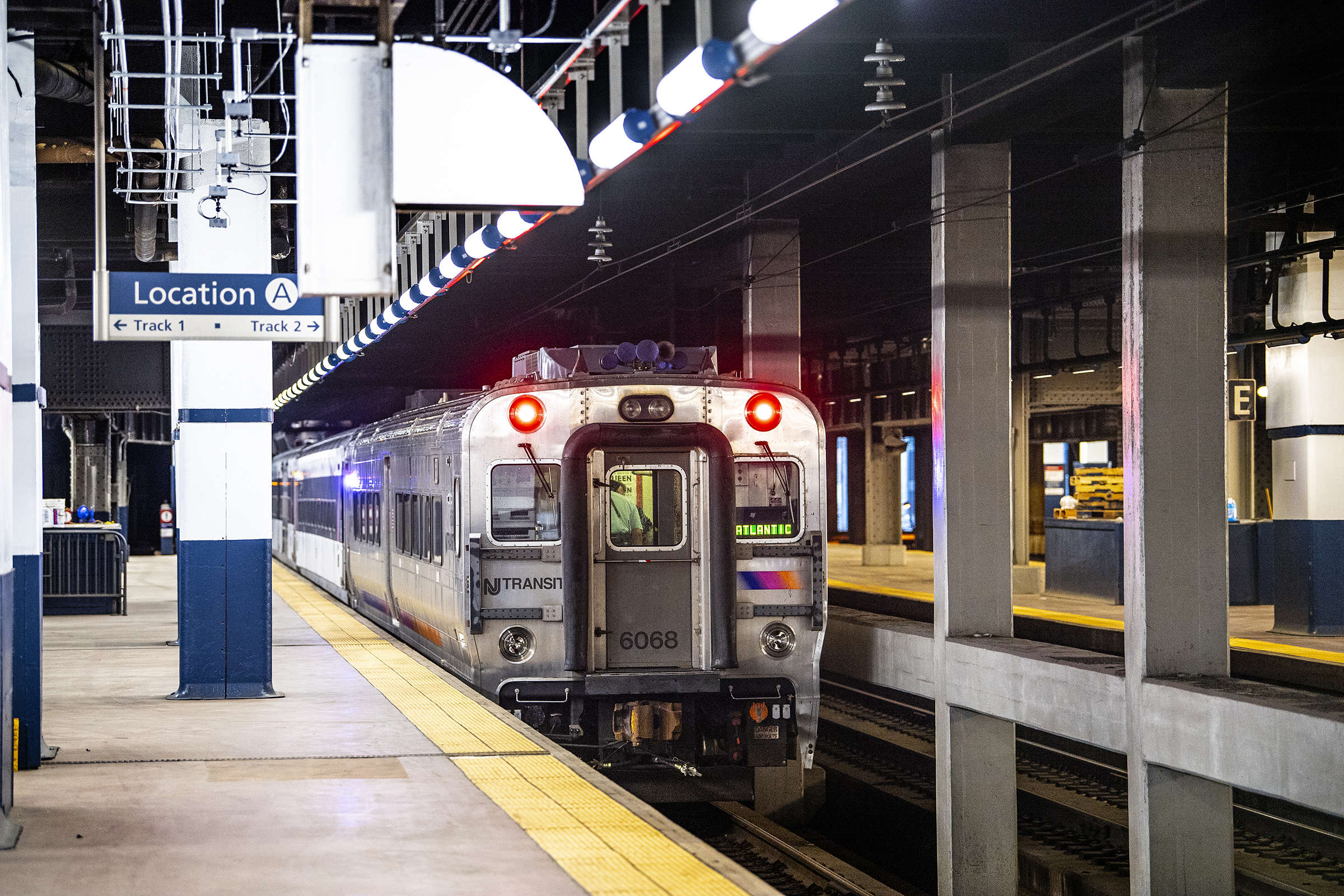
    A NJ Transit train en route to Atlantic City is shown at 30th Street Station in Philadelphia on May 12, 2019.JOSE F. MORENO / Staff Photograp

    We need more trains

    Relatedly, there were calls to increase and improve public transportation to the Shore. The current NJ Transit train is fantastic to take (and from the Shore end, NJ Transit riders can park their car for free at the A.C. Convention Center), but man, is it slow.

    An hour and 34 minutes at best between 30th Street Station and Atlantic City? Two hours between trains? Connections to the PATCO high-speed line only help a little. Still, I’ve noticed a lightness in the steps of the people who get off in Atlantic City with their suitcases and sunglasses. They’re onto something.

    Others noted that train service once ran down to various towns in Cape May County. Wouldn’t that be lovely.

    The Ocean Sands Motel at 3710 Ocean Ave. in Wildwood, N.J., on Tuesday, Jan. 24, 2023.Monica Herndon / Staff Photographer

    Convert old motels to affordable housing

    Ariela Rutbeck-Goldman, senior staff attorney at Fair Share Housing Center, says the Shore’s housing crisis is “increasingly a threat not just to affordability, but to the Shore economy itself.”

    “The Jersey Shore can’t remain a place where the people who work in restaurants, hotels, shops, and other local businesses can’t afford to live,” she said.

    Fair Share says more Shore towns are building affordable housing under the requirements of New Jersey’s affordable housing law.

    Belmar, for instance, is “repurposing dilapidated motels and other underutilized properties to increase their housing supply,” she said.

    “The goal shouldn’t simply be to create “employee housing,” so that workers can make it through the summer,” she said. “The Shore needs enough homes that teachers, nurses, service workers, young families, seniors, and other people who make these communities work can afford to live there year-round.”

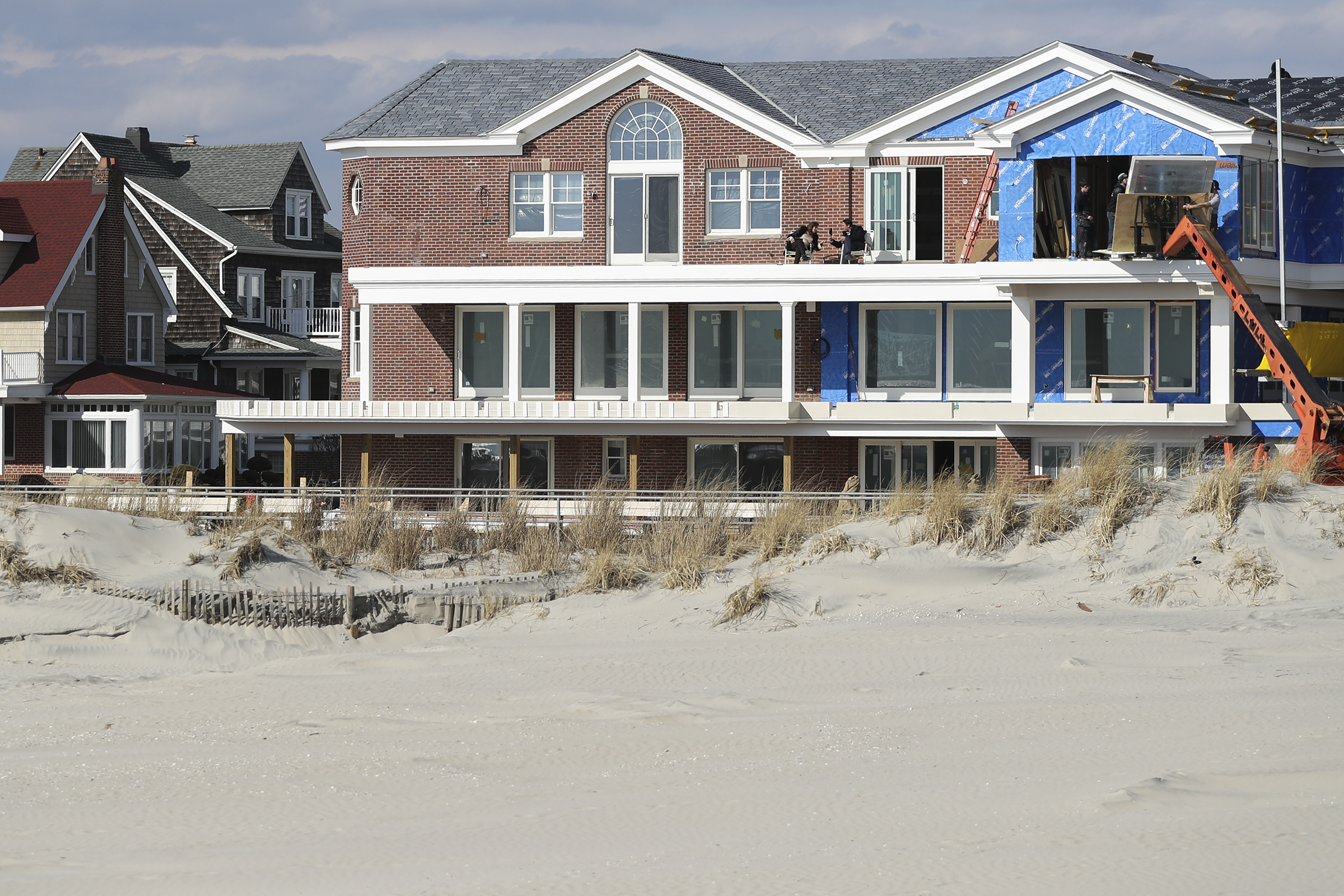
    A shore home is under construction along the boardwalk by the Ventnor City Fishing Pier in the Jersey Shore town of Ventnor City, N.J., on Friday, Jan. 22, 2021.HEATHER KHALIFA / Staff Photographer

    ‘Stop the monster houses’

    As one reader wrote, “Stop the monster houses being built. The charm of the shore is getting bulldozed one lot at a time. These new builds are ugly!”

    Another noted the homogeneity of the new construction, in particular the white boxes with the black roofs and trim. In a lot of Shore towns, this ship has sailed. Sea Isle City, for example, is almost totally built out. But there is some hope for others, where the old Shore houses, whether they are the big turn-of-the-century Dutch colonials or the small ranchers of the Wildwoods, are hanging in there.

    Fair Share Housing is advocating for programs that help nonprofits acquire and preserve older homes to protect housing for year-round residents, as well as expanding tenant protections to prevent evictions.

    “Monmouth Beach, one of the Shore’s wealthiest communities, recently authorized the purchase of a two-bedroom condominium that will be deed-restricted and sold to an income-qualified household,” said Rutbeck-Goldman. “That’s a relatively small investment, but it demonstrates that municipalities don’t have to wait for a large development project to create affordable homes.”

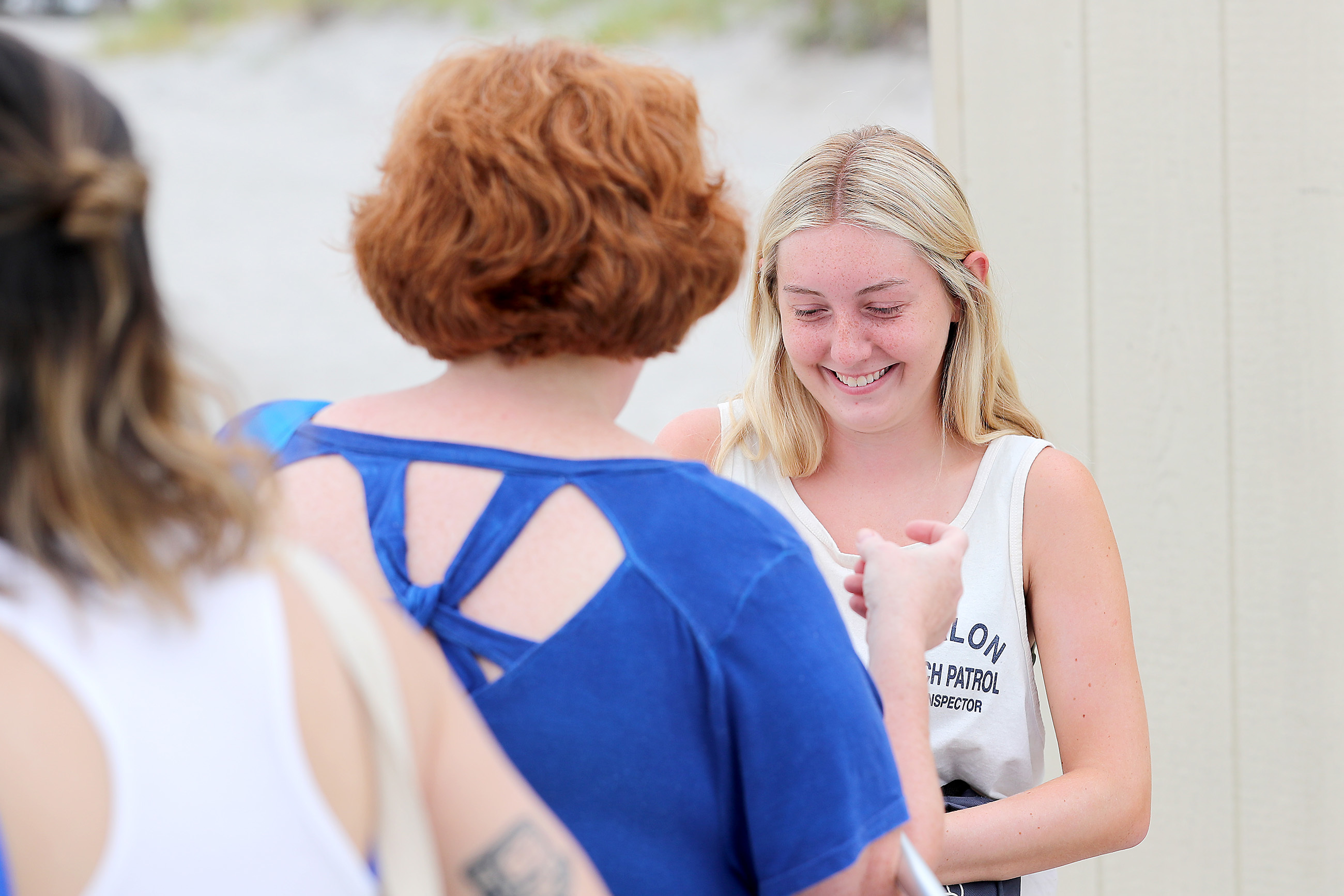
    Shanna Killion, of Northeast Philly, works as a beach tag inspector in Avalon, N.J., on Sunday, Aug. 14, 2022. Killion said among the interesting items she has seen people carrying to the beach was an inflatable bed.DAVID MAIALETTI / Staff Photographer

    Eliminate beach tags (or at least make them reciprocal)

    Lots of people urged New Jersey beach towns to do away with beach tags. Dream on. Strathmere, one of the last three free beaches in the Philly area of the Jersey Shore, just voted to start charging $10 a day, $45 a season, or $30 if you buy a tag before Presidents’ Day. That leaves just Atlantic City and the Wildwoods beach-tag free.

    One interesting idea was to make the beach tags reciprocal to other towns. Some towns, like Ventnor and Margate, do have reciprocity, but readers imagined a Cape May County beach tag, for instance, that would encourage exploring.

    Related, a bill that would require towns to be transparent about where their beach tag revenue is actually going has stalled in the New Jersey legislature.

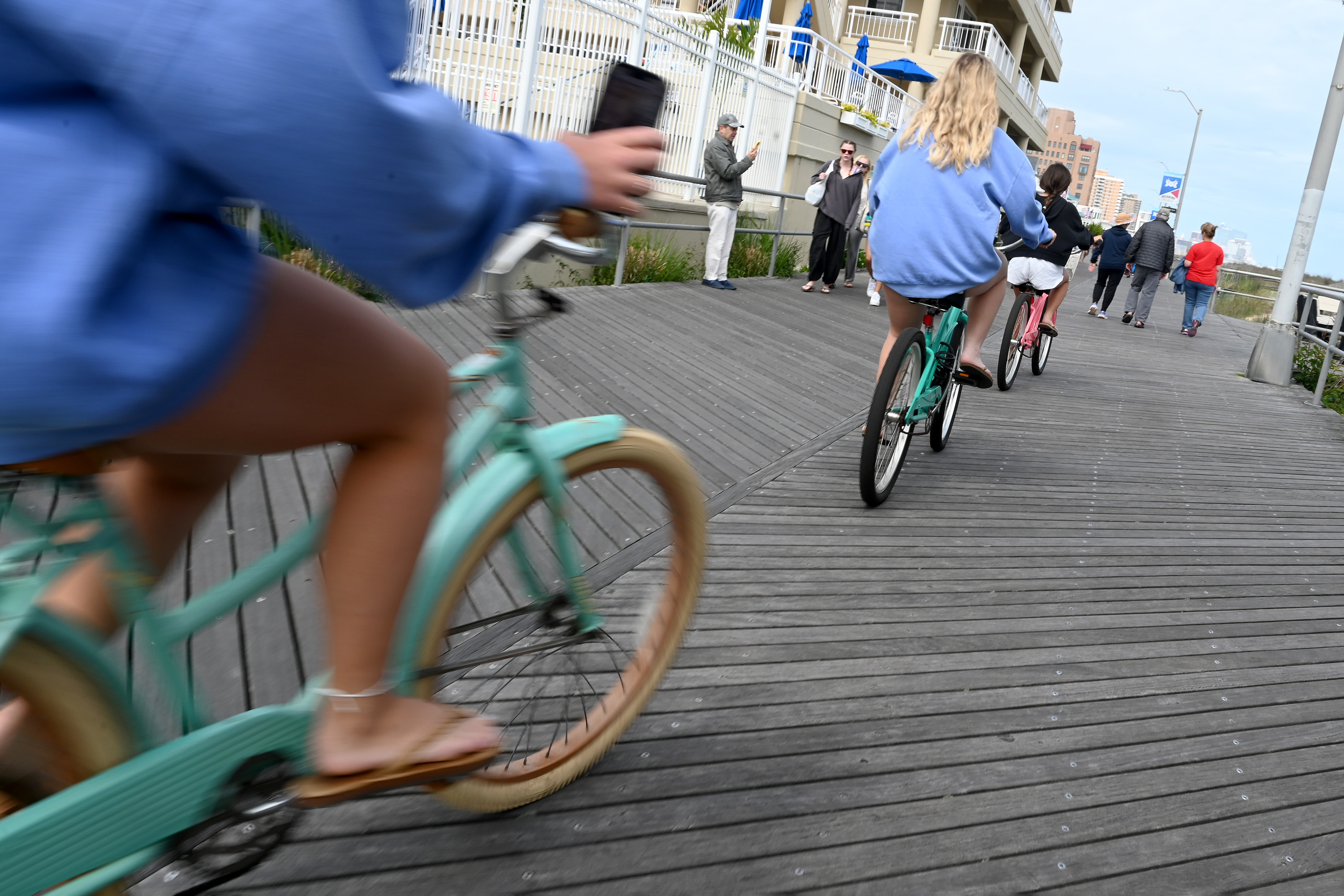
    Bike riders on the promenade boardwalk in Sea Isle City at the Jersey Shore on May 24, 2023.Tom Gralish / Staff Photographer

    Make the Shore better for bikers and pedestrians

    Many towns have expanded bike lanes and redesigned roads to calm traffic. More of this, please! No matter the pedestrian laws, the reality is, it’s still a miracle if the cars stop for you as you start to cross, or if the bike lane isn’t clogged with runners going in the opposite direction.

    Roads one block from the beach should be one lane in each direction, with traffic calming measures like flashing pedestrian lights and bright flags for the pedestrians to carry across. It will require a lot more patience than Jersey is known for. It’s OK! There should be a safe way to commute to jobs by bicycle and return home at night.

    A flight at Behr Brewing in Cape May in 2023.Jenn Ladd / Staff

    Let Ocean City BYOB already

    I know this is not going to happen. But what a wonderful restaurant renaissance might follow! A mini Cape May! As one reader wrote, “I have had a place in OC for 25 years and other than [Ocean City Yacht Club], have never eaten dinner in OC because can’t even have a glass of wine!”

    A backyard with access to the bay, at a Beach Haven, Long Beach Island home on June 13, 2024.Tom Gralish / Staff Photographer

    Embrace ‘coastal naturalization’

    Cindy Zipf, executive director of Clean Ocean Action, worries that the entire Jersey Shore is becoming more high-end resort, less natural coastline.

    Zipf advocates a concept known as “coastal naturalization” and says residents and visitors must rally against the “overdevelopment and citification” of Shore towns. That includes expanding parks with native plants and trees, which Zipf says will increase both quality of life and resilience to storms.

    The Surfrider Foundation has an Ocean Friendly Garden program to help.

    Zipf advocates an end to “the unchecked paving and urbanization that erodes community character while contributing to increased flooding, polluted runoff, and litter.”

    A snowy egret flies over the salt marsh at the Wetlands Institute on May 19, 2025, in Stone Harbor, N.J. Dredged material was used to raise the height of the marsh in the Scotch Bonnet Island project.Monica Herndon / Staff Photographer

    Increased marsh restoration and flooding mitigation measures

    Speaking of increased flooding: The Wetlands Institute announced that it’s temporarily retreating from its half-century headquarters on the Stone Harbor Causeway to rebuild its trails and building because of increased flooding.

    The institute focuses on coastal resilience and marsh restoration, with nature-based solutions. It is elevating and widening its Salt Marsh Trail and creating a new high marsh designed for diamondback terrapin nesting and coastal birds.

    Lenore Tedesco, the institute’s executive director, says marsh rescue is critical for storm-risk reduction.

    “By elevating the Salt Marsh Trail, we are also creating a barrier to storm waves but unlike many coastal protection features that wall off people and wildlife, we are doing it in a way that benefits marshes and wildlife,” she said.

    The Wetlands Institute is hoping other coastal communities learn from the approach.

    Dogs and their owners enjoy the sand and water at the Malibu Beach Wildlife Management area in Egg Harbor Township at the Shore during the Memorial Day weekend, on May 28, 2023.Tom Gralish / Staff Photographer

    More dog beaches and dog hours

    Are dogs so bad? What if every town, or every island, had a beach dedicated to dogs and their owners? What if there were dog hours … on the boardwalks? What if all the towns allowed dogs to run free on the beach before, say, 8 a.m. in the summer? As Bob Dylan wrote, “In harmony with the cosmic sea / True love needs no company / It can cure the soul, it can make it whole / If dogs run free.”

    Fans pack the beach for blocks as Phish performs a beach concert in Atlantic City, Friday, Aug. 13, 2021.VERNON OGRODNEK / For The Inquirer

    Fully fund A.C. concerts

    There’s been a welcome uptick in big-name acts booked to A.C.’s estimable Boardwalk Hall, including Shakira, Phish, and Goose (also, Disney on Ice). Rüfüs du Sol performed on the beach this year. But the sophisticated and intimate Thursday night jazz concerts on the Atlantic City Boardwalk only started in August this year. In previous years, this popular tradition ran all summer long. There were a few A.C. beach concerts this summer and a couple jazz nights at Gardener’s Basin, but nothing like in past years.

    On the upside, there is a robust food truck scene at the A.C. Seawall and at O’Donnell Park, and new housing construction projects in places that have long been vacant. And no beach tags. But the city is under increased pressure from expected job losses due to New York casinos. Will Atlantic City put the pieces together?


    Have more ideas? Email us at downtheshore@inquirer.com!

  • The neurologist who led Penn Medicine’s diversity efforts and saw his title changed after Trump came to office has a new role

    The neurologist who led Penn Medicine’s diversity efforts and saw his title changed after Trump came to office has a new role

    Roy Hamilton’s varied racial, social, and religious identities helped him in his former role as a chief diversity leader at the University of Pennsylvania — and now they will help him in his new role as chair of Penn’s faculty senate.

    The behavioral neurologist at the Perelman School of Medicine is the son of a Japanese immigrant and an African American. He is married to a white woman who is Jewish, while he was raised as one of Jehovah’s Witnesses and now is a secular humanist. And one of the couple’s children is LGBTQ+; he is an ally. Add to that growing up in a lower middle-class family and learning to navigate an Ivy League education system, first as an undergraduate and then as a medical school student.

    That background has made it easier for him to understand a range of factors in his own life and how they affect his thinking, Hamilton said, and more readily understand where others are coming from and look for common ground.

    Those same skills, he said, will be just as valuable as he steps into a position leading Penn’s faculty senate, the representative body for the school’s approximate 3,000-member standing faculty in a system of shared governance.

    Hamilton said one of his primary goals will be to make the faculty senate representative of the collective views of a vastly diverse staff and foster conversation across those views.

    “It does call for a person who is interested in hearing and honoring a multiplicity of opinions and perspectives and then coming to some kind of collective consensus as to how to act in the face of that,” Hamilton, 53, said during an interview in his office this month.

    “Penn has acted judiciously in a difficult time,” when responding to Trump, said Roy Hamilton, faculty senate chair and a behavioral neurologist at Penn. “It’s trying to thread a needle. Time will tell whether that strategy ultimately pays off.” Monica Herndon / Staff Photographer

    The senate plays a key role on campus discussing issues of faculty concern, making policy recommendations, responding to regular reports of university administrators, and providing oversight on issues that include academic freedom and research policy. And Hamilton, who has spent 24 years at Penn, comes in as chair at a pivotal time. The school is searching for a new president to replace J. Larry Jameson, who will step down next summer, and continuing to operate under the scrutiny of the federal government, which has targeted elite universities. There are ongoing concerns about access to federal research funding, and the school this year plans to adopt new guidelines for open expression on campus that have drawn strong objections from faculty.

    “As Penn confronts the major questions of our time, the Faculty Senate’s contribution is not to provide a single set of answers, but to pursue a constructive process of thoughtful deliberation and principled engagement conducted in good faith,” he said in a message to faculty last week.

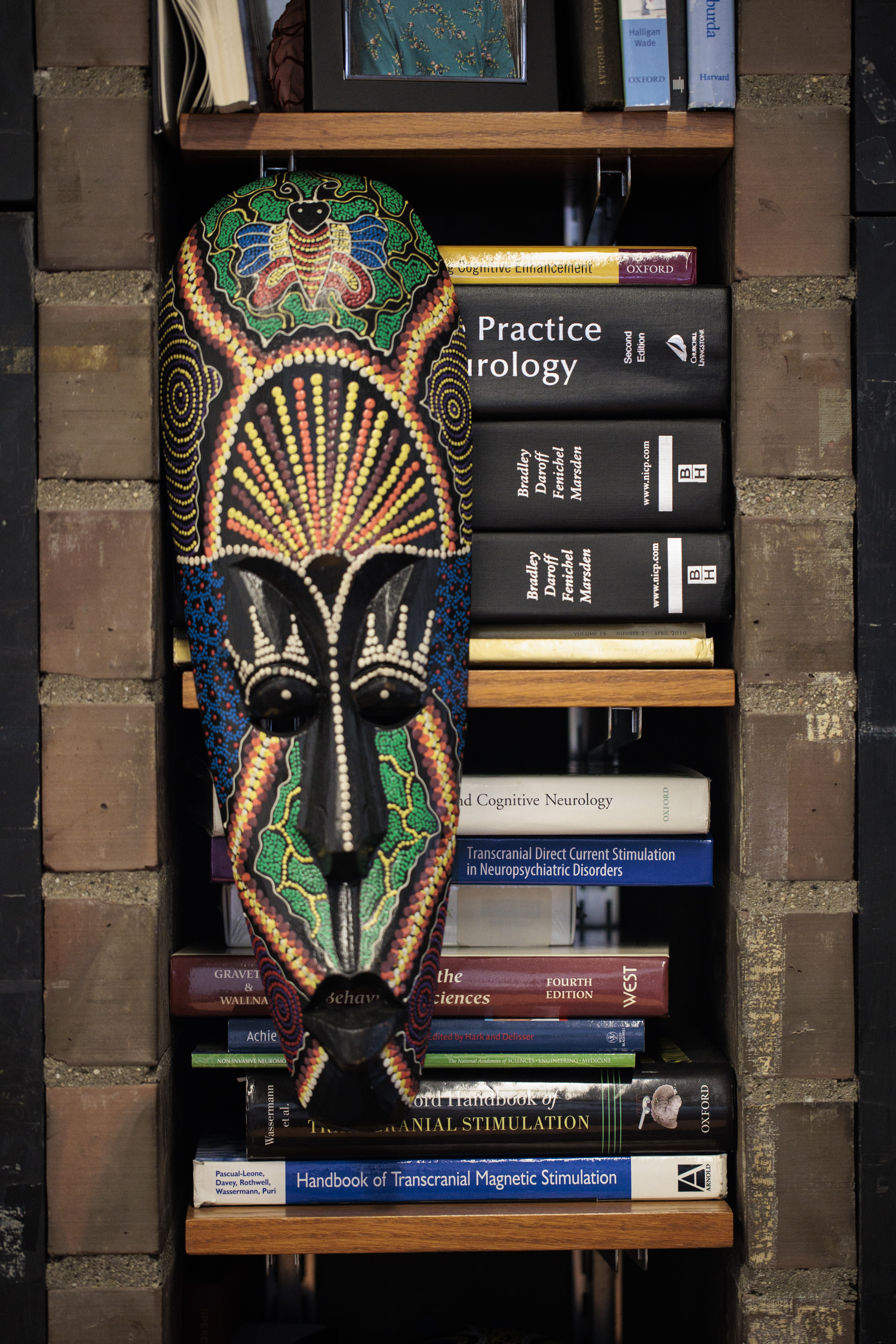
    Roy Hamilton collects masks and his office is filled with pieces he has received from his students and mentees over the years. Monica Herndon / Staff Photographer

    ‘Trying to thread a needle’

    Hamilton has been in the hot seat before. He was the medical school’s vice dean for inclusion, diversity, and equity when President Donald Trump’s administration last year cracked down on diversity initiatives in higher education and Penn scrubbed its websites of those programs. Hamilton’s own title was changed to special adviser to the dean.

    “It would be disingenuous to say that it was easy,” Hamilton said. “It was a huge change. It was a difficult change. It was a change that I wish the institution didn’t feel like it had to make.”

    But Hamilton — who for more than a decade held administrative roles centered on diversity and inclusion at Penn — said he understood that Penn felt it had to make changes, given its reliance on federal research funding. Hamilton pointed out that he gets National Institutes of Health funding for his work.

    “If you jeopardize some of the fundamentals of how the institution works and runs, you jeopardize lots of positions and roles, including the roles of persons like myself and the very diverse lab that I run,” he said. “So I understand the Sophie’s choice that the medical school was faced with. That doesn’t mean I have to be happy about it.”

    Roy Hamilton talks about his work as a behavioral neurologist.Monica Herndon / Staff Photographer

    Still, he said, some of the work continues.

    “We are the same people, and I believe that Penn’s values will endure,” he said.

    Penn at times has stood up to the Trump administration and at times negotiated. It ardently opposed the Equal Employment Opportunity Commission’s quest to get lists of Jewish people on campus for its investigation into antisemitism. The EEOC dropped its subpoena last month and said it would not take further measures to seek the information through other means.

    Last summer, the school entered into an agreement with the administration over the past participation of transgender athlete Lia Thomas on the women’s swim team. Penn met a number of the White House’s demands, including adhering to the Trump administration’s definitions of sex, female, male, women, and men only as they apply to athletics, and sending letters of apology to female athletes who felt aggrieved by Thomas’ position on their team during the 2021-22 season.

    “Penn has acted judiciously in a difficult time” when responding to Trump, Hamilton said. “It’s trying to thread a needle. Time will tell whether that strategy ultimately pays off.”

    “I was one of those guys, even as a small child, sort of door to door trying to talk to people about the Bible and what God had planned,” Roy Hamilton said, discussing his upbringing as one of Jehovah’s Witnesses. Monica Herndon / Staff Photographer

    Hamilton’s upbringing was instrumental to his interest in diversity.

    “Every step of the way has felt like I was … some kind of explorer finding some new territory,” he said. “I’ve historically been very interested in seeing to it that other people don’t have that level of alienness in the process.”

    Raised as one of Jehovah’s Witnesses, then on to Harvard

    Born in Long Beach, Calif., Hamilton grew up as one of Jehovah’s Witnesses. His late father worked in a brewery and his mother, who got her undergraduate degree in Japan, earned money as a seamstress, working from the family home. (She later returned to college, earned a master’s degree, and became a teacher.)

    Neither of his parents was raised in the Jehovah’s Witnesses faith, but his father had several family members who belonged. When his mother emigrated from Japan, she told his father she would like to go to church, and he took her to a Kingdom Hall, the worship place of Jehovah’s Witnesses.

    “By the time I was a small child, she was one of Jehovah’s Witnesses, and so that was the background in which I was raised,” Hamilton said. “I was one of those guys, even as a small child, sort of door-to-door trying to talk to people about the Bible and what God had planned.”

    But he and his family parted ways with the religion when it came time for Hamilton to go to college. Hamilton was in the gifted and talented program as a child, did well in school, and wanted to continue. At that time, the faith generally discouraged higher education, he said.

    He recalled congregation elders pulling him aside and questioning his intent to apply to college.

    “It had the same kind of vibe as if I had been caught smoking in the boys’ bathroom,” he said.

    Hamilton did not just go to college — he went to Harvard University. His father feared flying, so Hamilton took the train from California and arrived three days later in Massachusetts.

    The Ivy League experience was “a huge adjustment,” he said. One of his roommates hung out with a son of media mogul Rupert Murdoch, he recalled. A student down the hall was dating then-Vice President Al Gore’s daughter.

    He got his bachelor’s degree in psychology and graduated from Harvard’s medical school, where he said he felt a bit of “impostor syndrome.” He also got a master’s degree in health sciences technology from Massachusetts Institute of Technology.

    At Harvard, his interest in the brain grew and was amplified when he worked in the lab of cognitive neuroscientist Nancy Kanwisher, whose work led to the discovery of the region of the brain that processes facial recognition.

    “It’s the reason why we recognize incredibly subtle differences between faces,” he said.

    Roy Hamilton discusses how transcranial magnetic stimulation (TMS) units are used in helping to study the brain and develop new treatments for patients with conditions like aphasia. When a TMS device is triggered, the box-shaped main unit discharges a large current through the attached coil. This creates a magnetic field that, when placed against the scalp, activates electrical signals in the brain.
    “You can basically force the brain to fire,” he said.

    Monica Herndon / Staff Photographer

    Another key moment came when neurologist Alvaro Pascual-Leone visited his medical school seminar and showed how magnets aimed at the head could temporarily affect behavior in the brain.

    “I was like, ‘That is the most amazing thing I’ve ever seen in my life,’” he said. “‘I’m going to do that for the rest of my life.’”

    Magnets and the brain

    After an internship at UCLA, in 2002 he came to Penn, where he now runs the Laboratory for Cognition and Neural Stimulation, as well as the Brain Stimulation, Translation, Innovation and Modulation Center. Putting it simply, he said: “I take magnets. I put them on people’s brains and I make them think different things.”

    He sees patients struggling with memory and cognition disorders, such as dementia and aphasia.

    “The central but not sole clinical focus of my research is in persons with language loss,” he said.

    He is married to Dawn Mechanic-Hamilton, a clinical neuropsychologist and associate professor in Penn’s department of neurology.

    Last year, Hamilton became chair elect of the senate, which functions under tri-chairs — chair-elect, current chair, and past chair — all one-year terms for a three-year commitment.

    The senate earlier this year was charged with naming faculty to serve on a committee outlining priorities for Penn’s next president. Among its priorities this year, the senate will focus on implications of artificial intelligence on teaching and learning, he said.

    “While Penn’s future remains full of promise, the road ahead may not always be easy,” he wrote to faculty. “Difficult moments, however, provide an opportunity to think carefully about the principles that give purpose to our work and ought to guide our decisions.”

  • Letters to the Editor | Aug. 30, 2026

    Letters to the Editor | Aug. 30, 2026

    Mailing it in

    I don’t understand the U.S. Supreme Court. Justices are appointed for life and cannot be fired. So why do they undermine the Constitution by toadying to Donald Trump’s every insane whim? What hold does he have to make them so subservient?

    Their latest decision that Trump can withhold mail-in ballots from states that have not bowed to his outrageous demand of supplying voter rolls is deranged. As someone who doesn’t own a car, the mail-in ballot is a great convenience for me. And Pennsylvania has been wise enough not to supply our state’s lists since the federal government, according to the Constitution, has no control over elections.

    I wonder if they can be impeached. After all, they did present an incomplete view about upholding the precedent of Roe v. Wade.

    Susan M. Wendt, Norristown

    Dolly’s memory

    To me, and many others, those who make it their mission in life to spread joy, love, comfort, and knowledge often seem invincible, as Dolly Parton did.

    The news of her passing is a sobering reminder that our time on earth is limited, and tomorrow isn’t promised.

    Times are interesting, to say the least. But if people from all walks of life can agree today that Parton made the world a better place, then perhaps we aren’t as divided as we initially thought.

    May her memory be a blessing.

    Evan Grollman, Highland Park

    Admission of failure

    By announcing the U.S.’s aggressive efforts to harm Iran’s economy, President Donald Trump has effectively admitted that our military campaign has failed to achieve any of its alleged goals. There has been no regime change. The Strait of Hormuz remains unusable. Iran’s nuclear program — allegedly destroyed last year — remains as viable as ever. The president’s desperate efforts to enlist other countries in this new attempt to defeat Iran economically say to the world that our ill-conceived military incursion has failed, and we are desperately looking to other countries to support our attempt to find some way to succeed against Iran. It is abundantly clear that the U.S. has only one viable remaining option to try to save face: declare victory and move on to something else. Stop wasting billions of American taxpayers’ money on a failed mission that clearly was not thought through and will not succeed.

    Ben Zuckerman, Philadelphia

    Join the conversation: Send letters to letters@inquirer.com. Limit length to 150 words and include home address and day and evening phone number. Letters run in The Inquirer six days a week on the editorial pages and online.

  • Phillies again need late-inning magic to beat the Angels 4-2 in 10 innings

    Phillies again need late-inning magic to beat the Angels 4-2 in 10 innings

    ANAHEIM, Calif. — It was just 56.6 mph off Trea Turner’s bat.

    According to the StatCast metric that takes into account exit velocity and launch angle, it had an expected batting average of .150. The majority of the time, contact like that would have been a routine out.

    But the Angels had their infielders drawn in during the 10th inning Saturday, looking to stop the bleeding that started with an RBI double from Kyle Schwarber to break the 1-1 tie. And Turner’s soft ground ball found a gap between them.

    As it dribbled between first and second base, Justin Crawford read it perfectly. The rookie, whose one-out single was key in kicking off the late rally, hurtled toward home with pinch-runner Garrett Stubbs following behind. Both scored, securing some needed insurance runs for the Phillies’ 4-2 win over the Angels.

    “I thought I saw the ball pretty well on that pitch, and thought I was going to hit it pretty hard, and then obviously capped it,” Turner said. “It ended up working out. Yeah, it’s just find a way, any way, no matter how bad it looks, or how good it looks.”

    Turner arrived in California ice cold. He ended an 0-for-19 skid by picking up two hits in Friday’s series opener, and followed it with two more on Saturday. Even if neither was very flashy, interim manager Don Mattingly hopes that these two games could get him back on track.

    “I know they’re not bullets anywhere, but they’re still two hits,” Mattingly said. “And as you wake up in the morning, you all of a sudden you’ve put two hits up, two days in a row. So hopefully that gets him rolling a little bit.”

    The Phillies broke the stalemate in the 10th with some textbook baserunning. Before Turner’s single, Schwarber dropped a bloop hit into center field in front of a charging Mike Trout. J.T. Realmuto made sure it reached the ground before scoring from third, while Crawford went from first to third, and Schwarber advanced to second on the throw.

    It was a stark difference from earlier in the game, when it looked like baserunning blunders might cost the Phillies the win. They ran into three outs on the base paths. In the eighth inning, Turner was fooled by Trevor Martin’s pickoff move, and was thrown out trying to steal third.

    Turner believed he managed to sneak under the tag, but a review deemed there was insufficient evidence to overturn the call.

    “I didn’t deserve it, but yeah, I thought I got in there,” Turner said.

    Bryce Harper (left) was tagged out by Angels catcher Travis D’Arnaud trying to to steal home during the eighth inning.Mark J. Terrill

    Later in the inning, Bryce Harper tried to take matters into his own hands for an insurance run, and was thrown out trying to steal home against Martin and catcher Travis d’Arnaud. With Alec Bohm at the plate in an 0-2 count, Harper took off on the pitch and was initially called safe. After lengthy review, that was overturned to become the third out of the inning.

    “I don’t think you’d really ever expect anybody to steal home, even if they’re a speed guy,” Turner said. “Just trying to make the play. Sometimes it doesn’t work out, but I like the aggression.”

    The third mistake came on the first play of the 10th inning, when ghost-running Brandon Marsh attempted to advance to third on a ground ball to shortstop, and was easily thrown out.

    Extra innings became necessary after Jonathan Bowlan conceded a game-tying homer to Zach Neto in the eighth. The Angels’ shortstop fouled off seven pitches, including four in a row, before teeing off on a sweeper in the bottom half of the zone.

    As soon as the ball cleared the left field wall, Phillies starter Cristopher Sánchez was no longer in contention for his 17th win of the season, after one of his strongest starts of the second half. He turned in seven scoreless innings and held the Angels to two hits in his deepest start since completing seven on July 11 against Detroit.

    Five of Sánchez’s eight total strikeouts came on his changeup, including one vs. Neto to end the fifth inning. Neto dropped to one knee over the plate trying to make contact with the pitch that nicked the bottom outside corner, becoming the 200th strikeout victim of the season for Sánchez.

    “We just have to keep going,” Sánchez said through team interpreter Diego D’Aniello. “This doesn’t end now.”

    Cristopher Sánchez lasted seven innings for the first time since July 11.Mark J. Terrill

    He joined fellow lefty Jesús Luzardo as the second Phillies pitcher to reach the milestone this year. Both Sánchez and Luzardo eclipsed 200 strikeouts in 2025.

    The Phillies offense needed every bit of Sánchez’s dominance to keep them in it. They hadn’t capitalized as much as they could have against Angels starter Ryan Johnson, who issued four walks his first time through the Phillies order. Many of his misses weren’t close to the strike zone.

    The Phillies managed one run against him, which came on an RBI single from Marsh in the second. They threatened to break the game open that inning after Crawford worked a key walk to load the bases and flip the lineup back over, but consecutive pop-ups to shallow left from Schwarber and Turner stranded all three runners.

    “You worry about that second [inning]. You leave guys out there,” Mattingly said. “It’s kind of one of those things you hope it doesn’t come back to bite you. And then we never really got anything going after that, until late.”

    Jhoan Duran pitched a scoreless ninth inning to force extras, and after the offense’s three-run outburst in the 10th, Mattingly asked his closer for three more outs. It’s something that he wants Duran to get more experience doing as the postseason looms.

    Jhoan Duran pitched two innings to close out the Phillies’ win.Mark J. Terrill

    Duran, who had recovered from a stomach bug that rendered him unavailable Friday night, obliged.

    He conceded one run in the 10th on a single and a force out, but induced back-to-back flyouts from Neto and Trout to seal the win and the series victory.

    “Tonight, I thought we made some mistakes as a team, and I think we know that, and we want to play better,” Turner said. “But it’s nice winning those games and learning from it, than losing them and trying to learn from it. … There’s still room for improvement, but it feels like we’re playing pretty good this week.”

  • Dear Abby | Daughter’s unemployed fiance fails to impress Mom

    Dear Abby | Daughter’s unemployed fiance fails to impress Mom

    DEAR ABBY: One year ago, I convinced my daughter (64) to move here to Florida to be closer to me. I bought her a small mobile home to live in, and I don’t charge her any rent. Before she moved down here from Minnesota, she agreed to pay the lot rent and her own utilities.

    Recently, she met a man and fell in love. She has been single and self-supporting for more than 20 years, but she says she’s lonely and wants someone to talk to when she gets home from work. She thinks this man fits the bill. He is 60 and doesn’t have a job, a car or a place to live. He has been staying with a friend for the entire two months she has known him. He has given her an engagement ring after two months, and they plan on marrying later this year.

    My daughter asked me if I’m happy for her. When I told her if she is lonesome when she comes home from work, she should consider getting a pet, she laughed. I do not think two months is long enough. In my opinion, her fiance should at least have a job — and a car would be nice so she wouldn’t have to take the bus to work every day. What should I tell her if she asks me if she should marry him?

    — CONCERNED MOM

    DEAR CONCERNED MOM: She won’t ask, because she knows she won’t like the answer. However, if she does, give your honest opinion — and tell her that I share it. A legal union with this man who has nothing would be foolish and self-destructive. Instead of planning a wedding, his time and energy would be better spent looking for work.

    ** ** **

    DEAR ABBY: I am receiving physical therapy at a center with a huge TV on the wall. It is on the entire time, playing stuff like sports and home improvement shows. I find it tedious, stressful and distracting. Importantly, due to my declining hearing, the TV makes it difficult to understand the young physical therapist I’m working with. I have told her several times now that because of the background noise, I need her to face me, not the TV, so I can hear her. She tends to forget this fact. I have even asked about playing music instead of the TV, to no avail.

    I would go somewhere else, but this is the only place my insurance pays for. I dread going there because of this. Am I wrong to want a quiet environment in which to heal?

    — PEACEFUL IN FLORIDA

    DEAR PEACEFUL: You are not wrong. Your physical therapist appears to have a listening problem. Rather than continue to complain to this employee, talk to the manager of the therapy center and explain the problem.

    ** ** **

    DEAR ABBY: This may seem like a silly question, but when filling out paperwork that asks if I am married, divorced or widowed, I’m not sure what to put down. I was divorced, but then he died. Does it matter which answer I choose?

    — BEFUDDLED IN INDIANA

    DEAR BEFUDDLED: This is not a silly question. It is one I have been asked before. The correct answer is that you are divorced. If your ex-husband remarried after your divorce, the woman he married is his widow.

  • Horoscopes: Sunday, Aug. 30, 2026

    Horoscopes: Sunday, Aug. 30, 2026

    ARIES (March 21-April 19). Getting an opportunity feels exciting, though someone saying “yes” is not the achievement itself. The achievement takes shape through all the practical steps that follow. It lies in the “how,” not the “what.”

    TAURUS (April 20-May 20). Yesterday’s agreement was made in calm weather. Today’s tension is the test. Were expectations clear? Were they reasonable? Will effort be shared? Is there room for disagreement? A durable promise can survive a little discomfort.

    GEMINI (May 21-June 21). You’ll make your point and make someone laugh, too, not because your point is a joke but because people are open to you. Laughter shows that they feel receptive to your tone and message.

    CANCER (June 22-July 22). Inspiration makes the beginning feel inevitable. Discipline becomes important when the glow of inspiration fades and everything starts feeling like work, but don’t fret. You’re devoted, and devotion can finish what enthusiasm started.

    LEO (July 23-Aug. 22). Your instinct is to be welcoming and open, but some people are unaware of what is being offered unless it is first withheld. The best way to make them truly feel welcome is to make them earn their place. Otherwise, they will only feel entitled.

    VIRGO (Aug. 23-Sept. 22). What can you do with plans revised at the kitchen table, and imperfect conditions? Win the battle. What can you do with borrowed space, limited funds and tired hands? Build the world. Look around. Everything you see was made this way.

    LIBRA (Sept. 23-Oct. 23). When you don’t know what to do next, you keep making yourself useful, creating convenience, relieving pain and solving problems. Remember that your efforts are only truly successful when they uplift you, too.

    SCORPIO (Oct. 24-Nov. 21). Facts can be counted. Truth often has to be recognized. Facts tell you what happened. Truth helps you understand what it meant. Today, look beyond the data to the meaning it points toward.

    SAGITTARIUS (Nov. 22-Dec. 21). You repeat certain thoughts so often they begin to sound like facts. Today, one of them catches your attention. It’s worth questioning. Is it true? Is it helpful? Have you outgrown it? Can you substitute a better fit?

    CAPRICORN (Dec. 22-Jan. 19). Go on and be lazy; it’s wise. Some kinds of work just make more work. Rest is productive in its own way. You’ll recalibrate your health and productivity by making room for doing a big stretch of absolutely nothing.

    AQUARIUS (Jan. 20-Feb. 18). You’ll get back to the joy of making lists — putting your thoughts into neat lines and giving yourself the opportunity for the immensely satisfying act of crossing out items and seeing progress take physical shape.

    PISCES (Feb. 19-March 20). A flurry of activity sorts itself into two main categories: things you can control and things you can’t. There’s so much in the first category that the second hardly deserves another thought.

    TODAY’S BIRTHDAY (Aug. 30). In this, your Year of Enough-ness, you realize you always have plenty of what you need. It comes easily to you, and you share it just as freely, caught up in a current that’s reciprocal, balanced and abundant. More highlights: You’ll get around in style. You’ll apply new things you learn to successful, lucrative and almost immediate results. Distant connections become close and sweetly fulfilling. Aries and Scorpio adore you. Your lucky numbers are: 2, 40, 17, 30 and 8.