NEW YORK — New York City’s Rikers Island jail complex would close by 2032 under a sweeping plan announced Friday by Mayor Zohran Mamdani, whose strategy for finally shuttering the notorious facility hinges on substantially reducing the number of people kept behind bars.
The mayor, a Democrat, unveiled the plan as the city is all but certain to blow past a legal requirement to close Rikers and replace it with four smaller, more modern jails by 2027.
For years, Rikers Island has stood as a symbol of dysfunction, with the network of jails so plagued by violence and overcrowding that a federal judge, citing “abnormal and unacceptable” conditions, appointed an outside manager to restore order and implement reforms.
Mamdani has been a vocal proponent of closing Rikers, though the longstanding plan to build new jails has met fierce pushback, including from his predecessor, former Mayor Eric Adams, who opposed federal oversight and borough jails.
At a celebratory news conference at City Hall, Mamdani said the extended timeline was needed because of resistance from the previous administration, calling Rikers “a place we have long turned our eyes away from rather than confront head on.”
“The call to close Rikers has echoed across our city for decades. Work has begun to do so, then stopped, then started once again. What will make this chapter different is our commitment to see it through,” he said.
The Mamdani administration is proposing a new slate of diversion and supervised release programs, expanding housing and social services to prevent recidivism, along with restoring an online bail payment system and reducing case delays so people spend less time behind bars.
“Our nation has a very real mass incarceration problem,” the mayor said. “We are making a conscious decision to advance a new model of a criminal legal system in our city, one that takes on that problem head on.”
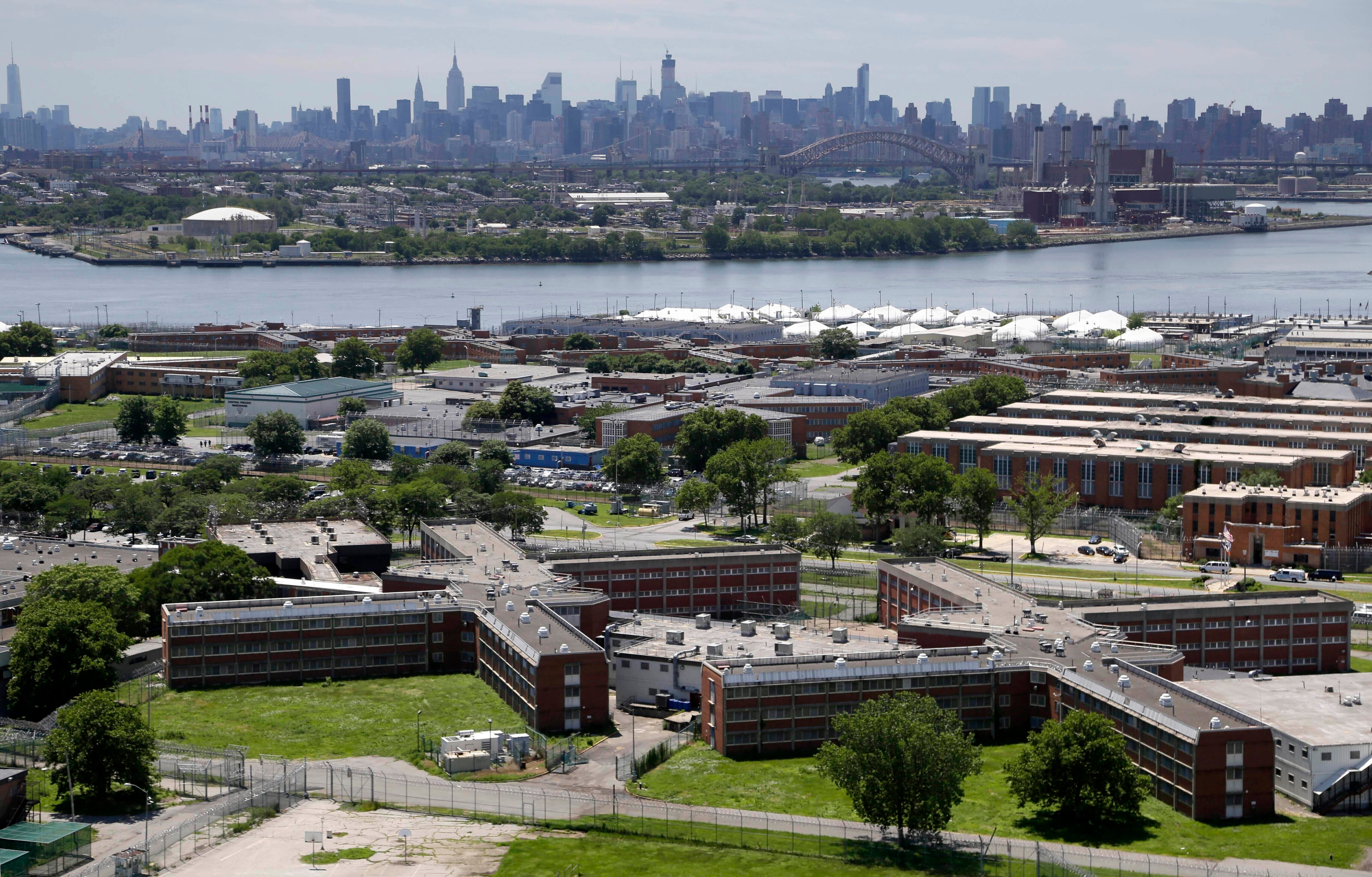
Instead of housing prisoners at Rikers — an island in the East River near LaGuardia Airport — the city will shift people to jails in the Bronx, Queens, Brooklyn, and Manhattan, as well as a handful of medical facilities for people who need healthcare or psychiatric treatment. The city also plans to reduce the number of beds for women, diverting them into community-based programs.
The borough jails are expected to open in Brooklyn in 2029; the Bronx and Queens in 2031; and then Manhattan in 2032, according to City Hall. The new deadlines require approval from the New York City Council.
Julie Menin, speaker of the City Council, praised the mayor’s plan at the news conference, saying that after years of delay “we are finally getting back on track.”
The City Council voted to close the jail complex in 2019 and replace it with newer jails located in the city’s boroughs by 2027. At the time, city officials had also called for shrinking the jail population to accommodate the closure, but ran into opposition from critics who argued doing so would mean more violent criminals on city streets.
The Senate on Thursday passed legislation to make energy projects, housing, roads and other infrastructure easier to build by weakening bedrock environmental laws that have often delayed construction for years. The effort, backed by more than a dozen Democratic senators and most Republicans, has been billed as a bid to make American life more affordable and lower electricity prices.
The Bipartisan American Affordability and Jobs Act (BAAJA) passed 62-33. Fourteen Democrats voted for it, including Senate Minority Leader Chuck Schumer (New York), as well as Sen. Angus King (I-Maine), who caucuses with Democrats. Two Republicans, Sens. Josh Hawley (Missouri) and Mike Rounds (South Dakota), voted against it.
It now moves to the House for consideration, where some Democrats have indicated they plan to support the bill. That could ease its passage in the chamber, where Republicans hold only a two-vote majority.
The bill has divided the environmental community and Democrats. Some say the bill will mean more renewable energy is built and plugged into the grid, advancing the fight against climate change by helping to fix a broken and slow permitting system. Opponents, however, say it opens the floodgates to more oil pipelines and natural gas power plants, while making it easier to build in areas of pristine wilderness or sacred Native American sites.
“If you’re going to get a lot more clean and some more fossil, you have just got to figure out, is that a good trade-off? Is that a good balance?” said John Podesta, who was climate envoy under President Joe Biden.
The bill’s supporters say it will boost clean energy by ensuring that long-distance transmission lines can be built to carry wind, solar and geothermal power from where it is produced to dense population centers. The lack of those high-powered lines has slowed progress on deploying renewable power and raised electricity prices in recent years.
Longtime Senate climate hawks Sheldon Whitehouse (D-Rhode Island) and Martin Heinrich (D-New Mexico) sponsored the bill, arguing that it will speed the energy transition.
“If we can create an open, competitive, level playing field, clean is cheap and cheap wins in the marketplace,” Heinrich told reporters this month.
Oregon Democratic senators Jeff Merkley and Ron Wyden emerged as prominent critics of the bill. Wyden proposed an amendment to ban data centers on public land, accusing Republicans of being too afraid to take a floor vote on the proposal at a time when Americans are overwhelming opposed to data centers.
Merkley criticized a lack of open debate on the bill and blocked consideration of a package of amendments to protest other amendments not getting a vote.
“It is pretty damn outrageous and offensive that this bill has never had a hearing in the House or Senate,” he said on the Senate floor Wednesday.
Hawley, one of two Republicans who voted against the bill, argued it would hurt farmers, whose land infrastructure like transmission lines and pipelines often crosses.
“Legislation that threatens to take farmers’ land is legislation I won’t support,” Hawley said in a statement. “This bill is stuffed with giveaways to data centers and industry at the expense of farmers.”
Many prominent environment groups, including Earthjustice, reject the proposal on the grounds it will weaken key environmental laws.
“For groups who are predominantly thinking about clean energy, this is a package that does so many of the things that all of us have been lobbying for over the years,” said Abigail Dillen, president of Earthjustice. “The question is, with all the other things this bill does — is the bill still doing more good than harm?”
According to modeling from Rhodium Group, a research firm, the bill has the potential to lower U.S. carbon emissions by around 3 percent by 2040 and lower household utility bills by $50 to $78 per year. The legislation would accelerate renewables deployment and the export of liquefied natural gas. However, its report noted, it also has the possibility of keeping emissions close to status quo.
Supporters say the bill will lower energy prices by boosting all energy projects. Chad Whiteman, vice president for environmental and regulatory affairs at the U.S. Chamber of Commerce, said in an interview that voters called firmly in the midterm elections for greater affordability. “How are you going to address affordability except to be able to provide more energy and release some of those bottlenecks?” he added.
Proponents also argue that many prospective fossil fuel projects would get built anyway.
Podesta said in weighing the gains for renewables versus for fossil fuels, the trade-off is probably “worth it.”
The bill also demands that data centers pay for any new power facilities that must be built to meet their demand, as well as power lines that connect that energy to the grid. Voters have become increasingly angry about the impact of data centers on electricity prices and on their local environments.
The bill would alter several environmental laws originally passed in the 1970s. It would limit states’ and tribes’ ability to veto or place conditions on projects under the Clean Water Act and reduce protections for wetlands. And it would reduce the need for consultation with state and tribal historic preservation offices before approving projects that could affect significant cultural or tribal sites.
Under the Endangered Species Act, the bill gives more responsibilities to states, which may not have the ability or desire to carry out the law, and potentially allows courts to ignore emerging research when evaluating species protection.
If the bill is enacted, projects will be allowed to move forward even if they violate the National Environmental Policy Act (NEPA), a law designed to make permitting decisions thorough and transparent. Under current law, completing the NEPA’s review process often takes years, and violations can lead to projects being paused indefinitely or losing their permits.
The bill is aimed at ensuring neutrality by accelerating permits for fossil fuels and renewables equally. “We are not dictating here what gets built; we are simply protecting the ability to build,” said Sen. John Barrasso (Wyoming), the No. 2 Senate Republican, on the chamber’s floor Wednesday.
But some advocates also worry President Donald Trump will not carry out provisions.
Trump said last week that the bill had the administration’s backing “100 percent,” and the White House issued an official statement of support. But he also said he would not approve wind turbines, even though the bill demands he do so, and has aggressively favored fossil fuels in his first two years back in office.
The bill now heads to the House.
Senate Majority Leader John Thune (R-South Dakota) said the bill would have an easier road to Trump’s desk if the House passes it without making changes.
“If it were to go over there and then come back over here, I can’t predict what would happen,” Thune told reporters Thursday. “So hopefully there will be the critical mass there to move it.”
Before rising into a national icon, Mark Twain was an Inquirer.
Samuel Langhorne Clemens started working for newspapers at the ripe age of 12, prematurely entering the workforce in the late 1840s following the untimely death of his father.
Clemens’ journey started in his home state, at the Missouri Courier, where he worked as a printer’s apprentice before serving as a typesetter and editorial assistant for the Western Union paper, owned by his brother Orion.
He would then pass through St. Louis, en route to New York and Philadelphia.
Now, he wasn’t in Philadelphia for long. But considering he is one of the United States’ most famous writers, it counts as street cred: We knew him before he was cool.
The newspaperman
In the early 1900s, the man now known as Twain set about writing his life story.
His method of doing so was as odd as it was revolutionary: “Start it at no particular time of your life; wander at your free will all over your life.”
The celebrated author instructed his next of kin to wait until 100 years after his death to publish the story in full. So on Nov. 15, 2010, the University of California Press published the first of three rather robust volumes that together constitute the stream-of-consciousness-style Autobiography of Mark Twain — retaining its signature chaotic prose just as the author had intended.
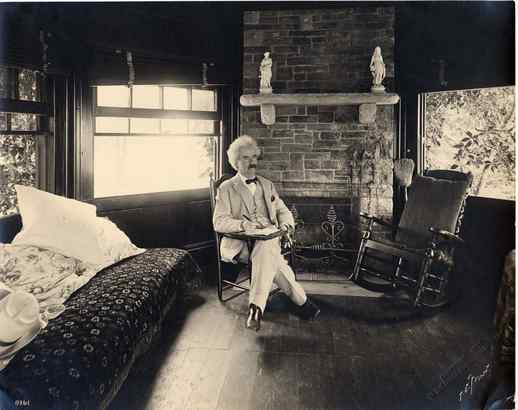
In that first volume, Twain looked back at his brief time working as a substitute typesetter for The Inquirer in 1853-54, when he was all of 17 years old.
His role was to help set the printing plates. Back then, each letter and each punctuation mark from every article had to be individually set in metal before the plates could start stamping out broadsheets.
But his remarks in the book were brief: “By and by I went to Philadelphia and worked there some months as a ‘sub’ on the Inquirer and the Public Ledger.”
And heleft out the best part.
The Philadelphian
While working for The Inquirer, Clemens wrote a letter to his brother, in which he revealed an astute and accurate preference.
“Unlike New York,” he wrote, “I like this Philadelphia amazingly, and the people in it.”
He added:“I will try to write for the paper occasionally, but I fear my letters will be very uninteresting, for this incessant night work dulls one’s ideas amazingly. … I believe I am the only person in the Inquirer office that does not drink.”
Despite his ambition, the byline Samuel Clemens would never appear in print.
In the subsequent 50 years, though, Mark Twain’s prose would grace the newspaper’s pages in the form of reprinted excerpts from his essays and speeches.
But by then most of the country had joined the bandwagon.
With the Wanamaker Light Show on hiatus this season for the first time in more than 70 years, families across the Delaware Valley are wondering where to find their dose of holiday magic this year.
The Ministry of Awe is hoping to save the day like Clarence the angel and remind us that it’s (still) a wonderful life with “Miracle on 3rd,” a new and interactive holiday light show intended to fill the void left by one of Philly’s longest-held holiday traditions. The show’s name is a nod to the Ministry’s location on Third Street in Old City.
Unlike the old-timey blinking light bulb show at Wanamakers, the Ministry of Awe’s holiday light spectacular is decidedly high-tech. Using projection and video-mapping technology, visitors are turned into holiday spirits that can hang Christmas lights and throw snowballs.
Confused yet? Well, welcome to the Ministry of Awe, which is about as easy to explain and magical as a holiday narwhal.
Orifice the Awebot, an ambassador for the Ministry of Awe, wears her best holiday gear. Orifice was created by Philadelphia-based artist Madison Polidoro in response to the Uber Eats robots taking over Philly sidewalks. Aidan T. Gallo / Staff Photographer
The six-story immersive art exhibit in a 19th-century bank that opened in March is a mapless labyrinth of nearly every kind of art imaginable, from sculpture and video to painting and theater. More than 100 local artists collaborated to create the surreal experience, which was the brainchild of Philly muralist Meg Saligman.
Since the Ministry of Awe already deals in wonder, Saligman felt it was the right place to sow some communal holiday magic.
“The show was created with the hope of bringing a little of the awe and collective exchange that Wanamaker used to bring,” she said. “Granted, we’re not at the scale of the Wanamaker Light Show, it’s our first year, but we hope we provide that special feeling and grow each year.”
As visitors enter the Ministry, its atrium is now decorated with Christmas ornaments donated by the community.
A holiday-themed installation with ornaments donated by the community appears inside the atrium of the Ministry of Awe. Artists, volunteers, and employees of the exhibition helped make and set up holiday ornaments surrounding the giant eyeball sculpture.Aidan T. Gallo / Staff Photographer
“We have had an open call for trash, and you’ll see it hanging in the skies, from the ordinary to the extraordinary,” Saligman said during a media preview Thursday.
Throughout the space, walls are now decorated with white angel wings upon which guests have written miracles they have experienced, from “Finding your forever person, especially when they are pretty okay” to “My grandmother coming to this country from Armenia in 1915.”
“People who feel they have experienced something miraculous in their life, please, we invite you to write it down so that we can have them and they can grow throughout the season,” Saligman said.
Also hanging high in the atrium is a large, beige orb resembling a moon, which visitors can project their face onto, if they want to see their nose that big.
Violet Whitney demonstrates the new moon feature as her face is projected upon it while William Martin records it inside the Ministry of Awe. The installation utilizes a motion sensor camera (center) to project faces onto the various moon props.Aidan T. Gallo / Staff Photographer
But the main holiday attraction takes place in a room called “The Heavens,” the ceilings of which are permanently decorated with fantastical murals by Saligman.
Since the opening of the Ministry of Awe, “The Heavens” has been brought to life with AI technology from Violet Whitney and William Martin, co-owners of Spatial Pixel design studio in Old City, who have projected snow and added interactive elements in the space.
But the “Miracle on 3rd” show, which was also created by Whitney and Martin, takes the experience to another level.
Globes throughout the room containing video cameras track guests’ body movements and project them onto the walls to make them appear as if they are glowing spirits. Visitors can then move their spirit’s arms and head (they don’t have feet, their bodies just come to a point like Casper the Ghost). At various times throughout the show, guests can use their spirit to hang colored Christmas lights around the room and to throw snowballs (which was, by far, the best part).
Guests throw projected snowballs to spirits as part of the new holiday-themed show inside the “The Heavens” room at the Ministry of Awe in Old City. Aidan T. Gallo / Staff Photographer
Martin assured the crowd that videos are not recorded, only live feeds are used.
“[It’s] like your virtual skeleton, if you will,” he said. “Your spirit is being observed.”
The entire show, which runs about eight minutes, is accompanied by soaring holiday music. Visitors are told they are able to control the different instruments in the soundtrack with their movements, depending on where they sit in the room, but it was hard to discern what effect guests had, if any.
“Miracle on 3rd” doesn’t provide the warm nostalgia of the Wanamaker Christmas Light Show, but it does introduce a new and novel kind of holiday magic you won’t experience anywhere else in Philly. And you don’t have to stand in between racks of clothing to see it.
The show runs every half hour at the Ministry of Awe from Nov. 20 to Jan. 15. Tickets to the Ministry, which are $29.99, are required for adults to access the show.
Kids 12 and under will receive free entry to the Ministry and the holiday show from Nov. 27 to Jan. 15.
“We’ll take both naughty and nice,” Saligman said.
Fifteen years since Philadelphia’s last professional women’s soccer team folded, the Independence are getting another moment in the spotlight.
The leaders of Love City FC, an amateur team that debuted this year in the Women’s Premier Soccer League, struck a deal with former Independence owner David Halstead to bring back the team’s logo on a new line of merchandise.
“Launching the Independence brand is a way to stay on the shoulders of the women that came before us,” Love City CEO Jami Dansingburg said. “We want to honor the women that paved the way for us to be able to do what we’re doing now.”
Halstead, who is now based in Virginia, said he was happy to share his old team’s trademarks.
“I have been talking to her on and off for a long time,” he said. “I just want to see women’s soccer, really across the country and the globe, in Philly and elsewhere, be successful and soccer players be given the opportunity to play and thrive. And if in any way this branding helps that, I welcome the opportunity for Love City FC and Jami to use it however they see fit. And I love what they’ve done.”
Megan Rapinoe (left) is one of the many famous players who suited up for the Independence when they played from 2010-11.
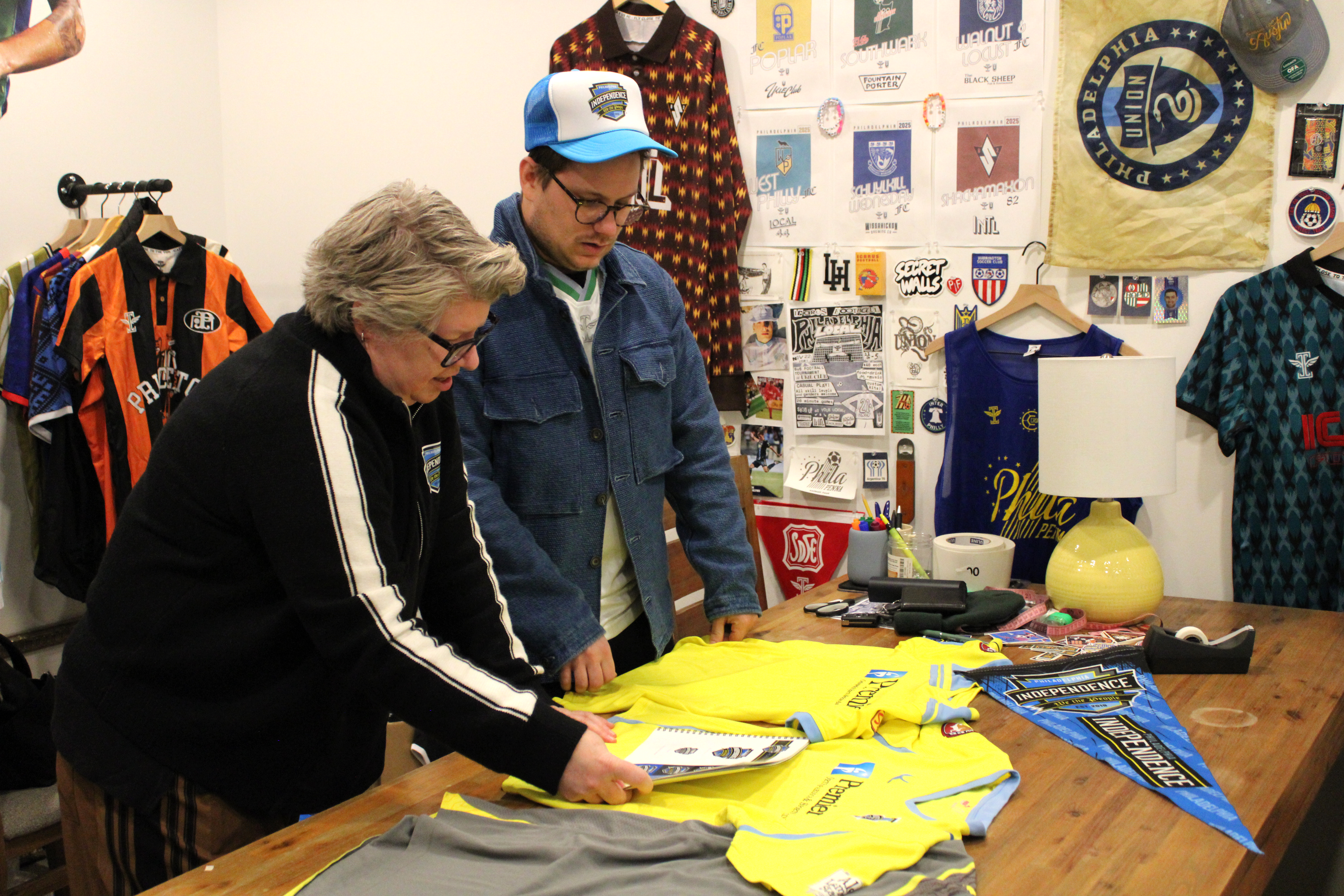
The jersey is produced by Icarus Football, a Philadelphia-based custom soccer apparel creator.
Icarus founder Robby Smukler has been a fixture on the local scene since launching the company nine years ago. Dansingburg didn’t need long to find him: She worked for Icarus from 2020 to 2022.
“I always want to be involved in anything going down here that is soccer related,” Smukler said. “Especially projects like this that are a really cool manifestation of a lot of work, especially with someone that I know and care about.”
The aim is to get soccer fans’ attention in the area and beyondIt’s well-known at NWSL headquarters that when Atlanta joins the circuit next year, Philadelphia will be the only city that had teams in the two previous leagues — the Women’s United Soccer Association and Women’s Professional Soccer — but is not in the current one.
A new line of merchandise draws inspiration from the former Philadelphia Independence, a pro women’s soccer team.Love City FC
Some people in the region travel north to Gotham FC’s games in Harrison, N.J., as they did when Sky Blue FC played at Rutgers. But it will get harder in 2028 when Gotham moves to New York City FC’s new home in Queens. That could increase the league’s appetite for a Philadelphia team, though Gotham’s place in north Jersey never was a formal obstacle.
A group has been working behind the scenes for a few years to try to assemble a formal Philadelphia bid, but its leaders have yet to come forward publicly. The most important piece of the puzzle — finding an owner to bankroll it — also remains unsolved.
Given that, Dansingburg is aiming in a different direction. She’s trying to help build out Love City into an entity that can compete in a second-division league, WPSL Pro, that plans to launch in 2028.
Love City FC CEO Jami Dansingburg and Icarus Football owner Robby Smukler examine original Philadelphia Independence jerseys and memorabilia for inspiration behind Love City’s newly designed heritage jersey.Icarus Football
Before then, Love City will wear the throwback jerseys in some games next year.
One of the Independence’s most popular players back then, midfielder Joanna Lohman, is connected with the new project.
“In 2010, I put on the Philadelphia Independence jersey, knowing it represented something so much bigger than myself,” she said in a statement. “It carried the hopes of every woman who fought to make this league possible. They paved the way for us, and now it’s Love City FC’s turn to carry that legacy forward and ensure every girl has a future in this game.”
“All of these [players under age 18] that are being signed by NWSL clubs are not getting any competitive minutes, and it’s a problem because it’s really stunting their growth,” Dansingburg said. “So the idea of implementing the kind of academy that Richie Graham and Striker Partners and the Union have put together, that’s really our long-term goal.”
Building such a program for local girls would be its own big investment, but that has not deterred Dansingburg from making it her north star. And if a NWSL team does come along, “we’d work closely with them, and we want to build this to support them,” she said.
As the drumbeat of bad news for Republicans grew louder on election night, U.S. Rep. Brian Fitzpatrick called to apologize.
Jim Worthington, the owner of the Newtown Athletic Club and a prominent GOP booster in Pennsylvania, had supported Fitzpatrick for a decade as he won time after time in their purple district outside Philadelphia. Worthington also backed President Donald Trump over that time — hosting campaign rallies and raising money for the president even as Fitzpatrick, a moderate Republican, repeatedly survived reelection by distancing himself from the leader of their party.
Now, though, it was clear Fitzpatrick was calling amid a “bloodbath.” Republicans had lost up and down the ballot in the nation’s biggest midterms rout in a half-century, and Pennsylvania was no exception. Fitzpatrick knew his time in office would be over and he wanted to tell Worthington personally that he was sorry, that there was more he wanted to get done for Bucks County and now would not be able to.
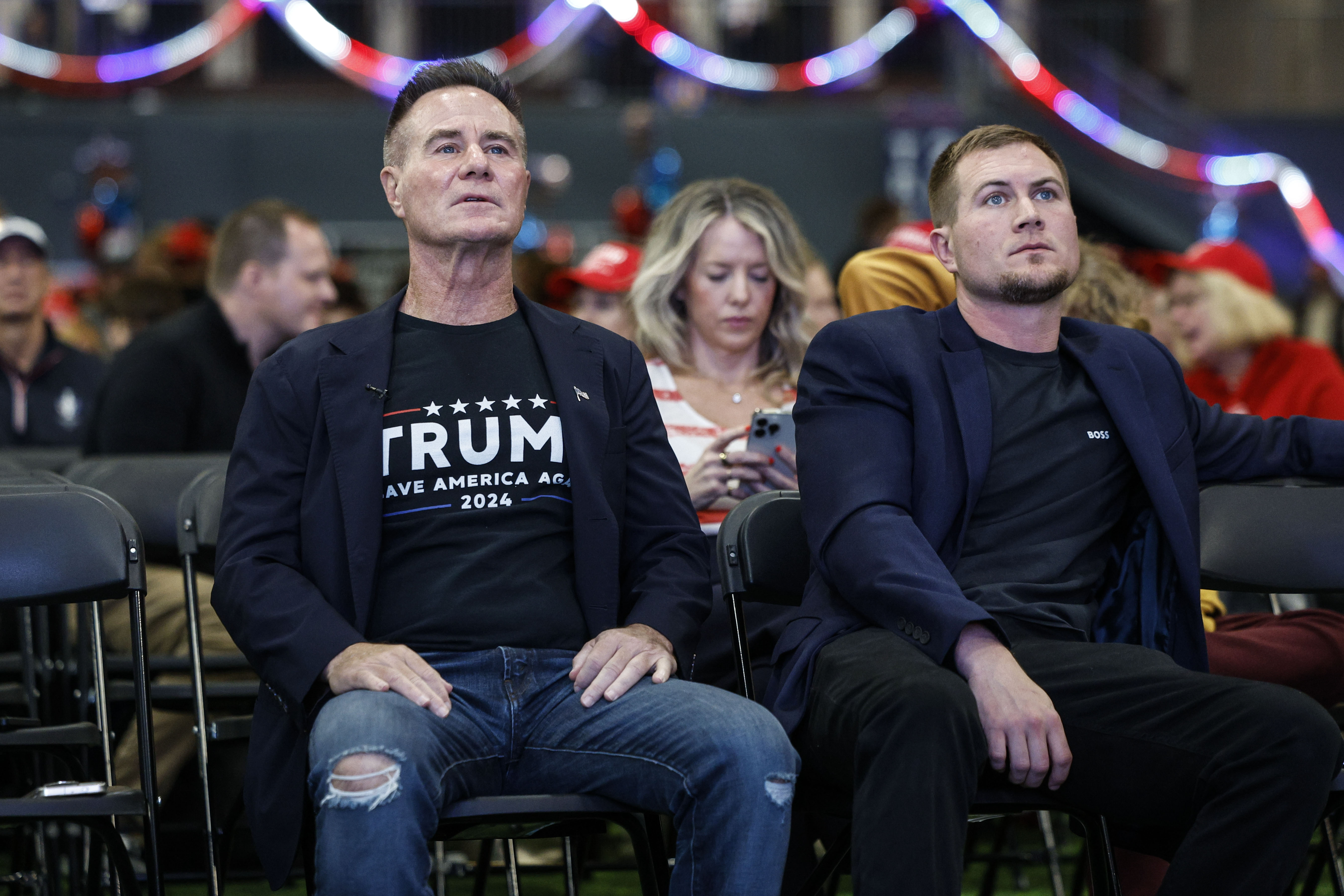
GOP booster Jim Worthington, left, sits with his son Jack during an election night watch party in Newtown Bucks County, in 2024, when Republicans won in Pennsylvania and across the country. This year, many GOP candidates fell to Democrats in a blue-wave election.Steven M. Falk / Staff Photographer
Worthington, recalling the conversation from election night, said he has come to blame the widespread losses on both state and federal Republicans. And, he said, that has put him at a “crossroads” that could determine whether he keeps helping their efforts in the future.
“I’m not going to beat my head against the wall and not make a difference; raising a lot of money, spending time, and losing,” Worthington said last week. “I could conceivably be stepping away, particularly when you see that people on both sides of these parties, Democratic and Republican, are in it for the wrong reasons, making fortunes, scamming the system, and being grifters. I’m just doing this because I want my country to be better.”
The party, by some measures, is at its lowest point in the Keystone State in decades. In January, the GOP will sit in the minority in the state legislature for the first time since 1993 and will hold just six of the state’s 17 congressional seats, and it has lost four consecutive races for governor, including Gov. Josh Shapiro’s sizable 22-percentage-point win over Republican Stacy Garrity this year.
And after a decade in which Trump twice won the critical swing state and remade the GOP in his image, his cratering popularity and final years in office have made some Republicans eager to move on.
“It needs to send a message to the party and President Trump, too, that MAGA is not bigger than the Republican Party,” said one Pennsylvania Republican Party official, who requested anonymity to freely discuss intraparty conversations. “We’ve all learned a hard lesson that it isn’t. Many of us have believed that for a long time.”
The party official said Republicans who want to win general elections moving forward must recognize the “deadly, devastating, negative effect” of continuing to tie themselves solely to Trump, including in the nomination process for a 2028 presidential candidate and other races in Pennsylvania. That may be easier said than done.
“The anti-Trump sentiment that controlled the day in ’26 will not fully dissipate by ’28,” the official said, adding that Pennsylvania Republicans might be best suited to consider a “2030 strategy” rather than one focused only on 2028.
Such a move would set the party’s sights more on the next gubernatorial race and presidential midterms in four years.It is not impossible to rebound in two years, the official said — especially if the national mood shifts, if Democrats overreach in their new power, and if Republicans recruit strong candidates for everything from the state House to the U.S. Senate, when Democrat John Fetterman’s seat is up for election. But it will be challenging.
“We got thumped,” said U.S. Sen. Dave McCormick, Pennsylvania’s top elected Republican, who could play a key role in rebuilding the party.
McCormick told reporters this week that Republicans ran on a “really great track record” of border control, reductions in violent crime and fentanyl deaths, tax cuts, and school choice.
But he said they also did not talk enough about the cost-of-living pains that voters were expressing around gas, healthcare, and housing — or about perceptions of corruption in Washington, like when lawmakers trade stocks tied to issues they legislate.
President Donald Trump appears at a Defense and Innovation Summit hosted by U.S. Sen. Dave McCormick (left) at the US Army War College in Carlisle Wednesday, July 15, 2026.Tom Gralish / Staff Photographer
McCormick defeated longtime Democratic U.S. Sen. Bob Casey in 2024, when Republicans’ wins, including Trump’s, were propelled partly by economic concerns. A former hedge fund leader whose wife, Dina Powell McCormick, is the president of Meta, McCormick is one of the wealthiest members of Congress and said he supports legislation to ban stock trading by lawmakers. He said the public has concerns about both insider trading and the cryptocurrency market — which he also has investments in — and Republicans need to “build back confidence” that voters should have in them.
“Lesson one is: More focus, more attention, on giving them confidence that we heard you and we have a plan to deal with that,” McCormick said. “I don’t think the voters expect us to fix everything right away. But I don’t think they felt like we were focused enough on the things that they were feeling were most important.”
State Rep. Craig Williams, who had been one of the few remaining Republicans representing the Philadelphia collar counties in Harrisburg, was among the more than a dozen GOP state lawmakers who lost reelection. He was ousted by Democratic Rep.-elect Elizabeth Moro, a local small-business owner and real estate broker, who had challenged him unsuccessfully in 2024.
“I don’t think it had anything to do with the work we were doing in the 160th District,” said Williams, who represents parts of Chester and Delaware Counties. “This election was entirely about affordability and a national sense that our party hasn’t done enough to address it, and I tend to agree with them.”
Williams said he is unsure what he will be doing come January, but hopes that Republicans work with the Democrats while in the minority. The former federal prosecutor and retired U.S. Marine Corps colonel said he is unlikely to run again.
“I have to say, all credit to the Democrats. They found the right message,” Williams added. “It falls to Republicans to decide how they want to respond. … If we’re not awake, then we’re going to be facing these same problems in the future. Right now we should do whatever we can to help everyday Americans.”
House Agriculture Committee Chairman Glenn “GT” Thompson visits a dairy farm in Lebanon County Apr. 14, 2025Tom Gralish / Staff Photographer
In Washington, U.S. Rep. Glenn “GT” Thompson (R., Pa.) said the party, in some ways, has been here before.
The Centre County Republican is the longest-serving House member from Pennsylvania. He won his first election in his sprawling and heavily conservative central Pennsylvania district in 2008, the last high-water mark for Democrats. Republicans responded after the first two years of President Barack Obama’s administration by winning across the board in the 2010 midterms, allowing them to put up roadblocks for the rest of Obama’s term and paving the way for their eventual success in the Trump years.
“There’s a lot of people that love to declare the end of either party after an election. That’s just not true. I think 2009-2010 proved that,” Thompson said in an interview Thursday on Capitol Hill.
Thompson compared the massive swing this year to the post-Watergate era, when Democrats swept into office after President Richard Nixon’s scandalous collapse. But, like others in his party who have made the comparison in recent weeks, he attributes it not to corruption but to the economic pressures that voters felt Republicans were not doing enough to address.
Thompson said the Iran war’s impact on fuel prices and Trump’s widespread tariffs, though well-intentioned, played a role. So did the president’s immigration agenda, which Thompson and other Republicans see as largely necessary but have looked to tweak through bills like the Securing Agriculture’s Workforce Act. Thompson, who chairs the House Committee on Agriculture, sponsored the bill to expand seasonal harvester visas — a move that agriculture leaders in Pennsylvania have hailed amid frustrations with Trump’s agenda.
“Do I think that that would have made a difference in this election, if the administration and leadership would have embraced this five months ago? Yeah, I think it would have, actually,” Thompson said. “Because it is one of the things in rural America.”
Worthington said Trump’s success in areas like immigration were overshadowed by his failure to address “kitchen-table issues.” And at the state level, he said he blames the Pennsylvania Republican Party, of which he is a committee member, for continuing to rely on outside groups to run its mail-ballot strategy as Democrats continue to vote at significantly higher rates.
The Pennsylvania Republican Party, for its part, said it ran “great candidates up and down the ballot” and attributed the GOP’s losses in the state to the blue-wave election that impacted even deep-red states like Texas and Mississippi, spokesperson James Markley said in a statement.
Pennsylvania Republicans this election built an expansive early voting and mail-ballot chase program in which they reached out to voters to get them to turn in their mail ballots,and for the first time had a higher return rate than Democrats, Markley added. Republicans returned 87.5% of their requested mail ballots, for a total of 285,397, according to Pennsylvania Department of State data. Democrats returned 85.2% of their requested mail ballots, or 734,477.
“The Democrats ran on affordability, but are already pivoting to job-crushing policies and an agenda that will drive Pennsylvania and our country into the ground,” he said in a statement. “The Republican Party of Pennsylvania is taking the necessary steps today to ensure our strength and preparedness for the road ahead.”
People watch the evening election returns on TV on Tuesday, Nov. 3, 2026 at Bucks County Republican Committee Headquarters in Doylestown, Pennsylvania.William Thomas Cain / For The Inquirer
Both parties, from Harrisburg to Washington, are set to face their share of challenges moving forward.
Democrats are entering the majority in Congress with warring factions of progressives and moderates. Republicans have largely seen their ranks purged of candidates who oppose Trump but are now considering different leaders heading into the president’s final years in office.
McCormick, for one, had urged his Senate Republican colleagues after the election to hold off on their internal leadership elections, saying there should be a thorough review of what went wrong before they picked who would guide them through the aftermath. That move — which a few other senators also joined — came up short, with Republicans picking Senate Majority Leader John Thune of South Dakota to continue as their leader in the minority next year.
This week, McCormick said the “accountability” conversation needs to happen at all levels.
“In business and the military and elsewhere, you start with accountability,” McCormick said, referencing his own personal background. “It’s from the commander in chief, to the leadership in the Senate and the House, to individual senators like me. What did I miss? What did we do wrong?”
Staff writer Michelle Baruchman contributed to this article.
This week’s edition of Shackamaxon covers a short-lived reprieve, the future of Market East, and a welcome flood of candidates for city jobs.
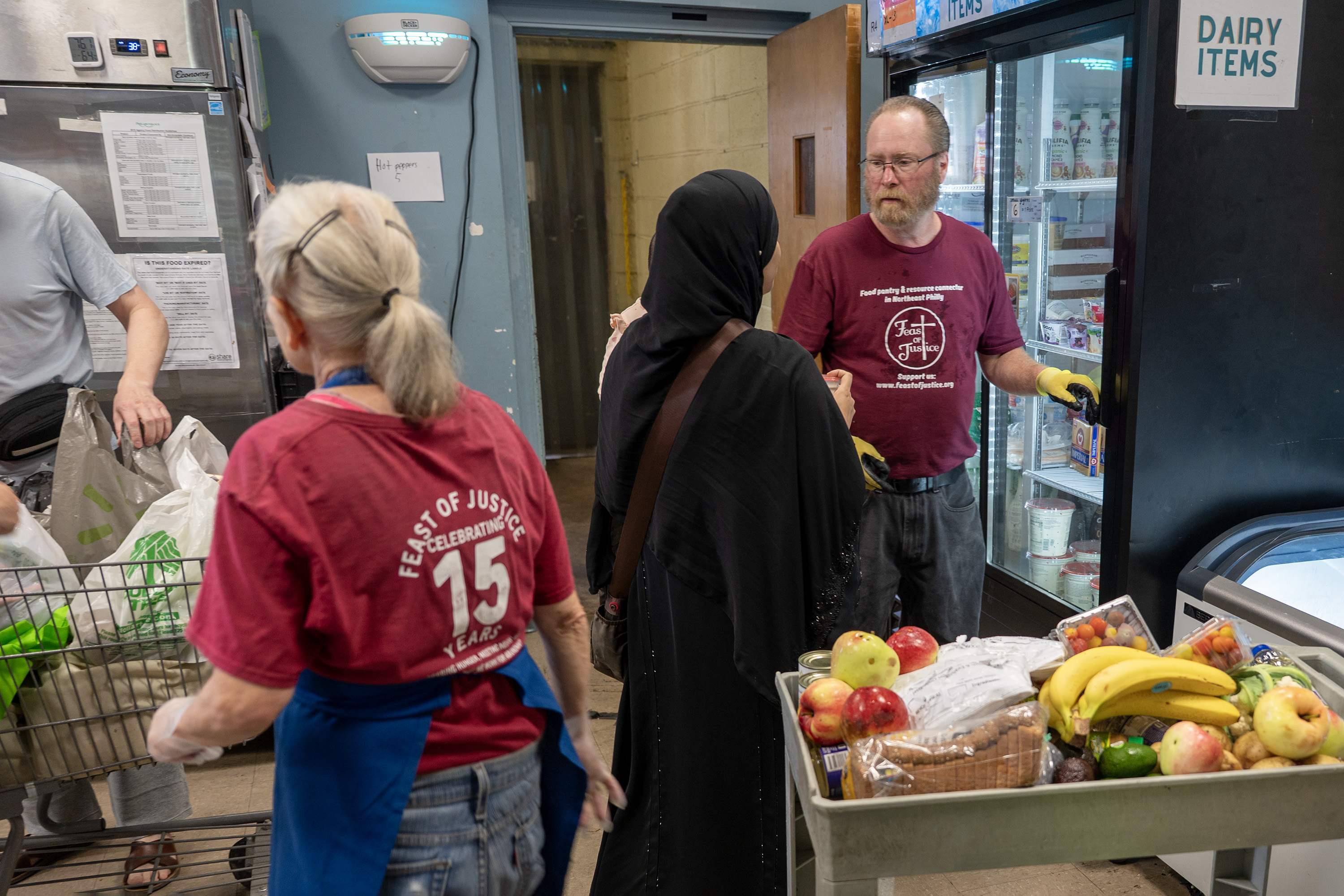
Volunteers help clients load groceries into their shopping carts at the Feast of Justice Food Pantry in August.Tom Gralish / Staff Photographer
Poorest, again
It was nice while it lasted. Last fall, Philadelphia shed a title we’d held for too long: America’s “poorest big city.” One year later, we’re back.
Unfortunately, this should not be a surprise. While poverty in Philadelphia has slowly receded from 2011’s high of 28%, the city and the region simply do not have enough jobs or economic opportunities to lift up the roughly one in five residents who live in poverty. In fact, research suggests the stagnation has led to Philadelphians of all income levels being less likely to earn more than their parents. Out of the 50 cities economist Raj Chetty looked at for economic mobility, Philadelphia was 50th.
There are some who’d like to spend their way out of this situation. This would be ill-advised.
Chicago, a city that shares many of Philadelphia’s positive and negative attributes, has tried that strategy. While Philadelphia’s leaders have spent decades being prudent with money, Chicago’s have repeatedly chosen the easy and popular route. The result is $55 billion in debt, a number that threatens the Windy City’s ability to perform basic services. Philadelphia, on the other hand, has the highest bond rating in city history.
Still, Philadelphia’s stagnant economy and low wages limit our ability to raise revenue. Despite seeing regular tax increases, Philadelphia spends less than $4,500 per resident. Chicago spends more than $6,000 per resident, and Baltimore spends nearly $9,000.
Because of Pennsylvania’s uniformity clause, any new taxes would fall on all, including the poorest. They also wouldn’t raise enough money to make a serious difference. Mayor Cherelle L. Parker’s rideshare tax would have raised $50 million. That’s enough to save important jobs in the school district, but it doesn’t come close to covering the billions of dollars’ worth of maintenance our schools need, let alone a sum that could substantively change the lives of the 300,000 residents who live below the poverty line.
If Philadelphia wants to permanently stop being called America’s poorest big city and supply economic mobility to all our residents, we’re going to need to embrace commerce and growth.
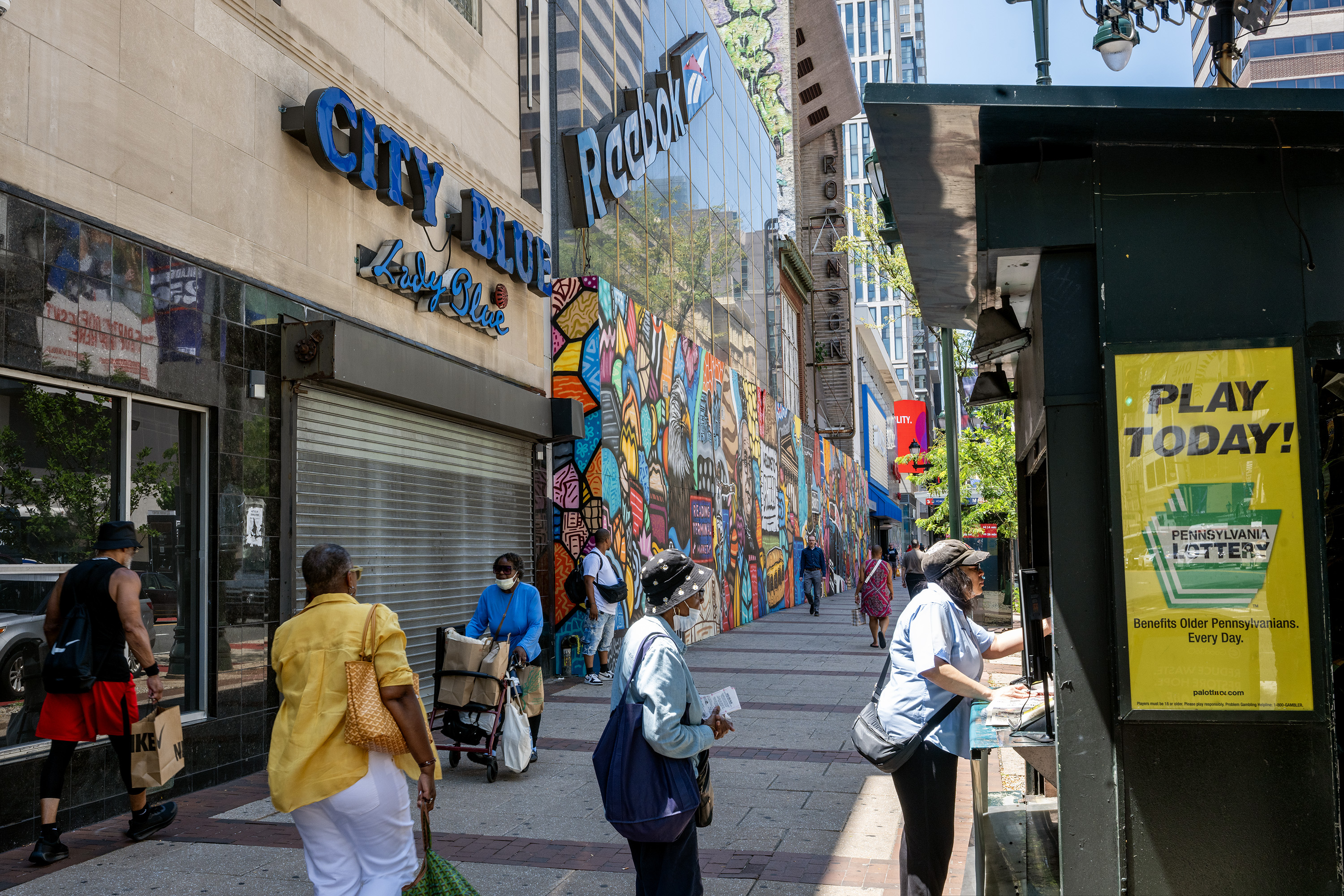
People walk on the south side of the 1000 block of Market Street in July.Tom Gralish / Staff Photographer
Market East muddle
After a year of conversation, Mayor Parker’s Market East Advisory Group has finally issued its recommendations for the long-underutilized corridor. They want to add thousands of homes to the area. Of course, new housing is positive for the city and the region, but the plan is frustratingly unambitious — and poorly timed.
After all, housing construction is a struggling industry these days. One of Philadelphia’s largest multifamily apartment building contractors, Clemens Construction, is literally closing its doors. Higher interest rates, tariffs on building materials, and other factors have raised costs, and existing residential buildings have struggled to attract tenants, leading their owners to sell to the Philadelphia Housing Authority.
Market East’s struggles are downstream of the city’s economic stagnation. In a Philadelphia that grows jobs at the same pace as the median American city, Market East would have long ago been filled with office towers and hotels.
Beyond supplying residents with opportunity, these buildings would make use of the billions of dollars’ worth of infrastructure that already exists in the area, including access to 13 Regional Rail lines, five trolleys, two highways, and both of Philadelphia’s subways. Ideally, this corridor would serve as a regional destination, rather than simply an urban bedroom community.
Of course, a plan to do just that was attempted … and abandoned. While the Sixers did not do the best job selling the public on their proposed Center City arena, the concept represented a more ambitious alternative than simply building more apartments. It would have made Market East a place the entire Delaware Valley visited again.
The 60-member committee that drafted the plan has no shortage of brainpower or economic intuition. I know and respect many of its members. But meetings cannot overcome the corridor’s underlying problems.
There’s no amount of collaboration or tinkering with zoning that can substitute for a cultural shift toward embracing growth and opportunity.
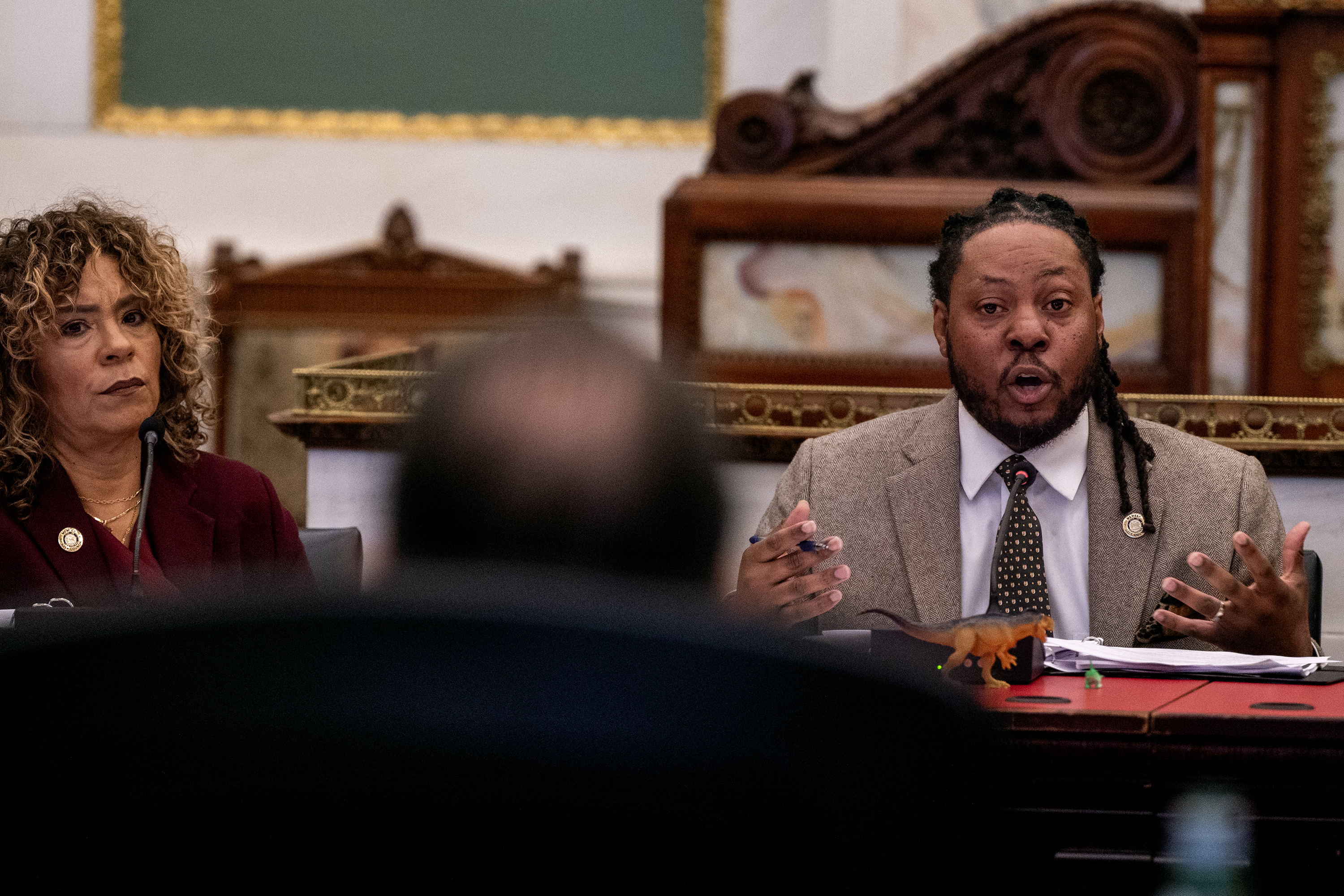
Councilmember Jeffery Young Jr. questions Drexel president Antonio Merlo during a hearing by City Council’s Committee on Legislative Oversight. Young has the most declared challengers looking to unseat the incumbent.Tom Gralish / Staff Photographer
Full field
For years, I have wanted Philadelphia to have more competition for its 10 district Council seats. Often, these legislators see few, if any, challengers once they take office, and even fewer of them actually lose after completing a full four-year term. The fact that district councilmembers have near total control over planning and development within their districts has been cited as an obstacle to fundraising and coalition building by past competitors. Simply put, it is hard to write a check or issue an endorsement if it could have a negative impact on your business or the community groups that you support.
Next year, however, promises to be different.
Even if Councilmember Mark Squilla takes a job at the Philadelphia Parking Authority, I expect fierce competition for his 1st District seat. Challengers are also circling around Curtis Jones Jr. in the 4th District, thanks to a series of gaffes as varied as asking transportation officials to delay a bridge reconstruction process and taking a payment from the notorious retirement program known as the Deferred Retirement Option Plan, or DROP.
The 8th District’s Cindy Bass, who narrowly defeated Seth Anderson-Oberman in 2023, looks set to face him once again. The self-proclaimed former member of the communist party came close to defeating her last time, dominating the decidedly non-proletarian Chestnut Hill in the process.
But it is the 5th District, represented by Jeffery “Jay” Young Jr., that has brought out the biggest field. While local attorney Jalon Alexander has been openly seeking the seat for some time, he’s been joined by at least four others: Kellan White, a former first deputy city controller, Dustin Dove, a Fairmount resident and lawyer, and Curtis Wilkerson, formerly chief of staff to Darrell L. Clarke, Young’s predecessor. Aissia Richardson, a staffer for State Sen. Sharif Street, told me she’s also planning to run, and local philanthropist Max Tuttleman gave me a statement that suggested that while he’s likely not going to run, he hasn’t totally ruled it out.
The surge of challengers exists, in part, because Young is seen as the weakest incumbent district councilmember in decades. At the same time, it could also help him survive. The more divided the field is, the fewer votes are needed to win.
While fundraising and petition gathering could trim the field, it would be against the city’s and the district’s interests for a winner to emerge with a mere 25% of the vote. Especially if their support is concentrated in just one neighborhood or community in what is an extremely racially and economically diverse district.
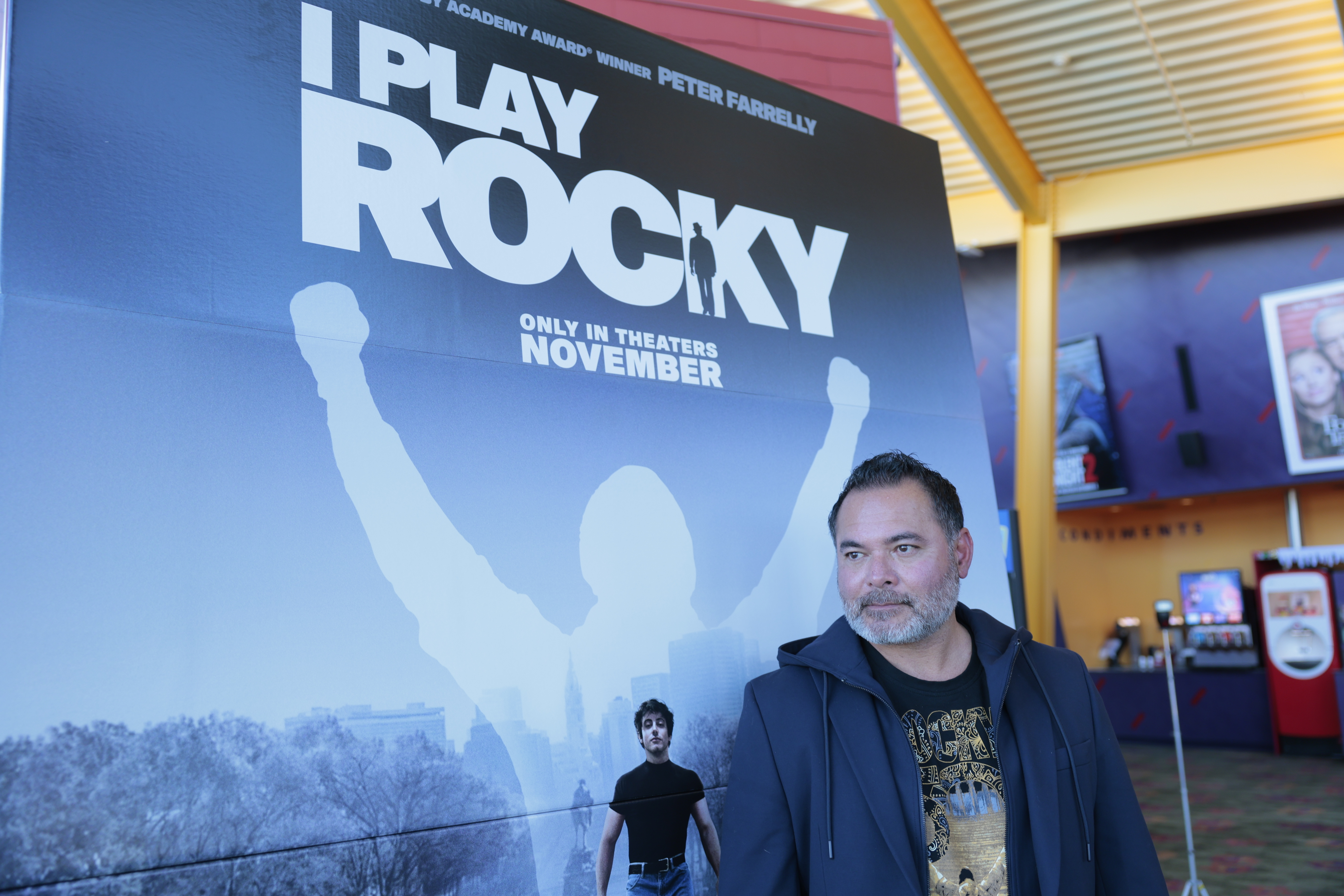
Scot Teller was living in Japan when his father took him and his brother to see Rocky. He knew nothing 50 years ago about the film except that it was shot in Philadelphia, where his dad grew up. Teller was mesmerized and still remembers all these years later how he felt leaving the theater.
Teller became Rocky-obsessed. He watched the 1976 movie more than 1,000 times and listened to the soundtrack before competing in karate. His French bulldog was named Rocky, and he named his pizza shops after The Italian Stallion. He never shook that feeling he felt as a 5-year-old boy.
“It had such an impact on me from that age for the rest of my life,” said the 55-year-old Teller, who grew up in Pottsgrove after starting his life in Japan while his dad was in the Air Force. “I idolized Rocky.”
Teller credits the fictional boxer with inspiring him as a boy and then saving his life as an adult. He was broke, living with his children in the back of his Montgomery County pizza shop. Teller, in the throes of depression, decided in the middle of the night that he was finished. And then he looked at his wrist and read the message he wore on a band: What Would Rocky Do?
“I looked at my kid laying there,” Teller said. “And I said, ‘What the heck am I doing? Don’t do this to your, kid. Get yourself up. Get up.’”
Teller, like the character he loved, stayed in the fight. He changed his life, narrowed his friends, met his wife, who he calls a rock star, and then decided to try acting. He had no experience on the screen, but the underdog actor — the guy inspired by the movie that said, “His whole life was a million-to-one shot” — wanted to make it happen.
And there he was last year on the set of I Play Rocky, the movie that hits theaters Friday about how Sylvester Stallone willed the iconic film into existence. Teller was cast as Paulie, Adrian’s brother and the character who helped Rocky get into the meat locker so he could train by punching frozen carcasses.
They were ready to film that scene when Teller looked around. He looked just like Paulie. Anthony Ippolito looked just like Rocky. There was Adrian and Mickey. The costumes were perfect. The sets were an exact replica. It was like he was in the movie that fueled his life.
“It literally felt like I was in a dream. A Rocky dream,” Teller said. “It was the weirdest feeling because it literally felt like I was locked in a Rocky dream and I was Paulie. It’s so hard to explain, but it was an amazing moment. It seemed so real. I was just locked in the movie.
“I literally had to look around and laugh to myself, ‘Is this real? Yeah, this is real.’ It’s an amazing turnaround to where I came from and what I’ve overcome.”
Scot Teller as Burt Young playing Paulie with Anthony Ippolito, who portrays Sylvester Stallone in the new film “I Play Rocky.”Scot Teller
What would Rocky do?
Teller had already lost his home and furniture when he was living in the back of his failing pizza shop. A series of financial decisions — “I was helping out the wrong people,” he said — proved crushing. A single dad, Teller piled rags and clothes onto the floor to give his children a place to sleep. The shop was faltering, his life was falling apart, and now his kids didn’t even have a bed.
“I felt like such a failure,” Teller said. “I felt like I was a horrible dad because my kid was laying on rags. I had nowhere to go. I was drowning. I lost everything. So at the darkest time of my life, I was done. I looked down and I saw that bracelet.”
Teller called his dad, who had he stopped talking to when the walls were closing in, and said he needed help. His dad came to the pizza shop at 4 a.m., drove Teller to the hospital, and took his children home.
“I said I just have to make changes,” Teller said.
A few years later, Teller was driving his son to baseball practice when he heard a radio commercial looking for extras in Creed II. Teller had a chance to be an extra in the first movie, which tells the story of Apollo Creed’s son, but had to back out because of the pizza shop. He reached out again and they told him to come the next day.
Teller sat in the crowd as they filmed fight scenes for six hours before someone from the set asked him to come with them. Teller thought he was getting tossed. They instead asked if he could stick around for the next few weeks and take on a bigger role. He returned the next day and was directed where to sit. Hang tight, they said. Stallone soon arrived, and Teller watched someone direct the star toward him.
“They told us not to talk to anyone, but Sly kept talking,” Teller said. “He was showing me stuff on his phone and telling stories about Rocky. Everyone was wondering who I was because he kept talking to me.”
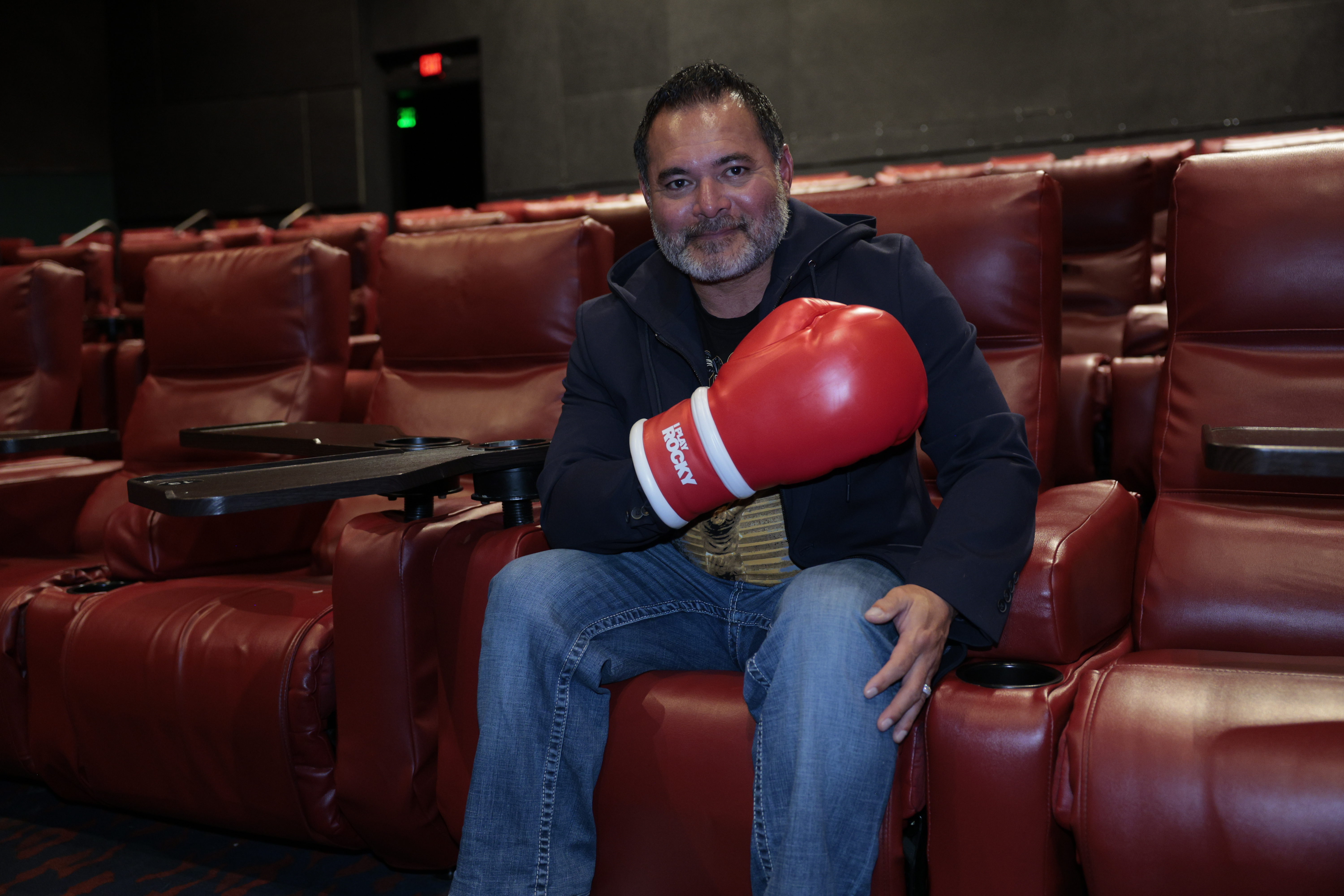
Scot Teller credits “Rocky” with saving his life and now the underdog actor is Paulie in “I Play Rocky.” Steven M. Falk / For The Inquirer
Teller told Stallone he wanted to pursue acting and asked the guy who inspired him for advice. Keep working, Stallone said. No role is too small. Just act, he said. Teller was hooked. Later on the set, one of the other actors told Teller that he looked like Burt Young.
“Stallone was right there, he turned and looked at me,” Teller said. “He said, ‘Yeah, you do look like Paulie a little bit.’ I said, ‘Hey, write a script and I’ll be your guy.’ I manifested this role. That was the first time that anyone told me I looked like Burt Young and Paulie.”
‘Some Rocky movie’
Teller was ready to move to Arizona in 2019 as his son Jagger planned to attend the University of Arizona after graduating from high school. Teller was going to live with a former pitcher he knew from his days as a Phillies minor-league bullpen catcher. But then his son changed his mind. He wanted to go to Temple. Teller had already paid the tuition deposit, and his son had a roommate. It was late.
“My son asked, ‘How would you feel?’” Teller said. “I said I would support whatever he wanted to do. I said, ‘Listen, you have to follow your heart and I’ll make it happen.’”
His son went to Temple, which allowed Teller to stay home and meet his wife, Jen. That doesn’t happen, Teller said, if his son didn’t change his mind. Jen, whom Teller married in 2022, told him he had to get rid of the negative people in his life. It was that simple.
“When I started doing that, good things started happening to me,” Teller said. “When good things happen to you, it snowballs. It’s contagious. When you’re a good person, you attract good people. When you’re miserable and unhappy, those are the people you attract. That’s what happened to me. I started surrounding myself with good people and got all the negative people out of my life.”
He was at a steakhouse in Nashville with his wife in 2022 when he saw actor and director Griffin Dunne walk in. Jen Teller watched Dunne every week in the show This Is Us. Teller said he was going to say hi. His wife told him not to, but Teller did anyway.
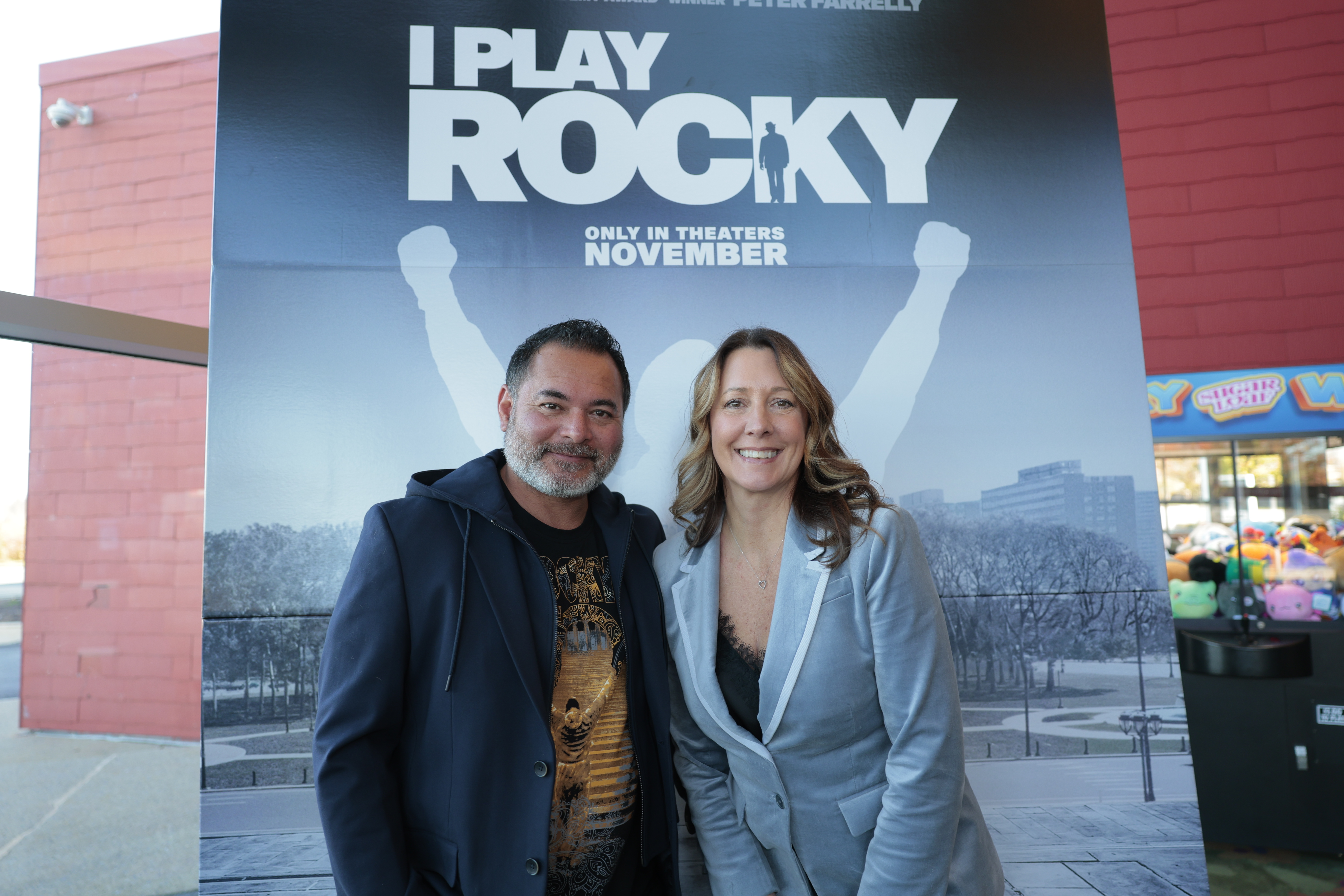
Scot Teller with his wife Jen.Steven M. Falk / For The Inquirer
“My wife is usually right maybe 99.9% of the time,” Teller said. “Well, that day she was wrong. I didn’t listen to her and I introduced myself.”
Three years later, a Philadelphia casting agency asked Teller if he could be a “stand-in” for a film in Lancaster. Sure, he said. But who was he standing in for? Dunne, they said.
“I said, ‘What? You have to be kidding me,’” Teller said.
Teller didn’t bother Dunne on the set but could tell the actor was staring at him as if he recognized him. Finally, Dunne asked the stand-in if they had worked together before.
“I said, ‘Nashville, Tennessee steakhouse.’ He knew right away,” Teller said. “He goes, ‘Where’s your wife?’”
Dunne texted Teller late one night that he told filmmaker Peter Farrelly to give Teller a chance at his next project. Teller thanked Dunne the next day and asked if he knew what Farrelly’s project was.
“He said, ‘I don’t know. Some Rocky movie,’” Teller said.
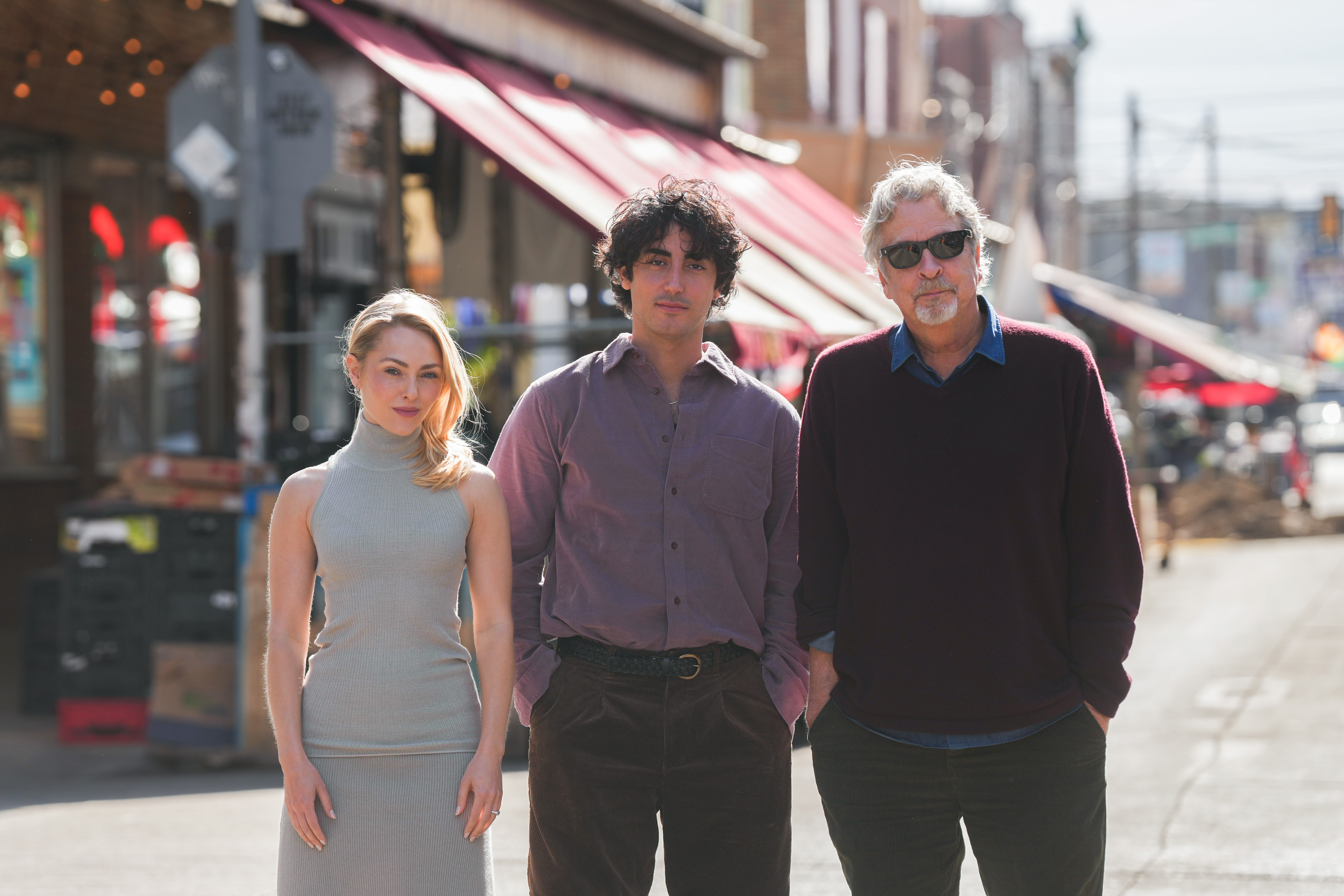
“I Play Rocky” actors AnnaSophia Robb and Anthony Ippolito along with director Peter Farrelly outside at the Italian Market on Nov. 2.Jessica Griffin / Staff Photographer
I play Paulie
Teller received a call the next day from a California phone number and almost didn’t answer it.
“The other voice was Pete Farrelly,” said Teller. “Pete Farrelly himself calling me. Just a legendary moment. I was satisfied with that. I could say Pete Farrelly called me to talk about a movie project.”
Farrelly told him that Dunne vouched for him and asked the unknown actor if he could send over headshots. Farrelly called back. You really do look like Paulie, he said. He asked Teller to audition for the part. The guy who credited Rocky with saving his life had a puncher’s chance to get in a movie about Rocky.
He rewatched his favorite movie, focusing on every scene Paulie appeared in and studying how Young acted. Teller practiced his lines — like when Paulie threw the Thanksgiving turkey out the front door — and nailed the audition. They called Teller and told him he was Paulie.
“I broke down and cried,” he said.
Teller nearly quit acting a few years earlier after the majority of his scenes were cut from Hustle, the 2022 Adam Sandler movie that was filmed in Philadelphia. He invited friends over to watch it after it was released on Netflix and then had to explain why he was hardly in it. He was embarrassed. But Jen told him he couldn’t quit now. He had to keep acting, just like Stallone told him years ago.
Video: Guinness world record achieved for the largest gathering of fans dressed as Rocky Balboa
His wife wasn’t right that night in the Nashville steakhouse, but she was right about this. Teller stayed in it and landed a dream role. Some of his parts, Teller said, were cut, and most of the Paulie scenes are toward the end of the movie. But he’s in the film.
“The movie is called I Play Rocky, not I Play Paulie,” Teller said. “But I’m a part of the Rocky saga. There’s only two people who have played this character. The legend Burt Young and this other guy. I’m super blessed.”
The kid who fell in love with the Italian Stallion as a boy and later credited the character with keeping him alive is living a “Rocky dream” because he asked himself, “What Would Rocky Do?”
“Rocky always got up,” Teller said. “He took every hit and kept moving forward. He got up and kept moving forward. That’s what I did. I got up, I put one foot in front of the other, and I kept moving forward.”
One of the best things about playing a sport and being part of a team is being dialed in for a common cause. That cause is usually to emerge as a champion at the end of the year, but sometimes that’s only one piece.
This season, a year removed from the loss of their beloved coach, the women’s volleyball team at Rowan University is playing for more. And they’re playing quite well too. This season is dedicated to the memory of their former coach, Deana Jespersen, who died from breast cancer last November.
The result? The Profs ran the table in their conference, won the NJAC championship last Saturday, and earned an automatic bid to the Division III NCAA Tournament, winning their first-round game against Cortland yesterday.
They are a remarkable story, one told by Inquirer writer Isabella DiAmore, who you know as my partner-in-crime when it comes to Sports Daily.
Friday is a carbon copy of yesterday’s sunny skies, with temperatures in the mid-60s. Gotta love it.
It’s been a tough season for Eagles fans, young and old. Could the solace come from the team’s move up in the NFL Draft?David Maialetti / Staff Photographer
Look, the Eagles’ odds of making the playoffs are bordering on the impossible. But for the first time in a long time, fans have to consider the fact that with each loss, the team’s move up in April’s NFL draft continues to improve.
Entering Week 11, the Eagles are slotted in at the No. 5 spot with their own pick and No. 26 with Jacksonville’s pick. Right now, there are seven teams with three wins entering Week 11, if you’re wondering what an Eagles win might do to muddy the waters.
Ahead of Sunday’s game against the Pittsburgh Steelers (Sunday, 1 p.m., CBS), Inquirer writer Jeff Neiburg does the yeoman’s work of looking at how the chips could fall come draft time as this tough-to-watch season continues to progress.
What we’re …
🏈 Reading: How communication issues are what’s stumping the Eagles this season, according to the team’s offensive coordinator, Sean Mannion.
👀 Watching: David Ortiz’s take on Kyle Schwarber, whom he believes is already a surefire Hall of Famer.
🏀 Sharing: This clip of Sixers writers Gina Mizell and Chris Hine talking about the mind of LeBron James being a reason for optimism.
⚾ Having: This check-in on the status of Aidan Miller as the Phillies prepare for baseball as usual in 2027.
🦅 Wondering: How well will DeVonta Smith play upon his return to the Birds, considering he could suit up for Sunday’s game against the Steelers.
Flyers right winger Travis Konecny isn’t listening to the rumors that surrounding his place in the team. Yong Kim / Staff Photographer
There’s a very good chance that Flyers winger Travis Konecny won’t read this. He’s not reading much of anything right now as it pertains to his future with the Flyers and his relationship with teammates.
Since reports emerged that the team grew frustrated with his play and could consider asking to waive his no-movement clause, the 29-year-old, who is in the second year of an eight-year, $70 million deal, isn’t trying to hear it.
“I have a relationship with Danny [Brière, the Flyers general manager], and if anything of any importance was out there, he would talk to me, and I would talk to him,” Konecny said. “So I don’t pay attention to anything that people say.”
Union’s goalkeeper Andre Blake will miss Saturday’s playoff-opening match due to a groin injury. Steven M. Falk / For The Inquirer
On Thursday, Union interim manager Ryan Richter broke the news that the team will be without longtime goalkeeper Andre Blake, who is still reeling from a groin injury he sustained in the team’s regular season finale against Toronto FC.
It wasn’t exacerbated during his time away with the Jamaican national team, given he did not play for the Reggae Boyz in their two-game clash against Mexico last week. While the news is terrible timing, it’s cushioned by two stalwarts of the team’s offense being cleared to play.
Kai Wagner tops the list of the highest-paid players on the team following the release of MLS salary figures yesterday.
On this date
Nov. 20, 1997: Flyers legend Eric Lindros put on his best Mike Tyson meets Evander Holyfield impression when he tried to bite San Jose’s Marty McSorley.
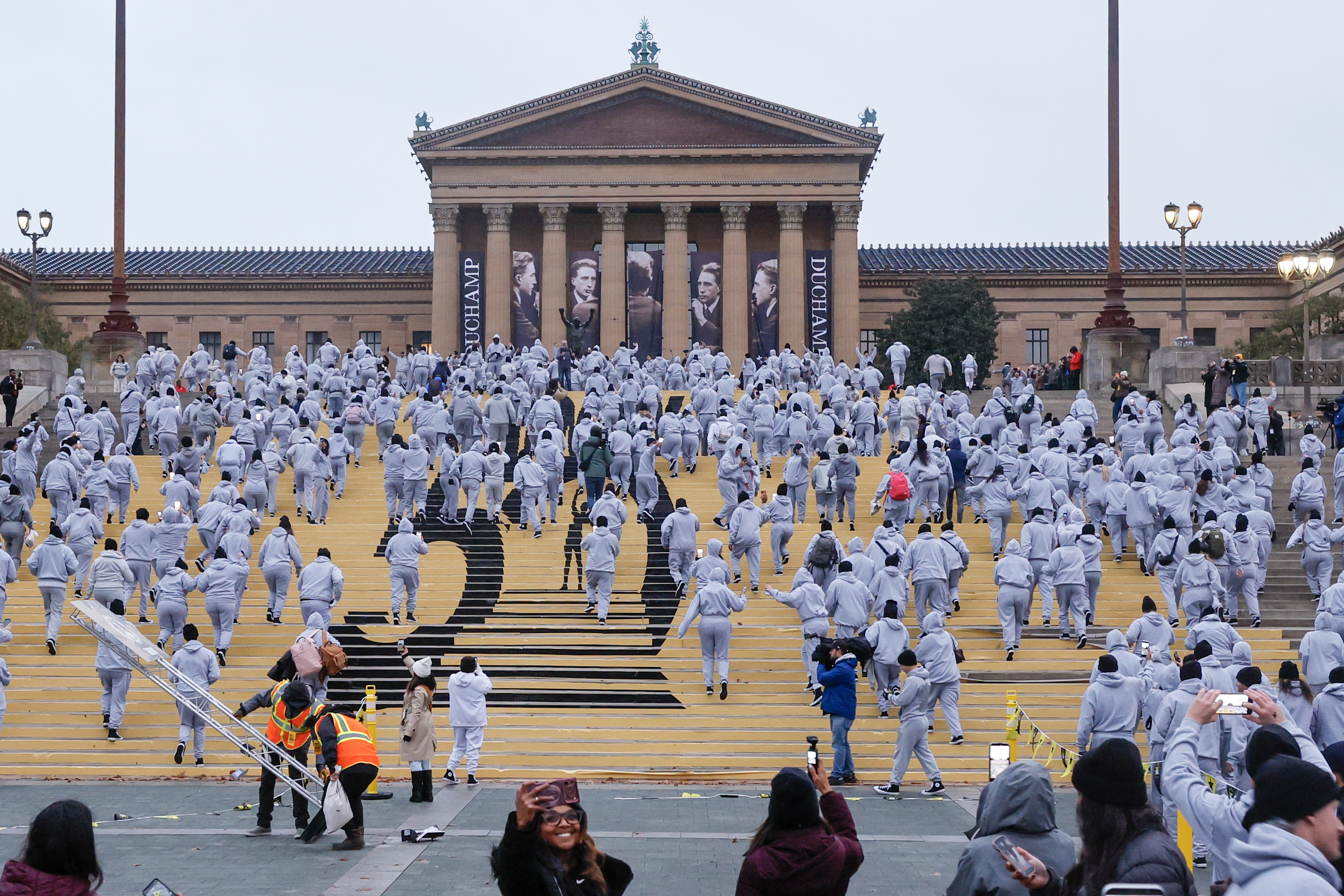
Philadelphia Visitors Center gathers the largest group of people dressed as Rocky Balboa in world history on the Rocky steps at the Art Museum on Nov. 13.Elizabeth Robertson / Staff Photographer
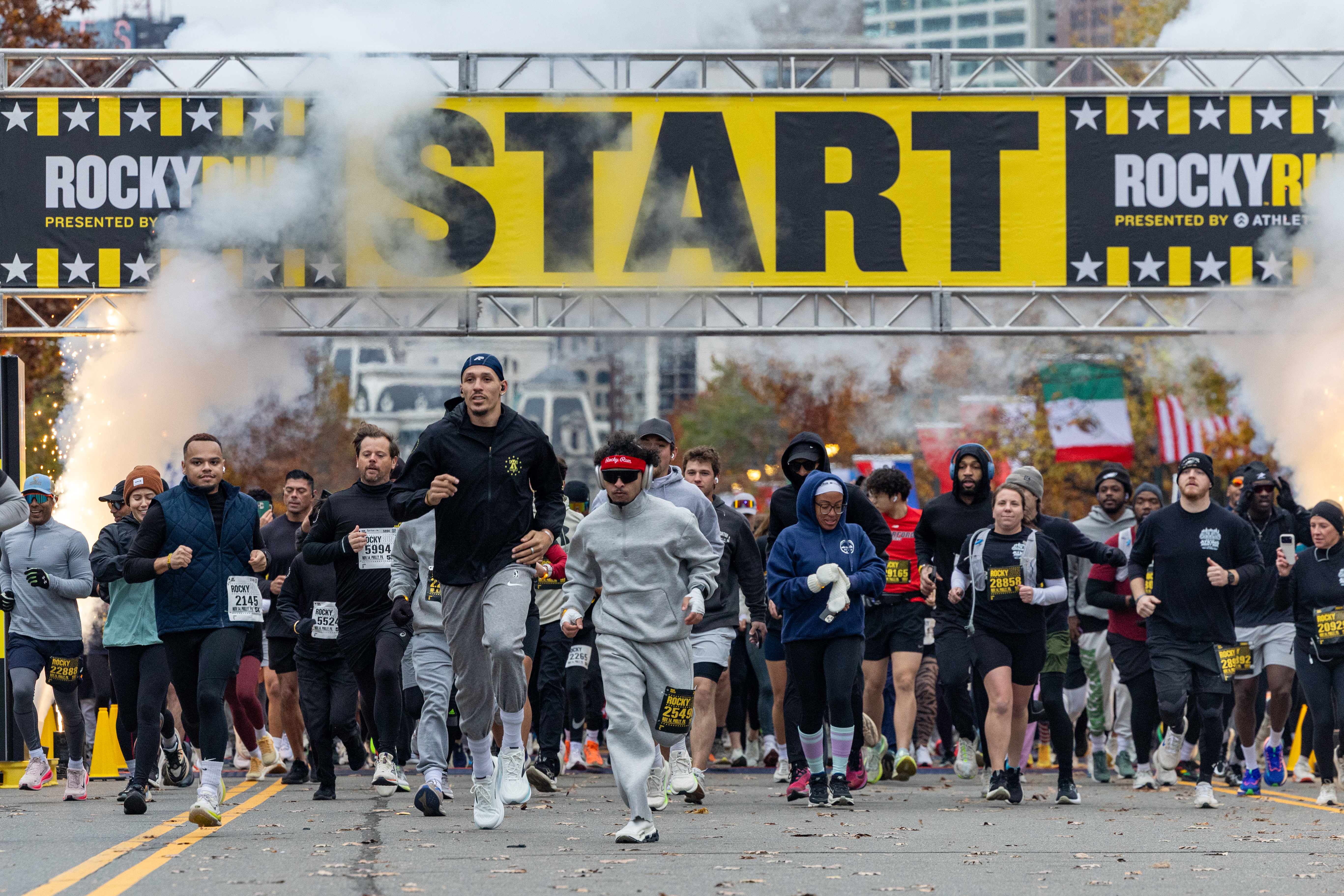
It was once again a busy week in Philly sports, with the first-place Sixers continuing their winning ways, the Flyers notching a couple of victories and some Big 5 college basketball matchups getting underway. But one of the biggest scenes this week was on the Ben Franklin Parkway, where the Rocky Run swept through the city, and hundreds of Rocky Balboas raced up the steps of the Art Museum.
This Eagles linebacker says despite the team’s rough season, he hasn’t confidence in the team, and himself. Think you know? Take a guess and then click here to see if you’re correct.
🧠 Trivia time answer
D. Wrestling. That was the sports program Josh Harris awarded a portion of a $15 million gift to, in addition to Penn’s Wharton School. Here’s why he did it.
What you’re saying about the Sixers
Sixers guard VJ Edgecombe was the highlight of the team’s 17-point comeback against Orlando on Wednesday. John Raoux
We asked: What impresses you the most about this Sixers team?
What makes this Sixers team so special is the combination of talent they possess on the roster. Youthful stars like VJ Edgecombe and Tyrese Maxey, All-Star veterans like Embiid and Jaylen Brown, and one of the best, LeBron James. Hopefully — is not just a collection of talent that is fun to watch. Rather — one that will walk down Broad Street in June for the first time since 1983. — Michael L.
I think the problem with any team loaded with stars is who gets to shoot or who should shoot, but once they play about half a season, they should feel more comfortable as a team rather than individual stars. But so far they have played well and have shown that their greatest strength is their ability to come back from deficits, and some that are considerable. — Everett S.
We compiled today’s newsletter using reporting from Isabella DiAmore, Jeff Neiburg, Gina Mizell, Chris Hine, Jonathan Tannenwald, Olivia Reiner, Jackie Spiegel, Scott Lauber, Jack Vita, and The Inquirer’s photography staff.
By submitting your written, visual, and/or audio contributions, you agree to The Inquirer’s Terms of Use, including the grant of rights in Section 10.
That’s your week, Philly. Have a good weekend. We’ll catch you Monday. — Kerith
The Eagles might have been on their bye, but it was still a busy week in Philly sports, with the first-place Sixers continuing their winning ways, the Flyers notching a couple victories amid their poor start to the season, and some Big 5 college basketball matchups getting underway. But one of the biggest scenes this week was on the Ben Franklin Parkway, where the Rocky Run swept through the city and hundreds of Rocky Balboas raced up the steps of the Philadelphia Museum of Art to set a new world record.
Each Friday, Inquirer photo editors pick the best sports images from the last seven days. Here’s a look at this week’s Big Picture:
Flyers center Christian Dvorak (right) celebrates his third-period goal with defenseman Cam York. Amidst their slow start, the Flyers bounced back from Sunday’s loss with a 4-3 win over the Sabres on Tuesday.Isaiah Vazquez / For The Inquirer
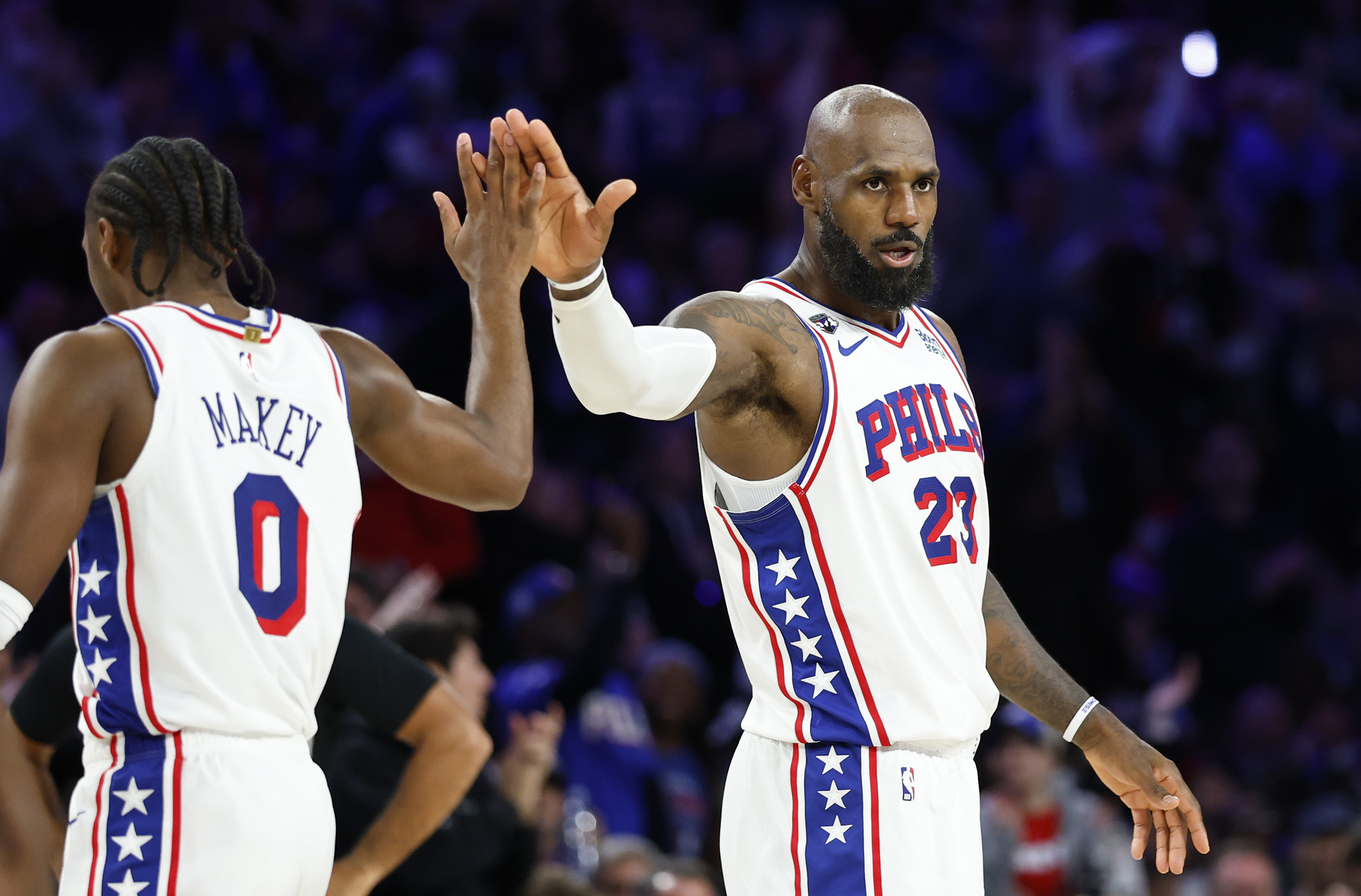
Flyers captain Sean Couturier gets hit while going after the puck against the Oilers during Sunday’s loss.Yong Kim / Staff PhotographerSixers forward LeBron James backs off Indiana Pacers guard Aaron Nesmith during Sunday’s victory, which was the team’s second in its current four-game win streak.Yong Kim / Staff Photographer
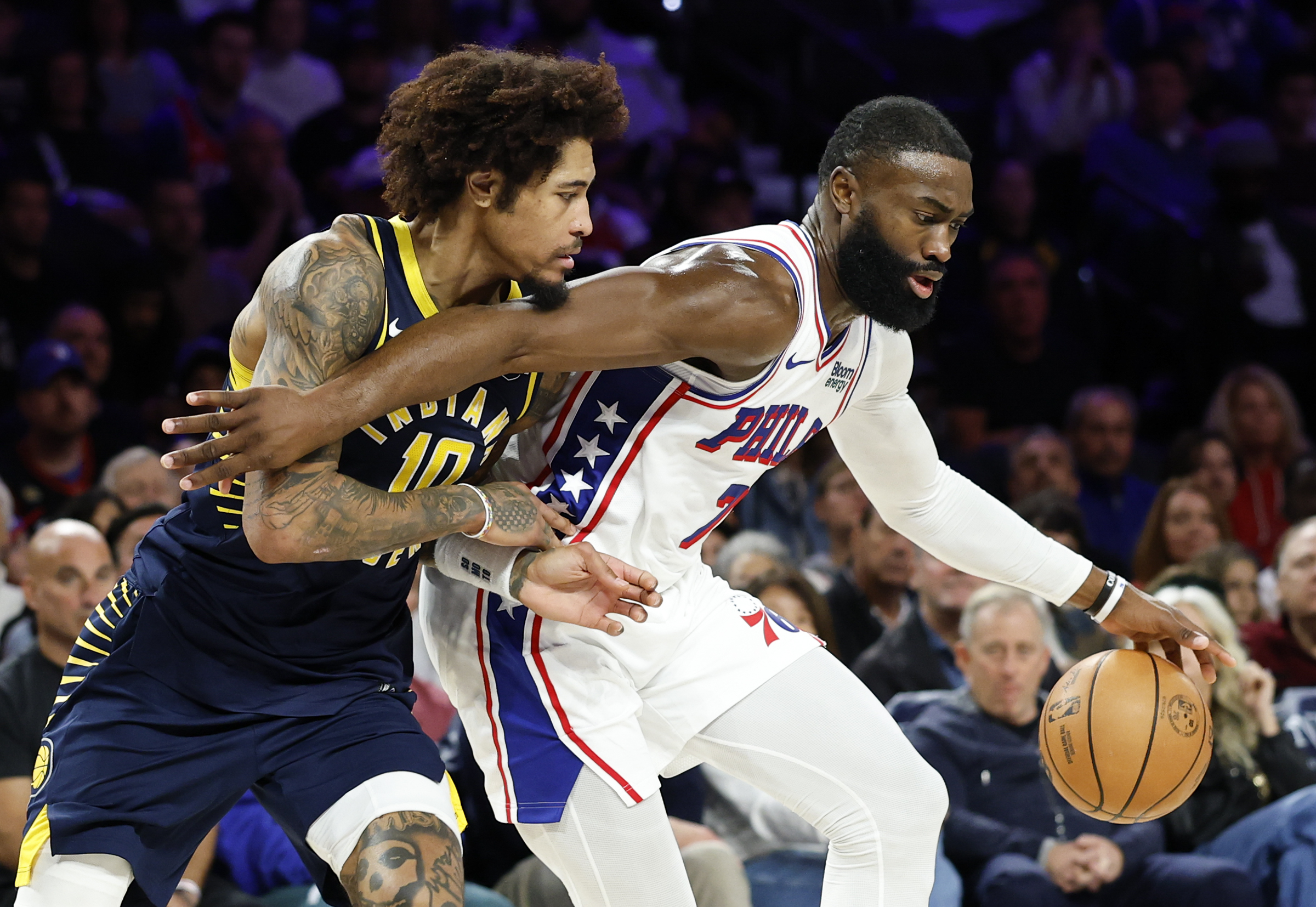
Sixers guard Jaylen Brown, who led the Sixers Sunday with 31 points, shields the ball from Indiana Pacers guard and former Sixer Kelly Oubre Jr.Yong Kim / Staff PhotographerSixers guard VJ Edgecombe drives to the basket against Kelly Oubre Jr., during the fourth quarter on Sunday’s win.Yong Kim / Staff Photographer
Drexel’s Gabby Casey (left) wrestles control of a rebound against Saint Joseph’s Julia Garcia Roig (right) and Bria Watkins at the Daskalakis Athletic Center on Sunday. The Hawks won, 61-56.Tom Gralish / Staff Photographer
Temple guard Derrian Ford (center) drives to the basket past La Salle defenders, including Trey Moss (right), in the second half of the Owls’ 84-71 at John E. Glaser Arena on Sunday.David Maialetti / Staff PhotographerDebora Alves, 57, of São Paulo, Brazil, hugs her husband Francisco Leonardo, 52, after he finished the 10-mile race at the 2026 Rocky Run on Saturday.Aidan T. Gallo / Staff Photographer
With City Hall in the background, runners line up on the Ben Franklin Parkway before the start of the Rocky Run’s 5K race.Aidan T. Gallo / Staff Photographer
A new world record was set when 570 people dressed as Rocky Balboa gathered on the Art Museum steps on Saturday.Elizabeth Robertson / Staff Photographer