Tag: topic-link-auto

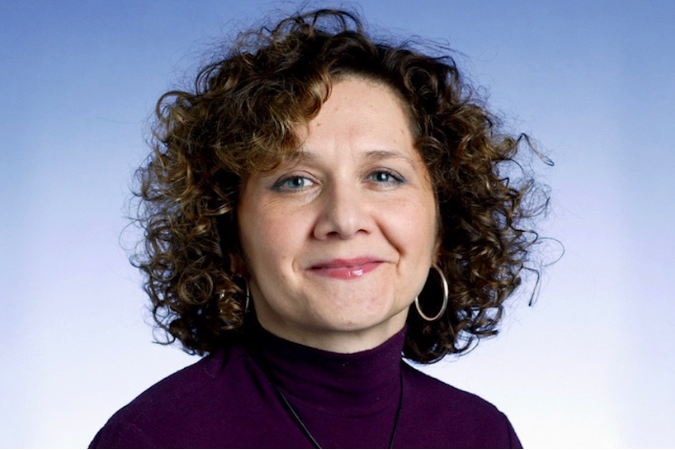
  • Monica Rhor, award-winning journalist, former Inquirer reporter, and teacher, has died at 65

    Monica Rhor, award-winning journalist, former Inquirer reporter, and teacher, has died at 65

    Monica Rhor was born in Ecuador in 1960. She came to the United States with her family in 1963.

    On Feb. 14, 1997, she became a naturalized U.S. citizen in a ceremony at the immigration office in Cherry Hill. On Tuesday, the National Association of Hispanic Journalists recognized her long career as a reporter, editor, mentor, and inspiration with a Lifetime Achievement Award.

    In between all that, she earned bachelor’s and master’s degrees, and wrote thousands of consequential stories for The Inquirer, Miami Herald, Boston Globe, Houston Chronicle, Chalkbeat, and other news organizations. She taught journalism and English classes to high school and college students in Texas, mentored countless other journalists, volunteered with several journalism organizations, and wrote insightfully about her life as an immigrant.

    “My [older] sister survived immigration by becoming wholly American,” she wrote in The Inquirer in 1997. “I survived by remaining resolutely Ecuadorian. We both lost something in the process. She has become an outsider to her own culture. And I have always felt outside this one.”

    On Sunday, Nov. 1, Monica Rhor, journalist, sister, mother, daughter, and friend, died of glioblastoma at a skilled nursing center near Houston. She was 65.

    “Monica was fearless,” Marisol Bello, a longtime friend and colleague, said. “She was one of the many women in my life that I admired and so wanted to be like. Her energy, wit, and capacity for love was just larger than life.”

    Colleagues at Chalkbeat called Ms. Rhor “soft-spoken, a careful listener, a bit stoic, mindful of her words, patient, and, above all, kind.” Colleagues at the NAHJ said: “Everything she touched, she made shine, whether it was copy, story framing, or a life.”

    Ms. Rhor liked to say she became a writer in fifth grade. Encouraged by a teacher to put her ever-flowing thoughts and ideas down on paper, she journaled voraciously as a girl and earned a bachelor’s degree in journalism at New York University in 1983.
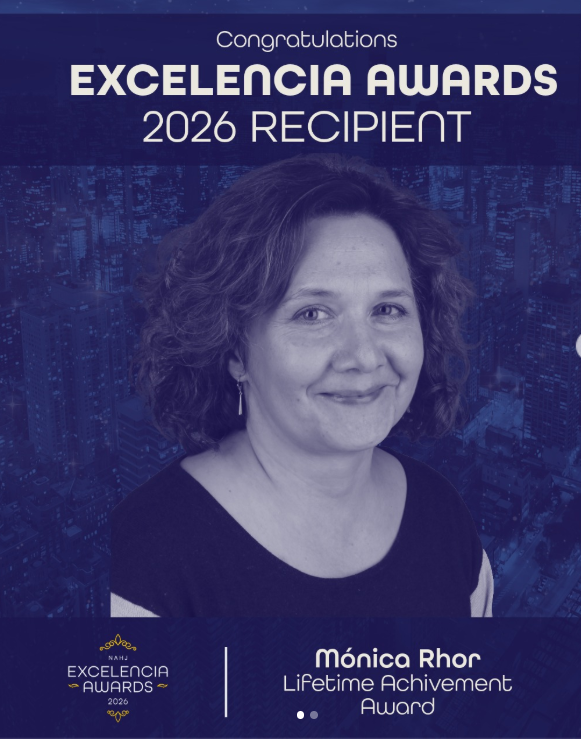
    The National Association of Hispanic Journalists honored Ms. Rhor on Nov 17. National Association of Hispanic Journalists

    She wrote nearly 1,000 stories during her nine years at The Inquirer, from 1992 to 2001, and hundreds more for the Herald, Globe, Chronicle, Orange County Register, Associated Press, USA Today, Chalkbeat, and smaller papers in Texas, Delaware, and Florida. She won several awards and was named the 2008 Associated Press Writer of the Year in Texas.

    She covered politics, the economy, education, crime, immigration, healthcare, racism, war, sports, art, dance, and everyday life in South Jersey and Philadelphia for The Inquirer. She reviewed books and wrote front-page features, long Sunday magazine stories, obituaries, and news briefs.

    She was particularly interested in stories about systemic inequities, marginalized voices, and the triumphs and tragedies that defined the daily lives of her readers. “I believe in the power of the written word,” she said during a writing seminar in 2012. “I believe it has the power to change lives. … Writing changed my life.”

    Bello said: “She had a fierceness and sense of justice that drove her love of stories.”
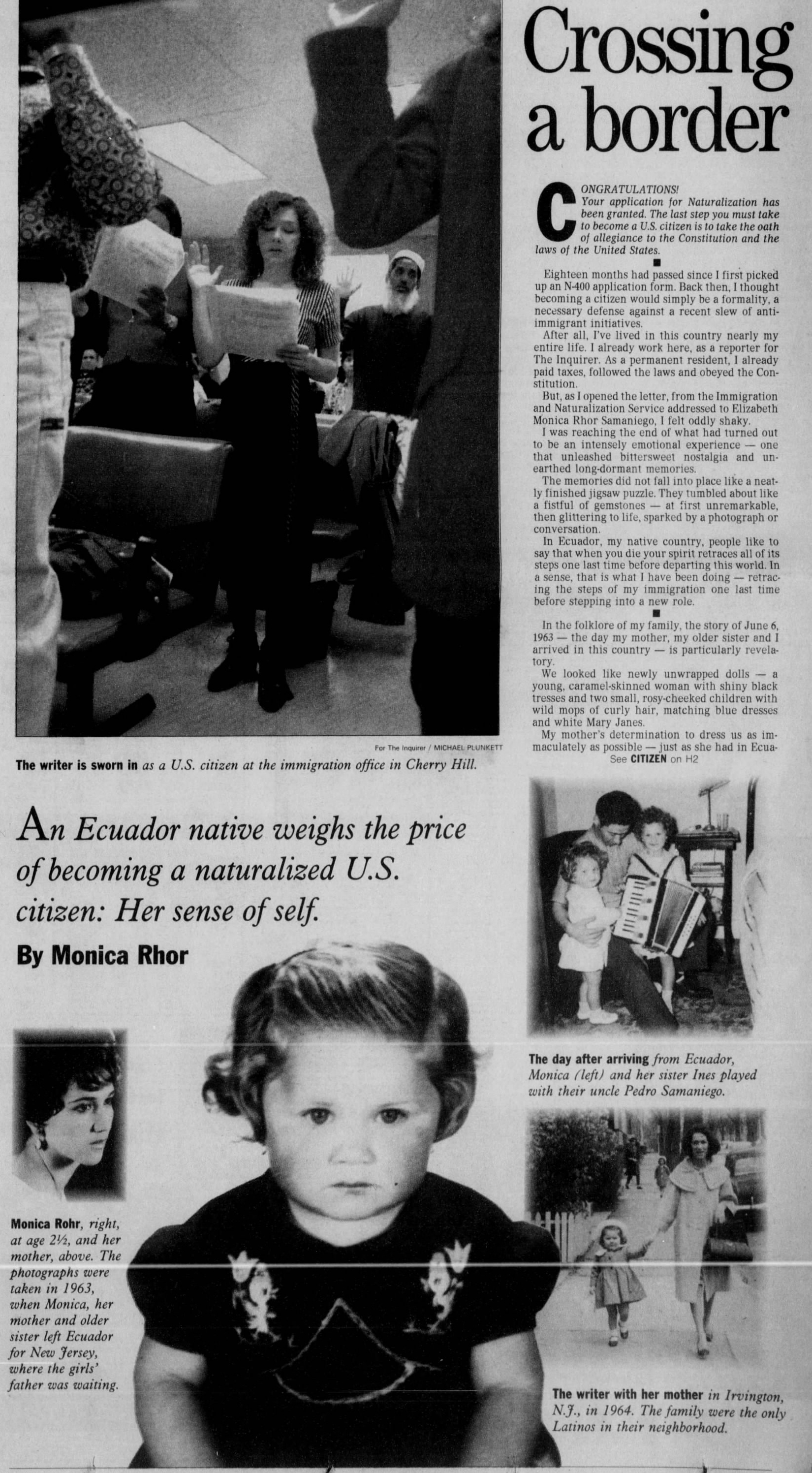
    Ms. Rhor wrote about her life as an immigrant from Ecuador in The Inquirer in 1997.Newspaprs.com

    To open a 1994 Inquirer story about a grieving mother, Ms. Rhor wrote: “Elizabeth Burgos couldn’t find baby clothes small enough to bury her infant daughter in.” In a 2000 story about urban gardens, she wrote: “North Philadelphia rattles noisily around the plot of land surrounded by chain link and bordered in back by train tracks. But inside the fence, the city slips away and soft echoes of a verdant, Southern farm rise.”

    After The Inquirer, she was an enterprise writer in Miami, an immigration reporter in Boston, an investigative reporter in Orange County, Calif., and a narrative writer covering gender, sexuality, spirituality, and race in Houston. She moved to Texas in 2006 and rose to columnist and editorial writer at the Chronicle in 2019.

    She joined Chalkbeat, a nonprofit that reports on schools and education, as a story editor in 2021 to cover a beat, she said on LinkedIn, “close to my heart and the intersection of so many critical issues.”

    She earned an online master’s degree in education from the University of Missouri in 2023 and taught journalism and English to high school and college students in Texas. She led seminars and workshops through the NAHJ and was active with all kinds of projects for the National Association of Black Journalists, the Education Writers Association, Unity Journalists, and the old Next Generation Radio Project.
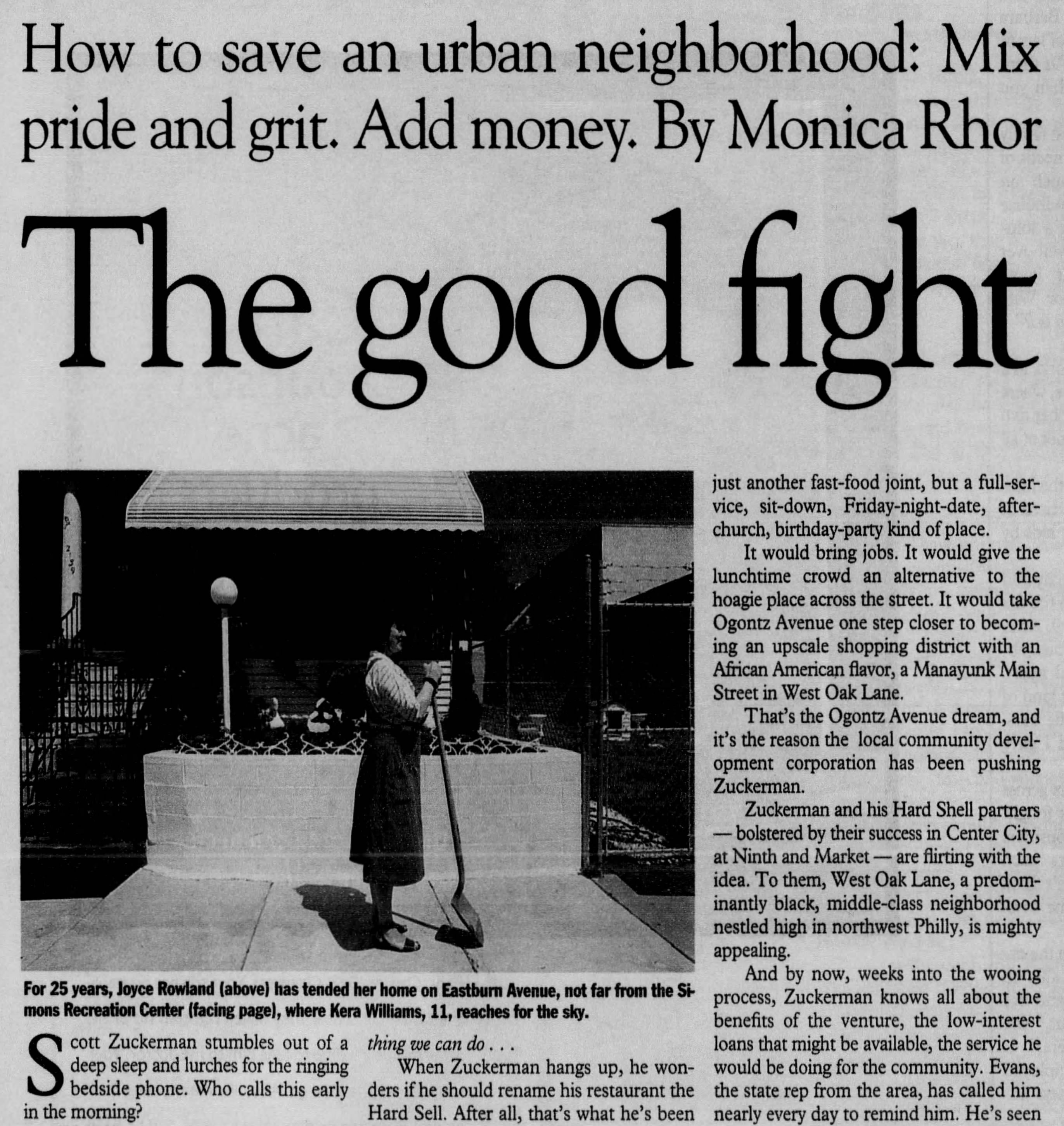
    Ms. Rhor wrote this magazine story about changing neighborhoods in Philadelphia for The Inquirer in 1996.Newspapers.com

    Her death, a former colleague at The Inquirer said on Facebook, “leaves a hole in the heart of American journalism.” A colleague at Chalkbeat said: “Monica connected with colleagues not just as a journalist but as a human.”

    Elizabeth Monica Rhor Samaniego was born Dec. 20, 1960, in Riobamba, Ecuador. In 1997, she wrote about the struggles she and her older sister, Ines, faced as Latinas growing up in northern New Jersey. “My childhood was a tightrope walk between this new culture and that old one,” she wrote in The Inquirer. “Yet, no matter how either of us acted, the surrounding world saw us as interlopers.”

    Still, they excelled, and friends and colleagues called Ms. Rhor “a fighter since day one,” “a gifted storyteller,” and “a bright light for many of us” in recent tributes. She lived in Cherry Hill and Center City when she worked for The Inquirer, and she developed a keen interest in popular culture.

    She enjoyed classic movies and zombie horror flicks. She was an avid reader, her younger sister Sylvia said, and “she loved newsprint on her fingers.”
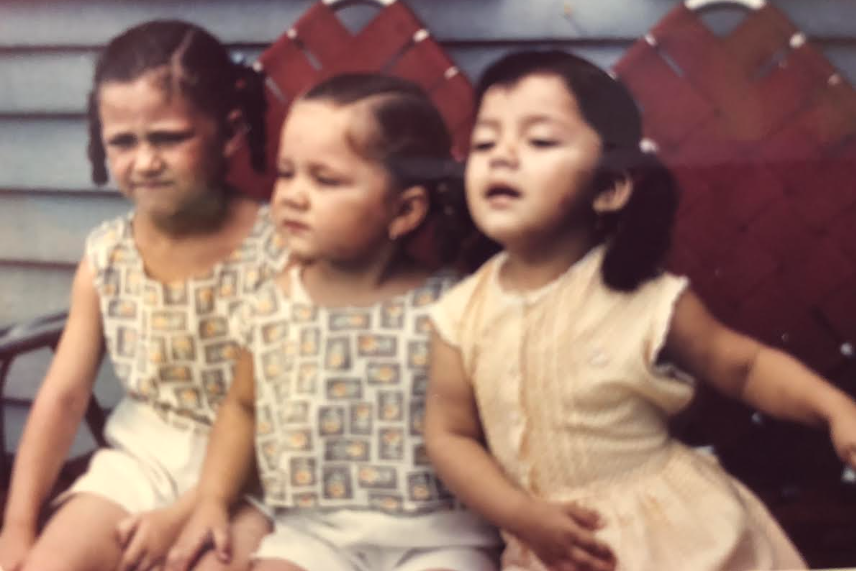
    Ms. Rhor (center) and her older sister Ines (left) enjoyed time with their family,Courtesy of the family

    She married and divorced, adopted two daughters, and lived in Kingwood, Texas, 30 miles northeast of Houston. Recently, she took up crocheting and watercolor painting. Her friends, her family said, sustained her.

    “She felt everything so deeply,” her sister Sylvia said. “Joy, sadness, and empathy for others. She was curious about people. She was so full of life. Her irrepressible energy is all around us.”

    In addition to her sisters, daughters, and father, Jorge, Ms. Rhor is survived by other relatives.

    A celebration of her life is to be held later.

    Donations in her name may be made to the National Association of Hispanic Journalists, 1050 Connecticut Ave., Washington, D.C. 20035.
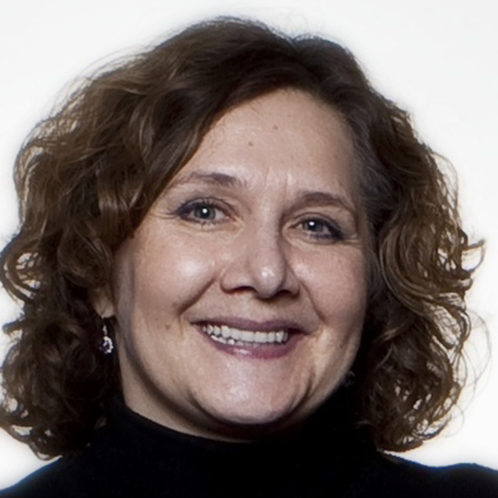
    Ms. Rhor “felt everything so deeply,” her sister Sylvia said. “Joy, sadness, and empathy for others. She was curious about people.”Courtesy of the family
  • How do we protect infants now that measles is endemic?

    How do we protect infants now that measles is endemic?

    Joanna J. Parga-Belinkie is an attending neonatologist at Children’s Hospital of Philadelphia and cofounder of CHOP’s Pediatric Health Chat. Charlotte Moser is a codirector of Children’s Hospital of Philadelphia Vaccine Education Center. Lori Handy is an associate director of Children’s Hospital of Philadelphia Vaccine Education Center.

    “What do I do about the measles? I’m so scared to take her out, I just won’t leave the house.” A mother was rocking her newborn, pressed up protectively against her chest. She had just delivered her baby in the Philadelphia birth hospital, where I work, and was scared to imagine walking out her door into the active measles outbreak occurring in Lancaster, just 30 minutes from her suburban community.

    Viral season is already stressful for new parents. Add to that the worst measles outbreak in our country in recent decades, brought into sharper focus by the recent loss of the United States’ measles elimination status, and we have a pressure cooker for postpartum anxiety and depression. There have been more than 5,000 measles cases in the United States this year, and nearly 30% of them are in Pennsylvania, where we practice and live.

    So what does it mean for our youngest family members and patients now that measles is considered endemic, meaning regularly found or continuously spreading within the country?

    Infants born at term typically get temporary measles immunity from their mothers, Joanna J. Parga-Belinkie, Charlotte Moser, and Lori Handy write.DEIDRE SCHOO

    Infants born at term typically get temporary measles immunity from their mothers. During the third trimester of pregnancy, antibodies are transferred through the placenta to give infants protection against disease in the weeks and months after birth. But this protection varies from baby to baby and declines during the first few months of life.

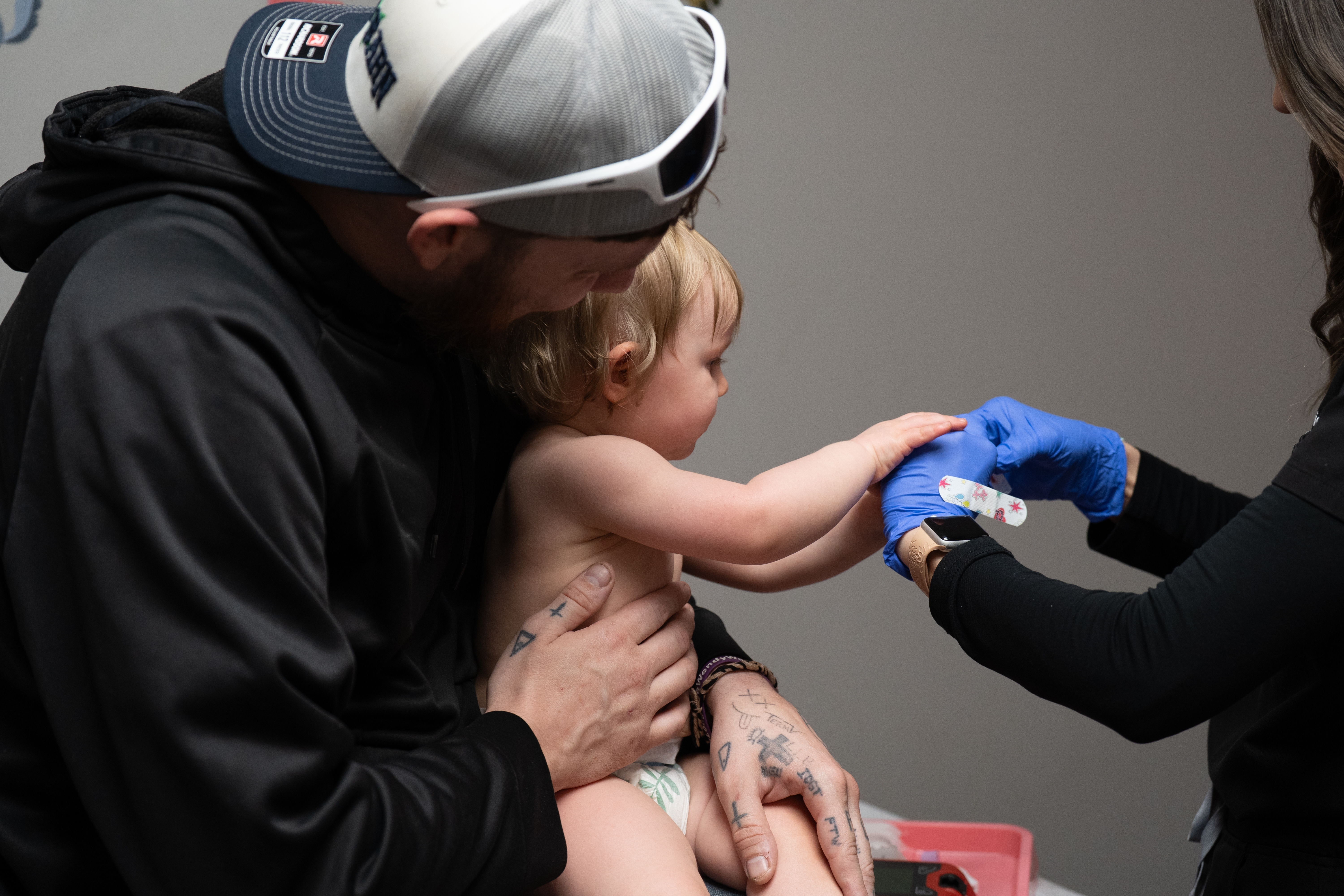
    Even when parents choose early measles vaccination, it cannot be given before 6 months of age, leaving a period when an infant may not be protected. That gap in protection is especially concerning because measles can cause serious and lasting complications.

    Before the measles vaccine became available in 1963, about 500 people died each year from measles, and most of them were children. Measles is dangerous for children and adults alike. Children may require hospitalization for dehydration, lung and brain infections. The virus causes immune amnesia, damaging immune cells and leaving a person susceptible to infections against which they previously had immunity.

    They can also experience acute demyelinating encephalomyelitis (ADEM), a severe autoimmune disease. Years later, people infected with measles during infancy can develop subacute sclerosing panencephalitis (SSPE), a rare, progressive brain disorder that is fatal.

    What can we do for infants who lack protection and rely on us for their care?

    First, almost all infections have occurred in unvaccinated individuals. If you aren’t vaccinated, now is the time. For women who may become pregnant, ensure you get the vaccine before pregnancy to help pass immunity to your baby early on. Once pregnant, you can’t get vaccinated.

    Talk with your child’s healthcare provider about getting your baby vaccinated at 6 months of age if there is an active outbreak in your community, Joanna J. Parga-Belinkie, Charlotte Moser, and Lori Handy write.LM Otero

    Talk with your child’s healthcare provider about getting your baby vaccinated at 6 months of age if there is an active outbreak in your community.

    Engage with your friends and neighbors about the importance of community protection for all babies and young children.

    This does not mean you cannot leave the house. Staying isolated can take a toll on mental health. But it does mean being thoughtful about who is around your baby and, when possible, making sure visitors are healthy and vaccinated.

    Finally, working together, we can eliminate measles again. We have the tools to do it, and it includes getting the MMR vaccine, but it goes deeper than that.

    We all need to listen to each other’s concerns, to have an open and honest conversation on health that is grounded in science and progress. So let’s talk about ways we can make our communities safer for some of the most vulnerable members of them — our babies.

    For more information, visit CHOP’s Measles Resource Center at CHOP.edu/measles for trusted, evidence-based guidance.

  • Pa. wants to test the air in two dozen properties near a contaminated Chester County site

    Pa. wants to test the air in two dozen properties near a contaminated Chester County site

    The Pennsylvania environmental agency wants to collect air samples in about two dozen properties near the contaminated Bishop Tube industrial site in East Whiteland Township this winter, after recent sampling of groundwater revealed a higher level of contamination near homes east of the property.

    Previous sampling of 10 properties revealed no risk, said Dustin Armstrong, the project officer for the Pennsylvania Department of Environmental Protection, which is overseeing the cleanup.

    But “based upon the data that we just got in that pre-design investigation, we decided on some additional follow-up,” Armstrong said during a public meeting Thursday.

    The meeting, the first since a settlement deal was reached with polluters of Bishop Tube, a 13.7-acre, vacant industrial site on Malin Road in Frazer, East Whiteland Township, covered the details of the agreement, and the recent findings of a pre-design investigation, a process that directs cleanup of contaminated sites.

    The proposed 24-hour monitoring comes after a September report sampled groundwater and surface water between March and June 2026 around Bishop Tube and found higher concentrations of carcinogenic chemicals above residential standards to the east than expected.

    The department wants to resample previous locations, as well as 14 additional properties on Fahnestock Road, Conestoga Road, Lancaster Avenue, and houses in the development neighboring Bishop Tube, along Village Way.

    The department sent out survey forms for the air monitoring earlier this month, and has received half back so far, Armstrong said.

    Bishop Tube, which has been at the center of a years-long fight over clean-up standards and a debate over building housing there, operated from 1951 to 1999 making steel tubing. It left behind contamination, including trichloroethylene (TCE), a degreasing solven. Per- and polyfluoroalkyl substances (PFAS) have also been detected there, according to DEP records.

    The property is on Pennsylvania’s Priority List of Hazardous Sites for Remedial Response, and the department has a plan to clean up the site according to Act 2 standards, which aim to make former industrial and commercial sites ready for redevelopment.

    Earlier this year, the department entered a settlement agreement with companies that polluted on the property, for roughly $11.5 million. That includes a trust fund set aside for any additional issues, which were indeed identified as part of the pre-design investigation.

    Under the agreement, which still needs a federal judge’s approval, the property’s owner Constitution Drive Partners would serve as the site remediator, using funds from the trust to clean up the site, which would be subject to DEP oversight and approval. Developer Brian O’Neill, president of Constitution Drive Partners, has owned the property since 2005 and wants to build homes there.

    Remediation of the site could take several years, officials said Thursday.

    At the meeting, residents worried over the terms of the settlement, and that there weren’t enough safeguards in place for the cleanup process.

    “The fox should not be in charge of the health and safety of the hens,” resident Debra Mobile said. “I want to know how you are going to protect us.”

    This suburban content is produced with support from the Leslie Miller and Richard Worley Foundation and The Lenfest Institute for Journalism. Editorial content is created independently of the project donors. Gifts to support The Inquirer’s high-impact journalism can be made at inquirer.com/donate. A list of Lenfest Institute donors can be found at lenfestinstitute.org/supporters.

  • A veteran Philly chef plans to open his first restaurant in Kensington

    A veteran Philly chef plans to open his first restaurant in Kensington

    Chef Eric Leveillee’s first kitchen job was motivated more by romance than a desire to cook.

    In 2010, Leveillee was grabbing a bite at El Camino Real in Northern Liberties when he noticed a server named Deva. He wanted to meet her, so he applied for a job in the kitchen.

    “I had no intention of cooking, really,” he said.

    Sixteen years later, the two are married, Leveillee has built a career in fine dining, and he is preparing to open his first restaurant of his own, just a few blocks from where it all began.

    Restaurant Campion, a 55-seater at 1701 N. Second St., on the ground floor of the Rally apartments in Kensington, is targeting a summer 2027 opening.

    Leveillee, 40, plans a menu that applies fine dining technique but is looser and more energetic.

    Leveillee plans two dining options: a tasting menu of seven to 10 courses, priced in the low $100s, and a smaller, frequently changing à la carte menu offering both small and larger plates. He hopes to keep the tasting experience to 90 minutes to two hours.

    The beverage program will emphasize natural wines and smaller producers, along with traditional, low-alcohol, and nonalcoholic cocktails.

    “The biggest thing I want to portray is that, yes, the food is going to be ambitious, but the environment will be very lively and exciting,” he said.

    Campion has been in development for nearly 2½ years, though Leveillee said he has wanted his own restaurant for more than a decade.

    “This restaurant is really mine,” he said. “It’s the first restaurant I’ve ever owned. It will probably be the first time I’m truly showing my food to Philadelphia.”

    He wants Campion to appeal beyond the special-occasion crowd, with prices and an atmosphere that encourage repeat visits.

    The design, by Ian Chapin of EDSEL and Scott Burroughs of This Land Studio, will be minimalist, providing warmth through texture and materials rather than elaborate furnishings.

    The centerpiece will be an open kitchen surrounded on three sides by a 20-seat U-shaped chef’s counter. The restaurant also will have a nine-seat bar and a separate 12-seat listening room, where guests can bring their own vinyl records or choose from the restaurant’s collection. Leveillee envisions using the room for private dinners.

    Leveillee grew up in Rhode Island and moved to Philadelphia at 17 to attend Temple University, where he studied economics. After El Camino, his restaurant career included Vernick Food & Drink, Whetstone Tavern, Marigold Kitchen, and Lacroix at the Rittenhouse Hotel.

    He remains culinary director of The DeBruce, a Catskills hotel and restaurant that was a 2024 James Beard Award semifinalist for outstanding restaurant. He also has been consulting at Waltz, the Italian restaurant in South Philadelphia’s Whitman neighborhood.

    He said Campion’s cooking will most closely resemble his work at The DeBruce, drawing on American ingredients and incorporating techniques and influences from various cuisines.

    For Leveillee, the neighborhood is part of the attraction. He said both good and difficult experiences in his life have occurred nearby, and opening Campion represents an opportunity to establish deeper roots in Philadelphia.

    After finishing up work at Waltz, he sometimes stops by the unfinished restaurant at night, standing alone in the space and considering what it will become.

    “It’s been a long road, and it’s a little surreal,” he said. “It’s something I always wanted to do, but I never imagined that I would actually get there.”

  • Temple’s misery continues as Owls cough up big late lead in 31-27 loss to one-win Rice

    Temple’s misery continues as Owls cough up big late lead in 31-27 loss to one-win Rice

    Temple was six seconds from forcing Rice to attempt a long game-tying field goal.

    Instead, quarterback Patrick Crayton Jr. connected with Jacurri Brown for a 30-yard touchdown, completing a stunning comeback and handing Temple another crushing defeat.

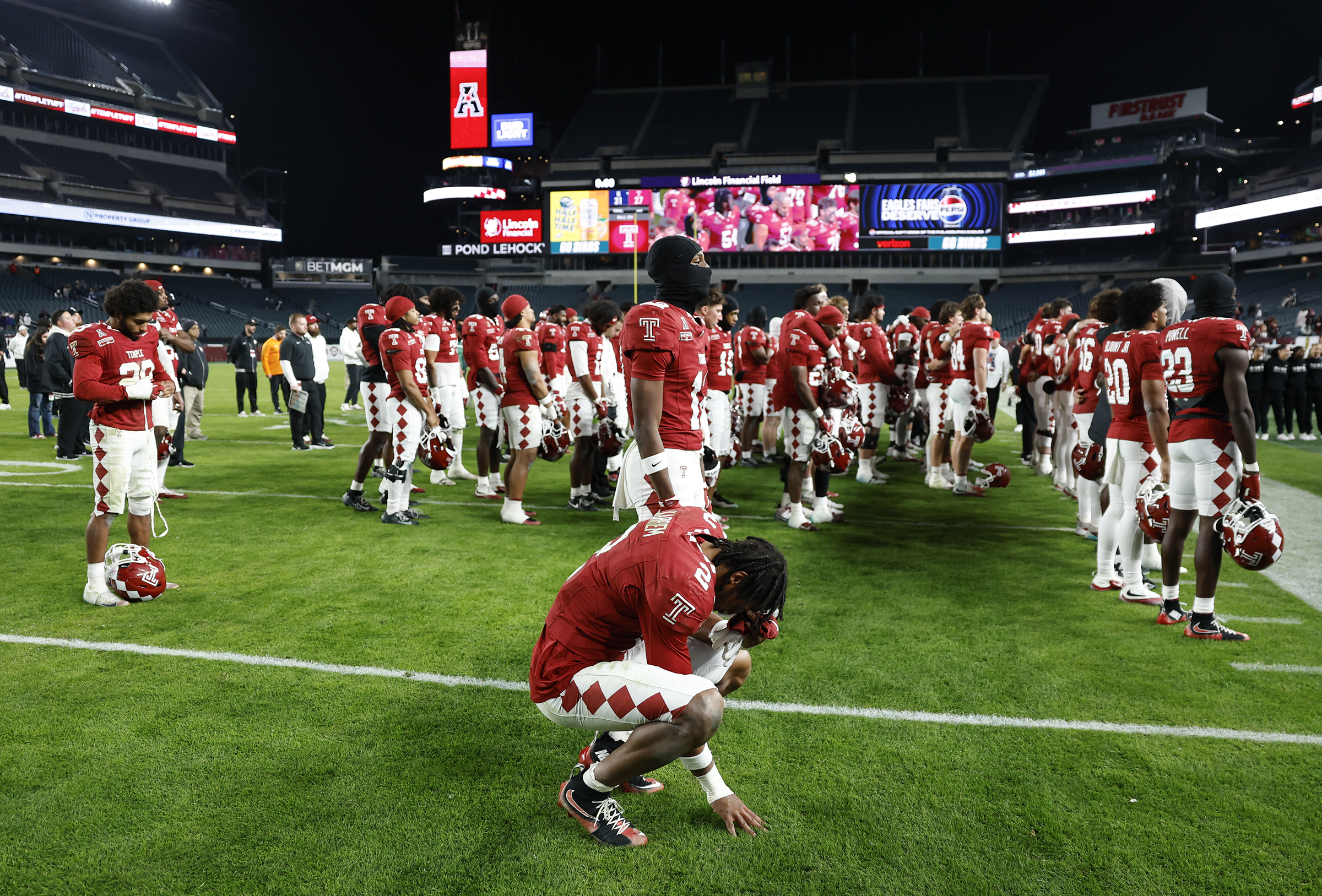
    The Owls squandered a 10-point fourth-quarter lead Thursday night and lost to Rice, 31-27, at Lincoln Financial Field in their final home game of the season.

    Temple (2-9, 1-6 American Conference) suffered its sixth consecutive loss, while Rice (2-9, 1-6) snapped a nine-game losing streak.

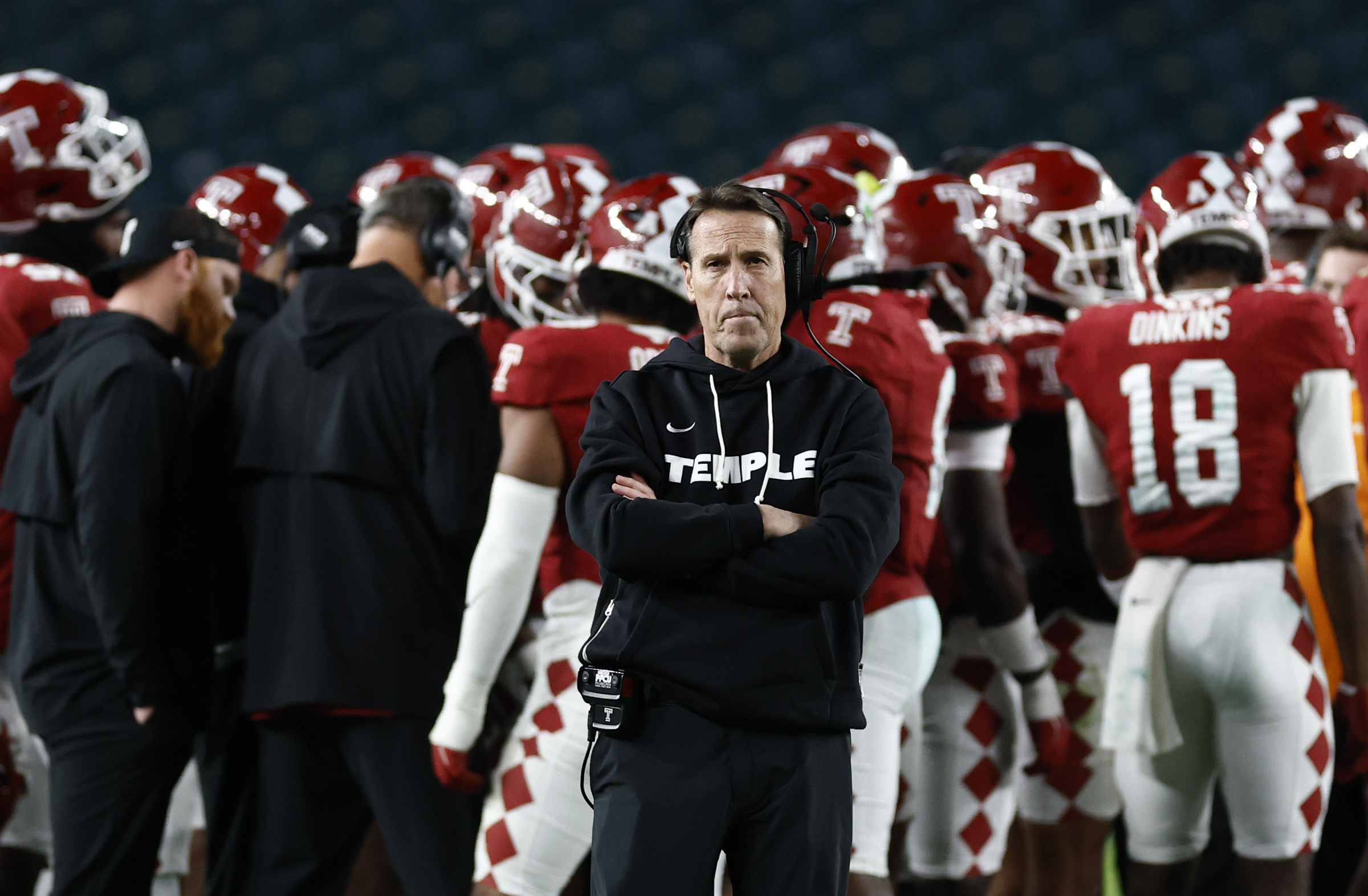
    “You get your heart ripped out,” Temple coach K.C. Keeler said. “I just feel so bad for these kids.”

    Temple head coach K.C. Keeler lamented the team’s missed opportunities to put the game away. Yong Kim / Staff Photographer

    Temple appeared poised to end its skid when Carl Hardin connected on a 35-yard field goal with 5 minutes, 18 seconds remaining, extending the Owls’ lead to 27-17.

    But Rice responded with a nine-play, 75-yard touchdown drive, converting a fourth-and-10 along the way. Gael Ochoa found Max Mosey for a 9-yard touchdown with 1:55 remaining, cutting Rice’s deficit to 27-24.

    Temple needed one first down to all but seal the victory. Instead, its offense went three-and-out, giving Rice possession at its own 42-yard line with 54 seconds remaining.

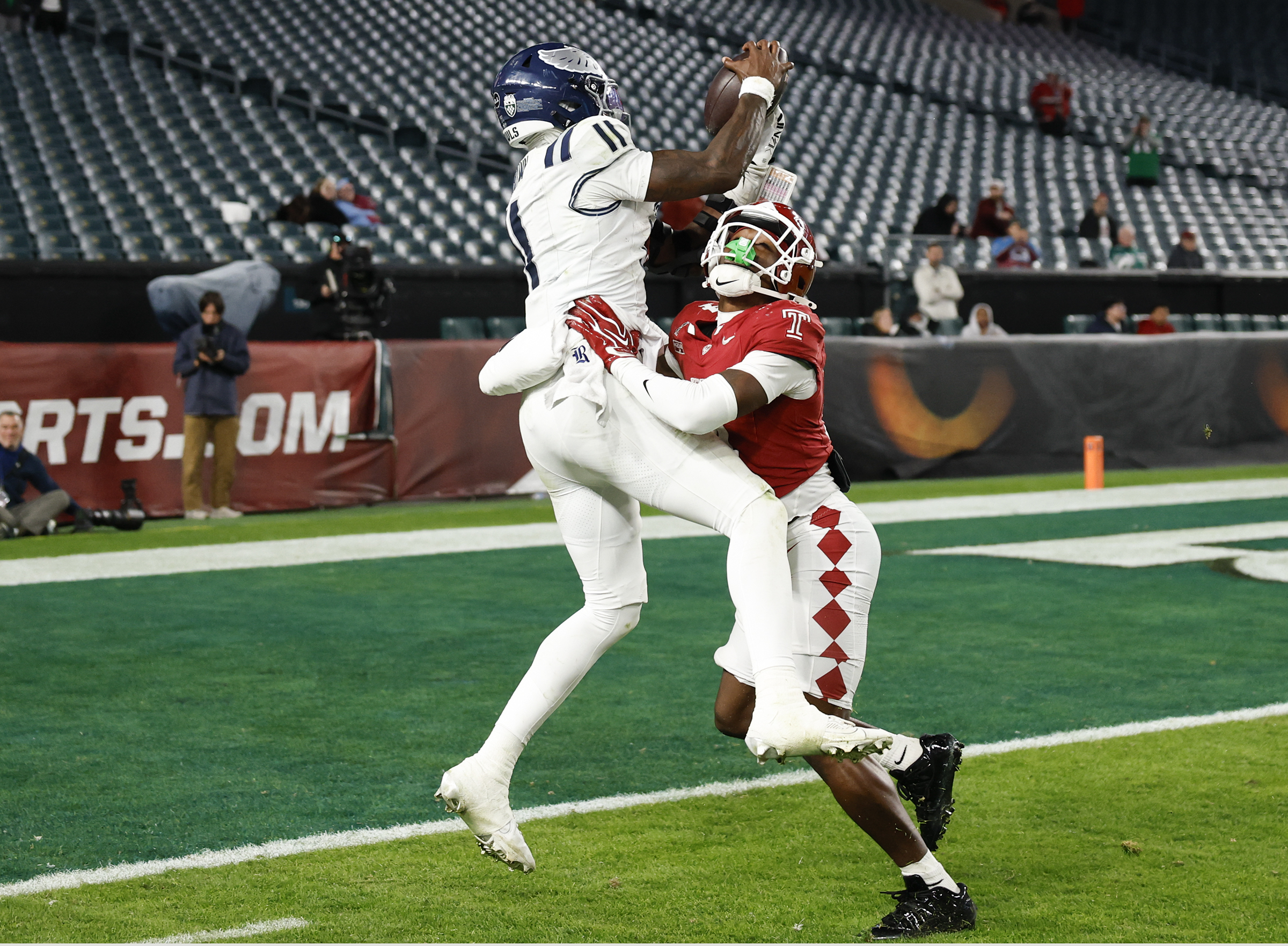
    Rice faced another fourth-and-10 on the ensuing drive, but Crayton completed an 18-yard pass to Jordan Clark to extend the possession. Three plays later, he found Brown on a contested grab in the end zone past Temple cornerback Nakeel Lawrence for the winning touchdown.

    “We thought we were, you know, maybe field goal, maybe going into overtime,” Temple wide receiver Colin Chase said. “Then it’s just kind of like a dagger when they score.”

    Keeler said injuries had depleted Temple’s secondary, forcing the team to rotate players throughout later drives.

    The finish overshadowed one of Temple’s strongest offensive performances this season. The Owls rushed for a season-high 300 yards and accumulated 410 yards of total offense.

    Rice receiver Jacurri Brown catches the game- winning fourth quarter touchdown over Temple cornerback Nakeel Lawrence.Yong Kim / Staff Photographer

    Quarterback Jaxon Smolik completed 9 of 17 passes for 110 yards, two touchdowns, and an interception. Keeler described his performance as a mixed bag, and noted that Smolik struggled early before finding a rhythm.

    Temple struck first on its opening possession when Smolik connected with Chase for a 10-yard touchdown. Rice answered in the second quarter before Hardin’s 21-yard field goal gave Temple a 10-7 halftime lead.

    The Owls missed opportunities to extend their early lead. Running back Hunter Smith lost a fumble in Rice territory, and Temple later settled for a field goal after reaching the 1-yard line.

    Keeler described both possessions as costly.

    Rice seized the lead early in the third quarter on D’Andre Hardeman Jr.’s 46-yard touchdown run, but Temple responded with two touchdowns in just over a minute.

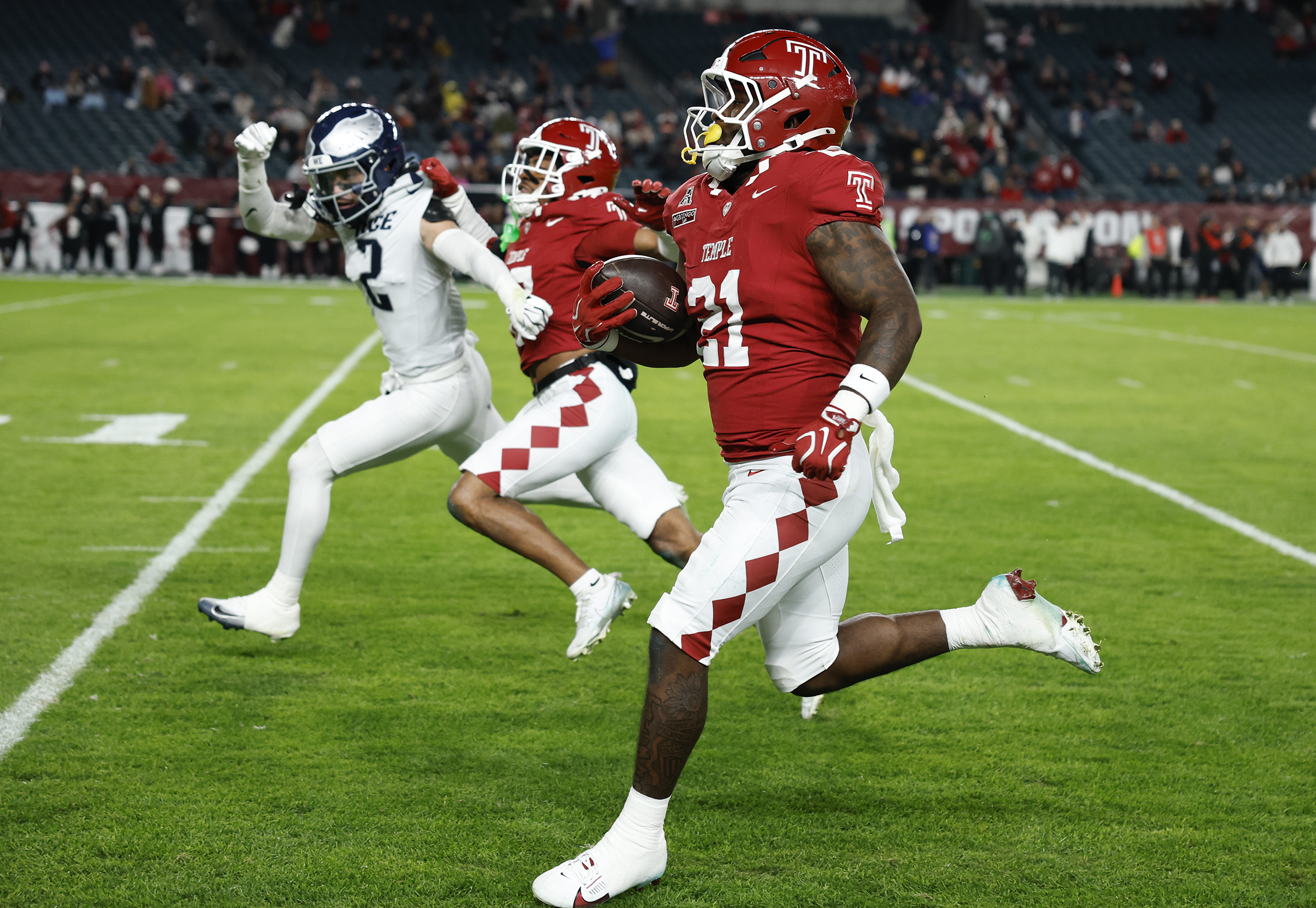
    Smolik found Jayce Freeman for a 2-yard score before De’Carlos Young broke free for a 79-yard touchdown, giving Temple a 24-14 advantage.

    De’Carlos Young’s touchdown run was a bright spot for the Owls.Yong Kim / Staff Photographer

    Young, who entered Thursday with just 42 rushing yards this season, finished with 85 yards and his first career touchdown.

    Rice gradually chipped away at the deficit, including a drive that lasted 11:43 and ended in a field goal with just over 10 minutes to play.

    Despite the loss, Keeler praised his team’s preparation during a short week following Saturday’s loss to UAB. He said the energy before Thursday’s game was some of the best he had seen this season.

    But the preparation yielded another disappointing result.

    “I didn’t even know what to say to the players,” Keeler said.

    Temple closes its season Nov. 27 at Memphis (3:30 p.m., ESPN) and hopes to earn its first victory since Oct. 3.

    “We’re desperate for a win,” Chase said. “We need that win feeling back.”

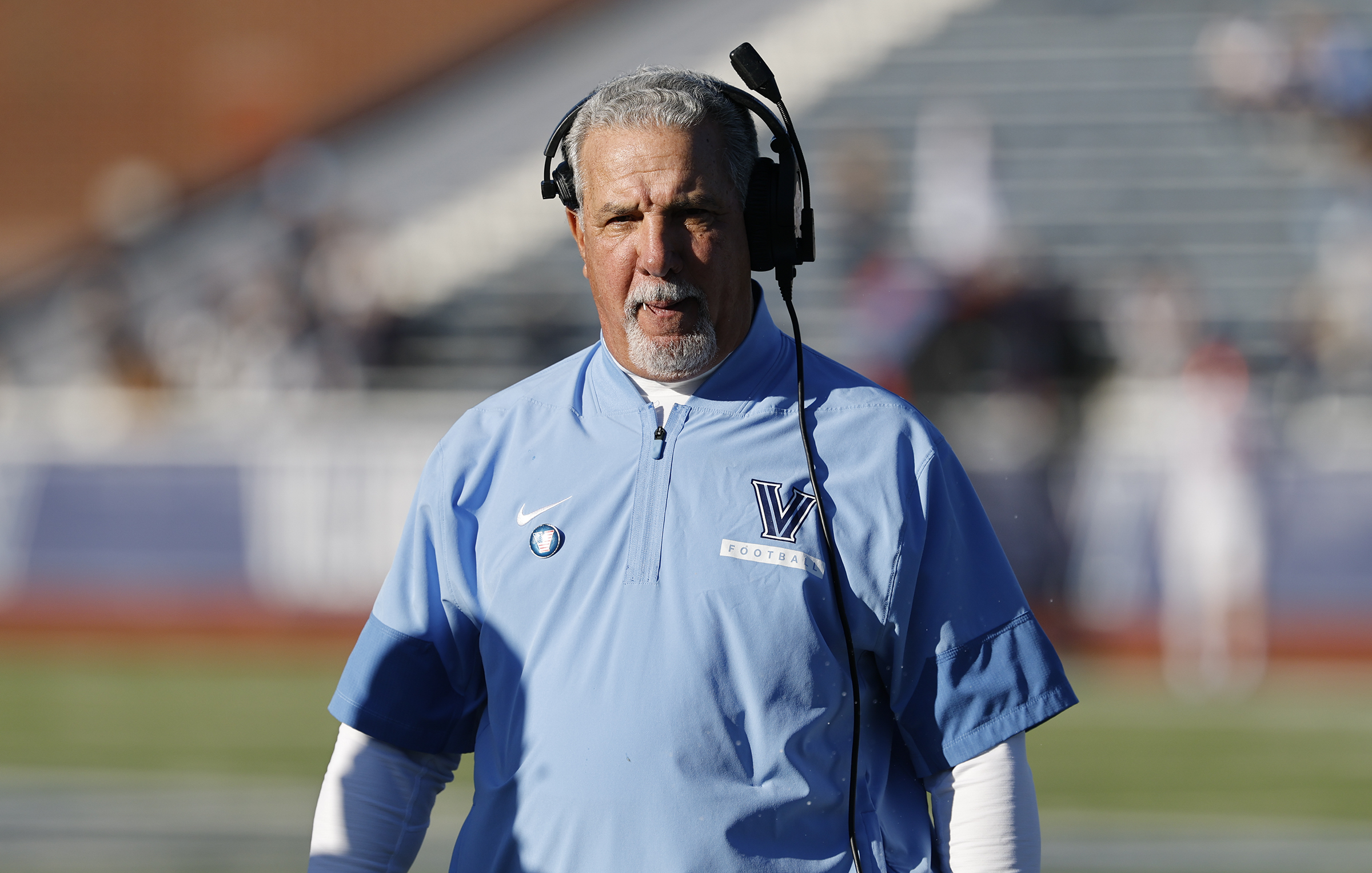
  • Villanova’s playoff chances ‘might not be in the cards,’ but it still has one more game to play

    Villanova’s playoff chances ‘might not be in the cards,’ but it still has one more game to play

    Villanova stood one drive away from a comeback overtime win against Holy Cross that would have kept its season alive last weekend. Instead, Holy Cross snapped the Wildcats’ four-game winning streak, ended their chances of winning the Patriot League title, and all but extinguished their FCS playoff hopes.

    To start, Villanova (6-5, 5-3 Patriot League) would need to win Saturday at home against Georgetown (1 p.m., ESPN+), which is coming off back-to-back losses.But even with the win, the Wildcats are unlikely to earn an at-large bid as they have four losses against FCS teams this season.

    Entering its matchup with Georgetown (3-6, 3-4 Patriot League), Villanova’s playoff fate is no longer in its hands. Linebacker Omari Bursey said whichever outcome happens, he is focused on the final game of the regular season.

    “People handle it differently, but I’ve been kind of grateful to understand that it might not be in the cards for us this season,” Bursey said. “We’ve gone out there with no regrets, played every down like it’s our last, and as long as you have no regrets, you shouldn’t be frustrated or upset with how you perform.”

    Rollercoaster season

    With Lehigh clinching the Patriot League regular-season title and Holy Cross’ win over the Wildcats, the best Villanova can do is finish third in the conference.

    The 2026 season as a whole is one that began with high expectations. Villanova was ranked No. 7 in the nation after its magical 2025 season ended with a trip to the FCS semifinals.

    The Wildcats opened 2026 with a heartbreaking loss to William & Mary, after leading by 10 with under a minute left. From there, five of Villanova’s first six games — outside of a blowout loss to FBS Louisville — were decided by one score. That left the Wildcats 2-4 at the bye week. They needed to win out to have a chance at postseason play.

    “Honestly, just going back to our process,” Bursey said of navigating early season struggles. “Tell the truth on Sunday, have a good [workout] on Monday, great Tuesday, Wednesday, Thursday practice. So keeping your head down, going to work and just staying in our process, not changing. … Just playing one game at a time, this game is the most important because it’s the next one.”

    Villanova went on to win four straight, including a victory over conference champs Lehigh. For head coach Mark Ferrante, the way his team came together after the week off is what he’ll remember the most.

    “They really figured out, ‘Hey, enough is enough,’” Ferrante said. “Let’s put the best product on the field that we can, because we know we’re better than the 2-4 start we had. And hopefully we can get this one Saturday, finish the season with a victory and the second half, as opposed to 2-4, finish it off 5-1.”

    Room to improve

    The Wildcats stand at 3-4 in one-score games this season. Villanova also went 2-3 on its home turf. Compared to last season, the Wildcats were undefeated in one-score games (6-0) and 7-1 at home. Their only loss came in the FCS semifinals.

    “You got to win the close games and you got to win the games at home,” Ferrante said. “Hopefully, we don’t lose anymore and you got to learn from those situations. … In those one-score games, we’re 3-4. Flip one or two of them and it’s a whole different ballgame but it is what it is and we got to get better for them.”

    McQuaide’s last dance

    For quarterback Pat McQuaide, Saturday marks the end of his collegiate journey.

    The Ohio native has an outside chance to become the first Wildcat signalcaller with back-to-back seasons of throwing for 3,000 yards since Ferrante took over the program in 2017. He’ll need 360 passing yards to eclipse that mark. McQuaide’s coming off a career-best game where he threw for 413 passing yards against Holy Cross.

    He’s spent two seasons at Villanova after transferring in as a graduate student. Before that, he played two years at Nicholls State. His college career started as a walk-on at Kent State where he redshirted before transferring to Mississippi Gulf Coast Community College in 2022.

    Saturday will be Pat McQuaide’s final college game.Yong Kim / Staff Photographer

    “Unfortunately, we’ve only had Pat for two seasons but he’s been a great addition to our program,” Ferrante said. “He really came in here the right way and really bought into who we are and what we’re trying to do. I think he’s not only a great teammate; I think he’s a good mentor to these guys as well. I think the younger guys in the room can learn a lot from watching Pat, how he prepares for games and performs in practice.”

  • Philly TV news battle heats up between 6abc and NBC10, boosted by NBC Sports Philadelphia

    Philly TV news battle heats up between 6abc and NBC10, boosted by NBC Sports Philadelphia

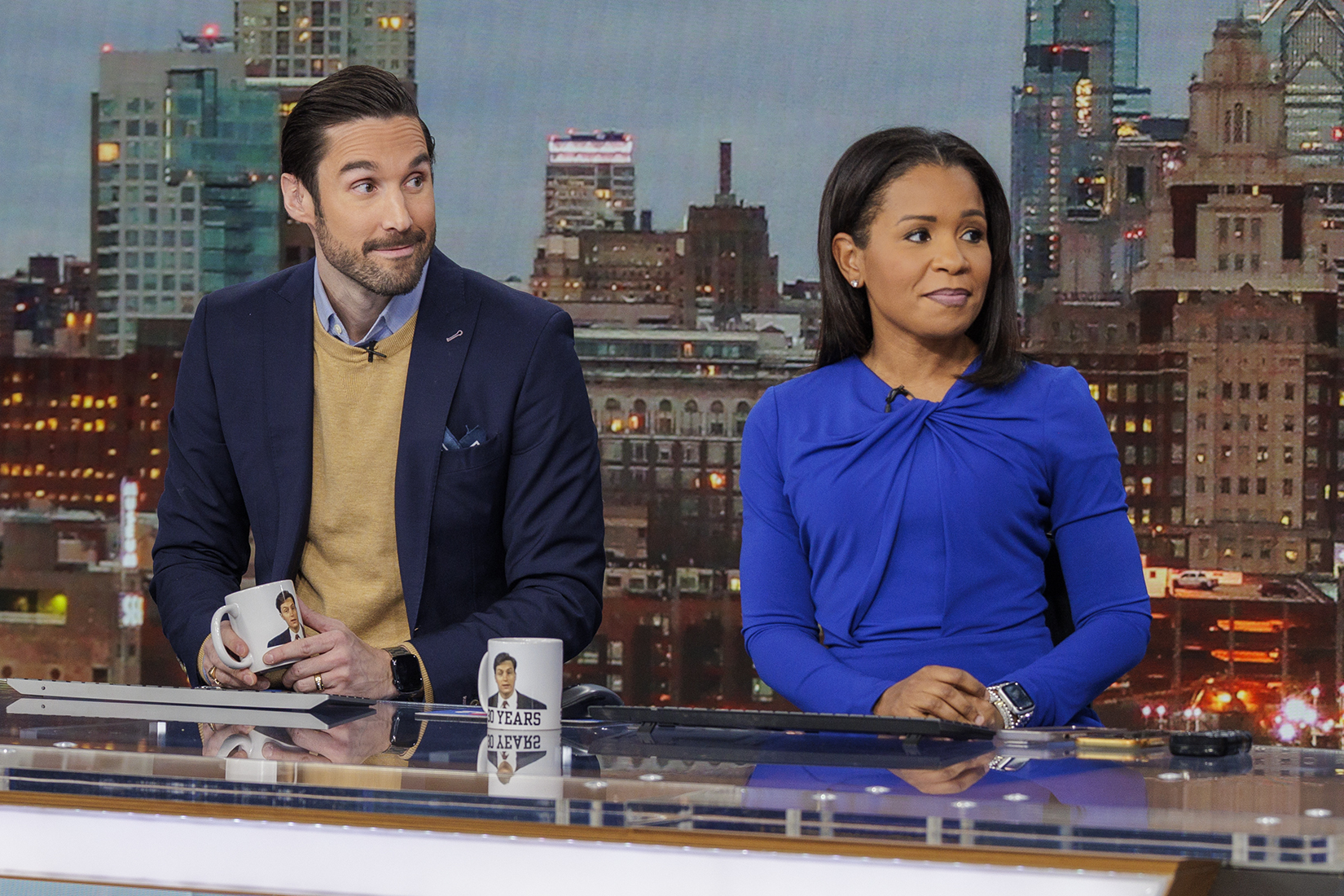
    Today’s big story: NBC10 is posing the first serious ratings challenge to 6abc in years.

    Even without household names like Cecily Tynan and Jim Gardner, Action News remains the most-watched local newscast in Philadelphia and across the Delaware Valley.

    But from August through October, NBC10 drew more news viewers than 6abc among adults between the ages of 25 and 54 — a key advertiser demographic — during their 6 a.m. and 11 p.m. newscasts, according to Nielsen data.

    It’s the first three-month win streak for NBC10 since at least 2010. 11 p.m. anchors Jacqueline London and Fred Shropshire have topped Rick Williams at 6abc in that demographic in seven of the past 13 months, according to NBC10 president and general manager Joel Davis.

    6abc declined to comment.

    NBC10’s 6 a.m. newscast, featuring Keith Jones and Erin Coleman, has seen its audience in the 25-to-54 demographic grow by more than 60% compared to last year, even though NBC’s Today show trails both ABC’s Good Morning America and Fox 29’s Good Day Philadelphia in the market and morning viewers tend to be more loyal to their chosen station.

    6abc drew more viewers on every other newscast, including the 6 p.m. edition of Action News, which has nearly double the audience of its NBC10 counterpart in the 25-54 demographic. 6abc still draws more local news viewers overall than NBC10 and has three of Philadelphia’s most-watched shows — Jeopardy!, Wheel of Fortune, and ABC World News Tonight with David Muir.

    Still, it’s a sign of progress under Davis, a local news veteran who has been running NBC’s three Philly networks — NBC10, Telemundo62, and NBC Sports Philadelphia — since last year.

    “Three months of success is good, but it’s going to take time,” Davis said. “We expect there will be back and forth over the next several months.”

    So how has NBC10 won over viewers? Davis said getting the right personalities in the correct time slots is part of it, but he credited the station’s decision to bump up weekday local news to eight hours a day.

    Gone are daytime soap operas and syndicated shows. Outside of prime time, the station looks and feels more like a 24-hour news channel, adding 2 p.m. and 7:30 p.m. newscasts. NBC’s commitment to live sports in prime time certainly hasn’t hurt.

    “Everything that succeeds in this day and age in television is live and local to some degree, whether it be news or sports,” Davis said.

    NBC Sports Philadelphia is boosting NBC10’s growth, but questions linger

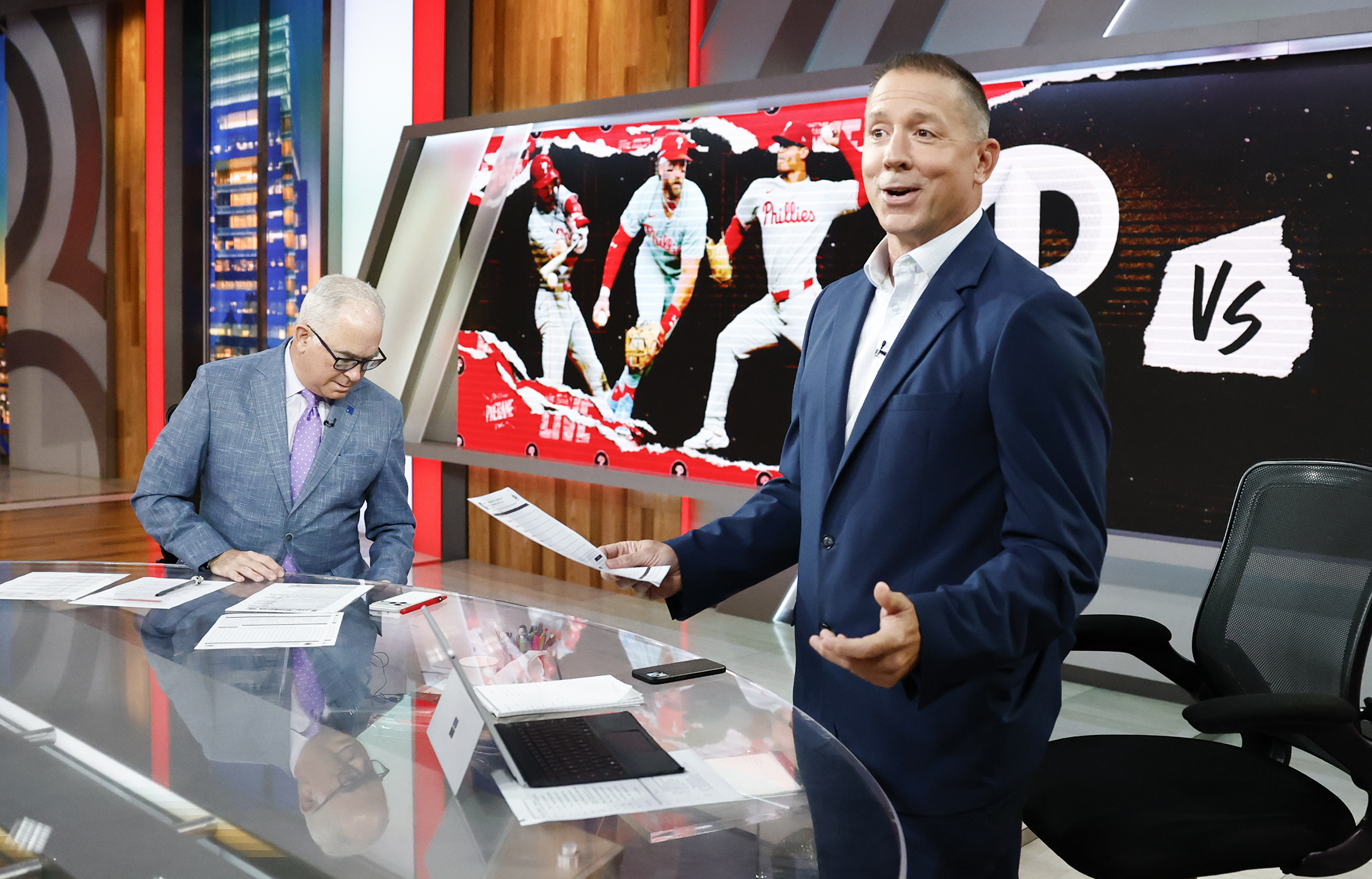
    NBC Sports Philadelphia personalities Michael Barkann (left) and Ricky Bottalico. Yong Kim / Staff Photographer

    Davis cited another reason for NBC10’s recent ratings success: leveraging NBC’s local sports TV rights, which include broadcasting Phillies, 76ers, and Flyers games.

    Last summer, Davis asked for a list of the 100 most-viewed programs in the Philly TV market that year. About 70% were sports broadcasts on NBC Sports Philadelphia, largely dominated by Phillies games.

    Thanks to the addition of LeBron James, Sixers games are drawing nearly 215,000 viewers per game on NBC Sports Philadelphia this season through Wednesday, up 150% compared to last season’s average, according to Nielsen numbers.

    The interest extends to the station’s studio programming. Sixers Pregame Live is up more than 220% over last season, averaging over 50,000 viewers. Sixers Postgame Live is averaging nearly 80,000 viewers.

    Before Davis took over, there was very little cross-promotion between the three stations. Now viewers regularly see NBC Sports Philadelphia personalities like Amy Fadool Kane on NBC10 promoting and discussing games and vice versa.

    “When we run news promos in NBC Sports Philadelphia, we are getting a younger audience exposed to our news product,” Davis said.

    Despite its success, a lot of uncertainty hangs over NBC Sports Philadelphia’s future.

    Cord cutting has been tough on regional sports networks across the country, and NBC is down from nine of these such networks in 2012 to just four — Philly, Boston, San Francisco, and Northern California. NBC is also in the midst of massive change as parent company Comcast spins off NBCUniversal into a separate company, a move scheduled to be completed next year.

    Add to that uncertainty plans by the NBA and MLB to launch their own in-market streaming service to offer local games, which could drive more fans to cut their cable subscriptions. Currently, fans in the Philly TV market can stream Phillies, Sixers, and Flyers games without a cable subscription using Peacock.

    There have been rumblings NBC is looking to divest from its remaining regional sports networks as cord cutting continues, but in Philly any sale would be complicated by the fact the Phillies own 25% of the network as part of a 25-year, $2.5 billion deal that runs through 2041.

    “While the deals may adjust over time as the industry changes,” Davis said, “I think there’s a firm understanding here that there’s great value in this particular market that it makes total sense to have this partnership in place.”

  • The children of a Warwick cop are running the Philly marathon to raise money for cancer research

    The children of a Warwick cop are running the Philly marathon to raise money for cancer research

    Back when the kids were younger, Shawn Needham always knew how to scope out the best spots at their track meets.

    “The good spots to be when you needed a little extra push,” says his daughter Sarah Needham, 23.

    A former Maryland State Trooper, and now a cop in Warwick Township — and a hall-of-fame track star at Holy Ghost Prep in Bensalem — Shawn Needham, now 59, raced home three hours after night shifts to make the kids’ running events. Worked overtime so he and his wife, Linda, could afford the league payments. Ate peanut and butter and jelly in the squad car so he could take the kids to Applebee’s after a race.

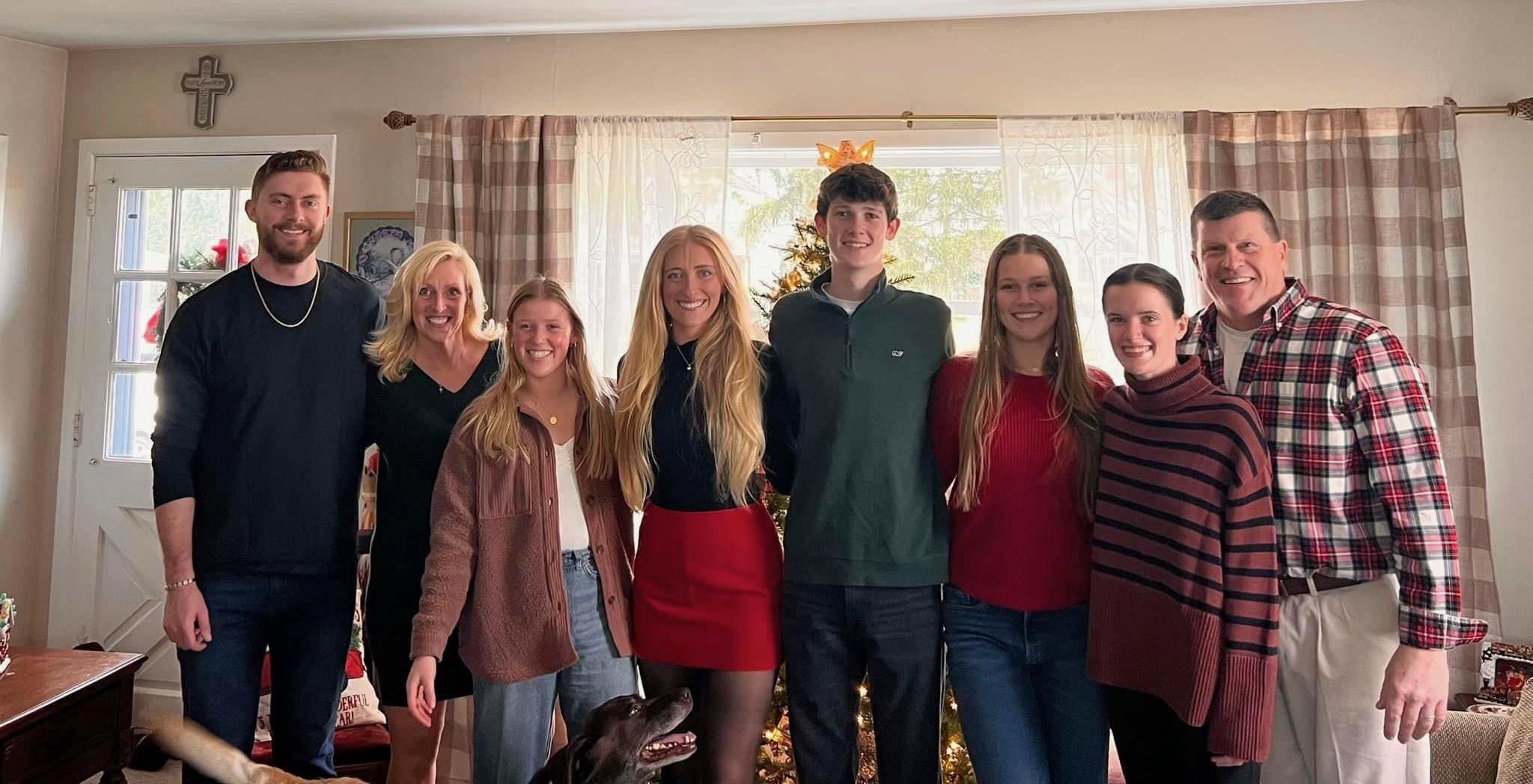
    Needham Family (L. to R.): William Hoehne, Linda Needham, Grace Needham , Sabrina Hoehne , Christian Needham, Ella Needham, Sarah Needham, Shawn NeedhamCourtesy of Needham Family (Custom Credit)

    “Anything broke he could fix,” said Sabrina Hoehne, who is 28, and Needham’s stepdaughter. “He spent all his money on our sports.”

    But last November, Shawn Needham confronted a nightmare he couldn’t fix. Not alone, anyway. A life-altering diagnosis of cholangiocarcinoma, an aggressive cancer of the bile duct, which affects only about 8,000 Americans annually.

    This weekend, five of Shawn Needham’s children — Hoehne, Sarah Needham, Grace Needham, Christian Needham, and Ella Needham — will run in the Philadelphia Half Marathon and Marathon to raise money for the Cholangiocarcinoma Foundation.

    “We decided the best thing we could do is to raise some money for other families going through this and to support research into this rare disease,” said Sarah Needham. “So we decided we needed to run.”

    Shawn Needham was visiting his daughter in Boston last October, when the stomach pain turned severe. Soon, he was jaundiced, and in the hospital. Weeks of tests provided few answers. Finally, doctors figured it out.

    Notoriously difficult to detect — and often showing few symptoms until advanced stages — cholangiocarcinoma is responsible for only a tiny fraction of the nearly 2 million cancer diagnoses a year.

    “Of course, I’m just like, “Well, all right, I guess, I got it,” said Shawn Needham. “I never look back. I just kind of keep going forward and trust in the doctors I have.”

    Undergoing radiation and chemotherapy treatment at Penn, Shawn Needham is on the “National Liver Transplant Waiting List.” He’s also eligible for a living donor.

    Shawn Needham knows exactly where he’ll be. He’s already scoped out a good spot — behind the Art Museum, where the runners loop around multiple times — and which will leave him time to race back to the finish line.

    “I’m proud,” he said. “I’m very proud.”

  • A summit gives Putin the win he craves: Equal stature with superpowers

    A summit gives Putin the win he craves: Equal stature with superpowers

    SHENZHEN, China — President Vladimir Putin of Russia stood shoulder to shoulder for the cameras with the leaders of the two global superpowers. He was publicly praised by one of them, President Donald Trump, as “my friend.” And he proclaimed, in between meetings with at least seven world leaders over two days, that efforts to isolate his nation had failed.

    Putin emerged as the big winner after a meeting Thursday with Trump and Chinese leader Xi Jinping during a summit in Shenzhen, China. The Russian leader walked away with a symbolic triumph in his quarter-century battle to restore Russia’s place as a great power at the fulcrum of world affairs.

    Appearing alongside Trump and Xi, the two leaders most responsible for helping him escape isolation since his invasion of Ukraine in 2022, Putin showed that he could be embraced by the powers that matter most without making any compromises on the war.

    “It ends the isolation that at least the West tried to impose on him after the full-scale invasion,” said Angela Stent, a Russia expert and senior fellow at the American Enterprise Institute. “There he is. He is meeting with Xi and Trump, and so much for isolation and sanctions.”

    The trilateral meeting — the first of its kind between the three countries — amounted largely to diplomatic theater that elevated Russia beyond its status. Russia lags the United States and China in economic clout, population size and most other major metrics of influence.

    The big exception, apart from landmass and certain natural resources, is nuclear weapons. Russia retains the world’s largest arsenal, an inheritance from the Soviet Union, and Putin ensured that was not lost on any of the attendees.

    Hours before Putin arrived at the Asia-Pacific Economic Cooperation summit, Russian strategic nuclear bombers landed in Vietnam for the first time since the Soviet era. In Shenzhen, a prominent pro-Putin commentator was filmed incredulously approaching the Russian officer carrying the “cheget,” the nuclear command-and-control device that travels everywhere with the Russian leader, and asking: “Is that the nuclear briefcase, the very one?”

    Putin had not shown up in person for the annual APEC summit in nine years. The in-person event was canceled from 2019 to 2021. The United States, which played host in 2023, did not invite him because of the war in Ukraine, and an international warrant for his arrest over the transfer of Ukrainian children to Russia complicated visits to Peru and South Korea in 2024 and 2025.

    But on Thursday, the Russian leader was granted a place on a red-carpeted stage with his American and Chinese counterparts, even as he has escalated his war against Ukraine, killing record numbers of Ukrainian civilians and playing hardball during the Trump administration’s renewed efforts to end the conflict.

    During the meeting and afterward, the Russian leader and Trump railed against the International Criminal Court, which issued the arrest warrant for Putin. Trump called the institution, which his administration has punished with sanctions, an out-of-control “rogue globalist organization.”

    While Russia basked in the diplomatic pomp and pageantry, Ukraine brought a reality check. Just hours before the trilateral meeting, Ukrainian forces for the third time in a week struck the bridge connecting Russia with Crimea, the peninsula that Putin illegally annexed from Ukraine in 2014.

    Past American presidents have been wary of conferring legitimacy on autocrats actively opposing U.S. interests, but Trump agreed to the summit with Putin without forcing any prior commitments regarding Ukraine.

    In a news conference afterward, Putin said he and Trump shared a common approach to “civilization values” and had a “similarity of views,” citing a recent discussion about democracy.

    “What exactly is democracy? What is it?” Putin asked. “Is it the liberal order that certain circles have sought and are still attempting to impose on the entire world, fashioned according to their own blueprint? Is that democracy or is that a liberal attempt to monopolize power — in fact, liberal dictatorship?”

    The formal statement that the three world leaders issued after their meeting made no mention of the conflict in Ukraine, though Putin and Trump discussed the topic in talks before the trilateral summit.

    During his news conference, Putin said that, in response to the attacks on the Crimea bridge, he was ruling out any maritime or energy infrastructure truce with Ukraine, and would mete out a painful retaliation.

    There had been few signs that such limited ceasefires were in the offing, anyway. At peace talks last week in Abu Dhabi, United Arab Emirates, led by Trump’s special envoys, Jared Kushner and Steve Witkoff, the Russian negotiating team reissued hard-line demands from five years before.

    Putin said that, at the insistence of the United States, he had invited European officials to Russia “through diplomatic channels” to ascertain their position and decide if they should be included in talks. The negotiations up until now have included only the United States, Russia and Ukraine.

    Ukraine and European nations have said repeatedly that they must be involved in any discussions about their security. In an interview with NBC News ahead of the summit, President Volodymyr Zelenskyy of Ukraine said that “big countries always think that they can make decisions about the future of all the world, but it’s a huge mistake, absolutely.”

    Trump and Putin, however, appear to share the opinion that “there are only a few really serious players” in world affairs that matter, said Stent, the American Enterprise Institute fellow.

    “Trump is obviously a completely different president,” she said. “He is happy to be seen with these authoritarian leaders. He really is not interested in being seen with American allies, either European or Asian.”

    (BEGIN OPTIONAL TRIM.)

    Asked whether Thursday’s summit amounted to a new Yalta — the World War II conference where Franklin D. Roosevelt, Winston Churchill and Josef Stalin brokered the fate of postwar Europe — Putin replied: “What was so wrong with Yalta?”

    He said Yalta finalized the victory over Nazism and paved the way for the United Nations, skipping over how the negotiation set the stage for millions of Europeans to be swept behind the Iron Curtain.

    (END OPTIONAL TRIM.)

    For years, a leading raison d’être of Putin’s rule has been to reverse the decline of Russian power that came in the aftermath of the Soviet Union’s collapse, which he famously called “the greatest political catastrophe of the century.”

    “We showed ourselves to be weak, and the weak get beaten,” Putin remarked in a 2004 speech after a terrorist attack at a school in Beslan. He seethed with disgust at how vulnerable Russia had become and set the wheels in motion to consolidate domestic political control.

    Putin viewed Moscow’s loss of power as demeaning and humiliating, chafing at the way he was treated as a second-tier leader by American officials. For much of the 1990s and 2000s, U.S. leaders did not regard Moscow as a force to be reckoned with or feared in global affairs.

    Over the years, the Russian leader tabulated the slights, growing more intent on ending what he has long called the “unipolar world,” his chosen term for a world he said was unfairly dominated by the United States. Those politics of grievance fueled his increasingly bold and deadly drive to restore Russian might.

    Even after Thursday’s summit accorded him the trappings of a superpower leader, Putin spent part of his news conference saying he was not responsible for invading Ukraine, instead blaming prior Western elites.

    “They didn’t give a damn about our opinion, because they believed that there was nothing left to negotiate with Russia. You just have to push,” Putin said during his news conference Thursday. “Well, they brought this pressure to the point of hostilities and war.”

    This article originally appeared in The New York Times.

  • U.S. measles cases are at a 35-year high. Here’s how to protect yourself.

    U.S. measles cases are at a 35-year high. Here’s how to protect yourself.

    For years, the United States saw occasional measles outbreaks, often after someone caught the virus abroad and brought it back with them. But those outbreaks didn’t last. This time, the virus has been continuously spreading for at least 12 months. That’s why the Pan American Health Organization announced Tuesday that the U.S. had lost its measles elimination status, which it had held since 2000.

    James Campbell, chair of the American Academy of Pediatrics Committee on Infectious Diseases, called the reversal “a completely preventable tragedy.” As of Nov. 12, the Centers for Disease Control and Prevention had confirmed 5,412 measles cases in the U.S. this year — nearly twice as many as were reported in 2025 and the highest annual total since 1991. State health officials have reported at least 11 measles-related deaths this year, including a 7-month-old in New York earlier this month. On Wednesday, Pennsylvania announced its eighth measles-related death.

    Measles is highly contagious and can cause serious illness at any age, but it’s especially dangerous for babies and young children, who are more likely to develop complications like pneumonia and encephalitis (inflammation of the brain). As cases continue to rise, health experts have warned that more children could end up in the hospital and some could die.

    Babies are especially vulnerable because they usually can’t receive their first routine measles vaccine until they’re 12 to 15 months old. Pregnancy and certain medical conditions can also prevent people from receiving the vaccine.

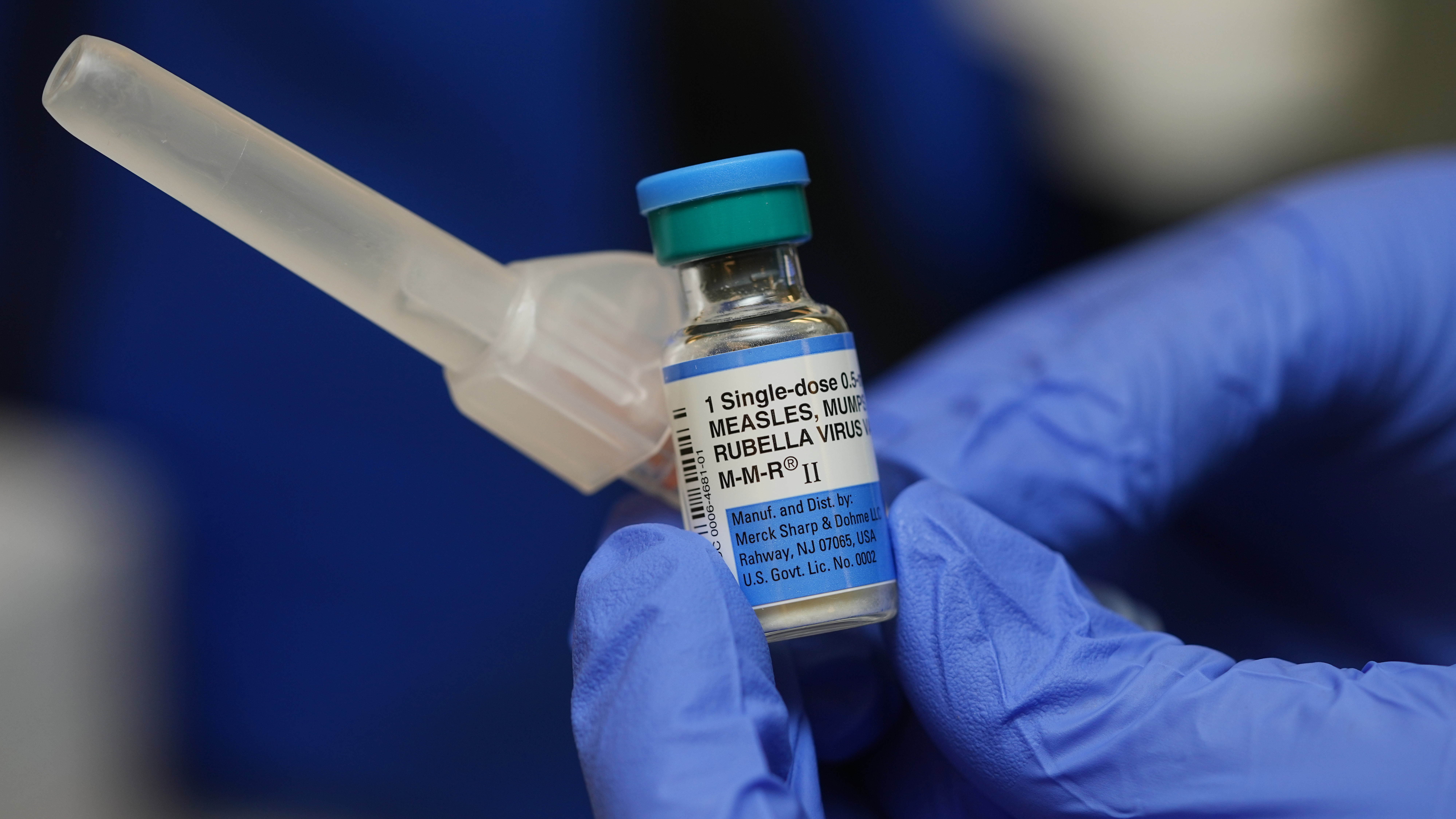
    For everyone else, staying up-to-date on the measles, mumps and rubella (MMR) vaccine is the best way to protect against the virus. Two doses generally provide lifetime immunity, and most children in the U.S. receive both by kindergarten. Some adults who only received one dose may need a second.

    Here’s what health experts want you to know about measles right now, including what to consider if you’re traveling for the holidays.

    How to know if you’re protected

    The MMR vaccine is highly effective and “one of the safest vaccines we have,” said John Swartzberg, clinical professor emeritus in the Infectious Diseases & Vaccinology Division at the University of California at Berkeley. If you’ve completed the two-dose series of MMR or MMRV (which also protects against chicken pox), you’re considered protected and don’t need a measles booster.

    If you were born before 1957, you’re generally presumed to be immune because you were likely exposed to the disease as a child. You’re also considered immune if you’ve had a confirmed case of measles.

    However, a small number (fewer than 5 percent) of adults vaccinated between 1963 and 1967 received an earlier, inactivated measles vaccine that was less effective. “Those persons might be at some slight risk of acquiring measles,” said William Schaffner, a professor of infectious diseases at the Vanderbilt University Medical Center. If you had a measles shot during those years and got that version or don’t know which one you got, the CDC recommends you get the current MMR vaccine if you can safely receive it.

    If you’re unsure about your vaccination status and can’t find your records, your doctor can order a blood test to check for immunity or help you decide whether to get vaccinated. A just-in-case dose is safe, the CDC says, even if it turns out that you were protected.

    What to do if you’ve been exposed

    If you think you or your child may have been exposed to measles — say, one of you was around someone who tested positive or you got a notice from the health department — call your doctor right away to find out what to do next. And before heading to a doctor’s office or clinic, let the staff know you may have been exposed so they can protect others.

    Depending on your age and whether you’re immune, your provider may suggest an MMR dose (within 72 hours of exposure) or immune globulin (within six days). Immune globulin is a medication that contains antibodies that can help prevent measles or make the illness less severe if you do get sick, Schaffner said.

    If you aren’t immune, ask your doctor whether you should stay home and for how long. It’s important to follow their advice to keep the virus from spreading to others, including infants too young to get vaccinated.

    If you know you haven’t been vaccinated, Schaffner urged getting the shot before you’re exposed. “Now’s the time to go to your health care provider,” he said.

    What you shouldn’t do is just shrug your shoulders and think “measles isn’t that bad” and do nothing at all. About 1 in 5 unvaccinated people who get measles are hospitalized, according to the CDC. Research has found that measles can wipe out 11 to 73 percent of the antibodies children have developed against other infections, a phenomenon known as “immune amnesia” that can leave them more vulnerable to future illnesses.

    Who might need a second or early dose

    Some people may need to catch up on a missed MMR dose, and some children may need a shot earlier than usual. Here’s who falls into those groups.

    Children who haven’t had both doses

    Kids usually get their first MMR shot at 12 to 15 months old and their second at 4 to 6 years old. If they’ve missed a shot, ask their pediatrician about catching up. Children ages 1 to 4 who’ve received their first MMR dose but not their second may be able to get it early if they live in or are traveling to an area with a measles outbreak, Campbell said. The second dose should be given at least 28 days after the first.

    Infants in outbreak areas

    Babies 6 to 11 months old who are traveling internationally or who live in or are traveling to an area with a measles outbreak may need their first MMR shot earlier than normal — that is, before their first birthday. Ask their pediatrician whether an early dose is recommended. Infants who get that shot still need two more doses after they turn 1, noted Kisha Davis, president of the American Academy of Family Physicians.

    Adults at higher risk

    If you’ve had one MMR dose, you may need a second. For example, two doses are recommended for health care workers, international travelers and people in close contact with someone who’s immunocompromised, like someone undergoing cancer treatment or taking immunosuppressant medications. If you have HIV, ask your doctor if you can safely get the MMR vaccine and if you need another dose. A second shot may also be recommended if there’s a measles outbreak where you live.

    What to know if you’re traveling soon

    The current measles outbreaks are particularly concerning for holiday travelers who haven’t been vaccinated, including babies who are too young for the shot and people who can’t get it for medical reasons, such as pregnancy or a severely weakened immune system.

    If you’re an adult who can’t get vaccinated, wearing a mask in crowded places like airports is “another layer of protection that can help,” said Schaffner, though “it’s not perfect.” A well-fitting N95 offers the strongest protection, but KN95 and KF94 masks can also help reduce exposure.

    Again, for international travel, the CDC recommends an early MMR dose for babies. But infants under 6 months are too young to be vaccinated at all, and travel is particularly concerning for this age group, Swartzberg said.

    If you have to travel with an infant, keep them away from sick people and don’t visit households where members are ill or unvaccinated, Campbell said. Making sure everyone who spends time around the infant is immune to measles can create a “cocoon around the baby,” he explained.

    Until recently, “we wouldn’t walk around worrying about getting measles,” Swartzberg said. Now, “if you’re not immune to measles, the United States is a place you can get it.”