Tag: topic-link-auto

  • The best spooky music in Philly with Alice Cooper, Ink & Dagger, Motionless in White, Florry, and Making Time

    The best spooky music in Philly with Alice Cooper, Ink & Dagger, Motionless in White, Florry, and Making Time

    This super scary week in Philly music features Halloween night events with Alice Cooper, Ink & Dagger, Motionless in White, and Making Time. Plus Journey, Richard Thompson, Vince Staples, Afro-Cuban All Stars, and more.

    Wednesday, Oct. 28

    Journey

    “The Final Frontier” is another alleged farewell tour, this one from the San Francisco band whose “Don’t Stop Believin’,” is a safe bet to the top of WXPN-FM’s upcoming 885 Greatest Songs from Movies & TV countdown for its role in the Sopranos finale. Since 2008, the band led by guitarist Neal Schon has been fronted by singer Arnel Pineda, who sings the hits recorded with vocalist Steve Perry during the band’s 1970s and 1980s heyday. 8 p.m. Xfinity Mobile Arena, 3601 S. Broad St., xfinitymobilearena.com

    Folk City: The Kings of Steel

    Steel guitar players Mike “Slo-Mo” Brenner and Paul Wilkinson will take seats behind their instruments at Old City’s 48 Record Bar as part of the monthly Wednesday night Folk City series hosted by John Train singer Jon Houlon and 48 Record Bar poobah Joey Sweeney. Houlon and Sweeney will both perform with backing by Brenner and Wilkinson, who will also spin records featuring the instrument that has long been a staple of traditional country music and is lately increasingly prevalent in indie rock. 7 p.m., 48 Record Bar, 48 S. Second St., 48recordbar.com

    Allison Russell

    Canadian-born songwriter Allison Russell has recorded with folk groups Po’ Girl and Our Native Daughters, and impressed with her outstanding solo debut Outside Child in 2021. Her new album, In the Hour of Chaos, copes with tumultuous times with the help of guests including Brittany Spencer, Norah Jones, Ruby Amanfu, and Delco soul singer Devon Gilfillian. Sug Daniels opens. 7:30 p.m., Colonial Theatre, 225 Bridge St., colonialtheatre.com

    Marisa “Missy” Dabice, lead singer, as Mannequin Pussy, opens for the Foo Fighters’ “Take Cover Tour” at Lincoln Financial Field on Aug. 13, 2026.Allie Ippolito / For The Inquirer

    Mannequin Pussy

    This past summer, Mannequin Pussy absolutely slayed when it opened for Foo Fighters and Queens of the Stone Age at the Linc, with the Philly punk band making the most of its biggest ever hometown show. Now, the Marisa Dabice-led group is playing a decidedly smaller space. This show is a benefit for Carolyn Haynes, the group’s former tour manager and a touring member of the band, as she undergoes treatment for breast cancer. Dark Thoughts, Kulfi Girls, Commitment, and Cult Objects are also on the bill. 6 p.m., First Unitarian Church, 2125 Chestnut St, r5productions.com

    Thursday, Oct. 29

    Pat Finnerty & the Full Band

    Bandleader and entertainer Finnerty, who assembles many leading Philly musicians for shows, will play two sets at this pre-Halloween-themed gig. The first will be Live Band Karaoke; the second will be all songs by the Cars, with prolific local artist Dave Cope filling Ric Ocasek’s shoes. 8 p.m. Johnny Brenda’s, 1201 N. Frankford Ave., johnnybrendas.com

    Friday, Oct. 30

    Richard Thompson

    Is there another artist in folk-rock who writes songs and plays guitar at as high a level as Richard Thompson? In a word: No. On Friday, the Fairport Convention cofounder does Free at Noon in support of his new album, Hippies, Thugs and Heroes, in a show that will be a solo affair, with guest vocals from his wife, Zara Phillips. Then he’ll be back with a full band at Elkton Music Hall on Nov. 20 and Lansdowne Theater on Jan. 20. Noon, World Stage, 3025 Walnut St., xpn.org

    The Florring Stones

    This should be a blast. Florry, the Philly rocking country band fronted by Berwyn-raised songwriter Francie Medosch, is transforming for Halloween weekend into the Florring Stones. (They’re also playing shows in New York and Vermont.) Expect a ribald night of Stones covers displaying Medosch’s deep knowledge of all things Mick and Keith. Get there early to see an ad hoc band of Philly indie musicians play songs by Memphis power pop avatars Big Star. 8 p.m. Johnny Brenda’s, 1201 N. Frankford Ave., johnnybrendas.com

    Vince Staples

    Long Beach, Calif., rapper Vince Staples is on top of his game on Cry Baby, a pointedly political, wholly impressive album that takes on racism and injustice in America while blending rock riffage and soulful funk into the mix. 8 p.m., Franklin Music Hall, 627 N. Seventh St., franklinmusichall.com

    The Afro-Cuban All Stars plays the Miller Theater on Friday.Tom Ehrlich / Courtesy of Allied Global Marketing

    Afro-Cuban All Stars

    Afro-Cuban All Stars bandleader Juan de Marcos Gonzalez is a vocalist, impresario, and musician whose specialty is the Spanish tres guitar. He has been a key player in the Buena Vista Social Club. This tour continues his ongoing work of bringing Cuban music to the world. 7:30 p.m., Miller Theater, 250 S. Broad St., ensembleartsphilly.org

    Youbba Cissoka with De Tierra Caliente

    Philly Latin-fusion band De Tierra Caliente will be joined by Senegalese kora player Youbba Cissoka, who is a 72nd-generation griot of his family to master the West African 21-stringed gourd instrument. Polyrhythmic cross-pollination is sure to ensue. 8 p.m., Black Squirrel Club, 1049 Sarah St., blacksquirrelclub.com

    Rudresh Mahanthappa Hero Trio, featuring (left to right) Rudy Royson, Rudresh Mahanthappa, and Francois Moutin, play the Zellerbach Theatre on Friday.David Crow / Courtesy of Rudresh Mahanthappa

    Arun Ramamurthy Trio and Rudresh Mahanthappa Hero Trio

    This Penn Live Arts show gives equal billing to violinist Ramamurthy’s band, which melds jazz and South Indian Carnatic traditions, and alto saxophonist Mahanthappa’s freewheeling Hero Trio, which features bassist François Moutin and drummer Rudy Royston. 7:30 p.m., Zellerbach Theatre, 3680 Walnut St., pennlivearts.org

    Mary Gauthier will perform at Arden Gild Hall on Friday.Alexa Kinigopolous

    Mary Gauthier

    Mary Gauthier writes country-folk songs about characters on the margins of society that are deeply empathetic and free of sentimentality. The Louisiana native will be celebrating 2005’s Mercy Now, which she’ll perform along with her album Reckoning. Jamie Harris, the Waco, Texas, native who is Gauthier’s musical and romantic partner, opens. 8 p.m., Arden Gild Hall, 2126 The Highway, Wilmington, ardenconcerts.com

    Sam Coomes and Janet Weiss of Quasi. The band plays Ardmore Music Hall on Friday and Saturday with Built to Spill. John Clark.

    Friday, Oct. 30 and Saturday, Oct. 31

    Built to Spill & Quasi

    These Pacific Northwest-born 1990s bands have both had long and fruitful careers. Since 2019, Doug Martsch’s Built to Spill — the original BTS! — has teamed the indie guitar god with drummer Teresa Esgera and bass player Melanie Radford. Sharing top billing is Quasi, the Portland, Ore., duo of former spouses Sam Coomes and Janet Weiss, the latter of whom spent two decades drumming in Sleater-Kinney. 8 p.m., Ardmore Music Hall, 23 E. Lancaster Ave., Ardmore, ardmoremusicalhall.com

    Saturday, Oct. 31

    Making Time Pure Halloween

    One month post the annual Making Time ∞ blowout at Fort Mifflin, Dave. P’s mobile dance party is back indoors. The evening features industrial dance duo Boy Harsher, Boston rock band Model/Actriz, and British garage DJ-producer Conducta, plus Marie Davidson, Kassie Krut, and Dave P. himself. 8 p.m., Franklin Music Hall, 627 N. Seventh St., franklinmusichall.com

    Motionless in White

    Something scary from Scranton: Gothic metalcore band Motionless in White has built an arena-size audience with dark, disturbing, and danceable tunes that bear the influence of heavy rock and industrial leaning acts like Type O Negative and Nine Inch Nails. A ghastly and ghostly costume party. 8 p.m., Xfinity Mobile Arena, 3601 S. Broad St. xfinitymobilearena.com

    Ink & Dagger

    Philly hard core punk band Ink & Dagger existed from 1995 to 1999, a year before the death of singer Sean Patrick McCabe. Known for vampiric lyrics and fake blood spewing on stage, the band reunited in 2010 and 2011 with singer Geoff Rickly of the band Thursday. Then, they again reunited last year for three Halloween shows at First Unitarian Church. This year, the band, whose albums including Drive This Seven Inch Wooden Stake Though My Philadelphia Heart, have been reissued on Trust Records, is doing a Philly show at the location of its final gig in 1999. Uniform and Danny Death open. 8 p.m., Creese Student Center at Drexel University, 3210 Chestnut St, r5productions.com
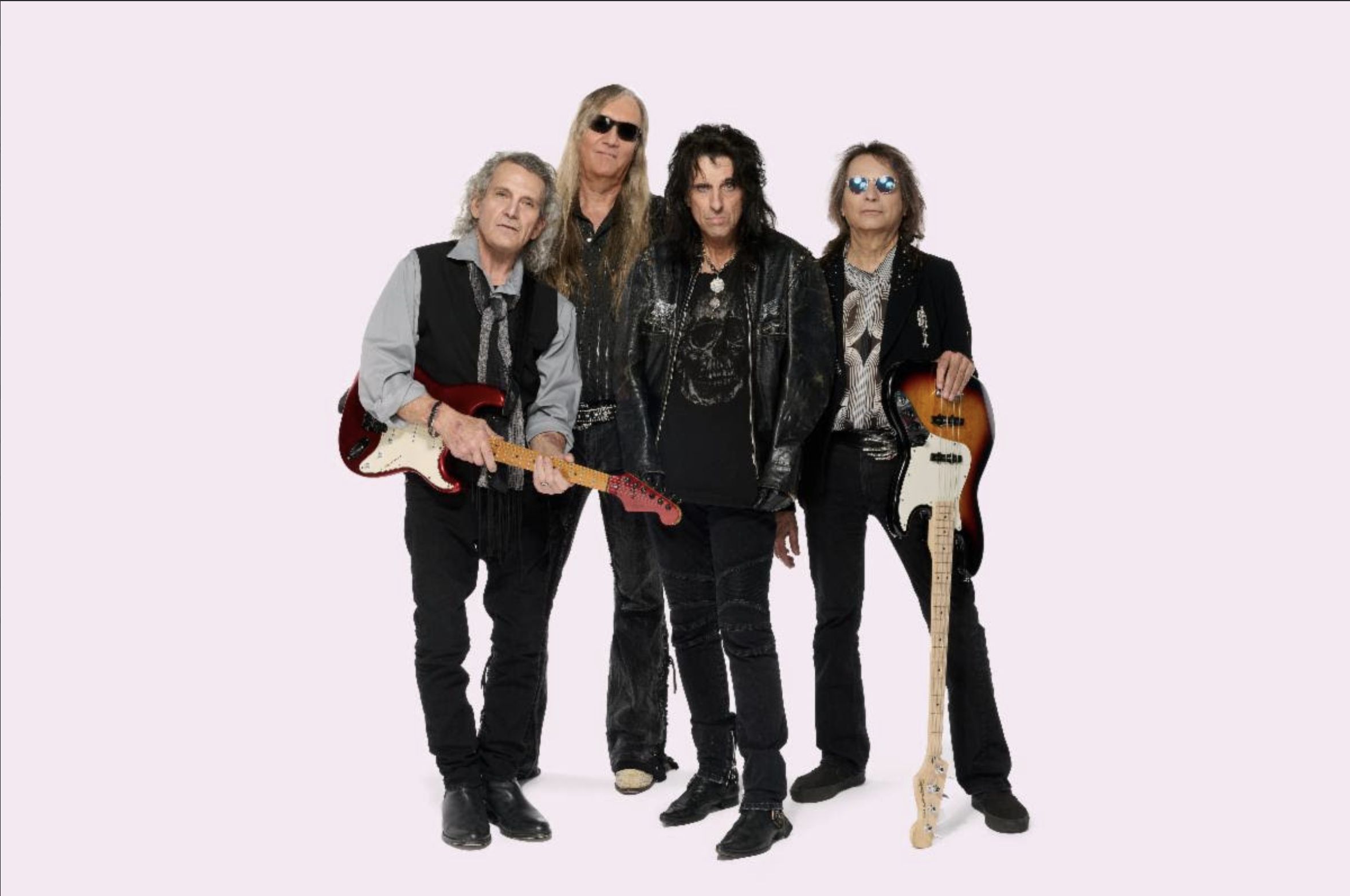
    Alice Cooper plays the Tropicana in Atlantic City on Saturday and the Wind Creek Event Center in Bethlehem on Sunday.Jenny Risher

    Saturday, Oct. 31 and Sunday, Nov. 1

    Alice Cooper

    Alice Cooper invented shock rock. Before there was Kiss or Marilyn Manson, the flamboyant showman born Vincent Furnier was goofing around with a guillotine on stage. What better time than Halloween to see the singer who tells the tale of his showbiz life in the memoir Devil on My Shoulder. 8 p.m. Saturday, Tropicana Ballroom, 2831 Boardwalk, Atlantic City, caesars.com/tropicana-ac and 7 p.m., Wind Creek Event Center, 77 Wind Creek Blvd., Bethlehem, windcreekeventcenter.com
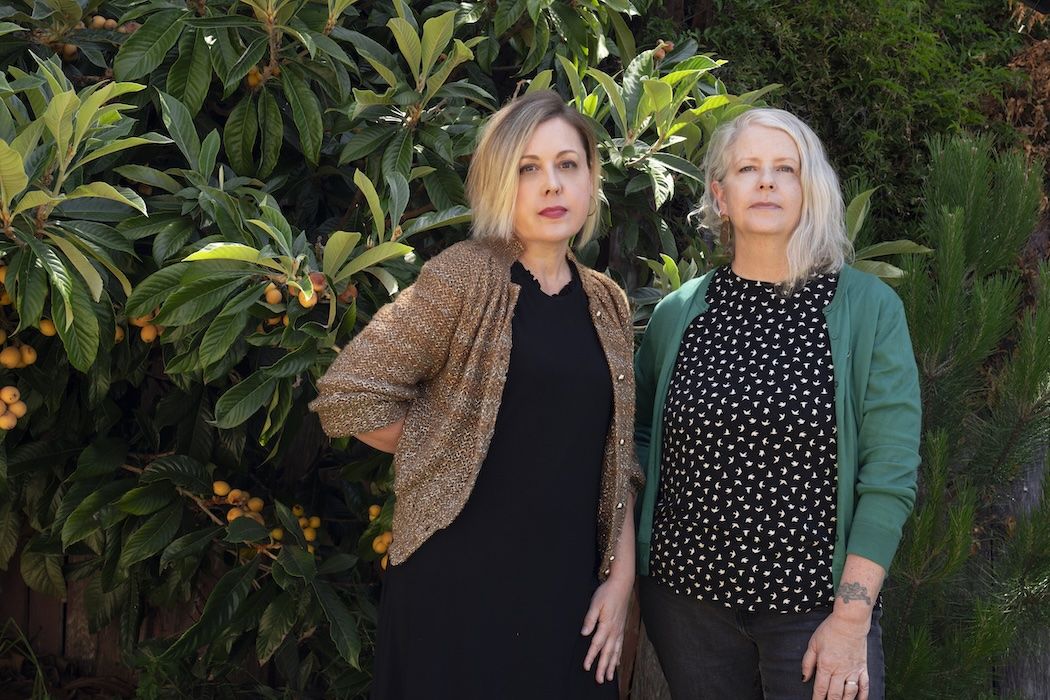
    Corin Tucker and Tracy Sawyer of Heavens to Betsy play First Unitarian Church on Sunday.Chloe Aftel

    Sunday, Nov. 1

    Heavens to Betsy

    After three decades apart, singer-guitarist Corin Tucker and drummer Tracy Sawyer, of influential riot grrrl duo Heavens to Betsy, have reunited for a 10-date tour. The band’s new album, Baby’s Gone, comprises unreleased recordings from the early 1990s, before Tucker became principal vocalist for powerhouse trio Sleater-Kinney. Calamity Jane opens. 8 p.m., First Unitarian Church, 2125 Chestnut St., r5productions.com

  • A Pa. art teacher got a chance to give the Linc some color and honor her late mother

    A Pa. art teacher got a chance to give the Linc some color and honor her late mother

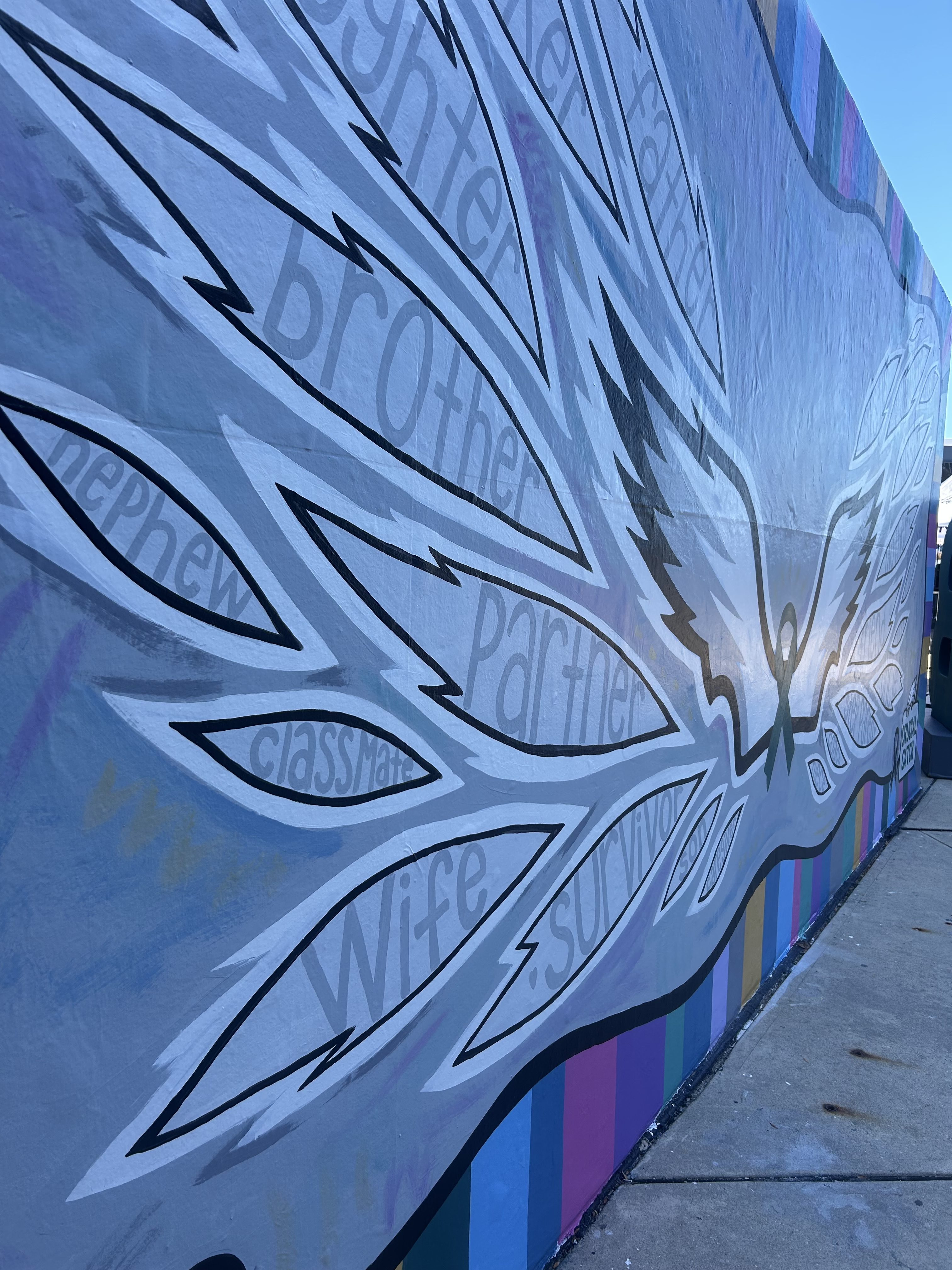
    When the Eagles reached out to Sarah Fogg about painting a mural at Lincoln Financial Field, she thought it was too good to be true.

    Fogg, who is an art teacher at Central Dauphin High School in Harrisburg, hadn’t applied for the opportunity. However, her artwork had caught the Eagles’ eye as they searched for an artist to capture the mission of the NFL’s Crucial Catch game.

    Once Fogg realized she was not being scammed, she got to designing a mural that would honor cancer awareness and serve as a tribute to her mother.

    “My mom had ovarian cancer, and she was a nurse, and she retired and then dedicated a lot of her time to the Sandy Rollman Ovarian Cancer Foundation,” Fogg said. “She created a special network of people [who] also had ovarian cancer. She unfortunately passed away in 2020, but her legacy lives on, and this mural is dedicated to her because she was a huge Eagles fan.”
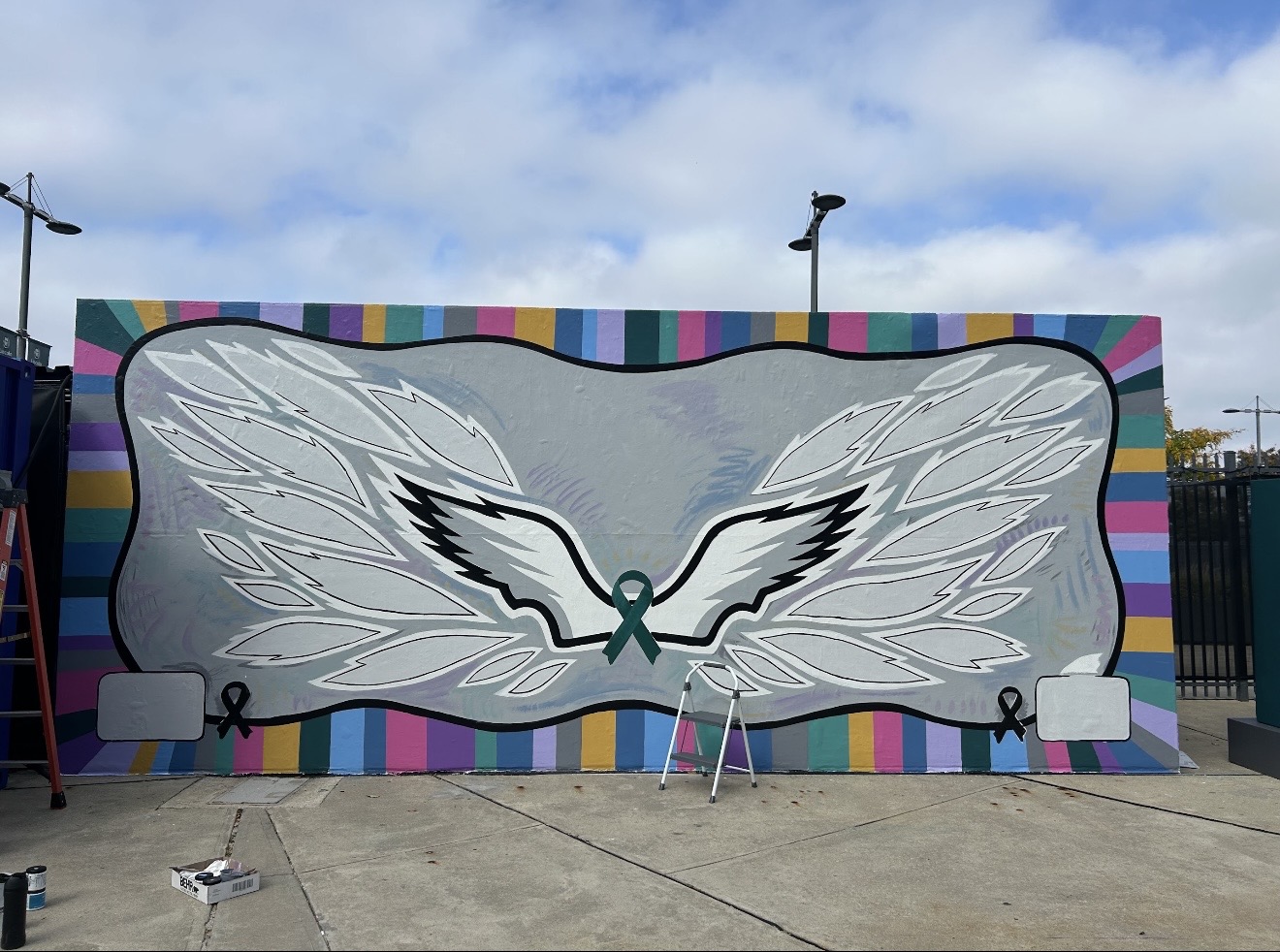
    Sarah Fogg created the Crucial Catch mural at Lincoln Financial Field. The gesture allowed her to honor her mother, who died of ovarian cancer in 2020. Courtesy of Sarah Fogg

    Fogg’s past artwork drew the Eagles to her. A butterfly mural she painted in Old City in 2024 in collaboration with the Sandy Rollman Foundation also brought awareness to ovarian cancer as the wings of the butterfly held the names of those affected.

    She hoped to create something similar for the mural at Lincoln Financial Field, in a style known as a “wing wall.”

    “The feathers can represent sort of the support system around someone who might be going through tough times, so it’s almost a physical representation of that network that you get,” Fogg said. “I also included all the colors around the outside to represent the different ribbons, representing different cancers.”

    Fogg didn’t have much time to complete the mural, which debuted during the Week 6 game against the Carolina Panthers, so she called in some much-needed backup.

    Harrisburg-based artist Sarah Fogg painted the mural as part of the Eagles’ involvement in Crucial Catch. Courtesy of Sarah Fogg

    “My sister, Julie, flew all the way in from Florida to come help me, which was really special,” Fogg said. “It was so cool to have her be able to help me and to be a part of this memory that we’ll hold in our hearts forever.”

    Fogg added, laughing: “I’m really thankful that she was able to, even though she’s not good at art.”

    After completing the project in just a few days, Fogg said it all paid off on game day when she saw people lining up to take pictures in front of the mural.

    The sisters attended the game, too. Fogg described it as a full-circle moment, as the last time they attended a game together was with their mother.

    “It’s my way of giving back. It’s my way to use my art for good,” Fogg said. “That comes from being a teacher and being a helper, so it feels great to be able to use my art for really cool stuff like this.”

  • Anfernee Simons is off to a slow start with the Sixers, but he’s confident shots will fall soon

    Anfernee Simons is off to a slow start with the Sixers, but he’s confident shots will fall soon

    Anfernee Simons had an auspicious debut with the 76ers last week at Madison Square Garden, with the ninth-year guard going 5-for-10 and scoring 13 points, which included three key three-pointers when the franchise couldn’t get much else to fall.

    Since then it has been slow going for Simons, who has shot 3-for-21 combined in the three games since the opener.

    This isn’t the first time Simons has endured a rough stretch of shooting in his career, so he wasn’t sweating the misses when he spoke after practice Tuesday. And he has a routine to help him break out of it.

    “Usually, if I’m struggling for a couple games, I might just want to go on the court, see the ball go through the hoop a whole bunch of times,” Simons said. “So I might get a whole bunch of reps in or just do 30 minutes, kind of a hard workout just to feel back in rhythm.”

    One factor that might be contributing to Simons’ struggles is how his preseason went. Simons was nursing a hamstring injury that kept him out of a number of practices and all four preseason games. Without that runway to get his shot in gear, Simons is having to find his rhythm in the games that count.

    “You can see now a little bit, not playing and not being able to play in preseason kind of held me back a little bit,” Simons said. “But just like I said before, you’re going to be able to see throughout these first 20 games how it’s going to look. I’ll be able to get comfortable with what type of shots I’ll get on a game-to-game basis.”

    Simons, like the rest of the Sixers, is also learning his new teammates, and where his shots may come from in the flow of the offense. That’s something Simons also missed by not being able to practice.

    “It’s just all those things that happen at one time,” he said. “So it can feel a little bit like a lot, but each and every game I feel like it’s getting more and more comfortable. After that, obviously where your shot’s coming from, you know what your role is, how that feels on a game-to-game basis.”

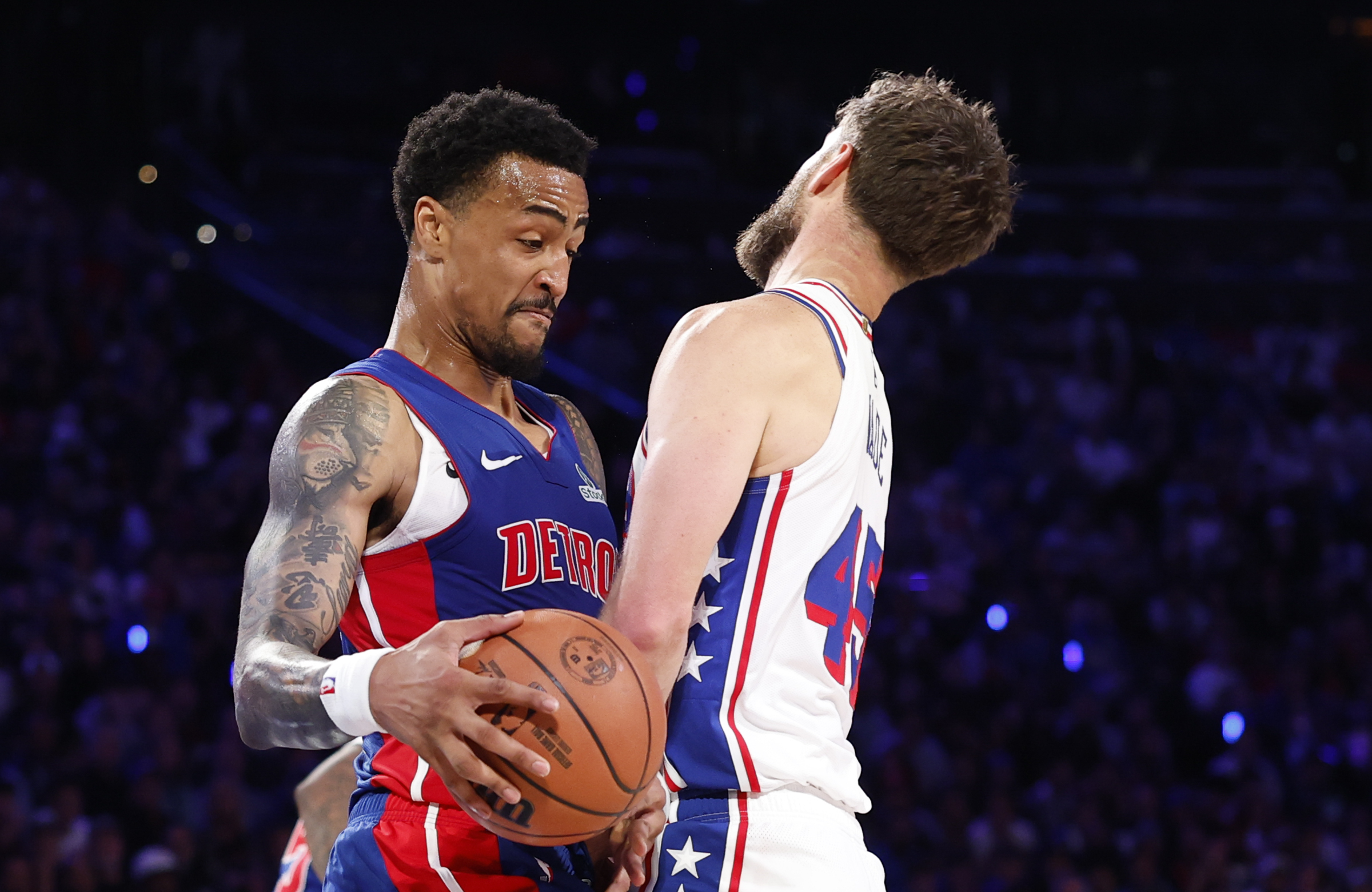
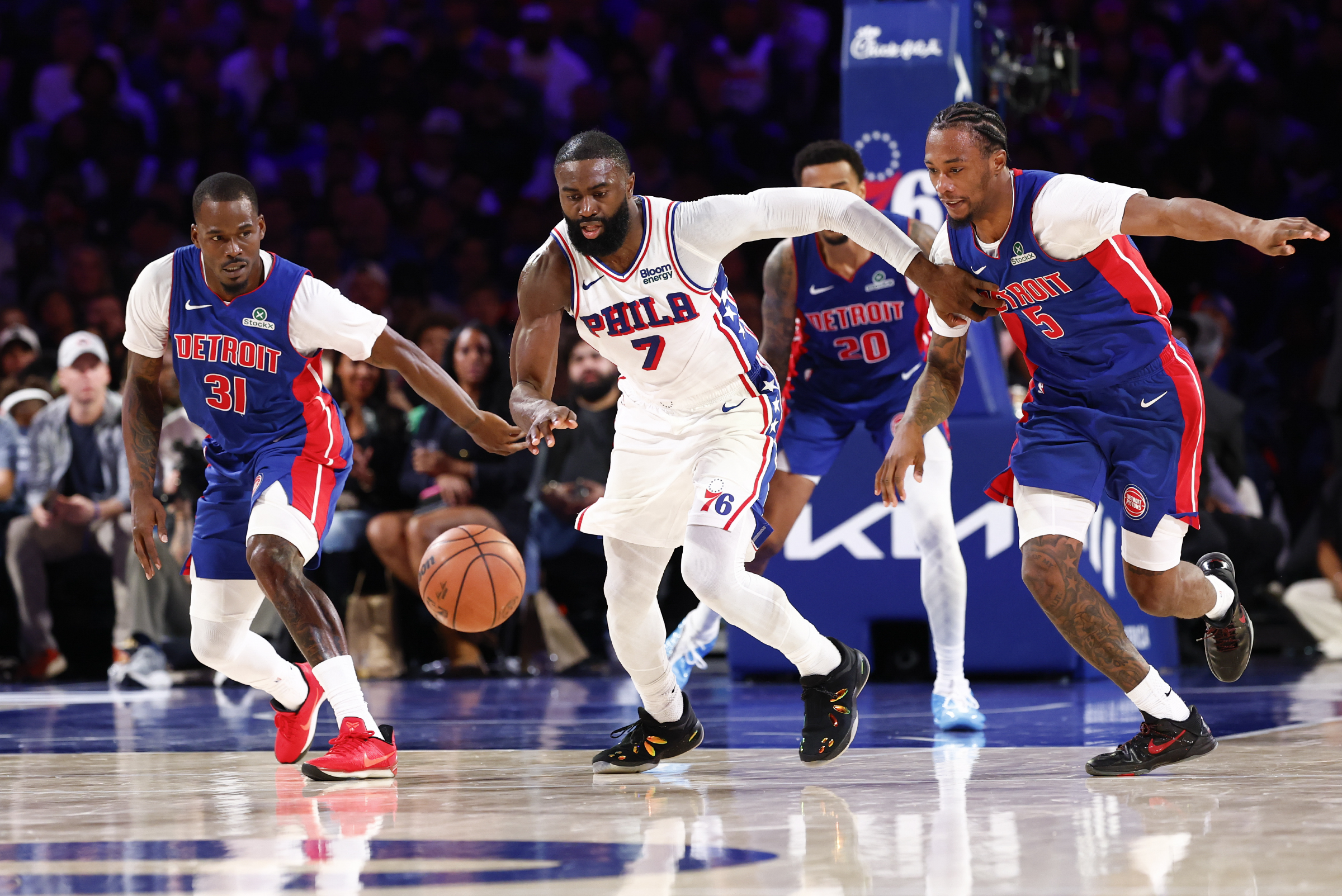
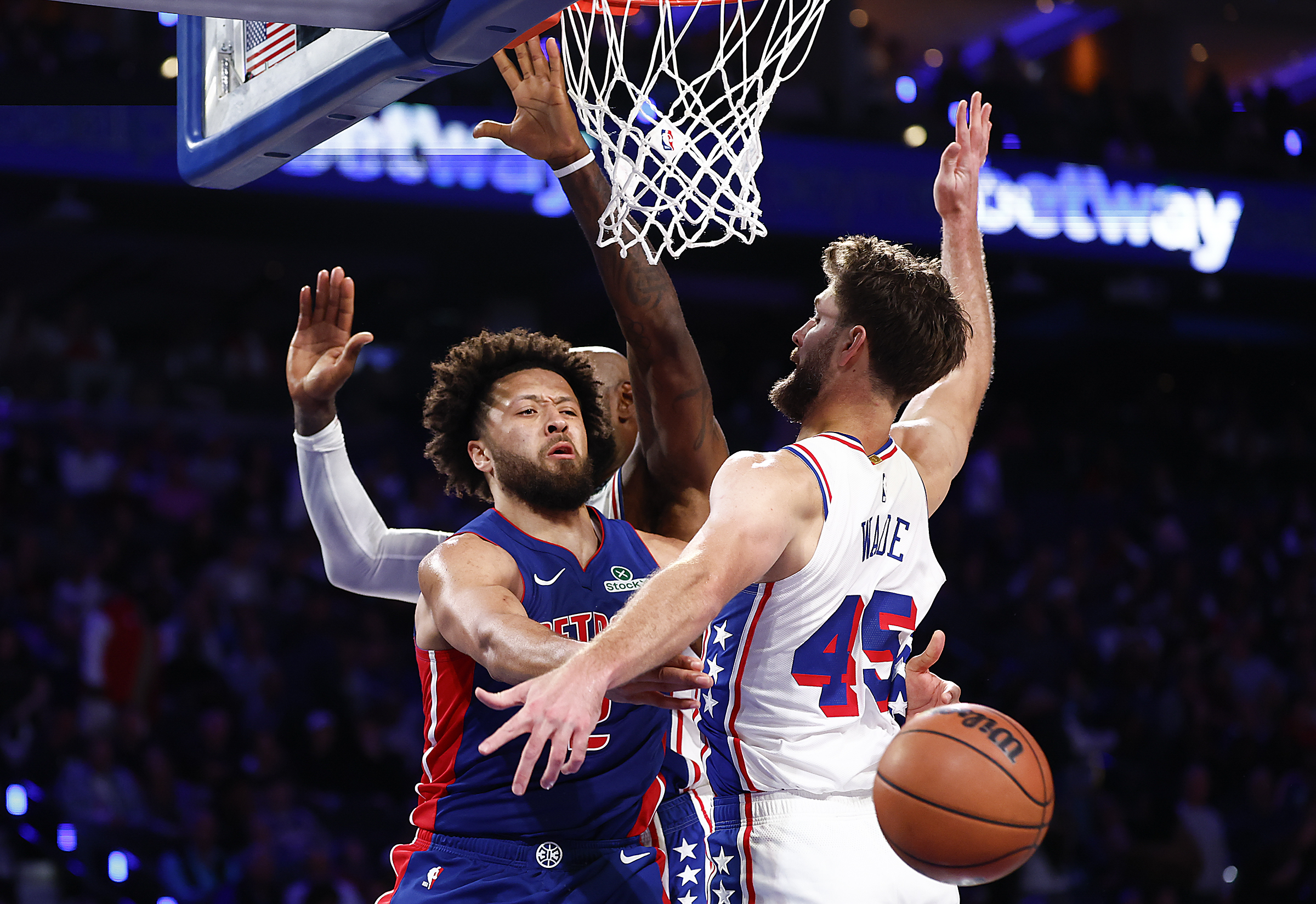
    After the loss to Detroit, coach Nick Nurse said Simons still played a “great” game despite a 2-for-10 shooting line.

    “It’s hard to not play in training camp and in any preseason games, and then you get into that incredibly intense part of it, and it [can] take a toll,” Nurse said. “But I really like him. I think he’s going to be an explosive scorer for us, and we’ll get there with him for sure.”

  • Dolores Huerta, influential labor leader, feminist and civil rights icon, dies at 96

    Dolores Huerta, influential labor leader, feminist and civil rights icon, dies at 96

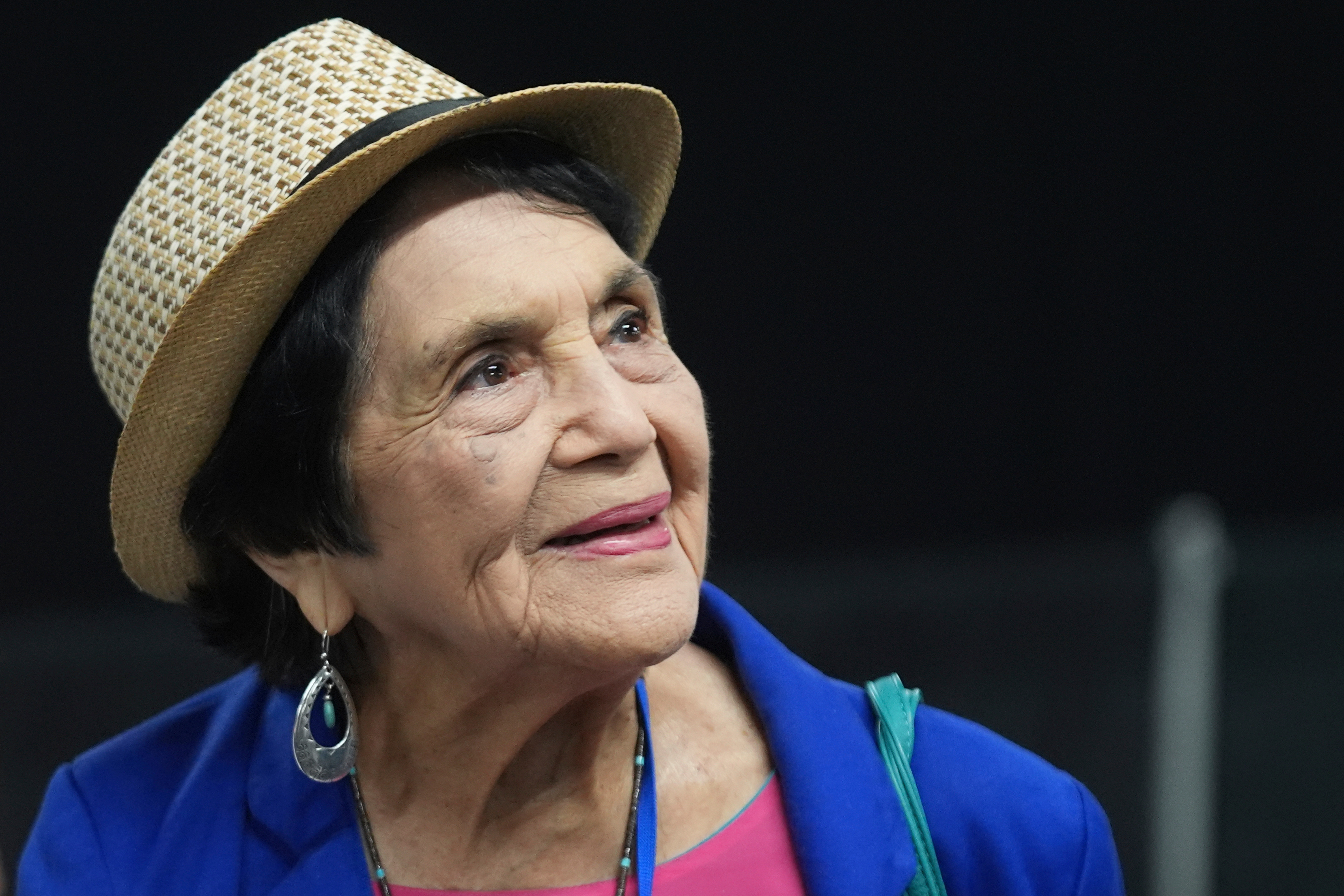
    Dolores Huerta, who co-founded the United Farm Workers union to improve working conditions in the nation’s fruit and vegetable fields and coined the enduring “Sí, se puede!” rallying cry, has died. She was 96.

    Ms. Huerta died of cancer Wednesday at her home in Bakersfield, Calif., surrounded by family, said Erik Olvera, a family spokesperson.

    Ms. Huerta kept busy well into her 90s, marching in protests and encouraging activists to keep speaking out about race, poverty, LGBTQ+ and women’s rights.

    “It seems like history continues to repeat itself,” she told The Associated Press in August. “You see what’s happening right now in our country, and we know that people have to stand up.”

    Ms. Huerta’s resolve cemented her place in history as one of the nation’s most influential labor leaders, civil rights icons, and feminist activists. Her three-word Spanish-language slogan — which translates to “Yes, it can be done” — was grounded in the belief that people who take action can affect change.

    Her accolades over the decades included the Presidential Medal of Freedom. When President Barack Obama presented her with the nation’s highest civilian honor in 2012, he praised Ms. Huerta as a tenacious leader and said she was gracious when he stole her slogan for his 2008 campaign. “I’m pleased that she let me off easy … ’cause Dolores does not play,” Obama joked.

    “Her life’s work was to empower her community to face and overcome injustices, and she has left farm workers and the entire Latino community stronger and more organized than she found it,” United Farm Workers President Teresa Romero said in a statement Wednesday.

    Revealing a secret that shook Latino culture

    This year, Ms. Huerta revealed a shocking chapter in her life story — that she was sexually abused in the 1960s by the farmworker movement’s co-founder, César Chavez, leading to the birth of two children, a secret she had kept for 60 years, long after he died. Chavez’s reputation immediately soured, his name removed from streets and buildings and the holiday that had been a point of Hispanic pride.

    Ms. Huerta said she had kept silent for so long because she feared coming forward would compromise her life’s work and unravel all the progress made for workers. From the early 1970s on, Huerta’s life partner had been Richard Chavez, César’s brother, and together they had four kids. She also had seven children from two earlier marriages.

    When asked during a 2026 interview with the news organization Latino USA about keeping the secret, Ms. Huerta said: “It was my personal pain, it was my personal problem and, you know, I think it was worth it because it was my cross to bear. I’ll say it that way.”

    Demonstrating a ‘passion for justice’

    Ms. Huerta’s advocacy changed many lives beyond the farm fields, said former President Bill Clinton and former Secretary of State Hillary Rodham Clinton, who called her “a stalwart champion of working Americans.”

    “Dolores wore many hats: voting rights advocate, human rights champion, die-hard Democrat, self-described ‘born-again feminist,’ and co-founder of the United Farm Workers of America,” the Clintons said in a statement. “To see her in action was to witness a living legend who never stopped pushing for progress.”

    Gov. Gavin Newsom said California would not be where it is without her “passion for justice and fairness.”

    “Dolores’ fight for gender equity, workers’ rights, and civil rights paved the way for generations to come — teaching people what was possible with determination and heart,” the Democrat said.

    Becoming an activist well before meeting Chavez

    Ms. Huerta was born Dolores Clara Fernandez in 1930 in Dawson, N.M. Her father was a miner and union activist who won a seat in the state Legislature. Her parents divorced when she was 3, and her mother took her and her brothers to California.

    Immersed in a melting pot of Mexican, Filipino, African American, Japanese, and Chinese working families, Ms. Huerta learned from her mother — who owned a restaurant and hotel — about independence, compassion, and activism.

    Ms. Huerta was a young, energetic elementary school teacher in the agricultural San Joaquin Valley when she decided to answer another calling after growing frustrated by her students’ poor living conditions.

    “I couldn’t stand seeing kids come to class hungry and needing shoes,” she said in a 2017 PBS Independent Lens documentary on her life. “I thought I could do more by organizing farmworkers than by trying to teach their hungry children.”

    Ms. Huerta’s early work with a civil rights group in Stockton resulted in her meeting Chavez. The two wanted to focus more on the plight of farmworkers, so in 1962 they started the National Farm Workers Association, which became United Farm Workers of America a few years later. She was a key leader and negotiator for the union for years.

    She was among those who joined Filipino grape pickers on the picket line in what became the five-year “Delano Grape Strike.” With Chavez, she negotiated collective bargaining agreements and contracts with big growers, winning the first health and benefit plans for farmworkers.

    Chavez, who died in 1993, once described her as fearless, committed to the cause, and tough when it came to negotiations.

    Campaigning for presidents and voting rights

    She met Sen. Robert Kennedy in 1968 and volunteered with his presidential campaign, registering Mexican Americans in California to vote. Ms. Huerta was on stage with Kennedy after he won the California primary and he publicly thanked her, moments before he was shot.

    The assassination devastated Ms. Huerta, but she kept organizing. Ms. Huerta was jailed 22 times for union demonstrating.

    In 1988, she was seriously injured while protesting Republican presidential candidate George H.W. Bush’s opposition to the UFW grape boycott during his visit to San Francisco.

    Caught in a crowd, she was struck by a police officer’s baton, suffered three broken ribs and a pulverized spleen, and required blood transfusions. She reached a settlement with the city to resolve her claims.

    After a long recovery, Ms. Huerta shifted focus, campaigning for women’s rights and encouraging Latinas to run for office.

    She also campaigned for Democratic Presidents Clinton, Obama and Joe Biden.

    Leaving a legacy of civil rights advocacy

    Emilio Huerta, one of Dolores’ 13 children, said his mother’s courage drove her life’s work.

    “To dedicate your life to building a dream of a union for farmworkers, to take on agriculture, which to this day is still a powerhouse. … That took a lot of guts,” he said.

    Ms. Huerta secured financial aid for the unemployed and disability insurance for California farmworkers. She spoke out against toxic pesticides, pushed for amnesty for immigrants in the country illegally and campaigned against federal guest worker programs.

    By directing nationwide boycotts of grapes and lettuce in the early 1970s, she helped to create the economic pressure and political climate necessary for California to pass the first state law recognizing farmworkers’ right to collective bargaining.

    But she didn’t always win favor with more liberal activists.

    In 2016 when she endorsed Hillary Rodham Clinton instead of Sen. Bernie Sanders in the presidential Democratic primary, actor Rosario Dawson — a Sanders supporter who played Ms. Huerta in a 2014 movie about César Chavez — said Ms. Huerta had become “an instrument of the establishment.” The two eventually reconciled.

    Ms. Huerta’s leadership in the labor movement made her name synonymous with civil rights in the U.S. and beyond. In the 2025 documentary Seeds of Change: The Life and Legacy of Dolores Huerta, she credited the 1970s women’s movement for providing her with the validation to take the stage with other labor leaders.

    “I hope that my legacy will be one of an organizer that organized to fight injustice,” she said in the film. “We want to give our children an inheritance of justice, right, not jewels or property or money because they’ll just fight over it. So the main thing to do is to give them this love for justice — and that is the greatest gift I think that any of us can have.”

  • Independents could shape November election. Why shut them out of primaries?

    Independents could shape November election. Why shut them out of primaries?

    David Thornburgh is chair of Ballot PA Action, which advocates for opening Pennsylvania’s primary elections to independent voters.

    Some of the most consequential elections in Pennsylvania this November will take place in Southeastern Pennsylvania and the Lehigh Valley. And yet, the voters who could help decide them are the same voters Pennsylvania continues to exclude from its primary elections: independent voters.

    In Bucks County, Republican State Sen. Frank Farry faces Democrat Eileen Hartnett Albillar. In Berks and Montgomery Counties, Democrat Chris Thomas and Green Party candidate Mike Schonewolf are challenging Republican State Sen. Tracy Pennycuick. And in the Lehigh Valley and upper Bucks County, Republican State Sen. Jarrett Coleman faces Democrat Mark Pinsley.

    These closely watched races will likely determine control of the Pennsylvania Senate, where Republicans hold a narrow 27-23 majority. The 30,000 or so independent voters in each Senate district will play a decisive role in the outcome.

    Without an incentive to reach out for their votes in the primary election, candidates often pay little attention to independent voters until the general election season heats up a few weeks before. At that point, these voters feel a little like the high school kid who, on Friday night, gets asked to the senior prom happening the next night. The invitation seems rushed and insincere. That’s bad politics.

    A rare opportunity

    But now Pennsylvania has an unprecedented opportunity to change this.

    On Sept. 29, the Pennsylvania House of Representatives made history by passing legislation to open primary elections to the commonwealth’s roughly 1.5 million independent voters. House Bill 280 passed 115 votes to 88 with bipartisan support, as 16 Republicans joined 99 Democrats in voting for the measure.

    It was a breakthrough more than three decades in the making.

    For at least 30 years, lawmakers have debated giving independent voters a voice in primaries. While the Senate passed such legislation in 2019 by a vote of 42-8, with support from the current Senate president pro tempore and majority leader, every effort in the House had fallen short.

    Until now.

    So why does what once seemed impossible now seem within reach? For one, independent voters now account for roughly one in six registered voters, with their numbers growing faster than either major party’s registration over recent decades. In the south-central, southeast, and the Lehigh Valley regions — Pennsylvania’s independent voter belt — that number’s even higher at one in five. Nationwide, 48% of all voters — an all-time high — identify as political independents, significantly more than they identify with either party.

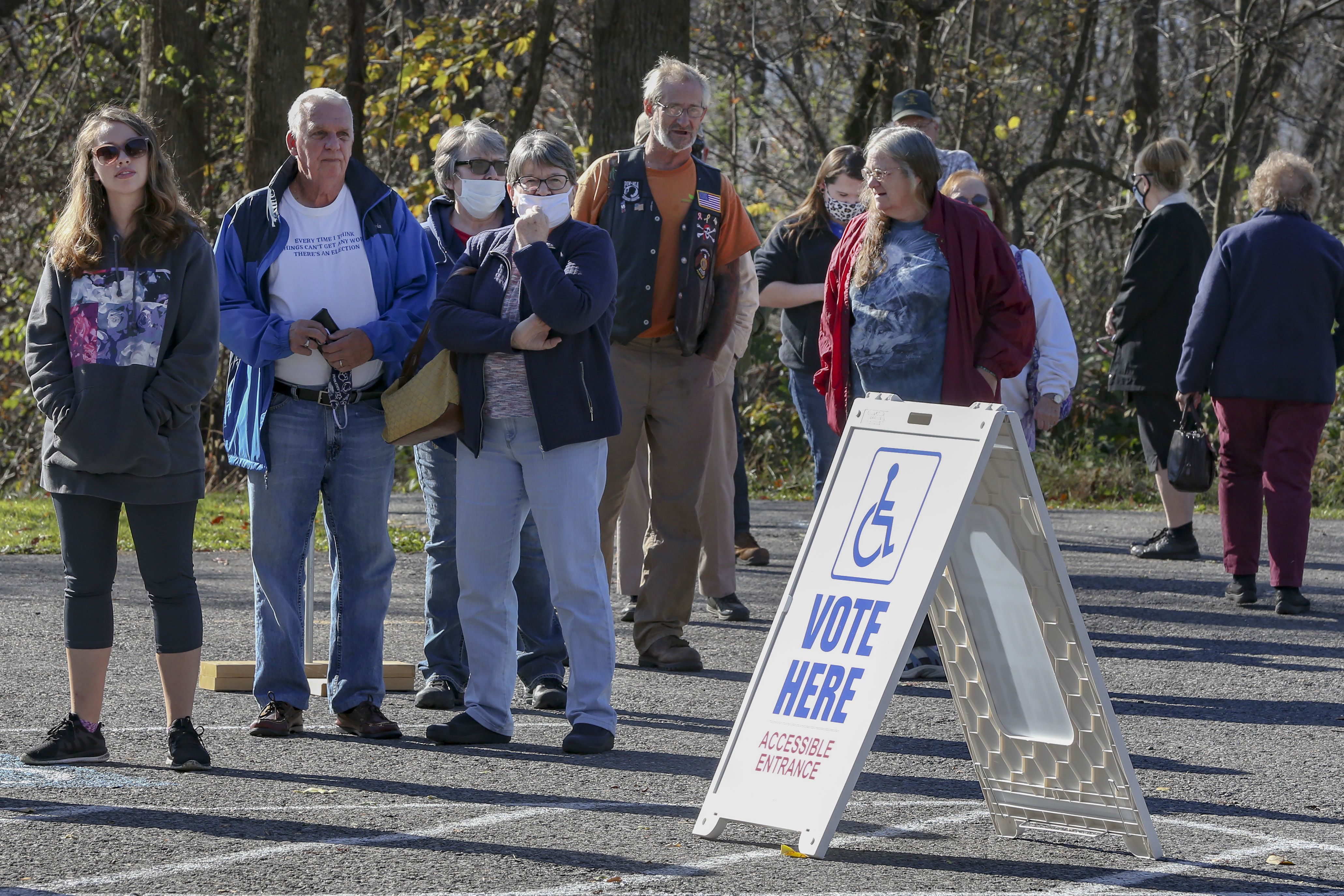
    Voters wait outside a Fulton County, Pa., polling place on Election Day 2022. Third-party and independent voters have long been denied the right to vote in Pennsylvania primary elections.Steven M. Falk / MCT

    According to the National Conference of State Legislatures, Pennsylvania is one of only eight states that does not allow independent voters to participate in partisan primary elections.

    Pennsylvania independents are not sitting on the sidelines by choice. They vote in general elections, pay taxes, serve in our military, own businesses, volunteer in their communities, and send their children to public schools.

    But when primary election day arrives, Pennsylvania tells them they cannot help choose Democratic or Republican nominees unless they join one of those parties.

    And that matters beyond the competitive Senate districts drawing attention this fall.

    In more than nine in 10 Pennsylvania legislative districts, where one party holds a significant registration advantage, the primary can effectively determine who represents that community. For independent voters, exclusion from the primary can mean exclusion from the election that matters most.

    With the passage of House Bill 280, the question moves to the Senate. While a Senate bill could technically advance before the end of the current legislative session in December, the clock appears to be running out, as legislators are preoccupied by their own races and perhaps frozen in place awaiting the outcome of the Nov. 3 election.

    Up to senators

    But in the eastern part of the state, Senate leadership in support of opening primaries is particularly strong and diverse, and could move sharply to advance such legislation early in the new year. In the Lehigh Valley, State Sens. Lisa Boscola — a tireless and persistent champion — and Nick Miller, along with Southeastern Pennsylvania State Sens. Steven Santarsiero, Carolyn Comitta, Timothy Kearney, Amanda Cappelletti, Tracy Pennycuick, Judith Schwank, Joe Picozzi, and Maria Collett, have cosponsored Senate legislation.

    Their support demonstrates that opening Pennsylvania’s primaries is not a partisan issue, but one of fairness, representation, and strengthening our democracy.

    The coalition supporting open primaries consists of independent voters, veterans, young Pennsylvanians, business and civic leaders, and elected officials from both parties.

    This November, voters will decide who represents their communities and potentially which party controls the Senate. Independent voters are critical to those races, but they are due a voice not just in deciding who gets the job in November, but in determining who gets their name on the ballot in the first place.

    Pennsylvania lawmakers have an opportunity to finally make that a reality.

  • Off-campus sexual assault reported at Temple University weeks after previous report

    Off-campus sexual assault reported at Temple University weeks after previous report

    The Philadelphia Police Department is investigating an alleged sexual assault involving two Temple University students at an off-campus residence.

    The assault occurred Sunday at the Avery, a private residential complex on North 15th Street, according to daily crime logs kept by Temple police. The two students knew each other, Temple officials said in a letter shared with students Monday evening.

    This is the second report of sexual assault involving Temple University students within the last three weeks.

    Another student reported being sexually assaulted at University Village, a private residential complex on the North Philadelphia campus, on Oct. 10. That case is not currently being criminally investigated but was referred to Temple’s internal conduct code review.

    “Students who are reporting a sexual assault make the decision on whether they wish to pursue criminal charges,” Temple president John Fry said in a statement released last week on the Oct. 10 case.

    Temple’s reckoning with rape on college campuses comes in the wake of the Cornell 7 case. In September, a former Cornell University student sued the school and former fraternity members over an alleged sexual assault at the school’s Chi Phi fraternity house in 2024, sparking national conversations around accountability.

    Like many schools across the United States, Temple announced Oct. 3 it would convene a task force on sexual assault composed of students, faculty, and staff to review the school’s practices and make recommendations.

    Since announcing the task force, Temple officials are now navigating two publicized sexual assault cases, leading Jodi Bailey Accavallo, vice president of student affairs, and Denise Wilhelm, chief of the Temple University Police Department, to pen the Monday letter to students reminding them of the rules of consent — “whether on a date or at events with friends.”

    “Remember, if you’re unsure whether you have consent, then you don’t have it. Stop what you’re doing, ask your partner before moving forward, wait for their response and respect their choice,” the officials wrote.

    Separately, an unidentified man, not associated with the school, has been exposing himself at the Howard Gittis Student Center on North 13th Street in the heart of the North Philadelphia campus, officials said. Additional security is patrolling the student center and has been briefed on a potential suspect.

  • Philly just appointed its first rat czar

    Philly just appointed its first rat czar

    Philadelphia has just appointed its first rat czar.

    Or, more officially, its first rat abatement manager — Adrian Jordan, a longtime Philadelphia Department of Public Health employee.

    Jordan will lead a new coordinated effort to address quality-of-life issues that attract the rodents, according to a city announcement Wednesday.

    He will work with six city departments to get rid of rats in residential and commercial areas.

    The city will also post a public rat dashboard on its website to track residents’ complaints and properties serviced. The dashboard is not yet live.

    Jordan said he is “honored” to take on the role.

    “I’ve worked to fight rats in Philadelphia for more than 20 years,” he said in the announcement. “And I am looking forward to being able to work directly with colleagues from departments across the City to ensure that we are properly prioritizing this.”

    Mayor Cherelle L. Parker said the new effort to rid the city of rats “starts today.”

    City officials said in the announcement that there had been no “documented rise in confirmed rat complaints” but that they wanted to show a commitment to a public health issue.

    A rat survey begins

    Managing Director Carlton Williams has directed Jordan and the health department’s rat control team to survey residents door-to-door in parts of the Lower Northeast, including Oxford Circle and Castor Gardens.

    The survey is designed to identify where rat problems exist, even if no complaints have been filed, then take action to reduce the rodent population, including educating residents on how they can help prevent infestations.

    The survey comes on the heels of a City Council resolution this month urging departments to develop a coordinated response to persistent rat infestations in the Lower Northeast, where residents have reported rats around homes and businesses.

    The rodents have been munching through car wires and causing other issues.

    Although the Council action focused on the Lower Northeast because of the number of complaints, rats exist in other parts of the city.

    PETA, the animal rights group, has also weighed in on Philly’s rat issues. It is urging Parker to consider rat contraception rather than poison.

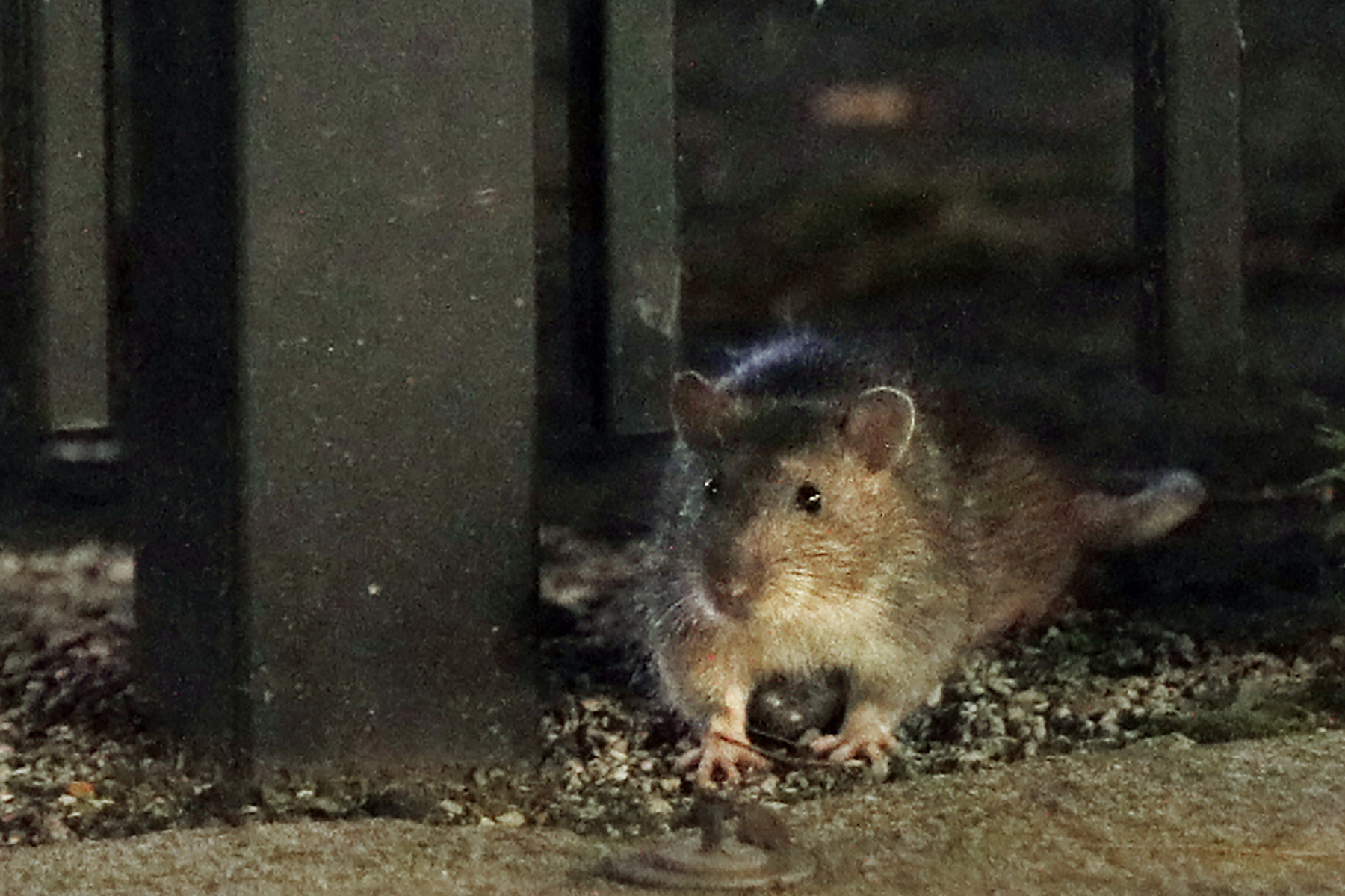
    A rat runs away with something big after rummaging through a pile of trash scattered on the sidewalk at Sixth and Callowhill Streets.ELIZABETH ROBERTSON / Staff Photographer

    Does Philly have a big rat problem?

    In a 2025 Orkin ranking, Philadelphia placed sixth nationally based on the number of rodent-control treatments. Philadelphia is the sixth-largest U.S. city, so that suggests its rat population is not outsize comparatively.

    By some measures, Philly logs fewer rat complaints than New York, D.C., or Baltimore, according to a 2025 analysis by The Inquirer. But the true population is hard to pin down.

    The analysis noted that “the precise number of rats in Philadelphia is impossible to measure” because most data come from complaints or exterminators.

    The Inquirer reported that Philly recorded under 4,000 complaints in the prior year (about 25 per 10,000 residents), a lower per capita rate than New York, Baltimore, and D.C.

    That same reporting also noted that some experts have raised concerns about inconsistencies in the city’s data collection as one reason the problem may appear smaller.

    New York appointed a rat czar in 2023, who served for two years.

    Rats tend to gather where there is food, trash, parks, vacant lots, and construction activity that disturbs nests.

    The city’s vector-control unit has used tactics like placing poison pellets into burrows.

    Rats could be adapting

    But other forces, such as a warming climate with mild winters, could be helping rats survive.

    In addition, rodent control is getting more complicated as pests adapt to methods of control.

    Recent research by Rutgers University showed that house mice in Philadelphia and nearby areas are linked to resistance to common rodenticides, while also suggesting rats may pose a different challenge — avoiding traps rather than showing the same resistance pattern.

    Philly’s new effort pulls together six departments: health, streets, sanitation, community life improvement, water, and licenses and inspections.

    “Philadelphia residents deserve clean and safe blocks,” said Williams, the managing director. “By establishing a dedicated rat abatement manager, we are strengthening our commitment to the basic services residents rely on every day.”

  • SEPTA bought roomy rail cars from a Montreal yard sale that will add capacity to Regional Rail

    SEPTA bought roomy rail cars from a Montreal yard sale that will add capacity to Regional Rail

    SEPTA’s 24 used rail cars gleamed Tuesday, thanks to paint applied by the previous owner, Montreal transit system Exo, and a good scrubbing after the long trip south.

    They’re sitting in shop service bays and parked on sidings at the transit agency’s Frazer maintenance facility in Malvern, as crews work to modify them to bolster the Regional Rail fleet after last year’s mechanical and safety problems.

    When all of them are online, the transit agency will have increased the number of its locomotive-powered “push-pull” passenger cars by 53%, from 45 to 69.

    And that will mean longer and less crowded trains, with fewer bypassed commuter stations as Regional Rail continues to rebound, said SEPTA General Manager Scott A. Sauer.

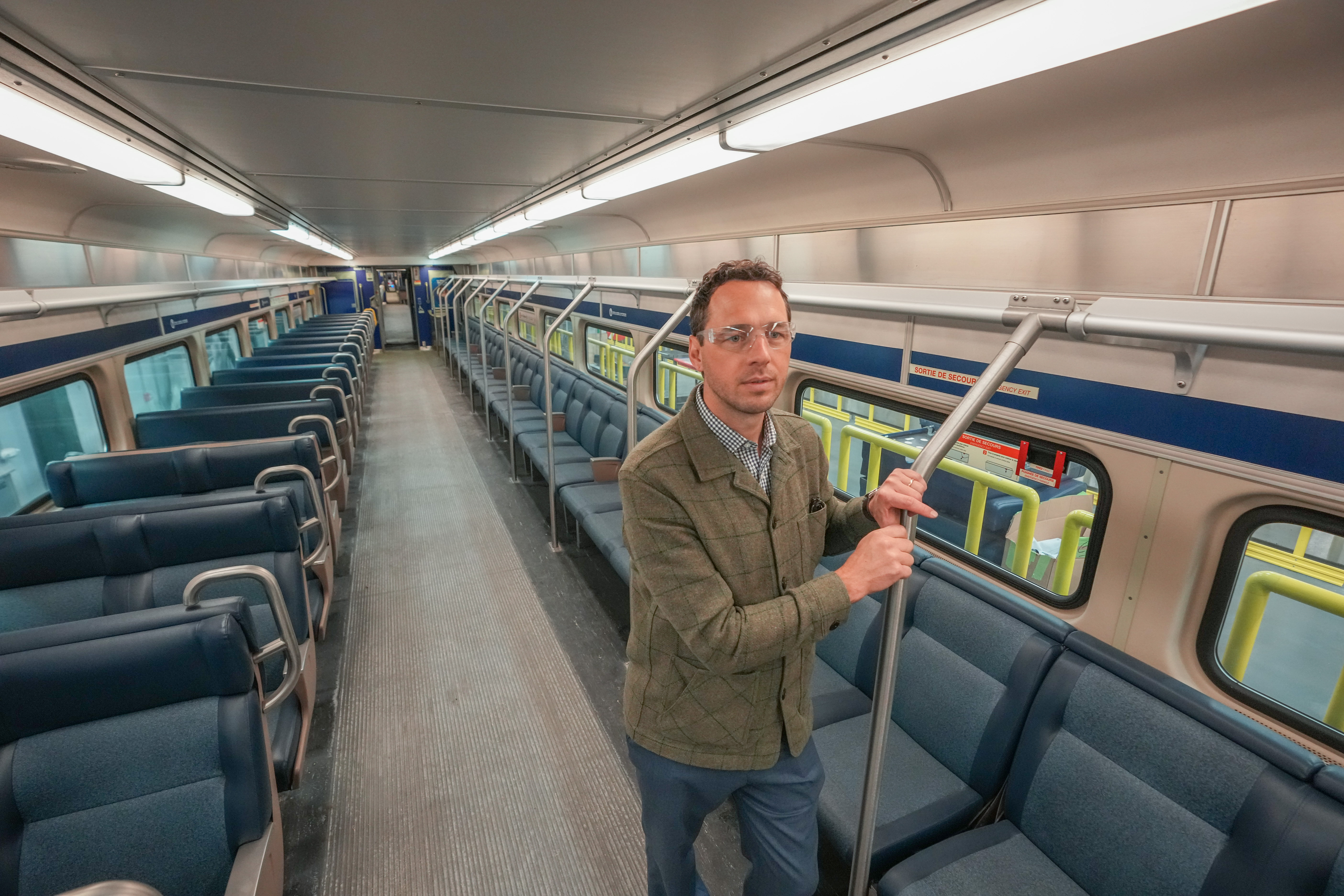
    “To start, customers will see some extra capacity, more room,” Sauer said. The coaches carry about 140 passengers, with a line of seats along one wall and wide aisles with poles for standees to hold.

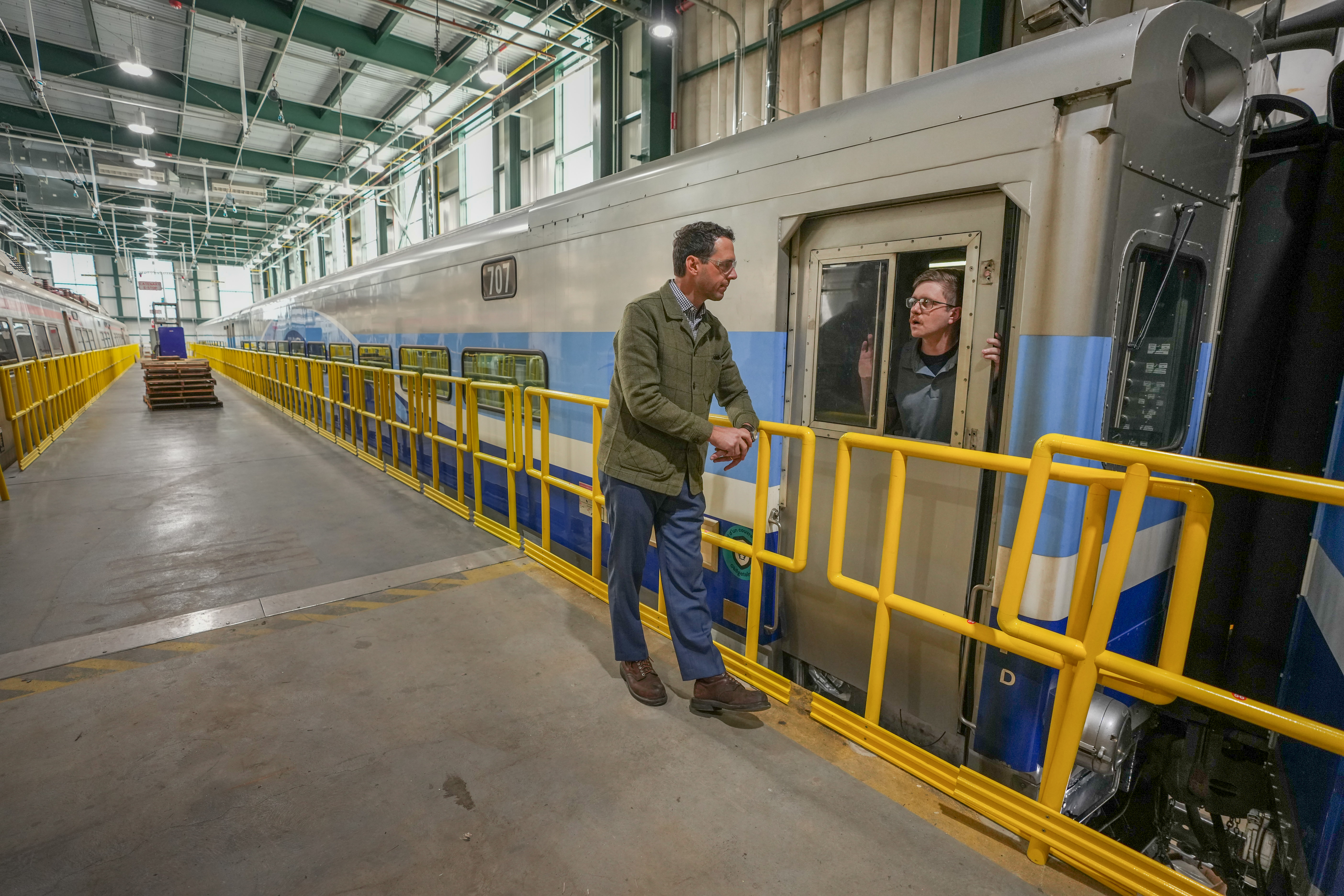
    Greg Buzby, Chief of Rail Equipment Engineering and Maintenance, shows a roomy Bombardier Comet II passenger car from Montreal’s Exo transit. SEPTA bought 24 to increase Regional Rail capacity. Jessica Griffin / Staff Photographer

    The surplus Bombardier Comet II passenger coaches cost SEPTA $8.58 million, with 75 pallets of extra parts thrown in. They were built in 1988 and 1989 and refurbished more than a decade ago. For the last several years, they’ve been mothballed as Montreal upgraded its commuter fleet.

    But Sauer said, they are “young compared to our senior citizens, the Silverliner IVs,” which are the workhorses of the Regional Rail fleet and at least 50 years old.

    In October 2025, the Federal Railroad Administration (FRA) ordered SEPTA to inspect and repair all 223 of the Silverliner IV railcars, after five of the aging vehicles caught fire earlier that year.

    For months, passengers dealt with canceled trips and delays as the Silverliner IVs were fixed. Trains were shorter than usual and packed.

    The Canadian cars will begin running on Regional Rail early next year, SEPTA officials say, after modifications to comply with Federal Railroad Administration safety standards for interior signage, lighting and windows and other things, as well as the installation of Positive Train Control, a now-mandatory system that regulates speed.

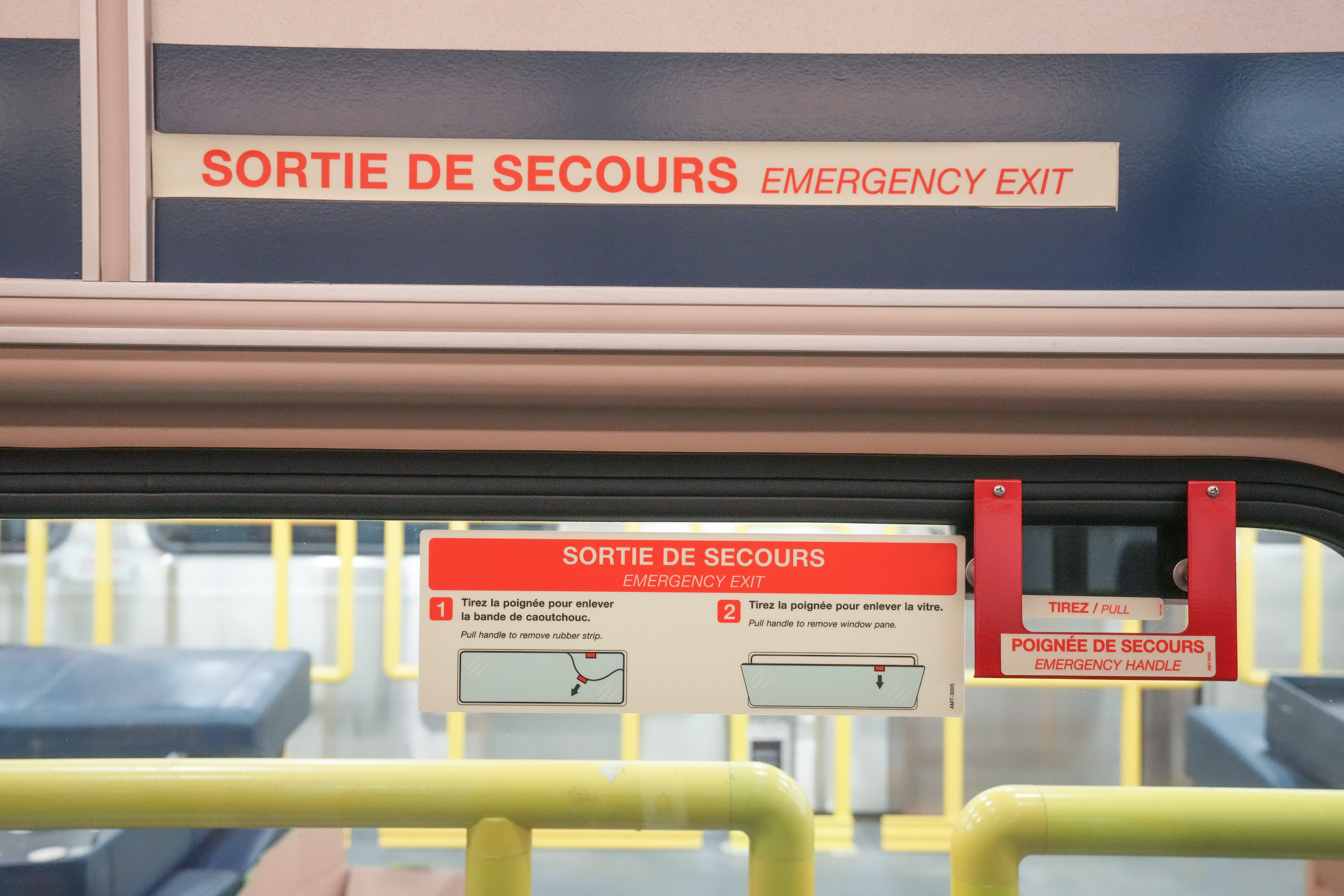
    Workers also need to replace way-finding maps of Montreal’s commuter train lines and dozens of French-language signs like Sortie de secours (emergency exit) and old ads such as the one inviting people to “Ecoutez la difference” on 107.3 Rouge FM, which broadcasts throughout Quebec.

    Signs will need to meet federal requirements for luminosity and larger type size. SEPTA will also change them to English.Jessica Griffin / Staff Photographer

    They are expected to last long enough to help ease the transition to a newly made set of cars, to be called the Silverliner VI. Like the IVs and the next generation Silverliner V SEPTA also uses, the new units will be capable of carrying passengers and generating propulsion powered by overhead electric wires.

    SEPTA has solicited bids and plans to award a $2 billion contract in the first quarter of next year, Sauer said. It would take about a decade for the first new models to begin arriving.

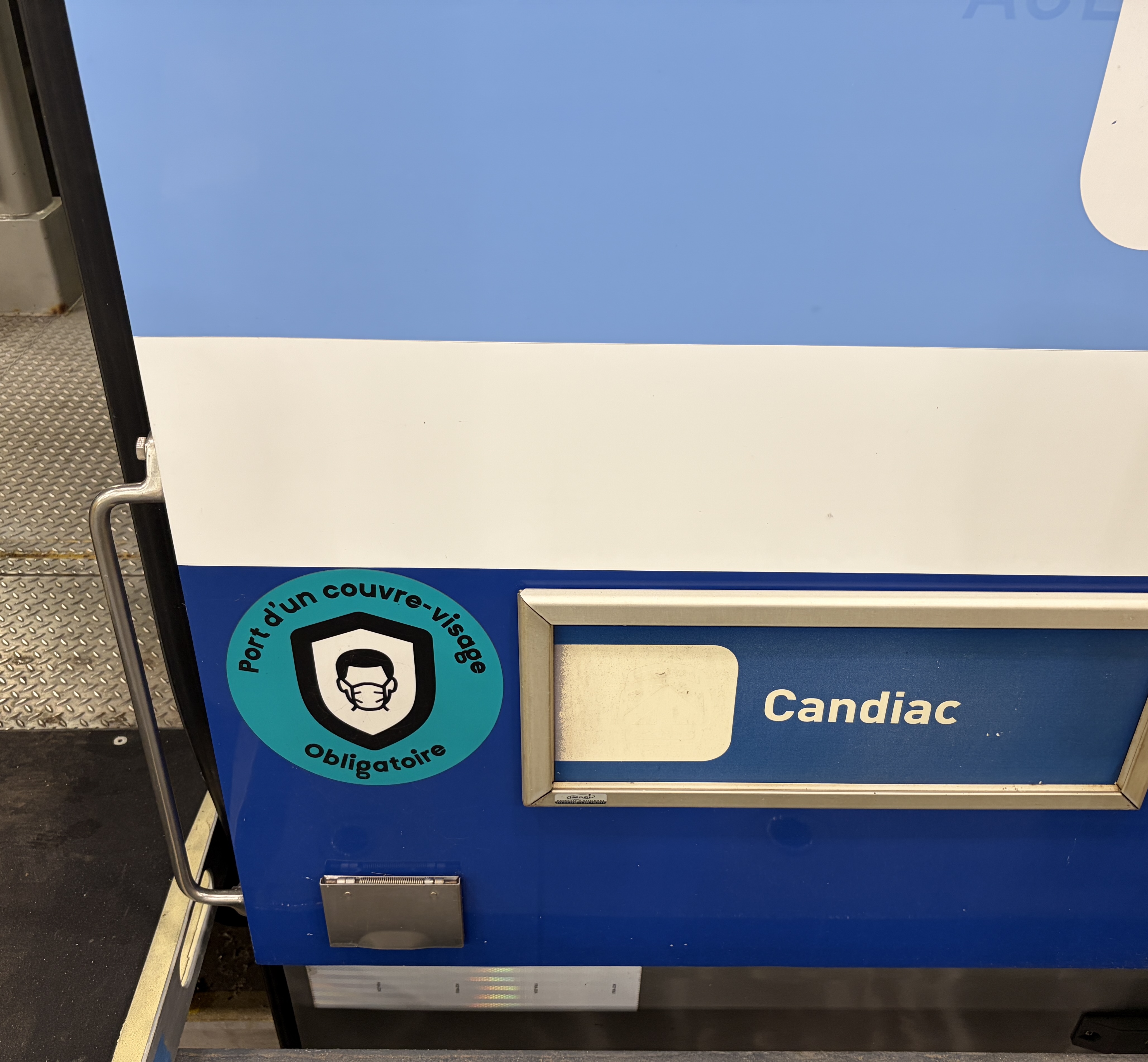
    A pandemic-era reminder to wear face masks and a station nameplate on a rail car SEPTA bought from Exo in Montreal.Thomas Fitzgerald

    Detailed inspections before and after the purchase have found no significant corrosion in the structural steel of the used Bombardier Comet II cars.

    “They’re in great shape,” said Greg Buzby, SEPTA’s chief officer, rail equipment engineering and maintenance. “Kudos to Exo for how well they’ve maintained the vehicles.”

    One of the biggest tasks will be to cut down the full-length doors on the cars from Montreal — where all the station platforms are low — and add “traps” that conductors use to align with the high and low platforms of SEPTA’s variety of Regional Rail stations Buzby said.

    Of the 24 Comet II cars, eight are so-called cab cars, which lead the train and allow the engineer to control a locomotive pushing the train from behind.

    “You get to the end of the line, switch to the locomotive, and you pull [the train] the other way,” Buzby said. The rest of the cars are passenger coaches with no power source of their own.

    SEPTA currently has only 10 cab cars in its Regional Rail fleet, so the additional cabs will provide flexibility — “kind of game changer for us,” Buzby said. Comet II coaches are considered ideal for express runs and routes where stations are spread farther apart.

    Last year, the transit agency leased 10 coaches from MARC, Maryland’s commuter rail system. But none is a cab car.

    The Montreal coaches and cab cars share the same manufacturer as those SEPTA already owns so the equipment is familiar to mechanics and engineers, Buzby said. In fact, Bombardier built the Frazer shop to assemble them.

    “They’ll integrate with our cars seamlessly,” he said.

  • Nick Foles says ‘culture things’ are hurting the Eagles; Nick Sirianni wants his team to ignore ‘that crap’

    Nick Foles says ‘culture things’ are hurting the Eagles; Nick Sirianni wants his team to ignore ‘that crap’

    Many fans had high expectations for the Eagles entering this season, but Nick Foles knew better.

    On Tuesday’s episode of The SZN with Nick Foles & Evan Moore and NBC Sports Philadelphia, the Super Bowl LII champion said he “knew something bad was going to happen” starting when the Eagles and Jeff Stoutland parted ways after last season.

    “There is dysfunction in Philly,” Foles said. “It was little things for me. It wasn’t the execution that got me. It was culture things. … In Philadelphia, for the better part of the past couple decades, they have had really good culture. Something is changing.”

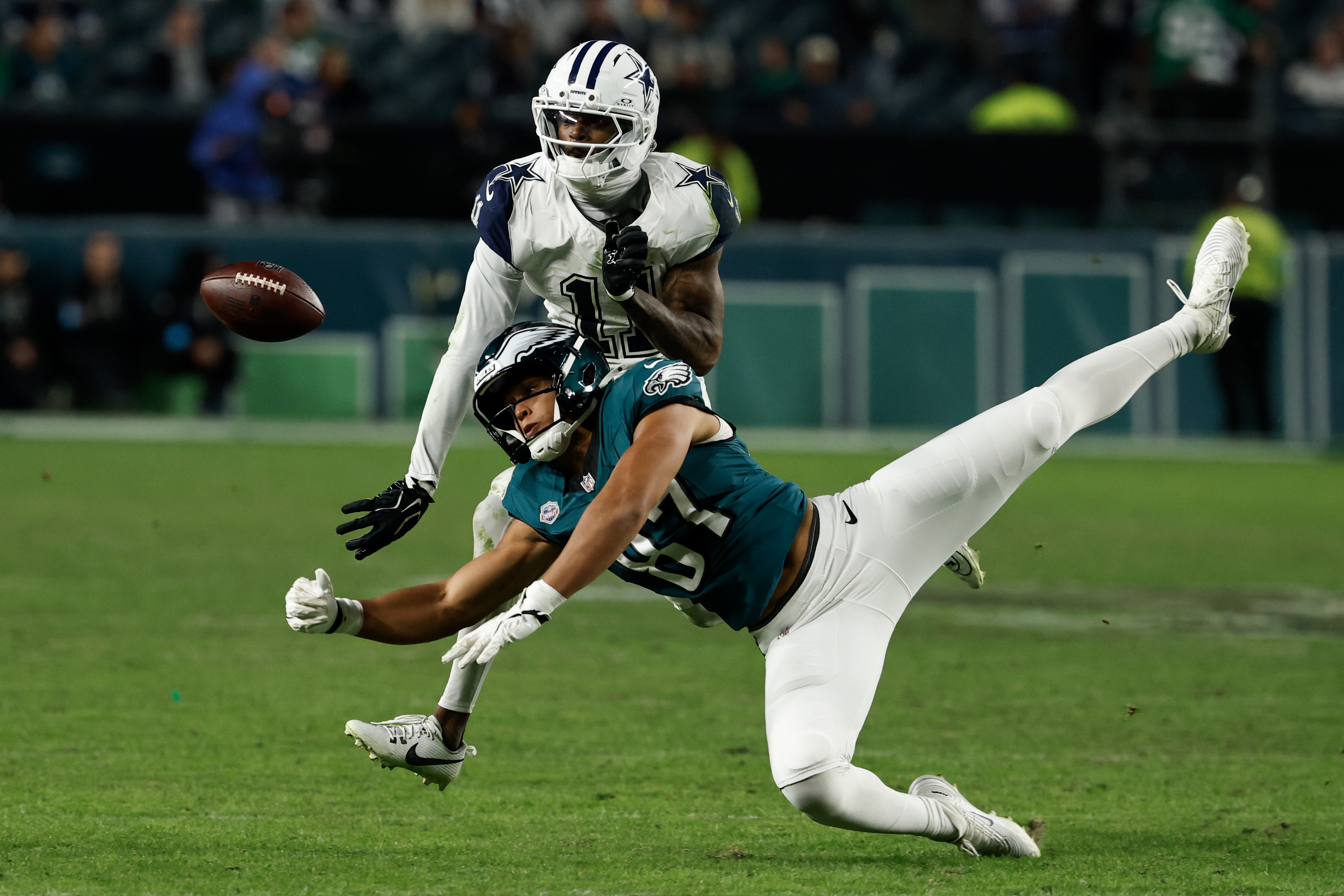
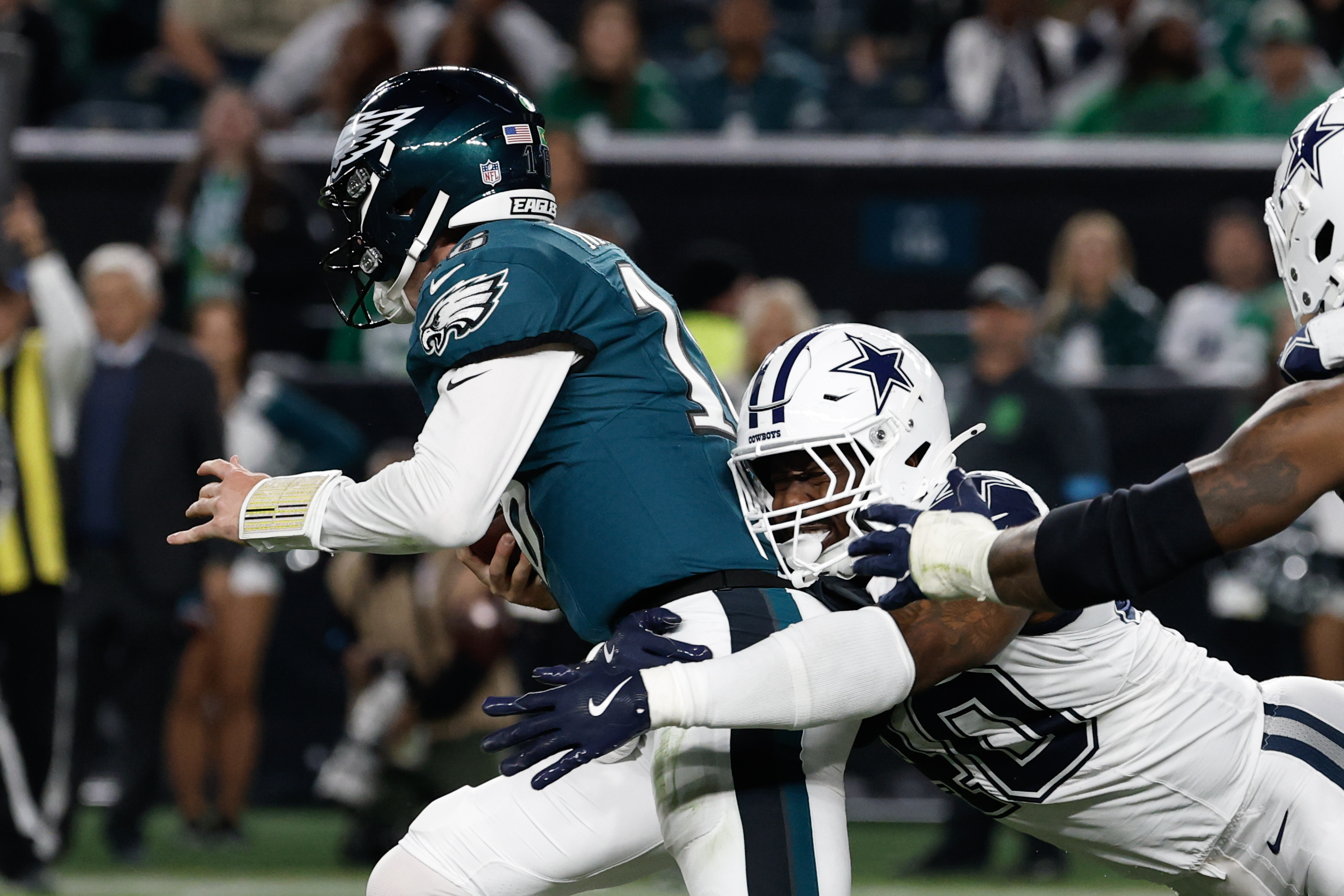
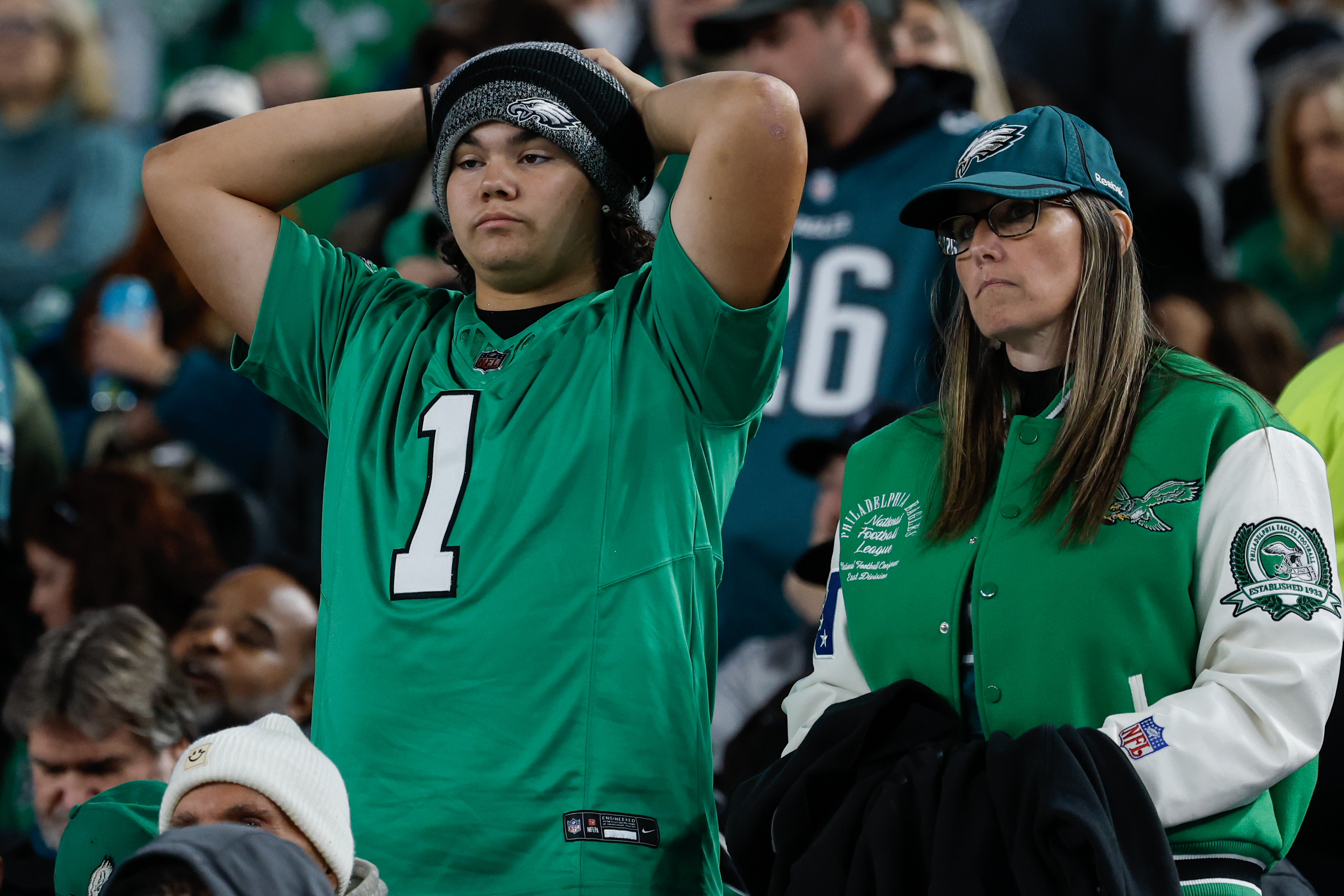
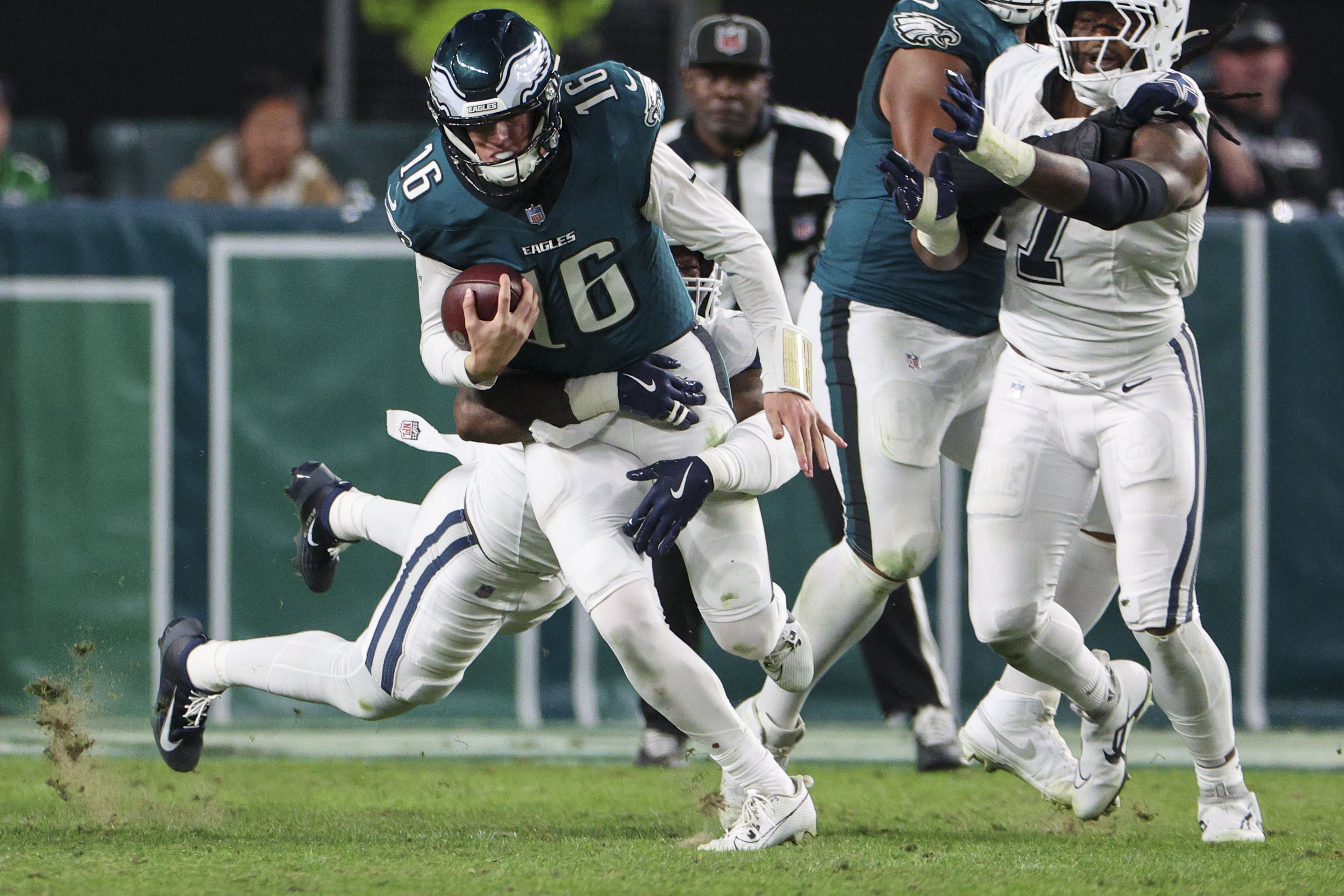
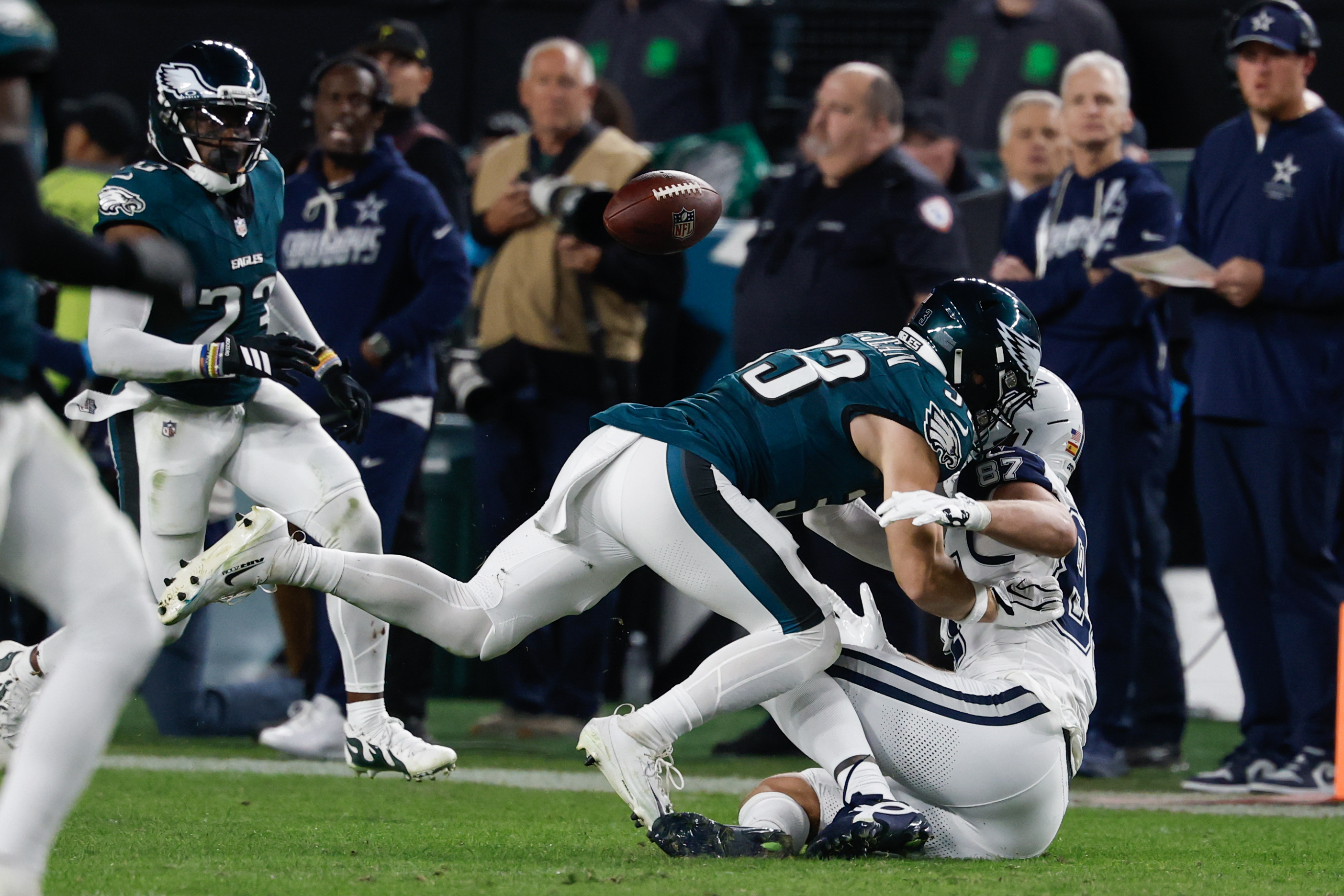
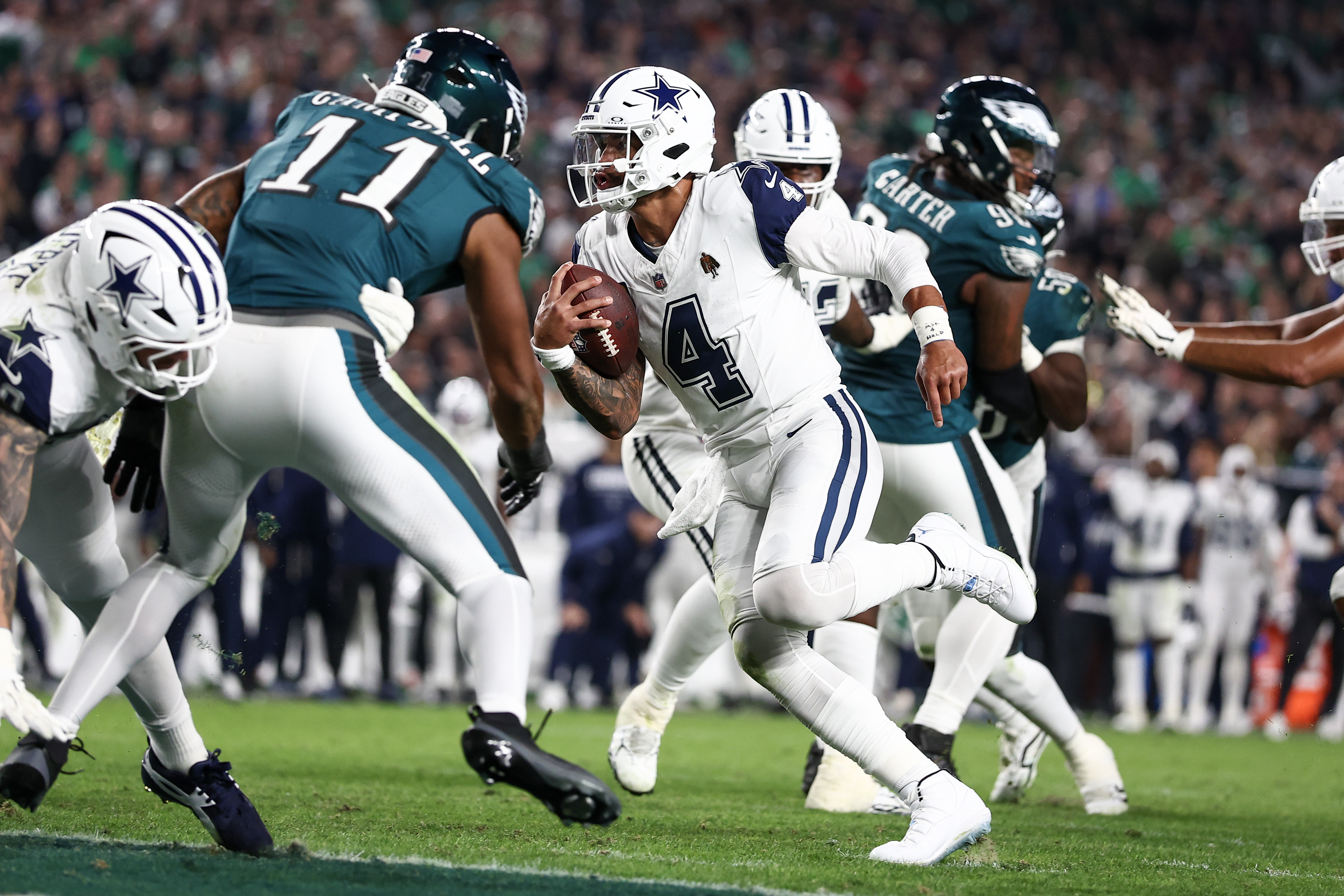
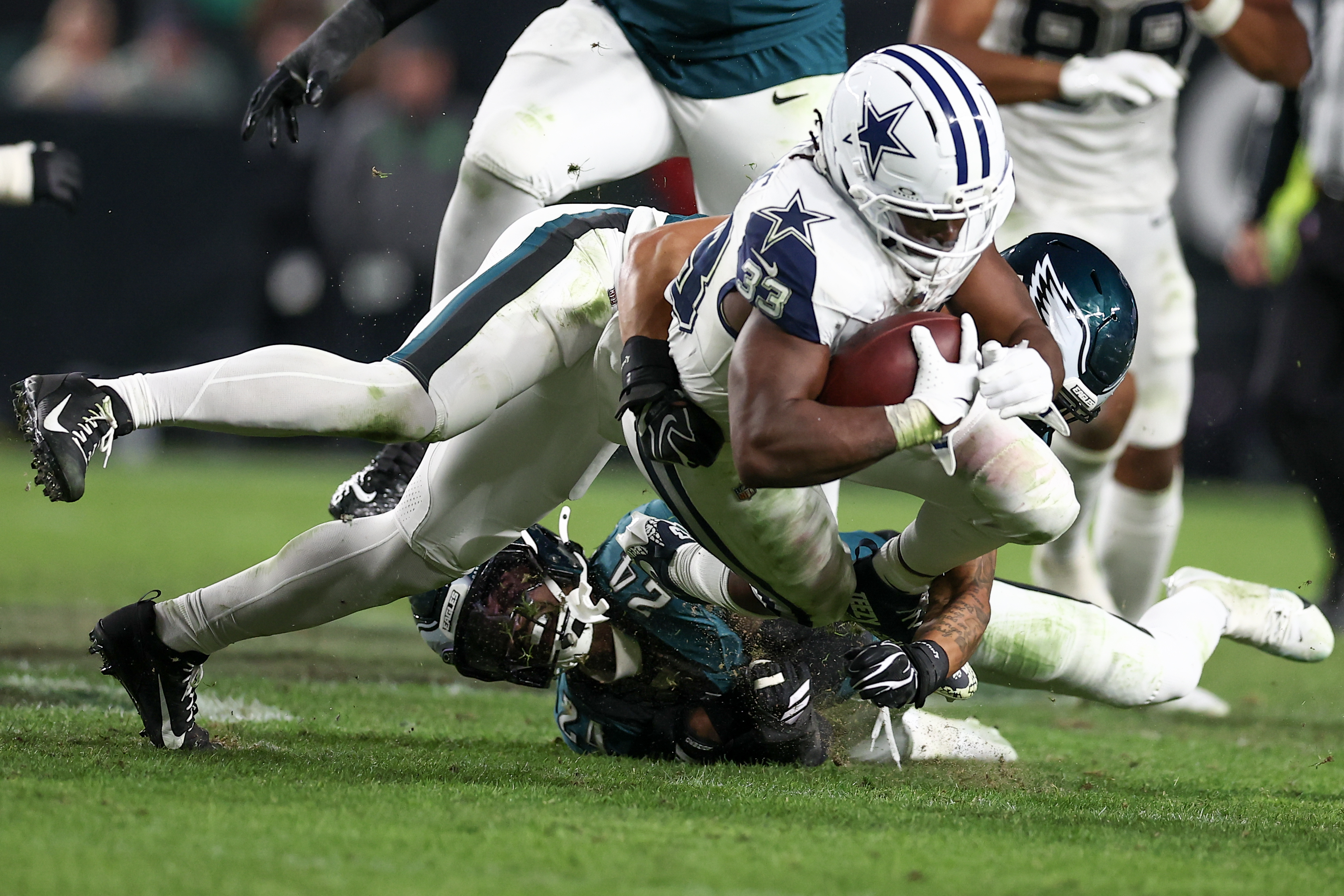
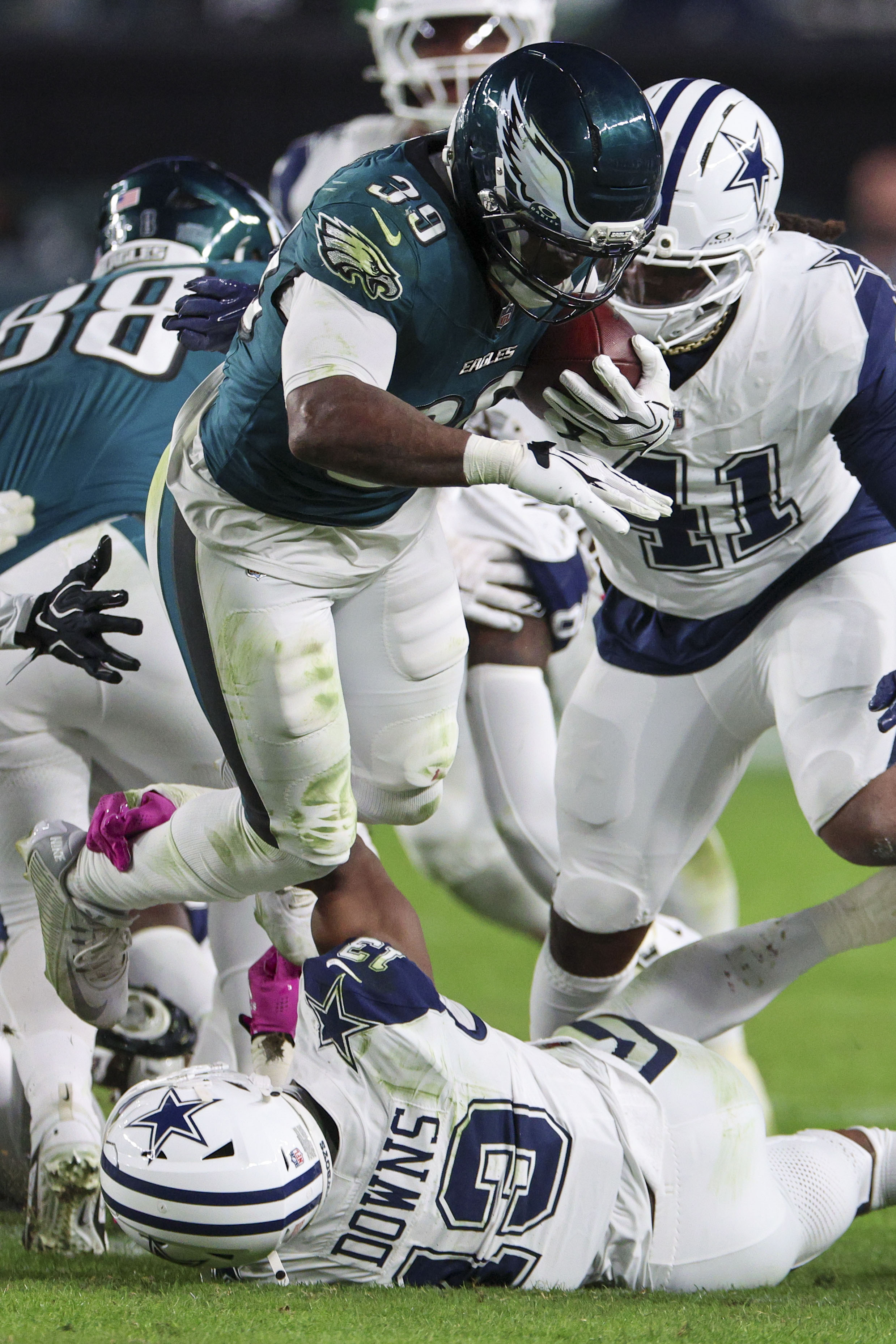
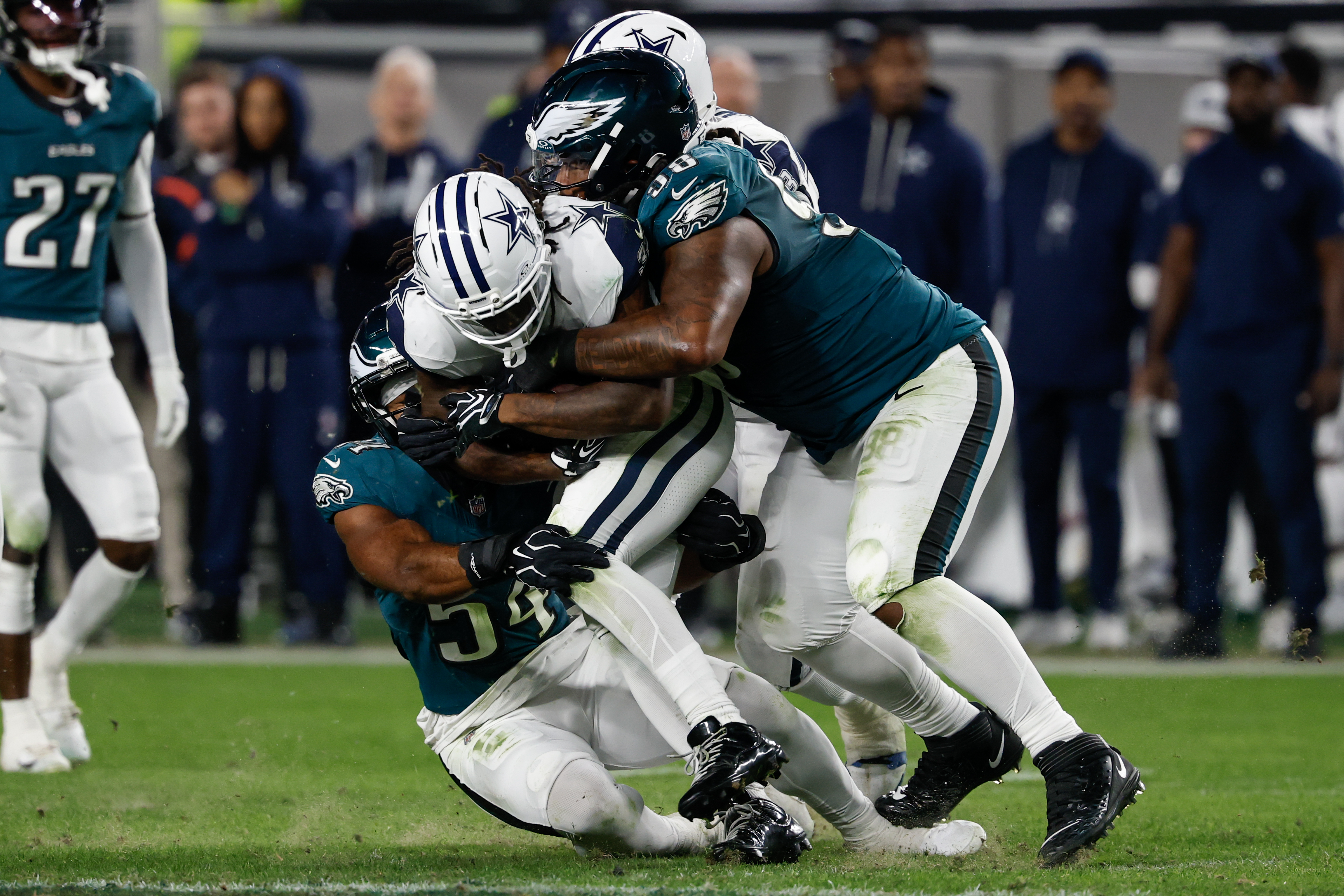
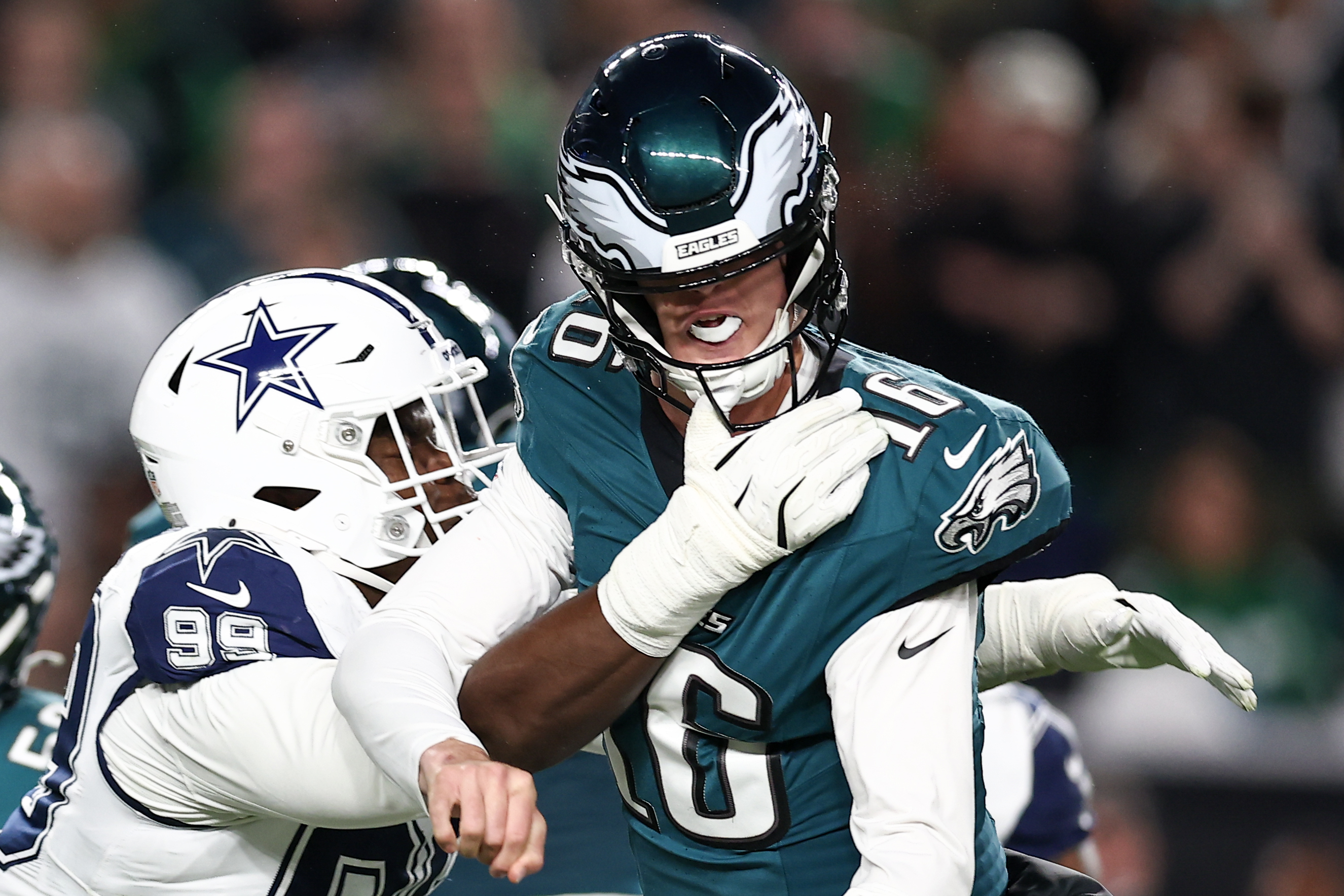
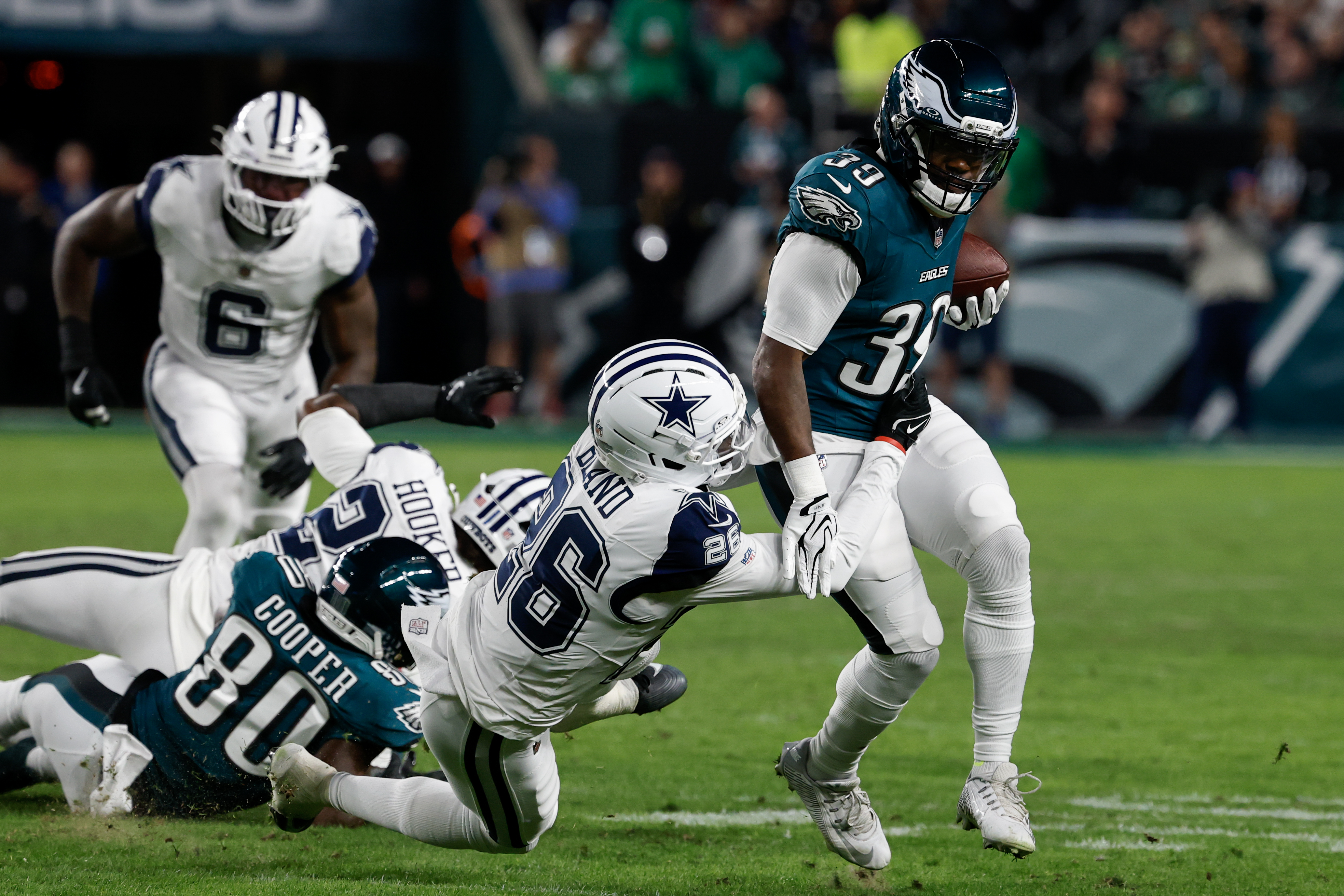
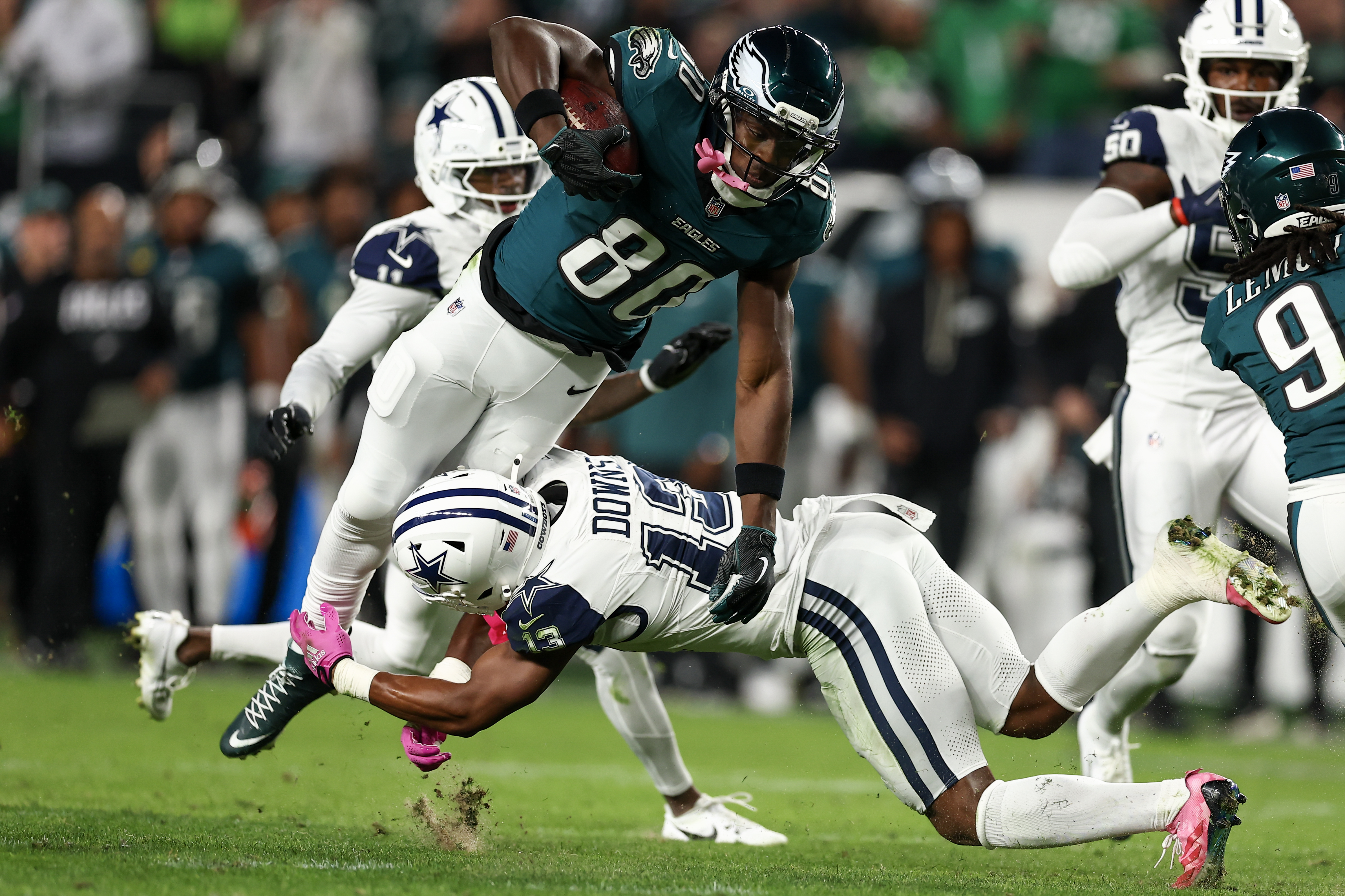
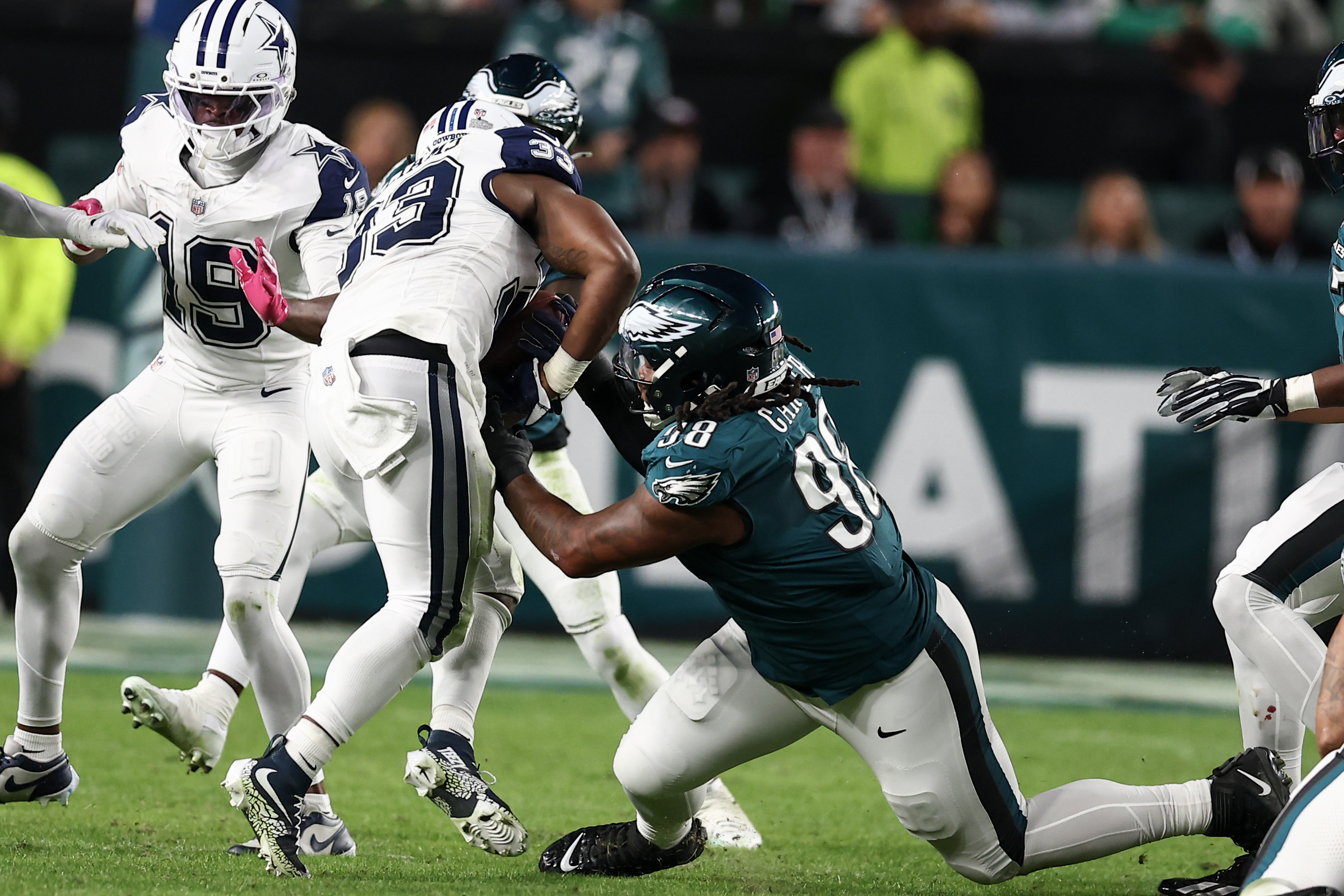
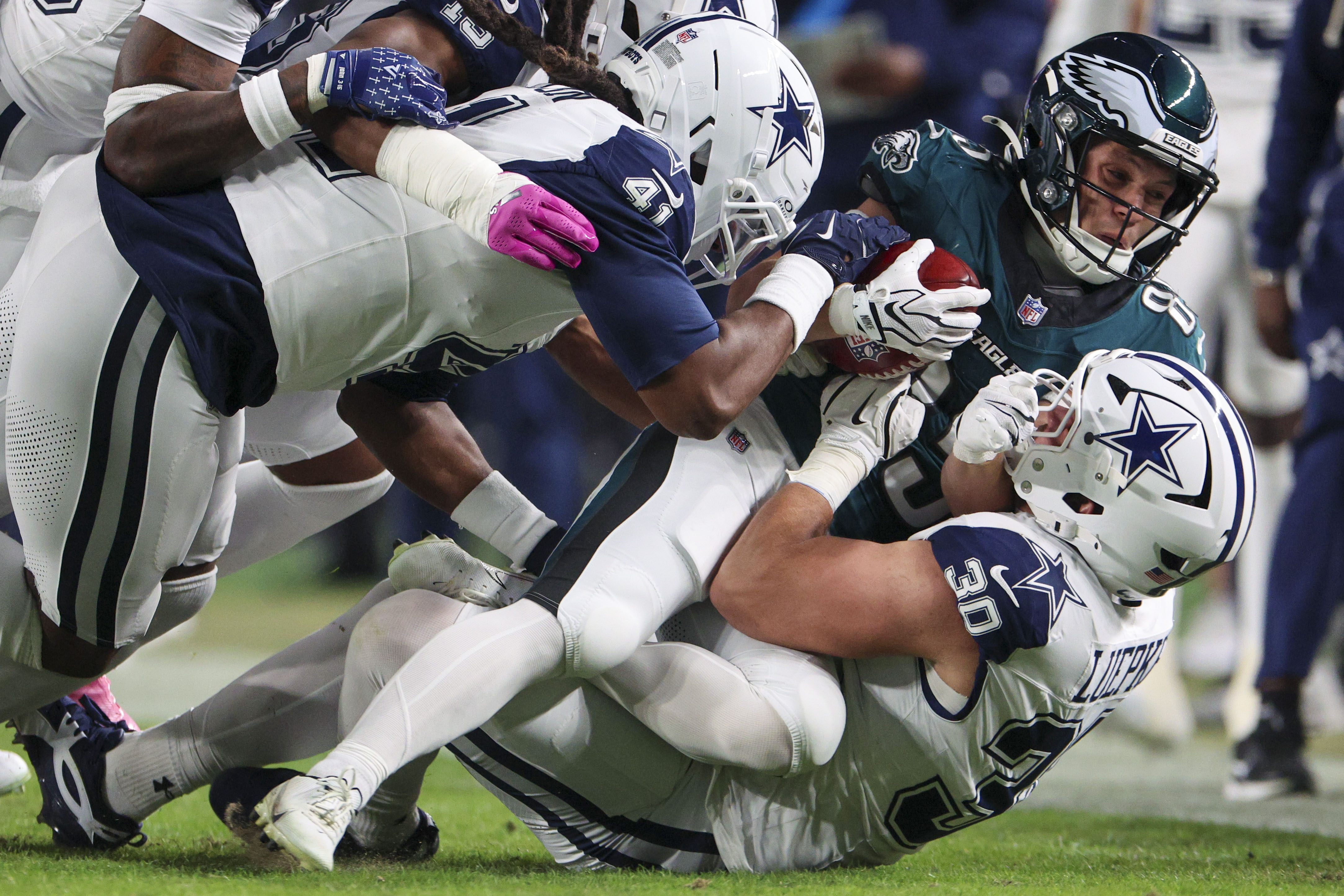
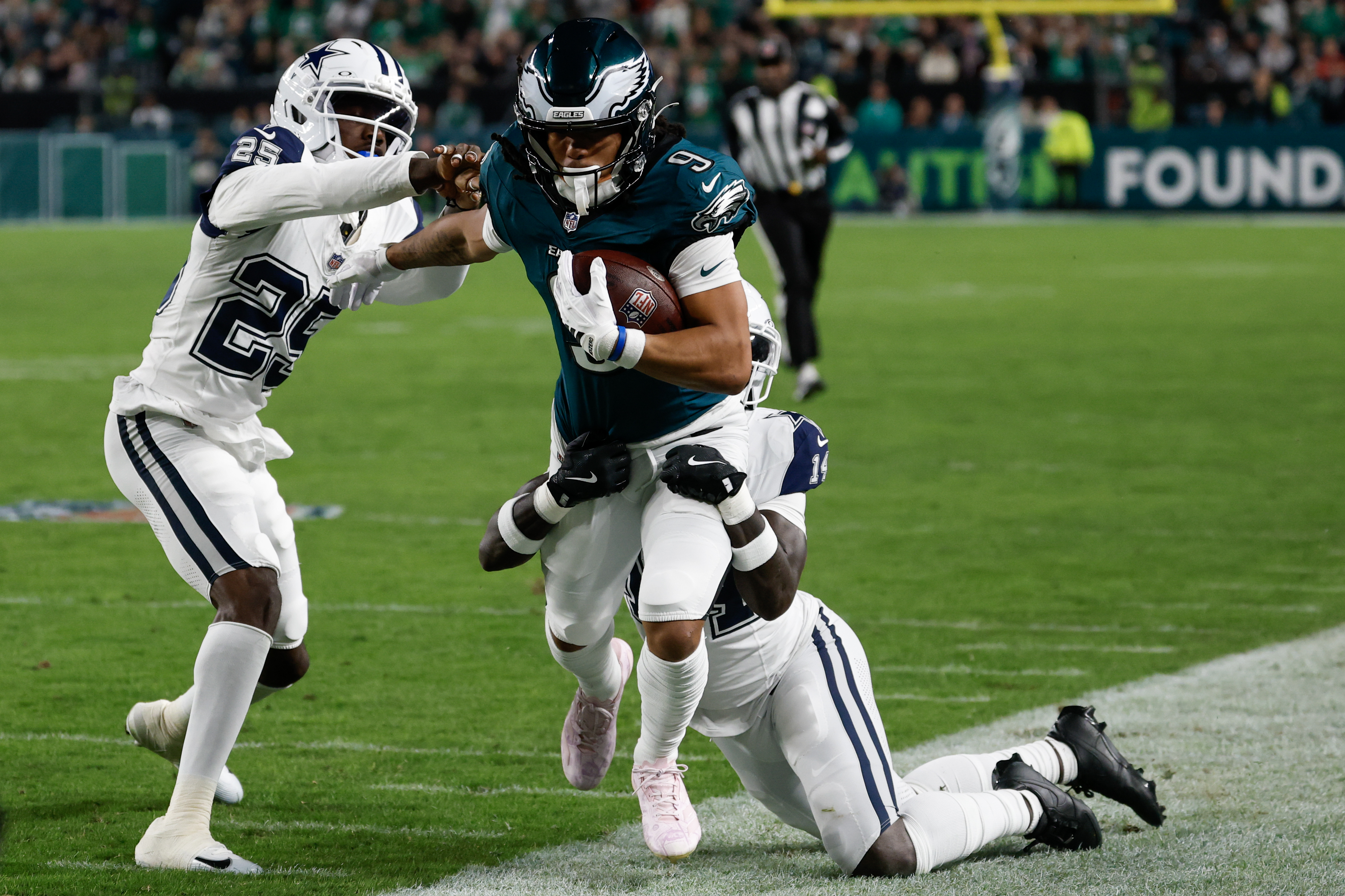
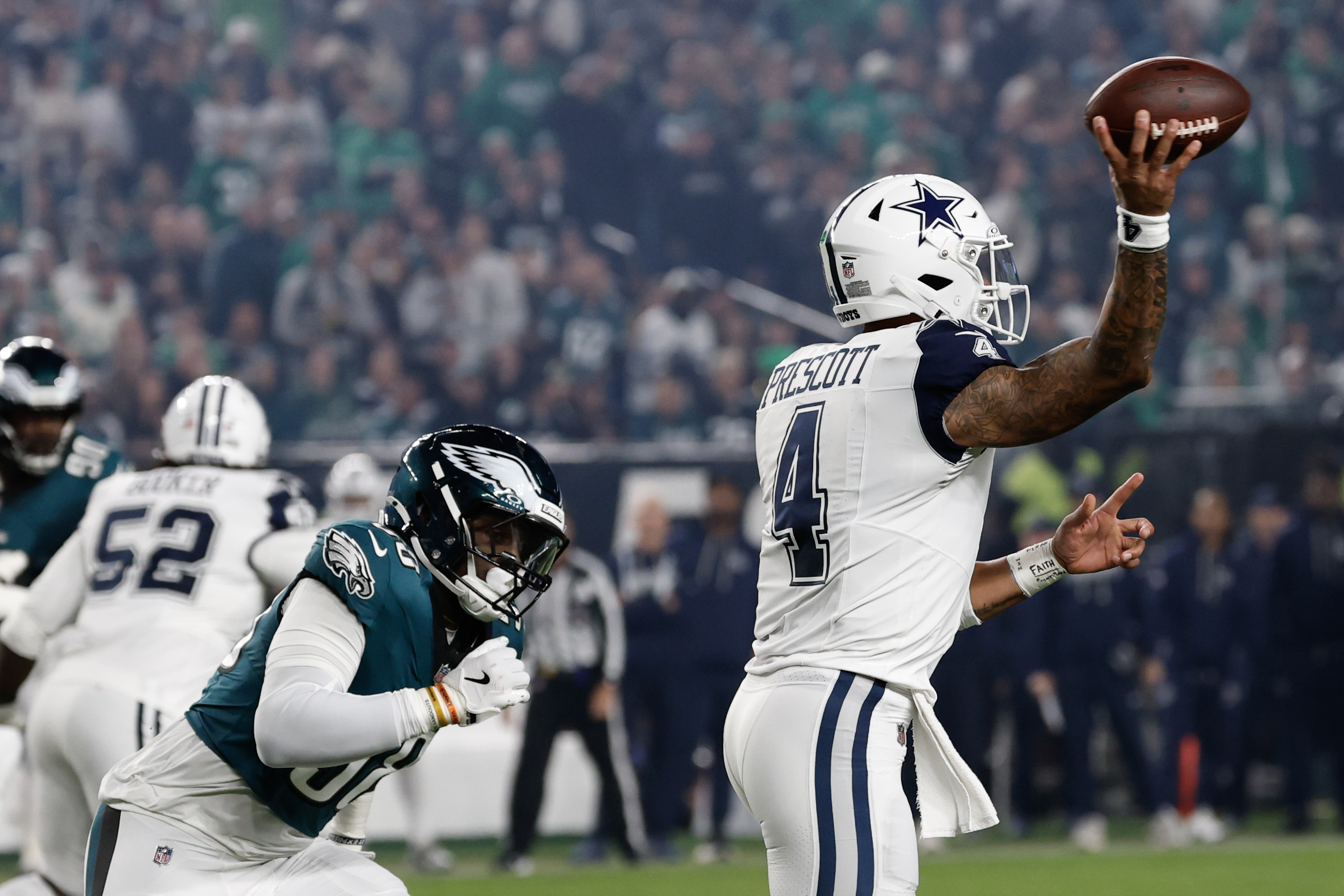
    The culture, Foles said, exists in the little things he’s seen this season that were especially on display in Monday night’s 38-21 loss to the Dallas Cowboys. Foles’ biggest thorn was with the offensive line for not picking up their own teammates when they got knocked down. He said they forgot that the only way the offense runs is through them, and it’s their job to keep picking their teammates back up.

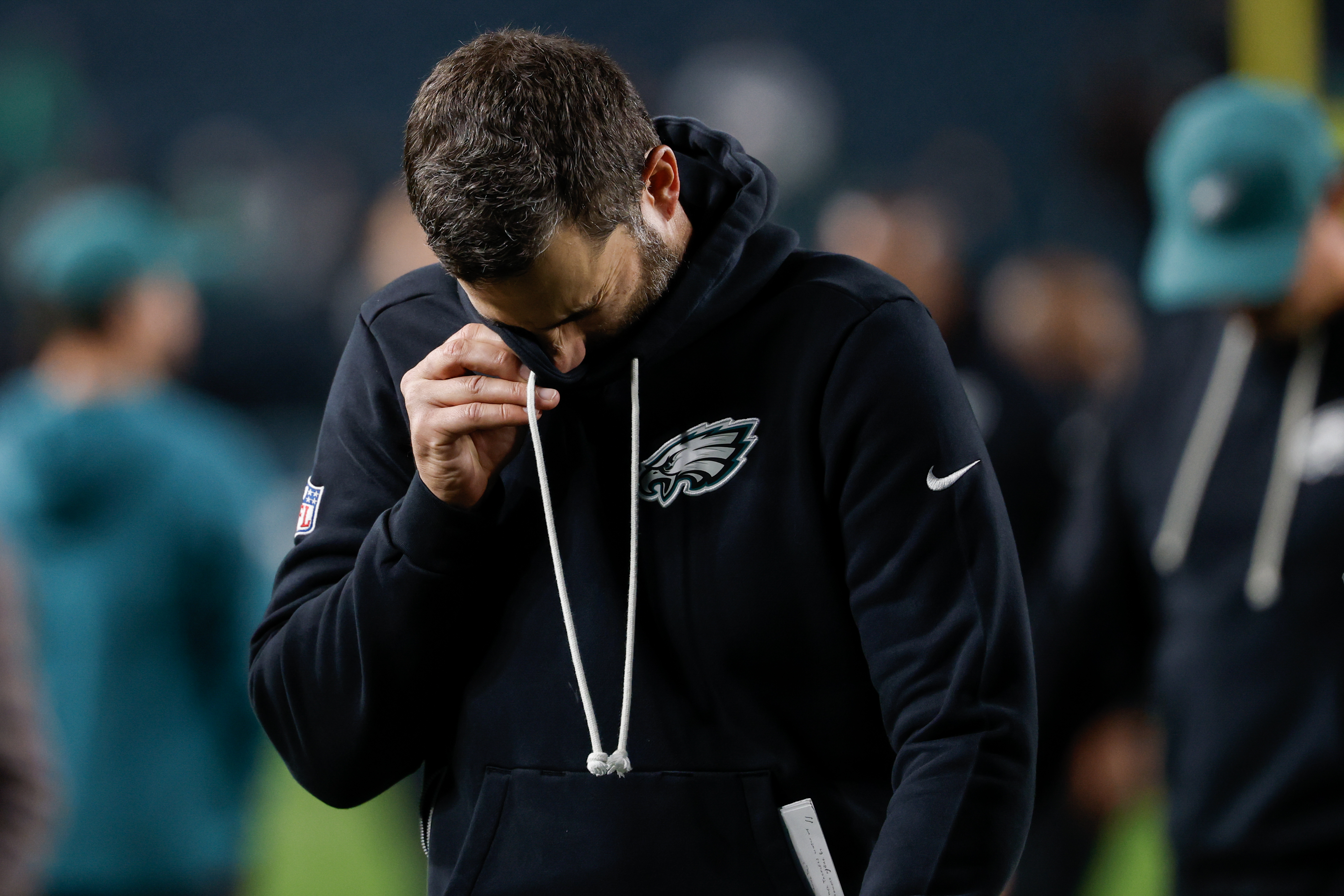
    Foles said it’s also visible in the players’ and coach Nick Sirianni’s eyes that they know something isn’t quite right with this team right now.

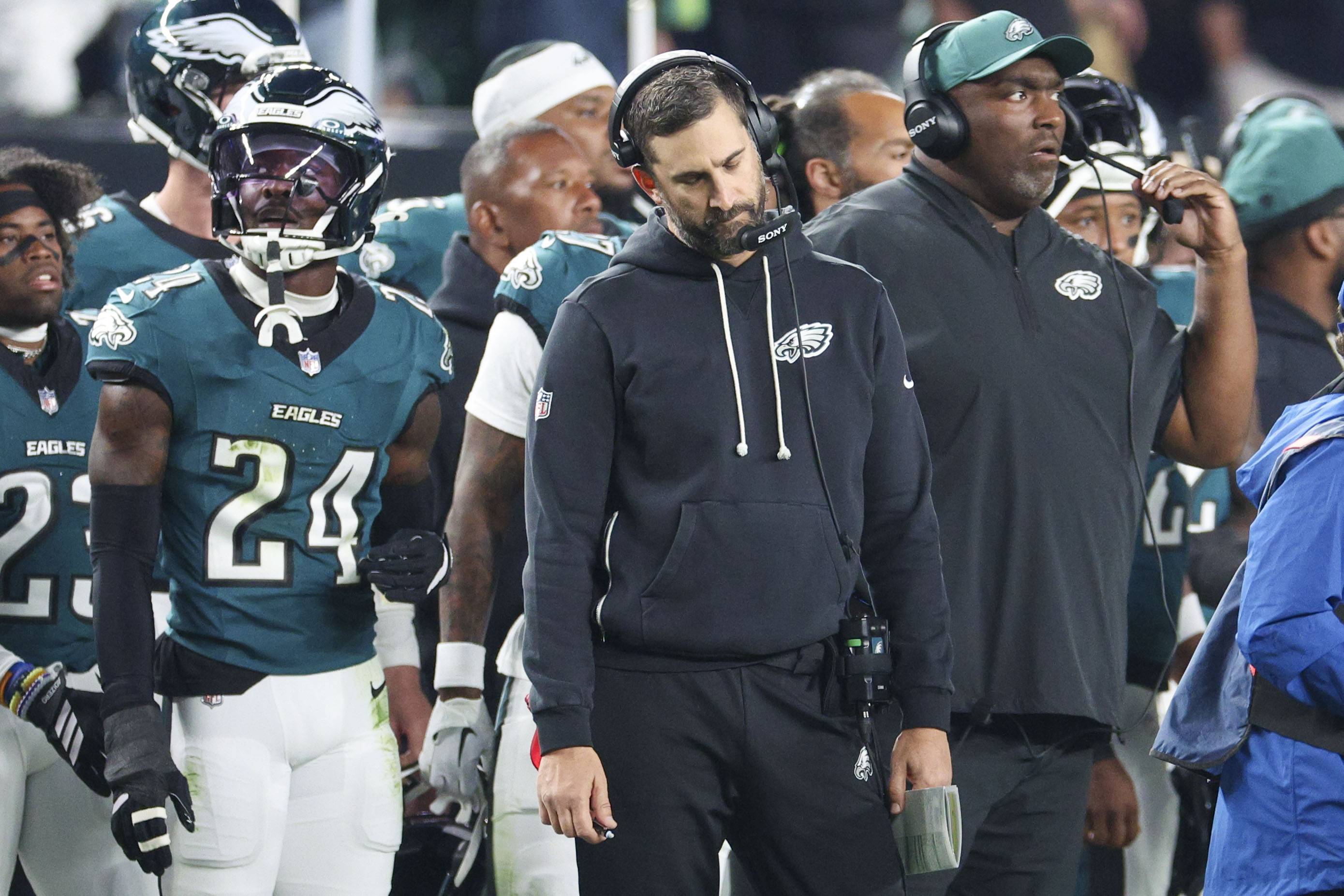
    “[This is] the second season in a row where, as a team this is just not with the Philadelphia Eagles, and Nick Sirianni is feeling it,” Foles said. “You can see it. I looked at him on the sidelines, and I looked at his eyes.”

    On Wednesday morning, Sirianni joined 94 WIP for his weekly interview, and co-host Joe DeCamara wasted little time asking the Eagles coach for his reaction to Foles’ assessment.

    “I think when you drop five in a row, everyone is looking for answers,” Sirianni said. “Nick Foles isn’t in the building with us. I can only go off of what my relationships are in here — you know, there’s always going to be a report of this or that. Our job is to not get wrapped up in any of that crap. Our job is to stay locked in within our organization and go through it that way.”

    Sirianni also admitted that his team has not been playing up to its standard, but said that his players still deeply care, despite some like Foles questioning what he’s seeing on the field.

    “We got a lot to fix, but I think we’ve got guys that care. I think we’ve got guys that deeply care about how to lead, with our captains, guys that know how to follow, and guys that truly want to get better,” Sirianni continued. “And we all want to get better and win football games. That’s all that matters.”

    While Foles acknowledged that seasons like this aren’t unheard of for the Eagles when they’re banged up, he said it didn’t happen in 2017 because they had great veteran coaches on both sides of the ball. The Eagles don’t have that this year with first-year offensive coordinator Sean Mannion.

    Instead, he said the mood resembles Andy Reid’s last year with the Eagles, with veteran leaders trying to hold things together, and an exhausted defense.

    And after five straight losses, Foles isn’t sure what they should do.

    “This is the first time, first night where, I don’t know, I think there’s too many things going on, and I don’t necessarily see the right way through fixing this because I don’t know if the pieces are there right now to fix it,” Foles said.

    When debating what the Eagles should do come the approaching trade deadline, Moore said the Eagles and Howie Roseman have to be careful that they “don’t confuse desperation with opportunity.”

    With consecutive divisional games against the Washington Commanders (8:20 p.m. Sunday, NBC10) and the New York Giants (1 p.m., Nov. 8, Fox29), Moore said that while he believes both games before the bye week are winnable, they have to ask themselves if the NFC East is still there for the taking. The second question is if the Eagles need just a few key pieces to get their season back on track, or if there is more work to be done.

    For Foles, the answer is simple.

    “You’re in no position to succeed this year, right now,” Foles said.

    But that’s still subject to change. And one of the keys, Foles said, lies in the backup quarterback.

    While Foles thinks Tanner McKee is getting comfortable and playing better, there is more that needs to be done to get them there, including the pieces around him. So once again, the answer comes down to not just the trade deadline, but what Mannion can do with what’s left of this season.

    “He’s playing within the system, but he is going to have to do something special to bring it out,” Foles said. “That being said, he doesn’t have the pieces really around him healthy and everything going on to make this happen. It’s got to be more than Tanner. You said if they were one or two pieces away, you go for it. Well, there are a lot of pieces [away]. I think they are an offensive scheme away.”

  • Flyers’ ongoing overtime woes down to ‘mind-boggling’ decisions, says Rick Tocchet

    Flyers’ ongoing overtime woes down to ‘mind-boggling’ decisions, says Rick Tocchet

    The Flyers did the hard work of clawing themselves back into the game. They dominated play for the final 40 minutes, and Jamie Drysdale tied the game with 11 seconds to go.

    Then came overtime.

    “Overtime, some of the guys are — I don’t know what they’re doing,” Flyers coach Rick Tocchet said after Tuesday’s 4-3 loss to the Blue Jackets. “We had a meeting about it; we sent them video on it. It’s all puck possession, it’s being smart, and we give up two two-on-[nones]. It’s unacceptable.”

    The first came off a Matvei Michkov turnover at the blue line, which sprung Cole Sillinger and Zach Werenski on the breakaway. Dan Vladař earned loud cheers from the crowd after making the save on Werenski, and the Flyers went right back down the ice.

    The second time, they weren’t as lucky. Cam York entered the zone with the puck, and Michkov followed him in toward the net, which led to all three Flyers, Denver Barkey being the other, getting caught near the top of the crease with no one back defending. Adam Fantilli collected the rebound from Cam Talbot’s save, and he and Kent Johnson had no resistance up the ice, and Johnson beat Vladař for the game-winner and his second goal of the game.

    “The decision-making in overtime has been mind-boggling by some players,” Tocchet said. “We have to fix it.”

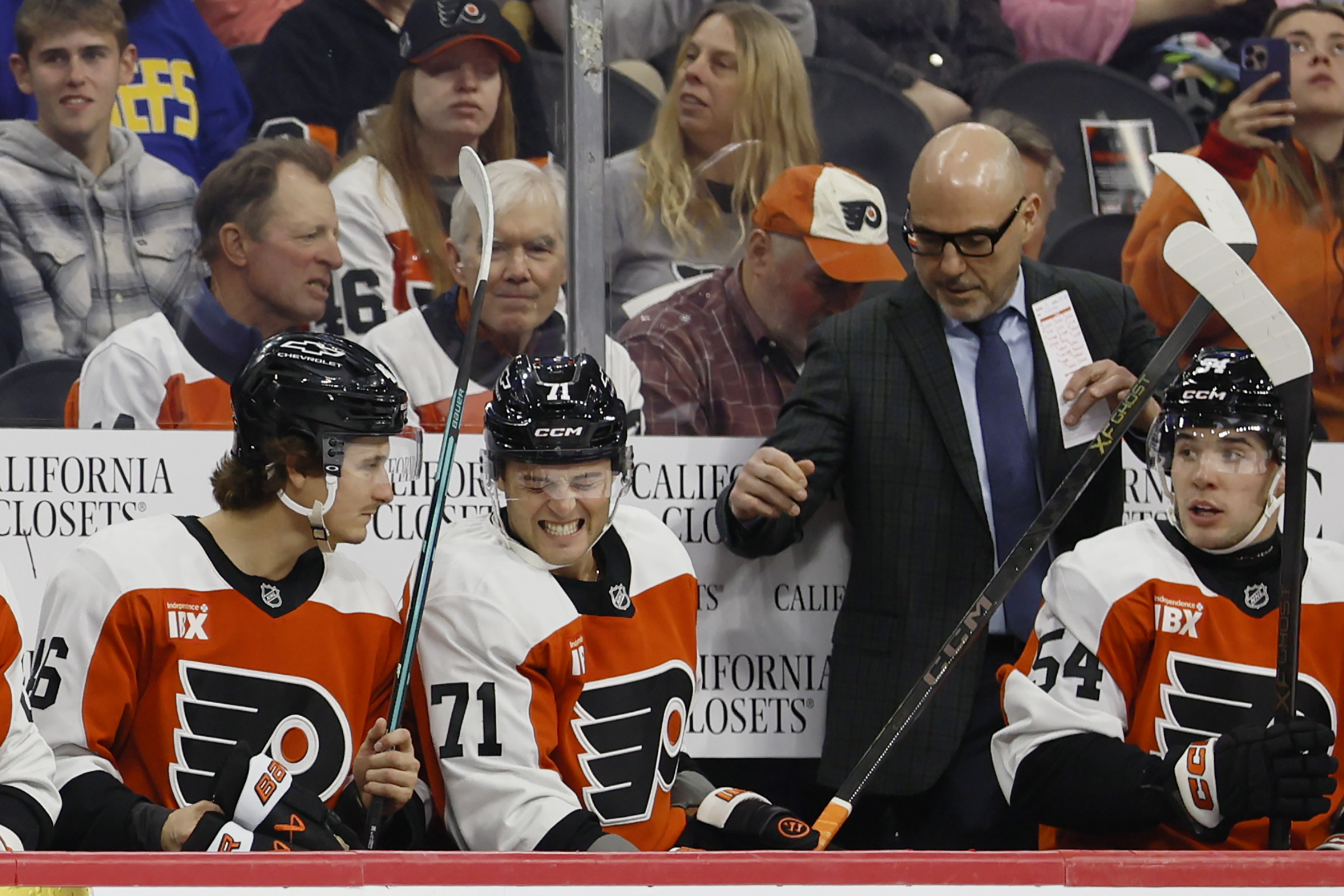
    Tyson Foerster (71), Trevor Zegras and Cole Knuble (54), here with coach Rick Tocchet, are seeking their first overtime win of the season.Elizabeth Robertson / Staff Photographer

    Michkov’s final shift was 1 minute and 17 seconds in overtime. He didn’t go for a line change with his initial three-man unit of Trevor Zegras and Drysdale, instead staying on for the following shift with York and Barkey. Whether that was part of the game plan or Michkov calling an audible, he didn’t have the legs to chase down a fresh Fantilli and Johnson, and neither did anyone else.

    In his rookie season, Michkov was one of the Flyers’ three-on-three regulars. He averaged the third-most overtime ice time and scored three overtime winners, most on the team. But despite that success, Tocchet scaled back Michkov’s three-on-three time significantly in 2025-26, as he averaged just 50 seconds, ninth on the Flyers. Still, Michkov did score one overtime winner.

    The Flyers dropped to 0-4 in overtime this season. This was their third loss in the three-on-three period, after losing to Carolina and New Jersey in similar fashion. The fourth loss, to Seattle, came in a five-round shootout. In 2025-26, the Flyers played 28 overtime games. They won a league-high 10 in the shootout, and six in three-on-three, with 12 losses.

    Getting the comeback on Tuesday and forcing overtime helps the group tread some water in the standings, but after starting the year on a nine-game losing streak, the Flyers are running out of runway for games to end in a “learning lesson.” With the loss, they drop to last in the Metropolitan Division with just 10 points, despite being tied for the most games played at 14.

    “You’re looking for consistency, and you’re looking for a group of players to play a certain way, because you’re going to have some bad things happen to you,” Tocchet said. “But you need to stop the bad things, and I think that just starts with a consistent mindset.”