Tag: topic-link-auto

  • A state database may have raised red flags about Malayshia Allford’s foster mother. Philly couldn’t access it.

    A state database may have raised red flags about Malayshia Allford’s foster mother. Philly couldn’t access it.

    Philadelphia’s child welfare chief said Friday that the city does not have access to a state database that could have helped alert officials to a previous abuse allegation against the foster mother accused of killing 10-year-old Malayshia Allford.

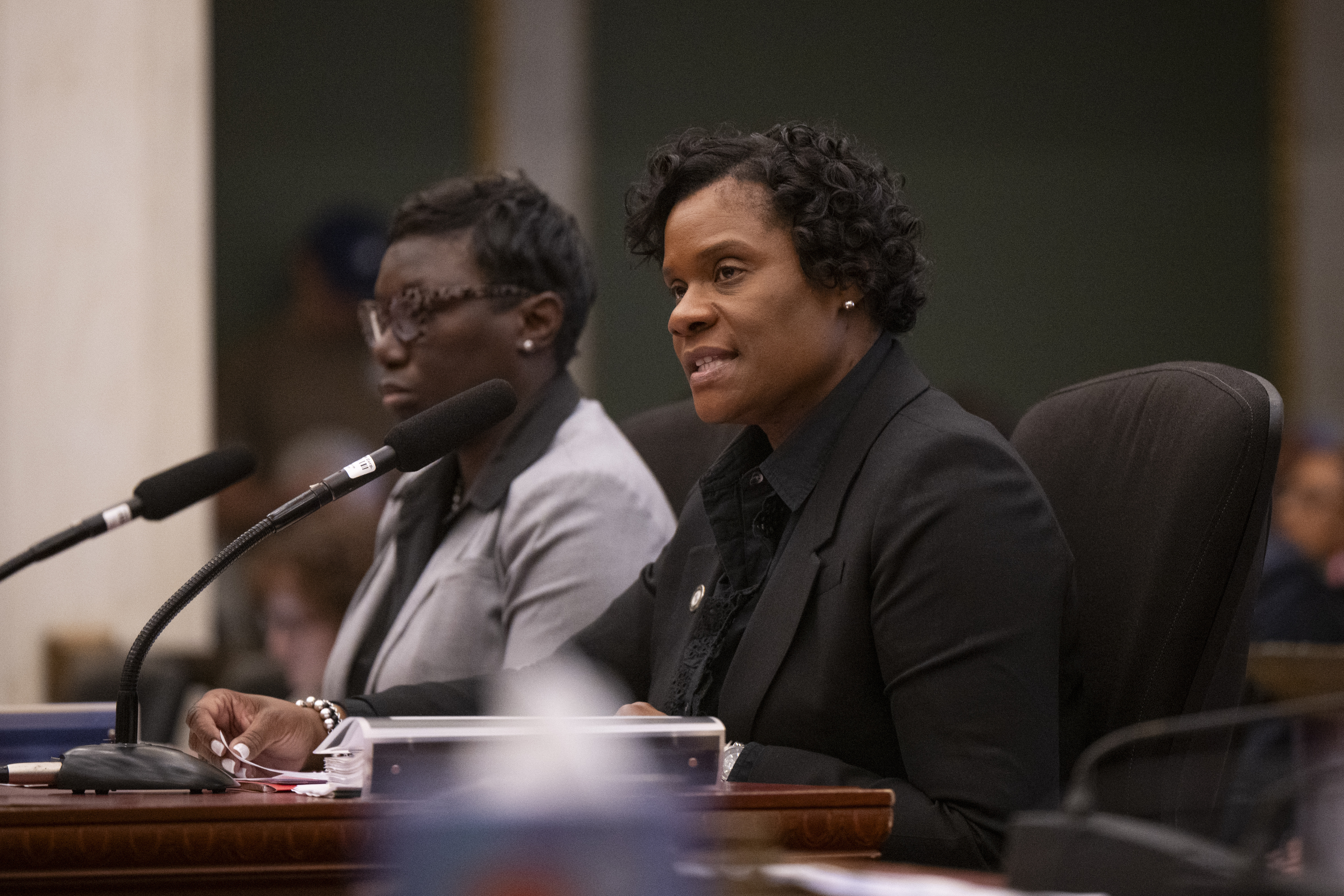
    Kimberly Ali, the commissioner of the city’s Department of Human Services, said Friday during a City Council hearing that it can’t access Pennsylvania’s Resource Family Registry, which includes information about potential foster parents.

    City officials identified the gap after reviewing Malayshia’s case, Ali said.

    In 2022, a state review found that the girl’s foster mother, Carprice Williams, had abused a 4-year-old foster child in her care in 2021, and it was recommended that she never be allowed to foster again. Williams, a former Philadelphia public schoolteacher, appealed, and the state expunged its abuse finding from her record. Years later, she took Malayshia in.

    The state registry, Ali said, tracks the history of foster homes — including past closures and why the homes were closed.

    A closure can serve as a warning sign prompting further investigation, which can uncover abuse allegations that are not in the registry itself, Ali said.

    State law allows officials or private agencies responsible for approving foster homes to have access to information in the registry. In Philadelphia, the city’s DHS has delegated that duty to about two dozen private agencies, including Pennsylvania Mentor, which certified Williams’ home before Malayshia’s placement.

    Ali said the city is exploring potential ways to obtain information from the database.

    State officials pushed back on Ali’s description. Brandon Cwalina, press secretary for the Pennsylvania Department of Human Services, clarified that no agency has unfettered access to the entire registry. Instead, agencies can request information about specific foster families or homes that they are vetting or have approved. Cwalina added that state DHS officials were not invited to Council’s hearing.

    Council members, who convened the hearing Friday to review the city’s foster system in the wake of Malayshia’s death, told Ali that the city should do everything in its power to obtain access to the database.
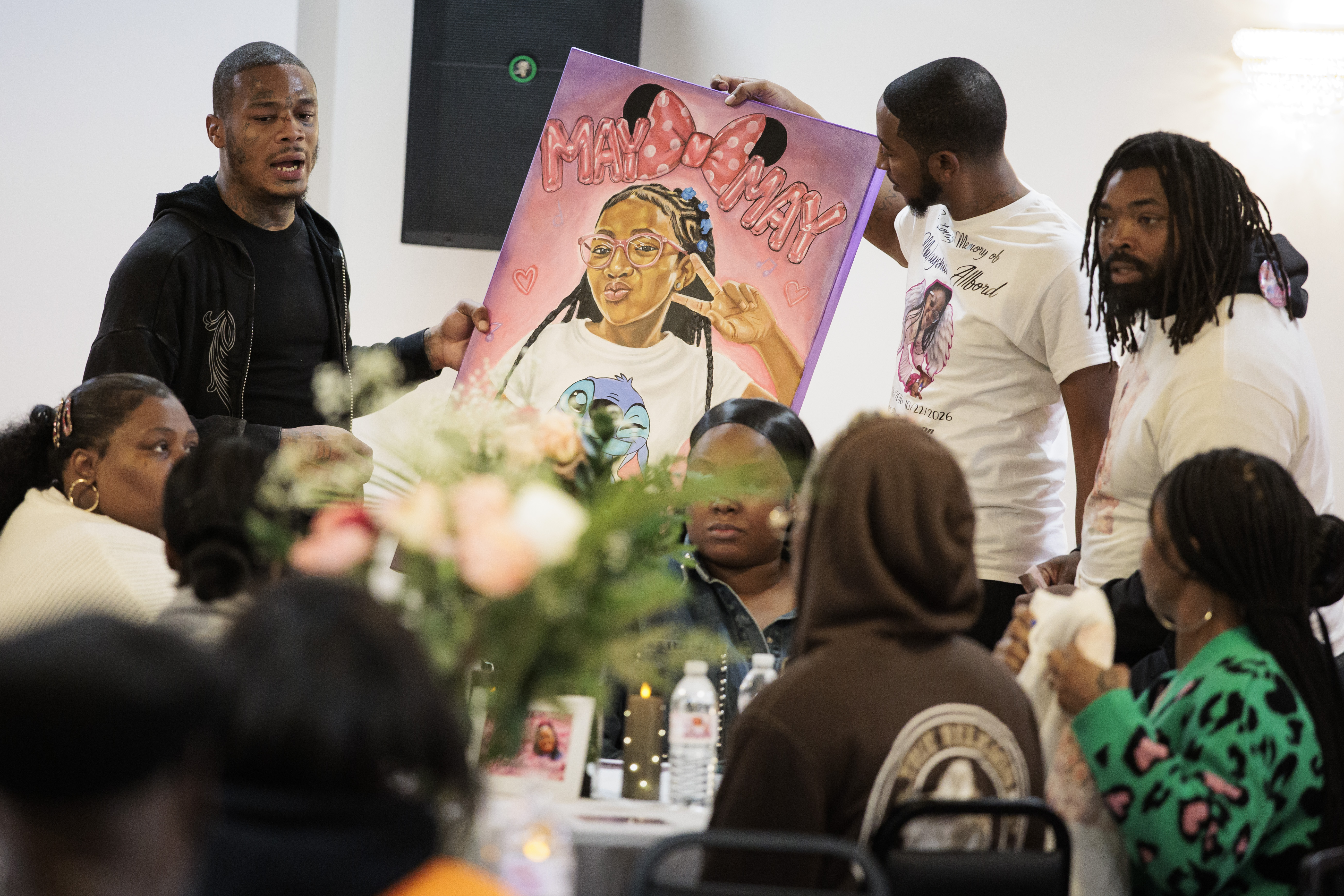
    Family members hold a painting of Malayshia Allford, 10, during a Celebration of Life in her honor at Compassion Connect Venue on Wednesday, Nov. 18, 2026 in West Philadelphia. Carprice Williams, foster mother of Malayshia Allford, was charged with her murder.Monica Herndon / Staff Photographer

    Councilmember Anthony Phillips, a Democrat who represents parts of Northwest and Northeast Philadelphia, told Ali to do “whatever it takes to figure this out.

    “This is a huge opportunity for you to make sure our children are safe, and you can’t miss it again,” he said.

    Friday’s hearing was held by the Committee of the Whole, which is composed of all 17 Council members.

    Council called the hearing following reports that witnesses who had visited Williams’ West Philadelphia home told police that Malayshia was subjected to horrific abuse, including withholding food, beating her with a phone cord, and throwing her down the stairs. The girl’s body was found in the trunk of a car parked at a Camden County apartment complex this month. A medical examiner determined she had died of blunt force trauma. Williams has been charged with murder.

    Several members were deeply critical of DHS and of Ali, who has led the agency for six years and has worked in the department for 26 years. Councilmember Nina Ahmad, a Democrat who represents the city at-large, said Ali’s points about access to the state database were “moot” for Malayshia.

    “Malayshia is not with us,” Ahmad said. “She has been sacrificed to this system, and this is abominable and intolerable. And we will not put up with this.”
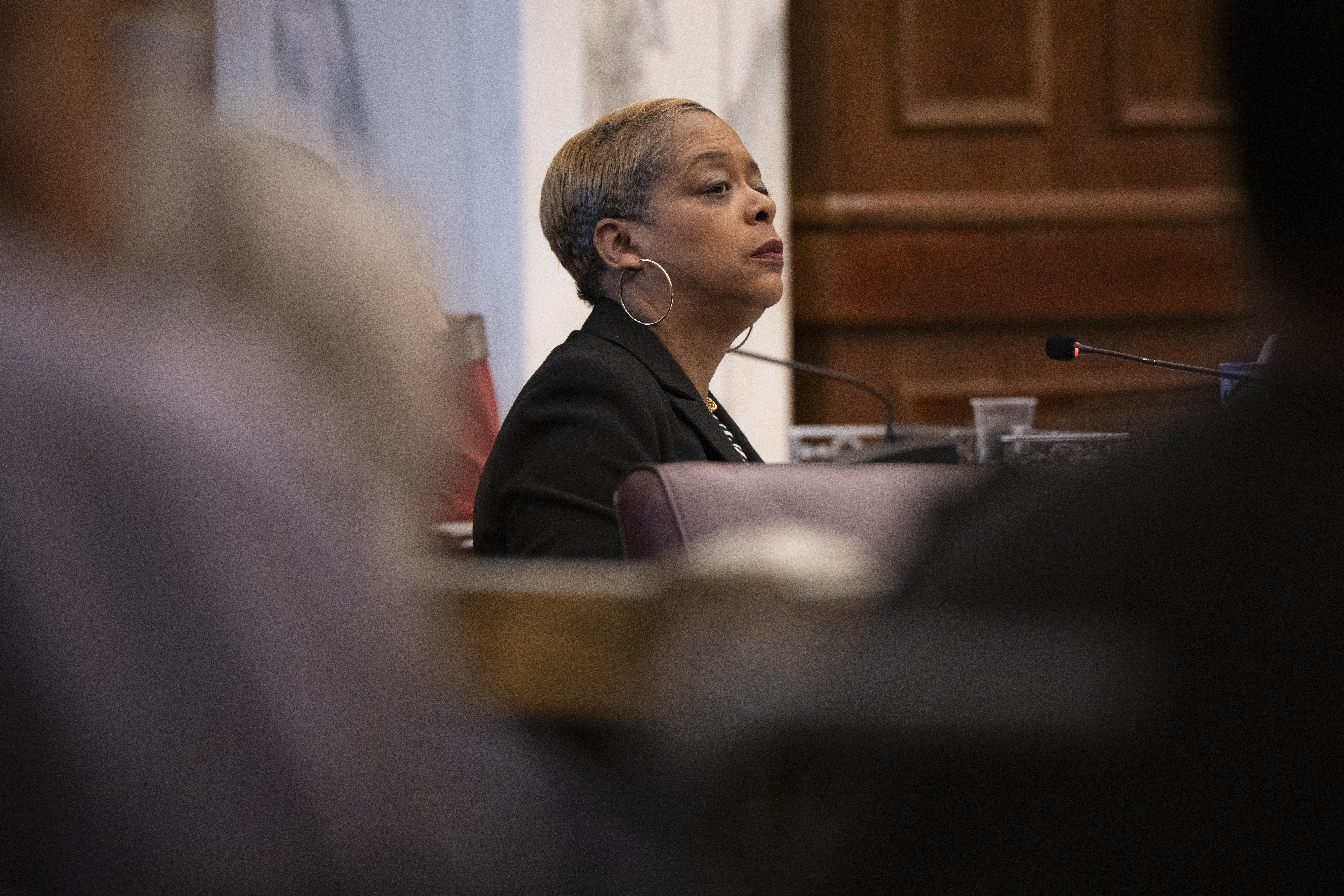
    Councilmember Cindy Bass addresses Kimberly Ali, Commissioner of the Philadelphia Department of Human Services, during a hearing regarding the city’s foster care system following the murder of Malayshia Allford, Friday, Nov. 20, 2026 at City Hall.Joe Lamberti / For The Inquirer

    Councilmember Cindy Bass, a North Philadelphia Democrat who has for years been critical of DHS, said the city needs to entirely overhaul its child welfare system.

    On Thursday, she introduced legislation to move away from outsourcing child welfare case management to privately contracted agencies and for the city to control the foster system itself.

    “This death was preventable. There were so many red flags all over the place that it was really a failure on a colossal scale,” Bass said. “Everything failed for this child. Everything. Every system that was in place.”

    In 2013, the city revamped its child welfare system to rely on outside nonprofits called community umbrella agencies, which provide case management to children and families in 10 geographic service areas throughout Philadelphia.

    The idea was to localize services and engender trust in the system through neighborhood-based relationships.

    However, CUAs have faced a number of documented problems, including backlogged caseworkers and little progress on the number of near-fatalities and deaths of children. A 2025 Inquirer/Resolve Philly investigation found that CUAs have faced dozens of lawsuits alleging abuse in foster care.

    Malayshia was receiving case management services from Catholic Community Services, also known as Community Umbrella Agency No. 4. Pennsylvania Mentor was the certifying foster care agency in her case.

    Unlike DHS, Pennsylvania Mentor was among the private agencies authorized to access the Resource Family Registry. It’s unclear whether the agency did so, however.

    In a written statement sent to The Inquirer, a spokesperson for Sevita — the national company that operates Pennsylvania Mentor — said that the company is cooperating with law enforcement agencies. Because of the ongoing investigation, the spokesperson said, “we cannot offer further comment.”

    Councilmember Jim Harrity, a Democrat who represents the city at-large, said he was frustrated with Ali and the “blame get[ting] passed around.”

    “You know, state DHS, no access to this, no access to that, CUAs, yada yada yada,” Harrity said. “But I want you to tell me, realistically, how do we fix this system? What are you going to do to make sure that no more of our children end up in the grave?”
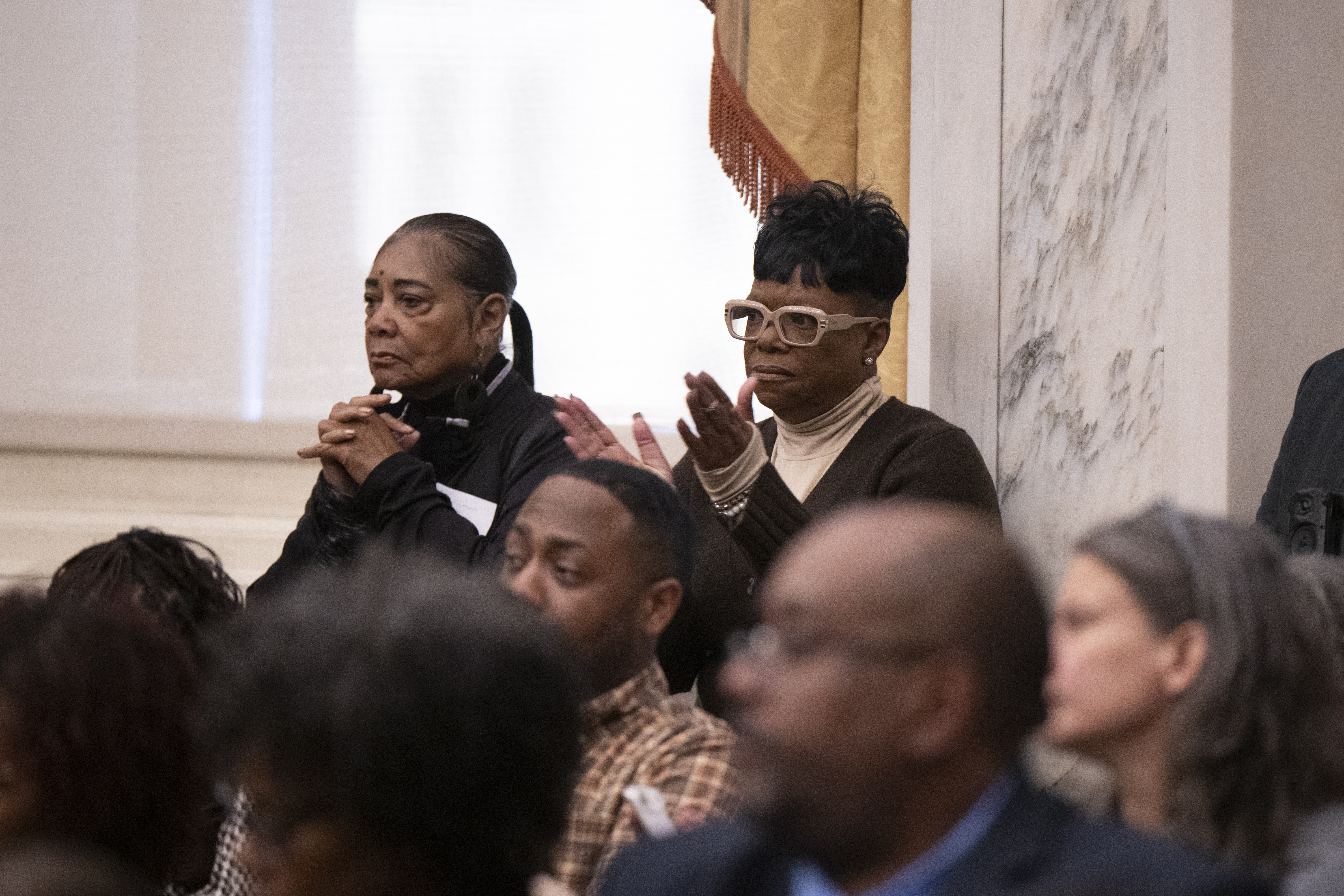
    An attendee reacts during a City Council hearing regarding the city’s foster care system following the murder of Malayshia Allford, Friday, Nov. 20, 2026 at City Hall.Joe Lamberti / For The Inquirer

    Ali testified that DHS does regular but random quality checks of foster homes and placements, including speaking directly with children. But she also acknowledged that the department may not speak with every child in foster care — and that some kids may not know they have a right to speak with DHS staff.

    She told Council that Malayshia’s killing has “rocked us to our core.”

    Ali said her “No. 1” priority is getting access to the state registry and get a more thorough background of potential foster parents. Until then, she said, the department needs to ensure its own “do-not-use list” of unsafe foster homes is “accurate, it’s current, and it reflects the voices of young people.”

    But the problems exposed by Malayshia’s death extend beyond access to a state registry, child welfare experts told The Inquirer.

    Philadelphia’s foster care system relies on about two dozen private agencies under contract with the city to certify foster parents and identify homes for potential placements. Those agencies operate largely in a silo, and that fragmentation can limit the options available when a child needs a home.

    An agency typically looks to the foster parents it has licensed, rather than considering all available homes across Philadelphia — potentially making it harder to find the best fit for a child, said Sarah Wasch, associate director of the University of Pennsylvania’s Field Center for Children’s Policy, Practice and Research.

    “The best available fit is likely going to be easier to find when you’re looking among 2,000 possibilities instead of 200 possibilities,” Wasch said.

    Stefanie Arbutina, vulnerable youth policy director for Children First, a child advocacy group in Philadelphia, said in an interview that every agency involved in licensing, investigating, and monitoring foster homes needs a “pretty tight communication loop” to find and close gaps that can lead to tragedies.

    Children First is one of several advocacy groups that plan to make recommendations to Mayor Cherelle L. Parker’s administration on changes needed to the city’s foster care operations. Parker ordered the creation of a special committee to review the city’s foster care system.

    One recommendation, Arbutina said, will be to establish a system for city officials to see and track foster parents who have been found to be unfit to care for children — but for whom no official report is available.

    “The best thing we could possibly do is not worry about kids going into foster care in the first place,” she said.

    ‘We failed her’

    A Philadelphia School District official was also called to answer for Malayshia’s death.

    Kristi Murphy Baldwin, the system’s human resources chief, said she could not address specifics of Williams’ employment, but noted that all district employees must undergo three separate background checks: a Pennsylvania State Police criminal history, a DHS child abuse history clearance, and an FBI criminal history report.

    Those must be renewed every five years. Williams presumably passed all the checks when she was hired by the district, first as a substitute teacher in 2015, then as a full-time teacher in 2017.

    Baldwin indicated that in the wake of Malayshia’s death, changes may be coming.

    “The law requires every five years, but that is something we are actually looking at now to do more frequently. That is under conversation now as we look at our practices,” Baldwin said.

    Multiple systems, Ahmad said, failed Malayshia.

    “We are living in silos that are literally killing our children, because Malayshia was going to school. Malaysia had adults in her life, as she was being tortured by this horrible person, who was her foster mother, and who was a teacher — all of this was happening under your eyes in the school district,” Ahmad said. “So we failed, you failed her, we failed her.”

    Harrity said he knew Baldwin couldn’t answer the main question on his mind: “How was this woman still a teacher to begin with?… I’m trying to see how somebody like this fell through the cracks, especially when she had a case of abuse that was fairly heinous.”


  • Phillies don’t offer a contract to Bryan De La Cruz and trade for a pitcher, among other roster moves

    Phillies don’t offer a contract to Bryan De La Cruz and trade for a pitcher, among other roster moves

    Ahead of Friday’s non-tender deadline, the Phillies made a slew of roster moves.

    They agreed to terms on 2027 contracts and avoided arbitration with outfielder Derek Hill, catcher Rafael Marchán, and left-handed reliever Tanner Banks. The Phillies also tendered contracts to infielder Bryson Stott, outfielder Brandon Marsh, and relievers Jhoan Duran and Orion Kerkering.

    The players who were tendered contracts will now be able to negotiate with the club on a salary for 2027. If an agreement cannot be reached, both sides will attend an arbitration hearing.

    The Phillies did not tender contracts to outfielder Bryan De La Cruz, infielder Brett Harris, and pitchers Moisés Chace and Andrew Hoffman. They immediately become free agents, though they could still return to the Phillies on a minor league deal.

    De La Cruz was the only non-tendered player to appear in a game for the Phillies in 2026. In 34 games, the right-handed hitter batted .280 with a .762 OPS.

    Harris was a waiver claim from the Giants on Nov. 2, while Hoffman was activated by the Phillies in September but did not get into a game. Chace has not pitched since 2025 after undergoing elbow surgery. The 23-year-old has a 4.34 career minor league ERA.

    Former MLB GM Jim Duquette is remaining optimistic about 2027 MLB season | Phillies Extra
    Video: Former MLB GM Jim Duquette is remaining optimistic about 2027 MLB season | Phillies Extra

    In addition, the Phillies acquired pitcher Jordan Leasure in a trade with the White Sox, in exchange for minor league pitcher Christian Coppola. The Phillies also agreed to a 2027 contract with Leasure.

    The right-hander pitched just 18⅔ innings for the White Sox in 2026 due to a right flexor strain, and had a 6.27 ERA. He underwent elbow surgery in August and is expected to miss the 2027 season. In 2025, however, Leasure had a 3.92 ERA over 64⅓ innings, primarily appearing in relief but also making one start. Leasure, 28, had a 31.9% whiff rate and 30.1% strikeout rate in 2025.

  • Justice Sonia Sotomayor tells Philly audience that we are giving our children a ‘horrible world’

    Justice Sonia Sotomayor tells Philly audience that we are giving our children a ‘horrible world’

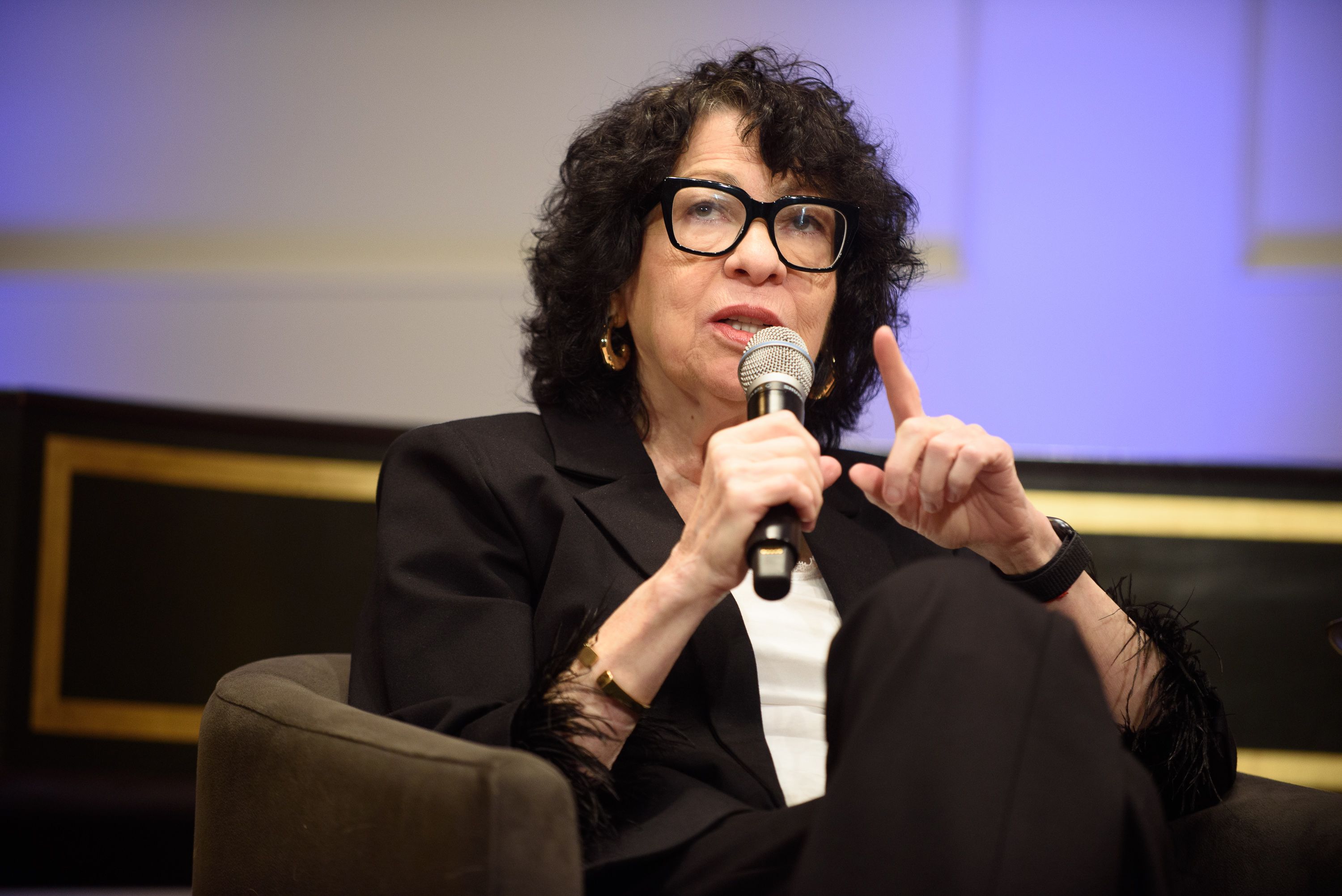
    Appearing in Philadelphia Friday, U.S. Supreme Court Associate Justice Sonia Sotomayor discussed her growing renown as a dissenting voice on the bench, her belief that she and her colleagues need term limits, and that in her side avocation as a children’s author, she shares an honest but sometimes bleak view: “It’s a horrible world we’re giving our children.”

    Sotomayor was in town to receive the Benjamin Franklin Medal at the American Philosophical Society, an organization that promotes intellectual pursuit and knowledge in the arts and sciences, founded by Franklin in 1743. The medal recognizes distinguished public service as well as major contributions in the sciences.

    Sotomayor, the first Latina justice, born in the Bronx to Puerto Rican parents, answered questions onstage posed by David Tatel, a retired judge on the U.S. Court of Appeals for the District of Columbia Circuit.

    While much of the conversation was consumed by legal theory, Sotomayor managed to break through with the candid and colloquial style that’s marked her term on the bench since she was confirmed in August 2009, after being nominated by former President Barack Obama.

    Often depicted in news accounts as one of three liberals battling with the majority conservatives on the court, Sotomayor said Friday, “I believe my colleagues genuinely believe what they’re doing is what’s best for the country.” But, she added, “I don’t believe my colleagues are right.”

    Sotomayor received a great deal of attention for her blistering dissent in June in the case of Trump v. Slaughter that expanded presidential power. In a 6-3 decision, the court allowed President Donald Trump to remove Federal Trade Commission Commissioner Rebecca Kelly Slaughter without cause, against established precedent.

    Sotomayor read her dissent from the bench, saying that the decision was “grievously wrong” and “profoundly destabilizing.” She added that it handed the president “unitary, total executive control.” She concluded, “Chaos will follow.”

    Describing her forthright style, Sotomayor said, “I write it. I tell you. I’m very direct.”

    Tatel asked Sotomayor whether lifetime appointments, which Supreme Court justices enjoy, should continue. After saying, “It’s not up to me, it’s up to you,” referencing her audience, Sotomayor added, “We’re the only country in the democratic world with lifetime appointments.

    “I wouldn’t be unhappy with term limits.”

    Steering the conversation away from the demands of Sotomayor’s day job, Tatel asked Sotomayor about her children’s books, a change of pace that elicited a wide smile from the justice.

    She said that her books, such as Just Ask!: Be Different, Be Brave, Be You, are meant to inspire positive societal change.

    But, she added, “I really believe we adults have messed up the world,” listing health problems, climate change, and ongoing poverty.

    Ultimately, Sotomayor said, “I survive by believing that [children] can take our insights, improve upon them, and that for some of them, it will inspire them to think about how to make a better world.

    “I enjoy sharing that message with kids. I love that.”

  • Real estate influencers sued by N.J. authorities for allegedly scamming $1.5M from investors

    Real estate influencers sued by N.J. authorities for allegedly scamming $1.5M from investors

    Two South Jersey real estate influencers who were indicted on federal fraud charges in May have been sued by New Jersey authorities for allegedly luring investors into a more than $1.5 million “Ponzi-like investment scam.”

    The New Jersey Bureau of Securities, which is overseen by New Jersey Attorney General Jennifer Davenport, filed the civil complaint against Gregory Dorell Parker Jr. and his wife, Danielle “Nikki” Morris Parker. Davenport announced the action Friday.

    State prosecutors said the Gloucester County couple “projected an image of jet-setting wealth” through social media brands such as Big Bizzneesss, Diamante Financing, and other names to allegedly defraud more than 30 investors — including at least nine in New Jersey — who put money into “bogus” real estate projects the couple claimed to be developing.

    The bureau alleged that the couple and their brands violated New Jersey’s Uniform Securities Act through the sale of unregistered securities and other unlawful acts connected to the scheme.

    Lawyers for the couple could not be reached for comment Friday.

    The bureau alleged the Parkers solicited investors through social media, mutual contacts in the community, “and a recurring pipeline of paid seminars, mentorship programs, and investor events, all of which they used to project an image of success in the real estate business and to channel attendees into their real estate investment scheme.”

    Earlier this year, the Parkers were indicted by a federal grand jury in Ohio’s Northern District Court and accused of scamming investors with fraudulent real estate investments.

    “In reality, the Parkers were operating a Ponzi scheme,” federal prosecutors wrote in an indictment unsealed in May after the Parkers were arrested and formally charged at the federal courthouse in Camden.

    In 2023, The Inquirer reported that the influencers, who showed off glamorous homes and flash travels on social media, had an alleged pattern of misleading clients about their real estate investments.

    Investors who lost money said they turned over their life savings or borrowed from their 401(k)s, and eventually received small return payments or nothing at all.

    While the Parkers claimed to have financial expertise, they experienced a string of personal and corporate troubles and fended off the foreclosure of a home in Gloucester County.

    In the Ohio case, federal prosecutors allege that the Parkers promised they would help investors purchase and rehab properties in Cleveland.

    Prosecutors said the Parkers allegedly used payments from newer investors to provide some payments to older investors, and to enrich themselves.

    The federal case is ongoing.

  • Appel Farm, the beloved South Jersey arts camp, is closing after 66 years

    Appel Farm, the beloved South Jersey arts camp, is closing after 66 years

    Rachael Socha first learned to make her bed, clean the toilet, and act, in the Spanish tragic drama Blood Wedding, in sprawling farmland in Salem County.

    “My parents would always laugh when they would come,” Socha said. “They would say to me, ‘This is definitely an Appel Farm show.’”

    Socha attended Appel Farm Arts & Music Center in Elmer for summer camp during her preteen and early teen years. She majored in theater and made lots of weird art with her friends, and later worked at the camp and trained young theater nerds to be themselves. Socha, 37, had hoped to send her daughter to Appel next summer.

    Now, Socha won’t have that chance as the 66-year-old arts camp and education nonprofit closes its doors. The shutdown was announced Thursday.

    “It’s just sad to see a place that was such an upstanding believer in the arts to just go away,” said Socha, now the education director for Music Theatre Philly and a drama therapist.

    The closure means the end of Appel Farm’s camps and arts programs, along with the dismissal of all its staff as of Friday. Appel Farm reported having 146 employees in 2024, according to tax documents.

    Appel Farm’s board of trustees posted a statement explaining the decision.

    “After numerous attempts to achieve a workable budget, we are currently facing an insurmountable funding deficit from which we are sorry to say we cannot recover,” the statement said.

    Heather Yelle, Appel Farm’s executive director, did not respond to requests for comment. There was also no response to messages left with Appel Farm’s general phone number or email.

    Appel Farm began as an arts camp for children in 1960, when Albert and Clare Appel used their 176-acre farm in Elmer, with thousands of chickens running around, to train children in the arts.

    Before that, in the 1940s, the Appels had brought friends and family to the farm for music and arts lessons. The couple built an art studio next to the farmhouse, a theater, and a pool, according to The Inquirer’s archives. Over the decades, Appel Farm grew into a regional arts center and a hot spot for music festivals. Its camp roster has featured a fair share of talent, including Stephen Oremus, a Broadway musical director, and opera singer Amy Burton.

    The camp allowed children to major in several forms of art, including theater, music, dance, photography, writing, and more. Socha remembers helping with clowning classes, puppetry, and sketch comedy.

    In its most recent fiscal year, Appel Farm made more than $2.3 million but spent $2.6 million, leaving the nonprofit to make up the difference. The last time Appel Farm reported that it was not in a budget deficit was four years ago.

    Last year, the nonprofit reported spending $1.1 million on scholarships for at-risk youth in Newark, Camden, Philadelphia, New York, and the South Jersey region, and $750,000 on arts education programs in local school districts.

    It is unclear how those programs will be affected by Appel Farm’s closing.

    Appel Farm spent months talking to banks, partner organizations, and legislative and state agencies to find a solution to the financial hole, but the board said in its statement that it could not find “a viable option for moving forward.”

    The board cited “individual, corporate and foundation funding” decreases, partnered with spikes in utilities and insurance costs, as a problem over the last five years. The board said the aging farm facilities have required repairs and maintenance, which have grown too expensive.

    Socha, who still texts her friends from camp every day, said she hopes Appel Farm finds a way to preserve its decades of archives, including recorded theater performances.

    Rachel Jacobs, 46, is also mourning the loss.

    A New York resident, Jacobs said she struggled to find people who enjoyed the same things she did growing up, like punk and riot grrrl music. Appel Farm gave her the chance to explore that passion, leading to a career in her 20s as a touring musician.

    She went to Appel Farm for summer camp in the ’90s and explored theater, photography, and music. She and her friends formed a feminist punk band at camp called Cherry Dilate, and then another called Spider Bite. She got to perform for her peers at Friday night concerts. Her friends helped dye her hair red with Kool-Aid and pick four-leaf clovers.

    Jacobs, now a mother and a therapist, remembers bawling when she had to leave.

    “This was a place, in many ways, that kept me going when it was very tough. Being a tween and a teen in the ’90s, [society] was not as accepting as it is now of people who were different,” Jacobs said. “It’s always going to hold a very special place.”

  • For a night, people traded their beds for the cold air of Citizens Bank Park. Here’s what the experience meant.

    For a night, people traded their beds for the cold air of Citizens Bank Park. Here’s what the experience meant.

    Under the bright lights of Citizens Bank Park, 45-year-old Nicole Sage sat at home plate surrounded by hundreds of people dressed for cold weather — in mittens, hoodies, and heavy winter coats. Layers of clothing peeked from underneath zippers and poked out from the bottom of sweatpants.

    In her reflective gold jacket, Sage looked over the crowd sitting in the bleachers and began to tell her story.

    “I fully believe I wouldn’t be the person that I am today without the support of the Covenant House,” Sage told The Inquirer at the second annual Sleep Out at the Ballpark. “They were the first people that were really excited to see me when I was having a really hard time in my life. If it wasn’t for Covenant House and how they helped me, there is a really good possibility that I would be dead today. Covenant House fundamentally believed in me and believed in what I could achieve, even when I didn’t believe in myself.”

    Nicole Sage (front) and Covenant House Pennsylvania CEO Alexia Clarke hug after Sage spoke to the group during Sleep Out at the Ballpark. Sage, a 2017 Penn graduate, lived at Covenant House on and off for six years.Elizabeth Robertson / Staff Photographer

    At 18 years old, Sage found herself homeless after returning from the Marine Corps.

    While walking down the streets of Kensington, she spotted something about Covenant House Pennsylvania, which says it is Philadelphia’s largest provider of housing and support for young people ages 18 to 24 experiencing homelessness, human trafficking, and housing instability. For six years, Sage lived in and out of Covenant House.

    The people within the organization helped her in times of need, finding a safe space for her 2-year-old son to live when she felt she wasn’t ready to take care of him, and motivating her to get a college education — she graduated from Penn in 2017 with a degree in health and societies.

    Covenant House played a crucial part in Sage’s life — and that’s why attending Thursday’s Sleep Out was nonnegotiable.

    “I still see the stigma that people experience,” Sage said. “And I’m hoping that after spending one night on the street, I know it’s not the full experience, they’ll be able to understand what it might be like to be a little bit cold, or what it might be like to be a little bit hungry. And I’m hoping that the next time they see someone that’s unhoused, they might be a little kinder to them — even if it’s just a little bit.”

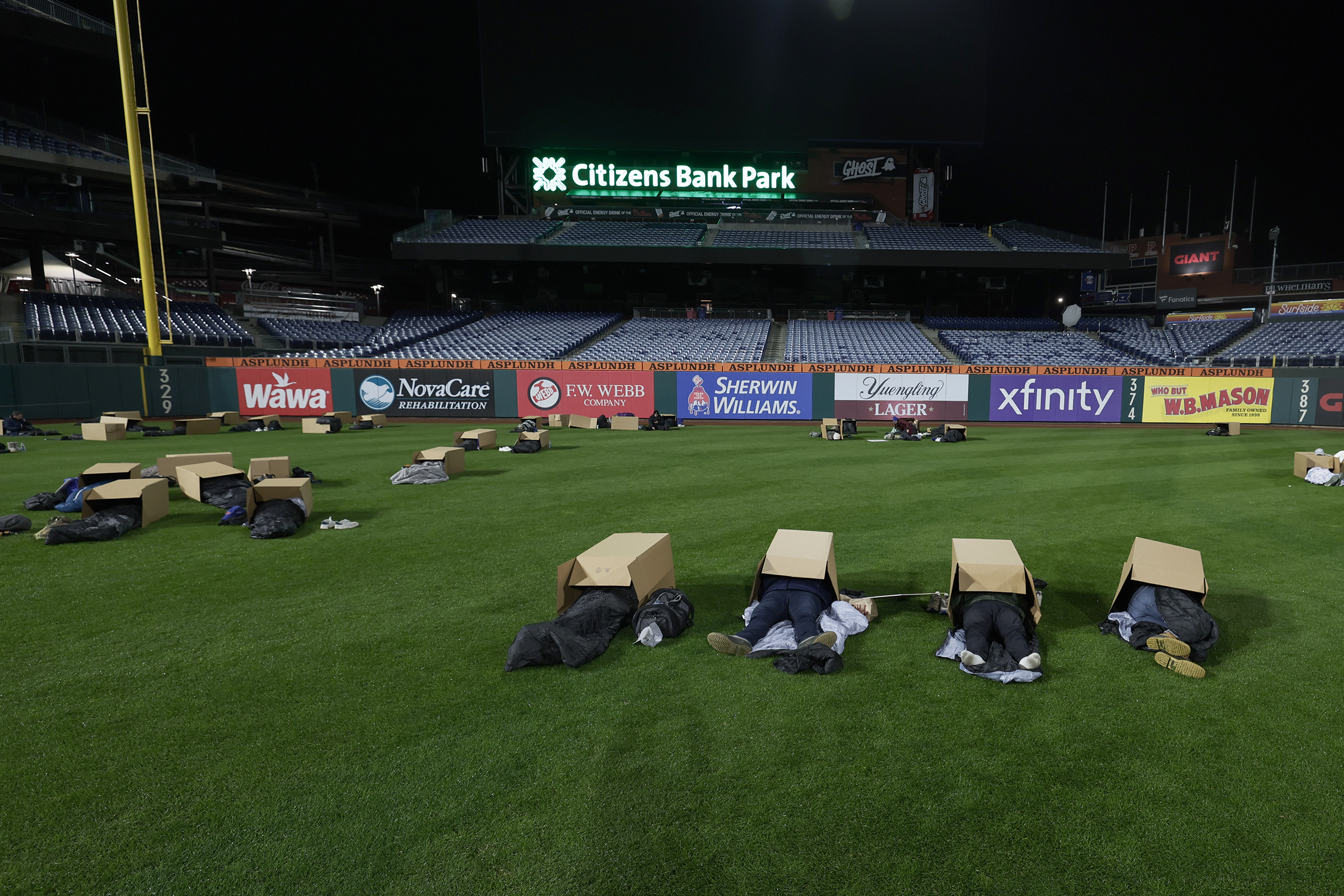
    For Sleep Out at the Ballpark, community members gave up their beds for one night to sleep in the outfield of Citizens Bank Park, replicating the environment homeless people experience every night.

    This year, the event raised $1,246,509, an increase from last year’s $1,028,132. The money raised will support programming and their Germantown shelter, which stays open 24/7 for 365 days a year.

    “One of the main things we want people to take away is that homelessness is preventable and solvable,” said Alexia Clarke, the CEO of Covenant House Pennsylvania. “What we need is folks to continue to join in the work with us and help us in anyway that they can — whether it’s helping a young person get a good job with a living wage or supporting our programming by volunteering or donating to the organization so we can keep the doors open and provide meals and provide safety. There are lots of ways to be part of the solution.”

    Getting started

    7:30 p.m., 50 degrees

    The night started at around 7:30 p.m. Among the crowd was 1993 National League champion Milt Thompson, former Phillies longtime public address announcer Dan Baker, and Phillies Wall of Famer Larry Bowa, who was participating in his fourth Sleep Out with Covenant House. Thursday’s was part of a nationwide Sleep Out fundraiser that’s in its 16th year.

    “Let’s say it gets really cold at 2 a.m., we can get up, go get in our car, turn on the heater, go home, take a shower,” Bowa said. “But these young kids, they have no chance. … I can’t even imagine young kids, 14, 15, 16 years old out in the streets. To see how the Covenant House can turn their life around, that’s what it’s all about.”

    Attendees got to see the impact firsthand between 8-9 p.m., when the group split into three to listen to the stories of Covenant House alumni.

    People bundle up before hitting the sack in their cardboard box during Sleep out at the Ballpark.Elizabeth Robertson / Staff Photographer

    Switching out their beds for sleeping bags

    10:50 p.m., 46 degrees

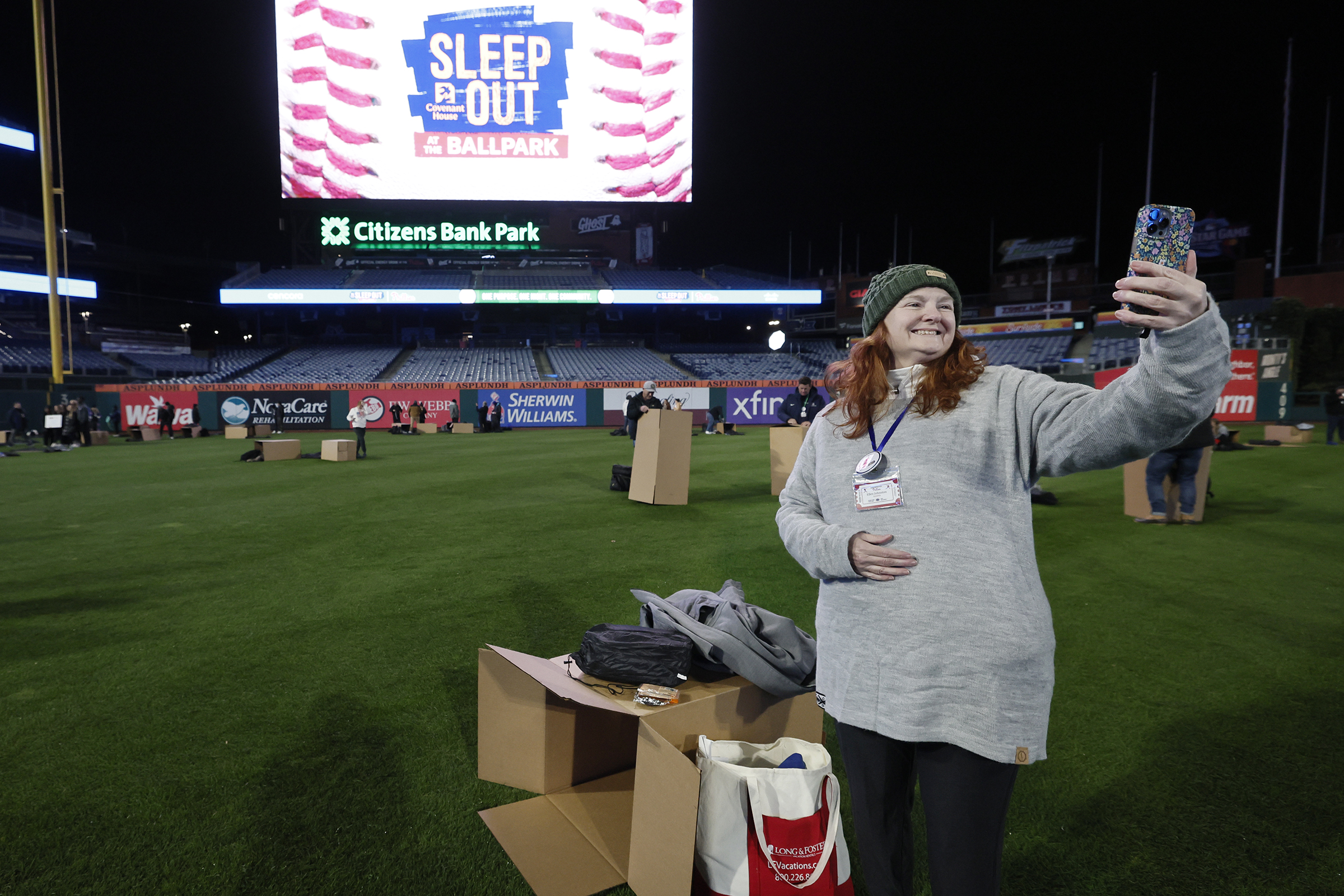
    With her cardboard box set up, her sleeping bag on the ground, and toe warmers already placed strategically inside her shoes, 56-year-old Ellen Johnston was getting ready for a night of shut-eye — maybe.

    Each attendee was given one cardboard box, a sleeping bag, hand warmers, and a black eye mask. But even with the stadium lights dimmed at 11 p.m., rays still made their way through the thin cotton lining.

    “I’m not sure how much sleep I’ll get, even with the eye mask, but I’m glad I came back and did it again this year,” Johnston said.

    Ellen Johnston, of Gilbertsville, was motivated to volunteer with Covenant House after her experience with Sleep Out at the Ballpark.Elizabeth Robertson / Staff Photographer

    In fact, the experience motivated her to get more involved. She’s volunteering with Covenant House’s workforce readiness program — giving kids interview and resumé tips backed by 30 years of experience in human resources.

    ”It’s not simply about giving a young person a place to stay,” Johnston said. “It’s about making sure that they are physically and mentally safe as well. And I think it has to be all of it in order to make a difference for a young person who finds themself on the street.”

    The Phillies and Covenant House Pennsylvania teamed up for the second annual Sleep Out at the Ballpark fundraiser.Elizabeth Robertson / Staff Photographer

    A ‘Take Me Out to the Ball Game’ wake-up call

    5 a.m., 40 degrees

    The sound of “Take Me Out to the Ball Game,” echoed throughout the stadium’s sound system at 4:50 a.m. Glasses frosted over from the 40-degree weather, morning dew covered the grass in the outfield, and those just waking up — or those who never slept — slowly gathered their belongings, picked up their cardboard boxes, and packed away their sleeping bags to make their way inside for coffee, breakfast, and a morning reflection.

    63-year-old Jeffrey Scott was one of 14 members of Philadelphia 215 Church in attendance. As the youth director in the ministry, this is his fourth year sleeping out with Covenant House. And each year, he continues to learn more about the struggles of youth homelessness.

    “Every single year has been something different,” Scott said. “This time, I was laying in the box, and three things impacted me. No. 1, I have a 13-year-old lady part of our ministry who slept out with us. I wanted to make sure she understands how it’s impacting her class. Second, we increased our numbers of sleepers from three to 14 and that made me feel some type of way.

    “And then from a safety standpoint, the third thing that was in my mind when I was inside the box was I have the luxury of having security around me as I lay in this box. How do the people who live in Kensington or in a park bench or under a bridge, how safe do they feel as they feel people walking by them that they clearly can’t trust.”

    More than 10,000 children and youth have experienced homelessness in Philadelphia during the 2023-24 school year. Across Pennsylvania, that number increases to more than 50,000 — filling nearly every seat in Citizens Bank Park. For those struggling to find stability, Sage had one last message.

    “Never give up,” Sage said. “Always fight. There’s people who will support you, even when you think that there isn’t anyone. Find that one person who is there and find a way to trust them.”

  • Drexel proposes divorce settlement with Academy of Natural Sciences

    Drexel proposes divorce settlement with Academy of Natural Sciences

    In a bid to end what it once called a “historic” affiliation, Drexel University Friday offered to sever ties with the Academy of Natural Sciences, dangling $7 million and another $8.9 million in-kind services over one and a half years, according to a copy of the proposal obtained by The Inquirer.

    The one-page proposal — essentially a kind of alimony offer — would provide $5 million in the current fiscal year, grant $2 million for fiscal year 2028, and continue in-kind support through June 30, 2028. While offering a clean separation after weeks of intense public acrimony between the two institutions, the proposal does not address a reopening of or funding for the Academy’s museum, which was closed amid great public outcry at the end of September after nearly two centuries in operation.

    The Academy showed an operating budget of almost $24 million on its 2024 tax return.

    The deal would undo a quasi-merger announced in 2011, returning the nonprofits to their former status as two completely independent organizations as of June 30, 2027.

    “We entered into this affiliation in 2011 because we believed in the Academy’s mission, and that belief has not changed,” Drexel’s proposal states. “As we look toward a different path forward between our two institutions, Drexel wants to help give the Academy a strong foundation as it builds a future with other partners.”

    Drexel also offered to cover interest-free financing to the Academy through the transition period, and support for the Academy in replacing the in-kind services Drexel provides. Drexel and the Academy also would continue their academic and research collaboration under the proposal, though no details were provided.

    The Drexel proposal was received by the Academy Friday and it is being reviewed, an Academy spokesperson said.

    The end of a 15-year-old relationship

    A separation 15 years into the relationship would raise a series of questions for both organizations about how to disentangle from each other.

    The Academy has relied on a host of shared services ranging from payroll to the investment of its endowment, and would have to figure out how to manage these responsibilities and expenses in the future.

    The university has degree programs, faculty, and other personnel with which it shares costs with the Academy. Drexel students participate in co-ops as well as other work and research at the Academy — among the symbiotic relationships highlighted when the partnership was first announced.

    “This affiliation will move Drexel into a national leadership position in environmental science and environmental policy,” John Fry, Drexel’s president in 2011, said at the time. (Fry left Drexel in 2024 to lead Temple University.) “It will provide our faculty with opportunities to make even greater contributions to discovery and innovation in the natural and environmental sciences, propelling the University and our College of Arts and Sciences to the next level in research and teaching in these fields.”

    The offer of separation is the latest volley in an ongoing dispute between Drexel and the Academy over the future of their affiliation. Talks broke down over a month ago after about a year of negotiations over the terms of altering or ending the relationship between the university and the internationally prized natural science institution on the Ben Franklin Parkway.

    About a month ago, Drexel’s opening offer was no money and three months of in-kind services. The Academy asked for in-kind support for five years as well as $25 million, Gregory S. Rigdon, an Academy trustee and board treasurer, told Council earlier this week.

    Academy board officials told City Council at the continuation of a hearing last week investigating the September closure of the Academy’s museum that the Academy needed financial support to survive the transition and as a bridge to independence. The Academy Board of Trustees currently has about 20 members, including Drexel members.

    The dispute between the Academy and Drexel first became public in April when it seemed the two sides could be heading for divorce, but Gov. Josh Shapiro and Mayor Cherelle L. Parker asked former Comcast executive and U.S. Ambassador to Canada David L. Cohen to mediate. The two sides agreed on a term sheet that would keep the affiliation, but then the Academy pulled out, saying it concluded the arrangement was not in its best interest.

    In the term sheet, Drexel had proposed reducing the Academy board’s role to an advisory capacity, ending its fiduciary duties and further curtailing its power.

    They then attempted to negotiate a disaffiliation.

    Is Drexel’s offer enough?

    It’s likely the Academy would need more financial support than Drexel is offering, and where that would come from is uncertain. City Council members this week said they would seek to provide money to the Academy for a three-to-five-year period, but it’s unclear whether the Parker administration would approve that.

    On Monday, Drexel president Antonio Merlo told Council that the governor and mayor had supported the new affiliation agreement the two sides had tentatively agreed to in September.

    Cohen also has said he didn’t think disaffiliation was the best path.

    Reached Friday, Cohen said Drexel’s proposal “represents a strong good faith effort by Drexel to respond to the Academy’s request for disaffiliation and to City Council’s request that Drexel respond to that request.”

    Merlo said over a month ago he would honor a bid for disaffiliation if the Academy wanted that.

    “Drexel has heard the desire expressed by many parties for it to disaffiliate from the Academy, and we support that objective if it places the Academy on a strong path toward a financially viable and sustainable future,” the school’s Friday proposal said. “This proposal is offered in that spirit and represents our best effort to create the conditions for that outcome.”

    Council member Nina Ahmad said she was encouraged by the proposed disaffiliation agreement and that she saw it as a first step toward getting museum reopened.

    “I applaud Drexel for coming to the table and negotiating in good faith,” she said Friday. “The terms still need a close review, and I look forward to seeing the details.”

    The 2011 Drexel-Academy affiliation was endorsed by then-Mayor Michael A. Nutter and “jump started” with a $1 million grant from the Pew Charitable Trusts.

    In announcing the grant, Pew’s president at the time, Rebecca W. Rimel, called the affiliation a “bold and visionary plan.”

    “Others in the nonprofit sector,” she said, “should look to this merger as a model of sound and creative decision making, which will provide for a secure and successful future for these great institutions.”

  • DeVonta Smith set to return for Eagles on Sunday, but Dontayvion Wicks to remain out vs. Steelers

    DeVonta Smith set to return for Eagles on Sunday, but Dontayvion Wicks to remain out vs. Steelers

    Receiving help is on the way for the Eagles.

    DeVonta Smith (hamstring) has been cleared to play in Sunday’s game against the Pittsburgh Steelers. He was a full participant in practice Thursday and Friday and was removed from the injury report released Friday afternoon.

    Meanwhile, Dontayvion Wicks (ankle/foot) has been ruled out. He was a limited participant in practice all week. Wicks’ foot injury is a new addition to the injury report as of Friday.

    Smith hasn’t suited up since the Week 6 loss to the Carolina Panthers. Smith, 28, has been dealing with the hamstring injury dating back to training camp. He was also sidelined with the injury in Weeks 4 and 5. Smith said Wednesday he was feeling “100%,” but he didn’t know the key to staying on the field, given that he also felt good going into the Panthers game.

    “I’ve been doing everything I can do,” Smith said. “That’s why myself, I kind of got to the point where I was like, ‘Maybe this is what God wanted for whatever reason it is,’ because I do everything I can do. If it happens, then it’s out of my control. There’s nothing I can do about it.”

    While the Eagles will welcome back Smith on Sunday, they could be thin at inside linebacker. Zack Baun (back) has been ruled out, while Smael Mondon (ankle) is doubtful. Baun did not practice this week, while Mondon was a full participant on Wednesday, then sat out on Thursday and Friday.

    Linebacker Zack Baun (left) will miss the Steelers game. David Maialetti / Staff Photographer

    Jihaad Campbell (hamstring/quadriceps) is available to play for the first time since Week 7 against the Dallas Cowboys. He is expected to start alongside Jeremiah Trotter Jr.

    Given the potential lack of depth on the active roster behind Campbell and Trotter Jr., the Eagles may choose to use their practice squad elevations on Chance Campbell and/or Anfernee Orji.

    Will Shipley (foot/illness), who is on injured reserve, is questionable to play. The illness was a new addition to the injury report Friday, as the 24-year-old running back did not participate in practice. He was a limited participant on Wednesday and Thursday.

    If the Eagles do not activate Shipley, he has two more weeks to practice before they must decide whether to add him to the active roster or to place him on season-ending injured reserve.

    Jonathan Greenard (rest/ankle) did not participate in Friday’s practice, but he is available to play. So are Saquon Barkley (hamstring), Jalyx Hunt (ankle), Tanner McKee (rib), Andrew Mukuba (knee), Michael Carter II (abdomen), Britain Covey (knee), Jonathan Jones (hamstring), and Nolan Smith Jr. (illness).

  • Chesco Children and Youth workers ignored clear signs of abuse before 12-year-old was tortured to death, lawsuit says

    Chesco Children and Youth workers ignored clear signs of abuse before 12-year-old was tortured to death, lawsuit says

    Caseworkers from the Chester County Department of Children, Family and Youth ignored clear signs that 12-year-old Malinda Hoagland was being abused in the months before her death and failed to intervene, her family said in a lawsuit filed this week.

    Had the workers assigned to ensure the child’s safety stepped in to protect her, the suit said, the child would still be alive.

    Malinda, prosecutors say, was beaten, abused and starved to death by her father, Rendell Hoagland, and stepmother, Cindy Warren.

    Hoagland pleaded guilty to first-degree murder in January and is awaiting sentencing. Warren has a murder trial scheduled to take place early next year in West Chester.

    While the child was in their care at the couple’s West Caln home, county caseworkers failed to visit despite multiple reports of suspected child abuse filed by the girl’s teachers. And when the caseworkers did inquire about the child’s well-being, they spoke only with Warren.

    “It’s inexcusable and baffling,” said Thomas Bosworth, the Center City lawyer who filed the suit on behalf of Malinda’s sisters, Emily Lee, Jamie Hoagland, and Abbey Hoagland.

    “It just makes you wonder what has gone so wrong in our system that these are the people who are handling such a serious situation,” he said.

    A spokesperson for Chester County declined to comment Friday on the suit filed this week in Chester County court. In response to an earlier lawsuit, filed in federal court and now dismissed, county officials denied any wrongdoing by the agency in connection with the child’s welfare or death.

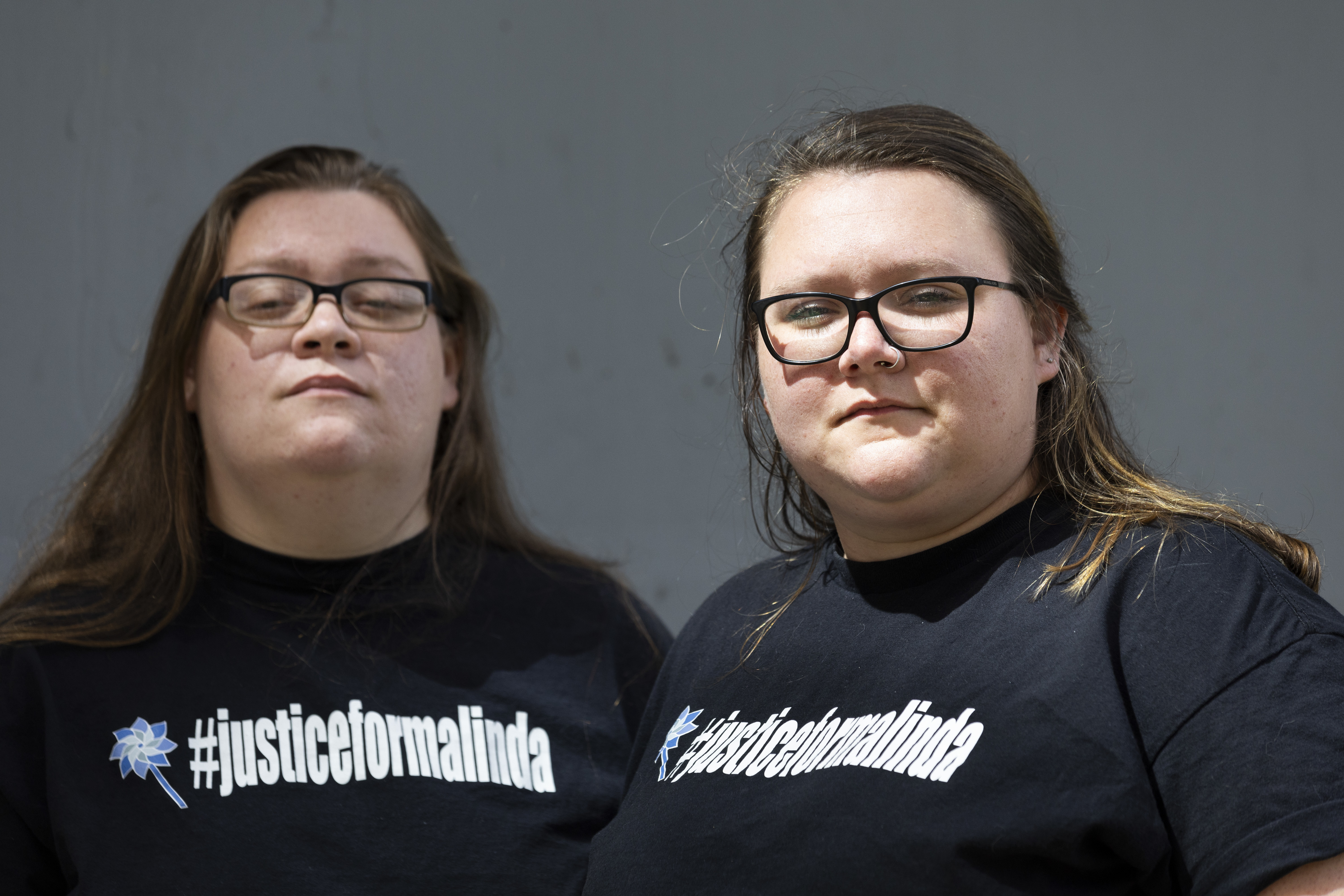
    Jamie Hoagland and Emily Lee, Malinda’s half-sisters, seen here in July 2024, said their father, Rendell Hoagland, and Cindy Warren hid their sister from the outside world, torturing her and denying her food until she died.Monica Herndon / Staff Photographer

    Malinda was found “broken and just barely alive” by paramedics summoned to her family’s home in May 2024, Chester County District Attorney Chris de Barrena-Sarobe said at the time. She weighed 50 pounds, had cuts and bruises on her head and chest, as well as multiple broken bones and significant damage to her liver.

    She was later pronounced dead at Paoli Hospital after suffering what de Barrena-Sarobe described as “evil and torment that no child should ever have to endure.”

    Chester County prosecutors, in investigating Malinda’s death, recovered footage from home surveillance cameras that showed Warren and Hoagland withheld food from her, beat her with a belt, and forced her to perform calisthenics for hours on end.

    Malinda’s teachers, worried about her deteriorating condition as signs of abuse became obvious, filed reports with the state Department of Human Service’s ChildLine system in 2023. But the CYF cases generated by those reports had no effect, and “consciously disregarded a known risk of harm to Malinda,” according to the lawsuit.

    County caseworkers ultimately closed the report in June 2023 “without having spoken to or seen Malinda, Malinda’s mother, or Malinda’s father,” the lawsuit said.

    “Had Chester County CYF properly handled and responded to the June 1, 2023, report, the abuse and torture of Malinda Hoagland would have been timely discovered, and Malinda would have survived while being spared an additional 11 months of abuse, torture, neglect, starvation, and beatings,” Bosworth wrote in the suit.

    The caseworkers named in the lawsuit said in depositions with Bosworth in the earlier lawsuit that their supervisors discouraged them from conducting home visits “because of how busy” the agency was, according to the filing.

    Malinda Hoagland, seen here a few years before her father relocated to Chester County, was always a bubbly, happy child, according to her half-sisters.Courtesy Emily Lee

    Bosworth’s lawsuit also asserts CYF caseworkers failed to properly investigate Warren’s suitability as a caretaker: She had a documented history of child abuse, including a 2009 conviction in the Pocono Mountains for beating her son from a previous relationship, a crime for which she served seven years in prison.

    A judge in Monroe County, where Warren and Rendell Hoagland lived before moving to Chester County, issued a ruling explicitly barring Malinda from living with Warren, and granted split custody to Malinda’s mother and father.

    Warren and Hoagland ignored that order with no penalty, living together with Malinda in West Caln, the lawsuit said.

    And when Malinda wouldn’t wake up on May 4, 2024, Warren and Hoagland agreed over text messages later recovered by prosecutors to come up with a story that she had injured her head at a campground pool, and again when she fell off her bike, according to court filings.

    They also discussed whether to take her to the hospital or to try to rouse her with smelling salts, fearing that child-service workers would be suspicious of her injuries.

  • Josh Shapiro called Trump ‘profoundly and pathetically weak’ after his embrace of Putin and Xi

    Josh Shapiro called Trump ‘profoundly and pathetically weak’ after his embrace of Putin and Xi

    Gov. Josh Shapiro on Friday called China “perhaps the greatest adversary of the United States,” and blasted the White House’s current relations with the country, in remarks that covered his broad vision for American foreign policy as he lays the groundwork for a likely presidential campaign.

    “The reality is, with China, we have to understand they are economically trying to overtake us,” Shapiro said at the University of Pennsylvania’s Perry World House in Philadelphia as part of an event series on transatlantic policy. “But we also have to understand that we have to find ways to be able to work with them to deal with some of the most pressing challenges.”

    Shapiro, who is widely expected to announce a 2028 presidential run after his recent election to a second term, used the event to criticize President Donald Trump, who met with Chinese President Xi Jinping and Russian President Vladimir Putin in a trilateral roundtable in China Thursday.

    He called the president “profoundly and pathetically weak” during the meeting, which did not produce any meaningful agreements, and said Trump made America “the laughing stock of the free world.” Shapiro said his approach, if he were representing the U.S., would be to work with China in areas both countries have an interest, namely artificial intelligence, but not give them a free pass.

    “It’s not that we shouldn’t engage, but we should engage from a position of strength. And Donald Trump is engaging from a position of weakness,” Shapiro told Frederick Kempe, CEO and president of Atlantic Council, which partnered with Penn to host the summit on foreign policy.

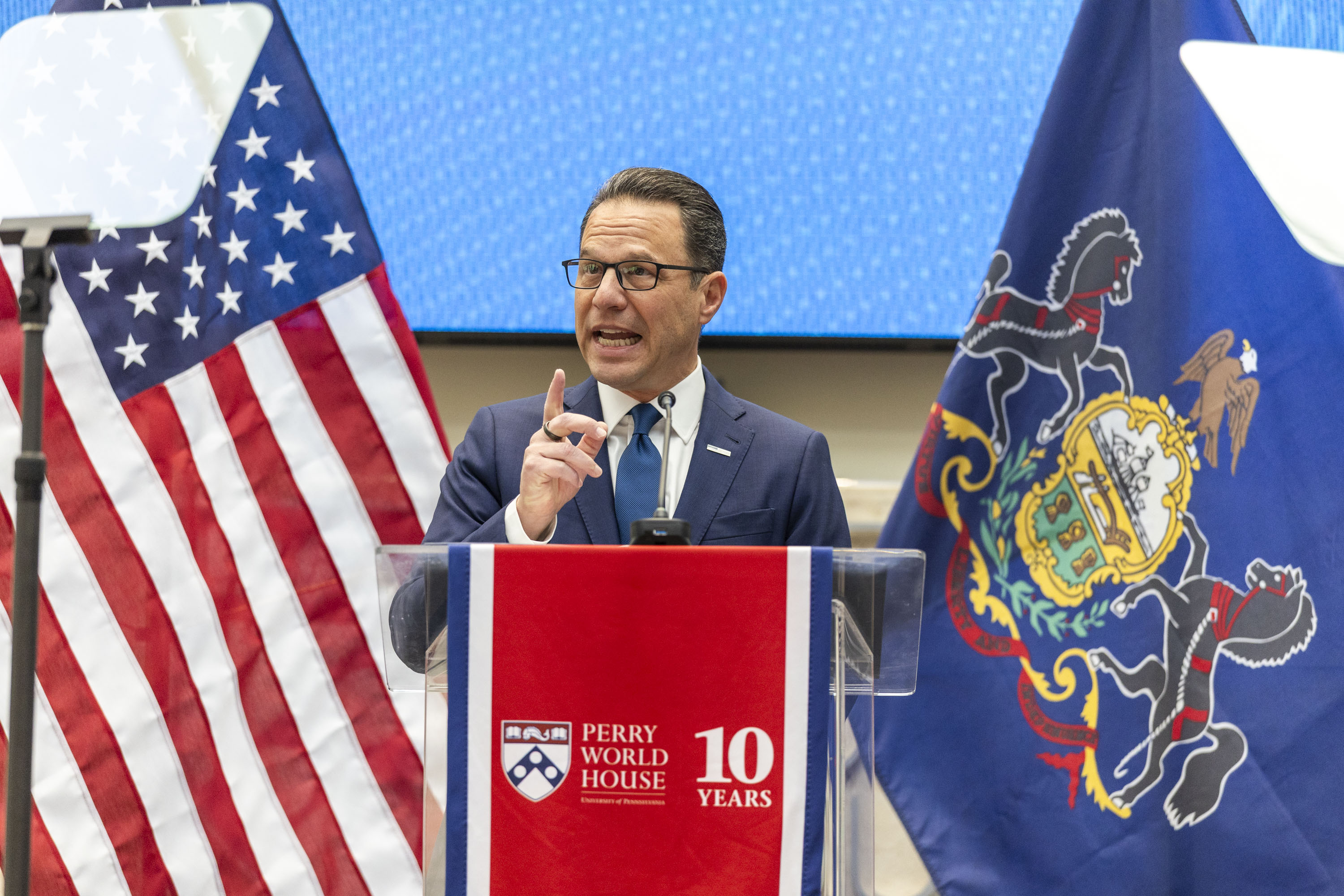
    Governor Josh Shapiro speaks at a conference on the impact of NATO on communities in the United States at the Perry World House of the University of Pennsylvania in Philadelphia on Friday, Nov. 20, 2026.Tyger Williams / Staff Photographer

    For years, Shapiro said, it hasn’t been clear to Americans, including farmers in Lancaster and construction workers in Philadelphia, how foreign policy impacts their daily lives. That changed during this year’s midterm elections, when Democrats swept races up and down the ballot, including in Pennsylvania, where Shapiro staked his political capital on flipping four U.S. House seats to help deliver a majority.

    Everyday Pennsylvanians, he said, experienced the impacts of Trump’s war with Iran that began in February and led to sporadic closures of the Strait of Hormuz, causing a spike in gas prices.

    “They feel the effect of foreign policy, even if they’re not sort of thinking about it, debating it every day,” he said.

    Shapiro on Friday introduced his three-pronged proposal for a stronger relationship with America’s allies, including Canada and some European countries. (Canada is Pennsylvania’s largest international trading partner, and Shapiro has maintained a friendly relationship with its leaders.)

    First, he said, the U.S. should grow its economy and industrial strength with allies together, calling Trump’s tariffs and trade war “foolish.”

    Shapiro, who has boasted his efforts to speed up the state’s process to get licenses or permits to do work, said cutting red tape and welcoming other countries’ investment into Pennsylvania would help, not weaken, workers.

    Next, he said, the alliance should work together to face emerging challenges, like developing guardrails on AI — something he said no country can go at alone. In August, amid mounting concern from constituents, Shapiro issued a sweeping executive order that dramatically restricts data center development in Pennsylvania.

    “AI, in particular, carries massive risks to our communities, to our jobs, to that very same way of life that it promised to change for the better,” he said. “AI must make life better for all of us, not replace us, or God forbid, endanger us. There are critical steps we need to take here in this country to mitigate the dangers of AI — steps that this administration in Washington has repeatedly refused to take.”

    And third, he said, countries that belong to NATO — a political and military alliance founded in 1949 of 32 member states in Europe and North America — need to strengthen their collective defense, primarily by deterring future military conflict. In turn, Shapiro said that he hopes that under a Democratic president, America would never again waver on keeping NATO’s central principle to aid other nations under attack.

    While making the last point, Shapiro indirectly praised Trump by saying he rightly pushed allies to invest more of their economic output into defense spending. He noted that former Presidents Joe Biden and Barack Obama, also carried that urging forward.

    Shapiro said his plan would provide a new opportunity to develop a foreign policy strengthening existing alliances that links security and prosperity together. He added that the Democratic Party needs to build a coherent foreign policy that focuses on attracting investment from overseas into the U.S. to strengthen manufacturing and make sure international students, like those at Penn, continue to come to American universities to innovate.

    Finally, he said, Democrats — now in the majority in both chambers of Congress — need to use their leverage to pressure Trump and Secretary of War Pete Hegseth to end the war in Iran by reducing funding, holding them accountable for their unlawful actions, and ending blanket tariffs.

    “We need to wind this down. We need to save lives. We need to protect the American people,” Shapiro said. “There has to be a plan forward to reopen the Strait of Hormuz, and then deal with the effects of what occurred in Iran.”