Anastasia Inciardi’s art has made the rounds — her mini prints have become desirable collectibles at museums, arenas, and VIP red carpets nationwide. But her latest collab is particularly special because of what it means to her family.
This week, the Philadelphia Eagles announced that Inciardi’s mini-print vending machines would be stationed at Lincoln Financial Field all season. The machines are stocked with football-themed linocut art with designs ranging from a Go Birds sign to an Eagles pretzel.
Inciardi’s worked with big names and brands before — ranging from Harry Styles to Snoopy and the Peanuts gang. But her work with the Eagles marks the artist’s first foray into the NFL.
The Birds are touting the collab as an easy, affordable game-day souvenir. Prints cost $1, and they are about 2.5 inches by 3.5 inches — about the size of a playing card.
For Inciardi, who lives in Portland, Maine, and grew up in Brooklyn, N.Y., the partnership was a no-brainer, given her family’s Philly ties. Her grandmother, two aunts, two uncles, and cousins all live in Philly.
“It’s been an absolute dream come true to partner with the Eagles,” she said. “My family are all die-hard Philly sports fans, so it was an honor to create these prints as an homage to this incredibly dedicated fan base.”
This is the fifth Philly location to host Inciardi machines. Her prints became available in the area in 2024, at book and magazine shop Another Corner, Di Bruno Bros. (the Italian Market bottle shop and Rittenhouse grocery locations), and the Fabric Workshop and Museum.
“When I first started placing my vending machines, I wanted my grandmother to have one within walking distance,” Inciardi told The Inquirer last year. “She’s 85 and loves to walk to Di Bruno Bros., pick up some Romano, antipasti, and a few of my mini prints.”
Anastasia Inciardi, a Maine-based linocut artist, poses with one of her popular art vending machines, which have been making appearances nationwide — including in Philadelphia.Courtesy of Anastasia Inciardi
The novelty of vending-machine art has been on the rise because of the pieces’ small size and affordable pricing. Several other artists have since started putting their own spin on the concept — including Philly’s Fabiola Lara, a Latinx illustrator with machines all over town that hold her Riso-printed art. Those artists, including Lara, credit Inciardi for popularizing the concept.
The Linc will host three mini-print vending machines with seven designs at the stadium during games, in Pepsi Plaza, Section 107, and Section 113.
For fans not attending games, the machines will also be accessible at the stadium Pro Shop during the week.
Each print is $1 and redeemable through tokens — not cash. Tokens can be purchased at Pro Shop locations. Additional designs will be added throughout the season, according to the Eagles.
General manager Danny Brière walked into the press room on the second floor of the Flyers Training Center on Tuesday morning for his annual preseason media news conference.
The room is lined with windows on one side, and below, as he answered questions for approximately 20 minutes, players went through drills. But these weren’t the rookies, who had been in camp since Friday and were skating in the afternoon; these were the big boys in presumably their final captain’s practice before they officially hit the ice Thursday for the fourth training camp of Brière’s tenure.
Among those on the ice were forwards Owen Tippett and Noah Cates, two players whose seasons ended early due to injury, and new guys like goaltender Joseph Woll.
Here are the major topics the GM touched on before Thursday.
On Matvei Michkov
Coming off a roller coaster sophomore campaign, Matvei Michkov has acknowledged several times that he did not prepare properly entering last season, and it affected his game.
Although he played better following the Olympic break, finishing with 20 goals and 51 points in 81 regular-season games, Michkov was scratched in the playoffs, struggled with the pace, and had just one assist in eight postseason contests.
But Brière said that the winger is walking around the training center with “a different swagger” right now and wants to “prove that last year was just a little hiccup.” Through social media posts, pictures, and interviews with Russian media, it appears the 21-year-old also had a different mindset preparing for Year 3.
One video posted on X features Michkov speaking about a member of the Flyers’ training staff, Lorne Goldenberg, who was hired in May as a performance development coach, going to Russia over the summer to work with him. According to Brière, it was Michkov and not the organization who requested that.
After an up-and-down sophomore season, Matvei Michkov has a lot to play for, including a new contract, in Year 3.Yong Kim / Staff Photographer
“I believe so,” Brière said when asked if he learned and responded well to how last season went.
“I think we saw him mature as the season went on last year. Everybody has a different path. You all wish that guys were all like Sidney Crosby, and they were at 16 years old a total pro. But the reality is, those are really rare.
“Everybody has a different path along the way. But what I was excited to see was, I think his maturity level increased as the season went on. In the offseason, seeing him here, he’s got a pep in his step. He feels good. He looks good. So I’m excited about Matvei’s season.”
Unlike last year, the Flyers are no longer allowed to conduct fitness testing, with a new collective bargaining agreement going into effect at midnight on Tuesday. The CBA also has new rules regarding contracts, as teams are no longer allowed to sign players to eight-year deals; seven years is now the max. For Michkov, it is a big year as he will be a restricted free agent come July 1. The GM said there have been talks, but they are not close to signing an extension.
“He’s a polarizing player, his personality and everything. He’s been a superstar since he was 14, 15 years old. I think he’s comfortable in the spotlight; that’s just who he is,” Brière said when asked about Michkov maybe having a quieter year off the ice.
“But yeah, definitely things were overblown, and it goes both ways. They’re probably going to be overblown when it’s good; they’re going to be overblown when it’s bad. I think a lot of it is his personality. He’s very polarizing, and I think it’s not all that bad because he strikes me as one of those guys who, when things are good and he’s in the spotlight, he’s not afraid of the big moment.
“So, I try to see the positive in it, but … I thought last year was overblown in his case.”
Flyers general manager Danny Briere clarified one of his previous comments about “taking a step back” and stated that the goal remains making the playoffs.Jose F. Moreno / Staff Photographer
No complacency
On July 1, the GM said: “We took a big step forward last year, and there’s a chance, a good chance, that we take a little bit of a step back this year. We’re ready for that. But I’m excited where this young group of guys are going.”
On Tuesday, he softened the blow of “a step back.” Brière said he didn’t explain himself properly, stating the foundation of it was that he did not want the young players to be complacent because they made it to the NHL and had a good start. Although he knows it’s a young team, he doesn’t want the players to take a step backward in their development.
“Today the goal is to make the playoffs,” he said later. “The most important part for me, and that’s where you’re [the media] not going to like my answer, but we hope our young guys take another step. And if they do, I think we’ll be very competitive.
“I think last year going into the season, we were just hoping to be competitive. We were hoping to be in the mix, in or out of the playoffs, was going to be a good season. I see us as more competitive than we were last year, and a better team than we were last year, so that’s where it leaves us. Time will tell, but certainly I’m hoping that after the players tasted the playoffs last year, and that they’re eager to get back there once again.”
The complacency message goes for rising stars, like Porter Martone, Alex Bump, and Denver Barkey, and the veterans, too. Despite a shortened camp and the roster seemingly largely set, Brière is expecting some battles for spots, not just in the lineup but also for added responsibilities like the power play — which he said coach Rick Tocchet and his staff devoted toward trying to figure out how to pull it out of the NHL basement — and penalty kill.
“We talked about the power play,” he said. “I said it last year, I expect our penalty kill unit to be better. So don’t get complacent. Don’t think that because you’ve been on special teams the last three or four years, that you’re automatically going to be on it. We have a lot of guys fighting for positions. So that’s kind of the message. Not just about roster spots; it’s also about responsibility within the roster.”
Breakaways
Brière said forward Nikita Grebenkin’s status for the start of training camp is a little up in the air and he could “miss the first couple days of camp.” He said the winger, who suffered an upper-body injury in March and missed the rest of the season and playoffs, “had a little flare-up last week.” Grebenkin spent the entire 2025-26 season in the NHL, a first in his career, and had four goals and 14 points in 55 games. He is the only player, Brière said, who, as of publish time, could miss the start of things on Thursday.
Nikita Grebenkin (upper body) is the only member of the Flyers who might not be on the ice to start training camp.Elizabeth Robertson / Staff Photographer
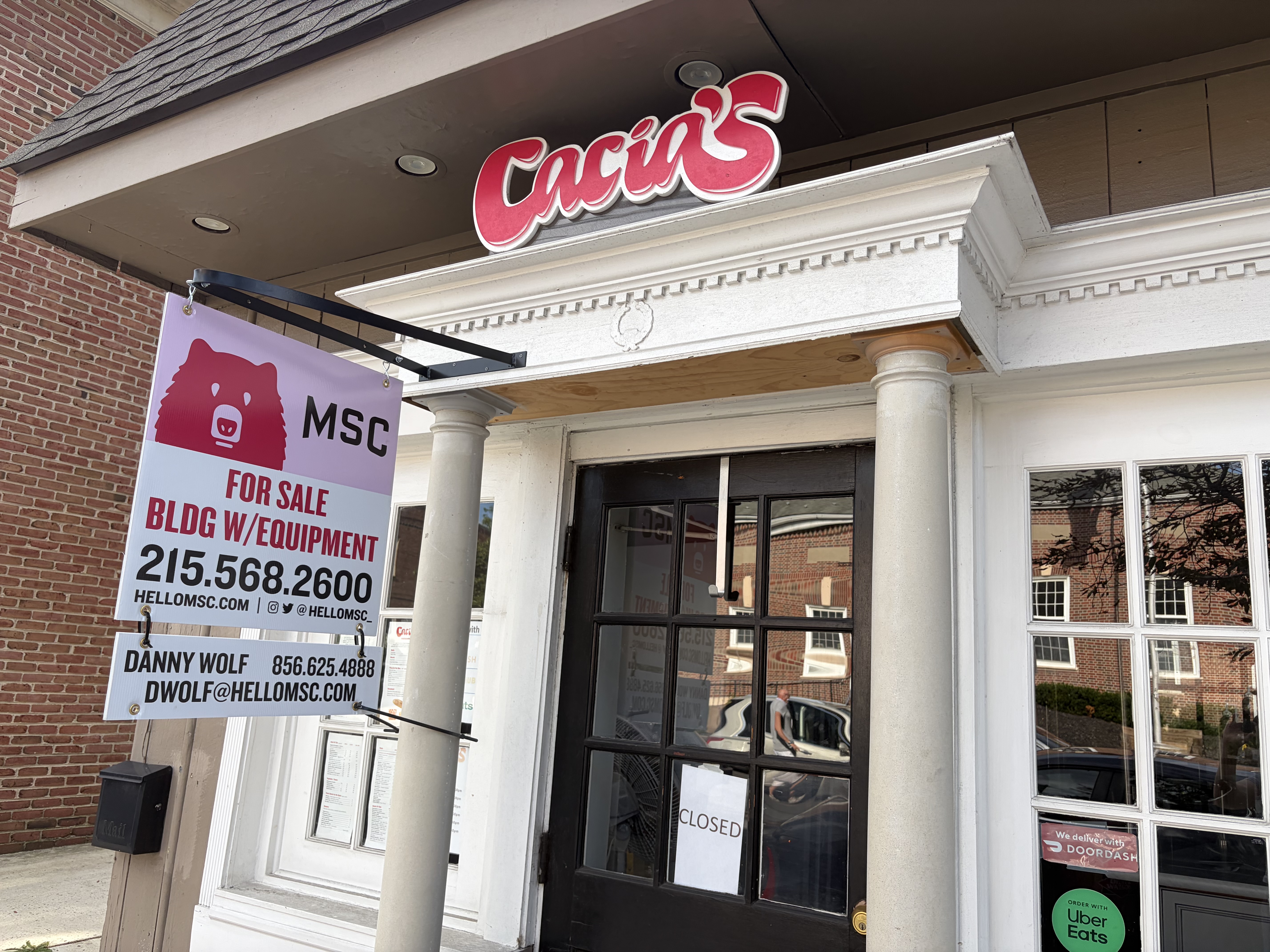
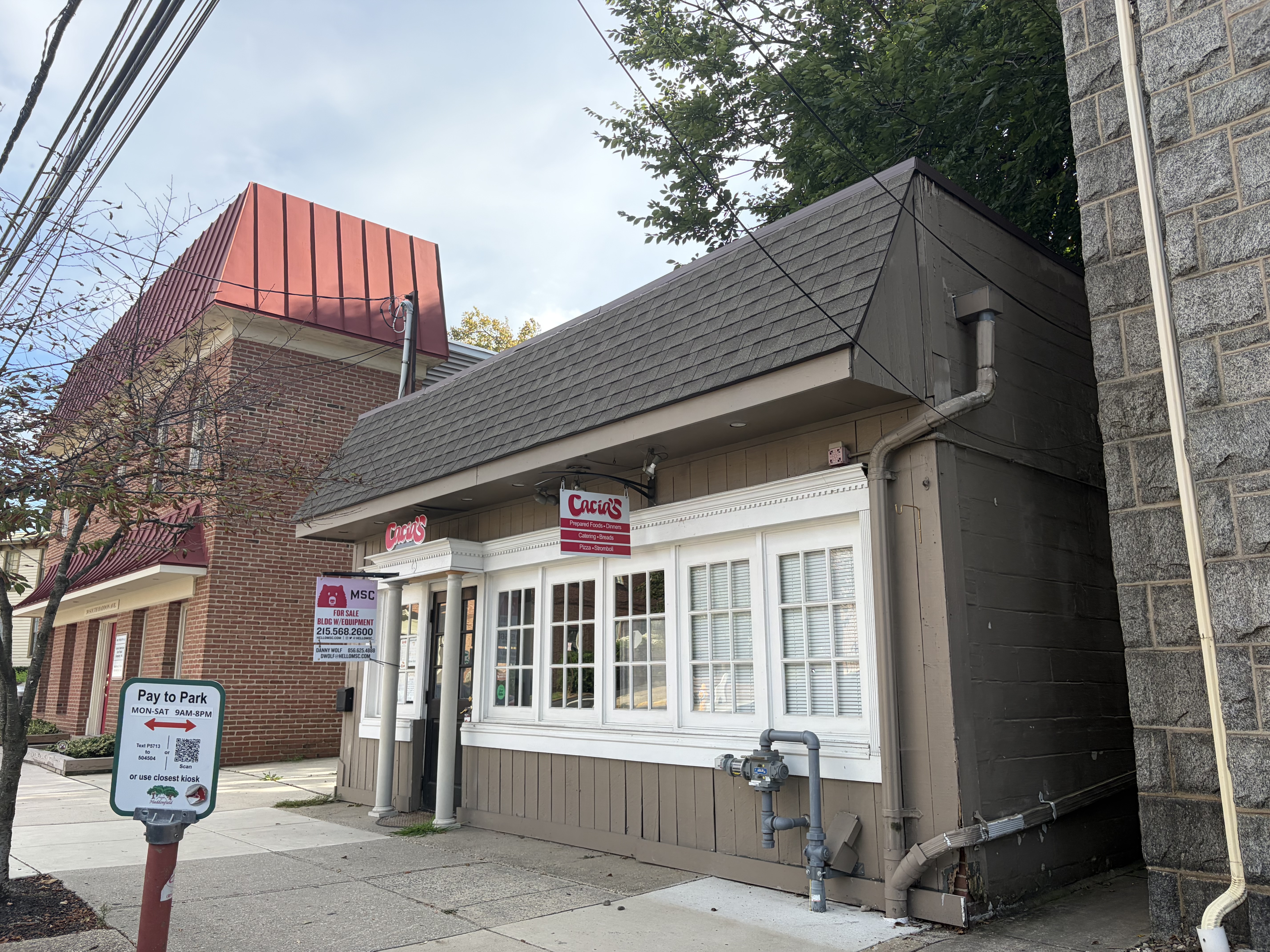
Cacia’s Bakery in Haddonfield appears to have closed its doors without any fanfare after two years in business.
A “closed” sign has been posted on the front door of the Italian bakery at 26 S. Haddon Ave., and the store was dark during a visit last week. Another sign advertises the 1,100-square-foot building and the equipment inside for sale.
Cacia’s Bakery in Haddonfield has not made any public announcement about the closure, nor has the business responded to calls or emails requesting comment.
Leonard Guerriero, who owns the Haddonfield Cacia’s, according to deed records, also did not return requests for comment on why the bakery closed.
But the Cacia’s name has expanded across South Jersey over the years, with current spots in Williamstown, Cherry Hill, and Hammonton that sell Italian bread, strombolis, hoagies, cannoli, and more.
Sam Cacia, a third-generation owner of the South Philly location, said his family taught Guerriero how to bake before he became the private owner of the Cherry Hill and Haddonfield locations.
Cacia said the closure in Haddonfield was due in part to the tough parking situation and competition with sit-down restaurants downtown.
“When you ride around the block looking for a spot, it becomes a bit of a challenge. It just came to, like, there wasn’t enough demand,” Cacia said. “It’s a shame. [He] tried to bring the product to a different set of people and it didn’t work that way.”
Guerriero and co-owner Steven Santore opened the downtown Haddonfield bakery in the summer of 2024, NJ Pen reported, after their Audubon location was demolished by the New Jersey Department of Environmental Protection due to groundwater contamination. The bakery was across the street from the Haddonfield post office.
The pair purchased the Haddonfield property for $375,000 in 2023, according to deed records, from the owners of Spice C, a noodle joint in Chinatown.
The storefront previously occuped by Cacia’s in Haddonfield is now on the market.Sarah Nicell
MSC, a Philly-based real estate brokerage firm, is managing the property sale. Danny Wolf, senior vice president at MSC, said the property hit the market in August and is listed for $495,000. The price includes the equipment inside the bakery, including a double Blodgett pizza oven.
Wolf said the property already has potential buyers, though he declined to provide further details.
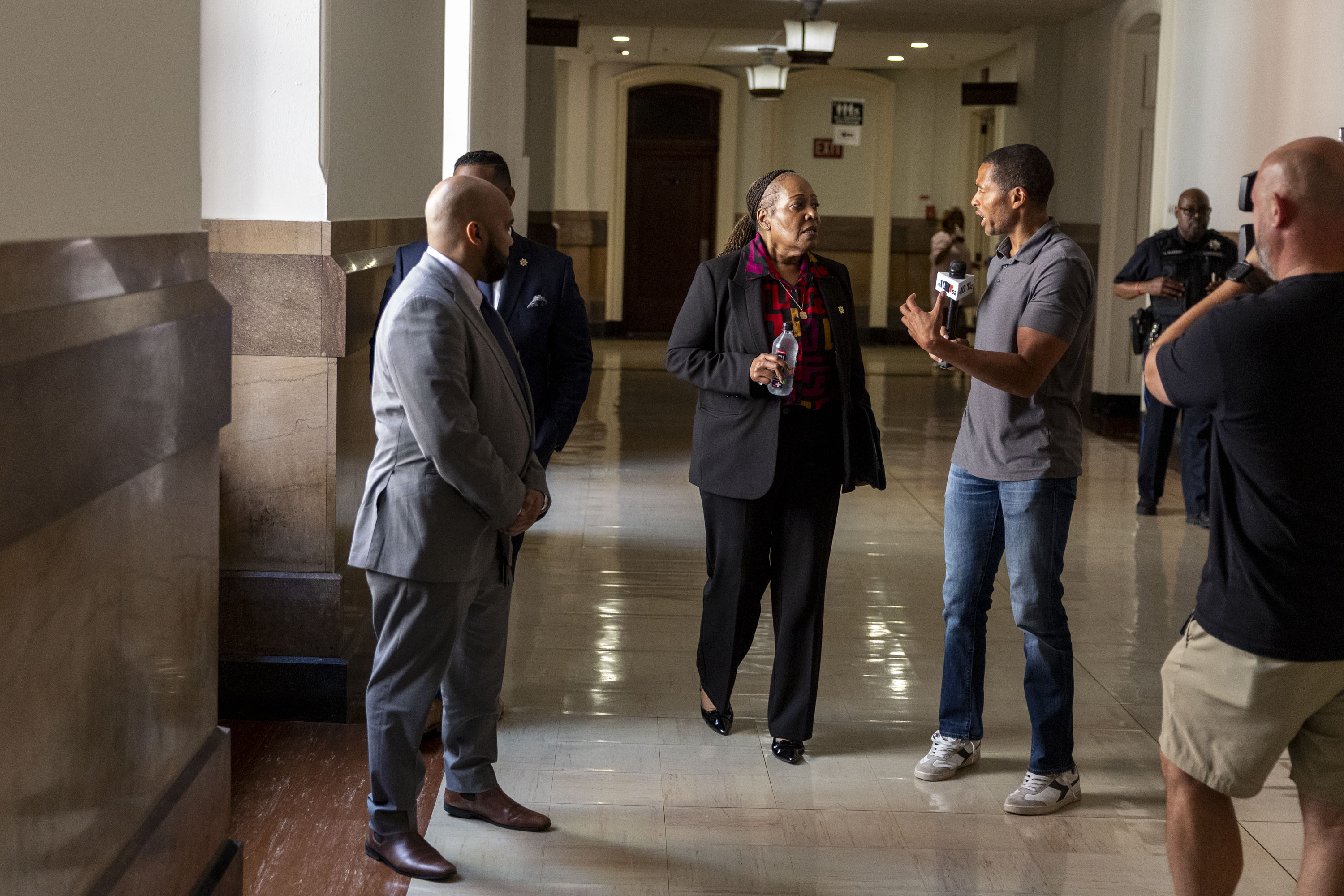
Philadelphia Sheriff Rochelle Bilal’s new second-in-command has left the job — three months after he arrived.
Undersheriff George Gossett Jr., whom Bilal hired in June as part of what she had described as a major “reorganization and modernization” initiative, confirmed Monday that he had resigned from the job effective last Friday.
Gossett said through a spokesperson that he is “excited to pursue opportunities in the private sector” but provided no other explanation for his short tenure.
Bilal’s office has been hit with three court orders since 2024 seeking to correct alleged mismanagement, most recently in May over delays in processing deeds of properties won at auction.
Gossett, a Roxborough-based lawyer and former assistant district attorney, was tapped in June at an annual salary of $185,000, weeks after a Common Pleas Court judge ordered Bilal to fix the sheriff sale process or face consequences.
According to a news release Bilal issued that month, Gossett was to “oversee daily operations, strategic planning initiatives, personnel management, and operational coordination across the agency.”
“This reorganization is about building a stronger organization for the future,” Bilal said at the time.
It is unclear where that plan now stands, with the new undersheriff having already departed.
Gossett is the fourth undersheriff to serve Bilal since she took office in 2020. Bilal and her spokesperson, Teresa Lundy, declined to provide any details about why her top deputy would leave so soon after taking the job.
Sources in the office said that the pair did not see eye-to-eye, and that Gossett was said to have made a remark about Bilal’s “anger management” issues, which may have escalated the situation.
Separately, Bilal last week fired Mark Wilson, the office’s codirector of real estate. Wilson declined to comment.
Gossett’s predecessors also had rocky terms in the sheriff’s office.
In August 2020, seven months into the job, Undersheriff Sommer Miller resigned after she said she faced retaliation for reporting alleged theft in the advertising department, unauthorized spending of public funds, and instances of extreme sexual harassment. She later claimed in a whistleblower lawsuit that Bilal had been “reading and monitoring her emails in real time.”
Miller’s replacement, Undersheriff Curtis Douglas, left in May 2021, about a week after reports that Bilal’s office had botched a contract meant to move sheriff sales to an online platform. A spokesperson at the time described Douglas’ departure as a planned retirement.
In May 2026, Undersheriff Tariq El-Shabazz, a criminal defense attorney who came to personally oversee the handling of deeds related to sheriff sales, also retired. He left one day after the most recent court order dropped.
Under Bilal, who was elected as a reformer in 2019, sales of foreclosed and tax-delinquent properties have been mired in post-auction delays, with winning bidders waiting a year or more to get their deeds.
Many auctions were halted altogether between 2021 and 2024. Court security and inmate transportation, two other key functions of the office, have also been recurring problems, with judges saying they have felt unsafe.
In addition to Gossett, Bilal recently hired William A. Brownlee Sr. as part of the office restructuring earlier this year.
Brownlee, a West Philadelphia pastor, a motivational speaker, a real estate investor, and an entrepreneur with a checkered financial history, has previously described himself on his website and social media as the office’s “Deputy Chief Financial Officer.” His website has since gone dark, and Bilal’s office said Brownlee currently serves as project manager. Payroll records show he is being paid $95,000 a year.
Another new hire, Steven A. Wakefield, is a former Philadelphia Law Department attorney serving as Bilal’s deputy undersheriff in charge of deed compliance. He is being paid $120,000 a year.
Wakefield took the stand last month and told Common Pleas Court Judge Paula Patrick, supervisor of the court’s commerce division, that the office had previously misplaced records and lost track of the distribution of some auction proceeds. Wakefield blamed the situation on a since-terminated employee who allegedly concealed the problem from Bilal.
Bilal did not testify at the hearing. Her city-appointed lawyer had filed a motion seeking to keep her off the stand, saying the sheriff had “limited personal knowledge” of how sheriff sales work.
Wakefield said he had enacted operational reforms, speeding the deed issuance process while largely clearing out a backlog of deeds from earlier sales.
Even so, Patrick took the rare step of imposing six months of outside supervision of sheriff sales.
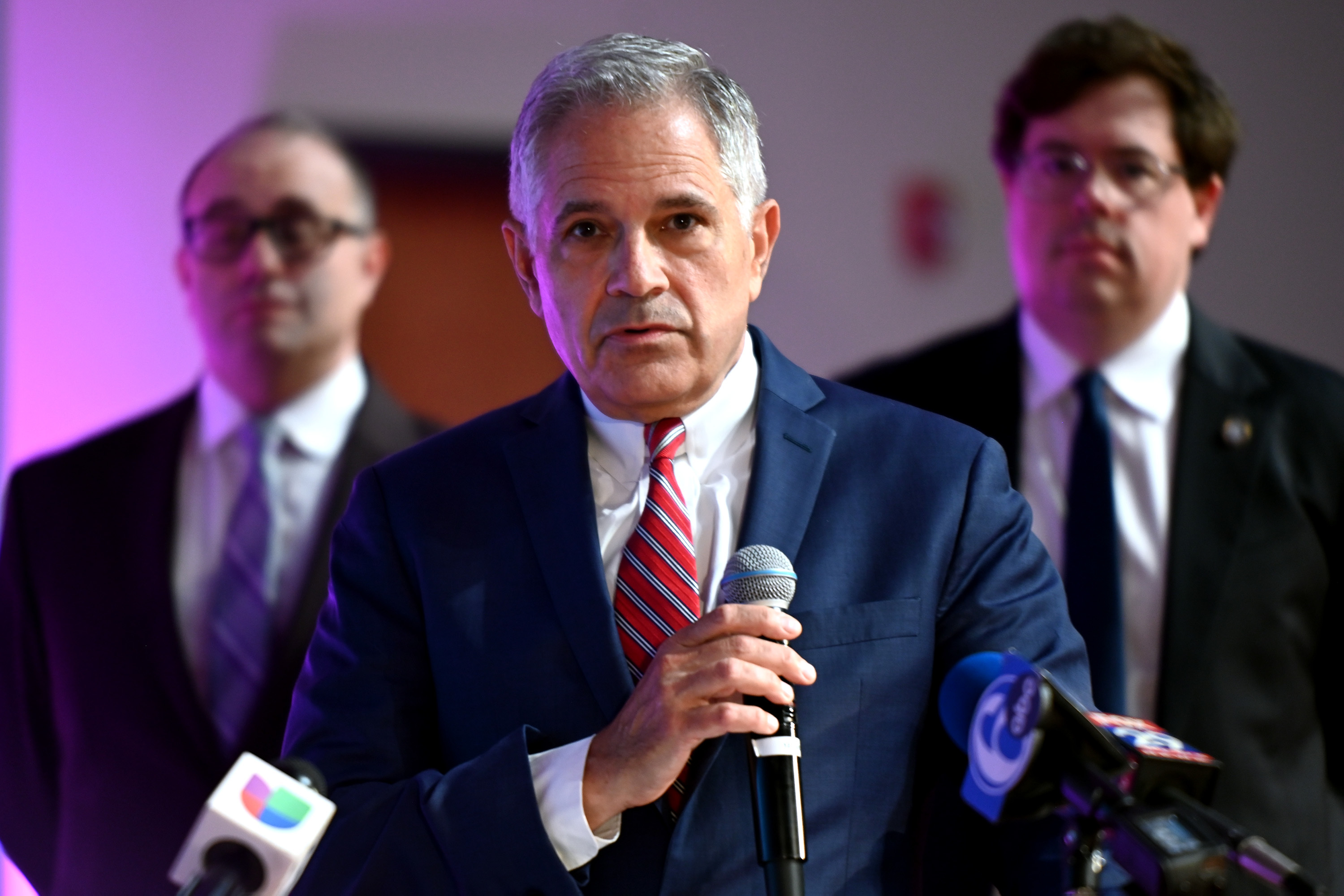
District Attorney Larry Krasner didn’t attend the dramatic three-day evidentiary hearing recently in which four supervisors from his office testified about his conflicts of interest, job threats, and other inappropriate steps, following efforts to overturn a murder case.
But Krasner’s take on the imbroglio can be found throughout a recent 47-page federal court filing by his office.
The filing paints a picture of a district attorney unbowed by the controversy that has roiled his office. Krasner’s handling of the exoneration case has prompted one prosecutor in his office to step down following what they described as a loss of confidence in Krasner’s leadership. A federal judge presiding over the case also voiced concern about possible obstruction of justice, perjury, and criminal conspiracy.
Despite admitting “serious errors” in the original motion that said Dennis Johnson was entitled to a new trial, the filing contains no contrition or introspection by Philadelphia’s DA.
In the world according to Krasner, he’s right, and everyone else is wrong.
Krasner’s worldview is hardened by his decades as a public defender and criminal defense attorney before getting elected district attorney in 2017. In the second paragraph of the filing, Krasner’s office blames prior district attorneys for violating “their constitutional duties” to secure convictions.
The filing makes no apologies for how Krasner’s office handled the appeal by Johnson, who was found guilty of second-degree murder in 2009.
After arguing for four years to overturn the verdict, Krasner’s office did a 180 in June, claiming its initial concession was “legally erroneous” and “not supported by the record.”
The reversal came after U.S. District Judge Paul S. Diamond ordered an evidentiary hearing in May. That prompted supervisors in Krasner’s office to take a closer look at the case, in which they discovered “material omissions” in their initial concession claim.
The blunder stems from the failure of Krasner’s office to fully investigate Johnson’s appeal, and its willingness to go along with the arguments put forward by his defense attorneys.
Here’s the bigger problem: That appears to be the way Krasner’s office has handled other post-conviction cases. Under Krasner, more than 60 people convicted — mainly of murder — have been set free or had their sentences reduced following concessions despite no incontrovertible proof of the person’s innocence.
Instead, Krasner’s office has conceded other cases by not mounting a substantive challenge to the arguments put forth by defense lawyers. In many exoneration cases, defendants claim their cases were harmed by their own ineffective lawyers or by prosecutors who withheld evidence; the latter, known in legal circles as a Brady violation, constitutes a major breach of the court’s rules.
Full steam ahead
Judge Diamond has yet to decide if Krasner’s office can continue handling Johnson’s case, or if it should be turned over to the state attorney general because of the issues aired during the evidentiary hearing.
Regardless of the outcome, Krasner appears determined to keep conceding cases.
“The current [district attorney’s office] administration will continue to do its duty under Brady and to self-correct moving forward, regardless of how the instant matter resolves,” the filing said.
The full-steam-ahead approach seems obtuse given the controversy that has engulfed the office’s handling of several post-conviction cases.
In recent months, supervisors in Krasner’s office have been disbarred and suspended for lying in federal court while seeking to overturn the death sentence of a man convicted of killing a couple in their home in East Mount Airy.
In June, the state Supreme Court ordered judges to ask the state attorney general’s office to review any cases in which Krasner’s office wants to alter a sentence or overturn a past conviction.
That unprecedented ruling came after the high court found prosecutors in Krasner’s office misled judges in several post-conviction cases. The court said it could no longer trust the word of Krasner’s prosecutors.
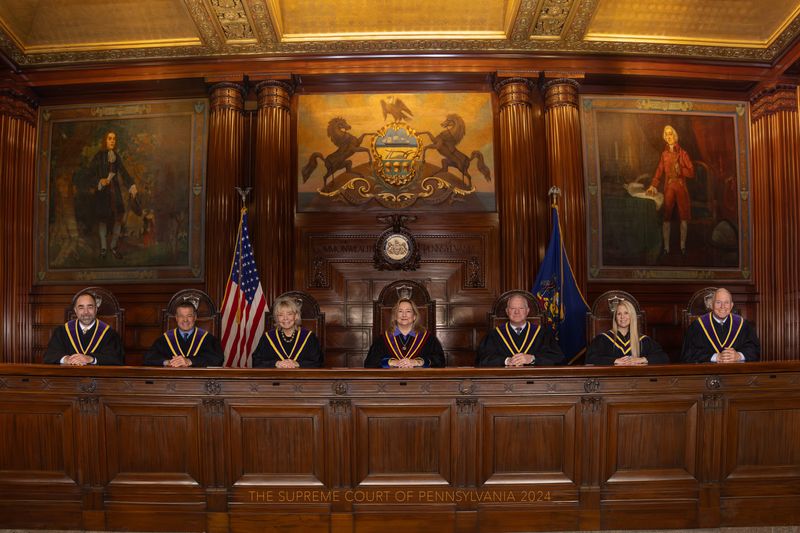
Pennsylvania Supreme Court justices (from left): P. Kevin Bobson, David N. Wecht, Christine Donohue, Chief Justice Debra Todd, Kevin M. Dougherty, Sallie Updike Mundy, and Daniel D. McCaffery. In June, the court ordered judges to ask the state attorney general’s office to review any cases in which Larry Krasner’s office wants to alter a sentence or overturn a past conviction.Provided by Jen Barker Worley/Ad
Office strife
Amid that major setback came the Johnson case, which has splintered Krasner’s office.
After Judge Diamond ordered the evidentiary hearing in May, Katherine Ernst, the chief of training in the law division, reviewed the initial motion to concede Johnson’s conviction and found multiple errors.
Ernst worked with three other supervisors — Steven Wildberger, David Napiorski, and Peter Andrews — who all agreed the motion needed to be withdrawn.
They met with Jaclyn Mason, the assistant district attorney who signed the original motion, and urged her to withdraw the concession and apologize to the judge. Mason argued that her supervisor, Matthew Stiegler, was largely responsible and should also have to sign the motion.
Fearing she would be forced to take the blame, Mason quit in June. That set off a chain of events that exposed the sloppy handling of the matter.
Mason testified in July that Stiegler, the head of the office’s Conviction Integrity Unit, colluded with defense attorneys to develop the legal rationale to have Johnson’s case thrown out.
Mason, who was new to the DA’s office at the time of filing, testified she took direction from Stiegler, who told her that if Johnson’s claims were “good enough for the Innocence Project, it’s good enough for me.”
To be sure, Mason bears some responsibility because she signed the motion and failed to fully investigate the defense claims. But her instinct that she would be thrown under the bus proved correct.
The four other prosecutors testified last month that Stiegler proposed reviewing Mason’s other cases to find errors and tell the judge she was a “rogue” actor.
Krasner backed that plan, telling the prosecutors Stiegler had a good idea.
In the end, Krasner’s filing largely blamed Mason and said the judge “should not credit” her testimony.
Posters featuring criminal justice analytics adorn the district attorney’s offices in May. The controversy over the handling of an exoneration case has splintered the office, Paul Davies writes.Tom Gralish / Staff Photographer
“Mason signed and filed a brief rife with errors that supported the defense’s request for a new trial,” the filing said. “Mason has admitted that she did not review the relevant records, including the trial transcripts, before supporting overturning a murder conviction; she may have simply cribbed and modified the filings of the defense attorneys.”
The filing said Stiegler “failed” to detect the errors, but largely lets him off the hook. Krasner even went out of his way to change a footnote in an earlier motion that initially said Stiegler “edited several drafts” of the original Johnson filing to instead say he “supervised its preparation.” Stiegler remains in charge of the Conviction Integrity Unit even after other supervisors voiced concerns about him.
What conflict?
Meanwhile, Krasner remains adamant his office has no conflict of interest in the Johnson case even after four supervisors withdrew from the case, arguing that they and Krasner had conflicts after the internal machinations went from the legal merits of Johnson’s case to the self-interest of protecting the office.
Krasner’s filing waved away their arguments and said the prosecutors who left the case acted “without authority or a reasonable legal basis to do so.” He added that he “did not appreciate” his team’s “repeated, unsolicited, and wavering advice” to refer this case to the state attorney general.
The filing said any potential conflicts have been resolved by Krasner’s recent hiring of an outside attorney, Jean Peters-Baker, a longtime prosecutor from Missouri, to handle Johnson’s case. The AG’s filing argued that Krasner’s conflict can’t be cured by handpicking an outside prosecutor.
Krasner’s filing did not address the testimony from his own prosecutors who said he warned them there would be “consequences” if they raised the conflict issue with the court.
The prosecutors also said that Krasner refused to refer the case to the state attorney general because he wanted to “protect the office.” Krasner’s filing said his efforts to maintain control of the case were “entirely appropriate.”
The filing did not specifically address Krasner’s comments revealed by the supervisors who testified thathe called prosecutors in the attorney general’s office “Nazis.” But it shed light on his hatred for the state AG’s office.
The filing explained that Krasner had a “general mistrust” of prosecutors in the AG’s office “based upon decades of observing their work.” Indeed, several prosecutors Krasner pushed out after he was elected now work in the AG’s office.
The filing added that “any animus he may have toward individual employees of that office based upon their own actions and inactions has nothing to do with whether he correctly declined to refer a case.”
Krasner is also apparently not a fan of Diamond, whom he views as a hostile judge, according to people familiar with the matter. Krasner’s contempt stems, in part, from the fact that Diamond spent four years in the DA’s office in the late 1970s and early 1980s, and was nominated to the federal bench by former President George W. Bush, a Republican.
So, by Krasner’s logic, is everyone who ever worked in the DA’s office before him tainted?
Krasner’s filing contained a footnote complaining the judge only provided a week, which included a holiday weekend, to address the disqualification issue. The filing added that any ruling that removes his office from the case would be “an abuse of discretion.”
That seems like a particular failure to read the room given the credibility issues exposed in Krasner’s handling of exoneration cases.
Judge Diamond’s ruling will likely have a lot to say about this fiasco.
I’m not a lawyer, but Krasner’s filing doesn’t even seem like the way to win friends and influence people, let alone succeed in a legal argument.
The Lower Merion School District has urged a federal judge to deny a request from parents to opt their children out of school-assigned computers, accusing them of “fearmongering” about technology in schools and abusing the legal process to get their way.
In a filing in U.S. District Court, lawyers for the district and school board said seven families who sued the district last month were trying to force the district to align with their preferred approach to instruction.
“There is no constitutional right for a parent to choose which technology their child uses in a public school,” the district said in the Monday filing. It called the lawsuit “just the latest attempt by a small — but vocal — minority of the district community to pressure the duly-elected members of the board of school directors to kowtow to their peculiar views on technology in the classroom.”
The district revised its technology policy last month, specifying that students in kindergarten through second grades would no longer be assigned individual electronic devices. It also implemented guidelines for screen time by grade level and announced new tools for monitoring what kids are accessing on their laptops.
But the new policy did not include a provision that had previously existed, which specified that district officials would work to accommodate students whose parents did not consent to being issued electronic devices. Parents organized under a Pencils Over Pixels group had pleaded with the board not to eliminate that provision, which was repealed in June.
In their lawsuit filed last month — which one of the plaintiffs’ lawyers said he believed was the first of its kind — seven families accused the district of forcing a “digital free-for-all” on students, and violating their parental rights by requiring their children to use internet-connected computers to access their education without adequate safeguards.
They also filed a motion for a preliminary injunction, asking a judge to order the district either to allow them to opt their kids out of personal devices or to pay for them to attend private schools. Three of the families who sued withdrew their kids from the district.
In its response Monday, the district said parents had mischaracterized its former policy. Families were never permitted to opt out of technology entirely, the district said. While the policy had said officials would make their “best efforts” to work with students whose families declined personal devices, they were not guaranteed specific accommodations, the district said.
The district accused parents of trying to force the school system to bend to their beliefs — and said the court would be setting a dangerous precedent if it sided with them.
“This court should decline plaintiffs’ invitation to convert the American public school educational system into a private school, whereby each parent has the right to hand-select each and every aspect of their child’s education,” the district said.
A debate around parents’ rights
In asking Judge John M. Younge to deny the families’ request for a preliminary injunction that would allow them to decline an internet-connected computer, the district said families had not made their case on a number of grounds.
Six of the seven families do not have standing to sue, the district said. It said four of the families did not have children enrolled in district schools at the time the new technology policy was adopted.
Two families, meanwhile, only had children in elementary schools, where they “would not have been eligible to receive a district-issued electronic device under the one-to-one electronic device initiative because they are not in 5th grade or above,” the district said.
While elementary school students in Lower Merion have had access to personal electronic devices, the district said that its one-to-one program was “never formally extended” to those grades. A district spokesperson did not immediately respond to a question Tuesday about how the iPads and Chromebooks previously assigned to elementary schoolers were not considered part of the one-to-one program.
Families also have not shown the district is permanently harming them, the district said. Although several of the families are now sending kids to private school or homeschooling, those decisions do not constitute “irreparable harm” warranting a preliminary injunction, the district said. It noted that families could be compensated with monetary damages if the court ruled in their favor.
The district also said the harms of using computers alleged by the families were “vague and speculative.” In their lawsuit, families had described risks to physical and mental health, citing manipulative practices by technology companies, the dangers of artificial intelligence chatbots, and warnings from the U.S. surgeon general and the FBI about youth social media use and groups targeting minors online.
While the district has revised its policies and placed more restrictions on what kids can access, Andrew Liddell, a lawyer for the parents, said in a recent interview that the changes “aren’t even the bare minimum of what the district should have been doing in the 20 years they’ve been giving internet-connected computers to children.”
Liddell, an Austin, Texas-based lawyer whose wife founded the EdTech Law Center, said he believed the lawsuit was the first that had been brought alleging school computers were violating parents’ constitutional rights. Lower Merion still is not adequately restricting screen time, he said, and is “putting more burden on parents” to monitor what kids are doing online.
While Lower Merion is a wealthy suburb, and some of the suing parents are doctors who can afford private school, Liddell said, “you have a right to a public education.”
The parents “just want our kids to be able to go back to school,” Liddell said.
In its response Monday, the district said parents do not have the right to dictate what is taught in public schools.
“At most, the district’s new technology policy (Board Policy 141) only incidentally interferes with a parent’s limited right to direct their child’s education,” the district said.
It also said that granting the parents’ request would cause a “logistical and financial hardship for the district,” requiring it “to develop a non-technological curriculum for each of plaintiffs’ children.”
WASHINGTON — The war in Iran is costing the United States up to $3 billion per month and has tallied more than $38 billion in direct costs to the government since it began more than six months ago and became a flash point in voters’ frustrations over rising prices, according to a new and nonpartisan analysis.
The estimate, released Tuesday by the Congressional Budget Office after a request from U.S. Rep. Brendan Boyle (D., Philadelphia), mostly represents munitions expenses as of Aug. 1. It does not include some other direct and indirect costs — such as the spike in gas prices felt by consumers — that likely make the total price tag for Americans far higher.
But with the war on the minds of voters during the midterm elections this fall, the latest tally is the one of the clearest signs yet of the conflict’s impact on taxpayers.
“It is now concrete evidence that when the administration was pretending like there wasn’t going to be a real cost to this war, they were wrong,” Boyle said in an interview Tuesday. “We have now paid $40 billion, and climbing, on the most reckless decision to go to war of at least my lifetime. So as the people go to the polls this November, they need to recognize that if they are voting for the president’s party, they’re voting for more of this.”
The top Democrat on the House Budget Committee, Boyle requested the analysis in the first days of the conflict — when President Donald Trump said the campaign would last four or five weeks. The president and his allies said the goals were to root out Iran’s regime and to dismantle its capacity to build a nuclear weapon.
Democrats and other critics warned of a reckless and potentially yearslong conflict.
Trying to win control of Congress for the final two years of Trump’s term, they have largely framed their opposition to the war around the economic consequences — marrying an affordability message around rising healthcare and grocery costs with one about gas prices, which they say are even more directly connected to Trump’s actions.
(function(){function e(){window.addEventListener(`message`,function(e){if(e.data[`datawrapper-height`]!==void 0){var t=document.querySelectorAll(`iframe`);for(var n in e.data[`datawrapper-height`])for(var r=0,i;i=t[r];r++)if(i.contentWindow===e.source){var a=e.data[`datawrapper-height`][n]+`px`;i.style.height=a}}})}e()})();
Polls and interviews show that message could have an impact in the midterm elections this fall. In Pennsylvania, voters in four key battleground districts will decide whether to keep their Republican members of Congress, each of whom has supported the war to varying degrees.
“This mess must stop,” Uber driver Miguel Vazquez, 60, of Allentown, said last week while filling up his 2021 Mitsubishi Outlander with $4.53-per-gallon fuel.
The price of gas has remained elevated and has increased in recent weeks as fighting continues in the oil-rich region. On Tuesday, the average cost of a gallon of gas was $4.50 in Pennsylvania and $4.33 nationally.
The war in Iran and tariffs have made daily living and working “a nightmare” that can be fixed only by “regime change,” Vazquez said. He said he plans to vote for Democrat Bob Brooks, a challenger to freshman Republican U.S. Rep. Ryan Mackenzie, who represents a swing district that covers the Lehigh Valley and the Poconos.
“The [Republican] Party listens to Trump, who put us in Iran and set tariffs — making gas, food, and everything else expensive,” said Vazquez, a Democrat. “They have to go.”
U.S. Rep. Brendan F. Boyle holds a news conference at a Philadelphia gas station to announce legislation to suspend the federal gas tax whenever the national average price of gasoline exceeds $4.00 per gallon, in Philadelphia, Tuesday, April 14, 2026.Jessica Griffin / Staff Photographer
The cost of war
The report from the Congressional Budget Office, where nonpartisan staffers analyze federal policy for lawmakers on both sides of the aisle, largely aligns with other estimates of the war’s costs so far.
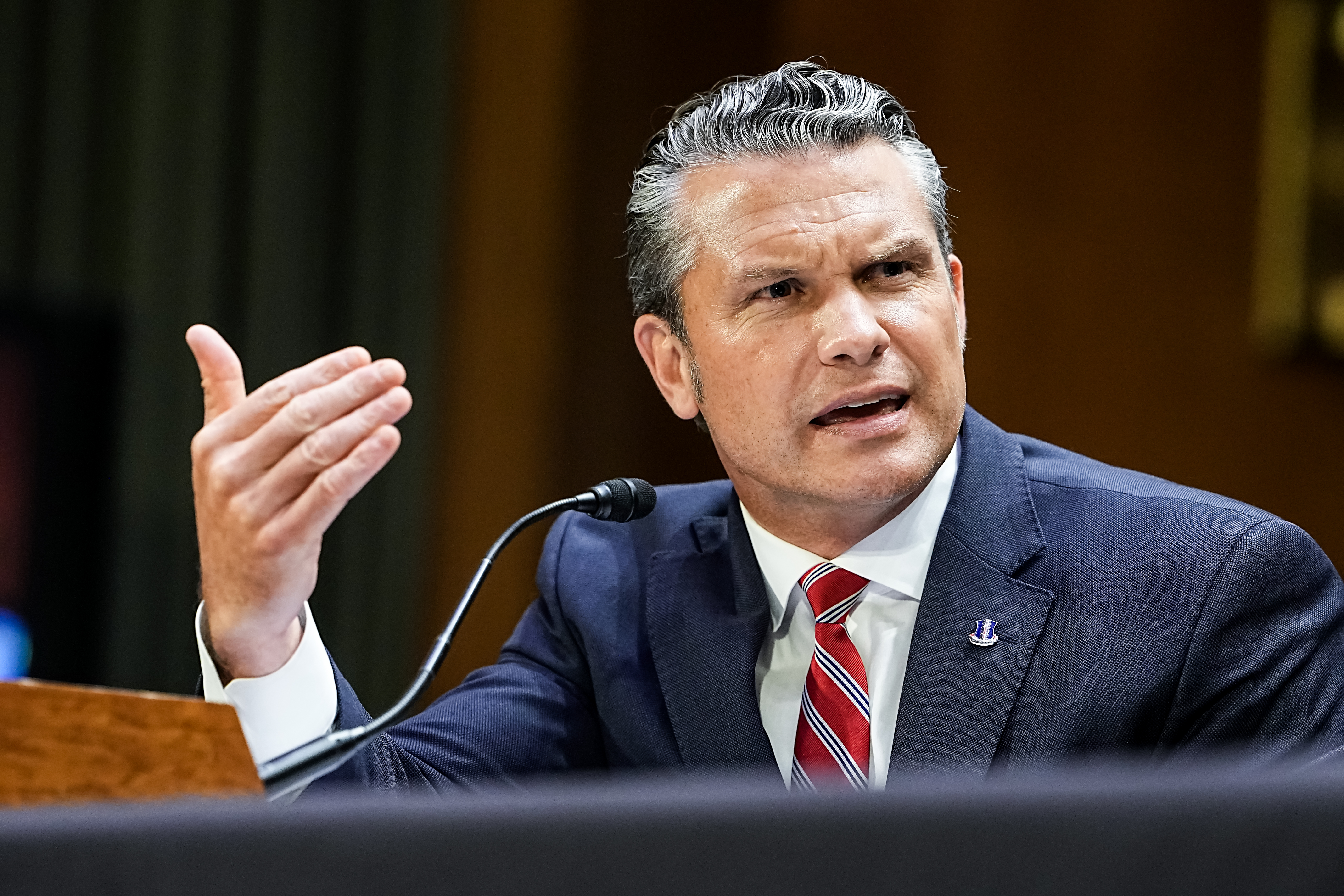
The nearly $38.1 billion in direct costs as of Aug. 1 is slightly more than the $37.5 billion figure that Defense Secretary Pete Hegseth noted during congressional testimony in late July.
The CBO’s estimate includes $21.7 billion to replace expended munitions, $10.4 billion for additional flying hours — which refers to the cost of the military’s deployment of aircraft in the region — and $2.7 billion due to higher fuel prices. The agency was unable to determine other costs, like the damage to U.S. facilities in the region or expenses related to diplomatic operations and foreign aid.
(function(){function e(){window.addEventListener(`message`,function(e){if(e.data[`datawrapper-height`]!==void 0){var t=document.querySelectorAll(`iframe`);for(var n in e.data[`datawrapper-height`])for(var r=0,i;i=t[r];r++)if(i.contentWindow===e.source){var a=e.data[`datawrapper-height`][n]+`px`;i.style.height=a}}})}e()})();
The overall price tag also does not include indirect costs that affect the U.S., such as inflation and interest rates — though it notes that both are impacted by the war. For instance, year-over-year inflation is expected to be 0.5 percentage points higher in the first quarter of 2027 because of the war.
Independent analysts have noted those indirect costs are significant.
An “Iran war energy cost tracker” from Brown University’s Watson School of International and Public Affairs shows that consumers have felt the brunt of nearly $107 billion in additional gasoline and diesel costs since the start of the war.
Mark Zandi, the chief economist at Moody’s Analytics, who is based in Chester County, in June pegged the cost at $1,000 for a typical American household. The war has also fueled inflation and led to expectations that the Federal Reserve will raise interest rates this year instead of cutting them, he has said.
“The net effect of the Iranian conflict on U.S. economic output is unclear at this time,” the CBO report states. “Higher prices erode the purchasing power of U.S. households and businesses, dampening consumption and investment growth. Conversely, supply disruptions increase demand for U.S. energy exports, spurring additional domestic energy production.”
According to the analysis — for which the Pentagon did not provide information — it will “probably take at least five years” to replenish the significantly depleted weapons stockpile.
“The shortfall would become especially problematic if a conflict arose with an opponent whose arsenal included large numbers of ballistic and cruise missiles,” the report states, adding that China maintains an arsenal that “would probably play a major role in a military conflict involving Taiwan.”
The CBO report states that while the ongoing costs of the war are difficult to estimate, the U.S. military action is costing between $2 billion and $3 billion per month, depending on the level of hostilities.
Fighting in recent weeks has included U.S. Central Command destroying five Iranian crude oil carriers after the Islamic Revolutionary Guard Corps targeted a U.S. Navy ship with ballistic missiles, Central Command announced last week. Eighteen U.S. service members have died in the war and several hundred have been wounded.
Election messaging
Boyle, who represents a safe Democratic district, has taken a leading role in helping craft his party’s response to Trump’s economic policies, including the president’s signature tax-cut bill in 2025 and the expiration of healthcare subsidies at the beginning of this year.
When Trump unilaterally decided to join Israel in attacking Iran on Feb. 28, Boyle joined other Democrats in quickly denouncing the move and adding it to their list of economic grievances.
Candidates challenging Republican incumbents in Pennsylvania have taken a similar tack.
“Six months in, nobody in Washington is treating Iran like the emergency it is for families here,” Democrat Janelle Stelson, who is challenging Republican U.S. Rep. Scott Perry in a Harrisburg-based district, said in a video at a gas station on the six-month anniversary of the conflict.
Perry, a hard-line conservative from York County, has supported Trump in his war efforts, while Stelson blamed him for the “astronomical” increase in gas prices.
Perry has voted against Democratic-led war powers resolutions aimed at restricting Trump’s actions in Iran. Mackenzie and U.S. Rep. Rob Bresnahan (R., Luzerne), who are also running in competitive districts that could ultimately determine which party controls the House, have also voted against them.
Pennsylvania’s U.S. senators, Democrat John Fetterman and Republican Dave McCormick, have also both supported the war, rejecting war powers resolutions multiple times.
“[E]very family has paid money from their own wallets to fund Trump’s war,” Kim wrote on social media.
On the campaign trail, Republicans have largely refrained from commenting on the war as they seek to retain control of the House and Senate.
At the first-ever Republican midterm convention in Dallas last week, dozens of speakers — including Mackenzie, Bresnahan, and McCormick — did not address the largest-scale U.S. military engagement in the Middle East since the wars in Iraq and Afghanistan.
Vice President JD Vance’s speech appeared to briefly refer to the disagreements around the war. While talking about Charlie Kirk, the conservative activist killed last year, Vance urged voters not to reject Republicans just because they do not agree with them “on every single issue,” like wars.
“He just hated war. That was his view,” Vance said of Kirk. “Now, of course, there are people who love what we’ve done and people who don’t. I’m not here to litigate the disagreements between Charlie and some of the people that he disagreed with. But what I’m asking you to do is do what Charlie did. Do not throw the baby out with the bathwater. Don’t give the country over to a bunch of crazy people because you happen to disagree with us on a policy issue here or there.”
Polls have shown widespread disagreement with Trump over the war. An Inquirer/New York Times/Siena University poll of likely Pennsylvania voters in August found that 30% of Trump’s 2024 voters and 66% of all voters disapproved of his handling of Iran — the most of any issue asked about in the survey. A national poll from the New York Times and Siena University published Tuesday similarly found two-thirds of likely U.S. voters, and three-quarters of independent voters, disapproved of the war.
“I don’t see a reason to be there and pushing up gas prices,” said three-time Trump voter Greg Kerrick, 58, of Scranton.
Kerrick said that the president was “mostly doing all right” and that he was supporting Bresnahan, the Republican incumbent, for reelection in the swing district. But he disagreed with the war.
“I don’t drive but I feel for all the people paying $4.30 or whatever a gallon,” Kerrick said.
Charles Grasty, 66, of Dickson City in Lackawanna County, said his objection to the war was on moral grounds. The Republican voter said the conflict feels like a grab for oil from Iran’s massive reserves.
“We are literally trying to take stuff that belongs to other people,” said Grasty, who works for a fabric-manufacturing company near Scranton. “I’m a Christian and I’ve been taught you can’t bully people like that. We have to stay off their soil.”
Boyle said the conflict is historically unpopular, based on consistent and strong opposition in polls since it began. The CBO report, he said, shows that part of the reason is the growing costs.
“Americans are essentially paying for this twice,” Boyle said. “They’re paying for it directly through tens of billions of dollars of taxpayer money that is going to fund the war. But then they’re paying for it a second time in terms of increased costs at the pump, increased costs at grocery stores, and increased costs for consumer goods.”
An Upper Bucks man who shot at a DoorDash driver last year, irate that his cheesesteaks were late, was sentenced to four to 10 years in state prison Tuesday.
Keilan McKeever, 33, pleaded guilty earlier this year to aggravated assault and related crimes, in exchange for prosecutors dropping an attempted murder charge for the 9mm bullet he fired at Khalik Lewis in March 2025.
The gunshot struck the back windshield of Lewis’ Honda Civic, shattering it. Later, the then-19-year-old found the bullet stuck in the hood of his sweatshirt.
Judge Steven Corr, in handing down the sentence, said he had been prepared to send McKeever, of Richlandtown, to prison for even longer, citing the “disgusting” nature of the case.
But McKeever’s statement of contrition in court, including his detailed efforts to better himself while behind bars, moved Corr to exercise some leniency.
Still, Corr was adamant that McKeever’s actions were unreasonable. It was only pure luck, he said, that Lewis was not killed, and that no one else was injured as McKeever opened fire on a residential street.
“We have a young man out trying to make money, providing a service to you,” Corr said. “The way you treated him, I don’t know what causes someone to fire a shot at someone like that.”
Video of the incident recorded from a neighbor’s security camera, played in court, showed Lewis pulling up to McKeever’s home on Cherry Street. Almost immediately, McKeever begins shouting and threatening Lewis.
At one point, McKeever is heard saying “I’ll shoot you right now” and “see this” before a gunshot rings out.
Pennsylvania State Police troopers who investigated the case wrote in court filings that McKeever initially lied to them, denying he shot anyone and saying, instead, that the noise heard by his neighbors was a car backfiring.
Lewis, in an interview after Tuesday’s hearing, said McKeever came out of his house holding a loaded handgun. He was combative, Lewis said, and would not listen to him explain that his order was not late, as McKeever believed it was.
McKeever followed Lewis as he walked back to his car, and stood behind him as he attempted to pull away. When Lewis did finally pull out of the driveway, he heard a bang and saw his windshield shatter.
Lewis said he had no idea a bullet caused the damage.
“Literally, my life was just inches away from ending,” Lewis said. “I still suffer from it: Loud noises trigger me, it’s hard to sleep at night.”
He gave up driving for DoorDash, a side gig he had hoped would help pay for college and car repairs, right after the shooting.
And Tuesday’s sentence did little to calm his fears.
“I feel it could have been a much heavier sentence,” he said. “I feel like the judge could have seen it a little more from my point of view, instead of seeing the work he’s doing in jail. Everyone does that.”
McKeever’s attorney, Riley Downs, told Corr during the proceeding that his client struggles with mental health issues, including anxiety and depression, that are debilitating when left untreated. At the time of the shooting, McKeever had not been taking his prescribed medication, Downs said, having lost his health insurance after being fired from his last job months earlier.
His treatment, however, resumed after his arrest, along with therapy that McKeever said has helped him see what he did was wrong.
“I know I have a lot of issues. I know I have some things I want to work,” McKeever said. “It’s just hard on the outside to find help.”
McKeever apologized to Lewis and his family, saying he never intended to hurt him, only to scare him.
“I failed myself and everyone else,” he said. “I hope you can forgive me for your sake, so you can forget and move on with your life.”
Bomb Bomb Bar, the old-time South Philadelphia tavern revived last year by chef Joey Baldino, has been named to the New York Times’ 2026 list of the best restaurants in America — Philadelphia’s only entry this year.
The city placed two restaurants — Mawn and Meetinghouse — on the list last year, Little Walter’s in 2024, and three — El Chingón, Kalaya, and My Loup — in 2023. Previous Philadelphia-area selections include Andiario, Gabriella’s Vietnam, Down North Pizza, Laser Wolf, and the now-closed Korshak Bagels.
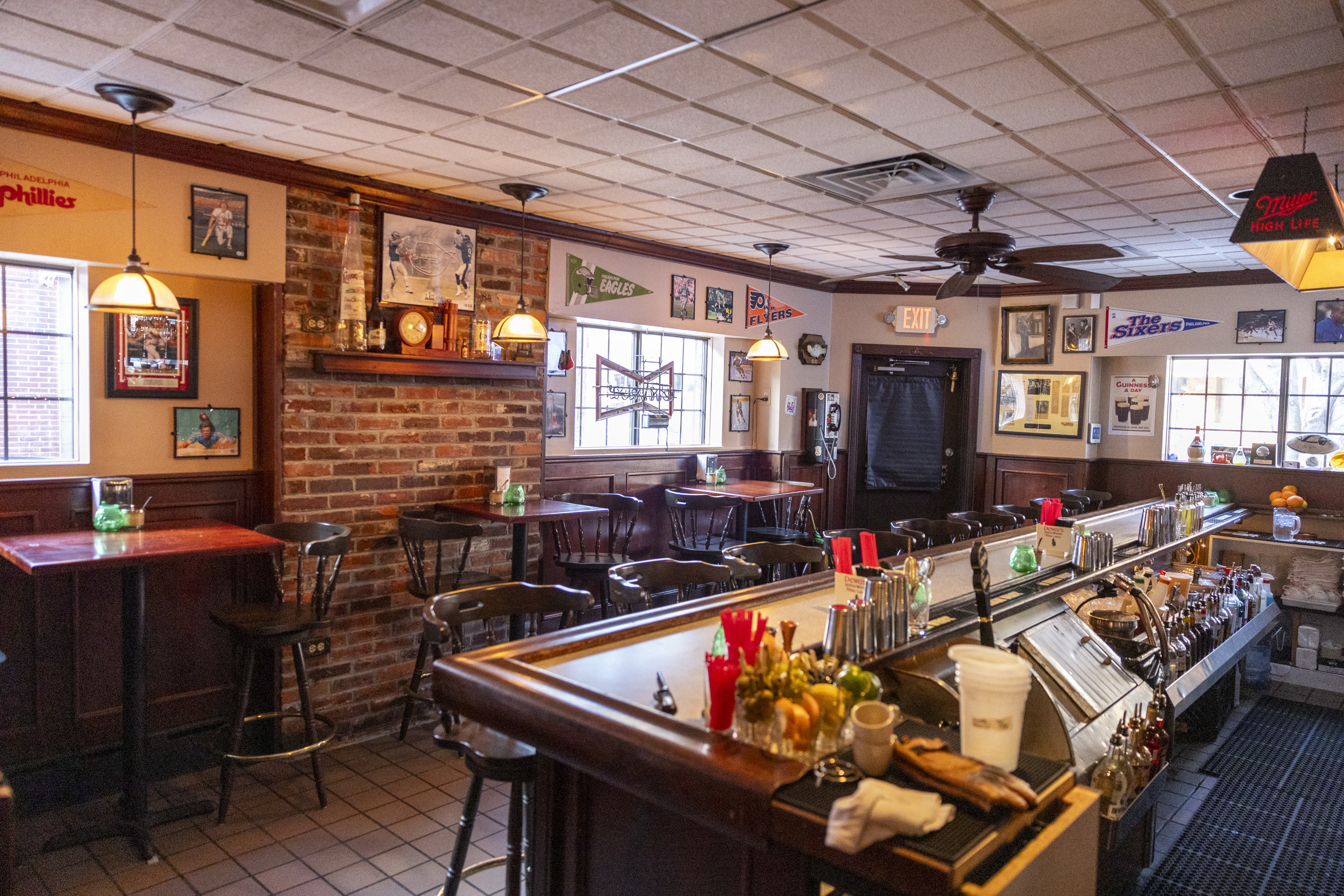
The front bar area of Bomb Bomb Bar.Tyger Williams / Staff Photographer
The Times praised Baldino’s ability to bridge old-school and contemporary red-sauce Italian cooking, describing him as a “singular talent” in the genre.
Baldino also owns Palizzi Social Club in Passyunk Square — itself a lovingly restored South Philly institution — and Zeppoli, a 35-seat BYOB in Collingswood.
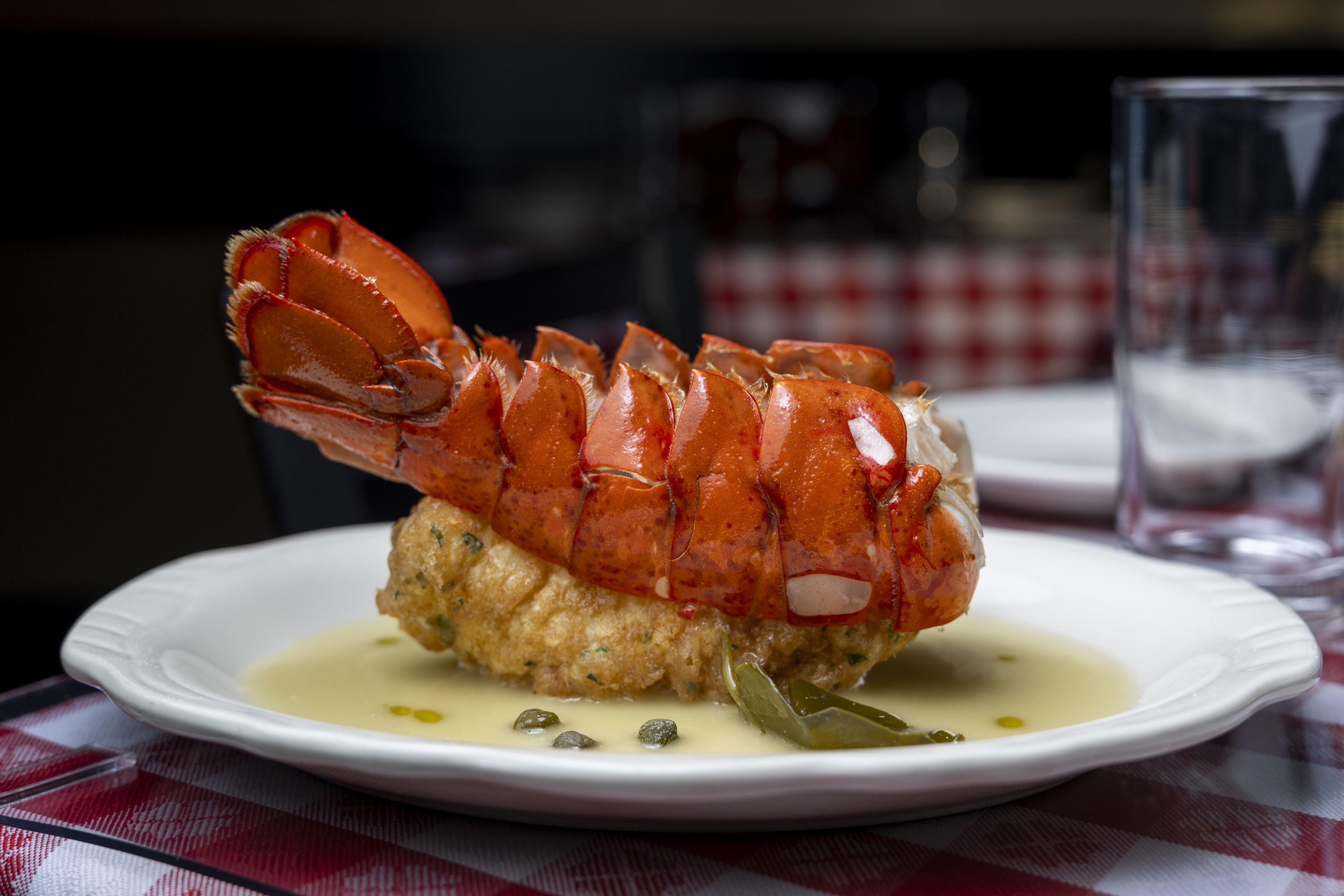
Bomb Bomb still looks much like the Lower Moyamensing neighborhood bar it has long been, but the Times said its stuffed calamari, mussels fra diavolo, and lobster francese reveal the transformation. It called those dishes “as poetically reverent as a heartfelt eulogy” and summed up the experience as finding a remembered neighborhood joint “better than ever.”
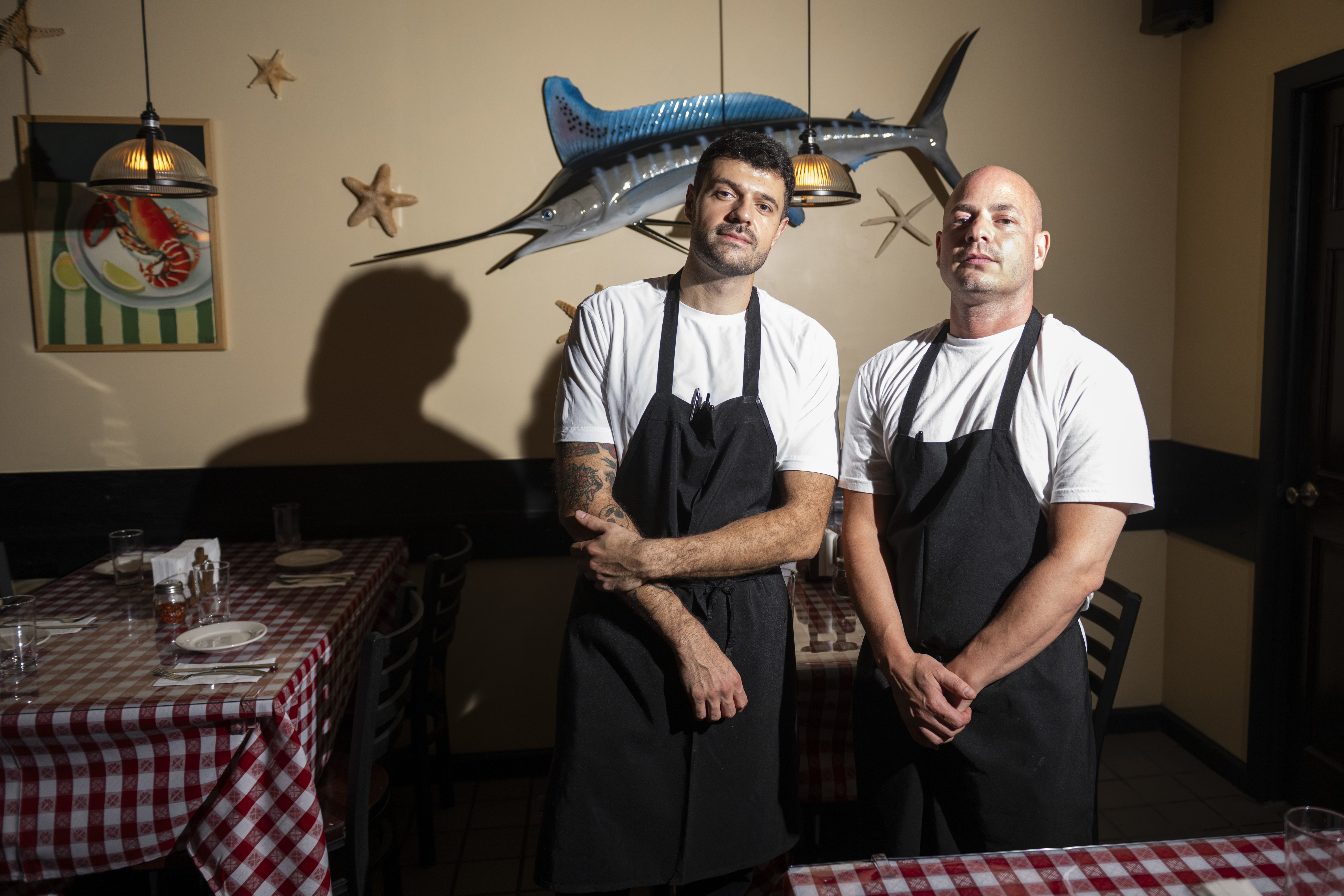
Bomb Bomb Bar owner Joey Baldino (right) with chef de cuisine Max Hachey in the dining room.Allie Ippolito / For The Inquirer
That assessment echoes Inquirer critic Craig LaBan’s February review, in which he called Baldino “Italian South Philly’s culinary preservationist-in-chief” and praised him for retaining Bomb Bomb’s essential character while elevating its seafood cooking and drinks.
Bomb Bomb’s rear dining room offers a $65 fixed-price menu, while the front bar is more casual. LaBan particularly admired the mussels fra diavolo — among the best versions he had eaten — along with the lobster francese, stuffed calamari, crab cakes, and black-ink spaghetti. Inquirer staffers later singled out Bomb Bomb’s crab cake and lobster shells among their best dishes of the week.
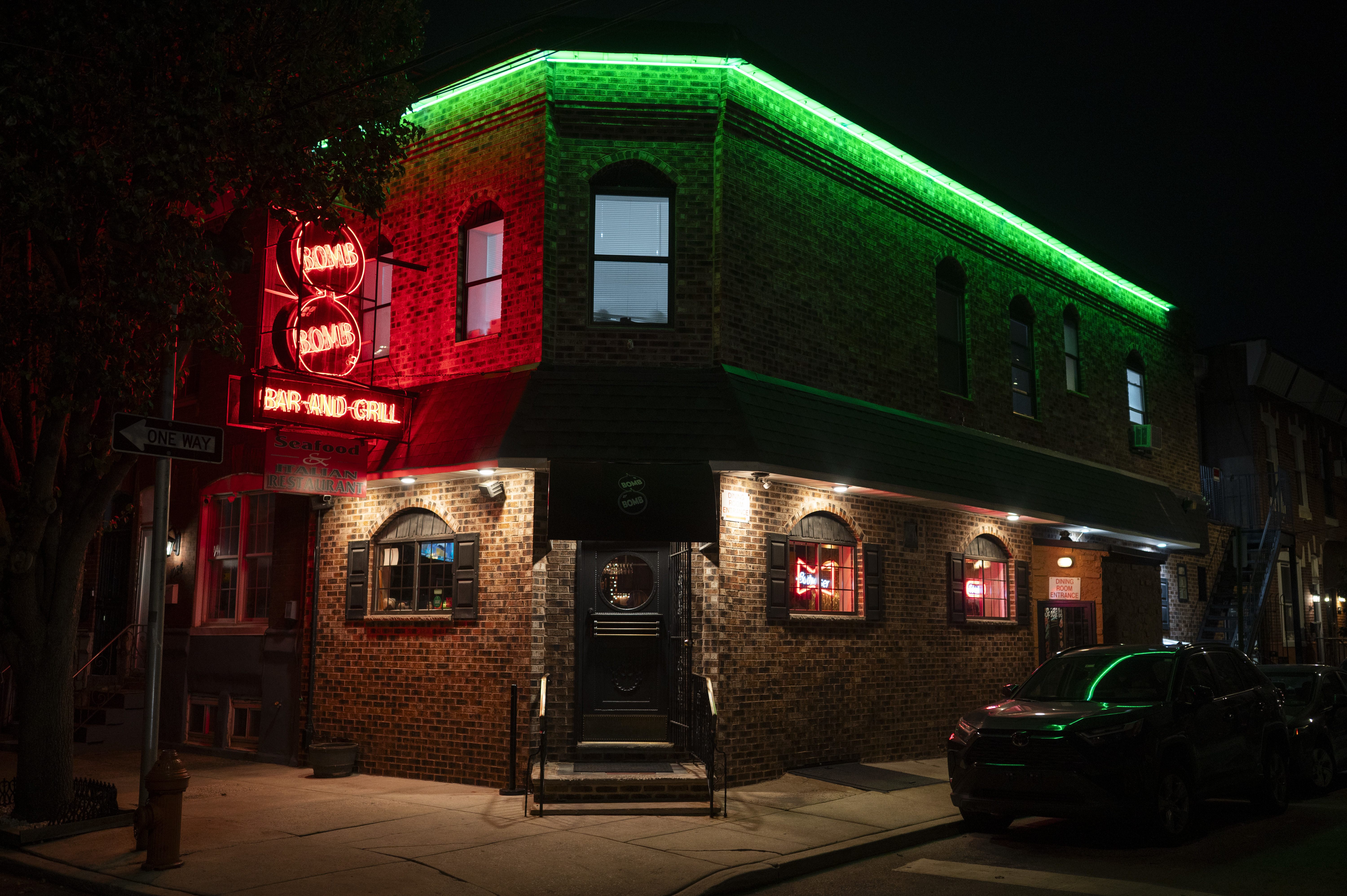
The acclaim adds another chapter to a South Philly institution with an unusually colorful back story. As The Inquirer reported in 2024, it dates from 1936, when a chef left his job at a South Philadelphia bar and grill to work at Bob’s, a new bar at 1026 Wolf St. His former boss ordered him to return. When the chef refused, Bob’s was firebombed in the middle of the night. No one was injured, but the blast shattered windows and “rocked houses to their foundations,” as a news article reported.
The Inquirer’s front-page story on Feb. 17, 1936, of a firebombing on the future site of Bomb Bomb Bar.Inquirer archives
When the chef rebuffed his former boss again, a second bomb went off. This time, according to lore, the chef returned to his old job.
By the time Frank Barbato Sr. bought Bob’s in 1951, everybody just called it the Bomb Bomb. Barbato began a 73-year family run built around seafood and red-gravy dishes and, later, barbecue, which was added to help the restaurant stand out. His son Frank Jr. and daughter-in-law, Deb, eventually took over.
The couple retired in late 2024, and Baldino bought the business in early 2025. He reopened it that October after a deliberately restrained renovation.
Reached by text Tuesday, Baldino called the Times recognition a “huge honor” and praised his staff, including chef de cuisine Max Hachey and manager Jack Kearney.
“We may have been blown up twice but we’re still cranking out some great food,” he wrote, adding two bomb emojis.
Bomb Bomb Bar at Warnock and Wolf Streets in South Philadelphia.Allie Ippolito / For The Inquirer
The “deal is off,” an attorney for a developer told Willistown elected officials Monday, as the board hesitated to accept a settlement that would preserve a great portion of Rock Hill Farm but still allow for housing to be built.
The township’s three elected officials voted unanimously to table their decision, saying there was a lack of assurances in the settlement that guaranteed it would limit the amount of development and preserve a majority of the 222 acres of rolling hills, meadowlands, and woodlands at the historic farm.
“This settlement agreement has been negotiated for almost over a year,” he told the board Monday. “At the last minute, we were asked for additional concessions; we immediately replied … with a letter addressing those concessions and accepting changes that [the township’s solicitor] proposed. My client needs to make sure that the township understands that the deal is off if the settlement agreement is not approved tonight.”
“I think we understand, and I can’t speak for my fellow supervisors, but I don’t have anywhere near enough information to make a decision,” board chairperson Molly Perrin responded.
Campbell did not immediately respond to a message on whether the settlement had been withdrawn.
The officials’ concern is whether the proposed settlement, which the township presented to the public last month, would bind certain mortgage holders to its terms.
“Without some degree of surety there, we don’t feel that we can move forward,” said board member Bill Shoemaker. “We understand that, from the perspective of the applicant, this essentially, if they take it that way and choose not to continue, will void the agreements. So we’re back to square one.”
A Chester County judge in July sided with the developer, overturning the township’s September 2024 denial of plans to build more than a dozen homes on the property. The township promptly appealed the ruling.
Under the proposed settlement, the developer would radically scale down the plan that was before the court, preserving roughly 166 acres of the larger tract, or 75% of the land, under a conservation easement. The land would be subdivided into 18 lots, down from roughly 24, with all but one lot proposed for residential development. The one non-residential lot would be conserved as open space. The lots vary from about four acres to up to 26 acres.
Separately, the developer has offered Willistown Conservation Trust the exclusive option to buy an adjacent 24-acre property, also purchased by the developer, if the settlement agreement is approved by the township and court. The township would plan to buy it from the trust using designated open space funds, and preserve the property as open land. The board voted to approve the purchase in February, officials said, though that is in jeopardy as part of the settlement.
A number of residents who spoke last month responded positively to the proposal, but others were apprehensive.
The community had rallied together to form a group, Save Rock Hill Farm, in an effort to stave off development of the land.
“We appreciate the Supervisors’ efforts to address these issues carefully,” the group posted on Facebook after the meeting. “The Supervisors have heard the community’s substantial opposition and concerns about what could be lost if the proposal moves forward as presented.”
But as the board prepared to take a vote, there was still uncertainty.
Max O’Keefe, the solicitor for the township, said he and the counsel for Rock Hill Farm LLC discussed additional language, which was sent to the board of supervisors late Monday.
“I certainly don’t anticipate that the board had any real meaningful opportunity to review or digest those proposed changes,” he said.
The board concurred.
“I never want to be the one who’s going to rush into a decision, especially a decision that’s so much value and importance to this community,” board member Matt McCarry said.
This suburban content is produced with support from the Leslie Miller and Richard Worley Foundation and The Lenfest Institute for Journalism. Editorial content is created independently of the project donors. Gifts to support The Inquirer’s high-impact journalism can be made at inquirer.com/donate. A list of Lenfest Institute donors can be found at lenfestinstitute.org/supporters.