Tag: Swarthmore

  • Alumni, students call on Haverford College to protect speech, academic freedom following antisemitism legal settlement

    Alumni, students call on Haverford College to protect speech, academic freedom following antisemitism legal settlement

    A group of alumni and students called on Haverford College to “preserve the rights to free speech and academic freedom” after the college settled a lawsuit alleging it allowed antisemitic speech on campus and failed to support Jewish students amid a rising tide of anti-Israel rhetoric.

    In an open letter, nearly 340 alumni and students of Haverford, Swarthmore, and Bryn Mawr Colleges voiced opposition to the settlement, writing it would ”abrogate the rights of all Haverford community members to academic freedom, free speech, and the thoughtful exchange of ideas.”

    Concerned Jewish Faculty and Staff, a Massachusetts-based membership organization of Jewish university employees, published the Sept. 14 letter, which states that its signatories “affirm the necessity of combating antisemitism and all other forms of prejudice” while being “particularly mindful of the safety and rights of Palestinian students.” The letter references an act of violence against a Palestinian student in 2023. Kinnan Abdalhamid, a West Bank-born Haverford College student, was shot in Vermont that year.

    The letter comes as the Trump administration has threatened sanctions and launched investigations into antisemitism on college campuses in the wake of the Israel-Hamas war and ensuing campus protests, actions that some advocacy groups say have suppressed pro-Palestinian speech on campus.

    Haverford was sued in 2024 by a group of Jewish students, faculty, parents, and alumni represented by the Deborah Project, a pro-Israel legal group based in Merion Station that has filed suits against a number of schools and universities since the start of the war in 2023.

    The lawsuit, filed in U.S. District Court for the Eastern District of Pennsylvania, said Haverford students faced discrimination for supporting Israel, including not being allowed to speak during campus-wide gatherings and being disrupted by bullhorns and cowbells during a meeting about antisemitism.

    Ally Landau, a plaintiff and a student at the time of the lawsuit, alleged she was pressured to cancel an event promoting antisemitism awareness as it would prove “too antagonistic to the pro-Palestinian students on campus.”

    After the lawsuit was initially dismissed by a federal judge, the students filed an updated complaint, and the college settled with the Deborah Project in August. Under the settlement terms, Haverford College president Wendy Raymond released a public letter affirming the college’s support of Jewish, Israeli, and Zionist students. The college confirmed that campus events hosted by Jewish or Israeli students would receive the same security as other campus programs and agreed to form an antisemitism committee and require annual antisemitism awareness training for students, faculty, and staff.

    The alumni and students who signed the Sept. 14 letter say the settlement designates supporters of one particular political belief, Zionism, as a protected class, a move they describe as stifling legitimate political debate and misrepresenting the beliefs of many Jewish people. The group wrote that the settlement follows a larger trend “in which organizations like the Deborah Project, together with politically-motivated operatives in the Trump administration, have weaponized accusations of antisemitism in order to silence criticism of Israel on campus.”

    Lori Lowenthal Marcus, the Deborah Project’s legal director, said in an email that accusing the organization of weaponizing antisemitism “evokes the rank racism of the pre-Civil Rights era when racists demanded the law not be used to shield Black Americans from harassment and other harms.”

    The student and alumni group has no legal standing to make demands regarding the settlement, Lowenthal Marcus wrote. She added that they “could be subject to legal action if they insist on continuing on their path of tortious interference.”

    “Thank them for supplying their names and affiliations, so we know how to reach them,” Lowenthal Marcus wrote.

    Dominic Mercier, a spokesperson for Haverford College, wrote in an email that the college understands “that the settlement has evoked strong feelings from many community members, both positive and negative,” and that it is unable to share the settlement in its entirety.

    The settlement did not change the college’s civil rights policy, nor did it change its official list of protected classes, which does not list Zionism, according to Mercier’s email. Community members are not prohibited from criticizing Israel or Zionist beliefs, but the college “prohibits conduct that crosses the line from protected speech into discrimination or harassment on the basis of a protected class,” Mercier wrote.

    Academic freedom and freedom of expression “remain central to our shared experience and community expectations, and are not in tension with our continued commitment to be a campus free from acts of harassment and discrimination against any community members,” Mercier wrote.

    Raymond, in her August letter, wrote that all students, including those who support Zionism, are “welcome and enjoy equal access to the College and all of its educational programs and activities” and that acts of discrimination against Jewish, Israeli, and Zionist students “violate College policy and are antithetical to Haverford’s mission, values, and standards.”

    The alumni and student letter called on Haverford to declare that the college’s nondiscrimination and anti-harassment policies extend to Palestinian students. It also included demands that the college include material related to Islamophobia and anti-Palestinian racism in its annual Title VI training and ensure that antisemitism training does not “equate Jewishness with support for Israel, nor erase the existence of Palestinians.”

    The letter also asked Haverford to affirm that members of a newly established antisemitism committee would not include individuals unaffiliated with the college.

    The committee, whose members were announced the same day the letter was published, includes two Haverford professors; a member of the college’s board of managers; a student; the college’s director of interfaith life and practice; the director of the Rohr Center for Jewish Life; and a Haverford alumnus.

    It will also include two members not directly affiliated with Haverford: Michael Balaban, president and CEO of the Jewish Federation of Greater Philadelphia, and Jeremy Winaker, a rabbi and the executive director of the Greater Philly Hillel Network, which serves Haverford’s Jewish Student Union.
    Clarification: This story has been updated to clarify that Haverford College and The Deborah Project settled an updated complaint after an initial complaint was dismissed.
  • These 32 Philadelphia middle school students just got their white coats, on a path to becoming doctors someday

    These 32 Philadelphia middle school students just got their white coats, on a path to becoming doctors someday

    When Martha Glasco was growing up in North Philadelphia, she said, her opportunities were limited.

    So when a teacher told Glasco — now an adult with a bright child of her own — about a new program that aimed to give promising Philadelphia kids six years of medical-school education with an eye toward careers in healthcare, Glasco was thrilled.

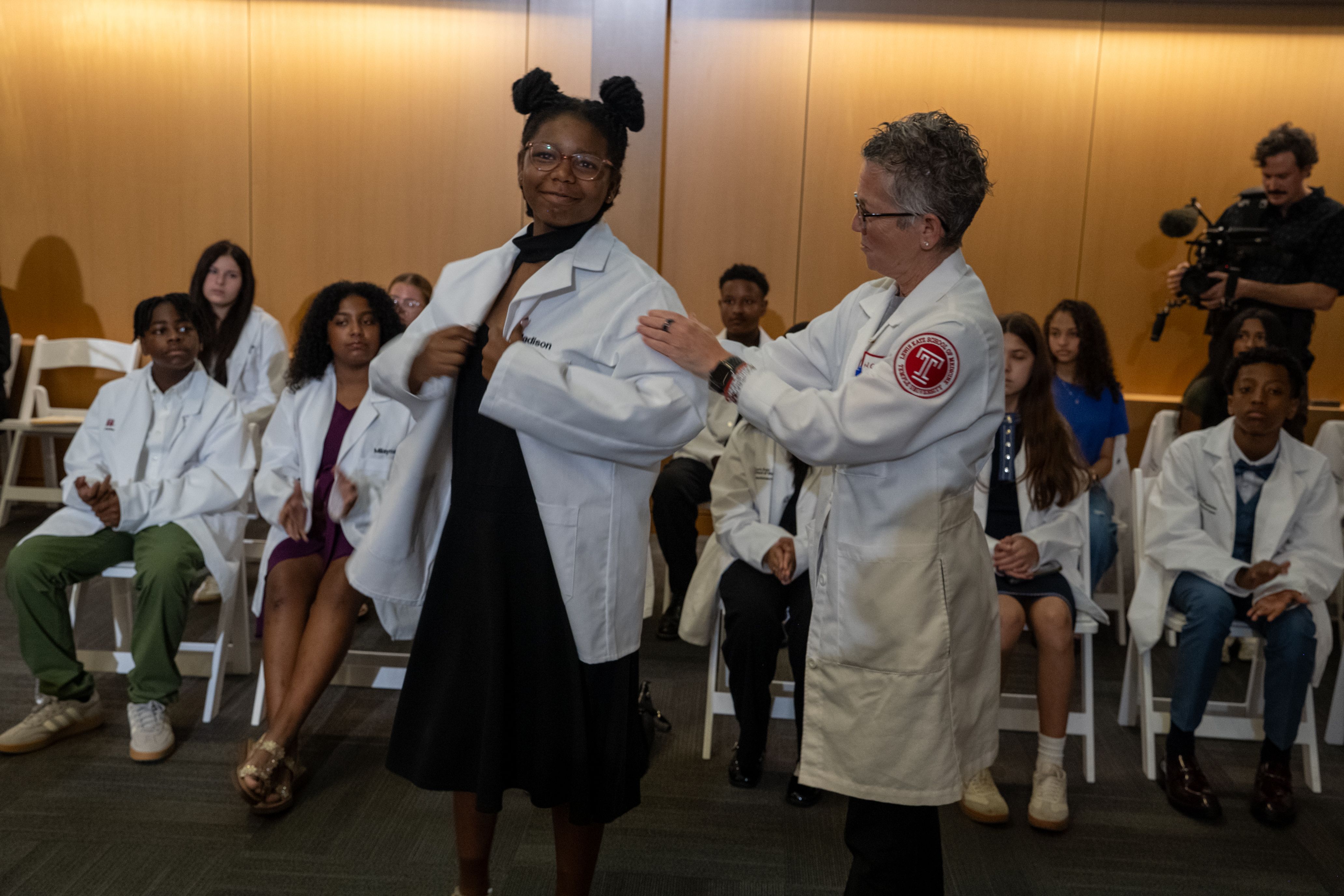
    This month, Glasco’s daughter Madison Miller slipped a white coat over her shoulders, one of 32 Philadelphia seventh graders chosen for the initial class of Temple University’s Lang Medical Scholars Program. The 12-year-old, a student at E.W. Rhodes Elementary at 22nd and Clearfield Streets, will spend weekends and summers learning about systems of the body, completing internships, and engaging in rigorous college prep.

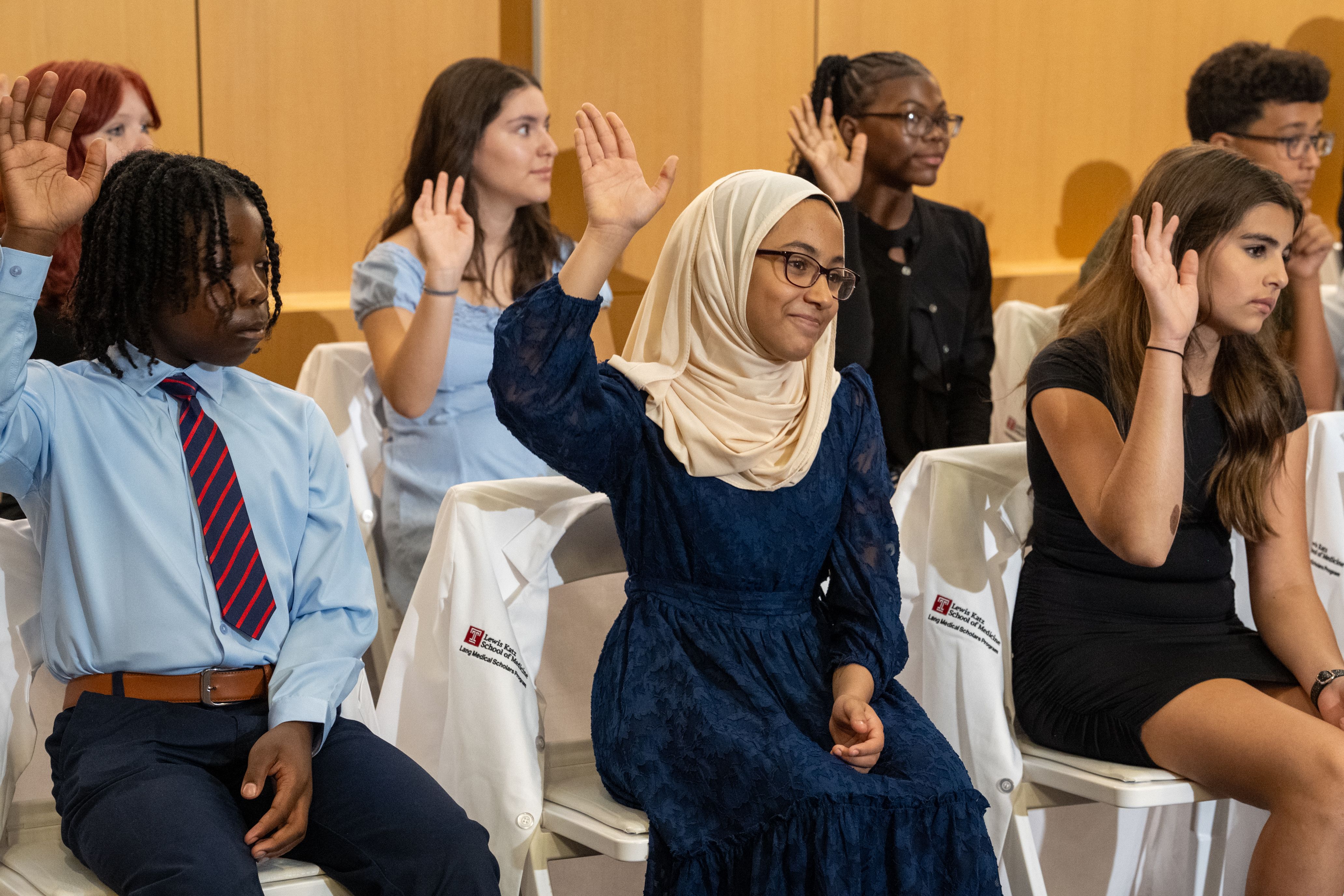
    Seventh graders in Temple University Medical School’s Lang Scholars program prepare to get their white coats. The new program identifies promising students and gives them six years of pre-medical school education.Courtesy of Temple University

    “This is a big deal,” said Glasco, who dreams of buying Madison scrubs and a stethoscope, tangible evidence of her place in Lang Scholars and the doors it could open.

    “The passion around this, the mission is just — talent abounds and opportunity does not, right?” said Barbara Klock, the program director and its architect. Lang, she said, aims to change that for its students.

    A long-held vision

    Klock carried the idea of the Lang Scholars around for years, through a career as a Children’s Hospital of Philadelphia pediatrician and the Philadelphia School District’s chief medical officer.

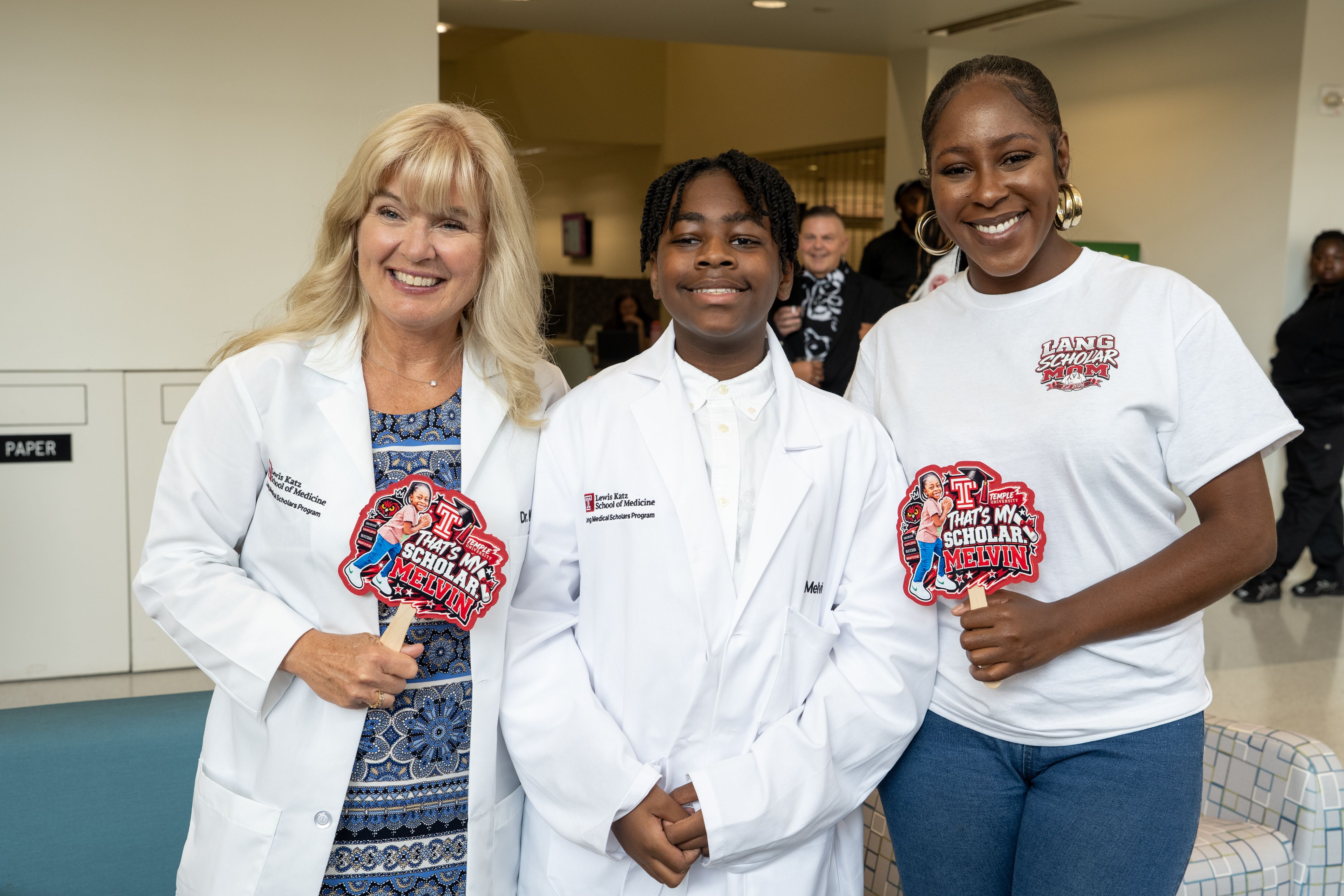
    Melvin Poulson IV, a student at Hope Partnership School, and his mother, Allison Agee, pose with Barbara Klock, director of the Lang Scholars program.Courtesy of Temple University

    Klock, who grew up in Philadelphia’s working-class Juniata Park section, was mentored by Eugene Lang at Swarthmore College. Lang, a businessperson and philanthropist, famously promised a class of Harlem sixth graders that he would pay for their college educations if they graduated from high school.

    Lang and Klock kept in touch after her Swarthmore graduation, and on one chance encounter at 30th Street Station in the 1990s, Lang mentioned to Klock that he was launching something he was really excited about.

    “He said, ‘I have this idea for a program, but the kids start really young.’ He was always, ‘If you’re going to do something, it’s got to be the best,’ and for him, the best would be going to medical school,” Klock said.

    That program, the Lang Youth Medical Program, has been thriving in New York for decades. Klock admired it from afar, and, sometimes, up close.

    “I would go on Saturdays and see the program with the dream of bringing it to Philadelphia,” she said.

    Klock decided it was time to go for her own version of that program in 2024. She reached out to Mitchell Morgan, chair of Temple’s board of trustees, via e-mail.

    “I said, ‘I have this program. I would love to bring it to Temple,’” Klock said. “I wanted to do this with Temple because of where Temple is located, Temple’s mission and vision, and they really do what they say they do.”

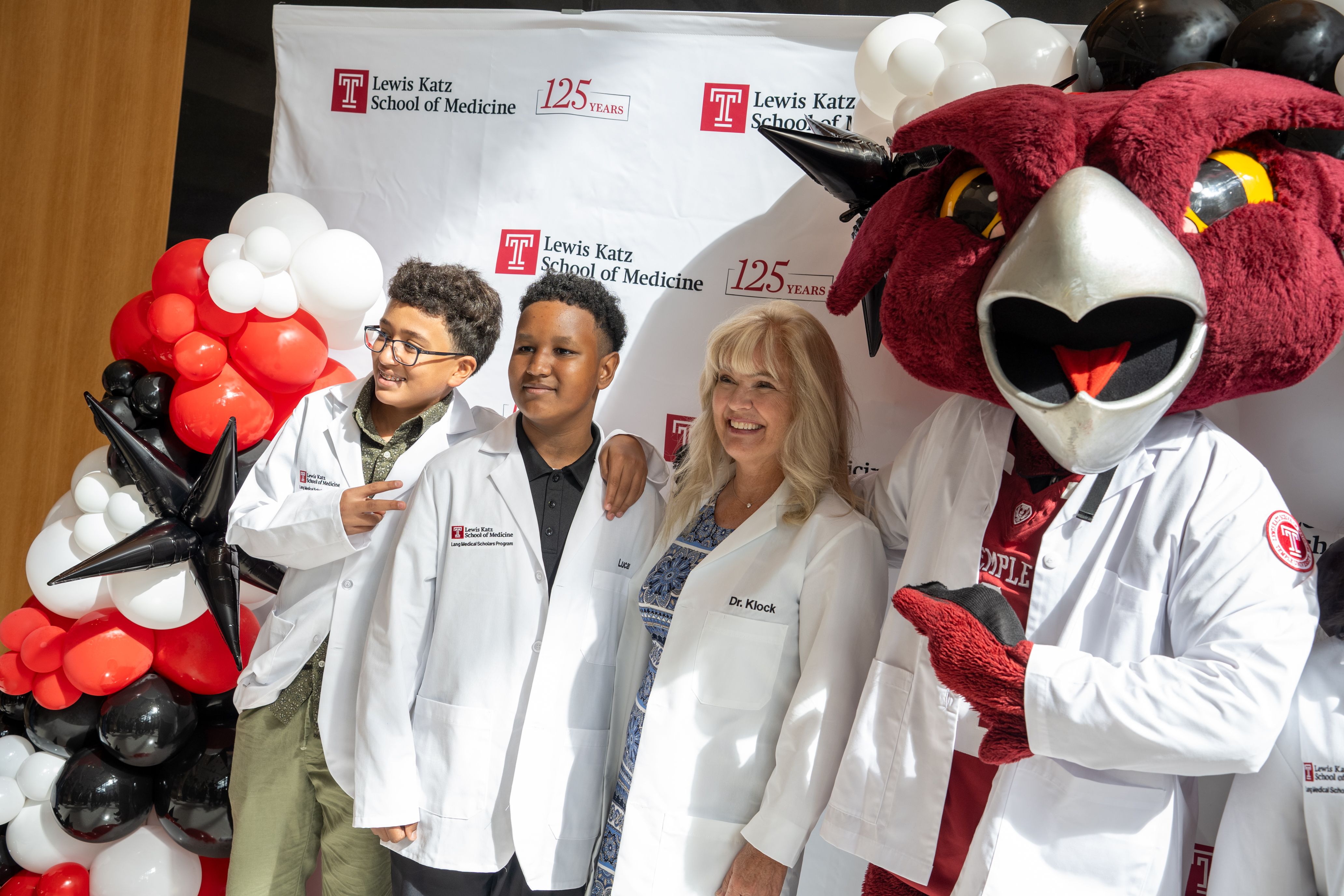
    Temple University Lang Scholars white coat ceremony.Courtesy of Temple University

    She expected she might hear from Morgan within three weeks. Instead, she had a response, and a connection to Lewis Katz School of Medicine dean Amy Goldberg, by the end of that day.

    In short order, the program was off and running, with Temple’s backing and philanthropic support, including some funding from Lang’s private foundation.

    Klock pounded the pavement in the 2025-26 school year, reaching out to every Philadelphia school she could connect with — district, charter, private — to ask: Can I come talk to your sixth graders about an idea? Thirty-five schools opened the door for Klock to make presentations.

    She didn’t ask counselors to recommend kids; she feared she would get only straight-A students and student council presidents. Those were fine, but she also wanted the bright-but-bored kids, the ones who were curious about science and life but maybe had hit a few bumps along the way.

    Klock hoped to bring in 20 Lang scholars for the inaugural class. Nearly 14 times that number applied, and those who made it to the interview round flat-out wowed her, Klock said. She ended up getting permission to build a class of 32 — 22 girls and 10 boys — and will grow a grade every year.

    The program’s aim is not to produce a class full of doctors. It is to produce a class full of curious and confident learners grounded in an academic medical setting. If some enter the medical field, Klock would be delighted, but that is not the main objective.

    “These are kids who are so eager to learn,” Klock said. “They want to be with other students who are eager to learn. They are incredibly curious. They ask, ‘why?’ and ‘what if?’ What I want to do is give them the chance to continue to ask, ‘why?’ and ‘what if?,’ no matter what.”

    ‘This is serious’

    Glasco was tipped off about the program by a teacher friend.

    Madison first expressed her desire to become a doctor at age 3. Her preschool teacher has a photo of Madison holding a sign stating her career goal.

    “She wants to be in the medical field, and I used to be in the medical field, so it’s actually perfect,” said Glasco, who used to work as an EMT and a medical assistant and is now a paraprofessional in a suburban school district.

    It’s not far from her North Philadelphia house to Temple’s medical school, Madison said, but walking into the Medical Education and Research Building on North Broad Street felt like a different world in some ways.

    Going to the interview was “very exciting,” Madison said, “but I was also very nervous. There were a lot of windows, and I could see everyone.”

    When she got the word that she was a Lang Scholar, Madison was thrilled.

    “My teacher was really excited, too, because he knew I was going to be in the medical field soon — kind of in medical school, like college,” Madison said. “My friends were really excited because they knew they were going to have a medical friend.”

    Madison and the other Lang Scholars received their professional white coats to kick off the program on Sept. 19. They will begin their studies Oct. 3. Klock will teach the biweekly courses on the human body, health equity, public health, and more.

    Over the years, the students will take trips, work at paid internships, sit in SAT prep courses, and receive help with college applications — all for free. They will dive into the health issues facing their communities, and have access to the same labs and facilities as Temple medical students.

    Glasco cannot wait to drop Madison off for her first day of class as a Lang Scholar.

    “I’m going to be on her really hard about this, because this is serious,” Glasco said. “I want her to get all the knowledge she can, and maintain it, so she can go further in whatever medical field she decides to do in the future.”

  • Swarthmore College renames hall for two prominent Black scholars with Philadelphia ties

    Swarthmore College renames hall for two prominent Black scholars with Philadelphia ties

    Swarthmore College has renamed the former Trotter Hall and its adjacent lawn for two Black scholars who feature prominently in its history: the school’s first African American professor and an alumnus who served as a policy adviser to several U.S. presidents and formerly led the University of California, Berkeley School of Law.

    The move comes after the college last year stripped former professor Spencer Trotter’s name from the hall after the school learned Trotter had dug up a Native American burial ground in Chester County in 1899 and displayed human remains on campus.

    Effective immediately, the hall and its adjoining lawn will be known as Edley-Morgan Hall and Edley-Morgan Lawn, named for Kathryn L. Morgan, the late Swarthmore professor emerita of history, and Christopher F. Edley Jr., the late legal scholar and proponent of affirmative action who worked closely with three Democratic presidents and with six presidential campaigns.

    “This renaming is an important milestone, but not the end of this work,” Swarthmore president Valerie Smith said in a message to campus Monday. “Our further efforts will also ensure that this reckoning with the past is appropriately documented and acknowledged so our community can continue to learn and heal.”

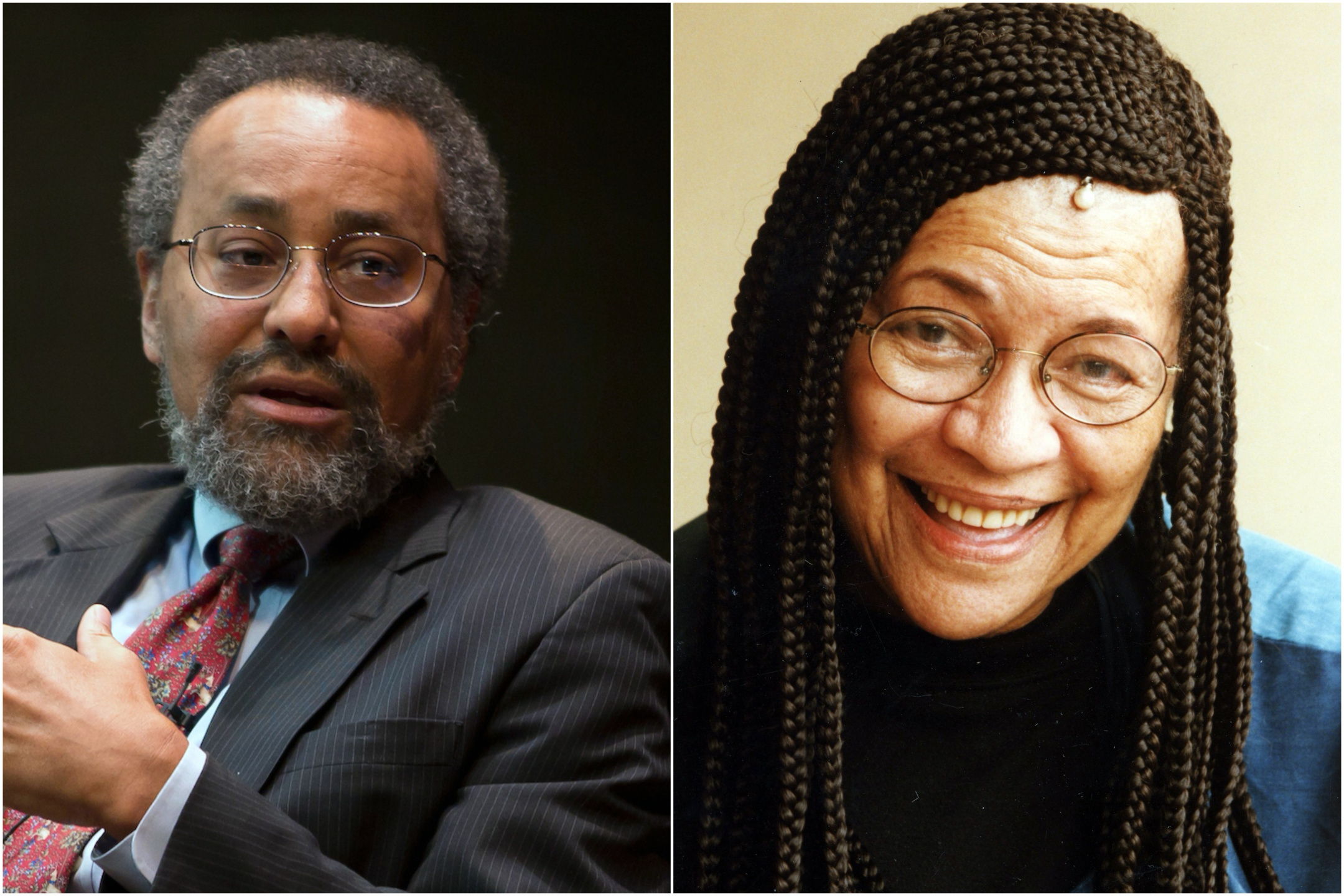
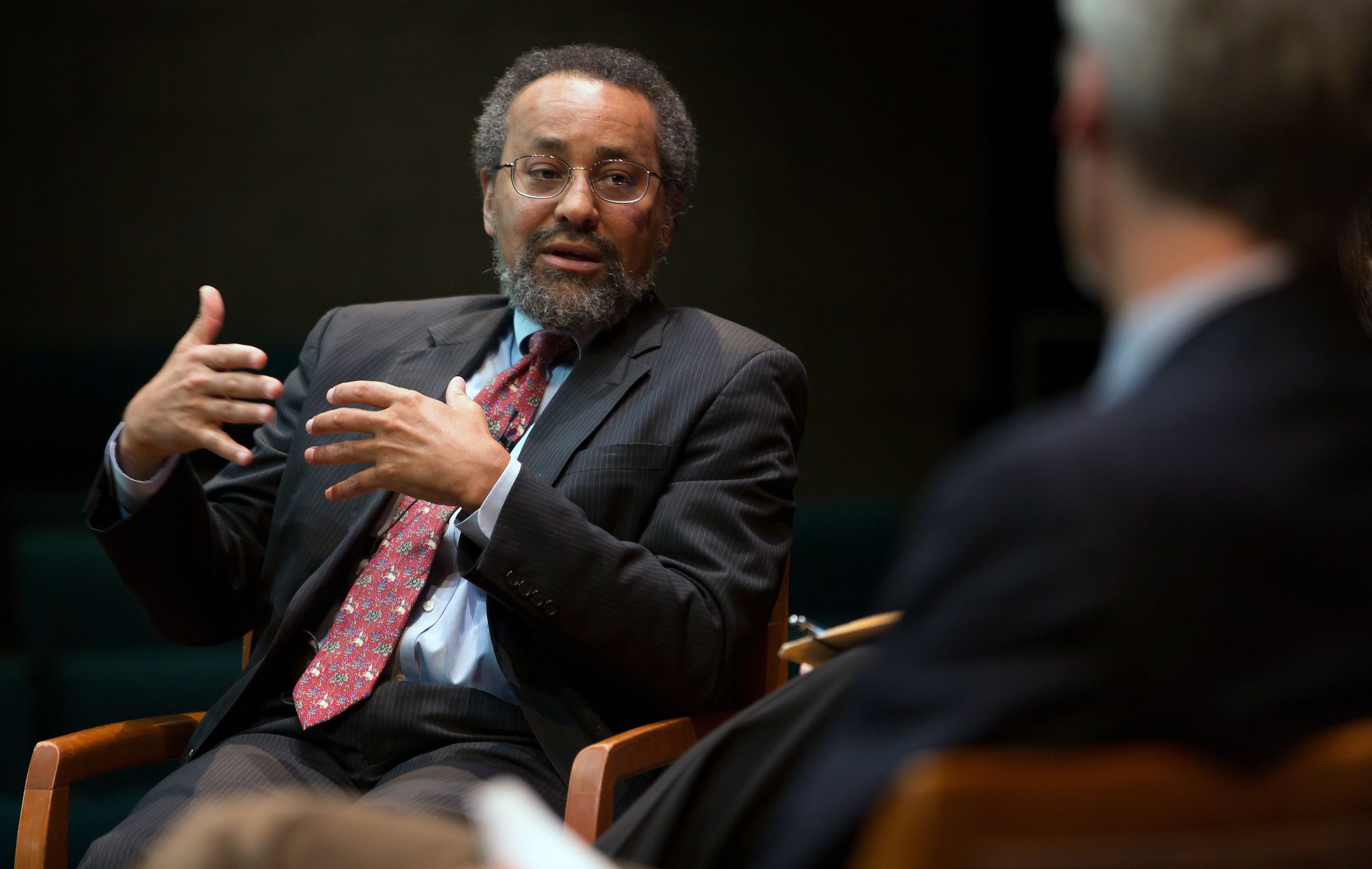
    The late Christopher F. Edley Jr. is a legal scholar and Swarthmore College alumnus. Swarthmore announced it is naming the former Trotter Hall and its adjoining lawn for Edley and Kathryn L. Morgan, the late Swarthmore professor of history, who was the college’s first African American professor.Courtesy of Swarthmore College

    The college undertook an extensive process that included input from more than 500 students, faculty, and staff through a campus survey, a panel discussion with other college leaders who had gone through renaming processes after controversies, a session with a leader of the Delaware Tribe of Indians, and research on potential new namesakes.

    Through the process, the community concluded the new namesake or namesakes should be someone with a direct connection to the college and honor departments based in the building — history, political science, classics, and the writing associates program. The community also wanted the new namesake or namesakes to be “consistent with or expand the diversity of representation on campus.”

    When the process began, of Swarthmore’s 70 primary buildings, 67% were named for people, and of those, 53% were named for one or more men, 26% for one or more women, and 21% for both, the college had said. All but two of the namesakes were white and about half were Quakers.

    More than 75 names were considered for the hall, which initially opened in 1882, the college said.

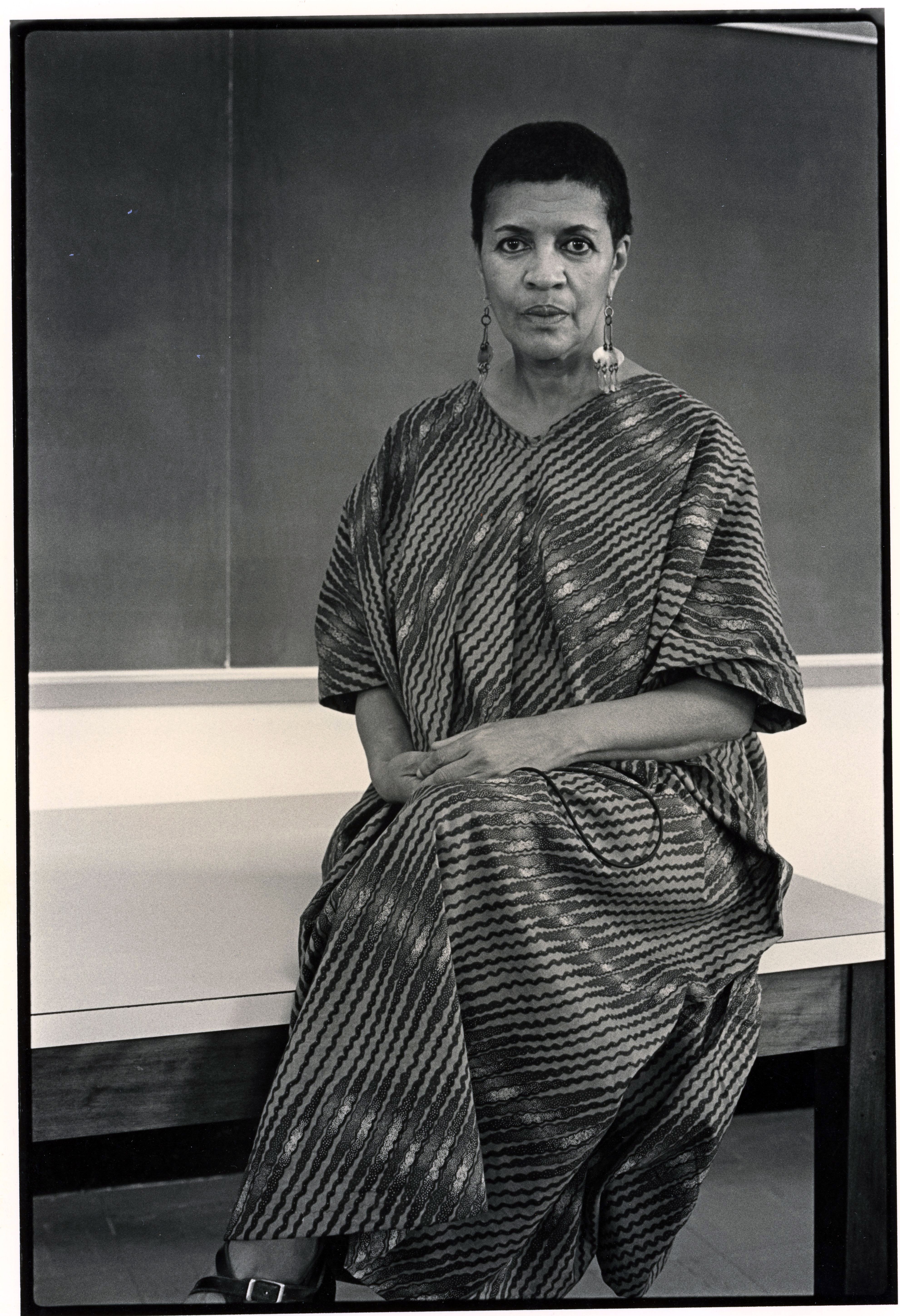
    Swarthmore hired Morgan in 1970, and she joined the history department as its first folklorist, according to a 2011 Swarthmore story about her passing in 2010. She got her bachelor’s degree from Virginia State University, a master’s degree from Howard University and another master’s degree and doctorate from Penn.

    She taught classes including Folklore and Folklife Studies, History through Folklore and Literature, Black Women in Historical Perspective, and Black Culture and Consciousness, according to the college. Though she initially was denied tenure, she eventually became the first Black woman to get it at Swarthmore and talked about tensions in her department in a 2000 Swarthmore College Bulletin interview, the college said in its piece.

    Her work Children of Strangers: The Stories of a Black Family (1980), was the first work of African American family folklore by a folklorist.

    In 2000, a scholarship was established in her name and a poetry festival in her name was held in 2009.

    “One of the first things I tell my students,” Morgan said, according to the Swarthmore piece, “is to go home, look to your families, to the stories you were told as children. They’re the most important stories in the world.”

    Morgan, who was born and raised in Philadelphia, was described in the Swarthmore piece as “a wise, charismatic woman who intellectually bridged the gap between W.E.B. Du Bois and Malcolm X, a militant yet gentle soul who embraced everything of interest with intensity, and a radiant presence who drew on lessons learned from her ancestors as others draw breath.”

    The late Kathryn L. Morgan, professor emerita of history at Swarthmore College, was the first African American professor at the school. The college is renaming the former Trotter Hall and its adjoining lawn for Morgan and legal scholar Christopher F. Edley Jr., a Swarthmore alumnus.Courtesy of Swarthmore College

    Edley, who died in 2024 and spent part of his youth in Philadelphia, got a degree in mathematics and economics from Swarthmore in 1973 and later a master’s in public policy and a law degree from Harvard. Before serving as law school dean at Berkeley from 2004 to 2013, he was a professor at Harvard. He served on Swarthmore’s board of managers from 1982 to 1993.

    He worked for the White House domestic policy staff in the 1970s when Jimmy Carter was president, advising on issues including food stamps, child welfare and disability, according to an article on the Swarthmore website. During Bill Clinton’s administration, he worked in the Office of Management and Budget and served as special counsel to the president. And in 2008, he worked on Barack Obama’s successful presidential campaign and served on his presidential transition board. Obama had been a student of Edley’s at Harvard, according to Edley’s obituary in the Washington Post.

    When he received an honorary degree from Swarthmore in 1999, Edley talked about what he learned at the school.

    “I learned to face the limits of my intelligence, without fear,” he said, according to the Swarthmore piece. “I learned what it means to really understand something hard, only to realize that I was dead wrong, or that there was another, perhaps better way to understand it … And I learned that when there is trouble, find a grove of lilac bushes, lie down, get drunk on the fragrance, and think about important things.”

    Swarthmore’s renaming process started after a 2022 article in The Inquirer that mentioned how a former Swarthmore professor and student had dug up a burial ground and moved a skeleton and objects buried with it to the college.

    Swarthmore researched and discovered the professor was Trotter. The college first checked to make sure there were no remains from Trotter’s collection being improperly handled at the school; there were not. Officials found a collection of unidentified human bones that the college likely had obtained legally — but probably were initially acquired unethically — and moved them into storage.

    The college renamed the building Old Science Hall last December when Smith named a task force of students, faculty, and staff members to consider the next steps.

  • Three Wallingford-Swarthmore schools locked down Monday during a police search outside

    Three Wallingford-Swarthmore schools locked down Monday during a police search outside

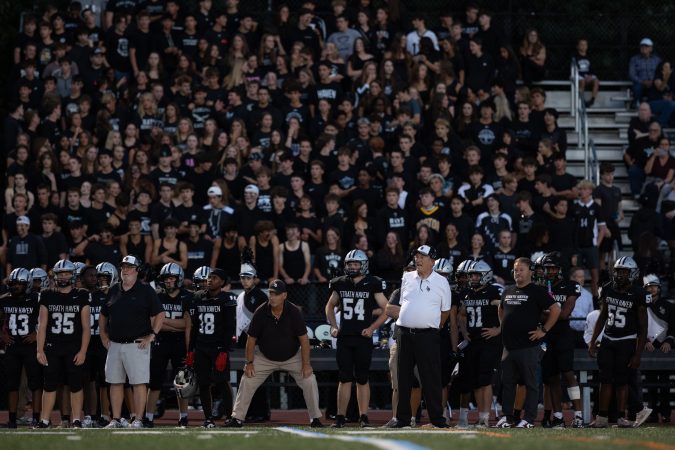
    Students at Strath Haven High School and Middle School and Wallingford Elementary School sheltered in place Monday morning as police searched the area for a suspect who had fled during a traffic stop.

    The incident began when a Nether Providence Township police officer stopped an Acura at 9:07 a.m. Monday on South Providence Road, police said in a statement. The driver fled in the car, which police determined was stolen, and the officer lost sight of it.

    Then at 9:41 a.m., a resident contacted the police to report a car abandoned in a backyard on Hickory Lane, near the high school, police said. Officers determined the car was the same one that had been driven by the suspect, and police began searching the area.

    Police said they worked with school officials to place the three Wallingford-Swarthmore schools, which enroll about 2,600 students, “in a ‘Teach in Place’ status while officers searched the surrounding area.”

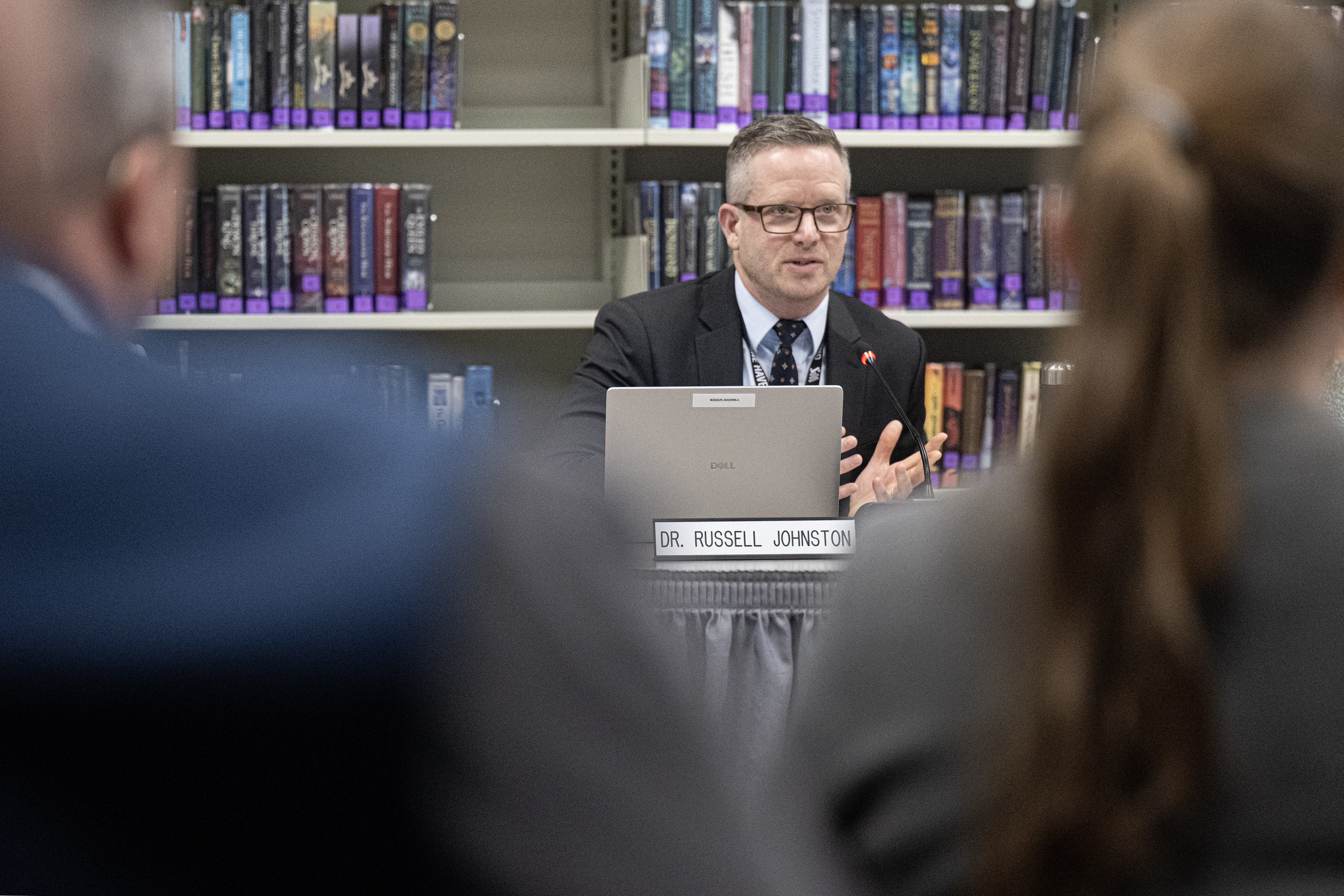
    Wallingford-Swarthmore Superintendent Russell Johnston said the lockdown “kept the kids safe inside the buildings” during the police search. Classes continued during that time, he said.

    “What we did was out of an abundance of caution,” Johnston said. He said school officials believed police had guns drawn during the search.

    Police reviewed video surveillance that showed the suspect “fleeing toward the rear of Strath Haven High School” before being picked up by another car. The schools returned to their normal status after it was clear the suspect had left the area, police said.

    Nether Providence Township police are still investigating the incident, and are asking anyone with information to call the department’s detective division at 610-892-2875.

  • Schools around Philly are no longer giving laptops to kindergartners and scaling back on screen time. It’s a tech backlash.

    Schools around Philly are no longer giving laptops to kindergartners and scaling back on screen time. It’s a tech backlash.

    As her children start second and third grades in the Colonial School District, Elise LaChapelle expects they will spend no more than 20 to 30 minutes a day on their Chromebooks — limits the Montgomery County district has announced to parents.

    Colonial also no longer allows elementary school students to take their laptops home at night. “That seemed to be an acknowledgment on the district’s end that changes were needed,” LaChapelle said.

    Amid a spreading backlash to screens in classrooms, public school districts across the Philadelphia region are placing more limits on technology use — including by pulling back on one-to-one device programs once touted as critical for ensuring every student had access to technology.

    The Tredyffrin/Easttown School District has stopped assigning iPads to kindergartners, and students across the district’s elementary schools will no longer take their tablets home at the end of the day.

    In Methacton, the district has transitioned from individual devices to a shared model for kindergartners and first graders, with Chromebooks available for center-based activities, according to a district spokesperson.

    The Phoenixville Area School District has ended its one-to-one device program for kindergarten through third grade, while in Wallingford-Swarthmore, kindergartners through second graders will take fewer online assessments, and kids up to fifth grade are no longer able to search and browse YouTube.

    Parents who have been pushing schools to scale back on computer use are applauding the new restrictions as a step in the right direction of promoting teacher-led instruction and reducing screen-based distractions.

    But they also question how much will change in practice, because children will still have access to devices in many classrooms. Some parents who have been battling for less screen time want schools to go further to address what they see as excessive reliance on technology at older grade levels.

    In Lower Merion, which adopted a new technology policy last month that no longer assigns personal devices to kindergartners through second graders, seven parents are suing the district for rescinding their ability to opt out of computers entirely. The parents argue the district is violating their constitutional rights by requiring their kids to use internet-connected computers without adequate safeguards.

    Yair Lev, a parent who opposes Chromebook use in Lower Merion schools, speaks at a March 23 forum at Harriton High School about technology use in the school district.Maddie Hanna / staff

    For many districts, reducing computer usage in elementary schools “seemed like the low-hanging fruit,” said Alex Bird Becker, a Wallingford-Swarthmore parent active in PA Unplugged, a statewide group with about 5,000 supporters that advocates for limits on educational technology. But “when you get to middle school, the device culture has become really ingrained with curriculum. That’s where it gets harder to disentangle.”

    Wallingford-Swarthmore, a 3,700-student district, has been soliciting applications from parents to join a new Technology Advisory Council that will advise the district on further changes, including related to device use in grades six to 12. (In Lower Merion, parents have been pressing the district to create a technology review committee that includes parent representation.)

    “We know there’s even more we want to do in this area,” said Russell Johnston, Wallingford-Swarthmore’s superintendent.

    Johnston said the district was trying to ensure its use of technology was “focused” — posting online for parents to see which portions of the district’s elementary curriculum will incorporate technology, with lessons connected to Pennsylvania standards.

    Wallingford-Swarthmore School District Superintendent Russell Johnston speaks during a Feb. 24 school board meeting in Wallingford.Jose F. Moreno / Staff Photographer

    Wallingford-Swarthmore is also reevaluating how laptops are used during “curriculum enrichment” time, Johnston said, when students are broken into small groups to receive extra help.

    In Phoenixville, which ended its one-to-one device program for kindergarten through third grade, “students will continue to have access to appropriate and approved educational technology for academic purposes only,” district spokesperson Nicole McClure said.

    Alair Southerton, a Phoenixville parent who has been pushing the district to make changes, said the school board had approved “strong language” around when devices should be used in classrooms.

    But “we’re still kind of crossing our fingers with the rollout,” Southerton said. She questioned whether teachers had clear guidance from administrators, and whether the district would consider educational technology apps that some parents object to as “gamified” as essential for learning.

    “We want to really fine-tune what needs to be done on a device on a screen,” said Southerton, who is a member of a new district Edtech Advisory Council.

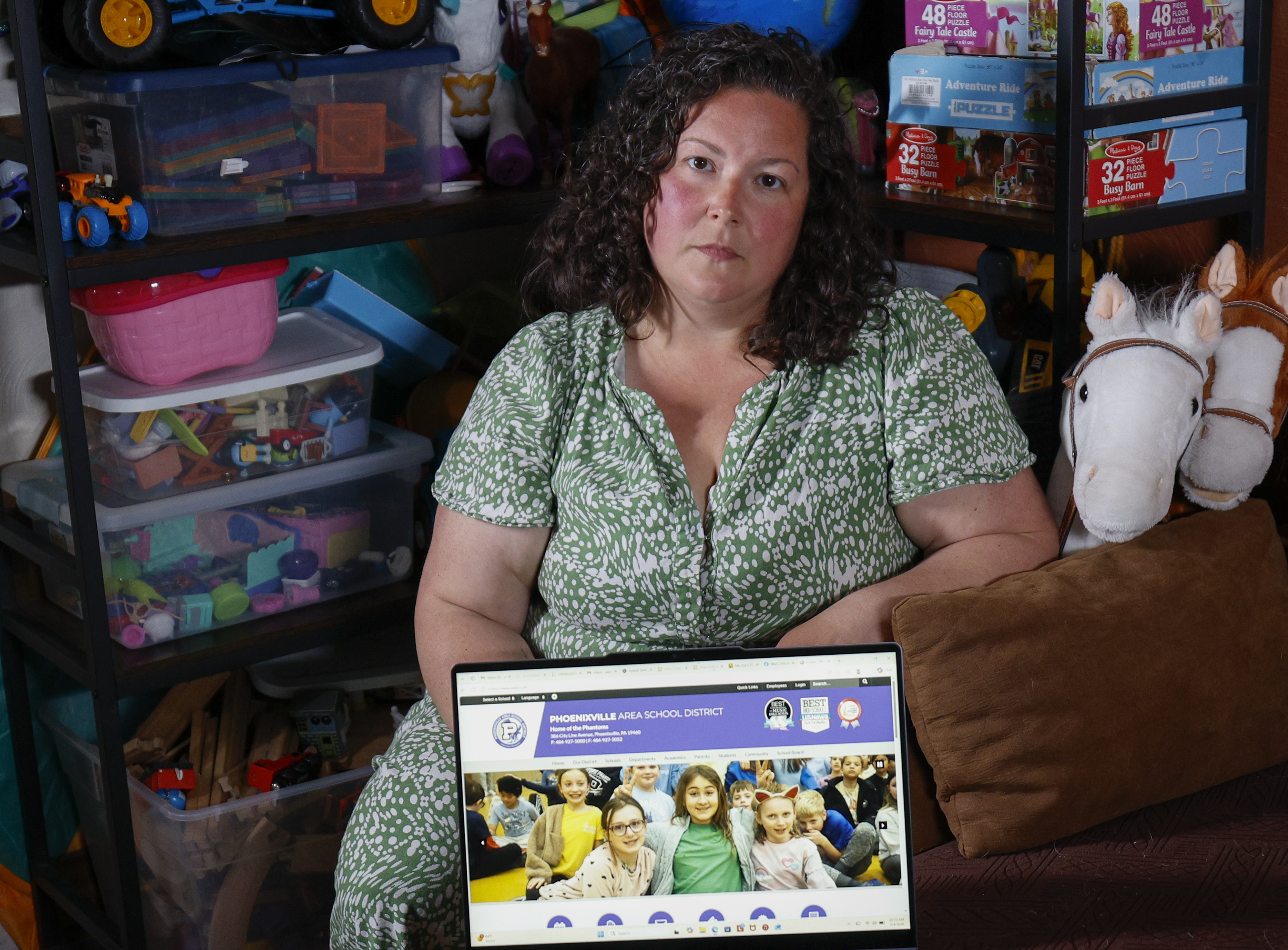
    Alair Southerton, pictured at her home in May with the Phoenixville Area School District website on her laptop. Southerton is leading a group of Phoenixville parents who are calling on their district to reduce screen time in school.Steven M. Falk / For The Inquirer

    While Phoenixville this fall adopted a new program, Qustodio, to let parents monitor their child’s device usage, Southerton said it has been less revealing than she hoped. The program reports which websites students accessed at 15-minute intervals throughout the school day but does not say how long they actually spent online, she said.

    In Colonial, LaChapelle is awaiting the district’s launch of a different program, Securly, that will also allow parents to monitor what their kids accessed.

    While the district has placed limits on screen time — 20 to 30 minutes in kindergarten through third grade, 40 to 50 minutes in grades four and five, and 2½ to three hours in grades six through 12 — “accountability and transparency are key,” LaChapelle said.

    Colonial spokesperson Jessica Lester said the district had “done more this year to try to communicate what our approach is” to technology.

    LaChapelle noted that in order to register her children for school, she had to consent to a list of more than 100 software programs used by the district; officials have since told her they plan to revise that, she said.

    LaChapelle hopes the district will continue to make changes. Taking an intentional approach to technology use could be a selling point for districts trying to show leadership, she said.

    “We’re doing and saying a lot of the right things,” she said. But “this isn’t a one-and-done conversation.”

  • Rachel Blau DuPlessis, experimental poet, literary scholar, and Temple professor emerita, has died at 84

    Rachel Blau DuPlessis, experimental poet, literary scholar, and Temple professor emerita, has died at 84

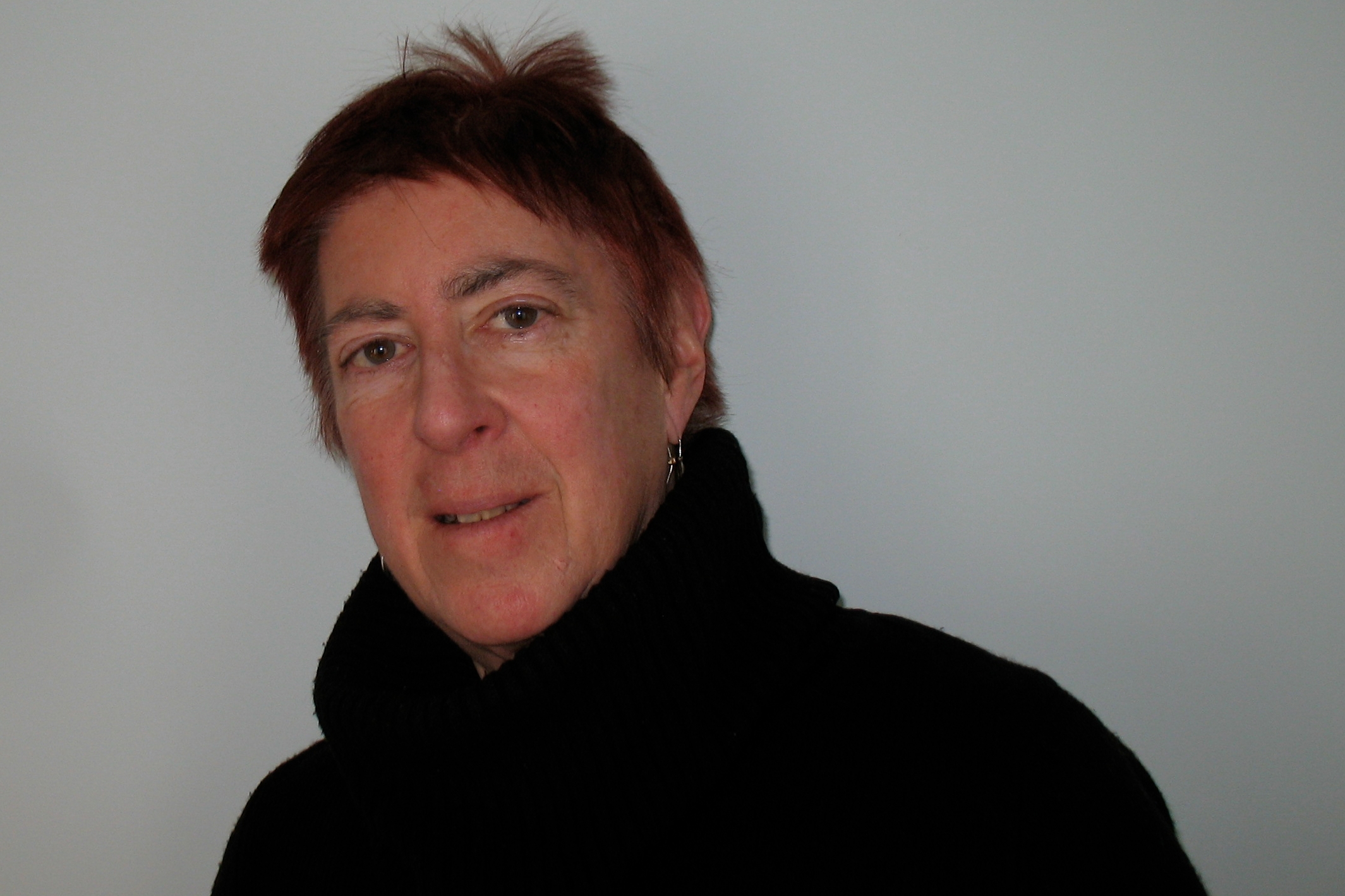
    Rachel Blau DuPlessis, 84, of Philadelphia, experimental poet and essayist, literary scholar and critic, Temple University professor of English and creative writing emerita, mentor, artist, and world traveler, died Wednesday, Sept. 2, of respiratory failure at Penn Presbyterian Medical Center.

    Professor DuPlessis was an eclectic experimental poet who grew up in New York, lived in Swarthmore and Philadelphia for more than 50 years, and taught a variety of writing and women’s studies classes at Temple from 1974 to her retirement in 2011. She wrote hundreds of poems — she called many of them “drafts” — about feminism, modernism, connectivity, imagery, and consciousness.

    She was an expert on cultural poetics and told The Inquirer in 2002 that her poems generally reflect her “awe at the universe, grief at the barbarity of modernism, and sense of how it was to be in the world.” She enjoyed poetic wordplay, reviewers said, and tinkered freely with conventional syntax, sound, tone, and form.

    “Reading her is an adventure,” reviewer Robert Long said in The Inquirer in 1997, “and poets this adventurous must be cherished.”

    Her poems were published in more than 30 books and in several languages, and also appeared in The Inquirer, other newspapers, magazines, journals, and anthologies. In tributes, fellow poets praised her “unique combination of erudition and exuberance” and her “generosity, brilliance, expansive thinking, and attention to so many possibilities of writing and art.”

    “From what I can tell, DuPlessis doesn’t write poems so much as build them,” reviewer Andrew Ervin said in The Inquirer in 2005. “The manner in which she does that is what makes the Temple professor one of the most exciting and inventive writers of our time.”

    She told the Oxonian Review in 2015 that “being a poet is not only writing poems. It is an address to the whole apparatus of and the traditions of poetic practice.”

    A book publisher said: “She brought such intelligence, generosity, and curiosity to everything she did.” Penn professor Al Filreis told Professor DuPlessis’ husband, Robert: “It’s hard to imagine the Philly poetry world without Rachel in it.”

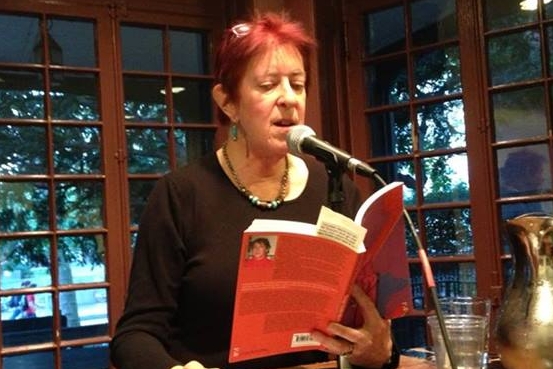
    Professor DuPlessis read her poems to people around the world. Courtesy of the family

    At Temple, Professor DuPlessis helped establish women’s studies classes and the school’s graduate program in creative writing. She mentored students and other professors, and the English department’s DuPlessis Lecture in Poetry and Poetics is named in her honor.

    “She loved being a mentor to people, to encourage them,” her husband said. “She loved being a poet and an academic. She prepared incredibly for her classes and was connected and attentive to her students.”

    Earlier, she taught briefly at what is now the College of New Jersey and Rutgers and Columbia Universities. She spent several of her research and study leaves from Temple working with students and colleagues at universities in the Netherlands, France, Belgium, and elsewhere.

    She was named a resident poet and distinguished visitor in Italy and New Zealand. She and her husband, a professor emeritus at Swarthmore College, visited every continent except Antarctica, and she spoke French and Italian as well as English.

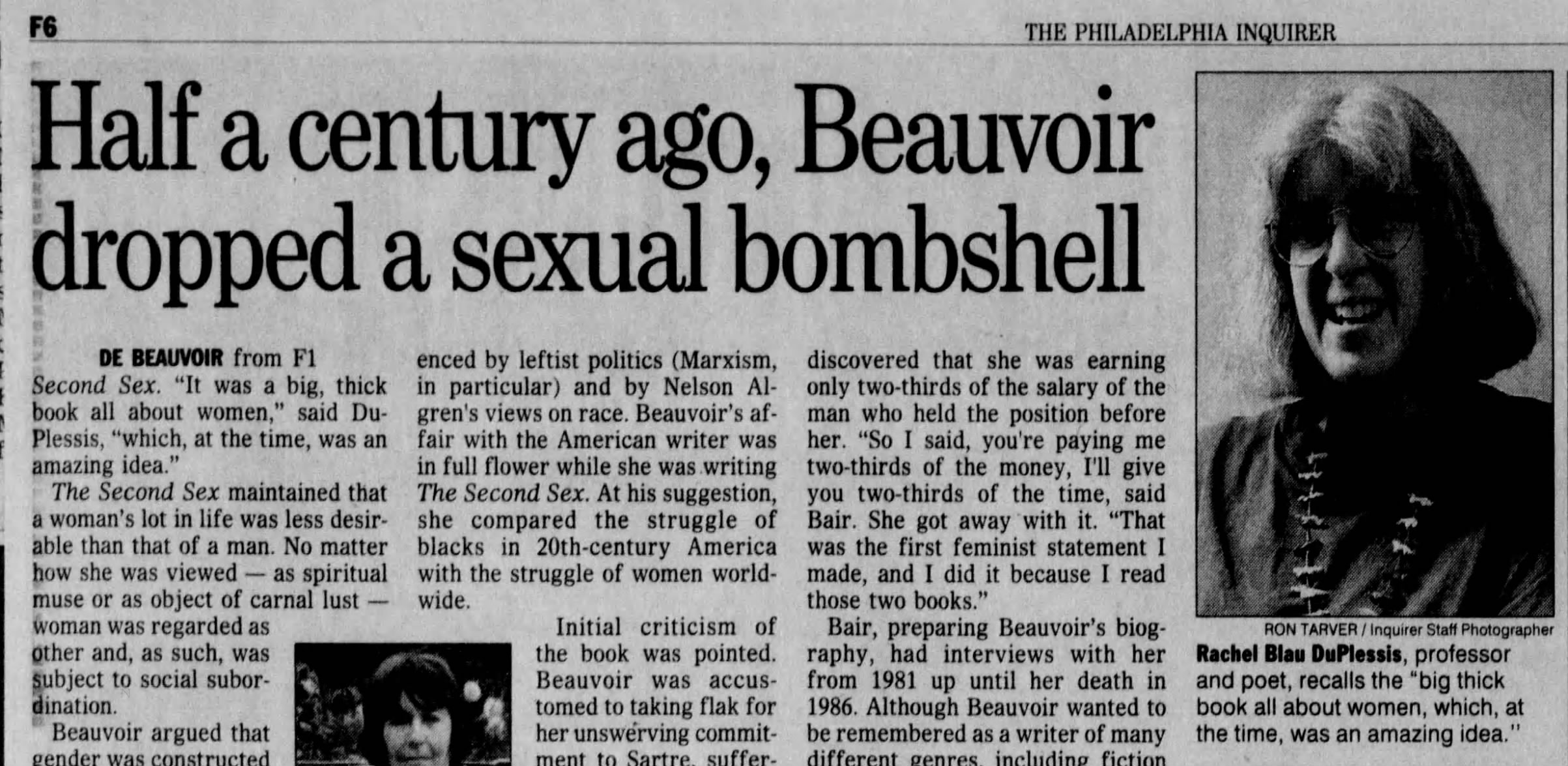
    This article featured Professor DuPlessis and appeared in The Inquirer in 1999.Newspapers.com

    She earned fellowships from the Pew Center, the Pennsylvania Council on the Arts, the National Humanities Center in North Carolina, and other groups. “She was constantly creating things,” her husband said. “She never stopped.”

    Professor DuPlessis also wrote and edited books and articles about writing and poetry, and she reviewed books for The Inquirer and other publications. She read her poems in public, was interviewed often, and earned achievement awards from Temple, the University of California in San Diego, the old Fund for Poetry, and other admirers.

    She created a comprehensive website, rachelblauduplessis.com, and made collage art that she augmented with poems. Thomas Devaney, a Philadelphia writer, called her “an important figure of American experimental poetry.”

    She told the Oxonian Review: “Poetry is an ethical practice as well as an aesthetic one. Just even thinking about what this means and how it is instantiated is a useful task.”

    Professor DuPlessis enjoyed time with her husband, Robert, and daughter, Kore.Courtesy of the family

    Rachel Maia Blau was born Dec. 14, 1941, in Brooklyn. She grew up in Queens and the Bronx, and earned a bachelor’s degree in English at Barnard College in New York in 1963 and a master’s degree and doctorate in English and comparative literature at Columbia in 1970.

    Her father was a professor, her mother a librarian. She met fellow Fulbright scholar Robert DuPlessis on a boat to France in 1966, and they married in 1968 and had a daughter, Kore.

    Professor DuPlessis enjoyed yoga, museums, art history, and long walks with her husband. They went to see and hear the orchestra, the opera, the ballet, and the theater.

    She doted on her daughter and grandchildren. “She always read me stories and sang me songs at night before bed,” her daughter said. “I would hold on to her leg because I didn’t want her to leave.”

    Professor DuPlessis started writing poems when she was 12, she said in an interview. “She was determined, hardworking, witty, and a lot of fun,” her husband said. “She was definitely intense.”

    Professor DuPlessis said she started writing poems when she was 12.Courtesy of the family

    In addition to her husband and daughter, Professor DuPlessis is survived by two grandchildren and other relatives. A sister died earlier.

    A memorial service is to be held from 1:30 to 3:30 p.m. Saturday, Oct. 17, at Temple University’s Charles Library, 1900 N. 13th St., First Floor, Philadelphia, Pa. 19122.

    Donations in her name may be made to Planned Parenthood, Online Services, Box 96771, Washington, D.C. 20090; Philabundance, 3616 S. Galloway St., Philadelphia, Pa. 19148; and the American Civil Liberties Union, 125 Broad St., 18th Floor, New York, N.Y. 10004.

  • Delaware County communities approve ordinance creating EMS authority without Media

    Delaware County communities approve ordinance creating EMS authority without Media

    Five Delaware County communities voted Wednesday to establish a new authority to provide emergency medical services funded by annual fees paid by residents, businesses, and other entities in their municipalities.

    The Municipal Emergency Medical Services Authority of Delaware County will provide advanced life support, or ALS, to Nether Providence, Rose Valley, Rutledge, Swarthmore, and Upper Providence.

    Media was originally part of the working group developing the authority proposal, but announced last week it would not be joining for financial reasons.

    Each community approved an ordinance to join the authority Wednesday night at Strath Haven Middle School and appointed a representative to the authority board.

    Nether Providence, Rose Valley, Rutledge, and Swarthmore voted unanimously to approve the ordinance. Upper Providence voted 3-1 in favor.

    The appointed board members include Nether Providence Township commissioner Max Cooper, former Rose Valley council member David Firn, Rutledge fire marshal Thomas Moleski, former Swarthmore council member Kristen Seymore, and former Upper Providence council member Christen Rexing.

    Creating an EMS authority is essential to provide reliable ALS service by stabilizing funding and staff, Swarthmore Mayor Conlen Booth said. Booth was a member of the authority working group.

    “The authority model, sharing fees across all potential users of the system, is in my opinion the most equitable way to ensure that a reliable EMS service is available to everyone who may need it,” he said.

    Talks kicked off last year shortly after Prospect Medical Holdings closed Crozer-Chester Medical Center and Taylor Hospital, leaving a gap in ALS support throughout the region.

    The authority’s name was originally going to be the Delaware County Emergency Services Authority, but was changed to avoid being confused with other county organizations and make clear that it was only providing medical service and not a police or fire response, Cooper said.

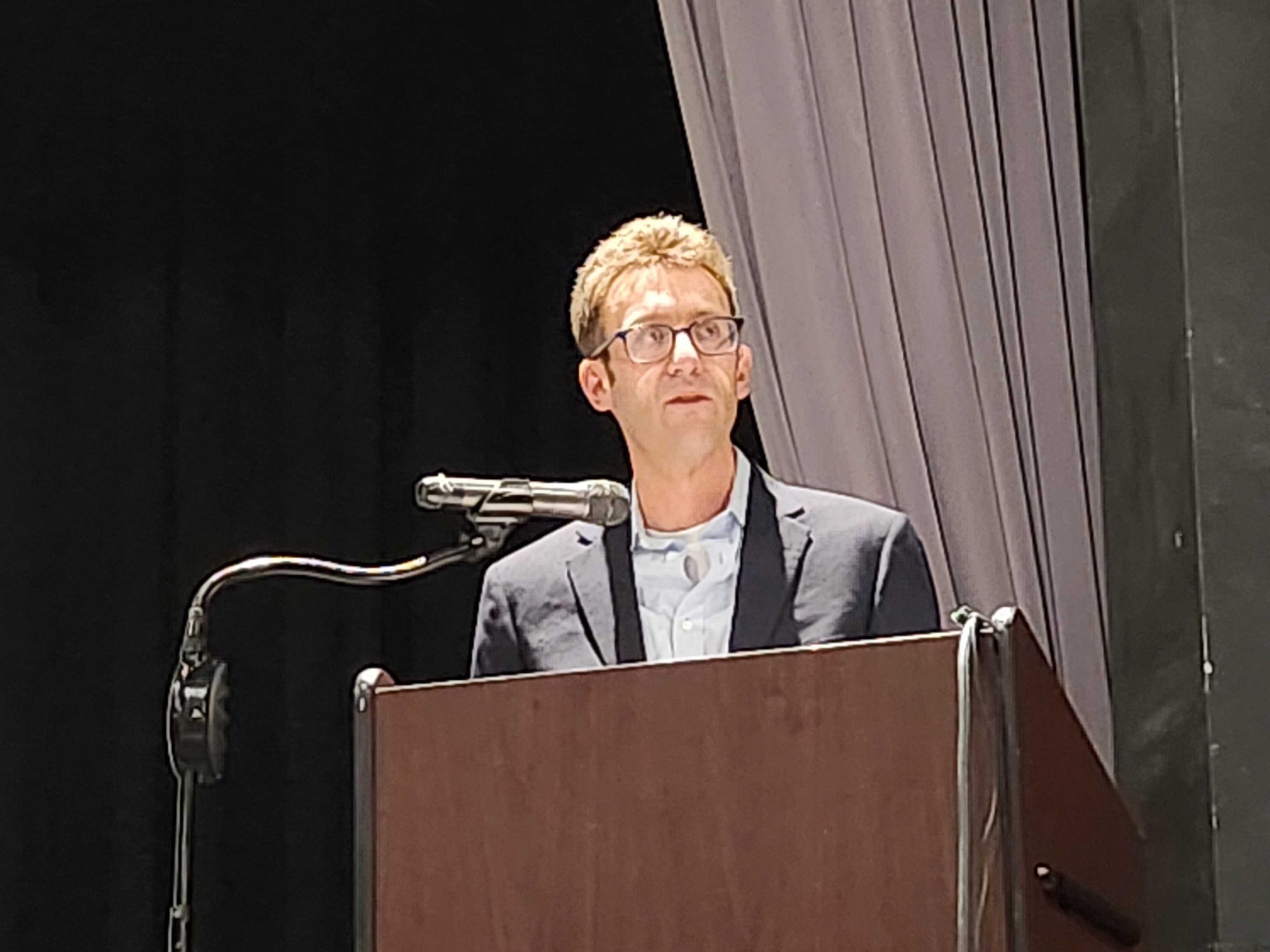
    Nether Providence Township Commissioner Max Cooper speaks after five Delaware County communities approved the creation of a regional EMS authority Wednesday at Strath Haven Middle School in Nether Providence.Torin Sweeney / Staff

    The next steps for the authority

    While the vote established the authority, it won’t immediately go into service. The new board members will be charged with building the authority based on the foundations laid by the working group.

    The recommended fee for residents will be $95 a year, although that is strictly a starting point for discussions, working group members said, and will be subject to future public hearings.

    “Ninety-five dollars is similar to the yearly voluntary subscription models that many of our local firehouses use, and is similar to other recently formed EMS authorities in the state,” Cooper said. “This works out to less than $8 a month and our working group views it as a reasonable cost to ensure stable funding for such a critically important service.”

    Businesses, nonprofit entities, and the municipalities themselves will have to contribute yearly fees as well. Using an authority and fee-based model was important for making sure nonprofits contribute to the costs of an EMS service, Cooper said. Nonprofits would not have to contribute if the system were tax based.

    “We anticipate this will decrease the amount of taxes which will need to be dedicated to this system, and relieve some municipal pressure to raise taxes on residents every year,” Cooper said.

    The board will have to decide the level of staffing and equipment needed. A potential partnership with Main Line Health is being discussed to provide some level of service.

    “The authority could contract just their staff, but the authority could choose to own the ambulances and equipment,” Booth said. “It could also be that the authority contracts them to provide all the services in their entirety and then the board manages the contract. There’s a lot of potential.”

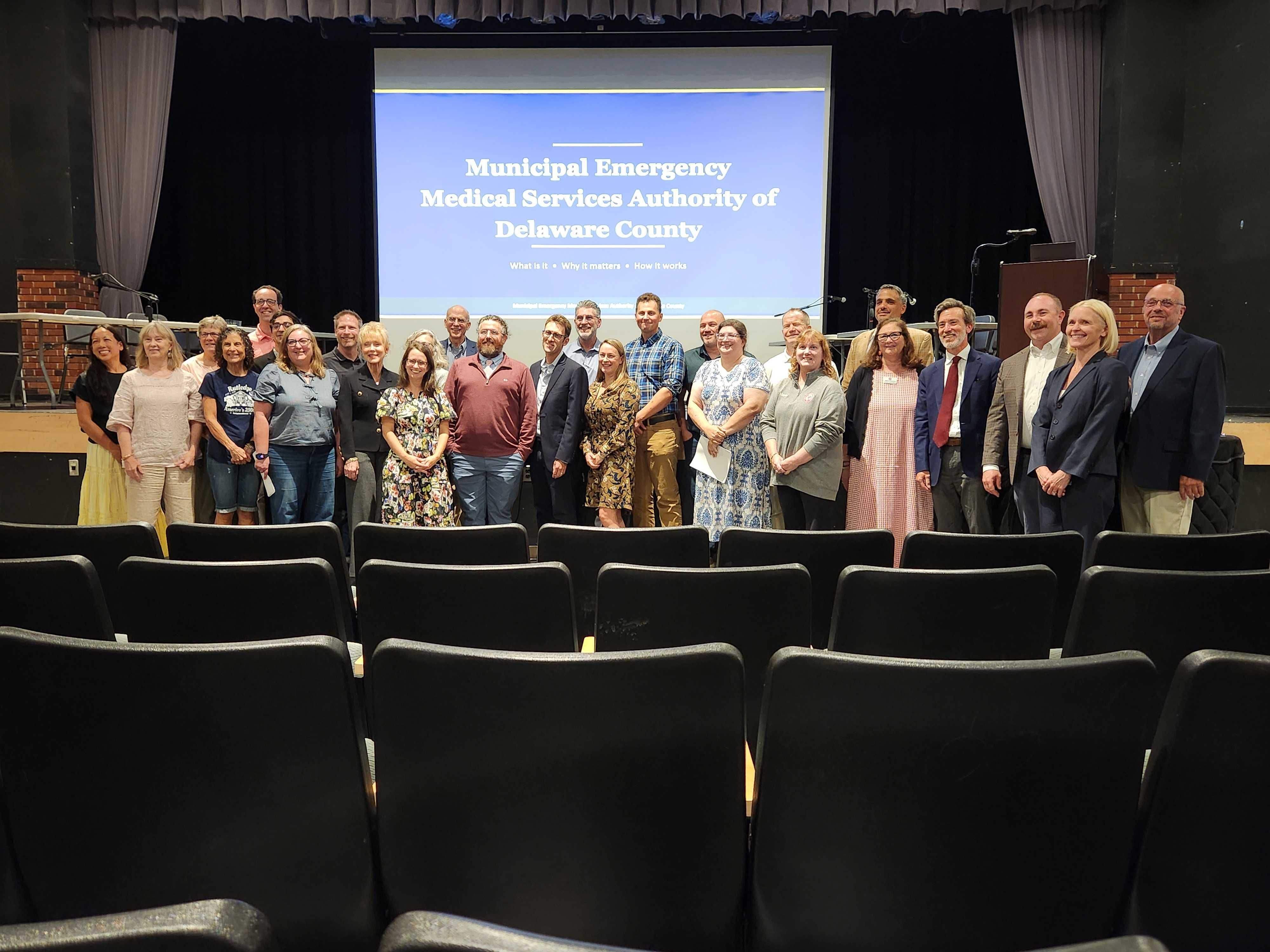
    Representatives from Nether Providence, Rose Valley, Rutledge, Swarthmore, and Upper Providence pose for a picture after approving an ordinance to create a regional EMS authority Wednesday at Strath Haven Middle School in Nether Providence.Torin Sweeney / Staff

    The working group hosted a presentation about the EMS authority and took public comments before each town approved the ordinance. Several attendees who identified themselves as Upper Providence residents spoke against the authority, questioning the logistics and cost.

    “This is a tax increase, like it or not,” Upper Providence resident Justin Perry said to scattered applause.

    Another Upper Providence resident, former longtime Marple Township Ambulance Corps member Vince Delvacchio, spoke in support.

    “I don’t know where you think you’re going to get an ambulance if we don’t do this,” Delvacchio said, to more applause.

    Why Media opted out of the authority proposal

    Media had been part of the working group for the proposed authority, but borough council decided not to proceed for financial reasons, Borough Manager Brittany Forman said.

    The borough has an existing contract with Main Line Health to provide ALS service and had been in discussions with them about projected 2027 costs. The council tasked Forman with comparing how those costs would affect taxpayers vs. the authority’s proposed fees for residents and businesses.

    Ultimately the borough determined it would be less expensive to stay with Main Line Health, Forman said.

    “Our council is interested to see this get implemented and really does want to keep the dialogue open,” Forman said. “Even though we’re not joining this year, I think this is still just a great step for the region.”

  • This incoming Swarthmore first-year is biking from Colorado to Delco for his first day of school

    This incoming Swarthmore first-year is biking from Colorado to Delco for his first day of school

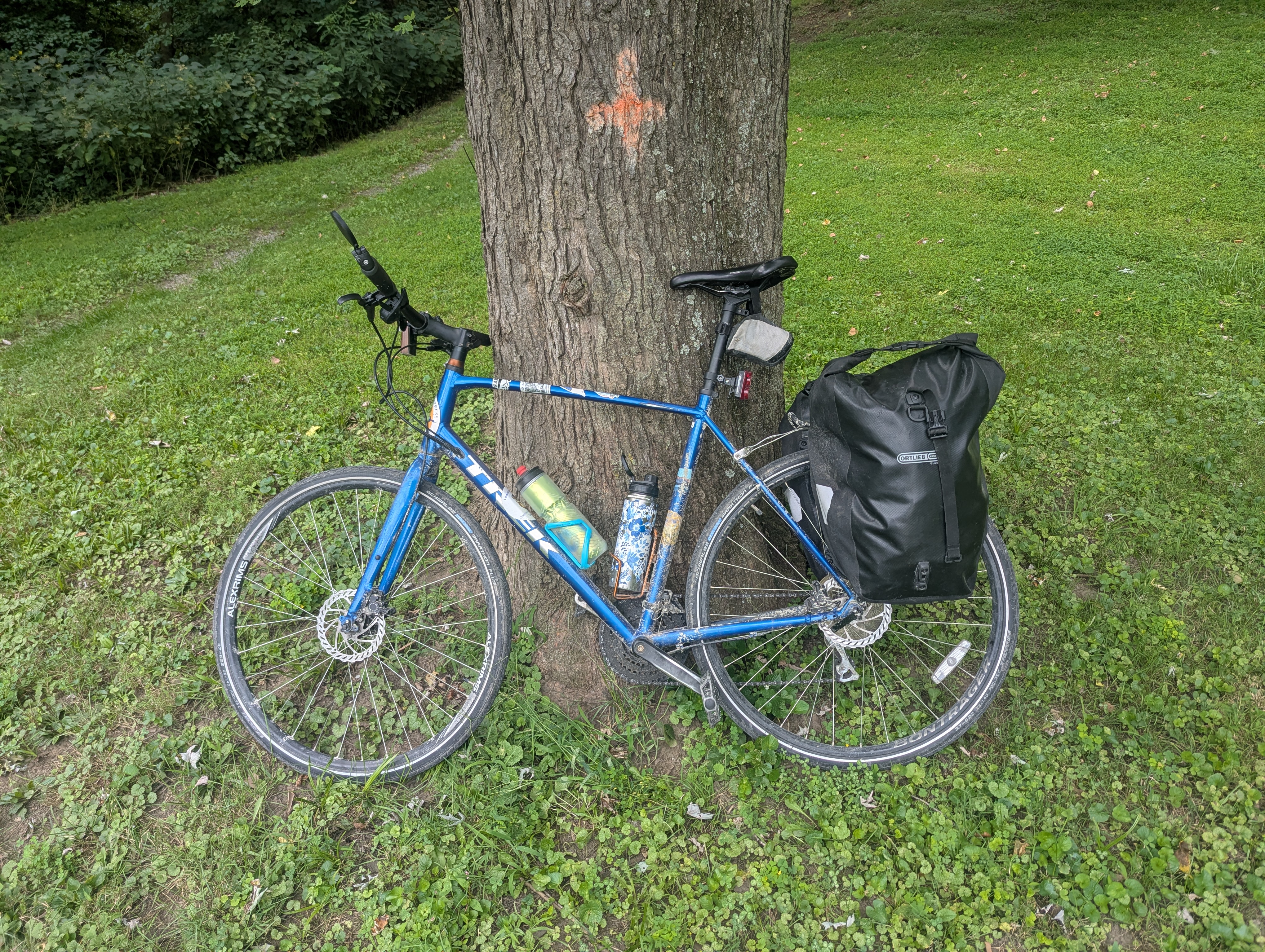
    Finn Fremstad has spent the last month biking past rolling hills and endless cornfields, through state capitols and sleepy Main Streets, and in heat waves and torrential storms. Fremstad isn’t competing in an ultra-cycling competition or checking off a 50-state bucket list — he’s commuting to school.

    Fremstad, 18, is an incoming first-year at Swarthmore College. Since July 23, he’s been on the road, biking from his hometown of Fort Collins, Colo., to Swarthmore College to start his first year.

    “To me, it just seems like kind of the perfect way to experience this country,” he said, calling in from Pennsylvania’s Franklin County on day 29 of his anticipated 31-day journey.

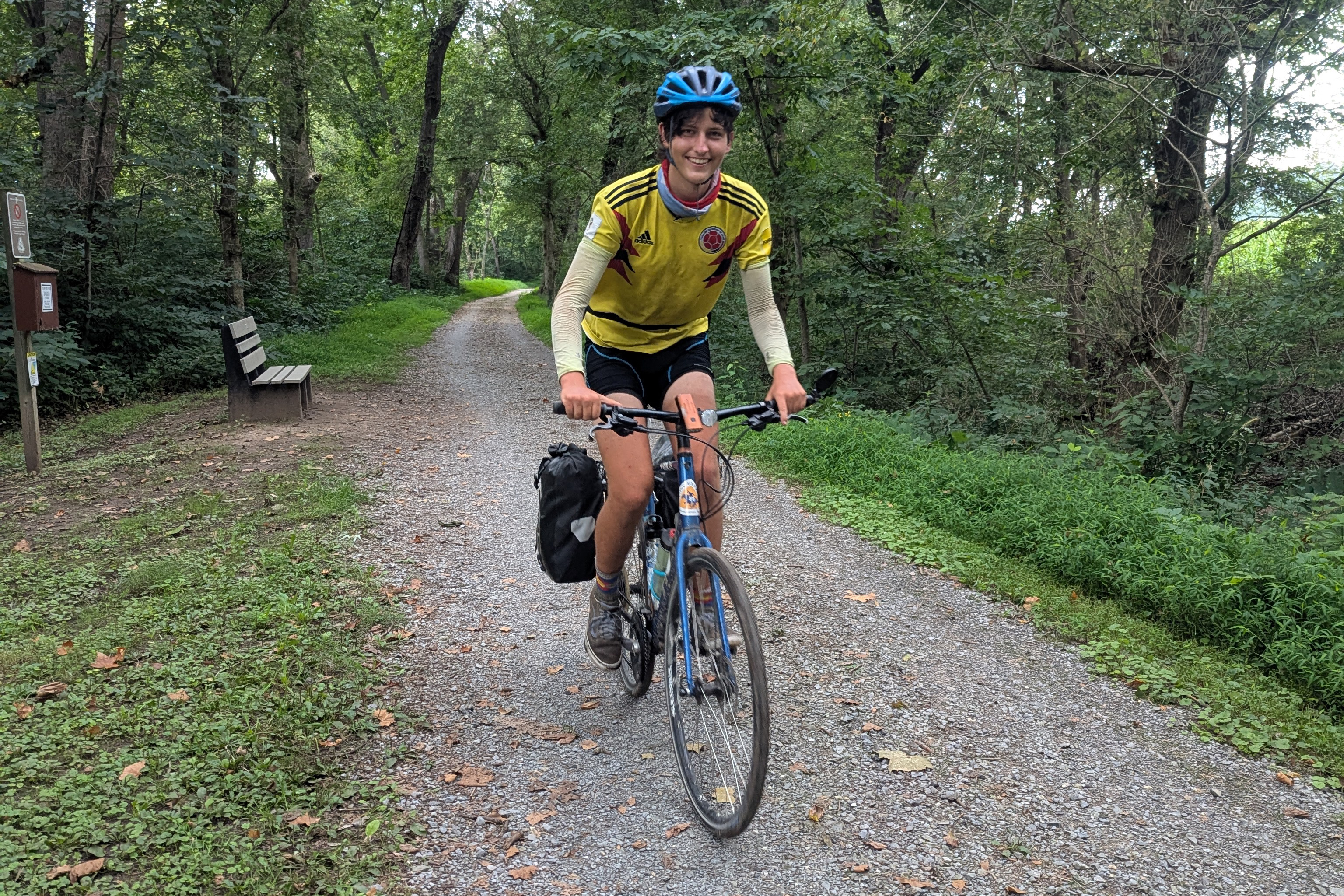
    Incoming Swarthmore freshman Finn Fremstad is biking to school from his hometown of Fort Collins, Colo.Courtesy of Finn Fremstad

    Why is Fremstad biking the roughly 2,000 miles it takes to get from northern Colorado to Delco, rather than, say, fly?

    Fremstad grew up cycling around Fort Collins, taking his bike into town and riding it to school. He had his sights set on a big trip this summer, and when a few other possibilities fell through, he decided to plan a solo cycling journey. It’s by far the longest bike trip he’s ever taken.

    He left home on July 23, armed with a playlist his parents made him and a healthy dose of pre-college excitement. As July turned to August, Fremstad passed from Nebraska into Missouri, Indiana into Ohio, and, finally, Pennsylvania. He strolled through state capitols and stopped into local museums. Sometimes he rode in silence, but most days he listened to podcasts or music (the soundtrack to the Broadway musical “Hadestown” has been a stalwart). He called his parents nightly.

    What has stood out about his travels?

    “A lot of corn and soybeans. I mean, just remarkable,” Fremstad said.

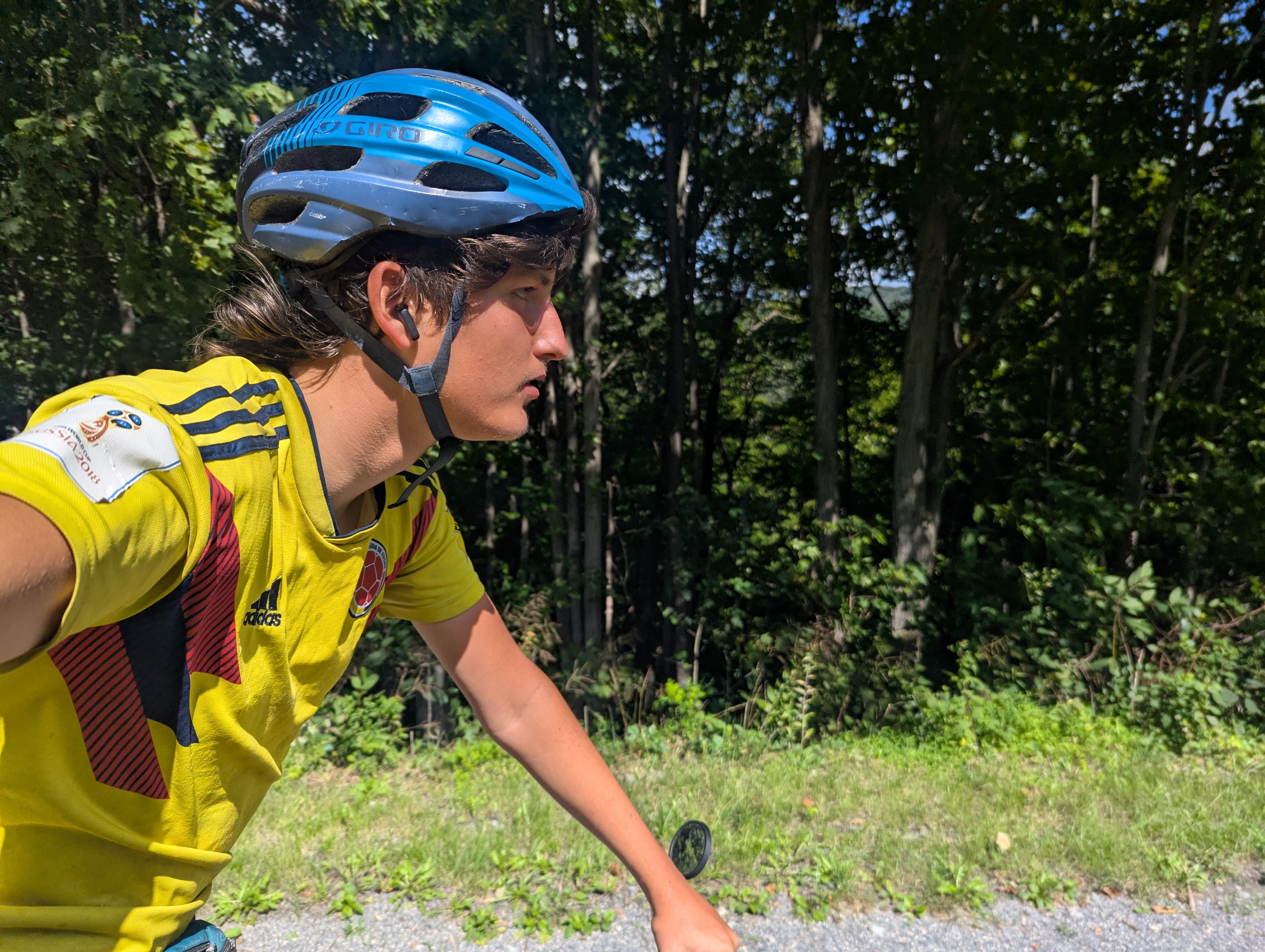
    Finn Fremstad is commuting from Colorado to Swarthmore College via bike.Courtesy of Finn Fremstad

    Each night, Fremstad rode into the nearest town and knocked on strangers’ doors asking if he could camp in their backyards. Most said yes, and some sent him on his way with food or some extra cash for his journey.

    “All of the greatest things about this trip have been how I’ve been able to interact with people,” Fremstad said.

    The trip, he said, has allowed him to “discover places and people in a much more intimate way than I would have been able to otherwise.”

    Weather has been the hardest part of the trek. He passed through Nebraska during a record heat wave and Indiana and Ohio amid torrential rain.

    Fremstad is set to hit Philly this weekend, where his mom will meet him with a checked bag (he will need a bit more than what he’s carrying on his back for college).

    Of Swarthmore, where he’ll be studying math, Fremstad said, “I’m just really excited to finally get there.”

    This suburban content is produced with support from the Leslie Miller and Richard Worley Foundation and The Lenfest Institute for Journalism. Editorial content is created independently of the project donors. Gifts to support The Inquirer’s high-impact journalism can be made at inquirer.com/donate. A list of Lenfest Institute donors can be found at lenfestinstitute.org/supporters.

  • The best thing Kiki Aranita ate this week: The savory tomato tart from Market Day Canelé

    The best thing Kiki Aranita ate this week: The savory tomato tart from Market Day Canelé

    Market Day Canelé’s savory tart is a scrapbook of sorts for owners Gil Ortale and Nem Ngo. It’s sold at farmers’ markets on weekends, each tart a collection of every interaction they’ve had through the week, shopping from their fellow vendors at Rittenhouse, Headhouse, Chestnut Hill, and Swarthmore Farmers’ Markets, and filling in the gaps at Reading Terminal Market, where Ortale once ran Fireworks, a charcoal-grill stall four decades ago.

    It’s tomato season, and the Market Day savory tomato tart ($30) is an ode to this area’s most covetable, most anticipated fruit. Crimini and white button mushrooms, corn, herb-roasted cotto ham from Claudio, Alderfer Farm eggs, and gruyère play supporting roles to the tomato slices splayed across its top. It’s a tart that’s also a philosophical meditation on produce.

    “Flavors [in my cooking] should be crystal clear examples of the very thing you imagine,” said Ortale, whose resume reads like a highlights reel of Philadelphia’s most storied restaurants, as he has worked everywhere from Frog to La Terrasse. “Like when you’re a child and tasting herring or Roquefort for the first time.”

    Ortale’s goal is to make food that tastes exactly like one’s first recollection of tasting any food. And so, his tomato tart reminds me of the first time I tasted fresh tomatoes cooked gently on a pizza, when I was five years old. It made me think of the first time I had sweet, fresh corn and the kernels burst in my mouth, and the savory British pies I ate growing up in Hong Kong.

    Nem Ngo and Gil Ortale are the folks behind Market Day Canelé. They were photographed in their Philadelphia home on Thursday, July 30, 2026.Elizabeth Robertson / Staff Photographer

    It’s so good that I was hesitant to write about it, as Ortale and Ngo usually only make two dozen to sell every week, and if you get one, there’s far less of a chance I’ll be able to get one.

    The crust is intentionally imperfect and not uniform, which makes it so flaky, it will stop you in your tracks, mid-bite. Ortale makes every single tart by hand. He doesn’t use a mixer or a Robot Coupe. “He blends the butter into the dry ingredients for each dough ball. That’s why they taste the way they do, they’re light and never stodgy,” said Ngo. “You can’t get that without elbow grease. It can’t be done with a machine.”

    This approach is also why Market Day Canelé has never opened a brick-and-mortar bakery. They have no desire to scale up.

    “We’re not hardcore capitalists. We just genuinely want to make good food. The farmers’ market industry is the most supportive and values-driven part of the food economy. People are shopping there because they want to know where their food is coming from and they want to see the faces of the people who make the food. We try to uphold that by doing everything by hand, with love, and to the best of our ability,” said Ngo.

    The canelé by Market Day Canelé is a vanilla custard pastry that is the traditional pastry of Bordeaux. It was photographed in Philadelphia on Thursday, July 30, 2026.Elizabeth Robertson / Staff Photographer

    The airy, honey-combed crevices of beeswax and butter-slicked canelés may be the emblem of their business. They certainly have sent Ortale and then Ngo down an obsessive path of perfecting a corner of French-rooted baking traditions. But their savory tarts, with a rotation of ultra-local ingredients, many sourced from their friends, are the finest illustration of how skilled hands and devotion to one’s community can produce extraordinary things.

    Market Day Canelé, instagram.com/marketdaycanele. Hours: Every Saturday, 9 a.m. to 2 p.m. at Rittenhouse Farmers’ Market and every Sunday, 10 a.m. to 2 p.m. at Headhouse Farmers’ Market. Every other Saturday: Chestnut Hill Farmers’ Market and Swarthmore Farmers’ Market, 9 a.m. to 12 p.m.

  • Access to high school sports in Pa. depends on where you live, a new report finds. Here’s a breakdown.

    Access to high school sports in Pa. depends on where you live, a new report finds. Here’s a breakdown.

    More than 30% of high school students in the affluent Radnor and Wallingford-Swarthmore districts played sports in the 2024-25 school year.

    In the Philadelphia school district, less than 10% of high school students did.

    The disparities are part of a pattern, with fewer students playing sports in lesser-resourced urban schools, according to Research for Action, a Philadelphia-based educational research organization that released a report Thursday analyzing high school sports participation rates across Pennsylvania.

    The report, which looked at sports as another barometer of opportunities available to students, found participation varies widely — as does school spending on sports programs.

    It also found a link between funding and sports participation, with more students on average playing in higher-spending districts.

    “The degree to which a student may have access to school athletics really depends on what district they’re in,” said Maja Pehrson, the report’s lead author.

    Here’s what the report found — and what questions it raises about access to high school sports in Pennsylvania.

    There are big differences in sports participation rates

    Participation in school sports “hasn’t really been looked at very much,” Pehrson said. Research for Action analyzed data that school districts and charter schools are required to report to the Pennsylvania Department of Education on athletic opportunities.

    The report found participation rates in the 2024-25 school year ranging from 5% in some school districts, to a handful of districts with rates above 40%.

    Topping the list locally were Jenkintown School District, at 35%, and Springfield Township School District in Montgomery County at 34%; followed by Radnor and New Hope school districts, at 31%; Wallingford-Swarthmore, at 30%; West Chester, at 28%; and Upper Dublin, at 27% — all majority white, relatively affluent districts.

    Below the Philadelphia school district’s 9.6% rate were Upper Darby, at 9%; William Penn and Norristown, at 8%; and Chester-Upland, at 6% — all districts that are majority non-white and high-poverty.

    Overall, large, urban districts tended to have the lowest participation rates, meaning “almost half of Pennsylvania high school students are enrolled in districts where the likelihood of participating in a school athletics team is relatively low,” the report said.

    Those “very low” participation districts — with 5% to 17% of students participating — also offered fewer sports per 1,000 students than high-participation districts, the report found.

    Naima DeBrest, a spokesperson for the Philadelphia district, said the district had expanded athletic opportunities in recent years “by introducing new sports such as girls wrestling and girls flag football” and creating intramural programs at the elementary and middle school levels.

    Despite “common challenges” faced by urban districts, “the district remains committed to expanding access to high-quality athletic opportunities and ensuring students have meaningful opportunities to participate in sports that support their academic success, well-being, and overall development,” DeBrest said, noting that the district’s rate is comparable to other urban districts.

    <iframe title="Sports Participation and Athletics Spending Among Local School Districts" aria-label="Table" id="datawrapper-chart-dyc1W" src="https://datawrapper.dwcdn.net/dyc1W/1/" scrolling="no" frameborder="0" style="width: 0; min-width: 100% !important; border: none;" height="971" data-external="1"></iframe><script type="text/javascript">(function(){function e(){window.addEventListener(`message`,function(e){if(e.data[`datawrapper-height`]!==void 0){var t=document.querySelectorAll(`iframe`);for(var n in e.data[`datawrapper-height`])for(var r=0,i;i=t[r];r++)if(i.contentWindow===e.source){var a=e.data[`datawrapper-height`][n]+`px`;i.style.height=a}}})}e()})();</script>

    There are also big gaps in spending

    The report found a relationship between money and sports participation rates. Among the 10% of school districts deemed most underfunded by a state formula calculating what schools need to adequately educate students, more than half had “very low” sports participation rates, while more than two-thirds had “very low” or “low” participation, according to the report.

    And looking at what districts spend on athletics, it varied widely, the report found. Districts with “very low” participation reported spending an average of $409 per high school student on athletics, while “very high” participation districts — with 28.2% to 61.6% of students participation — spent an average of $939 per student.

    Locally, the Jenkintown, West Chester, Phoenixville, and Colonial school districts reported spending more than $1,100 per high school student on athletics, compared with $145 per high school student in Philadelphia.

    The report noted that those figures don’t fully reflect spending on school sports. Many districts didn’t report any spending on athletic facilities, for instance; Pehrson said it was likely hard for schools to calculate how much of their overall facilities spending was tied to athletics.

    The data also don’t reflect any activities fees paid by students.

    Charters have lower participation rates — but in line with Philly

    Statewide, brick-and-mortar charter schools, which are publicly funded but independently run, reported lower rates of sports participation. On average, 8.4% of charter high school students participated in sports, compared with 18.1% in district schools. (Cyber charter schools reported no participation; charter students who participate in district programs are counted by districts.)

    Rather than a difference between the charter and district sectors, however, the gap could largely be a product of school district conditions, the report said. Half the state’s charter high schools are located in Philadelphia, where the charter sports participation rates largely mirror the district’s, the report said.

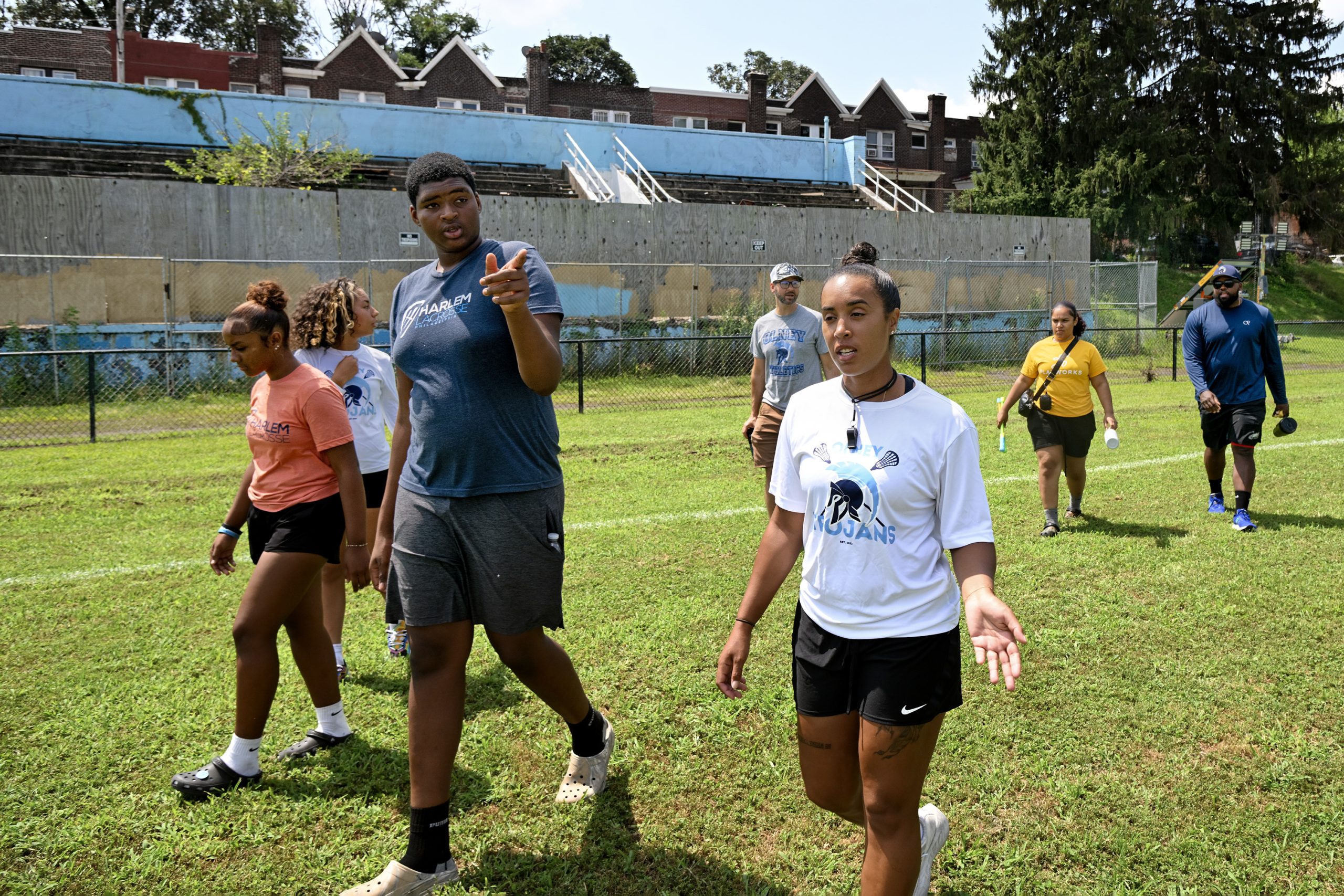
    In front of their boarded up dilapidated stadium, Olney High School athletes Cindi Lizardo (from left), Emma Blanco, Sidi Traore; and principal Michael Roth, coach Siena Childs, recent graduate Ysis Rivera, and athletic director Jorge Gonzalez point out the deplorable condition the sports facilities are in July 24, 2025. Olney High School, which spent a decade under charter management, was turned back over to the Philadelphia school district in 2022.Tom Gralish / Staff Photographer

    Gender gaps persist

    Boys participated in sports in 2024-25 at a higher rate than girls — at an average rate of 20.3% compared with 15.8%, the report found.

    And those gaps persisted across different types of school districts, the report found. For instance, in districts with “very low” overall sports participation, 14% of boys participated, compared with 10% of girls. In districts with “moderate” participation, 24% of boys participated, compared with 19% of girls. And in “very high” participation districts, 35% of boys participated, compared with 30% of girls.

    What’s driving the disparities?

    The report found that access to high school sports in Pennsylvania “is not evenly distributed and is strongly shaped by structural conditions.”

    “Districts with fewer athletic opportunities are more likely to be urban districts with large high schools and more students of color, and they tend to offer a narrower range of teams and spend less per student on athletics, limiting the extent to which students can engage,” the report said.

    But district funding alone isn’t responsible for disparities, the report noted. The gender gap, for instance, is found in well-funded and poorly funded districts.

    The pattern of higher-spending districts seeing more participation “doesn’t line up neatly for every district,” Pehrson said, noting that the data can’t fully answer questions about what’s driving differences in participation.

    Other possible factors could include transportation and sports outside of schools, Pehrson said.

    DeBrest, the Philadelphia spokesperson, noted that urban districts may also have limited athletic facilities, and practice space “and the need for some students to balance academics, work, or family responsibilities.”

    Pehrson hopes the findings prompt more investigation into the availability of school sports, which “are a key part of students’ educational opportunities,” Pehrson said — from boosting physical and mental health, to promoting social-emotional skills and building community.

    “There are clear disparities in terms of sports opportunities students are having,” Pehrson said. “Why is that, and how can we move forward and try to figure out these differences?”

    Editor’s note: This story has been updated to reflect that Jenkintown and Springfield Township were the local districts with the highest sports participation rates.