Tag: SEPTA

  • John J. Sweeney Jr., former state senator and longtime federal Small Business Administration official, has died at 99

    John J. Sweeney Jr., former state senator and longtime federal Small Business Administration official, has died at 99

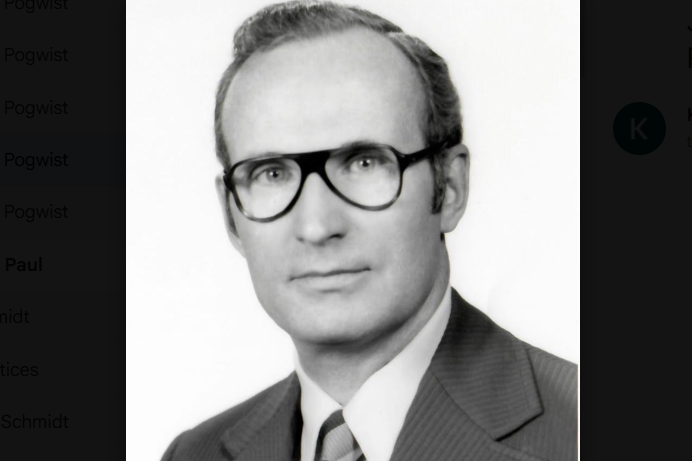
    John J. Sweeney Jr., 99, of Haverford, former Pennsylvania state senator, longtime official with the federal Small Business Administration, veteran, and volunteer, died Friday, Oct. 2, of age-associated decline at his home.

    Sen. Sweeney served in the state Senate from 1975 through 1978 as the first Democrat elected to represent the 26th District in Delaware County. The Inquirer covered his 600-vote election victory over Republican F. Joseph Loeper in 1974 and said he had been “given little if any chance even by members of his own party” to win in a district “that includes some of the strongest Republican areas in the county.”

    A month before his victory, Sen. Sweeney told The Inquirer: “I find that my biggest asset is that I’ve never been in politics.” His daughter Kathy said: “He loved election night. That was his Super Bowl.”

    He went on to become chair of the Senate’s old Military Affairs and Aeronautics Committee, vice chair of the Consumer Affairs Committee, and member of the Health and Welfare Committee and the Pennsylvania Public Television Commission. In 1976, he championed legislation that provided a permanent wage tax limit on nonresidents who work in Philadelphia and urged SEPTA to voluntarily place itself under the supervision of the state’s Public Utility Commission due to fare increase issues.
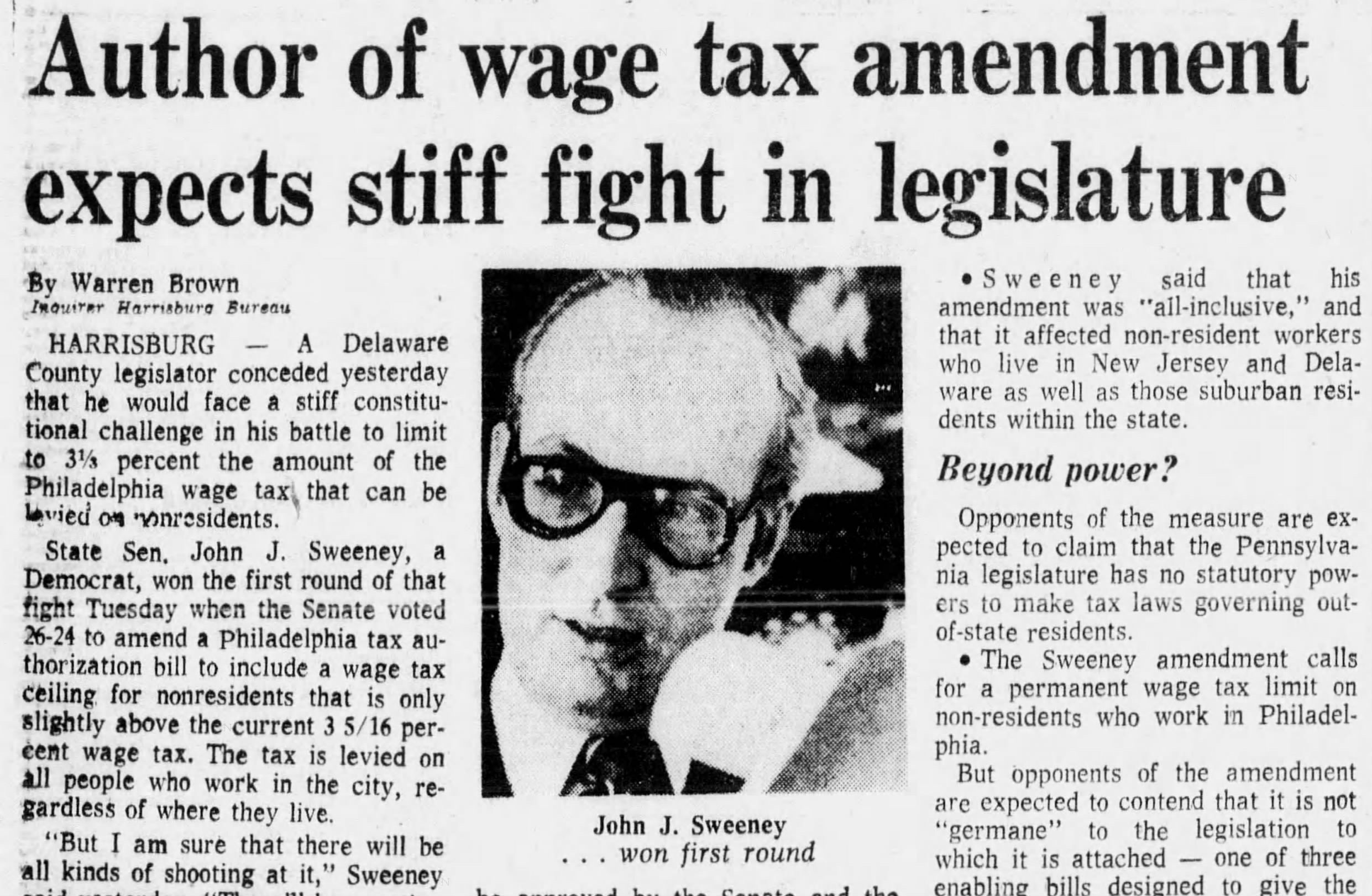
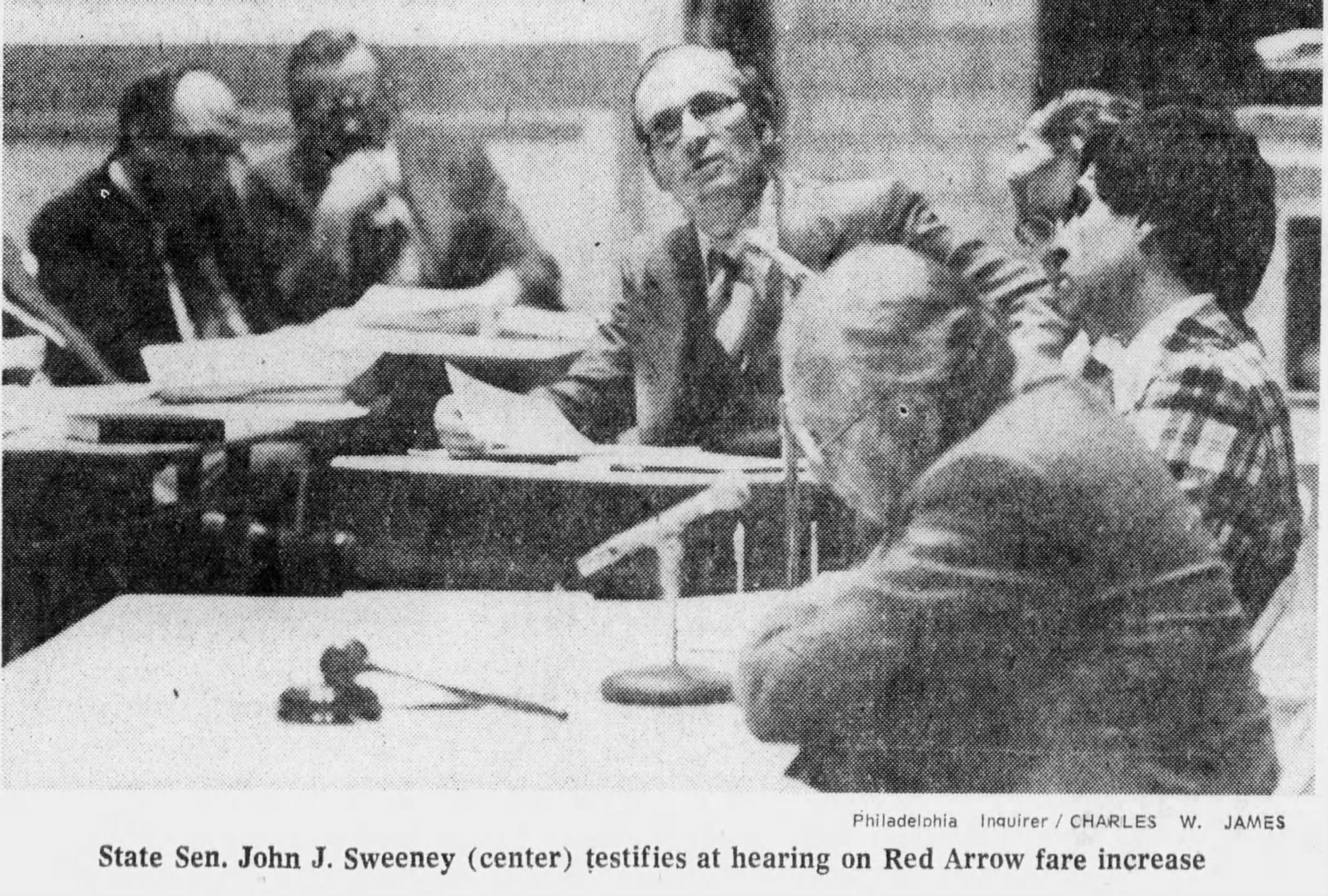
    Sen. Sweeney appeared many times in The Inquirer in 1976.Newspapers.com

    He also opened the first local state senator’s office in Delaware County. According to his online Senate Library biography, he did not seek reelection “as the $18,720 salary couldn’t support his [growing] family.”

    On Oct. 21, the state Senate recognized Sen. Sweeney with a moment of silence on the floor and a resolution of condolence. “He modernized Senate procedures, most notably with Senate confirmation hearings for cabinet appointments, and championed other important reforms for the commonwealth,” Sen. Tim Kearney, a Delaware County Democrat, said in a tribute. “It was an honor to celebrate his life of service.”

    After his Senate term, Sen. Sweeney spent 30 years as an award-winning administrator with the federal Small Business Administration in Philadelphia and Washington. In retirement, he mentored juveniles for the Upper Darby Youth Aid Panel and seniors for the Delaware County Office of Services for the Aging.

    He also represented Irish Americans for the old Pennsylvania Heritage Affairs Commission. One of his favorite sayings was: “A Sweeney never quits.”
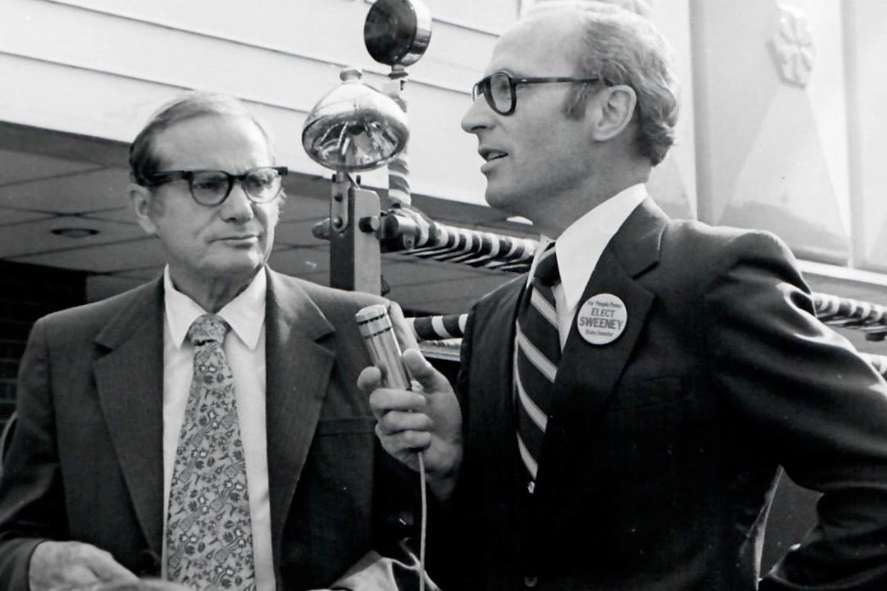
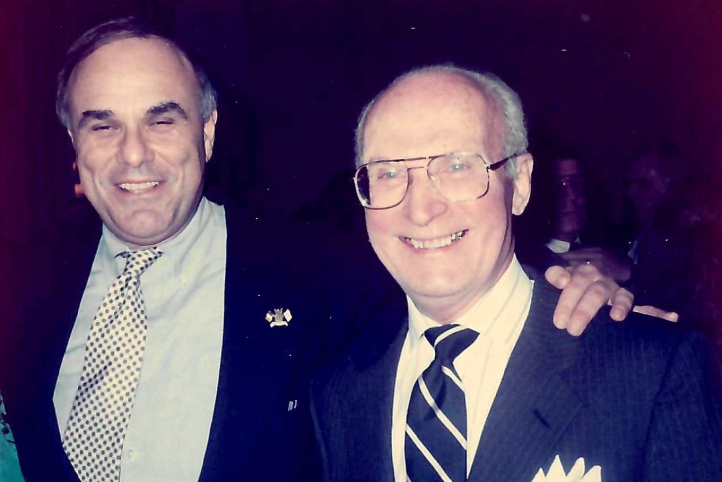
    Sen. Sweeney, right in both photos, worked with Gov. Milton Shapp (above) and Gov. Ed Rendell (below). Courtesy of the family

    Sen. Sweeney enlisted in the Army in 1946, was stationed in Japan after World War II, and rose to the rank of staff sergeant. He attended classes at St. Joseph’s, Temple, and Pennsylvania State Universities, earned a real estate broker license, and was vice president at Mortgage Corp. of America before joining the Senate.

    His father died when he was 9, and he worked jobs at a pharmacy, a butcher’s shop, and elsewhere to help support his mother and two sisters. He graduated from the old St. Thomas More High School in 1945.

    “The challenges he faced as he grew up laid the foundation for his future success,” his family said in a tribute. “He believed the dinner table was the foundation of a loving family, a time to gather, listen, learn, support, and advise those we loved.”

    John James Sweeney Jr. was born June 1, 1927, in Philadelphia. A first-generation Irish American, he married Dolores Grzymala in 1954, and they had sons John III, Gerard, Dennis, Joseph, and Kevin and daughters Grace Ann and Kathleen.
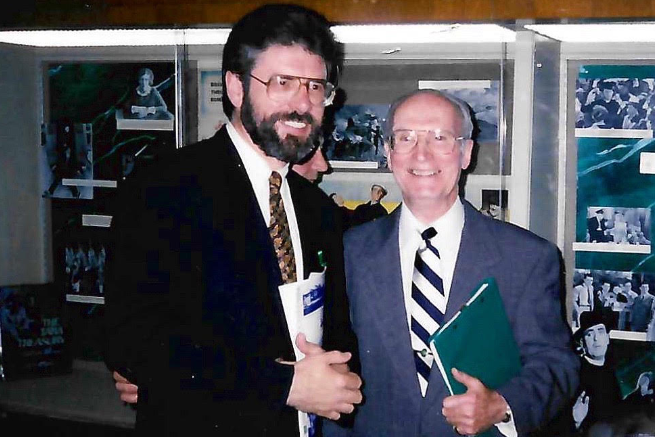
    Sen. Sweeney (right) stands with Irish politician Gerry Adams.Courtesy of the family

    They lived in Springfield, Delaware County, Drexel Hill, and Haverford. His wife and son Kevin died earlier.

    A devout Catholic, Sen. Sweeney was a Communion minister and youth religion teacher at St. Andrew the Apostle Church in Drexel Hill. He was active with the Knights of Columbus and received an honorary title of Kentucky Colonel by the governor of Kentucky for his work in the state with the Small Business Administration.

    He was an avid reader and do-it-yourself plumber, carpenter, and electrician. He was active with many Irish American cultural activities and spent memorable vacations with his family in Avalon, N.J.

    His son John said: “We learned kindness and compassion for others through his example. Charity was a consistent theme.”
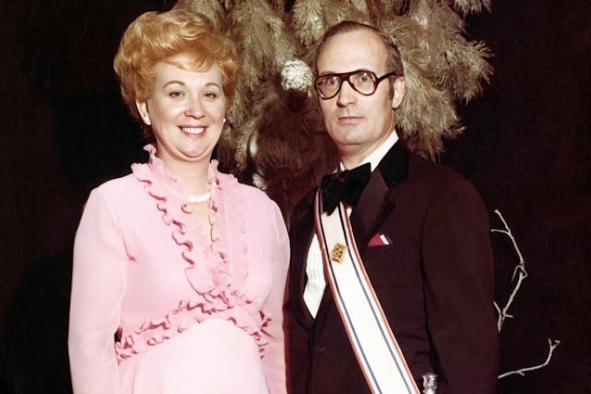
    Sen. Sweeney and his wife, Dolores, married in 1954.Courtesy of the family

    His daughter Grace Ann said: “He was devoted to helping people. His door was always open.”

    His family said: “He was always ready to lend a hand, give a hug, wipe a tear, or just listen. He was a rich man not defined by wealth but by love of his family.”

    In addition to his children, Sen. Sweeney is survived by many grandchildren and great-grandchildren, a sister, and other relatives. A sister died earlier.

    Services were held earlier.

    Donations in his name may be made to the Basilica Shrine of Our Lady of the Miraculous Medal, 475 E. Chelten Ave., Philadelphia, Pa. 19144.
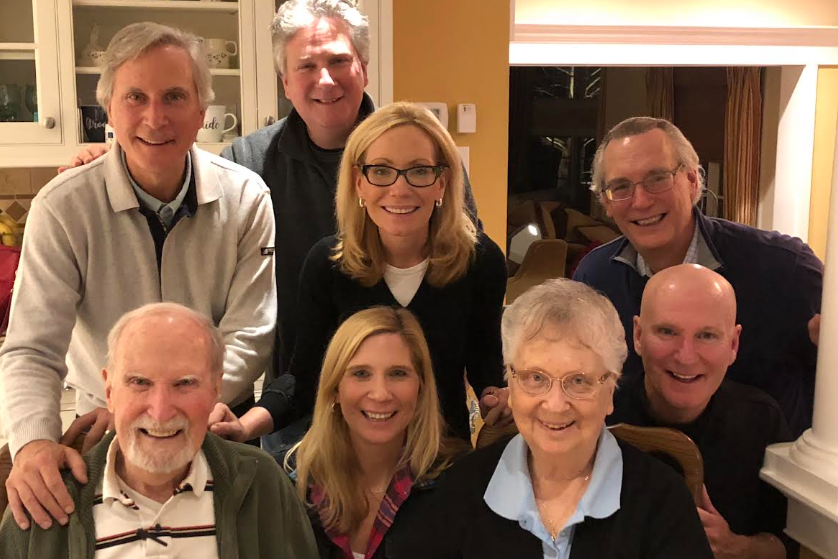
    Sen. Sweeney (front left) “was a rich man not defined by wealth but by love of his family,” his family said.Courtesy of the family
  • Philadelphia’s House delegation in Harrisburg names Ben Waxman as its new chair

    Philadelphia’s House delegation in Harrisburg names Ben Waxman as its new chair

    Philadelphia’s state House delegation in Harrisburg has a new face, as Democrats enter uncharted territory where they control the House, Senate and governorship for the first time in decades.

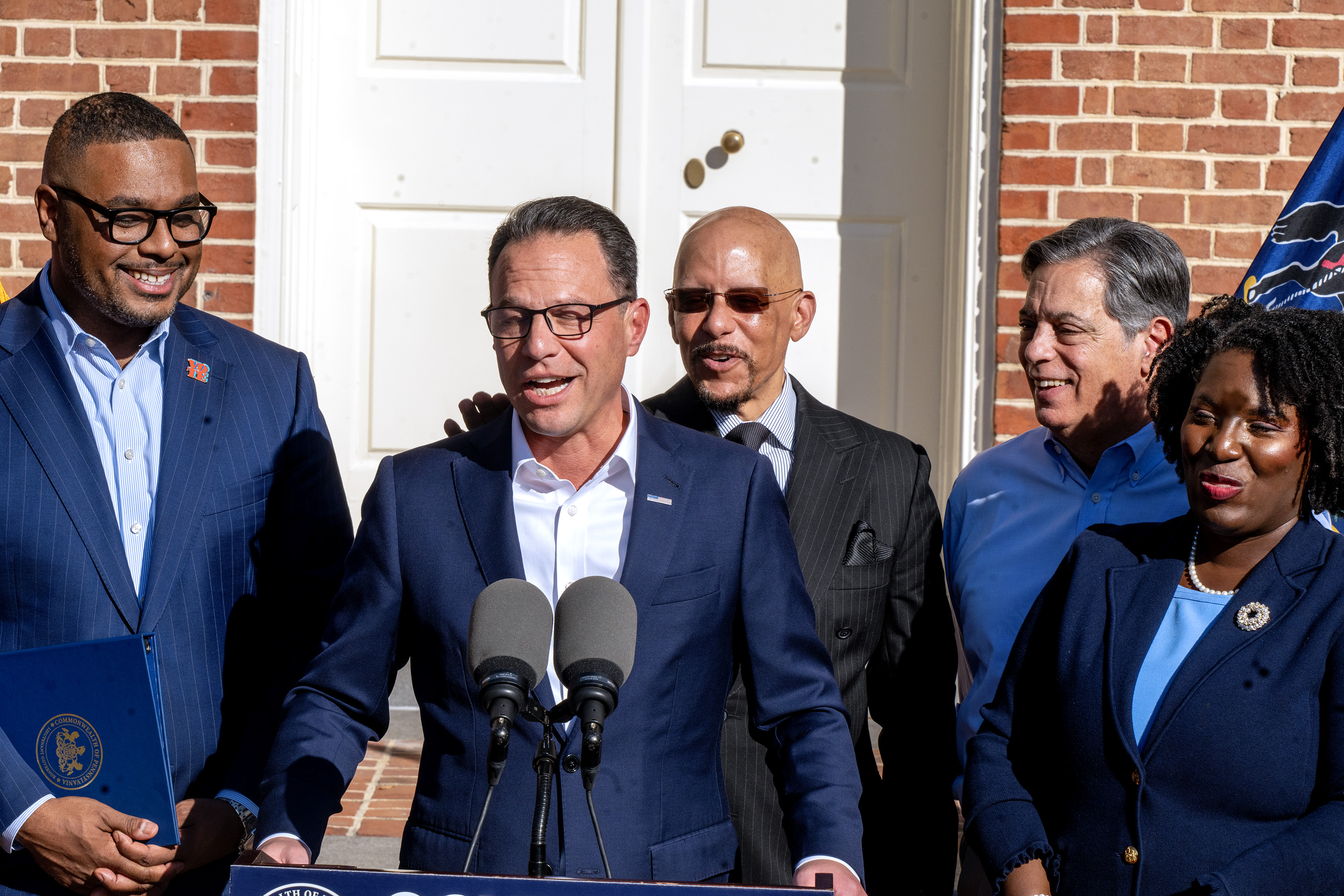
    Rep. Ben Waxman (D., Philadelphia), who represents parts of Center City, was chosen to lead Philly’s 25-member House delegation. As the new chair, he is tasked with advocating for the city’s interests, from mass transit funding, to a minimum wage increase, to ambitious tax changes. He will replace Rep. Morgan Cephas, who was term-limited in the position.

    Philadelphia Democrats are again well positioned to push policies that will impact the city with two of the top three Democrats coming from the city — and Gov. Josh Shapiro hailing from its suburbs.

    House Speaker Joanna McClinton (D., Philadelphia) is expected to be reelected to the most powerful position in the state House in January for the new legislative session. Rep. Jordan Harris was also again chosen by House Democrats to lead the powerful appropriations committee, which almost every bill must pass through before becoming law.

    Waxman, a former top aide to District Attorney Larry Krasner and State Sen. Vince Hughes, said he envisions his new job as a unifier among the lawmakers representing the state’s most populous city. Prior to his time as a spokesperson, Waxman was a journalist at the Philadelphia Daily News.

    He described himself as a “Philadelphia nationalist” who plans to bring that view to his new position in Harrisburg, in an effort to “prioritize the whole city,” he said. Philly’s state lawmakers are highly motivated to increase Pennsylvania’s minimum wage to $15 an hour — a long-time Democratic priority and one that Shapiro promised will be the first bill to reach his desk next year.

    With newly consolidated power, Waxman said he is excited that Democrats should be able to deliver a new revenue stream to support statewide mass transit, including for SEPTA, which is the state’s largest transit agency and serves the Philadelphia area.

    Waxman said the delegation will focus on anti-poverty policies, such as housing affordability, education funding, workforce development, public safety, and more. Philadelphia recently returned to the top spot as the poorest big city in America, with 20.4% of Philadelphians living in poverty last year, according to data from the U.S. Census Bureau.

    “It’s a moment of possibility for Philadelphia,” Waxman said. “My goal is to make sure that we stick together,” he added.

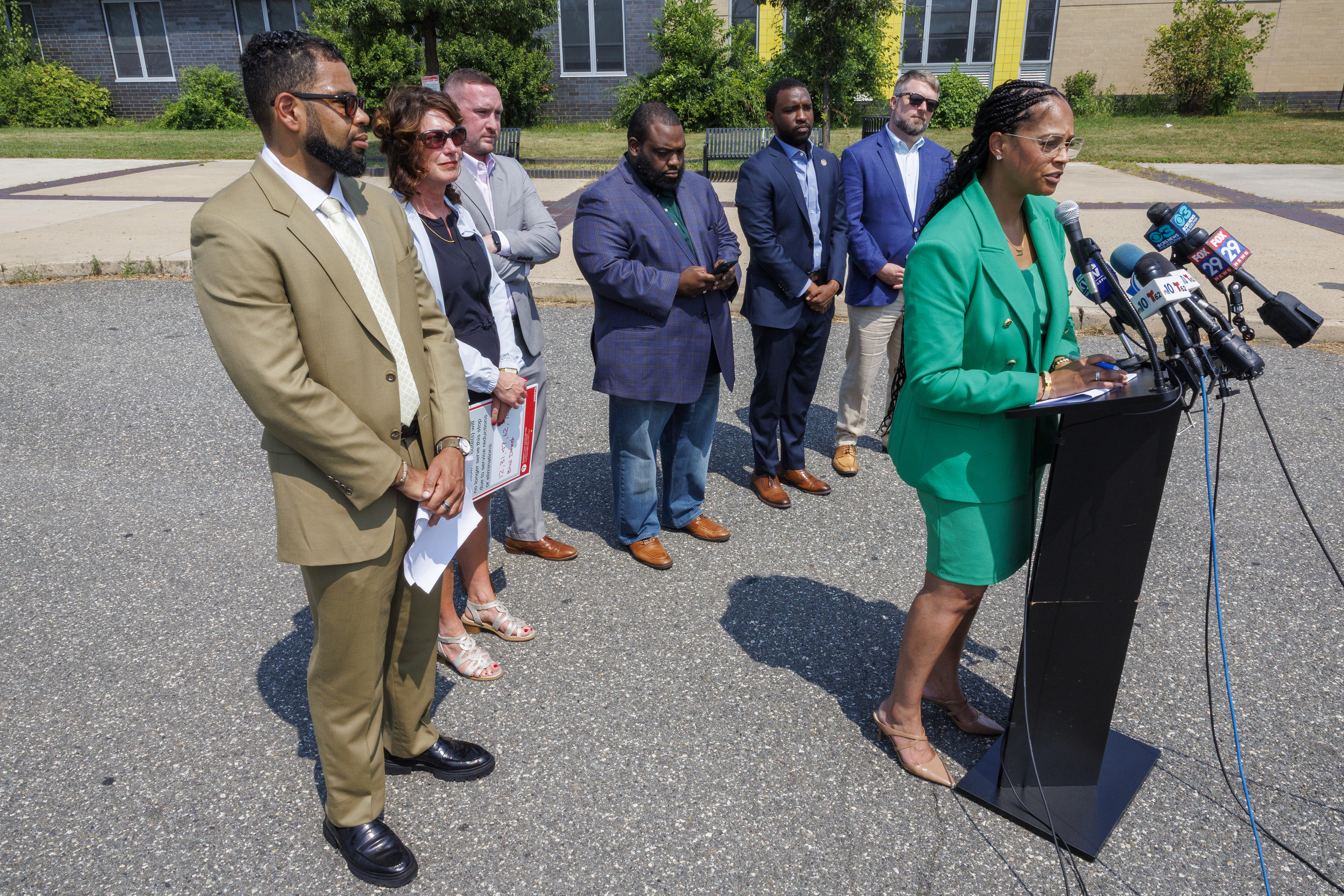
    State Rep. Morgan Cephas surrounded by other lawamkers outside Abraham Lincoln High School in this 2025 photo. Alejandro A. Alvarez / Staff Photographer

    Cephas said she was proud to pass the reins to Waxman, who she said in a statement has been a “fierce advocate for mass transit, resources for our unhoused neighbors, while simultaneously securing significant investments for the cultural institutions in Philadelphia.”

    “While we represent different neighborhoods, our responsibility extends beyond our individual districts to fighting for our city as a whole,” Cephas added.

    Rep. Anthony Bellmon will serve as the Philadelphia Delegation’s vice-chair, followed by Reps. Roni Green and Darisha Parker as treasurer and secretary, respectively.

    Waxman said he hopes to continue and build on the work done by Cephas, including multilevel collaboration with Philadelphia Mayor Cherelle L. Parker and other top city officials.

    Parker is scheduled to host the Philadelphia Delegation for one of her private intergovernmental roundtables on Monday.

    The mayor, who led the delegation when she was a state representative, in a statement congratulated Waxman and the new leaders.

    “​When we work collaboratively, the Commonwealth, the City of Philadelphia and all our citizens prosper, as we work to deliver on an agenda of affordability and economic opportunity for all.”

    The Philadelphia Delegation is the state’s second-largest delegation, followed by the Southeast Delegation, which is composed of members from the collar counties.

    The Southeast Delegation is set to have 39 members, including five new members after Democrats ousted several of the remaining Republicans in Philadelphia’s suburbs. Regional delegations often serve as a way for members to join together to push for specific policies affecting their constituents.

    Lawmakers in Harrisburg are set to finalize their leadership teams for the 2027-28 legislative session next week, with Senate Democrats on Thursday naming longtime Senate Minority Leader Jay Costa (D., Allegheny) as the president pro tempore in the Senate and Sen. Maria Collett (D., Montgomery) as the next majority leader.

  • Does Harrisburg’s blue wave mean a payday for SEPTA? It’s not that simple.

    Does Harrisburg’s blue wave mean a payday for SEPTA? It’s not that simple.

    Increasing state funding for SEPTA and other public transit systems should be easier next year when Democrats control all three of the power centers in Harrisburg for the first time in more than three decades.

    A big obstacle fell in the midterm elections as the party flipped the Pennsylvania Senate, where Republican leaders blocked three budget proposals by Gov. Josh Shapiro to increase the share of sales tax dedicated to transit.

    Now, advocates for public transportation, elected officials in Southeast Pennsylvania and across the state, and business leaders are hoping the governor and lawmakers can enact a new source of dedicated revenue for transit that would be predictable and long-lasting.

    That is much harder to achieve.

    “It’s important to meet the moment, and that’s going to take more than a sales tax bill,” said Stephen Bronskill, coalition manager for Transit Forward Philadelphia. “This is a generational opportunity to solve this problem.”

    SEPTA, which projects a $192 million structural operating deficit next year, has a new message heading into the state budget debate. Instead of stressing service cuts if the transit agency does not get more state dollars, officials are touting the improvements it can make with the money.

    “We don’t want to be just good enough. We want to be something bigger and better,” Scott A. Sauer, SEPTA’s general manager, said in an interview. “We’re eager to make that case.”

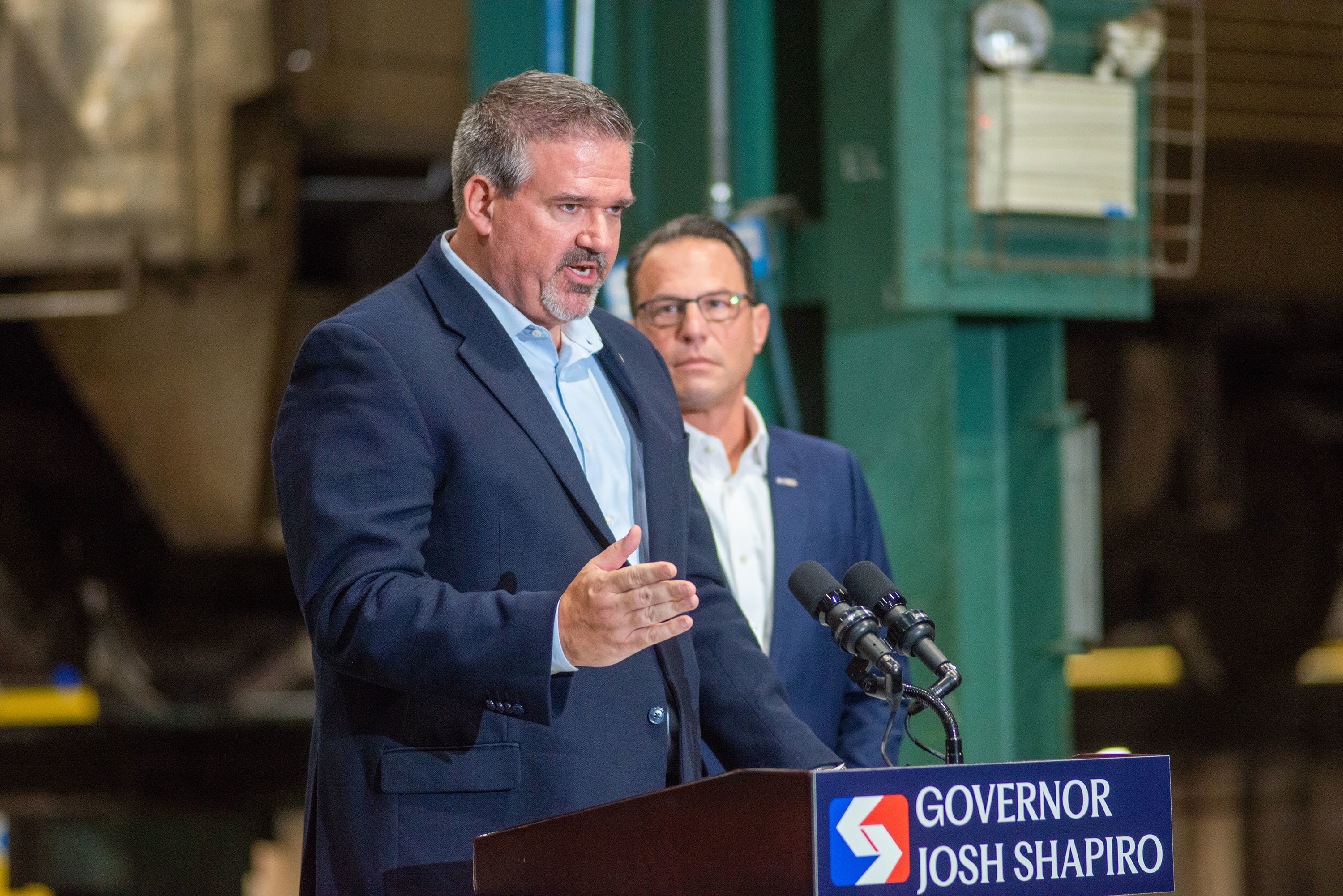
    SEPTA general manager Scott Sauer speaks as Gov. Josh Shapiro listens during a November 2025 announcement about efforts to fix SEPTA’s Silverliner IV rail cars.William Thomas Cain

    The 10-year Accelerate blueprint promises investments in a new trolley fleet with stations instead of corner stops, new subway cars for the El, and reimagining Regional Rail so trains run every 15 minutes on critical lines in the city and its closest suburbs.

    That will take more cash and a steady source of it.

    The most recent model for that is Act 89 of 2013, which raised the gas tax for the first time in years for a backlog of road and bridge repair needs and pumped $450 million a year from turnpike tolls into transit systems. The transportation megadeal brought a decade of relative fiscal stability.

    Getting there took several years of negotiations and a push from then-Gov. Tom Corbett, a Republican, to bring together highway and transit interests and competing regions.

    “I don’t think that just because the Democrats have taken total control, this is now some cakewalk — that we’re just going to ask for a number and they’re going to give it to us,” Sauer said.

    Rather, it has to be earned, he said.

    Shapiro last week guaranteed “we will fund transit,” along with other Democratic priorities, though the governor provided no details on how that would be accomplished.

    Some people involved in the discussions have mentioned legalizing and taxing recreational weed. Others suggest legalizing and taxing skill games — the pseudo-slot machines once found in many Pennsylvania bars, bodegas, and fraternal clubs. The state Supreme Court has ruled the games are indistinguishable from slots and illegal, and businesses were recently required to remove them.

    The legislature could revisit the issue, State Sen. Vincent Hughes (D., Philadelphia) has suggested. He is likely to be in the new Senate majority leadership.

    “I don’t know what the answers are, but I don’t want to limit anyone’s imagination or creativity, and I’m not the expert to tell them either way,” Sauer said Monday night at a 5th Square Advocacy forum in Center City.

    SEPTA finances steadied last year after the Shapiro administration authorized by executive action $394 million in emergency funding.

    The transit agency was allowed to pay for two years of operating expenses with money the state had allocated for future SEPTA capital projects. That money runs out next summer.

    Pittsburgh Regional Transit got a smaller amount. But any transit deal will need to include smaller systems that did not get that fix and still are struggling, including LANTA in the Lehigh Valley.

    One thing is clear: There is a developing consensus it would be preferable to find a new and renewable revenue source for transit.

    Even Shapiro’s earlier proposals to use sales tax revenue, while significant, would have lasted for just five years if they had passed.

    “The political winds could change in five years,” Bronskill said. “You don’t want to be in the middle of procuring railcars when that happens.”

  • ‘Rocky’ celebrations will close roads throughout Philadelphia this weekend

    ‘Rocky’ celebrations will close roads throughout Philadelphia this weekend

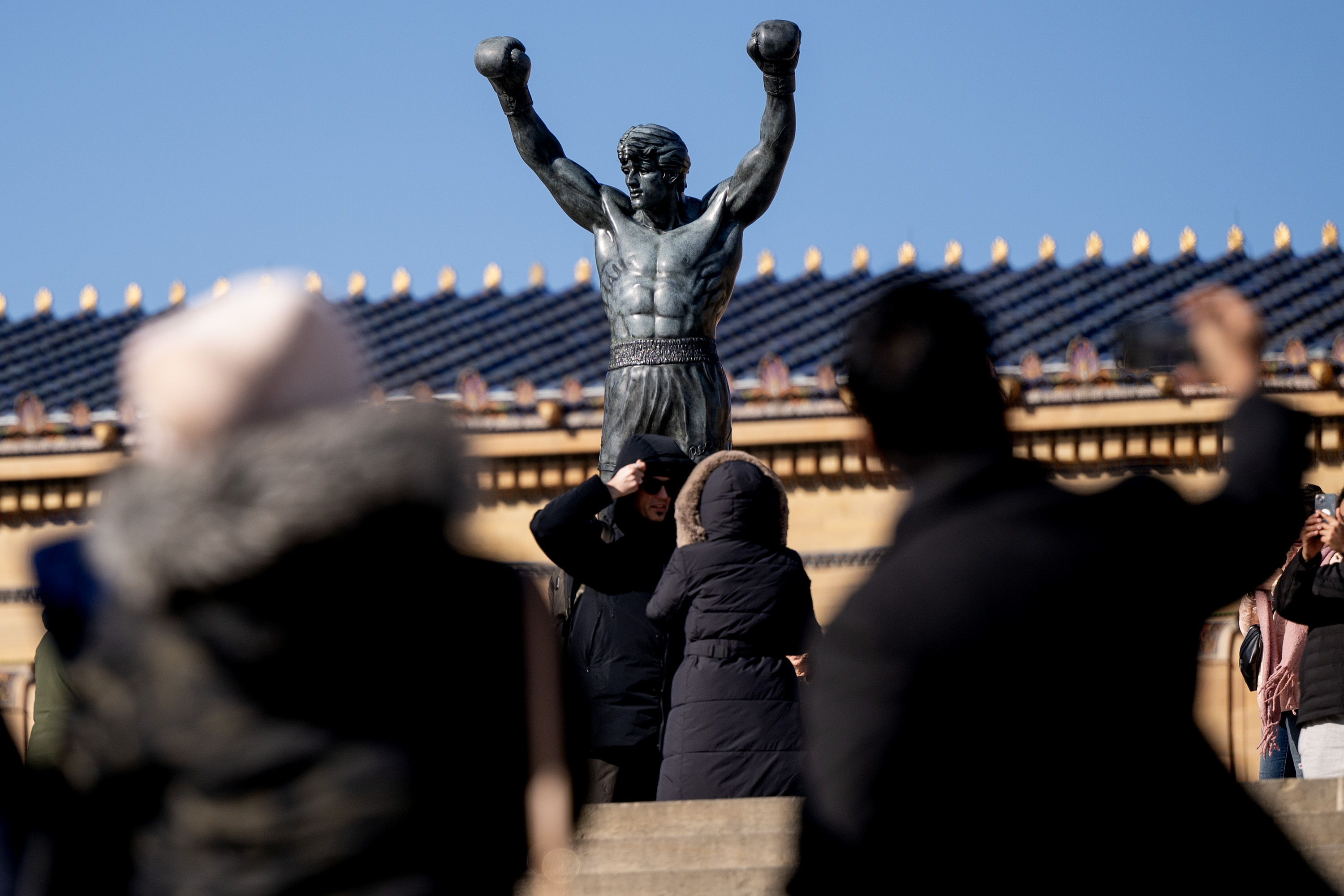
    The monthlong 50th anniversary celebrations of Rocky continue this weekend with a rededication of the iconic Philadelphia Museum of Art statue and a race.

    The Philadelphia Visitors Center is organizing a slate of events through Dec. 4, to honor Rocky Balboa’s cultural impact on the city’s tourism. Friday will see fans gather atop the Art Museum to attempt a Guinness World Record for the largest gathering of people dressed as Rocky Balboa. The scheduled Philly Pops concert is canceled, and the Rocky statue rededication has been postponed due to anticipated inclement weather.

    Saturday will bring the Rocky Run, which consists of a 5K, a 10-mile walk or run, and an Italian Stallion half-marathon-distance challenge along Fairmount Park roads.

    Road closures will pop up in these event areas, creating traffic delays and no-parking zones. Any vehicles still parked in no-parking zones during these events will be courtesy towed.

    Friday, Nov. 13

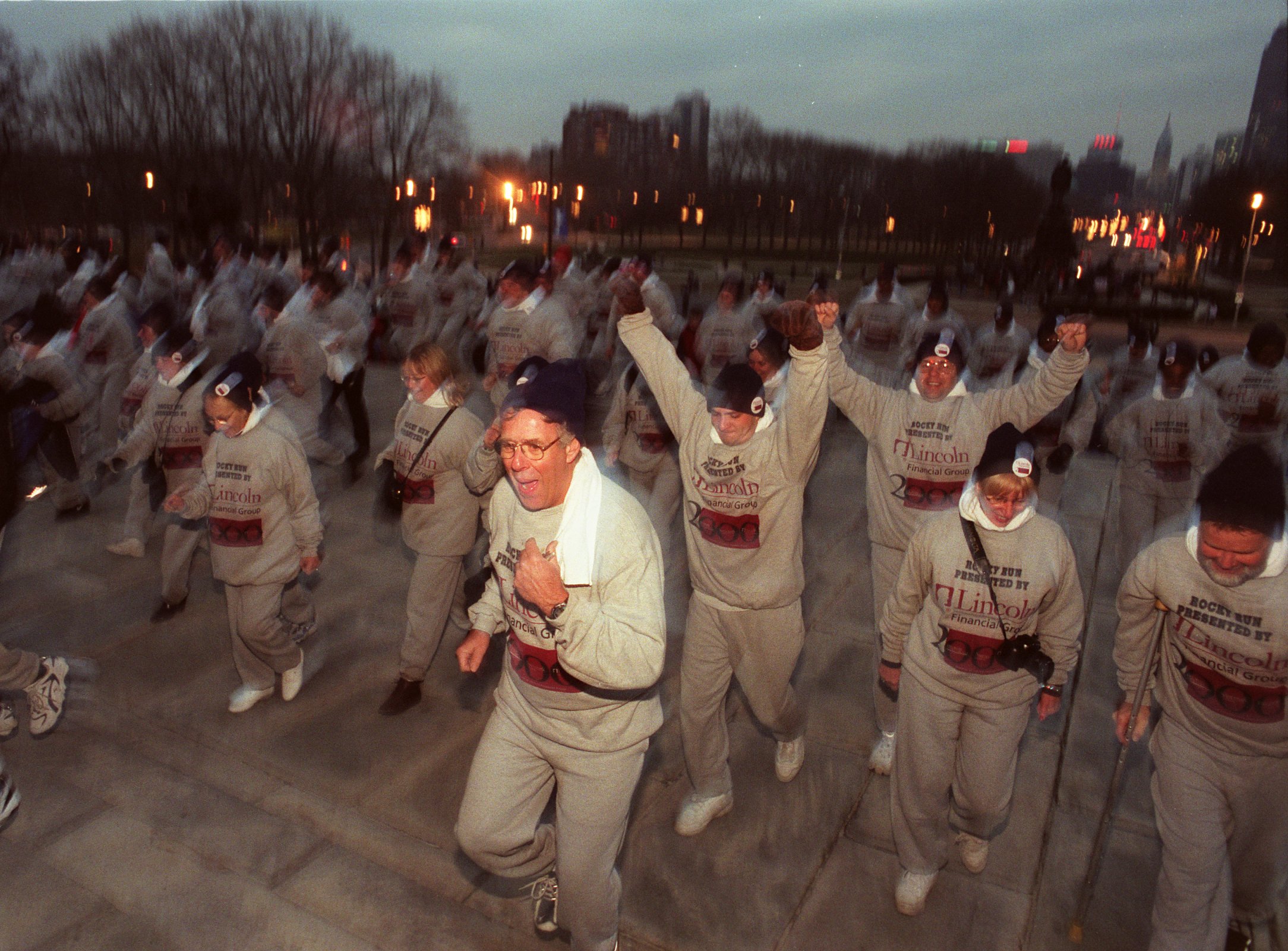
    Hundreds clad in Rocky Balboa-like sweatsuits and black beanies will meet at the top of the Philadelphia Museum of Art steps, as Sylvester Stallone did 50 years before to attempt the world record.

    Rocky events at Philadelphia Museum of Art

    • 4 p.m.: Rocky Guinness World Record attempt

    Eakins Oval in front of the Art Museum will be closed from noon to 5 p.m. on Friday.

    Additionally, to allow setup for the Rocky Run 5K, 10 Mile, and 13.1 Italian Stallion Challenge taking place Saturday, the Benjamin Franklin Parkway (inner lanes) between 22nd Street and Binswanger Triangle will be closed from 10 a.m. to 3 p.m. on Friday.

    A 1999 file photo of the Rocky Run, 2000 people dressed as Rocky run up the Philadelphia Art Museum steps. The run kicked off the Millennium celebrations in Phila.Peter Tobia / Staff Photographer

    Saturday, Nov. 14

    Rocky Run 5K and 10 Mile Run/Walk

    The Rocky Run 5K, 10 Mile, and 13.1 Italian Stallion Challenge will take place from 7 a.m. to 2 p.m. on Saturday, starting at the Art Museum steps.

    The following streets will be closed beginning at 3 a.m. Saturday:

    • Benjamin Franklin Parkway between 22nd Street and Eakins Oval
    • Spring Garden Street between Pennsylvania Avenue and 24th Street
    • Martin Luther King Drive between Eakins Oval and Falls Bridge

    The following streets will be closed beginning at 4:30 a.m. Saturday:

    • Kelly Drive between Eakins Oval and Brewery Hill Drive
    • Sedgley Drive between Kelly and Poplar Drives
    • Lemon Hill Drive between Sedgley and Kelly Drives

    The following streets will be closed beginning at 4 a.m. Saturday:

    • Strawberry Mansion Bridge
    • Sweetbriar Drive between Lansdowne and MLK Drives
    • Greenland Drive between Strawberry Mansion Bridge and Chamounix Drive
    • Ford Road between Chamounix and Greenland Drives
    • Chamounix Drive between Belmont Mansion and Greenland Drives
    • Lansdowne Drive between Sweetbriar Drive and Girard Avenue Bridge
    • Girard Avenue Bridge (eastbound lanes) between Lansdowne and Brewery Hill Drives

    All streets (with the exception of Eakins Oval and MLK Drive) are scheduled to reopen by 2 p.m. on Saturday. Eakins Oval will be fully open to traffic by 3 p.m. MLK Drive will remain closed as part of its regular weekend closure for recreation.

    SEPTA Bus Routes 7, 32, 38, 43, 48, and 49 will be detoured from their normal routes from 4 a.m. to 4 p.m. on Saturday.

  • City Council wants to make it easier to build apartments around most South Philly subway stations

    City Council wants to make it easier to build apartments around most South Philly subway stations

    Philadelphia City Council introduced legislation Thursday to create a corridor of zoning incentives along South Broad Street meant to encourage multifamily housing development along SEPTA’s Broad Street Line.

    The legislation would opt five subway stations into what Mayor Cherelle L. Parker has dubbed the “transit-oriented communities” zoning overlay, which boosts the number of units that can be built on areas zoned for multifamily and mixed-use development within a quarter mile of transit stations.

    The legislation stretches the incentive from Locust Street in Center City to Pollock Street in South Philadelphia, from Lombard-South Station to Oregon Station.

    It would include the bus stop at Broad and Christian Streets in Center City. It could run from 17th Street to the west to 11th Street to the east.

    “I support transit-oriented development along South Broad Street,” said Council President Kenyatta Johnson, who introduced the legislation with Councilmember Mark Squilla. “Hopefully, it’ll bring some level of affordable and also market-rate development to those immediate areas.”

    Squilla represents the eastern side of Broad Street. Johnson represents the western side.

    The bill builds on a Parker initiative earlier in the year that expanded an existing law that grants development incentives to most non-single-family properties around transit stations. That law increased a previous radius of 500 feet around a transit station to a quarter of a mile.

    Transit advocates hailed the legislation.

    “This is a big opportunity to build more housing where people can actually use transit to get to work and to opportunities,” said Jay Arzu, a member of the urbanist group 5th Square Advocacy. “It sets the precedent for building more housing and more economic development adjacent to stations.”

    Unlike in other American cities, Philadelphia’s law does not apply to all transit stations. Instead, district City Council members have to opt their individual stations into the law.

    That left a mixed pattern of adoption, with Councilmember Jamie Gauthier opting all the Market-Frankford Line stations in her district into the program long ago, while none on the Broad Street Line are included.

    Johnson and Squilla’s proposal would finally change that.

    “Both district Council offices have been in contact regarding station-area development impacts,” reads a memo obtained by The Inquirer from the Planning Commission about the legislation. “They have expressed intention to consult local civic groups.”

    City Council President Kenyatta Johnson (left) and Councilmember Mark Squilla (right) with Mayor Cherelle L. Parker in 2024.Tom Gralish / Staff Photographer

    There could be some pushback from residents who live along South Broad Street, as was seen in a recent small apartment proposal for a surface parking lot in the Council president’s district.

    But in that case, Johnson listened to organized community groups, who negotiated with the developer for concessions.

    Squilla says he expects a robust debate on the legislation as neighborhood groups weigh in.

    “Once you get into the more residential neighborhood, it’ll be a little more challenging because the area is so big now,” he said. “You might get some more pushback as this moves forward.”

    Changes at Snyder Station

    If the legislation passes City Council, the effects of the changes could be relatively limited around some of the stations. The quarter mile around Lombard South is already densely built, and there are few developable lots.

    Much of the land around Oregon Station is either zoned for single-family residential or covers a public park, neither of which would be eligible for density bonuses.

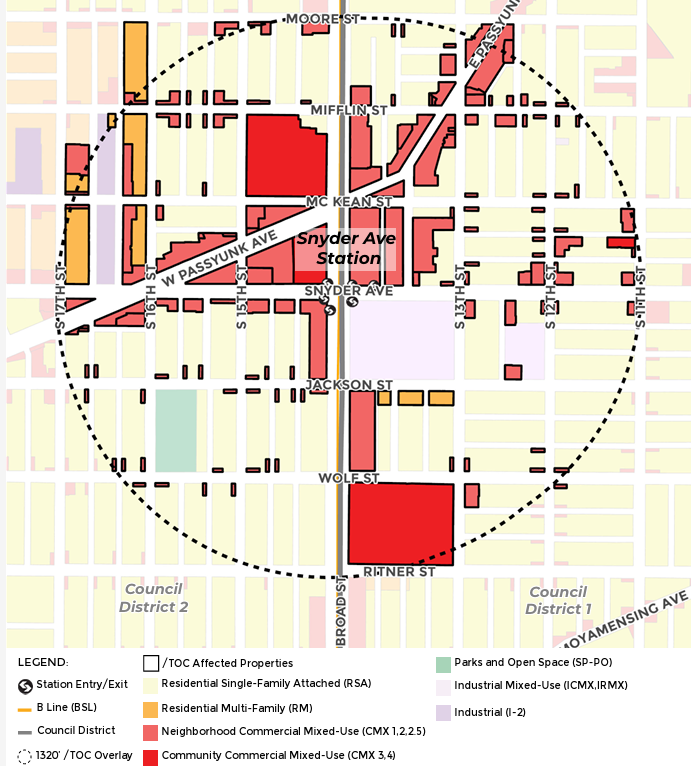
    But Snyder Station, which has struggled with vagrancy and drug dealing since the pandemic, could get a significant boost, transit advocates say.

    “Snyder Station has seen better days,” Arzu said. “The neighborhoods surrounding it could benefit from more density there, could benefit from more eyes on the street.”

    A screen shot of the Planning Commission’s analysis of which properties — those coded red or pink — would see the greatest development boosts from the new law. All the yellow coded areas are rowhouse blocks that would be unaffected.Philadelphia Planning Commission

    Johnson said the intersection of Broad Street and Snyder Avenue could use more development, and more residents.

    “With this particular piece of legislation, hopefully, people will say, ‘Let me take a look at what we can build up and build capacity in that area, and add more foot traffic,’” Johnson said. “Hopefully it attracts more businesses.”

    There also are a number of large surface parking lots and vacant lots nearby, including the property that used to host the Melrose Diner. Some one-story, low-occupancy retail buildings could be replaced with larger mixed-use structures.

    “For the most part, the South Broad stations, there’s not a ton of areas that are going to see major changes. That’s one of the reasons why I think that this is moving so fast,” Arzu said. “Snyder is the outlier.”

    What comes next?

    Arzu sees South Broad Street as a test case. Johnson signaled earlier this year that he was interested in such a move, and Squilla has long been seen as open to the idea.

    With the political will in place and fewer opportunities for big development on the corridor to draw opposition from neighborhood groups, the addition of these stations should be a relatively easy lift.

    “It is important about both the Council president and Councilman Squilla signing on to this. It shows that they’re willing to put their money where their mouth is and open the door to other parts of the city joining,” Arzu said.

    The bigger opportunities are on North Broad Street, which has a lot more vacant land and more areas with multifamily zoning in place.

    But Councilmember Jeffery Young, a frequent critic of new development, has sought to block apartment development on North Broad Street around the former Hahnemann University Hospital.

    He has not expressed interest in adopting the mayor’s new transit-oriented development overlay in his district.

    “The goal here is to get those North Broad stations because they would be the most impacted by the … legislation,” Arzu said. “North Broad is really the next step.”

  • Philadelphia Marathon 2026: What to know about road closures, parking, and race times

    Philadelphia Marathon 2026: What to know about road closures, parking, and race times

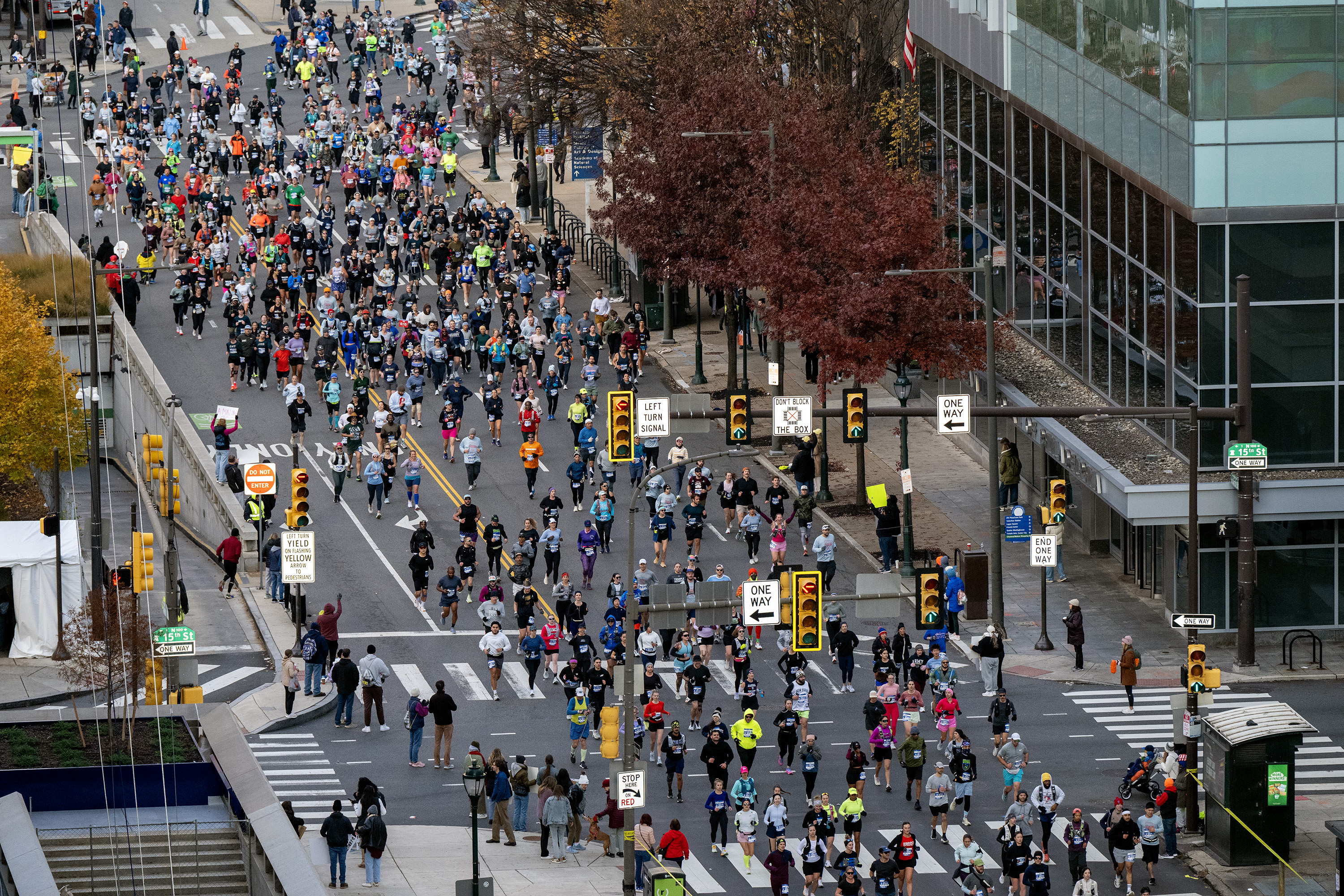
    The Philadelphia Marathon returns Nov. 20-22 for what organizers expect to be the largest race weekend in event history.

    Runners from around the world will compete in the 8K, half-marathon, and 26.2-mile marathon, which stretches from Manayunk to the Delaware River waterfront.

    The first Philadelphia Marathon was held in 1994 with just 1,500 participants. This year, organizers expect nearly 40,000 runners across four races.

    With that many runners hitting the streets, Philadelphians can expect road closures, parking restrictions, and traffic detours throughout the weekend.

    Here’s what to know before the 2026 Philadelphia Marathon Weekend.

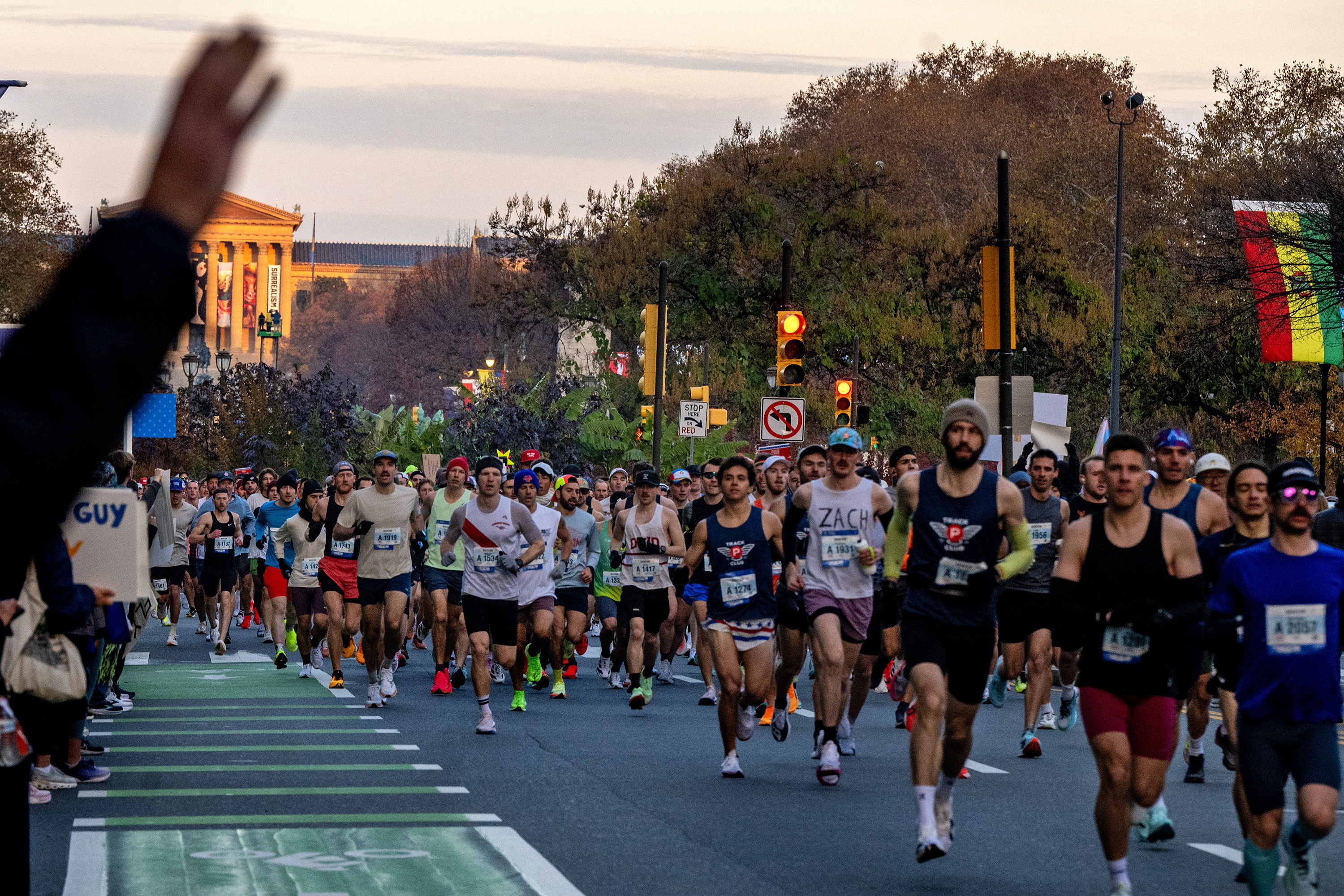
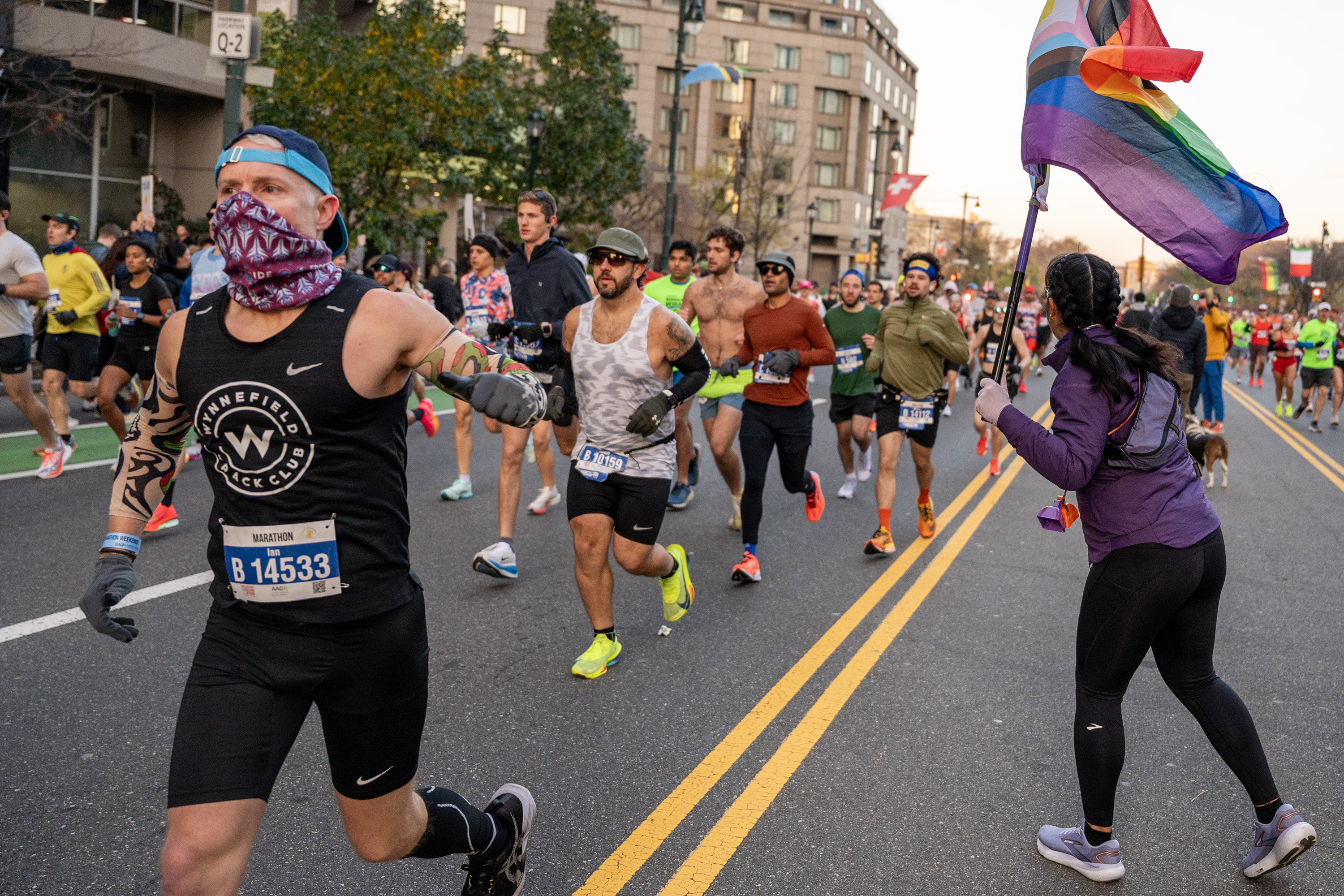
    Sharon Tejada (right), a coleader of Queer Run, encourages runners heading out on the Benjamin Franklin Parkway at the start of the annual Philadelphia Marathon on Nov. 23, 2025.Tom Gralish / Staff Photographer

    Race start times and locations for the Philadelphia Marathon

    All four races start near the Philadelphia Museum of Art. The marathon, half-marathon, and Children’s Run begin at 22nd Street and Benjamin Franklin Parkway, while the Rothman Orthopaedics 8K starts at 25th Street and Kelly Drive.

    • Dietz & Watson Philadelphia Half-Marathon: Saturday, Nov. 21, 6:55 a.m. (wheelchair participants); 7 a.m. (runners and walkers)
    • Rothman Orthopaedics 8K: Saturday, Nov. 21, 10:55 a.m. (wheelchair participants); 11 a.m. (runners and walkers)
    • TIAA Philadelphia Marathon: Sunday, Nov. 22, 6:55 a.m. (wheelchair participants); 7 a.m. (runners and walkers)
    • Philadelphia Children’s Run: Sunday, Nov. 22, 11 a.m.

    Race routes for the Philadelphia Marathon

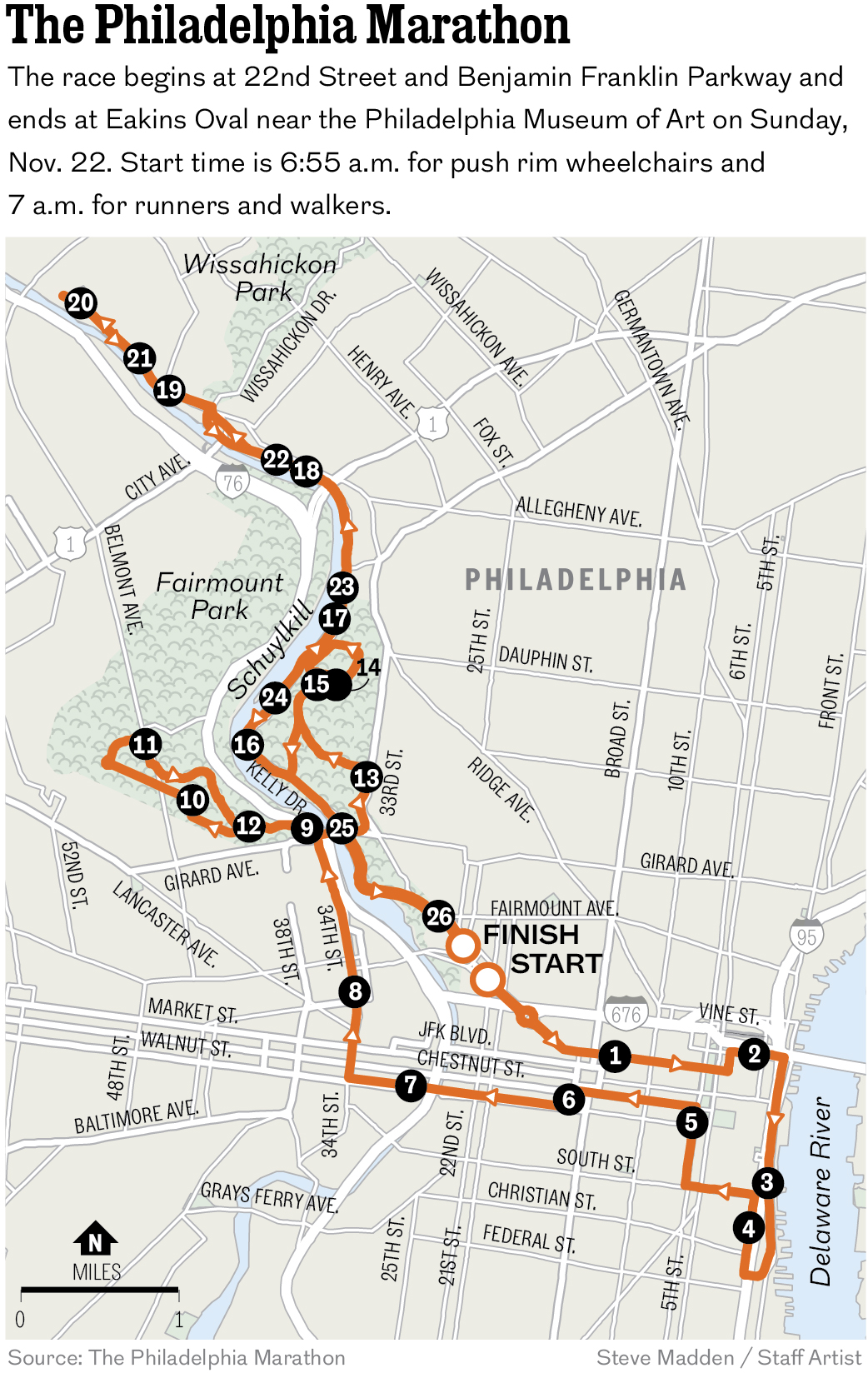
    Each race follows a unique route. The marathon and half-marathon wind through Center City, Chinatown, Old City, Queen Village, Rittenhouse, and University City, with portions of the courses passing through Fairmount Park and along Kelly Drive and the Benjamin Franklin Parkway.

    Course map for the Philadelphia MarathonSteve Madden

    Health & Fitness Expo

    The Philadelphia Marathon Weekend Expo returns to Hall F of the Pennsylvania Convention Center, at 12th and Arch Streets.

    • Friday, Nov. 20: 8 a.m. to 9 p.m.
    • Saturday, Nov. 21: 8 a.m. to 5 p.m.

    The expo features vendors showcasing apparel, shoes, and running gear, along with free product samples and educational booths focused on health and fitness. Both days will also feature a speaker series and meet-and-greets with some of the country’s top runners.

    For spectators of the Philadelphia Marathon

    Spectators are welcome to line the race routes to cheer on runners but will be restricted from the starting lines and in secure running areas until after 8 a.m. on Saturday and Sunday to ensure smooth race starts.

    The Philadelphia Marathon has a list of prohibited and discouraged items for spectators, available in full on its website.

    • Large umbrellas, coolers, alcohol, bicycles, scooters, and animals (except service animals) are prohibited. Organizers also discourage spectators from bringing large blankets, backpacks, handbags, and cameras.
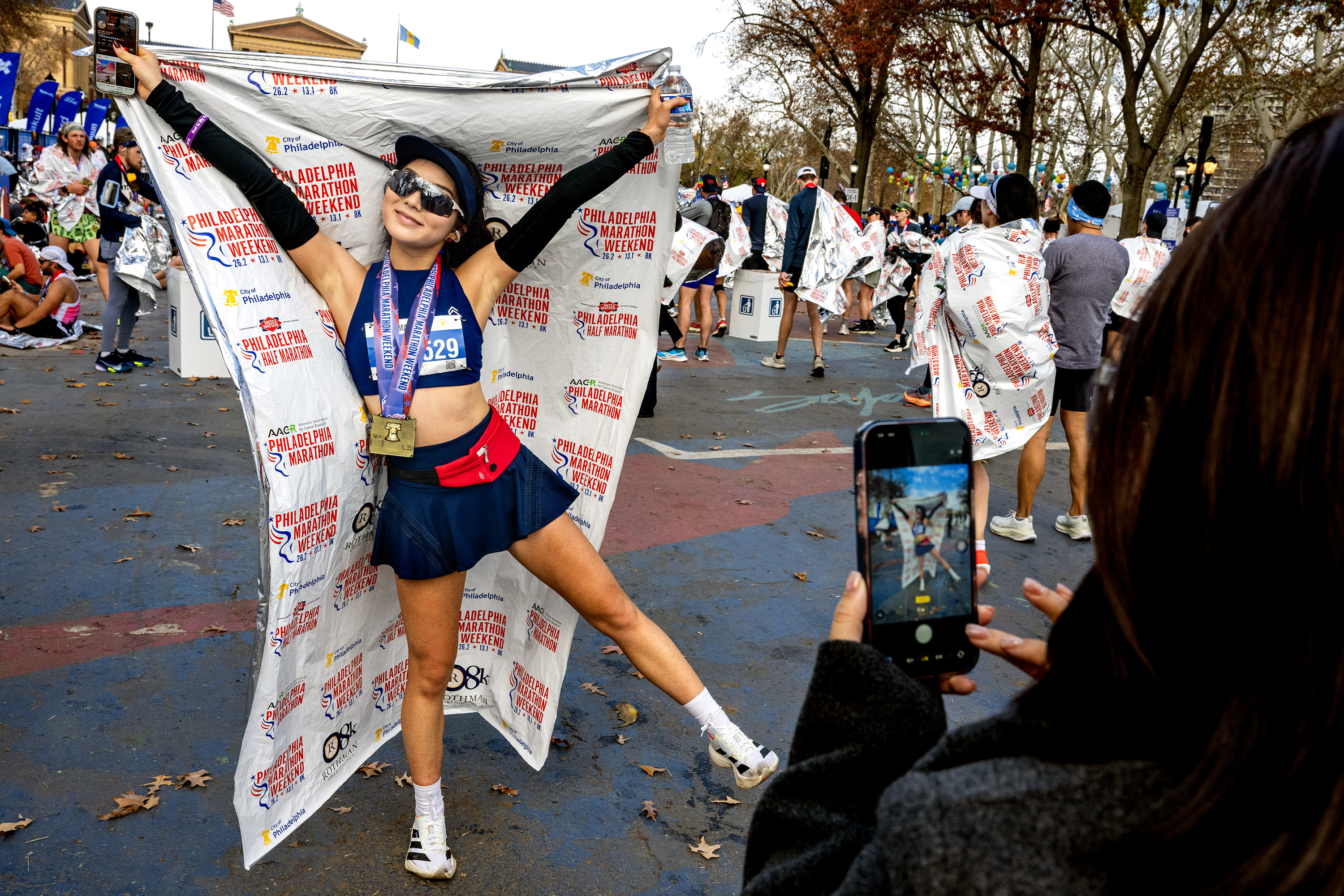
    Lilian Yao, 20, poses for her mother, Leslie Liu, after completing the Philadelphia Marathon on Nov. 23, 2025. This was her first marathon. Her mom arrived from Hong Kong just hours before the start of the race.Tom Gralish / Staff Photographer

    Road closures

    All-weekend closures

    Friday, Nov. 20, through 5 p.m. Sunday, Nov. 22

    • Benjamin Franklin Parkway (all lanes) between 22nd Street and Eakins Oval
    • Kelly Drive (inbound) closed at 25th Street, with local traffic permitted to Anne d’Harnoncourt Drive
    • Spring Garden Street Bridge and MLK Drive (inbound) traffic detoured onto 24th Street
    • Spring Garden Street closed between Benjamin Franklin Parkway and Pennsylvania Avenue

    Saturday, Nov. 21

    2 a.m. closures

    • 2000-2400 Benjamin Franklin Parkway
    • Spring Garden Street, from Pennsylvania Avenue to Benjamin Franklin Parkway
    • 23rd Street, from Pennsylvania Avenue to Benjamin Franklin Parkway
    • 22nd Street, from Winter Street to Park Towne Place (local access to Park Towne Place maintained)
    • 21st Street, from Pennsylvania Avenue to Winter Street

    4 a.m. closures

    • I-676 off-ramp at 22nd Street (westbound)
    • I-76 off-ramp at Spring Garden Street (eastbound)

    6 a.m. closures

    • 17th Street, from Arch Street to Vine Street
    • 18th Street, from Arch Street to Callowhill Street
    • 19th Street, from Arch Street to Callowhill Street
    • 20th Street, from Arch Street to Callowhill Street
    • 21st Street, from Arch Street to Spring Garden Street
    • 22nd Street, from Arch Street to Spring Garden Street
    • Benjamin Franklin Parkway, from 16th Street to 20th Street
    • Market Street, from Sixth Street to 16th Street
    • Chestnut Street, from Fifth Street to Eighth Street
    • Sixth Street, from Market Street to Chestnut Street
    • Fifth Street, from Chestnut Street to Race Street
    • South Penn Square
    • Juniper Street, from Chestnut Street to Market Street
    • John F. Kennedy Boulevard, from Juniper Street to 17th Street
    • 15th Street, from Race Street to Chestnut Street
    • 16th Street, from Chestnut Street to Race Street
    • Race Street, from Sixth Street to Columbus Boulevard
    • Columbus Boulevard (southbound lanes), from Vine Street to Washington Avenue
    • I-95 southbound off-ramp at Washington Avenue
    • Washington Avenue, from Columbus Boulevard to Front Street
    • Front Street, from Washington Avenue to South Street
    • South Street, from Front Street to Seventh Street
    • Sixth Street, from Bainbridge Street to Locust Street
    • Lombard Street, from Fifth Street to Broad Street
    • 13th Street, from Bainbridge Street to Chestnut Street
    • Walnut Street, from 12th Street to 34th Street
    • 34th Street, from Chestnut Street to Girard Avenue
    • Spring Garden Street, from 32nd Street to 34th Street
    • Girard Avenue, from 33rd Street to 38th Street
    • 33rd Street, from Girard Avenue to Cecil B. Moore Avenue
    • Reservoir Drive, from 33rd Street to Diamond Drive
    • Mount Pleasant Drive
    • Fountain Green Drive
    • Kelly Drive

    Access and reopening

    • Local access for residents and businesses will be maintained at police-controlled points.
    • Access to the Philadelphia Museum of Art will be available via Spring Garden Street (Bridge and Tunnel) to Anne d’Harnoncourt Drive.
    • Motorists and pedestrians can expect delays when trying to cross roads or streets along the racecourse.
    • Police will allow traffic through intersections when possible, depending on runner flow.
    • All streets (except Eakins Oval and the Parkway) are scheduled to reopen by 2 p.m. Saturday. Many Center City roads will reopen earlier as they are cleared and serviced.

    Sunday, Nov. 22

    As part of enhanced security for the TIAA Philadelphia Marathon, “No Parking” regulations will be strictly enforced. Vehicles on the race route will be relocated beginning at 1 a.m. Sunday.

    2 a.m. closures

    • 2000-2400 Benjamin Franklin Parkway
    • Spring Garden Street, from Pennsylvania Avenue to Benjamin Franklin Parkway
    • 23rd Street, from Pennsylvania Avenue to Benjamin Franklin Parkway
    • 22nd Street, from Winter Street to Park Towne Place (local access maintained)
    • 21st Street, from Pennsylvania Avenue to Winter Street

    4 a.m. closures

    • I-676 off-ramp at 22nd Street (westbound)
    • I-76 off-ramp at Spring Garden Street (eastbound)

    6 a.m. closures

    • 17th Street, from Arch Street to Vine Street
    • 18th Street, from Arch Street to Callowhill Street
    • 19th Street, from Arch Street to Callowhill Street
    • 20th Street, from Arch Street to Callowhill Street
    • 21st Street, from Arch Street to Spring Garden Street
    • 22nd Street, from Arch Street to Spring Garden Street
    • Benjamin Franklin Parkway, from 16th Street to 20th Street
    • Arch Street, from Third Street to 16th Street
    • Fourth Street, from Arch Street to Vine Street
    • Race Street, from Sixth Street to Columbus Boulevard
    • Columbus Boulevard (southbound lanes), from Vine Street to Washington Avenue
    • Columbus Boulevard (northbound lanes), from Washington Avenue to Callowhill Street
    • I-95 southbound off-ramp at Washington Avenue
    • Washington Avenue, from Columbus Boulevard to Front Street
    • Front Street, from Washington Avenue to South Street
    • South Street, from Front Street to Seventh Street
    • Sixth Street, from Bainbridge Street to Market Street
    • Chestnut Street, from Sixth Street to 15th Street
    • 15th Street, from Chestnut Street to Walnut Street
    • Walnut Street, from Broad Street to 34th Street
    • 34th Street, from Chestnut Street to Girard Avenue
    • Lansdowne Drive, from Girard Avenue to South Concourse Drive
    • South Concourse Drive, from Lansdowne Drive to West Memorial Hall Drive
    • East Memorial Hall Drive, from South Concourse Drive to Avenue of the Republic
    • Avenue of the Republic, from East Memorial Hall Drive to Catholic Fountain
    • Belmont Avenue, from Montgomery Drive to Parkside Avenue
    • States Drive, from Lansdowne Drive to Girard Avenue
    • Girard Avenue Bridge, from Lansdowne Drive to 33rd Street
    • 33rd Street, from Girard Avenue to Reservoir Drive
    • Reservoir Drive, from 33rd Street to Edgley Drive
    • Edgley Drive, from Reservoir Drive to Fountain Green Drive
    • Fountain Green Drive, from Edgley Drive to Kelly Drive
    • Kelly Drive
    • Falls Bridge
    • Ridge Avenue, from Schoolhouse Lane to Manayunk Avenue
    • Main Street (Manayunk), from Ridge Avenue to Conarroe Street

    Access and reopening

    • Local access for residents and businesses will be maintained at police-controlled points.
    • Access to the Philadelphia Museum of Art will be available via Spring Garden Street (Bridge and Tunnel) to Anne d’Harnoncourt Drive.
    • Expect delays at crossings along the course; police will allow traffic through when possible.
    • All streets (except Eakins Oval and the Parkway) are scheduled to reopen by 3 p.m. Sunday; many Center City roads will reopen earlier as they are cleared and serviced.
    • The outer lanes of Benjamin Franklin Parkway, Eakins Oval and Kelly Drive will be reopened to vehicular traffic by 5 p.m. on Sunday. All affected roads will be reopened by 8 a.m. on Monday, Nov. 23.

    Transportation to the races

    🚌 Bus

    Lines 7, 32, 38, 43, 48, and 49 normally stop within a short walk of the Philadelphia Museum of Art. However, race-related detours are expected throughout the weekend.

    Check SEPTA’s system status for the latest route changes and schedules.

    🚄 Trains

    Athletes and spectators can take the Market-Frankford Line to 15th Street at City Hall or Drexel Station at 30th Street, then connect to nearby routes 7, 32, 38, 43, 48, and others to reach the museum area.

    Visitors can also board the Broad Street Line to Fairmount and Broad-Spring Garden stations, and transfer to connecting routes 7, 32, 48, 49, or others serving stops near or at the museum.

    🚆 Regional Rail

    Visitors can take SEPTA Regional Rail to Suburban Station or 30th Street Station to reach the start and finish areas. Check SEPTA’s website for schedules and service updates.

    🚴‍♀️ Bicycle

    The race’s starting line is within a 10-minute ride from the City Hall area and subway stop and other locations. Check the map of Indego bike share stations to rent bikes and return them at a station near the Art Museum.

    Runners turn from the Benjamin Franklin Parkway (upper right) onto Arch Street heading to 15th Street (bottom) in the first mile of the annual Philadelphia Marathon on Nov. 23, 2025.Tom Gralish / Staff Photographer

    Where does the money go?

    Proceeds from the Philadelphia Marathon support several charities and nonprofits, including local organizations such as B Inspired Philadelphia and the Mazzoni Center.

    See a full list of partnering nonprofits on the Philadelphia Marathon website.

    Awards & prize money

    Cash prizes range from $1,000 to $10,000, depending on the race, with the Philadelphia Marathon’s professional division offering the largest awards.

    See a full list of awards and prize money on the Philadelphia Marathon website.

  • Democrats won control in Harrisburg. Here’s what Pennsylvania businesses should watch | Expert Opinion

    Democrats won control in Harrisburg. Here’s what Pennsylvania businesses should watch | Expert Opinion

    The midterm elections are over, and Pennsylvania Democrats have achieved a “trifecta” — control over the state House and Senate, as well as the governor’s office.

    For Pennsylvania businesses, some significant changes could be coming in the next year. Here are a few things to watch.

    Minimum wage

    Pennsylvania Gov. Josh Shapiro has said he plans to increase the state’s minimum wage, which is currently at $7.25 per hour. The higher hourly amount hasn’t been disclosed, but Shapiro in the past has pushed for $15.

    Restaurant and retail businesses would likely be most affected by this change. But all businesses must consider that an increase in the state’s hourly minimum wage will increase overall compensation expenses as it will reset wage scales and put upward pressure on wages.

    It’s likely that any wage increase will be phased in so the initial impact can be absorbed. But businesses will need to budget for higher wages and should consider calculating payroll under several possible wage floors, including associated payroll taxes and adjustments for employees already earning slightly above those rates.

    Paid family and medical leave

    Although Shapiro’s minimum wage comments have received most of the media’s attention, other Democratic bills pending in the state legislature were previously unable to move past the Republican-controlled Senate to reach the governor’s desk for signing. These bills are likely to get a fresh look.

    There’s the Paid Family and Medical Leave Bill (HB 200), which was introduced in 2025 and would require employers to provide eligible workers with up to 12 weeks of partial wage replacement for family and medical leave.

    Under the current proposal, companies with 50 or more employees would bear the full cost of this measure, while those with less than 50 workers may be eligible for grants to help offset this expense. The bill had bipartisan support and passed the House in 2026 but is stalled in the Senate while alternative funding options are considered.

    If this bill becomes law, most employers will have to change their paid time-off benefits, prepare to financially accommodate employees seeking longer leave for family or medical reasons, and consider alternative staffing while employees are absent.

    Equal pay

    An expansion of the state’s current equal-pay law, HB 630, which passed the House by a narrow margin in 2025 takes aim at equal pay protections.

    The bill expands equal pay protections based on gender to include race and ethnicity. It applies a “comparable work” standard, meaning employees must receive equal pay for performing jobs that require comparable levels of skill, effort, and responsibility under similar working conditions, even if the job titles or exact tasks are not identical. It also protects employees’ rights to discuss their compensation by legally barring employers from stopping, punishing, or retaliating against workers who talk about their pay, and limits an employer’s reliance on an applicant’s prior wage history.

    If passed, the bill would require more scrutiny by employers over their hiring and salary-setting practices, as well as the kinds of interview questions they use. More documentation supporting an employee’s compensation will likely be needed as well as explanations when an employee is not receiving comparable pay.

    Cannabis legalization

    Currently 24 states allow the recreational use of cannabis. Pennsylvania allows its use for medical purposes only.

    But if HB 1200 passes, recreational use of cannabis would be legalized for adults and a system of state-operated retail stores (similar to the state’s current liquor store system) would be introduced.

    The bill could have mixed results. Existing medical-marijuana dispensaries would see more competition from state-operated stores, but a larger market. Entrepreneurs looking to grow, process, distribute, or potentially sell cannabis products could have more opportunities.

    Public transit

    Shapiro has talked about finding more money for SEPTA and other public transit systems. This may come in the form of new legislation, or it could come from a reallocation of sales tax revenues, according to one bill (HB 1364), which passed the House in 2025 and has idled in the Senate since then. The same bill includes investments for roads and bridges.

    Reallocating state sales tax revenues could negatively affect existing projects and funding programs. However, the money could be used for new construction and maintenance projects, which could mean more jobs and opportunities for firms doing business with the state.

    Also, a more expanded, reliable, and less expensive public transit system could help employers with recruitment and make it easier for their existing workers to get to their jobs on time, while also potentially reducing traffic burdens.

    LGBTQ protections

    More protections for LGBTQ workers have long been a priority for many Democratic legislators. The trifecta may be an opportunity to see the Fairness Act (HB 300) actually become law.

    The act is sponsored by Philadelphia-based Rep. Malcolm Kenyatta and would explicitly address sexual orientation and gender identity in the state’s employment, housing and public accommodation protections. Its passage will ensure that employers have policies to address any potential discrimination against these groups.

    Pennsylvania’s Human Relations Commission already interprets and enforces sex-discrimination protections to include sexual orientation and gender identity and explicitly addresses these categories. The Fairness Act would put express protections into statutory language. Employers should not wait for this law to be passed to adopt nondiscrimination policies. The act, which originally passed the House in 2023, was reintroduced in 2025 and remains up for a vote.

    A new Pennsylvania legislature will convene Jan. 5 and, in my opinion, it won’t be long before the above changes become reality. It’s important now for business owners to work closely with their advisers — labor attorneys, payroll companies, HR consultants — to ensure that they’re prepared and in compliance.

  • The Free Library’s online catalog was taken down for security. A new one is coming this week.

    The Free Library’s online catalog was taken down for security. A new one is coming this week.

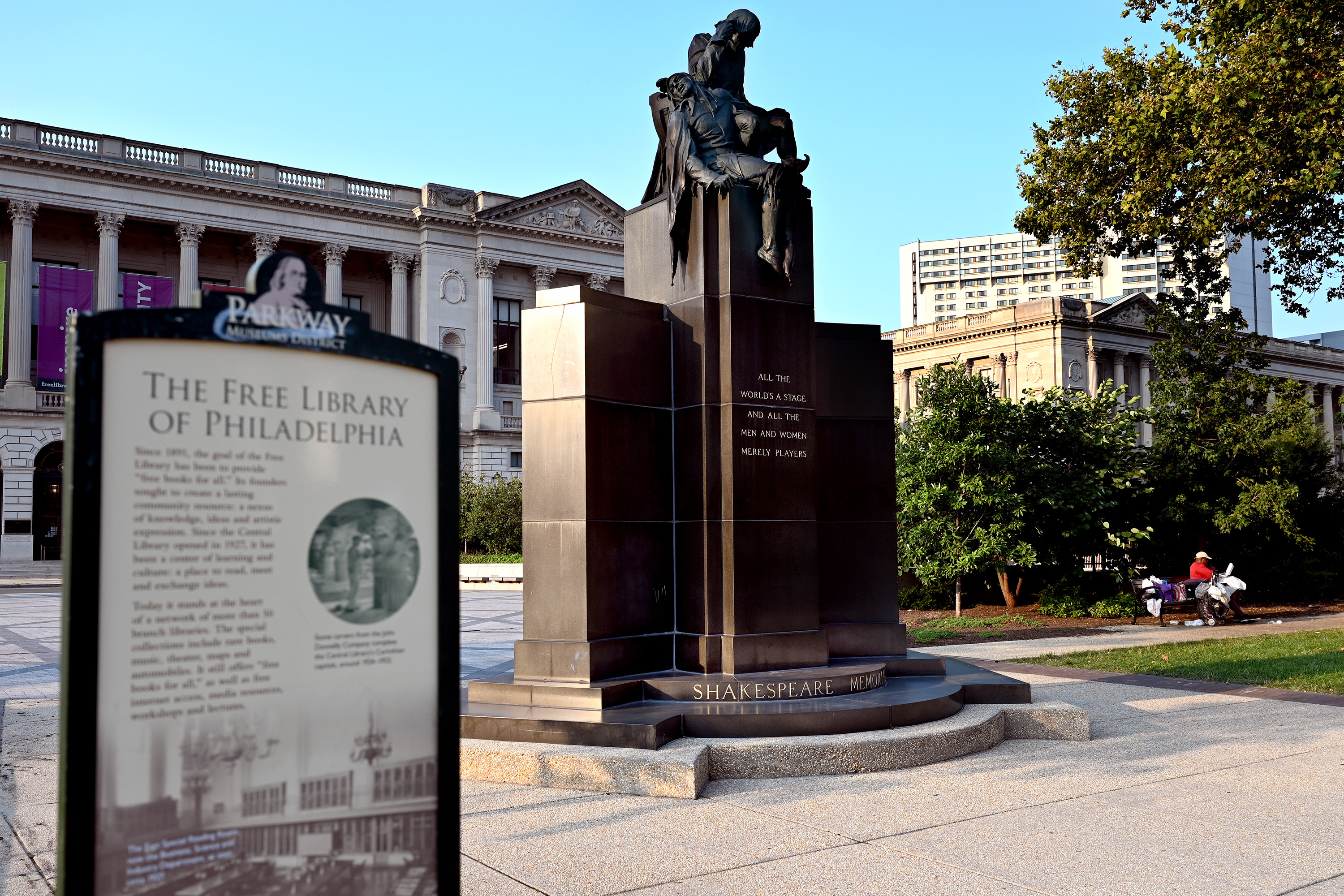
    The Free Library of Philadelphia might not seem like a likely cyberattack target, but it is taking no chances.

    The library shut down its online catalog last month because of digital security concerns. The library’s catalog remains down, but the Free Library plans to launch a new online catalog this week.

    Library staff removed the catalog on Oct. 23 as a precaution after vulnerabilities were found in an open-source programming language, PHP, that is used on roughly 70% of websites around the world.

    The PHP security issues, which have collectively been called “PHP2Shell,” were identified and announced Oct. 21 by researchers using OpenAI’s GPT-5.6 Sol model. The issues in the coding language could have allowed hackers to take control of web servers and access critical data without authentication or prior access.

    “Cyber actors are likely to weaponize PHP2Shell vulnerabilities. These risks are serious enough to require immediate patching across United States Government departments and agencies. … We stand with our warfighters and our domestic and foreign partners to improve our collective cyber defenses and threat detection,” the National Security Agency said in a statement last month.

    According to OpenAI, the issue was identified before hackers could exploit it, and a patch for the issue was immediately made available. However, in the days before the problem was announced, some attacks were attempted.

    The Free Library did not see signs of any security breaches on its own servers, but decided to take down the catalog based on vulnerabilities reported in other regions and on the City of Philadelphia’s Office of Information and Technology standards, according to Free Library spokesperson Mark Graham.

    SEPTA shut down its real-time tracking tool for a day, and other websites including Internet Archive, parts of Wikipedia, and governmental sites in Europe and Asia were also taken down as a precaution.

    It is unclear why it has taken more than two weeks for the Free Library to launch its new catalog. Until then, patrons can still find e-books and audiobooks through the library’s app, Libby, or its OverDrive site, and the library has extended returns for borrowed materials through Thursday.

    “We apologize for any inconvenience to patrons since we realize [the catalog] is a valuable resource and used by many. The security of our patrons, staff, and community is a high priority for the Free Library. So is high-quality customer service, which is why the down time is as short as possible, and library staff … can handle any questions about finding materials or holds in person or on the phone,” Graham said by email.

    Borrowing in person at library branches has been unaffected.

  • Data centers, SEPTA, and ICE were the dominant issues at this year’s Peoplehood Parade

    Data centers, SEPTA, and ICE were the dominant issues at this year’s Peoplehood Parade

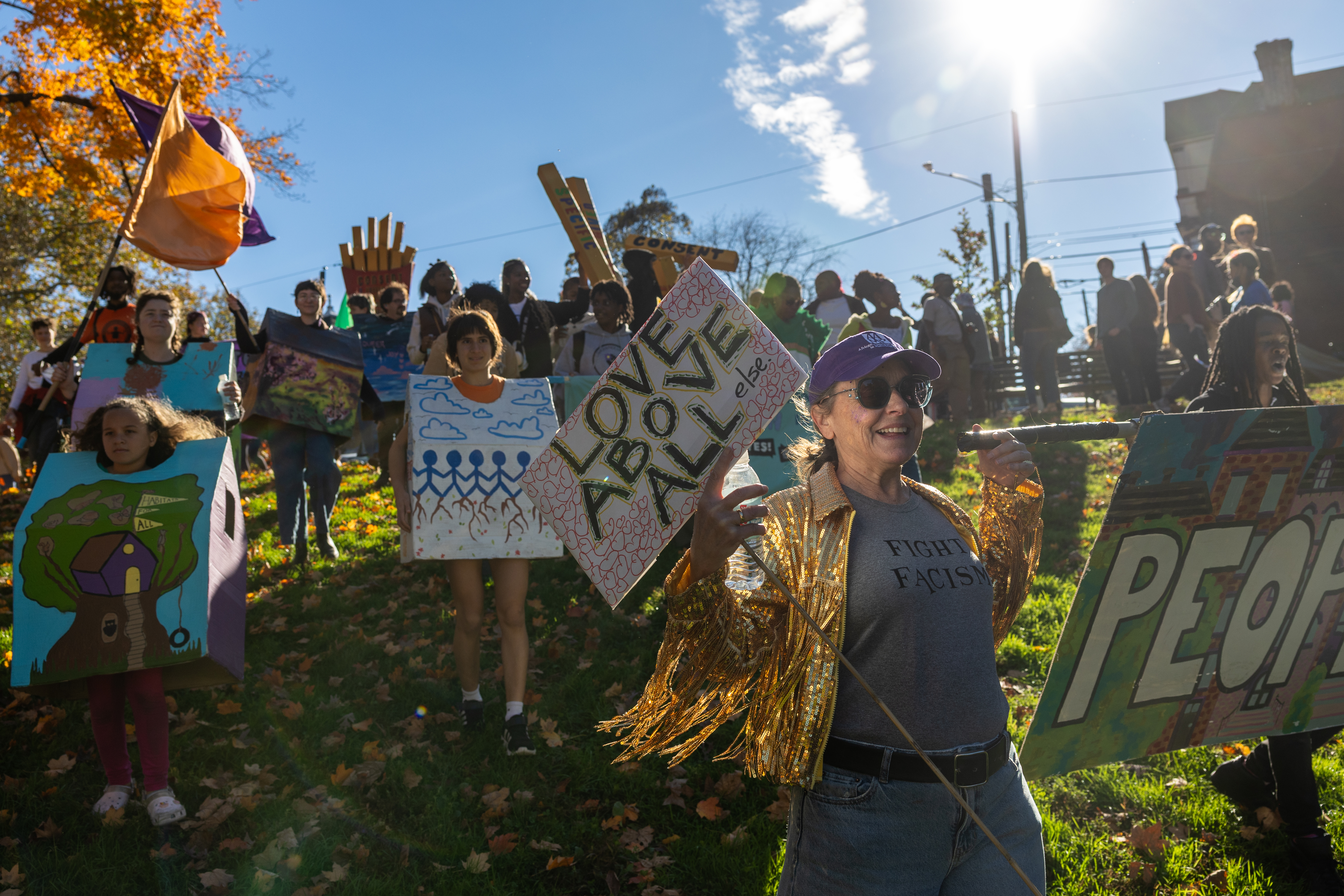
    For West Philadelphians, the annual Peoplehood Parade is a familiar tradition — people of all ages join an assemblage of puppets and art displays, chanting, singing, and walking to Clark Park for a community pageant.

    But 21 years after Liza Goodell got involved with Peoplehood, what really stands out to her is the community building that happens long before the day of the parade.

    “I’m really proud of it. It’s super intentional,” said Goodell, who lives in South Philly.

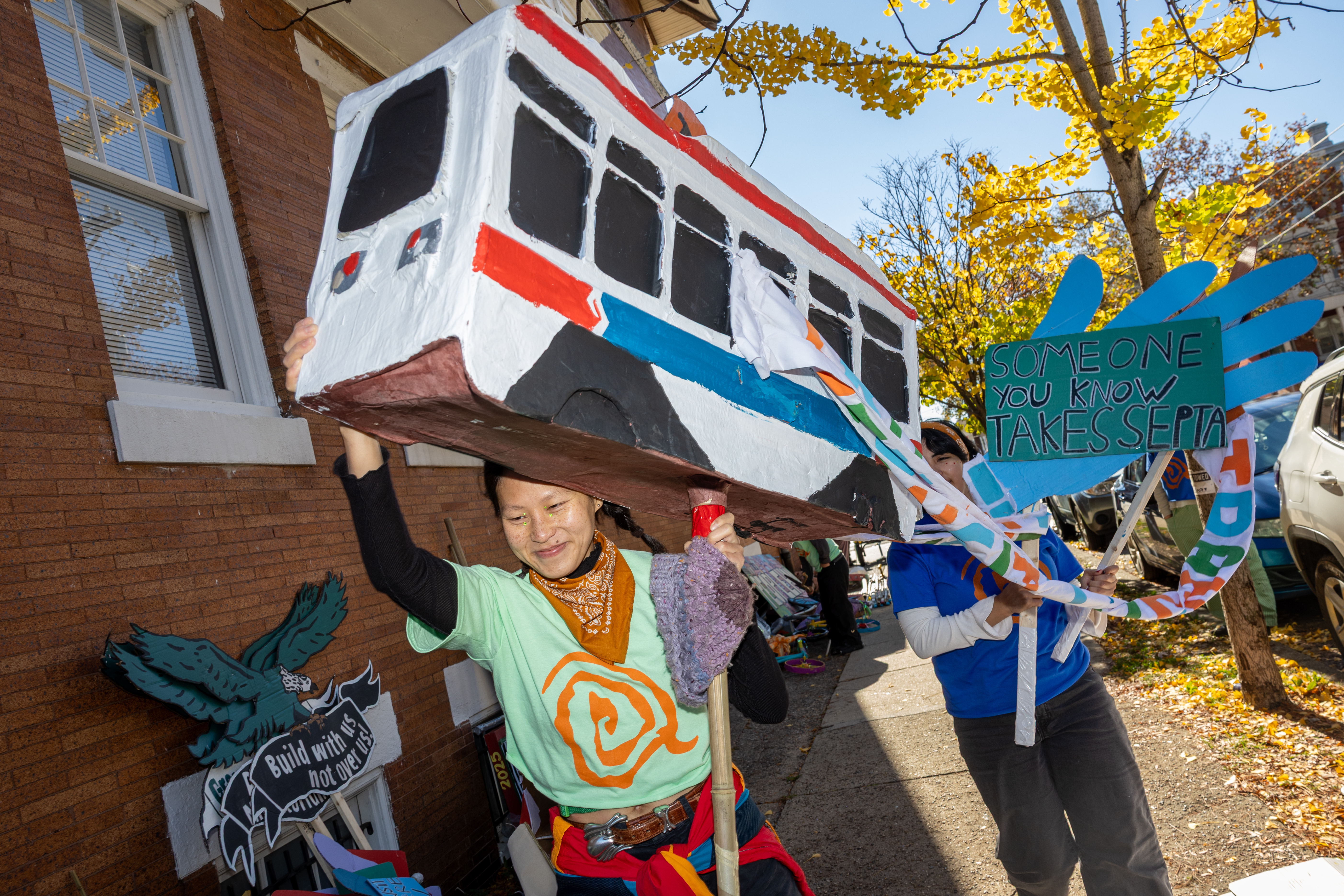
    Maisie O’Brien, 33, of Fairmount, carries a papier-mache SEPTA bus alongside Diana Torres, 19, of West Philadelphia, before the start of the 26th Annual Peoplehood Parade and Pageant outside the Paul Robeson House and Museum in West Philadelphia on Saturday, Nov. 7, 2026.Aidan T. Gallo / Staff Photographer

    Goodell, 48, is codirector of Spiral Q, a nonprofit that helps local activists make art. For 26 years, the group has been the driving force behind the parade.

    From its inception, the Peoplehood Parade raised awareness of local issues such as a need for HIV/AIDS resources and for bicycle lanes, Goodell said.

    But a big change happened a few years ago, when Spiral Q welcomed different community groups into its studio space.

    “It makes the process of Peoplehood just as important as the day,” Goodell said. “We’re trying to really make connections in the community.”

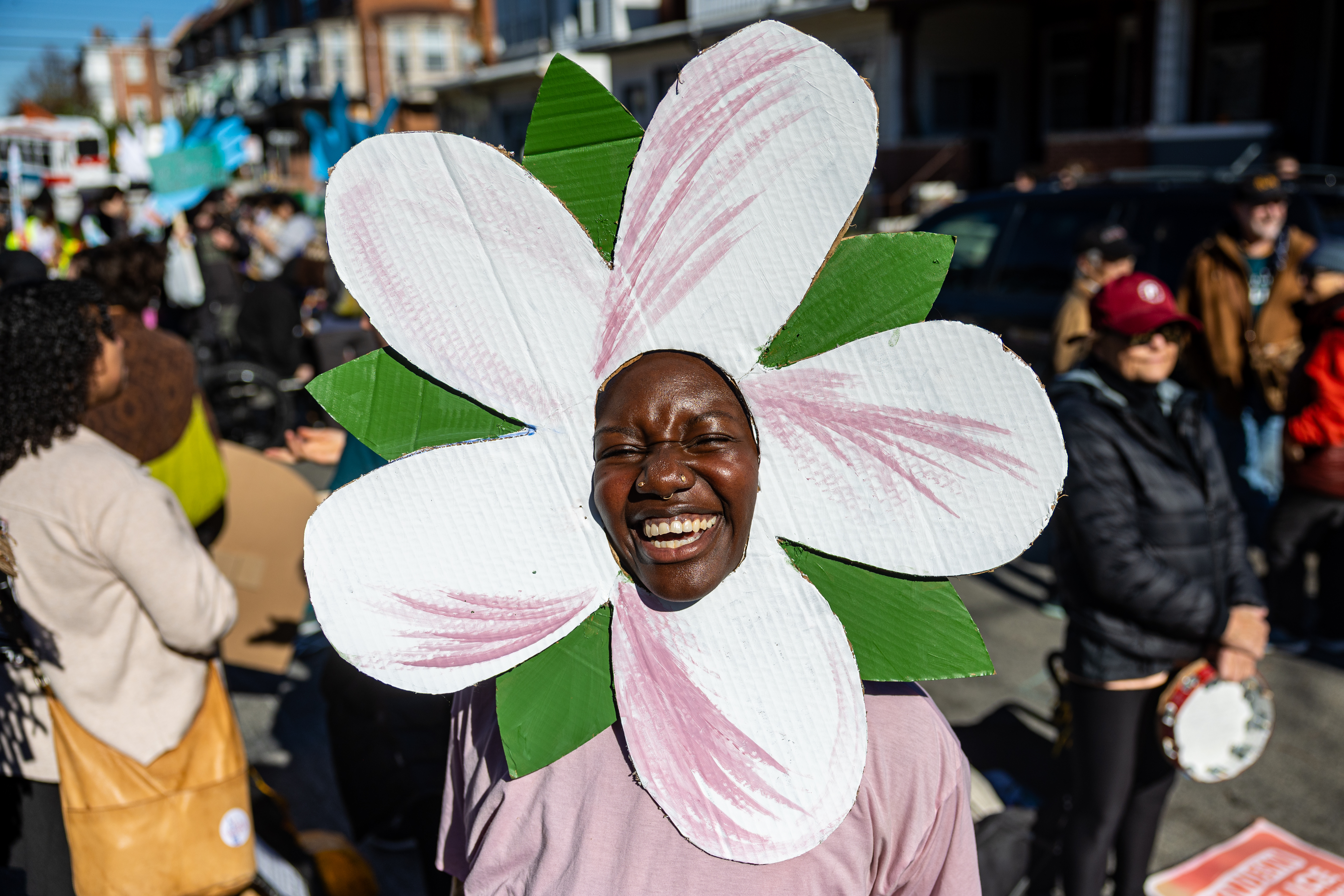
    Philadelphia Orchard Project member Sharon Appiah, 34, of West Philadelphia, stands for a portrait before the start of the 26th Annual Peoplehood Parade and Pageant outside the Paul Robeson House and Museum in West Philadelphia on Saturday, Nov. 7, 2026. The Philadelphia Orchard Project is a nonprofit organization that advocates for greener spaces in the city, and provides orchard design assistance, plant materials, and training in orchard care.Aidan T. Gallo / Staff Photographer

    At a time when digital devices are all-consuming and low-quality art generated by artificial intelligence is widespread, Goodell said, people have a strong desire to sit near one another and use their hands to make something original.

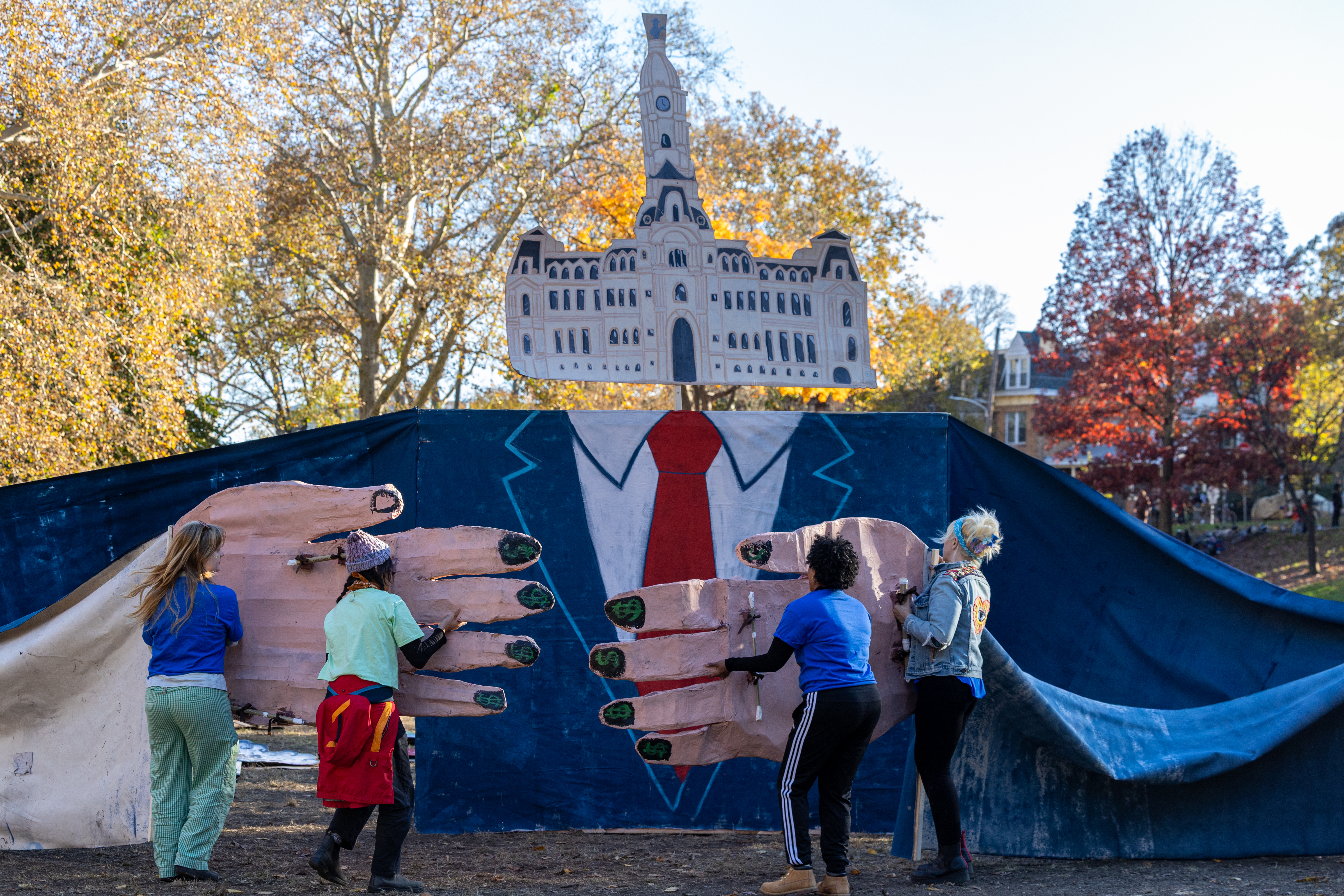
    As artists build puppets from found materials such as cardboard and house paint, they often discuss pressing local issues. In one sense, these issues have not changed all that much over the years, she said: Affordable housing, education, and funding people’s basic needs have remained top concerns.

    However, around 2014, the parade began to get more focused, coalescing around Black Lives Matter after the 2012 killing of Trayvon Martin and the acquittal of the shooter, George Zimmerman, said Spiral Q codirector Jennifer Turnbull.

    Participants of the pageant of the 26th Annual Peoplehood event perform in Clark Park in West Philadelphia on Saturday, Nov. 7, 2026.Aidan T. Gallo / Staff Photographer

    The desire to coordinate the art displays and take on bigger issues only increased with the election of President Donald Trump in 2016, the COVID-19 pandemic in 2020, and the reelection of Trump in 2024, Turnbull said.

    “Being alive is kind of political right now for everyone. It’s always been political for folks on the fringes, for sure. But now everyone is feeling that push and crush,” Turnbull said.

    For the 2026 parade Saturday, the community partners raised awareness about the environmental risks of data centers, as well as a longstanding issue — SEPTA funding.

    The next two years will be a rare time when Democrats control the governor’s office and both chambers of the Pennsylvania legislature. Newly reelected Gov. Josh Shapiro has pledged to better fund SEPTA and other transit systems. But to Turnbull, these political changes do not have much effect on the parade’s need to continue raising issues on a local level.

    “Just because we have a blue wave today doesn’t mean people still aren’t snatching folks,” Turnbull said, referring to federal Immigration and Customs Enforcement detaining people.

    Turnbull estimated that over 18,000 hours of volunteer work went into this year’s parade designs. To her, that does not just represent hours of work — it represents time that community members spent together sharing ideas.

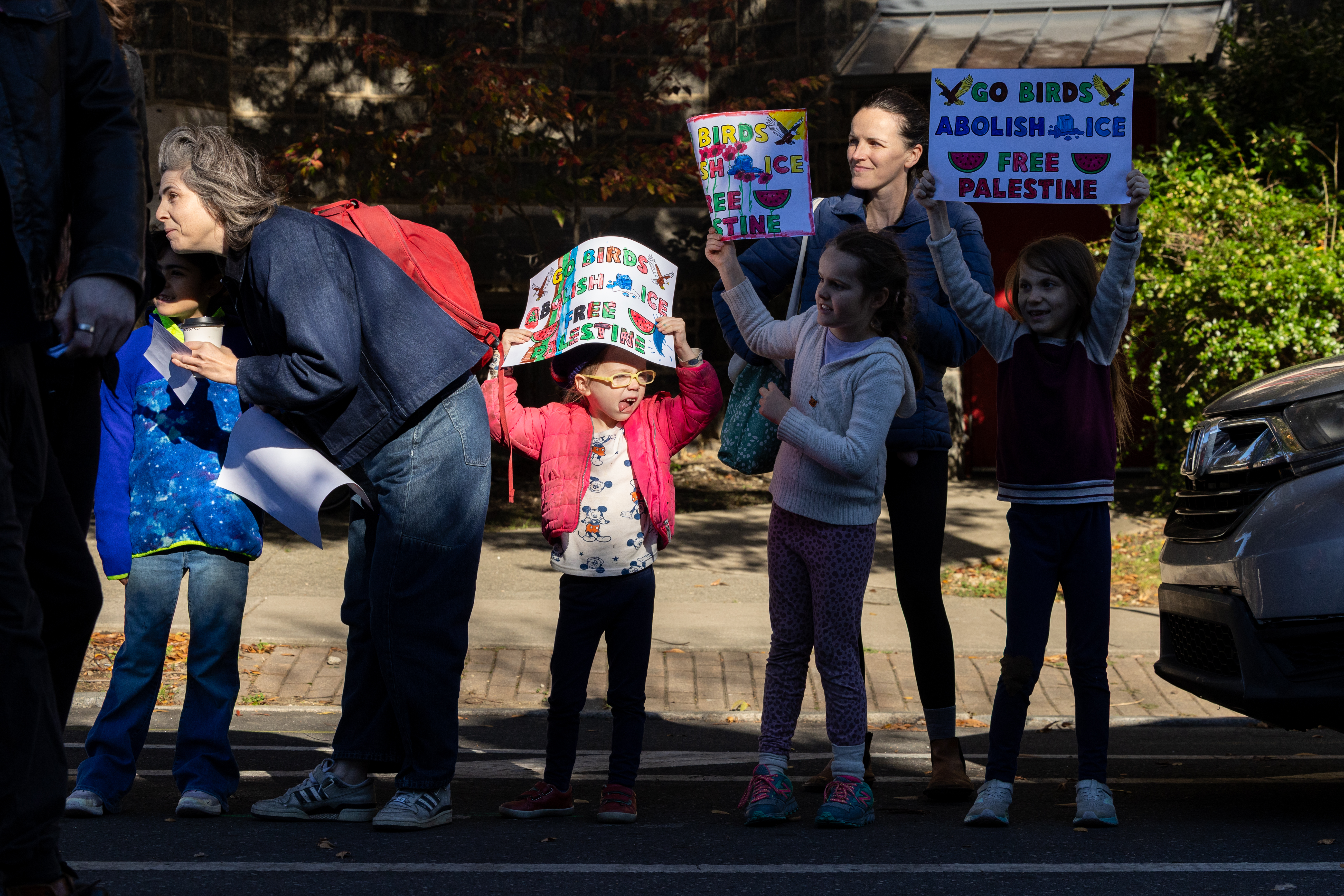
    Amarys (center), 5, holds up signage next to her cousin Ama (center right), 7, sister Luci (right), 7, and aunt Laura Smith (upper right), 39, of Germantown, during the 26th Annual Peoplehood Parade and Pageant in West Philadelphia on Saturday, Nov. 7, 2026.Aidan T. Gallo / Staff Photographer

    As more people have felt the need to protest issues and find community, Turnbull said, the parades have gotten larger. Turnbull said last year the event began with about 600 people. By the time they got to Clark Park, there were 1,200.

    On Saturday, that enthusiasm was evident as drummers, dancing, and singing electrified the corner by the Paul Robeson House and Museum, where people gathered at the start of the parade line.

    Tommy McShane of West Philly, who previously worked on an art project with Korea Peace Community Philadelphia, is now an apprentice at Spiral Q and participated in the parade.

    “As a group, our unified goal is to end the Korean War, which is still going on after 70 years,” said McShane, who is Korean American. No peace treaty was signed after an armistice in the conflict in 1953.

    The group this year is drawing attention to Hanwha Group, a South Korean company that has a shipbuilding operation at the Philly Navy Yard. McShane was protesting its weapons-making operations.

    The 22-year-old artist said he is equally interested in the community-building aspect of the parade. “It’s going to the park, while the leaves are changing, and you’re going to learn something about the community.”

    As the parade kicked off, cardboard puppets frolicked above the pedestrians. There were cats on bicycles. Signs called to abolish ICE and reject data centers. Several people held aloft a subway train.

    Julie Rea of Kensington, who held a sign supportive of public transit, said she is excited that Shapiro has included transit funding in his plans.

    “This is an opportunity to make the system safer, better, to extend it, to make it much more accessible,” Rea said.

    Other art pieces were less overtly political. One participant, who gave just a first name, Miel, brought an elaborate narwhal made of painted cardboard and wheat paste, built on a furniture dolly.

    Miel said the narwhal was initially constructed for the West Philly Dumpster Derby, a Halloween Eve tradition. The narwhal took eight people about three days of dedicated work to make.

    For them, Miel said, making something with friends was the best part.

    “It was thrilling. Absolutely the most fun I’ve had all year.”

  • Temple taps Philadelphia deputy police commissioner as new public safety VP

    Temple taps Philadelphia deputy police commissioner as new public safety VP

    Temple University has hired a Philadelphia deputy commissioner with more than three decades of policing experience as its new vice president of public safety.

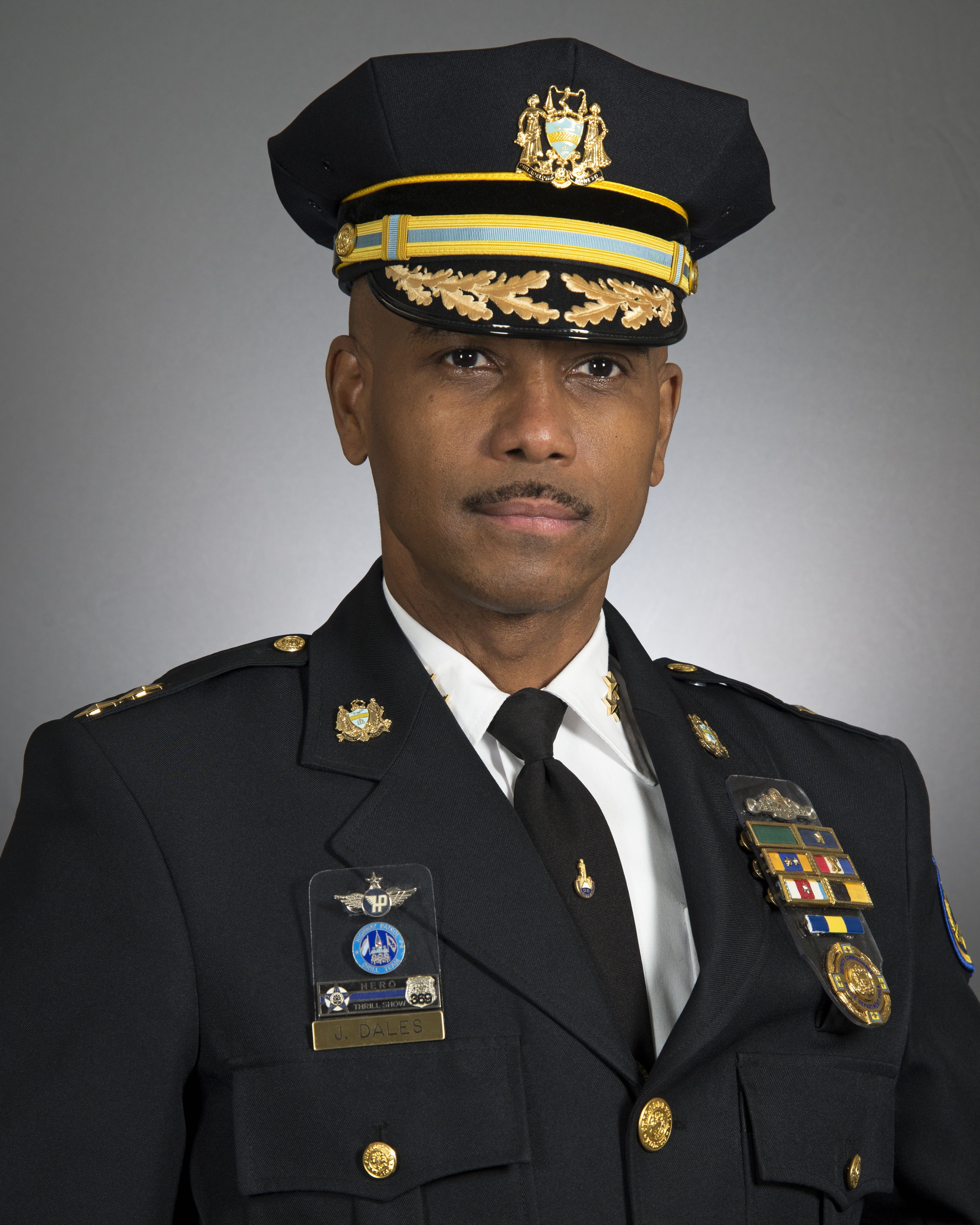
    Joel Dales, 58, a Philadelphia native whose father was a police officer in North Philadelphia, will take over the department on Dec. 7.

    He replaces Jennifer Griffin, a former Delaware State Police officer and captain, who left the university in June after four years on the job. Denise Wilhelm has been serving as interim vice president since July and will continue as executive deputy director.

    The move comes as Temple, which serves 29,156 students on its domestic campuses, strives to work even more closely with city police and curb problems still resulting from large groups of young people meeting up on or near the campus and causing disruption. The university also is amid a push to hire more officers even as shortages persist nationally, with Temple President John Fry pledging to boost police patrol officers by 58% over five years. The school has 74 sworn officers, the school said.

    “His leadership in the Philadelphia Police Department … is just something that we’re really going to benefit from at Temple,” Fry said in an interview Friday. “His significant urban policing experience makes him in my mind the ideal candidate.”

    Fry said Dales was recommended by the two people he respects the most in policing: Philadelphia Police Commissioner Kevin J. Bethel and former commissioner Charles H. Ramsey, who was an adviser to the search committee and whose firm authored and released a safety audit of Temple police in 2023. He anticipates Dales’ leadership will be important in helping the university attract more officers.

    Dales’ insights on how to manage large disruptive groups of youths while maintaining an open welcoming campus “gave me a huge degree of comfort,” Fry said.

    Temple in its most recent annual report reported eight rapes on its main campus in 2025, the same as the prior year, as well as five robberies, up from one in 2024; three aggravated assaults, up from two; six burglaries, up from four; and 129 thefts, up from 127.

    Dales in an interview Friday said he wants to see what the Temple department has in place and will make adjustments if necessary.

    “It’s very important for Temple PD and the Philadelphia Police Department to continue to work together as a team to focus on addressing these issues because these meetups are popping up all over the city,” said Dales, who has a bachelor’s degree in organizational management from Eastern University and a master’s degree in public safety management from St. Joseph’s University.

    At the city police department, Dales oversees the office of professional responsibility, which includes the internal affairs bureau and the internal criminal investigation division, as well as the professional standards bureau. Dales in 2023 was among the candidates considered by Mayor Cherelle L. Parker for the commissioner’s job before Bethel was hired.

    He joined the department in 1990, rising through the ranks of sergeant, lieutenant, captain, staff inspector, and chief inspector before becoming a deputy commissioner in 2020.

    Dales earned about $260,000 in his city role. Temple declined to release Dales’ new salary.

    “Temple University is gaining a leader who understands the complexities of policing, the importance of building relationships, and the responsibility that comes with protecting a diverse and vibrant community,” Bethel said in a statement.

    Dales said he has seen firsthand the important work Temple police do, and was attracted to Fry’s vision for the university and the importance he places on safety. Fry cited public safety as a top priority from the time he started at Temple in 2024, and Dales noted the recent contract settlement with the officers union which significantly boosted salaries in an attempt to help recruit more officers.

    “When you have support from the top, that makes a huge difference in any organization,” Dales said.

    Dales will focus on relationship-building and trust, he said, and already is well established in those areas in Philadelphia.

    “Over the course of my career…, I’ve built strong relationships with multiple law enforcement agencies such as SEPTA police, the Philadelphia Housing Authority Police Department, local government agencies,” he said. “Those relationships I will bring with me to help work together on safety concerns that affect Temple and also the surrounding neighborhoods.”

    Dales said his father inspired him to become a police officer and told him the importance of involving the community in the work. He recalled riding in the police car with his father and his partner on bring-your-child-to-work-day.

    “The love and respect I saw from the community that my father and his partner received, I was like, wow, that’s what I want to do,” he said. “I want to be a police officer…I want to receive that respect and love from the community.

    “If you want to have effective policing, it requires balancing enforcement and service with the community. That’s the lesson I’ve carried with me throughout my entire career.”

    Staff writers Ellie Rushing and Chris Palmer contributed to this article.